Tag: Delaware County

  • A new entertainment venue and bar looks to become a Media staple

    A new entertainment venue and bar looks to become a Media staple

    With the exception of a sign etched onto a glass window on the ground floor, there’s no indication that an entertainment venue and bar awaits beyond the doors of Media’s predominately office-focused Phoenix building.

    Inside is equally vague. There’s just a large sign that reads “Martinique Deux” situated on a staircase leading to the basement. Following it downstairs, there’s an innocuous door that leads to a speakeasy-like bar.

    Martinique Deux’s owners — business partners James Matika, Jason Fogg, and Pat Collins — like that it has a bit of a mystique, at least for the time being.

    That will change when the entertainment venue and bar debuts on Oct. 17 and Oct. 18, during a soft opening in advance of its grand opening on Oct. 23.

    Located at 115 W. State St., the 2,400-square-foot space features a long bar with chairs, high- and low-top tables, including some with church pews for seating, a stage with a piano, as well as a back section with couches and a big-screen TV.

    Though largely dark and atmospheric, there are some pop culture nods, like a large painting of David Bowie and a photo of Princess Diana sporting an Eagles jacket.

    When Martinique Deux opens, its owners envision it as a lively place where people can grab a drink before or after dinner, watch a game, play darts, and enjoy a music or comedy show. It will be open from 4 p.m. to midnight on Wednesdays, Thursdays, and Fridays, and open earlier on weekends.

    A dart board on the wall at Martinique Deux in Media.

    The 21-and-over venue will have live entertainment at least three days a week, with music performances on Fridays and Saturdays and comedy shows on Thursdays, though the lineups will vary. They plan to launch with a range of musical acts and comedy, with some being ticketed events and others charging a cover.

    Sports fans can also catch games, with a large TV taking center stage during Eagles games.

    “If there’s Philly sports on, that’s what will be on,” Matika said.

    After football season ends, they’re contemplating adding acoustic performances on Sundays. Weekends may also see Martinique Deux open earlier to accommodate Premier League soccer fans.

    Martinique Deux will also be open on Wednesdays starting around Thanksgiving, but largely without planned entertainment.

    The bar will offer staple food items like soft pretzels, popcorn, and chips, with plans to partner with neighboring pizza joint Lariele Wood Fired Square Pie. They’re also contemplating a rotating food truck lineup on live entertainment nights.

    While they’re still finalizing the cocktail list, it will likely be bourbon-forward and feature Pops McCann liquors, Fogg’s Pottstown distillery that produces bourbons, whiskeys, and a rum, and is planning to expand into vodkas and tequilas.

    “We’re going to keep it simple,” Matika said.
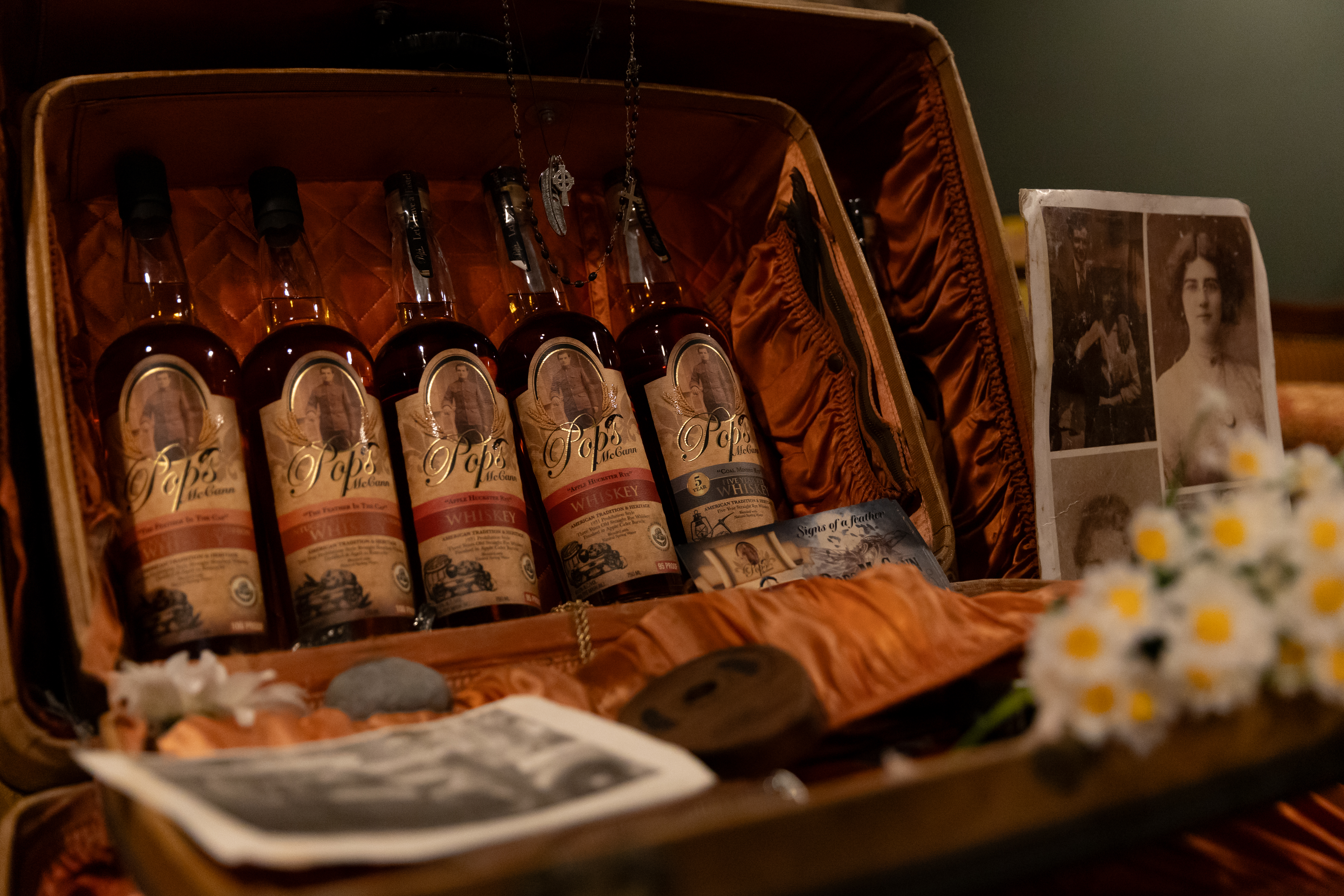
    The bar will feature Pops McCann liquors, Fogg’s Pottstown distillery.

    The bar will also serve other Pennsylvania-made beverages like Stateside Vodka and Surfside iced tea and lemonade, wines from urban winery John Robert Cellars, which has a tasting room on the ground floor of the Phoenix building, as well as beers from Sterling Pig Brewery.

    When Martinique Deux opens, it will mark the end of a year-and-a-half-long effort to bring the concept to life. Matika and Collins began working on it together last March after each independently considered similar ideas. They soon connected and set about transforming the space, which was sitting empty after an escape room there closed amid the pandemic.

    Both also have experience in the industry — Matika worked at Tap 24 and La Belle Epoque in Media and grew up in the bars his father owned, including The Martinique in Wildwood. Similarly, Collins’ father formerly owned the Clam Tavern in Clifton Heights, and Collins himself said he owned a dive bar in South Philly previously.

    They later connected with Fogg through a mutual friend, bringing the entire vision together.

    Owners Jason Fogg, James Matika, and Pat Collins pose for a photo at the bar.

    Martinique Deux joins an evolving scene in the heart of the borough, where just down the street, Mediterranean restaurant Maris and cheesesteak joint Jackson St. Steaks are opening soon.

    “I think it’s going to be one of Media’s staples,” Collins said.

    This suburban content is produced with support from the Leslie Miller and Richard Worley Foundation and The Lenfest Institute for Journalism. Editorial content is created independently of the project donors. Gifts to support The Inquirer’s high-impact journalism can be made at inquirer.com/donate. A list of Lenfest Institute donors can be found at lenfestinstitute.org/supporters.

  • How the 3 Pennsylvania Supreme Court justices on the ballot have ruled in major cases

    How the 3 Pennsylvania Supreme Court justices on the ballot have ruled in major cases

    Three Pennsylvania Supreme Court justices are on the ballot this November, when voters will decide whether to extend each of their tenures for another 10-year term.

    There are currently five justices who were elected as Democrats and two who were elected as Republicans on the bench.

    This year’s retention race has drawn heightened attention, as Republicans have launched a campaign to sink the retention bids of Justices Kevin Dougherty, Christine Donohue, and David Wecht — all elected as Democrats in 2015 — in hopes of flipping the court’s balance.

    Once on the bench, judges are expected to shed their partisan label, which is why Pennsylvania extends judicial terms through retention elections instead of head-to-head races.

    Still, advocacy groups on both sides of the aisle are trying to make the case that control of the judicial seats is critical, if not existential, to their causes.

    The Inquirer reviewed the cases that have come before the Pennsylvania Supreme Court over the last decade, and how Dougherty, Donohue, and Wecht voted.

    Here are some of the most significant cases of their tenure.

    Abortion

    Pennsylvania’s highest court stopped just short of recognizing a constitutional right to abortion access in January 2024.

    The ruling came in a case challenging a state law limiting Medicaid funding for abortions except in cases involving rape, incest, or danger to the life of the mother.

    The 219-page majority opinion included language that strongly endorsed access to abortion as a right derived from the Pennsylvania Constitution, but the judges could not agree on whether they were ready to make the call in this case.

    The majority sent questions about a specific funding limit and broader constitutional protection for abortion access back to a lower court — setting up another round of legal battles that will likely, again, make it before the state Supreme Court.

    How the three justices ruled: Donohue wrote and Wecht joined the majority opinion. The two justices said they believed Pennsylvania’s 1971 Equal Rights Amendment clearly established a right to abortion access. Dougherty wrote a separate opinion saying this case did not call on the court to opine on the right to an abortion. “At least, not yet,” he wrote.

    Voting rights and elections

    The Pennsylvania Supreme Court has ruled on a litany of challenges to Pennsylvania’s election rules, many of them focused on the state’s mail voting law.

    In 2018, the justices threw out the state’s GOP-drawn congressional maps as unconstitutionally gerrymandered.

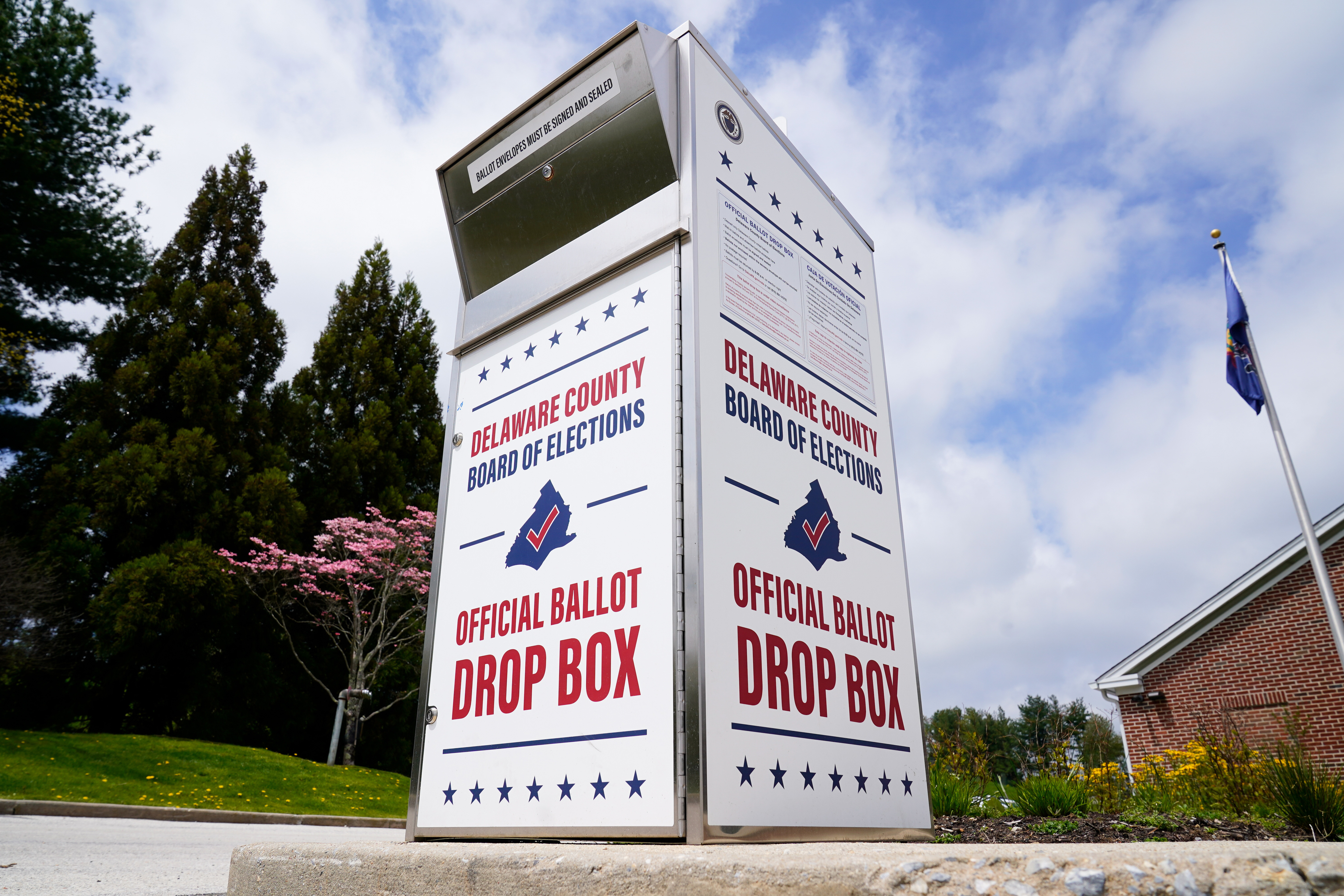
    In 2020, the court issued a major ruling ahead of the presidential election allowing for ballot drop boxes and allowing local election offices to accept ballots for up to three days after the election as long as those ballots were postmarked by 8 p.m. on Election Day.

    How the three justices ruled: Donohue, Dougherty, and Wecht each joined the majority opinion in the redistricting case. On the 2020 election ruling, Dougherty and Wecht joined the majority opinion. Donohue joined the majority opinion but dissented from the decision to extend the ballot deadline.

    A Delaware County secured drop box for the return of mail ballots in 2022 in Newtown Square.

    Education

    A Delaware County school district had the right to challenge Pennsylvania’s school-funding system, the Supreme Court ruled in 2017.

    The decision affirmed the role of courts in ensuring that state funding leads to equitable education and sent the case back to Commonwealth Court to proceed with litigation.

    In 2023, Commonwealth Court ruled, as part of the same case, that the state’s funding system for school districts led to disparities that prohibit quality education for all students, rendering it unconstitutional.

    How the three justices ruled: Wecht wrote the majority opinion, which Dougherty and Donohue joined.

    Environment

    Pennsylvania, which partly sits on the natural gas-rich Marcellus Shale, found itself in the midst of the fracking boom of the early 2000s.

    The state sold leases to oil and gas companies to drill wells. The practice raised questions, and legal challenges, as to how the state should use the revenues in the context of the Pennsylvania Constitution’s Environmental Rights Amendment.

    The court ruled in 2017 that it is unconstitutional for the state to use revenue from the royalties of oil and gas leases on public land to pay for anything but conservation and maintenance of the environment.

    How the three justices ruled: Donohue wrote the majority opinion, which Dougherty and Wecht joined.

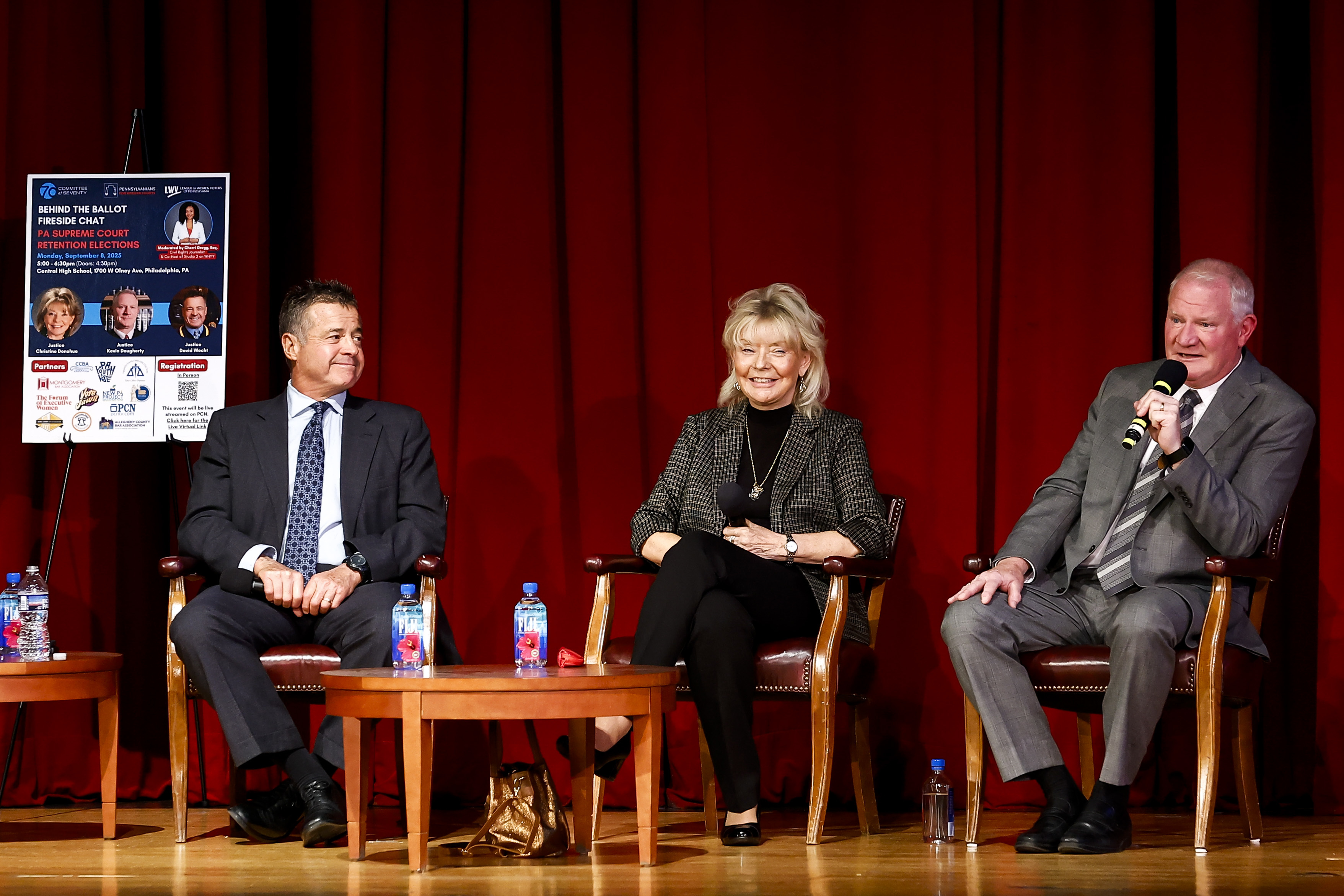
    Justices David Wecht, Christine Donohue and Kevin Dougherty sit onstage during a fireside chat at Central High School in September. The conversation was moderated by Cherri Gregg, co-host of Studio 2 on WHYY, and presented by the Committee of Seventy, Pennsylvanians for Modern Courts, and the League of Women Voters of Pennsylvania.

    Criminal justice

    Pennsylvania has had the nation’s largest population of juvenile lifers: people sentenced as minors to life in prison without the possibility of parole.

    In 2017, the Supreme Court made it harder to sentence a juvenile to life. The majority opinion says there is a “presumption” against life without parole for juveniles who are found guilty of murder, and prosecutors must show that the offender is “unable to be rehabilitated” when seeking the sentence.

    How the three justices ruled: Donohue wrote the majority opinion, which Dougherty and Wecht joined.

    Second Amendment

    In 2024, for the first time, the Pennsylvania Supreme Court issued an opinion that interpreted the wording in the U.S. Constitution that gives Pennsylvanians the right to bear arms.

    In Stroud Township, a zoning ordinance that prohibited the discharge of a firearm within the township’s borders limited the possible locations for shooting ranges. The ordinance barred a resident from having a personal outdoor shooting range on his property, and he sued the township for violating his Second Amendment rights.

    The court ruled that the ordinance was constitutional.

    How the three justices ruled: Dougherty wrote the majority opinion, which Wecht joined. Donohue wrote her own opinion, reaching the same conclusion as the majority but disagreeing with the analysis.

    Larry Krasner

    Did Republican lawmakers make a procedural error in their 2022 effort to impeach Philadelphia District Attorney Larry Krasner? The Supreme Court in 2024 said they did, effectively ending a campaign in Harrisburg to oust the progressive prosecutor.

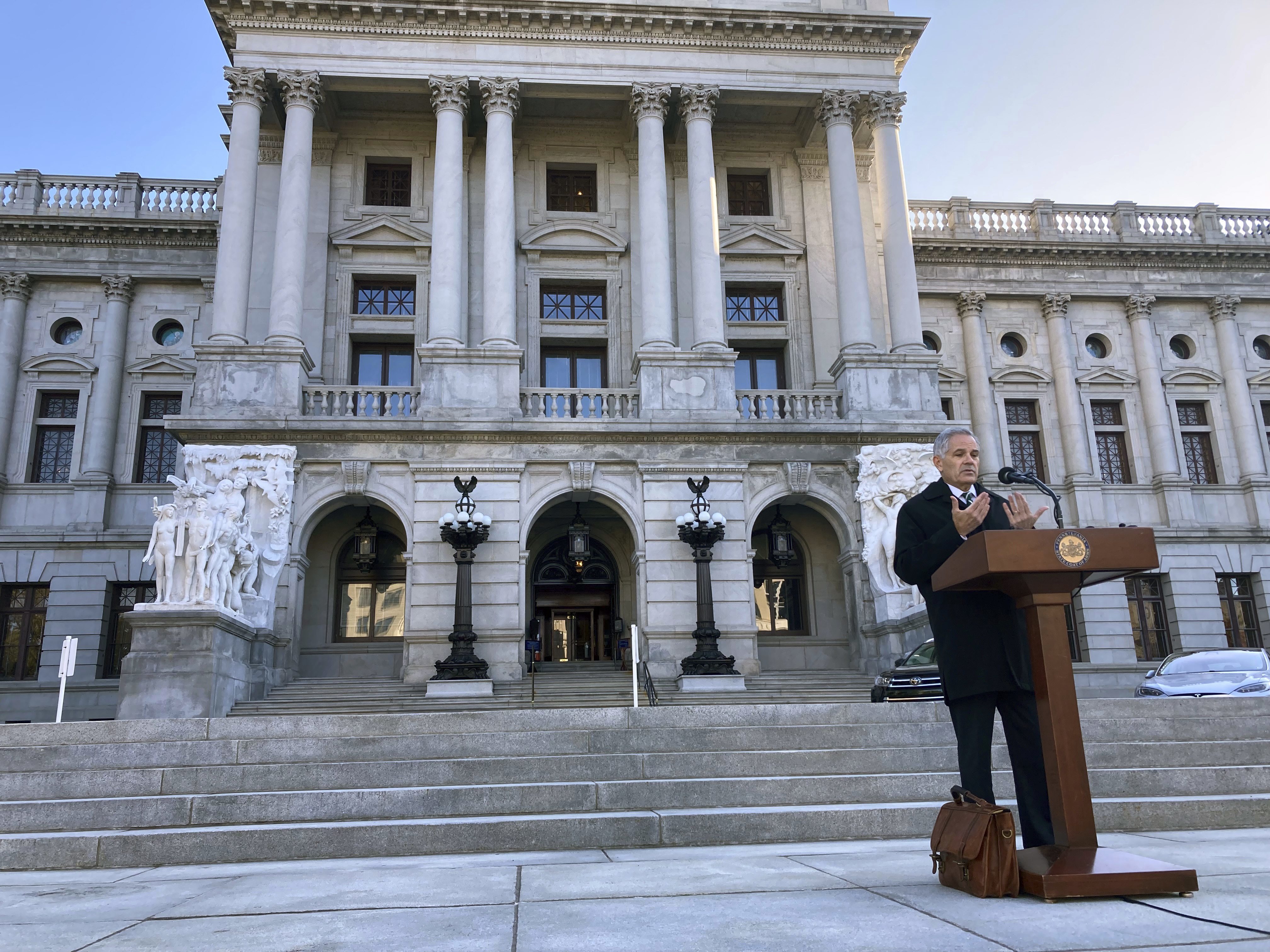
    Philadelphia District Attorney Larry Krasner talks about Republican-led efforts to investigate his record addressing crime and gun violence at the Pennsylvania Capitol in 2022.

    The decision said that the articles of impeachment approved by the state House in late 2022 were “null and void” because they were sent to the Pennsylvania Senate on the last day of that year’s legislative session, and the upper chamber did not complete its work on the matter before the next session began. The attempt to carry the process from one two-year session to the next was unlawful, the court said.

    The majority also agreed with a lower court that none of the articles of impeachment met the required legal standard of “misbehavior in office.”

    How the three justices ruled: Donohue and Wecht joined the majority opinion. Dougherty did not participate in the deliberations.

    Bill Cosby

    Disgraced actor and comedian Bill Cosby walked out of prison a free man in 2021 after the state Supreme Court reversed his sexual assault conviction.

    The court did not weigh in on the facts of the case or whether Cosby was guilty. Instead, it focused on a former Montgomery County prosecutor’s decade-old promise that Cosby would never be charged with drugging and assaulting Andrea Constand if he gave incriminating testimony in a civil case filed by his accuser. The justices found that the testimony was improperly used years later against Cosby at his criminal trial, calling it a “unconstitutional coercive bait-and-switch.”

    How the three justices ruled: Wecht wrote the majority opinion, which Donohue joined. Dougherty wrote a separate opinion, saying he would allow for Cosby to be retried, but would order his testimony from the civil case to be suppressed.

  • Delco’s Taylor Hospital sells to local investors aiming to offer medical services

    Delco’s Taylor Hospital sells to local investors aiming to offer medical services

    Crozer Health’s shuttered Taylor Hospital in Ridley Park will be sold to a group of local healthcare executives for $1 million, according to an agreement filed Friday in bankruptcy court proceedings for its owner, California-based Prospect Medical Holdings.

    The buyer is a partnership led by Delaware County business owner Todd Strine. The group’s goal is to refill the empty property with medical services, Strine said.

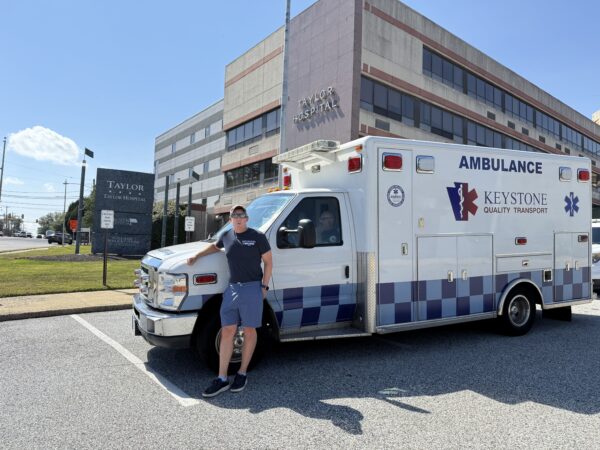
    “The ideal thing that could happen is we reopen an emergency room, because that’s what Delaware County needs,” said Strine, who is the majority owner of medical transport company Keystone Quality Transport.

    Prospect closed Taylor in late April after the failure of a state-led effort to find a new operator that would return the Crozer health system to nonprofit ownership. Shortly thereafter, Crozer-Chester Medical Center also closed.

    Crozer was Delaware County’s largest healthcare system and a provider of critical safety-net services. For-profit Prospect had previously closed Springfield Hospital and Delaware County Memorial Hospital in 2022.

    “It’s a fact that Delaware County is less safe today than it was when these hospitals were operating,” Strine said.

    He said it seems unlikely that a full-blown hospital would return to Taylor.

    Ridley Park Council president Dane Collins said he’s hopeful that an emergency department and doctors services will return to the site. “It’s no secret. The area’s in desperate need of it,” he said.

    As part of the agreement, Delaware County, Ridley Park Borough, and the Ridley School District agreed to reduce the taxable value of the property from its assessed value of $60 million to a fair market value of $1 million for the next two years.

    The inflated $60 million assessment was tied to financial deals Prospect undertook with a real estate investment firm in 2019 and 2023.

    The reduced value slashes the amount of property taxes that can be earned on the property for the next two years. However, beginning in 2027, the taxing authorities would be permitted to appeal the value of the building.

    The decision to reduce the building’s value so dramatically in tax rolls was opposed by some members of Ridley School District’s board of education, which only narrowly approved the measure on a 5 to 4 vote last week.

    Prospect hasn’t paid property taxes on the property since 2022, according to public records.

    Delaware County councilmember Christine Reuther called the new value a “tough pill to swallow” in an interview. The property was worth more than the “fire sale price” it had gone for, she said.

    The building would be worth less than many homes on the county’s tax rolls, Reuther noted, at a time when property values and home costs are increasing.

    She called the resolution yet another example of the negative fallout from Prospect’s abandonment of healthcare resources in the community.

    “There’s literally nothing we can do that isn’t going to resolve in a worse result, and that’s wrong,” Reuther said.

    Strine acknowledged that the price seems cheap, but noted the building is empty, and it’s a special-use building, making it harder to find tenants. “There’s a ton of carrying costs and a lot of uncertainty about how long it’s going to take to fill up,” he said.

    The investment needed to bring the building back to life is going to be many times the price, Stine said.

    “It’s positive movement to have an experienced local businessperson purchase the property instead of allowing the property to become abandoned,” said Frances Sheehan, president of the Foundation for Delaware County, whose mission is promoting health and welfare in the county.

    Taylor is the second shuttered Crozer hospital to be sold in less than a month. Upper Darby School District bought the former Delaware County Memorial Hospital for $600,000 on Aug. 14. It plans to use the property for expansion of its neighboring high school.

    In both cases, U.S. Bankruptcy Judge Stacey Jernigan said Prospect could abandon the properties, which means that local authorities would have had to put the real estate up for a tax sale.

    Prospect had told the judge that the top offers it had received were $1.25 million for Delaware County Memorial, which closed in 2022, and $575,000 for Taylor.

    Given the risk of abandonment by Prospect, county and local authorities risked a total loss to tax rolls if Prospect abandoned the property entirely.

    Robert Strauss, an economics professor at Carnegie Mellon University who studies property tax, noted that the buyers may have backed out of a deal if they couldn’t obtain the reductions in property taxes.

    “It’s hard to envision anything easy happening in the short run that would bring it back onto the tax rolls and be profitable,” he said. “The reduction in revenues seems to me to be inevitable in the next couple of years, regardless.”

    This suburban content is produced with support from the Leslie Miller and Richard Worley Foundation and The Lenfest Institute for Journalism. Editorial content is created independently of the project donors. Gifts to support The Inquirer’s high-impact journalism can be made at inquirer.com/donate. A list of Lenfest Institute donors can be found at lenfestinstitute.org/supporters.