Tag: Democrats

  • The Catch-22 around Trump’s illegal orders | Will Bunch Newsletter

    There’s an old saying — well, there ought to be one — that the surest way to jinx something is to write, “I don’t want to jinx it…” My Border Patrol tornado-chasing trip to Charlotte was doomed the moment I posted about it here — frantically canceled when I learned 17 hours before takeoff that the BP had abruptly ditched North Carolina. There is a Plan B but no way will I jinx it a second time.

    If someone forwarded you this email, sign up for free here.

    It’s better to stop Trump’s illegal orders than hope troops will disobey them

    Lt. William L. Calley Jr., center, and his military counsel, Maj. Kenneth A. Raby, left, arrive at the Pentagon for testimony before an Army board of investigation hearing into the My Lai Massacre in December 1969. Calley led the U.S. soldiers who killed hundreds of Vietnamese civilians in the most notorious war crime in modern American military history.

    A U.S. Army helicopter pilot named Hugh Thompson Jr. may be the greatest American hero you’ve probably never heard of. On March 16, 1968, Thompson — a warrant officer serving in Vietnam — and his crew were dispatched to support a “search and destroy” mission supposedly targeting the Viet Cong in a tiny hamlet called My Lai.

    Instead, the Georgia-born soldier came up upon arguably the most notorious war crime in U.S. history — with thatch hutches ablaze and countless villagers, including women and children, laying dead or dying in an irrigation ditch.

    Thompson landed and found the commander on the ground, Lt. William Calley. “What is this?” he asked. “Who are these people?”

    “Just following orders,” Calley replied. After some more back and forth, the flustered Thompson replied: “But, these are human beings, unarmed civilians, sir.”

    What Thompson and his helicopter crew did next was truly remarkable. Holding Calley and their other U.S. comrades at bay, they shielded a group of Vietnamese women, children and old men as they fled. Eventually, he loaded 11 villagers into the helicopter, and then Thompson and his men thought they detected movement in the ditch. Two fellow solders found a boy, just 5 or 6, hiding under the corpses, “covered in blood and obviously in a state of shock.” After safely evacuating the boy to a military hospital, Thompson reached a lieutenant colonel who ordered Calley to stop the killings.

    Near the end of his life, Thompson — who died in 2006 — and two comrades were recognized for their courage and the many lives they saved at My Lai, awarded the Army’s highest award for bravery not in conflict with an enemy (the Soldier’s Medal), as well as the the Peace Abbey Courage of Conscience Award. He even returned to My Lai for an emotional reunion in 1998.

    But it wasn’t like that in real time. During the war, a prominent congressman demanded that Thompson be court-martialed. “I’d received death threats over the phone,” he told CBS’ 60 Minutes in 2004. “Dead animals on your porch, mutilated animals on your porch some mornings when you get up.”

    A generation after Thompson’s death, the kind of bold action he took that day in 1968 — disobeying what he correctly understood as an illegal order — is yet again on America’s front burner. This time, the debate is fueled by a video from six veterans who now serve as Democrats in Congress ― reminding today’s soldiers about their sworn duty to disobey unlawful commands.

    That every expert in military law agrees with this principle hasn’t stopped President Donald Trump or his defense secretary, Pete Hegseth, from going ballistic — calling the Democrats “traitors” or even reposting calls for their death by hanging.

    On Monday, Hegseth kicked things up a notch by endorsing a plan for one of the six — Arizona Sen. Mark Kelly, a former astronaut and decorated Navy fighter pilot — to return to active duty, so that he can be court-martialed for taking part in the video. A statement from the Pentagon, which Trump and Hegseth call “the Department of War,” insisted that “orders are presumed to be lawful. A servicemember’s personal philosophy does not justify or excuse the disobedience of an otherwise lawful order.”

    Even as the growing controversy dominates the headlines, there is one aspect to the illegal-orders debate that practically no one is talking about. Actions like Thompson’s refusal at My Lai don’t only stand out for the soldier’s gumption. It is also the stuff of peace prizes and 60 Minutes profiles because it is so incredibly rare.

    Do your own research. It’s very difficult to find examples in America’s 249-year history of troops disobeying orders because they are believed to be illegal. To be sure, there are famous incidents of soldiers who disobeyed an order and heroically saved lives — but almost all of them were because the command was reckless or just plain stupid, which isn’t the same as illegal or unconstitutional.

    It’s not like there haven’t been opportunities. There have been American war crimes from Wounded Knee to Abu Ghraib, what Barack Obama famously called “dumb wars” like the 2003 assault on Iraq, and moments of intense moral agony, like dropping atomic bombs on Hiroshima and Nagasaki. These did produce a few whistleblowers or conscientious objectors, of course, but cases of actually refusing an order are few.

    It’s not hard to understand why. Most military orders — even ones later reviled by history — come with some veneer of legality, whether it’s an opinion from a military lawyer or a congressional authorization vote, as happened with Vietnam, Iraq, and other conflicts.

    The video recorded by Kelly and the others (including Pennsylvania Reps. Chrissy Houlahan and Chris Deluzio) focuses only on the widely accepted principle that military men and women must follow the law and the Constitution above all else, and doesn’t mention Trump or any specific disputed orders. In interviews, though, Democrats like Kelly and Houlahan have criticized Trump’s ongoing attacks on boats off South America that the regime claims are smuggling drugs.

    While almost every expert on military laws describes these attacks — which have killed at least 83 people— as extrajudicial killings lacking legal justification, the Office of Legal Counsel in Trump’s Justice Department has nonetheless written a secret classified memo to justify them. Any officer or lower-level troop ordered to blow up these boats and kill all the people on board hasn’t seen the memo. And they won’t get a medal for saying “no” — at least not in 2025. They will be court-martialed and vilified by MAGA.

    New York Times opinion writer David French, a Harvard Law grad who served as an Army lawyer in Iraq, notes the congressional video didn’t advise troops on what exactly is an illegal order, and adds: “Individual service members don’t have sufficient knowledge or information to make those kinds of judgments. When time is of the essence and lives are on the line, your first impulse must be to do as you’re told.”

    Not always, as Thompson showed at My Lai, but military matters are rarely that black and white. The Trump regime’s sending of National Guard units and even active-duty military into cities such as Los Angeles may be an unnecessary and inflammatory violation of democratic norms, but experienced judges continue to debate its legality. Expecting the rank-and-file troops to decide is asking a lot.

    It is very much in the spirit of Joseph Heller’s World War II novel and its legendary Catch-22: A soldier must disobey an illegal order, yet orders, in the heat of the moment, are almost never illegal.

    That doesn’t mean Trump and Hegseth threatening Kelly and the other Democrats with jail and possibly the noose isn’t utterly outrageous. After all, they did nothing more than remind soldiers of their obligation to the law in the same language their drill sergeants use in boot camp.

    I do also think — understanding the limitations of a MAGA-fed Congress — that good people of both parties on Capitol Hill should be doing a lot more to invoke the War Powers Act, hold hearings, debate impeachment, and do whatever else they can to prevent Trump’s reckless acts in the Caribbean and elsewhere. In other words, stop illegal orders before they’re given.

    That said, as the Trump regime deteriorates, there may come a day when right and wrong feels as obvious as it did that 1968 day in the rice paddies of Vietnam. If, heaven forbid, this government ever ordered troops to put down a protest by firing on citizens, we will need a platoon full of Hugh Thompsons and no William Calleys, “just following orders.”

    Yo, do this!

    • The writer Anand Giridharadas is the best of today’s public intellectuals, with a laser focus on the 1 Percent and the devastating role of income inequality in works such as Winners Take All, which rips apart the facade of modern philanthropy. So who better to pour through the late financier-and-sex-fiend Jeffrey Epstein’s emails and find the true meaning? His recent, masterful New York Times essay — “How the Elite Behave When No One Is Watching: Inside the Epstein Emails” — parses the small-talk and atrocious grammar of America’s rich and powerful to decipher how they rule. It is a must read.
    • Saturday was the 62nd anniversary of the day that changed America, for bad: the assassination of President John F. Kennedy as his motorcade rolled through downtown Dallas. It was also the day I was savaged by several dozen people on Bluesky for expressing an opinion shared by 65% of Americans: that we haven’t been told the whole truth about what really happened on Nov. 22, 1963. Kudos to ABC News for a new special that aired Monday looking at both sides of the endless controversy — Truth and Lies: Who Killed JFK? — that included skeptics like veteran journalist Jefferson Morley of the excellent site JFK Facts. The one hour-special is now streaming on Hulu.

    Ask me anything

    Question: Why is the Trump administration uncritically regurgitating the Russian “peace plan”? — @kaboosemoose.bsky.social via Bluesky

    Answer: That’s a great question as our president has consistently told us that the “Russia! Russia! Russia!” scandal around Vladimir Putin’s U.S. election interference and his seeming sway over the 45th and 47th president is all a massive hoax. How to explain, then, that the supposedly-Trump-drafted 28-point peace plan to end the fighting in Ukraine was translated from its original Russian, with its details hashed out in Florida by corrupt and contented Trump son-in-law Jared Kushner and Kirill Dmitriev, a U.S.-sanctioned Russian envoy? It’s probably true that liberals were naive during Trump’s first term to believe the strange ties between MAGA and the Kremlin would bring down his presidency, but it’s also true that where there’s smoke, there’s fire. We all want peace in Ukraine, but Trump and his U.S. government simply are not honest brokers.

    What you’re saying about…

    Last week’s question about the Jeffrey Epstein files, and whether they’ll ever see the light of day despite enactment of the law calling for their release, was kind of open-ended, and thus it drew an array of responses. But most agreed with my view that it’s highly unlikely we’ll see the files, or see very much. “They won’t release them because they are now investigating the Democrats in the files, thus they won’t be able to release them due to the investigation,” Rosann McGinley wrote. “Also they’d be heavily redacted, ‘nothing to see here.’” Added Judy Voois: “I would not be surprised if he declared war on Venezuela just to steer the media and public interest away from continued scrutiny of the Epstein saga.”

    📮 This week’s question: The heated reaction I received online about the JFK assassination now has me wondering what newsletter readers think. Do you believe Lee Harvey Oswald was the lone killer of John F. Kennedy, or do you think there was a conspiracy? Please email me your answer and put the exact phrase “JFK assassination” in the subject line.

    Backstory on Pennsylvania’s budget deal with the devil
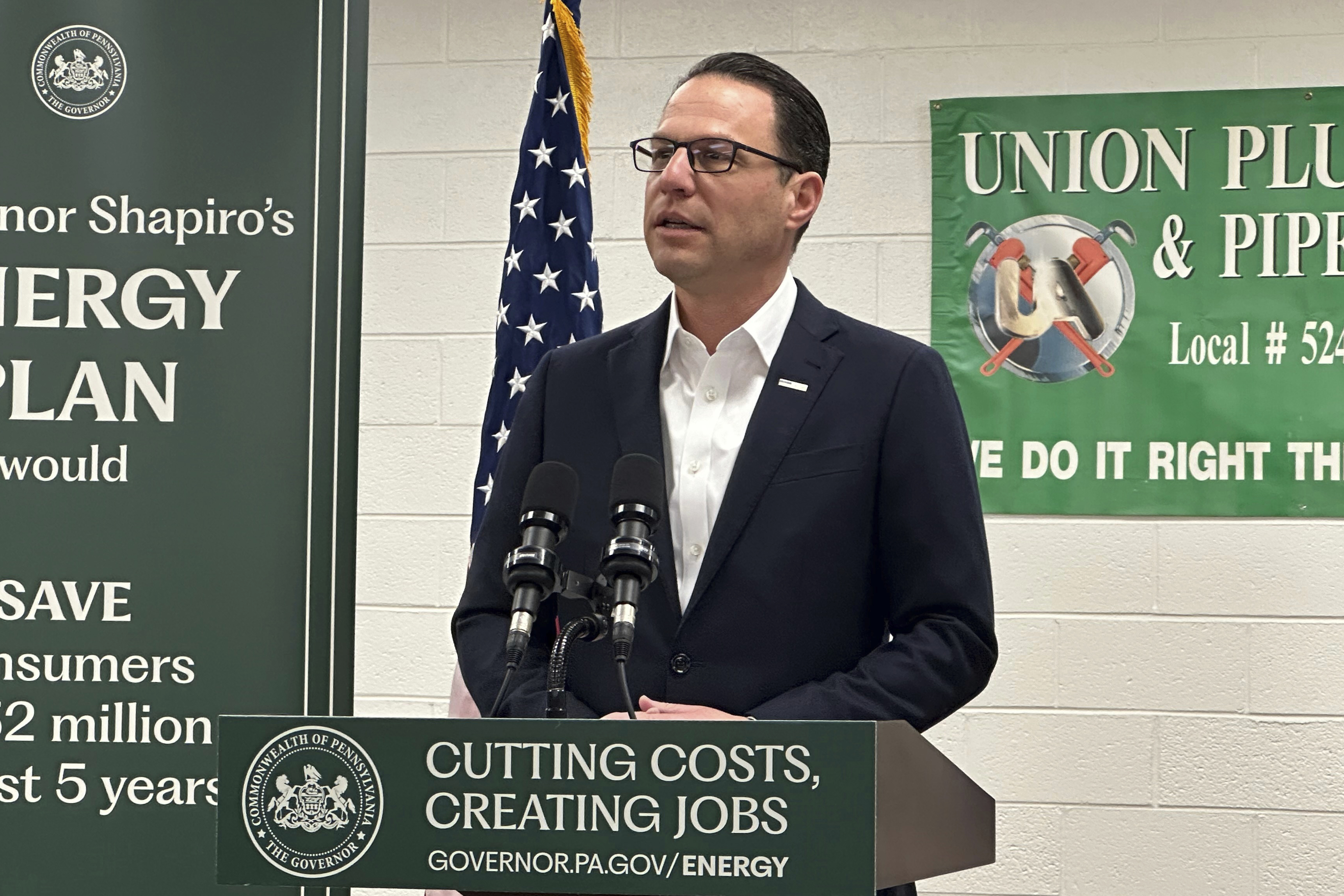
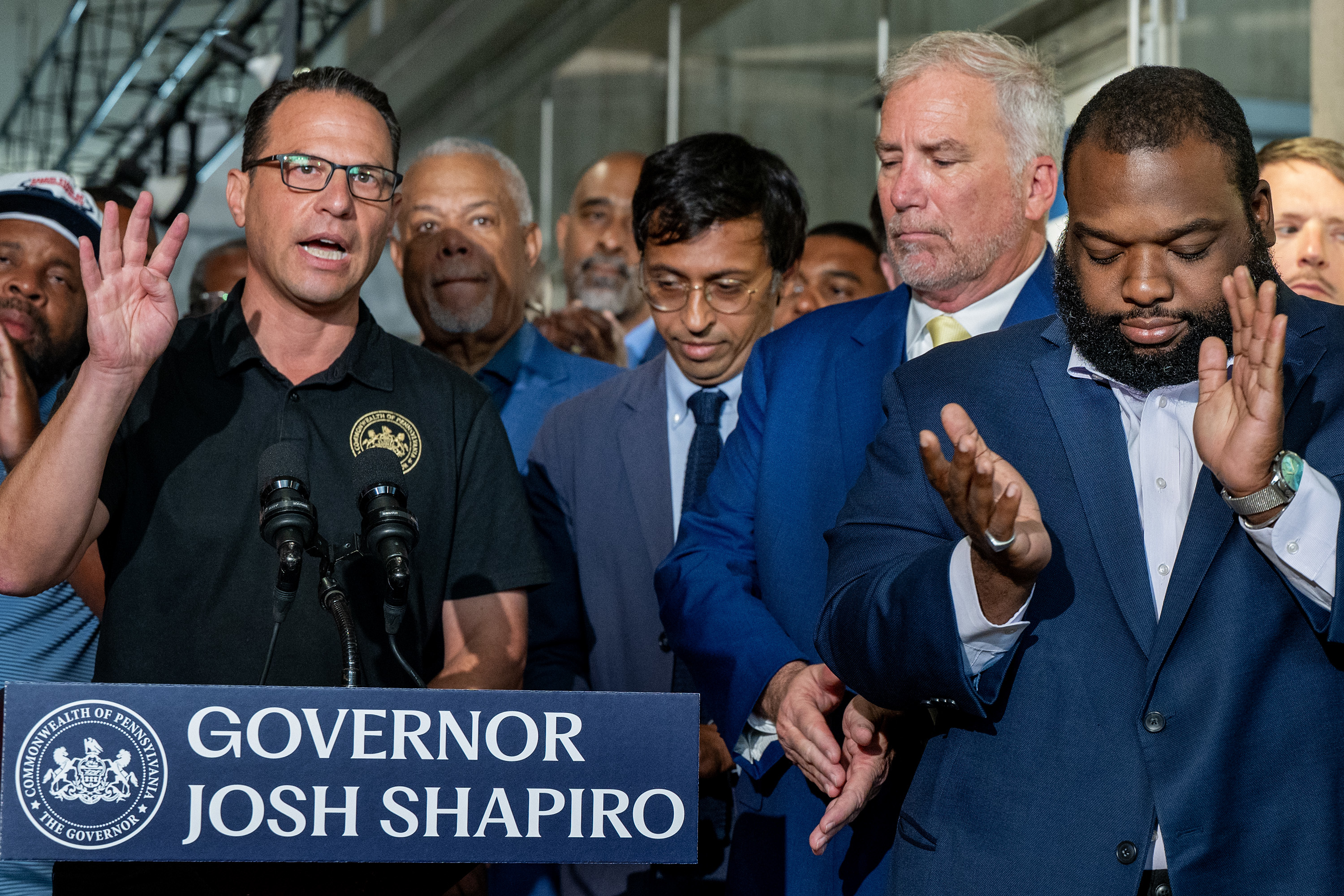
    Pennsylvania Gov. Josh Shapiro speaks at a news conference at the United Association Local 524 union building in Scranton, Pa. in March 2024.

    Saturday was the 62nd anniversary of the JFK assassination, but on Nov. 22, 2025 it was the entire planet that was under fire. One researcher declared that globally it was the hottest Nov. 22 ever recorded. It didn’t feel that way at my windswept dog park in Delco, but it did from the American Southeast — experiencing a record heat wave — to Tehran, where an epic drought has seen water fountains run dry. And yet the world’s leaders were on a full-fledged retreat from climate action, from the White House, where U.S. CEOs toasted the oil dictatorship of Saudi Arabia at a posh dinner, to Brazil, where a global summit on climate change failed to take on the hegemony of fossil fuels, to Harrisburg.

    In a state that’s kowtowed to Big Oil and Gas interests since the days of John D. Rockefeller, Pennsylvania Republicans used the shame of the nation’s longest state-budget impasse to finally ram home their most cherished agenda item: gutting efforts in the Keystone State to work with our neighbors to control the greenhouse-gas pollution behind climate change. The GOP-run state Senate backed Democratic Gov. Josh Shapiro into a corner. Pennsylvania had to withdraw from Regional Greenhouse Gas Initiative (RGGI), a regional pollution-control system, or the money wouldn’t resume flowing to schools and other vital services.

    To be clear, the drivers of this giant step backward were state lawmakers who’ve been swimming in Big Oil’s tainted campaign cash for a couple of decades now. But the capitulation, even at political gunpoint, was not Shapiro’s finest hour — especially as the Democrat with apparent ambition for higher office continues to push for polluting and energy-devouring data centers that he claims will boost the economy. As the American Prospect noted in a new piece, Pennsylvania’s environmental retreat came at the same time Virginia was electing a Democratic governor in Abigail Spanberger who’d promised to restore her state to the RGGI. If Shapiro does run for president in 2028, he may struggle to explain this deal to climate-minded voters.

    The real problem, though, is that the best way to tackle climate change is by going on offense, with aggressive programs to promote alternative energy such as wind (there seems to be a lot of that around here) and solar that aren’t not only cleaner but a better deal for beleaguered consumers. While Pennsylvania — second only to Texas in natural-gas production — went all in on fracking, a 2024 survey found the commonwealth was 49th on expanding wind power and energy efficiency. With RGGI in the rearview mirror, the Shapiro administration needs to work a lot harder on green energy. That would be good for our governor’s White House dreams, but it would be a lot better for the planet.

    What I wrote on this date in 2020

    In the late fall of 2020, when I wasn’t trying to warn people that Donald Trump was planning a coup, I turned my attention to the incoming president, Joe Biden — and it’s both fascinating and sad to read how naive we were in the giddy aftermath of Trump’s defeat. In writing about Biden’s early Cabinet picks, the subhead read: “America is seeing the start of something it’s not used to: A White House that’s experienced, qualified … and boring. Could Biden’s ploy work?” NO! The answer turned out to be “no.” But still read the rest: “Biden’s Cabinet is ‘delightfully boring.’ Can reality-TV-addled America deal with it?”

    Recommended Inquirer reading

    • Only one column last week as I spent time both preparing for and then canceling the Charlotte trip that never happened. In that piece, I vented my rage at the lavish White House shindig for a monster: Saudi Crown Prince Mohammed bin Salman, who was behind the brutal bone-saw murder of Washington Post journalist Jamal Khashoggi. The man that Joe Biden all too briefly promised to make “a global pariah” was feted by the CEOs of Apple, Nvidia, GM and just about any big business entity you can think of, in a stunning embrace of corruption that should end the myth of “woke corporations.”
    • There are two things, more than anything else, that keep local news in America alive: Hometown sports teams, and restaurants. Here in Philly, it was a lousy week for the former but a remarkable moment for the latter, as restaurants in the City of Brotherly Love competed for the very first time for recognition from the world’s ultimate dining survey, the Michelin Guide. In a glitzy ceremony at the Kimmel Center, Michelin bestowed its coveted star on three Philadelphia restaurants and honored more than 30 others — and Inquirer readers were obsessed. Four of the newsroom’s top seven most-read articles online last week were about the Michelin madness — including the bittersweetness of one eatery cited just before its closing, the cheesesteak shop that was honored but not invited, and other various snubs and surprises. The Inquirer has amped up its food coverage this year, and if you live and eat in this region I don’t know how you’d survive without it. If you don’t subscribe, please sign up today.

    By submitting your written, visual, and/or audio contributions, you agree to The Inquirer‘s Terms of Use, including the grant of rights in Section 10.
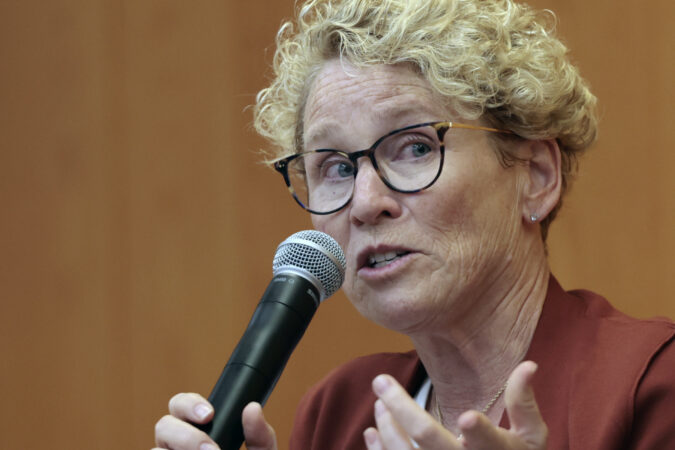

  • Chrissy Houlahan says she is ‘profoundly disappointed’ in lack of support from GOP colleagues after Trump’s sedition accusation

    Chrissy Houlahan says she is ‘profoundly disappointed’ in lack of support from GOP colleagues after Trump’s sedition accusation

    U.S. Rep. Chrissy Houlahan, a Chester County Democrat, said Friday she is “profoundly disappointed” in her Republican colleagues for not speaking up after President Donald Trump accused her and five other Democratic lawmakers of sedition.

    Houlahan was one of six Democrats in Congress — all military veterans or members of the intelligence community — featured in a video urging members of the military and intelligence community to “refuse illegal orders.”

    In response, Trump went after the Democrats in a string of posts on Truth Social Thursday, accusing them of sedition that he said is “punishable by DEATH.”

    Early Friday evening, a spokesperson for Houlahan posted on the representative’s X account that her district office in West Chester was the target of a bomb threat.

    “Thankfully, the staff there, as well as the office in Washington, D.C., are safe. We are grateful for our local law enforcement agencies who reacted quickly and are investigating,” the post said.

    A spokesperson for Rep. Chris Deluzio, a western Pennsylvania Democrat also on the video, posted on X late Friday afternoon that the representative’s district offices were targeted with bomb threats as well.

    Houlahan lamented at a Friday news conference in Washington that “not a single” Republican in Congress “has reached out to me, either publicly or privately” since Trump’s post.

    “And with this, I am profoundly disappointed in my colleagues,” she added.

    In addition to calling for the lawmakers to be arrested and tried for sedition, Trump shared posts from supporters calling for retribution against the Democrats, including one that said “HANG THEM GEORGE WASHINGTON WOULD !!” and another calling them domestic terrorists.

    “This is not normal political discourse,” Houlahan said Friday alongside other veteran members of Congress. “Indeed, it is, in fact, a explicit embrace of political violence against the opposition.”

    “As a member who has spent my entire career calling for civility and decency and building relationships with the other side of the aisle, I’m dumbfounded by the silence,” added the Air Force veteran.

    Beyond not reaching out to her specifically, Houlahan broadly said that “not a single Republican member has condemned this call for violence, not publicly, not privately.”

    When reached by The Inquirer on Thursday, U.S. Rep. Brian Fitzpatrick (R., Bucks), a former FBI agent, condemned Trump’s rhetoric, but he did so without naming the president

    “This exchange is part of a deeper issue of corrosive divisiveness that helps no one and puts our entire nation at risk,” he said. “Such unnecessary incidents and incendiary rhetoric heighten volatility, erode public trust, and have no place in a constitutional republic, least of all in our great nation.”

    When asked for clarification, his spokesperson added that “He is 100% opposed to the president’s comments and 100% stands with all men and women who wear the uniform.”

    Sen. Dave McCormick (R., Pa.) said, “There is no place in either party for violent rhetoric and everyone needs to dial it down a notch,” in a follow-up statement to The Inquirer after initially placing blame solely on the Democrats.

    Some Republicans justified Trump’s response by saying the Democrats who made the video were in the wrong — even if the president’s rhetoric was over the top.

    House Speaker Mike Johnson (R., La.) said that he did not think the six Democrats committed “crimes punishable by death or any of that,” but criticized the Democrats’ video as irresponsible, Politico reported.

    “The point we need to emphasize here is that members of Congress in the Senate [and] House should not be telling troops to disobey orders,” Johnson said. “It is dangerous.”

    Karoline Leavitt, the White House press secretary, responded to a reporter asking if Trump wanted to “execute” members of Congress by saying “no,” and criticized the video put out by the veterans.

    The video that inspired Trump’s ire did not point to any specific order from Trump as illegal, despite urging troops to resist such an order.

    However, the video follows high-profile debates about the legality of Trump’s deployment of National Guard troops in U.S. cities and his ordering of strikes on boats in the Caribbean. Trump alleges that the boats are carrying drugs from Venezuela, but experts have said his claims about them are misleading.

    “He has shown time and time again that when he threatens to abuse his power, he acts on it,” Houlahan said Friday at the news conference announcing a bill that would prohibit funds for military force in or against Venezuela without congressional approval.

    Houlahan said Congress has not received intelligence on the strikes. She said that Trump’s administration has “repeatedly shown disregard for the military process.”

    U.S. Rep. Seth Moulton (D., Mass.), one of the bill’s sponsors, said military leaders who have expressed concern about the legality of the strikes have been “sidelined.” He also pointed out that threatening a member of Congress is against the law.

    “So put yourselves in the shoes of a young lieutenant or sergeant who’s in uniform right now watching the commander-in-chief threaten members of Congress to death for telling you to follow the law,” he said. “You’re watching him orchestrate legally dubious military strikes while sidelining military lawyers and commanders who say that those actions may be illegal and could therefore get you prosecuted for following those orders.”

    Moulton was not one of the six lawmakers featured in the video, but he shares a similar background, having served four tours in Iraq as a Marine.

    He said Congress should learn from its failure to question that war as it confronts the legality of Trump’s strikes in the Caribbean.

    “I’ve seen what being in a moral and legal gray area means in war,” he said.

    Staff writers Julia Terruso and Robert Moran contributed to this article.

  • Bucks County fuel spill victims inspired a federal bill calling for $500M to modernize pipelines

    Bucks County fuel spill victims inspired a federal bill calling for $500M to modernize pipelines

    U.S. Rep. Brian Fitzpatrick, a Republican, introduced a bill Thursday with a Democratic co-sponsor to modernize pipelines and emergency responses in the wake of a leak of a Sunoco pipeline detected this year in Bucks County.

    The bill is named after the Wojnovich family, whose well was tainted with 12½ feet of jet fuel.

    It would set aside $500 million in grants spread over five years to replace or upgrade high-risk hazardous liquid lines, “to facilitate the improved safety and modernization of hazardous liquid distribution infrastructure.”

    In addition, it would require that prospective homeowners be made aware of nearby pipelines, what fuel they carry, any history of incidents, and who operates the lines.

    Fitzpatrick introduced the bill, H.R. 6187, the Wojnovich Pipeline Safety Act of 2025, with U.S. Rep. Tom Suozzi, a Democrat from New York.

    Fitzpatrick is up for reelection in 2026 in the 1st Congressional District, which includes all of Bucks County and a sliver of Montgomery County. As the last remaining Republican representing the Philadelphia suburbs in the U.S. House, Democrats believe he is vulnerable.

    Fitzpatrick — as well as other federal, state, and local elected officials — has been involved since January, when a jet fuel leak from the Sunoco Twin Oaks pipeline was detected.

    He and others have called for the line to be shut down. Fitzpatrick has called for independent testing of wells and “complete remediation” in the Mt. Eyre Manor neighborhood where the leak was detected.

    “What families endured during this leak exposed areas where the state response was not fully equipped to meet the moment,“ Fitzpatrick said Friday in an email, ”which is why I have called on the responsible state agencies to produce a codified and consistently enforced plan that will guarantee clean water and long-term protections.”

    He credited a neighborhood task force from Mt. Eyre with helping him write the bill, “from the ground up.”

    The spill has caused significant disruption in the Mount Eyre Manor neighborhood, in the Washington Crossing section of Upper Makefield, becoming a constant worry for families such as Kristine and Kevin Wojnovich.

    The Wojnoviches live in the suburban Bucks County neighborhood near the popular Delaware Canal State Park towpath and only a few thousand feet from the Delaware River. Theirs was one of six wells that tested above state maximum contaminant levels. Other wells tested positive for contaminants, but under those levels.

    Kristine Wojnovich at home in the Mt. Eyre neighborhood in Washington Crossing, Bucks County on Nov. 7, 2025. Just out of view, is the top of a 400 foot drinking water well contaminated after a Jan. 2024 jet fuel leak was detected in Sunoco’s Twin Oaks pipeline.

    The family began noticing a petroleum odor in their tap water as far back as September 2023 and reported it to Sunoco, which is owned by Energy Transfer. However, the company initially informed the Wojnoviches that their water simply had bacteria.

    It wasn’t until an inspection by the state Department of Environmental Protection in late January 2025 that a leak was confirmed.

    “Every page of this bill is shaped by what Upper Makefield families lived through,” Fitzpatrick said in the release, noting, “the gaps in testing, the delays in information, the uncertainty about their water, and the absence of clear standards for communication and emergency response.”

    Specifically, the bill would also require:

    • That real estate contracts include disclosure of any hazardous liquid pipeline easements within one-half mile of a property, whether the line has undergone repairs in the past 10 years, and a list of any leaks or failures.
    • Overhaul of the U.S. Department of Transportation’s and the Pipeline and Hazardous Materials Safety Administration’s current online pipeline viewer so that leak, inspection, and remediation data are readily available.
    • Updates to local emergency alert systems and response plans.
    • Pipeline operators to conduct in-person tests of water, soil, or air for potential pipeline leaks or failures.
    • Penalties for leaks, failures, and delayed reporting, ranging from $2.5 million to $5 million.
    • The reimbursement of fire departments and EMS for equipment, overtime, and cleanup costs.
    • Establishing an Office of Public Engagement and regular federal reporting.

    Kristine Wojnovich said she’s honored by the bill’s introduction, and credits both Fitzpatrick and the neighborhood task force that’s pushed for legislation.

    “Aging pipelines and outdated leak detection methods are all over this country,” Wojnovich said. “And the leak and contamination that happened in our community could have happened anywhere. This legislation is a meaningful step forward.”

  • Trump accuses Democratic vets in Congress of sedition ‘punishable by death,’ including two lawmakers from Pa.

    Trump accuses Democratic vets in Congress of sedition ‘punishable by death,’ including two lawmakers from Pa.

    U.S. Rep. Chrissy Houlahan was in her Washington office when she saw attacks directed at her and other military veteran members of Congress from President Donald Trump, days after they urged members of the military and intelligence community to “refuse illegal orders.”

    Trump called the Democrats “traitors” in a Thursday post on Truth Social and, in a second post, accused them of sedition that he said is “punishable by DEATH.”

    Houlahan, a Chester County Democrat and an Air Force veteran, was one of six Democratic members of Congress who released a video Tuesday contending that Trump’s administration is “pitting” service members and intelligence professionals against American citizens and urging them not to “give up the ship.”

    All six lawmakers are either veterans or members of the intelligence community.

    “The idea that the most powerful man on the planet, who wields the power of the United States military and should be emblematic of all the things we value in this republic, would call for the death and murder of six duly elected members of the House of Representatives and the Senate — I’m speechless and I’m devastated,” Houlahan told The Inquirer on Thursday afternoon.

    Houlahan said she had anticipated there might be a response from the president after Stephen Miller, Trump’s deputy chief of staff and homeland security adviser, spent much of Wednesday railing against the lawmakers in the video. But Trump’s comments went beyond anything Houlahan imagined even from a president known for extreme and sometimes violent rhetoric.

    “I’ve been struggling with the right words for this,” she said. “‘I weep for our nation’ would be an understatement.”

    U.S. Rep. Chris Deluzio, a Navy veteran who was also featured in the video, called Thursday “a dark day in America” in an interview with The Inquirer.

    “It tells me who he is and it tells me exactly why we should be talking about the rule of law and the Constitution,” said Deluzio, an Allegheny County Democrat.

    In the video that set Trump off, the lawmakers, finishing one another’s sentences, reminded service members of their oath to the Constitution and instructed them to refuse to follow any order that would violate it.

    “Right now, the threats to our Constitution aren’t just coming from abroad,” Deluzio says in the video.

    “But from right here at home,” adds U.S. Rep. Jason Crow (D., Colo.) a former paratrooper and Army Ranger.

    The video was shared by U.S. Sen. Elissa Slotkin (D., Mich.), a former CIA officer, and also included U.S. Sen. Mark Kelly (D., Ariz.), a former Navy captain, and U.S. Rep. Maggie Goodlander (D., N.H.) a former intelligence officer.

    Houlahan said she considered the video “innocuous.”

    “It literally talked about the fact that you should follow only lawful orders, an obvious reminder that those of us who served have grown up on,” she said.

    On Thursday morning, Trump shared a Washington Examiner article about the video with the headline “Dem veterans in Congress urge service members to refuse unspecified unlawful orders,” saying their message “is really bad, and Dangerous to our Country.”

    “Their words cannot be allowed to stand. SEDITIOUS BEHAVIOR FROM TRAITORS!!! LOCK THEM UP???” the president wrote on Truth Social, his social media platform.

    About an hour later, Trump added in his second post: “SEDITIOUS BEHAVIOR, punishable by DEATH!”

    Sedition and treason cases in modern U.S. history are very rare.

    Democratic condemnations of Trump’s comments poured in from across the country Thursday. Republicans were more muted. House Speaker Mike Johnson (R., La.) defended Trump’s claim that the Democrats had engaged in “sedition,” describing the video as “wildly inappropriate.”

    “It is very dangerous. You have leading members of Congress telling troops to disobey orders,” he told CNN.

    Sen. Dave McCormick, a Pennsylvania Republican and U.S. Army veteran, who has called out political violence in the past, both after Charlie Kirk’s killing and an arson at Gov. Josh Shapiro’s residence, defended the president’s verbal attacks on the lawmakers. “Not a single unlawful order is cited in this video — because there aren’t any,” he said in a statement.

    “The video is inappropriate and unwarranted, and I didn’t hear any of these calls to defy orders when Democrats were using lawfare against President Trump,” he added, “Giving outlandish pardons, or intimidating tech companies to stop free speech.”

    About an hour later McCormick’s spokesperson sent a second comment from him, adding: “President Trump can speak for himself, but as I’ve said repeatedly, there is no place in either party for violent rhetoric and everyone needs to dial it down a notch.”

    One of the few Republicans to offer any criticism of the president was U.S. Rep. Brian Fitzpatrick, a former FBI agent, who said in a statement that in the FBI he saw “how inflamed rhetoric can stoke tensions and lead to unintended violence.”

    Fitzpatrick, a moderate from Bucks County who has butted heads with Trump in the past, did not name him in the statement but said the “exchange” was “part of a deeper issue of corrosive divisiveness that helps no one and puts our entire nation at risk. Such unnecessary incidents and incendiary rhetoric heighten volatility, erode public trust, and have no place in a constitutional republic, least of all in our great nation.”

    Houlahan and Deluzio respond

    Houlahan served three years on active duty as an Air Force engineer and an additional 13 years as a reserve, and reached the rank of captain. She has been outspoken against the Trump administration on military issues, particularly surrounding women serving in combat roles.

    The lawmakers did not refer to any specific orders from the president in their video, but they had numerous concerns in mind.

    Houlahan said it was sparked, in part, by military troops being deployed to U.S. cities and lethal strikes against suspected drug boats in the Caribbean.

    Trump has suggested that American cities should be “training grounds” for the military, and targeted Los Angeles, Chicago, Washington, and Portland for National Guard deployments. His administration’s boat strikes, which have led to protests in Philadelphia, have come under scrutiny by experts who say they are illegal, per the New York Times, which found Trump’s claims justifying the attacks to be questionable.

    “What we were speaking to is the future, those who are currently serving, and making sure they remember who they serve and what they serve,” Houlahan said.

    She said the lawmakers felt “a responsibility to … make sure people understood there are people in Congress who have your back.”

    Deluzio pointed to reporting about concerns from military personnel who were deployed to U.S. cities. PBS reported this week that people in uniform have been seeking outside legal advice about some of the missions the Trump administration has assigned them.

    “This is a guy who’s been documented in a meeting with the secretary of defense talking about shooting unarmed civilians in the legs,” Deluzio said, citing an account from former Defense Secretary Mark Esper.

    Deluzio said he learned about the oath the first day of boot camp and trained sailors on it when he gained rank.

    “This is something that is fundamental to how our military works and the respect we show our service members,” he said.

    Deluzio served six years in the Navy including three deployments. He cofounded the Democratic Veterans Caucus in June, which was formed in opposition to the Trump administration.

    He said he has heard from people on both sides of the aisle and encouraged Republican colleagues to speak out publicly against the president’s remarks.

    “Republican officials should be stepping up loudly and clearly and saying the calling of death by hanging to members of Congress is out of bounds,” he said.

    James Markley, a spokesperson for the Pennsylvania Republican Party, declined to comment on Trump’s remarks and said in a text that “the woke left continues to attempt to rip apart the fibers of our communities and our country.”

    “Our party will continue focusing on making our country safer, prosperous and more affordable,” he added.

    A spokesperson for Pennsylvania Treasurer Stacy Garrity, an Army veteran who is running for governor next year with the state GOP’s endorsement, did not respond to a request for comment.

    Sen. John Fetterman, a Pennsylvania Democrat who has made a name for himself working across the aisle, said in a post on X that threatening members of Congress is “deeply wrong” without exception, regardless of political party.

    “I strongly reject this dangerous rhetoric,” he said.

    Gov. Josh Shapiro also quickly denounced Trump for calling for violence against Houlahan and Deluzio, describing them in a post on X as “two outstanding members of Congress from Pennsylvania who have fought for our country.”

    “There should be no place for this violent rhetoric from our political leaders, and it shouldn’t be hard to say that,” said Shapiro, who has consistently spoken out against the threat of political violence since a politically motivated arsonist firebombed the governor’s mansion while he and his family slept inside in April.

    Trump’s attack on Houlahan and other Democratic veterans marks the second time in two months Democratic lawmakers who served in the armed forces have been the subject of attacks from across the aisle.

    U.S. Rep. Scott Perry, a Trump ally who represents parts of central Pennsylvania, told a conservative radio station in October that Democrats in Congress “hate the military,” based on their voting records.

    Deluzio and Houlahan, both members of the House Armed Services Committee, also banded together then to push back on Perry’s comments, calling them “garbage.”

  • A new Pa. tax credit could put up to $805 in your pocket. Here’s what to know.

    A new Pa. tax credit could put up to $805 in your pocket. Here’s what to know.

    Nearly 1 million Pennsylvanians are expected to qualify for a new state tax credit that is meant to ease the burden of making ends meet.

    The new Working Pennsylvanians Tax Credit will allow eligible low- and moderate-income filers to receive a state tax credit that is equal to 10% of what they qualify for through the federal Earned Income Tax Credit (EITC). Like the EITC, the state credit will depend on income and number of children. The highest credit will be $805 and, according to Gov. Josh Shapiro’s office, the average credit will be around $240.

    In Philadelphia alone, 175,393 people are estimated to benefit from the new state tax credit totaling $41.7 million, according to Shapiro’s office. Statewide, it is expected to provide a total of $193 million in tax relief to 940,000 Pennsylvanians.

    The policy had bipartisan support since 2023, and was led by State Rep. Christina Sappey, a Chester County Democrat. Sappey and a team of Democrats sponsored a bill that passed the Democratic-led House in May that would have allowed a 30% credit, but that figure was lowered to 10% as a result of budget negotiations with the Republican-led Senate and Shapiro.

    It’s one of the measures being hailed as a major win for Democrats in the $50.1 billion state budget deal, which was approved last week after a more than four-month impasse.

    Sappey said that she was approached by the United Way of Pennsylvania “several years ago” about the idea.

    “I think of all of the folks who are really just struggling right now to make ends meet — but they’re working,” Sappey told The Inquirer.

    “They get thrown a curveball, like an unexpected healthcare expense, get in a car accident, need a giant car repair, something like that,” she added. “They really get kind of knocked off the rails, and then they kind of spiral.”

    At a news conference on Tuesday, Shapiro listed examples of Pennsylvanians who will qualify for the tax credit.

    “That single mom who’s raising three kids whose making about $25,000 a year as a waitress, she can get $770 back on her state taxes on top of whatever relief she was going to get from the federal government,” Shapiro said.

    “This isn’t some giveaway … we’ve come together on a bipartisan basis to say, ‘If you’re working, if you’re doing everything right by the book, we’re going to put money back in your pockets,’” he added.

    Who is the Working Pennsylvanians Tax Credit for?

    The tax credit is designed for working Pennsylvanians with a total income up to $61,555 if filing alone, and up to $68,675 if filing jointly as a married couple, according to the IRS guidelines for the EITC.

    Eligibility for the state credit is based on the federal EITC, which is meant for low- to moderate-income workers. Workers with kids can qualify for a bigger credit that increases with the number of children up to three or more kids.

    Individuals must be employed and earn income to qualify.

    Households that can benefit from this program may earn too much to qualify for public assistance while not earning enough to be able to handle an unplanned financial emergency, according to the United Way. About 28% of Pennsylvanians fall into this group, according to testimony from the United Way of Pennsylvania president Kristen Rotz.

    How does the tax credit work, and how much is it for?

    Pennsylvania’s state credit will be 10% of the EITC amount a filer qualifies for. Filers will automatically qualify for the state credit.

    “This is probably one of the more easy tasks you’re going to have to deal with as you’re helping people fill out their taxes,” Shapiro told a group of Widener University students Tuesday.

    The program will begin for tax year 2025, so Pennsylvanians can use it this forthcoming tax season. The credit is refundable, so taxpayers will get money back if the credit exceeds how much they owe.

    The credit amount initially increases based on how much money the earner makes and then decreases after it reaches a certain amount, resembling a bell curve, said Montgomery County accountant David Caplan. That “tipping point” differs depending on the tax filer’s status and number of dependents, he said.

    The maximum state credit for filers with no kids is $65, and about 261,739 Pennsylvanians are expected to fall in that tier, according to the Office of state House Speaker Joanna McClinton, a Philadelphia Democrat.

    That maximum raises to $432 for households with one child, $715 for two children, and $805 for households with three or more kids. About 133,641 Pennsylvanians are expected to fall in that maximum credit tier, according to McClinton’s office.

    There were 802,000 claims for the federal EITC in Pennsylvania for the 2023 tax year, totaling $2.086 billion, according to the IRS. The average federal credit amount was $2,600. Under the new state credit, that would amount to $260.

    “While it’s not much, it’s certainly a help, and that’s something that’s tangible,” said State Rep. Tarik Khan, a Democrat who cosponsored the state tax credit bill and represents parts of Philadelphia.

    Do other states have a credit like this?

    According to the National Conference of State Legislatures, 31 states, D.C., Guam, Puerto Rico, and some municipalities have their own version of the EITC.

    Most of those states calculate their credit as a percentage of the federal program, ranging from 4% in Wisconsin to 125% in South Carolina, according to the group.

    Neighboring New Jersey offers a 40% credit and Delaware has 4.5% refundable and 20% nonrefundable credits.

    State Rep. Steve Samuelson, a Northampton County Democrat who chairs the House Finance Committee and cosponsored the tax credit bill, called the credit a “commonsense” measure. He pointed out how existing states have varying political leanings, from the redder Oklahoma, Indiana, and Kansas to bluer states like New York, Hawaii, and California.

    “Better now than never,” Samuelson said.

    Is a 10% tax credit the right amount?

    Sappey and other Democrats see the 10% credit as a starting point. They hope to increase the size of the credit in future years.

    “If this is a program that both sides can agree to, getting a program established is more important than, you know, how big it is at the beginning,” she said in an interview.

    Caplan, who chairs the Pennsylvania Institute of Certified Public Accountants’ Local Tax Thought Leadership Committee, said he believes the 10% tax credit could be higher, but maybe not as high as the 30% initially approved by the House.

    “I don’t think the 10% is outrageously low that it’s kind of chintzy,” he said. “I think it’s just a nice thing to do.”

    Sen. Lynda Schlegel Culver, a Republican from Northumberland County who said she championed the policy, lauded the program for helping taxpayers who work.

    “This credit rewards work, strengthens household stability, and helps those doing everything right, working, paying their bills, and supporting their families,” she said in a statement. “This is a commonsense investment in both our workforce and the future of our Commonwealth.”

    Concerns from other Republicans about the program were related to the cost and its size.

    Sappey said “that’s legitimate” but contends that the program helps people “increase their earning power” and that the hope is, in turn, for them to no longer be eligible for the credit. And when they get it, she argues, “they are spending it in really good ways.”

    “We’re keeping people in the workforce, we’re generating revenue, and we’re keeping them out of social safety net programs,” she said.

    Rotz, of the United Way, said in her testimony that EITC recipients often spend their credit on grocery stores, vehicle and home repairs, paying off debt, and sometimes education.

    Khan lauded House Democratic leaders for holding onto the tax credit in negotiations — and compared their long-delayed negotiations to the Eagles’ season, which has seen the team rack up wins despite offensive struggles.

    “You love them, and then you watch the game, and you’re like, ‘Goddamn it. Why can’t you just play like a normal team?’ But then they win in the end, and you’re like, ‘You know what? That was a tough game, but damn it, I’m so happy right now,’ and so that’s how I feel with this.”

  • College journalism exposes the rot of ‘grown-ups’ | Will Bunch Newsletter

    I’m always reluctant to talk about upcoming columns, because in this twisted era everything changes at the drop of a MAGA hat, and I hate to jinx things. But as of now, I’m booked for a trip to Charlotte (or Raleigh?…I’ve already jinxed it, maybe) this coming weekend, where I hope to report from the front lines of the Border Patrol’s latest big-city invasion that has terrorized the immigrant community in North Carolina. So I’m going to spend a couple days reading up on what to do in a tear-gas attack, and I’ll see you again this weekend.

    If someone forwarded you this email, sign up for free here.

    Fearless college kids are saving journalism. Grown-ups? Not so much

    Editions of the Indiana Daily Student in the student media area in Franklin Hall on Indiana University’s campus on Oct. 14.

    In American journalism’s year of the bended knee, nobody would have been surprised if the student editors of the Harvard Crimson followed the sorry example of major outlets like CBS News or the Washington Post in groveling before the rich and powerful — in this case, their ex-university president and still plugged-in professor Larry Summers.

    Earlier this month, Summers took to social media (the Elon Musk-owned X, of course) with a rant against the student-run paper at the Ivy League school he once helmed, linked to an article by conservative commentator (and former Crimson editor) Ira Stoll accusing the Crimson of biased coverage in favor of Palestine. Summers said ominously, “I do hope alumni trustees will investigate and take any necessary steps lest a problematic situation deteriorate any further.”

    But instead of backing down, Harvard’s student journalists stepped up. When the emails of the late financier and sex fiend Jeffrey Epstein, released last week by a House committee, proved to be riddled with his communications with Summers — long after Epstein had pleaded guilty to teen sex trafficking in Florida — the Crimson produced the most in-depth takedown of any media outlet, anywhere.

    “As Summers Sought Clandestine Relationship With Woman He Called a Mentee, Epstein Was His ‘Wing Man’” was the blistering headline on the article by undergraduates Dhruv T. Patel and Cam N. Srivastava. It described, in excruciating detail, the married Summers’ missives to Epstein about his efforts to woo a much younger Chinese economist on campus whom he was mentoring (and whom the former U.S. treasury secretary and his felonious friend code-named, with a racism they thought would remain forever private, as “peril.”)

    Take that to the alumni trustees, Mr. Summers!

    With a devastating kicker that shows Summers still emailing Epstein up until 1:27 p.m. of the day before his pal was busted on new federal sex charges in 2019, the Crimson article went viral over the weekend. By Monday morning, Massachusetts U.S. Sen. Elizabeth Warren was calling for Summers’ ouster from his faculty post. By Monday night, a “deeply ashamed” Summers announced that he’s pulling back from his public commitments, although he plans to continue teaching.

    The students’ reporting was another win for truth, justice, and the American way — but not an isolated incident. In recent years, as mainstream journalism looks increasingly weak and flabby in the face of U.S. authoritarianism, and with college campuses on the front lines of a culture war, scribes in their teens and early 20s — burning with youthful idealism and the freedom of not much to lose — have raced into the void.

    Some 3,000 miles from Harvard Square, the student journalists at the Stanford Daily stood their ground after one of its reporters was charged with three felonies, at the behest of a top university administrator, for attempting to cover a pro-Palestinian protest on the California campus. Under increasing public pressure, the charges were dropped in March — another triumph for the paper whose 2022 investigative reporting into research irregularities took down the university president.

    In the heartland, the editors of the Indiana Daily Student at that state’s flagship public university last month stood up to school administrators banning their print editions, blasting the move in a front-page editorial that said “telling us what we can and cannot print is unlawful censorship.” The students, who worked with their peers at nearby Purdue University to publish a special issue that circumvented the ban, rallied support from prominent alums and got the school to reverse course.

    “I think that many of these college journalists are laser-focused on their beats, are developing great sources among administrators, faculty and students, and are unfazed by the possibility that their stories might piss off a valued source or two,” Columbia Journalism School professor Bill Grueskin, who covered the Stanford fracas for Columbia Journalism Review, told me Monday. “In other words, they’re doing the things that the best reporters do. They’re just not able to buy a beer (legally, at least) when their story shakes up the world.”

    I know what some of you are thinking here. Investigating corruption or misconduct among university leaders, or fighting for a free press…aren’t these college students just doing what any journalist worth their salt would do? Well, yes and no.

    Consider those Epstein emails that continue to dominate the news. It turns out that two prominent journalists corresponded frequently with the convicted sex creep: the “palace intrigue” access journalist Michael Wolff, and a soon-to-be-fired New York Times business reporter, Landon Thomas Jr. The missives suggest they had zero interest in reporting on Epstein’s proclivity for underage girls but very much wanted the access to the rich and famous that jeevacation@gmail.com offered.

    And it gets worse. Thomas actually solicited a $30,000 donation from Epstein to a favored charity — a severe ethical breach that cost him his job in America’s most prestigious newsroom. Wolff, meanwhile, was offering Epstein advice on how to leverage — in essence, blackmail — the sitting U.S. president, Donald Trump. At the same time, he was pushing a business venture that would link him not only with Epstein but another man later convicted of sex crimes, filmmaker Harvey Weinstein. It seems like both conflicted journalists wanted to play in the big leagues with the much richer people they were supposed to watchdog.

    This is something that too many elite journalists share with the increasingly conflicted corporations that employ them: a desire to comfort the comfortable in return for access, or prestige, or money — and to avoid getting sued, which might jeopardize those first three things.

    How else to explain major TV networks like CBS or ABC, owned by corporations with myriad issues before the federal government, settling frivolous lawsuits by Trump for millions of dollars, or the similarly conflicted Jeff Bezos telling his Washington Post to spike its endorsement of Kamala Harris, or the mealy-mouthed “both sides” reporting on rising authoritarianism that plagues so many elite newsrooms of the traditional media?

    The late, great Kris Kristofferson told us that freedom’s just another word for nothing left to lose, and maybe that simple explanation has a lot to do with the bravery of college journalists — that they are freer to question authority than folks with a mortgage and worries about paying for their own kids to attend a top school.

    Still, it’s important to understand that most of the rot in modern mainstream journalism — too much consolidation in the hands of too few conglomerates with too much at risk to be seen as anti-regime — is institutional. We should strive to make something great out of the fact that the next generation of American journalists has arrived with smarts, savvy, and a moral compass yet to be worn down by late-stage capitalism.

    Our challenge, as a society, is to tear down the decrepit structures of the corrupted old media and build a new one that rewards independent journalists who actually afflict the comfortable, and offers them incentives to keep doing that instead of cutting venture-capitalism deals with the folks they allegedly cover. Most of today’s college journalism majors would never trade emails with the likes of Jeffrey Epstein — except to take him down.

    Yo, do this!

    • The stroke of timing behind Ken Burns’ latest documentary epic, The American Revolution, which is currently running this week on PBS stations like WHYY here in Philadelphia and also streaming, was supposed to be the 250th anniversary of the conflict that created the United States. But the project has taken on much greater relevance in a fraught present, when folks are heatedly arguing just what the Founders’ American Experiment is really all about. Critics have praised Burns and his skilled team for blending the ideals and leadership of the George Washingtons and Thomas Paines with the realities faced by everyday folk, including indigenous and enslaved people.
    • Personally, I’ve been embroiled in my nostalgia for a more recent revolution — the cultural and musical explosions that occurred in 1966. I’ve been listening to the audiobook about that tumultuous year1966: The Year the Decade Exploded — by the British author Jon Savage, whose later book on the year 1971 was the basis for an outstanding but largely ignored documentary series on Apple TV, But 1971’s classic rock wouldn’t have happened without the cultural pioneers and a youthful clamor for liberation that came five years earlier. The book is an engrossing reminder that change is possible.

    Ask me anything

    Question: Now that People Magazine has revealed the disgusting “piggy” story, why isn’t this atop every news outlets coverage? We spent 3 full weeks on Biden’s age, a week on his pardon of his son with such moral outrage from every outlet. This doesn’t even get covered? — BigTVFan (@bigtvfan.bsky.social) via Bluesky

    Answer: The episode that BigTVFan is referring to occurred with a gaggle of journalists about Air Force One, but just started getting viral attention Monday night. It is, indeed, shocking to watch. When a Bloomberg woman journalist pressed Donald Trump on the Epstein files, the president erupted. “Quiet! Quiet, Piggy!” Yes, this should be a front-page story in the traditional media, and not only because of the stunning sexism (when the subject is Epstein, no less!) and the regal arrogance, but also this: the man who’s followed around by the nuclear suitcase seems to be losing his grip on reality. Monday afternoon, Trump spoke to a gathering of franchisees of the fast-food addiction that may be just one reason why nobody believes he only weighs 16 ounces more than Jalen Hurts, McDonald’s, and was at times beyond incoherent. Yet Trump’s rapidly deteriorating mental state remains mostly off-limits for the elite media. It’s a massive error of omission that the world will look back on and regret.

    What you’re saying about…

    It’s funny how one week can feel like a decade in 2025. Last week’s question about the eight senators (seven Democrats and an independent) who cut a deal to end the long government shutdown drew a huge response from folks fired up about an issue that now almost feels like ancient history after the Epstein email release. Readers were passionate but divided. Certainly many felt the eight senators had caved in the worst possible way. An outraged Freddi Carlip wrote that “most people wanted to do what was best for Americans who are hurting and that is to stand up to bullies.” But a number of you thought the opposition had few real options but to deal from a weak hand. “This was always going to end with the government opening under the black flag of the Big Ugly Bill,” wrote Kent Dietz. “Oft repeated but true: elections have consequences.”

    📮 This week’s question: It’s all Epstein all the time, so let’s talk about it. Do you think Trump has sincerely flip-flopped and the relevant files will soon be released? Or is the White House still playing a long game aiming to keep Epstein’s secrets buried with him? Please email me your answer and put the exact phrase “Epstein files” in the subject line.

    History lesson on ‘Charlotte’s Web’…and fascism

    U.S. Border Patrol Commander at large Gregory Bovino, right, looks on as a detainee sits by a car Monday, in Charlotte, N.C.

    Nobody reads any more, at least not to the end. That’s been driven home this autumn by several efforts from tech bros and other leaders of our dystopia falling flat on their face with their attempts at literary allusions. A viral post on Bluesky recently mocked the Icarus Flying Academy, whose founders may be blissfully unaware that their Greek mythological namesake flew too close to the sun and crashed. On Monday, gazillionaire Jeff Bezos also invoked ancient Greece by announcing his AI startup Project Prometheus, invoking an inventor who was ultimately bound to a rock by Zeus for his overreaching. Then there’s the bad people behind the U.S. Border Patrol and its inhumane mass deportation drive, who took their horror show to North Carolina this past weekend with their “Operation Charlotte’s Web.”

    The “brains” behind the BP’s masked goon squad, Gregory Bovino, named the operation — which netted 81 detainees in its first Saturday during a chaotic surge through suburban lawns and Home Depot parking lots — after the 1952 classic children’s novel by E.B. White about a farm, a pig, and the compassionate spider, Charlotte, who saves the pig’s life. Why? Because Bovino’s secret police force are ensnaring scores of immigrants in their web. In Charlotte, N.C. Get it? Bovino even took to social media’s X with a wildly out-of-context quote from the novel: “Wherever the wind takes us. High, low. East, west. North, south. We take to the breeze, we go as we please.”

    In a viral essay, the writer Chris Geidner of the excellent site LawDork demolished Bovino’s literary aspirations for his police-state operation. His piece went well beyond the obvious point that a children’s novel that centers on a spider’s quest to protect someone different from her — a pig — from his human predators is the 180-degree polar opposite from the web of inhumanity that Team Bovino is spinning in Charlotte, terrorizing the Latino community there. Geidner notes that much of E.B. White’s wider work was in opposition to the very fascism that’s behind the mass deportation drive of Bovino and his ultimate boss, Donald Trump.

    Geidner quotes White from a 1940 essay, as Adolf Hitler’s stormtroopers were advancing across Europe: “I am in love with freedom and that it is an affair of long standing and that it is a fine state to be in, and that I am deeply suspicious of people who are beginning to adjust to fascism and dictators merely because they are succeeding in war. From such adaptable natures a smell rises. I pinch my nose.”

    White, and his fictional Charlotte, would have done more than pinch their nose from the stench of this operation in a proud city that shares its name with a heroic spider. For sure, Bovino’s crimes against literature pale in comparison to his ongoing crimes against humanity. But he may discover that the rapidly spinning American thread of community and common decency that is resisting mass deportation is the true sequel to Charlotte’s Web.

    What I wrote on this date in 2018

    It was Mississippi’s most famous writer, William Faulkner, who wrote, “The past is never dead. It’s not even past.” Seven years ago on this date, I wrote about how a justice-denied 1955 murder of a Black man trying to deliver absentee ballots to the county courthouse in Brookhaven, Miss., haunted the modern Senate campaign of that town’s GOP U.S. Sen. Cindy Hyde-Smith. I wrote: “Four years after [Lamar Smith] was killed, a baby girl was born in Brookhaven named Cindy Hyde. Over the next 59 years, she immersed herself in the politics of a community that bitterly refuses to concede the just cause that Lamar Smith died for.” Read the rest from Nov. 18, 2018: “Why the blood of a 1955 Mississippi murder drenches today’s U.S. Senate race.”

    Recommended Inquirer reading

    • Only one column this week, and as you might expect it drilled deeply into the true meaning of the Jeffrey Epstein emails that have dominated the headlines. I went beyond the suggestive comments about Donald Trump to look at the deeper moral decay of the rich and famous who continued to seek out Epstein and his connections years after his Florida guilty plea to child prostitution charges. The missives from billionaires and political insiders also reveal their growing — and justified — worries that the public may be reaching for pitchforks.
    • The John Fetterman saga never ends, nor does Pennsylvania readers’ bottomless fascination with his decade-plus odyssey from outspokenly progressive mayor of struggling Braddock, Pa., to the U.S. Senate, where he is increasingly at odds with his fellow Democrats about practically everything. The Inquirer’s coverage of revelations in Fetterman’s new autobiography, including his long-running feud with Gov. Josh Shapiro, was one of the most widely read stories last week. So was what happened next, as renewed heart problems caused Fetterman to fall flat on his face and again be hospitalized. There’s three more years until the end of Fetterman’s term and an all-but-certain primary challenge from his political left. No one is going to cover this better than The Inquirer, so why not subscribe today?

    By submitting your written, visual, and/or audio contributions, you agree to The Inquirer‘s Terms of Use, including the grant of rights in Section 10.
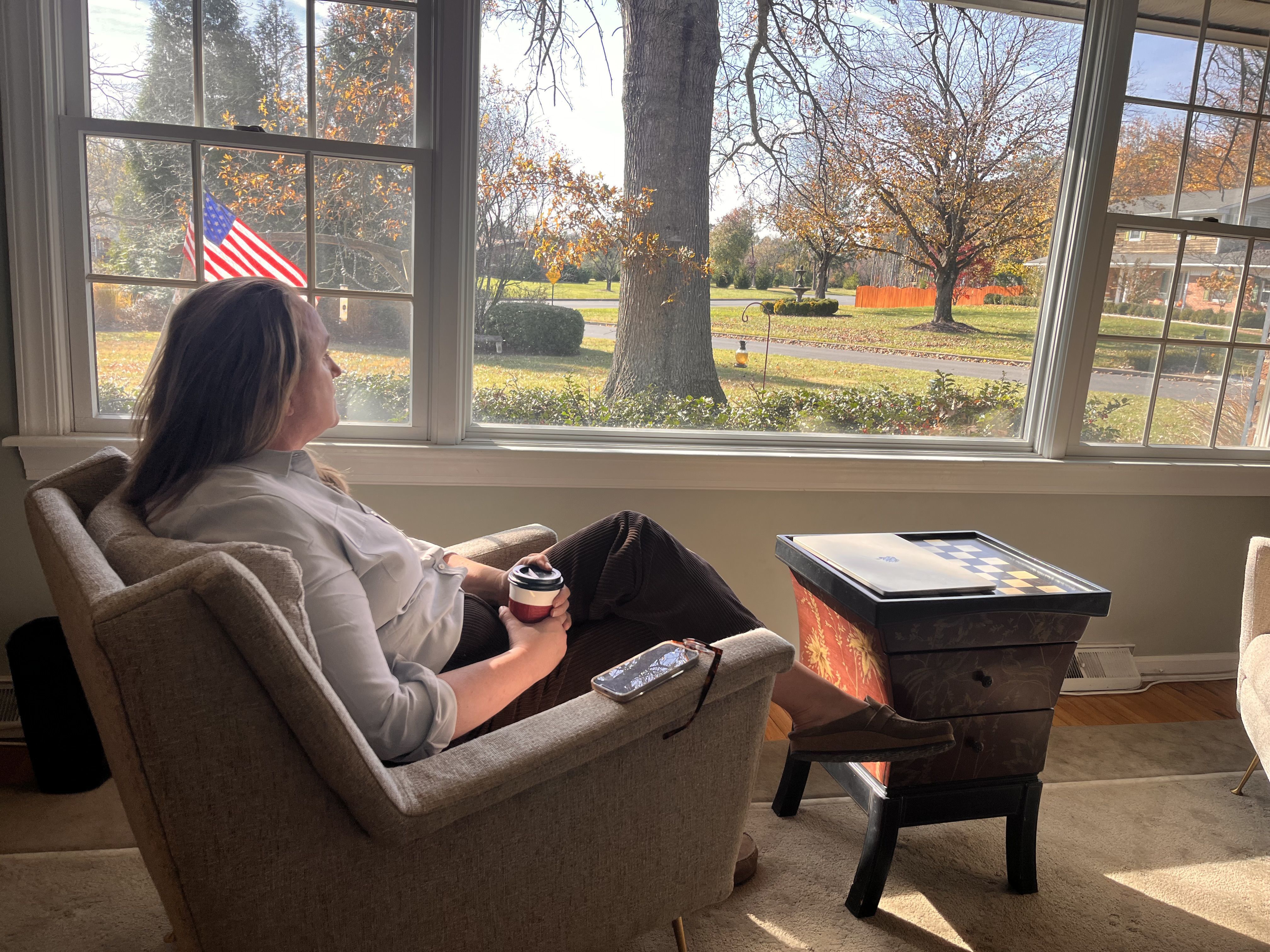
  • Gov. Josh Shapiro says national Democrats folded in the federal shutdown, while he stayed ‘at the table’ for Pa.’s late budget deal

    Gov. Josh Shapiro says national Democrats folded in the federal shutdown, while he stayed ‘at the table’ for Pa.’s late budget deal

    The turning point in Pennsylvania’s budget impasse, by Gov. Josh Shapiro’s telling, came just before Halloween, when he and leaders in Harrisburg gathered in his stately, wood-paneled office to meet twice daily to hash out a deal to end the bitter, monthslong stalemate.

    The long grind eventually led to compromises 135 days in, and a deal Shapiro said he thinks is far better than what national Democrats, hoping to extend healthcare subsidies, got in Washington at the end of the federal shutdown.

    “Sometimes you’ve got to show that you’re willing to stay at the table and fight and bring people together in order to deliver,” Shapiro told The Inquirer in an interview Friday, touting the state budget agreement finally signed that week.

    “I think it’s a stark contrast, frankly, with what happened in D.C., where they didn’t stay at the table, they didn’t fight, and they got nothing,” he said.

    Washington is controlled by Republicans, while in Pennsylvania, Democrats control the state House and governorship, and Republicans hold a majority in the Senate.

    Both state and federal budgets were signed the same day, offering Pennsylvanians relief from more than a month of government dysfunction at two levels. But for Shapiro — an exceedingly popular Democratic governor facing reelection in 2026 as whispers swirl over his potential 2028 presidential ambitions — the moment was bigger than a procedural win. In the end, Shapiro, preaching his oft-used slogan of “getting things done,” cast the outcome as proof he can muscle through gridlock of a divided legislature, cut deals under pressure, and hold firm where others cave.

    So what if it took almost five months? Shapiro argues. At least he didn’t fold.

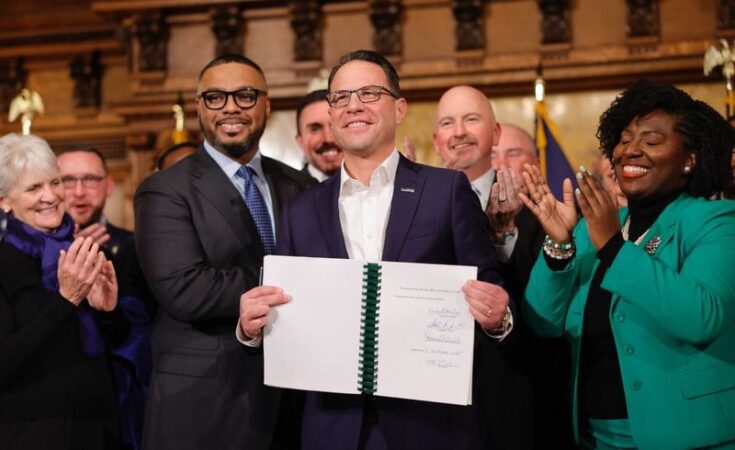
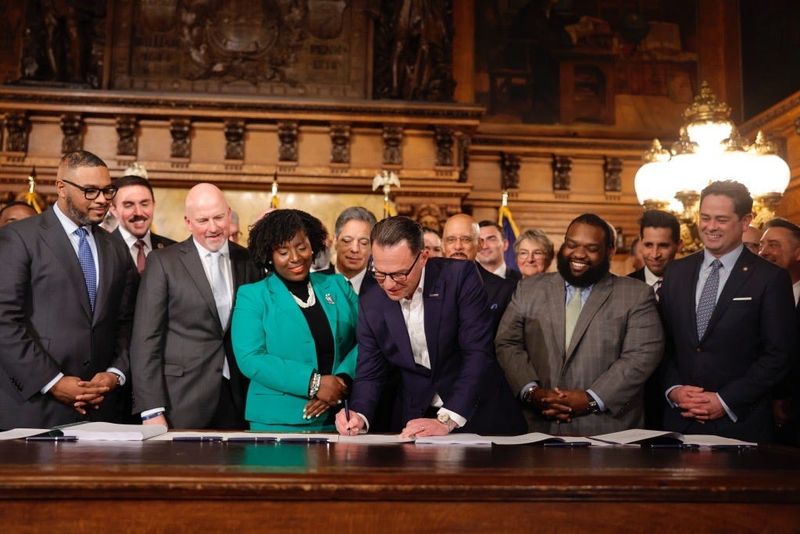
    “I would have hoped to have gotten this budget done, you know, 100 or so days earlier,” Shapiro said, putting pen to paper in the state Capitol building’s baroque reception room last week. “But I think what you also saw was the result of having the courage to stay at the table and keep fighting for what you believe in. And we got a lot more than we gave in this budget.”

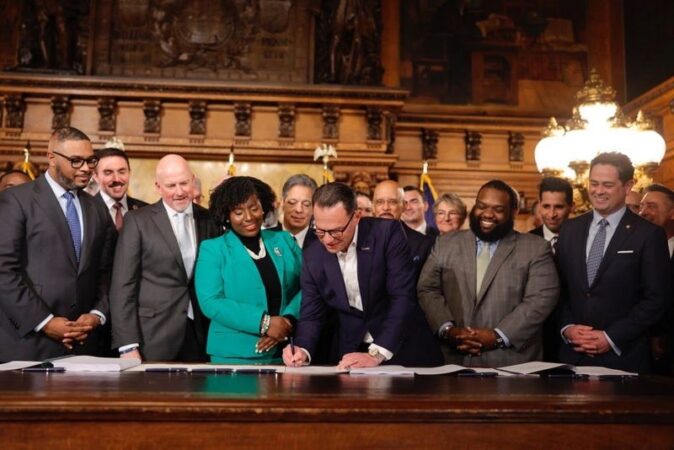
    Gov. Josh Shapiro signs the fiscal year 2025-26 budget surrounded by General Assembly members on Nov. 12 at the Capitol in Harrisburg. The state budget had been due June 30, and Pennsylvania the final state in the country to approve a funding deal.

    As Shapiro portrays the outcome of Pennsylvania’s 2025 state budget as an across-the-board victory, the path to get there was harder and messier than he would have liked: a nearly five-month slog that strained his dealmaker image and forced concessions to get the deal across the line — including no new money for mass transit. The absence of a new funding stream in the budget marked a final blow in the saga to Southeastern Pennsylvania commuters who rely on SEPTA — and who are likely to be reminded of the beleaguered agency’s funding woes as delays, staffing issues, and needed repairs persist.

    Critics are quick to note it took the self-proclaimed dealmaker so long to get a deal. Counties, school districts, and nonprofits struggled through four months without state payments while officials remained at loggerheads. Pennsylvania was the last state in the nation to pass a spending plan for the 2025-26 fiscal year.

    “He’s five months late. He’s the governor of the fifth-biggest state in the country and the last state to get a budget done,” GOP consultant Vince Galko said. “It’s not a failing grade because it got done, but it’s still a D.”

    ‘A tremendous cost’

    The $50.1 billion budget includes several key priorities for Shapiro and Democrats: significant increases in public education funding, a new tax credit for lower- and middle-income residents, continuation of a popular student-teacher stipend, and other economic and workforce development initiatives.

    House Speaker Joanna McClinton (D., Philadelphia) heaped praise on Shapiro during a Monday news conference celebrating the budget’s new Working Pennsylvanians tax credit. “I am grateful that here in Harrisburg we have a hero among us for working families, and his name is Josh Shapiro.”

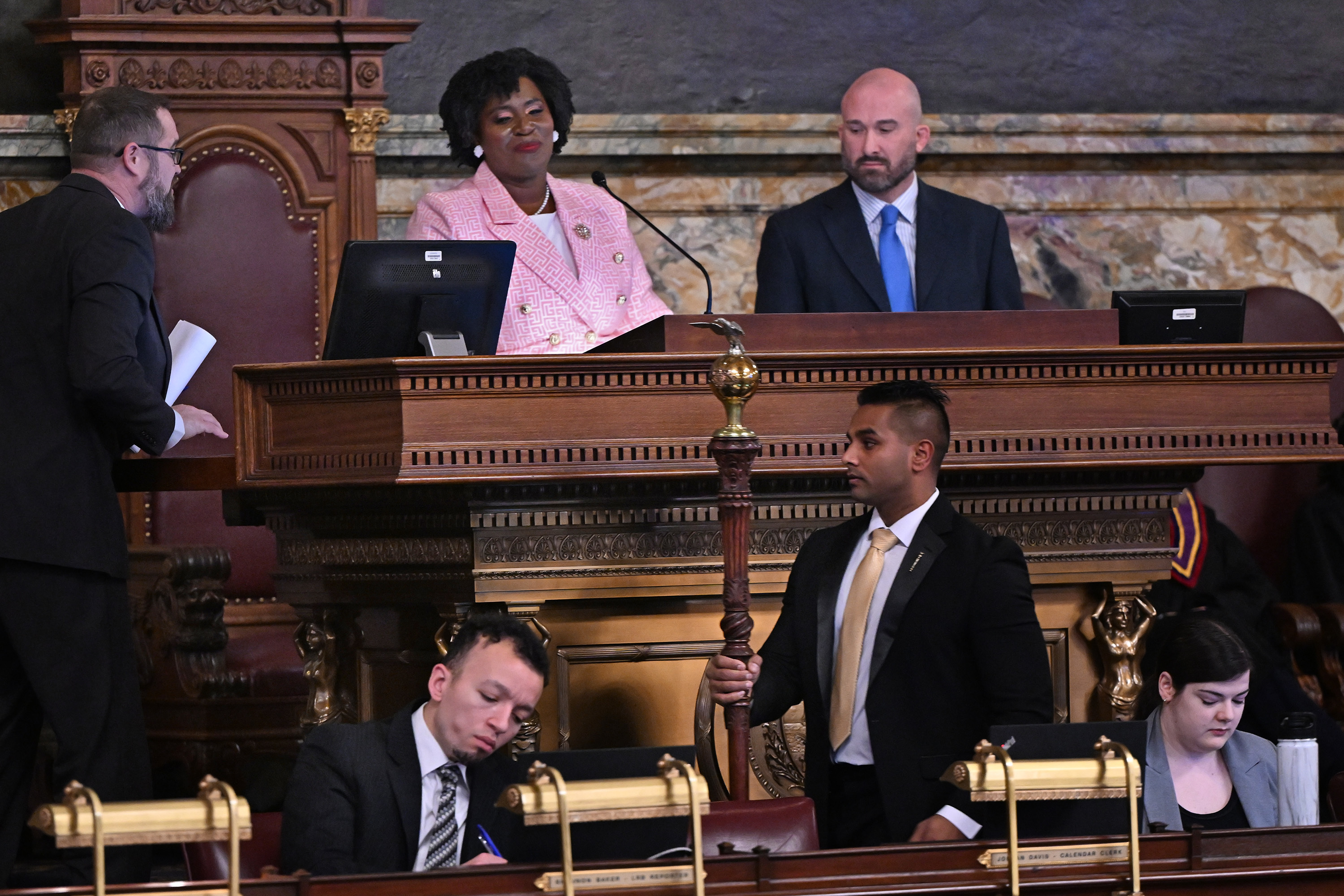
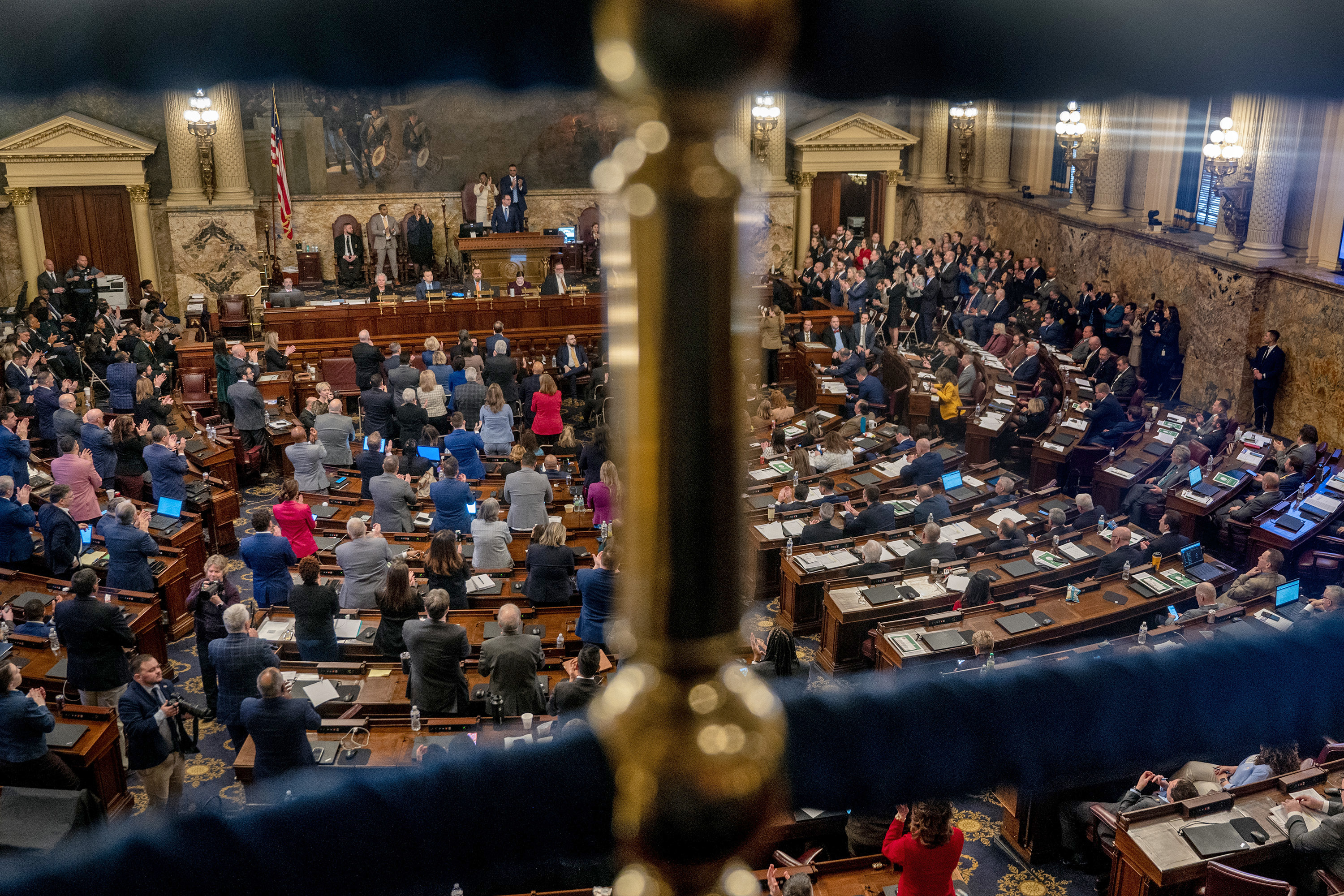
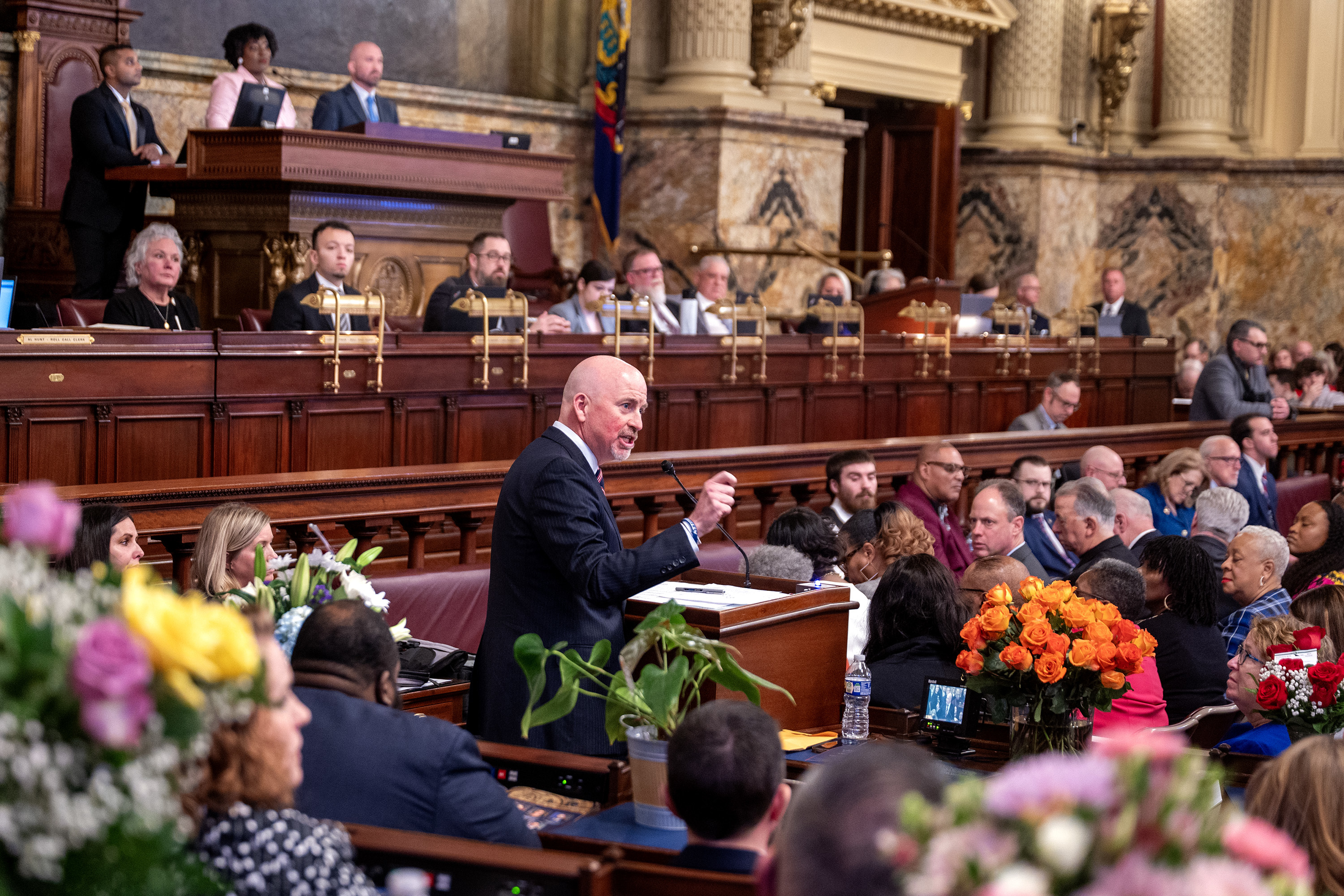
    State Rep. Joanna McClinton (D., Philadelphia) is on the rostrum in the House chamber on Jan. 7 after she was reelected speaker of the House despite an initial 101-101 tie vote along party lines.

    But the spending plan also fails to find a long-term revenue source for mass transit — a top Democratic priority that dominated debate in Harrisburg for weeks during the budget impasse and kicked up the state’s rural-urban divide. Shapiro ultimately removed mass transit from the negotiating table in September and approved his third short-term fix to keep SEPTA afloat. SEPTA and transit agencies across the state say they are still floundering.

    Shapiro last week called funding mass transit “unfinished business,” and top House Democrats maintain it’s a top priority for them heading into America’s 250th anniversary in 2026. Senate Republicans, for their part, were proud to not give in to a mass transit deal they didn’t like, even when advocates and Democrats unleashed intense political pressure on them to buckle, the two top Senate GOP leaders said in interviews.

    State Sen. Nikil Saval, a progressive lawmaker who represents part of Philadelphia, was one of a handful of Democrats to vote against the bipartisan Pennsylvania budget bill that was largely lauded by Democrats and Republicans in Harrisburg and beyond. Saval applauded the school funding, anti-violence grant funding, and childcare support but slammed the absence of transit funding and Democrats’ agreement to end their pursuit to join a key climate program.

    “Unfortunately, it comes at this tremendous cost,” he said. And ultimately, Saval said, the finished product didn’t seem to justify the time it took to get there.

    Gov. Josh Shapiro visits SEPTA headquarters on Aug. 10 to discuss funding for the transit agency. To his right, from left, are state Democratic legislators Sen. Anthony H. Williams; Sen. Nikil Saval; Rep. Ed Neilson; and Rep. Jordan Harris.

    It was not just transit funding that took a back seat to get the budget deal over the line. To the delight of Republicans — and the chagrin of some progressive Democrats and the climate-conscious — the deal also pulled the state out of the Regional Greenhouse Gas Initiative, a cooperative among states to reduce carbon emissions.

    For Shapiro, ending the state’s effort to join RGGI, a program of which he has long been skeptical, was hardly a political loss. It mirrored the path of other blue-state governors who are prioritizing economic headwinds over President Joe Biden-era climate and clean energy policies. In remarks made before signing the budget deal Wednesday, Shapiro said it also removed a hurdle in negotiations.

    “For years, the Republicans who have led the Senate have used RGGI as an excuse to stall substantive conversations about energy,” Shapiro said. “Today, that excuse is gone.”

    The powerful Pennsylvania Building and Construction Trades Council had lobbied heavily for lawmakers to walk away from the initiative, and it was a top win for state Republicans, who have long said the state should not join the multistate cap-and-trade emissions program they see as hamstringing Pennsylvania’s energy industry from accessing the state’s plentiful natural resources.

    ‘Two-a-days’

    Shapiro said he spent months “running back and forth” to broker a deal between Senate Majority Leader Joe Pittman (R., Indiana) and House Majority Leader Matt Bradford (D., Montgomery). The three met on-and-off in private talks, attempting to hammer out a compromise between the Democratic House and Republican-controlled Senate. But the week of Oct. 27, more than four months into the stalemate, Shapiro said a “breakthrough” finally came when he broadened the talks to include McClinton and Ward.

    Minority leaders Rep. Jesse Topper (R., Bedford) and Sen. Jay Costa (D., Allegheny) also joined the group, as it became clear that neither of the tightly controlled chambers would have the votes needed to pass a final budget deal.

    The group met twice daily in a conference room in Shapiro’s office. Shapiro, always a fan of the sports metaphor, called the meetings “two-a-days.”

    “We would come in the morning, go over the issues. We’d have our homework for a few hours, then come back in the afternoon and talk about, you know, the progress that we made,” Shapiro said. Coming out of that week, the governor said, leaders “had a clear direction on where we were going to go.”

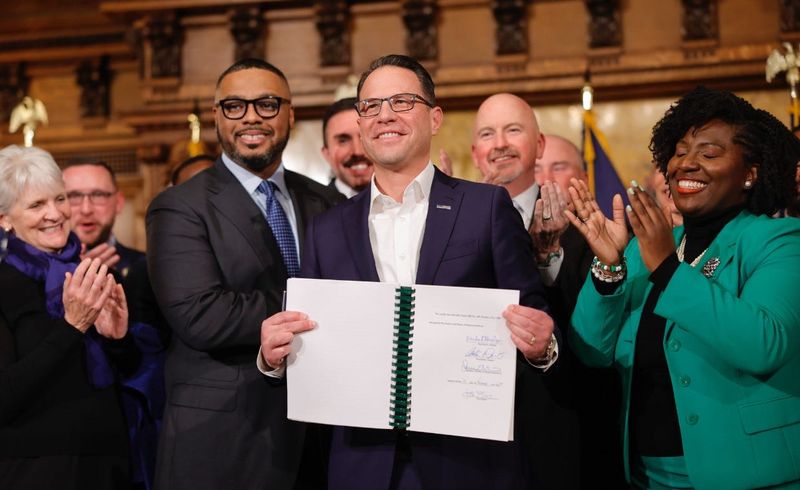
    Pennsylvania Lt. Gov. Austin Davis and Gov. Josh Shapiro show a budget document moments after it was signed Nov. 12 while surrounded by legislators at the state Capitol. A deal struck Nov. 12 ended a budget delay that lasted more than four months.

    At the negotiating table, Shapiro served as “referee and facilitator” between House Democrats and Senate Republicans, McClinton said in an interview Monday.

    “The man is nothing if not dogged and determined,” Bradford said of Shapiro last week.

    Two officials in the closed-door talks said Topper’s presence, as the House minority leader who understands House Democrats and Senate Republicans, helped change the dynamic and got leaders on track toward a deal. Other officials in negotiations noted that once the state’s two top leaders — McClinton and Ward, who are both the first women to serve in their roles — the breakthrough deal swiftly came together.

    Topper, for his part, didn’t try to take credit for striking the final budget deal, calling himself “a neutral arbiter” and “someone all sides can trust to have an honest dialogue.”

    There were other signs of tensions easing as the legislators worked through the fall. Ward, a top critic of Shapiro since he reneged on a promise he made over school vouchers during his first budget negotiations, joined the conversations. The two had not met in person since 2023, and had barely communicated. Suddenly, they were sitting across from one another.

    Kim Ward, president pro tempore of the Pennsylvania Senate, talks with her chief of staff Rob Ritson in her office Tuesday, Jan. 17, 2023, before heading out to preside over the swearing-in of Lt. Gov. Austin Davis in the Senate chambers.

    Ward said her criticisms of Shapiro still stand — she wants him to be more transparent, among other disagreements. But she described the conversations as “very cordial, very professional.” And there were moments of levity that helped, said the top Republican leader in the Senate, who is known for her wry humor.

    “He did leave me a sugar sprinkle heart [cookie] one day at my seat, and I told him, ‘You know, I’m too old for you, and we’re both married,’” she joked.

    Compromise, ‘in this day and age’

    As Shapiro looks toward reelection in 2026, his likely opponent — the GOP’s endorsed candidate, State Treasurer Stacy Garrity — is already throwing barbs at the handling of the budget.

    “I can’t understand why all these legislators think they did a great job,” she said on The Conservative Voice radio program, breaking with GOP leaders, like Ward and Pittman, who lauded the deal. “… Next year, they’re going to have to dip into the Rainy Day Fund to plug a budget, and then taxes are going to go up.”

    Because of how long this budget took to finalize, Shapiro will already need to introduce his next budget in just three months, and in proximity to the 2026 midterms and Pennsylvania governor’s election. But it’s unclear whether those negotiations will be as fraught, given budgets tend to get resolved faster in election years with both parties eager to focus on the campaign trail.

    And polling shows Pennsylvania’s governors throughout history have rarely been blamed for budget impasses.

    “In this day and age, I would not downplay the fact that there was compromise,” said Berwood Yost, a pollster with Franklin and Marshall College. “People want their problems solved. They want politicians to do things that help their everyday lives and that, for most people, means some kind of compromise. Getting this problem solved fits with his narrative.”

    Yost thinks Shapiro’s bigger challenge will be answering rumors about his national ambitions as he tries to run for reelection in Pennsylvania.

    Galko, the GOP consultant, looked further ahead to a potential 2028 presidential election. The budget impasse, he said, could provide material for Democratic rivals on the national stage. The possible field is filled with other governors, several from blue states, like Gov. JB Pritzker of Illinois and Gov. Gavin Newsom of California, where in-state dealmaking is easier among a uniform legislature.

    “If he’s unable to negotiate with the Pennsylvania Senate, what’s he gonna do when he goes up against China or Russia?” Galko asked, previewing the possible attack.

    Ultimately, history suggests Shapiro’s political success is likely to hinge less on the nuts and bolts of a budget only some Pennsylvanians — and even fewer outside Pennsylvania — are familiar with, and more on his ability to bolster his image as a bipartisan governor in a purple state.

    On Friday morning in South Philadelphia, Shapiro sported a bomber jacket while posing for selfies with Eagles fans, nodding along to a rock band’s cover of “Santeria” in a tent outside the Xfinity Mobile Arena at an event hosted by radio station WMMR.

    Casually, almost as a throwaway line, Shapiro mentioned to radio hosts Preston and Steve during an interview that he planned to bring Michigan Gov. Gretchen Whitmer — a fellow swing-state governor seen, too, as a possible 2028 Democratic contender — as his guest to the Eagles-Lions game at the Linc that Sunday.

    “She actually said, ‘Is it OK if I wear Lions stuff?’” Shapiro told the kelly green-clad crowd in Philadelphia, riffing on the friendly football rivalry — the undercurrents of national politics left unspoken. “And I’m like, ‘No problem. You’re on your own in the parking lot. I can’t protect you.’”

    Michigan Gov. Gretchen Whitmer joined Pennsylvania Gov. Josh Shapiro at Sunday’s game between the Eagles and Detroit Lions at Lincoln Financial Field.

    The event was a food drive but also served as a tribute to the station’s beloved late host, Pierre Robert. Shapiro brought along a commendation from the governor’s office for the occasion.

    “He created community, created joy, brought people together,” Shapiro said of Robert. “You think about just how divided we are as a world, there’s a few things that still bring us together, right?”

    “By the way, I’ve learned those lessons. That’s what I try and do governing with a, you know, divided legislature.”

    Music and sports, the governor mused before the crowd of Philadelphia fans, are two things that bridge the gap. “Go Birds,” he added with a grin.

    Staff writer Katie Bernard contributed to this article.

  • The ‘No Kings’ rallies were a start. Now what?

    The ‘No Kings’ rallies were a start. Now what?

    In my younger days, I enjoyed sports talk radio.

    A favorite of mine was ESPN’s Mike and Mike. I remember during the height of the Colin Kaepernick protest, Mike Golic commended Kaepernick for his attention-grabbing display and the reasons behind it.

    But Golic turned the tables on Kaepernick and asked what the quarterback planned to do to achieve the goals he sought through his protest.

    I would love to ask white people who were part of the “No Kings” rally recently the same question, but I am unsure of what tangible outcome was sought from it. It seemed like an occasion to voice their displeasure, so I am unsure what the next step is beyond planning another “protest” in the next few months.

    The optics from the mass demonstration were indeed impressive: seven million people, predominantly older and white, took part in protests nationwide. That cannot be ignored. But the substance of these protests was lacking.

    Not according to news media pundits, who declare that these acts are signs of the anger and emerging resistance to the Trump administration we’ve been waiting for.

    But “No Kings” shouldn’t be confused with the Arab Spring.

    Protesters made no demands. They caused no ruckus. In fact, this “protest” seemed more like a party than a desperate attempt to save humanity.

    Don’t get me wrong.

    Protesting one’s grievances in an attempt to acquire a remedy for them by way of public policy is a good thing. Black people are well acquainted with our history of protest and resistance to unjust laws.

    Lessons from the civil rights era

    But the lessons for all to learn from the history of Black resistance, particularly the civil rights movement, is 1) there is always a tangible demand for something or numerous things, 2) there’s a righteous anger that is harnessed into a tangible action (e.g., protest, boycott, divesting, etc.) to produce the demand, and 3) there is a desperation that yields a willingness to sacrifice in the name of their humanity.

    The “No Kings” protest had none of these.

    But it did have singing, dancing, and folks in costumes. Indeed, there is room for joy within any social movement (if you can call this a social movement yet, I am not sure), and there’s been that at protests before.

    Joy is one of the fruits of our work, whether it comes from protest or other mass action, but a protest isn’t a party.

    The Rev. Dr. Martin Luther King and other civil rights leaders march in Memphis on March 28, 1968. He was killed a week later.

    Organized protests should elicit a response that either brings the oppressor to their knees and forces them to concede the demand, or, at the very least, brings them to the negotiating table.

    The “No Kings” rally produced only one response from Donald Trump: an AI video of a “King Trump” jet dumping what appeared to be liquid feces on the protesters. Clearly, demonstrators got a reaction from Trump, but not the kind that relieves any of the pressure they face at the kitchen table.

    I previously commented that white people have a decision to make. That is, whether they intend to fight for their rights and the rights of nonwhite people, or only for their own rights. I’m not sure what these protests suggest is their answer to that question. But my advice is to learn from the civil rights movement.

    Some sit it out

    I highly doubt white Americans can “save” democracy in America by way of reconciling its relationship with white supremacy absent Black people. However, a lot of us have chosen to sit out these protests because many of the people protesting Trump are likely responsible for his return to power.

    We’re tired of persevering through the hypocrisy in the name of survival, but I digress.

    Learn from the civil rights movement to strengthen this effort on behalf of all Americans. Concretely define the “movement’s” demand(s) via policy change that can directly begin to upend systemic oppression.

    Just as the civil rights movement improved the lives of all Americans, so should these coordinated mass demonstrations. Harness the real anger seen at town hall meetings, for example, to agitate and aggravate the power structure to show that these protests are a force to be reckoned with, as opposed to “a good time had by all.”

    Lastly, continue direct action with a consistency that demonstrates your demands aren’t a wish list, but rather the oxygen necessary to breathe.

    Taking it to the streets is definitely a start. But it’s nowhere near the finish.

    To reach the finish line, y’all have more work to do. Some Democrats in Congress need to learn these lessons, as well.

    Rann Miller is an educator and freelance writer based in southern New Jersey. His “Urban Education Mixtape” blog supports urban educators and parents of children attending urban schools. urbanedmixtape.com @UrbanEdDJ

  • Pa. lawmakers and Gov. Josh Shapiro have approved a $50.1 billion state budget, officially ending monthslong impasse

    Pa. lawmakers and Gov. Josh Shapiro have approved a $50.1 billion state budget, officially ending monthslong impasse

    HARRISBURG — The contentious — and, at times, bitter — Pennsylvania budget stalemate has finally ended.

    Gov. Josh Shapiro signed the nearly $50.1 billion state budget Wednesday, as part of a breakthrough bipartisan deal that ends a key climate initiative and increases public school funding. Schools, counties, and social service providers will soon receive four months of withheld state payments, lapsed after the budget deadline passed at the start of the new fiscal year on July 1, providing the much-needed relief that some say will come too late.

    The long-awaited budget deal involving Shapiro, House Democrats, and Senate Republicans marks the first time Pennsylvania’s state budget has topped $50 billion. State spending and revenue earnings have skyrocketed in the post-COVID-19 years due to federal cash infusions. The budget is a 4.7% increase in spending over the prior fiscal year and includes no new tax increases. Lawmakers and Shapiro agreed to tap into underutilized special funds and use the state’s surplus to address a budget shortfall, as Pennsylvania is on track to spend more than it brings in this fiscal year and in the future.

    Democrats (left) stand to applaud a tax cut proposal while Republicans (right) remain seated as Gov. Josh Shapiro delivers his third budget address to a joint session in the House chambers at the State Capitol Tuesday, Feb. 4, 2025. Shapiro, a Democrat, will need to negotiate with a split legislature.

    Both Republican and Democratic leaders celebrated the budget’s passage as a “true compromise,” noting that neither party got everything it wanted in the final deal. The spending plan includes significant energy and permitting changes cheered by Republicans and an earned-income tax credit and revisions to cyber charter funding long sought by Democrats, among other policy wins revealed Wednesday.

    “Today is a good day,” Shapiro said, opening his remarks before signing the budget bills into law in the Capitol building, flanked by Democratic lawmakers.

    “I would have loved to have stood here in this room with all of you on June 30, but as you know, Pennsylvania is just one of only three states in the country with a divided legislature,” Shapiro, a Democrat, said. “It requires all of us to compromise, to have tough conversations, and, ultimately, to find common ground.”

    Several leaders said the budget deal approved Wednesday would not have been possible months ago, as debate had devolved into partisan finger-pointing over who was responsible for the budget deadlock and who might benefit politically from it.

    Big GOP win: An end for RGGI

    Among the top wins for Senate Republicans is the end of the state’s efforts to join the Regional Greenhouse Gas Initiative, which former Democratic Gov. Tom Wolf entered without legislative approval in 2019 and has been tied up in litigation ever since. The program has drawn the ire of Republicans, and in floor remarks Wednesday, House Minority Leader Jesse Topper (R., Bedford) called it the “No. 1 issue holding Pennsylvania back from economic growth.” The 12-state program, known as RGGI, is an interstate cap-and-trade initiative that charges power plants for the amount of carbon emissions they release into the air.

    House Minority Leader Jesse Topper (R., Bedford) speaks on Jan. 7, 2025, on the first day of the 2025-2026 legislative session.

    Ahead of a final budget deal, some Democratic lawmakers and environmental groups spoke out against ending Pennsylvania’s involvement in RGGI as a threat to the environment. In the end, most Democratic lawmakers voted in favor of the omnibus budget bill that ended the state’s pursuit to join the initiative.

    House Majority Leader Matt Bradford (D., Montgomery), a top negotiator of the budget deal, told The Inquirer on Wednesday that Democrats’ agreement to leave RGGI was part of a broader compromise to end the impasse.

    “I’m one who believes there should be a price on carbon, but I recognize the reality of the situation and compromise is required,” Bradford added.

    House Majority Leader Matt Bradford (D., Montgomery) speaks on the first day of the 2025-2026 legislative session.

    Shapiro and Democratic leaders were able to persuade Republicans, in turn, to spend more than they had wanted to this fiscal year. That additional spending allowed Democrats to invest more in public education, a new earned-income tax credit targeted toward working Pennsylvanians, and more.

    “It’s much more money than we want to spend, and it took a lot longer than we wanted, but I think it was worth the wait,” said Senate President Pro Tempore Kim Ward (R., Westmoreland) in floor remarks Wednesday. “I am actually excited to vote for this budget.”

    Dems win new funding for schools, but not mass transit

    The budget deal includes more than $665 million in new funding for public schools, approximately $562 million of which would be funneled through the state’s adequacy and tax equity formulas as part of an effort to close what experts call a $4 billion “adequacy gap.“ These formulas were created last year in response to a 2023 court ruling that found Pennsylvania’s public education funding system unconstitutionally deprives students from poorer districts of an adequate and equitable education.

    Senate Minority Appropriations Chair Vince Hughes (D., Philadelphia) applauded the budget agreement for its investments in public school funding, gun violence prevention, and the student-teacher stipend, among other things.

    “This budget has good work in it that helps address … the issue of affordability, which sang loud and clear in the most recent election as a predominant issue that Pennsylvanians want us to address,” Hughes said on the Senate floor Wednesday.

    In addition, the budget includes changes long sought by Democrats to how Pennsylvania funds and oversees its cyber charter schools. Cyber charter school leaders warned that the changes might lead to closures and mass layoffs for the virtual schools, which often serve the state’s most vulnerable populations, but they were resoundingly celebrated by Democrats and public education experts.

    “We finally reformed our cyber charter school system,” Shapiro said to boisterous applause. “If a parent wants to send their child to a cyber school, that’s fine. That’s their prerogative. But we shouldn’t be overfunding them at the expense of Pennsylvania’s public schools.”

    The deal, however, does not include any additional funding for mass transit, another major Democratic priority. Democrats removed mass transit from the budget negotiation table in September, after a lawsuit required SEPTA to undo its service cuts and Senate Republicans appeared unwilling to make a long-term investment in mass transit. Instead, Shapiro approved SEPTA’s use of its capital funds to help fill the budget deficit of the state’s largest mass transit agency for the next two years.

    Bradford told reporters that securing a long-term revenue stream for transit agencies remains a top priority for his caucus in future budgets.

    Inflamed, in part, by the mass transit debate, negotiations over the budget had been stalled for months until the end of October, when Shapiro convened top legislative leaders to return to talks. The renewed budget negotiations included House Speaker Joanna McClinton (D., Philadelphia) and Ward, who are the highest-ranking officials in their respective chambers but had usually stayed out of the budget talks led by Bradford and Senate Majority Leader Joe Pittman (R., Indiana).

    Counties are still hurting from the late budget

    Unlike the federal government, Pennsylvania’s state government does not entirely shut down when a budget has not been approved. Lawmakers and state employees continued to be paid throughout the 135-day impasse. But the late budget had significant impacts on school districts, counties, and social service providers — all of which are awaiting billions in expected state payments that should begin flowing again soon.

    The lack of state funding has required schools, counties, and service providers to cut jobs, take out expensive loans, or stop services altogether.

    Over the course of the more than four-month impasse, Pennsylvania’s counties spent millions to make up for the loss of state dollars. In Montgomery County, officials estimated the county had spent between $40 million and $50 million from budget reserves to maintain services. Chester County officials estimated they spent $40 million in reserves, while Delaware County officials spent $12 million each month until October, when they had to reduce payments on some of their bills in the absence of state funding. Counties expect to be reimbursed for those expenses, but it is unclear when the reimbursements will come.

    “Counties are at the breaking point, financially speaking,” said Kyle Kopko, the executive director of the County Commissioners Association of Pennsylvania. If reimbursements are not delivered swiftly, Kopko added, it could force additional nonprofits that provide social services to shutter.

    Even as county leaders were grateful for an end to the impasse, some expressed frustration over the contents of the final budget deal. The agreement, Kopko said, included a 2% cut to mental health services statewide, though he said the cut likely would not affect payments to counties. And it left other funds counties rely on to pay their bills — like 911 fees — stagnant, despite inflation.

    Counties in Pennsylvania can increase their revenue only by raising property taxes. By failing to provide additional funds for social services, county officials argued Wednesday, lawmakers had created a situation in which counties would immediately or eventually have to raise property taxes.

    The combination of the cuts and the failure to increase funds for public transit and other needs, Delaware County Councilmember Christine Reuther said, meant the state had essentially passed the buck to the counties.

    “They’re not solving problems. They’re not saving people from tax increases,” she said. “They’re just making somebody else do their dirty work.”

    This suburban content is produced with support from the Leslie Miller and Richard Worley Foundation and The Lenfest Institute for Journalism. Editorial content is created independently of the project donors. Gifts to support The Inquirer’s high-impact journalism can be made at inquirer.com/donate. A list of Lenfest Institute donors can be found at lenfestinstitute.org/supporters.

  • After big wins Tuesday, Democrats think they can oust Brian Fitzpatrick. But the Bucks Republican is resilient.

    After big wins Tuesday, Democrats think they can oust Brian Fitzpatrick. But the Bucks Republican is resilient.

    Should last week’s election results make Brian Fitzpatrick nervous?

    Bucks County Democrats think so.

    The Republican lawmaker has been like Teflon in the 1st Congressional District, which includes all of Bucks County and a sliver of Montgomery County. He persistently outperforms the rest of his party and has survived blue wave after blue wave. First elected in 2016, he has remained the last Republican representing the Philadelphia suburbs in the U.S. House.

    But Democrats pulled something off this year that they hadn’t done in recent memory. They won each countywide office by around 10 percentage points — the largest win margin in a decade — and for the first time installed a Democrat, Joe Khan, as the county’s next top prosecutor.

    Now they are looking to next year, hopeful that County Commissioner Bob Harvie, the likely Democratic nominee, succeeds where Fitzpatrick’s past challengers have failed.

    “This year was unprecedented, and sitting here a year before the midterm, you have to believe that next year is going to be unprecedented as well,” State Sen. Steve Santarsiero, who is also the county party’s chair, said Wednesday.

    Eli Cousin, a spokesperson for the Democratic Congressional Campaign Committee, predicted a “perfect storm brewing for Democrats” to beat Fitzpatrick. “He and Trump’s Republican Party are deeply underwater with Bucks County voters; he has failed to do anything to address rising costs, and we will have a political juggernaut in Gov. Josh Shapiro at the top of the ticket,” Cousin said.

    There are several reasons Democrats may be exhibiting some premature confidence: Despite a spike in turnout for an off-year election, far fewer voters turn out in such elections than do in midterms. Fitzpatrick is extremely well-known in Bucks, where his late brother served before he was elected to the seat. He has won each of his last three elections by double digits.

    Just last year, President Donald Trump narrowly won Bucks County, becoming the first Republican presidential candidate to do so since the 1980s, and Republicans overtook Democrats in voter registrations last year.

    But Tuesday was a sizable pendulum swing in the bellwether. Some of the communities, like Bensalem, that drove Trump’s victory flipped back to blue.

    The last time Democrats had won a sheriff’s race in the county was 2017, a year after Trump was elected the first time. That year, Democrats won by smaller margins, and a Republican incumbent easily won reelection as district attorney. The following year, Fitzpatrick came the closest he has yet to losing a race, but still won his seat by 3 percentage points.

    This year’s landslide, Democrats say, is a warning sign.

    “There were Democratic surges in every place that there’s a competitive congressional seat, and that should be scaring the s— out of national Republicans,” said Democratic strategist Brendan McPhilips, who managed Democratic Sen. John Fetterman’s campaign in the state and worked on both of the last Democratic presidential campaigns here.

    “The Bucks County seat has always been the toughest, but it’s certainly on the table, and there’s a lot there for Bob Harvie to harness and take advantage of.”

    Bucks County Democratic Commissioner Bob Harvie speaks during an Oct. 5 rally outside the Middletown Township Police Department and Administrative Offices in Langhorne.

    Harvie, a high school teacher-turned-politician, leapt on the results of the election hours after races were called, putting out a statement saying, “There is undeniable hunger for change in Bucks County.”

    “The mood of the country certainly is different,” Harvie said in an interview with The Inquirer on Thursday. “What you’re seeing is definitely a referendum.”

    Lack of GOP concern

    But Republicans don’t appear worried.

    Jim Worthington, a Trump megadonor who is deeply involved in Bucks County politics, attributes GOP losses this year to a failure in mail and in-person turnout. Fitzpatrick, he said, has a track record of running robust mail voting campaigns and separating himself from the county party apparatus.

    “He’s not vulnerable,” Worthington said. “No matter who they run against him, they’re going to have their hands full.”

    Heather Roberts, a spokesperson for Fitzpatrick’s campaign, noted that the lawmaker won his last election by 13 points with strong support from independent voters in 2024 — a year after Democrats performed well in the county in another off-year election. She dismissed the notion that Harvie would present a serious challenge, contending the commissioner “has no money and no message” for his campaign.

    Fitzpatrick is also a prolific fundraiser. He brought in $886,049 last quarter, a large amount even for an incumbent, leading Harvie, who raised $217,745.

    “Bob Harvie’s not going to win this race,” said Chris Pack, spokesperson for the Defending America PAC, which is supporting Fitzpatrick. “He has no money. He’s had two dismal fundraising quarters in a row. That’s problematic.”

    Pack noted Harvie’s own internal poll, reviewed by The Inquirer, showed 57% of voters were unsure how they felt about him.

    “An off-off-year election is not the same as a midterm election,” Pack said, adding he thinks Fitzpatrick’s ranking as the most bipartisan member of Congress will continue to serve him well in Bucks County.

    “He’s obviously had well-documented breaks on policy with the Republican caucus in D.C., so for Bob Harvie to try to say Brian Fitzpatrick is super far right, no one’s gonna buy it,” Pack said. “They haven’t bought it every single election.”

    On fundraising, Harvie said he had brought in big fundraising hauls for both of his commissioner races, and said he would have the money he needed to compete.

    Of the four GOP-held House districts Democrats are targeting next year in the state, Fitzpatrick’s seat is by far the safest. That raises the question: How much money and attention are Democrats willing to invest in Pennsylvania?

    “Who’s the most vulnerable?” asked Chris Nicholas, a GOP consultant who grew up in Bucks County. The other three — U.S. Rep. Scott Perry and freshman U.S. Reps. Rob Bresnahan, in the Northeast, and Ryan Mackenzie, in the Lehigh Valley — won by extremely narrow margins last year. “If you’re ranking the four races, you have Rob Bresnahan at the top and Fitzpatrick at the bottom,” Nicholas said.

    National Democrats seldom invest as much to try to beat Fitzpatrick as they say they will, Nicholas said. And he pointed to 2018, a huge year for Democrats, when they had a candidate in Scott Wallace who was very well-funded, albeit far less known than Harvie, and still came up short.

    Democrats see Harvie as the best shot they have had — a twice-elected commissioner, with name ID from Lower Bucks County, home to many of the district’s swing voters. And the 1st District is one of just three in the country that is held by a Republican member of Congress where Vice President Kamala Harris won last year.

    And then there’s Shapiro, who Democrats think will give a boost to candidates like Harvie as he runs for reelection next year. Shapiro won the district by 20 points in 2022.

    Following the playbook used by successful candidates this year, Democrats are likely to argue to voters that Fitzpatrick has done little to push back on Trump — while placing cost-of-living concerns at the feet of the Republican Party.

    “A lot of people are, you know, upset with where we are as a nation,” Harvie said. “They grew up expecting that if you worked hard and played by the rules, you’d be able to have all the things you needed and have a good life. And that’s not happening for them.”

    The Trump effect

    Democrats won races in Bucks County, and across the country, this year by tying their opponents to Trump — a tactic that was especially effective in ousting Republican Sheriff Fred Harran, who partnered his office with U.S. Immigration and Customs Enforcement. In recent cycles, that strategy has not worked against Fitzpatrick.

    “The big thing Democrats throw against Republicans is you’re part and parcel of Trump and MAGA, and Fitzpatrick voted against Trump,” Nicholas said.

    Over nearly 10 years in Congress, Fitzpatrick has been a rare Republican who pushes back on Trump, though often subtly. Fitzpatrick, who cochairs the bipartisan Problem Solvers Caucus, was the lone Pennsylvania Republican to confirm former President Joe Biden’s electoral victory in 2020. A former FBI agent who spent a stint stationed in Ukraine, he is among the strongest voices of support for Ukraine in Congress, consistently pushing the administration to do more to aid the country as it resists a yearslong Russian invasion.

    Fitzpatrick was also one of just two House Republicans to vote against Trump’s signature domestic policy package, which passed in July. He voted for an earlier version that passed the House by just one vote, which Democrats often bring up to claim Fitzpatrick defies his party only when it has no detrimental impact.

    “He’s good at principled stances that ultimately do nothing,” said Tim Persico, an adviser with the Harvie campaign. “That is what has allowed him to defy gravity in the previous cycles. … Now the economy is doing badly. … People feel worse about everything, and Fitzpatrick isn’t doing anything to help with that. I think it makes it harder to defy gravity.”

    Trump has endorsed every Republican running for reelection in Pennsylvania next year except Fitzpatrick. While the Bucks County lawmaker has avoided direct criticism of the president, in an appearance in Pittsburgh over the summer, Trump characterized the “no” vote on the domestic bill as a betrayal.

    Fitzpatrick has faced more conservative primary challengers in the past, but no names have surfaced so far this cycle, a sign that even the more MAGA-aligned may see him as their best chance to hold onto the purple district.

    Keeping his distance from Trump, and limiting Democrats’ opportunities to tie the two together, may remain Fitzpatrick’s best path forward.

    “Anybody who wants to align themselves with an agenda of chaos and corruption and cruelty ought to be worried,” said Khan, Bucks County’s new district attorney-elect.

    This suburban content is produced with support from the Leslie Miller and Richard Worley Foundation and The Lenfest Institute for Journalism. Editorial content is created independently of the project donors. Gifts to support The Inquirer’s high-impact journalism can be made at inquirer.com/donate. A list of Lenfest Institute donors can be found at lenfestinstitute.org/supporters.