Sen. John Fetterman (D., Pa.) said he would back a Republican plan to override the Senate filibuster if it meant passing a bill to reopen the government.
In an interview with The Inquirer on Tuesday, Fetterman admonished fellow Democrats who balk at the notion of using the so-called nuclear option to end the filibuster: “When I ran for Senate, everyone, including myself, said we’ve got to get rid of the filibuster. I don’t want to see any Democrats clutching their pearls about it now.
“If we’d had our way, the filibuster wouldn’t have been around for years.”
A staple of the Senate that has long been debated, the filibuster requires 60 votes to pass most legislation in the chamber.
Republicans have long vowed to protect the filibuster, noting that the 60-vote threshold presents a check on Democrats when they have the majority,but it’s now the rule standing in the way of their government funding bill. And in recent months, leaders have made moves to further weaken the minority party’s power, including bypassing the need to get Democratic support to confirm a slate of President Donald Trump’s nominees last month. Senate Majority Leader John Thune (R., S.D.) has thus far said he won’t use the same tactic to reopen the government.
Fetterman’s comments on Tuesday followed several Republicans floating the idea of getting rid of the filibuster in recent days.
Fetterman is one of three members of the Democratic caucus who voted with Republicans to reopen the government earlier this month, joining Sens. Catherine Cortez Masto of Nevada and Angus King, a Maine independent.
“If you look at my record, I’ve been voting the Democratic line, but this is different now. The tactic is wrong,” Fetterman said.
He said his main concern is the possibility that people in the state and across the country would face hunger if the federal government shutdown continues and Americans lose their Supplemental Nutrition Assistance Program (SNAP) benefits beginning Nov. 1.
“Nobody checks their political party when they’re hungry,” he said. “It’s not about a political side blinking. The only losers are the American people now.”
Fetterman added that he is in favor of extending tax credits, as Democrats are demanding during the shutdown. With those tax credits set to expire, people are going to start seeing higher prices when they sign up for health insurance come open enrollment in November, experts say.
“I don’t want people clobbered,” Fetterman said. “But Democrats designed them to expire this year. We passed these things when we were in the majority.”
Seeing room for dialogue, Fetterman said Thune “is an honorable man, and I believe a productive conversation to extend tax credits can be had with him.”
Sen. Andy Kim (D., N.J.) said he had multiple conversations with Senate Republicans on Tuesday who said they would “adamantly oppose” ending the filibuster.
“That’s been a huge part of how they’ve been able to lock down power here in D.C. before,” Kim said.
He said from his perspective, Senate Democrats are focused on getting the House back to work to negotiate a deal that includes the extended healthcare subsidies in a government funding bill.
“This is not an issue of Senate procedure. This is an issue of just doing our job.” Kim did not comment on Fetterman’s support for a filibuster carveout to end the shutdown.
In 2022, according to the media and politics site Mediaite, every Senate Democrat with the exceptions of then-Sens. Joe Manchin of West Virginia and Kyrsten Sinema of Arizona voted to eliminate the filibuster in a failed effort to pass former President Joe Biden’s elections overhaul.
A sometimes contrary figure, Fetterman has taken controversial stands in the past and is one of few Democrats who actively works with Republicans.
He has been criticized by progressives for his unwavering support of Israel in its war against Hamas.
And Fetterman garnered the enmity of some Democrats (and the praise of President Donald Trump) when he defended Immigration and Customs Enforcement by saying fellow Democrats’ calls to abolish the agency were “inappropriate and outrageous.”
As nearly 2 million Pennsylvanians brace for the loss of their food assistance next month due to thefederalgovernment shutdown, the Pennsylvania Department of Human Services is pinning the blame on Republicans on Capitol Hill.
States administer the federally funded Supplemental Nutrition Assistance Program, which provides support to low-income people, including families with children. But as the standoff in Congress prevents federal funding from flowing to states, Democratic Gov. Josh Shapiro’s administration entered the messaging battle over the cause of the disruption to benefits.
“Because Republicans in Washington D.C., failed to pass a federal budget, causing the federal government shutdown, November 2025 SNAP benefits cannot be paid,“ reads a pastel orange banner on the DHS website from Friday, alerting recipients of the Supplemental Nutrition Assistance Program to the impending changes.
The message reflects the mounting impacts of the government shutdown, which is in its third full week, and the growing political tensions between Republicans and Democrats on the state and national levels after lawmakers failed to pass funding to avert a government shutdown by Oct. 1.
Shapiro has frequently gone head-to-head with the Trump administration, but the use of a state government website is a notable escalation.
The governor said in a news release Monday that Congress already had kicked off hundreds of thousands of Pennsylvanians from Medicaid and SNAP when it passed President Donald Trump’s One Big Beautiful Bill Act in July.
“Now, Republicans are once again threatening vital support for Pennsylvania families and children — it’s time for them to pass a federal budget and end this shutdown.”
Pennsylvania Human Services Secretary Val Arkoosh added that “Inaction from Republicans in Congress” jeopardizes the well-being of Pennsylvanians.
A significant impact will be felt next month in Philadelphia, where half a million people will not receive SNAP benefits. The program,which is funded by the U.S. Department of Agriculture, serves households including elderly people, individuals with disabilities, and children.
Another Democratic-led state, Illinois, also referred to the lapse in funding as the “Republican federal government shutdown” on its benefits webpage. Other Democratic-led states near Pennsylvania, New Jersey and Delaware, have not posted political messages on their states’ SNAP benefits pages.
Republicans in Pennsylvania criticized the use of the DHS website for a partisan message.
“Public service isn’t a political weapon and using a government website to fuel your partisan agenda is indefensible,” the Pennsylvania GOPwrote Monday in a post on X.
The shutdown is “Democrat-led,” says the Trump administration’s State Department website.
“The Radical Left in Congress shut down the government,” declares a bright red banner on the U.S. Department of Housing and Urban Development homepage.
The rising political pressure comes as the Trump administration began rolling out highly politicized messaging to the public and federal employees after the government shutdown began earlier this month.
And some federal workers — nonpartisan civil servants who have been coping with plummeting morale and either being furloughed or working without pay during the shutdown — have been on the receiving end of politicized messaging, too.
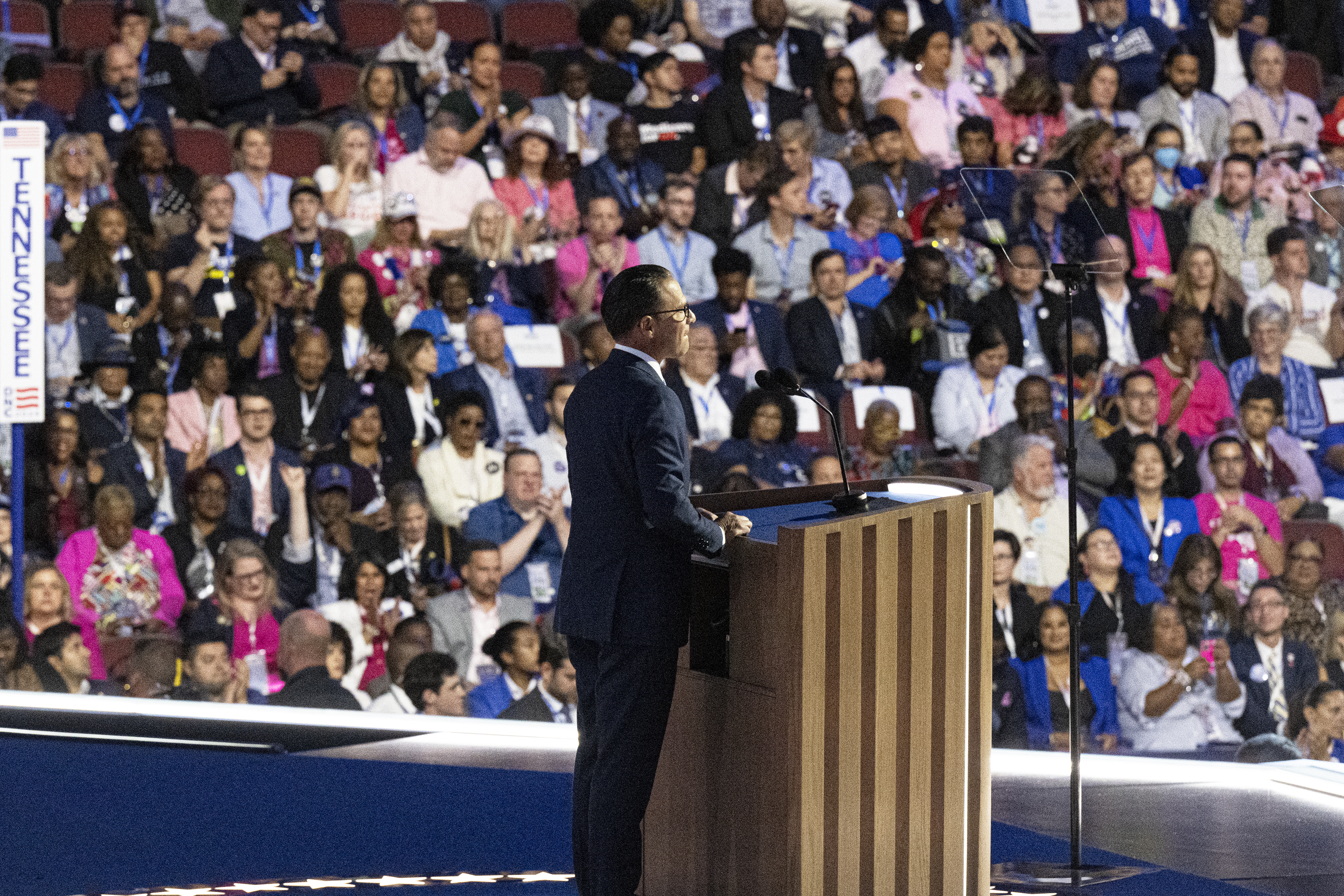
On Tuesday, Harper — an imprint of HarperCollins Publishing — announced the release of Shapiro’s forthcoming memoir, Where We Keep the Light: Stories From a Life of Service, which will hit shelves on Jan. 27, 2026.
Shapiro, 52, has worked in some level of government for his entire career: on Capitol Hill as a staffer, in Montgomery County as a commissioner, and in Harrisburg as a state representative, attorney general, and now governor. He has noted that he has never lost an election, going back to his election as student body president his freshman year at the University of Rochester. Along the way, elected officials have whispered about his talents as a politician, orator, and rumored presidential ambitions.
The Montgomery County native has become a key player in the national Democratic Party, touting a brand as a governor of a split legislature in the most sought-after swing state. His administration’s motto is “Get Stuff Done,” which he defines as bringing Democrats and Republicans together to accomplish long-delayed reforms, or restarting residents’ trust by improving their interactions with state government. (Pennsylvania still has not finished its state budget, which was due July 1, as legislators from the Democratic-controlled House and GOP-controlled Senate cannot agree on how much they should spend this fiscal year and causing school districts, counties, and nonprofits to take out significant loans to continue offering services during the 113-day budget impasse.)
Shapiro’s rise through the Democratic Party ranks skyrocketed last year, when he became a front-runner for vice president during Harris’ whirlwind, 107-day presidential campaign, in which she ultimately chose Minnesota Gov. Tim Walz as her running mate. Harris also released a book this year, which includes stories from her interview with Shapiro for the role.
Shapiro, who was born in Kansas City, Mo., before moving to Montgomery County, has credited his upbringing by his parents — his father a pediatrician, and his mother an educator — as laying the foundation for his life in public service. Shapiro has four children and is married to his high school sweetheart, Lori. He and his family still live in Abington Township and split their time between their family home and the governor’s mansion in Harrisburg.
The sense of loss that has permeated 2025 struck again this weekend when we learned of the sudden death of a Philly journalism legend, Michael Days, who guided the Philadelphia Daily News during most of its last dozen freewheeling and Pulitzer-winning years before we merged with The Inquirer in 2017. He was just 72, far too young. The top-line of Mike’s obituary was how, as the first African American to lead a newsroom in America’s founding city, he paid it forward by mentoring the next generation of rising Black journalists. But people like me who worked for him remember him more simply as the wisest and mostempathetic human being we ever had as a boss. He leaves right when the nation’s newsrooms need decent souls like Mike Days more than they ever did.
What a $10M bribe rumor says about Trump, Middle East peace, and America’s fall
President Donald Trump talks with Egypt’s President Abdel-Fattah el-Sissi during a summit to support ending the more than two-year Israel-Hamas war in Gaza after a breakthrough ceasefire deal, Oct. 13 in Sharm El Sheikh, Egypt.
The thing about being a 79-year-old president is that sometimes you just blurt stuff out, with no filter as to whether your words might be embarrassing, undiplomatic — or potentially incriminating.
Consider the case of Donald John Trump, the 47th U.S. president and the oldest one on the day of his election. Last week, in what may prove to be a fleeting moment of triumph as Trump celebrated a Gaza peace deal that included the release of 20 Israeli hostages, POTUS arrived at an Egyptian resort town for a Middle East summit. He kicked off the day with a one-on-one sit-down with Egypt’s strongman ruler, Abdel-Fattah el-Sissi.
“There was a reason we chose Egypt [for the summit] because you were very helpful,” Trump said as a gaggle of reporters and photojournalists entered their meeting room.
Really? Helpful in what way?
“I want to thank you,” the American president told Sissi, who seized power in a 2013 coup. “He’s been my friend right from the beginning during the campaign against Crooked Hillary Clinton. Have you heard of her?”
Here Trump was pushing, ever so absurdly, for the Nobel Peace Prize, and then he had to spoil it all by saying somethin’ stupid like, you bribed me. Well, he almost spoiled it, if more journalists — aside from MSNBC’s brilliant Rachel Maddow, who seized on the remark hours later — had grasped the potential import of this presidential prattle.
It’s certainly legal, if gross, for Trump to be close pals with Sissi, even if Human Rights Watch reports that the Egyptian dictator is “continuing wholesale repression, systematically detaining and punishing peaceful critics and activists and effectively criminalizing peaceful dissent.” What would not be legal is the Middle Eastern nation interfering in the 2016 election, in which Trump narrowly defeated Clinton in the handful of swing states that tipped the Electoral College.
What made Trump’s comments last week so jaw-dropping is that U.S. federal investigators worked for several years trying to prove exactly that scenario. In August 2024, days after Trump was nominated by the GOP for his second reelection bid, the Washington Post reported that the Justice Department investigated a tip that Sissi’s Egypt provided Trump with $10 million the candidate desperately needed in the 2016 homestretch to defeat Clinton. That happened right before Trump, as 45th president, reopened the spigot of foreign aid that had been halted because of Sissi’s human rights abuses.
It’s known that Trump did put $10 million into the campaign, which he listed as a loan. The Post in 2024 offered a tantalizing, if circumstantial, piece of evidence — that the Cairo bank had received a note from an agency believed to be Egyptian intelligence to “kindly withdraw” nearly $10 million in two, 100-pound bags full of U.S. $100 bills, five days before Trump took the oath of office.
But the investigative trail ran cold. In 2019, then-special counsel Robert Mueller turned the matter over to Trump’s appointees in the Justice Department, who of course didn’t pursue the president’s bank records. Neither — inexplicably — did Joe Biden’s attorney general, Merrick Garland, as the statute of limitations expired in January 2022. That’s where things stood last week before Trump started blathering in Sharm El Sheikh.
One reason I’m writing about this is the sheer frustration that Trump — yes, allegedly, possibly — might have gotten away with bribery to the point where he’s almost bragging about it in public. But I also think the mysterious case of the Egyptian bags of cash speaks to the present, dire American moment in a couple of ways.
For one thing, it casts a light on what’s really behind what Trump hopes will be viewed as the signature achievement of his second presidency. That would be the fragile peace deal that aims to end the last two years of bloodshed in Gaza that started with the Hamas terror attack of Oct. 7, 2023 and has resulted in at least 67,000 dead Palestinians and the utter destruction of their seaside homeland.
How did Trump get a deal that had eluded his predecessor Biden, in a region that has vexed every American president from both parties? It certainly helped that most of the power brokers with the clout and the cash to help end the fighting in Gaza are repressive strongmen — or, as Trump might call them, role models. And they all seem to speak the same language of corrupt back-scratching.
If those bags with $10 million in greenbacks did make their way to Trump in 2017, it looks like small change in today’s cross-Atlantic wheeling-and-dealing. After all, a key go-between in the negotiations — Qatar, which has good relations with Hamas and has hosted its exiled leaders — gifted America a $400 million jet that Trump plans to use not just as Air Force One but in his post presidency, while his regime has promised to protect the Qatari dictators if they are ever attacked.
Another key supporter of the plan is the United Arab Emirates, which also backs the UAE firm that recently purchased a whopping $2 billion in cryptocurrency from a firm owned by Trump’s family as well as the family of Steve Witkoff, the regime’s lead Middle East negotiator. At the same time, Trump’s U.S. government allowed UAE to import highly sensitive microchips used in artificial intelligence.
Witkoff’s negotiation end–game brought in Trump’s son-in-law, Jared Kushner, who forged close ties during his father-in-law’s first term with Saudi Arabia’s murderous de facto ruler Prince Mohammed bin Salman, who pulled the levers for a $2 billion investment in a hedge fund created by Kushner despite no prior expertise.
Those Saudi ties could prove critical to future stability in the region, and in a joint interview with CBS’ 60 Minutes Sunday night, Kushner and Witkoff made no apologies for mixing billion-dollar deals with the pursuit of world peace. “What people call conflicts of interest,” Kushner said, “Steve and I call experience and trusted relationships.”
OK, but those “trusted relationships” are built on a flimsy mountain of cash that could collapse at any minute. Look, I’m thrilled like everyone else that 20 Israeli hostages are finally reunited with their loved ones, and to the extent Trump and his regime deserve any credit, I credit them. But the art of the deal that the president is bragging about is all about the Benjamins — more worthy of applause on the floor of the New York Stock Exchange than a Nobel Peace Prize.
Real peace is based on hard work and trust, not Bitcoin — so is it any wonder that the ceasefire is already collapsing with two dead Israeli soldiers and fresh, lethal airstrikes in Gaza? The only thing with any currency among a rogues’ gallery of world dictators is currency, and that transactional stench has fouled everything from Cairo to K Street.
Is it any surprise that a regime whose origin story allegedly includes bags of Egyptian cash would do absolutely nothing when it was told that its future border czar, Tom Homan, was captured on an audiotape accepting $50,000 in a fast-food bag from undercover FBI agents who said they wanted government contracts?
In hindsight, the failure to pursue that report of the $10 million Egyptian bribe opened up a floodgate of putrid corruption, wider than the Nile. It signaled a sick society where everything is for sale — even world peace — but nothing is guaranteed.
Yo, do this!
The 1970s and ‘80s are having a cultural moment right now, and this boomer is here for it! On Apple TV (they’ve dropped the “+,” probably after paying some consultant $1 million for that pearl of wisdom) comes the long-awaited five part docuseries about the life and times of filmmaker Martin Scorsese, the savior who rose from NYC’s mean streets to give us Goodfellas, Raging Bull, Taxi Driver, and so much more. Watching Mr. Scorsese is going to make the eventual death of the baseball season so much easier to take.
The earthy, urban musical equivalent of Scorsese would have to be Bruce Springsteen, who has been marking the 50th anniversary of his breakthrough Born to Run LP with all kinds of cool stuff, capped with Friday’s long-awaited release of the first-ever biopic about “The Boss,” Deliver Me from Nowhere. Staring The Bear’s Jeremy Allen White as Springsteen, the film’s unlikely narrative — focusing on the making of 1982’s highly personal and acoustic Nebraska as the rock star seeks release from a bout of depression — sounds like exactly the uplift that America needs right now.
Ask me anything
Question: As someone living in Ireland and looking across the ocean. Trump won’t be in power forever, but how is anyone going to deal with the MAGA crowd that helped elect him? That level of stupidity, hatred and racism cannot be fixed. How is [t]he USA ever going to heal? — Stephen (@bannside@bsky.social) via Bluesky
Answer: That’s a great question, Stephen, and like most great questions there’s no easy answer. Although I’m optimistic that the 2026 midterms and the 2028 presidential election will happen and that the anti-Trump coalition that we witnessed at “No Kings” will prevail, I agree with you that it’s only a partial and temporary fix. I’d fear an Iraq-level resistance could rise up in the regions we call “Trump country.” My long-term solution would be along the lines of what I proposed in my 2022 bookAfter the Ivory Tower Falls: Fix higher education — broadly defined as from the Ivy League to good trade schools — to made it a public good that reduces inequality instead of driving it. And promote a universal gap year of national service for 18-year-olds, to get young people out of their isolated silos. There are ways to prevent the next generation from becoming as stupid or hateful or racist as the Americans who came before them, but it will take time and patience that we seem to lack right now.
What you’re saying about…
Remember the Philadelphia Phillies? When I last saw you here two weeks ago, their annual postseason collapse and the fate of manager Rob Thomson was a hot topic. As expected, there was minimal response from you political junkies, and opinions were split — even before the team defied the conventional wisdom and announced he’ll be returning in 2026. Thomson’s supporters were more likely to blame the Phillies’ inconsistent sluggers, with John Braun asking “who could you hire who could guarantee clutch hits?” Personally, I’m with Kim Root: “I follow the Philly Union, who just won the Supporters Shield — that is all.”
📮 This week’s question: Back to the issue at hand: I’m curious if newsletter readers attended the “No Kings” protest last Saturday, and what you see as the future of the anti-Trump movement. Are more aggressive measures like a nationwide general strike needed, or is the continued visibility of nonviolent resisters enough? Please email me your answer and put the exact phrase “No Kings future” in the subject line.
Backstory on who the “No Kings” protesters really were
Demonstrators gather for a ’No Kings’ rally in Philadelphia on Saturday.
They clogged city plazas and small-town main streets from San Diego to Bangor on Saturday, yet the more than 7 million Americans who took part in the massive “No Kings” protest — the second-largest one day demonstration in U.S. history, behind only the first Earth Day in 1970 — seemed to mystify much of the befuddled mainstream media. Just who were these people protesting the Donald Trump presidency, and why are they here?
Instead of a journalist, it took a sociologist to get some answers. Dana Fisher — the Philadelphia-area native who teaches at American University and is the leading expert on contemporary protest movements — was out in the field Saturday at the large “No Kings” march in Washington, D.C., collecting data with a team of researchers. She’s shared her early top-line results with me, aiming to both give a demographic and ideological snapshot and also compare Saturday’s crowd with her findings at other recent rallies.
If you were among the 7 million on Saturday, some of this data won’t surprise you. The protesters were, on the whole, older than the average American, with a median age of 44 (compared to 38 for the nation as a whole.) Once again, the “No Kings” participants were overwhelmingly white (87%) with women (57%) in the majority. But it’s also worth noting that men (39%) were more likely to take part than earlier protests tracked by Fisher, and the 8% who identified as Latino is double the rate of Hispanic participation in the 2017 Women’s March.
That last finding may reflect the passions of the “No Kings” protesters, who listed immigration as a key motivation at a rate of 74%, second only to their general opposition to Trump (80%, kind of a no brainer). That certainly jibed with the demonstrators at the rally I attended in suburban Havertown, who again and again mentioned the sight of masked federal agents grabbing migrants off the street as what compelled them to come out.
Fisher’s most telling findings may have been these: The people out in the streets are mad about what they see happening to America, with 80% listing “anger” as an emotion they are feeling, trailed closely by “anxiety” at 76%. Yet few of those who spoke with her team believed that will translate into violence. The number of demonstrators who agreed with the statement that “because things have gotten so off track, Americans may have to resort to violence in order to save our country” was only 23% — lower than other protests her team has surveyed. It seems like the larger the public show of resistance to Trump’s authoritarianism, the more optimism that the path back to democracy can be nonviolent.
What I wrote on this date in 2021
I hate to say I told you so but… On this date four years ago, Joe Biden was still clinging to dreams of a presidential honeymoon after ousting Donald Trump in the 2020 election, but there were dark clouds on the horizon. On Oct. 21, 2021 I warned that sluggish action on key issues was starting to hurt his standing with under-30 voters. I wrote that “while the clock hasn’t fully run out on federal action around issues like student debt or a bolder approach on climate — the disillusionment of increasingly jaded young voters could change the course of American history for the next generation, or even beyond.” How’d that turn out? Read the rest: “From college to climate, Democrats are sealing their doom by selling out young voters.”
Recommended Inquirer reading
I returned from a much-needed staycation this weekend by leaving the sofa and spending a glorious fall morning at the boisterous “No Kings” protest closest to home in Delaware County, which lined a busy street in Havertown. I wrote about how the protests are winning back America by getting under the skin of Donald Trump and the GOP, who can no longer pretend to ignore the widespread unpopularity of their authoritarian project.
Every election matters, even the ones that are dismissed as “off-year” contests. In today’s heated and divisive climate, even what used to be a fairly routine affair — the retention of sitting judges on the state and local level — has taken on greater importance. Here in Pennsylvania, the state’s richest billionaire, Jeff Yass, is spending a sliver of his vast wealth to convince voters to end the tenure of three Democrats on the state Supreme Court. The Inquirer’s Editorial Board is here to explain why that’s a very bad idea. On the other hand, some judges up for retention in the city of Philadelphia — where jurists haven’t always lived up to the promise of America’s cradle of democracy — deserve closer scrutiny. The newsroom’s Samantha Melamed revealed a leaked, secret survey detailing what Philadelphia attorneys think of some of the judges on the November ballot, and it is not pretty. The bottom line is that you need to vote this year, and subscribing to The Inquirer is the best way to stay informed. Sign up today!
By submitting your written, visual, and/or audio contributions, you agree to The Inquirer‘s Terms of Use, including the grant of rights in Section 10.
Steve Hirst relies on virtual visits with his urologist, whose office is an hour away from his Broomall home, to stay on top of his treatment plan and renew medications.
But earlier this month Hirst, 70, got a notice from his doctor’s office informing him that it could no longer schedule telemedicine visits for patients like him who have Medicare because of new federal policy changes.
Medicare began covering telemedicine services during the COVID-19 pandemic and has maintained the popular offering through temporary waivers approved by Congress since. But the most recent of those waivers expired at the end of September when Congress failed to reach a budget deal and the government shut down.
The change specifically affects traditional Medicare, which is administered by the government for people 65 and older and some with disabilities. People with Medicare Advantage plans, which are administered by private insurers, should check with their plan.
Some of the Philadelphia area’s leading health systems, including Temple Health and Penn Medicine, have said they are continuing to provide telehealth services to people with Medicare and temporarily suspending billing for those services, with hope that coverage will be reinstated when a budget deal is eventually reached.
But smaller provider practices may not have the luxury of delaying payment for thousands of dollars in services for an indefinite period of time.
With the government shutdown in its third week, Republicans and Democrats seem no closer to reaching a deal. The next vote is scheduled for Monday evening, though no deal is expected.
Another health policy issue — tax credits for people who buy insurance through Affordable Care Act marketplaces, including Pennie in Pennsylvania — has been a major sticking point in the ongoing federal budget debate. Democrats want the enhanced subsidies extended permanently as part of the budget deal, and Republicans have refused, arguing that lawmakers could address the issue separately, before the subsidies expire at the end of the year.
Meanwhile, the waiver’s expiration has left Hirst and others who are covered by Medicare unsure how they will access needed health services.
Telehealth rose in popularity during the COVID-19 pandemic, when people were urged to avoid hospitals unless they were having an emergency and when most routine procedures were canceled.
The approach was especially helpful to older adults and people with disabilities, who needed to stay in contact with doctors for ongoing treatment and who were considered particularly vulnerable to severe illness from COVID-19.
After the pandemic ended, many private insurers, Medicaid, and Medicare permanently adopted telehealth coverage for certain services, such as mental health, because of its popularity during the pandemic.
Medicare has used temporary waivers to continue telehealth coverage for other types of doctors’ visits.
Beyond patient popularity, research has found that telehealth visits can be as effective as in-person visits for certain types of care, such as palliative care for cancer patients, while improving access to patients with transportation challenges.
Philadelphia health systems respond
Philadelphia’s largest health systems said they are optimistic that coverage will be reinstated — either by a new temporary waiver or a permanent change — when Congress reaches a new budget agreement and the shutdown ends.
Temple Health will continue to provide telehealth services to Medicare patients for the next three weeks, in anticipation of Congress reaching a deal.
Penn Medicine has not billed Medicare patients for telehealth visits since the shutdown began and has paused its process for filing claims until the government reopens, a spokesperson said.
“Congress has been vocal in its support of telehealth and its value, and we are hopeful that legislation will be passed to ensure permanent Medicare telehealth coverage and flexibilities once the government reopens,” Penn said in a statement.
Main Line Health has been reaching out to affected patients to help them change previously scheduled virtual visits into in-person appointments or reschedule virtual visits that can be put off.
Jefferson Health did not respond to a request for comment in time for publication.
Patients in limbo
Hirst drives into Philadelphia to see his urologist in person once a year. Every three months, he has a virtual visit to check in and renew prescriptions.
Driving to Philadelphia for every appointment would be inconvenient, but Hirst will probably do it “for now,” he said.
But he worries about older adults and people with disabilities who can’t safely drive to the doctor’s office, and for whom virtual care is a lifeline. They could end up putting themselves or others at risk being on the road when they shouldn’t be. Or they may end up skipping needed care because they don’t have a ride.
Nearly 2 million Pennsylvanians — including 500,000 Philadelphia residents — won’t receive SNAP benefits in November if the federal government shutdown continues, state officials said.
The Supplemental Nutrition Assistance Program provides $366 million a month to low-income people in the state, according to the Pennsylvania Department of Health and Human Services (DHS). Most households that receive SNAP benefits consist of elderly people, children, or individuals with disabilities, according to hunger experts.
This is the first federal shutdown in at least 20 years in which SNAP will not be made available, said George Matysik, executive director of the Share Food Program, a food bank that serves 500,000 people living in the region.
“It’s like a horror movie where the call is coming from within the house,” Matysik said in an interview last week. “Our own federal government is making the choice to take benefits from Pennsylvanians,” who are among 42 million people nationwide who participate in the program.
In Philadelphia, Share has seen a 120% increase in food need over the last three years, Matysik said. “And that was with SNAP,” he added, saying the city faces a greater food crisis now than it did during the pandemic.
In an email Monday, the Pennsylvania DHS blamed Republicans “who control the U.S. Senate, the U.S. House, and the White House” for failing to pass a budget and causing the current difficulties Americans endure.
“We urge Republicans in Congress to reopen the government and protect vulnerable Pennsylvanians at risk because of this inaction,” the email said.
Gov. Josh Shapiro’s office could not be reached for comment. In May, Shapiro said that the commonwealth would be unable to replace lost funding for SNAP should the federal government fail to pay.
The U.S. Department of Agriculture, which administers SNAP, did not return calls for comment. The White House issued a statement that the shutdown is affecting personnel in its press office, delaying responses. The statement blamed Democrats for the government’s closure: “Please remember this could have been avoided if the Democrats voted for the clean Continuing Resolution to keep the government open.”
To receive SNAP benefits, individuals carry EBT (electronic benefits transfer) cards that are loaded monthly with the amounts to which they are entitled.
The shutdown began Oct. 1 after Congress could not reach a compromise to allow funding to continue. The region’s 46,000 federal workers found themselves without paychecks. The Trump administration, meanwhile, began laying off federal workers, with a goal of sacking 4,000 of them. A federal judge in California intervened to halt the layoffs. A hearing is scheduled for Tuesday.
Like other states, New Jersey faces the same funding difficulty. If the federal government remains closed by Nov. 1, about 800,000 people will be without SNAP benefits.
Elderly people who rely on SNAP will suffer throughout Pennsylvania because, for them, “food is medicine,” said Allen Glicksman, director of research at the Eastern Pennsylvania Geriatrics Society in Newtown Square. “Without it, there’s the chance of a health catastrophe that will cost more money in Medicaid and in emergency room visits.”
There are 234,638 Philadelphians age 65 and older, 104,972 (45%) of whom live below the federal poverty line ($21,150 for two individuals in a household), Glicksman calculated.
Brian Gralnick, executive director of the Center for Advocacy for the Rights and Interests of Elders (CARIE) in Center City, agreed. “Consequences will be devastating. Without federal government dollars, ending or even addressing hunger in the region will be as successful as draining the Delaware River using Eagles helmets.”
For children, the potential shortage of SNAP benefits will be no less calamitous, said sociologist Judith Levine, director of the Public Policy Lab at Temple University.
“Food is a necessary element for brain development and growth,” she said. “And there’s a clear connection between hunger and the ability to perform in school.
“This is a complete crisis we are facing.”
One in four Philadelphia children experiences food insecurity — lack of enough food over the course of a year to live a healthy life — according to a City Council report.
In the neighborhoods, the word about the halt to SNAP benefits is circulating. Fear and confusion had already been growing after the Trump administration announced changes to the SNAP program that would make it more difficult for some people to access benefits.
Among the changes: Some SNAP recipients ages 18 to 54 who are able to work and do not support a child under 18 are now required to report at least 20 hours of work, training, or volunteering per week, or 80 hours per month, to keep their benefits.
Despite the revisions to the program, however, many people these days are more worried about what happens if SNAP halts.
“People are very anxious about that,” said Pastor Tricia Neal, director of the Feast of Justice food pantry at St. John’s Lutheran Church in the Northeast.
“The anxiety level is driving more people to come here, and, because we serve 5,500 households, we are well beyond the capacity of what we can support. It’s really horrendous to look at what’s happening here.”
That much is clear, according to Rosemary Diem, who tries to stave off hunger for her and her husband by combining SNAP benefits with visits to Feast of Justice.
“Everything at the pantry is running low,” said Diem, 60, who is disabled, as is her husband, Joseph, 63. “I see us getting hurt without SNAP. There won’t be money for milk and eggs.
Bucks County Republicans are stoking fears about crime in Philadelphia even as violent crime in the city steadily drops from its high during the pandemic.
Republicans in the purple collar county hope the message will boost the GOP incumbents, District Attorney Jen Schorn and Sheriff Fred Harran, as they face off this fall against their respective Democratic challengers, Joe Khan and Danny Ceisler.
“We’re letting anarchy take over our country in certain places, and that’s not something we want in Bucks,” said Pat Poprik, the chair of the Bucks County Republican Party.
“Democrats are far more enthusiastic about voting precisely because they see what’s happening on the national level. They are really infuriated by what Donald Trump is doing,” State Sen. Steve Santarsiero, who chairs the Bucks County Democratic Party, said. “They’re going to make their displeasure heard by coming to the polls.”
The local races in the key county, which Trump narrowly won last year,will be a temperature check on how swing voters are responding to Trump’s second term and will gauge their enthusiasm ahead of the 2026 midterms, when Shapiro stands for reelection.
As the Nov. 4 election approaches, early signs indicate Democrats’ message might be working — polling conducted by a Democratic firm in September found their candidates ahead, and three weeks before Election Day, Democrats had requested more than twice as many mail ballots as Republicans.
“I think the Republican Party has the same problem it always does. … They turn out when Trump’s on the ticket, but when he’s not, there’s less enthusiasm,” said Jim Worthington, who has run pro-Trump organizations in Bucks County. “Truth be told, the Democrats do a hell of a job just turning out their voters.”
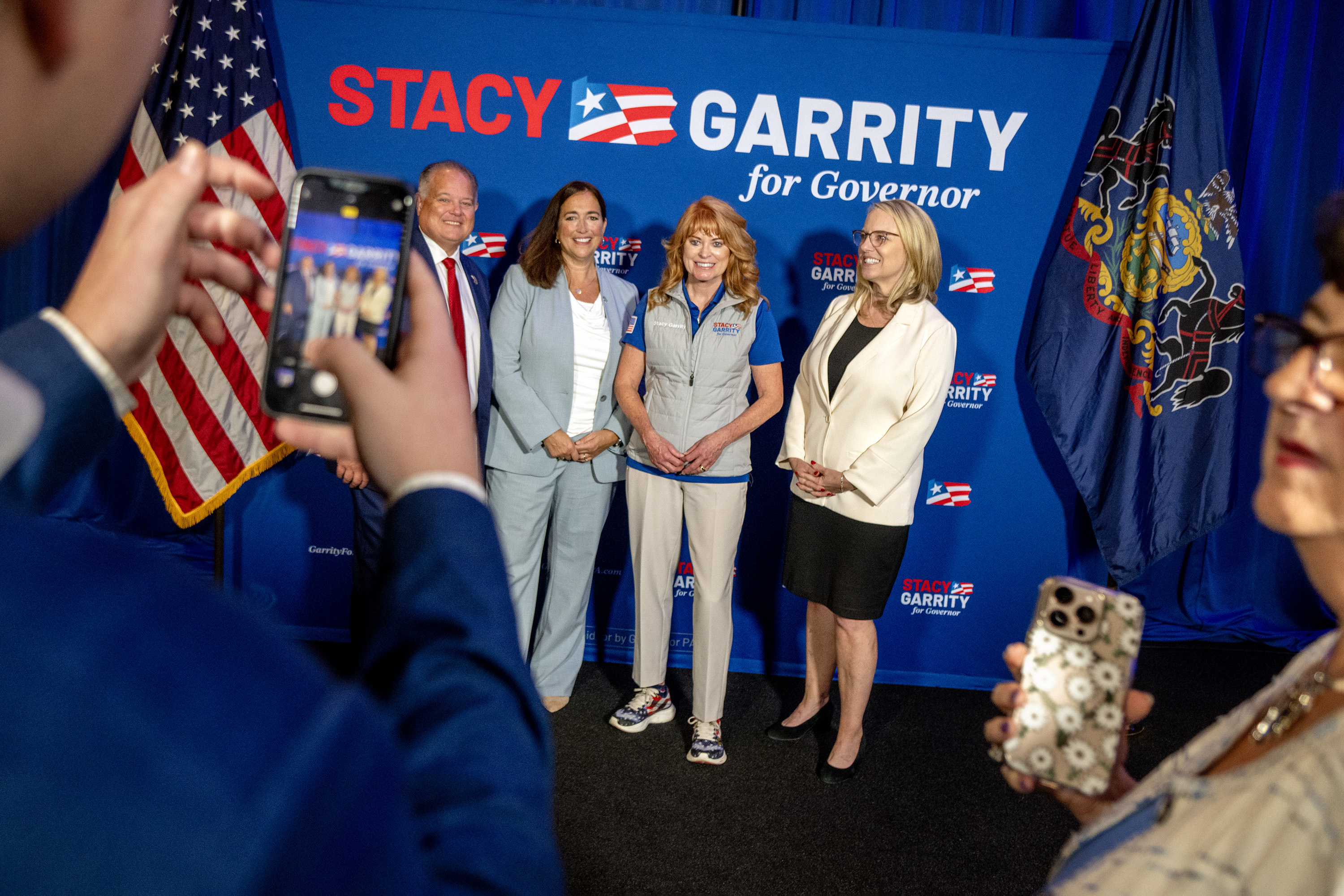
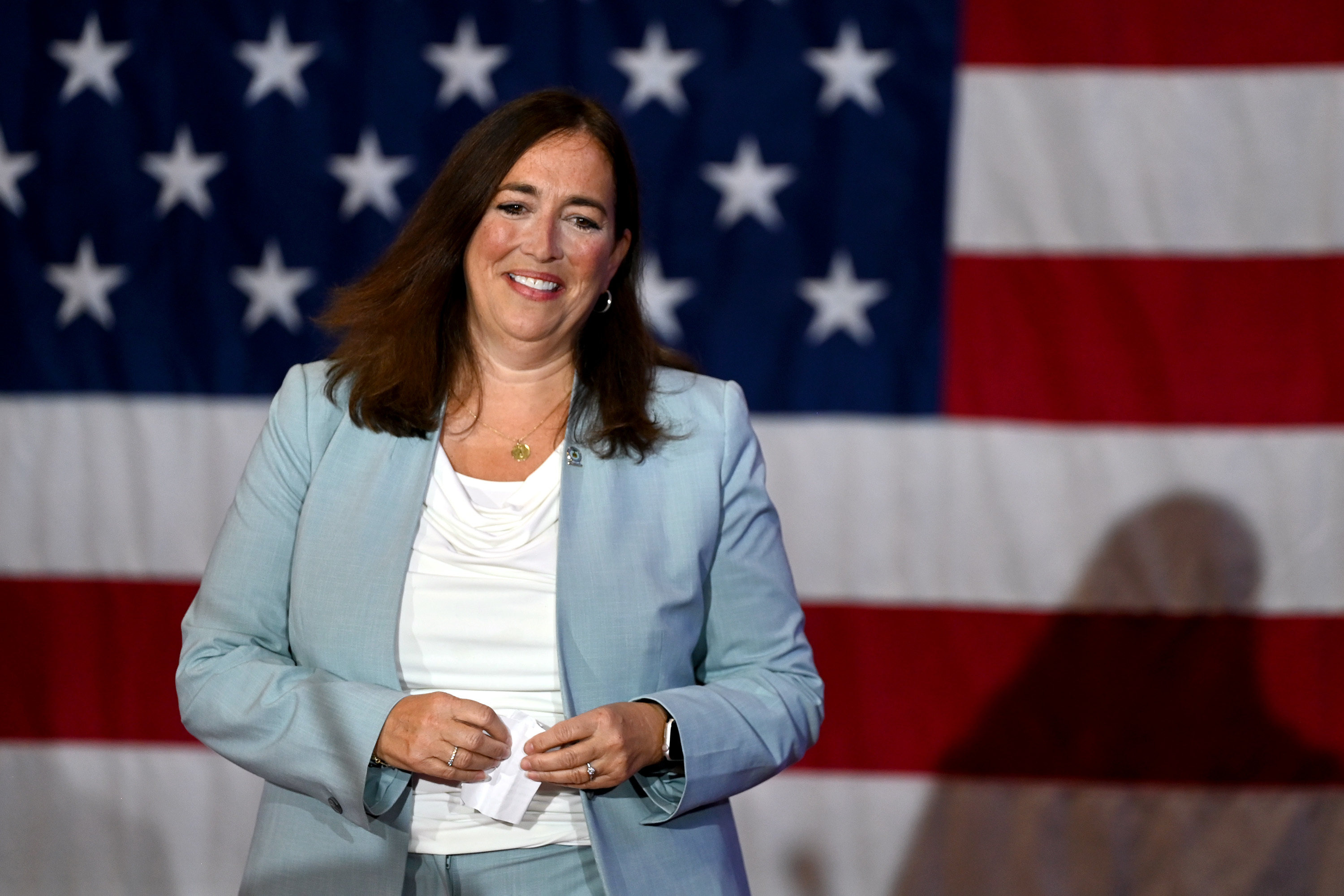
State Treasurer Stacy Garrity, a Republican running for Pa. governor, poses with Bucks County elected officers following her campaign rally Sat the Newtown Sports & Events Center. From left: Bucks County Sheriff Fred Harran; Bucks County District Attorney Jennifer Schorn; Garrity; and Pamela Van Blunk, Bucks County Controller.
GOP warns of ‘dangerous’ policies
Republican messaging in the two races focuses on the idea that Bucks County is safe, but its neighbors are not.
GOP ads, which have run over the course of four months, suggest that Khan and Ceisler would enact “dangerous” policies in Bucks County such as “releasing criminals without bail” and “giving sanctuary to violent gang members.”
They frame Harran and Schorn in stark contrast to their opponents as lifelong Bucks County law enforcement officers with histories of holding criminals accountable.
“I think it resonates beyond the Republican base,” said Guy Ciarrocchi, a Republican analyst, who contended frequent news coverage of Krasner makes the message more viable.
Khan, a former assistant Philly district attorney who unsuccessfully ran against Krasner in the 2017 primary, has noted that he campaigned “very, very vigorously” against Krasner and challenged his ideas on how to serve the city.
“I accept the reality that I didn’t win that election,” said Khan, whose platform in 2017 included a proposal to stop prosecuting most low-level drug offenses. “Unlike my opponent, who seems to basically enjoy the sport of scoring political points by sparring with the DA of Philadelphia.”
Schorn, however, is adamant that politics has never played a role in her prosecutorial decisions. Her mission, she said, is “simply to get justice.”
A lifelong Bucks County resident who has been a prosecutor in the county since 1999, Schorn handled some of the county’s most high-profile cases and spearheaded the formation of a task force for internet crimes against children.
Bucks County District Attorney Jennifer Schorn speaks at a Republican rally at the Newtown Sports & Events Center in September.
“This has been my life’s mission, prosecuting cases here in Bucks County, the county where I was raised,” she said. “I didn’t do it for any notoriety. I didn’t do it for self-promotion. I did it because it’s what I went to law school to do.”
Harran spent decades as Bensalem’s public safety director before first running for sheriff in 2021. He is seeking reelection amid controversy caused by his decision to partner his agency with ICE, a move that a Bucks County judge upheld last week after a legal challenge.
“Being Bucks County Sheriff isn’t a position you can learn on the job. For 39 years, I’ve woken up every day focused on keeping our communities safe,” Harran said in an email to The Inquirer in which he criticized Ceisler as lacking experience.
Although Ceisler has never worked directly in law enforcement, he argues the sheriff’s job is one of leadership in public safety. That’s something he says he’s well versed in as a senior public safety official in Shapiro’s administration who previously served on the Pentagon’s COVID-19 crisis management team.
Harran, who described his opponent as a “political strategist,” criticized “politicians” for bringing “half-baked ideas like ‘no-cash bail’” into law enforcement. The concept, which is repeatedly derided in the GOP ads, sets up a system by which defendants are either released free of charge or held without the opportunity for bail based on their risk to the community and likelihood of returning to court.
Khan and Ceisler each voiced support for the concept in prior runs for Philadelphia district attorney and Bucks County district attorney, respectively.
Both say they still support cashless bail. Neither, however, would have the authority to implement the policy if elected, though Khan as district attorney could establish policies preventing county prosecutors from seeking cash bail in certain cases.
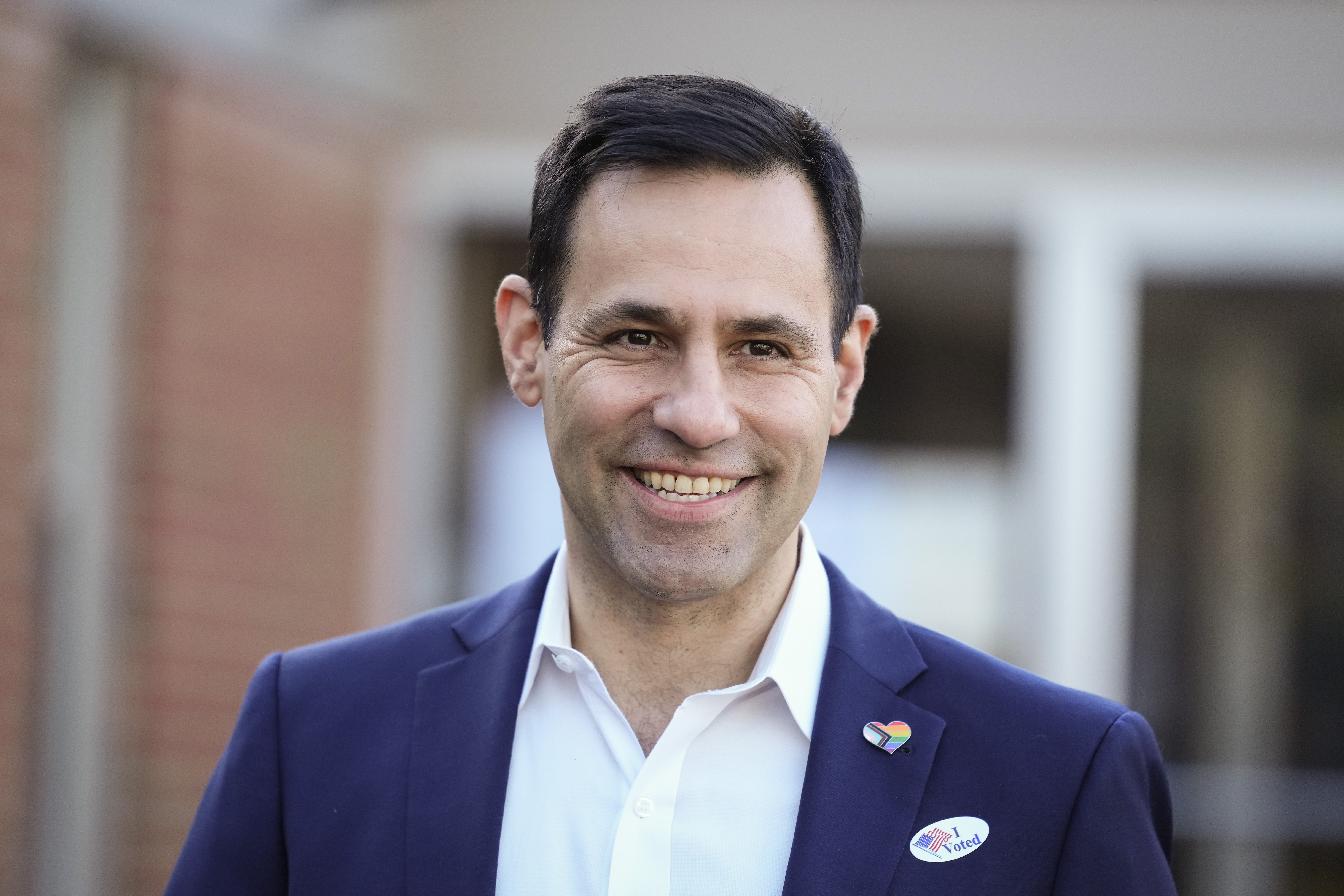
Joe Khan, a Democratic candidate running for Bucks County DA, walks from his polling place in Doylestown, Pa. in April 2024 when he was running for attorney general.
“When a defendant is arrested and they come into court, every prosecutor answers this question: Should this person be detained or not?” Khan said. “If the answer is yes, then your position in court is that this person shouldn’t be let out, and it doesn’t matter how much money they have. And if the answer is no, then you need to figure out what conditions you need to make sure they come to court.”
Democrats claim to ‘keep politics out’
Even as Democrats view voter anger at Trump as a key piece of their path to victory, they are working to present themselves as apolitical.
Democraticads attack Schorn for not investigating a pipeline leak in Upper Makefield and Harran as caring about nothing but himself. Positive ads highlight Ceisler’s military background and Khan’s career as a federal prosecutor.
Khan and Ceisler, the Democratic Party’s ads argue, will “stop child predators, stand up to corruption, and they’ll keep politics out of public safety.”
The jet fuelcase was turned over to the environmental crimes unit in Pennsylvania Attorney General Dave Sunday’s office. And prosecutorial rules bar Schorn from discussing the alleged abuse.
“During the last, I don’t know, 13 years when [Khan] has been pursuing politics, I’ve been a public servant,” Schorn said.“For someone accusing me of putting politics first, he seems to be using politics to further his own agenda.”
At a September rally in Newtown for Treasurer Stacy Garrity, a Republican running for governor, Harran cracked jokes about former President Joe Biden’s age as he climbed onto the stage and falsely told voters that they will “lose [their] right to vote” if they don’t vote out three Pennsylvania Supreme Court justices standing for retention.
“I’m a cop who ran to keep being a cop. This isn’t about politics for me — it’s about doing everything I can to keep my community safe,” Harran said.
Harran’s opponent, Ceisler, paints a different picture as he draws a direct line between the sheriff and the president.
Danny Ceisler, a Democrat, is running for Bucks County sheriff.
Trump, Ceisler said, has inserted politics into public safety in his second term, and he contended that Harran has done the same.
“[Harran] used his bully pulpit to help get the president elected, so to that extent he is linked to the president for better or worse,” Ceisler said in an interview.
Ceisler has pledged to take politics out of the office and end the department’s partnership with ICE if elected.
At an event in Warminster last month, voters were quick to ask Ceisler which party he was running with. Ceisler asked them to hear his pitch about how he would run the office first.
“Don’t hold it against me,” he quipped as he ultimately admitted to one voter he’s a Democrat.
Staff writer Fallon Roth contributed to this article.
This suburban content is produced with support from the Leslie Miller and Richard Worley Foundation and The Lenfest Institute for Journalism. Editorial content is created independently of the project donors. Gifts to support The Inquirer’s high-impact journalism can be made at inquirer.com/donate. A list of Lenfest Institute donors can be found at lenfestinstitute.org/supporters.
State Sen. Sharif Street has an early fundraising lead over his competitors in next year’s Democratic primary for a storied Philadelphia congressional seat, according to new campaign finance reports.
But the race is in its early stages, and candidates who entered the race after Street still have plenty of time to catch up before the May 2026 primary.
Street, the son of former Mayor John F. Street, entered the race for Pennsylvania’s 3rd Congressional District in early July,days after U.S. Rep. Dwight Evans (D., Philadelphia) announced he would not seek reelection. Street’s campaign launch coincided with the beginning of the campaign finance reporting period, allowing him three full months to solicit contributions and seek endorsements.
He took in about $352,000 from July 1 through Sept. 30, according to the Federal Election Commission. His campaign spent $33,000 during that time, and he finished the period with $372,000 in cash on hand, which is also the most of any candidate in the race. (Street’s cash reserves are higher than his fundraising because he carried over money from a previous campaign account.)
“Our strong fundraising results put us in a commanding position,” Street campaign manager Josh Uretsky said in a statement. “We’re building a strong campaign that will hit every neighborhood in the Third District by leveraging our broad-based coalition.”
window.addEventListener(“message”,function(a){if(void 0!==a.data[“datawrapper-height”]){var e=document.querySelectorAll(“iframe”);for(var t in a.data[“datawrapper-height”])for(var r,i=0;r=e[i];i++)if(r.contentWindow===a.source){var d=a.data[“datawrapper-height”][t]+”px”;r.style.height=d}}});
Rabb’s haul was notable for a candidate with little support among Philadelphia’s established political organizations, such as the deep-pocketed building trades unions that endorsed Street this week. As he has in past runs, Rabb said he is eschewing contributions from corporate-backed political action committees, and tapping into a national network of progressive small-dollar donors.
“This is a robust, grassroots campaign that’s fueled and funded by a growing movement of Philadelphians and citizens far & wide who want a bold, independent-minded and accountable Democrat to represent the bluest congressional district in the nation,” Rabb said in a statement.
His campaign spent $76,000, and carried forward $181,000.
State Rep. Morgan Cephas, a West Philly Democrat who chairs the Philadelphia delegation to the state House, collected $156,000 in contributions, a respectable sum given that she entered the race about a month before the reporting deadline. Her campaign spent $37,000 and had $119,000 in cash.
In a statement, Cephas said “the excitement about our campaign is palpable.”
“I understand the problems of Philadelphia because I’ve lived them for the last 41 years,” Cephas said. “Together we can deliver real results for our community.”
“Since day one, this campaign has been fueled by healthcare professionals, small business owners, and working families across Philadelphia who are ready to take power back from leaders bought by corporate interests,” Oxman said in a statement.
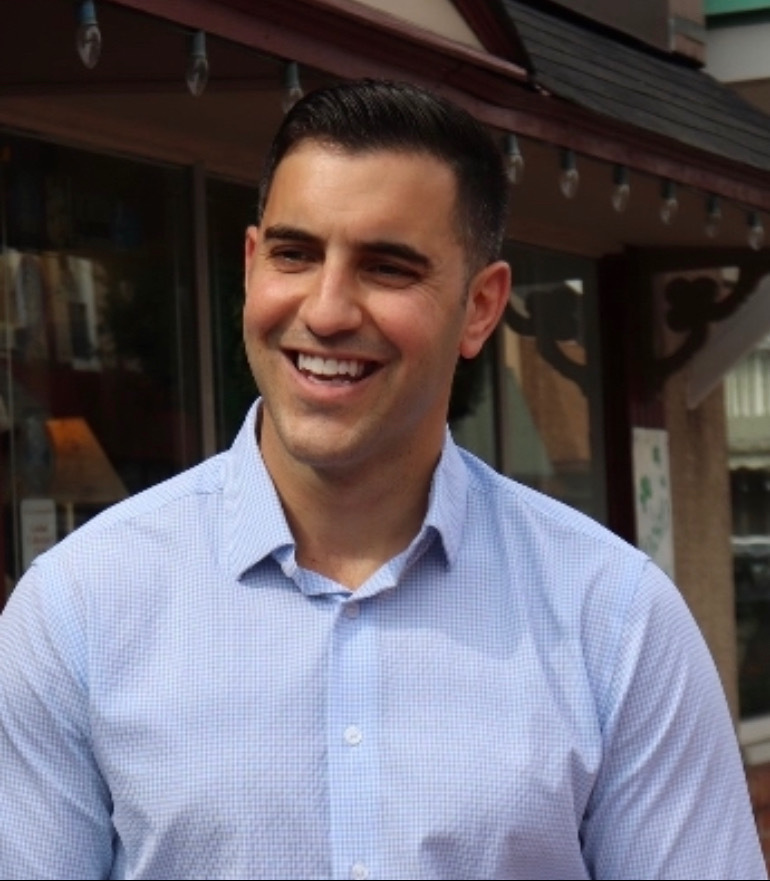
David Oxman, an intensive care doctor and medical school professor at Thomas Jefferson University Hospital, is running for Congress. Oxman, 58, of Bella Vista, joins a race that includes State Reps. Sharif Street and Chris Rabb to replace retiring U.S. Rep. Dwight Evans.
“As a scientist, teacher, and a non-politician running an outsider campaign, my focus is on connecting with everyday Philadelphians,” Morris, a computer scientist, said in a statement. “Career politicians and the donor class want politics as usual. I’m prepared to make sure everyone in Philadelphia receives equal benefits and equal protections.”
“In just a few weeks in the race, Dr. Stanford has generated significant momentum — in contributions, volunteer engagement, and community enthusiasm,” Stanford campaign manager Aaron Carr said in a statement.
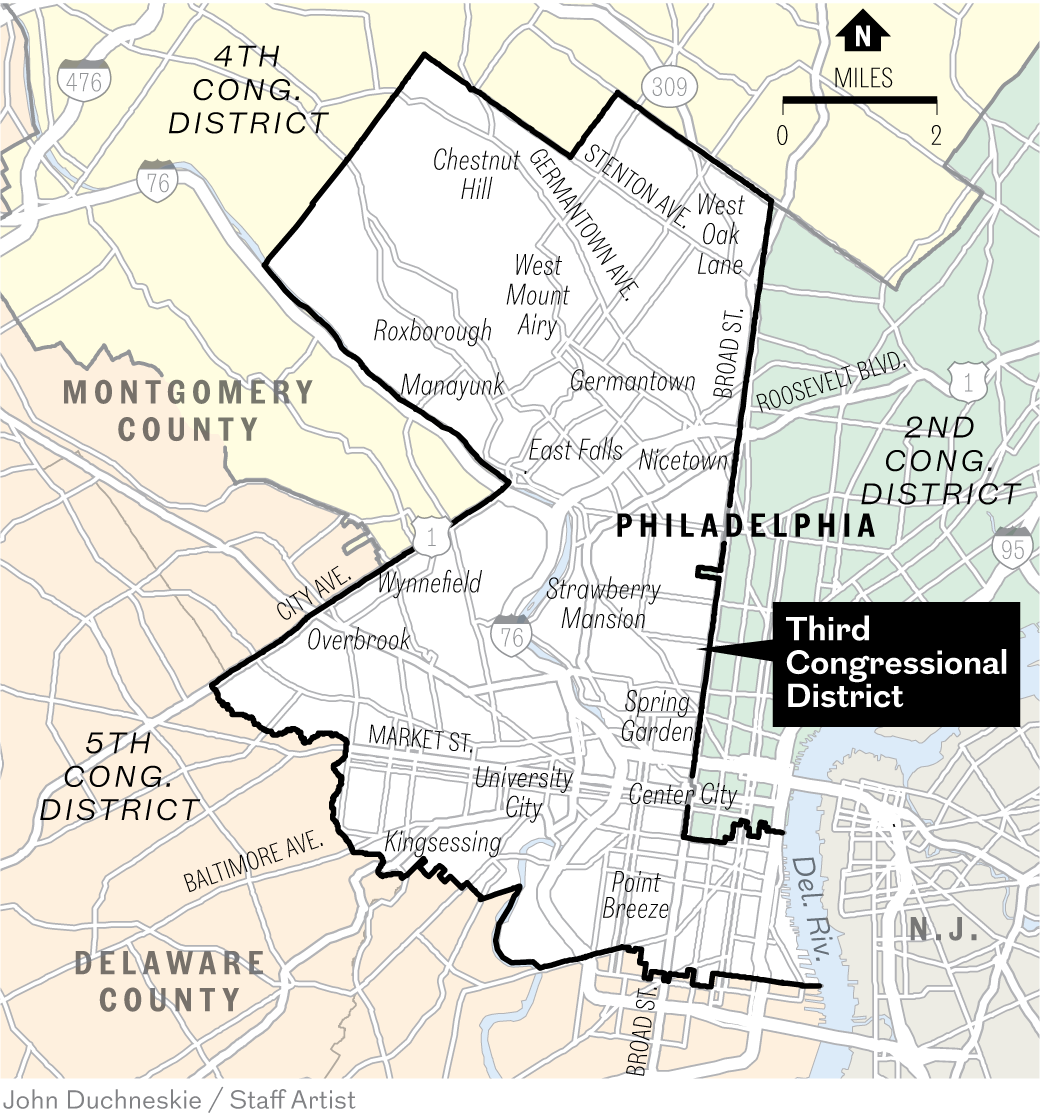
Pennsylvania’s 3rd Congressional District, which includes parts of North, Northwest, West, and South Philadelphia, is one of the most Democratic seats in the nation. With Evans retiring from the seat he has held for nearly a decade, the field could still be in flux as more Philly politicians eye the potentially once-in-a-generation ticket to Washington.
Map of Pennsylvania’s Third Congressional District.
While the race remains competitive, Street’s early fundraising lead will help cement his status as the favorite of the local political establishment. Democratic City Committee chair Bob Brady said this week that party ward leaders will likely vote to endorse Street after this year’s election cycle wraps up next month.
“We’re fully prepared to take advantage of this early lead,” Uretsky said.
Brian Fitzpatrick outraises competitors in Bucks County congressional race
Rep. Brian Fitzpatrick (R., Bucks and Montgomery) speaks during the opening session of the National Treasury Employees Union (NTEU) Legislative Conference in Washington in March.
Unlike the deep-blue 3rd District, the fate of the 1st District will likely be decided in next year’s general election, and not the primary. The district, which includes all of Bucks County and a part of Montgomery County, is the only Philadelphia-area congressional seat represented by a Republican.
Harvie, viewed as the favorite to win the Democratic nomination, raised $217,745 last quarter. The other Democrat in the race, attorney Tracy Hunt, raised $36,692.
This suburban content is produced with support from the Leslie Miller and Richard Worley Foundation and The Lenfest Institute for Journalism. Editorial content is created independently of the project donors. Gifts to support The Inquirer’s high-impact journalism can be made at inquirer.com/donate. A list of Lenfest Institute donors can be found at lenfestinstitute.org/supporters.
Three Pennsylvania Supreme Court justices are on the ballot this November, when voters will decide whether to extend each of their tenures for another 10-year term.
There are currently five justices who were elected as Democrats and two who were elected as Republicans on the bench.
This year’s retention race has drawn heightened attention, as Republicans have launched a campaign to sink the retention bids of Justices Kevin Dougherty, Christine Donohue, and David Wecht — all elected as Democrats in 2015 — in hopes of flipping the court’s balance.
Still, advocacy groups on both sides of the aisle are trying to make the case that control of the judicial seats is critical, if not existential, to their causes.
The Inquirer reviewed the cases that have come before the Pennsylvania Supreme Court over the last decade, and how Dougherty, Donohue, and Wecht voted.
Here are some of the most significant cases of their tenure.
The ruling came in a case challenging a state law limiting Medicaid funding for abortions except in cases involving rape, incest, or danger to the life of the mother.
The 219-page majority opinion included language that strongly endorsed access to abortion as a right derived from the Pennsylvania Constitution, but the judges could not agree on whether they were ready to make the call in this case.
The majority sent questions about a specific funding limit and broader constitutional protection for abortion access back to a lower court — setting up another round of legal battles that will likely, again, make it before the state Supreme Court.
How the three justices ruled: Donohue wrote and Wecht joined the majority opinion. The two justices said they believed Pennsylvania’s 1971 Equal Rights Amendment clearly established a right to abortion access. Dougherty wrote a separate opinion saying this case did not call on the court to opine on the right to an abortion. “At least, not yet,” he wrote.
Voting rights and elections
The Pennsylvania Supreme Court has ruled on a litany of challenges to Pennsylvania’s election rules, many of them focused on the state’s mail voting law.
In 2020, the court issued a major ruling ahead of the presidential election allowing for ballot drop boxes and allowing local election offices to accept ballots for up to three days after the election as long as those ballots were postmarked by 8 p.m. on Election Day.
How the three justices ruled: Donohue, Dougherty,and Wecht each joined the majority opinion in the redistricting case. On the 2020 election ruling, Dougherty and Wecht joined the majority opinion. Donohue joined the majority opinion but dissented from the decision to extend the ballot deadline.
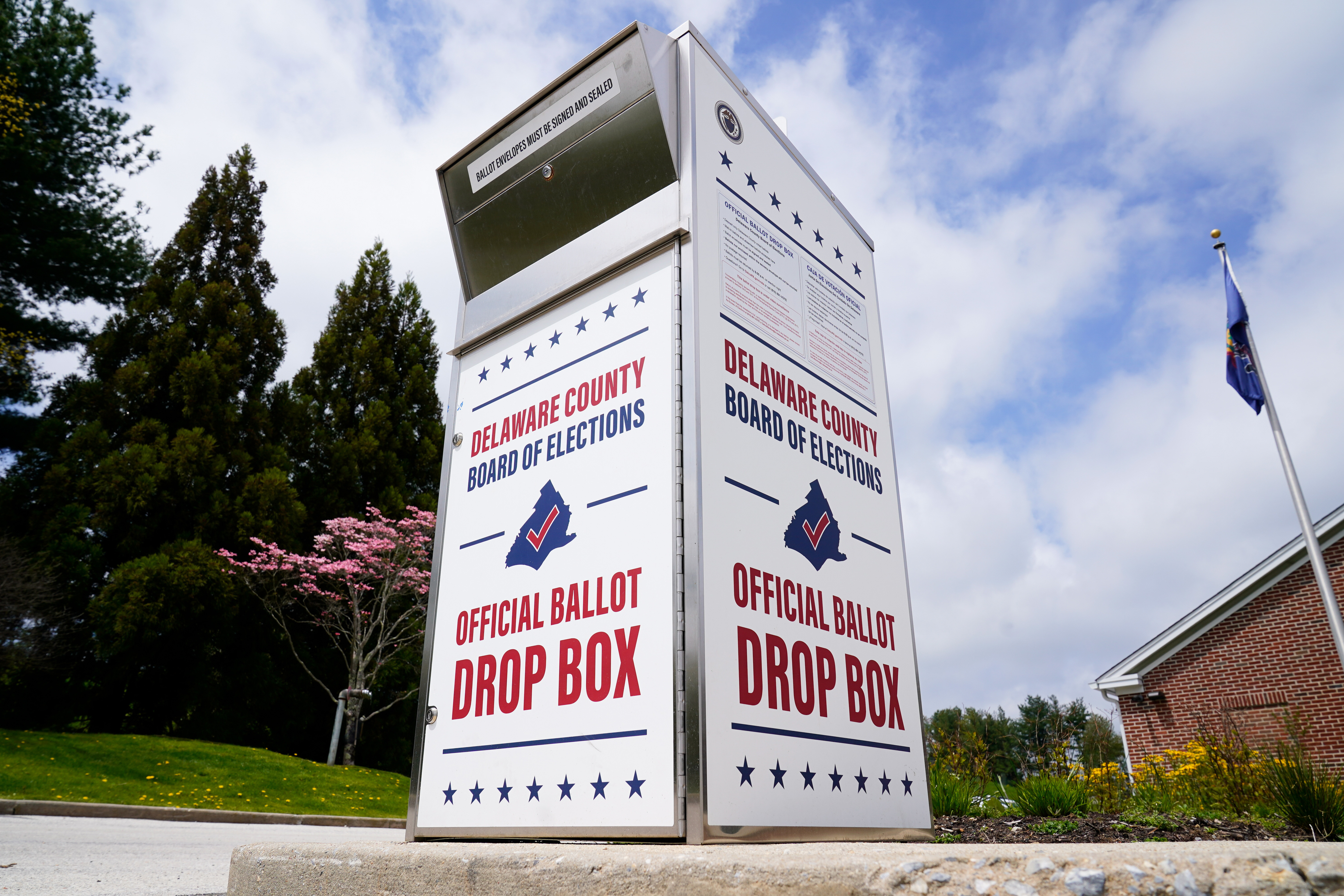
A Delaware County secured drop box for the return of mail ballots in 2022 in Newtown Square.
Education
A Delaware County school district had the right to challenge Pennsylvania’s school-funding system, the Supreme Court ruled in 2017.
The decision affirmed the role of courts in ensuring that state funding leads to equitable education and sent the case back to Commonwealth Court to proceed with litigation.
In 2023, Commonwealth Court ruled, as part of the same case, that the state’s funding system for school districts led to disparities that prohibit quality education for all students, rendering it unconstitutional.
How the three justices ruled:Wecht wrote the majority opinion, which Dougherty and Donohue joined.
Environment
Pennsylvania, which partly sits on the natural gas-rich Marcellus Shale, found itself in the midst of the fracking boom of the early 2000s.
The state sold leases to oil and gas companies to drill wells. The practice raised questions, and legal challenges, as to how the state should use the revenues in the context of the Pennsylvania Constitution’s Environmental Rights Amendment.
The court ruled in 2017 that it is unconstitutional for the state to userevenuefrom the royalties of oil and gas leases on public land to pay for anything but conservation and maintenance of the environment.
How the three justices ruled: Donohue wrote the majority opinion, which Dougherty and Wecht joined.
Justices David Wecht, Christine Donohue and Kevin Dougherty sit onstage during a fireside chat at Central High School in September. The conversation was moderated by Cherri Gregg, co-host of Studio 2 on WHYY, and presented by the Committee of Seventy, Pennsylvanians for Modern Courts, and the League of Women Voters of Pennsylvania.
Criminal justice
Pennsylvania has had the nation’s largest population of juvenile lifers: people sentenced as minors to life in prison without the possibility of parole.
In 2017, the Supreme Court made it harder to sentence a juvenile to life. The majority opinion says there is a “presumption” against life without parole for juveniles who are found guilty of murder, and prosecutors must show that the offender is “unable to be rehabilitated” when seeking the sentence.
How the three justices ruled: Donohue wrote the majority opinion, which Dougherty and Wecht joined.
Second Amendment
In 2024, for the first time, the Pennsylvania Supreme Court issued an opinion that interpreted the wording in the U.S. Constitution that gives Pennsylvanians the right to bear arms.
In Stroud Township, a zoning ordinance that prohibited the discharge of a firearm within the township’s borders limited the possible locations for shooting ranges. The ordinance barred a resident from having a personal outdoor shooting range on his property, and he sued the township for violating his Second Amendment rights.
The court ruled that the ordinance was constitutional.
How the three justices ruled: Dougherty wrote the majority opinion, which Wecht joined. Donohuewrote her own opinion, reaching the same conclusion as the majority but disagreeing with the analysis.
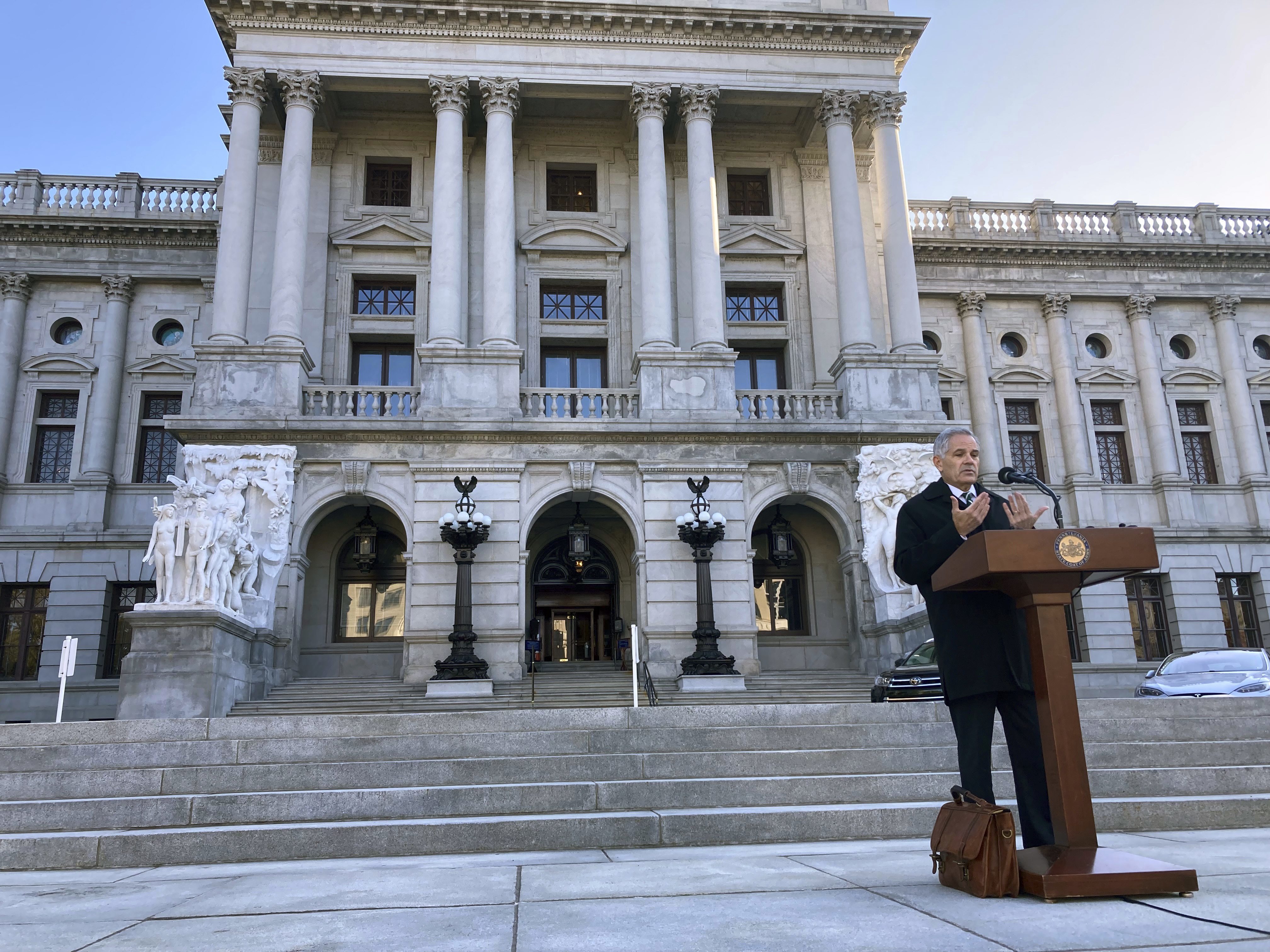
Philadelphia District Attorney Larry Krasner talks about Republican-led efforts to investigate his record addressing crime and gun violence at the Pennsylvania Capitol in 2022.
The decision said that the articles of impeachment approved by the state House in late 2022 were “null and void” because they were sent to the Pennsylvania Senate on the last day of that year’s legislative session, and the upper chamber did not complete its work on the matter before the next session began. The attempt to carry the process from one two-year session to the next was unlawful, the court said.
The majority also agreed with a lower court that none of the articles of impeachment met the required legal standard of “misbehavior in office.”
How the three justices ruled: Donohue and Wecht joined the majority opinion. Dougherty did not participate in the deliberations.
How the three justices ruled: Wecht wrote the majority opinion, which Donohue joined. Dougherty wrote a separate opinion, saying he would allow for Cosby to be retried, but would order his testimony from the civil case to be suppressed.
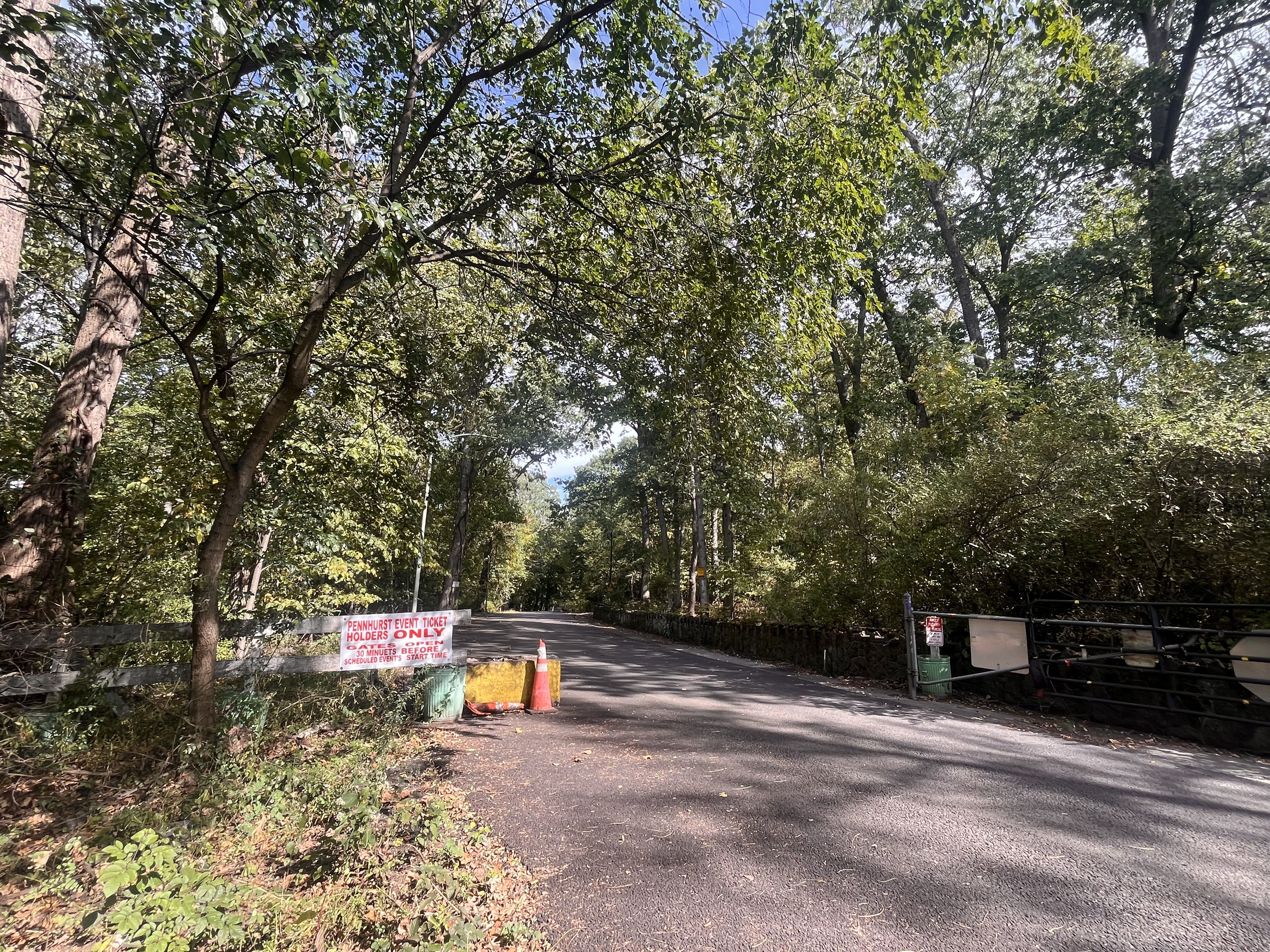
Megan Heiken recently bought a home near the former Pennhurst State School and Hospital, once a center for people with developmental disabilities that now operates as a popular haunted Halloween attraction.
A new plan to convert Pennhurst into a massive data center has outraged and mobilized local residents, as well as people in neighboring communities in an area known for rolling hills, farms, and an overall rural character.
Heiken launched an online petition urgingher Chester County neighbors and East Vincent Township officials to “work together toward a solution that preserves the Pennhurst property, honors its history, and protects the environment and quality of life for all who live, work and visit here.”
The petition had 1,825 signatures as of Friday.
“I made this move to be out in an area with more space, more nature,” Heiken said. “The fact that the owner just wants to plow it over and swap in a data center is kind of alarming.”
Her sentiments are widely shared. The board of supervisors and planning commission in East Vincent have hosted public meetings on the issue that stretched for hours as residents from Spring City to Pottstown voiced objections.
Data centers require a large-scale way of cooling computing equipment and are often dependent on water to do that. The amount of water they use can be about the same as an average large office building, although a few require substantially more, according to a recent report from Virginia, which has become a data center hub.
Steve Hacker, of East Vincent, told the board that his well had already gone dry, as has his neighbor’s, even before a data center has been built. He’s concerned about where the data center would get its water.
State legislators and local governments are scrambling to rewrite local laws as most have no local zoning to accommodate data centers or regulate them.
window.addEventListener(“message”,function(a){if(void 0!==a.data[“datawrapper-height”]){var e=document.querySelectorAll(“iframe”);for(var t in a.data[“datawrapper-height”])for(var r,i=0;r=e[i];i++)if(r.contentWindow===a.source){var d=a.data[“datawrapper-height”][t]+”px”;r.style.height=d}}});
1.3 million square feet
Pennhurst‘s owner has not yet filed a formal application to develop the site, but an engineering firm has submitted a sketch of a preliminary plan to East Vincent Township to develop 125 acres for use as a data center.
The land is owned by Pennhurst Holdings LLC, whose principal is Derek Strine.
Strine deferred comment to a spokesperson, Kevin Feeley.
“Pennhurst AI is aware of the concerns expressed by the residents of East Vincent Township, and we are committed to working through the Township to address them,” Feeley wrote in an email. “What we propose is a facility that would be among the first of its kind in the United States: a state-of-the-art data center project that would address environmental concerns while also providing significant economic investment, jobs, and tax rateables as well as other benefits that would directly address the needs of the community.”
Feeley said Pennhurst AI plans to continue “working cooperatively with the Township.”
The sketch calls for five, two-story data center buildings, a sixth building, an electrical substation, and a solar field. Together, the buildings to house data operations would total more than 1.3 million square feet.
The plan states that a data center is an allowable use within the Pennhurst property because the land is zoned forindustrial, mixed-usedevelopment. Township officials have agreed a data center would be allowed under that zoning.
The grounds are bordered by Pennhurst Road to the west. The Schuylkill lies down a steep gorge to the east and north. The property is near the border of Spring City, which is just to the south.
A view of the entrance to the Halloween attraction at the former Pennhurst State School and Hospital grounds in East Vincent Township, Chester County.
What’s Pennhurst?
Pennhurst State School and Hospital, known today as Pennhurst Asylum for its Halloween attraction, has had a long and troubled history. It opened in 1908 to house individuals with intellectual and developmental disabilities. It became severely overcrowded by the time it closed in 1987.
A 1968 documentary Suffer the Little Children highlighted abusive and neglectfulpractices, and resulted in legal actions and a landmark disability rights ruling in 1978 that declared conditions as “cruel and unusual punishment.”
The last patient left Pennhurst in 1987, and the facility sat abandoned until it was purchased in 2008 and converted into a Halloween attraction despite protests from various advocacy groups.
The Halloween attraction has continued and operators say it shows sensitivity toward those once housed at Pennhurst. Separately, visitors can take historical tours of the exteriors of 16 buildings and learn about people who lived and worked there. The site also has a small Pennhurst history museum.
A view of the vacant buildings on the former Pennhurst State School and Hospital grounds in East Vincent Township, Chester County.
Contentious meetings
In recent months, East Vincent officials have raced to draft an ordinance that would govern data centers by limiting building heights, mandating buffers, requiring lighting, noting the amount of trees that can be cut down, and other restrictions.
At two contentious meetings in September, residents and the board of supervisors argued about the draft ordinance’s specifics. Residents said the ordinance did not incorporate some community-suggested safeguards aimed at preserving the township’s rural character.
Residents asked how much water the data center would consume, how much power it would need, and how much noise it would generate.
Pennhurst’s zoning was changed in 2012 from allowing onlyresidential development to permitting industrial and mixed-use buildings. Township Solicitor Joe Clement told residents that it is difficult for the municipality to argue that a data center would not fit within that zone.
“If there’s a use that is covered by the zoning ordinance, we can’t stop that use,” board vice chairMark Brancato explained at a Sept. 18 meeting.
Officials said the draft ordinance was not specifically aimed at the Pennhurst site but was meant to broadly govern any data centers proposed in the township.
“What we’re trying to do is to come up with a set of reasonable guidelines, guardrails, and conditions in the new zoning ordinance that will … provide as much protection as we possibly can for the residents,” Brancato said. ”We are committed to protecting and preserving the rural character of the township.”
Township meetings, some of which have lasted hours, have been marked by raised voices and emotional appeals.
“Our whole community is kind of anxious about the thought of this new data center,” Gabrielle Gehron, of Spring City, said during one meeting. “I’m confused about whether we are or not doing something to prevent that from happening.”
Pa. State Rep. Paul Friel, and State Sen. Katie Muth, both Democrats from East Vincent, have spoken at meetings. Muth noted that Strine received a $10 million grant and loan package from the state in 2017 to prepare the site for “a large distribution facility” and other industrial structures, new office development, and the renovation of six existing buildings for additional commercial use, amid ample open space, according to a funding request provided by the governor’s office.
Muth fears Strine is paving a path to clear the data center for development and sell the property — after benefiting from tax dollars.
“These are not good things to live next to,” Muth said of data centers.
The board tabled the draft ordinance on Sept. 22 after receiving legal advice that they still had time to incorporate more residents’ concerns.
Beyond Pennhurst
Other municipalities in Pennsylvania face a similar issue: Most don’thave existing zoning for data centers. However, state law mandates that municipalities must provide zoning for all uses of land — just as state and federal officials are ramping up plans to embrace the centers.
Plymouth Township is dealing with pressure as Brian J. O’Neill, a Main Line developer, wants to turn the Cleveland-Cliffs steel mill into a 2 million-square-foot data center that would span 10 existing buildings. The Plymouth Township Planning Commission voted against the project given resident backlash. The plan goes to the zoning board later this month.
And Covington and Clifton Townships in Lackawanna County in the Poconos are also dealing with zoning issues and widespread opposition regarding a plan to build a data center on 1,000 acres.