Days before his memoir is set to hit shelves Pennsylvania Gov. Josh Shapiro will kick off his book tour at Philadelphia’s Parkway Central Library on Jan. 24.
Shapiro will swing through Philadelphia, New York and Washington, D.C., in the final week of January to promote his book Where We Keep the Light: Stories from a Life of Service, according to events posted online.
The tour and the book, set for release Jan. 27, will fuel speculation about a potential presidential run in 2028 as Shapiro works to expand his national profile as he also seeks reelection in Pennsylvania next year.
The forthcomingmemoir is expected to detail his life and political career, including the attempted arson attack on the governor’s mansion while he, and his family, slept inside earlier this year on Passover.
Shapiro, who grew up in Montgomery County and first forged his political brand there, has become a leading figure in the national Democratic Party. The memoir will delve into his vetting to serve as Vice President Kamala Harris’ running mate last year, according to the publicized summary.
The Pennsylvania governor, Harris wrote, would be unable to “settle for a role as number two” and questioned her about whether he could get Pennsylvanian’s artwork in the vice president’s residence.
The Democratic senator, who has publicly feuded with the governor, described the tension between Pennsylvania’s two top Democrats, which traces back to their time together on the Pennsylvania Board of Pardons when Fetterman was lieutenant governor and Shapiro was state attorney general.
It’s unclear whether Shapiro will discuss his relationship with Fetterman in the memoir.
Shapiro’s book tour will kick off at a 3 p.m. event at the Parkway Central Library on Jan. 24. He will also speak at the Kauffman Concert Hall in New York on Jan. 27 and Sixth and I, a historic synagogue and Jewish cultural center in Washington, D.C., on Jan. 29.
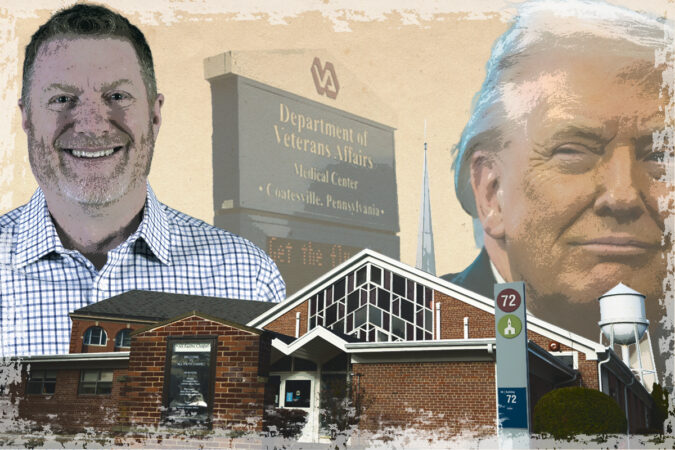
Russell “Rusty” Trubey said he was compelled by God to preach the words that helped set off a national battle over religion at the U.S. Department of Veterans Affairs.
Reading from a sermon titled“When Culture Excludes God,” Trubey, an Army Reserve chaplain, sermonized to a congregation of veterans at the Coatesville VA Medical Center from a Bible passage — Romans 1:23-32 — that refers to same-sex relationships as “shameful.”
Some congregants, upset by the sermon, walked out of the June 2024 service at the Chester County facility, where Trubey has been employed for roughly 10 years. Soon after, Trubey’s lawyers said he was temporarily pulled from his assignment — and transferred to stocking supply shelves — while his supervisors investigated his conduct.
Speaking to Truth and Liberty, a Christian group that advocates for the church to play a greater role in the public sphere, Trubey said he knows that reading the Bible verses about same-sex relationships is “100%” the reason he got in trouble.
One of the entrances leading into Coatesville VA Medical Center.
A month earlier, Trubey’s lawyers had taken hiscase to the White House. In a letter sent a few weeks after President Donald Trump’s inauguration, Trubey’s lawyers asked Trump’s VA secretary, Doug Collins, to interveneon Trubey’s behalf in regard to repercussions for the sermon.
Trubey had delivered the talk during former President Joe Biden’s administration — an environment that Trump officials allege was hostile to Christians.
In the letter, the chaplain’s lawyers from the First Liberty Institute and Independence Law Center accused Trubey’s supervisor of wanting sermons to be screened ahead of time for pre-approval and stated that Trubey received a letter of reprimand, which would later go on to be rescinded by Coatesville VA Medical Center officials.
Soon after the lawyers’ letter reached the new administration, the VA, one of the largest federal employers in Pennsylvania, reinstated Trubey to his position and Collins reaffirmed that chaplains’ sermons would not be censored.
But the fallout from this incident — paired with Trump’s ongoing campaign to root out perceived prejudice against Christians and dismantle diversity, equity, and inclusion — left an undeniable mark on the VA, helping to inspire an agencywide “Anti-Christian Bias Task Force.”
Announced to employees in April 2025, the task force asks employees to report offenses such as “reprimand issued in response to displays of Christian imagery or symbols,” per a department email reviewed by The Inquirer.
And the VA wants names.
In the email, the VA encouraged employees to identify colleagues and workplace practices that violate the policy and send information about the alleged offenses to a dedicated email address. The announcement was in accordance with a Trump executive order from February that ordered federal agencies to “eradicate” anti-Christian bias and create a larger White House task force composed of cabinet secretaries and chaired by Attorney General Pam Bondi.
As of this summer, the VA received more than 1,000 reports of anti-Christian bias and reviewed 500, according to task force documents. Another report is expected in February.
Some of the offenses the VA is on the watch for could be especially pertinent during the holiday season when workers may want their faith represented at their desks.
One union leader at the Veterans Benefits Administration office in Philadelphia called the task force, which does not extend to biases against other religions, “McCarthyism for Christians.”
“What they’re really doing is they’re trying to create a hostile work environment where you’re now afraid to say something because you may be reported,” said the union representative weeks after the VA’s task force announcement. The representative asked to speak anonymously out of fear of workplace retaliation.
The VA said in a statement that the department is “grateful” for Trump’s executive order. The VA did not answer The Inquirer’s questions on an updated number of reports received through the task force, what happens to people or practices that are reported, and next steps of the task force.
“As the EO stated, the prior administration ‘engaged in an egregious pattern of targeting peaceful Christians, while ignoring violent, anti-Christian offenses,’” said VA press secretary Pete Kasperowicz in the statement. “Under President Trump, VA will never discriminate against Veterans, families, caregivers or survivors who practice the Christian faith.”
One of those offenses, as outlined by the VA, is “informal policies, procedures, or unofficial understandings hostile to Christian views.” Another is retaliation against chaplains’ sermons, which appears to be in responseto the Trubey incident from June 2024.
Erin Smith, associate counsel at the First Liberty Institute, who helped represent Trubey said: “If Chaplain Trubey’s story serves as inspiration to help protect the rights of all chaplains in the VA, then that is a wonderful thing to come out of a terrible situation.”
But some VA employees disagree.
Ira Kedson, president of AFGE Local 310, which represents employees at the Coatesville VA Medical Center, said in an interview in June that he heard some employees were “deeply troubled” by the incident with Trubey, especially those who worked in clinical settings with patients who were in attendance of the controversial sermon.
“I was told that some of the residents were deeply hurt and deeply troubled by the situation and it took a long time for them to be able to move past it,” Kedson said.
Religion takes center stage in the Trump administration
Trump is leading what is arguably one of the most nonsecular presidencies in modern United States history with his embrace of a loyal, conservative Christian base.
“We’re bringing back religion in our country,” Trump said at the Rose Garden during the National Day of Prayer in May.
And efforts to elevate religion in the public sphere have gone beyond Trump’s rhetoric. For instance, the Office of Personnel Management, the federal government’s human resources agency, issued guidance that aims to protect religious expression in the workplace for all religions.
Most of the reports submitted to the VA focused on “denying religious accommodations for vaccines and provision of abortion services; mandating trainings inconsistent with Christian views; concealing Christian imagery; and Chaplain program and protections for Chaplains,” according to task force documents.
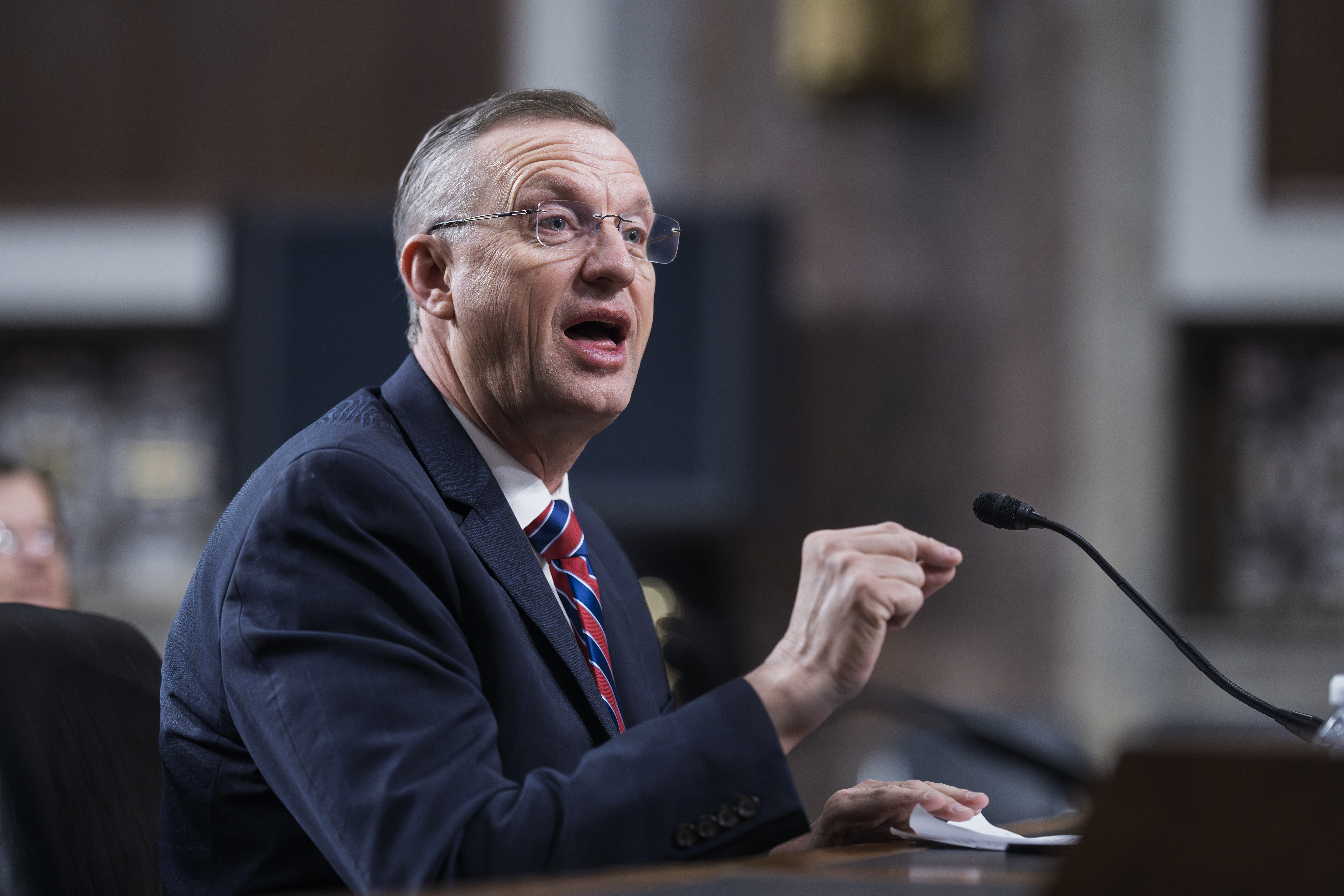
Doug Collins at his Jan. 21 confirmation hearing before the Senate Veterans’ Affairs Committee, at the Capitol in Washington.
Charles Haynes, senior fellow for religious liberty at the Freedom Forum, a nonpartisan organization based in Washington that promotes First Amendment rights, said while it’s not unconstitutional or unprecedented to createa faith-specific task force, “the appearance of [the Christian-bias task force], to many people, is a favoritism of the government for one group over another.”
The White House, in a statement, said Trump has a record of defending religious liberty regardless of faith.
“President Trump has taken unprecedented action to fight anti-Christian, anti-Semitic, and other forms of anti-religious bias while ending the weaponization of government against all people of faith,” said White House spokesperson Taylor Rogers in an email to The Inquirer.
Furthermore, she added, that the media is doing “insane mental gymnastics to peddle a false and negative narrative about the President’s efforts on behalf of nearly 200 million Christians across the country.”
Identifying anti-Christian bias or chasing a ‘unicorn’?
The Trump administration has shared few details about the operations and goals of the anti-Christian bias task force, raising questions from lawmakers and other stakeholders.
Rep. Mark Takano, the ranking member of the House Committee on Veterans’ Affairs, was in a monthslong back-and-forth with VA Secretary Collins, trying to get answers to an extensive list of questions he initially sent in May, with the California Democrat particularly concerned that the scope of the initiative is limited to bias against Christians.
“To preserve this right to religious freedom, the Department cannot prioritize one faith over others, nor can it allow religious considerations to shape its policies in ways that may conflict with the First Amendment,” Takano wrote in May. “Further, the vagueness of the task force’s mission raises significant concerns about how it will be used and whether it is compatible with the mission of the Department.”
Collins responded in June and did not answer most of Takano’s questions, though he did saythat the task force, which reports to the secretary, will identify, strategize, and potentially alter any policies that discriminate against Christians or religious liberty.
The lawmakerfollowed up a week later. Roughly four months later, in October, Collins’ responses were vague once again.Most recently, Takano is asking for both Democratic and Republican members of the House and Senate’s Veterans’ Affairs Committees to be looped in on future correspondence regarding the task force.
The VA, according to a statement from Takano, has not fully answered their questions and has refused to host a bipartisan briefing.
“The lack of transparency and accountability of this task force leaves me with numerous concerns for the due process and privacy of hardworking VA employees,” Takano said. “VA’s silence won’t stop us from asking the questions we are constitutionally obligated to ask.”
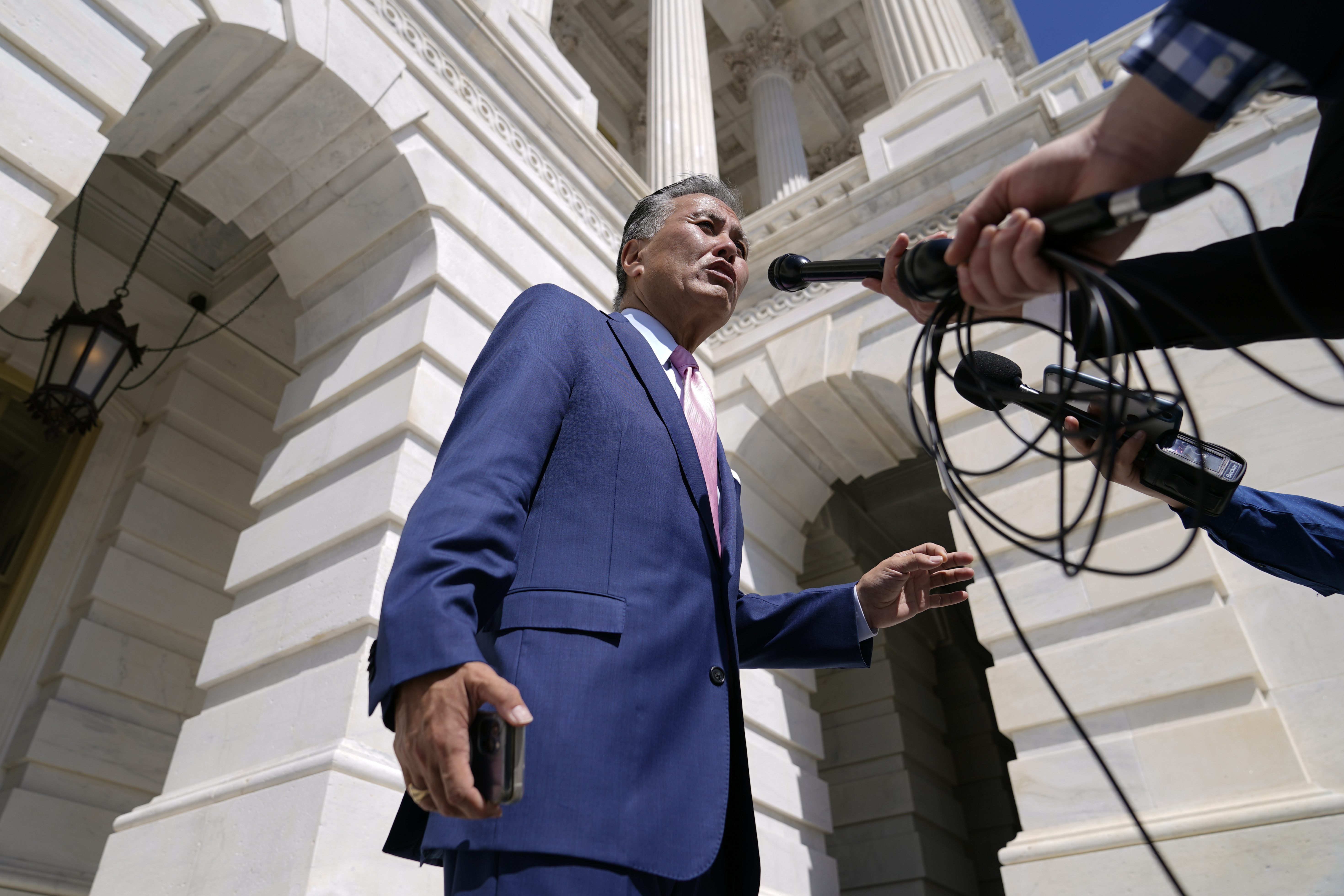
Rep. Mark Takano (D., Calif.) in August 2022, on Capitol Hill in Washington. Takano, ranking member of the House Committee on Veterans’ Affairs, has been trying to get answers from the VA on the Anti-Christian Bias Task Force.
Michael L. “Mikey” Weinstein, former counsel for the Reagan administration turned founder and president of the Military Religious Freedom Foundation, said his group is looking for a plaintiff to sue the government over the task force. The group has been receiving calls from VA employees concerned aboutit, one of whom, he said, was a senior physician at the VA Medical Center in Philadelphia.
The physician, Weinstein said, was distraught to receive the memo about the task force. He had family in town and noted the irony of showing his family around all the historical sites that signified the birthplace of American freedoms while being asked by the federal government to partake in such a project.
“It was like a dagger in his heart,” Weinstein said.
Weinstein is adamant that anti-Christian bias in the federal workforce is nonexistent, like looking for a “unicorn.”
Noticeably absent from the task force, critics say, is any effort to explore instances of discrimination against other faiths within federal agencies.
Trump has historically espoused hateful rhetoric against Muslims, including enacting a travel ban on individuals from predominantly Muslim countries during his first term. The president has issued an executive order this term to combat antisemitism on college campuses, but he also has a history of engaging with antisemites on the political right.
Ahmet Selim Tekelioglu, executive director of CAIR-Philadelphia, a nonprofit that aims to protect the civil rights of Muslims in the U.S., said he believes all forms of discrimination should be stamped out, but he’s concerned the task force isn’t affording those protections to everyone.
“It focuses exclusively on alleged anti-Christian conduct within the federal agencies, and in our opinion of this, risks then entrenching preferential treatment and signaling the protections that should exist for everyone is conditional, right?” Tekelioglu said.
There is hope, however, that this task force could lead to other future initiatives to root out hate, said Jason Holtzman, chief of Jewish Community Relations Council at the Jewish Federation of Greater Philadelphia.
“My hope is that hopefully they’re starting with the task force on Christian bias, and then maybe they’ll initiate one on antisemitism, Islamophobia, because I think task forces need to exist on all of these different forms of hate,” said Holtzman, noting that both Trump and Biden have taken action to combat antisemitism.
Haynes, the religious liberty expert, said anti-Christian bias is a “matter of perspective.”
“How you see it for the conservative Christian, what others would say is just creating an inclusive, safe workplace for everyone, they see, in some respects, as being anti-Christian,” Haynes said.
Haynes said that “anecdotal sort of stories” about prejudice against Christians pushed by conservative groups do not appear to be based in any kind of research into a widespread trend. But it only takes one story — as seen in Trubey’s case — to set off a firestorm.
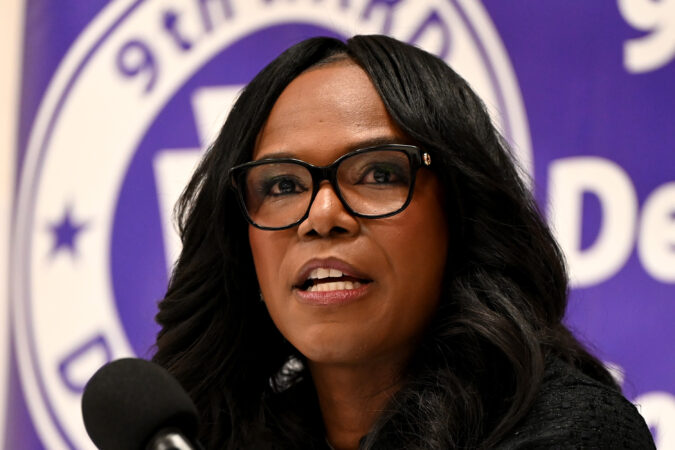
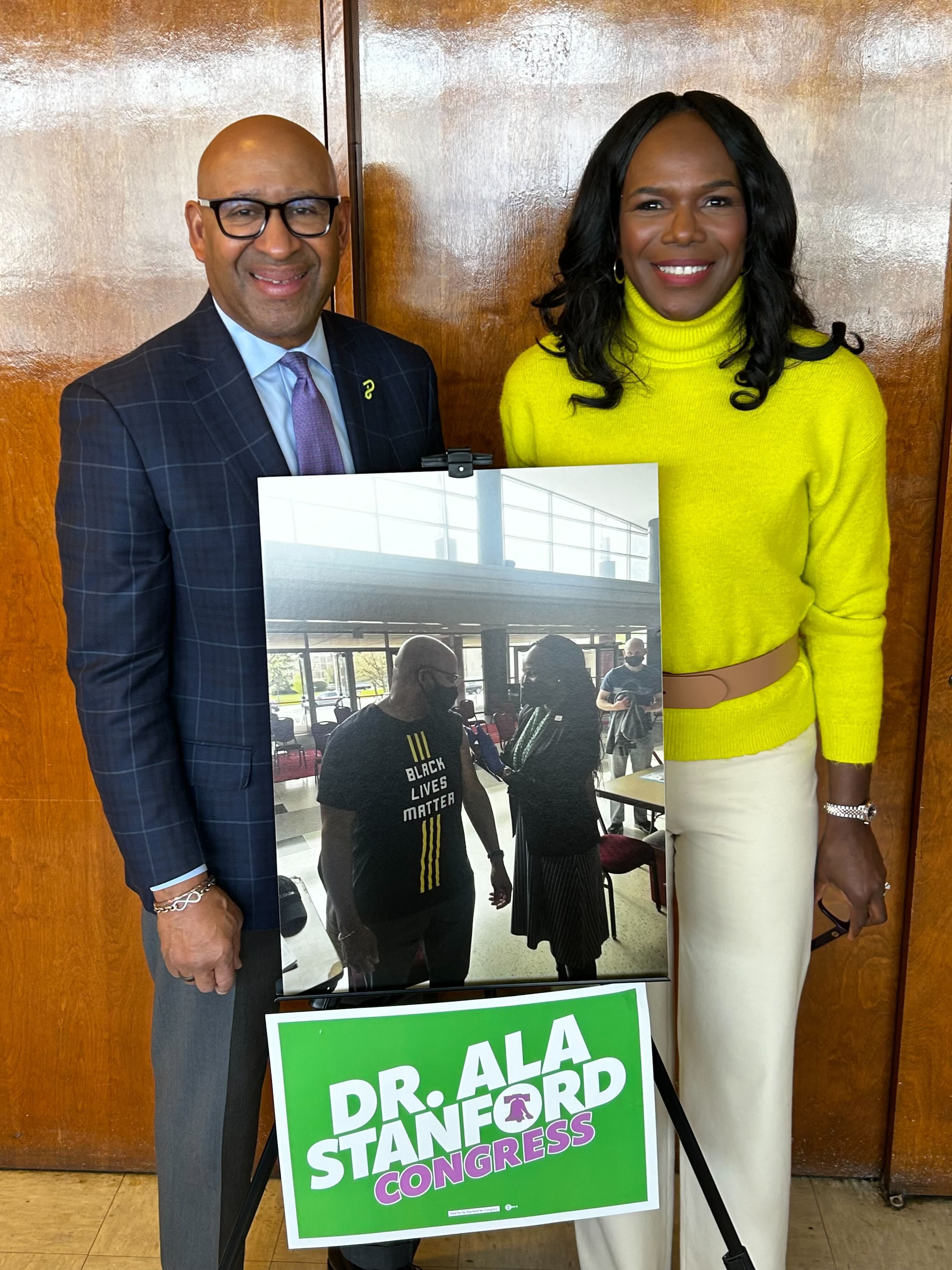
Former Mayor Michael Nutter endorsed Ala Stanford, a pediatric surgeon who rose to prominence in the city for her response to the COVID-19 pandemic, in the crowded primary race for the 3rd Congressional District.
“While some were giving speeches, she was giving shots,” Nutter said in remarks at the West Philadelphia church where he launched his political career.
“While some were talking about what should be done, she was out in the streets doing what needed to be done, at great risk to herself and others when people were getting sick and dying. Dr. Ala Stanford ran toward the danger, while most of us were safely in our homes.”
In thanking Nutter for his backing, Stanford said she was running “not because I’ve spent my career in politics. I’m running for Congress because I’ve spent my life stepping up when people needed help and the system wasn’t working.”
During the pandemic, Stanford led the Black Doctors COVID-19 Consortium, which brought vaccines into communities of color, inoculating thousands of Philadelphians who might not have otherwise had access.
She went on to serve as a regional Department of Health and Human Services director under President Joe Biden and now runs a community health center in North Philadelphia.
She is one of at least a dozen candidates vying to succeed retiring U.S. Rep. Dwight Evans in the 3rd Congressional District, one of the most Democratic districts in the nation, which covers much of Philadelphia. Evans endorsed Stanford upon her entry into the race.
Nutter, who led the city as mayor from January 2008 to January 2016 and before that served on City Council, called Stanford “the only person running, as far as I can tell, who has serious executive, federal government experience,” pointing to her post at HHS.
Former Mayor Michael Nutter endorsed Dr. Ala Stanford Thursday in her bid for Congress. Here he poses with blown-up photo of her giving him the COVID vaccine in 2021.
The former mayor teaches at Columbia University, holds a fellowship at the University of Pennsylvania, and was recently named president of the Board of Directors of City Trusts. Dating back to 1869, the board oversees 119 different entities bequeathed to the city by different benefactors, including Girard College and Wills Eye Hospital.
Nutter’s endorsement of Stanford comes a week after former Pennsylvania Gov. Ed Rendell, who also served two terms as Philadelphia mayor, endorsed State Sen. Sharif Street in the contest.
Street’s father, former Mayor John Street, was Nutter’s immediate predecessor as mayor.
Stanford has a strong personal backstory, but as a first-time candidate she could face an upward climb in fundraising and establishing herself beyond her expertise in healthcare.
She said last week she sees most issues as interconnected with healthcare and that expertise as an asset.
“My team and I, we’ve gotten lots of advice about ‘you gotta talk about housing.’ Housing is health,” she told The Inquirer. “‘You need to talk about affordability.’ But that is prescription drugs. ‘You need to talk about safety in our communities.’ … All those issues bring me back to healthcare. … And I’m an expert in the space.”
Staff writer Anna Orso contributed to this article.
Let’s start with the easy part. There is absolutely no evidence so far to suggest that the shooter at Brown University targeted Alabama native Ella Cook — one of two students who died in the massacre last Saturday — because of her political opinions.
That’s what several right-wing commentators said, noting that Cook had been vice president of the College Republicans at Brown. Cook “was targeted for her conservative beliefs, hunted, and killed in cold blood,” the national chairman of the College Republicans wrote in a post on X, which has garnered nearly two million views.
Please. We still don’t know who opened fire in a classroom building at Brown, or why. It’s reckless — and cynical — to pretend that we do.
But behind every crazed conspiracy theory lies a small grain of truth. Conservative students are not in danger for their lives, but they do experience ostracism and discrimination. People who claim otherwise are like climate change deniers, except in this case the naysayers are on the left.
I’m on the left, too. And it’s time for us to come clean about the biased environments we have created.
I feel that every time I hear a colleague say all Trump voters are white supremacists or fascists. I feel it when students email me to complain about the left-wing groupthink in their classes.
And I feel it, most of all, when they come out to me as Trump supporters in my office, with the door closed. I plead with them to share their views with others, which is the only way we learn anything. But they tell me the cost would be too high: They’d be vilified and canceled.
A poster seeking information about the shooting suspect is seen on the campus of Brown University on Wednesday.
That’s why so many Republicans disdain higher education. They know that we abhor their views, and they return the favor.
Now they’re trying to impose their will upon us. Start with President Donald Trump’s “compact,“ which is really just an act of extortion: Do what we say, or we’ll cut off your funding. I’m glad that Brown — like Penn — rejected it, but schools with smaller endowments might face a more difficult choice when deciding whether to do so.
Then there are state measures restricting instruction about race and gender. The logic goes like this: You taught things we didn’t like, so we’re going to prevent you from teaching about them at all.
Remember the adage about two wrongs? We seem to have forgotten it. Liberals created an intolerant atmosphere on our campuses. In response, conservatives are taking political measures to silence us.
It’s time to end this madness. And perhaps we can use the Brown tragedy to do just that.
You haven’t heard a lot about Umurzokov in right-wing media, which has been busy memorializing Ella Cook. But neither have my fellow liberals made much mention of Cook; instead, they have been commemorating the remarkable life of Mukhammad Umurzokov.
Imagine a national day of mourning, where we switched all of that up. In Congress and in statehouses, Democratic leaders would hoist large blow-up pictures of Cook — the kind you see in sports stadiums — to memorialize her. And GOP officials would do the same for Umurzokov.
That would require courage on both sides, which is in short supply these days.
Democrats would need to celebrate a brave churchgoing conservative who bucked the dominant liberal consensus on campus. And Republicans would need to challenge their party’s nativist and anti-Islamic rhetoric by praising a young Muslim immigrant who wanted to do good in and for America.
They would also have to call out the conspiracy theorists in their midst. Political violence is real, but there’s no evidence that Ella Cook was killed because of her politics. Honest Republicans know that. They need to say it.
And maybe, just maybe, that can begin the healing that our battered nation so desperately needs. We simply cannot make anything better by hating on each other.
At our schools and universities, we’ll resolve to welcome all points of view. Instead of maligning the other side — or trying to censor it — we’ll bring different sides together.
And we will educate a new generation of citizens, who have both the will and the skill to converse across their differences. That will be a great way to remember Ella Cook and Mukhammad Umurzokov. And it will make America great, too. For all of us.
Soon, you may no longer be able to afford healthcare since Republicans have once again blocked efforts to subsidize the Affordable Care Act.
The most recent government shutdown became the longest in history because Democrats insisted on continuing to fund healthcare while the GOP balked. The Republicans won. America lost.
But don’t despair.
When President Donald Trump’s 80th birthday rolls around on June 14 — which happens to coincide with Flag Day — you will be able to visit a national park for free.
See? Trump really is making America great again.
Kidding aside, most of us aren’t going to mark Trump’s birthday — he hasn’t earned that from us. He can accept all the fake awards he wants, but he’s no hero. He’s a billionaire who has the nerve to claim that “the word affordability is a Democrat scam.” Remember that the next time you’re at the grocery store. Trump promised to bring down costs. It hasn’t happened.
President Donald Trump picks up his FIFA Peace Prize medal before the draw for the 2026 soccer World Cup at the Kennedy Center in Washington, in December.
Trump also said he would fix healthcare. That hasn’t happened either. He said he was going to fix the situation at the border. We now have masked ICE agents terrorizing undocumented immigrants and U.S. citizens alike. Entry into America is for sale y’all. As long as you have $1 million to pay for a green card. Make that a gold car with Trump’s image on it. Next up, a Trump platinum card.
The president’s actions remind me of a narcissist whose world begins and ends with himself. This nation, however, is expansive and needs a president who puts the American people first. That’s not what we have with Trump. He demonstrates that over and over again.
His administration’s decision to make entrance at national parks free on his birthday wouldn’t be quite as egregious if it hadn’t also revoked free admission for visitors on not one, but two federal holidays that honor Black history — Juneteenth and the Rev. Dr. Martin Luther King Jr.’s birthday. It feels like just another way to antagonize African Americans who still haven’t gotten over his calling Somalis “garbage” and saying they should leave the country.
But wait, there’s more.
The Trump administration has ordered the Park Service to clear the shelves of its gift shops, bookstores, and concession stands of any merchandise that runs afoul of its anti-diversity, equity, and inclusion policies. Employees have until Dec. 19 to get rid of any of the so-called offending merchandise. (Note: Let us know when the fire sale is and we’ll take it off your hands.)
Trump only wants to present a sanitized version of American history: So no mention of slavery and Jim Crow and that sort of thing. But lots of red, white, and blue like he sells in his Trump store.
As with practically everything else he sticks his suspiciously bruised hand into, he’s making a mess of things at the National Park Service.
And I’m not just talking about the way officials have slapped the president’s scowling face on the prized annual park pass. An environmental group is suing him for that. I hope the lawsuit wins. I’d love to get one to give as a present for Christmas but I’m not doing it if his face is on it.
A 2026 America the Beautiful National Park Service annual pass features President Donald Trump’s portrait. The Center for Biological Diversity sued the Trump administration, saying the pass must have a contest winner photo taken in federal lands, as deemed by federal law.
Healthcare premiums for more than 24 million Americans may soon skyrocket without government subsidies to bring down costs for everyday people. Remember who is to blame when your insurance premiums suddenly spike.
The day can’t come soon enough when Trump is finally out of office for good. That’s when we, the people, can set about undoing all the damage he has done.
And that includes reinstating admission fees at national parks on Trump’s birthday.
Four moderate Republicans — including three who are in the hot seat for reelection in swing districts in Pennsylvania — joined Democrats to sign a discharge petition Wednesday to force a vote on a proposal to extend pandemic-era expanded Obamacare subsidies.
While the move may not save the subsidies from expiring, given that Republican-controlled Senate has indicated resistance to the plan, the votes mark the sharpest rebuke of party leadership from within the GOP since President Donald Trump started his second term.
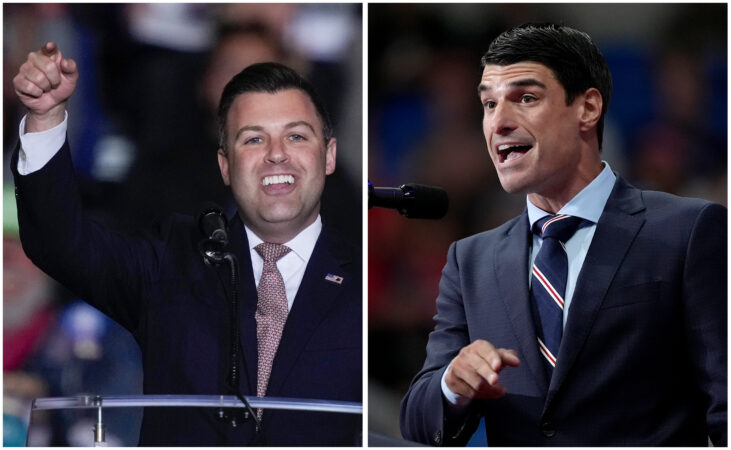
U.S. Rep. Brian Fitzpatrick, who has represented Bucks County since 2017, and two GOP freshmen from elsewhere in the state, U.S. Reps. Rob Bresnahan and Ryan Mackenzie, joined New York moderate Mike Lawler to give Democrats the votes they needed to push a vote on a clean extension of the subsidies to the floor.
The move comes on the heels of other high-profile examples of rank-and-file Republicans bucking Trump and House Speaker Mike Johnson, including last month’s bipartisan vote to release the Jeffrey Epstein files, following a discharge petition after Johnson had slow-walked the legislation.
The “dam is breaking,” U.S. Rep. Marjorie Taylor Greene (R., Ga.) told CNN on Tuesday in reference to the string of incidents in which members of the party had defied the president and speaker ahead of next year’s midterms.
The Republicans who defected on the healthcare bill had favored a compromise that they hoped might have a chance of passing Congress, but that was rejected by Johnson (R., La.), who sided with conservatives against expanding the subsidies, on Tuesday night.
That left them supporting a vote on a bill that extends the program as is, with far fewer restrictions and concessions than the compromise bills included.
“Despite our months-long call for action, leadership on both sides of the aisle failed to work together to advance any bipartisan compromise, leaving this as the only way to protect the 28,000 people in my district from higher costs,” Bresnahan said in a statement posted on X.
“Families in NEPA cannot afford to have the rug pulled out from under them. Doing nothing was not an option, and although this is not a bill I ever intended to support, it is the only option remaining. I urge my colleagues to set politics aside, put people first, and come together around a bipartisan deal.”
Later Wednesday, House Republican leaders pushed to passage a healthcare bill that does not address the soaring monthly premiums that millions of people will soon endure. The bill passed on a mostly party-line vote of 216-211. U.S. Rep. Thomas Massie (R., Ky.) joined with Democrats in voting against the measure.
Fitzpatrick and Lawler tried to add a temporary extension of the subsidies to the bill, but were denied.
“Our only request was a floor vote on this compromise, so that the American People’s voice could be heard on this issue. That request was rejected. Then, at the request of House leadership I, along with my colleagues, filed multiple amendments, and testified at length to those amendments,” Fitzpatrick said in a statement. “House leadership then decided to reject every single one of these amendments.
“As I’ve stated many times before, the only policy that is worse than a clean three-year extension without any reforms, is a policy of complete expiration without any bridge,” Fitzpatrick said.
Bresnahan’s vote for the discharge petition came a little more than a week after he welcomed Trump to his Northeast Pennsylvania district for a rally, which was meant to address voter concerns about affordability ahead of next year’s midterms.
Bresnahan won his election last year by about 1 percentage point. He was also one of just 20 House Republicans to sign a successful discharge petition earlier this month to force a vote for collective bargaining to be restored for federal workers.
“At the end of the day that might have been going against party leadership, but it was what’s right for northeastern Pennsylvania,” he told The Inquirer of the vote at the Pennsylvania Society last weekend.
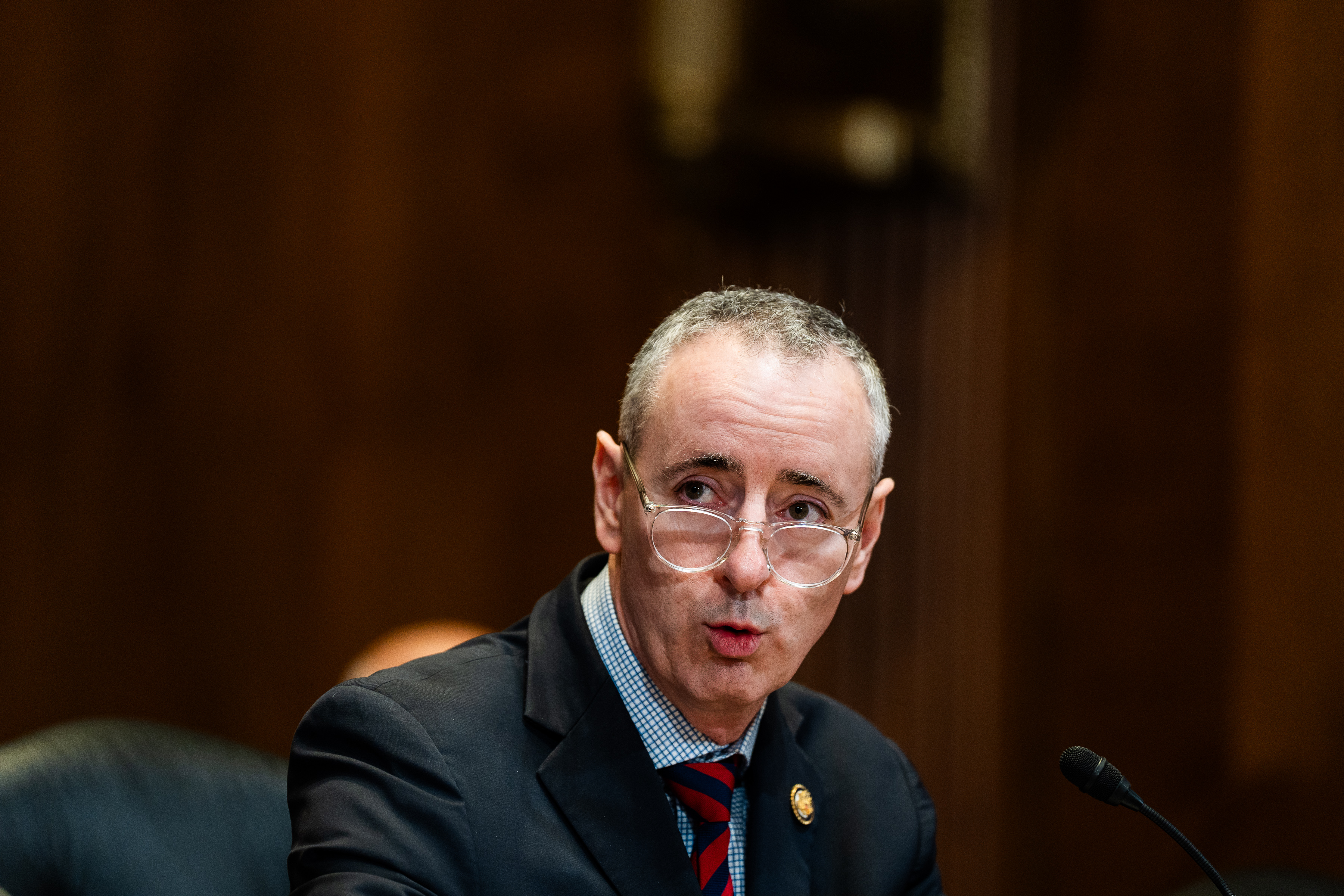
Rep. Brian Fitzpatrick (R-Pennsylvania) speaks at a hearing on Capitol Hill on Dec. 3.
Mackenzie, in an interview with The Inquirer, blamed Democrats for not signing on to one of the compromise proposals, leaving him and the other three Republicans with no alternative but to sign onto a discharge for a plan he doubts will pass.
“But if you send the Senate anything at this point, I’m of the opinion it will continue the conversation and they’ll consider what their options are,” Mackenzie said. “If they would like to do additional reforms, I welcome those.”
While Republicans who have opposed the extension argue the subsidies were meant to be temporary and affect only about 7% of Americans, Mackenzie said he has been hearing from constituents constantly.
“Healthcare and the current system is unaffordable for many people,” he said. “We recognize the current system is broken for millions of Americans, so to actually get to some kind of better position, you need both short-term and long-term solutions.”
He called the Affordable Care Act subsidy extension a needed short-term solution “to do something for people struggling right now.”
Like Bresnahan, Mackenzie won his Lehigh Valley seat by 1 percentage point last year. And the district will be a top priority for both parties in next year’s election — as shown by Vice President JD Vance’s visit there Tuesday.
U.S. Rep. Scott Perry, a staunch Trump ally, represents a swing district in Central Pennsylvania but voted against the discharge petition. Janelle Stelson, a Democrat seeking Perry’s seat, called him “extreme” for voting against the measure.
“While other Republicans are working across party lines to lower costs, Perry is yet again refusing to do anything to make life more affordable,” said Stelson, who narrowly lost to Perry last year.
Some Republicans do not want to extend the credits at all, while others want abortion restrictions included.
Democrats hoping to unseat Fitzpatrick argue he has a record of pushing back on Trump and GOP leaders only in ways that do not actually damage the party or its priorities. In this case, though, the three Pennsylvanians were critical in getting the petition through, even if the future of ACA tax credits remains uncertain.
“The only thing Brian Fitzpatrick has perfected in his 9 years in Congress is the art of completely meaningless gesture, designed to protect his political future not the people he serves,” his Democratic challenger, Bucks County Commissioner Bob Harvie, wrote on X.
Harvie had previously called on Fitzpatrick to sign the Democrats’ discharge petition.
Not all ACA tax credits are under threat. Under the ACA, people who earn less than 400% of the federal poverty level — about $60,000 — are eligible for tax credits on a sliding scale, based on their income, to help offset the monthly cost of an insurance premium.
That tax credit is part of the law, and therefore not expiring. But what will expire is an expansion passed in 2021 when Congress increased financial assistance so that those buying coverage through an Obamacare marketplace do not pay more than 8.5% of their income.
This article includes information from the Associated Press.
WASHINGTON — Four centrist Republicans broke with Speaker Mike Johnson on Wednesday and signed onto a Democratic-led petition that will force a House vote on extending for three years an enhanced pandemic-era subsidy that lowers health insurance costs for millions of Americans.
The stunning move comes after House Republican leaders pushed ahead with a health care bill that does not address the soaring monthly premiums that millions of people will soon endure when the tax credits for those who buy insurance through the Affordable Care Act expire at year’s end.
Democrats led by Minority Leader Hakeem Jeffries of New York needed 218 signatures to force a floor vote on their bill, which would extend the subsides for three years.
Republican Reps. Brian Fitzpatrick, Robert Bresnahan and Ryan Mackenzie, all from Pennsylvania, and Mike Lawler of New York signed on Wednesday morning, pushing it to the magic number of 218. A vote on the subsidy bill could come as soon as January under House rules.
“Unfortunately, it is House leadership themselves that have forced this outcome.” Fitzpatrick said in a statement.
Johnson told reporters Wednesday that “I have not lost control of the House” and he noted that Republicans have a razor-thin majority that allows a small number of members to employ procedures that would not usually be successful in getting around leadership.
The revolt against GOP leadership came after days of talks centered on the health care subsidies.
Johnson had discussed allowing more politically vulnerable GOP lawmakers a chance to vote on bills that would temporarily extend the subsidies while also adding changes such as income caps for beneficiaries. But after days of discussions, the leadership sided with the more conservative wing of the party’s conference, which has assailed the subsidies as propping up a failed marketplace through the ACA, which is widely known as “Obamacare.”
House Republicans pushed ahead Wednesday a 100-plus-page health care package without the subsidies, instead focusing on long-sought GOP proposals designed to expand insurance coverage options for small businesses and the self-employed.
Fitzpatrick and Lawler tried to add a temporary extension of the subsidies to the bill, but were denied.
“Our only request was a floor vote on this compromise, so that the American People’s voice could be heard on this issue. That request was rejected. Then, at the request of House leadership I, along with my colleagues, filed multiple amendments, and testified at length to those amendments,” Fitzpatrick said. “House leadership then decided to reject every single one of these amendments.
“As I’ve stated many times before, the only policy that is worse than a clean three-year extension without any reforms, is a policy of complete expiration without any bridge,” Fitzpatrick said.
Lawler, in a social media post, similarly said that “the failure of leadership” to permit a vote had left him with “no choice” but to sign the petition. He urged Johnson to bring the plan up for an immediate floor vote.
Jeffries, for several weeks, had called on Republicans to sign his discharge petition. He particularly challenged Republicans in competitive congressional districts to join the effort if they really wanted to prevent premium increases for their constituents.
“Mike Johnson needs to bring the bill to the floor today,” Jeffries said. “Our position from the very beginning was that we are standing on the right side of the American people who want to see the Affordable Care Act tax credits extended, and we’re appreciative that we now have the bipartisan coalition to get that done.”
Path ahead is uncertain
Even if the subsidy bill were to pass the House, which is far from assured, it would face an arduous climb in the Republican-led Senate.
Republicans last week voted down a three-year extension of the subsidies and proposed an alternative that also failed. But in an encouraging sign for Democrats, four Republican senators crossed party lines to support their proposal.
Senate Majority Leader John Thune, R-S.D., argued against the Democratic extension as “an attempt to disguise the real impact of Obamacare’s spiraling health care costs.”
With the midterm elections 11 months away, Vice President JD Vance visited one of the most closely watched swing districts in the country to ask Pennsylvania voters to aim their anger over the economy at Democrats rather than the Trump administration.
During a speech at Uline Shipping Supplies in Alburtis in the Lehigh Valley, Vance blamed immigrants for the housing shortage and invoked the name of notorious killer and cult leader Charles Manson as he doubled down on President Donald Trump’s rhetoric from the week before in the Poconos.
Vance’s visit was to U.S. Rep. Ryan Mackenzie’s district, while Trump’s speech last week at the Mount Airy Casino Resort was in U.S. Rep. Rob Bresnahan’s district. Both freshman Republicans won their seats by roughly a percentage point last year and are among the most vulnerable incumbents in Congress headed into 2026.
Both speeches were billed as being focused on the economy — as Trump and Vance seek to counter Democrats’ message on affordability ahead of next year’s election. But both delved into an assortment of topics.
Though Vance’s remarks were wide-ranging, the vice president hewed to the White House message that while the price of eggs might still be high, the administration is working to improve pocketbook issues and restore confidence in the economy.
“Even though we’ve made incredible progress, we understand that there’s a lot more work to do, and the thing that I’d ask from the American people is a little bit of patience,” Vance said.
Affordability
Vance didn’t say the affordability crisis is a “Democratic hoax,” as Trump did.
He just said it’s the Democrats’ fault.
“When I hear the Democrats talk about the affordability crisis they created,” Vance said, “it’s a little bit like … Charles Manson criticizing violent crime. Look in the mirror, my friend, you are the cause of the problem.”
It’s a variation of Trump’s line from last week that “Democrats talking about affordability is like Bonnie and Clyde preaching about public safety.”
Democrats started criticizing the price of eggs when Trump was in office for less than a week, Vance said.
A woman asked Trump about it, and according to Vance, the president responded, “’Lady, we’ve been here for three days. It takes a little bit of time to fix something that was so fundamentally broken.’”
Every “single affordability crisis” in the United States — food, housing, medicine, gas — is because we “inherited a nightmare of an economy from Joe Biden,” Vance told the crowd.
In an unusual explanation of how Biden sent housing costs soaring, for example, Vance explained that the previous administration’s immigration policies were to blame.
Vance said “20 million illegal immigrants … took homes that, by all rights, go to American citizens, and to the people of this great state.”
It’s a line that he’s used before, which fact-checkers have flagged. Politifact pointed out that there are around 12 million to 14 million undocumented immigrants living in the United States. And the housing shortage comes from a lack of construction of a sufficient supply of affordable homes, experts say.
Beyond that, Politifact said, immigrants often share housing with friends or relatives, making their average housing consumption “far smaller than is typical.”
Democratic Gov. Josh Shapiro, who is up for reelection next year, hit back at Vance on social media and made the case that Trump’s policies, including cuts to Medicaid and tariffs, are exacerbating the cost-of-living headaches for Pennsylvanians.
“Donald Trump and JD Vance’s economic policies are hurting Pennsylvania. They have raised prices at the grocery store, screwed over our farmers, and gutted healthcare funding,” Shapiro said on X. “I know this Administration thinks the cost of living is a ‘hoax’ — but it’s not, and Pennsylvania families know it.”
Firing federal workers
In his speech, Vance made much of the just-released November jobs report, delayed by the government shutdown. Around 64,000 jobs were added to the economy, an improvement over the more than 100,000 jobs lost in October.
Putting a good face on the big October job loss, Vance told a reporter after his speech that those were federal government jobs eliminated by the Trump administration — with a plan in mind.
“That is, in a lot of ways, what we’re trying to do under President Trump’s leadership,” Vance said. “We wanted to fire bureaucrats and hire these Americans out here,” Vance said to applause.
As he spoke, Vance praised Mackenzie for his “dedication to American workers.”
Asked about the 4.6% November unemployment rate, the highest since 2021 during the pandemic, Vance was able to put a good spin on that as well.
Many of the unemployed may have lost their jobs two years ago, under Biden, and stopped looking for work, Vance said. Those people aren’t counted in the official unemployment statistics. Now, however, as we see wages rise and more investment into the United States, Vance said, the people sitting out the job search under Biden are getting “off the sidelines” and once again seeking jobs. As they do, they’re being counted as unemployed.
The high unemployment rate, then, is “exactly what we want,” Vance said. “That is happening under President Trump’s leadership.”
As he spoke, Vance explained Trump’s ideas to help Americans get by, including omitting taxes on tips and overtime, as well as creating a tax deduction for interest on auto loans.
These will lead to significant tax refunds, Vance said, adding that middle-class Pennsylvanians will see “the best tax season in 2026 that you’ve ever had.” That’s a result of Americans having “a president and Congress fighting for you for a change,” Vance said.
Vance responds to Vanity Fair article
In a tough question from a reporter, Vance was asked about a Vanity Fair article in which Trump’s chief of staff, Susie Wiles, described some of the people in the administration in less-than-flattering ways.
She said Trump has an “alcoholic’s personality”; Elon Musk is an ”avowed ketamine user” and an ”odd, odd duck”; Budget Director Russell Vought is “right-wing, absolute zealot”; and that Attorney General Pam Bondi ”completely whiffed” in handling the Epstein files.
As for Vance, Wiles said he’s “been a conspiracy theorist for a decade,” and that Vance’s crossover from a Trump critic to an ally was based on political expediency.
While Vance didn’t address the latter description, he agreed that he “sometimes” is a conspiracy theorist, but that he only believes “in conspiracies that are true.”
As an example, he said, he believed in “this crazy conspiracy theory that the media and government were covering up the fact that Joe Biden was clearly unable to do the job.”
Vance said it turns out that such conspiracy theories are just things that he discovered to be true “six months before the media admitted it.”
He hastened to add that if anyone in the Trump administration learned a lesson from the Vanity Fair article, it’s that “we should be giving fewer interviews to mainstream media.”
Sometimes a terrible year can end with a moment of uplift. This actually happened in the last days of 1968, when Apollo 8 took the first humans in orbit around the moon and sent wonder back to a planet struggling with assassinations and riots. Alas, 2025 seems not such a year. A world already reeling from two mass shootings half a world apart learned Sunday night that Hollywood icon Rob Reiner and his wife Michele had been murdered in their home, allegedly by their own son. Boomers like me saw our own journey in that of Reiner — playing a young campus liberal, then taking down the pomposity of classic rock before both an unprecedented streak of classic movies and unparalleled social and political activism. He had more to give, and leaves a void that can’t truly be filled.
Americans fear AI and loathe its billionaires. Why do both parties suck up to them?
Time’s 2025 person of the year are the architects of AI, depicted in this painting by Jason Seiler. The painting, with nods to the iconic 1932 “Lunch atop a Skyscraper” photograph, depicts tech leaders Mark Zuckerberg, Lisa Su, Elon Musk, Jensen Huang, Sam Altman, Demis Hassabis, Dario Amodei, and Fei-Fei Li.
“This is the West, sir. When the facts become legend, print the legend.” — journalist in the 1962 film, The Man Who Shot Liberty Valance
The top editors at Time (yes, it still exists) looked west to Silicon Valley and decided to print the legend last week when picking their Person of the Year for the tumultuous 12 months of 2025. It seemed all too fitting that its cover hailing “The Architects of AI” was the kind of artistic rip-off that’s a hallmark of artificial intelligence: 1932’s iconic newspaper shot, “Lunch Atop a Skyscraper,” “reimagined” with the billionaires — including Elon Musk and OpenAI’s Sam Altman — and lesser-known engineers behind the rapid growth of their technology in everyday life.
Time’s writers strived to outdo the hype of AI itself, writing that these architects of artificial intelligence “reoriented government policy, altered geopolitical rivalries, and brought robots into homes. AI emerged as arguably the most consequential tool in great-power competition since the advent of nuclear weapons.”
OK, but it’s a tool that’s clearly going to need a lot more work, or architecting, or whatever it is those folks out on the beam do. That was apparent on the same day as Time’s celebration when it was reported that Washington Post editors got a little too close to the edge when they decided they were ready to roll out an ambitious scheme for personalized, AI-driven podcasts based on factors like your personal interests or your schedule.
The news site Semafor reported that the many gaffes ranged from minor mistakes in pronunciation to major goofs like inventing quotes — the kind of thing that would get a human journalist fired on the spot. “Never would I have imagined that the Washington Post would deliberately warp its own journalism and then push these errors out to our audience at scale,” a dismayed, unnamed editor reported.
The same-day contrast between the Tomorrowland swooning over the promise of AI and its glitchy, real-world reality felt like a metaphor for an invention that, as Time wasn’t wrong in reporting, is so rapidly reshaping our world. Warts and all.
Like it or not.
And for most people (myself included), it’s mostly “or not.” The vast majority understands that it’s too late to put this 21st-century genie back in the bottle, and like any new technology there are going to be positives from AI, from performing mundane organizing tasks that free up time for actual work, to researching cures for diseases.
The most recent major Pew Research Center survey of Americans found that 50% of us are more concerned than excited about the growing presence of AI, while only 10% are more excited than concerned. Drill down and you’ll see that a majority believes AI will worsen humans’ ability to think creatively, and, by a whopping 50-to-5% percent margin, also believes it will worsen our ability to form relationships rather than improve it. These, by the way, are two things that weren’t going well before AI.
So naturally our political leaders are racing to see who can place the tightest curbs on artificial intelligence and thus carry out the will of the peop…ha, you did know this time that I was kidding, didn’t you?
It’s no secret that Donald Trump and his regime were in the tank from Day One for those folks out on Time’s steel beam, and not just Musk, who — and this feels like it was seven years ago — donated a whopping $144 million to the Republican’s 2024 campaign. Just last week, the president signed an executive order aiming to press the full weight of the federal government, including Justice Department lawsuits and regulatory actions, against any state that dares to regulate AI. He said that’s necessary to ensure U.S. “global AI dominance.”
This is a problem when his constituents clearly want AI to be regulated. But it’s just as big a problem — perhaps bigger — that the opposition party isn’t offering much opposition. Democrats seem just as awed by the billionaire grand poobahs of AI as Trump. Or the editors of Time.
Also last week, New York Democratic Gov. Kathy Hochul — leader of the second-largest blue state, and seeking reelection in 2026 — used her gubernatorial pen to gut the more-stringent AI regulations that were sent to her desk by state lawmakers. Watchdogs said Hochul replaced the hardest-hitting rules with language drafted by lobbyists for Big Tech.
As the American Prospect noted, Hochul’s pro-Silicon Valley maneuvers came after her campaign coffers were boosted by fundraisers held by venture capitalist Ron Conway, who has been seeking a veto, and the industry group Tech:NYC, which wants the bill watered down.
It was a similar story in the biggest blue state, California, where Gov. Gavin Newsom in 2024 vetoed the first effort by state lawmakers to impose tough regulations on AI, and where a second measure did pass but only after substantial input from lobbyists for OpenAI and other tech firms. Silicon Valley billionaires raised $5 million to help Newsom — a 2028 White House front-runner — beat back a 2021 recall.
Like other top Democrats, Pennsylvania Gov. Josh Shapiro favors some light regulation for AI but is generally a booster, insisting the new technology is a “job enhancer, not a job replacer.” He’s all-in on the Keystone State building massive data centers, despite their tendency to drive up electric bills and their unpopularity in the communities where they are proposed.
Money talks, democracy walks — an appalling fact of life in 2025 America. In a functioning democracy, we would have at least one political party that would fly the banner of the 53% of us who are wary of unchecked AI, and even take that idea to the next level.
A Harris Poll found that, for the first time, a majority of Americans also see billionaires — many of them fueled by the AI bubble — as a threat to democracy, with 71% supporting a wealth tax. Yet few of the Democrats hoping to retake Congress in 2027 are advocating such a levy. This is a dangerous disconnect.
Time magazine got one thing right. Just as its editors understood in 1938 that Adolf Hitler was its Man of the Year because he’d influenced the world more than anyone else, albeit for evil, history will likely look back at 2025 and agree that AI posed an even bigger threat to humanity than Trump’s brand of fascism. The fight to save the American Experiment must be fought on both fronts.
Yo, do this!
I haven’t tackled much new culture this month because I’ve been doing something I so rarely do anymore: Watching a scripted series from start to finish. That would be Apple TV’s Pluribus, the new sci-fi-but-more-than-sci-fi drama from television genius Vince Gilligan. True, one has to look past some logistical flaws in its dystopia-of-global-happiness premise, but the core narrative about the fight for individualism is truly a story of our time. The last two episodes come out on Dec. 19 and Dec. 26, so there’s time to catch up!
The shock and sorrow of Rob Reiner’s murder at age 78 has, not surprisingly, sparked a surge of interest in his remarkable, and remarkably diverse, canon of classic movies. His much-awaited sequel Spinal Tap II: The End Continuesbegan streaming on HBO Max just two days before his death. Check it out, or just re-watch the 1984 original, which is one of the funniest flicks ever made, and which is also streaming on HBO Max and can be rented on other popular sites. Crank it up to 11.
Ask me anything
Question: What news value, not advertising value, is accomplished by publicizing every one of Trump’s insane rantings daily? — @bizbodeity.bsky.social via Bluesky
Answer: This is a great question, and the most recent and blatant example which I assume inspired it — Trump’s stunningly heartless online attack against a critic, Hollywood icon Rob Reiner, just hours after his violent murder — proves why this is a painful dilemma for journalists. I’d argue that Trump’s hateful and pathologically narcissistic post was a deliberate troll for media attention, to make every national moment about him. In a perfect world, it would indeed be ignored. But it was highly newsworthy that his Truth Social post was so offensive that it drew unusual criticism from Republicans, Evangelicals, and other normal supporters. We may remember this is as a political turning point. Trump’s outbursts demand sensitivity, but that Americans elected such a grotesque man as our president can’t easily be ignored.
What you’re saying about…
It’s been two weeks since I asked about Donald Trump’s health, but the questions have not gone away. There was not a robust response from readers — probably because I’d posed basically the same question once before. Several of you pointed to expert commentary that suggests the president is experiencing significant cognitive decline, perhaps suffering from frontotemporal dementia. Roberta Jacobs Meadway spoke for many when she lambasted “the refusal if not the utter failure of the once-major news outlets to ask the questions and push for answers.”
📮 This week’s question: We are going to try an open-ended one to wrap up 2025: What is your big prediction for 2026 — could be anything from elections to impeachment to the Eagles repeating as Super Bowl champs — and why. Please email me your answer and put the exact phrase “2026 prediction” in the subject line.
Backstory on how I covered an unforgettable year
Rick Gomez, who travelled 65 hours by bus from Phoenix, Ariz., holds an AI photo composite poster of Donald Trump, in Washington, the day before Trump took the Oath of Office to become the 47th president of the United States.
Barring the outbreak of World War III — something you always need to say these days — this is my final newsletter, or column, of 2025, as I use up my old-man plethora of vacation days. To look back on America’s annus horribilis, I thought I’d revive a feature from my Attytood blogging days: a recap of the year with the five most memorable columns, not numbered in order of significance. Here goes:
A year that many of us dreaded when the votes were counted in November 2024 began for me with a sad reminder that the personal still trumps the political, when my 88-year-old father fell ill in the dead of winter and passed away on March 11. I wrote about his life, but also what his passion for science and knowledge said about a world that, at the end of his life, was slipping away: Bryan H. Bunch (1936-2025) and the vanishing American century of knowledge.
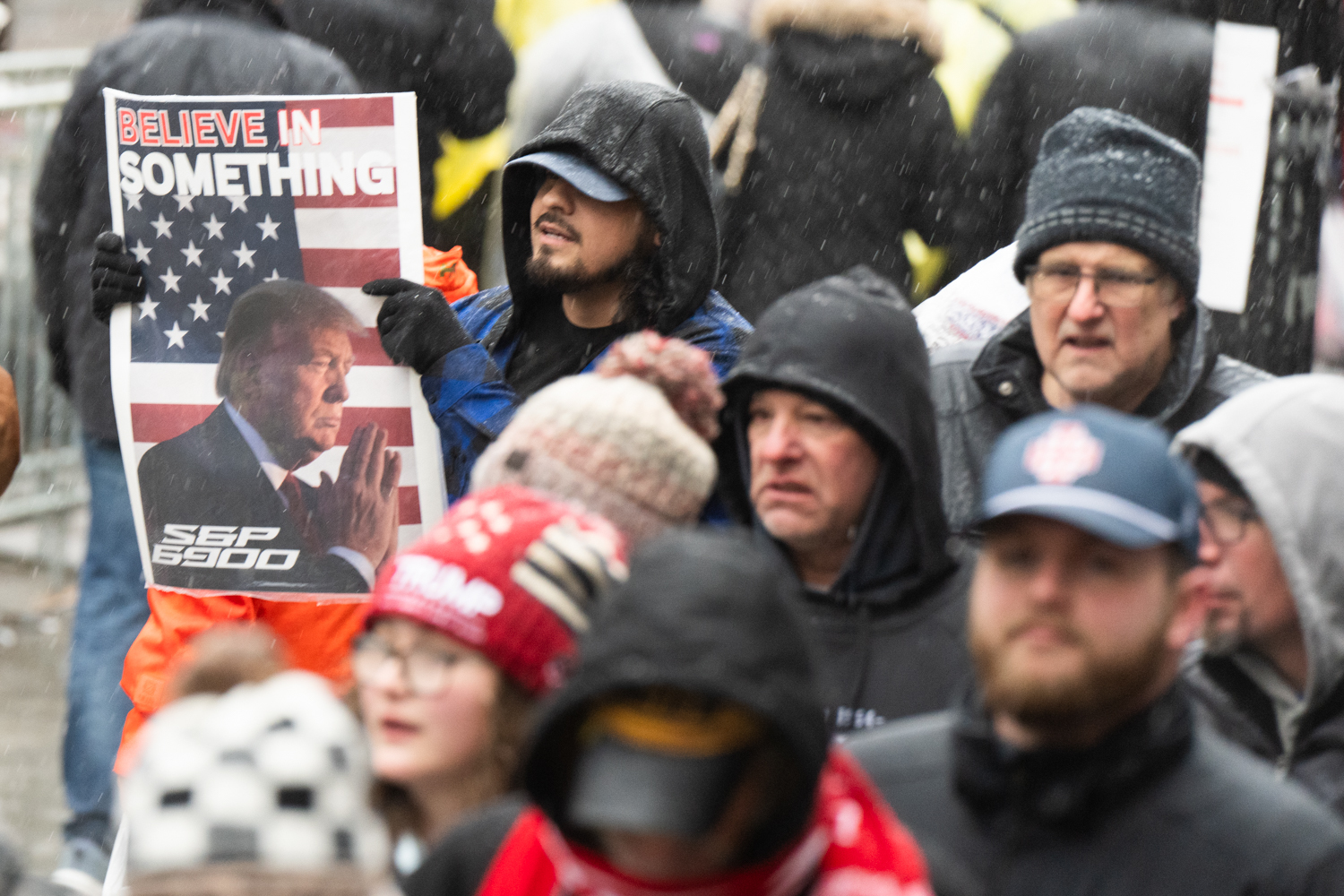
Still, Donald J. Trump could not be ignored. On Jan. 19, I put on my most comfortable shoes (it didn’t really help) and traipsed around a snowy, chilly Washington, D.C. as the about-to-be 47th president made his “forgotten American” supporters wait on a soggy, endless line for a nothingburger rally while the architects of AI and other rich donors partied in heated luxury, setting the tone for a year of gross inequality: American oligarchy begins as Trump makes billions while MAGA gets left out in the rain.
One of the year’s biggest stories was Trump’s demonizing of people of color, from calling Somali immigrants “garbage” to his all out war on DEI programs that encouraged racial diversity, when the truth was always far different. In February, I wrote about the American dream of a young man from Brooklyn of Puerto Rican descent and his ambition to become an airline pilot, who perished in the D.C. jet-helicopter crash. His remarkable life demolished the MAGA lie about “DEI pilots.” Read: “Short, remarkable life of D.C. pilot Jonathan Campos so much more than Trump’s hateful words.”
If you grew up during the 1960s and ‘70s, as I did, then you understand the story of our lifetimes as a battle for the individual rights of every American — for people to live their best lives regardless of race or gender, or whether they might be transgender, or on the autism spectrum. I wrote in October about the Trump regime’s consuming drive to reverse this, to make it a crime to be different: From autism to beards, the Trump regime wages war on ‘the different’
A grim year did end on one hopeful note. Trump’s push for an authoritarian America is faltering, thanks in good measure to the gumption of everyday people. This month, I traveled to New Orleans to chronicle the growing and increasingly brave public resistance to federal immigration raids, as citizens blow whistles, form crowds and protest efforts to deport hard-working migrants: In New Orleans and across U.S., anger over ICE raids sparks a 2nd American Revolution
What I wrote on this date in 2021
On this date four years ago, some of us were still treating Donald Trump’s attempted Capitol Hill coup of Jan. 6, 2021 like a crime that could be solved so that the bad guys could be put away. On Dec. 16, 2021, I published my own theory of the case: that Team MAGA’s true goal was provoking a war between its supporters and left-wing counterdemonstrators, as a pretext for sending in troops and stopping Congress from finishing its certification of Joe Biden’s victory. That didn’t happen because the leftists stayed home. More than 1,000 pardons later, check out my grand argument: “A theory: How Trump’s Jan. 6 coup plan worked, how close it came, why it failed.”
Recommended Inquirer reading
Only one column this week, as this senior citizen was still recovering from that grueling trip to New Orleans. On Sunday, I reacted with the shock and sadness of seeing a mass shooting at my alma mater, Brown University. I wrote that in a nation with 500 million guns, it’s a virtual lock that some day our families — nuclear or extended, like the close-knit Brown community — will be struck by senseless violence. And I took sharp issue with Trump’s comment that “all you can do is pray.” There is much that can and should be done about gun safety.
Sometimes the big stories are the ones that play out over decades, not days. When I first started coming regularly to Philadelphia at the end of the 1980s, the dominant vibe was urban decline. The comeback of cities in the 21st century has altered our world, for good — but a lot of us old-timers have wondered: Just who, exactly, is moving into all these new apartments from Center City to Kensington and beyond? Last week, The Inquirer’s ace development reporter Jake Blumgart took a deep dive into exactly that — highlighting survey results that large numbers are under 45, don’t own a car, and moved here from elsewhere, and telling some of their stories. Local journalism is the backbone of a local community, and you are part of something bigger when you subscribe to The Inquirer. Plus, it’s a great Christmas gift, and you’ll get to read all my columns in 2026. See you then!
By submitting your written, visual, and/or audio contributions, you agree to The Inquirer‘s Terms of Use, including the grant of rights in Section 10.
More than two years ago, a Chester County Voter Services employee made a dire prediction.
In an eight-page grievance against Voter Services Director Karen Barsoum, the employee described a hostile work environment in which election workers were subjected to “bullying” from the department’s director.
At the time of the complaint, the employee wrote, 15 people had left the 25-person department since Barsoum was hiredin 2021.
“I have very legitimate fears that there will be a mass exodus from voter services in the coming months,” the employee, who asked not to be named for fear of retaliation, wrote in the grievance document he provided to The Inquirer. “My concern is how this will impact the 370k voters of Chester County.”
Two years later, it appears that his prediction had come true. The number of staff departures since Barsoum took over grew to 29 by November of this year, according to a Chester County spokesperson.
Election offices across the nation have experienced a high level of turnover and staff burnout in recent years in the face of election denialism and threats, but Chester County’s churn-rate is nearly double the number of departures in Montgomery and Delaware Counties’ elections departments that have lost 16 and 15 people respectively in the same time period. Both departments are larger than Chester County’s election office.
Accounts and records from three former staffers at Chester County Voters Services Department, two of whomasked not to be named, paint a picture of a hostile work environment where employees were often made to feel as though management had placed a target on their back.
These concerns have been raised to elected and non-elected county leaders for more than two years.
Barsoum saidin an interview that she couldn’t respond to allegations from employees but described her management style as collaborative.
Employees, she said, had left for a variety of reasons including jobs in other Southeast Pennsylvania election offices that pay better than Chester County. Others, she said, left to pursue other opportunities or for family reasons.
Some, she said, left because of the increased pressures of election work as state law changes and the intensity increases.
“I encourage everyone to do what is the best for them,” Barsoum saidThursday.
Though Barsoum acknowledged it was challenging for the office when people left, she said she and other managers were very hands-on in training staff and ensuring that staff members knew the ins and outs of various positions.
Karen Barsoum, Chester County’s director of voter services, at the Chester County Government Services Building in 2022.
The employee who filed the grievance said he feared that the attrition would leadto mistakes during the 2024 presidential election, when the eyes of the nation were on Pennsylvania.
Ultimately, everyone who wanted to vote was able to, county officials said. But the error created a chaotic scene as the county kept polls open two additional hours and more than 12,000 voters were asked to cast provisional ballots — which require more steps from election workers and voters to be counted.
The county hired a WestChester law firm to investigate how and why the poll book error occurred.
Chester County’s CEO David Byerman, the county’s top unelected official, said that turnover across all departments can be attributed to a variety of factors in the county including pay and managers.
He described working in elections today as a “pressure cooker” as a result of the political climate.
The investigation, he said, would look closely at management in the department and whether factors existed that would have hindered staff from identifying or reporting concerns.
“The very fact that we’re doing an investigation into what happened last month … indicates that we want to learn more about what happened in this particular election,” Byerman said. “Part of that investigation is looking at the performance of our management team in voter services.”
It’s unclear at this stage whether the error can be attributed to the turnover and environment in voter services, but Paul Manson, a professor at Portland State University who researches challenges faced by election workers, said the turnover seen in Chester County is unusual and alarming.
Often, Manson said, staff tends to be relatively stable in election offices because they care deeply about the work. Stressors of reduced staffing and the toxic environment described by threeformeremployees, he said, could create a dynamic that makes mistakes more likely.
“When we have these periods of turnover local election officials really sort of grit their teeth because they worry about these small errors turning into big errors,” he said.
Election workers process mail ballots for the 2024 general election at the Chester County, administrative offices in West Chester. (AP Photo/Matt Slocum)
Allegations of ‘hostility’ toward staff
Barsoum, who came to Chester County from Berks County in 2021, has earned respect in the election field nationally and within Pennsylvania. Barsoum had been the assistant director in the Berks election office.
“Karen Barsoum has an extraordinary knowledge that is a resource both statewide here in Pennsylvania and has been a resource nationally. I don’t think anyone doubts her knowledge of election processes,” said Byerman, the Chester County CEO.
“At the end of the day I think any manager needs to combine two abilities. An ability to manage an office effectively and an ability to be knowledgeable and an expert.”
Byerman said each manager in the county is evaluated on these criteria regularly, but when asked whether Barsoum possessed both qualities, Byerman did not respond.
Former county employees said Barsoum’s high reputation outside Chester County did not align with what they experienced in their jobs.
The employee who filed the grievance against Barsoum said he got along with her well when she started and he received high marks on performance reviews, according to documents provided to The Inquirer.
But after a reorganization in the department in 2022, he said, he noticed that more and more staff members were leaving. The employee was promoted to a new role and during the 2022 election did that job while maintaining responsibilities from his prior role.
He said he expressed concern about being overworked and received little support in the new role. After the employee said he dropped the ball on a minor item and reported it to Barsoum, she began treating him differently.
“In Karen’s eyes you’re either 100% right or 100% wrong,” he said in an interview.
The employee filed his grievance in August of 2023 after a meeting where, he said, Barsoum listed accomplishments of staff members and refused to acknowledge any of his work.
Barsoum’s “hostility” toward him in the meeting was so noticeable, he wrote in the complaint, that eight colleagues approached him afterward to say they noticed it.
“After so many months of mistreatment and disrespect in such a hostile work environment, it eventually gets to the point that something needs to be said. If the Presidential Election were to not run smoothly next year and ChesCo voters were disenfranchised due to the Voter Services, I would forever regret not sending this grievance,” the employee wrote in his grievance.
That employee left the department the next year. He was placed on a performance-improvement plan weeks after submitting his grievance, and, after completing that plan, he was placed on another as a result of a low performance review and quit before he could be terminated.
Elizabeth Sieb, who worked at the election office for eight years before leaving in 2022, said she had similar experiences with Barsoum to those detailed in the grievance. For the past year and a half she has been telling county officials about her concerns.
In 2022, Barsoum reorganized the office to respond to the new stressors of elections and new responsibilities that come with mail voting. Since then, she said, she and staff work to evaluate after each election what worked and what didn’t so adjustments can be made.
But Sieb said Barsoum didn’t take constructive criticism well when changes were made and stifled discussion among staff members.
Sieb was fired from the department in 2022. She said she was placed on a personal-improvement plan that demanded that she seek mental health treatment and subsequently placed on a three-day unpaid suspension.
Following the suspension, Sieb said, she was directed not to speak to her colleagues if it was not directly related to her work. She said she was fired for violating that rule when she reported to a lower-level manager concerns about another manager speaking disparagingly about a job applicant in earshot of other employees.
Sieb, who at times questioned Barsoum’s decisions, said she felt that the director was threatened by long-term staff and was prone to outbursts when employees would correct her.
“She was slowly but surely wearing down and getting rid of all the people that had been there a long time,” Sieb said.
Jennifer Morrell, the CEO of the Elections Group, a company that assists local election officials, said turnover in election offices happens for a variety of reasons — including the long hours and relatively low pay civil servants receive.
She noted that training programs from state agencies and associations are designed to help prevent errors as a result of turnover and that a larger department, like Chester County, may be able to fill rolls with election workers from other counties.
“Karen is highly respected in the election community, super professional,” Morrell said. “Our hearts just ached with what happened because it could have happened to anybody.”
Commissioners respond to concerns
After leaving the department, Sieb said, she believed she suffered from PTSD related to her experience.
Beginning in 2024 she began reaching out to Republican Commissioner Eric Roe with her concerns. Roe, Sieb said, investigated the complaints and brought them to the other commissioners, Democrats Josh Maxwell and Marian D. Moskowitz. The commissioners also serve as the county’s election board.
“I have had a lot of people come to me with various concerns throughout county government, and voter services is certainly one of them,” Roe told The Inquirer, explaining that his role as minority party commissioner makes him a frequent recipient of workforce complaints.
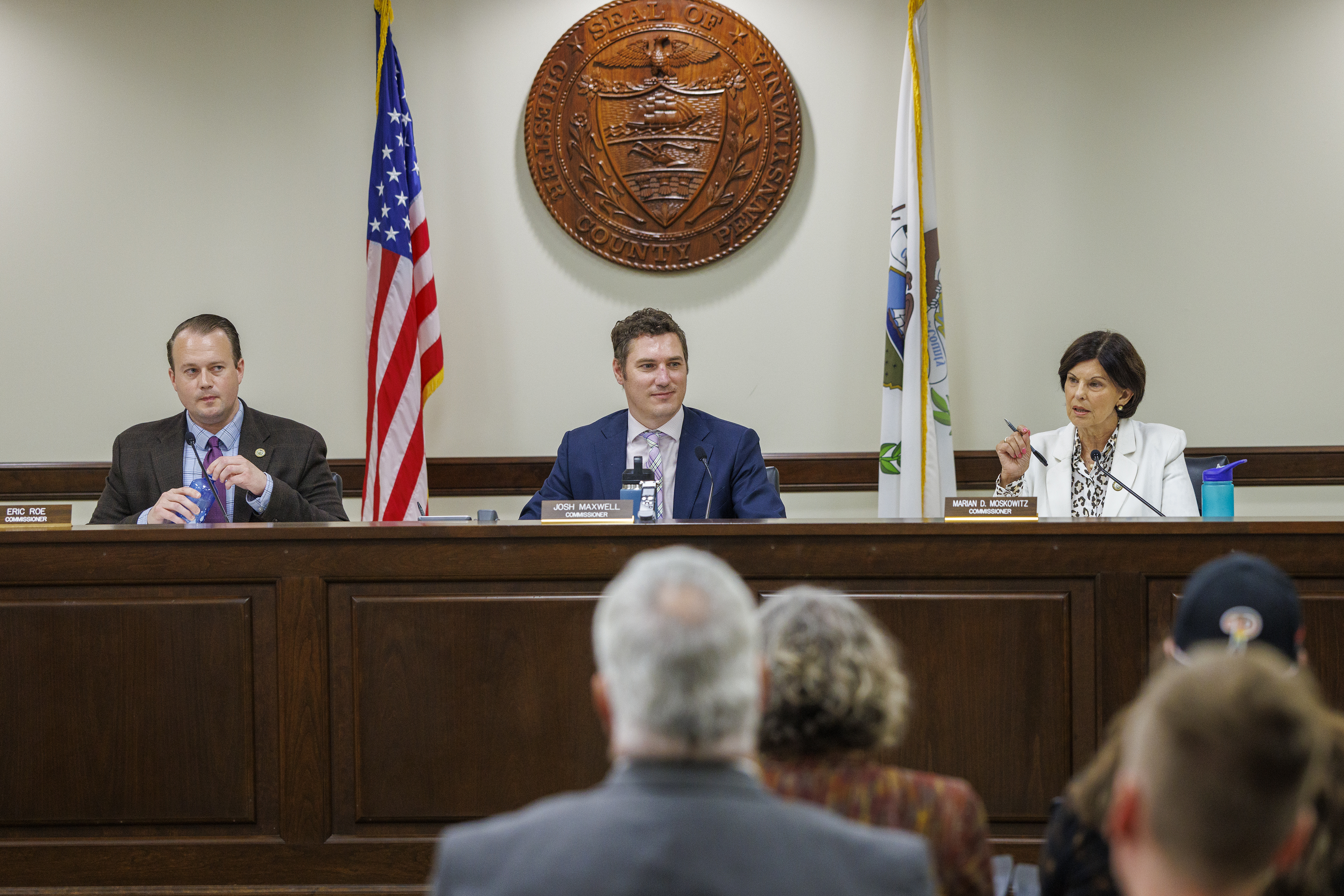
Chester County Commissioners (from left) Eric M. Roe, Josh Maxwell, and Marian D. Moskowitz at a board meeting in September.
But a year and a half later, Barsoum remained in her role and Sieb continued to hear from her former colleagues with concerns. Twice this year, Sieb went before the Chester County Election Board to raise public concerns about turnover under Barsoum.
Maxwell, who chairs the Chester County Election Board, said the county reviews reports from departments when they receive them. He said he was unable to comment on specific departments or personnel matters but said the county needed to do everything it could to support its election workers.
“We need to do a better job, I think, making sure that people feel valued. Including the folks that unfortunately we’ve lost,” he said.
Election work in Pennsylvania and elsewhere has gotten increasingly fraught. The work itself is more intense than it once was with more mail voting, and workers now deal with threats, longer hours, and a camera on them when they’re working with ballots.
“We were seen as clerical people, maybe, in the past; now we are wearing many different hats,” Barsoum said.
Moskowitz attributed much of the turnover in the county to burnout and noted the threats that election employees have faced in her years on the job.
Barsoum became emotional as she said she had worked to ensure that her staff had the resources they needed to feel safe, including mental health resources through the Human Resources department, team building outside election cycles, and a space for workers to step off camera.
“We can count on each other; we lean on each other. It’s a strong bond, a camaraderie,” she said.
When hiring new staffers, Barsoum said she warns them of what’s to come — that they’re not walking into a normal 9-to-5 job, that they won’t be able to plan vacations through about half of the year, and that they’ll be asked to take phone calls from irate people.
It’s a lifestyle, she said, that isn’t right for everyone — including some parents.
“If you’re leaning on a daycare and that is your sole, the go-to, it will be very hard to work in the department because there is 24/7 operations, and there are so many things that are going off and beyond the regular work schedule.”
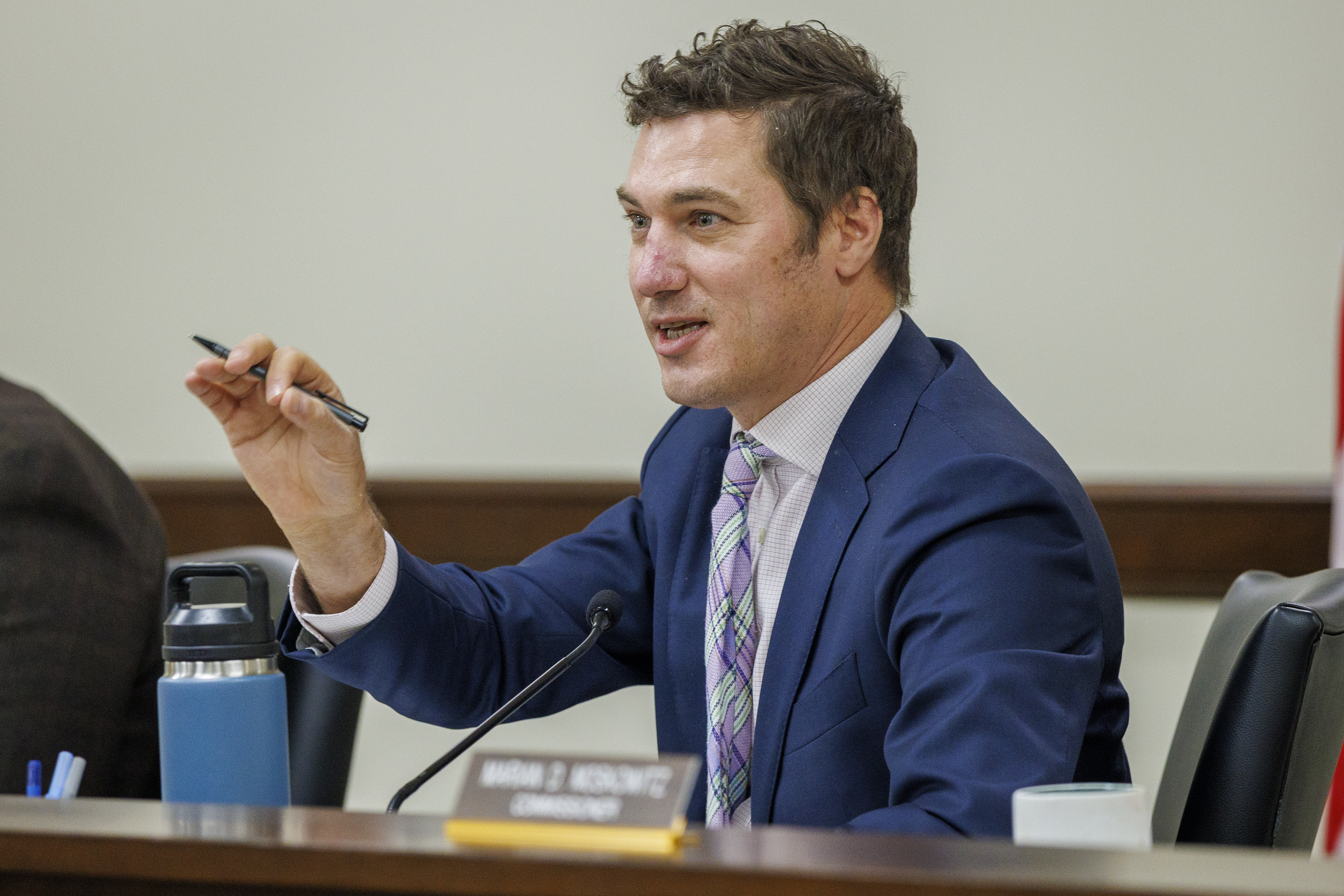
Josh Maxwell, chair of Chester County Commissioners and the county Elections Board, presides over a September commissioners meeting.
Maxwell and Moskowitz declined to comment specifically when asked if they were confident in Barsoum’s leadership, but Maxwell has repeatedly asked residents to direct their anger at November’s error at him rather than Barsoum or her staff.
“I think it’s important that we protect these folks and we empower them to make the best decisions possible,” Maxwell said at an election board meeting last week.
Speaking to The Inquirer, he reiterated that point.
“We want to make sure that people feel welcomed and empowered and are in a working environment they appreciate,” Maxwell said in an interview.
“Elections have changed so much in five years it’s not surprising to me that some people want to find something new to do.”
This suburban content is produced with support from the Leslie Miller and Richard Worley Foundation and The Lenfest Institute for Journalism. Editorial content is created independently of the project donors. Gifts to support The Inquirer’s high-impact journalism can be made at inquirer.com/donate. A list of Lenfest Institute donors can be found at lenfestinstitute.org/supporters.