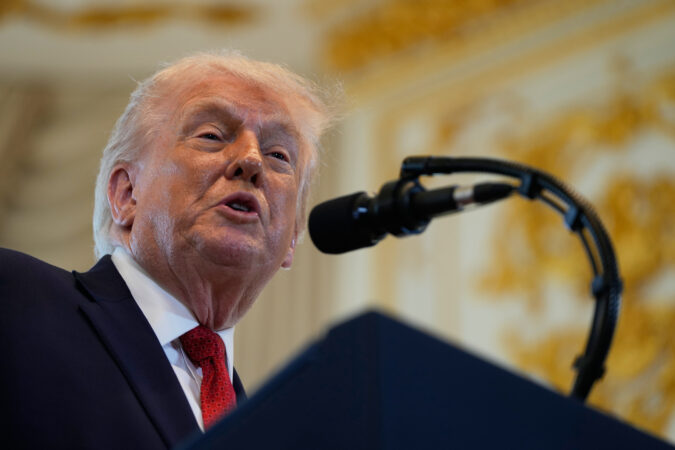
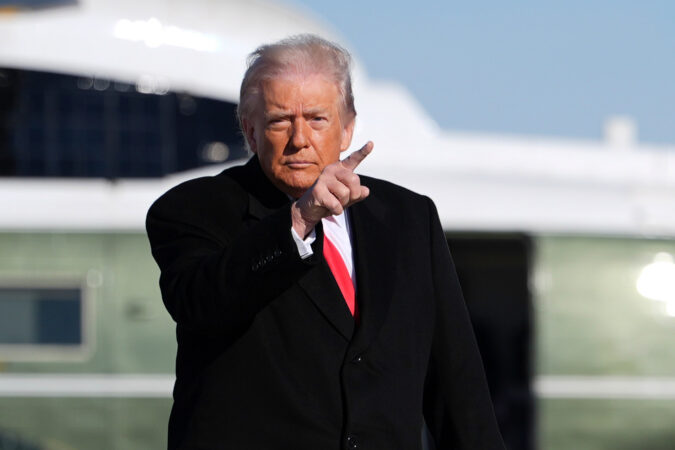
U.S. President Donald Trump linked his aggressive stance on Greenland to last year’s decision not to award him the Nobel Peace Prize, telling Norway’s prime minister that he no longer felt “an obligation to think purely of Peace,” in a text message released on Monday.
Trump’s message to Jonas Gahr Støre appears to ratchet up a standoff between Washington and its closest allies over his threats to take over Greenland, a self-governing territory of NATO member Denmark. On Saturday, Trump announced a 10% import tax starting in February on goods from eight nations that have rallied around Denmark and Greenland, including Norway.
The White House has not ruled taking control of the strategic Arctic island by force. Asked whether Trump could invade Greenland, Danish Foreign Minister Lars Løkke Rasmussen said on Monday that “you can’t leave anything out until the president himself has decided to leave anything out.”
Rasmussen, speaking to reporters following a meeting with his British counterpart Yvette Cooper in London, encouraged Washington to instead discuss solutions.
British Prime Minister Keir Starmer also sought to de-escalate tensions on Monday. “I think this can be resolved and should be resolved through calm discussion,” he said, adding that he did not believe military action would occur.
In a sign of how tensions have increased in recent days, thousands of Greenlanders marched over the weekend in protest of any effort to take over their island. Greenland Prime Minister Jens-Frederik Nielsen said in a Facebook post Monday that the tariff threats would not change their stance.
“We will not be pressured,” he wrote.
Meanwhile, Naaja Nathanielsen, Greenland’s minister for business, minerals, energy, justice and equality, told The Associated Press that she was moved by the quick response of allies to the tariff threat and said it showed that countries realize “this is about more than Greenland.”
“I think a lot of countries are afraid that if they let Greenland go, what would be next?”
Trump cites Nobel as escalation in text to Norwegian leader
Trump’s Sunday message to Gahr Støre, released by the Norwegian government, read in part: “Considering your Country decided not to give me the Nobel Peace Prize for having stopped 8 Wars PLUS, I no longer feel an obligation to think purely of Peace, although it will always be predominant, but can now think about what is good and proper for the United States of America.”
It concluded: “The World is not secure unless we have Complete and Total Control of Greenland.”
The Norwegian leader said Trump’s message was a reply to an earlier missive sent on behalf of himself and Finnish President Alexander Stubb, in which they conveyed their opposition to the tariff announcement, pointed to a need to de-escalate, and proposed a telephone conversation among the three leaders.
“Norway’s position on Greenland is clear. Greenland is a part of the Kingdom of Denmark, and Norway fully supports the Kingdom of Denmark on this matter,” the Norwegian leader said in a statement. “As regards the Nobel Peace Prize, I have clearly explained, including to President Trump what is well known, the prize is awarded by an independent Nobel Committee and not the Norwegian Government.”
The Norwegian Nobel Committee is an independent body whose five members are appointed by the Norwegian Parliament.
U.S. Treasury Secretary Scott Bessent defended the president’s approach in Greenland during a brief Q&A with reporters in Davos, Switzerland, which is hosting the World Economic Forum meeting this week.
“I think it’s a complete canard that the president would be doing this because of the Nobel,” Bessent said, immediately after saying he did not “know anything about the president’s letter to Norway.”
Bessent insisted Trump “is looking at Greenland as a strategic asset for the United States,” adding that “we are not going to outsource our hemispheric security to anyone else.”
In his latest threat of tariffs, Trump indicated they would be retaliation for last week’s deployment of symbolic numbers of troops from the European countries to Greenland — though he also suggested that he was using the tariffs as leverage to negotiate with Denmark.
European governments said that the troops traveled to the island to assess Arctic security, part of a response to Trump’s own concerns about interference from Russia and China.
Starmer on Monday called Trump’s threat of tariffs “completely wrong” and said that a trade war is in no one’s interest.
He added that “being pragmatic does not mean being passive and partnership does not mean abandoning principles.”
Six of the eight countries targeted are part of the 27-member European Union, which operates as a single economic zone in terms of trade. European Council President Antonio Costa said Sunday that the bloc’s leaders expressed “readiness to defend ourselves against any form of coercion.” He announced a summit for Thursday evening.
Starmer indicated that Britain, which is not part of the EU, is not planning to consider retaliatory tariffs.
“My focus is on making sure we don’t get to that stage,” he said.
Denmark’s defense minister and Greenland’s foreign minister are expected to meet NATO Secretary-General Mark Rutte in Brussels on Monday, a meeting that was planned before the latest escalation.
The days when Black people couldn’t vote, ride on the front of public buses, be served at lunch counters, attend many schools, or sleep in hotels weren’t all that long ago. Thanks to the advocacy of the late Rev. Dr. Martin Luther King Jr. and the passage of the Civil Rights Act of 1964, discrimination based on race is now illegal.
But President Donald Trump would try to have us believe that the implementation of civil rights policies has hurt white people, when, in actuality, they make life better for everyone because they protect women, religious groups, immigrants, the LGBTQ+ community, and people of different ethnicities and races from discrimination.
In Trump World, though, up is down and down is up.
News reports today often read more like satire from the Onion than real life. But journalists still have a responsibility to report on what comes out of the Oval Office, no matter how ludicrous.
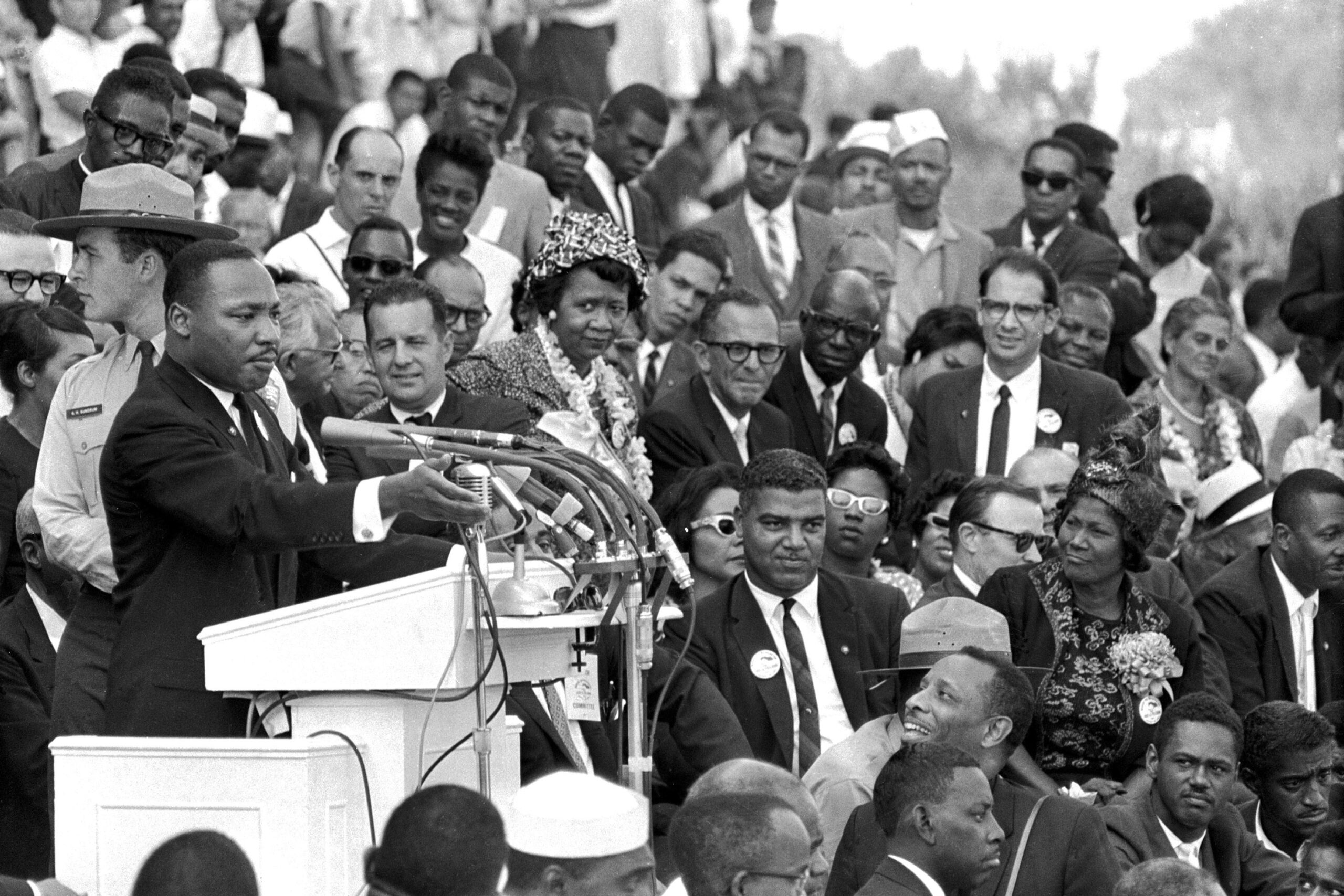
The Rev. Dr. Martin Luther King Jr. speaks to thousands during his “I Have a Dream” speech at the Lincoln Memorial during the March on Washington for Jobs and Freedom, Aug. 28, 1963, in Washington.
So when I read that Trump had met with a small group of New York Times journalists at the White House and told them that civil rights led to white people being “very badly treated,” my jaw dropped. I read and reread what his actual words were, which included his saying, “White people were very badly treated, where they did extremely well, and they were not invited to go into a university to college.”
Trump reportedly added, “So I would say in that way, I think it was unfair in certain cases.”
That’s like saying the rise of feminism and women’s rights hurt men. But wait, there’s more. Trump also is reported as having said: “I think it was also, at the same time, it accomplished some very wonderful things, but it also hurt a lot of people — people that deserve to go to a college or deserve to get a job were unable to get a job. So it was, it was a reverse discrimination.”
He apparently was referring to affirmative action, which is rich considering white women are the largest beneficiaries of it. Same thing with diversity, equity, and inclusion initiatives, which were created to give historically marginalized workers, such as women, people with disabilities, African Americans, and veterans, better opportunities in the workplace.
This attempt by Trump at grievance politics to rev up his base rings hollow to sensible people who recognize that white men have always held the vast majority of upper-level positions in both the private and public sectors.
MAGA is big on accusing former President Barack Obama of supposedly dividing the country, while it is Trump who continually stokes racial division.
He kicked off his presidential campaign in 2015 by maligning Mexicans, saying: “They’re bringing drugs. They’re bringing crime. They’re rapists.” He has referred to Haiti, African nations, and El Salvador as “shithole countries,” accused Haitians in Springfield, Ohio, of eating their neighbors’ dogs and cats, and insulted Somali Americans by calling them “garbage.”
One of the first things Trump did after being sworn into office in 2025 was to sign executive orders aimed at eliminating DEI. His remarks about civil rights supposedly hurting white people are merely his latest salvo, along with his administration’s calls for white men to file complaints with the Equal Employment Opportunity Commission.
“There is zero evidence — none — that the civil rights movement harmed white men in any way,“ said NAACP president Derrick Johnson in a statement to the Grio. “[Trump] is hoping we swallow his lie again, so that he can continue to privatize education, cut social services, and repeal civil rights laws and enforcement mechanisms. It’s all about making more money — even if we all suffer as a result.”
It’s sad — but not surprising — that in 2026 the president would reach for a play out of the tattered segregationist handbook to try and make white people the victims of civil rights.
Had he lived, King would have been thoroughly disgusted — but would have countered the president’s gutter-level deception with an elevated truth: “If the inexpressible cruelties of slavery could not stop us, the opposition that we now face surely will fail.”
Pennsylvania Gov. Josh Shapiro questioned whether he was being unfairly scrutinized asthe only Jewish person being considered as a finalistto be Vice President Kamala Harris’ running mate — and briefly entertained his own run for the presidency — according to a copy of his upcoming book obtained by The Inquirer.
Shapiro, a popular Democratic governor long rumored to have future presidential ambitions, even briefly entertained a run shortly after then-President Joe Biden unexpectedly dropped out of the race in July 2024, according to his book. The Abington Township resident is now seen as a top contender for the 2028 Democratic nomination as he seeks reelection in Pennsylvania this year.
But before Shapiro ended up in the veepstakes for Harris’ running mate, he wrote in his book that there was a moment right after Biden dropped out of the race where he considered whether he should run for president.
“Well, now what?” Shapiro wrote. “Maybe there would be a process the party would engage in to replace him? Did I want to be part of that?”
He called his wife, Lori, who at the time was out of the country with their two younger kids. “I don’t think we are ready to do this,” Shapiro recalled his wife saying from a Walmart in Vancouver. “It’s not the right time for our family. And it’s not on our terms.”
After that call, Shapiro wrote that he quickly decided he didn’t want to run and would back Harris, as Biden also endorsed her for the top of the ticket.
Once the field cleared for Harris, Shapiro recalled seeing his face on TV as her potential running mate, before he was asked by her campaign manager to be formally vetted.
In the days that followed,Shapiro contended with increasing national scrutiny as he emerged as a front-runner. Some pro-Palestinian protesters began calling Shapiro “Genocide Josh” online, he wrote. And top Democrats questioned whether a Jewish running mate would deter voters from supporting Harris, as Shapiro had been outspoken against some pro-Palestinian campus protests that year.
What was unknown: Whether those same questions — and some even more extreme — were circulating within Harris’ camp, Shapiro wrote in his most detailed retelling of his experience vying for the vice presidency to date.
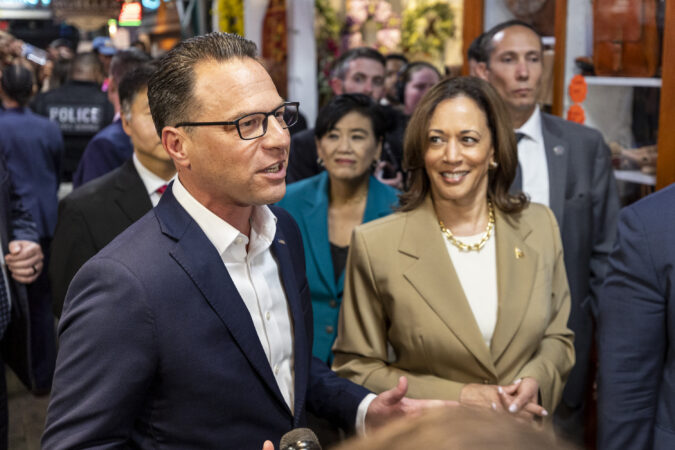
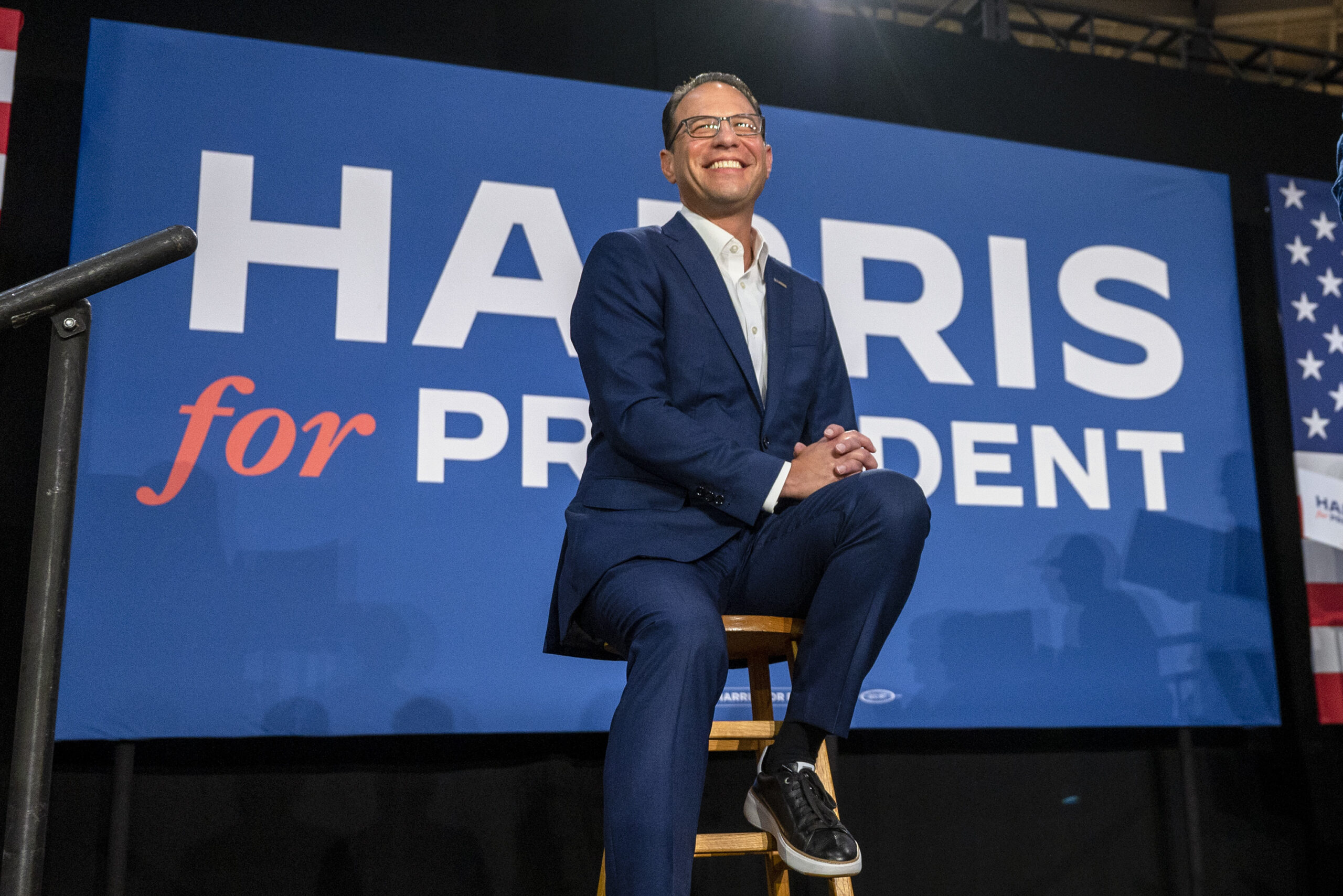
Gov. Josh Shapiro at a rally for Vice President Kamala Harris at Wissahickon High School in Ambler on July 29, 2024.
Just before he went to meet with Harris at the vice president’s residence in the summer of 2024, Shapiro received a call from Dana Remus, former White House counsel for Biden who was coleading the vetting process for Harris.
“Have you ever been an agent of the Israeli government?” Remus asked, according to Shapiro’s memoir.
“Had I been a double agent for Israel? Was she kidding?” Shapiro wrote in his 257-page book. “I told her how offensive the question was.”
According to the memoir, Remus then asked if Shapiro had ever communicated with an undercover Israeli agent, which he shot back: “If they were undercover… how the hell would I know?”
“Remus was just doing her job. I get it. But the fact that she asked, or was told to ask that question by someone else, said a lot about some of the people around the VP,” Shapiro wrote.
In high school, Shapiro completed a program in Israel that included service projects on a farm, and at a fishery in a kibbutz, as well as at an Israeli army base, which he once described in his college student newspaper as “a past volunteer in the Israeli army.”
Harris’ office could not be reached for comment Sunday evening. Remus also could not immediately be reached for comment Sunday.
Shapiro, more broadly, recalled getting the feeling from Harris’ vetting team that she should pick Shapiro — a popular Democratic governor in a critical swing state — but that they had reservations about whether Shapiro’s views would mesh with Harris’.
In one vetting session with U.S. Sen. Catherine Cortez Masto (D., Nev.), former Labor Secretary Marty Walsh, former associate Attorney General Tony West, and former senior Biden adviser Cedric Richmond, Shapiro wrote that he had been questioned “a lot” about Israel, including why he had been outspoken against the protests at Penn.
“I wondered whether these questions were being posed to just me — the only Jewish guy in the running — or if everyone who had not held a federal office was being grilled about Israel in the same way,” he wrote. (Illinois Gov. JB Pritzker, who is Jewish, was also vetted to be Harris’ running mate. Harris’ husband, Doug Emhoff, is also Jewish.)
In his book, Shapiro recalled the whirlwind two weeks as an awe-inspiring window into an opportunity — but ultimately it was one he knew he didn’t want.
When Shapiro finally sat down with Harris in the dining room at the Naval Observatory, he said it became clear that she had a different vision for the vice presidency than what he wanted. He would work primarily with her staff and couldn’t say whether he would have access to her. In her own experience as vice president, she saw the job as mostly to make sure that you aren’t making any problems for the president, he wrote.
Shapiro noted his own relationship with his No. 2, Lt. Gov. Austin Davis. The role in itself has few powers, but Shapiro views Davis as a governing partner and is one of few people who can walk into his office unannounced at any time, he wrote. He wanted the same relationship with Harris, he said, noting that he knew he would not be the decision-maker.
“If we had door A and door B as options, and she was for door A and I was for door B, I just wanted to makes sure that I could make the case for door B,” Shapiro wrote.
But Harris was “crystal clear” that that wasn’t the kind of president-vice president dynamic she envisioned, he said.
In her own book released last year, 107 Days, Harris recalled the meeting differently. There, she wrote that Shapiro had “peppered” her with questions and “mused that he would want to be in the room for every decision.”His ambitions, she said, didn’t align with her view that a vice president should be a No. 2 and not a “copresident.”
Former Vice President Kamala Harris speaks with Dawn Staley (left), while promoting her new book “107 Days,” at the Met on Sept. 25 in Philadelphia. The event was held in partnership with Uncle Bobbie’s Coffee & Books.
As Shapiro tells it, the friction with Harris’ team didn’t stop there.
Shortly after meeting with Harris, Shapiro in his book recalled another unpleasant conversation with Remus, in which he wrote that she said she “could sense that I didn’t want to do this.”
According to the book, Remus said it would be hard for Shapiro to move to Washington, it would be a strain financially for his family who “didn’t have a lot of money” by D.C. standards, and that Lori would need to get a whole new wardrobe and pay people to do her hair and makeup.
It was then that he decided to leave the apartment where he had been asked to wait until Harris could come and talk to him again, he recalled.
“These comments were unkind to me. They were nasty to Lori,” Shapiro wrote. “I hold no grudge against Remus, who I know was doing the job she had to do, but I needed to leave.”
Shapiro went home, he said, and went over the day’s events with Lori at the edge of their bed.
“On one hand, I was still tugged by the prestige of it all. It’s an honor. It’s a big title. But that’s never been enough for me,” he wrote. Still, he struggled with what it would mean to withdraw, concerned about not playing his part in a high-stakes election and letting his supporters down. Ultimately, he decided that it was not his race to win or lose, he wrote.
“People were going to cast their votes for her, or they weren’t,” he added.
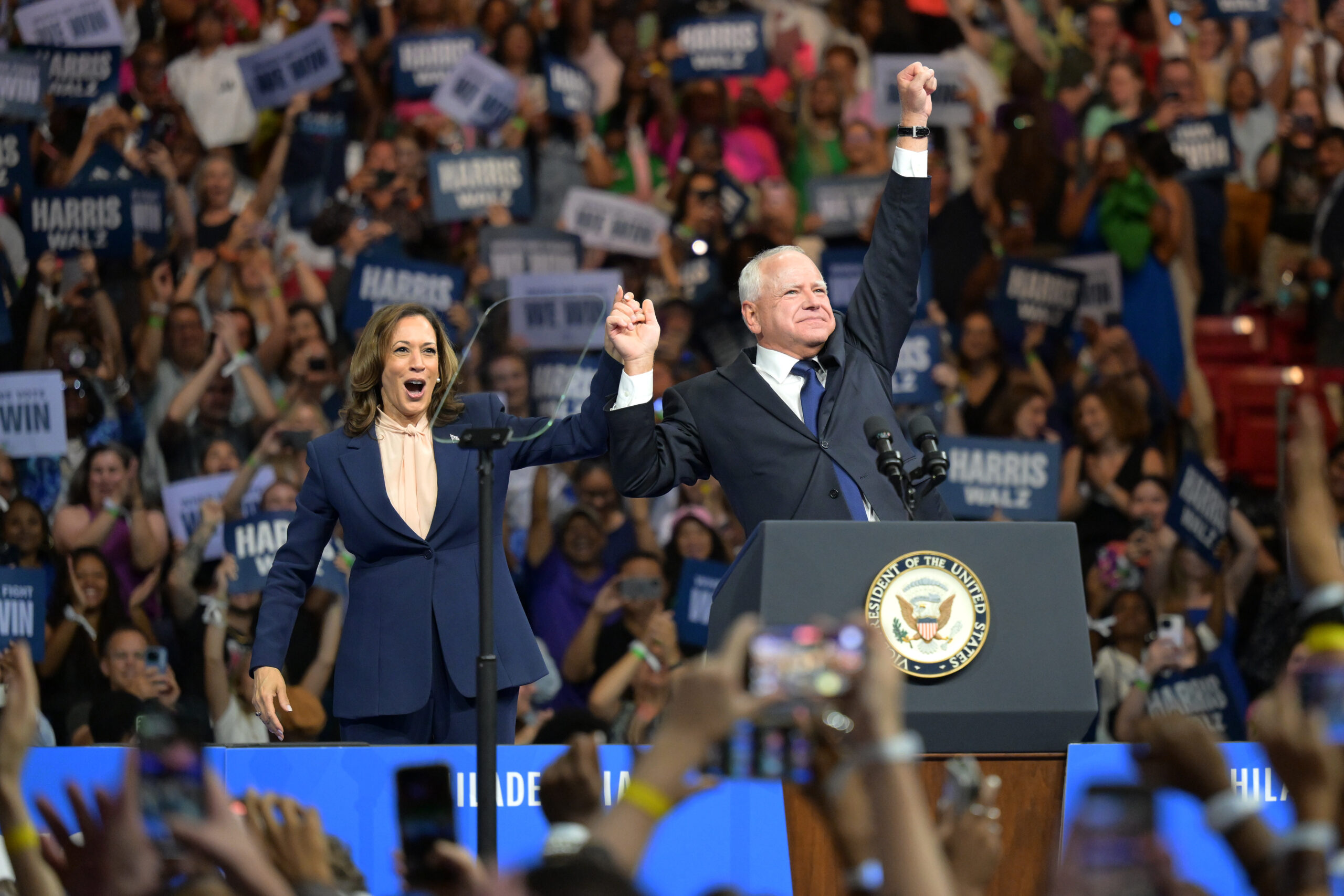
Vice President Kamala Harris, Democratic nominee for president, and her running mate Minnesota Gov. Tim Walz, address a rally to kick off their campaign at the Liacouras Center in Philadelphia, Pa., on Tuesday, August 6, 2024.
He decided that day he did not want the job, and toyed with the idea about publicly releasing a statement withdrawing himself from the running. He said he also tried to tell Harris he did not think it would be a good fit, but wasn’t able to reach her.
“I was wrung out. I just wanted to be home with my family, to take a walk with Lori, and just be,” he wrote.
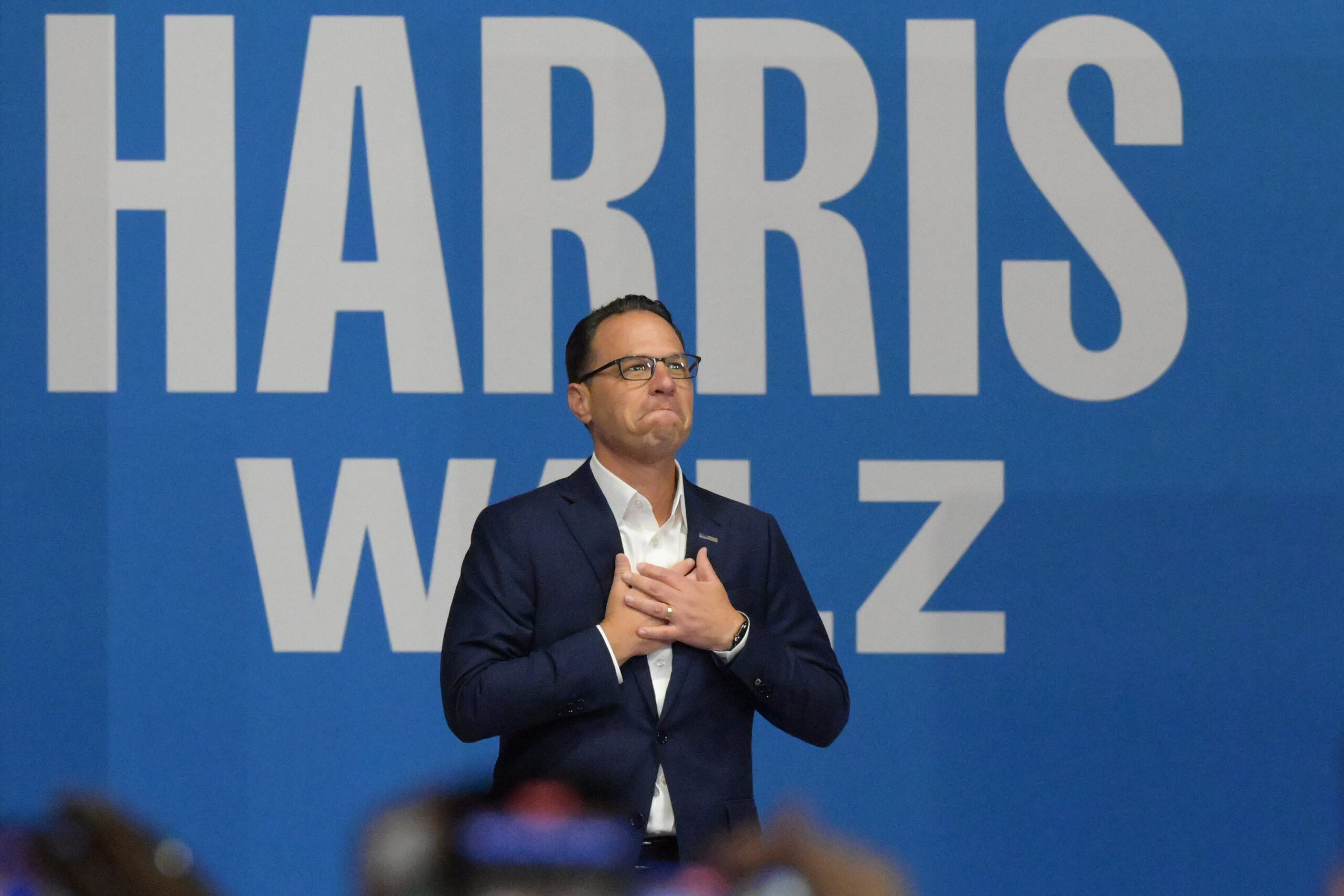
Gov. Josh Shapiro takes the stage ahead of Vice President Kamala Harris and Gov. Tim Walz at a rally in Philadelphia’s Liacouras Center on August 6, 2024.
But when it was time for him to take the stage ahead of Walz and Harris, he was long-applauded by his home city and gave a speech “from my heart” about how he took pride in his faith and his support for Walz and Harris.
Shapiro’s memoir will be released Jan. 27 and is a reflection on his decades as an elected official, including as Pennsylvania attorney general, as well as the firebombing of his home last year. He will tout the book in Philadelphia on Saturday at 3 p.m. at Parkway Central Library. He will also discuss the book at upcoming book tour stops in New York and Washington.
My late father was a high school teacher and basketball coach who learned a lot about the world around him during his 81 years. I’ll never forget how, when he’d hear me grousing about what could have been, he would always give me a look and sternly warn, “Don’t look back.”
I’ve come to appreciate how wise his words were, but let’s face it, sometimes we don’t need wisdom — we need relief.
Barely a few weeks into Year Two of Donald Trump’s second term, I can’t help but shake my head when I think about how much better off America (and the world) would be if Kamala Harris had won the presidency.
She wasn’t a perfect candidate. Far from it. But once in the White House, I have no doubt she would have led the country with dignity and integrity, values currently in short supply inside the Oval Office.
Under President Harris, the U.S. would not have invaded Venezuela and kidnapped its president, threatened to annex Greenland “the hard way,” or alienated our Canadian neighbors into boycotting American products and selling their Florida vacation homes. Rather than flirting with blowing up NATO, we would be working with our European allies to pressure Russia into ending its war with Ukraine.
Instead of bringing back American imperialism — something nobody voted for — Harris would be focused on improving the lives of everyday Americans.
She would be implementing policies such as allowing Medicare to better cover the cost of home care, and working with Congress to extend insurance subsidies to help keep healthcare affordable for millions of people. Meanwhile, the inflation that bedeviled her predecessor would continue to ease, untroubled by haphazard tariffs that are no less than a tax on every U.S. family.
Elon Musk’s Department of Government Efficiency would be a ketamine-fueled figment of the tech billionaire’s imagination instead of the cause of almost 750,000 deaths — most of them children — due to the dismantling of the U.S. Agency for International Development. At home, the roughly 300,000 federal workers who left or lost their jobs because of DOGE would be serving the public, instead of leaving gaps in crucial agencies such as Social Security, the U.S. Department of Veterans Affairs, and the Federal Aviation Administration.
You know who wouldn’t have a job under a Harris administration? The thousands of U.S. Immigration and Customs Enforcement agents who will be hired, to the tune of $30 billion, over the next few years. ICE would be targeting criminals in the country illegally, not inflicting a reign of terror on the American people. Renee Nicole Good, a 37-year-old mother of three and U.S. citizen, would still be alive instead of gunned down by an ICE agent in Minneapolis.
FBI agents across the country would be focused on solving and preventing crimes, instead of thousands being reassigned to immigration enforcement. National Guard members would be with their families, not picking up trash in Washington, D.C., or standing around Portland, Ore., waiting for something to happen.
Kamala Harris during an interview while shopping at Penzeys Spices on Market Street in September.
Harris, a former California attorney general, would have kept the long-standing tradition of an independent U.S. Department of Justice, instead of turning it into the president’s law firm and using it to go after political enemies. She would have assembled a cabinet stocked with competent and experienced members, one likely as diverse as America. People like Kash Patel and Pete Hegseth would be far away from power, hawking “vaccine reversal” pills and defending war criminals on Fox News, respectively.
Where would Trump himself be under a Harris presidency? In the same mess of trouble he had gotten himself into.
Special counsel Jack Smith would be zealously pursuing the case against Trump for illegally retaining classified documents and plotting to overturn the 2020 election. Charges that Smith has said he could prove beyond a reasonable doubt.
The once and forever former president would not be $3 billion richer thanks to shady crypto deals and other business ventures he has undertaken since returning to Washington. Neither would he be absentmindedly staring out where the East Wing of the White House once stood and imagining his sprawling ballroom, plastering his name on the Kennedy Center, nor costing taxpayers millions to outfit the $400 million luxury jetliner Qatar gave him.
If anything, he might have found himself with new indictments if he had tried to steal the 2024 election, and the MAGA crowd staged another Jan. 6, 2021-style revolt in protest of a Harris victory. No doubt Harris’ attorney general would have learned a lesson from the previous administration and would not drag his feet, as former Attorney General Merrick Garland didin holding Trump accountable.
Eventually, though, I’m convinced things would have settled down, and American politics would have gone back to being boring again —like they used to be. Fox News commentators would shift back to their old ways of complaining about Harris’ laugh and occasional lapses into word salad.
As things calmed down, so, too, would the excitement surrounding her historic win as the realities of governance asserted themselves.
Signing a bill to restore abortion rights nationwide would have been high on Harris’ agenda, reviving the issue that long fueled a part of the electorate. The culture war over GOP-manufactured concerns about men taking over women’s sports would rage on, never mind that trans people make up only about 1% of the population. So would the debate over the merits of diversity, equity, and inclusion efforts.
On immigration, Harris would be caught between her party’s activist base and trying to limit people from seeking asylum at the southern border. It’s one thing for Harris to have issued her famous edict telling immigrants, “Don’t come,” and a whole other thing to take substantive steps to stem the flow of people desperate to enter the U.S.
With Trump out of office, America would continue to be a bulwark for democracy, but the threats of authoritarianism, antisemitism, and racism would not go away. Neither would the voter malaise and congressional dysfunction that have given rise to people like Trump and his supporters. But Harris would fight the good fight for everyday Americans.
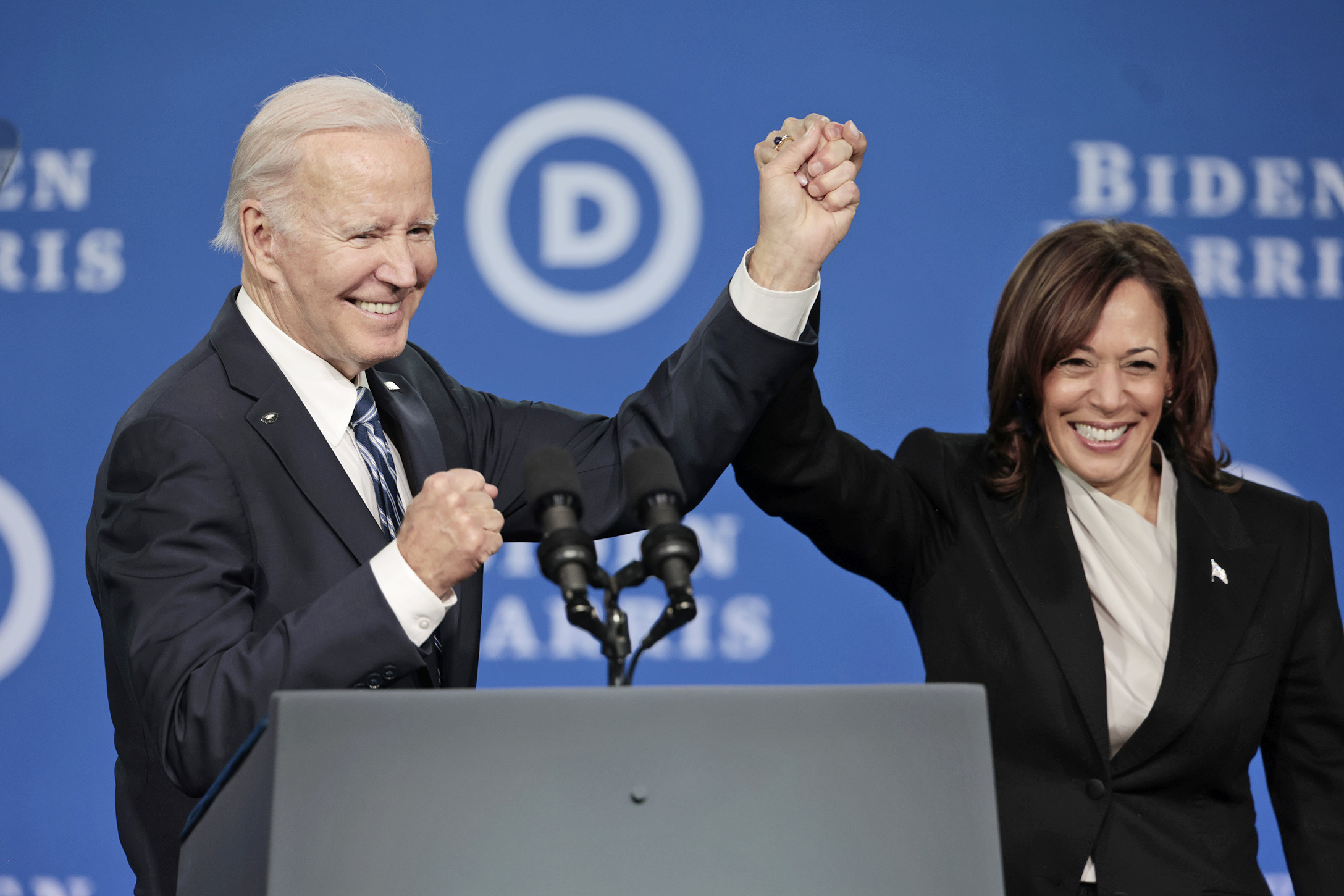
President Joe Biden and Vice President Kamala Harris wave to the audience after addressing the DNC Winter Meeting at the Sheraton Downtown in Philadelphia in 2023.
For a few days last month, I’d allowed myself to feel a tad bit optimistic, sensing that America had turned a corner. Maybe it was the eggnog, but the upcoming midterm elections had me feeling a little hopeful. So did the public opinion and court decisions pushing back against Trump’s excess and overreach. And Congress showing a spine and demanding accountability in releasing the Jeffrey Epstein files. If ever there were a year Rep. Jasmine Crockett could win a U.S. Senate race in Texas, 2026 felt like it could be it.
But then, Trump dropped bombs on an Islamic group in Nigeria on Christmas Day and followed that up by sending troops into Venezuela. Now, he’s staking claims to that country’s oil reserves while looking around to see which nation he can storm next. Will it be Mexico? Colombia? Iran? Greenland? I don’t think even he knows.
Trump isn’t bound by conventional mores or the Constitution. He’s not restrained by Congress or the U.S. Supreme Court. As he told the New York Times recently, the only thing that can stop him is his own mind. His “own morality,” which is downright scary considering his track record.
And yet, even as I am knocked down by the reality we’re facing. I can’t help but stand up. My dad was right to warn about not looking back, but in imagining the leadership of someone who is more than worthy of the office of the presidency, I like to think I’m looking forward.
Here’s the glaring sign of how drunk President Donald Trump has become on his own power: his ongoing threat to seize Greenland for security reasons, “whether they like it or not.” Anything else is “unacceptable,” Trump ranted last week.
Never mind that this icebound island is an autonomous territory of Denmark, one of our longest-standing and closest NATO allies. POTUS is trying to bludgeon Copenhagen, along with seven other European allies who back the Danes, by imposing new 10 per cent tariffs on them all unless they bow to his outrageous demands.
Never mind that seizing Greenland via economic coercion or force would destroy the NATO alliance, handing Russia and China a major victory at zero cost. Never mind that polls show that only one in four Americans want Trump to take control of Greenland, and only 6% of Greenlanders want to become part of the United States.
Yet, Trump is not only treating Denmark like an enemy but openly rebuffing the rights of Greenland’s government and people, who, according to Danish law have the final say about their future.
To learn more about what Greenlanders want and why Trump’s approach draws outrage, I turned to Galya Morrell, a Greenlander of Komi ethnic origins, who was raised in the Soviet Arctic. She has led an amazing life in journalism, the arts, and Arctic adventures, alongside her late husband, the renowned Greenlandic explorer Ole Jørgen Hammeken.
Our conversation has been edited for length and clarity.
Galya Morrell stands by her husband’s box sled, which was used to transport killed game, atop the frozen sea ice of Uummannaq Fjord in Northern Greenland.
What was the first reaction of most Greenlanders to Trump’s proposal to take control of Greenland?
When we heard about Trump’s proposal during his first term, everyone took it as a joke. Back then, we still lived in a world where logic mattered. How can you buy a country? What about people living there? Many people saw The Apprentice, that’s how they knew Trump, so they thought that maybe he was going to make a new season about Greenland after he retires from his presidency, and some young aspiring actors were asking if they can join the show.
Do they take Trump seriously now, especially after Venezuela?
Now it’s different. I don’t think that Venezuela played a big role in their perception, because already, people knew that Trump became obsessed with Greenland. At first, people thought that maybe it was even good for Greenland, because finally — finally — Denmark started taking Greenland seriously. Before, many Danes saw Greenlanders as a bunch of drunks and useless folks, which they aren’t, and a burden for Denmark. After Trump said he wanted it, many Danes changed their mind.
Trump also accidentally woke up Greenlandic nationalism because the Greenlandic independence movement was sleepy and divided. Now there was a foreign bully. Nothing unites people faster than someone who treats them like furniture in the new condo purchase. Suddenly even Denmark looked like a shield [against Trump] instead of a cage.
A 1951 pact with Denmark offers the U.S. almost unlimited military access on land, air, and sea. As for mining hard-to-access critical minerals, Greenland’s government would eagerly welcome U.S. investment. So what is your take on what Trump really wants?
About 20,000 U.S. soldiers and technicians were based in Greenland [after World War II] and then suddenly they were all gone. Today only Pituffik Space Base [the former Thule Air Base] is still around with some 150 personnel. So why did the US not bring them back when it was clear that Russia rebuilt and upgraded all the former Soviet bases in the Arctic and became a threat in the region?
The United States already had Greenland, quietly, through contracts, bases, and the gravitational pull of English. But none of that had Trump’s name on it. And if your name is not on something, do you even own it?
It appears that [Trump’s need for ownership] is not logical but psychological. I think that his understanding of success or power is only when “there is a deal,” and when someone loses face — very important! And when he gets credit — even more important. Soft power, which America had in Greenland until recently, looks like nothing to him. Because none of what existed had Trump’s name on it.
Donald Trump Jr. (center) smiles after arriving in Nuuk, Greenland, in 2025.
Are there Trump influencers (or suspected intelligence agents) roaming around, trying to find or buy supporters?
As a family, we have not seen or met the “agents,” but we certainly saw some people in Nuuk, following Donald Trump Jr.’s visit a year ago, giving money and red MAGA hats to the youngsters, schoolkids, and making them say things on camera. Parents were outraged when they saw their own kids on TV, but it was too late.
What really happened when Trump Jr. visited? Why was he so eager to talk about Greenland?
My late husband, an Inuit elder and explorer, was asked to meet Trump Jr. back in 2015. He wanted to hunt musk ox in Greenland, but not where average tourists hunt. So my husband said that there are a lot of musk oxen around Hammeken Point [a mountain named after him], and he could take him there and be his guide.
They were planning the expedition for a while, until one day Junior said that he can’t go because his dad decided to run for the presidency. Later, my husband thought that maybe it was all his fault for telling Junior exciting stories about Greenland and about what was hidden there under “all this ice,” and maybe that somehow affected Trump’s father’s interest.
Some Trumpers think Greenlanders can be bought. Are some interested?
We hear rumors that he is thinking of paying $100,000 to each Greenlander. Well, it’s not a lot of money, a boat costs around that, and who will sell the country for the price of a boat? But seriously speaking, today, everyone whom I know says firmly no. There is no price tag, no matter how much. The country is not for sale.
But we live in a strange world, so I don’t know what will happen for sure. [Opposition leader] Pele Broberg is saying out loud what many politicians think quietly: that Greenland is already being pulled into the American orbit, and that it might as well try to get paid for it.
Denmark’s Foreign Minister Lars Løkke Rasmussen (right) and Greenland’s Minister for Foreign Affairs Vivian Motzfeldt (left) prepare at the Danish Embassy for a meeting with Vice President JD Vance and Secretary of State Marco Rubio in Washington on Wednesday.
Do some Greenlanders feel that way?
Yes. Especially younger people, miners, business owners, and those who feel Denmark never gave Greenland a real economy, only a welfare system. For them, a deal with America sounds like a shortcut to dignity, jobs, and finally being taken seriously.
But there is no such thing as “a deal” between a superpower and a small Arctic society. There is only dependence, dressed up as partnership.
The United States already has what it needs in Greenland: military access, strategic geography, and preferential access to resources [such as rare earths]. What it doesn’t have is legal ownership or political control. A so-called “deal” would simply move Greenland’s dependency from Copenhagen to Washington. The question is whether Greenland would still be free after it is made.
Can you imagine a U.S. military takeover attempt? What would be the consequences? Denmark and many other NATO allies are already moving small numbers of troops to Greenland as a tripwire.
My husband and I had hoped to live the rest of our years in a small village, Siorapaluk. It is such a beautiful and peaceful place. Ironically, it is 92 miles from Pituffik Space Base. We honestly thought it was the most peaceful place on Earth.
At this moment, we all — I can only talk about our family and friends — hope for a peaceful solution. Any negotiations are better than the war in the Arctic. Real war in the Arctic will be the end to everything.
If the U.S. really wanted to secure its interests in Greenland what could Trump do legitimately?
Trump still can return to U.S. bases, build new ones, invest in the population, in their education and knowledge. I see how scientists, glaciologists, marine biologists — 15 different specialties — from Japan’s Hokkaido University work together side by side with the local Inuit hunters, elders, and children in Qaanaaq, very close to Pituffik Space Base. It is an ideal collaboration; they love each other and benefit from each other. But they have a very smart leader, Shin Sugiyama. I think that President Trump could learn from him.
People take part in a march ending in front of the U.S. consulate, under the slogan, Greenland belongs to the Greenlandic people, in Nuuk, Greenland, in March.
Trump claims that if the U.S. doesn’t take Greenland, China or Russia will. What is he talking about?
Russia is expanding its military presence in the greater Arctic region. This is their priority. I was once arrested by Chechen commandoes [on a floating Russian ice base, not part of Greenland but above the disputed underwater location of the North Pole]. So, yes, activity in Arctic waters is very real, and it is increasing. China has a major interest in Greenland. [But Greenlanders and Arctic experts see no signs of the Chinese and Russian ships Trump says are lurking around Greenland.]
Greenlanders have said no to Russia and China because we don’t want them. A year ago, the Chinese bought some mining rights, but said they would bring their own workers, like what they have done in Yakutia [a northern region of Russia]. Chinese men married Russian women in Yakutia. There is a growing Chinese presence in Siberia. Soon, a majority will be Chinese, but no one sees it. [Fearing a similar outcome, the Greenland government ultimately rejected the Chinese investment.]
[Russia’s invasion of Ukraine has also increased Greenlanders’ hostility to Moscow. They are painfully aware of “how poorly Russians treat their Arctic minorities” and how “Putin took the poorest people from Arctic villages” to fight and die in Ukraine].
Should NATO troops be stationed in Greenland alongside more U.S. troops?
Today the Arctic is becoming a place where three things overlap: military early warning systems, resource competition, and new shipping routes [due to melting ice]. That combination creates the possibility of accidents and miscalculations long before it creates a planned Russian or Chinese invasion.
The biggest risk is not that someone like Russia or China suddenly wakes up and “takes Greenland.” The risk is escalation. I think that Greenland’s best protection is not a sudden flood of troops. It is a predictable security architecture that everyone understands.
Greenland needs protection. But we are old enough to remember how conflicts were avoided during the Cold War: There were rules and restraint. There was clarity. Not theater.
What do you hope for (or dread) after the failure of last week’s meeting at the White House between Vice President JD Vance and Secretary of State Marco Rubio and the foreign ministers of Denmark and Greenland?
What I hope for is very simple: that adults will run the room. Secretary of State Marco Rubio is not a performer. So I really hope meetings will not be about headlines or symbolic victories. They should be a security conversation and not a dominance ritual.
As I said before, the U.S. already has what it needs in Greenland in terms of security. My husband said not long before he departed: “Greenland does not need to be rescued. It needs to be respected.”
There are many things Donald Trump could regret about the aftermath of the 2020 election.
Perhaps it could be his nonstop lying about voter fraud, or how he was recorded asking Georgia election officials to “find” him the votes he needed. Maybe he has remorse about inciting the mob that attacked the U.S. Capitol, violence that led to seven deaths and more than 100 injured law enforcement officers.
But no. What the president “regrets,” as he told the New York Times recently, is not ordering the National Guard to confiscate voting machines in swing states he lost.
If the idea of military reservists marching into Philadelphia polling places and walking out with the pesky will of the people seems far-fetched — just another of Trump’s rambling musings — then consider that he and his enablers are already laying the groundwork to undermine future elections.
With the midterms less than a year away, local and state officials must remain steadfast in their defense of free and fair elections, and voters must demand thattheir rights are protected.
The administration’s assault on the franchise began in March, when Trump issued an executive order seeking to exert control over election law that the Constitution does not grant the president, including demanding states avoid counting mail ballots postmarked by Election Day but received after.
The courts have so far stopped the order from taking effect, but it is worth noting that a new U.S. Postal Service rule changes when a piece of mail is postmarked — no longer when it is dropped off, but when it is processed. That means procrastinating voters in states where a ballot counts if mailed by Election Day can no longer take for granted their vote will be tallied.
Rioters try to break through a police barrier at the U.S. Capitol on Jan. 6, 2021.
Trump has claimed he will target mail-in ballots and voting machines as part of his effort to “help bring HONESTY to the 2026 Midterm Elections.” He has also threatened election officials who oversaw the 2020 election with prosecution while pardoning the Jan. 6, 2021, rioters who sought to interfere with the certification of Joe Biden’s electoral victory.
Meanwhile, starting in May, the U.S. Department of Justice demanded that states turn over their complete voter registration lists. Many states have declined to comply, including Pennsylvania, and are being sued by the government. This is sensitive data that includes Social Security numbers, dates of birth, and home addresses.
Along with privacy concerns, there are fears that the Trump administration may seek to cast doubt on voter eligibility and pressure states to purge people from voting rolls. Already, there are examples of people being falsely identified as noncitizens by federal databases.
It is sadly not much of a leap to imagine Trump claiming widespread voting by noncitizens requires U.S. Immigration and Customs Enforcement agents be stationed at polling places. Of course, noncitizens can’t vote, but one does not need to be an immigrant to be intimidated by gun-toting masked forces who have shown they will fire first and expect no questions later.
The president has also successfully lobbied some Republican-controlled states to remake congressional maps to favor the GOP, regardless of their potential illegality. In Texas, the U.S. Supreme Court allowed 2025 redistricting maps to be used for the upcoming election, even as a legal challenge moves forward over racial gerrymandering. The high court’s conservative members are also likely to strike a blow against the Voting Rights Act this term, further emboldening voter suppression efforts.
The administration’s unprecedented machinations have fortunately run into the wisdom of the founders, who charged the states with running elections, not the federal government. The same decentralization that sometimes frustrates widespread election reform and the implementation of best practices also limits a wholesale takeover.
State election officials — Republicans and Democrats — have shown they take their charge seriously and are honor-bound to do their duty. Still, as Trump continues to consolidate power in the executive and stoke fears of widespread fraud, ensuring free and fair elections will require keeping the federal government from overstepping its authority.
Escalating President Donald Trump’s fight against transgender rights, a top official at the Department of Health and Human Services on Thursday asked the department’s inspector general to investigate two Philadelphia-area children’s hospitals over their gender-affirming carefor transgender children.
Children’s Hospital of Philadelphia (CHOP) and Nemours Children’s Health in Wilmington are among a dozen hospitals that HHS general counsel Mike Stuart said in posts on X he had referred to the agency’s Office of the Inspector General (OIG) in recent days.
A CHOP spokesperson declined to comment on Friday,and Nemours did not respond to a request for comment.
Both hospitals treat children and teens with gender dysphoria — a medical condition in which a person’s body does not match their gender identity. Doctors can prescribe hormone therapy and puberty blockers to treat the condition, although Nemours has already limited its use of these treatments in response to threats from the Trump administration.
The administration hastargeted CHOP and other hospitals that treat transgender youth with subpoenas demanding patients’ medical records, including their dates of birth, Social Security numbers, and addresses, as well as every communication by doctors — emails, voicemails, and encrypted text messages — dating back to January 2020.
CHOP filed legal action in response, asking a federal judge in Philadelphia to block the parts of the subpoena that sought detailed medical records of patients. In November, the judge ruled in CHOP’s favor.
The Trump administration appealed the decision Friday. It has argued that it needs the records as part of its investigation into possible healthcare fraud or potential misconduct by the hospitals.
Stuart said in a Thursday post on X that the administration is investigating hospitals in order to safeguard children from “sex-rejecting procedures,” adding: “There is no greater priority than protecting our children.”
Corinne Goodwin, executive director of the Eastern Pennsylvania Trans Equity Project, called Stuart’s post part of the Trump administration’s ongoing efforts to intimidate doctors and hospitals that provide gender-affirming care to those under 19.
“This action by the Department of Health and Human Services is yet another attempt to intimidate healthcare providers and to harm young people who simply want access to proven healthcare that helps them to live happy and productive lives,” said Goodwin, whose nonprofit organization provides services to transgender people in 42 counties, including Montgomery, Bucks, and Delaware.
The administration has said it recognizes only two genders, limited research into LGBTQ+ health, and phased out gender-affirming care at the Department of Veterans Affairs.
Directly targeting children’s hospitals, HHS Secretary Robert F. Kennedy Jr. issued a declaration in December rejecting gender-affirming procedures for minors, including puberty blockers, hormone therapy, and surgeries.
The American Academy of Pediatrics and other major medical associations, citing research, widely accept such care as safe, effective, and medically necessary for the patients’ mental health.
HHS’s OIG declined Friday to confirm or deny the existence of an investigation.
Last month, the U.S. Senate confirmed Thomas “March” Bell to serve as inspector general over HHS. During his confirmation hearing, Bell submitted written testimony saying, “If confirmed as inspector general, I will examine, evaluate, audit, and investigate to support the initiatives of President Trump and Secretary Kennedy.”
An ongoing legal battle
CHOP runs one of the nation’s largest clinics providing medical care and mental health support for transgender and nonbinary children and teens and their families. Each year, hundreds of new families seek care at CHOP’s Gender and Sexuality Development Program, created in 2014.
Nemours’ Gender Wellness Clinic, launched in 2018, provided hormone therapy and puberty blockers, as well as mental health support, to transgender patients in Delaware, and Nemours is the only hospital in the state that provides gender-affirming care for children.
Starting last July, its clinic began accepting only new patients who need behavioral healthcare. Existing patients receiving hormones or puberty blockers at the clinic were allowed to continue their treatment, the hospital said at the time.
On Thursday, Stuart wrote on X that CHOP and Nemours “appear to continue to operate outside recognized standards of healthcare and entirely outside @SecKennedy’s declaration that sex-rejecting procedures for children and adolescents are neither safe nor effective.”
Kennedy’s Decemberdeclaration says that these procedures “do not meet professionally recognized standards of health care.” Doctors who perform such procedures could be barred from participating in federally funded healthcare programs like Medicaid and Medicare, he said.
The lawsuit says that Kennedy has no authority to define “a national standard of care,” and that any substantive changes to Medicare rules are legally required to be subjected to a decision-making process that includes 60 days of public comment.
Officials at the Centers for Medicaid and Medicare Services have started that process, announcing alongside Kennedy’s declaration that they are proposing a rule that would bar hospitals from Medicaid and Medicare if they offer gender-affirming care to children under 19. They also proposed that Medicaid should not cover gender-affirming care for minors.
But those rules have not yet been instituted, and the lawsuit alleges that Kennedy’s declaration is skirting the law by immediately imposing restrictions on gender-affirming care in hospitals.
The Public Interest Law Center, a Philadelphia-based nonprofit that advocates for the civil, social, and economic rights of marginalized communities, is representing five parents of transgender children in legal motions seeking to protect their medical records.
Mimi McKenzie, PILC’s legal director, said the federal judge in Philadelphia was “very clear and on firm ground” when he ruled in November that the DOJ had no authority to issue the sweeping subpoena and that it violated the privacy rights of children.
She noted that six other courts around the country have similarly ruled that DOJ “has no right to rifle through children’s medical records.”
“Gender-affirming care is legal in Pennsylvania and endorsed by every leading medical association,” McKenzie said. “This is just another tactic in their ongoing attack against providers and patients.”
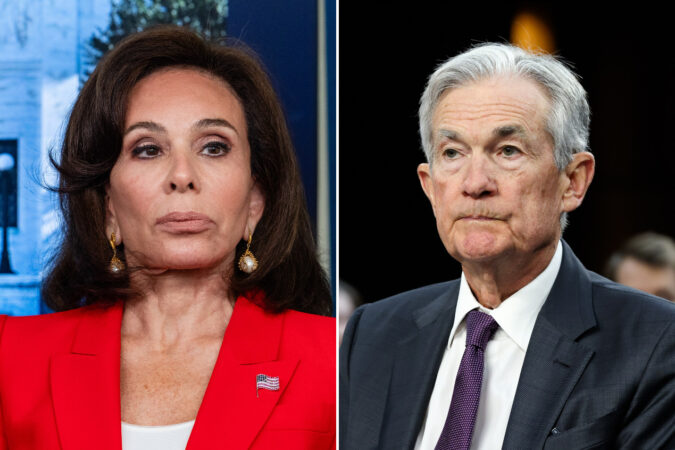
Late last month, Fed officials grew concerned that the Justice Department was preparing a criminal case against them when they received two casually worded emails from a prosecutor working for Jeanine Pirro, the U.S. attorney for Washington, D.C. The messages sought a meeting or phone call to discuss renovations at the central bank’s headquarters, according to three people familiar with the matter, who like most others interviewed spoke on the condition of anonymity to discuss an open investigation.
The emails, sent Dec. 19 and Dec. 29, camefrom Assistant U.S. AttorneyCarlton Davis, a political appointee in Pirro’s office whose background includes work for House Oversight Committee Chairman James Comer (R-Kentucky), the people said.
The messages struck Fed officials as breezy in tone.
“Happy to hop on a call,” one of the missives read in part.
The casual approach generated suspicions at the Fed. Chair Jerome H. Powell, who by that point had sustained months of criticism from President Donald Trump and his allies over the central bank’s handling of interest rates, retained outside counsel at the law firm Williams & Connolly. Fed officials opted not to respond to Davis, choosing to avoid informal engagement on a matter that could carry criminal implications, according to a person familiar with the decision.
That led Pirro, a former Fox News host and longtime personal friend of Trump’s, to conclude that the Fed was stonewalling and had something to hide, according to a Justice Department official familiar with the matter.
“The claim that, ‘Oh, they didn’t think it was a big deal’ is naive and almost malpractice,” the official said. “We gave them a deadline. We said the first week of January.”
The investigation centers on the Fed’s first large-scale renovation of its headquarters on the National Mall since it was built in the 1930s and whether proper cost controls are in place. Powell testified to Congress in June about the scope of a project that had ballooned to $2.5 billion in costs, up from about $1.9 billion before the coronavirus pandemic.
Trump, his aides and some congressional Republicans have sought to cast the renovation as overly luxurious and wildly over budget, claims that Powell has strenuously disputed. Fed officials have said that the economic disruptions following the pandemic triggered a jump in the price of steel, cement and other building materials.
Powell and the Fed’s defenders say the renovation claims are being used to pressure the independent central bank to lower interest rates, as Trump has called for, andpotentially to bully Powell into resigning.
The emails from Davis to a Federal Reserve lawyer did not indicate the existence of a criminal investigation because prosecutors had not yet opened one, according to two people with knowledge of the matter. There was no FBI involvement when Pirro’s office opened a fact-gathering inquiry in November, and the bureau remains uninvolved, according to two other people familiar with the matter.
In the emails, Davis asked “to discuss Powell’s testimony in June, the building renovation, and the timing of some of his decisions,” a Justice Departmentofficial said. “The letter couldn’t have been nicer,” that official said. “About 10 days after that, we sent another, saying, ‘We just want to have a discussion with you.’ No response through January 8.”
“We low-keyed it,” the official added. “We didn’t publicize it. We did it quietly.”
The subpoenas were served the next day. They seek records or live testimony before a grand jury at the end of the month.
Powell publicly disclosed the probe Sunday evening in a video statement, saying the Fed had received subpoenas “threatening a criminal indictment.”
“The threat of criminal charges is a consequence of the Federal Reserve setting interest rates based on our best assessment of what will serve the public, rather than following the preferences of the president,” he said.
In a post on X, Pirro said the outreach had been benign, writing: “The word ‘indictment’ has come out of Mr. Powell’s mouth, no one else’s. None of this would have happened if they had just responded to our outreach.”
Conducting an investigation without using the FBI is an approachPirro’s office has used on at least one previous occasion. In August, one of the prosecutors now assigned to the Fed inquiry, Steven Vandervelden, was tasked with reviewing numerous complaints that the D.C. police, under then-Police Chief Pamela A. Smith, had been incorrectly categorizing some crimes to paint a rosier picture than the reality on the ground.
That inquiry relied on voluntary interviews with more than 50 police officers and other witnesses, as well as cooperation from the mayor’s office and the police department’s internal affairs unit, according to a seven-page report Pirro and Vandervelden issued at its conclusion. The report recommended changes to police practices while saying the classification issues did not rise to the level of criminality. No subpoenas were issued in that probe, according to a person familiar with the matter, and the report does not mention any.
But Smith announced her resignation shortly before the report was released.
Washington — The Trump administration and a bipartisan group of governors on Friday tried to step up pressure on the operator of the nation’s largest electric grid to take urgent steps to boost power supplies and keep electricity bills from rising even higher.
Administration officials said doing so is essential to win the artificial-intelligence race against China, even as voters raise concerns about the enormous amount of power data centers use and analysts warn of the growing possibility of blackouts in the Mid-Atlantic grid in the coming years.
“We know that with the demands of AI and the power and the productivity that comes with that, it’s going to transform every job and every company and every industry,” Interior Secretary Doug Burgum told reporters at the Eisenhower Executive Office Building, next to the White House. “But we need to be able to power that in the race that we are in against China.”
Trump administration says it has ‘the answer’
The White House and governors want the Mid-Atlantic grid operator to hold a power auction for tech companies to bid on contracts to build new power plants, so that data center operators, not regular consumers, pay for their power needs.
They also want the operator, PJM Interconnection, to contain consumer costs by extending a cap that it imposed last year, under pressure from governors, that limited the increase of wholesale electricity payments to power plant owners. The cap applied to payments through mid-2028.
“Our message today is just to try and push PJM … to say, ‘we know the answer.’ The answer is we need to be able to build new generation to accommodate new jobs and new growth,” Energy Secretary Chris Wright said.
Govs. Josh Shapiro of Pennsylvania, Glenn Youngkin of Virginia, and Wes Moore of Maryland appeared with Burgum and Wright and expressed frustration with PJM.
“We need more energy on the grid and we need it fast,” Shapiro said. He accused PJM of being “too damn slow” to bring new power generation online as demand is surging.
Shapiro said the agreement could save the 65 million Americans reliant on that grid $27 billion over the next several years. He warned Pennsylvania would leave the PJM market if the grid operator does not align with the agreement, a departure that would threaten to create even steeper price challenges for the region.
PJM wasn’t invited to the event.
Grid operator is preparing its own plan to meet demand
However, PJM’s board is nearing the release of its own plan after months of work and will review recommendations from the White House and governors to assess how they align with its decision, a spokesperson said Friday.
PJM has searched for ways to meet rising electricity demand, including trying to fast-track new power plants and suggesting that utilities should bump data centers off the grid during power emergencies. The tech industry opposed the idea.
The White House and governors don’t have direct authority over PJM, but grid operators are regulated by the Federal Energy Regulatory Commission, which is chaired by an appointee of President Donald Trump.
Trump and governors are under pressure to insulate consumers and businesses alike from the costs of feeding Big Tech’s data centers. Meanwhile, more Americans are falling behind on their electricity bills as rates rise faster than inflation in many parts of the U.S.
In some areas, bills have risen because of strained natural gas supplies or expensive upgrades to transmission systems, to harden them against more extreme weather or wildfires. But energy-hungry data centers are also a factor in some areas, consumer advocates say.
Ratepayers in the Mid-Atlantic grid — which encompasses all or parts of 13 states stretching from New Jersey to Illinois, as well as Washington, D.C. — are already paying billions more to underwrite power supplies to data centers, some of which haven’t been built yet, analysts say.
Critics also say these extra billions aren’t resulting in the construction of new power plants needed to meet the rising demand.
Tech giants say they’re working to lower consumer costs
Technology industry groups have said their members are willing to pay their fair share of electricity costs.
On Friday, the Information Technology Industry Council, which represents tech giants Google, Meta, Microsoft, and Amazon, said it welcomed the White House’s announcement and the opportunity “to craft solutions to lower electricity bills.” It said the tech industry is committed to “making investments to modernize the grid and working to offset costs for ratepayers.”
The Edison Electric Institute, which represents investor-owned electric companies, said it supports having tech companies bid — and pay for — contracts to build new power plants.
The idea is a new and creative one, said Rob Gramlich, president of Grid Strategies LLC, a Washington, D.C.-based energy markets and transmission consultancy.
But it’s not clear how or if it’ll work, or how it fits into the existing industry structure or state and federal regulations, Gramlich said.
Part of PJM’s problem in keeping up with power demand is that getting industrial construction permits typically takes longer in the Mid-Atlantic region than, say, Texas, which is also seeing strong energy demand from data centers, Gramlich said.
In addition, utilities in many PJM states that deregulated the energy industry were not signing up power plants to long-term contracts, Gramlich said.
That meant that the electricity was available to tech companies and data center developers that had large power needs and bought the electricity, putting additional stress on the Mid-Atlantic grid, Gramlich said.
“States and consumers in the region thought that power was there for them, but the problem is they hadn’t bought it,” Gramlich said.
Associated Press writer Matthew Daly and The Washington Post contributed to this article.
Physicians Zsofi Szep and Judy Chertok have spent the last three years working to connect Penn Medicine patients with addiction treatment — with the help of a federal grant that they learned was terminated in a form letter Tuesday.
They rushed to find a way to keep caring for their patients, many with HIV or hepatitis C and needing supports such as housing and food after treatment. The salaries of two staffers helping to connect people with such resources had been entirely grant-funded.
“To stop this from one day to the next was obviously devastating,” Szep said. “It’s not possible to stop patient care. We continued to do what we were doing.”
NPR reported that some $2 billion in grants were cut off, and grantees like Szep and Chertok received form letters that said only that their projects no longer aligned with agency priorities.
The move sparked immediate outrage from providers and legislators alike. U.S. Rep. Madeleine Dean (D., Montgomery) helped marshal 100 congressional representatives to sign a bipartisan letter to Health and Human Services Secretary Robert F. Kennedy Jr., demanding the funding be restored.
By Wednesday night, it had been, The Associated Press reported — still with little explanation from federal officials. HHS did not return a request for comment Thursday. The agency also declined to answer questions about the reasons for the rescissions from The Associated Press.
But providers at the programs affected by the whiplash of rescinded, then restored, funding said they were shaken by a chaotic 24 hours and worried about what the move signaled.
As of late Thursday, one Philadelphia provider who receives SAMHSA grants said she had not yet received notice from the agency that funding had been restored.
“It’s a message that what we’re doing is not important,” said Barbara Schindler, the medical director of the women’s addiction treatment program Caring Together.
“The people that work day to day on the front lines, we’re dealing with folks that are living on the edge and need all the help they can get. To feel like your rug can get pulled out from underneath you at any one point, both as a provider as well as a participant, is very upsetting.”
Uncertainty amid attempted cuts
It’s unclear how many programs in the Philadelphia area were affected.
Gaudenzia, an addiction treatment provider with locations across Pennsylvania, Maryland, and Delaware, had grants rescinded, then restored, that were related to expanding treatment access, addiction prevention, and support services, a spokesperson said.
Gaudenzia’s president and CEO, Deja Gilbert, said she understood the need for “fiscal responsibility at the federal level,” but funding changes should be made in collaboration with providers.
“Abrupt funding actions — even when reversed — create uncertainty for providers and the people we serve,” she said in a statement.
Szep and Chertok’s program at Penn, which has served about 125 patients over the last few years, is aimed at some of the health system’s most vulnerable patients, connecting patients in the hospital or outpatient clinics with addiction treatment.
“It’s a very sick and complicated group of patients, who are specifically referred to an extra-specialized team,” Chertok said.
They were relieved when their funding was restored on Thursday but remain worried about the future.
“So many other people have similar grants in our city through SAMHSA — the amount of people that are getting care through these types of programs is really dramatic, and we don’t have other ways of getting them care,” Chertok said.
Schindler, a professor of psychiatry and pediatrics at Drexel University, said SAMHSA funding through two grants allows her 36-year-old clinic to support medication for women with opioid use disorder and a reentry program for women incarcerated for drug-related crimes.
“It allows us to have more addiction counselors and staff that can address the incredible needs these ladies have,” she said. “It really enhances the program.”
She said she was “on pins and needles” waiting to hear that her funding had been restored.
‘Incompetence and cruelty’
Dean said she learned of the cuts when a staffer pulled her aside to share a news article, reporting that SAMHSA had abruptly rescinded $2 billion in funding from more than 2,000 grants. Almost immediately afterward, the head of a Pennsylvania network of addiction treatment providers called her.
They began working to determine how many local grants had been affected, an effort that’s still ongoing.
“Immediately, what I thought was, this will cost lives. People will die as a result of this level of incompetence and cruelty,” Dean said.
She said she had not received answers from the administration on the reasoning behind the cuts.
Dean called the terminations hypocritical, noting that President Donald Trump has justified military operations in Venezuela as an effort to combat drug trafficking even as his administration attempted to cut billions in drug treatment funding at home.
“It’s incompetent, illegal, unconstitutional, and we got no notice,” she said.
Dean said she was pleased that programs were seeing their funding restored, although she was still unsure what had prompted the decision, and was concerned about the precedent the move set.
“I’m of the mind that it will happen again. And there is real harm — I don’t care if the interruption is 24 hours,” she said. “Interruptions can have large impacts.”