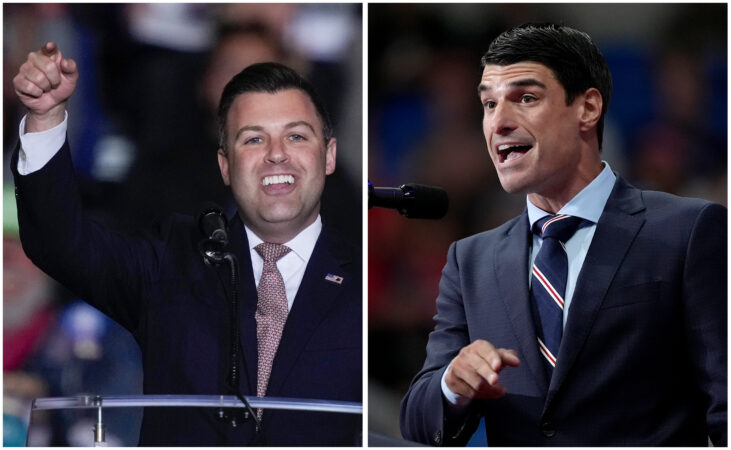
Tag: Donald Trump

  • Three Pa. Republicans are siding with Democrats in a last-ditch effort to save healthcare tax credits

    Three Pa. Republicans are siding with Democrats in a last-ditch effort to save healthcare tax credits

    Four moderate Republicans — including three who are in the hot seat for reelection in swing districts in Pennsylvania — joined Democrats to sign a discharge petition Wednesday to force a vote on a proposal to extend pandemic-era expanded Obamacare subsidies.

    While the move may not save the subsidies from expiring, given that Republican-controlled Senate has indicated resistance to the plan, the votes mark the sharpest rebuke of party leadership from within the GOP since President Donald Trump started his second term.

    U.S. Rep. Brian Fitzpatrick, who has represented Bucks County since 2017, and two GOP freshmen from elsewhere in the state, U.S. Reps. Rob Bresnahan and Ryan Mackenzie, joined New York moderate Mike Lawler to give Democrats the votes they needed to push a vote on a clean extension of the subsidies to the floor.

    The move comes on the heels of other high-profile examples of rank-and-file Republicans bucking Trump and House Speaker Mike Johnson, including last month’s bipartisan vote to release the Jeffrey Epstein files, following a discharge petition after Johnson had slow-walked the legislation.

    The “dam is breaking,” U.S. Rep. Marjorie Taylor Greene (R., Ga.) told CNN on Tuesday in reference to the string of incidents in which members of the party had defied the president and speaker ahead of next year’s midterms.

    The Republicans who defected on the healthcare bill had favored a compromise that they hoped might have a chance of passing Congress, but that was rejected by Johnson (R., La.), who sided with conservatives against expanding the subsidies, on Tuesday night.

    That left them supporting a vote on a bill that extends the program as is, with far fewer restrictions and concessions than the compromise bills included.

    “Despite our months-long call for action, leadership on both sides of the aisle failed to work together to advance any bipartisan compromise, leaving this as the only way to protect the 28,000 people in my district from higher costs,” Bresnahan said in a statement posted on X.

    “Families in NEPA cannot afford to have the rug pulled out from under them. Doing nothing was not an option, and although this is not a bill I ever intended to support, it is the only option remaining. I urge my colleagues to set politics aside, put people first, and come together around a bipartisan deal.”

    Later Wednesday, House Republican leaders pushed to passage a healthcare bill that does not address the soaring monthly premiums that millions of people will soon endure. The bill passed on a mostly party-line vote of 216-211. U.S. Rep. Thomas Massie (R., Ky.) joined with Democrats in voting against the measure.

    Fitzpatrick and Lawler tried to add a temporary extension of the subsidies to the bill, but were denied.

    “Our only request was a floor vote on this compromise, so that the American People’s voice could be heard on this issue. That request was rejected. Then, at the request of House leadership I, along with my colleagues, filed multiple amendments, and testified at length to those amendments,” Fitzpatrick said in a statement. “House leadership then decided to reject every single one of these amendments.

    “As I’ve stated many times before, the only policy that is worse than a clean three-year extension without any reforms, is a policy of complete expiration without any bridge,” Fitzpatrick said.

    Bresnahan’s vote for the discharge petition came a little more than a week after he welcomed Trump to his Northeast Pennsylvania district for a rally, which was meant to address voter concerns about affordability ahead of next year’s midterms.

    The coming spike in healthcare premiums will be a central part of Democrats’ messaging in swing districts like Bresnahan’s.

    Bresnahan won his election last year by about 1 percentage point. He was also one of just 20 House Republicans to sign a successful discharge petition earlier this month to force a vote for collective bargaining to be restored for federal workers.

    “At the end of the day that might have been going against party leadership, but it was what’s right for northeastern Pennsylvania,” he told The Inquirer of the vote at the Pennsylvania Society last weekend.
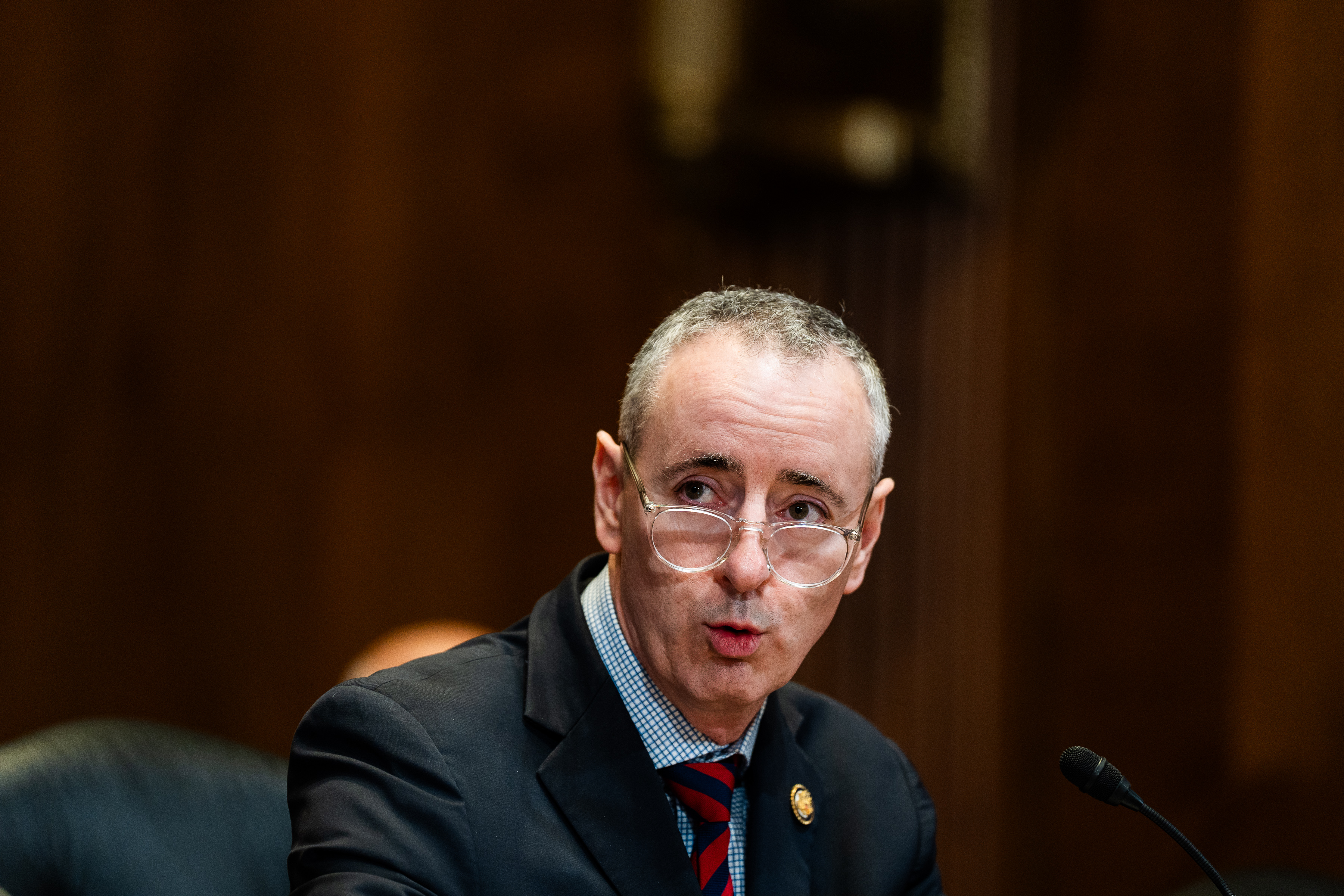
    Rep. Brian Fitzpatrick (R-Pennsylvania) speaks at a hearing on Capitol Hill on Dec. 3.

    Mackenzie, in an interview with The Inquirer, blamed Democrats for not signing on to one of the compromise proposals, leaving him and the other three Republicans with no alternative but to sign onto a discharge for a plan he doubts will pass.

    “But if you send the Senate anything at this point, I’m of the opinion it will continue the conversation and they’ll consider what their options are,” Mackenzie said. “If they would like to do additional reforms, I welcome those.”

    While Republicans who have opposed the extension argue the subsidies were meant to be temporary and affect only about 7% of Americans, Mackenzie said he has been hearing from constituents constantly.

    “Healthcare and the current system is unaffordable for many people,” he said. “We recognize the current system is broken for millions of Americans, so to actually get to some kind of better position, you need both short-term and long-term solutions.”

    He called the Affordable Care Act subsidy extension a needed short-term solution “to do something for people struggling right now.”

    Like Bresnahan, Mackenzie won his Lehigh Valley seat by 1 percentage point last year. And the district will be a top priority for both parties in next year’s election — as shown by Vice President JD Vance’s visit there Tuesday.

    U.S. Rep. Scott Perry, a staunch Trump ally, represents a swing district in Central Pennsylvania but voted against the discharge petition. Janelle Stelson, a Democrat seeking Perry’s seat, called him “extreme” for voting against the measure.

    “While other Republicans are working across party lines to lower costs, Perry is yet again refusing to do anything to make life more affordable,” said Stelson, who narrowly lost to Perry last year.

    Fitzpatrick had been leading the moderate push for a solution on the ACA tax credits with his own compromise bill in the House. His bill would extend the subsidies by two years and implement a series of changes, including new income eligibility caps and a minimum monthly premium payment. Fitzpatrick has bucked his party and Trump several times, voting against final passage of Trump’s One Big Beautiful Bill, though he voted for an earlier version that passed the House by only one vote.

    Some Republicans do not want to extend the credits at all, while others want abortion restrictions included.

    Democrats hoping to unseat Fitzpatrick argue he has a record of pushing back on Trump and GOP leaders only in ways that do not actually damage the party or its priorities. In this case, though, the three Pennsylvanians were critical in getting the petition through, even if the future of ACA tax credits remains uncertain.

    “The only thing Brian Fitzpatrick has perfected in his 9 years in Congress is the art of completely meaningless gesture, designed to protect his political future not the people he serves,” his Democratic challenger, Bucks County Commissioner Bob Harvie, wrote on X.

    Harvie had previously called on Fitzpatrick to sign the Democrats’ discharge petition.

    Not all ACA tax credits are under threat. Under the ACA, people who earn less than 400% of the federal poverty level — about $60,000 — are eligible for tax credits on a sliding scale, based on their income, to help offset the monthly cost of an insurance premium.

    That tax credit is part of the law, and therefore not expiring. But what will expire is an expansion passed in 2021 when Congress increased financial assistance so that those buying coverage through an Obamacare marketplace do not pay more than 8.5% of their income.

    This article includes information from the Associated Press.

  • Four Republicans, including Pa. Reps. Fitzpatrick, Bresnahan and Mackenzie, defy Speaker Johnson to force House vote on ACA subsidies

    Four Republicans, including Pa. Reps. Fitzpatrick, Bresnahan and Mackenzie, defy Speaker Johnson to force House vote on ACA subsidies

    WASHINGTON — Four centrist Republicans broke with Speaker Mike Johnson on Wednesday and signed onto a Democratic-led petition that will force a House vote on extending for three years an enhanced pandemic-era subsidy that lowers health insurance costs for millions of Americans.

    The stunning move comes after House Republican leaders pushed ahead with a health care bill that does not address the soaring monthly premiums that millions of people will soon endure when the tax credits for those who buy insurance through the Affordable Care Act expire at year’s end.

    Democrats led by Minority Leader Hakeem Jeffries of New York needed 218 signatures to force a floor vote on their bill, which would extend the subsides for three years.

    Republican Reps. Brian Fitzpatrick, Robert Bresnahan and Ryan Mackenzie, all from Pennsylvania, and Mike Lawler of New York signed on Wednesday morning, pushing it to the magic number of 218. A vote on the subsidy bill could come as soon as January under House rules.

    “Unfortunately, it is House leadership themselves that have forced this outcome.” Fitzpatrick said in a statement.

    Johnson told reporters Wednesday that “I have not lost control of the House” and he noted that Republicans have a razor-thin majority that allows a small number of members to employ procedures that would not usually be successful in getting around leadership.

    “These are not normal times,” said Johnson, R-La.

    Origins of a Republican revolt

    The revolt against GOP leadership came after days of talks centered on the health care subsidies.

    Johnson had discussed allowing more politically vulnerable GOP lawmakers a chance to vote on bills that would temporarily extend the subsidies while also adding changes such as income caps for beneficiaries. But after days of discussions, the leadership sided with the more conservative wing of the party’s conference, which has assailed the subsidies as propping up a failed marketplace through the ACA, which is widely known as “Obamacare.”

    House Republicans pushed ahead Wednesday a 100-plus-page health care package without the subsidies, instead focusing on long-sought GOP proposals designed to expand insurance coverage options for small businesses and the self-employed.

    Fitzpatrick and Lawler tried to add a temporary extension of the subsidies to the bill, but were denied.

    “Our only request was a floor vote on this compromise, so that the American People’s voice could be heard on this issue. That request was rejected. Then, at the request of House leadership I, along with my colleagues, filed multiple amendments, and testified at length to those amendments,” Fitzpatrick said. “House leadership then decided to reject every single one of these amendments.

    “As I’ve stated many times before, the only policy that is worse than a clean three-year extension without any reforms, is a policy of complete expiration without any bridge,” Fitzpatrick said.

    Lawler, in a social media post, similarly said that “the failure of leadership” to permit a vote had left him with “no choice” but to sign the petition. He urged Johnson to bring the plan up for an immediate floor vote.

    Jeffries, for several weeks, had called on Republicans to sign his discharge petition. He particularly challenged Republicans in competitive congressional districts to join the effort if they really wanted to prevent premium increases for their constituents.

    “Mike Johnson needs to bring the bill to the floor today,” Jeffries said. “Our position from the very beginning was that we are standing on the right side of the American people who want to see the Affordable Care Act tax credits extended, and we’re appreciative that we now have the bipartisan coalition to get that done.”

    Path ahead is uncertain

    Even if the subsidy bill were to pass the House, which is far from assured, it would face an arduous climb in the Republican-led Senate.

    Republicans last week voted down a three-year extension of the subsidies and proposed an alternative that also failed. But in an encouraging sign for Democrats, four Republican senators crossed party lines to support their proposal.

    Senate Majority Leader John Thune, R-S.D., argued against the Democratic extension as “an attempt to disguise the real impact of Obamacare’s spiraling health care costs.”

  • SS United States set to sink, despite 11th-hour efforts to intervene

    SS United States set to sink, despite 11th-hour efforts to intervene

    The 990-foot SS United States could be making waves as an artificial reef at the bottom of the Florida Panhandle coast as early as March, according to a tentative timeline from its new owners in Florida.

    Even so, hope still springs eternal for the most ardent swath of ship enthusiasts who would rather see it restored to its former glory than swimming with the fishes.

    As tourism officials in Okaloosa County report being about 80% done with the remediation work required to meet state and federal requirements for sinking, the New York Coalition to Save the SS United States has urged the New York City Council to intervene to the best of its abilities: a move that appeared to be gaining some traction in recent weeks, until it wasn’t.

    A resolution introduced by NYC council member Gale A. Brewer last year finally got a committee hearing in late November.

    The symbolic gesture calls on Congress to pass legislation that would allocate funds for restoration and to bring the ship to New York City’s Gowanus Bay Terminal. It also appeals to President Donald Trump, a fellow New Yorker, to sign the legislation.

    Okaloosa County, respectfully, is hearing none of it.

    “We purchased the vessel specifically to become the world’s largest artificial reef,” said county spokesperson Nick Tomecek. “Anybody that thinks otherwise, that’s just pipe dreams.”

    Brewer is aware the odds are against those hoping to reacquire the ship. She acknowledged the resolution was a “Hail Mary” during last month’s committee hearing.

    Though the resolution moved to the full council, it has not been put on the calendar for a vote — the last session of the year was Thursday.

    The SS United States is pulled out into the Delaware River and ready to bid its farewell from Philadelphia as people gather to watch it leave in the Delaware River in Gloucester City, N.J., on Wednesday, Feb. 19, 2025.

    Brewer could not speak to why the resolution did not get a hearing until a year after she introduced it, but she understands how, despite support on the 51-member council, it has not been put to a vote in the full body.

    “Just like in Philly, we got everything under the sun — restaurants, small business, parking, it’s just endless,” Brewer said. “I think there’s lots of support, but it’s not like number one on anybody’s list.”

    Brewer said the priority would be to stop the sinking of the ship. Once the SS United States was in New York City, preservationists, donors, and lawmakers could figure out the best way to redevelop the ship, though she could see it as a restaurant.

    If this figure-it-out-as-we-go approach sounds familiar, it’s because that was the path the SS United States Conservancy, the ship’s previous owner, took when it bought the vessel in 2011. The conservancy aimed to save the ship from the scrapyard and spent years courting potential developers while it sat parked in Philadelphia, even publishing a 2023 feasibility study for a mixed-use development that would cost about $400 million.

    In many ways, the New York City resolution is also a tried-and-tested approach. As the SS United States faced eviction from its berth along the Delaware River, the conservancy launched public campaigns calling on Florida Gov. Ron DeSantis, New York Gov. Kathy Hochul, and Pennsylvania Gov. Josh Shapiro to step in and help the vessel find a new home.

    Passenger ship aficionados take a last look at the SS United States docked at pier 80 in South Philadelphia Wednesday, Feb. 19, 2025 before it is towed away to Alabama

    The conservancy sent its pleas to then-President Joe Biden, as well as members of Congress on both sides of the aisle.

    Much to the chagrin of preservationists, no politico ever came, despite the conservancy’s assurances that whoever championed the ship would be rewarded with all the jobs redevelopment would create.

    Whether Trump, his administration, or this iteration of Congress would intervene at the eleventh hour is anyone’s guess.

    The New York Coalition to Save the SS United States, which launched as a nonprofit in October 2024, wrote to Trump this year asking him to intervene shortly before the ship left Philadelphia, to no avail.

    In a lawsuit filed in U.S. District Court in Pensacola after the ship’s departure, the coalition said it had “no means of knowing whether the Executive Branch of the United States is even aware of the Letter, let alone whether it is being considered.”

    The White House did not immediately respond to questions about whether the ship’s saga had reached Trump’s desk and if the administration would be inclined to step in.

    Either way, time is working against the coalition.

    The suit warned of how some of the prep work in Mobile, Ala., could hinder preservation efforts.

    “… the twin stacks of SSUS will be removed, as will other parts of her superstructure,” read the suit. “Once this is done, any hope of preserving the Ship afloat and intact will be lost forever.”

    Those smokestacks were indeed removed at the end of summer.

    So were all portholes and windows, along with the ship’s radar mast and propeller, according to an Okaloosa County update last week.

    Despite the coalition’s fears laid out in the suit, Dan Sweeney, who cofounded the group, hit a more optimistic note, saying it was not too late to stop a reefing.

    “The Big U remains an important symbol of America,” he said of the SS United States. “It could also prove to be a robust economic development engine. These two reasons are more than enough for us to continue the effort, and many people across the country agree. For us, it’s ‘damn the torpedoes.’”

    Okaloosa County officials, meanwhile, say the months ahead will be used to finish cleaning the ship, removing nonmetal items, cutting holes throughout the ship because the sinking will not be able to be done with explosives, and coordinating with state and local agencies on a sink date.

    Should work continue at its current pace and no delays in inspections, the SS United States could be sunk as early as March.

    Alex Fogg, the natural resources chief for Destin-Fort Walton Beach, said weather delays, of course, are always possible.

    Tomecek reiterated that the county was working with the SS United States’ previous owners to build a land-based museum, which would feature the eye-catching smokestacks and other preserved ship memorabilia and artifacts.

    He understands the renewed interest in “saving” the ship, though it would have been turned into scrap had Okaloosa officials not stepped in. In any case, Tomecek said, these efforts come too little, too late.

    “I think that when [the SS United States] was sold to the county, a lot of folks kind of woke up and realized what was going on, when, in fact, they should have been worried about her the past 30 years, when she was sitting in Philadelphia,” Tomecek said.

  • The Trump administration’s immigration raids are testing this sanctuary city

    The Trump administration’s immigration raids are testing this sanctuary city

    GRETNA, La. — Siomara Cruz was not troubled when she saw two Latina immigrants handcuffed earlier this month by masked immigration agents outside a restaurant in this New Orleans suburb.

    “They need to do things the proper way,” said Cruz, 59, a housewife whose parents emigrated from Cuba. “The law is the law. Every country has their law, and you’ve got to respect it.”

    Across the street, Tracey Daniels said it was “awful” to see immigration agents in an unmarked SUV detain a Latino man outside the gas station kitchen where she was preparing lunch plates of red beans, rice, and fried catfish.

    “They’re just snatching these people, snatching them away from their families,” said Daniels, 61. “Now they got people afraid to come outside, businesses closing.”

    The immigration operation, dubbed Catahoula Crunch by the Department of Homeland Security, follows similar crackdowns in Chicago, Los Angeles, Charlotte, N.C., and other cities. DHS Assistant Secretary Tricia McLaughlin said in a statement earlier this month that 250 people had been arrested since the start of the operation.

    The mission is exposing stark divides in and around New Orleans that reflect broader national reactions to the administration’s immigration raids — and who should help enforce them.

    Across 10 national polls in November and early December, 43% approve of President Donald Trump’s handling of immigration, while 55% disapprove. The share of people who approve of Trump’s handling of immigration has dropped from about 50% in March. Last week, Illinois Gov. JB Pritzker, a Democrat, signed a law seeking to limit immigration enforcement in his state as he continues challenging the administration’s aggressive campaign there.

    New Orleans is a “sanctuary city,” where officials have historically refused to support federal immigration sweeps. But new state laws designed to penalize those who impede immigration enforcement could put officials and officers at risk if their departments do not cooperate with federal operations.

    And some surrounding police departments, including in Gretna, have signed 287(g) agreements to work with U.S. Immigration and Customs Enforcement to deport people who authorities say entered the country illegally.

    Those agreements have also divided residents. Some said that immigration enforcement should fall exclusively to federal agents — that having local officers partner on the issue risks alienating immigrant communities or violating people’s rights. But police supporting the operations said they get more complaints about crime in their communities than they do about Catahoula Crunch.

    Gretna Deputy Police Chief Jason DiMarco said his 150-person force needs to serve everyone in its diverse community, but added that having so many undocumented residents in the city makes it harder to identify suspected criminals. Last month, he said, local police accompanied ICE agents on a raid that picked up four suspects, including an alleged MS-13 gang member. DiMarco noted that within the last year, Gretna police have investigated several serious crimes committed by undocumented suspects, including one who fled the country after allegedly killing an immigrant who had come to the United States legally.

    Now, because of the 287(g) agreement, officers can coordinate directly with ICE.

    “If they run across an illegal immigrant in their day-to-day patrol activities … they can actually detain the person, check their legal status, and if they aren’t here legally, we can contact ICE and they’ll come and get them,” DiMarco explained of the partnership during an interview at his office earlier this month.

    DiMarco, who is from Gretna, has watched the city of nearly 18,000 grow more diverse, to include a member of his own family who emigrated from Honduras. Like many in the New Orleans area, his family tree includes immigrants from several countries, including France, Italy, and Cuba.

    “New Orleans is the original melting pot of the world,” he said. “… People from every walk of life lived in this city. And they intertwined and managed to live together cohesively.”

    So far, DiMarco said, he hasn’t fielded any complaints about his department’s work with ICE. Even if people don’t agree, he said, officers have a duty to enforce the law, including one signed in June by Gov. Jeff Landry, a Republican, that criminalized “any act intended to hinder, delay, prevent, or otherwise interfere with or thwart federal immigration enforcement efforts.”

    Anyone in violation could face jail time or fines.

    “We don’t get to pick and choose which you can and can’t enforce,” DiMarco said.

    But DiMarco also worries the ongoing raids may make immigrants even more hesitant to report crime.

    “We don’t want somebody to get victimized and get picked on, whether they be illegal or not,” he said. “Nobody deserves to be a victim of a crime.”

    Most Catahoula Crunch activity has been to the west of New Orleans in Jefferson Parish, which includes Gretna and other towns where law enforcement agencies signed 287(g) agreements. In last year’s presidential election, 55% of Jefferson Parish voted for Trump, while 82% of neighboring Orleans Parish voted for Democratic nominee Kamala Harris.

    Kenner, Jefferson Parish’s most populous city, has more than 64,000 residents — about one-third of whom are Latino, according to U.S. Census Bureau data. Police Chief Keith Conley said Kenner partnered with ICE at the request of local business owners, including immigrants.

    “We had members of our community pleading with us to keep our community safe,” Conley said, describing gang activity that he said had its roots in Central American countries that residents of Kenner had fled. “They saw the ways of their home countries coming here. When I have business leaders coming to me, I have to respond.”

    Conley said his city has experienced “some pretty heinous crimes” in recent years, including murder and child sexual assaults.

    “And we weren’t getting much cooperation” from federal officials, he said. “It was a failure at the top.”

    Landry requested a National Guard deployment to New Orleans in September, citing an alleged increase in violent crime, even though police and city leaders say crime has decreased and federal support is not needed. The city’s homicide rate is nearly the lowest in 50 years. Violent crimes — including murders, rapes, and robberies — have all decreased 12% through October compared with a year ago, according to New Orleans police.

    Conley and some Jefferson Parish residents, however, said they are grateful the Trump administration has sent federal agents into their region. Outside a Lowe’s hardware store in neighboring Metairie, where immigration agents were spotted this month, Howard Jones, 71, said he was supportive of local law enforcement agencies joining the operation.

    “I’m all for people being deported who are not here legally,” said Jones, a retired data warehouse analytics consultant and self-described moderate conservative who voted for Trump the last three presidential elections.

    But Gloria Rodriguez, 38, a Mexican immigrant who works in construction, said she did not like seeing local police involved. Though she is a legal permanent resident and her husband and 18-year-old son who were in the truck with her are U.S. citizens, they carried their passports and immigration paperwork in case they were stopped by federal agents.

    “They should not cooperate with immigration, just do their job and get criminals out of the streets instead of hardworking people,” Rodriguez said, adding that she has been troubled by reports of U.S. citizens being caught up in the immigration crackdown.

    “What if they take us?” she said.

    Unlike their counterparts in Gretna, Kenner, and other cities with 287(g) agreements, New Orleans officials have resisted cooperating with the Trump administration’s efforts.

    New Orleans police adopted a policy that prohibits officers from assisting federal immigration enforcement except under certain circumstances, such as a threat to public safety. The policy resulted from a 2013 federal consent decree to address a history of unconstitutional practices, including racial profiling. Last month, a federal judge ended the consent decree, but Police Superintendent Anne Kirkpatrick said last month that immigration remained a civil issue, adding that police would not enforce civil laws but instead ensure that immigrants “are not going to get hurt and our community is not in danger.”

    Louisiana Attorney General Liz Murrill, a Republican, has since encouraged Kirkpatrick to have officers “fully cooperate” with federal immigration officials.

    Murrill warned that New Orleans police policies “appear to conflict with current state law,” referencing this year’s statute that says thwarting federal immigration efforts could be considered obstruction of justice.

    Kirkpatrick did not respond to a request for comment, but a department spokesperson said in a statement this month that “NOPD is not involved in, informed of, or responsible for any enforcement activity conducted by ICE, DHS, or U.S. Border Patrol.”

    The police department’s role, the statement added, “is to enforce state and municipal criminal laws. We do not handle or participate in federal immigration enforcement.”

    Murrill is also embroiled in a legal battle with the Orleans Parish Sheriff’s Office, which operates city jails under a federal consent decree and has refused to cooperate with ICE.

    Chief Border Patrol Agent Gregory Bovino has appeared in the French Quarter of New Orleans, Kenner, and other areas with agents, where he has been met with protests and signs of support. Anti-ICE protesters confronted Bovino and temporarily shut down a New Orleans City Council meeting this month, but other residents posed for photos with Bovino while holding a homemade sign that read: “Thank you ICE.”

    New Orleans Mayor-elect Helena Moreno is already pressing federal officials to prove they are targeting only immigrants with violent criminal histories. Moreno, a Democrat who will be the city’s first Latina mayor, will not take office until Jan. 12. But she said she is concerned Catahoula Crunch is creating a “culture of fear” and forcing businesses to close and workers to stay home. She created a website advising residents of their rights, and the city council launched an online portal where they can report alleged abuse by federal officers.

    Some New Orleans business owners posted “ICE Keep Out” signs this month, while others said they worried that doing so could make them targets. Antoine’s Restaurant in the French Quarter held meetings with employees — all documented — to address their fears after seeing reports of masked immigration agents conducting raids in armored vehicles.

    “It’s giving a lot of people anxiety, including our employees,” said Lisa Blount, whose family owns the restaurant, as she stood near the packed bar. “We are in a busy season, an important, celebratory time in New Orleans. We’re not going to let them bully their way in.”

    A few streets away, Dominican immigrant Diomedes Beñalo was unloading gold chairs for a wedding and said he wished local police would do more to protect residents’ rights. He questioned why federal agents are hiding their faces.

    “That seems like a thing that can make them violate people’s rights,” said Beñalo, 40, adding that undocumented immigrants’ civil rights should not be violated.

    “The police should make sure that doesn’t happen,” he said. “That’s what we pay police to do.”

  • Coast Guard enacts policy calling swastikas, nooses ‘potentially divisive’

    Coast Guard enacts policy calling swastikas, nooses ‘potentially divisive’

    The U.S. Coast Guard has allowed a new workplace harassment policy to take effect that downgrades the definition of swastikas and nooses from overt hate symbols to “potentially divisive” despite an uproar over the new language that forced the service’s top officer to declare that both would remain prohibited.

    The new policy went into effect Monday, according to written correspondence that the Coast Guard provided to Congress this week, a copy of which was reviewed by the Washington Post. The manual is posted online and makes clear that its previous version “is cancelled.”

    Spokespeople for the Coast Guard and the Department of Homeland Security, which oversees the military service, did not immediately respond to requests for comment. The symbols issue was expected to come up at a House committee hearing Tuesday.

    The Post was first to report on the Coast Guard’s plan to revise its workplace harassment policy last month. The Trump administration called the article “false,” but within hours of its publication the service’s acting commandant, Adm. Kevin Lunday, issued a memo forcefully denouncing symbols such as swastikas and nooses, and emphasizing that both remain prohibited.

    Lunday said at the time that his Nov. 20 memo would supersede any other language. It was not immediately clear Tuesday why publication of the new harassment policy was not paused so the “potentially divisive” language used to describe swastikas and nooses could be removed to align with Lunday’s directive.

    Lunday has been the Coast Guard’s acting commandant for several months. He was elevated to the role after the Trump administration ousted his predecessor, Adm. Linda Fagan, citing among other things her “excessive focus” on “non-mission-critical” diversity and inclusion initiatives. The Senate is expected to hold Lunday’s confirmation vote later this week.

    The Coast Guard’s policy softening the definition of a swastika — an emblem of fascism and white supremacy inextricably linked to the Nazis’ extermination of millions of Jews and the deaths of more than 400,000 U.S. troops who died fighting in World War II — comes as antisemitism is on the rise globally. At least 15 people were killed over the weekend at a Hanukkah celebration in Australia.

    Deborah Lipstadt, a historian who served as President Joe Biden’s special envoy to monitor and combat antisemitism, said the Coast Guard’s decision to approve the change was “terrifying.”

    “What’s really disturbing is, at this moment, when there is a whitewashing of Nazis amongst some on the far right, and Churchill is painted as the devil incarnate when it comes to World War II, to take the swastika and call it ‘potentially divisive’ is hard to fathom,” Lipstadt said. “Most importantly, the swastika was the symbol hundreds of thousands of Americans fought and gave their lives to defeat. It is not ‘potentially divisive,’ it’s a hate symbol.”

    Citing court documents, Lipstadt noted that Unite the Right marchers in Charlottesville, Va., while planning a 2017 demonstration that left a woman dead and 19 others injured, had urged one another not to use swastikas “because it will paint us as Nazis.”

    “When far-right protesters in Charlottesville were strategic enough to recognize the swastika would do them no good and now we have an arm of the U.S. military saying, ‘It’s not so bad,’ that’s frightening,” Lipstadt said.

  • ‘Charles Manson,’ a shot at federal workers and a response to Vanity Fair. Here are the highlights from JD Vance’s Pa. visit.

    ‘Charles Manson,’ a shot at federal workers and a response to Vanity Fair. Here are the highlights from JD Vance’s Pa. visit.

    With the midterm elections 11 months away, Vice President JD Vance visited one of the most closely watched swing districts in the country to ask Pennsylvania voters to aim their anger over the economy at Democrats rather than the Trump administration.

    During a speech at Uline Shipping Supplies in Alburtis in the Lehigh Valley, Vance blamed immigrants for the housing shortage and invoked the name of notorious killer and cult leader Charles Manson as he doubled down on President Donald Trump’s rhetoric from the week before in the Poconos.

    Vance’s visit was to U.S. Rep. Ryan Mackenzie’s district, while Trump’s speech last week at the Mount Airy Casino Resort was in U.S. Rep. Rob Bresnahan’s district. Both freshman Republicans won their seats by roughly a percentage point last year and are among the most vulnerable incumbents in Congress headed into 2026.

    Both speeches were billed as being focused on the economy — as Trump and Vance seek to counter Democrats’ message on affordability ahead of next year’s election. But both delved into an assortment of topics.

    Though Vance’s remarks were wide-ranging, the vice president hewed to the White House message that while the price of eggs might still be high, the administration is working to improve pocketbook issues and restore confidence in the economy.

    “Even though we’ve made incredible progress, we understand that there’s a lot more work to do, and the thing that I’d ask from the American people is a little bit of patience,” Vance said.

    Affordability

    Vance didn’t say the affordability crisis is a “Democratic hoax,” as Trump did.

    He just said it’s the Democrats’ fault.

    “When I hear the Democrats talk about the affordability crisis they created,” Vance said, “it’s a little bit like … Charles Manson criticizing violent crime. Look in the mirror, my friend, you are the cause of the problem.”

    It’s a variation of Trump’s line from last week that “Democrats talking about affordability is like Bonnie and Clyde preaching about public safety.”

    Democrats started criticizing the price of eggs when Trump was in office for less than a week, Vance said.

    A woman asked Trump about it, and according to Vance, the president responded, “’Lady, we’ve been here for three days. It takes a little bit of time to fix something that was so fundamentally broken.’”

    Every “single affordability crisis” in the United States — food, housing, medicine, gas — is because we “inherited a nightmare of an economy from Joe Biden,” Vance told the crowd.

    In an unusual explanation of how Biden sent housing costs soaring, for example, Vance explained that the previous administration’s immigration policies were to blame.

    Vance said “20 million illegal immigrants … took homes that, by all rights, go to American citizens, and to the people of this great state.”

    It’s a line that he’s used before, which fact-checkers have flagged. Politifact pointed out that there are around 12 million to 14 million undocumented immigrants living in the United States. And the housing shortage comes from a lack of construction of a sufficient supply of affordable homes, experts say.

    Beyond that, Politifact said, immigrants often share housing with friends or relatives, making their average housing consumption “far smaller than is typical.”

    Democratic Gov. Josh Shapiro, who is up for reelection next year, hit back at Vance on social media and made the case that Trump’s policies, including cuts to Medicaid and tariffs, are exacerbating the cost-of-living headaches for Pennsylvanians.

    “Donald Trump and JD Vance’s economic policies are hurting Pennsylvania. They have raised prices at the grocery store, screwed over our farmers, and gutted healthcare funding,” Shapiro said on X. “I know this Administration thinks the cost of living is a ‘hoax’ — but it’s not, and Pennsylvania families know it.”

    Firing federal workers

    In his speech, Vance made much of the just-released November jobs report, delayed by the government shutdown. Around 64,000 jobs were added to the economy, an improvement over the more than 100,000 jobs lost in October.

    Putting a good face on the big October job loss, Vance told a reporter after his speech that those were federal government jobs eliminated by the Trump administration — with a plan in mind.

    “That is, in a lot of ways, what we’re trying to do under President Trump’s leadership,” Vance said. “We wanted to fire bureaucrats and hire these Americans out here,” Vance said to applause.

    As he spoke, Vance praised Mackenzie for his “dedication to American workers.”

    Asked about the 4.6% November unemployment rate, the highest since 2021 during the pandemic, Vance was able to put a good spin on that as well.

    Many of the unemployed may have lost their jobs two years ago, under Biden, and stopped looking for work, Vance said. Those people aren’t counted in the official unemployment statistics. Now, however, as we see wages rise and more investment into the United States, Vance said, the people sitting out the job search under Biden are getting “off the sidelines” and once again seeking jobs. As they do, they’re being counted as unemployed.

    The high unemployment rate, then, is “exactly what we want,” Vance said. “That is happening under President Trump’s leadership.”

    As he spoke, Vance explained Trump’s ideas to help Americans get by, including omitting taxes on tips and overtime, as well as creating a tax deduction for interest on auto loans.

    These will lead to significant tax refunds, Vance said, adding that middle-class Pennsylvanians will see “the best tax season in 2026 that you’ve ever had.” That’s a result of Americans having “a president and Congress fighting for you for a change,” Vance said.

    Vance responds to Vanity Fair article

    In a tough question from a reporter, Vance was asked about a Vanity Fair article in which Trump’s chief of staff, Susie Wiles, described some of the people in the administration in less-than-flattering ways.

    She said Trump has an “alcoholic’s personality”; Elon Musk is an ”avowed ketamine user” and an ”odd, odd duck”; Budget Director Russell Vought is “right-wing, absolute zealot”; and that Attorney General Pam Bondi ”completely whiffed” in handling the Epstein files.

    As for Vance, Wiles said he’s “been a conspiracy theorist for a decade,” and that Vance’s crossover from a Trump critic to an ally was based on political expediency.

    While Vance didn’t address the latter description, he agreed that he “sometimes” is a conspiracy theorist, but that he only believes “in conspiracies that are true.”

    As an example, he said, he believed in “this crazy conspiracy theory that the media and government were covering up the fact that Joe Biden was clearly unable to do the job.”

    Vance said it turns out that such conspiracy theories are just things that he discovered to be true “six months before the media admitted it.”

    He hastened to add that if anyone in the Trump administration learned a lesson from the Vanity Fair article, it’s that “we should be giving fewer interviews to mainstream media.”

  • Palantir CEO Alex Karp was raised in a liberal household outside Philly. Now he’s a top Trump administration contractor

    Palantir CEO Alex Karp was raised in a liberal household outside Philly. Now he’s a top Trump administration contractor

    In the first year of President Donald Trump’s administration, Palantir Technologies has secured major contracts to compile data on Americans, assist the president’s federal immigration enforcement, and play a key role at the height of the Department of Government Efficiency’s efforts to shrink the federal government.

    But just a few years ago, it seemed unlikely that billionaire Alex Karp, CEO of Palantir — a publicly traded data software company that Karp described in 2011 as “deeply involved in supporting progressive values and causes” — would ever strike such deals with Trump.

    Karp grew up in the Philadelphia area in a politically left-leaning household and was critical of Trump during his first White House term. But over time, and catalyzed by Hamas’ Oct. 7, 2023, attack on Israel, his opinion and habits shifted. Quickly, he went from being a major Democratic Party donor to writing a big check to Trump’s 2024 inaugural committee.

    As of May, Palantir has received more than $113 million in federal spending. The company, which builds software to analyze and integrate large data streams for major companies, including defense contractors, sees itself as a beneficial power, but critics are concerned about data being misused or people being surveilled in violation of civil liberties, according to the New York Times’ The Daily podcast.

    And some employees are opposed to the optics of Palantir carrying out the president’s controversial political agenda.

    Here’s what to know about Karp and Palantir.

    What is Palantir?

    Palantir is a publicly traded data analytics software company that was cofounded by Karp, Joe Lonsdale, Nathan Gettings, Stephen Cohen, the company’s president, and Peter Thiel, a billionaire tech investor and cofounder of PayPal. Thiel is a libertarian and is a staunch supporter of right-wing ideology.

    Palantir, based in Denver, grew out of the Sept. 11, 2001, terrorist attacks on the United States and a desire to help improve national security.

    According to The Daily podcast guest Michael Steinberger, who spent six years interviewing Karp for a book, one of Palantir’s major contractors has been the CIA, which was also one of its early investors. Palantir’s technological products also played a key role in assisting Ukraine during the early months of Russia’s war on the country.

    The company started its partnership with U.S. Immigration and Customs Enforcement during former President Barack Obama’s administration, but that contract did not draw controversy until Trump’s first term in the White House, when his immigration crackdown became a key priority, Steinberger, a contributing writer to the Times, said.

    This summer, it was reported that Palantir landed a $10 billion software and data contract with the U.S. Army, months after reports showed Trump tapped the company to compile data on Americans, prompting scrutiny from privacy advocates, labor rights organizations, and student unions.

    Alex Karp, Palantir CEO, has roots in Philadelphia

    Karp was born in New York but grew up in the Philadelphia suburbs, he told the World Economic Forum in 2023. He went on to attend Central High School.

    As Steinberger describes it, “He’s a Philly kid. He grew up in Philadelphia. Grew up in a very left-wing household.” Karp is the son of a Jewish pediatrician and a Black artist. And he’s dyslexic, Steinberger said.

    “It’s like I have this weirdly structured brain,” Karp said in an interview with Steinberger. “The motor is just structured differently.”

    Karp and his younger brother spent time going to antiwar and antinuclear protests, and the older Karp attended Haverford College, Steinberger said. There, he closely identified with his Black heritage, getting involved with Black student affairs and organizing an antiracism conference at Yale University.

    Karp insists that he did not put much effort into his schooling at Haverford, but Steinberger, who was a classmate of Karp’s in college, appears to think otherwise.

    “I think his path in life would suggest otherwise. I think the library saw a lot more of him than it did of me, which may go some way to explaining why he became a billionaire and I did not,” Steinberger said.

    After Haverford, Karp attended Stanford Law School, where he met and became close with Thiel — whose political views were the opposite of Karp’s. Years later, Karp and Thiel reunited after 9/11. Thiel was looking for a CEO for Palantir.

    “Thiel interviews a couple of people for the CEO position, but then he and the other people involved in founding Palantir realized Karp is probably the right guy for the job,” Steinberger said.

    In an interview with Steinberger, Karp admitted that his background made him an unlikely choice for CEO.

    “I wasn’t trained in business. I didn’t know anything about start-up culture. I didn’t know anything about building a business. I didn’t know anything about financing a business,” Karp said.

    From a Philly liberal to a staunch Trump defender

    In Steinberger’s telling, Hamas’ terrorist attack on Israel on Oct. 7, 2023, gave rise to a political environment that would solidify Karp’s rightward shift.

    Over time, Karp had become discouraged with the left’s criticisms of Palantir, but that reached a fever pitch when Palantir offered its services to Israel as the country began its military invasion of Gaza amid protests, including internal dissent from employees, Steinberger said.

    Steinberger said Karp — once a protester himself — became increasingly troubled by college campus protests against Israel’s war in Gaza.

    “He thinks the protests are riddled with antisemitism,” Steinberger said. “They’re very dangerous and he sees this as reflective of a broader rot in his mind on the left.”

    Karp continued to back then-President Joe Biden, who was supportive of the Israeli government, but in December 2023, Karp posed a sort of ultimatum at the Reagan National Defense Forum in California regarding liberals’ stance on Israel and a desire for the Democratic Party to denounce the college campus protests.

    “I’m one of the largest donors to the Democratic Party and, quite frankly, I’m calling it out, and I’m giving to Republicans. If you keep up with this behavior, I’m going to change. A lot of people like me are going to change. We have to really call this out. It is completely beyond the bounds,” Karp said.

    Over time, Karp started donating more “aggressively” to Republicans, Steinberger said, and made clear his support for Trump. Karp wrote a $1 million check to the Trump-Vance Inaugural Committee and later began publicly praising Trump on national security.

    Karp, for his part, still thinks of himself as a progressive.

    “I didn’t shift my politics,” Karp said. “The political parties have shifted their politics. The idea that what’s being called progressive is any way progressive is a complete farce.”

  • Rob Reiner’s son Nick charged with 2 counts of murder in killing of his parents

    Rob Reiner’s son Nick charged with 2 counts of murder in killing of his parents

    LOS ANGELES — Rob Reiner’s son Nick Reiner was charged Tuesday with two counts of first-degree murder in the killing of his parents, which stunned their communities in Hollywood and Democratic politics, where both were widely beloved.

    Nick Reiner, 32, is charged with killing Rob Reiner, the 78-year-old actor and director, and his wife, Michele Singer Reiner, District Attorney Nathan Hochman announced at a news conference with Los Angeles Police Chief Jim McDonnell.

    “Their loss is beyond tragic and we will commit ourselves to bringing their murderer to justice,” Hochman said.

    Along with the two counts of first-degree murder, prosecutors added special circumstances of multiple murders and a special allegation that the defendant used a dangerous weapon: a knife. The additions could mean a greater sentence.

    Hochman said his office had not decided whether to seek the death penalty.

    “This case is heartbreaking and deeply personal, not only for the Reiner family and their loved ones but for our entire city,” McDonnell said. “We will continue to support the Reiner family and ensure that every step forward is taken with care, dignity, and resolve.”

    The announcement came two days after the couple were found dead with apparent stab wounds in their home in the upscale Brentwood neighborhood on the west side of Los Angeles. Nick Reiner did not resist when he was arrested hours later in the Exposition Park area near the University of Southern California, about 14 miles from the crime scene, police said.

    Nick Reiner had been expected to make an initial court appearance Tuesday, but his attorney Alan Jackson said he was not brought from the jail to the courthouse for medical reasons and the appearance would not come before Wednesday.

    An email sent to Jackson seeking comment on the charges was not immediately answered. Nick Reiner has not entered a plea.

    Rob Reiner was the Emmy-winning costar of the sitcom All in the Family who went on to direct films including When Harry Met Sally … and The Princess Bride. He was an outspoken liberal activist for decades. Michele Singer Reiner was a photographer, a movie producer, and an advocate for LGBTQ+ rights. They had been married for 36 years.

    Representatives for the Reiner family did not respond to requests for comment. Police have not said anything about a motive for the killings.

    Nick Reiner is being held in jail without bail. He was arrested several hours after his parents were found dead on Sunday, police said.

    Jackson is a high-profile lawyer who represented Harvey Weinstein at his Los Angeles trial and Karen Read at her trial in Massachusetts. He was a central figure in the HBO documentary on the Read case.

    Investigators believe Rob and Michele Singer Reiner died from stab wounds, a law enforcement official told the Associated Press. The official, who was briefed on the investigation, could not publicly discuss the details and spoke on condition of anonymity.

    The killings were especially shocking given the warm comic legacy of the family. Rob Reiner was the son of comedy legend Carl Reiner, who died in 2020 at age 98.

    Kathy Bates, who won an Oscar as the star of Rob Reiner’s 1990 film Misery, was among those paying tribute to the couple.

    “I loved Rob,” Bates said in a statement. “He was brilliant and kind, a man who made films of every genre to challenge himself as an artist. He also fought courageously for his political beliefs. He changed the course of my life. Michele was a gifted photographer.”

    Former President Bill Clinton called the couple “good, generous people who made everyone who knew them better.”

    “Hillary and I are heartbroken by the tragic deaths of our friends Rob and Michele Reiner,” he said in a statement. “They inspired and uplifted millions through their work in film and television.”

    Three months ago, Nick Reiner was photographed with his parents and siblings at the premiere of his father’s film Spinal Tap 2: The End Continues.

    He had spoken publicly of his struggles with addiction, cycling in and out of treatment facilities with bouts of homelessness in between through his teen years. Rob and Nick Reiner explored — and seemed to improve — their relationship through the making of the 2016 film Being Charlie.

    Nick Reiner cowrote and Rob Reiner directed the film about the struggles of an addicted son and a famous father. It was not autobiographical but included several elements of their lives.

    “It forced us to understand ourselves better than we had,” Rob Reiner told the AP in 2016. “I told Nick while we were making it, I said, ‘You know, it doesn’t matter, whatever happens to this thing, we won already.’”

    Rob Reiner was long one of the most prolific directors in Hollywood, and his work included some of the most memorable and endlessly watchable movies of the 1980s and ’90s, including This is Spinal Tap and A Few Good Men.

    He met Michele Singer Reiner on the set of When Harry Met Sally …, and their meeting would inspire the film’s shift to a happy ending, with stars Billy Crystal — one of Reiner’s closest friends for decades — and Meg Ryan ending up together on New Year’s Eve.

    The Reiners were outspoken advocates for liberal causes and major Democratic donors.

    President Donald Trump on Monday blamed Rob Reiner’s outspoken opposition to the president for the actor-director’s killing, delivering the unsubstantiated claim in a social media post that seemed intent on decrying his opponents even in the face of a tragedy.

  • Susie Wiles, White House chief of staff, criticizes Bondi and opines on Trump in Vanity Fair

    Susie Wiles, White House chief of staff, criticizes Bondi and opines on Trump in Vanity Fair

    WASHINGTON — Susie Wiles, President Donald Trump’s understated but influential chief of staff, criticized Attorney General Pam Bondi’s handling of the Jeffrey Epstein case and offered an unvarnished take on her boss and those in his orbit in interviews published Tuesday in Vanity Fair that sent the West Wing into damage control.

    The startlingly candid remarks from Wiles, the first woman ever to hold her current post, included describing the president as someone with “an alcoholic’s personality” and Vice President JD Vance as a calculating “conspiracy theorist.” The observations from Wiles, who rarely speaks publicly given the behind-the-scenes nature of her job running the White House, prompted questions about whether the chief of staff might be on her way out.

    Wiles pushed back after the piece’s publication, describing it as a “hit piece” that lacked context, and White House press secretary Karoline Leavitt said the “entire administration is grateful for her steady leadership and united fully behind her.”

    As for Trump, he told the New York Post that he had not read the piece and, when asked if he retained confidence in Wiles, said: “Oh, she’s fantastic.”

    Trump also agreed that he does have the personality of an alcoholic, describing himself as having “a very possessive personality.”

    A senior White House official, who spoke on condition of anonymity to describe internal thinking, dismissed the notion that Wiles might leave because of the profile, saying if top staffers were rattled by negative news coverage, “none of us would work here.”

    Wiles’ candor was so unusual that Rahm Emanuel, who served as chief of staff to former President Barack Obama, said that when he first saw her comments, he thought he was reading a spoof. He said he could not recall a chief of staff giving such a candid interview — at least “not while you hold the title.”

    Emanuel said the role often involves public remarks that promote the president’s agenda, but not sharing personal views about “everything, everybody” in the White House.

    His advice to Wiles: “Next time there’s a meal, bring a food taster.”

    Candor from the ‘ice maiden’ who stays behind the scenes

    The interviews with Vanity Fair were themselves uncharacteristic for Wiles, who cut her reputation as someone who brought order to the president’s chaotic style and shunned the spotlight so much that at Trump’s 2024 election night victory party, she repeatedly shook her head and avoided the microphone as Trump tried to coax her to speak to the crowd.

    “Susie likes to stay sort of in the back,” said Trump, who has repeatedly referred to her as the “ice maiden.”

    Most members of his cabinet, along with former and current White House officials, posted statements praising Wiles and criticizing the media as dishonest.

    But neither Wiles nor the members of the administration who came to her defense on Tuesday disputed any details in the two-part profile, including areas where she conceded mistakes and seemed to contradict the administration’s official reasoning for its bombing of alleged drug boats in the waters off the coast of Venezuela.

    Though the Trump administration has said the campaign is about stopping drugs headed to the U.S., Wiles appeared to confirm that the campaign is part of a push to oust Venezuela’s authoritarian leader, Nicolas Maduro, saying Trump “wants to keep on blowing boats up until Maduro cries uncle.”

    Wiles pushed back but without any denials

    After the comments were published, Wiles disparaged the Vanity Fair report as a “disingenuously framed hit piece on me and the finest President, White House staff, and Cabinet in history.”

    “Significant context was disregarded and much of what I, and others, said about the team and the President was left out of the story,” she wrote in a social media post. “I assume, after reading it, that this was done to paint an overwhelmingly chaotic and negative narrative about the President and our team.”

    Trump, in an interview with the New York Post, said he was not offended by Wiles’ remarks, including her description of him as someone with “an alcoholic’s personality,” which she said she recognizes from her father, the famous sports broadcaster Pat Summerall.

    The president, who is a teetotaler and had a brother who struggled with alcohol, said: “I’ve said that many times about myself. I’m fortunate I’m not a drinker. If I did, I could very well, because I’ve said that — what’s the word? Not possessive — possessive and addictive-type personality. Oh, I’ve said it many times, many times before.”

    Vance, speaking in Pennsylvania on Tuesday about the president’s economic agenda, said that he had not read the Vanity Fair piece. But he defended Wiles and joked that “I only believe in the conspiracy theories that are true.”

    “Susie Wiles, we have our disagreements. We agree on much more than we disagree, but I’ve never seen her be disloyal to the president of the United States, and that makes her the best White House chief of staff that I think the president could ask for,” Vance said.

    He said his takeaway was that the administration “should be giving fewer interviews to mainstream media outlets.”

    The chief of staff criticizes the attorney general

    Wiles, over the series of interviews, described the president behind the scenes very much as he presents himself in public: an intense figure who thinks in broad strokes yet is often not concerned with the details of process and policy. She added, though, that he has not been as angry or temperamental as is often suggested, even as she affirmed his ruthlessness and determination to achieve retribution against those he considers his political enemies.

    Wiles described much of her job as channeling Trump’s energy, whims, and desired policy outcomes — including managing his desire for vengeance against his political opponents, anyone he blames for his 2020 electoral defeat, and those who pursued criminal cases against him after his first term.

    On Epstein, Wiles told the magazine that she had underestimated the scandal involving the disgraced financier, but she sharply criticized how Bondi managed the case and the public’s expectations.

    Wiles faulted Bondi’s handling of the matter, going back to earlier in the year when she distributed binders to a group of social media influencers that included no new information about Epstein. That led to even more calls from Trump’s base for the files to be released.

    “I think she completely whiffed on appreciating that that was the very targeted group that cared about this,” Wiles said of Bondi. “First she gave them binders full of nothingness. And then she said that the witness list, or the client list, was on her desk. There is no client list, and it sure as hell wasn’t on her desk.”

    Bondi did not address the criticism when she released a statement supporting Wiles.

    Wiles also said at one point that Trump’s tariffs had been more painful than expected. She conceded some mistakes in Trump’s mass deportation program and suggested that the president’s retribution campaign against his perceived political enemies has gone beyond what she initially wanted.

  • Hegseth says he won’t publicly release video of boat that killed survivors in the Caribbean

    Hegseth says he won’t publicly release video of boat that killed survivors in the Caribbean

    WASHINGTON — Defense Secretary Pete Hegseth said Tuesday the Pentagon will not publicly release unedited video of a U.S. military strike that killed two survivors of an initial attack on a boat allegedly carrying cocaine in the Caribbean, as questions mounted in Congress about the incident and the overall buildup of U.S. military forces near Venezuela.

    Hegseth said members of the Armed Services Committee in the House and Senate would have an opportunity this week to review the video, but did not say whether all members of Congress would be allowed to see it as well.

    “Of course we’re not going to release a top secret, full, unedited video of that to the general public,” Hegseth told reporters as he exited a closed-door briefing with senators.

    President Donald Trump’s cabinet members overseeing national security were on Capitol Hill on Tuesday to defend a campaign that has killed at least 95 people in 25 known strikes on vessels in international waters in the Caribbean and eastern Pacific. Overall, they defended the campaign as a success, saying it has prevented drugs from reaching American shores, and they pushed back on concerns that it is stretching the bounds of lawful warfare.

    Secretary of State Marco Rubio told reporters the campaign is a “counter-drug mission” that is “focused on dismantling the infrastructure of these terrorist organizations that are operating in our hemisphere, undermining the security of Americans, killing Americans, poisoning Americans.”

    Lawmakers have been focused on the Sept. 2 attack on two survivors as they sift through the rationale for a broader U.S. military buildup in the region. On the eve of the briefings, the U.S. military said it attacked three more boats believed to have been smuggling drugs in the eastern Pacific Ocean, killing eight people.

    Lawmakers left in the dark about Trump’s goal with Venezuela

    Senate Minority Leader Chuck Schumer (D., N.Y.) said Hegseth had come “empty-handed” to the briefing, without a pledge to more broadly release the video of the Sept. 2 strike.

    “If they can’t be transparent on this, how can you trust their transparency on all the other issues swirling about in the Caribbean?” Schumer said.

    Senators on both sides of the aisle said the officials left them in the dark about Trump’s goals when it comes to Venezuelan President Nicolás Maduro or sending U.S. forces directly to the South American nation.

    “I want to address the question: Is it the goal to take him out? If it’s not the goal to take him out, you’re making a mistake,” said Sen. Lindsey Graham (R., S.C.), who defended the legality of the campaign and said he wanted to see Maduro removed from power.

    The U.S. has deployed warships, flown fighter jets near Venezuelan airspace, and seized an oil tanker as part of its campaign against Maduro, who has insisted the real purpose of the U.S. military operations is to force him from office. Maduro said on a weekly state television show Monday that his government still does not know the whereabouts of the tanker’s crew. He criticized the United Nations for not speaking out against what he described as an “act of piracy” against “a private ship carrying Venezuelan oil.”

    In a social media post Tuesday night, Trump said he is ordering a blockade of all “sanctioned oil tankers” entering and leaving Venezuela. Trump alleged Venezuela was using oil to fund drug trafficking and other crimes and vowed to escalate the military buildup.

    Trump’s Republican administration has not sought any authorization from Congress for action against Venezuela. The go-it-alone approach has led to problematic military actions, experts say, none more so than the strike that killed two people who had climbed atop part of a boat that had been partially destroyed in an initial attack.

    “If it’s not a war against Venezuela, then we’re using armed force against civilians who are just committing crimes,” said John Yoo, a Berkeley Law professor who helped craft the George W. Bush administration’s legal arguments and justification for aggressive interrogation after the Sept. 11, 2001, attacks. “Then this question, this worry, becomes really pronounced. You know, you’re shooting civilians. There’s no military purpose for it.”

    Yet for the first several months, Congress received little more than a trickle of information about why or how the U.S. military was conducting the operations. At times, lawmakers have learned of strikes from social media after the Pentagon posted videos of boats bursting into flames.

    Hegseth now faces language included in an annual military policy bill that threatens to withhold a quarter of his travel budget if the Pentagon does not provide unedited video of the strikes to the House and Senate Committees on Armed Services.

    The demand for release of video footage

    For some, the controversy over the footage demonstrates the flawed rationale behind the entire campaign.

    “The American public ought to see it. I think shooting unarmed people floundering in the water, clinging to wreckage, is not who we are as a people,” said Sen. Rand Paul (R., Ky.), who has been an outspoken critic of the campaign.

    But senators were told the Trump administration will not release all of the Sept. 2 attack footage because it would reveal U.S. military practices on intelligence gathering, said Democratic Sen. Elizabeth Warren of Massachusetts. She said the reasoning ignores the fact that the military has already released footage of the initial attack.

    “They just don’t want to reveal the part that suggests war crimes,” she said.

    Some GOP lawmakers are determined to dig into the details of the Sept. 2 attack. Adm. Frank “Mitch” Bradley, who ordered the second strike, was expected back on Capitol Hill on Wednesday for classified briefings with the Senate and House Armed Services Committees. The committees would also review video of the Sept. 2 strikes, Hegseth said.

    Still, many Republicans emerged from the briefings backing the campaign, defending their legality and praising the “exquisite intelligence” that is used to identify targets. House Speaker Mike Johnson (R., La.) called the strike in question “certainly appropriate” and “necessary to protect the United States and our interests.”