Tag: Donald Trump

  • House passes defense bill to raise troop pay and overhaul weapons purchases

    House passes defense bill to raise troop pay and overhaul weapons purchases

    WASHINGTON — The House voted to pass a sweeping defense policy bill Wednesday that authorizes $900 billion in military programs, including a pay raise for troops and an overhaul of how the Department of Defense buys weapons.

    The bill’s passage comes at a time of increasing friction between the Republican-controlled Congress and President Donald Trump’s administration over the management of the military.

    The annual National Defense Authorization Act typically gained bipartisan backing, and the White House has signaled “strong support” for the must-pass legislation, saying it is in line with Trump’s national security agenda. Yet tucked into the more than-3,000-page bill are several measures that push back against the Department of Defense, including a demand for more information on boat strikes in the Caribbean and support for allies in Europe, such as Ukraine.

    Overall, the sweeping bill calls for a 3.8% pay raise for many military members as well as housing and facility improvements on military bases. It also strikes a compromise between the political parties — cutting climate and diversity efforts in line with Trump’s agenda, while also boosting congressional oversight of the Pentagon and repealing several old war authorizations. Still, hard-line conservatives said they were frustrated that the bill does not do more to cut U.S. commitments overseas.

    “We need a ready, capable and lethal fighting force because the threats to our nation, especially those from China, are more complex and challenging than at any point in the last 40 years,” said Rep. Mike Rogers, the GOP chair of the House Armed Services Committee.

    Lawmakers overseeing the military said the bill would change how the Pentagon buys weapons, with an emphasis on speed after years of delay by the defense industry. It’s also a key priority for Defense Secretary Pete Hegseth. Rep. Adam Smith, the top Democrat on the armed services panel, called the bill “the most ambitious swing at acquisition reform that we’ve taken.”

    Still, Smith lamented that the bill does not do as much as Democrats would like to rein in the Trump administration but called it “a step in the right direction towards reasserting the authority of Congress.”

    “The biggest concern I have is that the Pentagon, being run by Secretary Hegseth and by President Trump, is simply not accountable to Congress or accountable to the law,” he said.

    The legislation next heads to the Senate, where leaders are working to pass the bill before lawmakers depart Washington for a holiday break.

    Several senators on both sides of the aisle have criticized the bill for not doing enough to restrict military flights over Washington. They had pushed for reforms after a midair collision this year between an Army helicopter and a jetliner killed all 67 people aboard the two aircraft near Washington’s Ronald Reagan National Airport. The National Transportation Safety Board has also voiced opposition to that section of the bill.

    Here’s what the defense bill does as it makes its way through Congress:

    Boat strike videos and congressional oversight

    Lawmakers included a provision that would cut Hegseth’s travel budget by a quarter until the Pentagon provides Congress with unedited video of the strikes against alleged drug boats near Venezuela. Lawmakers are asserting their oversight role after a Sept. 2 strike where the U.S. military fired on two survivors who were holding on to a boat that had partially been destroyed.

    The bill also demands that Hegseth allow Congress to review the orders for the strikes.

    Reaffirm commitments to Europe, Korea

    Trump’s ongoing support for Ukraine and other allies in Eastern Europe has been under doubt over the last year, but lawmakers included several positions meant to keep up U.S. support for countering Russian aggression in the region.

    The defense bill requires the Pentagon to keep at least 76,000 troops and major equipment stationed in Europe unless NATO allies are consulted and there is a determination that such a withdrawal is in U.S. interests. Around 80,000 to 100,000 U.S. troops are usually present on European soil. It also authorizes $400 million for each of the next two years to manufacture weapons to be sent to Ukraine.

    Additionally, there is a provision to keep U.S. troops stationed in South Korea, setting the minimum requirement at 28,500.

    Cuts to climate and diversity initiatives

    The bill makes $1.6 billion in cuts to climate change-related spending, the House Armed Services Committee said. U.S. military assessments have long found that climate change is a threat to national security, with bases being pummeled by hurricanes or routinely flooded.

    The bill also would save $40 million by repealing diversity, equity and inclusion offices, programs and trainings, the committee said. The position of chief diversity officer would be cut, for example.

    Iraq War resolution repeal

    Congress is putting an official end to the war in Iraq by repealing the authorization for the 2003 invasion. Supporters in both the House and Senate say the repeal is crucial to prevent future abuses and to reinforce that Iraq is now a strategic partner of the U.S.

    The 2002 resolution has been rarely used in recent years. But the first Trump administration cited it as part of its legal justification for a 2020 U.S. drone strike that killed Iranian Gen. Qassim Suleimani.

    Lifting final Syria sanctions

    Congress would permanently remove U.S. sanctions put on Syria after the Trump administration temporarily lifted many penalties.

    Lawmakers imposed economically crippling sanctions on the country in 2019 to punish former leader Bashar Assad for human rights abuses during the nearly 14-year civil war. After Syrian President Ahmed al-Sharaa led a successful insurgency to depose Assad, he is seeking to rebuild his nation’s economy.

    Advocates of a permanent repeal have said international companies are unlikely to invest in projects needed for the country’s reconstruction as long as there is a threat of sanctions returning.

    Lack of IVF coverage

    Democrats criticized House Speaker Mike Johnson (R., La.) for stripping a provision from the bill to expand coverage of in vitro fertilization for active duty personnel. An earlier version covered the medical procedure, known as IVF, which helps people facing infertility have children.


  • Foreigners allowed to travel to the U.S. without a visa could soon face new social media screening

    Foreigners allowed to travel to the U.S. without a visa could soon face new social media screening

    WASHINGTON — Foreigners who are allowed to come to the United States without a visa could soon be required to submit information about their social media, email accounts and extensive family history to the Department of Homeland Security before being approved for travel.

    The notice published Wednesday in the Federal Register said Customs and Border Protection is proposing collecting five years’ worth of social media information from travelers from select countries who do not have to get visas to come to the U.S. The Trump administration has been stepping up monitoring of international travelers and immigrants.

    The announcement refers to travelers from more than three dozen countries who take part in the Visa Waiver Program and submit their information to the Electronic System for Travel Authorization (ESTA), which automatically screens them and then approves them for travel to the U.S. Unlike visa applicants, they generally do not have to go into an embassy or consulate for an interview.

    DHS administers the program, which currently allows citizens of roughly 40 mostly European and Asian countries to travel to the U.S. for tourism or business for three months without visas.

    The announcement also said that CBP would start requesting a list of other information, including telephone numbers the person has used over the past five years or email addresses used over the past decade. Also sought would be metadata from electronically submitted photos, as well as extensive information from the applicant’s family members, including their places of birth and their telephone numbers.

    The application that people are now required to fill out to take part in ESTA asks for a more limited set of questions such as parents’ names and current email address.

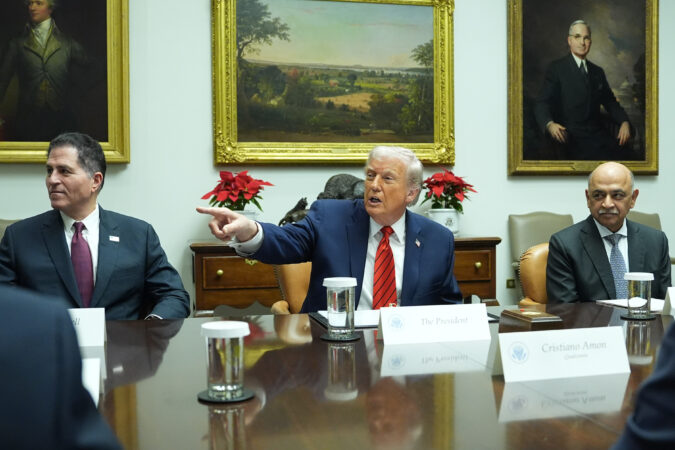
    Asked at a White House event whether he was concerned the measure might affect tourism to the U.S., President Donald Trump said no.

    “We want safety, we want security, we want to make sure we’re not letting the wrong people come into our country,” Trump said.

    The public has 60 days to comment on the proposed changes before they go into effect, the notice said.

    CBP officials did not immediately respond to questions about the new rules.

    The announcement did not say what the administration was looking for in the social media accounts or why it was asking for more information.

    But the agency said it was complying with an executive order that Trump signed in January that called for more screening of people coming to the U.S. to prevent the entry of possible national security threats.

    Travelers from countries that are not part of the Visa Waiver Program system are already required to submit their social media information, a policy that dates back to the first Trump administration. The policy remained during Democratic President Joe Biden’s administration.

    But citizens from visa waiver countries were not obligated to do so.

    Since January, the Trump administration has stepped up checks of immigrants and travelers, both those trying to enter the U.S. as well as those already in the country. Officials have tightened visa rules by requiring that applicants set all of their social media accounts to public so that they can be more easily scrutinized and checked for what authorities view as potential derogatory information. Refusing to set an account to public can be considered grounds for visa denial, according to guidelines provided by the State Department.

    U.S. Citizenship and Immigration Services now considers whether an applicant for benefits, such as a green card, “endorsed, promoted, supported, or otherwise espoused” anti-American, terrorist or antisemitic views.

    The heightened interest in social media screening has drawn concern from immigration and free speech advocates about what the Trump administration is looking for and whether the measures target people critical of the administration in an infringement of free speech rights.

  • First of 30 oil lease sales planned for Gulf of Mexico draws $279 million

    First of 30 oil lease sales planned for Gulf of Mexico draws $279 million

    WASHINGTON — Oil companies offered $279 million for drilling rights in the Gulf of Mexico on Wednesday in the first of 30 sales planned for the region under Republican efforts to ramp up U.S. fossil fuel production.

    The sale came after President Donald Trump’s administration recently announced plans to allow new drilling off Florida and California for the first time in decades. That’s drawn pushback including from Republicans worried about impacts to tourism.

    Wednesday’s sale was mandated by the sweeping tax-and-spending bill approved by Republicans over the summer. Under that legislation, companies will pay a 12.5% royalty on oil produced from the leases. That’s the lowest royalty level for deep-water drilling since 2007.

    Thirty companies submitted bids, including industry giants Chevron, Shell and BP, federal officials said. The total amount of high bids was down by more than $100 million from the previous lease sale in the Gulf of Mexico, under former Democratic President Joe Biden, in December 2023.

    “This sale reflects a significant step in the federal government’s efforts to restore U.S. energy dominance and advance responsible offshore energy development,” said Laura Robbins, acting director of the Gulf region for the Bureau of Ocean Energy Management, which is part of the Interior Department.

    The administration’s promotion of fossil fuels contrasts sharply with its hostility to renewable energy, particularly offshore wind. A judge on Monday struck down an executive order from Trump blocking wind energy projects, saying it violated U.S. law.

    Environmentalists said the fossil fuel sales would put wildlife in the Gulf at an higher risk of dying in oil spills. Spills occur regularly in the region and have included the 2010 Deepwater Horizon tragedy that killed 11 workers in an oil rig explosion and unleashed a massive spill.

    “The Gulf is already overwhelmed with thousands of oil rigs and pipelines, and oil companies are doing a terrible job of cleaning up after themselves,” said Rachel Matthews with the Center for Biological Diversity.

    Erik Milito with the National Ocean Industries Association, an industry group, said the takeaway from Wednesday’s sale was that the Gulf “is open.”

    While results of individual lease sales may fluctuate, Milito added, “the real success is the resumption of a regular leasing cadence.”

    “Knowing that (another lease sale) is coming in March 2026 allows companies to plan, study, and refine their bids, rather than being forced to respond to the uncertainty of a politically-driven multiyear pause,” he said.

    At least two lease sales annually are mandated through 2039 and one in 2040.

    The sales support an executive order by Trump that directs federal agencies to accelerate offshore oil and gas development, Interior Secretary Doug Burgum said in a statement. He said it would unlock investment, strengthen U.S. energy security and create jobs.

    But Earthjustice attorney George Torgun said the Trump administration conducted the sale without analyzing how it would expose the entire Gulf region to oil spills, how communities could be harmed by pollution and how it could devastate vulnerable marine life such as the endangered Rice’s whale, which numbers only in the dozens and lives in the Gulf of Mexico.

    The environmental group has asked a federal judge to ensure that the lease sale and future oil sales better protect Gulf communities.

    Only a small portion of parcels offered for sale typically receive bids, in areas where companies want to expand their existing drilling activities or where they foresee future development potential. It can be years before drilling occurs.

    The drilling leases sold in December 2023 and during another sale in March 2023 are held up by litigation, according to Robbins. A federal court ruled this spring that Interior officials did not adequately account for impacts to planet-warming greenhouse gas emissions and the Rice’s whale.

  • Pennsylvania Democrats are beginning their efforts to flip the state Senate in 2026 with this suburban Philly seat

    Pennsylvania Democrats are beginning their efforts to flip the state Senate in 2026 with this suburban Philly seat

    A Montgomery County Democratic Committee leader has set his sights on unseating a Republican state senator in the suburbs — part of a larger effort by Pennsylvania Democrats to flip the state Senate for the first time in 31 years.

    Chris Thomas, the former executive director of the Montgomery County Democratic Committee, who left his role at the end of November to run for Senate, launched his bid on Wednesday to challenge State Sen. Tracy Pennycuick, a first-term senator representing parts of Montgomery and Berks Counties.

    Thomas, 29, is also an Upper Frederick Township volunteer firefighter and taught in a Philadelphia public school for a year prior to his jump into politics. His campaign is focused on increasing public school funding, finding a new funding stream for mass transit, and making Pennsylvania more affordable for working people.

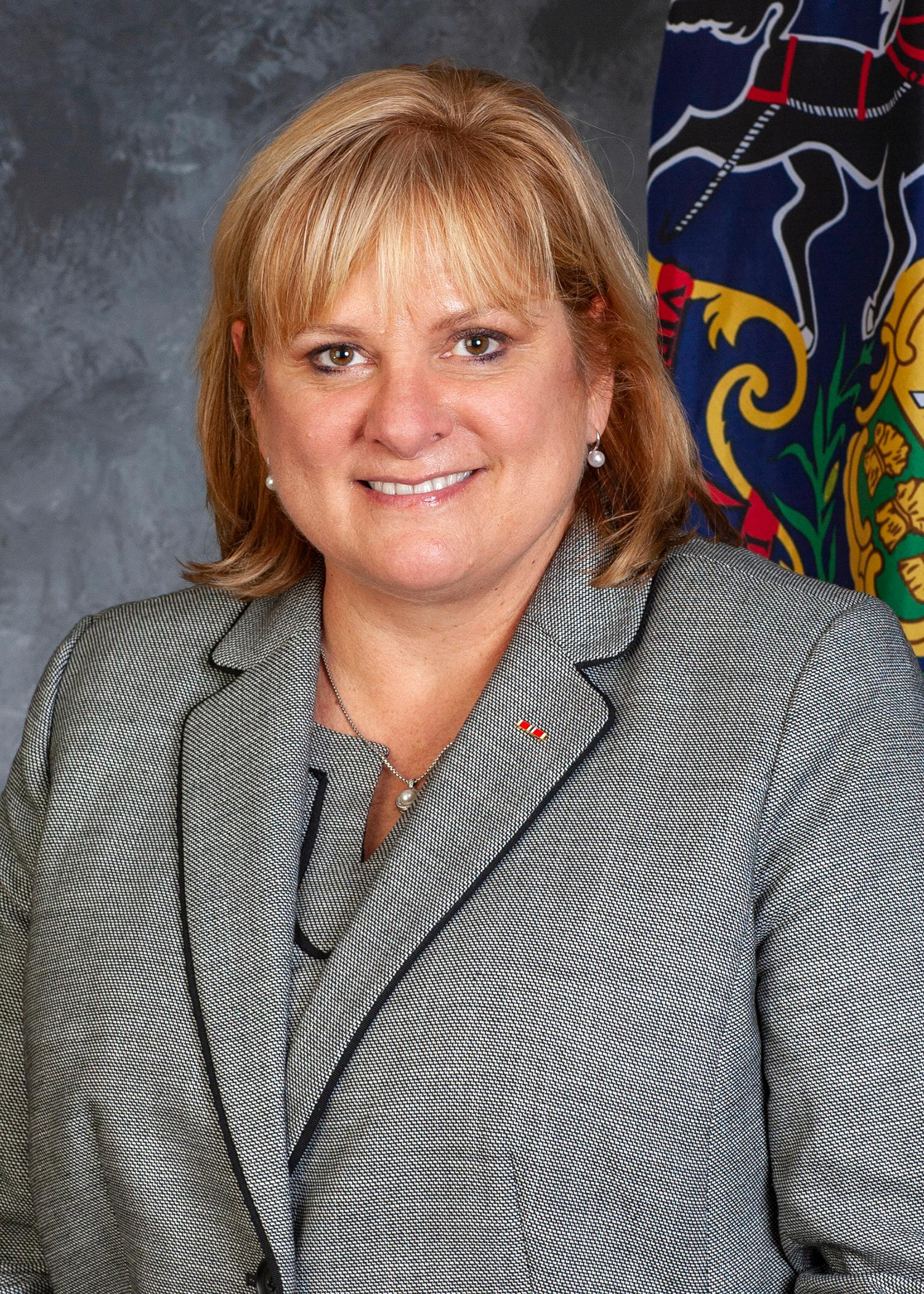
    Pa. state Rep. Tracy Pennycuick (R., Montgomery County). (Photo: Pa. House of Representatives)

    Thomas announced his campaign with dozens of endorsements from state and local elected officials, including five sitting senators from the Philadelphia suburbs. He also secured the endorsement of House Majority Leader Matt Bradford (D., Montgomery), another driving force behind the Democratic efforts to flip the state Senate in the 2026 midterm election in attempts to control all three branches of Pennsylvania’s government.

    Pennsylvania is one of few divided legislatures in the country, where Democrats hold a narrow majority in the state House, 102-101, and Republicans control the Senate, 27-23.

    Gov. Josh Shapiro, a Democrat, and House Democrats frequently butt heads with GOP Senate leaders. By flipping two seats next November, Democrats would tie the chamber 25-25 and Democratic Lt. Gov. Austin Davis would act as a tiebreaker. But Democrats are targeting four GOP-held seats, three of which are in the Philadelphia suburbs, in hopes of gaining control in the upper chamber for the first time in 31 years.

    The GOP-controlled state Senate has been a thorn in the side of Shapiro and House Democrats, as the more conservative members of the GOP Senate caucus have objected to most spending increases and rejected top Democratic priorities, like a long-term revenue source for mass transit. The state budget, passed in November, was 135 days late, requiring school districts, counties, and social service providers to take out loans or lay off staff to continue operating during the monthslong standoff.

    Mirroring national efforts to win control of congressional seats, Pennsylvania Democrats are targeting GOP-held districts that President Donald Trump won in 2024 but Shapiro carried in 2022. With Pennsylvania’s popular first-term governor and potential 2028 contender back at the top of the ticket — and a methodical, behind-the-scenes effort by Shapiro to orchestrate a decisive year for Democrats in 2026 — Democrats see it as possible this time around.

    Thomas’ first order of business if he is elected to Harrisburg and Democrats flip the chamber: electing Democratic floor leaders in the chamber.

    “No meaningful legislation moves in Harrisburg unless we fix who’s in charge, and right now Sen. Pennycuick is supporting a Senate leadership that’s failed working people,” Thomas said.

    Pennycuick said she “welcomes this campaign as an opportunity” to talk about the successes she has achieved while serving in the state Senate, such as her support for public education funding, reducing overreaching regulations, and her bipartisan proposal to create safeguards around artificial intelligence.

    Kofi Osei, a Towamencin Township supervisor and Democrat, has also announced his bid for Senate District 24, which stretches along the northwestern parts of Montgomery County and into parts of Berks County.

    The state Senate Democratic Campaign Committee does not endorse candidates in a primary election, and will support whoever wins the Democratic nomination in Pennsylvania’s May 19 primary. However, State Sen. Vincent Hughes (D., Philadelphia), who chairs the SDCC, said Thomas’ candidacy is “the right time and the right moment.”

    “I’m really excited about having a young person in there, generating young people and getting young people motivated,” Hughes added.

    The state Senate Republican Campaign Committee, meanwhile, is fundraising off Democrats’ efforts to flip the state’s upper chamber, warning voters that Democratic special interest group dollars are already pouring in.

    “State Democrats have made it clear their goal is to have a blue trifecta in Pennsylvania in 2026,” the SRCC wrote in a fundraising email Tuesday. “They know Senate Republicans are the last line of defense against Josh Shapiro and PA House Democrats far-left agenda.”

    Thomas was a public school teacher for one year at the Northeast Community Propel Academy, teaching seventh-grade math and science. He comes from a family of educators, he said, but quickly realized he needed to get more involved to improve the education system and government services to better serve these students. He made the jump to politics to try to make change.

    “I was sitting there, trying to feed my kids in the morning to make sure they had full stomachs to learn, having supplies to make sure they’re fully equipped for the day,” Thomas added. “I saw a system that wasn’t working for our students.”

    If elected, Thomas would be Pennsylvania’s youngest sitting state senator, and would join State Sen. Joe Picozzi (R., Philadelphia), 30, as part of a new generation of leaders hoping to shape the state’s future.

    “Our generation has grown up during economic crashes, school shootings, endless wars, and now we’re watching our parents and grandparents struggle to retire with dignity,” Thomas said.

  • Trump says the U.S. has seized an oil tanker off the coast of Venezuela

    Trump says the U.S. has seized an oil tanker off the coast of Venezuela

    President Donald Trump said Wednesday that the United States has seized an oil tanker off the coast of Venezuela as tensions mount with the government of President Nicolás Maduro.

    Using U.S. forces to seize an oil tanker is incredibly unusual and marks the Trump administration’s latest push to increase pressure on Maduro, who has been charged with narcoterrorism in the United States. The U.S. has built up the largest military presence in the region in decades and launched a series of deadly strikes on alleged drug-smuggling boats in the Caribbean Sea and eastern Pacific Ocean. The campaign is facing growing scrutiny from Congress.

    “We’ve just seized a tanker on the coast of Venezuela, a large tanker, very large, largest one ever seized, actually,” Trump told reporters at the White House, later adding that “it was seized for a very good reason.”

    Trump did not offer additional details. When asked what would happen to the oil aboard the tanker, Trump said, “Well, we keep it, I guess.”

    The seizure was led by the U.S. Coast Guard and supported by the Navy, according to a U.S. official who was not authorized to comment publicly and spoke on the condition of anonymity. The official added that the seizure was conducted under U.S. law enforcement authority.

    The Coast Guard members were taken to that ship by helicopter from the aircraft carrier USS Gerald R. Ford, the official said. The Ford is in the Caribbean Sea after arriving last month in a major show of force, joining a fleet of other warships that have been increasing pressure on Maduro.

    Video posted online by Attorney General Pam Bondi shows people fast-roping from one of the helicopters involved in the operation as it hovers just feet from the deck.

    The Coast Guard members can be seen in later shots of the video moving throughout the superstructure of the ship with their weapons drawn.

    Bondi wrote that “for multiple years, the oil tanker has been sanctioned by the United States due to its involvement in an illicit oil shipping network supporting foreign terrorist organizations.”

    Half of ship’s oil is tied to Cuban importer

    The U.S. official identified the seized tanker as the Skipper.

    The ship departed Venezuela around Dec. 2 with about 2 million barrels of heavy crude, roughly half of it belonging to a Cuban state-run oil importer, according to documents from the state-owned company Petróleos de Venezuela S.A., commonly known as PDVSA, that were provided on the condition of anonymity because the person did not have permission to share them.

    The Skipper was previously known as the M/T Adisa, according to ship tracking data. The Adisa was sanctioned by the U.S. in 2022 over accusations of belonging to a sophisticated network of shadow tankers that smuggled crude oil on behalf of Iran’s Revolutionary Guard and Lebanon’s Hezbollah militant group.

    The network was reportedly run by a Switzerland-based Ukrainian oil trader, the U.S. Treasury Departmeny said at the time.

    Hitting Venezuela’s sanctioned oil business

    Venezuela has the world’s largest proven oil reserves and produces about 1 million barrels a day. Locked out of global oil markets by U.S. sanctions, the state-owned oil company sells most of its output at a steep discount to refiners in China.

    The transactions usually involve a complex network of shadowy intermediaries, as sanctions have scared away more established traders. Many are shell companies, registered in jurisdictions known for secrecy. The buyers deploy so-called ghost tankers that hide their location and hand off their valuable cargoes in the middle of the ocean before they reach their final destination.

    Maduro did not address the seizure during a speech before a ruling-party organized demonstration in Caracas, Venezuela’s capital. But he told supporters that the country is “prepared to break the teeth of the North American empire if necessary.”

    Maduro, flanked by senior officials, said only the ruling party can “guarantee peace, stability, and the harmonious development of Venezuela, South America and the Caribbean.”

    During past negotiations, among the concessions the U.S. has made to Maduro was approval for oil giant Chevron Corp. to resume pumping and exporting Venezuelan oil. The corporation’s activities in the South American country resulted in a financial lifeline for Maduro’s government.

    Maduro has insisted the real purpose of the U.S. military operations is to force him from office.

    Democrat says move is about ‘regime change’

    Sen. Chris Van Hollen (D., Md.), a member of the Senate Foreign Relations Committee, said the U.S. seizing of the oil tanker cast doubt on the administration’s stated reasons for the military buildup and boat strikes in the region.

    “This shows that their whole cover story — that this is about interdicting drugs — is a big lie,” the senator said. “This is just one more piece of evidence that this is really about regime change — by force.”

    The seizure comes a day after the U.S. military flew a pair of fighter jets over the Gulf of Venezuela in what appeared to be the closest that warplanes had come to the South American country’s airspace. Trump has said land attacks are coming soon but has not offered more details.

    The Trump administration is facing increasing scrutiny from lawmakers over the boat-strike campaign, which has killed at least 87 people in 22 known strikes since early September, including a follow-up strike that killed two survivors clinging to the wreckage of a boat after the first hit.

    Some legal experts and Democrats say that action may have violated the laws governing the use of deadly military force.

    Lawmakers are demanding to get unedited video from the strikes, but Defense Secretary Pete Hegseth told congressional leaders Tuesday he was still weighing whether to release it. Hegseth provided a classified briefing for congressional leaders alongside Secretary of State Marco Rubio and CIA Director John Ratcliffe.

    It was not immediately clear Wednesday who owned the tanker or what national flag it was sailing under. The Coast Guard referred a request for comment to the White House.

  • Israel reopens Jordan crossing as pressure builds to advance Gaza truce

    Israel reopens Jordan crossing as pressure builds to advance Gaza truce

    Trucks carrying goods from Jordan crossed into the West Bank for the first time in months on Wednesday, after Israel said it would reopen a key land bridge with its neighbor, including for aid and other cargo bound for the Gaza Strip.

    It was unclear whether the first trucks out of the gate were transporting humanitarian supplies or commercial items, but a spokesperson for COGAT, the branch of the Israeli Defense Ministry that controls aid flows to Gaza, confirmed that the crossing, known as Allenby, was open for the passage of aid.

    The move to restore Allenby as a transit point for relief comes as pressure builds on Israel to move a tenuous U.S.-backed ceasefire in Gaza into its second phase, and as the United Nations and other aid organizations have warned that nowhere near enough supplies are being allowed into the enclave to meet the needs of the Palestinian population, the majority of whom are displaced and living in makeshift shelters or tents.

    Under the ceasefire agreement between Israel and Hamas, Israeli authorities are supposed to allow at least 600 trucks of aid to enter Gaza each day. But the United Nations and other aid agencies say they continue to face bottlenecks and other restrictions, including delays and denials of cargo, custom clearance challenges and limited routes inside Gaza for transporting humanitarian goods.

    Israel closed the border in September after a Jordanian truck driver killed two Israeli soldiers at the crossing. An Israeli security official, speaking on the condition of anonymity because they were not authorized to speak to the press, said Jordanian truck drivers would undergo stricter screening processes and that a dedicated security force had been assigned to monitor the terminal.

    The reopening also coincided with a visit to Israel and Jordan by the U.S. ambassador to the U.N., Mike Waltz, who met on Monday with Israeli Prime Minister Benjamin Netanyahu. A statement from the U.S. mission to the U.N. said Waltz “welcomed Israel’s cooperation on expanding border crossings,” including Allenby. Waltz also met with Jordan’s King Abdullah on Sunday.

    In recent days, both Israeli and Hamas officials have said that there will be no discussion of moving to the second phase of President Donald Trump’s ceasefire plan until the first phase has been fully implemented. Both continue to point fingers at the other for not holding up their side of the deal. Israel has blamed Hamas for being slow to return the bodies of hostages, with one remaining in Gaza. Hamas has, in turn, pointed to the continued closure of border crossings for medical evacuations and aid and the daily fire that Israeli troops are carrying out in Gaza.

    But as pressure from the U.S. and other mediators to push the deal into the next phase grows, Netanyahu said Sunday that the transition could happen “very shortly” and announced he will meet with Trump on Dec. 29. A Hamas official also told the Associated Press on Sunday that the group is open to “freezing or storing” its weapons arsenal as part of the ceasefire.

    The second phase, which in theory would involve the disarmament of Hamas, withdrawal of Israeli troops from the territory, and the formation of an international force to maintain security, is likely to be far more complicated to achieve than even the first phase. Any delays in reaching that second phase leaves open the prospect of a status quo being established in Gaza in which Israel continues to occupy half of the enclave.

    One remaining step is the return of the remains of Ran Gvili, a 24-year-old Israeli police officer who was killed in Hamas’s Oct. 7, 2023, attack on Israel.

    “Without Gvili, Israel will not begin the talks over phase two,” said an Israeli official, speaking on the condition of anonymity because they were not authorized to speak to the press.

    U.N. agencies have reported an increase in aid that has been allowed into Gaza since the ceasefire came into effect, but say the levels are still far below what is needed for a population trying to recover from widespread malnutrition, famine and infectious diseases with a decimated health care system.

    Israel has allowed commercial operators and aid groups that bypass the U.N. system to scale up their operations more rapidly than other major relief organizations with long-running histories of assistance in Gaza. In particular, Israel has refused to allow UNRWA, the U.N. Relief and Works Agency for Palestinian refugees, to deliver aid, despite its sprawling infrastructure in Gaza and decades-long presence in the territory.

    “A shockingly high number” of children are still suffering from acute malnutrition, said Tess Ingram, a spokeswoman for UNICEF, the U.N. children’s agency, according to comments reported by Reuters.

    Ingram also told reporters on Tuesday that opening the Rafah crossing in southern Gaza, which links it with Egypt, could help bring down the number of children suffering from malnutrition. “We really need to see all types of aid come in, particularly nutritious food through commercial routes as well,” Ingram said.

    Israel said last week that it would reopen the crossing in the coming days, but only for the exit of Palestinians from Gaza.

    Millions of shelter items have also been stuck in Jordan, Egypt and Israel while awaiting Israeli approval to enter, a consortium of humanitarian organizations focused on providing shelter aid said in November.

    A severe winter storm landing in the region this week threatens 850,000 people sheltering in 761 displacement sites particularly vulnerable to flooding in the Gaza Strip, the U.N. Office for the Coordination of Humanitarian Affairs (OCHA) said. On Wednesday, there were reports of flooding in large parts of Gaza City, particularly low-lying areas.

    “The entire services system is unable able to rescue displaced people due to the heavy rain and flooding,” said Mahmoud Basal, a spokesman for Gaza Civil Defense, in a statement to reporters. “Rainwater has risen to more than one meter in some shelter centers.”

    The storm, dubbed Byron, has already hit Greece and Cyprus and is expected to bring as much as eight inches of rain to Israel and Gaza.

    “Low pressure fronts pose a major danger to displaced people and residents because of the destruction inflicted on the infrastructure,” Gaza municipality spokesman Hosni Mhanna told Al Araby TV on Wednesday.

  • Ukraine to give revised peace plans to U.S. as Kyiv readies for more talks with its coalition partners

    Ukraine to give revised peace plans to U.S. as Kyiv readies for more talks with its coalition partners

    KYIV, Ukraine — Ukraine is expected to give its latest peace proposals to U.S. negotiators this week, President Volodymyr Zelensky said, ahead of his urgent talks with leaders and officials from about 30 other countries supporting Kyiv’s effort to end the war with Russia on acceptable terms.

    As tension builds around a U.S. push for a settlement, German Chancellor Friedrich Merz, British Prime Minister Keir Starmer and French President Emmanuel Macron spoke to President Donald Trump by phone Wednesday, according to officials.

    Negotiations are at “a critical moment,” the European leaders said in official statements.

    Trump said the men discussed Ukraine “in pretty strong terms.” He also said Zelensky “has to be realistic” about the war and that European leaders would like a meeting this coming weekend with both the U.S. and Ukraine.

    “We’ll make a determination depending on what they come back with,” the president told reporters during a question-and-answer session at the White House.

    Washington’s goal of a swift compromise to stop the fighting that followed Russia’s full-scale invasion in 2022 is reducing Kyiv’s room for maneuvering. Zelensky is walking a tightrope between defending Ukrainian interests and showing Trump he is willing to compromise, even as Moscow shows no public sign of budging from its demands.

    Ukraine’s European allies are backing Zelensky’s effort to ensure that any settlement is fair and deters future Russian attacks, as well as accommodating Europe’s defense interests.

    The French government said Ukraine’s allies — dubbed the “Coalition of the Willing” — will discuss the negotiations Thursday by video. Zelensky said it would include those countries’ leaders.

    “We need to bring together 30 colleagues very quickly. And it’s not easy, but nevertheless we will do it,” he said late Tuesday.

    Zelensky said discussions with the U.S. were scheduled later Wednesday to focus on a document detailing plans for Ukraine’s postwar reconstruction and economic development. Also, Ukraine is finalizing work on a separate, 20-point framework for ending the war. Zelensky said Kyiv expects to submit that document to Washington soon.

    Zelensky says he’s ready for an election

    After Trump called for a presidential election in Ukraine, Zelensky said his country would be ready for such a vote within three months if partners can guarantee safe balloting during wartime and if its electoral law can be altered.

    Zelensky’s openness to an election was a response to comments by Trump in which he questioned Ukraine’s democracy and suggested the Ukrainian leader was using the war as an excuse not to stand before voters. Those comments echo similar remarks often made by Russian President Vladimir Putin.

    Zelensky said late Tuesday he is “ready” for an election but needs help from the U.S. and possibly Europe to ensure its security. He suggested Ukraine could hold balloting in 60 to 90 days if that proviso is met.

    “To hold elections, two issues must be addressed: primarily, security — how to conduct them, how to do it under strikes, under missile attacks; and a question regarding our military — how they would vote,” Zelensky said. “And the second issue is the legislative framework required to ensure the legitimacy of elections.”

    Zelensky pointed out previously that balloting can’t legally happen while martial law — imposed due to Russia’s invasion — is in place. He has also asked how a vote could occur when civilian areas of Ukraine are being bombarded and almost 20% of the country is under Russian occupation.

    Zelensky said he has asked lawmakers from his party to draw up legislative proposals allowing for an election while Ukraine is under martial law.

    Ukrainians have on the whole supported Zelensky’s arguments, and have not clamored for an election. Under the law that is in force, Zelensky’s rule is legitimate.

    Putin has repeatedly complained that Zelensky can’t legitimately negotiate a peace settlement because his five-year term that began in 2019 has expired.

    U.S. seeks closer ties with Russia

    A new U.S. national security strategy released Dec. 5 made clear that Trump wants to improve Washington’s relationship with Moscow and “reestablish strategic stability with Russia.” The document also portrays European allies as weak.

    Russian Foreign Minister Sergey Lavrov praised Trump’s role in the Ukraine peace effort, telling the upper house of parliament that Moscow appreciates his “commitment to dialogue.” Trump, Lavrov said, is “the only Western leader” who shows “an understanding of the reasons that made war in Ukraine inevitable.”

    Trump’s peace efforts have run into sharply conflicting demands from Moscow and Kyiv.

    The initial U.S. proposal was heavily slanted toward Russia’s demands. To counter that, Zelensky has turned to his European supporters.

    Zelensky met this week with the leaders of Britain, Germany, and France in London, the heads of NATO and the European Union in Brussels, and then went to Rome to meet the Italian premier and Pope Leo XIV.

    Military aid for Ukraine declines

    Europe’s support is uneven, however, and that has meant a decrease in military aid since the Trump administration this year cut off supplies to Kyiv unless they were paid for by other NATO countries.

    Foreign military help for Ukraine fell sharply over the summer, and that trend continued through September and October, a German body that tracks international help for Ukraine said Wednesday.

    Average annual aid, mostly provided by the U.S. and Europe, was about 41.6 billion euros ($48.4 billion) between 2022–24. But so far this year Ukraine has received just 32.5 billion euros ($37.8 billion), the Kiel Institute said.

    This year, Denmark, Finland, Norway, and Sweden have substantially increased their help for Ukraine, while Germany nearly tripled its average monthly allocations and France and the U.K. both more than doubled their contributions, the Kiel Institute said.

    On the other hand, it said, Spain recorded no new military aid for Kyiv in 2025 while Italy reduced its low contributions by 15% compared with 2022–2024.

  • Trump’s crackdown on immigration is taking a toll on childcare workers

    Trump’s crackdown on immigration is taking a toll on childcare workers

    WASHINGTON — Not long after President Donald Trump took office in January, staff at CentroNía bilingual preschool began rehearsing what to do if Immigration and Customs Enforcement officials came to the door. As ICE became a regular presence in their historically Latino neighborhood this summer, teachers stopped taking children to nearby parks, libraries, and playgrounds that had once been considered an extension of the classroom.

    And in October, the school scrapped its beloved Hispanic Heritage Month parade, when immigrant parents typically dressed their children in costumes and soccer jerseys from their home countries. ICE had begun stopping staff members, all of whom have legal status, and school officials worried about drawing more unwelcome attention.

    All of this transpired before ICE officials arrested a teacher inside a Spanish immersion preschool in Chicago in October. The event left immigrants who work in childcare, along with the families who rely on them, feeling frightened and vulnerable.

    Trump’s push for the largest mass deportation in history has had an outsized impact on the childcare field, which is heavily reliant on immigrants and already strained by a worker shortage. Immigrant childcare workers and preschool teachers, the majority of whom are working and living in the U.S. legally, say they are wracked by anxiety over possible encounters with ICE officials. Some have left the field, and others have been forced out by changes to immigration policy.

    At CentroNía, CEO Myrna Peralta said all staff must have legal status and work authorization. But ICE’s presence and the fear it generates have changed how the school operates.

    “That really dominates all of our decision making,” Peralta said.

    Instead of taking children on walks through the neighborhood, staff members push children on strollers around the hallways. And staff converted a classroom into a miniature library when the school scrapped a partnership with a local library.

    The childcare industry depends on immigrants

    Schools and childcare centers were once off limits to ICE officials, in part to keep children out of harm’s way. But those rules were scrapped not long after Trump’s inauguration. Instead, ICE officials are urged to exercise “common sense.”

    Tricia McLaughlin, spokesperson for the Department of Homeland Security, defended ICE officials’ decision to enter the Chicago preschool. She said the teacher, who had a work permit and was later released, was a passenger in a car that was being pursued by ICE officials. She got out of the car and ran into the preschool, McLaughlin said, emphasizing the teacher was “arrested in the vestibule, not in the school.” The man who had been driving went inside the preschool, where officials arrested him.

    About one-fifth of America’s childcare workers were born outside the United States and one-fifth are Latino. The proportion of immigrants in some places, particularly large cities, is much higher: In the District of Columbia, California, and New York, around 40% of the childcare workforce is foreign-born, according to UC Berkeley’s Center for the Study of Child Care Employment.

    Immigrants in the field tend to be better educated than those born in the United States. Those from Latin America help satisfy the growing demand for Spanish-language preschools, such as CentroNía, where some parents enroll their kids to give them a head start learning another language.

    The American Immigration Council estimated in 2021 that more than three-quarters of immigrants working in early care and education were living and working in the U.S. legally. Preschools like CentroNía conduct rigorous background checks, including verifying employees have work authorization.

    There is evidence the toll on the workforce is mounting. Since January, the number of immigrants working in childcare has dropped by 39,000, according to a report published Wednesday by New America, a left-leaning think tank. This, in turn, made it more challenging for U.S.-born mothers of children under 6 to work. The researchers estimate there are 79,000 fewer of them in the workforce because of the increase in ICE arrests.

    Beyond the deportation efforts, the Trump administration in recent months has stripped legal status from hundreds of thousands of immigrants. Many of them had fled violence, poverty or natural disasters in their homes and received Temporary Protected Status, which allowed them to live and work legally in the U.S. But Trump ended those programs, forcing many out of their jobs — and the country. Just last month, 300,000 immigrants from Venezuela lost their protected status.

    CentroNía lost two employees when they lost their TPS, Peralta said, and a Nicaraguan immigrant working as a teacher left on his own. Tierra Encantada, which runs Spanish immersion preschools in several states, had a dozen teachers leave when they lost their TPS.

    Fear is affecting even those in the U.S. legally

    At CentroNía, one staff member was detained by ICE while walking down the street and held for several hours, all the while unable to contact colleagues to let them know where she was. She was released that evening, said the school’s site director, Joangelee Hernández-Figueroa.

    Another staff member, teacher Edelmira Kitchen, said she was pulled over by ICE on her way to work in September. Officials demanded she get out of her car so they could question her. Kitchen, a U.S. citizen who immigrated from the Dominican Republic as a child, said she refused and they eventually let her go.

    “I felt violated of my rights,” Kitchen said.

    Hernández-Figueroa said ICE’s heightened presence during the federal intervention in the city, has taken a toll on employees’ mental health. Some have gone to the hospital with panic attacks in the middle of the school day.

    When the city sent mental health consultants to the school earlier this year as part of a partnership with the Department of Behavioral Health, school leadership had them work with teachers rather than students, worried their anguish would spill over to the classroom.

    “If the teachers aren’t good,” Hernández-Figueroa said, “the kids won’t be good either.”

    It’s not just adults who are feeling more anxious. At a Guidepost Montessori School in Portland, Ore., teachers observed preschoolers change in the weeks after an ICE arrest near the school in July. After pulling over a father who was driving his child to the school, officials encountered him in the school parking lot and tried to arrest him. In the ensuing commotion, the school went into lockdown: Children were pulled off the playground, and teachers played loud music and had children sing along to drown out the yelling.

    Amy Lomanto, who heads the school, said teachers noticed more outbursts among students, and more students retreating to what the school calls “the regulation station,” an area in the main office with fidget toys kids can use to calm themselves.

    She said what unfolded at her school underscored that even wealthy communities, like the one the school serves, are not immune from exposure to these kinds of events.

    “With the current situation, more and more of us are likely to experience this kind of trauma,” she said. “That level of fear now is permeating a lot more throughout our society.”

  • WTF? Embracing profanity is one thing both political parties seem to agree on

    WTF? Embracing profanity is one thing both political parties seem to agree on

    WASHINGTON — As he shook President Barack Obama’s hand and pulled him in for what he thought was a private aside, Vice President Joe Biden delivered an explicit message: “This is a big f— deal.” The remark, overheard on live microphones at a 2010 ceremony for the Affordable Care Act, caused a sensation because open profanity from a national leader was unusual at the time.

    More than 15 years later, vulgarity is now in vogue.

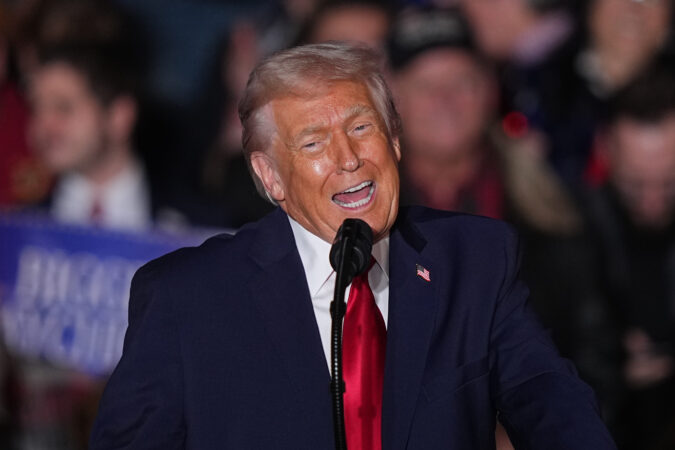
    During a political rally Tuesday night in Pennsylvania that was intended to focus on tackling inflation, President Donald Trump used profanity at least four times. At one point, he even admitted to disparaging Haiti and African nations as “shithole countries” during a private 2018 meeting, a comment he denied at the time. And before a bank of cameras during a lengthy cabinet meeting last week, the Republican president referred to alleged drug smugglers as “sons of bitches.”

    While the Biden incident was accidental, the frequency, sharpness, and public nature of Trump’s comments are intentional. They build on his project to combat what he sees as pervasive political correctness. Leaders in both parties are seemingly in a race now to the verbal gutter.

    Vice President JD Vance called a podcast host a “dips—” in September. In Thanksgiving remarks before troops, Vance joked that anyone who said they liked turkey was “full of s—.” After one National Guard member was killed in a shooting in Washington last month and a second was critically injured, top Trump aide Steven Cheung told a reporter on social media to “shut the f— up” when she wrote that the deployment of troops in the nation’s capital was “for political show.”

    Among Democrats, former Vice President Kamala Harris earned a roar of approval from her audience in September when she condemned the Trump administration by saying “these motherf— are crazy.” After Trump called for the execution of several Democratic members of Congress last month, Sen. Chris Murphy (D., Conn.) said it was time for people with influence to “pick a f— side.” Senate Democratic leader Chuck Schumer of New York said the administration cannot “f— around” with the release of the Jeffrey Epstein files. Democratic Rep. Jasmine Crockett, who on Monday announced her Senate campaign in Texas, did not hold back earlier this year when asked what she would tell Elon Musk if given the chance: “F— off.”

    The volley of vulgarities underscore an ever-coarsening political environment that often plays out on social media or other digital platforms where the posts or video clips that evoke the strongest emotions are rewarded with the most engagement.

    “If you want to be angry at someone, be angry at the social media companies,” Utah Gov. Spencer Cox, a Republican, said Tuesday night at Washington National Cathedral, where he spoke at an event focused on political civility. “It’s not a fair fight. They’ve hijacked our brains. They understand these dopamine hits. Outrage sells.”

    Cox, whose national profile rose after calling for civility in the wake of conservative activist Charlie Kirk’s assassination in his state, approved an overhaul of social media laws meant to protect children. A federal judge has temporarily blocked the state law.

    Tough political talk is nothing new

    Tough talk is nothing new in politics, but leaders long avoided flaunting it.

    Recordings from Democrat Lyndon B. Johnson’s administration, for instance, revealed a crude, profane side of his personality that was largely kept private. Republican Richard Nixon bemoaned the fact that the foul language he used in the Oval Office was captured on tape. “Since neither I nor most other Presidents had ever used profanity in public, millions were shocked,” Nixon wrote in his book In the Arena.

    “Politicians have always sworn, just behind closed doors,” said Benjamin Bergen, a professor at the University of California-San Diego’s Department of Cognitive Science and the author of What the F: What swearing reveals about our language, our brains, and ourselves. “The big change is in the past 10 years or so, it’s been much more public.”

    As both parties prepare for the 2026 midterm elections and the 2028 presidential campaign, the question is whether this language will become increasingly mainstream. Republicans who simply try to imitate Trump’s brash style do not always succeed with voters. Democrats who turn to vulgarities risk appearing inauthentic if their words feel forced.

    For some, it is just a distraction.

    “It’s not necessary,” said GOP Rep. Don Bacon of Nebraska, who is retiring next year after winning five elections in one of the most competitive House districts. “If that’s what it takes to get your point across, you’re not a good communicator.”

    There are risks of overusing profanity

    There also is a risk that if such language becomes overused, its utility as a way to shock and connect with audiences could be dulled. Comedian Jerry Seinfeld has talked about this problem, noting that he used swear words in his early routines but dropped them as his career progressed because he felt profanity yielded only cheap laughs.

    “I felt like well I just got a laugh because I said f— in there,” he said in a 2020 interview on the WTF podcast with fellow comedian Marc Maron. “You didn’t find the gold.”

    White House spokesperson Liz Huston said Trump “doesn’t care about being politically correct, he cares about making America great again. The American people love how authentic, transparent, and effective the President is.”

    But for Trump, the words that have generated the most controversy are often less centered in traditional profanity than slurs that can be interpreted as hurtful. The final weeks of his 2016 campaign were rocked when a tape emerged of him discussing grabbing women by their genitals, language he minimized as “locker room talk.” His “shithole” remark in 2018 was widely condemned as racist.

    More recently, Trump called Bloomberg reporter Catherine Lucey “piggy,” comments that his press secretary, Karoline Leavitt, defended as evidence of a president who is “very frank and honest.” Trump’s use of a slur about disabled people prompted an Indiana Republican whose child has Down syndrome to come out in opposition to the president’s push to redraw the state’s congressional districts.

    On rare occasions, politicians express contrition for their choice of words. In an interview with The Atlantic published last week, Pennsylvania Gov. Josh Shapiro, a Democrat, dismissed Harris’ depiction of him in her book about last year’s presidential campaign by saying she was “trying to sell books and cover her a—.”

    He seemed to catch himself quickly.

    “I shouldn’t say ‘cover her a—,” he said. “I think that’s not appropriate.”

  • The White House says the midterms are all about Trump. Democrats aren’t so sure

    The White House says the midterms are all about Trump. Democrats aren’t so sure

    WASHINGTON — A Dallas congresswoman opened her Senate campaign by telling voters that she “has gone toe to toe with Donald Trump.” Her Democratic primary opponent insisted that Americans are tired of “politics as a blood sport.”

    The divergent approach highlights how U.S. Rep. Jasmine Crockett and State Rep. James Talarico are navigating a race where Democrats hope to break a three-decade losing streak in Texas. It also reflects a broader divide within the party, with some candidates continuing to focus on Trump while others barely mention his name.

    Figuring out the best approach will be critical for Democrats who are grasping for a path back to power in the 2026 midterm elections that will determine control of Congress and are already maneuvering for the 2028 presidential race.

    Republicans, by contrast, have been crystal clear.

    Susie Wiles, the White House chief of staff, said in a recent podcast interview that the Republican president will campaign aggressively next year and the party will “put him on the ballot.”

    “He is the greatest vote energizer in the history of politics,” said Neil Newhouse, a veteran Republican pollster. “But the challenge is that he does it as much for Democrats as he does for Republicans.”

    Crockett takes on Trump

    In her campaign launch video, Crockett was silent as audio of Trump’s insults played, including multiple times that he has called her a “very low-IQ person.” At the end of the video, she breaks out into a smile.

    On Monday, she addressed the president more directly.

    “Trump, I know you’re watching, so let me tell you directly,” Crockett said. “You’re not entitled to a damn thing in Texas. You better get to work because I’m coming for you.”

    Trump responded the next day, telling reporters aboard Air Force One that her candidacy is “a gift to Republicans” and “I can’t even believe she’s a politician, actually.”

    For nearly a decade, Democrats have used their criticism of Trump to draw attention and fuel fundraising. Governors who are considered potential 2028 presidential contenders, including California’s Gavin Newsom and Illinois’ JB Pritzker, saw their profiles rise as they positioned themselves as staunch Trump opponents.

    U.S. Sen. Mark Kelly (D., Ariz.) recently participated in a video telling service members that they should not follow “illegal orders.” Trump responded by accusing him of “seditious behavior” that’s “punishable by death.”

    Kelly started a national media tour and sent out a flurry of fundraising emails, both for himself and other Democrats. He said Trump has bullied everyone in his career, “but not now, because I won’t let it happen.”

    When it comes to running for office, “Trump is the red meat that drives donors,” said John Anzalone, a longtime Democratic pollster.

    “There are clearly some candidates that are playing towards the donor world that don’t actually make a great argument for winning races. But it’s great for clicks and making money. And money is the first primary that you need to win.”

    Talarico charts a different course

    Talarico has built a following with a less combative style. The former schoolteacher who is working toward a master’s degree in divinity at Austin Presbyterian Theological Seminary gained attention by posting viral social media content challenging Republicans’ claims to Christian values. He has focused less on Trump or other politicians.

    “The biggest divide in our country is not left versus right. It’s top versus bottom,” Talarico said in the video launching his campaign.

    There are echoes of other Democratic successes this year, such as when candidates for governor won in New Jersey and Virginia by focusing on affordability concerns.

    Voters in those states were much likelier to say they were voting to oppose Trump than to support him, according to the AP Voter Poll. For example, 71% of voters for Democrat Mikie Sherrill in New Jersey said their decision in the governor’s race was motivated at least partially by opposition to Trump.

    But Sherrill recently said that it is not enough for Democrats to rely solely on anti-Trump fervor.

    “Trump makes a difference. He’s a forcing mechanism to coalesce the party,” Sherrill said. “But to really turn out the vote in a really strong manner, you have got to run a really sharp campaign.”

    When Democrats talk about Trump, they have to connect his actions to voters’ everyday lives, she said.

    “You can’t just say, oh, I’m so upset that Trump demolished the East Wing of the White House,” she said. “You have to say, look, there’s a tariff regime that is being run that is enriching the president to the tune of $3 billion, and you’re paying more for everything from your cup of coffee in the morning to the groceries that you’re buying to cook your family dinner at night.”

    It is an approach that could have more staying power in the coming years.

    “In the not-too-distant future, Trump will not be on the ballot and that will be a challenge for both parties,” said Austin Cook, a senior aide for Democrat Elissa Slotkin’s successful U.S. Senate campaign in Michigan last year. “He is a starting gun for Democratic enthusiasm. But soon we won’t have him as a foil.”

    Republicans need Trump to turn out voters

    Republicans have little choice but to enlist Trump’s help, considering his enduring support among voters who are less likely to turn out during the midterms.

    “They need to energize Republican voters and the only real way to energize Republican voters and get them out to vote is by enlisting Trump in the campaign,” said Newhouse, who is advising some of the party’s U.S. Senate candidates.

    He warned that Trump’s popularity does not necessarily transfer to candidates he supports, “but there isn’t an alternative.”

    “What they are trying to do here is basically wrap themselves up in him, hope that his approval and the economic numbers improve and get their voters out to the polls to match the Democrats’ intensity,” Newhouse said.

    The White House has said that Trump will be on the road more in the coming months. He hosted his first rally in a while in Pennsylvania on Tuesday evening, where he blamed Democrats for inflation.

    “They gave you high prices,” he said, adding that “we’re bringing those prices down rapidly.”