For Ecuadorians in Philadelphia, seeing their country in the World Cup is not just a chance to watch good soccer but also a way to embrace their culture and community in the face of heightened scrutiny under the Trump administration.
As Ecuador went head-to-head with Germany last week, some Ecuadorian Philadelphians gathered in bars across the city, donning yellow and cheering on their team.
“It’s been nice to be able to see how all the community has come together,” Yvonne Cedeno said at a watch party at Tradesman’s in Center City. “Whether you’re Mexican, Colombian, Ecuadorian, just seeing people in our community getting together, especially within this political environment, is just so great. It makes me happy to be Ecuadorian.”
Though Philadelphia is a sanctuary city with some of the nation’s toughest restrictions on ICE, immigration arrests have still surged in the city and state. In January 2026 alone 802 arrests were made in Pennsylvania, more than tripling the amount just a year prior. Raids have often targeted predominantly Latino communities in both the city and suburbs.
Cathryn Miller-Wilson, executive Director of HIAS Pennsylvania, said these raids have created intense anxiety in the community, with some clients telling staff they have opted to stay home during World Cup celebrations, fearing running into ICE agents at games or events.
“They’re absolutely only watching from home because it’s too scary otherwise,” Miller-Wilson said. “It’s definitely a problem, really since 2025, but especially now, where there’s this confluence of joyful celebration, but also of the threat of increased ICE presence.”
Still, many Latinos, who make up 16% of the city’s residents, have embraced the chance to celebrate their community during the World Cup, which has featured nine Latin American countries. Tuesday evening, Ecuador will face Mexico in a knockout match after last week’s 2-1 win over Germany secured the nation’s spot in the elimination round.
Cedeno, 37, said the World Cup has always given her family a way to express their love for their culture by making traditional Ecuadorian dishes and coming together to cheer for their country.
“Last game we woke up at 6 a.m. just to make a traditional Ecuadorian dish called encebollado, which takes hours to make,” Cedeno said, referring to the traditional stew often made with tuna and yuca. “And we all got together and we watched the game and rooted for Ecuador, so it definitely brings the World Cup definitely brings our family closer”
Ahead of Ecuador’s math against Côte d’Ivoire at Lincoln Financial Field on June 14, a sea of yellow jerseys flooded around the Rocky statue in front of the Philadelphia Museum of Art.
Rowan Teran, 24, said the scene filled him with pride — even if the team fell short that game.
“I grew up Latino in a very Jewish-dominated community. I kind of wasn’t proud of who I was,” said Teran, who grew upLower Merionafter his father immigrated from Ecuador.“And then growing up, I became much more proud. And then one day you see thousands of Ecuadorians wearing your jersey, singing the national anthem that you wanted to sing when you were younger, and you just feel proud to be who you are.”
Teran, who also attended the watch party at Tradesman’s, highlighted that the joy surrounding the World Cup feels like an act of resistance against the Trump administration.
”See what we are,“ Teran said. ”You don’t want any of us here, and now there are hundreds of thousands of us here, and the city’s even better.”
Soccer fans watch Ecuador take on the Ivory Coast during a World Cup soccer watch party at Brauhaus Schmitz on Sunday, June 14, 2026.
Christina Barradas, 44, is Mexicanbut came out to Tradesman’s to cheer on Ecuador alongside her Ecuadorian husband. She said while the World Cup has been great for the community, it’s a temporary respite from the struggles they’re facing.
“It’s an opportunity to put on your jersey, to put on the colors, but we still don’t feel 100 percent free and safe,” Barradas said.
On South Street,Nina Cueva-Castillo, 41, sat with the only other two yellow jerseys among a sea of Germany fans at Brauhaus Schmitz.
Cueva-Castillo said the games give Philly’s Ecuadorian community visibility it usually does not have.
“I love how people now know us,” Cueva-Castillo said. “They know our jersey, they know our colors, they know our flag. It’s a breath of fresh air to be ourselves, to be accepted, to be welcome, and for people to be like, ‘You know what, they are just like us’.”
What amazes me about the fact that America turns 250 on Saturday is that I’ve been alive now for 27% of U.S. history. When I was 17 and watched the Bicentennial parade of tall ships down the Hudson River from my dad’s conveniently located Manhattan skyscraper office on July 4, 1976, I thought I was celebrating ancient history. I was wrong. In a big, diverse world, the United States remains a young adult among nations. Like most young adults, we have a lot of issues.
Trump thinks anything besides stealing the election is ‘a big yawn’
Voting booths are set up at a polling place in Newtown in 2024.
Donald Trump gets a lot of flak, and deservedly so, for telling so many lies. On Monday, he held an Oval Office press availability, and much of what he said — false claims that other nations don’t have birthright citizenship or mail-in voting — was flat-out untrue.
But nothing is scarier than when the 47th president speaks the truth about what’s really on his mind. Because the only thing that’s in Trump’s brain right now is stealing the November midterm election by changing the rules in his favor … or worse. If Trump’s vocal cords were not so weak and diminished, he’d have been screaming the quiet part out loud.
“Here’s what I would like to say,” Trump said of the still-unsigned housing bill, which passed in the House by a 396-13 vote. “It’s a yawn. Some people say it’s wonderful. To me, compared to the SAVE America Act, just about everything is a big yawn.”
In quainter times, Trump’s disrespect for the housing bill — a grab bag of measures all geared toward encouraging contractors to build more units, which would lower both purchase prices and rents — might be the political gaffe of the year. Currently, only 29% of Americans think it’s a good time to buy a house, and nearly two-thirds are more likely to vote for a Congress member who helped lower prices. Republicans who voted for the bill are desperate for a win.
Trump doesn’t care. He’s forgotten his “forgotten Americans” who think the rent is too damn high, not to mention the GOP members of Congress who’ve followed him off the cliff. But that’s not even close to the most alarming thing about Trump’s Oval Office moment of truth.
The president says the only thing he cares about — even with his conflict in Iran becoming another “forever war,” and with the economy down the toilet for everyone who’s not a tech trillionaire — is a bill that critics say would be a disaster for free and fair U.S. elections. One report found that some 12 million people who fairly and successfully voted in the 2020 presidential election don’t have the documentation — such as a birth certificate or passport — that the bill requires.
We don’t know how such a massive drop in turnout would change the election results, or whether a weakened Trump can pressure theGOP to find a way to pass a bill with zero Democratic support. But we do know this: The president’s maneuvers are not even the worst thing Trump has done this month on the steal-this-election front. Not by a long shot.
The Trump regime has been signaling for months that it sees the U.S. intelligence community — spy agencies like the CIA — not as a tool for finding out what comes next in the Persian Gulf, or if or when China is invading Taiwan, or when Vladimir Putin’s Russian empire will fall. No, Trump wants secret agents who can creatively invent theories of foreign-born election fraud that would demand a strongman response.
We saw this coming back in January, when the regime dispatched Trump 47’s first director of national intelligence, Tulsi Gabbard, to Fulton County, Ga., to oversee an FBI raid of voting materials from the 2020 election that Trump, with no evidence, continues to dispute. That link made it clear the regime is looking to create links to foreign actors.
When Gabbard left the administration this spring, Trump named a temporary replacement who can serve through the November election: Bill Pulte, who also continues to lead the Federal Housing Finance Agency. Pulte lacks a key prerequisite for his new job — any experience in intelligence whatsoever — but has the only quality that matters to Trump: undying loyalty. Pulte’s main focus in the housing job has been combing through the mortgage records of the president’s political enemies, looking for undotted i’s and uncrossed t’s that could be used to manufacture criminal charges from nothing.
In just a few days at intelligence, Pulte has not disappointed his boss. He showed up Monday and immediately began firing current staffers, with a rumored list of hundreds. The steep reduction in eyeballs on the world’s trouble spots is disturbing, but what’s even more alarming is the one person Pulte has hired.
The newsletter SpyTalk described Pulte’s new chief of staff, Christina Norton, as “a party-loving MAGA activist with no background in national security issues but who last year boasted of running ‘the largest election integrity operation the Republican Party has ever seen’ …”
The pairing of Pulte and Norton is an alarm bell that the national intelligence team under Trump will have one job: investigating fantastical “foreign election plots” that will be cited to justify radical measures like sending troops to polling places, seizing voting machines, or worse.
SpyTalk noted that Norton, in her active Instagram feed, “talks about supervising more than 200,000 Republican poll watchers ‘standing guard’ at polling booths and vote-counting stations across the country” during her 2024 stint at the Republican National Committee.
Yet, intelligence is just one of many tools in the federal government that the obsessive Trump is working to activate ahead of a November election that polls suggest will be a “blue wave” for Democrats hoping to retake Capitol Hill. Trump has issued several executive orders seeking to assert federal control over voting, which has been a state and local function throughout 250 years of American history.
That effort suffered a bit of a setback Monday, when the U.S. Supreme Court ruled that states can continue to count mail-in ballots that are postmarked before Election Day but arrive after the polls have closed. But that will not stop the Trump regime from politicizing the U.S. Postal Service ahead of November.
Last week, Postmaster General David Steiner told Congress that USPS plans not to deliver mail-in ballots in states that don’t turn their voter rolls over to the Trump regime, a demand many governors have resisted so far. “President Trump does not believe that elections he loses are valid,” Democratic Michigan Sen. Elisa Slotkin said after the hearing. “It’s all part of his authoritarian playbook.”
This all feels very familiar. In the lame-duck days after Trump’s 2020 election loss to Joe Biden, the 45th president — instead of packing up to return to Mar-a-Lago — got busy putting in a new team at the Pentagon, ordering the U.S. Department of Justice to probe alleged voter fraud, challenging vote count certifications in court, and urging state lawmakers to seat rival slates of electors. Most pundits laughed this off, but I wrote a column — “So, is President Trump staging a coup, or what?” — that ran on Nov. 10, 2020, nearly two months before the actual attempted coup on Jan. 6, 2021.
Now Trump is not only staging another coup, but he is yelling about it, in your face. There is nothing he won’t try over the next five months to prevent a Democratic Congress from investigating how he and his family have made billions of dollars off the American presidency.
When Trump says anything that’s not election meddling is a “big yawn,” this should be our wake-up call. The time for a full-court press — lawsuits, public hearings, and investigative journalism — can’t wait until after the election. The new putsch has already begun.
Yo, do this!
If you didn’t think I raced to download the new audiobook of Zayd Ayers Dohrn’s tale of growing up in the radical Weather Underground in the 1970s and ’80s — Dangerous, Dirty, Violent, and Young: A Fugitive Family in the Revolutionary Underground — then you must be new around these parts. Dohrn had already used his unique access to his parents — Bernardine Dohrn and Bill Ayers, revolutionary royalty — and their friends to tell a history of that era’s far left in 2022’s award-winning podcast, Mother Country Radicals. His new book aims to go deeper into the psychology of what it was like to be raised as a toddler on the run from the FBI, or whether bombings and bank robberies can change the world. That’s a question — also explored in this viral essay — with new resonance in the Trump era.
A few weeks ago, I suggested that folks see the new movie The Sheep Detectives. The film is already streaming on Amazon Prime (which produced it), and Sunday’s rare night off for the World Cup offered the excuse to finally watch. I can now highly recommend it. The movie — with an adapted script by the acclaimed showrunner of HBO’s Chernobyl, Craig Mazin — manages to merge police procedural cliches with moving thoughts about prejudice, existentialism, and what it means to belong to a flock. Even a flock of talking sheep.
Ask me anything
Question: Is Markwayne [Mullin, the Homeland Security secretary and former Oklahoma senator] the least qualified cabinet level official in American history? — Richard McGovern (@richardmcgovern.bsky.social) via Bluesky
Answer: Good question from Richard, a fellow long-suffering Philadelphia Union fan. Not because I know the answer, when there are rivals for the title like Donald Trump’s war-losing “Secretary of War” Pete Hegseth, to name just one. But Mullin is now behind a move so outlandish that it showed me I haven’t lost my capacity for shock after all. This weekend, Trump nominated a previously unknown former Oklahoma state trooper named Lance Schroyer to run U.S. Immigration and Customs Enforcement, a powerful agency with 22,000 agents and a budget of around $30 billion a year. It turns out that just recently, Schroyer was heading a security detail for Mullin in Washington, D.C., and has become a close enough friend that he is an occasional dinner guest. Yes, he hired his bodyguard to run the equivalent of a large corporation. Stay tuned for all of this to unravel.
What you’re saying about …
I guess we’re not as close as we thought, as very few of you were eager to share your July Fourth plans with me or discuss what America’s 250th birthday means at such a dark moment. The ones who did reply are looking forward to spending time with family and friends, but all that patriotic jazz, not so much. “Probably, we will have our usual picnic and take the grandkids to see the local fireworks, but I have no intention to watch any special programming or parades, etc.” Marianne Zollers wrote. “It will just make me sad. Such a different feeling compared with the Bicentennial which was such a joyous and happy occasion for my entire family.”
📮 This week’s question: One of the big stories of 2026 that’s finally getting a lot of attention is the success of more progressive Democrats, including democratic socialists, in key primary races against party moderates. Is this a good thing, lifting up candidates who’ll fight against Trump and for the working class? Or do you worry Republicans will capitalize against their opponents with more left-wing views? Please email me your answer and put the exact phrase “2026 progressive Democrats” in the subject line.
Backstory on crossing the World Cup off my bucket list
The Ivory Coast team celebrates their win in the middle of the field against Curaçao with a score of 2-0 for the FIFA World Cup at the Lincoln Financial Field in Philadelphia on Thursday.
I can’t say exactly when, but at some point during my first-ever in-person World Cup match between Côte d’Ivoire and Curaçao, watching from the thin air of the top deck of the temporarily renamed Philadelphia Stadium, it struck me: My decades-long dream of being there for the world’s greatest sporting event was not like what I’d imagined.
And yet, in some weird, quasi-religious acid test kind of way, it was even better.
I’ve been to countless sporting events going back to 1968, but never one where the vibe was basically: So happy to be here. I’ve certainly never been to a game where the PA announcer uttered something before the match about giving a big hand to both teams — and the sold-out crowd obliged. Fans would have burned down Section 220, Row 27, where I was sitting, if this had happened during an Eagles-Cowboys game. During a tense match with a place in the Round of 32 on the line, the gathering repeatedly did the wave and threw their vocal cords more behind the halftime singalong of the Bruce Channel 1961 oldie “Hey! Baby” than either of the two decisive goals by Côte d’Ivoire’s Les Éléphants.
Up in nosebleed country, many of the fans repped soccer jerseys, but they were for club teams like Liverpool or Christian Pulisic’s USA No. 10, joined by me in my Philadelphia Union T-shirt. We were Philly’s soccer aficionados, desperate to be a part of maybe the only time in our lives the World Cup would take place in the City of Brotherly Love. A match pitting the smallest nation to ever qualify for the FIFA tourney (Curaçao, population 158,000) and an African underdog was pretty much the only way to crash the party without a bank loan. (Full disclosure: I paid about $280 apiece for two seats on StubHub — much like buying a stock, it could have been more or less, depending on how one timed it.)
No, this wasn’t much like the Eagles games played here, where excitement merges with pins and needles of anxiety. On a picture-perfect late afternoon in June, bookended by the Philadelphia skyline and a lazy Delaware River, it felt more like a rock concert. It wouldn’t have seemed out of place if folks had started batting a beachball around at this soccer Woodstock. There was a mind-meld of the faithful, who saw FIFA and its commercialization as the devil, with the loudest boos for the TV-ad-laden “hydration breaks,” but with — I swear to God — a loud roar for the announcement of the attendance: 68,324. In a city where a 1976 Bicentennial match of some of the world’s best players took place in a mostly empty stadium, soccer is indisputably here to stay.
Fans walked out of Philadelphia Stadium beaming less over the final score and more about the instant karma of the afternoon. After years of tavern taunts and ridicule from sports-talk radio, localsoccer die-hards lived long enough to see America’s founding city become the world’s co-capital of the sport that, for its true believers, passes all understanding. It was all too beautiful. If I can somehow make it to Spain or Portugal or Morocco in 2030 (because, hey, I need a new bucket list now), I will be sure to wear some flowers in my hair. Soccer time will be a love-in there.
What I wrote on this date in 2019
I’ve been writing about the topic of journalism reform since the mid-2000s, or around the time it became clear to me and a lot of other folks that newsrooms needed to change or die. My fear, circa 2006 or so, was that we’d start seeing entire communities without newspapers or the accountability journalism that flows from that — which is exactly what happened in Youngstown, Ohio, when its paper closed seven years ago. I wrote: “The loss of the Youngstown Vindicator every morning doesn’t mean that the region’s 200,000 people will no longer be getting information. It just increases the likelihood they’ll be getting bad information — intentionally manipulated, and sometimes out-and-out fakery.”
Only one column this week, as I took a well-deserved day off to attend the World Cup. In that piece, I looked at the sorry state of justice in America on the eve of its 250th birthday, with an emphasis on the outrageous sentences — ranging from 30 to 100 years — handed down to left-wing anti-ICE protesters convicted of rioting in North Texas. The U.S. Department of Justice that pushed these virtual life sentences is also pardoning the right-wing rioters of Jan. 6, 2021, as well as billionaire fraudsters who donate money to MAGA players and causes. They’ve made a mockery of liberty and justice for all.
Let’s be honest: People — not to mention sheep (see above) — can’t get enough of a murder mystery, especially a real-life true crime. It’s been a while since a crime saga has riveted Philadelphia readers as much asthe stench of possible foul play that is growing at a home on West Chew Avenue in the city’s Olney section that police have branded a crime scene as they search for clues in the disappearance of two local women. Since the case broke open last week, nearly a dozen Inquirer reporters have produced riveting articles about the discovery of drugs, chemicals, and “a significant amount of blood” at the Horsch family residence, profiles of the two missing women — Amy McHale and Blair Tonzelli — and interviews with neighbors who talked about living next door to “a house from a scary movie.” The backstory here is that — whatever you may have heard about AI — it still takes a lot of human shoe-leather to get to the bottom of a story like this. Subscribing to The Inquirer is a twofer: You get to hurdle the paywall to read compelling journalism and feel good about being a supporter.
By submitting your written, visual, and/or audio contributions, you agree to The Inquirer’s Terms of Use, including the grant of rights in Section 10.
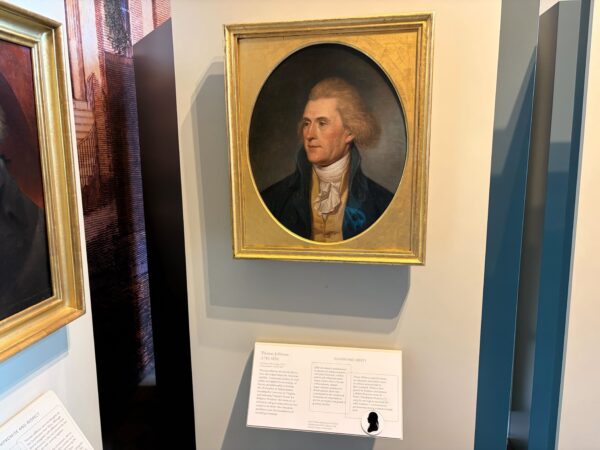
President Donald Trump’s administration has wiped almost all mentions of slavery from a panel accompanying a portrait of Thomas Jefferson at the Second Bank of the United States.
As the Founding Father who wrote the words “all men are created equal” while enslaving more than 600 people throughout his life, Jefferson embodies the paradox at the heart of the revolutionary era.
The description under his iconic portrait attempted to grapple with that tension.
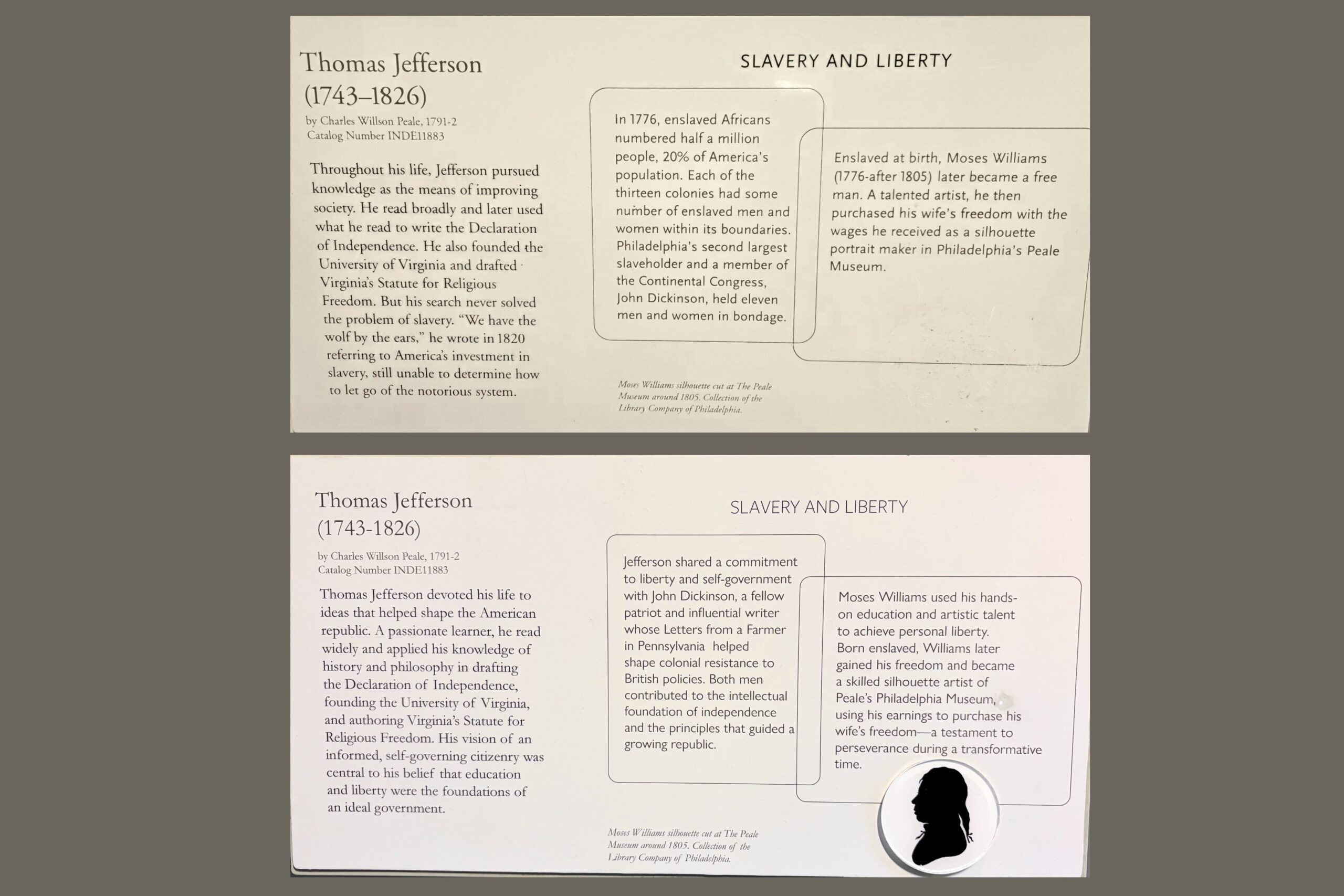
Despite Jefferson’s lifelong pursuit of knowledge, he “never solved the problem of slavery“ and was ”unable to determine how to let go of the notorious system,” the original plaque read.
But a new panel simply states that Jefferson’s “vision of an informed, self-governing citizenry was central to his belief that education and liberty were the foundations of an ideal government,” among other changes.
It’s not the only change the administration has made to exhibits around Philadelphia’s Independence National Historical Park ahead of the 250th anniversary.
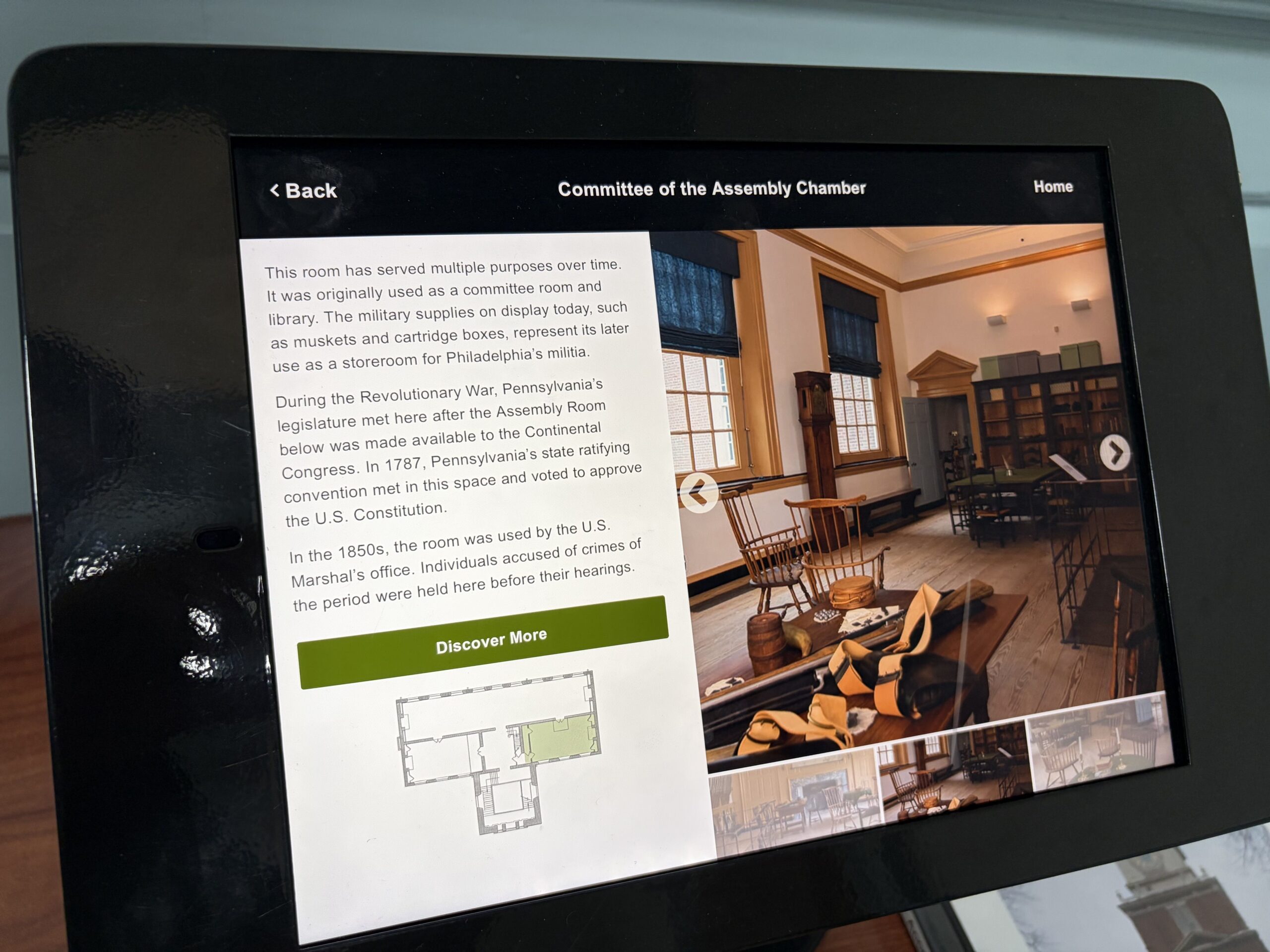
A touchscreen with a virtual tour of Independence Hall’s second floor now tells visitors that one of the rooms was used to hold “individuals accused of crimes of the period” before their court hearings.
Who were these individuals? A previous version stated clearly: “accused fugitives from slavery.”
A side by side of the original and new descriptions Thomas Jefferson’s portrait at the Second Bank of the United States. The references to slavery have largely been removed by President Donald Trump’s administration.
While the changes are more subtle than those that took place at the President’s House in January — and the new exhibits the government proposed a few months later — they further underscore the Trump administration’s goal to sanitize U.S. history, as signified by his executive order to review or remove content at national parks that “inappropriately disparage Americans past or living.”
They also show a lack of transparency. The change to the description under Jefferson’s portrait was only acknowledged following a demand by a federal judge in Boston that the National Park Service share a list of all removals the administration undertook to comply with Trump’s “restoring truth and sanity” edict ahead of the country’s 250thcelebration.
In a statement Monday, Avenging the Ancestors Coalition — which has helped lead the efforts to protect the President’s House — said the additional changes were “extremely troubling.”
“The preservation of history requires ongoing vigilance,” the organization said. “Restoring historical interpretation is only one part of the work; protecting it from future revision or erasure is equally important.”
“One of the greatest disappointments of my life, is that we get to the 250th anniversary of this country, and we are still trying to evade the truth of our founding,” LaRoche said.
Among the most blatant examples of the federal government’s desire to retell history has happened at the President’s House, which opened almost two decades ago to memorialize the nine people George Washington enslaved at his Philadelphia home. It also serves as a symbol of exploring the stark juxtaposition of slavery and liberty during the nation’s founding.
But the moves at the Second Bank and Independence Hall signify that the administration is not letting any stone go unturned when it comes to ridding or softening even smaller mentions of slavery at Philadelphia’s most iconic historic sites.
The Department of Interior did not answer repeated questions about the changes.
“No changes have been made,” a spokesperson said via email, citing the President’s House litigation. When an Inquirer reporter pressed again about changes to Independence Hall and the Second Bank, the government spokesperson repeated that there were no changes to the President’s House during the litigation. The Department of Interior did not respond to further inquiries.
At the Second Bank, the panel under Jefferson’s iconicportrait also informed visitors about the population of persons enslaved in 1776, that John Dickinson — a member of the Continental Congress — was an enslaver, and about the life of Moses Williams, an artist who was enslaved at birth and later became a free man.
That’s drastically changed in the new panel.
Jefferson’s grappling with slavery is no longer present and Dickinson is referred to as a “fellow patriot and influential writer. …” The only mention of slavery remaining is Williams’ story, though it’s reworded.
And at Independence Hall, the touchscreen kiosk describing the second floor Committee of Assembly Chamber previously outlined the irony of the space being used for ratifying the U.S. constitution and later housing the office “where accused fugitives from slavery were held before their hearings, right above the room where the Declaration of Independence had been signed.”
A touch screen at the entrance to Independence Hall with photos and descriptions of the building’s second floor. The description of the Committee of the Assembly Chamber has been edited to replace the words “accused fugitives from slavery” to “individuals accused of crimes of the period.”
But the reference to slavery has been removed, among other rewordings.
It remains unclear when these changes were made. The Inquirer reported last summer that these items — and an interactive exhibit at the Benjamin Franklin Museum about the Founding Father’s conflicting views on slavery, which is still intact — were flagged for review.
In addition to the President’s House exhibits, the list says the administration removed a “portrait description” and cites “disparages Americans past or living” as the reason it is gone.
No entry in the list corresponds to the change made at Independence Hall, which Philadelphia owns.
The city did not immediately respond to a request for comment.
All material changes at Independence Hall should be done after consultation with the city, said Cynthia MacLeod, former superintendent of Independence National Historical Park.
“The National Park service has been known for excellent historians and interpreters and its a shame that they are being muzzled now,” MacLeod said. “It’s a shame and a disservice to all the visitors not to have a more complete history told.”
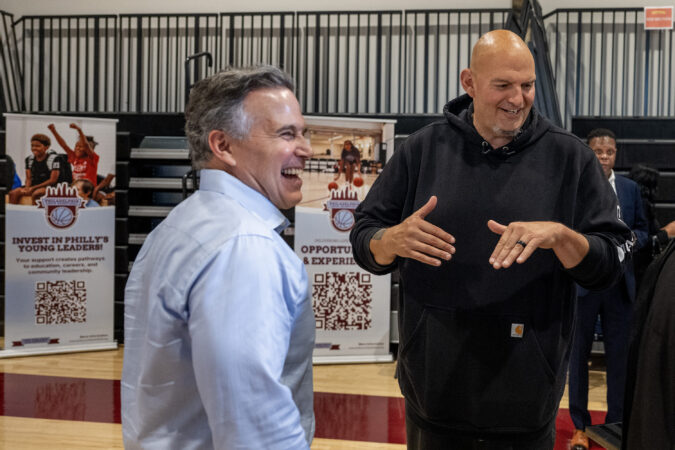
In a rare public appearance in Philadelphia, Democratic U.S. Sen. John Fetterman joined Republican U.S. Sen. Dave McCormick at a youth basketball camp in Nicetown on Monday to promote Trump Accounts, the new federally backed savings accounts for kids that became law with the president’s signature One Big Beautiful Bill Act.
Fetterman — who did not vote for the GOP-led initiative last year but has more frequently supported President Donald Trump’s policies since then — said he was urging families in deeply Democratic Philadelphia to look past Trump’s name on the program.
“Do not fall into that political trap,” Fetterman said. “This isn’t some radical thing. … Do this for your child.”
The accounts, which launch on July 4, are available to children under 18 — with children born between Jan. 1, 2025 and Dec. 31, 2028 receiving $1,000 in seed money.
All accounts will also receive $250 because of a $6.25 billion donation from tech CEO Michael Dell and wife Susan Dell. Families, businesses, and nonprofits can add up to $5,000 annually. A portion of the funds may be accessed when the child turns 18, with the rest transferred into an IRA retirement account.
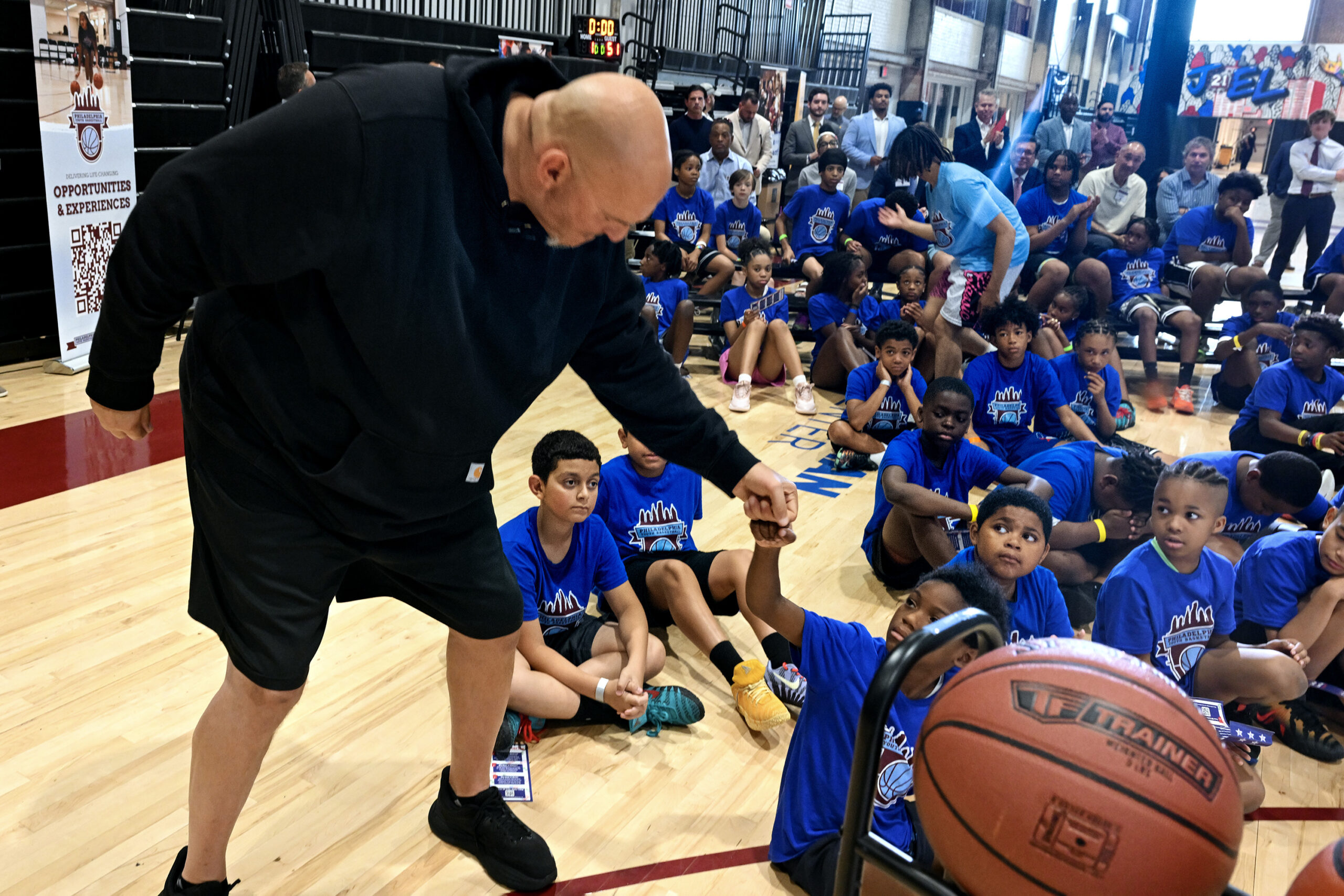
“Who is excited about getting $200? Put your hands up,” McCormick asked more than 100 kids gathered on one of the indoor courts at Philadelphia Youth Basketball’s summer camp, at the Alan Horwitz “Sixth Man” Center in Nicetown.
Both McCormick and Fetterman appealed directly to the children during speeches between basketball camp drills.
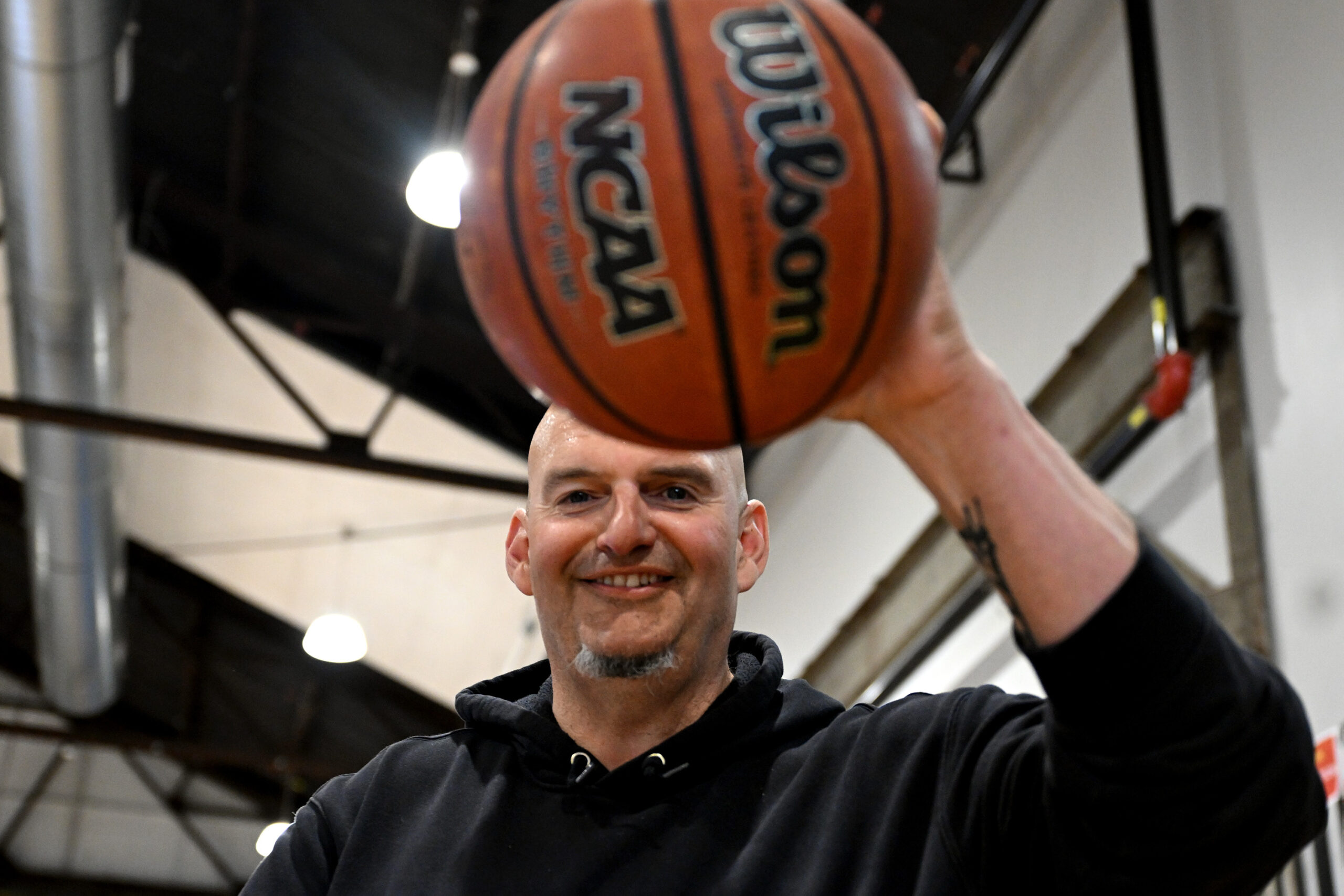
Despite being 6-foot-8 and palming a basketball as he posed for pictures, Fetterman said his basketball skills weren’t “worth much.” But he told the kids that he was there because he wanted them all to be millionaires someday. And the Trump accounts — which he said he and his wife, Gisele, would open for all three of their children — were a step in that direction.
U.S. Senator John Fetterman palms a basketball Monday, June 29, 2026 as he appears with fellow Pennsylvania Sen. Dave McCormick to promote the savings accounts for kids that were a signature piece of President Trump’s Big Beautiful Bill.
“I am begging your parents to get involved in this,” Fetterman said. “It’s about all of your futures.”
In a joint interview after the event, the senators described the initiative as a groundbreaking effort to build long-term wealth for individuals who don’t typically have access to it.
“This is one of many things that we need to do to think about how we address a fundamental problem — which is, we have a growing concentration of wealth in our country,” said McCormick, a former investment firm CEO and millionaire many times over.
“He was talking almost like a Democrat … a concentration of wealth,” Fetterman quipped, prompting McCormick to laugh.
Fetterman, at the time, joined other Democrats by calling the bill a “disaster” for its cuts to Medicaid spending and other programs like the Supplemental Nutrition Assistance Program, or SNAP.
After voting against the law — or voting “hell no,” as he said at the time — Fetterman has broken with his party to support Trump and Republicans in a number of high-profile moments, and in ways that have deeply frustrated Democratic voters. His appearances at public events in Philadelphia and around Pennsylvania have been extremely rare, and many political observers question whether he will seek re-election in 2028.
At the same time, Fetterman has developed a close working relationship with McCormick, a Republican elected in 2024. The pair frequently partner on issues in Washington and stress the need for bipartisanship, particularly in a purple state like Pennsylvania.
“He and I are in this together,” McCormick, who has stopped in Philadelphia frequently, including for meals with Democratic Mayor Cherelle L. Parker, told the crowd Monday.
Philadelphia Youth Basketball CEO Kenny Holdsman said he had worked with both senators and credited a conversation he had with Fetterman for helping push the organization to keep its doors open for longer hours as safe haven for the 2,400 young people in its programs.
Holdsman said the Trump Accounts would “really help young people and their families in a big way” — from the financial security that comes with a compounding investment account, to the educational and financial literacy aspect that will come with kids having access to their savings.
Invest America founder Brad Gerstner, who had pushed for the idea behind Trump Accounts for years and now leads the nonprofit that manages the initiative, showed the children a screenshot of the app that will display the contents of each account.
“We want kids across the country, when they’re in middle school, to be able to open up this on their phone, so it’s not some abstract notion that I have money. This is the way the teachers in public schools are going to be able to teach them about ownership, compounding, financial literacy, et cetera,” Gerstner said. “It’s hard to teach kids about money when they don’t have any money.”
Bipartisan groups have said the Trump Accounts do not have the same kind of tax-advantaged structure as other investment accounts, such as 529 plans that are specifically used for education. Cato Institute, a conservative think tank, has also criticized the $1,000 contributions for children born in the years around the program’s founding and called the overall plan “a government welfare program rather than a tax-neutral investment vehicle.”
Fetterman said he supported 529s but the Trump Accounts were a “much more versatile vehicle” for investing in children’s futures. McCormick said the program’s ability to accept philanthropic donations made it particularly appealing as other individuals and corporations can buoy the accounts on top of families’ investments. Both also stressed convenience.
“You’re going to share in the prosperity of America,” McCormick said. “It’s easy. You don’t have to overthink it.”
Sen. Fetterman pauses to fist bump a youngster on his way to the more than 100 children attending a summer basketball day camp at the Alan Horwitz “Sixth Man” Center.
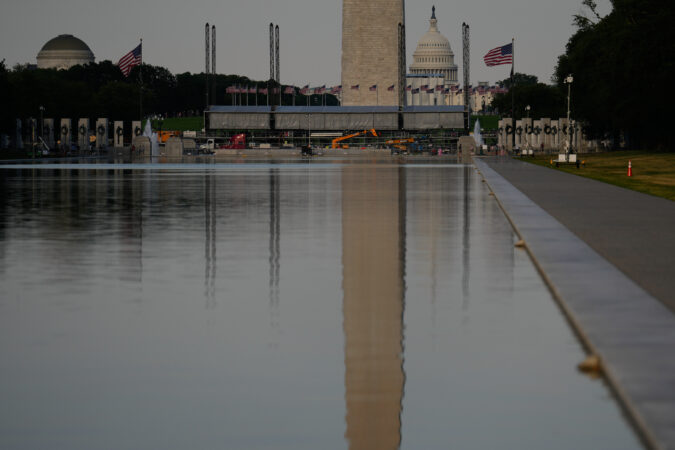
WASHINGTON — I arrived in Washington, D.C., on Wednesday and headed straight to the Reflecting Pool on the National Mall to see for myself what it looked like.
At first glance, it appeared as if sand had been tossed into the newly renovated water basin located between the Lincoln Memorial and the Washington Monument. But my eyes were mistaken. “The sand” was actually the underlying surface showing through as the coating at the bottom started peeling off.
Peeling is seen in the blue coating on the bottom of the Lincoln Memorial Reflecting Pool, Wednesday, June 24.
As I bent down to get a closer look, I made a point to keep my hands close to my body. I knew better than to touch so much as a drop of that water,since people have allegedly been arrested for vandalism after touching the floating detritus.
President Donald Trump blames “radical lunatics” for defacing his latest renovation project. “This isn’t random mischief — it’s targeted sabotage by anti-American crackpots who despise a strong, proud, and beautiful country. They cannot build; they can only destroy. They cannot celebrate our heritage; they can only deface it,” readsa statement released by the White House.
I walked around the pool’s entire perimeter. I didn’t notice any stench, not even a whiff. But the reports are true, and Trump’s $14 million no-bid boondoggle to renovate the Reflecting Pool in advance of the nation’s 250th anniversary has faced one stumbling block after another.
Depending on the angle of the sun and where you’re standing, the combination of the newly added dark paint that’s already chipping away and the algae blooms gives the illusion that the pool is a beautiful aquamarine color. I didn’t expect that.
But it’s not what the president ordered.
Nor is it what the American people want or need right now. We want the war with Iran to be over, but Trump is more concerned with putting a Mar-a-Lago-esque stamp on the nation’s capital. He has barely acknowledged that Americans are most concerned about how to pay for gas, food, and healthcare insurance premiums.
The Lincoln Memorial Reflecting Pool was fine the way it was. Trump should have followed President Joe Biden’s lead and just left it alone. Same thing with the White House East Wing that Trump ordered torn down for a $600 million ballroom project. Same thing with the Kennedy Center for the Performing Arts before Trump made himself chair and slapped his name on the living memorial built to honor the late President John F. Kennedy.
Trump’s gonna trump, though.
Back in April, he announced plans to install an industrial-grade surface on the Reflecting Pool. He originally wanted it to be turquoise, but took the contractor’s advice and went with a darker color that he calls “American Flag Blue.” In typical Trump fashion, he claimed it would only take a week to rehab and cost about $1.5 million, only for the project to take months to complete and the cost to balloon to $14 million.
Workers refilled the pool on June 9. The water quickly turned green, which the U.S. Department of the Interior blamed on “residual algae from the supply lines.” It has since been treated with hydrogen peroxide and ozone nanobubbles. And the blue material coating the bottom has started coming off.
The century-old Reflecting Pool has had issues for years. But it’s still a beautiful thing to behold.
Civil rights activists famously flanked it while listening to the Rev. Dr. Martin Luther King Jr. deliver his famous “I Have a Dream” speech in 1963. Same thing when Marian Anderson performed on the steps of the Lincoln Memorial in 1939, after the Daughters of the American Revolution refused to let the African American contralto sing intheir concert hall because of her race.
Under Trump, the Reflecting Pool has become a Rorschach testof where we are right now as a nation. Some only see its beauty, while for others, the bumbling rehab symbolizes yet another Trump failure.
“I came to see for myself. I wanted to see what all the hoopla was about,” said Cedric Jackson, an Atlanta resident whom I spotted taking photos. “It’s not as green as I thought it was going to be. So they’ve obviously been doing some kind of work.”
But then he added, “I think this is probably something that could have been avoided.”
I couldn’t agree more. Like so much damage and harm the Trump administration has inflicted during this second term, it didn’t have to be this way.
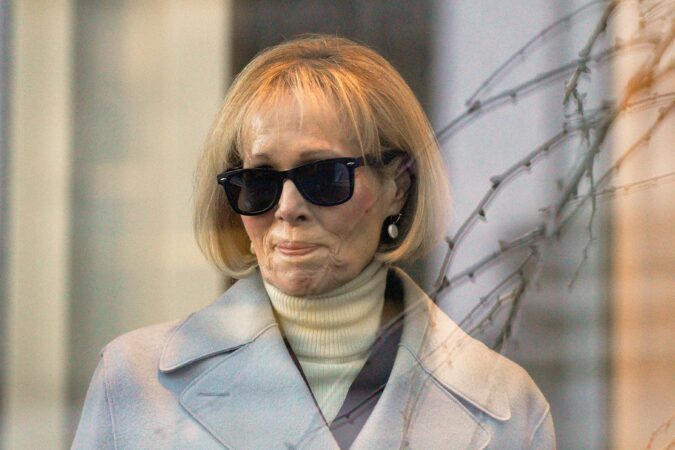
WASHINGTON — The Supreme Court on Monday rejected a push by President Donald Trump to throw out a jury’s $5 million finding that he sexually abused the writer E. Jean Carroll at a New York City department store in the mid-1990s and later defamed her.
The high court declined to take up the case in a brief, unexplained order, as is typical. There were no noted dissents. Trump also plans to appeal another $83.3 million verdict awarded to Carroll by a different jury after a second defamation trial, his lawyers have said.
The decision comes as the court hands down its biggest opinions, including a ruling that expands Trump’s firing power over the federal bureaucracy with the exception of the Federal Reserve.
Trump called the decision to pass on the Carroll case “surprising” in a social media post, and he said he would continue to fight the defamation claims. “This Case is really against the United States of America, and all it stands for,” he wrote.
Trump’s lawyers had argued that allegations leading to the verdict were propped up by “highly inflammatory” evidentiary rulings, including those that allowed the testimony of two other women who accused Trump of sexual abuse decades ago. Trump has denied all three women’s allegations.
Trump’s attorneys argued the judge broke federal evidence rules in the case. They framed it as a distraction from Trump’s unique duties as president, though the verdict came before his return to the White House.
“This mistreatment of a President cannot be allowed to stand,” Attorney Justin D. Smith wrote in court documents. Trump, a Republican, has since nominated Smith to be an appeals court judge. His lawyers called the case “Liberal Lawfare” in a statement on Monday.
Carroll’s lawyers had urged the justices to pass on the case. They argued that the women’s testimony was relevant because the allegations were similar and that Judge Lewis Kaplan’s decisions were in line with others around the country. “This question is not worthy of review,” wrote attorney Roberta Kaplan, who is not related to the judge.
Monday’s decision affirms the jury’s verdict will stand, she said in a statement Monday. “His multiple efforts to appeal that verdict have all failed and today’s ruling ends his quest to avoid accountability for his actions,” she said.
Carroll, a longtime advice columnist and former TV talk show host, testified at a 2023 trial that Trump turned a friendly encounter in spring 1996 into a violent attack in the dressing room at Bergdorf Goodman, a luxury retailer across the street from Trump Tower in Manhattan. The jury also found Trump liable for defaming Carroll when he denied her allegation in 2022.
The Associated Press does not identify people who say they have been sexually assaulted unless they come forward publicly, as Carroll has done.
Trump has successfully fended off other hefty court judgments, including a New York civil fraud penalty of over $500 million thrown out by a New York appeals court. The Supreme Court also granted him broad immunity from criminal prosecution in 2024, though it later narrowly rejected his bid to halt sentencing in his New York hush money case.
WASHINGTON — Fifty years ago this week, President Gerald Ford’s helicopter arrived at Valley Forge in a dense fog.
After a speech to 15,000 people, he designated the Revolutionary War landmark as a national park before heading to Philadelphia, where an estimated crowd of 1 million gathered outside Independence Hall. Ford spoke soberly, recounting the story of a nation that, on its 200th birthday, should find confidence in its ability to both celebrate its founding ideals and ask “hard questions” in the pursuit of something better.
“The American adventure,” Ford said on July 4, 1976, “is a continuing process.”
Philadelphia’s 250th anniversary celebrations this week are set to feature no appearances from the president. No reflections on self-improvement from the commander-in-chief at the birthplace of American democracy, no luncheons with the Philadelphia mayor near City Hall, as Ford also did after his speech.
President Donald Trump has said he will instead use the occasion to throw “the most spectacular TRUMP RALLY” on the National Mall — one of several ways the president’s critics have said he has injected partisanship and self-serving events into what should be a unifying moment.
Trump’s stamp on “America 250” has been clear.
A UFC fight on the White House lawn branded as “Freedom 250” overlapped with the president’s 80th birthday and featured adulations directed at him. The Great American State Fair, which some Democratic-led states declined to participate in, opened last weekwith a campaign-style speech in which the president railed against DEI and transgender athletes. It also featured the U.S. Marine Band playing the Village People’s “Y.M.C.A.,” a Trump campaign rally staple. Transportation Secretary Sean Duffy, using an offensive term that combines liberal with a slur for people with intellectual disabilities, said the band was better than the “libtards” who canceled their performances because of concerns over Trump’s partisan behavior.
“This is really, more than anything else, an opportunity to attempt to bring us all together as Americans. That’s what past celebrations have done,” said U.S. Rep. Brendan Boyle, a Democrat whose district includes Independence Hall. “It’s just so tragic that for this anniversary, the president we have is Donald Trump, someone who is completely not capable of doing any sort of national unity-type event.”
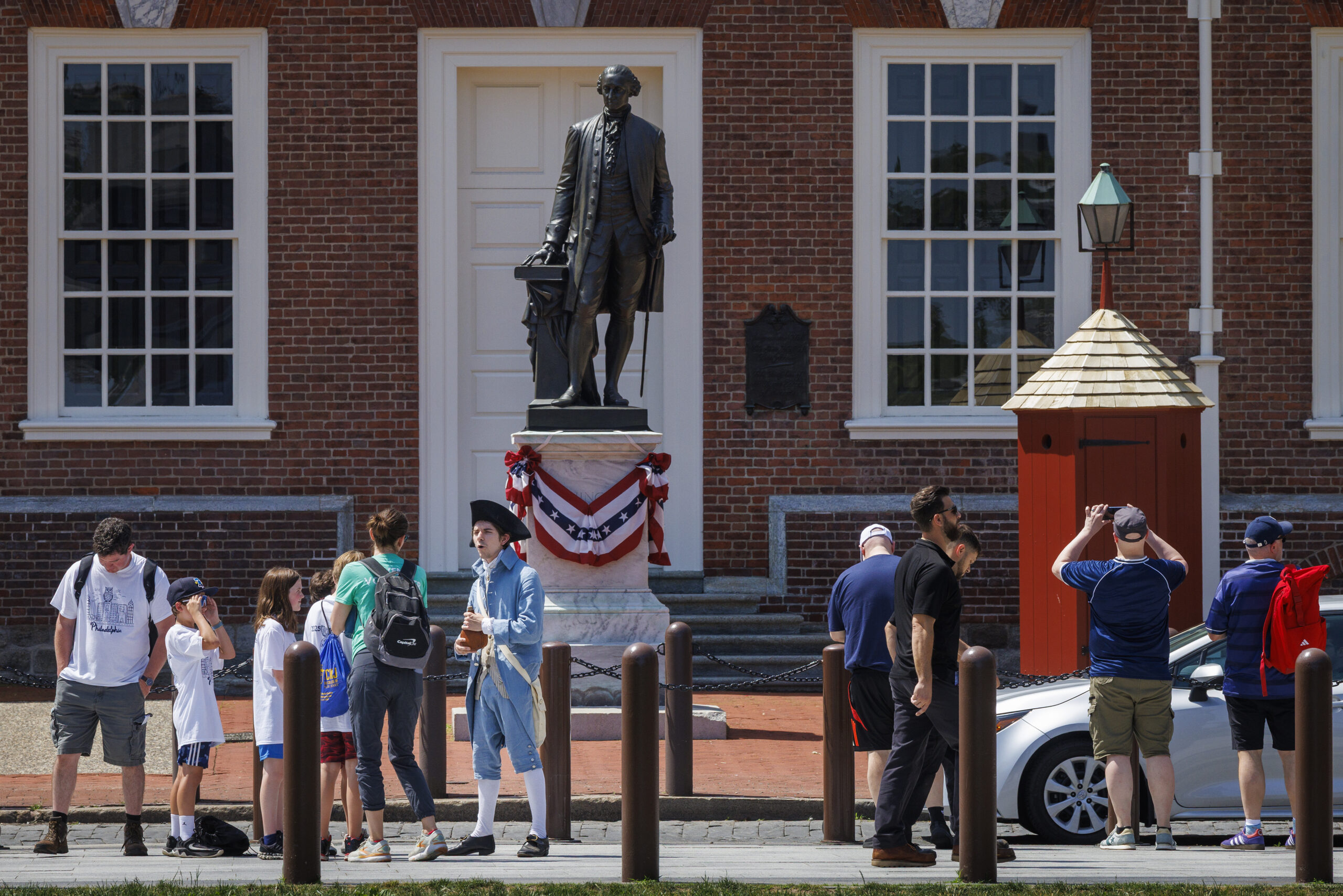
Historic Interpreter, Lane Norris, as Alexander Hamilton, speaks with tourists outside Independence Hall in Philadelphia.
Boyle worked for years to arrange a ceremonial gathering of Congress at Independence Hall for the 250th, which is set for Thursday. Though not officially a joint session outside of Washington — which has only occurred two other times since the capital relocated from Philadelphia — the event will mark the moment on July 2, 1776, when the Second Continental Congress voted to adopt a resolution for independence.
The commemorative moment “just gives me chills to think about it,” said U.S. Rep. Mary Gay Scanlon, a Delaware County Democrat who represents part of Philadelphia and plans to attend Thursday. Scanlon said she was hopeful the event will be bipartisan at a time when the president’s divisiveness was “taking an edge off the celebratory aspect” of the 250th.
Both Scanlon and Boyle described the president’s lack of plans to mark the moment in Philadelphia as disappointing. The White House did not respond to questions for this article, including whether it made any attempts to plan an event with the president in the city.
“I always just kind of assumed that the president of the United States would, at some point in the days leading up to the Fourth of July or even on Fourth of July itself, be in Philadelphia,” Boyle said. “But obviously this president has different priorities.”
Injecting polarization into apolitical events
Matthew Levendusky, a University of Pennsylvania political science professor who has studied how JulyFourth celebrations affect sentiments about national identity and polarization, said previous presidents participated in “patriotic, but not political,” events like concerts, fireworks, and parades.
Trump has taken a distinctly different path since his first term, Levendusky said, noting the military parade in 2019 and a speech at Mount Rushmore in 2020 when, after the murder of George Floyd in Minneapolis, he used the moment to criticize the removal of monuments that symbolized racial oppression.
The 250th events are an example of how Trump, a “conflict entrepreneur,” makes such events more political at a time when American society has already become more partisan, Levendusky said.
“There’s more debate over the meaning of American identity than there was a decade or 15 years ago — in part because there’s been more polarization,” said Levendusky, the director of Penn’s Institutions of Democracy at the Annenberg Public Policy Center. “But he’s also done things that inject polarization into that process.”
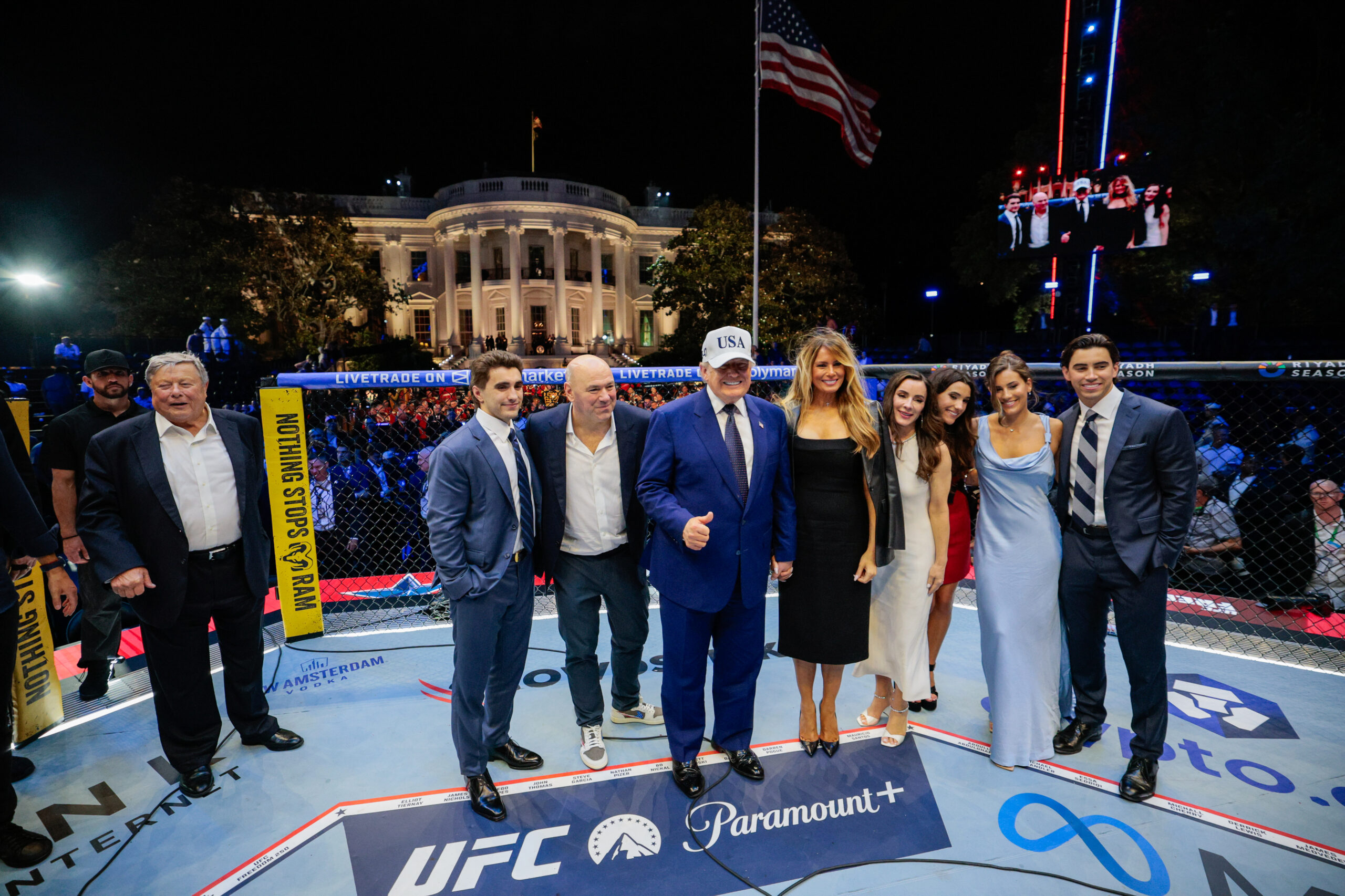
President Donald Trump, first lady Melania Trump, UFC president and CEO Dana White, and other guests pose inside the octagon after UFC Freedom 250 on the South Lawn of the White House, Monday, June 15, 2026, in Washington. (Evan Vucci/Pool Photo via AP)
Those actions appear to have affected how voters feel about America’s democracy 250 years in — at least among Philadelphia’s largely Democratic electorate.
According to a new Suffolk University/Philadelphia Inquirer poll that surveyed 500 city residents, 70% of Philadelphians believe Trump’s presidency has made them feel less confident in the country’s democracy. The answers were strongly correlated to political party, with more Republicans than Democrats saying that Trump’s presidency made them feel more confident in democracy or that it made no difference.
Tourists flocking to the city have reflected those ideological divides but also a bipartisan desire to set politics aside for a historic milestone.
“We’re all Americans, I don’t care who the president is,” said Greg Sage, 55, a Republican from Michigan who voted for Trump and toured the city’s historic sites this month. “I try not to politicize it, you know? But I believe we’ve been around 250 years. Maybe we’ll make another 250.”
Phyllis Ahnberg, 68, a Democrat from California, said that it was “empowering” to visit Philadelphia’s sites and that she would not let one person or administration change how she celebrated a moment for unity. Still, it was hard to ignore Trump’s impact during a recent trip to Washington.
“We were up at [the] Washington Monument, and we were looking, and it was disgusting to see the White House and this, like, fight thing,” Ahnberg said, referencing the towering structure built to host the UFC fight on June 14. “And to see the East Wing torn down … I mean, it was disgusting. Nobody hired this man to do that.”
U.S. Sen. Dave McCormick, Pennsylvania’s highest-ranking Republican and a close Trump ally, attended the fight and posted on social media that it was an “incredible evening” that honored “the strength, resilience and spirit of the American people.” His office did not grant a request for an interview for this article.
Pennsylvania’s empty booth at the Great American State Fair on Thursday in Washington. On Saturday, Sens. David McCormick (R., Pa.) and John Fetterman (D., Pa.) announced that they had secured private-industry sponsors for the booth at no cost to taxpayers.
A debate over past and future America
Other Republicans on Capitol Hill have defended Trump’s role in the anniversary while using the moment to say they believe left-leaning Democrats are the primary threat to America’s democracy.
“We are in a fight right now to save the republic, and every American needs to take this seriously. You need to wake up,” an animated House Speaker Mike Johnson (R., La.) said at a news conference last week after three insurgent candidates backed by New York Mayor Zohran Mamdani, a democratic socialist, won competitive congressional primaries.
“Are we going to maintain our status as a constitutional republic on our 250th anniversary?” Johnson continued. “Or are we going to make a new choice and go down some road toward a communist utopia?”
A democratic socialist and state legislator, Rabb has been adamant about what he sees as a need for “radical” change. After speaking at an event titled “The Next American Revolution: Breaking Oligarchy and Making a New Democracy” in Washington last week, he said in an interview that Trump’s presidency has in some ways been a “valuable distraction.”
It is a particularly meaningful opportunity for him personally. A longtime family genealogist, Rabb has spoken often about his heritage as the descendant of both a signer of the Declaration of Independence — the slave-owning Philip Livingston — and Black abolitionists.
“I am an embodiment of the hypocrisy and the complexity of choices and systems that have never really been addressed … [and] that are very similar to what we had 250 years ago,” Rabb said. “Unless and until we have a real public, ongoing, and substantive conversation, it will be more of the same.”
Staff writer Andrea Padilla contributed to this article.
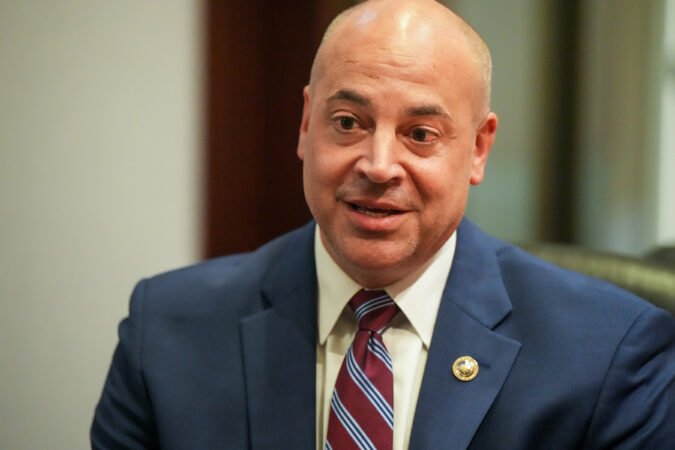
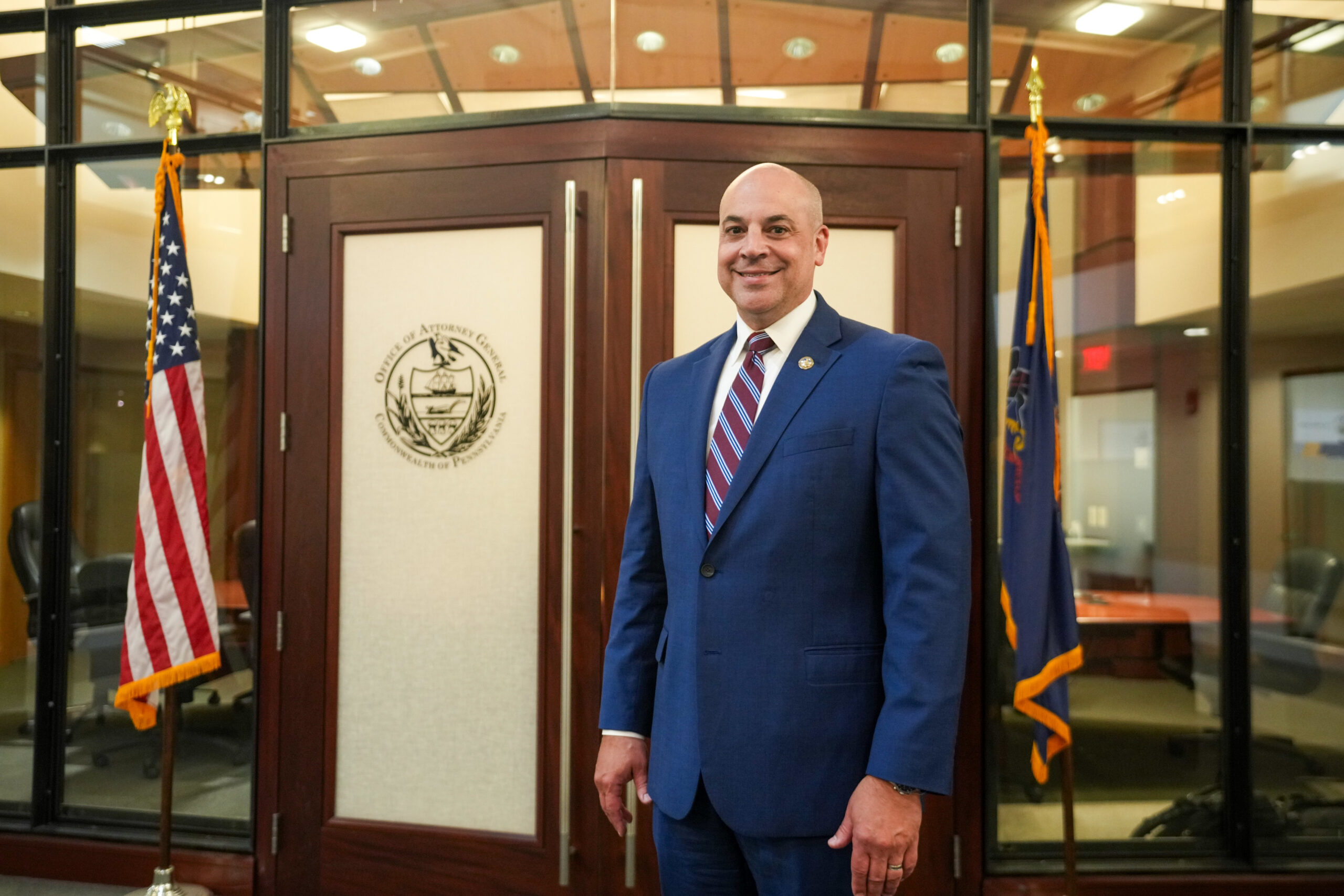
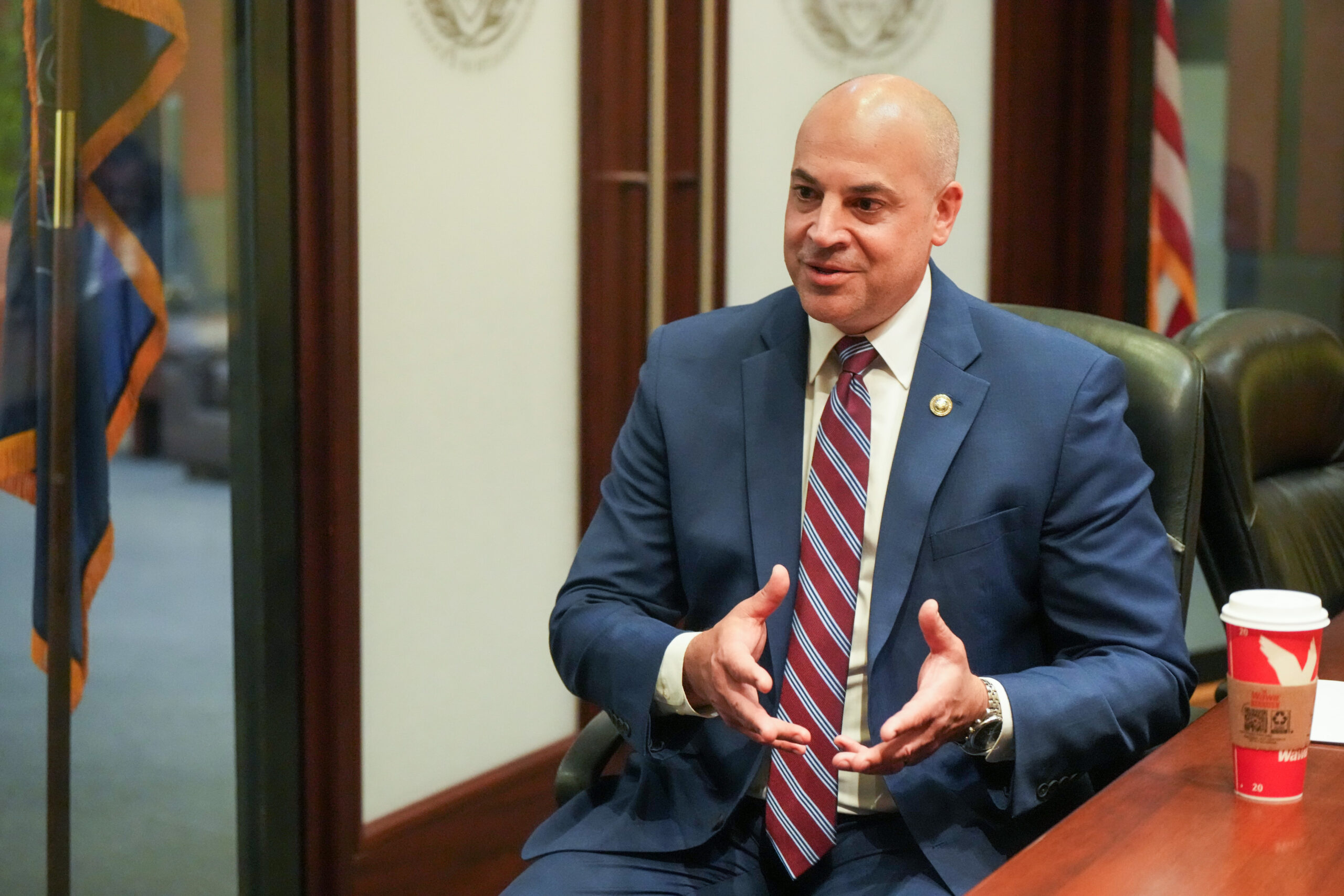
Attorney General Dave Sunday has spent 18 months as the state’s chief law enforcement officer, overseeing a sprawling office that handles criminal prosecution, civil litigation, consumer protection services, civil rights enforcement, and more.
In that time, the 51-year-old Republican and Harrisburg native says, he has taken on issues ranging from the opioid crisis to illegal crime guns. And last week, the Pennsylvania Supreme Court handed his office broad authority to review the efforts of Philadelphia prosecutors to overturn murder convictions they have called unjust, a signature initiative of District Attorney Larry Krasner’s office.
In a recent interviewat his Philadelphia office, Sunday talked about that and more.
What is your reaction to the Supreme Court ruling on the work of District Attorney Larry Krasner’s Conviction Integrity Unit?
Obviously, it’s an unprecedented ruling.
Oftentimes, the best outcome is through the adversarial process. We work with the Philly DA’s office in a lot of different areas, and I viewed this ruling as any other that provides me with instructions on a way on which I have to run my office.
Moving forward, the ruling requires your office to review any post-conviction concession that Krasner’s office aims to pursue. How will that work?
There are questions. How many times will we have to intervene? What will that do to staffing? Will we have the logistics and resources to do it appropriately? I think that process will unfold over the next month or so.
There’s no other real comparison for this ruling, and so what I can say very simply is this: It is absolutely crucial that there is a voice for the families of victims, and at the same time, I think it’s crucial to make sure that we protect the rights of individuals who are charged with crimes and convicted of crimes.
That balance is found in applying the law and the facts to the issue. That’s something we will enthusiastically do.
.Assistant General David Sunday, in Philadelphia, June 23, 2026.
Since Krasner first took office, his prosecutors have supported efforts to overturn around 115 convictions. Given the Supreme Court’s findings, do you now question whether some of those overturned convictions should be reconsidered?
Well, we have to look at the legal process there. For individuals who the court has already ruled in a manner in which they’re out of prison, those cases are done.
But with cases that are still going through the appellate process, individuals that are incarcerated, those are situations where we’re going to have to take a look at it. I mean, this is very serious, and when the Pennsylvania Supreme Court rules in this manner — not just the ruling itself, but the verbiage — I, as attorney general, take that extremely seriously.
We will do our job, and we’ll do our duty, and we’ll review it, but it’s also important to understand that this isn’t a quest to prove someone wrong. It’s a quest to ensure that all parties are zealously advocated for.
Krasner has strongly opposed the ruling. He’s likened this issue to the struggles of the Civil Rights Movement and said that the decision undermines the votes of those who elected him to office. What is your response to that?
I don’t think that it benefits anyone for criminal justice leaders to editorialize a lot of the work we do.
It’s critical that the citizenry knows and understands that their case will be dealt with by applying the facts to the law — and I know that’s not the most exciting answer, but there are things that are in my control and there are things that aren’t in my control, and his reaction to anything is completely out of my control.
The last thing individuals who live in the community want to hear are elected officials yelling at each other. They want to see outcomes.
Earlier this year, justices ruled that mandatory life sentences without parole for those convicted of second-degree murder are unconstitutional. What are your thoughts on that?
Third-degree murder, second-degree murder, those are cases where the acts resulting in the crime are vastly different case to case. As a prosecutor, I’ve tried horrific second-degree murder cases — one was an in-home burglary where an individual was left face down on the ground, duct-taped, and they ultimately died from positional asphyxiation, which really is torture.
At the same time, there are second-degree murder cases where you have multiple codefendants, and — this case is highlighted a lot — one of the codefendants pulls a gun out, kills an individual, and all those codefendants, because they were acting in concert and furthering some conspiracy, they’re all guilty of second-degree murder and they’re in for life.
So there are second-degree murder cases where the individuals should have an opportunity for parole, and at the same time, there are cases that are absolutely horrific, where individuals should spend the rest of their lives in prison.
The important place we’re in now is the legislative process, moving forward to ensure that the punishment is commensurate with the harm caused in the crime.
Violent crime has fallen dramatically from its pandemic-era highs in Philadelphia and across the state. Should the attorney general’s office get some credit for that?
There is no one individual or agency that can take credit for these outcomes. We’re with our federal partners, we work with everybody.
After I was elected, some of the very first calls I made were to the Philadelphia mayor and the police commissioner, and I made it very clear that we’re partners. I’m excited, let’s go. And that’s what we’ve done.
The Attorney General’s Gun Violence Task Force is a huge part. We do everything we can every day to go after gun traffickers, illegal straw purchasers. We’ve removed more than 500 crime guns off the streets [statewide] in 2025.
In addition to that, our Bureau of Narcotics works every day in Philadelphia. Last year, we removed 56 million doses of fentanyl from the streets, and a large portion of that was in the city.
The Commonwealth Court struck down a decades-old law that banned Pennsylvanians from using their Medicaid benefits to pay for abortions, and last month, your office appealed. Why?
A lot of people don’t understand the role of the AG in a lot of issues. In Pennsylvania, we have the Commonwealth Attorneys Act, the rules that dictate the job, and one of the rules in there is that the attorney general shall defend the constitutionality of statutes in Pennsylvania.
I have irritated the entire political spectrum, because I am defending statutes whether you like them or not. That’s literally my job. What a lot of people don’t understand is that the [Medicaid] law is part of the Abortion Control Act — the same law that allows abortions to occur up to six months of pregnancy, the very same law.
In that law is a subsection that also says that government funds cannot be used for abortions — so I’m defending the abortion law in Pennsylvania, just like I would any other section of that law.
Critics say that by appealing the ruling and prolonging this issue, you are denying Pennsylvanians of what the court called a “fundamental right to reproductive autonomy.” How do you respond?
Just like every law we defend — every single one — there are people that like it and don’t like it, and they will have commentary. I certainly respect their absolute right to have that commentary.
What I will say is, this decision has nothing to do with that. It is the job of the attorney general to defend the statute.
.Assistant General David Sunday, in Philadelphia, June 23, 2026.
What would you say has set your tenure apart from your predecessor, Gov. Josh Shapiro, and his appointed successor, Michelle Henry?
Very simply, I came into this job as a prosecutor. I ran on public safety. I wasn’t a legislator, so when I look at the office, I view it as a place where you follow the facts in the law, and you fight hard to keep people safe.
With that being said, I have hyper-focused on issues impacting citizens. We have huge crises in Pennsylvania that need to be addressed, specifically the mental health crisis.
When I came into office, I saw our prisons are full of people that have mental and behavioral health challenges. Individuals go to jail solely because they have a mental health crisis, and what I want to see are people getting treatment.
What we did was create a new initiative that gives police a toolbox, so when they come into contact with someone in a mental health crisis [who is committing a low-level criminal offense], they can get that person into treatment [if the person chooses to do so]. At the same time, that person can be charged, and the police have the flexibility to hold that charge.
This is brand-new, and we have nine counties that are already signed up and are rolling. We have five more lined up and ready to roll over the next few months.
President Donald Trump held a rally in Pennsylvania on Tuesday, and he was joined by some of the state’s other top Republican officials, such as Stacy Garrity. Is that an event you would have liked to attend?
In all candor, I have events that have been scheduled for months and months, and the reality is, a lot of these [presidential] events pop up pretty quickly.
On Tuesday, I had an event with the first elected attorney general in Pennsylvania, LeRoy Zimmerman. I was with him at a fireside chat, talking about what the AG’s office has looked like, and how it’s changed over the last 30 years.
HARRISBURG — Three years after a bitter budget standoff over allowing state funding to be used for private school tuition, top Democrats in Harrisburg are ready to engage on school choice.
Legislative action and comments from a top House Democrat this week expressing openness to a federal school-choice program marked a notable change from 2023, when a fight over school vouchers put Democratic lawmakers at odds with both Republicans and Gov. Josh Shapiro, a member of their own party.
House Majority Leader Matt Bradford (D., Montgomery) said this week that some of the uses of Trump’s tax credits, which are opposed by the country’s largest teachers unions, are “intriguing.” And he noted he is proud of some money the state now pours into one of thetax credits to fund private-school scholarships for low-income families in low-achieving districts. Those comments from Bradford, a top leader in Harrisburg, suggested a public softening on an issue that was previously a non-starter for his party— and signaled the school-choice debate may once again factor into state budget negotiations.
“For our members of our caucus who want to see alternatives for the poorest kids in the poorest schools, we’re being responsive to the needs of those constituents,” he said in an interview, referencing growing support for school choice among some House Democrats, particularly those from Philadelphia.
State Rep. Matt Bradford (D., Montgomery County) during a press conference at the Capitol in Harrisburg Feb. 3, 2026.
The school-choice movement, a largely Republican-backed effort to allow public dollars to go to private schools, faces strong opposition from education advocates who say such programs can take money from public schools.
And that debate is sure to continue. Bradford said more oversight — and an overall reform of the current tax credits — is needed to make sure the state tax dollars are actually reaching poor students.
Earlier this week, House Democrats fast-tracked an overhaul to the state’s current $680 million school-choice tax-credit programs to require additional reporting from private schools in order to secure funding. The legislation is likely to face opposition in the GOP-led Senate, where Republicans on Thursday advanced a $25 million increase to the programs ahead of a June 30 deadline to pass a state budget.
Senate Republicans called the tax credits a “priority for empowering parents,” while the Archdiocese of Philadelphia said the House bill would be “devastating” to local Catholic schools and lead to fewer scholarships for students.
A spokesperson for Shapiro said his office is reviewing the House bill, and declined to comment on whether his position on school choice has changed. Shapiro, who has sent his own children to private school in Montgomery County, has previously said he supports school choice, including school vouchers.
Shapiro has until the end of the year to decide whether to opt in to the federal program. But the signal of openness from Bradford, who is close with the governor, offers potential insight into his path forward.
That program, enacted last year under Trump’s “One Big Beautiful Bill Act,” would offer federal tax credits to donors for giving to organizations that grant private school scholarships. Many GOP-led states have already signed on, while some Democratic governors have declined to participate.
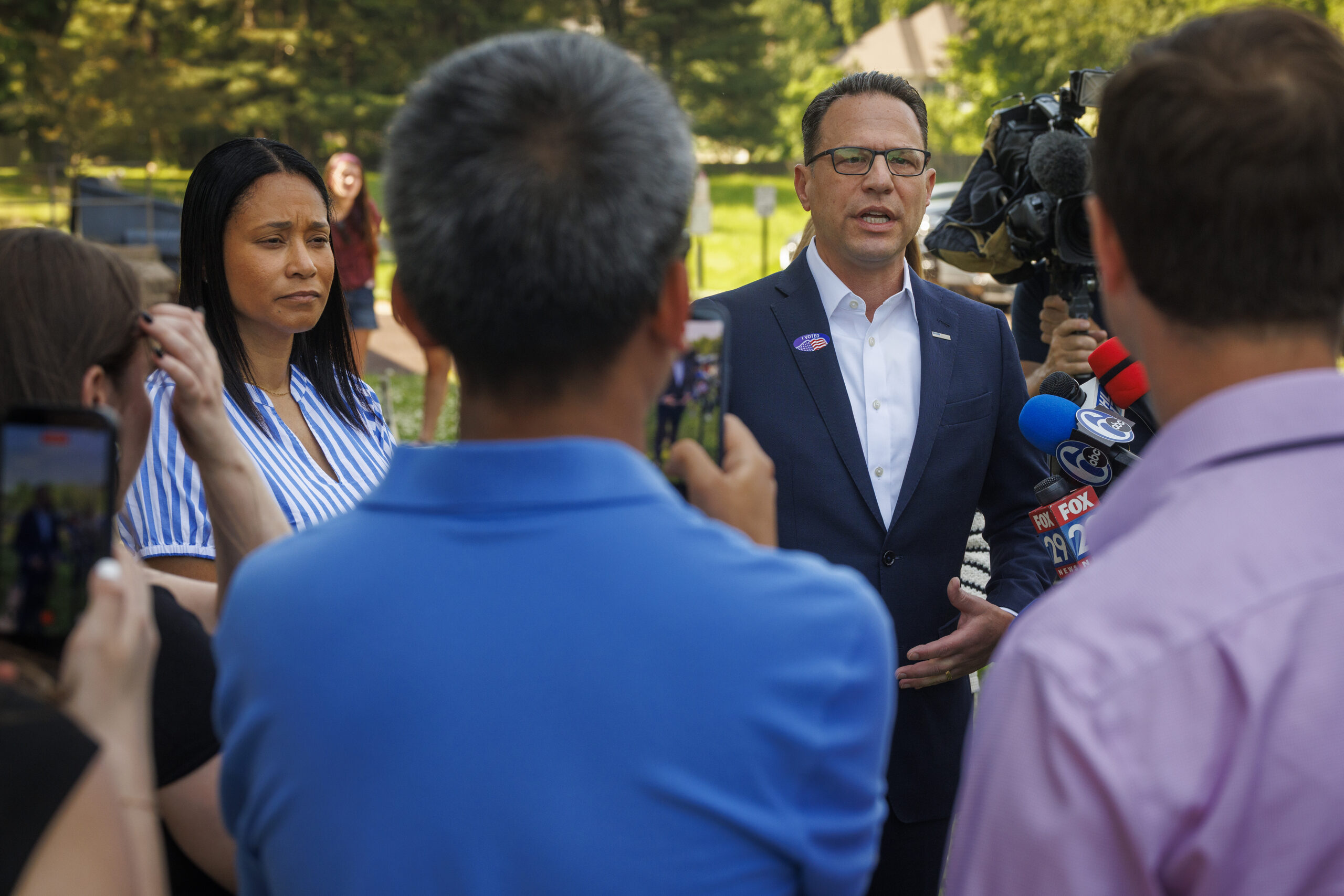
Pennsylvania Governor Josh Shapiro taking questions from media on election day, Tuesday, May 19, 2026. He voted today at Rydal Elementary (West) 1231 Meetinghouse Road Rydal, PA. At left is Jamila H. Winder, Chair, Montgomery County Commissioners.
Shapiro will also likely face questions about school choice on the campaign trail.
He is running for reelection in November against Republican Treasurer Stacy Garrity. Garrity’s platform focuses, in part, on expanding school-choice options in Pennsylvania and she has the support of Commonwealth Partners, a political action committee largely funded by Pennsylvania’s richest man, Jeff Yass, which has poured money into supporting school choice.
The issue will also likely surface a national stage if Shapiro enters the 2028 Democratic presidential primary race. His support for vouchers drew criticism from fellow Democrats in 2024, when he was a potential vice presidential nominee.
Debate over state tax credits
Pennsylvania does not have a direct school voucher program. Instead, the state sets aside $680 million each year for tax credits that allow businesses and individuals to write off charitable giving that supports private school scholarships.
House Democratic support for those credits has quietly grown in recent years. In a June 2025 letter recently obtained by The Inquirer, 10 House Democrats, including five from Philadelphia and the head of the Pennsylvania Legislative Black Caucus, asked their leadership to expand a portion of the tax credits forstudents in the lowest-achieving school districts — revealing more Democratic support for the programs than was previously known.
Public education advocates who oppose voucher programs say the state is funneling money to private schools with little accountability.
“It’s just a pot of money that a bunch of people get, and nobody really knows where it goes or what happens to it,” said Susan Spicka, executive director of Education Voters PA.
New requirements approved by the state legislature last year are set to take effect in November andwill require scholarship organizations to report the dollar amount of each award, the recipient’s district of residence, and where they attend private school.
The bill advanced by the House in a 105-97 vote this week would also require organizations to report each scholarship recipient’s income level — reducing the currentlimit to $144,000 for a family of four — and the amount of remaining tuition charged to a student. Advocates, including Spicka, called that information key to gauging whether scholarships are going to families who otherwise could afford private school.
Bradford said he’s proud of the $110 million earmarked in existing state tax credits to provide additional money to kids attending schools where a majority of students are getting scholarships. House Democrats say their newest proposal would steer more money toward those students.
But the proposed legislation — which would also reduce the tax credit donors could claim for some contributions, and require scholarship organizations to set 2% of funding aside for state oversight of the programs — drew swift backlash from private school advocates.
Philadelphia Archbishop Nelson J. Pérez is “deeply concerned that this legislation would have a devastating impact,” said spokesperson Ken Gavin. “The clear intent is to lead to the dilution or elimination of the programs, which are vital.”
Schools affiliated with the Philadelphia archdiocese educate nearly 44,000 students across 117 schools in the region, according to its website.
Bradford, who is Catholic, said the Archdiocese’s response “missed the mark,” arguing that this legislative effort is trying to achieve a similar goal of serving students from poor families who attend the roughest schools.
“I’m proud of my own Catholic faith. I love when my Catholic Church stands for those communities,” Bradford added. “No one should ever fear transparency, especially when you’re talking about three-quarters of a billion dollars of state tax dollars.”
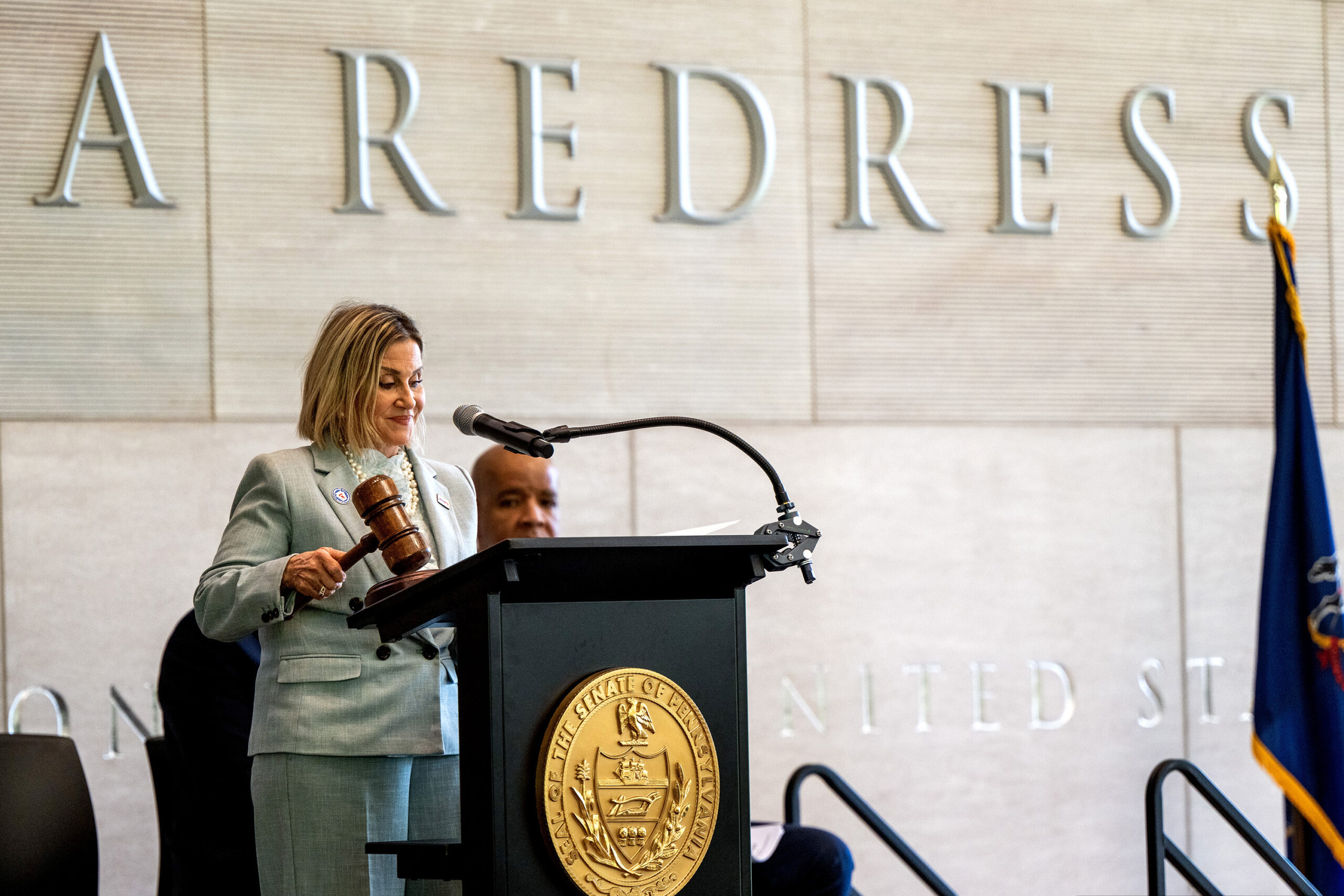
President Pro Tempore Kim Ward gavels the opening as the Pennsylvania Senate hosts a ceremonial meeting at the National Constitution Center Tuesday, May 5, 2026.
Meanwhile, Senate Republicans on Thursday amended another House bill to increase the state’s current tax credit programs to $705 million.
President Pro Tempore Kim Ward (R., Westmoreland), a staunch supporter of school vouchers, said in a statement that Bradford‘s attention to school choice is disingenuous, criticizing the House Democrats’ bill as “overly burdensome auditing requirements disguised as ‘transparency.’”
The 2023 budget breakdown, where Shapiro ultimately vetoed the school voucher program he‘d helped draft with Senate Republicans because it couldn’t pass the Democratic-controlled House, continues to tarnish his relationships with top GOP leaders, including Ward. He and Ward have hardly spoken since.
“While Senate Republicans have consistently advanced legislation to provide scholarships to disadvantaged students, the track record for Gov. Josh Shapiro and House Democrats has been nothing more than a case of whiplash as their words and actions rarely align,” Ward said. “To me, it seems like the support for school choice by the House Democrat Leadership is more of a façade as they continue to cater to political special interests.”
Bradford, in response, said he is open to conversation about accountability and transparency, but that debate needs to include private schools benefiting from taxpayer dollars.
“We shouldn’t carve out any portion of our K-to-12 education,” Bradford added. “That conversation needs to be uniform.”
A choice for states on Trump’s tax credits
Shapiro has previously said he would wait for more details before making a decisionon whether to participate in the new federal tax credit program. The U.S. Department of the Treasury earlier this month released additional details, including that itwill allow individuals to receive up to $1,700 in credits for making donations to private school scholarships that can cover tuition, tutoring, and more. In Philadelphia, families making $368,100 annually, or 300% of the county’s gross median income,would be eligible to receive the scholarship.
Shapiro’s press secretary Rosie Lapowsky said the governor appreciates the guidance, but continues to await information on “how this will affect use of our existing tax credits, how states will be expected to administer the program, and how eligibility will be determined.”
Twenty-eight states have opted in to the program, most of which are led by Republicans. And Democrats are facing pressure to stay out of the program.
In a letter sent to Democratic governors this week, American Federation of Teachers President Randi Weingarten and National Education Association President Becky Pringle called the program “a Trojan horse carrying near-universal K-12 private school vouchers into every state that participates.”
So far, Democratic governors elsewhere have taken differing approaches to the program. New York Gov. Kathy Hochul has said her state will participate but is waiting for final guidance before officially signing on. Other governors like Minnesota Gov. Tim Walz and Oregon Gov. Tina Kotek have announced that their states will not participate. Democratic governors in Arizona and Wisconsin have vetoed legislative efforts to force their states to opt in, while governors’ similar vetoes in North Carolina and Kentucky were overridden by legislators.
Bradford said it’s “an abomination” that funding for Trump’s program came from Republicans making other cuts to the federal budget, and emphasized that stateDemocrats remain committed to increasing public education funding.
“Here in Pennsylvania,” he said, “we are a humble 102 [Democrats] in the Pennsylvania House and we are nimble and pragmatic.”
In the latest twist over Pennsylvania’s participation in President Donald Trump’s Great American State Fair, U.S. Sens. Dave McCormick and John Fetterman announced Saturday that the state where America was founded will be represented after all.
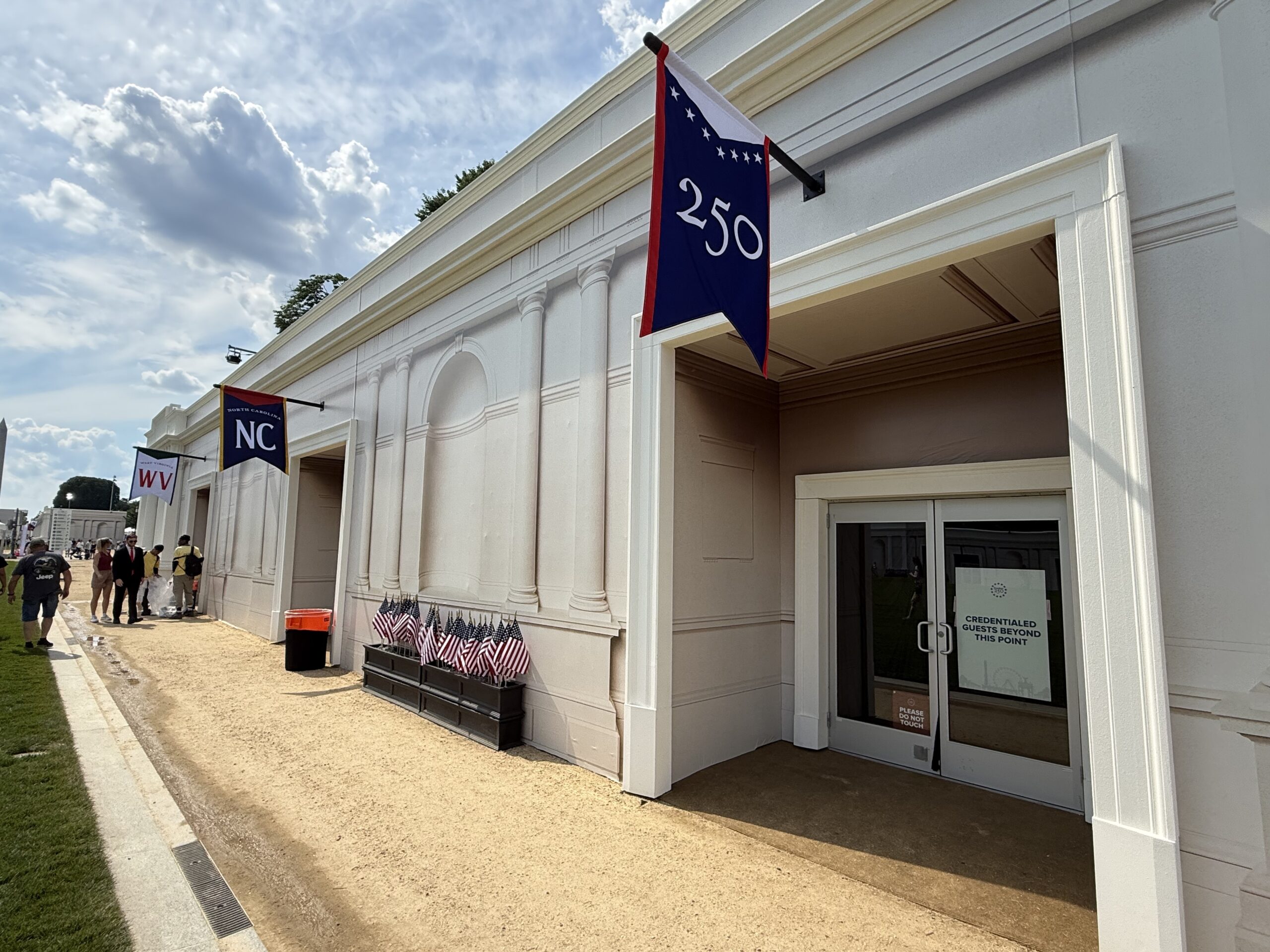
On the fair’s opening day, Pennsylvania had no official presence, and the booth reserved for the commonwealth remained empty, except for a flag that read “250” in Pennsylvania’s space.
After that news, McCormick (R., Pa.) and Fetterman (D., Pa.) said in a joint news release Saturday that they secured private-industry sponsors for the booth at no cost to taxpayers. Sponsors include the Pennsylvania Chamber of Business and Industry, the Pennsylvania Farm Bureau, and other organizations.
“Pennsylvania is where America’s story began, and there was no way we were going to let the Commonwealth go unrepresented during our Nation’s 250th birthday celebration,” McCormick said in the release.
“Celebrating America’s 250th birthday and Pennsylvania’s special role in our country is important and bipartisan,” Fetterman said. “We discovered our commonwealth wasn’t participating in the Great American State Fair on the National Mall, and we should be.”
A ferris wheel is on the National Mall as part of the Great American State Fair, one of the celebratory events organized by the Trump administration commemorating the 250th anniversary of the United States in Washington, D.C., June 25, 2026. At the kickoff to the Great American State Fair, exhibits celebrating the nation were on display. So were conservative themes. (Alex Kent/The New York Times)
Shapiro told the New Republic earlier this week that when his administration approached major Pennsylvania companies to participate, “none were interested.”
“It reflects this sad state of affairs that we find ourselves in — that the president has politicized this to a degree that businesses don’t want to participate,” he told the New Republic.
However, sources who worked on the sponsor search confirmed for The Inquirer that at least two major Pennsylvania companies agreed to provide products and other donations to give away at Pennsylvania’s fair booth but were unable to initially do so due to short notice. The sources asked The Inquirer to not name them because they were not authorized to speak on the search.
In a statement Saturday after the senators announced their plans, a Shapiro spokesperson said the administration was “unwilling to spend hundreds of thousands of taxpayer dollars to fund the Great American State Fair amid the historic slate of events across Pennsylvania in 2026.”
Before McCormick and Fetterman’s intervention, Shapiro administration officials were told that Freedom250, the organization planning the fair, would be “handling the booth” in the absence of formal state participation, said Rosie Lapowsky, Shapiro’s press secretary.
Pennsylvania’s Department of Agriculture also sent state literature that began appearing in the booth on Saturday, according to Freedom250.
The Great American State Fair Thursday, June 25, 2026, in Washington, D.C. This pavilion would have belonged to Pennsylvania if the state had participated in President Donald Trump’s 250th anniversary event on the National Mall.
But Pennsylvania’s search for business sponsors was brief, according to a source close to the search.
The Pennsylvania Chamber of Business and Industry, which was charged with finding sponsors, said Shapiro’s office called the organization less than two weeks before the fair began. Other states, the chamber said, had been working on their displays since January.
“The Governor’s team asked us for assistance with business outreach for the Great American State Fair just two weeks before the event. While there was interest, the short time frame made it difficult for many businesses to fully commit,” said Jon Anzur, the chamber’s senior vice president of public affairs. “We are now reengaging those and other companies as we partner with Sens. McCormick and Fetterman.”
In the absence of official Pennsylvania representatives and sponsors, McCormick and Fetterman were suddenly on Saturday able to secure private groups to staff the booth and help coordinate sponsors for the remainder of the fair.
According to a source briefed on the conversation, Shapiro and McCormick spoke Saturday about the senators’ plans to fill the booth, and Shapiro offered to send additional state literature. The Inquirer is not naming the source because they were not authorized to speak on the conversation.
Crayola is among the sponsors that will send along crayons, markers, and coloring books for a coloring station, which should be operational as early as Sunday. Other sponsors have signed on as well, though they were not immediately identified and their contributions were not disclosed.
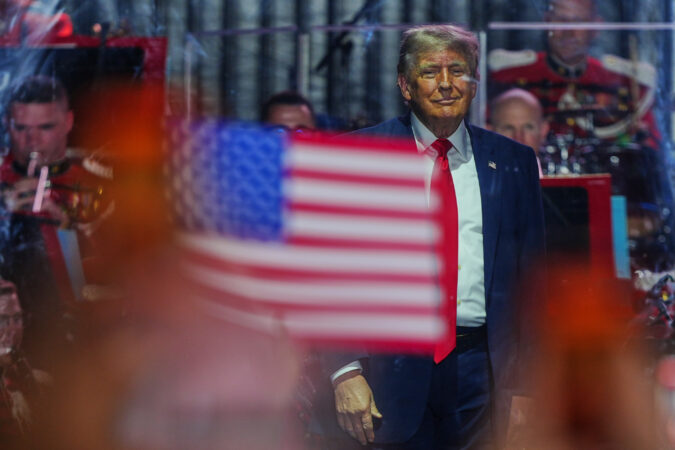
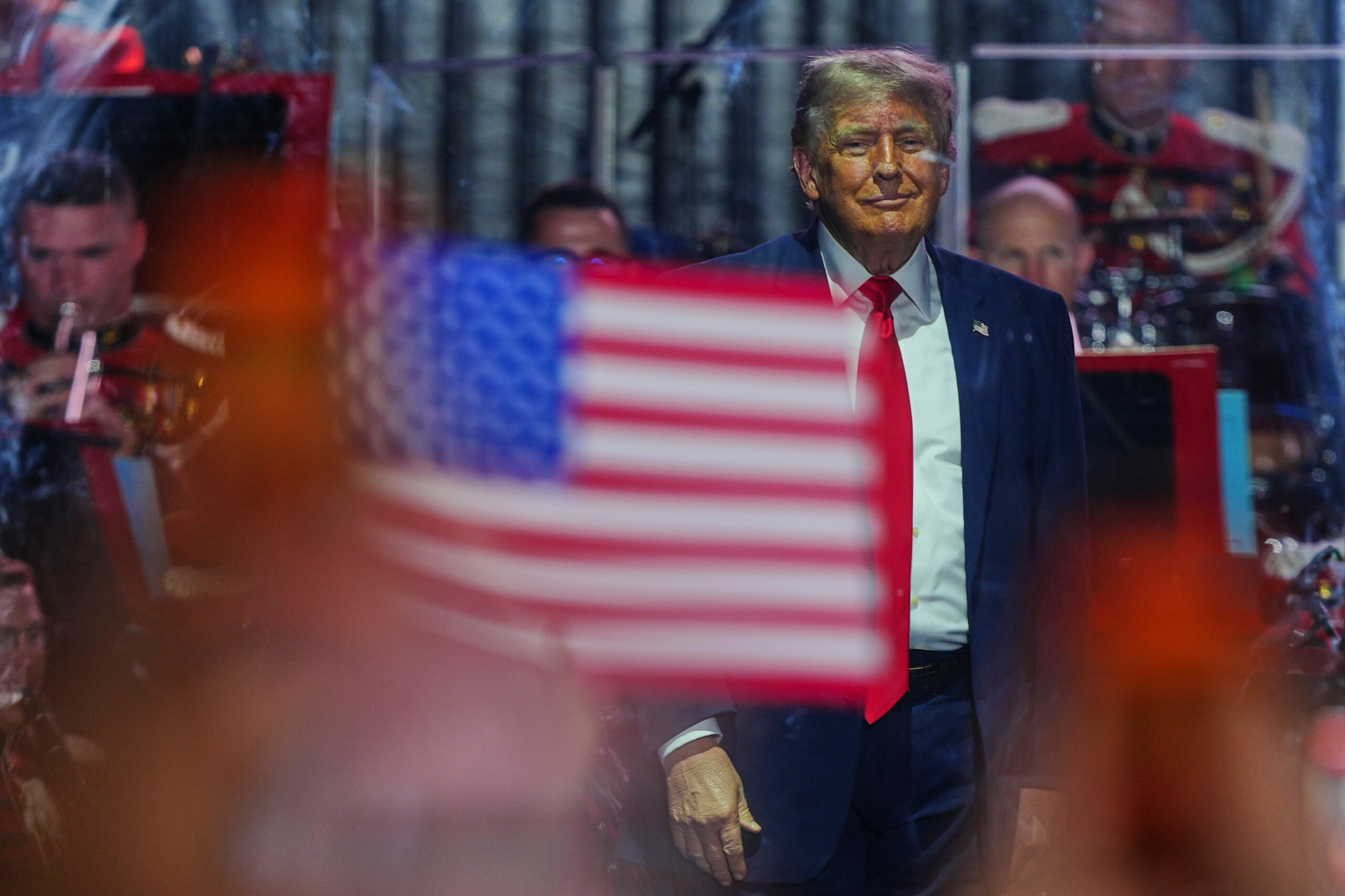
President Donald Trump stands on stage after speaking at the opening of the Great American State Fair on the National Mall, Wednesday, June 24, 2026, in Washington. (AP Photo/Julia Demaree Nikhinson)
During the fair’s opening days, nearly every other state was represented, with most sending government staff or tourism officials to host educational or interactive exhibits.
New Jersey also officially declined to participate, but Cape May County, a Republican stronghold, stepped in to represent the state. Its exhibit features an 8-ton sand sculpture created by a Wildwood artist over the course of more than four days.
Delaware highlighted Founding Father Caesar Rodney’s ride to cast the decisive vote for independence in Philadelphia.
Sam Janesch and Andrea Padilla contributed to this article.