Tag: Donald Trump

  • Philly’s queen of Gay Bingo hangs up her heels after 30 years and $5 million raised for AIDS research

    Philly’s queen of Gay Bingo hangs up her heels after 30 years and $5 million raised for AIDS research

    The legendary redheaded drag queen Carlota Ttendant donned a baby-blue Eva Gabor-inspired gown — its plunging neckline revealing tasteful chest hair — and sensible black heels.

    At 65, arthritis stifles her strut in stilettos.

    “Drag is a young girl’s game,” she said.

    This was her swan song. At the close of its 30th season this Pride Month, the man behind the makeup, Michael Byrne, hung up his heels and bid adieu to his drag persona and his longtime gig hosting Gay Bingo, the camp, irreverent, slightly profane, and undoubtedly silly monthly HIV/AIDS fundraiser.

    “I know it’s time,” Byrne said. And, “I’m excited to never wear Spanx ever again.”

    Across three decades, Carlota Ttendant has called hundreds of games and elicited endless laughs, all while raising millions for people living with HIV/AIDS across the Delaware Valley. She helped steer a community through crisis, providing a respite to those experiencing immense loss and stigma. Even as medicine has advanced and HIV/AIDS has become manageable, she’s crafted a safe space for queer Philadelphians. For one night each month, she’s been an entertainer and an equalizer, responsible for uniting people — gay and straight, from Haddonfield to Phoenixville — around a common goal.

    And since Carlota came into Byrne’s life, she’s taught him to lead with courage, practice gratitude, and be unabashedly unafraid. He’s gone from being the “worst waiter ever” and selling cosmetics, to being a performer, licensed clinical social worker counseling older LGBTQ+ folks through their own next phases of life, and president of Philly AIDS Thrift’s board.

    “None of it would have been possible without all of you,” Carlota told the 400-person crowd — the biggest turnout in years — at her last Gay Bingo on June 13 in the basement ballroom at Congregation Rodeph Shalom. “In the ’90s there was horror happening, and today there is horror happening.

    “But please, let’s do some laughing,” Carlota said.

    “Let’s play bingo!”

    Michael Byrne, as his drag persona Carlota Ttendant, during Gay Bingo on Saturday, May 9, 2026, at Congregation Rodeph Shalom in Philadelphia.

    Act I

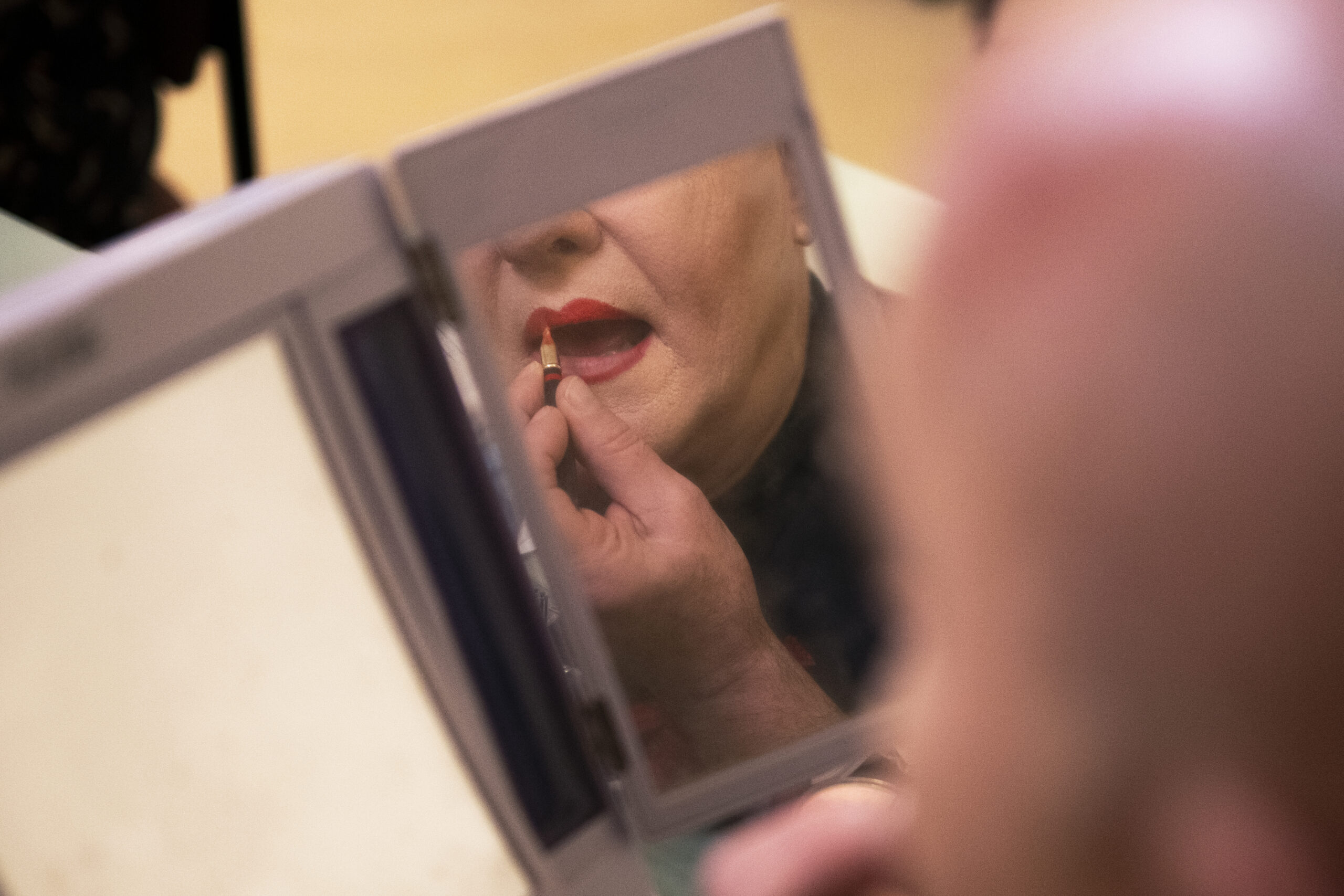
    Like so many Saturdays before, Byrne, on June 13, slathered his face with foundation, carved out his cheeks, deepened his eyes, and painted on his red lip. There was haze — from the dusting of loose setting powder, bronzer, and blush — and musk — from sweat and heat and hairspray — in a Rodeph Shalom classroom, which moonlights as a bridal suite and a boudoir for the Bingo Verifying Divas or BVDs. At 10 minutes till curtain, he futzed with his press-on nails, shimmied into a mod swing dress, straightened the back seams of his tights, and dabbed on some glitter. With each gender-bending step, he transformed into his “twin sister,” Carlota.

    Michael Byrne transforms into his drag persona Carlota Tendant ahead of Gay Bingo on May 9 at Congregation Rodeph Shalom in Philadelphia.

    Like all classy ladies, Carlota’s exact age is lost to time. In the 1990s, Byrne was organizing a fundraiser for Big Mess Theatre, an avant-garde troupe that he helped establish as the spinning axis of Philadelphia’s alternative performance scene, complete with vaudeville acts, an oompah orchestra, and live auction with a striptease routine. Byrne was to host and make his drag debut, and Carlota Ttendant (read as car lot attendant) was conjured up over bourbon and blackjack. (He learned, years later, that there was a ’60s stripper at the famed Trocadero Theatre with the same name.)

    Byrne never aimed to create a perfect, feminine illusion with Carlota. He left his chest unshaven and unstuffed, but short, thrifted dresses showed off his long and feminine legs. Carlota’s makeup was an extension of the exaggerated theater paint Byrne, who has been on stages since he was 10, knew; cheap wigs hid his sideburns. Nothing could mask his deep, raspy, anything-but-ladylike voice.
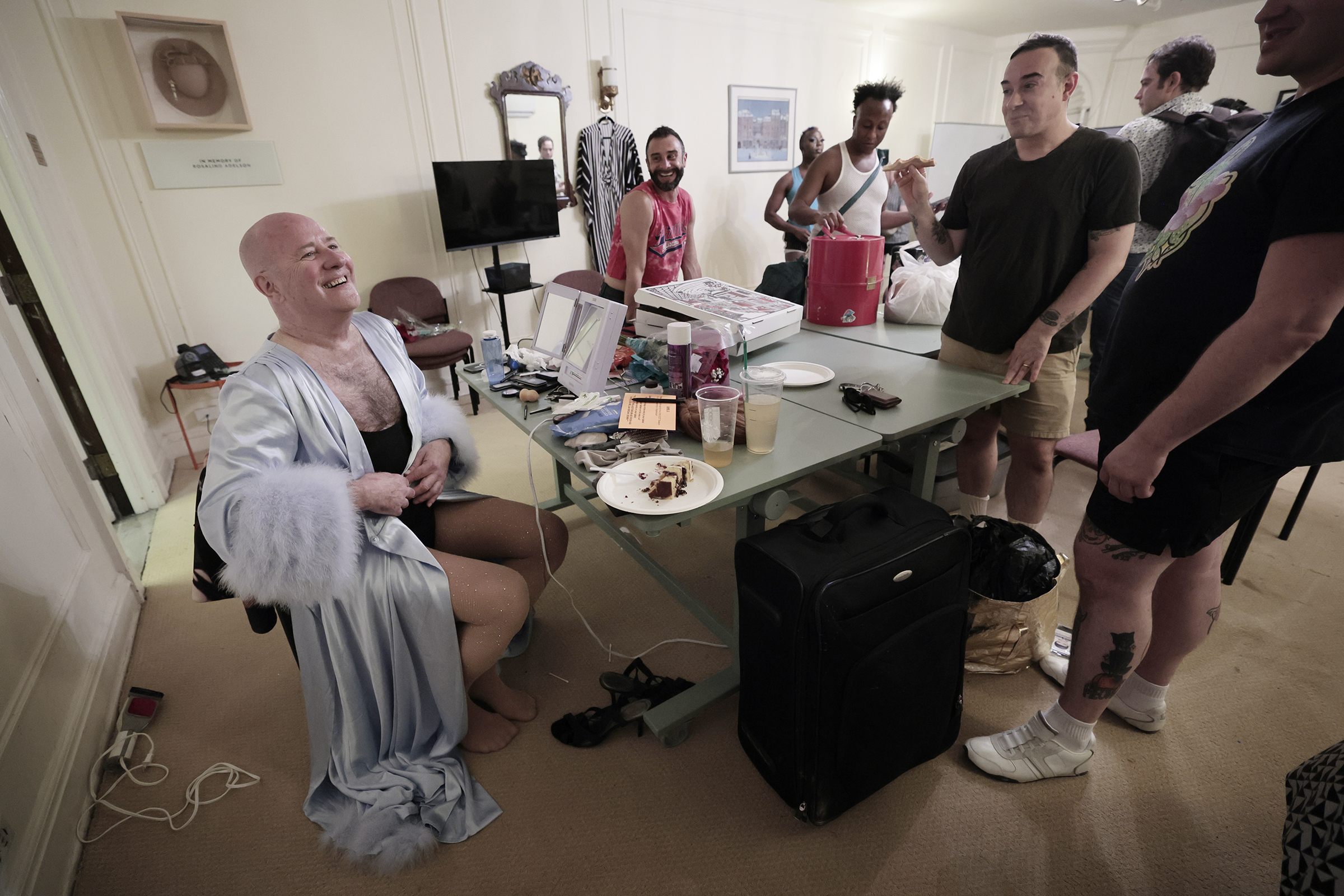
    Carlota Ttendant (Michael Byrne) (at left) laughs with friends and fellow performers after Carlota’s final evening cohosting Gay Bingo at Congregation Rodeph Shalom in Philadelphia on June 13.
    Michael Byrne transforms into his drag persona Carlota Ttendant ahead of Gay Bingo on May 9 at Congregation Rodeph Shalom in Philadelphia.

    Carlota could be bossy and profane but never vulgar; she could poke fun at audiences without being cruel. She became the “drag queen you could bring your grandma to,” Byrne said.

    Around the time Carlota came to be, the number of new AIDS diagnoses and deaths peaked in Philadelphia. In 1992, new AIDS cases surpassed 1,500; in 1994, AIDS deaths topped 900, according to city data.

    (function(){function e(){window.addEventListener(`message`,function(e){if(e.data[`datawrapper-height`]!==void 0){var t=document.querySelectorAll(`iframe`);for(var n in e.data[`datawrapper-height`])for(var r=0,i;i=t[r];r++)if(i.contentWindow===e.source){var a=e.data[`datawrapper-height`][n]+`px`;i.style.height=a}}})}e()})();

    Misinformation about the disease, which strips the body of its natural defenses and leaves it vulnerable to life-threatening infections and ailments, was rampant. People alienated gay men, wrongly fearing HIV/AIDS could be transmitted through a handshake, a hug, or across a dinner table, The Inquirer and Philadelphia Daily News wrote. Diagnostic testing took weeks; what rudimentary treatments were available sometimes made people sicker; and HIV often progressed to AIDS within a few years.

    “It was not unusual to have people dying every month,” said Kevin Burns, who as a case manager with the nonprofit ActionAIDS (now called Action Wellness) connected clients to hospice care. Burns later served as Action Wellness’ executive director.

    The need for resources was rife, and in 1996, Philly’s nonprofit AIDS Fund set out to supplement the money it made from its annual AIDS Walk, according to Sandra Thompson, former chair of its board of directors. An article in City Paper about an irreverent bingo-drag night sweeping Seattle — which, by one report in the Seattle Times, raised $10,000 a night — caught the attention of Mark “Chumley” Singer, then a fledgling events producer, who pitched the idea to the AIDS Fund. (The fund folded in 2024 due to the decrease in new AIDS cases, and turned ownership of Gay Bingo over to Action Wellness.)

    Singer recalled thinking at the time: “I’ve been doing sad, mopey, candlelight vigil fundraisers. … Why can’t we raise money and have fun?”

    Singer and Byrne had never met before the latter was tapped to host Gay Bingo, but their chemistry was kismet.

    “There was never a show where we weren’t having more fun than everybody,” said Singer, who cohosted until the early aughts. Byrne and Singer left Gay Bingo around that time, but Byrne later returned.

    Byrne remembers the magic of those early years of Gay Bingo. He remembers when 600 seats would sell out in 10 minutes, and he remembers doing his glittered red lip from the floor of the Gershman Y’s mirrored dance studio. He remembers two-show Saturdays and how six hours in heels would make him catatonic on Sunday. He remembers riffing with and ribbing Singer and the laughs their off-color jokes and mild profanity elicited. He remembers the constant movement of the bold and bawdy BVDs, on Rollerblades, or the electricity when O-69 was called and hundreds stood up, shaking and shouting with the fervor of their libidos.

    But Byrne also remembers the solemn moments: the steelworker who told a documentarian about watching his bodybuilder son become emaciated; the families who sponsored games on the anniversary of their loved one’s death; the pharmacist who learned all he could about HIV drugs; Byrne’s own friends who were infected.

    “Our community was in crisis,” Byrne said, “while we focused on it, we also focused on being fun and laughing.

    “And we all needed that at that point.”

    Act II

    The “Rainbow Bombshell” Gay Bingo on June 13 doubled as a Pride extravaganza and an homage to all things Carlota. Her first outfit of the night was crafted from a promotional banner from her years hosting the Philadelphia Orchestra’s Halloween Concert. Alongside her, the BVDs dressed as Big Mess-era Carlota, Norma Kamali-inspired Carlota, Phillies Carlota, and fuzzy caftan-wearing Carlota. Attendees, ushers, volunteers, and even the American Sign Language interpreter wore that signature red bob — wigs that Action Wellness bought in bulk. One wore a T-shirt that read, “Dibs on the ginger.”
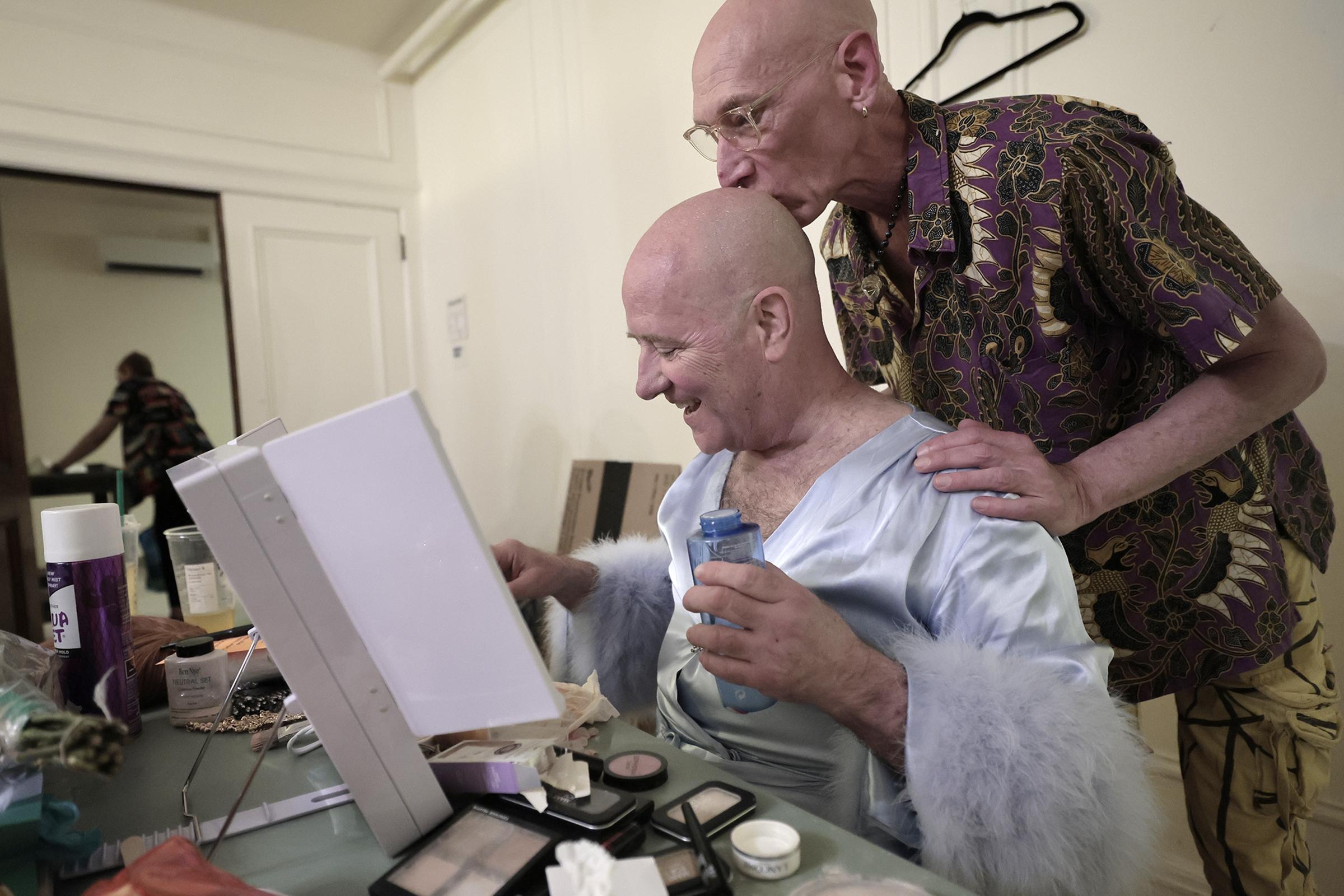

    In the dressing room, Tess Tickle (Paul Struck) kisses Carlota Ttendant (Michael Byrne) on the head after Rainbow Bombshell Gay Bingo at Congregation Rodeph Shalom in Philadelphia on Saturday, June 13, 2026. “I love him” said Struck as he walked out of the dressing room.
    Carlota Ttendant (Michael Byrne) puts on a favorite crystal ring and fake nails before cohosting Rainbow Bombshell Gay Bingo on June 13.

    “Are we ready to win some money?” Carlota said, hyping up the crowd before the first of 12 rounds of bingo. Councilmember Rue Landau, the Philadelphia City Council’s first openly LGBTQ+ member, called the first game:

    I-28.

    I-26.

    G-52.

    B-14.

    O-63.

    B-3.

    “Bingo!” someone cried out, as the audience let out an audible wave of disappointment, exasperation, and defeat, and the BVDs rushed over to authenticate.

    “Did you just get bingo, girl?” Carlota wisecracked.

    For 30 years, these Gay Bingo players have pledged each month to “keep on playing Gay Bingo until this crisis is over.” And today, HIV/AIDS deaths and new diagnoses have stagnated, according to the most recently available health department data, and drug cocktails have made it so people with HIV can live long, healthy lives and may never pass the disease onto others or have their illness advance to AIDS. Preventative medications, like PrEP, can also dramatically decrease the risk of becoming infected.

    Michael Byrne, as his drag persona Carlota Ttendant, on May 9 at Congregation Rodeph Shalom in Philadelphia.

    But there are still obstacles to ending the epidemic. HIV/AIDS disproportionately affects Black and brown communities and low-income people who experience barriers to healthcare, according to Action Wellness executive director Mary Evelyn Torres. The geographic disparities are also stark: Current drug regimens may be readily available in well-resourced countries, like the United States, but access is scarce in the world’s vulnerable pockets. These problems have only been exacerbated by President Donald Trump’s proposed cuts to domestic and foreign HIV/AIDS programs. The withdrawal of American dollars overseas, United Nations officials warned, could lead to more than 4 million AIDS-related deaths and 6 million more HIV infections by 2029.

    (function(){function e(){window.addEventListener(`message`,function(e){if(e.data[`datawrapper-height`]!==void 0){var t=document.querySelectorAll(`iframe`);for(var n in e.data[`datawrapper-height`])for(var r=0,i;i=t[r];r++)if(i.contentWindow===e.source){var a=e.data[`datawrapper-height`][n]+`px`;i.style.height=a}}})}e()})();

    Meanwhile, the Trump administration and state legislatures are attempting to roll back protections for LGBTQ+ people. In Philadelphia, Pride celebrations this month in the Gayborhood were disrupted after Philadelphia police pushed and confronted revelers using what some have called outsized and aggressive crowd-control tactics, although Police Commissioner Kevin Bethel said his department’s actions had nothing to do with Pride. City Council has since announced it will hold public hearings to examine the police response.

    “We’ve come a long way, but there’s still work to be done,” Torres said, “and that work is being threatened by this administration.”

    As the epidemic has changed, so has Gay Bingo: The money raised — more than $5 million since its inception — now goes toward Action Wellness’ social services and programming. The BVDs ditched their roller skates at the Gershman Y (because of the new, carpeted venue). Tickets cost $50-$60, compared to $10-$12 in May 1996, and these days, attendance averages between 150 and 200 a month.

    Drag has evolved, too. Spending centuries on the periphery as proto-punk-beatniks and after-midnight acts, queens disrupted and challenged the mainstream with wit and wonder. Then, the exploding popularity of RuPaul’s Drag Race, a drag reality-TV competition, seismically changed the culture, snubbing scrappiness for silicon and kitsch for couture. The show ushered drag into the zeitgeist: Its lingo became commonplace and its contestants turned into social media stars, with businesses, makeup brands, books, and podcasts, as the art form continues to face political bans and threats nationwide.

    The show “has taken everything to a whole other planet,” Byrne said, “and that’s amazing and that’s really great.

    “That’s also not what I do.”

    Carlota was never concerned with “affecting female mannerisms” or “trying to be this woman or this drag queen,” Singer said. To Byrne, she’s come to embody the fiercest, most unafraid, and righteous versions of himself. But “Michael was never far from Carlota,” Singer said.
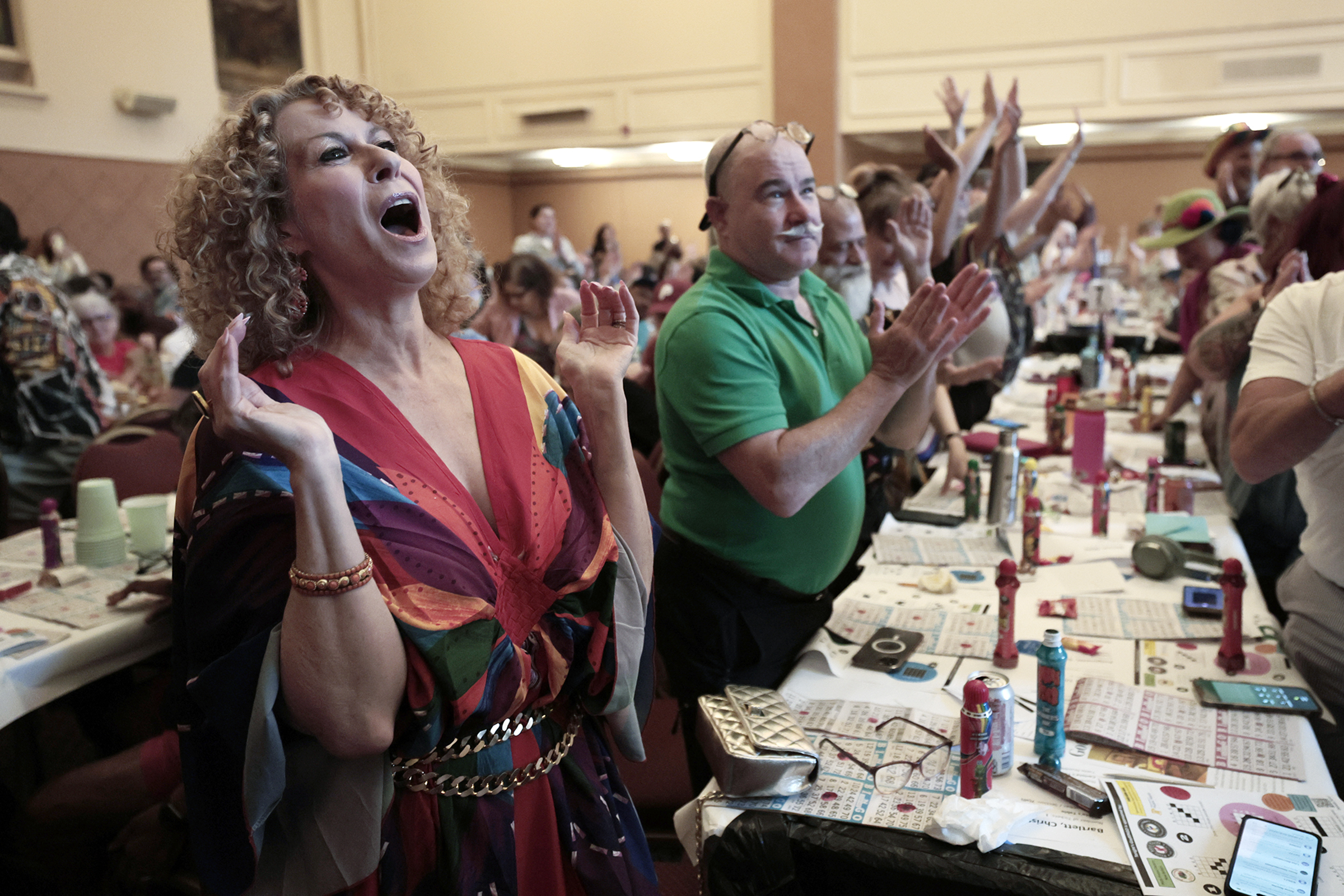
    Janie Lopez of Philadelphia cheers for her friend Carlota Ttendant during Gay Bingo at Congregation Rodeph Shalom.

    To those who know Byrne, Carlota’s come to represent someone purer and more singular, a testament to what joyful resistance and defiant resilience can achieve amid tragedy. Her ingenuity and authenticity have made her synonymous with Gay Bingo, according to Action Wellness event planner and cohost Tim Johnson (otherwise known as Stella D’Oro); her playfulness is what’s engaging, Burns said; the safe space she’s cultivated for the queer community is what keeps people coming back season after season, said regulars Cat Johnson, 47, and Katie Dickerson, 38, of Roxborough.

    “It’s going to be really different without Carlota,” Johnson said. “No one’s going to fill her shoes, but I think that the vibe and the energy is going to live on.”

    “It’s a lot easier to raise money when everyone is having fun,” said Amber Schlesman, 38, of Point Breeze, who’s been coming to Gay Bingo since its Gershman Y days. “And for the shoes, I’m guessing it’s a size 12.”

    All those shoes will be donated to Philly AIDS Thrift soon enough, Byrne said.

    Epilogue

    Byrne’s voice cracked as he thought of the people who made Carlota’s run possible: the AIDS Fund organizers, Singer, the original cast of BVDs, the volunteers, those who came back monthly, the victims, their families. Many sent her off June 13 with a trove of well wishes, notes that read, “thanks for the memories,” and “so proud of all you’ve done.” They told her, “I love you,” and “hang up those high heels, baby.”

    At the end of the night, Byrne’s best friend gifted him a throw pillow.

    “Don’t be a lady,” it said. “Be a legend.”
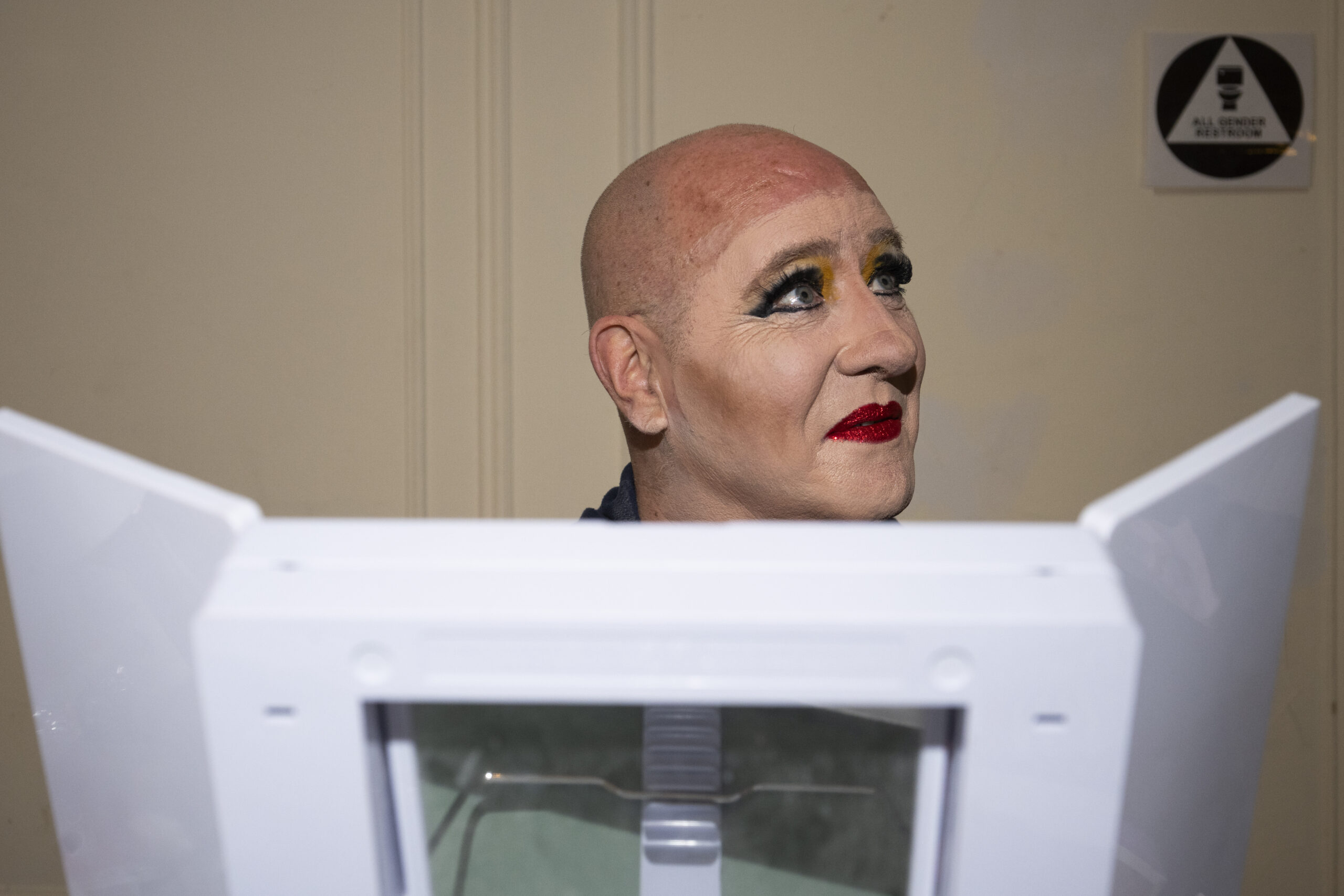
    Michael Byrne transforms into his drag persona Carlota Ttendant ahead of Gay Bingo on Saturday, May 9, 2026, at Congregation Rodeph Shalom in Philadelphia.
  • Josh Shapiro says progressives’ wins in New York show voters ‘are channeling that pain into purpose’

    Josh Shapiro says progressives’ wins in New York show voters ‘are channeling that pain into purpose’

    The Democratic Party should be a big tent and welcoming to a diversity of voices, Gov. Josh Shapiro told MS NOW’s Jen Psaki in a live event in Philadelphia on Thursday.

    Following Tuesday’s primary races in New York that saw the elections of more progressive and socialist candidates, Shapiro said the results there and around the country show that voters are eager for change.

    “I appreciate the passion that we are seeing from voters all across this country,” Shapiro said during the event at the Academy of Music, part of MS NOW’s celebration of America’s 250th birthday.

    People are feeling the strain and opting to support more progressive candidates, Shapiro said, because of rising health insurance costs, struggles to purchase a house, and the feeling that their rights are being stripped away.

    “They are channeling that pain into purpose, they’re channeling that into showing up at the ballot box, they’re channeling that into showing enthusiasm,” he said. “That is a good thing.”

    But he stopped short of explicitly endorsing more left-leaning ideologies. In a separate interview with CNN on Thursday, Shapiro added that the successful candidates must now deliver results.

    “I get that there are some candidates out there that just say a lot words and attract a lot of attention but what we need to do as a party is drill down on how we take those words turn them into actions and make people’s lives better,” he said.

    In Philadelphia, voters elected Chris Rabb, the democratic socialist who has challenged the city’s political establishment, in May’s Democratic primary for Pennsylvania’s 3rd Congressional District. Shapiro did not get directly involved in Rabb’s district, despite making endorsements in other races.

    He also dodged direct criticism of Sen. John Fetterman, a fellow Pennsylvania Democrat who has become increasingly unpopular among the party’s voters, after Psaki posed some of the senator’s recent comments to Shapiro.

    Fetterman referred to the New York congressional candidates, endorsed by Mayor Zohran Mamdani, as “the dirtbag left” and “outrageous” on Fox News. (The phrase “dirtbag left” comes from the leftist podcast Chapo Trap House and refers to a strand of democratic socialism that counters the political right by mimicking its dark humor, among other tactics.)

    Shapiro said “John should answer for himself.”

    In both Philadelphia and New York, the victorious progressive candidates during their campaigns heavily criticized Israel’s war in Gaza and the United States’ role in supporting its material.

    Psaki did not ask Shapiro, who supports Israel but has been critical of Prime Minister Benjamin Netanyahu, about the issue during the event. And he did not refer to it when talking about the New York results.

    To show voters that Democrats hear their pain, the party needs to get “real stuff done to make people’s lives better,” he said.

    Sandra Dungee Glenn, who attended the event Thursday, said Shapiro could have been even more forceful against Fetterman, who is viewed unfavorably by 43% of Philadelphia residents, according to a recent poll.

    “Don’t even mention that name,” said Glenn, who lives in West Philadelphia, referring to Fetterman. “He’s a big disappointment.”

    In addition to his own reelection campaign in November, Shapiro is focused on getting Democrats elected in four competitive congressional seats and flipping the Pennsylvania state Senate, which has been under Republican control for three decades.

    Should the chamber flip, Shapiro said his immediate priority would be raising the state’s minimum wage and codifying the right to access abortion — blaming Republicans for standing in his way.

    But Shapiro, a first-term Democrat, is also looking ahead, past 2026 and Donald Trump’s presidency, as he builds a national profile and becomes a likely contender for the presidency in 2028.

    He said Congress should pass a 28th Amendment to the U.S. Constitution that guards against corruption and gerrymandering, and railed against the 2024 U.S. Supreme Court decision that gave presidents absolute immunity from criminal prosecution for actions taken within their constitutional authority, following Trump’s efforts to overturn the 2020 election.

    Shapiro said he is also open to adding more justices to the Supreme Court, which has been set at nine justices since 1869.

    “I think we’ve got to have everything on the table. We’ve got to be bold,” he said.

    Expansion has been pushed by progressives as a way to reform the court and end its conservative majority.

    Leslie Berger, 69, who attended MS NOW’s event Thursday said she supports adding more justices to the court.

    “These norms we have aren’t etched in stone,” she said. “We need to change this justice system and more justices would be a great start.”

    Democrats, Shapiro said, need to be aggressive and elevate candidates who will drive down costs, increase access to healthcare, repair the country’s standing in the world and rein in artificial intelligence.

    “We’ve got to understand that our sole mission right now is winning in these midterms and providing a check against Donald Trump at the state and the federal level,” he said. “Then as we go forward, I think we have to understand that rebuilding a federal government like it was before Donald Trump showed up cannot be the answer to the Democratic Party.”

  • Philly is defending an ICE Out law in court its top lawyer previously said wasn’t enforceable

    Philly is defending an ICE Out law in court its top lawyer previously said wasn’t enforceable

    There is no obvious way for a mayor to defend a law her lead attorney already said couldn’t be enforced legally.

    But that is the position Mayor Cherelle L. Parker found herself in when President Donald Trump’s administration sued her, the city, and other officials over an ordinance that bars law enforcement officers from concealing their identities as part of the ICE Out legislative package.

    Noted in the feds’ lawsuit: When the ordinance was making its way through the legislative process, City Solicitor Renee Garcia advised the mayor it would be “inaccurate” to suggest the city can “legally and practically enforce the Bill.”

    The city responded Thursday afternoon to the Trump administration’s request for an injunction preventing the ordinance from taking effect next month by arguing the federal government doesn’t have standing until the city attempts to enforce its provisions.

    Even if the administration had standing to sue, the bill’s provisions don’t interfere with the federal government’s work and “at most imposes an incidental burden,” the city’s response said.

    Additionally, the filing contended the Trump administration can’t show irreparable harm because of exceptions that allow officers to conceal their identity. The city, meanwhile, has “a significant interest in protecting its residents and law enforcement officers,” it said.

    “The Bill was enacted in response to the confusion and fear generated by the federal government’s deployment of large numbers of federal agents who subsequently applied aggressive enforcement tactics behind the mask of anonymity, undermining public safety and trust,” the city said.

    The defendants in the case — the city, Parker, Garcia, and District Attorney Larry Krasner — are represented jointly by attorneys from the law firm Ballard Spahr.

    “In essence, the city’s argument, which we have joined, is that this ain’t the right time,” Krasner said in an interview. “The City Council ordinance is not in effect yet. There has been no enforcement by the Philadelphia Police Department yet. You don’t even have a real case to consider.”

    Krasner added that while he was in lockstep with the Parker administration on Thursday’s filing, further developments could necessitate his office to seek separate representation.

    The Department of Justice declined to comment on the new filing.

    A city Law Department spokesperson did not immediately respond to a request for comment.

    The ordinance at the heart of the litigation makes it a crime for law enforcement officers, including Immigration and Customs Enforcement agents, to wear face coverings or conceal personal identifiers like badges and nameplates while carrying out their official duties in Philadelphia, and requires officers to identify themselves. It also prohibits the use of unmarked vehicles.

    The bill includes exceptions allowing officers to wear masks in certain circumstances, such as medical emergencies or SWAT operations.

    An officer who violates the ordinance could be prosecuted, and risks up to 90 days in jail plus a fine.

    The ICE Out package, including the mask law, goes into effect July 7.

    The Trump administration sued in Philadelphia’s district court last week, challenging the ordinance as “blatantly unconstitutional.”

    The bill’s requirements would “prevent effective federal law enforcement within Philadelphia” and put federal officers in harm’s way, the suit said.

    U.S. District Judge Chad F. Kenney, whom Trump appointed during his first term, will rule on the injunction without holding a hearing.

    The Trump administration has sued other jurisdictions, including New Jersey, over similar requirements. In April, the U.S. Court of Appeals for the Ninth Circuit found that a California bill requiring agents to “visibly display identification” violated the U.S. Constitution’s supremacy clause, which bars states from regulating federal government activities.

    An awkward position for Parker

    Defending the bill puts Parker and her administration in an awkward position.

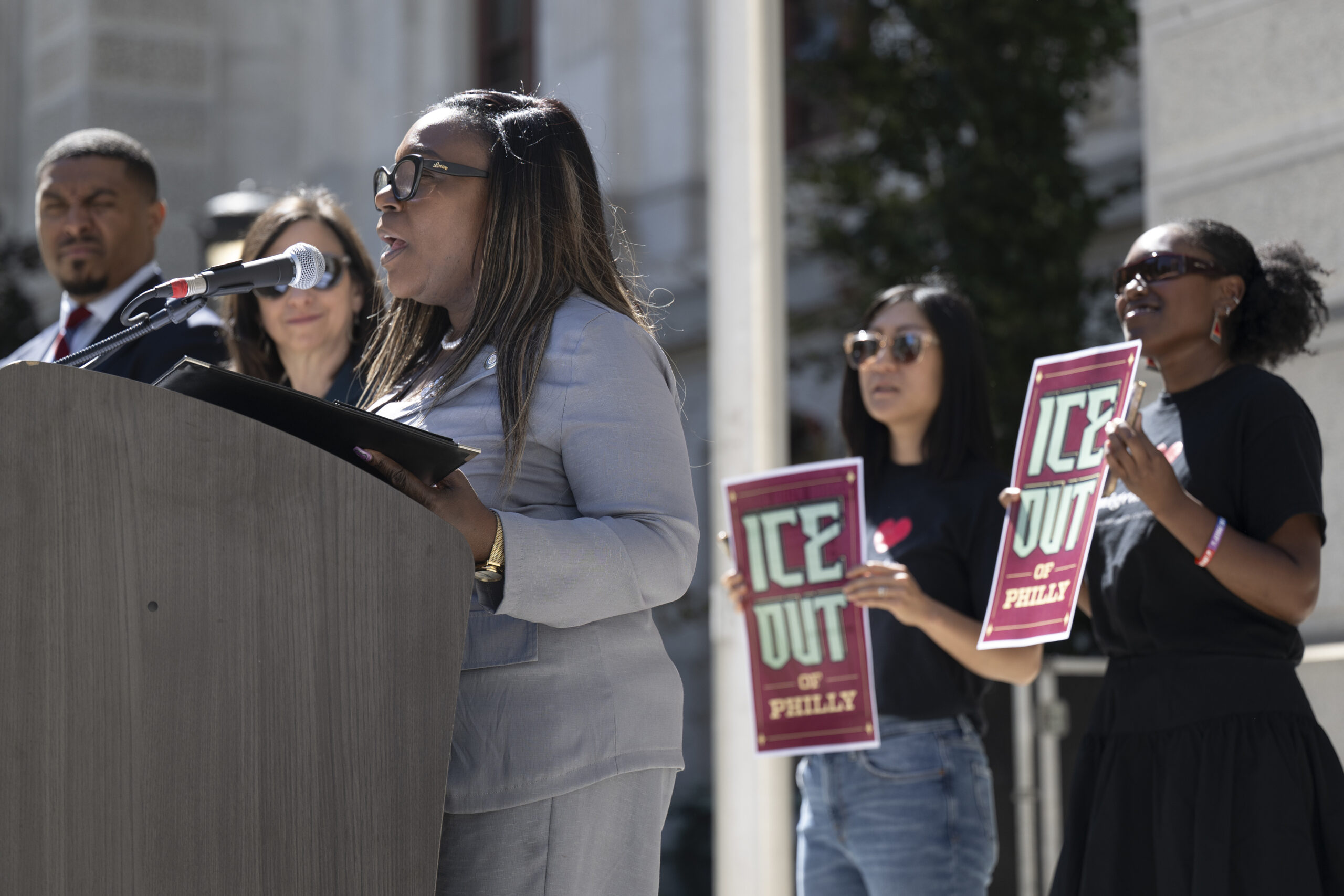
    The ordinance passed City Council with a veto-proof supermajority in April as part of a package of seven bills pitched as “ICE Out” by its authors, progressive lawmakers Rue Landau and Kendra Brooks. The other bills prohibit federal immigration agencies from staging raids on city-owned property, ban discrimination on the basis of citizenship status, and prohibit the city from engaging in most forms of information-sharing with ICE.

    Councilmember Kendra Brooks speaks during a news conference outside Philadelphia City Hall, Wednesday, June 3, 2026, in Philadelphia. Organizers called on local and state officials to restrict U.S. Immigration and Customs Enforcement involvement in public safety operations during the FIFA World Cup.

    The legislation also codified some of Philadelphia’s long-standing sanctuary city status, which a recent poll found most city residents support.

    Brooks said she did not want the lawsuit to hold up the Parker administration’s implementation of the law.

    “There is nothing in the lawsuit stopping the administration from implementing our ICE Out package on time,” she said.

    Brooks had good reason to question the administration’s commitment to the legislation given Parker’s handling of it.

    After the bills’ passage, Garcia advised Parker not to sign the bill banning law enforcement officers from concealing their identity, saying doing so “would send an inaccurate signal to the public that the Administration can legally and practically enforce the Bill.”

    Parker followed her solicitor’s advice, signing six bills and allowing the seventh to become law without her signature.

    As for Garcia’s concerns about the bill, the new filing from the city only notes that her letter advising Parker didn’t address the issue of standing or whether the issue is ripe for litigation.

  • No sign of Pennsylvania at Trump’s 250th fair as state fails to find companies to participate

    No sign of Pennsylvania at Trump’s 250th fair as state fails to find companies to participate

    WASHINGTON — Pennsylvania is not participating in President Donald Trump’s Great American State Fair, which kicked off Wednesday, after state leaders failed to find a company willing to represent it at one of the hallmark 250th anniversary events in Washington that some say have become overly partisan.

    Pennsylvania’s state government, like those in some other Democratic-led states, had already chosen to not sponsor a booth at the 16-day fair. Gov. Josh Shapiro’s office had still been trying to connect Freedom 250, the nonprofit behind the fair, with organizations and companies that could represent the state, according to federal and state sources familiar with the planning.

    “Unfortunately, due to the high cost to taxpayers and not being able to secure PA businesses to sponsor the booth, Pennsylvania will not be a participant in the Great American State Fair,” the Pennsylvania Department of Economic and Community Development said in a statement.

    The fair, being held at the National Mall to celebrate the nation’s 250th anniversary, was originally planned to feature a pavilion dedicated to each state and territory.

    But as tourists visited Thursday on the fair’s first full day, there were no signs of the commonwealth where American democracy was born 250 years ago.

    Almost every other state was showcased — with most sending state or local government staff and tourism boards to host educational or interactive exhibits.

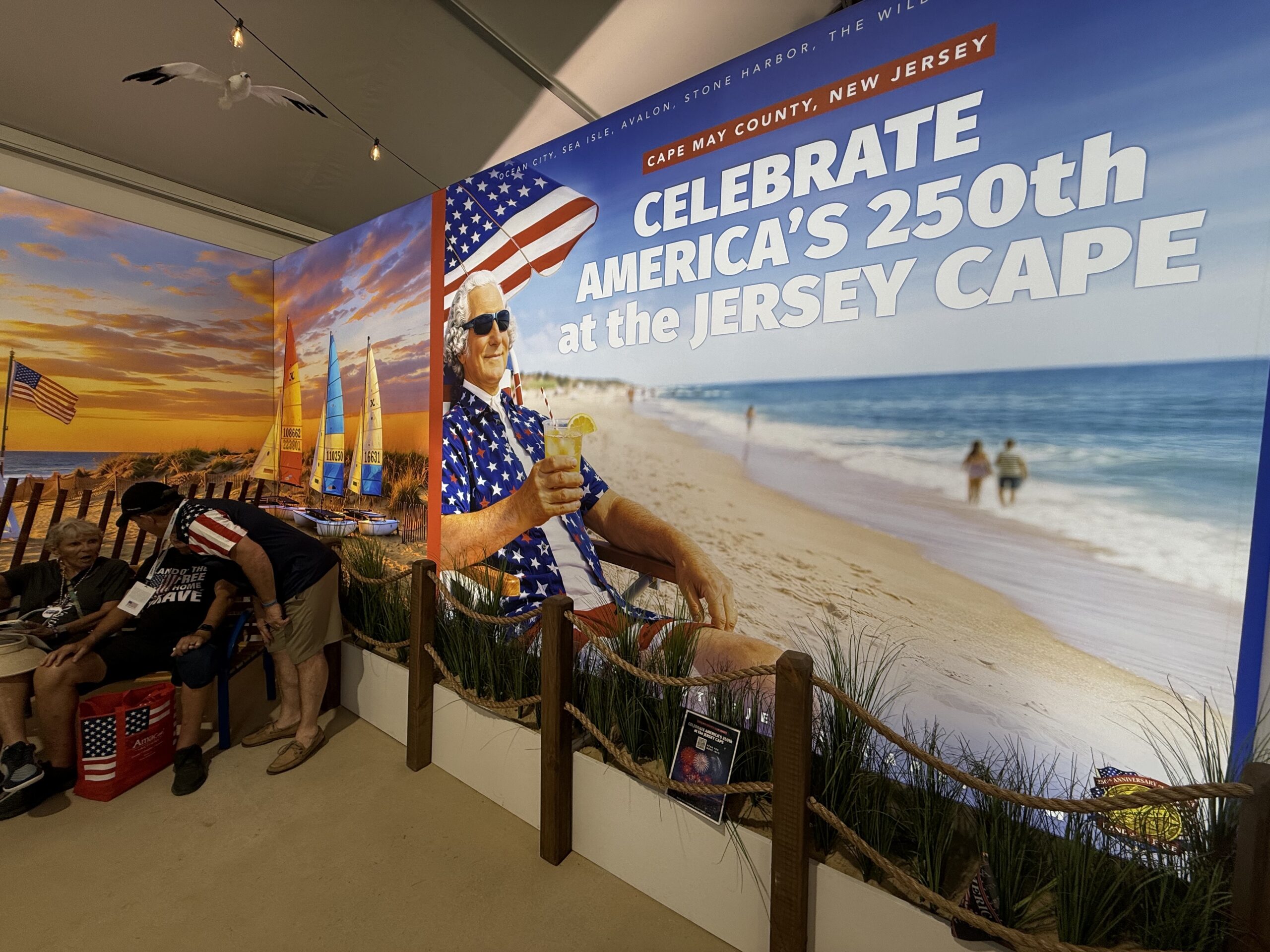
    Cape May County, a Republican stronghold that is representing New Jersey after the state government declined to participate, featured an 8-ton sand sculpture that a sculptor from Wildwood took 4½ days to create.

    An 8-ton sand sculpture promotes Cape May at New Jersey’s pavilion at the Great American State Fair, in Washington, D.C. The pavilion was sponsored by Cape May County, a Republican stronghold that chose to represent New Jersey after the state government declined to participate.

    Maryland’s state tourism department handed out information about its vacation hot spots. Staff in the Lone Star State’s pavilion greeted tourists with a cheerful “Welcome to Texas” and offered an interactive space flight exhibit, a replica of the Alamo, and an Austin City Limits music display.

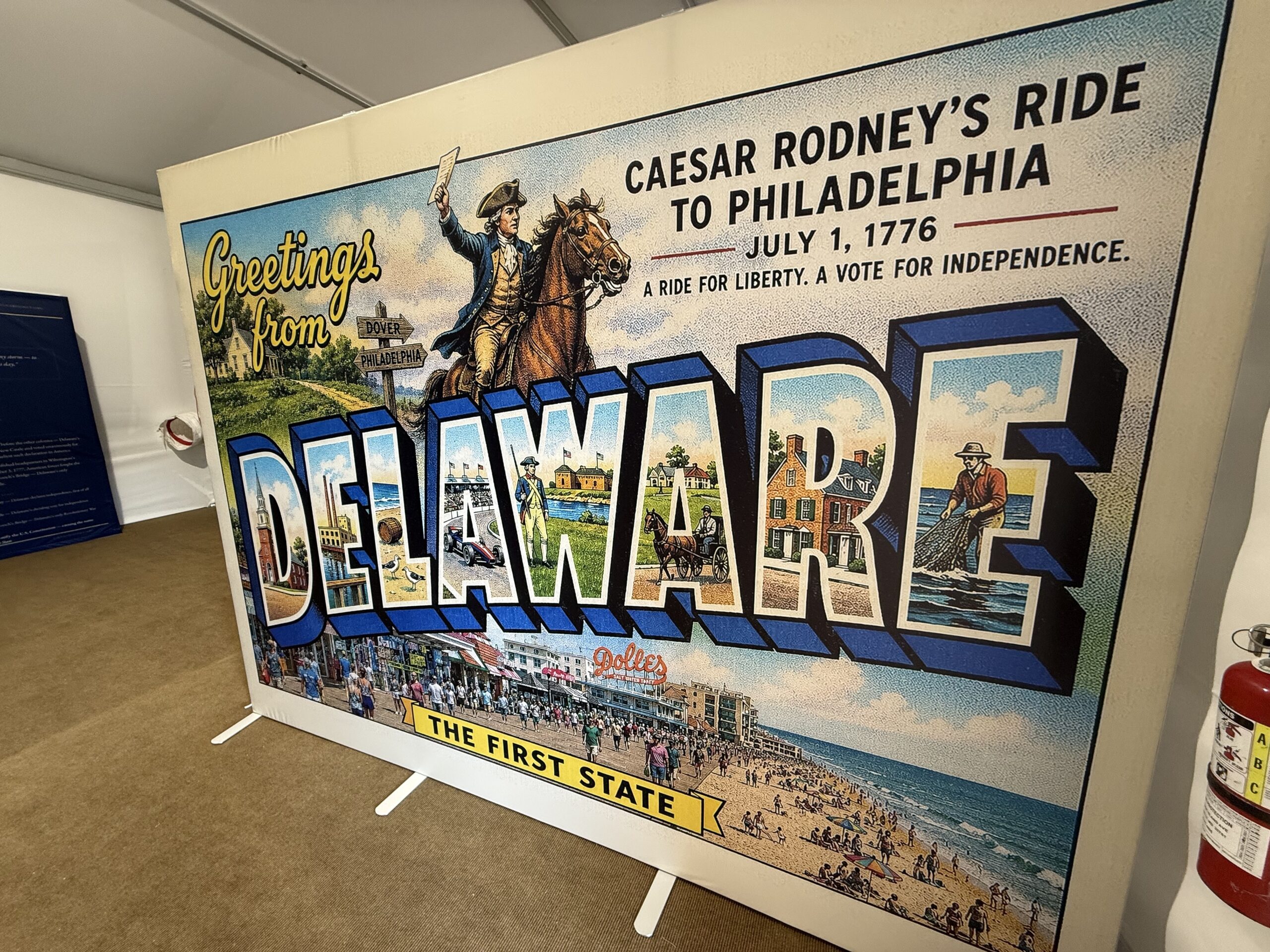
    Delaware highlighted Founding Father Caesar Rodney’s ride to cast the decisive vote for independence in Philadelphia.

    Delaware’s pavilion at The Great American State Fair highlights Caesar Rodney’s ride to cast the deciding vote for independence.

    Pennsylvania joined seven other Democratic-led states — Connecticut, Illinois, Maine, Massachusetts, North Carolina, Oregon, and Washington — in declining to participate.

    Some of those states had flags outside the pavilions where they would have been located. A few chairs and a sign with the state’s name were also inside.

    But in the booth where, according to an interactive map, Pennsylvania’s location was supposed to be, a flag reading just “250″ was outside and the room was blocked off for the fair’s staff.

    As recently as this month, Pennsylvania was still seeking companies to represent it, but Rosie Lapowsky, Shapiro’s spokesperson, confirmed Thursday that the state had given up that effort.

    “None were interested,” Shapiro said to the New Republic in a story that first reported Pennsylvania’s lack of participation. “It reflects this sad state of affairs that we find ourselves in — that the president has politicized this to a degree that businesses don’t want to participate.”

    Trump’s presence has increasingly hung over events tied to the 250th anniversary in the nation’s capital, with the president planning to hold a political rally on the Fourth of July as part of the long-planned fireworks celebrations. It has made the decision to participate by entertainers and states alike more politically fraught.

    “Freedom 250 is a nonpartisan organization, full stop — and our track record of collaboration across red, blue, and purple states speaks for itself,” Freedom 250 spokesperson Rachel Reisner said in a statement earlier this month. She did not respond to a request for comment Thursday about Pennsylvania’s lack of involvement or Shapiro’s comments.

    Cape May represents New Jersey at the Great American State Fair Thursday, June 25, 2026, in Washington, D.C.

    In New Jersey’s pavilion, visitors were met with not just the sand sculpture but also a new three-minute video highlighting Cape May County and a giant image of George Washington lounging at the beach with a cold drink.

    County administrator Kevin Lare said it took a significant amount of work — and at least $150,000 from the county’s tourism budget — to pull it all together in recent weeks. It is worth it, he said, to highlight the county in the hopes of bolstering its largest economic engine — tourism.

    “It’s a once-in-a-250-year event,” Lare said. “It’s not something the county will do every year at this level. It’s a celebration of our country, and our board of commissioners still believe we live in the greatest nation in the world. They’re happy to be a part of it.”

    Staff writer Gillian McGoldrick contributed to this article.

  • Gov. Mikie Sherrill proposed an 80% cut to a program that provides job training and support to Hispanic women. The budget is due in days.

    Gov. Mikie Sherrill proposed an 80% cut to a program that provides job training and support to Hispanic women. The budget is due in days.

    Consensa Francisca Silva Silva moved to Camden from Costa Rica more than two years ago knowing nobody. She lived on the street for two months, she said, and then was bouncing from house to house when a young man in the neighborhood told her to check out the Hispanic Women’s Resource Center in Camden, one of several such centers in the state.

    She went. With help from the program, Silva received food, obtained a work permit, made a down payment for a studio apartment, and started a job at McDonald’s.

    That statewide initiative is now facing detrimental cuts under Democratic Gov. Mikie Sherrill’s budget proposal. The governor has proposed cutting nearly 80% of its funding, and Silva worries that other immigrant women looking to improve their circumstances will not get the help she received.

    “It was very hard to come here without knowing anyone, and it was really hard because at first I couldn’t find any work,” Silva, who is Nicaraguan, said in Spanish, translated by Jesselly De La Cruz, the executive director of the Latino Action Network Foundation, which funds the centers.

    The initiative is one of numerous South Jersey programs at risk under Sherrill’s proposal, including the Rowan University veterinary school and a program that provides mental healthcare to abused children. But the cuts are not a done deal.

    Sherrill and legislative leaders announced Tuesday they had come to an “agreement” on a budget totaling $60.7 billion, the same price tag Sherrill proposed in March. But it has not been made public and it is unclear how far into the details they have gotten. They have until Tuesday to figure it out.

    And the process is still underway. State Sen. Nilsa Cruz-Perez, a Camden Democrat who sits on the Senate Budget and Appropriations Committee, has been a supporter of the centers. She was unable to speak Wednesday afternoon because she was in a committee budget hearing.

    Client Consensa Francisca Silva Silva (right) participates in a workshop at the Hispanic Women’s Resource Center in Camden Thursday, June 11, 2026.

    On a recent Thursday, Silva participated in a healthy life skills workshop in Spanish at the Camden center, where she learned about taking care of herself as summer temperatures get hotter in the city. About 20 adults clapped for one another with big smiles on their faces, and they received goody bags with sunscreen, lip balm, a towel to keep cool, and a little fan. A young girl played with magnetic tiles and a baby was kept calm, passed between women.

    The governor proposed cutting funding for the center’s programs to $535,000, down from more than $2.5 million this year and more than $3 million in 2025. Murphy had proposed a similar cut last year, but the funding was restored during budget negotiations.

    Hispanic Women’s Resource Centers were established through 1991 legislation to address the wage gap for Latinas. New Jersey is one of the states with the biggest wage gap for Latina workers, according to the National Women’s Law Center.

    Staff members observe from back of the room during a workshop at the Hispanic Women’s Resource Center in Camden Thursday, June 11, 2026.

    The Latino Action Network Foundation funds these resource centers in partnership with six nonprofits across 14 sites, including five in South Jersey. The Camden center is located at the nonprofit Healthy Families and Communities, and there are centers in Vineland in Cumberland County, Hammonton in Atlantic County, Pennsville in Salem County, and Rio Grande in Cape May County.

    Sherrill’s proposal would “drastically cut” the number of resource centers, and sites in Hammonton and in Lakewood, in Ocean County, would likely be on the chopping block, De La Cruz said, adding that services would need to be cut in eight of 11 counties.

    Martha Infante, 38, who lives in Pennsauken, said she was disoriented when she moved to South Jersey from the Dominican Republic. But through the Camden center, she found out how to apply for work online and learned basic English. She obtained coats for her daughters’ first U.S. winter, and a staffer accompanied her to a New Jersey Department of Motor Vehicles center to get her driver’s license.

    “I came here and my mind was all over the place, I didn’t know where things were,” she said in Spanish.

    She now works as a home health aide, thanks to training she got through the center, and even participated in a program where she learned about advocating for her community in Trenton.

    “Don’t cut these funds, Gov. Sherrill,” she pleaded. “Don’t cut the funds! This is like a family. It’s like a home for the community.”

    Client Martha Infante (left) talks with staff member Chailienisse Vega (right) after participating in a workshop at the Hispanic Women’s Resource Center in Camden Thursday, June 11, 2026.

    Some of the women in the program are fleeing domestic violence and seeking financial independence. Others are struggling to get a work permit, or may have lost a family member who helped pay the bills to deportation. A lot of former “Dreamers” — undocumented immigrants who came to the U.S. as children — utilize the center as well, De La Cruz said.

    The need for the centers has only escalated under President Donald Trump’s second administration, she said.

    The social worker-turned-executive said she was surprised by the severity of Sherrill’s proposed cut, especially because of the governor’s efforts to push back against Trump’s immigration policies.

    A 2023 Rutgers study funded by the Latino Action Network Foundation found that the most popular services at these resource centers were English-language classes and employment services, such as job referrals, assistance filling out applications, resume writing, and interview preparation.

    Staff member Andreina Pardo pauses to stretch with participants as she leads a workshop at the Hispanic Women’s Resource Center in Camden Thursday, June 11, 2026.

    “Aside from helping them with the technical aspects of job hunting, the assistance from the Centers seemed to provide a boost of confidence for many of the women, giving them an additional push to apply for positions even if they felt hesitant to do so at first,” the study said.

    Gladys, 48, who declined to give her last name due to concerns over her safety, said in Spanish that the free English courses made her feel like she could “come up for air and breathe” after not being able to communicate.

    The Camden resident had been an ecologist in Nicaragua and has gotten involved in the center’s community garden. She said she would love to pursue a career teaching children about the environment, but her plans are on hold because her work visa was canceled.

    In the meantime, Gladys said, activities at the center like art classes have made her feel less alone. She has been able to connect with women in the same situation as her, and those who migrated to the U.S. earlier who can give her advice from their experiences.

    “Maybe my circumstances don’t change, but my emotional well-being changes because I’m able to connect with others,” she said in Spanish.

  • Most Philadelphians back sanctuary city status as Trump threatens federal funding, poll shows

    Most Philadelphians back sanctuary city status as Trump threatens federal funding, poll shows

    A significant majority of residents want Philadelphia to remain a sanctuary for immigrants, according to a new poll that shows the overwhelmingly Democratic city is undeterred by President Donald Trump’s threats to defund so-called sanctuary cities.

    A recent Suffolk University/Philadelphia Inquirer poll that surveyed 500 city residents asked respondents if Philadelphia should remain a sanctuary city, “even if it means losing federal funding.” A commanding 59% answered “yes,” with only 28% saying “no” and the remainder undecided or unwilling to say.

    The support for Philadelphia’s sanctuary status was consistent across age and racial groups. The only geographic region where a plurality of respondents answered “no” was far Northeast Philadelphia, which is among the most politically conservative areas of the city.

    The survey question did not elaborate on what a loss of federal funding could mean for the city in terms of the impact on residents. Philadelphia received $2.2 billion from the federal government in fiscal year 2024 to pay for a wide range of critical services, including infrastructure needs, as well as healthcare, food, and housing assistance for low-income people.

    (function(){function e(){window.addEventListener(`message`,function(e){if(e.data[`datawrapper-height`]!==void 0){var t=document.querySelectorAll(`iframe`);for(var n in e.data[`datawrapper-height`])for(var r=0,i;i=t[r];r++)if(i.contentWindow===e.source){var a=e.data[`datawrapper-height`][n]+`px`;i.style.height=a}}})}e()})();

    Still, the results of the poll show relatively widespread support in Philadelphia for the city’s sanctuary policies, which include its practice of not complying with detainers issued by U.S. Immigration and Customs Enforcement without a court order. Those detainers are effectively requests submitted by federal agents to local law enforcement agencies that ask to hold undocumented immigrants in custody.

    Mayor Cherelle L. Parker’s administration does not refer to Philadelphia as a “sanctuary city” — she and her top aides instead call it a “welcoming city,” language that has been increasingly adopted nationwide as Trump and his allies in the Republican Party have sought to crack down on sanctuary cities.

    President Donald Trump travels to the Lehigh Valley to visit Mack Trucks in Macungie on Tuesday, June 23, 2026.

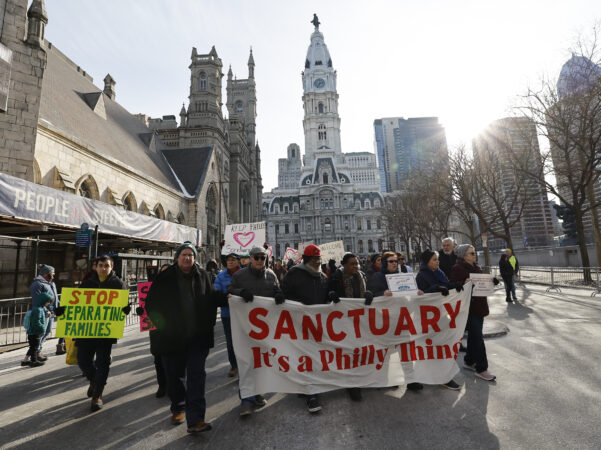
    The sanctuary policies predate Parker’s tenure and were in place under an executive order signed by former Mayor Jim Kenney. They were codified into law earlier this year after City Council passed a package of legislation aimed at limiting ICE’s operations in the city and instituting some of the nation’s toughest restrictions on ICE.

    In May, Parker signed six of the seven bills in the package, but took no action on one that bars law enforcement officers from concealing their identities, including by wearing masks. City Solicitor Renee Garcia wrote in a letter to Parker that the legislation may not be legally enforceable, but the mayor did not veto the bill, allowing it to become law.

    Last week, the Trump administration sued Philadelphia and some of its top officials, including Parker, over the mask-ban ordinance. The Trump administration contended that the law is “blatantly unconstitutional” and undermines federal law enforcement’s ability to do its job.

    The lawsuit is one of several filed across the nation by the Trump administration challenging local laws related to immigration as federal authorities carry out the massive deportation campaign promised by the president.

    The White House has also targeted sanctuary cities through executive orders, including one the president issued last year directing the Department of Justice and the Department of Homeland Security to ensure that sanctuary jurisdictions “do not receive access to federal funds.”

    That effort is also tied up in litigation. Last year, a federal judge issued an injunction blocking the Trump administration from denying funding to jurisdictions that limit cooperation with ICE, saying the White House could not impose funding conditions without authorization from Congress.

    Staff writer Sean Collins Walsh contributed to this article.

  • 1 in 4 Philadelphians say preserving historical sites is city’s top ‘responsibility to the nation,’ poll shows

    1 in 4 Philadelphians say preserving historical sites is city’s top ‘responsibility to the nation,’ poll shows

    President Donald Trump’s administration got the green light from a federal appeals court last week to install its own version of the historical exhibits at the President’s House Site on Independence Mall after it dismantled panels about slavery there earlier this year.

    But that may not jibe with what many Philadelphians want to see.

    A new Suffolk University/Philadelphia Inquirer CityView poll of 500 city residents found that a quarter of respondents believe the city’s primary responsibility to the nation is to protect its historical sites for future generations. Nearly 27% said the city’s primary responsibility to the nation is to serve as a model for “diverse, multicultural urban progress.”

    The poll, conducted from June 16 to 20 and released this week, comes after a ruling by the U.S. Court of Appeals for the Third Circuit in favor of the Trump administration and just weeks ahead of celebrations in Philadelphia for the nation’s 250th birthday.

    (function(){function e(){window.addEventListener(`message`,function(e){if(e.data[`datawrapper-height`]!==void 0){var t=document.querySelectorAll(`iframe`);for(var n in e.data[`datawrapper-height`])for(var r=0,i;i=t[r];r++)if(i.contentWindow===e.source){var a=e.data[`datawrapper-height`][n]+`px`;i.style.height=a}}})}e()})();

    The appeals court’s ruling last week was a turning point in a legal battle waged by Mayor Cherelle L. Parker’s administration that questioned the federal government’s authority to interfere in what information is presented at the President’s House. Both the Third Circuit ruling and a recent decision by a Boston-based federal appeals court regarding National Park Service exhibits nationwide have started to pave the way for the Trump administration to make unprecedented changes to displays of U.S. history in the region.

    Alacia Maxton, 36, a respondent to the poll, said frustration with the attacks on the President’s House has been at the forefront of her mind as the city prepares to celebrate the Semiquincentennial.

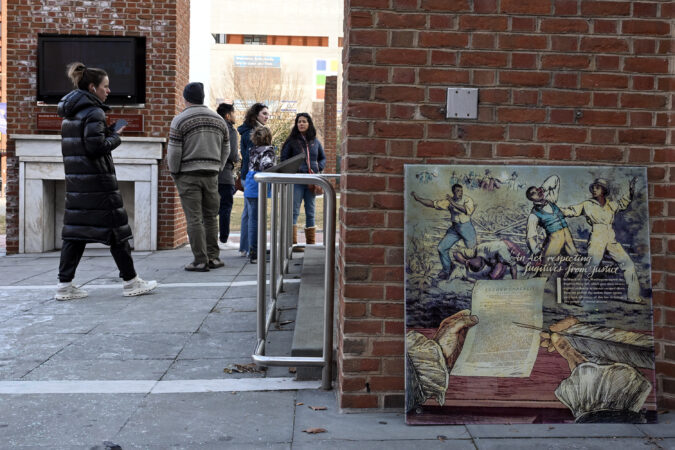
    For nearly two decades without opposition, the site — which opened in December 2010 — has memorialized the nine people George Washington enslaved at his Philadelphia residence during the founding of America and detailed the brutality of slavery.

    Last month, it was designated as an endangered historic site by a major national historic preservation organization. The new panels proposed by the Trump administration to replace the removed exhibits at the President’s House soften Washington’s role as an enslaver, according to those working to protect the site.

    “I don’t like the idea that certain groups of people want to whitewash history and erase what doesn’t make them feel comfortable,” said Maxton, who lives in Overbrook Park.

    Carolyn Keys, 61, another resident who responded to the poll, said the absence of the some of the original panels is like “missing pieces to a puzzle.”

    “Every piece was specifically put together for a purpose,” said Keys, 61, a veteran who lives in the Tacony neighborhood.

    David Paleologos, director of the Suffolk University Political Research Center, said Philadelphians valuing preserving history and being a model for progress is a particularly localized issue.

    “Which I think makes this really important information for the nation to see,” Paleologos said.

    Philadelphia Lawyer Michael Coard speaks at a rally at the President’s House Site in response to the removal of the President’s House exhibit in Old City, in Philadelphia, Tuesday, Feb. 10, 2026, in Philadelphia

    A bipartisan grassroots group of Philadelphians — called the President’s House/Slavery Memorial Coalition — has been spearheading efforts to protect the historical site, which has been under scrutiny from the Trump administration since last summer.

    The group has often discussed a desire for its work in Philadelphia to be a model for preserving history elsewhere in the country.

    Michael Coard, an attorney and founder of one of the leading groups in the efforts to protect the President’s House, said in a statement Wednesday that the poll results show that “Philadelphians understand the importance of protecting our shared history.”

    “Black history is American history, and we have both an obligation and, based on these results, a clear mandate to ensure that the stories of enslaved Africans and their descendants are preserved, honored, and accurately told,” Coard said.

    Other respondents had different ideas for Philadelphia’s primary responsibility as the birthplace of democracy: Roughly 23% said “leading national conversations on civil rights and economic justice” was a top priority, while almost 17% said the city’s duty to the nation is “proving that a large, complex city can govern itself equitably.”

    These insights come as Philadelphia is bracing for an influx of tourists, with particular emphasis on its history as the nation’s birthplace, ahead of the Semiquincentennial celebrations.

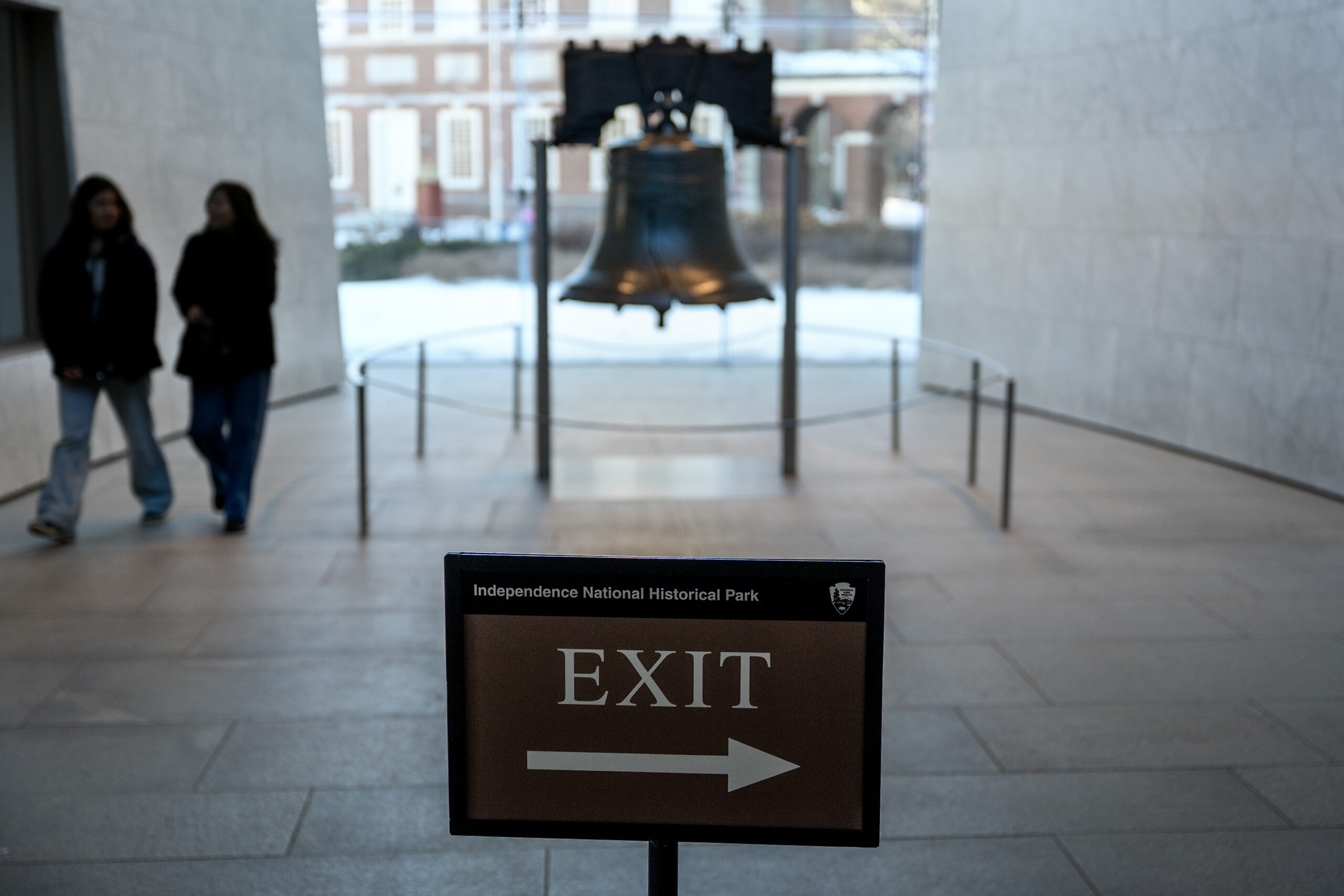
    The Liberty Bell in Independence National Historical Park Feb. 2, 2026.

    Almost 28% of the Philadelphia residents polled see the Liberty Bell — in comparison to Independence Hall, the National Constitution Center, and the Rocky Steps — as the city landmark that best embodies American democracy.

    But hanging over the impending 250th celebrations is the uncertain fate of the President’s House, said Leeanna Lundy, 34, of West Philly.

    “For them to remove where the most impactful part of where history took place, it’s like mind-boggling,” Lundy said.

    Staff writer Michelle Baruchman contributed to this article.

  • A new bipartisan housing law was on track to bring Pennsylvania’s home-repair program nationwide. Then Trump refused to sign the bill.

    A new bipartisan housing law was on track to bring Pennsylvania’s home-repair program nationwide. Then Trump refused to sign the bill.

    WASHINGTON — A Pennsylvania program that assists homeowners and small landlords by financing repairs was on track Wednesday to expand nationwide, after Congress this week passed a bill that both Republicans and Democrats are celebrating as the first major federal housing law in decades.

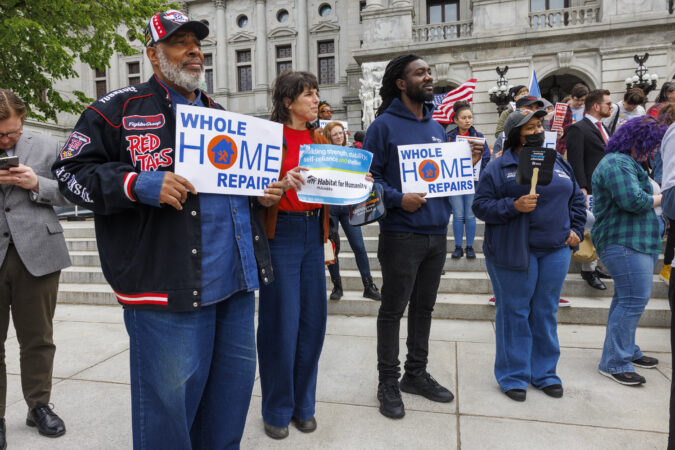
    Tucked into the 374-page omnibus legislation is a pilot version of a federally backed Whole-Home Repairs program — an idea that was originally sponsored by State Sen. Nikil Saval (D., Philadelphia) and passed in Pennsylvania in 2022.

    The program offers grants or loans to address safety, habitability, and efficiency concerns.

    But despite wide bipartisan support for the program and dozens of other housing reforms in the larger bill, final approval was derailed on Wednesday when President Donald Trump canceled the bill-signing ceremony in an attempt to force Congress to first pass more restrictive voter-ID laws.

    Democrats and some Republicans quickly rebuked the president, who still made a rare appearance on Capitol Hill to meet with Senate Republicans. The intraparty meeting turned contentious, according to multiple reports, while Democrats noted they had enough votes to overturn Trump’s veto if he holds out long enough.

    “It’s a mess,” said U.S. Sen. Andy Kim (D., N.J.). “Finally, we’re doing something that the American people want. We got bipartisanship. We worked on it forever. … Then he just parachutes in and just blows it all up here at the end.”

    The 21st Century ROAD to Housing Act aims to incentivize housing construction, restrict large institutional investors from buying single-family homes, improve financial literacy, and more.

    More than a year in the making, it includes a separate stand-alone Whole-Home Repairs Act that U.S. Sen. John Fetterman (D., Pa.) had introduced in each of the last two sessions of Congress. Fetterman’s bill merged last year into the larger bill while keeping many of the same provisions as the Pennsylvania-level program.

    Households that earn less than 80% of the area median income are eligible for grants, while small landlords with affordable units can access loans, including forgivable loans.

    Funded with more than $120 million in COVID-era federal stimulus money, the program has been limited amid high demand, with as many as 18,000 homes on the waiting list.

    Saval said he expects the national version to also reflect that level of “immense demand” — particularly as the program starts small and as homeowners across the country face higher costs to maintain their residences.

    “This is a huge issue. There are some 200,000 homes in Pennsylvania alone that have moderate to severe deficiencies,” Saval said. “Everyone is dealing with rising energy costs. Everyone’s dealing with the cost of materials and labor and the inability to pay for all that.”

    Addressing those kinds of affordability concerns, which have become a top-of-mind political issue during this year’s high-stakes midterm elections, is a rare bipartisan effort to emerge from the U.S. Capitol.

    Philadelphia-area lawmakers on both sides of the aisle had spent months advocating for the bill.

    U.S. Sens. Dave McCormick (R., Pa.) and Lisa Blunt Rochester (D., Del.) — members of the Senate committee that advanced the legislation — both celebrated the final passage by talking about its impacts on affordability and “cutting red tape.” Kim called it a “historic” move to bring costs down.

    “This package comes at a critical moment,” Blunt Rochester said in a statement, noting a nationwide housing shortage of as many as 7 million units. Five bills she separately sponsored — to accelerate building, increase investment in community development projects, develop zoning and land-use policies, and more — were featured in the final law.

    The Whole-Home Repairs provision of the legislation was not a guarantee as negotiations developed over the last year. House Republicans were generally skeptical of creating a new government program, and specifically critical of the policy’s tenant protections, according to a source familiar with the negotiations. But their counterparts in the Senate, and Democrats in both chambers, helped keep it in the larger bill.

    Fetterman said in a statement that Whole-Home Repairs “ensures families can stay in their homes” and that passing it had been a priority since he entered the Senate in 2023.

    “I’ve consistently maintained that our housing crisis needs real solutions that help address the problems at the center,” Fetterman said.

    Saval, who said he made multiple trips to Capitol Hill to work with sponsors and lobby for Whole-Home Repairs, said he was “thrilled” by the inclusion of a program that he and the coalition of advocates who helped push the idea had always envisioned as a model that could be replicated.

    He said he expects the pilot program to prove successful in “a few states” where it is able to launch. Unlike previous version of the federal bill that would have allocated $30 million to the pilot, there is no specific funding number for Whole-Home Repairs in the 21st Century ROAD to Housing Act.

    The legislation calls for the secretary of the U.S. Department of Housing and Urban Development to identify between two and 10 “implementing organizations” every year during the pilot, which is set to run through October 2031. The organizations will be local or state governments that administer the programs.

    Saval said that no matter how much funding is allocated, it “will undoubtedly fall short of the need,” but that its effectiveness will spur further investment.

    “It repays itself,” Saval said. “It repays itself in stabilized communities. It repays itself in stabilized property values, in people remaining in their homes rather than in unsafe or unhealthy homes, or rather than abandoning them.”

    Staff writer Jake Blumgart contributed to this article.

  • Josh Shapiro is most popular politician among Philadelphia residents — by a long shot

    Josh Shapiro is most popular politician among Philadelphia residents — by a long shot

    Gov. Josh Shapiro is by far the most popular political figure among Philadelphia residents, a boost as he looks toward November and beyond.

    In a new Suffolk University/Philadelphia Inquirer CityView poll, 62% of Philadelphians have a favorable opinion of Shapiro, double digits above any other political figure included in the survey.

    Not only did the Democratic incumbent running for reelection win over three-quarters of his own party’s voters in the blue stronghold, he also got positive reviews from almost half the city’s independents and more than one-third of Republicans.

    “He has strong bona fides within his own party, 76% favorable and 11% unfavorable, but he’s also at least somewhat competitive among independents and even some Republicans, so that’s an amazing profile for a candidate who’s an incumbent these days,” said David Paleologos, the polling director at Suffolk.

    Just 16% of residents have an unfavorable view of Shapiro, and only 8% have never heard of the one-term governor, who was on former Vice President Kamala Harris’ short list of potential running mates in 2024.

    (function(){function e(){window.addEventListener(`message`,function(e){if(e.data[`datawrapper-height`]!==void 0){var t=document.querySelectorAll(`iframe`);for(var n in e.data[`datawrapper-height`])for(var r=0,i;i=t[r];r++)if(i.contentWindow===e.source){var a=e.data[`datawrapper-height`][n]+`px`;i.style.height=a}}})}e()})();

    The poll of 500 residents in the city, which was conducted by phone from June 16 to 20, had a margin of error of 4.4 percentage points. Pollsters reached residents in all 66 wards in the city.

    Shapiro clobbers his Republican opponent, Treasurer Stacy Garrity, whom just 9% of the poll’s respondents view favorably.

    That’s not unexpected in a city where Democrats outnumber Republicans 6-1. But it’s Garrity’s lack of name recognition that plays a larger role. A whopping 61% of those surveyed had never heard of Garrity, a glaring figure less than five months until the November election.

    Although the state GOP coalesced around her last year and she faced no challengers for her primary nomination this year, only 26% of Republicans had even heard of Garrity.

    (function(){function e(){window.addEventListener(`message`,function(e){if(e.data[`datawrapper-height`]!==void 0){var t=document.querySelectorAll(`iframe`);for(var n in e.data[`datawrapper-height`])for(var r=0,i;i=t[r];r++)if(i.contentWindow===e.source){var a=e.data[`datawrapper-height`][n]+`px`;i.style.height=a}}})}e()})();

    “She’s kind of a blank slate, and that works to the challenger’s advantage, but if you’re Stacy Garrity you want to start defining yourself quickly before someone else does,” Paleologos said.

    Shapiro can drive up his statewide total if voters in Philadelphia, an overwhelming Democratic electorate, turn out in large numbers — though that has been less reliable in recent years.

    His broad favorability could also help him stretch his bank account further. Shapiro, who hails from nearby Montgomery County, has spent the least amount of money so far in the Philadelphia television market and the most in Pittsburgh, which could show his campaign knows where he is already strong.

    Fetterman is far less popular in Philly, particularly among young voters

    Shapiro’s popularity in the city stands in stark contrast with the state’s other top Democrat: U.S. Sen. John Fetterman.

    In the swing state’s most Democratic city, the one-term senator is faring poorly.

    Less than one-quarter, 24%, of Philly residents have a favorable opinion of Fetterman, compared with 43% with an unfavorable view. The numbers are even worse within his own party, with just 17% of Democrats holding a favorable view of the senator, who has often feuded with progressives and repeatedly crossed party lines to cast key votes in support of President Donald Trump’s nominees.

    His numbers are particularly sour among voters ages 18 to 24 and 25 to 34.

    (function(){function e(){window.addEventListener(`message`,function(e){if(e.data[`datawrapper-height`]!==void 0){var t=document.querySelectorAll(`iframe`);for(var n in e.data[`datawrapper-height`])for(var r=0,i;i=t[r];r++)if(i.contentWindow===e.source){var a=e.data[`datawrapper-height`][n]+`px`;i.style.height=a}}})}e()})();

    A strong majority of Republican voters, 60%, view him favorably in the poll, but the Pennsylvania Democrat has repeatedly insisted he has no interest in switching parties heading into 2028, when he is likely to face a primary challenge if he runs for another term.

    While slightly more Philadelphians have a favorable view of Fetterman than his GOP colleague, U.S. Sen. Dave McCormick, a greater share of Philly voters have an unfavorable view of the Democrat.

    McCormick earned 17% favorable views compared with 25% unfavorable views, while the rest had not heard of the freshman senator or were undecided.

    But the least popular politician in Philly was Trump, who had just 12% favorability in the city.

    Ninety-two percent of Democrats view Trump unfavorably, and 31% of Philadelphia Republicans do, too. The poll also found that nearly 70% of Philly voters had grown less confident in American democracy under Trump’s presidency.

    Trump made inroads in the deep-blue city in 2024, but Harris still won Philadelphia handily with 78% of the vote.

    The president is a frequent target of Shapiro, who has blamed Trump’s tariffs and other policies for exacerbating the cost of living.

    Taking on Trump may be boosting Shapiro’s popularity as he pursues reelection. His numbers show opportunity as he continues building a national profile, likely with ambitions for higher office. In a city where voters favor liberal and left-leaning candidates, Paleologos said, the polling results could be somewhat extrapolated to a national Democratic primary for president in 2028.

    What Shapiro has going in his favor is high popularity among women, with 69% viewing him favorably. That is good news for the governor, since women consistently make up a large proportion of Democratic primary voters, according to exit surveys.

    “In a Democratic primary, you really want to be strong among women, and he is,” Paleologos said. “If 60% of women are voting a Democratic primary, that really plays to his strength.”

    He also ranks in the 70s for favorability among people ages 45 to 74.

    “Those are people who are bill payers, they’re raising children, they’re taking care of sick parents, they’re very stretched in terms of economics. Just terrific numbers,” Paleologos said.

    Shapiro’s favorability is far above that of other Democratic politicians in the city, including Mayor Cherelle L. Parker and State Rep. Chris Rabb, who won last month’s competitive primary to represent the 3rd Congressional District, which stretches from Northwest Philly to parts of South Philly.

    A majority of respondents had not heard of Rabb despite his recent win. But 26% of respondents said they had a favorable view of the progressive lawmaker, compared with only 7% with an unfavorable view.

    The mayor was viewed favorably by nearly 44% of respondents, compared with nearly 35% who viewed her unfavorably — a net positive rating but a much closer split than Shapiro.

    “There are there are pockets of strength that make her electorally strong, but I wouldn’t call it broad-based,” Paleologos said of Parker.

  • The son of the Jersey Kebab restaurateurs now faces his own fight to stay in the U.S.

    The son of the Jersey Kebab restaurateurs now faces his own fight to stay in the U.S.

    The son of the Jersey Kebab restaurant owners whose ICE arrests sparked wide condemnation last year now confronts his own battle to stay in the United States.

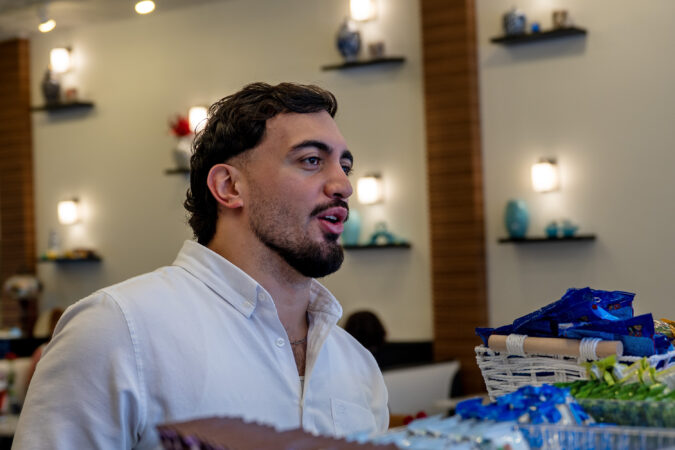
    Muhammed Emanet, 26, said he is trying to be upbeat as he faces the prospect of being separated from his wife and two sons, ages 4 and 1, all American citizens.

    “I try not to dwell on what I can’t control,” said Emanet, who with his parents operates the popular South Jersey eatery in Collingswood. “I still have a restaurant to run, employees that depend on me, customers, family. I have no other choice but to be positive.”

    Still, his situation feels disorienting, as what seemed to be settled is now newly unsettled.

    In spring the Department of Homeland Security ended its effort to deport Emanet, which seemed to clear the path for him to stay in the U.S. But this month, a different federal immigration agency told him it plans to deny his request for legal permanent residency, what is known as a green card.

    That intended denial carries a 30-day window for Emanet, who came here from Turkey as a boy, to present new or additional evidence to try to change the minds of officials at U.S. Citizenship and Immigration Services.

    The government also told him that under a new Trump administration policy, he and other immigrants who are pursuing green cards while living in the U.S. must leave the country and apply from their home nations. Emanet hasn’t been in Turkey since he was 12.

    It’s unclear what will happen when the 30-day deadline expires around July 2.

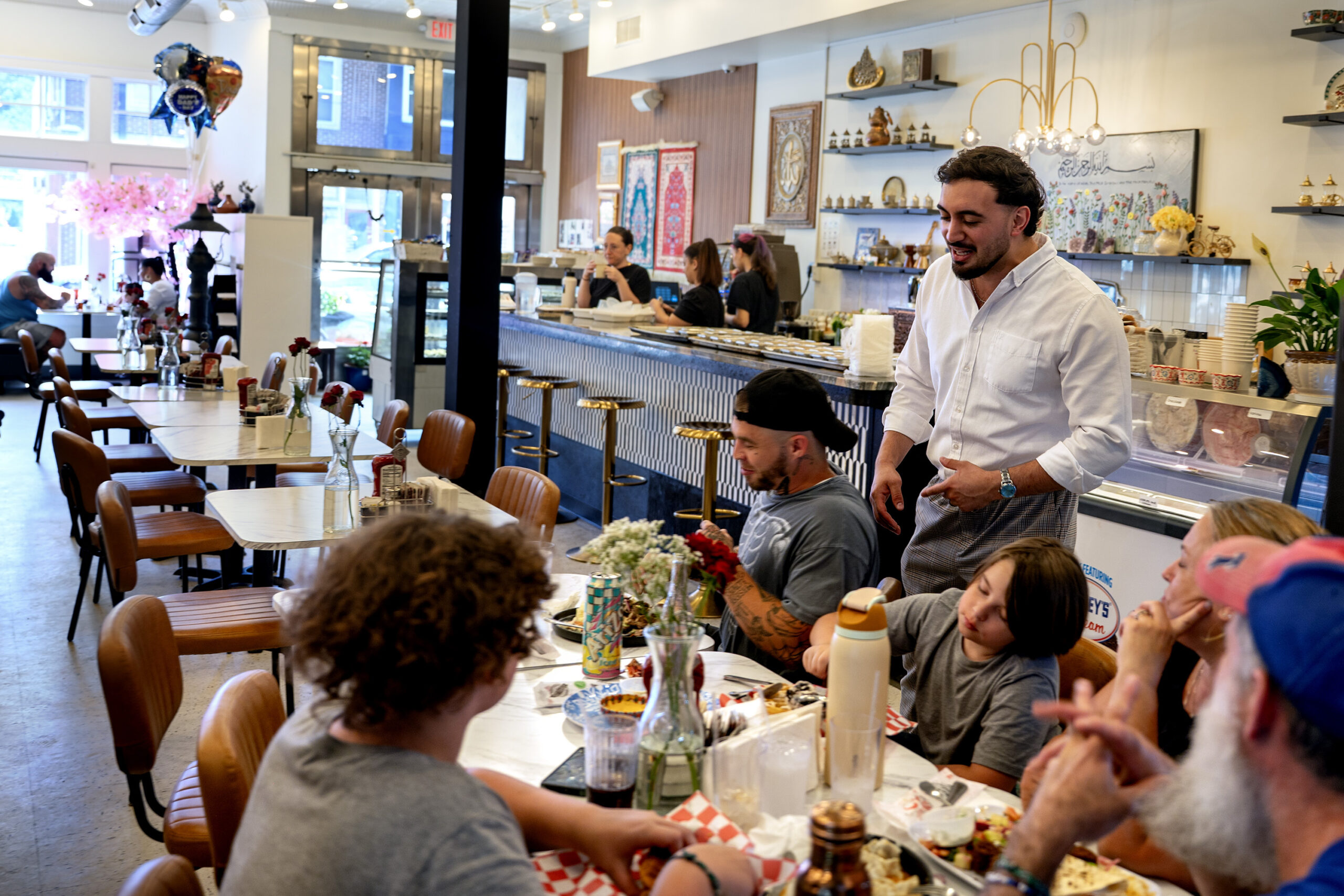
    Muhammed Emanet greets Elijah Brown, a friend from high school, and his family, at Jersey Kebab in Collingswood on Sunday.

    A little more than a year ago, on Feb. 25, 2025, the small Mediterranean restaurant on Haddon Avenue generated national headlines. Immigration advocates and local leaders railed against what they saw as government injustice, after ICE agents arrested owners Celal Emanet and his wife, Emine.

    Celal Emanet was released after being fitted with an electronic ankle monitor ― later removed ― while his wife was held at an ICE detention center in Elizabeth. She was released on bond after two weeks and a day.

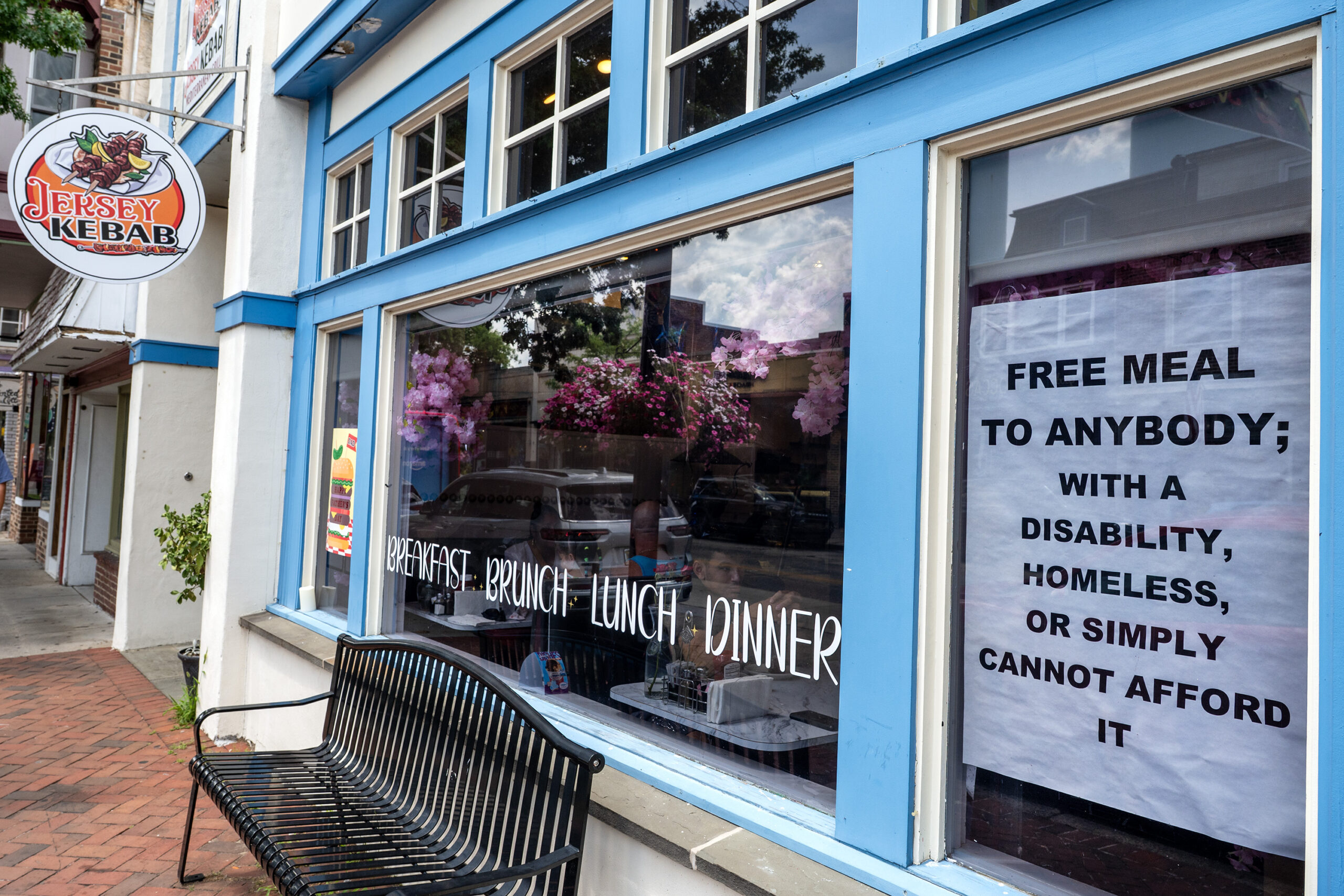
    Their arrests angered a South Jersey community that has long known the couple as caring people who offer free food to the hungry. A GoFundMe campaign to pay family costs and expenses raised $327,000, drawing donations from across the country and beyond, including from Ireland, Germany, and England.

    Now, a community effort to help Muhammed Emanet is driving a new letter-writing campaign, with person after person attesting to his good character and his importance to his neighbors. Hundreds of letters have been signed and gathered to be presented on his behalf, said Lori Leonard, who organized the GoFundMe campaign last year.

    “People are rallying behind Muhammed,” she said.

    State Assemblyman Bill Moen, a Democrat who represents parts of Camden and Gloucester Counties, signed a letter of support. He said on social media that Emanet “has touched the lives of many people throughout South Jersey” as a husband, father, neighbor, friend, and businessperson.

    “While I don’t make immigration decisions,” Moen said, “I do believe decision-makers should understand the character of the people whose lives are affected by those decisions.”

    U.S. Rep. Donald Norcross, a South Jersey Democrat, met with the family soon after Emine Emanet was released from ICE detention, and as her son’s situation emerged this month he stressed in a statement that the family had been long “rooted in our community.”

    In response to questions on Muhammed Emanet’s situation, USCIS said it does not comment on individual immigration cases.

    Being removed to Turkey would likely separate Emanet from his wife and children for years. It also could subject him to reprisals from the Turkish regime, where repressive human-rights conditions under President Recep Tayyip Erdogan has driven an exodus.

    Marriage to a U.S. citizen by someone who legally entered the country ― as Emanet did ― has long been a reliable route to an adjustment of status and acquisition of a green card.

    But the Trump policy change announced in May said adjustment should be an “extraordinary” relief, one that depends on government discretion, not merely on having a valid marriage and submitting the proper forms. Failing to depart the U.S. under the policy can by itself be treated as a negative factor in the government’s decision-making.

    Emanet’s immigration lawyer, Joseph Best, said that change in administration policy does not alter the law around eligibility for green cards.

    “If USCIS follows the law,” Best said, “he will attain his lawful permanent resident status just as Congress intended. It is not some fluke or exceptional ‘ask’ here.”

    Discretionary factors, he said, all favor Emanet, who was brought legally to the U.S. as a child, was admitted under a valid visa, and has no criminal history. He is loved in his community, and a key person in a successful family business that is known for helping others, Best said.

    The Jersey Kebab restaurant in Collingswood where Muhammed Emanet works is seen on Sunday, June 21. It offers the same “Free Meal” policy as at the prior location in Haddon Township.

    Celal and Emine Emanet came legally to the United States with two young children in 2008, entering under a religious visa that allowed the father to work at a New Jersey Islamic center.

    They said that they sought green cards before that visa expired in 2013, but that the application has been in government limbo for years.

    In 2021, they founded Jersey Kebab in Haddon Township, and the restaurant recently moved west on Haddon Avenue to a new location in Collingswood.

    The couple’s immigration cases continue. Celal Emanet’s next hearing is scheduled for December, while his wife is to appear in April 2027.

    The family stands among roughly 386,000 Turkish immigrants and people of Turkish ancestry who live in the United States, according to Inquirer computations of U.S. Census figures. That includes about 15,000 in Philadelphia and surrounding suburban Pennsylvania and New Jersey counties.

    Turkey is a longtime U.S. ally, a rectangular land bridge between Europe and Asia that is surrounded by sea on three sides. It is a Muslim nation, a country of tea drinkers, the place where Julius Caesar is said to have immortally proclaimed “Veni, vidi, vici” ― “I came, I saw, I conquered” ― after a decisive battle victory near what is now the modern town of Zile.

    Today, people are leaving the country amid economic instability and political purges, with many trying to get to the United States.

    U.S. government apprehensions of Turkish nationals at the Mexican and Canadian borders surged from 67 in 2020 to more than 15,000 in 2022 and another 15,000-plus in 2023, dropping to 10,500 in 2024. Figures for 2025 were not immediately available.

    President Donald Trump is expected to be in Turkey next month to attend the NATO summit in Ankara.

    Muhammed Emanet works at his family’s restaurant, Jersey Kebab, in Collingswood on Sunday, June 21.

    During Trump’s second term, USCIS has repeatedly paused the processing of applications for all types of immigration benefits, including those for legal permanent residency.

    Last month, the administration announced it would require foreigners who are living in the U.S. and want to obtain green cards to leave the country to do so. The administration said they must now apply in their homelands, a departure from longstanding policy that has sowed confusion and concern.

    For decades, foreign nationals who meet requirements have been able to complete the green-card process in the United States, including those married to U.S. citizens, holders of work and student visas, and refugees and asylum seekers.

    USCIS spokesperson Zach Kahler said in a statement that entering the U.S. on a visa should not be a first step toward obtaining a green card, that tourists and temporary workers are permitted to come here for limited times.

    “Our system is designed for them to leave when their visit is over,” he said.

    Making people leave the country to apply for green cards “reduces the need to find and remove those who decide to slip into the shadows and remain in the U.S. illegally,” he said.

    The administration instructed immigration officers to consider violations of immigration laws, including overstaying a visa, as negative factors in their decision-making.

    Since the uproar, though, USCIS has seemed to walk back the policy, saying it would be implemented on a case-by-case basis. That could mean that some immigrants will be able to stay in the U.S. while they seek green cards.

    Emanet said his immigration case started in 2020, when two plainclothes ICE officers arrived at the family home and said he was in the country illegally.

    In spring, his attorney persuaded an immigration court in Newark to terminate Emanet’s court case ― with no opposition from the DHS Office of the Principal Legal Adviser, the ICE prosecutors. That termination seemed to clear the way for Emanet to adjust his status.

    Instead, on June 3 he received a Notice of Intent to Deny from federal immigration officials, indicating they plan to reject his application to adjust his status. He is not sure what will happen when the 30-day deadline for new information expires.

    “I have children here who need my support ― American citizens who depend on me,” Emanet said. “I thought I was that one, that I did everything exactly how I was supposed to, that I should receive my green card. … It feels like a punch in the gut.”