Tag: Donald Trump

  • Trump accuses Democratic vets in Congress of sedition ‘punishable by death,’ including two lawmakers from Pa.

    Trump accuses Democratic vets in Congress of sedition ‘punishable by death,’ including two lawmakers from Pa.

    U.S. Rep. Chrissy Houlahan was in her Washington office when she saw attacks directed at her and other military veteran members of Congress from President Donald Trump, days after they urged members of the military and intelligence community to “refuse illegal orders.”

    Trump called the Democrats “traitors” in a Thursday post on Truth Social and, in a second post, accused them of sedition that he said is “punishable by DEATH.”

    Houlahan, a Chester County Democrat and an Air Force veteran, was one of six Democratic members of Congress who released a video Tuesday contending that Trump’s administration is “pitting” service members and intelligence professionals against American citizens and urging them not to “give up the ship.”

    All six lawmakers are either veterans or members of the intelligence community.

    “The idea that the most powerful man on the planet, who wields the power of the United States military and should be emblematic of all the things we value in this republic, would call for the death and murder of six duly elected members of the House of Representatives and the Senate — I’m speechless and I’m devastated,” Houlahan told The Inquirer on Thursday afternoon.

    Houlahan said she had anticipated there might be a response from the president after Stephen Miller, Trump’s deputy chief of staff and homeland security adviser, spent much of Wednesday railing against the lawmakers in the video. But Trump’s comments went beyond anything Houlahan imagined even from a president known for extreme and sometimes violent rhetoric.

    “I’ve been struggling with the right words for this,” she said. “‘I weep for our nation’ would be an understatement.”

    U.S. Rep. Chris Deluzio, a Navy veteran who was also featured in the video, called Thursday “a dark day in America” in an interview with The Inquirer.

    “It tells me who he is and it tells me exactly why we should be talking about the rule of law and the Constitution,” said Deluzio, an Allegheny County Democrat.

    In the video that set Trump off, the lawmakers, finishing one another’s sentences, reminded service members of their oath to the Constitution and instructed them to refuse to follow any order that would violate it.

    “Right now, the threats to our Constitution aren’t just coming from abroad,” Deluzio says in the video.

    “But from right here at home,” adds U.S. Rep. Jason Crow (D., Colo.) a former paratrooper and Army Ranger.

    The video was shared by U.S. Sen. Elissa Slotkin (D., Mich.), a former CIA officer, and also included U.S. Sen. Mark Kelly (D., Ariz.), a former Navy captain, and U.S. Rep. Maggie Goodlander (D., N.H.) a former intelligence officer.

    Houlahan said she considered the video “innocuous.”

    “It literally talked about the fact that you should follow only lawful orders, an obvious reminder that those of us who served have grown up on,” she said.

    On Thursday morning, Trump shared a Washington Examiner article about the video with the headline “Dem veterans in Congress urge service members to refuse unspecified unlawful orders,” saying their message “is really bad, and Dangerous to our Country.”

    “Their words cannot be allowed to stand. SEDITIOUS BEHAVIOR FROM TRAITORS!!! LOCK THEM UP???” the president wrote on Truth Social, his social media platform.

    About an hour later, Trump added in his second post: “SEDITIOUS BEHAVIOR, punishable by DEATH!”

    Sedition and treason cases in modern U.S. history are very rare.

    Democratic condemnations of Trump’s comments poured in from across the country Thursday. Republicans were more muted. House Speaker Mike Johnson (R., La.) defended Trump’s claim that the Democrats had engaged in “sedition,” describing the video as “wildly inappropriate.”

    “It is very dangerous. You have leading members of Congress telling troops to disobey orders,” he told CNN.

    Sen. Dave McCormick, a Pennsylvania Republican and U.S. Army veteran, who has called out political violence in the past, both after Charlie Kirk’s killing and an arson at Gov. Josh Shapiro’s residence, defended the president’s verbal attacks on the lawmakers. “Not a single unlawful order is cited in this video — because there aren’t any,” he said in a statement.

    “The video is inappropriate and unwarranted, and I didn’t hear any of these calls to defy orders when Democrats were using lawfare against President Trump,” he added, “Giving outlandish pardons, or intimidating tech companies to stop free speech.”

    About an hour later McCormick’s spokesperson sent a second comment from him, adding: “President Trump can speak for himself, but as I’ve said repeatedly, there is no place in either party for violent rhetoric and everyone needs to dial it down a notch.”

    One of the few Republicans to offer any criticism of the president was U.S. Rep. Brian Fitzpatrick, a former FBI agent, who said in a statement that in the FBI he saw “how inflamed rhetoric can stoke tensions and lead to unintended violence.”

    Fitzpatrick, a moderate from Bucks County who has butted heads with Trump in the past, did not name him in the statement but said the “exchange” was “part of a deeper issue of corrosive divisiveness that helps no one and puts our entire nation at risk. Such unnecessary incidents and incendiary rhetoric heighten volatility, erode public trust, and have no place in a constitutional republic, least of all in our great nation.”

    Houlahan and Deluzio respond

    Houlahan served three years on active duty as an Air Force engineer and an additional 13 years as a reserve, and reached the rank of captain. She has been outspoken against the Trump administration on military issues, particularly surrounding women serving in combat roles.

    The lawmakers did not refer to any specific orders from the president in their video, but they had numerous concerns in mind.

    Houlahan said it was sparked, in part, by military troops being deployed to U.S. cities and lethal strikes against suspected drug boats in the Caribbean.

    Trump has suggested that American cities should be “training grounds” for the military, and targeted Los Angeles, Chicago, Washington, and Portland for National Guard deployments. His administration’s boat strikes, which have led to protests in Philadelphia, have come under scrutiny by experts who say they are illegal, per the New York Times, which found Trump’s claims justifying the attacks to be questionable.

    “What we were speaking to is the future, those who are currently serving, and making sure they remember who they serve and what they serve,” Houlahan said.

    She said the lawmakers felt “a responsibility to … make sure people understood there are people in Congress who have your back.”

    Deluzio pointed to reporting about concerns from military personnel who were deployed to U.S. cities. PBS reported this week that people in uniform have been seeking outside legal advice about some of the missions the Trump administration has assigned them.

    “This is a guy who’s been documented in a meeting with the secretary of defense talking about shooting unarmed civilians in the legs,” Deluzio said, citing an account from former Defense Secretary Mark Esper.

    Deluzio said he learned about the oath the first day of boot camp and trained sailors on it when he gained rank.

    “This is something that is fundamental to how our military works and the respect we show our service members,” he said.

    Deluzio served six years in the Navy including three deployments. He cofounded the Democratic Veterans Caucus in June, which was formed in opposition to the Trump administration.

    He said he has heard from people on both sides of the aisle and encouraged Republican colleagues to speak out publicly against the president’s remarks.

    “Republican officials should be stepping up loudly and clearly and saying the calling of death by hanging to members of Congress is out of bounds,” he said.

    James Markley, a spokesperson for the Pennsylvania Republican Party, declined to comment on Trump’s remarks and said in a text that “the woke left continues to attempt to rip apart the fibers of our communities and our country.”

    “Our party will continue focusing on making our country safer, prosperous and more affordable,” he added.

    A spokesperson for Pennsylvania Treasurer Stacy Garrity, an Army veteran who is running for governor next year with the state GOP’s endorsement, did not respond to a request for comment.

    Sen. John Fetterman, a Pennsylvania Democrat who has made a name for himself working across the aisle, said in a post on X that threatening members of Congress is “deeply wrong” without exception, regardless of political party.

    “I strongly reject this dangerous rhetoric,” he said.

    Gov. Josh Shapiro also quickly denounced Trump for calling for violence against Houlahan and Deluzio, describing them in a post on X as “two outstanding members of Congress from Pennsylvania who have fought for our country.”

    “There should be no place for this violent rhetoric from our political leaders, and it shouldn’t be hard to say that,” said Shapiro, who has consistently spoken out against the threat of political violence since a politically motivated arsonist firebombed the governor’s mansion while he and his family slept inside in April.

    Trump’s attack on Houlahan and other Democratic veterans marks the second time in two months Democratic lawmakers who served in the armed forces have been the subject of attacks from across the aisle.

    U.S. Rep. Scott Perry, a Trump ally who represents parts of central Pennsylvania, told a conservative radio station in October that Democrats in Congress “hate the military,” based on their voting records.

    Deluzio and Houlahan, both members of the House Armed Services Committee, also banded together then to push back on Perry’s comments, calling them “garbage.”

  • Trump’s bullying of female reporters won’t stop journalists from asking tough questions

    Trump’s bullying of female reporters won’t stop journalists from asking tough questions

    It has long been established that some of Donald Trump’s most frequently used rhetorical weapons have been misogynistic insults. It is just as well known that the president seldom hides his contempt for journalists.

    So it’s hardly surprising anymore when Trump degrades female reporters. But the president reached a new level of low even for him when he had the nerve to refer to Bloomberg News White House correspondent Catherine Lucey as “piggy” during a briefing with reporters last week aboard Air Force One.

    Trump was angered when Lucey attempted to press him about the government’s case file on convicted sex offender Jeffrey Epstein. Trump literally leaned in Lucey’s direction, jabbed a pointed finger at her, and said, “Quiet! Quiet, piggy!”

    Even after everything we’ve seen from Trump over the past decade, it was a startling and disgusting thing to witness coming from a sitting president of the United States.

    Here’s the thing: Lucey’s a dogged reporter. I know. I used to work with Lucey when she was at the Daily News from 2000 to 2012. Lucey isn’t about to let the president’s schoolyard taunts stop her from asking tough questions.

    Catherine Lucey, now a White House correspondent with Bloomberg, spent a dozen years as a reporter at the Daily News before departing in 2012.

    Same thing with ABC News reporter Mary Bruce. On Tuesday, Trump accused her of being a “terrible person and a terrible reporter.” That’s not going to stop her, either. Journalists are a determined lot. The good ones in the White House pool recognize that their job is to hold him accountable and will stop at nothing short of exposing the truth.

    It’s in our collective DNA.

    Bruce did the right thing when she challenged Trump earlier this week by asking if it was appropriate for his family to be doing business in Saudi Arabia.

    She was also working in the spirit of journalism’s best traditions when she went on to also address Saudi Crown Prince Mohammed bin Salman, asking: “Your Royal Highness, the U.S. intelligence concluded that you orchestrated the brutal murder of a journalist. [The] 9/11 families are furious that you are here in the Oval Office. Why should Americans trust you? And the same to you, Mr. President.”

    After asking Bruce whom she worked for, Trump accused ABC of being “fake news.” He defended his family’s business operations in Saudi Arabia, and said the reporter should not have “embarrassed our guest by asking a question like that.”

    “A lot of people didn’t like that gentleman that you’re talking about,” Trump added, referring to the late Washington Post columnist Jamal Khashoggi. “Whether you like him or didn’t like him, things happen.”

    ABC News reporter Mary Bruce asks a question as President Donald Trump meets Saudi Arabia’s Crown Prince Mohammed bin Salman in the Oval Office Tuesday.

    A chill washed over me when I heard him say that. According to U.S. intelligence, Khashoggi reportedly was killed and dismembered on Oct. 2, 2018, in the Saudi Consulate in Istanbul.

    The National Press Club issued a statement afterward, saying the organization is “deeply troubled by President Trump’s comments today regarding the killing of journalist Jamal Khashoggi. Mr. Khashoggi’s murder inside a diplomatic facility was a grave violation of human rights and a direct attack on press freedom.”

    Just this past September, the president ordered NBC’s Yamiche Alcindor to be quiet and listen, and told her she was second-rate, which she is not. Alcindor had asked about his intentions for the Windy City after he posted a meme saying, in part, “Chicago about to find out why it’s called the Department of War.”

    Trump’s animosity toward journalists goes way back. Following a 2015 Republican primary debate, he said of Megyn Kelly, “There was blood coming out of her eyes, blood coming out of her wherever.”

    Even with the numerous lawsuits he’s filed against news outlets, Trump should have figured out by now that he’ll never stop the press. The president can insult and bar certain news organizations from the White House. But good journalists know how to work around that.

    Even if a network does replace one reporter, another journalist will step in and do the exact same thing. If a newspaper fires a print journalist, these days they’ll move their work to the Substack publishing platform or social media, the way former Washington Post columnist Karen Attiah did shortly after she was let go.

    Observers often wonder why journalists don’t fight back more against Trump’s verbal attacks. “Most reporters want to cover the news, not be the news,” as ABC News correspondent Jonathan Karl told Paul Fahri of the Columbia Journalism Review earlier this year. In other words, they try and stay focused on the job at hand.

    And these days, getting bullied by the man-child in the Oval Office seems to come with the territory.

  • Delco homeless shelters prepare to reopen after state budget impasse stretched limits of regional nonprofits

    Delco homeless shelters prepare to reopen after state budget impasse stretched limits of regional nonprofits

    For the first time in months, the director of the Community Action Agency of Delaware County, which operates three homeless shelters and a rental assistance program, isn’t thinking about service cuts.

    The organization was forced to reduce capacity at one of its shelters to 50% in October and close the other two on Nov. 1 as a result of the state budget impasse. Delaware County, which had been backfilling for missing state dollars, had to cut the funds it delivered to social service organizations in half last month.

    Now, the agency is beginning to reopen its doors and its rental assistance program.

    “[Employees] have been busy kind of preparing for the residents to come back,” said Ed Coleman, the nonprofit’s executive director.

    The Community Action Agency is one of several nonprofit organizations across the region that were stretched and stressed over the last several months as state dollars stopped flowing in the absence of a budget. Since January, they have grappled with uncertainty over federal funds as President Donald Trump’s administration cancels grants and Congress considers major cuts to social service programs.

    The dynamics exposed the vulnerabilities facing philanthropic organizations while threatening the assistance they provide to those they serve.

    Last week the Pennsylvania General Assembly finally passed a budget, ending one source of uncertainty. At the Community Action Agency, this meant employees began swapping out bedding and restocking toiletry bags given to incoming residents this week, undoing significant reductions in service.

    By Wednesday, Wesley House Shelter, a facility for families and single women that Community Action manages, was able to take in a senior citizen whom a church had placed in a hotel amid the budget stalemate. A former resident who had to stay with a relative until the shelter could reopen also returned to the facility.

    The promise of state funds could not have come soon enough.

    Coleman said since Nov. 13, the agency received a little more than 250 rental assistance requests — including almost 80 on Tuesday alone.

    The organization, Coleman said, is now assessing how much it can spend on services as it waits for state dollars to begin flowing again — which is expected to happen in the next 30 to 90 days as state agencies catch up on millions in missed payments to counties, schools, and nonprofits.

    “We really don’t get paid very quickly with most of the contracts we have,” Coleman said.

    The rebuilding mirrors what nonprofits across the Philly region are managing after the state budget impasse. Several nonprofit organizations told The Inquirer they had to freeze hiring and take out lines of debt. Nearly all reported burnout among staff as need increased and uncertainty over funding loomed large.

    The federal government shutdown, which saw a pause in federal food subsidies, only exacerbated the problem.

    “In many ways, it felt similar to the early months of COVID,” said Jennifer King, executive director of the Council of Southeast Pennsylvania.

    The Bucks County Opportunity Council was forced to reduce the number of individuals it could provide rent assistance to.

    And at A Woman’s Place, a domestic violence shelter in Montgomery County, more people were showing up at the shelter door, even if they weren’t domestic violence survivors, asking for help the shelter was not equipped to provide. Often, she said, staff did not even have an answer of where to send people because of the reduction in services across the board.

    “That takes a toll on staff, and they start thinking, ‘Do I really want to do this work?’” said Beth Sturman, the shelter’s executive director.

    Providers worried most about the impact the freeze had on those they served. Jill Whitcomb, president and CEO of Surrey Senior Services in Delaware County, said older adults are facing greater stress and anxiety as a result of state and federal services being rolled back.

    “Our mission is to help people remain at home and independent and engaged as long as they possibly can or want to,” Whitcomb said. “That becomes really hard on a limited income when those incomes are already tenuous, and then they’re living with the anxiety about losing their Social Security.”

    Jeannine Litski, president of Mental Health Partnerships, said the closure of shelters in the region resulted in greater trauma to unhoused people.

    “Imagine you’re just holding on by a thread, and you have at least a place you can lay on a cot for the night and you have a little food, and now that’s taken away,” she said.

    While philanthropic organizations were grateful for the state budget deal, they remained anxious about the possibility of another federal government shutdown at the end of January and questioned how much more they could take.

    “We got through COVID. Let’s see if we can get through this,” Whitcomb said. “It’d be interesting to talk five years from now and see where everybody is.”

    This suburban content is produced with support from the Leslie Miller and Richard Worley Foundation and The Lenfest Institute for Journalism. Editorial content is created independently of the project donors. Gifts to support The Inquirer’s high-impact journalism can be made at inquirer.com/donate. A list of Lenfest Institute donors can be found at lenfestinstitute.org/supporters.

  • What’s next now that Trump has signed bill releasing the Epstein files

    What’s next now that Trump has signed bill releasing the Epstein files

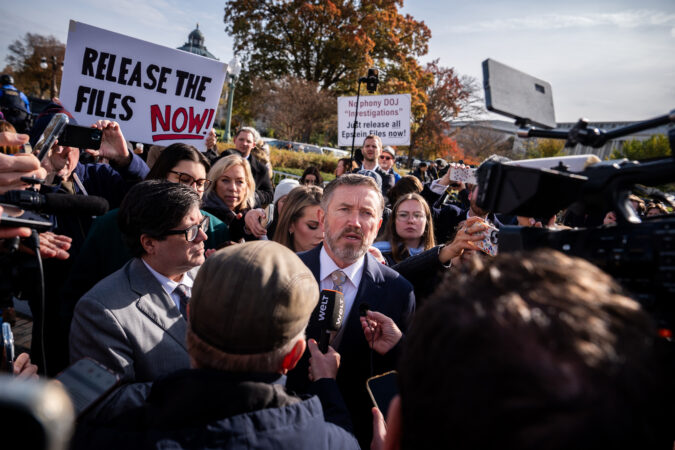
    WASHINGTON — President Donald Trump has signed a bill to compel the Justice Department to make public its case files on the convicted sex offender Jeffrey Epstein, a potentially far-reaching development in a yearslong push by survivors of Epstein’s abuse for a public reckoning.

    Both the House and Senate passed the bill this week with overwhelming margins after Trump reversed course on his monthslong opposition to the bill and indicated he would sign it. Now that the bill has been signed by the president, there’s a 30-day countdown for the Justice Department to produce what’s commonly known as the Epstein files.

    “This bill is a command for the president to be fully transparent, to come fully clean, and to provide full honesty to the American people,” Senate Democratic Leader Chuck Schumer of New York said Wednesday.

    Schumer added that Democrats were ready to push back if they perceive that the president is doing anything but adhering to “full transparency.”

    In a social media post Wednesday as he announced he had signed the bill, Trump wrote, “Democrats have used the ‘Epstein’ issue, which affects them far more than the Republican Party, in order to try and distract from our AMAZING Victories.”

    The swift, bipartisan work in Congress this week was a response to the growing public demand that the Epstein files be released, especially as attention focuses on his connections to global leaders including Trump, former President Bill Clinton, Andrew Mountbatten Windsor, who has already been stripped of his royal title as Prince Andrew over the matter, and many others.

    There is plenty of public anticipation about what more the files could reveal. Yet the bill will most likely trigger a rarely seen baring of a sprawling federal investigation, also creating the potential for unintended consequences.

    What does the bill do?

    The bill compels Attorney General Pam Bondi to release essentially everything the Justice Department has collected over multiple federal investigations into Epstein, as well as his longtime confidante and girlfriend Ghislaine Maxwell, who is serving a 20-year prison sentence for luring teenage girls for the disgraced financier. Those records total around 100,000 pages, according to a federal judge who has reviewed the case.

    It will also compel the Justice Department to produce all its internal communications on Epstein and his associates and his 2019 death in a Manhattan jail cell as he awaited charges for sexually abusing and trafficking dozens of teenage girls.

    The legislation, however, exempts some parts of the case files. The bill’s authors made sure to include that the Justice Department could withhold personally identifiable information of victims, child sexual abuse materials and information deemed by the administration to be classified for national defense or foreign policy.

    “We will continue to follow the law with maximum transparency while protecting victims,” Bondi told a news conference Wednesday when asked about releasing the files.

    The bill also allows the Justice Department to withhold information that would jeopardize active investigations or prosecutions. That’s created some worry among the bill’s proponents that the department would open active investigations into people named in the Epstein files in order to shield that material from public view.

    Rep. Marjorie Taylor Greene, a longtime Trump loyalist who has had a prominent split with Trump over the bill, said Tuesday that she saw the administration’s compliance with the bill as its “real test.”

    “Will the Department of Justice release the files, or will it all remain tied up in investigations?” she asked.

    In July, the FBI said in a memo regarding the Epstein investigation that, “we did not uncover evidence that could predicate an investigation against uncharged third parties.” But Bondi last week complied with Trump’s demands and ordered a federal prosecutor to investigate Epstein’s ties to the president’s political foes, including Clinton.

    Still, Rep. Thomas Massie, a Kentucky Republican who sponsored the bill, said “there’s no way they can have enough investigations to cover” all of the people he believes are implicated in Epstein’s abuse.

    “And if they do, then good,” he added.

    The bill also requires the Justice Department to produce reports on what materials it withheld, as well as redactions made, within 15 days of the release of the files. It stipulates that officials can’t withhold or redact anything “on the basis of embarrassment, reputational harm, or political sensitivity, including to any government official, public figure, or foreign dignitary.”

    Who could be named?

    There’s a widely held expectation that many people could be named in case files for investigations that spanned over a decade — and some concern that just because someone is named, that person would be assumed guilty or complicit.

    Epstein was a luminary who kept company with heads of state, influential political figures, academics and billionaires. The release of his emails and messages by a House Oversight Committee investigation last week has already shown his connections with — and private conversations about — Trump and many other high-powered figures.

    Yet federal prosecutors follow carefully constructed guidelines about what information they produce publicly and at trial, both to protect victims and to uphold the fairness of the legal system. House Speaker Mike Johnson raised objections to the bill on those grounds this week, arguing that it could reveal unwanted information on victims as well as others who were in contact with investigators.

    Still, Johnson did not actually try to make changes to the bill and voted for it on the House floor.

    For the bill’s proponents, a public reckoning over the investigation is precisely the point. Some of the survivors of trafficking from Epstein and Maxwell have sought ways to name people they accuse of being complicit or involved, but fear they will face lawsuits from the men they accuse.

    Massie said that he wants the FBI to release the reports from its interviews with the victims.

    Those reports typically contain unvetted information, but Massie said he is determined to name those who are accused. He and Greene have offered to read the names of those accused on the House floor, which would shield their speech from legal consequences.

    “We need names,” Massie said.

  • As Ukraine falters, Trump tries to hand the country to Putin with a shamefully pro-Russia peace plan

    As Ukraine falters, Trump tries to hand the country to Putin with a shamefully pro-Russia peace plan

    While America has been obsessing over Jeffrey Epstein, Vladimir Putin has been making dangerous headway in Ukraine — and expanding his war into Europe.

    Under such circumstances, genuine peace negotiations are impossible because Putin thinks he is winning. America’s top foreign policy priority should be to reverse the Russian leader’s mindset by increasing military sales to Ukraine — which the Europeans will pay for.

    Instead, the Trump team and Russian officials together have drawn up a new 28-point “peace” plan, without first consulting Ukraine or European allies. This pro-Russian plan calls for major Ukrainian concessions and would leave the country naked to further Russian aggression.

    The White House has already denied Ukraine the weapons that could still stop the Russians, thereby effectively helping Putin slaughter Ukrainian civilians nightly with missiles and drones that target apartment buildings and heating systems.

    In pursuit of his mythical Nobel Peace Prize, Trump appears poised, yet again, to sell out Ukraine. If so, he will also be selling out our European allies — and the United States.

    Most Americans don’t realize Russia is already at war with Europe. This new mode of hybrid warfare is carried out on land, air, and sea, but without ground troops — yet. Moscow is frequently using drones to shut down airports in Germany, Denmark, Norway, Belgium, and Poland. Russian hackers are attacking European networks.

    Russian ships are cutting Europe’s underwater cables, its warplanes are invading European airspace and buzzing military planes, and its saboteurs are carrying out assassinations and arson attacks, including failed plans to bring down European airliners.

    Because this war is unconventional, and hitting individual countries in Europe, the European Union and its members haven’t yet figured out how to respond.

    Putin seeks not only to frighten Europeans but to unnerve Americans, as well. U.S. intelligence agencies concluded last year that failed Russian arson attempts on planes were a “test run” for using similar devices on transatlantic cargo shipments, according to the Washington Post. And Putin frequently hints at nuclear war against the West.

    Has Trump denounced such behavior, or warned Putin to stop his attacks on U.S. allies? Nyet. Only occasional grumbling has been heard from the White House.

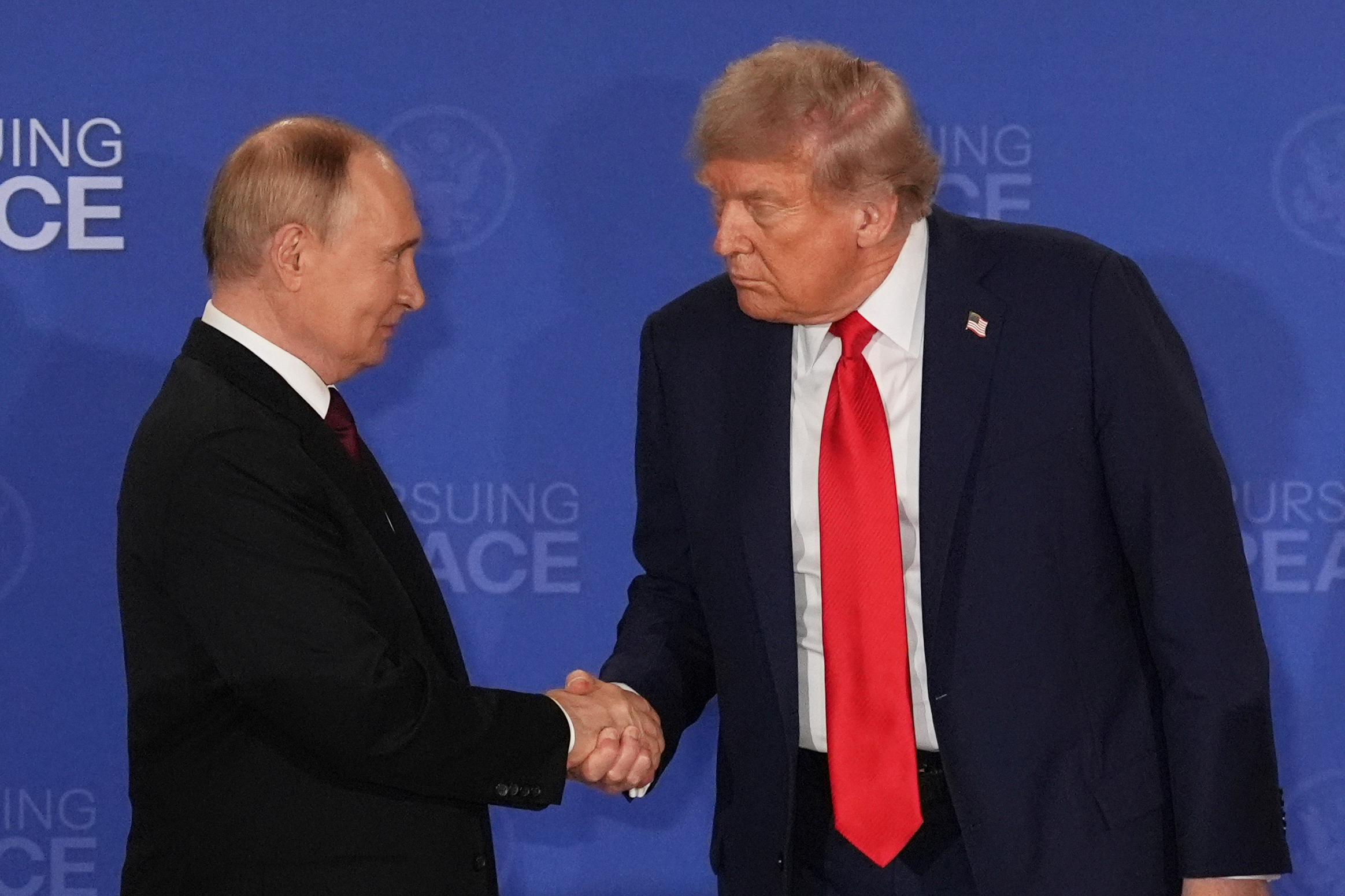
    President Donald Trump shakes the hand of Russia’s President Vladimir Putin during a joint press conference at Joint Base Elmendorf-Richardson, Alaska, in August.

    The president probably never even took briefings on Russian sabotage. Anything negative about Putin is rebuffed as the “Russia, Russia, Russia hoax.”

    Instead, Trump has been busy misusing U.S. forces to threaten war on Venezuela (which poses no military threat to America, and contrary to Trump’s claims, ships no fentanyl to U.S. shores). Perhaps this wag-the-dog war is meant to scare a weak Nicolás Maduro.

    But Trump has made clear he doesn’t dare (or want to) stand up to Putin.

    His new secondary sanctions on Russian oil sales haven’t been seriously pursued against India or China, which buy huge and increasing shares of Russian oil and gas.

    Moreover, as Moscow takes advantage of Ukraine’s dire shortage of man power, air defenses, and long-range missiles, Trump refuses to help. Even though Europe has pledged to pay for key weapons systems for Kyiv, Trump won’t sell them.

    Although Ukraine makes an array of drones, they can’t shoot down ballistic missiles or cope with Russia’s current mass production of drones, helped by thousands of North Korean workers and endless shipments of parts from China.

    Promised U.S.-made Patriot air defense systems, which could take out the ballistic missiles, have never arrived in Ukraine. Only this week, after a nine-month delay, did Washington permit Kyiv to once again fire long-range U.S.-made ATACMS missiles. Defense Secretary Pete Hegseth had banned their use early this year.

    And most cowardly, after hinting for months that he would send desperately needed long-range Tomahawk missiles to Ukraine, Trump finally came out with a big “No Tomahawks.”

    There’s more. Although Ukraine is a world champion producer of all varieties of drones, and the United States lags far behind in unmanned warfare, Trump has yet to conclude a much-discussed drone deal with Volodymyr Zelensky, whereby Ukraine would swap drones, technology, and testing for U.S. weapons.

    Such White House blindness — and weakness — convinces Putin he can get away with destroying Ukraine.

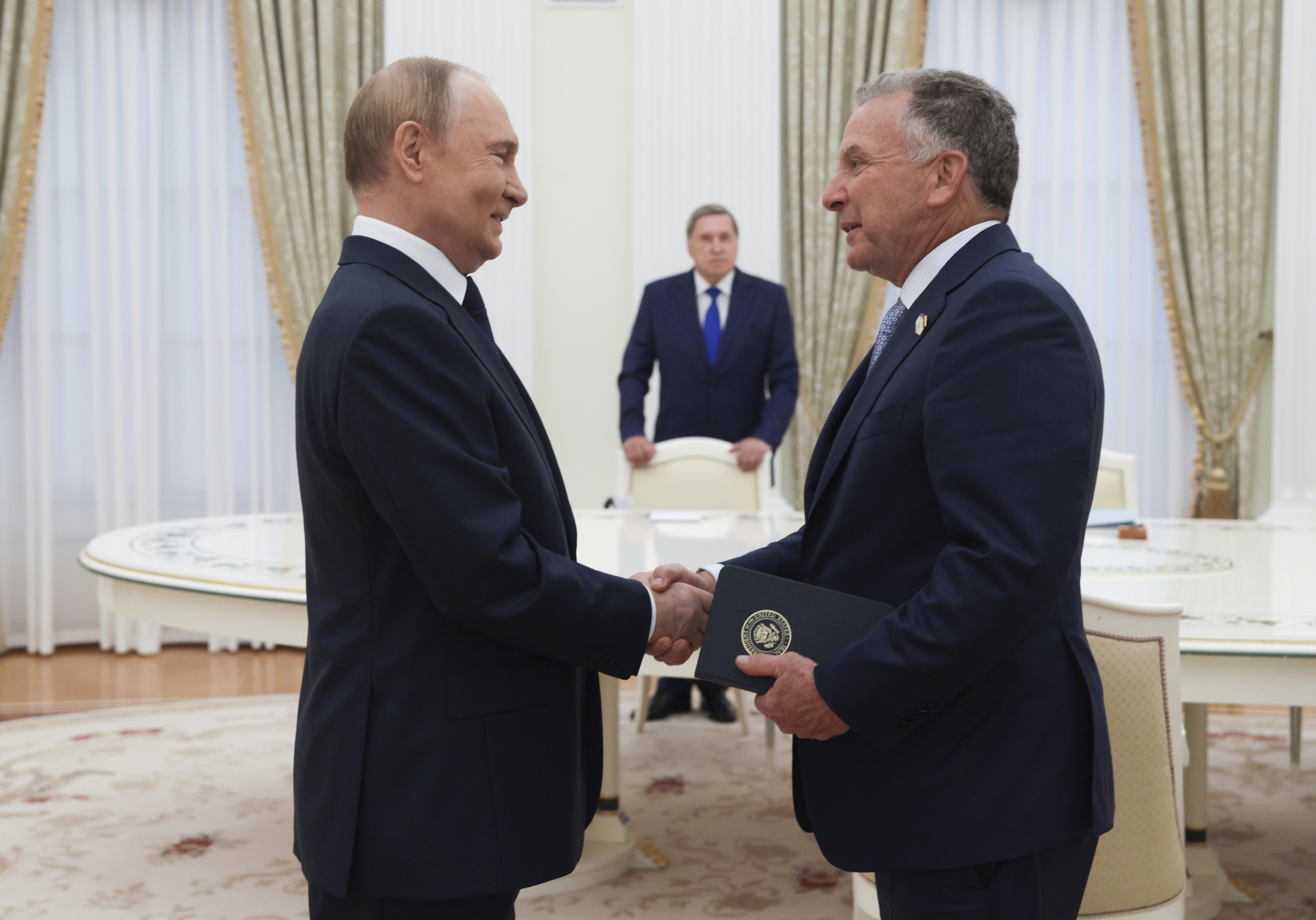
    Russian President Vladimir Putin and President Donald Trump’s special envoy Steve Witkoff (right) shake hands during their meeting in Moscow in August.

    And so the Russian leader is doing with a disastrous plan pushed by Trump’s supremely naive negotiator, real estate mogul Steve Witkoff, who has has no grasp of Putin’s history or goals and seems to swallow his lies whole.

    Witkoff’s draft plan would reportedly require Ukraine to give up the 14 per cent of the Donbas region it still controls, and cut the size of its armed forces by half. It would require Ukraine to abandon key categories of weapons, endorse a permanent rollback of vital U.S. assistance including long-range weapons, and ban foreign troops from basing on Ukrainian soil.

    And the deal provides no U.S. guarantees except lip service to protect against Putin’s certain violations in the future.

    Trump might as well say publicly that he endorses Putin’s dream of swallowing Ukraine. He is effectively telling Ukraine and Zelensky: Drop Dead.

    Putin isn’t fighting for a piece of land. He wants to absorb Ukraine back into the Russian empire.

    Viktor Medvedchuk, a Ukrainian traitor and close Putin ally, whom the Russian president wanted to install in Zelensky’s place after the invasion, recently spelled out Kremlin goals to the official TASS newswire. He said that Ukraine will not “survive as a state” in the future, and Moscow considers the reunification of Ukraine with Russia a strategic goal.

    Trump clearly doesn’t care.

    The administration is pushing to strip language from an annual U.N. General Assembly Human Rights Committee resolution that recognizes Ukraine’s territorial integrity and rights as a sovereign nation. The U.S. delegation will vote against anything that condemns Putin.

    Trump has made clear he believes Putin bears no blame for invading Ukraine (it’s all Zelensky’s fault or even Joe Biden’s). He has crossed over totally to the Russian dictator’s camp.

    Unless he wakes up from his Putin-induced trance, he is incapable of making peace.

    Although things look bleak for Ukraine, I believe its fighters will manage to hold back the Russians this winter, but at a brutal cost to civilians’ and soldiers’ lives. Trump will bear much blame for the suffering to come.

    But after the Epstein-induced awakening of GOP members of Congress, I hope some Republican senators will find the courage to denounce Trump’s attempt to hand over Ukraine to Russia.

    They should recognize that the retort of Rep. Marjorie Taylor Greene (R., Ga.) after Trump called her a traitor also applies to his position on Ukraine.

    “Let me tell you what a traitor is. A traitor is an American [who] serves foreign countries and themselves,” Greene said. With his heedless pursuit of Putin and a peace prize, Trump is serving the Kremlin, in service to his ego, as he attempts to sacrifice Ukraine.

  • Creative resistance is as American as apple pie — especially in Philadelphia

    Creative resistance is as American as apple pie — especially in Philadelphia

    Art matters. And because it does, artists and art institutions have been targets of authoritarian regimes from Red Square to Tiananmen Square. Black Lives Matter Plaza, located near the White House, was removed in March. That same month, President Donald Trump issued an executive order targeting the Smithsonian Institution and interpretive signs at National Park Service sites, including the President’s House.

    Paul Robeson, athlete, singer, actor, and human rights activist, lived his final years in West Philadelphia. At a protest rally in London in 1937, Robeson said: “The artist must elect to fight for freedom or for slavery. I have made my choice. I had no alternative.”

    With democracy now under assault, “Fall of Freedom,” a national artist-led protest, has issued a call for creative resistance, of actions against authoritarian control and censorship, to take place in venues nationwide beginning Friday.

    “Fall of Freedom is an urgent reminder that our stories and our art are not luxuries, but essential tools of resistance,” Pulitzer Prize-winning playwright Lynn Nottage wrote in a statement. “When we gather in theaters and public spaces, we are affirming our humanity and our right to imagine a more just future.”

    Creative resistance is as American as apple pie, and this city is, after all, the birthplace of our democracy.

    The political cartoon “Join, or Die,” published in 1754 in the Pennsylvania Gazette, became a symbol of the American Revolution and stoked public opinion against Britain.

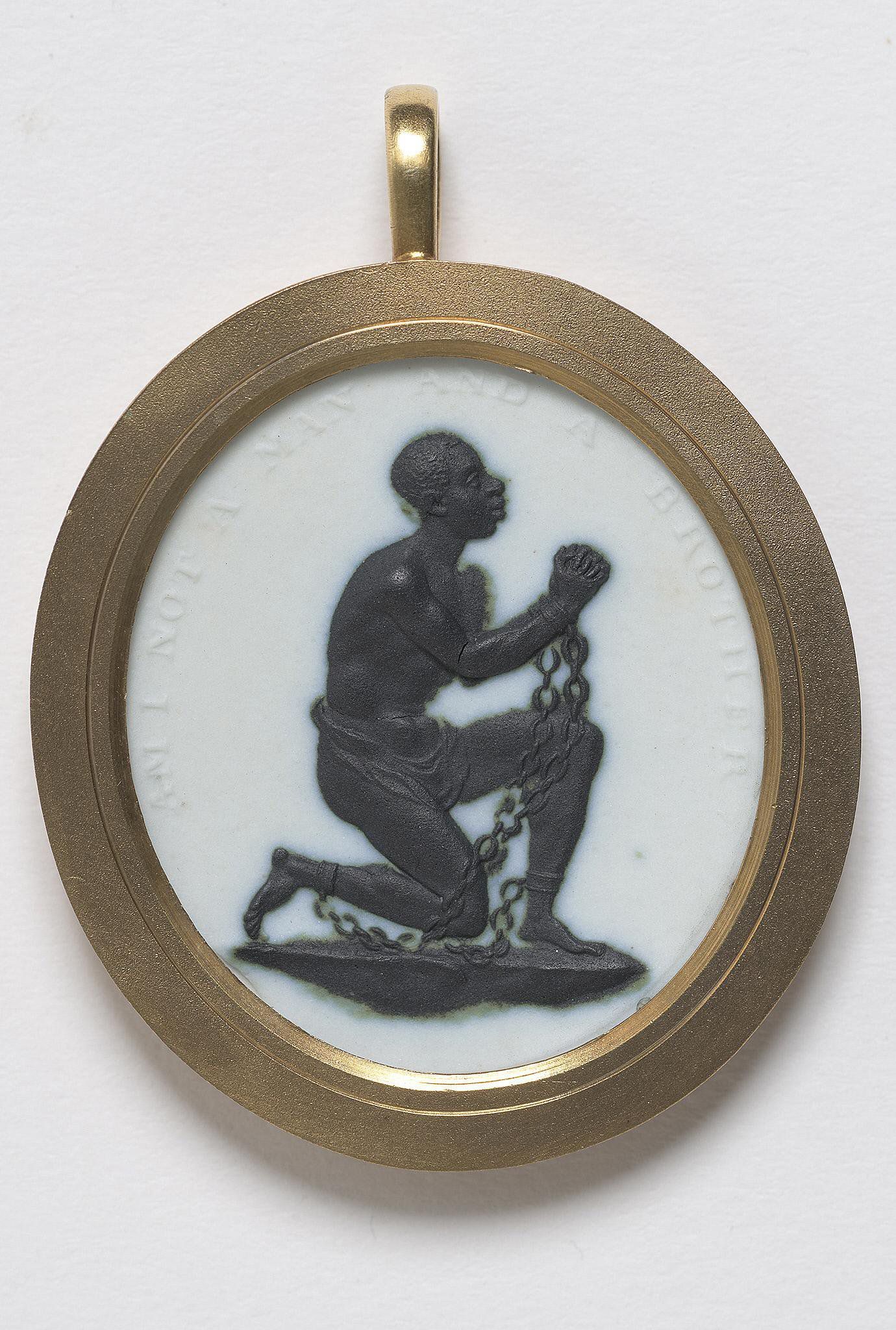
    During his tenure as president of the Pennsylvania Abolition Society, Benjamin Franklin helped distribute Josiah Wedgwood’s anti-slavery medallion “Am I Not a Man and a Brother.” In a letter to Wedgwood, Franklin wrote, “I am persuaded [the medallion] may have an Effect equal to that of the best written Pamphlet in procuring favour to those oppressed people.”

    Wedgewood medallion with the words “Am I not a man and a brother” in relief along the edge, ca. 1780s, from the collection of the Philadelphia Museum of Art. The museum’s education materials on the medallion stipulate that it was “modeled by William Hackwood and fabricated by Josiah Wedgwood in England in 1787 for the Society for Effecting the Abolition of the Slave Trade, this medallion functioned as a potent political emblem for promoting the abolition of slavery. It reached the United States in 1788, when Wedgwood sent a batch to Philadelphia for former enslaver and ‘cautious abolitionist’ Benjamin Franklin to distribute.”

    And indeed it did. Wedgwood’s engraving became the iconic image of the anti-slavery movement. It was printed on broadsides, snuffboxes, decorative objects, and household items. Abolitionist art was part of domestic life in Philadelphia.

    The American Anti-Slavery Society, whose founding members included Philadelphians James Forten, Lucretia Mott, and Robert Purvis, commissioned a copper token featuring a related “Am I Not a Woman and a Sister” design. Proceeds from the sale of the token were used to fund the abolition movement.

    Abolitionists used art to create a visual language of freedom. Artists created illustrations and paintings that showed “how bad slavery was.” There were theatrical performances and public readings of Harriet Beecher Stowe’s Uncle Tom’s Cabin, the best-selling novel of the 19th century.

    Robert Douglass Jr. studied at the Pennsylvania Academy of the Fine Arts. He is considered Philadelphia’s first African American photographer. Active with the National Colored Conventions movement, Douglass created a counternarrative to derogatory racial stereotypes. His daguerreotype of Francis “Frank” Johnson, a forefather of jazz, is in the collection of the Historical Society of Pennsylvania.

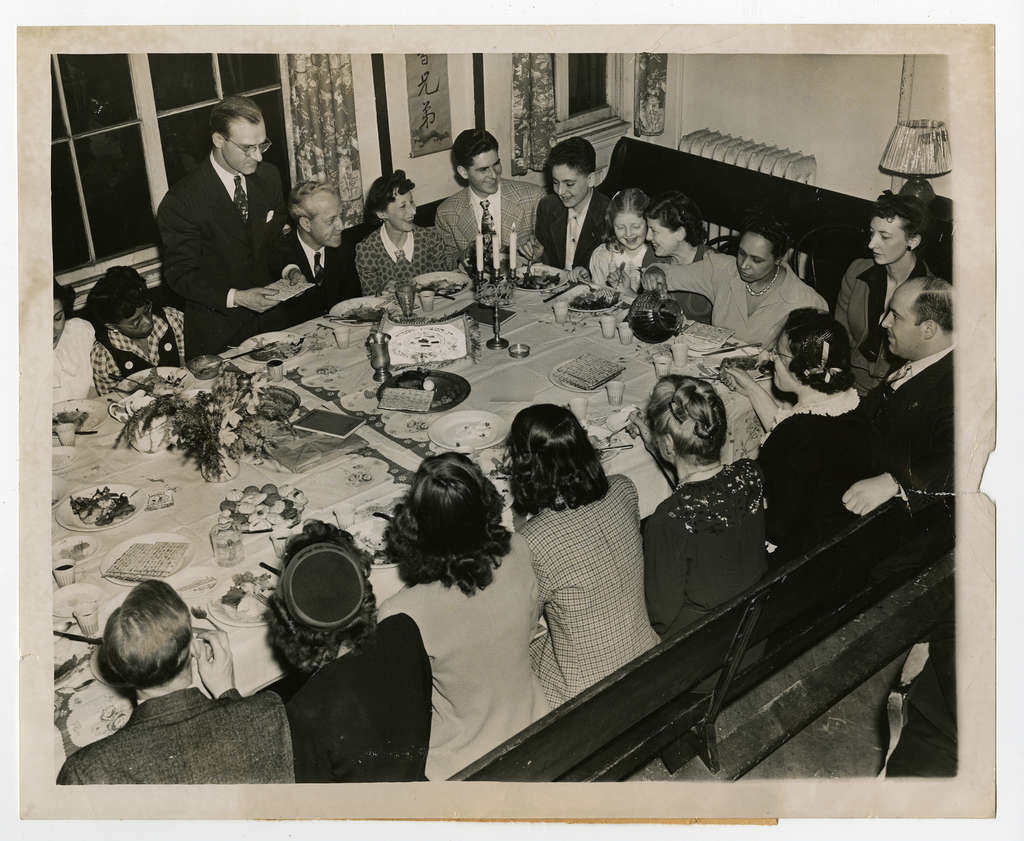
    On the heels of the Jazz Age, a group of religious activists formed the Young People’s Interracial Fellowship in North Philadelphia in 1931. The fellowship brought together Black and white congregations for dialogue, cultural exchange, and joint activism.

    A 1944 seder at Fellowship House.

    In 1941, the organization evolved into Fellowship House, whose mission was to resist racial discrimination through education, cultural programs, and community organizing.

    Notable cultural figures who spoke at Fellowship House include Marian Anderson, Dave Brubeck, and Robeson. In April 1945, seven months before the release of the short film The House I Live In, Frank Sinatra, the film’s star, stopped by Fellowship House to speak about the importance of racial tolerance. He told the young people that “disunity only helps the enemy.”

    The film’s title song, an anti-racism patriotic anthem, became one of Sinatra’s signature songs.

    Abel Meeropol, an educator, poet, and songwriter, composed both the film’s title song, “The House I Live In,” and the anti-lynching poem and song, “Strange Fruit,” which would become inextricably associated with one of Philadelphia’s jazz greats.

    Born on April 7, 1915, at Philadelphia General Hospital in West Philly, Billie Holiday, née Eleanora Fagan, is one of the greatest jazz singers of all time.

    No artist has met the moment with more courage than Lady Day, whose 1939 recording of “Strange Fruit” was named song of the century by Time magazine in 1999, and was added to the National Recording Registry in 2002.

    Strange Fruit is a timeless and empowering act of creative resistance.

    While Holiday is sui generis, jazz musicians were the vanguard of the civil rights movement.

    At so-called black and tan clubs like the Down Beat and the Blue Note, Black and white people intermingled on an equal basis for the first time.

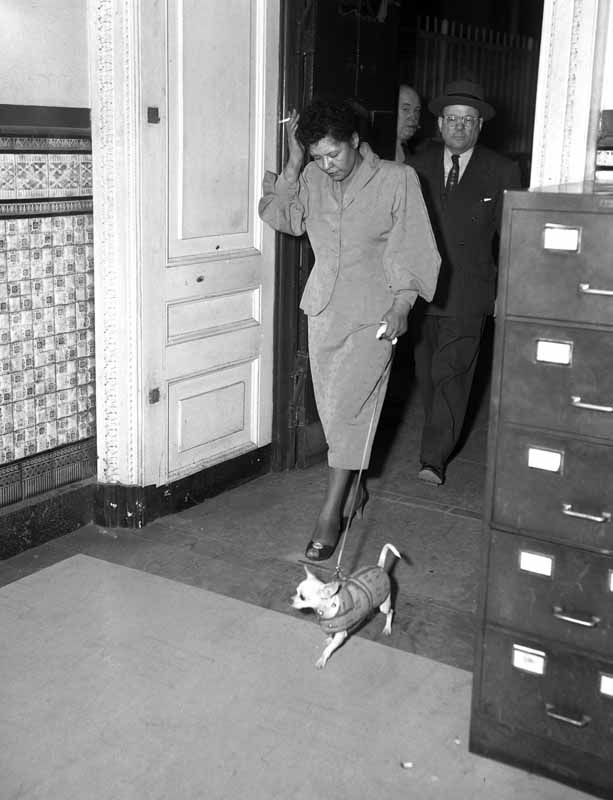
    Billie Holiday leaving City Hall in 1956 after her release following a drug bust. Police Capt. Clarence Ferguson walks behind her.

    Jazz clubs were constantly harassed by Philadelphia police led by vice squad Capt. Clarence Ferguson and his protégé, Inspector Frank Rizzo. The nightspots became battlegrounds in the struggle for racial justice. Jazz musicians’ unbowed demeanor fashioned a new racial identity.

    In remarks to the 1964 Berlin Jazz Festival, the Rev. Dr. Martin Luther King Jr. riffed on the importance of jazz and the jazz culture. He observed: “It is no wonder that so much of the search for identity among American Negroes was championed by jazz musicians. Long before the modern essayists and scholars wrote of racial identity as a problem for a multiracial world, musicians were returning to their roots to affirm that which was stirring within their souls.”

    “Much of the power of our Freedom Movement in the United States has come from this music,” he added. “It has strengthened us with its sweet rhythms when courage began to fail. It has calmed us with its rich harmonies when spirits were down.”

    At a time when our constitutional rights are being trampled and American history is being whitewashed, I am answering “Fall of Freedom’s” call — as a cultural worker and as a Philadelphian.

    Under the “Fall of Freedom” banner, and in collaboration with Scribe Video Center, I will lead a walking tour of Holiday’s Philadelphia.

    We will trace her footsteps through Center City and South Philly. We will visit the clubs where she sang, the hotels where she stayed, and the site of the jazz club immortalized in the Tony Award–winning play Lady Day at Emerson’s Bar and Grill. Along the way, we will also highlight places connected to Robeson.

    Courage is contagious. When we gather on South Broad, we are the resistance.

    Faye Anderson is the founder and director of All That Philly Jazz, a place-based public history project. She can be contacted at phillyjazzapp@gmail.com.

  • Trump signs bill to release Jeffrey Epstein case files after fighting it for months

    Trump signs bill to release Jeffrey Epstein case files after fighting it for months

    WASHINGTON — President Donald Trump signed legislation Wednesday that compels his administration to release files on convicted sex offender Jeffrey Epstein, bowing to political pressure from his own party after initially resisting those efforts.

    Trump could have chosen to release many of the files on his own months ago.

    “Democrats have used the ‘Epstein’ issue, which affects them far more than the Republican Party, in order to try and distract from our AMAZING Victories,” Trump said in a social media post as he announced he had signed the bill.

    Now, the bill requires the Justice Department to release all files and communications related to Epstein, as well as any information about the investigation into his death in a federal prison in 2019, within 30 days. It allows for redactions about Epstein’s victims for ongoing federal investigations, but DOJ cannot withhold information due to “embarrassment, reputational harm, or political sensitivity.”

    It was a remarkable turn of events for what was once a farfetched effort to force the disclosure of case files from an odd congressional coalition of Democrats, one GOP antagonist of the president, and a handful of erstwhile Trump loyalists. As recently as last week, the Trump administration even summoned one Republican proponent of releasing the files, Rep. Lauren Boebert of Colorado, to the Situation Room to discuss the matter, although she did not change her mind.

    But over the weekend, Trump did a sharp U-turn on the files once it became clear that congressional action was inevitable. He insisted the Epstein matter had become a distraction to the GOP agenda and indicated he wanted to move on.

    “I just don’t want Republicans to take their eyes off all of the Victories that we’ve had,” Trump said in a social media post Tuesday afternoon, explaining the rationale for his abrupt about-face.

    The House passed the legislation on a 427-1 vote, with Rep. Clay Higgins, R-La., being the sole dissenter. He argued that the bill’s language could lead to the release of information on innocent people mentioned in the federal investigation. The Senate later approved it unanimously, skipping a formal vote.

    It’s long been established that Trump had been friends with Epstein, the disgraced financier who was close to the world’s elite. But the president has consistently said he did not know of Epstein’s crimes and had cut ties with him long ago.

    Before Trump returned to the White House for a second term, some of his closest political allies helped fuel conspiracy theories about the government’s handling of the Epstein case, asserting a cover-up of potentially incriminating information in those files.

  • Trump administration says it wants to ‘completely deconstruct’ SNAP program. Here’s what’s actually happening.

    Trump administration says it wants to ‘completely deconstruct’ SNAP program. Here’s what’s actually happening.

    SNAP benefits are restored, and the program is funded through next year. But the Trump administration is now looking to “completely deconstruct the program,” its top USDA official said.

    Agriculture Secretary Brooke Rollins said that millions of low-income Supplemental Nutrition Assistance Program recipients will have to reapply for their benefits as part of an effort to crack down on “fraud.”

    “It’s going to give us a platform and a trajectory to fundamentally rebuild this program, have everyone reapply for their benefit, make sure that everyone that’s taking a taxpayer-funded benefit through SNAP or food stamps, that they literally are vulnerable, and they can’t survive without it,” she told Newsmax last week.

    On Tuesday, Rollins told Fox Business that her plan is for the U.S. Department of Agriculture to “completely deconstruct” SNAP.

    Agriculture Secretary Brooke Rollins speaks to the media in the Oval Office of the White House in June. Rollins had various roles in the first Trump administration.

    However, there is no official guidance from USDA on the plans Rollins spoke of and the rules have not changed, said Community Legal Services staff attorney Mackenzie Libbey.

    “Most SNAP recipients in Pennsylvania are already required to reverify household and income information every six months. SNAP recipients should continue submitting their semiannual reports and annual renewals as the current rules require,” Libbey said.

    In a statement, the USDA did not confirm the existence of new changes to SNAP. Instead, a spokesperson for the agency said the “standard recertification processes for households is a part of that work.”

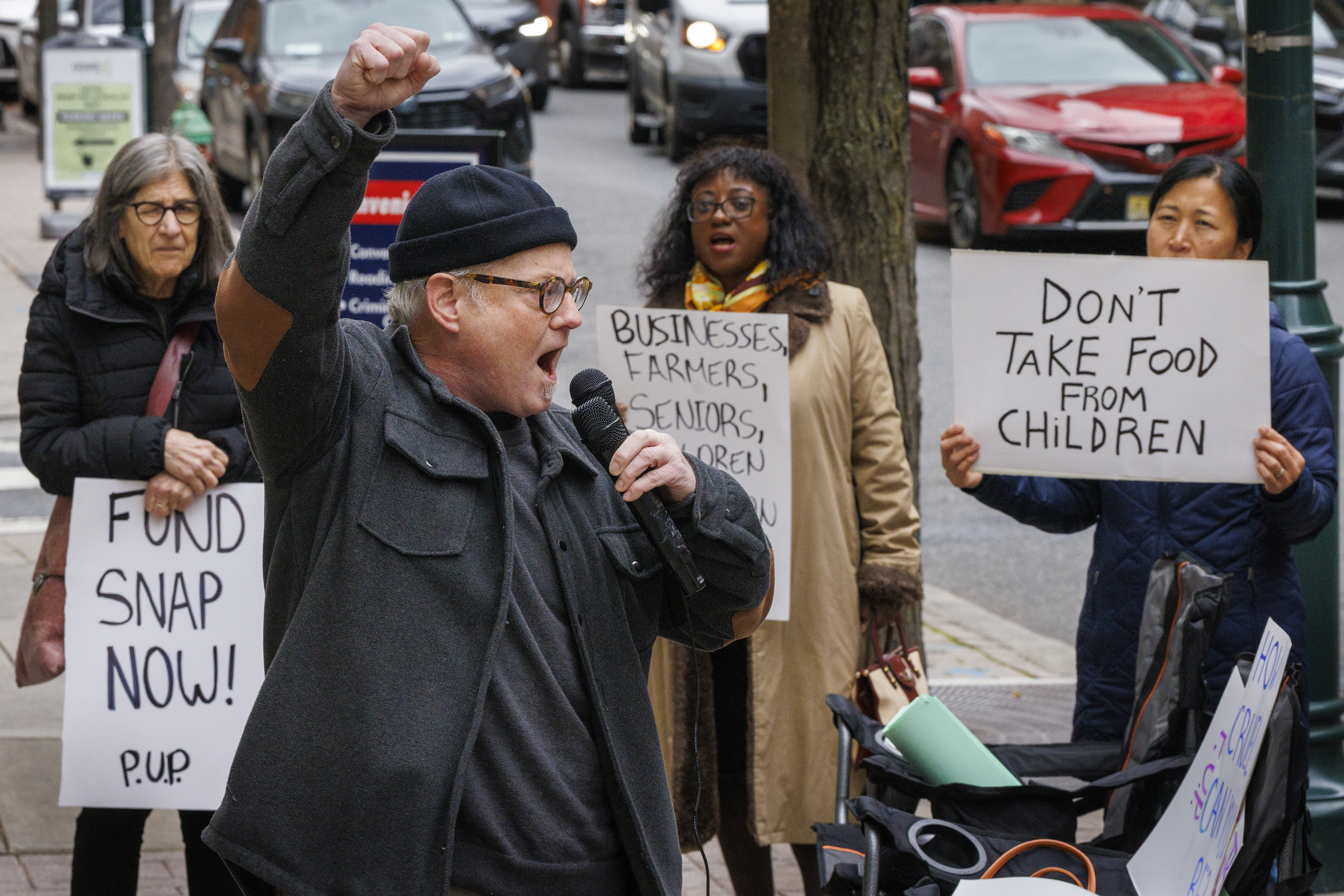
    Jeff Garis, Outreach and Patnership Director, Penn Policy chants during rally along side SNAP recipients, clergy members, and other advocates at a rally and news conference outside of Reading Terminal Market, to urge the Trump administration to restore full SNAP funding, Wednesday, November 12, 2025.

    Are SNAP benefits changing?

    There are a few changes to SNAP work requirements that were implemented on Sept. 1 and Nov. 1.

    President Donald Trump in September signed new requirements into law that denied states the ability to waive work requirements for most SNAP recipients. Work requirement waivers are now available only for specific reasons, such as pregnancy, needing to be home to care for someone ill, or participation in a drug or alcohol treatment program, to name a few.

    On Nov. 1, some older low-income Americans were forced back to work when Congress and Trump passed additional work requirements, raising the maximum working age cap from 54 to 64 years old.

    Parents with dependents age 14 and over also must go back to work or lose benefits. Previously, SNAP recipients with dependents under 18 did not have to meet work requirements. Veterans and former foster youth ages 18 through 24 are no longer exempt from work requirements either, under new federal law.

    Do you have to reapply for SNAP benefits?

    SNAP recipients do not currently need to reapply to the program. SNAP recipients should continue filing their semiannual reports every six months to recertify their income and household.

    Lisa Mellon, 59, of Bridesburg, Pa., is walking her groceries to her friends car, who was kind enough to driver her around 40 minutes to the Feast of Justice at St. John’s Lutheran Church and back home on Tuesday, Nov. 11, 2025.

    Will snap benefits be issued in December?

    Yes. The SNAP program is funded through Sept. 30, 2026, after Congress reached an agreement on a spending deal last week. Most other federal government agencies and programs are funded only through Jan. 30.

    Congress will need to strike another spending deal before the January deadline; otherwise the federal government could be shut down again.

    However, SNAP benefits have been guaranteed through next September regardless of another shutdown.

    How do you qualify for SNAP benefits?

    SNAP requirements are based on your work hours and income. Other factors, like whether a member of your household is disabled, elderly, or a veteran, can provide households with additional benefits.

    Resources:

    Work requirements

    SNAP recipients must be working, volunteering, or participating in an education or training program for at least 20 hours a week (or 80 hours a month). They also must report those work hours.

    These rules apply to you if you:

    • Are ages 18 through 64.
    • Do not have a dependent child under 14 years old.
    • Are considered physically and mentally able to work.

    Income requirements

    Households cannot exceed these monthly income limits to be eligible for SNAP benefits.

    How to apply for SNAP

    Apply for SNAP online, in person, or by mail.

    • Online: Apply online using Pennsylvania’s online benefits access tool, COMPASS, at www.compass.dhs.pa.gov.
    • In person: Find your county assistance office (CAO) at pa.gov/agencies/dhs/contact/cao-information. Visit your CAO and apply with help from staff.
    • Mail: Download and complete an application, available in English and Spanish. Mail or drop off the application to your county’s assistance office.
  • Philly Housing Authority plans to lay off almost 300 workers in 2026

    Philly Housing Authority plans to lay off almost 300 workers in 2026

    The Philadelphia Housing Authority (PHA) is planning sweeping layoffs that will affect almost 300 of the agency’s 1,200 employees, beginning in January 2026.

    The cutbacks are the result of dramatic changes in how PHA, which provides affordable housing to thousands of families across the city, does maintenance and repair work. Instead of directly employing union electricians, carpenters, and other workers, beginning next year, the agency will contract out for those jobs as needed.

    “This is a housing program, it is not a jobs program,” said Kelvin Jeremiah, the president and CEO of PHA, in an interview.

    “Do I use the resources that we have to protect residents, to advance the availability of affordable housing to the families that are most in need? Or do I use those limited resources to fund positions that I don’t need?” Jeremiah said.

    There are 620 members of the Philadelphia Building and Construction Trades Council employed full-time by the agency as maintenance staff. Jeremiah estimates that by almost halving that number PHA will see a cost savings of $24 million annually.

    The agency said it currently costs $15,500 to maintain a single unit of traditional public housing annually, due to the agency’s complex work rules, which require many different union workers to make repairs. Most other multifamily providers have dramatically lower per-unit maintenance costs.

    “PHA has engaged the unions throughout this process and can proceed with this policy decision without additional approvals,” an agency spokesperson said in an emailed statement.

    Although in-house building trades workers will constitute the majority of lost jobs, other positions will also be affected, including 33 managerial roles in PHA headquarters. Overall, PHA’s workforce will shrink by about 20%.

    “We are going to talk and try to offer some alternatives, but this is an issue of price sensitivity and we have to understand, given the new environment, that there are less funds to do the same mission with,” said Ryan Boyer, business manager for the Philadelphia Building and Construction Trades Council, whose unions represent many of the affected workers.

    The Philadelphia Housing Authority Headquarters is planning sweeping layoffs that will affect almost 300 of the agency’s 1,200 employees, beginning in January 2026 in Philadelphia, on Wednesday, Nov. 19, 2025.

    More with less?

    The cutbacks come amid an aggressive $6.3 billion plan unveiled earlier this year, through which the agency hopes to expand its housing portfolio by 7,000 units while rehabbing the 13,000 units it already owns.

    Jeremiah said that the staff reduction should not be seen as PHA doing more with less, and that it will not limit the agency’s ability to execute his planned expansion.

    “We will not be doing less than what we’re doing now, but we have been doing too little with too much,” Jeremiah said. He said other market-rate and affordable housing multifamily operators are able to do unit repairs for far less than what PHA pays.

    “My colleagues have all been doing this at substantially less cost,” Jeremiah said. “The only difference between us is that they have an operating model that does not require six different trades to do a single thing.”

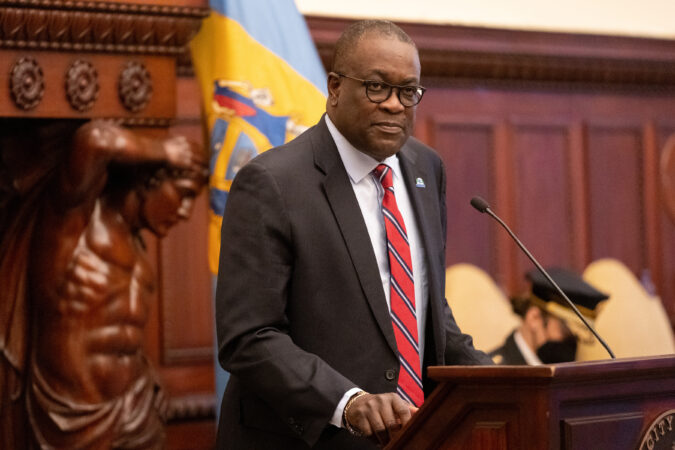
    Kelvin A. Jeremiah, PHA President & Chief Executive Officer, at PHA headquarters, in Philadelphia, May 21, 2025.

    Because PHA’s layoffs will affect hundreds of members of Philadelphia’s influential building trades unions, Jeremiah said, he has been negotiating with Boyer on the work-rule changes.

    “My reaction is one of disappointment. However, we remain partners with PHA and we will still build most of the stuff on the capital side,” Boyer said. “I don’t want it to be lost that when they build stuff, they will still be members of the Philadelphia building trades working, and there will still be members doing maintenance work.”

    Boyer is also the business manager for the Laborers’ District Council and a close ally of Mayor Cherelle L. Parker.

    Jeremiah said maintenance technicians, laborers, and painters will be the only trades that remain directly employed with the agency after the work-rule changes go into effect.

    The electricians union, IBEW Local 98, said it is still studying PHA’s new policy.

    PHA will also still work with the trades for discrete repair and maintenance jobs within the agency’s housing portfolio but will no longer directly employ as many workers full-time, Jeremiah said.

    The Trump effect?

    PHA’s layoffs, and its expansion plan, are unfolding during a period of uncertainty nationwide for affordable housing policies and organizations like PHA.

    Some housing experts were surprised to see PHA embark on its ambitious $6.3 billion plan amid President Donald Trump’s skepticism of affordable housing programs and a raft of austerity measures from his administration, which has sought to reduce public support for lower-income Americans.

    Nearly all of PHA’s funding — 93% — comes from the federal government, according to the agency.

    “If Congress and the administration coughs, it impacts us,” Jeremiah said. “If there is a reduction [in funding], it impacts us.”

    Jeremiah said he is seeking to operate within the mandates set by Trump’s administration while continuing to support PHA’s tenant base and plans.

    “Subsidizing employment … is just not the way to go at a time when we’re looking at less funding on the horizon,” Jeremiah said. “Where am I to get the funds not only to do more developments, acquire more, and preserve what we have at the same time [that] we have a workforce that is, quite frankly, I will dare to use the word bloated?”

    Waves of layoffs

    Despite the layoffs, Jeremiah believes the agency will still be a rich source of jobs for the building trades unions as the $6.3 billion plan unfolds. He points to an analysis of PHA’s 10-year plan by economic consulting firm Econsult Solutions, which said it would create 4,900 jobs annually in the city.

    The first round of 260 job losses will hit in mid-January 2026, although Jeremiah says 93 of those workers will be retained in new positions as maintenance aides, laborers, and painters. A further 116-position reduction will occur next summer.

    A vice president of development, Greg Hampson, also recently left PHA, although the agency declined to comment on that case. Jeremiah said that several vice president and director-level positions will be among the coming layoffs.

    The last major round of layoffs at PHA was in 2016, when 14% of the staff was cut. Those positions were mostly administrative roles.

    Editor’s note: A previous version of this story misstated the number of employees impacted.

  • Trump dismisses U.S. intelligence that Saudi prince was likely aware of 2018 killing of journalist Jamal Khashoggi

    Trump dismisses U.S. intelligence that Saudi prince was likely aware of 2018 killing of journalist Jamal Khashoggi

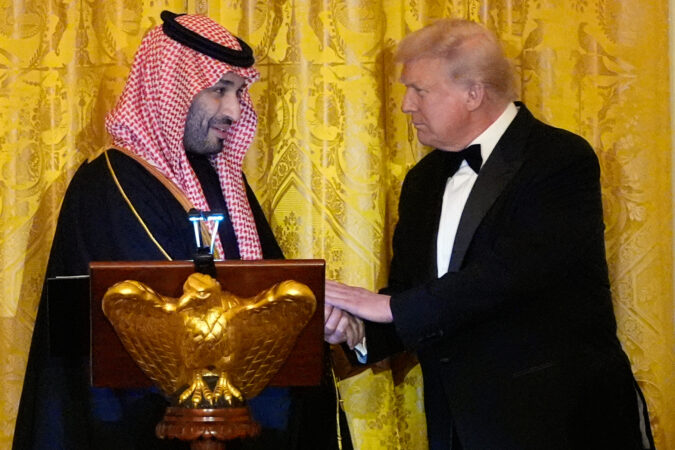
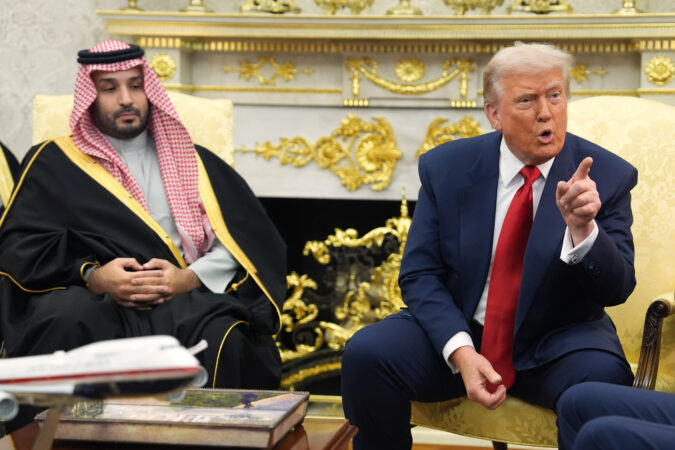
    WASHINGTON — President Donald Trump on Tuesday dismissed U.S. intelligence findings that Crown Prince Mohammed bin Salman likely had some culpability in the 2018 killing of Washington Post journalist Jamal Khashoggi as Trump warmly welcomed the de facto ruler of Saudi Arabia on his first White House visit in seven years.

    The U.S.-Saudi relationship had, for a time, been sent into a tailspin by the operation targeting Khashoggi, a fierce critic of the kingdom.

    But seven years later, the dark clouds over the relationship have been cleared away. And Trump is tightening his embrace of the 40-year-old crown prince, who he said is an indispensable player in shaping the Middle East in the decades to come.

    Trump in his defense of the crown prince derided Khashoggi as “extremely controversial” and said “a lot of people didn’t like that gentleman.” Prince Mohammed denies involvement in the killing of Khashoggi, who was a Saudi citizen and Virginia resident.

    “Whether you like him or didn’t like him, things happen,” Trump said when asked about the killing by a reporter during an Oval Office appearance with Prince Mohammed. “But (Prince Mohammed) knew nothing about it. And we can leave it at that. You don’t have to embarrass our guest by asking a question like that.”

    But U.S. intelligence officials determined that the Saudi crown prince likely approved the killing by Saudi agents of U.S.-based journalist inside the Saudi consulate in Istanbul, according to U.S. findings declassified in 2021 at the start of the Biden administration. Trump officials, during his first administration, refused to release the report.

    Prince Mohammed said Saudi Arabia “did all the right steps” to investigate Khashoggi’s death.

    “It’s painful and it’s a huge mistake,” he said.

    Trump, who said the two leaders have become “good friends,” even commended the Saudi leader for strides made by the kingdom on human rights without providing any specific detail.

    New investment from Saudis

    The crown prince for his part announced Saudi Arabia was increasing its planned investments in the U.S. to $1 trillion, up from $600 billion that the Saudis announced they would pour into the United States when Trump visited the kingdom in May.

    Echoing rhetoric that Trump likes to use, the crown prince called the U.S. the “hottest country on the planet” for foreign investment.

    “What you’re creating is not about an opportunity today. It’s also about long-term opportunity,” Prince Mohammed said.

    Trump’s family has a strong personal interest in the kingdom. In September, London real estate developer Dar Global announced that it plans to launch Trump Plaza in the Red Sea city of Jeddah.

    It’s Dar Global’s second collaboration with the Trump Organization, the collection of companies controlled by the U.S. president’s children, in Saudi Arabia.

    Trump pushed back on suggestions that there could be a conflict of interest in his family’s dealings with the Saudis.

    “I have nothing to do with the family business,” Trump said.

    Trump’s comments about Khashoggi’s killing and defense of his family’s business in Saudi Arabia were blasted by human rights and government oversight activists.

    Human rights groups say Saudi authorities continue to harshly repress dissent, including by arresting human rights defenders, journalists and political dissidents for criticism against the kingdom. They also note a surge in executions in Saudi Arabia that they connect to an effort to suppress internal dissent.

    “President Trump has Jamal Khashoggi’s blood on his hands,” said Raed Jarrar, advocacy director for DAWN, a U.S.-based group advocating for democracy and human rights in the Arab world that was founded by Khashoggi.

    Rolling out the red carpet

    Trump warmly received Prince Mohammed when he arrived at the White House Tuesday morning for a pomp-filled arrival ceremony that included a military flyover and a thundering greeting from the U.S. Marine band.

    Technically, it wasn’t a state visit, because the crown prince is not the head of state. But Prince Mohammed has taken charge of the day-to-day governing for his father, King Salman, 89, who has endured health problems in recent years.

    Later, Trump and first lady Melania Trump welcomed the crown prince for a black-tie dinner in the White House East Room. The boldface names who attended included Nvidia CEO Jensen Huang, tech entrepreneur Elon Musk and soccer star Cristiano Ronaldo.

    Trump at the dinner announced he was designating Saudi Arabia as a major non-NATO ally. The designation, while largely symbolic, provides foreign partners with certain benefits in the areas of defense, trade and security cooperation.

    The president also announced that the two leaders had signed a new defense agreement, but the White House did not immediately release details of the pact. Ahead of the visit, the Saudis had signaled they were looking for formal assurances from Trump defining the scope of the U.S. military protection for the kingdom.

    “A stronger and more capable alliance will advance the interests of both countries,” Trump said. “And it will serve the highest interest of peace.”

    Fighter jets and business deals

    On the eve of Prince Mohammed’s arrival, Trump announced he had agreed to sell the Saudis F-35 fighter jets despite some concerns within the administration that the sale could lead to China gaining access to the U.S. technology behind the advanced weapon system. The White House announced the two leaders formalized the F-35 agreement Tuesday as well as a deal for the Saudis to purchase nearly 300 tanks from the U.S.

    They also signed agreements signifying closer cooperation on capital markets and critical minerals markets, as well as efforts against money laundering and terrorist financing.

    Trump’s announcement on the fighter jets was surprising because some in the Republican administration have been wary about upsetting Israel’s qualitative military edge over its neighbors, especially at a time when Trump is depending on Israeli support for the success of his Gaza peace plan.

    Abraham Accord talks

    The visit comes at a moment when Trump is trying to nudge the Saudis toward normalizing relations with Israel.

    The president in his first term had helped forge commercial and diplomatic ties between Israel and Bahrain, Morocco and the United Arab Emirates through an effort dubbed the Abraham Accords.

    Trump sees expansion of the accords as essential to his broader efforts to build stability in the Middle East after the two-year Israel-Hamas war in Gaza. Getting Saudi Arabia — the largest Arab economy and the birthplace of Islam — to sign on would spur a domino effect, he argues.

    But the Saudis have maintained that a path toward Palestinian statehood must first be established before normalizing relations with Israel can be considered. The Israelis remain steadfastly opposed to the creation of a Palestinian state.

    “We want to be part of the Abraham Accords, but we want also to be sure that we secure a clear path of a two-state solution,” Prince Mohammed said.