Tag: Fishtown

  • Philly music this week kicks off a Black History Month celebration and includes a show by former NPR host Ari Shapiro

    Philly music this week kicks off a Black History Month celebration and includes a show by former NPR host Ari Shapiro

    This week’s Philly music options include 1990s R&B hitmakers 112, newsman-turned-singer Ari Shapiro, pop-punks Say Anything and Motion City Soundtrack, K-pop girl group Unis, and Philly hip-hop blues band G. Love & Special Sauce. Plus, some terrific folk tandem with Loudon Wainwright III and Chris Smither. And the kick off for Black History Month programming at the Fallser Club.

    Wednesday, Jan. 28

    Tashi Dorji

    Bhutan-born, Asheville, N.C., guitarist Tashi Dorji makes alternately tuned instrumental music that never settles for being merely pretty. Sometimes it reads as politically defiant, as on songs like “And the State Sank into the Abyss” and “Meet Me Under the Ruins” on his most recent album on the Drag City label, We Will Be Wherever the Fires Are Lit. 8 p.m., Asian Arts Initiative, 1219 Vine St., r5productions.com

    Thursday, Jan. 29

    Sunny Day Real Estate

    1990s Seattle emo band Sunny Day Real Estate re-formed in 2022 and has stayed busy since with a lineup that included original members Jeremy Enigk, Dan Horne, and William Goldsmith. 8 p.m., Brooklyn Bowl, 1009 Canal St., brooklynbowl.com/philadelphia
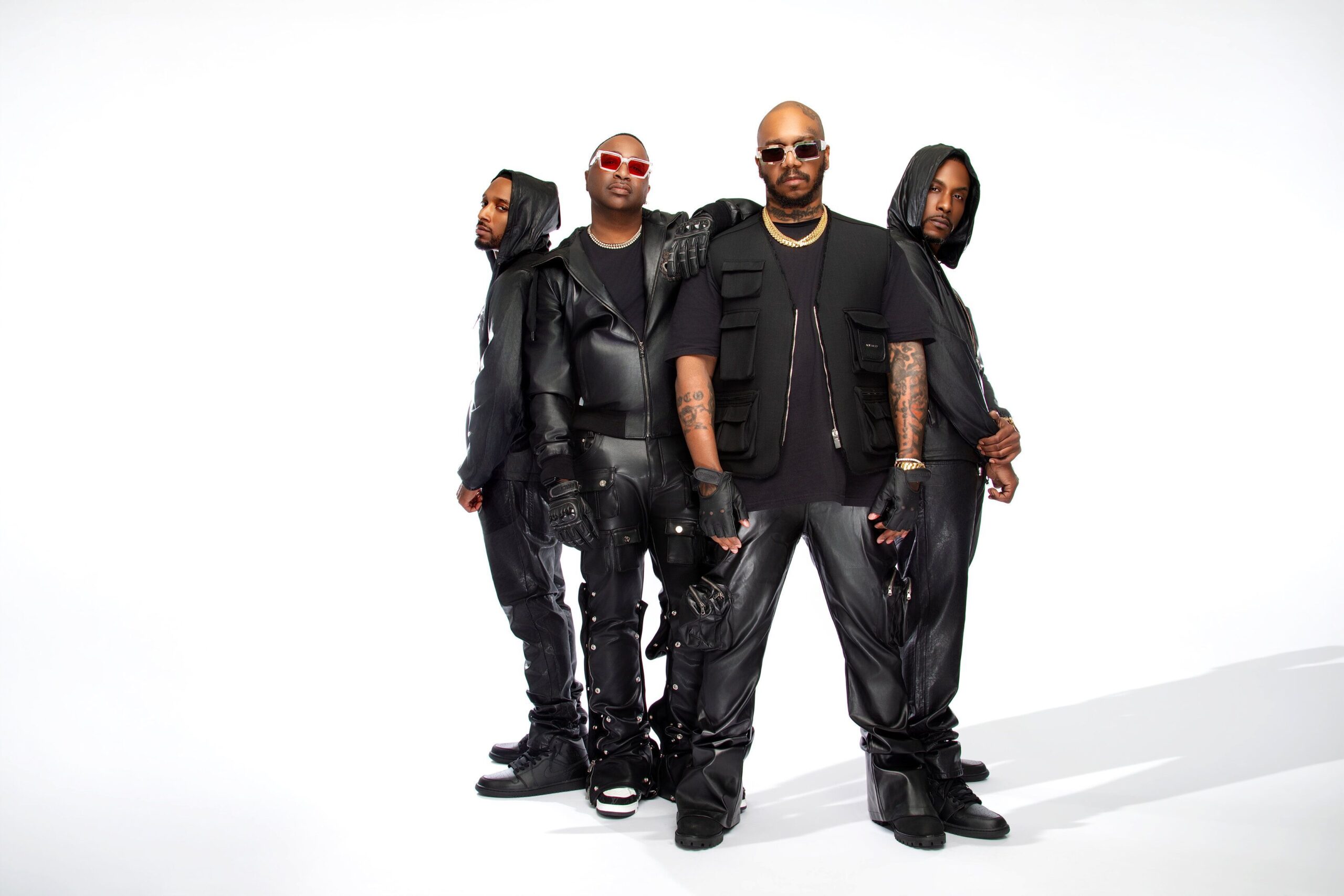
    Atlanta R&B vocal group 112 play the Met Philly on Friday.

    Friday, Jan. 30

    Dave P.’s Juntos benefit

    Making Time impresario David Pianka is DJing an all-night “All I Want for 2026 is PLURT” party for Juntos, the South Philadelphia organization “fighting for the human rights of the Latine community as workers, parents, youth, and immigrants.” PLURT takes “Peace, Love, Unity, and Respect” and adds a Dave P. favorite word: “Transcendence.” 8 p.m., The Dolphin, 1539 S. Broad St, ra.co/events/2351165

    Ari Shapiro

    Former NPR host Ari Shapiro’s “Thank You for Listening” is a cabaret show adapted from his memoir, The Best Strangers in the World. He’ll flex the musical muscles previously put to use in collaborations with Alan Cumming and Pink Martini. 7:30 p.m., City Winery, 990 Filbert St., citywinery.com/philadelphia

    112

    R&B’s 112 — pronounced “one twelve” — is the Atlanta group that signed to now-disgraced music executive Sean Combs’ Bad Boy label in the 1990s. In addition to hits like “Cupid” and “It’s Over Now,” the band joined Combs on vocals on “I’ll Be Missing You,” the 1997 megahit that eulogized the Notorious B.I.G. 8 p.m., Met Philly, 858 N. Broad St., themetphilly.com

    Unis

    K-pop girl group octet Unis comes to South Street, supporting 2025’s album Swicy. The band fronted by lead singer Hyeonju triumphed on the Seoul Broadcasting System reality show Universe Ticket in 2024. 8 p.m., Theatre of Living Arts, 332 South St, tlaphilly.com

    Jobi Riccio plays Free at Noon at the World Cafe Live on Friday.

    Jobi Riccio

    Colorado songwriter Jobi Riccio won praise for her 2023 debut album, Whiplash. That same year, she was awarded the John Prine Fellowship at the Newport Folk Festival. She has a new single, “Buzzkill,” which along with the previously released protest song “Wildfire Season” will be on a forthcoming album. Noon, World Cafe Live, 3025 Walnut St., xpn.org

    The Naked Sun

    Philly rock quintet the Naked Sun will celebrate a new album, Mirror in the Hallway. It was produced by Brian McTear and Amy Morrissey at Miner Street Recordings. McTear’s Bitter, Bitter Weeks plays a rare full band set as openers. 8 p.m., Fallser Club, 3721 Midvale Ave., thefallserclub.org

    Saturday, Jan. 31

    Wild Pink

    Brooklyn indie outfit Wild Pink comes through for an early show, still touring behind the excellent 2024 album Dulling the Horns. The band then needs to make way for a Taylor Swift DJ night that follows. 6 p.m., MilkBoy Philly, 110 Chestnut St., milkboyphilly.com

    G. Love plays the Sellersville Theater on Saturday with his band, Special Sauce.

    G. Love & Special Sauce

    G. Love’s 2006 album Lemonade was a solo affair, but he’s celebrating its 20th anniversary with Special Sauce, the band with whom he recorded 215-proud staples such as “Philadelphonic” and “I-76.” Hawaiian surfer Makua opens. 8 p.m. Sellersville Theater, 24 W. Temple Ave., Sellersville, st94.com

    Pine Barons

    KC Abrams’ Philly experimental rock trio Pine Barons released its fourth album TV Movie in September. This week, the band headlines a show in Fishtown, with Special World and Rentboy. 9 p.m. Johnny Brenda’s, 1201 N. Frankford Ave. johnnybrendas.com
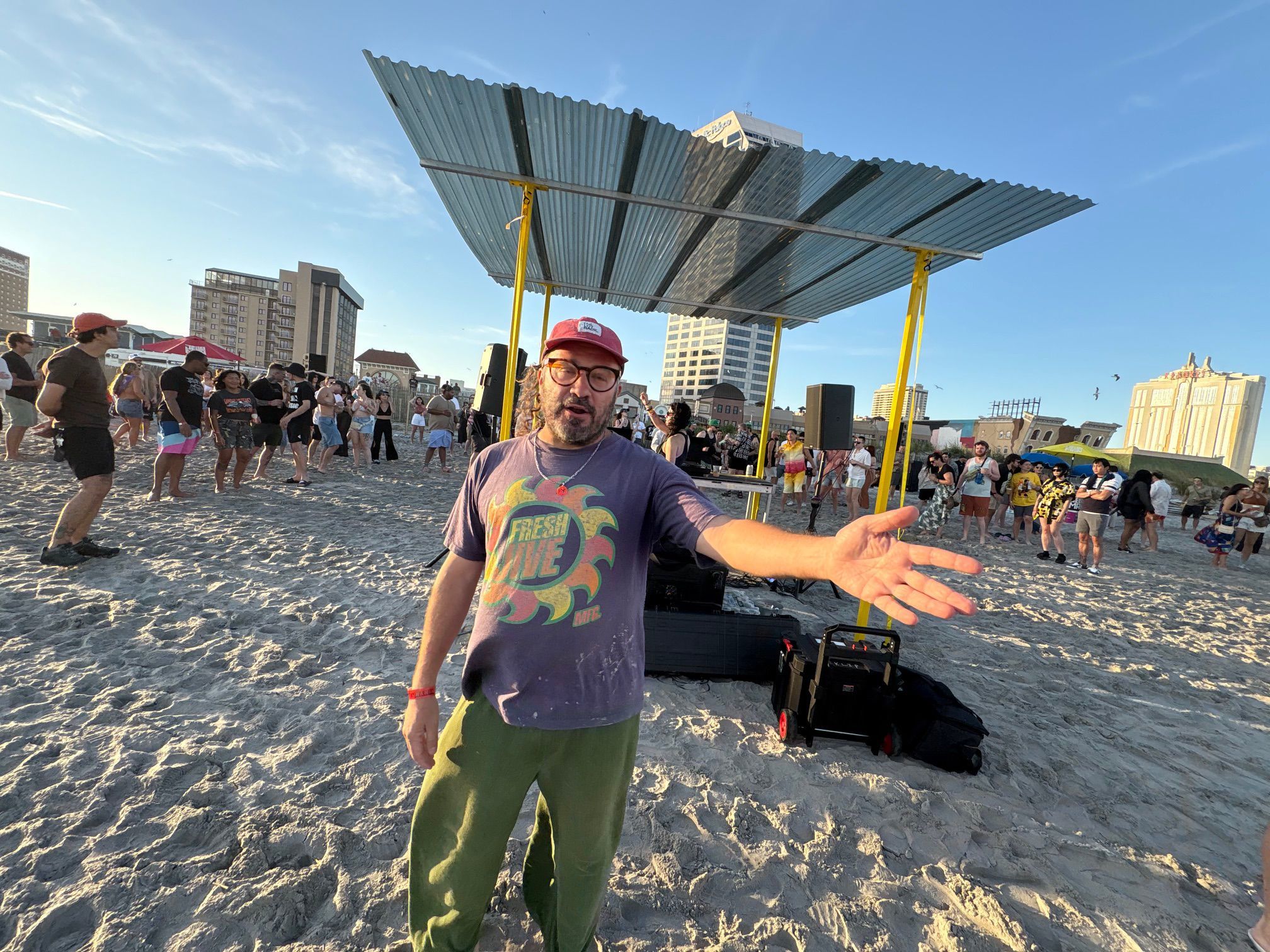
    Dave P. will DJ all night long in a benefit for Juntos on Friday at the Dolphin in South Philly.

    Say Anything / Motion City Soundtrack

    Two emo-adjacent bands that emerged in the early 00s are touring together. Los Angeles’ Say Anything’s latest is The Noise of Say Anything’s Room Without …, while Minneapolis’ Motion City Soundtrack recently returned after a decade with The Same Old Wasted Wonderful World. 7:30 p.m., Fillmore Philly, 29 Allen St., thefillmorephilly.com

    Riverside / My Favorite / Polaroid Fade

    A top-notch trio of indie bands, headlined by 1990s Philly veterans Riverside. Also on the bill are Brooklyn’s My Favorite and Ocean City, N.J.’s, Polaroid Fade, fronted by 20-year-old singer Nicoletta Giuliani, whose sounds draw from shimmery ‘90s bands like the Sundays and the Ocean Blue. 8:30 p.m., PhilaMoca, 531 N. 12th St., PhilaMoca.org
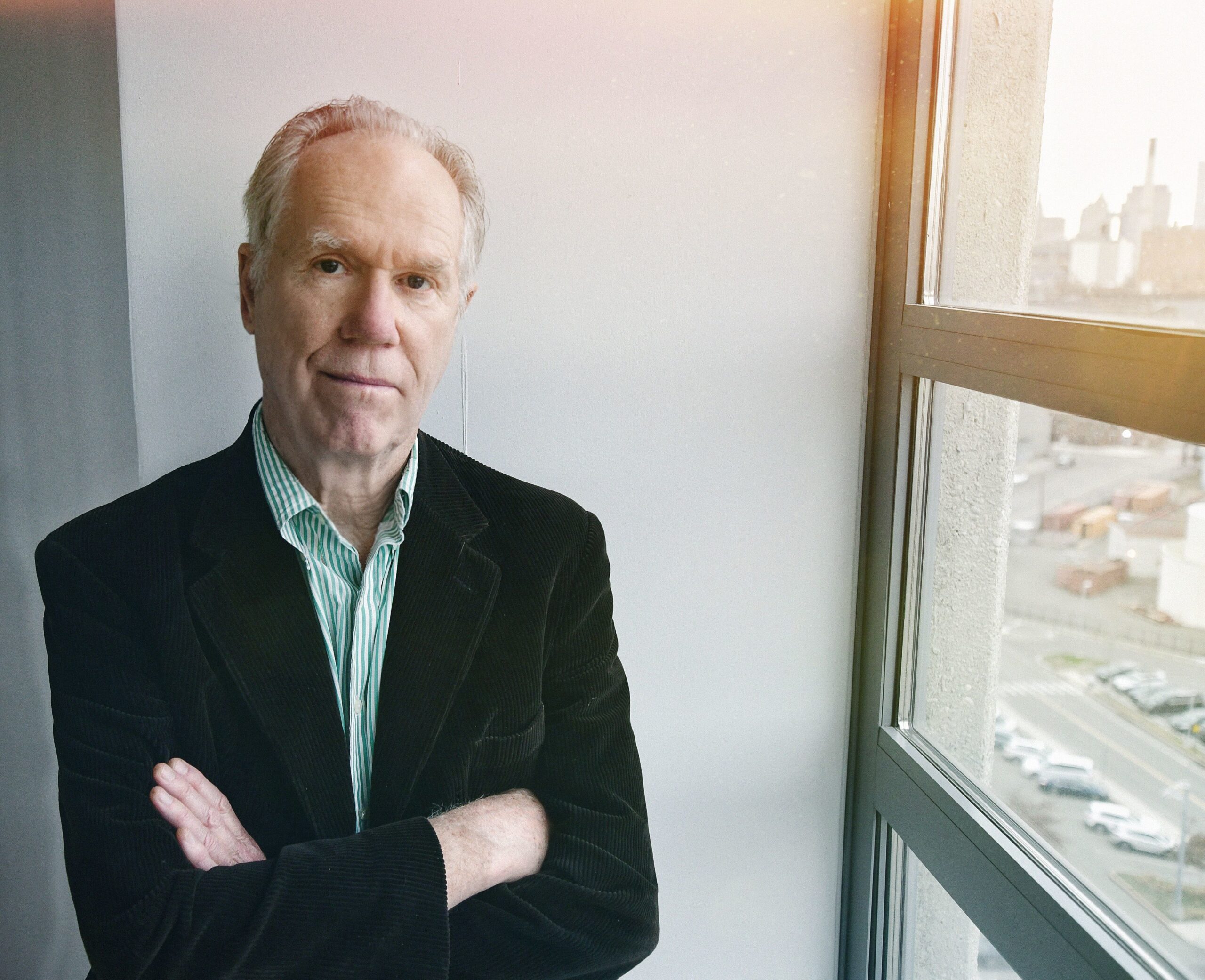
    Loudon Wainwright III plays the Zellerbach Theatre at the Annenberg Center with Chris Smither on Sunday.

    Sunday, Feb. 1

    Loudon Wainwright / Chris Smither

    From his 1970 self-titled debut to Lifetime Achievement in 2022, Loudon Wainwright III has always been an unflinching and unfailingly funny songwriter whose acute observations never spare himself or his family members. Pairing him with ever-soulful folk blues guitarist and songwriter Chris Smither, who has had a fruitful career of equal length, is a masterstroke. Hopefully, they’ll play together. 8 p.m., Zellerbach Theatre, 3680 Walnut St., pennlivearts.org

    Reef the Lost Cauze

    West Philly rapper Reef the Lost Cauze is first up at “A Month of Black Excellence at the Fallser Club,” with an afternoon event featuring “vendors, food, art, community actions.” The series includes African Friends: Bakithi Kumalo, Tanyaradzwa Tawengwa, and Youba Cissokho on Feb. 6 and V. Shane Frederick and Rev. Chris on Feb 17. 4 p.m., Fallser Club, 3721 Midvale Ave., thefallserclub.org

    Jon Spencer

    Jon Spencer has been playing high-volume blues with exaggerated gusto for three decades. Along with a recent show by Richard Lloyd and Lenny Kaye, this booking is another sign that Nikki Lopez, the South Street venue on the site of the former JC Dobbs, is becoming a welcome home for veteran acts who can still kick out the jams as well as young punk and metal bands. 8 p.m., Nikki Lopez, 304 South St., instagram.com/nikkilopez/philly

    Monday, Feb. 2

    Ye Vagabonds

    Full-on Irish music season doesn’t arrive until March, when Emerald Isle musicians will blanket the Philly region. Get a head start with this stellar band, led by brothers Brian and Diarmuid Mac Gloinn who make haunting music that sounds ancient and brand new at the same time. Philly bluegrass songwriter Daphne Ellen opens. 8 p.m., Johnny Brenda’s, 1201 Frankford Ave., johnnybrendas.com

    Concert Announcements

    Shows that announced in the past week include a number of enticing double bills.

    Austin, Texas’ enduring rockers Spoon play the Fillmore Philly on June 23 with New Zealand power pop charmers, the Beths. Lionel Richie and Earth Wind & Fire team up at Xfinity Mobile Arena on July 16. And Death Cab for Cutie and Philly’s own Japanese Breakfast play the Mann Center on July 17.

    R&B singers Ne-Yo and Akon are coming to the Freedom Mortgage Pavilion in Camden on July 25, where the Dave Matthews Band will also play July 10-11.
  • After delays, Lehigh Avenue apartment project is ready to begin construction under a new owner

    After delays, Lehigh Avenue apartment project is ready to begin construction under a new owner

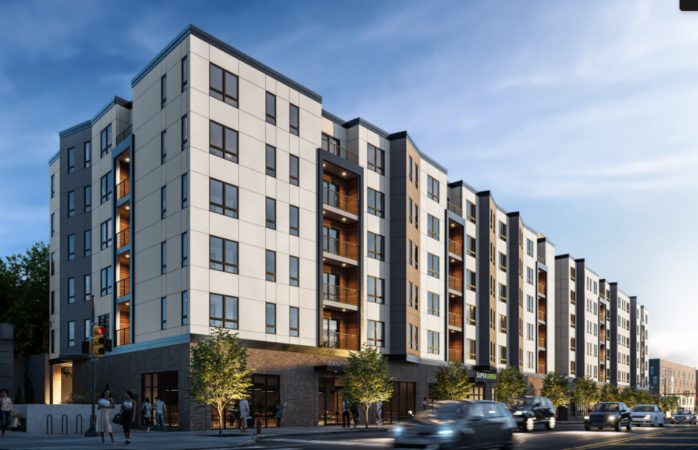
    A six-story apartment project at 2001 E. Lehigh Ave. is moving forward with a new owner after years of delay amid a difficult development environment.

    Five-lane Lehigh Avenue divides the southern portion of Kensington, which has experienced development more akin to the boom in Fishtown, from the parts of the neighborhood to the north that are at the heart of the city’s opioid crisis.

    But along the northern edge of the avenue, next to the Conrail tracks, a series of auto-oriented and light-industrial properties have been redeveloped as housing in recent years.

    “That whole corridor has continued developing. It’s even pushing over the tracks further up north, too,” said Brian Corcodilos, CEO of Designblendz, the architect for the project. “We’re confident that … this area continues to rent up.”

    The former owner of 2001 E. Lehigh, developer Isaac Singleton, secured zoning approvals for the project in 2023 and 2024. City records then show the property sold for $2.5 million in January 2025.

    A demolition permit for the property was issued this week to an address associated with developer Roman Ovrutsky — whose home The Inquirer profiled last year — and Corcodilos said their team expects construction to begin by early spring.

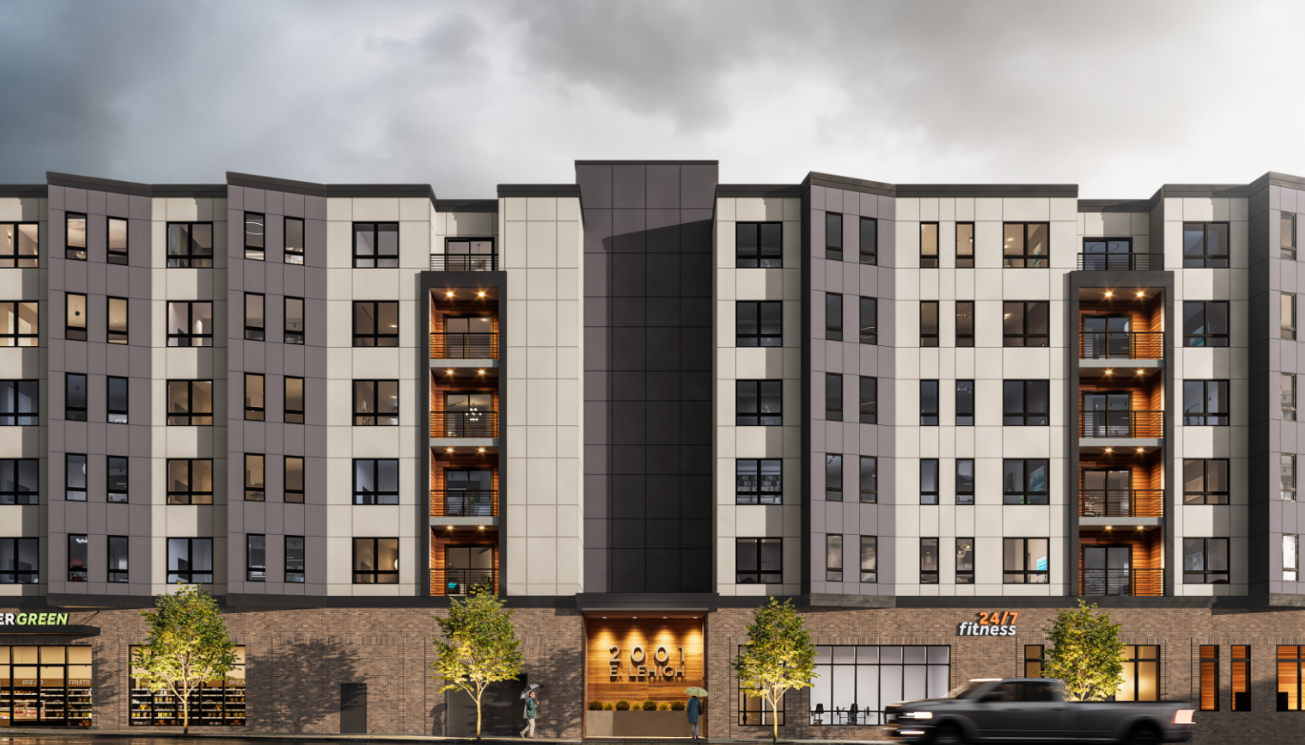
    Ovrutsky’s version of the project will feature 146 apartments, a slightly smaller number than Singleton proposed, and a little over 6,000 square feet of commercial space on the ground floor. The project will also have 54 underground parking spaces.

    Designblendz has updated the visual palette for the project by adding darker grays and slate-colored hues.

    Corcodilos said that changes in federal tax policy in President Donald Trump’s Big Beautiful Bill have enabled clients to begin building again. A lull in recent years was caused by heightened interest rates and an apartment glut that made it hard for developers to charge the rents necessary to pay back the loans on their projects.

    The former design for the building included greens and browns. The new vision features slate-colored hues.

    Corcodilos said developers have also found that more projects are making sense if they use either the city’s mixed-income housing zoning bonus — which allows taller or denser construction in exchange for an affordability component — or if they base their financing on catering to some tenants who use federal rent voucher subsidies.

    “That’s how a lot of these projects are getting done,” Corcodilos said.

    It’s illegal in Philadelphia to discriminate against renters using vouchers, but it’s common for landlords to discourage those tenants, and many buildings owners don’t proactively advertise to subsidized tenants.

    But in recent years, increasing numbers of landlords have seen the advantage of tapping into a large tenant base with almost guaranteed payments.

    Another property just north of Lehigh Avenue at 2200 E. Somerset St. was sold last year to the Philadelphia Housing Authority, after many of its tenants ended up being voucher holders.

    “A lot of these big buildings that are going up, the only way they’re penciling is if there’s some sort of an affordability component to it,” Corcodilos said.

    Beyond Kensington, Designblendz is seeing an increase in work this year due to developer-friendly changes in the federal tax code, opportunities in affordable housing provision, and an easing of the overall apartment glut, he said.

    “I’m not getting a sense at the moment that clients are worried about not filling their units,” Corcodilos said. “Obviously things slowed down a little bit over the last year and a half for the industry. But what we’re seeing right now, it’s busier than ever.”

  • She saved $100,000 for a house in Port Richmond | How I Bought This House

    She saved $100,000 for a house in Port Richmond | How I Bought This House

    The buyers: Mercedes Murphy, 33, healthcare worker

    The house: a 1,710-square-foot townhome in Port Richmond with three bedrooms and two baths, built in 1925.

    The price: listed for $289,000; purchased for $291,000

    The agent: Emily Terpak, Compass

    The exterior of Mercedes Murphy’s home in Port Richmond.

    The ask: Murphy had a strategy for maximizing her savings: never pay more than $850 in rent. If it went above that, she would simply move, which she did several times over five years. But eventually, what started as a strategy began to feel like a trap. “The quality of the places I was willing to pay for kept dropping,” Murphy said. When her small, rat-infested apartment in Point Breeze flooded — the second place she’d lived in that had flooding issues — she decided she’d had enough and set out to find a two-bedroom house with an updated kitchen for $350,000 or less.

    The search: Murphy looked across the city, including in Mt. Airy, Fishtown, and South Philly. Some houses looked good in photos, but looked worse once she saw the surroundings. A Northwest Philly rowhouse made a great impression inside, thanks to its sparkling wood floors, but not outside. “It was just parking lots, and nobody was around,” Murphy said. “It wasn’t very safe.”

    She saw a promising place in Fishtown — a beautiful house with updated appliances, right by Girard Avenue. But it was small and had only one bathroom. Murphy debated the pros and cons with her then-fiancé (now husband), Stefan Walrond, for a few days, then made an offer. Almost immediately, she regretted it. She pulled her offer less than 24 hours later. “They had so many offers already,” Murphy said, “I didn’t feel like fighting for it.”

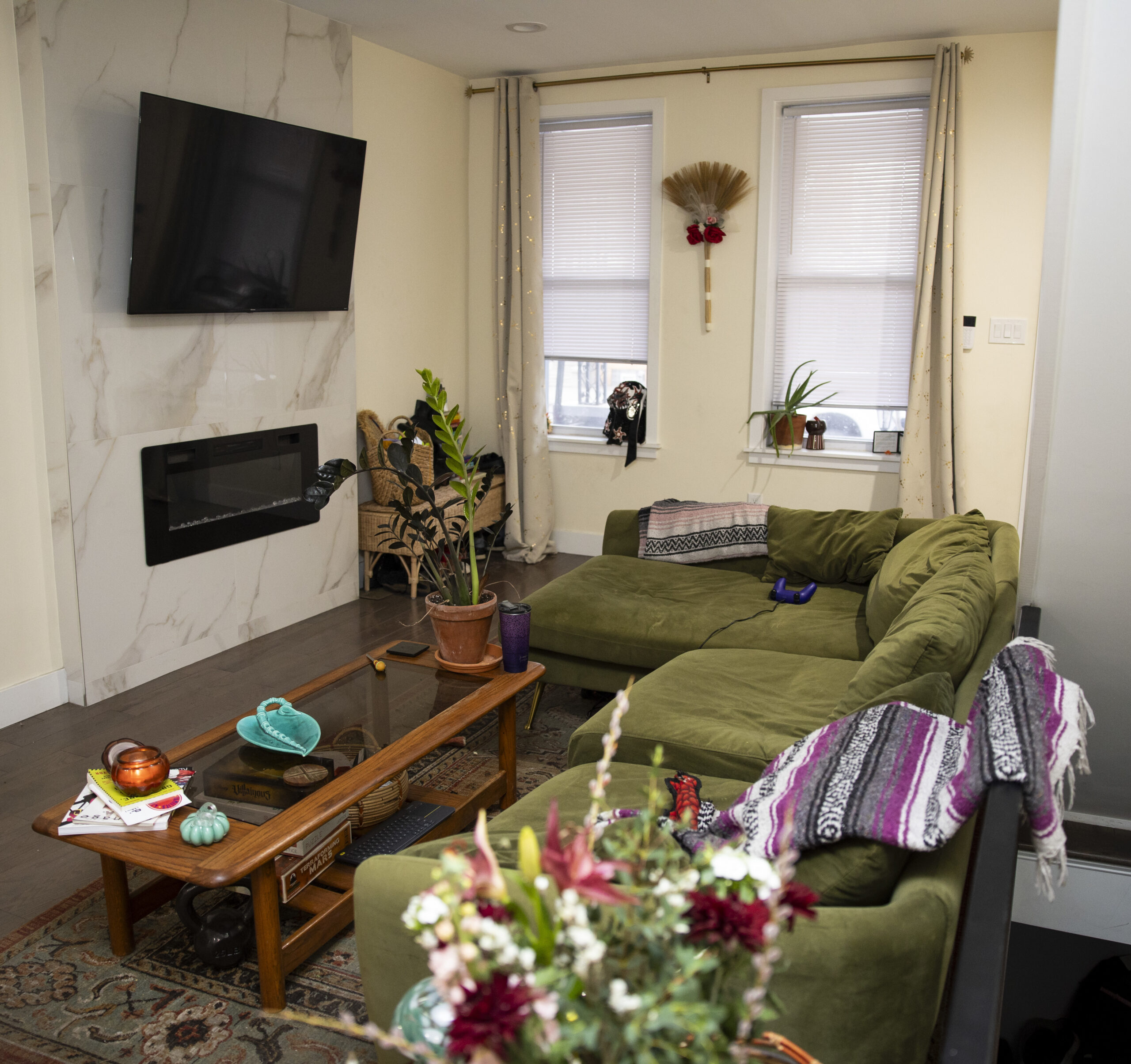
    The living room in Murphy’s Port Richmond home. She liked how large it was compared to others that she had seen.

    The appeal: A week after she pulled her offer, Murphy got COVID and couldn’t attend showings. Her fiancé went to see a house in Port Richmond without her. “He did the tour,” she said. “He sent me photos and did a little video walk-through.”

    Murphy could tell that this might be the one. It had everything she wanted, including lots of space, two full bathrooms, and an updated kitchen. It even had a backyard with a cherry tree and enough room for their dog. What ultimately sold her, though, were the finishes in the kitchen and upstairs bathroom: the gold faucets, the marble countertops, the built-in bench in the shower. “I loved the modern aesthetic,” Murphy said.

    The deal: Murphy wanted to avoid a bidding war, so she offered $291,000, $2,000 over the asking price.

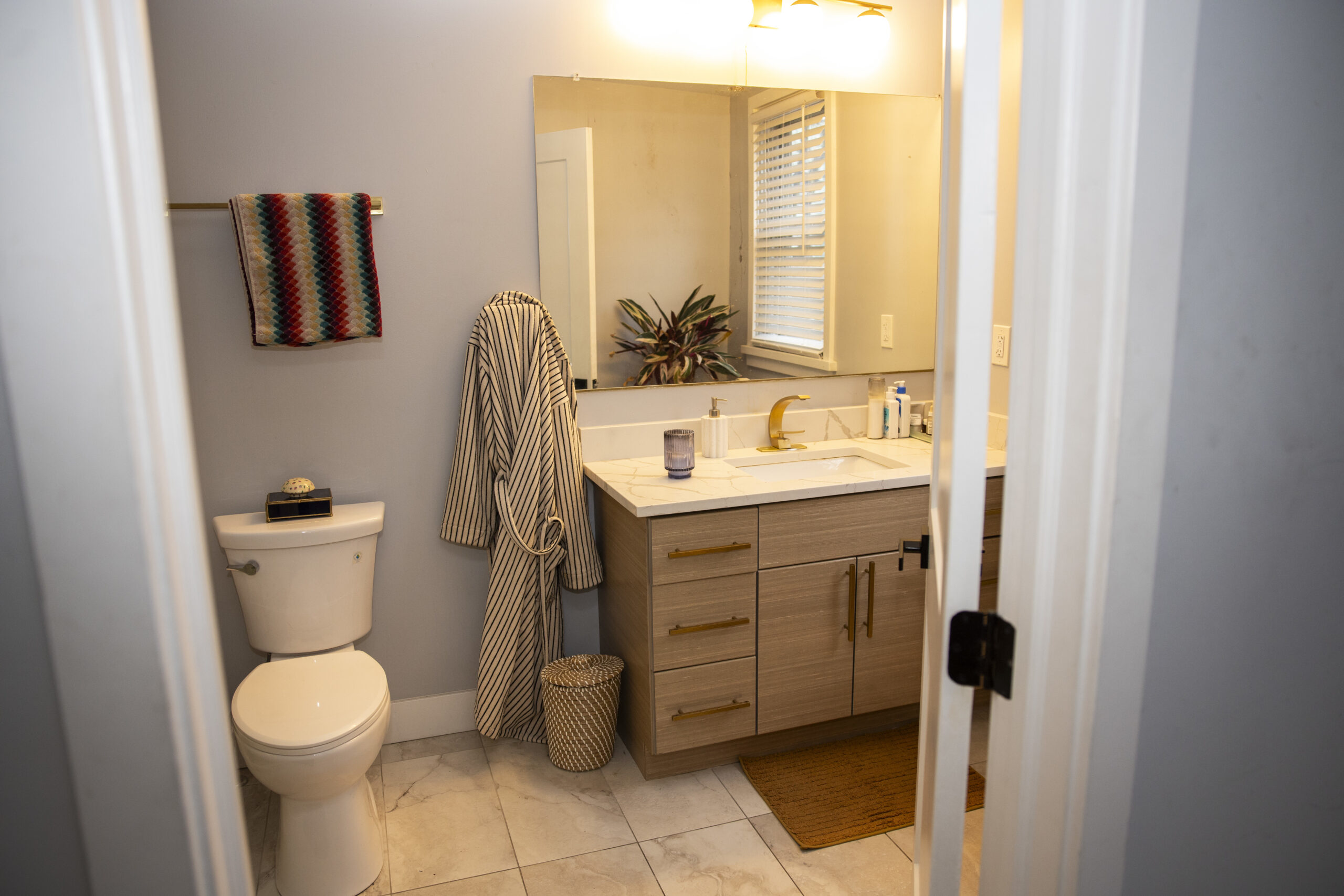
    Murphy fell in love with the modern finishes, like the gold faucet, in the bathroom.

    The inspection was straightforward. The only major issue was the roof. It would need to be replaced in a few years. A few of the appliances looked like they wouldn’t last very long either. Murphy didn’t ask for any concessions or credits. She just made sure she had enough money saved to pay for replacements down the line. Sure enough, the fridge broke one week after she moved in, and the roof started leaking within the year.

    The money: Murphy, a self-described “huge saver,” started aggressively saving money in 2015, the year she got her first “major job.” When she went to buy a house seven years later, she had just over $100,000 in savings. “I always lived really below my means,” Murphy said. She drove an old used car, lived with roommates, and didn’t have any “crazy expenses, like video games or makeup.”

    “I’m just not a big spender,” she said. Not having student loans helped too.

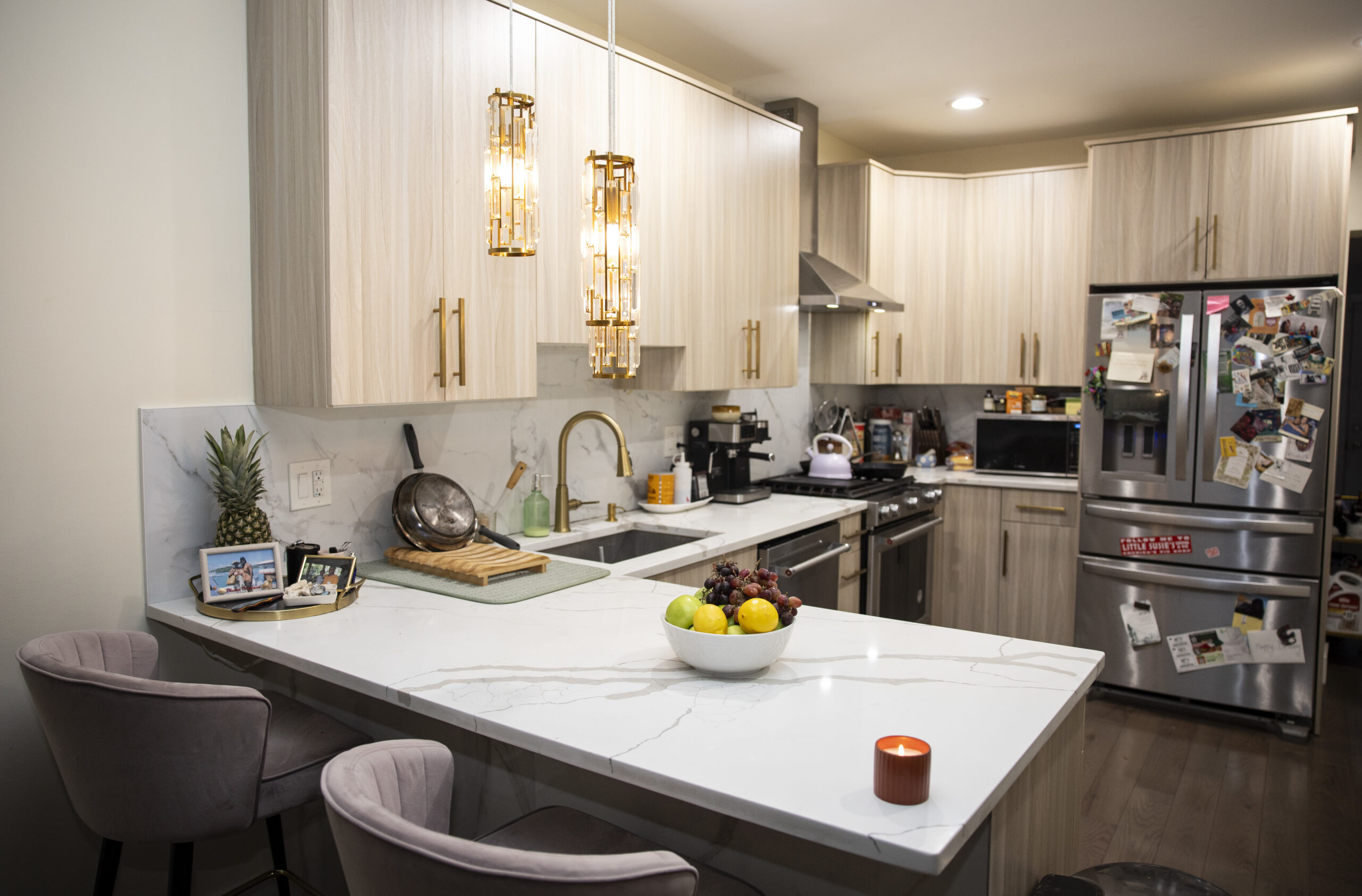
    Murphy loved the modern aesthetic of the kitchen.

    Murphy used $70,000 for a 20% down payment. She tapped into her remaining $30,000 to pay for the new roof, which cost $6,000, and a new washing machine, which cost $1,700. Her parents bought her a new fridge for $2,000.

    The move: Murphy’s landlord allowed her to break the lease she shared with her fiancé due to the flooding. She hired movers for the first time ever. “I moved so much in Philly before that I knew this time I definitely wanted movers,” Murphy said. It only cost $400. “We didn’t have that much stuff,” she said, “and we weren’t going very far.”

    Any reservations? Murphy and Walrond love their neighborhood and their neighbors, but they wish they lived on a quieter street. “Aramingo is a main thoroughfare,” Murphy said. “So we have a lot of emergency vehicles come by.”

    Other than that, Murphy wishes she negotiated more. If she could do it all over again, she wouldn’t offer $2,000 over the asking price. She would also ask for more concessions from the seller to address the aging appliances. “I didn’t even think to do it,” Murphy said. “I was just so happy to get a house.”

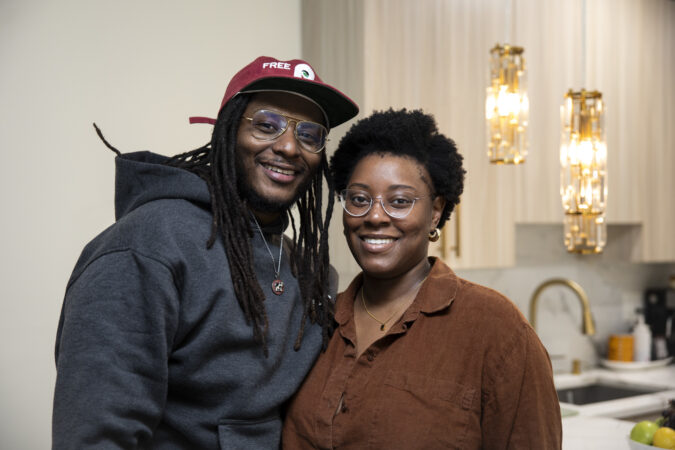
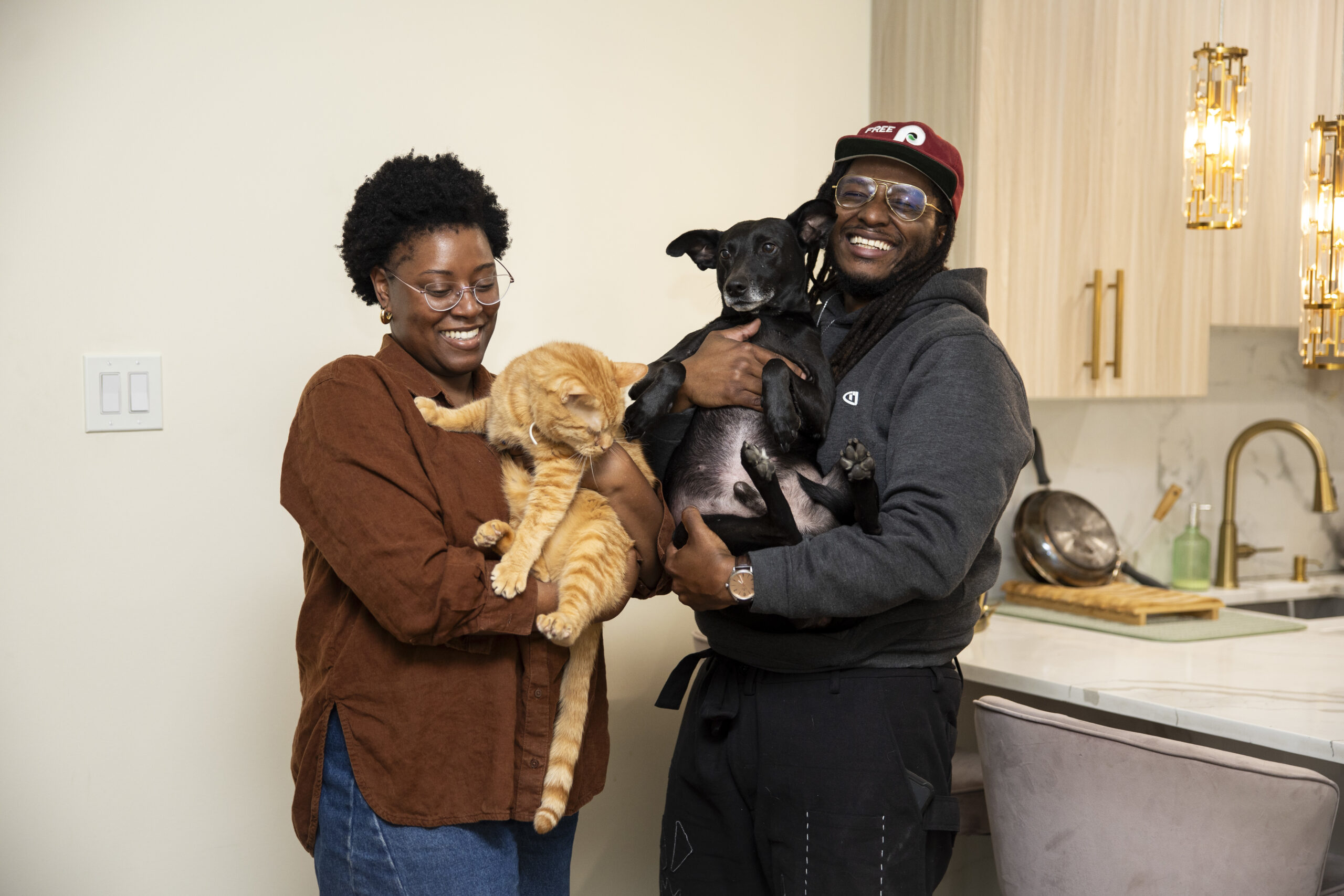
    Mercedes Murphy and Stefan Walrond pose with their pets Archie (left) and Onyx at their Port Richmond home on Tuesday, Jan. 13, 2026, in Philadelphia.

    Life after close: Murphy hasn’t changed anything since moving in, just repaired things. The leak in the roof damaged the bedroom drywall, which she is now in the process of fixing. And she had to replace a leaky window in the office. Despite the minor inconveniences, she’s happy with her purchase. Now she’s focused on rebuilding her savings. She wants to get back to $100,000. “Let’s see if I can do it again,” she said.

    Did you recently buy a home? We want to hear about it. Email acovington@inquirer.com.

  • Here are the Philly ties to the new basketball gambling scandal

    Here are the Philly ties to the new basketball gambling scandal

    Philadelphia had a moment in the global spotlight this week as the U.S. Attorney’s Office said it had charged 26 people — including 20 basketball players — with participating in a wide-ranging, international scheme to rig games on behalf of gamblers.

    U.S. Attorney David Metcalf said bettors bribed players on teams in the Chinese professional league, as well as in NCAA games from Texas to New York.

    So why was the case charged here? And what role did Philadelphia play in the allegations?

    Below are three takeaways about the local ties of the sprawling investigation — the latest high-profile case to target alleged corruption in sports.

    U.S. Attorney David Metcalf announced charges against 26 people in what prosecutors described as a point shaving operation to benefit gamblers.

    Why was the case charged in Philadelphia?

    Federal prosecutors have wide latitude to pursue criminal investigations as long as some aspect of the alleged wrongdoing took place in their jurisdiction, and if a suspect’s actions could be considered a violation of federal law.

    In this case, prosecutors have alleged that the bets and payoffs that impacted games amounted to a criminal conspiracy between the so-called fixers and players, and also that the actions violated federal bribery and wire-fraud laws.

    In addition, the indictment contends one of the key organizers of the point-shaving scheme — professional gambler Shane Hennen — lived partially in Philadelphia at the time of his alleged crimes.

    And even though most of the games he gambled on took place elsewhere, Hennen is accused of placing huge bets at Rivers Casino’s sportsbook in Fishtown. One of the wagers was a $198,300 bet against a Chinese team called the Jiangsu Dragons, court documents say. Hennen had allegedly recruited one of the Dragons’ best players, Antonio Blakeney, to play poorly in exchange for bribes.

    (A spokesperson for Rivers Casino declined this week to comment on the case and did not respond to questions about why Hennen was allowed to place such large wagers on relatively obscure games.)

    The indictment says several other crimes took place in Philadelphia as well, including Jalen Smith — a basketball trainer and alleged organizer of the scheme — traveling to the Philadelphia International Airport to pay an unnamed player his bribe money.

    Were any Philadelphia schools part of the scheme?

    The indictment paints a limited portrait of connections between the point-shaving operation and Philadelphia schools or universities.

    In one of the more detailed local episodes in the document, prosecutors said Smith and Blakeney in 2024 attempted to recruit players from the La Salle men’s basketball team to take bribes and underperform in a game against St. Bonaventure.

    Hennen and a codefendant apparently thought the plan had succeeded — the indictment said they went on to place nearly $250,000 in bets on St. Bonaventure for that game.

    But none of the bets won, prosecutors said. And no La Salle players were named or accused of accepting the bribes in relation to the contest.

    A La Salle spokesperson said in a statement this week that it was aware of the allegations in the case, adding: “Neither the university, current student-athletes, or staff are subjects of the indictment. We will fully cooperate as needed with officials and investigations.”

    What about any Philadelphia-based players?

    The role of Philadelphia-based players was similarly limited.

    While several players accused of participating in the scheme spent time in the area, none was accused of accepting bribes while playing for a Philadelphia-based school.

    Former Temple University forward Elijah Gray, for example — who played for the Owls in the 2024-2025 season — participated in the scheme the year before, while he was playing at Fordham. Prosecutors said he was offered $10,000 to $15,000 to underperform on the court, and said he later recruited a teammate to participate in the point-shaving operation as well.

    Gray left Temple and transferred this academic year to the University of Wisconsin, but he was dismissed from the team in the fall over what the program said were “events preceding his enrollment.” He has pleaded guilty to one count of bribery, court records show, and is scheduled to be sentenced in March.

    Micawber “Mac” Etienne — who played for La Salle last year — was also bribed before he came to Philadelphia. Fixers approached Etienne in 2024, prosecutors said, while he was playing at DePaul. He agreed to help throw games, prosecutors said, which led Smith to give him and three teammates $40,000 in cash.

    Etienne has also pleaded guilty to a bribery count, court records show, and is scheduled to be sentenced in April.

    One current Philadelphia-based player is facing charges: C.J. Hines, a guard who transferred to Temple this year. But prosecutors said he took bribes in 2024, when he was playing at Alabama State.

    Hines has been charged by information, which typically indicates a defendant intends to plead guilty.

    A Temple spokesperson said the university had “previously received notice from the NCAA that Hines had potential eligibility concerns, and for that reason, he has not participated in any athletic competition since enrolling at Temple.”

    What happens now?

    The prosecutions will now proceed through Philadelphia’s federal courthouse in Center City.

    Some defendants — such as Gray, Etienne, and Hines — will likely have their cases wrapped up relatively quickly, as they’ve already pleaded guilty or indicated an intent to do so.

    Hennen has not yet entered a formal plea in the case, according to court records. If he or any other defendants plans to take the case to trial, it could be many months before the case is put before a jury.

    Staff writer Isabella DiAmore contributed to this article.

  • Who is Shane Hennen, the high-stakes Philly gambler at the center of the latest sports-betting indictment?

    Who is Shane Hennen, the high-stakes Philly gambler at the center of the latest sports-betting indictment?

    For Shane Hennen, the house of cards keeps folding.

    A federal indictment unsealed Thursday accuses the Philadelphia-based professional gambler of acting as a ringleader in a sweeping sports-betting conspiracy now involving the NCAA and the Chinese Basketball Association. Hennen was first arrested last January in connection with a gambling case involving a former Toronto Raptor, and was also charged separately in an October indictment in New York focused on the NBA.

    The latest charges against Hennen, known as “Sugar Shane,” brought an international angle to the existing portrait of a high-stakes gambler who prosecutors allege was willing to bribe athletes to throw games, provide devices to fix backroom card games tied to the New York mafia, and use insider betting information to place fraudulent wagers.

    In all, federal prosecutors have accused Hennen of conspiring to place fraudulent bets on ex-Raptors forward Jontay Porter and NBA guard Terry Rozier, bribing the top-scoring player in the CBA to throw games, and recruiting college basketball trainers to help rig dozens of NCAA games — much of it orchestrated from Hennen’s favorite Philly casino, Rivers. On top of it all, he is also alleged to have participated in the rigging of mob-linked poker games in New York City.

    And while the list of implicated players and conspirators continues to grow by the dozens, Hennen has remained a central figure to the bet-fixing scandals that have rocked the sports world over the past year.

    Rise of a “betfluencer”

    On social media, Hennen has cast himself as rising from a hard-luck Pennsylvania town to a self-styled “betfluencer,” flying on private jets from Las Vegas to Monte Carlo and gambling up to $1 million a week on sports and card games.

    But Hennen’s earlier record for criminality came into clearer view as result of the federal investigations. While growing up in the Pittsburgh area, he did time for drug and gambling related charges that now serve as a kind of prelude to his role in the bet-fixing scandals.

    In 2006, the Washington, Pa., native received probation in Allegheny County for charges linked to a gambling scheme. According to court records, Hennen and an accomplice rented adjacent rooms in a Pittsburgh area hotel to hold underground dice games. While gambling in one room, a partner in the next room employed a magnetic device to flip loaded dice to preferred numbers.

    Then, early one morning in 2009, a former Duquesne University basketball player was found bleeding from a stab wound in Pittsburgh’s South Side neighborhood, a popular nightlife area. The man survived and later told police that Hennen had stabbed him in the neck after the athlete confronted him about cheating in a card game. Hennen was also picked up on a DUI less than two weeks later, but was released.

    Not long afterward, Hennen was charged with two more felonies after he was caught in a parking lot with 500 grams of cocaine down the street from the Meadows Casino, near Pittsburgh.

    In subsequent court filings, Hennen revealed that he had been working with a local drug dealer for more than a year. Facing well over a decade of jail time between the drug and assault charges linked to the stabbing, Hennen agreed to testify against his dealer and participated in a federal drug sting involving a different narcotics supplier based in Detroit, court records show.

    He served just less than two-and-a-half years in prison, plus four years of supervised release.

    According to court transcripts published by Sports Illustrated in October, Hennen admitted five times under oath that he cheated other people out of money.

    During a cross-examination, Lee Rothman, an attorney for his associate drug dealer he was testifying against, stated bluntly that Hennen made “a living out of cheating people out of things.”

    “That’s correct,” Hennen said.

    After his release in 2013, Hennen traveled to Pensacola, Fla., purportedly to work as a sales rep for a seafood wholesaler. Court records show he almost immediately went back to gambling, even violating his probation to travel out of state to participate in the 2014 World Series of Poker in Las Vegas.

    When Hennen landed in Philadelphia in 2015, it was seemingly to start over. He leased an apartment near the Rivers Casino in Fishtown.

    The small casino would become Hennen’s unlikely staging ground for a new, more lucrative gambling scheme that would come to span the globe.

    From Philly to China

    Local gamblers said Hennen worked the poker and baccarat tables at Rivers, using the action to build a reputation with the house and pave the way for six-figure sports bets, the kind only gamblers with money and a track record at the casino are allowed to make.

    By 2022, Hennen had launched an online betting consultancy via an Instagram page called “Sugar Shane Wins.” On social media, Hennen posted his sportsbook picks along with glamorous photos jetting around to Vegas or Dubai, or sitting courtside at Sixers games.

    Although he marketed bets on teams familiar to U.S. gamblers, his focus — and income — was overseas, according to federal prosecutors.

    He posted courtside photos of himself at Sixers games with a Mississippi-based sports handicapper named Marves Fairley, who prosecutors say connected the gambler with Antonio Blakeney, a former Louisiana State University shooting guard who had done a brief stint on the Chicago Bulls.

    Blakeney had subsequently bounced around different international teams, including Hapoel Tel Aviv, in Israel, and the Nanjing Monkey Kings and Jiangsu Dragons, both in China. According to a federal indictment, while playing for the Dragons, Hennen and Fairley bribed Blakeney to underperform in Chinese basketball games in order to fix high-stakes bets against the team and recruit others to do the same.

    Suddenly, the slots parlor on the Delaware was seeing six-figure bets placed on multiple Chinese basketball games through its sportsbook, BetRivers, sometimes for upward of $200,000. Representatives for the casino declined to comment Thursday on the latest federal indictment.

    The gambit proved reliably lucrative. In a 2023 text message obtained by federal authorities, Hennen reassured an accomplice who had placed big bets against Blakeney’s team.

    “Nothing gu[a]rantee[d] in this world,” Hennen wrote, ”but death taxes and Chinese basketball.”

    The model would also serve as a template for a similar racket the duo would orchestrate within the NCAA.

    By 2024, the duo had recruited basketball trainers Jalen Smith and Roderick Winkler to help convince dozens of college basketball players to rig matches on their behalf.

    Ultimately, 39 players on more than 17 Division 1 NCAA teams would participate, with bettors wagering millions on at least 29 rigged games.

    Hennen took a behind-the-scenes role, authorities alleged, texting a network of straw bettors who placed big wagers on games featuring star players bribed by the trainers, and sometimes moving bribe money or splitting up winnings back in Philly.

    His rising profile started to draw unwanted attention.

    Shortly after Hennen relocated to Las Vegas in 2023, he was accused of rigging poker matches by Wesley “Wes Side” Fei, another professional gambler who claimed in social media posts that Hennen had scammed him out of millions.

    The next year, gambling industry watchdog Integrity Compliance 360 began flagging bets placed on six Temple University basketball games. One, against Alabama-Birmingham in March 2024, saw the Borgata, in Atlantic City, cancel bets for the game due to suspicious betting activity. Before the end of 2024, the National Collegiate Athletic Association had launched an investigation into the games, as rumors swirled that federal authorities were questioning Temple player Hysier Miller as part of an alleged point-shaving scheme.

    Then Porter, the Raptors center, was banned for life from the NBA, after it emerged that the league was investigating yet another bet-rigging scheme. A few months later, Porter pleaded guilty to gambling charges — the first hint at the true scope of a sprawling federal investigation that went on to consume the NCAA and NBA.

    Beginning of the end

    In January 2025, Hennen’s luck ran out.

    Authorities stopped him in Las Vegas as he was boarding a one-way flight to Panama, en route to Colombia. He had $10,000 in his pocket and claimed he was headed to South America for dental treatment.

    But investigators had already zeroed in on Hennen as the main orchestrator of the prop betting scheme involving Rozier, the former Miami Heat guard. In October, federal prosecutors in the U.S. District Court for the Eastern District of New York unsealed an indictment, accusing Hennen of working with Fairley to have Rozier throw games for a profit, sometimes using Philadelphia as a meeting point to dole out the proceeds to other bettors.

    Court records show that since then, Hennen has entered plea negotiations with federal prosecutors and relocated to a residence in South Philadelphia. (His attorney did not respond to a request for comment.)

    During the Thursday news conference unveiling the latest indictment, Wayne Jacobs, a special agent in charge of the FBI Philadelphia field office, said that Hennen and his conspirators’ actions had undermined faith in professional sports writ large.

    “We expect athletes to embody the very best of hard work, skill, and discipline, not to sell out to those seeking to corrupt the games for their own personal benefit,” he said. “The money that’s used as a tool to influence outcomes does not just taint a single game, it tears up the trust and the results that we cherish.”

  • Heavy fire temporarily closes North Philadelphia restaurant Bella Vista

    Heavy fire temporarily closes North Philadelphia restaurant Bella Vista

    North Philadelphia restaurant Bella Vista is temporarily closed after a fire caused severe damage to the building on Friday morning.

    The Philadelphia Fire Department responded to a report of a “heavy fire” at the surf and turf restaurant, located on Whitaker Avenue, just before 4 a.m.

    “Thankfully, there are no reported injuries,” said PFD spokesperson Rachel Cunningham. “Philadelphia Fire Department members are still on scene making sure all hot spots are extinguished.”

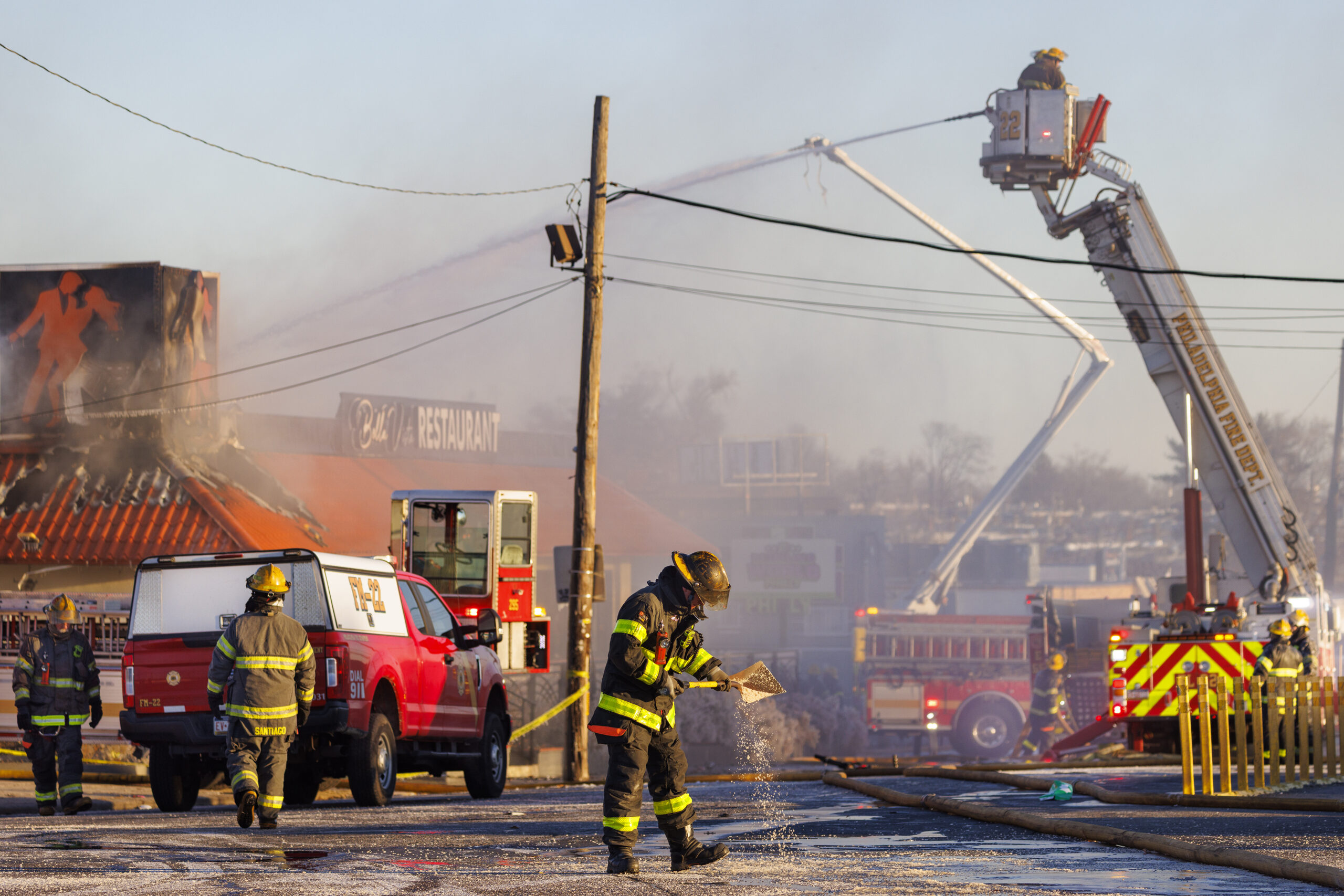
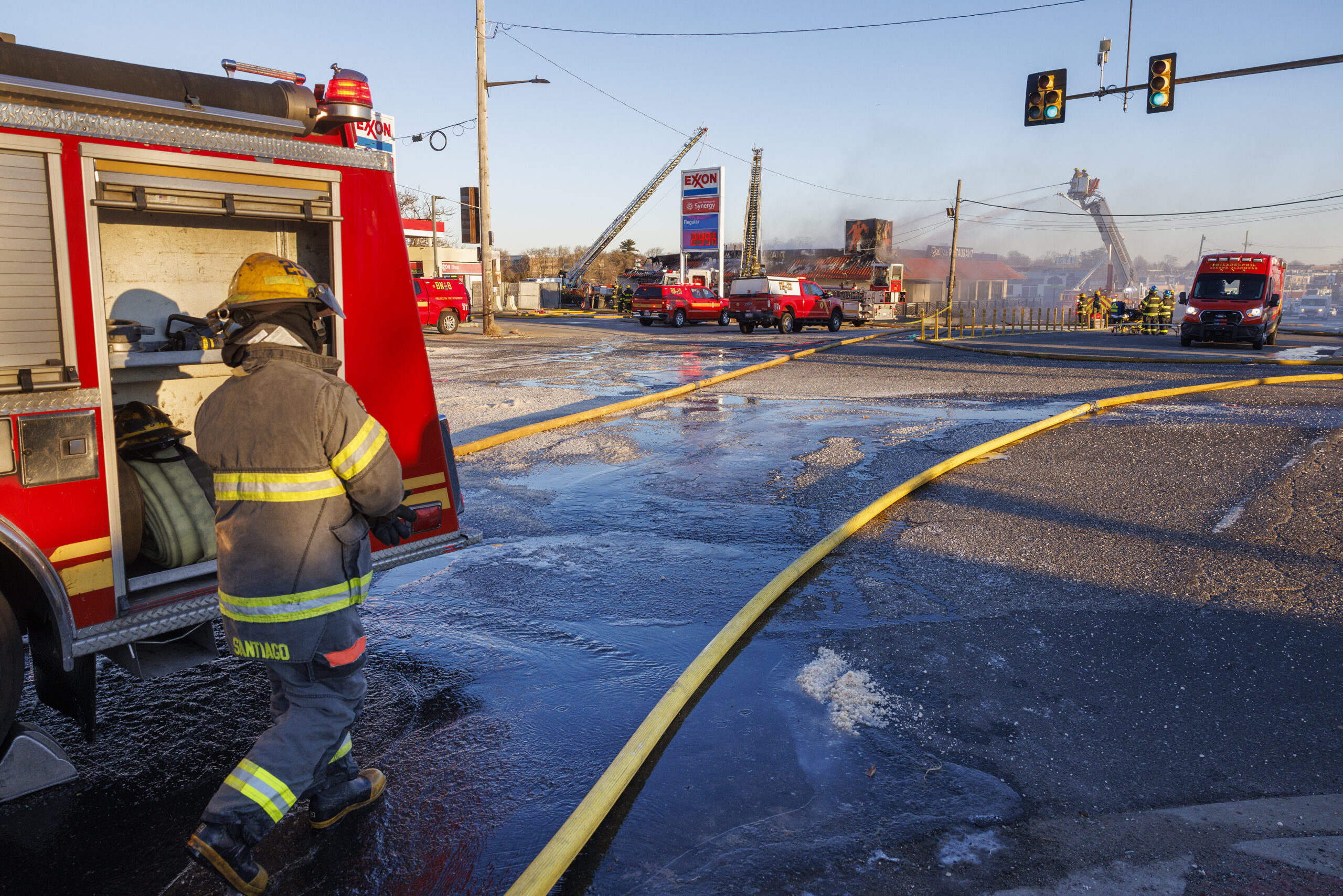
    A Philadelphia firefighter salts the roadway at a fire at Bella Vista Restaurant on Whitaker Avenue at Hunting Park Avenue, in Philadelphia, Friday, Jan. 16, 2026.

    The fire’s size required the responding crew, Battalion 10, to place all hands in service. They also called for three more engine companies and another ladder company, according to a PFD spokesperson. A total of 80 firefighters and support staff placed the fire under control at 6:26 a.m.

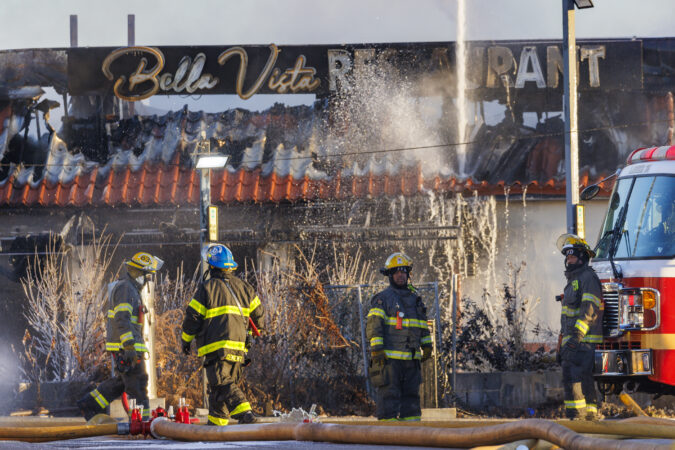
    Large sections of the restaurant’s roof were caved in and blackened from the fire, and the building’s “Bella Vista Restaurant” sign was charred. Bella Vista’s owners could not be reached for comment.

    Philadelphia firefighters work at Bella Vista Restaurant, Whitaker Avenue near Hunting Park Avenue, Philadelphia, Friday, Jan. 16, 2026.

    PGW and PECO were also contacted to ensure that no electricity or gas-related issues occurred. The Fire Marshall’s Office is investigating the cause of the fire.

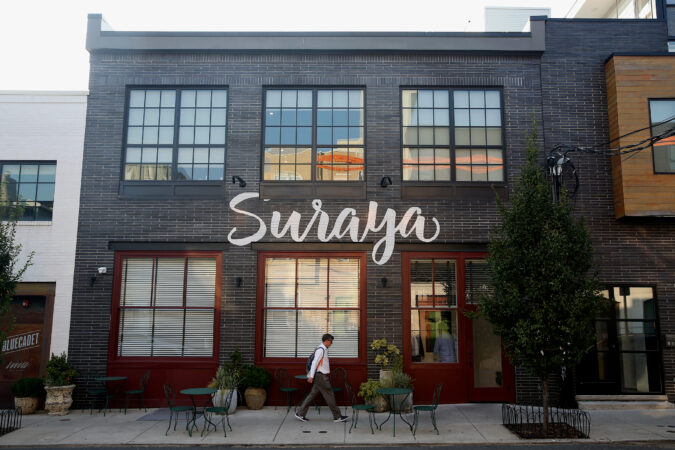
    A rooftop fire next to the award-winning Fishtown restaurant, Suraya, forced the Lebanese restaurant to temporarily close two weeks ago. It reopened the following day.

  • Hahnemann redevelopment may be another victim of councilmanic prerogative | Editorial

    Hahnemann redevelopment may be another victim of councilmanic prerogative | Editorial

    Since his 2023 election, 5th District Councilmember Jeffery “Jay” Young has earned a reputation as City Council’s quarrelsome contrarian. His penchant for swooping in and obstructing projects at the last minute has upset everyone from progressive community activists to affected developers.

    Young is a single vote on Philadelphia’s 17-member legislative body, but thanks to the tradition of councilmanic prerogative — where the rest of Council yields to district representatives regarding land-use decisions — he wields absolute power over an area that includes Rittenhouse Square and City Hall to the south, Strawberry Mansion to the west, part of Northern Liberties and Fishtown to the east, and Hunting Park to the north.

    Projects impacted by his objections include a long-standing proposal to build senior housing in Strawberry Mansion, a plan to protect students with speed cameras in school zones, and the renovation of the Cecil B. Moore Library.

    Young’s latest disruptive gambit — ill-conceived and misguided — is a bill that targets the proposed redevelopment of the former Hahnemann University Hospital patient towers in Center City into hundreds of apartments.

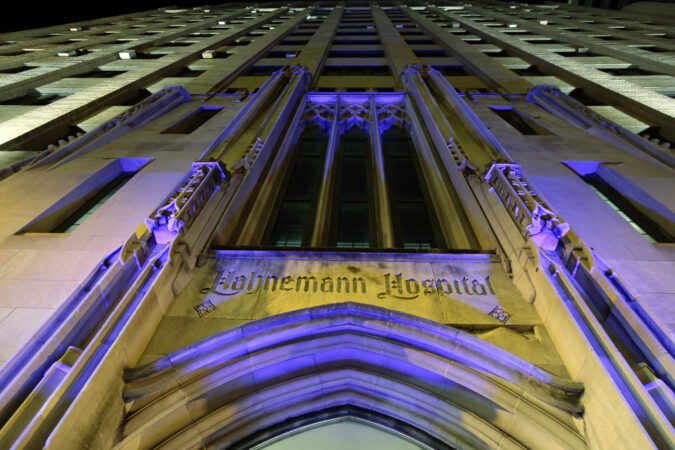
    Established in 1885, the hospital healed generations of Philadelphians, and its south tower was the first skyscraper teaching hospital in America. Beyond the loss of medical services, when Hahnemann closed six years ago, it left a gaping hole in the heart of the city.

    Located along a stretch of North Broad Street that is heavily underutilized, the vacant buildings are begging for a new lease. Dwight City Group has proposed refilling the campus with housing. The plan would add hundreds of new residents right next to Center City and the Broad Street Line, and within walking distance of Suburban Station.

    To most housing, development, and planning experts, the idea is perfectly sound. Philadelphia would add workforce housing (around 1% of Mayor Cherelle L. Parker’s goal) in a location that already has the infrastructure and amenities residents require, and the city would not have to spend any taxpayer money to make it happen.

    And yet, Young is opposed.

    Jeffery “Jay” Young represents Philadelphia’s 5th District.

    In a statement to the Editorial Board last year, Young defended the move as being motivated by a desire to grow jobs in the city by limiting development in the area to commercial use. That’s an admirable goal. But who is going to buy the goods and services these hypothetical new businesses would offer? The redevelopment of Hahnemann into an apartment building would only increase local entrepreneurial opportunities.

    Thankfully, in this case, it looks like Young’s obstructive desires may be a moot point — at least when it comes to his proposed legislation.

    Because Council adjourned for its winter break without voting Young’s bill out of committee, the developer was able to secure zoning permits to build 361 apartments, with space for commercial use in the building’s ground floor.

    While the Dwight City Group did not want to comment, CEO Judah Angster earlier told Inquirer reporter Jake Blumgart they remain in negotiations with Young. Given the fact that the developer may have to deal with the councilmember in the future, there is a chance the Hahnemann project may be curtailed to avoid Young’s ire elsewhere.

    Were that to happen, it would mark another missed opportunity for positive growth in the city, thanks to councilmanic prerogative.

    For decades, Philadelphia has trailed peer cities in job growth and economic activity. While high business taxes, deep poverty, and other factors play a role, prerogative stands out as an impediment that is entirely self-inflicted.

    The practice — no matter how strongly it is defended by Young and his colleagues — is a constant detriment to the city. While there is merit in giving district representatives a strong voice to protect their constituents from unwanted development, councilmanic prerogative too often allows the whims of a single person to override the will of the people.

    The only thing Philadelphia would lose by eliminating councilmanic prerogative is the opportunity for Council members to grandstand and feed their egos.

  • After a breakup, he left Graduate Hospital for a giant backyard in Port Richmond | How I Bought This House

    After a breakup, he left Graduate Hospital for a giant backyard in Port Richmond | How I Bought This House

    The buyers: David Snelbaker, 59, finishing technician

    The house: a 1,440-square-foot townhouse in Port Richmond with three bedrooms and two baths built in 1925.

    The price: listed for $275,000; purchased for $269,500

    The agent: Allison Fegel, Elfant Wissahickon Realtors

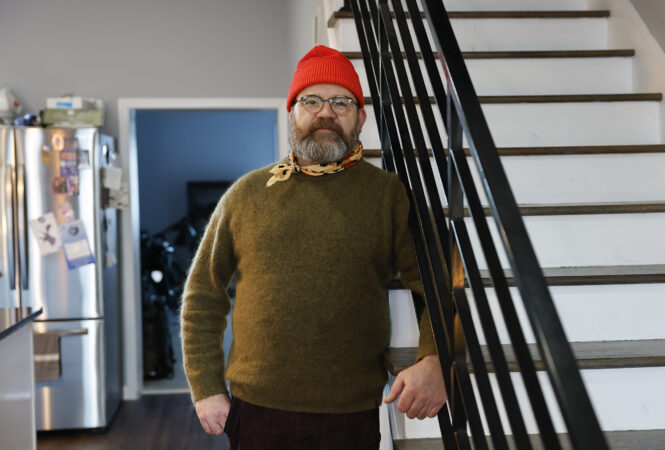
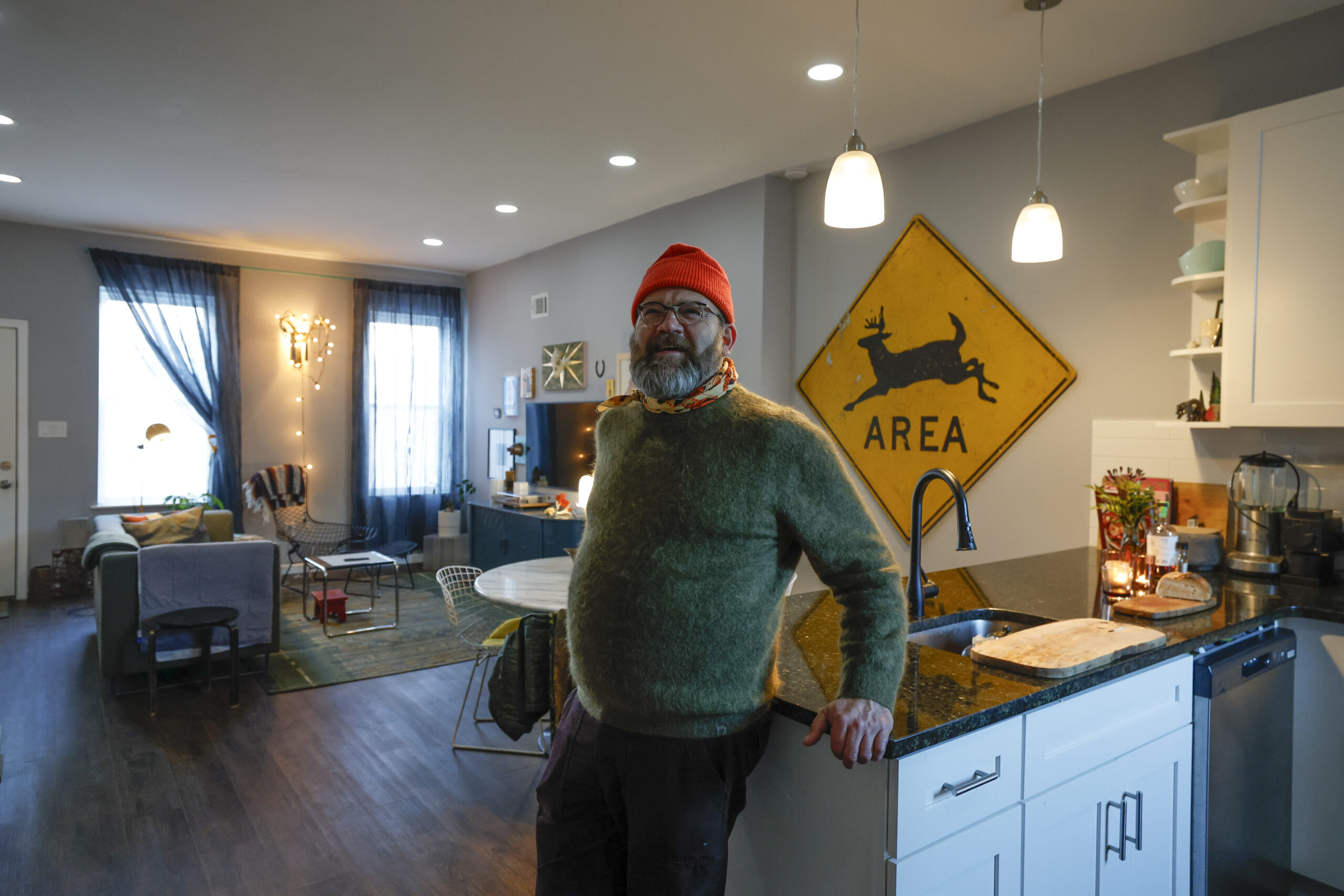
    Snelbaker in the kitchen of his Port Richmond home.

    The ask: Snelbaker didn’t want to give up his house in Graduate Hospital. He’d spent years rehabbing and repairing it. But in 2023, on the heels of a breakup, he determined he couldn’t afford to keep it on his own. He needed to downsize, but he wanted to stay in his neighborhood. Other than that, his list was short but firm: a backyard for gardening and a rowhouse that wasn’t too narrow.

    His budget was $300,000 — a number driven less by lender approval than by self-preservation. “I didn’t want to be house poor,” he said. “I have friends who are. They don’t go on vacations. They’re just kind of financially stuck.”

    The search: Snelbaker needed to sell his old house before he could make an offer on a new one, which made it difficult to compete in South Philly’s hot market. “A lot of the places I wanted to jump on would just go so fast,” he said.

    He expanded his search and discovered better stock in Fishtown and Port Richmond. “For the same price for something in South Philly, it was a fixer-upper,” he said. “And here, it was in good shape.” Snelbaker had already lived through years of construction in his old house and wasn’t eager to do it again. “I just didn’t want to get into another fixer-upper situation,” he said.

    He checked out a few places in Fishtown but settled on Port Richmond because it was closer to his work. The prices were better, too. “It was a win-win,” Snelbaker said. The only other place he considered was a recently renovated rowhouse close to the river. “It was laid out well,” he said. “That was my second choice.”

    Snelbaker liked that the house was recently renovated and move-in ready.

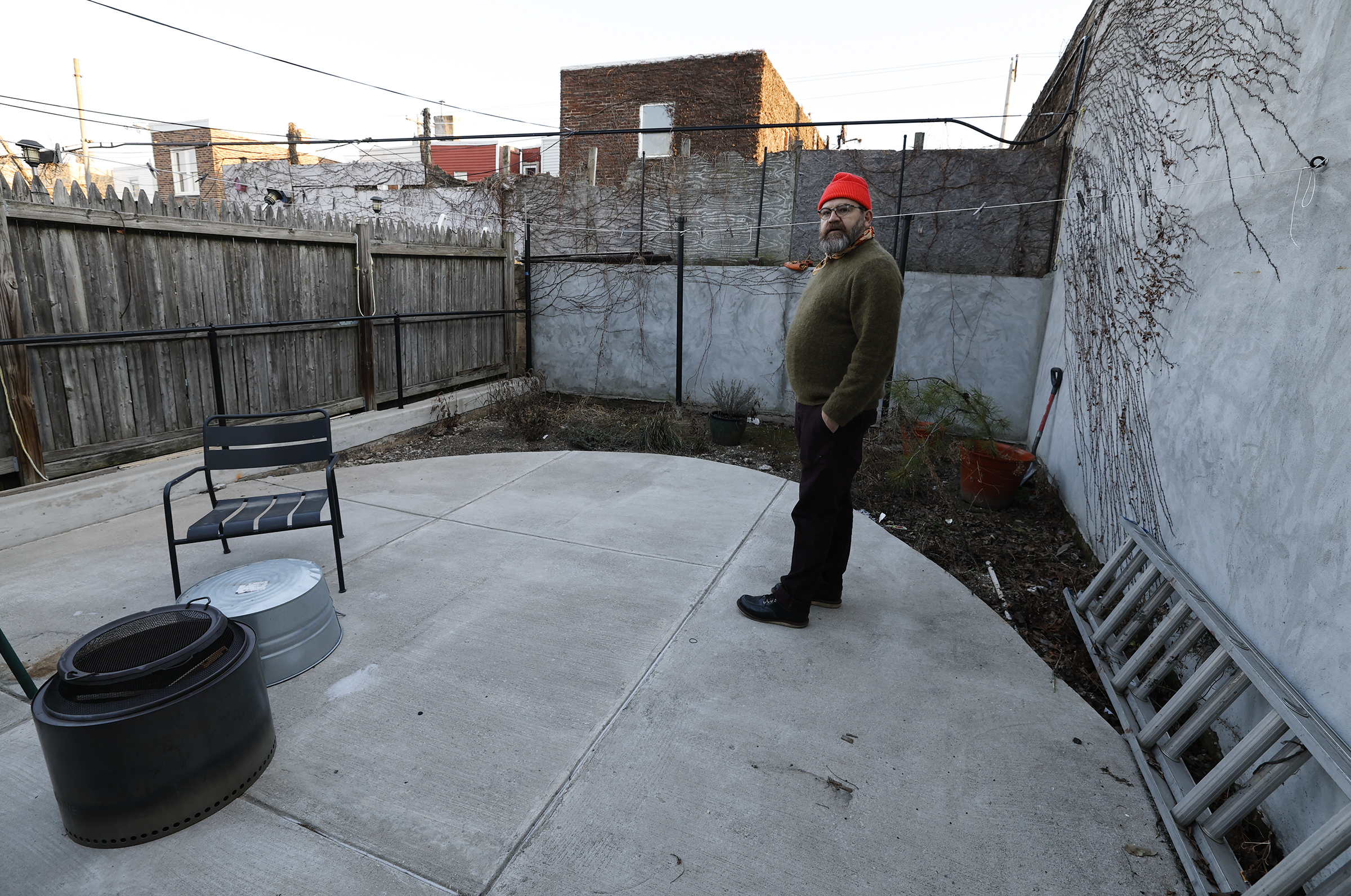
    The appeal: Snelbaker knew he’d found the one when he stepped out back. “The backyard was unbelievably, unbelievably big,” he said. “It’s like 27 feet long and 18 feet wide.” Plenty of space for the major landscaping projects he wanted to do, like planting several trees and building raised beds. Even better, one side of the yard abutted a warehouse, not another rowhouse, which gave him “a level of privacy,” he said.

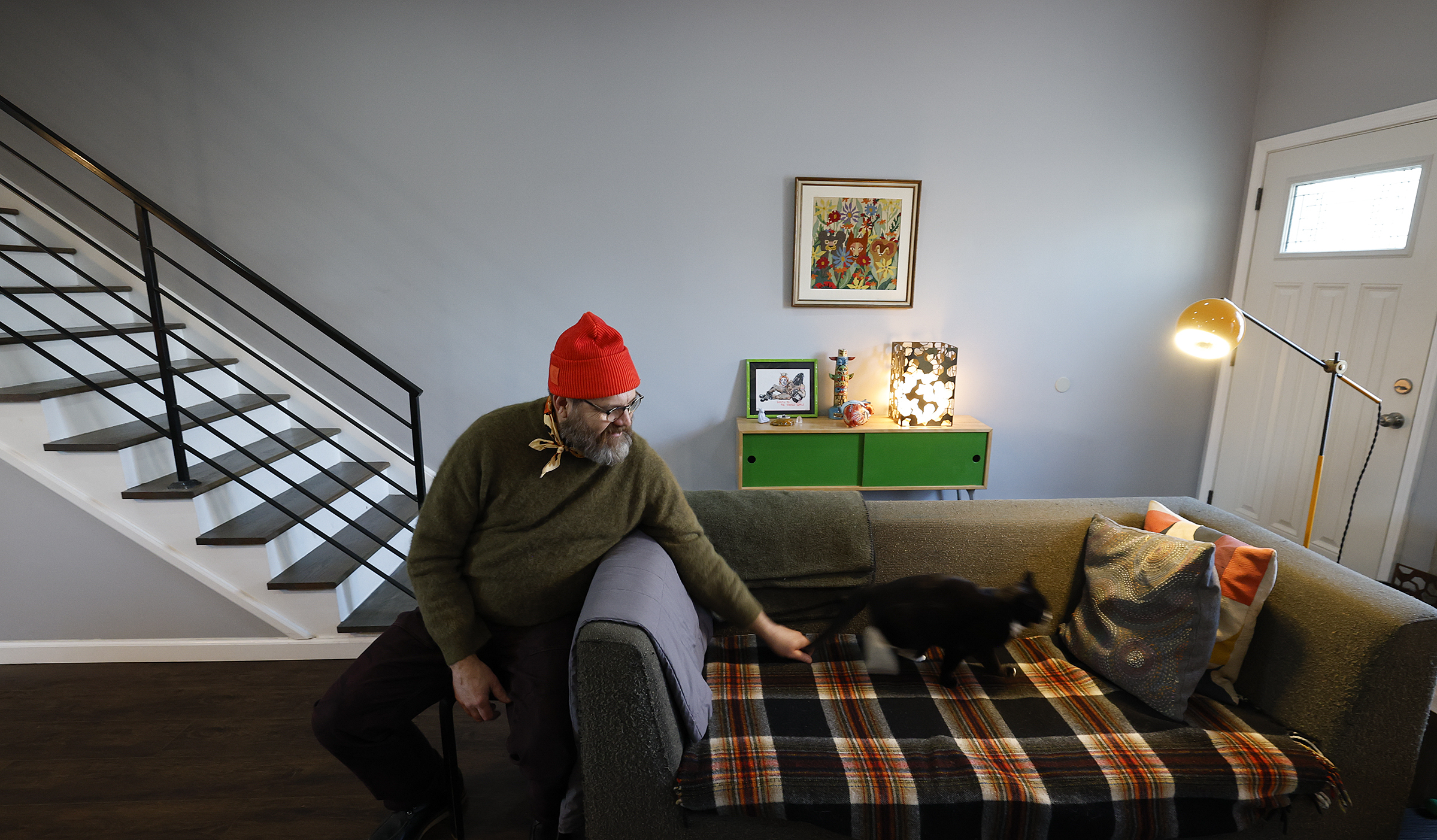
    Inside, the house was open, newly renovated, and neutral. “It didn’t have a lot of personality,” Snelbaker said, “but it wasn’t a lot of work either.”

    The deal: Snelbaker saw the house at the end of the summer, but because he needed the proceeds from his Graduate Hospital home for a down payment, he couldn’t make an offer right away. Thankfully, the Port Richmond house lingered on the market until he sold his place in October. “I was surprised it didn’t move,” Snelbaker said.

    Once his old house sold, Snelbaker moved quickly. He offered $269,500 — $5,500 under the asking price — and the seller accepted without pushback. The inspection brought little drama. The sellers, who were contractors, handled minor repairs. “They did some patching on the roof and some stuff on the brick in the front,” Snelbaker said. “There was something with the dishwasher … they repaired that. That was pretty much it.”

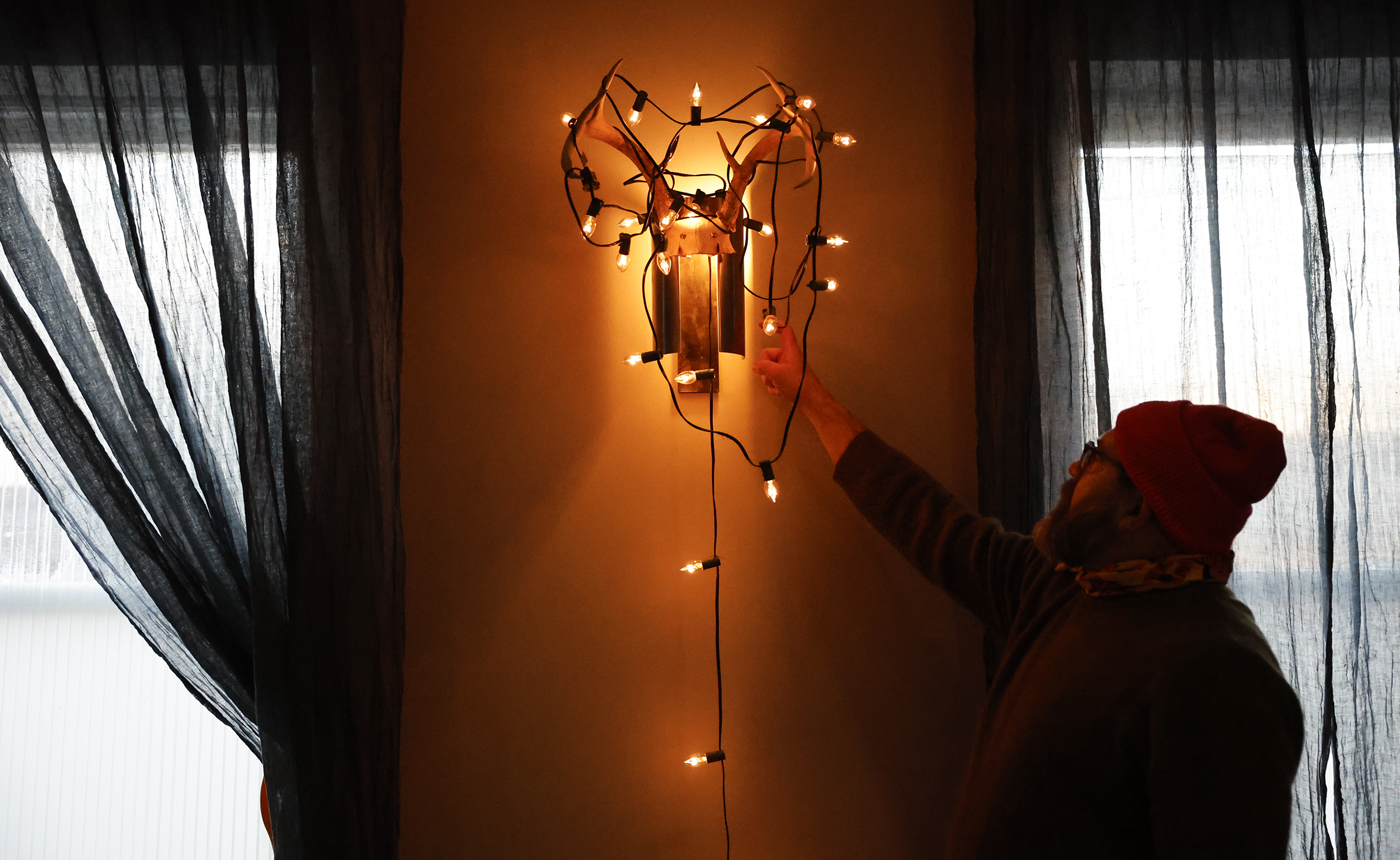
    Since moving in, Snelbaker has added personal touches like this antler lamp to give his house more personality.

    The money: Snelbaker walked away with $240,000 from the sale of his previous home. He put a chunk of it into a certificate of deposit and used the remaining $180,000 for the down payment. “I put more than 20% down because I wanted to keep my monthly payment low,” he said.

    Even so, timing worked against him. Interest rates climbed to 7% as he was shopping, and insurance costs jumped a few months after he moved in. His monthly payment was originally $1,300. Now it’s $1,900. He plans to refinance once interest rates drop a few percentage points, and he’s actively looking for a better rate on his home insurance.

    Snelbaker removed some of the concrete in the backyard to plant trees.

    The move: Snelbaker sold his old house in mid-October and officially closed on his new one on Halloween, but he wasn’t ready to move in right away. His agent did some “fancy footwork” and worked out a deal for Snelbaker to rent his old house from its new owners for a few weeks. “She negotiated a really good timeline that gave me space to pack and wrap up everything at the old house,” Snelbaker said.

    Even better, he celebrated Halloween with his old neighbors. “We handed out candy, and they made me dinner. It was very sweet,” Snelbaker said. He moved into his new home the week before Thanksgiving.

    Any reservations? Without an attached neighbor on one side, the house runs colder than Snelbaker expected. He contacted an energy auditor who advised him not to do anything until he insulated the roof. It’s pricey, but worth it, Snelbaker said. “It’ll definitely increase the comfort and lower my heating bills.”

    Life after close: Since moving in, Snelbaker has focused on the backyard. He removed slabs of concrete to make room for trees and raised beds. “That was important for me,” he said. “I really wanted to get a garden going again like I had in my old spot.”

    Did you recently buy a home? We want to hear about it. Email acovington@inquirer.com.

  • Suraya is temporarily closed after a rooftop fire next door in Fishtown

    Suraya is temporarily closed after a rooftop fire next door in Fishtown

    Suraya, the Michelin-recognized Lebanese restaurant in Fishtown, will temporarily close Friday after a nearby rooftop fire left the restaurant without gas.

    The Philadelphia Fire Department arrived to fire on the roof of a two-story building on the 1500 block of Frankford Avenue late Thursday night. The department controlled the fire within 20 minutes and there were no reported injuries. The cause was under investigation.

    However, Suraya reported that its building was still without gas service and wouldn’t open until the service was restored.

    “We are incredibly grateful that our team was unharmed in the fire. We are temporarily without gas, so we cannot open the restaurant. The Suraya team will be working with local authorities to support their ongoing investigation and appreciates the community’s support,” said a spokesperson for Defined Hospitality, the restaurant group that includes Suraya.

    Halabi kebabs and the samke harra are pictured at Suraya in Philadelphia’s Fishtown section on Tuesday, Aug. 11, 2020.

    Updates on the restaurant opening will be posted on social media at @surayaphilly.

    Suraya, named after the sibling-cowners Nathalie Richan and Roland Kassis’ grandmother in Beirut, was just recognized by the Michelin Guide for its welcoming presence, rich Middle East and Levant-inspired menu, and expansive offerings from the bakery and shop up front to its open kitchen and outdoor dining area.

  • Gluten-free bakery Flakely levels up with a new and bigger storefront in Bryn Mawr

    Gluten-free bakery Flakely levels up with a new and bigger storefront in Bryn Mawr

    A popular gluten-free bakery is coming to the Main Line.

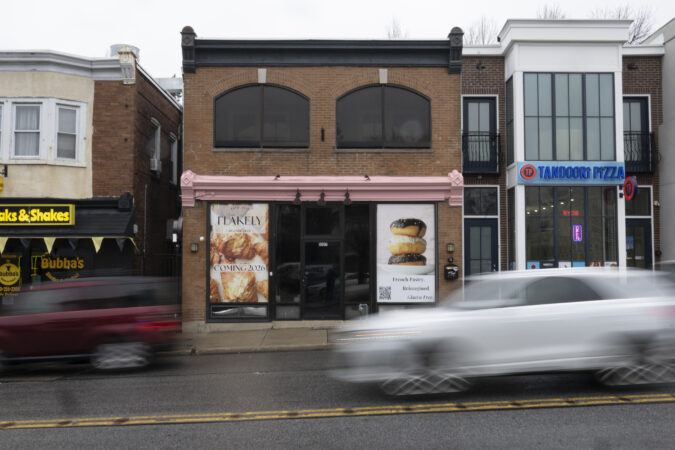
    Flakely is moving from behind the bright pink door at 220 Krams Ave. in Manayunk to a Bryn Mawr storefront in early February, said owner Lila Colello. The new takeout-only bakery will replace a hookah lounge at 1007 W. Lancaster Ave.

    “We’ve really outgrown our space,” Colello told The Inquirer. Manayunk “wasn’t ever meant to be for retail.”

    A trained pastry chef who worked for the Ritz Carlton and Wolfgang Puck Catering, Colello was afraid she’d have to give up the best things in life — bread and her career — when she was diagnosed in 2010 with celiac disease, an inflammatory autoimmune and intestinal disorder triggered by eating gluten.

    Instead, Colello spent the next seven years finding ways to get around gluten, a protein found in grains like wheat, rye, and barley (and thus most breads, bagels, and pastries). She perfected kettle-boiled bagels and pastry lamination before starting Flakely in 2017 as a wholesaler.

    Colello moved into the commercial kitchen at Krams Avenue in 2021, where customers have spent the last four years picking up buttery chocolate croissants, brown sugar morning buns, and crusty-yet-chewy bagels from a takeout window in an industrial parking lot. Inquirer restaurant critic Craig LaBan has called Colello’s bagels “the best he’s tasted outside of New York,” and in 2024, Flakely was voted one of the best gluten-free bakeries in the United States by USA Today.

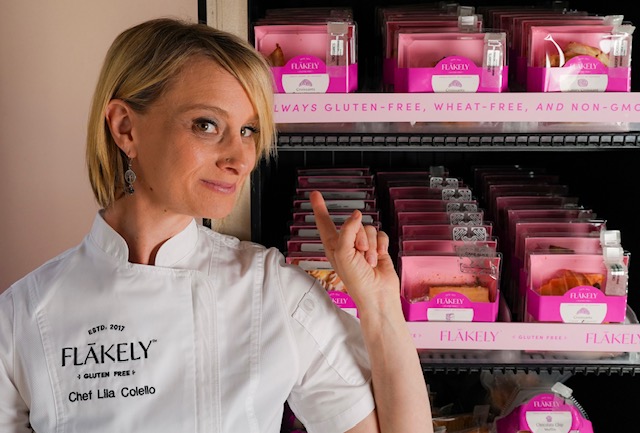
    Lila Colello, owner and head baker at Flakely, helped patent a way to laminate gluten free dough for croissants.

    Flakely’s industrial Manayunk location has required some concessions, Colello said: The majority of their goodies are par-baked and frozen by Colello and three full-time employees for customers to take and bake at home. Otherwise, Colello explained, the lack of steady foot traffic would lead to lots of wasted product.

    In Bryn Mawr, Flakely will be a fully functional takeout bakery with a pastry case full of fresh-baked goods, from full-sized baguettes and browned butter chocolate chip cookies to danishes and Colello’s signature sweet-and-savory croissants. A freezer will also include packs of Flakely’s take-and-bake doughs, bagels, and eventually, custom cake orders.

    Once she’s settled in, Colello said, she hopes to run gluten-free baking classes and pop-up dinners out of the storefront — offerings (besides the ingredients) that she hopes will differentiate her from other bakeries in the area.

    While the Main Line only has one dedicated gluten-free bakery (The Happy Mixer in Wayne), Lancaster Avenue is already lined with sweet shops: Malvern Buttery opened up a coffee and pastry combo down the street from Flakely in June, and Colello’s storefront is on the same strip as The Bakery House and an outpost of popular Korean-French chain Tous Les Jours.

    “My vision is for this to be a magical space where people can come in and leave with a fresh croissant, which people can’t really do” when they’re gluten-free, said Colello, who lives in Havertown. “We offer our customers things they miss. That’s kind of our thing.”

    Flakely owner Lila Colello poses in front of one of Flakely’s pink gluten free pastry ATMs, which vend take-and-bake goods at four locations in the Philly area.

    What about the pastry ATMs?

    The permanent storefront does not mean Flakely’s signature pink pastry ATMs will disappear, said Colello. But they will move.

    Colello installed Flakely’s first pastry vending machine inside South Philly’s now-shuttered Salt & Vinegar. With the tap or swipe of a credit card, the smart freezer would open to let customers choose their own take-and-bake pack of croissants, pop-tarts, muffins, or danishes. Using it felt like a sweet glimpse into the future.

    Flakely currently operates pastry ATMs inside Collingswood grocer Haddon Culinary, the Weaver’s Way Co-op in Ambler, Ardmore smoke shop Free Will Collective, and Irv’s Ice Cream in South Philly, where enterprising customers top their pastries with scoops fresh out the freezer.

    Irv’s ATM will make the move to Reap Wellness in Fishtown on Jan. 5 when the ice cream shop closes for the season, Colello said. And come February, the smoke shop’s ATM will transition to Lucky’s Trading Co., a food hall at 5154 Ridge Ave. in Roxborough. The hope, Colello said, is to space the locations out enough so she’s not competing with herself.

    “We’re finally in the middle of where everything is,” Colello said. “And that’s kind of the goal.”

    Flakely, 1007 W. Lancaster Ave., Bryn Mawr, 484-450-6576. Hours: 9 a.m. to 4 p.m. Tuesday to Saturday.