Tag: gentrification

  • PHA took over its first private-sector apartment building. Tenant reviews are mixed.

    PHA took over its first private-sector apartment building. Tenant reviews are mixed.

    The Philadelphia Housing Authority embarked on a strategy last year unlike anything it has done before.

    The agency is known as the largest affordable housing provider in the city. But in 2025, under the leadership of CEO Kelvin Jeremiah, it began buying struggling private-sector apartment buildings all over the city to expand the affordable housing supply.

    Over the last 14 months, the Philadelphia Housing Authority (PHA) has spent $280.6 million to acquire 17 multifamily properties, totaling 1,515 units. Some have been student apartments or largely empty new buildings. But most have been full of tenants paying market-rate rents, ranging from $1,106 to $2,323.

    That’s a new demographic for PHA, whose renter base often makes less than $30,000 a year.

    PHA plans to fill these buildings with Section 8 voucher holders, who often have a difficult time finding rentals in higher income areas.

    “It’s part of the strategy … to give residents the broadest possible options in terms of their housing choice and one that is not limited to particular neighborhoods,” Jeremiah said.

    In an innovation, the agency intends to keep renting some units in the newly acquired buildings at the market rate, using the income to support operating expenses.

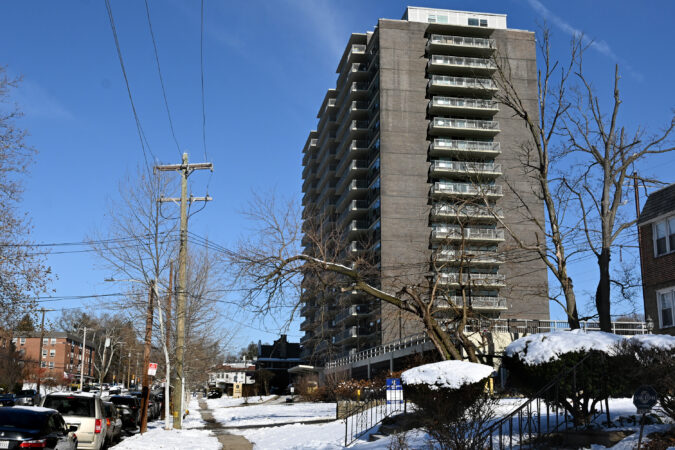
    The first PHA purchase in 2025 was The Dane, a 233-unit building in Wynnefield. It now houses some tenants paying market-rate rents and others using government subsidies.

    Last year, several tenants contacted The Inquirer with concerns about what they described as a rocky transition to PHA ownership. Since then, interviews with 18 tenants at The Dane have laid out challenges within PHA’s new model — and the potential difficulty of retaining renters with options elsewhere.

    Eighty-six people have moved out of The Dane over the last year. That’s about half the original occupants as the building was only 75% occupied when purchased.

    The overwhelming majority of tenants interviewed by The Inquirer said PHA is a better landlord than the previous owner, Cross Properties. But most have moved out or are planning to.

    “The management staff that are there now are better than what we had, but they’re still pretty mediocre,” said one resident, who, like many of the tenants, asked that their name be withheld to preserve relations in the building.

    “Everybody’s very polite; everybody’s very cordial, but it’s only maybe one or two maintenance people,” this multiyear resident said. “The trash pileup is very bad right now … I plan to move elsewhere.”

    Jeremiah noted that most of the properties PHA acquired have not experienced the kind of turnover that The Dane has seen. The building is now almost completely occupied with both market-rate and subsidized tenants, said a PHA spokesperson.

    He said some tenants moved out after the agency began collecting rent again. Many had been withholding payments to Cross, which lacked a rental license at the end of its tenure.

    It’s possible that the turnover at The Dane is largely the result of a difficult property transfer from a troubled previous owner. (Cross Properties is no longer in business.) In that case, the tenant exodus may not be a predictor for PHA’s larger ambitions.

    But given the skepticism PHA faces in many neighborhoods, outside observers say, the agency’s new expansion strategy faces high expectations to get everything right.

    “PHA is under a tremendous amount of pressure,” said Akira Rodriguez, a professor of housing policy at the University of Pennsylvania. “There’s going to be experiences that are uneven for tenants as they navigate this new model of housing provision … [and The Dane] is a really high visibility example.”

    A long troubled apartment building

    In November 2024, residents of The Dane were fed up. Their hot water wasn’t working — again — in apartments where many households paid over $2,000 a month in rent.

    “The owner [Cross Properties] was not the best,” said Akeesha Washington, who has lived in The Dane since 2020. “He just didn’t maintain the building. Over the years, you saw the amenities dwindle.”

    Cross Properties acquired the building in 2016 when it was the Penn Wynn House and converted the rent-subsidized building into market-rate apartments.

    When Washington moved in, she was impressed. The staff were kind to her in 2020 when she contracted COVID-19. They coordinated care with Washington’s mother so she had access to medication without infecting anyone.

    “It was a really nice community. It’s luxury in the 19131 section, where not everyone feels like they can afford it,” said Washington, who loves the diversity of the tenants, which included university students, working-class residents, and doctors and lawyers.

    “You had so many layers of people living and coexisting in this building,” Washington recalled. Rents ranged from $1,100 for a studio to $2,200 for a two-bedroom unit with two bathrooms.

    But by 2024, most tenants said, building management had fallen off. Trash wasn’t picked up regularly; lawns went unmowed and snow unshoveled, and basic amenities like the parking garage door often didn’t work.

    Shortly after another hot water outage, tenants got news in late 2024 that Cross Properties was out.

    “When residents heard it was being acquired, we were excited because we won’t have to deal with not having hot water, especially during the holidays,” Washington said.

    Akeesha Washington in the lobby of her apartment building in the Wynnefield neighborhood in December. She was living in the market-rate building before the Philadelphia Housing Authority (PHA) purchased it to expand the city’s affordable housing supply.

    New management, new problems

    When PHA purchased The Dane, the building had many unresolved issues, said Tonya Looney, who worked for Cross Properties as the building’s manager. And she said there was scarce planning for the details of the transfer.

    “To be fair, this is something new and I understand from a real estate professional’s perspective that there’s going to be hiccups,” said Looney, who stopped working at The Dane last May, although she still manages 15 apartments for long-term corporate stays in the building.

    Looney is in a legal dispute with PHA, which says she owes substantial back rent. “We do not intend to renew the leases that she has in her name,” Jeremiah said. “I do not think she is a good arbiter of the facts in this case.”

    Both Jeremiah and Looney say that after the sale closed, Cross Properties shut down the operating software, cutting off tenants’ ability to pay rent online, see their rental histories, and submit maintenance requests.

    “We had 200 people with no way to log in to pay their rent, no way to submit a maintenance ticket, no idea who to talk to about any issues at the building unless they came downstairs to see what’s going on,” Looney said. “Needless to say, it was chaotic.”

    For much of 2025, residents had to pay with checks, which sometimes went uncashed, according to Washington and Looney.

    Jeremiah says that Cross Properties’ owner asked PHA to pay to access the former tenant management system, although PHA eventually figured out how to get the records.

    Despite the chaotic transition, many tenants said PHA’s ownership brought improvements from previous conditions, especially after Maryland-based HH Redstone was brought in to operate The Dane in August. (That’s when online payments, for example, started working again.)

    “HH Redstone is doing what they can, and I’ve re-signed my lease for one year because I am willing to see what change they can continue to make,” said another tenant who asked not to be named.

    Why tenants are leaving, even with improved conditions

    Other tenants say property services continue to suffer.

    Trash pickup is still persistently late, several tenants said. Pest outbreaks such as bedbug, mouse, and cockroach infestations flare up, which is new in the building, according to Washington and two other tenants. The dog washing station and the dog run are often messy. The garage door continues to break down. This winter, a rash of burglaries spooked residents.

    Jeremiah said PHA is addressing these concerns, and in some cases — such as the dirty dog run — residents are expected to clean up after themselves. He also noted that the agency installed 24-hour security.

    “The idea that this is a new phenomenon to that building, given where it’s located, is just nonsense,” Jeremiah said of the security concerns. “We have a very robust set of layered access control systems in place [and] CCTVs.”

    As PHA was negotiating to buy The Dane, it also sought to save the Brith Sholom House, a dilapidated nearby senior complex linked to a national fraud scheme. After assessing the depths of the building’s issues, PHA determined that to repair it, tenants would have to move out.
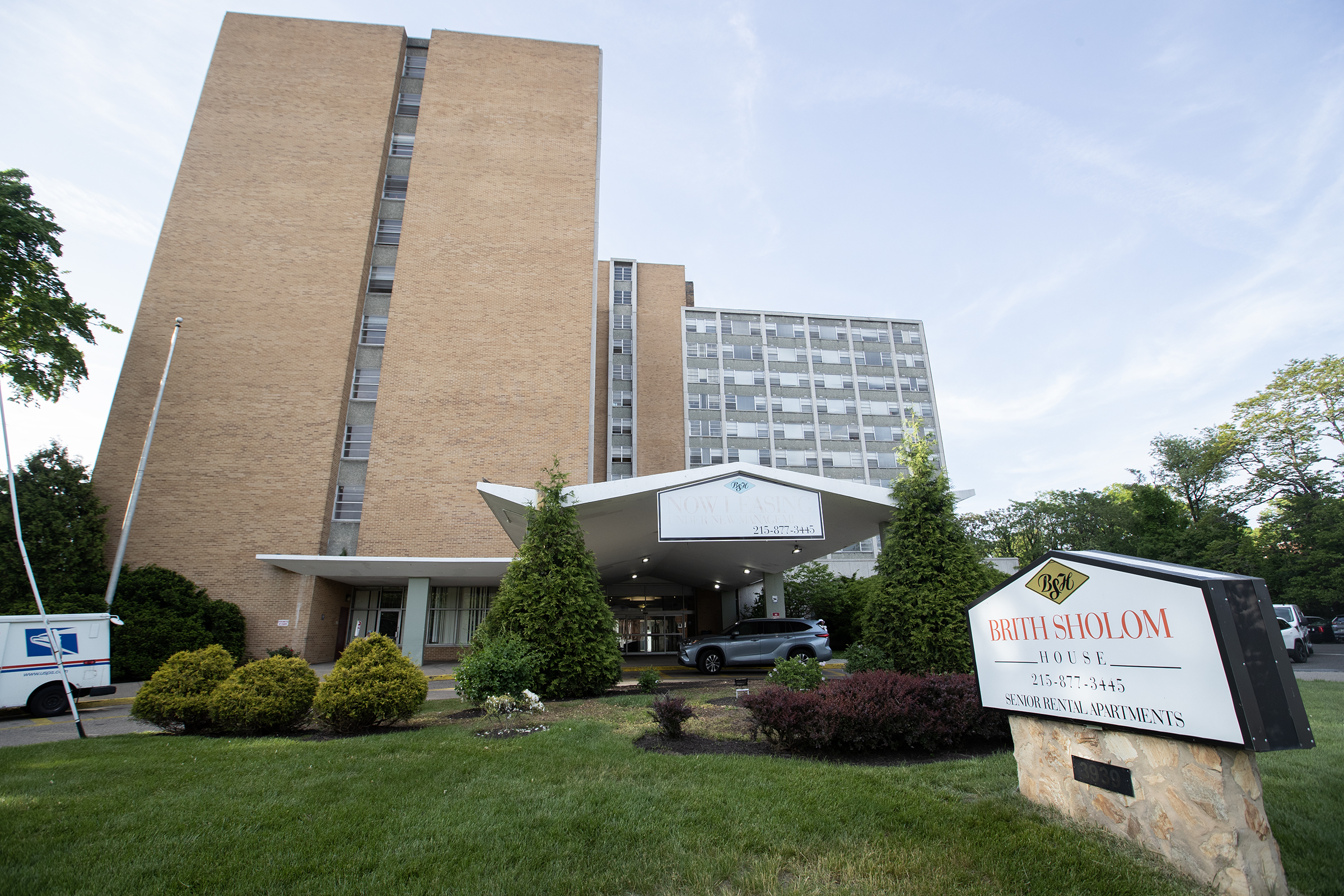
    The exterior of Brith Sholom House on May 8, 2023.

    When they first arrived at The Dane, some elderly residents were not getting the care they need, Washington said.

    One man she ran into frequently often smelled of urine and would walk around with visibly wet pants. She said building management addressed the issues by spraying Febreze on benches the tenant used after he left an area. He has since died.

    Another man screamed for help from his balcony and has since been moved out of the building.

    “We are very used to all kinds of things happening here, from the students being wild to elderly being wild, but not to the level of being unable to take care of themselves,” Washington said.

    Jeremiah says that PHA keeps tabs on the rehoused Brith Shalom residents — who previously were living with no oversight, although there are limits to what it can do. He encouraged tenants to report anyone who needs aid.

    “We provide a robust set of social services to residents we inherited at Brith Shalom,” Jeremiah said. “PHA is not a healthcare provider. We are a housing provider, though we provide access to opportunities for residents who are interested in aging in place.”

    A former Brith Shalom resident had no complaints with The Dane and praised PHA for the improvements in his life.

    “I have no problem with them. I’m happy,” said Barry Brahn, who is blind and has AIDS. “They’re slow at getting things fixed, but they can only do so much and they’ll eventually get on it.”

    What comes next?

    Some aspects of the rocky transition from Cross Properties to PHA have eased. Since October, tenants were able to pay their rent online and submit maintenance requests. Washington says she does not see obviously distressed elderly residents any longer.

    But tensions remain.

    “The transition to PHA has been challenging, and their communication has been sorely lacking,” said Lanese Rogers, who has lived in The Dane for two years. “As someone who pays unsubsidized rent, they deal with us in a condescending manner.”
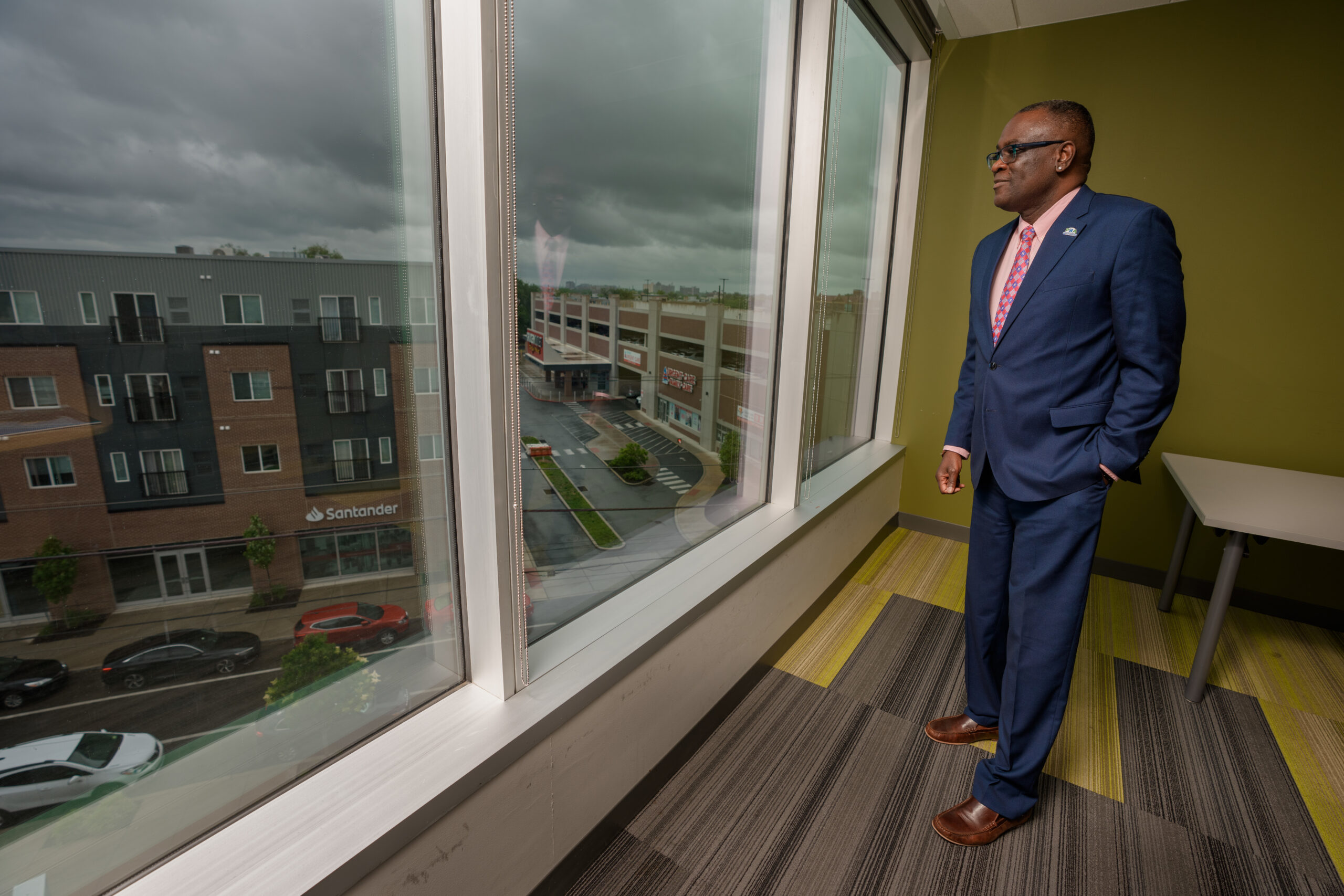
    Kelvin Jeremiah, PHA president and chief executive officer, at PHA headquarters, in Philadelphia.

    Jeremiah says he believes some of the pushback against PHA is due to class prejudice and bias against subsidized tenants.

    “I don’t believe that there is anywhere any Philadelphian, whether or not they’re high income, middle income, low income, shouldn’t be permitted to live,” Jeremiah said.

    He is committed to providing accessibility and affordability throughout the city, he said, and he hopes to retain mixed-income residency in newly acquired buildings with existing tenants.

    So far at The Dane, many of the market-rate tenants are leaving.

    “If I could pick up my apartment and move it to another location, I would,” Rogers said. “The building is changing, and I don’t like the direction it’s moving in.”
  • The Philly School District tried to close Paul Robeson HS before. Now, it’s back on the chopping block.

    The Philly School District tried to close Paul Robeson HS before. Now, it’s back on the chopping block.

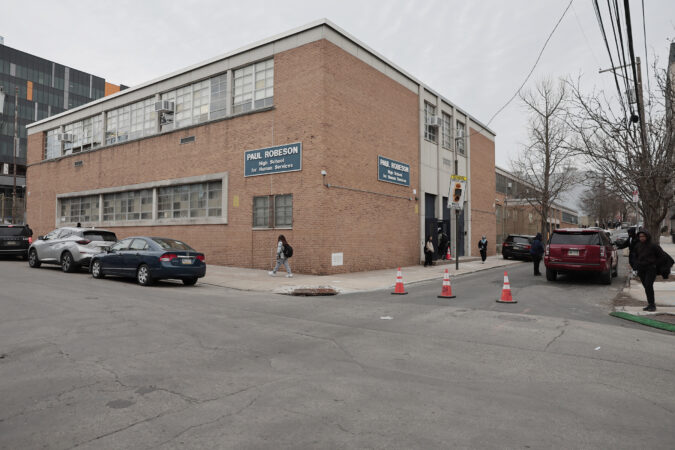
    In 2022, the governor of Pennsylvania stood on a stage at Paul Robeson High in West Philadelphia and hailed the small school as “a model for what can happen in Pennsylvania.

    But four years later, the Philadelphia School District has recommended closing Robeson, suggesting its small size limited students’ opportunities. Superintendent Tony B. Watlington Sr. wants its students to attend Sayre High, where Robeson would become an honors program, losing its separate identity, administration, and staff.

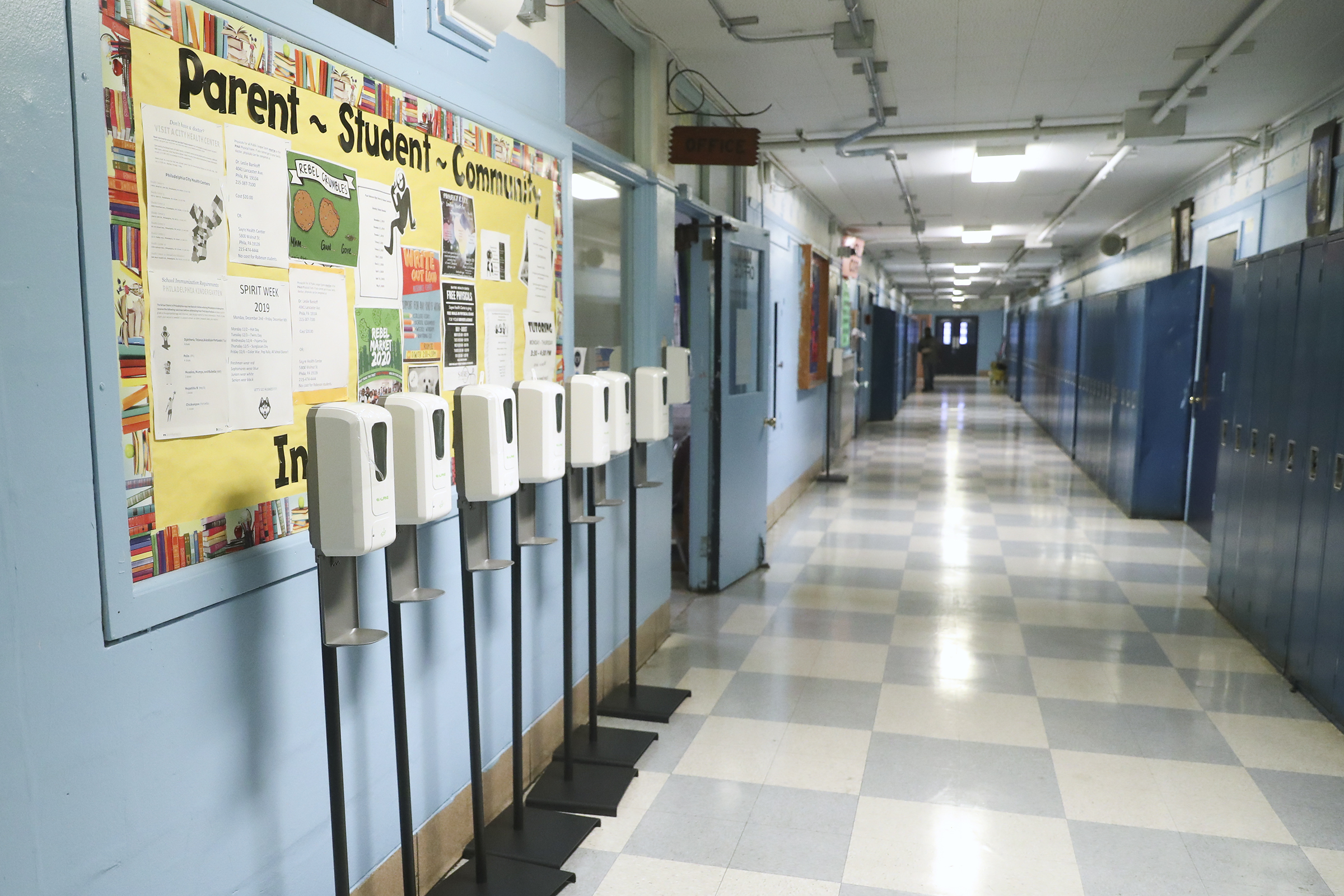
    A hallway at Paul Robeson High School, which the district is attempting to close for the second time.

    Having Robeson listed among 20 schools slated for closure was the worst kind of déjà vu for some in the Robeson community: In the last round of large-scale Philadelphia school closures, district officials recommended closing Robeson and sending students to Sayre, which is about two miles away.

    “This is the exact same plan,” said Andrew Saltz, who helped organize the Robeson community against closure in 2013 and who is doing it again 13 years later. “We need a different plan.”

    The community is speaking out, hoping to persuade the school board to save Robeson again when it votes on Watlington’s recommendations later this winter.

    An upward trajectory

    Robeson soared after successfully fending off its last attempted shutdown.

    By 2017, it was named the district’s most-improved high school. It built upon its core of dedicated teachers and students; though most Robeson students come from its own West Philadelphia neighborhood, it is a citywide school, meaning they have to apply to be there.

    Robeson expanded existing partnerships and formed new ones that gave students opportunities to get onto nearby college campuses. Richard Gordon, who came to lead the school in 2013, was recognized as national principal of the year. (Gordon has since been promoted to assistant superintendent in the district.)

    Multiple Robeson teachers have been honored as among the district’s best.

    The school sent a student to Harvard, a coup for any district high school, let alone one without strict academic criteria. Its students successfully pushed to get their school air-conditioned. School staff secured outside funding to renovate the cafeteria.

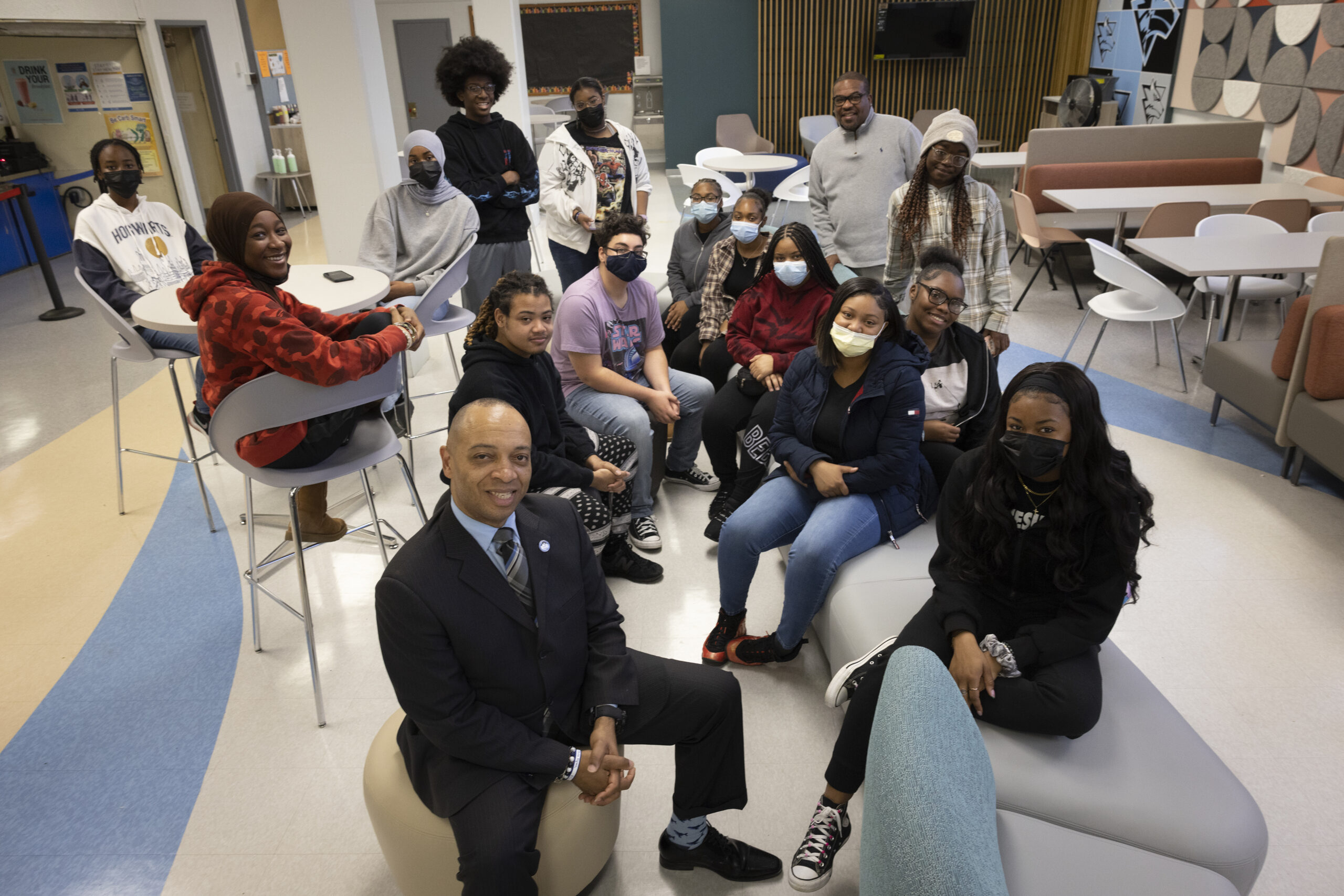
    Then-Principal Richard Gordon (front, tie), then-assistant principal Lawrence King (rear, gray sweater) and members of the Robeson High student body in the newly renovated cafeteria in this 2022 file photo.

    Then-Mayor Jim Kenney visited Robeson to tout its success. So did then-Gov. Tom Wolf.

    Elana Evans, a beloved Robeson teacher and the school’s special education compliance monitor, has already weathered one school shutdown — she taught at the old University City High School, closed in 2013

    That loss was brutal, Evans said. But she is proud of what the community has built at Robeson.

    “It’s an amazing story that continues to stay amazing because we still keep growing,” Evans said. “To say, ‘OK, you’re going to merge with this school, and your name is just going to fade to nothing,’ is, to me, disrespectful.”

    District officials are pitching Robeson’s closure — and the closings writ large — as a move to expand opportunities for all students.

    Sayre, with Robeson as a part of it, would get modernized career and technical rooms and equipment in the facilities plan, Sarah Galbally, Watlington’s chief of staff, told the Robeson community. Sayre would get more accessibility features; renovated stormwater management, roof, and restrooms; and new paint.

    But that didn’t convince Evans.

    “You say one thing, ‘This is how it’s going to look like,’ but for real for real, stop gaslighting me,” Evans said.

    ‘They needed something small’

    Samantha Bromfield homeschooled her twins for seven years, and was wary when she enrolled her children in public school — until Robeson made her believe.

    The move to shut the school frustrated and saddened her, Bromfield said. She and many other Robeson parents said they would not send their children to Sayre.

    “If you as a board choose to close Paul Robeson, I choose to pull my children from the public school system,” Bromfield said at meeting held at Robeson on Saturday. “They needed something small. They needed a family. They needed someone who could hold their arms around the children and say, ‘Hey, are you having a bad day?’”

    Multiple parents echoed Bromfield’s statements.

    The district is choosing to invest in some schools but not others under the facilities proposal, they said.

    Cassidy got a new school, why not us?” one parent told district officials, referring to a $62.1 million new building for a West Philadelphia elementary school.

    ‘Y’all don’t know’

    Ahrianna DeLoach, a Robeson ninth grader, struggled in middle school but is soaring at Robeson, she said, because of the nature of a place where teachers know every student’s name.

    “I don’t want it to close down,” DeLoach said. “I was looking forward to graduating from this school. It would devastate me if I couldn’t.”

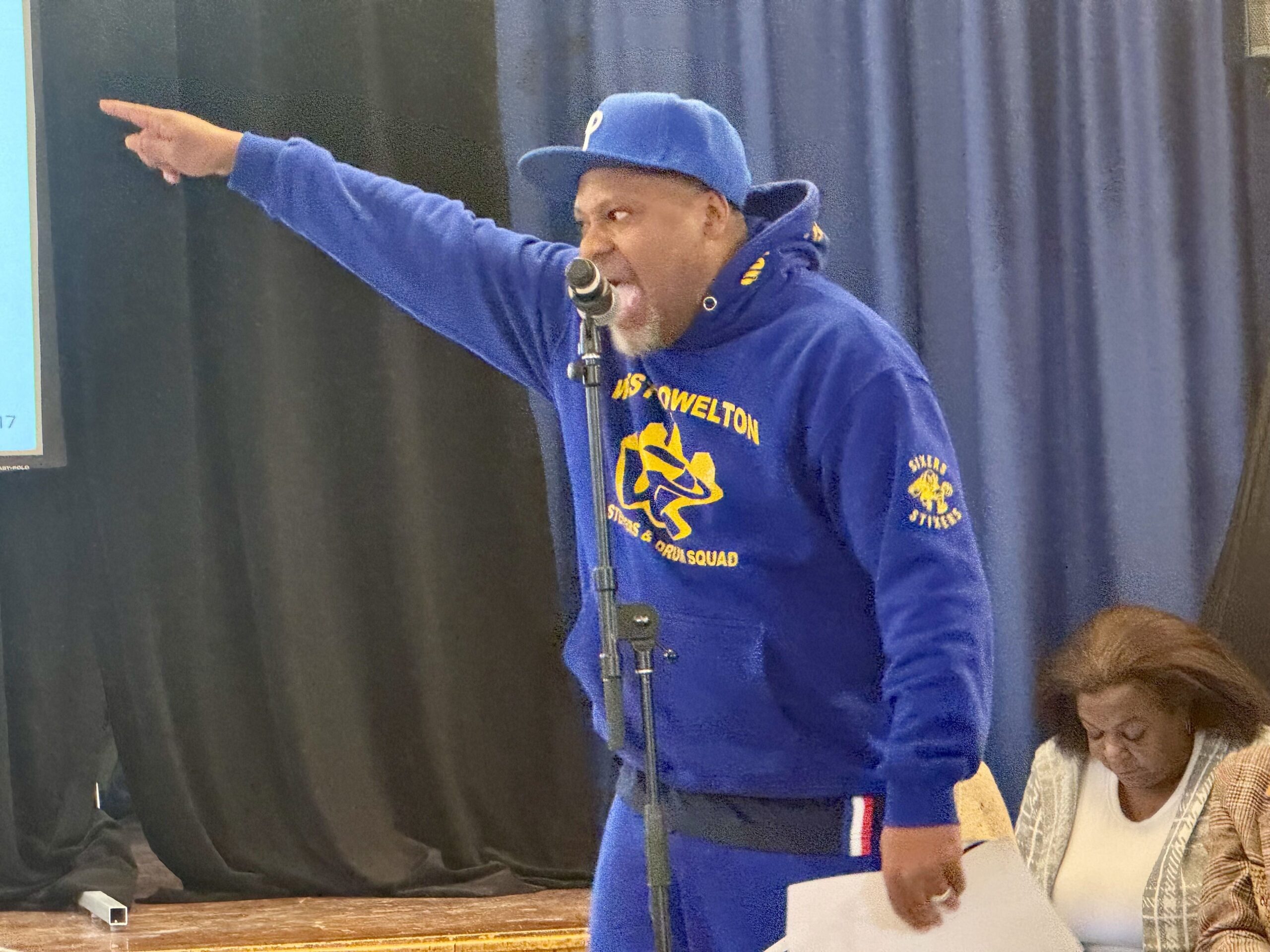
    Antoine Mapp Sr., a West Philadelphia resident, expresses frustration that the Philadelphia School District is attempting to close Paul Robeson High School. Mapp spoke at a district meeting on the subject.

    West Philadelphia resident Antoine Mapp Sr. graduated from University City High, but has been spending time at Robeson since he was 11. Mapp’s West Powelton Steppers and Drum Squad rehearses inside the Robeson gymnasium.

    It feels especially cruel to lose Robeson as gentrification creeps in, Mapp said, and with gun violence still plaguing Philadelphia. He worries about the routes children would have to take to get to Sayre, and about neighborhood rivalries.

    “You guys don’t understand what it’s like living in the community or our neighborhood, or what we go through,” Mapp said. “Y’all don’t know how hard it is just to go to the store in our community. Y’all don’t know what it’s like trying to go to an activity in our neighborhood. We have none of those things. Now you want to take this school away from us and send our kids to different communities. I want you to know that the crime rate and the murders are going to increase and there’s nothing y’all can do about it.”

  • City Council seeks to stop demolitions as anti-blight measure

    City Council seeks to stop demolitions as anti-blight measure

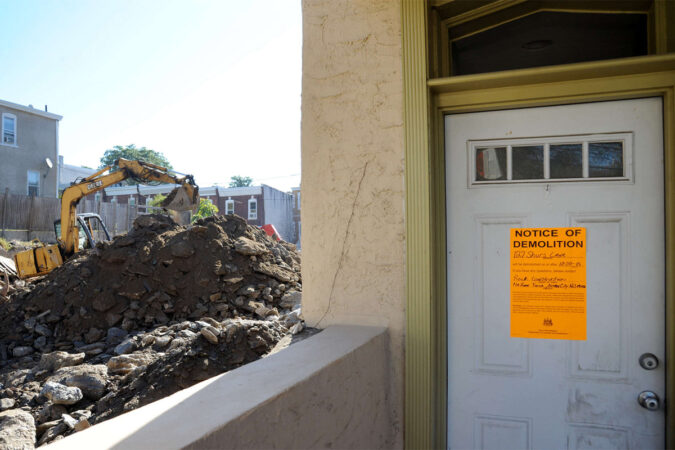
    Late last year, some members of Philadelphia City Council began pursuing legislation to further regulate demolition.

    Philadelphia has many thousands of vacant properties, and historically, some local politicians have sought to encourage razing such structures to prevent fire risks or eliminate drug havens.

    But in the last couple of decades, as real estate development heated up in many neighborhoods, concerns emerged that potentially historic older buildings were being destroyed to make the vacant land more valuable.

    “We know that when these properties are demolished in certain communities, that typically is a sign of gentrification,” Councilmember Jeffery Young, who represents much of North Philadelphia, said at a Tuesday hearing.

    “When you demolish that property and you build up, you’re trying to make more money than the property was originally stated as a shell,” said Young, whose district also includes parts of Center City.

    Young introduced a bill last year that would ban demolition permits from being issued in his district unless a property owner had secured building permits for a new project.

    He said he saw the legislation as a means to encourage property owners to repair existing buildings and to ensure that vacant lots would not scar his district.

    “When you rehab a property, the price is typically lower than a brand-new house, and so we’re trying to keep homes affordable,” Young said, “and prevent blight from our communities.”

    Young’s bill would not apply to buildings deemed imminently dangerous by the Philadelphia Department of Licenses and Inspections.

    Last year Councilmember Jamie Gauthier passed a law containing a similar provision, but for a more tightly proscribed area that covered properties held by large higher education institutions in University City.

    The Building Industry Association (BIA) presented a litany of concerns about Young’s bill at Tuesday’s Rules Committee hearing.

    The BIA feared the legislation would delay projects, as many developers demolish structures while they are waiting for their building permits. The additional months in limbo would increase insurance, security, and financing costs, the group argued.

    The bill could also encourage bad actors to engage in dangerous behavior, the BIA said.

    “To qualify for an exception based on structural danger, certain property owners may be compelled to intentionally incur code violation or enforcement action to demonstrate instability,” said Kenn Penn, a local developer, who spoke on the BIA’s behalf. It “incentivizes the very condition that the city seeks to avoid.”

    Penn also warned about the danger of preserving long-vacant properties.

    “The bill would prevent demolition of vacant and unsecured structures that are highly susceptible to unlawful occupation,” Penn said. “Philadelphia has already experienced multiple fires this winter, many historically linked to squatters and abandoned buildings.”

    Penn asked Young to limit the legislation to properties that do not have a vacant property license.

    But the bill passed from the committee with only technical amendments.

    “I understand the impacts this will have on the development community,” Young said. “But what I think this bill does is ensures that property owners maintain their properties in a prudent manner.”

  • How Jamie Gauthier charted a new path to power in Philadelphia City Hall

    How Jamie Gauthier charted a new path to power in Philadelphia City Hall

    When Mayor Cherelle L. Parker unveiled her much-anticipated plan to address Philadelphia’s housing crisis last year, there was predictable criticism from the political left. Activists said the proposal drafted by the moderate Democrat would not do enough for the city’s poorest residents.

    Less predictable was that a majority of City Council stood with them.

    Even the Council president, a centrist ally of the mayor, sided with a progressive faction that just two years ago had been soundly defeated in the mayor’s race — but whose new de facto leader in City Hall has proven adept at building alliances across the ideological spectrum.

    At the center of that shift was Jamie Gauthier.

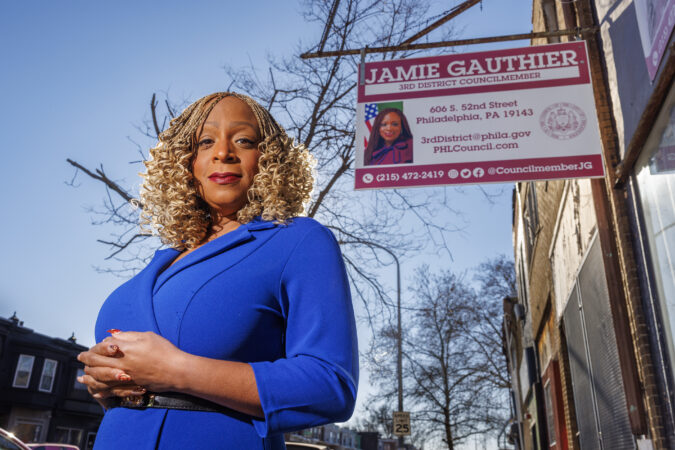
    The second-term Democratic lawmaker from West Philadelphia has solidified herself over the last year as a leading voice on Council and a counterweight to Parker. She has worked within the system as opposed to trying to break it, maintaining relationships with power players who disagree with her on policy.

    She counts Ryan N. Boyer — the labor leader who is Parker’s closest political ally — among those who consider her a “thought leader.”

    “Over the last year, what you saw,” Boyer said, “is her modulate her positions to become more practical.”

    Gauthier has generally voted with progressives, including last year when she opposed the controversial Center City 76ers arena proposal. But she has also endeavored to be a team player, at times compromising on ideological battles to focus on priorities in her district.

    Last year, she voted for Parker’s plan to cut taxes for businesses and corporations when other progressives opposed it, because her main priority was securing housing funding. She has not opposed some tough-on-crime efforts in the Kensington drug market, instead allowing her colleagues who represent that area to dictate the policy there.

    She says she is trying to use her political capital where it matters.

    “Why would I take a protest vote and tank a relationship with a colleague when I’m going to need them later?” she said. “I want to win.”

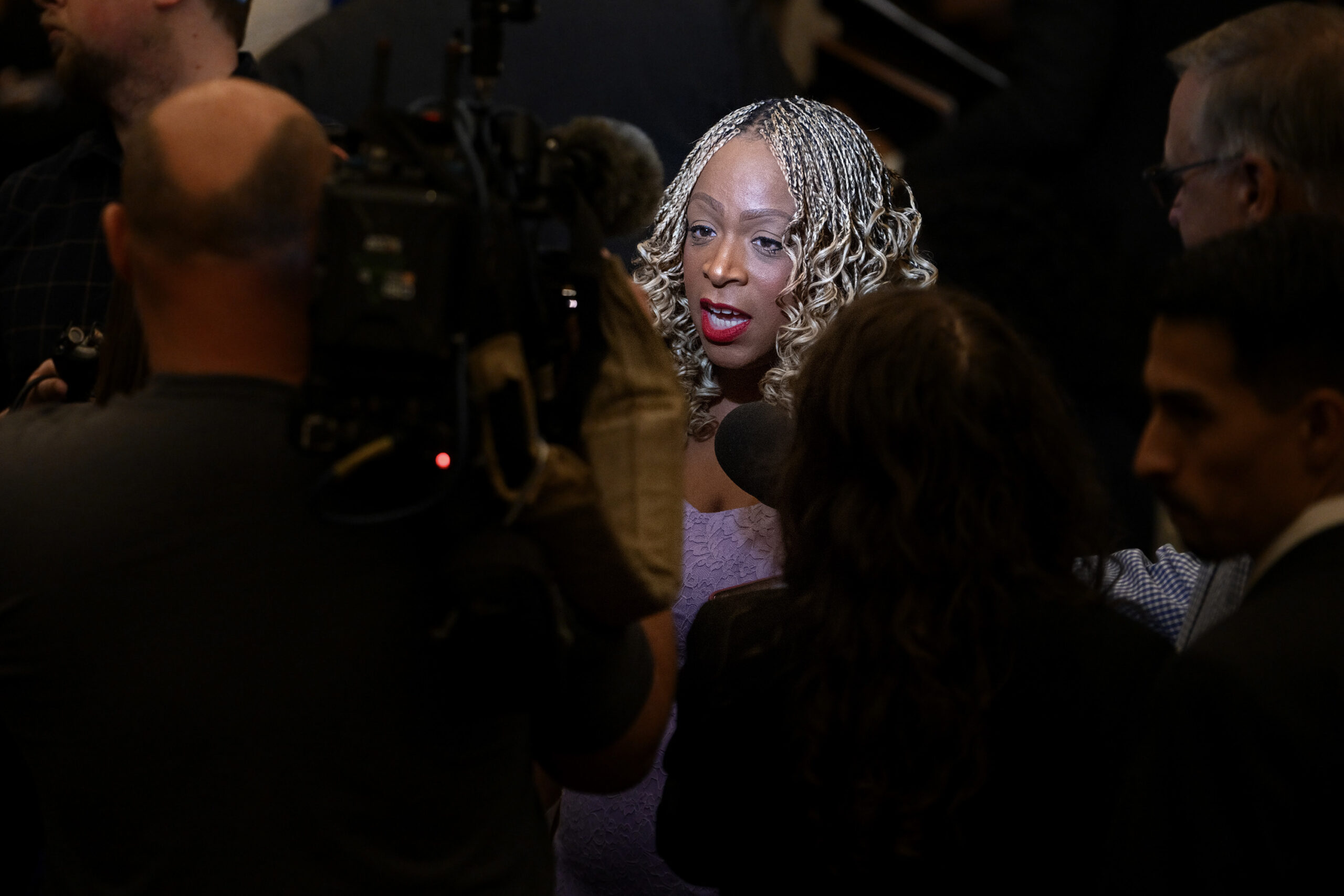
    Councilmember Jamie Gauthier talks with news media following a special session of City Council on March 24, 2025.

    The fact that Gauthier is a district Council member who represents a large swath of the city west of the Schuylkill also gives her cachet with colleagues. Council has a long tradition of honoring how members want their own neighborhoods to be governed.

    Gauthier, who leads Council’s housing committee, has used the influence to make West Philadelphia something of a testing ground for left-of-center policy. Plenty oppose what they see as draconian restrictions on real estate development in her district.

    Others see a progressive champion, and some political observers think Gauthier could amass enough support to run for mayor one day. She doesn’t deny that she has thought about it.

    But for whatever politics Gauthier can navigate in City Hall, she knows she can rise only if she is successful at home.

    ‘Not just a lone actor’

    When Parker took office, Council was in a moment of upheaval. Council President Kenyatta Johnson was the new leader of the chamber, and several prominent voices were gone after they had resigned to run for mayor themselves.

    One was Helen Gym, who was seen as the leader of Council’s left flank. There were questions about who would fill the void once Gym was gone.

    Gauthier, 47, an urban planner by trade, did not come up through an activist movement in the same way Gym did, and was a bit more reserved in her style.

    But she carries the mantle for the same theory of governance: that lawmakers should prioritize the vulnerable, and that what is good for business is not necessarily good for everyone else.

    That set Gauthier on an ideological collision course with Parker, a former Council member who ran for office on a promise to uplift the middle class, a group the mayor believes has been too often ignored.

    It came to a head in the fight over Parker’s Housing Opportunities Made Easy, or H.O.M.E., initiative.

    Parker wanted to set unusually high income eligibility thresholds for some of the programs so that middle-class families could unlock government subsidies they may not otherwise qualify for. A significant portion of Council, meanwhile, wanted the money to go initially to Philadelphians most vulnerable to displacement.

    Parker was clear-eyed about who was leading the charge.

    “Councilmember Jamie Gauthier, she may be comfortable and OK with telling Philadelphia homeowners, working-class Philadelphians, that they have to wait and there is no sense of urgency for them,” Parker said in a December interview on WHYY. “But that is not a sentiment that I support or agree with.”

    Gauthier is quick to point out that she did not work alone, and that one member of a 17-member body cannot accomplish much. Alongside Councilmember Rue Landau, a fellow Democrat and a housing attorney by trade, Gauthier worked for months to win over her colleagues.

    In the end, Council approved a version of the housing initiative closer to Gauthier’s vision.

    Gauthier didn’t think Parker helped her own cause. A “line was crossed,” she said, when Parker took the fight outside City Hall and to the pulpit. Amid negotiations with Council, the mayor went to 10 churches on one Sunday in December to lobby for support, saying her vision was to not “pit the ‘have-nots’ against those who have just a little bit.”

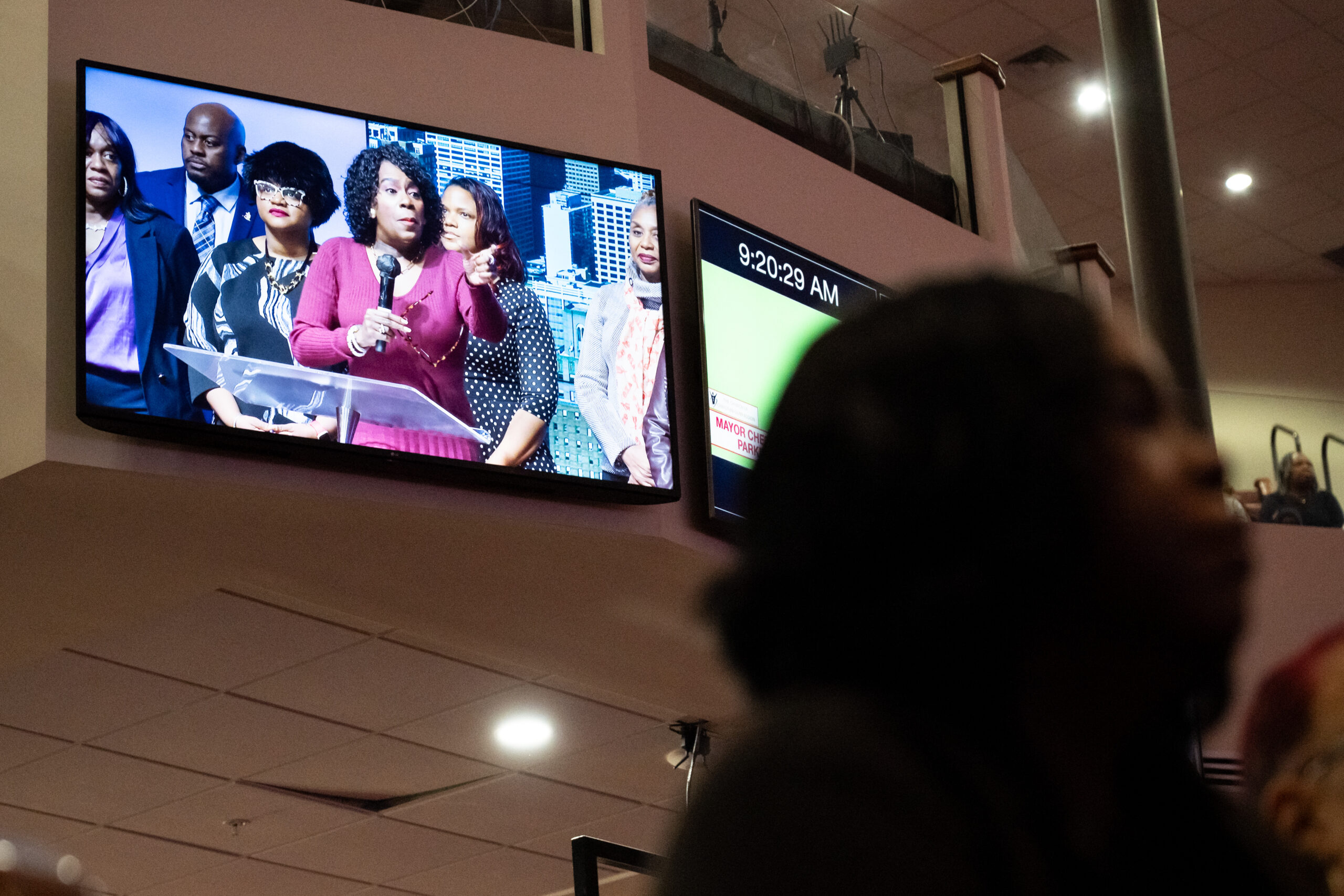
    Mayor Cherelle L. Parker speaks to the crowd at The Church of Christian Compassion in the Cobbs Creek neighborhood of West Philadelphia on Sunday, Dec. 7, 2025. Parker visited 10 churches in Philadelphia on Sunday to share details about her HOME housing plan.

    To Gauthier, the divisiveness was coming from the mayor’s office.

    “I wish the mayor and her administration were more open to other people’s ideas, were more OK with disagreement on policy issues, and more aware of Council as a completely separate chamber of government,” Gauthier said, “as opposed to a body that works for her.”

    That is a candid assessment of the relationship between Parker and City Council from Gauthier. Few lawmakers from the mayor’s own party have criticized her publicly.

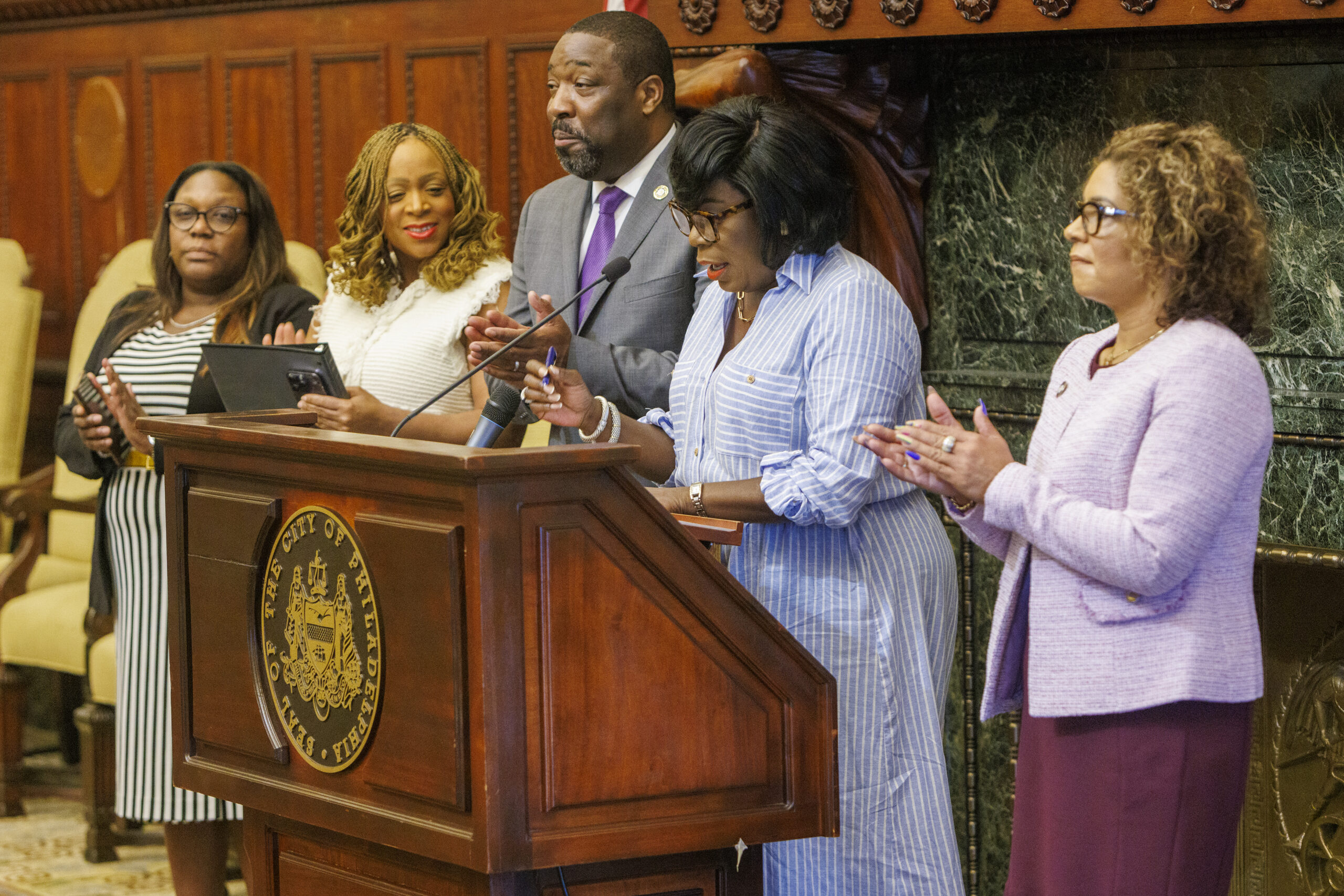
    Philadelphia Mayor Cherelle Parker holds a press conference regarding her first budget flanked by members of city council in her reception room, Philadelphia City Hall on Thursday, June 6, 2024. Council members from left are Kendra Brooks, Jamie Gauthier, council president Kenyatta Johnson, and Quetcy Lozada.

    State Rep. Rick Krajewski, a West Philadelphia Democrat and a progressive who has worked closely with Gauthier, said the fight over H.O.M.E. showed that Gauthier has learned “the diplomacy required to be an effective legislator.”

    “It was a good example of not being afraid of a conflict that felt important to stand up for,” he said, “but then to not just be a lone actor, but organize with other colleagues and allies.”

    Gauthier’s most important ally was Johnson, who negotiated directly with Parker through the process and controls the flow of legislation in the chamber.

    The two go back years. Before Johnson was Council president, he made a point of welcoming new members, a gesture that has always stuck with Gauthier. They worked closely to secure funding for gun violence prevention. And Gauthier said that since Johnson took the gavel, he has been more open to working with progressives than his predecessor was.

    She was also key to Johnson’s ascent. When he was locked in a tight battle for the Council presidency, it was Gauthier who became the ninth Council member to commit to voting for Johnson, allowing him to secure a majority of members and the presidency.

    He does not talk about that publicly. What he will say is that he works in partnership with Gauthier because she understands “the bigger picture in terms of how we move forward as the institution.”

    “I consider her to be a pragmatic idealist,” Johnson said. “She wears her heart on her sleeve, and she really believes in actually doing the work.”

    Creating a testing ground in West Philly

    When Gauthier first ran for office in 2019 against a member of one of Philadelphia’s most entrenched political families, she ran as a good-government urbanist. She railed against councilmanic prerogative, the city’s long tradition of allowing district Council members final say over land-use decisions in their areas.

    She was also supported by real estate interests, some of whom now have buyer’s remorse.

    After Gauthier pulled off a shock win, she arrived in Council and quickly aligned with the progressive bloc. Through her first two terms, she has used councilmanic prerogative often, and has voted with her district Council colleagues so that they can do the same.

    She admits that it is an effective tool for accomplishing her goals quickly.

    Carol Jenkins, a Democratic ward leader in West Philadelphia, said Gauthier’s use of councilmanic prerogative is “part of her maturation.”

    “That’s the power you have,” Jenkins said.

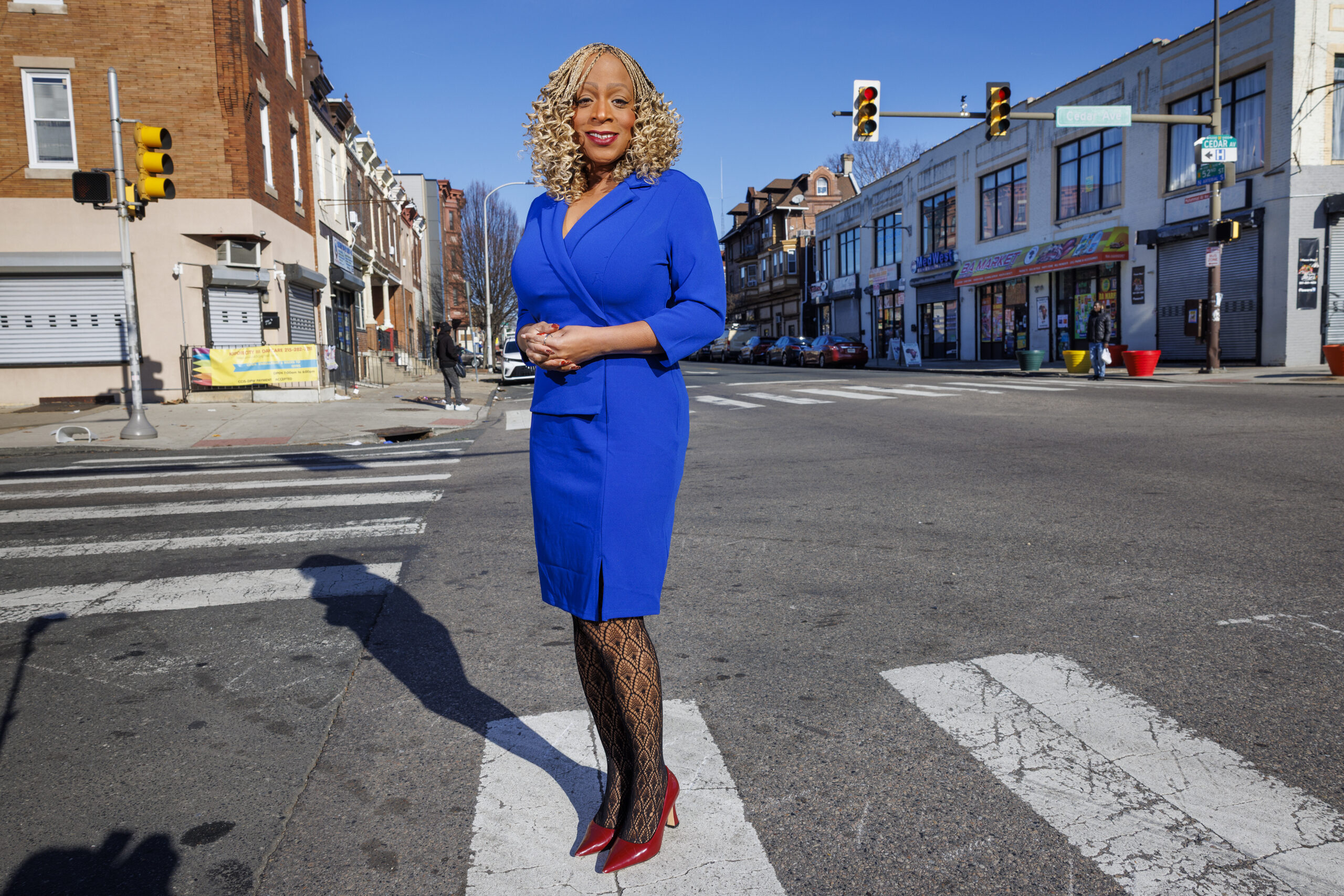
    City Councilmember Jamie Gauthier in her district near 52nd Street and Cedar Avenue in Philadelphia on Monday, Dec. 22, 2025.

    Gauthier has at times used the power in ways that the city’s urbanists and development interests can get behind. She has quickly approved bike lane expansions. And she recently was the only district Council member to allow her entire district to be included in legislation that cuts red tape for restaurants that want to offer outdoor dining.

    However, her most notable use of councilmanic prerogative has been in housing policy, and some developers say her district is now the most hostile to growth in the city.

    In Gauthier’s first term, she championed legislation to create what is known as a Mixed Income Neighborhood overlay. In essence, it requires that developers building projects with 10 or more units in certain parts of her district make at least 20% of their units affordable. That is defined as accessible for rental households earning up to 40% of the area median income.

    For Gauthier, it’s a tool to slow the rapid gentrification of her majority-Black district.

    But developers say that growth has slowed significantly in the areas covered by the overlay since it took effect in 2022. Some have said they avoid seeking to build in the 3rd District entirely. The only major project currently in the works in the area is a parking garage.

    Ryan Spak, an affordable housing developer who said he considers Gauthier a friend, has been among the most outspoken critics of the overlay. He said while Gauthier’s “moral compass is pointed in the right direction, her policies don’t math.”

    “You would never ask a restaurant to give away its ninth and 10th meal for 40 cents on the dollar, with no additional discounts or benefits,” he said, “and expect that restaurant to survive.”

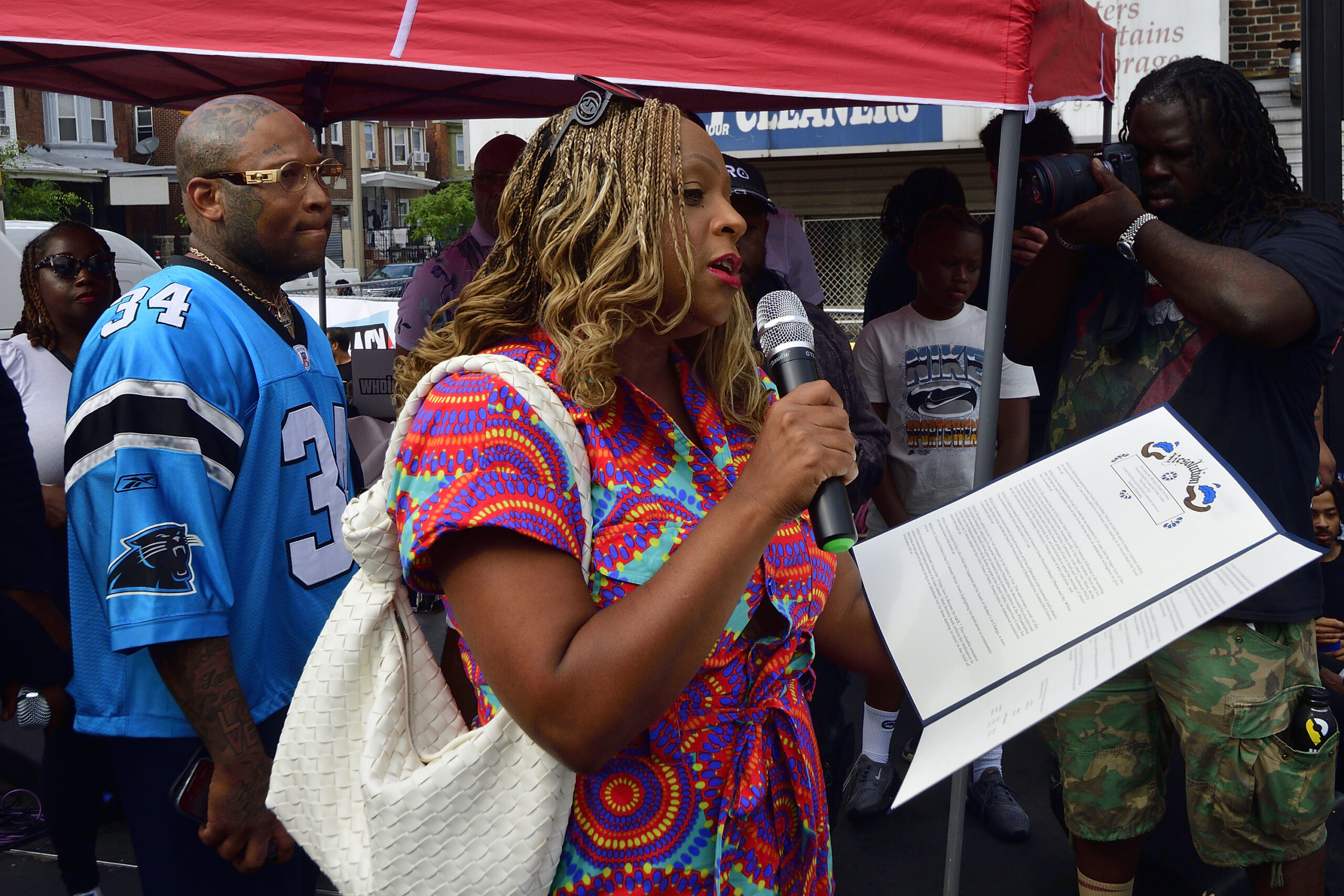
    Councilmember Jamie Gauthier reads out a citation honoring Rapper Mont Brown during a street naming ceremony for the Southwest Philadelphia native at the 13th Annual Stop the Violence Kickback Block Party at 55th Street and Chester Avenue, in Southwest Philadelphia on August 17, 2024.

    Gauthier said she has made adjustments, and she championed legislation to accelerate permitting and zoning approvals. The mandate, she said, is necessary because the market won’t build enough affordable housing on its own.

    “As untenable as it is to them that they can’t make the numbers work, it’s untenable to me that people can’t afford to live here,” Gauthier said. “So we can come together and we can fix that. But I’m not going to move from my position that we have to demand affordability.”

    Mayoral buzz, but no ‘stupid campaigns’

    Gauthier is one of several names that have been floated in political circles as potential candidates for mayor in 2031, which would be Parker’s final year in office if she runs for and wins a second term. Several of her Council colleagues, including Johnson, are seen as potential contenders.

    “I’d be lying if I didn’t say that mayor could be interesting one day,” Gauthier said. “I also don’t believe in stupid campaigns. So I would never do that if I didn’t think I had a path.”

    Boyer said he has counseled Gauthier to pursue moderate policy and avoid being “label-cast” as far left. He said Philadelphia is not Chicago or New York, and he doesn’t see the city electing an uber-progressive to be the mayor any time soon.

    “Philadelphia has always been a real center-left community,” Boyer said, “and just because you’re the loudest isn’t the most popular.”

    The left may have other plans. Robert Saleem Holbrook, a progressive activist, said that Gauthier would be an “ideal candidate” for higher office and that the city’s leftists would back her.

    Probably.

    “So long as she stays true and supportive of progressive ideals,” Holbrook said. “You can’t compromise on your way up.”

  • The share of Asian residents living in Philly’s Chinatown is decreasing, says a new report

    The share of Asian residents living in Philly’s Chinatown is decreasing, says a new report

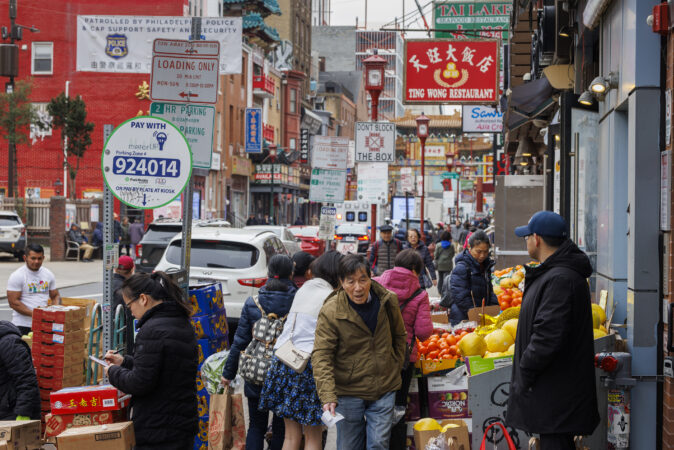
    Philadelphia’s Chinatown neighborhood has grown significantly over the last decade, but a majority of its gains in population and business have resulted in a decline in the share of Asian residents amid concerns over gentrification and displacement, according to a new report.

    And the situation is not unique to Philly, a study from the Asian American Legal Defense and Education Fund found. Its counterparts in New York City and Boston — both also historic Chinatowns — are facing similar pressures.

    All three cities’ Chinatowns, in fact, saw declines in their share of Asian residents from 2010 to 2020, the report found. The findings in Philly, meanwhile, come following years of the neighborhood staving off locally planned developments that may have resulted in additional challenges for residents — including the proposed billion-dollar Sixers arena effort abandoned in January after years of heated debate.

    “The Chinatown community is no stranger to fighting off large-scale and predatory development,” said the report from the fund, which provided legal support to community groups during the arena saga. “The arena would have devastated the neighborhood, bringing in a renewed wave of gentrifying pressure for residents and competition for local businesses.”

    The fund recommends that cities like Philadelphia enact community-focused rezoning efforts to protect their Chinatowns’ cultures from those pressures. But, as the report found, Philly’s Chinatown is already seeing substantial demographic shifts.

    For population and race data in 2000 and 2010, the study used the U.S. Census Bureau’s decennial census, which conducts a 100% count of the nation’s population. Figures for 2020 were drawn from estimates from the Census Bureau’s American Community Survey for the five-year period of 2018 to 2022, as the study’s authors cited possible data issues in the 2020 decennial census because of the pandemic and the proposed citizenship question.

    An Inquirer analysis that used the decennial census for both 2010 and 2020 shows that Asians remain the largest racial group in Chinatown, with their share of the population falling slightly, from 61% to 57%. White residents’ share of Chinatown’s population grew from 24% to 28%.

    Here are three takeaways from the fund’s report:

    An older, less Asian population

    Between 2010 and 2020, Chinatown’s population grew by 15%, from roughly 5,900 people to nearly 6,800. During that time, much of the growth was driven by an influx of white residents, with that group’s population growing by roughly 76% during that time — and becoming the largest racial group in the area — the report found.

    The overall number of Asian residents, however, remained roughly the same — 2,464 in 2010 vs. 2,445 in 2020. That proportion accounted for about 36% of the neighborhood’s population in 2020, decreasing from 42% in 2010. The white population, meanwhile, accounted for 44% of Chinatown’s residents in 2020, compared with 29% in 2010.

    As a result, the report notes, the area’s growth can be “entirely attributed” to a rush of non-Asian residents over the last decade covered by the U.S. Census. The proportion of Latino residents also increased significantly between 2010 and 2020, with that group growing by 36%, the report found.

    The neighborhood’s population also appears in part to be aging in place, with the number of people 65 and older almost doubling from 2010 to 2020, from 444 residents to 849. Simultaneously, its population of residents up to age 17 decreased by 15% during that time period, and the group ages 18 to 24 decreased by 37%. The group of residents ages 25 to 64, meanwhile, saw a “modest” increase of 22% from 2010 to 2020, the report found.

    Higher rent — and home values

    As the proportion of Chinatown’s Asian population decreased, its rent costs, house values, and homeownership rates all increased, the report found. House values in Chinatown, in fact, were more than double the citywide median in 2020, standing at more than $491,000 in the neighborhood compared with $236,000 in Philadelphia overall.

    Homeownership rates were lower in Chinatown than in the city at large, however, standing at 40% in 2020 compared with 52% citywide. Still, homeownership in Chinatown increased from 31% in 2010 while it fell marginally in the city overall from that year, when it stood at 54%. By comparison, Boston’s homeownership rate in its Chinatown stood at 7% in 2020, while New York’s Chinatown had a 15% homeownership rate that year, the report found.

    Rent in Chinatown was also higher in 2020 compared with the rest of the city, the fund’s report found. The neighborhood’s median rent stood at nearly $1,900, while the city’s was about $1,150 that year.

    Boston, New York, and Philadelphia, the report found, all saw the “transformation of former warehouses, tenement buildings, or rowhouses into luxury apartments and condominiums” over the last decade. Those developments, the fund noted, “fail to expand the housing supply for Chinatown community members” and contribute to rising rents and displacement of low-income residents.

    “Affordable housing is quickly disappearing in Philadelphia’s commercial core,” the fund’s report found.

    Largely local business

    In total, the study found that 92% of Chinatown’s commercial land parcels were small or local businesses in 2020, with restaurants and retail outlets making up a lion’s share of storefronts. Restaurants were the clear growth leader, increasing in number by 40% from the decade prior.

    Nearly all of Chinatown’s restaurants were located south of the Vine Street Expressway, the fund noted. Of those, Asian restaurants dominated the cuisine offered, with most eateries serving Chinese food.

    Still, despite the dominance of Asian restaurants in the neighborhood, Philadelphia did observe the largest shift in Asian to non-Asian restaurants of the three Chinatowns examined in the study. Over the last decade, the proportion of neighborhood Asian restaurants decreased from 85% to 62%, while the area’s non-Asian eateries more than doubled from 15% to 38%.

    The presence of national chains in Philly’s Chinatown doubled between 2010 and 2020, moving from 4% of all businesses to 8%, the study found. Retail stores, meanwhile, made up about 30% of commercial businesses in the neighborhood in 2020, the largest proportion of which were beauty and hair salons, followed by grocery stores and markets.

    Many newer businesses, the study noted, were tailored for younger customers, such as bubble tea and upscale dessert shops, as well as convenience stores that sell snacks rather than groceries — many of which lack indoor dining rooms. That shift may affect older residents, the fund noted.

    “As these types of indoor dining rooms disappear, Chinatown elders have fewer options to spend their time in safe and affordable spaces,” the study said.

    Clarification: This story has been updated to further explain the data used in the Asian American Legal Defense and Education Fund study.

  • A Philly tax loophole allows refunds for people who steal homes. A Council bill would direct that money to victims.

    A Philly tax loophole allows refunds for people who steal homes. A Council bill would direct that money to victims.

    City officials and housing advocates want Philadelphia to close a loophole in its tax code that allows people who forge deeds and steal homes to get a refund for taxes they paid to commit their crimes.

    Thieves commit deed fraud when they illegally transfer a property’s ownership and record a fraudulent deed with the city.

    This fraud often occurs after a homeowner dies but remains the legal owner of a property. Thieves use deceptive means, such as posing as fake heirs and forging documents, to take and sell properties, often flipping them to developers for large profits.

    To record a deed, property owners — including fraudsters — need to pay a realty transfer tax. If a judge later determines that a sale was fraudulent, the person who paid the tax can request a refund from the city. That includes thieves.

    A bill introduced by City Council Majority Leader Katherine Gilmore Richardson would allow the city to give refund money to deed fraud victims, who can spend thousands of dollars fighting to regain ownership of their properties.

    “It’s a nightmare for victims of deed fraud, and while we can’t necessarily improve the situation, we can help to ease some of their financial burden,” Gilmore Richardson said during a Council hearing Wednesday.

    Philadelphia’s portion of the realty transfer tax is 3.578% of the value of a home sold. So for a stolen $100,000 home, a victim could receive a refund of about $3,500.

    A longstanding issue

    Deed fraud is a persistent problem in Philadelphia. The city’s records department received about 130 reports of deed fraud in 2023 and about 110 reports in 2024.

    Investigations by The Inquirer have shown that deed theft grew alongside gentrification in Philadelphia, as property values rose in neighborhoods that became more desirable. Victims of deed fraud disproportionately are people of color and seniors.

    City officials earlier this year launched a system that checks whether a home seller is dead in order to prevent deed thieves from stealing homes legally owned by dead people. Philadelphia was the first local government to roll out such a system, according to Mayor Cherelle L. Parker.

    James Leonard, commissioner of the Philadelphia Department of Records, said the Parker administration supports the Council bill, which “addresses a gap in how we help victims of deed fraud.”

    “We see these cases regularly,” he said. “They devastate families, they undermine confidence in our property system, and they impose significant costs on victims, who must fight in court to reclaim what was always rightfully theirs.”

    Victims face a long legal battle in which they must prove that a deed is fraudulent and often must pay attorney fees. And they have to keep paying mortgages while they fight to reclaim properties.

    “When they finally win, they get their property back. But they’re often financially and emotionally devastated by the process,” Leonard said.

    The new Council legislation allows a victim who gets a court order that voids a fraudulent deed to request a refund of the realty transfer taxes that a thief paid. Leonard estimates the city will see at most 25 to 50 cases per year, a “modest” fiscal impact for the city.

    And under current law, the city keeps tax payments that it never would have received if not for the deed fraud, he said, so the city has been benefiting from fraudsters’ payments.

    “From an equity standpoint, this bill is the right thing to do,” he said.

    Vincent Gilliam and his family were victims of deed fraud when his deceased mother’s home in North Philadelphia was stolen. Between the belongings that deed thieves took and the fight to reclaim the home, he estimates that the ordeal cost his family at least $5,000.

    He told Council members that getting some money back from the city through a realty transfer tax refund “would be a tremendous help.”

    Kate Dugan, a divisional supervising attorney at the legal aid nonprofit Community Legal Services of Philadelphia, said the problem of deed theft “is expensive and complicated to fix.”

    “Even when free representation is available, which is normally not the case, victims are stuck paying for costs like repairs, changing locks, filing fees … out of their own pockets,” she said. “It’s rare for a deed fraud victim to collect any meaningful money damages or restitution.”

    On Wednesday, Council’s Finance Committee sent the bill to the full Council for consideration.

  • A man died driving on Northwest Philly’s winding, wet roads. The neighborhood has tried addressing the danger for decades.

    A man died driving on Northwest Philly’s winding, wet roads. The neighborhood has tried addressing the danger for decades.

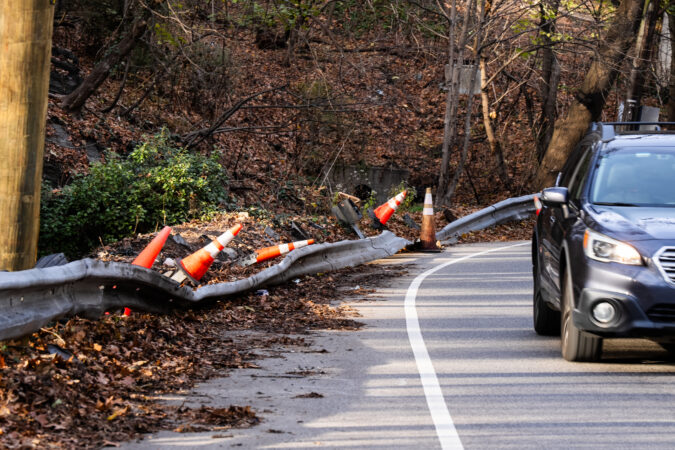
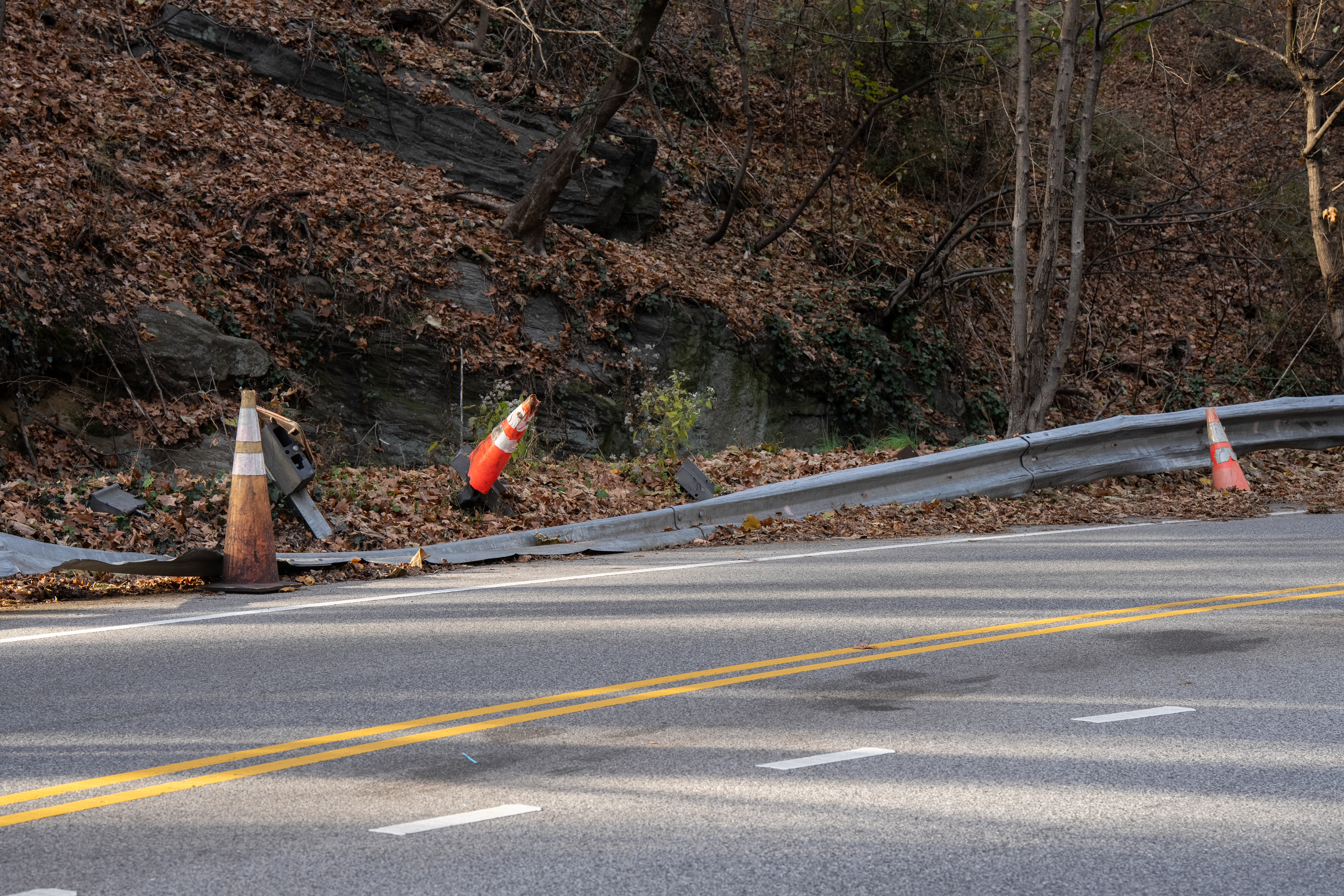
    A 65-year-old man died Sunday after he lost control of his vehicle on Cresheim Valley Drive in Chestnut Hill, striking a downed guardrail and flipping the car upside down into a creek. Just weeks before, another driver veered off the same road but survived.

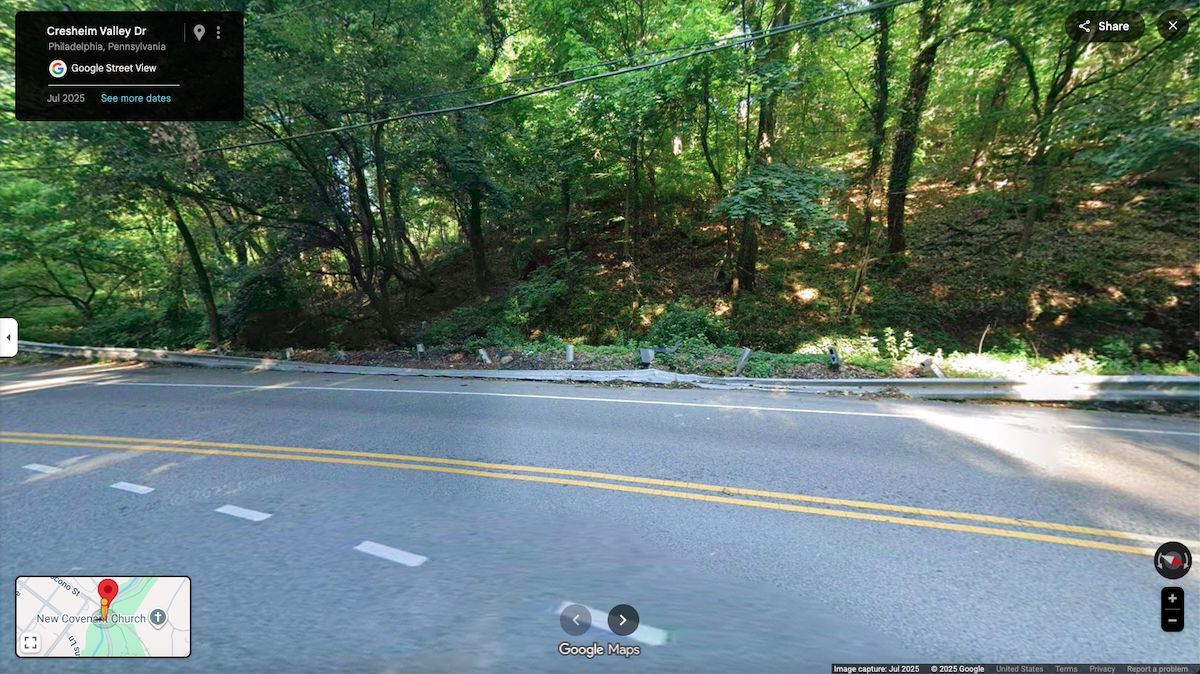
    Compounding this latest traffic death is the fact that the guardrail meant to prevent cars from swerving off the road was broken and nearly flattened from previous crashes, leaving a gap in the guardrails for months, said Josephine Winter, a Mount Airy resident and executive director of West Mount Airy Neighbors (WMAN). “The guardrail was down, and it was previously crumbled so it’s a frequent site of crashes,” she said. Images from Google Maps show the guardrail down as far back as July.

    The Philadelphia Streets Department is aware of the recent crash and is conducting an assessment of the guardrail on Cresheim Valley Road. “The streets department’s top priority is public safety,” a spokesperson said.

    A screenshot of a Google Map’s street view captured in July 2025 shows the downed guardrail on Cresheim Valley Drive in the Chestnut Hill neighborhood of Philadelphia. On Nov. 30, 2025, a 65-year-old man crashed and went over the guardrail, later succumbing to his injuries.

    Neighbors say accidents, sometimes fatal, have plagued the winding roadways in Chestnut Hill and Mount Airy for decades. These traffic safety concerns came to a head with Sunday’s deadly crash.

    “It’s a curvy, tricky road, especially when it’s wet, and people tend to speed on that road,” Winter said of roadways like Lincoln and Cresheim Valley Drives, which are lined with trees, have swooping dips and hills, and are prone to flooding.

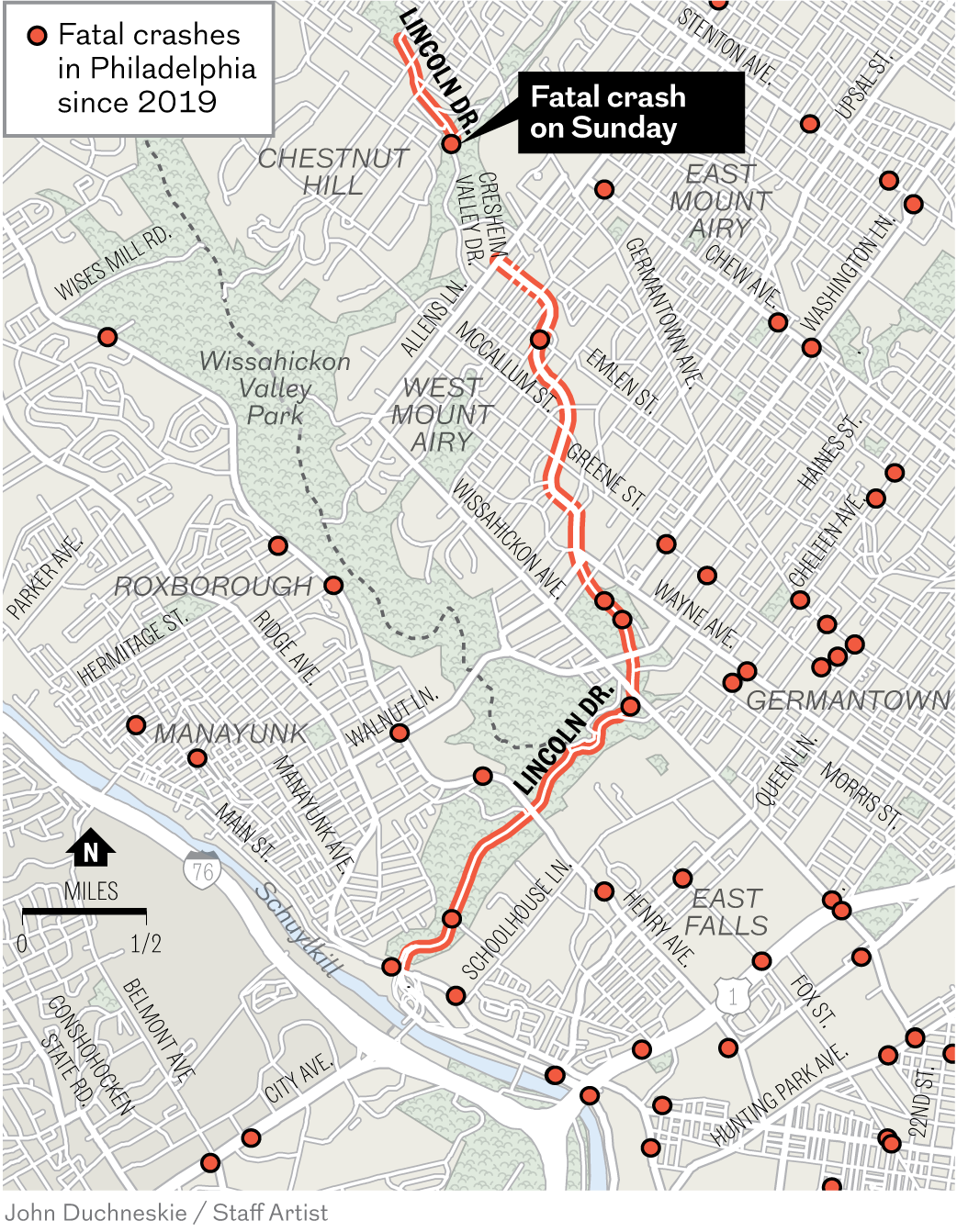
    Map of fatal crashes in Northwest Philadelphia since 2019.

    Since 2019, according to city crash data, at least five people have died while driving on the dark, winding sections of Lincoln Drive, which intersects with Cresheim Valley Drive, prompting many neighbors to fear walking down their street or leading them to invest thousands on giant boulders to protect their home and lawn.

    Winter, who leads WMAN’s traffic-calming committee, and other neighborhood organizations have petitioned for city support, urging the streets department to slow the speed of traffic on Cresheim Valley Drive, Lincoln Drive, and Wissahickon Avenue. The group’s efforts are so ingrained in the fabric of the neighborhood that, when digging through Temple University’s Urban Archives, Winter found an advertisement from 1968 stressing the need for cars in Mount Airy to “slow down to keep kids safe.”

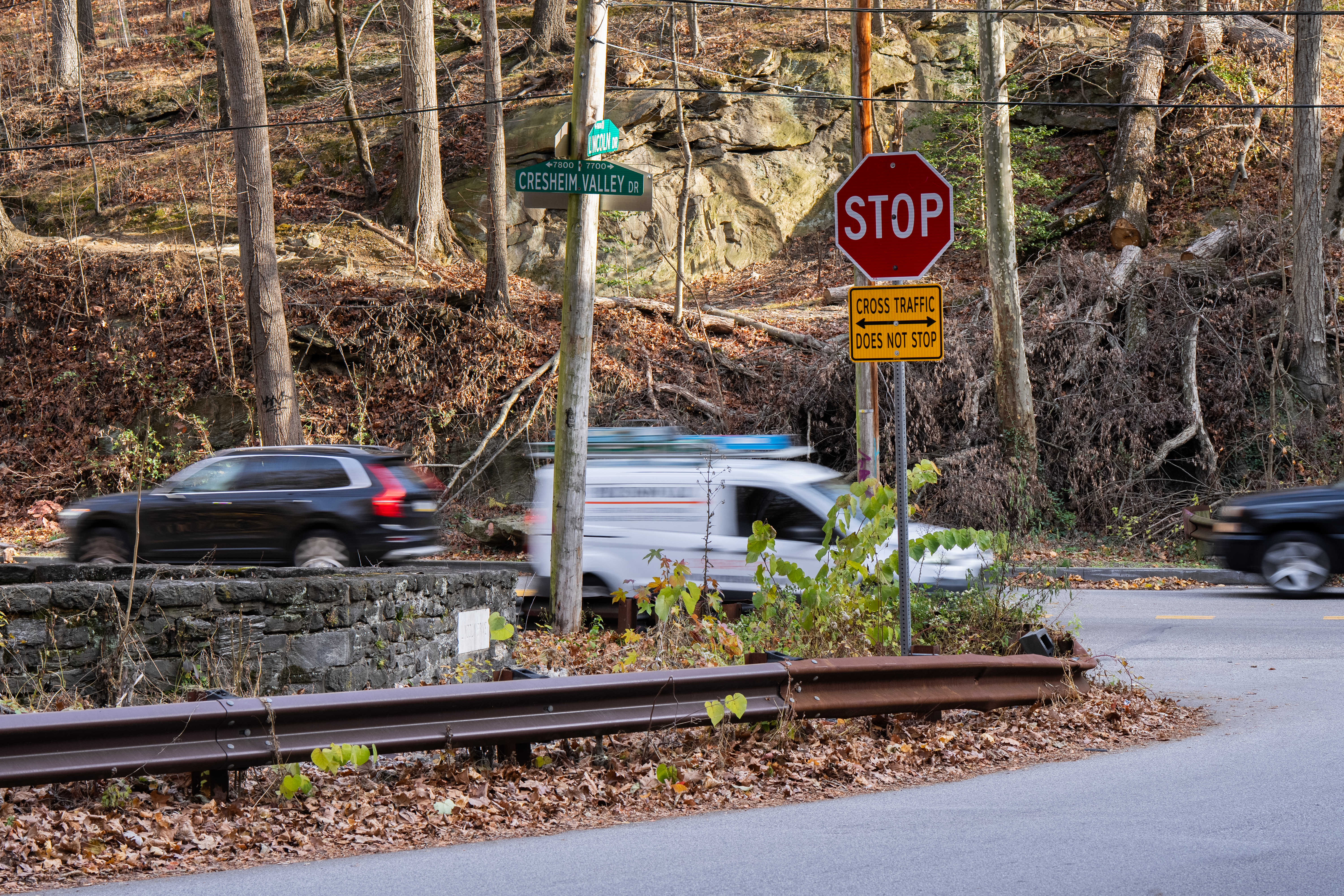
    The intersection of Cresheim Valley Drive and Lincoln Drive, in Philadelphia, PA, Dec. 1, 2025.

    The streets department installed “speed slots,” traffic-calming structures similar to speed bumps, earlier this year along Lincoln Drive between Allens Lane and Wayne Avenue. Along the same stretch of road, the Pennsylvania Department of Transportation installed rumble strips and speed tables to slow drivers down in 2023, in addition to traffic lane separators to keep drivers from using center lanes to pass other vehicles.

    In addition to the recently completed speed slots and traffic-calming measures on sections of Emlen Street, which becomes Cresheim Valley Road, signal upgrades are planned for Lincoln Drive as well.

    However, the work to improve these streets is not over, Winter said. Additionally, the streets department plans do not include changes to Cresheim Valley Drive, where Sunday’s crash happened.

    “We’ll need a collaborative approach as soon as possible to temporarily address the downed guardrail, and then see what the options are moving forward,” Winter said.

    The intersection of Cresheim Valley Drive and Lincoln Drive, in Philadelphia, PA, Dec. 1, 2025.

    Throughout the last decade, locals have suggested better-timed signals, more speed tables, and reducing the number of driving lanes from two in either direction down to one. They also want to see more roundabouts and curb bump-outs in the neighborhood to keep traffic flowing, but at a reasonable speed.

    A mere 50 to 100 feet from Cresheim Valley Drive is a parallel bike trail, where trail organizers like Brad Maule are accustomed to the crashes on the road nearby. Before Sunday’s fatal crash, he remembers two other cars that drove off the side of the road in recent months, not counting the crashes on the roadway itself. The city recently installed pedestrian crossing signs and repainted the crosswalk on nearby Cresheim Road, but Maule hopes speed bumps will follow.

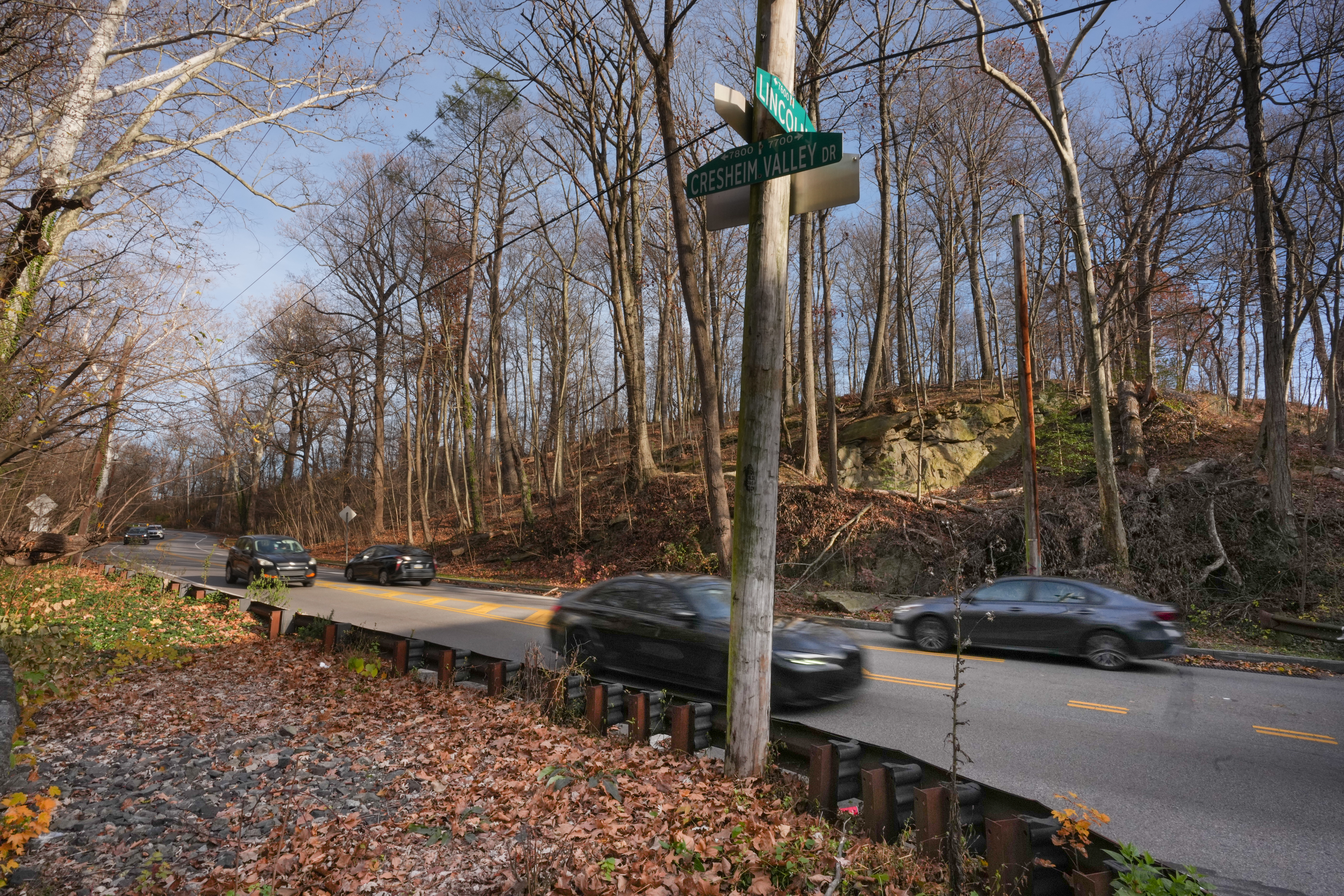
    Cresheim Valley Drive near where it intersects with Lincoln Drive, in Philadelphia, PA, Dec. 1, 2025.

    While Winter said that engineers from the Philadelphia Streets Department were among the first calls she received Monday morning responding to the crash, and that the community appreciates the response, she, Maule, and other neighbors hope that more safety improvements will be considered to save more lives.

    “I’m just looking forward to the new measures of safety that come here,” Maule said. “Hopefully, people will abide by them.”

    Staff writers Max Marin and Dylan Purcell contributed to this article.

  • West Philly affordable housing project could finally advance, almost 6 years after it was proposed

    West Philly affordable housing project could finally advance, almost 6 years after it was proposed

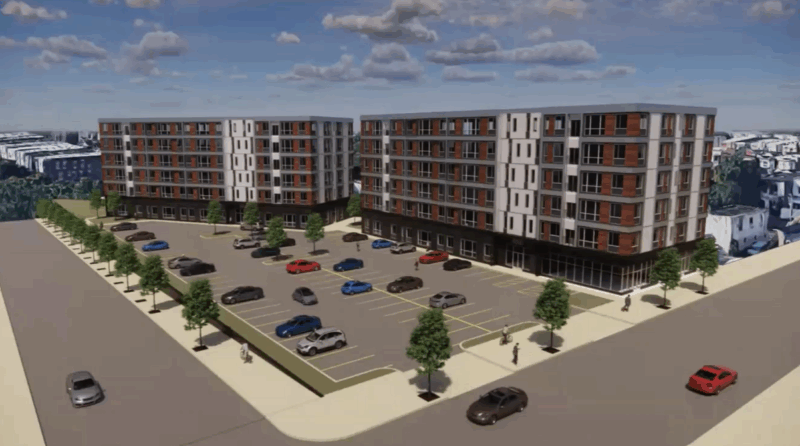
    An affordable housing project slated for a junkyard in Cedar Park took a step forward Wednesday, when a Philadelphia judge rejected a neighbor’s challenge. The courtroom victory brings the 104-unit, two-building project, which was conceived in 2020, closer to reality.

    Common Pleas Court Judge Idee Fox ruled that the new zoning of a triangular group of parcels on Warrington Avenue, which allows for buildings up to seven stories, was legal.

    Melissa Johanningsmeier, who lives next to the planned development, sued the city to stop the project in 2023, arguing that the building was inconsistent with the city’s goal of preserving single-family homes in Cedar Park.

    Johanningsmeier said in court filings she would be harmed by the parking, traffic, and loss of green space if the project were to proceed.

    The homeowner told Fox during a two-day October bench trial that there was widespread discontent with the project in the neighborhood.

    The judge seemed skeptical, as Johanningsmeier’s attorney didn’t provide witnesses or evidence to support claims of widespread backlash to the project that has been promoted by City Councilmember Jamie Gauthier.

    It was not for her to decide whether the project was the best idea, Fox said, but whether the zoning was constitutional.

    “If the community is unhappy with what’s being done, they have the right to express their concerns to the councilwoman at the ballot box,” Fox said.

    Junkyard controversy

    The project dates to 2020, when New York affordable housing developer Omni formulated plans to add 174 reasonably priced apartments to the West Philadelphia neighborhood.

    But the developer’s plans for the junkyard at 50th and Warrington met opposition due to the proposed buildings’ height — six stories — and parking spaces for less than a third of the units.

    Omni’s plan required permission from the Zoning Board of Adjustment to move forward, which was more likely to succeed with neighborhood support. So they compromised.

    A new design unveiled in 2021 pushed the buildings back to the edge of the site, to avoid putting neighboring homes in shadow. A surface parking lot would offer 100 spaces for the 104 affordable apartments.

    These concessions appeased almost all of the critical neighbors and community groups. Many of them supported Omni before the Zoning Board of Adjustment, which granted the project permission to move forward.

    But Johanningsmeier remained a critic. She lives on the border of the property and challenged the zoning board’s ruling in Common Pleas Court. Judge Anne Marie Coyle ruled in her favor, arguing the new building “would unequivocally tower over the surrounding family homes.”

    In the aftermath, Gauthier passed a bill to allow the project to move forward without permission from the zoning board. Johanningsmeier then sued over that legislation as well.

    Councilmember Jamie Gauthier in City Council in 2024.

    Affordable housing and fruit analogies

    The issue at the heart of the case was whether a zoning change to allow for large multifamily buildings was considered spot zoning on the small parcel, which Johanningsmeier’s lawyer argued was inconsistent with the types on buildings on surrounding properties.

    Just because the “mega apartment buildings” are for residential use doesn’t make the project similar to the surrounding zoning, which mostly allows single-family homes and duplexes, Edward Hayes, a Fox Rothschild attorney representing Johanningsmeier, told Judge Fox on Wednesday.

    “A cranberry and a watermelon are fruit,” Hayes said. “They are not the same.”

    And while affordable housing is a laudable cause, the attorney said, that doesn’t mean that the city should “shove it down the throat of a community” in the form of large buildings that are out of character with the rest of the neighborhood.

    An attorney representing the developer, Evan Lechtman of Blank Rome, told the judge existing buildings of similar height are nearby, across the railroad track in Kingsessing.

    “We are transforming a blighted, dilapidated junkyard into affordable housing,” the developer’s attorney said.

    Johanningsmeier’s lawyer, Hayes, declined to comment after the ruling, which could be appealed.

    Gauthier celebrated the outcome as a victory against gentrification.

    “Lower-income neighbors belong in amenity-rich communities like this one, where they can easily access jobs, healthcare, groceries, and other necessities,” said Gauthier. ”I hope the court’s ruling puts an end to gratuitous delays.”

    Housing advocates note that the years of neighborhood meetings and lawsuits over the project are an example of why housing, and especially affordable units, has become so expensive to build in the United States.

    In the face of determined opposition from even a single foe, projects can incur millions in additional costs.

    “It’s a travesty that one deep-pocketed opponent has been able to block access to housing for over 100 families in my neighborhood for years,” said Will Tung, a neighbor of the project and a volunteer with the urbanist advocacy group 5th Square. “It’s more expensive than ever to rent or buy here, and this project would be a welcome change to its current use as a derelict warehouse.”

  • It’s essential that Mayor Parker’s H.O.M.E. plan prioritize resources for ‘people-first’ housing

    It’s essential that Mayor Parker’s H.O.M.E. plan prioritize resources for ‘people-first’ housing

    After months of state and federal budget stalemates that have threatened essential services for Philadelphia’s most vulnerable, we now know those budget outcomes don’t address critical housing needs, and as such, we have an opportunity right now as a city to meet the moment through the first year of spending in Mayor Cherelle L. Parker’s housing affordability plan.

    As a city, we are currently scrambling to decide what to do with $200 million per year for four years to address housing, when just last year we were discussing spending $1.3 billion on a Sixers arena in Chinatown. Clearly, the issue is not a lack of resources, but where we choose to direct them.

    Housing in Philadelphia has rarely been people-first in its approach; rather, it’s been about extraction from communities in one form or another. One could argue that the first great Philadelphia housing plan started with the city’s founding in 1682 and was built on the displacement of the Lenape people, who had inhabited the region for generations.

    In a neighborhood like Kensington — where I live and work — housing was developed at the turn of the 20th century to advance industry, and the profits to be made from it, by putting factories in formerly rural spaces and then surrounding those workplaces with as many homes as possible. This was a housing plan meant to extract as much as possible — rental payments, increased worker productivity, patronage of local businesses — from those who lived and worked here.

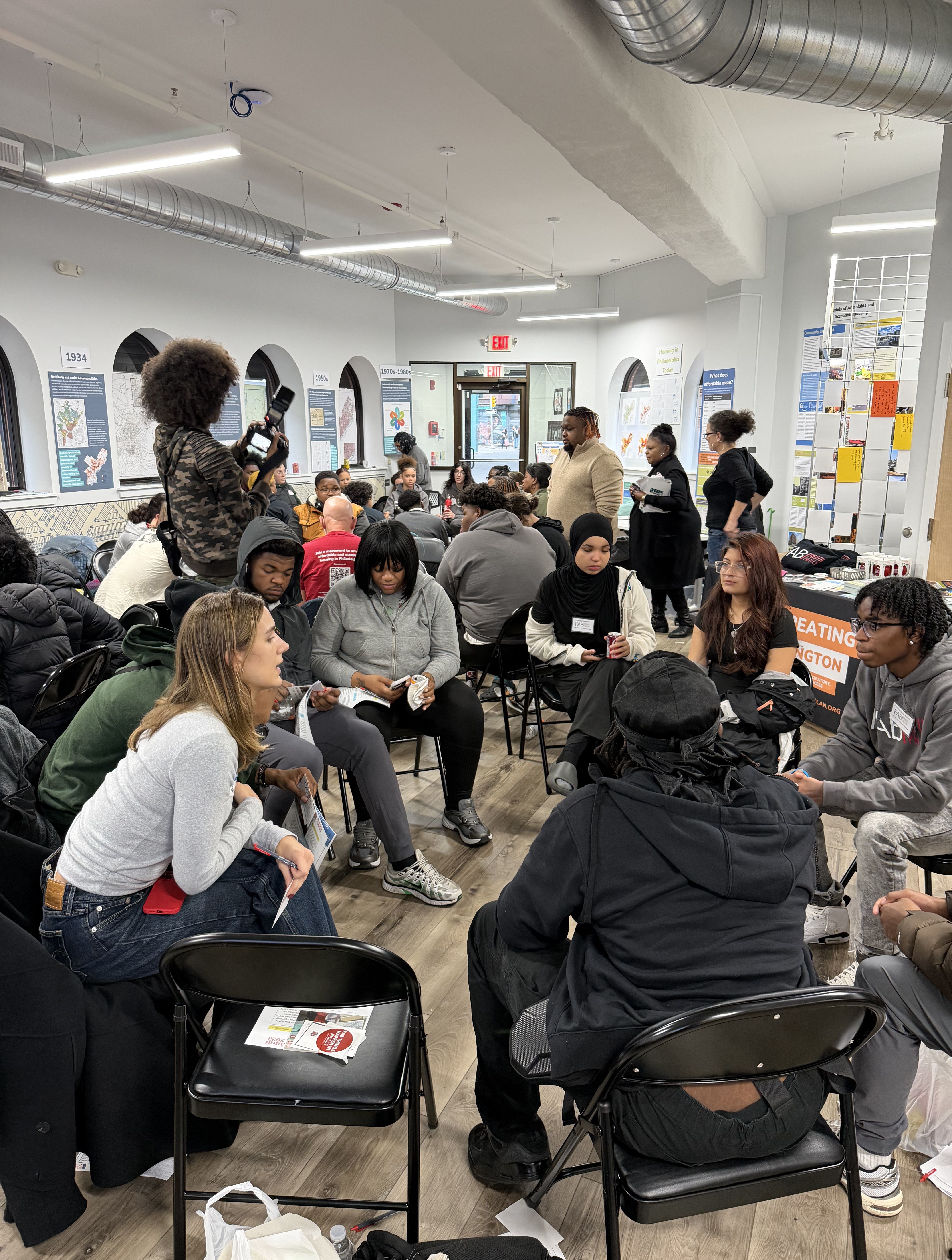
    Fab Youth Philly brings together young people for a teen town hall to discuss housing issues on Nov. 15 at the Kensington Engagement Center.

    Profit-first models aren’t only relegated to the past. Just a few weeks ago, the Reinvestment Fund reported that corporate investors are most active in Black and brown — often intentionally disinvested — neighborhoods, where they are responsible for one in four residential purchases, creating more extraction through landlords rather than creating and maintaining wealth among homeowners.

    Any transformative housing plan must be built on values: to address historical and current misaligned missions that continue to drive exploitative forces in our neighborhoods. The start of the mayor’s H.O.M.E. program is a moment to ensure the plans that we will be paying for over the next 30 years are people-first in their mission, purpose, and function.

    Real change happens when we are collectively grounded in hope, community, facts, and information about where we have been, all of which can serve as a guide to where we’d like to go.

    Over the last few years, New Kensington Community Development Corp. has been facilitating the Co-Creating Kensington planning and implementation process, in which we have received feedback from 700 residents about their priorities. In January, we completed the rehabilitation of a three-story building at 3000 Kensington Ave., converting it into the Kensington Engagement Center, a meeting place and exhibition space that was designed to facilitate conversations with the community on their priorities.

    Conversations with our neighbors and partners revealed that housing is an increasingly pressing issue for Kensington residents (as well as for the rest of Philadelphia). We collectively recognized a moment of alignment with the release of the Philadelphia H.O.M.E. Initiative and the soon-to-be-released Pennsylvania Housing Action Plan.

    We convened several organizations already prioritizing housing affordability across the city, including Philly Boricuas, Green Building United, the Philadelphia Coalition for Affordable Communities, the Women’s Community Revitalization Project, Fab Youth Philly, and the Philadelphia Community Land Trust. Together, we codesigned a 14-part people-first housing workshop series and exhibit.

    This deep-dive approach is based on an understanding that community engagement needs to go beyond pizza parties and setting up tables at events. For a community to truly participate in its future, it needs to be informed, there needs to be shared power, and there needs to be collaboration and collective visioning.

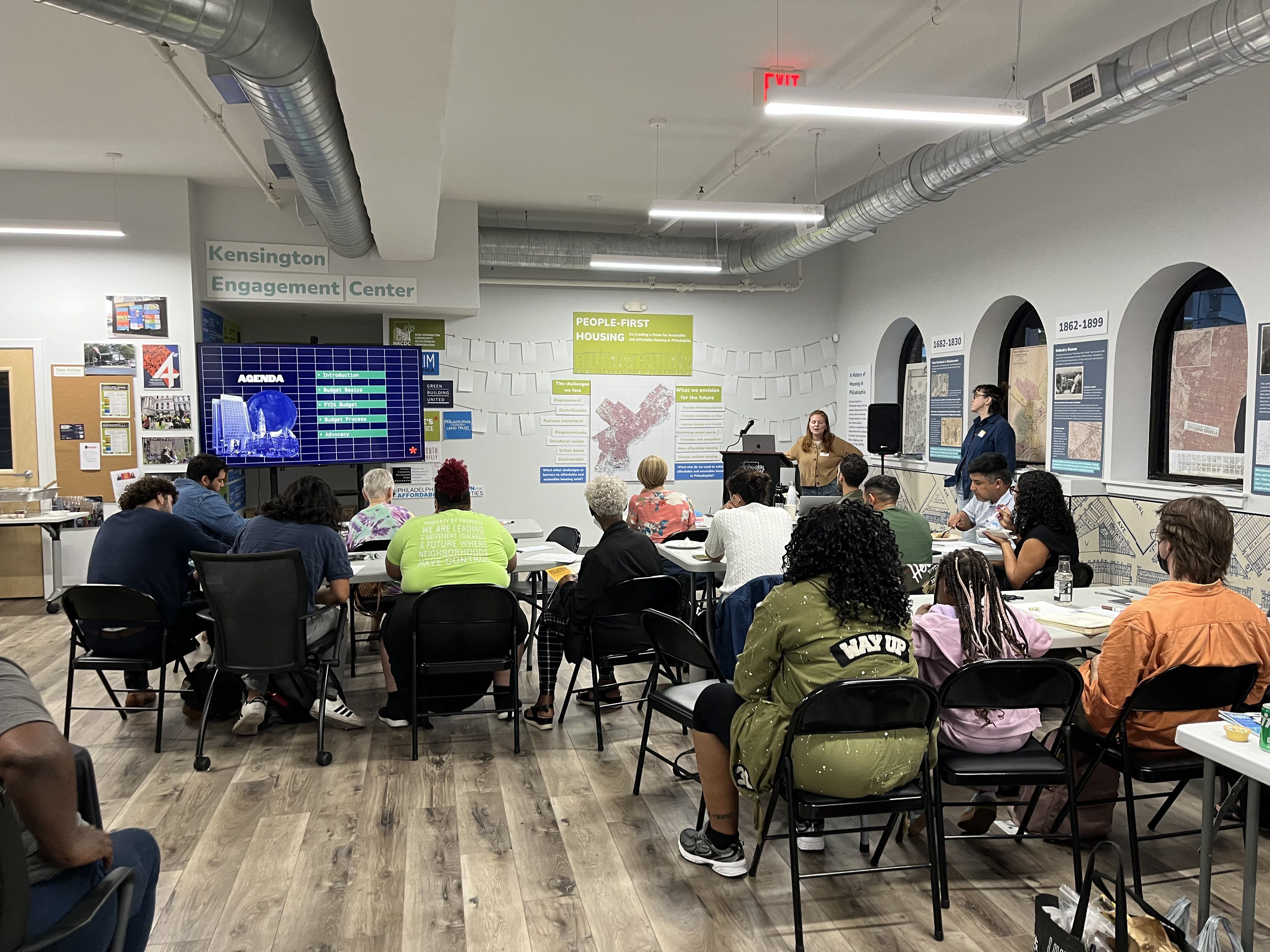
    The People’s Budget Office facilitates a Budget 101 Workshop at the Kensington Engagement Center on Oct. 7.

    The workshop series has engaged more than 175 residents from 15 neighborhoods and has covered topics from housing wins, gentrification and displacement, how municipal resources are directed toward housing, environmental concerns, tenants’ rights, illegal evictions, and more.

    Angela Brooks, Philadelphia’s chief housing and development officer and new chair of the board of the Land Bank, came out for a workshop on the H.O.M.E. plan to help residents understand how the initiative will work and to hear resident feedback.

    Most recently, we hosted a teen town hall facilitated by Fab Youth Philly, in which more than 70 young people came together to share their hopes, dreams, and concerns and gave guidance on how the city can support young people — for example, looking at how the McKinney-Vento Homeless Assistance Act implements programs that serve youth.

    What we’ve learned so far is that the best way to build momentum for change is through informed, collective action and leveraging strategic pressure points by investing in relationships early. Creativity and diversity in leadership and lived experience are critical to ensuring movements are resilient, and we need to question the status quo.

    Communities must be built for the people who live in them, so that they aren’t just about four walls built by colonizers and conquerors, but about communities of choice and relevance so people can thrive.

    Trickle-down approaches do not work. The city’s H.O.M.E. plan needs to concretely prioritize resources for residents whose households earn no more than 30% of the area’s median income. We need to serve those on housing program wait lists before adding more and higher earners. We need to preserve the affordable housing we already have, and we need to invest more deeply in home repair programs like Built to Last.

    As someone serving on the H.O.M.E. advisory board and as a nonprofit leader of a community development corporation, I learned there are several housing issues we aren’t addressing at all in the city’s H.O.M.E. plan, such as those affecting young people and individuals impacted by the criminal justice system who have urgent needs but do not meet many of the traditional service categories.

    How do we move forward?

    For those of us who are currently centering housing, learning and being in community is essential. But we also need actionable moments.

    I recommend all these organizations because they put people first in housing plans — countering the notion that housing is just a commodity. Instead, they affirm the fundamental idea that housing is about people — and that people deserve a home.

    Bill McKinney is a Kensington resident and the executive director of the New Kensington Community Development Corp.

  • James Ijames may be teaching at Columbia, but he never wants to stop making art in Philly

    James Ijames may be teaching at Columbia, but he never wants to stop making art in Philly

    Philly theater darling James Ijames, the Pulitzer Prize-winning playwright of Fat Ham, will return to local stages with a special spotlight next spring, with a slate of three plays running at three theaters.

    Recognizing this scheduling synergy, the venues are partnering to offer a three-ticket pass, called “The Citywide James Ijames Pass.”

    The first collaboration of its kind dedicated to a contemporary playwright, the pass covers the Philadelphia premiere of Good Bones at the Arden Theatre (Jan. 22 to March 8), The Most Spectacularly Lamentable Trial of Miz Martha Washington at the Wilma Theater (March 17 to April 5), and the world premiere of Ijames’ latest work, Wilderness Generation, at Philadelphia Theatre Company (April 10 to May 3).

    Ijames wrote all of these plays in South Philadelphia, which he considers his artistic home. This year, he left his teaching position at Villanova University to run the playwriting program at Columbia University. While that means he’s spending most of his time in New York now — though his husband, Joel Witter, still works for the Philly school district — Ijames says Philadelphia is “still very much a place where I want to continue to make art.”

    “I’ve lived in Philly more than I’ve lived anywhere in my life, so it is incredibly special to me,” said the Tony-nominated playwright, a founding member of the local playwriting collective Orbiter 3.

    After growing up in North Carolina and attending Morehouse College in Atlanta, Ijames got his MFA in acting at Temple University. He performed on stages all over the city, including at the National Constitution Center, People’s Light, and all three theaters featured in the pass.

    It was during the 2012 production of Angels in America at the Wilma where he wrote Miz Martha Washington, one of his earliest plays, in the dressing room. Ijames went on to serve as one of three co-artistic directors of the Wilma, which premiered the digital production of Fat Ham — his incisive and irreverent queer reimagining of Hamlet — that earned him the 2022 Pulitzer Prize.

    Flashpoint Theatre Company’s Barrymore-nominated “The Most Spectacularly Lamentable Trial of Miz Martha Washington.” From left: Darryl Gene Daughtry Jr., Steven Wright, Taysha Canales, and Jaylene Clark Owens surround Nancy Boykin as Martha Washington.
    Photo by Ian Paul Guzzone.

    In the sharp satire Miz Martha Washington, the titular first lady is on her deathbed, surrounded by the people she and her husband enslaved. With freedom inching closer — George Washington’s will promised them liberty upon his widow’s death — the Black characters appear in various hallucinations, putting Martha and her family on trial.

    The play will come back to town amid Philadelphia’s celebrations for the 250th anniversary of the nation’s founding, apt timing for a sharp satire on the Founding Fathers’ legacy of slavery.

    “I think we were all kind of hoping that the world and the politics would be a little different when we first started thinking about it,” said Ijames. “But I always say, we have to look at the history directly in the face and, from that, try to imagine something different.”

    Good Bones is a more contemporary story about the development of a new stadium that stands to disrupt a city neighborhood (sound familiar?). The upper-class newcomer, haunted by those who were pushed out, gets into fiery debates over gentrification with her contractor.

    The Philly premiere will be directed by Ijames’ longtime friend and collaborator Akeem Davis, who starred in the Ijames-directed production of August Wilson’s King Hedley II at the Arden earlier this year.

    Arden Theatre producing artistic director Terry Nolen hopes audiences will come out to cheer on a “hometown hero.”

    “Philly audiences love Philly artists, and there is so much pride for James’ success,” Nolen said in a statement.

    Philly playwright James Ijames attends the 76th Annual Tony Awards at United Palace Theater on June 11, 2023, in New York City. His play “Fat Ham” had five nominations, including best play. (Photo by Cindy Ord /Getty Images for Tony Awards Productions)

    The playwright’s newest work, Wilderness Generation, examines the relationships between cousins as Ijames, who’s close to his own cousins, wanted to spotlight that kind of family dynamic. Five cousins reunite at their grandmother’s house in the South to help her downsize; while there, they unpack a painful family history and confront the damage of their relatives’ behavior as they try to forge a future together.

    Ijames wrote the work with Philadelphia Theatre Company co-artistic directors Taibi Magar and Tyler Dobrowsky in mind. Though Ijames has performed at PTC before, this world premiere marks the first time a play he wrote will grace its stage.

    “I am where I am because a lot of theaters in Philadelphia took a chance on me,” said Ijames. He hopes future collaborations can highlight more “really brilliant folks” writing new plays in Philly.

    “I hope a thing that happens as a result of this is a Jackie Goldfinger package one day, a Michael Hollinger package, an Erlina Ortiz package, [and] an AZ Espinoza package.”

    The three-play pass costs $130, about $43 per ticket, and includes preferred seating, flexible ticket changes, parking discounts, and member benefits at each theater, as well as exclusive swag — a yellow beanie, inspired by Ijames’ personal style. Passes are available online or at the TKTS booth at the Independence Visitor Center.