Tag: Germantown

  • Why hasn’t Trump sent troops to Philly, the city where ‘bad things happen’? Everyone has a theory.

    Why hasn’t Trump sent troops to Philly, the city where ‘bad things happen’? Everyone has a theory.

    In the last six months, President Donald Trump has sent troops, immigration agents, or both to Democratic cities from coast to coast. The list includes Los Angeles, Chicago, Washington, Memphis, Portland, Ore., Charlotte, N.C., New Orleans, and Minneapolis.

    But not Philadelphia.

    The city that seemed an obvious early target, condemned by Trump as the place where “bad things happen,” has somehow escaped his wrath. At least so far.

    That has sparked speculation from City Hall to Washington over why the president would ignore the staunchly Democratic city with which he has famously feuded. Here we offer some insight into whether that’s likely to change.

    Why has Philadelphia been spared when smaller, less prominent cities have not?

    Nobody knows. Or at least nobody knows for sure. But lots of people in government and immigration circles have ideas.

    There’s the weather theory, that it’s hard for immigration agents who depend on cars to make arrests in cities that get winter snow and ice. Except, of course, the administration just launched Immigration and Customs Enforcement operations in Minneapolis, which gets 54 inches of snow a year.

    Then there’s the swing-state theory, that Trump is staying out of Philadelphia because Pennsylvania ranks among the handful of states that can tip presidential elections. But that doesn’t explain Trump’s surge into North Carolina, where he sent immigration forces last month.

    While the Tar Heel State voted for Trump three times, elections there can be decided by fewer than 3 percentage points.

    U.S. Rep. Brendan Boyle, a Democrat whose North and Northeast Philadelphia district includes many immigrants, suggested a blue-state theory, that Trump has mostly targeted cities in states that voted for Vice President Kamala Harris in the 2024 presidential election. But Boyle acknowledged that North Carolina and Tennessee are exceptions.

    “It could just be that they’re working their way down the list,” Boyle said.

    Has Mayor Cherelle L. Parker had a hand in keeping troops out of Philadelphia?

    It depends on whom you talk to.

    For months she has passed up opportunities to publicly criticize the president, turning aside questions about his intentions by saying she is focused on the needs of Philadelphia. Some believe her more passive approach has kept the city out of the White House crosshairs.

    People close to the mayor point out that big-city mayors who land on the president’s bad side have faced big consequences. For instance, in Los Angeles, Mayor Karen Bass frequently clashed with Trump ― and faced a National Guard deployment.

    Some point out that Parker has good relationships with Republicans who are friendly with the president, including U.S. Sen. Dave McCormick of Pennsylvania, who has praised the mayor on multiple occasions.

    On the other hand, some in the city’s political class ― especially those already skeptical of Parker ― say the suggestion that she has shielded the city gives her too much credit.

    One strategist posited that the lack of overt federal action has more to do with Trump’s trying to protect a razor-thin Republican majority in the House, and that targeting Philadelphia could anger voters in the Bucks County and Lehigh Valley districts where Republicans hold seats.

    What does Trump say about his plans for Philadelphia?

    Not much. Or at least nothing specific.

    During a raucous campaign-style rally Tuesday night in Northeast Pennsylvania, Trump made no mention of his intentions ― even as he railed against immigration and accused Democrats of making the state a “dumping ground” for immigrants.

    Trump suggested there should be a “permanent pause” on immigration from “hellholes like Afghanistan, Haiti, Somalia and many other countries,” declared Washington the safest it has been in decades, and praised ICE as “incredible.”

    He also reminisced about hosting the Philadelphia Eagles at the White House earlier this year, after their Super Bowl win, hailing head coach Nick Sirianni as a “real leader” and marveling at running back Saquon Barkley’s muscles.

    “I love Philadelphia,” Trump declared. “It’s gotten a little rougher, but we will take it.”

    That was a marked change from a decade ago, when Trump called Jim Kenney a “terrible” mayor, and Kenney called him a “nincompoop.”

    Kenney fought Trump in court and won in 2018, when a U.S. District Court judge ruled that the president could not end federal grants based on how the city treats immigrants. After the ruling, the Irish mayor was captured on video dancing a jig and calling out “Sanctuary City!”

    More recently, in May, Philadelphia landed on Trump’s list of more than 500 sanctuary jurisdictions that he planned to target for funding cuts. That was no surprise. Nor was it surprising that in August, when the administration zapped hundreds of places off that list, Philadelphia was among the 18 cities that remained.

    “I don’t know why they’re not here yet,” said Peter Pedemonti, codirector of New Sanctuary Movement of Philadelphia. But the larger point is that “ICE is in neighborhoods every day, they are taking away people every day,” and he urged those who support immigrants to prepare.

    “Now is the time to get involved with organizations that are organizing around this,” Pedemonti said. “There are neighbors who need us.”

    Has Gov. Josh Shapiro helped dissuade federal action in Philadelphia?

    It’s hard to say. Shapiro has challenged Trump in court multiple times, including when he was the state attorney general during Trump’s first term.

    As governor, Shapiro sued the administration over its move to freeze billions in federal funds for public health programs, infrastructure projects, and farm and food bank contracts. He also joined a multistate suit challenging an executive order that restricted gender-affirming care for minors.

    On immigration, however, Shapiro has been careful not to directly engage in the sanctuary city debate, saying his job is to provide opportunity for all Pennsylvanians. But he has been critical of Trump’s enforcement tactics, calling them fear-inducing and detrimental to the state’s economy and safety.

    Still, Trump has not lashed out at Shapiro, a popular swing-state governor. At his rally in Mount Pocono last week, in which he criticized several Democrats, Trump didn’t mention Shapiro ― or the Republican in attendance who is running against the governor in 2026, Stacy Garrity.

    Why is the president sending troops to American cities in the first place? Isn’t that unusual?

    Highly unusual ― and fought in court by the leaders of many of the cities that have been targeted. On Wednesday, a federal judge blocked Trump’s deployment of troops to Los Angeles, saying it was “profoundly un-American” to suggest that peaceful protesters “constitute a risk justifying the federalization of military forces.”

    Trump says the National Guard is needed to end violence, to help support deportations, and to fight crime in Democratic-run cities. Last week he declared that Democrats were “destroying” Charlotte, after a Honduran man who had twice been deported allegedly stabbed a person on a commuter train.

    Two members of the West Virginia National Guard were hospitalized in critical condition ― one subsequently died ― after being shot by a gunman in Washington the day before Thanksgiving.

    That the attack was allegedly carried out by an Afghan man who had been granted asylum helped spark a wave of immigration policy changes, all in the name of greater security. For some immigrants who are attempting to legally stay in the country, that has resulted in the cancellation of citizenship ceremonies and the freezing of asylum processes.

    So what happens next?

    It’s hard to say. Immigration enforcement will surely continue to toughen.

    More immigrants are being arrested when they show up for what they expect to be routine immigration appointments, suddenly finding themselves handcuffed and whisked into detention. In Philadelphia this year, more than 90 immigrants have been trailed from the Criminal Justice Center by ICE agents and then arrested on the sidewalks outside, according to advocates who are pushing the sheriff to ban the agency from the courthouse.

    But it’s difficult to predict when or whether troops might land on Market Street.

    “I’ve heard so many different theories,” said Jay Bergen, the pastor at Germantown Mennonite Church, who has helped lead demonstrations against courthouse arrests. “It’s probably all of them ― a little bit of the way Shapiro has positioned himself, the way the mayor has positioned herself, a little bit the electoral map of Pennsylvania, a little bit, more than a little bit, Trump’s own personality.”

    That Philadelphia has been ignored to date doesn’t mean it won’t be in Trump’s sights tomorrow, Bergen said.

    “This administration thrives on being unpredictable, and on sowing as much exhaustion and pain as possible,” Bergen said. “We don’t do ourselves a favor by getting panicked in advance, but we also need to be ready.”
  • Police seek suspect in killing of 93-year-old man in Logan

    Police seek suspect in killing of 93-year-old man in Logan

    Police are seeking a suspect wanted in connection with the killing of a 93-year-old man in the city’s Logan neighborhood last week, authorities said Friday.

    The victim, Lafayette Dailey, was found dead in his home on the 4500 block of North 16th Street when medics were called there around 3 p.m. on Friday, Dec. 5.

    Dailey had suffered a laceration to the chest and trauma in his head, police said. A medical examination found that he died from multiple stab wounds, and his death was ruled a homicide.

    Investigators are now searching for 53-year-old Coy Thomas, who police say is considered a suspect in their homicide investigation. His last known address was on Ashmead Place in Germantown, police said.

    They found Dailey’s wallet, keys, and vehicle missing from his home. They later found his car, a white Chrysler 300 sedan, several days after his death.

    A department spokesperson declined to comment on the circumstances around the discovery of the car, citing an active investigation.

    The department is urging anyone with information on Thomas’ whereabouts to Contact the homicide unit at 215-686-3334 verified or call its anonymous tip hotline, 215-686-TIPS (8477).

  • A man and teen were killed during attempted sale of a Rolex in Germantown, police say

    A man and teen were killed during attempted sale of a Rolex in Germantown, police say

    A man and a teenager were killed Tuesday night in Germantown when, investigators believe, a meeting for the sale of a Rolex watch turned into a robbery, and a shootout erupted.

    Tyree Ware, 30, drove to the 500 block of West Queen Lane to sell a Rolex he had listed for sale online, police said. Quaneef Lee, 16, arrived with an acquaintance to purchase it, they said.

    Detectives believe Lee and the other male then attempted to rob Ware of the watch at gunpoint, according to a law enforcement source who spoke on the condition of anonymity to discuss an ongoing investigation.

    Ware also pulled a gun, the source said.

    When officers arrived, they found Ware lying in the street beside the open door of his silver Nissan Maxima. He had been shot multiple times. A 9mm handgun lay beside him.

    Officers found Lee on the ground behind the sedan, shot once in the chest.

    Ware and Lee were rushed to Temple University Hospital, where they died shortly after 5:30 p.m., police said.

    Officers recovered 11 bullet casings from the scene. Deputy Commissioner Frank Vanore said three guns were used in the shootout, but only one was recovered.

    The Rolex, Vanore said, was found inside Ware’s vehicle.

    Investigators are still working to identify the man who accompanied Lee and who may have killed Ware.

    A family member of Lee, when reached by phone Wednesday, declined to speak.

    The shooting comes as Philadelphia is on pace to record its lowest number of homicides in 60 years. Still, violence persists. Lee is one of at least 12 children shot and killed in the city this year.

  • These 20 Philadelphia neighborhoods will have painted Liberty Bell replicas for 2026

    These 20 Philadelphia neighborhoods will have painted Liberty Bell replicas for 2026

    Philly is getting ready to dress itself up — with Liberty Bells. Lots of Liberty Bells.

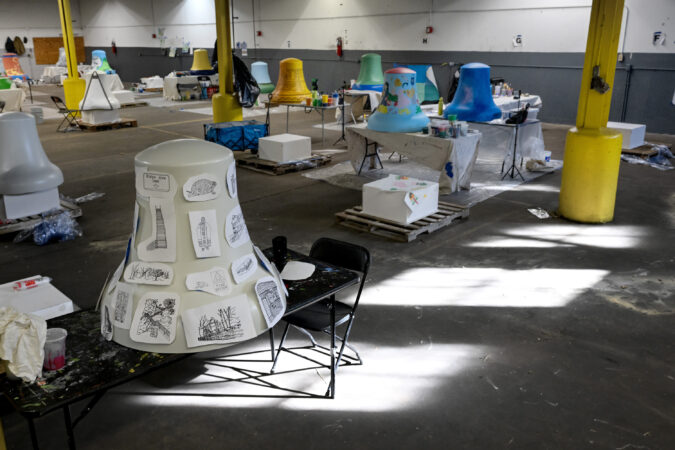
    Organizers of Philadelphia’s yearlong celebrations for America’s 250th anniversary in 2026 gathered in a frigid Philadelphia School District warehouse in Logan on Tuesday, offering a special preview of the 20 large replica Liberty Bells that will decorate Philly neighborhoods for the national milestone.

    Designed by 16 local artists selected through Mural Arts Philadelphia — and planned for commercial corridors and public parks everywhere from Chinatown and South Philly to West Philly and Wynnefield — the painted bells depict the histories, heroes, cultures, and traditions of Philly neighborhoods.

    As part of the state nonprofit America250PA’s “Bells Across PA” program, more than 100 painted bells will be installed across Pennsylvania throughout the national milestone, also known as the Semiquincentennial. Local planners and Mural Arts Philadelphia helped coordinate the Philly bells.

    “As Philadelphia’s own Liberty Bell served as inspiration for this statewide program, it makes sense that Philly would take it to the next level and bring these bells to as many neighborhoods as possible,” Mayor Cherelle L. Parker said in a statement. “We are a proud, diverse city of neighborhoods with many stories to tell.”

    Kathryn Ott Lovell, president and CEO of Philadelphia250, the city’s planning partner for the Semiquincentennial, said the bells are a key part of the local planners’ efforts to bring the party to every Philly neighborhood.

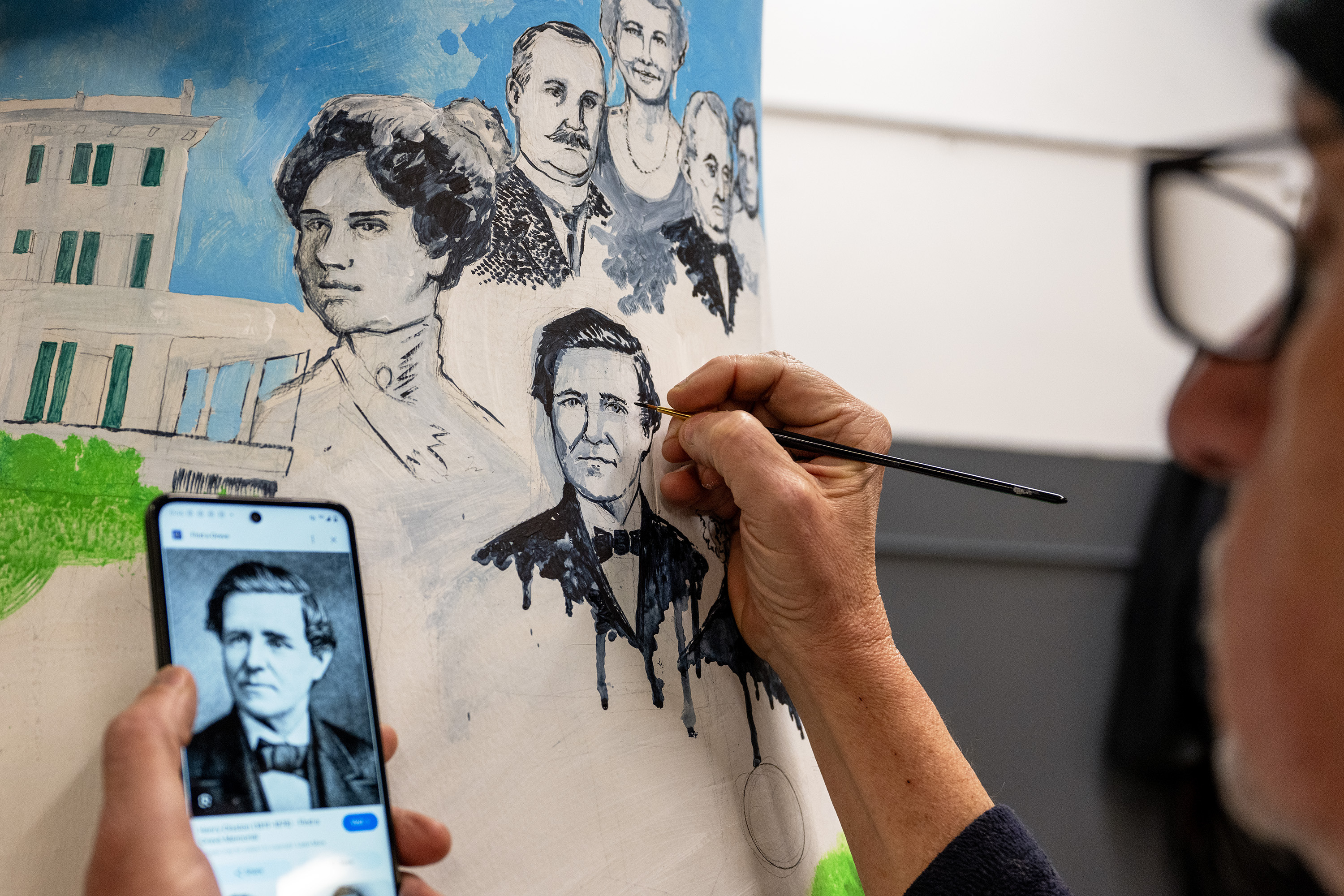
    Local artist Bob Dix paints a portrait of industrialist Henry Disston on his bell.

    “The personalities of the neighborhoods are coming out in the bells,” she said, adding that the completed bells will be dedicated in January, then installed in early spring, in time for Philly’s big-ticket events next summer, including six FIFA World Cup matches, the MLB All-Star Game, and a pumped-up Fourth of July concert.

    Planners released a full list of neighborhoods where the bells will be placed, but said exact locations will be announced in January. Each of the nearly 3-foot bells — which will be perched on heavy black pedestals — was designed in collaboration with community members, Ott Lovell said.

    Inside the massive, makeshift studio behind the Widener Memorial School on Tuesday, artists worked in the chill on their bells. Each bell told a different story of neighborhood pride.

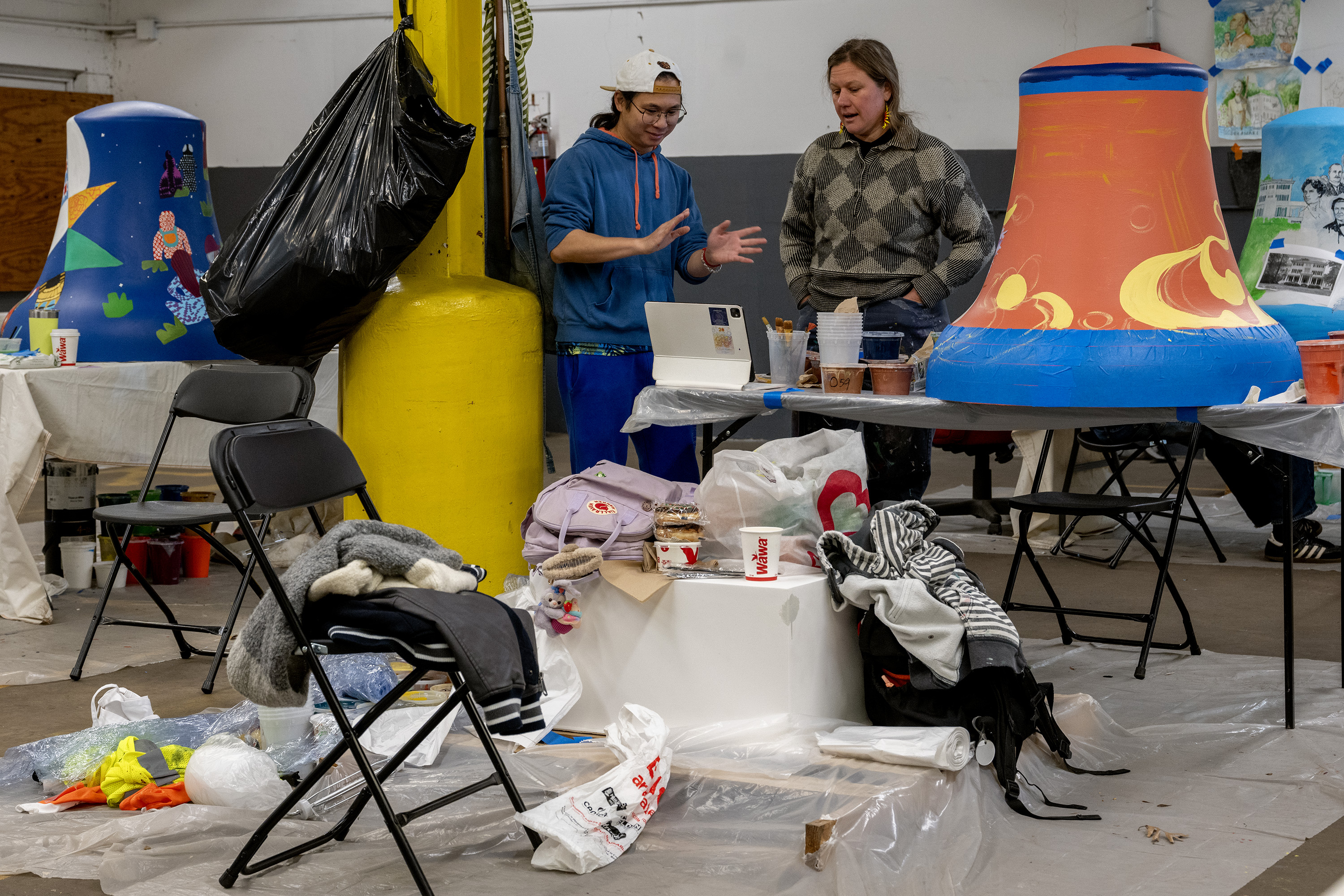
    Chenlin Cai (left) talks with fellow artist Emily Busch (right) about his bell, showing her concepts on his tablet.

    Cindy Lozito, 33, a muralist and illustrator who lives in Bella Vista, didn’t have to look for inspiration for her bell on the Italian Market. She lives just a block away from Ninth Street and is a market regular.

    After talking with merchants, she strove to capture the market’s iconic sites, history, and diversity. Titled Always Open, her bell includes painted scenes of the market’s bustling produce stands and flickering fire barrels, the smiling faces of old-school merchants and newer immigrant vendors, and the joy of the street’s annual Procession of Saints and Day of the Dead festivities. Also, of course, the greased pole.

    “It’s a place where I can walk outside my house and get everything that I need, and also a place where people know your name and care about you,” she said, painting her bell.

    For her bell on El Centro de Oro, artist and educator Symone Salib, 32, met twice with 30 community members from North Fifth Street and Lehigh Avenue, asking them for ideas.

    “From there, I had a very long list,” she said. “People really liked telling me what they wanted to see and what they did not.”

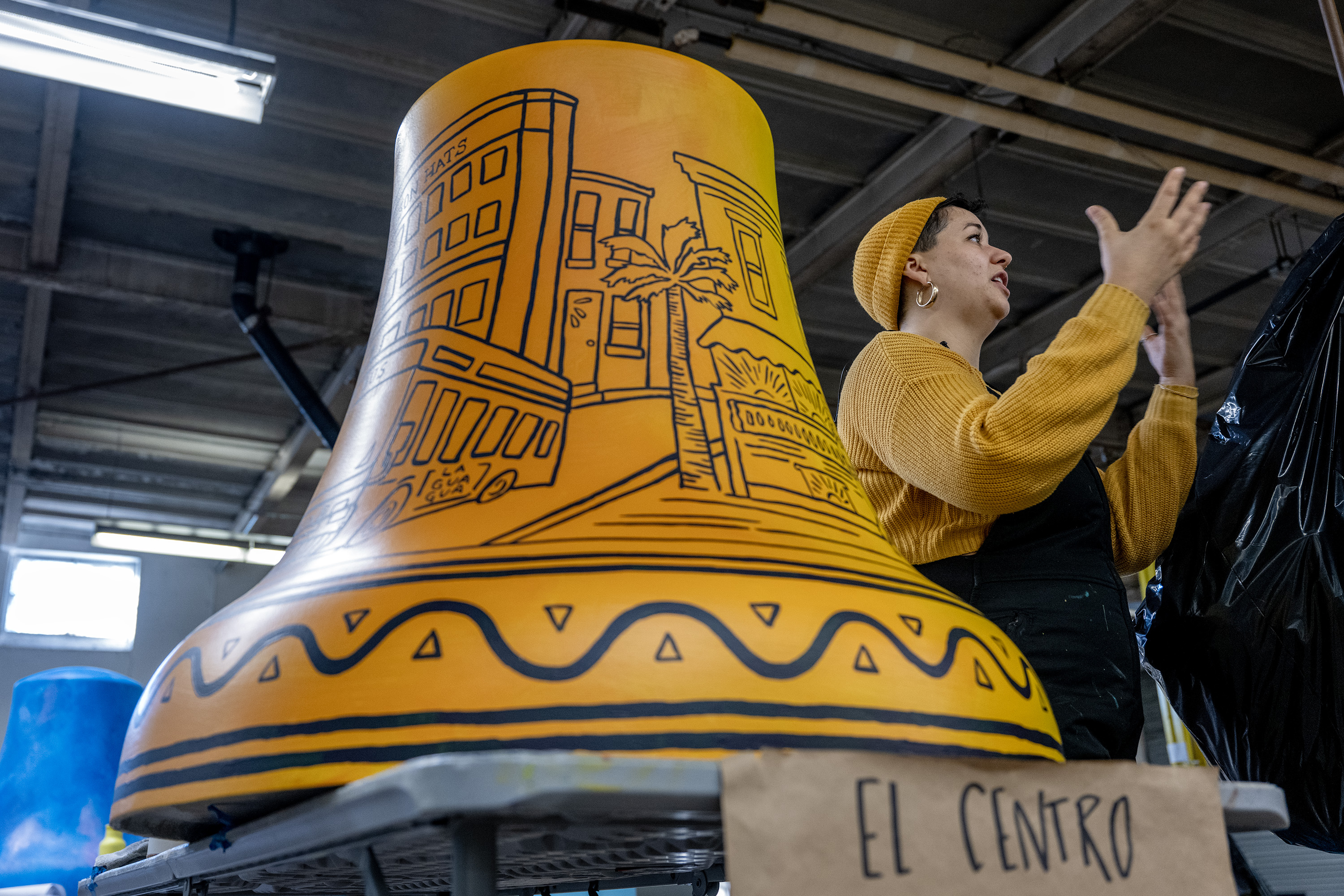
    Local artist Symone Salib talks with a visitor as she works on her bell.

    Titled The Golden Block, the striking yellow-and-black bell depicts the neighborhood’s historic Stetson Hats factory, the long-standing Latin music shop Centro Musical, and popular iron palm tree sculptures.

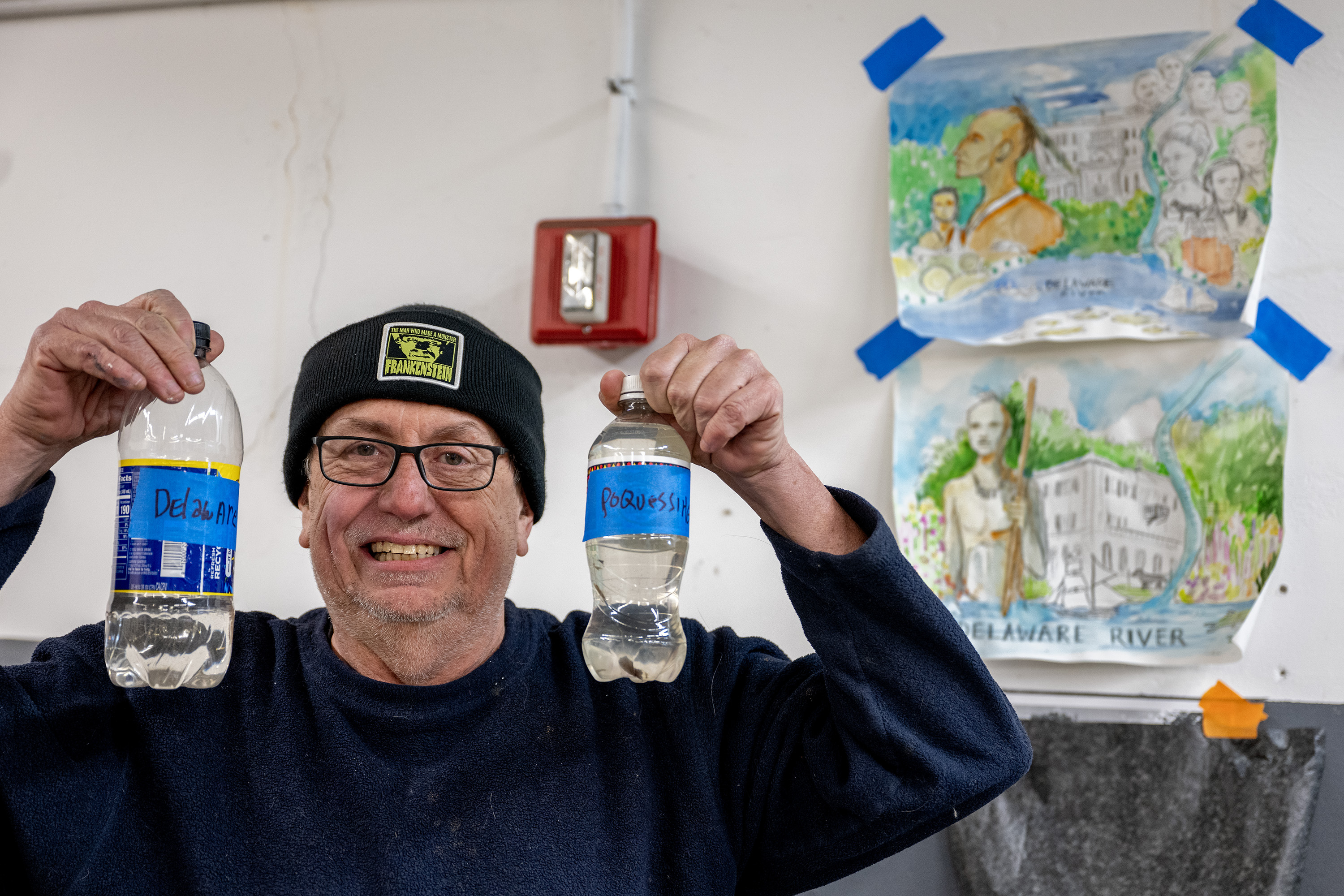
    To add that extra bit of authenticity to his bell depicting Glen Foerd, artist Bob Dix, 62, mixed his paints with water bottled from the Delaware River, near where the historic mansion and estate sits perched in Torresdale, overlooking the mouth of Poquessing Creek.

    “I like to incorporate the spirit of the area,” he said, dabbing his brush in the river water. “I think it’s important to bring in the natural materials.”

    Local artist Bob Dix displays waters he collected from the Delaware River and Poquessing Creek to use in his painting of one of 20 replica Liberty Bells representing different neighborhoods Tuesday, Dec. 9, 2025.

    Planners say they expect the bells to draw interest and curiosity similar to the painted donkeys that dotted Philadelphia neighborhoods during the 2016 Democratic National Convention.

    Ott Lovell said organizers will install the bells around March to protect them from the worst of the winter weather.

    “I don’t want any weather on them,” she said with a smile. “I want them looking perfect for 2026.”

    The bell locations

    • Chinatown

    • City Hall

    • El Centro de Oro

    • Fox Chase

    • Germantown

    • Hunting Park

    • Logan Square

    • Mayfair

    • Mount Airy

    • Ogontz

    • Olney

    • Parkside

    • Point Breeze

    • Roxborough

    • South Philadelphia

    • Southwest

    • Torresdale

    • University City

    • West Philadelphia

    • Wynnefield

  • Philly’s school board will consider transferring vacant buildings to the city at a special meeting this week

    Philly’s school board will consider transferring vacant buildings to the city at a special meeting this week

    Mayor Cherelle L. Parker has made no secret of her desire to acquire vacant school buildings to fuel her administration’s goals of building or preserving 30,000 units of housing in her first term.

    The Philadelphia school board on Monday signaled its intentions to play ball: Later this week, it will hold a special action meeting to vote on a resolution authorizing Superintendent Tony B. Watlington Sr. and his team to consider handing over a portfolio of unused school buildings to the city.

    Watlington, the resolution states, “recommends that, in the best interests of the district and its students, the district explore and pursue negotiations with the city to potentially convey certain vacant and surplus district property.”

    The resolution would cover the district’s current stock of about 20 vacant buildings, including Ada Lewis Middle School in East Germantown — not any schools that might be closed in the coming facilities master planning process.

    Parker, in a statement, said the process was about “public health and public safety” and the school buildings can be used to improve residents’ quality of life.

    Officials “cannot let blighted buildings in the middle of residential neighborhoods lie vacant — many of which have been vacant for many years — from two years to over 30,” Parker said. “It’s unconscionable to me that we are in the middle of a housing crisis and we have government buildings sitting vacant for years or even decades. That cannot continue.”

    School board president Reginald Streater said that no decisions are final and that public deliberation will still happen at the special meeting at 4 p.m. Thursday. But, he said, the move makes sense with “the board moving toward being much more willing to be intergovernmental partners” with the city.

    “Many of these properties have not been used in the last decade or more, and they require a significant amount of upkeep and maintenance,” Streater said. “These properties are unused, for the most part, and unnecessary for K-12 education.”

    The district is in the business of running schools, Streater said.

    “I do believe that the city possesses considerably more expertise and capacity than the district does regarding property development,” Streater said. “We are an education institution. To build the capacity to do such things is out of our wheelhouse, and economic development would take us out of our lane.”

    According to the language of the resolution, the district is urging Watlington to consider all angles — bond obligations, property conditions, financial protection of the district, any legal processes that would need to happen, and more.

    The action comes as something of a surprise, happening just a week after what was to be the final voting meeting of the year. Streater said he did not want to add it as a walk-on resolution to the December school board meeting, but wanted to give members of the public time to understand it and provide testimony, if desired.

    Giving unused school buildings to the city could further academic outcomes, the school board president said.

    “It’s possible,” Streater said, “that conveying these vacant and surplus properties to the city for redevelopment and revitalization could help stabilize and grow the city and district’s tax base … and consequently positively impact future revenues to the district and educational experiences for students.”

    The resolution represents a significant shift from the board’s position of several years ago. In 2023, the board appointed by former Mayor Jim Kenney sued the city over legislation that would have given the city ultimate say in whether school buildings with environmental issues could safely house students and staff.

    That suit has been settled.

    Which buildings will be considered for transfer?

    Asked for a list of the unused buildings the resolution would cover, school board officials said more internal evaluation is needed before such a list is released.

    One likely to be on the list is Ada Lewis, which closed in 2012. That building drew attention this fall as the site where 23-year-old Kada Scott’s body was found buried — a discovery that reignited debate over the fate of the district’s unused properties.

    The possible transfer of district properties to the city comes as officials debate the specifics of one of Parker’s signature initiatives.

    The mayor wants to spend $800 million on her housing initiative, Housing Opportunities Made Easy, or H.O.M.E. In a rare sign of division, Council last week allotted more housing funds to the city’s poorest residents over the Parker administration’s objections.

    Because of Council’s move, more legislation is now needed to advance H.O.M.E. It will not come until January at the earliest.

    City Councilmember Isaiah Thomas, who has generally been critical of the district’s handling of facilities issues, called the resolution “a head scratcher.”

    Thomas, chair of Council’s education committee, has long been pushing for a school facilities plan.

    “It’s unclear to say what this step forward means, but I want to understand how it fits into a larger plan for Philly’s educational institutions,” Thomas said in a statement.

    “Without getting into hypotheticals, and due to a lack of communications with City Council, there are a lot of moving pieces and still many questions about what this means and what is the overall plan for the future of our school buildings,” Thomas said.

  • A second woman says she was sexually abused by Philly doctor facing rape charges

    A second woman says she was sexually abused by Philly doctor facing rape charges

    A second woman is accusing Philadelphia doctor John Smyth Michel, the medical director and owner of Excel Medical Center, of sexual abuse. She said Michel touched her inappropriately when she worked for him several years ago, according to a recent court filing by the Philadelphia District Attorney’s Office.

    Prosecutors charged Michel with felony rape and sexual assault earlier this year after a female patient said he raped her during an October 2024 office visit.

    Michel, 55, of Jenkintown, told police and state medical licensing authorities that he had sex with the 39-year-old patient, but he claimed it was consensual, criminal and state licensing records show.

    The new accusations involve a former female employee who worked for Michel as a medical assistant from 2015 to 2019 at his East Mount Airy office on Stenton Avenue and at another location in Germantown on Chelten Avenue.

    She recently told law enforcement authorities that beginning in 2018 Michel touched her breasts over her clothing on multiple occasions while she was working in the office. He additionally groped her vagina over her clothing before she quit in 2019.

    The accusations have not resulted in new charges at this time, but the investigation remains ongoing, according to Marisa Palmer, a spokesperson for the DA’s office.

    Prosecutors are seeking to introduce the groping accusations as evidence to bolster its sexual assault case against Michel, given there were no witnesses to the alleged rape.

    “The incidents reveal a common plan, scheme or design on the part of the defendant to engage in unlawful and similar nonconsensual sexual conduct with vulnerable women in his medical offices,” Assistant District Attorney Eamon Kenny wrote in a Nov. 24 court motion.

    The judge presiding over the criminal case must decide whether to grant Kenny’s motion and put the 34-year-old former employee’s accusations before jurors at trial.

    The Inquirer does not identify alleged victims of sexual assaultwithout their permission.

    Michel did not return phone calls and emails from The Inquirer this week. His criminal defense lawyer, Andrew Gay Jr., declined to comment Wednesday.

    Michel founded Excel Medical Center, which grew to more than a dozen medical clinics located throughout the city, with about 20,000 patients and 200 employees.

    Last month, Excel’s general manager wrote a letter to patients informing them the practice “will be ceasing operations” as of Dec. 1. “We truly value the trust you have placed in us for your care,” the manager stated in the Nov. 11 letter obtained by The Inquirer.

    A woman who answered the phone at Excel’s main location in West Mount Airy on Thursday said the practice was not taking any new patients in preparation of closing. She said the practice might resume operations and accept new patients after the new year. Michel’s lawyer declined to comment when asked about the practice’s status.

    Criminal trial slated for February

    The criminal case, which is pending in Common Pleas Court, involves a then-38-year-old patient.

    According to police and court records, she accused Michel of kissing her during a May 2024 exam at his East Mount Airy location.

    She told him “no,” left the office, and did not report the kissing incident.

    About five months later, she went to an appointment at Michel’s North Philadelphia office on West Diamond Street. During the Oct. 14, 2024, visit, she says Michel raped her with such force that her head banged twice against the exam room wall.

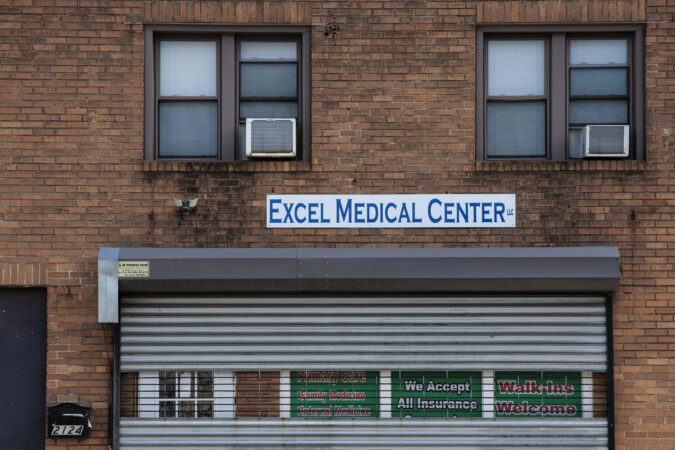
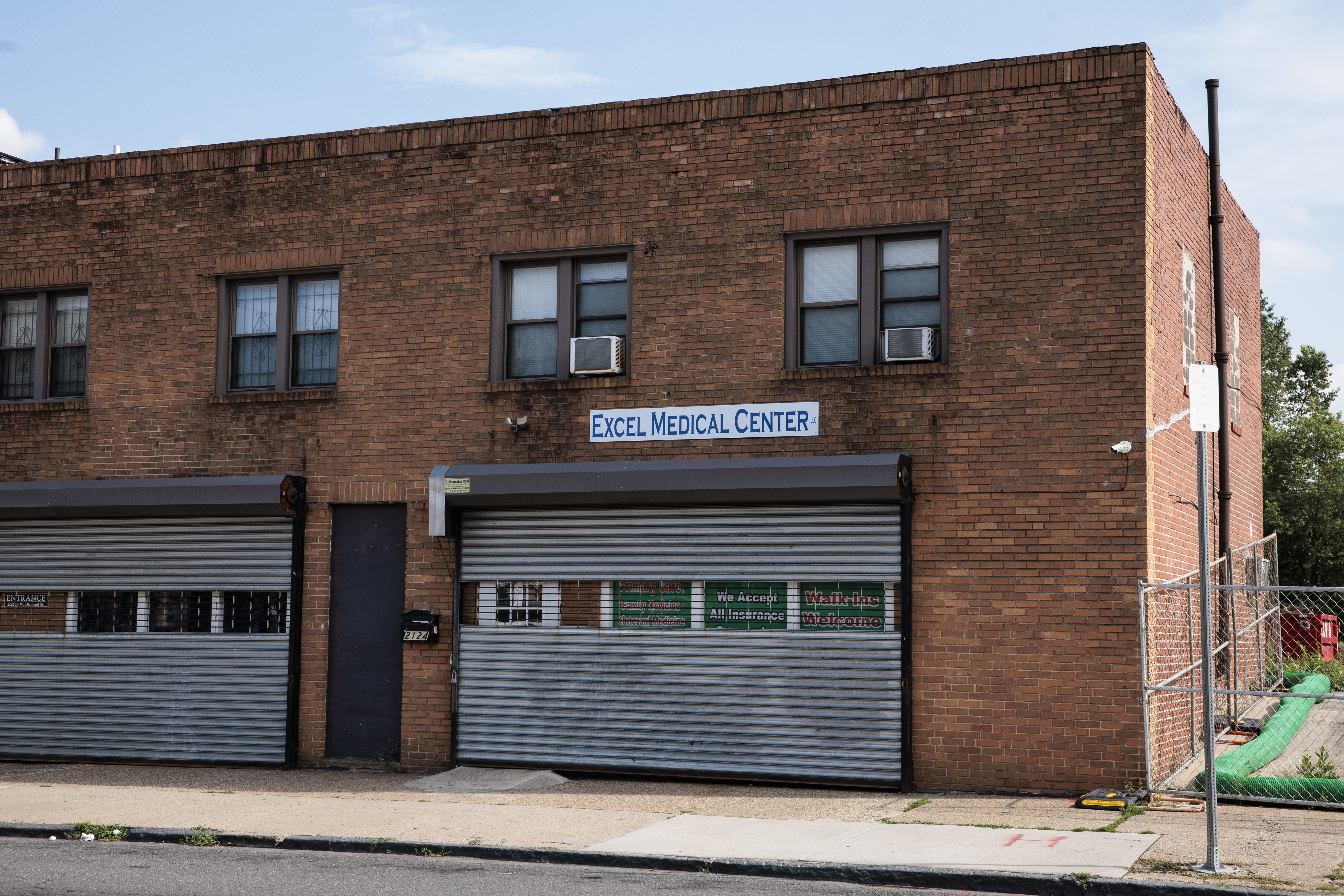
    The exterior of Excel Medical Center at 2124 Diamond Street in Philadelphia.

    In early November 2024, she told her husband what had happened and subsequently filed a police report. Michel was arrested and charged about three months later.

    Michel’s trial was initially slated for Dec. 9, but during a hearing on Monday, a judge postponed it until Feb. 17 after the DA’s office asked for more time to investigate, court records show.

    Michel’s suspension nears end

    In June, the State Board of Osteopathic Medicine, which regulates and oversees licensure of osteopathic doctors like Michel, disciplined him for having sex with a patient — a violation of state regulations.

    He apologized to the board in a letter, saying, “I fully acknowledge that I crossed a professional boundary” and is “profoundly contrite.”

    The board suspended his medical license for six months, followed by 18 months of supervised probation, and fined him $4,000. Michel’s suspension is set to end on Dec. 11.

    If convicted in the criminal case, Michel could permanently lose his medical license.

    In an e-mailed statement on Thursday, the Pennsylvania Department of State, which oversees professional licensing boards, said its prosecution division “continues to closely monitor Dr. Michel’s criminal charges and review his compliance with the terms of the consent agreement.”

    Abuse in office hallways

    The accusations outlined in Kenny’s motion include new details of sexual misconduct. The former employee said Michel approached her from behind to “grab her breast over her shirt.”

    She was stunned and “hated the feeling,” but she feared losing her job so she didn’t say anything to him.

    Once, he simultaneously “cupped” her breast and vagina over her clothes with his hands. She turned around and screamed at him to stop touching her, according to the motion. He replied, “`You know you want it and you know you like it,’” she recounted.

    She said she couldn’t quit because she needed the income and told her co-workers about the abuse. Those colleagues helped her “avoid him” while at work. She also told her husband, though she persuaded him not to confront Michel.

    She resigned in 2019 after landing a new job. They had no contact until this year when he texted her.

    When she asked why he wanted to talk to her after so much time had passed, Michel texted nevermind, the former medical assistant told prosecutors. She then wrote back, “explaining how she felt about his abuse all these years later, that the thoughts of it still traumatized her.”

    Inquirer staff writer Chris Palmer contributed to this article.

  • How Chestnut Hill’s main street is staying relevant in the Amazon era

    How Chestnut Hill’s main street is staying relevant in the Amazon era

    At lunchtime on a Thursday, a week before Thanksgiving, Chestnut Hill was buzzing.

    Inside the newly expanded Matines Café, almost every table was full. People sipped warm drinks from large mugs and ate Parisian croissants and quiche. Bottles of prosecco sat on ice by one large table adorned with Happy Birthday balloons.

    McNally’s Tavern was bustling, too, with regulars sitting at the bar and at tables inside the cozy, nearly 125-year-old establishment atop the hill. Multiple generations gathered — a son taking a father out to lunch, a mother with a baby in a stroller, and two sisters, Anne and Meg McNally, running the place.

    Behind the storefronts along Germantown Avenue’s main drag, some people perused the boutiques, while others typed away on laptops in coffee shops.

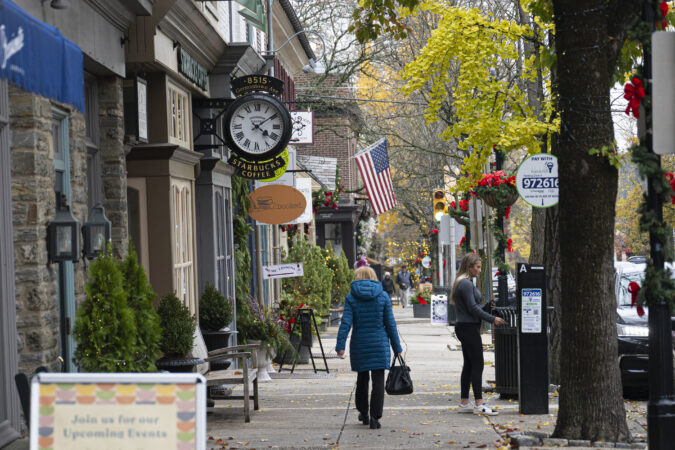
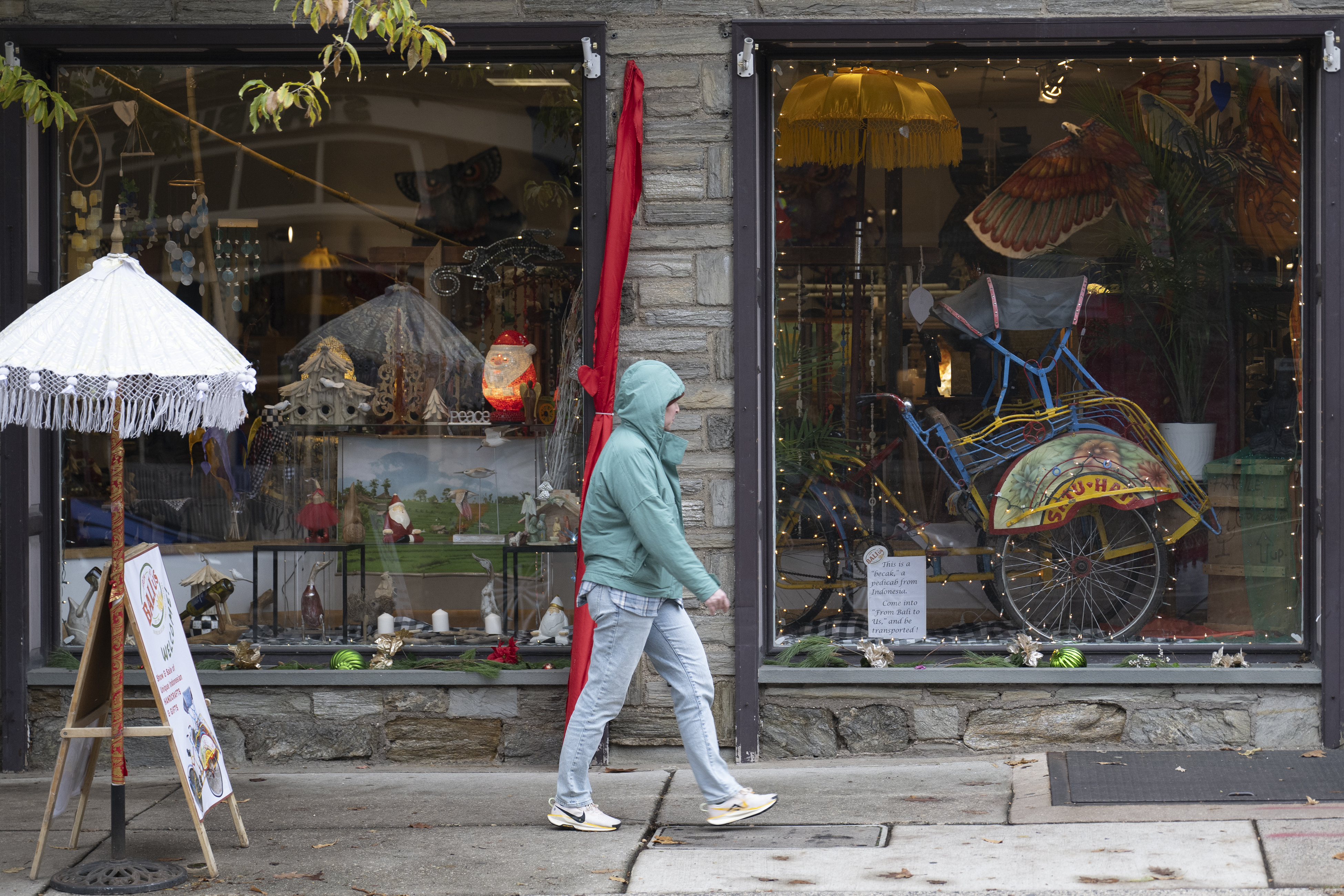
    In the northwest Philadelphia neighborhood known for its wealth and postcard-picturesque aesthetic, the small-town charm of longstanding establishments — four are more than 100 years old — is now complemented by the shine of some newer shops and restaurants. Several Chestnut Hill business owners said the variety has helped both old and new spots succeed despite broader economic challenges, including inflation and tariffs, and the loss of a few restaurants.

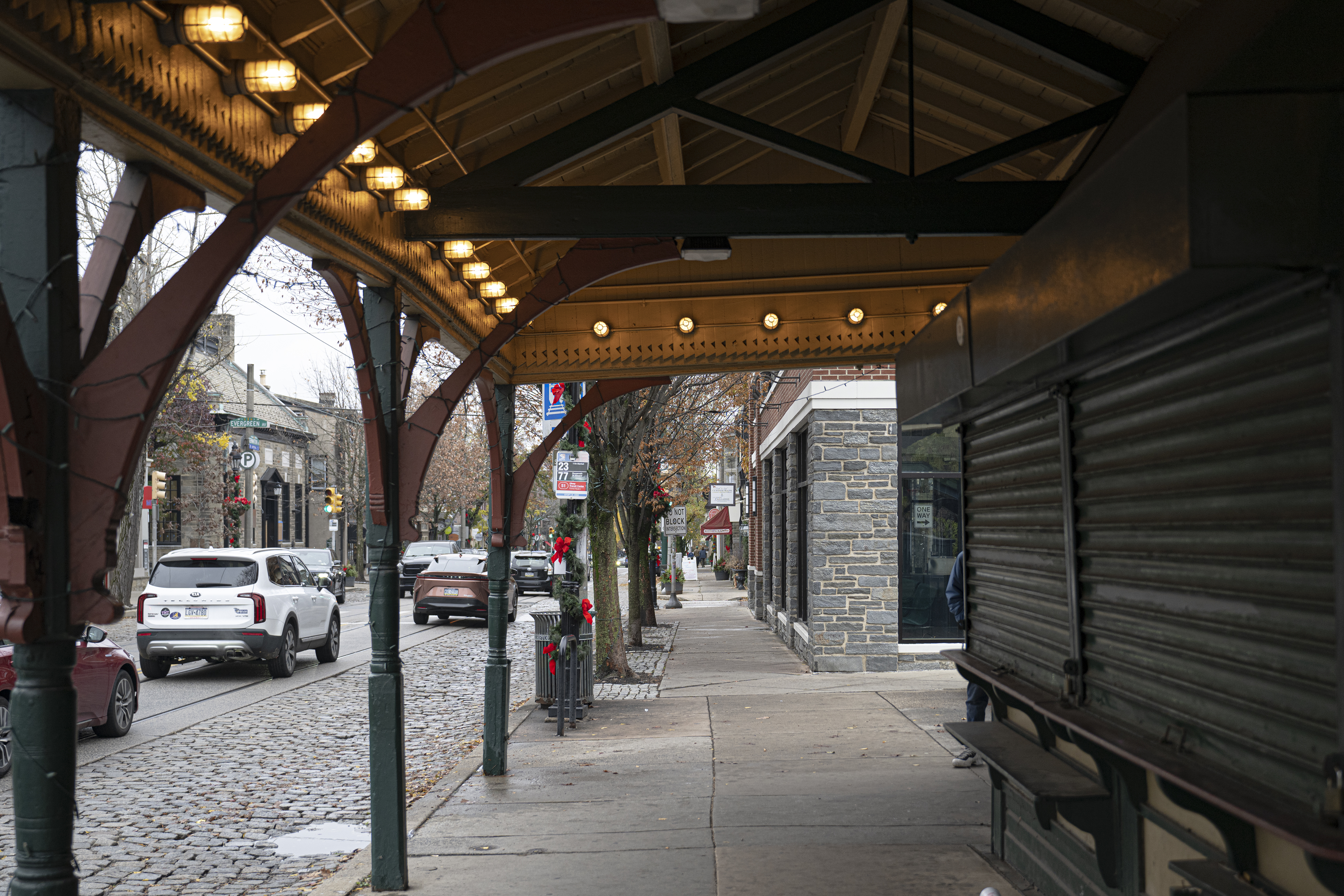
    A view down Germantown Avenue from the Chestnut Hill SEPTA Regional Rail station.
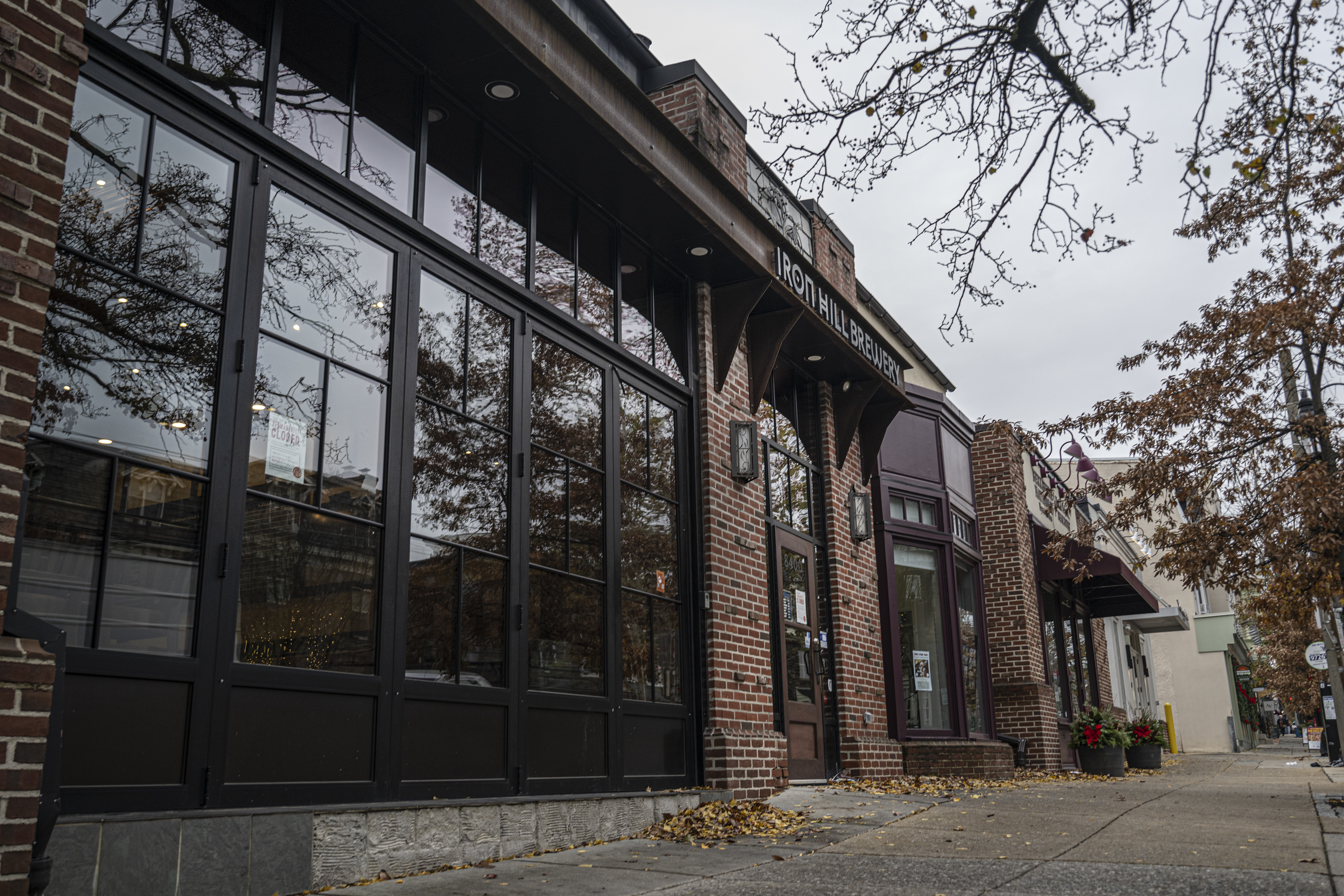
    The closed Iron Hill Brewery is shown in downtown Chestnut Hill on Nov. 19.

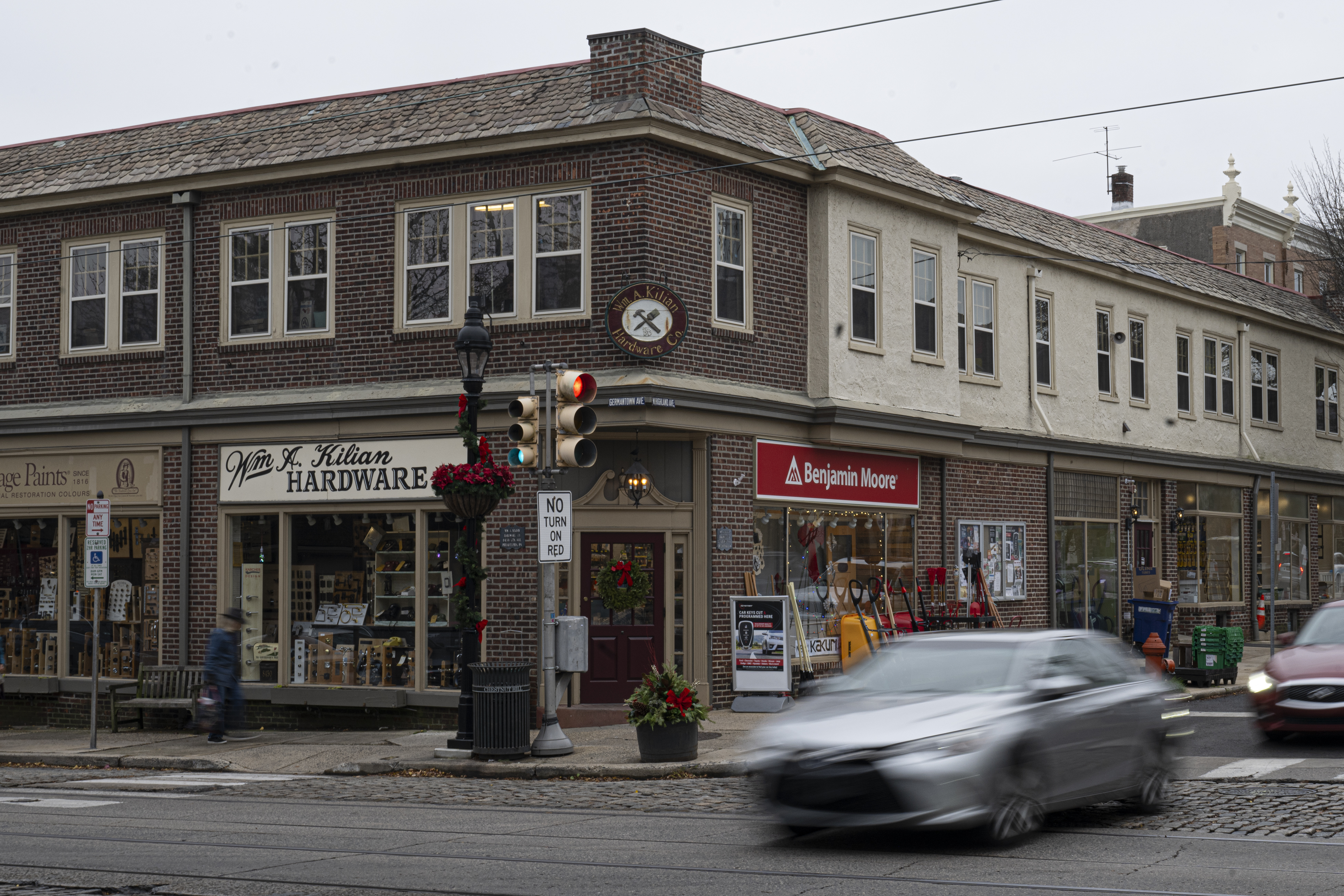
    As the owner of Kilian Hardware, which has been in business for 112 years, Russell Goudy Jr. has watched the avenue change. Fifty years ago, he said it was “basically like a shopping mall,” a one-stop shop for everyday needs.

    In recent years, however, the neighborhood has focused on attracting and retaining unique food and beverage businesses, “quaint, specialty shops,” and service-oriented businesses, which Goudy said offer experiences Amazon and other e-commerce platforms can’t replicate.

    “If you’re not giving people an experience in today’s economy, it’s very tough to compete,” said Nicole Beltz, co-owner of Serendipity Shops, which for a decade has had an expansive store on Germantown Avenue. And providing a memorable experience is never more important than during the lucrative last few months of the year.

    “When you come to Chestnut Hill over the holidays, you get what you came for,” Beltz said. “You get that charming feeling of being somewhere special for the holiday.”

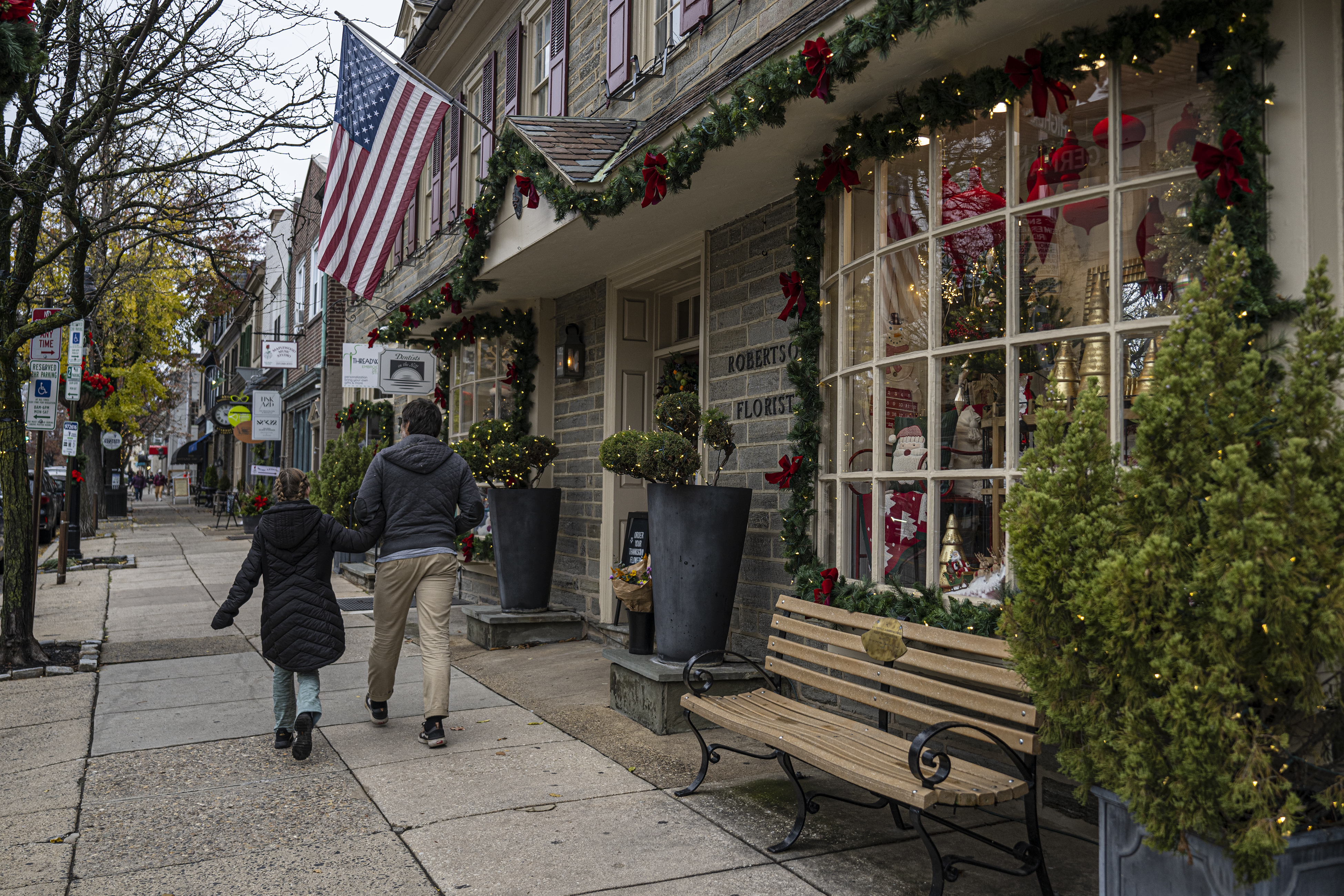
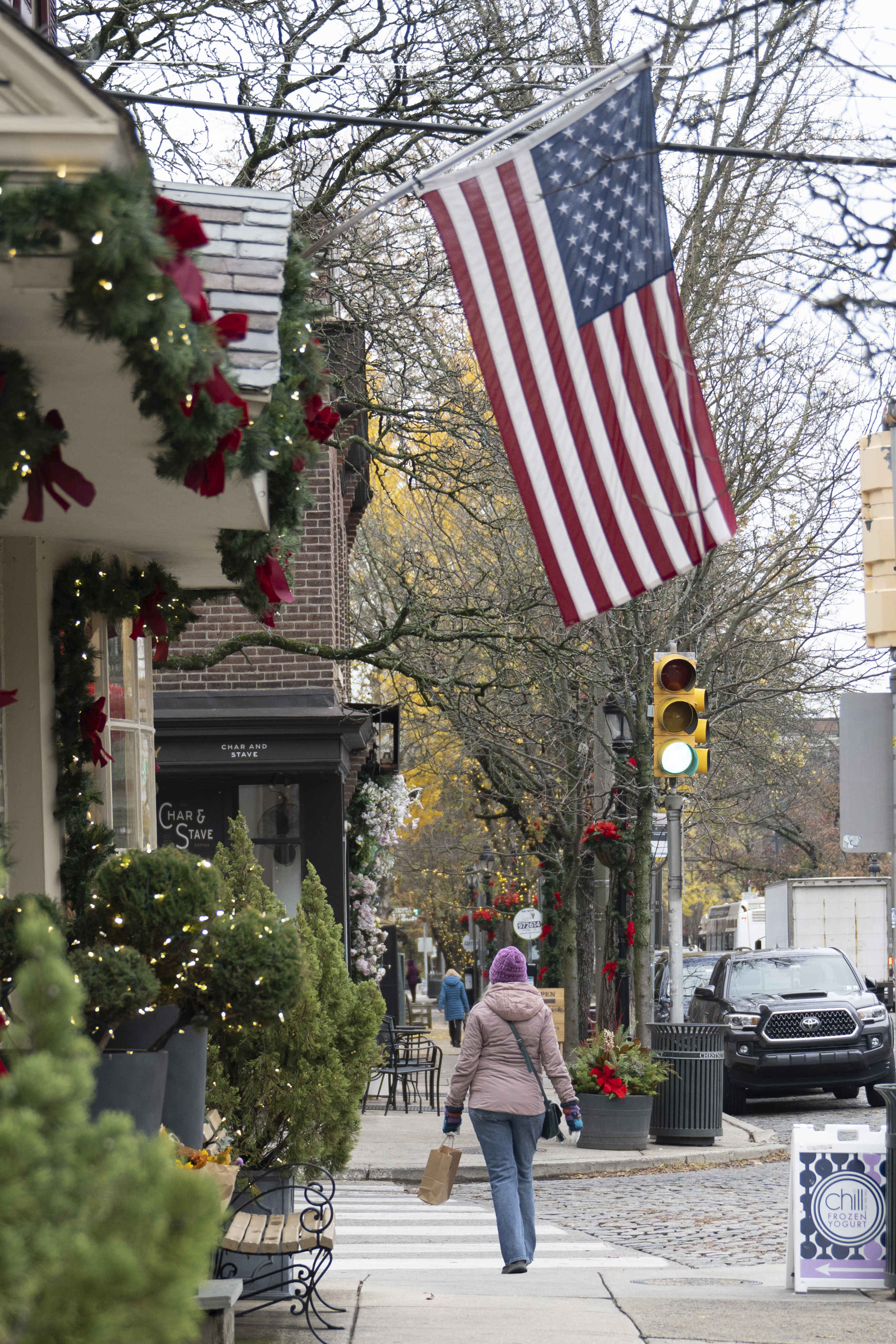
    People walk by holiday decor outside Robertson’s Flowers & Events in Chestnut Hill earlier this month.

    ‘New vitality’ coming to the Chestnut Hill restaurant scene

    During the holidays and all year long, Chestnut Hill business owners said they’re grateful that the neighborhood has held onto its charm despite recent challenges.

    During the pandemic, “it definitely felt a little grim and dark,” said Ann Nevel, retail advocate for the Chestnut Hill Business District. “The impressive thing is the old-timers, the iconic businesses, and some of the newer restaurants … pretty much all were agile enough to tough it out.”

    And a slew of other businesses have moved into the community since then. In the last four years, 20 retail shops, 20 service businesses, and 10 food and beverage spots opened in Chestnut Hill, Nevel said, while several existing establishments expanded.

    Among them was Matines Café, which opened a small spot on Bethlehem Pike in 2022 and expanded this fall to a second, much larger location on Highland Avenue. The café serves 500 people or more on weekdays, according to its owners, and even more on weekends.

    Sitting inside their original location, which is now a cozy children’s café, Paris natives Amanda and Arthur de Bruc recalled that they originally thought they’d open a café in Center City, where they lived at time. Then, they visited Chestnut Hill and fell in love, despite “a lot of empty spots” there around 2022, Amanda de Bruc said.

    A colorful storefront along Germantown Avenue in Chestnut Hill.

    “We liked the idea of living in the suburbs, which technically Chestnut Hill is not the suburbs, because it’s still Philly,” she said. But “we were looking for something that we were more used to, like Paris. There are so many boutiques in such a small area,” and everything is walkable.

    The opening of shops and cafés like Matines became a “catalyst for this new vitality, a new, more contemporary energy that has taken hold in Chestnut Hill,” Nevel said. Soon, “we’re going to see that new vitality in the restaurant scene,” including in some long-vacant storefronts.

    In 2026, former Four Seasons sommelier Damien Graef is set to open a wine bar, retail store, and fine-dining spot called Lovat Square off Germantown Avenue, Nevel said. On the avenue, a café-diner-pub concept called the Blue Warbler is under construction and also slated to open sometime next year.

    Kilian Hardware in Chestnut Hill has been in business for 112 years.

    In downtown Chestnut Hill, there are still a few empty spots, including those left by Campbell’s Place, a popular restaurant that closed this summer; Diamond Spa, which closed this fall; Iron Hill Brewery, which closed in September (right before the regional chain filed for bankruptcy); and Fiesta Pizza III, which closed last year.

    Kismet Bagels, a popular local chain, was set to fill one of the spots this summer, but its deal fell through, co-owner Jacob Cohen said in a statement. He said they could “revisit the Chestnut Hill neighborhood” in the future.

    While the future of Iron Hill will be dictated by bankruptcy proceedings — which include an auction of assets set for next month — stakeholders say conversations are ongoing about some of the other vacancies.

    Steve Jeffries, who is selling the Campbell’s building for $1.5 million, said he’s gotten a lot of interest from people who want to revive the nearly 3,000-square-foot space as a neighborhood pub, but one that is “more cutting edge.” Perhaps, he said, one that is not focused on craft beer, which has decreased in popularity, especially among younger generations.

    “The town is just screaming for other opportunities for nightlife and sports bars,” said Jeffries, executive vice president of Equity CRE. “There has been a connotation in the market that Chestnut Hill was kind of older, stuffy, that it wasn’t a nightlife town.”

    But that’s changing, Jeffries said.

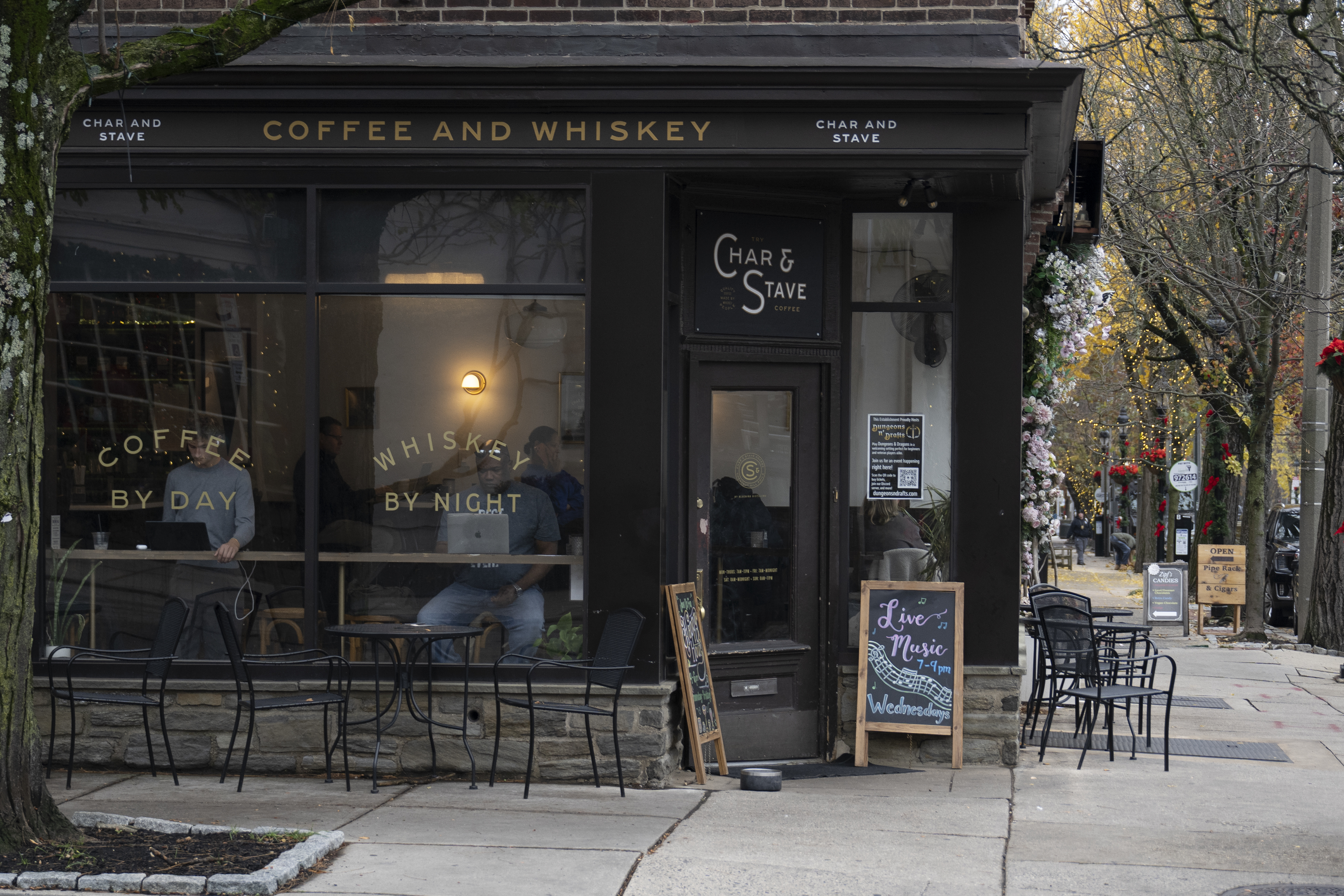
    Char & Stave, an all-day coffee and cocktail bar, has done great business since moving into Chestnut Hill, its owner, Jared Adkins, said.

    Just ask Jared Adkins, owner of Char & Stave, an all-day coffee and cocktail bar at the corner of Germantown and Highland Avenues.

    After Nevel visited Ardmore and saw the success of Adkins’ original Char & Stave, she recruited him to open a Chestnut Hill location. It started as a holiday pop-up in 2022, then became a permanent presence the next year. Since he moved into town, Adkins said, business has been booming.

    “We’re really just busy all day long,” said Adkins. The café is open until 11 p.m. during the week, midnight on the weekends, and it often brings in musicians and hosts events.

    Adkins describes Char & Stave as a place where drinkers and nondrinkers alike can spend time together, and where people can get work done with coffee or a cocktail beside them: “It’s really a gathering place that fills a niche of a nice cocktail place.”

    More changes to come for Chestnut Hill

    Businesses along Germantown Avenue in Chestnut Hill are decorated for the holidays.

    Chestnut Hill business leaders and community members say they’re optimistic about the neighborhood’s continued evolution.

    As Brien Tilley, a longtime resident and community volunteer, ate lunch inside Cosimo’s Pizza Cafe, he said the community is doing well. But, he added, “it could always do better. It’s always in transition.”

    Nevel noted that restaurants require more capital to open than other businesses, so it can take awhile to fill those larger holes downtown.

    “The economy is tough,” said Anne McNally, a fourth-generation owner of McNally’s, as she sat by the tavern’s front window overlooking Germantown Avenue. But in Chestnut Hill, she gets the vibe that the community “wants us to be successful.”

    McNally and Goudy, of Kilian’s, both noted that their families bought their buildings decades ago. That has contributed to their longevity, both said, as has evolving with the customer base.

    For the McNally family, that meant transitioning from a “bar-bar,” with no clock or phone, to a bar-restaurant that closes at 10 p.m. For Goudy, it meant soliciting online orders and walk-in business from out-of-town and even out-of-state customers whose older homes require unique hardware.

    “Everything is changing,” Goudy said. “It’s important to keep changing and not to try to go back to where you were before.”

  • Inside the Philly traveling museum where Black collectors finally take the spotlight

    Inside the Philly traveling museum where Black collectors finally take the spotlight

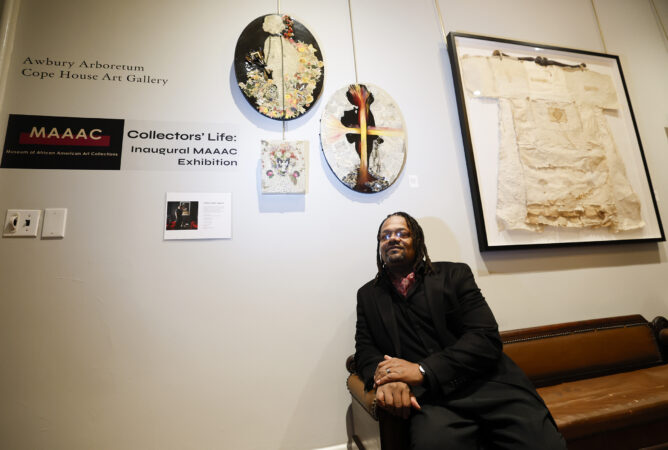
    On a recent Thursday evening, Philadelphia art collector William Skeet Jiggetts sat in the foyer of Awbury Arboretum’s Francis Cope House surrounded by grand collages taken from the walls of his East Falls home.

    The art — all made by living artists and friends of Jiggetts — is striking. A framed paper and antique lace dress by textile artist Rosalind “Nzinga” Vaughn-Nicole sits next to portrait-size cameos that mixed media artist Danielle Scott fashioned from newspapers and other found objects.

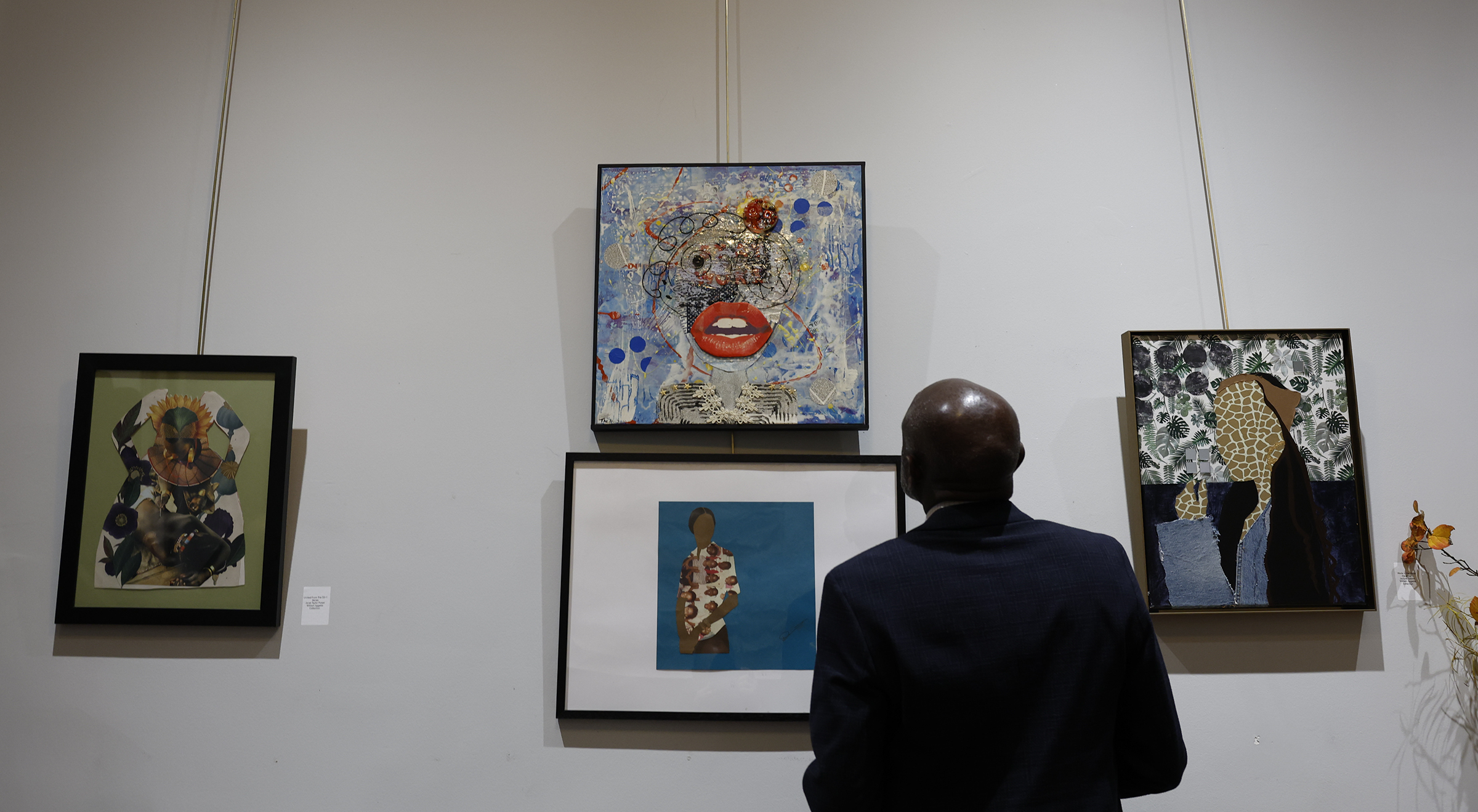
    A guest looks at artwork collected by William Skeet Jiggetts during the Museum of African American Art Collections’ inaugural exhibit at the Awbury Arboretum in East Germantown.

    Jiggetts, 57, an art collector for more than 30 years, has had pieces from his collection on display in small shows, but never in his wildest dreams did he think that they would anchor an exhibition — in a traveling museum that he founded.

    But here he was, at the opening reception for the inaugural exhibition of the Museum of African American Art Collections. Pieces from the art collections of Diana Tyson, Stephanie A. Daniel, and gallerist couple Adrian Moody and Robyn Jones were also on display.

    Collector-centric art

    Museums routinely curate exhibitions centering collectors’ works to celebrate and cultivate existing and potential donor relationships.

    Some recent examples include the African American Museum in Philadelphia’s show drawing from actress CCH Pounder’s substantial collection and the Michener Art Museum’s show honoring the legacy of collector Lewis Tanner Moore, the great-nephew of 19th-century painter Henry Ossawa Tanner.

    While the Barnes Foundation houses the late chemist and art collector Albert C. Barnes’ collection, there are very few other — if any — museums whose walls are solely dedicated to the collections of collectors. Nomadic, traveling museums, at that.

    “It got to the point where I had more art than walls,” Jiggetts said looking over his black-framed glasses. “Nobody saw it … I didn’t even see it. I thought, ‘Wouldn’t it be cool for a bunch of collectors to get together and create a space to show our work. Tell our story?’”

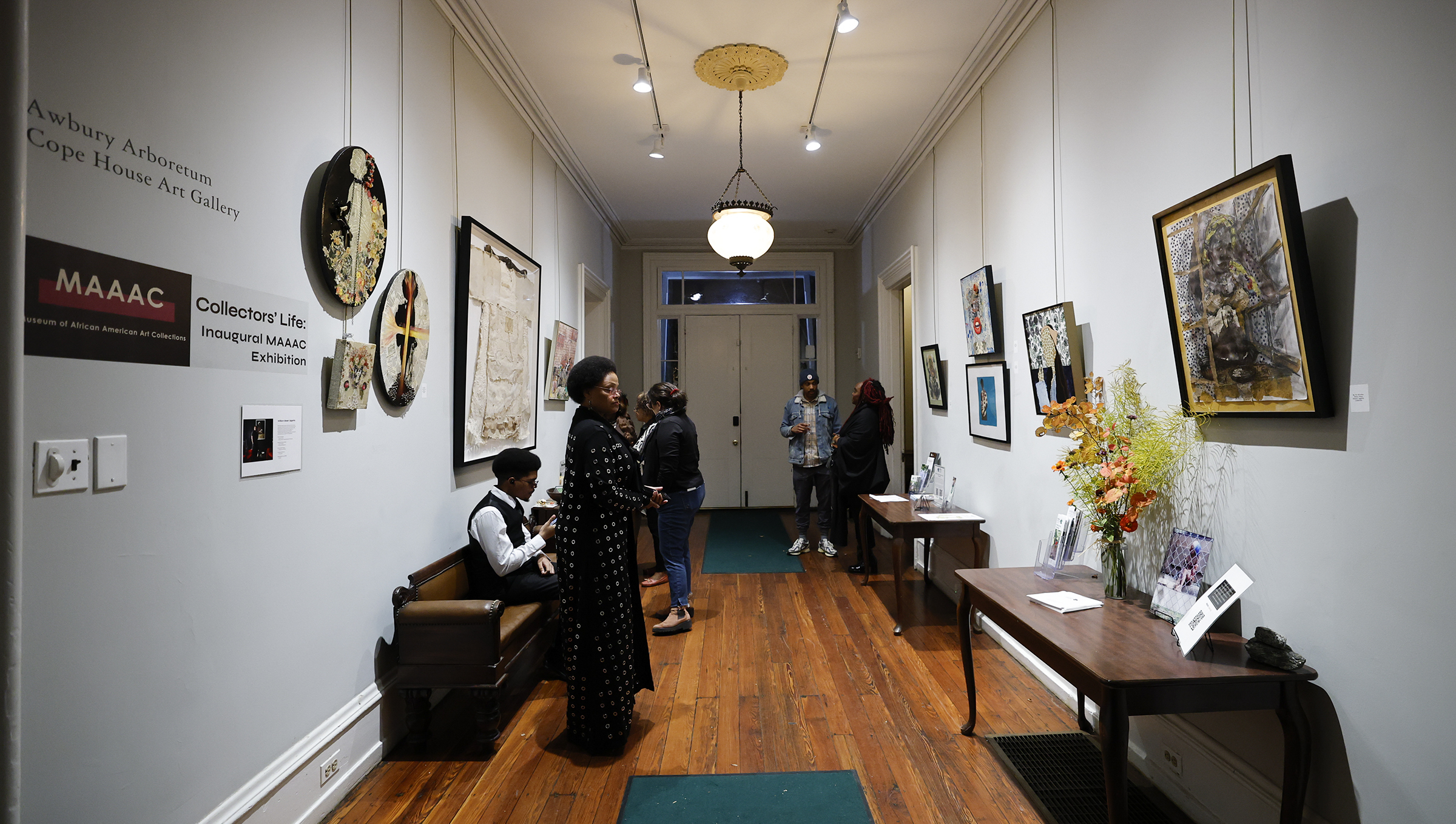
    Guest look at art work during the Museum of African American Art Collections inaugural exhibit at the Awbry Arboretum in East Germantown on Thursday, Nov. 6, 2025.

    Jiggetts got the itch to show his collection in the early 2020s after talking with colleagues who wanted to show theirs, too. In 2023 he set up a foundation, started approaching collectors, and began nailing down locations.

    “There is a treasure trove of African American art in our living rooms, in our reading rooms, and in our dens that need to be shared,” Jiggetts said. “The Museum of African American Art Collections is a forum to host these collections and tell the stories that come with them.”

    That’s how the Museum of African American Art Collections began.

    A $200 frame and an obsession

    Jiggetts, who works as a tax accountant, grew up in Germantown and spent Sunday afternoons at the Philadelphia Art Museum gazing at the impressionist works of Manet and Monet.

    When he was in his 20s, he bought a poster of Vincent van Gogh’s Sunflowers. “I spent $200 of 1989 money on that frame,” he said with a laugh. That purchase marked the beginning of an obsession. He bought his first piece of original art from Germantown painter Lucien Crump Jr., who, according to a 2006 Inquirer obituary, owned the first gallery in the city dedicated to Black art.

    Jiggetts scoured galleries and festivals for original art, buying any piece that tickled his fancy for under $500. In the early 2000s, his mentors — well known Philadelphia appraiser Barbara Wallace and the late African American collector Ronald Ollie — urged him to start evaluating his choices and he became a serious art collector.

    “I figured out what it was I really liked,” Jiggetts said, describing his favorite pieces as ones that marry impressionist and abstract art, like the ones on display at Awbury Arboretum. “I realized I enjoyed the experience of buying art as much as the art. I like the company of artists.”

    His collection is comprised of mostly living artists like the mixed media artist Danielle Scott; abstract painter Ben F. Jones; and Paul Goodnight, who is known for his colossal oil paintings featured in the backdrops of TV shows like Seinfeld and The Fresh Prince of Bel-Air. (Although Jiggetts does have a pencil sketch by the late Bahamian artist Purvis Young.)

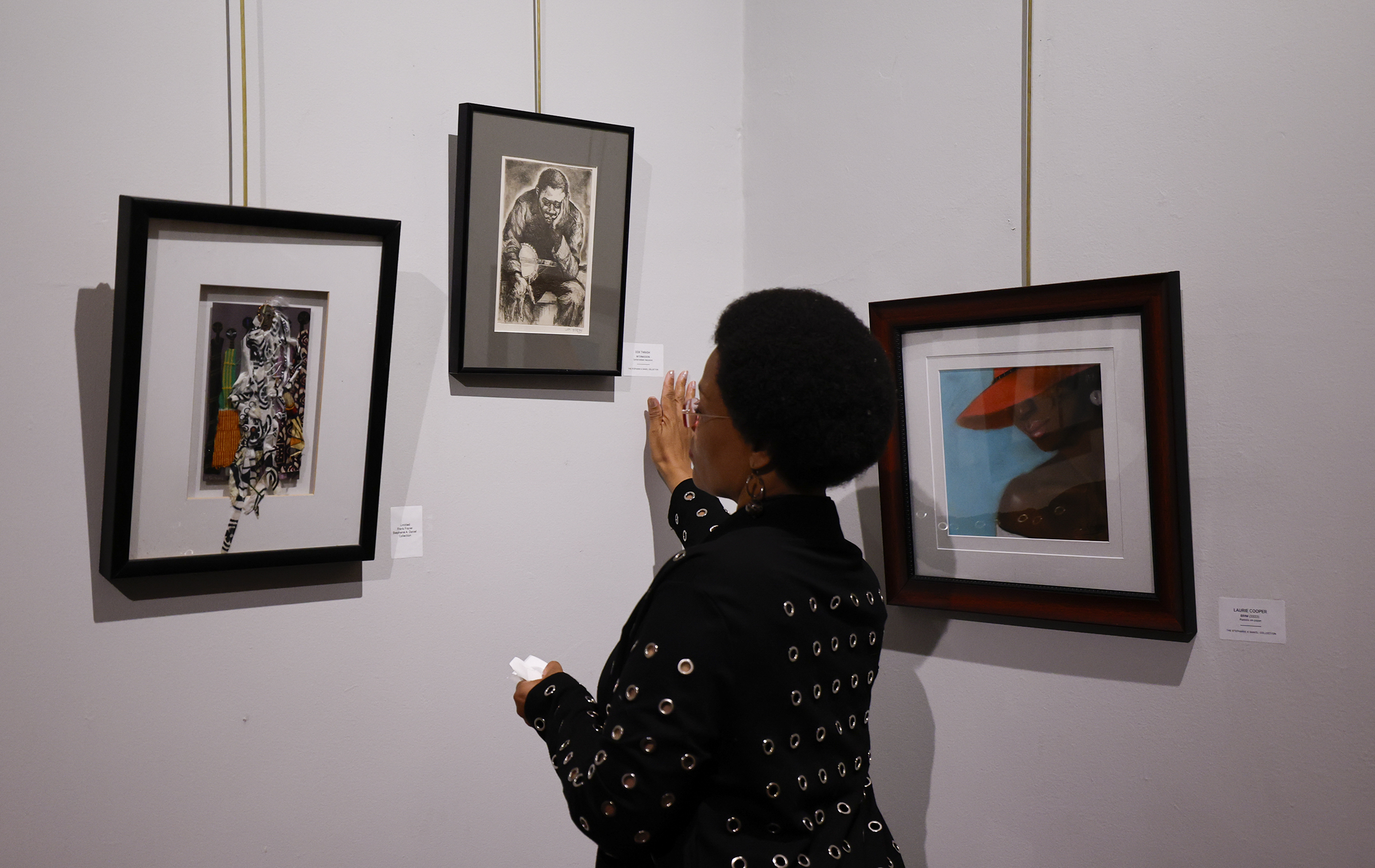
    Graphic designer for the Museum of African American Art Collections, Staci Cherry, places labels for the art collection from Stephanie Daniel during the Museum of African American Art Collections inaugural exhibit at the Awbry Arboretum in East Germantown on Thursday, Nov. 6, 2025. The piece in the center is the Dox Thrash mezzotint.

    Keepers of history

    Collectors are the glue that keep the fine arts ecosystem — artists, patrons, buyers, gallerists, and museum creators — connected and running.

    They are often patrons of the arts like James J. Maguire and his late wife, Frances, investing in artists and art institutions, building impressive art collections in their homes. Collectors Adrian Moody and Robyn Jones connect artists to buyers at Jenkintown’s Moody Jones Gallery, but their personal collection has more than 400 pieces.

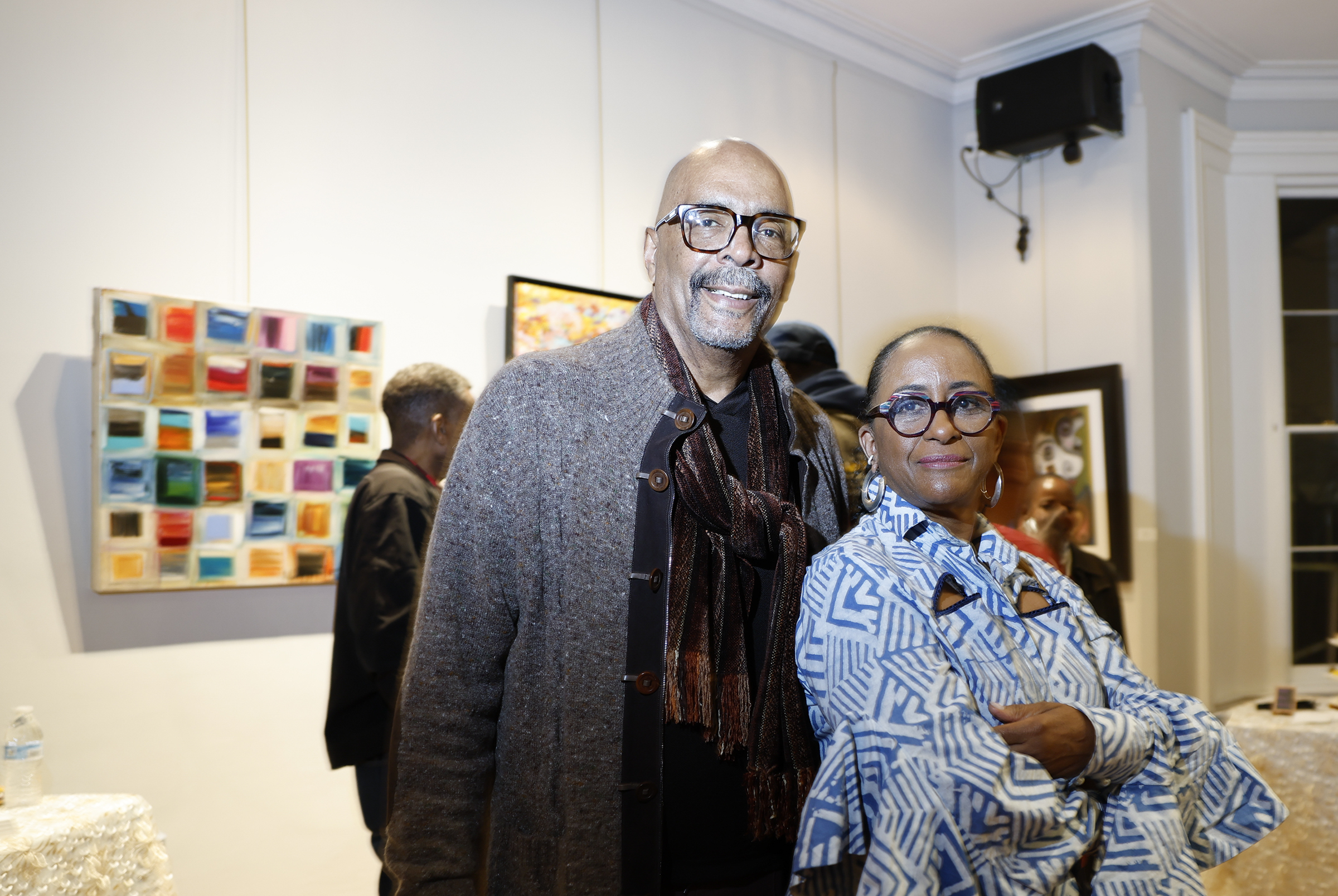
    Art collectors Adrian Moody and Robyn Jones during the Museum of African American Art Collections’ inaugural exhibit at the Awbury Arboretum in East Germantown.

    “Collectors drive the market,” said Valerie Gay, chief cultural officer for the city of Philadelphia. “They have the power to catapult an artist from obscurity to a household name.”

    Black collectors play an even more vital role in fine arts communities, explains Brooklyn, N.Y., collector Myah Brown Green, author of the forthcoming Keepers of a Movement: Black Collectors Who Preserve Art, Stories, and Legacies that Define Black Life.

    It’s the Black collector who discovers artists at street fairs, off-the-beaten-path galleries, hair salons, and their friend’s basement.

    Their interest — like mid-20th-century author Ralph Ellison’s enthusiasm for Harlem Renaissance-era oil on canvas master Romare Bearden — brings artists’ work to a wider audience that can lead to cementing an artist’s place in the fine arts canon. Their picks speak to the collective Black experience, shaping Black America’s historical image.

    “They are the keepers of our history,” Green said. “Mediators who carry the work forward and continue the legacy.”

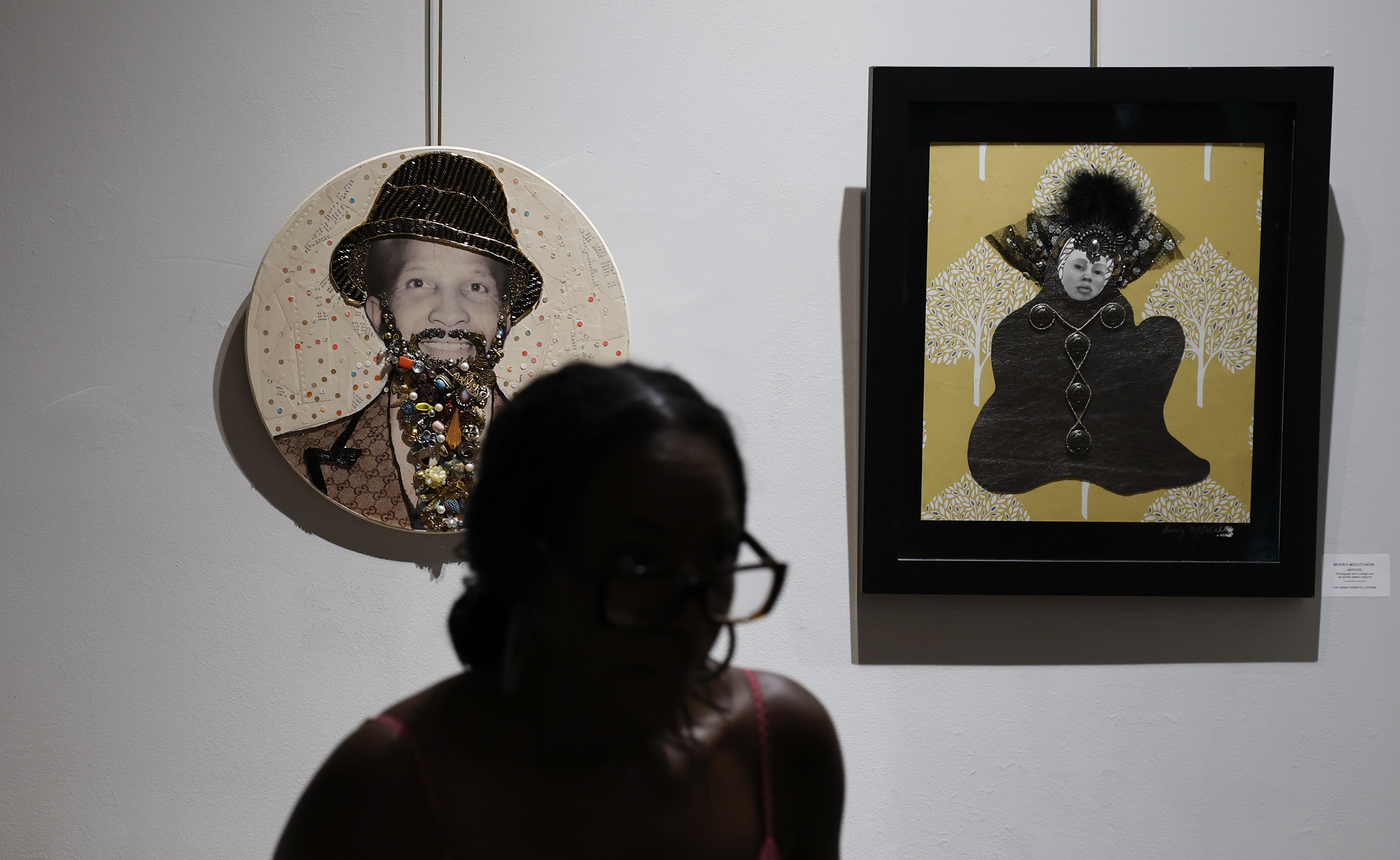
    A guest walks past art collected by Diana Tyson during the Museum of African American Art Collections inaugural exhibit at the Awbry Arboretum in East Germantown on Thursday, Nov. 6, 2025. Artis Beverly McCutcheon created Dad (left) and a piece titled Untitled.

    Setting value

    The Black collectors’ library, Jiggetts says, is the first stop on living artists’ journeys to corporate boardrooms or the walls of major museums. “Our role is that of an economist,” Jiggetts said. “We set the value.”

    The Museum of African American Art Collections will next move to Allens Lane Art Center for its February and March show and will host an exhibit at the Black Lotus Holistic Health Collective in May and June.

    Collectors shared their experiences over white wine and sweet potato cupcakes on opening night.

    Daniel — whose collection features local masters — spoke effusively about her Dox Thrash mezzotint. She will never let the print by the important early 20th-century Black artist go, she said. Robyn Jones interpreted the Jesse Read and Antoinette Ellis-Williams vibrant abstracts. (This reporter thought both of those pieces were images of shoes.)

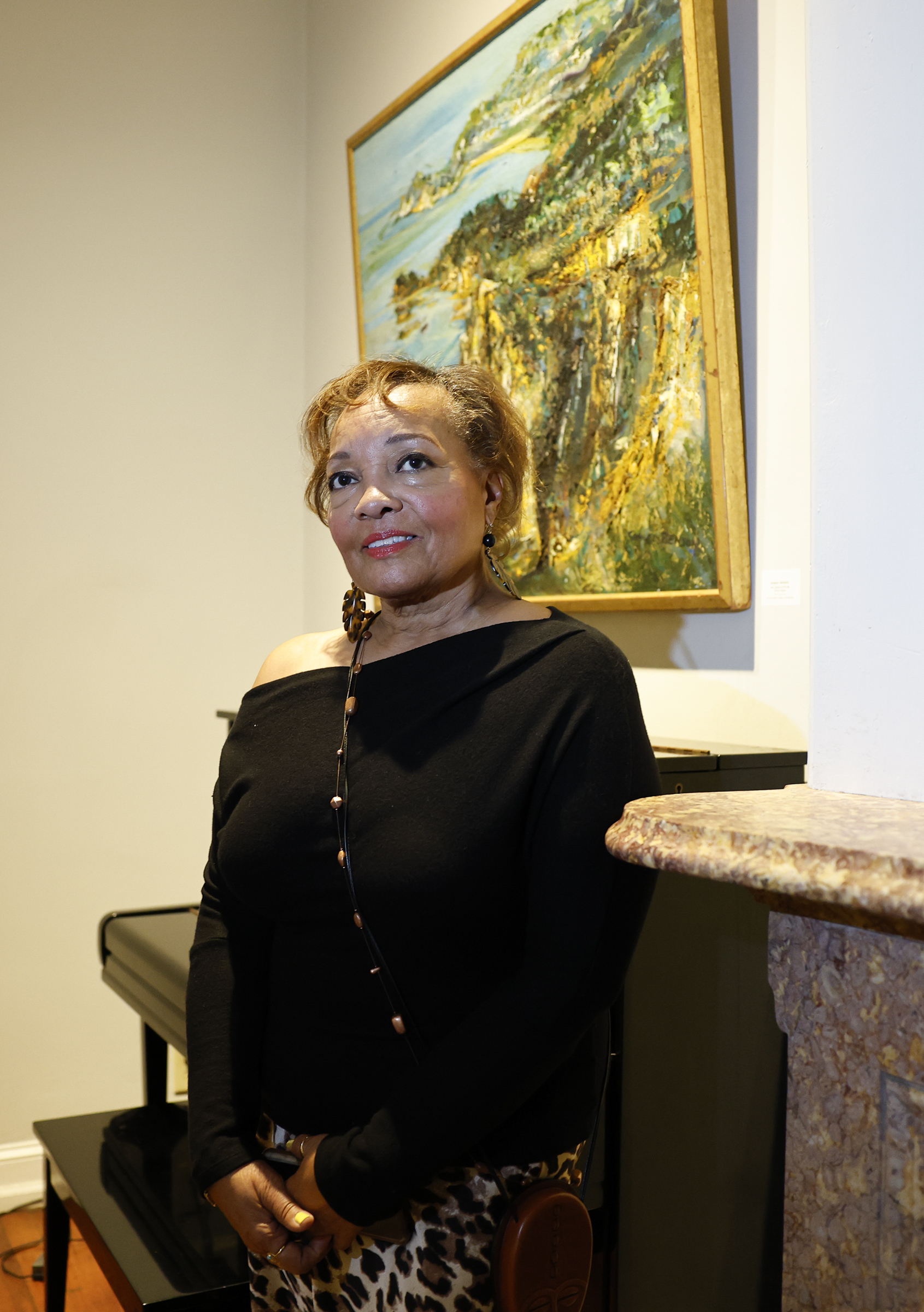
    Art collector Stephanie A. Daniel with Samuel Benson’s.Gay Head Cliffs MV painting during the Museum of African American Art Collections inaugural exhibit at the Awbry Arboretum in East Germantown on Thursday, Nov. 6, 2025.

    The concept of a collectors museum is a new one. Black collectors are not.

    “We’ve always collected our work,” Jiggetts said, stressing that these times require Black people to be stewards of their own stories.

    “At the Museum of African American Art Collections, no one can tell us what to do, what not to do, and what we need to do differently. We don’t have to worry about having it being taken away. It’s ours.”

    The Museum of African American Art Collections, through Dec. 31, Awbury Arboretum’s Francis Cope House, 1 Awbury Rd., Phila.Monday to Thursday, 10 a.m. to 4 p.m.; Saturday and Sunday, 10 a.m. to 2 p.m. Admission is free.

  • ‘The places that helped form me were Philadelphia and rural South Jersey’: Patti Smith talks about her childhood

    ‘The places that helped form me were Philadelphia and rural South Jersey’: Patti Smith talks about her childhood

    Patti Smith has been associated with New York for her entire public life.

    In 1971, her first poetry and music performance was at St. Mark’s Church in-the-Bowery with Lenny Kaye on the guitar. Along with the Ramones, Talking Heads, Television, and Blondie, she was a vital force in the mid-1970s CBGB music scene.

    And in 1975, she recorded Horses at Electric Lady Studios. That galvanic debut album made her an instant punk rock and feminist hero. On Saturday, she’ll celebrate its 50th anniversary at the Met Philly, with a band that includes Kaye, drummer Jay Dee Daugherty, bassist Tony Shanahan, and her son Jackson Smith on guitar.

    “People think of me as a New Yorker,” Smith said, in an interview with The Inquirer from her home in New York.

    “Well, I’ve lived in New York. But I was pretty much formed by the time I got to New York. The places that helped form me were Philadelphia and rural South Jersey.”

    At the Met, Smith and her band will perform Horses in its entirety, starting with the take on Van Morrison’s “Gloria” that introduced her as a brash, provocative artist with one of the most memorable opening lines in rock and roll history: “Jesus died for somebody’s sins … but not mine.”

    Two days after that Met show, she’ll be at Marian Anderson Hall to promote her new memoir, Bread of Angels, accompanied by her son on guitar and daughter, Jesse Paris Smith, on piano.

    “It’s going to be a special night, because I hardly ever get to play with my son and daughter,” said Smith, who turns 79 on Dec. 30. “So I’m really, really happy about that, bringing my kids to Philadelphia.”

    Bread of Angels, unlike her 2010 National Book Award-winning Just Kids, doesn’t zero in on a particular episode in the storied career of the enduring punk icon.

    “Bread of Angels: A Memoir” by Patti Smith. MUST CREDIT: Random House

    Instead, Bread takes the full measure of her life. It begins in Chicago where she was born before her parents moved back to Philadelphia while she was a toddler, and turns on a late-in-life DNA revelation that shakes up her conception of her own identity.

    “I didn’t plan to do this book,“ Smith said. “Truthfully, it came to me in a dream.”

    In her dream, she had written a book telling the story of her life in four sections. She wore a white dress, just as she does on the cover of Bread of Angels, in a 1979 photo taken by Robert Mapplethorpe.

    “It was so specific, this dream, that it sort of haunted me. And I felt like it was a sign that perhaps it was a book I should write. …. It took quite a while.”

    Bread of Angels is “a love letter to certain places.”

    “Philadelphia when I was young,” she said. “I love Philly. And then down in rural South Jersey, and the places in Michigan I lived with my husband.”

    That’s the late Fred “Sonic” Smith, the former MC5 guitarist who died in 1994 at 46.

    Summaries of Smith’s life typically cite that she lived in Germantown before moving first to Pitman and then Deptford Heights in South Jersey, before moving to New York in 1967.

    But Smith’s childhood was actually much more peripatetic.

    “I think we moved nine times while we were in Philly,” she recalled, including stops in Upper Darby and South Philadelphia.

    “My mother had three of us in rapid succession,” said Smith. It was after the war, and a lot of the rooming houses we stayed in absolutely didn’t allow infants, so my mother was always hiding the pregnancy or hiding the baby. And then we’d get found out and have to move again.”

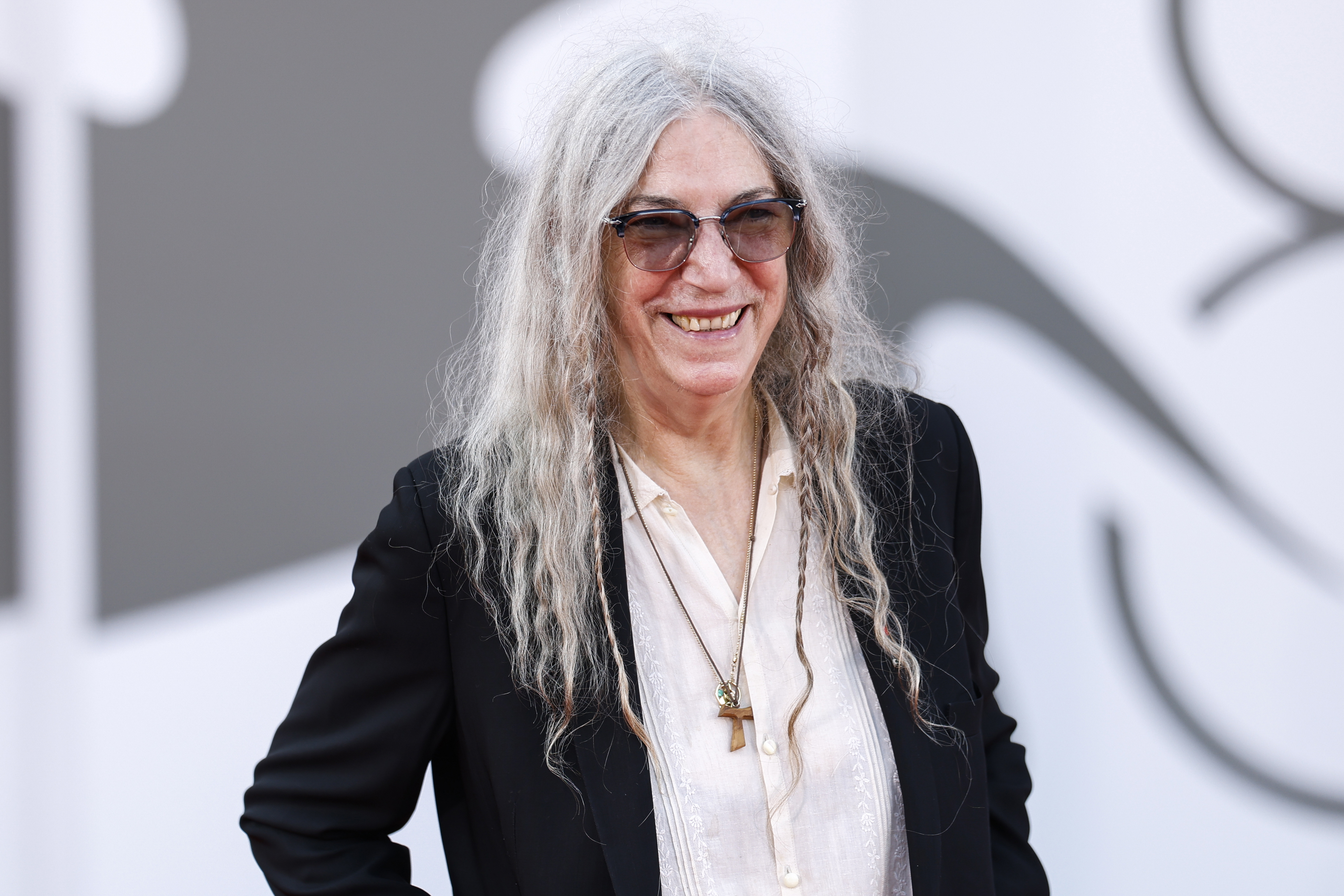
    Patti Smith at the Venice Film Festival in Venice, Italy in 2024.

    Her coming of age Philadelphia stories in the book evoke a happy, lower middle class childhood.

    Living in a converted soldier’s barracks in Germantown she calls “the Patch,” she once beat all the boys and girls in a running race, but tripped and landed on a piece of glass, leaving blood rushing down her face. She was treated at Children’s Hospital, and rode a bicycle for the first time the following week.

    “I left the perimeter of the Patch, pedaled up toward Wayne Avenue,” she writes. “I was six and half years old with seven stitches, and for that one hour, on that two-wheeler, I was a champion.”

    On her seventh birthday, her mother, who then worked at the Strawbridge & Clothier department store at Eighth and Market, took her to Leary’s, the Center City bookshop that closed in 1968.

    “Oh my gosh it was a wonderful bookshop,” she said. “On your birthday, you had to show your birth certificate and pay $1, and you could fill your shopping bag.”

    Her bag, she said, was filled “with some very good books that I still own.”

    A copy each of Pinocchio, The Little Lame Prince, an Uncle Wiggily book.

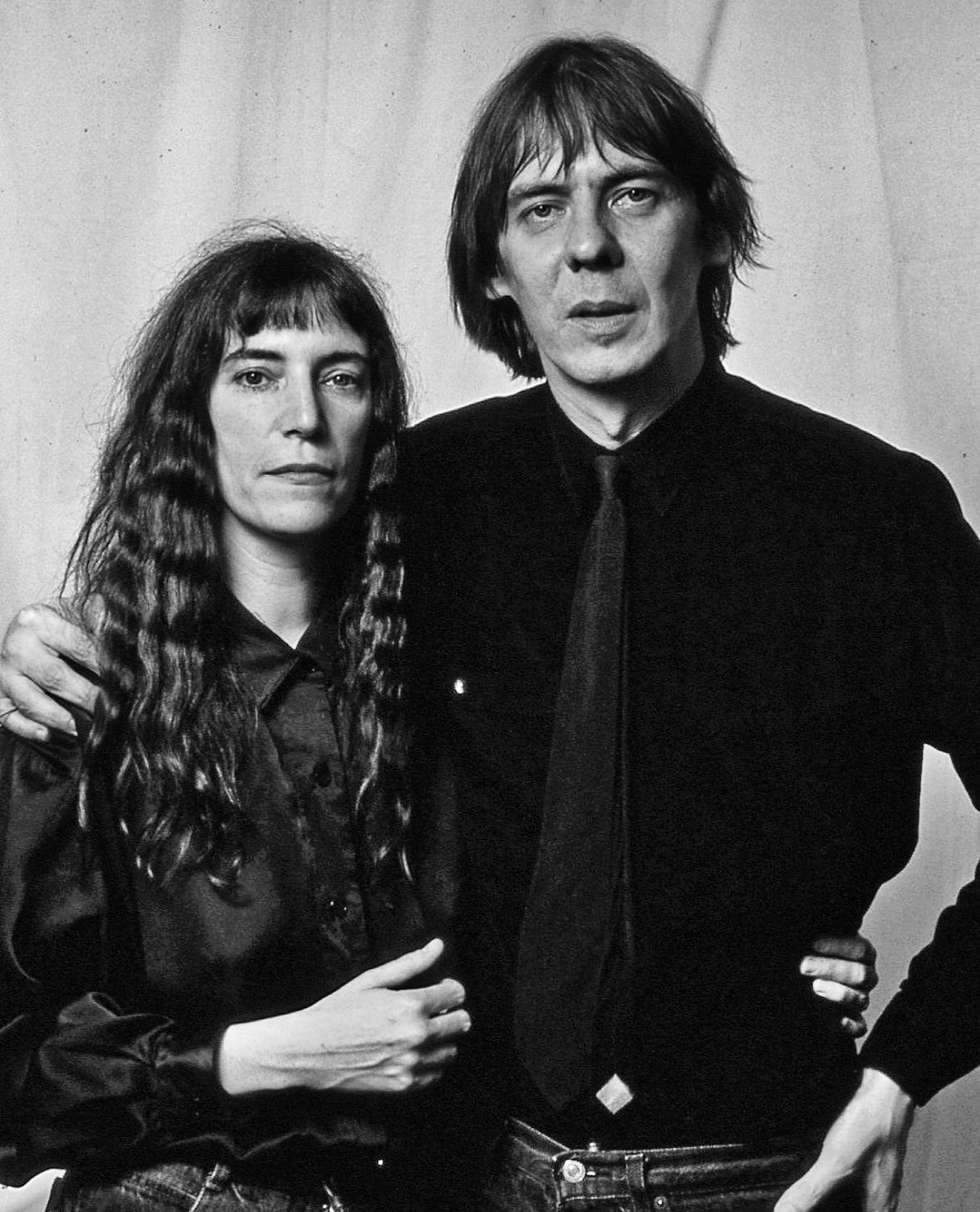
    Patti Smith and her late husband Fred “Sonic” Smith, as pictured in “Bread of Angels,” her new memoir. Smith and her band will play the Met Philly on Nov. 29 on the final date of their tour celebrating the 50th anniversary of her 1975 debut album “Horses.” She will also appear on Dec. 1 at Marian Anderson Hall at the Kimmel Center in a Songs & Stories event on her Bread of Angels book tour.

    As a Jersey teenager in the early 1960s, she had a crush on a South Philly boy named Butchy Magic. She once got stung by a hornet outside a dance, she writes in the book, and he looked deep into her eyes and pulled the stinger out from her neck.

    “This is what the writer craves,” she writes. “A sudden shaft of brightness containing the vibration of a particular moment … Butchy Magic’s fingers extracting the stinger. The unsullied memory of unpremeditated gestures of kindness. These are the bread of angels.”

    As in the book, Philadelphia loomed large over Smith’s childhood, well after the family moved to Gloucester County.

    “It was our big city. It was where I discovered rock and roll,” she said.

    She bought her first Bob Dylan records at Woolworth’s in Center City.

    She discovered art when her father Grant and mother Beverly took her and her younger siblings Linda, Kimberly, and Todd to the Philadelphia Museum of Art (now Philadelphia Art Museum). There, she fell for Pablo Picasso, John Singer Sargent, and Amedeo Modigliani.

    “Culturally, it was the city that helped form me,” she said.

    A new expanded edition of Horses, Smith’s most beloved album, was released this fall.

    “It amazes me that half a century has gone by and people are still greatly interested in the material,” she said. “It’s a culmination of a period in my life.”

    In 2012, when Smith and her sister Linda took DNA tests, Smith had already begun writing Bread of Angels. The result of the test was a shock: Grant Smith was not her biological father.

    Her birth was actually the result of a relationship between Beverly Smith and a handsome Jewish pilot named Sidney who had returned to Philadelphia from World War II.

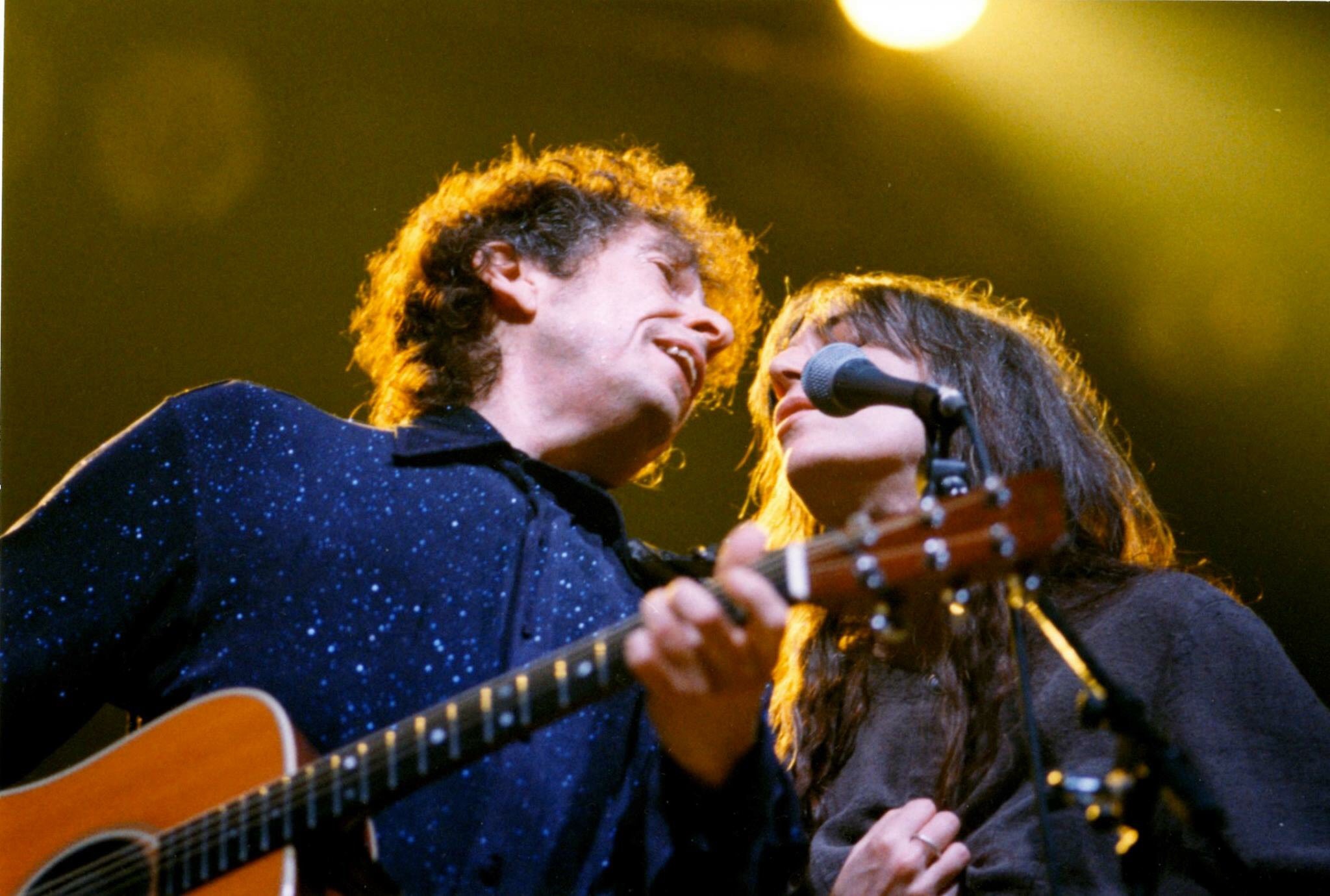
    Bob Dylan and Patti Smith at the Electric Factory in Philadelphia in 1995.

    At the time, Beverly Smith was working as a waitress, hat check girl, and sometimes singer at Philly clubs like the Midway Musical Bar on 15th and Sansom.

    “It was completely unexpected,” Smith said. “My mother was a great oral storyteller, but none of her stories gave any indication that I was fathered by a different man. … She certainly kept that a secret from everyone.”

    Of the emotions Smith felt, one was “some sorrow,” she said. “Because I loved and admired my father. I felt sad because I didn’t have his blood. But I modeled myself after him so much. All of those things remain.”

    She stopped work on Bread of Angels for two years.

    “I didn’t know how to deal with it. Is this book false? Do I have to rewrite everything? And then I realized I didn’t have to rewrite anything. My father is still my father. But you can also show gratitude to the man who conceived with my mother. Who gave me life. So I figured it out. I have two fathers.”

    Her mother, father, and biological father had all died by the time she learned the news of her parentage.

    Some of Smith’s self-confidence — evident in the way she spells out “G-L-O-R-I-A!” — “might have come from the biological father I never knew,” she said. “He was a pilot. When he was young, he had this tough job. I’ve met a few people who knew him. They said he was very kind and good-hearted. He loved art, he loved to travel. He had not a conceited, but a self-confident air.

    “I’ve always had that, and wondered where it came from,” she said. “I’ve always possessed that kind of self-confidence. I’ve never had trouble going on stage. So I think I have to salute my blood father, right?”

    In Bread of Angels, Smith recalls her early life in Philly, and writes: “I did not want to grow up. I wanted to be free to roam, to construct room by room the architecture of my own world.”

    Seven decades later, she’s still doing that, as she continues to create and perform for adoring audiences around the world.

    “I have stayed in contact with my 10-year-old self, always,” she said. “I still carry around the girl that had her dog, and slept in the forest, and read [her] books, and got in trouble, and didn’t want to grow up.”

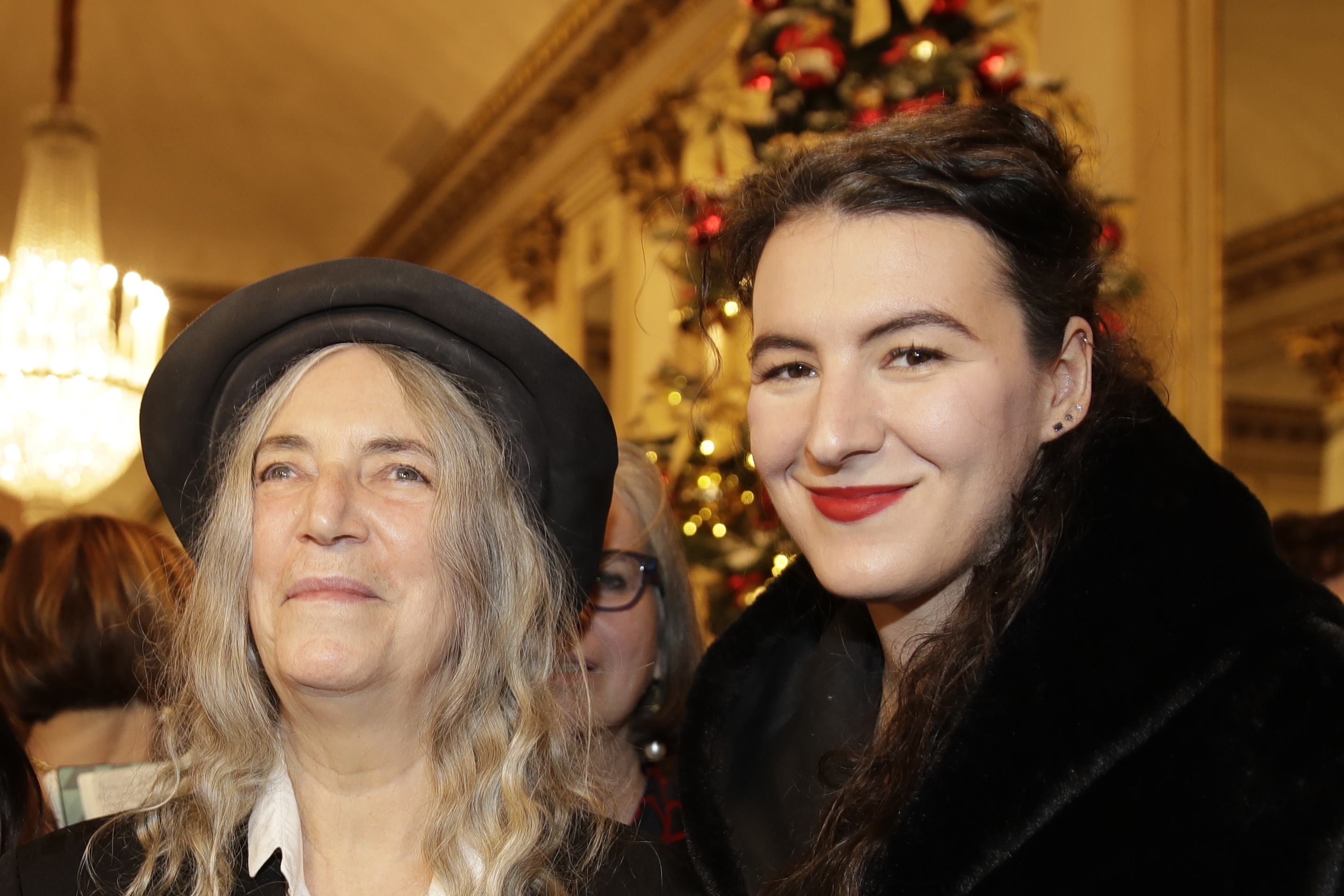
    Patti Smith and daughter Jesse Paris Smith in Milan, Italy, in 2019.

    She turns 80 next year.

    “My hair is gray to platinum. I understand my age. I’ve had my children, and have gone through a lot of different things. But I still know where my 10-year-old self is. I still know how to find her.”

    Patti Smith and Her Band perform “Horses” on its 50th anniversary at the Met Philly, 858 N. Broad St. at 8 p.m. Saturday, themetphilly.com.

    “Patti Smith: Songs & Stories” at Marian Anderson Hall, 300 S. Broad St., at 7 p.m. Monday, ensembleartsphilly.org

  • William Way LGBT Community Center will permanently close its historic Center City building in December. Services will continue elsewhere.

    William Way LGBT Community Center will permanently close its historic Center City building in December. Services will continue elsewhere.

    One of Philadelphia’s oldest hubs for the LGBTQ+ community will shut its doors in less than a month, as the half-century-old organization transforms its programming and moves on from its aging Spruce Street building.

    The William Way LGBT Community Center will permanently close its 1315 Spruce St. headquarters on Dec. 18, the William Way board announced Monday. This will end the tenure of “a vital gathering space for trans and gender-diverse individuals” across the region and beyond, officials said; however, William Way intends to continue its services, research, and archival efforts elsewhere.

    “While the building may be closing, our commitment to the community remains unwavering,” said Laura Ryan, cochair of William Way’s board. “Our board, staff, and community partners are actively finalizing plans that will guide the center’s next chapter, and we look forward to sharing those details as soon as we can.”

    The property was listed for sale earlier this year, but it was not known if there was a new owner at this time, a William Way spokesperson said.

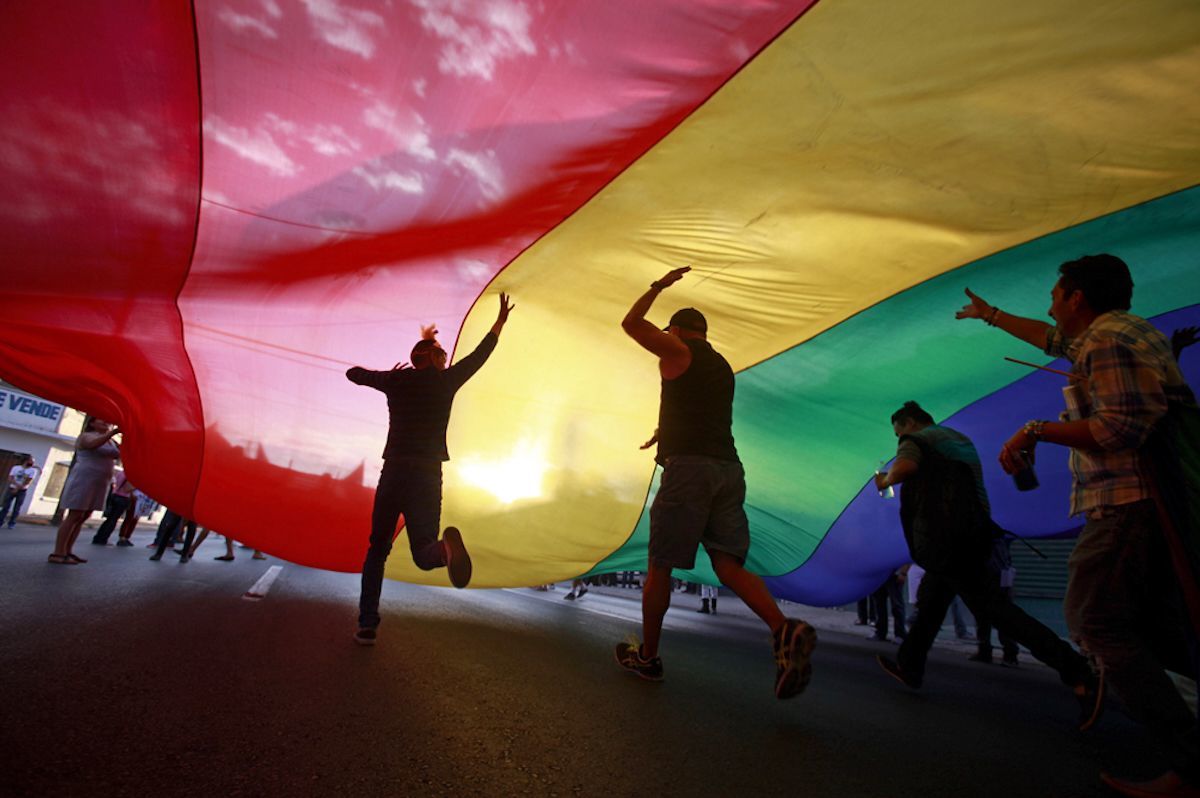
    Attendees of Philadelphia’s Pride celebrations run under a large Pride flag outside of the William Way LGBT Community Center in Philadelphia, Pa. On Dec. 18, 2025, the center will permanently close its Center City building.

    This decision follows years of redevelopment plans and failed fundraising efforts for the 175-year-old building that has served as the LGBTQ+ center’s hub since 1997. The center briefly closed for inspection and emergency repairs last fall, reopening a portion of the building in January 2025.

    As of the board’s recent estimates, and after failing to raise enough capital for repairs, the aging pre-Civil War-era building still needs at least $3.5 million in immediate repairs, the board announced earlier this year.

    “Our community deserves a space that is not only safe and affirming, but fully accessible and equipped to support our future,” William Way’s chief operating officer, Darius McLean, said in June. “The decision to move was not made lightly. It reflects our commitment to delivering programs with dignity and excellence, for today and future generations.”

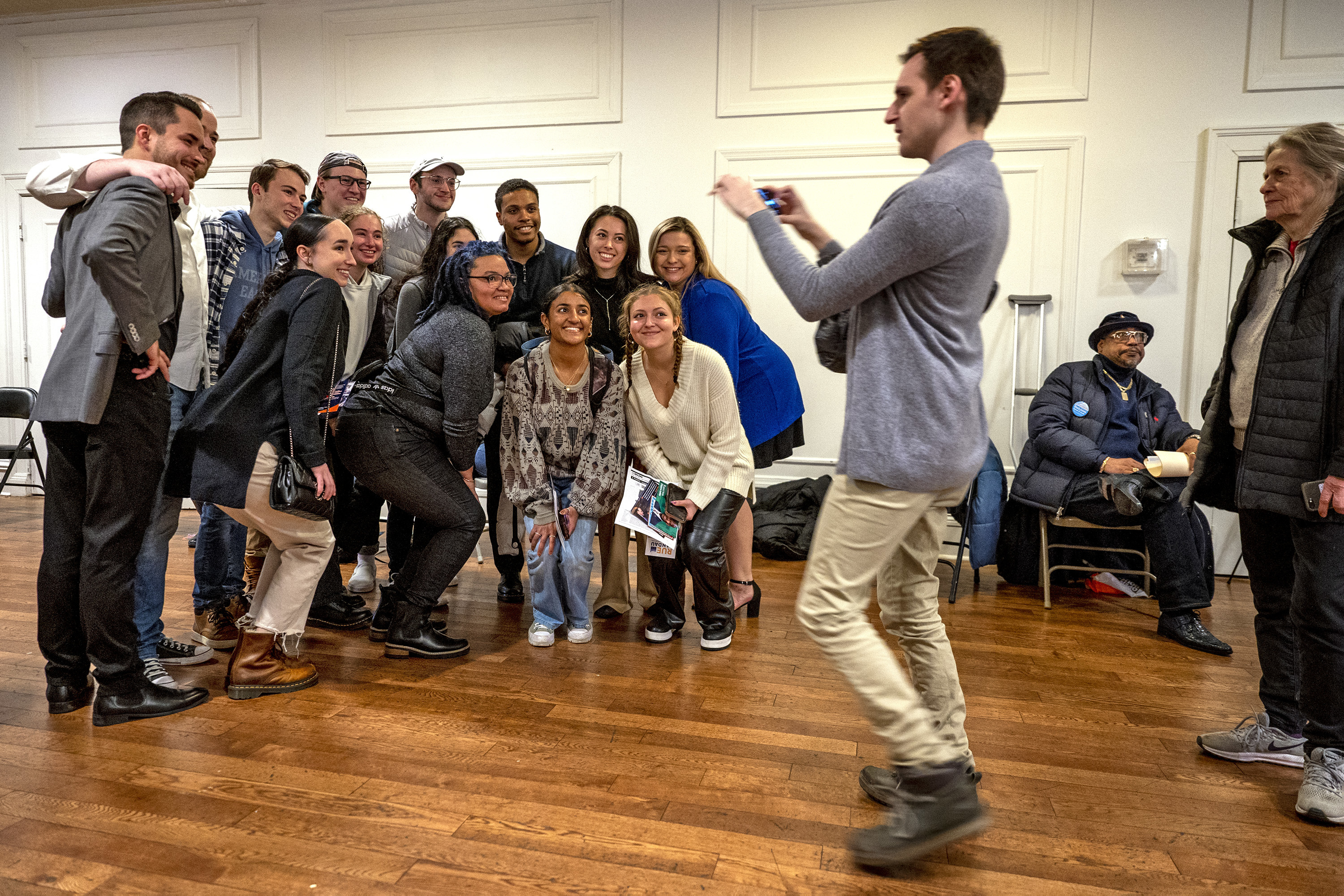
    Jason Landau Goodman, who is not with the group, takes a photo for the Philadelphia Young Democrats, made up of the Penn Dems and Temple College Democrats as they attend a forum for mayoral candidates at the William Way LGBT Community Center Monday night.

    Moving forward, William Way will operate less as a physical center for services than as a foundation spreading these programs across the city. “The heart of William Way has never been its walls. It’s the people, the programs, and the unwavering commitment to creating a space where LGBTQIA+ individuals are seen, valued, and safe,” said board cochair Dave Huting.

    William Way officials confirmed no programs will be discontinued in the transition.

    Some of its most vital programs will be continuing through the nearby Church of St. Luke and the Epiphany at 330 S. 13th St., around the corner from the William Way center. Starting Jan. 5, 2026, all of the center’s empowerment programs, including the elder initiative, peer counseling, and trans programs, will operate out of St. Luke’s.

    The center’s arts programs will live on through programming at partner organizations and other off-site locations through 2026. For instance, in January and February, Arleen Olshan’s Dead Dykes & Some Gay Men exhibition will be on display at the iMPeRFeCT Gallery in Germantown.

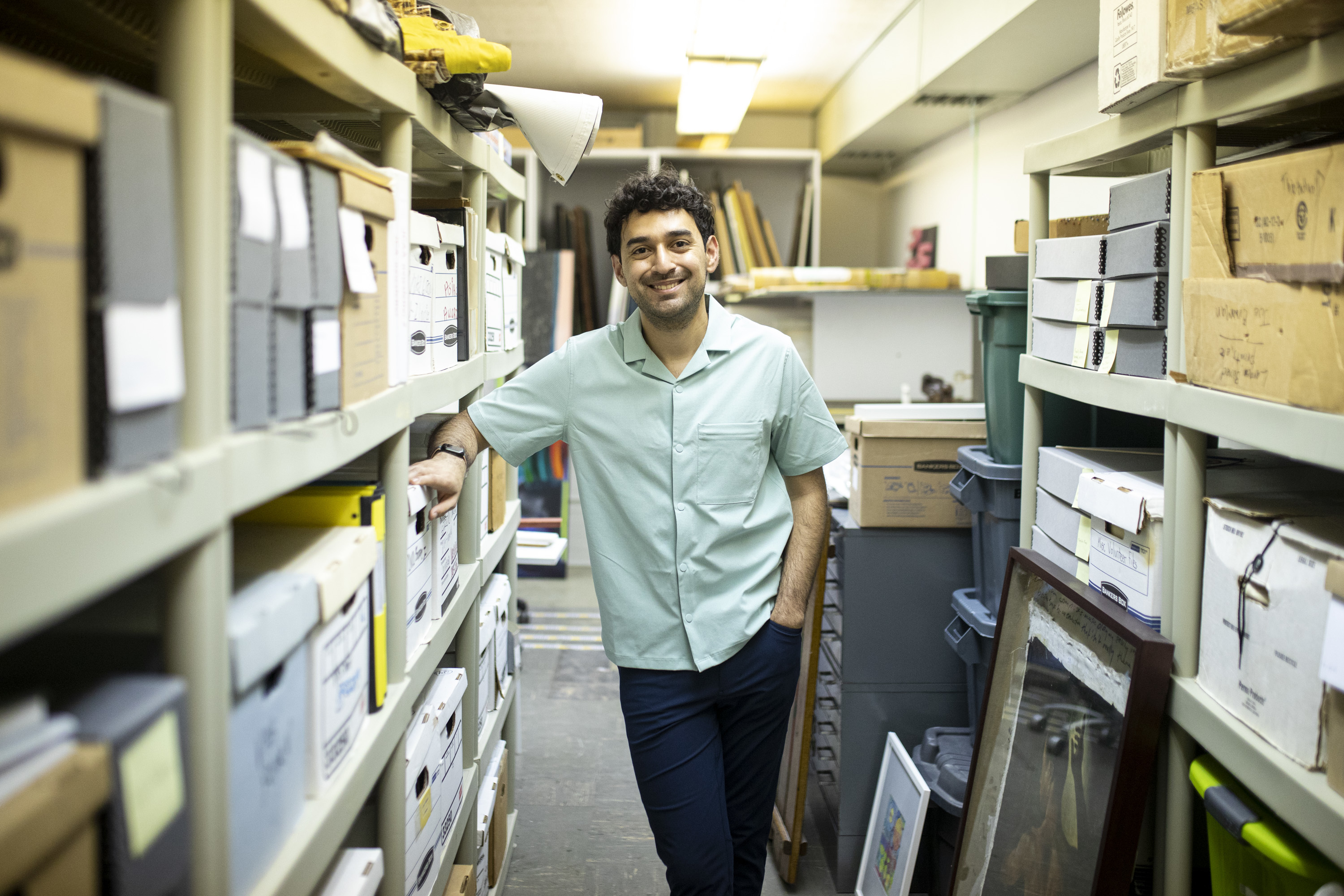
    Alexi Chacon, 25, of Los Angeles, then Archives Intern at the William Way LGBT Community Center, poses for a portrait in Philadelphia, Pa., on Tuesday, May 31, 2022.

    The John J. Wilcox Jr. Archives and Library is one of the most important relocation efforts being undertaken, as the center needs to ensure its vast collection of LGBTQ+ history is preserved and ready for its “future home.” Officials for William Way said they have not finalized its new location. Until Dec. 18, the library will remain open for on-site browsing and returns. No materials can be checked out from this point on.

    There will be a few final celebrations to enjoy at the William Way center before its Gayborhood building is closed and transferred to any new buyer. On Thanksgiving Day, from noon to 2 p.m., William Way is hosting a Giving Thanks Dinner and tree-decorating event, featuring an LGBTQ+ sit-down meal and decorating the center’s holiday tree.

    On Dec. 5, from 6 to 9 p.m., the center will host “One Last Dance,” a celebratory evening honoring the many community members, milestones, and memories of the time-honored institution.

    Correction: This article has been updated to note when William Way started using the 1315 Spruce St. building. It was in 1997.