Tag: Germantown

  • Philly students got to be food critics, and their reviews of school lunches ranged from ‘mid’ to ‘bussin’’

    Philly students got to be food critics, and their reviews of school lunches ranged from ‘mid’ to ‘bussin’’

    An array of dishes were set out for the critics — whole-wheat lasagna rollups, veggie samosas, cheeseburger bites with dill pickle ketchup.

    The jurists did not hold back.

    “That’s bussin’,” one student said of the lasagna, indicating his approval of the dish.

    Semia Carter, a student at Crossroads Academy, tastes a burger bite while taste testing potential school lunch food on Wednesday at at Philadelphia School District headquarters.

    “Mid,” another commented on the cheeseburger dish, shrugging his shoulders to emphasize how very mediocre it was.

    Hundreds of city students descended on Philadelphia School District headquarters Wednesday for a food show — their chance to weigh in on dishes that might show up on their school breakfast and lunch plates next year. Thirty-three manufacturers showed off 55 products not yet in district cafeterias, from whole-grain onion rings to turkey sausage bites.

    It’s one of the biggest days of the year for Lisa Norton, the district’s executive director of food services.

    “We give the students voice to select the menu that they will eat every day,” Norton said. “It’s the dietary fuel that students need to learn.”

    Norton knows her critics won’t hold back. She was prepared for that.

    “They will tell the vendors, ‘We don’t like this,’” she said. “But that’s what we need. We want to buy food they’ll eat.”

    All around Norton, students scoped out offerings, tasted things that looked good, then recorded their thoughts after scanning QR codes on their phones. At one station, a man dressed as Elvis danced and encouraged students to try more.

    Three friends from Hancock Elementary in the Northeast said everything they tried was “really good” — an improvement from the food offered in their cafeteria now. (Though Philadelphia is a “universal feeding” district, so every student receives free breakfast and lunch regardless of income, the Hancock students were like most who spoke to The Inquirer — they said they eat school food only sometimes, preferring to bring lunch from home most days.)

    “Sometimes it’s mystery mush,” sixth grader Alina Leone said of current school food offerings.

    “Sometimes it’s not bad,” said her classmate Calie Sharpe.

    “There’s pizza almost every day,” said Aislee Blaney, another Hancock friend.

    Havyn Nelson, a seventh-grade student at Lingelbach Elementary in Germantown, found the brownie bars and the taco meat tasty.

    Peyton Sanders, Havyn’s classmate, scrunched her nose when asked to describe the dishes her school offers now.

    “It’s prison food,” Peyton said.

    Jannette Carpentier of Acxion Foodservice serves Southern hush puppies to students during a taste test at the Philadelphia School District headquarters on Wednesday.

    Angelo Valvanis, who works for the company Grecian Delight, offered students beef gyro with what he marketed as “white sauce” — tzatziki sauce. His firm has dishes that students in Chicago, Detroit, and New York eat, and it was hoping to break into Philly.

    “You guys ever get gyro from food trucks? It’s really good. You know, the meat that turns, and you cut it with a knife? It’s from Greece,” Valvanis said.

    The idea of school lunch still conjures the image of tasteless, lukewarm, floppy food — hot dogs, pizza, chicken nuggets — but school meals have changed, Valvanis said.

    “These kids are much more open,” he said. “They all see these things on YouTube.”

    In front of him, a group of students nodded.

    Gabby Swaminathan, a sixth grader from Meredith Elementary in Queen Village, nibbled the gyro. It was good, she said.

    “Our food at school right now is not that good,” Gabby said. Her strategy was to rate the food she liked — the gyro, the lasagna roll-ups — really highly, with hopes those will eventually replace the food she doesn’t like.

    Chef Tony Rizzo of Chase Franklin Food Company shows Marieta pasta ahead of a student tasting session at the Philadelphia School District headquarters on Wednesday.

    Wednesday’s event was timely. Several members of Philadelphia City Council grilled district officials about the food at a Tuesday hearing on school matters, saying constituents had concerns about the quality of the meals served to students. The elected officials said they want to come to a Center City school to eat the same lunches students eat.

    Superintendent Tony B. Watlington Sr. explained the district’s conundrum — its food service program must be funded completely by reimbursements from the U.S. Department of Agriculture.

    “The dollars are not robust enough to have filet mignon everyday, but it is sustenance, and I say that very respectfully,” Watlington told Council.

    Kameron Garrick and Amaud Burton-Bullock, students at Martin Luther King High, can say definitively they have never been served filet mignon at school.

    They mostly skip school lunch, they said, and buy food at a corner store or eat at home.

    But sure, they were game to try the offerings.

    The cheeseburger bites? OK.

    “I would say it’s mid,” Kameron said. “It needs more seasoning.”

    But they found a bright spot — the cornbread bowls with chicken.

    “I would take that cornbread,” Amaud said. “It was nice and moist.”
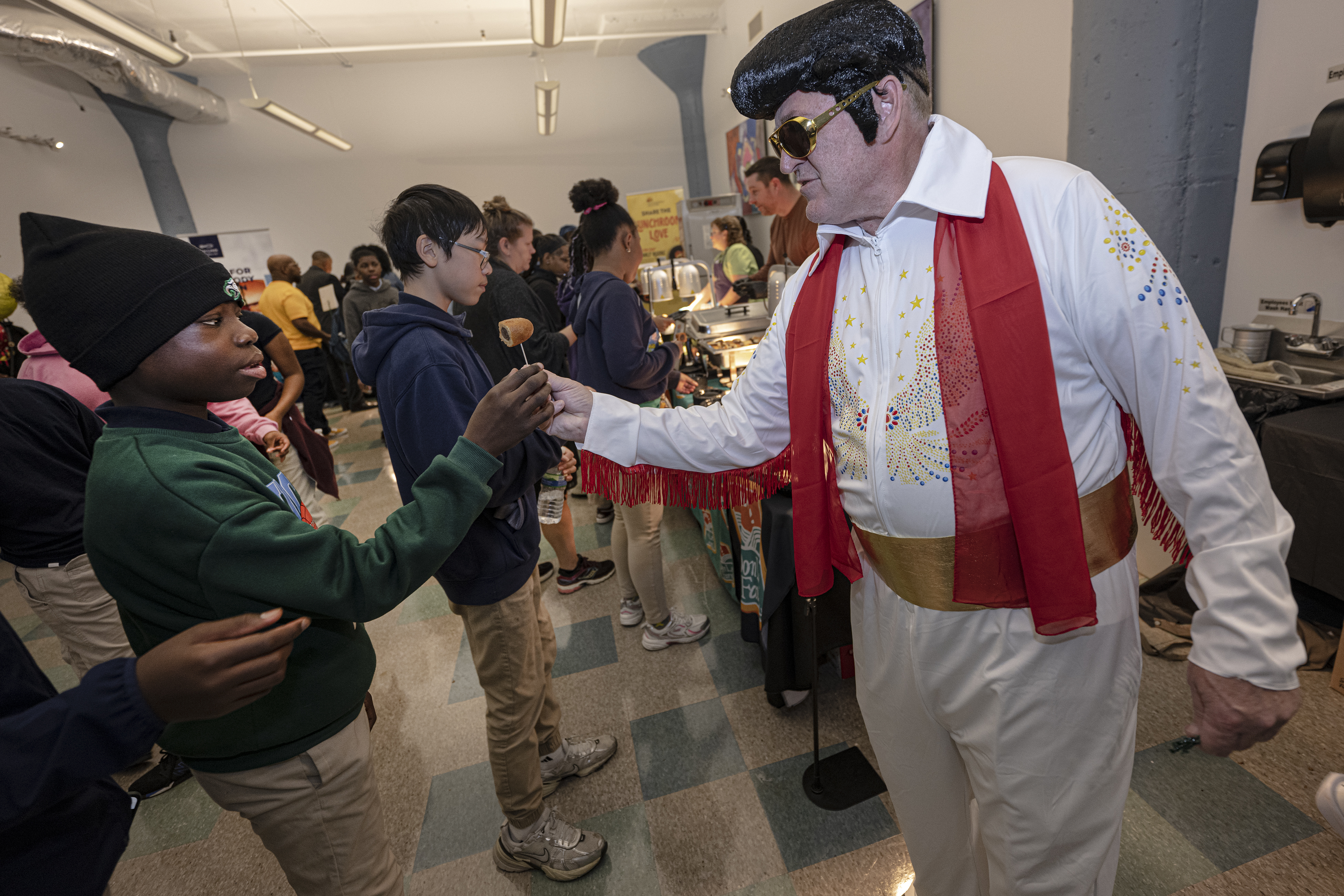
    Kervens Orelus, a student at Lingelbach, gets a corn dog from Elvis during a testing session at the Philadelphia School District headquarters on Wednesday.
  • Despite challenges in 2025, Philly-area small businesses remain resilient and optimistic

    Despite challenges in 2025, Philly-area small businesses remain resilient and optimistic

    From inflation to tariffs to labor shortages, small businesses in Philadelphia have faced many challenges in 2025. But they remain resilient and, for the most part, are optimistic about the coming year.

    But that, of course, depends on the type of business.

    For example, the Monkey’s Uncle, a retro Philly sports apparel boutique located in Doylestown, had an “exceptionally strong” year, which was mostly driven by the Eagles’ Super Bowl win. Co-owner Derrick Morgan expects the holiday season to be busy but observes more people are shopping for holiday gifts much earlier this year as consumers are “spreading out their spending much more.”

    For small businesses in the Philadelphia region, consumer sales were up 2.4% in October compared to a year before, according to a monthly index from payment technology provider Fiserv. That’s compared to a 1.5% increase nationally. Small-business optimism remains above its 52-year average and uncertainty dropped this month, according to the National Federation of Independent Businesses.

    All in all, it hasn’t been such a bad year for most, despite the uncertainty.

    Looking to 2026, Morgan is optimistic due to Philadelphia hosting a number of major sporting events (like the MLB All-Star Game), and he is already coordinating commemorative merchandise with licensed vendors. But it’s not economic uncertainty that impacts his business as much as Jalen Hurts or Bryce Harper.

    “The nature of our business is very much at the mercy of the wins and losses from our Philly sports teams, which can certainly be unpredictable,” he said.

    Regardless of the economic uncertainty, physical fitness remains popular. Valerie Plummer’s Germantown-based Pilates studio — Pilates by Valerie — has had a “profitable and expansive year” thanks to “rising client retention, steady new enrollments, and an increasingly strong sense of community.”

    Plummer has used this year to double down on her business by broadening her programming with a series of new classes and apparatus trainings while developing instructor materials, improving internal systems, and strengthening her long-term training pipeline. As for next year? Plummer’s optimistic.

    “I am confident in the direction of the studio, the relationships we are building, and the value we are providing — and I’m excited for what’s ahead,” she said.

    The restaurant industry has been hit hard recently, thanks mainly to increasing costs and labor shortages. In Media, Rainy Culbertson’s breakfast restaurant, The Corner, has had a difficult year.

    “Customers are uncertain about their finances,” she said. “Eating out is a luxury and is one of the first cuts to a person’s budget in economically uncertain times. We’ve had ups and downs this year, but mostly down.”

    Like many restaurants, The Corner faces challenges in labor retention, cost increases, and competitive issues. And they’re still recovering from the pandemic, Culbertson said.

    “Most restaurants have not recovered from COVID, it’s just that we stopped talking about it because folks want it behind them, ourselves included,” she said. “Most restaurants still carry debt from COVID and now they have to deal with economic uncertainty and painfully thin profit margins due to inflation.”

    It’s not surprising that Culbertson remains very uncertain about 2026.

    “I’m optimistic it will be better but realistically, it will probably be more chaos and stress dealing with inflation and tariffs,” she said. “A lot depends on how long this madness of inflation, tariffs, and the unstable economy drags on. I’m really close to calling it quits.”

    Heather Herbert, the co-owner of Tail Spinz in Montgomeryville says her family-owned dog daycare has grown every year since its opening in 2023. It saw growth this year too, but some months were slower.

    “2025 has had its ups and downs, with some months of steady growth and others that have leveled off a bit,” she said. “Our business is built almost entirely on word-of-mouth and referrals, which creates a slower but more sustainable kind of growth. We have had a few families scale back or pause daycare due to budget changes, and we completely understand that we’re a ‘nice-to-have’ rather than a necessity for everyone.”

    Herbert is looking forward to even more growth next year and is currently gearing up for the holidays, with “a full lineup of festive events planned” including “a visit from Santa” with holiday photo ops and treats.

    “When you provide great care, build genuine relationships, and create a space that dogs are excited to come to, it’s hard not to feel positive about what’s ahead,” she said.

    Even in an uncertain economy, specialized businesses like Blevins Sommelier Services can flourish. Focused on bringing “affordable luxury experiences” directly into their clients’ homes, the company, which offers wine tasting and bourbon education events, has experienced strong growth this year with monthly bookings doubling over the prior year.

    “I’m optimistic for 2026,” said Amanda Blevins, who operates her business out of her home in Glen Mills. “The demand for wine events remains steady, and the demand for bourbon tastings has increased.”

    Tariffs and supply shortages have impacted Blevins’ business, particularly on wines from Italy and France, but like many business owners she’s pivoted and now features more local wines.

    “In many cases, hosting private in-home celebrations is more affordable than entertaining at a restaurant or larger rented venue,” she said. “There is always something new to discover in the world of wine and whiskey, and I consider it a wonderful life-long journey.”

  • Corporations bought 1 in 4 homes sold in Philly from 2017 to 2022, new report says

    Corporations bought 1 in 4 homes sold in Philly from 2017 to 2022, new report says

    Roughly one in four small residential buildings bought in Philadelphia from 2017 and 2022 were purchased by corporations, according to a new report about investor activity in the city.

    Most of these corporate buyers are renting out the properties, which have one to four housing units, according to a report about corporate investors that was released Monday by researchers at Reinvestment Fund, a Philadelphia-based community investment nonprofit, and the Center for Law, Inequality, and Metropolitan Equity at Rutgers Law School in Newark.

    Investors compete with low-income homebuyers. They are more likely to pay with cash and less likely to be denied mortgages. They sometimes pursue properties before they hit the market.

    “There are a lot of neighborhoods that are seeing investor activity, that are raising concerns,” said Emily Dowdall, president of policy solutions at Reinvestment Fund. “Our hope is that this report, that other reports, are going to help inform a strategy going forward.”

    Smaller operators are buying most Philadelphia homes purchased by investors. But researchers have seen an increase in larger corporate landlords.

    Researchers looked at sales of residential buildings with one to four housing units. Most were single-unit homes, but the city records that researchers classified properties with one to four units as single-family housing.

    Researchers found that 13 investors bought 100 or more properties and eight bought more than 200 from 2017 through 2022.

    Here are some other takeaways from the new study.

    No sign of big national players

    From 2020 through 2022, 91% of homes purchased by corporations were bought by smaller investors.

    Researchers said they found no evidence that the biggest national investors in single-family homes — such as the private equity firm Blackstone and Invitation Homes, one of the country’s largest landlords of single-family homes — are active in Philadelphia.

    Private equity-backed national investment organizations have bought single-family homes in bulk in places such as the southeastern United States, which has been targeted because it has newer housing stock and fewer tenant protections, Dowdall said.

    These types of investors have been tied to rent increases and fewer opportunities for first-time homebuyers and buyers with low and moderate incomes.

    Philadelphia is less likely to see these organizations operating here because of the city’s many renter protections and an older housing stock that needs a lot of investment, Dowdall said. The city’s foreclosure prevention program and the relatively long foreclosure process in Pennsylvania also deter these organizations, which like to quickly buy and lease homes on a large scale.

    “It’s still possible that we could see more national players, as they have already saturated the easier markets to get into,” she said.

    During the pandemic, some larger regional and national companies started to come to Philadelphia, researchers found.

    Investor activity is concentrated in certain areas

    Corporate investors mostly buy single-family homes in areas of the city where prices are lowest. Those neighborhoods also are predominately Black and Hispanic, including Brewerytown, Germantown, Juniata Park, and Kingsessing.

    From 2020 to 2022, the median purchase price for an investor was $129,000, compared to the citywide median purchase price of $225,000 and individual buyers’ median purchase price of $247,000.

    During this time, investors were most active in North, West, and Southwest Philadelphia and sections of Lower Northeast and Northwest Philadelphia. Investors bought more than half of all homes sold in these areas.

    Before sheriff sales paused because of the pandemic, investors often bought a chunk of their properties that way.

    The share of foreclosed homes purchased by investors grew from 31% of properties sold in sheriff sales in 2012 to 60% in 2019.

    From 2017 to 2019, high-volume investors got about a third of their single-family properties through sheriff sales.

    From 2020 through 2022, fewer than 40 properties were auctioned off each year. So investors relied more on other ways of acquiring properties, including buying directly from homeowners, “potentially creating more direct competition with individual homebuyers,” the report said.

    More eviction filings and code violations

    Large corporate landlords were more likely to file in court to evict tenants than smaller investors.

    About one in seven homes bought by high-volume investors were associated with eviction filings within five years, compared to less than one in 20 homes bought by smaller investors.

    Investors of all sizes were more likely than individual homebuyers to have code violations. About 20% of properties bought by investors had violations within five years of the purchase. The share of violations in owner-occupied properties was 9%.

    Researchers plan to learn more about the types of code violations these properties generate, since violations can range from trash issues to unsafe conditions.

    More work on properties

    Researchers also uncovered “potentially positive findings” about large investors, Dowdall said.

    Philadelphia’s aging housing stock needs investment for renovations and maintenance, and the report found that larger investors were more likely to get permits to alter their properties than smaller investors. “Bringing much needed dollars in to refurbish our housing stock,” she said.

    Large corporate investors received alteration permits for 42% of the properties they bought, compared to 29% for smaller investors and 13% for individual homebuyers.

    Like code violations, projects that need permits can range from the minor to the major, from adding electrical outlets to total renovation.

    In future analyses, researchers plan to drill down on the specific work being done on investors’ properties.

    Researchers’ recommendations

    Many investors purchase properties using a variety of corporate names, so identifying who is in control of corporations can be challenging, researchers said. That makes it difficult to hold operators accountable for problems at their properties.

    Researchers recommend state lawmakers require limited liability companies to disclose who is in control.

    They also recommended that the city:

    • Enforce rental license requirements to create a more complete inventory of rental properties
    • Use public data to understand how investors operate and their effects on the market and renters
    • Prioritize individuals and nonprofits at sheriff sales
    • Help individual homebuyers compete in the housing market, including by giving more money to homebuyer assistance programs
  • Killing of Kada Scott prompts hearing on Philly’s handling of domestic violence cases | City Council roundup

    Killing of Kada Scott prompts hearing on Philly’s handling of domestic violence cases | City Council roundup

    City Council will probe the Philadelphia justice system’s procedures for “protecting victims of abuse and domestic violence” following the killing of 23-year-old Mount Airy resident Kada Scott.

    Prosecutors have charged Keon King with murder and other crimes for allegedly kidnapping Scott, shooting her, and burying her body behind a closed East Germantown school in early October.

    King was arrested in two separate incidents in December and January in which authorities allege he violently assaulted an ex-girlfriend. In the second incident, he is accused of kidnapping her and choking her in his car.

    Philadelphia District Attorney Larry Krasner held a press conference at his office regarding the death of Kada Scott on Monday, October 20, 2025.

    District Attorney Larry Krasner’s office requested bail to be set at just under $1 million in that case. A judge instead set bail at $200,000, allowing King to be released after posting the necessary $20,000. Krasner’s office did not appeal the bond decision.

    Prosecutors then withdrew both cases after the victim and witnesses failed to appear in court. Krasner has admitted that dropping charges against King for the second incident was a mistake because there was enough video evidence to proceed with the prosecution. But he also directed blame at the courts for letting King out on bail following each arrest.

    “As the City of Philadelphia, I think we failed the young lady, right?” Council President Kenyatta Johnson told reporters Thursday. “You got two agencies, two city departments, pointing fingers at one another, and at the end of the day, that’s not going to bring resolution to the family. And so at the end of the day, that needs to be addressed. And so we’ll look at the system as a whole.”

    Council approved a resolution authored by Johnson that will allow the Committee on Public Safety to hold hearings on how the courts, sheriff’s office, district attorney’s office, and police department work to protect domestic violence victims.

    Kada Scott ‘a beacon of light and love’

    Remembering Scott: Council also approved a resolution by Councilmember Anthony Phillips honoring Scott’s life and legacy, describing her as a “a beacon of light and love, remembered for her faith, kindness and countless lives she touched.“

    Scott, who opened a beauty spa in Mount Airy when she was 19 years old, “was the kind of person who made others feel seen,” said Phillips, whose 9th District includes Mount Airy.

    Prosecutors have charged Keon King with the murder of Kada Scott, pictured.

    “Kada was a young woman whose light and kindness reflect the very best of us,” Phillips said in a speech on the Council floor. “She had vision and determination. She believed in the power of self-care, community, and purpose.”

    Councilmember Cindy Bass, whose 8th District includes the school where Scott’s remains were found, added that “it’s never been more important that we get our young men together.”

    “There is a vulnerability that exists, and protection is needed. Protection is important,” Bass said. “What we do and how we handle our situations in our community — there’s just so much to be done.”

    Childcare providers could get tax break

    Targeted relief: Councilmember Isaiah Thomas last spring pushed for the city to aggressively cut the business income and receipts tax, or BIRT.

    Johnson and Mayor Cherelle L. Parker ultimately went with a less aggressive schedule of tax cuts than Thomas had wanted. But the sophomore lawmaker is now trying another route to lighten the BIRT burden: cutting rates for a specific industry.

    Thomas on Thursday introduced a bill that would halve BIRT’s two tax rates for childcare providers, which are facing a nationwide crisis over costs, staffing, and financial viability. The gross receipts portion of BIRT would be reduced from 0.1415% to 0.07075% for daycare owners, and the net income rate would go from 5.81% to 2.805%.

    City Councilmember Isaiah Thomas wants to give daycares a tax break.

    “There’s one business and one industry in the city of Philadelphia that touches every district and a lot of families, especially working families, that are struggling,” Thomas said. “This legislation is another example of us trying to think through what we can do to support businesses who support families as well as families who are in need.”

    Regulatory bill sparked by Center City bike lane debate passes after arduous legislative process

    Unloading over loading zones: Heated fights over legislation with narrow impact are nothing new in City Council, where limited proposals often become battlegrounds in larger disputes over issues such as gentrification or the opioid crisis.

    But a bill on loading zones in parts of Center City, approved Thursday, may have set a new standard.

    The bill, which was proposed by the Parker administration and carried by Johnson, will allow the mayor’s administration to add or remove loading zones in parts of Center City without new ordinances from Council.

    It ultimately passed in a 16-0 vote, with Councilmember Brian O’Neill absent.

    But the journey to Thursday’s vote began with the high-profile death of a cyclist, involved a lawsuit, went through two rounds of amendments limiting and expanding its scope, and ended with plans for further proposals to tweak the law.

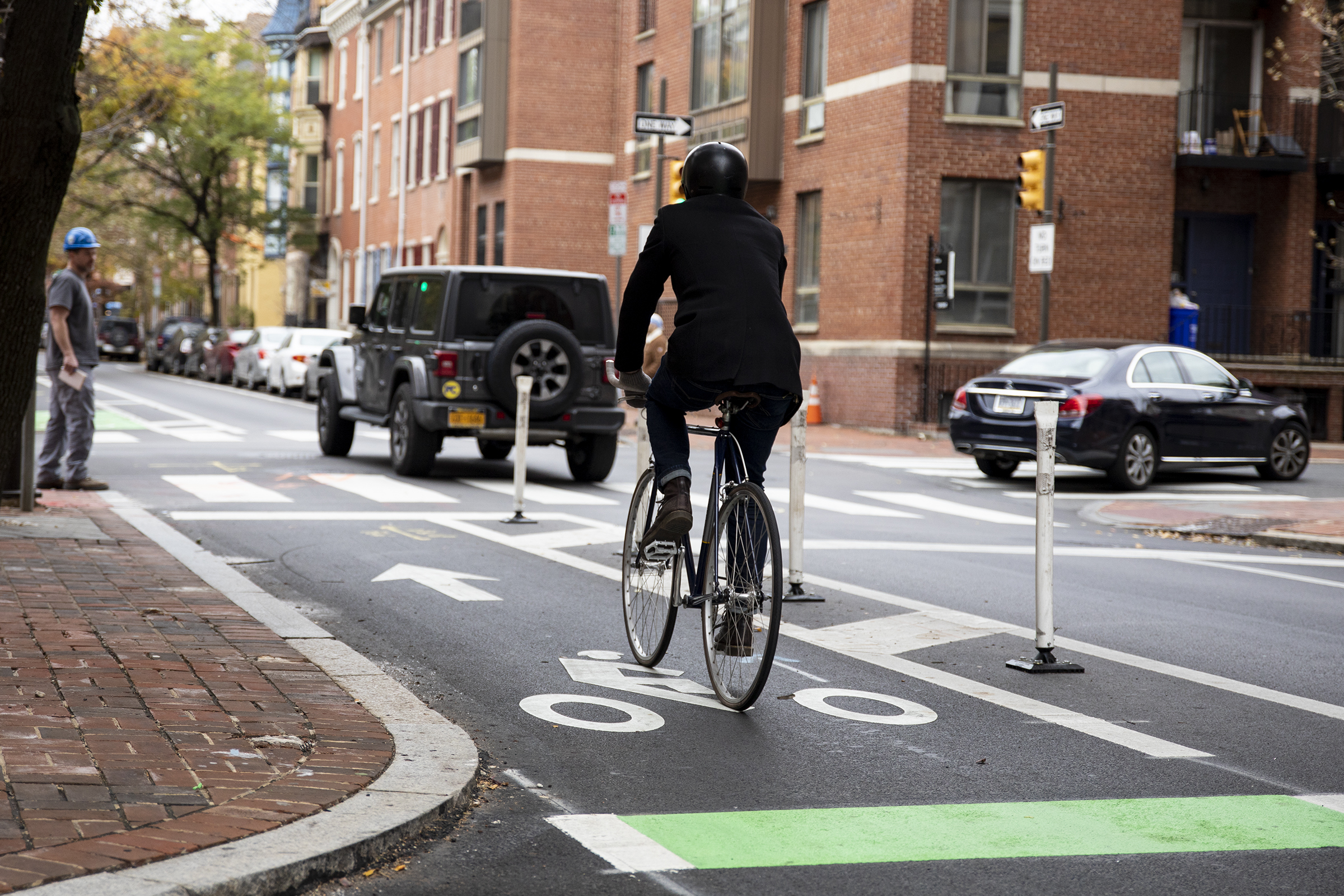
    The saga began when Johnson passed a bill making it illegal for vehicles to idle in bike lanes following the 2024 death of Barbara Friedes, who was killed while riding in a bike lane on the 1800 block of Spruce Street. Parker’s administration then adjusted loading zones in Center City streets with bike lanes, with the goal of providing spaces for residents who used the bike lanes for unloading their vehicles.

    After neighbors complained the loading zones would take away a handful of parking spots, attorney George Bochetto successfully sued the city, with Common Pleas Court Judge Sierra Thomas Street this summer ruling the administration did not have the authority to promulgate loading zone regulations without Council approval.

    The case led to the revelation that a 1980s city law granting that regulatory authority was somehow never officially codified, throwing into legal jeopardy hundreds of parking regulations promulgated over the last four decades. The bill passed Thursday was intended to fix that legal conundrum by reiterating Council’s intention to grant the administration that authority.

    A cyclist rides along Spruce Street.

    But Johnson and Councilmember Mark Squilla, whose districts include parts of Center City, at one point amended the bill so that it applied only to loading zone regulations and to the Spruce and Pine Streets corridors, which have bike lanes. They eventually reversed course on the geography of the bill, adopting a new amendment allowing it to affect all areas of their districts included in the old law. But they maintained the part of the original amendment narrowing its scope to loading zones and not other parking rules.

    Meanwhile, Councilmember Jeffery “Jay” Young Jr., whose 5th District also has a slice of Center City, removed his territory from the bill entirely.

    Next, Councilmember Jamie Gauthier is expected to work with the administration to fix the regulatory black hole in University City, which is part of her 3rd District. And Johnson said Thursday he may be open to revisiting whether the administration should be given explicit statutory authority to regulate other parking rules beyond loading zones in the affected area of his district.

    “We always have an open mind,” he said.

    Quotable: Honoring the late Philadelphia newspaper editor Michael Days

    Glory Days: Michael Days was a longtime editor of the Philadelphia Daily News, an executive at The Inquirer, and the inaugural president of the National Association of Black Journalists-Philadelphia.

    He died on Saturday in Trenton at 72 years old. Council on Thursday approved a resolution by Johnson and Majority Leader Katherine Gilmore Richardson honoring Days “for his extensive career serving Philadelphians.”

    Philadelphia Daily News Editor Michael Days celebrates with the newsroom after word of the Pulitzer win.

    A North Philadelphia native and devout Catholic, Days was revered as a principled reporter and editor, a mentor for young journalists of color, and a leader who helmed the Daily News when it won the 2010 Pulitzer Prize for investigative reporting.

    Staff writer Ellie Rushing contributed to this article.

  • Months before Kada Scott’s killing, Keon King was wanted for kidnapping his ex, but no one arrested him — even in court

    Months before Kada Scott’s killing, Keon King was wanted for kidnapping his ex, but no one arrested him — even in court

    A month after Keon King was charged with breaking into his ex-girlfriend’s home and attempting to strangle her, police say, his violence escalated: In January, he returned to her home with a gun, then kidnapped and assaulted her.

    A warrant for his arrest was issued days later.

    In the weeks that followed, King twice appeared in Philadelphia court and stood before a judge in the initial strangulation case. But no one in the courtroom seemed to know he was wanted for kidnapping.

    So both times, King walked out.

    In February, despite the warrant for King’s arrest, prosecutors — seemingly unaware that police said he had recently attacked their key witness — withdrew the burglary and strangulation case when the victim failed to appear in court.

    Police did not go to either hearing to take him into custody, and do not appear to have alerted the prosecutor about the new arrest warrant.

    And King was not formally charged with the kidnapping until April, when, for reasons that are unclear, he turned himself in.

    The shortcomings in those earlier cases came into focus this month after police said King abducted Kada Scott from outside her workplace Oct. 4, then killed her and buried her body in a shallow grave behind an East Germantown school. The death of Scott, 23, of Mount Airy, has unnerved a community and drawn national attention.

    Kada Scott, 23, was abducted from outside her workplace on Oct. 4, police said.

    A review of King’s previous criminal cases raises questions about whether police and prosecutors could have been more vigilant in holding him accountable for the earlier crimes they say he committed.

    City Council has since vowed to hold a hearing examining how the city’s criminal justice system handles cases of domestic violence.

    District Attorney Larry Krasner has said it was a mistake for prosecutors to withdraw the charges in the alleged kidnapping of King’s ex — and his office has since refiled them. He said the decision not to proceed with the case was made by a young assistant district attorney who was new at handling such prosecutions and who saw the victim’s absence as a fatal flaw, even though there was video evidence of the attack.

    But even before the charges were withdrawn, police and court records show, there were missteps.

    Marian Grace Braccia, a former Philadelphia prosecutor who is a law professor at Temple University, said she found it alarming that law enforcement failed to take King into custody when he twice stood before them in court while wanted for a violent felony.

    “If this is supposed to be a collaborative effort — if there is a shared mission of public safety and victim advocacy — it sounds like everyone dropped the ball,” she said.

    Detectives and prosecutors, she said, should have been aware of the arrest warrant and had officers take him into custody.

    Then, she said, prosecutors could have cited the alleged kidnapping to ask a judge to increase King’s bail and keep him behind bars.

    Instead, she said, “it passed by everybody, and he came in and walked out, and slipped through the cracks of the Philadelphia legal court system.”

    Philadelphia District Attorney Larry Krasner discusses the killing of Kada Scott at a news conference earlier this week.

    Krasner said there is no system to automatically notify prosecutors when a defendant in one of their cases is arrested anew.

    Similarly, there is no system to let police know that suspects in new cases have outstanding criminal matters, said Philadelphia Police Department spokesperson Sgt. Eric Gripp.

    “Detectives are not automatically notified when a wanted subject is physically present in court on a different active case,” he said.

    Krasner said the issues in the case underscore a lack of communication among law enforcement agencies that happens in part because their digital information systems are decades old. He said his office and other law enforcement agencies should work to update those systems.

    “That is something that we can all improve together if we have the will and if we have the resources,” he said.

    A wanted man walks free

    Police said King first attacked his ex-girlfriend in early November of last year. He broke into her Strawberry Mansion home, then tried to strangle her, according to the affidavit of probable cause for his arrest.

    He was taken into custody in December and charged with burglary and strangulation, and bail was set at $50,000. King immediately posted the necessary 10%, $5,000, and was released.

    About a month later, police said, King returned to the woman’s home and tried to break in. When he could not gain entry, they said, he waited for her to step outside, then grabbed her by the hair and dragged her into his car. He drove for at least four miles, beating her along the way, before dropping her off in Fishtown, according to the affidavit for probable cause for his arrest.

    A judge approved the warrant for King’s arrest on charges of kidnapping, strangulation, and related crimes on Jan. 19, court records show.

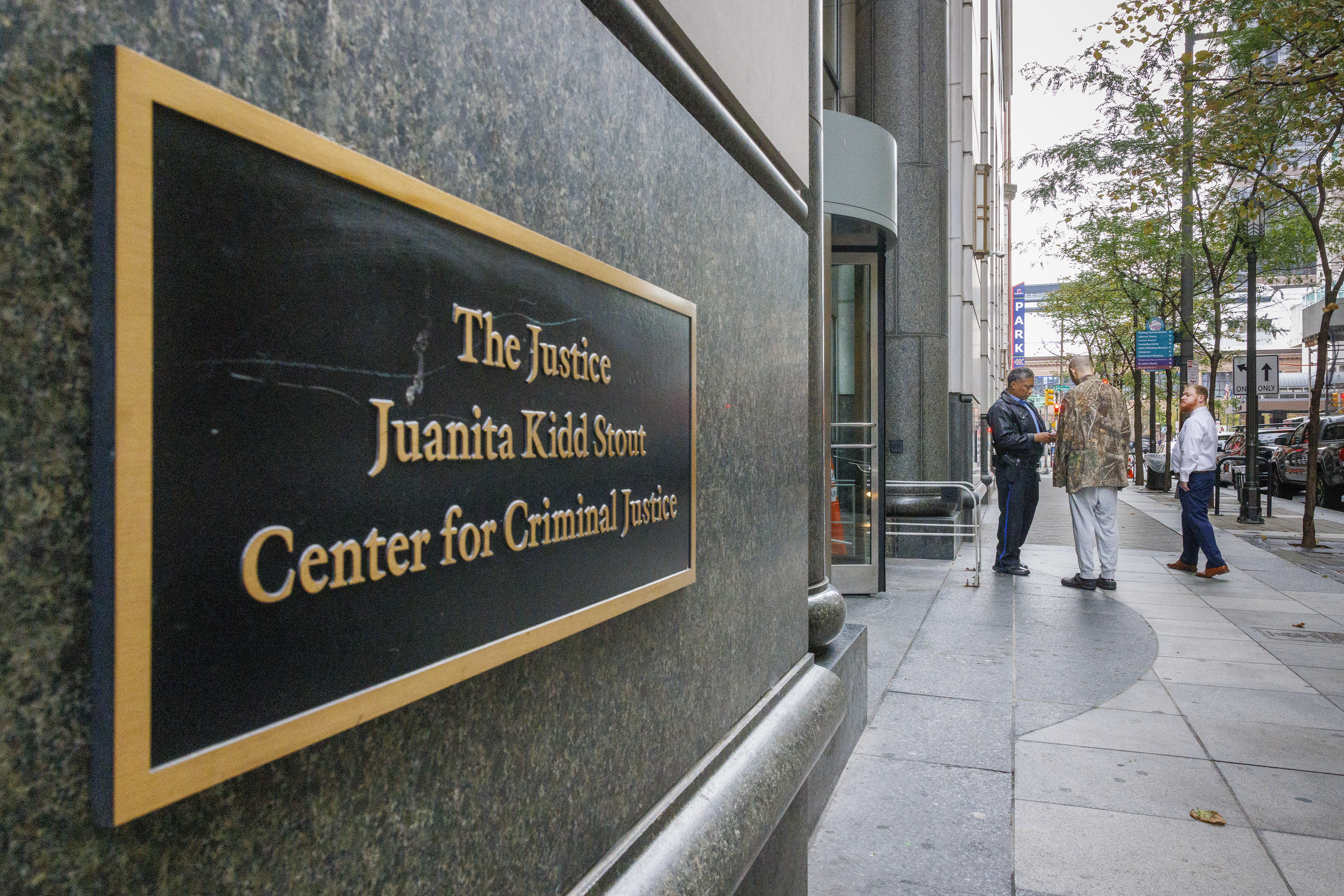
    The Justice Juanita Kidd Stout Center for Criminal Justice in Philadelphia.

    King — now wanted for a violent felony — appeared in court the following week for a preliminary hearing in the earlier burglary case, records show. But when the victim did not show up in court a second time, Municipal Court Judge Jacquelyn Frazier-Lyde ordered that the case had to proceed at the next listing. Prosecutors agreed.

    King left court.

    Meanwhile, police said, officers tried at least once to arrest him. On Feb. 11, Gripp said, police went to a home where they thought King might be, but he was not there.

    Two weeks later, King was again in court for the burglary case — but police did not go there to arrest him. Once again, the victim did not show up, and prosecutors withdrew the charges

    King walked out of court a free man.

    Braccia, the Temple law professor, said the detective assigned to the case should have been aware of the hearing. When seeking to charge King for the kidnapping, she said, the detective should have pulled up King’s arrest history and noticed the ongoing case. He then could have flagged it to the prosecutor in the first case and gone to the hearing to arrest him.

    At the same time, she said, the prosecutors who approved the kidnapping charges against King should have noticed the earlier case and told the prosecutor — particularly because it involved the same victim.

    In April, King turned himself in to police to be charged with kidnapping, strangulation, and related crimes in connection with the January attack. Prosecutors asked for bail of $999,999, but the magisterial judge, Naomi Williams, set bail at $200,000, court records show. King posted the necessary $20,000 and was released.

    The following month, after the victim again did not appear in court at two hearings, the kidnapping charges were also withdrawn.

    Since prosecutors have refiled the charges, Krasner’s office said it has been back in touch with the woman and hopes she will testify. She declined to comment about King’s alleged crimes and the previous handling of the cases by police and prosecutors.

    Six months later, King is back in custody, this time charged with murder. He is being held without bail.

  • Kada Scott’s death ruled a homicide and Keon King is charged with murder, as police say others may have helped bury her body

    Kada Scott’s death ruled a homicide and Keon King is charged with murder, as police say others may have helped bury her body

    Keon King was charged with murder and related crimes Wednesday in the death of Kada Scott, the 23-year-old Mount Airy woman police say he kidnapped, then killed, before burying her body in a shallow grave.

    The district attorney’s office approved the charges shortly after police announced that the Medical Examiner’s Office had ruled her death a homicide. Officials said Thursday that Scott died by a gunshot wound to the head.

    In addition to murder, King was charged with illegal gun possession, abuse of corpse, robbery, theft, tampering with evidence, and additional crimes.

    The announcement came as investigators said they believe at least one other person helped King, 21, move Scott’s body and bury it behind a closed East Germantown school in the days after she was killed, and detectives are working to identify those involved.

    New court records, made public Wednesday, offered the most detailed look yet inside the investigation into Scott’s disappearance and death, including her texts with King in the days before she went missing, the police search for her body, and how others may have helped King try to conceal her killing.

    A review of Scott’s cell phone records showed that on Oct. 2, a number believed to belong to King texted Scott: “Yo Kada this my new number.”

    “Who dis,” Scott asked, and he responded “Kel,” according to the affidavit of probable cause for King’s arrest.

    Kada Scott, 23, went missing Oct. 4.

    Law enforcement sources said King appeared to use various aliases when communicating with people, including “Elliot” and “Kel.”

    On the morning of Oct. 4, the document says, Scott texted King saying, “kidnap me again.”

    King replied, “better be up too,” according to the filing.

    What Scott meant in that text continues to perplex investigators, said the sources, who spoke on the condition of anonymity to discuss an ongoing investigation. It’s not clear, the sources said, whether Scott was joking or being sarcastic, or if King had, in fact, abducted her before.

    In any case, the affidavit says, the pair made plans to meet up later that night. Scott worked the overnight shift at the Terrace Hill nursing home in Chestnut Hill, and at 10:09 p.m., the records say, she texted King to call her when he arrived outside.

    According to the affidavit, Scott received 12 calls from the number believed to belong to King between 9:25 p.m. and 10:12 p.m., ending with a 43-second call.

    Around that time, a coworker later told police, she overheard Scott on the phone say, “I can’t believe you’re calling me about this,” before walking toward a dark-colored car.

    At 10:24 p.m., Scott’s phone line went dead, the document shows.

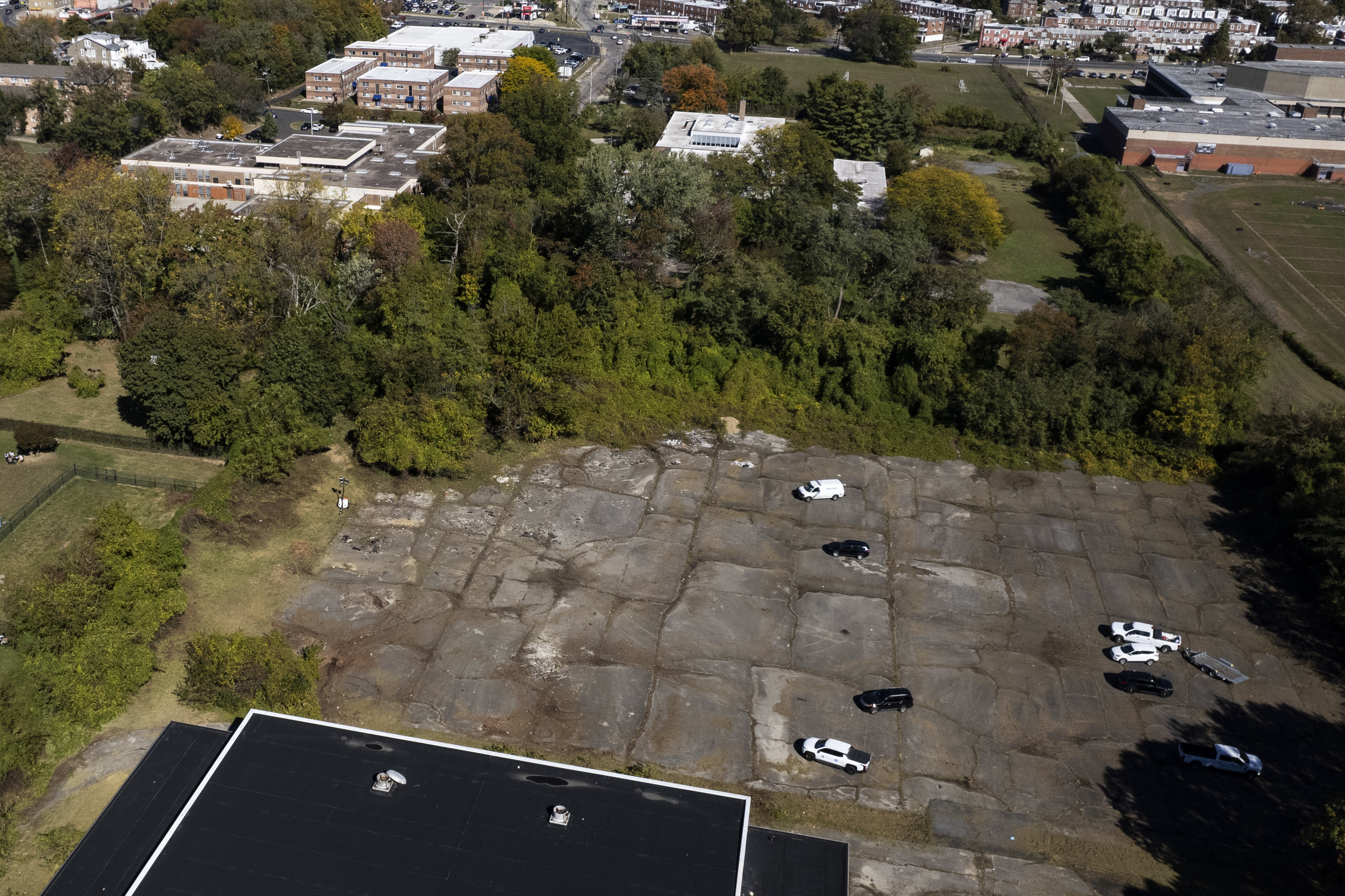
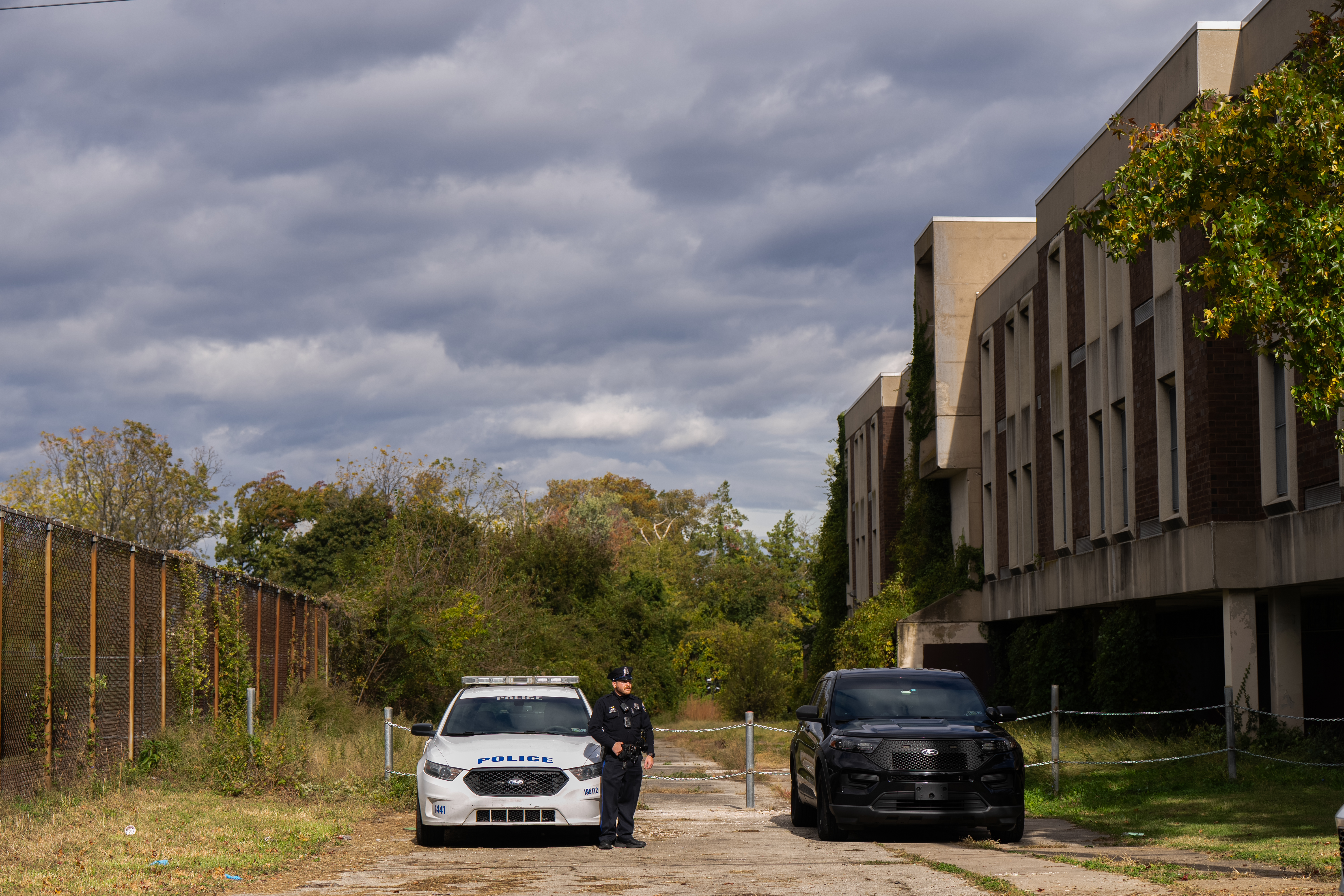
    The rear of Ada H.H. Lewis Middle School, where Kada Scott’s body was found buried in the wooded area.

    By 10:28 p.m., the affidavit says, surveillance cameras showed King, driving a black Hyundai Accent, pull into the parking lot of the Awbury Recreation Center. King got out of the car and left the area, the filing says.

    The next day, around 11:39 p.m., two people in a gold Toyota Camry believed to belong to King went back to the recreation center, the records show. They walked toward the playground area, then returned to the car around 3:56 a.m.

    The two people then opened up the Hyundai Accent and appeared to “remove a heavy object, consistent with a human body,” from the passenger side of the car. They carried the object toward the playground and returned to the vehicle a half-hour later, the records said.

    On Oct. 7 at 2:48 a.m., police believe King returned to the recreation center to retrieve the Hyundai. They said the car — which had been reported stolen a few days earlier from the 6600 block of Sprague Street — was set on fire near 74th Street and Ogontz Avenue a short time later.

    After a two-week search, police found Scott’s body buried in the woods behind the vacant Ada H.H. Lewis Middle School, next to the recreation center, on Saturday.

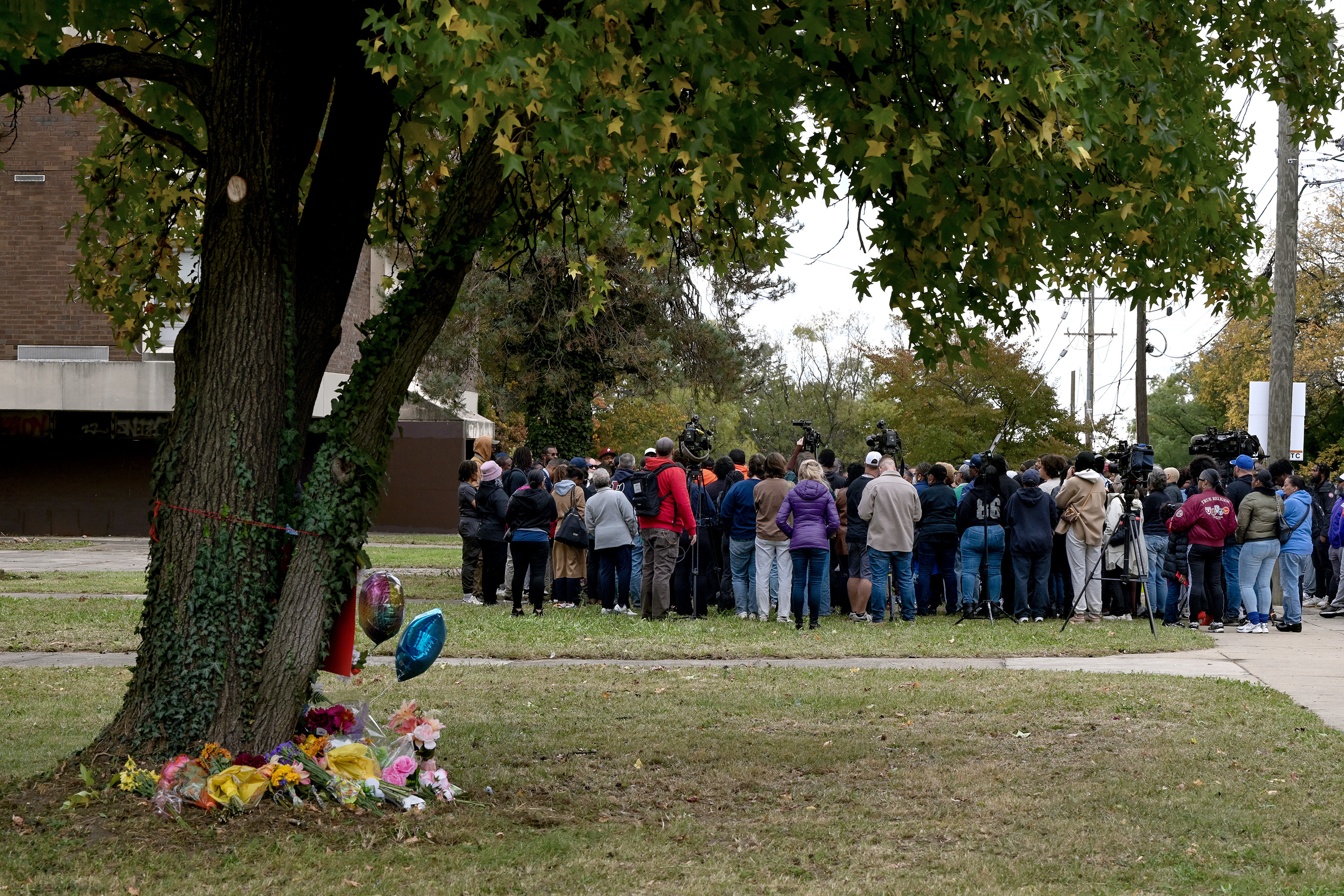
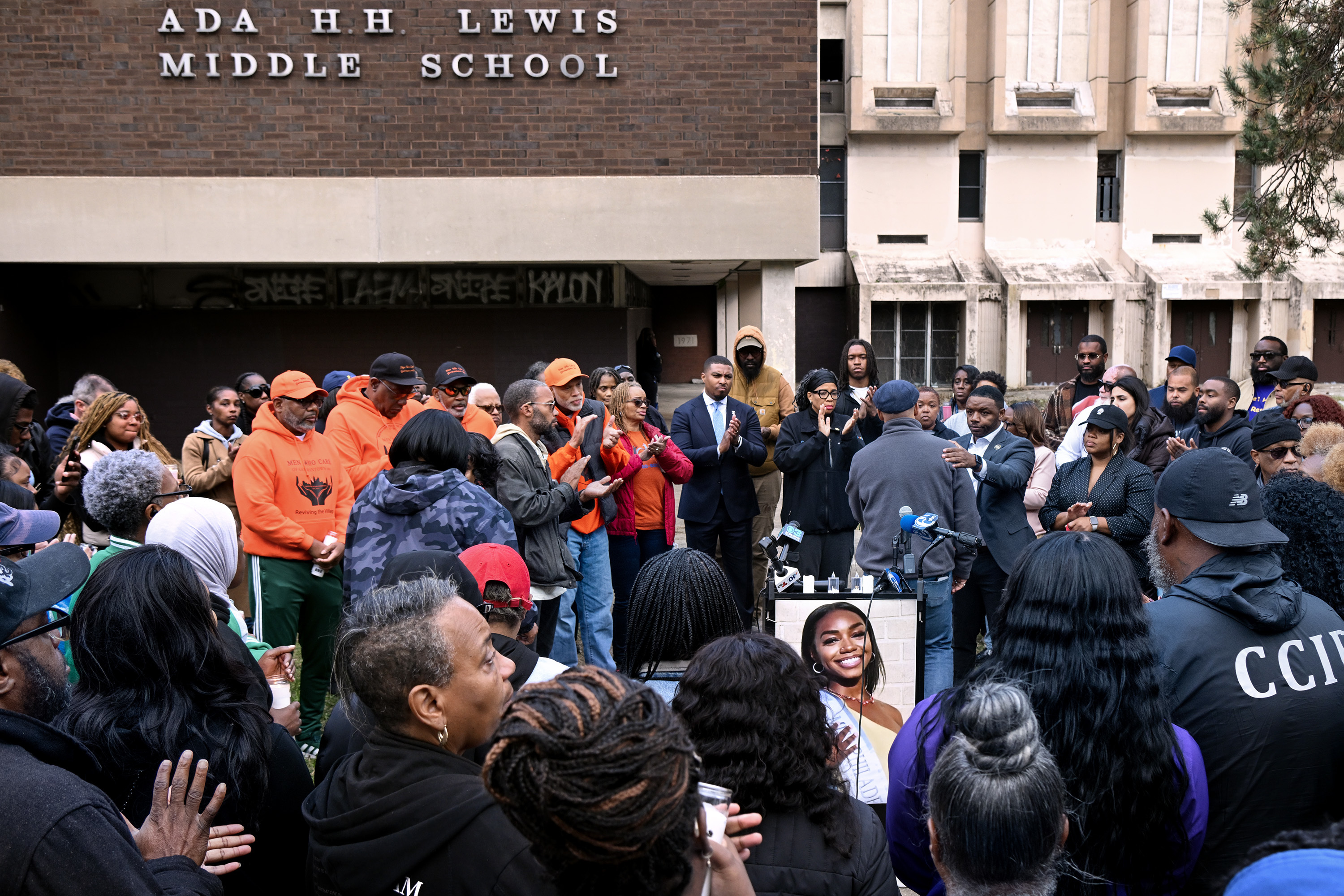
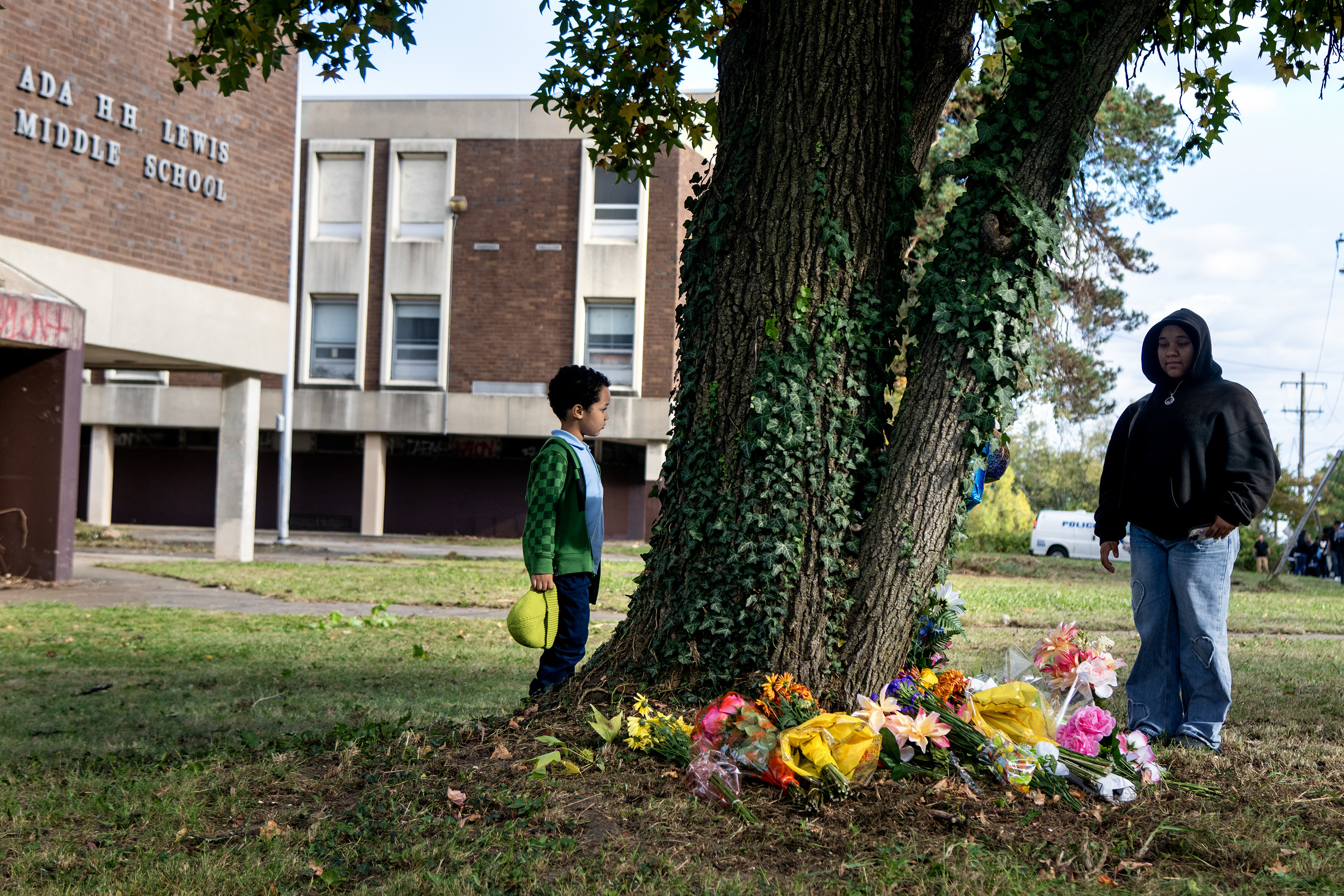
    Community members attend a candlelight vigil by flowers and balloons left at a memorial for Kada Scott near the abandoned Ada H. H. Lewis Middle School on Monday.

    King turned himself in to police last week to be charged with kidnapping Scott. He was held on $2.5 million bail.

    Earlier this week, prosecutors also charged King with arson and related crimes for the burning of the car. Now that he is charged with murder, he is expected to be held without bail.

    King’s lawyer, Shaka Johnson, could not immediately be reached for comment Wednesday.

    On Wednesday evening, city leaders headed to a church in the Northwest Philadelphia community where Scott’s body was recovered, addressing a crowd of about 200 residents concerned about public safety.

    Mayor Cherelle L. Parker and Police Commissioner Kevin Bethel, among other officials, offered condolences to Scott’s family and commended police for recovering her body. Residents, too, appeared relieved, breaking into applause when Bethel said murder charges had been filed against King.

    Bethel, a father of three daughters, said that as the search for Scott wore on, he felt at times as if he were searching for his own child. And Councilmember Cindy Bass told the crowd that Scott “could have been your niece, she could have been your friend.”

    The commissioner said the investigation was continuing as police search for those who might have assisted King. And addressing concerns over safety at the city’s abandoned buildings — including Ada H.H. Lewis Middle School — officials said the city was in the process of reviewing vacant properties.

  • Discovery of Kada Scott’s body at Germantown middle school has reignited debate over the vacant building

    Discovery of Kada Scott’s body at Germantown middle school has reignited debate over the vacant building

    When it opened in 1973, Ada H.H. Lewis Middle School was a source of deep pride for East Germantown, the kind of state-of-the-art educational facility that only suburban kids had at the time.

    But on Saturday, when police found Kada Scott’s corpse buried in a shallow grave in the woods of the long-ago vacated school grounds, ending a two-week search for the missing 23-year-old Mount Airy woman, the Rev. Chester H. Williams saw only decades of failure.

    “It’s a disgrace,” said Williams, a pastor who runs a neighborhood civic group. “We were very hurt to hear that this happened.”

    Community members gather for a candlelight vigil in memory of Kada Scott on Monday at Ada H.H. Lewis Middle School.

    On top of the shock, Scott’s kidnapping and murder has renewed animus in some quarters about the Philadelphia School District‘s failure to repurpose the blighted property, one of dozens of schools shuttered by the district over the last 20 years.

    Since Lewis closed in 2008, local officials and civic leaders said the sprawling seven-acre campus has become a magnet for squatting, illegal dumping, and other criminal activity. City officials have cited the school district 10 times since 2020 for overgrown weeds, graffiti, and piles of trash that blanketed the property, public records show. And four years ago, the district passed on an opportunity to reverse course on the blight.

    A proposal to redevelop the land into new homes, championed by neighborhood leaders like Williams, sat before the school board for approval. But the district abandoned the plan at the eleventh hour without public explanation, which the developer alleged was due to meddling by City Councilmember Cindy Bass — a contention Bass denies.

    “The school district, for some reason, we don’t know why, they put a block on anything being built there,” Williams said.

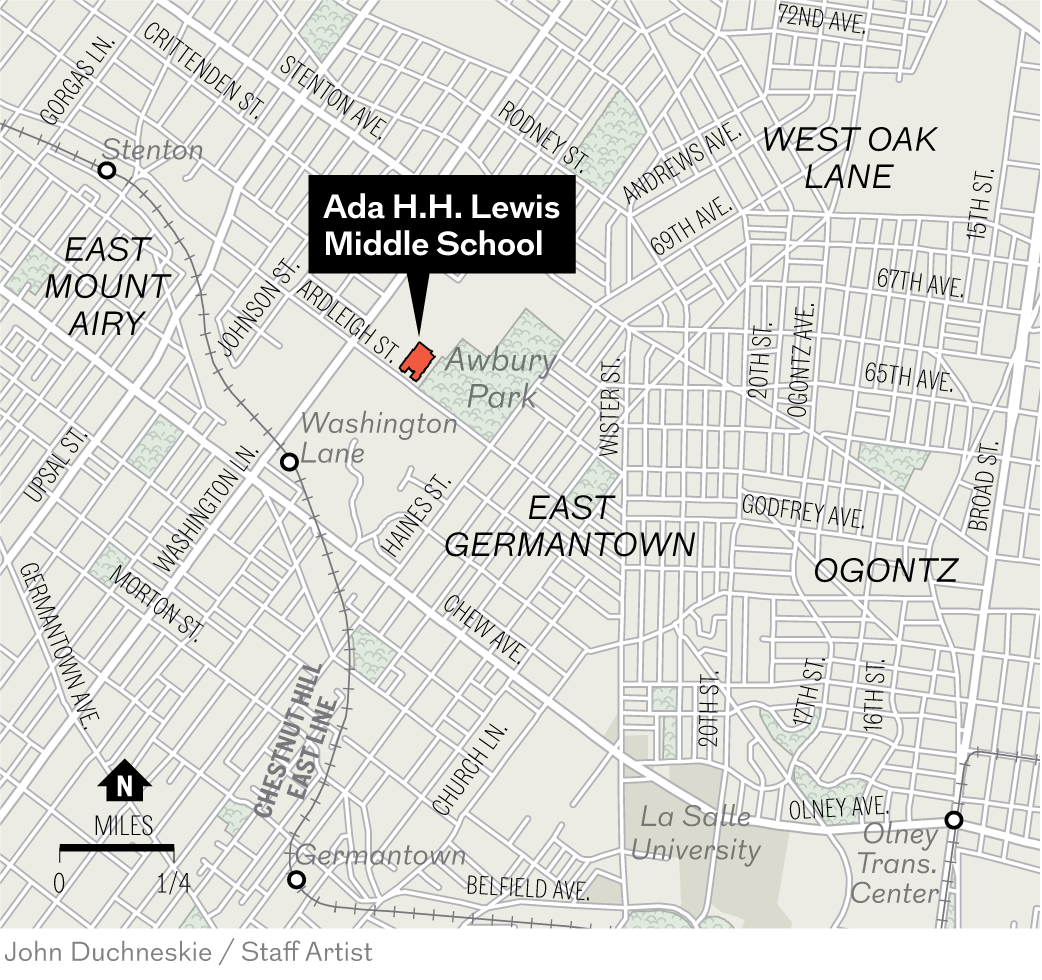
    Map of the former Ada H.H. Lewis Middle School in East Germantown

    Philadelphia Superintendent Tony B. Watlington Sr. extended “deepest sympathies” to Scott’s family and friends in a statement, and said the district’s operations and safety departments will review the vacant-property portfolio “to create and maintain safe and healthy spaces in every neighborhood.”

    While some call Lewis “abandoned,” the district is careful to call the building “vacant,” one of 20 such properties in the district’s portfolio. It says maintenance and inspection logs are kept about work on vacant properties; details were not immediately available.

    The debate over Lewis comes at a crucial time for the district: It is preparing to release recommendations about its stock of 300-plus buildings — and likely add to the list of decommissioned schools-turned-vacant public buildings. The district’s master planning process will contain recommendations for school closures and combining schools under one roof, officials have warned.

    Police at Ada H.H. Lewis Middle School.

    A fizzled redevelopment

    In 2011, then-City Controller Alan Butkovitz said the district’s vacant buildings were “catastrophes waiting to happen.

    Butkovitz, in a report released that year, said district inaction around such structures was dangerous and noted that the schools were magnets for criminal activity.

    Just before the pandemic hit in 2020, after years of pushback over Ada Lewis, the school district began accepting applications to redevelop the crumbling middle school. Germantown developer Ken Weinstein was one of three developers to place bids. He sought to buy the property for $1.4 million and build 76 new twin homes, at a density that neighbors felt complemented the surrounding area and resolved concerns about density brought by apartment buildings.

    Weinstein said he gathered letters of support from 60 neighborhood residents and elected officials, including U.S. Rep. Dwight Evans and then-State Rep. Stephen Kinsey. The school board seemed eager to move ahead and set a final vote for the proposal in May 2021.

    The vote never happened. The only explanation given that day was that “the Board had concern” about “what the long-term plan is for developing schools for the 21st century,” according to a district spokesperson.

    According to Weinstein, some school board members received calls from Bass asking them to table the vote. Bass has faced criticism for interfering in development projects, including other proposals made by Weinstein, as vacant properties languished for years in her district. Her district includes the Lewis property and parts of North and Northwest Philadelphia, where Weinstein has focused his development work.

    Bass, in an interview Monday, denied meddling in the vote. She acknowledged that she did not support Weinstein’s proposal because of the price of the homes — averaging around $415,000 — which she said would have triggered “immediate gentrification in the neighborhood.” But she said she had no involvement in the board’s reversal.

    “That was up to the school district,” Bass said. “I don’t sit on the school board.”

    While community groups in her district supported Weinstein’s project in 2021, Bass said she objected to market-rate housing as the sole alternative for East Germantown, arguing that it amounted to the district and developers saying “you should just take any old thing just so it’s not vacant.”

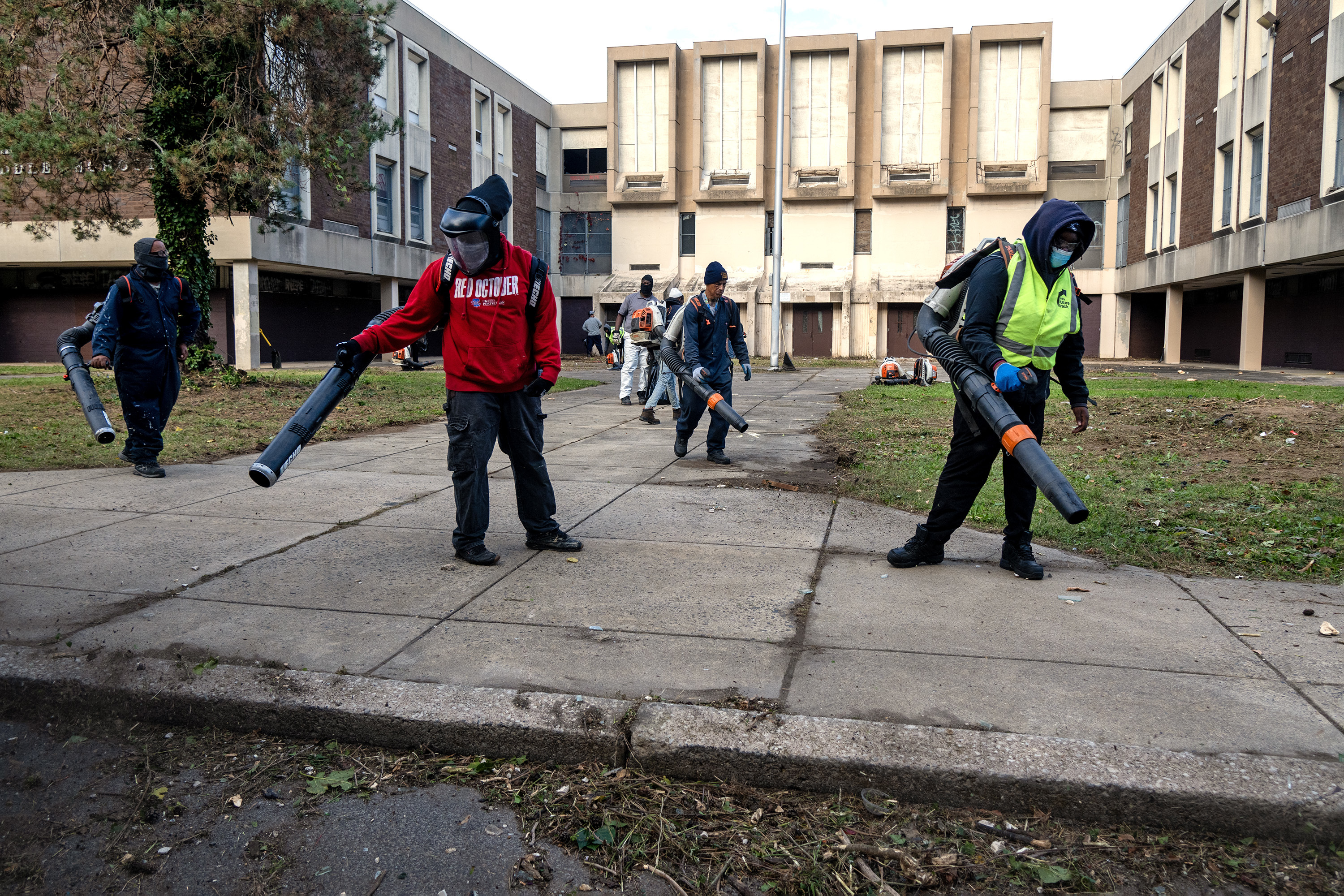
    City workers clean up in front of the vacant Ada H.H. Lewis Middle School Monday, just minutes before the start of a community candlelight vigil in memory of Kada Scott.

    A tragic turn for the property

    In a letter dated Friday, Bass called on the school district to demolish the vacant school, saying she was troubled by the evidence that led investigators to the property during the search for Scott.

    “The continued presence of this unsecured and deteriorating structure is simply unacceptable,” the Council member wrote in a statement, noting the site is now associated with “tragic violence.”

    Cell phone records and tips from the public first led police to the former Ada Lewis school last week, where they found Scott’s pink phone case and debit card, but nothing else. Then, late Friday, police received a new tip saying that they had missed something on their first search of the grounds, and that they should look along the wooden fence that divides the school from the neighboring Awbury Recreation Center. Officers returned to the property Saturday and found Scott’s body, buried in a shallow grave in a wooded area behind the school.

    Prosecutors expect to charge Keon King, 21, with the murder, though police continue searching for others who they believe may have helped dispose of evidence.

    Bass took office in 2012, when the school was already vacant. She said she pushed the school district for several years to take action, as nuisances piled up at the property. She said she still hopes that another “institution” could replace Lewis.

    “I think that having something that the community wants is not hard to figure out,” Bass said. “This is what the community’s interested in — they’re interested in another institution.”

    She said a proposal for a charter school is now in the works, though she said she was unable to provide details.

    Julius Peden, 5, and Jaihanna Williams Peden (right), 14, pause at a memorial for Kada Scott on Monday.

    A glut of vacant schools

    The school district still views Lewis as a potential “swing space” — a building that could be used to house students if another district building is closed due to environmental problems.

    There is precedent: The district has used other school buildings for such purposes, like Anna B. Pratt in North Philadelphia, which was also closed in 2013, to house early-childhood programs, and then students from other North Philadelphia schools whose buildings were undergoing renovation.

    Still, it remains unclear how much it would cost to bring the Lewis building back to an inhabitable state.

    The school system currently has about 70,000 more seats throughout the city than students enrolled. Though officials have said their first preference is to have closed schools reused for community benefit, it’s unlikely that all will be able to serve that purpose. And the timetable will surely be slow.

    City officials at times have expressed frustration with the pace at which the district is making decisions about how to manage its buildings. School leaders have said the wait is necessary given the district’s capacity and the need to make correct choices and not rush the process.

    Weinstein said the tragedy that culminated at Lewis reflected the conventional wisdom that blight breeds crime.

    “There’s always consequences to shutting down a proposal that the community supports,” Weinstein said. “In most cases, nothing bad happens. In this case, something very bad happened.”

    Staff writer Ellie Rushing contributed to this article.