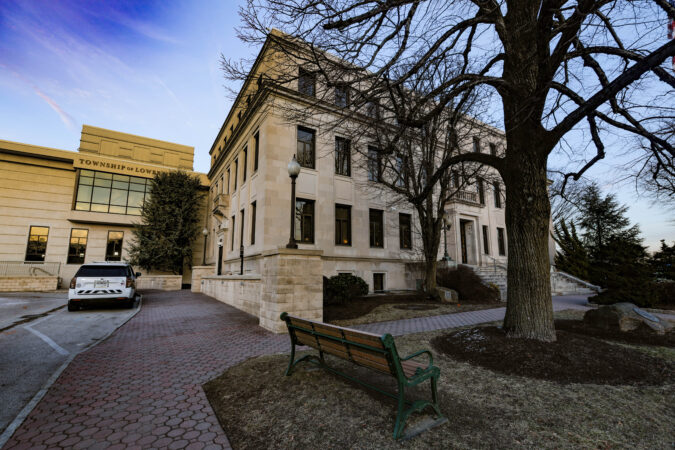
Tag: Haverford

  • Haverford president is considering convening committee to review Howard Lutnick’s name on campus library

    Haverford president is considering convening committee to review Howard Lutnick’s name on campus library

    Haverford College president Wendy Raymond is considering convening a committee that would review whether mega donor and U.S. Commerce Secretary Howard Lutnick’s name should remain on the campus library.

    Raymond’s statement to the campus community this week follows concerns expressed by Haverford students and alumni about Lutnick’s ties to sex offender Jeffrey Epstein. She noted “a growing number of Fords have written to express their dismay.”

    “While forming a naming review committee does not predetermine any outcome, it is a serious step and not something I would take lightly,” Raymond wrote to the campus. “I will take the time necessary to continue to reflect and to engage with thought partners before determining whether to activate a review committee.”

    Under Haverford’s gift policy, the school can rename a building if “the continued use of the name may be deemed detrimental to the college, or if circumstances change regarding the reason for the naming.” If Raymond convenes a committee, she would then consider its recommendations and make her recommendation to the external affairs committee of the board of managers, as well as to its chair and vice chair. The external affairs committee then would make its recommendation to the full board of managers.

    Lutnick, a 1983 graduate and former chair of the college’s board of managers, is one of the school’s biggest donors, having given $65 million. Documents released by the U.S. Justice Department this month show that Lutnick had contact with the late financier as recently as 2018, long after Epstein pleaded guilty to obtaining a minor for prostitution and soliciting a prostitute.

    And during congressional testimony last week, he said he visited Epstein’s private island with his family in 2012. Lutnick previously said he had not been in a room with Epstein, whom he found “disgusting,” since 2005.
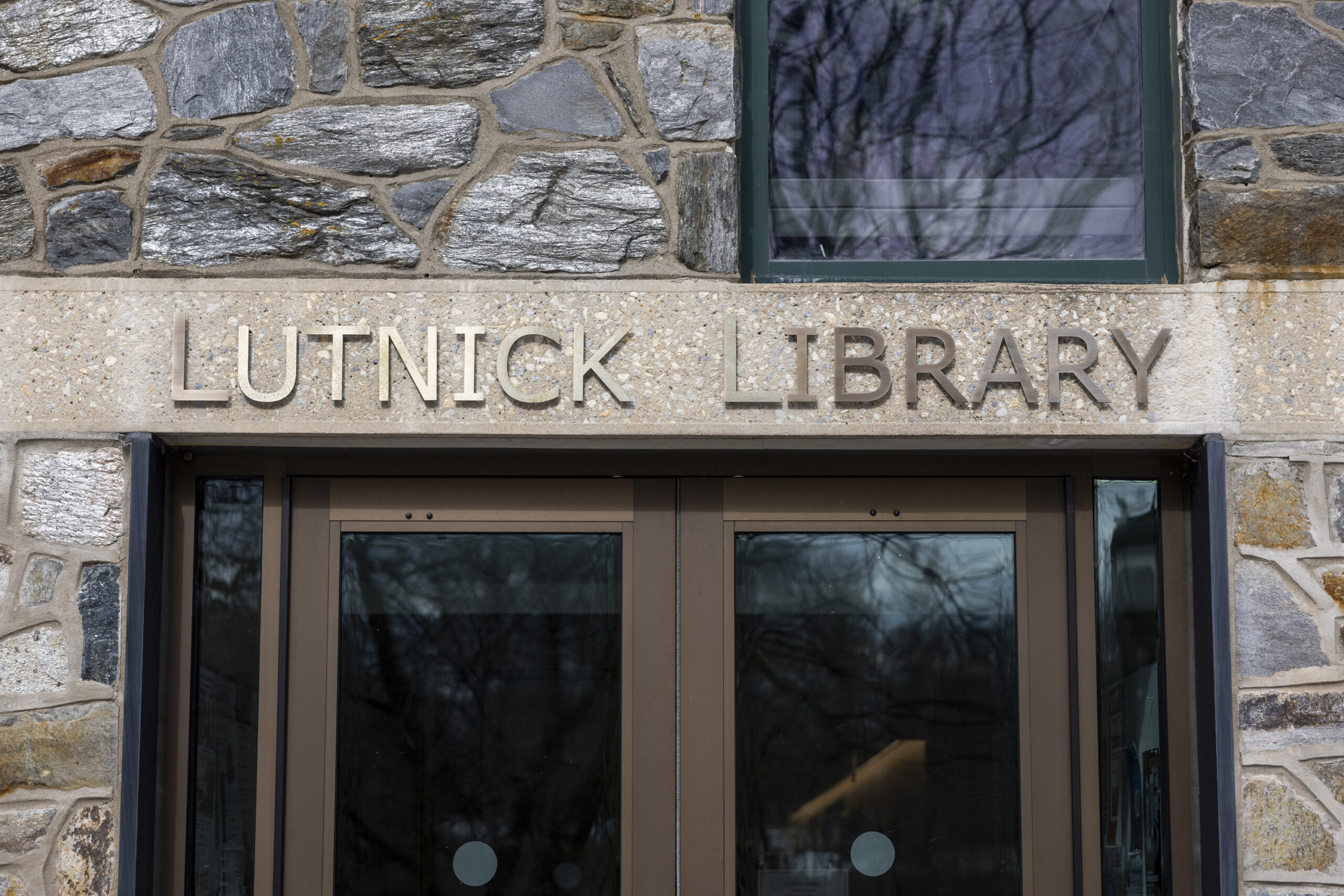
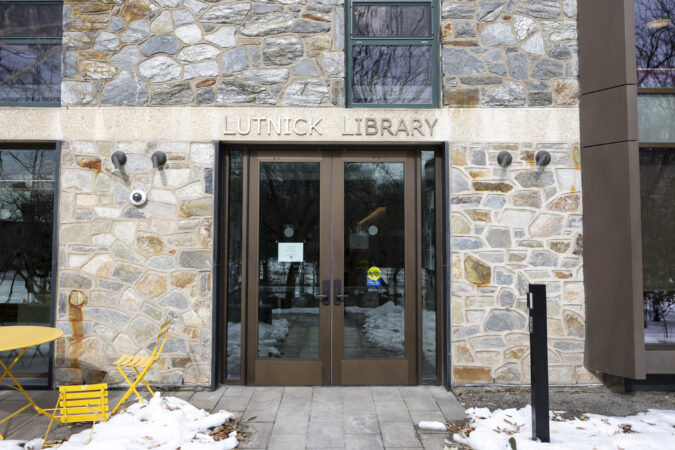
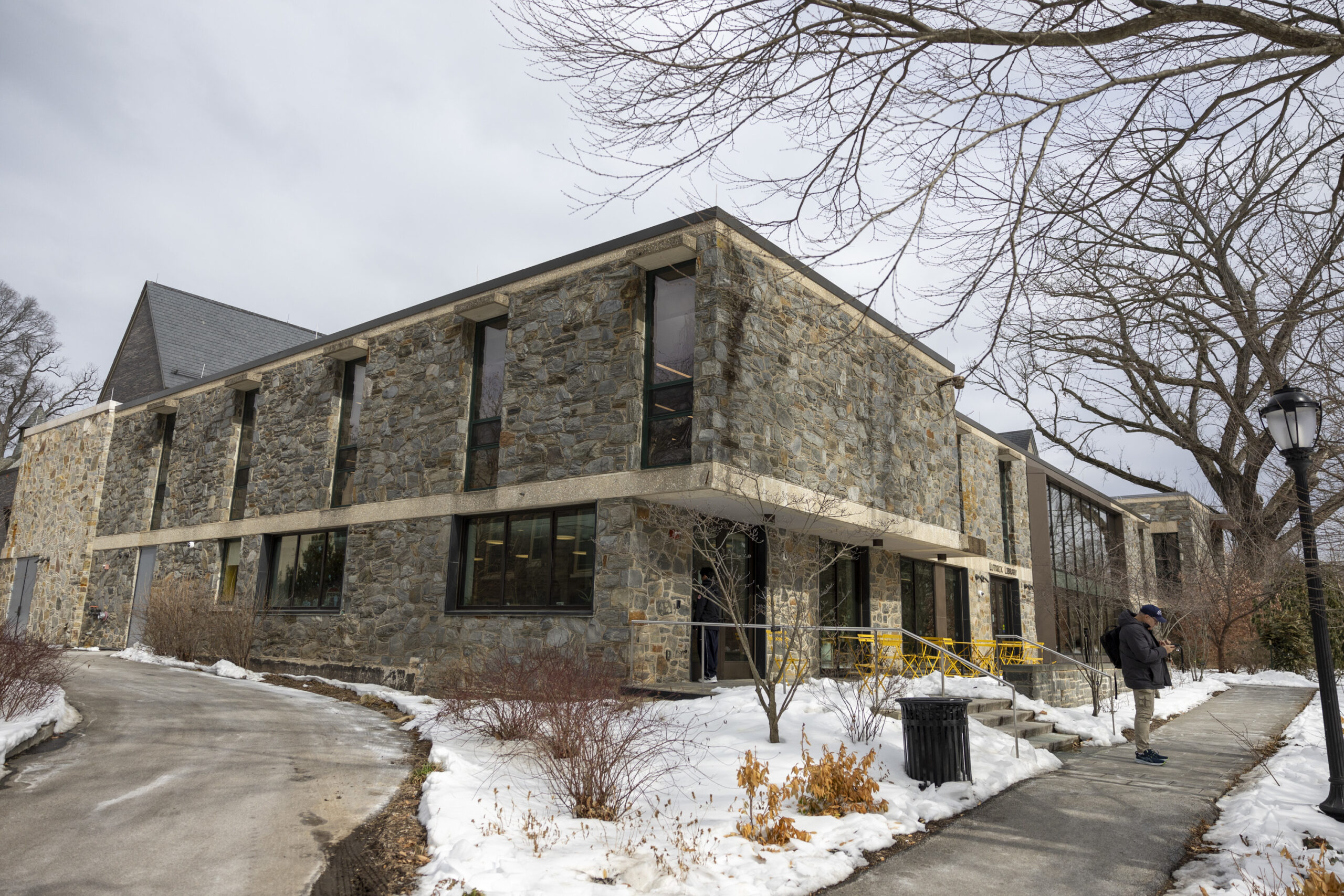
    The outside of the Lutnick Library at Haverford College.

    Raymond’s announcement comes one day after students held a town hall to discuss their concerns and feelings about Lutnick‘s ties to Epstein.

    Students who organized the town hall said Raymond’s communications about Lutnick have fallen short. They said they had hoped at least to see a review committee started.

    “Many students, including myself, are deeply disappointed and, in many cases, hurt by the neutral and softened language in these communications,” senior English major Paeton Smith-Hiebert wrote to Raymond.

    Smith-Hiebert is co-founder of the Haverford Survivor Collective, which started in 2023 and is led by Haverford students and survivors of sexual assault. She said while Raymond notes she is having conversations about the topic, the collective hasn’t been consulted.

    “Given the gravity of this situation, survivors are among those most directly affected,” she wrote. “Many are feeling significant harm and institutional betrayal … While I understand there are many stakeholders to consult, it is difficult to reconcile the stated commitment to engagement with the apparent absence of those most impacted.”

    Raymond’s message, she said, also should have included a reference to resources or support for survivors who are struggling, she said.

    Between 50 and 100 students attended the nearly two-hour town hall, several attendees said, with no students speaking in favor of keeping Lutnick’s name on the building. Students introduced an open letter with demands that has since been signed by 235 students, staff, and alumni as of 8:30 a.m. Friday, said Smith-Hiebert. The letter calls on the college to immediately convene a review committee, rename the library, acknowledge the distress and harm members of the community are experiencing, and “adopt a clear and unambiguous morals clause” in the gift policy.

    Students also discussed the possibility of protest actions to urge the college to act as soon as possible.

    The issue of Lutnick’s name on the library is likely to come up at a plenary session, where students discuss and vote on important campus issues. That session is scheduled for March 29.

    If the students were to pass a resolution calling for the removal of Lutnick’s name from the library, it would go to Raymond for signing.

    Milja Dann, 19, a sophomore psychology major from Woodbury, N.J., said she went through all of the Epstein files that mention Lutnick and Epstein and saw references to at least seven planned in-person encounters. Students compiled a 10-page document on the Lutnick-related material in the files.

    “I feel it is extremely difficult for survivors of sexual violence to see that name and know it is so closely associated with a man who has perpetuated violence and harm to so many people,” Dann said.

    A Commerce Department spokesperson told the Associated Press last month that Lutnick had had “limited interactions” with Epstein, with his wife in attendance, and had not been accused of “wrongdoing.” Lutnick told lawmakers last week: “I did not have any relationship with him. I barely had anything to do with him.”

    Some students at the town hall talked about the difficulty of going in the library, which is the heart of the academic campus.

    “For me, walking into that space has been uncomfortable for a while,” Smith-Hiebert said, referring to when Lutnick was named President Donald Trump’s commerce secretary. “That discomfort has only intensified given this news.”

    Lutnick, formerly chairman of Cantor Fitzgerald L.P., a New York City financial firm that lost hundreds of employees in the 9/11 World Trade Center attacks, served on Haverford’s board for 21 years.

    In addition to the library, which also bears his wife Allison’s name, the indoor tennis and track center is named for his brother Gary Lutnick, a Cantor Fitzgerald employee who was killed on 9/11, and the fine arts building carries the name of his mother, Jane Lutnick, a painter. He also funded the college’s Cantor Fitzgerald Art Gallery.

    Students discussed whether removing Lutnick’s name from the library would be enough or if other references should come down, too, said Cade Fanning, the associate editor of the Clerk, Haverford’s student newspaper, who attended the meeting.

    “That had the most split opinions,” said Fanning, 21, a senior history major from Annapolis.

    But people were concerned that seeing the Lutnick name on anything, even if it was a relative, would be difficult for survivors, Fanning said. And the relatives’ names still signify Lutnick’s “imprint” on the college, he said.

    Students also discussed that while they want his name off the library, the college should install a plaque explaining the history, rather than erasing it, Smith-Hiebert said.
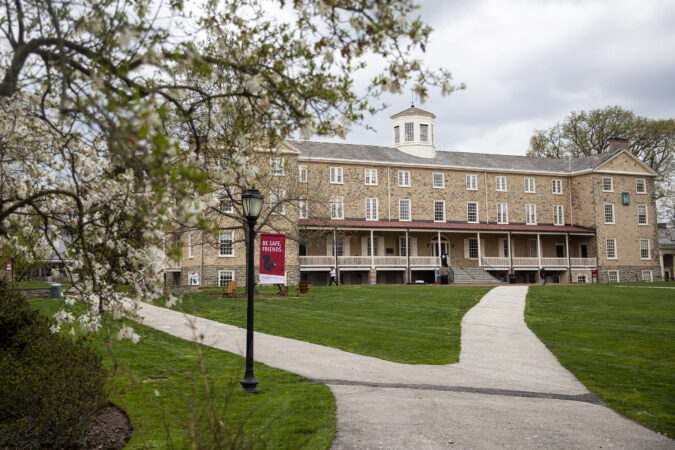

  • Haverford College vows to make changes to its events policy following disturbance at Israeli journalist talk

    Haverford College vows to make changes to its events policy following disturbance at Israeli journalist talk

    During a talk by an Israeli journalist at Haverford College earlier this month, a group of about a dozen masked people sat and stood in the audience.

    At one point, one of them began shouting through a bullhorn, “Death to IOF,” or Israeli Occupying Forces, a name critics use to refer to Israel Defense Forces, and “Shame,” according to a video of the incident and people who attended the event. The protesters’ faces were covered by masks or keffiyehs, a symbol of Palestinian identity.

    “When Gaza has burned, you will all burn, too,” the protester shouted at the audience of about 180 people, many of them members of the local Jewish community, according to another video viewed by The Inquirer.

    An audience member grabbed at the bullhorn and appeared to make contact with the protester as the protester yelled in his face, according to a video. The college’s campus safety personnel ejected both the bullhorn user and the audience member and has since banned both from campus, college officials said, noting that neither is an employee, student, or alumnus of Haverford.

    The event sparked renewed charges of antisemitism on the highly selective liberal arts campus, which already is under scrutiny by a Republican-led congressional committee for its handling of antisemitism complaints and is the subject of an open investigation by the U.S. Department of Education.

    It will also lead to changes in Haverford’s policies. In a message to the campus after the event, president Wendy Raymond — who faced intense questioning from the congressional committee about the school’s response to antisemitism last year — said “shouting down a speaker whom one does not agree with is never acceptable and stands outside of our shared community values.”

    College officials acknowledged that Haverford needs to upgrade its event policies and said changes would be rolled out no later than after spring break.

    Some people who attended the event to hear journalist Haviv Rettig Gur said they were afraid because they did not know who the masked attendees were or what they had in their belongings, and in light of recent mass violence at Jewish events around the world.

    “I was scared to walk back to my car by myself, which is the only time I ever felt that way in Lower Merion, where I live,” said Susan Taichman, a resident of Bala Cynwyd, who was in the audience.

    Barak Mendelsohn,professor of political science at Haverford College

    Several students in attendance that night said most of the protesters sat or stood silently during the event — which is permitted under campus policy.

    “I went into that event not with hatred for Jewish people, as some … have claimed was the intention of the protesters at the event,” said one Haverford student protester who asked that her name be withheld for safety reasons. “I went in with love, empathy, and deep concern for the Palestinians experiencing abhorrent amounts of violence in their homeland, as well as an understanding of the historical contexts that led to this violence, including the historic persecution of Jewish people that led to the development of Zionist thought.

    “This context, in my opinion, is not an excuse for the genocide. It’s something really tragic that is going on, and I feel really strongly that it has to be stopped.”

    Cade Fanning, the associate editor of the Clerk, Haverford’s student newspaper, cited three interruptions by protesters. One early on argued with Gur for an extended period, followed by the bullhorn incident less than an hour into the event, and then some banging on doors and yelling outside the room, said Fanning, 21, a senior history major from Annapolis, who attended the event.

    Haverford professor Barak Mendelsohn, who helped organize the nearly three-hour event and has complained about the college’s handling of antisemitism in the past, said attendees were terrified as disruptions continued.

    “I can’t tell you how ashamed I am as one of the organizers,” said Mendelsohn, an Israeli-born professor of political science and a terrorism scholar.

    Leaders of Haverford’s students’ council, meanwhile, voiced concerns that an audience member had initiated physical contact with the protester, “which deeply frightened and disturbed members of Students’ Council,” they wrote. “We believe it is paramount to prioritize the safety of members of our college community. Actions like this have no place in our community.”

    Some community members also interrupted and “heckled” protesters, Fanning said, adding that Gur belittled the activists as “children” who did not know enough about the world. The college, Fanning said, should have addressed that in its statement to the community.

    “It would have been beneficial had they at least acknowledged that he wasn’t the most conducive to respectful, honest, open debate either,” Fanning said of Gur. “He didn’t treat the students with the most respect.”

    But Anna Braun, 21, a senior English major from New York City who attended the event, said she was impressed with how Gur handled the protesters.

    “He decided to engage with them one on one to really ask them questions and try to deconstruct why they were protesting,” she said. “The only way we can have any hope for peace is for people to listen to each other and to find some middle ground. And if you’re ignoring each other or if you are interrupting each other, then there is no potential for seeing eye to eye.”

    An effort to ensure safe events

    “It has become clear that there are gaps in how events are reviewed, supported, and managed on campus,” Raymond said in her message to campus. “We are actively revising our event management and space use policies to improve clarity and processes.”

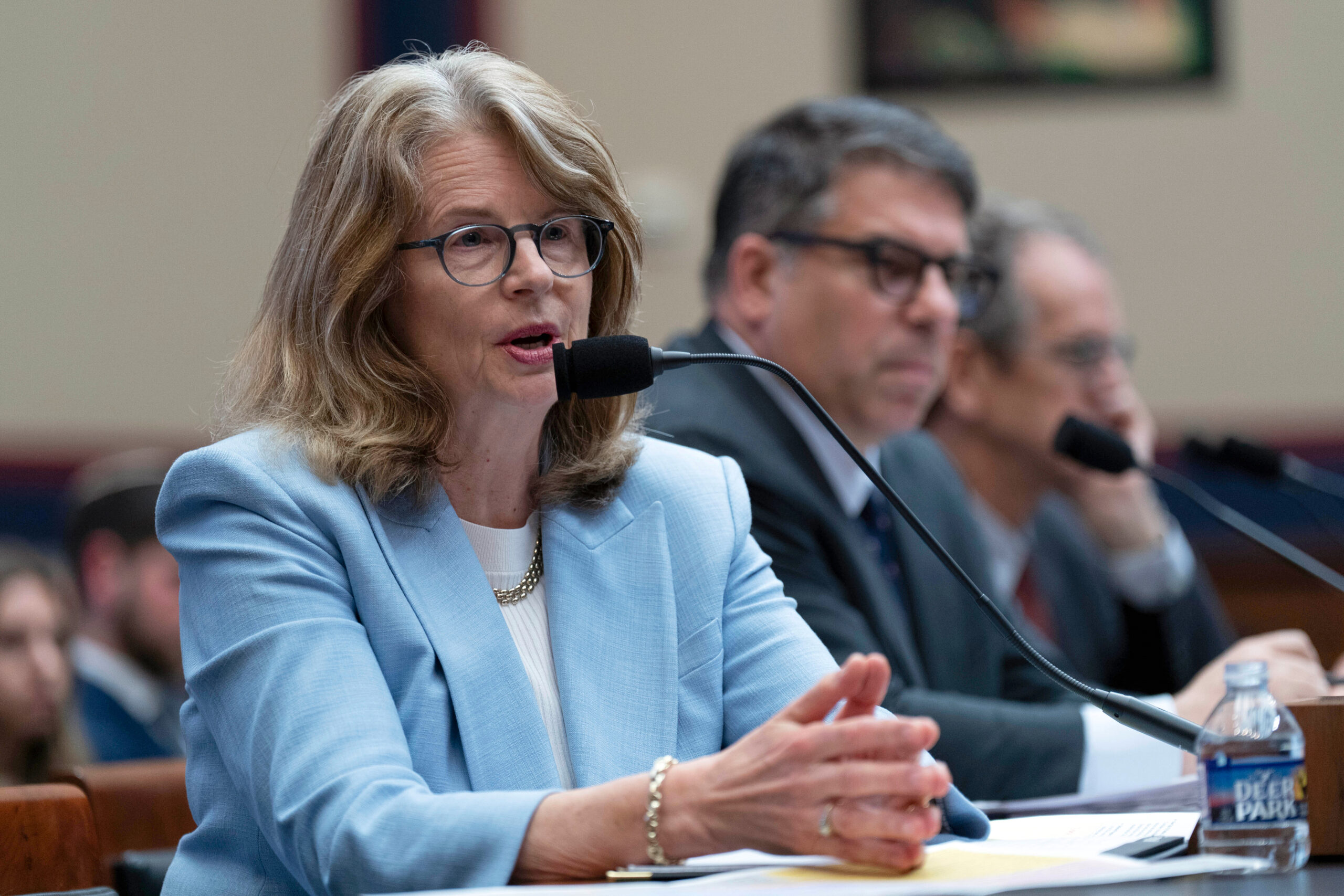
    Wendy Raymond, president of Haverford College, testifies before the House Committee on Education and Workforce hearing on antisemitism on American campuses on May 7, 2025.

    The new policy, she said, “will clarify expectations for different types of events, strengthen coordination among College offices, and establish additional planning and support for events that require heightened attention.”

    Factors such as “significant attendance or operational complexity, heightened public visibility, safety, security, or crowd-management considerations, media presence or external participation, and increased likelihood of disruption or protest activity” may trigger the need for additional review to determine whether more resources are needed, said Melissa Shaffmaster, Haverford’s vice president for marketing and communication.

    “Our intention … is not in any way to restrict free speech or restrict access for different speakers or topics to be discussed on campus,” she said. “We want to make sure that the proper resources are allocated so events can happen safely, people can have really thoughtful discourse, and these events can go off the way they are intended.”

    The indoor use of bullhorns violated the school’s “expressive freedom” policy put in place last spring, she said.

    The college is participating in the Hillel Campus Climate Initiative, touted as an effort to help college leaders counter antisemitism. A survey “to better understand the current climate for Jewish students” will be part of the effort.

    Haverford also is preparing for a major change in leadership. Raymond said in November she would step down as president in June 2027; John McKnight, the dean of the college, also announced he would be leaving at the end of this semester for a new role at Dartmouth College; and the college’s vice president for institutional equity and access also will exit that post in May.

    ‘The howling cry of an uneducated child’

    Gur’s talk was titled “Roots, Return, and Reality: Jews, Israel, and the Myth of Settler Colonialism.” In an opinion piece for the Free Press after the talk, Gur said he had gone to Haverford to talk “about the Jewish history that forged Israeli identity.”

    While he saw the audience “tense up” when protesters entered, he wrote, he saw it as “a chance to explore managing an encounter with the abusive ideologues.”

    During the event, Gur called the bullhorn protester’s disruption “the howling cry of an uneducated child.”

    He said he invited protesters to stay, but told them they had to remove their masks, which they did not do. Most protesters remained for the entire talk, he said, some even crying and engaging in dialogue with him.

    “The more I treated them like neglected children hungry for knowledge, the more likely they were to respond in healthy and productive ways,” he wrote.

    The event was organized by Kevin Foley, a 1983 Haverford graduate. Foley said he was impressed with Gur, a political correspondent and senior analyst for the Times of Israel, after seeing a video of him teaching.

    “I thought I could do something good for Haverford by having him teach there,” said Foley, who lives in Connecticut and New York City and spent his career running electronic trading businesses at Bloomberg and Cantor Fitzgerald.

    Foley’s best friend was killed in the 9/11 attacks and he said he experienced Hamas’ October 2023 attack on Israel as an “echo trauma.” To see concerns at Haverford about its handling of antisemitism “was disappointing,” he said, and what happened at Gur’s talk reinforced those concerns.

    “What I can’t believe is that Haverford has so abandoned its liberal values of academic freedom, freedom of inquiry, that it’s considered acceptable for protesters to come in and disrupt and shut down an educational class,” Foley said.

    Foley called on the college to ban masks and have metal detectors available when needed, and to apologize to Gur’s audience.

    Shaffmaster said the college’s policy allows people to wear masks, but they must remove them if they are asked by campus safety officers or administrators for identification purposes.

    Ongoing tensions on campus

    Several students in attendance, who asked not to be named because of tensions on campus over the issue, said they thought campus safety and the college handled the event as best they could without silencing either side.

    “No matter what they had done, people would be mad at them,” one said.

    Fanning, the student editor, understood why older community members may have been fearful, but said protesters also have fears of being harassed or doxed for their pro-Palestinian advocacy if their identity is known.

    “They are not fearless themselves,” Fanning said. “Nobody is.”

    But Mendelsohn, the professor, was disturbed that Haverford seemed to equate the actions of the audience member who grabbed the bullhorn with those of the protester.

    “The person acted in self-defense and managed to get the bullhorn from her hands,” he said. “If someone turned to you with a microphone and screamed, you would not sit there and do nothing.”

    Mendelsohn has been at the forefront of allegations that Haverford has not done enough to address antisemitism, and the college has investigated him for speaking out on social media and in emails, according to a lawsuit filed against the college last year by a Jewish group. Much of the complaint was dismissed, but the judge allowed a portion involving breach of contract that would result in nominal damages to proceed, and that is in mediation, court records show.

    The actions at Gur’s speech were just one of several ongoing problems with antisemitism on the campus, Mendelsohn said. His mezuzah — an object signifying the Jewish faith — was stolen from his office door a couple of months ago, he said. And he referred to a bias complaint over comments made around funding for the Haverford Chabad board. That remains under review, the college said.

    Braun, the English major, said that she was heartened to see improvement in Haverford’s handling of the Gur event and that the campus has been more welcoming to Jewish students. Most people she has spoken with, she said, did not think the use of the bullhorn was appropriate.

    “That’s not something I would have heard two years ago on this campus,” she said. “I sincerely believe there is more of a desire to create an inclusive environment.”

  • Upper Darby Council passes resolution to restrict cooperation with ICE following resident’s death in the agency’s custody

    Upper Darby Council passes resolution to restrict cooperation with ICE following resident’s death in the agency’s custody

    The Upper Darby Township Council passed a resolution Wednesday to restrict cooperation with U.S. Immigration and Customs Enforcement in response to growing concerns about the agency’s activities in the diverse township.

    The 11-member council, made up entirely of Democrats, voted unanimously to pass a resolution saying the town will not use its resources to assist ICE with non-criminal immigration enforcement. But the largely symbolic resolution nearly mirrors the municipality’s existing guidelines, leading to criticism that it does not go far enough.

    The resolution’s passage comes after Parady La, an Upper Darby resident struggling with addiction, died last month in a hospital while in ICE’s custody. It also follows the chaotic scenes in Minneapolis, where federal agents fatally shot Renee Good and Alex Pretti last month as President Donald Trump’s administration targeted the city with a massive immigration enforcement operation.

    Those events have fueled anxiety in Upper Darby, where nearly a quarter of the population is foreign-born, compared with 15% in Philadelphia. Armed ICE agents wearing masks have become a familiar sight in the township, prompting residents to question why their community is suddenly under pressure, including high school students who held a walkout earlier this month.

    Council President Marion Minick called the resolution a chance to show immigrants in the community “they are not alone.”

    “We can demonstrate through our votes and through our voices that Upper Darby Council will do everything within our legislative power to shield our residents and their families from this climate of intimidation,” he said.

    The council’s resolution comes as local governments across the country and in the Philadelphia area try to curb ICE’s impact on their residents. Last month, Haverford passed a similar measure and Bucks County ended its agreement with the agency that allowed sheriff’s deputies to act as immigration enforcement.

    Council member Kyle McIntyre, a progressive community organizer who began his term last month, emphasized that the resolution is “just the start.”

    “There is so much more than we can do, and we will be doing, and I make that solemn promise to the community right now,” he said before the vote.

    “If we don’t do more, hold us accountable,” he added.

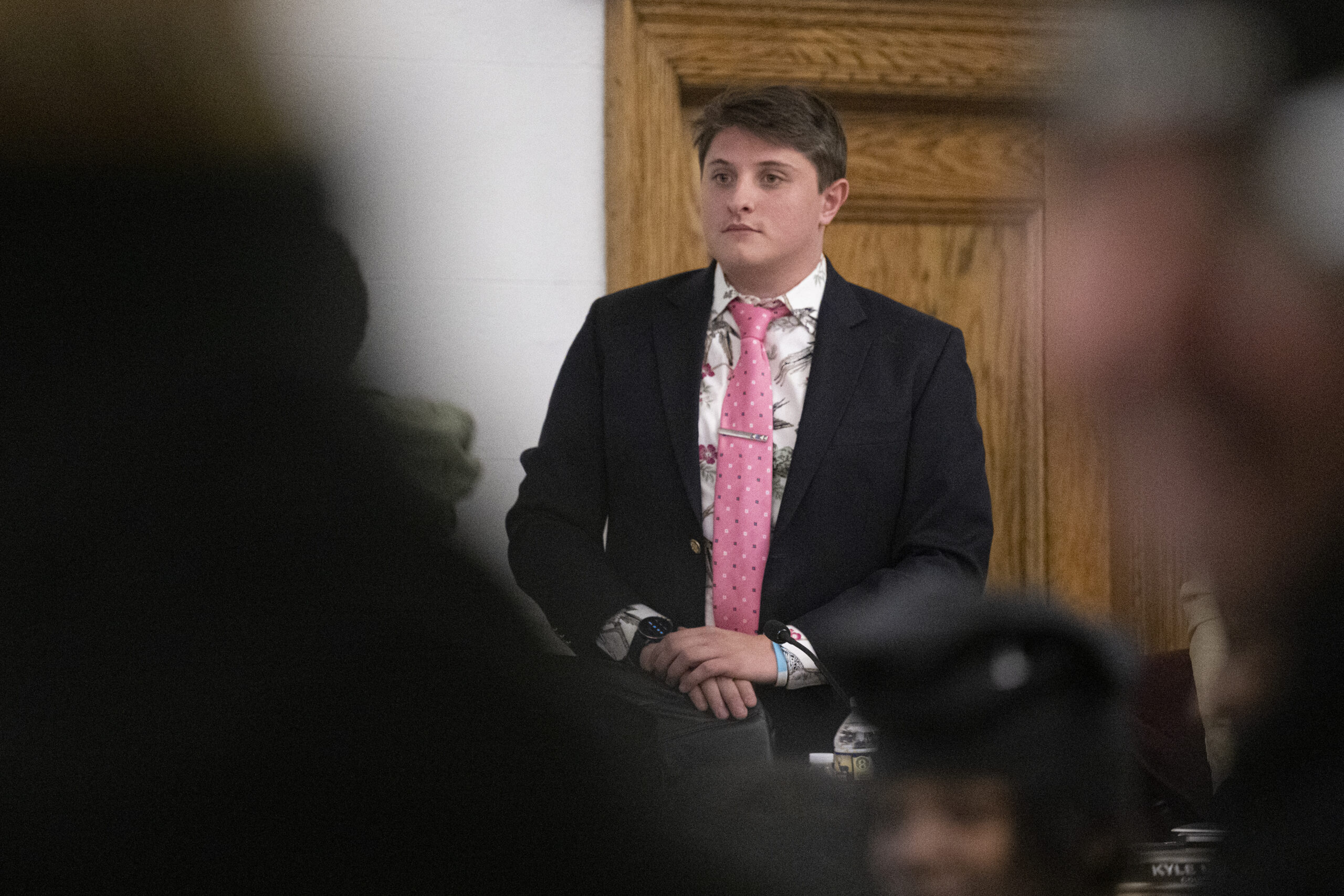
    Kyle McIntyre, an Upper Darby Township council member, listens to residents’ comments during a township meeting on Wednesday, Jan. 21, at the Upper Darby Municipal Building in Upper Darby, Pa.

    Township solicitor Mike Clarke said that police will cooperate with ICE if the agency has a criminal warrant signed by a judge.

    “Local law enforcement is not supposed to be in the immigration enforcement business, and essentially that’s what this resolution is saying … but if it’s a criminal warrant, they will be involved,” Clarke said.

    A list of frequently asked questions about ICE on the township’s website already stated that Upper Darby does not participate in civil immigration enforcement or ask residents their immigration status, though it does cooperate with lawfully issued criminal warrants and court orders. Township spokesperson Rob Ellis confirmed that the resolution reaffirms the town’s existing internal policy.

    The lack of cooperation seems to be going both ways.

    Upper Darby Mayor Ed Brown said earlier this month that ICE would no longer communicate with local police to tell them when agents are operating in the township, calling the change “scary.” ICE did not immediately respond to a request for clarity on Thursday.

    Some residents at the meeting expressed concern about the reaffirmed policy getting in the way of public safety, and McIntyre later said the policy ensures anyone in Upper Darby can feel comfortable reporting crimes to the police. He said “anybody that commits a crime in Upper Darby Township will be held accountable,” regardless of immigration status.

    Jennifer Hallam, who said she has worked with immigrants in Upper Darby for almost a decade, urged the council to postpone its vote and instead pursue legislation that has more teeth.

    “The current resolution really just preserves the status quo,” she said.

    She called for a resolution that would restrict ICE from municipal property without judicial warrants, prohibit the collection and sharing of immigration status among municipal employees, and prohibit ICE from wearing masks. Philadelphia lawmakers are attempting to ban ICE from wearing masks, though experts are split on whether the measure would be legally sound.

    McIntyre said in an interview that Wednesday’s resolution puts the council’s values down on paper and provides clarity to the community, but he acknowledged that a resolution is not enforceable.

    A death in ICE custody close to home

    The community has been grappling with the death of La, a 46-year-old Cambodian immigrant and Upper Darby resident who, according to his widow, Meghan Morgan, struggled with addiction. La came the United States in 1981 as a refugee around the age of 2. He became a lawful permanent resident a year later but lost his legal status after committing a series of crimes over two decades, ICE said.

    ICE said agents arrested La outside his home last month before he received treatment for severe withdrawal in a Philadelphia detention center. He was admitted to the hospital in critical condition, where his condition worsened and he died, the agency said.

    Morgan and La’s daughter Jazmine La said they believe he was not given proper medical treatment and the Pennsylvania ACLU filed a Freedom of Information Act request surrounding his detention and death.

    McIntyre last month called on Delaware County District Attorney Tanner Rouse and Philadelphia District Attorney Larry Krasner to investigate La’s death.

    Rouse said at the time that Delaware County law enforcement was not involved or aware of La’s detainment when it happened, and that his office would investigate it. He said Thursday that surveillance footage showed La was detained “without violence” but that his death in Philadelphia should be addressed by “investigating authorities” in the city.

    Krasner’s office declined to comment, saying it was a federal matter.

    Staff writer Jeff Gammage contributed to this article.

  • Howard Lutnick’s name is on the library at Haverford College. Will that change after his appearance in the Epstein files?

    Howard Lutnick’s name is on the library at Haverford College. Will that change after his appearance in the Epstein files?

    As U.S. Commerce Secretary Howard Lutnick’s relationship with Jeffrey Epstein gains new scrutiny, questions have emerged on Haverford College’s campus about how to address their mega-donor’s involvement.

    Lutnick, a 1983 Haverford graduate who has donated $65 million to the college and whose name is on the school’s library, had contact with the late financier as recently as 2018, long after Epstein pleaded guilty to obtaining a minor for prostitution and soliciting a prostitute, according to documents released by the Justice Department. And during congressional testimony this week, he said he visited the sex offender’s private island with his family in 2012. That’s even though Lutnick previously said he had not been in a room with Epstein, whom he found “disgusting,” since 2005.

    At Haverford, where the library at the heart of campus is named after Lutnick, two students have floated a proposal to remove Lutnick’s name from the building and wrote a resolution that could be discussed at a forthcoming student-led meeting, according to the Bi-College News, the student newspaper for Haverford and Bryn Mawr Colleges. Fliers that say “Howard Lutnick is in the Epstein Files — What Now?” have been posted around campus, according to the publication.

    And in an email to campus Thursday, Wendy Raymond, president of the highly selective liberal arts college on the Main Line, said she and the board of managers are monitoring the situation.

    “We recognize that association with Epstein raises ethical questions,” she wrote. “While Secretary Lutnick’s association with Epstein has no direct bearing on the College, as an institution, we are committed to our core values and cognizant of broader ethical implications raised by these disclosures.”

    Commerce Secretary Howard Lutnick listens during an event with President Donald Trump in the Oval Office of the White House earlier this month.

    A Commerce Department spokesperson told the Associated Press last month that Lutnick had had “limited interactions” with Epstein, with his wife in attendance, and had not been accused of “wrongdoing.” Lutnick told lawmakers this week: “I did not have any relationship with him. I barely had anything to do with him.”

    Lutnick, formerly chairman of Cantor Fitzgerald L.P., a New York City financial firm that lost hundreds of employees in the 9/11 World Trade Center attacks, served on Haverford’s board for 21 years and once chaired it. In addition to the library, the indoor tennis and track center bears the name of his brother Gary Lutnick, a Cantor Fitzgerald employee who was killed on 9/11, and the fine arts building carries the name of his mother, Jane Lutnick, a painter. He also funded the college’s Cantor Fitzgerald Art Gallery.

    In making a $25 million gift to the college in 2014 — which remains tied for the largest donation Haverford has received — Lutnick told The Inquirer the college had helped him during a particularly difficult period. He lost his mother to cancer when he was a high school junior, and one week into his freshman year at Haverford, where he was an economics major, his father died as the result of a tragic medical mistake.

    The then-president of Haverford called Lutnick and told him his four years at Haverford would be free.

    “Haverford was there for me,” Lutnick said, “and taught me what it meant to be a human being.”

    Lutnick’s gift was used to make the most significant upgrades to the library in 50 years. Lutnick left Haverford’s board in 2015.

    He was confirmed as commerce secretary a year ago, after President Donald Trump took office for the second time. Since the Epstein documents were released, Lutnick has faced bipartisan calls to resign.

    Some in the Haverford community have spoken out online about Lutnick’s ties to Epstein.

    “How soon can we petition to make Magill Magill again,” one alum, who said they were at Haverford when Lutnick attended, wrote anonymously on a Reddit thread, referring to the library’s prior name. “More urgently, does Haverford plan to express compassion and support for the survivors and publicly condemn Lutnick for his involvement?”

    The Haverford Survivor Collective’s executive board, a group founded in 2023 and led by Haverford students and survivors of sexual assault, also called on the college to “re-examine” its ties to Lutnick.

    “At what point will the College confront its relationship with this individual?” the group asked. “At what point will it say, unequivocally, ‘enough is enough’? At what point does a reluctance to do so extend beyond mere negligence into a moral failing?”

    The outside of the Lutnick Library at Haverford College

    Push to rename the library

    Earlier this month during a Plenary Resolution Writing Workshop — part of Haverford’s student self-governance process — students Ian Trask and Jay Huennekens put forth a resolution that would change the name of the library, the student newspaper reported.

    At plenary sessions, which take place twice a year in the fall and spring, the student body discusses and votes on important campus issues. On March 23, a packet of plenary resolutions will be released to the student body, with the plenary session scheduled for March 29.

    “We feel that it is important that the college reflect the values of the student body, and that those values do not align with the Trump administration or the associates of Jeffrey Epstein,” the students told the Bi-Co News.

    Attempts to reach Trask and Huennekens were unsuccessful.

    If the student resolution passes, it would go to Raymond for signing.

    But even then, it’s no easy feat to remove a name from a college building. There would be a review process involving the board of managers that could take a while.

    Under Haverford’s gift policy, the school can rename a building if “the continued use of the name may be deemed detrimental to the College, or if circumstances change regarding the reason for the naming.”

    Raymond would have to convene a committee, consider that committee’s recommendations, and make her recommendation to the external affairs committee of the board of managers and its chair and vice chair. The external affairs committee then would make its recommendation to the full board of managers.

    At nearby Bryn Mawr College, it took years before M. Carey Thomas’ name was removed from the library. Thomas, who was Bryn Mawr’s second president, serving from 1894 to 1922, was a leading suffragist, but also was reluctant to admit Black students and refused to hire Jewish faculty.

    In 2017, then-Bryn Mawr president Kim Cassidy issued a moratorium on using Carey’s name while the college studied how to handle the matter. A committee in 2018 decided students, faculty, students, and staff should no longer refer to the library using Thomas’ name, but decided to leave the inscription and add a plaque explaining the complicated history.

    The college faced continued pressure from students to take further action and removed Thomas’ name in 2023.

    Other colleges have taken similar actions. Princeton University in 2020 stripped former President Woodrow Wilson’s name from its public affairs school and presidential college.

  • Ann Harnwell Ashmead, renowned classical archaeology researcher and writer, has died at 96

    Ann Harnwell Ashmead, renowned classical archaeology researcher and writer, has died at 96

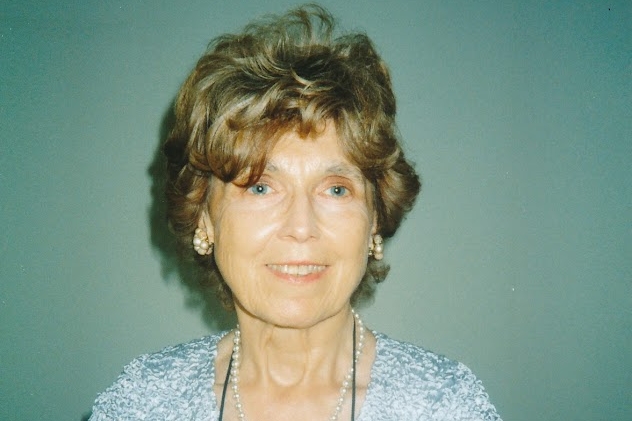
    Ann Harnwell Ashmead, 96, of Haverford, renowned classical archaeology researcher, writer, museum curator, volunteer, and world traveler, died Saturday, Jan. 17, of chronic congestive heart failure at her home.

    Dr. Ashmead was an archaeological specialist in Greek vase painting, the depiction of cats on classical and Near Eastern artifacts, and the history of other ancient ceramics. She traveled to Greece, Italy, Turkey, France, and elsewhere around the world to examine, analyze, and research all kinds of ceramics collections.

    She consulted with hundreds of other archaeologists and curators, and wrote extensively about the ongoing international research project to document ancient ceramics and the extensive collections at Haverford and Bryn Mawr Colleges, the Penn Museum, the Rhode Island School of Design, the Louvre Museum in Paris, and other places. She did archaeological field work in Greece during her college years at Bryn Mawr and served as a classical archaeology graduate teaching assistant.

    She was onetime curator of Bryn Mawr’s 6,000-piece Ella Riegel Memorial Museum and a research associate at the Penn Museum. She partnered for years with Bryn Mawr professor Kyle Meredith Phillips Jr. to research and write articles and books about ancient vases, cups, jars, pots, Etruscan images of cats, and other classical antiquities.

    Dr. Ashmead visited many archaeological sites in Greece and elsewhere.

    Some of her colleagues lovingly called her “the cat lady.”

    Dr. Ashmead often reassembled broken ancient objects for curators and created visual and oral presentations to augment her printed catalogs, articles, and books. “She was indefatigable,“ her family said in a tribute.

    She shared her research at conferences, meetings, and exhibitions around the globe, and most recently collaborated with Ingrid M. Edlund-Berry, professor emerita at the University of Texas at Austin, on a project that scrutinized cats as shield devices on Greek vases.

    “Ann was very modest, humble, and self-deprecating about her publications and academic achievements,” her family said. Her son Graham said: “She was a role model who inspired me with her curiosity on all subjects and issues, and a love of world travel, reading, and lifelong learning.”

    Dr. Ashmead spoke English, Japanese, Greek, Chinese, French, Danish, and Italian.

    Dr. Ashmead was active with the Archaeological Institute of America, and her research was published by the American Journal of Archaeology, the journal of the American School of Classical Studies at Athens, and other groups.

    She married Haverford College English professor John Ashmead Jr. in 1949, and they spent the next two decades traveling the world while he completed Fulbright Scholar teaching assignments. They lived in Japan, Taiwan, and India, and later in Paris, Athens, and Florida.

    She spoke English, Japanese, Greek, Chinese, French, Danish, and Italian. “Her learning never stopped,” her family said.

    Ann Wheeler Harnwell was born Oct. 7, 1929, in Princeton, N.J. Her family moved to Wynnewood in 1938 after her father, Gaylord P. Harnwell, became chair of the physics department at the University of Pennsylvania. He became president of Penn in 1953.

    Dr. Ashmead had many articles, catalogs, and books published over her long career.

    She graduated from Lower Merion High School in 1947 after spending the previous three years with her family in California. She earned bachelor’s and master’s degrees and a doctorate in classical archaeology at Bryn Mawr, and her 1959 doctoral thesis was titled: “A Study of the Style of the Cup Painter Onesimos.”

    On page 2, she wrote: “Such attributions of vases to an artist are a delicate business, the outcome of a long and intricate process of observation and analysis, often of tentative nature.”

    She and her husband had sons John III, Graham, and Gaylord, and daughters Louisa and Theodora. They divorced in 1976 but remained close friends until he died in 1992.

    Having grown up during the stock market crisis in the 1930s, Dr. Ashmead followed the market closely as an adult, and was thrifty and frugal, her family said.

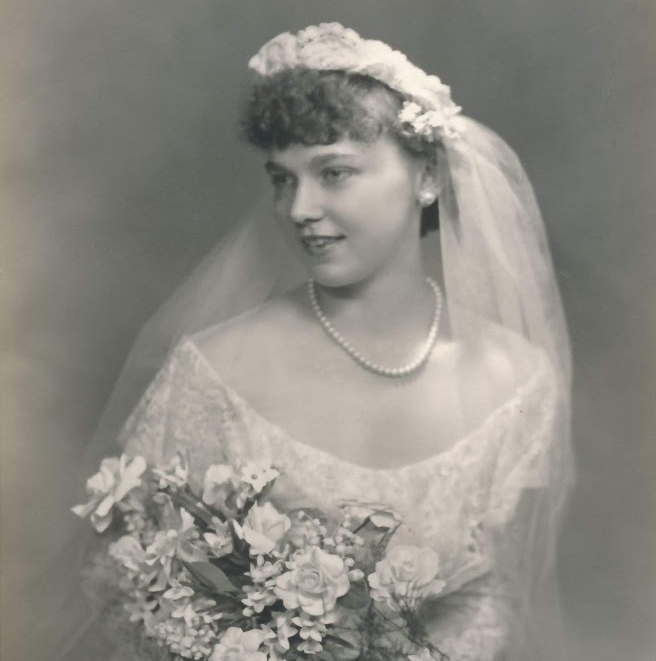
    Dr. Ashmead married English professor John Ashmead Jr. in 1949.

    She was an avid letter writer and reader, and her personal library featured more than 5,000 books. She volunteered for years at Bryn Mawr’s old Owl Bookstore and especially enjoyed reading to her children and grandchildren.

    She was on the board of the Haverford College Arboretum and a member of the Hardy Plant Society, the Henry Foundation for Botanical Research, and the Philadelphia Skating Club. She enjoyed dancing, organizing Easter egg hunts, and hosting birthday parties and family events.

    A fashionista in the 1960s and ’70s, she was adept at needle crafting, quilting, and sewing. She bred cats, painted, collected antiques, and researched her genealogy.

    She always made time for family no matter where in the world they were, and they said: “She was concerned if she was ever separated from a child and distraught if they were distraught.”

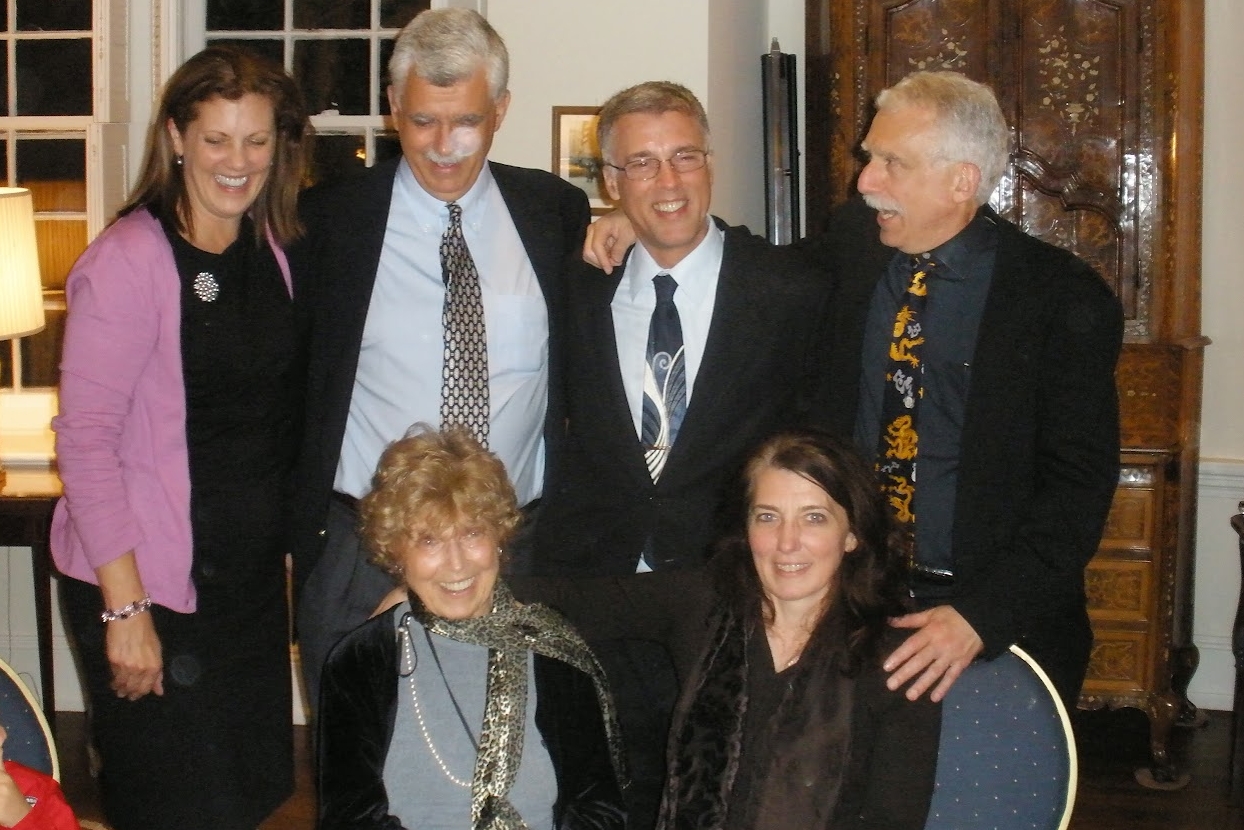
    Dr. Ashmead (front left) always made time for her family.

    She lived in Denmark for a few years and finally settled for good in Haverford in 1983. “She was interesting, smart, capable, strong, articulate, and fun to be around,” her daughter Theodora said. “She was solution-oriented. She sparkled.”

    In addition to her children, Dr. Ashmead is survived by six grandchildren, a sister, and other relatives. A brother died earlier.

    She requested that no services be held and donated her body to the Humanity Gifts Registry through Penn’s Perelman School of Medicine.

    Donations in her name may be made to the Haverford College Arboretum, 370 Lancaster Ave., Haverford, Pa. 19041.

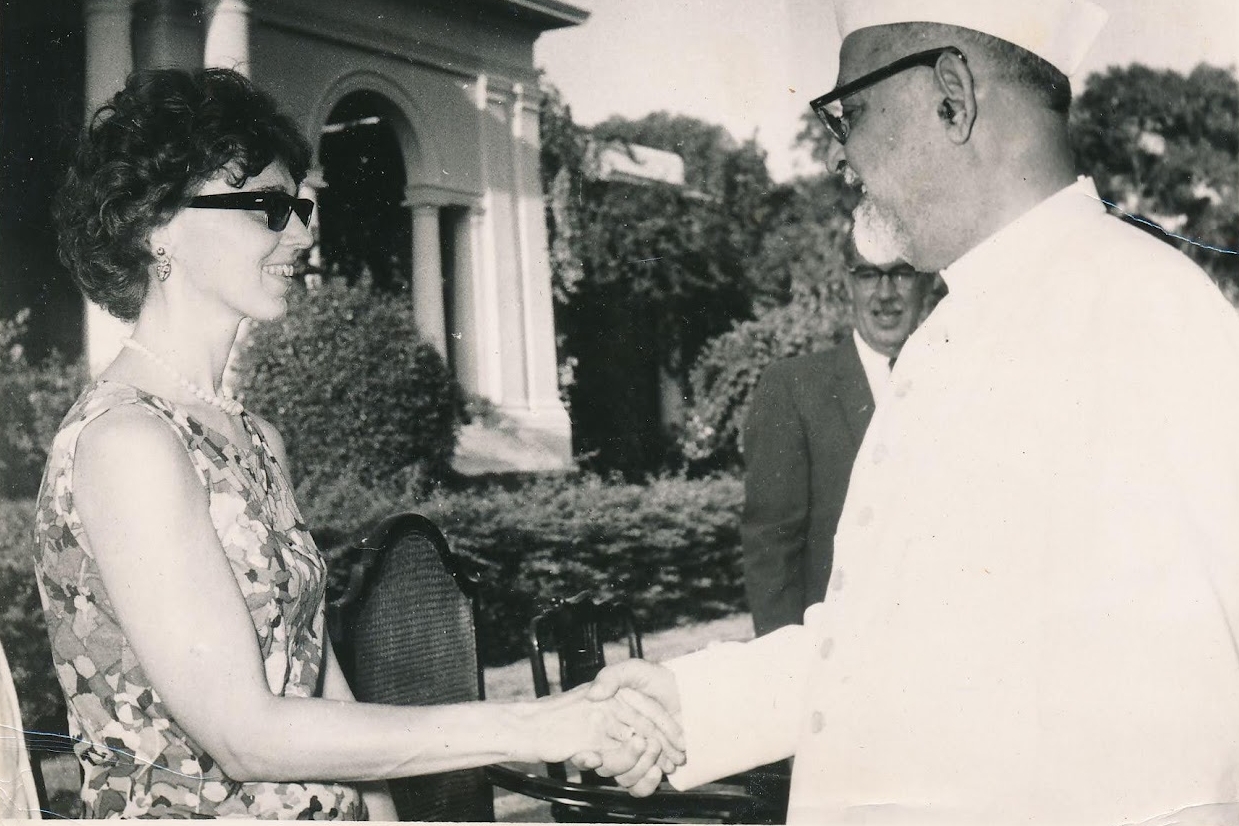
    Dr. Ashmead (left) met many dignitaries during her worldwide travels.
  • A Main Line town leads the charge of new Philly-area restaurants for February

    A Main Line town leads the charge of new Philly-area restaurants for February

    February’s crop of restaurant openings includes two restaurants’ expansions to Narberth, a reopened brewery in South Jersey, a chic restaurant/lounge in Center City, an intriguing wine bar/bottle shop in Chestnut Hill, and two French newcomers.

    Restaurants can take awhile and owners are often hesitant to pinpoint an opening date. I’ve listed the targeted day where possible; for the rest, check social media.

    Duo Restaurant & Bar (90 Haddon Ave., Westmont): Brothers Artan and Arber Murtaj and Andi and Tony Lelaj, who own the Old World-style Italian Il Villaggio in Cherry Hill, are taking over Haddon Avenue’s former Keg & Kitchen with a pub serving a bar menu supplemented with seafood.

    Eclipse Brewing (25 E. Park Ave., Merchantville): Last August, food trucker Megan Hilbert of Red’s Rolling Restaurant became one of the youngest brewery owners in New Jersey when she bought this 9-year-old Camden County brewery, open as of Friday.

    Lassan Indian Traditional (232 Woodbine Ave., Narberth): The second location of the well-regarded Lafayette Hill Indian BYOB takes over the long-ago Margot space in Narberth.

    LeoFigs, 2201 Frankford Ave., as seen in January 2026.

    LeoFigs (2201 Frankford Ave.): Justice and Shannon Figueras promise the delivery of their long-awaited bar/restaurant, with an urban winery in the basement, at Frankford and Susquehanna in Fishtown. The food menu will be built around comfort-leaning small plates.

    The bubbly selection at Lovat Square in Chestnut Hill.

    Lovat Square (184 E. Evergreen Ave.): Damien Graef and Robyn Semien (also owners of Brooklyn wine shop Bibber & Bell) are taking over Chestnut Hill’s former Top of the Hill Market/Mimi’s Café property for a multiphased project: first a wine shop with indoor seating, then a courtyard with a full dinner menu, followed later by a cocktail bar/restaurant component. Opens Feb. 12

    Malooga (203 Haverford Ave., Narberth): The Old City Yemeni restaurant is expanding to Narberth with lunch and dinner service plus a bakery, with expanded indoor/outdoor seating and space for groups.

    Mi Vida (34 S. 11th St.): Washington, D.C.-based restaurant group Knead Hospitality + Design is bringing its upscale Mexican concept to East Market, next to MOM’s Organic Market. Target opening is Feb. 18.

    MOTW Coffee & Pastries (2101 Market St): Mahmood Islam and Samina Akbar are behind this franchise of Muslims of the World Coffee, offering a third-space experience at the Murano.

    Napa Kitchen & Wine (3747 Equus Blvd., Newtown Square): A California-inspired restaurant rooted in Midlothian, Va., opens in Ellis Preserve with an extensive domestic and international wine list in a polished setting. Opens Feb. 9.

    Ocho Supper Club (210 W. Rittenhouse Square): Chef RJ Smith’s Afro-Caribbean fine-dining supper club starts a six-month residency at the Rittenhouse Hotel, tied to the Scarpetta-to-Ruxton transition, serving tasting menus through July. Now open.

    Piccolina (301 Chestnut St.): A low-lit Italian restaurant and cocktail bar at the Society Hill Hotel from Michael Pasquarello (Cafe Lift, La Chinesca, Prohibition Taproom). Targeting next week

    Pretzel Day Pretzels (1501 S. Fifth St.): James and Annie Mueller’s pretzel-delivery operation is becoming a takeout shop in the former Milk + Sugar space in Southwark. Expect classic soft pretzels plus German-style variations (including Swabian-style) and stuffed options.

    Merriment at the bar at Savu, 208 S. 13th St.

    Savú (208 S. 13th St.): Kevin Dolce’s Hi-Def Hospitality has converted the former Cockatoo into a modern, bi-level dining and late-night lounge with a New American menu from chef Maulana Muhammad; it just soft-opened for dinner Thursday through Sunday and weekend brunch.

    Bar-adjacent seating at Side Eye.

    Side Eye (623 S. Sixth St.): Hank Allingham’s all-day neighborhood bar takes over for Bistrot La Minette with “French-ish” food from chef Finn Connors, plus cocktails, European-leaning wines, beer, and a late-night menu. Opens 5 p.m. Feb. 7 with 50% of the night’s proceeds going to the People’s Kitchen.

    Soufiane at the Morris (225 S. Eighth St): Soufiane Boutiliss and Christophe Mathon (Sofi Corner Café) say there’s a 90% chance of a February opening for their new spot at the Morris House Hotel off Washington Square. It’s billed as an elegant-but-approachable restaurant inspired by classic French bouillons/brasseries, with a menu spanning small plates and full entrées alongside Moroccan-influenced tagines. Expect evening service indoors, daytime service outdoors.

    South Sichuan II (1537 Spring Garden St.): A second location for the popular Point Breeze Sichuan takeout/delivery specialist, near Community College of Philadelphia; this one will offer more seating.

    Zsa’s Ice Cream (6616 Germantown Ave.): The Mount Airy shop’s end-of-2025 “grand closing” proved short-lived after a sale to local pastry chef Liz Yee. Reopened Feb. 7.

    Looking ahead

    March openings are in the offing for the much-hyped PopUp Bagels in Ardmore, as well as the long-delayed Terra Grill (a stylish room in Northern Liberties’ Piazza Alta) and ILU (the low-lit Spanish tapas bar) in Kensington.

  • A plan to redevelop Gladwyne has residents split on their town’s future. What happens next?

    A plan to redevelop Gladwyne has residents split on their town’s future. What happens next?

    Three weeks after developers unveiled a sweeping plan to revitalize much of downtown Gladwyne, the affluent Main Line community has been abuzz with excitement, and skepticism, about the village’s future.

    On Jan. 8, Andre Golsorkhi, founder and CEO of design firm Haldon House, presented plans for a revitalized town center, complete with historic architecture, green spaces, and businesses that “fit the character” of the area. Golsorkhi told a packed school auditorium that Haldon House plans to bring in boutique shops, open an upscale-yet-approachable restaurant, and create spaces for communal gathering.

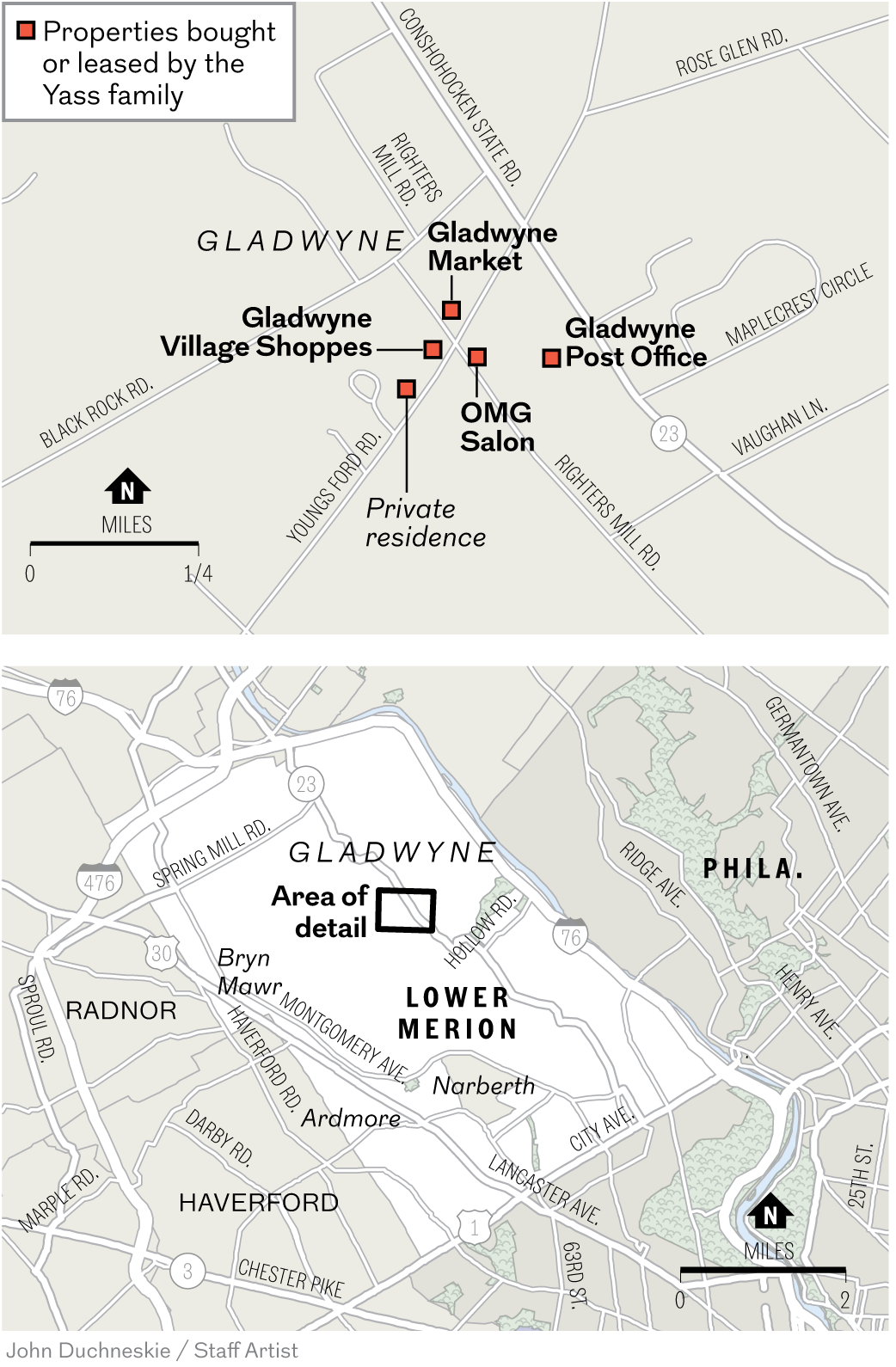
    At the meeting, Golsorkhi also revealed that the project was backed by Jeff Yass, Pennsylvania’s richest man, and his wife, Janine. Golsorkhi said the Yasses want to revitalize Gladwyne as part of a local “community impact project.” Haldon House and the Yasses, who live near Gladwyne, have spent over $15 million acquiring multiple properties at the intersection of Youngs Ford and Righters Mill Roads.

    The news drew a flurry of social media posts — and a write-up in a British tabloid. While some praised the proposal, others protested the changes headed toward their quaint community, and the conservative donor financing them.

    Renderings of a proposed revitalization project in Gladwyne, Pa. Design firm Haldon House is working with billionaire Jeff Yass to redevelop the Main Line village while preserving its historic architecture, developers told Gladwyne residents at a Jan. 8 meeting.

    What is, and isn’t, allowable?

    For some residents, one question has lingered: Is one family allowed to redevelop an entire village?

    A petition calling on Lower Merion Township to hold a public hearing and pass protections preventing private owners from consolidating control of town centers had gathered nearly four dozen signatures as of Friday.

    Around 4,100 people live in the 19035 zip code, which encompasses much of Gladwyne, according to data from the 2020 U.S. Census.

    “Residents deserve a say before their town is transformed. No one family, no matter how wealthy, should unilaterally control the civic and commercial core of a historic Pennsylvania community,” the petition reads.

    Yet much of Haldon House’s plan is allowable under township zoning code, said Chris Leswing, Lower Merion’s director for building and planning.

    Plans to refurbish buildings, clean up landscaping, and bring in new businesses are generally permitted by right, meaning the developers will not need approval from the township to move forward. Gladwyne’s downtown is zoned as “neighborhood center,” a zoning designation put on the books in 2023 that allows for small-scale commercial buildings and local retail and services. The zoning code, which is currently in use in Gladwyne and Penn Wynne, ensures commercial buildings can be no taller than two stories.

    The developers’ plans to open a new restaurant in the former Gladwyne Market and renovate buildings with a late-1800s aesthetic, including wraparound porches and greenery, are generally within the bounds of what is allowed, once they obtain a building permit.

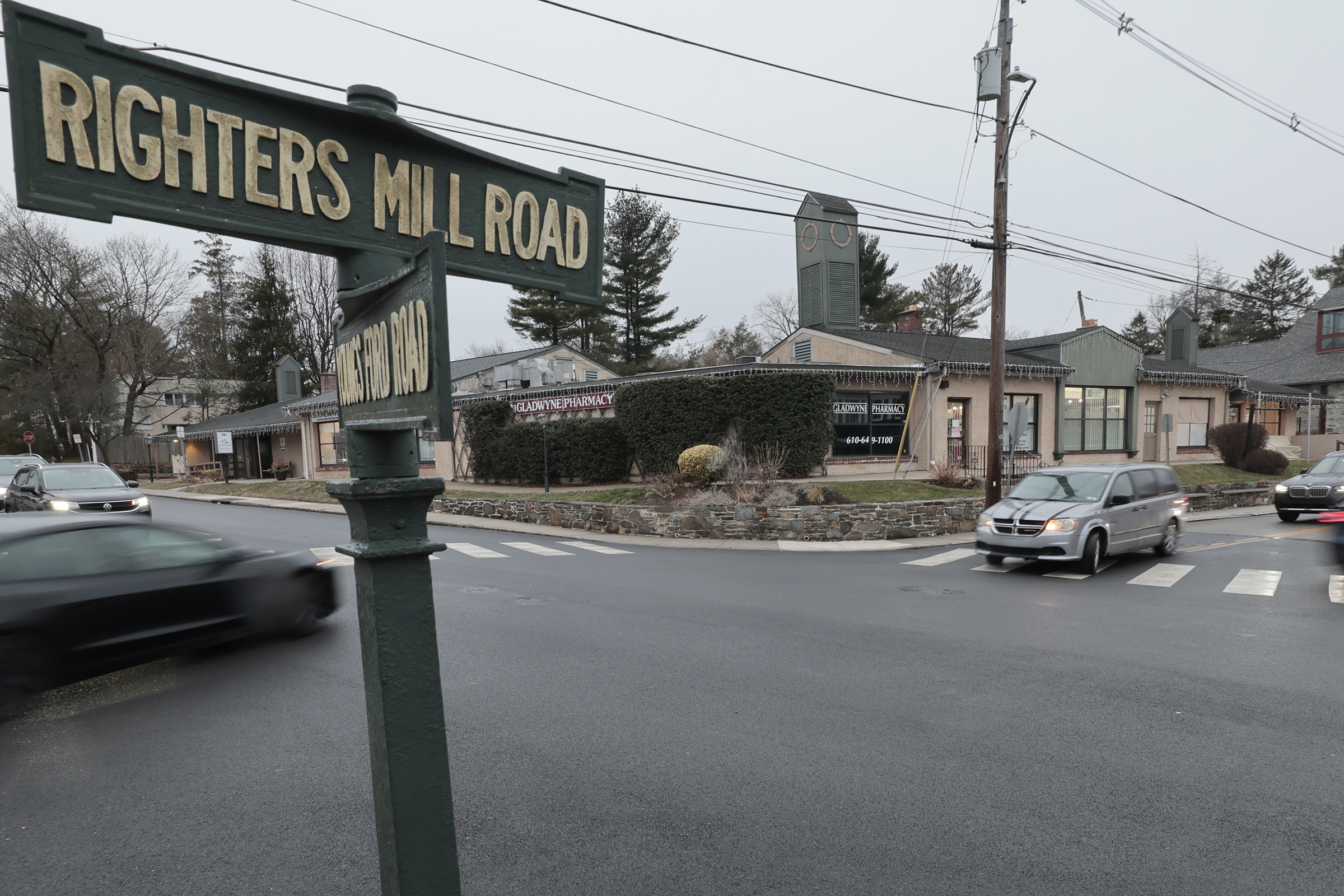
    The Village Shoppes, including the Gladwyne Pharmacy, at the intersection of Youngs Ford and Righters Mill Roads in Gladwyne on Friday, Jan. 9, 2026.

    More ambitious plans, however, like converting a residential home into a parking lot or burying the power lines that hang over the village, would require extra levels of approval, Leswing said.

    The developers hope to convert a residential property on the 900 block of Youngs Ford Road into a parking lot. Lower Merion generally encourages parking lots to be tucked behind buildings and does not allow street-facing parking, a measure designed to avoid a strip mall feel, Leswing said. In order to turn the lot into parking, the developers would need an amendment to the zoning code, which would have to be approved by the board of commissioners.

    Various approvals would also be needed to put Gladwyne’s power lines underground, an ambitious goal set by the Haldon House and Yass team.

    Leswing clarified that no official plans have been submitted, making it hard to say how long the process will take. It will be a matter of months, at least, before the ball really gets rolling.

    Leswing added the developers have been “so good about being locked into the community” and open to constructive feedback.

    Golsorkhi said it will be some time before his team can provide a meaningful update on the development, but expressed gratitude to the hundreds of residents who have reached out with questions, support, and concerns.

    Map of properties in Gladwyne bought or leased by the Yass family.

    From ‘110% in favor’ to ‘a tough pill to swallow’

    Fred Abrams, 65, a real estate developer who has lived in Gladwyne for seven years, said he and his wife are “110% in favor” of the redevelopment, calling it an “absolute no-brainer.”

    Many Gladwyne residents live in single-family homes that keep them in their own, sometimes isolating, worlds, his wife, Kassie Monaghan Abrams, 57, said.

    “Here’s an opportunity for being outside and meeting your neighbors and, to me, getting back to spending time with people,” she said of the proposal to create communal gathering areas.

    “I think it’s a very thoughtful, beautiful design,” Monaghan Abrams added.

    Some social media commenters called the proposal “charming” and “a fantastic revitalization.”

    Others were more skeptical.

    Ryan Werner, 40, moved to Gladwyne in 2012 with his wife, who grew up in the town.

    “One of the things I’ve kind of fallen in love with about Gladwyne is the sense of community,” said Werner, who has a background in e-commerce sales and is transitioning to work in the mental health space.

    Werner is not necessarily opposed to the renovations (although he loved the Gladwyne Market). Rather, he said, it’s “a tough pill to swallow” that Yass is promoting a community-oriented project while supporting President Donald Trump’s administration and Trump-affiliated groups.

    “I’m less opposed to just the commercial side of it and more grossed out by the involvement of certain people in it,” Werner said.

    Gladwyne is a Democratic-leaning community that voted overwhelmingly for former Vice President Kamala Harris in the 2024 election.

    On social media, some griped about the changes.

    “The Village will be just like Ardmore and Bryn Mawr. Can’t undo it once they build it,” one commenter wrote in a Gladwyne Facebook group.

    Golsorkhi said in an email that the “enthusiasm, excitement and support” from the community have been “overwhelming.”

    This suburban content is produced with support from the Leslie Miller and Richard Worley Foundation and The Lenfest Institute for Journalism. Editorial content is created independently of the project donors. Gifts to support The Inquirer’s high-impact journalism can be made at inquirer.com/donate. A list of Lenfest Institute donors can be found at lenfestinstitute.org/supporters.

  • Trash pickup, school closures, and rescheduled events: What you need to know post-snowstorm in Lower Merion

    Trash pickup, school closures, and rescheduled events: What you need to know post-snowstorm in Lower Merion

    The largest snowstorm in a decade just hit the Philadelphia area, closing schools and coating the roads with a sheen of slippery white stuff.

    Penn Wynne received 9.4 inches of snow on Sunday, according to the National Weather Service.

    Lower Merion lifted its snow emergency declaration at noon on Monday, though crews are continuing to do post-storm cleanup.

    Trash and recycling will not be picked up Monday in Lower Merion, and a holiday schedule will go into effect. To figure out when your garbage will be picked up, use the township’s address lookup tool to determine what zone you live in. Then, use this chart to determine your holiday garbage pickup day. If you live in Zone 3, your garbage will be picked up on Thursday following today’s Monday snow “holiday.”

    The township has asked residents to bring their trash curbside because garbage trucks may not be able to get into alleys with the high volume of snow. Any missed collections from this week will be made up next week.

    Narberth residents can expect their normally scheduled trash pickup on Tuesday and Wednesday.

    Sidewalks must be cleared (36 inches in width) within 24 hours of the last flakes falling in both Lower Merion and Narberth (here are The Inquirer’s tips for shoveling snow safely). It’s illegal to throw or plow snow into the street.

    The Lower Merion School District has declared today a remote instruction day (rest in peace to the snow day), and all libraries and township offices are closed.

    Narberth Borough’s administrative offices are also closed, and any documents that need to be dropped off can be left in the secure lockboxes outside the building entrance on Haverford Avenue. Narberth Borough Hall’s multipurpose room will be open until 8 p.m. for residents who need access to heat, water, and power.

    Waldron Mercy Academy, Friends’ Central School, the Baldwin School, Agnes Irwin School, Holy Child School at Rosemont, and Gladwyne Montessori, and the Shipley School are closed. Merion Mercy Academy is having a remote learning day.

    Monday’s Coffee with a Cop has been rescheduled to Wednesday.

    This suburban content is produced with support from the Leslie Miller and Richard Worley Foundation and The Lenfest Institute for Journalism. Editorial content is created independently of the project donors. Gifts to support The Inquirer’s high-impact journalism can be made at inquirer.com/donate. A list of Lenfest Institute donors can be found at lenfestinstitute.org/supporters.

  • Haverford Township bars police from cooperating with ICE in noncriminal immigration enforcement

    Haverford Township bars police from cooperating with ICE in noncriminal immigration enforcement

    Haverford Township officials voted this week to bar the township’s police department from cooperating with U.S. Immigration and Customs Enforcement in the agency’s civil deportation efforts.

    Township commissioners overwhelmingly approved the resolution, which says Haverford police officers and resources will not be made available for ICE’s 287(g) program. The nationwide initiative allows local police departments to perform certain federal immigration duties, should they choose to enter an agreement with the agency.

    The Monday evening vote came after a weekend of anti-ICE protests in cities across the country spurred by the fatal shooting of 37-year-old Renee Good by an immigration agent during an enforcement operation in Minneapolis.

    On Wednesday, Bucks County’s sheriff ended the department’s own 287(g) agreement with ICE, saying the “public safety costs” of the partnership vastly outweighed the benefits.

    “The last thing I want to see happen is that our relationship with our police department be hurt by the reckless and criminal activity of ICE,” Haverford Commissioner Larry Holmes said before the vote. “We have the power to prevent that.”

    Local law enforcement agencies that enter a 287(g) agreement with ICE are offered a variety of responsibilities and trainings, such as access to federal immigration databases, the ability to question detainees about their immigration status, and authority to issue detainers and initiate removal proceedings.

    The program is voluntary and partnerships are initiated by local departments themselves, though some Republican-led states are urging agencies to enter them. The Department of Homeland Security recently touted that it has more than 1,000 such partnerships nationwide, as the Trump administration continues to make a sweeping deportation effort the focus of its domestic policy.

    Critics such as the American Civil Liberties Union say the program turns local departments into an “ICE force multiplier” and that the agreements, which require officers to shift from local to federal duties, are a drain on time and resources.

    Haverford Township’s police department has not made any request to initiate such an agreement with ICE, according to commissioners, who called the resolution a preemptive measure. While ICE has ramped up enforcement in Philadelphia and in surrounding communities like Norristown, there have not been sizable operations in Delaware County.

    Judy Trombetta, the president of the township’s board of commissioners, said the resolution was about protecting the civil liberties of those living in Haverford, as well as the township’s public safety.

    In Trombetta’s view, a 287(g) agreement could mean those without legal immigration status could be deterred from reporting crimes to Haverford police or showing up to court hearings, while leaving officers confused about their own responsibilities.

    And as a township, she said, it is “not our role” to act as federal immigration agents.

    “It’s our job as a township to keep people safe, [to] uphold the Constitution,” Trombetta said.

    Commissioners voted 7-2 to approve the resolution.

    The motion still requires Haverford police to cooperate with federal immigration agencies in criminal investigations. But because many cases involving those living in the country illegally are civil offenses, much of ICE’s activities are exempt.

    Commissioner Kevin McCloskey, voicing his support for the resolution, said the week after Good’s killing had been “incredibly taxing on the American people,” and in his view, it was important to adopt the resolution even if ICE wasn’t active in the community.

    But for Commissioner Brian Godek, one of the lone holdout votes, that reality made the resolution nothing more than “political theater.”

    Tensions over Good’s killing were on full display during the meeting, as both the resolution’s supporters and detractors filled the seats of Haverford’s municipal services building.

    “I do not want my tax dollars or Haverford’s resources to be used to support a poorly trained, unprofessional, and cruel secret police force that is our current federal U.S. Immigration and Customs Enforcement agency,” said resident Deborah Derrickson Kossmann.

    Brian Vance, a resident and a lawyer who opposed the resolution, said he was approaching the matter like an attorney. He questioned whether noncompliance with a federal department would open up the possibility of lawsuits, or the federal government withholding funds for the township.

    “It’s legal, it’s proper, whether we agree with it or not,” Vance said of ICE’s authority.

    After the vote, McCloskey, the commissioner, made a plea for unity to those divided over the issue.

    That included residents who said the resolution’s supporters had gotten caught up in the “emotion” of the Minneapolis shooting.

    “I just ask that you take a step back,” McCloskey said. “On some level, we should all be able to appreciate that none of us wanted to see a 37-year-old mother in a car get shot.”

  • Lower Merion swore in five new commissioners this week. Here’s who they are.

    Lower Merion swore in five new commissioners this week. Here’s who they are.

    Lower Merion swore in five new commissioners on Monday, kicking off the board’s 126th year of governing the Montgomery County township.

    Between rounds of applause and family photos, commissioners outlined the major challenges, and opportunities, the body will face in 2026. Board members highlighted recent accomplishments — creating a process for establishing board priorities, restricting gas-powered leaf blowers and plastic bags, advancing capital projects, hiring a police superintendent, supporting the development of affordable housing, and reversing the post-pandemic decline in police staffing levels.

    Yet they also underscored that much awaits the new board, including negotiating two collective bargaining agreements, overseeing Main Line Health’s redevelopment of the St. Charles Borromeo Seminary property, and addressing a difficult fiscal reality (the board last month authorized an 8% property tax increase, citing the “mistake” of having kept tax rates stagnant for over a decade).

    “We’re solving problems, we’re moving forward, and we’re even having a little fun,” said commissioner V. Scott Zelov, who was sworn in for his sixth term.

    Zelov on Monday night became the eighth commissioner in Lower Merion history to serve for at least 20 years, board President Todd Sinai said.

    Sinai, who was first elected to the board in 2017, was unanimously reelected board president. Incumbent commissioner Sean Whalen called Sinai a “stalwart leader of this board,” praising Sinai’s leadership through economic ups and downs.

    Jeremiah Woodring, also an incumbent commissioner, was unanimously elected vice president. Sinai described Woodring as “thoughtful and inquisitive,” “balanced,” and “diplomatic.”

    Jana Lunger was sworn in as Lower Merion tax collector.

    Here’s a who’s who of the five newly elected Lower Merion commissioners, all of whom replaced outgoing commissioners who chose not to run again in 2025.

    Michael Daly, an attorney and the former president of the Gladwyne Civic Association, was sworn in to represent Ward 2, which includes Gladwyne and Penn Valley. Daly has lived in Lower Merion for around 15 years with his wife and three children, all of whom are products of the Lower Merion School District. In his law practice, he focuses on defending class action lawsuits and complex litigation. In a candidate interview earlier this fall, Daly said he’s focused on quality of life issues, including walkability, public parks, and safe streets. He replaced outgoing commissioner Joshua Grimes.

    Charles Gregory, a longtime township employee, will represent Ward 4, which encompasses Ardmore and Haverford. Gregory, who was born and raised in Ardmore, worked for Lower Merion Township for 23 years until 2024. He’s the former president of the Lower Merion Workers Association and a Boy Scout troop leader. During a candidate forum, Gregory said he believed he could “make a difference from a blue collar aspect.” Gregory replaced outgoing commissioner Anthony Stevenson.

    Christine McGuire is a forensic psychologist and business owner who will serve Rosemont and Villanova in Ward 6. McGuire lived in Gladwyne for nine years before moving to Villanova around three years ago. In a candidate forum, McGuire said she has been active in the Gladwyne Civic Association and in the parent group that studied Lower Merion’s school start time change. As the owner of a psychology practice, she said she understands “what a budget is and that you have to work within the budget and not look at it like a blank check.” She replaced outgoing commissioner Andrew Gavrin.

    Craig Timberlake, an Ardmore resident who was instrumental in the 2025 redevelopment at Schauffele Plaza, will represent Ward 8’s South Wynnewood and East Ardmore. Timberlake moved to Ardmore around 15 years ago from Maine. He says he was drawn to Ardmore’s high-quality schools, walkable neighborhoods, and transit options. He believes the township should incentivize “smaller,” “incremental,” and locally funded development and decrease speed limits to protect pedestrians. Timberlake is a project manager at OnCourse, an education technology platform. He replaced Shawn Kraemer, the board’s outgoing vice president.

    Shelby Sparrow, the former president of the Penn Wynne Civic Association and a longtime community organizer, will represent Penn Wynne and Wynnewood in Ward 14. Sparrow’s priorities include ensuring the community is engaged in Main Line Health’s redevelopment of the St. Charles Borromeo Seminary property; addressing pedestrian safety; and encouraging sustainability and park stewardship. She was previously the director of development for St. Peter’s Independent School in Center City. She replaced outgoing commissioner Rick Churchill.

    Sinai and Zelov, who were reelected in November, were sworn in, and sitting commissioners Woodring, Whalen, Daniel Bernheim, Louis Rossman, Ray Courtney, Maggie Harper Epstein, and Gilda Kramer were welcomed back.

    This suburban content is produced with support from the Leslie Miller and Richard Worley Foundation and The Lenfest Institute for Journalism. Editorial content is created independently of the project donors. Gifts to support The Inquirer’s high-impact journalism can be made at inquirer.com/donate. A list of Lenfest Institute donors can be found at lenfestinstitute.org/supporters.