Tag: Haverford

  • See what homebuyers can get for $390,000 in Lower Merion, Northeast Philly, and Camden County | The Price Point

    See what homebuyers can get for $390,000 in Lower Merion, Northeast Philly, and Camden County | The Price Point

    The Price Point compares homes listed for similar sale prices across the region to help readers set expectations about house hunting.

    Looking for a new home for the new year? You’ve got options if you have the region’s typical homebuying budget.

    Across the Philadelphia metropolitan area, homes sold for a median of $390,000 last month, according to the multiple listing service Bright MLS. That typical sale price is up more than 3% from last year.

    Here’s what a home shopper could get with a budget like this in three different neighborhoods in the region.

    Lower Merion condo in star location

    Wolverton & Co., a Montgomery County-based real estate company, sells and manages a lot of condos in the area of West Montgomery Avenue in the Haverford section of Lower Merion Township.

    “I call that stretch the golden mile of Haverford as it relates to condominiums,” said Will Wolverton, owner and broker of record at Wolverton & Co. “It’s a very desirable area.”

    There are restaurants and national and local stores, including at the nearby Haverford Square and Suburban Square shopping centers. Condo residents can walk to SEPTA’s Haverford station to catch Regional Rail trains. The Merion Cricket Club offers sports facilities and hosts dinners and galas.

    One condo currently for sale in the area is a two-bedroom, two-bathroom unit at Haverford Hunt Club, a building with 16 units on four floors. Condos there include both one-bedroom and two-bedroom units.

    The building is about 45 years old but has been “thoughtfully updated” in both looks and critical infrastructure, such as the elevator and the roof, Wolverton said.

    The condo for sale gets a lot of natural light, he said. And it’s on the top floor, so buyers won’t have upstairs neighbors. It also has a private balcony and a reserved space in the property’s parking lot.

    The last several serious buyers have been most interested in the neighborhood, Wolverton said.

    “It’s a very good property,” he said, “and a great location.”

    The condo was listed for sale for $385,000 on Oct. 20.

    An unusual Mayfair twin

    This home in the Mayfair neighborhood of Northeast Philadelphia stands out in a few ways, said listing agent Xiao Zhen Zhao, who works throughout this section of the city, as well as Fishtown and Northern Liberties.

    The open kitchen is “very unique” for the area and includes bar seating, said Zhao, an agent with Legacy Landmark Realty.

    The primary bedroom has a private bathroom, which isn’t common in older homes in Northeast Philadelphia, she said. A lot of houses have only one full bathroom, she said. One of the bathrooms features a skylight and pink tiles on the walls.

    And the home is “a bigger twin,” she said. It spans 1,868 square feet.

    The home has a backyard and a walk-out finished basement, which has a half bathroom. It also has a garage and driveway.

    The twin is in an area of the city where houses are more affordable and parking is easy. It’s within walking distance of schools. It’s minutes from stores and restaurants along Cottman Avenue, and it’s right off Pennypack Park.

    Potential buyers have liked the layout of the home and also the look of it, Zhao said.

    “A lot of people like the brick,” she said.

    The twin was listed for sale for $389,000 on Nov. 21.

    A Colonial charmer in Gloucester

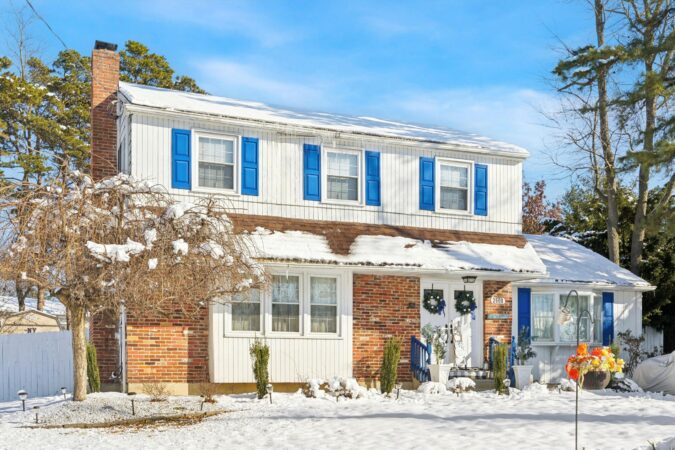
    Potential buyers touring this Colonial in Camden County have fallen for its charm, said real estate agent Evangeline Gambardella. “Because it is a very charming space.”

    The living room features a brick fireplace and a large window that lets in natural light and frames views of the front yard.

    The layout is more open than in a traditional Colonial, especially in this area of Gloucester Township, said Gambardella, a real estate agent with the Mike McCann Team, which is an affiliate of Keller Williams.

    The owners have recently updated the property. The home has new landscaping, a roof that is about 4 years old, a new fence, and a new heating, cooling, and ventilation system.

    Gambardella said this work makes the property ideal for first-time homebuyers, people who are downsizing, or anyone who doesn’t want to undertake large projects.

    “It presents a really lovely value for its price point,” she said.

    The home’s kitchen includes an island with seating. And a door in the formal dining room opens to the deck, which has a retractable awning.

    Home shoppers who have visited the property like its spacious backyard and its location. It is minutes from the Gloucester Premium Outlets and the Deptford Mall, has easy access to major highways, and is close to parks and restaurants.

    The home’s unfinished basement also is a “huge selling point for a lot of people” who want to decide what to do with the space, Gambardella said.

    The house was listed for sale for $389,000 on Dec. 20.

  • Philadelphia Art Museum doubles down on arbitration in response to Sasha Suda’s push for a trial

    Philadelphia Art Museum doubles down on arbitration in response to Sasha Suda’s push for a trial

    The Philadelphia Art Museum has reiterated its position in court that a dispute with ousted director and CEO Sasha Suda should be resolved through arbitration.

    Suda, who was fired Nov. 4 three years into a five-year contract, was ousted following an investigation by a law firm, the museum said soon after. On Nov. 10, Suda sued the museum over her dismissal, and has pushed for a trial by jury in the matter.

    Later that month, museum trustees fired back at her lawsuit and said she was dismissed after the investigation determined that she “misappropriated funds from the museum and lied to cover up her theft.”

    Her contract with the museum stated that “any and all claims or controversies” against the museum should be pursued in “private, confidential arbitration.” But in a filing this month Suda argued that her contract contained “an explicit exception” to the arbitration provision.

    But “Suda has no credible response to the museum’s commonsense reading” of her employment contract, the museum said in a Dec. 19 Philadelphia Court of Common Pleas filing by the museum. The nearly 150-year-old organization is represented by lawyers from Philadelphia’s Cozen O’Connor and Washington, D.C. firm Kellogg, Hansen, Todd, Figel & Frederick.

    “Arbitration clauses are interpreted literally, but not foolishly,” the new filing argues.

    It asks the court to enter an order compelling Suda to submit to arbitration, and to stay legal proceedings until the matter is resolved in arbitration.

    On Nov. 21, the museum named former Haverford College president and Metropolitan Museum of Art leader Daniel H. Weiss as new director and CEO.

  • 11 ways to ring in the New Year in and around Lower Merion

    11 ways to ring in the New Year in and around Lower Merion

    The countdown to 2026 is on, and there’s no shortage of ways to celebrate the end of one year and the start of another. From New Year’s Eve dinner specials to adults-only celebrations and family-friendly gatherings, here’s how to ring in the new year in and around Lower Merion.

    New Year’s Eve Events for Adults

    Low Cut Connie is headlining two nights at Ardmore Music Hall.
    Low Cut Connie

    The local band is performing for two nights, including on New Year’s Eve. There are open bar and dinner options for both.

    ⏰ Tuesday, Dec. 30, 7:30 p.m. and Wednesday, Dec. 31, 8 p.m. 💵 $56.93, plus $112.82 to add on an open bar and food service 📍Ardmore Music Hall, 23 E. Lancaster Ave., Ardmore

    Family-Friendly New Year’s Eve Events

    New Year’s Eve Daytime Family Jam

    Alex and the Kaleidoscope, an interactive band geared toward kids ages 4 to 8, will perform at Ardmore Music Hall. There will also be arts and crafts, brunch, and a countdown to noon.

    ⏰ Wednesday, Dec. 31, 11 a.m. 💵 $29.50 📍Ardmore Music Hall, 23 E. Lancaster Ave., Ardmore

    Bala Cynwyd Library’s Countdown to New Year’s

    This event geared toward children 3 and older includes a story time and a countdown to noon. Registration is required.

    ⏰ Wednesday, Dec. 31, 11:30 a.m.- noon 💵 Free 📍Bala Cynwyd Library, 131 Old Lancaster Rd., Bala Cynwyd

    Gladwyne Library’s Noon Year’s Eve Party

    There will be crafts and festive activities ahead of a countdown to noon. Registration is required.

    ⏰ Wednesday, Dec. 31, 11:30 a.m.- noon 💵 Free 📍Gladwyne Library, 362 Righters Mill Rd., Gladwyne

    Ludington Library’s Countdown to Noon Party 2026

    There will be crafts, hats, and noisemakers to celebrate the new year at this drop-in event.

    ⏰ Wednesday, Dec. 31, 11:30 a.m.-12:30 p.m. 💵 Free 📍Ludington Library, 5 S. Bryn Mawr Ave., Bryn Mawr

    Penn Wynne Library’s Countdown to Noon

    At this drop-in event, the Penn Wynne Fire Company will drop a ball as the clock strikes noon.

    ⏰ Wednesday, Dec. 31, 11:45 a.m.-12:15 p.m. 💵 Free 📍Penn Wynne Library, 130 Overbrook Parkway, Wynnewood

    Happy Noon Year’s Eve Party at Lola’s Garden

    Enjoy a buffet, cookies, hot chocolate, and a sparkling cider or champagne toast at this family-friendly afternoon event, where there will also be a DJ. Kids can decorate cookies and color their own New Year’s Eve hat and glasses, too.

    ⏰ Wednesday, Dec. 31, noon-2 p.m. 💵 $18 for kids, $39 for adults 📍Lola’s Garden, 51 Saint Georges Rd., Ardmore

    Almost Midnight Party with Camp Kef and JKidPhilly

    Kids and families can enjoy games, snacks, crafts, and a glow dance party. Registration is required.

    ⏰ Wednesday, Dec. 31, 2-4 p.m. 💵 Free📍Kaiserman JCC, 45 Haverford Rd., Penn Wynne

    New Year’s Dining

    Izzy’s and Ripplewood Whiskey & Craft

    Ardmore cocktail bar Izzy’s is offering a seven-course meal featuring items like lobster, wagyu beef, and caviar for $165. Add a beverage pairing for another $60. Ripplewood will offer its regular menu alongside specials, and both will have champagne toasts at midnight.

    ⏰ Wednesday, Dec. 31, 4 p.m.-midnight 💵 Prices vary📍 Izzy’s, 35 E. Lancaster Ave., Ardmore, and Ripplewood Whiskey & Craft, 29 E. Lancaster Ave., Ardmore

    One of the dining areas at Triple Crown features a bar.
    Triple Crown

    The Main Line newcomer is offering two ways to dine New Year’s Eve. For $125, there will be a buffet in the Secretariat room, including charcuterie, salads, a carving station, sides, and a dessert table from 5 to 10 p.m. The Greg Farnese Trio will perform throughout the night. Or for à la carte options, the main dining room will be open, also from 5 to 10 p.m.

    ⏰ Wednesday, Dec. 31, 5-10 p.m. 💵 Prices vary📍 Triple Crown, 593 E. Lancaster Ave., St. Davids

    White Dog Cafe is hosting a New Year’s Day “pajama brunch,” where attendees are encouraged to where their PJs.
    Pajama Brunch at White Dog Cafe

    On New Year’s Day, White Dog Cafe is again hosting its Pajama Brunch, which encourages attendees to wear their PJs to the restaurant, where an à la carte menu will be available. Reservations are encouraged.

    ⏰ Thursday, Jan. 1, 9 a.m.-3 p.m. 💵 Prices vary 📍White Dog Cafe, 379 Lancaster Ave., Haverford

    This suburban content is produced with support from the Leslie Miller and Richard Worley Foundation and The Lenfest Institute for Journalism. Editorial content is created independently of the project donors. Gifts to support The Inquirer’s high-impact journalism can be made at inquirer.com/donate. A list of Lenfest Institute donors can be found at lenfestinstitute.org/supporters.

  • These college journalists from Philly-area schools are working to support each other and seek funding for their work

    These college journalists from Philly-area schools are working to support each other and seek funding for their work

    Haverford College senior Jackson Juzang earlier this year had been talking to a school administrator about the need for more resources to support student journalism.

    The administrator, Chris Mills, Haverford’s associate vice president for college communications, asked if there was a network of student newspaper journalists in the region that Haverford could join and seek support from.

    There wasn’t.

    “So I decided to create one,” said Juzang, 22, an English major from Pittsburgh who serves as associate editor of the Clerk, Haverford’s student newspaper.

    Jackson Juzang explains why he started the Philadelphia Student Press Association.

    He established the Philadelphia Student Press Association as a nonprofit and created a board with student editors from 11 college news organizations around the region, including Temple, Drexel, Villanova, St. Joseph’s, La Salle, Rowan, Rutgers-Camden, Bryn Mawr, Swarthmore, Haverford, and Eastern.

    With the slogan “Rooted in Philly, Reporting for All,” the group — which collectively represents about 400 student journalists — is seeking funding from organizations to support student journalism at a time when college budgets are tight and the news industry faces challenges, including rising print costs and lower readership. The association already has held workshops with more planned next year, and its 21-member board meets monthly and discusses common issues and problems and brainstorms solutions.

    “We have so many people coming from different regions, but we are united in the sense that we are all here for the same reason,” said Claire Herquet, an editor at the La Salle Collegian.

    At a recent meeting, members talked about artificial intelligence and what to do if an editor suspects a student writer used it, Herquet said. There were two instances over the past semester when she read an article submission and thought the terminology and phrasing didn’t sound like the writer, she said.

    “If I didn’t have PSPA, I wouldn’t have people to lean on,” said Herquet, 21, a junior communications major from Camden. “It would just be me versus the problem.”

    Herquet manages communications for the association. She has been reaching out to foundations about obtaining grant funding for the association. Some college newsrooms are better funded than others and can give writers and editors stipends.

    She’s hopeful that uniting the newsrooms will result in better experiences for students and more funding.

    La Salle’s publication is only digital; there is no print version. Costs are minimal, but funding would cover professional workshops for students and costs, such as travel, associated with their reporting.

    The Whit, Rowan University’s student news site, prints a newspaper once a week and receives financial support via student government, but print costs are rising, said junior Katie Thorn, who serves as managing editor.

    “We’re trying to figure out with the budget we have if it is possible and what we are going to have to sacrifice to keep our paper printing,” Thorn said.

    Thorn, who is serving as treasurer for the association, said it’s been helpful to learn that other student organizations are facing the same challenges.

    “Journalism as a whole is such a scary world right now,” said Thorn, 20, a journalism major from Mantua, Gloucester County, “and you’re kind of throwing yourself into the fire. Am I going to find a job? Where does my future lie? Having people who support you and uplift you is a great thing.”

    Haverford’s student newspaper has received funding via the president’s office and is able to pay its writers, Juzang said. In January, the Clerk will publish its first print edition.

    But the Clerk would like resources for deeper reporting and investigative work and mentorship, he said.

    Juzang, who hopes to pursue a graduate degree in communication management next year at the University of Southern California, said he’s invested thousands of dollars of his own money to get the association started. He currently works as a research/editorial intern for NBC Sports.

    He said the association also has received support from the Philadelphia-based Foundation for Individual Rights and Expression.

    Juzang said he would like to help schools, including Widener and Lincoln, that used to have student news sites revive them. He also has begun talking to student journalists in other metro areas, including Washington, Boston, New York, and Baltimore, about starting an association for their university newsrooms, he said.

    Mills, the Haverford communications administrator, was pleased to see Juzang take that conversation the two had last March and create a mechanism for student journalists to share their experiences and learn from each other.

    “It’s really important for the students to share resources and knowledge and wisdom,” he said. “For those of us who value student journalism, it’s great to see them prioritizing this and making the time to do it.”

  • Palantir CEO Alex Karp was raised in a liberal household outside Philly. Now he’s a top Trump administration contractor

    Palantir CEO Alex Karp was raised in a liberal household outside Philly. Now he’s a top Trump administration contractor

    In the first year of President Donald Trump’s administration, Palantir Technologies has secured major contracts to compile data on Americans, assist the president’s federal immigration enforcement, and play a key role at the height of the Department of Government Efficiency’s efforts to shrink the federal government.

    But just a few years ago, it seemed unlikely that billionaire Alex Karp, CEO of Palantir — a publicly traded data software company that Karp described in 2011 as “deeply involved in supporting progressive values and causes” — would ever strike such deals with Trump.

    Karp grew up in the Philadelphia area in a politically left-leaning household and was critical of Trump during his first White House term. But over time, and catalyzed by Hamas’ Oct. 7, 2023, attack on Israel, his opinion and habits shifted. Quickly, he went from being a major Democratic Party donor to writing a big check to Trump’s 2024 inaugural committee.

    As of May, Palantir has received more than $113 million in federal spending. The company, which builds software to analyze and integrate large data streams for major companies, including defense contractors, sees itself as a beneficial power, but critics are concerned about data being misused or people being surveilled in violation of civil liberties, according to the New York Times’ The Daily podcast.

    And some employees are opposed to the optics of Palantir carrying out the president’s controversial political agenda.

    Here’s what to know about Karp and Palantir.

    What is Palantir?

    Palantir is a publicly traded data analytics software company that was cofounded by Karp, Joe Lonsdale, Nathan Gettings, Stephen Cohen, the company’s president, and Peter Thiel, a billionaire tech investor and cofounder of PayPal. Thiel is a libertarian and is a staunch supporter of right-wing ideology.

    Palantir, based in Denver, grew out of the Sept. 11, 2001, terrorist attacks on the United States and a desire to help improve national security.

    According to The Daily podcast guest Michael Steinberger, who spent six years interviewing Karp for a book, one of Palantir’s major contractors has been the CIA, which was also one of its early investors. Palantir’s technological products also played a key role in assisting Ukraine during the early months of Russia’s war on the country.

    The company started its partnership with U.S. Immigration and Customs Enforcement during former President Barack Obama’s administration, but that contract did not draw controversy until Trump’s first term in the White House, when his immigration crackdown became a key priority, Steinberger, a contributing writer to the Times, said.

    This summer, it was reported that Palantir landed a $10 billion software and data contract with the U.S. Army, months after reports showed Trump tapped the company to compile data on Americans, prompting scrutiny from privacy advocates, labor rights organizations, and student unions.

    Alex Karp, Palantir CEO, has roots in Philadelphia

    Karp was born in New York but grew up in the Philadelphia suburbs, he told the World Economic Forum in 2023. He went on to attend Central High School.

    As Steinberger describes it, “He’s a Philly kid. He grew up in Philadelphia. Grew up in a very left-wing household.” Karp is the son of a Jewish pediatrician and a Black artist. And he’s dyslexic, Steinberger said.

    “It’s like I have this weirdly structured brain,” Karp said in an interview with Steinberger. “The motor is just structured differently.”

    Karp and his younger brother spent time going to antiwar and antinuclear protests, and the older Karp attended Haverford College, Steinberger said. There, he closely identified with his Black heritage, getting involved with Black student affairs and organizing an antiracism conference at Yale University.

    Karp insists that he did not put much effort into his schooling at Haverford, but Steinberger, who was a classmate of Karp’s in college, appears to think otherwise.

    “I think his path in life would suggest otherwise. I think the library saw a lot more of him than it did of me, which may go some way to explaining why he became a billionaire and I did not,” Steinberger said.

    After Haverford, Karp attended Stanford Law School, where he met and became close with Thiel — whose political views were the opposite of Karp’s. Years later, Karp and Thiel reunited after 9/11. Thiel was looking for a CEO for Palantir.

    “Thiel interviews a couple of people for the CEO position, but then he and the other people involved in founding Palantir realized Karp is probably the right guy for the job,” Steinberger said.

    In an interview with Steinberger, Karp admitted that his background made him an unlikely choice for CEO.

    “I wasn’t trained in business. I didn’t know anything about start-up culture. I didn’t know anything about building a business. I didn’t know anything about financing a business,” Karp said.

    From a Philly liberal to a staunch Trump defender

    In Steinberger’s telling, Hamas’ terrorist attack on Israel on Oct. 7, 2023, gave rise to a political environment that would solidify Karp’s rightward shift.

    Over time, Karp had become discouraged with the left’s criticisms of Palantir, but that reached a fever pitch when Palantir offered its services to Israel as the country began its military invasion of Gaza amid protests, including internal dissent from employees, Steinberger said.

    Steinberger said Karp — once a protester himself — became increasingly troubled by college campus protests against Israel’s war in Gaza.

    “He thinks the protests are riddled with antisemitism,” Steinberger said. “They’re very dangerous and he sees this as reflective of a broader rot in his mind on the left.”

    Karp continued to back then-President Joe Biden, who was supportive of the Israeli government, but in December 2023, Karp posed a sort of ultimatum at the Reagan National Defense Forum in California regarding liberals’ stance on Israel and a desire for the Democratic Party to denounce the college campus protests.

    “I’m one of the largest donors to the Democratic Party and, quite frankly, I’m calling it out, and I’m giving to Republicans. If you keep up with this behavior, I’m going to change. A lot of people like me are going to change. We have to really call this out. It is completely beyond the bounds,” Karp said.

    Over time, Karp started donating more “aggressively” to Republicans, Steinberger said, and made clear his support for Trump. Karp wrote a $1 million check to the Trump-Vance Inaugural Committee and later began publicly praising Trump on national security.

    Karp, for his part, still thinks of himself as a progressive.

    “I didn’t shift my politics,” Karp said. “The political parties have shifted their politics. The idea that what’s being called progressive is any way progressive is a complete farce.”

  • In search of a crafty holiday gift? Here’s where to look in Lower Merion.

    In search of a crafty holiday gift? Here’s where to look in Lower Merion.

    The jingle bells are ringing, the Hanukkah party guest list is filling up, and you still don’t have a present for the coolest, artsiest person on your shopping list.

    Looking for a kooky snow globe? Bespoke Eagles memorabilia? An art print unlike any other? Don’t worry! If you’re living on (or traveling to) the Main Line, here’s where you should be shopping for crafty presents.

    Sweet Mabel Gallery

    Narberth’s Sweet Mabel Gallery is an iconic local business, run by husband-and-wife duo David Stehman and Tracy Tumolo. Sweet Mabel got its start in 2005 when Tumolo took over her grandfather’s former barbershop in Narberth. She and Stehman, who were graphic designers, decided to turn the barbershop into a local gallery and store stocked with colorful American and Canadian folk art.

    To celebrate the shop’s 20th anniversary, Sweet Mabel is displaying and selling works from local artists, all under $100. An anniversary ceremony will be held on Dec. 5 from 6-9 p.m. at the storefront on Haverford Avenue. Plus, if you find the perfect gift, Sweet Mabel will wrap it for free.

    Ardmore Holiday Market

    Art Star, a Philadelphia gallery and boutique, is bringing a collection of bespoke craft vendors to Ardmore for two weekends this month. The Ardmore Holiday Market, organized in partnership with the Ardmore Initiative, will take place Dec. 6 and 13 from 11 a.m. to 3 p.m. at Schauffele Plaza.

    Ardmore Holiday Market attendees can look out for Philly-area artists like Lauren Delk Ceramics, Mahika Market, Fwens, and Leann the Illustrator. Peruse the booths, listen to live music, and, if you have time, stop by Suburban Square for a free photo with Santa from 11 a.m. to 2 p.m.

    Past Present Future

    Looking for a funky snow globe? A one-of-a-kind charm necklace? Day of the Dead inspired earrings? Ardmore’s Past Present Future is a portal into the world of eclectic antiques and crafts, from embroidered cat-themed pillows to hand-painted ceramic dishes. Sherry Tillman started Past Present Future in Philadelphia in 1976, drawing on her “long-held ties to the local arts and crafts community” to procure unique goods.

    Past Present Future is open Mondays through Saturdays from 11 a.m. to 6 p.m. and Sundays from noon to 4 p.m. (or later — “If we are still standing, we are still open,” the shop’s Facebook page reads).

    Something Different by Eric

    Eric Wells‘ store, Something Different by Eric, isn’t just a gift shop, it’s a hub for people with disabilities on the Main Line.

    Wells and his mom, Bernadette Wheeler, started the Bryn Mawr store in 2015. The nonprofit shop is staffed entirely by volunteers, including Haverford College students and special education advocates. Wheeler has said Something Different by Eric is part of a larger effort to “educate the community” and help people “see disabled individuals in action.”

    In addition to selling unique housewares, Philly- and Main Line-themed trinkets, sports memorabilia, baby gifts, and greeting cards, Something Different by Eric is stocked with books about mental and physical disabilities.

    The shop is open from noon to 8 p.m. on Fridays and Saturdays and from 1 to 5 p.m. on Sundays.

    This suburban content is produced with support from the Leslie Miller and Richard Worley Foundation and The Lenfest Institute for Journalism. Editorial content is created independently of the project donors. Gifts to support The Inquirer’s high-impact journalism can be made at inquirer.com/donate. A list of Lenfest Institute donors can be found at lenfestinstitute.org/supporters.

  • Kathleen A. Case, longtime writer, pioneering medical journal editor, and award-winning historian, has died at 80

    Kathleen A. Case, longtime writer, pioneering medical journal editor, and award-winning historian, has died at 80

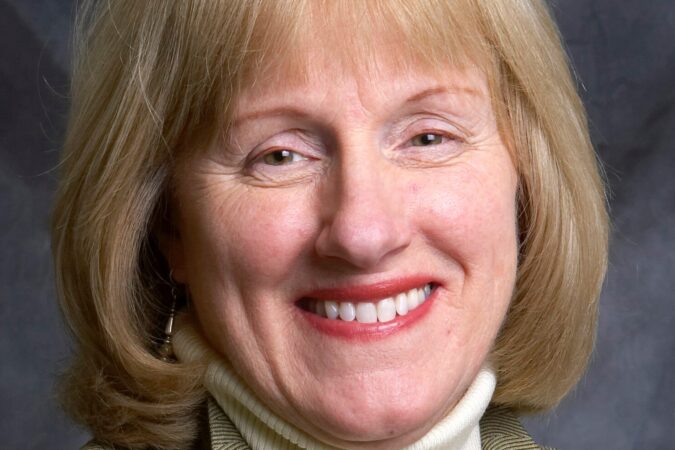
    Kathleen A. Case, 80, of Bryn Mawr, longtime writer, pioneering medical journal editor, award-winning historian, researcher, and volunteer, died Friday, Nov. 14, of heart failure at Bryn Mawr Hospital.

    A natural wordsmith who was interested in the origins and nuances of language as well as its use, Ms. Case spent 24 years as a top editor for the Annals of Internal Medicine and vice president for publishing at the Philadelphia-based American College of Physicians. Later, for 15 years, she was publisher, archivist, historian, and director of strategic planning for the publishing division of the Philadelphia-based American Association for Cancer Research.

    She was adept at understanding and organizing complex research and other medical information, and helped Annals of Internal Medicine digitize its production process and content, expand its reach, and become one of the world’s most influential and cited medical journals. “She loved precise, concise, and unambiguous writing,” her family said in a tribute.

    She was one of the few female editors in the medical publishing industry when she joined Annals as an assistant editor in 1977, and she rose to managing editor, executive editor, and senior vice president for publishing by 1998. She attended many international medical publishing conferences around the world, and other journals tried unsuccessfully to lure her away from Philadelphia.

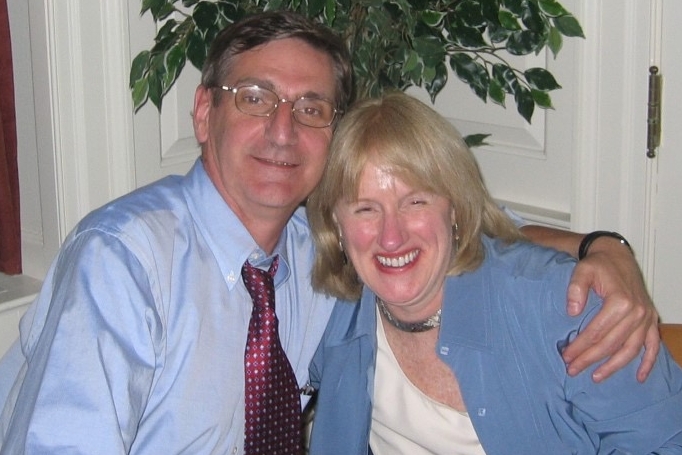
    Ms. Case and her husband, Jacques Catudal, married in 1995.

    “She set the highest editorial standards in medical publishing and expected the best from everyone around her,” a former colleague said in an online tribute. “But she also took the time to teach. … The lessons I learned from her have shaped my work ever since.”

    Ms. Case joined the American Association for Cancer Research in 2001, served two stints as head of the publishing division, and supervised its marketing campaigns, advertising sales, and product development. She retired in 2008 but continued part time as the AACR archivist, historian, and director of strategic planning until retiring for good in 2016.

    Away from her day jobs, Ms. Case was past president of the Society for Scholarly Publishing and what is now the Council of Science Editors. She also served on boards and committees for the American Medical Association, the American Chemical Society, the American Heart Association, and the International Committee of Medical Journal Editors.

    Even in retirement, she continued to work as a board member, writer, researcher, and historian for the Haverford Township Historical Society. She served on the Haverford Township Historical Commission, was a member of the Historical Society of Pennsylvania, chaired the Friends of the Polo Field, and helped establish the Brynford Civic Association.

    Ms. Case graduated from Radnor High School and Pennsylvania State University.

    “She was always busy, always involved with some project,” said her husband, Jacques Catudal. She edited his published academic papers, he said, and routinely marked up her two sons’ school reports in red ink for years.

    In 2019, she won a historic preservation award from the Heritage Commission of Delaware County. “She was an endlessly inspiring woman whose intelligence was matched only by her sharp wit and her extraordinary cultural sensitivity,” a friend said in a tribute.

    Kathleen Ann Case was born Sept. 13, 1945, in Westfield, N.J. The youngest of three children, her family moved to Omaha, Neb., and then Radnor when she was young.

    She graduated from Radnor High School, studied journalism at Pennsylvania State University, and earned a bachelor’s degree in English in 1967. She was a reporter and editor for the Penn State student newspaper and so active that school officials waived their prohibition of female students living alone off campus so she could reside near the paper’s office. In 1987, she earned a master’s degree in technical and science communication at Drexel University.

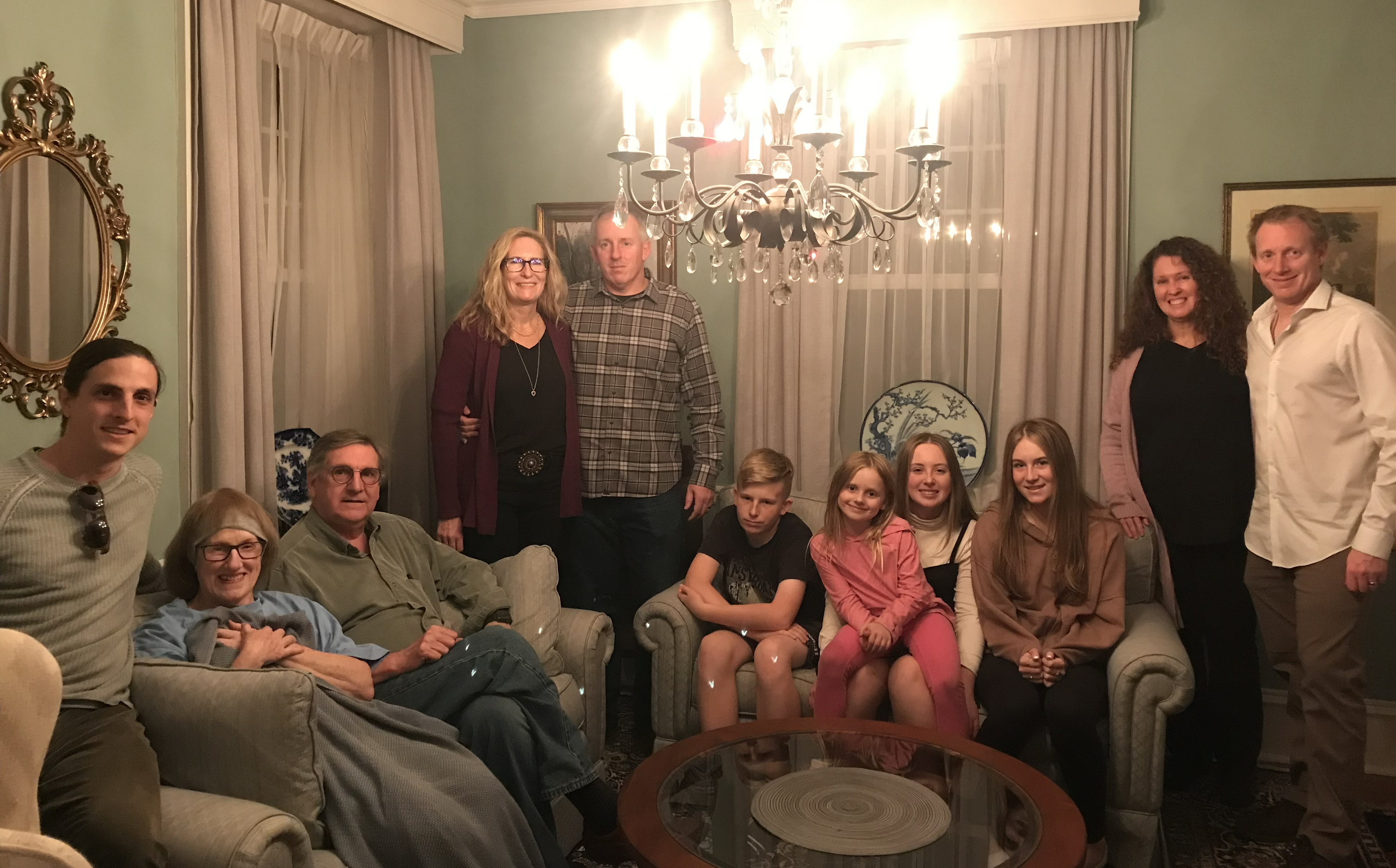
    Ms. Case (second from left) enjoyed time with her family

    She married D. Benjamin van Steenburgh III, and they had sons Ben and Jason. After a divorce, she married Peter Moor. They divorced, and she married Catudal in 1995.

    Ms. Case raised her sons as a single mother in Avondale, Chester County, for years and moved to Bryn Mawr in 1979. She read voraciously about history, collected antiques, and enjoyed travel, classic rock, and Irish folk music.

    She rode horses, was an expert archer, and followed the local sports teams. She tended her garden and investigated her genealogy.

    She liked to refinish and paint furniture and discuss current events. She and her husband camped, hiked, and canoed all over the world.

    Ms. Case enjoyed hiking and the outdoors.

    She also dealt with metastatic breast cancer and three heart attacks. “She always gave as much honesty, opinion, perspective, experience, literary acumen, word knowledge, help, advice, comfort, and love as could be needed,” said her son Jason.

    Her husband said: “She was brilliant and extremely funny. She was an organizer and always giving of herself.”

    In addition to her husband, sons, and former husbands, Ms. Case is survived by four grandchildren, a sister, a brother, and other relatives.

    A celebration of her life was held earlier.

    Donations in her name may be made to The American Association for Cancer Research, 615 Chestnut St., 17th Floor, Philadelphia, Pa. 19106; and the Haverford Township Historical Society, P.O. Box 825, Havertown, Pa. 19083.

    Ms. Case (right) rode horses, was an expert archer, and followed the local sports teams.
  • Haverford College president to step down in 2027

    Haverford College president to step down in 2027

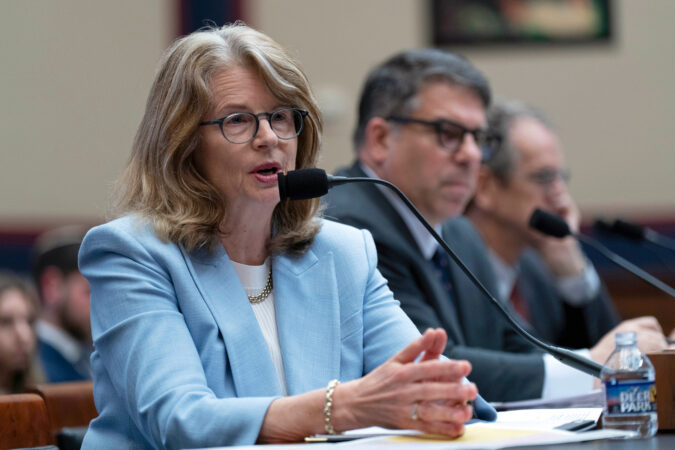
    Haverford College president Wendy Raymond announced she will retire in June 2027, and the college plans to launch a search for her replacement early in the new year.

    The announcement comes after a particularly difficult year for the college and Raymond, who faced intense grilling in May by a Republican-led congressional committee probing antisemitism complaints on college campuses. The school also is under investigation by the U.S. Department of Education over its handling of antisemitism complaints.

    “This was not an easy decision, but after more than three decades in higher education, I am ready to step away from academia,” Raymond said in her message to campus.

    Her news comes just two days after she announced John McKnight, the dean of the college, would be leaving in June for a new role at Dartmouth College.

    Raymond said she wanted to give the college’s board of managers time to search for a replacement.

    Raymond, 65, a molecular biologist, became president of the 1,470-student liberal arts college on the Main Line in July 2019. She came to Haverford from Davidson College in North Carolina, where she had been vice president for academic affairs and dean of faculty.

    She has been in the job longer than her three most recent predecessors, Kim Benston, who served four years; Daniel Weiss, who was there two; and Stephen G. Emerson, who had four years.

    In her announcement, she noted accomplishments including the completion of a strategic plan, efforts to advance diversity, equity, and access, the launch of the Institute for Ethical Leadership and Inquiry named for board chair Michael B. Kim, and the new recital hall.

    She also acknowledged challenges, including the pandemic, the strike for racial justice in 2020 in which students refused to attend class and demanded that Haverford do more to support its Black and brown students, and “more recent times of social unrest and public scrutiny.”

    Raymond earlier this year in a message to the campus acknowledged that she “came up short” in dealing with conflict over antisemitism complaints and said both she and Haverford can do better.

    “To Jewish members of our community who felt as if the College was not there for you, I am sorry that my actions and my leadership let you down,” she said in that message.

    Haverford was the only local college earlier this year to receive an F on a report card by the Anti-Defamation League for its response to antisemitism — a rating given to less than 10% of schools nationwide. The ADL’s methodology for categorizing antisemitism has been questioned, and critics have argued that criticism of the state of Israel and its government have been wrongly conflated with antisemitism.

    But the F rating caught the attention of the congressional Committee on Education and Workforce, which called on Raymond and two other college presidents to testify in May. Raymond took the worst of the grilling, largely because she was reluctant to answer questions about discipline for alleged antisemitism, especially in specific cases. Raymond testified that the college does not release data on student suspensions and expulsions.

    In June, the committee demanded answers about faculty and student discipline. And in August, the education department, which has launched a flurry of investigations of colleges regarding antisemitism, said it would probe Haverford.

    The investigation follows “credible reports that Haverford has failed to respond as required by law to multiple incidents of discrimination and harassment against Jewish and Israeli students on its campus,” the department said at the time.

    In her testimony to the congressional committee, Raymond noted the college had made a plethora of changes to address concerns about antisemitism, including changes in the antibias policy and rules around protesting, steps to revise the honor code, and increases in campus safety at events.

    Kim, the board chair, thanked Raymond for her service amid a difficult time in a message to campus Thursday.

    “She has guided the College with great care during periods of both remarkable growth and significant challenge,” he said. “During her tenure, Haverford has welcomed two of its largest incoming classes, increased support for student resources, access, and engagement, and continued to graduate students who use their liberal arts education to effect positive change in the world.”

    Raymond said in her Thursday message that through the challenges, “ … the College has remained strong and resolute in its mission to foster a campus culture of belonging and respect, where academic freedom and freedom of expression remain fundamental to Haverford’s nearly 200 years of academic excellence and open inquiry, and where our values guide us through new territory.”

  • Lower Merion may raise parking meter rates for the first time since 1999

    Lower Merion may raise parking meter rates for the first time since 1999

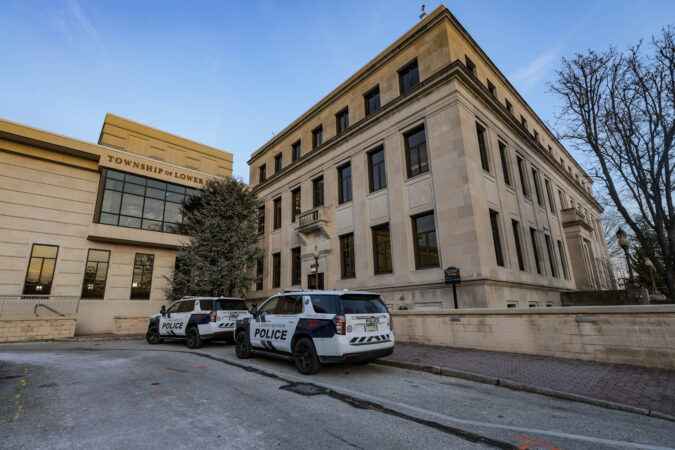
    Lower Merion’s board of commissioners is set to put multiple new ordinances on the books next month, including policies raising parking meter rates for the first time since 1999, lowering the speed limit on parts of Lancaster Avenue, and regulating where smoke and vape shops can open in the township.

    The smoke and vape shop regulation moved ahead last month, and the commissioners advanced the parking meter and speed limit changes Wednesday evening. Lower Merion’s assistant township manager, Brandon Ford, said the commissioners are poised to formally vote on all three proposals in December. Here’s everything you need to know.

    Parking meter rate may go up

    Commissioners on Wednesday moved forward an ordinance that would raise parking meter rates across Lower Merion for the first time in more than 25 years.

    Under the proposed ordinance, parking would increase from 50 cents per hour to $1 per hour across the township, with the exception of six locations in Ardmore. Parking would go up to $1.50 per hour at Rittenhouse Place, Cricket Avenue, Cricket Terrace, and township-owned parking lots five (Cricket Terrace) and six (Schauffele Plaza). The Cricket Avenue Parking Garage would stay at 50 cents per hour.

    Township staff say the proposed meter rate increase would generate around $900,000 annually and would likely drive quicker turnover in Lower Merion’s commercial corridor, generating more economic activity for local businesses.

    “The rates that we are charging have not kept up with the overall cost for maintaining those parking meters, as well as our overall parking services program,” Ford said during a Nov. 5 meeting.

    The ordinance, if passed, would not change how parking meter fees are collected. The township collects parking fees through meters, kiosks, and a mobile app.

    Commissioner Scott Zelov, who represents Bryn Mawr, Haverford, and Gladwyne, said: “It certainly is time to do this.”

    Anderson Avenue near Suburban Square on June 8. A proposed Lower Merion ordinance would increase parking meter rates across the township in hopes of raising revenue and spurring economic activity in places like downtown Ardmore.

    Lancaster Avenue speed limit reduction

    Lower Merion is set to reduce the speed limit on parts of Lancaster Avenue from 40 mph to 35 mph, bringing township code in compliance with an earlier speed limit change by the Pennsylvania Department of Transportation.

    PennDot has already placed 35-mph speed limit signs on the selected strip of Lancaster Avenue. The board’s approval will bring the township in line with the state and allow township police to start enforcing the reduced speed limit. The speed limit change is the latest development in a major redesign of Lancaster Avenue by the state and the township.

    A study conducted by PennDot earlier this year found that, out of nearly 20,000 vehicles traveling on Lancaster Avenue between Wynnewood Road and City Avenue during a 24-hour period, only 57% were driving at or below the 40-mph speed limit. PennDot considers the intersection of Lancaster Avenue and Remington Road to be a “high crash location.”

    The ordinance, approved for advertisement on Wednesday, also bans right turns on red at three intersections: Lancaster Avenue and Remington Road for eastbound traffic, Lancaster Avenue and Haverford Station Road for westbound traffic, and Montgomery Avenue and Airdale Road for east-west traffic.

    The township aims to place automated red-light cameras at all three intersections. The first red-light camera, at Remington Road and Lancaster Avenue, is in the process of being installed. Andy Block, Lower Merion’s superintendent of police, said the camera should be up and running by the end of the year.

    Smoke and vape shop zoning

    Following a lengthy discussion that stretched across two meetings, the board of commissioners on Oct. 22 moved forward an ordinance that would decide where tobacco and vape shops can operate in Lower Merion.

    Under the proposed ordinance, if a tobacco or vape shop wanted to open in Lower Merion, it would have to be situated at least 1,000 feet from any other tobacco or vape shop and 1,000 feet from any public or private school. The rule would also apply to hookah lounges.

    Township staff said the 1,000-foot buffer would dramatically decrease the opportunity for smoke shops to operate in Lower Merion. Ford said there are currently around 1,000 properties in Lower Merion where smoke shops could operate. If the buffer ordinance were to be implemented, that number would drop to 300.

    While some commissioners inquired about creating a larger buffer, officials said doing so would likely zone smoke shops out of Lower Merion entirely, which would give smoke shop owners the legal claim to build anywhere in the community.

    During an Oct. 17 discussion of the ordinance, Commissioner Anthony Stevenson, who represents Ardmore and Haverford, said: “We need to avoid the continuation of making our township, and particularly in the Ardmore area, a vape central.”

    This suburban content is produced with support from the Leslie Miller and Richard Worley Foundation and The Lenfest Institute for Journalism. Editorial content is created independently of the project donors. Gifts to support The Inquirer’s high-impact journalism can be made at inquirer.com/donate. A list of Lenfest Institute donors can be found at lenfestinstitute.org/supporters.

  • The wife of Par Funding’s founder was sentenced to one day in prison — the last prosecution of people tied to the fraudulent firm

    The wife of Par Funding’s founder was sentenced to one day in prison — the last prosecution of people tied to the fraudulent firm

    The wife of the founder of Par Funding, a fraudulent and now-defunct Philadelphia-based lending firm, was sentenced Thursday to one day in jail and 60 days of house arrest for dodging about $1.6 million in taxes she should have paid on income derived from the scheme.

    Lisa McElhone apologized for her conduct during a sentencing hearing before U.S. District Judge Mark A. Kearney, saying the spectacular implosion of her husband’s business — and the criminal prosecution of people associated with it — was the “most painful and transformative period of my entire life,” causing her to lose her home and her future, and watch her husband get sent to prison.

    “It’s difficult, if not impossible, to express how overwhelming and life-altering this has been,” she said.

    Prosecutors acknowledged that McElhone — the owner of an Old City nail salon — had almost nothing to do with Par’s day-to-day operations. And the crimes she was charged with paled in comparison to those of others associated with the business — particularly her husband, Joseph LaForte, who ran the cash-advance firm as a Mafia-style criminal enterprise that defrauded investors out of hundreds of millions of dollars, and resorted to loan shark-style tactics in efforts to collect on debts.

    Still, Kearney said, McElhone, 46, did bear some responsibility by failing to question aspects of the life she was afforded that she should have known were too good to be true.

    “These things only stop when good people … stop and say, ‘Hey, you’re asking me to go a step too far,’” he said. “That’s the only way these things stop. Because otherwise, if everyone falls in line, everyone goes to jail.”

    Kearney said McElhone’s one-day prison stint would be Thursday. She will then serve a three-year term of supervised release, he said, and her 60 days of house arrest will begin in January 2026.

    McElhone’s sentencing was notable as the final criminal proceeding for about a half-dozen people charged in connection with Par Funding, which prosecutors have called one of the biggest financial frauds in Pennsylvania history.

    LaForte received the stiffest sentence: a 15½-year prison term that Kearney imposed earlier this year. LaForte founded Par to offer quick loans at high interest rates to borrowers deemed too risky to secure financing from traditional banks, but lied to investors about the company’s financial health to raise more money, used thuggish tactics to threaten borrowers who fell into default, and hid tens of millions of dollars from the IRS for his personal use.

    Others charged included LaForte’s brother, who also received a lengthy prison term for participating in various aspects of the firm’s crimes. And earlier this week, two financial professionals, Rodney Ermel and Kenneth Bacon, were ordered to serve 2½ years and 6 months, respectively, behind bars for helping devise the fraudulent tax structures connected to the crimes.

    Assistant U.S. Attorney Matthew Newcomer said it was perhaps fitting that McElhone’s penalty was the last to be imposed, given her limited connection to the business.

    “But I think it does speak to the breadth and severity” of Par’s misdeeds, he said, “that even the least-culpable person is still on the hook for a $1.6 million tax loss.”

    Par was founded in 2012 by LaForte, who was legally barred from selling securities because of previous felony convictions for financial crimes.

    One way he got around that was to list McElhone as Par’s chief executive on official documents. Then, LaForte and others he recruited to work for him — including experienced financial professionals — ran radio ads and staged fancy solicitation events to raise more than $500 million, all as they portrayed the business as legitimate and lucrative.

    In reality, prosecutors said, it was losing tens of millions of dollars a year. But to keep the fraud going, some of Par’s executives lied about the business’ financial health to keep raising money, and others threatened to harm or even kill borrowers who fell into default.

    Still, prosecutors said McElhone was effectively uninvolved in the business, spending her workdays instead running the Old City nail salon Lacquer Lounge.

    That doesn’t mean McElhone did not benefit from her husband’s grift. LaForte and his partners extracted cash from Par and spent it on things like a private jet, boats, paintings, expensive watches and jewelry, and homes in the Philadelphia area, Florida, and the Poconos.

    And in the single count to which McElhone agreed to plead guilty last year, prosecutors said she knowingly signed a tax form claiming she and LaForte were living in Florida — where there is no state income tax — even though they spent most of their time that year in their $2.5 million Haverford home.

    That deception led her to avoid paying about $1.6 million in taxes, prosecutors said, an amount she will now be forced to help repay.

    Kearney, the judge, said that others might have been more responsible for the wide array of Par’s wrongdoing — but that she needed to be held accountable for failing to stop the wrongs that unfolded before her.

    “When you get in a relationship with people,” he said, “make sure you keep your identity. Because you don’t want to be the person going to jail for their crimes.”