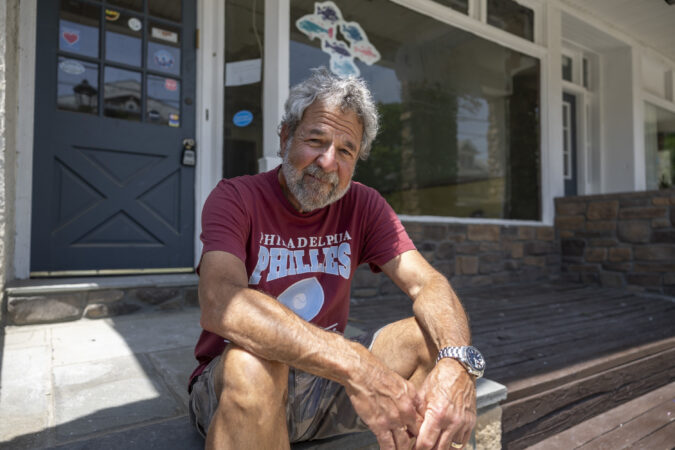
Danny’s Guitar Shop, an independent guitar store and lesson center run by musician Dan Gold, closed its doors after 17 years in downtown Narberth.
Over nearly two decades, Gold forged connections along the Main Line, sold guitars to celebrities, brought outdoor music to Narberth’s streets, and, briefly, starred in a TV show that drew on his talents as a self-proclaimed “kibitzer.”
Gold, 72, said retirement was already on his mind when his landlord raised the rent beyond what Gold could pay. Danny’s officially closed at the end of May. As Gold prepares for the next chapter, which will be filled with swimming, traveling, and playing bassin Broken Arrow, his Neil Young cover band, he said his time in Narberth was “just perfect.”
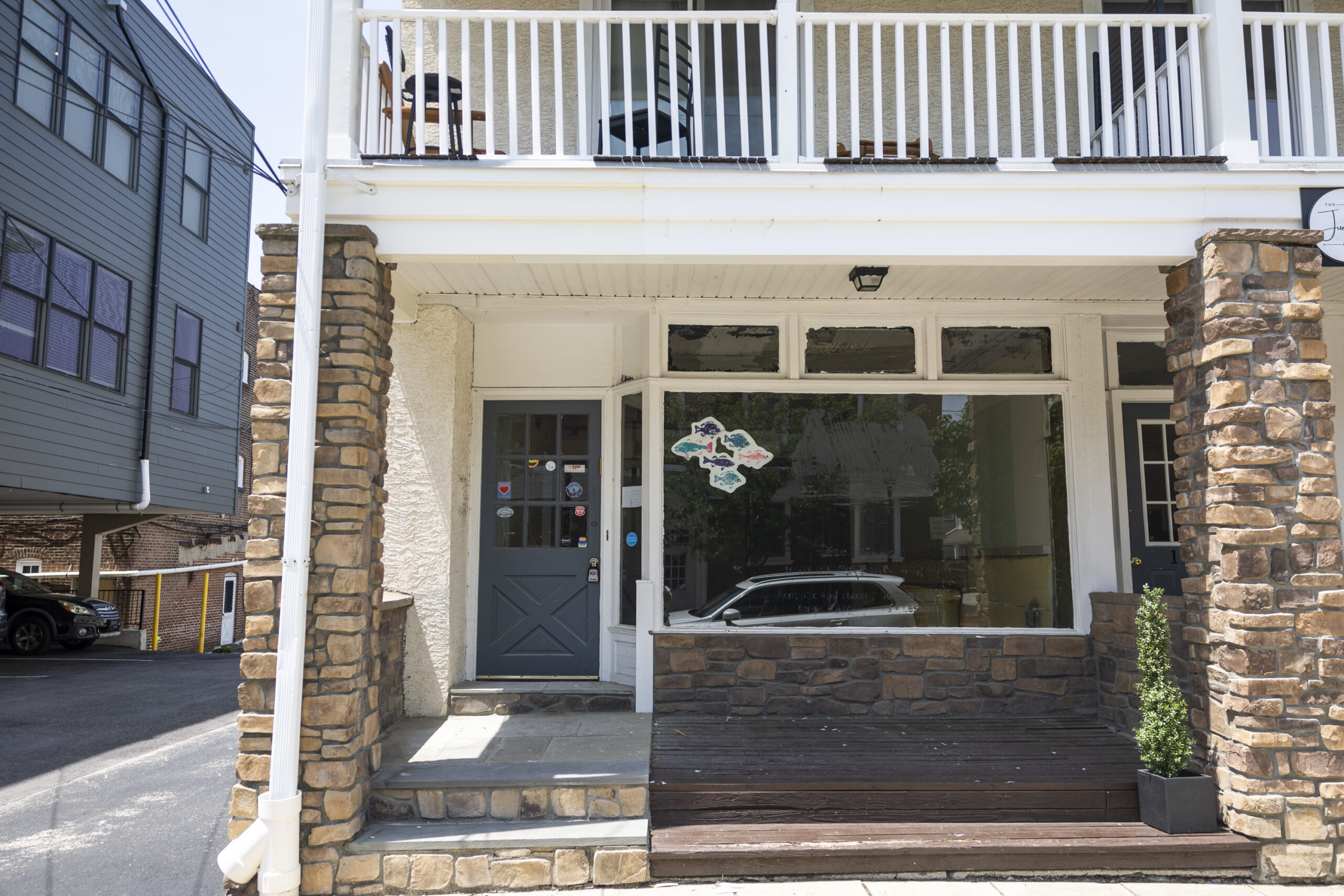
The former storefront of Danny’s Guitar Shop in Narberth.
Gold opened Danny’s Guitar Shop in June 2009, right as the country had begun to dig itself out of the Great Recession. Guitar store Medley Music of Bryn Mawr had closed the year prior, and Center City’s 8th Street Music had moved across the bridge to New Jersey, leaving a vacuum for guitar lovers in Philly’s western suburbs.
Gold, a Newtown Square resident, grew up in Havertown and graduated from Haverford High School and Temple University. He started his career as a schoolteacher before taking a gig as a district sales manager for Fender Guitars, traveling across the region, from rural Pennsylvania to North Jersey, selling instruments and accoutrements.
Though it was risky to open a brick-and-mortar store at the heels of the financial crisis, Gold was bullish on the prospect. His mentors told him that as long as he ran guitar lessons, he’d be able to pay the rent. Gold had always loved Narberth’s “very distinct, charming personality” and was smitten with the Forrest Avenue storefront right away, with its ample natural light and welcoming front porch.
When Danny’s opened in 2009, the Main Line Times described it as having promptly “established itself as that rare kind of clubhouse — the kind where everybody’s allowed in.”
Over the years, the storefront’s shaded porch became the site of dozens of guitar recitals and summer evening jam sessions. Narberth residents gathered outside of Danny’s to talk about the news and the neighborhood gossip, and Gold always had treats for local dogs. Gold helped bring live music to Narberth during First Fridays and the annual July Fourth celebration. Ahead of a recital last fall, Gold posted on Facebook: “Students playin’ on the porch this Sunday 3:00! Bring a chair and come hang out!”
“Danny is loved around here and for good reason,” said Ed Ridgway, president of the Narberth Business Association, who took guitar lessons at Danny’s.
Ridgway described Danny’s as resembling an“old-timey barbershop.” If you asked Ridgway to make a list of 10 things that define Narberth’s downtown, he said Danny‘swould be on the list.
“He was just such a good presence in Narberth,” said Tracy Tumolo, owner of Narberth art and gift shop Sweet Mabel Store.
“This place,” Gold said. “It just fit me like a glove.”
Danny Gold (center) pictured at Danny’s Guitar Shop in Narberth in 2018 with partners Larry Freedman (left) and Ron Stanford.
Every once in a while, a star or two would stop into Danny’s Guitar Shop while visiting the area or prepping for a show at Ardmore Music Hall. The Eagles’ Timothy B. Schmit bought a few guitars and gave Gold backstage passes when the band played Atlantic City. Wilco’s John Stirratt stopped by, as did Dweezil Zappa, Frank Zappa’s son. Tumolo said Gold always encouraged them to shop at Narberth’s other businesses.
In 2014, Gold starred in a 13-episode series on WHYY-TV’s YArts cable channel, which aimed “to do for guitars what Anthony Bourdain has done” for international cuisine or ”Mike Rowe for the art of cleaning septic tanks,” according to an Inquirer story from the time. In the series, Gold explored the origins of Klezmer music, interviewed the scholar who wrote the definitive book on the history of the accordion, and spent quality time with electric guitar giant Paul Reed Smith.
Lessons were the biggest part of Gold’s business model at Danny’s, as his mentors predicted. He did a large consignment and secondhand business, as well, as he was mostly selling to first-time and beginner players.
“The lessons made me a destination store. It’s never like I carried away wheelbarrows full of money, but we were able to make a modest living and enjoy doing what we were doing,” Gold said.
Like many brick-and-mortar merchants, Gold said it became more difficult over time to keep up with the ubiquitous online marketplace. Consumers can now buy any model of guitar, in any color, at any time. Music stores across the countryhave shuttered in recent years, pointing to online shopping as a factor in their decline.
On one hand, Gold feels somewhat liberated from the day-to-day responsibilities of running his namesake storefront. On the other hand, there’s a lot he’ll miss — the people, the borough, watching the neighborhood kids grow up.
At the end of the day, Gold said, “It’s been a great run.”
This suburban content is produced with support from the Leslie Miller and Richard Worley Foundation and The Lenfest Institute for Journalism. Editorial content is created independently of the project donors. Gifts to support The Inquirer’s high-impact journalism can be made at inquirer.com/donate. A list of Lenfest Institute donors can be found at lenfestinstitute.org/supporters.
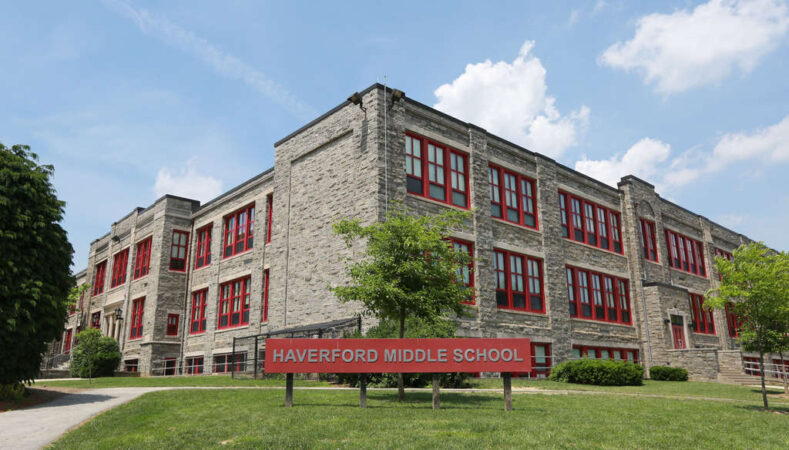
A move by the Haverford Township School District to buy artificial intelligence tools for students and teachers has been met with protest from parents who fear the technology will erode learning.
At a meeting last week, the Haverford school board voted 5-3 to approve contracts with School AI, which features AI “tutors,” and Brisk, which automates tasks for teachers, like developing quizzes and giving students feedback.
While administrators said the tools wouldn’t supplant teaching and learning, critics said it was inevitable that AI would be used inappropriately — making it easier for kids to avoid work.
“The idea of putting chatbots on computers — I don’t even care what age. I’m pretty disgusted by that,” said Christine Seewagen, a district parent of rising 12th and 7th graders.
The district already struggles to manage technology in the classroom, said Seewagen, who said her older child has observed students run math questions through an AI tool on their phones. Her younger child, meanwhile, had a teacher who directed students to upload essays to an AI tool to get feedback, Seewagen said.
“They’re just using AI, and not really being instructed on how to do it,” Seewagen said in an interview.
Administrators said they were recommending buying AI tools in part because teachers are already using freely available versions, and they want to “eliminate free roaming around platforms,” Robert Anderson, the district’s technology director, said at the June 18 board meeting.
Haverford’s superintendent, Matthew Hayes, said the School AI contract would “allow us to have a resource so that as we go through the process of the strategic plan and looking at all the implications down the line,” the district could begin teaching AI “thoughtfully, responsibly, ethically.”
He added: “And also reducing screen time,” without providing further details.
The controversy around AI in Haverford is the latest example of area parents pushing back on what they see as excessive and unchecked technology use in schools.
In Haverford, some parents said they were caught off guard by the proposal to adopt technology they felt posed risks to their kids.
Patrick Burland, the parent of an incoming 10th grader and 6th grader, noted he’d had to sign numerous permission slips for his younger child to participate in end-of-year celebrations.
“Apparently, sugar requires a signature, but cognitively rewiring her brain does not,” Burland told the board.
Anderson said Haverford had been considering how to incorporate AI for years. He said the district sought feedback from teachers, including through an AI working group, before proposing the contracts.
Board members who voted for the AI tools, meanwhile, said kids needed to learn how to use the technology responsibly.
“Not acknowledging that it’s here … we don’t gain anything, right? We actually lose and we put ourselves farther behind because it’s not going anywhere,” said board member LaTonia Lee.
But some raised questions about what the district was planning to do with the tools.
Dave Schwartz, another board member, said he would support teaching kids about AI. But the district hasn’t said how it plans to do that, he said.
“We’ve been talking very much in vague terms, and I can’t vote for something that I don’t understand,” Schwartz said.
A district spokesperson did not respond to a question this week about examples of how School AI might be used.
Board member Chris Shelton asked Anderson about criticism that the tool’s “historical figure” chatbots were giving students inaccurate information. (Last year, School AI acknowledged that responses from an Anne Frank character “didn’t provide critical historical details about the Nazis’ role in the Holocaust.”)
Anderson called it “unfortunate” that the company had promoted the historical figures feature, but said the district “would have the option to potentially not use something like that.”
John Flagler, a board member and English teacher, said he understood the burdens placed on teachers, “but I also believe there are lines that should not be crossed.”
The suggestion that grading papers is a “menial task” that could be offloaded to AI “is an insult to both the teacher and the student,” Flagler said, calling grading essential to teachers learning about students.
Administrators said Brisk wouldn’t be used for grading, but would provide “first-level feedback” — informing students they’re missing a topic sentence, for instance, said Meridith Herne, the district’s technology integration coordinator.
“We insist that our teachers read it over and modify it so it’s in their own voice,” Herne said of Brisk’s feedback. Hayes said that 97 district teachers already use a free version of the tool.
He said the tool was not meant to replace teachers.
“That’s not my intent at all,” Hayes said, describing Brisk as “an option for individuals who want exposure to it.”
He noted that the contracts with Brisk, for $22,260, and School AI, for $12,999, were each limited to one year.
Teachers will be trained on the School AI platform, Anderson said; it will be up to them to decide whether they want to use it. He said the district envisions the platform beingused in high school and “potentially” middle school, but isn’t planning for it to be used in elementary schools.
Parents like Burland and Seewagen, who said like-minded parents have been organizing on social media, weren’t persuaded.
“It does not feel like to me they have put any guardrails on,” Burland said in an interview. He questioned whether the district would have considered turning off School AI chatbots, for instance, had it not been asked at the board meeting.
Seewagen said many parents who have learned about the AI plans aren’t happy.
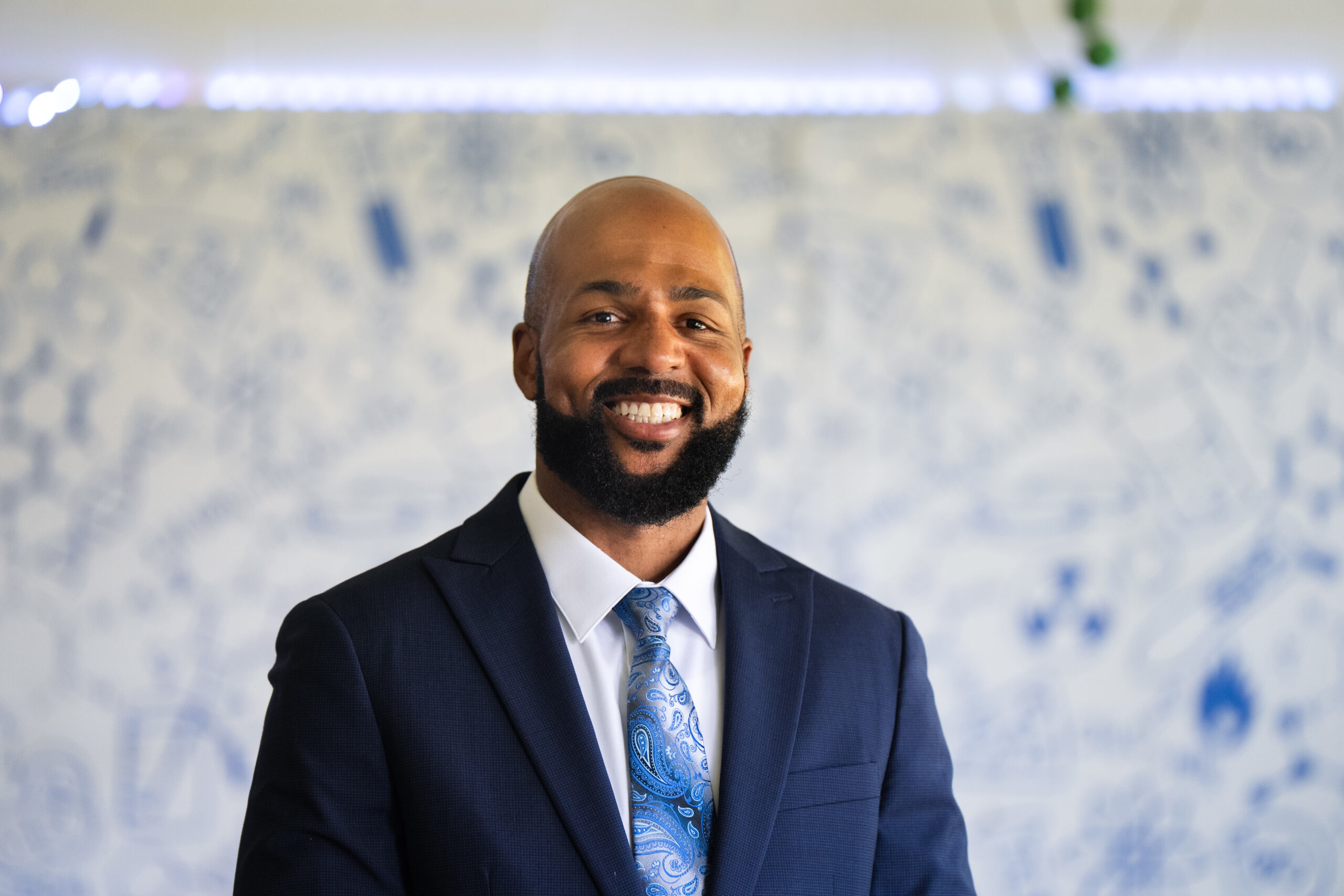
As the newly appointed National Teacher of the Year, Haverford High School’s Leon Smith has been celebrated on television: from CBS Mornings and Good Morning America to the Kelly Clarkson Show.
But as the lone Black teacher when he started teaching at Haverford 25 years ago, Smith got a different reception. He experienced racism, he told a group of young people interested in teaching, and if it weren’t for a Black vice principal that listened and supported him, he might not still be teaching today.
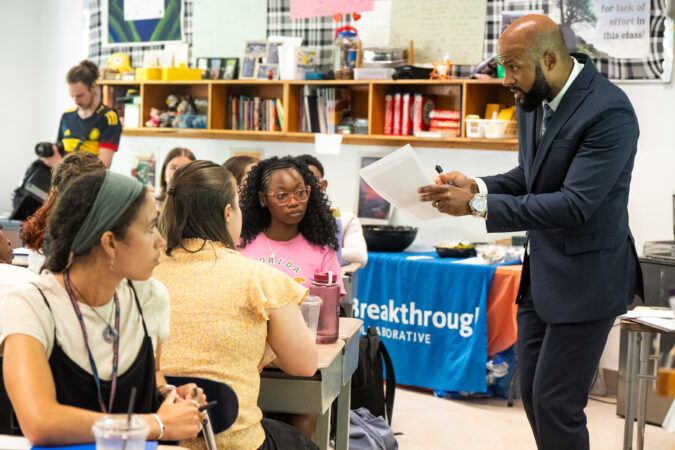
“She would just be very honest with me, and be like, ‘First of all, you’re an excellent educator. … Keep being you. Somebody calls and says something crazy, I’m just hanging up,’” Smith told teaching fellows gathered in Germantown on Wednesday with Breakthrough of Greater Philadelphia, a nonprofit that trains aspiring teachers to lead enrichment programs for middle-school students.
The event, sponsored by the Equitable Foundation, was just one of many for Smith during his yearlong stint as Teacher of the Year, a platform he was awarded in April by the Council of Chief State School Officers. In that role, he’s spending the year traveling the country to advocate for the teaching profession and growing its ranks.
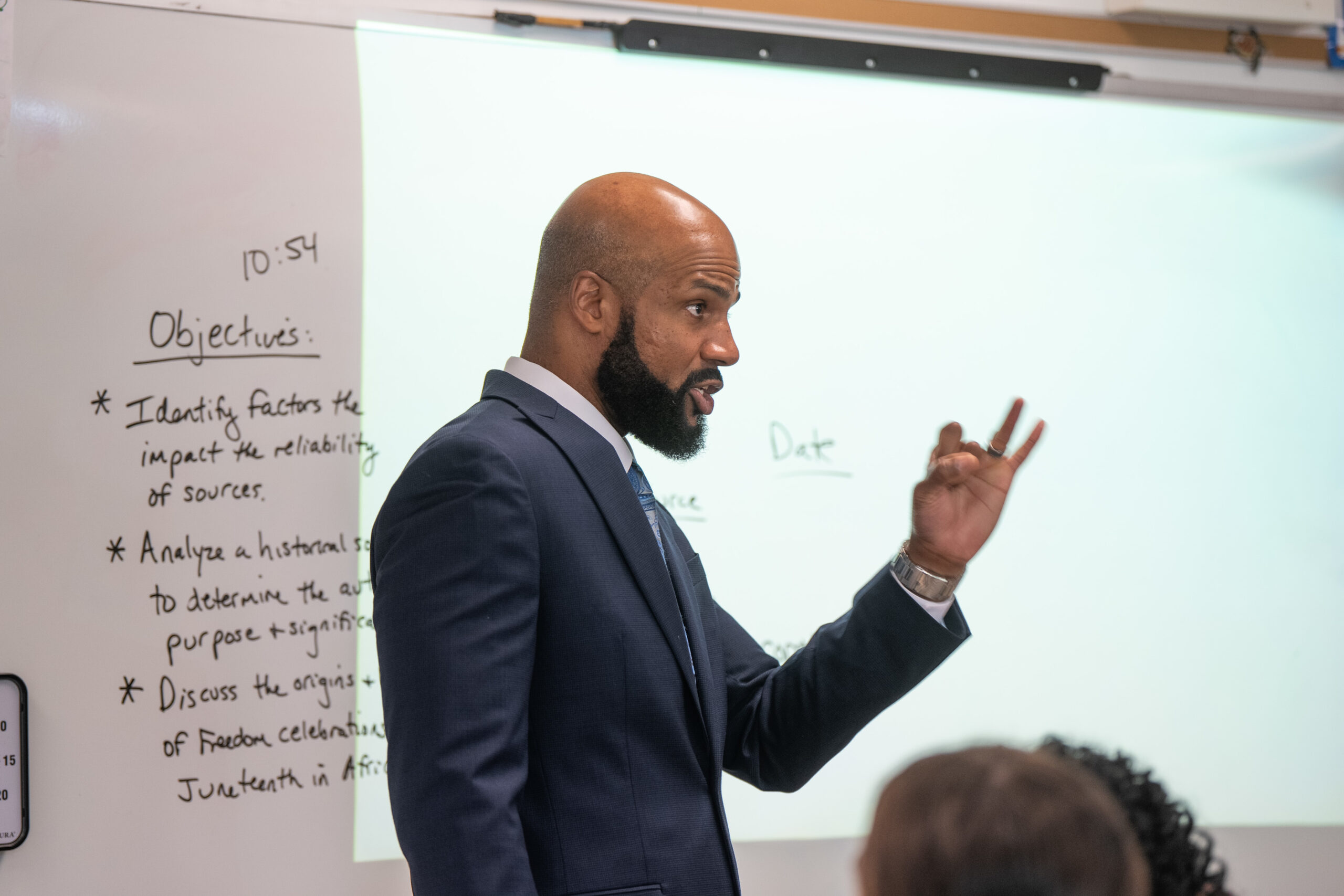
Smith, who teaches Advanced Placement U.S. History and Advanced Placement African American Studies at Haverford, spoke passionately to the fellows Wednesdayabout his motivation to be the teacher he didn’t have growing up, and the immense impact teachers can have on students’ lives — presenting the profession as a deeply rewarding opportunity to help kids recognize their talents.
But he was also honest about the challenges. Fielding questions about his career from fellows gathered in an auditorium on the Germantown Friends School campus, Smith said he had struggled to find his way as a new teacher, staying up too late trying to perfect lessons.
He described the sometimes lonely experience of being his predominantly white high school’s only Black teacher, and how he developed strategies to respond to racism, including learning when to walk away and when to speak out.
He told fellowsto find supportive colleagues and to be selective when they considered job offers.
“Do your research. Make sure it’s a space that’s going to take care of you,” he said.
Smith also described feeling self-conscious when he was younger about some of his lessons — worrying that students would say, “‘Oh, all he does is talk about Black history,’” Smith said. But he began hearing from students about how grateful they were to have learned about subjects that hadn’t been covered in other classes; an audit later identified African American studies as a class community members wanted to see added.
‘My why’
His comments resonated with the teaching fellows, some of whom said they’re committed to careers in education.
Dominique Sidae, a 23-year-old rising senior at Florida A&M University, is planning to become a special-education teacher. She said she wasinspired by her appreciation for a teacher who helped her younger brothers, who have autism.
Sidae said she is often the only Black person in teaching spaces. “It feels good to know this isn’t only happening to me,” she said. “You don’t really learn that in college.”
Dominique Sidae, 23, a fellow with the Breakthrough of Greater Philadelphia, listens to a talk by Leon Smith last week.
Miles Baldwin, an 18-year-old graduate of Harriton High School in Lower Merion, isn’t sure he wants to become a teacher. But he enjoyed working with students last summer in the Breakthrough program — “a lot of kids came in hating it, and left wanting more,” he said — and Smith’s pitch about being a mentor was compelling to him.
“Honestly, yeah,” he said, when asked if hearing from Smith made him more interested in teaching.
Smith’s agenda this summer includes attending the National PTA Convention in Pittsburgh and giving a keynote speech at the Smithsonian’s National Education Summit. He also will be joining other state teachers of the year at Space Camp in Alabama and participating in professional development.
But addressing the Breakthrough teaching fellows Wednesday “reminds me of my why,” Smith said in a brief interview. He said the fellows’ eagerness to ask questions “shows they want to be the best they can be,” and reflects qualities of good teachers: “You have to be curious, sometimes silent … often humbled,” Smith said.
Leon Smith, a teacher at Haverford High School, was named National Teacher of the Year this spring.
Teaching students to lead
In a model lesson after his talk, Smith put some of those skills on display. He started by gathering the 34 fellows in a circle, asking them each to share their name and a brief story about it; the group periodically broke into laughter at humorous anecdotes.
Smith then outlined the objectives for his lesson about assessing the credibility of sources. He passed out copies of a photo, asking fellows to silently write and then discuss in small groups whether it provided strong evidence of the Fukushima power plant explosion.
“I always tell my students, you want to be a leader,” Smith said, encouraging fellows to stand by their analyses, even if others disagreed. He then called on people, asking them to explain their thinking while challenging some of their points.
Leon Smith talks to fellows at Breakthrough Collaborative last week.
Matt Greenawalt, co-dean of faculty for the Breakthrough summer program and a teacher at Germantown Friends — which supports Breakthrough — was planning to breakdown Smith’s approach for the fellows after the lesson. He noted how Smith was walking through the room, engaging with the fellows as they talked, and Smith’s ability to affirm and redirect them when an answer wasn’t on point.
Smith’s visit came on day three of a two-week orientation for the fellows, before they would begin teaching students during Breakthrough’s six-week free summer program.
While access to academics is key for the program’s students, many of whom come from Germantown, “a big piece of it too is having role models,” Greenawalt said.
Smith told fellows that when the students arrived, “they’re going to just admire you so much.”
“You’re going to be able to see the light inside of them, and sometimes it just takes someone else to notice, right? … They’ll just kind of be doing their work, and then as you get to know them, you’ll notice certain characteristics and you’ll just pour into it.”
What really helps make a connection with kids, Smith said, is “just you being yourself.”
“You walking in there and walking in your own life, and bringing your passion and all the reasons why you wanted to become a teacher,” he said. “Your students are going to feel that.”
The future of a family farm in rural Salem County was at stake, and after multiple meetings and hours of presentations, questions, pleas, and complaints, a local planning board was set to vote.
Before the vote, one longtime resident of Mannington Township came to the podium with a warning. In preparation for this crowded, mid-March meeting, Alice Waddington, 98, said she’d made a list of dairy farms she remembered from her decades in the little town.
At one time, she said, there were close to a dozen.
“There’s only one farm left milking cows,” Waddington told the board, “and that’s the Cadwalladers.”
The Cadwalladers were struggling in the volatile dairy industry, though, and believed a large solar project could be a lifeline, a way to avoid shuttering and selling to developers eager to build warehouses, data centers, and housing in the nation’s most densely populated state.
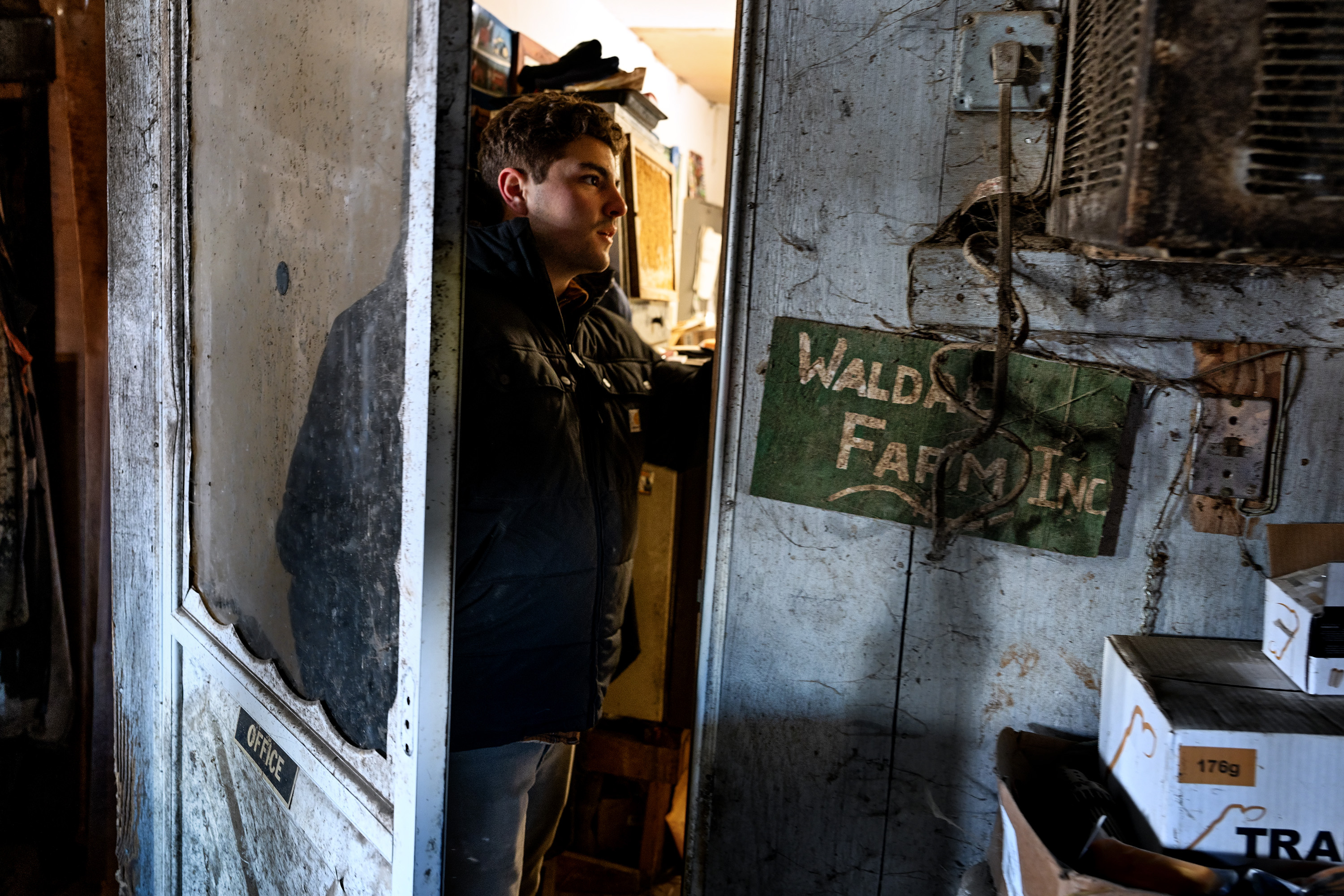
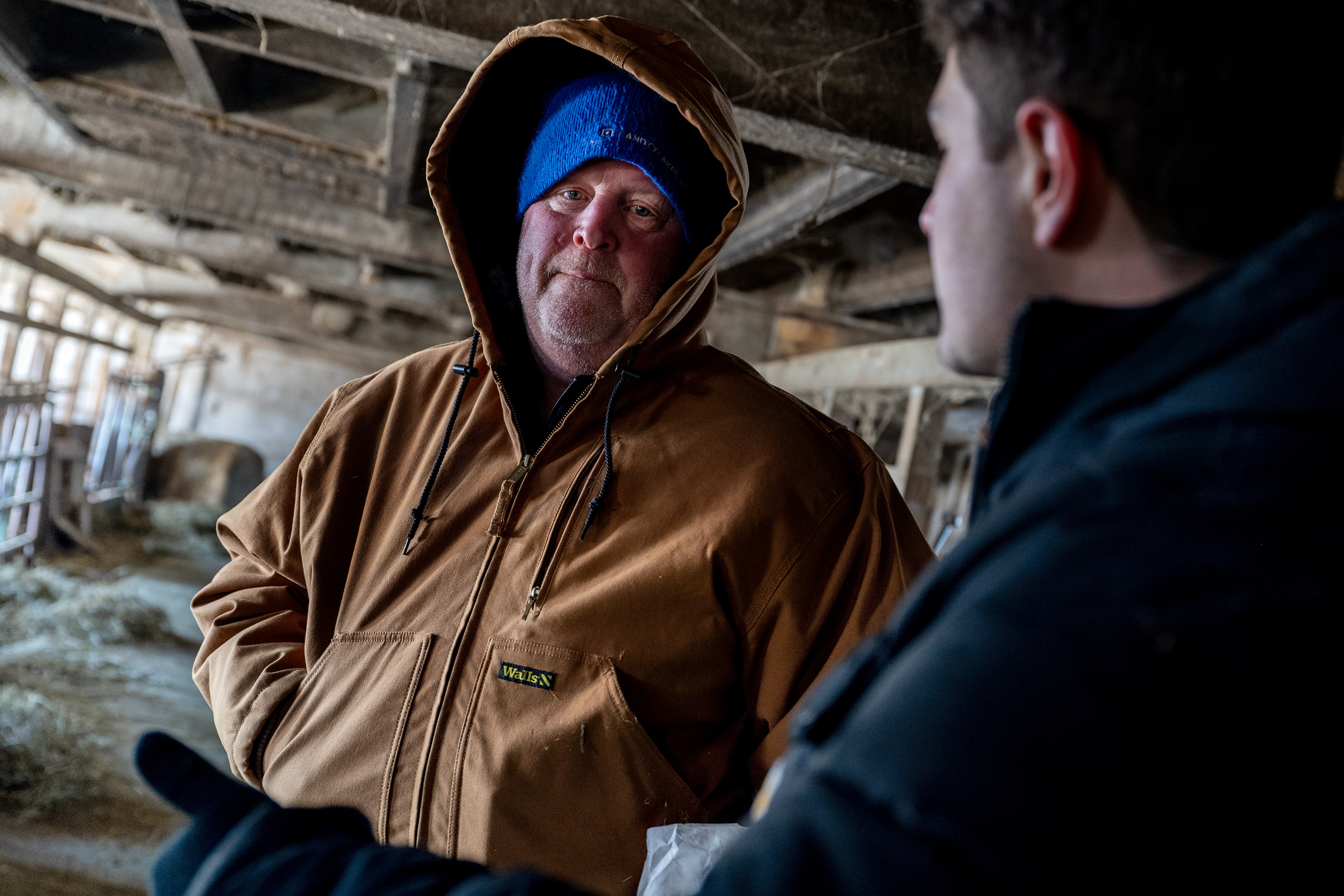
Farmer David Cadwallader at Waldac Farms in Salem, N.J., on Jan. 29.
This was the fourth Mannington Township planning board meeting for the Cadwalladers, who were seeking a variance to install 300 acres of solar panels on Waldac Farm that would, eventually, generate enough energy to power 19,000 homes annually.
Some board members and locals questioned the environmental impacts, whether it would affect the soil, injure the abundant wildlife in the area, or taint the nearby Delaware River watershed. Representatives from AES Corp., a Virginia company that would build the solar project and pay a lease to the Cadwalladers, had answers for all of them.
“Whether we all, in this room, agree with it or not, it is the state’s policy to advance these types of solar energy uses to meet the energy demands that we need,” Keith Davis, an attorney representing AES, told the planning board.
What they couldn’t seem to quell, however, were the repeating concerns about how a solar farm would look in New Jersey’s most rural county. Those concerns raised open-ended, philosophical questions: What’s a working farm supposed to look like? What exactly does rural mean?
“It will destroy property values and will be an eyesore for our township,” a neighbor of the Cadwalladers commented on a 2025 Facebook post about the project.
Similar situations have played out nationwide. A recent Associated Press story from Ohio highlighted a struggling farmer’s solar project that also faced community pushback and was ultimately blocked.
In Salem County, Mannington planning board member Joanne Wright was the most vocal at the meeting. She mentioned, often, that Mannington’s master plan called for maintaining “scenic vistas” and its rural, agricultural characteristics.
The Cadwalladers said they would plant pollinator habitats and plants on the solar farm, and introduce roughly 300 sheep to graze around and under the panels. The combination of solar and agriculture — “agrovoltaics” — is supported by the New Jersey Farm Bureau, Andrew Cadwallader pointed out.
Wright, however, thought solar panels would break up the township’s “contiguous farmland.”
“I’m just wondering how you see that the positive outweighs the negative,” Wright asked representatives from AES.
Farmer Andrew Cadwallader at Waldac Farms in Salem, N.J., on Jan. 29.
A picturesque farm
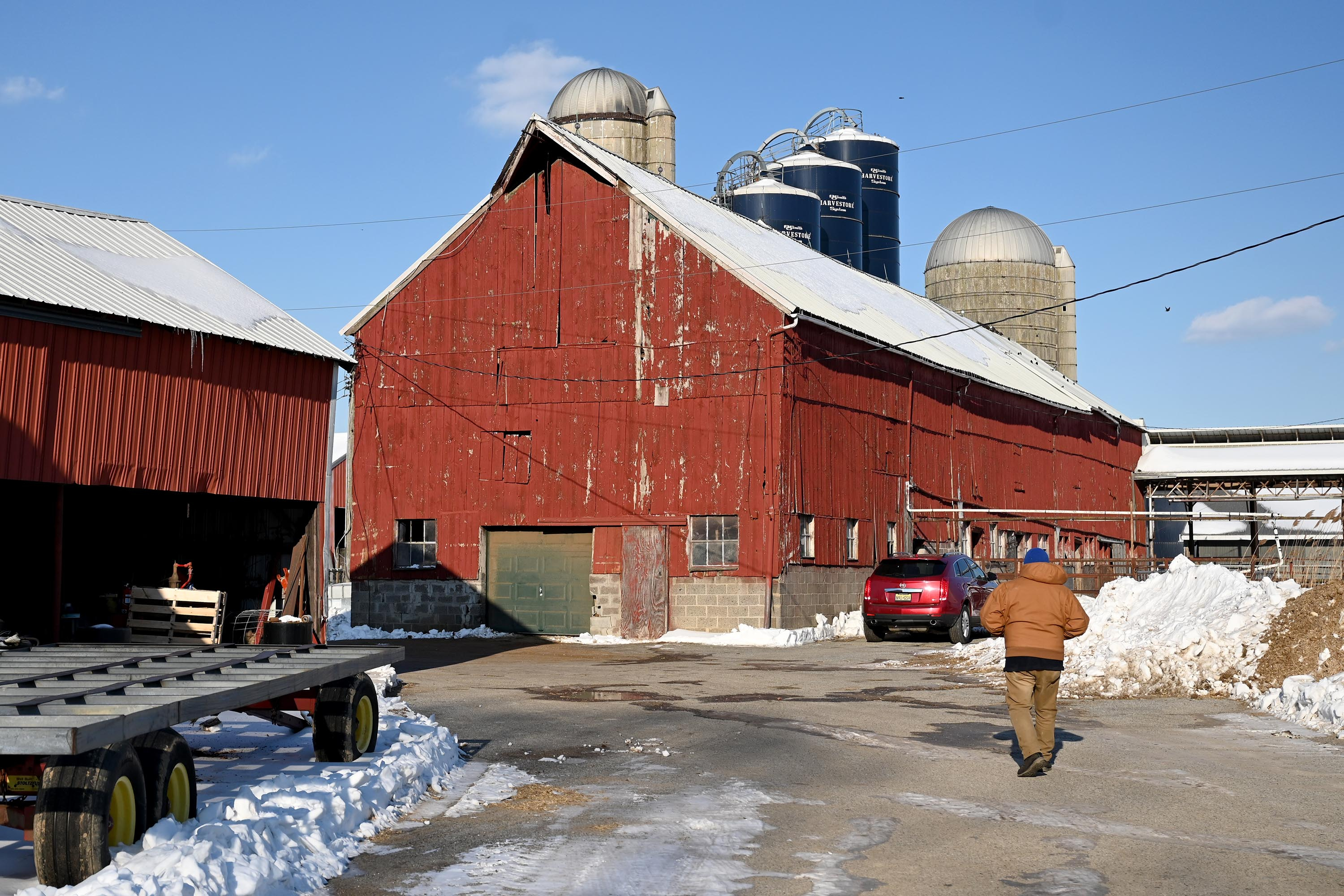
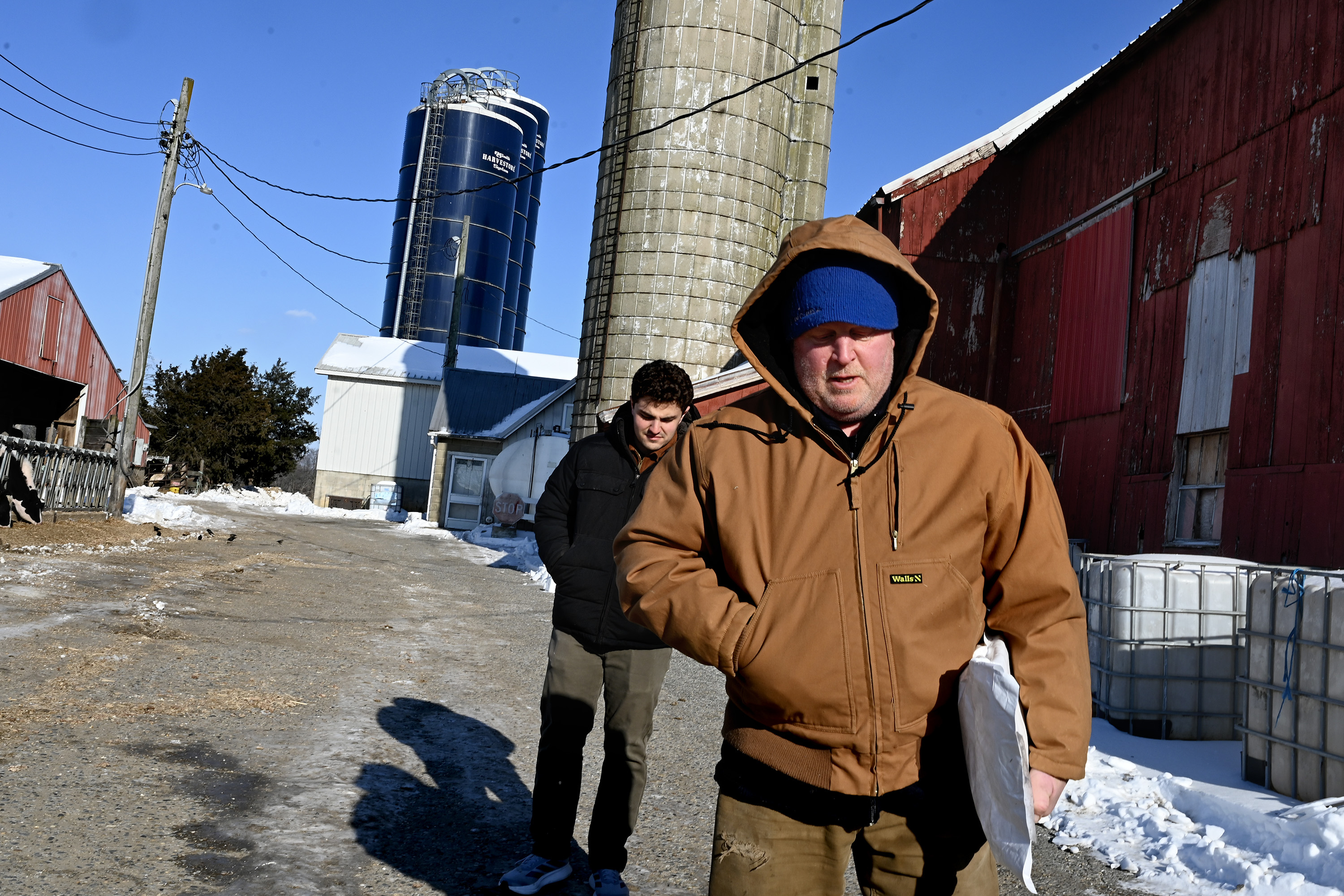
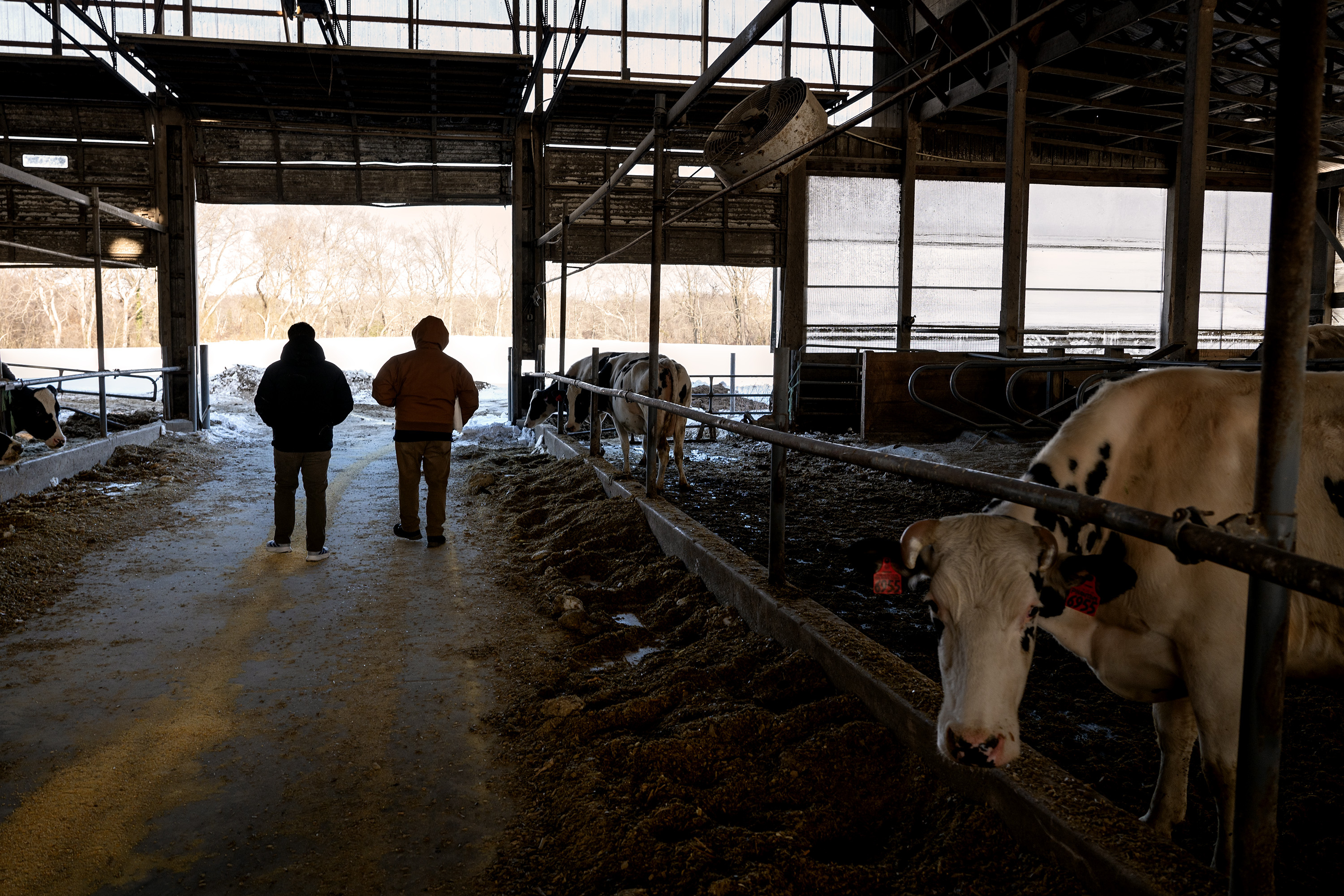
The Cadwallader family has been farming since the 1860s, and Waldac Farms certainly looks the part: There’s a circa-1790 farmhouse down a long dirt road, a slew of silos dotting the flat landscape, and big red barns, faded by time, that are full of cows and cats.It was mostly silent there, too, aside from the winter wind.
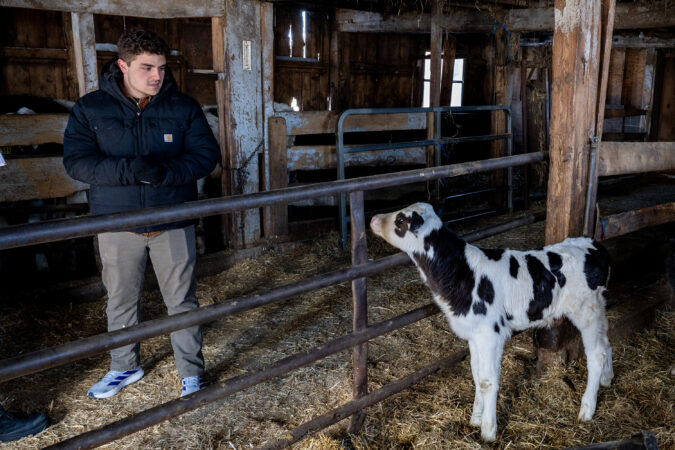
The only thing that seems out of place on the family farm on a frigid afternoon is Andrew Cadwallader. The college senior looks younger than 22, and his sneakers and pants were impeccably clean.
Andrew’s been milking cows since before his baby teeth fell out, though.
In 2007, a South Jersey newspaper visited the Cadwalladers to discuss the dismal state of dairy farming at the time. The newspaper took a picture of Andrew, then 3, surrounded by cows in a pen. His father, David, told the newspaper he’d love to pass the farm down to his son.
“If he wants it,” David Cadwallader said.
From the Press of Atlantic City on March 12, 2007: The state is trying to revitalize its dairy farm industry. With his 3-year-old son Andrew, David Cadwallader prepares his cows for their 3 p.m. milking at Waldac, his Woodstown dairy farm.
Andrew is set to graduate from Haverford College with a degree in political science. He’s merged his life history — agriculture and geology — with his interests in politics and government, and recently began an internship for CNN’s Michael Smerconish, a Bucks County native.
Andrew’s an only child, and, yes, he wants to farm, bucking a trend that’s seen the average age of farmers, 58.1, rise steadily, according to the 2022 U.S. Census of Agriculture Data.
“I’m coming back here after I graduate,” he said.
Nationwide, small dairy farms like Waldac have continued to shutter at a rapid rate since Andrew was in the local newspaper.
Overall, milk production is up in the United States. That’s because modern genetics has produced cows that make more milk than their ancestors. Those big production numbers are coming from massive farms with large herds, too.
The Cadwalladers milk about 130 dairy cows on approximately 500 acres, and small farms like theirs have been decimated. In 2005, according to the USDA, there were 78,295 dairy farms in the United States. In 2025, that number was 23,609, a 70% decrease in just 20 years.
Farmers Andrew Cadwallader and his father David Cadwallader (front) at Waldac Farms in Salem, N.J., on Jan. 29.
Andrew Cadwallader declined to go into exact figures but said the family would be “paid well” by the AES lease. Waldac Farms would pivot to sheep and the sale of their lambs, while possibly still milking cows on a smaller scale.
“We have been losing money for the last 10 years,” Andrew said of the dairy operation.
AES approached the family about “solar grazing” during the pandemic, Andrew said, and as they sought a use variance from the Mannington planning board to move forward, he became the project’s public face. Andrew made numerous, lengthy Facebook posts in local groups about the project to be transparent.
“Will we continue to hope that the price of milk goes up and risk failure, or will we pivot and change?” Andrew wrote in the Salem County Advocates group in November.
Many comments were supportive or neutral, in a libertarian “it’s your land” way. There was plenty of pushback, though, and Andrew said it was disheartening to see how many comments focused on visual impact.
“I’m glad people can worry about the look of the farm,” he said in late January. “We have to worry about making a living.”
Cadwallader said flat farmland is not a natural part of landscapes in South Jersey. People have just gotten used to seeing it. His farmland was likely cleared of trees by the native Lenni-Lenape centuries ago, he said. Barns and tractors are industrial buildings and commercial machinery, he said, not quaint antiques.
“They are prioritizing the look, and it’s not reality,” he said. “It’s not a natural feature.”
Still, Cadwallader felt confident, on a late January afternoon on his farm, that the planning board might approve the project.
Jennifer Kugler, founder of the nonprofit South Jersey Preservation, visited Andrew’s farm shortly before the planning board meeting with her children and wrote a lengthy Facebook post in support of his plan that received 573 likes.
“The Cadwalladers want to evolve,” Kugler wrote. “This means new solutions are necessary to ensure the continued viability of the farming operation. For farmers, this can be incredibly scary.”
Kugler, 42, lives in Pilesgrove, Salem County, home to America’s oldest continuously-operating rodeo. She was raised on a dairy farm in Lackawanna County. That farm closed in the 1990s and never reopened, and part of her goal with South Jersey Preservations, she said, is to prevent more small farms from folding.
“We support farmers continuing to farm,” she told The Inquirer.
Farmers Andrew Cadwallader and his father David Cadwallader (left) at Waldac Farms in Salem, N.J., on Jan. 29.
To preserve or not to preserve
While the Cadwalladers would prefer the solar project, there are other options to keep farms afloat in New Jersey. The state’s Farmland Preservation Program is a common way to ensure that housing and warehouse developers don’t buy up farms. It’s a relatively simple process.
The program uses a combination of federal, state, county, municipal, and nonprofit funds to buy a farm’s development rights. The purchase price, according to the program’s website, is “based on the difference between what a developer would pay for the land and what it is worth for agriculture.”
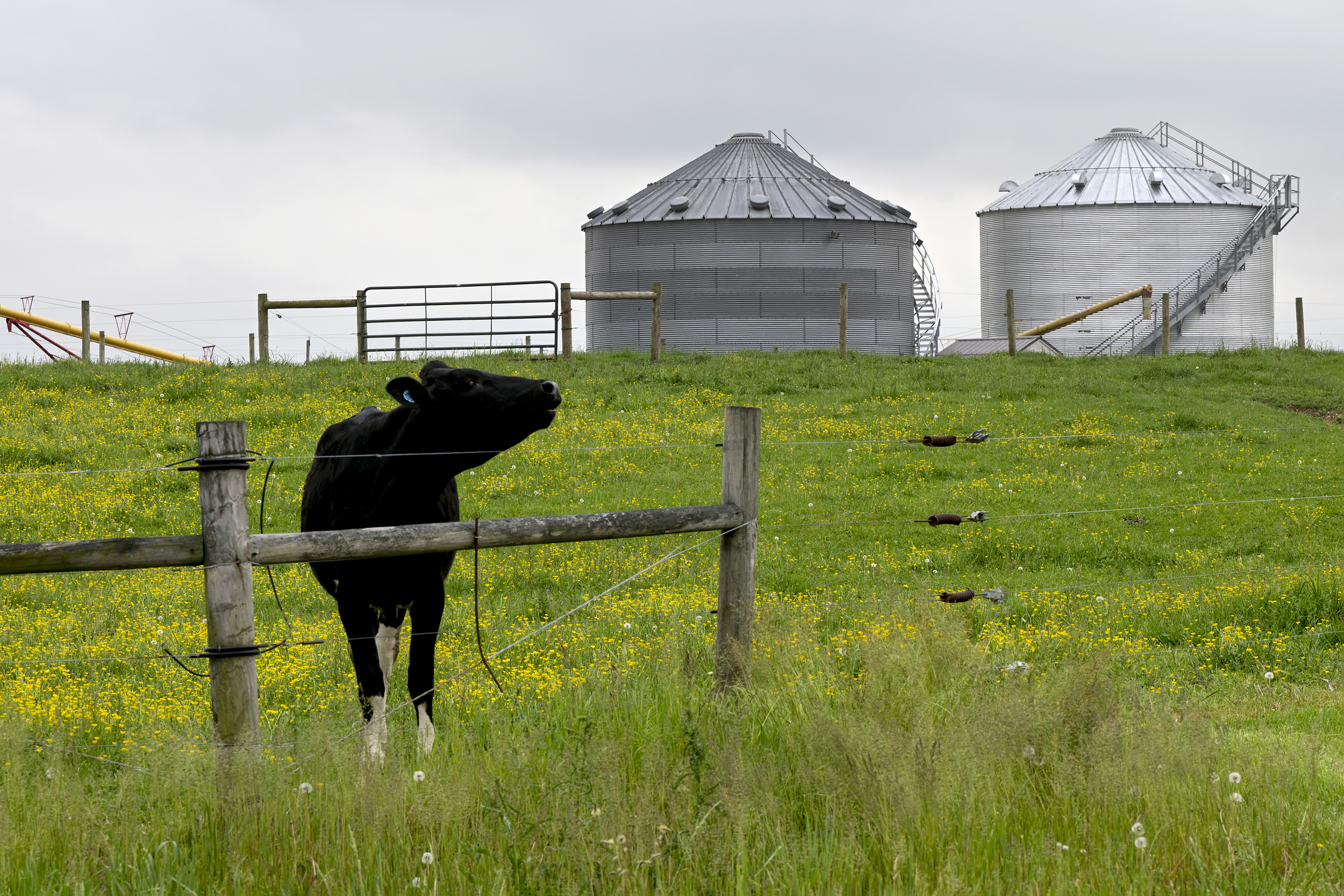
A cow at a farm along Route 49 in Salem County, N.J., on May 6, 2024.
In turn, farmers get a much-needed payout while keeping their agricultural operation running. If those farmers choose to sell their land someday, deed restrictions require the property to be used for agricultural purposes or otherwise remain undeveloped.
“You can’t do additional residential or commercial improvements. You can’t turn it into a housing development or a Walmart,” said Charles Roohr, executive director of the New Jersey State Agriculture Development Committee.
Since the program began in 1984, Roohr said New Jersey has preserved 250,000-plus acres, with a goal of 500,000 acres. Salem County leads the way among counties, with more than 43,000 preserved acres.
The family has not ruled out farmland preservation if the solar project is rejected, but they were concerned about some of the potential restrictions and complications.
“It’d be like a bailout, but we have 500 acres,” Andrew said on the farm in late January. “We need to figure out what the heck we’re going to do with the 500 acres that’s going to actually make us some money.”
Cowtown Rodeo in Pilesgrove, N.J.
A complicated farmland preservation issue played out right in Mannington in recent years, when Mannington Deputy Mayor Robert DiGregorio filed a civil rights lawsuit against local and county officials in 2021. According to the lawsuit and Transparency NJ,, DiGregorio was holding weddings, private parties, and nonprofit functions on his preserved, 78-acre farm, but was told by officials that he would need variances and site plan approvals or waivers to continue. The back-and-forth between those officials and DiGregorio, according to Transparency NJ, almost grew physical.
Farmers Andrew Cadwallader and his father David Cadwallader (left) with plans at Waldac Farms in Salem, N.J., on Jan. 29.
In April, Mannington agreed to pay DiGregorio $55,000 to end the lawsuit, according to an article in NJ.com. Neither DiGregorio, who is on the planning board, nor his attorney returned requests for comment. It’s unclear if he will continue to host events on his farm.
Roohr, commenting on farmland preservation restrictions in general, said events are allowed if “the purpose of the event is to sell the things that you’re producing on your farm.”
A tomato festival on a tomato farm would be fine, for example. A folk festival on a tomato farm would probably require a special-use permit.
“If the main purpose of the event is some other focus and your stuff ‘might’ get sold as a side benefit, then we consider that a non-agricultural use. And so the greatest example of that would be a wedding.”
Roohr said the preservation program is more important than ever, as data centers look to build in rural areas nationwide.
“We have over 200 applications [for farmland preservation] in our office right now,” he said.
The Cadwalladers said they have no plans to sell to a developer.
Farmers Andrew Cadwallader and his father David Cadwallader (right) at Waldac Farms in Salem, N.J., on Jan. 29.
The vote
Along with Alice Waddington, numerous others spoke at the March planning board meeting. Union officials said the solar project would bring jobs (AES put the number between 75 and 100). Some spoke in support of Andrew Cadwallader and his love for the ecosystem. Still, others talked about protecting Mannington’s “rural identity” and fears that the project could affect property values.
Andrew Cadwallader was the last member of the public to speak.
“As a family, we’re at a crossroads,” he said. “We can’t risk volatility anymore as a family and as a farm.”
When he was finished, Davis gave a final summation on behalf of AES and the Cadwalladers. Minutes later, the planning board made a resounding 6-1 vote, shooting down the project.
Cadwallader hung his head and gave a half-smile and some quiet “thank yous” to the attendees who patted his shoulder and shook his hand.
Laura Kellogg, a development manager for AES, said the team was disappointed but would continue to “evaluate next steps for the project.”
A week later, Andrew Cadwallader said he and the family were still dealing with the disappointment and contemplating their next move.
“People like this area so much, but we love it. No one loves this land more than my family,” he said. “People have to understand that a working farm is not a museum.”
Cadwallader’s life was getting busier at Haverford, too. He was taking geology classes and working on a senior thesis about preserving “the agricultural viability of mid-sized farming operations in the United States.”
Andrew drives the 38 miles south from college, back to Salem County, every weekend. A week or so after the meeting, though, Alice Waddington’s warning to the planning board, and the people of Mannington, proved prophetic.
Waldac still looked like a farm to neighbors and motorists passing by, but the Cadwalladers had stopped milking cows.
Correction: This article has been corrected to reflect that AES Corp. is based out of Virginia.
Haverford College will not consider removing U.S. Commerce Secretary and mega donor Howard Lutnick’s name from its library despite student calls to do so, the school announced Wednesday.
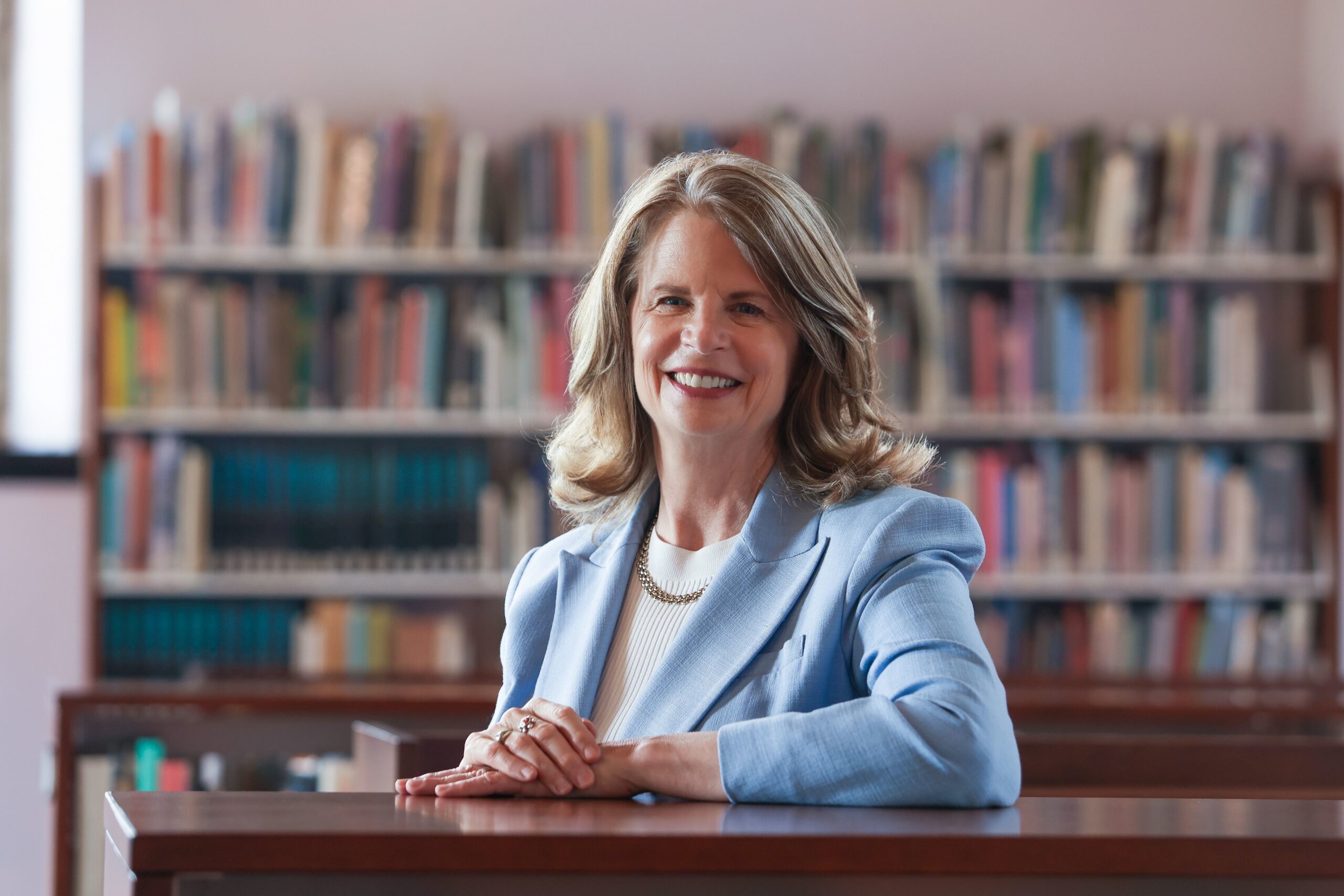
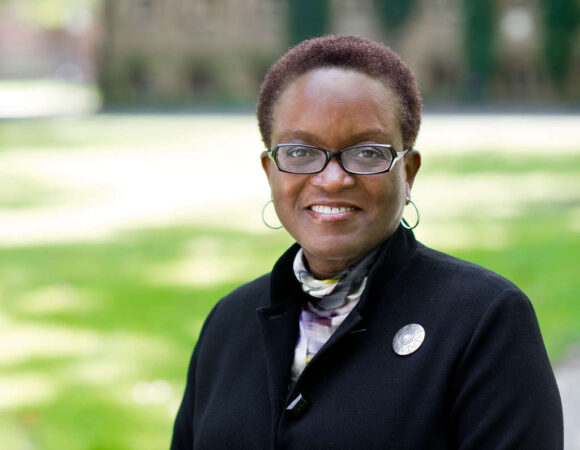
President Wendy Raymond’s announcement came 30 days after the student body voted by an overwhelming majority to ask that she establish a review committee to consider removing his name. But Raymond said she will not accept the student body’s resolution.
“I do not believe this matter meets the threshold necessary to move forward with a committee,” Raymond wrote in an email to the students’ council copresidents.
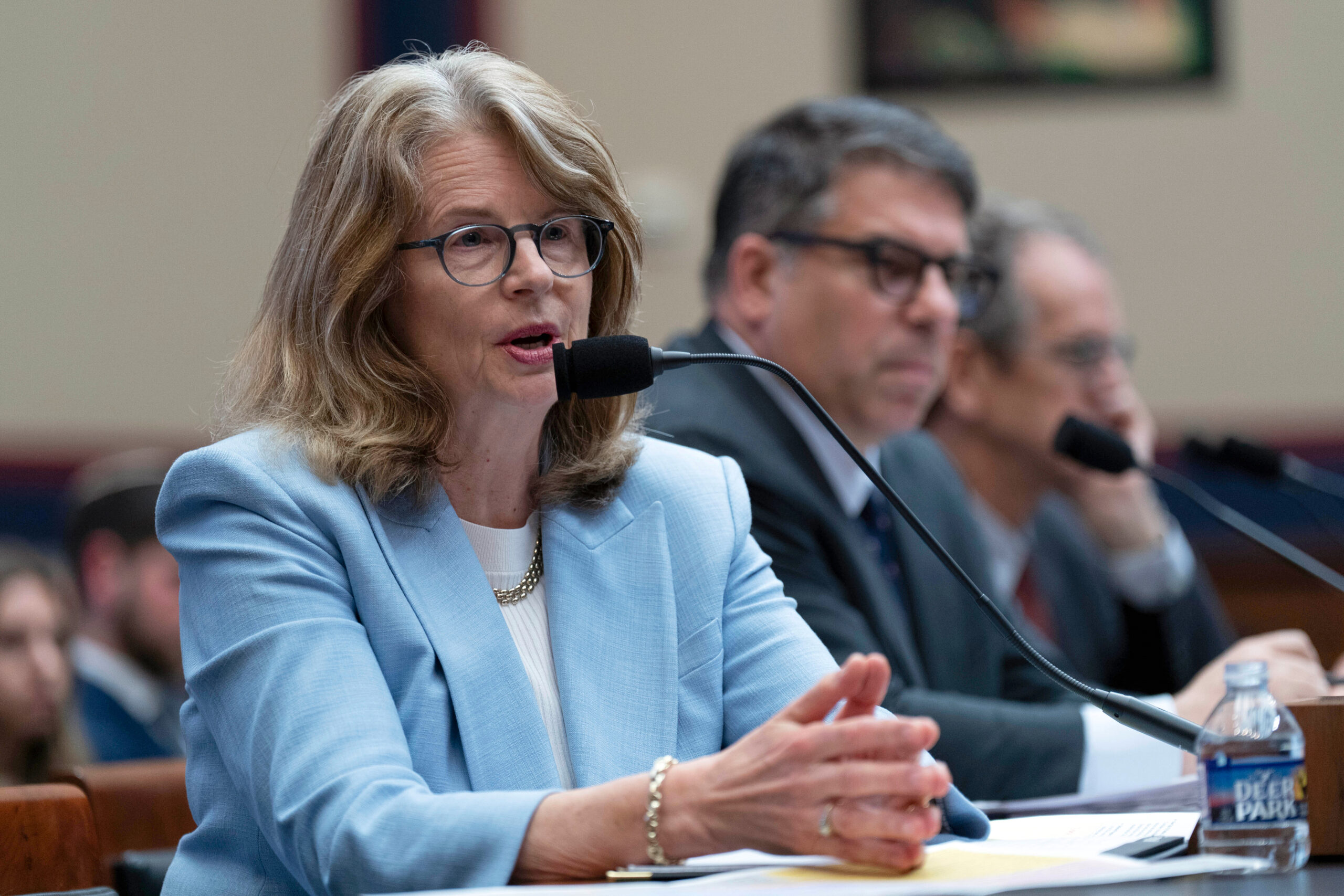
Haverford College President Wendy Raymond announced she would not consider removing Howard Lutnick’s name from the school’s library.
Concern has been mounting about Lutnick, the former chair of Haverford’s board of managers, since Department of Justice documents released earlier this year showed he had contact with sex offender Jeffrey Epstein as recently as 2018, long after Epstein pleaded guilty to obtaining a minor for prostitution and soliciting a prostitute.
Raymond did not elaborate on her reasons and declined to comment through a spokesperson, but the decision was immediately panned by students.
The council copresidents expressed their “deep disappointment” in an email to students.
“The committee would have been a valuable step in our college’s ongoing reckoning with sexual assault,” wrote Ben Fligelman and Sarah Weill-Jones. “We hope that in the coming weeks and months, President Raymond will reevaluate her decision and understand the profound importance of convening a review committee.”
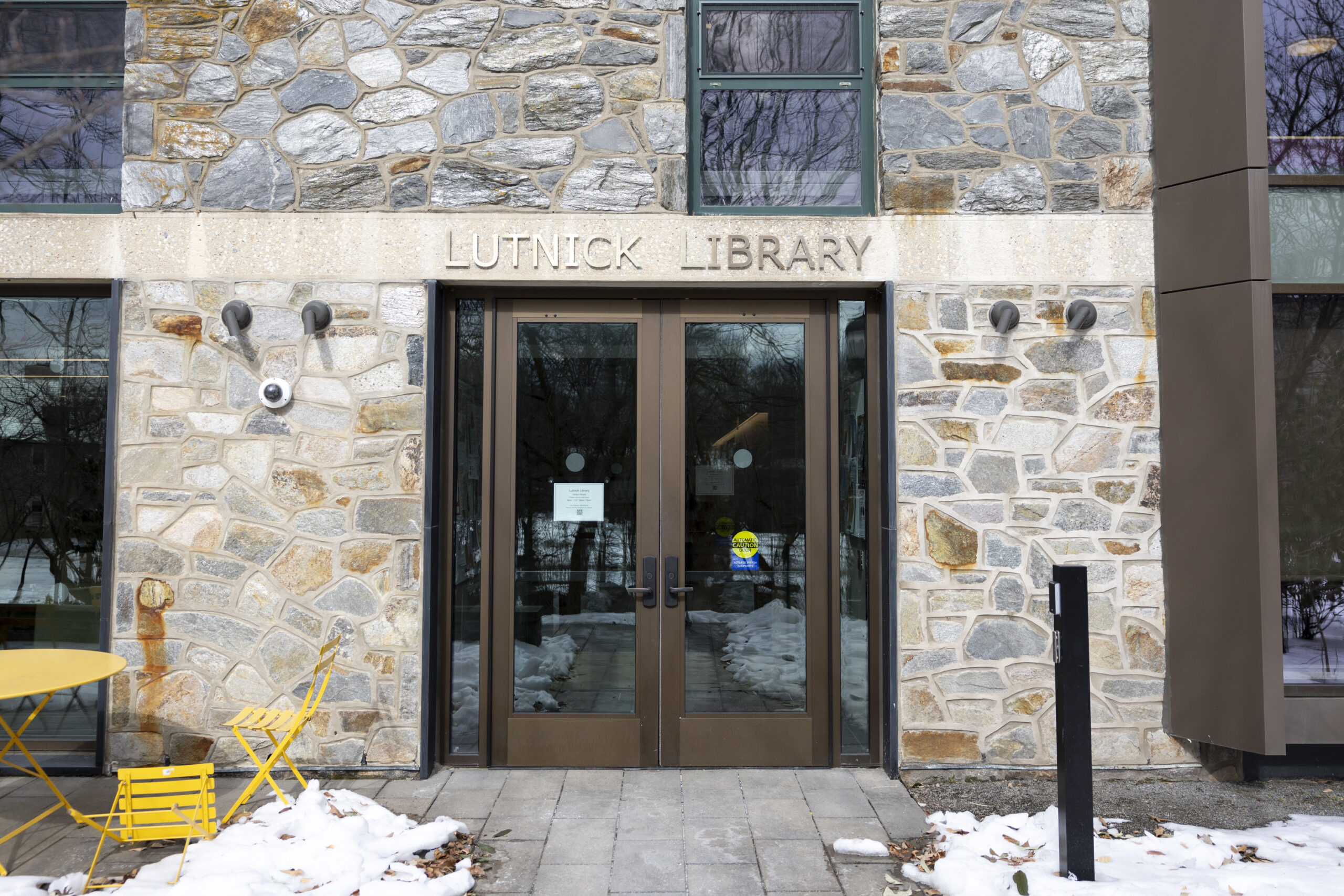
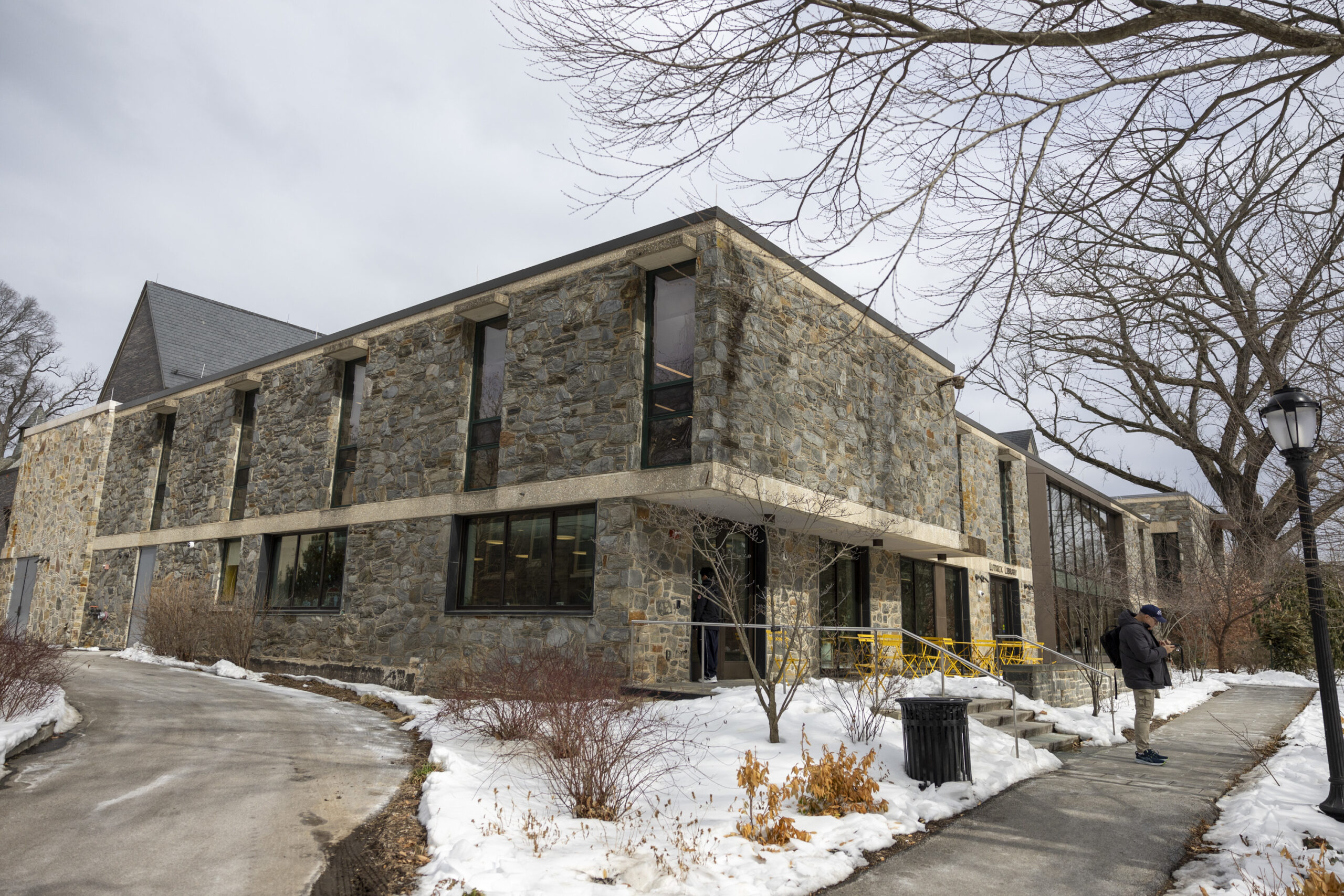
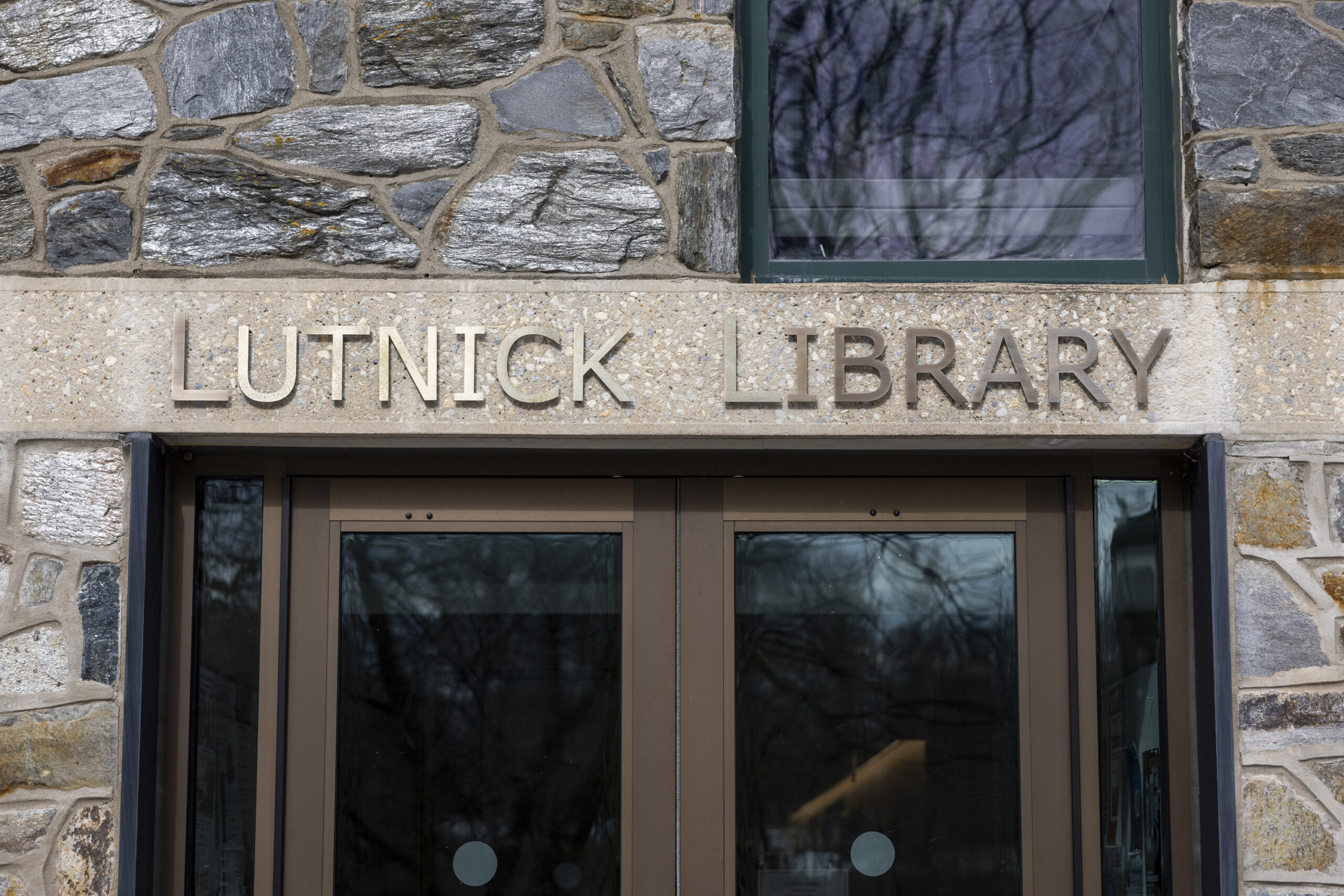
The outside of the Lutnick Library at Haverford College.
The Haverford Survivor Collective, which started in 2023 and is led by Haverford students and survivors of sexual assault, called the decision “disappointing, unsurprising and categorically insulting” in a statement. It is even more painful that the decision was released on Denim Day, an international day of support for survivors, the collective wrote.
“What should have been a meaningful day of solidarity and collective support has instead become a stinging reminder of how far Haverford still has to go,” the group wrote.
Senior English major Paeton Smith-Hiebert, co-founder of the collective, said Raymond in a meeting with some students Tuesday shared her reasoning for why the Lutnick situation did not meet the threshold.
Raymond said, according to Smith-Hiebert, there needed to be “pretty unambiguous evidence of harm being directly committed” and that “association wasn’t enough.”
Arshia Seth, another student who is a member of the collective board, said when pressed by those present, Raymond said the threshold would be if Lutnick had “direct ties to trafficking.”
The president also told students she wished she had had more time to make the decision, but plenary rules require that she respond within 30 days, Smith-Hiebert said. Whether that means she will continue to weigh the matter is unclear.
“Looking forward, … I — and future presidents — will retain the ongoing responsibility to consider the relevant facts at any given moment in time, and to act in consideration of the best interests of Haverford’s educational mission,” Raymond, who announced in November she would retire as president in June 2027, said in her statement. “…The board of managers too will remain engaged.”
Raymond’s announcement Wednesday also said she and the college “stand in solidarity with survivors of sexual violence.”
Raymond previously said she had heard from “a growing number” of Haverford alumni “who have written to express their dismay” about Lutnick’s ties to Epstein, which included a visit by Lutnick and his wife to Epstein’s private island. She said in February that she would consider forming a review committee.
Lutnick’s name was put on the library after a then-record $25 million donation he and his wife made in 2014. Lutnick, a 1983 Haverford graduate, has given the school $65 million and is one of its biggest donors.
If Raymond had established a committee, it would have kick-started a multistep process that the school follows when considering changing building names. Raymondwould have considered the committee recommendation before then making her own recommendation to the external affairs committee of the board of managers, as well as to its chair and vice chair. The external affairs committee then would have made its recommendation to the full board of managers, who ultimately decide whether a building should be renamed.
Under Haverford’s gift policy, the school can rename a building if “the continued use of the name may be deemed detrimental to the college, or if circumstances change regarding the reason for the naming.”
The students’ vote came during their plenary session on March 29. At least 66% of the student body living on campus had to be present at the session for discussion and votes to occur, and to pass, the resolution needed to win a simple majority. That 66% represents almost 900 students.
“Students feel harmed and hurt by the presence of his name and association on campus,” Milja Dann, a sophomore psychology major from Woodbury, N.J., said in March, after attending the session.
The Haverford Survivor Collective had been urging the college to form a committee even before the plenary.
“Given the gravity of this situation, survivors are among those most directly affected,” Smith-Hiebert had written to Raymond earlier this year. “Many are feeling significant harm and institutional betrayal … While I understand there are many stakeholders to consult, it is difficult to reconcile the stated commitment to engagement with the apparent absence of those most impacted.”
The student resolution asked the college to include student representation on the review committee, along with staff from several offices, including institutional diversity, equity, and access. It also called on college leadership “to stand in solidarity with victims of assault.”
And it asked the board of managers to consult directly with students before making final decisions to rename the library and or whom it would be named for.
The resolution also called into question Lutnick’s leadership at Cantor Fitzgerald, the New York City financial firm where he formerly served as chairman. The Securities and Exchange Commission charged the firm in 2024 with violating laws related to regulatory disclosure, and Cantor agreed to pay a civil penalty. Cantor Gaming in 2016 agreed to pay $16.5 million in penalties to the federal government “to resolve a criminal investigation into the company’s past involvement in illegal gambling and money laundering schemes,” according to a release from the U.S. Attorney’s Office.
During congressional testimony, Lutnick said he visited Epstein’s island with his family in 2012. Lutnick previously said he had not been in a room with Epstein, whom he found “disgusting,” since 2005.
A Commerce Department spokesperson told The Associated Press in January that Lutnick had had “limited interactions” with Epstein, with his wife in attendance, and had not been accused of “wrongdoing.” Lutnick told lawmakers during his testimony: “I did not have any relationship with him. I barely had anything to do with him.”
The outside of the Lutnick Library at Haverford College.
In addition to the library, which also bears the name of Lutnick’s wife, Allison, Haverford’s indoor tennis and track center is named for his brother Gary Lutnick, a Cantor Fitzgerald employee who was killed on 9/11, and the fine arts building carries the name of his mother, Jane Lutnick, a painter. Lutnick also funded the college’s Cantor Fitzgerald Art Gallery.
Students, however, said they were focusing on the library in the resolution because of its prominence.
Before Raymond’s decision was announced, Adam Marcello, a Haverford student, in an opinion piece for the Haverford Clerk, the student newspaper, said students needed to keep the pressure on.
“If students want the renaming to succeed, they will need to sustain visible, organized pressure,” Marcello wrote. “Epstein posters scattered across the library or letters tacked to the doors are not enough. We need to make inaction more costly than action.”
If you made the typical income in your community, could you afford to buy the typical home for sale there?
Across the Mid-Atlantic, “the answer is a resounding no in most places,” said Lisa Sturtevant, chief economist at the multiple listing service Bright MLS.
But in a region where buying a home can be challenging, Delaware County stands out.
It was the only county in the Philadelphia region where a household making the median income could afford to buy a median-priced home for sale at the end of last year, according to an analysis by Bright MLS. In Delaware County, the median asking price of homes in the last quarter of 2025 was $289,450, and the median household income was about $89,500.
Bright MLS calculated affordability based on a homebuyer’s ability to qualify to purchase a median-priced home, assuming a 10% down payment with the average interest rate for a 30-year, fixed-rate mortgage and average payments for property taxes and insurance.
Of the roughly 90 counties in the company’s service area across Pennsylvania, New Jersey, Delaware, Maryland, Virginia, West Virginia, and the nation’s capital, Delaware County was one of only five counties where the median-priced home was affordable for a household making the median income in the last quarter of 2025. The city of Baltimore also made the affordable list.
Sturtevant said everyone knows housing affordability is a challenge, but “when you see the data so starkly like this, it really brings the point home.”
window.addEventListener(“message”,function(a){if(void 0!==a.data[“datawrapper-height”]){var e=document.querySelectorAll(“iframe”);for(var t in a.data[“datawrapper-height”])for(var r,i=0;r=e[i];i++)if(r.contentWindow===a.source){var d=a.data[“datawrapper-height”][t]+”px”;r.style.height=d}}});
Across the Mid-Atlantic, median home prices are up 35% since 2020. The five counties that are most affordable are generally places with lower costs of living where the housing stock is older, she said.
Michael Maerten, a real estate agent on the board of directors for Tri-County Suburban Realtors, which represents members in Chester, Delaware, and Montgomery Counties, said Delaware County’s dense housing and smaller homes also help keep costs down.
He’s seen homebuyers in Chester and Montgomery Counties have a harder time affording homes. He said he’s working with a homebuyer who was originally focused on the area around Abington Township in Montgomery County and is now looking in the Haverford Township area of Delaware County where they can get what they want with the money they have.
“The running joke about Delaware County is people don’t leave,” he said.
But Delaware County’s spot on Bright MLS’ affordable list doesn’t mean households aren’t struggling to afford homes. It’s still challenging for many people, Sturtevant said.
First-time homebuyers in particular have it rough. Bright MLS found that across the about 90 counties it tracks, renters are effectively priced out of becoming homeowners. There is no county where a renter who makes the median income could afford to buy a starter home.
“That’s crazy to me,” Sturtevant said.
window.addEventListener(“message”,function(a){if(void 0!==a.data[“datawrapper-height”]){var e=document.querySelectorAll(“iframe”);for(var t in a.data[“datawrapper-height”])for(var r,i=0;r=e[i];i++)if(r.contentWindow===a.source){var d=a.data[“datawrapper-height”][t]+”px”;r.style.height=d}}});
Bright MLS defines starter homes as those priced at the 35th percentile, meaning 35% of homes are priced below that level and 65% are priced above.
Sturtevant said high construction costs have made building starter homes more difficult. At the same time, homeowners are holding onto smaller, more affordable homes instead of selling for a larger home because of elevated mortgage interest rates and uncertainty in the economy. So first-time buyers have fewer options and more competition.
Still, Maerten said a “good percentage” of his buyers are purchasing for the first time.
“They’re going through their struggles of making offers and competing in the suburbs,” he said.
Maerten said that in his experience, homebuyers know exactly where they want to purchase and are more likely to save money until they can buy where they want rather than buying in an area just because it’s more affordable.
“Why would you not want to study the thing that lets you study,” said Schechtman-Taylor, a senior from New York City. “The brain, that’s our entire world.”
Neuroscience has become the most popular major on the highly selective liberal arts campus on Philadelphia’s Main Line, counting nearby Bryn Mawr College students who also take classes at Haverford. And it’s only been around since 2021 when the two colleges — which have had a minor in the discipline since 2013 — decided to administer the joint major.
At Haverford, there were 24 majors the year it started; now there are 60. Bryn Mawr saw similar growth and currently has 49. Enrollment in Haverford’s neuroscience classes including both Bryn Mawr and Haverford students grew from 154 in 2014 to nearly 800 last fall.
“We knew that neuroscience was going to be popular, but we did not anticipate this growth,” said Helen White, Haverford’s provost, who noted the school recently hired another neuroscience professor to accommodate more students.
The major’s popularity is also growing at schools around the Philadelphia region — and across the country. Students and professors say neuroscience is popular because it’s interdisciplinary, involving psychology, biology, and chemistry, and can lead to a variety of careers. It can also be personal, because it involves studying diseases like Alzheimer’s and Parkinson’s, which have no cures, and the treatment of strokes and traumatic brain injuries.
“I would say about 90% of my students are coming into my lab because they have someone in their family with one of these diseases,” said Rob Fairman, a Haverford biology professor whose research focuses on neuroscience.
Haverford senior Alina Schechtman-Taylor, 21, of New York City, works as a teacher assistant in professor Laura Been’s lab.
A growing major
In 2008, 110 colleges nationally offered neuroscience majors; now, it’s about 330, said Raddy Ramos, associate professor in the Department of Biomedical Sciences at the New York Institute of Technology. Ramos, who coauthored studies on the topic, said there were more than 2,000 neuroscience graduates in 2008; in 2019, that number had grown to more than 7,200.
window.addEventListener(“message”,function(a){if(void 0!==a.data[“datawrapper-height”]){var e=document.querySelectorAll(“iframe”);for(var t in a.data[“datawrapper-height”])for(var r,i=0;r=e[i];i++)if(r.contentWindow===a.source){var d=a.data[“datawrapper-height”][t]+”px”;r.style.height=d}}});
Pennsylvania is a hot spot, with 36 colleges having programs in 2022-23, Ramos said — more than than any other state.
Drexel University, which has had a minor since 2015, launched its undergraduate major in neuroscience in 2024.
“We have seen a 45% increase in applications over the last two years,” a university spokesperson said.
Pennsylvania State University in November announced it was launching two new undergraduate majors in neuroscience, one offered by the biology department and the other by the biobehavioral health department.
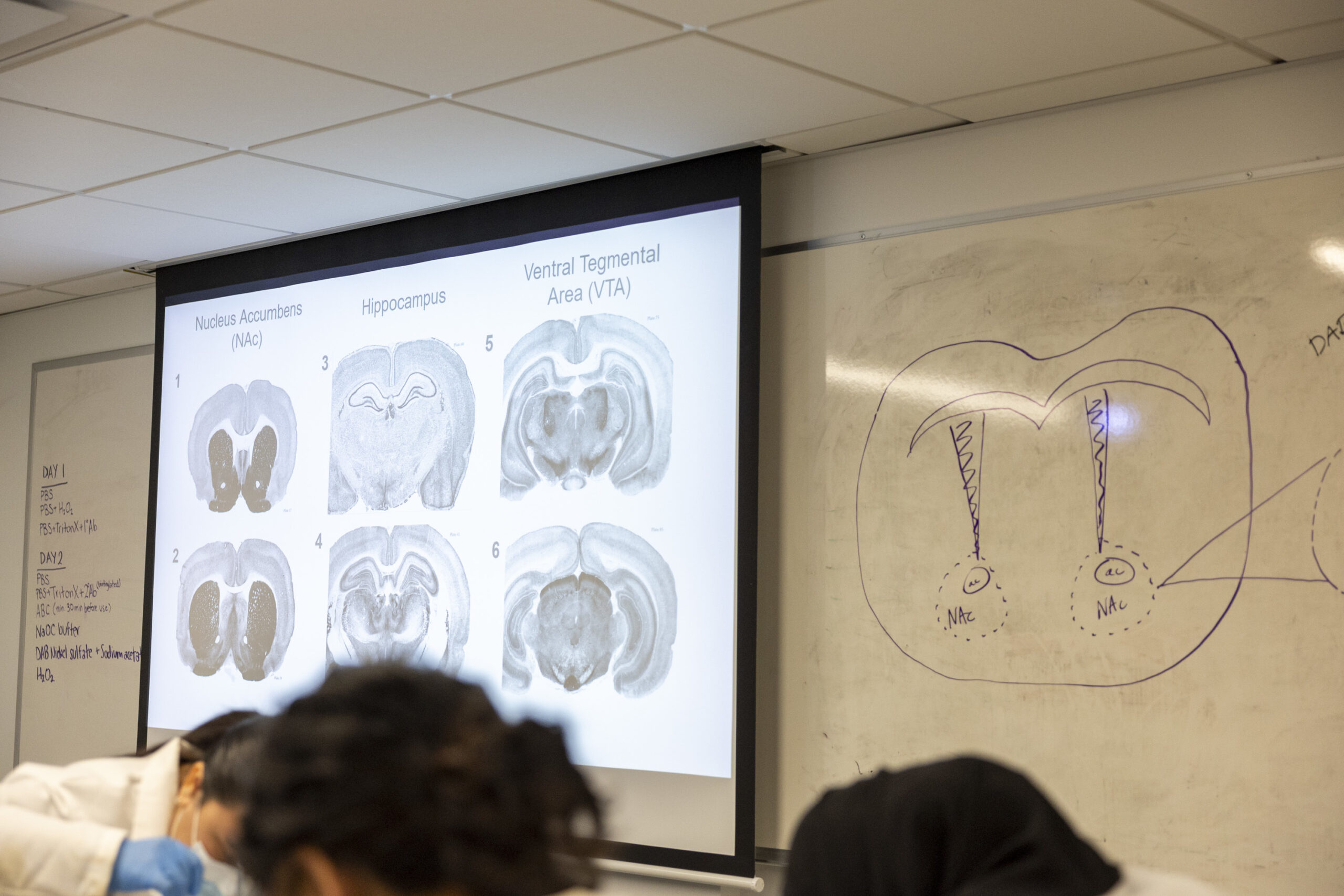
Students look for sections of rat brains that match the sections projected on the screen in a Haverford College lab.
Neuroscience has become especially popular among pre-med majors, school officials say. Otherpotential career paths include biotechnology, pharmacology, psychology, and neuroengineering, while somestudents go on to law school, business, or public policy.
“There’s a lot more awareness that mental health conditions are due to changes in the brain, and people want to understand that,” said Lisa Briand, associate professor and program director for Temple University’s neuroscience program.
At Temple, neuroscience has become the fourth largest of 30 majors in liberal arts, Briand said. The psychology department a few years ago changed its name to psychology and neuroscience, she said.
At the University of Pennsylvania a decade ago, 100 to 120 neuroscience majors graduated annually, said Lori Flanagan-Cato, associate professor of psychology and codirector of the undergraduate neuroscience program.
“Twice in the past 3 years we have had over 150,” she said.
Swarthmore College, a highly selective small liberal arts college, graduated 10 to 12 neuroscience majors a year about a decade ago, said Frank Durgin, professor of psychology who oversees the program.
“This year, we anticipate graduating 24 majors,” he said. “Next year, it’s 30.”
The college has added two professors in the last two years to accommodate growth, he said.
Why students study neuroscience
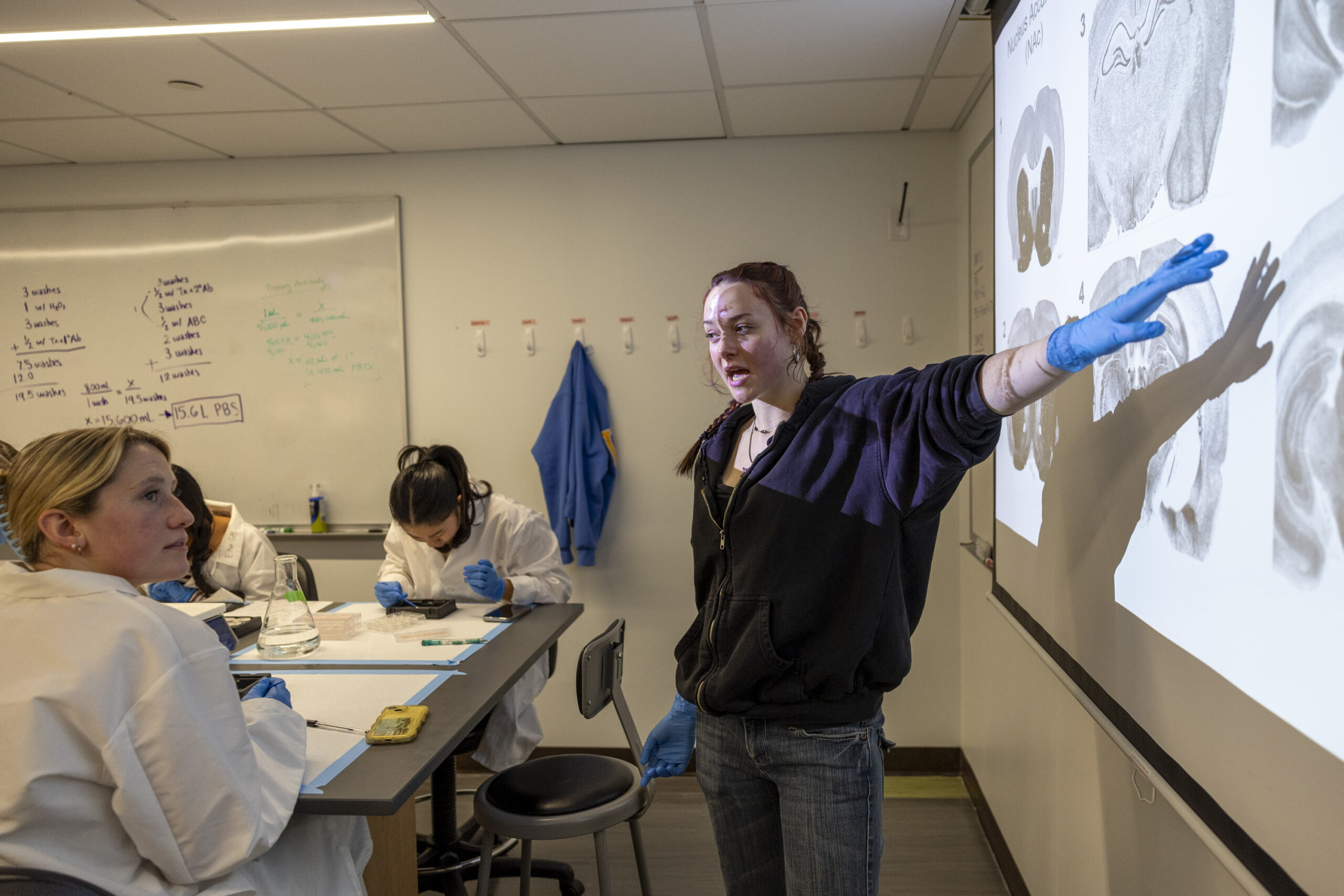
In a lab at Haverford one afternoon last month, 16 students in white lab coats poked with paintbrush tips at thin slices of rat brain in preservative fluid, preparing to stain them to look for which neurons were activated. Some of the rats received the drug Ritalin, commonly used for attention deficit disorder, while others did not. Students were trying to discern differences in their brains when they performed certain tasks, said Laura Been, associate professor of psychology and director of the bi-college neuroscience program.
A neuroscience student works with sections of rats’ brains in a lab at Haverford College.
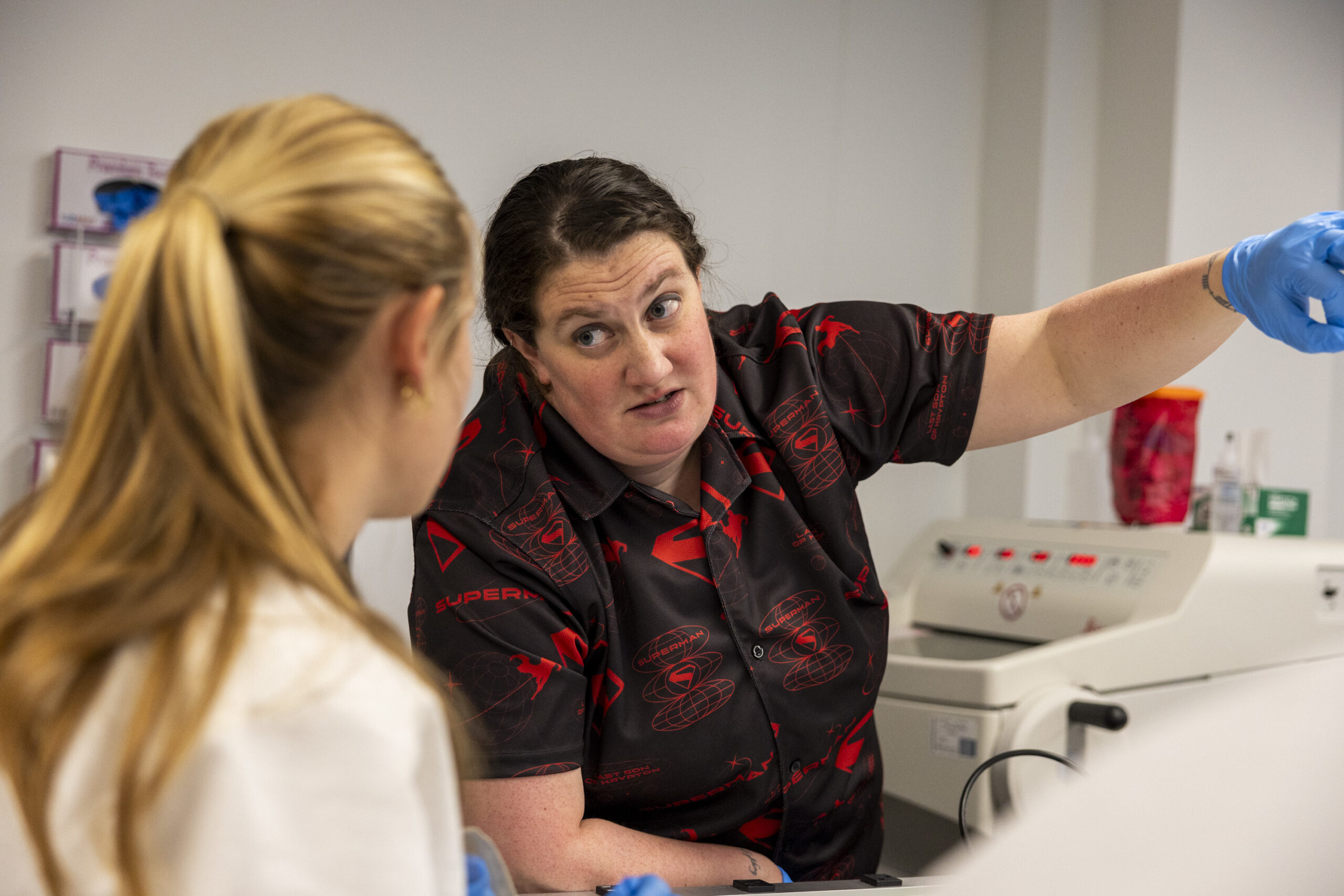
“We can … try to learn something more about how this sort of drug treatment impacts the brain,” said Been, whose area of interest is behavioral neuroendocrinology, which looks at the relationship between hormones, the brain, and behavior.
Students in Been’s class had varied reasons for studying neuroscience.
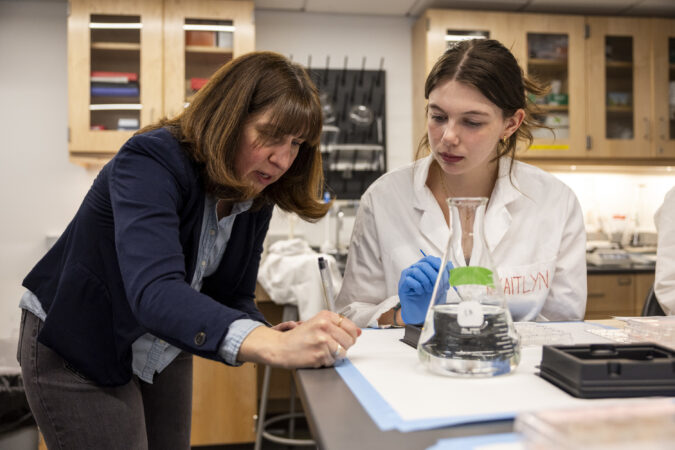
Emily Black, visiting assistant professor of neuroscience at Haverford College, helps Savannah Shaw, 22, of Downingtown, during neuroscience lab work. “I really like the variety of the classes we can take in the major,” said Shaw, a senior who plans to go to medical school, possibly to become a neurologist. “You can go more the psychology route or go more biology.”
Sophia Lipari, 21, a junior from Jacksonville, Fla., whose father is a reproductive endocrinologist, is interested in hormones and the field of fertility.
Riley Fass, 20, a junior from Claremont, Calif., wants to be a special-education teacher. She already sees the connection between neuroscience and her job as a teacher’s assistant at a school where children have traumatic brain injuries and cerebral palsy.
“The topics we discuss — an injury here will result in this — I can actually see it in my students,” she said.
Iris Goxhaj (left), 21, of Northeast Philadelphia, and Riley Fass, 20, of Claremont, Calif., work with sections of rats’ brains in a lab at Haverford College.
Deeya Abrol’s interest was stoked when she worked with a child on the autism spectrum as a swim instructor. Abrol, 22, a senior from Los Gatos, Calif., plans to go to medical school.
Schechtman-Taylor meanwhile wants to pursue biomedical engineering and specifically developing medicines for the treatment of neurodegenerative disorders.
“I want to work on the treatment side,” she said.
Fairman, the Haverford biology professor, said a recent graduate’s mother had died of Huntington’s disease, meaning she has a 50% chance of getting it, he said. She worked in his lab and wanted to be involved in hisresearchon protein clumping in the brain and its effect on diseases such as Parkinson’s and Alzheimer’s.
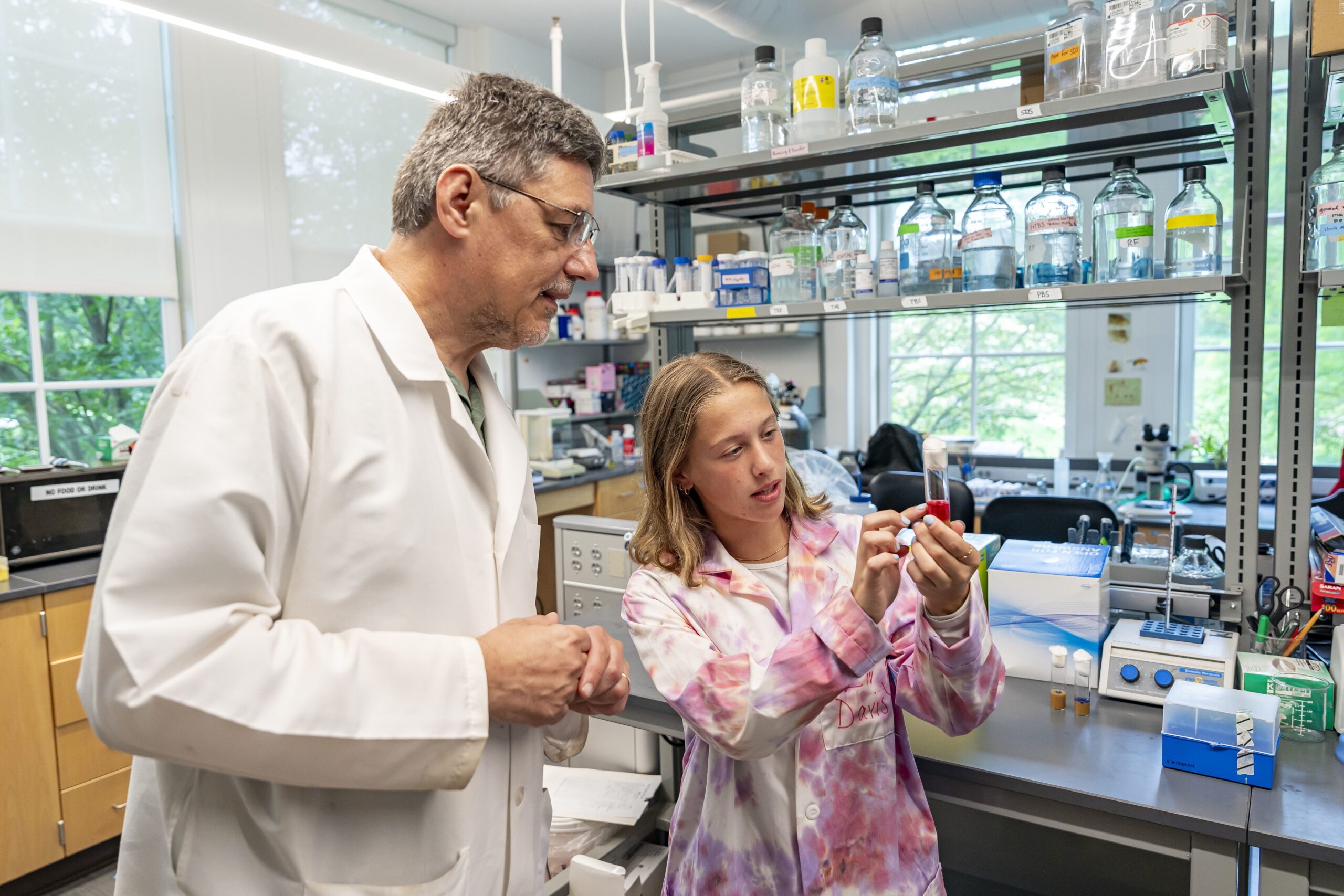
Rob Fairman, a professor of biology at Haverford College, and student Liv Davis are testing the effects of natural products on animal models with neurodegenerative diseases.
Junior Liv Davis, 21, wanted to help find a cure for Parkinson’s, which struck her grandmother in 2020.
“She’s had two falls in the last year and a half because it’s progressed pretty quickly,” said Davis, of Lanoka Harbor, N.J. “It’s hard to see someone you love so much live with it, but it makes it all the more rewarding to work toward fixing it.”
Davis, who has worked in Fairman’s lab since her freshman year, tried to get into an introduction to neuroscience class early on. But there wasn’t room. She ended up majoring in biology, which she thinks probably would have happened anyway.
About half the students working in Fairman’s lab are neuroscience majors, he said.
Davis is currently studying the effect of a chemical on sleeping fruit flies that have been genetically modified to carry the protein associated with Parkinson’s.
Last summer, she received an inaugural research fellowship funded by Shamir Khan, a Haverford alumnus and psychologist who was diagnosed with early-onset Parkinson’s.
Her grandmother was glad she could continue the research, said Davis, who plans to become a doctor.
“She always jokes with me,” Davis said. “‘Give me a spoonful of that chemical, whatever it is. If you need a test subject, you let me know.’”
Swarthmore College President Valerie Smith will step down in June 2027 after concluding her 12th academic year in the job.
Smith, the highly selective liberal arts college’s first African American president, said in a message to campus that she decided to announce her decision now to give the school time for “a thoughtful, seamless transition.”
“Serving as Swarthmore’s 15th president has been one of the great privileges of my life,” she said.
Smith, 70, didn’t say specifically why she is choosing to leave the presidency, but it will be at the end of her current contract, which had been extended in 2024. An attempt to reach her for comment Tuesday was not successful.
“These are tumultuous times,” Smith wrote. “Like many institutions, we are navigating new pressures, including unprecedented threats to our very mission. We will continue to face these challenges together, thoughtfully and deliberately. In doing so, we reaffirm Swarthmore’s enduring value.”
The college said it would launch a search for Smith’s successor and already had chosen a search firm.
“This is a pivotal moment for the college and for higher education more broadly, and the board recognizes how consequential this search will be in shaping Swarthmore’s future,” said Harold “Koof” Kalkstein, a 1978 graduate and chair of the school’s board of managers.
A scholar of African American literature and culture, Smith came to Swarthmore in July 2015 from Princeton, where she had been dean of the college and a professor of literature and English.
Smith steered Swarthmore through COVID-19, various student protests — including a pro-Palestinian encampment that was erected on campus in 2024 — and more recently, funding threats from the federal government. Swarthmore had feared that the federal government would increase the excise tax on its endowment earnings, but the school actually ended up not having to pay at all under new rules announced last year.
In 2021, the college decided to stick with a plan to partner with an organization that places retired military personnel on campus as visiting faculty members despite pushback.
“I ultimately drew from the College’s mission and my fundamental belief that critical to the liberal arts is our ability to engage in the exchange of diverse and often opposing views, not to shut them out,” Smith wrote at the time.
When she arrived at Swarthmore, she said her plan for dealing with a student body known for its activism was to listen carefully, craft a careful and well-researched response, and communicate.
“It’s critically important to maintain open dialogue with students,” she said at the start of her presidency in 2015.
“She has modeled integrity, intellectual curiosity, compassion, and empathy, all in service of our shared mission,“ Kalkstein said. ”Swarthmore is forever stronger thanks to Val’s leadership.”
Haverford College president Wendy Raymond is considering convening a committee that would review whether mega donor and U.S. Commerce Secretary Howard Lutnick’s name should remain on the campus library.
Raymond’s statement to the campus community this week follows concerns expressed by Haverford students and alumni about Lutnick’s ties to sex offender Jeffrey Epstein. She noted “a growing number of Fords have written to express their dismay.”
“While forming a naming review committee does not predetermine any outcome, it is a serious step and not something I would take lightly,” Raymond wrote to the campus. “I will take the time necessary to continue to reflect and to engage with thought partners before determining whether to activate a review committee.”
Under Haverford’s gift policy, the school can rename a building if “the continued use of the name may be deemed detrimental to the college, or if circumstances change regarding the reason for the naming.” If Raymond convenes a committee, she would then consider its recommendations and make her recommendation to the external affairs committee of the board of managers, as well as to its chair and vice chair. The external affairs committee then would make its recommendation to the full board of managers.
Lutnick, a 1983 graduate and former chair of the college’s board of managers, is one of the school’s biggest donors, having given $65 million. Documents released by the U.S. Justice Department this month show that Lutnick had contact with the late financier as recently as 2018, long after Epstein pleaded guilty to obtaining a minor for prostitution and soliciting a prostitute.
And during congressional testimony last week, he said he visited Epstein’s private island with his family in 2012. Lutnick previously said he had not been in a room with Epstein, whom he found “disgusting,” since 2005.
The outside of the Lutnick Library at Haverford College.
Raymond’s announcement comes one day after students held a town hall to discuss their concerns and feelings about Lutnick‘s ties to Epstein.
Students who organized the town hall said Raymond’s communications about Lutnick have fallen short. They said they had hoped at least to see a review committee started.
“Many students, including myself, are deeply disappointed and, in many cases, hurt by the neutral and softened language in these communications,” senior English major Paeton Smith-Hiebert wrote to Raymond.
Smith-Hiebert is co-founder of the Haverford Survivor Collective, which started in 2023 and is led by Haverford students and survivors of sexual assault. She said while Raymond notes she is having conversations about the topic, the collective hasn’t been consulted.
“Given the gravity of this situation, survivors are among those most directly affected,” she wrote. “Many are feeling significant harm and institutional betrayal … While I understand there are many stakeholders to consult, it is difficult to reconcile the stated commitment to engagement with the apparent absence of those most impacted.”
Raymond’s message, she said, also should have included a reference to resources or support for survivors who are struggling, she said.
Between 50 and 100 students attended the nearly two-hour town hall, several attendees said, with no students speaking in favor of keeping Lutnick’s name on the building. Students introduced an open letter with demands that has since been signed by 235 students, staff, and alumni as of 8:30 a.m. Friday, said Smith-Hiebert. The letter calls on the college to immediately convene a review committee, rename the library, acknowledge the distress and harm members of the community are experiencing, and “adopt a clear and unambiguous morals clause” in the gift policy.
Students also discussed the possibility of protest actions to urge the college to act as soon as possible.
The issue of Lutnick’s name on the library is likely to come up at a plenary session,where students discuss and vote on important campus issues. That session is scheduled forMarch 29.
If the students were to pass a resolution calling for the removal of Lutnick’s name from the library, it would go to Raymond for signing.
Milja Dann, 19, a sophomore psychology major from Woodbury, N.J., said she went through all of the Epstein files that mention Lutnick and Epstein and saw references to at least seven planned in-person encounters. Students compiled a 10-page document on the Lutnick-related material in the files.
“I feel it is extremely difficult for survivors of sexual violence to see that name and know it is so closely associated with a man who has perpetuated violence and harm to so many people,” Dann said.
A Commerce Department spokesperson told the Associated Press last month that Lutnick had had “limited interactions” with Epstein, with his wife in attendance, and had not been accused of “wrongdoing.” Lutnick told lawmakers last week: “I did not have any relationship with him. I barely had anything to do with him.”
Some students at the town hall talked about the difficulty of going in the library, which is the heart of the academic campus.
“For me, walking into that space has been uncomfortable for a while,” Smith-Hiebert said, referring to when Lutnick was named President Donald Trump’s commerce secretary. “That discomfort has only intensified given this news.”
Lutnick, formerly chairman of Cantor Fitzgerald L.P., a New York City financial firm that lost hundreds of employees in the 9/11 World Trade Center attacks, served on Haverford’s board for 21 years.
In addition to the library, which also bears his wife Allison’s name, the indoor tennis and track center is named for his brother Gary Lutnick, a Cantor Fitzgerald employee who was killed on 9/11, and the fine arts building carries the name of his mother, Jane Lutnick, a painter. He also funded the college’s Cantor Fitzgerald Art Gallery.
Students discussed whether removing Lutnick’s name from the library would be enough or if other references should come down, too, said Cade Fanning, the associate editor of the Clerk, Haverford’s student newspaper, who attended the meeting.
“That had the most split opinions,” said Fanning, 21, a senior history major from Annapolis.
But people were concerned thatseeing the Lutnick name on anything, even if it was a relative, would be difficult for survivors, Fanning said. And the relatives’ names still signify Lutnick’s “imprint” on the college, he said.
Students also discussed that while they want his name off the library, the college should install a plaque explaining the history, rather than erasing it, Smith-Hiebert said.
During a talkby an Israeli journalist at Haverford College earlier this month, a group of about a dozen masked people sat and stood in the audience.
At one point, one of them began shouting through a bullhorn, “Death to IOF,” or Israeli Occupying Forces, a name critics use to refer to Israel Defense Forces,and “Shame,” according to a video of the incident and people who attended the event. The protesters’ faces were covered by masks or keffiyehs, a symbol of Palestinian identity.
“When Gaza has burned, you will all burn, too,” the protester shouted at the audience of about 180 people, many of them members of the local Jewish community, according to another video viewed by The Inquirer.
An audience member grabbed at the bullhorn and appeared to make contact with the protester as the protester yelled in his face, according to a video. The college’s campus safety personnel ejected both the bullhorn user and the audience member and has since banned both from campus, college officials said, noting that neither is an employee, student, or alumnus of Haverford.
The event sparked renewed charges of antisemitism on the highly selective liberal arts campus, which already is under scrutiny by a Republican-led congressional committee for its handling of antisemitism complaints and is the subject of an open investigation by the U.S. Department of Education.
It will also lead to changes in Haverford’s policies. In a message to the campus after the event, president Wendy Raymond — who faced intense questioning from the congressional committee about the school’s response to antisemitism last year — said “shouting down a speaker whom one does not agree with is never acceptable and stands outside of our shared community values.”
College officials acknowledged that Haverford needs to upgrade its event policies andsaid changes would be rolled out no later than after spring break.
Some people who attended the event to hear journalist Haviv Rettig Gur said they were afraid because they did not know who the masked attendees were or what they had in their belongings, and in light of recent mass violence at Jewish events around the world.
“I was scared to walk back to my car by myself, which is the only time I ever felt that way in Lower Merion, where I live,” said Susan Taichman, a resident of Bala Cynwyd, who was in the audience.
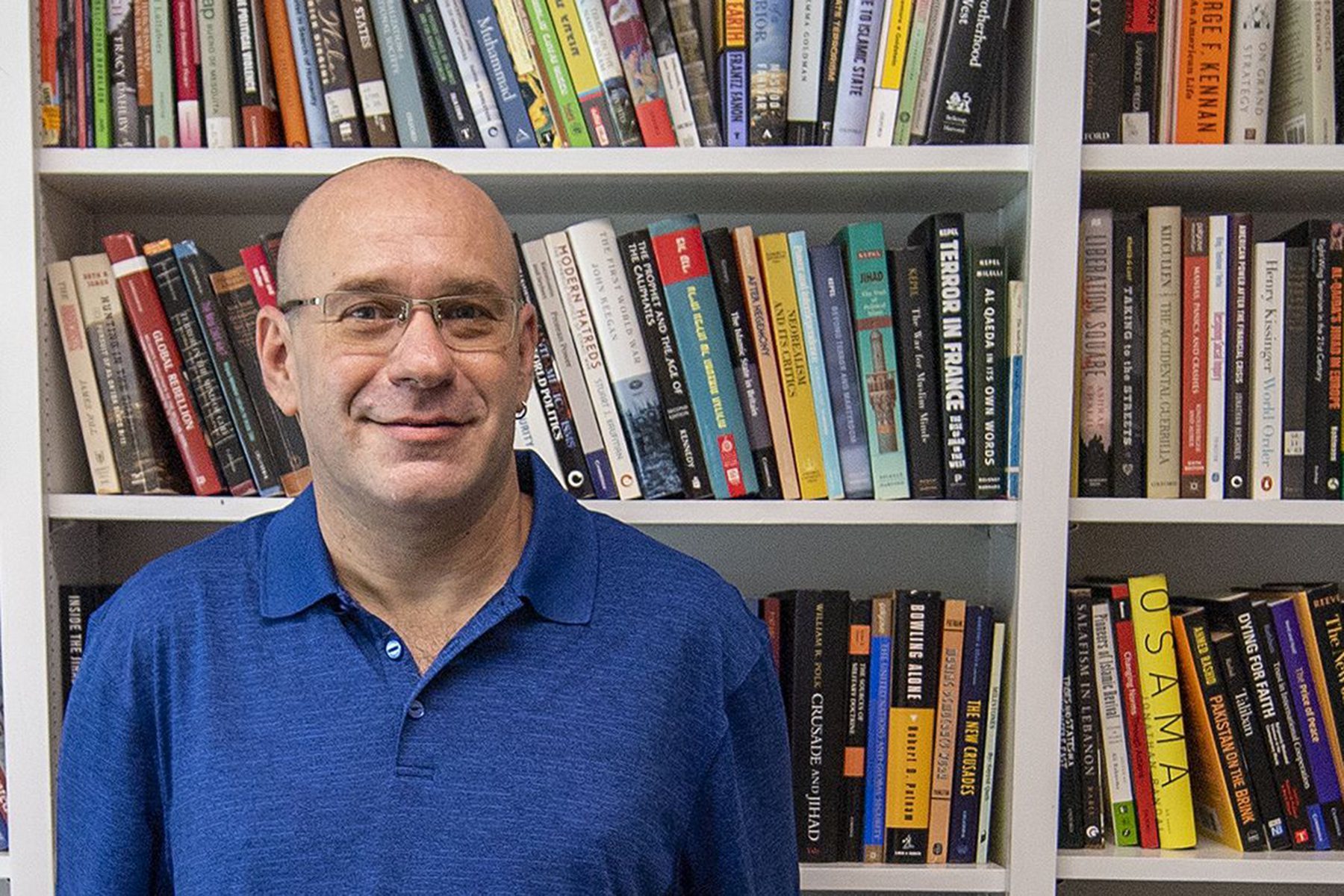
Barak Mendelsohn,professor of political science at Haverford College
Several students in attendance that night said most of the protesters sat or stood silently during the event — which is permitted under campus policy.
“I went into that event not with hatred for Jewish people, as some … have claimed was the intention of the protesters at the event,” said one Haverford student protester who asked that her name be withheld for safety reasons. “I went in with love, empathy, and deep concern for the Palestinians experiencing abhorrent amounts of violence in their homeland, as well as an understanding of the historical contexts that led to this violence, including the historic persecution of Jewish people that led to the development of Zionist thought.
“This context, in my opinion, is not an excuse for the genocide. It’s something really tragic that is going on, and I feel really strongly that it has to be stopped.”
Cade Fanning, the associate editor of the Clerk, Haverford’s student newspaper, cited three interruptions by protesters. One early on argued with Gur for an extended period, followed by the bullhorn incident less than an hour into the event, and then some banging on doors and yelling outside the room, said Fanning, 21, a senior history major from Annapolis, who attended the event.
Haverford professor Barak Mendelsohn, who helped organize the nearly three-hour event and has complained about the college’s handling of antisemitism in the past, said attendees were terrified as disruptions continued.
“I can’t tell you how ashamed I am as one of the organizers,” said Mendelsohn, an Israeli-born professor of political science and a terrorism scholar.
Leaders of Haverford’s students’ council, meanwhile, voiced concerns that an audience member had initiated physical contact with the protester, “which deeply frightened and disturbed members of Students’ Council,” they wrote. “We believe it is paramount to prioritize the safety of members of our college community. Actions like this have no place in our community.”
Some community members also interrupted and “heckled” protesters, Fanning said, adding that Gur belittled the activists as “children” who did not know enough about the world. The college, Fanning said, should have addressed that in its statement to the community.
“It would have been beneficial had they at least acknowledged that he wasn’t the most conducive to respectful, honest, open debate either,” Fanning said of Gur. “He didn’t treat the students with the most respect.”
But Anna Braun, 21, a senior English major from New York City who attended the event, said she was impressed with how Gur handled the protesters.
“He decided to engage with them one on one to really ask them questions and try to deconstruct why they were protesting,” she said. “The only way we can have any hope for peace is for people to listen to each other and to find some middle ground. And if you’re ignoring each other or if you are interrupting each other, then there is no potential for seeing eye to eye.”
An effort to ensure safe events
“It has become clear that there are gaps in how events are reviewed, supported, and managed on campus,” Raymond said in her message to campus. “We are actively revising our event management and space use policies to improve clarity and processes.”
Wendy Raymond, president of Haverford College, testifies before the House Committee on Education and Workforce hearing on antisemitism on American campuses on May 7, 2025.
The new policy, she said, “will clarify expectations for different types of events, strengthen coordination among College offices, and establish additional planning and support for events that require heightened attention.”
Factors such as “significant attendance or operational complexity, heightened public visibility, safety, security, or crowd-management considerations, media presence or external participation, and increased likelihood of disruption or protest activity” may trigger the need for additional review to determine whether more resources are needed, said Melissa Shaffmaster, Haverford’s vice president for marketing and communication.
“Our intention … is not in any way to restrict free speech or restrict access for different speakers or topics to be discussed on campus,” she said. “We want to make sure that the proper resources are allocated so events can happen safely, people can have really thoughtful discourse, and these events can go off the way they are intended.”
The indoor use of bullhorns violated the school’s “expressive freedom” policy put in place last spring, she said.
The college is participating in the Hillel Campus Climate Initiative, touted as an effort to help college leaders counter antisemitism. A survey “to better understand the current climate for Jewish students” will be part of the effort.
Haverford also is preparing for a major change in leadership. Raymond said in November she would step down as president in June 2027; John McKnight, the dean of the college, also announced he would be leaving at the end of this semester for a new role at Dartmouth College; and the college’s vice president for institutional equity and access also will exit that post in May.
‘The howling cry of an uneducated child’
Gur’s talk was titled “Roots, Return, and Reality: Jews, Israel, and the Myth of Settler Colonialism.” In an opinion piece for the Free Press after the talk, Gur said he had gone to Haverford to talk “about the Jewish history that forged Israeli identity.”
While he saw the audience “tense up” when protesters entered, he wrote, he saw it as “a chance to explore managing an encounter with the abusive ideologues.”
He said he invited protesters to stay, but told them they had to remove their masks, which they did not do. Most protesters remained for the entire talk, he said, some even crying and engaging in dialogue with him.
“The more I treated them like neglected children hungry for knowledge, the more likely they were to respond in healthy and productive ways,” he wrote.
The event was organized by Kevin Foley, a 1983 Haverford graduate. Foley said he was impressed with Gur, a political correspondent and senior analyst for the Times of Israel, after seeing a video of him teaching.
“I thought I could do something good for Haverford by having him teach there,” said Foley, who lives in Connecticut and New York City and spent his career running electronic trading businesses at Bloomberg and Cantor Fitzgerald.
Foley’s best friend was killed in the 9/11 attacks and he said he experienced Hamas’ October 2023 attack on Israel as an “echo trauma.” To see concerns at Haverford about its handling of antisemitism “was disappointing,” he said, and what happened at Gur’s talk reinforced those concerns.
“What I can’t believe is that Haverford has so abandoned its liberal values of academic freedom, freedom of inquiry, that it’s considered acceptable for protesters to come in and disrupt and shut down an educational class,” Foley said.
Foley called on the college to ban masks and have metal detectors available when needed, and to apologize to Gur’s audience.
Shaffmaster said the college’s policy allows people to wear masks, but they must remove them if they are asked by campus safety officers or administrators for identification purposes.
Ongoing tensions on campus
Several students in attendance, who asked not to be named because of tensions on campus over the issue, said they thought campus safety and the college handled the event as best they could without silencing either side.
“No matter what they had done, people would be mad at them,” one said.
Fanning, the student editor, understood why older community members may have been fearful, but said protesters also have fears of being harassed or doxed for their pro-Palestinian advocacy if their identity is known.
“They are not fearless themselves,” Fanning said. “Nobody is.”
But Mendelsohn, the professor, was disturbed that Haverford seemed to equate the actions of the audience member who grabbed the bullhorn with those of the protester.
“The person acted in self-defense and managed to get the bullhorn from her hands,” he said. “If someone turned to you with a microphone and screamed, you would not sit there and do nothing.”
Mendelsohn has been at the forefront of allegations that Haverford has not done enough to address antisemitism, and the college has investigated him for speaking out on social media and in emails, according to a lawsuit filed against the college last year by a Jewish group. Much of the complaint was dismissed, but the judge allowed a portion involving breach of contract that would result in nominal damages to proceed, and that is in mediation, court records show.
The actions at Gur’s speech were just one of several ongoing problems with antisemitism on the campus, Mendelsohn said. His mezuzah — an object signifying the Jewish faith — was stolen from his office door a couple of months ago, he said. And he referred to a bias complaint over comments made around funding for the Haverford Chabad board. That remains under review, the college said.
Braun, the English major, said that she was heartened to see improvement in Haverford’s handling of the Gur event and that the campus has been more welcoming to Jewish students. Most people she has spoken with, she said, did not think the use of the bullhorn was appropriate.
“That’s not something I would have heard two years ago on this campus,” she said. “I sincerely believe there is more of a desire to create an inclusive environment.”