Tag: How I Bought This House

  • After a breakup, he left Graduate Hospital for a giant backyard in Port Richmond | How I Bought This House

    After a breakup, he left Graduate Hospital for a giant backyard in Port Richmond | How I Bought This House

    The buyers: David Snelbaker, 59, finishing technician

    The house: a 1,440-square-foot townhouse in Port Richmond with three bedrooms and two baths built in 1925.

    The price: listed for $275,000; purchased for $269,500

    The agent: Allison Fegel, Elfant Wissahickon Realtors
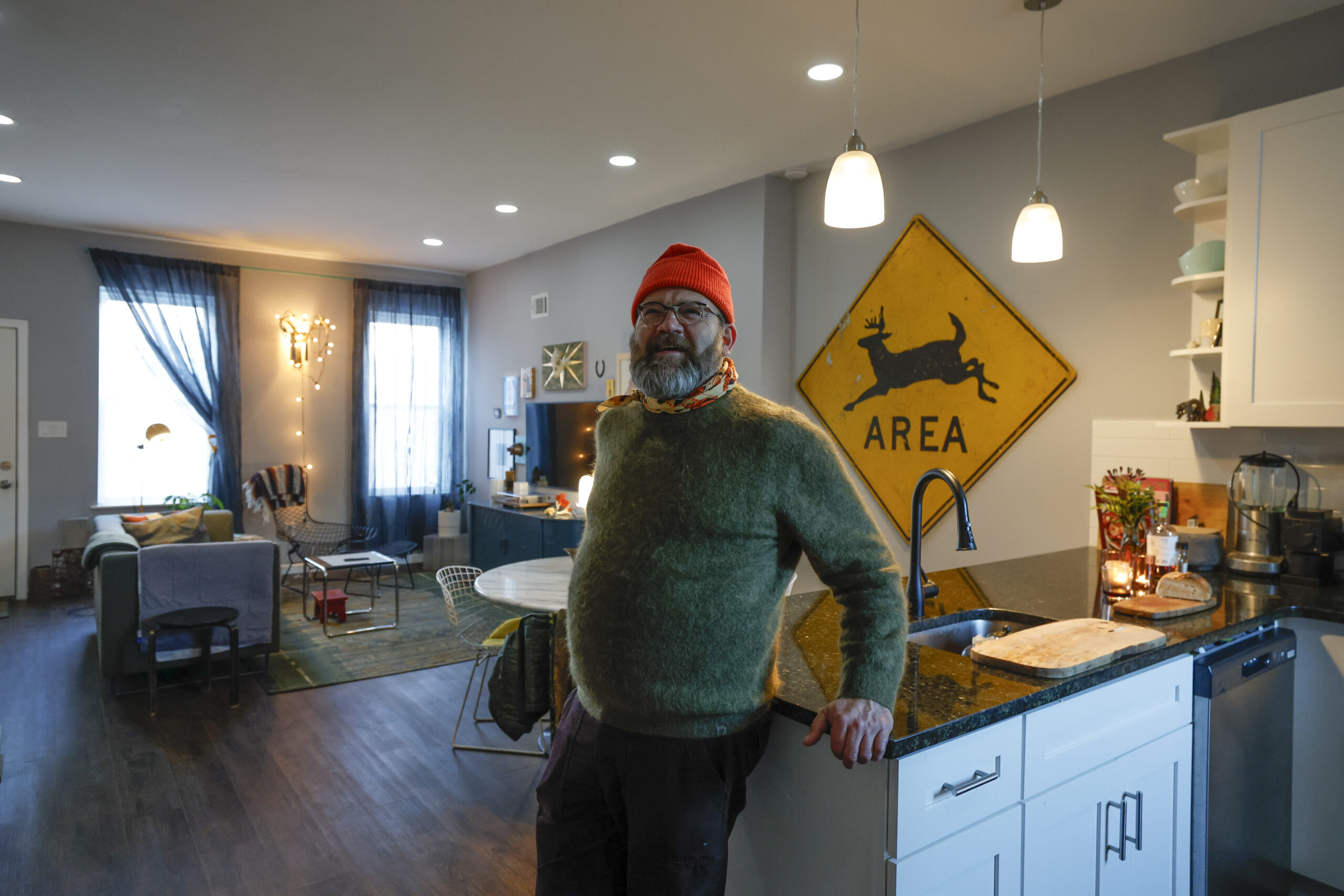
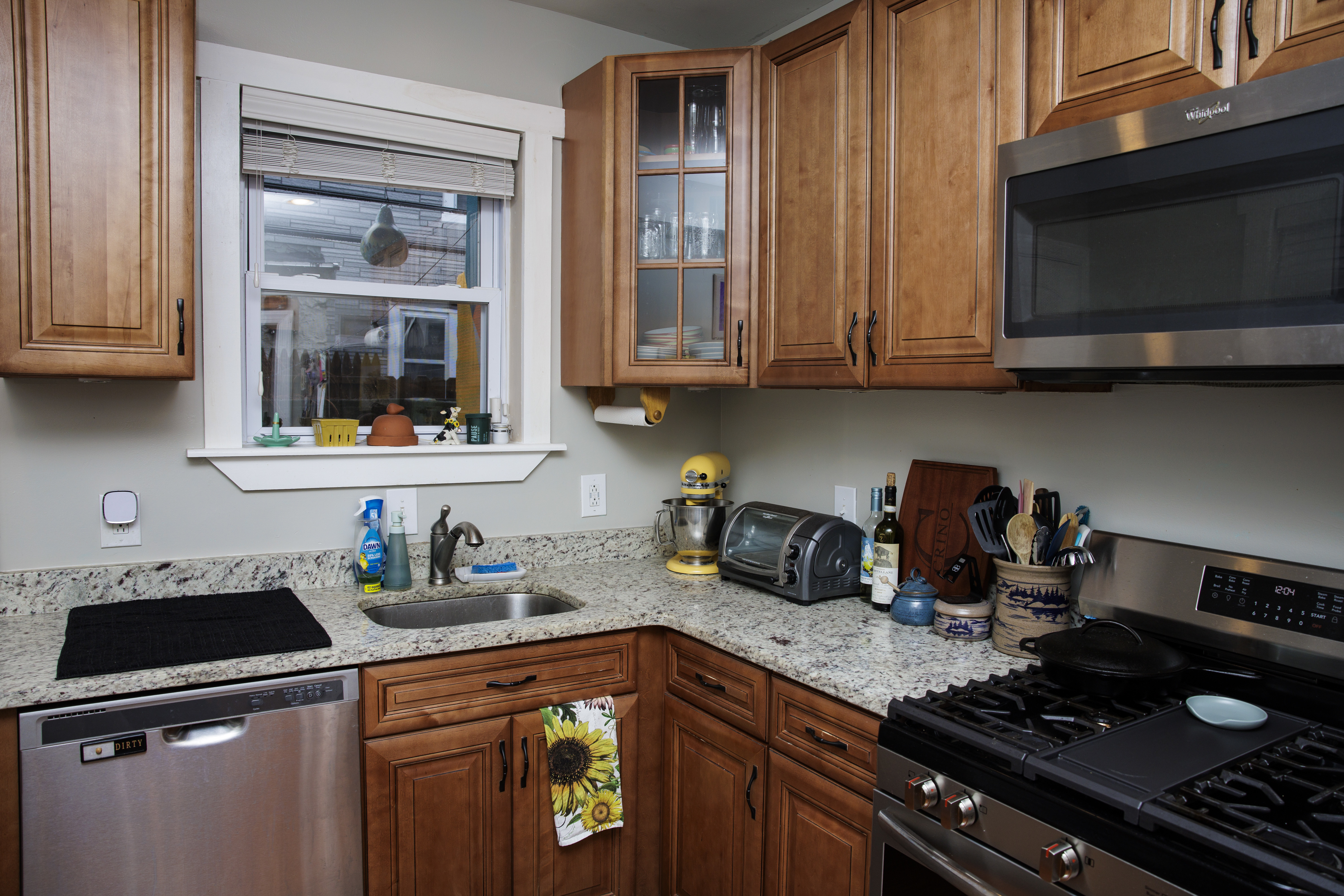
    Snelbaker in the kitchen of his Port Richmond home.

    The ask: Snelbaker didn’t want to give up his house in Graduate Hospital. He’d spent years rehabbing and repairing it. But in 2023, on the heels of a breakup, he determined he couldn’t afford to keep it on his own. He needed to downsize, but he wanted to stay in his neighborhood. Other than that, his list was short but firm: a backyard for gardening and a rowhouse that wasn’t too narrow.

    His budget was $300,000 — a number driven less by lender approval than by self-preservation. “I didn’t want to be house poor,” he said. “I have friends who are. They don’t go on vacations. They’re just kind of financially stuck.”

    The search: Snelbaker needed to sell his old house before he could make an offer on a new one, which made it difficult to compete in South Philly’s hot market. “A lot of the places I wanted to jump on would just go so fast,” he said.

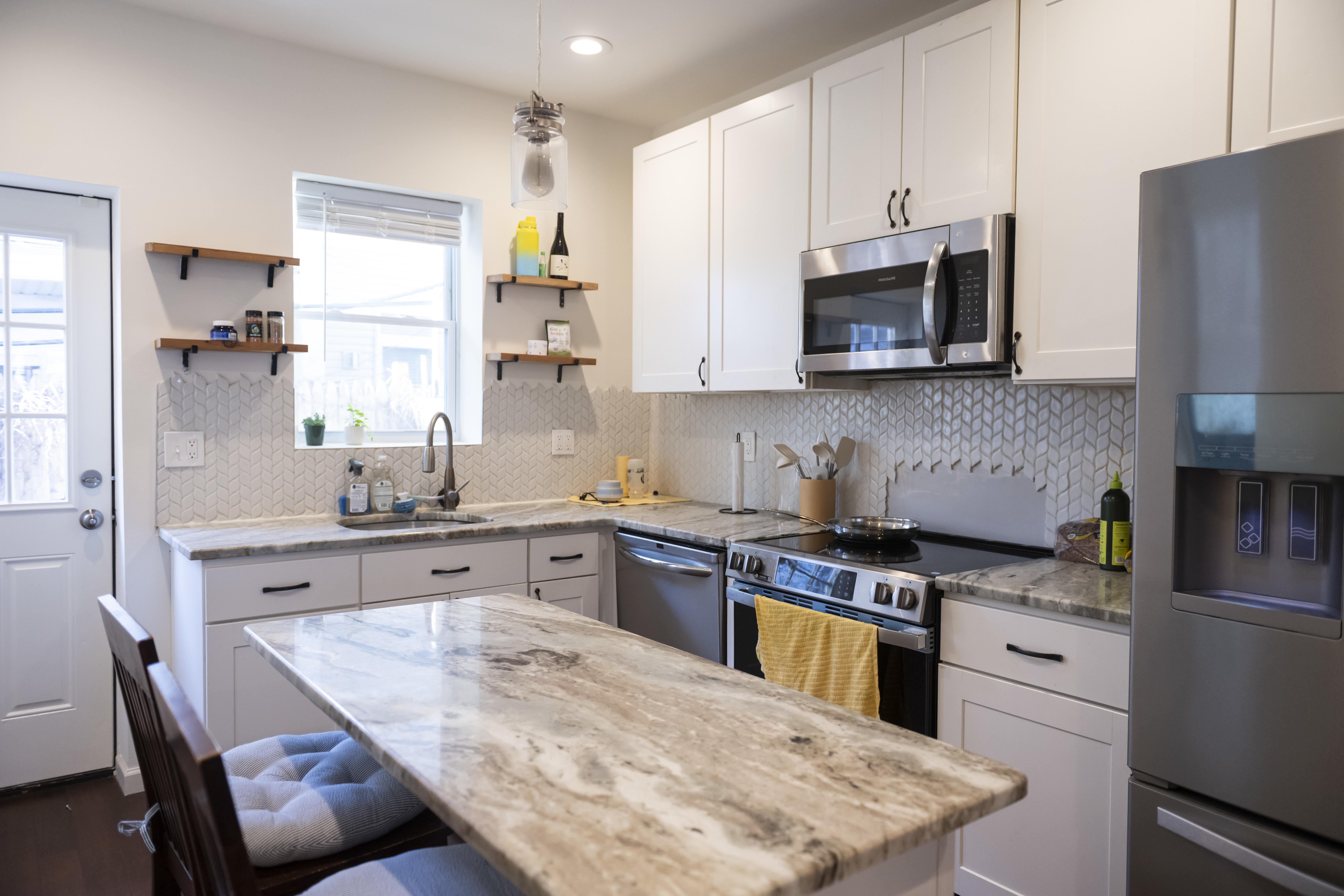
    He expanded his search and discovered better stock in Fishtown and Port Richmond. “For the same price for something in South Philly, it was a fixer-upper,” he said. “And here, it was in good shape.” Snelbaker had already lived through years of construction in his old house and wasn’t eager to do it again. “I just didn’t want to get into another fixer-upper situation,” he said.

    He checked out a few places in Fishtown but settled on Port Richmond because it was closer to his work. The prices were better, too. “It was a win-win,” Snelbaker said. The only other place he considered was a recently renovated rowhouse close to the river. “It was laid out well,” he said. “That was my second choice.”
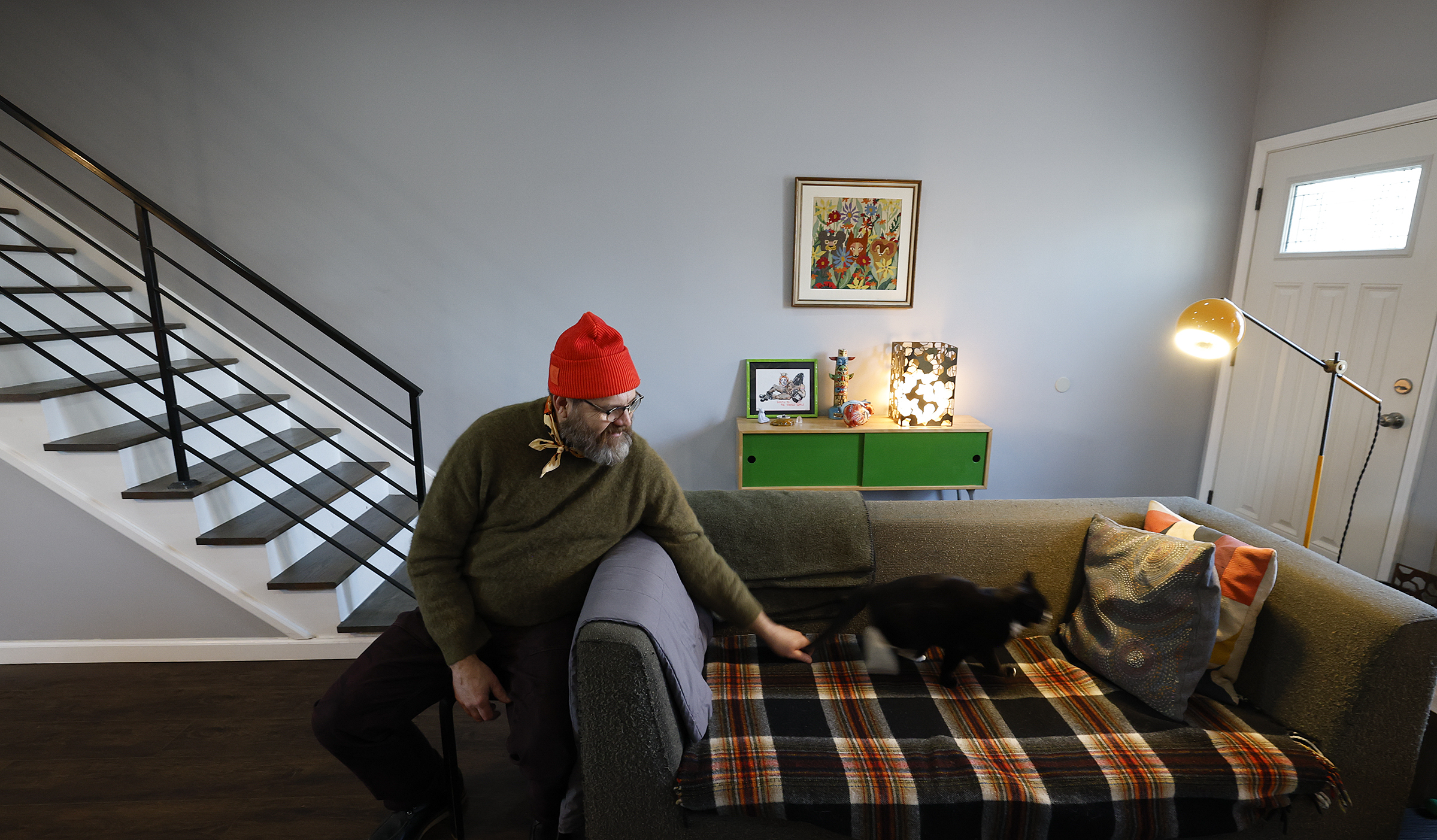
    Snelbaker liked that the house was recently renovated and move-in ready.

    The appeal: Snelbaker knew he’d found the one when he stepped out back. “The backyard was unbelievably, unbelievably big,” he said. “It’s like 27 feet long and 18 feet wide.” Plenty of space for the major landscaping projects he wanted to do, like planting several trees and building raised beds. Even better, one side of the yard abutted a warehouse, not another rowhouse, which gave him “a level of privacy,” he said.

    Inside, the house was open, newly renovated, and neutral. “It didn’t have a lot of personality,” Snelbaker said, “but it wasn’t a lot of work either.”

    The deal: Snelbaker saw the house at the end of the summer, but because he needed the proceeds from his Graduate Hospital home for a down payment, he couldn’t make an offer right away. Thankfully, the Port Richmond house lingered on the market until he sold his place in October. “I was surprised it didn’t move,” Snelbaker said.

    Once his old house sold, Snelbaker moved quickly. He offered $269,500 — $5,500 under the asking price — and the seller accepted without pushback. The inspection brought little drama. The sellers, who were contractors, handled minor repairs. “They did some patching on the roof and some stuff on the brick in the front,” Snelbaker said. “There was something with the dishwasher … they repaired that. That was pretty much it.”

    Since moving in, Snelbaker has added personal touches like this antler lamp to give his house more personality.

    The money: Snelbaker walked away with $240,000 from the sale of his previous home. He put a chunk of it into a certificate of deposit and used the remaining $180,000 for the down payment. “I put more than 20% down because I wanted to keep my monthly payment low,” he said.

    Even so, timing worked against him. Interest rates climbed to 7% as he was shopping, and insurance costs jumped a few months after he moved in. His monthly payment was originally $1,300. Now it’s $1,900. He plans to refinance once interest rates drop a few percentage points, and he’s actively looking for a better rate on his home insurance.
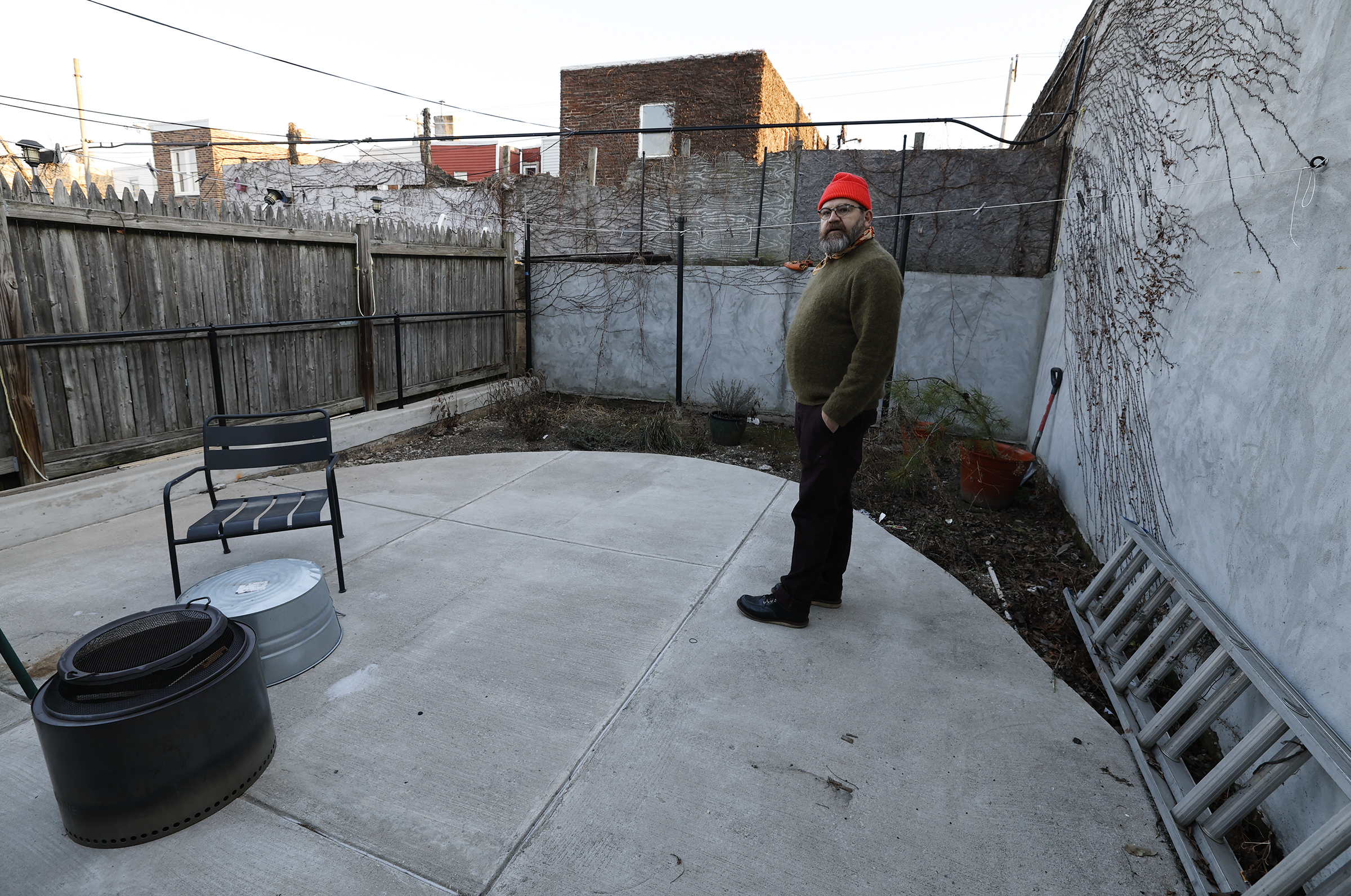
    Snelbaker removed some of the concrete in the backyard to plant trees.

    The move: Snelbaker sold his old house in mid-October and officially closed on his new one on Halloween, but he wasn’t ready to move in right away. His agent did some “fancy footwork” and worked out a deal for Snelbaker to rent his old house from its new owners for a few weeks. “She negotiated a really good timeline that gave me space to pack and wrap up everything at the old house,” Snelbaker said.

    Even better, he celebrated Halloween with his old neighbors. “We handed out candy, and they made me dinner. It was very sweet,” Snelbaker said. He moved into his new home the week before Thanksgiving.

    Any reservations? Without an attached neighbor on one side, the house runs colder than Snelbaker expected. He contacted an energy auditor who advised him not to do anything until he insulated the roof. It’s pricey, but worth it, Snelbaker said. “It’ll definitely increase the comfort and lower my heating bills.”

    Life after close: Since moving in, Snelbaker has focused on the backyard. He removed slabs of concrete to make room for trees and raised beds. “That was important for me,” he said. “I really wanted to get a garden going again like I had in my old spot.”

    Did you recently buy a home? We want to hear about it. Email acovington@inquirer.com.
  • After walking away during an inspection, she rebounded with a two-bedroom in Newbold | How I Bought This House

    After walking away during an inspection, she rebounded with a two-bedroom in Newbold | How I Bought This House

    The buyers: Emily Miles, 34, lawyer

    The house: A 784-square-foot rowhouse in Newbold with two bedrooms and one bath, built in 1920.

    The price: Listed and purchased for $249,000

    The agent: Allison Fegel, Elfant Wissahickon

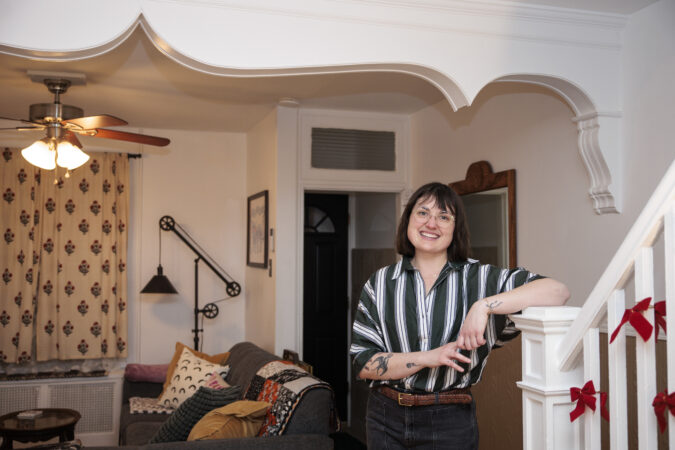
    Miles in her two-bedroom home.

    The ask: The only good thing about Emily Miles’ old apartment was the price. Miles was making a “nonprofit lawyer salary” and trying to save money. But “it was terrible,” Miles said. Disgusting even. And by November 2024, she’d had enough.

    Owning a home felt aspirational, if vague. “It was always something I wanted to do,” she said. “But I didn’t know when I’d be able to do it.”

    It didn’t seem like the right time. Miles had student loans. She was bartending in the evenings to make ends meet. Nevertheless, she decided to check out the market and searched for an agent with grant experience. She kept her house wish list short: three bedrooms, outdoor space, and central heat and air.

    The search: Miles had no sense of budget until her lender preapproved her for about $310,000. From there, her agent began sending her listings across the city, including large homes far from the neighborhoods Miles associated with Philadelphia.

    “They were still in Philadelphia County, but not really Philly as you think of it,” Miles said. West Philadelphia, where she was living, was not affordable. Other neighborhoods lacked reliable transportation.

    Between late November and January, Miles saw 30 to 40 homes. “They were a lot of flips, and I didn’t want that,” she said.

    Eventually, Miles found a place and made an offer. But during the inspection, they discovered damage to the front door that indicated someone had kicked it in, and Miles decided to walk away. She was out $1,500. “My pride was hurt a little bit,” she said.

    Miles took a brief break, then started attending open houses on her own. That’s how she found the one, a little less than a month after she backed out of the first house.

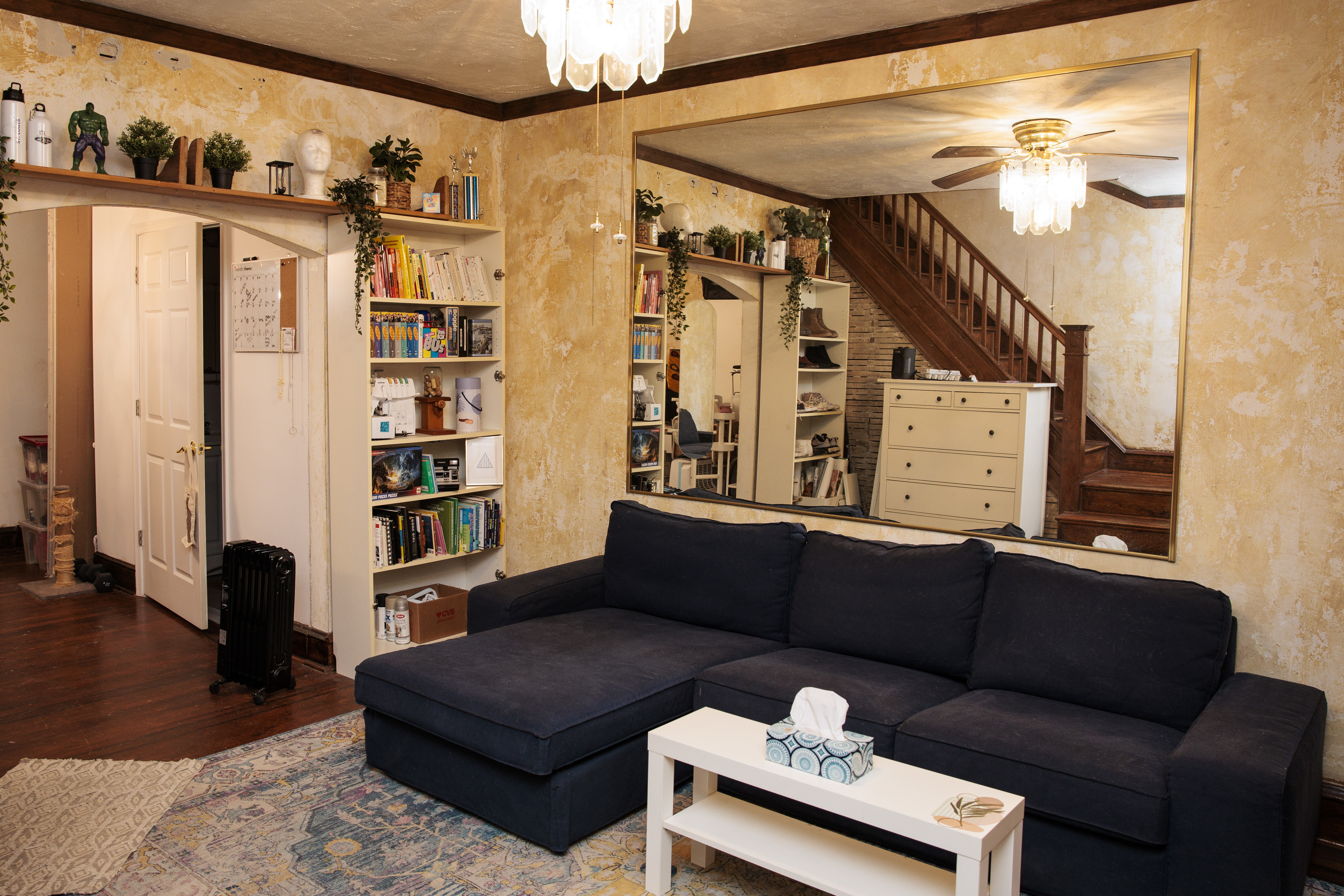
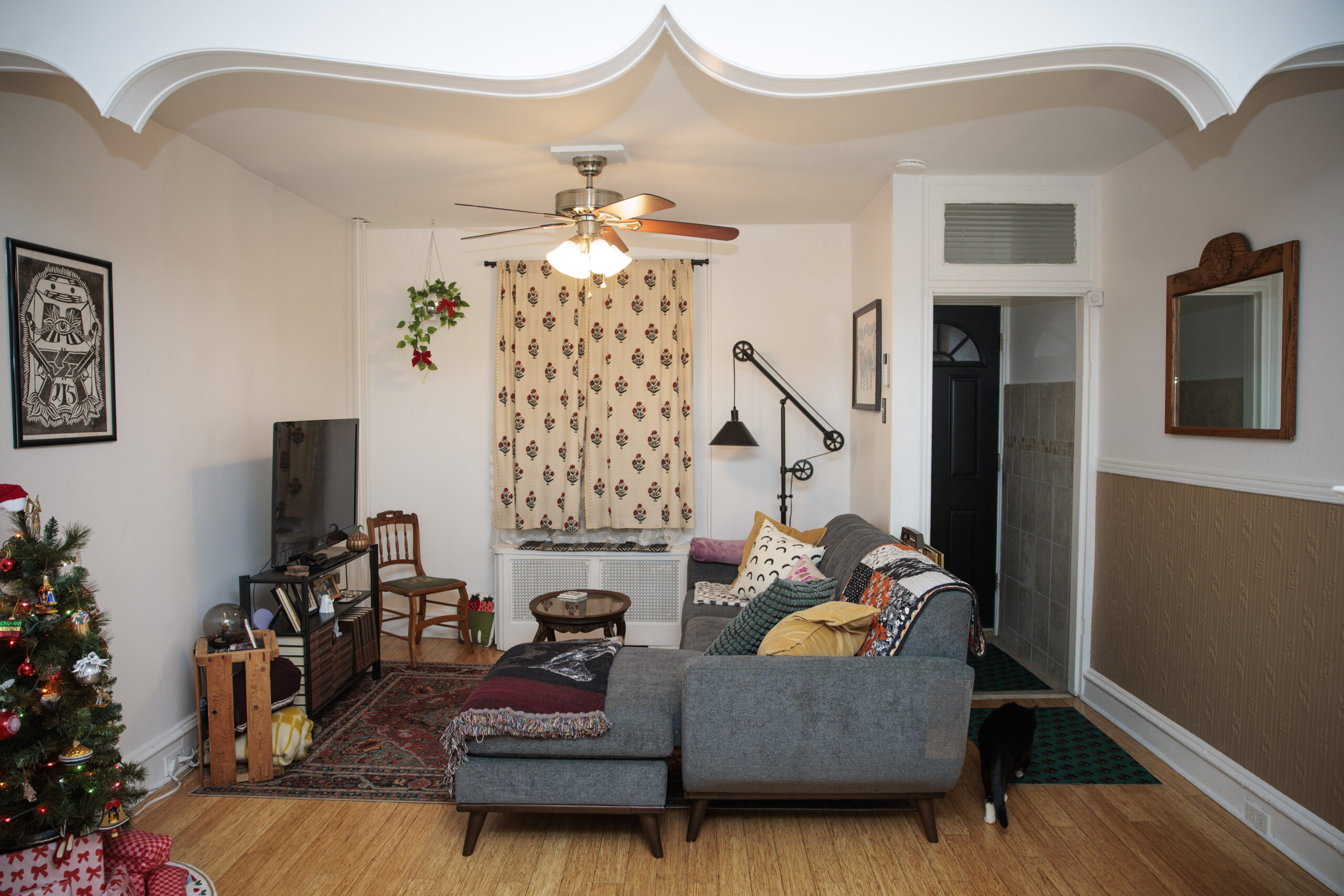
    Miles liked the house’s original features and character, such as the arched framing of the living room.

    The appeal: The house Miles ultimately bought — a two-bedroom, one-bath, 780-square-foot rowhouse in South Philadelphia — checked none of her original boxes. “The big LOL about the whole thing is that I ended up with something I didn’t want at all,” she said. It had radiator heat. No air-conditioning. Less space than she planned. The house had been a rental for more than a decade. Carpet covered original features. Paint concealed years of wear. “It was a real landlord special,” Miles said. But when she stepped inside, something clicked. “I walked in, and I could see it,” she said. “It’s full of character.”

    The deal: Miles stumbled into the house she would buy while walking to a bar with her boyfriend on a Friday night. The listing price was $249,900. She offered the asking price the following morning.

    The seller took days to respond but eventually accepted her offer after no one else made a bid.

    When the inspection revealed issues, Miles asked for $5,000 to $7,000 in credits. The seller countered with zero. “He redlined all my stuff,” she said. “So I re-redlined all of his stuff.” The back-and-forth ended with $2,000 in seller’s credit. “Which is better than zero,” Miles said. “I’m pretty proud of that.”

    Miles filled her home with vintage furniture she found at local thrift shops. Her cat, August, has his own bed.

    The money: Miles had about $20,000 saved from her time before law school, when she worked as a human resources manager in New York City. She had an additional $10,000 from the Philly First Home program, $2,000 from the seller’s credit, and $1,000 from her Realtor’s Building Equity program.

    Her lender approved her to put down only 3%, so she made a $7,500 good-faith deposit and brought $1,500 to closing. Miles’ credit score and salary qualified her for a 5.75% interest rate at a time when average rates hovered closer to 7%.

    Her monthly mortgage payment is about $1,800 and includes $120 for private mortgage insurance, which she must pay until she reaches 20%. She recently applied for a Philadelphia homestead exemption, which reduces the taxable portion of your house by $100,000 if you use it as your primary residence, and expects her monthly payment to drop closer to $1,700 as a result.

    The move: Miles closed on March 19 and moved on April 29. She broke her lease without penalty. “I had been complaining about it being a bad apartment for months,” she said, “so I think they were just happy to be rid of me.”

    Miles had to get rid of a lot of her stuff because her new house was so much smaller than her apartment. “I downsized quite significantly,” she said. She also discarded stuff that wouldn’t fit through the house’s small, 30-inch doorway, like her couch. “Luckily, I had some foresight and got rid of it before I moved it over,” she said.

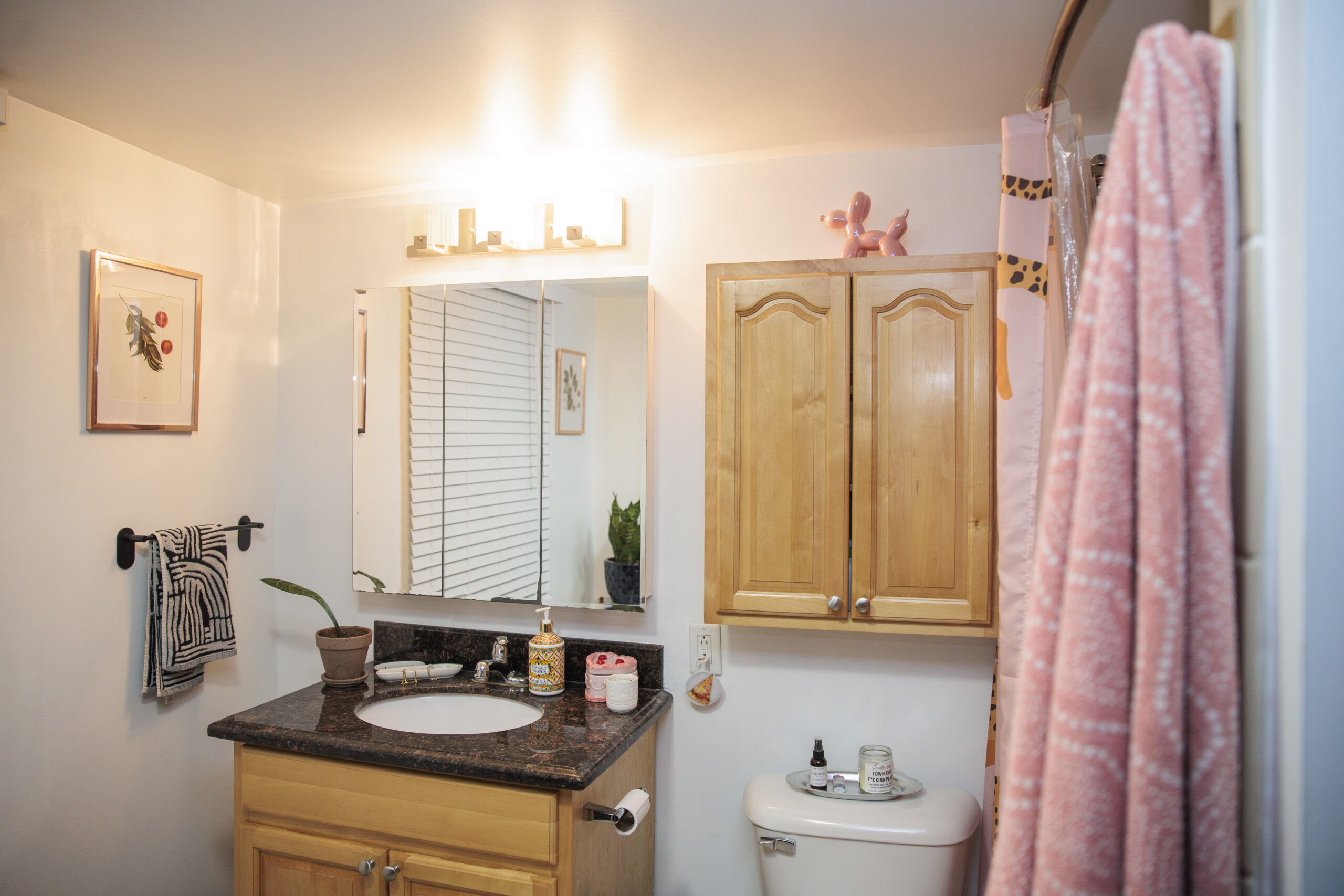
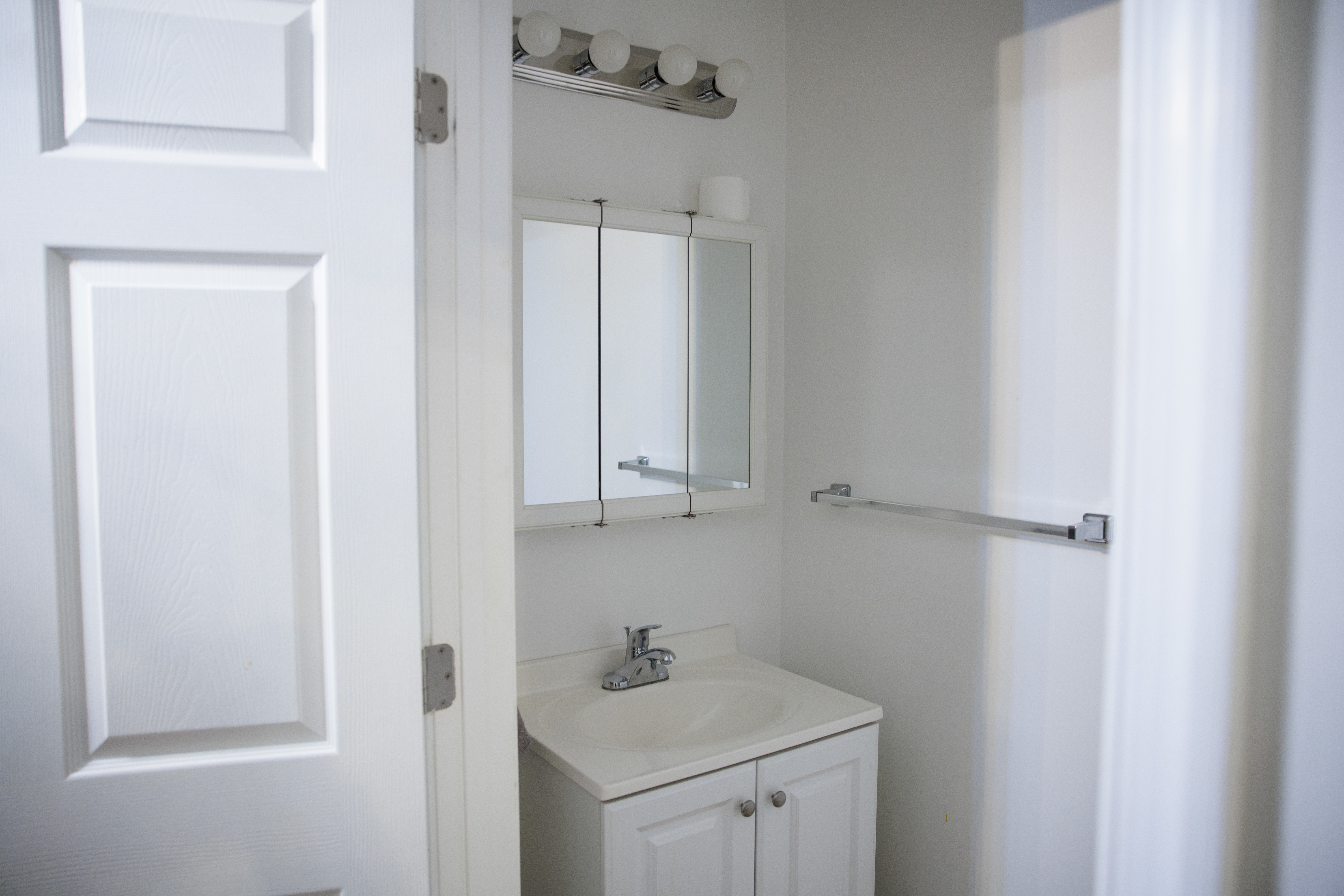
    Miles installed new lighting and faucets to make her home feel less like a rental.

    Any reservations? Miles wishes she knew that refinished floors can take weeks to fully cure. She had to sleep on the living room floor while she waited for the fumes to fully dissipate upstairs. “It was just my cats and me on the ground for about a month,” she said. Still, she doesn’t have any regrets. “Live and learn,” she said.

    The bathroom in Emily Miles’ Newbold home.

    Life after close: Miles used the money her parents had saved for her wedding to make a few cosmetic updates. She fixed the back patio, refurbished the upstairs floors, and replaced light fixtures and faucets so that the house felt less like a rental. She put in a new boiler, too. And filled the house with vintage furniture she thrifted locally. “Stuff that fits the vibe of the house,” she said.

    Did you recently buy a home? We want to hear about it. Email acovington@inquirer.com.
  • She needed to leave fast. She bought a four-bedroom house in Germantown without any money saved. | How I Bought My House

    She needed to leave fast. She bought a four-bedroom house in Germantown without any money saved. | How I Bought My House

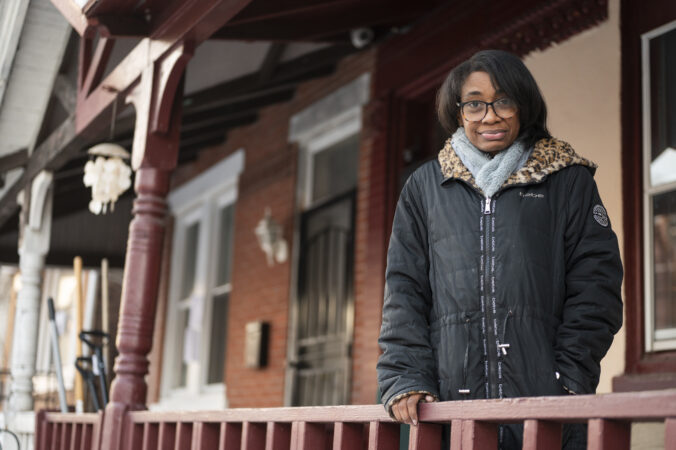
    The buyer: Kia Wilson, 53, behavioral specialist

    The house: a 1,620-square-foot single-family residence in Germantown with four bedrooms and 1½ bathrooms built in 1900.

    The price: listed for $170,000; purchased for $165,000

    The agent: Shante Jenkins, Long & Foster Real Estate

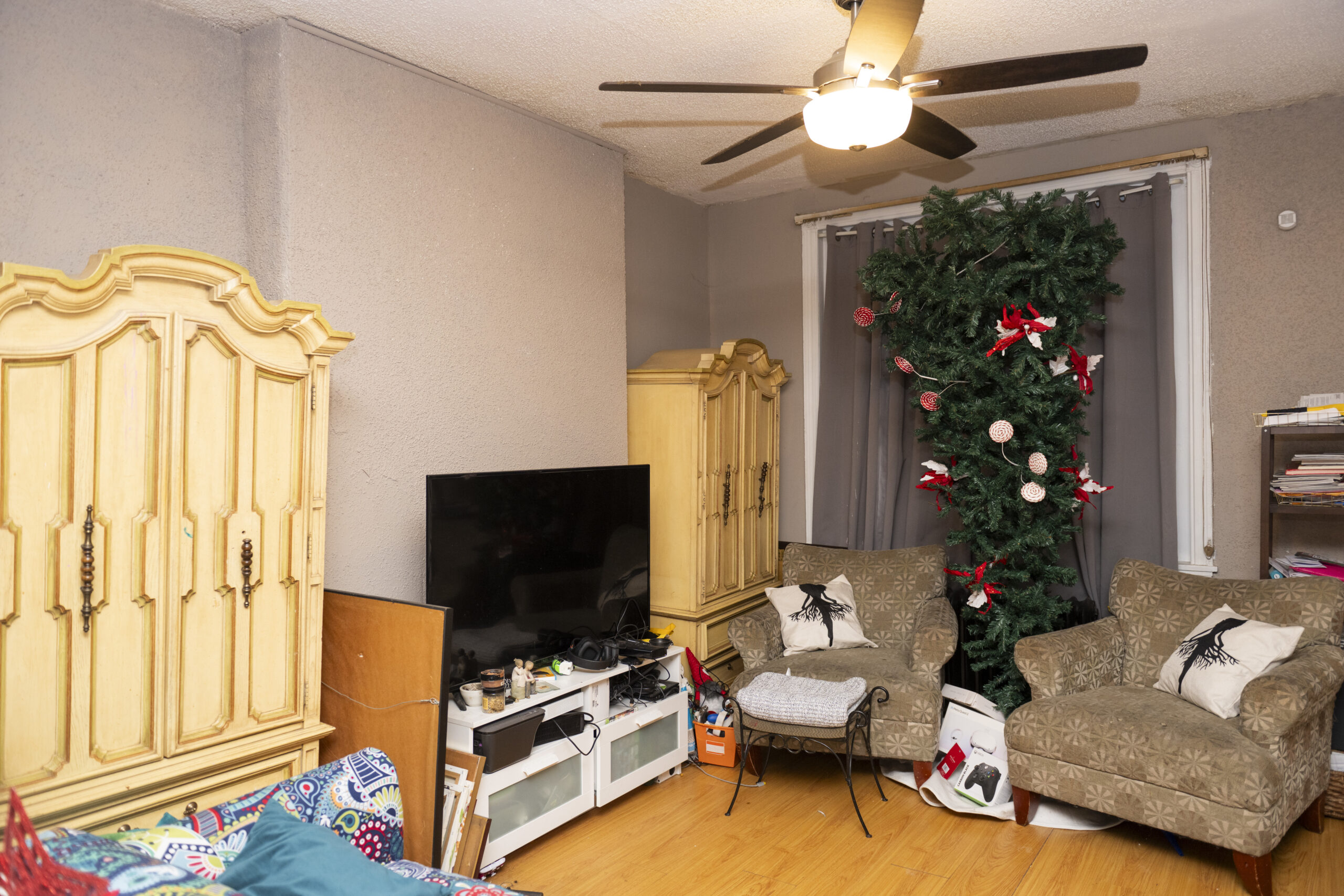
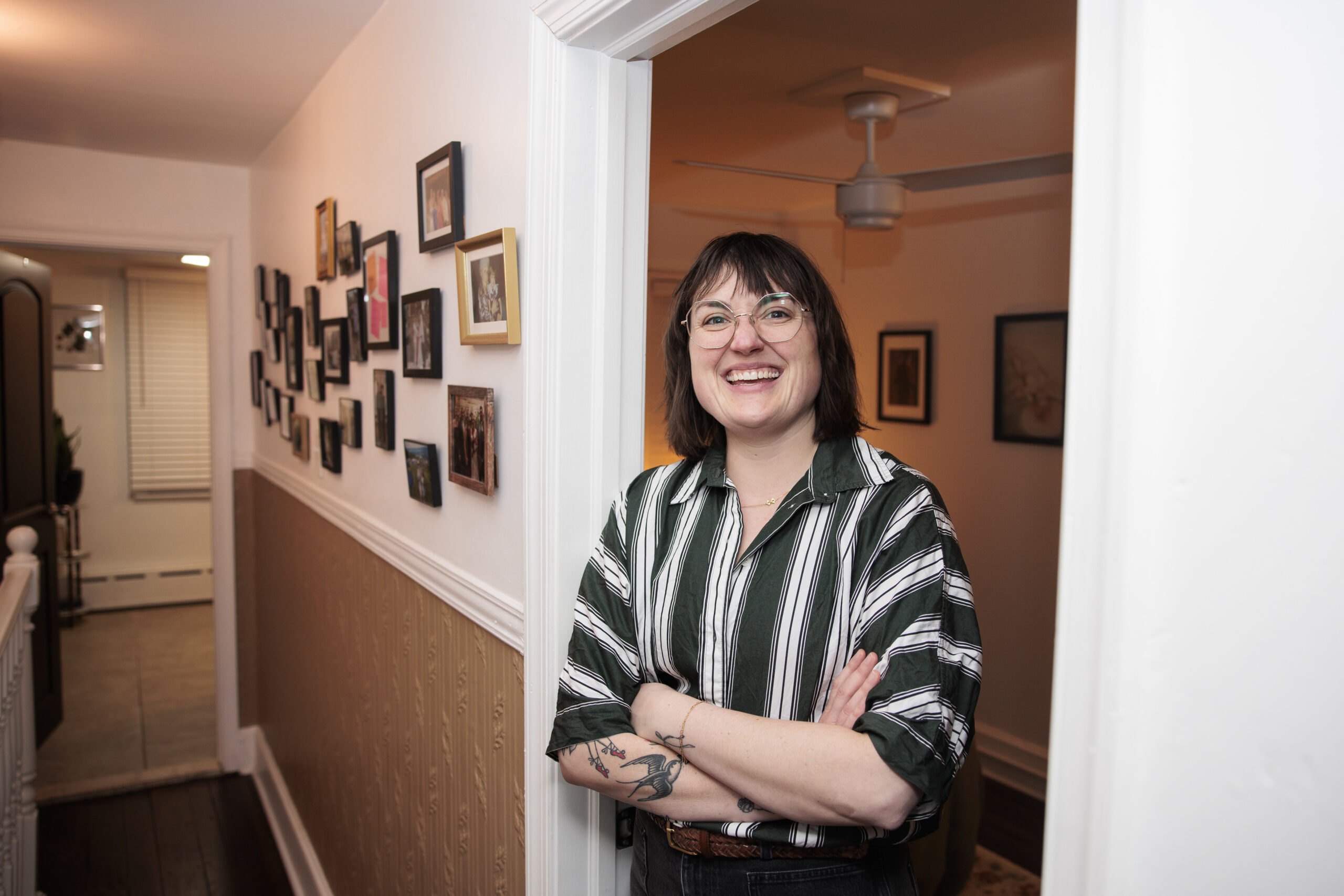
    The living room in Kia Wilson’s home in Germantown.

    The ask: For years, homeownership was something that Kia Wilson considered in the abstract — something she might get to one day. In 2020, she gave herself a timeline. Within five years, she told herself, she would buy a home. She would save. She would fix her credit. She would do it the “right” way.

    Then everything changed.

    In 2021, a relationship turned unsafe. Wilson’s then-partner threatened her family, including her children. “I was like, ‘I need to leave now,’” Wilson said. ‘Without the money saved up, without my credit being good. I just needed to move.’”

    Wilson’s requirements were practical and shaped by urgency. She needed space for herself, her two children, and eventually her mother. She wanted her teenage daughter to have her own bathroom, and she needed a fenced-in backyard for her dogs. Above all, she needed a mortgage she could afford. She wanted it to be $700 a month — the same she paid in rent.

    As for location, “I didn’t care,” she said. “Just not Kensington.” And not near her ex’s parents.

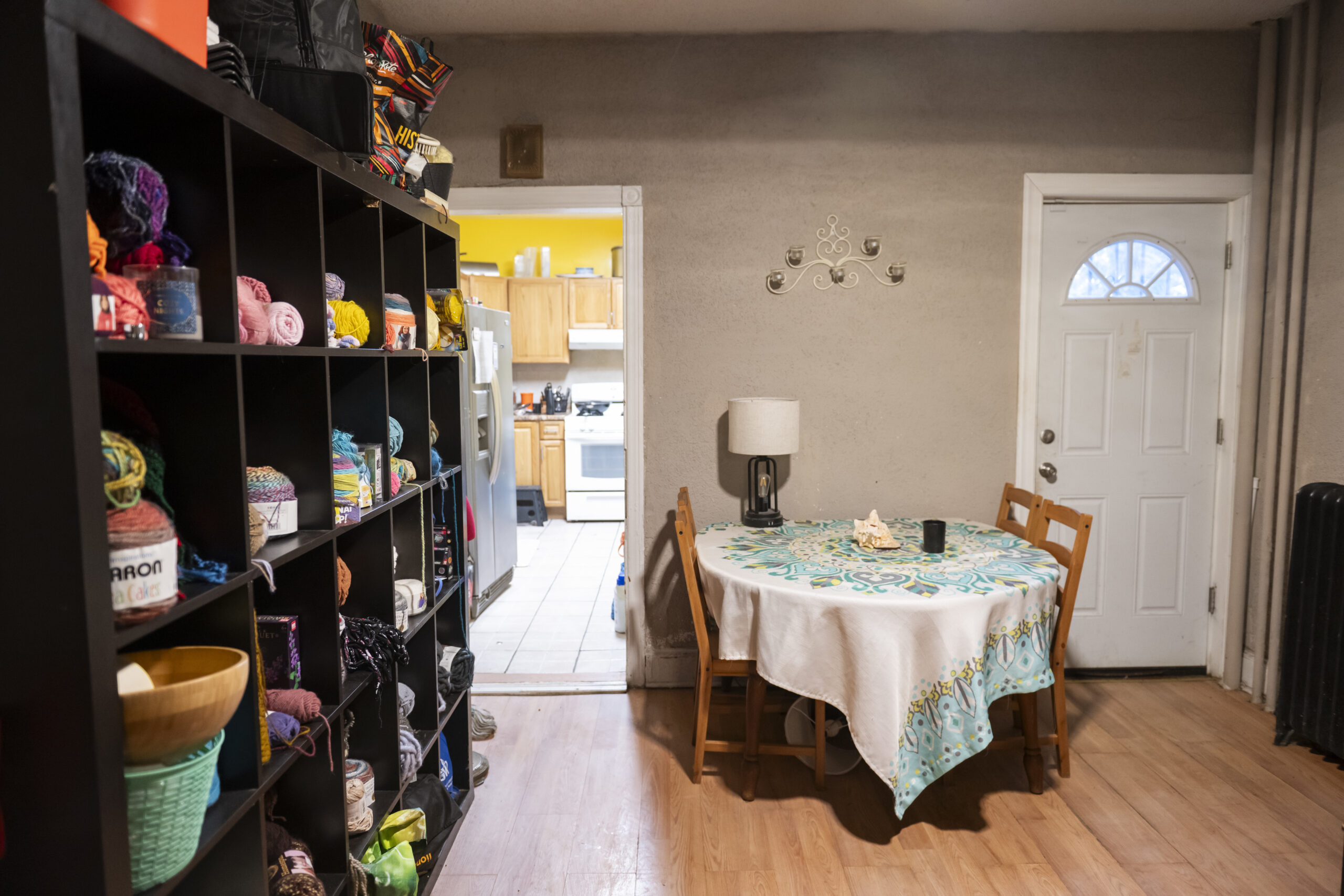
    The dining area in Wilson’s home.

    The search: Wilson began looking seriously in late 2022, working with a friend and coworker who had just gotten her real estate license. Together, they saw about 15 houses over a few months. Some were impractical. Some were strangely laid out. One was in a flood zone, so Wilson didn’t even bother going inside. Another, she is convinced, was haunted. During the showing, a radio suddenly began playing in the basement. “That radio was loud enough for us to hear it on the third floor,” Wilson said.

    That house wasn’t the only one that lingered. Wilson and Jenkins returned to another three separate times just to switch off the lights they’d accidentally left on in the basement and on the porch. That hadn’t happened anywhere else. “I was like, ‘Why does this house keep calling me back?’” Wilson said.

    Wilson wanted two bathrooms so that her teenage daughter could have her own.

    The appeal: The house Wilson ultimately bought wasn’t perfect, but it checked her most important boxes. It had four nice-sized bedrooms, a small backyard with a full basement, and a semiattached layout that gave the house a little breathing room.

    But the feature that sold Wilson was surprisingly specific. “At the very top of the steps is the bathroom,” she said. “If I come in the house from work and I have to pee really bad, I can run straight up the steps to the bathroom.”

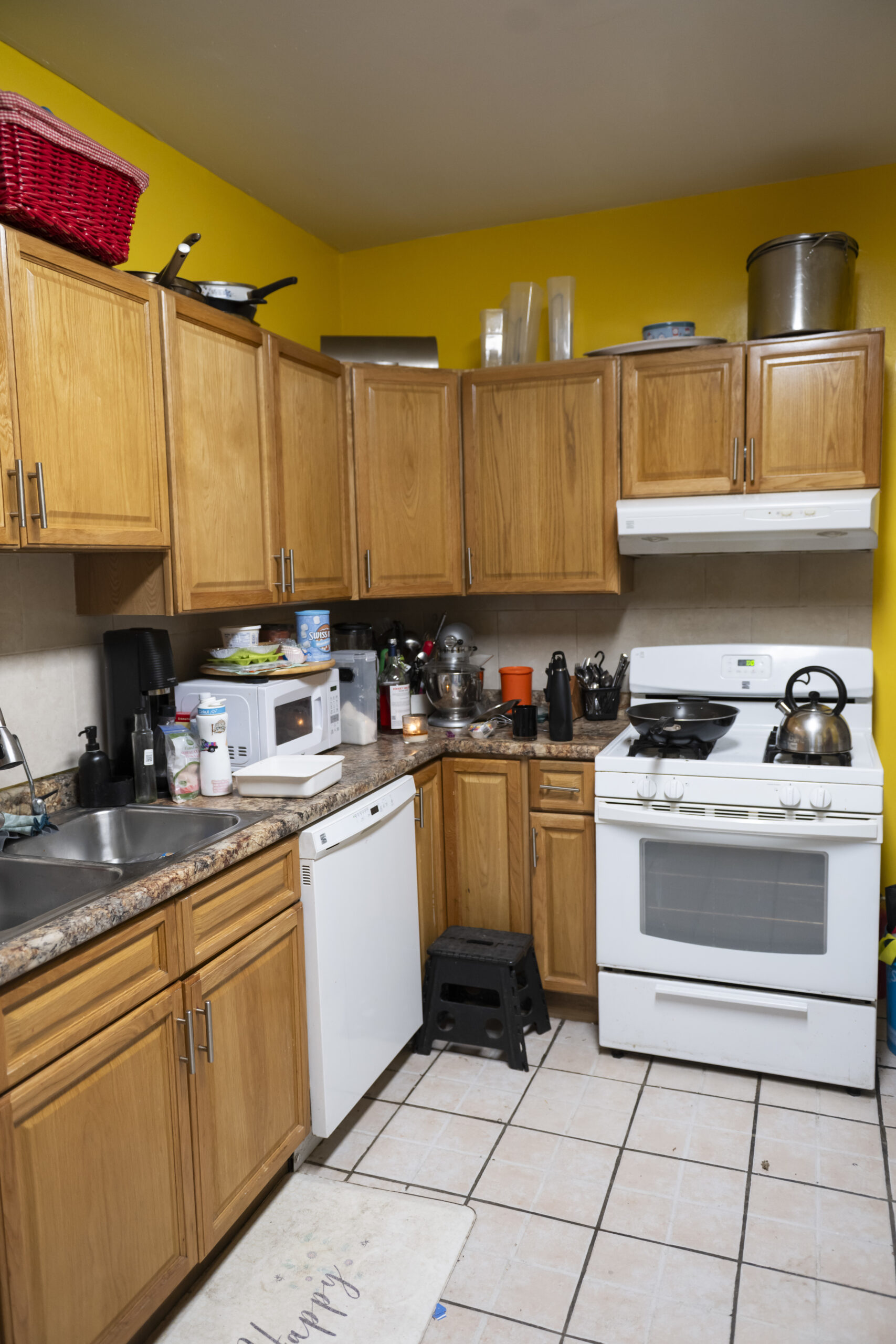
    The kitchen was a major upgrade from her previous place, where the kitchen had essentially been an unheated shed. This one was huge and had cabinets. That alone felt luxurious.

    The deal: The house was listed at around $170,000. Wilson offered $160,000, expecting a counteroffer. The sellers came back at $165,000, which she accepted.

    Wilson likes how big and open her kitchen is.

    Since the sellers wouldn’t meet her lowest price, Wilson requested that they remove a large oil tank from the basement. They agreed. They also patched flooring gaps in the kitchen and near the front door and removed a mysterious electrical switch that carried power but didn’t control anything.

    Flush with the concessions she’d already secured, Wilson made one more request. “I was like, wow, what else can I ask them to do?” she said, laughing. She asked for a sump pump in the basement, but the sellers said no.

    The money: Wilson didn’t have savings for a down payment. “People think you have to have this ridiculous amount of money [to buy a house],” she said. “I had nothing.”

    What she did have was persistence — and grants. She took first-time homebuyer classes and applied for multiple assistance programs, including funding through the Mount Airy CDC and her employer. In total, she received four grants and roughly $16,000. Her mortgage company told her they’d never seen someone with so many grants. Her mother also contributed $1,000, which served as Wilson’s down payment. All in, she spent $17,000 on her home.

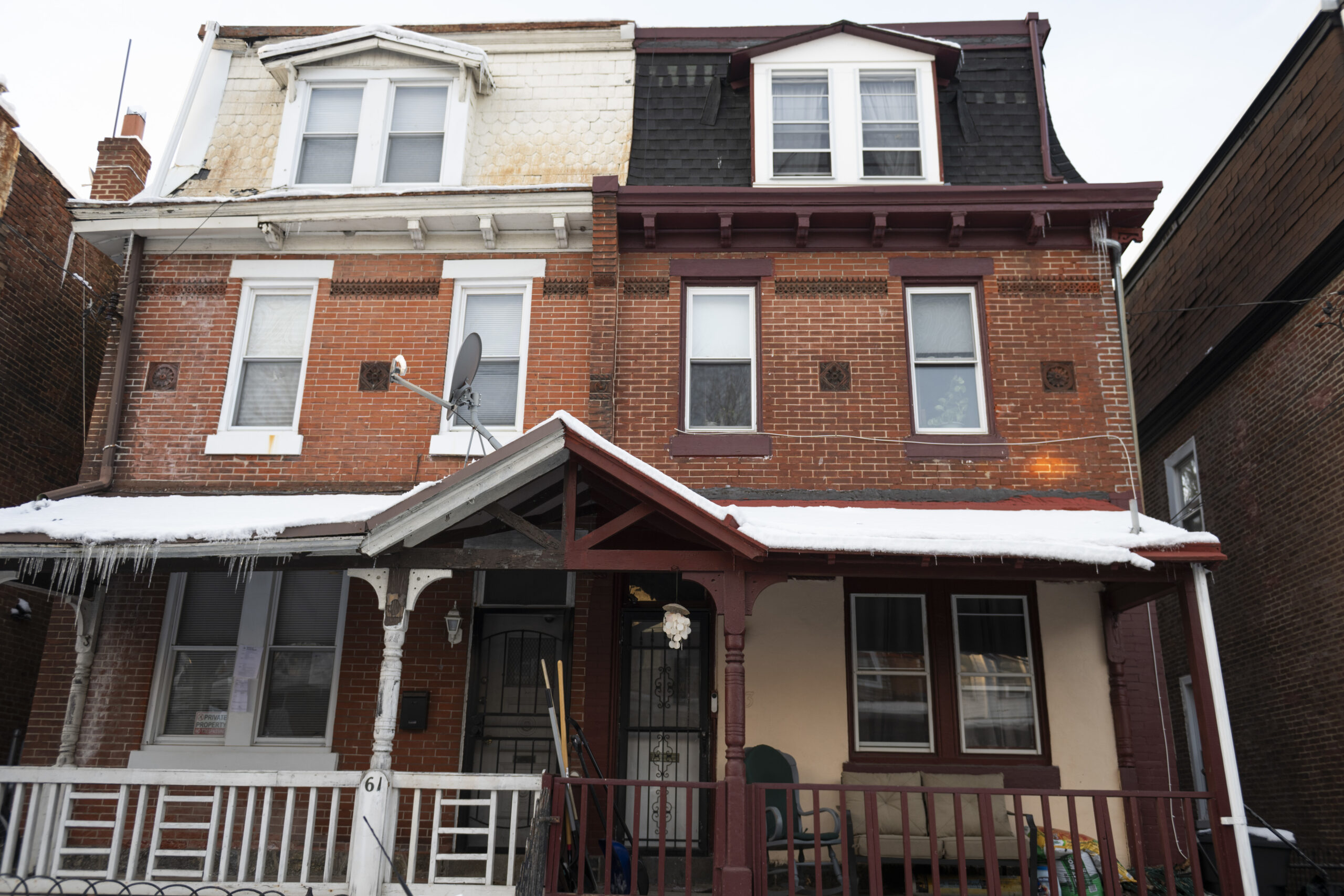
    The exterior of Wilson’s home in Germantown.

    The move: Wilson closed on March 12, 2023, and moved in one month later. Moving was a “pain in the butt,” she said. “I was trying to do it myself because I didn’t have any money.” The friends who promised to help bailed, and the coworkers who stepped up broke her dresser and her refrigerator. “It was terrible,” Wilson said. “I didn’t have a refrigerator for two weeks.”

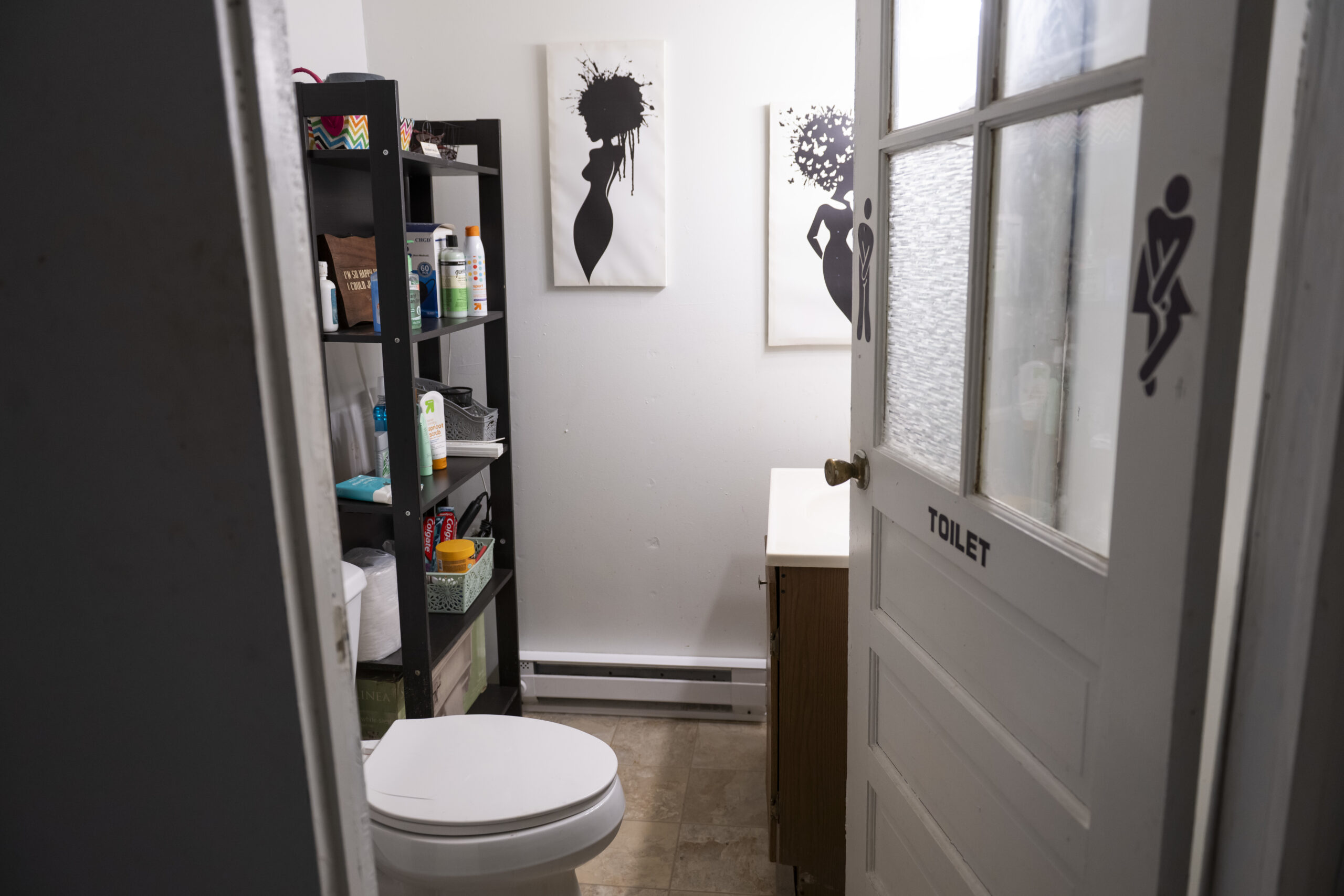
    Any reservations? Some days, Wilson wishes she never bought the house. It’s old and needs extensive work. “Things are falling apart,” she said.

    If she could do it again, she would prioritize a house where the cosmetic work was already done and pay closer attention to small details — like mismatched bathroom tiles. Still, the house has “great bones,” she said.

    Life after close: Since moving in, Wilson has taken classes at the West Philly Tool Library, where she learned to patch drywall and tile. The bathroom is now all one color. She’s changed the locks, plans to replace the front door, and has begun slowly making the house her own. This year, she grew a watermelon in the yard.

    “It’s really surreal,” Wilson said. “I’ve owned a house for two years. Only 28 more to go.”

    Did you recently buy a home? We want to hear about it. Email acovington@inquirer.com.
  • A seller backed out after verbally accepting their offer. It led to their dream home in Point Breeze. | How I Bought This House

    A seller backed out after verbally accepting their offer. It led to their dream home in Point Breeze. | How I Bought This House

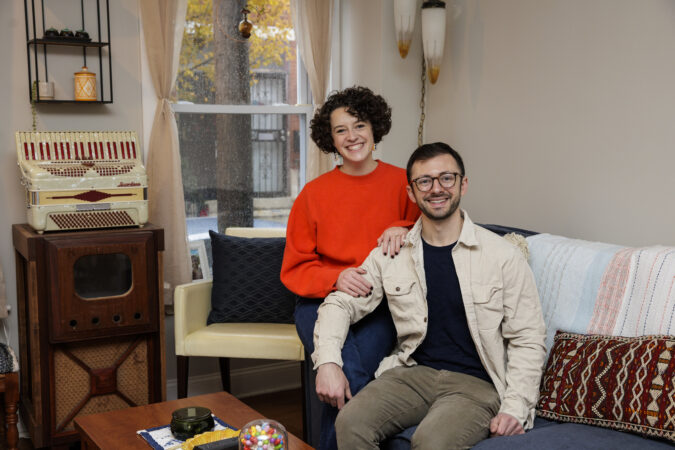
    The buyers: Casie Girvin, 30, performer and voice teacher; Steve Crino, 32, musician

    The house: A 984-square-foot rowhouse in Point Breeze with three bedrooms and one bath, built in 1923.

    The price: Listed and purchased for $305,000

    The agent: Benjamin Camp, Elfant Wissahickon

    The ask: For Casey Girvin and Steve Crino, the home-buying journey began long before they opened Zillow. “We always knew that we wanted to be homeowners,” said Girvin. “It’s something we were saving for a long time.”

    Both musicians, they spent years learning what did and did not work for their lifestyles. They started in a one-bedroom, which didn’t work because their practice sessions often overlapped, creating a cacophony of noise. Eventually, they moved into a bi-level apartment where they had room to work.

    That experience shaped their home-buying wish list. That meant they needed at least three bedrooms — one for sleeping and two for music studios — and a layout that let two musicians practice without driving each other mad. “We needed it to be either like a bi-level space, or we needed a buffer room between the two of us,” Girvin said.

    They also wanted a backyard. “We learned during COVID that having an outdoor space was really important to us,” she added. So was being close to the Broad Street SEPTA line. Fixer-uppers were a nonstarter.

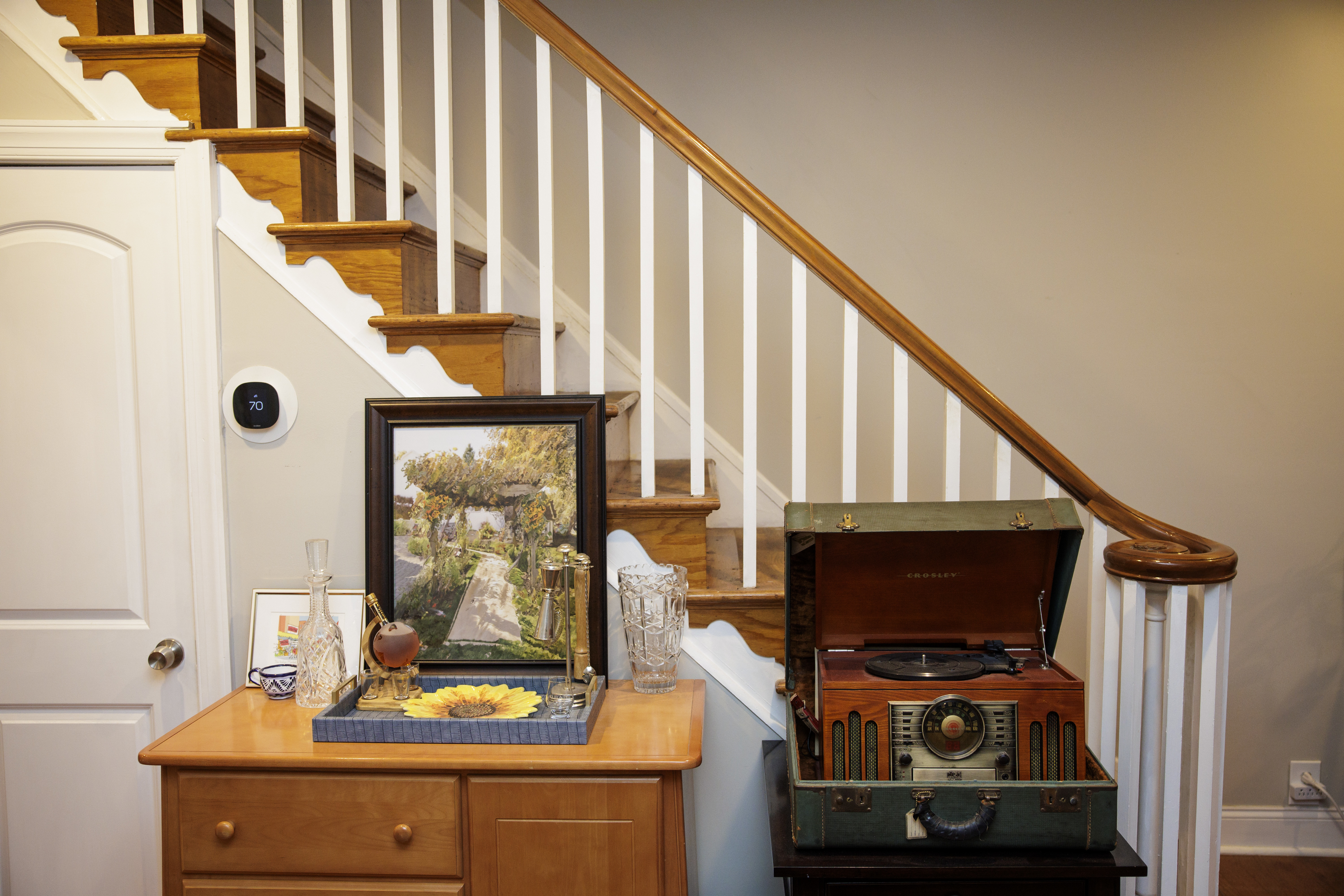
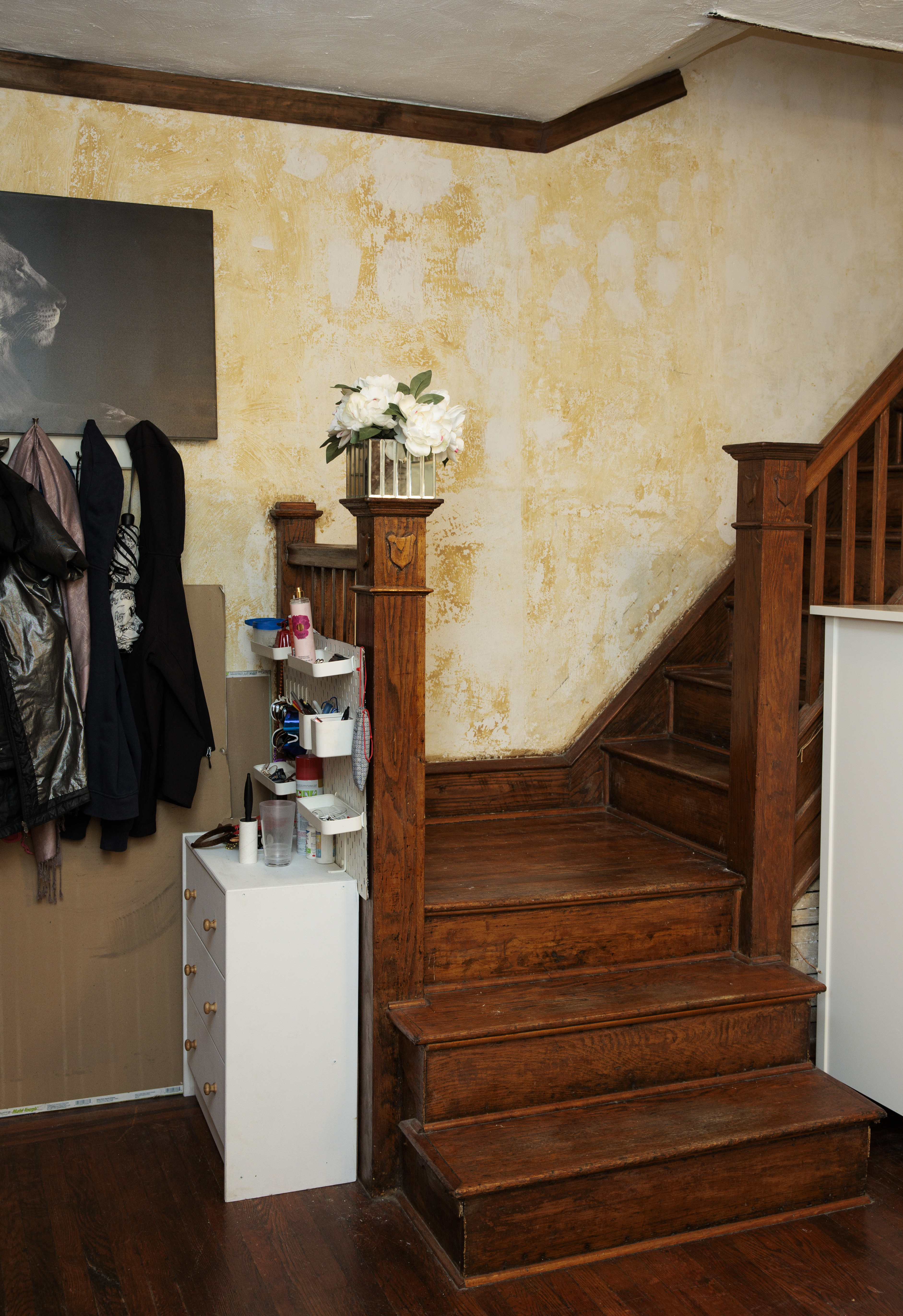
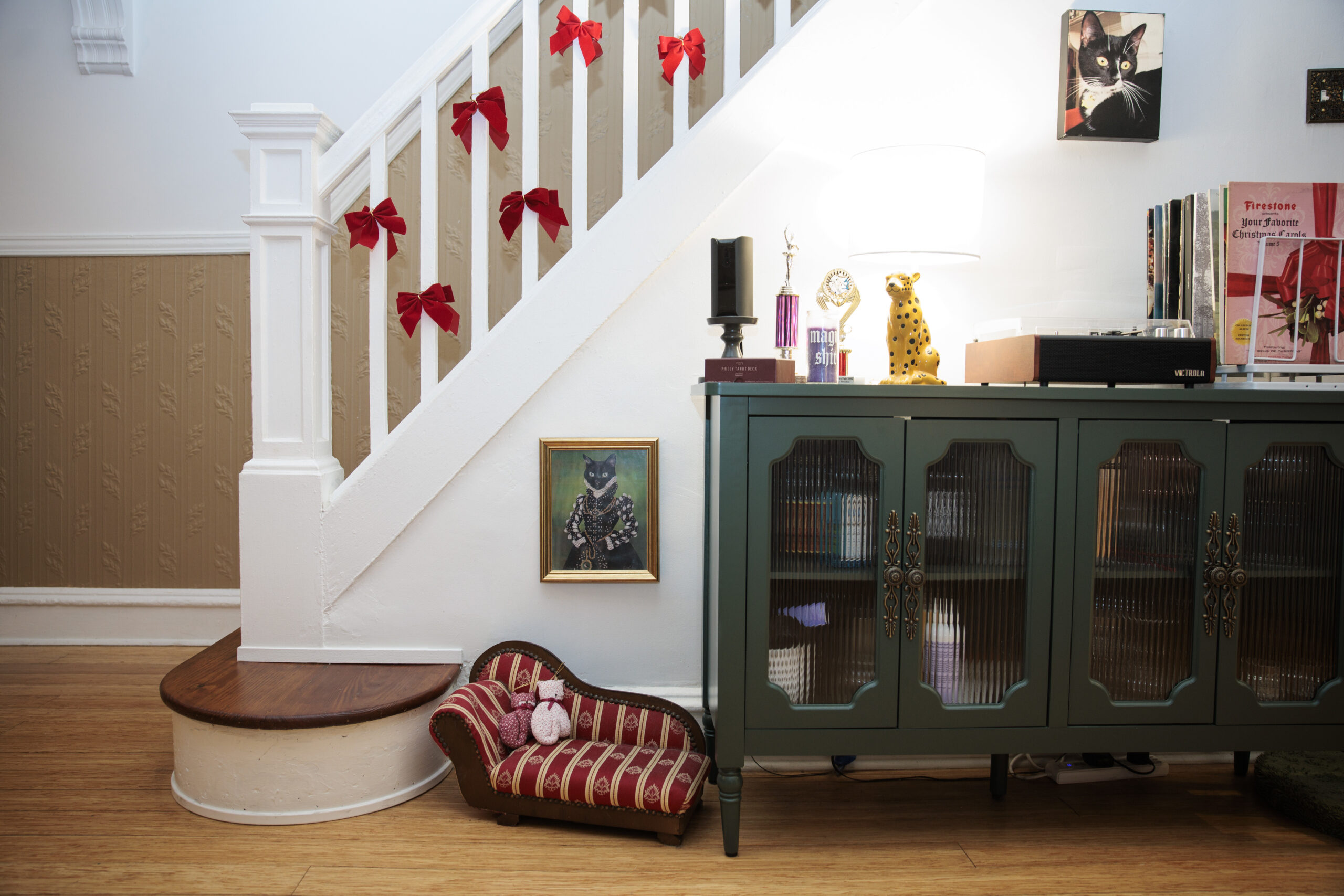
    Upon entering the house, the couple immediately fell in love with the staircase, especially its architectural detailing.

    The search: The couple intentionally waited until winter to search, hoping for lower prices. They saw 21 houses in Point Breeze and liked a lot of what they saw, but tried to be ruthless when it came to making an offer. “That was a very informative part of the process, Crino said, “because when you’re contemplating actually putting an offer down, your preferences emerge.”

    They ended up making only one other offer on a house they nicknamed “the Grandma house” because of its funky carpeting and wallpaper. The seller verbally accepted it but eventually pulled it from the market.

    “Ultimately, we’re happy with what happened,” said Girvin.

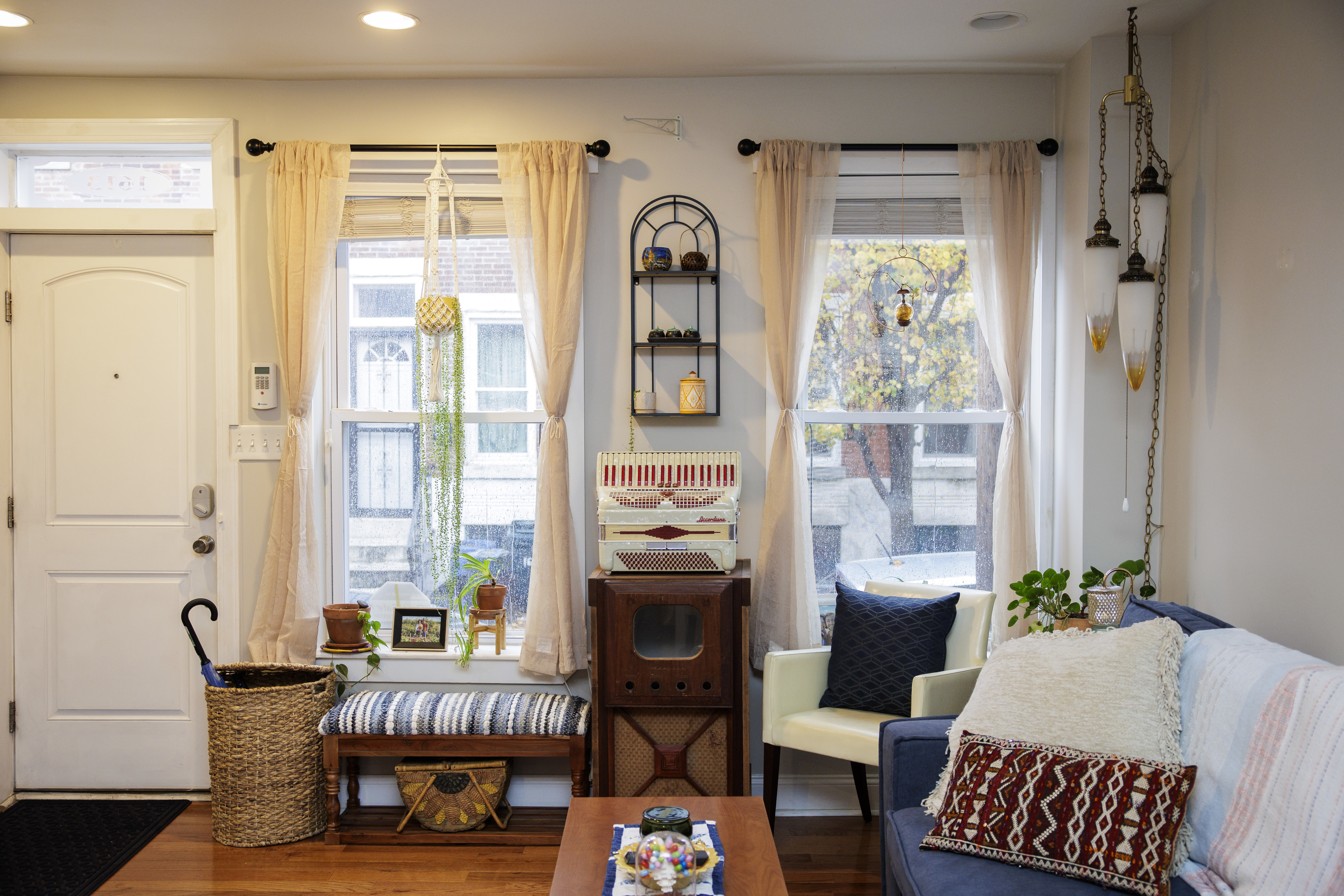
    Girvin and Crino love all the natural light pouring through the living room windows.

    The appeal: Girvin had a good feeling about the house when she saw it online. “I was like, ‘Wow, that looks exactly like where we want to be, at a price point that was quite exciting,’” she said. Even better, it had central air, beautiful hardwood floors, and matched the couple’s aesthetic. But the couple panicked when they saw an open house the next day. They called their agent and secured a same-day viewing.

    Inside, the house aligned almost perfectly with what they had been searching for. What they weren’t expecting, though, were interesting artistic details, like the sunflower etched into the banister and the mural in the backyard. They loved the staircase, the amount of natural light pouring through the living room windows, and the view from their bedroom window of a church they admired. “The house is on a nice, little, cute side street,” Cirsi said. And crucially: “It’s so close to the subway.”

    The second floor sealed the deal. The layout was perfect: a bathroom between the two smaller bedrooms. A built-in sound buffer for their future studios. “Most Philly rowhomes, you go up the stairs, it’s like a bathroom right at the top, and then the three bedrooms in a row,” Girvin explained. “But this one has bedroom, bathroom, bedroom, bedroom. That was ultimately one of the main reasons we bought the house.”

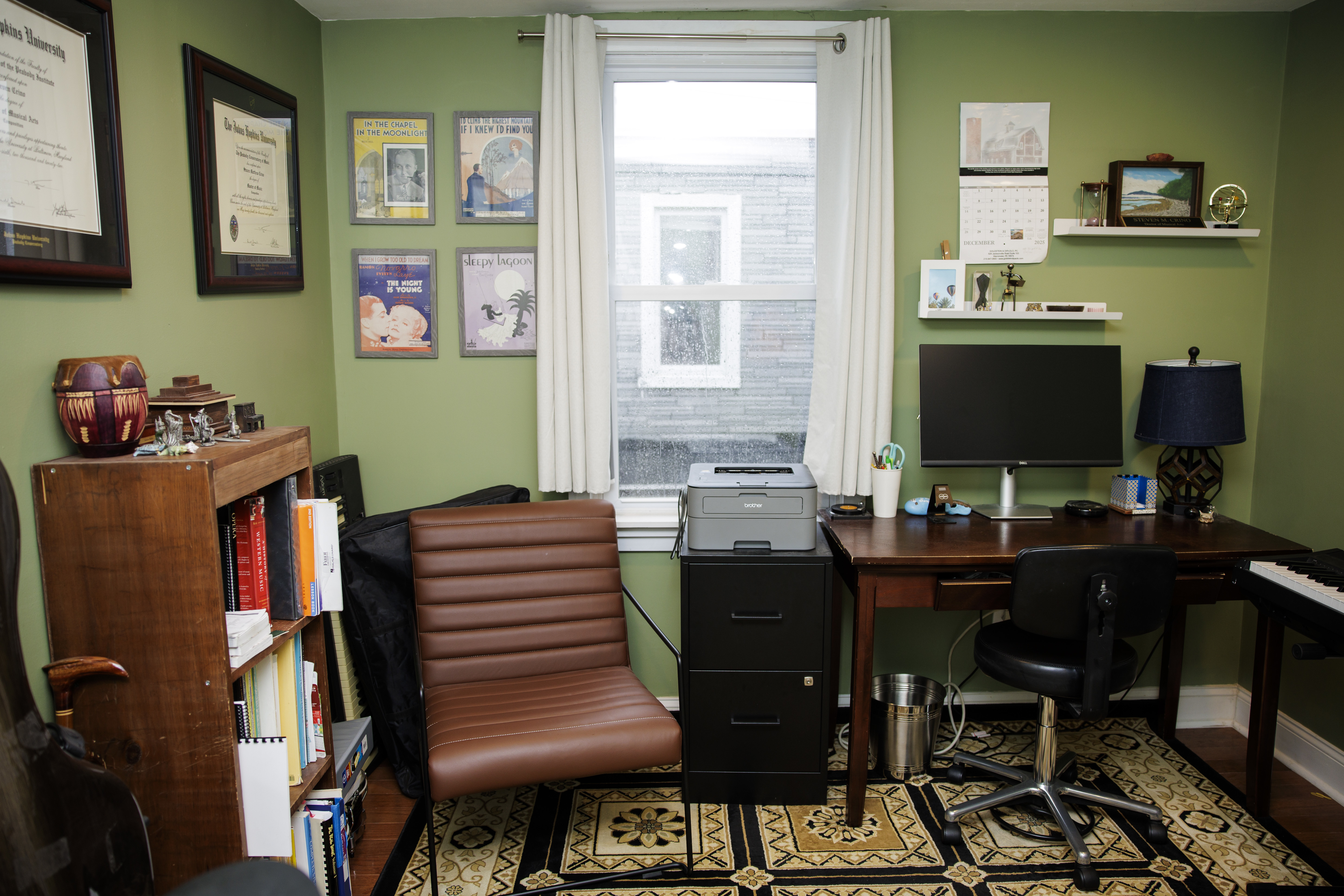
    Crino’s studio is separated from Girvin’s by a bathroom, allowing the couple to practice music at the same time without disrupting each other.

    The deal: The couple made an offer that evening. They offered the listing price — $305,000. “We felt that the house was worth what it was asking,” Girvin said. The sellers accepted right away.

    The inspection revealed two issues. First, the oven needed to be replaced. The sellers issued the couple a credit to buy a new one.

    The bigger issue was the HVAC system. The breaker tripped during the inspection. “We watched it go boop,” Crino said. The fix required electrical work, and they insisted it be completed and certified before closing. “That was the right decision because it definitely was pricier than they thought it was going to be,” Crino said.

    The money: Girvin and Crino had been saving for almost a decade. Every month, they set aside a portion of their earnings in a separate account. They also had money saved for a wedding that they decided to put toward their house instead. “At one point we thought about having a really big wedding,” Girvin said, “but we decided to do the whole micro wedding, DIY backyard thing.”

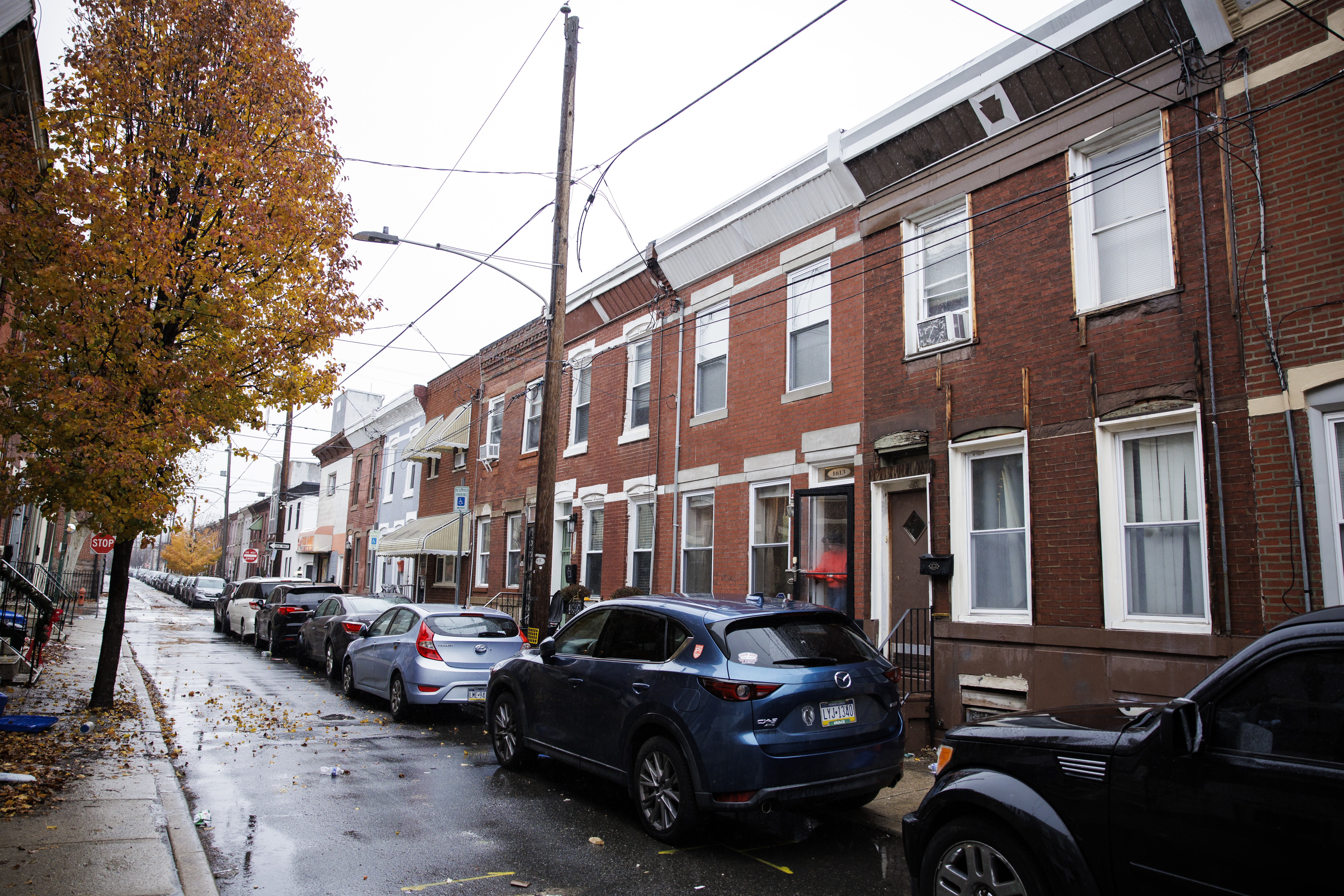
    The small side street the couple lives on was no sweat for their movers, Old City Moving Co.

    Between their life savings and the wedding savings, plus generous gifts from wedding guests, Girvin and Crino had “$80,000-ish” to spend. They put 20% down, which was $61,000, and spent the rest on closing costs, which were $27,000. “That was the $80K right there,” Girvin said. Their mortgage is a little less than $1,800, which is exactly what they had been paying in rent.

    The move: The couple moved in mid-March, one month after they closed. “Moving was relatively painless,” Girvin said. “We hired Old City Moving Co., and they were really great.” They navigated getting a giant moving truck down a tiny side street like pros, backing in so that they could get out more easily.

    Any reservations? None worth mentioning. The only thing they’d add is a second bathroom — another half bath someday, maybe in the basement. But that feels like a future luxury, not a present problem. “Most days we’re like, I love this house,” Girvin said.

    Girvin and Crino purchased a new oven with help from a seller’s credit.

    Life after close: Their first major purchase was a new oven. “When people come to the house, I’m like, ‘You know, we bought that oven,’” Crino said, laughing. Decorating has been slow and thoughtful. The most sentimental change is the three-teardrop lamp from Steve’s grandmother, now hanging from their ceiling — something they never would have installed in a rental. The backyard is next.

    Did you recently buy a home? We want to hear about it. Email acovington@inquirer.com.
  • Her Brewerytown home search spanned just four blocks. It was enough. | How I Bought This House

    Her Brewerytown home search spanned just four blocks. It was enough. | How I Bought This House

    The buyer: Lulu Tunis, 39, communication specialist

    The house: A 1,060-square-foot rowhouse in Brewerytown, with three bedrooms and one bathroom, built in 1925

    The price: Listed for $270,000; purchased for $240,000

    The agent: Rachel Shaw, Philly Home Girls

    The ask: For Lulu Tunis, it was simply time to buy a house. She had been living in Brewerytown for a decade. Her one-bedroom apartment on Girard Avenue was fine, but she wanted more space. More importantly, she felt financially prepared to buy. “I think I was just ready,” Tunis said.

    Her needs included three bedrooms, easy street parking, and a backyard large enough for the dogs she often pet sits. Proximity to Girard Avenue was also important. “I didn’t want to be too far off where I normally hang out,” Tunis said. She was OK with only one bathroom and also a fixer-upper. “I’m pretty handy,” she said.

    The hardwood staircase leads to three large bedrooms upstairs.

    The search: Tunis began looking in April 2024 and narrowed her search to a four-block radius. “There were actually a lot of options,” she said. Her budget was $250,000.

    In the 10 homes she saw, she ran into all kinds of strange layouts. Some of the third bedrooms were the size of a closet. Others didn’t have closets. Neither situation would do. Nor would the house with the extra narrow hallways upstairs, or the one that smelled like cat pee. She considered a couple of duplexes in case her family moves in with her down the road, but they needed too much work.

    Tunis was OK with just one bathroom but has enjoyed having a remodeled half bath on the first floor.

    She fell in love with a house on a corner lot that had great light and tried to make an offer, but someone beat her to it. “I still walk by it all the time,” said Tunis, “and I get a little jealous.”

    The appeal: The house Tunis bought charmed her immediately. There was a large, golden mirror near the entrance. “It’s great for ‘fit shots,’” Tunis said. She liked how open the downstairs was and that the laundry was right off the kitchen. The unfinished basement needed some work, but it had plenty of room for storage. Upstairs, Tunis was delighted to find three relatively large bedrooms (each one can easily fit a bed and a desk) and recently redone hardwood floors. It also has 1½ bathrooms.

    The large gold mirror that Tunis immediately fell in love with when she stepped inside the house for the first time.

    The downstairs floors weren’t in great condition, but Tunis liked that they were original to the home. Despite being dated, the house was full of great features. “I could see the potential,” said Tunis.

    The deal: The house was above Tunis’ $250,000 budget, but it had been on the market for 80 days, so her real estate agent suggested they submit a bid under the asking price. Tunis offered $240,000 and the seller accepted immediately.

    During negotiations, Tunis asked the seller to pay for termite treatment and a home warranty, which covers the cost of repairing or replacing major appliances and systems. The inspector warned Tunis that the heater would probably have to be replaced within the year. Everything else looked good.

    The money: Tunis had a little under $5,000 saved for her home purchase. Her aunt gave her another $5,000. She also received a Keys to Equity grant for $20,000 and a Philly First Home grant for $10,000. She used $17,000 for the down payment and shelled out $16,000 for closing costs. With a 6.375% interest rate, her monthly mortgage payment is $1,392.

    The move: Tunis officially closed on Nov. 15 but waited until the end of December to move in. She wanted to tear down the wallpaper in the living room. The process took longer than she expected and forced her to abandon her other pre-move-in home-improvement plans. “I just lost motivation,” Tunis said.

    The house has plenty of places for Tunis’ cat, Huey, to nap.

    Because Tunis’ new house was only a block from her old apartment, she moved gradually at first, carrying small loads on foot. Her family arrived the day after Christmas to help move bigger stuff. They rented a U-Haul and moved everything in two trips. Tunis’ first night in her new house was Dec. 29. She started a new job the next day.

    Any reservations? The biggest disappointment in the house has been the lack of natural light. It’s blocked most of the day by a five-story school across the street. “I only get sun first thing in the morning and then around sunset,” Tunis said. Her plants are suffering.

    Tunis’ house is in the middle of the block and across the street from a tall building, so it doesn’t a lot of light.

    Life after close: So far, Tunis is happy with the way her bedroom looks, and that’s about it. The rest of the house remains a work in progress. “There’s always some half-built furniture somewhere,” she said.

    Her next big project will be replacing the drywall in the back room downstairs. She took a class at West Philly Tool Library and plans to do it herself — or at least try. “I’m not ready to pay anyone yet,” she said. Once the walls are complete, she’s going to paint the kitchen, which is currently bright blue. She’d prefer terra-cotta or dark tan.

    Tunis says that even though her space is currently a “hot mess,” she likes coming home to it. “Coming to an apartment was fine. But coming to my house? It’s like ‘OK, this is my home.’ I’ve always got little projects to do.”

    Did you recently buy a home? We want to hear about it. Email acovington@inquirer.com.
  • A 29-year-old found his forever home in Point Breeze for less than $400K | How I Bought This House

    A 29-year-old found his forever home in Point Breeze for less than $400K | How I Bought This House

    The buyers: Cameron LaFreniere, 29, software engineer

    The house: a 1,260-square-foot rowhouse in Point Breeze with three bedrooms and 2½ baths, built in 1925.

    The price: originally listed for 350,000; sold for $340,000

    The agent: Rachel Shaw, Philly Home Girls

    The ask: Cameron LaFreniere was looking for a new city to call home and wanted to escape the stress of renting. Originally from Rhode Island, he considered settling down in Providence, but decided on Philadelphia because “the prices are significantly lower,” he said. It’s also easier to get around without a car, which was important to him.

    The primary bedroom at Cameron LaFreniere’s home in Point Breeze.

    He wanted a house that could be big enough for a family one day. “Basically something that could be a forever home if I wanted it to be,” he said. His budget was between $275,000 and $400,000, and he was only interested in historic rowhouses.

    “I would much rather have an old build that’s well taken care of,” said LaFreniere, “because they’re often much more cost-effective in terms of maintenance.” He wanted something recently updated with multiple bathrooms, space for a home office, and within biking distance of Center City.

    The search: LaFreniere began his search in December 2024 and spent months scouring South Philly for the perfect place. “I probably walked at least a third of South Philly,” he said. “I just really wanted to get a feel for the area. It’s one thing to look at something online; it’s another to experience it for yourself.”

    LaFreniere outfitted the living room with all new furniture.

    Across multiple weekend trips, LaFreniere looked at 25 properties, including eight on the final day of his search. He looked at a few places in Wharton Square and one in Graduate Hospital. He also saw one that was one street over from the house he ultimately bought — it cost $20,000 more. “It had nicer floors and was staged,” he said. As for the house he wanted, “there wasn’t much competition,” LaFreniere said.

    Or it may have something to do with its location. “Point Breeze is a balanced market,” said LaFreniere. “There is a good amount of supply and places being fixed up. It’s a first-time buyer’s ideal situation.”

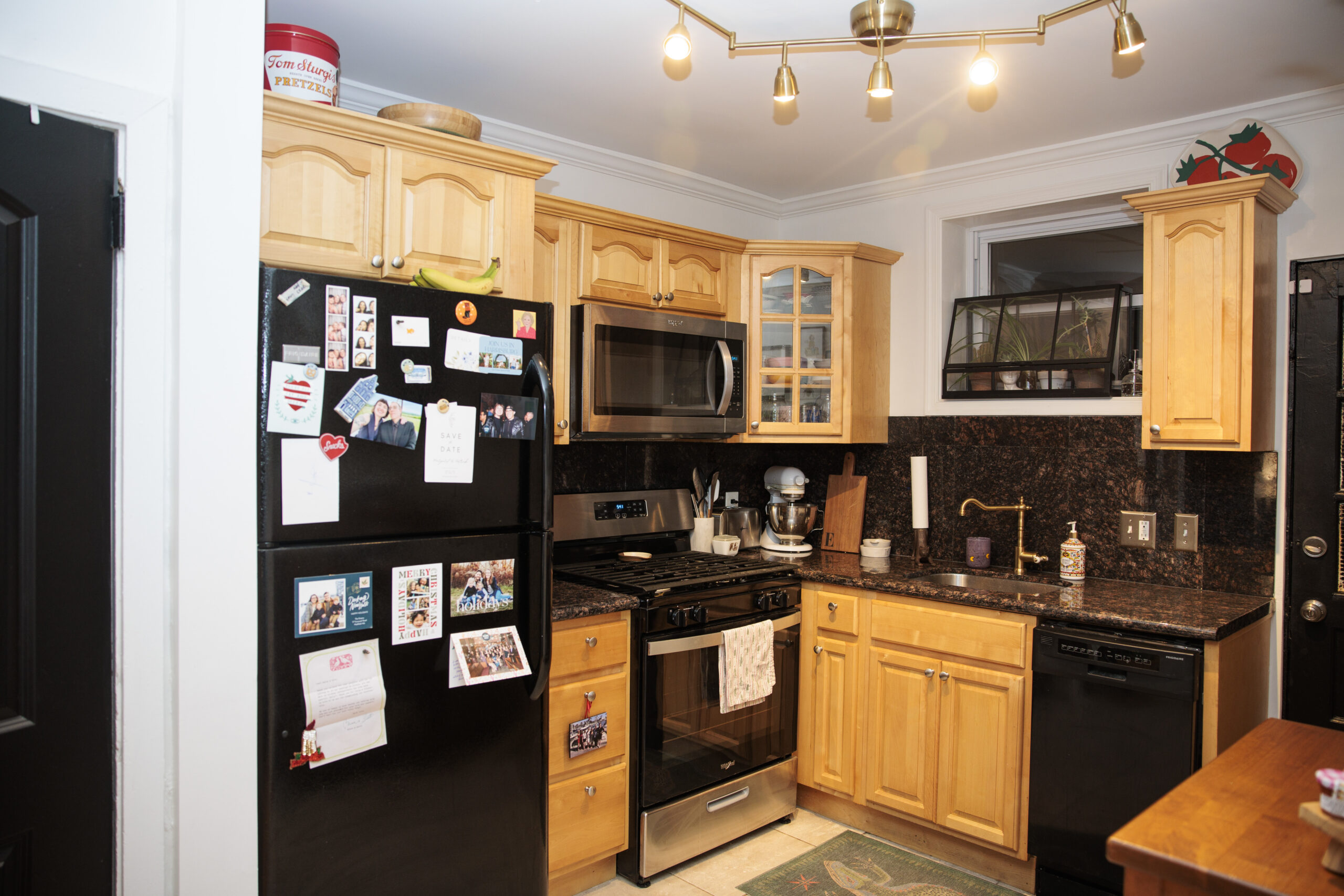
    One of LaFreniere’s favorite rooms in the house is the kitchen, which was updated in 2017.

    The appeal: LaFreniere liked that the house had been updated in 2017. It has central air and heat and the “quality of the kitchen is fantastic,” he said. At the same time, it still has several of its original features, like the staircase. “It’s the best of both worlds,” said LaFreniere.

    The deal: On the afternoon LaFreniere visited, the seller had just dropped the price by $10,000. He decided he wanted it a few hours later and offered the new asking price of $340,000. There weren’t any competing offers, and the seller accepted.

    LaFreniere was concerned about the floors, which he described as “a little beat up,” and asked for money to replace them. The seller said no but agreed to cover $3,000 of whatever issues the inspection turned up.

    LaFreniere’s house features original details like the wooden staircase in the living room.

    The money: LaFreniere had $30,000 to spend on the purchase of his home. “I saved this from working in a tech career for the past six years,” he said. It wasn’t always easy. He had significant student loans to pay off as well. To help keep costs down, he lived with roommates.

    Of that $30,000, LaFreniere used $10,200 for a 3% down payment. Because he lived in an eligible census tract, he qualified for community reinvestment financing through OceanFirst’s HelpingHome loan, which allowed him to skip private mortgage insurance and lowered his interest rate from 7% to 6%. It also covered $6,000 of his closing costs.

    The move: LaFreniere didn’t want to lug a bunch of stuff to Philadelphia from Providence, so he donated most of his furniture and half his belongings to local charities and thrift stores. He didn’t hire movers or rent a car. He took the train instead. Come moving day, all he had was a suitcase full of clothes and his bicycle, which he brought with him on the Amtrak. He moved in on June 25.

    The basement, also known as the “man cave” at Cameron LaFreniere’s home in Point Breeze.

    Any reservations? LaFreniere says he doesn’t have any regrets. “I knew what I was getting into,” he said. Certain parts of homeownership, like “how to do the trash,” were new to him but didn’t take long to figure out. The only thing he has had to contend with since moving in is cockroaches. But that was just once. “No recurrent pest problems,” he said.

    Life after move: LaFreniere spent the last of his savings, about $10,000, on furniture. “I basically moved with nothing,” he said, “and then bought everything at Ikea.” He thought about redoing the floors but decided against it. The rugs and furniture cover the imperfections.

    Did you recently buy a home? We want to hear about it. Email acovington@inquirer.com.