Tag: Immigration

  • Why hasn’t Trump sent troops to Philly, the city where ‘bad things happen’? Everyone has a theory.

    Why hasn’t Trump sent troops to Philly, the city where ‘bad things happen’? Everyone has a theory.

    In the last six months, President Donald Trump has sent troops, immigration agents, or both to Democratic cities from coast to coast. The list includes Los Angeles, Chicago, Washington, Memphis, Portland, Ore., Charlotte, N.C., New Orleans, and Minneapolis.

    But not Philadelphia.

    The city that seemed an obvious early target, condemned by Trump as the place where “bad things happen,” has somehow escaped his wrath. At least so far.

    That has sparked speculation from City Hall to Washington over why the president would ignore the staunchly Democratic city with which he has famously feuded. Here we offer some insight into whether that’s likely to change.

    Why has Philadelphia been spared when smaller, less prominent cities have not?

    Nobody knows. Or at least nobody knows for sure. But lots of people in government and immigration circles have ideas.

    There’s the weather theory, that it’s hard for immigration agents who depend on cars to make arrests in cities that get winter snow and ice. Except, of course, the administration just launched Immigration and Customs Enforcement operations in Minneapolis, which gets 54 inches of snow a year.

    Then there’s the swing-state theory, that Trump is staying out of Philadelphia because Pennsylvania ranks among the handful of states that can tip presidential elections. But that doesn’t explain Trump’s surge into North Carolina, where he sent immigration forces last month.

    While the Tar Heel State voted for Trump three times, elections there can be decided by fewer than 3 percentage points.

    U.S. Rep. Brendan Boyle, a Democrat whose North and Northeast Philadelphia district includes many immigrants, suggested a blue-state theory, that Trump has mostly targeted cities in states that voted for Vice President Kamala Harris in the 2024 presidential election. But Boyle acknowledged that North Carolina and Tennessee are exceptions.

    “It could just be that they’re working their way down the list,” Boyle said.

    Has Mayor Cherelle L. Parker had a hand in keeping troops out of Philadelphia?

    It depends on whom you talk to.

    For months she has passed up opportunities to publicly criticize the president, turning aside questions about his intentions by saying she is focused on the needs of Philadelphia. Some believe her more passive approach has kept the city out of the White House crosshairs.

    People close to the mayor point out that big-city mayors who land on the president’s bad side have faced big consequences. For instance, in Los Angeles, Mayor Karen Bass frequently clashed with Trump ― and faced a National Guard deployment.

    Some point out that Parker has good relationships with Republicans who are friendly with the president, including U.S. Sen. Dave McCormick of Pennsylvania, who has praised the mayor on multiple occasions.

    On the other hand, some in the city’s political class ― especially those already skeptical of Parker ― say the suggestion that she has shielded the city gives her too much credit.

    One strategist posited that the lack of overt federal action has more to do with Trump’s trying to protect a razor-thin Republican majority in the House, and that targeting Philadelphia could anger voters in the Bucks County and Lehigh Valley districts where Republicans hold seats.

    What does Trump say about his plans for Philadelphia?

    Not much. Or at least nothing specific.

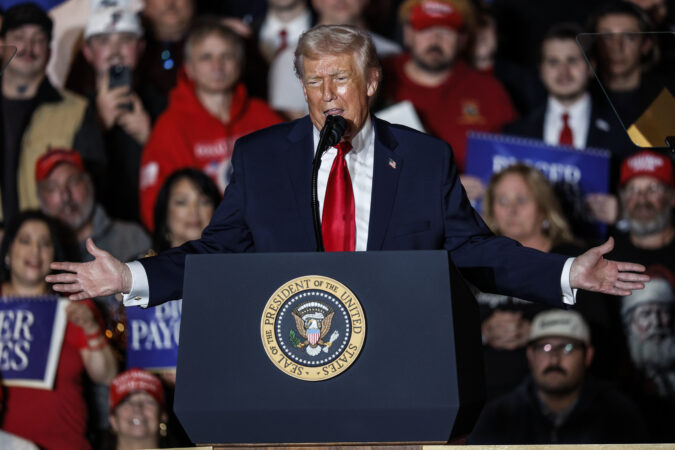
    During a raucous campaign-style rally Tuesday night in Northeast Pennsylvania, Trump made no mention of his intentions ― even as he railed against immigration and accused Democrats of making the state a “dumping ground” for immigrants.

    Trump suggested there should be a “permanent pause” on immigration from “hellholes like Afghanistan, Haiti, Somalia and many other countries,” declared Washington the safest it has been in decades, and praised ICE as “incredible.”

    He also reminisced about hosting the Philadelphia Eagles at the White House earlier this year, after their Super Bowl win, hailing head coach Nick Sirianni as a “real leader” and marveling at running back Saquon Barkley’s muscles.

    “I love Philadelphia,” Trump declared. “It’s gotten a little rougher, but we will take it.”

    That was a marked change from a decade ago, when Trump called Jim Kenney a “terrible” mayor, and Kenney called him a “nincompoop.”

    Kenney fought Trump in court and won in 2018, when a U.S. District Court judge ruled that the president could not end federal grants based on how the city treats immigrants. After the ruling, the Irish mayor was captured on video dancing a jig and calling out “Sanctuary City!”

    More recently, in May, Philadelphia landed on Trump’s list of more than 500 sanctuary jurisdictions that he planned to target for funding cuts. That was no surprise. Nor was it surprising that in August, when the administration zapped hundreds of places off that list, Philadelphia was among the 18 cities that remained.

    “I don’t know why they’re not here yet,” said Peter Pedemonti, codirector of New Sanctuary Movement of Philadelphia. But the larger point is that “ICE is in neighborhoods every day, they are taking away people every day,” and he urged those who support immigrants to prepare.

    “Now is the time to get involved with organizations that are organizing around this,” Pedemonti said. “There are neighbors who need us.”

    Has Gov. Josh Shapiro helped dissuade federal action in Philadelphia?

    It’s hard to say. Shapiro has challenged Trump in court multiple times, including when he was the state attorney general during Trump’s first term.

    As governor, Shapiro sued the administration over its move to freeze billions in federal funds for public health programs, infrastructure projects, and farm and food bank contracts. He also joined a multistate suit challenging an executive order that restricted gender-affirming care for minors.

    On immigration, however, Shapiro has been careful not to directly engage in the sanctuary city debate, saying his job is to provide opportunity for all Pennsylvanians. But he has been critical of Trump’s enforcement tactics, calling them fear-inducing and detrimental to the state’s economy and safety.

    Still, Trump has not lashed out at Shapiro, a popular swing-state governor. At his rally in Mount Pocono last week, in which he criticized several Democrats, Trump didn’t mention Shapiro ― or the Republican in attendance who is running against the governor in 2026, Stacy Garrity.

    Why is the president sending troops to American cities in the first place? Isn’t that unusual?

    Highly unusual ― and fought in court by the leaders of many of the cities that have been targeted. On Wednesday, a federal judge blocked Trump’s deployment of troops to Los Angeles, saying it was “profoundly un-American” to suggest that peaceful protesters “constitute a risk justifying the federalization of military forces.”

    Trump says the National Guard is needed to end violence, to help support deportations, and to fight crime in Democratic-run cities. Last week he declared that Democrats were “destroying” Charlotte, after a Honduran man who had twice been deported allegedly stabbed a person on a commuter train.

    Two members of the West Virginia National Guard were hospitalized in critical condition ― one subsequently died ― after being shot by a gunman in Washington the day before Thanksgiving.

    That the attack was allegedly carried out by an Afghan man who had been granted asylum helped spark a wave of immigration policy changes, all in the name of greater security. For some immigrants who are attempting to legally stay in the country, that has resulted in the cancellation of citizenship ceremonies and the freezing of asylum processes.

    So what happens next?

    It’s hard to say. Immigration enforcement will surely continue to toughen.

    More immigrants are being arrested when they show up for what they expect to be routine immigration appointments, suddenly finding themselves handcuffed and whisked into detention. In Philadelphia this year, more than 90 immigrants have been trailed from the Criminal Justice Center by ICE agents and then arrested on the sidewalks outside, according to advocates who are pushing the sheriff to ban the agency from the courthouse.

    But it’s difficult to predict when or whether troops might land on Market Street.

    “I’ve heard so many different theories,” said Jay Bergen, the pastor at Germantown Mennonite Church, who has helped lead demonstrations against courthouse arrests. “It’s probably all of them ― a little bit of the way Shapiro has positioned himself, the way the mayor has positioned herself, a little bit the electoral map of Pennsylvania, a little bit, more than a little bit, Trump’s own personality.”

    That Philadelphia has been ignored to date doesn’t mean it won’t be in Trump’s sights tomorrow, Bergen said.

    “This administration thrives on being unpredictable, and on sowing as much exhaustion and pain as possible,” Bergen said. “We don’t do ourselves a favor by getting panicked in advance, but we also need to be ready.”

  • At the border, fear and uncertainty as Trump seeks to remake the immigration court system

    At the border, fear and uncertainty as Trump seeks to remake the immigration court system

    EL PASO, Texas — A small group of immigrants gathered in the lobby of the Richard C. White federal building downtown here on a cool early morning in November. They waited to be allowed up to the seventh floor, where they would appear before a judge as their case made its way through the immigration system.

    Among them were Noemi and her 6-year-old daughter, Abigail. They had driven more than four hours to get to their court date and were hoping to head back the same day. While Noemi was soft-spoken, Abigail was sharp and spirited, more than willing to answer all the questions she was being peppered with by strangers.

    She spoke about where she was from (El Salvador), her favorite show (Bluey), about school (It’s all right), and about her older best friend (She’s 8).

    Abigail has been in the U.S. since 2021, arriving with her mother in search of a better life. They were welcomed by a Biden administration that, despite its many faults, initially asserted an immigration policy that was deeply humanitarian.

    But that was then.

    While the immigrants sat and waited, Sigrid González introduced herself. She was a volunteer doing court accompaniment. They could not offer legal advice but were there to observe and help immigrants plan — did they bring a car? Do they have kids in school? Do they know whom to call? — in case they were detained.

    “ICE is here. They have a list. We don’t know who they will take,” González said. “This is not to frighten you, but to let you know.”

    Later, as the elevator doors opened on the seventh floor, a group of about half a dozen Immigration and Customs Enforcement agents were indeed there. Dressed as civilians but still in uniform: blue jeans, sneakers, and dark jackets.

    El Paso has not seen the kind of excessive use of force seen in places like New York, but as in immigration courtrooms across the country, ICE agents stand in wait to arrest people who are following the rules.

    Immigration and Customs Enforcement agents escort a detained immigrant into an elevator after he exited a New York immigration courtroom in June.

    The government’s strategy is to ask the court to dismiss an immigrant’s case, making them eligible for expedited removal, a relatively quick process under which a noncitizen can be deported back to their country, potentially without any additional immigration court hearings, Emmett Soper, a former immigration judge in Virginia, told me.

    In practice, however, ICE agents regularly detain immigrants regardless of a judge’s decision on dismissal.

    “I denied every single motion to dismiss. I set the case for a further hearing. I gave all the required advisal, things like that,” Soper said. “Every single person was arrested, to my knowledge, after I denied the motion to dismiss.”

    The Trump administration is not stopping at ignoring due process, it is also working to reshape the immigration court system. Soper is one of about 100 immigration judges fired this year. There is no explanation for the dismissal of the judges, other than many of them having a record seen as out of step with the administration’s hard-line approach.

    Instead of an experienced jurist like Soper, who took the bench in 2017 and understands that every case should be given a fair hearing according to the law, Department of Homeland Security Secretary Kristi Noem is looking for people who want to be a “deportation judge” and want “to restore integrity and honor to our Nation’s Immigration Court system.”

    In case there was any doubt what the Trump administration wants to restore, DHS clarifies in a recruitment ad: “Defend your communities, your culture, your very way of life.”

    As Abigail sat next to her mother inside Judge Judith F. Bonilla’s courtroom, coloring an image of two cats sitting side by side handed to her by the court clerk, it was hard to see what the White House is so afraid of.

    Noemi was so concerned about her legal case that she would only speak with me on the condition that her last name not be used. She did not have a lawyer. The judge asked her a series of questions and she responded in turn: She had no family in the U.S., she had not been a victim of a crime, it was her first time in the country, she had never been arrested. She was not afraid to go back to El Salvador.

    It was clear from her answers that Noemi did not want to fight her case.

    The only relief available for her, the judge said, was voluntary departure. If she took that option, Noemi waved her right to appeal but it left the door open for them to return legally in the future.

    “I want voluntary departure,” she said.

    Noemi and her daughter had 90 days to leave the U.S.

    Outside the courtroom, Noemi met with González, who asked her if she wanted to share any contact information in case they were detained by ICE. Noemi looked confused.

    “I have voluntary departure; can they still take me?” she asked. Based on experience, González did not hesitate to answer: “Yes.”

    I have been thinking for weeks about Noemi’s face at that moment. How to describe what it looks like when someone who has gone through the legal process and made peace with the fact she cannot stay in the U.S. must still face the random cruelty of an administration that sees her and her 6-year-old as a threat.

    Crestfallen, Noemi shared her information with González.

    Across the hall, the ICE agents began to move toward the elevator. Apparently, they were leaving. Everyone around Noemi and Abigail sighed in relief. The mother and daughter were not among those taken, which that day included a man and a mother and her older son.

    As Noemi and Abigail left the federal building to drive back home through the west Texas desert — back to the life they had built for themselves over four years and now had 90 days to leave — the only thing I could think was, how does this benefit America?

    More from the border: Trump may have shut down the border to asylum-seekers, but he can’t end immigrants’ hope

  • Federal judge issues order to prohibit immigration officials from detaining Kilmar Abrego Garcia

    Federal judge issues order to prohibit immigration officials from detaining Kilmar Abrego Garcia

    BALTIMORE — A federal judge blocked U.S. immigration authorities on Friday from re-detaining Kilmar Abrego Garcia, saying she feared they might take him into custody again just hours after she had ordered his release from a detention center.

    The order came as Abrego Garcia appeared at a scheduled appointment at an Immigration and Customs Enforcement field office roughly 14 hours after he walked out of immigration detention facility in Pennsylvania.

    His lawyers had sent an urgent request to the judge, warning that ICE officials could immediately place him back into custody. Instead, Abrego Garcia exited the building after a short appointment, emerging to cheers from supporters who had gathered outside.

    Speaking briefly to the crowd, he urged others to “stand tall” against what he described as injustices carried out by the government.

    Abrego Garcia became a flashpoint of the Trump administration’s immigration crackdown earlier this year when he was wrongly deported to a notorious prison in El Salvador. He was last taken into custody in August during a similar check-in.

    Officials cannot re-detain him until the court conducts a hearing on the motion for the temporary restraining order, U.S. District Judge Paula Xinis in Maryland said. She wrote that Abrego Garcia is likely to succeed on the merits of any further request for relief from ICE detention.

    “For the public to have any faith in the orderly administration of justice, the Court’s narrowly crafted remedy cannot be so quickly and easily upended without further briefing and consideration,” she wrote.

    Abrego Garcia on Friday stopped at a news conference outside the building, escorted by a group of supporters chanting “We are all Kilmar!”

    Abrego Garcia says he has ‘so much hope’

    “I stand before you a free man and I want you to remember me this way, with my head held up high,” Abrego Garcia said through a translator. “I come here today with so much hope and I thank God who has been with me since the start with my family.”

    He urged people to keep fighting.

    After Abrego Garcia spoke, he went through security at the field office, escorted by supporters.

    When Abrego Garcia’s attorney, Simon Sandoval-Moshenberg, announced to the crowd assembled outside that his client would walk back out the field office’s doors again, he stressed that the legal fight was not over.

    “Yesterday’s order from Judge Xinis and now the temporary restraining order this morning represent a victory of law over power,” Sandoval-Moshenberg said.

    The agency freed him just before 5 p.m. on Thursday in response to a ruling from Xinis, who wrote federal authorities detained him after his return to the United States without any legal basis.

    Kilmar Abrego Garcia waits with Lydia Walther-Rodriguez of Casa in Maryland, left, to enter the building for a mandatory check at the Immigration and Customs Enforcement office in Baltimore, Friday, Dec. 12, 2025, after he was released from detention on Thursday under a judge’s order. (AP Photo/Stephanie Scarbrough)

    Mistakenly deported and then returned

    Abrego Garcia is a Salvadoran citizen with an American wife and child who has lived in Maryland for years. He immigrated to the U.S. illegally as a teenager to join his brother, who had become a U.S. citizen. In 2019, an immigration judge granted him protection from being deported back to his home country, where he faces danger from a gang that targeted his family.

    While he was allowed to live and work in the U.S. under ICE supervision, he was not given residency status. Earlier this year, he was mistakenly deported and held in a notoriously brutal Salvadoran prison despite having no criminal record.

    Facing mounting public pressure and a court order, President Donald Trump’s Republican administration brought him back to the U.S. in June, but only after issuing an arrest warrant on human smuggling charges in Tennessee. He has pleaded not guilty to those charges and asked a federal judge there to dismiss them.

    A lawsuit to block removal from the U.S.

    The 2019 settlement found he had a “well founded fear” of danger in El Salvador if he was deported there. So instead ICE has been seeking to deport him to a series of African countries. Abrego Garcia has sued, claiming the Trump administration is illegally using the removal process to punish him for the public embarrassment caused by his deportation.

    In her order releasing Abrego Garcia, Xinis wrote that federal authorities “did not just stonewall” the court, “They affirmatively misled the tribunal.” Xinis also rejected the government’s argument that she lacked jurisdiction to intervene on a final removal order for Abrego Garcia, because she found no final order had been filed.

    ICE freed Abrego Garcia from Moshannon Valley Processing Center, about 115 miles northeast of Pittsburgh, on Thursday just before the deadline Xinis gave the government to provide an update on Abrego Garcia’s release.

    He returned home to Maryland a few hours later.

    Immigration check-in

    Check-ins are how ICE keeps track of some people who are released by the government to pursue asylum or other immigration cases as they make their way through a backlogged court system. The appointments were once routine but many people have been detained at their check-ins since the start of Trump’s second term.

    The Department of Homeland Security sharply criticized Xinis’ order and vowed to appeal, calling the ruling “naked judicial activism” by a judge appointed during the Obama administration.

    “This order lacks any valid legal basis, and we will continue to fight this tooth and nail in the courts,” said Tricia McLaughlin, the department’s assistant secretary.

    Sandoval-Moshenberg said the judge made it clear that the government can’t detain someone indefinitely without legal authority.

    Abrego Garcia has also applied for asylum in the U.S. in immigration court.

    Charges in Tennessee

    Abrego Garcia was hit with human smuggling and conspiracy to commit human smuggling charges when the U.S. government brought him back from El Salvador. Prosecutors alleged he accepted money to transport within the United States people who were in the country illegally.

    The charges stem from a 2022 traffic stop in Tennessee for speeding. Body camera footage from a Tennessee Highway Patrol officer shows a calm exchange with Abrego Garcia. There were nine passengers in the car, and the officers discussed among themselves their suspicions of smuggling. However, Abrego Garcia was eventually allowed to continue driving with only a warning.

    A Department of Homeland Security agent testified at an earlier hearing that he did not begin investigating the traffic stop until after the U.S. Supreme Court said in April that the Trump administration must work to bring back Abrego Garcia.

  • Homeland Security Secretary Noem defends Trump’s hard-line immigration policies at hearing

    Homeland Security Secretary Noem defends Trump’s hard-line immigration policies at hearing

    Homeland Security Secretary Kristi Noem defiantly defended the Trump administration’s hard-line immigration policies on Thursday during a House committee hearing, portraying migrants as a major threat faced by the nation that justifies a crackdown that has seen widespread arrests, deportations and a dizzying pace of restrictions on foreigners.

    Noem, who heads the agency central to President Donald Trump’s approach to immigration, received backup from Republicans on the panel but faced fierce questioning from Democrats — including many who called for her resignation over the mass deportation agenda.

    The secretary’s testimony was immediately interrupted by protesters shouting for her to stop Immigration and Customs Enforcement raids and “end deportations.” They trailed her down the halls as she left early for another engagement, chanting, “Shame on you!”

    But she vowed she “would not back down.”

    “What keeps me up at night is that we don’t necessarily know all of the people that are in this country, who they are and what their intentions are,” Noem said.

    The hearing was Noem’s first public appearance before Congress in months, testifying at the House Committee on Homeland Security on “Worldwide Threats to the Homeland,” and it quickly grew heated as she emphasized how big a role she believed immigration played in those threats. It focused heavily on the Trump administration’s immigration policies, whereas in years past the hearing has centered on issues such as cybersecurity, terrorism, China and border security.

    Rep. Bennie Thompson, the panel’s ranking Democrat, said Noem has diverted vast taxpayer resources to carry out Trump’s “extreme” immigration agenda and failed to provide basic responses as Congress conducts its oversight.

    “I call on you to resign,” the Mississippi congressman said. “Do a real service to the country.”

    Trump returned to power with what the president says is a mandate to reshape immigration in the U.S. In the months since, the number of people in immigration detention has skyrocketed; the administration has continued to remove migrants to countries they are not from; and, in the wake of an Afghan national being accused of shooting two National Guard troops, Noem’s department has dramatically stepped up checks and screening of immigrants in the U.S.

    Tough questions from Democrats

    Several Democrats repeatedly told Noem flatly that she was “lying” to them and to the public over claims they are focused on violent criminals. They presented cases of U.S. citizens being detained in immigration operations and families of American military veterans being torn apart by deportations of loved ones who have not committed serious crimes or other violations.

    “You lie with impunity,” said Rep. Delia Rodriguez (D., Ill.) who said Noem should resign or be impeached.

    Republicans largely thanked Noem for the work the department is doing to keep the country safe and urged her to carry on.

    “Deport them all,” said Rep. Andy Ogles (R., Tenn).

    Since Noem’s last Congressional appearance in May, immigration enforcement operations, especially in Los Angeles and Chicago, have become increasingly contentious, with federal agents and activists frequently clashing over her department’s tactics.

    Noem did not address the calls to resign, but she tangled with the Democratic lawmakers — interrupting some — and suggested that she and the department she leads weren’t going anywhere.

    “We will never yield. We will never waver,” she said.

    Noem, whose own family, including an infant granddaughter, was in the audience, praised the Trump administration’s efforts when it comes to immigration, saying, “We’re ending illegal immigration, returning sanity to our immigration system.”

    During the hearing, a federal judge ordered the government to free Kilmar Abrego Garcia, whose wrongful deportation to a notorious prison in El Salvador made him a flashpoint in the Trump administration’s immigration enforcement. Noem did not address the judge’s order, nor was she asked about it during the hearing.

    Noem left early, saying she was headed to a meeting of the Federal Emergency Management Agency review council. The meeting, however, was abruptly canceled with no reason given.

    Noem, department under scrutiny

    The worldwide threats hearing, usually held annually, is an opportunity for members of Congress to question the leaders of the Department of Homeland Security, the FBI, and the National Counterterrorism Center.

    FBI Director Kash Patel did not appear, but sent Michael Glasheen, operations director of the national security branch of the FBI.

    Glasheen said the nation faces “serious and evolving” threats, and pointed to so-called antifa, and Trump’s executive order designating the group as a domestic terror organization, as the “most immediate violent threat” facing the country.

    Pressed by Thompson for details — where is antifa headquartered? How many members does it have? — the FBI’s representative appeared unable to provide answers, saying it’s “fluid” and investigations are “ongoing.”

    And, notably, he did not identify immigration as among the most pressing concerns for the homeland.

    Asked about the U.S. seizure of an oil tanker off the Venezuelan coast, Noem linked it to the Trump administration’s antidrug campaign in the region, saying cocaine had been kept from entering the U.S. as a result.

    The hearing offered lawmakers a rare opportunity to hear directly from Noem, but many members of the panel used the bulk of their allotted time to either praise or lambast her handling of immigration enforcement.

    During one sharp exchange, the secretary levied broad criticism for the program through which the man suspected of shooting two National Guard members last month came to the United States.

    “Unfortunate accident?” Noem retorted after Thompson raised the issue. She called it a “terrorist attack.”

    The program, Operation Allies Welcome, was created by then-President Joe Biden’s Democratic administration after the 2021 decision to leave Afghanistan following 20 years of American intervention and billions of dollars in aid. Thompson pointed out that the Trump administration approved the asylum claim of the suspect in the National Guard attack.

    Noem’s department is under particular scrutiny because Congress in July passed legislation giving it roughly $165 billion to carry out its mass deportations agenda and secure the border. The department is getting more money to hire 10,000 more deportation officers, complete the wall between the U.S. and Mexico and increase detention and removal of foreigners from the country.

    The secretary’s appearance also comes as a federal judge is investigating whether she should face a contempt charge over flights carrying migrants to El Salvador.

  • Judge orders Kilmar Abrego Garcia to be immediately released from immigration detention

    Judge orders Kilmar Abrego Garcia to be immediately released from immigration detention

    GREENBELT, Md. — A federal judge in Maryland ordered Kilmar Abrego Garcia freed from immigration detention on Thursday while his legal challenge against his deportation moves forward.

    U.S. District Judge Paula Xinis ruled that Immigration and Customs Enforcement must release Abrego Garcia from custody immediately.

    “Since Abrego Garcia’s return from wrongful detention in El Salvador, he has been re-detained, again without lawful authority,” the judge wrote. “For this reason, the Court will GRANT Abrego Garcia’s Petition for immediate release from ICE custody.”

    Justice Department and Homeland Security spokespeople didn’t immediately respond to messages seeking comment on the judge’s order. Messages seeking comment were left with Abrego Garcia’s attorney Simon Sandoval-Moshenberg.

    Abrego Garcia, a Salvadoran national, has an American wife and child and has lived in Maryland for years, but he originally immigrated to the U.S. illegally as a teenager. An immigration judge in 2019 ruled Abrego Garcia could not be deported to El Salvador because he faced danger from a gang that targeted his family. When Abrego Garcia was mistakenly deported there in March, his case became a rallying point for those who oppose President Donald Trump’s immigration crackdown.

    Abrego Garcia was returned to the U.S. under a court order. Since he cannot be deported to El Salvador, ICE has been seeking to deport him to a series of African countries. His lawsuit in federal court claims Trump’s Republican administration is illegally using the deportation process to punish Abrego Garcia over the embarrassment of his mistaken deportation to El Salvador.

    Meanwhile, in a separate action in immigration court, Abrego Garcia is petitioning to reopen his immigration case to seek asylum in the United States.

    Additionally, Abrego Garcia is facing criminal charges in federal court in Tennessee, where he has pleaded not guilty to human smuggling. He has filed a motion to dismiss the charges, claiming the prosecution is vindictive.

    A judge has ordered an evidentiary hearing to be held on the motion after previously finding some evidence that the prosecution against Abrego Garcia “may be vindictive.” The judge said many statements by Trump administration officials “raise cause for concern.”

    The judge specifically cited a statement by Deputy Attorney General Todd Blanche that seemed to suggest the Justice Department charged Abrego Garcia because he won his wrongful deportation case.

  • Trump’s handling of the economy is at its lowest point, according to new AP-NORC polling

    Trump’s handling of the economy is at its lowest point, according to new AP-NORC polling

    WASHINGTON — President Donald Trump’s approval on the economy and immigration have fallen substantially since March, according to a new AP-NORC poll, the latest indication that two signature issues that got him elected barely a year ago could be turning into liabilities as his party begins to gear up for the 2026 midterms.

    Only 31% of U.S. adults now approve of how Trump is handling the economy, the poll from The Associated Press-NORC Center for Public Affairs Research finds. That is down from 40% in March and marks the lowest economic approval he’s registered in an AP-NORC poll in his first or second term. The Republican president also has struggled to recover from public blowback on other issues, such as his management of the federal government, and has not seen an approval bump even after congressional Democrats effectively capitulated to end a record-long government shutdown last month.

    Perhaps most worryingly for Trump, who’s become increasingly synonymous with his party, he’s slipped on issues that were major strengths. Just a few months ago, 53% of Americans approved of Trump’s handling of crime, but that’s fallen to 43% in the new poll. There’s been a similar decline on immigration, from 49% approval in March to 38% now.

    The new poll starkly illustrates how Trump has struggled to hold onto political wins since his return to office. Even border security — an issue on which his approval remains relatively high — has declined slightly in recent months.

    The good news for Trump is that his overall approval hasn’t fallen as steeply. The new poll found that 36% of Americans approve of the way he’s handling his job as president, which is down slightly from 42% in March. That signals that even if some people aren’t happy with elements of his approach, they might not be ready to say he’s doing a bad job as president. And while discontent is increasing among Republicans on certain issues, they’re largely still behind him.

    Declining approval on the economy, even among Republicans

    Republicans are more unhappy with Trump’s performance on the economy than they were in the first few months of his term. About 7 in 10 Republicans, 69%, approve of how Trump is handling the economy in the December poll, a decline from 78% in March.

    Larry Reynolds, a 74-year-old retiree and Republican voter from Wadsworth, Ohio, said he believes in Trump’s plan to impose import duties on U.S. trading partners but thinks rates have spiraled too high, creating a “vicious circle now where they aren’t really justifying the tariffs.”

    Reynolds said he also believes that inflation became a problem during the coronavirus pandemic and that the economy won’t quickly recover, regardless of what Trump does. “I don’t think it’ll be anything really soon. I think it’s just going to take time,” he said.

    Trump’s base is still largely behind him, which was not always the case for his predecessor, President Joe Biden, a Democrat. In the summer of 2022, only about half of Democrats approved of how Biden was handling the economy. Shortly before he withdrew from the 2024 presidential race two years later, that had risen to about two-thirds of Democrats.

    More broadly, though, there’s no sign that Americans think the economy has improved since Trump took over. About two-thirds of U.S. adults, 68%, continue to say the country’s economy is “poor.” That’s unchanged from the last time the question was asked in October, and it’s broadly in line with views throughout Biden’s last year in office.

    Why Trump gets higher approval on border security than immigration

    Trump’s approval ratings on immigration have declined since March, but border security remains a relatively strong issue for him. Half of U.S. adults, 50%, approve of how Trump is handling border security, which is just slightly lower than the 55% who approved in September.

    Trump’s relative strength on border security is partially driven by Democrats and independents. About one-third of independents, 36%, approve of Trump on the border, while 26% approve on immigration.

    Jim Rollins, an 82-year-old independent in Macon, Georgia, said he believes that when it comes to closing the border, Trump has done “a good job,” but he hopes the administration will rethink its mass deportation efforts.

    “Taking people out of kindergarten, and people going home for Thanksgiving, taking them off a plane. If they are criminals, sure,” said Rollins, who said he supported Trump in his first election but not since then. “But the percentages — based on the government’s own statistics — say that they’re not criminals. They just didn’t register, and maybe they sneaked across the border, and they’ve been here for 15 years.”

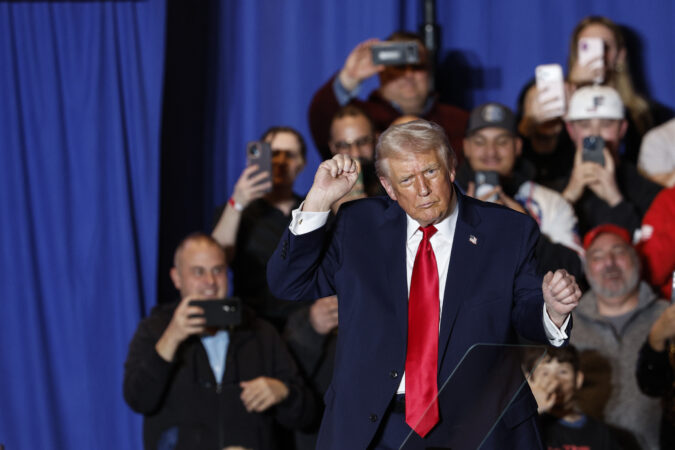
    President Donald Trump made his first stop on an “economic tour” in Mt. Pocono, Pa., on Tuesday, Dec. 9.

    Other polls have shown it’s more popular to increase border security than to deport immigrants, even those who are living in the country illegally. Nearly half of Americans said increasing security at the U.S.-Mexico border should be “a high priority” for the government in AP-NORC polling from September. Only about 3 in 10 said the same about deporting immigrants in the U.S. illegally.

    Shaniqwa Copeland, a 30-year-old independent and home health aide in St. Augustine, Florida, said she approves of Trump’s overall handling of the presidency but believes his immigration actions have gone too far, especially when it comes to masked federal agents leading large raids.

    “Now they’re just picking up anybody,” Copeland said. “They just like, pick up people, grabbing anybody. It’s crazy.”

    Health care and government management remain thorns for Trump

    About 3 in 10 U.S. adults approve of how Trump is handling health care, down slightly from November. The new poll was conducted in early December, as Trump and Congress struggled to find a bipartisan deal for extending the Affordable Care Act subsidies that will expire at the end of this month.

    That health care fight was also the source of the recent government shutdown. About one-third of U.S. adults, 35%, approve of how Trump is managing the federal government, down from 43% in March.

    But some Americans may see others at fault for the country’s problems, in addition to Trump. Copeland is unhappy with the country’s health care system and thinks things are getting worse but is not sure of whether to blame Trump or Biden.

    “A couple years ago, I could find a dentist and it would be easy. Now, I have a different health care provider, and it’s like so hard to find a dental (plan) with them,” she said. “And the people that do take that insurance, they have so many scheduled out far, far appointments because it’s so many people on it.”

    The AP-NORC poll of 1,146 adults was conducted Dec. 4-8 using a sample drawn from NORC’s probability-based AmeriSpeak Panel, which is designed to be representative of the U.S. population. The margin of sampling error for adults overall is plus or minus 4 percentage points.

  • Foreigners allowed to travel to the U.S. without a visa could soon face new social media screening

    Foreigners allowed to travel to the U.S. without a visa could soon face new social media screening

    WASHINGTON — Foreigners who are allowed to come to the United States without a visa could soon be required to submit information about their social media, email accounts and extensive family history to the Department of Homeland Security before being approved for travel.

    The notice published Wednesday in the Federal Register said Customs and Border Protection is proposing collecting five years’ worth of social media information from travelers from select countries who do not have to get visas to come to the U.S. The Trump administration has been stepping up monitoring of international travelers and immigrants.

    The announcement refers to travelers from more than three dozen countries who take part in the Visa Waiver Program and submit their information to the Electronic System for Travel Authorization (ESTA), which automatically screens them and then approves them for travel to the U.S. Unlike visa applicants, they generally do not have to go into an embassy or consulate for an interview.

    DHS administers the program, which currently allows citizens of roughly 40 mostly European and Asian countries to travel to the U.S. for tourism or business for three months without visas.

    The announcement also said that CBP would start requesting a list of other information, including telephone numbers the person has used over the past five years or email addresses used over the past decade. Also sought would be metadata from electronically submitted photos, as well as extensive information from the applicant’s family members, including their places of birth and their telephone numbers.

    The application that people are now required to fill out to take part in ESTA asks for a more limited set of questions such as parents’ names and current email address.

    Asked at a White House event whether he was concerned the measure might affect tourism to the U.S., President Donald Trump said no.

    “We want safety, we want security, we want to make sure we’re not letting the wrong people come into our country,” Trump said.

    The public has 60 days to comment on the proposed changes before they go into effect, the notice said.

    CBP officials did not immediately respond to questions about the new rules.

    The announcement did not say what the administration was looking for in the social media accounts or why it was asking for more information.

    But the agency said it was complying with an executive order that Trump signed in January that called for more screening of people coming to the U.S. to prevent the entry of possible national security threats.

    Travelers from countries that are not part of the Visa Waiver Program system are already required to submit their social media information, a policy that dates back to the first Trump administration. The policy remained during Democratic President Joe Biden’s administration.

    But citizens from visa waiver countries were not obligated to do so.

    Since January, the Trump administration has stepped up checks of immigrants and travelers, both those trying to enter the U.S. as well as those already in the country. Officials have tightened visa rules by requiring that applicants set all of their social media accounts to public so that they can be more easily scrutinized and checked for what authorities view as potential derogatory information. Refusing to set an account to public can be considered grounds for visa denial, according to guidelines provided by the State Department.

    U.S. Citizenship and Immigration Services now considers whether an applicant for benefits, such as a green card, “endorsed, promoted, supported, or otherwise espoused” anti-American, terrorist or antisemitic views.

    The heightened interest in social media screening has drawn concern from immigration and free speech advocates about what the Trump administration is looking for and whether the measures target people critical of the administration in an infringement of free speech rights.

  • Trump’s crackdown on immigration is taking a toll on childcare workers

    Trump’s crackdown on immigration is taking a toll on childcare workers

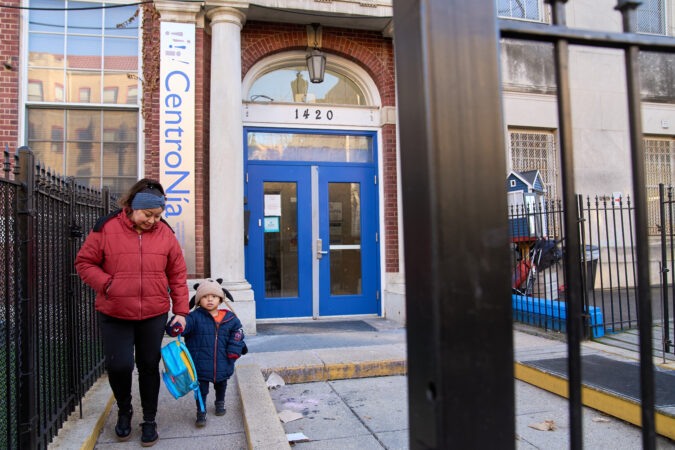
    WASHINGTON — Not long after President Donald Trump took office in January, staff at CentroNía bilingual preschool began rehearsing what to do if Immigration and Customs Enforcement officials came to the door. As ICE became a regular presence in their historically Latino neighborhood this summer, teachers stopped taking children to nearby parks, libraries, and playgrounds that had once been considered an extension of the classroom.

    And in October, the school scrapped its beloved Hispanic Heritage Month parade, when immigrant parents typically dressed their children in costumes and soccer jerseys from their home countries. ICE had begun stopping staff members, all of whom have legal status, and school officials worried about drawing more unwelcome attention.

    All of this transpired before ICE officials arrested a teacher inside a Spanish immersion preschool in Chicago in October. The event left immigrants who work in childcare, along with the families who rely on them, feeling frightened and vulnerable.

    Trump’s push for the largest mass deportation in history has had an outsized impact on the childcare field, which is heavily reliant on immigrants and already strained by a worker shortage. Immigrant childcare workers and preschool teachers, the majority of whom are working and living in the U.S. legally, say they are wracked by anxiety over possible encounters with ICE officials. Some have left the field, and others have been forced out by changes to immigration policy.

    At CentroNía, CEO Myrna Peralta said all staff must have legal status and work authorization. But ICE’s presence and the fear it generates have changed how the school operates.

    “That really dominates all of our decision making,” Peralta said.

    Instead of taking children on walks through the neighborhood, staff members push children on strollers around the hallways. And staff converted a classroom into a miniature library when the school scrapped a partnership with a local library.

    The childcare industry depends on immigrants

    Schools and childcare centers were once off limits to ICE officials, in part to keep children out of harm’s way. But those rules were scrapped not long after Trump’s inauguration. Instead, ICE officials are urged to exercise “common sense.”

    Tricia McLaughlin, spokesperson for the Department of Homeland Security, defended ICE officials’ decision to enter the Chicago preschool. She said the teacher, who had a work permit and was later released, was a passenger in a car that was being pursued by ICE officials. She got out of the car and ran into the preschool, McLaughlin said, emphasizing the teacher was “arrested in the vestibule, not in the school.” The man who had been driving went inside the preschool, where officials arrested him.

    About one-fifth of America’s childcare workers were born outside the United States and one-fifth are Latino. The proportion of immigrants in some places, particularly large cities, is much higher: In the District of Columbia, California, and New York, around 40% of the childcare workforce is foreign-born, according to UC Berkeley’s Center for the Study of Child Care Employment.

    Immigrants in the field tend to be better educated than those born in the United States. Those from Latin America help satisfy the growing demand for Spanish-language preschools, such as CentroNía, where some parents enroll their kids to give them a head start learning another language.

    The American Immigration Council estimated in 2021 that more than three-quarters of immigrants working in early care and education were living and working in the U.S. legally. Preschools like CentroNía conduct rigorous background checks, including verifying employees have work authorization.

    There is evidence the toll on the workforce is mounting. Since January, the number of immigrants working in childcare has dropped by 39,000, according to a report published Wednesday by New America, a left-leaning think tank. This, in turn, made it more challenging for U.S.-born mothers of children under 6 to work. The researchers estimate there are 79,000 fewer of them in the workforce because of the increase in ICE arrests.

    Beyond the deportation efforts, the Trump administration in recent months has stripped legal status from hundreds of thousands of immigrants. Many of them had fled violence, poverty or natural disasters in their homes and received Temporary Protected Status, which allowed them to live and work legally in the U.S. But Trump ended those programs, forcing many out of their jobs — and the country. Just last month, 300,000 immigrants from Venezuela lost their protected status.

    CentroNía lost two employees when they lost their TPS, Peralta said, and a Nicaraguan immigrant working as a teacher left on his own. Tierra Encantada, which runs Spanish immersion preschools in several states, had a dozen teachers leave when they lost their TPS.

    Fear is affecting even those in the U.S. legally

    At CentroNía, one staff member was detained by ICE while walking down the street and held for several hours, all the while unable to contact colleagues to let them know where she was. She was released that evening, said the school’s site director, Joangelee Hernández-Figueroa.

    Another staff member, teacher Edelmira Kitchen, said she was pulled over by ICE on her way to work in September. Officials demanded she get out of her car so they could question her. Kitchen, a U.S. citizen who immigrated from the Dominican Republic as a child, said she refused and they eventually let her go.

    “I felt violated of my rights,” Kitchen said.

    Hernández-Figueroa said ICE’s heightened presence during the federal intervention in the city, has taken a toll on employees’ mental health. Some have gone to the hospital with panic attacks in the middle of the school day.

    When the city sent mental health consultants to the school earlier this year as part of a partnership with the Department of Behavioral Health, school leadership had them work with teachers rather than students, worried their anguish would spill over to the classroom.

    “If the teachers aren’t good,” Hernández-Figueroa said, “the kids won’t be good either.”

    It’s not just adults who are feeling more anxious. At a Guidepost Montessori School in Portland, Ore., teachers observed preschoolers change in the weeks after an ICE arrest near the school in July. After pulling over a father who was driving his child to the school, officials encountered him in the school parking lot and tried to arrest him. In the ensuing commotion, the school went into lockdown: Children were pulled off the playground, and teachers played loud music and had children sing along to drown out the yelling.

    Amy Lomanto, who heads the school, said teachers noticed more outbursts among students, and more students retreating to what the school calls “the regulation station,” an area in the main office with fidget toys kids can use to calm themselves.

    She said what unfolded at her school underscored that even wealthy communities, like the one the school serves, are not immune from exposure to these kinds of events.

    “With the current situation, more and more of us are likely to experience this kind of trauma,” she said. “That level of fear now is permeating a lot more throughout our society.”

  • Trump says Somalis are ‘garbage’ and wants them to leave America. No one should be surprised by his ignorance.

    Trump says Somalis are ‘garbage’ and wants them to leave America. No one should be surprised by his ignorance.

    Donald Trump let us know exactly who he is when he rode down that escalator in June 2015, declared his presidential candidacy, and said this about Mexicans: “They’re bringing drugs. They’re bringing crime. They’re rapists.”

    We’ve heard him refer to Haiti, African nations, and El Salvador as “shithole countries.” Last year, he accused Haitians in Springfield, Ohio, of eating their neighbors’ dogs and cats. Trump allows mask-wearing U.S. Immigration and Customs Enforcement agents to terrorize undocumented immigrants, most recently in New Orleans, as reported by my colleague Will Bunch.

    No one should be surprised he called Somalis “garbage” who “contribute nothing” and should leave America during a cabinet meeting last week.

    “These are people that do nothing but complain,” Trump said. “When they come from hell, and they complain and do nothing but bitch, we don’t want them in our country. Let them go back to where they came from and fix it.”

    Trump talks a really good game about putting America First, but he really means people of color last. An example of that was when he suspended refugee admissions, but then turned around and made an exception for white South Africans.

    Even knowing Trump’s agenda, it’s still upsetting to hear a sitting U.S. president denigrate the roughly 250,000 Somalis in this country.

    He’s talking about law-abiding folks like Salma Hussein. She made headlines in 2022 when she became the first female Somali principal in her school district in suburban Minneapolis, and possibly in the entire state of Minnesota.

    Hussein was born in Somalia, but has lived in America since the age of 7, and is a naturalized citizen. She’s a wife. She’s a mother of two. She’s a good person. “It’s really hurtful, and he’s giving permission to people to be hateful, and that’s really disheartening,” Hussein said.

    I stumbled across some of her social media posts about what’s been happening and decided to reach out. When I got her on the phone last week, Hussein, 37, and I talked about a lot of things, including how a stranger had emailed her saying: “Watch out. You’re not wanted. We’re taking out the trash from our country.”

    Salma Hussein, a Somali American who’s lived in the U.S. since she was 7, said the president is “giving permission to people to be hateful.”

    I shouldn’t even have to write this: Most Somalis are honest, law-abiding people. Many settled in Minnesota during the early 1990s after fleeing their war-torn country. Of the state’s foreign-born Somalis, most are naturalized U.S. citizens. They have every right to live in the Land of 10,000 Lakes. They vote. They pay taxes. Trump is their president, too. Some, oddly enough, even voted for him.

    I wish they’d thought longer and harder before voting for Trump, who posted on Truth Social that Minnesota is “a hub of fraudulent money laundering” and announced he was terminating Somalis’ Temporary Protected Status.

    Dozens of Somalis in Minnesota are facing charges in connection with a nefarious scheme to defraud the U.S. government of hundreds of millions in funding that had been set aside to feed hungry children at the height of the pandemic. Still, it’s unfair for a sitting U.S. president to stereotype an entire community for the actions of a subset. “As a Somali American, I’m just as upset about the people in my community who use fraud to make money,” Hussein told me.

    Somalis, who have built a large and influential enclave in Minnesota, are terrified that masked agents from ICE will take them into custody. Some have started carrying their passports. Others refuse to even leave their homes.

    “This kind of dangerous rhetoric and this level of dehumanizing can lead to dangerous actions by people who listen to the president,” said Rep. Ilhan Omar (D., Minn.) on CBS’s Face the Nation on Sunday.

    It’s textbook Trump — and, of course, MAGA loves it.

    Rep. Ilhan Omar (D., Minn.) speaks during a news conference, May 24, 2023, on Capitol Hill in Washington.

    In New Orleans last week, Trump sicced ICE on undocumented Hispanic immigrants. At around the same time, his agents were also targeting Somalis in Minnesota.

    Which ethnic minority Trump will single out next for harassment is anybody’s guess. The only thing we can be certain of is that they will be from a Black or brown community.

  • Sabrina Carpenter slams Trump administration for using her music in ‘disgusting’ ICE video

    Sabrina Carpenter slams Trump administration for using her music in ‘disgusting’ ICE video

    Sabrina Carpenter’s not mincing words when it comes to the Trump administration using one of her songs in a video promoting ICE and the Department of Homeland Security.

    On Tuesday, the pop princess condemned the White House for posting a video featuring ICE arresting protesters and undocumented immigrants to one of her songs. The video, which was published on the White House’s X account one day earlier, was captioned “Have you ever tried this one?“ alongside the hearteye emoji and was paired with Carpenter’s track ”Juno.”

    It’s a nod to a scene in Carpenter’s just-wrapped “Short n’ Sweet” tour, where she would playfully “arrest” someone in the crowd “for being so hot,” giving them a souvenir pair of fuzzy pink cuffs before performing “Juno.”

    Carpenter, a Bucks County native, replied to the post, “this video is evil and disgusting. Do not ever involve me or my music to benefit your inhumane agenda.” Her response has been viewed more than 2 million times.

    It’s the latest in a series of similar incidents, where artists ranging from Beyoncé to the Rolling Stones have objected to the White House using their music in videos promoting the Trump administration’s agenda without their consent.

    Last month, Olivia Rodrigo had a similar exchange in the comments of a White House Instagram video demanding that undocumented immigrants self-deport over the singer’s track “All-American Bitch.” Rodrigo, who is Filipino American, commented at the time, “Don’t ever use my songs to promote your racist, hateful propaganda.”

    The White House also used a song by Carpenter’s friend and musical collaborator, Berks County’s Taylor Swift, last month. Fans of Swift’s called out the use of “The Fate of Ophelia” in a video celebrating President Donald Trump, despite the president’s repeated slights toward the pop star. Swift herself did not comment on the video, but she has previously criticized Trump for posting AI photos of her on his social platforms.

    Carpenter, 26, worked with HeadCount on her “Short n’ Sweet” tour, registering 35,814 voters — more than any other artist the nonpartisan voter registration group worked with in 2024. She’s been vocal about her support for LGBTQ+ rights and has publicly donated to the National Immigration Law Center.

    When Trump won last year, she took a moment during her concert to say “I’m sorry about our country and to the women here, I love you so, so, so much.”

    “Here’s a Short n’ Sweet message for Sabrina Carpenter: We won’t apologize for deporting dangerous criminal illegal murderers, rapists and pedophiles from our country,” White House spokesperson Abigail Jackson told the New York Times. “Anyone who would defend these sick monsters must be stupid, or is it slow?”