Tag: Immigration

  • An Indonesian man was deported on Christmas after being arrested at a routine immigration appointment in Philly

    An Indonesian man was deported on Christmas after being arrested at a routine immigration appointment in Philly

    A longtime Philadelphia resident who was arrested by ICE at a routine immigration appointment has been deported to Indonesia, his family said.

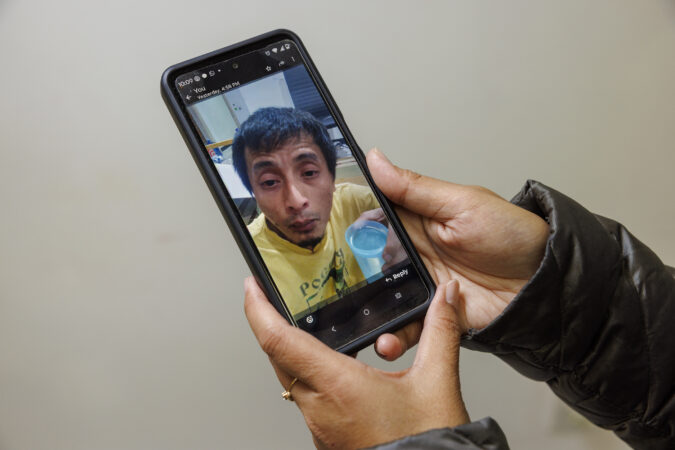
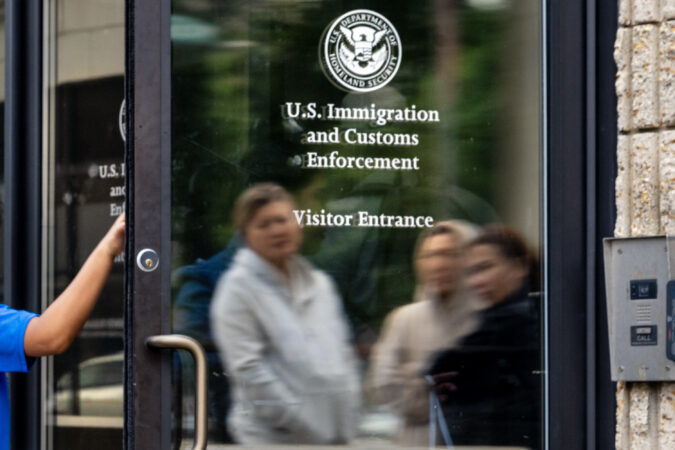
    Rian Andrianzah, 46, walked into a Philadelphia office of U.S. Citizenship and Immigration Services on Oct. 16, expecting to be fingerprinted and photographed and sent home, but instead was taken into custody and placed in detention.

    On Christmas night he was flown to Jakarta, the Indonesian capital, leaving behind his wife, also of Indonesia, and two children who are American citizens.

    The case angered the city’s Indonesian community ― and placed Andrianzah among a growing number of immigrants who have shown up for routine immigration appointments or check-ins, only to be handcuffed and taken into detention.

    Green-card applicants, asylum-seekers, and others who have ongoing legal or visa cases have been unexpectedly detained in what lawyers and advocates say is a Trump administration strategy to boost arrests and deportations.

    “It’s frustrating, because we’re going to be able to bring him back in the next few months,” said Philadelphia immigration attorney Christopher Casazza, who represents Andrianzah and his family. “They deported him simply [to gain] a statistic.”

    He expects Andrianzah could be able to return to the United States in the summer, via a legal process that could grant status to his wife and, through her, to him.

    Andrianzah’s wife, Siti Rahayu, 44, has a strong case to be awarded a T visa, the family’s lawyer said. That visa offers permission to live in the U.S. and a path to permanent residency and citizenship. As her husband, Andrianzah would receive those same benefits under her visa, said Casazza, of the Philadelphia firm Palladino, Isbell & Casazza LLC.

    Rahayu said in a text message that she was distressed and not up to discussing her husband’s deportation. Others said his removal hurts the family and the community.

    “Rian’s absence means a family without their father and our community without a friend,” said Kintan Silvany, the civic-engagement coordinator at Gapura, which works to empower local Indonesian Americans. “A warm, friendly face will no longer be seen at our annual festivals and cultural events. ICE has taken a beloved member who helped us and the folks around him.”

    Andrianzah, meanwhile, like other deportees faces a return to a homeland transformed by time, where family ties have dwindled and emotional and financial hardship looms, his lawyer said.

    Immigration and Customs Enforcement officials were unable to immediately reply to a request for comment.

    A T visa can be available to people who have been victims of human trafficking. It offers a near-blanket waiver on past immigration violations. Authorities say the issuance of T visas offer protection to victims while enhancing the ability of law-enforcement agencies to detect and prosecute human trafficking.

    Andrianzah legally entered the United States on a visitor’s visa in February 2000, but did not return to Indonesia before it expired. He was placed in removal proceedings in 2003, and a judge issued a final order of deportation in November 2006. His appeal was denied two years later.

    The removal order was never enforced, as had been common for those the government then saw as low-priority immigration violators. Some people with final orders have lived in the U.S. for decades.

    Since then Andrianzah worked factory and warehouse jobs, and married. He and his wife made a home in South Philadelphia and became parents of a son, age 8, and a daughter, 15, both U.S. citizens.

    Andrianzah and his wife went to USCIS that October day as part of her T-visa application. In an interview with The Inquirer, Rahayu said she was sent to the U.S. in 2001 by relatives who saw her as a means to pay off a debt, delivering her to an underground organization that puts people in low-paying jobs, then keeps them working indefinitely. Her work would help pay the debt owed by her relatives.

    Rahayu said that on Oct. 16, she completed her own biometrics appointment, then grew concerned when her husband did not appear. She soon learned he had been arrested.

    Some immigrants are required to appear every couple of weeks, some once a month, others once a year. The appointments help immigration officials keep track of people who in the past have been low priorities for deportation.

    Biometrics appointments are usually brief sessions at which the government captures fingerprints, a passport-style photo, and a signature. The immigrant may also be asked to provide information like height and weight.

    Despite the fresh risk of being arrested on the spot, immigrants have little option except to show up. Many types of immigration applications require in-person appearances. And failure to appear for a required ICE appointment can by itself result in an order for removal.
  • Protests erupt over federal immigration enforcement operations after shootings in Minneapolis and Portland

    Protests erupt over federal immigration enforcement operations after shootings in Minneapolis and Portland

    MINNEAPOLIS — As anger and outrage spilled out onto Minneapolis’ streets over the fatal shooting of a woman by an Immigration and Customs Enforcement officer, a new shooting by federal officers in Oregon left two people wounded, sparked additional protests and elicited more scrutiny of enforcement operations across the U.S.

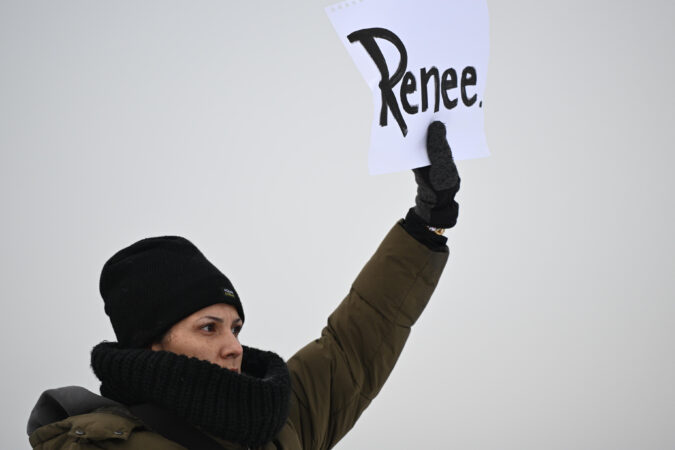
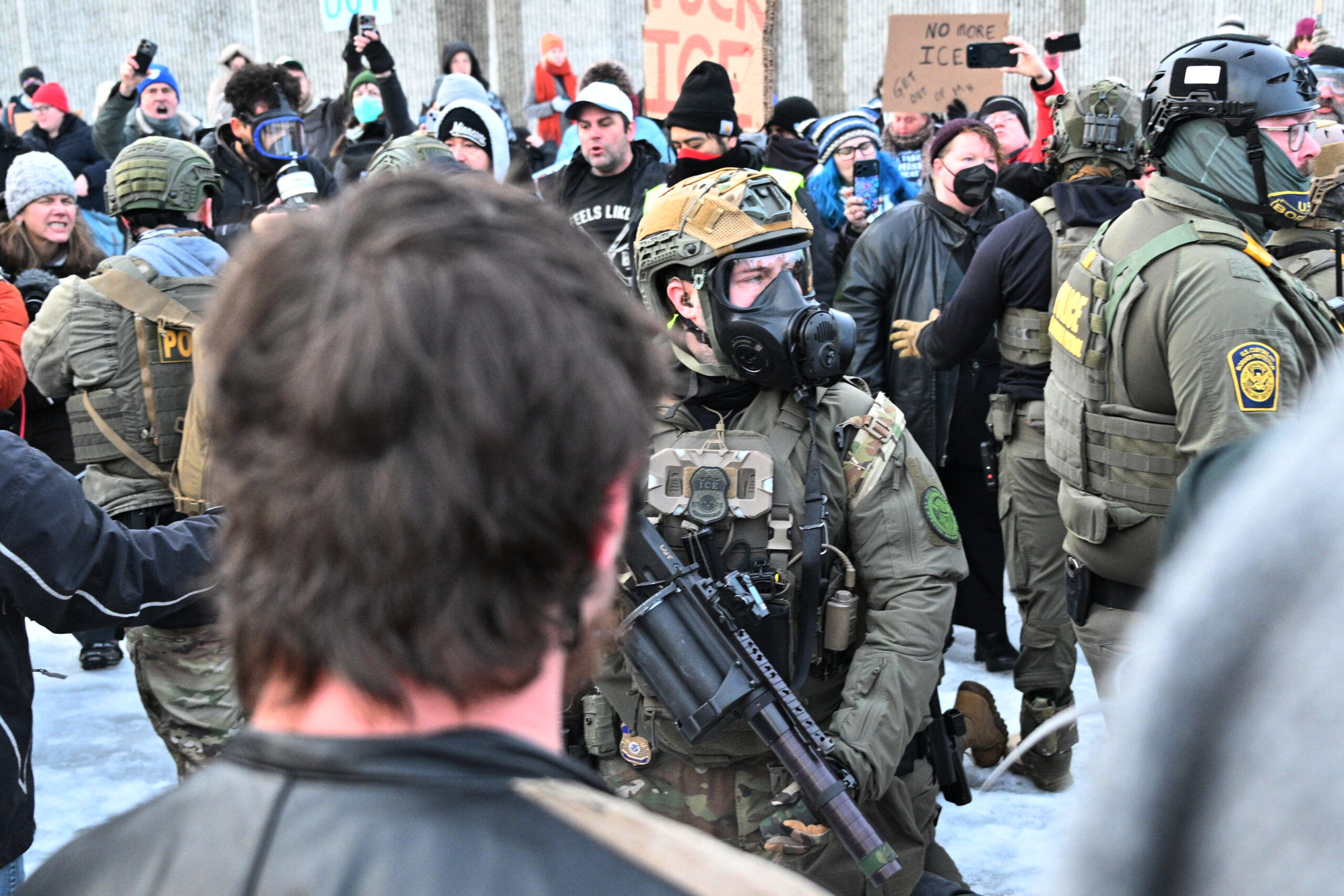
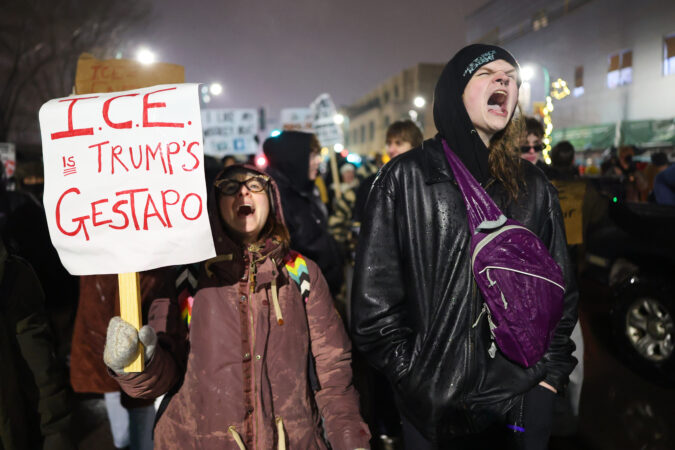
    Hundreds of people protesting the shooting of Renee Good marched in freezing rain Thursday night down one of Minneapolis’ major thoroughfares, chanting “ICE out now” and holding signs saying, “killer ice off our streets.” Protesters earlier vented their outrage outside a federal facility that is serving as a hub for the administration’s latest immigration crackdown on a major city.

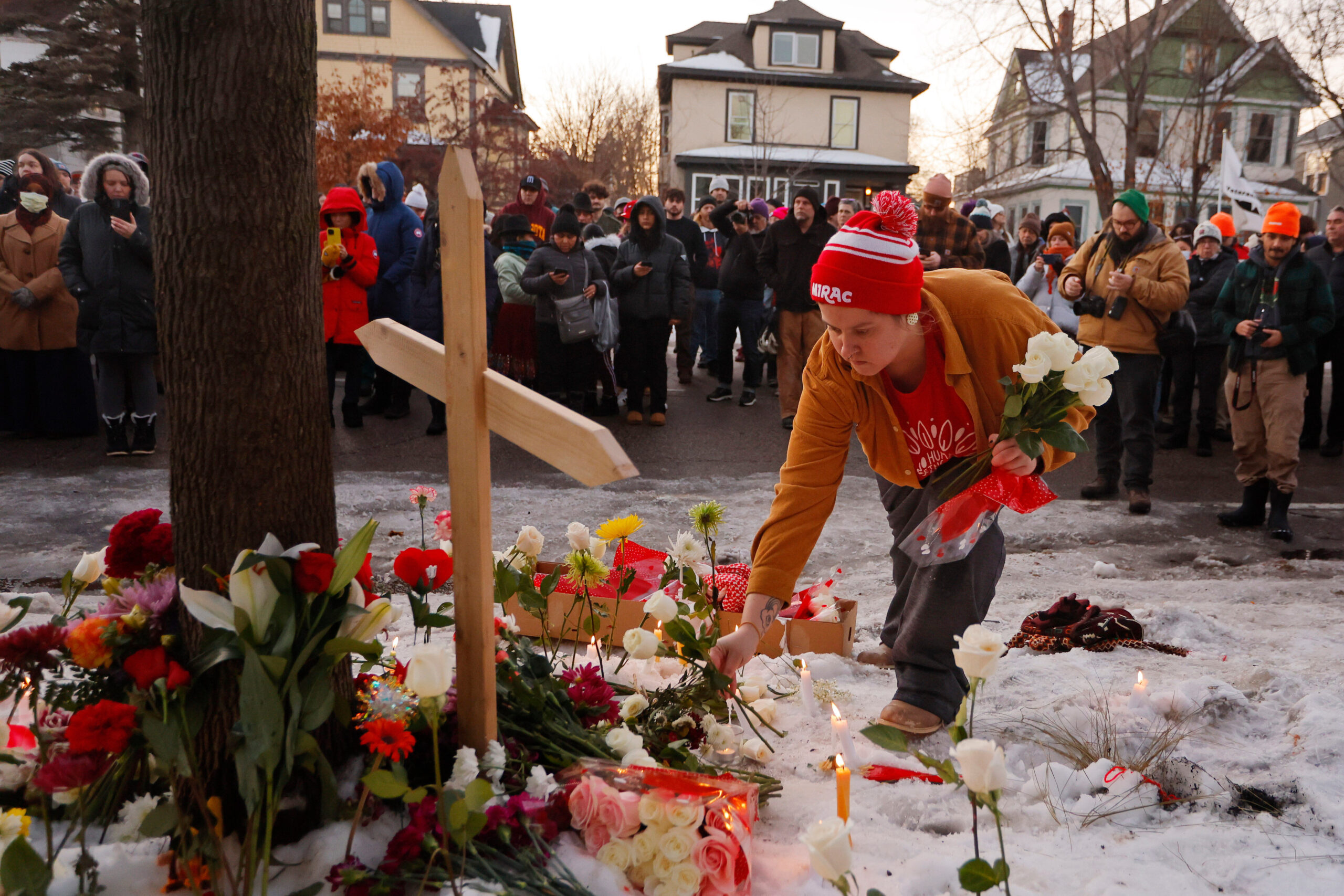
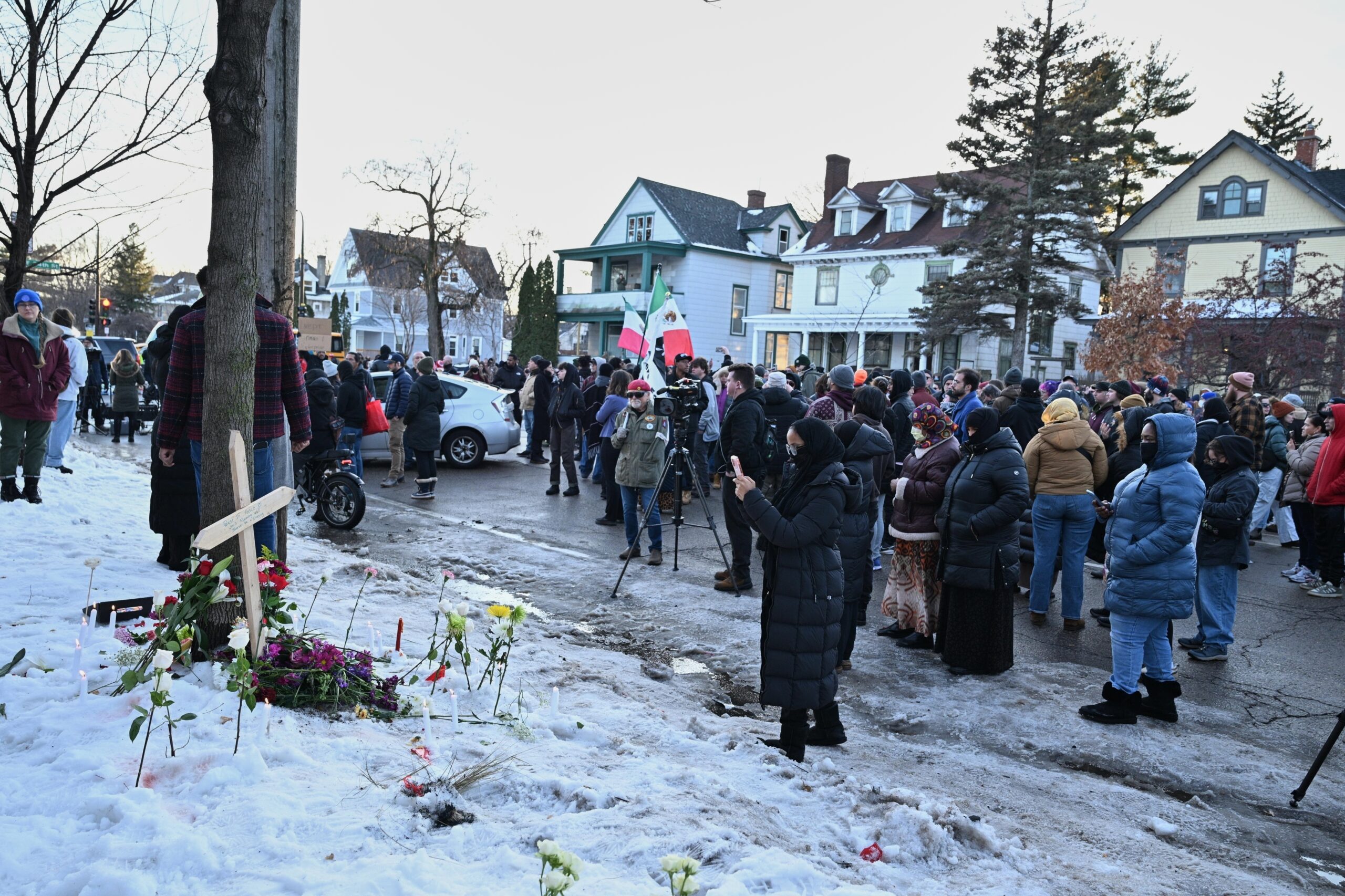
    Early Friday, city crews removed makeshift barricades made from debris including garbage cans and Christmas trees that blocked streets in the area of Wednesday’s shooting to keep streets open, but Minneapolis officials said they would not remove the memorial the community created there. An estimated 15 tons (13.6 metric tonnes) of debris including metal and tires were removed, officials said.

    The shooting in Portland, Oregon, took place outside a hospital Thursday afternoon. A man and woman were shot inside a vehicle, and their conditions were not immediately known. The FBI and the Oregon Department of Justice were investigating.

    Portland Mayor Keith Wilson and the city council called on ICE to end all operations in the city until a full investigation is completed. Hundreds protested Thursday night at the ICE building. Early Friday, Portland police reported that a handful of arrests were made after officers asked protesters to move to the sidewalk, as traffic remained open in the area.

    Just as it did following Wednesday’s shooting in Minneapolis shooting, the Department of Homeland Security defended the actions of the officers in Portland, saying it occurred after a Venezuelan man with alleged gang ties and who was involved in a recent shooting tried to “weaponize” his vehicle to hit the officers. It was not yet clear if witness video corroborates that account.

    Homeland Security Secretary Kristi Noem, President Donald Trump and others in his administration have repeatedly characterized the Minneapolis shooting as an act of self-defense and cast Good as a villain, suggesting she used her vehicle as a weapon to attack the officer who shot her.

    Vice President JD Vance said the shooting was justified and Good, a 37-year-old mother of three, was a “victim of left-wing ideology.”

    “I can believe that her death is a tragedy while also recognizing that it is a tragedy of her own making,” Vance said, noting that the officer who killed her was injured while making an arrest last June.

    But state and local officials and protesters rejected that characterization, with Minneapolis Mayor Jacob Frey saying video recordings show the self-defense argument is “garbage.”

    An immigration crackdown quickly turns deadly

    The Minneapolis shooting happened on the second day of the Trump administration’s immigration crackdown on the Twin Cities of Minneapolis and St. Paul, which Homeland Security said is the biggest immigration enforcement operation ever. More than 2,000 officers are taking part and Noem said they have made more than 1,500 arrests.

    It provoked an immediate response in the city where police killed George Floyd in 2020, with hundreds of people turning up to the scene to vent their outrage at the ICE officers and the school district canceling classes for the rest of the week as a precaution.

    Good’s death — at least the fifth tied to immigration sweeps since Trump took office — has resonated far beyond Minneapolis, as protests took place or were expected this week in many large U.S. cities.

    Who will investigate?

    The Minnesota agency that investigates officer-involved shootings said Thursday that it was informed that the FBI and U.S. Justice Department would not work with the it, effectively ending any role for the state to determine if crimes were committed. Noem said the state has no jurisdiction.

    “Without complete access to the evidence, witnesses and information collected, we cannot meet the investigative standards that Minnesota law and the public demands,” said Drew Evans, head of the Minnesota Bureau of Criminal Apprehension.

    Minnesota Gov. Tim Walz demanded that the state be allowed to take part, repeatedly emphasizing that it would be “very difficult for Minnesotans” to accept that an investigation excluding the state could be fair.

    Deadly encounter seen from multiple angles

    Several bystanders captured video of Good’s killing, which happened in a neighborhood south of downtown.

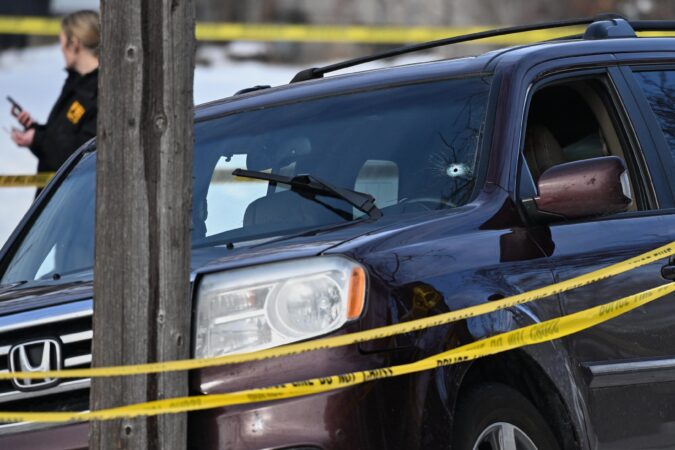
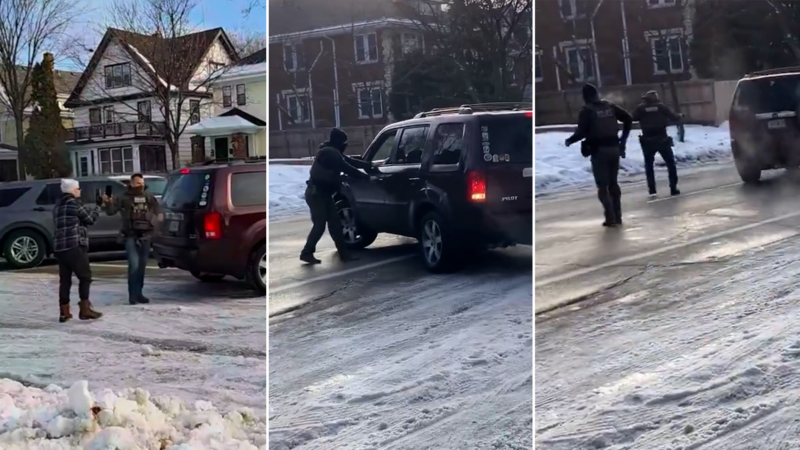
    The recordings show an officer approaching an SUV stopped across the middle of the road, demanding the driver open the door and grabbing the handle. The Honda Pilot begins to pull forward and a different ICE officer standing in front of it pulls his weapon and immediately fires at least two shots at close range, jumping back as the vehicle moves toward him.

    It is not clear from the videos if the vehicle makes contact with the officer, and there is no indication of whether the woman had interactions with agents earlier. After the shooting, the SUV speeds into two cars parked on a curb before crashing to a stop.

    Officer identified in records

    The federal agent who fatally shot Good is an Iraq War veteran who has served for nearly two decades in the Border Patrol and ICE, according to records obtained by AP.

    Noem has not publicly named him, but a Homeland Security spokesperson said her description of his injuries last summer refers to an incident in Bloomington, Minnesota, in which court documents identify him as Jonathan Ross.

    Ross got his arm stuck in the window of a vehicle whose driver was fleeing arrest on an immigration violation. Ross was dragged and fired his Taser. A jury found the driver guilty of assaulting a federal officer with a dangerous weapon.

    Attempts to reach Ross, 43, at phone numbers and email addresses associated with him were not successful.

  • In dozens of cases, Philly’s federal judges have found Trump’s mandatory detention policy unlawful

    In dozens of cases, Philly’s federal judges have found Trump’s mandatory detention policy unlawful

    Federal judges in Philadelphia have ruled dozens of times against a Trump administration policy that mandates detention for nearly all undocumented immigrants — joining a nationwide wave of decisions criticizing the government for applying the policy in unlawful ways.

    In the Eastern District of Pennsylvania, U.S. District Judge Juan R. Sánchez wrote in a memorandum this week that more than 40 people who have been detained in the region under that policy, which was rolled out by Immigration and Customs Enforcement last summer, have sought relief in the courts — and judges have ruled against the government in every case.

    Chief Judge Wendy Beetlestone was even more blunt in an opinion filed last month, writing that “the law is piled sky high against the government’s position” to mandate detention and deny bond hearings for all undocumented immigrants — even those seeking to stay here via appropriate legal channels.

    The administration’s insistence on employing the policy and defending it in court, Beetlestone wrote, was akin to the Greek myth of Sisyphus pushing a boulder up a hill.

    “The Government’s hope, presumably, is that if it keeps pushing the boulder of its argument up the hill, at least one judge may rule against the weight of the authority,” Beetlestone wrote. “But the tale before the courts is the traditional one of Greek mythology: the Government returns again and again to push the same theory uphill, only for courts to send it rolling back down again.”

    The pushback has added to a chorus of similar decisions in courts nationwide. Sánchez, appointed by George W. Bush, wrote in his memo that people challenging their detention in federal district courts “have prevailed, either on a preliminary or final basis, in 350 … cases decided by over 160 different judges sitting in about fifty different courts spread across the United States.”

    A Politico analysis of court dockets published this week put that tally even higher, reporting that over the last six months, more than 300 federal judges — comprising appointees of every president since Ronald Reagan — have ordered some form of relief in mandatory detention cases to about 1,600 challengers.

    Spokespeople for ICE did not reply to questions about the judicial rebukes, and many of the government’s court filings in cases challenging detention have been made under seal.

    Still, the Trump administration has made no secret of its desire to boost the number of people in federal immigration detention. And the mandatory detention policy has helped push the number of confined immigrants past 65,000, a two-thirds increase since Trump took office in January.

    Lilah R. Thompson, an immigration attorney in the community defense unit at the Defender Association of Philadelphia, said in an interview that mandatory detention “plainly violates the law and is an illegal policy.” But she said most challenges to it so far have come in individual cases, and the potential legal avenues seeking to strike it down nationwide are protracted and legally complex.

    In the meantime, Thompson said, the government has seemed content to use the policy in its attempt to apply pressure to immigrants and, ultimately, increase deportations.

    “[Authorities] are applying a blanket policy because when people are in detention, they aren’t able to withstand the horrors of detention,” Thompson said. “It makes their circumstances much more difficult.”

    A dramatic change in precedent

    ICE’s detention mandate was rolled out amid the Trump administration’s aggressive push to crack down on immigrants nationwide.

    It came as the Board of Immigration Appeals — the highest administrative body for interpreting the nation’s immigration laws — issued three precedential rulings that made it dramatically harder for detainees to be released on bond.

    In one of those rulings, the board held that immigration judges lack the power to hear or grant bond requests to people who entered the United States without permission — even if they had been in the country for years, or had few other infractions that might warrant detention as their cases wound through the immigration system.

    That upended decades of established government practice, which typically allowed otherwise law-abiding people who entered the country illegally to at least receive a bond hearing and determine if they could remain in the community as their cases moved forward.

    The decision also meant that thousands of detained immigrants who previously would have been eligible for bond hearings could be released only if they filed and won a federal lawsuit.

    For many detainees that created an impossible situation because they have neither a lawyer nor the money to hire one.

    “There are so many people that are getting picked up [under] the unlawful mandatory detention policy, but because they don’t have an attorney to file a [legal challenge], they’re still experiencing the consequences of the policy,” said Maria Thomson, another attorney in the Defender Association’s community defense unit.

    Officials at the federal Executive Office for Immigration Review, which oversees the BIA, declined to answer questions about the rulings.

    “The Executive Office for Immigration Review does not comment on federal court decisions,” spokesperson Kathryn Mattingly said in a statement.

    Detainees who have been able to hire attorneys and appear before federal judges have been winning relief at near-universal rates, with the courts ordering their freedom or directing the immigration court to hold a bond hearing.

    “The district courts have been overwhelming on this question. It’s been extremely lopsided,” said Jonah Eaton, a veteran immigration attorney who teaches law at Temple University and the University of Pennsylvania, adding that even some Trump-appointed judges “have said this is nonsense.”

    Earlier this week, District Judge John Murphy said in a court filing that judges had sided with detainees in all 50 cases filed so far in Pennsylvania’s Eastern District.

    And in November, District Judge Paul Diamond wrote that he’d found 288 district court decisions nationwide addressing the issue — and that judges had ruled against the administration in 282 of them.

    Diamond then went on to criticize the government’s attempts to justify its policy using what he said were competing interpretations of the law.

    It is “difficult to credit the Government’s squarely contradictory position here,” Diamond wrote.

    Significant challenges

    Still, not all wins for detainees are comprehensive.

    In some instances, immigrants are granted bond hearings before an immigration judge. But Eaton said some of those immigration judges will either deny bond or set an impossibly high figure. In Philadelphia, he said, it’s become common for attorneys to ask the federal judges to order release themselves, “because immigration judges won’t do it.”

    Immigration Court is part of the executive branch, not the judiciary, run by the Department of Justice. That has for years called the courts’ impartiality into question.

    “Even when we’re seeing bond hearings happening, they’re being denied at a higher rate,” said attorney Emma Tuohy, a deportation-defense specialist at Simon, Choi & Tuohy in Philadelphia. So immigrant defenders “are going straight to district court and filing habeas corpus, on the premise that people are being unlawfully detained.”

    Habeas corpus, Latin for “you have the body,” is a demand that the government bring a detained person to court and prove that they have been legally imprisoned. It’s considered a fundamental protection against arbitrary detention.

    Beyond bond hearings, Thompson, of the Defender Association, said there are challenges in seeking to provide ample legal assistance to people who have solid grounds to fight their detention: Many can’t afford lawyers, she said, there is no statewide funding to support lawyers pursuing such challenges, and ICE can move detainees to different jurisdictions at its discretion, increasing the difficulty of petitioning for release.

    “They are doing it because they can, and because the consequences are that most [immigrants] cannot fight this and will end up being deported,” she said.

    Cases that might threaten the overall detention policy, meanwhile, are likely to take time to wind through appellate courts, she said — and the administration could seek to litigate the matter in jurisdictions that have been more traditionally conservative.

    In the meantime, federal judges are going to continue having to confront the issue in district courts. Murphy wrote this week that there are approximately 25 petitions awaiting a ruling in Philadelphia’s federal courthouse.

    If Beetlestone’s opinion is any guide, the judges would prefer that ICE change its position — rather than continuing down the same path and hoping the ruling will be different next time.

    Relying on hope in the courts, Beetlestone said, “resembles a game of whack-a-mole, in which the mole (here, the Government) insists on repeatedly volunteering to get struck by the judicial gavel.”

  • Anger and outrage spills onto Minneapolis streets after ICE officer’s fatal shooting of Renee Good

    Anger and outrage spills onto Minneapolis streets after ICE officer’s fatal shooting of Renee Good

    MINNEAPOLIS — As anger and outrage spilled out onto Minneapolis’ streets Thursday over the fatal shooting of a woman the day before by an Immigration and Customs Enforcement officer, a new shooting by federal officers in Oregon left two people wounded and elicited more scrutiny of enforcement operations across the country.

    Hundreds of people protesting the shooting of Renee Good as she tried to drive away marched in freezing rain Thursday night down one of Minneapolis’ major thoroughfares chanting “ICE out now” and holding signs saying, “killer ice off our streets.” Protesters earlier vented their outrage outside of a federal facility that’s serving as a hub for the administration’s latest immigration crackdown on a major city.

    The shooting in Portland, Oregon, took place outside a hospital Thursday afternoon and the conditions of the two people wounded were not immediately known. The FBI’s Portland office said it is investigating.

    Just as it did following the Minneapolis shooting, the Department of Homeland Security defended the actions of the officers in Portland, saying the shooting occurred after a Venezuelan man with alleged gang ties and who was involved in a recent shooting tried to “weaponize” his vehicle to hit the officers. It wasn’t clear yet if witness video corroborates that account.

    Homeland Security Secretary Kristi Noem, President Donald Trump and others in his administration have repeatedly characterized the Minneapolis shooting as an act of self-defense and cast Good as a villain, suggesting she used her vehicle as a weapon to attack the officer who shot her.

    Vice President JD Vance said the shooting was justified and that Good, a 37-year-old mother of three, was a “victim of left-wing ideology.”

    “I can believe that her death is a tragedy while also recognizing that it is a tragedy of her own making,” Vance said, noting that the officer who killed her was injured while making an arrest last June.

    But state and local officials and protesters rejected that characterization, with Minneapolis Mayor Jacob Frey saying video of the shooting shows the self-defense argument was “garbage.”

    An immigration crackdown quickly turns deadly

    The shooting happened on the second day of the Trump administration’s immigration crackdown on the Twin Cities of Minneapolis and St. Paul, which Homeland Security said is the biggest immigration enforcement operation ever. More than 2,000 officers are taking part, and Noem said they have already made more than 1,500 arrests.

    It provoked an immediate response in the city where police killed George Floyd in 2020, with hundreds of people turning up to the scene to vent their outrage at the ICE officers and the school district canceling classes for the rest of the week as a precaution.

    Good’s death — at least the fifth tied to immigration sweeps since Trump took office — has resonated far beyond Minneapolis, as protests took place or were expected this week in many large U.S. cities.

    “We should be horrified,” protester Shanta Hejmadi said. “We should be saddened that our government is waging war on our citizens.”

    Who will investigate?

    On Thursday, the Minnesota agency that investigates officer-involved shootings said it was informed that the FBI and U.S. Justice Department would not work with the department, effectively ending any role for the state to determine if crimes were committed. Noem said the state has no jurisdiction.

    “Without complete access to the evidence, witnesses and information collected, we cannot meet the investigative standards that Minnesota law and the public demands,” Drew Evans, the bureau’s superintendent, said.

    Gov. Tim Walz publicly demanded that the state be allowed to take part, repeatedly emphasizing that it would be “very difficult for Minnesotans” to accept that an investigation that excludes the state could be fair.

    Noem, he said, was “judge, jury and basically executioner” during her public comments about the confrontation.

    “People in positions of power have already passed judgment, from the president to the vice president to Kristi Noem — have stood and told you things that are verifiably false, verifiably inaccurate,” the governor said.

    Frey, the mayor, told The Associated Press: “We want to make sure that there is a check on this administration to ensure that this investigation is done for justice, not for the sake of a cover-up.”

    Deadly encounter seen from multiple angles

    Several bystanders captured footage of Good’s killing, which happened in a neighborhood south of downtown.

    The videos show an officer approaching an SUV stopped across the middle of the road, demanding the driver open the door and grabbing the handle. The Honda Pilot begins to pull forward, and a different ICE officer standing in front of it pulls his weapon and immediately fires at least two shots at close range, jumping back as the vehicle moves toward him.

    It isn’t clear from the videos if the vehicle makes contact with the officer, and there is no indication of whether the woman had interactions with ICE agents earlier. After the shooting the SUV speeds into two cars parked on a curb before crashing to a stop.

    Officer identified in court documents

    Noem hasn’t publicly named the officer who shot Good. But a Homeland Security spokesperson said her description of his injuries last summer refers to an incident in Bloomington, Minnesota, in which court documents identify him as Jonathan Ross.

    Ross got his arm stuck in the window of a vehicle of a driver who was fleeing arrest on an immigration violation, and was dragged roughly 100 yards (91 meters) before he was knocked free, records show.

    He fired his Taser, but the prongs didn’t incapacitate the driver, according to prosecutors. Ross was transported to a hospital, where he received more than 50 stitches.

    A jury found the driver guilty of assaulting a federal officer with a dangerous weapon.

    DHS assistant secretary Tricia McLaughlin said the officer involved in the shooting had worked more than 10 years as a deportation officer and had been selected for ICE’s special response team, which includes a 30-hour tryout and additional training.

    McLaughlin declined to confirm the identity of the officer as Ross. The AP wasn’t immediately able to locate a phone number or address for Ross, and ICE no longer has a union that might comment on his behalf.

  • Family and neighbors mourn woman who was shot by ICE agent and had made Minneapolis home

    Family and neighbors mourn woman who was shot by ICE agent and had made Minneapolis home

    MINNEAPOLIS — Before Renee Good was fatally shot behind the wheel of her vehicle by a U.S. Immigration and Customs Enforcement officer, the 37-year-old mother of three had dropped off her youngest child at an elementary school in Minneapolis, the newest city she called home.

    While Trump administration officials continued Thursday to paint Good as a domestic terrorist who attempted to ram federal agents with her Honda Pilot, members of her family, friends and neighbors mourned a woman they remembered as gentle, kind and openhearted.

    Good, her 6-year-old son and her wife had only recently relocated to Minneapolis from Kansas City, Missouri. The family settled in a quiet residential street of older homes and multifamily buildings, some front porches festooned with pride flags still twinkling with holiday lights. A day after her death, neighbors had grown weary of talking to reporters. A handwritten sign posted to one front door read “NO MEDIA INQUIRES” and “JUSTICE FOR RENEE.”

    Far from the worst-of-the-worst criminals President Donald Trump said his immigration crackdown would target, Good was a U.S. citizen born in Colorado who had apparently never have been charged with anything beyond a single traffic ticket.

    In social media accounts, she described herself as a “poet and writer and wife and mom.” She said she was currently “experiencing Minneapolis,” displaying a pride emoji on her Instagram account. A profile picture posted to Pinterest shows her smiling and holding a young child against her cheek, along with posts about tattoos, hairstyles and home decorating.

    Her ex-husband, who asked not to be named out of concern for the safety of their children, said Good was no activist and that he had never known her to participate in a protest of any kind. He said she was simply headed home before the encounter with a group of ICE agents on a snowy street.

    State and local officials and protesters have rejected the Trump administration’s characterization of the shooting, with Minneapolis Mayor Jacob Frey saying video of the shooting shows the self-defense argument was “garbage.”

    Video taken by bystanders posted to social media shows an officer approaching her car, demanding she open the door and grabbing the handle. When she begins to pull forward, a different ICE officer standing in front of the vehicle pulls his weapon and immediately fires at least two shots into the vehicle at close range.

    The entire deadly incident was over in less than 10 seconds.

    In another video taken immediately after the shooting, a distraught woman is seen sitting near the vehicle, wailing, “That’s my wife, I don’t know what to do!”

    Calls and messages to Good’s wife received no response.

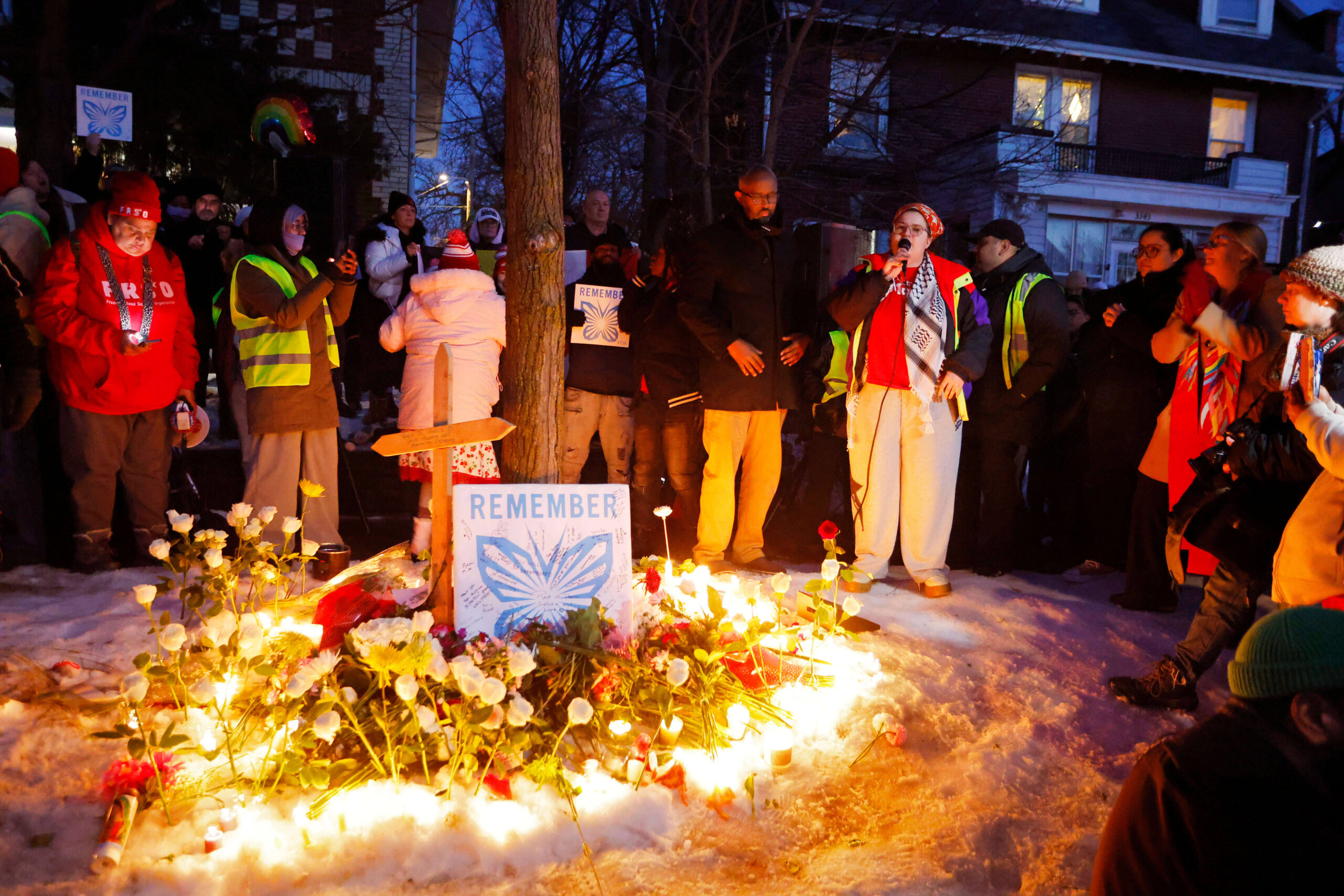
    By Thursday, a few dozen people had gathered on the one-way street where Good was killed, blocking the roadway with steel drums filled with burning wood for warmth to ward of a pelting freezing rain. Passersby stopped to pay their respects at a makeshift memorial with bouquets of flowers and a hand-fashioned cross.

    Good’s ex-husband said she was a devoted Christian who took part in youth mission trips to Northern Ireland when she was younger. She loved to sing, participating in a chorus in high school and studying vocal performance in college.

    She studied creative writing at Old Dominion University in Virginia and won a prize in 2020 for one of her works, according to a post on the school’s English department Facebook page. She also hosted a podcast with her second husband, who died in 2023.

    Kent Wascom, who taught Good in the creative writing program at Old Dominion, recalled her juggling the birth of her child with both work and school in 2019. He described her as “incredibly caring of her peers.”

    “What stood out to me in her prose was that, unlike a lot of young fiction writers, her focus was outward rather than inward,” Wascom said. “A creative writing workshop can be a gnarly place with a lot of egos and competition, but her presence was something that helped make that classroom a really supportive place.”

    Good had a daughter and a son from her first marriage, who are now ages 15 and 12. Her 6-year-old son was from her second marriage.

    Her ex-husband said she had primarily been a stay-at-home mom in recent years but had previously worked as a dental assistant and at a credit union.

    Donna Ganger, her mother, told the Minnesota Star Tribune the family was notified of the death late Wednesday morning. She did not respond to calls or messages from the AP.

    “Renee was one of the kindest people I’ve ever known,” Ganger told the newspaper. “She was extremely compassionate. She’s taken care of people all her life. She was loving, forgiving and affectionate. She was an amazing human being.”

  • DA Krasner condemns fatal ICE shooting in Minneapolis, says officers who commit crimes in Philly will ‘be convicted’

    DA Krasner condemns fatal ICE shooting in Minneapolis, says officers who commit crimes in Philly will ‘be convicted’

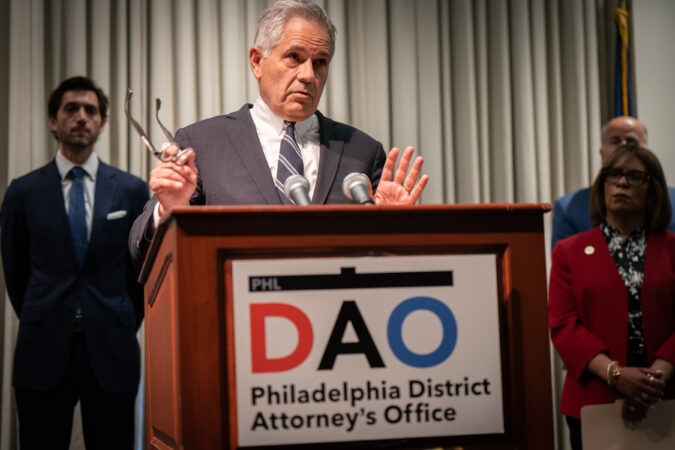
    District Attorney Larry Krasner, responding to the killing of a 37-year-old woman by an ICE agent in Minneapolis, vowed to prosecute law enforcement officers who commit crimes in the city of Philadelphia.

    “You will be arrested, you will stand trial, you will be convicted,” Krasner said during a news conference Thursday.

    His remarks came a day after a masked ICE agent shot Renee Nicole Good multiple times in her SUV.

    In widely circulated videos of the incident, Good appears to be driving away from a group of immigration agents as they order her to get out of her vehicle.

    President Donald Trump and top White House officials offered a starkly different view, saying Good tried to run over the officer with her car.

    Department of Homeland Security Secretary Kristi Noem said the officer, identified Thursday as Jonathan Ross, was justified in shooting the woman because he feared for his life. She said Good, a mother of three, had committed an act of domestic terrorism.

    Minnesota officials have called for an investigation into the conduct of the officer, who has not been charged with any crimes.

    But Krasner, flanked by a group of Philadelphia City Council members and the sheriff, called the actions criminal.

    The top prosecutor said that he has family ties to Minneapolis, and that he had reviewed the videos of the shooting, about a mile from where George Floyd was killed by police in 2020. He held a moment of silence for Good and displayed her photo before leading the group in a chant of her name.

    “We have to use our voices to call out people who commit terrible crimes,” Krasner said. “Or who justify them.”

    That last part was aimed at Trump, whom Krasner has sharply and repeatedly criticized.

    The progressive prosecutor often uses his platform to openly decry the president and his policies, most recently when he urged Philadelphians to film ICE agents who have ramped up immigration enforcement since Trump’s return to office.

    He said that tactic had been a success in Minneapolis because the video brought widespread attention to the incident.

    After Good’s killing, Krasner said, “The first thing out of Trump’s mouth was a lasagna of lies.”

    “She behaved horribly,” Trump told reporters. “And then she ran him over.”

    Krasner said he could not even be certain that Good was blocking officers from the roadway, as some officials have suggested. Had Good done so, Krasner said, she would have been engaging in an act that “protesters have done forever.”

    And that behavior, he said, does not justify a fatal shooting.

    Any law enforcement agent inclined to behave similarly in Philadelphia should “get the eff out of here,” Krasner said. And should such an incident happen in the city, the DA said, he would charge the offending officer in state court, where presidential pardons have no effect.

    “There are honest decent moral law enforcement officers by the bushel — this is not for you,” Krasner said of his warning. “This is for any one of your colleagues who thinks they are above the law.”

  • The killing of Renee Nicole Good and the moral rot of Trump’s reckless immigration enforcement plan | Editorial

    The killing of Renee Nicole Good and the moral rot of Trump’s reckless immigration enforcement plan | Editorial

    Renee Nicole Good, 37, was shot and killed by U.S. Immigration and Customs Enforcement agents on Wednesday in Minneapolis. She is the second person killed after the Trump administration unleashed masked, armed, and increasingly unaccountable federal forces upon U.S. cities.

    Unless the government immediately changes course, she will not be the last.

    Several videos posted to social media show the deadly encounter. If you believe your eyes, Good was fatally shot as she attempted to drive away from agents who were yelling obscenities at her and violently trying to open her vehicle’s door.

    If you believe the U.S. Department of Homeland Security, Good was part of a group of “violent rioters” who “weaponized her vehicle” and tried to “run over our law enforcement officers in an attempt to kill them.” Good, according to DHS spokesperson Tricia McLaughlin, was engaged in an act of “domestic terrorism.”

    The stark disconnect is telling. The administration’s reflexive lying is emblematic of the moral rot at the heart of President Donald Trump’s militarized mass deportation efforts. It reflects a worldview where all immigrants are criminals, and all dissenters are rioters or terrorists.

    By all accounts, Good was neither. She was a mother, a neighbor, a self-described poet, writer, and poor guitar player. In death, she joins Silverio Villegas-Gonzalez, a 38-year-old Chicago resident who was killed by ICE in September during a similar incident. The Mexican immigrant was shot in the neck shortly after he dropped off one of his children at school and another at daycare.

    These deaths were as preventable as they were foreseeable.

    People gather for a vigil after a U.S. Immigration and Customs Enforcement agent shot and killed a motorist earlier in the day.

    In her Nov. 20 ruling ordering federal agents to limit aggressive tactics in Chicago, U.S. District Judge Sara Ellis wrote that “agents have used excessive force in response to protesters’ and journalists’ exercise of their First Amendment rights, without justification, often without warning, and even at those who had begun to comply with agents’ orders.”

    Dozens of videos, from cities around the nation, have shown federal agents engaging in violent behavior during their enforcement duties. Any one of those incidents could have turned deadly. That more people have not been killed in the administration’s reckless and ill-advised efforts can best be attributed to providence.

    Reported close calls in California include Border Patrol agents smashing windows and firing on a truck as it drove away during a traffic stop, a man who claimed he wanted to warn agents there were children nearby was shot in the back by an ICE agent, and a TikTok streamer was shot as ICE agents smashed his car window.

    In Chicago, a woman was shot multiple times after she allegedly rammed the vehicle of a U.S. Customs and Border Protection agent. The charges against her were dismissed in the face of glaring inconsistencies in the government’s story.

    Federal agents confront protesters outside the Bishop Henry Whipple Federal Building on Thursday in Minneapolis.

    On Thursday, a day after Good’s killing, two people were reportedly shot by Border Patrol agents in Portland, Ore., after a vehicle stop. DHS once again claimed the driver “weaponized his vehicle” and attempted to run over the agents.

    The conduct of too many federal agents involved in immigration enforcement not only violates the norms of decency and order but also goes against the various agencies’ use-of-force policies and rights enshrined in the Constitution.

    All of that is meaningless, however, to an administration that has repeatedly shown disdain for the law and which has overtly condoned violence as an acceptable response to nonviolent behavior.

    It may be too late for Congress to use its power of the purse to rein in these out-of-control agencies. Republicans have already given the president $30 billion to recruit thousands more ICE agents, even as hiring requirements are lowered and training time is reduced — a recipe for disaster.

    Legislators not in thrall to the Trump administration must use every oversight opportunity they can muster to shine the spotlight on abuse and hold rogue officials accountable.

    Local and state governments must lawfully push back and protect their residents — including investigating and charging federal law enforcement with crimes. In the Good case, the former is already proving to be a challenge, as Minnesota’s attorney general notes that state law enforcement officials are being pushed aside, and that the investigation will be conducted solely by the FBI.

    Even as the president puts his thumb on the scales, the courts must stand firm and uphold the law.

    And in communities across the country, everyday Americans like Renee Nicole Good must continue to peacefully exercise and defend our civil rights against those who would use fear and intimidation to gain control. The risk has never been greater, but the stakes have never been higher.

  • Minneapolis ICE murder is Trump’s Waterloo in America’s war for the truth

    Minneapolis ICE murder is Trump’s Waterloo in America’s war for the truth

    “You might murder a freedom fighter … but you can’t murder the freedom fight.”

    Fred Hampton shortly before his own assassination by the U.S. government in 1969

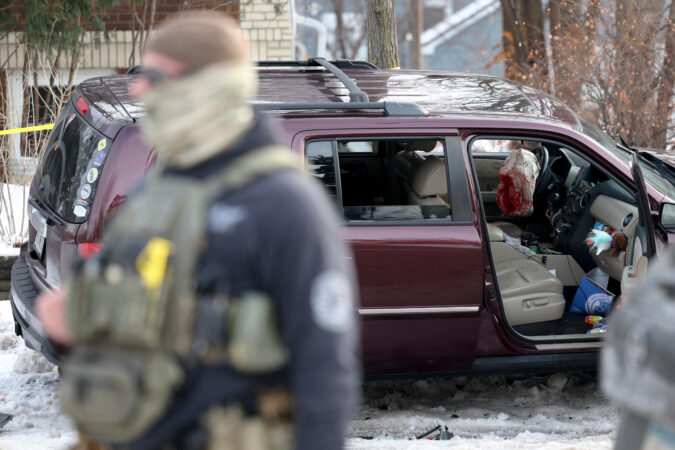
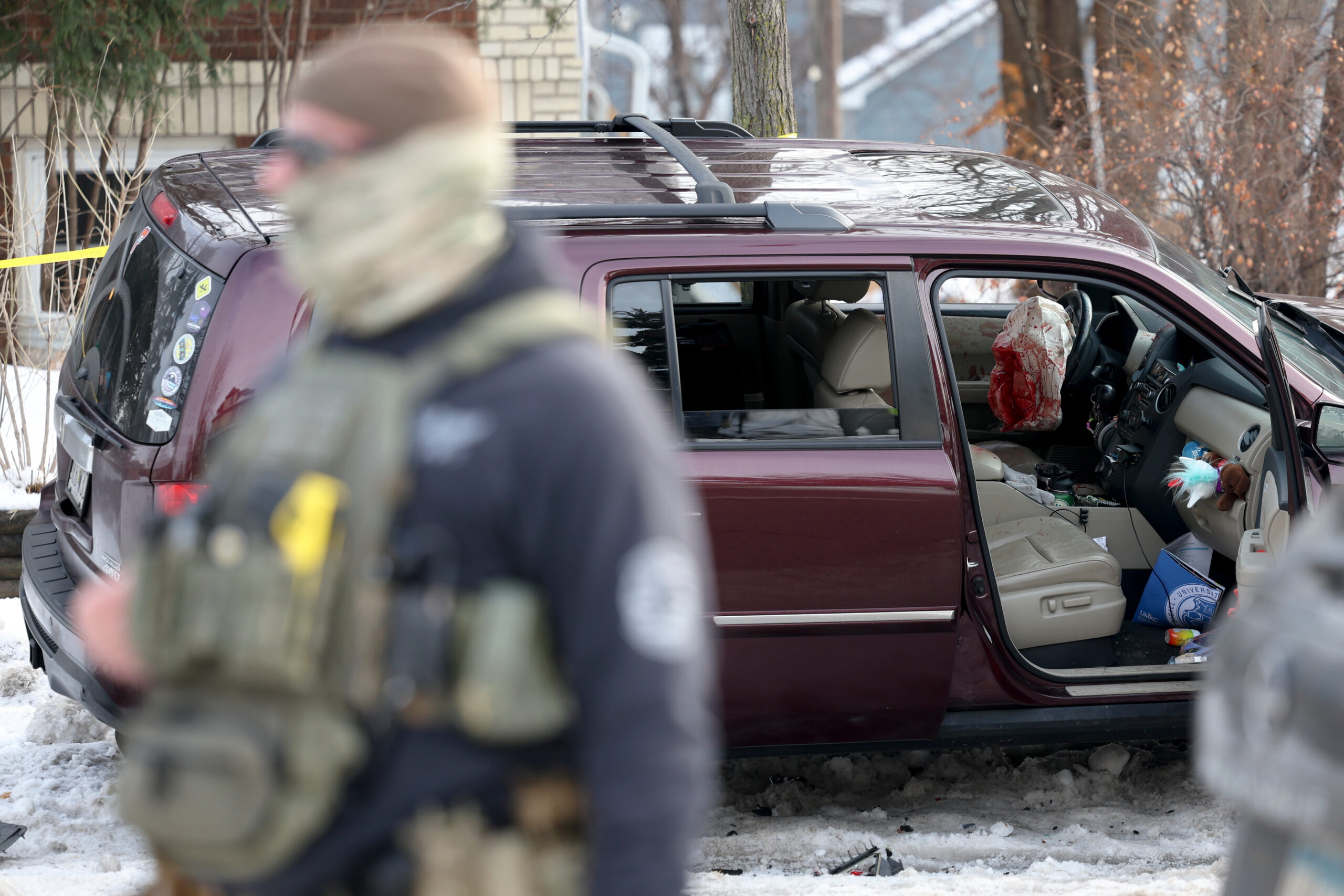
    The Honda Pilot family SUV with the glove compartment crammed with a 6-year-old’s adorable stuffed toys and its deployed airbag and headrest drenched in fresh red blood hadn’t even been towed from the Minneapolis murder scene on Wednesday before the full force of the U.S. government attacked Renee Nicole Good a second time.

    After the three deadly bullets came a fusillade of outrageous and morally reprehensible lies.

    Tricia McLaughlin, the already notoriously fact-averse spokesperson for the U.S. Department of Homeland Security, didn’t even know the identity of the 37-year-old Colorado native — let alone any details of her intricate life or her beautiful, award-winning poetry — when the DHS flack smeared Good as “one of the violent rioters” who’d “weaponized” her SUV against the U.S. Immigration and Customs Enforcement (ICE) agent who shot and killed her, and called it “an act of domestic terrorism.”

    Just moments later, DHS Secretary Kristi Noem — the absurdity of her words only ratcheted up by her ridiculously oversized cowboy hat at a Texas border press hit — joined the verbal pile on and amplified the “domestic terrorism” angle, even though the investigation of what had actually happened on snowy Portland Avenue had barely begun. This was all just a warm-up for America’s prevaricator-in-chief.

    President Donald Trump took to his so-called Truth Social to offer his own, further-embellished version — insisting to the nation that the still-at-that-moment unidentified woman had “violently, willfully, and viciously ran over” ICE officers, blaming “the Radical Left,” and even claiming that the ICE gunman was recovering in the hospital.

    A deployed airbag and blood stains are seen in a crashed vehicle on at the scene of a shooting in Minneapolis on Wednesday.

    In reality, the violent, reckless actions by masked agents of an American secret police were nothing new, and neither was the government’s massive assault on the truth of what happened in Minneapolis, ripped from the pages of a fascist playbook.

    But this time, millions of Americans could see what really happened to Good, thanks to multiple videos taken on that south Minneapolis street by everyday citizens with a righteous distrust of their own government. It’s the deep skepticism that began with three gunshots and a blurry home movie in Dallas’ Dealey Plaza on Nov. 22, 1963. Now, the digital clarity of three gunshots at 9:30 a.m. on Jan. 7, 2026, may have marked a kind of Waterloo, a righteous turning point in our existential war over the truth.

    Americans could believe their elected president, or the completely different reality they could see with their own eyes.

    The citizen videos showed Good — it’s unclear whether she was a volunteer observer of the amped-up ICE raids in Minneapolis, or just filming the agents on a whim — parked at an angle across Portland Avenue when an ICE SUV approached. Two agents hopped out and approached Good’s Honda while a third — the soon-to-be shooter — moved in from the opposite side. One agent screamed, “Get out of the f— car,” but Good, with her window now open and her partner in the passenger seat, slowly backed up and then started a sharp right turn, seeking to leave the scene.

    But the third federal officer, seen adjacent to the left front fender, had already drawn his gun and fired a shot through the windshield as Good turned her Honda away from him. The videos then show the agent — now a few feet from the vehicle and clearly not in danger — firing two more times into the open window, as the vehicle and the mortally wounded Good traveled halfway down the block and into a parked car.

    The shooter — the agent the president claimed had been run over and hospitalized — was filmed walking around the murder scene, apparently unharmed. Meanwhile, the government’s crusade to dehumanize Good was already well underway, as agents were shown blocking a physician who pleaded to aid the dying woman before they finally dragged her away by her limbs.

    The senseless killing of Good was exactly the tragedy that state and city officials had feared when DHS declared at the start of the new year that it was flooding Minnesota — whose large community of Somali American refugees had been viciously slurred by Trump as “garbage” — with some 2,000 armed, masked immigration agents.

    The national spotlight ensured wall-to-wall cable news coverage when agents killed a white U.S. citizen and a mother of three on the second day of the surge in and around Minneapolis, but all of this has happened before. In the last four months, according to the New York Times, federal agents have fired their weapons in nine separate incidents — each time into a vehicle. And often the initial story from DHS collapses under the weight of truth.

    In October, U.S. Customs and Border Protection agents involved in Chicago’s “Operation Midway Blitz” claimed they were boxed in by as many as 10 cars — again, not supported by video — and fired at least five shots at Mirimar Martinez, who was not seriously injured, but was then indicted, along with her passenger, on assault and attempted murder charges. Martinez was not charged with a gun crime — despite an initial DHS claim that she’d brandished a semiautomatic weapon — and soon the entire case crumbled, and now all charges have been dismissed.

    Federal agents are only allowed to fire into a moving car when they believe the driver is trying to kill or maim them or other bystanders. As videos of Good’s killing circulated Wednesday afternoon, an unnamed DHS official told NBC News that the agents’ actions — from approaching the vehicle from the front to firing the fatal shots — went against their training. But how can the public expect sound decision-making from a surge of inexperienced new hires that ICE recruits on social media, or in slick ads during NFL games, with plans to target gun shows and military enthusiasts?

    People gather for a vigil on Wednesday evening after a U.S. Immigration and Customs Enforcement officer shot and killed a woman hours earlier in Minneapolis.

    What’s more, why would the Trump regime tell the truth about killing Good when its entire Minnesota operation — along with everything else about its immoral mass deportation drive — is built atop a foundation of despicable lies, from the White House racist slander of Somali refugees seeking a better life in Minnesota to the gross exaggerations (spiked by a dishonest viral video) about a childcare fraud scandal?

    GOOD MORNING MINNEAPOLIS,” DHS tweeted from its official account Monday as it began an unwarranted, unwelcome operation that is making no one safer, especially not the children of Minnesota. A local coalition of childcare operators called Kids Count on Us reported Wednesday that ICE agents have been swarming their facilities as operators report that little kids are frightened, adding, “We are terrified.” After Good’s death, protesting students at nearby Roosevelt High School were pepper-sprayed by federal agents. And now a 6-year-old child, whose military veteran father had already died in 2023, is an orphan.

    Exactly who are the violent rioters committing acts of domestic terrorism here?

    Minneapolis is a great American city that has been bombarded with needless tragedies throughout the 2020s, beginning on May 25, 2020, when George Floyd was murdered under the knee of police officer Derek Chauvin, just 0.7 miles from where Good was killed. That homicide also began with official lies that were absurdly false, until a brave citizen’s video showed America what really happened.

    Wednesday’s ICE murder carried the grim echoes of past government killing across the upper Midwest — an icy wind that blows from the massacre at Wounded Knee through the 1969 assassination of Black Panther Fred Hampton and over Floyd’s senseless demise. Yet, there is also reason to feel that, this time, a change is in the air.

    For one thing, true leaders like Minneapolis Mayor Jacob Frey — who stunned a national TV audience when he bluntly told ICE, “Get the f— out of Minneapolis” — and Minnesota Gov. Tim Walz made it clear they are fed up with the performative violence and the blatant lies. “Maybe we’re at their McCarthy moment,” Walz told a news conference. “Do you have no decency? Do you have no decency? We have someone dead in their car for no reason whatsoever. Enough. Enough is enough.”

    But there was something even more critical on this frigid prairie morning: brave everyday citizens willing to put their lives on the line for neighbors they don’t even know, and to risk everything in pursuit of the truth. America knows what really happened to Good because courageous people ran toward the scene with their phones aloft to bear witness, not knowing if ICE would kill again.

    It’s the revolutionary spirit we’ve been seeing all across America for months — regular folks from the community blowing whistles, filming ICE raids, and telling the world that our citizens will defend their communities even when all the big institutions and their overpaid leaders will not. Authoritarian governments only thrive in their own manufactured reality, gaslighting the masses that their hardworking, brown-skinned neighbor is a rapist, or that an uninjured federal agent is instead in the emergency room.

    Mark down Jan. 7, 2026, as the day America started turning off the gas, and the masks came off. No wonder it came out Thursday morning that the FBI is not cooperating with Minnesota state authorities on the investigation, in a pathetic, too-late effort at covering this mess up.

    I was one of many on Wednesday who couldn’t stop thinking about another unprovoked government killing: the Kent State Massacre and the murder of four college students on May 4, 1970. That moment caused Neil Young to write these words that still feel so relevant: “What if you knew her and found her dead on the ground?/ How can you run when you know?”

    Good Americans who still believe in truth and justice ran into the danger on Portland Avenue, and we are a better place for that. Some day, and probably soon, there will be a statue on that spot in honor of Renee Nicole Good, an American hero whose bigger freedom fight could not be murdered by tyrants.

  • The ICE agent in Minneapolis was not in the vehicle’s path when he fired at Renee Good, video shows

    The ICE agent in Minneapolis was not in the vehicle’s path when he fired at Renee Good, video shows

    A deadly encounter in Minneapolis on Wednesday between federal Immigration and Customs Enforcement agents and a 37-year-old woman escalated in a matter of seconds.

    In the aftermath, Homeland Security Secretary Kristi L. Noem said the woman had committed an act of “domestic terrorism,” first disobeying officers’ commands and then weaponizing her SUV by attempting to “run a law enforcement officer over.” President Donald Trump said the woman “violently, willfully and viciously ran over the ICE officer.”

    A frame-by-frame analysis of video footage, however, raises questions about those accounts. The SUV did move toward the ICE agent as he stood in front of it. But the agent was able to move out of the way and fire at least two of three shots from the side of the vehicle as it veered past him, according to the analysis.

    Video taken by a witness shows Renee Nicole Good’s vehicle, a burgundy Honda Pilot SUV, stopped in the middle of a one-way road in a residential area of south Minneapolis on Wednesday morning. That footage and other videos examined by The Washington Post do not show the events leading up to that moment.

    The agent, who has not been publicly identified, can be seen standing behind Good’s SUV, holding up a phone and pointing it toward a woman who also has her phone out. The two appear to be recording each other.

    The agent then walks around the passenger side of Good’s vehicle.

    A pickup truck pulls up, and two additional agents exit the vehicle and approach Good, the video shows. A voice can be heard saying to “get out” of the car at least two times. One of the agents puts a hand on the opening of the driver’s side window and with his other hand tugs twice quickly on the door handle, but the driver’s door does not open.

    That same agent puts his hand farther in the opening of Good’s window, and almost simultaneously, the SUV begins to back up.

    The agent who was first seen behind Good’s SUV reemerges in front of the vehicle, still appearing to hold up a phone. The SUV quickly pulls forward, and then veers to the right, in the correct direction of traffic on the one-way street.

    As the vehicle moves forward, video shows, the agent moves out of the way and at nearly the same time fires his first shot. The footage shows that his other two shots were fired from the side of the vehicle.

    Videos examined by The Post, including one shared on Truth Social by Trump, do not clearly show whether the agent is struck or how close the front of the vehicle comes to striking him. Referring to the officer, Trump wrote in his post that it was “hard to believe he is alive.” Video shows the agent walking around the scene for more than a minute after the shooting.

    Good’s SUV travels a short distance before crashing into a car parked on the opposite side of the street.

    The FBI and Minnesota’s Bureau of Criminal Apprehension are investigating the shooting. The White House and the Department of Homeland Security did not immediately respond to a request seeking comment for this story.

  • ICE officer kills a Minneapolis driver in a deadly start to Trump’s latest immigration operation

    ICE officer kills a Minneapolis driver in a deadly start to Trump’s latest immigration operation

    MINNEAPOLIS — An Immigration and Customs Enforcement officer shot and killed a Minneapolis driver on Wednesday during the Trump administration’s latest immigration crackdown on a major American city — a shooting that federal officials said was an act of self-defense but that the mayor described as reckless and unnecessary.

    The 37-year-old woman was shot in the head in front of a family member in a snowy residential neighborhood south of downtown Minneapolis, just a few blocks from some of the oldest immigrant markets and about a mile (1.6 kilometers) from where George Floyd was killed by police in 2020.

    Her killing after 9:30 a.m. was recorded on video by witnesses, and the shooting quickly drew a crowd of hundreds of angry protesters. By evening, hundreds were there for a vigil to mourn the death and urge the public to resist immigration enforcers.

    Homeland Security Secretary Kristi Noem, while visiting Texas, described the incident as an “act of domestic terrorism” carried out against ICE officers by a woman who “attempted to run them over and rammed them with her vehicle. An officer of ours acted quickly and defensively, shot, to protect himself and the people around him.”

    In a social media post, President Donald Trump made similar accusations against the woman and defended ICE’s work.

    Protesters gather near the scene of the fatal shooting involving federal law enforcement agents Wednesday in Minneapolis.

    Hours later, at an evening news conference in Minnesota, Noem didn’t back down, claiming the woman was part of a “mob of agitators.” She said the veteran officer who fired his gun had been rammed and dragged by an anti-ICE motorist in June.

    “Any loss of life is a tragedy, and I think all of us can agree that in this situation, it was preventable,” Noem said, adding that the FBI would investigate.

    But Minneapolis Mayor Jacob Frey blasted Noem’s version of what happened as “garbage” and criticized the federal deployment of more than 2,000 officers to the Twin Cities of Minneapolis and St. Paul as part of the immigration crackdown.

    “What they are doing is not to provide safety in America. What they are doing is causing chaos and distrust,” Frey said, calling on the immigration agents to leave. “They’re ripping families apart. They’re sowing chaos on our streets, and in this case, quite literally killing people.”

    “They are already trying to spin this as an action of self-defense. Having seen the video myself, I wanna tell everybody directly, that is bullshit,” the mayor said.

    Frey said he had a message for ICE: “Get the f— out of Minneapolis.”

    A shooting caught on video

    Videos taken by bystanders with different vantage points and posted to social media show an officer approaching an SUV stopped across the middle of the road, demanding the driver open the door and grabbing the handle. The Honda Pilot begins to pull forward and a different ICE officer standing in front of the vehicle pulls his weapon and immediately fires at least two shots into the vehicle at close range, jumping back as the vehicle moves toward him.

    It was not clear from the videos if the vehicle made contact with the officer. The SUV then sped into two cars parked on a curb nearby before crashing to a stop. Witnesses screamed obscenities, expressing shock at what they’d seen. After the shooting, emergency medical technicians tried to administer aid to the woman.

    “She was driving away and they killed her,” said resident Lynette Reini-Grandell, who was outdoors recording video on her phone.

    The shooting marked a dramatic escalation of the latest in a series of immigration enforcement operations in major cities under the Trump administration. The death of the Minneapolis driver was at least the fifth linked to immigration crackdowns.

    The Twin Cities have been on edge since DHS announced Tuesday that it had launched the operation, which is at least partly tied to allegations of fraud involving Somali residents. Noem confirmed Wednesday that DHS had deployed more than 2,000 officers to the area and said they had already made “hundreds and hundreds” of arrests.

    A large throng of protesters gathered at the scene after the shooting, where they vented their anger at the local and federal officers who were there, including Gregory Bovino, a senior U.S. Customs and Border Patrol official who has been the face of crackdowns in Los Angeles, Chicago and elsewhere.

    In a scene that hearkened back to the Los Angeles and Chicago crackdowns, bystanders heckled the officers, chanting “Shame! Shame! Shame!” and “ICE out of Minnesota,” and blew whistles that have become ubiquitous during the operations.

    Governor calls for calm

    Minnesota Gov. Tim Walz said he’s prepared to deploy the National Guard if necessary. He said a family member of the driver was there to witness the killing, which he described as “predictable” and “avoidable.” He also said like many, he was outraged by the shooting, but he called on people to keep protests peaceful.

    “They want a show. We can’t give it to them. We cannot,” the governor said during a news conference. “If you protest and express your First Amendment rights, please do so peacefully, as you always do. We can’t give them what they want.”

    Minneapolis Police Chief Brian O’Hara briefly described the shooting to reporters but, unlike federal officials, gave no indication that the driver was trying to harm anyone.

    “This woman was in her vehicle and was blocking the roadway on Portland Avenue. … At some point a federal law enforcement officer approached her on foot and the vehicle began to drive off,” the chief said. ”At least two shots were fired. The vehicle then crashed on the side of the roadway.”

    There were calls on social media to prosecute the officer who shot the driver. Commissioner Bob Jacobson of the Minnesota Department of Public Safety said state authorities would investigate the shooting with federal authorities.

    “Keep in mind that this is an investigation that is also in its infancy. So any speculation about what has happened would be just that,” Jacobson told reporters.

    The shooting happened in the district of Democratic Rep. Ilhan Omar, who called it “state violence,” not law enforcement.

    For nearly a year, migrant rights advocates and neighborhood activists across the Twin Cities have been preparing to mobilize in the event of an immigration enforcement surge. From houses of worship to mobile home parks, they have set up very active online networks, scanned license plates for possible federal vehicles and bought whistles and other noisemaking devices to alert neighborhoods of any enforcement presence.