Tag: Inquirer Local

  • Wallingford-Swarthmore schools are cutting nearly 20 positions amid a ‘spending problem’

    Wallingford-Swarthmore schools are cutting nearly 20 positions amid a ‘spending problem’

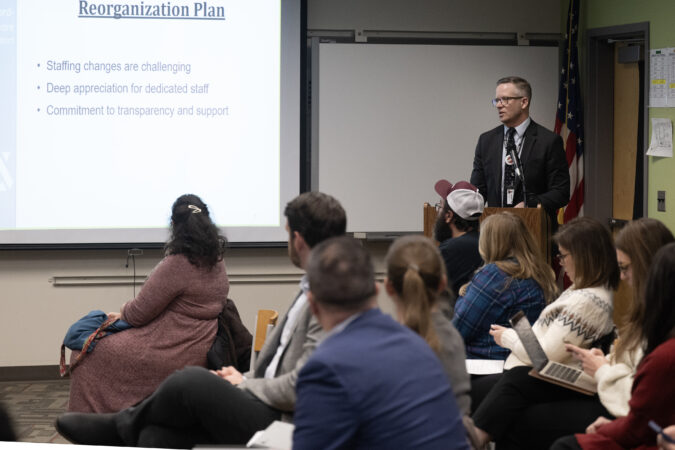
    The Wallingford-Swarthmore school board on Tuesday approved a plan that would eliminate nearly 20 positions as it tries to reverse what officials have called a trend of unsustainable spending in the affluent suburban district.

    The reorganization plan, which was approved by the board 8-0 and takes effect July 1, will save the district about $2 million, said Superintendent Russell Johnston. Five administrative positions will be eliminated, along with positions for instructional assistants at the middle and high schools, a high school special education teacher, high school secretary, and high school part-time guidance counselor, among other roles.

    Some of those positions are currently unfilled. And not everyone whose position is being eliminated will be leaving the district: Employees with seniority will be able to bump less senior staff, Johnston said.

    Overall, the changes will result in three to four layoffs, Johnston said Tuesday. Seven long-term substitutes will also no longer work in the district.

    “This is not about solving a problem in this year’s budget,” but ensuring the district can sustain its programs in the future, Johnston said Tuesday.

    Why is the district making budget cuts?

    District officials told the board in November that they were facing mounting budget challenges.

    “Bottom line: the district has a spending problem,” DeJuana Mosley, the district’s business administrator, said at a November finance committee meeting. She said there had been “considerable increases” in staffing since 2021 — and the district’s budget grew by 18%, from $89 million to $105 million — despite no increase in enrollment.

    The district also lacked adequate inventory management, Mosley said — describing a “culture of just ordering stuff” — and faces other mounting pressures, including deferred maintenance and a lack of curricular investments, including some course materials not aligned to Pennsylvania or Advanced Placement standards.

    Mosley described the district’s $164 million capital plan as “added pressure,” but not the source of budget troubles.

    Meanwhile, the district’s tax base — which is heavily residential, with limited commercial properties — has declined, Mosley said. Taxable assessed value dropped by $6 million from 2024 to 2025, resulting in a loss of $175,000 in annual tax revenue for the district.

    Even if the district raised taxes for the coming year by 3.5%, the maximum amount allowed by state law, it would still be short $2.6 million, Mosley said.

    Why weren’t the budget issues addressed earlier?

    It wasn’t clear why Wallingford-Swarthmore’s budget troubles weren’t discussed publicly sooner.

    The school board parted ways with former superintendent, Wagner Marseille, in 2024, after an opposition campaign from parents that accused Marseille of excessive spending, among other allegations. Marseille, who had led the district since 2021, was replaced on an interim basis in August 2024 by Jim Scanlon, a former West Chester superintendent.

    The board hired Johnston, a former Massachusetts education commissioner, in May.

    In an interview this week, Johnston said that in planning for the fiscal year starting July 1, he “began to see more and more signs that we needed to make this adjustment.”

    He said that in November, “I brought the full scope of the problem before the board.”

    Which positions are being cut?

    Five administrative positions will be cut under the plan approved Tuesday: director of assessment, compliance, and federal programs; supervisor of counseling and wellness; safety and security coordinator; communications and community relations liaison; and supervisor of buildings and grounds.

    Other cuts include: two high school and one middle school instructional support positions; a high-school part-time guidance counselor; a high school secretary; a high-school special education teacher; a middle-school safety aide; a middle-school long-term substitute; a middle-school substitute custodian; and six teachers on special assignment helping with new curriculum rollouts. (The plan also includes the creation of two new curriculum supervisor positions.)

    In outlining the cuts Tuesday, Johnston said, “This is really about a change in positions, not people.” He said responsibilities from discontinued administrative positions would be shifted to other administrators.

    “What’s good for students is sometimes hard for adults,” he said.

    The district is also eliminating “Cultural Proficiency Equity Teacher Leader” positions, which were created in 2022-23 and gave additional money to teachers working on equity initiatives.

    Johnston said at a finance committee meeting last week that “this is no way a backing off of our commitment to equity,” and responsibilities would be absorbed elsewhere.

    What happens next?

    The reorganization plan isn’t the only way the district is trying to save money. At last week’s finance meeting, Johnston said the district would eliminate redundant software programs and increase oversight of supply purchases. He also said he would be sending a memo to staff to cut back on snacks at after-school events.

    The district, which taxes residents at a relatively high rate compared to others, will be limited in how much it can increase taxes in future years, with the Act 1 index that dictates how much they can increase taxes projected to decline, Johnston said. The board directed district officials to prepare a budget for 2026-27 with an increase between 3-3.4%, under the 3.5% state-imposed limit.

    “We want to make sure what we live with next year, we can live with in future years,” he said last week.

  • Hair stylist Artur Kirsh to open Narberth and Center City studios following Bala Cynwyd Saks closure

    Hair stylist Artur Kirsh to open Narberth and Center City studios following Bala Cynwyd Saks closure

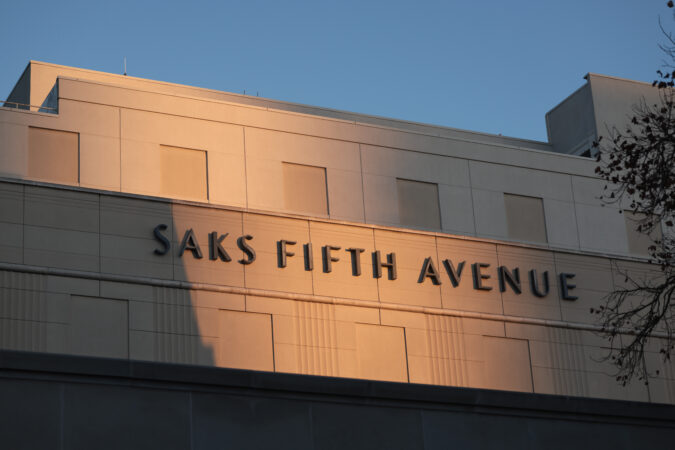
    Hair stylist Artur Kirsh, who has long served clients out of his Saks Fifth Avenue salon in Bala Cynwyd, will be relocating to Narberth in April as Saks prepares to close. Kirsh will open a second salon at Boyds in Center City this fall.

    Kirsh’s relocation comes after Saks Global, the owner of Saks Fifth Avenue and Neiman Marcus, announced the closure of numerous department stores, including the Bala Cynwyd Saks, in February. Saks Global filed for bankruptcy in January.

    Kirsh said he was surprised to hear about the closure, but decided to take the opportunity to “do something huge” and open two new studios, expanding his presence in the region.

    Kirsh will open Artur Kirsh Hair Studio, his new Narberth location, in April at 948 Montgomery Ave. He described the studio as “very artsy” and “very hip.” The Narberth outpost will have ample parking, a “fun and intimate” vibe, and will allow clients to move beyond traditional salon hours and schedule based on their availability, according to a news release. Kirsh called the Narberth studio a “boutique concierge salon concept.”

    The hair stylist will continue to see clients at Saks through March to ensure a “seamless transition” ahead of the department store’s closure in April.

    Kirsh said he chose Narberth because it’s minutes from his old Saks studio and would allow him to maintain some continuity for Main Line clients.

    Kirsh will also expand his footprint in Center City in September, where he plans to open Artur Kirsh Salon on the fourth floor of Boyds department store at 1818 Chestnut St.

    “I’ll have best of both worlds,” he said. “I’ll have the suburbs and the city.”

    Though the changes happened quickly, Kirsh said he’s ultimately looking forward to the next chapter.

    “When you’re in an old place, you kind of get stale,” he said. “Things happen for a reason.”

    Kirsh was born and raised in Russia and moved to New York in the mid-1990s. After training at a Manhattan salon, Kirsh relocated to the Philadelphia area. He has worked out of the Bala Cynwyd Saks for six years. Kirsh specializes in coloring and “dry cutting” and describes himself as the ”go-to stylist for models and local celebrities.”

    In addition to his Bala Cynwyd salon, Kirsh sees clients at the Rittenhouse Spa & Club in Center City, John Barrett Salon in New York City, and Oasis Salon & Med Spa in Boca Raton, Fla. Over the years, Kirsh has styled a number of celebrity clients, including Dorinda Medley, Betsey Johnson, Carolina Herrera, Celine Dion, Kathy Griffin, and Ken Downing.

    This suburban content is produced with support from the Leslie Miller and Richard Worley Foundation and The Lenfest Institute for Journalism. Editorial content is created independently of the project donors. Gifts to support The Inquirer’s high-impact journalism can be made at inquirer.com/donate. A list of Lenfest Institute donors can be found at lenfestinstitute.org/supporters.

  • These Chesco spots are the wealthiest in the region | Inquirer Chester County

    These Chesco spots are the wealthiest in the region | Inquirer Chester County

    Hi, Chester County! 👋

    Local communities dominate a new list looking at the Philadelphia region’s wealthiest areas by income. Also this week, East Vincent’s planning commission has voted against a proposed data center at Pennhurst, North Coventry Township officials headed off a different data center before it was even formally submitted, plus Tired Hands Brewing Company has closed its Kennett Square outpost.

    If someone forwarded you this email, sign up for free here.

    Chester County dominates a list of the region’s wealthiest spots

    Homes along Yorkshire Way in Birmingham Township, one of the wealthiest communities in the Philadelphia region.

    Chester County is home to six of the 10 wealthiest spots in the Philadelphia area, according to the latest U.S. Census American Community Survey, which compiles self-reported income data.

    Topping the list is Pocopson Township, which had a median annual household income of $230,000 during the five-year period ending in 2024. It’s followed by West Pikeland ($226,100), Birmingham ($215,000), and Easttown ($214,900). West Vincent ($202,600) and Charlestown ($202,200) were the other two Chesco spots in the top 10, ranking No. 7 and 8, respectively.

    The Inquirer’s Anthony R. Wood and John Duchneskie delve into the data and map the wealthiest pockets.

    📍 Countywide News

    • The county saw widely ranging snowfall totals from this week’s storm thanks to heavy banding. According to figures reported to the National Weather Service, Malvern saw the largest total in Chester County at 12.3 inches, while East Coventry came in at the lower end, with 5.5 inches. See a map of how much snow fell near you earlier this week. Keep an eye out for a bit more snow today.
    • Former Chester County detective Christine Bleiler, who was a technical adviser on HBO’s popular drama Mare of Easttown, is suing the county and her former supervisor over alleged sex discrimination. Bleiler was a police officer in Oxford Borough before becoming a county detective in 2015. She resigned from her post in September.

    💡 Community News

    • In case you missed it, East Vincent’s planning commission recommended last week that the township’s board of supervisors deny a proposed data center at the Pennhurst site when it comes in front of them next month. The commission said the proposal, which calls for five two-story data center buildings, a sixth building, an electrical substation, and a solar field, was not in compliance with the zoning ordinance. The board of supervisors is holding a public hearing on March 16 at 6:30 p.m. at East Vincent Elementary School.
    • Pennhurst isn’t the only data center proposed in the area that’s getting pushback from local officials and residents. Envision Land Use has decided to look elsewhere to develop what it’s calling a “boutique” data center after public outcry over its plans, which called for building a 120,000-square-foot, three-story center at 299 Schuylkill Rd. On Monday, North Coventry Township’s board of supervisors took a preemptive vote that they’d reject the proposal, before it was even formally submitted.
    • The developer looking to build a data center on a remediated Superfund site in East Whiteland Township has submitted updated plans following last month’s planning commission meeting. The applicant is expected to attend tonight’s planning commission meeting, which will begin at 7 p.m. at the township building, and will also be live streamed.
    • Last week, Constellation Energy Group withdrew its application for data center code amendments, which were set to come before the East Coventry Township board of supervisors next month. The energy company was seeking changes that would have allowed data centers on five properties.
    • The 300-year-old village of Cochranville is one step closer to getting its first public water line after West Fallowfield Township secured a $1 million grant to fund the project. It’s estimated to cost $5 to $6 million total and is still years away from a groundbreaking.
    • Lincoln University in Lower Oxford Township is planning to implement new safety measures for large events after a shooting at homecoming in October left one dead and six others injured. The university said it won’t host outdoor events after dusk, and events will be held within “a controlled environment” so visitors can be screened.
    • A group of residents is trying to save a deteriorating West Goshen fieldstone home from being demolished, with hopes of restoring it and converting it into an education center about the county’s Quaker history and involvement in the Underground Railroad. A judge will decide the fate of the property, which was built in 1900 and has been left to deteriorate for the past two decades.
    • John Michael Bontrager, founding head of investment-risk adviser Chatham Financial, is focused on revitalizing Kennett Square, including spaces like beer garden The Creamery. He recently sat down with The Inquirer’s Joseph N. DiStefano to talk about the projects he’s focusing on.
    • West Chester-based home shopping giant QVC Group, parent company to HSN, is being sued for $30 million by fashion designer and longtime former HSN host, Antthony Mark Hankins, who says he was abruptly and unjustifiably terminated last July.
    • Heads up for drivers: A monthslong Peco project to improve natural gas infrastructure in Willistown Township is set to get underway Monday. Work will take place on Paoli Pike between Frazer Avenue and South Cedar Hollow Road and on Fairview Road between Paoli Pike and Gable Road. Paoli Pike will be closed weekdays from 9 a.m. to 3 p.m. until the end of July. During the closures, drivers will be directed to use Devon and Darby Roads and Lancaster Avenue. The project is expected to wrap up by July 31. In Caln Township, Olive Street between South Caln Road and 13th Avenue will continue to be closed on weekdays from 8 a.m. to 4 p.m. for utility construction. Work is now expected to wrap up on April 30.
    • A new gating system at the Oxford Borough parking garage at 2nd Street and Octoraro Alley will go into effect Monday. The system will have 24-hour enforced payments, though free or reduced-cost parking may be implemented in the future.
    • Enrique Lopez-Gomez, 32, of West Grove, pleaded guilty this month to third-degree murder after allegedly punching a 9-month-old baby who was in his care in 2024 and not seeking medical attention for the child afterward. Lopez-Gomez will remain in prison while he awaits sentencing.
    • Uwchlan Township is seeking residents’ feedback as it prepares for a five-year strategic plan. Find the survey here.
    • A few pieces of early childhood education news: In Downingtown, a new Kiddie Academy is opening this weekend at 595 Bell Tavern Blvd. Also, The Learning Experience is planning to open two new Chester County locations. They will be at 715 Pike Springs Rd. in Phoenixville and 43 Lancaster Pike in Malvern. A timeline for opening hasn’t been announced yet. (Philadelphia Business Journal)

    🏫 Schools Briefing

    • Great Valley School District is discontinuing its use of the Bus Status app and will instead send communications through ParentSquare.
    • The Octorara Area School District is looking for a resident of Sadsbury or West Fallowfield Townships to fill an open board director seat. Applications are due Monday.
    • Tredyffrin/Easttown School District will open applications for a redistricting steering committee April 6 to 24. The committee will be comprised of 10 parents or guardians who will work with Wendy Towle, the district’s director of curriculum, instruction, staff development and planning, plus an external facilitator and “observers,” on a redistricting process in anticipation of the opening of the new Bear Hill Elementary School.

    🍽️ On our Plate

    • Tired Hands Brewing Company has closed its Kennett Square taproom and bottle shop at 201 E. State St. after its owner decided it no longer made sense to continue operating there. Tired Hands will continue to distribute its beers in the area.
    • Cup of Dreams Coffee and Tea in the Paoli Village Shoppes is closing on Saturday as its lease ends. The owner is looking for a new location.
    • Tasty Table Catering has opened a new storefront known as The Table: Kitchen + Market for private events for up to 40 people. It’s located at its headquarters at 10 Leopard Rd. in Berwyn.
    • West Chester Restaurant Week continues through Sunday. See all the participating restaurants here.

    🎳 Things to Do

    🎭 Twelfth Night: William Shakespeare’s comedy gets a modern twist. ⏰ Wednesday, Feb. 25-Sunday, March 29, times vary 💵 Prices vary 📍People’s Light, Malvern

    🍸 Hush: An Immersive Speakeasy Experience: The Franklin Follies will perform parlour noir-style music, while cocktails featuring Bluebird Distillery libations will be served. ⏰ Friday, Feb. 27, 8 p.m. 💵 $35 📍The Colonial Theatre, Phoenixville

    🍺 Kennett Winterfest: Over 60 craft breweries will be at this annual event, along with food trucks, live music, and vendors. ⏰ Saturday, Feb. 28, 12:30-4 p.m. 💵 $20.80 for non-alcoholic tickets, $62.40 for regular admission 📍South Broad Street, Kennett Square

    🪈 Family Concert with BVS Woodwind Quintet: This family-friendly and interactive performance features woodwind instruments. ⏰ Saturday, Feb. 28, 2-3 p.m. 💵 $10-$30 📍Kennett Library, Kennett Square

    🏡 On the Market

    A Chester Springs estate with two primary suites

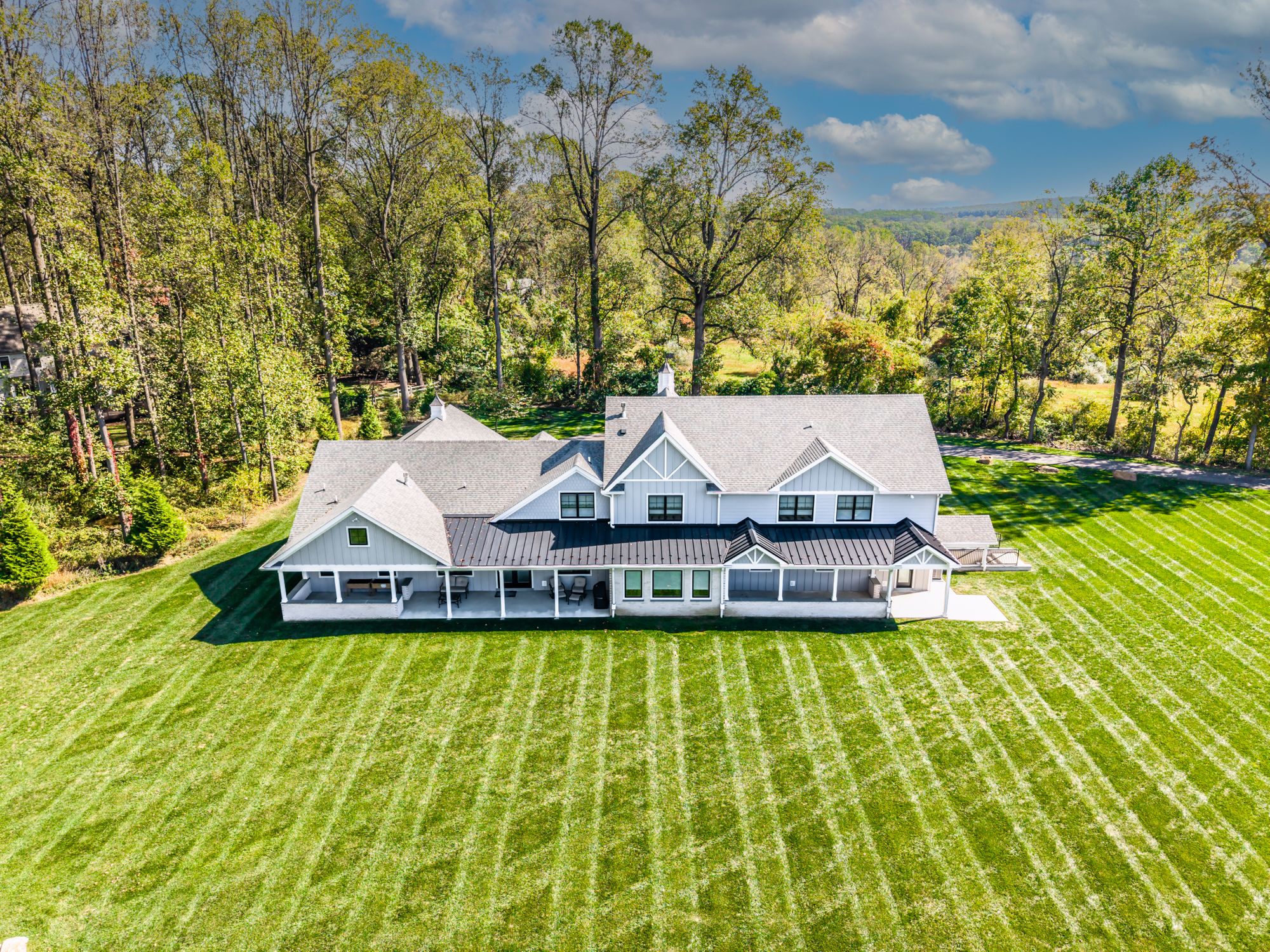
    The home has a covered porch that looks out on the surrounding property.

    Built in 2021, this sprawling Chester Springs estate has plenty of privacy thanks to both conservation land and surrounding pastures. The home features a two-tone kitchen with a quartz-topped island and a walk-in pantry that opens onto a dining and living room with a fireplace. Spanning six total bedrooms, the home has two primary suites, one on the first floor and another upstairs. The first-floor suite has a double vanity and a large walk-in shower, while the second-floor suite also has a soaking tub. Other features include a walk-out finished basement, a five-car garage, and a whole-house backup generator.

    See more photos of the property here.

    Price: $1.895M | Size: 9,130 SF | Acreage: 2.34

    🗞️ What other Chester County residents are reading this week:

    By submitting your written, visual, and/or audio contributions, you agree to The Inquirer’s Terms of Use, including the grant of rights in Section 10.

    This suburban content is produced with support from the Leslie Miller and Richard Worley Foundation and The Lenfest Institute for Journalism. Editorial content is created independently of the project donors. Gifts to support The Inquirer’s high-impact journalism can be made at inquirer.com/donate. A list of Lenfest Institute donors can be found at lenfestinstitute.org/supporters.

  • Exploring Cherry Hill’s Underground Railroad stop | Inquirer Cherry Hill

    Exploring Cherry Hill’s Underground Railroad stop | Inquirer Cherry Hill

    Hello, Cherry Hill! 👋

    Archaeologists are digging at Croft Farm to learn more about the site’s stop on the Underground Railroad. Also this week, new public pickleball courts are in the works, plus several high school sports teams are making post-season runs.

    If someone forwarded you this email, sign up for free here.

    An archeological dig opens a window to the past at Croft Farm

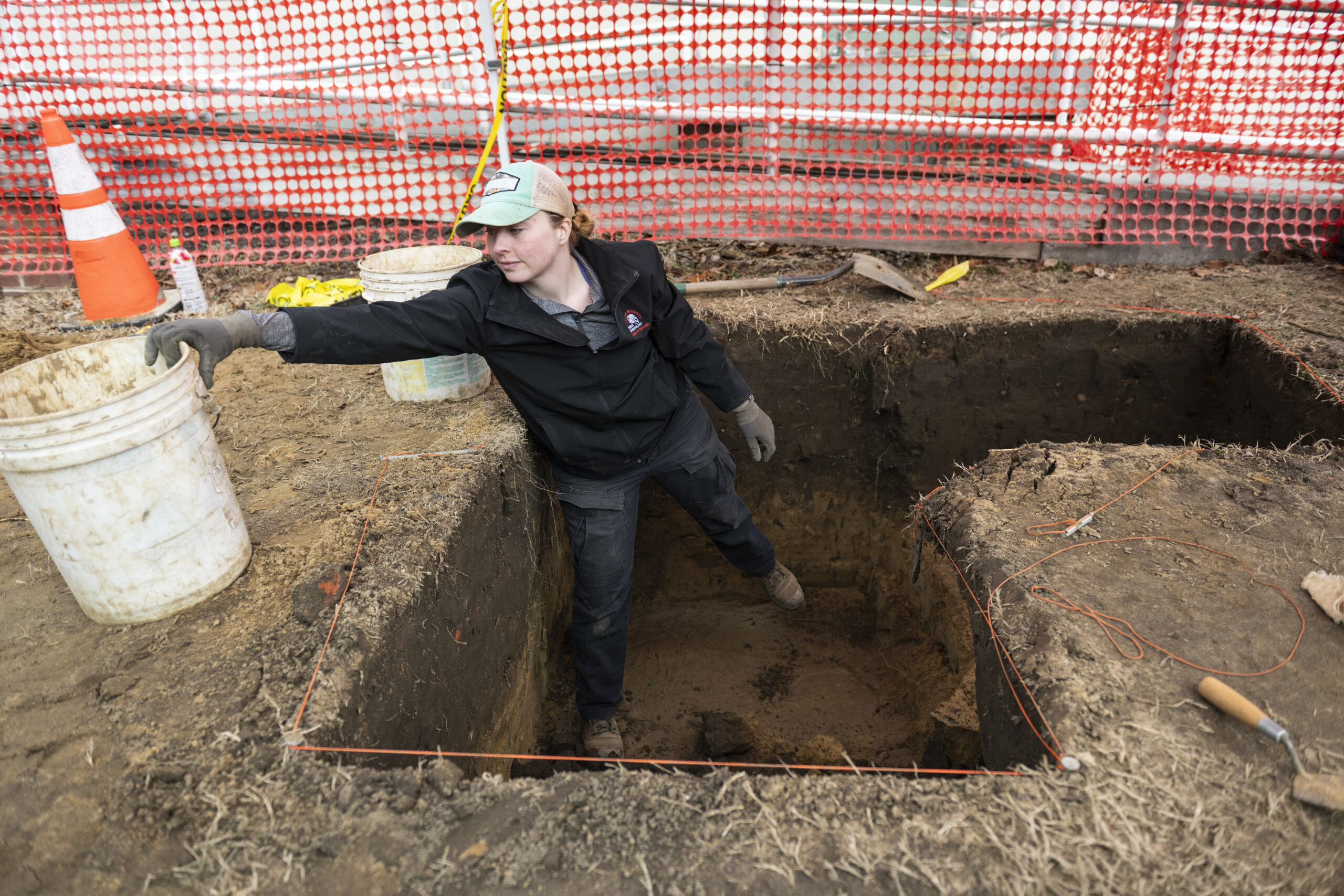
    Chelsea Carriere, archaeologist with PS&S, grabs for a bucket while digging at Croft Farm.

    Over the weekend, archaeologists unearthed pieces of the past as they excavated around the historic Croft Farm property. The dig, which was open to the public to view and part of a project to stop groundwater from entering the home’s basement, revealed artifacts dating back hundreds and thousands of years.

    They provide clues to the site’s past, including as a stop on the Underground Railroad, and before that, as a place where the Lenni-Lenape Indigenous people lived.

    Animal bones and pieces of pottery will help archaeologists better understand eating habits and traditions of those who lived there, The Inquirer’s Brett Sholtis reports.

    Read more about what the archaeologists unearthed.

    💡 Community News

    • This week’s storm brought a lot of snow to the region, with totals varying widely thanks to heavy banding. While the National Weather Service didn’t report an official total for Cherry Hill, surrounding towns reported 14 to 16.5 inches. The bad news (for those who don’t like snow): There’s the potential for a little bit more today. The good news is that it’s unlikely the snow will stick around as long as it did with last month’s storm thanks to the warmer temperatures and the extra daylight that late February brings.
    • Cherry Hill residents had a median household income of $121,500 between 2020 and 2024, according to the latest U.S. Census American Community Survey, which compiles self-reported income data over a five-year period. That’s up just about $2,000 from the last survey, looking at data from 2010 to 2014, and makes Cherry Hill the third-wealthiest town in Camden County.
    • Good news for pickleball players: Eight new public courts are in the works at two sites around town. The township is planning to build four courts with lights at Beechwood Avenue and Route 38. The goal is to start construction this summer and have the courts ready by early fall. Meanwhile, Camden County is building four courts at the nearly 18-acre John Adler Memorial Park at Challenge Grove at the corner of Bortons Mill and Caldwell Roads. Construction on those courts is also expected to begin this summer and will add to the park’s existing sports facilities, including a softball field, and basketball and bocce courts.
    • The planning board is meeting Monday evening to hear public comment about an amendment to the township’s Housing Element and Fair Share Plan, which would amend its overall master plan if adopted. One change would allow for the site of the six-story office building at 3 Executive Campus to be redeveloped into residential or mixed-used buildings with between 39 and 64 affordable units. It would also allow for part of the 28.2-acre site’s land to be developed. See a draft of the amendment here.
    • A Cherry Hill man who pleaded guilty to child molestation after having a sexual encounter with a 13-year-old girl in Indiana in 2021 was sentenced last week to three years in prison. Jonathan A. Trauger, 28, must also register as a sex offender for a decade after his release. (Courier Post)

    📸 Cherry Hill residents dig out after the storm

    Three generations of Cherry Hill residents, Julio Maldonado Sr., 79 (right), Julio Maldonado III, 19 (middle), and Julio Maldonado Jr., 49, (left), dug out the family’s car on Covered Bridge Road Monday. “We live together, play together, and work together,” Julio Maldonado Jr. said.

    🏫 Schools Briefing

    • There are several school board committee meetings on Monday evening, which are open to the public. See the district’s full calendar here.
    • East girls’ swimming will take on Bridgewater-Raritan Regional High School in the NJSIAA Team Swimming Championships this morning, after the event was postponed due to the weather. The meet will kickoff at 8:30 a.m. East defeated Passaic County Technical Institute 88-82 in group semifinals to claim its spot. As for the East boys’ swimming team, after making it to the semifinals, the Cougars fell to Hillsborough High 91.5-78.5. (NJ.com)
    • The NJSIAA girls’ basketball playoffs kick off this week, with both East and West competing. The West girls’ team will look to defend its state championship title in the first round of the Group 3 tournament on Friday at 3:45 p.m., hosting Cumberland Regional High School. Follow the results here and see the Lions’ full group bracket here. And East will take on Atlantic City High School tomorrow at 4:30 p.m. as part of the Group 4 tournament. See East’s full group bracket here.
    • East boys’ basketball also kicks off its NJSIAA playoff run this week, hosting Toms River High School North tomorrow at 4 p.m. The Group 4 top-seeded East went into the playoffs with a 21-3 regular season record. See the Cougars’ full Group 4 bracket here.
    • Camden Catholic High School’s boys’ wrestling team captured its 20th state title on Sunday, defeating Pope John XXIII Regional High School 53-19. It now has the third-highest number of state titles among public and non-public teams. (Courier Post)

    🍽️ On our Plate

    • Two Cherry Hill spots serve some of the best bagels in the state, according to a new ranking from NJ.com. Bagel Spot on Kings Highway landed at No. 18 on the list for its 24 types of bagels and 30 varieties of spreads, while K & A Bagel Cafe came in at No. 43. The Route 70 spot has 21 kinds of bagels and 18 spreads, including a honey cinnamon butter.

    🎳 Things to Do

    🎷 A Journey Through Jazz: Hear the Bradford Hayes Jazz Quartet perform. ⏰ Friday, Feb. 27, 7-8:30 p.m. 💵 $15 in advance, $20 at the door 📍Croft Farm Arts Center

    Bridgerton Handbuilding Workshop: Fans won’t want to miss this workshop, where you can make a teacup and saucer inspired by the popular Netflix show. ⏰ Saturday, Feb. 28, 10 a.m.-1 p.m. 💵 $150 📍Hugs Ceramics

    🍎 Holistic Health and Healing Expo: Learn about holistic wellness through lectures and workshops. You can also meet practitioners and shop for related goods. ⏰ Sunday, March 1, 11 a.m.-5 p.m. 💵 Free or $7.18 for VIP admission 📍DoubleTree by Hilton Cherry Hill Philadelphia

    ✡️ Purim Carnival: Kids are encouraged to dress in costume for this event celebrating the Jewish holiday. There will be face painting, games, crafts, food, and drinks. ⏰ Sunday, March 1, 11:30 a.m.-1:30 p.m. 💵 $20 per child 3 and older, free for adults and children under 3 📍Congregation Kol Ami

    🏡 On the Market

    A classic four-bedroom brick home in Short Hills

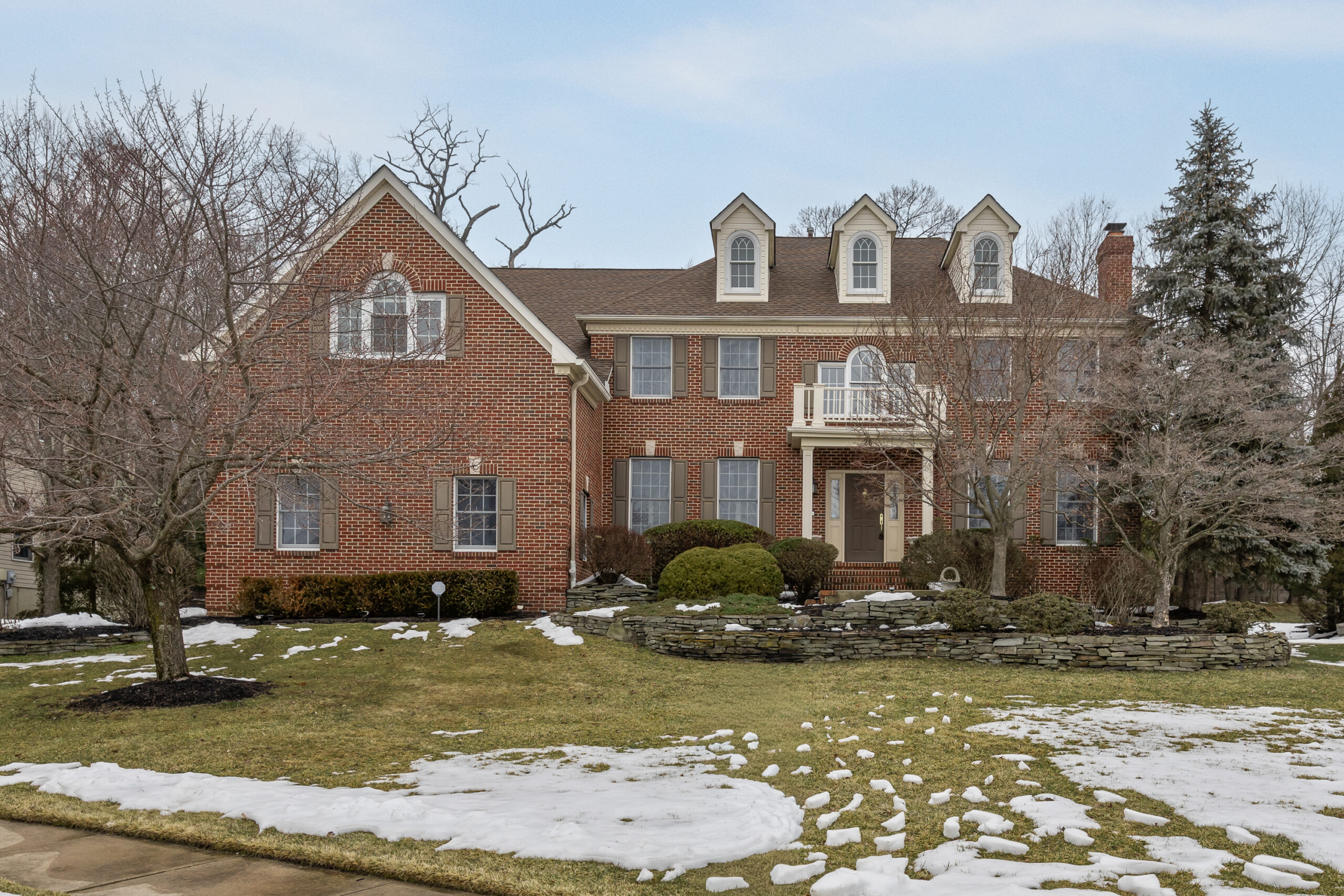
    The home has a classic brick facade, a portico, and dormers.

    Located in the Short Hills neighborhood, this brick-fronted home is full of classic elements, including a covered portico and dormers. Inside, there’s a two-story foyer, a formal living room with a gas fireplace, a formal dining room, a first-floor office, and a family room with a brick fireplace. The kitchen has a double oven, a separate bar area, and a dining area with vaulted ceilings and access to the deck. There are four bedrooms upstairs, including a primary suite with a separate sitting area, a large walk-in closet, a jacuzzi tub, and two vanities. Other features include a finished basement with a full bathroom, a three-car garage, and a patio.

    See more photos of the home here.

    Price: $1.05M | Size: 5,007 SF | Acreage: 0.46

    🗞️ What other Cherry Hill residents are reading this week:

    By submitting your written, visual, and/or audio contributions, you agree to The Inquirer’s Terms of Use, including the grant of rights in Section 10.

    This suburban content is produced with support from the Leslie Miller and Richard Worley Foundation and The Lenfest Institute for Journalism. Editorial content is created independently of the project donors. Gifts to support The Inquirer’s high-impact journalism can be made at inquirer.com/donate. A list of Lenfest Institute donors can be found at lenfestinstitute.org/supporters.

  • Swarthmore College president to step down in 2027 after 12-year run

    Swarthmore College president to step down in 2027 after 12-year run

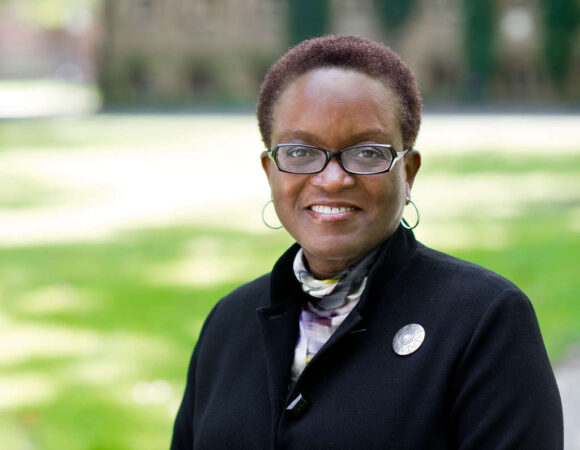
    Swarthmore College President Valerie Smith will step down in June 2027 after concluding her 12th academic year in the job.

    Smith, the highly selective liberal arts college’s first African American president, said in a message to campus that she decided to announce her decision now to give the school time for “a thoughtful, seamless transition.”

    “Serving as Swarthmore’s 15th president has been one of the great privileges of my life,” she said.

    Smith, 70, didn’t say specifically why she is choosing to leave the presidency, but it will be at the end of her current contract, which had been extended in 2024. An attempt to reach her for comment Tuesday was not successful.

    “These are tumultuous times,” Smith wrote. “Like many institutions, we are navigating new pressures, including unprecedented threats to our very mission. We will continue to face these challenges together, thoughtfully and deliberately. In doing so, we reaffirm Swarthmore’s enduring value.”

    The college said it would launch a search for Smith’s successor and already had chosen a search firm.

    “This is a pivotal moment for the college and for higher education more broadly, and the board recognizes how consequential this search will be in shaping Swarthmore’s future,” said Harold “Koof” Kalkstein, a 1978 graduate and chair of the school’s board of managers.

    A scholar of African American literature and culture, Smith came to Swarthmore in July 2015 from Princeton, where she had been dean of the college and a professor of literature and English.

    Smith steered Swarthmore through COVID-19, various student protests — including a pro-Palestinian encampment that was erected on campus in 2024 — and more recently, funding threats from the federal government. Swarthmore had feared that the federal government would increase the excise tax on its endowment earnings, but the school actually ended up not having to pay at all under new rules announced last year.

    In 2021, the college decided to stick with a plan to partner with an organization that places retired military personnel on campus as visiting faculty members despite pushback.

    “I ultimately drew from the College’s mission and my fundamental belief that critical to the liberal arts is our ability to engage in the exchange of diverse and often opposing views, not to shut them out,” Smith wrote at the time.

    When she arrived at Swarthmore, she said her plan for dealing with a student body known for its activism was to listen carefully, craft a careful and well-researched response, and communicate.

    “It’s critically important to maintain open dialogue with students,” she said at the start of her presidency in 2015.

    Kalkstein expressed gratitude for her service.

    “She has modeled integrity, intellectual curiosity, compassion, and empathy, all in service of our shared mission,“ Kalkstein said. ”Swarthmore is forever stronger thanks to Val’s leadership.”

    Smith will be leaving at the same time as Haverford College President Wendy Raymond, who announced her departure in November. That will leave Bryn Mawr College President Wendy Cadge, who has been at the school for less than two years, as the senior leader of the three members of a tri-college consortium.

  • A deteriorating West Goshen house is at the center of a preservation fight

    A deteriorating West Goshen house is at the center of a preservation fight

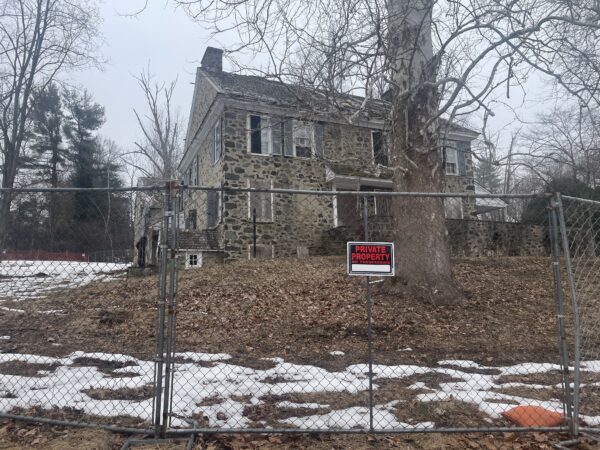
    Posts online beckoned urban explorers to creep through a century-old West Goshen home that has sat empty and deteriorating for more than two decades. Police have frequented the property — responding to sounds of gunshots, or finding the doors open, but halting their searches, worried the floor might collapse.

    The once-impressive three-story fieldstone house, with its private bridge and stonemason barn, has become something of an “attractive nuisance,” as a court document says, and a safety threat as it deteriorates.

    After the township intervened, the future of the privately owned property at 905 Westtown Rd. is now in the hands of a judge, who will weigh whether the property can be restored or if it ought to be demolished.

    But a group of residents fear losing the house, even in its much-diminished state, and have launched an effort to save the property. The hope is to halt possible development and instead turn it into a heritage center that would educate visitors on Chester County’s Quaker history and its roots to the Underground Railroad.

    It’s one example of a broader push and pull in Chester County, where residents want to preserve open space and history, and hold off development. But with privately owned land, especially land that is not protected for being historic, municipal officials can only do so much.

    “It’s a beautiful place. When you spend some time there, it’s like a window through time,” said Stephen Lyons, who is leading the preservation group Save Forsythe Farm, an unofficial name for the property derived from John Forsythe, who lived from 1754 to 1840, eventually owning the land and helping establish Westtown School.

    “It has a spirit of beauty,” he said.

    After sitting vacant for 20 years, the house has rotted from the inside

    The home was built more than a century ago — a structural engineer’s report puts it at 1900, a datestone on the property indicates 1818, and others suggest it may be older.

    The property, purchased by Joseph Kravitz in 2003, has descended into disrepair in the last two decades. Kravitz was found to have violated property maintenance codes in recent years. The property went into foreclosure and was listed for sheriff’s sale several times.

    But in September, with the property still owned by Kravitz, West Goshen officials submitted a 350-page petition to Chester County Court seeking conservatorship, arguing the house was neglected and in need of substantial rehabilitation.

    A judge approved the petition in November and appointed BDP Impact Real Estate as the conservator, which was tasked with creating a plan for abatement. Its final report will be heard in court on March 16, and the judge will determine what path should be followed. To retain ownership, Kravitz can reimburse the conservator and pay a fee, township officials said.

    Kravitz did not respond to phone calls or an email seeking comment.

    Under the conservatorship, a fence was placed to fend off explorers, and a structural engineer was brought in to assess the structures on the property. The engineer would not go beyond the front door of the house, out of fear of falling through the floor.

    But without going inside, the engineer found significant interior deterioration from a leaking roof, according to the report. Plaster, which once covered the ceilings, had rotted, fallen, and created mounds on the floor, revealing the skeletal wooden beams. The gutters have been disconnected, with water saturating the soil near the foundation. Cracks were seen on some windows.

    An in-ground swimming pool had “substantial” algae growth. A pool equipment shed was distorted. And a masonry barn structure was “in a state of impending collapse.”

    A single-lane bridge, allowing access from Westtown Road across a creek, is “not suitable for permanent use without repair or reconstruction.”

    When township solicitor Carl Ewald visited the property with the structural engineer in November, he mistook the swimming pool for a murky patch of grass.

    “It’s a very unfortunate situation, because I was able to find online pictures of this property from 20-some years ago, when it last went up for sale, and it was a really nice property back then,” he said.

    Along with an estimated $171,730 to install a temporary bridge to ferry equipment to the property, it would cost roughly $121,600 to demolish the main house, the conservator estimated.

    The estimated cost of rehabilitation was much higher: $1.2 million. Under that plan, the masonry walls would have to be stabilized and retained, and the interior fully gutted.

    It is unclear whether that is feasible and where the money would come from, Ewald said.

    “The court will be looking at that and determining whether that’s something that could be done, or whether demolition is the only real option,” he said.

    He thinks people might not realize how far gone the property is.

    “It’s unbelievable how fast water penetration into a structure really damages it, and how a house like this that stood for many years and, in 20 years, was really reduced to a shell,” Ewald said.

    The ability to ‘synthesize all these histories’

    With such a difficult path ahead, why not let the property go?

    For residents, it represents the region’s deep historical ties, and it offers the potential for preserving open space.

    Lyons grew up one mile away from the area. After living in New York as a musician and actor, he returned during the height of the COVID-19 pandemic to care for his parents, and Lyons became immersed in learning about the history of West Goshen, and the abolitionist and Quaker histories entrenched in the community.

    The goal for Save Forsythe Farm would be to create an open space that connects to the nearby Barker Park. In the group’s vision, the home would become a historic site that teaches about abolition, Black history, civil rights history, Quaker history, and more.

    “Forsythe Farm has a tremendous potential to synthesize all these histories and our connection to land and also First Nations people as well,” Lyons said.

    But this experience has prompted a proposed ordinance to address how demolition by neglect is handled amid private property rights, which the township’s board of supervisors and historic commission are set to discuss Thursday.

    Still, the hope is to keep the house from being demolished, said Brittany Schugsta, vice chair of the Save Forsythe Farm group. Her family once tried to buy the property, but ended up in East Goshen.

    “When I lived in West Goshen … it felt much more convenient. There was all the shopping hubs and all of those kind of places around, but it lacked that richness of history,” she said.

    If the owner does not reimburse the conservator, the property would be sold by the court to the highest bidder, Ewald said. The money would pay off the liens, debts, and the conservatorship. Any money left over would go to Kravitz.

    The township could buy the property, if officials are willing to spend a couple of million dollars “at minimum,” Ewald said. But it is not yet clear how much the property would cost, or if officials would want to purchase it.

    The house is something of a symbol of the past, said Bill Aaronson. He can see 905 Westtown from his front porch on Bob-O-Link Lane, where he has lived since the 1980s. He watched the home sell. He didn’t think much about it, until his son took a stroll and saw how much it had declined.

    And then he heard what it could become: a development.

    Speaking at a historical commission meeting last year, Kravitz said he envisioned several draftsman-style houses, called “Forsythe’s Homes” or “Barkerville.”

    (Though Kravitz has discussed his intentions previously, township officials said no plans had been submitted or were under review.)

    The concept prompted Aaronson to become more involved with Save Forsythe Farm.

    “The house itself is an extraordinary presence, and it symbolizes what the history here was, more than a plaque ever would,” Aaronson said.

  • The detective who helped advise ‘Mare of Easttown’ is suing Chester County over discrimination

    The detective who helped advise ‘Mare of Easttown’ is suing Chester County over discrimination

    A former Chester County detective — who served as a technical adviser for the HBO crime drama Mare of Easttown — is suing her former employer and supervisor in federal court over alleged sex discrimination.

    Christine Bleiler, who became Kate Winslet’s “go-to person” on developing her Emmy-winning performance as titular character Mare Sheehan, says she was subjected to a “prolonged pattern of hostile, discriminatory, and demeaning treatment based on her sex,” according to a complaint filed this month in the Eastern District of Pennsylvania.

    And though an internal investigation “corroborated” that she was being harassed, according to the suit, the county failed to remedy the harassment to which she was subjected.

    In addition to Chester County, the lawsuit names as a defendant Thomas Goggin, who was Bleiler’s supervisor from 2021 to 2023. Bleiler resigned in September.

    A spokesperson for the county declined to comment on ongoing litigation. An attorney for Goggin, who now serves as police chief in West Pikeland Township, did not immediately respond to a message seeking comment.

    Bleiler, who worked as a police officer for nearly a dozen years in Oxford Borough before beginning as a Chester County detective in 2015, began working under Goggin in February 2021. He accused her of talking too much, yelled at her repeatedly over how she handled suspects or on differences in opinion, demeaned and condescended to her, and told her “she ‘better not’ tell anyone that he was a problem,” according to the complaint.

    In August 2023, Bleiler brought the complaints to the detective division’s leadership, prompting an internal investigation that ultimately corroborated her claims, the suit says. Goggin was suspended for two weeks and was demoted, according to the complaint.

    Bleiler was worried about working near Goggin once he returned from his suspension, the suit says, fearing that he might retaliate. She was instructed by the department’s leadership to “bury her head in her work” and “move on from this.” Though she began reporting to a new supervisor, working in proximity to Goggin “caused her significant discomfort, anxiety and distress over potential retaliation and continued harassment,” the complaint says.

    Bleiler is asking a judge to declare that the county and Goggin’s actions violated federal and state antidiscrimination laws. It asks the court to grant her compensation for past and future lost earnings, earning capacity, and benefits, which the complaint argues Bleiler lost due to the “discriminatory and retaliatory conduct.”

    “The conduct of defendants, as set forth above, was severe or pervasive enough to make a reasonable person believe that the conditions of employment had been altered and that the working environment was hostile or abusive, and in fact made plaintiff believe that her working environment was hostile and abusive because of her sex and her complaint of sex discrimination,” the complaint states.

    While a detective for the county, in 2019 Bleiler served as a technical adviser for HBO’s Mare of Easttown, taking phone calls from Winslet morning and night to discuss upcoming scenes or to answer questions. At one point, Winslet visited her at the Justice Center in West Chester.

    “She insisted,” Bleiler told The Inquirer in 2021. “I told my lieutenant at that time, he couldn’t believe it. He said, ‘All right, she’s your responsibility. Get her in and get her out, keep it quiet.’”

  • The 300-year-old Cochranville is moving toward its first public water line

    Cochranville is moving toward getting its first public water line, after West Fallowfield Township secured a grant to fund the project earlier this month.

    Installing public water in the 300-year-old village situated within the largely agricultural township in western Chester County has been more than a decade in the making, said Duane Hershey, the chairman of the board of supervisors.

    Residents told officials water was a concern in a survey a few years ago, and the township has a desire to bolster the commercial landscape of Cochranville, Hershey said. But leadership wants to accumulate as much funding as possible to limit the blow to residents.

    The $1 million federal grant is the springboard for the municipality to gather more funds for the project, which Hershey estimates could cost $5 million to $6 million. The township is still years out from breaking ground.

    West Fallowfield covers a relatively large geographic area, but a majority is composed of agricultural properties. Its town center — the village of Cochranville — boasts a population of roughly 500, with a small number of residences and businesses sitting around the major intersection of state Routes 41 and 10. The lots are relatively small, and have on-site well water and septic.

    “It’s difficult for anybody to drill a well, and it’s really difficult to put any kind of a septic system in, other than a tank that has to be pumped and hauled,” Hershey said.

    That can be challenging for new businesses to come in without existing public utilities, said Michael Crotty, the township’s solicitor.

    “We are hoping it strengthens our particular commercial core right there, at the main intersection, by giving them a much easier base to build and develop,” he said.

    But, Hershey cautioned, it’s not because they want to vastly expand Cochranville. Rather, it’s to improve quality of life for people already there, and to bring in businesses to expand the tax base. The community has high nitrates due to its water setup, he said, which can be dangerous, particularly for babies. Consuming too much nitrate can lead to negative long-term health for adults, too.

    “We’re not doing this because we want to develop Cochranville and build a whole bunch more houses,” Hershey said. “The reason we want to do it is just to improve the infrastructure that’s already there, that is struggling because of our water issues.”

    The township plans to connect a water line to Cedar Knoll Homes at Honeycroft Village, a 55-and older-community about a half mile away, which has public water through the Chester Water Authority, Hershey said. It’s cheaper than if the township were to build its own water system.

    They’ll connect most-needed areas first, and possibly expand in the future. Officials couldn’t say exactly how many households would be connected to the line. The project is in early development stages, Hershey said.

    It’s not unusual for new water lines to be installed; that’s pretty much what happens whenever a new development is being constructed. But it’s a bit more unusual for the houses to come before the water line. The homes in Cochranville that will connect to the line are “long existing,” Crotty said.

    “The way this might be handled elsewhere would be a big, huge residential development comes in, and that would bring public water, and maybe that only brings it for itself, or maybe it brings it part of the way, but that could often be at the expense of the agricultural land that we’re all seeking to preserve,” Crotty said.

  • Cherry Hill East looks poised to make a consecutive NJSIAA boys’ basketball final appearance

    Cherry Hill East looks poised to make a consecutive NJSIAA boys’ basketball final appearance

    Dave Allen knows how to cultivate a winning culture.

    With stops at Eastern and Cherry Hill West, Allen, now in his 13th season as the Cherry Hill East boys’ basketball coach, has amassed 400 career wins at the helm, earning 28 playoff victories and two Group IV championships in the process.

    This year’s Cougars look like a direct extension of Allen’s winning ways.

    East ended the regular season 21-3, winning seven of its eight Olympic Conference matchups. The Cougars are slated to host Toms River North (9-17, 3-7 Shore) in the first round of the NJSIAA South Jersey Group IV Tournament on Thursday at 4 p.m.

    The Cougars are looking to build off last season’s playoff run, in which they fell to Lenape, 48-47, in the Group IV championship — just a point away from raising their third championship banner in program history.

    Allen, however, would be the first to say that this year’s team is different.

    “Traditionally, we’ve always been a three-point shooting team,” Allen said. “We push in transition but also play some control-tempo basketball, but this year, we’ve been more of a pressing team, more of a team trying to play transition more so than we had in the past. At some points in the year, we were averaging over 70 points a game.”

    Cherry Hill East junior Chris Abreu is averaging 16.8 points, 6.3 assists, and 6.1 rebounds this season.

    The catalyst for this change, Allen says, has been the team’s “really good guard play.”

    This backcourt effort is led by junior Chris Abreu. The 6-foot-1 guard transferred to East after his freshman season at Paul VI and has been a constant triple-double threat. He’s averaging 16.8 points, 6.3 assists, and 6.1 rebounds this season.

    “We’re a fast-paced team,” Abreu said. “Push the ball a lot and push it in transition.

    “I’m really excited for the playoffs, actually.”

    Thursday will mark the second meeting between East and Toms River North this season. On Dec. 20, the Cougars trounced the Mariners, 91-38, behind Abreu’s triple-double (14 points, 11 assists, and 10 rebounds.)

    Allen indicated that his team will look to key in on the Mariners’ Jake Greenberg. The sophomore guard is averaging 13.5 points and is known to get hot from deep.

    “[Greenfield is] solid,” Allen added. “He was solid against us the first time, and he’s having a good year for them, so we’re going to have to try to keep up what we’re doing defensively.”

    ‘Reshift some things’

    To start the season, Abreu had a running mate in sophomore Jamieson Young. Against the Mariners, Young totaled 23 points. The combo guard was the Cougars’ leading scorer, averaging 21.8 points through the team’s first 12 games.

    However, on Jan. 17 against St. Rose, Jameson went to save the ball from going out of bounds, landing awkwardly on his right ankle, which he had previously tweaked in the summer. This time, it required surgery. He was ruled out for the remainder of the season.

    “[Young] gave us a lot in terms of his ability on the floor,” Allen said “He was our secondary ball handler and also our leading scorer. … We had to then kind of reshift some things to make up for those 22 points [per game].”

    Chris Abreu says East is a “fast-paced team” this season.

    First, Allen’s eyes turned to Abreu, challenging the junior to take over the scoring load and “make people better” around him. He did just that, as East won five straight following Young’s injury.

    “[The message was] to just stay focused, stay disciplined,” Abreu said. “It’s hard with injuries and us being hurt, but you’ve obviously just got to push through it.”

    Allen also turned to senior guard Chris Delgado. The four-year starter scored a career-high 28 points in the Cougars’ first game without Young, while surpassing 1,000 career points in the process.

    “The best thing I can say about [Delgado] is that he’s a kid we want our younger players to emulate. That’s it,” Allen said. “He’s a kid who is a program kid who sacrifices. All he wants to do is win.”

    This year, Delgado is averaging 11.5 points, 1.5 assists, and 2.25 rebounds, while being tasked to guard the other team’s best player. The senior has seen two deep playoff runs with the Cougars: a Group IV semifinal loss in his freshman year and last year’s final loss.

    Cherry Hill East senior Chris Delgado is averaging 11.5 points, 1.5 assists, and 2.25 rebounds this season.

    This will be the senior captain’s final chance to earn a championship. Consistent messaging is important for Allen, but winning is not the only thing the coach wants his players to focus on.

    “Win or lose, the process is what’s going to be lasting for players,” Allen said. “Even when you win, that’s not what’s lasting. … What happens is, when you win, you change the goalpost — you start thinking about competing again.”

  • This Mennonite pastor’s kid made a Wall Street fortune, hired hundreds, and is rebuilding Kennett Square

    This Mennonite pastor’s kid made a Wall Street fortune, hired hundreds, and is rebuilding Kennett Square

    After John Michael Bontrager came home to Pennsylvania from Wall Street to start an advice firm for big investors, he located his company in Kennett Square, “America’s Mushroom Capital” and the most populous of the old factory and farming towns along Old Baltimore Pike in southern Chester County.

    Bontrager and those who joined him prospered. In 2018, he stepped down as founding head of investment-risk adviser Chatham Financial, which now employs 850 at its campus just east of the square-mile borough of 7,500.

    Now, he’s devoting himself to the redevelopment of Kennett Square and nearby towns.

    Using his own fortune, donations, and state and local government funds, Bontrager and his allies have developed a string of projects — restaurants, hotels, and nonprofits — under the loose umbrella of his Square Roots Collective. Their affiliates have purchased 2% of the town’s houses to redevelop as rentals. Their goal: Make the area more attractive to college-educated young people, while also boosting the quality of life for longtime residents and working people.

    Last year Bontrager announced his ALS diagnosis. He has recruited staff and allies, including family members, former Chatham employees, and a multi-ethnic group of Southern Chester County professionals to build Square Roots into a movement that can survive him.

    In December, the borough council endorsed Bontrager’s “public, cultural, and social impact initiatives,” calling them “key to shaping the inclusive community.” They voted unanimously to ceremonially rename Birch Street, an industrial road Bontrager has visibly transformed, as “Bontrager Walk.”

    In local government meetings and town election campaigns, some residents have expressed concerns about Square Roots’ concentration of power and conflicts of interest.

    Bontrager agreed to take questions at his Kennett Square office. His daughter, newly designated co-CEO Stephanie Almanza, and his chief of staff, Luke Zubrod, a Chatham Financial alumnus who serves on the borough planning commission, sat in.

    The conversation has been edited for length and clarity.

    Why did you start local projects while you were still building your company?

    [I wanted] to convince people we wanted to hire, between the ages of 25 and 33, that Kennett is a reasonable place for them to live. How do we make this attractive for people to move here and to bring people who grew up here back?

    Thirty years ago when I came here, it was a great community for families. But it was harder to convince singles and couples with no kids.

    I read sociology, for example Chuck Marohn’s Confessions of a Recovering Engineer; Yoni Appelbaum’s Stuck about zoning; The Logic of Failure by a German neuroscientist [Dietrich Dorner].

    The elements I came up with: A community is totally interconnected, people and organizations. All decisions have ripple effects. When communities focus only on solving the near term problem, it’s probably not going to be good.

    For example, we have about 30% of Chester County “preserved.” Well, it’s great to have open space. But if you take a third of your land out of commission, without providing for housing, housing prices will go up dramatically. And taxes.

    Mike Bontrager (center, in grey jacket) with family members (from left) Stephanie, Kymm, Luis, Cruz, Katherine, Mason, Mike, Dot, Lauren, and Willie.
    How do you solve issues in concert?

    Collaboration, trust, working together. A lot of elected officials are volunteers. It’s easier to focus on one issue at a time and react to the three or four people who show up at your meeting with pitchforks.

    Of course you want a say over what happens in your neighborhood. But the consensus favors the status quo, the entrenched interest.

    Not everyone loves what we’re doing. Luke, Stephanie, and myself have said, ‘Let’s understand people’s concerns. We’re neighbors.’ We listen; we have a lot of meetings.

    What are the institutions you’ve set up?

    The Square Roots Collective is our brand for all the activities. It includes Square Roots Community Initiative, a 501(c)4 nonprofit that’s the umbrella group. There’s our for-profit businesses; the profits go to support the nonprofits. We donated more than $1 million last year to nonprofits and projects in the area.

    On Birch Street, there’s our offices, and the Creamery [converted from an old condensed-milk plant site], which we started as a beer garden in 2016, it’s now a restaurant, and Artelo, the art hotel.

    We are also working on the Francis, an eight-room hotel in the middle of town. And we are opening a really cool cocktail bar, the Star and Lantern [referencing the Underground Railroad and the area’s abolitionist history] in 2027. And we are preparing Opus, a restaurant.

    On the nonprofit side, there’s the Kennett Trails Alliance, a 14-mile loop. About half is open, and we have easements for most of the rest, not all. It connects some of the open spaces, the Brandywine Creek, Anson B. Nixon Park, the YMCA.

    And there’s Voices Underground, an organization we initiated in partnership with Lincoln University and Longwood Gardens, elevating the stories of the Underground Railroad.

    Artelo Hotel Kennett Square, which has works by local artists in each room. This is “Floating Free,” by Philadelphia artist Philip Adams.
    Your groups own about 40 of the 2,000 or so houses in the borough. Is there a shortage of affordable rentals, given demand from mushroom farms and other industry?

    Yes. What we have is tenant housing, market rate, including some we rent to area charitable and community groups [for their clients].

    How did you decide to start Chatham in 1991?

    When I was 13, I worked for an appliance repairman, John Schmucker. He was brilliant at fixing washers, dryers, dishwashers. But he was a disastrous business guy. He never collected. I saw building a business is very different from being smart and an expert.

    My father was a Mennonite pastor in Christiana, Lancaster County. I went to Lancaster Mennonite School. I went to Wheaton College in Illinois. I was so naive; I had never met a real professional.

    I would sign up for any kind of recruiter interview. I eventually went to see someone who worked for Chemical Bank [predecessor of JPMorgan Chase]. I got a job offer.

    I joined this new unit selling these emerging derivatives — interest-rate swaps, currency and commodity hedging — to help clients manage the risks.

    There were products that were inappropriate for most investors. Municipalities got in trouble buying things that didn’t need, where the banks took out a lot of money.

    People needed advice. I loved helping clients, maybe it was a big company, or maybe an oil distributor in Queens who needed to hedge his fuel-pricing risk.

    Why did you return to this area from New York?

    My wife wanted to move back to our families. In August 1991, I bought a place in Cochranville. We had a satellite dish that brought in Telerate [a stock-tracking service], which was just a year old. That’s what made it possible to do this work anywhere. I started over the garage, me and my dog.

    It turned out to be the best time to start a derivatives advisory business. There were a lot of properties available from [recently failed] savings-and-loans at cents on the dollar, and someone figured out a legal structure that allowed real estate investments trusts to go public. We did their hedging. Same with private equity.

    I called a few of my old clients, Milton Cooper at Kimco Realty Trust, we helped him go public, he recommended us. We advised [mortgage-bonds pioneer Ethan Penner] on the first mortgage-backed securities. In 1994, I cold-called a young associate at a firm buying failed S&L loans. He hired us to hedge. That was Jon Gray, who worked his way up and is expected to be the next CEO of Blackstone.

    We mastered hedge accounting. We had more derivative hedging experts than anyone. The Big Four accounting firms and their clients found we spoke their language.

    By 2000, we had built a real business. We moved to Kennett because it was a larger town [and closer to Philadelphia and its airport].

    How did you prepare your work to go on after you left, under your successor Matt Henry?

    At Chatham, I wanted us to be internally owned, the people who are joining should reap rewards. I did not want any outside investors. [Employees own most of the stock, and elect top officers.]

    I have been diagnosed with ALS, which is a pretty devastating diagnosis. I don’t how long I will be able to be actively involved. I still get to do purposeful work with people I love. Isn’t that what we all want? So I’m going to go until I can’t.

    CEO Matt Henry of Chatham Financial center, just outside Kennett Square.