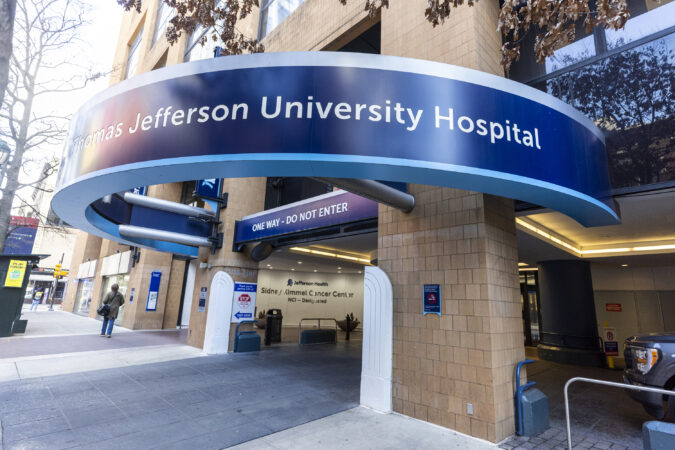
Jefferson Health’s Lehigh Valley Health Network will go out of network Monday for members of UnitedHealthcare’s Medicare Advantage plans.
That means about more than 20,000 people who get care at LVHN facilities could experience disruptions in their care. Two years of negotiations failed to result in a new contract, Jefferson said in a statement Wednesday.
Jefferson also said that United reduced payments to LVHN by nearly 40% since 2021, reducing the nonprofit health system’s revenue by more than $100 million over four years.
“When an insurer stops paying agreed‑upon rates and refuses to negotiate, patient access is put at risk. Jefferson and LVHN will not stand by while an insurer prioritizes its own margins over fair contracts and sustainable care,” said Jeffrey Price, a Jefferson senior vice president involved in managed care and payer relations.
LVHN patients who have UnitedHealthcare plans through their employers will remain in-network at the nonprofit system through most of April 25, Jefferson said.
United said that negotiations continue on those contracts, but noted that LVHN wanted a 20% price increase in the first year.
The dispute does not affect Philadelphia-area Jefferson patients with insurance from UnitedHealthcare, the nation’s largest health insurer.
Jefferson first warned in October that its LVHN facilities would startgoing out of network this month.
At the time, United suggested that Jefferson’s announcement during the Medicare Advantage annual enrollment period was a negotiating tactic designed to put pressure on United.
United said Wednesday that its “top priority is providing people continued access to the care they need through our broad network of providers who collaborate with us to provide quality, affordable care.”
The company noted that it recently signed a multiyear contract with LVHN’s biggest competitor, St. Luke’s University Health Network. That contract covers employer-sponsored plans as well as Medicare and Medicaid plans.
By going out of network with United Medicare Advantage plans, LVHN joins other well-known systems to have done so in the last year. They include Johns Hopkins Medicine and Mayo Clinic.
Last March, Jefferson went out of network with Cigna Health for a few weeks during a similar impasse in negotiations. Jefferson and Cigna quickly reached a deal after the termination.
Temple University Health System and Jefferson Health are the latest area health systems to sue pharmaceutical companies and pharmacy benefit managers over high insulin pricing.
Temple filed its suit last week, and Jefferson sued just before the new year.
Eli Lilly, CVS Caremark, and Sanofi are among the major companies named in the suits, which accuse drugmakers and pharmacy benefit managers, or PBMs, of conspiring to drive up profits on diabetes drugs.
PBMs work with drug manufacturers, insurers, and pharmacies, negotiating prices and developing formularies — lists of prescription drugs that are available on a given insurance plan.
The health systems and other plaintiffs say drugmakers inflate prices for their insulin products in order to secure lucrative placements on formularies. Then, they pay a portion of the resulting profits back to PBMs, according to the lawsuits.
Jefferson and Temple officials said they are paying more for employees’ insulin as a result, impacting the health systems’ budgets and hurting their ability to “provide necessary services […] to the larger Philadelphia community.”
Representatives from both health systems declined to comment.
Eli Lilly has worked for years to reduce out-of-pocket costs for insulin, the company said in a statement, noting that some plaintiffs filing the lawsuits are choosing higher-priced medications over more affordable options.
Lilly capped insulin prices at $35 per month, the statement said, and in 2024 the average monthly out-of-pocket cost for its insulin was less than $15.
CVS Caremark said pharmaceutical companies “alone are responsible” for pricing their drugs in its latest statement, released after Philadelphia officials joined the litigation last month. The company said it would welcome lower prices on insulin.
“Allegations that we play any role in determining the prices charged by manufacturers for their products are false, and we intend to vigorously defend against this baseless suit,” they wrote in an email.
A statement from Sanofi said that the company has always complied with the law when it comes to drug prices and works to lower prices. PBMs and insurers sometimes negotiate savings on drugs, but those are “not consistently passed through to patients in the form of lower co-pays or coinsurance,” the statement read.
“As a result, patients’ out-of-pocket costs continue to rise while the average net price of our insulins declines.”
Anna Stone was doing the first rounds of her nursing shift at St. Luke’s Upper Bucks Campus when she noticed a patient’s heart rate was elevated, a sign that they could be at risk of a cardiac emergency.
Before she could look into the patient’s chart and decide whether to call for help, a critical care doctor came rushing to the patient’s bedside.
A drop in the patient’s oxygen levels had been detected by a monitor that uses artificial intelligence to continuously evaluate vital signs. This triggered an automatic alert for the hospital’s critical care team to send help.
The AI tool is intended to help doctors and nurses more quickly identify patients whose condition is deteriorating — often before signs of distress are visible to medical staff — and intervene sooner.
The approach contributed to a 34% decline in cardiac arrests, and a 12% drop in patients crashing so hard and fast that they required rapid response transfers to the ICU between 2022 and 2024, according to St. Luke’s.
Survival rates among cardiac arrest patients rose from 24% to 36%.
St. Luke’s experiment with a program called the Deterioration Index, created by healthcare software giant Epic, is among the latest ways hospitals are bringing artificial intelligence into their patients’ rooms.
In other Philadelphia-area initiatives, Jefferson Health and Penn Medicine recently debuted an ambient listening tool that records conversations between doctors and patients, distilling the critical details into a well-organized visit note.
St. Luke’s has been using its AI monitoring system across all 16 of its campuses, including Quakertown, Upper Bucks, and Grand View, which the health system acquired in July.
The health system’s initiative was recognized by The Hospital and Healthsystem Association of Pennsylvania, the region’s largest industry group for hospitals, with an award honoring safety and quality initiatives that improved patient care while reducing hospital costs.
Using AI to predict emergencies
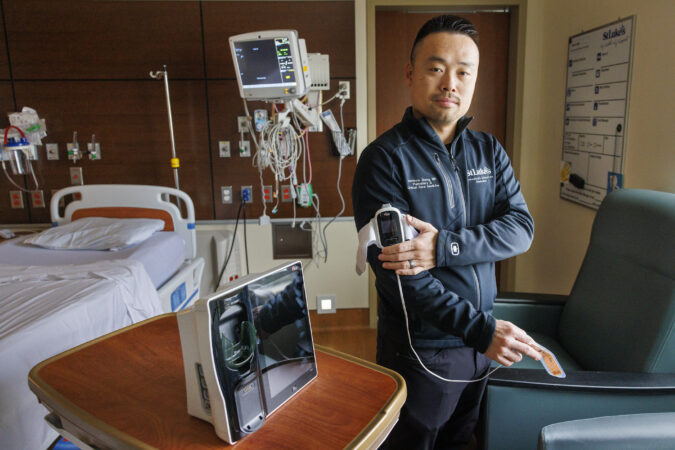
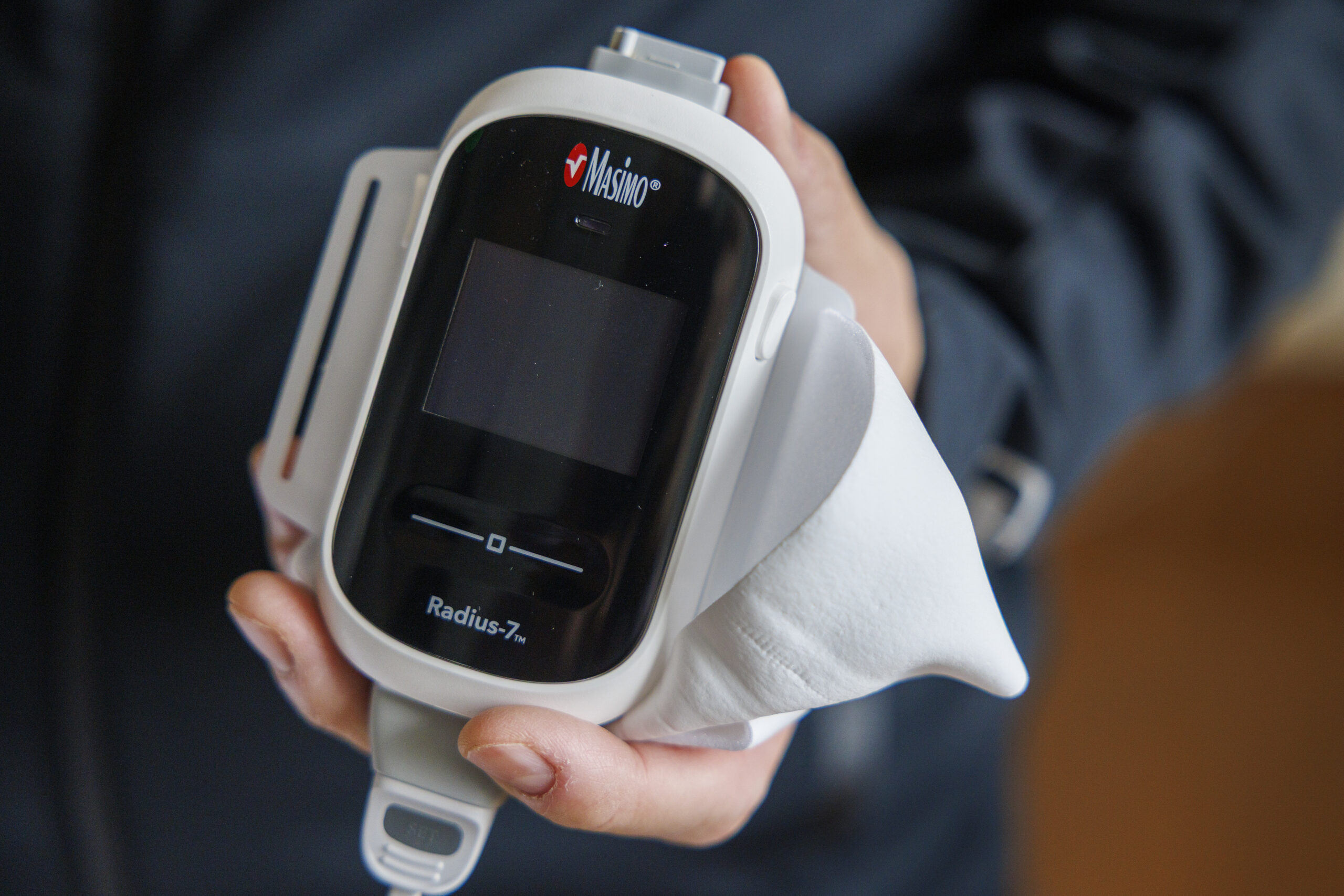
The monitoring device, which attaches to a patient’s finger, records and continuously updates patients’ electronic medical records with vital metrics such as heart rate, blood pressure, and lab work results.
Using this matrix of data points, it assigns each patient a “deterioration index” — a score between 0 and 100 indicating their overall stability — and automatically alerts critical care when the score rises too high.
Matthew Zheng, a doctor at St. Luke’s Upper Bucks, holds the monitoring device used to continuously track patients’ vital signs.
It is not intended to replace in-person monitoring, but serves as an extra set of eyes when nurses are away from their bedside.
What’s more, the sophisticated technology is capable of picking up on nuanced changes in a patient’s status before they show physical signs of distress.
“We would ideally like to intervene on these patients before they reach a point where the intervention isn’t that helpful,” said Matthew Zheng, a critical care doctor at St. Luke’s Hospital — Upper Bucks. “Our nurses work very hard, but they can’t be in the same room all the time.”
When a patient’s “deterioration index” rises above 60, the device sends an alert to the hospital’s virtual response center — a remote hub where a nurse monitors three screens showing the status of all patients.
Alerts may also be sent directly to a patient’s care team or the rapid response unit, if the AI monitoring detects that a patient is quickly deteriorating and needs emergency care.
“What that’s allowed is for us to have a proactive response instead of being reactive to patients,” said Charles Sonday, an associate chief medical information officer at St. Luke’s who leads AI initiatives.
Stone, the Quakertown nurse, said having the tool to constantly watch over patients while she’s out of their room is reassuring.
Doctors like that it enables them to quickly get up to speed on the status of a patient they transferred out of the ICU, and respond more immediately to their new medical needs, said Zheng, the critical care doctor.
St. Luke’s plans to continue fine-tuning the technology, and customize it to meet the unique patient profiles of each of its campuses, which span 11 counties and two states, from the Lehigh Valley to New Jersey.
The social and economic factors that affect patient health, such as pollution, and illness rates, vary significantly across the health system’s sprawling network, Sonday said.
The system will also explore customizing the tool for specialty services, such as pediatrics and behavioral health.
When Scott Edgell was discharged from the military after a service-related head injury at age 20, he thought he would resume life as normal.
But over the next four decades, the Lancaster Countyman was troubled by frequent migraines, memory problems, dizziness, irritability, and balance issues. Even everyday activities, like grocery shopping or eating at a restaurant, became overwhelming.
“I didn’t understand what was happening to my body,” said Edgell, who is now 57.
He realized the head injury he suffered while serving in the military was to blame after watching the 2015 movie Concussion, but struggled to find doctors who knew how to help him.
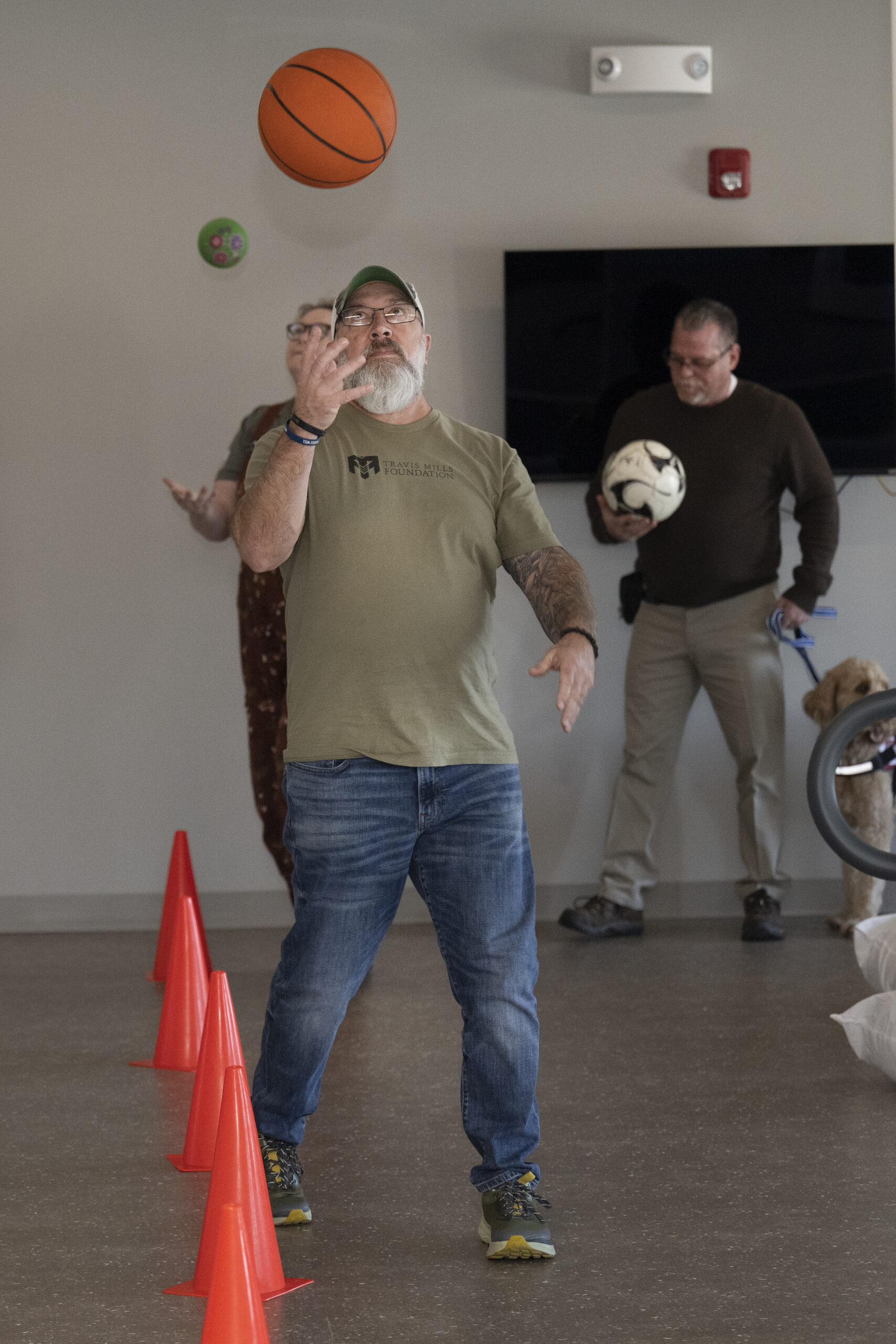
Just as he started to lose hope in late 2023, he learned abouta Jefferson Health program in Willow Grove for veterans and first responders with traumatic brain injuries (TBIs). The clinic provides physical and cognitive rehabilitation to participants over a three-week intensive outpatient program.
Edgell is among the estimated one in four veterans who have had a TBI. More than half a million U.S. military members have been diagnosed with the injury since 2000, according to the Department of Defense.
Many suffer TBIs as a result of combat-related incidents, exposure to blasts during explosions, training accidents, and vehicle crashes.
While some patients can recover completely, up to 30% of those with mild TBIs, also commonly called concussions — which account for the vast majority of TBI cases — experience long-term symptoms.
The lasting effects of TBIs are often overlooked among veterans because of the injury’s invisibility. Yet they can be life-altering, affecting employment, personal relationships, and overall quality of life.
Veterans with a TBI had suicide rates 55% higher than veterans without the injury, one study found.
Jefferson’s program, called the MossRehab Institute for Brain Health, was founded in 2022 and has treated roughly 100 patients. Itruns on donations — the biggest being from the veterans’ wellness nonprofit Avalon Action Alliance, which has provided $1.25 million annually.
Donations allow them to offer the program at no out-of-pocket cost to veterans and first responders, and cover housing, transportation, and meals during the three weeks.
“I walked in those doors at the lowest part of my life,” said Edgell, who participated in June 2024.
Though there’s no cure for his injury, the program has helped him rebuild his life.
“All you can do is learn to manage your symptoms,” he said.
Edgell and his family, including his wife Tami, stepdaughter Monica Bressler, son-in-law Kenny Bressler, and granddaughter Hayvin.
The program
Edgell entered the MossRehab program in June 2024 as part of a cohort of four.
The first step in his rehabwas learning about what was happening to his brain.
His accident occurred back in 1989, when a steel hatch swung shut and hit him in the back of the head during a training exercise at Fort Riley, Kan.
Doctors at the time provided memory exercises, mental health support, and physical rehabilitation to improve his gait, but nothing brought him back to baseline.
Edgell managed to push through his memory problems in college by putting in extra effort into studying, and ultimately became an electronics engineer.
However, it became harder to cope with the symptoms as he got older.
Even brief outings would exhaust him to the point of needing days to recover.
When his wife, Tami, would ask what she could do to help him, he wouldn’t know what to say.
One therapist at the program offered him a helpful analogy: If a normal brain is like a six-burner stove, then having a brain injury is like being down to only three burners.
“You’re trying to do everything with two or three burners that you would normally do with six, and your brain just becomes very fatigued and overwhelmed,” Edgell said.
The program teaches participants to adapt to their brain’s new way of functioning, whether through physical rehabilitation for symptoms such as dizziness, or cognitive rehabilitation to address issues affecting attention, concentration, memory, and mood.
“We’re basically retraining the brain to do something that it’s having difficulty doing because of an injury,” said Yevgeniya Sergeyenko, a physical medicine & rehabilitation physician and clinical director of the program.
Since treatment for TBIs revolves around managing the symptoms — which can vary widely between patients — the program has staff across an array of specialties that patients see throughout their three-week stay.
One provider helped Edgell, who was struggling to get more than a few hours of sleep a night, find medication to help him sleep.
A physical therapist, meanwhile, assisted with his balance and core structure, so he could walk and move around more easily.
Others taught Edgell exercises to improve his dexterity, speech, and memory.
Army veteran Scott Edgell participates in a cohort session at the MossRehab Institute for Brain Health.
Some forms of therapy were less conventional.
There was horticultural therapy — a therapy that involves working with plants — which Sergeyenko said has been shown to lower blood pressure and is intended to help with emotional regulation.
Patients also did yoga and other mindfulness and movement activities intended to calm the nervous system.
Edgell said yoga wasn’t his favorite, but he found art therapy helped him communicate more openly.
One of the exercises at the start of the program asked himto draw a tree. He drew one that “was not doing very well,” he said.
At the end of the three weeks, he drew a lush version full of leaves. The framed drawing now hangsin his dining room.
“I look at that everyday to see where I came from,” he said.
Army veteran Scott Edgell shows drawings of trees representing himself during a cohort session at the MossRehab Institute for Brain Health.
Outcomes
Program organizers say returning to a pre-injury baseline is not always a realistic goal.
“There’s not a medicine that you can give that’s going to make all of your brain injury symptoms subside,” said Kate O’Rourke, the program director at the clinic.
The program aims toimprove function and quality of life.
As of September, the last time outcome statistics were compiled, 82 patients had gone through the three-week intensive. Sixty-five percent saw significant reduction in their symptoms, as measured bytheir Neurobehavioral Symptom Inventory scores — which assesses a patient’s severity of neurobehavioral symptoms from 0 to 88. The average reductionwas 13.26 points.
Ninety-nine percent of patients reported that they personally felt they improved after the program.
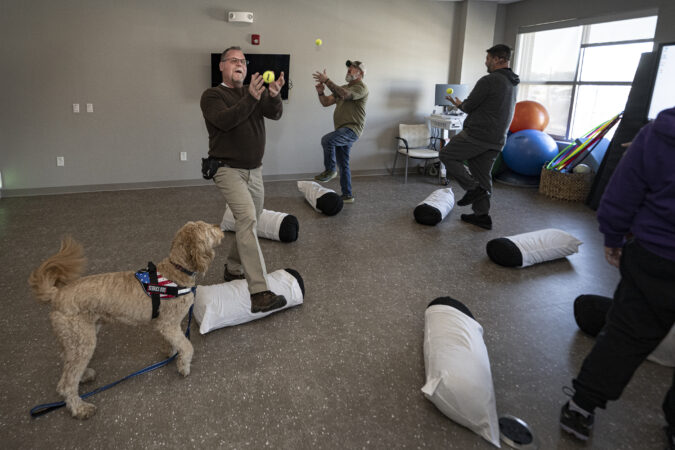
Current patients (Jeff Todd Malloch and Jessica Mack) and Army veteran Scott Edgell participate in a cohort session with his therapy dog, Lars, at the MossRehab Institute for Brain Health.
Edgell regularly reaches out to staff for advice, and meets with the program’s alumni in monthly conference calls.
He still has bad days sometimes, but he’s able to manage them better.
Before, when he would go to a grocery store or restaurant, he would become overwhelmed by the noise, lights, and commotion.
“I couldn’t catch my triggers before I fell off the cliff,” Edgell said.
He was only able to leave the house four to five times a month.
Working with a service dog at MossRehab inspired him to get one of his own.
Now, when he starts to react, a golden doodle named Lars will nudge him, giving him a moment to let his brain calm down.
Edgell and his service dog, a golden doodle named Lars.
Today, he’s able toleave the house more frequently and for longer.
He and his wife have reconnected with friends and engaged more in social activities.
“I still get tired, I still need breaks, but my recovery time is a lot faster, and it’s not nearly as devastating,” Edgell said.
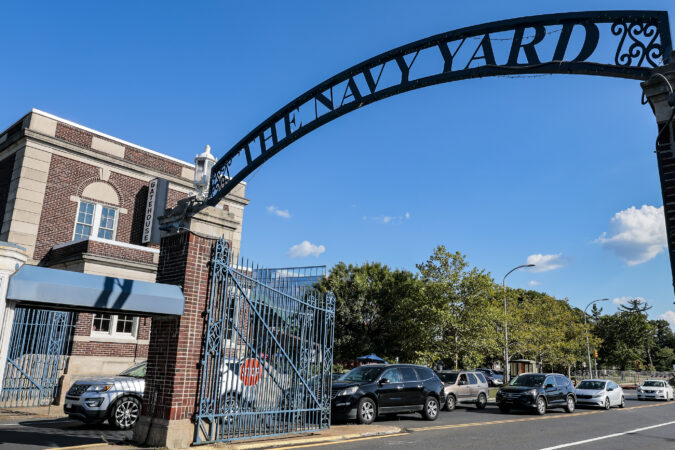
Executives at Happy Bear, which has sold coffee online for the past two years, said they recently signed a lease for a 3,000-square-foot space on the ground floor of 1201 Normandy Place, a mixed-use lab building optimized for life-science tenants, including those who do gene and cell therapy research and development.
The Happy Bear cafe is set to serve coffee, wine, and grab-and-go food, including sandwiches, breakfast items, soups, salads, flatbreads, and tomato pie made in partnership with Carlino’s, the Ardmore-based specialty-food purveyor.
A Saquon hoagie special at Carlino’s Market in Ardmore. The specialty-food purveyor’s food will be available at the the Happy Bear Coffee Company’s first physical store at the Navy Yard.
The cafe will have indoor and outdoor seating overlooking the five-acre Central Green Park, and provide “a versatile setting for morning coffee, a quick lunch, or an evening glass of wine,” according to the news release.
“We wanted to create a place that feels like a daily ritual and a small retreat all in one,” Happy Bear cofounder Dan Kredensor said in a statement.
“With Carlino’s expertise as one of our culinary partners, we’re building a cafe that brings together wonderful specialty coffee, great flavors, and a welcoming atmosphere, right in the heart of the Navy Yard’s most exciting new district.”
An artist’s rendering shows an aerial view of the proposed development plan for the Navy Yard.
Ensemble Real Estate Investments, of California, and Philly’s Mosaic Development Partners were selected in 2020 to lead an estimated $2.5 billion redevelopment of 109 acres of the former base.
Construction of 1201 Normandy was part of Ensemble/Mosaic’s first phase of redevelopment, which was estimated to cost $400 million.
“Happy Bear represents the type of dynamic, community-focused retail that will define the Navy Yard as it enters its next phase of growth,” said Nelson Way, vice president of leasing and development for Ensemble.
Happy Bear was founded by longtime friends Kredensor and Frank Orman, who bonded by exploring Philly’s coffee shops during their college years.
The pair’s first cafe will be near a 12-acre section of the Navy Yard that’s being called the Historic Core District, combining historic buildings with new construction.
An artist’s rendering of PIDC’s vision for the Navy Yard Historic District Core district, which would combine historic buildings and new construction.
In the same area, developers have built more than 600 apartments in a mixed-use community called AVE Navy Yard, which is expected to open next year.
The Philadelphia Industrial Development Corporation (PIDC), an independent nonprofit, manages the Navy Yard on the city’s behalf. It has owned the 1,200-acre site since the U.S. Defense Department decommissioned it as a military base in 2000.
The Navy Yard is home to 150 companies that employ 16,000 people, according to its online directory. Its tenants include Urban Outfitters, which is headquartered at the site, and Jefferson Health.
The property also has a Courtyard Marriott, several daytime food options, and a full-service restaurant called the Gatehouse.
Navy Yard stakeholders want the campus to eventually have nearly 4,000 new apartments; 235,000 square feet of retail; and more than 4.2 million square-feet of office, research and development, and manufacturing space, according to its 2022 redevelopment plan. Developers also want to bring another hotel to the site.
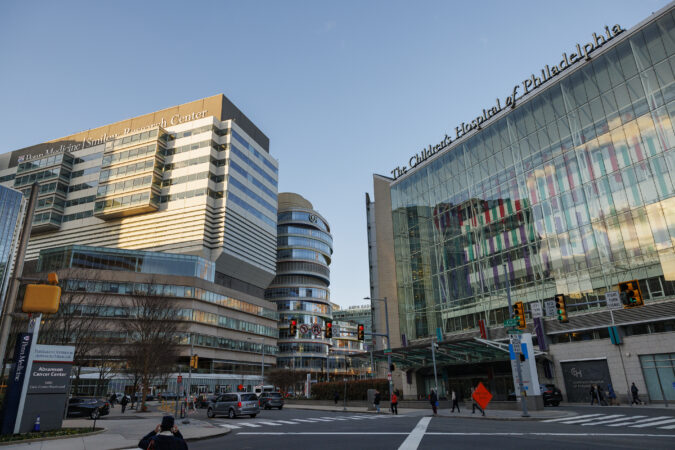
Children’s Hospital of Philadelphia was the most profitable nonprofit health system in Southeastern Pennsylvania during the three months that ended Sept. 30, according to an Inquirer review of financial filings.
CHOP reported $70 million in operating income in the first quarter of fiscal 2026, up from $67 million the same period a year ago. The nonprofit’s revenue climbed nearly 9% to $1.3 billion.
The biggest loss in percentage terms was at Redeemer Health, the region’s smallest health system and the only remaining operator with a single hospital. Redeemer had an $11.7 million operating loss on $103.4 million in quarterly revenue. That was an improvement over an $18.9 million loss last year.
Jefferson Health had the most patient revenue following its acquisition last year of Lehigh Valley Health Network. The 32-hospital system had $2.9 billion in patient revenue, $100 million more than the $2.8 billion at the University of Pennsylvania Health System, which has seven hospitals.
window.addEventListener(“message”,function(a){if(void 0!==a.data[“datawrapper-height”]){var e=document.querySelectorAll(“iframe”);for(var t in a.data[“datawrapper-height”])for(var r,i=0;r=e[i];i++)if(r.contentWindow===a.source){var d=a.data[“datawrapper-height”][t]+”px”;r.style.height=d}}});
Here’s a recap of selected systems’ results for September quarter:
Jefferson Health
Jefferson Health reported a $104 million operating loss, as its insurance business continued to drag down results. The loss included $19.4 million in restructuring charges for employee severance related to earlier job cuts and moves designed to make the system more efficient.
University of Pennsylvania Health System
University of Pennsylvania Health System had an operating gain of $109.3 million, up from $49.3 million in the same period a year ago. This year’s results include Doylestown Health, which Penn acquired April 1. Total revenue was $3.3 billion, up from $2.8 billion a year ago.
Temple University Health System
Temple University Health System’s loss in the quarter was $15 million, an improvement over a $17 million loss last year. Total revenue was $800 million, up 13% from $712.5 million a year ago. Outpatient revenue increased by nearly $62 million, much of it from the health system’s specialty and retail pharmacy business.
Several Philadelphia-area violence prevention efforts will benefit from nearly $3 million in newly released state funding to help hospitals address a leading cause of death and injury.
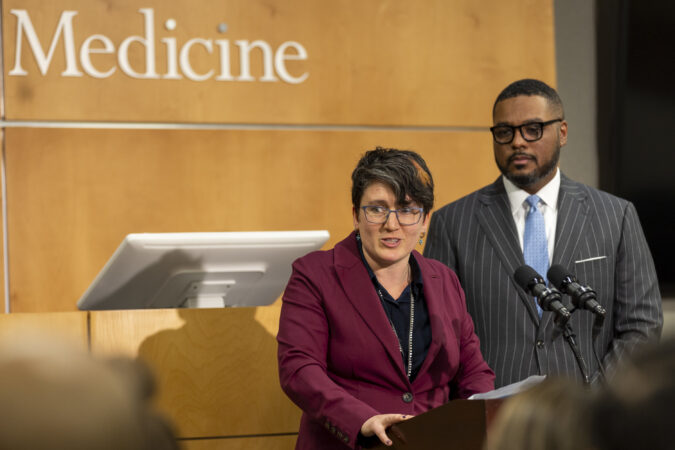
The new funding for hospital-based violence intervention programs (HVIP) was announced by Pennsylvania Lt. Gov. Austin Davis on Wednesday at Penn Presbyterian Medical Center. One of the recipients, the Penn Trauma Violence Recovery Program, is based at the Penn Medicine hospital in University City.
Other local awardees includeTemple University Hospital in North Philadelphia and the Philadelphia-based nonprofit Urban Affairs Coalition. The coalition received funding on behalf of the Chester Community Coalition to relaunch a program that had been at the now-shuttered Crozer-Chester Medical Center.
The University of Pittsburgh Medical Center also received funding. The amounts awarded to each program were not announced.
The Pennsylvania Commission on Crime and Delinquency, which Davis chairs, received 15 applications in total seeking nearly $12 million in funding — four times what was available.
“Addressing the epidemic of gun violence is a top priority for our administration,” Davis said.
Lieutenant Governor Austin Davis speaks at a press conference announcing the $3 million in grants for hospital-based violence intervention programs.
The programs aim to connect patients at risk of repeat violence with resources while they are in a hospital, so they leave with a safety plan. Services can include long-term community-based case management, mentoring, and home visits.
Since the first HVIP was established in the mid-1990s, dozens have spread around the country and abroad, including in Philadelphia.
Several local institutions have these programs, including Temple Health, Children’s Hospital of Philadelphia, Penn Medicine, Jefferson Health, and Drexel University. The City of Philadelphia, in conjunction with the area’s Level 1 trauma centers, launched an HVIP Collaborative in 2021.
Studies have shown these programs reduce rates of repeat violent injuries and recidivism among participants.
After shootings spiked during the COVID-19 pandemic, gun violence is now declining in Philadelphia. As of July, shootings for the year were at their lowest total since at least 2015.
Davis noted that Philadelphia has seen a 15% decrease in homicides this year, with roughly four in fivegunshot victims surviving their injuries.
The new funding will allow the Penn Trauma Violence Recovery Program to increase its community presence and mental health programming, said its director, trauma surgeon Elinore Kaufman.
Through her experience treating victims of violence, she has learned that injuries can be deeper than the physical wounds.
The program was launched to address social factors often involved in violence by providingpsychosocial support and connecting patients with services to help with education,job training, and housing.
“We’ve worked with patients long enough now that we have high school graduation photos, we have baby pictures,” Kaufman said. “We have patients who want to give back and have joined our patient advisory board to help push us forward.”
A lawsuit filed Tuesday in Philadelphia accused Jefferson Health of violating federal labor rules when it laid off 1% of its 65,000 employees in October and this month without providing a 60-day notice.
The purported class-action lawsuit says the proposed lead plaintiff, Ciara Brice, lost her job as a medical assistant on Nov. 12 with no notice and has not received the severance pay she was promised.
Brice was not available for comment, said her lawyer, Jeremy E. Abay, with Philadelphia law firm Pond Lehocky Giordano Inc.
The Worker Adjustment and Retraining Notification Act has a complicated rubric for determining when a mass layoff requires advance notification, which is filed with state labor departments. One of the triggers is an employer cutting at least 500 jobs, according to Abay.
Even though the layoffs happened throughout Jefferson’s entire footprint from South Jersey to near Scranton, Abay said notice is required because Jefferson operates as a single entity.
“We believe the facts will show that there was no violation of the federal WARN Act,” Jefferson said in a statement.
The nonprofit filed a notice of 108 layoffs at Jefferson Cherry Hill Hospital, Jefferson Stratford Hospital, and Jefferson Washington Township Hospital because New Jersey has its own rules, Abay said.
The nonprofit, which grew through acquisitions from three hospitals in Philadelphia in 2015 to more than 30 now, provided no details when it announced the layoffs in mid-October.
That layoff was part of a series of large job cuts starting in the summer of 2023, but may have been the first time patient-facing workers like Brice were hit.
The lawsuit seeks back pay, benefits, and damages for each laid-off employee who did not receive a 60-day notice.
Editor’s note: The headline on this article has been updated to clarify that a lawsuit claims violations.
Jefferson Abington Hospital has closed its inpatient behavioral health unit and will use the 23 beds to accommodate extra patients in its emergency department, the health system said this week.
Abington will continue to provide crisis services to stabilize patients who are experiencing a mental health emergency when they arrive at the hospital, and will provide psychiatric evaluations needed to transfer them to specialized facilities. The hospital will also continue to provide outpatient behavioral health services.
The shift “will better serve our emergency department patients both with and without behavioral health needs,” Jefferson Health said in a statement.
A spokesperson confirmed the change on Tuesday but declined to say when the hospital had transitioned the 23 behavioral health beds into an emergency department “surge unit” or whether any staff members were laid off.
Jefferson Health announced in October that it had laid off between 600 and 700 of its 65,000 employees. The system reported an operating loss of $104 million in the first quarter of fiscal 2026, which ended in September, driven largely by its struggling insurance business.
The spokesperson also declined to say whether the hospital had plans to reopen the psychiatric unit in the future, or whether the change was part of ongoing restructuring across the sprawling 32-hospital system. Jefferson leaders have said they plan to streamline services across the Jefferson network, which has grown significantly through acquisitions since 2015.
The hospital’s inpatient psychiatric unit treated 350 patients in 2024, according to the most recent data from the Pennsylvania Department of Health.
Patients experiencing severe mental and behavioral health emergencies often need to be admitted to a specialized psychiatric hospital. General hospitals like Abington are critical entry points, helping to stabilize these patients and providing psychiatric evaluations, said Carla Sofronski, executive director of the PA Harm Reduction Network, a nonprofit organization that advocates for people with mental and behavioral health needs.
Patients must be evaluated by a psychiatrist or psychologist before being transferred to a specialized facility.
Sofronski said she worries that being in the emergency department could become even more stressful and scary for patients in a mental health crisis if they do not have dedicated rooms to decompress.
“It’s a very busy emergency department — what does that experience look like for people who are suffering?” she said.
Last year, an Abington security guard was accused by the Pennsylvania Department of Health of using excessive force against a patient being treated in the hospital’s psychiatric unit. Video footage of the hallway encounter obtained by The Inquirer showed the guard bringing the patient — who was naked beneath a hospital-bed blanket wrapped around her body — to the floor after she ignored his orders to stop walking. Jefferson has said the guard followed protocol.
Jefferson declined to say where it planned to transfer patients.
Other options nearby for patients in need of these services include Holy Redeemer Hospital’s 24 inpatient psychiatric beds, according to health department data from 2024, the most recent year available.
Elsewhere in the Jefferson network, Jefferson Einstein Philadelphia has 37 inpatient psychiatric beds and the system’s flagship hospital has 16.
“Jefferson How We Adore Thee” will be released to the university community at its annual gala Tuesday. The university held a contest during its bicentennial last year, and Barden’s piece was selected from dozens of entries, the school said.
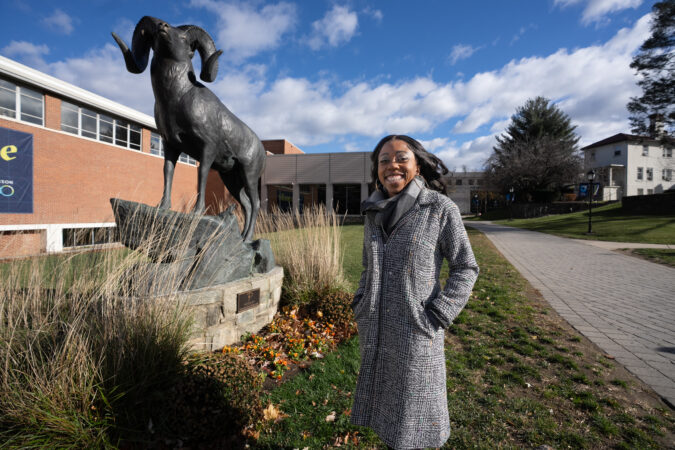
Elizabeth Avril Barden, a customer-experience specialist at Jefferson Health Plans and recent summa cum laude graduate of Thomas Jefferson University, has written the school’s first alma mater song in its 201-year history. “Jefferson How We Adore Thee” will be released to the university community at a gala on Tuesday.
“Elizabeth really captured the essence of the Jefferson community,” said Jefferson President Susan C. Aldridge “Learning, collaborating and innovating are all part of our collective DNA and I couldn’t be happier that we finally have an alma mater which captures who we are as a university as we venture into our third century.”
Jefferson has had a handful of songs that students have written over the years and a processional theme that launched in 1974, but never an official alma mater song, said F. Michael Angelo, Jefferson archivist.
One reason could be that at its founding in 1824, Jefferson was a medical college and over the years evolved into a university. But it was always medically focused until the school merged with the former Philadelphia University, best known for its design, engineering, and health science programs, in 2017.
“Philadelphia University, as far as we can tell through their archives, never had an alma mater song, either,” Angelo said.
Barden, 32, who received her bachelor’s degree in Health Services Management from Jefferson this year, said a colleague encouraged her to enter the contest. She has written about 30 songs, she said, so it wasn’t an off-the-grid venture.
It took her just 25 minutes to write the lyrics and music for the one minute, 55-second piece, she said.
“If you’re creative, you just flow,” she said. “You flow like water because it’s already in you, and you don’t have to overthink what’s already in you.”
And with the help of producer Keegan Myers, who played the music while Barden sang, the chorus goes:
It’s the Jefferson strong and true, where innovation leads us through. Together we achieve our best, as we prepare for what’s next.
“In every step I was taking at the university, it was preparing me for the next level of life,” she said.
Barden has been singing in front of people since age 2 and wroteher first song at 7, she said. Her parents, both Christian pastors originally from Haiti, encouraged her musical talent as she grew up in Brooklyn surrounded by gospel music, she said.
“Me and my six siblings, we were essentially the choir,” she said.
In high school, she won a song-writing contest and got to meet Grammy-winning R&B singer Jazmine Sullivan, who, she said, encouraged her to keep writing. She had written her high school’s alma mater song, too. And when she was a student at Delaware County Community College, she sang the national anthem at two ceremonies.
“Any school I go to, I want to leave a piece of me there,” she said. “Music to me is connection. That’s how I connect to people.”
For winning the Jefferson contest, she received a $200 gift card to the school bookstore, lunch with Aldridge, and a Jefferson mug.
“But the greatest gift was my name being attached to this alma mater song,” she said.
Barden said her aim in writing the song was to give Jefferson a gift.
“Jefferson gave me a lot,” she said, including a scholarship. “There were moments where I needed to talk to professors because life was happening. They were always kind and patient with me.”
Barden attended community college in New York after high school, but left when she got pregnant. When she moved to Philadelphia in 2016, she enrolled at Job Corps and then moved on to the Delaware County college. She continued on to Jefferson, while raising her four children, now ages 2 to 13.
In 2023, she began working there, too. Her job entails focusing on the patient experience and helping patients navigate the system.
“For the most part, I’m kind of like a clean-up person,” Barden said.
She’s currently enrolled in a dual program at Bryn Mawr College and Jefferson to obtain her master’s degrees in social service and public health. She plans to become a licensed clinical social worker and to incorporate music therapy into her work.
As part of her studies, she’s doing research on how music therapy can help those suffering from post-traumatic stress.
“I do believe that the incorporation of music,” she said, “has the ability to communicate with anyone … and help them learn how to cope.”