Tag: Joe Biden

  • ‘Charles Manson,’ a shot at federal workers and a response to Vanity Fair. Here are the highlights from JD Vance’s Pa. visit.

    ‘Charles Manson,’ a shot at federal workers and a response to Vanity Fair. Here are the highlights from JD Vance’s Pa. visit.

    With the midterm elections 11 months away, Vice President JD Vance visited one of the most closely watched swing districts in the country to ask Pennsylvania voters to aim their anger over the economy at Democrats rather than the Trump administration.

    During a speech at Uline Shipping Supplies in Alburtis in the Lehigh Valley, Vance blamed immigrants for the housing shortage and invoked the name of notorious killer and cult leader Charles Manson as he doubled down on President Donald Trump’s rhetoric from the week before in the Poconos.

    Vance’s visit was to U.S. Rep. Ryan Mackenzie’s district, while Trump’s speech last week at the Mount Airy Casino Resort was in U.S. Rep. Rob Bresnahan’s district. Both freshman Republicans won their seats by roughly a percentage point last year and are among the most vulnerable incumbents in Congress headed into 2026.

    Both speeches were billed as being focused on the economy — as Trump and Vance seek to counter Democrats’ message on affordability ahead of next year’s election. But both delved into an assortment of topics.

    Though Vance’s remarks were wide-ranging, the vice president hewed to the White House message that while the price of eggs might still be high, the administration is working to improve pocketbook issues and restore confidence in the economy.

    “Even though we’ve made incredible progress, we understand that there’s a lot more work to do, and the thing that I’d ask from the American people is a little bit of patience,” Vance said.

    Affordability

    Vance didn’t say the affordability crisis is a “Democratic hoax,” as Trump did.

    He just said it’s the Democrats’ fault.

    “When I hear the Democrats talk about the affordability crisis they created,” Vance said, “it’s a little bit like … Charles Manson criticizing violent crime. Look in the mirror, my friend, you are the cause of the problem.”

    It’s a variation of Trump’s line from last week that “Democrats talking about affordability is like Bonnie and Clyde preaching about public safety.”

    Democrats started criticizing the price of eggs when Trump was in office for less than a week, Vance said.

    A woman asked Trump about it, and according to Vance, the president responded, “’Lady, we’ve been here for three days. It takes a little bit of time to fix something that was so fundamentally broken.’”

    Every “single affordability crisis” in the United States — food, housing, medicine, gas — is because we “inherited a nightmare of an economy from Joe Biden,” Vance told the crowd.

    In an unusual explanation of how Biden sent housing costs soaring, for example, Vance explained that the previous administration’s immigration policies were to blame.

    Vance said “20 million illegal immigrants … took homes that, by all rights, go to American citizens, and to the people of this great state.”

    It’s a line that he’s used before, which fact-checkers have flagged. Politifact pointed out that there are around 12 million to 14 million undocumented immigrants living in the United States. And the housing shortage comes from a lack of construction of a sufficient supply of affordable homes, experts say.

    Beyond that, Politifact said, immigrants often share housing with friends or relatives, making their average housing consumption “far smaller than is typical.”

    Democratic Gov. Josh Shapiro, who is up for reelection next year, hit back at Vance on social media and made the case that Trump’s policies, including cuts to Medicaid and tariffs, are exacerbating the cost-of-living headaches for Pennsylvanians.

    “Donald Trump and JD Vance’s economic policies are hurting Pennsylvania. They have raised prices at the grocery store, screwed over our farmers, and gutted healthcare funding,” Shapiro said on X. “I know this Administration thinks the cost of living is a ‘hoax’ — but it’s not, and Pennsylvania families know it.”

    Firing federal workers

    In his speech, Vance made much of the just-released November jobs report, delayed by the government shutdown. Around 64,000 jobs were added to the economy, an improvement over the more than 100,000 jobs lost in October.

    Putting a good face on the big October job loss, Vance told a reporter after his speech that those were federal government jobs eliminated by the Trump administration — with a plan in mind.

    “That is, in a lot of ways, what we’re trying to do under President Trump’s leadership,” Vance said. “We wanted to fire bureaucrats and hire these Americans out here,” Vance said to applause.

    As he spoke, Vance praised Mackenzie for his “dedication to American workers.”

    Asked about the 4.6% November unemployment rate, the highest since 2021 during the pandemic, Vance was able to put a good spin on that as well.

    Many of the unemployed may have lost their jobs two years ago, under Biden, and stopped looking for work, Vance said. Those people aren’t counted in the official unemployment statistics. Now, however, as we see wages rise and more investment into the United States, Vance said, the people sitting out the job search under Biden are getting “off the sidelines” and once again seeking jobs. As they do, they’re being counted as unemployed.

    The high unemployment rate, then, is “exactly what we want,” Vance said. “That is happening under President Trump’s leadership.”

    As he spoke, Vance explained Trump’s ideas to help Americans get by, including omitting taxes on tips and overtime, as well as creating a tax deduction for interest on auto loans.

    These will lead to significant tax refunds, Vance said, adding that middle-class Pennsylvanians will see “the best tax season in 2026 that you’ve ever had.” That’s a result of Americans having “a president and Congress fighting for you for a change,” Vance said.

    Vance responds to Vanity Fair article

    In a tough question from a reporter, Vance was asked about a Vanity Fair article in which Trump’s chief of staff, Susie Wiles, described some of the people in the administration in less-than-flattering ways.

    She said Trump has an “alcoholic’s personality”; Elon Musk is an ”avowed ketamine user” and an ”odd, odd duck”; Budget Director Russell Vought is “right-wing, absolute zealot”; and that Attorney General Pam Bondi ”completely whiffed” in handling the Epstein files.

    As for Vance, Wiles said he’s “been a conspiracy theorist for a decade,” and that Vance’s crossover from a Trump critic to an ally was based on political expediency.

    While Vance didn’t address the latter description, he agreed that he “sometimes” is a conspiracy theorist, but that he only believes “in conspiracies that are true.”

    As an example, he said, he believed in “this crazy conspiracy theory that the media and government were covering up the fact that Joe Biden was clearly unable to do the job.”

    Vance said it turns out that such conspiracy theories are just things that he discovered to be true “six months before the media admitted it.”

    He hastened to add that if anyone in the Trump administration learned a lesson from the Vanity Fair article, it’s that “we should be giving fewer interviews to mainstream media.”
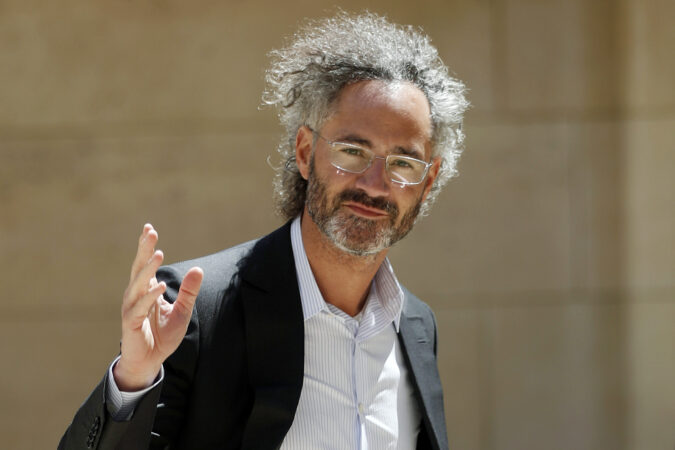

  • Palantir CEO Alex Karp was raised in a liberal household outside Philly. Now he’s a top Trump administration contractor

    Palantir CEO Alex Karp was raised in a liberal household outside Philly. Now he’s a top Trump administration contractor

    In the first year of President Donald Trump’s administration, Palantir Technologies has secured major contracts to compile data on Americans, assist the president’s federal immigration enforcement, and play a key role at the height of the Department of Government Efficiency’s efforts to shrink the federal government.

    But just a few years ago, it seemed unlikely that billionaire Alex Karp, CEO of Palantir — a publicly traded data software company that Karp described in 2011 as “deeply involved in supporting progressive values and causes” — would ever strike such deals with Trump.

    Karp grew up in the Philadelphia area in a politically left-leaning household and was critical of Trump during his first White House term. But over time, and catalyzed by Hamas’ Oct. 7, 2023, attack on Israel, his opinion and habits shifted. Quickly, he went from being a major Democratic Party donor to writing a big check to Trump’s 2024 inaugural committee.

    As of May, Palantir has received more than $113 million in federal spending. The company, which builds software to analyze and integrate large data streams for major companies, including defense contractors, sees itself as a beneficial power, but critics are concerned about data being misused or people being surveilled in violation of civil liberties, according to the New York Times’ The Daily podcast.

    And some employees are opposed to the optics of Palantir carrying out the president’s controversial political agenda.

    Here’s what to know about Karp and Palantir.

    What is Palantir?

    Palantir is a publicly traded data analytics software company that was cofounded by Karp, Joe Lonsdale, Nathan Gettings, Stephen Cohen, the company’s president, and Peter Thiel, a billionaire tech investor and cofounder of PayPal. Thiel is a libertarian and is a staunch supporter of right-wing ideology.

    Palantir, based in Denver, grew out of the Sept. 11, 2001, terrorist attacks on the United States and a desire to help improve national security.

    According to The Daily podcast guest Michael Steinberger, who spent six years interviewing Karp for a book, one of Palantir’s major contractors has been the CIA, which was also one of its early investors. Palantir’s technological products also played a key role in assisting Ukraine during the early months of Russia’s war on the country.

    The company started its partnership with U.S. Immigration and Customs Enforcement during former President Barack Obama’s administration, but that contract did not draw controversy until Trump’s first term in the White House, when his immigration crackdown became a key priority, Steinberger, a contributing writer to the Times, said.

    This summer, it was reported that Palantir landed a $10 billion software and data contract with the U.S. Army, months after reports showed Trump tapped the company to compile data on Americans, prompting scrutiny from privacy advocates, labor rights organizations, and student unions.

    Alex Karp, Palantir CEO, has roots in Philadelphia

    Karp was born in New York but grew up in the Philadelphia suburbs, he told the World Economic Forum in 2023. He went on to attend Central High School.

    As Steinberger describes it, “He’s a Philly kid. He grew up in Philadelphia. Grew up in a very left-wing household.” Karp is the son of a Jewish pediatrician and a Black artist. And he’s dyslexic, Steinberger said.

    “It’s like I have this weirdly structured brain,” Karp said in an interview with Steinberger. “The motor is just structured differently.”

    Karp and his younger brother spent time going to antiwar and antinuclear protests, and the older Karp attended Haverford College, Steinberger said. There, he closely identified with his Black heritage, getting involved with Black student affairs and organizing an antiracism conference at Yale University.

    Karp insists that he did not put much effort into his schooling at Haverford, but Steinberger, who was a classmate of Karp’s in college, appears to think otherwise.

    “I think his path in life would suggest otherwise. I think the library saw a lot more of him than it did of me, which may go some way to explaining why he became a billionaire and I did not,” Steinberger said.

    After Haverford, Karp attended Stanford Law School, where he met and became close with Thiel — whose political views were the opposite of Karp’s. Years later, Karp and Thiel reunited after 9/11. Thiel was looking for a CEO for Palantir.

    “Thiel interviews a couple of people for the CEO position, but then he and the other people involved in founding Palantir realized Karp is probably the right guy for the job,” Steinberger said.

    In an interview with Steinberger, Karp admitted that his background made him an unlikely choice for CEO.

    “I wasn’t trained in business. I didn’t know anything about start-up culture. I didn’t know anything about building a business. I didn’t know anything about financing a business,” Karp said.

    From a Philly liberal to a staunch Trump defender

    In Steinberger’s telling, Hamas’ terrorist attack on Israel on Oct. 7, 2023, gave rise to a political environment that would solidify Karp’s rightward shift.

    Over time, Karp had become discouraged with the left’s criticisms of Palantir, but that reached a fever pitch when Palantir offered its services to Israel as the country began its military invasion of Gaza amid protests, including internal dissent from employees, Steinberger said.

    Steinberger said Karp — once a protester himself — became increasingly troubled by college campus protests against Israel’s war in Gaza.

    “He thinks the protests are riddled with antisemitism,” Steinberger said. “They’re very dangerous and he sees this as reflective of a broader rot in his mind on the left.”

    Karp continued to back then-President Joe Biden, who was supportive of the Israeli government, but in December 2023, Karp posed a sort of ultimatum at the Reagan National Defense Forum in California regarding liberals’ stance on Israel and a desire for the Democratic Party to denounce the college campus protests.

    “I’m one of the largest donors to the Democratic Party and, quite frankly, I’m calling it out, and I’m giving to Republicans. If you keep up with this behavior, I’m going to change. A lot of people like me are going to change. We have to really call this out. It is completely beyond the bounds,” Karp said.

    Over time, Karp started donating more “aggressively” to Republicans, Steinberger said, and made clear his support for Trump. Karp wrote a $1 million check to the Trump-Vance Inaugural Committee and later began publicly praising Trump on national security.

    Karp, for his part, still thinks of himself as a progressive.

    “I didn’t shift my politics,” Karp said. “The political parties have shifted their politics. The idea that what’s being called progressive is any way progressive is a complete farce.”

  • Britain’s BBC is both beloved and maligned. Now it faces a $10 billion Trump lawsuit

    Britain’s BBC is both beloved and maligned. Now it faces a $10 billion Trump lawsuit

    LONDON — President Donald Trump is suing the BBC for $10 billion over a television documentary he claims was “false, defamatory, deceptive, disparaging, inflammatory, and malicious.”

    Britain’s national broadcaster has apologized to Trump over the way it edited a speech in the program, but says it will defend itself against the defamation claim.

    The BBC is not the first media organization on the receiving end of a lawsuit from the president. But its position is complicated by its status as a taxpayer-funded public broadcaster and its stature as a closely scrutinized national institution.

    A pioneering broadcaster

    The BBC was founded in 1922 as a radio service to “inform, educate and entertain,” a mantra still central to its self-image.

    It launched the world’s first regularly scheduled television service in 1936, and helped make TV a mass medium when many Britons bought a TV set specifically to watch the 1953 coronation of Queen Elizabeth II.

    It operates 15 U.K. national and regional TV channels, several international channels, 10 national radio stations, dozens of local radio stations, the globe-spanning World Service radio and copious digital output including the iPlayer streaming service.

    As well as its news output it has a huge global viewership for entertainment shows including “Doctor Who,” “EastEnders,” “The Traitors” and “Strictly Come Dancing.”

    The BBC is funded from the public purse

    The broadcaster is funded by an annual license fee, currently set at 174.50 pounds ($230), paid by all U.K. households who watch live TV or any BBC content.

    The license fee has long had opponents, not least rival commercial broadcasters, and they have grown louder in an era of digital streaming when many people no longer have television sets or follow traditional TV schedules.

    The BBC’s governing charter, which sets the license fee, is reviewed once a decade, and the latest round of the process kicked off Tuesday. The center-left Labour government says it will ensure the BBC has “sustainable and fair” funding but has not ruled out replacing the license fee with another funding model.

    Managing the broadcaster has become a political football

    The broadcaster is bound by the terms of its charter to be impartial in its output. It is not a state broadcaster beholden to the U.K government, but is overseen by a board that includes both BBC staff and political appointees.

    It’s frequently a political football, with conservatives seeing a leftist slant in its news programs and some liberals accusing it of having a conservative bias.

    It has repeatedly battled British governments over editorial independence, from the 1926 general strike, when Cabinet minister Winston Churchill tried to seize control of the airwaves, to a battle with Tony Blair’s administration over the intelligence used to justify the 2003 invasion of Iraq.

    Recently it has been criticized for its coverage of trans issues and the Israel-Hamas war in Gaza. In February, the BBC removed a documentary about Gaza from its streaming service after it emerged that the child narrator was the son of an official in the Hamas-led government.

    Documentary that riled Trump

    The lawsuit stems from an edition of the BBC’s “Panorama” current affairs series titled “Trump: A Second Chance?” that was broadcast days before the 2024 U.S. presidential election. The film, made by a third-party production company, spliced together two sections of a speech given by Trump on Jan. 6, 2021, into what appeared to be one quote in which Trump urged supporters to march with him and “fight like hell.”

    By doing so, it made it look like Trump was giving the green light to his supporters to storm the U.S. Capitol as Congress was poised to certify President-elect Joe Biden’s victory in the 2020 election that Trump falsely alleged was stolen from him.

    The BBC apologized last month and two of its top executives resigned.

    Trump’s lawyers say the program falsely portrayed the president as a “violent insurrectionist,” caused “massive economic damage to his brand value” and was a “brazen attempt” to interfere in the U.S. election.

    The lawsuit, filed in a Florida court, seeks $5 billion in damages for defamation and $5 billion for unfair trade practices.

    Legal jeopardy

    The BBC said in a statement that “we will be defending this case. We are not going to make further comment on ongoing legal proceedings.”

    Media attorney Mark Stephens said Trump and his lawyers face several hurdles. They must prove that the BBC program was shown in Florida and that people in that state thought less of him as a consequence. Trump’s lawyers argue that U.S. subscribers to BritBox and people using virtual private networks could have watched it, but they must prove it definitively, said Stephens, a consultant at the firm Howard Kennedy.

    “Allegations of libel are cheap, but proof is dear,’’ Stephens said.

    Stephens said Trump’s lawyers also have to deal with the fact that public figures have “to put up with the slings and arrows of incorrect reporting,’’ which are protected under the First Amendment.

    While many legal experts have dismissed the president’s claims against the media as having little merit, he has won some lucrative settlements against U.S. media companies and he could try to leverage the BBC mistake for a payout, potentially to a charity of his choice.

    The BBC’s position is complicated by the fact that any money it pays out in legal fees or a settlement comes from British taxpayers’ pocket.

    “I think President Trump is banking on the fact that the British public will not want to spend the money to defend the claim, nor will they want to pay any money in damages to him,’’ Stephens said. “So it allows him to continue a narrative of fake news and all of those other things at fairly little cost in the global scheme of things.”

  • In 2026, America needs an anti-AI party | Will Bunch Newsletter

    Sometimes a terrible year can end with a moment of uplift. This actually happened in the last days of 1968, when Apollo 8 took the first humans in orbit around the moon and sent wonder back to a planet struggling with assassinations and riots. Alas, 2025 seems not such a year. A world already reeling from two mass shootings half a world apart learned Sunday night that Hollywood icon Rob Reiner and his wife Michele had been murdered in their home, allegedly by their own son. Boomers like me saw our own journey in that of Reiner — playing a young campus liberal, then taking down the pomposity of classic rock before both an unprecedented streak of classic movies and unparalleled social and political activism. He had more to give, and leaves a void that can’t truly be filled.

    If someone forwarded you this email, sign up for free here.

    Americans fear AI and loathe its billionaires. Why do both parties suck up to them?

    Time’s 2025 person of the year are the architects of AI, depicted in this painting by Jason Seiler. The painting, with nods to the iconic 1932 “Lunch atop a Skyscraper” photograph, depicts tech leaders Mark Zuckerberg, Lisa Su, Elon Musk, Jensen Huang, Sam Altman, Demis Hassabis, Dario Amodei, and Fei-Fei Li.

    “This is the West, sir. When the facts become legend, print the legend.”journalist in the 1962 film, The Man Who Shot Liberty Valance

    The top editors at Time (yes, it still exists) looked west to Silicon Valley and decided to print the legend last week when picking their Person of the Year for the tumultuous 12 months of 2025. It seemed all too fitting that its cover hailing “The Architects of AI” was the kind of artistic rip-off that’s a hallmark of artificial intelligence: 1932’s iconic newspaper shot, “Lunch Atop a Skyscraper,” “reimagined” with the billionaires — including Elon Musk and OpenAI’s Sam Altman — and lesser-known engineers behind the rapid growth of their technology in everyday life.

    Time’s writers strived to outdo the hype of AI itself, writing that these architects of artificial intelligence “reoriented government policy, altered geopolitical rivalries, and brought robots into homes. AI emerged as arguably the most consequential tool in great-power competition since the advent of nuclear weapons.”

    OK, but it’s a tool that’s clearly going to need a lot more work, or architecting, or whatever it is those folks out on the beam do. That was apparent on the same day as Time’s celebration when it was reported that Washington Post editors got a little too close to the edge when they decided they were ready to roll out an ambitious scheme for personalized, AI-driven podcasts based on factors like your personal interests or your schedule.

    The news site Semafor reported that the many gaffes ranged from minor mistakes in pronunciation to major goofs like inventing quotes — the kind of thing that would get a human journalist fired on the spot. “Never would I have imagined that the Washington Post would deliberately warp its own journalism and then push these errors out to our audience at scale,” a dismayed, unnamed editor reported.

    The same-day contrast between the Tomorrowland swooning over the promise of AI and its glitchy, real-world reality felt like a metaphor for an invention that, as Time wasn’t wrong in reporting, is so rapidly reshaping our world. Warts and all.

    Like it or not.

    And for most people (myself included), it’s mostly “or not.” The vast majority understands that it’s too late to put this 21st-century genie back in the bottle, and like any new technology there are going to be positives from AI, from performing mundane organizing tasks that free up time for actual work, to researching cures for diseases.

    But each new wave of technology — atomic power, the internet, and definitely AI — increasingly threatens more risk than reward. And it’s not just the sci-fi notion of sentient robots taking over the planet, although that is a concern. It’s everyday stuff. Schoolkids not learning to think for themselves. Corporations replacing salaried humans with machines. Sky-high electric bills and a worsening climate crisis because AI runs on data centers with an insatiable need for energy and water

    The most recent major Pew Research Center survey of Americans found that 50% of us are more concerned than excited about the growing presence of AI, while only 10% are more excited than concerned. Drill down and you’ll see that a majority believes AI will worsen humans’ ability to think creatively, and, by a whopping 50-to-5% percent margin, also believes it will worsen our ability to form relationships rather than improve it. These, by the way, are two things that weren’t going well before AI.

    So naturally our political leaders are racing to see who can place the tightest curbs on artificial intelligence and thus carry out the will of the peop…ha, you did know this time that I was kidding, didn’t you?

    It’s no secret that Donald Trump and his regime were in the tank from Day One for those folks out on Time’s steel beam, and not just Musk, who — and this feels like it was seven years ago — donated a whopping $144 million to the Republican’s 2024 campaign. Just last week, the president signed an executive order aiming to press the full weight of the federal government, including Justice Department lawsuits and regulatory actions, against any state that dares to regulate AI. He said that’s necessary to ensure U.S. “global AI dominance.”

    This is a problem when his constituents clearly want AI to be regulated. But it’s just as big a problem — perhaps bigger — that the opposition party isn’t offering much opposition. Democrats seem just as awed by the billionaire grand poobahs of AI as Trump. Or the editors of Time.

    Also last week, New York Democratic Gov. Kathy Hochul — leader of the second-largest blue state, and seeking reelection in 2026 — used her gubernatorial pen to gut the more-stringent AI regulations that were sent to her desk by state lawmakers. Watchdogs said Hochul replaced the hardest-hitting rules with language drafted by lobbyists for Big Tech.

    As the American Prospect noted, Hochul’s pro-Silicon Valley maneuvers came after her campaign coffers were boosted by fundraisers held by venture capitalist Ron Conway, who has been seeking a veto, and the industry group Tech:NYC, which wants the bill watered down.

    It was a similar story in the biggest blue state, California, where Gov. Gavin Newsom in 2024 vetoed the first effort by state lawmakers to impose tough regulations on AI, and where a second measure did pass but only after substantial input from lobbyists for OpenAI and other tech firms. Silicon Valley billionaires raised $5 million to help Newsom — a 2028 White House front-runner — beat back a 2021 recall.

    Like other top Democrats, Pennsylvania Gov. Josh Shapiro favors some light regulation for AI but is generally a booster, insisting the new technology is a “job enhancer, not a job replacer.” He’s all-in on the Keystone State building massive data centers, despite their tendency to drive up electric bills and their unpopularity in the communities where they are proposed.

    Money talks, democracy walks — an appalling fact of life in 2025 America. In a functioning democracy, we would have at least one political party that would fly the banner of the 53% of us who are wary of unchecked AI, and even take that idea to the next level.

    A Harris Poll found that, for the first time, a majority of Americans also see billionaires — many of them fueled by the AI bubble — as a threat to democracy, with 71% supporting a wealth tax. Yet few of the Democrats hoping to retake Congress in 2027 are advocating such a levy. This is a dangerous disconnect.

    Time magazine got one thing right. Just as its editors understood in 1938 that Adolf Hitler was its Man of the Year because he’d influenced the world more than anyone else, albeit for evil, history will likely look back at 2025 and agree that AI posed an even bigger threat to humanity than Trump’s brand of fascism. The fight to save the American Experiment must be fought on both fronts.

    Yo, do this!

    • I haven’t tackled much new culture this month because I’ve been doing something I so rarely do anymore: Watching a scripted series from start to finish. That would be Apple TV’s Pluribus, the new sci-fi-but-more-than-sci-fi drama from television genius Vince Gilligan. True, one has to look past some logistical flaws in its dystopia-of-global-happiness premise, but the core narrative about the fight for individualism is truly a story of our time. The last two episodes come out on Dec. 19 and Dec. 26, so there’s time to catch up!
    • The shock and sorrow of Rob Reiner’s murder at age 78 has, not surprisingly, sparked a surge of interest in his remarkable, and remarkably diverse, canon of classic movies. His much-awaited sequel Spinal Tap II: The End Continues began streaming on HBO Max just two days before his death. Check it out, or just re-watch the 1984 original, which is one of the funniest flicks ever made, and which is also streaming on HBO Max and can be rented on other popular sites. Crank it up to 11.

    Ask me anything

    Question: What news value, not advertising value, is accomplished by publicizing every one of Trump’s insane rantings daily? — @bizbodeity.bsky.social via Bluesky

    Answer: This is a great question, and the most recent and blatant example which I assume inspired it — Trump’s stunningly heartless online attack against a critic, Hollywood icon Rob Reiner, just hours after his violent murder — proves why this is a painful dilemma for journalists. I’d argue that Trump’s hateful and pathologically narcissistic post was a deliberate troll for media attention, to make every national moment about him. In a perfect world, it would indeed be ignored. But it was highly newsworthy that his Truth Social post was so offensive that it drew unusual criticism from Republicans, Evangelicals, and other normal supporters. We may remember this is as a political turning point. Trump’s outbursts demand sensitivity, but that Americans elected such a grotesque man as our president can’t easily be ignored.

    What you’re saying about…

    It’s been two weeks since I asked about Donald Trump’s health, but the questions have not gone away. There was not a robust response from readers — probably because I’d posed basically the same question once before. Several of you pointed to expert commentary that suggests the president is experiencing significant cognitive decline, perhaps suffering from frontotemporal dementia. Roberta Jacobs Meadway spoke for many when she lambasted “the refusal if not the utter failure of the once-major news outlets to ask the questions and push for answers.”

    📮 This week’s question: We are going to try an open-ended one to wrap up 2025: What is your big prediction for 2026 — could be anything from elections to impeachment to the Eagles repeating as Super Bowl champs — and why. Please email me your answer and put the exact phrase “2026 prediction” in the subject line.

    Backstory on how I covered an unforgettable year

    Rick Gomez, who travelled 65 hours by bus from Phoenix, Ariz., holds an AI photo composite poster of Donald Trump, in Washington, the day before Trump took the Oath of Office to become the 47th president of the United States.

    Barring the outbreak of World War III — something you always need to say these days — this is my final newsletter, or column, of 2025, as I use up my old-man plethora of vacation days. To look back on America’s annus horribilis, I thought I’d revive a feature from my Attytood blogging days: a recap of the year with the five most memorable columns, not numbered in order of significance. Here goes:

    1. A year that many of us dreaded when the votes were counted in November 2024 began for me with a sad reminder that the personal still trumps the political, when my 88-year-old father fell ill in the dead of winter and passed away on March 11. I wrote about his life, but also what his passion for science and knowledge said about a world that, at the end of his life, was slipping away: Bryan H. Bunch (1936-2025) and the vanishing American century of knowledge.
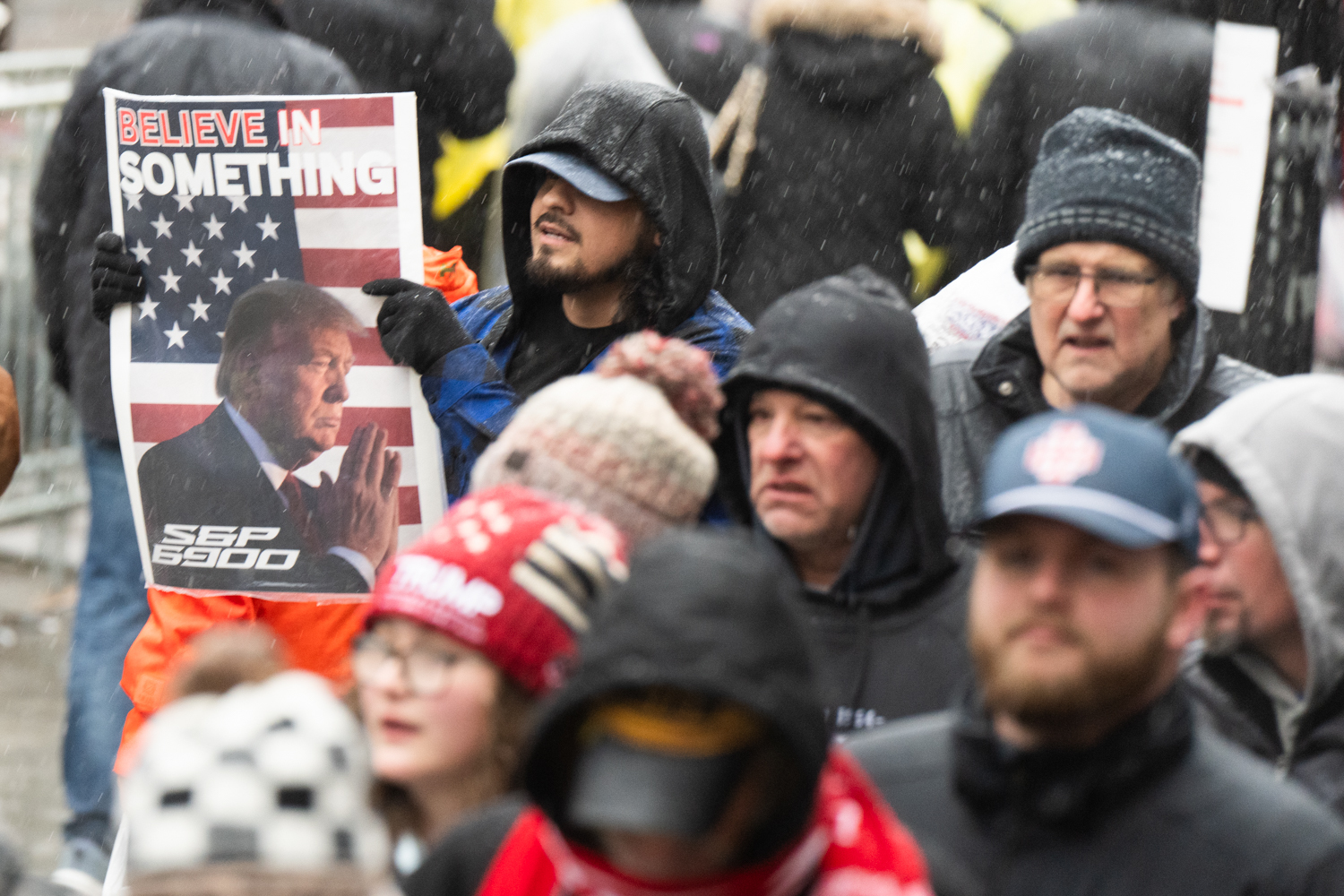
    2. Still, Donald J. Trump could not be ignored. On Jan. 19, I put on my most comfortable shoes (it didn’t really help) and traipsed around a snowy, chilly Washington, D.C. as the about-to-be 47th president made his “forgotten American” supporters wait on a soggy, endless line for a nothingburger rally while the architects of AI and other rich donors partied in heated luxury, setting the tone for a year of gross inequality: American oligarchy begins as Trump makes billions while MAGA gets left out in the rain.
    3. One of the year’s biggest stories was Trump’s demonizing of people of color, from calling Somali immigrants “garbage” to his all out war on DEI programs that encouraged racial diversity, when the truth was always far different. In February, I wrote about the American dream of a young man from Brooklyn of Puerto Rican descent and his ambition to become an airline pilot, who perished in the D.C. jet-helicopter crash. His remarkable life demolished the MAGA lie about “DEI pilots.” Read: “Short, remarkable life of D.C. pilot Jonathan Campos so much more than Trump’s hateful words.”
    4. If you grew up during the 1960s and ‘70s, as I did, then you understand the story of our lifetimes as a battle for the individual rights of every American — for people to live their best lives regardless of race or gender, or whether they might be transgender, or on the autism spectrum. I wrote in October about the Trump regime’s consuming drive to reverse this, to make it a crime to be different: From autism to beards, the Trump regime wages war on ‘the different
    5. A grim year did end on one hopeful note. Trump’s push for an authoritarian America is faltering, thanks in good measure to the gumption of everyday people. This month, I traveled to New Orleans to chronicle the growing and increasingly brave public resistance to federal immigration raids, as citizens blow whistles, form crowds and protest efforts to deport hard-working migrants: In New Orleans and across U.S., anger over ICE raids sparks a 2nd American Revolution

    What I wrote on this date in 2021

    On this date four years ago, some of us were still treating Donald Trump’s attempted Capitol Hill coup of Jan. 6, 2021 like a crime that could be solved so that the bad guys could be put away. On Dec. 16, 2021, I published my own theory of the case: that Team MAGA’s true goal was provoking a war between its supporters and left-wing counterdemonstrators, as a pretext for sending in troops and stopping Congress from finishing its certification of Joe Biden’s victory. That didn’t happen because the leftists stayed home. More than 1,000 pardons later, check out my grand argument: “A theory: How Trump’s Jan. 6 coup plan worked, how close it came, why it failed.”

    Recommended Inquirer reading

    • Only one column this week, as this senior citizen was still recovering from that grueling trip to New Orleans. On Sunday, I reacted with the shock and sadness of seeing a mass shooting at my alma mater, Brown University. I wrote that in a nation with 500 million guns, it’s a virtual lock that some day our families — nuclear or extended, like the close-knit Brown community — will be struck by senseless violence. And I took sharp issue with Trump’s comment that “all you can do is pray.” There is much that can and should be done about gun safety.
    • Sometimes the big stories are the ones that play out over decades, not days. When I first started coming regularly to Philadelphia at the end of the 1980s, the dominant vibe was urban decline. The comeback of cities in the 21st century has altered our world, for good — but a lot of us old-timers have wondered: Just who, exactly, is moving into all these new apartments from Center City to Kensington and beyond? Last week, The Inquirer’s ace development reporter Jake Blumgart took a deep dive into exactly that — highlighting survey results that large numbers are under 45, don’t own a car, and moved here from elsewhere, and telling some of their stories. Local journalism is the backbone of a local community, and you are part of something bigger when you subscribe to The Inquirer. Plus, it’s a great Christmas gift, and you’ll get to read all my columns in 2026. See you then!

    By submitting your written, visual, and/or audio contributions, you agree to The Inquirer‘s Terms of Use, including the grant of rights in Section 10.

  • Trump seeks to cut restrictions on marijuana through planned order

    Trump seeks to cut restrictions on marijuana through planned order

    President Donald Trump is expected to push the government to dramatically loosen federal restrictions on marijuana, reducing oversight of the plant and its derivatives to the same level as some common prescription painkillers and other drugs, according to six people familiar with the discussions.

    Trump discussed the plan with House Speaker Mike Johnson (R., La.) in a Wednesday phone call from the Oval Office, said four of the people, who, like the others, spoke on the condition of anonymity because they were not authorized to speak publicly. The president is expected to seek to ease access to the drug through an upcoming executive order that directs federal agencies to pursue reclassification, the people said.

    The move would not legalize or decriminalize marijuana, but it would ease barriers to research and boost the bottom lines of legal businesses.

    Trump in August said he was “looking at reclassification.” He would be finishing what started under President Joe Biden’s Justice Department, which followed the recommendation of federal health officials in proposing a rule to reclassify marijuana; that proposal has stalled since Trump took office.

    “We’re looking at it. Some people like it, some people hate it,” Trump said this summer. “Some people hate the whole concept of marijuana because it does bad for the children, it does bad for the people that are older than children.”

    Trump cannot unilaterally reclassify marijuana, said Shane Pennington, a D.C. attorney who represents two pro-rescheduling companies involved in the hearing. But he can direct the Justice Department to forgo the hearing and issue the final rule, Pennington said.

    “This would be the biggest reform in federal cannabis policy since marijuana was made a Schedule I drug in the 1970s,” Pennington said.

    The president was joined on the Wednesday call with Johnson by marijuana industry executives, Health Secretary Robert F. Kennedy Jr., and Centers for Medicare and Medicaid Services chief Mehmet Oz, three of the people said.

    Johnson was skeptical of the idea and gave a list of reasons, including several studies and data, to support his position against reclassifying the drug, two of the people said.

    Trump then turned the phone over to the executives gathered around his desk, who rebutted Johnson’s arguments, the people said.

    Trump ended the call appearing ready to go ahead with loosing restrictions on marijuana, the people said, though they caution the plans were not finalized and Trump could still change his mind.

    A White House official said no final decisions have been made on rescheduling of marijuana.

    The Department of Health and Human Services referred questions to the White House. The Centers for Medicare and Medicaid Services did not immediately respond to a request for comment. A representative from Johnson’s office declined to comment.

    Marijuana is currently classified as a Schedule I substance, the same classification as heroin and LSD. Federal regulations consider those drugs to have a high potential for abuse and no accepted use for medical treatment.

    Trump would move to classify marijuana as a Schedule III substance, which regulators say carry less potential for abuse and are used for certain medical treatments, but can also create risks of physical or psychological dependence.

    Other Schedule III drugs include Tylenol with codeine, as well as certain steroid and hormone treatments.

    Democrats and Republicans alike have been interested in reclassifying marijuana, with some politicians citing its potential benefit as a medical treatment and the political popularity of the widely used drug.

    Marijuana has become easier than ever to obtain, growing into an industry worth billions of dollars in the United States. Dozens of states and Washington, D.C., have legalized medical marijuana programs, and 24 have approved recreational marijuana.

    The Biden administration pursued efforts to ease access to the drug, with health officials recommending reclassification to Schedule III in 2023. But health officials have said that those recommendations were slowed down by the Drug Enforcement Administration, which took months to undergo required administrative reviews and were not completed before the end of Biden’s term.

    The Drug Enforcement Administration was supposed to hold an administrative hearing on the proposal, with a judge hearing from experts on the health benefits and risks of marijuana. But the hearing has been in legal limbo since Trump took office, amid allegations from cannabis companies that the DEA was working to torpedo the measure.

  • Homeland Security Secretary Noem defends Trump’s hard-line immigration policies at hearing

    Homeland Security Secretary Noem defends Trump’s hard-line immigration policies at hearing

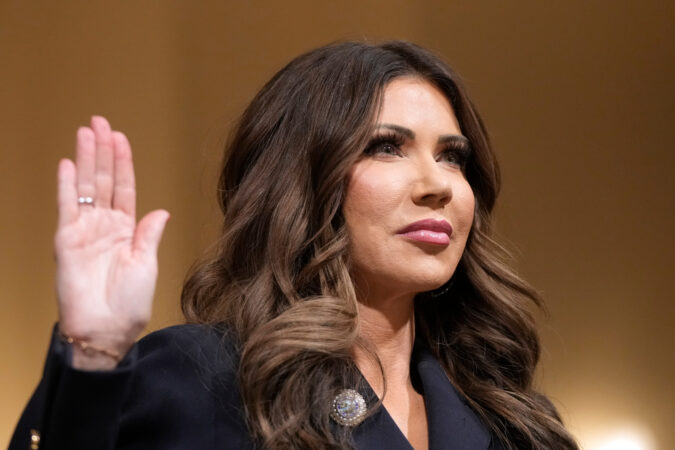
    Homeland Security Secretary Kristi Noem defiantly defended the Trump administration’s hard-line immigration policies on Thursday during a House committee hearing, portraying migrants as a major threat faced by the nation that justifies a crackdown that has seen widespread arrests, deportations and a dizzying pace of restrictions on foreigners.

    Noem, who heads the agency central to President Donald Trump’s approach to immigration, received backup from Republicans on the panel but faced fierce questioning from Democrats — including many who called for her resignation over the mass deportation agenda.

    The secretary’s testimony was immediately interrupted by protesters shouting for her to stop Immigration and Customs Enforcement raids and “end deportations.” They trailed her down the halls as she left early for another engagement, chanting, “Shame on you!”

    But she vowed she “would not back down.”

    “What keeps me up at night is that we don’t necessarily know all of the people that are in this country, who they are and what their intentions are,” Noem said.

    The hearing was Noem’s first public appearance before Congress in months, testifying at the House Committee on Homeland Security on “Worldwide Threats to the Homeland,” and it quickly grew heated as she emphasized how big a role she believed immigration played in those threats. It focused heavily on the Trump administration’s immigration policies, whereas in years past the hearing has centered on issues such as cybersecurity, terrorism, China and border security.

    Rep. Bennie Thompson, the panel’s ranking Democrat, said Noem has diverted vast taxpayer resources to carry out Trump’s “extreme” immigration agenda and failed to provide basic responses as Congress conducts its oversight.

    “I call on you to resign,” the Mississippi congressman said. “Do a real service to the country.”

    Trump returned to power with what the president says is a mandate to reshape immigration in the U.S. In the months since, the number of people in immigration detention has skyrocketed; the administration has continued to remove migrants to countries they are not from; and, in the wake of an Afghan national being accused of shooting two National Guard troops, Noem’s department has dramatically stepped up checks and screening of immigrants in the U.S.

    Tough questions from Democrats

    Several Democrats repeatedly told Noem flatly that she was “lying” to them and to the public over claims they are focused on violent criminals. They presented cases of U.S. citizens being detained in immigration operations and families of American military veterans being torn apart by deportations of loved ones who have not committed serious crimes or other violations.

    “You lie with impunity,” said Rep. Delia Rodriguez (D., Ill.) who said Noem should resign or be impeached.

    Republicans largely thanked Noem for the work the department is doing to keep the country safe and urged her to carry on.

    “Deport them all,” said Rep. Andy Ogles (R., Tenn).

    Since Noem’s last Congressional appearance in May, immigration enforcement operations, especially in Los Angeles and Chicago, have become increasingly contentious, with federal agents and activists frequently clashing over her department’s tactics.

    Noem did not address the calls to resign, but she tangled with the Democratic lawmakers — interrupting some — and suggested that she and the department she leads weren’t going anywhere.

    “We will never yield. We will never waver,” she said.

    Noem, whose own family, including an infant granddaughter, was in the audience, praised the Trump administration’s efforts when it comes to immigration, saying, “We’re ending illegal immigration, returning sanity to our immigration system.”

    During the hearing, a federal judge ordered the government to free Kilmar Abrego Garcia, whose wrongful deportation to a notorious prison in El Salvador made him a flashpoint in the Trump administration’s immigration enforcement. Noem did not address the judge’s order, nor was she asked about it during the hearing.

    Noem left early, saying she was headed to a meeting of the Federal Emergency Management Agency review council. The meeting, however, was abruptly canceled with no reason given.

    Noem, department under scrutiny

    The worldwide threats hearing, usually held annually, is an opportunity for members of Congress to question the leaders of the Department of Homeland Security, the FBI, and the National Counterterrorism Center.

    FBI Director Kash Patel did not appear, but sent Michael Glasheen, operations director of the national security branch of the FBI.

    Glasheen said the nation faces “serious and evolving” threats, and pointed to so-called antifa, and Trump’s executive order designating the group as a domestic terror organization, as the “most immediate violent threat” facing the country.

    Pressed by Thompson for details — where is antifa headquartered? How many members does it have? — the FBI’s representative appeared unable to provide answers, saying it’s “fluid” and investigations are “ongoing.”

    And, notably, he did not identify immigration as among the most pressing concerns for the homeland.

    Asked about the U.S. seizure of an oil tanker off the Venezuelan coast, Noem linked it to the Trump administration’s antidrug campaign in the region, saying cocaine had been kept from entering the U.S. as a result.

    The hearing offered lawmakers a rare opportunity to hear directly from Noem, but many members of the panel used the bulk of their allotted time to either praise or lambast her handling of immigration enforcement.

    During one sharp exchange, the secretary levied broad criticism for the program through which the man suspected of shooting two National Guard members last month came to the United States.

    “Unfortunate accident?” Noem retorted after Thompson raised the issue. She called it a “terrorist attack.”

    The program, Operation Allies Welcome, was created by then-President Joe Biden’s Democratic administration after the 2021 decision to leave Afghanistan following 20 years of American intervention and billions of dollars in aid. Thompson pointed out that the Trump administration approved the asylum claim of the suspect in the National Guard attack.

    Noem’s department is under particular scrutiny because Congress in July passed legislation giving it roughly $165 billion to carry out its mass deportations agenda and secure the border. The department is getting more money to hire 10,000 more deportation officers, complete the wall between the U.S. and Mexico and increase detention and removal of foreigners from the country.

    The secretary’s appearance also comes as a federal judge is investigating whether she should face a contempt charge over flights carrying migrants to El Salvador.

  • Foreigners allowed to travel to the U.S. without a visa could soon face new social media screening

    Foreigners allowed to travel to the U.S. without a visa could soon face new social media screening

    WASHINGTON — Foreigners who are allowed to come to the United States without a visa could soon be required to submit information about their social media, email accounts and extensive family history to the Department of Homeland Security before being approved for travel.

    The notice published Wednesday in the Federal Register said Customs and Border Protection is proposing collecting five years’ worth of social media information from travelers from select countries who do not have to get visas to come to the U.S. The Trump administration has been stepping up monitoring of international travelers and immigrants.

    The announcement refers to travelers from more than three dozen countries who take part in the Visa Waiver Program and submit their information to the Electronic System for Travel Authorization (ESTA), which automatically screens them and then approves them for travel to the U.S. Unlike visa applicants, they generally do not have to go into an embassy or consulate for an interview.

    DHS administers the program, which currently allows citizens of roughly 40 mostly European and Asian countries to travel to the U.S. for tourism or business for three months without visas.

    The announcement also said that CBP would start requesting a list of other information, including telephone numbers the person has used over the past five years or email addresses used over the past decade. Also sought would be metadata from electronically submitted photos, as well as extensive information from the applicant’s family members, including their places of birth and their telephone numbers.

    The application that people are now required to fill out to take part in ESTA asks for a more limited set of questions such as parents’ names and current email address.

    Asked at a White House event whether he was concerned the measure might affect tourism to the U.S., President Donald Trump said no.

    “We want safety, we want security, we want to make sure we’re not letting the wrong people come into our country,” Trump said.

    The public has 60 days to comment on the proposed changes before they go into effect, the notice said.

    CBP officials did not immediately respond to questions about the new rules.

    The announcement did not say what the administration was looking for in the social media accounts or why it was asking for more information.

    But the agency said it was complying with an executive order that Trump signed in January that called for more screening of people coming to the U.S. to prevent the entry of possible national security threats.

    Travelers from countries that are not part of the Visa Waiver Program system are already required to submit their social media information, a policy that dates back to the first Trump administration. The policy remained during Democratic President Joe Biden’s administration.

    But citizens from visa waiver countries were not obligated to do so.

    Since January, the Trump administration has stepped up checks of immigrants and travelers, both those trying to enter the U.S. as well as those already in the country. Officials have tightened visa rules by requiring that applicants set all of their social media accounts to public so that they can be more easily scrutinized and checked for what authorities view as potential derogatory information. Refusing to set an account to public can be considered grounds for visa denial, according to guidelines provided by the State Department.

    U.S. Citizenship and Immigration Services now considers whether an applicant for benefits, such as a green card, “endorsed, promoted, supported, or otherwise espoused” anti-American, terrorist or antisemitic views.

    The heightened interest in social media screening has drawn concern from immigration and free speech advocates about what the Trump administration is looking for and whether the measures target people critical of the administration in an infringement of free speech rights.

  • First of 30 oil lease sales planned for Gulf of Mexico draws $279 million

    First of 30 oil lease sales planned for Gulf of Mexico draws $279 million

    WASHINGTON — Oil companies offered $279 million for drilling rights in the Gulf of Mexico on Wednesday in the first of 30 sales planned for the region under Republican efforts to ramp up U.S. fossil fuel production.

    The sale came after President Donald Trump’s administration recently announced plans to allow new drilling off Florida and California for the first time in decades. That’s drawn pushback including from Republicans worried about impacts to tourism.

    Wednesday’s sale was mandated by the sweeping tax-and-spending bill approved by Republicans over the summer. Under that legislation, companies will pay a 12.5% royalty on oil produced from the leases. That’s the lowest royalty level for deep-water drilling since 2007.

    Thirty companies submitted bids, including industry giants Chevron, Shell and BP, federal officials said. The total amount of high bids was down by more than $100 million from the previous lease sale in the Gulf of Mexico, under former Democratic President Joe Biden, in December 2023.

    “This sale reflects a significant step in the federal government’s efforts to restore U.S. energy dominance and advance responsible offshore energy development,” said Laura Robbins, acting director of the Gulf region for the Bureau of Ocean Energy Management, which is part of the Interior Department.

    The administration’s promotion of fossil fuels contrasts sharply with its hostility to renewable energy, particularly offshore wind. A judge on Monday struck down an executive order from Trump blocking wind energy projects, saying it violated U.S. law.

    Environmentalists said the fossil fuel sales would put wildlife in the Gulf at an higher risk of dying in oil spills. Spills occur regularly in the region and have included the 2010 Deepwater Horizon tragedy that killed 11 workers in an oil rig explosion and unleashed a massive spill.

    “The Gulf is already overwhelmed with thousands of oil rigs and pipelines, and oil companies are doing a terrible job of cleaning up after themselves,” said Rachel Matthews with the Center for Biological Diversity.

    Erik Milito with the National Ocean Industries Association, an industry group, said the takeaway from Wednesday’s sale was that the Gulf “is open.”

    While results of individual lease sales may fluctuate, Milito added, “the real success is the resumption of a regular leasing cadence.”

    “Knowing that (another lease sale) is coming in March 2026 allows companies to plan, study, and refine their bids, rather than being forced to respond to the uncertainty of a politically-driven multiyear pause,” he said.

    At least two lease sales annually are mandated through 2039 and one in 2040.

    The sales support an executive order by Trump that directs federal agencies to accelerate offshore oil and gas development, Interior Secretary Doug Burgum said in a statement. He said it would unlock investment, strengthen U.S. energy security and create jobs.

    But Earthjustice attorney George Torgun said the Trump administration conducted the sale without analyzing how it would expose the entire Gulf region to oil spills, how communities could be harmed by pollution and how it could devastate vulnerable marine life such as the endangered Rice’s whale, which numbers only in the dozens and lives in the Gulf of Mexico.

    The environmental group has asked a federal judge to ensure that the lease sale and future oil sales better protect Gulf communities.

    Only a small portion of parcels offered for sale typically receive bids, in areas where companies want to expand their existing drilling activities or where they foresee future development potential. It can be years before drilling occurs.

    The drilling leases sold in December 2023 and during another sale in March 2023 are held up by litigation, according to Robbins. A federal court ruled this spring that Interior officials did not adequately account for impacts to planet-warming greenhouse gas emissions and the Rice’s whale.

  • WTF? Embracing profanity is one thing both political parties seem to agree on

    WTF? Embracing profanity is one thing both political parties seem to agree on

    WASHINGTON — As he shook President Barack Obama’s hand and pulled him in for what he thought was a private aside, Vice President Joe Biden delivered an explicit message: “This is a big f— deal.” The remark, overheard on live microphones at a 2010 ceremony for the Affordable Care Act, caused a sensation because open profanity from a national leader was unusual at the time.

    More than 15 years later, vulgarity is now in vogue.

    During a political rally Tuesday night in Pennsylvania that was intended to focus on tackling inflation, President Donald Trump used profanity at least four times. At one point, he even admitted to disparaging Haiti and African nations as “shithole countries” during a private 2018 meeting, a comment he denied at the time. And before a bank of cameras during a lengthy cabinet meeting last week, the Republican president referred to alleged drug smugglers as “sons of bitches.”

    While the Biden incident was accidental, the frequency, sharpness, and public nature of Trump’s comments are intentional. They build on his project to combat what he sees as pervasive political correctness. Leaders in both parties are seemingly in a race now to the verbal gutter.

    Vice President JD Vance called a podcast host a “dips—” in September. In Thanksgiving remarks before troops, Vance joked that anyone who said they liked turkey was “full of s—.” After one National Guard member was killed in a shooting in Washington last month and a second was critically injured, top Trump aide Steven Cheung told a reporter on social media to “shut the f— up” when she wrote that the deployment of troops in the nation’s capital was “for political show.”

    Among Democrats, former Vice President Kamala Harris earned a roar of approval from her audience in September when she condemned the Trump administration by saying “these motherf— are crazy.” After Trump called for the execution of several Democratic members of Congress last month, Sen. Chris Murphy (D., Conn.) said it was time for people with influence to “pick a f— side.” Senate Democratic leader Chuck Schumer of New York said the administration cannot “f— around” with the release of the Jeffrey Epstein files. Democratic Rep. Jasmine Crockett, who on Monday announced her Senate campaign in Texas, did not hold back earlier this year when asked what she would tell Elon Musk if given the chance: “F— off.”

    The volley of vulgarities underscore an ever-coarsening political environment that often plays out on social media or other digital platforms where the posts or video clips that evoke the strongest emotions are rewarded with the most engagement.

    “If you want to be angry at someone, be angry at the social media companies,” Utah Gov. Spencer Cox, a Republican, said Tuesday night at Washington National Cathedral, where he spoke at an event focused on political civility. “It’s not a fair fight. They’ve hijacked our brains. They understand these dopamine hits. Outrage sells.”

    Cox, whose national profile rose after calling for civility in the wake of conservative activist Charlie Kirk’s assassination in his state, approved an overhaul of social media laws meant to protect children. A federal judge has temporarily blocked the state law.

    Tough political talk is nothing new

    Tough talk is nothing new in politics, but leaders long avoided flaunting it.

    Recordings from Democrat Lyndon B. Johnson’s administration, for instance, revealed a crude, profane side of his personality that was largely kept private. Republican Richard Nixon bemoaned the fact that the foul language he used in the Oval Office was captured on tape. “Since neither I nor most other Presidents had ever used profanity in public, millions were shocked,” Nixon wrote in his book In the Arena.

    “Politicians have always sworn, just behind closed doors,” said Benjamin Bergen, a professor at the University of California-San Diego’s Department of Cognitive Science and the author of What the F: What swearing reveals about our language, our brains, and ourselves. “The big change is in the past 10 years or so, it’s been much more public.”

    As both parties prepare for the 2026 midterm elections and the 2028 presidential campaign, the question is whether this language will become increasingly mainstream. Republicans who simply try to imitate Trump’s brash style do not always succeed with voters. Democrats who turn to vulgarities risk appearing inauthentic if their words feel forced.

    For some, it is just a distraction.

    “It’s not necessary,” said GOP Rep. Don Bacon of Nebraska, who is retiring next year after winning five elections in one of the most competitive House districts. “If that’s what it takes to get your point across, you’re not a good communicator.”

    There are risks of overusing profanity

    There also is a risk that if such language becomes overused, its utility as a way to shock and connect with audiences could be dulled. Comedian Jerry Seinfeld has talked about this problem, noting that he used swear words in his early routines but dropped them as his career progressed because he felt profanity yielded only cheap laughs.

    “I felt like well I just got a laugh because I said f— in there,” he said in a 2020 interview on the WTF podcast with fellow comedian Marc Maron. “You didn’t find the gold.”

    White House spokesperson Liz Huston said Trump “doesn’t care about being politically correct, he cares about making America great again. The American people love how authentic, transparent, and effective the President is.”

    But for Trump, the words that have generated the most controversy are often less centered in traditional profanity than slurs that can be interpreted as hurtful. The final weeks of his 2016 campaign were rocked when a tape emerged of him discussing grabbing women by their genitals, language he minimized as “locker room talk.” His “shithole” remark in 2018 was widely condemned as racist.

    More recently, Trump called Bloomberg reporter Catherine Lucey “piggy,” comments that his press secretary, Karoline Leavitt, defended as evidence of a president who is “very frank and honest.” Trump’s use of a slur about disabled people prompted an Indiana Republican whose child has Down syndrome to come out in opposition to the president’s push to redraw the state’s congressional districts.

    On rare occasions, politicians express contrition for their choice of words. In an interview with The Atlantic published last week, Pennsylvania Gov. Josh Shapiro, a Democrat, dismissed Harris’ depiction of him in her book about last year’s presidential campaign by saying she was “trying to sell books and cover her a—.”

    He seemed to catch himself quickly.

    “I shouldn’t say ‘cover her a—,” he said. “I think that’s not appropriate.”

  • The Trump administration changed the name on a portrait of former Health Secretary Rachel Levine. She is staying quiet.

    The Trump administration changed the name on a portrait of former Health Secretary Rachel Levine. She is staying quiet.

    While the federal government was shut down, the U.S. Department of Health and Human Services altered the name under the official portrait of Admiral Rachel Levine, a Pennsylvania doctor who served as the agency’s assistant secretary under former President Joe Biden, to her birth name or “dead name.”

    Levine, who had previously served as Pennsylvania physician general and secretary of health under Gov. Tom Wolf, was the first openly transgender official confirmed by the U.S. Senate.

    This photograph shows the official portrait of Admiral Rachel Levine, former assistant secretary for health. The portrait hangs in the hallway of the Humphrey Building in Washington, D.C., where Levine served under President Joe Biden at the U.S. Department of Health and Human Services. Someone in the Trump administration changed Levine’s name to her birth name or deadname. The photographer does not want to be identified.

    “Deadnaming” — using a transgender person’s birth name rather than the one they chose — is “a horrible thing to do to vilify a group of people,” said Deja Alvarez a LGBTQ community leader. “It’s beyond reprehensible.”

    Levine has not spoken publicly about the action, which was first reported Friday by National Public Radio. In a brief statement delivered by her former deputy assistant secretary for health policy Adrian Shanker, Levine described the name change as a “petty action” and said she wouldn’t comment. Shanker, a fellow at the Lehigh University College of Health, manages Levine’s public engagements.

    Levine, 68, has received expressions of “sympathy and outrage” since Friday, Shanker said.

    Condemning the alteration of Levine’s portrait, he said, it was “hard to understand that this was a priority under a government shutdown.”

    ”What do you expect from people acting more like high school bullies than federal officials?”

    HHS didn’t respond to requests for comment. Agency officials told NPR in a written statement: “Our priority is ensuring that the information presented internally and externally by HHS reflects gold standard science. We remain committed to reversing harmful policies enacted by Levine and ensuring that biological reality guides our approach to public health.”

    As Pennsylvania’s health secretary, Levine led the state’s response to COIVID-19 and became a familiar figure in 2020, standing at a lectern in Harrisburg, answering questions about the deadly pandemic.

    Prior to the pandemic, Levine led the state’s response to the opioid epidemic. She also helped establish Pennsylvania’s medical marijuana program.

    Under Biden, Levine also worked on issues related to HIV, syphilis, climate change, and long COVID.

    Levine was a pediatrician who worked at Penn State Health Milton S. Hershey Medical Center for 20 years before moving into public life.

    Throughout her career, Levine “earned … recognition through decades of expertise and leadership,” said State Rep. Dan Frankel (D., Allegheny) in a statement Tuesday. HHS’s decision to “strip [her legal] name is an act of political malice.”

    The Trump administration has made numerous efforts to counter civil rights gains transgender and LGBTQ Americans had previously won.

    These include issuing an executive order on Jan. 20 that redefined the word “sex” in federal programs and services to refer only to biological characteristics “at conception” as well as restricting gender-affirming medical care for people under age 19, banning trans Americans from military service and eliminating protections for transgender people.

    Staff writer Gillian McGoldrick contributed to this article.