Tag: Kamala Harris

  • Karen Dalton, who plans to challenge Scott Perry in the GOP primary, has her own definition of RINO

    Karen Dalton, who plans to challenge Scott Perry in the GOP primary, has her own definition of RINO

    If she makes it on the ballot, Karen Dalton will be U.S. Rep. Scott Perry’s first primary opponent since 2012 – the year he first won the seat.

    Dalton, a retired staff attorney for the Pennsylvania House Republicans, knows the odds are against her as she runs a solo campaign operation out of her living room. But she thinks she has a shot.

    The 65-year-old Carlisle resident is irked by President Donald Trump’s policies both from a faith-based standpoint and a legal one.

    She holds many views that align with Democrats, which may draw accusations that she’s a “RINO,” or Republican in name only. But she argues she’s a Republican at heart.

    “I was talking to a senior citizen the other day, and the first thing he said to me was, ‘So you’re a RINO,” said Dalton, 65. “And my response to that was, well, if you mean ‘Respect for Individuals and Not Oligarchs,’ I’ll go along with that. He goes, ‘No, no, no, I’m a RINO too. I’m that old school Republican that believes in helping people.’ I’m like, ‘Yes, thank you. That’s what I’m talking about getting back to.’”

    Perry, a longtime ally of President Donald Trump who supported his unsuccessful attempts to overturn the 2020 election, represents Dauphin County and parts of Cumberland and York Counties in Central Pennsylvania. He appears to be particularly vulnerable this year as the district has shifted toward Democrats and Republican-turned-Democrat Janelle Stelson, a former local news anchor, had a razor-thin loss against him in the general election last year. She plans to run again in the Democratic primary.

    Dalton, in a long-ranging interview with The Inquirer in her living room, called Donald Trump’s One Big Beautiful Bill Act the “Big, Brutal Betrayal of the American Dream Act,” because of its cuts to Medicaid and SNAP.

    She believes former Vice President Kamala Harris should have pushed back more on Trump’s claims about transgender people in the 2024 election, argued that the term “illegal alien” is factually incorrect, and says on her website that climate change is a real threat.
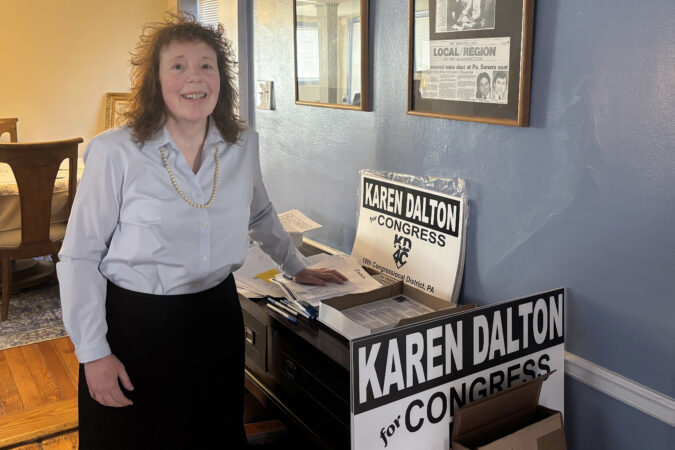
    Karen Dalton, who plans to challenge Scott Perry in the Republican primary, holds materials from a bill she worked on in Harrisburg in her Carlisle home on Monday.

    She supports a $15 federal minimum wage and a millionaire’s tax, and wants to raise the corporate tax rate. She supports abortion rights and believes health care is a human right, though she’s fearful of what she views as over-regulation from Democrats.

    Her walls are covered with Republican political memorabilia and a poster of the late Sen. Robert F. Kennedy, a Democrat who was assassinated during his 1968 presidential campaign.

    She noted that she was a Republican when Donald Trump was a Democrat.

    Her path to victory, she believes, is convincing enough independents and Democrats – particularly former Republicans – to change their registration to support her in the May GOP primary.

    “You know, independents have been upset many years because Pennsylvania has a closed primary system … if they register as Republicans, they get to vote in a primary against Scott Perry and not wait until November,” she said.

    Primary challengers are rarely successful. Dalton reported under $3,000 in contributions – and an approximately $6,000 loan from herself — through September, which is pennies compared to the more than $1 million Perry reported.

    But she only needs to gather 1,000 signatures and pay a $150 filing fee to appear alongside him on the primary ballot.

    Perry’s campaign did not respond to a request for comment about Dalton as of Wednesday.
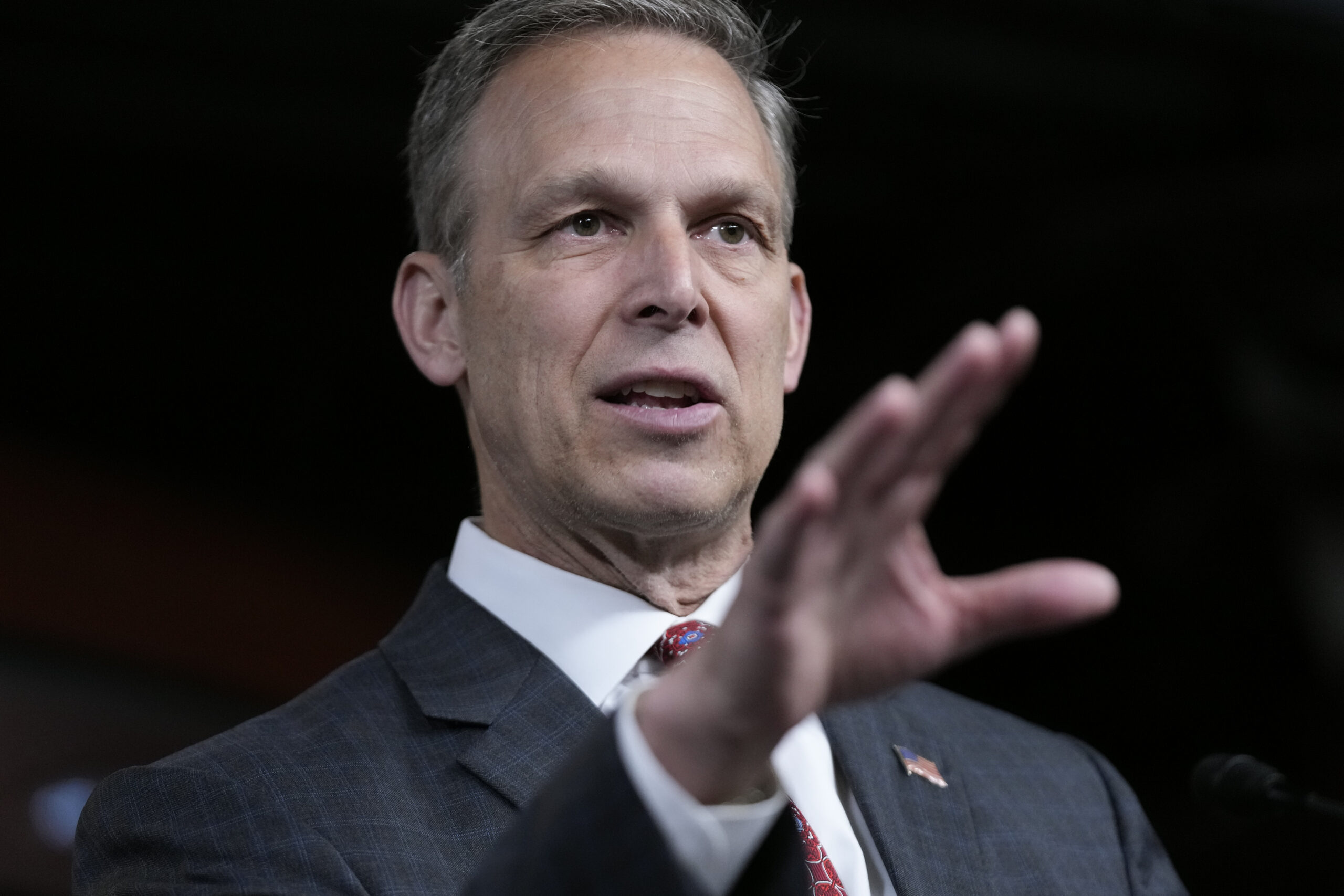
    U.S. Scott Perry speaks during a news conference on Capitol Hill in Washington in July 2023.

    Rosy eyed about the old Republicans

    Dalton grew up in New Jersey and was the first in her immediate family to go to college, attending Montclair State University before getting her politics graduate degree at New York University and later attending law school.

    She lives in Carlisle near Dickinson Law — her “beloved alma mater” — in a home she bought just four years ago at age 61. With student loans hanging over her head for the vast majority of her career, she couldn’t afford a down payment until her state retirement payday.

    She has no kids and she’s never been married — “I spent a lot of time reading and studying and going to school,” she said. These days, she takes piano lessons and plays pickleball, and does pro bono legal work when she’s not knocking on doors for her one-woman campaign.

    Dalton is rosy-eyed about moderates of the Republican Party’s past. She managed former U.S. Rep. Jim Greenwood’s (R., Bucks) successful state Senate campaign in 1986 and worked for New Jersey Republican Gov. Tom Kean, who wrote The Politics of Inclusion. She later worked as a staff attorney for Pennsylvania House Republicans for 25 years, where she focused on domestic violence and child sexual abuse legislation.

    “I’m convinced that if the Republican Party wants to survive and thrive, we need to give up what Donald Trump believes in, and return to our roots,” she said.

    Dalton, whose parents were both Democrats, changed her registration from independent to Republican in 1984 at the age of 24 after her first job working for Ralph J. Salerno’s unsuccessful state Senate campaign in New Jersey. When he lost, “amazingly, nobody took up arms,” she said.

    “I mean, I cried in his lapel, but you know, it’s just like he conceded, and everybody moved on,” she said. “There was no insurrection, there was no battle, there was no violence, there was no ‘Oh, there was voter fraud.’ None of that stuff happened, because that’s the way things used to be before Donald Trump was president.”
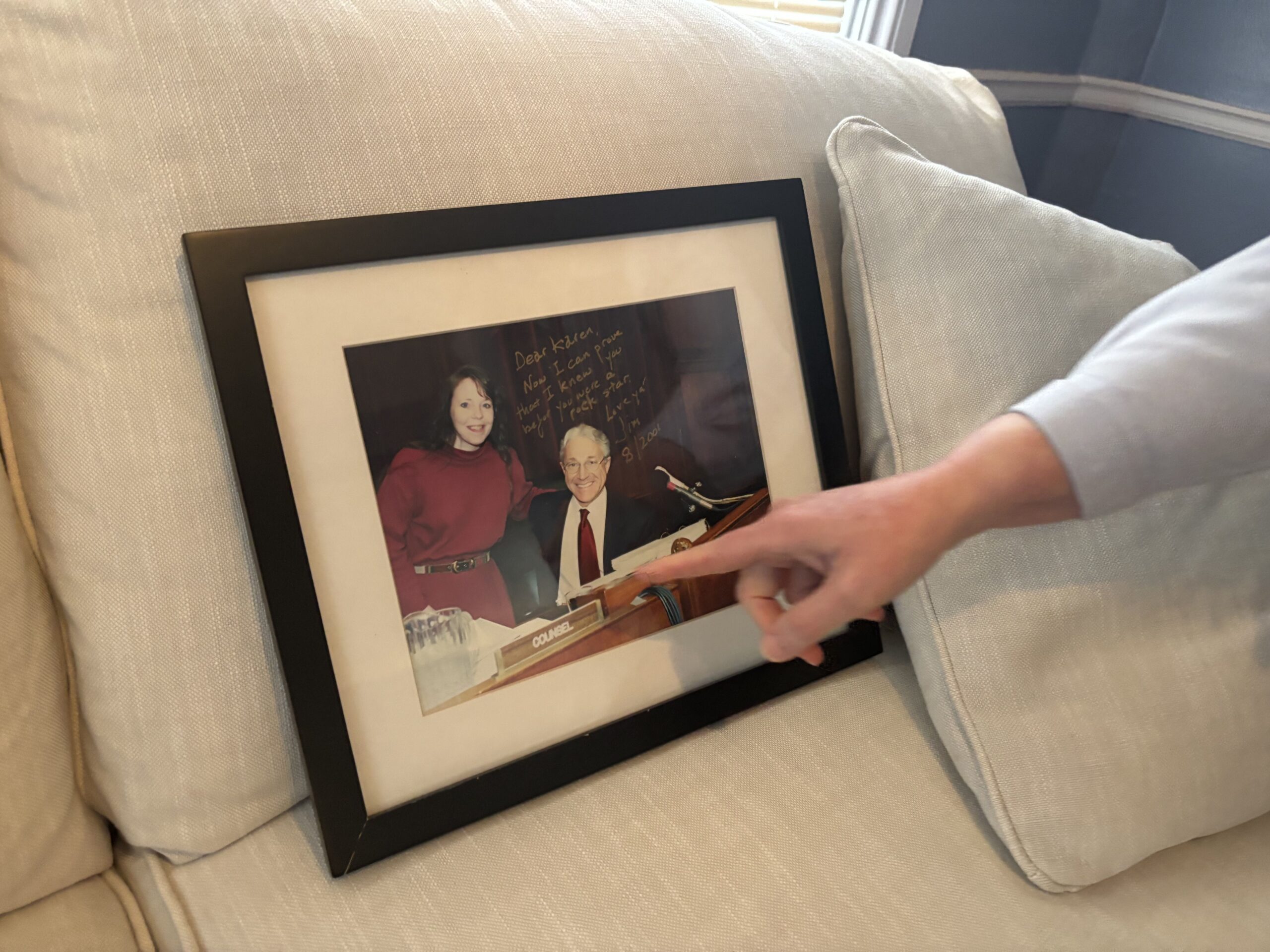
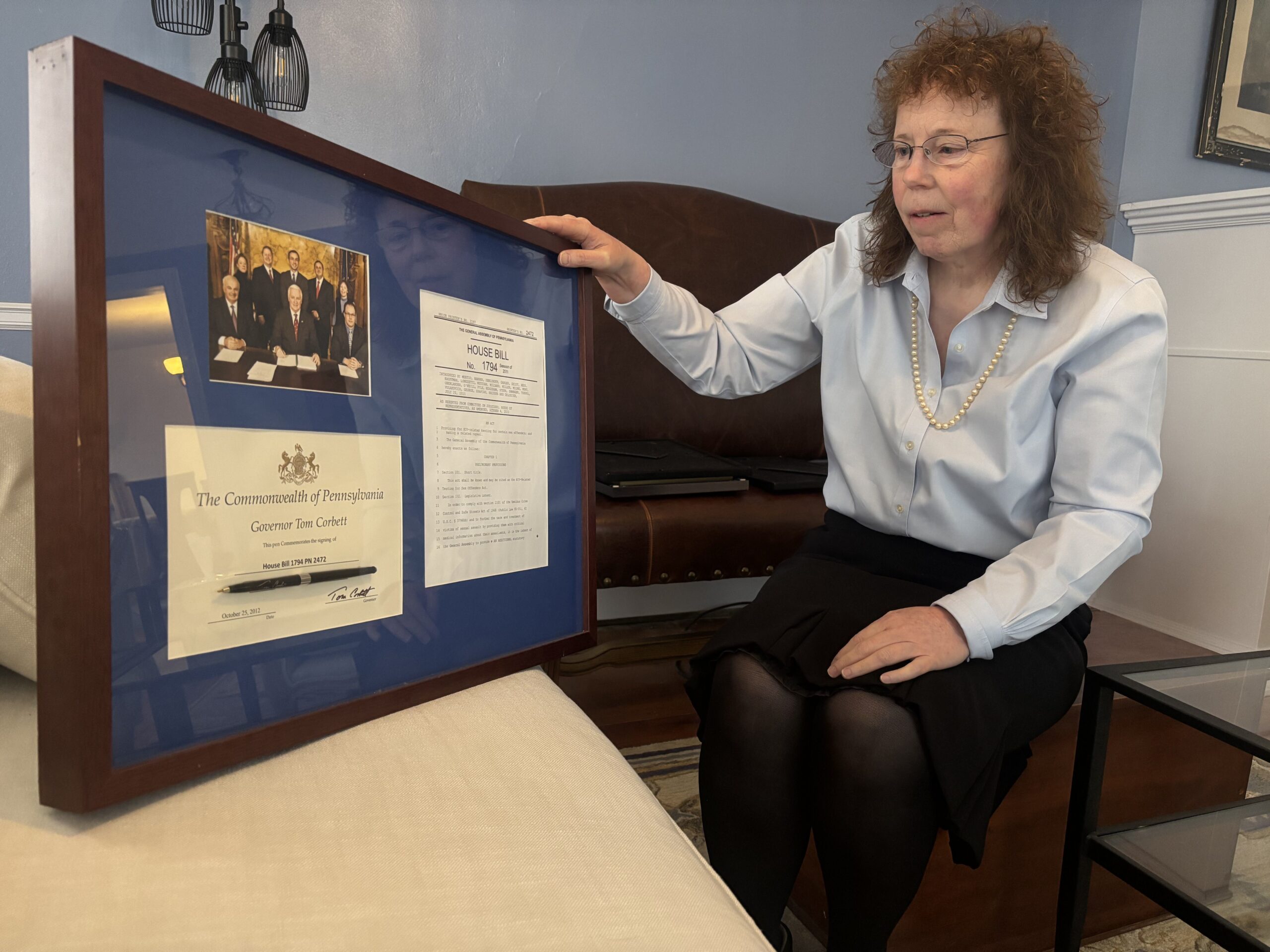
    Karen Dalton points to a photo of herself and her old boss Jim Greenwood in her Carlisle home on Monday. A message from Greenwood says: “Now I can prove that I knew you before you were a rock star.”

    Tired of yelling at the television

    Dalton said she didn’t think she’d become a candidate herself during her years working for politicians. But she said “steam started to come out of my ears” when Trump tried to end birthright citizenship, and again when House Speaker Mike Johnson mused about defunding the federal judiciary.

    “I just couldn’t sit back anymore … I got tired of yelling at the television,” she said.

    While Dalton argued that Trump’s rise in 2015 has soured the Republican Party, much of her criticism concentrated on the Jan. 6, 2021 riot and what followed.

    Dalton worked with Perry in Harrisburg when he was a state representative, and she described him as “an incredibly nice man” despite her misgivings about his efforts to overturn the 2020 election and continued alignment with Trump. (She calls him “morally blind” on her website.)

    When asked if she ever supported Perry, Dalton said she wasn’t comfortable talking about who she voted for in the past because “ballots are private.” She did say that she didn’t vote for Trump in 2024, and she voted for Stelson, Perry’s Democratic challenger.

    “I can tell you that I don’t vote for insurrectionists,” she said.
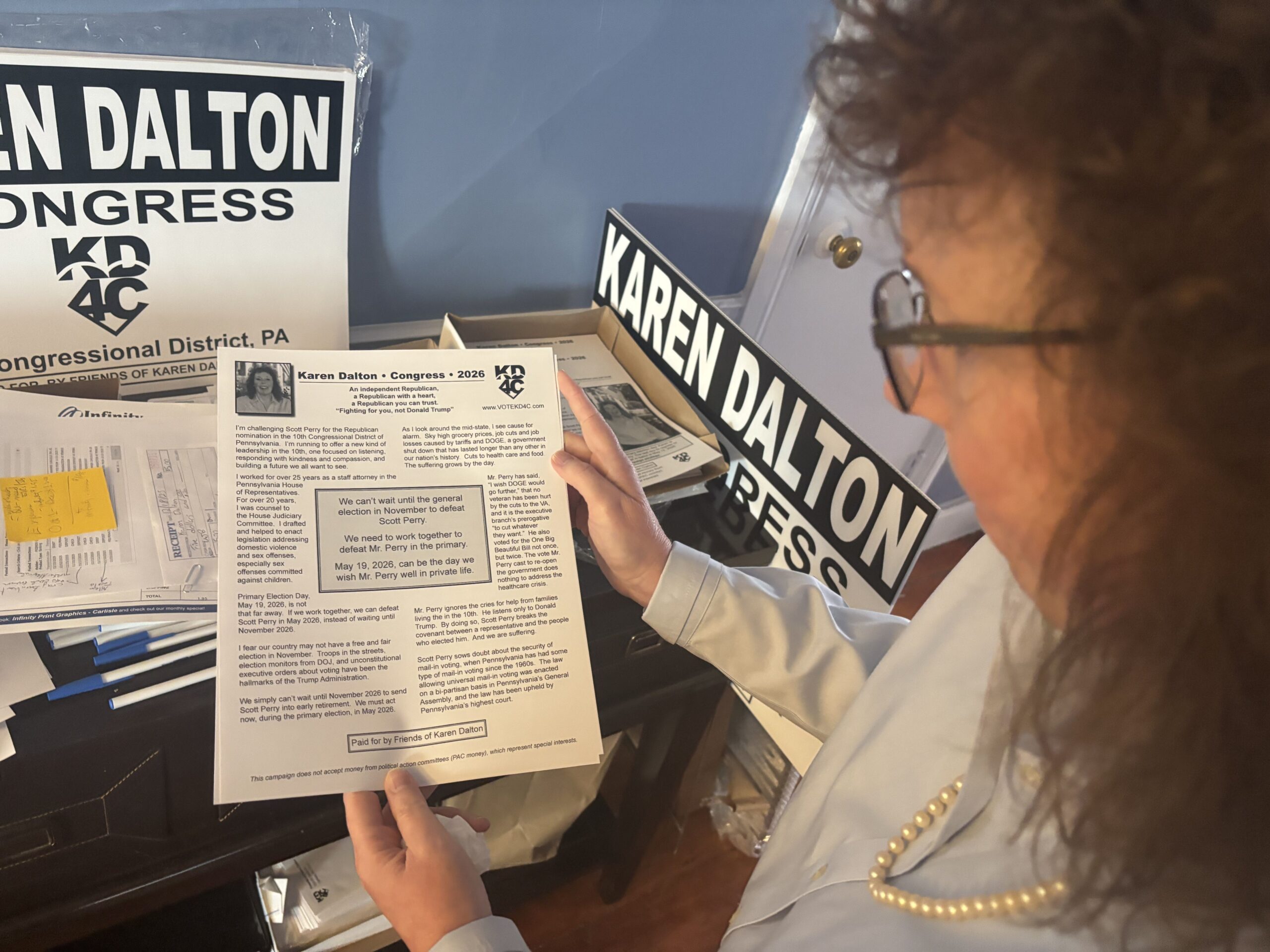
    Karen Dalton, who plans to challenge Scott Perry in the Republican primary, calls a table in her living room her “campaign headquarters.”

    Policy informed by faith

    Dalton was raised Catholic, confirmed Episcopalian, and has attended the Unitarian Universalist Church. Though she hasn’t converted, she now identifies as Jewish, and was moved to tears while talking about a late mentor who introduced her to the religion – noting that speaking about the subject made her “verklempt,” a Yiddish term for emotional.

    “One of the things I love so much about Judaism, in addition to its focus on social justice, is the idea that you get to disagree,” she said, a handful of crumpled tissues in her lap.

    Her faith informs her approach to public policy, from opposing cuts to healthcare subsidies to appreciating ideas across the political spectrum.

    One of her flagship policy proposals is creating a way for people to borrow up to two years worth of their own Social Security benefits before they reach retirement age to help with things like a down payment, tuition, or medical expenses – one that would have helped her buy a home earlier.

    Another is a scholarship program that would allow students in any field to borrow the full amount of their education from the federal government through loans that would be forgiven if they serve “the public good,” a rebuke of Trump’s One Big Beautiful Bill’s borrowing limit on federal student loans.

    She also wants to create a program to pay for the education of students who want to pursue careers in science and guarantee employment at national health or science institutions, including a new foundation for scientific discovery.

    Dalton has brought her neighbors into her home to discuss her ideas, and plans to do it again.

    She also held a town hall at Central Penn College in Enola that she said drew 15 people.

    “That’s 15 more people than Scott Perry looked in the eye and talked to over the past five years at his town halls that didn’t exist,” she said.

  • Gov. Josh Shapiro schedules a book tour as he stands for reelection, and builds his 2028 profile

    Gov. Josh Shapiro schedules a book tour as he stands for reelection, and builds his 2028 profile

    Days before his memoir is set to hit shelves Pennsylvania Gov. Josh Shapiro will kick off his book tour at Philadelphia’s Parkway Central Library on Jan. 24.

    Shapiro will swing through Philadelphia, New York and Washington, D.C., in the final week of January to promote his book Where We Keep the Light: Stories from a Life of Service, according to events posted online.

    The tour and the book, set for release Jan. 27, will fuel speculation about a potential presidential run in 2028 as Shapiro works to expand his national profile as he also seeks reelection in Pennsylvania next year.

    The forthcoming memoir is expected to detail his life and political career, including the attempted arson attack on the governor’s mansion while he, and his family, slept inside earlier this year on Passover.

    Shapiro, who grew up in Montgomery County and first forged his political brand there, has become a leading figure in the national Democratic Party. The memoir will delve into his vetting to serve as Vice President Kamala Harris’ running mate last year, according to the publicized summary.

    In her own memoir, 107 Days, Harris cited Shapiro’s ambition as a reason she ultimately didn’t ask him to be her vice president and instead opted for Minnesota Gov. Tim Walz. Shapiro remained a regular presence on the campaign trail despite the snub, but Harris’ loss in Pennsylvania has caused much scrutiny of her decision.

    The Pennsylvania governor, Harris wrote, would be unable to “settle for a role as number two” and questioned her about whether he could get Pennsylvanian’s artwork in the vice president’s residence.

    In an interview with the Atlantic, Shapiro called the depiction “complete and utter bulls—.”

    Shapiro also features prominently — and negatively —in Sen. John Fetterman’s memoir.

    The Democratic senator, who has publicly feuded with the governor, described the tension between Pennsylvania’s two top Democrats, which traces back to their time together on the Pennsylvania Board of Pardons when Fetterman was lieutenant governor and Shapiro was state attorney general.

    It’s unclear whether Shapiro will discuss his relationship with Fetterman in the memoir.

    Shapiro’s book tour will kick off at a 3 p.m. event at the Parkway Central Library on Jan. 24. He will also speak at the Kauffman Concert Hall in New York on Jan. 27 and Sixth and I, a historic synagogue and Jewish cultural center in Washington, D.C., on Jan. 29.

  • The Trump administration’s immigration raids are testing this sanctuary city

    The Trump administration’s immigration raids are testing this sanctuary city

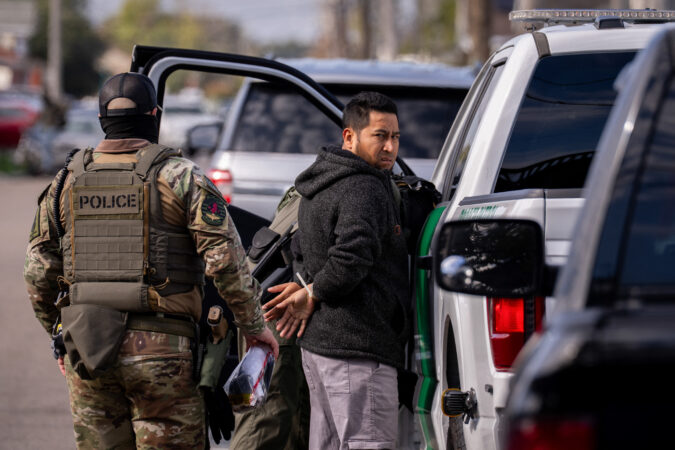
    GRETNA, La. — Siomara Cruz was not troubled when she saw two Latina immigrants handcuffed earlier this month by masked immigration agents outside a restaurant in this New Orleans suburb.

    “They need to do things the proper way,” said Cruz, 59, a housewife whose parents emigrated from Cuba. “The law is the law. Every country has their law, and you’ve got to respect it.”

    Across the street, Tracey Daniels said it was “awful” to see immigration agents in an unmarked SUV detain a Latino man outside the gas station kitchen where she was preparing lunch plates of red beans, rice, and fried catfish.

    “They’re just snatching these people, snatching them away from their families,” said Daniels, 61. “Now they got people afraid to come outside, businesses closing.”

    The immigration operation, dubbed Catahoula Crunch by the Department of Homeland Security, follows similar crackdowns in Chicago, Los Angeles, Charlotte, N.C., and other cities. DHS Assistant Secretary Tricia McLaughlin said in a statement earlier this month that 250 people had been arrested since the start of the operation.

    The mission is exposing stark divides in and around New Orleans that reflect broader national reactions to the administration’s immigration raids — and who should help enforce them.

    Across 10 national polls in November and early December, 43% approve of President Donald Trump’s handling of immigration, while 55% disapprove. The share of people who approve of Trump’s handling of immigration has dropped from about 50% in March. Last week, Illinois Gov. JB Pritzker, a Democrat, signed a law seeking to limit immigration enforcement in his state as he continues challenging the administration’s aggressive campaign there.

    New Orleans is a “sanctuary city,” where officials have historically refused to support federal immigration sweeps. But new state laws designed to penalize those who impede immigration enforcement could put officials and officers at risk if their departments do not cooperate with federal operations.

    And some surrounding police departments, including in Gretna, have signed 287(g) agreements to work with U.S. Immigration and Customs Enforcement to deport people who authorities say entered the country illegally.

    Those agreements have also divided residents. Some said that immigration enforcement should fall exclusively to federal agents — that having local officers partner on the issue risks alienating immigrant communities or violating people’s rights. But police supporting the operations said they get more complaints about crime in their communities than they do about Catahoula Crunch.

    Gretna Deputy Police Chief Jason DiMarco said his 150-person force needs to serve everyone in its diverse community, but added that having so many undocumented residents in the city makes it harder to identify suspected criminals. Last month, he said, local police accompanied ICE agents on a raid that picked up four suspects, including an alleged MS-13 gang member. DiMarco noted that within the last year, Gretna police have investigated several serious crimes committed by undocumented suspects, including one who fled the country after allegedly killing an immigrant who had come to the United States legally.

    Now, because of the 287(g) agreement, officers can coordinate directly with ICE.

    “If they run across an illegal immigrant in their day-to-day patrol activities … they can actually detain the person, check their legal status, and if they aren’t here legally, we can contact ICE and they’ll come and get them,” DiMarco explained of the partnership during an interview at his office earlier this month.

    DiMarco, who is from Gretna, has watched the city of nearly 18,000 grow more diverse, to include a member of his own family who emigrated from Honduras. Like many in the New Orleans area, his family tree includes immigrants from several countries, including France, Italy, and Cuba.

    “New Orleans is the original melting pot of the world,” he said. “… People from every walk of life lived in this city. And they intertwined and managed to live together cohesively.”

    So far, DiMarco said, he hasn’t fielded any complaints about his department’s work with ICE. Even if people don’t agree, he said, officers have a duty to enforce the law, including one signed in June by Gov. Jeff Landry, a Republican, that criminalized “any act intended to hinder, delay, prevent, or otherwise interfere with or thwart federal immigration enforcement efforts.”

    Anyone in violation could face jail time or fines.

    “We don’t get to pick and choose which you can and can’t enforce,” DiMarco said.

    But DiMarco also worries the ongoing raids may make immigrants even more hesitant to report crime.

    “We don’t want somebody to get victimized and get picked on, whether they be illegal or not,” he said. “Nobody deserves to be a victim of a crime.”

    Most Catahoula Crunch activity has been to the west of New Orleans in Jefferson Parish, which includes Gretna and other towns where law enforcement agencies signed 287(g) agreements. In last year’s presidential election, 55% of Jefferson Parish voted for Trump, while 82% of neighboring Orleans Parish voted for Democratic nominee Kamala Harris.

    Kenner, Jefferson Parish’s most populous city, has more than 64,000 residents — about one-third of whom are Latino, according to U.S. Census Bureau data. Police Chief Keith Conley said Kenner partnered with ICE at the request of local business owners, including immigrants.

    “We had members of our community pleading with us to keep our community safe,” Conley said, describing gang activity that he said had its roots in Central American countries that residents of Kenner had fled. “They saw the ways of their home countries coming here. When I have business leaders coming to me, I have to respond.”

    Conley said his city has experienced “some pretty heinous crimes” in recent years, including murder and child sexual assaults.

    “And we weren’t getting much cooperation” from federal officials, he said. “It was a failure at the top.”

    Landry requested a National Guard deployment to New Orleans in September, citing an alleged increase in violent crime, even though police and city leaders say crime has decreased and federal support is not needed. The city’s homicide rate is nearly the lowest in 50 years. Violent crimes — including murders, rapes, and robberies — have all decreased 12% through October compared with a year ago, according to New Orleans police.

    Conley and some Jefferson Parish residents, however, said they are grateful the Trump administration has sent federal agents into their region. Outside a Lowe’s hardware store in neighboring Metairie, where immigration agents were spotted this month, Howard Jones, 71, said he was supportive of local law enforcement agencies joining the operation.

    “I’m all for people being deported who are not here legally,” said Jones, a retired data warehouse analytics consultant and self-described moderate conservative who voted for Trump the last three presidential elections.

    But Gloria Rodriguez, 38, a Mexican immigrant who works in construction, said she did not like seeing local police involved. Though she is a legal permanent resident and her husband and 18-year-old son who were in the truck with her are U.S. citizens, they carried their passports and immigration paperwork in case they were stopped by federal agents.

    “They should not cooperate with immigration, just do their job and get criminals out of the streets instead of hardworking people,” Rodriguez said, adding that she has been troubled by reports of U.S. citizens being caught up in the immigration crackdown.

    “What if they take us?” she said.

    Unlike their counterparts in Gretna, Kenner, and other cities with 287(g) agreements, New Orleans officials have resisted cooperating with the Trump administration’s efforts.

    New Orleans police adopted a policy that prohibits officers from assisting federal immigration enforcement except under certain circumstances, such as a threat to public safety. The policy resulted from a 2013 federal consent decree to address a history of unconstitutional practices, including racial profiling. Last month, a federal judge ended the consent decree, but Police Superintendent Anne Kirkpatrick said last month that immigration remained a civil issue, adding that police would not enforce civil laws but instead ensure that immigrants “are not going to get hurt and our community is not in danger.”

    Louisiana Attorney General Liz Murrill, a Republican, has since encouraged Kirkpatrick to have officers “fully cooperate” with federal immigration officials.

    Murrill warned that New Orleans police policies “appear to conflict with current state law,” referencing this year’s statute that says thwarting federal immigration efforts could be considered obstruction of justice.

    Kirkpatrick did not respond to a request for comment, but a department spokesperson said in a statement this month that “NOPD is not involved in, informed of, or responsible for any enforcement activity conducted by ICE, DHS, or U.S. Border Patrol.”

    The police department’s role, the statement added, “is to enforce state and municipal criminal laws. We do not handle or participate in federal immigration enforcement.”

    Murrill is also embroiled in a legal battle with the Orleans Parish Sheriff’s Office, which operates city jails under a federal consent decree and has refused to cooperate with ICE.

    Chief Border Patrol Agent Gregory Bovino has appeared in the French Quarter of New Orleans, Kenner, and other areas with agents, where he has been met with protests and signs of support. Anti-ICE protesters confronted Bovino and temporarily shut down a New Orleans City Council meeting this month, but other residents posed for photos with Bovino while holding a homemade sign that read: “Thank you ICE.”

    New Orleans Mayor-elect Helena Moreno is already pressing federal officials to prove they are targeting only immigrants with violent criminal histories. Moreno, a Democrat who will be the city’s first Latina mayor, will not take office until Jan. 12. But she said she is concerned Catahoula Crunch is creating a “culture of fear” and forcing businesses to close and workers to stay home. She created a website advising residents of their rights, and the city council launched an online portal where they can report alleged abuse by federal officers.

    Some New Orleans business owners posted “ICE Keep Out” signs this month, while others said they worried that doing so could make them targets. Antoine’s Restaurant in the French Quarter held meetings with employees — all documented — to address their fears after seeing reports of masked immigration agents conducting raids in armored vehicles.

    “It’s giving a lot of people anxiety, including our employees,” said Lisa Blount, whose family owns the restaurant, as she stood near the packed bar. “We are in a busy season, an important, celebratory time in New Orleans. We’re not going to let them bully their way in.”

    A few streets away, Dominican immigrant Diomedes Beñalo was unloading gold chairs for a wedding and said he wished local police would do more to protect residents’ rights. He questioned why federal agents are hiding their faces.

    “That seems like a thing that can make them violate people’s rights,” said Beñalo, 40, adding that undocumented immigrants’ civil rights should not be violated.

    “The police should make sure that doesn’t happen,” he said. “That’s what we pay police to do.”

  • WTF? Embracing profanity is one thing both political parties seem to agree on

    WTF? Embracing profanity is one thing both political parties seem to agree on

    WASHINGTON — As he shook President Barack Obama’s hand and pulled him in for what he thought was a private aside, Vice President Joe Biden delivered an explicit message: “This is a big f— deal.” The remark, overheard on live microphones at a 2010 ceremony for the Affordable Care Act, caused a sensation because open profanity from a national leader was unusual at the time.

    More than 15 years later, vulgarity is now in vogue.

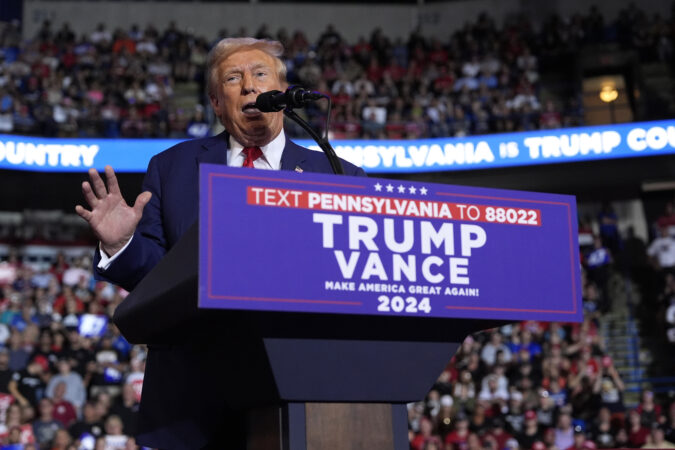
    During a political rally Tuesday night in Pennsylvania that was intended to focus on tackling inflation, President Donald Trump used profanity at least four times. At one point, he even admitted to disparaging Haiti and African nations as “shithole countries” during a private 2018 meeting, a comment he denied at the time. And before a bank of cameras during a lengthy cabinet meeting last week, the Republican president referred to alleged drug smugglers as “sons of bitches.”

    While the Biden incident was accidental, the frequency, sharpness, and public nature of Trump’s comments are intentional. They build on his project to combat what he sees as pervasive political correctness. Leaders in both parties are seemingly in a race now to the verbal gutter.

    Vice President JD Vance called a podcast host a “dips—” in September. In Thanksgiving remarks before troops, Vance joked that anyone who said they liked turkey was “full of s—.” After one National Guard member was killed in a shooting in Washington last month and a second was critically injured, top Trump aide Steven Cheung told a reporter on social media to “shut the f— up” when she wrote that the deployment of troops in the nation’s capital was “for political show.”

    Among Democrats, former Vice President Kamala Harris earned a roar of approval from her audience in September when she condemned the Trump administration by saying “these motherf— are crazy.” After Trump called for the execution of several Democratic members of Congress last month, Sen. Chris Murphy (D., Conn.) said it was time for people with influence to “pick a f— side.” Senate Democratic leader Chuck Schumer of New York said the administration cannot “f— around” with the release of the Jeffrey Epstein files. Democratic Rep. Jasmine Crockett, who on Monday announced her Senate campaign in Texas, did not hold back earlier this year when asked what she would tell Elon Musk if given the chance: “F— off.”

    The volley of vulgarities underscore an ever-coarsening political environment that often plays out on social media or other digital platforms where the posts or video clips that evoke the strongest emotions are rewarded with the most engagement.

    “If you want to be angry at someone, be angry at the social media companies,” Utah Gov. Spencer Cox, a Republican, said Tuesday night at Washington National Cathedral, where he spoke at an event focused on political civility. “It’s not a fair fight. They’ve hijacked our brains. They understand these dopamine hits. Outrage sells.”

    Cox, whose national profile rose after calling for civility in the wake of conservative activist Charlie Kirk’s assassination in his state, approved an overhaul of social media laws meant to protect children. A federal judge has temporarily blocked the state law.

    Tough political talk is nothing new

    Tough talk is nothing new in politics, but leaders long avoided flaunting it.

    Recordings from Democrat Lyndon B. Johnson’s administration, for instance, revealed a crude, profane side of his personality that was largely kept private. Republican Richard Nixon bemoaned the fact that the foul language he used in the Oval Office was captured on tape. “Since neither I nor most other Presidents had ever used profanity in public, millions were shocked,” Nixon wrote in his book In the Arena.

    “Politicians have always sworn, just behind closed doors,” said Benjamin Bergen, a professor at the University of California-San Diego’s Department of Cognitive Science and the author of What the F: What swearing reveals about our language, our brains, and ourselves. “The big change is in the past 10 years or so, it’s been much more public.”

    As both parties prepare for the 2026 midterm elections and the 2028 presidential campaign, the question is whether this language will become increasingly mainstream. Republicans who simply try to imitate Trump’s brash style do not always succeed with voters. Democrats who turn to vulgarities risk appearing inauthentic if their words feel forced.

    For some, it is just a distraction.

    “It’s not necessary,” said GOP Rep. Don Bacon of Nebraska, who is retiring next year after winning five elections in one of the most competitive House districts. “If that’s what it takes to get your point across, you’re not a good communicator.”

    There are risks of overusing profanity

    There also is a risk that if such language becomes overused, its utility as a way to shock and connect with audiences could be dulled. Comedian Jerry Seinfeld has talked about this problem, noting that he used swear words in his early routines but dropped them as his career progressed because he felt profanity yielded only cheap laughs.

    “I felt like well I just got a laugh because I said f— in there,” he said in a 2020 interview on the WTF podcast with fellow comedian Marc Maron. “You didn’t find the gold.”

    White House spokesperson Liz Huston said Trump “doesn’t care about being politically correct, he cares about making America great again. The American people love how authentic, transparent, and effective the President is.”

    But for Trump, the words that have generated the most controversy are often less centered in traditional profanity than slurs that can be interpreted as hurtful. The final weeks of his 2016 campaign were rocked when a tape emerged of him discussing grabbing women by their genitals, language he minimized as “locker room talk.” His “shithole” remark in 2018 was widely condemned as racist.

    More recently, Trump called Bloomberg reporter Catherine Lucey “piggy,” comments that his press secretary, Karoline Leavitt, defended as evidence of a president who is “very frank and honest.” Trump’s use of a slur about disabled people prompted an Indiana Republican whose child has Down syndrome to come out in opposition to the president’s push to redraw the state’s congressional districts.

    On rare occasions, politicians express contrition for their choice of words. In an interview with The Atlantic published last week, Pennsylvania Gov. Josh Shapiro, a Democrat, dismissed Harris’ depiction of him in her book about last year’s presidential campaign by saying she was “trying to sell books and cover her a—.”

    He seemed to catch himself quickly.

    “I shouldn’t say ‘cover her a—,” he said. “I think that’s not appropriate.”

  • Trump came to a Pa. casino to promise prosperity. Gamblers here had a mixed view of the economy.

    Trump came to a Pa. casino to promise prosperity. Gamblers here had a mixed view of the economy.

    A smattering of people pushed their luck Tuesday at the Mount Airy Casino Resort, tapping neon slot buttons, flipping dice onto felt craps tables, and wandering the rows of glowing, dinging machines.

    A floor below, President Donald Trump was set to speak in a sprawling ballroom, where event staff hung a huge blue banner: LOWER PRICES, BIGGER PAYCHECKS.

    Trump picked this casino in the Pocono Mountains to deliver the first big economic speech of his presidency as polls show Americans are feeling the pain of high prices — and many are blaming him.

    Politically, the setting made sense. This northeastern corner of the state is where Trump saw the largest swing from 2020 to 2024, and it will be a key congressional battleground next year. It’s also a region home to a large population of aging, non-college-educated voters — the core of Trump’s comeback coalition.

    But the contrast at the casino was hard to miss: the steady slot machine chimes of financial risk and uncertainty above and a president’s promises of stability and revival on the floor below.

    How’s the economy working for Rosemary Migli?

    “It could be better,” said the 73-year-old retired bartender from Tobyhanna, taking a puff of a cigarette before winning 35 cents on a spin.

    Despite a frenzy of police and Secret Service, many gamblers, focused on their own troubles or celebrations, did not realize the president was coming. An older retired couple enjoyed an afternoon together with no obligations. Nearby, a recently widowed woman said the monotony of the slots helps her cope with her loss.

    Peter Jean-Baptiste celebrated his 33rd birthday at the casino with his fiancee. The Philadelphia-based couple are saving for a wedding next year.

    “It’s tough for everyone just trying to make a living, honest people trying to make a living,” Jean-Baptiste said. “One day you feel like [Trump’s] got your back, the next day he doesn’t.”

    Jean-Baptiste, who works in property insurance, said he has also seen housing prices rise. And, as a child of Haitian immigrant parents, he is struggling with how Trump’s anti-Haitian verbal attacks and immigration crackdowns have affected his family.

    “He does a bunch of hot takes and causes division between American citizens,” Jean-Baptiste said. “When, I feel, we really all just want to get along and get by.”

    Mount Pocono is a region with mixed fortunes: Wealthy retirees have second vacation homes here, while lower-income workers are employed in warehouses and hold up the tourism industry. The area is also a hub for New York City commuters who moved here for more affordable housing.

    “We live on a fixed income. We watch what we spend,” said Julie Dietz, sitting beside her husband, Glenn, as she played a buffalo-themed slot game. The Toms River, N.J., couple gamble for a few hours every now and then. She was a paralegal and he worked evaluating industrial facilities for safety before they retired.

    “We know what our limitations are,” Dietz, 71, said. “Yes, food prices have gone up, but I’ve also seen some things come down — gas prices in our area. And the economy took so many years to get to this point.”

    Dietz, who supported Trump in the last election, thinks an economic rebound is just going to take more time.

    “He’s been in office 11 months. Eleven months. So I feel full confidence that he is going to do what he said he’s going to do. Everybody wants things immediately.”

    Kathy F., who didn’t want to give her last name talking about politics and gambling, joined her husband at the casino Tuesday, despite her misgivings about losing money at a time when prices are going up.

    “I go to Costco and everything is $5 more than it used to be. That’s a lot,” she said, bundled in a puffy black coat as her husband gambled nearby.

    “I really don’t understand politics,” said the retired New York City civil servant, who voted for then-Vice President Kamala Harris last year. “It seems like they just fight with each other nonstop when all people want is to be able to afford to live.”

    As he stretched his legs between games, Stephen Miller — “not that Stephen Miller,” he clarified — laughed off the notion of going to see Trump in person a floor below.

    “If I want to see him, all I have to do is turn on the TV. He’s on at 12, he’s on at 3, he’s on at 5, seven days a week.”

    The 75-year-old retired contractor supports Trump, though, and called the economy “half-decent.” He said food prices are high but eggs have gone down.

    “The economy is glacial, so it moves slow. Democrats are definitely locked onto the affordability. But affordability means, what? It means whatever you want it to mean.”

    Miller glanced down at a few vouchers in his hand to set off for the next set of machines.

    “I’m not winning yet, but I will be and the Donald will be,” he said. “Give it time.”

  • All the Golden Globe Awards nominees with ties to the Philly region

    All the Golden Globe Awards nominees with ties to the Philly region

    Pennsylvanians know how to bring home a trophy, from the reigning Super Bowl champions to Philly natives awarded an Oscar.

    The Golden Globe Awards on Monday announced its nominees for the best in television and movies, and with it, another chance for victory for regional productions and local actors.

    The ceremony airs Jan. 11 with awards given in 28 categories.

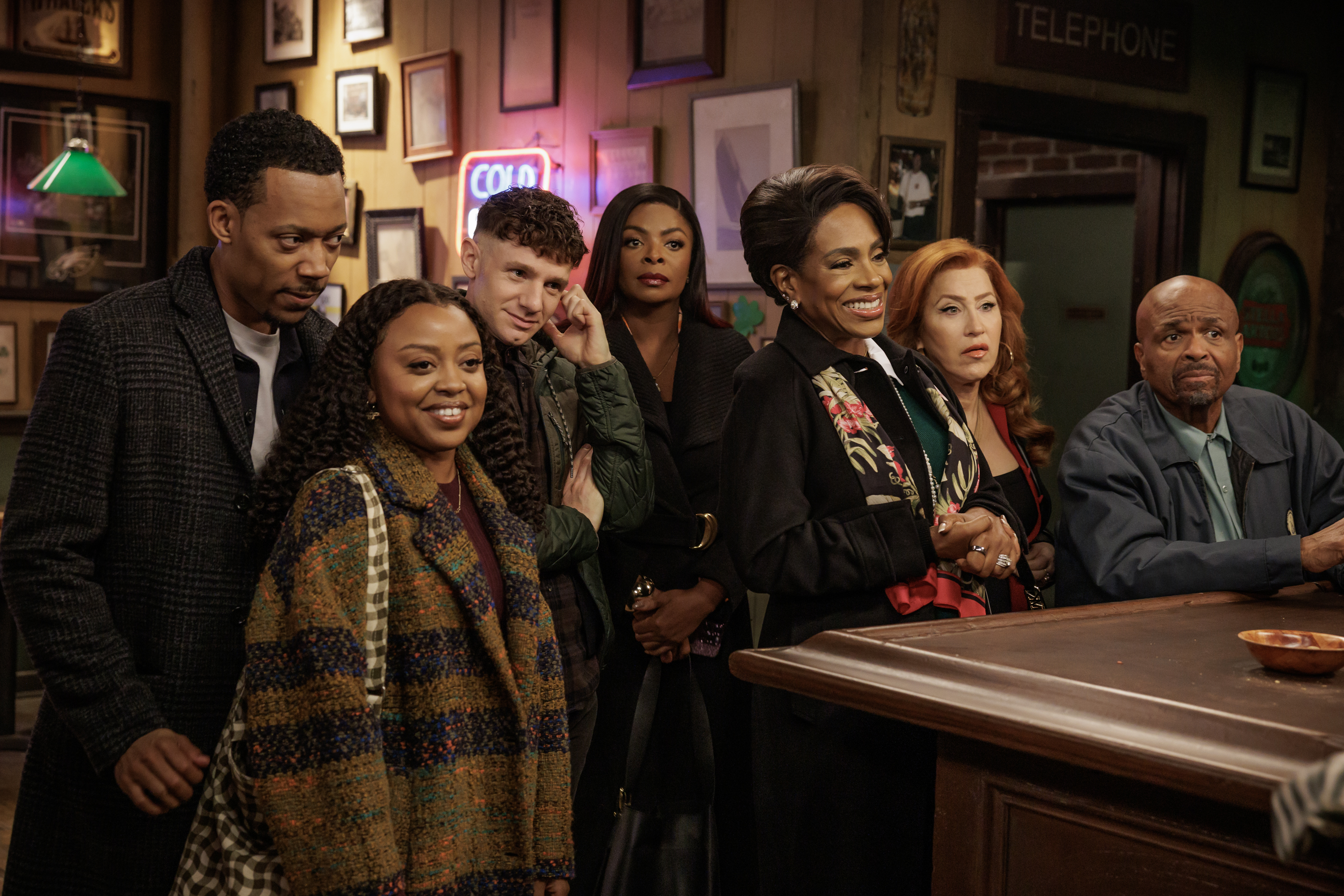
    The Abbott Elementary crew visits the Always Sunny gang at Paddy’s Pub in the “It’s Always Sunny in Philadelphia” and “Abbott Elementary” crossover.

    In its fifth season, Abbott Elementary has already won the hearts of Philadelphians and three Golden Globes. Still, this wholesome band of teachers, starring Philly-native Quinta Brunson, is up again for best musical or comedy television series.

    HBO’s Task and Peacock’s Long Bright River, two crime thrillers set in Philadelphia neighborhoods and suburbs, both have leading actors nominated for Golden Globes this season.

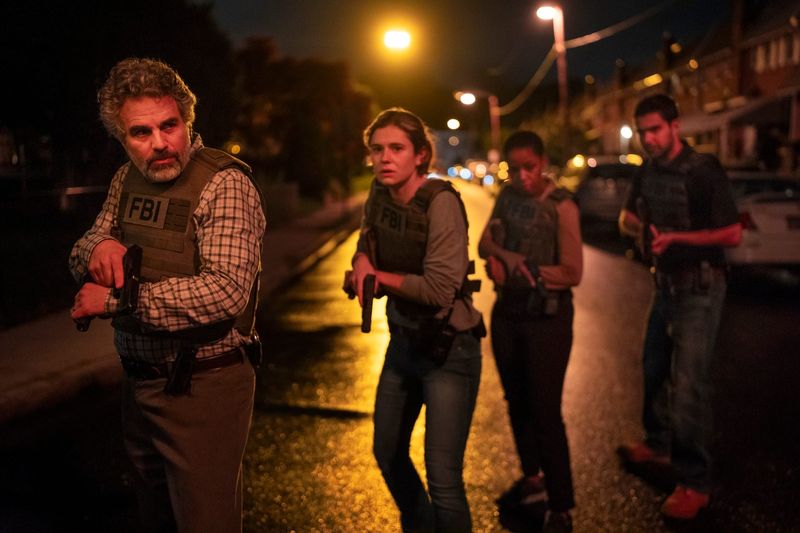
    Mark Ruffalo as Tom, Alison Oliver as Lizzie, Thuso Mbedu as Aleah, and Fabien Frankel as Anthony in “Task.”

    In Task, Mark Ruffalo plays an FBI investigator hunting down thieves targeting drug houses in Delco. While Ruffalo may not know the definition of “jawn” in real life, his portrayal of a tortured former priest turned agent resonated with critics and earned a nomination for best male actor in a dramatic television series. The Inquirer compiled a list of the real-life locations used in the show.

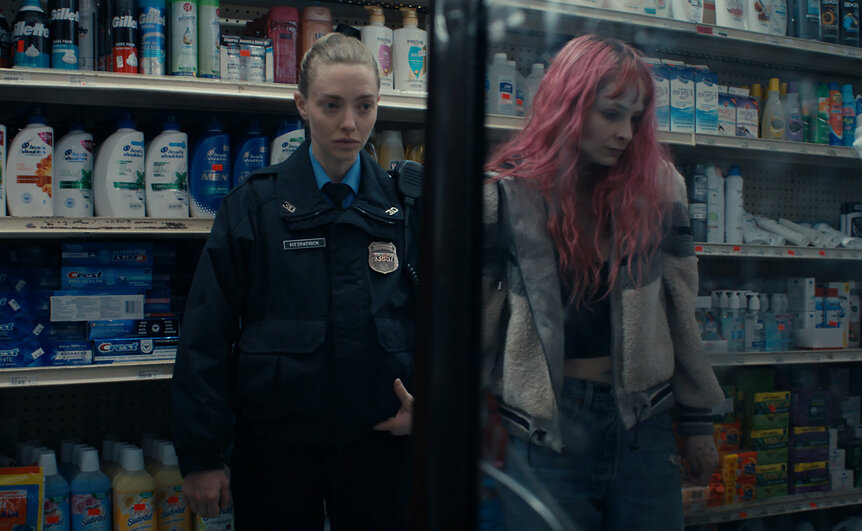
    Amanda Seyfried (left) and Asleigh Cummings in the Kensington-set Peacock series “Long Bright River,” based on the novel of the same name by Temple professor and novelist Liz Moore.

    Liz Moore’s crime novel Long Bright River turned heads when it was released in 2020, detailing the harrowing story of a Kensington police officer, played in the series by Amanda Seyfried, searching for her sister in a cat-and-mouse chase with a killer targeting sex workers. While the television adaptation was filmed in New York City, the bulk of the show takes place in Kensington and other Philadelphia neighborhoods, with Seyfried grabbing a nomination for best female performance in a dramatic limited series.

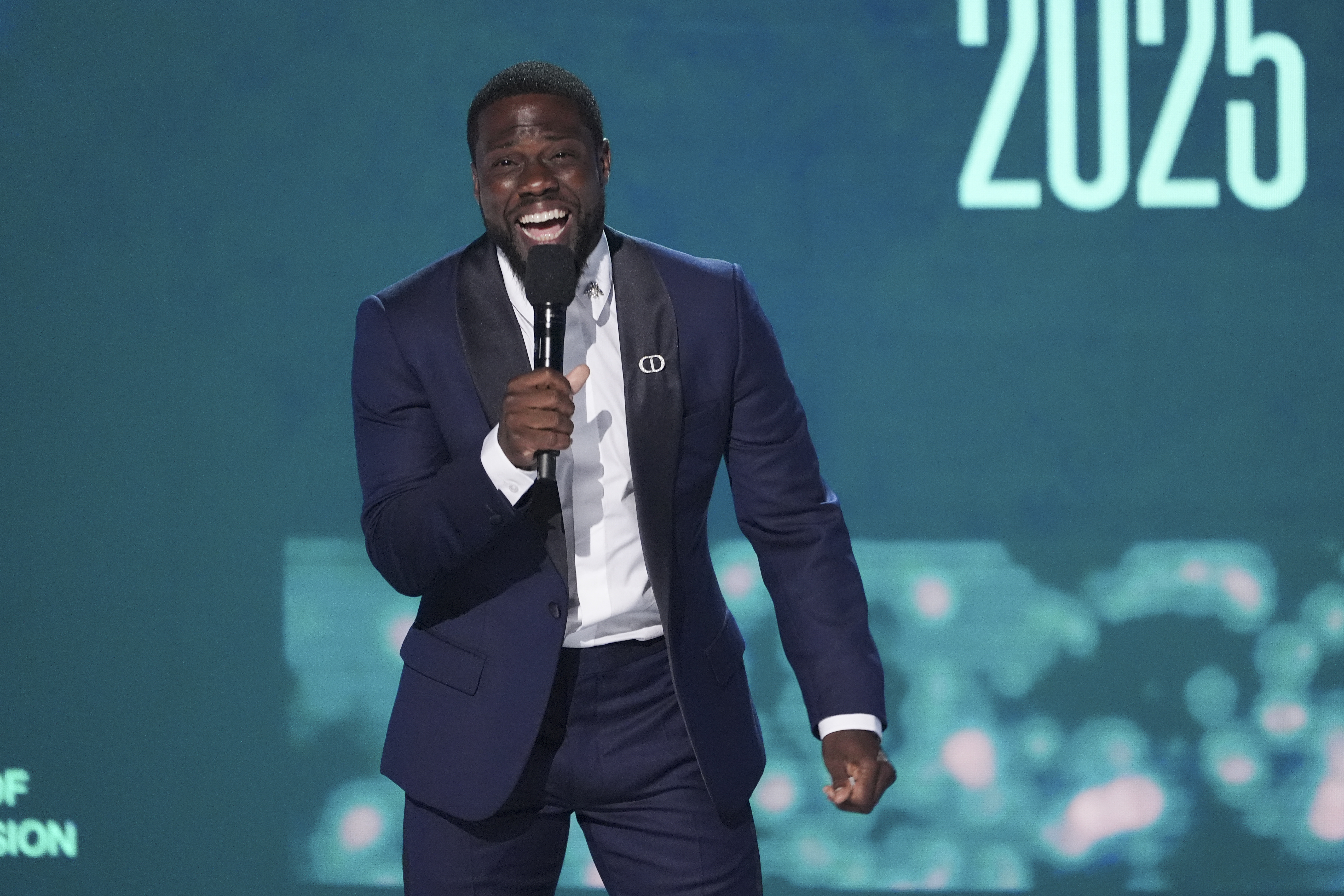
    Hometown stand-up icon Kevin Hart was back to his roots with a new comedy special, Kevin Hart: Acting My Age, tackling injuries after 40, Chick-fil-A’s spicy chicken sandwich consequences, and slipping in the shower. He earned a nomination for best stand-up comedy performance on television.

    Host Kevin Hart speaks during the BET Awards on Monday, June 9, 2025, at the Peacock Theater in Los Angeles.

    The Golden Globes are introducing a new best podcast category this year, for which Bucks County native Alex Cooper is nominated for her sex-positive show, Call Her Daddy. Alongside celebrity guests like Gwyneth Paltrow, Miley Cyrus, and Kamala Harris, Cooper delves into the taboo of female pleasure and pop culture. She grew the show’s popularity into a $60 million Spotify deal in 2021.

    And through a few degrees of separation, several other nominees can be claimed as Philly-adjacent.

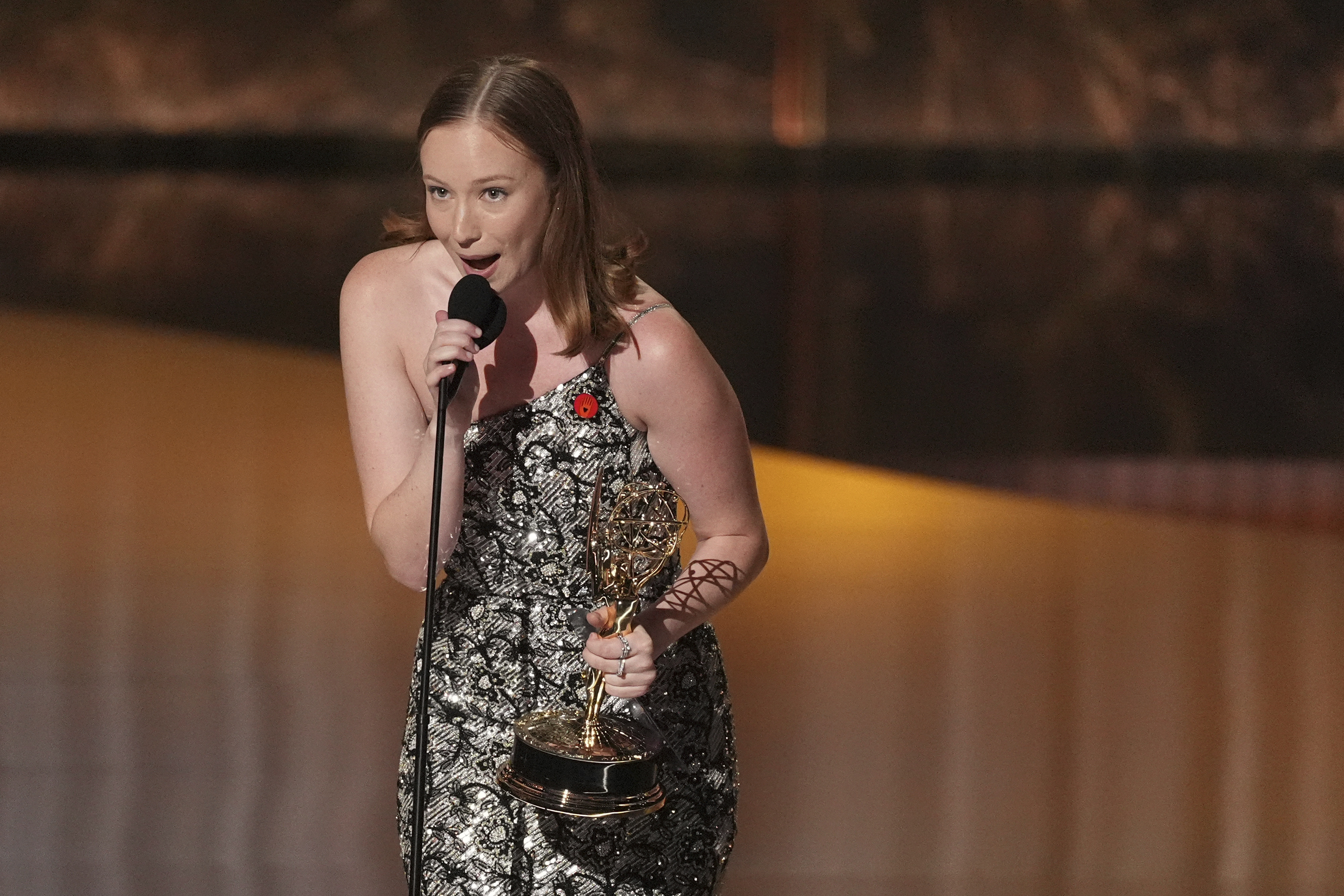
    Hannah Einbinder, whose father is from Doylestown, accepts the award for outstanding supporting actress in a comedy series for “Hacks” during the 77th Primetime Emmy Awards on Sunday, Sept. 14, 2025, at the Peacock Theater in Los Angeles. (AP Photo/Chris Pizzello)

    Take Hacks actress Hannah Einbinder, who shouted “Go Birds!” during her speech after winning an Emmy for best supporting actress in a comedy series, and was filmed by the evening news crying in the streets of Los Angeles after the Eagles’ 2018 Super Bowl win.

    She may not be from Philadelphia (her father, actor Chad Einbinder, is from Doylestown), but she reps the city. HBO’s Hacks, which follows a veteran Las Vegas comic mentoring a young comedy writer, is up for best musical or comedy television series, with Einbinder and costar Jean Smart nominated for best supporting female actor and best actor in a musical or comedy series, respectively.

    And there are some broader Pennsylvania and New Jersey ties among the nominees.

    The breakout medical drama The Pitt, which takes place in the fictional Pittsburgh Trauma Center, depicts a 15-hour shift in an emergency room, split across 15 one-hour episodes. The Pitt’s lead actor, Noah Wyle (known for his role as Dr. John Carter in NBC’s ER), is up against Ruffalo for best male actor in a dramatic television series.

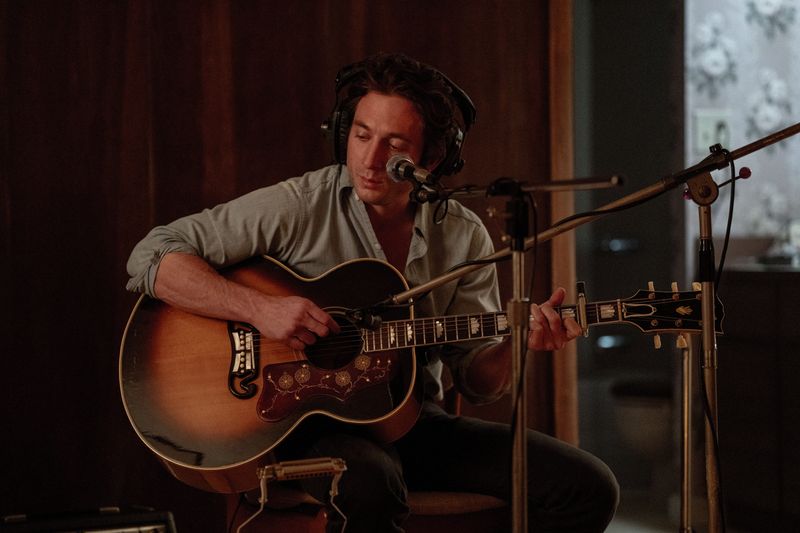
    Jeremy Allen White as Bruce Springsteen.

    Jeremy Allen White stars in the latest Bruce Springsteen biopic, Springsteen: Deliver Me From Nowhere, and is nominated for best actor in a dramatic film. The production was almost entirely filmed around New Jersey — at the request of The Boss — including in Cape May and other parts of South Jersey.

    After a major overhaul of the award show in recent years, including the sunsetting of the Hollywood Foreign Press Association due to ethics and diversity concerns, the new Golden Globe Awards are judged by a panel of 400 journalists from across the world.

    The Golden Globes will be broadcast live on Jan. 11 at 8 p.m. Philadelphia time on CBS and streaming on Paramount+.

  • Donald Trump will visit Northeast Pa. on Tuesday to promote his economic agenda ahead of 2026 midterms

    Donald Trump will visit Northeast Pa. on Tuesday to promote his economic agenda ahead of 2026 midterms

    President Donald Trump will visit Northeast Pennsylvania on Tuesday to promote his economic agenda, including efforts to lower inflation, the White House confirmed to The Inquirer on Thursday.

    The trip will kick off what is expected to be a national tour of Trump touting his economic policies ahead of the 2026 midterms, when Democrats and Republicans will battle for control of Congress.

    The specific location for Trump’s visit has not yet been made public, but Northeast Pennsylvania will be a major battleground in next year’s midterms.

    Democrats believe that they can oust freshman Republican U.S. Rep. Rob Bresnahan, of Lackawanna County, threatening the GOP’s slim House majority. Democrats are also specifically targeting the districts of U.S. Reps. Brian Fitzpatrick, of Bucks County; Ryan Mackenzie, of Lehigh County; and Scott Perry, of York County.

    Trump endorsed Bresnahan and most of Pennsylvania’s GOP delegation on his social media platform, Truth Social, last month. Scranton Mayor Paige Cognetti, a Democrat, is mounting a campaign to unseat Bresnahan, who won by roughly a percentage point last election.

    Affordability — which Trump called a “fake narrative” used by Democrats — has been a top issue for voters, including during November’s blue wave when Democrats won local contests throughout Pennsylvania, in addition to the gubernatorial races in Virginia and New Jersey.

    The president has repeatedly claimed that prices have fallen since he took office in January, but a CNN fact-checking report from November said prices and inflation have increased. Many experts have pointed to Trump’s tariff policies as contributing to increased prices.

    Tuesday’s visit appears to be the president’s first to the Keystone State since attending an energy summit in Pittsburgh in July. In November 2024, Trump defeated former Vice President Kamala Harris and won the presidency with the help of battleground Pennsylvania, garnering more votes than any statewide Republican candidate in history.

    The president had a particularly strong performance in Northeast Pennsylvania. last year, making some of his top gains compared with his 2020 performance in Lackawanna and Luzerne Counties.

  • Gov. Josh Shapiro says Kamala Harris’ descriptions of him were ‘blatant lies’ intended to sell books

    Gov. Josh Shapiro says Kamala Harris’ descriptions of him were ‘blatant lies’ intended to sell books

    Gov. Josh Shapiro lashed out over former Vice President Kamala Harris’ portrayal of his interview to become her 2024 running mate, calling Harris’ retellings “complete and utter bulls—” intended to sell books and “cover her a—,” according to the Atlantic.

    Shapiro, Pennsylvania’s first-term Democratic governor now seen as a likely presidential contender in 2028, departed from his usual composed demeanor and rehearsed comments in a lengthy Atlantic profile, published Wednesday, when journalist Tim Alberta asked the governor about Harris’ depiction of him in her new book.

    In her book, titled 107 Days, Harris described Shapiro as “poised, polished, and personable” when he traveled to Washington to interview with Harris for a shot at becoming the Democratic vice presidential candidate during her historic campaign against Donald Trump.

    However, Harris said, she suspected Shapiro would be unhappy as second-in-command. He “peppered” her with questions, she wrote, and said he asked questions about the vice president’s residence, “from the number of bedrooms to how he might arrange to get Pennsylvania artists’ work on loan from the Smithsonian.” The account aligns with reporting from The Inquirer when Harris ultimately picked Minnesota Gov. Tim Walz over Shapiro, in part, because Shapiro was too ambitious to serve in a supporting role if chosen as her running mate.

    But Shapiro, the Atlantic reported, was taken aback by the portrayal.

    “She wrote that in her book? That’s complete and utter bull—,” Shapiro reportedly told the Atlantic when asked about Harris’ account that he had been imagining the potential art for the vice presidential residence. He added: “I can tell you that her accounts are just blatant lies.”

    The governor’s sharp-tongued frustration depicted in the Atlantic marked a rare departure for the image-conscious Shapiro, whose oratory skills have been compared to those of former President Barack Obama, and who has been known to give smiling, folksy interviews laced with oft-repeated and carefully told anecdotes.

    The wide-ranging, nearly 8,000-word profile in the Atlantic also detailed Shapiro’s loss of “some respect” for Harris during the 2024 election, including for her failure to take action regarding former President Joe Biden’s visible decline.

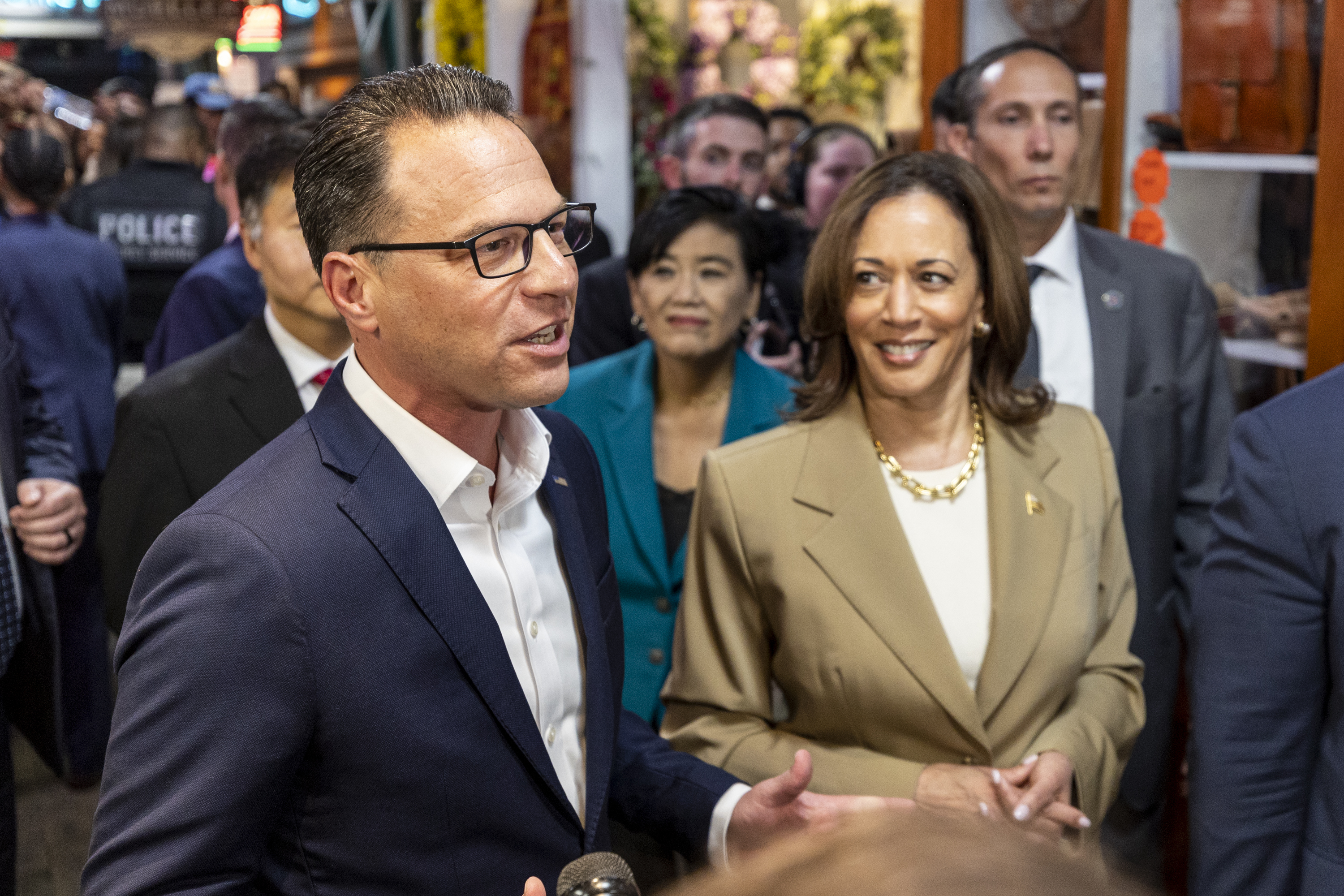
    Governor Josh Shapiro speaks with press along with Vice President Kamala Harris during their short visit to Little Thai Market at Reading Terminal Market after she spoke at the APIA Vote Presidential Town Hall at the Pennsylvania Convention Center in Philadelphia, Pa., on Saturday, July 13, 2024.

    When Shapiro was asked by the Atlantic whether he felt betrayed by Harris’ comments in her book about him, given that the two have known each other for 20 years, he said: “I mean, she’s trying to sell books and cover her a—.”

    He quickly reframed his response: “I shouldn’t say ‘cover her a—,’ I think that’s not appropriate,” he added. “She’s trying to sell books, period.”

    The Atlantic piece, titled “What Josh Shapiro Knows About Trump Voters,” presented Shapiro as a popular Democratic governor in a critical swing state that went for Trump in 2024, and as a master political operator who has carefully built a public image as a moderate willing to work across the aisle or appoint Republicans to top cabinet positions. That image was tested this year during a protracted state budget impasse that lasted 135 days, as Shapiro was unable to strike a deal between the Democratic state House and GOP-controlled state Senate for nearly five months past the state budget deadline.

    The Atlantic piece also outlined common criticisms of Shapiro throughout his two decades in Pennsylvania politics, including those from within the Democratic Party: He is too ambitious with his sights set on the presidency, and his pragmatic approach often leaves him frustrating all sides, as evidenced in his 2023 deal-then-veto with state Senate Republicans over school vouchers. It highlighted some of the top issues Shapiro will face if he chooses to run for president in 2028, including a need to take clearer stances on policy issues — a complaint often cited by Republicans and his critics. If he rises to the presidential field, Shapiro will also have to face his past handling of a sexual harassment complaint against a former top aide that Shapiro claimed he knew very little about despite the aide’s long-held reputation.

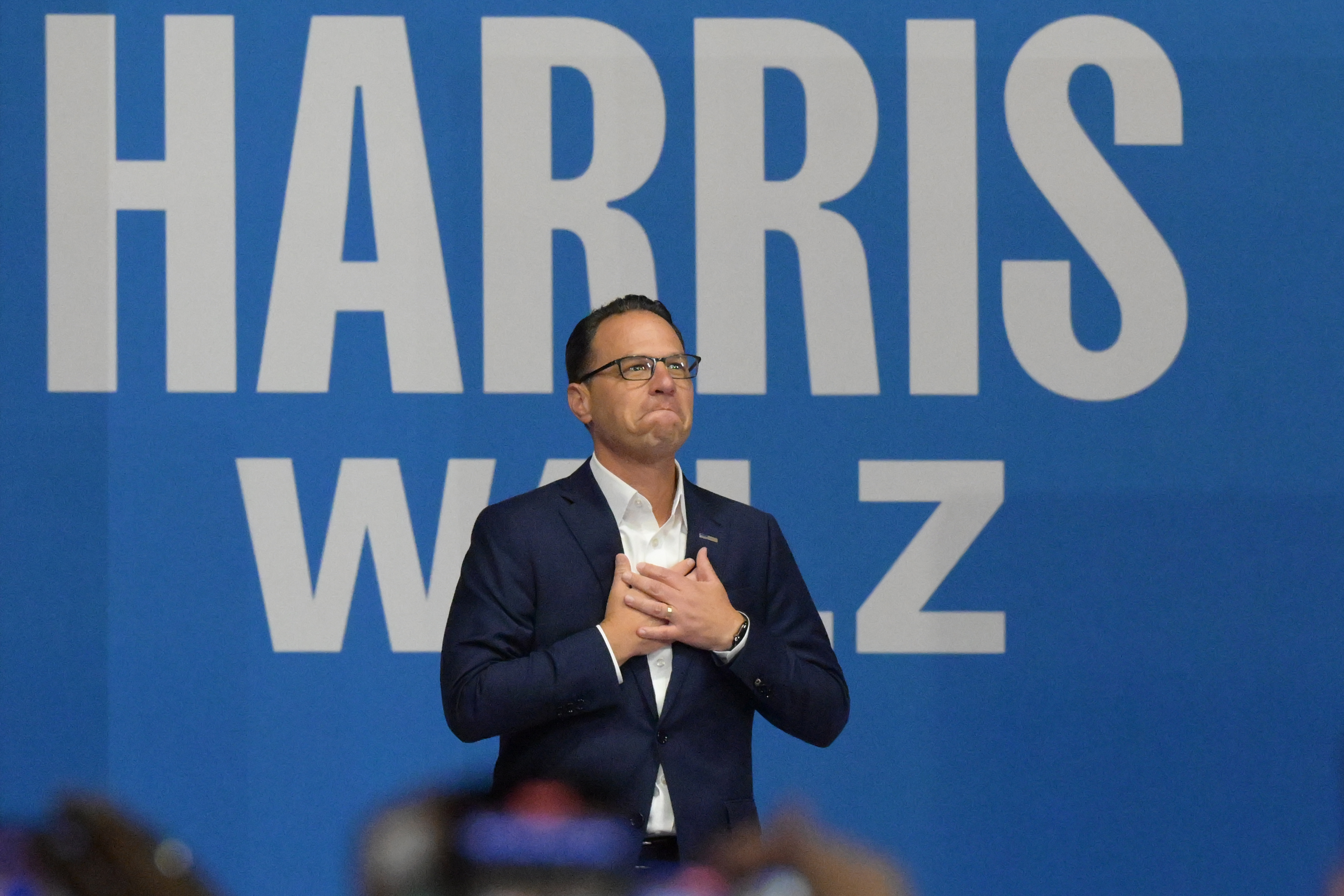
    Gov. Josh Shapiro takes the stage ahead of U.S. Vice President Kamala Harris and Gov. Tim Walz at a rally in Philadelphia’s Liacouras Center on August 6, 2024.

    “The worst-kept secret in Pennsylvania politics is that the governor is disliked — in certain cases, loathed — by some of his fellow Democrats,” the Atlantic reported. Further, Alberta noted that when an unnamed Pennsylvania lawmaker received a call from a member of Harris’ vetting operation, the member said they had never seen “so many Democrats turning on one of their own.”

    Shapiro has been featured in several other prominent national media outlets in recent weeks, including in the New Yorker, which ran a profile about his experience with political violence. He has become vocal on that issue in the months since a Harrisburg man who told police he wanted to kill Shapiro broke into the governor’s residence in April and set several fires while Shapiro and his family slept upstairs. As one of the most prominent Jewish elected officials in the nation, Shapiro has frequently said that leaders must “bring down the temperature” in their rhetoric, and has tried to refocus his own messaging on the good that state governments can do to make people’s lives easier, such as permitting reforms and infrastructure improvements.

    “The fact that people view institutions as incapable or unwilling to solve their problems is leading to hyper-frustration, which then creates anger,” Shapiro told the Atlantic. “And that anger forces people oftentimes into dark corners of the internet, where they find others who want to take advantage of their anger and try and convert that anger into acts of violence.”

  • Republicans won in Trump-friendly Tennessee, despite swing toward Democrats. Here’s what it means for Pennsylvania and 2026.

    Republicans won in Trump-friendly Tennessee, despite swing toward Democrats. Here’s what it means for Pennsylvania and 2026.

    A special election in a safely Republican district in Tennessee became must-watch TV for political observers Tuesday night, the latest sign of anti-Trump sentiment ahead of the 2026 midterms.

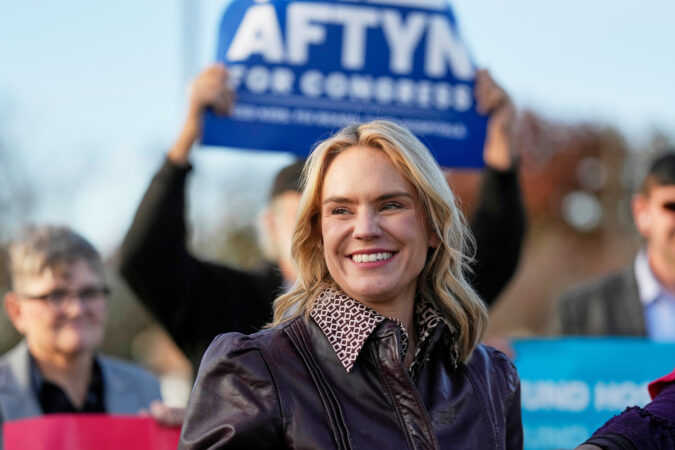
    The Associated Press called the race in Tennessee’s 7th Congressional District for Republican Matt Van Epps, who was leading Democrat Aftyn Behn by about 9 percentage points with about 99% of the vote in. That was a steep decline from the 22-point win President Donald Trump recorded in the same district just last year, and from his 39-point victory in 2016.

    It was the latest sign of a Democratic blue wave forming, following Election Day sweeps in Virginia, New Jersey, and Virginia last month. It also was the third straight special election in a deeply Republican district where voters swung toward the Democratic candidate by double-digit margins.

    “Sometimes in politics, what is happening is clear and in front of you,” David Chalian, CNN’s Washington bureau chief and political director, said Tuesday night. “Democrats are significantly, significantly over-performing what Kamala Harris did last year vs. Donald Trump in all of these places.”

    While Democrats were not successful in stealing a Republican seat Tuesday night, there are about 100 districts Trump won by a slimmer margin that Republicans will now need to defend during the 2026 midterms, according to the New York Times. Democrats need to flip just a couple to take back the majority in the House for the remainder of Trump’s term.

    While Trump celebrated Van Epps’ victory on social media, Democratic National Committee chairman Ken Martin called the results “a flashing warning sign for Republicans heading into the midterms.”

    “What happened tonight in Tennessee makes it clear: Democrats are on offense and Republicans are on the ropes,” Martin said in a statement.

    What is the Republican majority in the House?

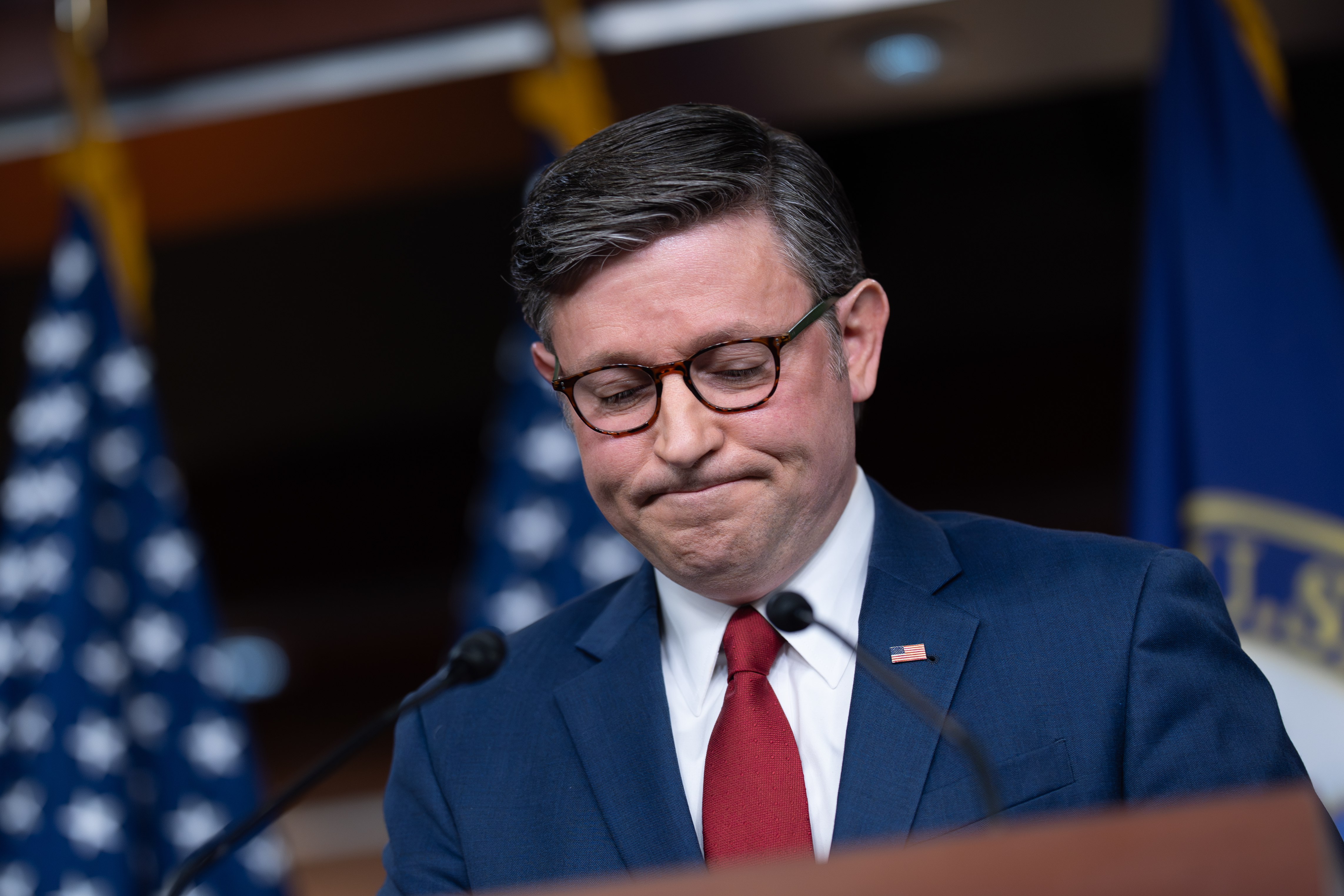
    Speaker of the House Mike Johnson (R., La.) is dealing with a shrinking majority.

    Van Epps’ victory means Republicans will hold 220 seats, while Democrats have 214 seats; 218 are needed to control the majority.

    Two seats remain vacant, and both are expected to go to Democrats, further reducing the already slim majority of House Speaker Mike Johnson (R., La.).

    The first is in Texas, where a runoff will be held Jan. 31 to fill the seat vacated by the death of Democratic Rep. Sylvester Turner. The race is down to two Democrats — Christian Menefee and Amanda Edwards.

    The second open seat is in New Jersey’s 11th Congressional District, which will hold a special election April 16 to fill the spot vacated by New Jersey Gov.-elect Mikie Sherrill. While the district was represented by a Republican as recently as 2018, it has been safely blue since maps were redrawn following the 2020 Census and is expected to remain in Democratic control.

    Not surprisingly, there are a lot of Democrats vying to replace Sherrill. At least 13 have entered the race or are about to do so, a lengthy list that includes former Rep. Tom Malinowski, progressive activist Analilia Mejia, Obama White House alum Cammie Croft, Essex County Commissioner Brendan Gill, and current Lt. Gov. Tahesha Way.

    Just one Republican has announced a bid to replace Sherrill — Randolph Mayor Joe Hathaway.

    Then there is the Georgia seat of GOP Rep. Marjorie Taylor Greene, which is set to become vacant following her resignation on Jan. 5. It is unclear when Georgia will hold a special election to replace Greene, but Gov. Brian Kemp is required to set a date within 10 days of her departure.

    The seat is considered safely Republican, but that is hardly definitive after what happened in Tennessee on Tuesday night.

    Why was there a special election in Tennessee?

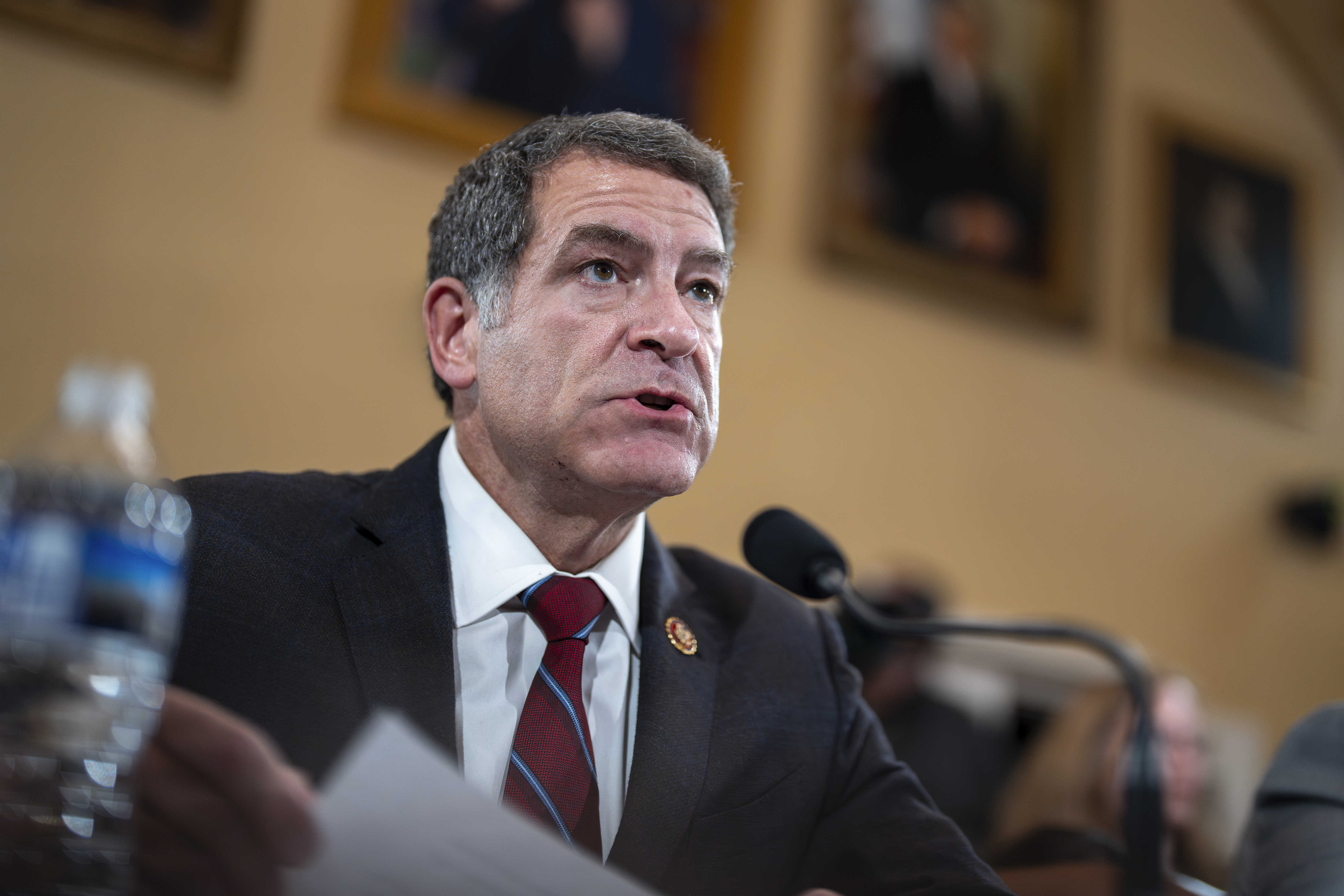
    Former Rep. Mark Green (R., Tenn.) left Congress suddenly to launch his own business.

    Tuesday’s special election was held to replace the seat vacated by Republican Mark Green, who resigned in July to launch a new business called Prosimos.

    Green’s decision to leave Congress, and his role as the chair of the Homeland Security Committee, came in the middle of his fourth term.

    So what is Prosimos? According to Green, it’s a development and strategy firm designed to help U.S. businesses better compete against the influence of China. The company’s website says it provides “tailored strategies and expert guidance to navigate the complexities of global business development.”

    What does this mean for Republicans in Pennsylvania and New Jersey?

    Rep. Ryan Mackenzie (R., Pa.) is one of four Pa. Republicans facing a tough reelection battle.

    If there has been a trend since Trump’s inauguration, it’s that voters are keen on punishing Republicans at the ballot box.

    In four previous special elections for House seats held in 2025, Democrats significantly outperformed Harris’ margins in 2024. That was also true of Election Day victories in Pennsylvania, New Jersey, Virginia, and Georgia, where two Republicans were booted off the state’s Public Service Commission.

    Closer to home, there are five House seats — four in Pennsylvania, one in New Jersey — that Democrats hope to flip during the 2026 midterms, potentially deciding the balance of power during the final two years of Trump’s presidency.

    • PA-01: In Bucks County, Republican Rep. Brian Fitzpatrick is used to close races, but next year could be particularly challenging for the five-term moderate. In addition to nationwide trends, Democrats won each countywide office by around 10 percentage points last month, and Bucks County District Attorney Joe Khan is the first member of their party ever elected to the office.
    • PA-07: In the Lehigh Valley, Republican Rep. Ryan Mackenzie is the biggest target for Democrats after ousting Susan Wild by just 1 percentage point in 2024. Cook Political Report lists the district as a true “toss up” and five Democrats have already entered the race.
    • PA-08: Farther north, in Scranton and Wilkes-Barre, Republican Rep. Rob Bresnahan is also looking to win reelection to a seat he flipped by just 1 percentage point in 2024. The district leans Republican — Trump won it by nearly 9 percentage points — and so far Bresnahan’s only challenger is Scranton Mayor Paige Cognetti.
    • PA-10: Another of Cook’s “toss up” districts. Republican Rep. Scott Perry, an outspoken Trump supporter who supported the president’s efforts to overturn the 2020 election, is seeking his eighth term. Perry narrowly won reelection in 2024, defeating former news anchor Janelle Stelson by less than 1 percentage point. She is running against Perry again in 2026 and has already received an endorsement from Gov. Josh Shapiro.
    • NJ-07: The northwestern New Jersey district is currently represented by Republican Tom Kean Jr., a moderate who won reelection by about 5 percentage points in 2024. Cook lists Kean’s district as a “toss up,” and he faces a crowded field of Democrats in what would otherwise be a safely Republican seat.
  • College journalism exposes the rot of ‘grown-ups’ | Will Bunch Newsletter

    I’m always reluctant to talk about upcoming columns, because in this twisted era everything changes at the drop of a MAGA hat, and I hate to jinx things. But as of now, I’m booked for a trip to Charlotte (or Raleigh?…I’ve already jinxed it, maybe) this coming weekend, where I hope to report from the front lines of the Border Patrol’s latest big-city invasion that has terrorized the immigrant community in North Carolina. So I’m going to spend a couple days reading up on what to do in a tear-gas attack, and I’ll see you again this weekend.

    If someone forwarded you this email, sign up for free here.

    Fearless college kids are saving journalism. Grown-ups? Not so much

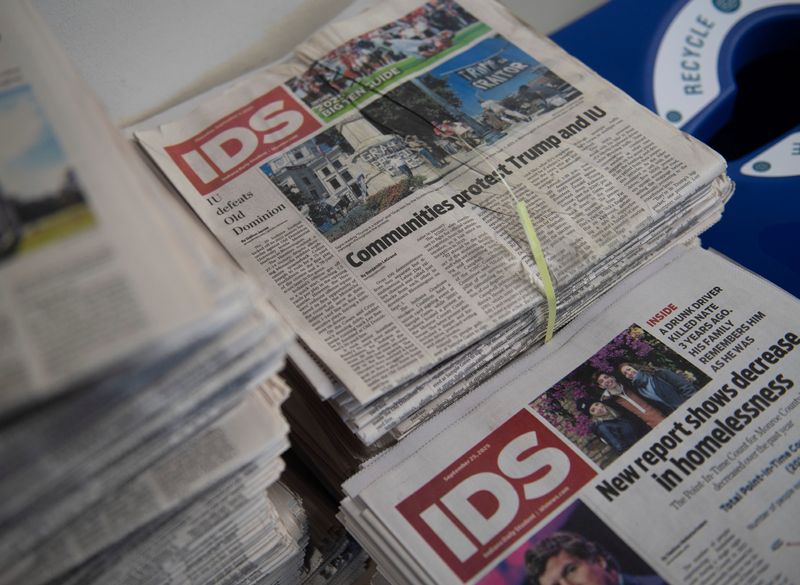
    Editions of the Indiana Daily Student in the student media area in Franklin Hall on Indiana University’s campus on Oct. 14.

    In American journalism’s year of the bended knee, nobody would have been surprised if the student editors of the Harvard Crimson followed the sorry example of major outlets like CBS News or the Washington Post in groveling before the rich and powerful — in this case, their ex-university president and still plugged-in professor Larry Summers.

    Earlier this month, Summers took to social media (the Elon Musk-owned X, of course) with a rant against the student-run paper at the Ivy League school he once helmed, linked to an article by conservative commentator (and former Crimson editor) Ira Stoll accusing the Crimson of biased coverage in favor of Palestine. Summers said ominously, “I do hope alumni trustees will investigate and take any necessary steps lest a problematic situation deteriorate any further.”

    But instead of backing down, Harvard’s student journalists stepped up. When the emails of the late financier and sex fiend Jeffrey Epstein, released last week by a House committee, proved to be riddled with his communications with Summers — long after Epstein had pleaded guilty to teen sex trafficking in Florida — the Crimson produced the most in-depth takedown of any media outlet, anywhere.

    “As Summers Sought Clandestine Relationship With Woman He Called a Mentee, Epstein Was His ‘Wing Man’” was the blistering headline on the article by undergraduates Dhruv T. Patel and Cam N. Srivastava. It described, in excruciating detail, the married Summers’ missives to Epstein about his efforts to woo a much younger Chinese economist on campus whom he was mentoring (and whom the former U.S. treasury secretary and his felonious friend code-named, with a racism they thought would remain forever private, as “peril.”)

    Take that to the alumni trustees, Mr. Summers!

    With a devastating kicker that shows Summers still emailing Epstein up until 1:27 p.m. of the day before his pal was busted on new federal sex charges in 2019, the Crimson article went viral over the weekend. By Monday morning, Massachusetts U.S. Sen. Elizabeth Warren was calling for Summers’ ouster from his faculty post. By Monday night, a “deeply ashamed” Summers announced that he’s pulling back from his public commitments, although he plans to continue teaching.

    The students’ reporting was another win for truth, justice, and the American way — but not an isolated incident. In recent years, as mainstream journalism looks increasingly weak and flabby in the face of U.S. authoritarianism, and with college campuses on the front lines of a culture war, scribes in their teens and early 20s — burning with youthful idealism and the freedom of not much to lose — have raced into the void.

    Some 3,000 miles from Harvard Square, the student journalists at the Stanford Daily stood their ground after one of its reporters was charged with three felonies, at the behest of a top university administrator, for attempting to cover a pro-Palestinian protest on the California campus. Under increasing public pressure, the charges were dropped in March — another triumph for the paper whose 2022 investigative reporting into research irregularities took down the university president.

    In the heartland, the editors of the Indiana Daily Student at that state’s flagship public university last month stood up to school administrators banning their print editions, blasting the move in a front-page editorial that said “telling us what we can and cannot print is unlawful censorship.” The students, who worked with their peers at nearby Purdue University to publish a special issue that circumvented the ban, rallied support from prominent alums and got the school to reverse course.

    “I think that many of these college journalists are laser-focused on their beats, are developing great sources among administrators, faculty and students, and are unfazed by the possibility that their stories might piss off a valued source or two,” Columbia Journalism School professor Bill Grueskin, who covered the Stanford fracas for Columbia Journalism Review, told me Monday. “In other words, they’re doing the things that the best reporters do. They’re just not able to buy a beer (legally, at least) when their story shakes up the world.”

    I know what some of you are thinking here. Investigating corruption or misconduct among university leaders, or fighting for a free press…aren’t these college students just doing what any journalist worth their salt would do? Well, yes and no.

    Consider those Epstein emails that continue to dominate the news. It turns out that two prominent journalists corresponded frequently with the convicted sex creep: the “palace intrigue” access journalist Michael Wolff, and a soon-to-be-fired New York Times business reporter, Landon Thomas Jr. The missives suggest they had zero interest in reporting on Epstein’s proclivity for underage girls but very much wanted the access to the rich and famous that jeevacation@gmail.com offered.

    And it gets worse. Thomas actually solicited a $30,000 donation from Epstein to a favored charity — a severe ethical breach that cost him his job in America’s most prestigious newsroom. Wolff, meanwhile, was offering Epstein advice on how to leverage — in essence, blackmail — the sitting U.S. president, Donald Trump. At the same time, he was pushing a business venture that would link him not only with Epstein but another man later convicted of sex crimes, filmmaker Harvey Weinstein. It seems like both conflicted journalists wanted to play in the big leagues with the much richer people they were supposed to watchdog.

    This is something that too many elite journalists share with the increasingly conflicted corporations that employ them: a desire to comfort the comfortable in return for access, or prestige, or money — and to avoid getting sued, which might jeopardize those first three things.

    How else to explain major TV networks like CBS or ABC, owned by corporations with myriad issues before the federal government, settling frivolous lawsuits by Trump for millions of dollars, or the similarly conflicted Jeff Bezos telling his Washington Post to spike its endorsement of Kamala Harris, or the mealy-mouthed “both sides” reporting on rising authoritarianism that plagues so many elite newsrooms of the traditional media?

    The late, great Kris Kristofferson told us that freedom’s just another word for nothing left to lose, and maybe that simple explanation has a lot to do with the bravery of college journalists — that they are freer to question authority than folks with a mortgage and worries about paying for their own kids to attend a top school.

    Still, it’s important to understand that most of the rot in modern mainstream journalism — too much consolidation in the hands of too few conglomerates with too much at risk to be seen as anti-regime — is institutional. We should strive to make something great out of the fact that the next generation of American journalists has arrived with smarts, savvy, and a moral compass yet to be worn down by late-stage capitalism.

    Our challenge, as a society, is to tear down the decrepit structures of the corrupted old media and build a new one that rewards independent journalists who actually afflict the comfortable, and offers them incentives to keep doing that instead of cutting venture-capitalism deals with the folks they allegedly cover. Most of today’s college journalism majors would never trade emails with the likes of Jeffrey Epstein — except to take him down.

    Yo, do this!

    • The stroke of timing behind Ken Burns’ latest documentary epic, The American Revolution, which is currently running this week on PBS stations like WHYY here in Philadelphia and also streaming, was supposed to be the 250th anniversary of the conflict that created the United States. But the project has taken on much greater relevance in a fraught present, when folks are heatedly arguing just what the Founders’ American Experiment is really all about. Critics have praised Burns and his skilled team for blending the ideals and leadership of the George Washingtons and Thomas Paines with the realities faced by everyday folk, including indigenous and enslaved people.
    • Personally, I’ve been embroiled in my nostalgia for a more recent revolution — the cultural and musical explosions that occurred in 1966. I’ve been listening to the audiobook about that tumultuous year1966: The Year the Decade Exploded — by the British author Jon Savage, whose later book on the year 1971 was the basis for an outstanding but largely ignored documentary series on Apple TV, But 1971’s classic rock wouldn’t have happened without the cultural pioneers and a youthful clamor for liberation that came five years earlier. The book is an engrossing reminder that change is possible.

    Ask me anything

    Question: Now that People Magazine has revealed the disgusting “piggy” story, why isn’t this atop every news outlets coverage? We spent 3 full weeks on Biden’s age, a week on his pardon of his son with such moral outrage from every outlet. This doesn’t even get covered? — BigTVFan (@bigtvfan.bsky.social) via Bluesky

    Answer: The episode that BigTVFan is referring to occurred with a gaggle of journalists about Air Force One, but just started getting viral attention Monday night. It is, indeed, shocking to watch. When a Bloomberg woman journalist pressed Donald Trump on the Epstein files, the president erupted. “Quiet! Quiet, Piggy!” Yes, this should be a front-page story in the traditional media, and not only because of the stunning sexism (when the subject is Epstein, no less!) and the regal arrogance, but also this: the man who’s followed around by the nuclear suitcase seems to be losing his grip on reality. Monday afternoon, Trump spoke to a gathering of franchisees of the fast-food addiction that may be just one reason why nobody believes he only weighs 16 ounces more than Jalen Hurts, McDonald’s, and was at times beyond incoherent. Yet Trump’s rapidly deteriorating mental state remains mostly off-limits for the elite media. It’s a massive error of omission that the world will look back on and regret.

    What you’re saying about…

    It’s funny how one week can feel like a decade in 2025. Last week’s question about the eight senators (seven Democrats and an independent) who cut a deal to end the long government shutdown drew a huge response from folks fired up about an issue that now almost feels like ancient history after the Epstein email release. Readers were passionate but divided. Certainly many felt the eight senators had caved in the worst possible way. An outraged Freddi Carlip wrote that “most people wanted to do what was best for Americans who are hurting and that is to stand up to bullies.” But a number of you thought the opposition had few real options but to deal from a weak hand. “This was always going to end with the government opening under the black flag of the Big Ugly Bill,” wrote Kent Dietz. “Oft repeated but true: elections have consequences.”

    📮 This week’s question: It’s all Epstein all the time, so let’s talk about it. Do you think Trump has sincerely flip-flopped and the relevant files will soon be released? Or is the White House still playing a long game aiming to keep Epstein’s secrets buried with him? Please email me your answer and put the exact phrase “Epstein files” in the subject line.

    History lesson on ‘Charlotte’s Web’…and fascism

    U.S. Border Patrol Commander at large Gregory Bovino, right, looks on as a detainee sits by a car Monday, in Charlotte, N.C.

    Nobody reads any more, at least not to the end. That’s been driven home this autumn by several efforts from tech bros and other leaders of our dystopia falling flat on their face with their attempts at literary allusions. A viral post on Bluesky recently mocked the Icarus Flying Academy, whose founders may be blissfully unaware that their Greek mythological namesake flew too close to the sun and crashed. On Monday, gazillionaire Jeff Bezos also invoked ancient Greece by announcing his AI startup Project Prometheus, invoking an inventor who was ultimately bound to a rock by Zeus for his overreaching. Then there’s the bad people behind the U.S. Border Patrol and its inhumane mass deportation drive, who took their horror show to North Carolina this past weekend with their “Operation Charlotte’s Web.”

    The “brains” behind the BP’s masked goon squad, Gregory Bovino, named the operation — which netted 81 detainees in its first Saturday during a chaotic surge through suburban lawns and Home Depot parking lots — after the 1952 classic children’s novel by E.B. White about a farm, a pig, and the compassionate spider, Charlotte, who saves the pig’s life. Why? Because Bovino’s secret police force are ensnaring scores of immigrants in their web. In Charlotte, N.C. Get it? Bovino even took to social media’s X with a wildly out-of-context quote from the novel: “Wherever the wind takes us. High, low. East, west. North, south. We take to the breeze, we go as we please.”

    In a viral essay, the writer Chris Geidner of the excellent site LawDork demolished Bovino’s literary aspirations for his police-state operation. His piece went well beyond the obvious point that a children’s novel that centers on a spider’s quest to protect someone different from her — a pig — from his human predators is the 180-degree polar opposite from the web of inhumanity that Team Bovino is spinning in Charlotte, terrorizing the Latino community there. Geidner notes that much of E.B. White’s wider work was in opposition to the very fascism that’s behind the mass deportation drive of Bovino and his ultimate boss, Donald Trump.

    Geidner quotes White from a 1940 essay, as Adolf Hitler’s stormtroopers were advancing across Europe: “I am in love with freedom and that it is an affair of long standing and that it is a fine state to be in, and that I am deeply suspicious of people who are beginning to adjust to fascism and dictators merely because they are succeeding in war. From such adaptable natures a smell rises. I pinch my nose.”

    White, and his fictional Charlotte, would have done more than pinch their nose from the stench of this operation in a proud city that shares its name with a heroic spider. For sure, Bovino’s crimes against literature pale in comparison to his ongoing crimes against humanity. But he may discover that the rapidly spinning American thread of community and common decency that is resisting mass deportation is the true sequel to Charlotte’s Web.

    What I wrote on this date in 2018

    It was Mississippi’s most famous writer, William Faulkner, who wrote, “The past is never dead. It’s not even past.” Seven years ago on this date, I wrote about how a justice-denied 1955 murder of a Black man trying to deliver absentee ballots to the county courthouse in Brookhaven, Miss., haunted the modern Senate campaign of that town’s GOP U.S. Sen. Cindy Hyde-Smith. I wrote: “Four years after [Lamar Smith] was killed, a baby girl was born in Brookhaven named Cindy Hyde. Over the next 59 years, she immersed herself in the politics of a community that bitterly refuses to concede the just cause that Lamar Smith died for.” Read the rest from Nov. 18, 2018: “Why the blood of a 1955 Mississippi murder drenches today’s U.S. Senate race.”

    Recommended Inquirer reading

    • Only one column this week, and as you might expect it drilled deeply into the true meaning of the Jeffrey Epstein emails that have dominated the headlines. I went beyond the suggestive comments about Donald Trump to look at the deeper moral decay of the rich and famous who continued to seek out Epstein and his connections years after his Florida guilty plea to child prostitution charges. The missives from billionaires and political insiders also reveal their growing — and justified — worries that the public may be reaching for pitchforks.
    • The John Fetterman saga never ends, nor does Pennsylvania readers’ bottomless fascination with his decade-plus odyssey from outspokenly progressive mayor of struggling Braddock, Pa., to the U.S. Senate, where he is increasingly at odds with his fellow Democrats about practically everything. The Inquirer’s coverage of revelations in Fetterman’s new autobiography, including his long-running feud with Gov. Josh Shapiro, was one of the most widely read stories last week. So was what happened next, as renewed heart problems caused Fetterman to fall flat on his face and again be hospitalized. There’s three more years until the end of Fetterman’s term and an all-but-certain primary challenge from his political left. No one is going to cover this better than The Inquirer, so why not subscribe today?

    By submitting your written, visual, and/or audio contributions, you agree to The Inquirer‘s Terms of Use, including the grant of rights in Section 10.