President Donald Trump will visit Northeast Pennsylvania on Tuesday to promote his economic agenda, including efforts to lower inflation, the White House confirmed to The Inquirer on Thursday.
The trip will kick off what is expected to be anationaltour of Trump touting his economic policies ahead of the 2026 midterms, when Democrats and Republicans will battle for control of Congress.
The specific location for Trump’s visit has not yet been made public, but Northeast Pennsylvania will be a major battleground in next year’s midterms.
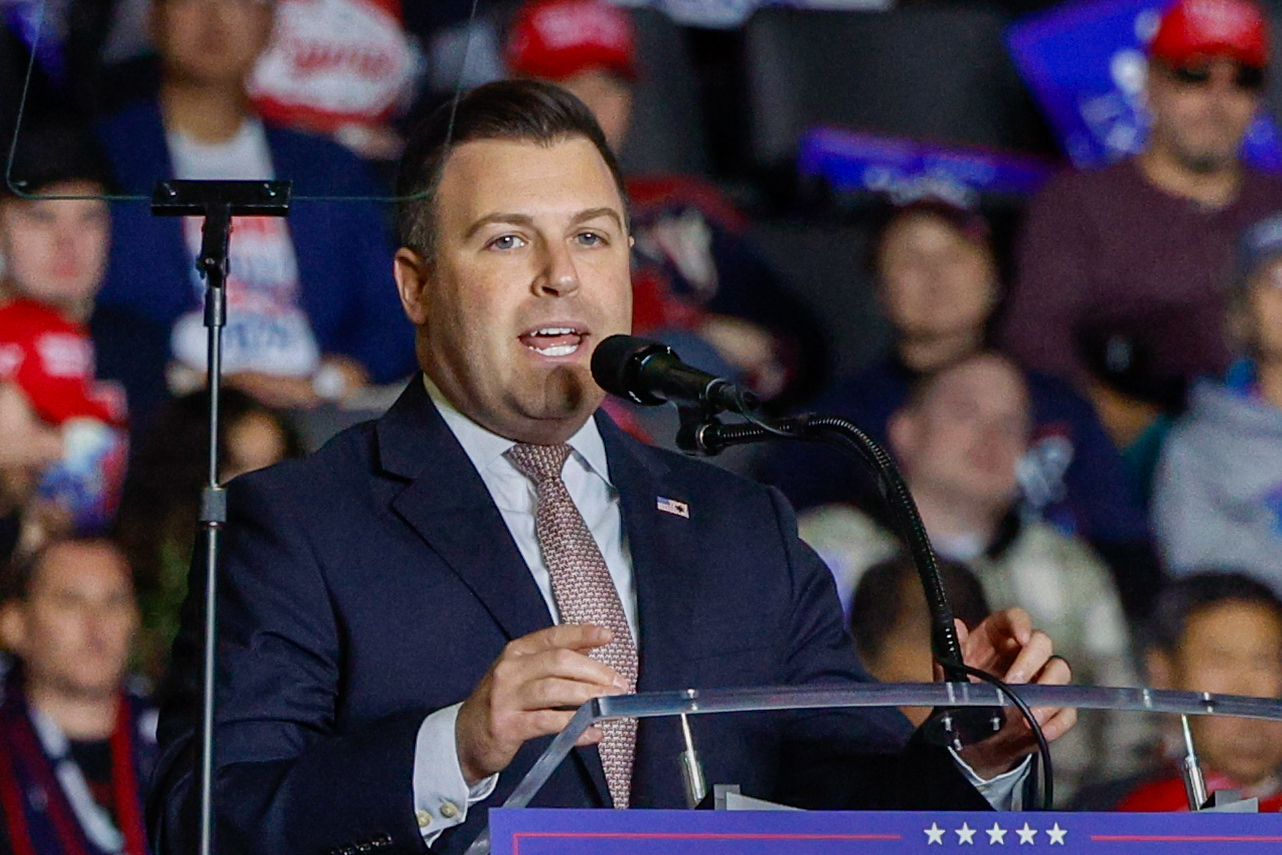
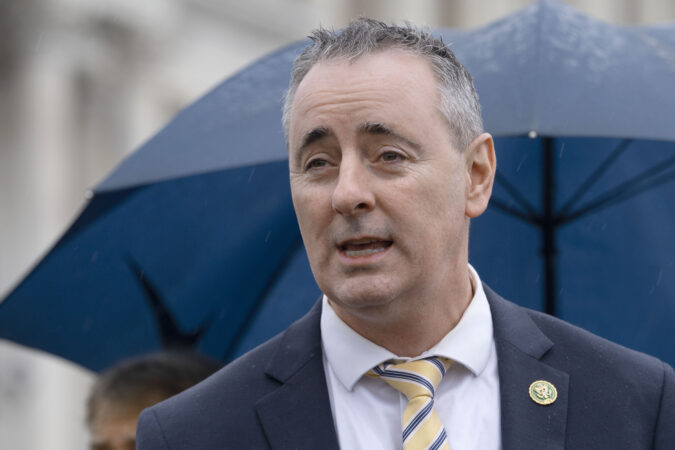
Democrats believe that they can oust freshman Republican U.S. Rep. Rob Bresnahan, of Lackawanna County, threatening the GOP’s slim House majority. Democrats are also specifically targeting the districts of U.S. Reps. Brian Fitzpatrick, of Bucks County; Ryan Mackenzie, of Lehigh County; and Scott Perry, of York County.
Trump endorsed Bresnahan and most of Pennsylvania’s GOP delegation on his social media platform, Truth Social, last month. Scranton Mayor Paige Cognetti, a Democrat, is mounting a campaign to unseat Bresnahan, who won by roughly a percentage point last election.
Affordability — which Trump called a “fake narrative” used by Democrats — has been a top issue for voters, including during November’s blue wave when Democrats won local contests throughout Pennsylvania, in addition to the gubernatorial races in Virginia and New Jersey.
Gov. Josh Shapiro lashed out over former Vice President Kamala Harris’ portrayal of his interview to become her 2024 running mate, calling Harris’ retellings “complete and utter bulls—” intended to sell books and “cover her a—,” according to the Atlantic.
Shapiro, Pennsylvania’s first-term Democratic governor now seen as a likely presidential contender in 2028, departed from his usual composed demeanor and rehearsed comments in a lengthy Atlantic profile, published Wednesday, when journalist Tim Alberta asked the governor about Harris’ depiction of him in her new book.
In her book, titled 107 Days, Harris described Shapiro as “poised, polished, and personable” when he traveled to Washington to interview with Harris for a shot at becoming the Democraticvice presidential candidate during her historic campaign against Donald Trump.
However, Harris said, she suspected Shapiro would be unhappy as second-in-command. He “peppered” her with questions, she wrote, and said he asked questions about the vice president’s residence, “from the number of bedrooms to how he might arrange to get Pennsylvania artists’ work on loan from the Smithsonian.” The account aligns with reporting from The Inquirer when Harris ultimately picked Minnesota Gov. Tim Walz over Shapiro, in part, because Shapiro was too ambitious to serve in a supporting role if chosen as her running mate.
But Shapiro, the Atlantic reported, was taken aback by the portrayal.
“She wrote that in her book? That’s complete and utter bull—,” Shapiro reportedly told the Atlantic when asked about Harris’ account that he had been imagining the potential art for the vice presidential residence. He added: “I can tell you that her accounts are just blatant lies.”
The governor’s sharp-tongued frustration depicted in the Atlantic marked a rare departure for the image-conscious Shapiro, whose oratory skills have been compared to those of former President Barack Obama, and who has been known to give smiling, folksy interviews laced with oft-repeated and carefully told anecdotes.
The wide-ranging, nearly 8,000-word profile in the Atlantic also detailed Shapiro’s loss of “some respect” for Harris during the 2024 election, including for her failure to take action regarding former President Joe Biden’s visible decline.
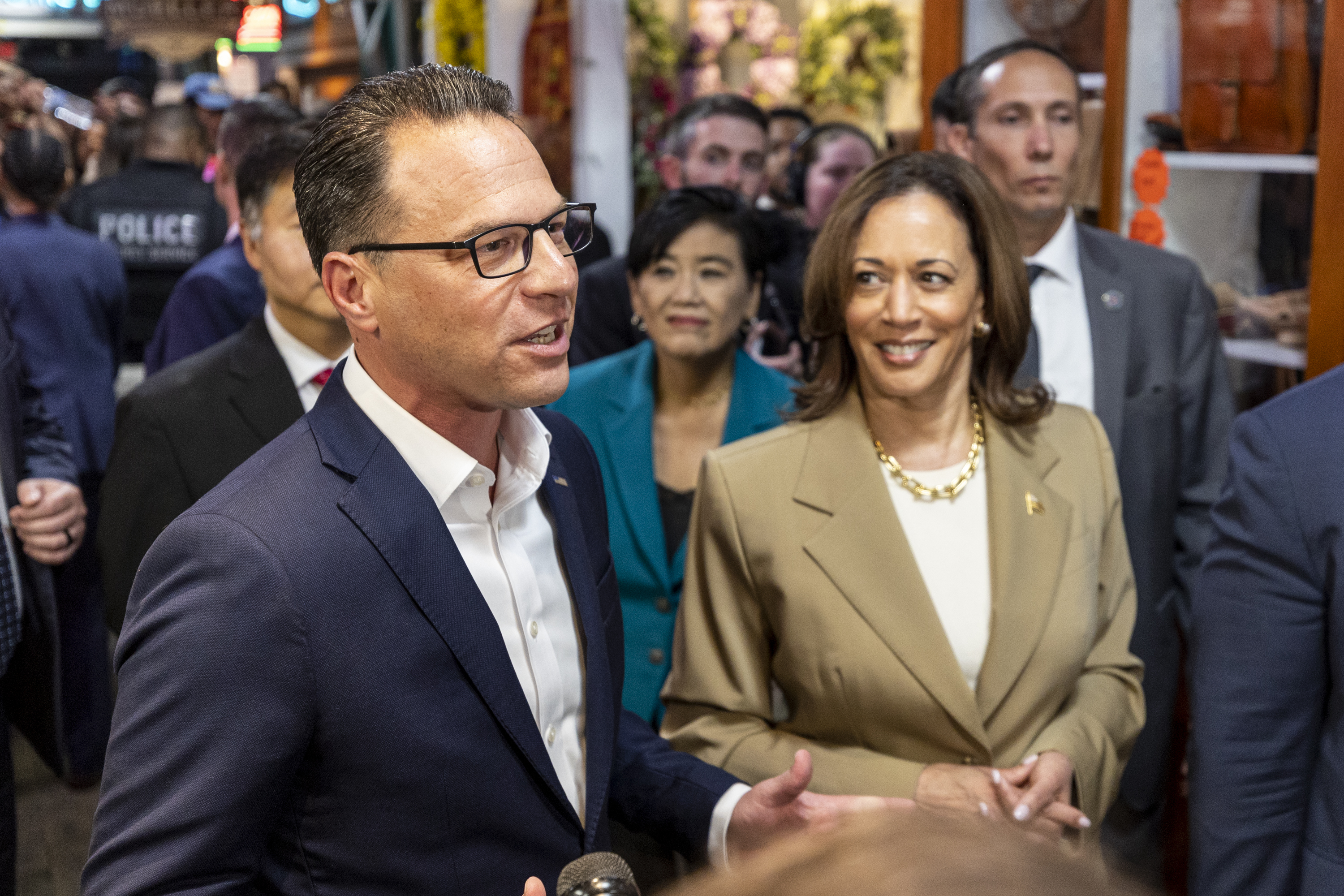
Governor Josh Shapiro speaks with press along with Vice President Kamala Harris during their short visit to Little Thai Market at Reading Terminal Market after she spoke at the APIA Vote Presidential Town Hall at the Pennsylvania Convention Center in Philadelphia, Pa., on Saturday, July 13, 2024.
When Shapiro was asked by the Atlantic whether he felt betrayed by Harris’ comments in her book about him, given that the two have known each other for 20 years, he said: “I mean, she’s trying to sell books and cover her a—.”
He quickly reframed his response: “I shouldn’t say ‘cover her a—,’ I think that’s not appropriate,” he added. “She’s trying to sell books, period.”
The Atlantic piece also outlined common criticisms of Shapiro throughout his two decades in Pennsylvania politics, including those from within the Democratic Party: He is too ambitious with his sights set on the presidency, and his pragmatic approach often leaves him frustrating all sides, as evidenced in his 2023 deal-then-veto with state Senate Republicans over school vouchers. It highlighted some of the top issues Shapiro will face if he chooses to run for president in 2028, including a need to take clearer stances on policy issues — a complaint often cited by Republicans and his critics. If he rises to the presidential field, Shapiro will also have to face his past handling of a sexual harassment complaint against a former top aide that Shapiro claimed he knew very little about despite the aide’s long-held reputation.
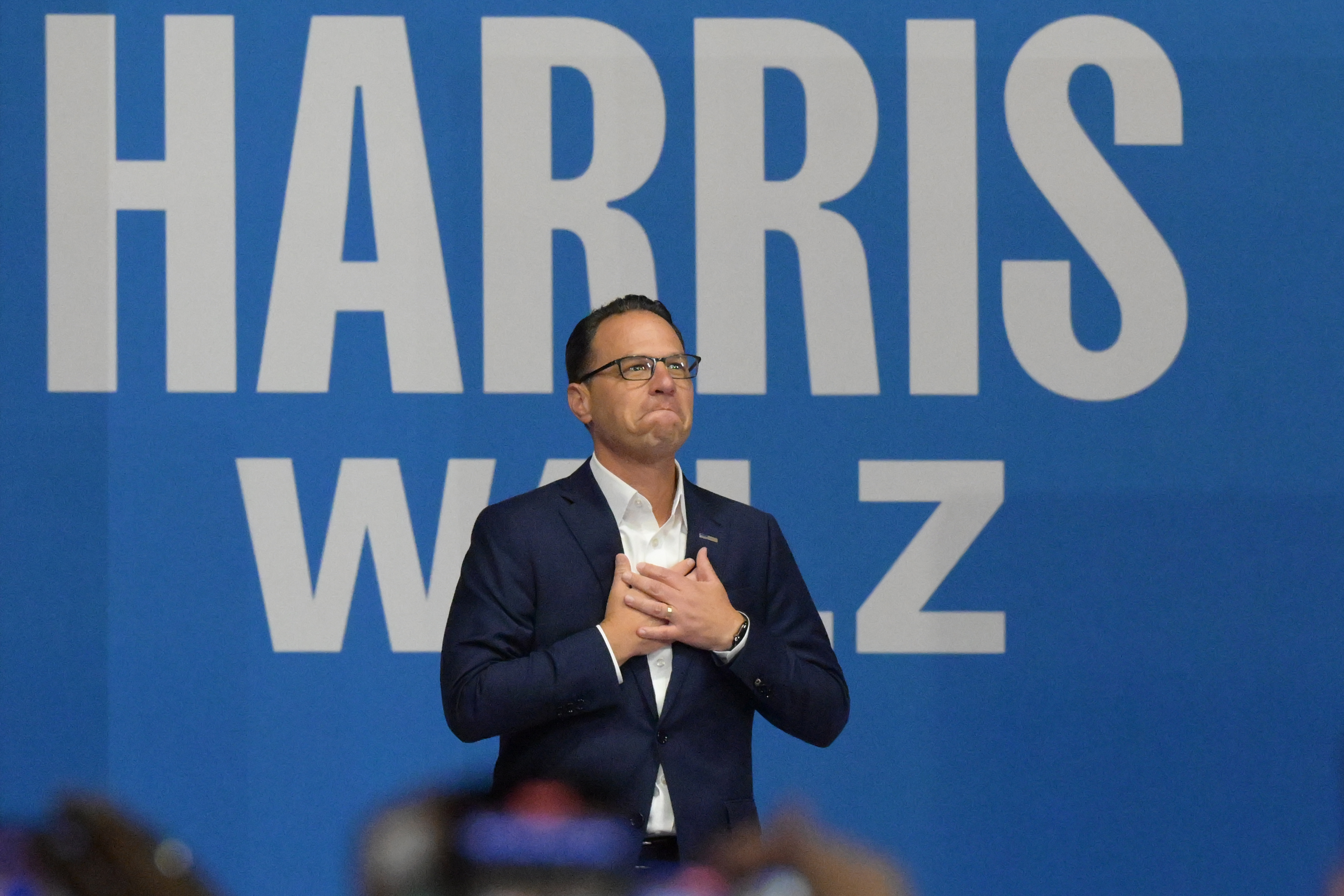
Gov. Josh Shapiro takes the stage ahead of U.S. Vice President Kamala Harris and Gov. Tim Walz at a rally in Philadelphia’s Liacouras Center on August 6, 2024.
“The worst-kept secret in Pennsylvania politics is that the governor is disliked — in certain cases, loathed — by some of his fellow Democrats,” the Atlantic reported. Further, Alberta noted that when an unnamed Pennsylvania lawmaker received a call from a member of Harris’ vetting operation, the member said they had never seen “so many Democrats turning on one of their own.”
Shapiro has been featured in several other prominent national media outlets in recent weeks, including in the New Yorker, which ran a profile about his experience with political violence. He has become vocal on that issue in the months since a Harrisburg man who told police he wanted to kill Shapiro broke into the governor’s residence in April and set several fires while Shapiro and his family slept upstairs. As one of the most prominent Jewish elected officials in the nation, Shapiro has frequently said that leaders must “bring down the temperature” in their rhetoric, and has tried to refocus his own messaging on the good that state governments can do to make people’s lives easier, such as permitting reforms and infrastructure improvements.
“The fact that people view institutions as incapable or unwilling to solve their problems is leading to hyper-frustration, which then creates anger,” Shapiro told the Atlantic. “And that anger forces people oftentimes into dark corners of the internet, where they find others who want to take advantage of their anger and try and convert that anger into acts of violence.”
A special election in a safely Republican district in Tennessee became must-watch TV for political observers Tuesday night, the latest sign of anti-Trump sentiment ahead of the 2026 midterms.
The Associated Press called the race in Tennessee’s 7th Congressional District for Republican Matt Van Epps, who was leading Democrat Aftyn Behn by about 9 percentage points with about 99% of the vote in. That was a steep decline from the 22-point win President Donald Trump recorded in the same district just last year, and from his 39-point victory in 2016.
It was the latest sign of a Democratic blue wave forming, following Election Day sweeps in Virginia, New Jersey, and Virginia last month. It also was the third straight special election in a deeply Republican district where voters swung toward the Democratic candidate by double-digit margins.
“Sometimes in politics, what is happening is clear and in front of you,” David Chalian, CNN’s Washington bureau chief and political director, said Tuesday night. “Democrats are significantly, significantly over-performing what Kamala Harris did last year vs. Donald Trump in all of these places.”
While Trump celebrated Van Epps’ victory on social media, Democratic National Committee chairman Ken Martin called the results “a flashing warning sign for Republicans heading into the midterms.”
“What happened tonight in Tennessee makes it clear: Democrats are on offense and Republicans are on the ropes,” Martin said in a statement.
What is the Republican majority in the House?
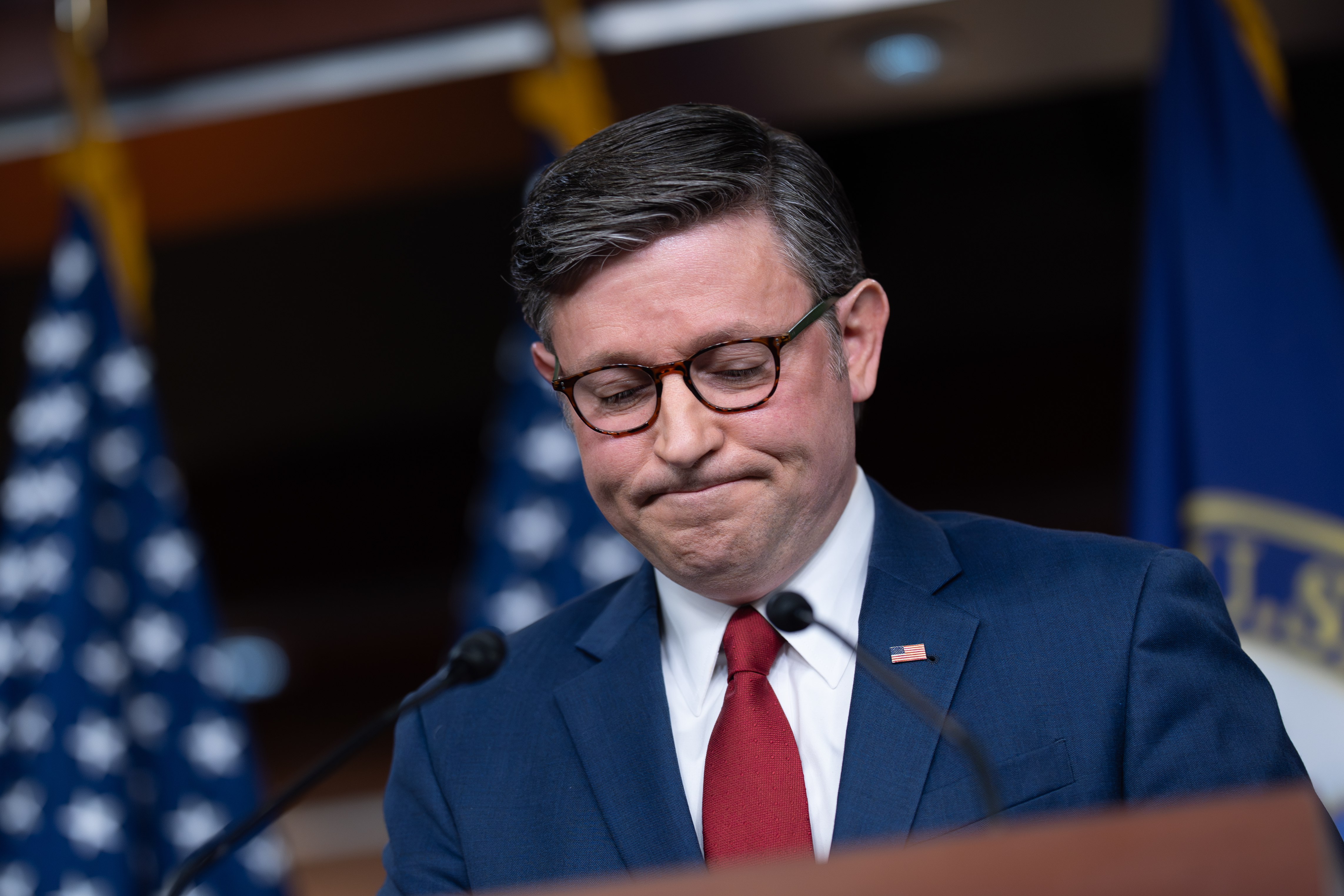
Speaker of the House Mike Johnson (R., La.) is dealing with a shrinking majority.
Van Epps’ victory means Republicans will hold 220 seats, while Democrats have 214 seats; 218 are needed to control the majority.
Two seats remain vacant, and both are expected to go to Democrats, further reducing the already slim majority of House Speaker Mike Johnson (R., La.).
The first is in Texas, where a runoff will be held Jan. 31 to fill the seat vacated by the death of Democratic Rep. Sylvester Turner. The race is down to two Democrats — Christian Menefee and Amanda Edwards.
The second open seat is in New Jersey’s 11th Congressional District, which will hold a special election April 16 to fill the spot vacated by New Jersey Gov.-elect Mikie Sherrill. While the district was represented by a Republican as recently as 2018, it has been safely blue since maps were redrawn following the 2020 Census and is expected to remain in Democratic control.
Not surprisingly, there are a lot of Democrats vying to replace Sherrill. At least 13 have entered the race or are about to do so, a lengthy list that includes former Rep. Tom Malinowski, progressive activist Analilia Mejia, Obama White House alum Cammie Croft, Essex County Commissioner Brendan Gill, and current Lt. Gov. Tahesha Way.
Just one Republican has announced a bid to replace Sherrill — Randolph Mayor Joe Hathaway.
Then there is the Georgia seat of GOP Rep. Marjorie Taylor Greene, which is set to become vacant following her resignation on Jan. 5. It is unclear when Georgia will hold a special election to replace Greene, but Gov. Brian Kemp is required to set a date within 10 days of her departure.
The seat is considered safely Republican, but that is hardly definitive after what happened in Tennessee on Tuesday night.
Why was there a special election in Tennessee?
Former Rep. Mark Green (R., Tenn.) left Congress suddenly to launch his own business.
Tuesday’s special election was held to replace the seat vacated by Republican Mark Green, who resigned in July to launch a new business called Prosimos.
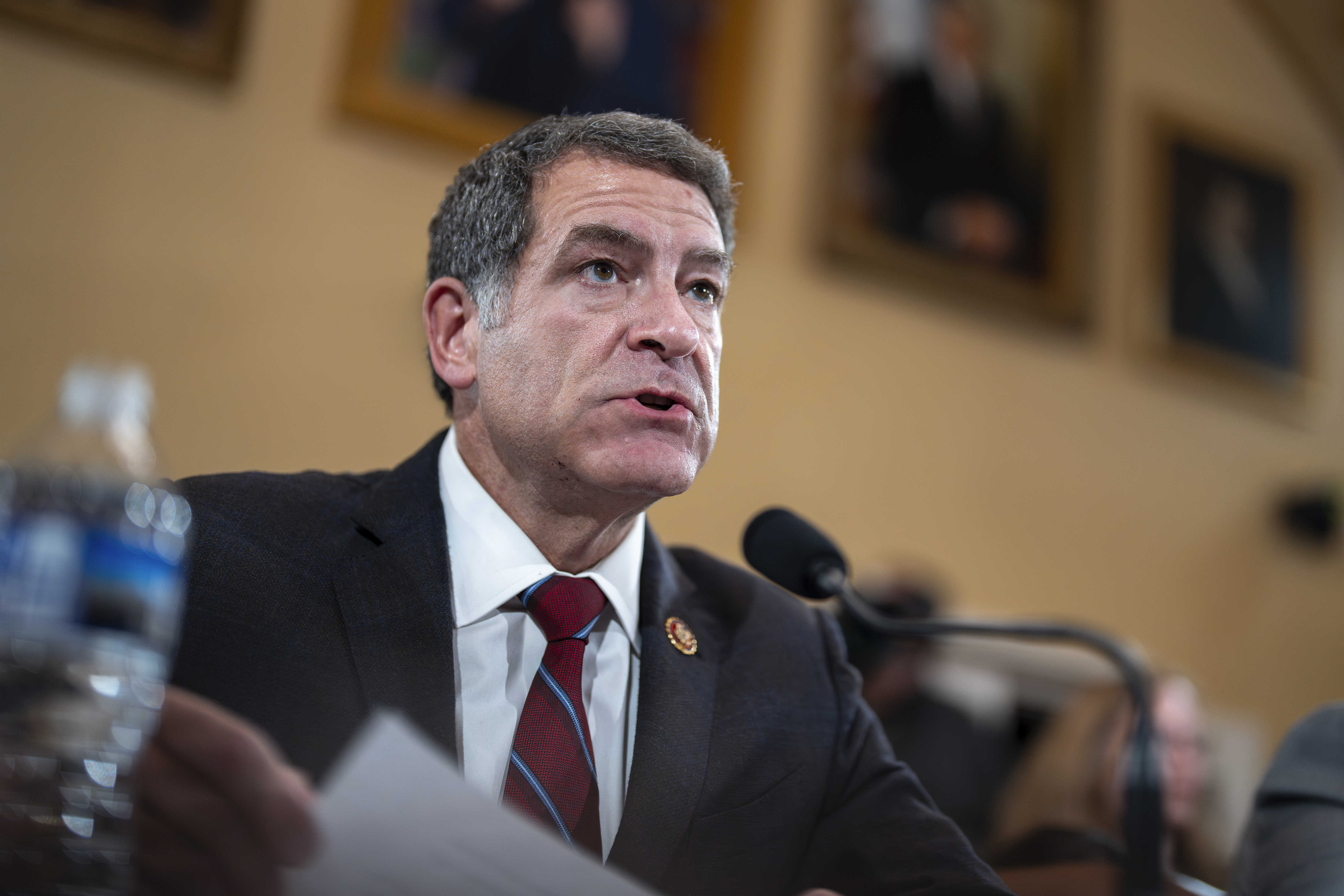
Green’s decision to leave Congress, and his role as the chair of the Homeland Security Committee, came in the middle of his fourth term.
So what is Prosimos? According to Green, it’s a development and strategy firm designed to help U.S. businesses better compete against the influence of China. The company’s website says it provides “tailored strategies and expert guidance to navigate the complexities of global business development.”
What does this mean for Republicans in Pennsylvania and New Jersey?
Rep. Ryan Mackenzie (R., Pa.) is one of four Pa. Republicans facing a tough reelection battle.
If there has been a trend since Trump’s inauguration, it’s that voters are keen on punishing Republicans at the ballot box.
In four previous special elections for House seats held in 2025, Democrats significantly outperformed Harris’ margins in 2024. That was also true of Election Day victories in Pennsylvania, New Jersey, Virginia, and Georgia, where two Republicans were booted off the state’s Public Service Commission.
Closer to home, there are five House seats — four in Pennsylvania, one in New Jersey — that Democrats hope to flip during the 2026 midterms, potentially deciding the balance of power during the final two years of Trump’s presidency.
PA-01: In Bucks County, Republican Rep. Brian Fitzpatrick is used to close races, but next year could be particularly challenging for the five-term moderate. In addition to nationwide trends, Democrats won each countywide office by around 10 percentage points last month, and Bucks County District Attorney Joe Khan is the first member of their party ever elected to the office.
PA-07: In the Lehigh Valley, Republican Rep. Ryan Mackenzie is the biggest target for Democrats after ousting Susan Wild by just 1 percentage point in 2024. Cook Political Report lists the district as a true “toss up” and five Democrats have already entered the race.
PA-08: Farther north, in Scranton and Wilkes-Barre, Republican Rep. Rob Bresnahan is also looking to win reelection to a seat he flipped by just 1 percentage point in 2024. The district leans Republican — Trump won it by nearly 9 percentage points — and so far Bresnahan’s only challenger is Scranton Mayor Paige Cognetti.
PA-10: Another of Cook’s “toss up” districts. Republican Rep. Scott Perry, an outspoken Trump supporter who supported the president’s efforts to overturn the 2020 election, is seeking his eighth term. Perry narrowly won reelection in 2024, defeating former news anchor Janelle Stelson by less than 1 percentage point. She is running against Perry again in 2026 and has already received an endorsement from Gov. Josh Shapiro.
NJ-07: The northwestern New Jersey district is currently represented by Republican Tom Kean Jr., a moderate who won reelection by about 5 percentage points in 2024. Cook lists Kean’s district as a “toss up,” and he faces a crowded field of Democrats in what would otherwise be a safely Republican seat.
I’m always reluctant to talk about upcoming columns, because in this twisted era everything changes at the drop of a MAGA hat, and I hate to jinx things. But as of now, I’m booked for a trip to Charlotte (or Raleigh?…I’ve already jinxed it, maybe) this coming weekend, where I hope to report from the front lines of the Border Patrol’s latest big-city invasion that has terrorized the immigrant community in North Carolina. So I’m going to spend a couple days reading up on what to do in a tear-gas attack, and I’ll see you again this weekend.
Fearless college kids are saving journalism. Grown-ups? Not so much
Editions of the Indiana Daily Student in the student media area in Franklin Hall on Indiana University’s campus on Oct. 14.
In American journalism’s year of the bended knee, nobody would have been surprised if the student editors of the Harvard Crimson followed the sorry example of major outlets like CBS News or the Washington Post in groveling before the rich and powerful — in this case, their ex-university president and still plugged-in professor Larry Summers.
Earlier this month, Summers took to social media (the Elon Musk-owned X, of course) with a rant against the student-run paper at the Ivy League school he once helmed, linked to an article by conservative commentator (and former Crimson editor) Ira Stoll accusing the Crimson of biased coverage in favor of Palestine. Summers said ominously, “I do hope alumni trustees will investigate and take any necessary steps lest a problematic situation deteriorate any further.”
But instead ofbacking down, Harvard’s student journalists stepped up. When the emails of the late financier and sex fiend Jeffrey Epstein, released last week by a House committee, proved to be riddled with his communications with Summers — long after Epstein had pleaded guilty to teen sex trafficking in Florida — the Crimson produced the most in-depth takedown of any media outlet, anywhere.
“As Summers Sought Clandestine Relationship With Woman He Called a Mentee, Epstein Was His ‘Wing Man’” was the blistering headline on the article by undergraduates Dhruv T. Patel and Cam N. Srivastava. It described, in excruciating detail, the married Summers’ missives to Epstein about his efforts to woo a much younger Chinese economist on campus whom he was mentoring (and whom the former U.S. treasury secretary and his felonious friend code-named, with a racism they thought would remain forever private, as “peril.”)
Take that to the alumni trustees, Mr. Summers!
With a devastating kicker that shows Summers still emailing Epstein up until 1:27 p.m. of the day before his pal was busted on new federal sex charges in 2019, the Crimson article went viral over the weekend. By Monday morning, Massachusetts U.S. Sen. Elizabeth Warren was calling for Summers’ ouster from his faculty post. By Monday night, a “deeply ashamed” Summers announced that he’s pulling back from his public commitments, although he plans to continue teaching.
The students’ reporting was another win for truth, justice, and the American way — but not an isolated incident. In recent years, as mainstream journalism looks increasingly weak and flabby in the face of U.S. authoritarianism, and with college campuses on the front lines of a culture war, scribes in their teens and early 20s — burning with youthful idealism and the freedom of not much to lose — have raced into the void.
Some 3,000 miles from Harvard Square, the student journalists at the Stanford Daily stood their ground after one of its reporters was charged with three felonies, at the behest of a top university administrator, for attempting to cover a pro-Palestinian protest on the California campus. Under increasing public pressure, the charges were dropped in March — another triumph for the paper whose 2022 investigative reporting into research irregularities took down the university president.
In the heartland, the editors of the Indiana Daily Student at that state’s flagship public university last month stood up to school administrators banning their print editions, blasting the move in a front-page editorial that said “telling us what we can and cannot print is unlawful censorship.” The students, who worked with their peers at nearby Purdue University to publish a special issue that circumvented the ban, rallied support from prominent alums and got the school to reverse course.
“I think that many of these college journalists are laser-focused on their beats, are developing great sources among administrators, faculty and students, and are unfazed by the possibility that their stories might piss off a valued source or two,” Columbia Journalism School professor Bill Grueskin, who covered the Stanford fracas for Columbia Journalism Review, told me Monday. “In other words, they’re doing the things that the best reporters do. They’re just not able to buy a beer (legally, at least) when their story shakes up the world.”
I know what some of you are thinking here. Investigating corruption or misconduct among university leaders, or fighting for a free press…aren’t these college students just doing what any journalist worth their saltwould do? Well, yes and no.
Consider those Epstein emails that continue to dominate the news. It turns out that two prominent journalists corresponded frequently with the convicted sex creep: the “palace intrigue” access journalist Michael Wolff, and a soon-to-be-fired New York Times business reporter, Landon Thomas Jr. The missives suggest they had zero interest in reporting on Epstein’s proclivity for underage girls but very much wanted the access to the rich and famous that jeevacation@gmail.com offered.
And it gets worse. Thomas actually solicited a $30,000 donation from Epstein to a favored charity — a severe ethical breach that cost him his job in America’s most prestigious newsroom. Wolff, meanwhile, was offering Epstein advice on how to leverage — in essence, blackmail — the sitting U.S. president, Donald Trump. At the same time, he was pushing a business venture that would link him not only with Epstein but another man later convicted of sex crimes, filmmaker Harvey Weinstein. It seems like both conflicted journalists wanted to play in the big leagues with the much richer people they were supposed to watchdog.
This is something that too many elite journalists share with the increasingly conflicted corporations that employ them: a desire to comfort the comfortable in return for access, or prestige, or money — and to avoid getting sued, which might jeopardize those first three things.
How else to explain major TV networks like CBS or ABC, owned by corporations with myriad issues before the federal government, settling frivolous lawsuits by Trump for millions of dollars, or the similarly conflicted Jeff Bezos telling his Washington Post to spike its endorsement of Kamala Harris, or the mealy-mouthed “both sides” reporting on rising authoritarianism that plagues so many elite newsrooms of the traditional media?
The late, great Kris Kristofferson told us that freedom’s just another word for nothing left to lose, and maybe that simple explanation has a lot to do with the bravery of college journalists — that they are freer to question authority than folks with a mortgage and worries about paying for their own kids to attend a top school.
Still, it’s important to understand that most of the rot in modern mainstream journalism — too much consolidation in the hands of too few conglomerates with too much at risk to be seen as anti-regime — is institutional. We should strive to make something great out of the fact that the next generation of American journalists has arrived with smarts, savvy, and a moral compass yet to be worn down by late-stage capitalism.
Our challenge, as a society, is to tear down the decrepit structures of the corrupted old media and build a new one that rewards independent journalists who actually afflict the comfortable, and offers them incentives to keep doing that instead of cutting venture-capitalism deals with the folks they allegedly cover. Most of today’s college journalism majors would never trade emails with the likes of Jeffrey Epstein — except to take him down.
Yo, do this!
The stroke of timing behind Ken Burns’ latest documentary epic, The American Revolution, which is currently running this week on PBS stations like WHYY here in Philadelphia and also streaming, was supposed to be the 250th anniversary of the conflict that created the United States. But the project has taken on much greater relevance in a fraught present, when folks are heatedly arguing just what the Founders’ American Experiment is really all about. Critics have praised Burns and his skilled team for blending the ideals and leadership of the George Washingtons and Thomas Paines with the realities faced by everyday folk, including indigenous and enslaved people.
Personally, I’ve been embroiled in my nostalgia for a more recent revolution — the cultural and musical explosions that occurred in 1966. I’ve been listening to the audiobook about that tumultuous year — 1966: The Year the Decade Exploded — by the British author Jon Savage, whose later book on the year 1971 was the basis for an outstanding but largely ignored documentary series on Apple TV, But 1971’s classic rock wouldn’t have happened without the cultural pioneers and a youthful clamor for liberation that came five years earlier. The book is an engrossing reminder that change is possible.
Ask me anything
Question: Now that People Magazine has revealed the disgusting “piggy” story, why isn’t this atop every news outlets coverage? We spent 3 full weeks on Biden’s age, a week on his pardon of his son with such moral outrage from every outlet. This doesn’t even get covered? — BigTVFan (@bigtvfan.bsky.social) via Bluesky
Answer: The episode that BigTVFan is referring to occurred with a gaggle of journalists about Air Force One, but just started getting viral attention Monday night. It is, indeed, shocking to watch. When a Bloomberg woman journalist pressed Donald Trump on the Epstein files, the president erupted. “Quiet! Quiet, Piggy!” Yes, this should be a front-page story in the traditional media, and not only because of the stunning sexism (when the subject is Epstein, no less!) and the regal arrogance, but also this: the man who’s followed around by the nuclear suitcase seems to be losing his grip on reality. Monday afternoon, Trump spoke to a gathering of franchisees of the fast-food addiction that may be just one reason why nobody believes he only weighs 16 ounces more than Jalen Hurts, McDonald’s, and was at times beyond incoherent. Yet Trump’s rapidly deteriorating mental state remains mostly off-limits for the elite media. It’s a massive error of omission that the world will look back on and regret.
What you’re saying about…
It’s funny how one week can feel like a decade in 2025. Last week’s question about the eight senators (seven Democrats and an independent) who cut a deal to end the long government shutdown drew a huge response from folks fired up about an issue that now almost feels like ancient history after the Epstein email release. Readers were passionate but divided. Certainly many felt the eight senators had caved in the worst possible way. An outraged Freddi Carlip wrote that “most people wanted to do what was best for Americans who are hurting and that is to stand up to bullies.” But a number of you thought the opposition had few real options but to deal from a weak hand. “This was always going to end with the government opening under the black flag of the Big Ugly Bill,” wrote Kent Dietz. “Oft repeated but true: elections have consequences.”
📮 This week’s question: It’s all Epstein all the time, so let’s talk about it. Do you think Trump has sincerely flip-flopped and the relevant files will soon be released? Or is the White House still playing a long game aiming to keep Epstein’s secrets buried with him? Please email me your answer and put the exact phrase “Epstein files” in the subject line.
History lesson on ‘Charlotte’s Web’…and fascism
U.S. Border Patrol Commander at large Gregory Bovino, right, looks on as a detainee sits by a car Monday, in Charlotte, N.C.
Nobody reads any more, at least not to the end. That’s been driven home this autumn by several efforts from tech bros and other leaders of our dystopia falling flat on their face with their attempts at literary allusions. A viral post on Bluesky recently mocked the Icarus Flying Academy, whose founders may be blissfully unaware that their Greek mythological namesake flew too close to the sun and crashed. On Monday, gazillionaire Jeff Bezos also invoked ancient Greece by announcing his AI startup Project Prometheus, invoking an inventor who was ultimately bound to a rock by Zeus for his overreaching. Then there’s the bad people behind the U.S. Border Patrol and its inhumane mass deportation drive, who took their horror show to North Carolina this past weekend with their “Operation Charlotte’s Web.”
The “brains” behind the BP’s masked goon squad, Gregory Bovino, named the operation — which netted 81 detainees in its first Saturday during a chaotic surge through suburban lawns and Home Depot parking lots — after the 1952 classic children’s novel by E.B. White about a farm, a pig, and the compassionate spider, Charlotte, who saves the pig’s life. Why? Because Bovino’s secret police force are ensnaring scores of immigrants in their web. In Charlotte, N.C. Get it? Bovino even took to social media’s X with a wildly out-of-context quote from the novel: “Wherever the wind takes us. High, low. East, west. North, south. We take to the breeze, we go as we please.”
In a viral essay, the writer Chris Geidner of the excellent site LawDork demolished Bovino’s literary aspirations for his police-state operation. His piece went well beyond the obvious point that a children’s novel that centers on a spider’s quest to protect someone different from her — a pig — from his human predators is the 180-degree polar opposite from the web of inhumanity that Team Bovino is spinning in Charlotte, terrorizing the Latino community there. Geidner notes that much of E.B. White’s wider work was in opposition to the very fascism that’sbehind the mass deportation drive of Bovino and his ultimate boss, Donald Trump.
Geidner quotes White from a 1940 essay, as Adolf Hitler’s stormtroopers were advancing across Europe: “I am in love with freedom and that it is an affair of long standing and that it is a fine state to be in, and that I am deeply suspicious of people who are beginning to adjust to fascism and dictators merely because they are succeeding in war. From such adaptable natures a smell rises. I pinch my nose.”
White, and his fictional Charlotte, would have done more than pinch their nose from the stench of this operation in a proud city that shares its name with a heroic spider. For sure, Bovino’s crimes against literature pale in comparison to his ongoing crimes against humanity. But he may discover that the rapidly spinning American thread of community and common decency that is resisting mass deportation is the true sequel to Charlotte’s Web.
What I wrote on this date in 2018
It was Mississippi’s most famous writer, William Faulkner, who wrote, “The past is never dead. It’s not even past.” Seven years ago on this date, I wrote about how a justice-denied 1955 murder of a Black man trying to deliver absentee ballots to the county courthouse in Brookhaven, Miss., haunted the modern Senate campaign of that town’s GOP U.S. Sen. Cindy Hyde-Smith. I wrote: “Four years after [Lamar Smith] was killed, a baby girl was born in Brookhaven named Cindy Hyde. Over the next 59 years, she immersed herself in the politics of a community that bitterly refuses to concede the just cause that Lamar Smith died for.” Read the rest from Nov. 18, 2018: “Why the blood of a 1955 Mississippi murder drenches today’s U.S. Senate race.”
Recommended Inquirer reading
Only one column this week, and as you might expect it drilled deeply into the true meaning of the Jeffrey Epstein emails that have dominated the headlines. I went beyond the suggestive comments about Donald Trump to look at the deeper moral decay of the rich and famous who continued to seek out Epstein and his connections years after his Florida guilty plea to child prostitution charges. The missives from billionaires and political insiders also reveal their growing — and justified — worries that the public may be reaching for pitchforks.
The John Fetterman saga never ends, nor does Pennsylvania readers’ bottomless fascination with his decade-plus odyssey from outspokenly progressive mayor of struggling Braddock, Pa., to the U.S. Senate, where he is increasingly at odds with his fellow Democrats about practically everything. The Inquirer’s coverage of revelations in Fetterman’s new autobiography, including his long-running feud with Gov. Josh Shapiro, was one of the most widely read stories last week. So was what happened next, as renewed heart problems caused Fetterman to fall flat on his face and again be hospitalized. There’s three more years until the end of Fetterman’s term and an all-but-certain primary challenge from his political left. No one is going to cover this better than The Inquirer, so why not subscribe today?
By submitting your written, visual, and/or audio contributions, you agree to The Inquirer‘s Terms of Use, including the grant of rights in Section 10.
Should last week’s election results make Brian Fitzpatrick nervous?
Bucks County Democrats think so.
The Republican lawmaker has been like Teflon in the 1st Congressional District, which includes all of Bucks County and a sliver of Montgomery County. He persistently outperforms the rest of his party and has survived blue wave after blue wave. First elected in 2016, he has remained the last Republican representing the Philadelphia suburbs in the U.S. House.
But Democrats pulled something off this year that they hadn’t done in recent memory. They won each countywide office by around 10 percentage points — the largest win margin in a decade — and for the first time installed a Democrat, Joe Khan, as the county’s next top prosecutor.
“This year was unprecedented, and sitting here a year before the midterm, you have to believe that next year is going to be unprecedented as well,” State Sen. Steve Santarsiero, who is also the county party’s chair, said Wednesday.
Eli Cousin, a spokesperson for the Democratic Congressional Campaign Committee, predicted a “perfect storm brewing for Democrats” to beat Fitzpatrick. “He and Trump’s Republican Party are deeply underwater with Bucks County voters; he has failed to do anything to address rising costs, and we will have a political juggernaut in Gov. Josh Shapiro at the top of the ticket,” Cousin said.
There are several reasons Democrats may be exhibiting some premature confidence: Despite a spike in turnout for an off-year election, far fewer voters turn out in such elections than do in midterms. Fitzpatrick is extremely well-known in Bucks, where his late brother served before he was elected to the seat. He has won each of his last three elections by double digits.
But Tuesday was a sizable pendulum swing in the bellwether. Some of the communities, like Bensalem, that drove Trump’s victory flipped back to blue.
The last time Democrats had won a sheriff’s race in the county was 2017, a year after Trump was elected the first time. That year, Democrats won by smaller margins, and a Republican incumbent easily won reelection as district attorney. The following year, Fitzpatrick came the closest he has yet to losing a race, but still won his seat by 3 percentage points.
This year’s landslide, Democrats say, is a warning sign.
“There were Democratic surges in every place that there’s a competitive congressional seat, and that should be scaring the s— out of national Republicans,” said Democratic strategist Brendan McPhilips, who managed Democratic Sen. John Fetterman’s campaign in the state and worked on both of the last Democratic presidential campaigns here.
“The Bucks County seat has always been the toughest, but it’s certainly on the table, and there’s a lot there for Bob Harvie to harness and take advantage of.”
Bucks County Democratic Commissioner Bob Harvie speaks during an Oct. 5 rally outside the Middletown Township Police Department and Administrative Offices in Langhorne.
Harvie, a high school teacher-turned-politician, leapt on the results of the election hours after races were called, putting out a statement saying, “There is undeniable hunger for change in Bucks County.”
“The mood of the country certainly is different,” Harvie said in an interview with The Inquirer on Thursday. “What you’re seeing is definitely a referendum.”
Lack of GOP concern
But Republicans don’t appear worried.
Jim Worthington, a Trump megadonor who is deeply involved in Bucks County politics, attributes GOP losses this year to a failure in mail and in-person turnout. Fitzpatrick, he said, has a track record of running robust mail voting campaigns and separating himself from the county party apparatus.
“He’s not vulnerable,” Worthington said. “No matter who they run against him, they’re going to have their hands full.”
Heather Roberts, a spokesperson for Fitzpatrick’s campaign, noted that the lawmaker won his last election by 13 points with strong support from independent voters in 2024 — a year after Democrats performed well in the county in another off-year election. She dismissed the notion that Harvie would present a serious challenge, contending the commissioner “has no money and no message” for his campaign.
Fitzpatrick is also a prolific fundraiser. He brought in $886,049 last quarter, a large amount even for an incumbent, leading Harvie, who raised $217,745.
“Bob Harvie’s not going to win this race,” said Chris Pack, spokesperson for the Defending America PAC, which is supporting Fitzpatrick. “He has no money. He’s had two dismal fundraising quarters in a row. That’s problematic.”
Pack noted Harvie’s own internal poll, reviewed by The Inquirer, showed 57% of voters were unsure how they felt about him.
“An off-off-year election is not the same as a midterm election,” Pack said, adding he thinks Fitzpatrick’s ranking as themost bipartisan member of Congress will continue to serve him well in Bucks County.
“He’s obviously had well-documented breaks on policy with the Republican caucus in D.C., so for Bob Harvie to try to say Brian Fitzpatrick is super far right, no one’s gonna buy it,” Pack said. “They haven’t bought it every single election.”
On fundraising, Harvie said he had brought in big fundraising hauls for both of his commissioner races, and said he would have the money he needed to compete.
Of the four GOP-held House districts Democrats are targeting next year in the state, Fitzpatrick’sseat is by far the safest. That raises the question: How much money and attention are Democrats willing to invest in Pennsylvania?
“Who’s the most vulnerable?” asked Chris Nicholas, a GOP consultant who grew up in Bucks County. The other three — U.S. Rep. Scott Perryand freshmanU.S. Reps. Rob Bresnahan, in the Northeast, and Ryan Mackenzie, in the Lehigh Valley — won by extremely narrow margins last year. “If you’re ranking the four races, you have Rob Bresnahan at the top and Fitzpatrick at the bottom,” Nicholas said.
National Democrats seldom invest as much to try to beat Fitzpatrick as they say they will, Nicholas said. And he pointed to 2018, a huge year for Democrats, when they had a candidate in Scott Wallace who was very well-funded, albeit far less known than Harvie, and still came up short.
Democrats see Harvie as the best shot they have had — a twice-elected commissioner, with name ID from Lower Bucks County, home to many of the district’s swing voters. And the 1st District is one of just three in the country that is held by a Republican member of Congress where Vice President Kamala Harris won last year.
And then there’s Shapiro, who Democrats think will give a boost to candidates like Harvie as he runs for reelection next year. Shapiro won the district by 20 points in 2022.
Following the playbook used by successful candidates this year, Democrats are likely to argue to voters that Fitzpatrick has done little to push back on Trump — while placing cost-of-living concerns at the feet of the Republican Party.
“A lot of people are, you know, upset with where we are as a nation,” Harvie said. “They grew up expecting that if you worked hard and played by the rules, you’d be able to have all the things you needed and have a good life. And that’s not happening for them.”
“The big thing Democrats throw against Republicans is you’re part and parcel of Trump and MAGA, and Fitzpatrick voted against Trump,” Nicholas said.
Over nearly 10 years in Congress, Fitzpatrick has been a rare Republican who pushes back on Trump, though often subtly. Fitzpatrick, who cochairs the bipartisan Problem Solvers Caucus, was the lone Pennsylvania Republican to confirm former President Joe Biden’s electoral victory in 2020. A former FBI agent who spent a stint stationed in Ukraine, he is among the strongest voices of support for Ukraine in Congress, consistently pushing the administration to do more to aid the country as it resists a yearslong Russian invasion.
Fitzpatrick was also one of just two House Republicans to vote against Trump’s signature domestic policy package, which passed in July. He voted for an earlier version that passed the House by just one vote, which Democrats often bring up to claim Fitzpatrick defies his party only when it has no detrimental impact.
“He’s good at principled stances that ultimately do nothing,” said Tim Persico, an adviser with the Harvie campaign. “That is what has allowed him to defy gravity in the previous cycles. … Now the economy is doing badly. … People feel worse about everything, and Fitzpatrick isn’t doing anything to help with that. I think it makes it harder to defy gravity.”
Trump has endorsed every Republican running for reelection in Pennsylvania next year except Fitzpatrick. While the Bucks County lawmaker has avoided direct criticism of the president, in an appearance in Pittsburgh over the summer, Trump characterized the “no” vote on the domestic bill as a betrayal.
Fitzpatrick has faced more conservative primary challengers in the past, but no names have surfaced so far this cycle, a sign that even the more MAGA-aligned may see him as their best chance to hold onto the purple district.
Keeping his distance from Trump, and limiting Democrats’ opportunities to tie the two together, may remain Fitzpatrick’s best path forward.
“Anybody who wants to align themselves with an agenda of chaos and corruption and cruelty ought to be worried,” said Khan, Bucks County’s new district attorney-elect.
This suburban content is produced with support from the Leslie Miller and Richard Worley Foundation and The Lenfest Institute for Journalism. Editorial content is created independently of the project donors. Gifts to support The Inquirer’s high-impact journalism can be made at inquirer.com/donate. A list of Lenfest Institute donors can be found at lenfestinstitute.org/supporters.
A Navy pilot in New Jersey. A democratic socialist in New York City. Three Pennsylvania jurists who never wanted to hit the campaign trail in the first place.
The results were momentous for a party hungry for wins in President Donald Trump’s second term. But they are also likely to revive longstanding debates on how the party should present itself to the American people going into the 2026 midterms and 2028 presidential race.
Should Democrats embrace a bold vision and tack left? Are left-of-center candidates with bipartisan appeal still the way to win statewide races? Or could the party simply embrace the reality of being a big-tent party?
Here are five takeaways from Tuesday’s elections, including the state of play for both parties’ soul-searching exercises.
Democrats gained momentum, but received no clear signs about the future of the party
The energy is clearly there.
Turnout soared on Tuesday, despite being an off-year election, and Democrats won by surprisingly large marginsup and down the ballot.
Even Montgomery County, where there were no competitive elections for county offices, saw its highest-ever off-year turnout at 50.7% of registered voters, and Democrats flipped every contested school board race.
At the top of the ticket, New Jersey’s Mikie Sherrill and Virginia’s Abigail Spanberger, both U.S. representatives with national security backgrounds, ran up the scores in their gubernatorial races while portraying themselves as pragmatists.
window.addEventListener(“message”,function(a){if(void 0!==a.data[“datawrapper-height”]){var e=document.querySelectorAll(“iframe”);for(var t in a.data[“datawrapper-height”])for(var r,i=0;r=e[i];i++)if(r.contentWindow===a.source){var d=a.data[“datawrapper-height”][t]+”px”;r.style.height=d}}});
“There’s a new politics,” Krasner said Wednesday. “It’s pretty clear that the American people, Philadelphians, are tired of insiders who promise them things they don’t do. They’re tired of political dynasties.”
window.addEventListener(“message”,function(a){if(void 0!==a.data[“datawrapper-height”]){var e=document.querySelectorAll(“iframe”);for(var t in a.data[“datawrapper-height”])for(var r,i=0;r=e[i];i++)if(r.contentWindow===a.source){var d=a.data[“datawrapper-height”][t]+”px”;r.style.height=d}}});
Democratic strategist Brendan McPhillips, who has worked for progressive candidates as well as Joe Biden’s and Kamala Harris’ campaigns in Pennsylvania, said the party should embrace the ideological diversity of its constituencies.
“People have tried to ask this question of who represents the soul of the party, and I just think it’s a bad question,” he said. “The party is a huge tent, and last night proves you can run for Democratic office in New York City and New Jersey and Bucks County and Erie, Pa., and each of those races can look entirely different.”
Democrats made gains with Latino voters
One of the more worrying signs for Democrats in the Trump era has been the president’s increasing popularity among Latino voters.
They flipped that narrative Tuesday.
After 10 months of aggressive U.S. Immigration and Customs Enforcement raids under Trump that are seen by many in the Latino community as indiscriminate and cruel, Democrats appear to have undone some of Trump’s gains in what has long been a blue constituency.
In New Jersey, the two counties where Sherrill made the biggest gains compared with Harris in the 2024 presidential election were Passaic and Hudson, both of which are more than 40% Hispanic, according to the U.S. Census.
Sherrill won Hudson by 50 percentage points, which represents a 22-point swing from Harris. And she won Passaic by 15 percentage points after Trump surprisingly carried the county with a 3-point margin in 2024.
In Philadelphia, Krasner won eight wards that the more conservative Patrick Dugan — Krasner’s opponent in both the general election and the Democratic primary — had won in their first round in May.
All were in or near the Lower Northeast, and the biggest swing came in the heavily Latino 7th Ward, which includes parts of Fairhill and Kensington. Krasner’s share of the vote there grew from 46% in the primary to 86% in the general.
It’s really hard to unseat Pennsylvania judges
Only one Pennsylvania Supreme Court justice since 1968 has failed to win a retention election, in which voters face a yes-or-no decision on whether to give incumbents new 10-year terms, rather than a choice between candidates.
Tuesday’s results will be discouraging for anyone hoping to increase that number soon.
Hoping to break liberals’ 5-2 majority on the state’s highest court, Republicans spent big in an attempt to oust three justices who were originally elected as Democrats. Democratic groups then poured in their own money to defend the incumbents.
In his third attempt to become governor, Republican Jack Ciattarelli bet big on South Jersey, the more conservative but less populous part of the Garden State.
It didn’t work.
In his 2021 campaign against Democratic Gov. Phil Murphy, Ciattarelli carried Atlantic, Cape May, Cumberland, Gloucester, and Salem Counties with a combined 56.8% of the vote. Trump then went on to sweep all five counties last year.
But on Tuesday, Ciattarelli performed 8 percentage points worse in the region, giving Sherrill a narrow lead in South Jersey, where she won three of the five counties south of Camden.
(function() { var l = function() { new pym.Parent( ‘sj-shift__graphic’, ‘https://media.inquirer.com/storage/inquirer/ai2html/sj-shift/index.html’); }; if(typeof(pym) === ‘undefined’) { var h = document.getElementsByTagName(‘head’)[0], s = document.createElement(‘script’); s.type = ‘text/javascript’; s.src = ‘https://pym.nprapps.org/pym.v1.min.js’; s.onload = l; h.appendChild(s); } else { l(); } })();
Republicans now face their own soul-searching question: How to win without Trump?
In 2024, Trump’s coattails helped Republicans win control of Congress and other elected offices across the country — including in two Pennsylvania swing districts.
With the president in his second and final term, how will the GOP win without him on the ballot?
For Jim Worthington, the Trump megadonor and owner of the Newtown Athletic Club in Bucks County, Tuesday’s results show that the GOP needs to do more work on the ground if it wants to succeed without the man who has dominated Republican politics since 2015.
Elections, he said, are “not about the policies as much they’re just turnout. Red team, blue team.”
The blue team won Tuesday, he said, because the red team didn’t do enough of the legwork needed to get its voters to cast mail ballots and to drive in-person turnout on Election Day. Worthington said the results left him concerned about Republican Treasurer Stacy Garrity’s chances of unseating Democratic Gov. Josh Shapiro next year.
“If we don’t get a robust vote-by-mail, paid-for program, it’s going to be very difficult, very difficult, if not impossible for Stacy Garrity to win,” Worthington said. “During this whole 2025 year when we could have been building this toward 2026, we lost a year because we didn’t do it.”
Staff writer Anna Orso contributed to this article.
This suburban content is produced with support from the Leslie Miller and Richard Worley Foundation and The Lenfest Institute for Journalism. Editorial content is created independently of the project donors. Gifts to support The Inquirer’s high-impact journalism can be made at inquirer.com/donate. A list of Lenfest Institute donors can be found at lenfestinstitute.org/supporters.
Gov. Josh Shapiro told the New York Times in an article appearing Monday his opinion that a Jewish person could become president has not changed since he first voiced it a year ago.
The article referenced a statement Shapiro made to the Times last year that “speaking broadly, absolutely” America could elect a Jewish president in his lifetime.
The Monday article stated: “This month he said his view was unchanged.”
Shapiro has never publicly confirmed he’s interested in running for president, though speculation has long followed him.
While he has been largely untested on the national stage, Shapiro is often listed among the Democrats likely to make a run for the presidency in 2028.
Despite that, the April arson attack, denounced by many as antisemitic, at the governor’s mansion against Shapiro and his family on Passover as they slept shook some people’s “confidence in the idea that the country was ready for leaders like Mr. Shapiro,” the Times wrote.
In fact, Shapiro told the Times, he spoke with his family about whether holding elected office was worth the risk of political violence, which Americans believe is on the rise, according to a survey released last week by the Pew Research Center.
Shapiro concluded: “If I leave because violence pushed us out or scared us, then those who want to perpetuate political violence win.
“I’ve got to stay. I’ve got to show that we’re not afraid.”
Taking that stand, however, is not getting easier.
“It’s gotten hotter and hotter and more and more dangerous,” Michigan Gov. Gretchen Whitmer, herself the target of a kidnapping plot, told the Times.
Cody Balmer, 38, the man accused of setting the governor’s mansion ablaze, pleaded guilty on Oct. 14 to attempted murder and related crimes.Sentenced to 25 to 50 years in prison, Balmer said he intended to attack Shapiro with a hammer that night.
Photos released by the Pennsylvania State Police and seen on YouTube showed a soot-covered chandelier, singed walls, a blackened carpet, melted tables, burned furniture, and a damaged grand piano.
Since the attack, Shapiro has spoken with other elected leaders and those considering running for office, offering personal guidance to those victimized by political violence, and he talked with Gov. Tim Walz of Minnesota after the former state House speaker, Melissa Hortman, and her husband were assassinated, the Times wrote.
“Knowing that as you’re doing that work that I consider to be noble, that it comes with a risk to you and your family,” he told the Times, “that’s a tension that is a challenge to work through.”
“It is one of the reasons why I’m so motivated to speak out against political violence,” Shapiroadded. To “try and take the temperature down so that good people want to serve.”
Regarding potential bias against religion, the governor told the Times that Americans “respect faith, even if they don’t practice it, and want to have a deep relationship with the people who represent them.”
Being open about his Judaism has allowed him “to be able to have a deeper relationship with the people of Pennsylvania, allowed them to share their stories,” Shapiro told the Times, adding: “We’re doing that in this ultimate swing state.”
Considered a viable Democratic presence, Shapiro on Saturday stumped for New Jersey gubernatorial candidate U.S. Rep. Mikie Sherrill in the Garden State at a senior center auditorium and an African Methodist Episcopal church, targeting two groups seen as necessary for Sherrill to beat Republican Jack Ciattarelli.
Staff writers Julia Terruso and Gillian McGoldrick contributed to this article.
On Tuesday, Harper — an imprint of HarperCollins Publishing — announced the release of Shapiro’s forthcoming memoir, Where We Keep the Light: Stories From a Life of Service, which will hit shelves on Jan. 27, 2026.
Shapiro, 52, has worked in some level of government for his entire career: on Capitol Hill as a staffer, in Montgomery County as a commissioner, and in Harrisburg as a state representative, attorney general, and now governor. He has noted that he has never lost an election, going back to his election as student body president his freshman year at the University of Rochester. Along the way, elected officials have whispered about his talents as a politician, orator, and rumored presidential ambitions.
The Montgomery County native has become a key player in the national Democratic Party, touting a brand as a governor of a split legislature in the most sought-after swing state. His administration’s motto is “Get Stuff Done,” which he defines as bringing Democrats and Republicans together to accomplish long-delayed reforms, or restarting residents’ trust by improving their interactions with state government. (Pennsylvania still has not finished its state budget, which was due July 1, as legislators from the Democratic-controlled House and GOP-controlled Senate cannot agree on how much they should spend this fiscal year and causing school districts, counties, and nonprofits to take out significant loans to continue offering services during the 113-day budget impasse.)
Shapiro’s rise through the Democratic Party ranks skyrocketed last year, when he became a front-runner for vice president during Harris’ whirlwind, 107-day presidential campaign, in which she ultimately chose Minnesota Gov. Tim Walz as her running mate. Harris also released a book this year, which includes stories from her interview with Shapiro for the role.
Shapiro, who was born in Kansas City, Mo., before moving to Montgomery County, has credited his upbringing by his parents — his father a pediatrician, and his mother an educator — as laying the foundation for his life in public service. Shapiro has four children and is married to his high school sweetheart, Lori. He and his family still live in Abington Township and split their time between their family home and the governor’s mansion in Harrisburg.