Tag: Kamala Harris

  • We’d be so much better off if Kamala Harris had been elected president

    We’d be so much better off if Kamala Harris had been elected president

    My late father was a high school teacher and basketball coach who learned a lot about the world around him during his 81 years. I’ll never forget how, when he’d hear me grousing about what could have been, he would always give me a look and sternly warn, “Don’t look back.”

    I’ve come to appreciate how wise his words were, but let’s face it, sometimes we don’t need wisdom — we need relief.

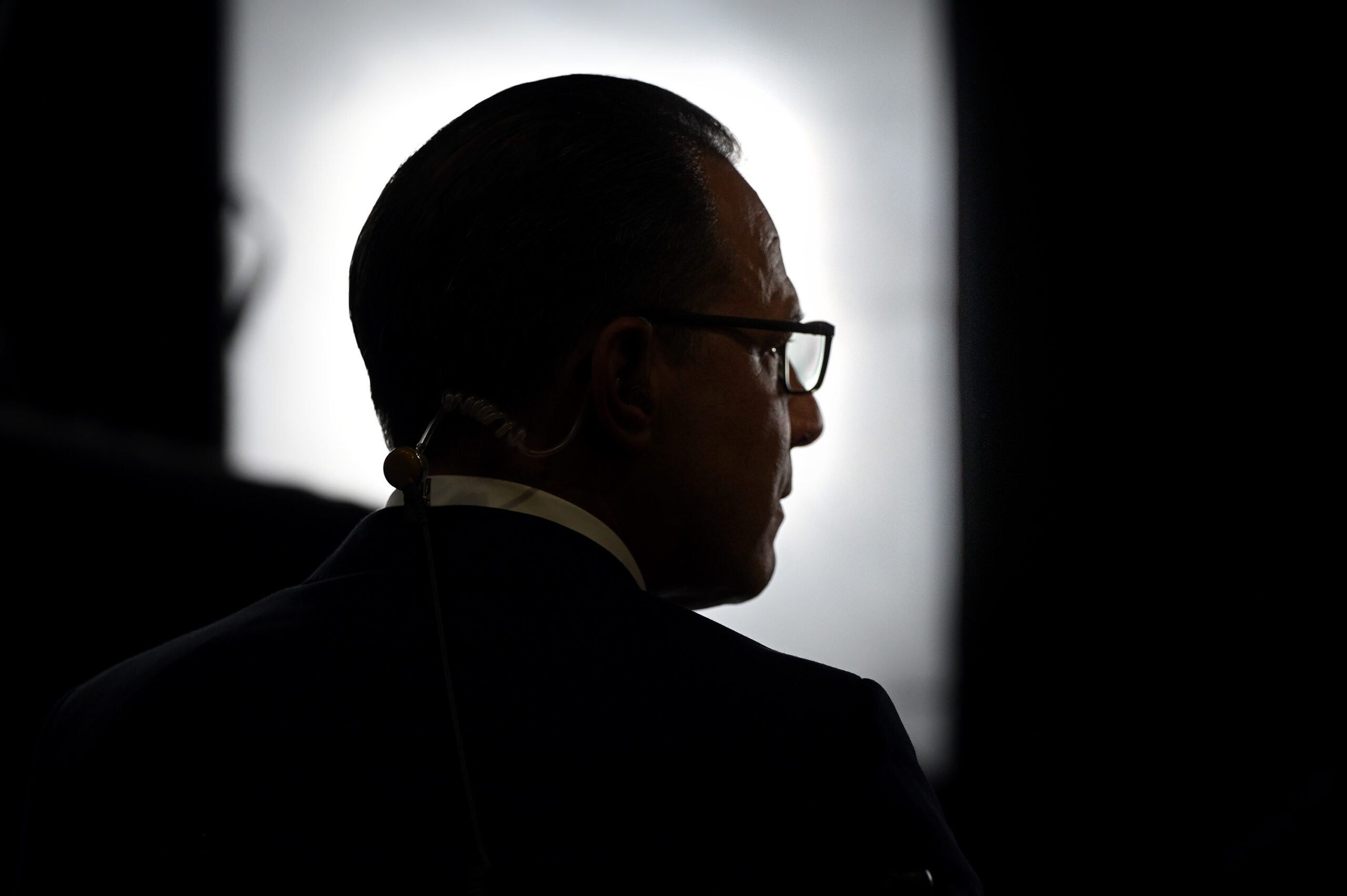
    Barely a few weeks into Year Two of Donald Trump’s second term, I can’t help but shake my head when I think about how much better off America (and the world) would be if Kamala Harris had won the presidency.

    She wasn’t a perfect candidate. Far from it. But once in the White House, I have no doubt she would have led the country with dignity and integrity, values currently in short supply inside the Oval Office.

    Under President Harris, the U.S. would not have invaded Venezuela and kidnapped its president, threatened to annex Greenland “the hard way,” or alienated our Canadian neighbors into boycotting American products and selling their Florida vacation homes. Rather than flirting with blowing up NATO, we would be working with our European allies to pressure Russia into ending its war with Ukraine.

    Instead of bringing back American imperialism — something nobody voted for — Harris would be focused on improving the lives of everyday Americans.

    She would be implementing policies such as allowing Medicare to better cover the cost of home care, and working with Congress to extend insurance subsidies to help keep healthcare affordable for millions of people. Meanwhile, the inflation that bedeviled her predecessor would continue to ease, untroubled by haphazard tariffs that are no less than a tax on every U.S. family.

    Elon Musk’s Department of Government Efficiency would be a ketamine-fueled figment of the tech billionaire’s imagination instead of the cause of almost 750,000 deaths — most of them children — due to the dismantling of the U.S. Agency for International Development. At home, the roughly 300,000 federal workers who left or lost their jobs because of DOGE would be serving the public, instead of leaving gaps in crucial agencies such as Social Security, the U.S. Department of Veterans Affairs, and the Federal Aviation Administration.

    You know who wouldn’t have a job under a Harris administration? The thousands of U.S. Immigration and Customs Enforcement agents who will be hired, to the tune of $30 billion, over the next few years. ICE would be targeting criminals in the country illegally, not inflicting a reign of terror on the American people. Renee Nicole Good, a 37-year-old mother of three and U.S. citizen, would still be alive instead of gunned down by an ICE agent in Minneapolis.

    FBI agents across the country would be focused on solving and preventing crimes, instead of thousands being reassigned to immigration enforcement. National Guard members would be with their families, not picking up trash in Washington, D.C., or standing around Portland, Ore., waiting for something to happen.
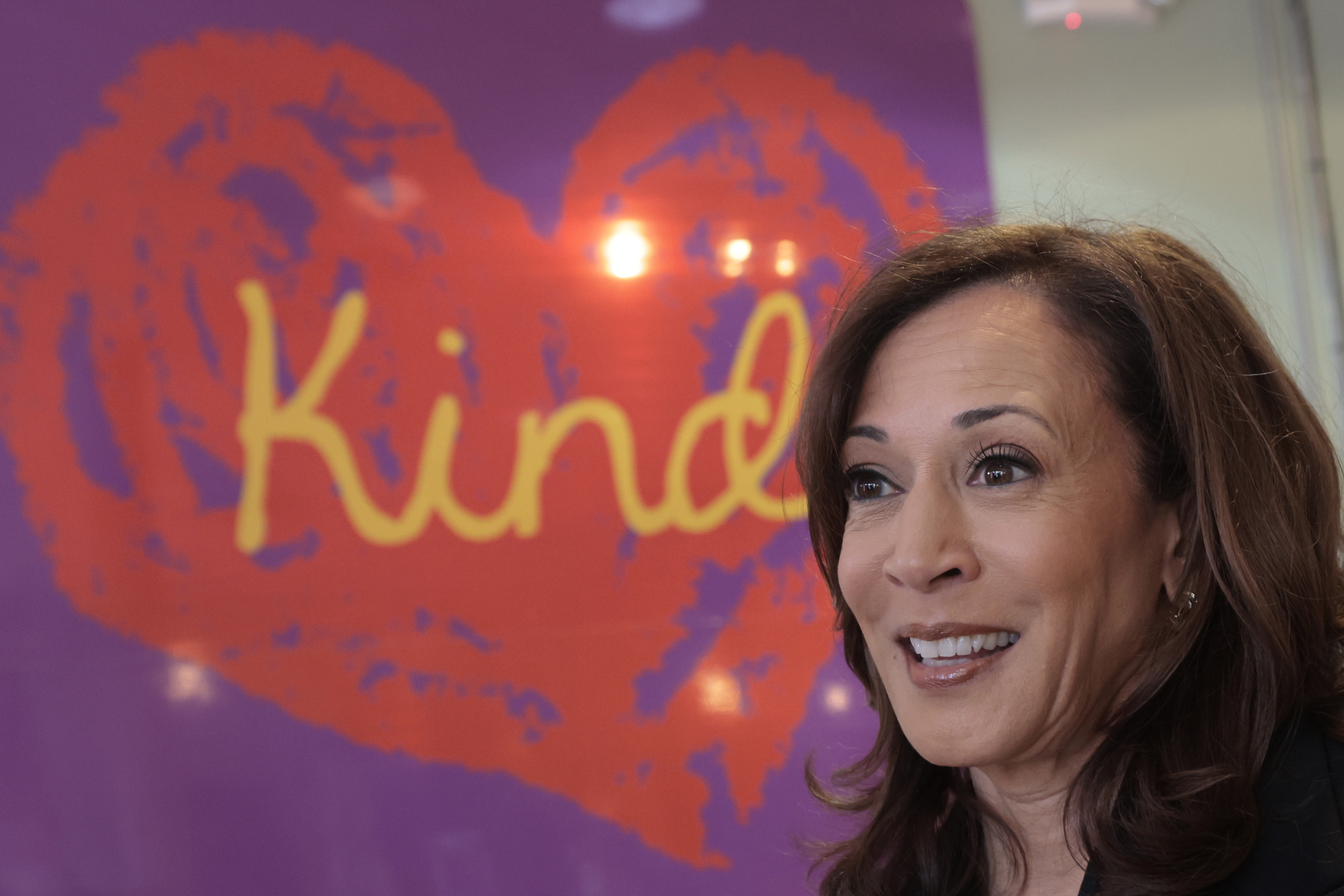
    Kamala Harris during an interview while shopping at Penzeys Spices on Market Street in September.

    Harris, a former California attorney general, would have kept the long-standing tradition of an independent U.S. Department of Justice, instead of turning it into the president’s law firm and using it to go after political enemies. She would have assembled a cabinet stocked with competent and experienced members, one likely as diverse as America. People like Kash Patel and Pete Hegseth would be far away from power, hawking “vaccine reversal” pills and defending war criminals on Fox News, respectively.

    Where would Trump himself be under a Harris presidency? In the same mess of trouble he had gotten himself into.

    Special counsel Jack Smith would be zealously pursuing the case against Trump for illegally retaining classified documents and plotting to overturn the 2020 election. Charges that Smith has said he could prove beyond a reasonable doubt.

    The once and forever former president would not be $3 billion richer thanks to shady crypto deals and other business ventures he has undertaken since returning to Washington. Neither would he be absentmindedly staring out where the East Wing of the White House once stood and imagining his sprawling ballroom, plastering his name on the Kennedy Center, nor costing taxpayers millions to outfit the $400 million luxury jetliner Qatar gave him.

    If anything, he might have found himself with new indictments if he had tried to steal the 2024 election, and the MAGA crowd staged another Jan. 6, 2021-style revolt in protest of a Harris victory. No doubt Harris’ attorney general would have learned a lesson from the previous administration and would not drag his feet, as former Attorney General Merrick Garland did in holding Trump accountable.

    Eventually, though, I’m convinced things would have settled down, and American politics would have gone back to being boring again — like they used to be. Fox News commentators would shift back to their old ways of complaining about Harris’ laugh and occasional lapses into word salad.

    As things calmed down, so, too, would the excitement surrounding her historic win as the realities of governance asserted themselves.

    Signing a bill to restore abortion rights nationwide would have been high on Harris’ agenda, reviving the issue that long fueled a part of the electorate. The culture war over GOP-manufactured concerns about men taking over women’s sports would rage on, never mind that trans people make up only about 1% of the population. So would the debate over the merits of diversity, equity, and inclusion efforts.

    On immigration, Harris would be caught between her party’s activist base and trying to limit people from seeking asylum at the southern border. It’s one thing for Harris to have issued her famous edict telling immigrants, “Don’t come,” and a whole other thing to take substantive steps to stem the flow of people desperate to enter the U.S.

    With Trump out of office, America would continue to be a bulwark for democracy, but the threats of authoritarianism, antisemitism, and racism would not go away. Neither would the voter malaise and congressional dysfunction that have given rise to people like Trump and his supporters. But Harris would fight the good fight for everyday Americans.
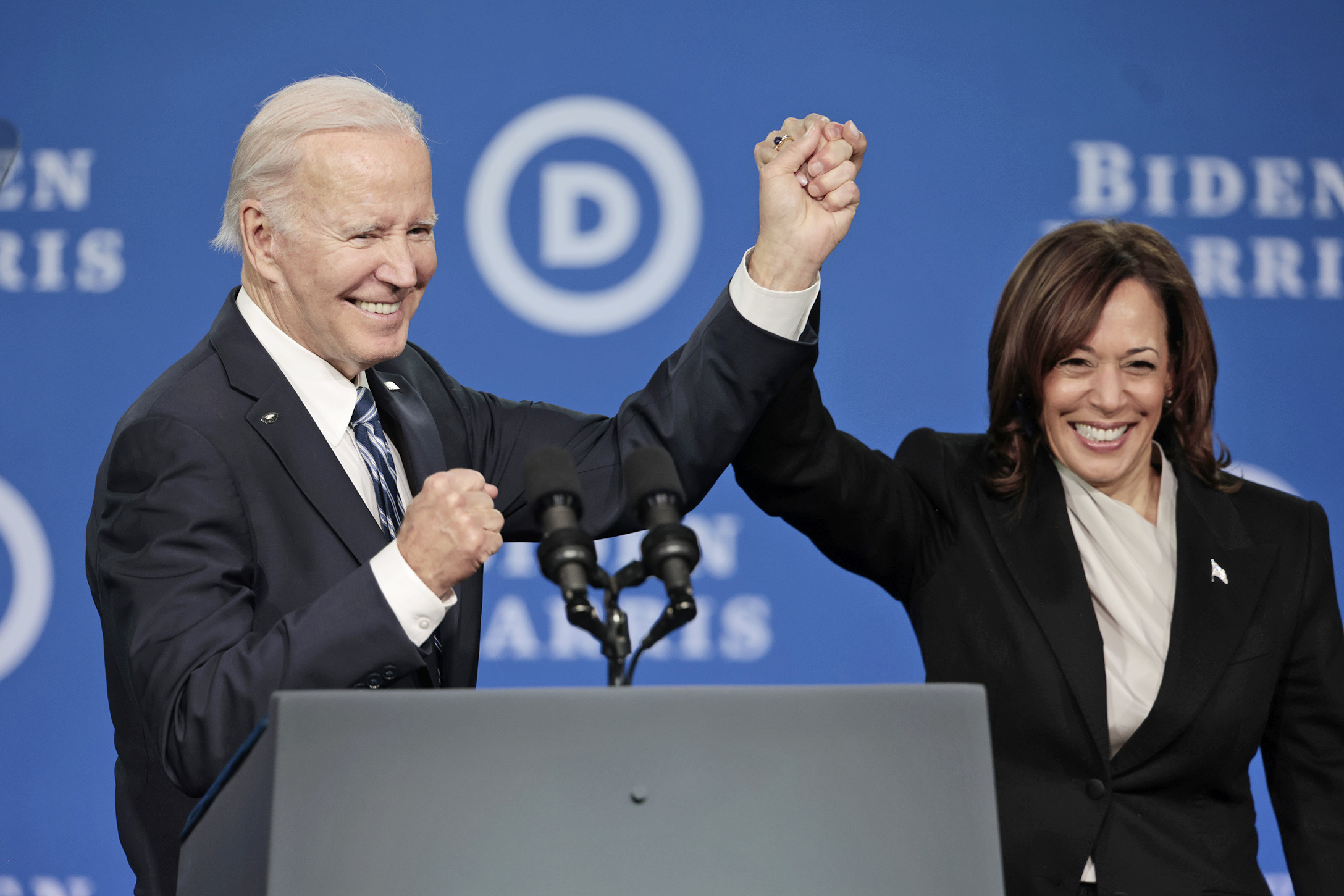
    President Joe Biden and Vice President Kamala Harris wave to the audience after addressing the DNC Winter Meeting at the Sheraton Downtown in Philadelphia in 2023.

    For a few days last month, I’d allowed myself to feel a tad bit optimistic, sensing that America had turned a corner. Maybe it was the eggnog, but the upcoming midterm elections had me feeling a little hopeful. So did the public opinion and court decisions pushing back against Trump’s excess and overreach. And Congress showing a spine and demanding accountability in releasing the Jeffrey Epstein files. If ever there were a year Rep. Jasmine Crockett could win a U.S. Senate race in Texas, 2026 felt like it could be it.

    But then, Trump dropped bombs on an Islamic group in Nigeria on Christmas Day and followed that up by sending troops into Venezuela. Now, he’s staking claims to that country’s oil reserves while looking around to see which nation he can storm next. Will it be Mexico? Colombia? Iran? Greenland? I don’t think even he knows.

    Trump isn’t bound by conventional mores or the Constitution. He’s not restrained by Congress or the U.S. Supreme Court. As he told the New York Times recently, the only thing that can stop him is his own mind. His “own morality,” which is downright scary considering his track record.

    And yet, even as I am knocked down by the reality we’re facing. I can’t help but stand up. My dad was right to warn about not looking back, but in imagining the leadership of someone who is more than worthy of the office of the presidency, I like to think I’m looking forward.

    And maybe I am.

  • The race between Josh Shapiro and Stacy Garrity for Pa. governor has officially begun. Here’s what you need to know.

    The race between Josh Shapiro and Stacy Garrity for Pa. governor has officially begun. Here’s what you need to know.

    Pennsylvania’s race for governor has officially begun. And 10 months before the election, the November matchup already appears to be set.

    Democratic Gov. Josh Shapiro formally announced his reelection campaign Thursday — not that anyone thought he wouldn’t run. And Republicans have rapidly coalesced behind the state party’s endorsed candidate, Pennsylvania Treasurer Stacy Garrity.

    The race will dominate Pennsylvania politics through November, but it could also have a national impact as Democrats hope Shapiro at the top of the state ticket can elevate the party’s chances in several key congressional races.

    Here’s what you need to know about the high-stakes contest.

    The candidates

    Josh Shapiro

    Shapiro is seeking a second term as Pennsylvania’s top executive as he’s rumored to be setting his sights on the presidency in 2028. Just weeks after his campaign launch, Shapiro will head to New York and Washington, D.C., as part of a multicity book tour promoting his memoir.

    Shapiro was first elected to public office in 2004 when he flipped a state House seat to represent parts of Montgomery County. As a freshman lawmaker, he quickly built a reputation of brokering deals across party lines. He went on to win a seat on the Montgomery County Board of Commissioners in 2011, flipping the board blue for the first time in decades.

    Shapiro was elected state attorney general in 2016, a year when Pennsylvania went for Republican Donald Trump in the presidential contest. The position put Shapiro in the national spotlight in 2020 when Trump sought to overturn his loss in the state that year through a series of legal challenges, which Shapiro’s office successfully battled in court.

    He went on to decisively beat Trump-backed Republican State. Sen. Doug Mastriano for the governorship in 2022. Despite an endorsement from Trump, Mastriano lacked the support of much of Pennsylvania’s Republican establishment and spent the election cycle discouraging his supporters from voting by mail.

    Throughout Shapiro’s first term as governor, he has highlighted his bipartisan bona fides and ability to “get stuff done” — his campaign motto — despite contending with a divided legislature. His launch video highlights the quick reconstruction of I-95 following a tanker explosion in 2023.

    In 2024, Shapiro was vetted as a possible running mate for then-Vice President Kamala Harris, who ultimately snubbed the Pennsylvanian in favor of Minnesota Gov. Tim Walz. Harris went on to lose the state to Trump.

    Stacy Garrity

    Garrity is Shapiro’s likely opponent in the general election. She earned an early endorsement from the Pennsylvania Republican Party in September after winning a second term to her current position in 2024 with the highest total of votes in history for a state office, breaking a record previously held by Shapiro.

    She has been quick to go on the attack against the Democratic governor in recent months. Throughout Pennsylvania’s monthslong budget impasse Garrity criticized Shapiro’s leadership style and panned the final agreement he reached with lawmakers as fiscally irresponsible.

    Garrity’s campaign has focused on contrasting her priorities with Shapiro’s, arguing the governor is more interested in higher office than he is in Pennsylvania.

    A strong supporter of Trump, Garrity is one of the only women that has been elected to statewide office in Pennsylvania history. If elected, she would be the first female governor in state history.

    Garrity is a retired U.S. Army colonel who was executive at Global Tungsten & Powders Corp. before she was elected treasurer in 2020. Running a relatively low-key state office, Garrity successfully lobbied Pennsylvania’s General Assembly to allow her to issue checks to residents whose unclaimed property was held by her office, even if they hadn’t filed claims requesting it.

    Anyone else?

    While Shapiro and Garrity are the likely nominees for their parties, candidates have until March to file petitions for the race. That theoretically leaves the possibility of a primary contest open for both candidates, but it appears unlikely at this point.

    Mastriano, who ran against Shapiro in 2022, spent months floating a potential run for governor against Garrity. He announced Wednesday that he would not be seeking the Republican nomination.

    The stakes

    Why this matters for Pennsylvanians

    The outcome of Pennsylvania’s gubernatorial race could hold wide-ranging impacts on transportation funding, election law, and education policy, among other issues.

    The state’s governor has a powerful role in issuing executing actions, setting agendas for the General Assembly, and signing or vetoing new laws. The governor also appoints the secretary of state, the top Pennsylvania election official who will oversee the administration of the next presidential election in the key swing state.

    Throughout the entirety of Shapiro’s first term, he has been forced to work across the aisle because of the split legislature. Throughout that time the balance of power in Harrisburg has tilted toward Democrats who hold the governor’s mansion and the Pennsylvania House. But many of the party’s goals — including expanded funding for SEPTA and other public transit — have been blocked by the Republican-held Senate.

    If Garrity were to win that dynamic would shift, offering Republicans more leverage as they seek to cut state spending and expand school voucher options (while Shapiro has said he supports vouchers, the policy has not made it into any budget deals under him).

    Shapiro’s ambition

    Widely rumored to have his sights set on higher office, Shapiro’s presidential ambitions may rise and fall with his performance in his reelection campaign.

    Shapiro coasted to victory against Mastriano in 2022, winning by 15 points. The 2026 election is expected to be good for Democrats with Trump becoming an increasingly unpopular president.

    But Garrity is viewed as a potentially stronger opponent to take on Shapiro than Mastriano, even though her political views have often aligned with the far-right senator.

    When the midterms conclude, the 2028 presidential cycle will begin. If Shapiro can pull off another decisive win in a state that voted for Trump in 2024, it could go a long way toward aiding his national profile. But if Garrity wins, it could end the governor’s chances of putting up a serious campaign for the presidency in 2028.

    Every other race in Pennsylvania

    The governor’s contest is the marquee race in Pennsylvania in 2026. Garrity and Shapiro have the ability to help or hurt candidates running for Pennsylvania’s statehouse and Congress.

    The momentum of these candidates, and their ability to draw voters to the polls could play a key role in determining whether Democrats can successfully flip four competitive U.S. House districts as they attempt to take back the chamber.

    Democrats also narrowly hold control of the Pennsylvania House and are hoping to flip three seats to regain control of the Pennsylvania Senate for the first time in decades. If Democrats successfully flip the state Senate blue, it would offer Shapiro a Democratic trifecta to push for long-held Democratic goals if he were to win reelection.

    Strong Democratic turnout at the statewide level could drive enthusiasm down-ballot, and vice versa. Similarly, weak turnout could aid Republican incumbents in retaining their seats.

    The dates

    The election is still months away but here are days Pennsylvanians should put on their calendars.

    • May 4: Voter registration deadline for the primary election.
    • May 19: Primary election.
    • Oct. 19: Voter registration deadline for the general election.
    • Nov. 3: General election.
  • Josh Shapiro’s reelection campaign in Pennsylvania starts now — but 2028 looms large

    Josh Shapiro’s reelection campaign in Pennsylvania starts now — but 2028 looms large

    He’s running.

    Gov. Josh Shapiro officially announced his widely expected reelection bid for Pennsylvania governor Thursday, as speculation over a 2028 run for president continues to build. The question now: How will the Democrat’s rumored presidential ambitions bolster or detract from his must-win election at home in 2026?

    Shapiro will kick off his reelection campaign with not one but two rallies — first stopping in Pittsburgh, then in Philadelphia. In a campaign video posted to social media Thursday morning, he touted his three years of leading a divided legislature and his bipartisan achievements in a politically split state, via a campaign that has already amassed a record $30 million war chest.

    He coasted to victory in 2022, elevating his profile within the national Democratic Party, and is not expected to face a primary challenger. In the general election, he will likely face Republican State Treasurer Stacy Garrity, who largely consolidated GOP support early.

    But that’s not the only race on the line in November.

    Shapiro, whose campaign declined to comment for this article, has been elusive when asked directly about plans to run for president. But in the last year, he’s taken bold steps to build a national profile, while quietly making moves behind the scenes that signal bigger political aspirations. He’s expanded his public affairs team, planned a book tour for the end of January, and sat for interviews with national magazines like the Atlantic, which published an extensive feature on him late last year. Last month, he and Democratic presidential candidate kingmaker U.S. Rep. Jim Clyburn (D., S.C.) discussed the pioneering Black lawmakers’s new book on a stage in Philadelphia. Earlier in December, he and Utah Gov. Spencer Cox, a Republican, discussed curbing political violence with NBC News host Savannah Guthrie, a conversation that highlighted Shapiro’s emphasis on bipartisanship.

    At home, he’s a local political celebrity, boasting approval ratings between 52% and 60%. But outside the Keystone State, he has yet to become a household name.

    As Shapiro looks to potential parallel runs, he’ll need to continue to build a national profile without outwardly focusing too much on the presidential picture.

    Gov. Josh Shapiro is interviewed by TV news in the spin room at the Convention Center following the debate between former President Donald Trump and Vice President Kamala Harris Tuesday, Sept. 10, 2024.

    “The challenge, of course, is you have to take care of your next election first,” said Christopher Borick, a pollster at Muhlenberg College. “Of anything he does, he knows this is the most important thing for his potential success in 2028 if he was to run.”

    The former Pennsylvania attorney general, Montgomery County commissioner, and state representative has never in 20 years suffered an electoral defeat. Being passed over for Vice President Kamala Harris’ running mate in 2024 kept that winning streak alive.

    In the governor’s race, Shapiro will likely face a more formidable opponent in Garrity than he did in state Sen. Doug Mastriano (R., Franklin) in 2022, but he’ll also be running in a far more favorable political atmosphere for Democrats amid souring attitudes toward President Donald Trump and the GOP. If he can retain the governor’s mansion decisively and bring a ticket of Democrats vying for the statehouse and Congress to victory with him, that’s a narrative that could be strong in a Democratic presidential primary.

    “Having a win, and maybe an impressive one in Pennsylvania, the key swing state heading into that cycle, is about as big of a boost as any that you can have,” Borick added.

    Running local

    The 2028-curious Democrats include several other sitting governors generating buzz: California’s Gavin Newsom, Kentucky’s Andy Beshear, Maryland’s Wes Moore, Michigan’s Gretchen Whitmer, and Illinois’ JB Pritzker. Shapiro has formed alliances with several of them.

    But unlike some of his peers, Shapiro hasn’t been a frequent guest on cable news or podcasts with national reach.

    That’s not to say he hasn’t made moves toward a potential presidential run.

    On Oct. 4, 2024, nearly a month before Harris lost the presidential election to Trump, Shapiro confidentially requested that the state ethics commission determine whether he would violate any state ethics laws for accepting royalties from a book about his life in public service, according to the filing.

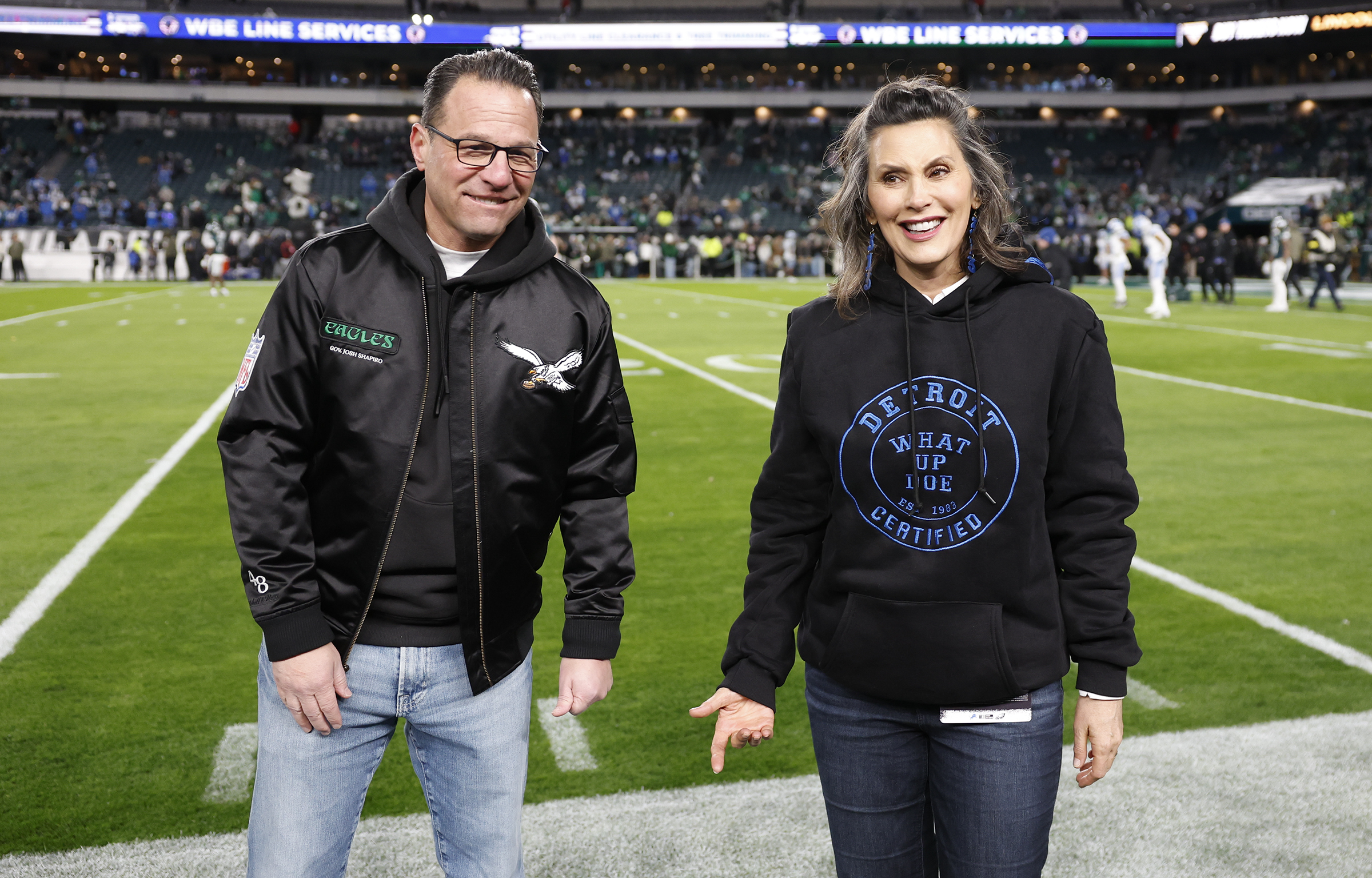
    Pennsylvania Gov. Josh Shapiro (right) and Michigan Gov. Gretchen Whitmer before the Eagles played the Detroit Lions at Lincoln Financial Field on Sunday, Nov. 16, 2025, in Philadelphia, PA.

    His book, Where We Keep the Light, will publish later this month, recounting his political upbringing, his vice presidential vetting, and the firebombing of his home last year. He’s not alone. Harris published a memoir about the 2024 election last year, and Newsom is due out with Young Man in a Hurry: A Memoir of Discovery in February.

    But in the coming months, several Democratic strategists predict Shapiro will be squarely focused on the governor’s race he has to win in Pennsylvania — simultaneously proving he has what it takes to capture the vote of the nation’s most important swing state.

    “He’s such a careful politician. He’s not taking anything for granted,” said former Gov. Ed Rendell, a Democrat who also once faced scrutiny for having potential presidential ambitions.

    Shapiro is likely to follow the same campaign playbook in Pennsylvania as he did in 2022: Stump in every region of the state, including areas where Democrats don’t usually show up. That helped him run down the margins in longtime GOP strongholds like Lancaster or Schuylkill Counties toward his resounding victory over Mastriano. Those stops in most of Pennsylvania’s 67 counties won’t give him as much time to visit South Carolina, Iowa, and New Hampshire, as the other Democratic presidential hopefuls start their sojourns.

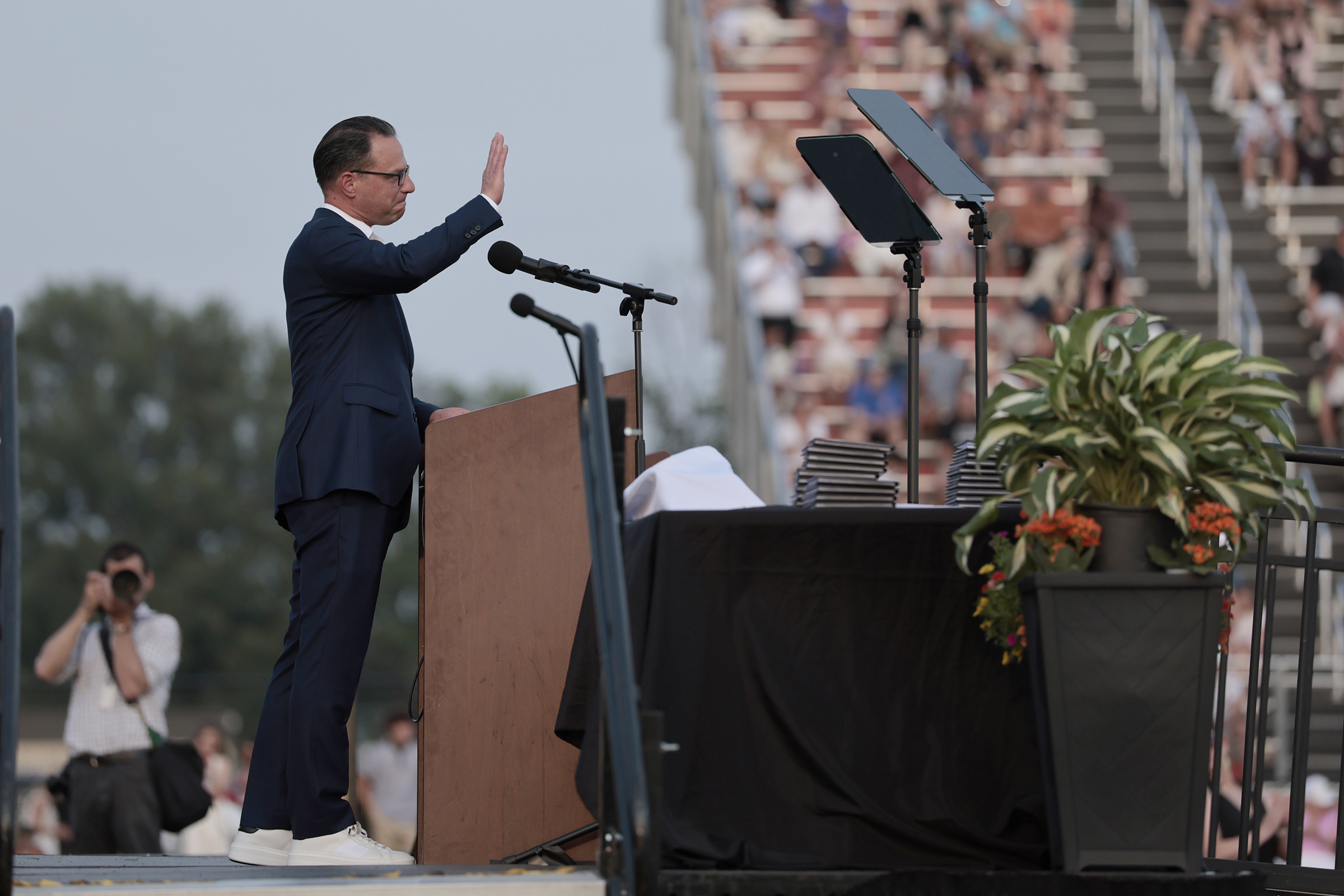
    Pennsylvania Governor Josh Shapiro waves goodbye to the crowd after speaking during graduation ceremonies at Pennsbury High School in Fairless Hills on Thursday, June 12, 2025.

    “The No. 1 caveat is stay focused on the race you’re running,” echoed Alan Kessler, a national fundraiser based in Philadelphia who has supported and fundraised for Shapiro.

    Still, the campaign is likely to generate attention beyond the Keystone State.

    Shapiro will still court donors in blue states as he fundraises for reelection, Kessler added.

    Come November, he will be the only governor with rumored 2028 aspirations up for reelection in a swing state. And his brand as a popular, moderate Democratic governor trying to restore trust in government — as well as his potential to help boost Democrats down ballot — will easily capture a wider audience and bring national media into Pennsylvania.

    As Democrats seek to flip control of the U.S. House in 2026, targeting several congressional districts in the state, the election may once again come down to Pennsylvania, and in turn, increase the spotlight on Shapiro. The governor is widely seen as someone who can boost the congressional Democratic candidates also on the ballot, having won three of the four districts that Democrats are targeting in the state by double digits in 2022.

    “Every single Democrat that I know that’s running for office in 2026 in Pennsylvania wants the governor to campaign with them,” Democratic state party chair Eugene DePasquale said.

    Preparing for an onslaught

    Republicans have targeted several weaknesses to try to erode Shapiro’s popularity in Pennsylvania and boost Garrity. They point to a lack of rigorous electoral challengers in his past. They question his record of “getting stuff done” — his oft-repeated motto — including three late state budgets. And they’ve harped on a lack of transparency as governor, including claims he used tax dollars for political benefit as well as a sexual harassment scandal involving a former top aide. They’ve also criticized his support for Minnesota Gov. Tim Walz, who recently dropped his third gubernatorial bid following a fraud scandal among the state’s Somali refugee population totaling $1 billion, according to federal prosecutors.

    Among the emerging attacks: Republicans want to highlight Shapiro’s presumed presidential ambitions, as they try to cast him as an opportunist more interested in a future White House bid than the problems of everyday Pennsylvanians.

    “Josh Shapiro is more concerned with a promotion to Pennsylvania Avenue than serving hardworking Pennsylvanians,” Garrity said in a statement, noting the state fared poorly in U.S. News and World Report rankings on the economy and education. “In the military, I learned the importance of putting service before self. Pennsylvanians are the hardest-working, most compassionate, strongest people in the nation, and together we will return Pennsylvania to our rightful place as a national and global leader.”

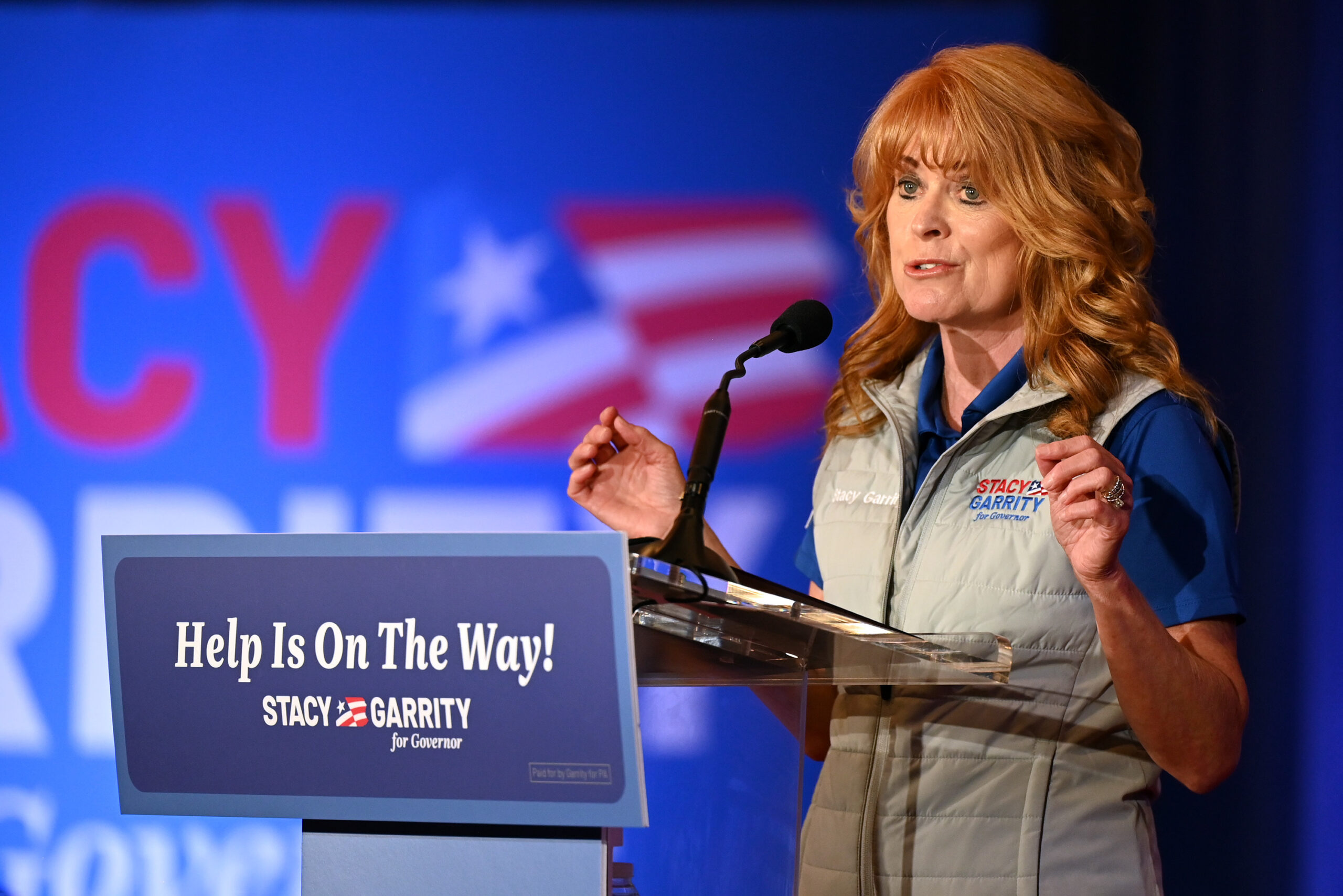
    State Treasurer and Republican candidate for governor Stacy Garrity holds a rally in Bucks County Sept. 25, 2025 at the Newtown Sports & Events Center.

    There are lingering missteps that could come up in a reelection campaign or afterward. He was unable to secure a long-term funding stream for mass transit, requiring him to use capital funds to keep SEPTA operating. He has yet to follow through on his support for school vouchers, a GOP-selling point for him that angered the powerful teachers’ unions in the state. And he’s faced questions over a number of actions his administration has taken, including $1.3 million in security improvements to his personal home following the attack on the governor’s residence in Harrisburg, his use of the state plane, and his transparency in open records requests, among others.

    Mastriano, the far-right Republican state senator who announced Wednesday he won’t run for governor, said in a statement earlier this week that Shapiro “owes [Pennsylvanians] straight answers” over his use of the state plane, security updates to his personal home in Abington Township, and more.

    “Pennsylvanians deserve accountability, not ambition,” he added, making a nod to Shapiro’s potential longer-term plans.

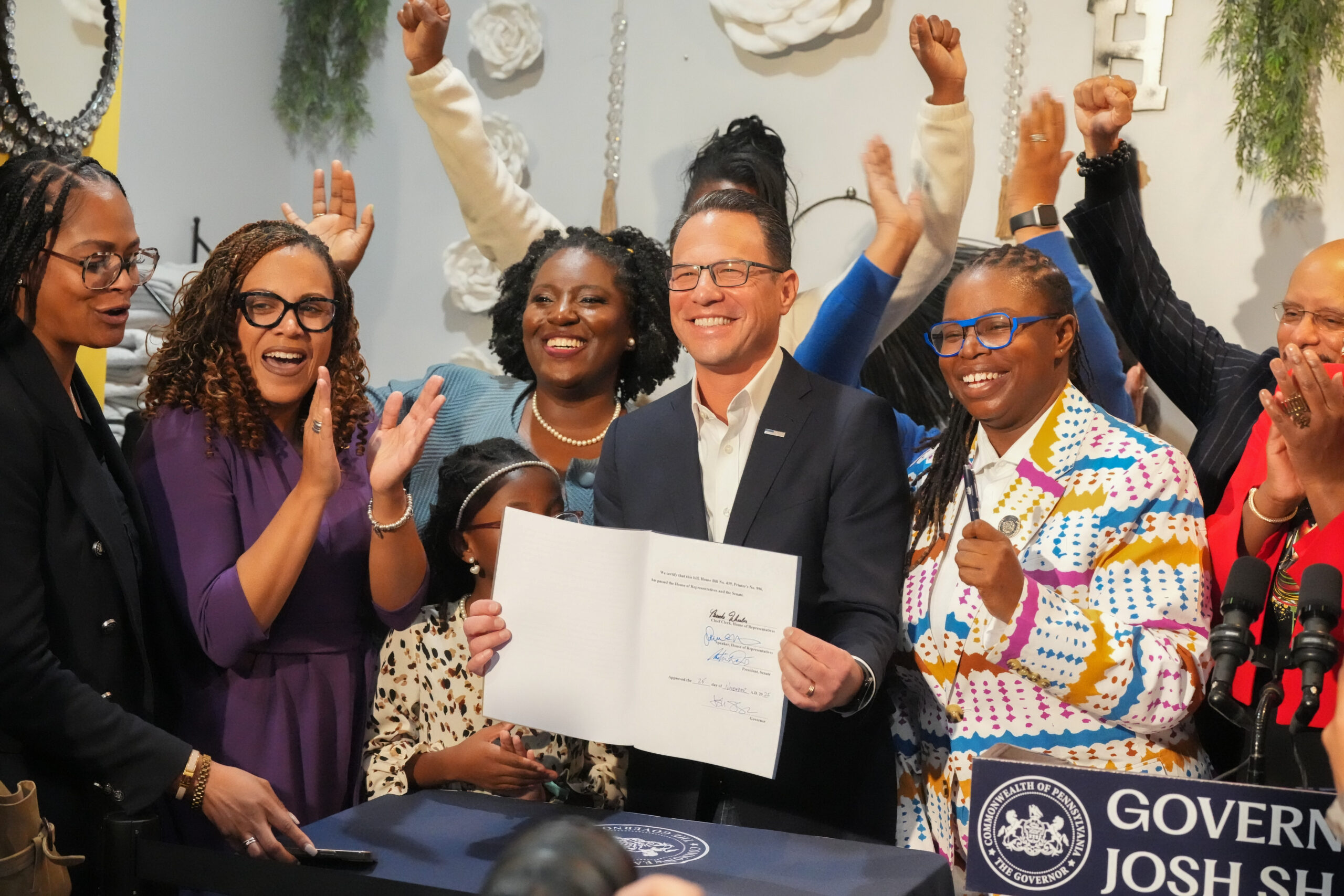
    House Speaker Joanna McClinton, back center left, Gov. Josh Shapiro, front center, and State Rep. La’Tasha D. Mayes, right, celebrate the signing of the CROWN Act, which prohibits discrimination based on a person’s hair type, during a press conference at Island Design Natural Hair Studio, in West Philadelphia, November 25, 2025.

    Borick, the pollster, was skeptical that attacks on Shapiro’s potential wider ambitions could reverse his largely positive public sentiment.

    “If that’s all they got, they don’t got a lot.”

    Republicans insist they see a path to victory for Garrity in a politically divided state with months to go until the election. But behind the scenes, some Republicans are already acknowledging the goal is to lose by less and prevent big losses in state legislature or congressional races.

    If Shapiro does look poised to cruise to victory, it might mean less media attention on the race, and it could mean he’s less vetted ahead of a much bigger stage.

    “I think Josh is better served if the [Republican Governors Association] puts $100 million into this race because then it’s nationalized,” said a Democratic political strategist based in Pennsylvania who did not want to be named speculating on Shapiro’s presidential run. “If it’s a cakewalk, CNN’s not gonna cover it …If he wants to be governor for another four years, he should pray for a cakewalk. If he wants to be president, he should pray for a difficult campaign.”

    Florida Gov. Ron DeSantis, for example, the strategist noted, cleaned up in his 2022 reelection, but failed to gain traction in the GOP presidential primary that Trump dominated.

    Beyond 2026

    Shapiro speaks Pennsylvanian very well. Raised in Montgomery County, he’s lived here almost all of his life, and has built an image as a popular moderate focused on problem-solving in a purple state. That’s earned him the support of about 30% of Trump voters in the state.

    But winning a general election in Pennsylvania is different than winning a Democratic presidential primary.

    He’s tried not to alienate the MAGA base, focusing on issues with bipartisan appeal like funding for apprenticeship and vocational-training programs. He’s taken on Trump in court, but has picked his personal battles with the president more carefully.

    But being a strategic, self-described “progressive pragmatist” can end up alienating voters on both sides.

    Gov. Josh Shapiro leaves after an event at the Port of Philadelphia Thursday, Apr. 10, 2025, the day after President Trump paused some tariffs.

    Becky Carroll, a Democratic political consultant in Chicago who has worked with Pritzker, said Shapiro seems less on the radar of voters in the Midwest. As she’s followed Shapiro’s career, she said she sees a “damn fine governor,” but someone who’s taken a more muted approach to Trump than blue state governors like Pritzker and Newsom.

    When it comes to a Democratic primary, candidates may be judged in part on their pushback to Trump, she said. “I think we’re in a moment where you can sulk in a corner and hope it’ll all go away or fight …,” Carroll said. “And if you’re gonna put yourself out there for a primary battle, you better show you have battle scars to prove you can fight for the most vulnerable in the country right now.”

    Gov. Josh Shapiro is interviewed by TV news in the spin room at the Convention Center following the debate between former President Donald Trump and Vice President Kamala Harris Tuesday, Sept. 10, 2024.

    But other national strategists see Shapiro’s moderate appeal as a potential asset in 2028. Jared Goldberg-Leopold, a former communications director for the Democratic Governors Association, thinks Shapiro’s biggest asset is his electoral track record in a state the nation knows is critical on the path to the White House. Primaries have previously been won by moderates whom the party thinks have the best chance at winning the general.

    But the first step, Goldberg-Leopold stressed, is the governor’s race ahead.

    “It would be easy for the Eagles to look past the 49ers to the next week of playoffs, but they’ve gotta focus on only one thing. And the same is true for the governor,” he said. “You can only prepare for what’s ahead of you, and the way people get in trouble in politics is planning too many steps ahead.”

    Staff writer Katie Bernard contributed to this article.

  • Lies feed pervasive attacks on transgender and nonbinary people

    Lies feed pervasive attacks on transgender and nonbinary people

    Roughly two out of every 100 people in the U.S. identify as transgender or nonbinary.

    As 2026 opens, it is a fitting time to consider how disproportionately small that number is when viewed in light of the proliferation of news about anti-transgender talking points and policy initiatives, lethal anti-transgender violence, and recent years’ epidemic of transgender youth suicidality.

    The disinformation campaign launched by prominent Republicans against transgender and nonbinary people has become pervasive in public discourse. By repeatedly casting aspersions upon the tiny fraction of competitive athletes who are transgender, a moral panic about “fair play” and locker rooms has been amplified in the absence of scientific evidence to support the validity of the histrionic claims being made.

    The U.S. Department of Health and Human Services is threatening to shutter hospitals providing medically approved care for transgender youth endorsed by the American Medical Association and the American Academy of Pediatrics. The recently passed House bill criminalizing gender-affirming healthcare for minors is making its way to the Senate for a vote. The Food and Drug Administration is targeting private companies that market body positive products for gender affirming self-presentation with legal threats.

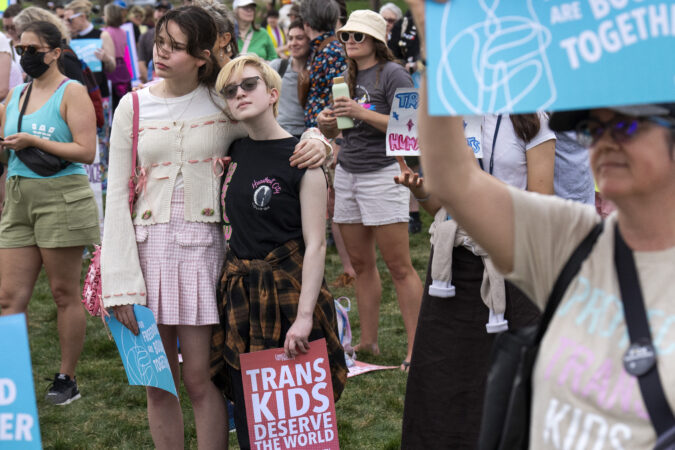
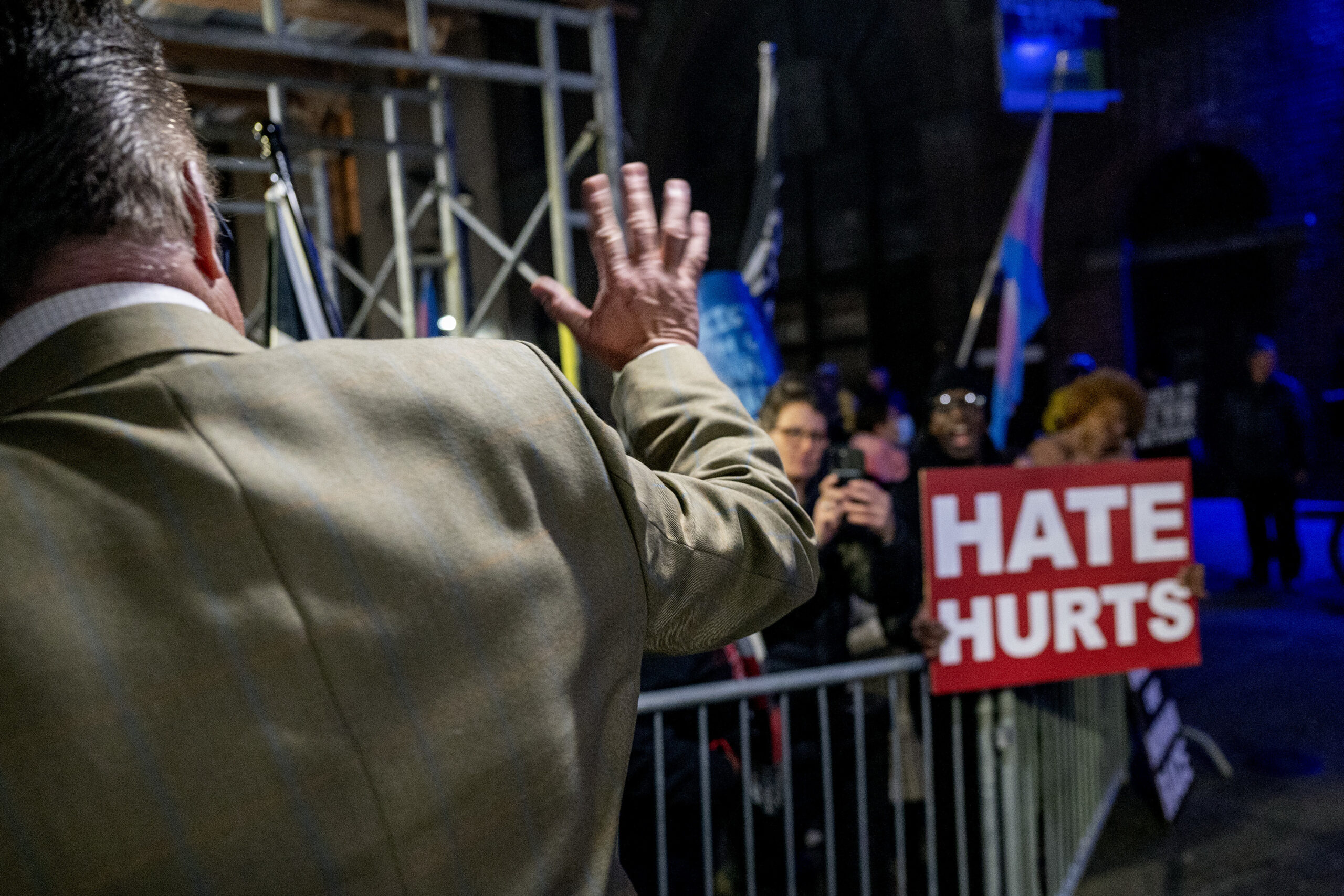
    A protest at an event honoring Florida Gov. Ron DeSantis over his antigay policies. The right has targeted trans people, in particular.

    Meanwhile, the abundance of research demonstrating that transgender people suffer disproportionate violent victimization, homelessness, and suicide has remained largely unaddressed.

    Moderate politicians’ concern with appealing to wider audiences in these divisive times exacts a cost: to trans kids’ health, safety, and dignity in their schools and communities.

    Ambivalent Democrats

    Rather than forging alliances to protect the safety and constitutional rights of transgender citizens, some of the most influential members of the Democratic Party — from Kamala Harris to Pete Buttigieg to Rahm Emanuel to Gavin Newsom — have at least partially capitulated before the political tidal wave of anti-transgender disinformation, complete with all of the red herrings it washes ashore.

    When powerful Dems take the bait, they brand the abandonment of their platform’s core values as political pragmatism. In doing so, they weaken the alliances that could bolster the very ground upon which they wish to reestablish their standing.

    Yet, despite the political caution that fuels the Democratic Party’s lack of moral courage on trans issues, passive complicity in response to the right’s virulent anti-trans rhetoric has actually not proven to be a winning strategy for them — as last November’s election results reillustrated.

    More importantly, by keeping to the intentionally distorted discourse about transgender people — rather than countering sensationalized falsehoods and vitriolic rhetoric with integrity and conviction — politicians end up appealing to and emboldening constituencies who lean into disinformation out of fear. This isn’t only cynical, it’s dangerous. FBI hate crime statistics tell a bleak story of the rise in vigilante violence against transgender Americans, coinciding with a steep rise in political antagonism and targeted scapegoating.

    A recent effort led by U.S. Reps. Sarah McBride (D., Del.), Mark Takano (D., Calif.), and members of the Congressional Equality Caucus calls upon House Speaker Mike Johnson (R., La.) to enforce the rules of decorum in Congress by holding those who defame and denigrate the trans community to account. As of this writing, no response has been issued.

    A path forward

    The only ethical and effective path forward demands that we fundamentally reframe the political conversation about transgender people in factual terms that are grounded in foundational democratic principles, credible science, and a commitment to the protection of civil rights and civil liberties of all Americans.

    There is some hope to be found in the lawsuit filed this week by 19 Democratic states to block the federal government’s efforts to ban gender-affirming care nationally.

    Ideally, we would see more leadership on both sides of the aisle to protect the safety, freedom, and human dignity of all LGBTQ+ people, as demonstrated in the introduction of the bipartisan Global Respect Act by McBride and U.S. Rep. Brian Fitzpatrick (R., Pa.) to protect LGBTQ+ people around the world from identity-based violence, torture, and persecution.

    Regressive political forces have always sought to isolate and villainize minoritized groups, to paint them as threats to the majority by virtue of whatever marks them as somehow “different” from those in power — and therefore less deserving of the same rights and protections.

    Consider that during the civil rights movement in the 1960s, boycotts of segregated lunch counters and department stores were underway in Southern communities when New York U.S. Rep. Adam Clayton Powell famously corrected a reporter who queried if he was advocating for “Negroes” to stay out of segregated national chain stores in solidarity with the boycotts.

    “Oh no, that’s not true,” Powell countered. “I’m advocating that American citizens interested in democracy stay out of chain stores.” With that sentence, he turned the conversation inside out to reveal its core: Civil rights and civil liberties are the central pillars of a democratic society — not exclusive privileges to be hoarded by any one set of citizens so as to dehumanize and disadvantage another.

    A genuine commitment to our democracy demands that we shift our discursive paradigm from one that impugns the existence of transgender people to one that impugns the de jure and de facto denial of transgender people’s humanity, dignity, civil rights, and personal safety.

    It is long past time to reset the terms and reclaim the narrative on the equal protections and constitutional rights of transgender Americans. The political leadership we need in this moment requires the clarity, intentionality, and fortitude to do just that.

    Ashley C. Rondini is an associate professor of sociology at Franklin and Marshall College.

  • Karen Dalton, who plans to challenge Scott Perry in the GOP primary, has her own definition of RINO

    Karen Dalton, who plans to challenge Scott Perry in the GOP primary, has her own definition of RINO

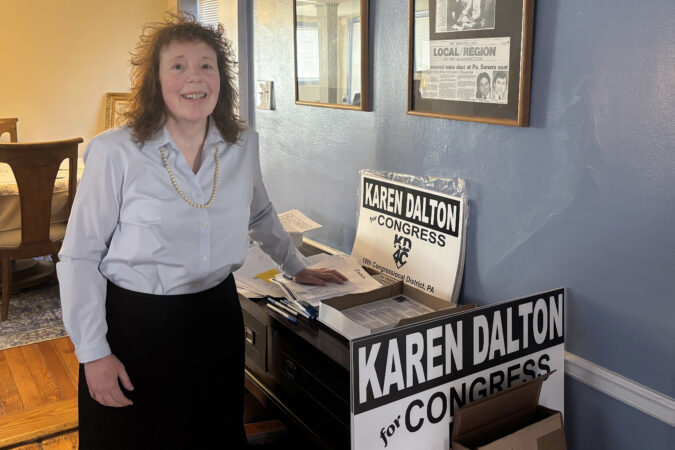
    If she makes it on the ballot, Karen Dalton will be U.S. Rep. Scott Perry’s first primary opponent since 2012 – the year he first won the seat.

    Dalton, a retired staff attorney for the Pennsylvania House Republicans, knows the odds are against her as she runs a solo campaign operation out of her living room. But she thinks she has a shot.

    The 65-year-old Carlisle resident is irked by President Donald Trump’s policies both from a faith-based standpoint and a legal one.

    She holds many views that align with Democrats, which may draw accusations that she’s a “RINO,” or Republican in name only. But she argues she’s a Republican at heart.

    “I was talking to a senior citizen the other day, and the first thing he said to me was, ‘So you’re a RINO,” said Dalton, 65. “And my response to that was, well, if you mean ‘Respect for Individuals and Not Oligarchs,’ I’ll go along with that. He goes, ‘No, no, no, I’m a RINO too. I’m that old school Republican that believes in helping people.’ I’m like, ‘Yes, thank you. That’s what I’m talking about getting back to.’”

    Perry, a longtime ally of President Donald Trump who supported his unsuccessful attempts to overturn the 2020 election, represents Dauphin County and parts of Cumberland and York Counties in Central Pennsylvania. He appears to be particularly vulnerable this year as the district has shifted toward Democrats and Republican-turned-Democrat Janelle Stelson, a former local news anchor, had a razor-thin loss against him in the general election last year. She plans to run again in the Democratic primary.

    Dalton, in a long-ranging interview with The Inquirer in her living room, called Donald Trump’s One Big Beautiful Bill Act the “Big, Brutal Betrayal of the American Dream Act,” because of its cuts to Medicaid and SNAP.

    She believes former Vice President Kamala Harris should have pushed back more on Trump’s claims about transgender people in the 2024 election, argued that the term “illegal alien” is factually incorrect, and says on her website that climate change is a real threat.

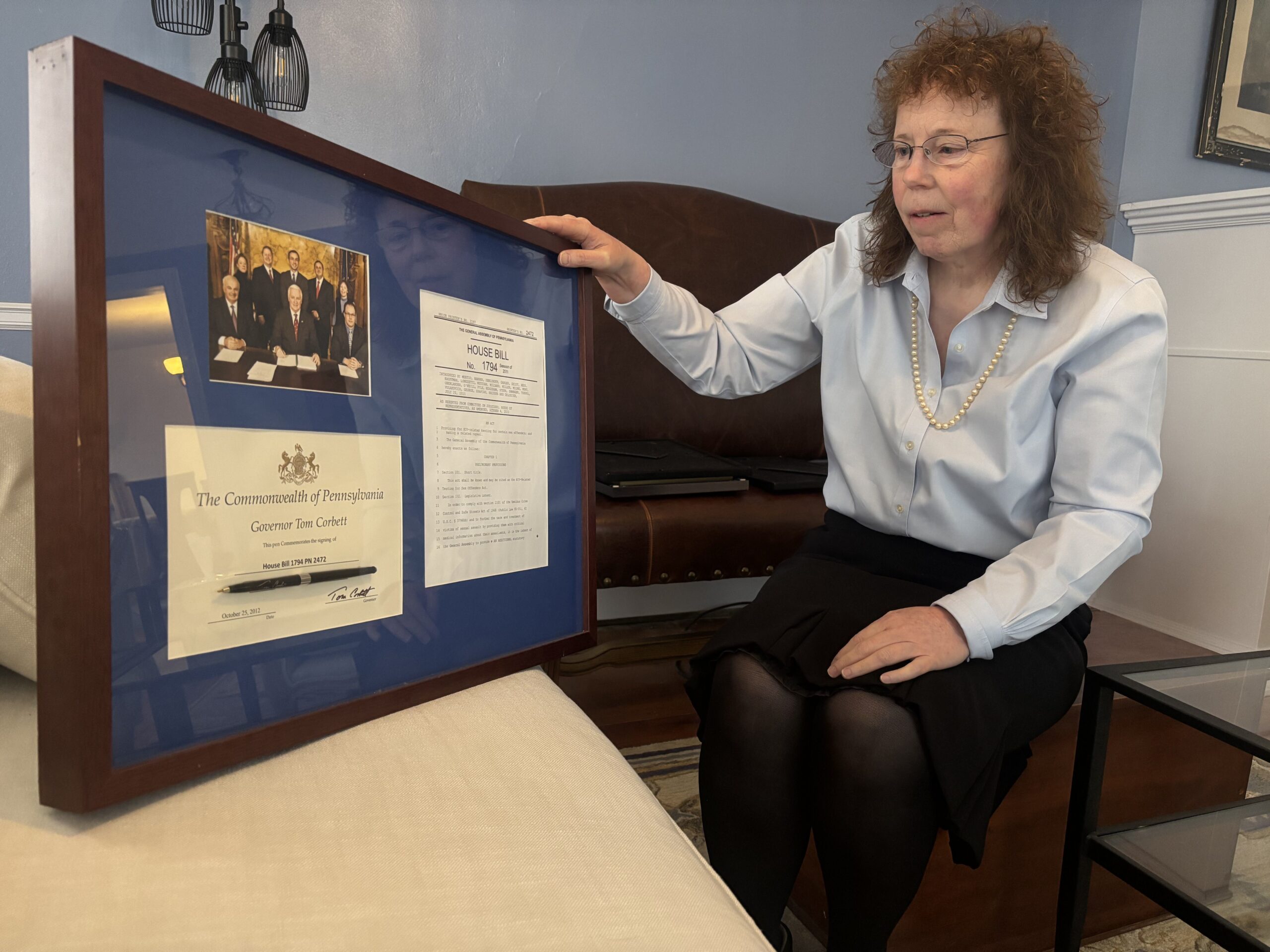
    Karen Dalton, who plans to challenge Scott Perry in the Republican primary, holds materials from a bill she worked on in Harrisburg in her Carlisle home on Monday.

    She supports a $15 federal minimum wage and a millionaire’s tax, and wants to raise the corporate tax rate. She supports abortion rights and believes health care is a human right, though she’s fearful of what she views as over-regulation from Democrats.

    Her walls are covered with Republican political memorabilia and a poster of the late Sen. Robert F. Kennedy, a Democrat who was assassinated during his 1968 presidential campaign.

    She noted that she was a Republican when Donald Trump was a Democrat.

    Her path to victory, she believes, is convincing enough independents and Democrats – particularly former Republicans – to change their registration to support her in the May GOP primary.

    “You know, independents have been upset many years because Pennsylvania has a closed primary system … if they register as Republicans, they get to vote in a primary against Scott Perry and not wait until November,” she said.

    Primary challengers are rarely successful. Dalton reported under $3,000 in contributions – and an approximately $6,000 loan from herself — through September, which is pennies compared to the more than $1 million Perry reported.

    But she only needs to gather 1,000 signatures and pay a $150 filing fee to appear alongside him on the primary ballot.

    Perry’s campaign did not respond to a request for comment about Dalton as of Wednesday.

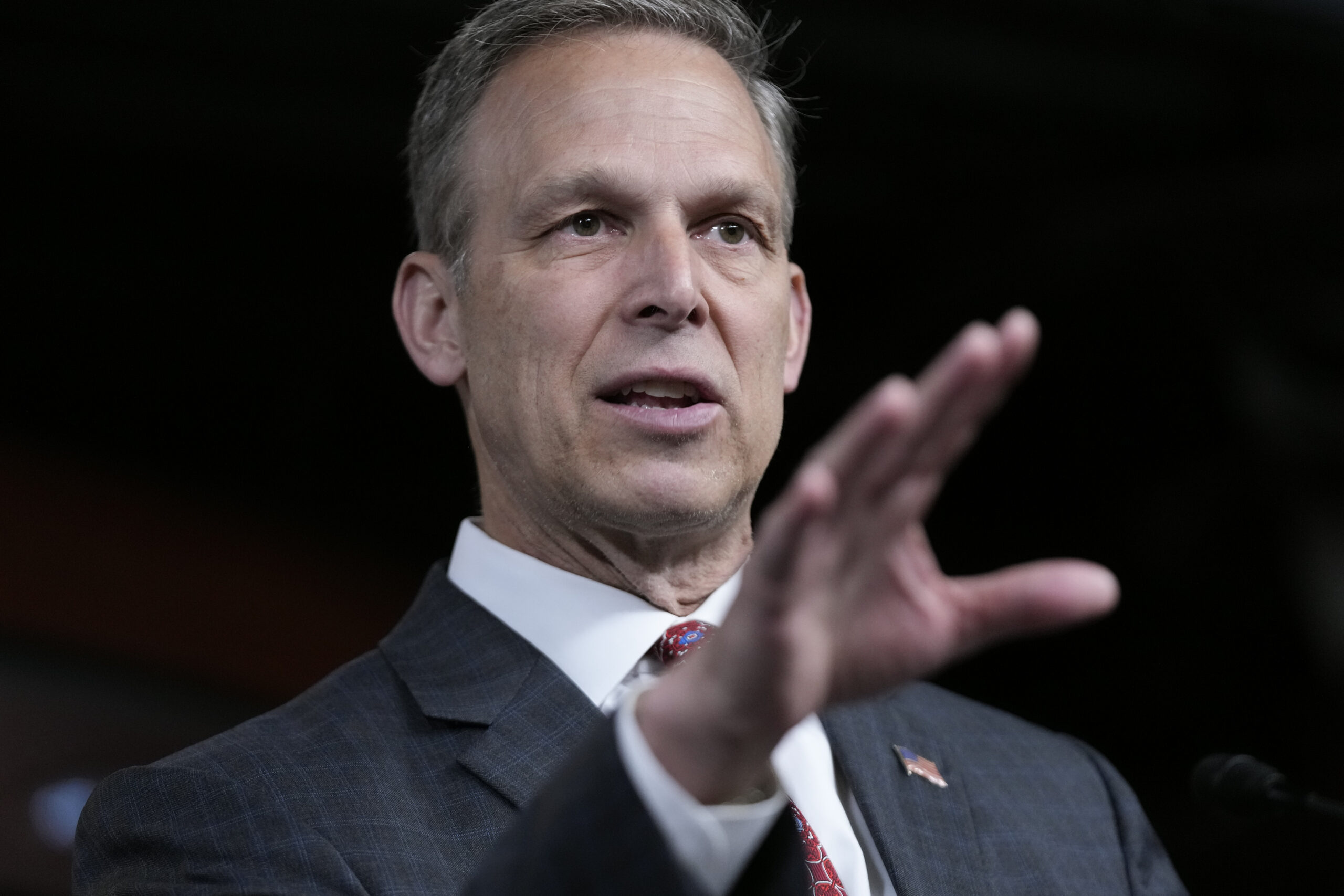
    U.S. Scott Perry speaks during a news conference on Capitol Hill in Washington in July 2023.

    Rosy eyed about the old Republicans

    Dalton grew up in New Jersey and was the first in her immediate family to go to college, attending Montclair State University before getting her politics graduate degree at New York University and later attending law school.

    She lives in Carlisle near Dickinson Law — her “beloved alma mater” — in a home she bought just four years ago at age 61. With student loans hanging over her head for the vast majority of her career, she couldn’t afford a down payment until her state retirement payday.

    She has no kids and she’s never been married — “I spent a lot of time reading and studying and going to school,” she said. These days, she takes piano lessons and plays pickleball, and does pro bono legal work when she’s not knocking on doors for her one-woman campaign.

    Dalton is rosy-eyed about moderates of the Republican Party’s past. She managed former U.S. Rep. Jim Greenwood’s (R., Bucks) successful state Senate campaign in 1986 and worked for New Jersey Republican Gov. Tom Kean, who wrote The Politics of Inclusion. She later worked as a staff attorney for Pennsylvania House Republicans for 25 years, where she focused on domestic violence and child sexual abuse legislation.

    “I’m convinced that if the Republican Party wants to survive and thrive, we need to give up what Donald Trump believes in, and return to our roots,” she said.

    Dalton, whose parents were both Democrats, changed her registration from independent to Republican in 1984 at the age of 24 after her first job working for Ralph J. Salerno’s unsuccessful state Senate campaign in New Jersey. When he lost, “amazingly, nobody took up arms,” she said.

    “I mean, I cried in his lapel, but you know, it’s just like he conceded, and everybody moved on,” she said. “There was no insurrection, there was no battle, there was no violence, there was no ‘Oh, there was voter fraud.’ None of that stuff happened, because that’s the way things used to be before Donald Trump was president.”

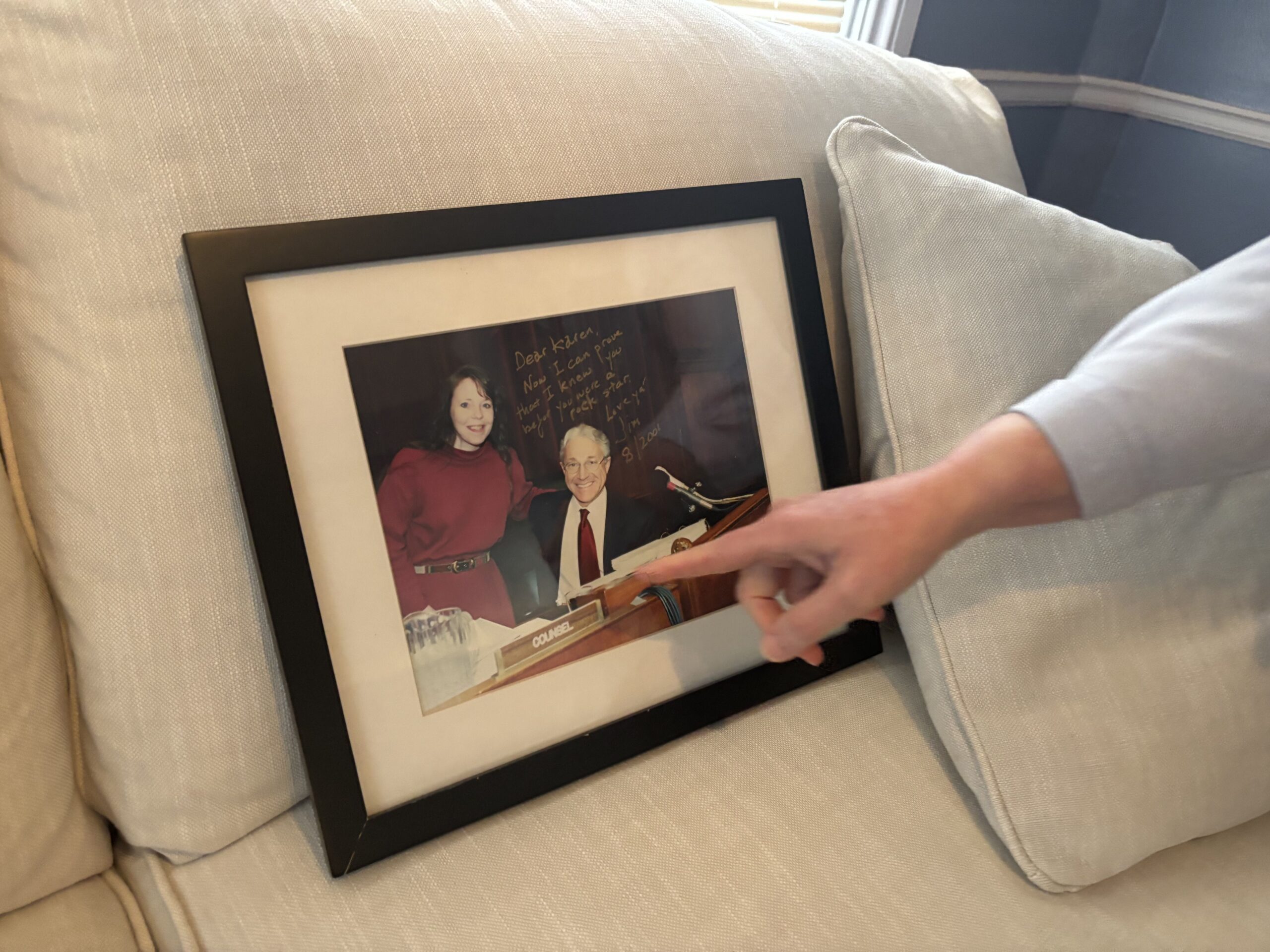
    Karen Dalton points to a photo of herself and her old boss Jim Greenwood in her Carlisle home on Monday. A message from Greenwood says: “Now I can prove that I knew you before you were a rock star.”

    Tired of yelling at the television

    Dalton said she didn’t think she’d become a candidate herself during her years working for politicians. But she said “steam started to come out of my ears” when Trump tried to end birthright citizenship, and again when House Speaker Mike Johnson mused about defunding the federal judiciary.

    “I just couldn’t sit back anymore … I got tired of yelling at the television,” she said.

    While Dalton argued that Trump’s rise in 2015 has soured the Republican Party, much of her criticism concentrated on the Jan. 6, 2021 riot and what followed.

    Dalton worked with Perry in Harrisburg when he was a state representative, and she described him as “an incredibly nice man” despite her misgivings about his efforts to overturn the 2020 election and continued alignment with Trump. (She calls him “morally blind” on her website.)

    When asked if she ever supported Perry, Dalton said she wasn’t comfortable talking about who she voted for in the past because “ballots are private.” She did say that she didn’t vote for Trump in 2024, and she voted for Stelson, Perry’s Democratic challenger.

    “I can tell you that I don’t vote for insurrectionists,” she said.

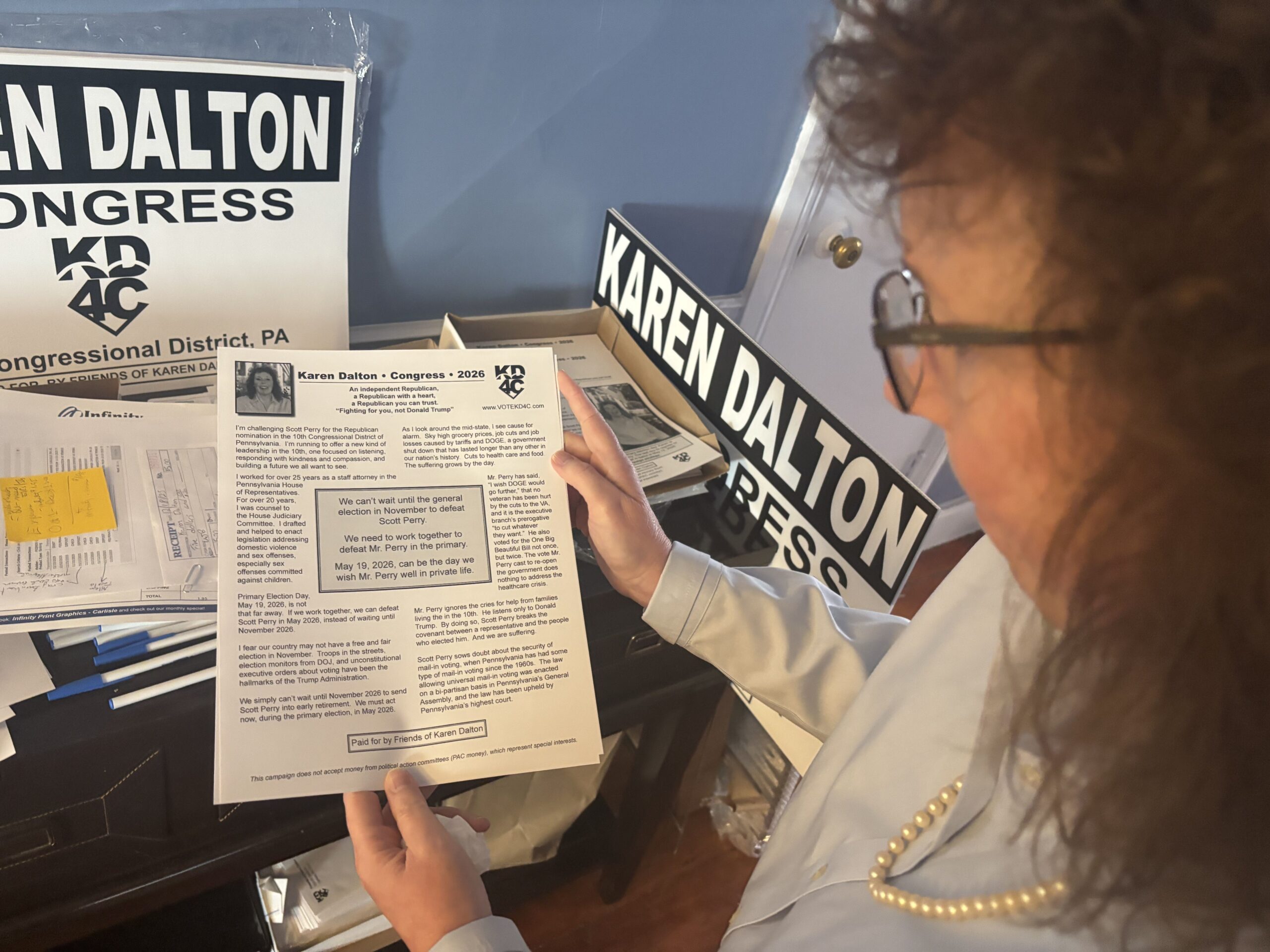
    Karen Dalton, who plans to challenge Scott Perry in the Republican primary, calls a table in her living room her “campaign headquarters.”

    Policy informed by faith

    Dalton was raised Catholic, confirmed Episcopalian, and has attended the Unitarian Universalist Church. Though she hasn’t converted, she now identifies as Jewish, and was moved to tears while talking about a late mentor who introduced her to the religion – noting that speaking about the subject made her “verklempt,” a Yiddish term for emotional.

    “One of the things I love so much about Judaism, in addition to its focus on social justice, is the idea that you get to disagree,” she said, a handful of crumpled tissues in her lap.

    Her faith informs her approach to public policy, from opposing cuts to healthcare subsidies to appreciating ideas across the political spectrum.

    One of her flagship policy proposals is creating a way for people to borrow up to two years worth of their own Social Security benefits before they reach retirement age to help with things like a down payment, tuition, or medical expenses – one that would have helped her buy a home earlier.

    Another is a scholarship program that would allow students in any field to borrow the full amount of their education from the federal government through loans that would be forgiven if they serve “the public good,” a rebuke of Trump’s One Big Beautiful Bill’s borrowing limit on federal student loans.

    She also wants to create a program to pay for the education of students who want to pursue careers in science and guarantee employment at national health or science institutions, including a new foundation for scientific discovery.

    Dalton has brought her neighbors into her home to discuss her ideas, and plans to do it again.

    She also held a town hall at Central Penn College in Enola that she said drew 15 people.

    “That’s 15 more people than Scott Perry looked in the eye and talked to over the past five years at his town halls that didn’t exist,” she said.

  • Gov. Josh Shapiro schedules a book tour as he stands for reelection, and builds his 2028 profile

    Gov. Josh Shapiro schedules a book tour as he stands for reelection, and builds his 2028 profile

    Days before his memoir is set to hit shelves Pennsylvania Gov. Josh Shapiro will kick off his book tour at Philadelphia’s Parkway Central Library on Jan. 24.

    Shapiro will swing through Philadelphia, New York and Washington, D.C., in the final week of January to promote his book Where We Keep the Light: Stories from a Life of Service, according to events posted online.

    The tour and the book, set for release Jan. 27, will fuel speculation about a potential presidential run in 2028 as Shapiro works to expand his national profile as he also seeks reelection in Pennsylvania next year.

    The forthcoming memoir is expected to detail his life and political career, including the attempted arson attack on the governor’s mansion while he, and his family, slept inside earlier this year on Passover.

    Shapiro, who grew up in Montgomery County and first forged his political brand there, has become a leading figure in the national Democratic Party. The memoir will delve into his vetting to serve as Vice President Kamala Harris’ running mate last year, according to the publicized summary.

    In her own memoir, 107 Days, Harris cited Shapiro’s ambition as a reason she ultimately didn’t ask him to be her vice president and instead opted for Minnesota Gov. Tim Walz. Shapiro remained a regular presence on the campaign trail despite the snub, but Harris’ loss in Pennsylvania has caused much scrutiny of her decision.

    The Pennsylvania governor, Harris wrote, would be unable to “settle for a role as number two” and questioned her about whether he could get Pennsylvanian’s artwork in the vice president’s residence.

    In an interview with the Atlantic, Shapiro called the depiction “complete and utter bulls—.”

    Shapiro also features prominently — and negatively —in Sen. John Fetterman’s memoir.

    The Democratic senator, who has publicly feuded with the governor, described the tension between Pennsylvania’s two top Democrats, which traces back to their time together on the Pennsylvania Board of Pardons when Fetterman was lieutenant governor and Shapiro was state attorney general.

    It’s unclear whether Shapiro will discuss his relationship with Fetterman in the memoir.

    Shapiro’s book tour will kick off at a 3 p.m. event at the Parkway Central Library on Jan. 24. He will also speak at the Kauffman Concert Hall in New York on Jan. 27 and Sixth and I, a historic synagogue and Jewish cultural center in Washington, D.C., on Jan. 29.

  • The Trump administration’s immigration raids are testing this sanctuary city

    The Trump administration’s immigration raids are testing this sanctuary city

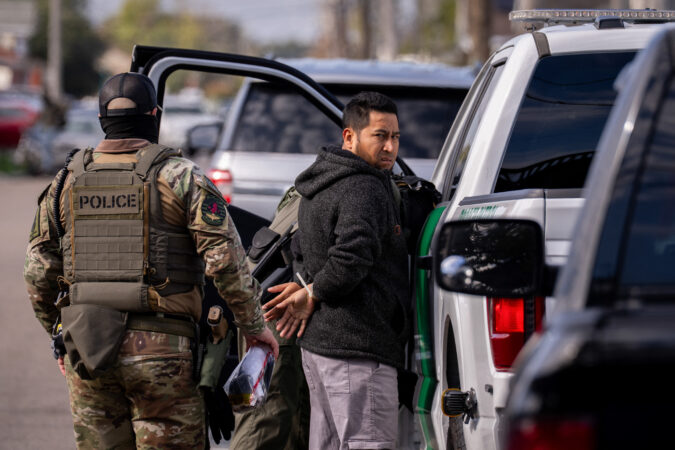
    GRETNA, La. — Siomara Cruz was not troubled when she saw two Latina immigrants handcuffed earlier this month by masked immigration agents outside a restaurant in this New Orleans suburb.

    “They need to do things the proper way,” said Cruz, 59, a housewife whose parents emigrated from Cuba. “The law is the law. Every country has their law, and you’ve got to respect it.”

    Across the street, Tracey Daniels said it was “awful” to see immigration agents in an unmarked SUV detain a Latino man outside the gas station kitchen where she was preparing lunch plates of red beans, rice, and fried catfish.

    “They’re just snatching these people, snatching them away from their families,” said Daniels, 61. “Now they got people afraid to come outside, businesses closing.”

    The immigration operation, dubbed Catahoula Crunch by the Department of Homeland Security, follows similar crackdowns in Chicago, Los Angeles, Charlotte, N.C., and other cities. DHS Assistant Secretary Tricia McLaughlin said in a statement earlier this month that 250 people had been arrested since the start of the operation.

    The mission is exposing stark divides in and around New Orleans that reflect broader national reactions to the administration’s immigration raids — and who should help enforce them.

    Across 10 national polls in November and early December, 43% approve of President Donald Trump’s handling of immigration, while 55% disapprove. The share of people who approve of Trump’s handling of immigration has dropped from about 50% in March. Last week, Illinois Gov. JB Pritzker, a Democrat, signed a law seeking to limit immigration enforcement in his state as he continues challenging the administration’s aggressive campaign there.

    New Orleans is a “sanctuary city,” where officials have historically refused to support federal immigration sweeps. But new state laws designed to penalize those who impede immigration enforcement could put officials and officers at risk if their departments do not cooperate with federal operations.

    And some surrounding police departments, including in Gretna, have signed 287(g) agreements to work with U.S. Immigration and Customs Enforcement to deport people who authorities say entered the country illegally.

    Those agreements have also divided residents. Some said that immigration enforcement should fall exclusively to federal agents — that having local officers partner on the issue risks alienating immigrant communities or violating people’s rights. But police supporting the operations said they get more complaints about crime in their communities than they do about Catahoula Crunch.

    Gretna Deputy Police Chief Jason DiMarco said his 150-person force needs to serve everyone in its diverse community, but added that having so many undocumented residents in the city makes it harder to identify suspected criminals. Last month, he said, local police accompanied ICE agents on a raid that picked up four suspects, including an alleged MS-13 gang member. DiMarco noted that within the last year, Gretna police have investigated several serious crimes committed by undocumented suspects, including one who fled the country after allegedly killing an immigrant who had come to the United States legally.

    Now, because of the 287(g) agreement, officers can coordinate directly with ICE.

    “If they run across an illegal immigrant in their day-to-day patrol activities … they can actually detain the person, check their legal status, and if they aren’t here legally, we can contact ICE and they’ll come and get them,” DiMarco explained of the partnership during an interview at his office earlier this month.

    DiMarco, who is from Gretna, has watched the city of nearly 18,000 grow more diverse, to include a member of his own family who emigrated from Honduras. Like many in the New Orleans area, his family tree includes immigrants from several countries, including France, Italy, and Cuba.

    “New Orleans is the original melting pot of the world,” he said. “… People from every walk of life lived in this city. And they intertwined and managed to live together cohesively.”

    So far, DiMarco said, he hasn’t fielded any complaints about his department’s work with ICE. Even if people don’t agree, he said, officers have a duty to enforce the law, including one signed in June by Gov. Jeff Landry, a Republican, that criminalized “any act intended to hinder, delay, prevent, or otherwise interfere with or thwart federal immigration enforcement efforts.”

    Anyone in violation could face jail time or fines.

    “We don’t get to pick and choose which you can and can’t enforce,” DiMarco said.

    But DiMarco also worries the ongoing raids may make immigrants even more hesitant to report crime.

    “We don’t want somebody to get victimized and get picked on, whether they be illegal or not,” he said. “Nobody deserves to be a victim of a crime.”

    Most Catahoula Crunch activity has been to the west of New Orleans in Jefferson Parish, which includes Gretna and other towns where law enforcement agencies signed 287(g) agreements. In last year’s presidential election, 55% of Jefferson Parish voted for Trump, while 82% of neighboring Orleans Parish voted for Democratic nominee Kamala Harris.

    Kenner, Jefferson Parish’s most populous city, has more than 64,000 residents — about one-third of whom are Latino, according to U.S. Census Bureau data. Police Chief Keith Conley said Kenner partnered with ICE at the request of local business owners, including immigrants.

    “We had members of our community pleading with us to keep our community safe,” Conley said, describing gang activity that he said had its roots in Central American countries that residents of Kenner had fled. “They saw the ways of their home countries coming here. When I have business leaders coming to me, I have to respond.”

    Conley said his city has experienced “some pretty heinous crimes” in recent years, including murder and child sexual assaults.

    “And we weren’t getting much cooperation” from federal officials, he said. “It was a failure at the top.”

    Landry requested a National Guard deployment to New Orleans in September, citing an alleged increase in violent crime, even though police and city leaders say crime has decreased and federal support is not needed. The city’s homicide rate is nearly the lowest in 50 years. Violent crimes — including murders, rapes, and robberies — have all decreased 12% through October compared with a year ago, according to New Orleans police.

    Conley and some Jefferson Parish residents, however, said they are grateful the Trump administration has sent federal agents into their region. Outside a Lowe’s hardware store in neighboring Metairie, where immigration agents were spotted this month, Howard Jones, 71, said he was supportive of local law enforcement agencies joining the operation.

    “I’m all for people being deported who are not here legally,” said Jones, a retired data warehouse analytics consultant and self-described moderate conservative who voted for Trump the last three presidential elections.

    But Gloria Rodriguez, 38, a Mexican immigrant who works in construction, said she did not like seeing local police involved. Though she is a legal permanent resident and her husband and 18-year-old son who were in the truck with her are U.S. citizens, they carried their passports and immigration paperwork in case they were stopped by federal agents.

    “They should not cooperate with immigration, just do their job and get criminals out of the streets instead of hardworking people,” Rodriguez said, adding that she has been troubled by reports of U.S. citizens being caught up in the immigration crackdown.

    “What if they take us?” she said.

    Unlike their counterparts in Gretna, Kenner, and other cities with 287(g) agreements, New Orleans officials have resisted cooperating with the Trump administration’s efforts.

    New Orleans police adopted a policy that prohibits officers from assisting federal immigration enforcement except under certain circumstances, such as a threat to public safety. The policy resulted from a 2013 federal consent decree to address a history of unconstitutional practices, including racial profiling. Last month, a federal judge ended the consent decree, but Police Superintendent Anne Kirkpatrick said last month that immigration remained a civil issue, adding that police would not enforce civil laws but instead ensure that immigrants “are not going to get hurt and our community is not in danger.”

    Louisiana Attorney General Liz Murrill, a Republican, has since encouraged Kirkpatrick to have officers “fully cooperate” with federal immigration officials.

    Murrill warned that New Orleans police policies “appear to conflict with current state law,” referencing this year’s statute that says thwarting federal immigration efforts could be considered obstruction of justice.

    Kirkpatrick did not respond to a request for comment, but a department spokesperson said in a statement this month that “NOPD is not involved in, informed of, or responsible for any enforcement activity conducted by ICE, DHS, or U.S. Border Patrol.”

    The police department’s role, the statement added, “is to enforce state and municipal criminal laws. We do not handle or participate in federal immigration enforcement.”

    Murrill is also embroiled in a legal battle with the Orleans Parish Sheriff’s Office, which operates city jails under a federal consent decree and has refused to cooperate with ICE.

    Chief Border Patrol Agent Gregory Bovino has appeared in the French Quarter of New Orleans, Kenner, and other areas with agents, where he has been met with protests and signs of support. Anti-ICE protesters confronted Bovino and temporarily shut down a New Orleans City Council meeting this month, but other residents posed for photos with Bovino while holding a homemade sign that read: “Thank you ICE.”

    New Orleans Mayor-elect Helena Moreno is already pressing federal officials to prove they are targeting only immigrants with violent criminal histories. Moreno, a Democrat who will be the city’s first Latina mayor, will not take office until Jan. 12. But she said she is concerned Catahoula Crunch is creating a “culture of fear” and forcing businesses to close and workers to stay home. She created a website advising residents of their rights, and the city council launched an online portal where they can report alleged abuse by federal officers.

    Some New Orleans business owners posted “ICE Keep Out” signs this month, while others said they worried that doing so could make them targets. Antoine’s Restaurant in the French Quarter held meetings with employees — all documented — to address their fears after seeing reports of masked immigration agents conducting raids in armored vehicles.

    “It’s giving a lot of people anxiety, including our employees,” said Lisa Blount, whose family owns the restaurant, as she stood near the packed bar. “We are in a busy season, an important, celebratory time in New Orleans. We’re not going to let them bully their way in.”

    A few streets away, Dominican immigrant Diomedes Beñalo was unloading gold chairs for a wedding and said he wished local police would do more to protect residents’ rights. He questioned why federal agents are hiding their faces.

    “That seems like a thing that can make them violate people’s rights,” said Beñalo, 40, adding that undocumented immigrants’ civil rights should not be violated.

    “The police should make sure that doesn’t happen,” he said. “That’s what we pay police to do.”

  • WTF? Embracing profanity is one thing both political parties seem to agree on

    WTF? Embracing profanity is one thing both political parties seem to agree on

    WASHINGTON — As he shook President Barack Obama’s hand and pulled him in for what he thought was a private aside, Vice President Joe Biden delivered an explicit message: “This is a big f— deal.” The remark, overheard on live microphones at a 2010 ceremony for the Affordable Care Act, caused a sensation because open profanity from a national leader was unusual at the time.

    More than 15 years later, vulgarity is now in vogue.

    During a political rally Tuesday night in Pennsylvania that was intended to focus on tackling inflation, President Donald Trump used profanity at least four times. At one point, he even admitted to disparaging Haiti and African nations as “shithole countries” during a private 2018 meeting, a comment he denied at the time. And before a bank of cameras during a lengthy cabinet meeting last week, the Republican president referred to alleged drug smugglers as “sons of bitches.”

    While the Biden incident was accidental, the frequency, sharpness, and public nature of Trump’s comments are intentional. They build on his project to combat what he sees as pervasive political correctness. Leaders in both parties are seemingly in a race now to the verbal gutter.

    Vice President JD Vance called a podcast host a “dips—” in September. In Thanksgiving remarks before troops, Vance joked that anyone who said they liked turkey was “full of s—.” After one National Guard member was killed in a shooting in Washington last month and a second was critically injured, top Trump aide Steven Cheung told a reporter on social media to “shut the f— up” when she wrote that the deployment of troops in the nation’s capital was “for political show.”

    Among Democrats, former Vice President Kamala Harris earned a roar of approval from her audience in September when she condemned the Trump administration by saying “these motherf— are crazy.” After Trump called for the execution of several Democratic members of Congress last month, Sen. Chris Murphy (D., Conn.) said it was time for people with influence to “pick a f— side.” Senate Democratic leader Chuck Schumer of New York said the administration cannot “f— around” with the release of the Jeffrey Epstein files. Democratic Rep. Jasmine Crockett, who on Monday announced her Senate campaign in Texas, did not hold back earlier this year when asked what she would tell Elon Musk if given the chance: “F— off.”

    The volley of vulgarities underscore an ever-coarsening political environment that often plays out on social media or other digital platforms where the posts or video clips that evoke the strongest emotions are rewarded with the most engagement.

    “If you want to be angry at someone, be angry at the social media companies,” Utah Gov. Spencer Cox, a Republican, said Tuesday night at Washington National Cathedral, where he spoke at an event focused on political civility. “It’s not a fair fight. They’ve hijacked our brains. They understand these dopamine hits. Outrage sells.”

    Cox, whose national profile rose after calling for civility in the wake of conservative activist Charlie Kirk’s assassination in his state, approved an overhaul of social media laws meant to protect children. A federal judge has temporarily blocked the state law.

    Tough political talk is nothing new

    Tough talk is nothing new in politics, but leaders long avoided flaunting it.

    Recordings from Democrat Lyndon B. Johnson’s administration, for instance, revealed a crude, profane side of his personality that was largely kept private. Republican Richard Nixon bemoaned the fact that the foul language he used in the Oval Office was captured on tape. “Since neither I nor most other Presidents had ever used profanity in public, millions were shocked,” Nixon wrote in his book In the Arena.

    “Politicians have always sworn, just behind closed doors,” said Benjamin Bergen, a professor at the University of California-San Diego’s Department of Cognitive Science and the author of What the F: What swearing reveals about our language, our brains, and ourselves. “The big change is in the past 10 years or so, it’s been much more public.”

    As both parties prepare for the 2026 midterm elections and the 2028 presidential campaign, the question is whether this language will become increasingly mainstream. Republicans who simply try to imitate Trump’s brash style do not always succeed with voters. Democrats who turn to vulgarities risk appearing inauthentic if their words feel forced.

    For some, it is just a distraction.

    “It’s not necessary,” said GOP Rep. Don Bacon of Nebraska, who is retiring next year after winning five elections in one of the most competitive House districts. “If that’s what it takes to get your point across, you’re not a good communicator.”

    There are risks of overusing profanity

    There also is a risk that if such language becomes overused, its utility as a way to shock and connect with audiences could be dulled. Comedian Jerry Seinfeld has talked about this problem, noting that he used swear words in his early routines but dropped them as his career progressed because he felt profanity yielded only cheap laughs.

    “I felt like well I just got a laugh because I said f— in there,” he said in a 2020 interview on the WTF podcast with fellow comedian Marc Maron. “You didn’t find the gold.”

    White House spokesperson Liz Huston said Trump “doesn’t care about being politically correct, he cares about making America great again. The American people love how authentic, transparent, and effective the President is.”

    But for Trump, the words that have generated the most controversy are often less centered in traditional profanity than slurs that can be interpreted as hurtful. The final weeks of his 2016 campaign were rocked when a tape emerged of him discussing grabbing women by their genitals, language he minimized as “locker room talk.” His “shithole” remark in 2018 was widely condemned as racist.

    More recently, Trump called Bloomberg reporter Catherine Lucey “piggy,” comments that his press secretary, Karoline Leavitt, defended as evidence of a president who is “very frank and honest.” Trump’s use of a slur about disabled people prompted an Indiana Republican whose child has Down syndrome to come out in opposition to the president’s push to redraw the state’s congressional districts.

    On rare occasions, politicians express contrition for their choice of words. In an interview with The Atlantic published last week, Pennsylvania Gov. Josh Shapiro, a Democrat, dismissed Harris’ depiction of him in her book about last year’s presidential campaign by saying she was “trying to sell books and cover her a—.”

    He seemed to catch himself quickly.

    “I shouldn’t say ‘cover her a—,” he said. “I think that’s not appropriate.”

  • Trump came to a Pa. casino to promise prosperity. Gamblers here had a mixed view of the economy.

    Trump came to a Pa. casino to promise prosperity. Gamblers here had a mixed view of the economy.

    A smattering of people pushed their luck Tuesday at the Mount Airy Casino Resort, tapping neon slot buttons, flipping dice onto felt craps tables, and wandering the rows of glowing, dinging machines.

    A floor below, President Donald Trump was set to speak in a sprawling ballroom, where event staff hung a huge blue banner: LOWER PRICES, BIGGER PAYCHECKS.

    Trump picked this casino in the Pocono Mountains to deliver the first big economic speech of his presidency as polls show Americans are feeling the pain of high prices — and many are blaming him.

    Politically, the setting made sense. This northeastern corner of the state is where Trump saw the largest swing from 2020 to 2024, and it will be a key congressional battleground next year. It’s also a region home to a large population of aging, non-college-educated voters — the core of Trump’s comeback coalition.

    But the contrast at the casino was hard to miss: the steady slot machine chimes of financial risk and uncertainty above and a president’s promises of stability and revival on the floor below.

    How’s the economy working for Rosemary Migli?

    “It could be better,” said the 73-year-old retired bartender from Tobyhanna, taking a puff of a cigarette before winning 35 cents on a spin.

    Despite a frenzy of police and Secret Service, many gamblers, focused on their own troubles or celebrations, did not realize the president was coming. An older retired couple enjoyed an afternoon together with no obligations. Nearby, a recently widowed woman said the monotony of the slots helps her cope with her loss.

    Peter Jean-Baptiste celebrated his 33rd birthday at the casino with his fiancee. The Philadelphia-based couple are saving for a wedding next year.

    “It’s tough for everyone just trying to make a living, honest people trying to make a living,” Jean-Baptiste said. “One day you feel like [Trump’s] got your back, the next day he doesn’t.”

    Jean-Baptiste, who works in property insurance, said he has also seen housing prices rise. And, as a child of Haitian immigrant parents, he is struggling with how Trump’s anti-Haitian verbal attacks and immigration crackdowns have affected his family.

    “He does a bunch of hot takes and causes division between American citizens,” Jean-Baptiste said. “When, I feel, we really all just want to get along and get by.”

    Mount Pocono is a region with mixed fortunes: Wealthy retirees have second vacation homes here, while lower-income workers are employed in warehouses and hold up the tourism industry. The area is also a hub for New York City commuters who moved here for more affordable housing.

    “We live on a fixed income. We watch what we spend,” said Julie Dietz, sitting beside her husband, Glenn, as she played a buffalo-themed slot game. The Toms River, N.J., couple gamble for a few hours every now and then. She was a paralegal and he worked evaluating industrial facilities for safety before they retired.

    “We know what our limitations are,” Dietz, 71, said. “Yes, food prices have gone up, but I’ve also seen some things come down — gas prices in our area. And the economy took so many years to get to this point.”

    Dietz, who supported Trump in the last election, thinks an economic rebound is just going to take more time.

    “He’s been in office 11 months. Eleven months. So I feel full confidence that he is going to do what he said he’s going to do. Everybody wants things immediately.”

    Kathy F., who didn’t want to give her last name talking about politics and gambling, joined her husband at the casino Tuesday, despite her misgivings about losing money at a time when prices are going up.

    “I go to Costco and everything is $5 more than it used to be. That’s a lot,” she said, bundled in a puffy black coat as her husband gambled nearby.

    “I really don’t understand politics,” said the retired New York City civil servant, who voted for then-Vice President Kamala Harris last year. “It seems like they just fight with each other nonstop when all people want is to be able to afford to live.”

    As he stretched his legs between games, Stephen Miller — “not that Stephen Miller,” he clarified — laughed off the notion of going to see Trump in person a floor below.

    “If I want to see him, all I have to do is turn on the TV. He’s on at 12, he’s on at 3, he’s on at 5, seven days a week.”

    The 75-year-old retired contractor supports Trump, though, and called the economy “half-decent.” He said food prices are high but eggs have gone down.

    “The economy is glacial, so it moves slow. Democrats are definitely locked onto the affordability. But affordability means, what? It means whatever you want it to mean.”

    Miller glanced down at a few vouchers in his hand to set off for the next set of machines.

    “I’m not winning yet, but I will be and the Donald will be,” he said. “Give it time.”

  • All the Golden Globe Awards nominees with ties to the Philly region

    All the Golden Globe Awards nominees with ties to the Philly region

    Pennsylvanians know how to bring home a trophy, from the reigning Super Bowl champions to Philly natives awarded an Oscar.

    The Golden Globe Awards on Monday announced its nominees for the best in television and movies, and with it, another chance for victory for regional productions and local actors.

    The ceremony airs Jan. 11 with awards given in 28 categories.

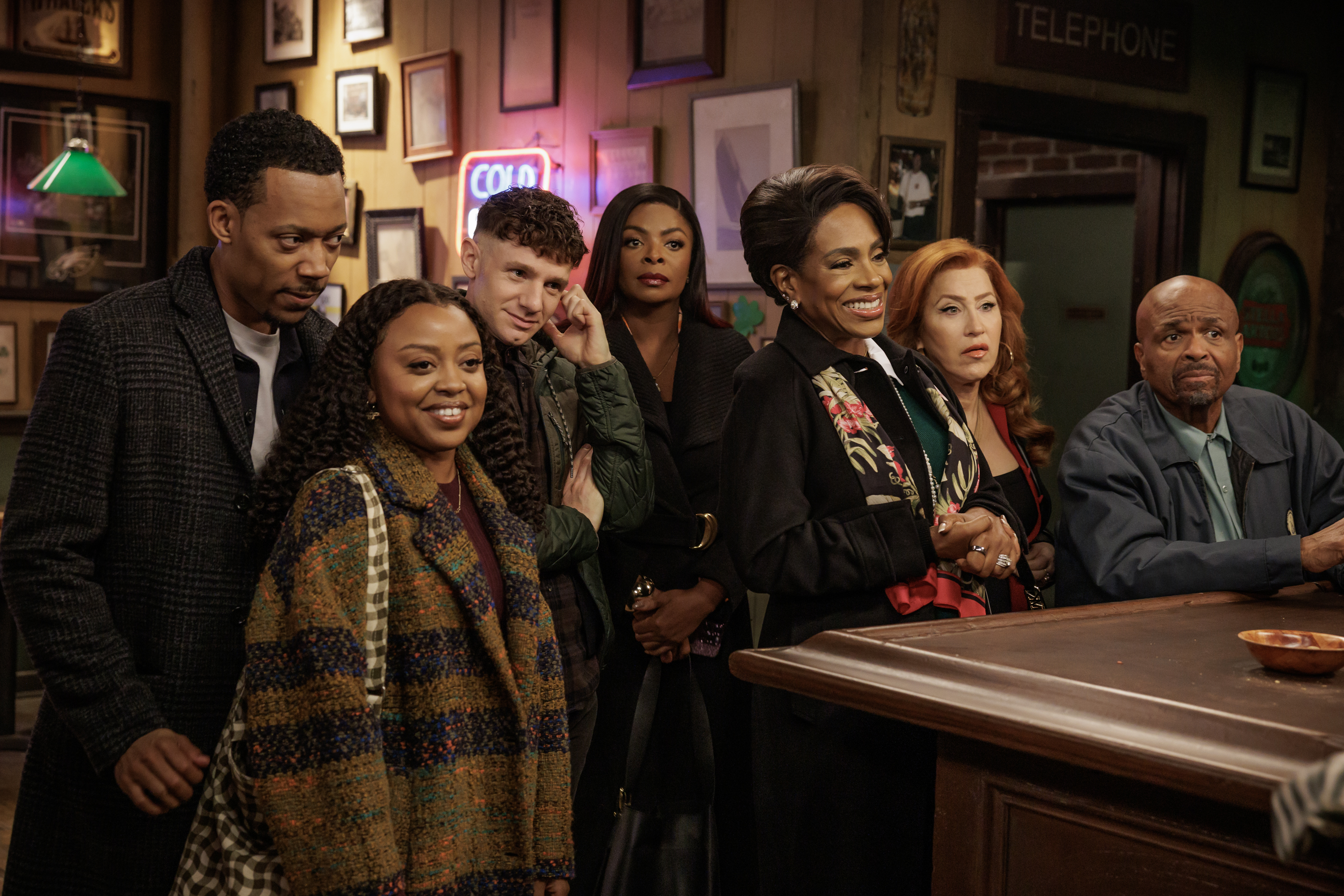
    The Abbott Elementary crew visits the Always Sunny gang at Paddy’s Pub in the “It’s Always Sunny in Philadelphia” and “Abbott Elementary” crossover.

    In its fifth season, Abbott Elementary has already won the hearts of Philadelphians and three Golden Globes. Still, this wholesome band of teachers, starring Philly-native Quinta Brunson, is up again for best musical or comedy television series.

    HBO’s Task and Peacock’s Long Bright River, two crime thrillers set in Philadelphia neighborhoods and suburbs, both have leading actors nominated for Golden Globes this season.

    Mark Ruffalo as Tom, Alison Oliver as Lizzie, Thuso Mbedu as Aleah, and Fabien Frankel as Anthony in “Task.”

    In Task, Mark Ruffalo plays an FBI investigator hunting down thieves targeting drug houses in Delco. While Ruffalo may not know the definition of “jawn” in real life, his portrayal of a tortured former priest turned agent resonated with critics and earned a nomination for best male actor in a dramatic television series. The Inquirer compiled a list of the real-life locations used in the show.

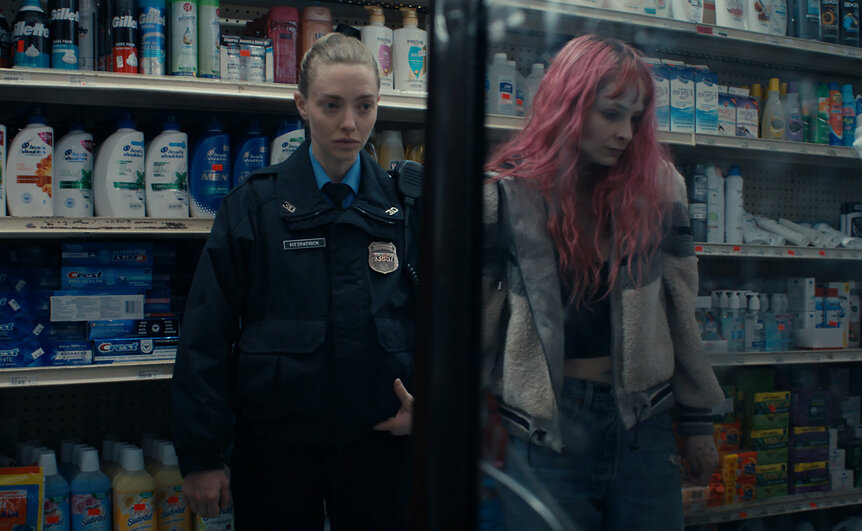
    Amanda Seyfried (left) and Asleigh Cummings in the Kensington-set Peacock series “Long Bright River,” based on the novel of the same name by Temple professor and novelist Liz Moore.

    Liz Moore’s crime novel Long Bright River turned heads when it was released in 2020, detailing the harrowing story of a Kensington police officer, played in the series by Amanda Seyfried, searching for her sister in a cat-and-mouse chase with a killer targeting sex workers. While the television adaptation was filmed in New York City, the bulk of the show takes place in Kensington and other Philadelphia neighborhoods, with Seyfried grabbing a nomination for best female performance in a dramatic limited series.

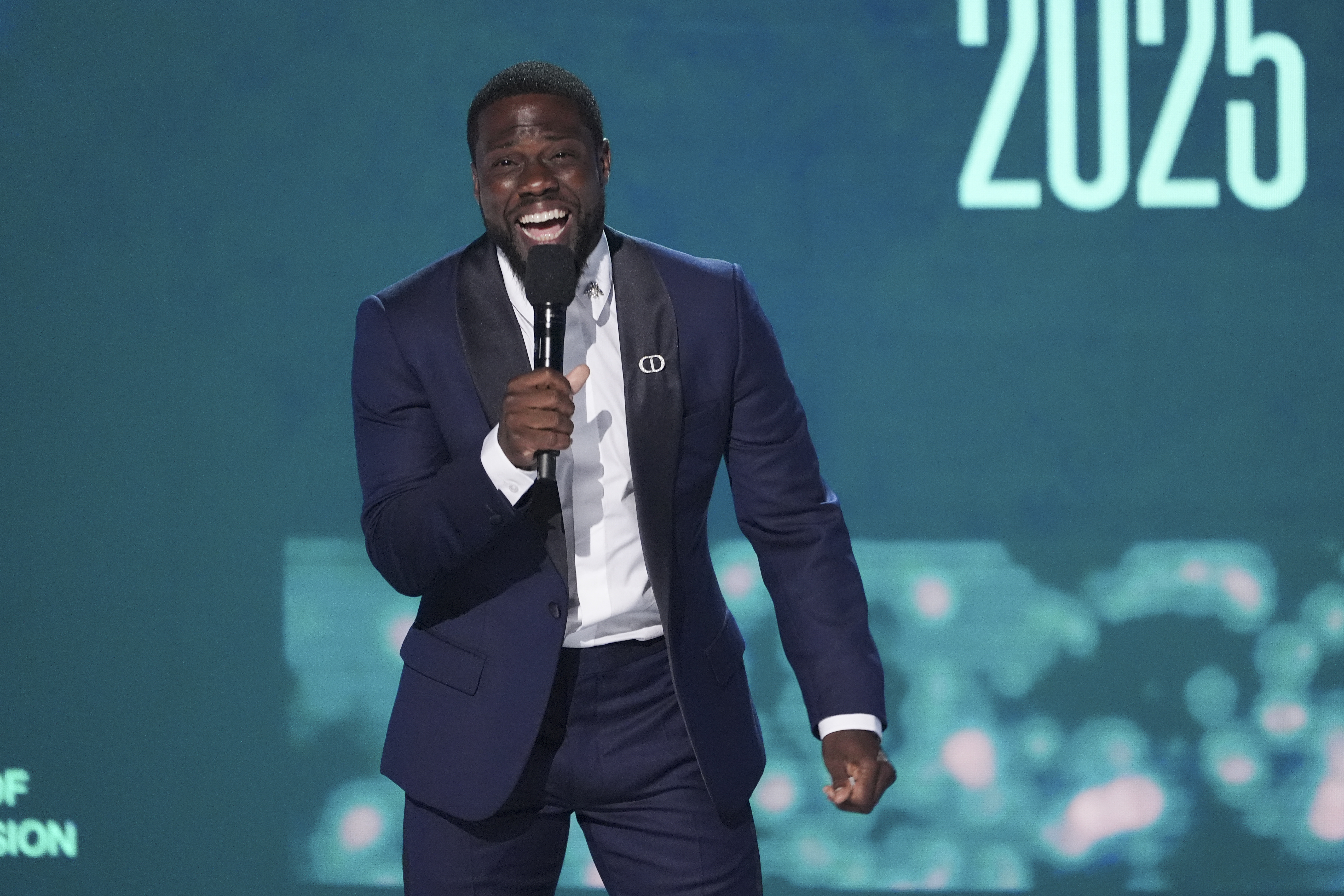
    Hometown stand-up icon Kevin Hart was back to his roots with a new comedy special, Kevin Hart: Acting My Age, tackling injuries after 40, Chick-fil-A’s spicy chicken sandwich consequences, and slipping in the shower. He earned a nomination for best stand-up comedy performance on television.

    Host Kevin Hart speaks during the BET Awards on Monday, June 9, 2025, at the Peacock Theater in Los Angeles.

    The Golden Globes are introducing a new best podcast category this year, for which Bucks County native Alex Cooper is nominated for her sex-positive show, Call Her Daddy. Alongside celebrity guests like Gwyneth Paltrow, Miley Cyrus, and Kamala Harris, Cooper delves into the taboo of female pleasure and pop culture. She grew the show’s popularity into a $60 million Spotify deal in 2021.

    And through a few degrees of separation, several other nominees can be claimed as Philly-adjacent.

    Hannah Einbinder, whose father is from Doylestown, accepts the award for outstanding supporting actress in a comedy series for “Hacks” during the 77th Primetime Emmy Awards on Sunday, Sept. 14, 2025, at the Peacock Theater in Los Angeles. (AP Photo/Chris Pizzello)

    Take Hacks actress Hannah Einbinder, who shouted “Go Birds!” during her speech after winning an Emmy for best supporting actress in a comedy series, and was filmed by the evening news crying in the streets of Los Angeles after the Eagles’ 2018 Super Bowl win.

    She may not be from Philadelphia (her father, actor Chad Einbinder, is from Doylestown), but she reps the city. HBO’s Hacks, which follows a veteran Las Vegas comic mentoring a young comedy writer, is up for best musical or comedy television series, with Einbinder and costar Jean Smart nominated for best supporting female actor and best actor in a musical or comedy series, respectively.

    And there are some broader Pennsylvania and New Jersey ties among the nominees.

    The breakout medical drama The Pitt, which takes place in the fictional Pittsburgh Trauma Center, depicts a 15-hour shift in an emergency room, split across 15 one-hour episodes. The Pitt’s lead actor, Noah Wyle (known for his role as Dr. John Carter in NBC’s ER), is up against Ruffalo for best male actor in a dramatic television series.

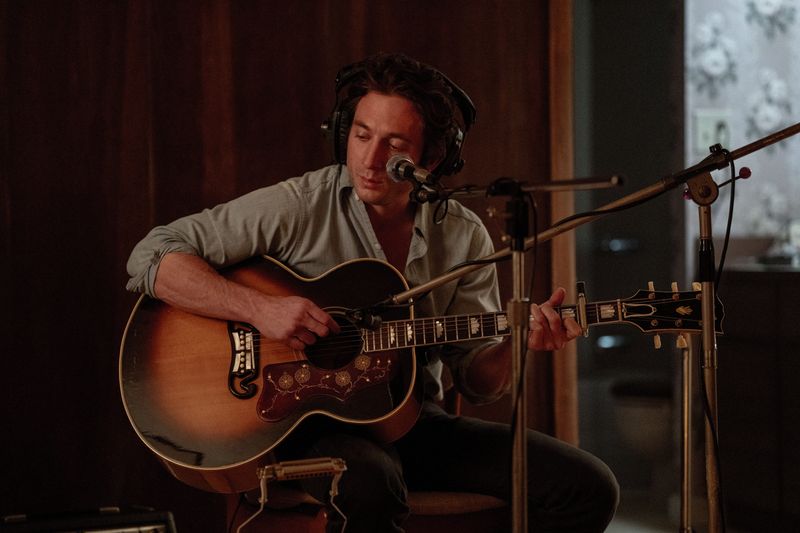
    Jeremy Allen White as Bruce Springsteen.

    Jeremy Allen White stars in the latest Bruce Springsteen biopic, Springsteen: Deliver Me From Nowhere, and is nominated for best actor in a dramatic film. The production was almost entirely filmed around New Jersey — at the request of The Boss — including in Cape May and other parts of South Jersey.

    After a major overhaul of the award show in recent years, including the sunsetting of the Hollywood Foreign Press Association due to ethics and diversity concerns, the new Golden Globe Awards are judged by a panel of 400 journalists from across the world.

    The Golden Globes will be broadcast live on Jan. 11 at 8 p.m. Philadelphia time on CBS and streaming on Paramount+.