Tag: Kensington

  • Philly violence prevention groups say they were flourishing. Then the Trump DOJ cut their funding.

    Philly violence prevention groups say they were flourishing. Then the Trump DOJ cut their funding.

    In Kensington, a program to mitigate street violence was hitting its stride.

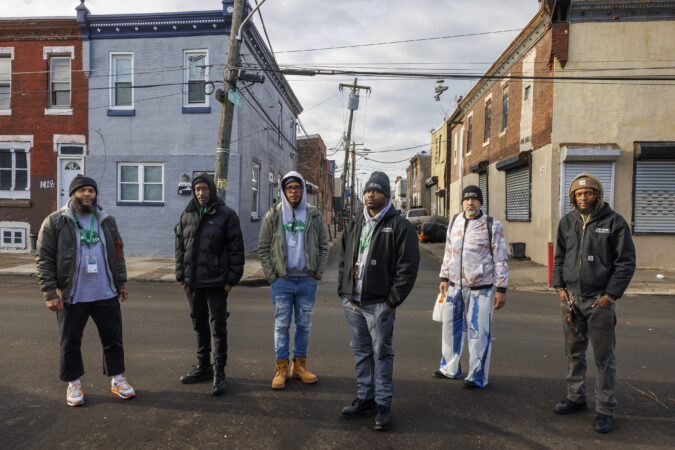
    After joining the New Kensington Community Development Corporation in 2023, outreach coordinators with Cure Violence began responding to shootings in the neighborhood, connecting folks with mental health services and other wellness resources.

    They hosted men’s therapy groups, safe spaces to open up about the experience of poverty and trauma, and organized a recreational basketball league at residents’ request. Their team of violence interrupters even intervened in an argument that they said could have led to a shooting.

    Cure Violence Kensington was funded by a $1.5 million federal grant from the Department of Justice, part of a Biden-era initiative to combat the nation’s gun violence epidemic by awarding funds to community-based anti-violence programs rather than law enforcement agencies.

    One year after a political shift in Washington, however, federal grants that Philadelphia’s anti-violence nonprofits say allowed them to flourish are disappearing.

    In the spring, New Kensington CDC received a letter from the Justice Department, saying that under the leadership of Attorney General Pam Bondi it had terminated the grant that would have funded Cure Violence for the next three years.

    The work, the letter said, “no longer effectuates the program goals or agency priorities.” In the future, it said, the department would offer such grants exclusively to local law enforcement efforts.

    “It was a heavy hit,” said Bill McKinney, the nonprofit’s executive director.

    The cuts come amid a Trump administration crackdown on nonprofits and other organizations it views as either wasteful or focused on diversity and DEI.

    It spent 2025 slashing funds for programs that supplied aid abroad, conducted scientific research, and monitored climate change. At the Justice Department, cuts came for groups like McKinney’s, which aim to target the root causes of violence by offering mental health services, job programs, conflict mediation, and other alternatives to traditional policing.

    In Philadelphia, organizations like the Antiviolence Partnership of Philadelphia and the E.M.I.R. Healing Center say they, too, lost federal funding last year and expect to see further reductions in 2026 as they scramble to cover shortfalls.

    A Justice Department spokesperson said changes to the grant program reflect the office’s commitment to law enforcement and victims of crime, and that they would ensure an “efficient use of taxpayer dollars.”

    “The Department has full faith that local law enforcement can effectively utilize these resources to restore public safety in cities across America,” the spokesperson said in an email.

    Nonprofits may appeal the decisions, the spokesperson said, and New Kensington CDC has done so.
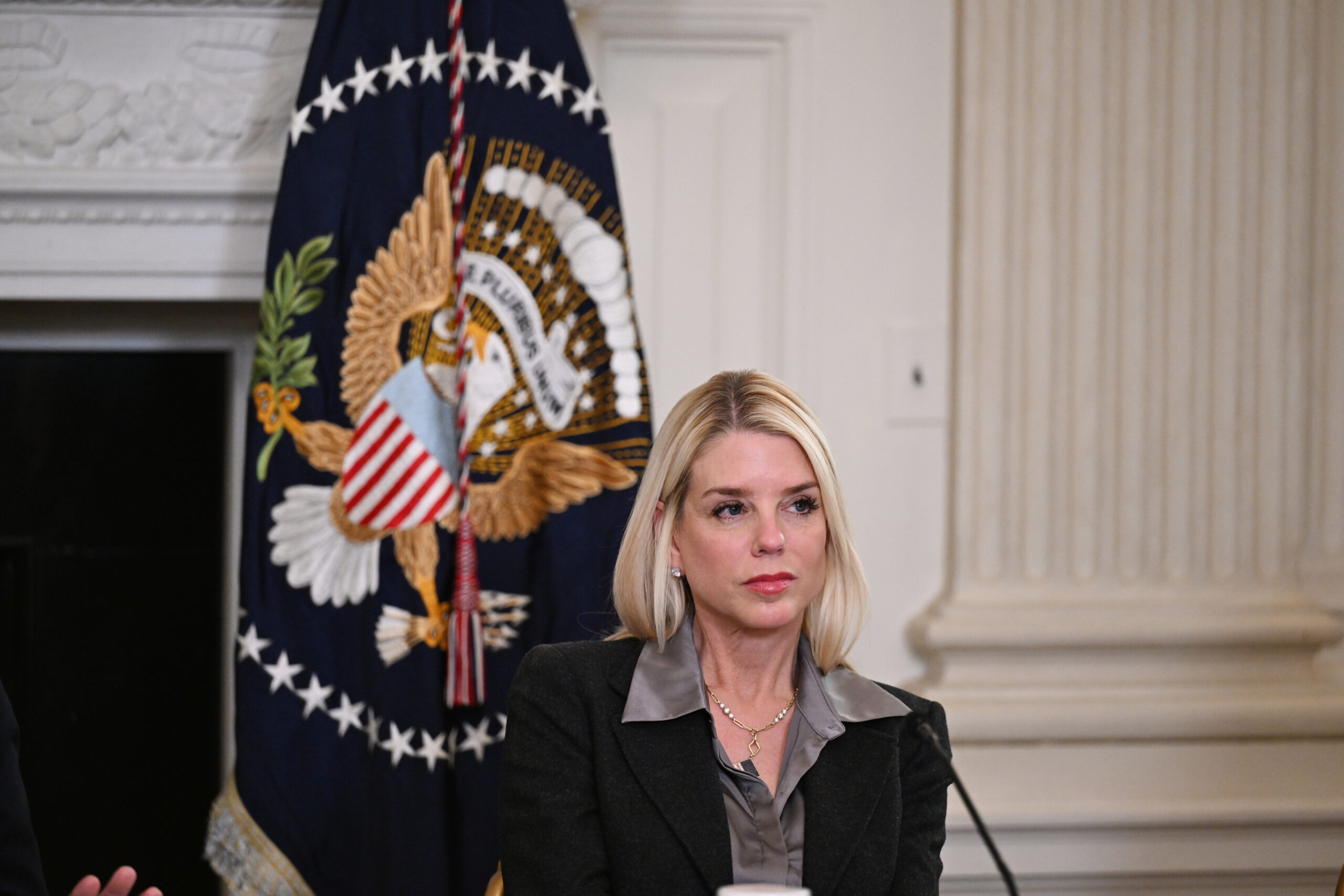
    Attorney General Pam Bondi takes part in an event at the White House on Oct. 23.

    Philadelphia city officials, for their part, say they remain committed to anti-violence programs, in which they have invested tens of millions of dollars in recent years.

    “There are always going to be things that happen externally that we have no control over as a city,” said Adam Geer, director of the Office of Public Safety.

    The reversal in federal support comes at a time when officials like Geer say the efforts of anti-violence programs are beginning to show results.

    Violent crime in Philadelphia fell to historic lows in 2025, a welcome relief after the sharp upturn in shootings and homicides that befell the city at the height of the pandemic.

    A variety of factors have contributed, from shifting policing tactics in Kensington to investigators solving homicides at record rates, putting more violent offenders behind bars. But advocates say local, state, and federal investments in anti-violence programs have played a significant role.

    In 2021, the city announced a large-scale campaign to combat gun violence that, in the past year, included nearly $24 million for anti-violence programs.

    That was on top of the Biden administration’s Community Based Violence Intervention and Prevention Initiative. Since launching in 2022, the DOJ program awarded more than $300 million to more than 120 anti-violence organizations nationwide.

    In April, many of those groups, including New Kensington CDC, lost funds. And in September, a larger swath learned they were now barred from applying for other Justice Department grants that would have arrived this spring.

    “We’ve seen enormous dividends” from the work of such groups, said Adam Garber, executive director of CeaseFirePA, a leading gun violence prevention group in the state. “Pulling back now puts that progress at risk — and puts lives on the line.”

    Philadelphia feels the squeeze

    Federal grants helped Natasha McGlynn’s nonprofit thrive.

    McGlynn, executive director of the Antiviolence Partnership of Philadelphia, said a DOJ grant called STOP School Violence allowed her organization to launch a counseling program for young people who had been victims of violence or otherwise exposed to it in some of the city’s most violent neighborhoods.

    The nonprofit used the grant to hire therapists to help students develop healthier attitudes around conflict and trauma, she said.

    The $997,000 grant was cut in April, and when McGlynn went to apply for another round of funding in the fall, she learned that nonprofits were no longer eligible. The lost funding means some services, like counseling, could now be eliminated, she said.

    “I would say several positions are in question,” McGlynn said. “I would say the program is in question.”

    Chantay Love, the director of Every Murder is Real, said her Germantown-based victim services nonprofit also lost Justice Department funding in 2025.

    Federal grants are not the nonprofit’s only source of income, Love said, but she along with other nonprofit leaders in the city are considering whether they’ll need to cut back on programs this year.

    Record-setting investment

    The decade before the pandemic saw gun-related deaths in the state climb steadily, spiking during the lockdown as social isolation, school closures, shuttered community services, and higher levels of stress contributed to a spate of gun homicides and shootings that began to ease only in 2024.

    Two years earlier, the state began dispersing more than $100 million to community-based anti-violence programs, much of the money coming from the American Rescue Plan, a sweeping Biden administration pandemic recovery package that also sought to reduce rising gun violence. And when those funds expired, state lawmakers continued to invest millions each year, as did Philadelphia city officials.

    Garber, of CeaseFirePA, said those efforts “get a lot of heavy-lifting credit” for Philadelphia’s historic decrease in violence.

    A report compiled by CeaseFirePA cites studies that found outreach programs like Cure Violence helped reduce shootings around Temple University, as well as in cities like New York and Baltimore, where homicides and shootings in some parts of the city fell by more than 20%.

    While it’s too early for data to provide a full picture on how such funding has contributed to overall violence reduction, officials like Geer, the Philadelphia public safety director, agreed that programs like Cure Violence have helped crime reach record lows.
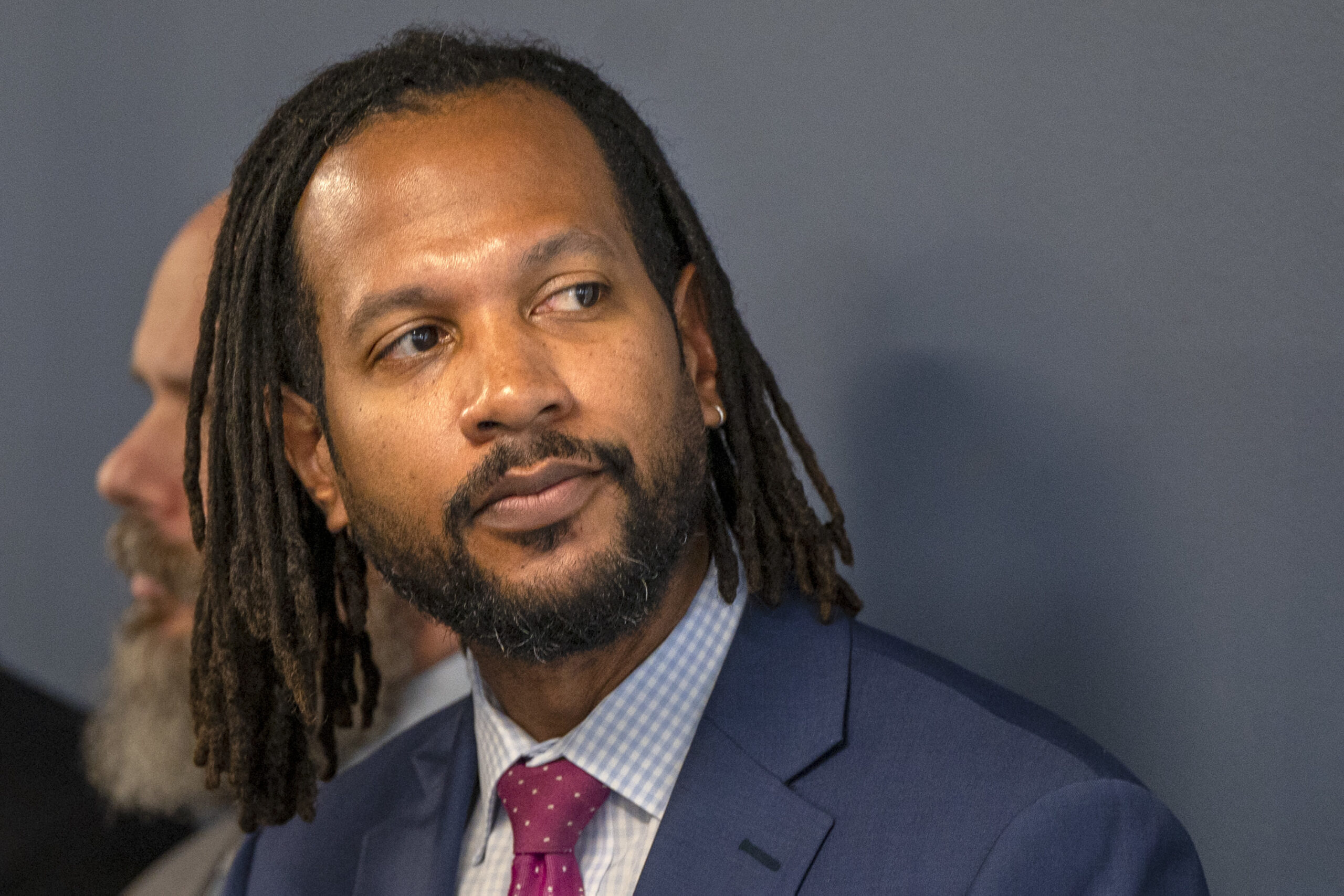
    Philadelphia acting chief public safety director Adam Geer attends a news conference on Jan. 30, 2024, about a shooting that left an officer wounded and a suspect dead.

    Outreach workers with the city-supported Group Violence Intervention program made more than 300 contacts with at-risk residents in 2025, according to data provided by Geer’s office, either offering support or intervening in conflicts.

    And they offered support to members of more than 140 street groups — small, neighborhood-oriented collectives of young people that lack the larger organization of criminal gangs — while more than doubling the amount of service referrals made the previous year.

    In practice, a program’s success looks like an incident in Kensington in which Cure Violence workers intervened in a likely shooting, according to members of New Kensington CDC.

    In April, a business owner called on the nonprofit after seeing a group of men fighting outside his Frankford Avenue store and leaving to return with guns. Members of the outreach team spoke with both parties, de-escalating the conflict before it potentially turned deadly.

    “Each dollar cut is ultimately a potential missed opportunity to stop a shooting,” Garber said.

    Cutting off the ‘spigot’

    Even as community-based anti-violence programs have risen in popularity, they are not without their critics.

    While some officials champion them as innovative solutions to lowering crime, others say the programs can lack oversight and that success is difficult to measure.

    In 2023, an Inquirer investigation found that nonprofits with ambitious plans to mitigate gun violence received millions in city funds, but in some cases had no paid staff, no boards of directors, and no offices.

    A subsequent review by the Office of the Controller found some programs had not targeted violent areas or had little financial oversight. But by the next round of funding, the city had made improvements to the grant program, the controller’s office found, adding funding benchmarks and enhanced reporting requirements.

    Meanwhile, as Philadelphia continued its support these programs, President Donald Trump’s Justice Department began a review of more than 5,800 grants awarded through its Office of Justice Programs. It ultimately made cuts of more than $800 million that spring.

    Among programs that lost funding, 93% were “non-governmental agencies,” including nonprofits, according to a letter DOJ officials sent to the Senate explaining the decision.

    The balance of remaining funds in the violence prevention grant program — an estimated $34 million — will be available for law enforcement efforts, according to a DOJ grant report. In addition to fighting crime, the money will help agencies improve “police-community relations,” hire officers, and purchase equipment, the document says.

    Agencies conducting immigration enforcement are also eligible for grants, the report says, while groups that violate immigration law, provide legal services to people who entered the country illegally, or “unlawfully favor” people based on race are barred.

    One group lauding the cuts is the National Rifle Association, which commended the Trump administration in November for cutting off the “spigot” to anti-violence nonprofits.

    ‘[T]he changes hopefully mean that nonprofits and community groups associated with advocating gun control will be less likely to do it at the expense of the American taxpayer and that real progress can occur on policing violent criminals,” the NRA’s legislative arm wrote in a blog post that month.

    Nate Riley disagrees.

    Riley, an outreach worker with Cure Violence Kensington, said the cuts threaten to reverse the progress New Kensington CDC has made since he joined the program early last year.
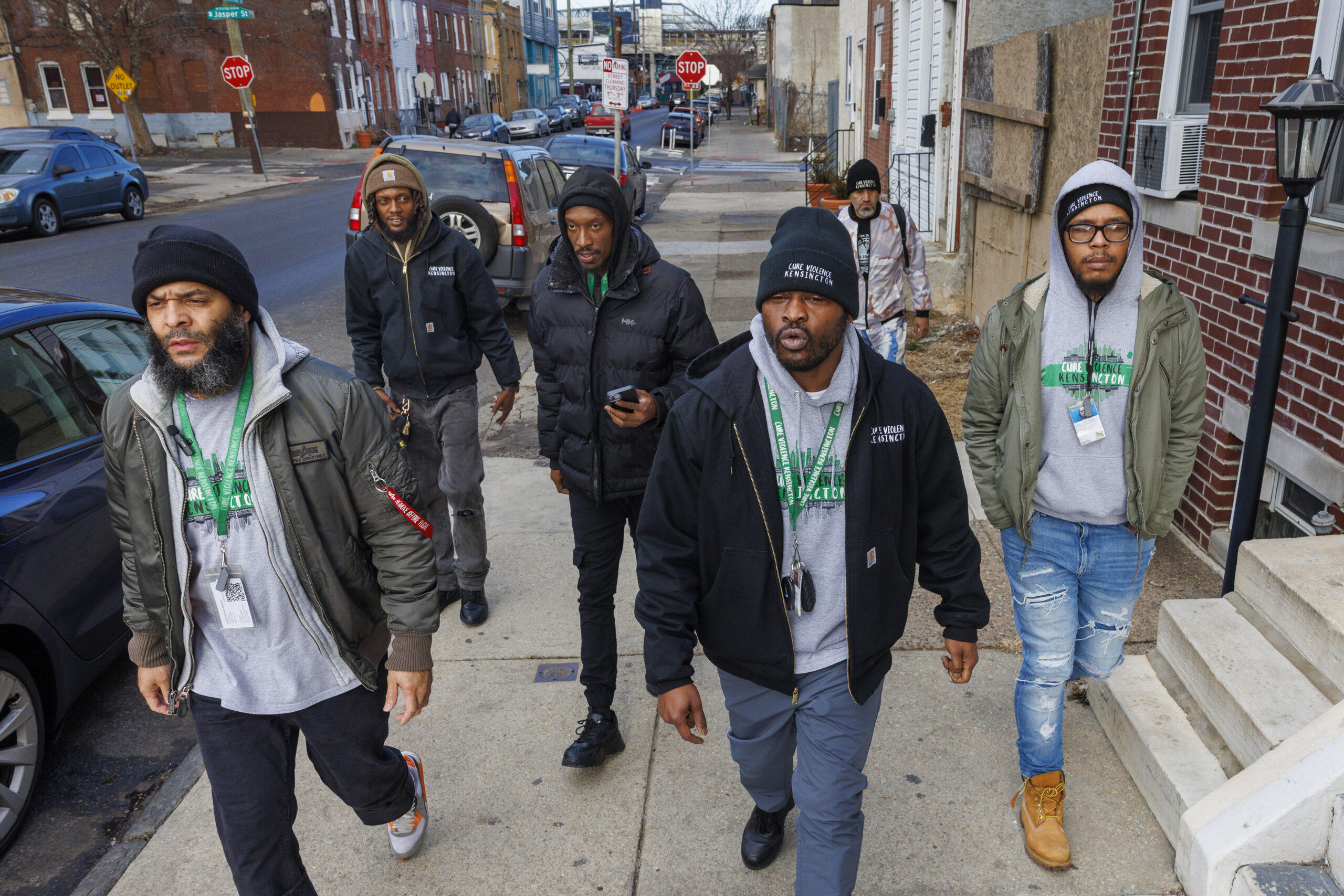
    Nate Riley (from left), Tyree Batties, Dante Singleton, Tyreek Counts, Ivan Rodriguez, and Jamall Green-Holmes, outreach workers with New Kensington Community Development Corporation, making their rounds on Wednesday.

    Cure Violence’s six-person outreach team is made up of people like Riley, who grew up in North Philadelphia and says he is well-versed in the relationship between poverty, trauma, and violence and brings that experience to Kensington.

    “This is a community that’s been neglected for decades,” Riley said. “For lack of a better term, you’ve got to help them come in outside of the rain.”

    In a recent month, Cure Violence outreach workers responded to 75% of shootings in the Kensington area within three days, a feat Riley is particularly proud of.

    He said the program is not meant to supplant the role of police.

    Instead, Riley sees street outreach as another outlet for those whose negative experiences with authorities have led them to distrust law enforcement.

    Those people may alter their behavior if they know police are present, he added, giving outreach workers embedded in the community a better chance at picking up on cues that someone is struggling.

    From Kensington to Washington

    McKinney, with New Kensington CDC, said the group was still expecting about $600,000 from the Justice Department when the grant was cut short.

    The nonprofit has since secured a patchwork of private donations and state grants that will keep Cure Violence running through much of 2026, he said.

    After that, the program’s future is uncertain.

    In the wake of the cuts, national organizations like the Community Justice Action Fund are advocating for federal officials to preserve funding for community-based anti-violence programs in future budgets. Adzi Vokhiwa, a federal policy advocate with the fund, said the group has formed a network of anti-violence nonprofits dubbed the “Invest in Us Coalition” to do so.

    The group petitioned congressional leadership in December to appropriate $55 million for anti-violence organizations in the next budget — a figure that both Democrats and Republicans in the Senate have previously agreed on and that Vokhiwa views as a sign of bipartisan support for such programs.

    McKinney, with New Kensington CDC, said it was impossible to ignore that the nonprofit and others like it provide services to neighborhoods where residents are overwhelmingly Black and brown. In his view, the cuts also reflect the administration’s “war on cities.”

    He was bothered that the Justice Department did not seem to evaluate whether New Kensington CDC’s program had made an impact on the neighborhood before making cuts.

    “We’re in a situation where the violence isn’t going away,” he said. “Even if there’s been decreases, the reality is that Kensington still leads the way. As those cuts get deeper, we are going to see increases in violence.”

  • Philly’s new U.S. attorney has largely avoided the chaos swirling around other parts of Trump’s Justice Department

    Philly’s new U.S. attorney has largely avoided the chaos swirling around other parts of Trump’s Justice Department

    When President Donald Trump announced earlier this year that he was nominating David Metcalf to be Philadelphia’s U.S. attorney, it initially seemed as if the move was in line with Trump’s chaotic and contentious attempt to upend the nation’s justice system.

    The decision was abrupt, apparently made without advanced input from Sen. Dave McCormick (R., Pa.), who’d set up a commission to identify candidates to serve as the region’s top federal prosecutor.

    Metcalf was 39 and, unlike many of his predecessors, didn’t have deep roots in the region — but did have some reported ties to officials who’d sought to help Trump adviser Roger Stone years earlier.

    And the appointment was announced as Trump was openly pledging to “clean house” in the Justice Department and pull the agency more directly in line with the White House.

    But in the months since Metcalf has assumed control over the office and its 140 lawyers, what has stood out so far has been the serious temperament the veteran prosecutor has brought to the role, and the relative lack of drama he’s overseen — particularly in comparison to nearby jurisdictions, where U.S. Attorney’s Offices have been embroiled in controversies over leadership appointments and whether to indict Trump critics.

    During a recent interview with The Inquirer at his Center City office, his first since being appointed in March, Metcalf said his deliberate approach toward his first few months in the job has been influenced by his decade-plus career as a Justice Department lawyer — one that included stints in Baltimore, Philadelphia, and Washington, D.C.

    He has met with a host of other local stakeholders since taking over — including Police Commissioner Kevin J. Bethel, District Attorney Larry Krasner, and federal judges — and has avoided ushering in drastic upheaval within his office.

    U.S. Attorney David Metcalf outside the federal courthouse in July, with Police Commissioner Kevin Bethel standing behind him.

    Instead, he said, a key focus has been to encourage his prosecutors to pursue large, ambitious, complex investigations targeting violent crime, synthetic opioid abuse, and healthcare fraud — subjects he said were critical to public safety in the Philadelphia region.

    “I do not feel some personal impulse to burn my brand on this office by restructuring and reorganizing it,” he said, later adding: “The greatest offices and the greatest cases come from prosecutors who are hunting them down and competing for them … and that’s the breed of prosecutor we’re trying to create here.”

    Composed and self-assured, Metcalf was uninterested in commenting on the broader political landscape surrounding his job. He instead concentrated on the work of his office, whose lawyers prosecute matters including drug trafficking, political corruption, and terrorism across nine counties from Philadelphia to Allentown and west past Reading. They also litigate civil matters on behalf of the federal government.

    “I don’t want to say that I’m … bound by precedent or a devotee to the status quo,” he said. “But I do believe in stability, and I’m certainly not going to change things just for the sake of changing them.”

    That approach has been generally well-received by many lawyers in his office, particularly given the volatile environment across other parts of the Justice Department.

    Even Krasner — an outspoken progressive Democrat who rarely misses an opportunity to criticize Trump, and who was engaged in a long-running feud with a Trump-appointed U.S. attorney four years ago — said he had a “professional and pleasant lunch” with Metcalf earlier this year.

    “We have always worked well with the career prosecutors at the U.S. Attorney’s Office, and our teams seem to be continuing to work well together,” Krasner said in an interview.

    Rod Rosenstein, who was the deputy attorney general during Trump’s first term, said in an interview that he hired Metcalf a decade ago, when Rosenstein was the U.S. attorney in Maryland. And their paths continued to intersect over the years as their careers wound through the Justice Department.

    Rosenstein said Metcalf had “superb legal skills” and “excellent judgment” — two qualities he views as critical for leading a U.S. attorney’s office.

    “I think people recognize he’s got the right qualifications,” Rosenstein said.

    U.S. Attorney David Metcalf in his Center City office.

    ‘An exhilarating vocation’

    Metcalf grew up in northern Virginia and graduated from The Wakefield School, a private prep school about an hour west of Washington, D.C. His father was once an Army colonel, he said, and his grandfather was Joseph Metcalf III, the Navy vice admiral who led the 1983 invasion of Grenada.

    Metcalf was a standout soccer player in high school, and was recruited to play by more than 80 college teams, the Washington Post reported in 2003. He used the situation to his advantage, the paper reported — making a deal with his mother that he could let his hair grow down past his shoulders once Division I colleges started sending him letters.

    He ended up attending Princeton — playing soccer all four years — and then went on to graduate from the University of Virginia’s law school.

    After clerking for U.S. Circuit Judge Albert Diaz, Metcalf spent a few years in private practice before becoming an assistant U.S. attorney in Maryland under Rosenstein.

    Metcalf said he didn’t have a single epiphany that made him realize he wanted to become a prosecutor. But he said he was quickly drawn to the work, which he found more interesting and important than other legal jobs.

    “I thought it was really just an exhilarating vocation in a profession that doesn’t always have the most glamorous applications,” he said.

    High-profile connections

    From 2015 through 2022, Metcalf worked as a line prosecutor in Baltimore and, later, in Philadelphia — the office he now leads. The two years he spent here were unusual, he said, because they unfolded during the peak of the pandemic, when many aspects of the court system were disrupted and most people were working from home.

    Metcalf also spent time during the first Trump administration in Washington, D.C. While there, he worked closely with prominent Justice Department officials including Rosenstein; Deputy Attorney General Jeffrey A. Rosen; Timothy Shea, the onetime U.S. Attorney for Washington, D.C.; and then-Attorney General William Barr.

    Attorney General William Barr and President Donald Trump in the Oval Office of the White House on Nov. 26, 2019.

    Metcalf’s name was briefly in the news in 2020, when Barr and Shea, Metcalf’s then-boss, intervened in the prosecution of Stone, Trump’s longtime ally, who had been convicted of lying to Congress. After the trial prosecutors wrote in court documents that Stone should be sentenced to at least seven years in prison, Barr and Shea ordered them to walk that back and reduce their recommendation.

    Some assigned to the case viewed that as political interference and an attempt to placate Trump. A Justice Department investigation later faulted “ineffectual” leadership by Shea for how the episode unfolded, not politics.

    In 2022, Metcalf left the public sector and went to work as a corporate counsel for Amazon. But this March — after Trump was reelected for a second term — Metcalf was suddenly thrust back into the Justice Department, as the White House announced it was nominating him to be Philadelphia’s U.S. attorney.

    From nominee to confirmation

    The decision came as something of a surprise.

    McCormick, Pennsylvania’s newly elected GOP senator, had made a point of publicly announcing that he’d formed a committee to review and vet potential candidates for federal law enforcement positions across the state. And other GOP-connected lawyers in the region had been jockeying for months to try to figure out who might be able carve a path toward the coveted position.

    When the White House named Metcalf its permanent nominee, the process was effectively short-circuited.

    Metcalf said he couldn’t speak to how or why the process played out the way it did. He said he applied for the job, and “had relationships with folks in the Trump administration” due to his time in Washington during Trump’s first term.

    He didn’t specify who those people were. And some of his former bosses — particularly Barr — had fallen out of favor with Trump after his first term.

    But Rosenstein said “it’s a mistake to think that people are the people they work for. It’s a big government, and not everyone agrees all the time.”

    And in any case, Rosenstein said, he believed Metcalf was nominated “on merit, not on connections.”

    Rod Rosenstein, deputy attorney general during President Donald Trump’s first term, says Metcalf has “superb legal skills” and “excellent judgment.”

    William McSwain, who served as U.S. attorney during Trump’s first term, said he believed Metcalf was “extremely well-qualified for the position.”

    It took the U.S. Senate six months to vote to confirm Metcalf along with a host of other Trump nominees, but by then, the Philadelphia region’s federal judges had already voted to extend Metcalf’s appointment indefinitely while the process played out.

    That move stood in contrast to several other jurisdictions, including New Jersey, where the judiciary declined to extend the tenure of Trump’s nominee, Alina Habba. For months afterward, that office was thrust into turmoil as questions swirled about who could legally serve as its leader.

    Pursuing notable cases

    During his tenure so far, Metcalf said, he’s been seeking to focus his prosecutors on finding what he called “nationally significant” cases, particularly those targeting violence, drugs, and healthcare fraud, which he views as priorities for the region.

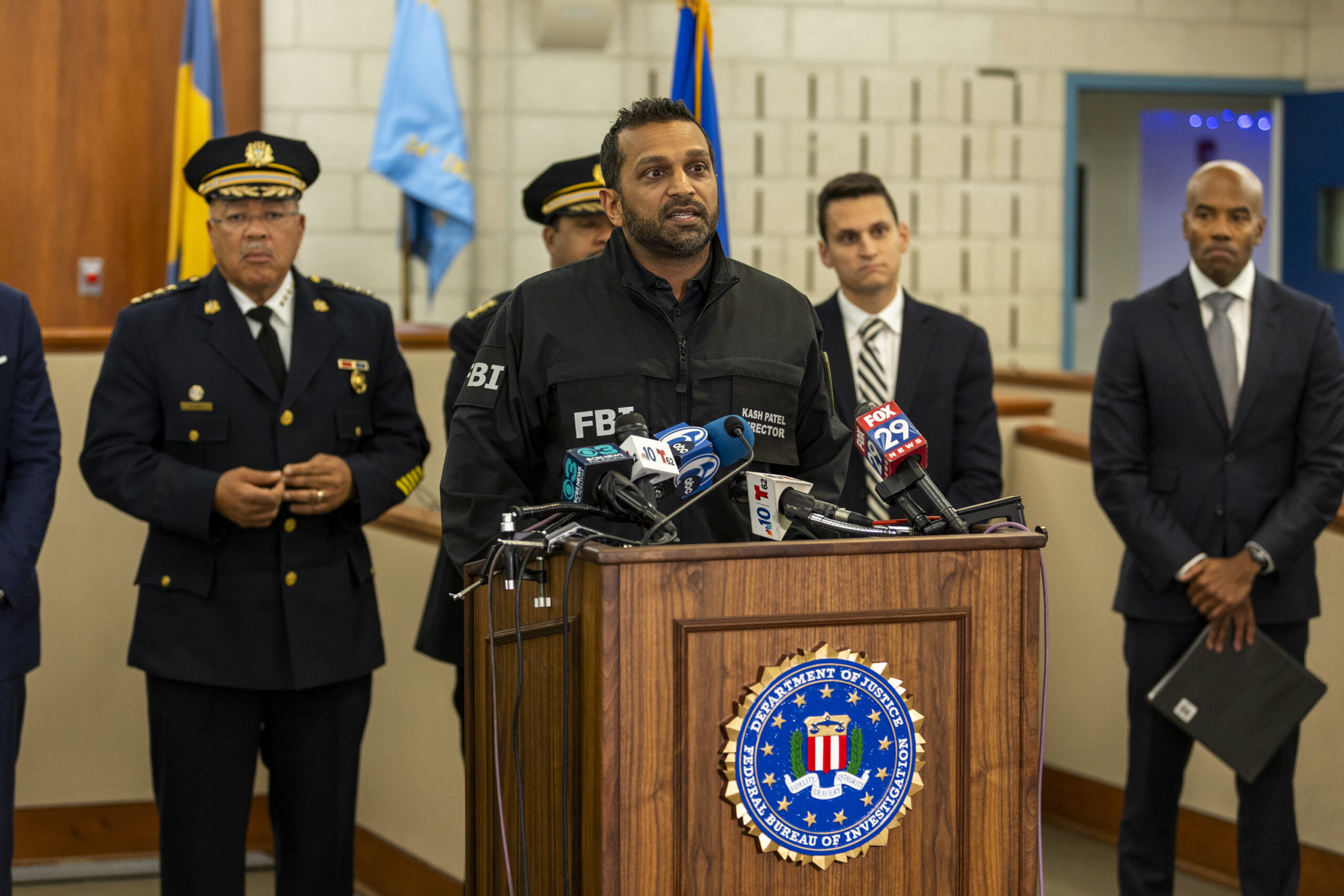
    One of the first big indictments he announced was in October when FBI Director Kash Patel visited Philadelphia to help reveal that 33 people had been charged with being part of a Kensington-based drug gang. Metcalf said the case was the largest single prosecution in the region in at least two decades.

    FBI Director Kash Patel helping announce the arrest of dozens of suspects in a Kensington drug case.

    He also helped create a new program dubbed PSN Recon, an initiative designed to help Philadelphia Police more readily share intelligence with state and federal agencies about which groups or suspects should be investigated.

    Prosecutions overall have increased on his watch, according to the Transactional Records Access Clearinghouse (TRAC), a research organization that collects federal courts records.

    So far this fiscal year, prosecutions in the Eastern District of Pennsylvania were up 32% compared to last year, TRAC found, and were on their highest pace since 2019. The most common types of cases charged this year were immigration violations, drug offenses, and illegal firearm possession, according to TRAC.

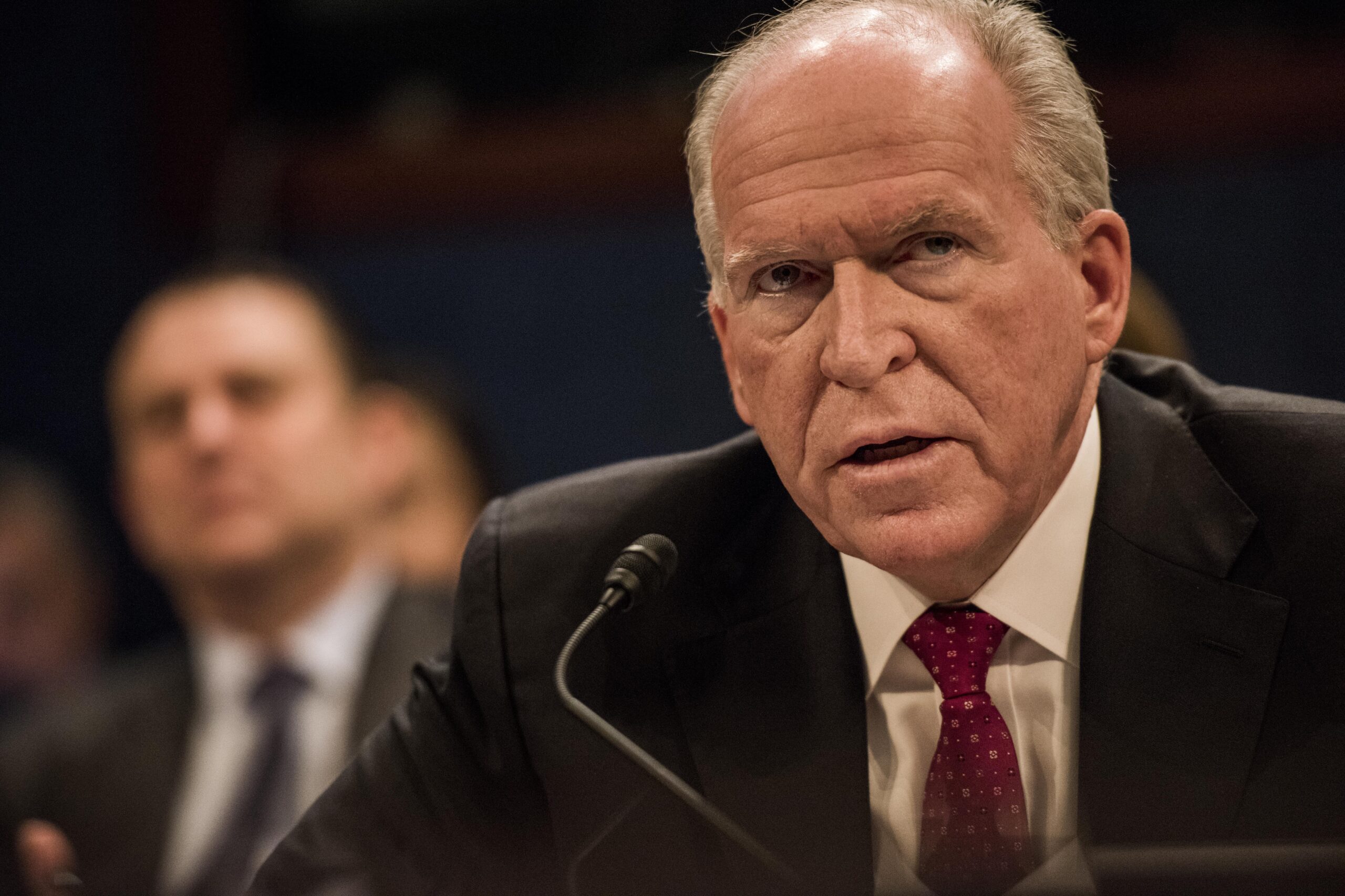
    Earlier this year, Metcalf was reportedly involved in one particularly significant case: an investigation into former CIA Director John Brennan and his role in producing an intelligence assessment about Russian interference in the 2016 election. Brennan went on to become a prominent Trump critic.

    Former CIA director John Brennan testifies before the House Intelligence Committee in 2017.

    National outlets including Axios and the New York Times reported that Metcalf had been leading the probe, and that he had concerns about its viability — a notable development given Trump’s public demands to prosecute other adversaries, including former FBI Director James Comey.

    Metcalf never commented publicly on his purported involvement in the Brennan case, and declined to do so again during his interview with The Inquirer. The investigation is now reportedly being handled by federal prosecutors in Florida.

    Metcalf did allow a short peek into his professional mindset when he was asked more broadly if he’d ever felt pressure from Washington to sign off on a decision he didn’t agree with.

    After declining to comment on any discussions he may or may not have had with Justice Department leaders, he paused for a moment and added one final point.

    “I will also say that I would be very surprised if that ever happened to me,” he said. “I don’t see it as a problem here.”

  • Honeygrow aims to be a national brand. Here’s where the Philly company is planning new locations.

    Honeygrow aims to be a national brand. Here’s where the Philly company is planning new locations.

    Honeygrow keeps growing.

    The fast-casual eatery, based in Center City, plans to open up to 18 new locations next year, following 17 new outposts in 2025, founder and CEO Justin Rosenberg told The Inquirer on Monday.

    “It was definitely a good year,” said Rosenberg, adding that the company is “just continuing to build the pipeline for 2026 and beyond.”

    Honeygrow sells made-to-order stir-fries as well as salads and desserts. Since launching in 2012, the company has grown to 71 locations across several states, including Ohio, Massachusetts, Virginia, Maryland, Delaware, and New York.

    Philadelphia-area stores include Center City, Kensington, University City, North Philadelphia, Bala Cynwyd, and Cherry Hill.

    The company’s expansion plans include adding locations in Ohio and New Jersey, as well as in Boston. The eatery is also currently in negotiations to bring Honeygrow to the Detroit metropolitan area, a new market, said Rosenberg.

    Honeygrow also aims to open a location in Middletown, Del.

    As of February 2024, Boston was the company’s most-profitable market, but since then, Philadelphia has caught up, he says.

    “Saleswise, it’s kind of neck and neck between certain Philly stores and our two Boston stores,” Rosenberg said.

    Further expansion in Philadelphia is also possible.

    “We are always looking at Philly,” Rosenberg said. “We’ve been poking around South Philly for a while. We just haven’t found the right opportunity.”

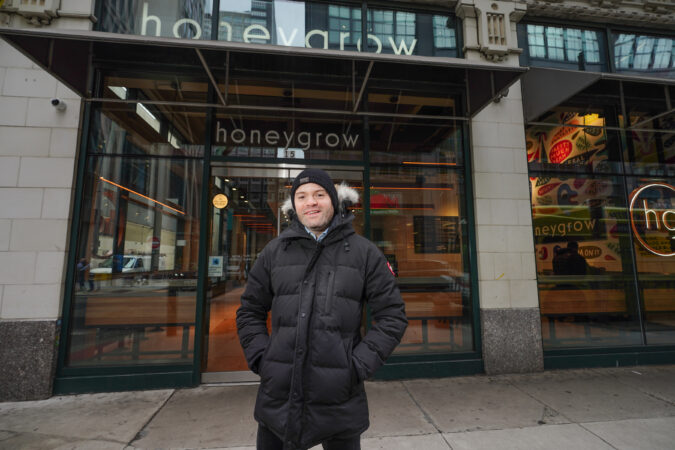
    Honeygrow, at 11th Street in Center City, in 2024.

    The company typically seeks 2,500-square-foot locations for new stores, but Rosenberg says it’s a competitive market for that kind of real estate.

    “One of the things that has made us successful — and I give credit to my team for this — is that we’ve been very disciplined on growth, just saying, look, if we can’t get the deal we need in terms of underwriting, let someone else take it,” he said.

    The company employs roughly 2,000 people, and each new store adds some 30 new hires, Rosenberg said.

    Some of the considerations when looking at new markets include what other fast-casual concepts are in the area, and how they’re doing, Rosenberg said.

    “If a Starbucks is underperforming in that market, that’s certainly going to spook us. Or a Chick-fil-A, if it’s below average unit volume, it’s probably not the right market for us,” he said.

    On the flip side, if a Chipotle, Chick-fil-A, Starbucks, Raising Cane’s, or another brand is doing well in an area, Rosenberg said, “We feel that those would be very similar customers to ours. We’re willing to put a restaurant in there and see what happens.”

    The plans for new locations come as the company shuttered some stores in Chicago, Washington, and New York in 2018 after rapid expansion plans. Some stores were “dragging down profitability,” Rosenberg has said, and he has attributed closures to growth that happened too quickly as well as poor real estate.

    Since then, the company has roughly tripled in size, said Rosenberg, adding “you just keep learning with every opening that you have.”

    “My mission remains the same,” he said. “I want to build something that’s from Philadelphia — make this a national, if not international, brand that we can be proud of.”

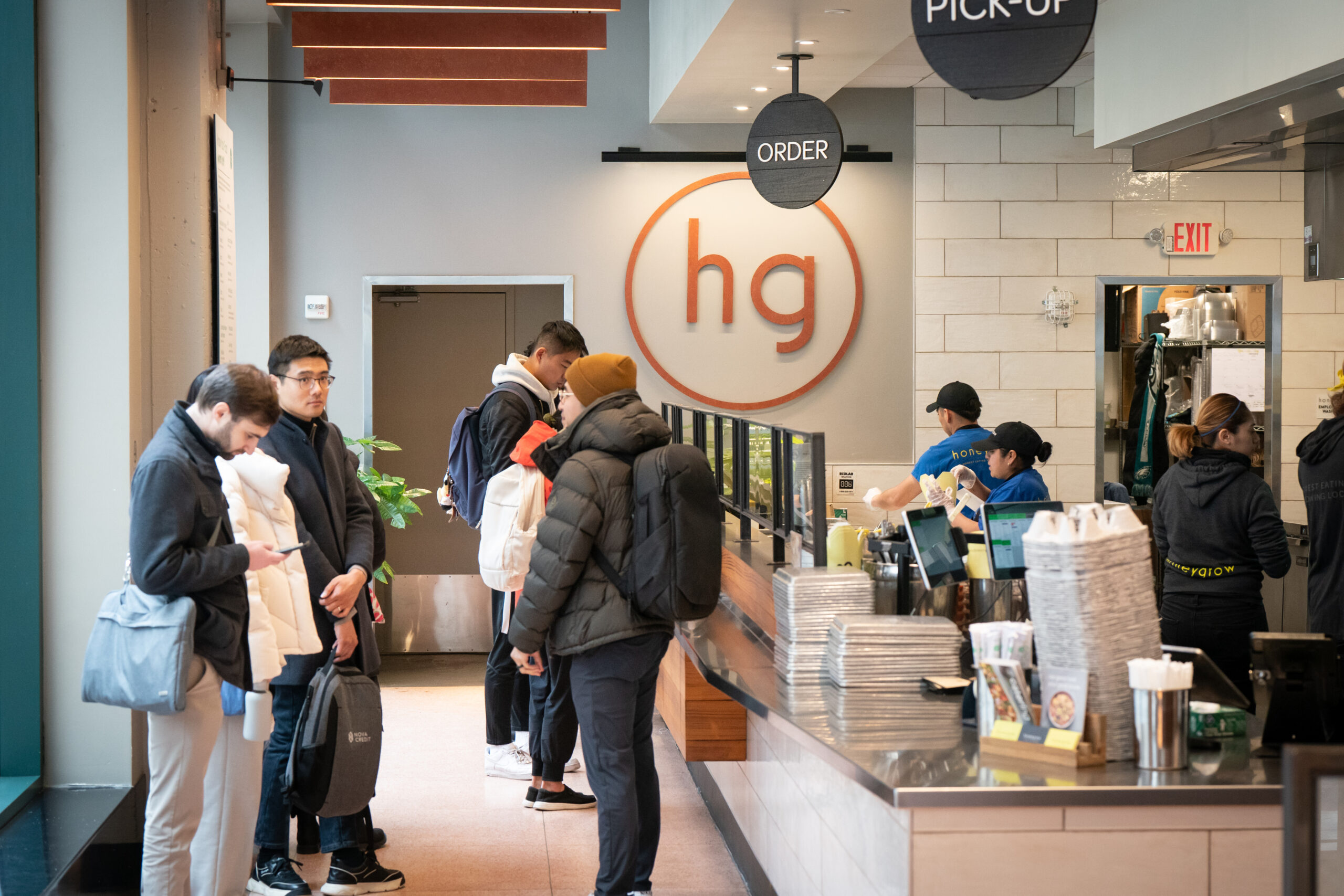
    Chicken Parm Stir-fry at Honeygrow at the 11th Street location in Philadelphia in 2024.
  • She was found dead under a pallet in Frankford last year, and was unidentified for months. Her family wants you to know her story.

    She was found dead under a pallet in Frankford last year, and was unidentified for months. Her family wants you to know her story.

    Police found the body of the woman with the crystal pendant necklace stuffed beneath a wooden pallet in an overgrown lot in Frankford one night last June. She had been shot once between the eyes, and wore only a sports bra, with her pants and underwear tangled around her ankles.

    Days in the stifling heat had left her face unrecognizable, nearly mummified.

    Still, Homicide Detective Richard Bova could see traces of the beautiful young woman she had been. She was small, about 100 pounds, with long dark hair tinted red at the ends. Her nails were painted pale pink. She wore small gold hoops in her ears.

    But he didn’t know her name. And for 90 days, the absence of that essential fact stalled everything.

    A victim’s identity is the foundation on which a homicide case is built. Without it, detectives cannot retrace a person’s final moments or home in on who might have wanted them dead and why. For three months, Bova and his partner scoured surveillance footage, checked missing-persons reports, and ran down every faint lead, eager to put a name to the woman beneath the pallet.

    At the same time, in a small house in Northeast Philadelphia, a family was searching, too.

    Olga Sarancha hadn’t heard from her 22-year-old daughter, Anastasiya Stangret, in weeks and was growing worried. Stangret had struggled with an opioid addiction in recent months, but never went more than a few days without speaking to her mother or sister.

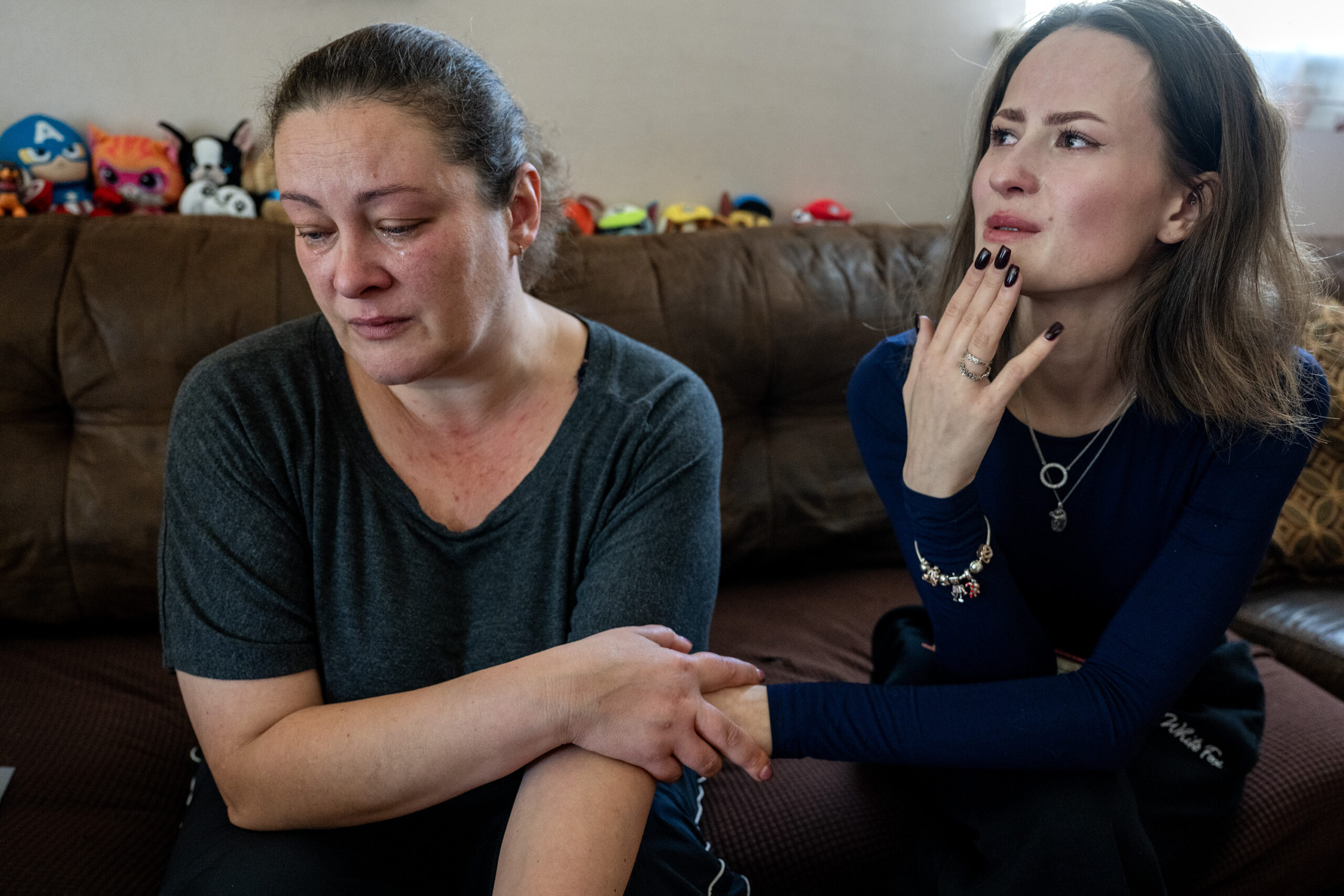
    Olga Sarancha (left) and her daughter, Dasha Stangret, speak of the pain of the death of her eldest daughter, Anastasiya, at their Northeast Philadelphia home. Dasha wears a bracelet featuring Pandora charms gifted by her sister.

    Through July and August that summer, Sarancha and her youngest daughter, Dasha, tried to report Stangret missing, but they said they were repeatedly rebuffed by police who turned them away and urged them to search Kensington instead.

    So they kept checking hospitals, calling Stangret’s boyfriend, and driving through the dark streets of Kensington — looking for any sign that she was still alive.

    It was not until mid-September that the family was able to file a missing-persons report. Only then did Bova learn the name of his victim.

    But by then, he said, the crucial early window in the investigation had closed — critical surveillance footage, which resets every 30 days, was gone. Cell phone data and physical evidence were harder to trace.

    Still, for 18 months, Bova has worked to solve the case, and for 18 months, Stangret’s mother and younger sister have grieved silently, haunted by the horrors of her final moments and the fear that her killer might never be caught.

    Philadelphia’s homicide detectives this year are experiencing unprecedented twin phenomena: The city is on pace to record its fewest killings in 60 years, and detectives are solving new cases at a near-record high.

    But those gains do not erase the reality that hundreds of killings in recent years remain unresolved — each one leaving families suspended in despair, and detectives asking themselves what more they could have done.

    In this case, extensive interviews with Bova and Stangret’s family offer a window into how a case can stall even when a detective puts dozens of hours into an investigation — and what that stall costs.

    Bova has a suspect: a 58-year-old man with a lengthy criminal record who he believes had grown infatuated with Stangret as he traded drugs for suboxone and sex with her. But the evidence is largely circumstantial. He needs a witness.

    And Stangret’s family needs closure — and reassurance that the life of the young woman, despite her struggles, mattered.

    “Everybody has something going on in their life,” said Dasha Stangret, 23. “It doesn’t make her a bad person, and it’s not what she deserved.”

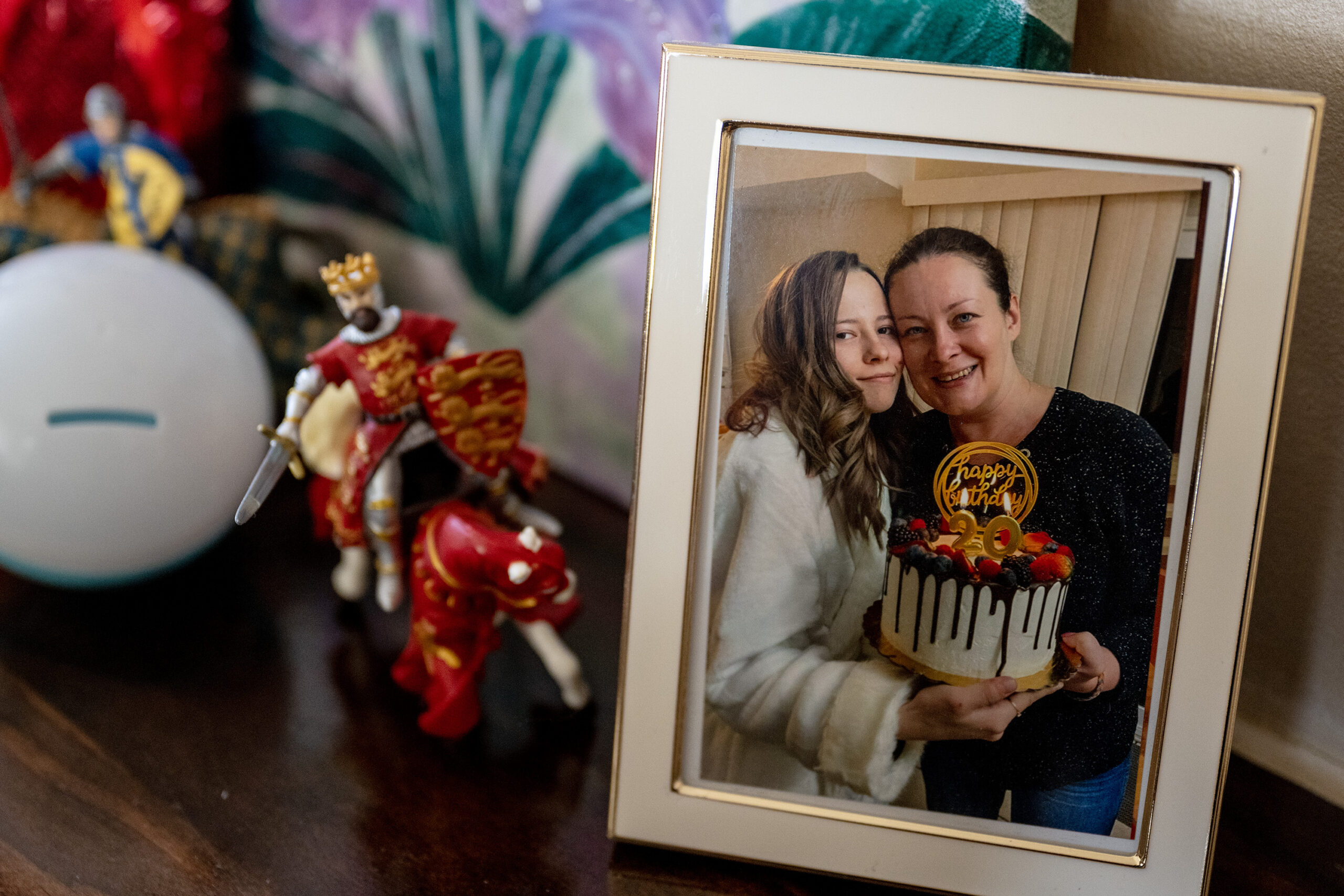
    Anastasiya Stangret, left, celebrated her 20th birthday with her mother in 2022.

    Becoming Anna

    Anastasiya Stangret was born in Lviv, Ukraine, on Nov. 15, 2001. Her family immigrated to Northeast Philadelphia when she was 8 and Dasha was 7.

    The sisters were inseparable for most of their childhood. They cuddled under weighted blankets with cups of tea. They put on fluffy robes and did each other’s eyebrows and nails.

    Anna was bubbly, polite, and gentle, her family said. She enjoyed working with the elderly, and after graduating from George Washington High School, she earned certifications in phlebotomy and cardiology care. She volunteered at a nearby food bank, translated for Ukrainian and Russian immigrants, and later worked at a rehabilitation facility, where she gave patients manicures in her free time.

    Sisters Dasha, left, and Anastasiya Stangret were inseparable as children. They dressed up as princesses for Halloween in 2008.
    Dasha, left, and Anastasiya Stangret at their first day of school in Philadelphia after emigrating from Ukraine.

    “Anna always worked really hard,” Dasha Stangret said. “I looked up to her.”

    But her sister was also quietly struggling with a drug addiction.

    Her challenges began when she was 12, her mother said, after she was hit by a car while crossing the street to catch the school bus. She suffered a serious concussion, Sarancha said, and afterward struggled with PTSD, anxiety, and depression.

    About a year later, as her anxiety worsened, a doctor prescribed her Xanax, her mother said. Not long after, she started experimenting with drugs with friends, her sister said — first weed, then Percocet.

    She hid her drug use from her family until her early 20s, when she became addicted to opioids.

    She sought help in January 2024 and began drug treatment. But her progress was fleeting. She returned to living with her boyfriend of a few years, who they later learned also used drugs, and she became harder to get in touch with, her mother said.

    When Sarancha’s birthday, June 18, came and passed in 2024 without word from her daughter, the family grew increasingly concerned.

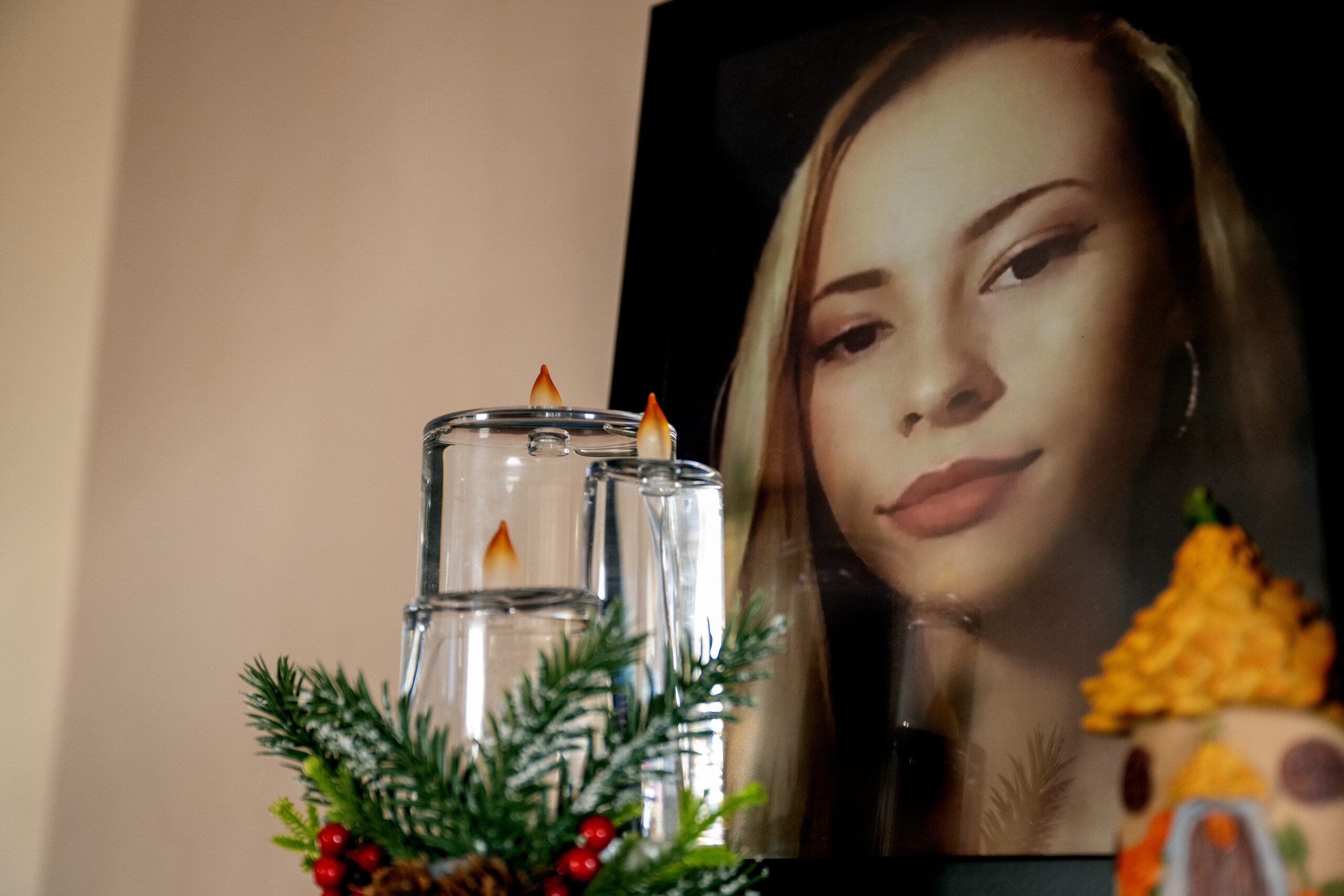
    Anastasiya Stangret was kind, gentle, and polite.

    They checked in with Stangret’s boyfriend, they said, but for weeks, he made excuses for her absence. He told them that she was at a friend’s house and had lost her phone, that she was in rehab, that she was at the hospital.

    On July 27, Sarancha and her daughter visited the 7th Police District in Northeast Philly to report Anna missing, but they said an officer told them to go home and call 911 to file a report.

    Two officers responded to their home that day. The family explained their concerns — Stangret was not returning calls or texts, and her boyfriend was acting strange. But the officers, they said, told them they could not take the missing-persons report because Stangret no longer lived with them. They recommended that the family go to Kensington and look for her.

    Through August, the family visited a nearby hospital looking for Stangret, only to be turned away. Sarancha, 46, and her husband drove through the streets of Kensington without success. They continued to contact the boyfriend, but received no information.

    They wanted to believe that she was OK.

    On Sept. 12, they visited Northeast Detectives to try to file a missing-persons report again, but they said an officer said that was not the right place to make the report. They left confused. Dasha Stangret called the district again that day, but she said the officer on the phone again told her that she should go to Kensington and look for her sister.

    That the family was discouraged from filing a report — or that they were turned away — is a violation of Philadelphia police policy.

    “When in doubt, the report will be taken,” the department’s directive reads.

    Finally, on the night of Sept. 12, Dasha Stangret again called 911, and an officer came to the house and took the missing-persons report. For the first time, they said, they felt like they were being taken seriously.

    A few days later, Dasha Stangret called the detective assigned to the case and asked if there was any information. He asked her to open her laptop and visit a website for missing and unidentified persons.

    Scroll down, he told her, and look at the photos under case No. 124809.

    On the screen was her sister’s jewelry.

    Dasha Stangret gifted this necklace to her sister for her birthday one year. Police released the image after Anastasiya’s body was found last June, in a hope that someone would recognize it and identify her. Dasha did not see the photo until September 2024.
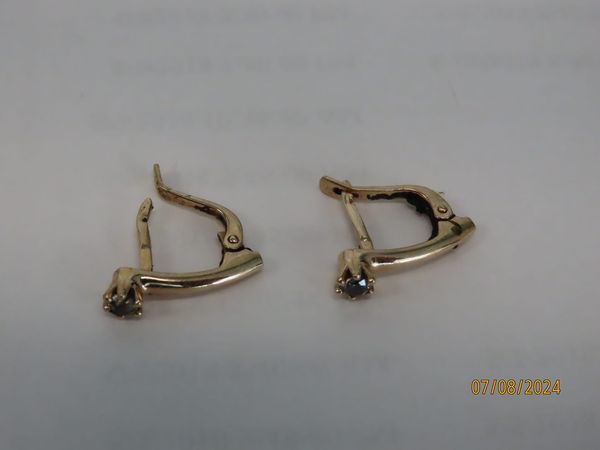
    Olga Sarancha gifted these gold earrings, handmade in Ukraine, to her eldest child on her birthday a few years ago. Police released this image after they recovered the earrings on Anna’s body, hoping it could lead them to her identity.

    A detective’s hunch

    Three months into Bova’s quest to identify the woman under the pallet — of watching hundreds of hours of surveillance footage and chasing fleeting missing-persons leads — dental records confirmed that the victim was Stangret.

    After meeting with her family, Bova questioned the young woman’s boyfriend.

    He told the detective he and Stangret had met a man under the El at the Arrott Transit Center in Frankford sometime in June, Bova said, and that the man gave them drugs in exchange for suboxone and, later, sex with Stangret.

    But the man had grown infatuated with Stangret, he said, and after she left his house, he started threatening her in Facebook messages, ordering her to return and saying that if anybody got in his way, he would hurt them.

    The man lived in a rooming house on Penn Street — almost directly in front of the overgrown lot where Stangret’s body was found. Surveillance video showed Stangret walking inside the rowhouse with him just before 7 p.m. on June 18, Bova said, but video never showed her coming back out.

    Police searched the man’s apartment but found nothing to link him to the crime — no blood, no gun, no forensic evidence that Stangret had ever been inside. The suspect had deleted most of the texts and calls in his phone from June, July, and August, Bova said, and because nearly four months had passed, they could no longer get precise phone location data.

    He said that, at this point, he does not believe the boyfriend was involved with her death, and that he came up with excuses because he was afraid to face her family.

    Surveillance cameras facing the lot where Stangret was found didn’t show anyone entering the brush with a body. Neighbors and residents of the rooming house said they didn’t know or hear anything, he said. And a woman seen on camera pacing the block and talking with the suspect the night they believed Stangret was killed also said she had no information.

    The detective is stuck, he said.

    “Is it enough for an arrest? Sure,” Bova said of the circumstantial evidence against the suspect. “But our focus is securing a conviction.”

    Bova’s theory is that the man, angry that Stangret wanted to leave, shot her in the head. Because the house has no back door, he believes the man then lowered her body out of the second-floor window, used cardboard to drag her through the brush, and then hid her under a pallet.

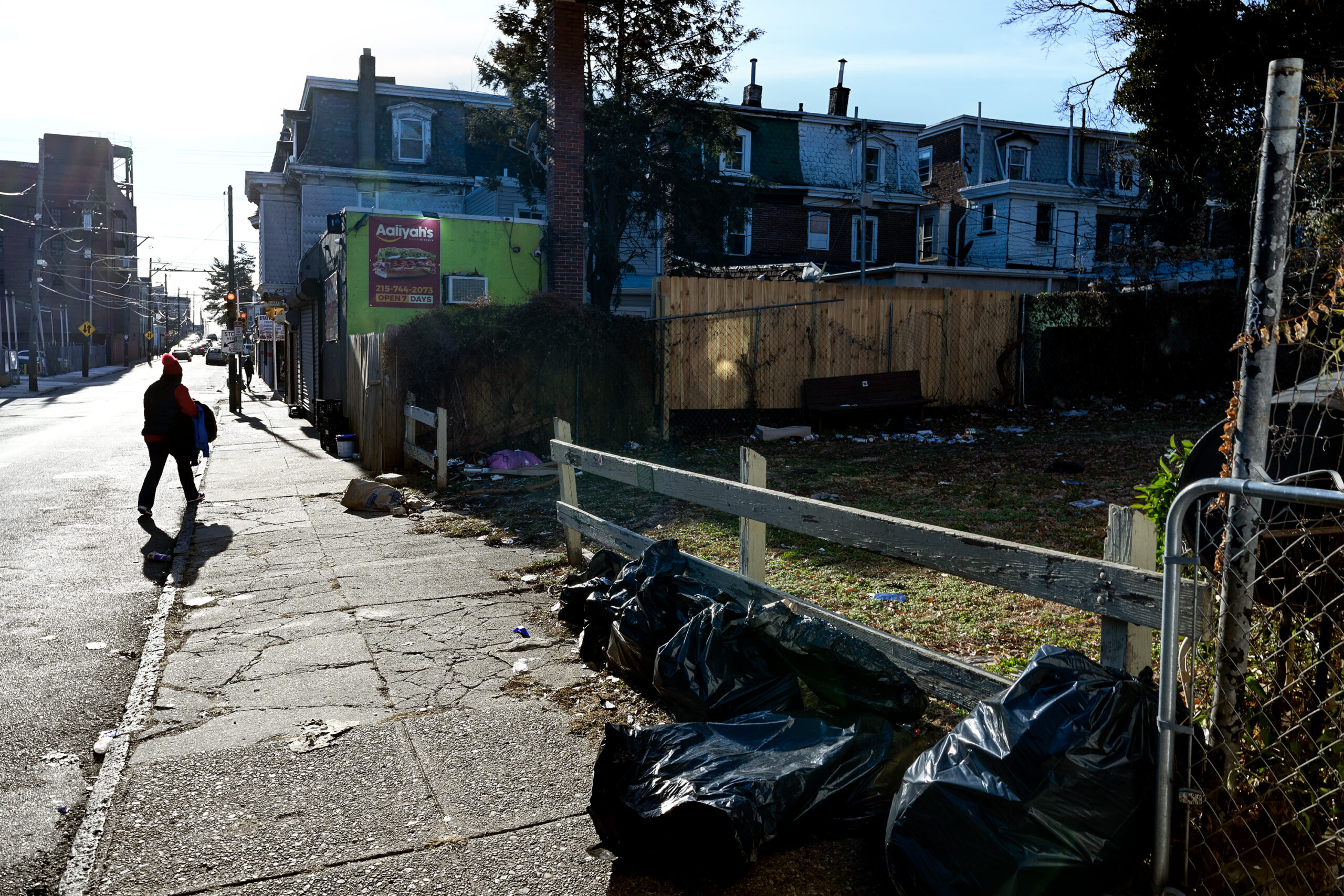
    Anastasiya Stangret’s body was found in the back of this vacant lot, on the 4700 block of Griscom Street, in June 2024.

    He is sure that someone has information that could help the case — that the suspect may have bragged about what happened, that a neighbor heard a gunshot or saw Stangret’s body being taken into the lot.

    There is a $20,000 reward for anyone who has information that leads to an arrest and conviction.

    “The hardest part is patience,” he said. “I’m looking for any tips, any information.”

    Bova has worked in homicide for five years. As with all detectives, he said, some cases stick with him more than others. Stangret’s is one of them.

    “Anna means a lot,” he said. “This is a young girl. We all have children. I have daughters. For her to be thrown in an empty lot and left, to see her life not matter like that, it’s horrifying to me and to us as a unit.”

    “It eats me alive,” he said, “that I don’t have answers for them and I’m not finishing what was started.”

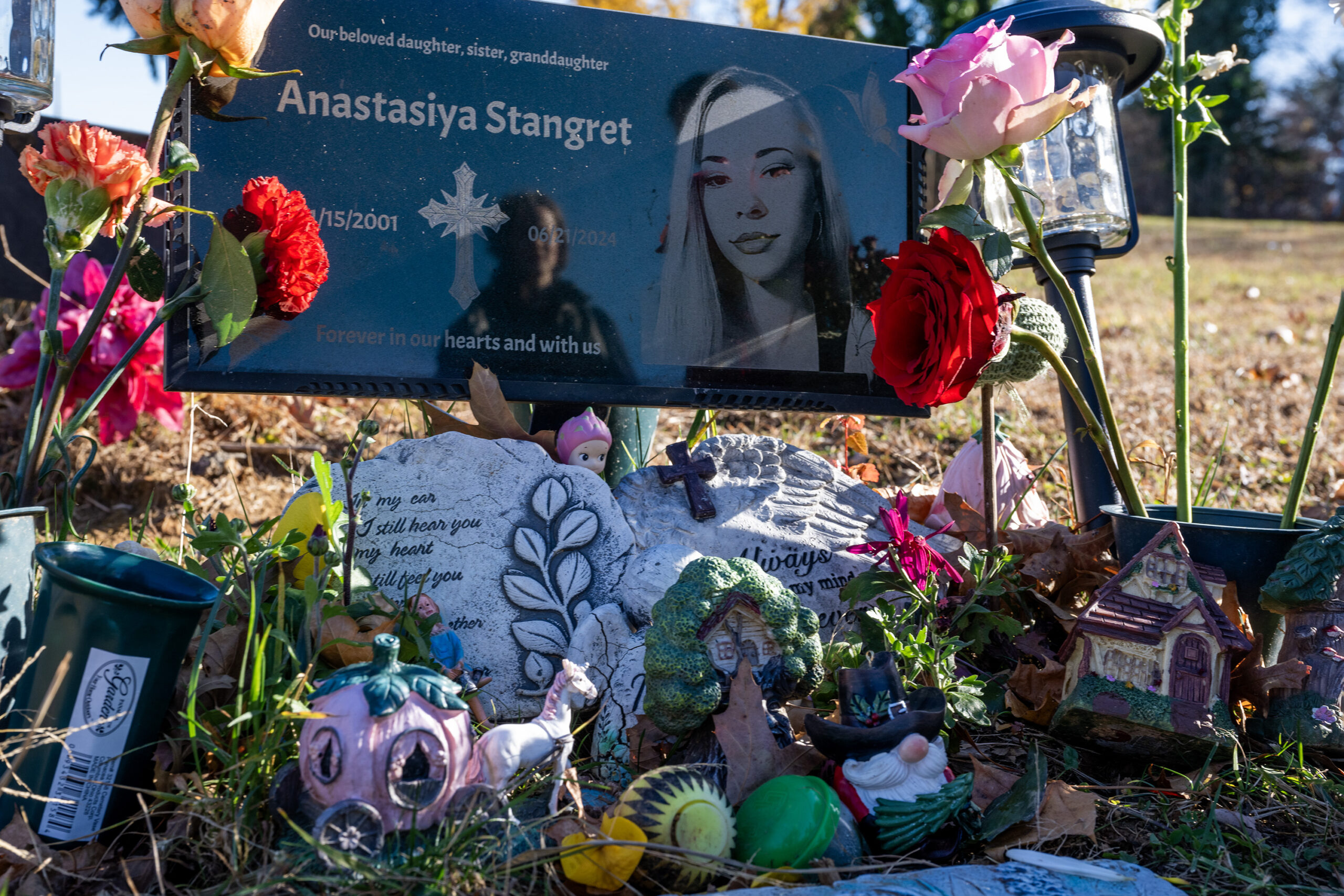
    Dasha Stangret is reflected in the memorial at the grave of her sister, Anastasiya, in William Penn Cemetery.

    ‘I love you. I miss you’

    Stangret’s family suffers every day — the guilt of wondering whether they could have done more to get her help, the anger that her boyfriend didn’t raise his concerns sooner, the fear of knowing the man who killed her is still out there.

    Dasha Stangret, a graphic design student at Community College of Philadelphia, finds it difficult to talk about her sister at length without trembling. It’s as if the grief has sunk into her bones.

    In July, she asked a police officer to drive her to the lot where her sister’s body was found. She sat for almost an hour, crying, placing flowers, searching for a way to feel closer to her.

    “I cannot sleep, I cannot live,” Olga Sarancha said of the pain of losing her daughter.

    Sarancha struggles to sleep. She wakes up early in the mornings and rereads old text messages with her daughter. She pulls herself together to care for her 6-year-old son, Max, whose memories of his oldest sister fade daily.

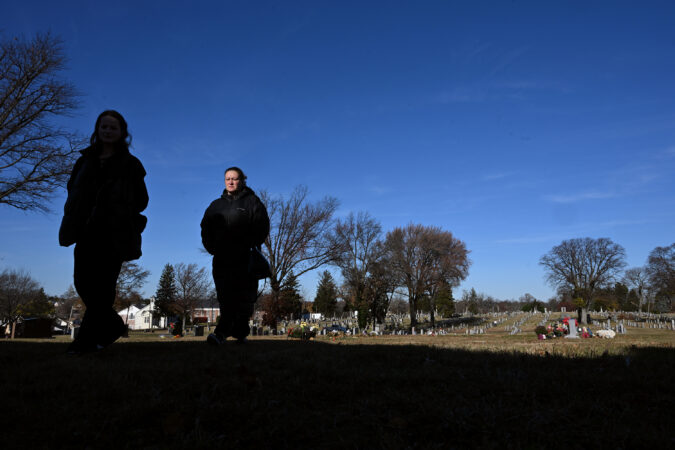
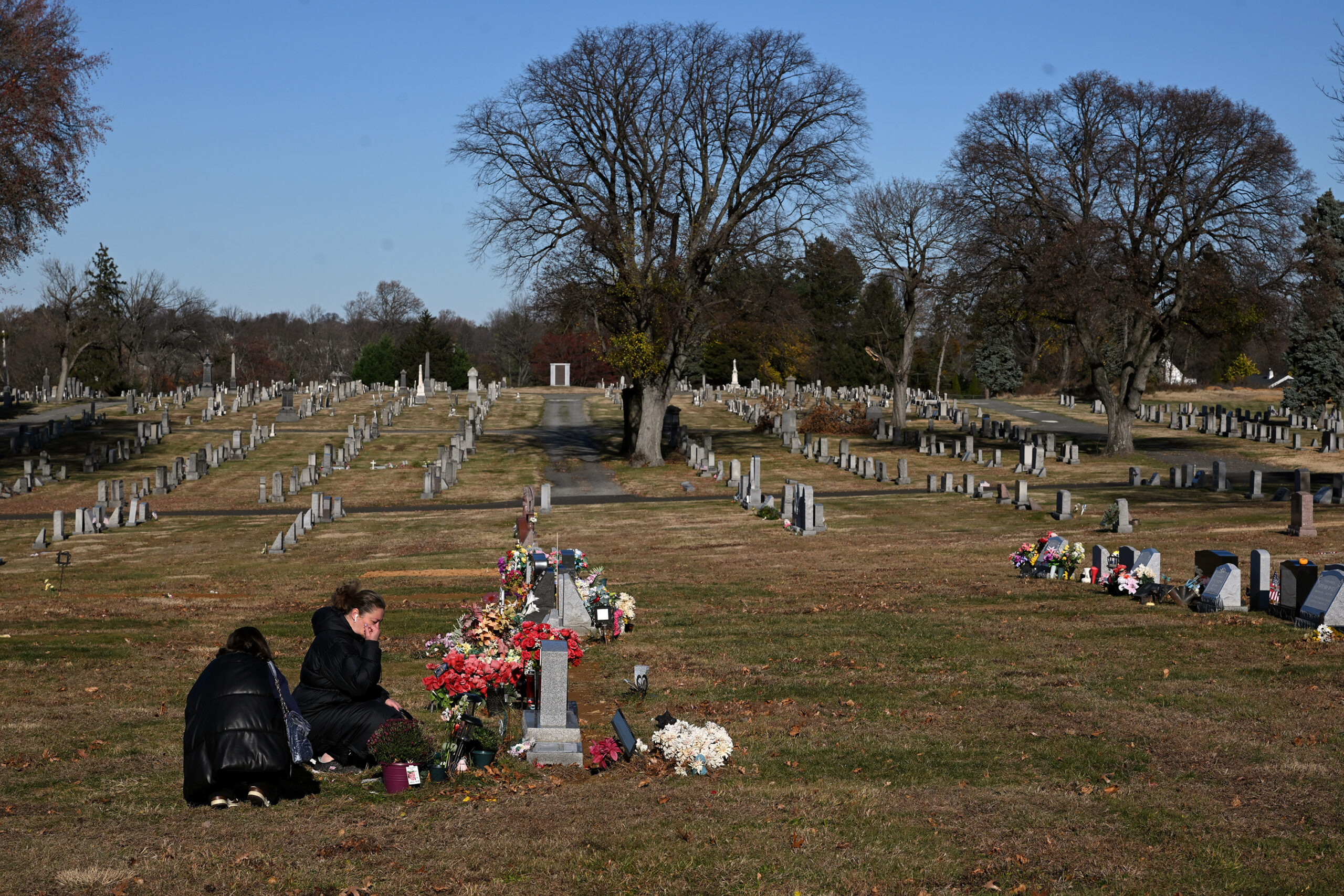
    On a recent day, Dasha Stangret and her mother visited her sister’s grave at William Penn Cemetery. They fluffed up the fresh roses, rearranged the tiny fairy garden around her headstone, and lit a candle.

    Stangret began to cry — and shake. Her mother took her arm.

    “I love you. I miss you,” Stangret told her sister. “I hope you’re happy, wherever you are.”

    And nearly 20 miles south, inside the homicide unit, Bova continues to review the files of the case, waiting for the results of another DNA test, hoping for a witness who may never come.

    If you have information about this crime, contact the Homicide Unit at 215-686-3334 or submit a confidential tip by texting 773847 or emailing tips@phillypolice.com.

    Olga Sarancha (right) and her daughter Dasha visit the grave of her older daughter Anastasiya Stangret in William Penn Cemetery. “It feels out of body. Like a dream, a movie, like it’s not real,” Dasha said of losing her sister.
  • Catholic Charities helps those in need both surmount life’s hardships and celebrate its many little joys | Philly Gives

    Catholic Charities helps those in need both surmount life’s hardships and celebrate its many little joys | Philly Gives

    Heather Huot, the top executive at Catholic Charities, named her only daughter after Lidia, a homeless, mentally ill, and often cranky elderly woman she met as a young social worker at Women of Hope Vine, a transitional housing facility run by the organization Huot now leads.

    As “mean spirited” as Lidia was, Huot said, Lidia still celebrated forsythia.

    When their bright yellow blossoms heralded winter’s end, Lidia would drag Huot outside to marvel. “Despite all the hardships,” Huot said, “there are things to be celebrated.”

    Which brings us to the Christmas holiday season.

    Even if it were possible, which it’s not, to overlook all the troubles in our world, with wars and starvation, or even to overlook all the troubles in our nation, there would still be the troubles of the season — too much work, too much loneliness, too many struggles.

    Where’s the forsythia?

    Two weeks ago, it was outside the Archdiocesan Pastoral Center in the form of a living Nativity scene, complete with a wee baby goat named Lady, an artificial-snow machine, an actual camel, and an elementary school choir in their Catholic school uniforms singing “Joy To the World.”

    Yes, “Joy To The World,” because 500 children, some of whom live in tough circumstances, got a chance to celebrate Christmas and with it, maybe, the hope that the holiday brings. It was the 70th annual Archbishop’s Benefit for Children, a Catholic Charities of Philadelphia event funded by a grant from the Riley Family Foundation. No expense was spared.

    Heather Huot, the chief of Catholic Charities Philadelphia, pets a calf during a living Christmas scene in front of the Archdiocesan Pastoral Center in Center City Philadelphia.

    More than 60 volunteers from area high schools lunched on pizza and cookies before heading across the street to a lavishly decorated ballroom in the Sheraton Philadelphia Downtown. Balloons, banners, party favors, huge plates of cookies, a container of ice cream cups, and a bucket of all different flavors of milk awaited at each table. Kids and chaperones crowded the dance floor, only to make way for an appearance by Santa, who high-fived his way around the ballroom. At the party’s end, the volunteers sprang into action distributing bags of toys — all beautifully wrapped.

    In a way, the party is a metaphor for Catholic Charities as a whole. Both the party and the organization are big and multifaceted with lots of moving parts, involving all types of people, not only Catholics.

    Each year, Catholic Charities spends about $158 million to run about 40 different programs in four main categories — care for seniors; support for at-risk children, youth, and families; food and shelter; and its biggest category, many-pronged assistance for people with intellectual and developmental disabilities and their families.

    As an overview, there’s housing for at-risk youth in Bensalem. In Philadelphia, people may be familiar with St. John’s Hospice on Race Street, which provides food, showers, shelter, and case management to men. There are several smaller transitional housing shelters for women in the city.

    Social workers funded by Catholic Charities assist students at six Catholic high schools across the region. Other social workers handle case management under contract with the City of Philadelphia. A program teaches teenagers involved in the juvenile justice system about conflict resolution. Family navigators step in to assist families with issues ranging from employment to parenting support. There are adoption and foster-care services.

    For the elderly, Catholic Charities supports senior centers and works to help seniors stay independent through case management.

    Archbishop Nelson Pérez poses with students during a holiday party.

    Just over half of Catholic Charities’ annual budget is allocated to supporting people with intellectual or developmental disabilities. A major focus is housing for adults. For example, at the Divine Providence Village in Springfield, Delaware County, 72 women live in six cottages on a 22-acre campus with a pool, greenhouse, and picnic pavilion.

    In addition, there is employment support, a day program, field trips, a family-living program, and respite care to help families overwhelmed by caregiving responsibilities.

    Nearly 80% of Catholic Charities’ funding comes from government sources, which, these days, requires Huot to focus her prayers. “I ask God to help me get through this and to give me the strength and the people around me to get through this,” she said. “At the same time, we have to recognize that God provides in ways you don’t expect.

    “We’ve been blessed with generous benefactors who have stepped in,” she said. “The Philadelphia community is incredibly generous. We get a bad rap as the people who throw snowballs at Santa Claus, but Philadelphians will give you the shirt off their backs. They are passionate about caring for one another.”

    The generosity moved Lakisha Brown to tears as she shepherded her two children and a third to the party earlier this month. Brown, 44, lives in a three-bedroom subsidized housing apartment at Catholic Charities’ Visitation Homes in Kensington.

    “This is the best I ever lived,” she said. But, she said, just outside her door “is a constant reminder of where I came from and where I never want to go.”

    Brown’s father died when she was in elementary school and her mother struggled with alcohol addiction. Brown left home when she was 16 under the protection of a man who started their relationship with gifts and ended it with beatings.

    “He left me in a coma,” she said.

    Brown had her own struggles with addiction. She spent many nights without a roof over her head. If lucky, she could sleep in safety in an abandoned car on a quiet block. One night, she went to a party in a hotel. When she woke up, her clothes were off. Whatever happened wasn’t consensual.

    Soon after, she learned she was pregnant and, knowing that, she vowed to give her baby a clean birth. She found a drug program and a place to live. Slowly, through housing and support from Catholic Charities, she rebuilt her life.

    Erika Hollender holds up her grandchild so Layani, 3, can touch Percy the camel.

    “They help us with budgeting, with money management,” said Brown, who relies on disability, welfare, and food benefits while trying to cope with her own mental health issues. “When we get some money, we want to spend it on the children. We were parenting out of guilt and shame.”

    Those are the big things, but what Brown wants people to understand is that the level of care is deep, personal, and specific. It’s being able to ask a staff person for a roll of toilet paper and trash bags — basics that are sometimes unaffordable when money must be allocated to food and shelter.

    “A mom’s job is never done,” she said, explaining why people should donate to Catholic Charities. “It is needed for mothers who come from nothing. It is needed.”

    For more information about Philly Gives, including how to donate, visit phillygives.org.

    About Catholic Charities of Philadelphia

    People served: 294,000 annually (in the 2023-24 fiscal year)

    Annual spending: $158.6 million across four pillars of mercy and charity

    Point of pride: Catholic Charities of Philadelphia is the heart of the church’s mission in action, serving all people regardless of background. With decades of experience, nearly 40 comprehensive programs, and deep community partnerships, Catholic Charities turns compassion into action, and action into lasting and impactful change.

    You can help: By serving meals, volunteering at a food pantry or shelter, hosting a food or clothing drive, and sharing your gifts and passions with seniors.

    Support: phillygives.org

    What your Catholic Charities donation can do

    • $25 provides five nutritious lunches for children through the School Lunch Program.
    • $50 provides three hot lunches at St. John’s Hospice for individuals experiencing food insecurity.
    • $100 provides an instructor and supplies for an art or recreation class for 50 to 100 seniors at a senior community center.
    • $275 provides one week of groceries for a family of four.
    • $325 provides a mother with formula, diapers, and wipes for a month.
    • $550 provides emergency shelter and meals for a week for someone experiencing homelessness.
  • Recruiters flew people from Kensington to California for what they described as free luxury rehab. Critics say it’s a scam.

    Recruiters flew people from Kensington to California for what they described as free luxury rehab. Critics say it’s a scam.

    Christina Gallo and Daniel Zehnder came to McPherson Square in the Kensington neighborhood looking for a fix, as they did almost every day.

    But on this day in late April, an SUV pulled up. A woman bounded out with an offer that sounded like a miracle: an all-expenses-paid trip for free treatment at a luxury rehab center in California.

    Gallo and Zehnder, both then 37, hoped their lives were finally about to turn around after two decades struggling with addiction.

    “We wanted to get clean,” Gallo said.

    Christina Gallo and Daniel Zehnder, pictured here in Kensington’s McPherson Square in June, were recruited to what they thought would be a luxury rehab in California.

    Within days, they were in a Lyft from their Bucks County trailer to the Philadelphia airport. Everything — the Lyft, the flight, the rehab — had been paid for, by whom they did not know.

    They landed at a treatment facility in Los Angeles with a gleaming swimming pool, but said they did not see doctors or nurses and were offered little medical treatment to ease their agonizing withdrawal symptoms. Within a few days, the couple had left the clinic, relapsed, and the life-changing trip they envisioned ended in an ambulance rushing to a nearby hospital, where Gallo was admitted to intensive care.

    Their California dreams were dashed. But the trip notched another recruitment for The Rehab Specialist, a year-old operation that makes money by scouting the streets for people in addiction to send to independently run rehab centers across the country.

    Rehab Specialist recruiters working in Philadelphia offered free plane tickets, housing, and medical care — and at times cash, cell phones, cigarettes, and clothes — to entice people into recovery homes, Inquirer reporters found in interviews with seven people who had firsthand knowledge of the recruiting tactics.

    With a single conversation in Kensington, recruiters also got willing patients enrolled in private health insurance that could pay higher rates, often without the patients understanding what they had signed up for — until bills started to arrive.

    Businesses like The Rehab Specialist operate as middlemen in an industry where one person’s recovery can be cashed in for hundreds of thousands of dollars in insurance payments.

    Some referral and marketing services in the addiction treatment industry are legal. But the business is also notoriously rife with insurance fraud and patient brokering — a term that describes referrals to specific clinics in exchange for illegal kickbacks or bribes.

    Rehab Specialist brochure, advertising a Spanish-Colonial style mansion with a pool in the backyard.

    Pennsylvania is seeing a resurgence of patient brokering, according to tracking in 2023 by Highmark Health, a Pittsburgh-based Blue Cross Blue Shield affiliate. Such schemes are especially a concern in Kensington, home to one of the nation’s largest open-air drug markets.

    Federal laws and a patchwork of state laws are supposed to protect vulnerable people. Prosecutors have limited resources, however, and rarely investigate low-level players.

    Pennsylvania considered stronger laws after a major scandal. In 2019, federal and state prosecutors uncovered a multimillion-dollar insurance fraud scheme at Liberation Way, a Bucks County recovery home. The abuses spurred Pennsylvania lawmakers to introduce legislation that would have made it a felony to use money or services to lure patients into addiction rehabs and other healthcare facilities. The measure died without advancing to a vote.

    “People get pretty brazen when nobody’s looking,” said Alan Johnson, chief assistant state attorney in Palm Beach County and a national expert on fraud in the industry.

    Johnson called a description of The Rehab Specialist’s practices “classic patient brokering.”

    For months, Philadelphia advocates for people in addiction circulated warnings about the business and posted photos of its recruiters on Facebook. They tried to alert police, but never heard back.

    Screenshot of text messages between Christina Gallo and a Rehab Specialist recruiter, saying that Gallo and Zehnder got approved for private insurance that would pay for their treatment in California.

    The Philadelphia Police Department did not respond to requests for comment, and the Philadelphia District Attorney’s Office said it has not opened an investigation and declined to comment on The Rehab Specialist’s practices. The Pennsylvania Attorney General’s Office also declined comment.

    On social media, The Rehab Specialist’s director and founder, Gus Tarrant, strongly disputed critics who accused his business of patient brokering.

    “I have never and would never give a client money to go to rehab or encourage them to cycle in and out of programs,” Tarrant wrote in a March post to a Facebook group that monitors addiction treatment.

    Tarrant, in a June interview with The Inquirer, reiterated that he and his business have done nothing wrong.

    Tarrant said that his operation has a national focus and came to Philadelphia this spring because the city has “the worst drug epidemic in the country.”

    Tarrant said his recruiters send patients out of their home state to avoid triggers for relapse, a practice he strongly believes in, having gone through his own recovery from addiction about five years ago. (Though popular in some recovery circles, some research suggests that it can be less effective than getting treatment closer to home, where people have established support networks.)

    “Our goal is to help as many people as we can,” Tarrant said. Now based in Myrtle Beach, S.C., Tarrant has channeled his experience into starting at least two businesses in the past five years focused on people in addiction.

    He said rehab centers pay his business a flat fee to arrange for people from Kensington to receive treatment in California, but declined to share details. Two Los Angeles treatment centers told The Inquirer they had paid Tarrant and his operation a flat fee for “marketing,” but both also declined to give specific details of the arrangement.

    On business cards, Tarrant’s title is listed as The Rehab Specialist’s founding partner; his LinkedIn profile says he started working there in 2024.

    The Inquirer was unable to find any documentation indicating the business was formally incorporated in a search of state corporate registries where its recruiters and Tarrant have operated. The Inquirer also did not identify any lawsuits filed against The Rehab Specialist.

    The Inquirer interviewed Tarrant by phone this summer. He did not return multiple calls, texts, and emails this month requesting additional comment.

    Reporters interviewed five people who were approached by The Rehab Specialist’s recruiters on the street, and another two whose relatives were recruited.

    All shared similar stories about how the process worked. Two said they enjoyed eating chef-made meals and benefited from group therapy and daily outings in Los Angeles.

    One mother said her son ultimately decided not to board the plane to California, though he continued to receive frequent calls from Rehab Specialist recruiters urging him to travel for treatment. In another case, a woman said her brother did not get the care he needed in California and ended up in the ICU.

    Gallo and Zehnder were among the three people interviewed who said the medical care they received in California did not meet their expectations for a luxury rehab facility. The couple blames The Rehab Specialist for launching them on a journey that ended with them worse off than before.

    “I don’t know if they have the intention of trying to help people,” Gallo said, “but they’re going about it totally the wrong way.”

    Christina Gallo and Daniel Zehnder in June, sitting in the spot where they were first approached by The Rehab Specialist recruiters in McPherson Square Park.

    Lofty promises and dire warnings

    The fliers that The Rehab Specialist recruiters passed out in Kensington featured photos of a Spanish Colonial-style mansion surrounded by palm trees, with a pool in the backyard. They advertised “holistic treatment” including equine therapy, medical detox, and an intensive outpatient program.

    All that, in sunny California.

    The pitch has particular appeal in Philadelphia, where people have struggled through long waits to access medical detox programs that allow patients to withdraw under the supervision of a doctor or nurse. These programs typically offer medications to help ease intense withdrawal symptoms like nausea, vomiting, and agitation, all of which have become more dangerous as potent animal tranquilizers and industrial chemicals contaminate the local drug supply.

    Despite often lofty promises, the addiction treatment industry has long seen high-profile prosecutions over exploitative practices.

    In the Philadelphia area, the Liberation Way prosecution sent the company’s CEO and medical director to federal prison. Prosecutors said the center had signed patients up for private insurance plans and paid their premiums. It then charged insurers for shoddy or unnecessary treatment that resulted in excessive insurance payouts.

    A few years later in 2022, New Jersey officials found numerous cases of addiction providers illegally paying workers to direct patients with private insurance to their facilities. A second investigation in 2024 prompted two new state laws cracking down on patient brokering.

    California and Florida in particular have emerged as hot spots for addiction treatment fraud. In South Florida, a 2022 federal prosecution of a $112-million scheme led to prison sentences for eight people accused of using cash bribes and free rides, flights, drugs, and alcohol to attract patients to a rehab center. The payments were distributed via a network of lower-level street recruiters, purportedly hired for “marketing,” according to an affidavit from the case.

    California, with its large number of rehab centers and overburdened regulators, has become such a magnet for fraud that industry insiders refer to the greater Los Angeles area as Rehab Riviera.”

    But addiction treatment scams are often ignored because they involve sprawling national investigations that require significant resources. State prosecutors can’t justify the expense and federal prosecutors won’t take on low-level fraudsters, according to Johnson. Palm Beach County prosecutors stepped up enforcement after the state passed stricter laws in 2017.

    “You have to prioritize cases. This is not high on their hit list, unless it’s going to make a big splash,” said Deb Herzog, a former federal prosecutor turned fraud investigator at Anthem Blue Cross.

    Melissa Ruby, an activist who runs a national Facebook group to monitor patient brokering, in Philadelphia in October.

    Warnings about The Rehab Specialist instead came from Melissa Ruby, 46, and other local advocates. Ruby runs a Facebook group dedicated to monitoring patient brokering nationwide, and started sharing photos on social media as soon as the recruiters showed up in Kensington. She did the same when they were reportedly spotted in Pittsburgh.

    She said she also alerted a Philadelphia police officer who runs an independent nonprofit to help people in addiction, but never heard back.

    For Ruby, the issue is personal: She has a relative who was a victim of patient brokering.

    “BEWARE!!” she wrote in a March post about The Rehab Specialist, punctuated with red stop sign emojis. “No good will come from any of this!!”

    Tarrant, the Rehab Specialist director, was a member of Ruby’s Facebook group at the time and wrote that the vast majority of the negative information Ruby had posted about him was “completely wrong.”

    “I am not paid by the client or any ‘referral fees’ based on clients sent,” Tarrant wrote.

    When asked in the Facebook group why The Rehab Specialist was sending patients out of state on free flights, he declined to answer, writing that he believed the questions were in bad faith. He encouraged people to reach out to him directly so he could explain.

    After a few weeks, Ruby kicked him out of the group. “Adios, Gus!” she wrote.

    A sunny pitch in Kensington

    One day in April, two female Rehab Specialist recruiters introduced themselves to Samuel Rosato, 47 at the time, as he got off the El near Kensington. He was immediately intrigued.

    “They were just real pretty and tan,” Rosato said.

    They later said all they needed were a few identifying details, and they would be able to set him up with private insurance that would pay for everything at a luxury rehab out west.

    Rosato scribbled down his Social Security number and handed over his ID card. Within 10 minutes, he said, the recruiters told him they had secured him Blue Cross Blue Shield insurance. Rosato, like others interviewed by The Inquirer, did not know who was paying for his insurance or lodging.

    The Rehab Specialist recruiters, whose names he shared with The Inquirer, are not licensed insurance brokers or healthcare navigators in Pennsylvania.

    Allison Hoffman, a health law professor at the University of Pennsylvania, said that without more information on how patients were signed up for insurance plans, it is difficult to say definitively whether insurance laws were violated. But, she added, “it sounds potentially illegal.”

    Tarrant said his employees “don’t deal with any of the insurance.” He said they do not directly enroll clients in insurance, but rather direct recruits to independent, licensed insurance brokers.

    Patients “sign up for the insurance themselves,” he said. He declined to say more, citing patient confidentiality.

    A week later, Rosato said an Uber picked him up at his mother’s home in Northeast Philadelphia for his flight to California. He said he was joined by three other people from Kensington who told him they had also been recruited by The Rehab Specialist.

    “I love it out here,” Rosato said in June, several months into his recovery in California. “I’m trying to rebuild my life now, starting at the bottom.” (Rosato stopped responding to calls and texts from The Inquirer in the fall; his mother said this month that he’s back in Philadelphia, but she is not sure where.)

    Jerome Hayward, 48 at the time, and his girlfriend, Megan McDonald, 39 at the time, also didn’t ask too many questions when they were recruited in front of a Kensington soup kitchen and traveled separately to California in the spring.

    Told only that she had been “approved” for treatment, McDonald said she didn’t realize she had been signed up for a Blue Cross Blue Shield plan until she received paperwork at a hospital.

    “How would we pay for it?” McDonald asked. “Because we’re broke. We got no money.”

    Megan McDonald and Jerome Hayward at a drop-in center in Philadelphia’s Kensington neighborhood.

    A rising entrepreneur

    Tarrant rose in the rehab industry after getting his start vacuuming floors at a rehab company run by LaMitchell Person, a mentor who Tarrant credited for giving him “the opportunity to get sober and clean,” in an interview with a local news station in California. The two later became business partners.

    They were working together at a California rehab company in 2021 when a 22-year-old named Dean Rea died of a fentanyl overdose after leaving an associated sober home.

    Rea’s mother later accused Tarrant, Person, and other employees of contributing to the death in a lawsuit filed against the facility, Ken Seeley Communities. Neither Tarrant nor Person, then the facility’s executive director, was named as a defendant in the case.

    In court records, Rea’s mother claimed Tarrant falsely told Rea that his insurance wouldn’t cover more intensive treatment elsewhere.

    “Gus is, essentially, a salesman whose goal is to admit as many patients to KSC as possible,” their legal complaint said. The rehab company denied the allegations, and Rea’s suit was settled in a confidential agreement in 2023 for an undisclosed amount.

    In an interview this month, Person called the lawsuit’s claims inaccurate. “Fentanyl killed her son. Not Gus, not me, and not the organization,” Person said.

    By the time the suit was settled, Tarrant and Person had both left the business.

    In 2022, they filed paperwork to incorporate a company called Origin Addiction Services, based in Idaho, according to state corporate records. An official address on the website is a P.O. box in a Boise strip mall.

    The company’s website said it offered addiction recovery services such as interventions, sober companionship, counseling, and transportation.

    The company’s website featured an ‘about’ page with professional headshots of a nine-member executive team. All but three of those headshots appeared to be drawn from stock photo services, and The Inquirer was unable to trace the individuals to authentic social media or LinkedIn accounts.

    After The Inquirer contacted Person about the photos in September, all of them – except his own — were removed overnight. Person later said in a phone interview that the stock photos and some of the employee names were “placeholders,” but insisted that the staffers were real.

    The company filed paperwork to dissolve a year later; Person said it had never done business, and he and Tarrant went on to pursue separate endeavors.

    Person was in Philadelphia recruiting people at the intersection of Kensington and Allegheny Avenues in March, according to a city employee there to help people in addiction. Person handed him a business card identifying himself as a “regional director” of The Rehab Specialist, said the employee, whom The Inquirer is not naming because he was not authorized to speak to the media and feared losing his job.

    Person answered the phone this summer when The Inquirer called the Rehab Specialist’s general number, but he said he did not work there.

    In a follow-up interview this month, he said that Tarrant had hired him to build a call center for a California rehab, saying that was his only involvement with The Rehab Specialist.

    He said he had not come to Kensington and was not responsible for business cards that listed him as the regional director.

    “Gus wanted me to work for him, because we are friends,” Person said.

    Christina Gallo and Daniel Zehnder in McPherson Square Park in June.

    A dream dashed in California

    Desperate to get clean, Christina Gallo and Daniel Zehnder accepted the offer to fly to California after being recruited in Kensington earlier this year. A luxury van picked the couple up when they arrived at Los Angeles International Airport on May 3, they said.

    The driver took the couple to Gevs Recovery, a large gated house in a residential neighborhood in Northridge. Gevs has been licensed as a drug abuse recovery home since 2024. State records show that as of early August, no complaints about its care have been filed with the California Department of Public Health.

    Gallo and Zehnder said the Gevs house was dark and empty when they arrived, aside from a handful of employees. Gallo began to panic as drug withdrawal left her shaking and sweating, with a bloody nose and headache pangs that felt like she had stuck her finger in an electrical outlet.

    “I said, ‘What’s going on here? Where’s any of the nurses or the doctors?’” she recalled. “‘Who’s going to be taking care of us, medically?’”

    “We don’t do that here,” she remembers them saying. The Gevs employees told Gallo they could send her to a hospital, or give her some Tylenol, she said.

    Alarmed, Gallo and Zehnder decided to leave. On their way out, they said a woman descending the stairs told them she had just left the hospital after a month there.

    “Are you guys from Philadelphia, too?” Gallo recalled the woman asking.

    She and Zehnder headed to a cheap motel, but they didn’t feel they could stand the withdrawal effects and decided to buy drugs nearby. By the morning, their symptoms had grown worse, and they returned to Gevs to demand plane tickets home.

    Gevs agreed to buy the tickets, a requirement under California law for rehab centers that provide free one-way airfare.

    Kristine Kesh, an operations manager at Gevs, told The Inquirer the center does have medical staff on site and does offer medication treatment for withdrawal.

    “These clients have been addicts for most of their lives, and they come in expecting this glorious detox,” Kesh said. “Whatever they’re expecting is not realistic. I mean, you can’t help everybody.”

    At the airport, Gallo vomited on herself before collapsing to the ground in pain. Zehnder defecated and vomited on himself. An ambulance took them to the emergency room, where Gallo was placed in intensive care.

    After two days in the emergency room and the intensive care unit, Gallo and Zehnder were released. Zehnder’s mother paid for their flights home.

    While Zehnder was away, bills from Highmark started arriving at his mother’s house — even though he had been promised free treatment.

    The bill, which misspelled his last name, said he owed a $267 premium for the month of May. He said he also received a $700 bill for the ambulance ride from the LA airport to the emergency room, which he threw away.

    Six months after their disastrous trip, recovery feels as far away as when their return flight from California landed. At the Philadelphia airport, they hailed a cab and went straight to Kensington. They wanted to inject heroin, right away.

    Kensington Avenue near McPherson Square.
  • Mayor Parker touted her accomplishments and outlined a plan for homelessness during her State of the City speech

    Mayor Parker touted her accomplishments and outlined a plan for homelessness during her State of the City speech

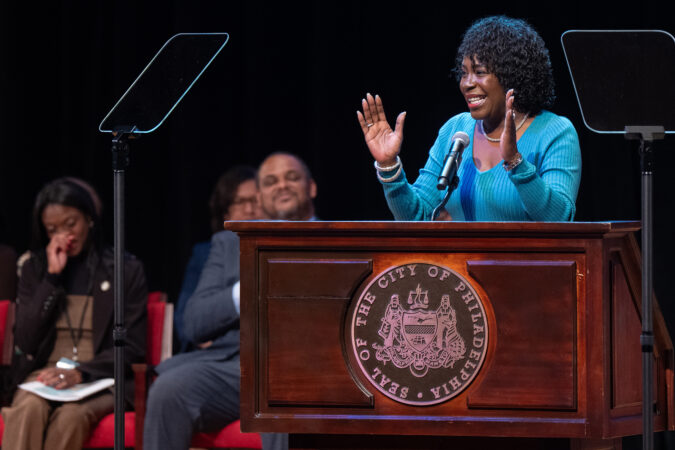
    Mayor Cherelle L. Parker marked the halfway point of her term as mayor Friday by portraying the city as safer and more stable than when she took office two years ago, pointing to metrics like the plummeting homicide rate and cleaner streets.

    During her second end-of-year State of the City speech, Parker also briefly acknowledged challenges she faced this past year, including the eight-day city worker strike and a spat with City Council over her signature housing plan.

    And she outlined a plan to address rising street homelessness heading into 2026, when the city will host several major events expected to draw more than a million visitors.

    Parker outlined a plan to address rising street homelessness heading into 2026, when the city will host several major events expected to draw millions of visitors, during her end-of-year speech at Temple University Friday.

    “I am here today to proudly report to all of you,” she said, “that the state of our city is strong and good, and we are moving in the right direction.”

    Parker’s announcement to add 1,000 shelter slots to the city’s system was a stark reminder that — despite progress on public safety and a coming year ripe with opportunity for tourism and growth — some of the city’s longest-term challenges remain unresolved.

    Even as Philadelphia this year shed its long-held title as the “poorest big city in America,” the number of unsheltered people increased by 20% compared to last. While shootings have reached 50-year lows, the open-air drug market that has long plagued Kensington persists.

    And after the mayor this year unveiled a long-awaited plan to build thousands of units of housing in the city, she hit roadblocks in City Council, where members rejected her vision to bolster the middle class in favor of a plan that prioritizes the poorest Philadelphians.

    Still, Parker and members of her administration struck an optimistic tone Friday. During the highly produced event, top officials repeatedly proclaimed that the “state of the city” is strong, and they thanked municipal employees in attendance, like police officers and sanitation workers.

    Parker’s State of the City address last year was Philadelphia’s first. Traditionally, the mayor’s March budget address to Council was seen as the city’s version of the presidential State of the Union speech in Congress. Parker plans to make the December event an annual tradition as well.

    Here are three takeaways from Parker’s speech Friday in North Philadelphia:

    A homelessness plan is in the works for 2026

    In the middle of her speech, Parker signed an executive order on stage, directing city departments to add 1,000 new beds to the existing shelter system by Jan. 31. That would represent a 35% increase in the number of beds citywide.

    The move comes as city data shows homelessness in the city is rising. There were 1,178 unsheltered people in Philadelphia this year, a 20% increase over last year and the highest number recorded since at least 2018, according to city data.

    In total, 5,516 people were considered homeless, a number that includes people who live in emergency shelters, are couch surfing, or otherwise lack an adequate nighttime residence. That number is up slightly from 5,191 last year.

    Parker’s executive order directs city agencies to increase outreach efforts to people living on the streets and to collaborate with the Philadelphia Housing Authority to move people from shelters to more stable housing.

    “We are seeking long-term solutions,” she said, “Solutions that will not only provide an expanded quality shelter system, but with more beds in safe, clean, and welcoming environments.”

    Philadelphia Mayor Cherelle L. Parker holds up executive order ending street homelessness.

    30,000-unit housing plan swells to 50,000

    The mayor’s second year in office was in part defined by her plan to build, repair, or preserve 30,000 units of housing. In March, she unveiled her Housing Opportunities Made Easy, or H.O.M.E., plan, funded by $800 million in bonds.

    Parker made clear that her plan would be aimed at uplifting the middle class and often vowed never to pit “the have-nots against the have-a-little-bits.” But City Council this month advanced its own version of the proposal, rejecting Parker’s vision and directing more resources to the poorest Philadelphians.

    It was the most significant break between Parker and the legislative branch of her tenure. But the mayor on Friday defended her strategy, saying the middle class should not be asked to wait for access to housing programs.

    “You want me to tell you why we shouldn’t tell them to wait?” she said. “Because when I knocked on their doors and asked for their votes — and we’re running for reelection — we don’t ask them to wait.”

    Of Council’s 17 members, just four attended Parker’s speech Friday: Anthony Phillips, a close ally, as well as Rue Landau, Jamie Gauthier, and Nicolas O’Rourke — three progressives who led the effort to amend her housing plan. They sat in the front row.

    Parker struck a conciliatory tone, saying: “We will work together to press forward together, and we won’t let petty politics get in the way of us moving Philadelphia forward.”

    The mayor also made clear Friday that her 30,000-unit benchmark is separate from a plan being advanced by the Philadelphia Housing Authority, which is pursuing an ambitious expansion plan that Parker said would add an additional 20,000 units of affordable housing.

    “When you add our H.O.M.E. goal of 30,000 units with that 20,000, those are 50,000 units of housing,” Parker said, “and we shouldn’t have to leave any neighborhood behind.”

    Parker acknowledges city worker strike

    The most dramatic moment of Parker’s second year was undoubtedly the eight-day-and-four-hour city worker strike, Philadelphia’s first major municipal work stoppage in four decades.

    On Friday, Parker touted her administration’s work negotiating new contracts this year for almost all of the city’s major municipal unions. She acknowledged, but didn’t dwell on, the strike by the American Federation of State, County and Municipal Employees District Council 33.

    “We did have to endure an eight-day work stoppage,” she said. “But guess what we did? In true Philadelphia fashion … we got through it. It wasn’t easy, but we persevered together, and we found common ground, and we reached a fair and fiscally responsible agreement with both District Council 33 and District Council 47.”

    DC 33, the largest and lowest-paid union for city workers, called the strike when their previous contract expired at 12:01 a.m. July 1, the first minute the union was legally allowed to walk off the job. Union president Greg Boulware promised his members wouldn’t return to work unless they won raises of 5% per year.

    Over the next week, “Parker piles” of trash mounted across the city, and tensions mounted at picket lines. But Parker refused to budge.

    Boulware eventually called off the strike and accepted a contract with raises of 3% per year, which is close to Parker’s last offer before the strike. The deal also included $1,500 onetime bonuses for the union’s roughly 9,000 members and the addition of a fifth step in the DC 33 pay scale, a benefit for veteran employees.

    Parker also defended the city’s treatment of DC 33 under her tenure. Repeating an administration talking point from the strike, Parker noted that the union’s accumulated pay increases — combining raises the union won in a one-year contract during Parker’s first year with the increases included in the new three-year deal — will be higher in her first term than under any other mayoral term since the 1990s.

    “Just for the record, I also need to affirm — because sometimes people [create] revisionist history — I want to be clear that they were historic pay increases for our city workers,” Parker said. “It’s the largest in one term from any Philadelphia mayor over 30 years.”

  • A Guide to the 2026 Philadelphia Mummers Parade

    A Guide to the 2026 Philadelphia Mummers Parade

    This year marks the 125th anniversary of the Philadelphia Mummers Parade, that colorful, boisterous procession that has come to define New Year’s Day in the city.

    The festivities kick off at 9 a.m. on Thursday, Jan. 1, as more than 10,000 performers take to the streets for a daylong celebration USA Today readers recently hailed as the nation’s best holiday parade.

    From parking to road closures to how to go about watching, here’s everything you need to know ahead of time.

    Kasey McCullough kisses her son Finn, 5, after his appearance with Bill McIntyre’s Shooting Stars during their performance in the Fancy Brigade Finale at the Convention Center Wednesday, Jan. 1, 2025, part of the Philadelphia Mummers New Year’s Day parade. Their theme is “Legends of the Secret Scrolls.” Finn’s dad, Jim McCullough also performed, his 40th year with the Mummers. They are from Washington Twp.Washington Township, N.J.

    Mummers Parade route

    The mile-and-a-half route begins at City Hall, before heading south down Broad Street to Washington Avenue in South Philadelphia.

    How to watch the 2026 Mummers Parade

    Watch the Mummers Parade in person

    The parade is free to attend. Those hoping for a more intimate experience, however, have a few options:

    • Reserved bleacher seats located near the judging stand just west of City Hall are available for $25 at visitphilly.com.
    • Additionally, tickets to the Fancy Brigade Finale — held at 11:30 a.m. and 5 p.m. inside the Convention Center — range from $28 to $43. Tickets are available at visitphilly.com or during business hours at the Independence Visitor Center.

    Watch the Mummers Parade from home

    The parade will be broadcast from 9 a.m. to 5 p.m. on:

    Members of the Saints wench brigade step to the judges’ stand during the 124th Mummers Parade on Wednesday, Jan. 1, 2025.

    What is the Mummers Parade?

    In short, it’s the longest continuously running folk parade in the country. Some 10,000 elaborately dressed performers take part in the celebration each year, part of dozens of groups spread across several divisions.

    • Fancies: Painted faces and elaborate costumes.
    • Comics: Satirical comedy skits aimed at public figures, institutions, and current events.
    • Wench Brigades: Known for traditional Mummers costumes, including dresses, bloomers, and bonnets.
    • Fancy Brigades: Theatrical performances. (The Fancy Brigade Finale takes place on New Year’s Day with a pair of ticketed performances at the Convention Center at 11:30 a.m. and 5 p.m.)
    • String Bands: Marching musicians playing an assortment of string and reed instruments.

    Mummers Parade performers

    Fancy Division

    • Golden Sunrise

    Wench Brigade Division

    • Froggy Carr
    • Pirates
    • Americans
    • Cara Liom
    • MGK
    • O’Malley
    • Oregon
    • Saints
    • Riverfront
    • Bryson
    • Comic Division

    Mother Club: Landi Comics NYA

    • Philadelphia Pranking Authority
    • Mayfair Mummers
    • Barrels Brigade
    • The Jacks

    Mother Club: Rich Porco’s Murray Comic Club

    • Holy Rollers NYB
    • Vaudevillains NYB
    • Trama NYB
    • Wild Rovers NYB
    • Mollywoppers NYB
    • Merry Makers NYB
    • Misfits NYB
    • Fitzwater NYB
    • Funny Bonez NYB
    • Top Hat NYB
    • Fiasco NYB
    • Golden Slipper NYB
    • B. Love Strutters
    • Madhatters NYB
    • Tankie’s Angels NYB
    • The Leftovers NYB
    • Finnegan NYB

    Mother Club: Goodtimers NYA

    • SouthSide Shooters NYA
    • Jokers Wild NYB
    • Hog Island NYA
    • Pinelands Mummers NYB
    • Happy Tappers NYB
    • Two Street Stompers NYB
    • Gormley NYB
    • Jesters NYB
    • Lobster Club NYB
    • South Philly Strutters NYB
    • Jolly Jolly Comics NYB

    String Band Division

    • Duffy String Band
    • Durning String Band
    • Quaker City String Band
    • Fralinger String Band
    • Uptown String Band
    • Avalon String Band
    • South Philadelphia String Band
    • Aqua String Band
    • Greater Kensington String Band
    • Woodland String Band
    • Polish American String Band
    • Ferko String Band
    • Hegeman String Band
    • Jersey String Band
    Members of Froggy Carr chant as they strut to Market Street during the 124th Philadelphia Mummers Parade on Wednesday, Jan. 1, 2025.

    Mummers Parade-day hacks

    Navigating the heavily attended event can require a bit of planning, with entire Reddit threads devoted to parade-day tips — including the best places to park and how to access elusive public restrooms throughout the day.

    A few things to keep in mind: The parade is accessible through SEPTA Regional Rail, bus, subway, and trolley lines. And though parking is free because of the holiday, it’s expected to be scarce.

    While the heart of the action takes place near City Hall and Dilworth Park, performance areas will also be located along the parade route — at Broad Street at Sansom, Pine, and Carpenter Streets.

    Starting at 11 a.m., meanwhile, parade attendees can gather at the staging area for the string bands to watch the performers prepare. (The staging areas are located at Market Street between 17th and 21st Streets and JFK Boulevard between 17th and 20th Streets.)

    Also good to remember? Dress warm, bring a lawn chair (they’re permitted), and pace yourself — it has the potential to be a very long day.

    Ferko String Band tenor sax players Renee Duffy of Deptford (left) and Tom Garrity of Berlin take a break from the parade as they ride in the bands truck on South Broad Street during the Mummers Parade in Philadelphia on New Year’s Day, Wednesday, Jan. 1, 2025.

    Mummers Parade road closures and parking restrictions

    Friday, Dec. 26, 2025

    No parking from 6 p.m. on Dec. 26 through 6 p.m. on Jan. 2, on the east curb lane of 15th Street from JFK Boulevard to South Penn Square.

    Saturday, Dec. 27, 2025

    No parking from 6 p.m. on Dec. 27 through 7 a.m. on Jan. 2, on the west side of 15th Street from Arch Street to Ranstead Street. Street and sidewalk vendors will also not be permitted to park in this area.

    Monday, Dec. 29, 2025

    15th Street will be closed to southbound traffic at JFK Boulevard. Closure begins at 8 a.m. on Dec. 29 and runs through 7 a.m. Jan. 2.

    Market Street eastbound will be closed to traffic at 16th Street from 8 a.m. on Dec. 29 through 7 a.m. on Jan. 2.

    Tuesday, Dec. 30, 2025

    No parking on the following streets from 4 a.m. on Dec. 30 through 6 p.m. on Jan. 1:

    •  Market Street from 15th Street to 21st Street (both sides)
    • JFK Boulevard from Juniper Street to 20th Street (both sides)

    15th Street will be closed to southbound traffic at JFK Boulevard. Closure begins at 7 a.m. on Dec. 30 and runs through 7 a.m. Jan. 2.

    Wednesday, Dec. 31, 2025

    Market Street will be closed to vehicle traffic from 15th Street to 21st Street from 10 a.m. to 3 p.m. on Dec. 31. Market Street will reopen at 3 p.m. and traffic will be permitted to travel eastbound on Market Street to 15th Street and continue southbound on 15th Street.

    Thursday, Jan. 1, 2026

    The following streets will be closed to vehicle traffic beginning at 3 a.m. on Jan. 1 through the parade’s conclusion:

    • 15th Street from Arch Street to Chestnut Street
    • Market Street from 15th Street to 21st Street

    These streets will be closed to vehicle traffic beginning at 6 a.m. on Jan. 1 through the conclusion of the parade:

    • Benjamin Franklin Parkway from 16th Street to 20th Street
    • North Broad Street from Cherry Street to JFK Boulevard
    • 16th Street from Chestnut Street to Race Street
    • 17th Street from Benjamin Franklin Parkway to Ludlow Street
    • 18th Street from Ludlow Street to Race Street
    • 19th Street from Benjamin Franklin Parkway to Chestnut Street
    • 1500 block of Ranstead Street
    • 1300 block of Carpenter Street
    • 1000 block of South 13th Street
    • Chestnut Street from 15th Street to 18th Street (north side)
    • Cherry Street from 15th Street to 17th Street
    • Arch Street from 15th Street to 17th Street
    • Washington Avenue from 12th Street to 18th Street

    Broad Street will be closed to vehicle traffic from South Penn Square to Washington Avenue on Thursday, Jan. 1, beginning at 7 a.m. through the conclusion of the parade.

    Vehicle traffic will not be permitted to cross Broad Street during the parade.

    Additional Parking Restrictions

    No parking from 2 a.m. to 6 p.m. on Thursday, Jan. 1 (on both sides of street unless otherwise noted):

    • Broad Street from Cherry Street to Ellsworth Street
    • Juniper Street from JFK Boulevard to East Penn Square
    • South/East Penn Square from 15th Street to Juniper Street
    • Benjamin Franklin Parkway from 16th Street to 20th Street
    • Logan Circle (north side)
    • 16th Street from Chestnut Street to Race Street
    • 17th Street from Benjamin Franklin Parkway to Ludlow Street
    • 18th Street from Ludlow Street to Race Street
    • 19th Street from Benjamin Franklin Parkway to Chestnut Street
    • 1500 block of Ranstead Street
    • 1300 block of Carpenter Street
    • 1000 block of South 13th Street
    • Chestnut Street from 15th Street to 18th Street (north side)
    • Cherry Street from 15th Street to 17th Street
    • Arch Street from 15th Street to 17th Street
    • Washington Avenue from 12th Street to 18th Street

    SEPTA detours

    SEPTA hasn’t updated their schedule for the parade yet, but bus detours, alerts, and information can be found on SEPTA’s website.

    A brief history of the Mummers Parade

    What began in 1901 as a way to corral the city’s annual New Year’s debauchery has transformed into one of its most beloved traditions.

    Inspired by traditions brought to Philly by Swedish, Finnish, Irish, German, English, and African immigrants, the annual event has grown to feature thousands of costumed performers competing in a colorful, unique, and family-friendly daylong affair.

    Despite past funding issues and occasional controversy, the Mummers Parade today stands as one of the city’s quintessential events, celebrated by locals and embraced by Philly royalty; former Eagle Jason Kelce memorably donned a traditional Mummers outfit for the team’s Super Bowl parade in 2018, and actor Kevin Bacon, along with brother Michael, has helped fundraise for the event.

  • In 2026, America needs an anti-AI party | Will Bunch Newsletter

    Sometimes a terrible year can end with a moment of uplift. This actually happened in the last days of 1968, when Apollo 8 took the first humans in orbit around the moon and sent wonder back to a planet struggling with assassinations and riots. Alas, 2025 seems not such a year. A world already reeling from two mass shootings half a world apart learned Sunday night that Hollywood icon Rob Reiner and his wife Michele had been murdered in their home, allegedly by their own son. Boomers like me saw our own journey in that of Reiner — playing a young campus liberal, then taking down the pomposity of classic rock before both an unprecedented streak of classic movies and unparalleled social and political activism. He had more to give, and leaves a void that can’t truly be filled.

    If someone forwarded you this email, sign up for free here.

    Americans fear AI and loathe its billionaires. Why do both parties suck up to them?

    Time’s 2025 person of the year are the architects of AI, depicted in this painting by Jason Seiler. The painting, with nods to the iconic 1932 “Lunch atop a Skyscraper” photograph, depicts tech leaders Mark Zuckerberg, Lisa Su, Elon Musk, Jensen Huang, Sam Altman, Demis Hassabis, Dario Amodei, and Fei-Fei Li.

    “This is the West, sir. When the facts become legend, print the legend.”journalist in the 1962 film, The Man Who Shot Liberty Valance

    The top editors at Time (yes, it still exists) looked west to Silicon Valley and decided to print the legend last week when picking their Person of the Year for the tumultuous 12 months of 2025. It seemed all too fitting that its cover hailing “The Architects of AI” was the kind of artistic rip-off that’s a hallmark of artificial intelligence: 1932’s iconic newspaper shot, “Lunch Atop a Skyscraper,” “reimagined” with the billionaires — including Elon Musk and OpenAI’s Sam Altman — and lesser-known engineers behind the rapid growth of their technology in everyday life.

    Time’s writers strived to outdo the hype of AI itself, writing that these architects of artificial intelligence “reoriented government policy, altered geopolitical rivalries, and brought robots into homes. AI emerged as arguably the most consequential tool in great-power competition since the advent of nuclear weapons.”

    OK, but it’s a tool that’s clearly going to need a lot more work, or architecting, or whatever it is those folks out on the beam do. That was apparent on the same day as Time’s celebration when it was reported that Washington Post editors got a little too close to the edge when they decided they were ready to roll out an ambitious scheme for personalized, AI-driven podcasts based on factors like your personal interests or your schedule.

    The news site Semafor reported that the many gaffes ranged from minor mistakes in pronunciation to major goofs like inventing quotes — the kind of thing that would get a human journalist fired on the spot. “Never would I have imagined that the Washington Post would deliberately warp its own journalism and then push these errors out to our audience at scale,” a dismayed, unnamed editor reported.

    The same-day contrast between the Tomorrowland swooning over the promise of AI and its glitchy, real-world reality felt like a metaphor for an invention that, as Time wasn’t wrong in reporting, is so rapidly reshaping our world. Warts and all.

    Like it or not.

    And for most people (myself included), it’s mostly “or not.” The vast majority understands that it’s too late to put this 21st-century genie back in the bottle, and like any new technology there are going to be positives from AI, from performing mundane organizing tasks that free up time for actual work, to researching cures for diseases.

    But each new wave of technology — atomic power, the internet, and definitely AI — increasingly threatens more risk than reward. And it’s not just the sci-fi notion of sentient robots taking over the planet, although that is a concern. It’s everyday stuff. Schoolkids not learning to think for themselves. Corporations replacing salaried humans with machines. Sky-high electric bills and a worsening climate crisis because AI runs on data centers with an insatiable need for energy and water

    The most recent major Pew Research Center survey of Americans found that 50% of us are more concerned than excited about the growing presence of AI, while only 10% are more excited than concerned. Drill down and you’ll see that a majority believes AI will worsen humans’ ability to think creatively, and, by a whopping 50-to-5% percent margin, also believes it will worsen our ability to form relationships rather than improve it. These, by the way, are two things that weren’t going well before AI.

    So naturally our political leaders are racing to see who can place the tightest curbs on artificial intelligence and thus carry out the will of the peop…ha, you did know this time that I was kidding, didn’t you?

    It’s no secret that Donald Trump and his regime were in the tank from Day One for those folks out on Time’s steel beam, and not just Musk, who — and this feels like it was seven years ago — donated a whopping $144 million to the Republican’s 2024 campaign. Just last week, the president signed an executive order aiming to press the full weight of the federal government, including Justice Department lawsuits and regulatory actions, against any state that dares to regulate AI. He said that’s necessary to ensure U.S. “global AI dominance.”
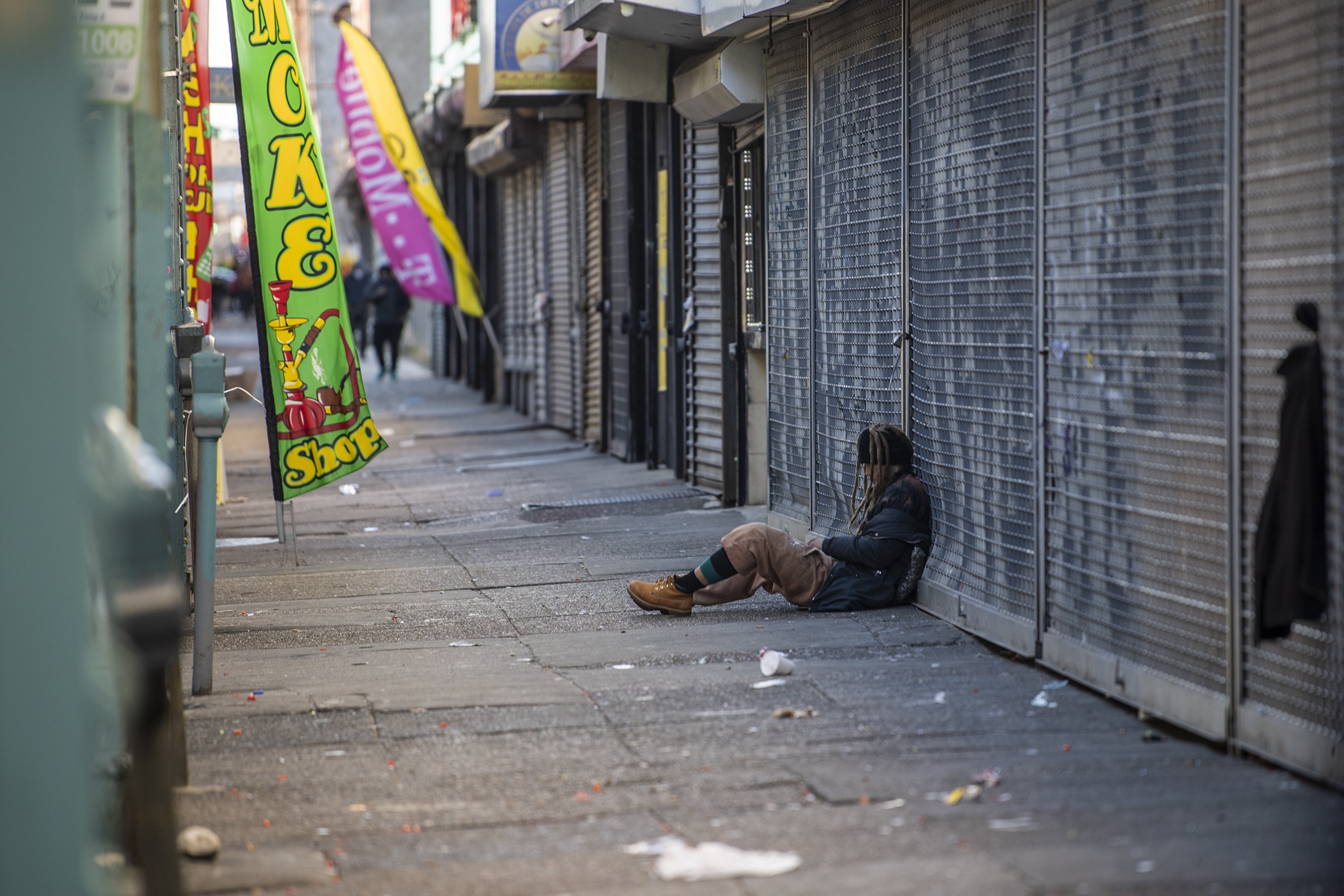
    This is a problem when his constituents clearly want AI to be regulated. But it’s just as big a problem — perhaps bigger — that the opposition party isn’t offering much opposition. Democrats seem just as awed by the billionaire grand poobahs of AI as Trump. Or the editors of Time.

    Also last week, New York Democratic Gov. Kathy Hochul — leader of the second-largest blue state, and seeking reelection in 2026 — used her gubernatorial pen to gut the more-stringent AI regulations that were sent to her desk by state lawmakers. Watchdogs said Hochul replaced the hardest-hitting rules with language drafted by lobbyists for Big Tech.

    As the American Prospect noted, Hochul’s pro-Silicon Valley maneuvers came after her campaign coffers were boosted by fundraisers held by venture capitalist Ron Conway, who has been seeking a veto, and the industry group Tech:NYC, which wants the bill watered down.

    It was a similar story in the biggest blue state, California, where Gov. Gavin Newsom in 2024 vetoed the first effort by state lawmakers to impose tough regulations on AI, and where a second measure did pass but only after substantial input from lobbyists for OpenAI and other tech firms. Silicon Valley billionaires raised $5 million to help Newsom — a 2028 White House front-runner — beat back a 2021 recall.

    Like other top Democrats, Pennsylvania Gov. Josh Shapiro favors some light regulation for AI but is generally a booster, insisting the new technology is a “job enhancer, not a job replacer.” He’s all-in on the Keystone State building massive data centers, despite their tendency to drive up electric bills and their unpopularity in the communities where they are proposed.

    Money talks, democracy walks — an appalling fact of life in 2025 America. In a functioning democracy, we would have at least one political party that would fly the banner of the 53% of us who are wary of unchecked AI, and even take that idea to the next level.

    A Harris Poll found that, for the first time, a majority of Americans also see billionaires — many of them fueled by the AI bubble — as a threat to democracy, with 71% supporting a wealth tax. Yet few of the Democrats hoping to retake Congress in 2027 are advocating such a levy. This is a dangerous disconnect.

    Time magazine got one thing right. Just as its editors understood in 1938 that Adolf Hitler was its Man of the Year because he’d influenced the world more than anyone else, albeit for evil, history will likely look back at 2025 and agree that AI posed an even bigger threat to humanity than Trump’s brand of fascism. The fight to save the American Experiment must be fought on both fronts.

    Yo, do this!

    • I haven’t tackled much new culture this month because I’ve been doing something I so rarely do anymore: Watching a scripted series from start to finish. That would be Apple TV’s Pluribus, the new sci-fi-but-more-than-sci-fi drama from television genius Vince Gilligan. True, one has to look past some logistical flaws in its dystopia-of-global-happiness premise, but the core narrative about the fight for individualism is truly a story of our time. The last two episodes come out on Dec. 19 and Dec. 26, so there’s time to catch up!
    • The shock and sorrow of Rob Reiner’s murder at age 78 has, not surprisingly, sparked a surge of interest in his remarkable, and remarkably diverse, canon of classic movies. His much-awaited sequel Spinal Tap II: The End Continues began streaming on HBO Max just two days before his death. Check it out, or just re-watch the 1984 original, which is one of the funniest flicks ever made, and which is also streaming on HBO Max and can be rented on other popular sites. Crank it up to 11.

    Ask me anything

    Question: What news value, not advertising value, is accomplished by publicizing every one of Trump’s insane rantings daily? — @bizbodeity.bsky.social via Bluesky

    Answer: This is a great question, and the most recent and blatant example which I assume inspired it — Trump’s stunningly heartless online attack against a critic, Hollywood icon Rob Reiner, just hours after his violent murder — proves why this is a painful dilemma for journalists. I’d argue that Trump’s hateful and pathologically narcissistic post was a deliberate troll for media attention, to make every national moment about him. In a perfect world, it would indeed be ignored. But it was highly newsworthy that his Truth Social post was so offensive that it drew unusual criticism from Republicans, Evangelicals, and other normal supporters. We may remember this is as a political turning point. Trump’s outbursts demand sensitivity, but that Americans elected such a grotesque man as our president can’t easily be ignored.

    What you’re saying about…

    It’s been two weeks since I asked about Donald Trump’s health, but the questions have not gone away. There was not a robust response from readers — probably because I’d posed basically the same question once before. Several of you pointed to expert commentary that suggests the president is experiencing significant cognitive decline, perhaps suffering from frontotemporal dementia. Roberta Jacobs Meadway spoke for many when she lambasted “the refusal if not the utter failure of the once-major news outlets to ask the questions and push for answers.”
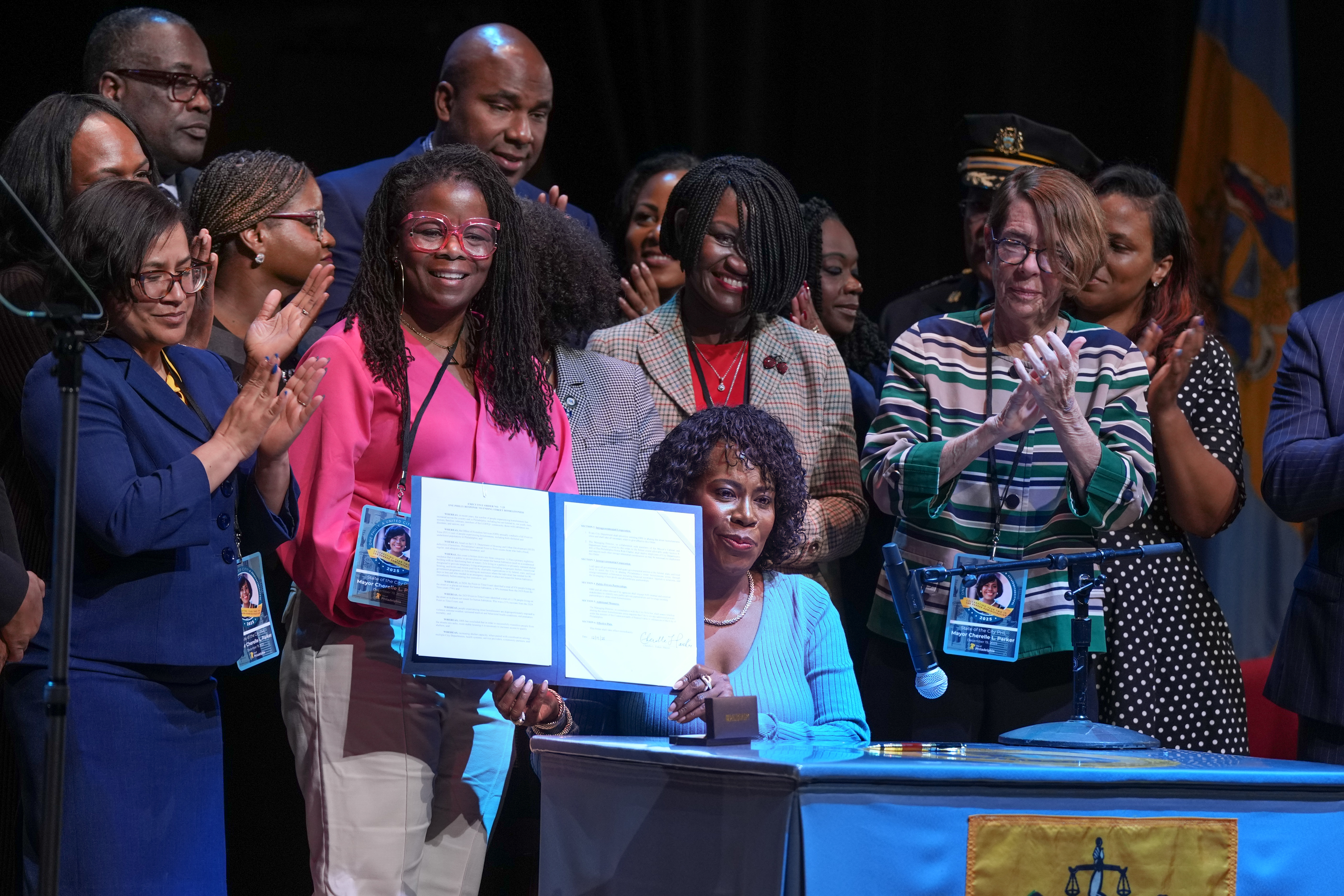
    📮 This week’s question: We are going to try an open-ended one to wrap up 2025: What is your big prediction for 2026 — could be anything from elections to impeachment to the Eagles repeating as Super Bowl champs — and why. Please email me your answer and put the exact phrase “2026 prediction” in the subject line.

    Backstory on how I covered an unforgettable year

    Rick Gomez, who travelled 65 hours by bus from Phoenix, Ariz., holds an AI photo composite poster of Donald Trump, in Washington, the day before Trump took the Oath of Office to become the 47th president of the United States.

    Barring the outbreak of World War III — something you always need to say these days — this is my final newsletter, or column, of 2025, as I use up my old-man plethora of vacation days. To look back on America’s annus horribilis, I thought I’d revive a feature from my Attytood blogging days: a recap of the year with the five most memorable columns, not numbered in order of significance. Here goes:

    1. A year that many of us dreaded when the votes were counted in November 2024 began for me with a sad reminder that the personal still trumps the political, when my 88-year-old father fell ill in the dead of winter and passed away on March 11. I wrote about his life, but also what his passion for science and knowledge said about a world that, at the end of his life, was slipping away: Bryan H. Bunch (1936-2025) and the vanishing American century of knowledge.
    2. Still, Donald J. Trump could not be ignored. On Jan. 19, I put on my most comfortable shoes (it didn’t really help) and traipsed around a snowy, chilly Washington, D.C. as the about-to-be 47th president made his “forgotten American” supporters wait on a soggy, endless line for a nothingburger rally while the architects of AI and other rich donors partied in heated luxury, setting the tone for a year of gross inequality: American oligarchy begins as Trump makes billions while MAGA gets left out in the rain.
    3. One of the year’s biggest stories was Trump’s demonizing of people of color, from calling Somali immigrants “garbage” to his all out war on DEI programs that encouraged racial diversity, when the truth was always far different. In February, I wrote about the American dream of a young man from Brooklyn of Puerto Rican descent and his ambition to become an airline pilot, who perished in the D.C. jet-helicopter crash. His remarkable life demolished the MAGA lie about “DEI pilots.” Read: “Short, remarkable life of D.C. pilot Jonathan Campos so much more than Trump’s hateful words.”
    4. If you grew up during the 1960s and ‘70s, as I did, then you understand the story of our lifetimes as a battle for the individual rights of every American — for people to live their best lives regardless of race or gender, or whether they might be transgender, or on the autism spectrum. I wrote in October about the Trump regime’s consuming drive to reverse this, to make it a crime to be different: From autism to beards, the Trump regime wages war on ‘the different
    5. A grim year did end on one hopeful note. Trump’s push for an authoritarian America is faltering, thanks in good measure to the gumption of everyday people. This month, I traveled to New Orleans to chronicle the growing and increasingly brave public resistance to federal immigration raids, as citizens blow whistles, form crowds and protest efforts to deport hard-working migrants: In New Orleans and across U.S., anger over ICE raids sparks a 2nd American Revolution

    What I wrote on this date in 2021

    On this date four years ago, some of us were still treating Donald Trump’s attempted Capitol Hill coup of Jan. 6, 2021 like a crime that could be solved so that the bad guys could be put away. On Dec. 16, 2021, I published my own theory of the case: that Team MAGA’s true goal was provoking a war between its supporters and left-wing counterdemonstrators, as a pretext for sending in troops and stopping Congress from finishing its certification of Joe Biden’s victory. That didn’t happen because the leftists stayed home. More than 1,000 pardons later, check out my grand argument: “A theory: How Trump’s Jan. 6 coup plan worked, how close it came, why it failed.”

    Recommended Inquirer reading

    • Only one column this week, as this senior citizen was still recovering from that grueling trip to New Orleans. On Sunday, I reacted with the shock and sadness of seeing a mass shooting at my alma mater, Brown University. I wrote that in a nation with 500 million guns, it’s a virtual lock that some day our families — nuclear or extended, like the close-knit Brown community — will be struck by senseless violence. And I took sharp issue with Trump’s comment that “all you can do is pray.” There is much that can and should be done about gun safety.
    • Sometimes the big stories are the ones that play out over decades, not days. When I first started coming regularly to Philadelphia at the end of the 1980s, the dominant vibe was urban decline. The comeback of cities in the 21st century has altered our world, for good — but a lot of us old-timers have wondered: Just who, exactly, is moving into all these new apartments from Center City to Kensington and beyond? Last week, The Inquirer’s ace development reporter Jake Blumgart took a deep dive into exactly that — highlighting survey results that large numbers are under 45, don’t own a car, and moved here from elsewhere, and telling some of their stories. Local journalism is the backbone of a local community, and you are part of something bigger when you subscribe to The Inquirer. Plus, it’s a great Christmas gift, and you’ll get to read all my columns in 2026. See you then!

    By submitting your written, visual, and/or audio contributions, you agree to The Inquirer‘s Terms of Use, including the grant of rights in Section 10.

  • Philly Council greenlights new retirement savings program as part of year-end legislative blitz | City Council roundup

    Philly Council greenlights new retirement savings program as part of year-end legislative blitz | City Council roundup

    Philadelphians without retirement savings plans through their employers could soon have access to a plan through the city after lawmakers approved legislation Thursday to enable the novel program to move forward.

    City Council members unanimously passed legislation that creates PhillySaves, which is modeled on state-facilitated “auto-IRA” programs that allow people to invest through payroll deductions at no cost to their employers.

    Voters would have to approve the creation of an investment management board through a ballot question, which is slated to appear in the May primary election.

    The measure was part of a flurry of legislation Council considered during a marathon meeting Thursday, its last session of the year before legislators reconvene in mid-January. Lawmakers passed dozens of pieces of legislation touching on issues including housing, public health, small-business growth, and public safety.

    In addition to approving the retirement savings program, Council approved legislation to:

    Here’s a breakdown of what else happened on Thursday:

    H.O.M.E. inches forward over Parker’s objections

    City Council on Thursday approved a key piece of legislation related to Mayor Cherelle L. Parker’s Housing Opportunities Made Easy, or H.O.M.E., initiative, the latest step in the drawn-out fight over how the city should spend the proceeds from the $800 million in city bonds the administration plans to sell to support the program.

    Mayor Cherelle L. Parker speaks to the crowd at The Church of Christian Compassion in the Cobbs Creek neighborhood of West Philadelphia on Sunday, Dec. 7, 2025. Parker visited 10 churches in Philadelphia on Sunday to share details about her HOME housing plan

    The legislation — a resolution setting the first-year budget for the initiative at about $270 million — sparked a contentious showdown between lawmakers and the administration over income eligibility levels for the housing programs funded or created by H.O.M.E.

    The resolution was approved in a voice vote, with Councilmember Curtis Jones Jr. casting the lone no vote.

    Over Parker’s objections, Council successfully pushed to lower income eligibility thresholds, prioritizing poorer residents. For instance, lawmakers ensured that 90% of the bond proceeds that will be spent on the Basic Systems Repair Program will go to households making 60% of area median income, which is about $71,640 for a family of four.

    “This budget opens city housing programs to ensure that more than 200,000 low-income and working-family households have a chance to get into a program that provides housing stability and economic mobility and increases,” said Councilmember Rue Landau, who helped lead the push to lower the income thresholds. “This is a transformational investment, a win-win.”

    Supporters react as City Council approves a key piece of legislation related to Mayor Cherelle L. Parker’s H.O.M.E. initiative Thursday, Dec. 11, 25 on the last day of the 2025 session.

    A separate but related piece of legislation — an ordinance authorizing the city to sell the bonds — also needs to pass before the administration can take on debt for the initiative. That proposal, which won committee approval Wednesday, is expected to come to the Council floor in January.

    In a statement Thursday, Tiffany W. Thurman, Parker’s chief of staff, thanked Council for its vote.

    “We look forward to continuing conversations with Council President Kenyatta Johnson and members of City Council in the weeks ahead, and to fulfilling Mayor Parker’s strong vision to save Philadelphia’s rowhomes,” she said.

    Council waters down a bill on training for security officers

    Council approved a bill requiring private security guards in Philadelphia to go through 12 hours of training when they are hired and an additional eight hours of training every subsequent year.

    But the final version of the bill, authored by Councilmember Isaiah Thomas, has been significantly watered down by amendments following a legislative showdown between the Service Employees International Union Local 32BJ, which championed the original version, and real estate and private security industry leaders, which said it was overly onerous and costly.

    Thomas’ original bill required security guards to receive 40 hours of training upon hiring, and it prohibited employers from conducting the training for their own workers. Instead, the instruction had to be provided by a nonprofit — potentially including a labor union. SEIU 32BJ, one of the most influential unions in the city, represents building services workers, including security guards.

    The amended version, however, allows employers to conduct the training after getting approval for their program from the Philadelphia Office of Worker Protections — a major relief for business leaders.

    The new version, which now heads to Parker’s desk, also exempts security guards for bars and restaurants from the training requirements, and pushes back the bill’s effective date from Jan. 1 to March 1.

    An inquiry into DEI contracting changes is coming next year

    City Council next year will examine Parker’s decision to end its long-standing policy of prioritizing women- and minority-owned businesses in city contracting and replace it with a system favoring “small and local” firms.

    Johnson authored a resolution allowing the Committee of the Whole, which includes all 17 members, to look at the history of minority contracting policies in the city and “the rationale, design, and anticipated effects” of Parker’s new policy. The resolution was approved in a unanimous vote, and a hearing will likely be scheduled in the first half of 2026.

    Race- and gender-conscious government policies have been targeted by conservative legal groups following a 2023 U.S. Supreme Court decision ending affirmative action in college admissions. The Inquirer revealed in November that Parker quietly ended the city’s 40-year-old contracting policy earlier this year due to the likelihood it would be challenged in court.

    The mayor has said her new “small and local” policy will accomplish many of the goals of the old system because many small Philadelphia businesses are owned by Black and brown residents and have faced roadblocks to growth.

    Attorneys hired by the city, however, had recommended a race- and gender-neutral policy of favoring “socially and economically disadvantaged” businesses, according to administration documents obtained by The Inquirer.

    Lawmakers will get the chance to weigh in on that decision next year.

    A controversial zoning change passes for University City

    Council on Thursday also approved Councilmember Jamie Gauthier’s controversial University City zoning overlay, which seeks to regulate how higher education institutions dispose of property.

    The legislation has been diluted from its original form, and it now regulates the sale of property over 5,000 square feet in University City — which would largely affect only universities themselves.

    Councilmember Jamie Gauthier in chambers as City Council meets Thursday, Dec. 11, 2025, on the last day of the 2025 session.

    Gauthier has further amended the legislation to exclude healthcare institutions. Among other things, the bill would require that property owners have building permits in hand before they are allowed to move forward on demolitions.

    A sale of land would also trigger review by the Philadelphia City Planning Commission.

    The legislation is part of Gauthier’s outraged response to St. Joseph’s University’s sale of much of its West Philadelphia campus to the Belmont Neighborhood Educational Alliance, a nonprofit that operates charter schools. The organization is led by Michael Karp, who is also one of the larger student-housing landlords in the area.

    Thomas, a Democrat who represents the city at-large, was the only member to vote against the bill. His vote was a break with the tradition of councilmanic prerogative, in which members generally approve legislation offered by Council members who represent geographic areas when the measure affects only their districts.

    Quote of the week

    Councilmember Brian J. O’Neill (left) uses his end-of-session speech in City Council Thursday, Dec. 11, 2025 to say goodbye to longtime legislative director Robert Yerkov (right), who is leaving for a job outside government.

    That was Councilmember Brian J. O’Neill, Council’s longest-serving member, who is typically its shortest-winded. But on Thursday, he took his time in a speech saying goodbye to longtime legislative director Robert Yerkov, whose last day as a Council staffer is next month.

    O’Neill said he was struggling to wrap up his remarks and joked that Council should limit the amount of time that its members can speak. Public commenters are generally limited to three minutes of remarks.

    To quote Shakespeare: “Brevity is the soul of wit.”