Tag: Kensington

  • Restrictions on Kensington outreach services take effect as City Council approves a broader ban

    Restrictions on Kensington outreach services take effect as City Council approves a broader ban

    Philadelphia lawmakers voted Thursday to ban mobile outreach groups that provide medical care and support services to people in addiction across a swath of Kensington, the epicenter of the city’s drug crisis.

    The vote came just days after the city began enforcing controversial new regulations in a different part of the neighborhood, where the same providers may operate only if they have a permit to do so and park in areas designated by the city.

    Taken together, the actions spearheaded by City Council members who represent Kensington and Mayor Cherelle L. Parker’s administration amount to a major shift in how transient people who use drugs obtain medical care and basic needs like food, water, and clothing.

    Many have long relied on mobile outreach services that met them on the street. Those same providers can now park only in designated areas or serve people for limited amounts of time.

    Council members who support the legislation say residents in the neighborhood do not want people in addiction lining up for medical care or support services near their homes.

    Councilmember Mike Driscoll authored the bill banning mobile service providers entirely from his 6th District, which includes parts of the neighborhood that are northeast of the infamous open-air drug market at the intersection of Kensington and Allegheny Avenues.

    Driscoll said his bill, which passed Council 14-3 on Thursday, is not aimed at punishing providers. He said he is open to finding a location in his district where they can operate with the city’s permission.

    “I just don’t want the service providers picking where they want to go at the expense of the kids and the neighbors,” he said.
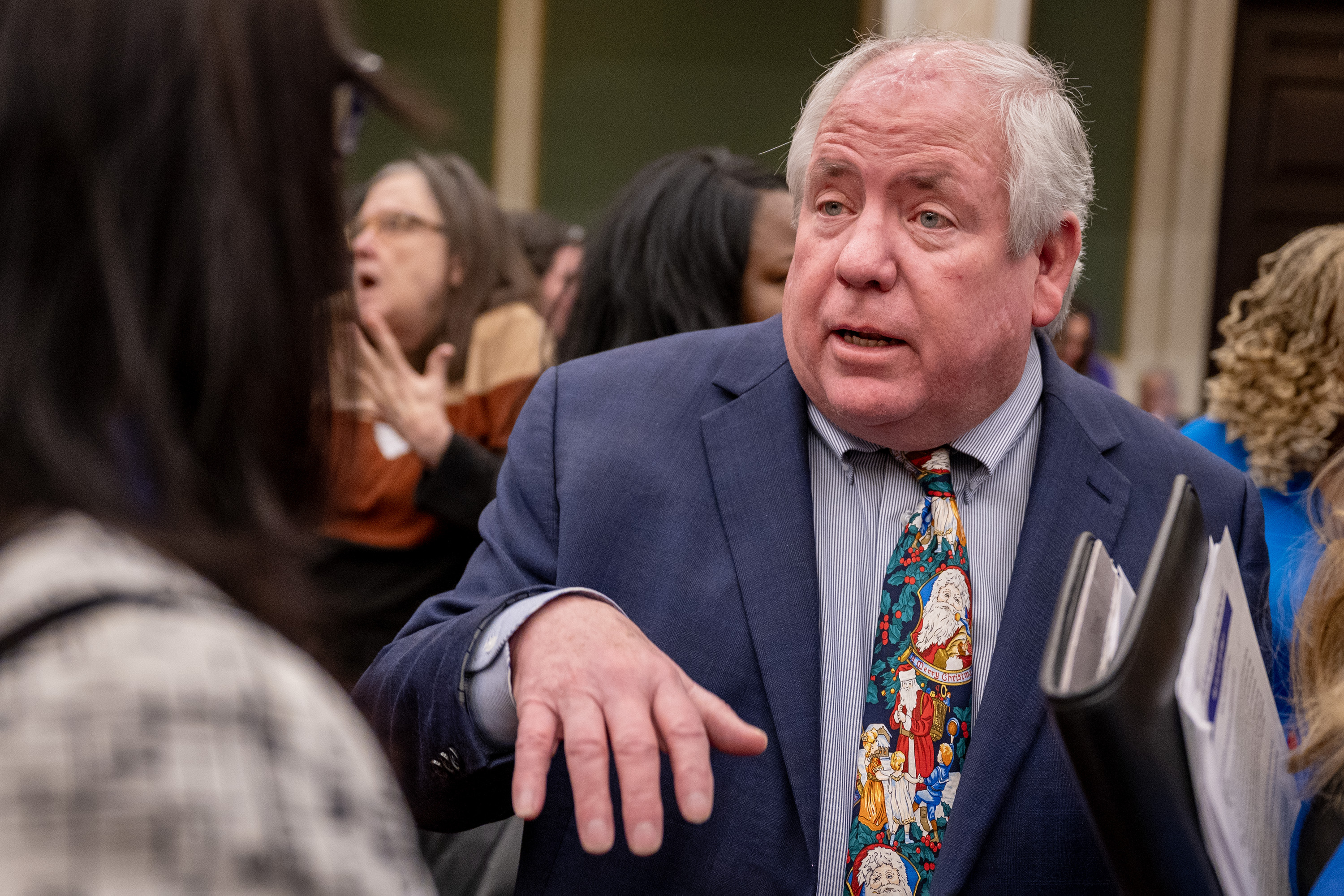
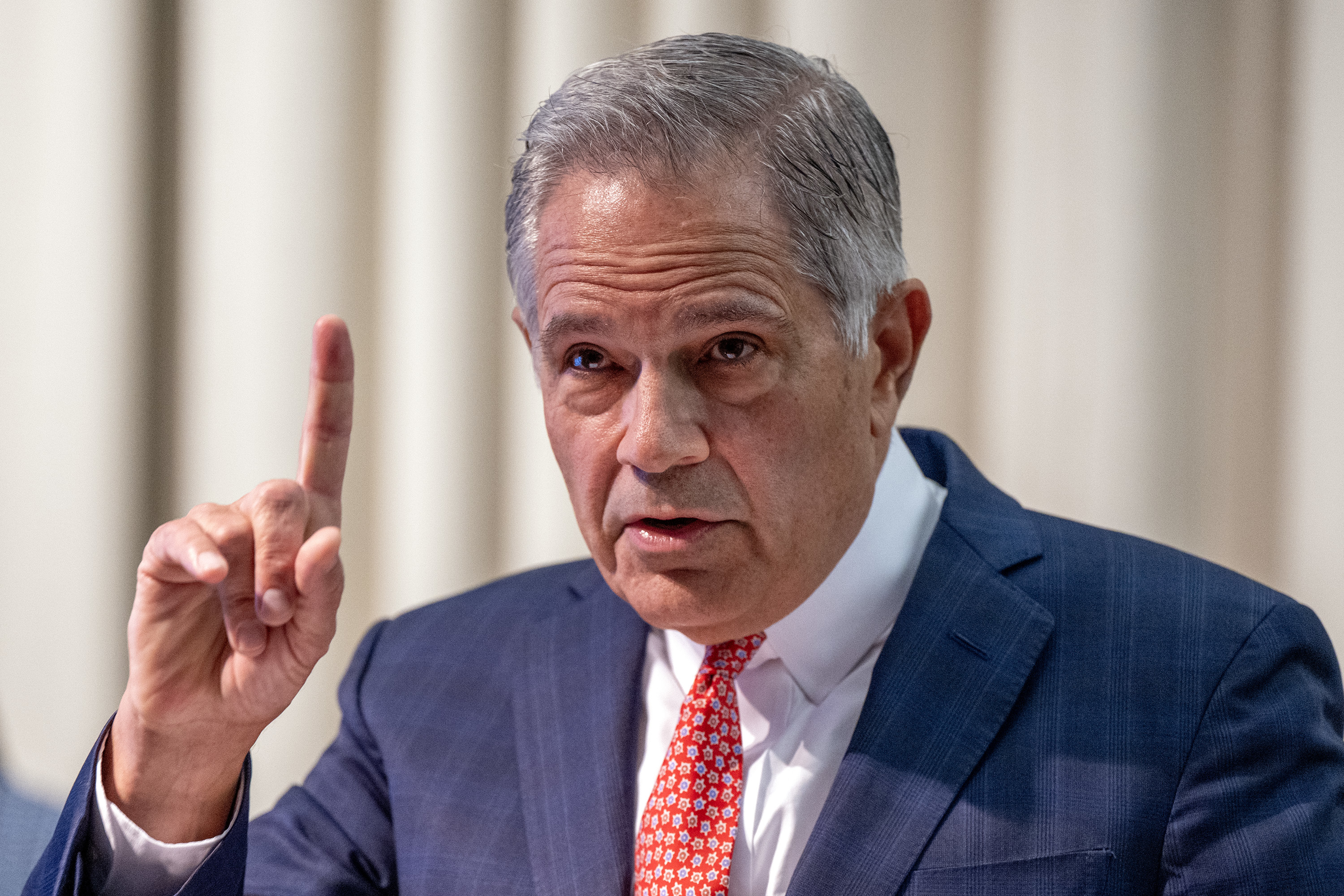
    Councilmember Michael Driscoll in chambers as City Council meets Thursday, Dec. 11, 2025, on the last day of the 2025 session.

    But advocates for people who use drugs slammed the bill, and said reducing access to care will not help people in addiction.

    “Restrictions like these will not end the opioid crisis. They will not make anyone in Kensington or District 6 safer,” said Katie Glick, a nurse who treats people in addiction and lives in the neighborhood. “These restrictions will disable and kill people.”

    In Kensington, inconsistent rules for providers

    If Parker — who has never issued a veto — signs Driscoll’s bill, it would result in a patchwork of rules for mobile service providers in Kensington, which is represented by three different Council members.

    The western side of Kensington is in the 7th District, where Councilmember Quetcy Lozada’s legislation that required the permitting system applies. Organizations that do everything from handing out water to providing medical care now face a $1,000 fine for operating without a permit.

    The city began enforcing those new rules on Dec. 1. No citations had been issued as of Wednesday, police said.

    In the southern parts of Kensington that fall in the 1st District, represented by Councilmember Mark Squilla, no legislation applies to mobile providers.

    (function() {
    var l2 = function() {
    new pym.Parent(‘kensington_districts’,
    ‘https://media.inquirer.com/storage/inquirer/projects/innovation/arcgis_iframe/kensington_districts.html’);
    };
    if (typeof(pym) === ‘undefined’) {
    var h = document.getElementsByTagName(‘head’)[0],
    s = document.createElement(‘script’);
    s.type = ‘text/javascript’;
    s.src = ‘https://pym.nprapps.org/pym.v1.min.js’;
    s.onload = l2;
    h.appendChild(s);
    } else {
    l2();
    }
    })();

    The inconsistency is the result of councilmanic prerogative, the unwritten rule that gives Council members who represent geographic areas a large amount of sway over what happens in their districts. Lawmakers largely approve legislation offered by a district Council member when it affects only that member’s district.

    Some of Council’s progressive members who represent the city at-large have bucked that practice several times on matters related to Kensington, where Parker and her allies in Council have placed an intense focus on improving quality of life.
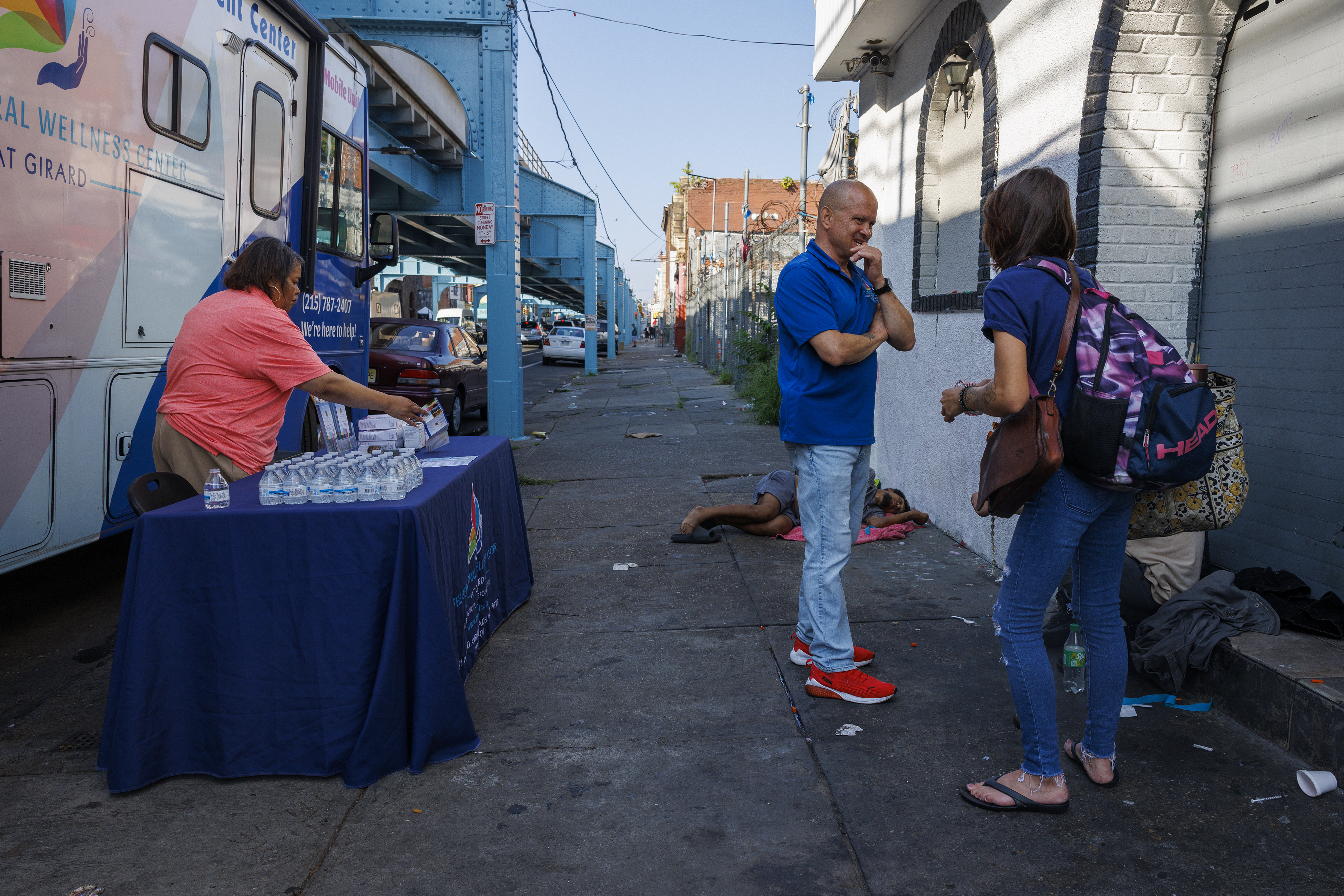
    In this 2023 file photo, the mobile home belonging to the Behavioral Wellness Center at Girard parked along Kensington Avenue. It is one of the city’s so-called mobile service providers that have faced increasing regulation from City Council.

    The progressives — who favor an approach to the crisis called harm reduction that aims to keep people alive until they are ready to enter treatment — argue that placing restrictions on mobile service providers will make it harder for them to reach vulnerable people in addiction and ultimately reduce the number of providers on the street.

    “When human beings are trying to provide help,” said Councilmember Nicolas O’Rourke, “the attitude should never be ‘how can we limit them.’”

    O’Rourke and Councilmember Kendra Brooks, both of the Working Families Party, and Democrat Rue Landau voted against Driscoll’s measure.

    But Lozada said implementing new regulations was not about restricting care.

    “We’re hoping that services continue,” she said. “People have just moved to other spaces to find a way to be able to continue to provide the services that people need.”

    And Parker administration officials said the goal is not to reduce the number of providers, but to better coordinate them and ensure safety, especially for people receiving medical services.
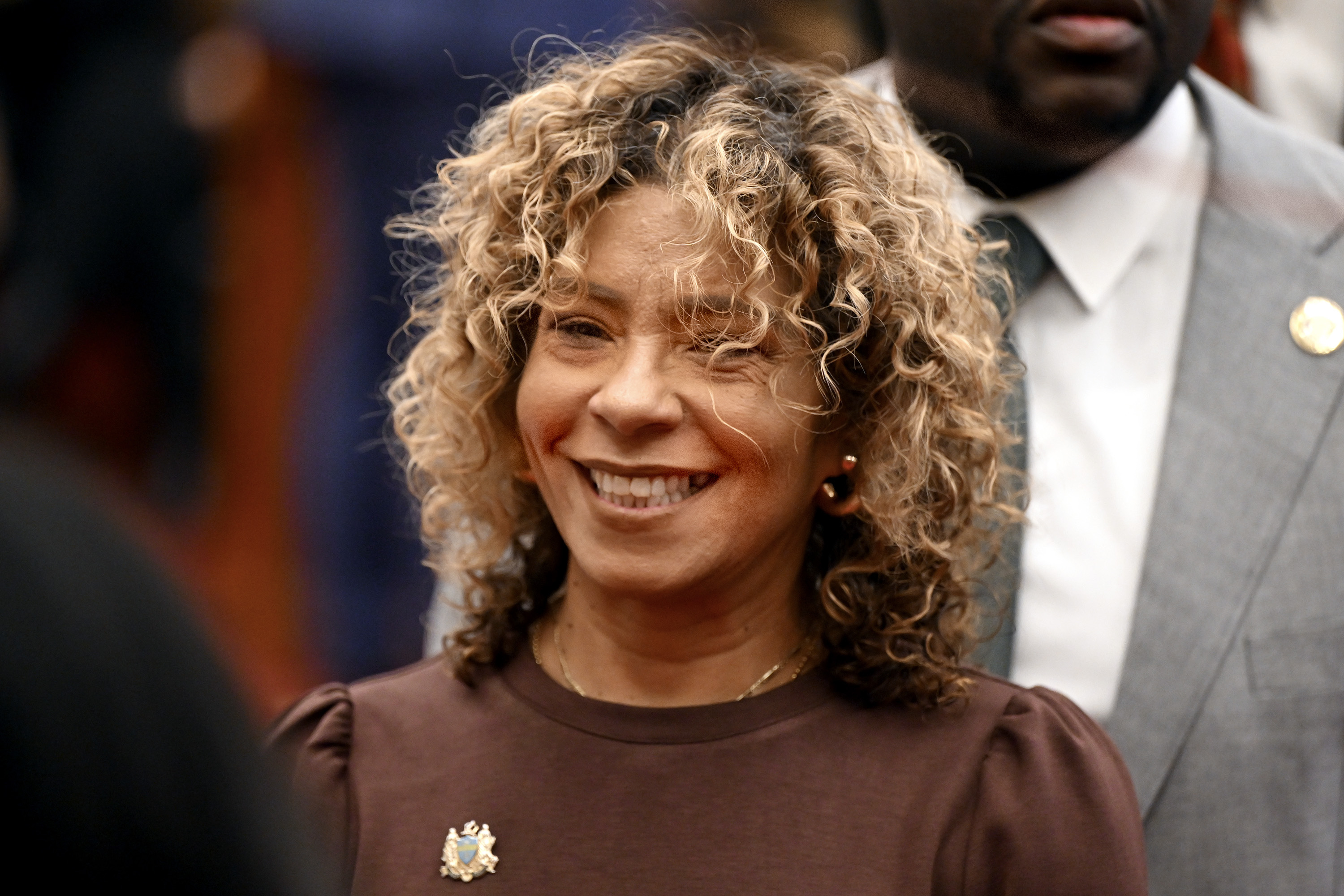
    Councilmember Quetcy Lozada in chambers as City Council meets Thursday, Dec. 11, 2025, on the last day of the 2025 session.

    Kensington has been a key issue for the Parker administration and Council members who have pushed for more law enforcement in the neighborhood, where sprawling homelessness, open drug use, and violent crime have been commonplace for years. There have been some signs of progress, including a reduction in the number of people living on the street.

    The city has tried new tactics, including opening its own recovery house and expanding police foot patrols. The local government has also at times operated its own mobile medical services and contracts with organizations that do so.

    So far, the city has issued nine permits to providers who perform mobile medical services and 40 to organizations considered “nonmedical,” like those that distribute food. Some of those organizations also operate in other neighborhoods.

    “We don’t have a problem if there’s five or 500 providers,” said Crystal Yates-Gale, deputy managing director for health and human services. “As long as they’re qualified to provide the care, and as long as we can help coordinate the care.”

    Despite the changes, city says ‘people are still coming’

    Under the new rules, nonmedical providers are prohibited from staying in one place for more than 45 minutes. Medical providers can station on a two-block stretch of Allegheny Avenue at nighttime or at a designated parking lot at 265 E. Lehigh Ave. during the day.

    That lot, which is managed by the city and addiction service provider Merakey, is connected to the city’s Wellness Support Center.

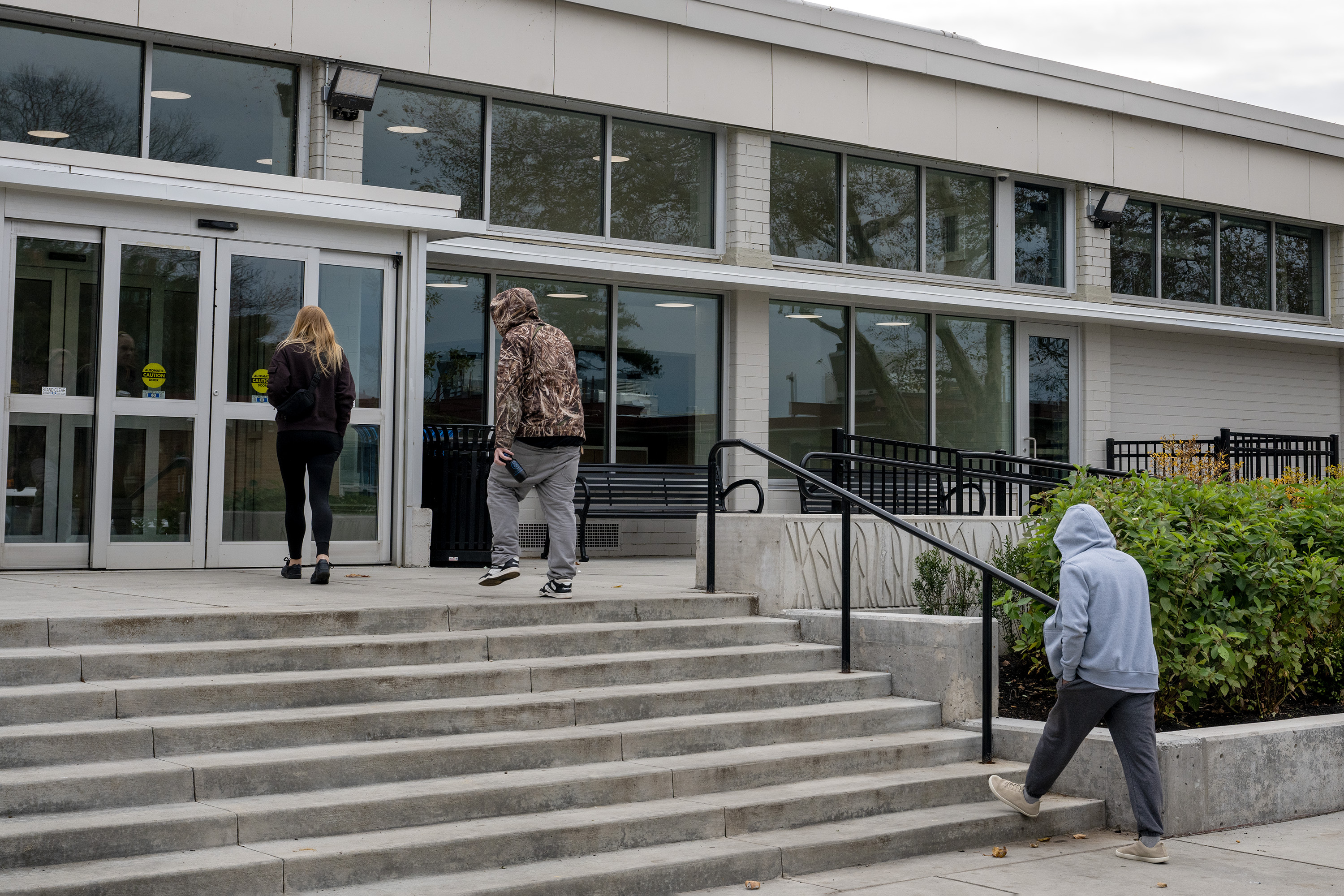
    Inside, people can access first aid, showers, and food, as well as get directed to treatment, legal aid, housing assistance, and other services.
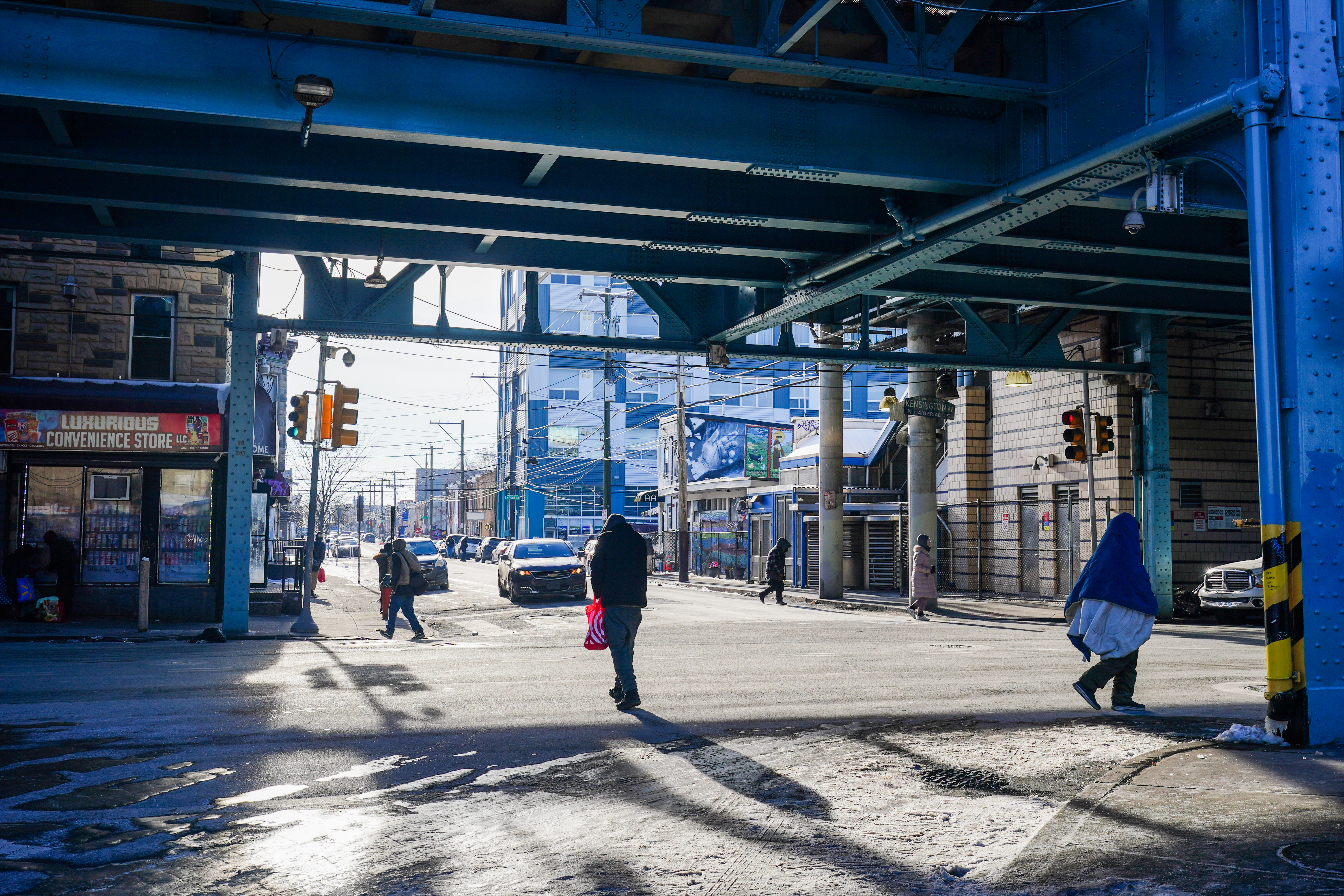
    People walk near Kensington Ave. in January 2025.

    In the parking lot, two mobile medical service providers run by Merakey and Kensington Hospital are currently stationed, according to Kurt August, executive director of the Philadelphia Office of Public Safety’s Criminal Justice Division. He said officials are looking to expand the number of providers that operate there.

    In late October, Merakey began dispensing methadone out of an RV parked in the lot. The tightly regulated opioid medication is a popular treatment for people experiencing withdrawal because it helps stave off cravings.

    Raymond Bobb, a medical director at Merakey, said he has seen promising results in just a few weeks, including starting people on methadone and getting them stable enough to transition to inpatient drug treatment. Merakey offers to transport people on the street to the RV to enroll them in medication-assisted treatment.

    “We’ve been able to take everything right to the heart of the epidemic and engage people the way you would treat your brother, or your sister, or your family,” said Bobb, who is also in recovery and became emotional when speaking about the program.

    “Our goal,” he added, “is to build people up and motivate them to want treatment for themselves.”

    August said retention has been high, despite the police presence at the support center. The officers, he said, were “handpicked” to be stationed alongside behavioral health professionals.

    “It’s not a secret that police are on site, and people are still coming,” August said.

    Still, other providers have expressed concern that requiring people to travel to the lot adds an additional barrier to care, especially for those who were used to mobile services coming to them.

    Sarah Laurel, who runs the addiction outreach program Savage Sisters and has a nonmedical permit, said she fears that providers who offered medication-assisted treatment on the street will now be less accessible.

    However, she said, some clients greeted the news of service limits with a shrug.

    “The friends we serve are so used to not being heard that when they realize that services are going away, they adjust quickly to not having things,” Laurel said. “They just say, ‘No one cares about us. They hate us anyway.’ That is how people feel seen in this city.”

    Staff writer Ellie Rushing contributed to this article.
  • As Philadelphia’s Riverview recovery house expands, residents describe a ‘whole new life’ away from Kensington

    As Philadelphia’s Riverview recovery house expands, residents describe a ‘whole new life’ away from Kensington

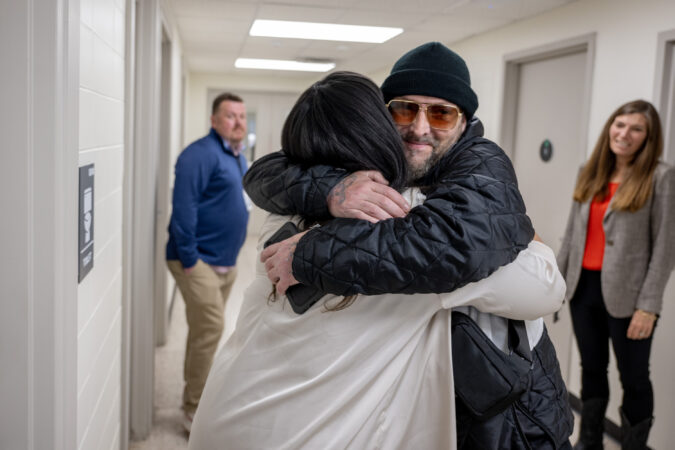
    Kevin Bean was a frail 125 pounds last February when he entered a brand-new recovery house, a facility where he landed after spending four years in the throes of addiction — at times on the streets of Kensington, the epicenter of the city’s drug crisis.

    The Frankford native was one of the first residents to enter the Riverview Wellness Village, the 20-acre recovery facility that Mayor Cherelle L. Parker’s administration opened in Northeast Philadelphia nearly a year ago as part of City Hall’s efforts to address opioid addiction and the Kensington drug market.

    Bean, now 46 and boasting a healthier frame, just celebrated one year of sobriety and is preparing to move out of Riverview early next year.

    He described his transition simply: “whole new life.”

    Much of the mayor’s agenda in Kensington has been visible to the neighborhood’s residents, such as increased law enforcement and a reduction in the homeless population. But the operations and treatment outcomes at Riverview, located down a winding road next to the city’s jail complex, happen largely outside of public view. Last spring, some city lawmakers complained that even they knew little about the facility operations.

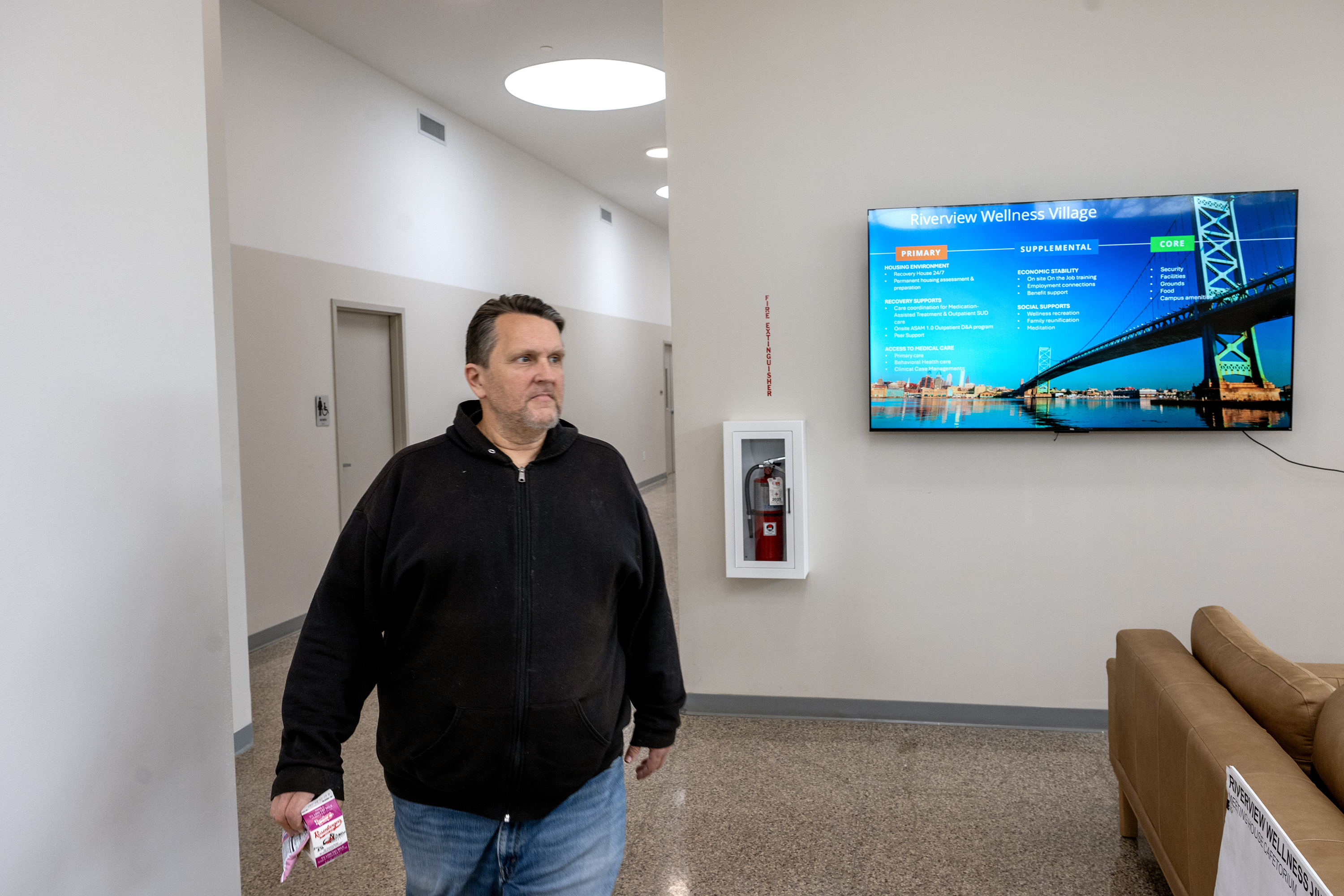
    An inside look at the Riverview complex and interviews with more than a dozen residents and employees showed that, over the last year, the city and its third-party healthcare providers have transformed the facility. What was recently a construction zone is now a one-stop health shop with about 75 staff and more than 200 residents, many of whom previously lived on Kensington streets.

    Those who live and work at Riverview said the facility is plugging a hole in the city’s substance use treatment landscape. For years, there have not been enough beds in programs that help people transition from hospital-style rehab into long-term stability. The recovery house industry has been plagued with privately run homes that are in poor condition or offer little support.

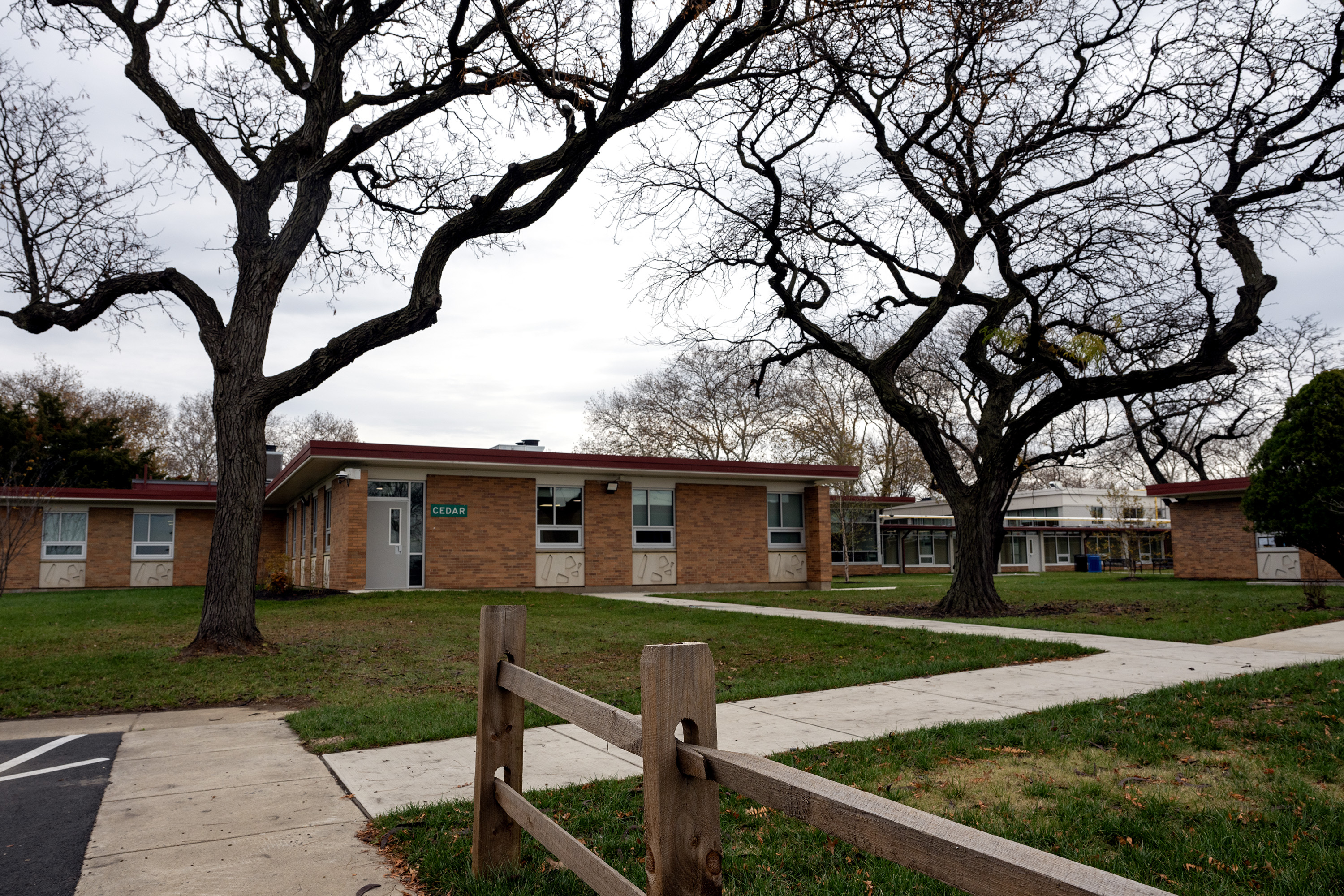
    The grounds and residence buildings at Riverview Wellness Village, a city-owned drug recovery home in Northeast Philadelphia.

    At its current capacity, Riverview has singularly increased the total number of recovery house beds in the city by nearly 50%. And residents — who are there voluntarily and may come and go as they please — have much of what they need on the campus: medical care, mental health treatment, job training, and group counseling.

    They also, as of last month, have access to medication-assisted treatment, which means residents in recovery no longer need to travel to specialized clinics to get a dose of methadone or other drugs that can prevent relapse.

    Arthur Fields, the regional executive director at Gaudenzia, which provides recovery services to more than 100 Riverview residents, said the upstart facility has become a desirable option for some of the city’s most vulnerable. Riverview officials said they aren’t aware of anywhere like it in the country.

    “The Riverview Wellness Village is proof of what’s possible,” Fields said, “when we work together as a community and move with urgency to help people rebuild their lives.”

    While the facility launched in January with much fanfare, it also faced skepticism, including from advocates who were troubled by its proximity to the jails and feared it would feel like incarceration, not treatment. And neighbors expressed concern that the new Holmesburg facility would bring problems long faced by Kensington residents, like open drug use and petty theft, to their front doors.

    But despite some tenets of the mayor’s broader Kensington plan still facing intense scrutiny, the vocal opposition to Riverview has largely quieted. Parker said in an interview that seeing the progress at Riverview and the health of its residents made enduring months of criticism “well worth it.”

    “I don’t know a Philadelphian who, in some way, shape, or form, hasn’t been touched by mental and behavioral health challenges or substance use disorder,” said Parker, who has spoken about how addiction shaped parts of her own upbringing. “To know that we created a path forward, to me, I’m extremely proud of this team.”

    Mayor Cherelle L. Parker places a new block on the scale model of the Riverview Wellness Village on Wednesday, Jan. 8 during the unveiling of Philadelphia’s new city-operated drug treatment facility. At left is Managing Director Adam Thiel. City Councilmember Michael Driscoll is at right.
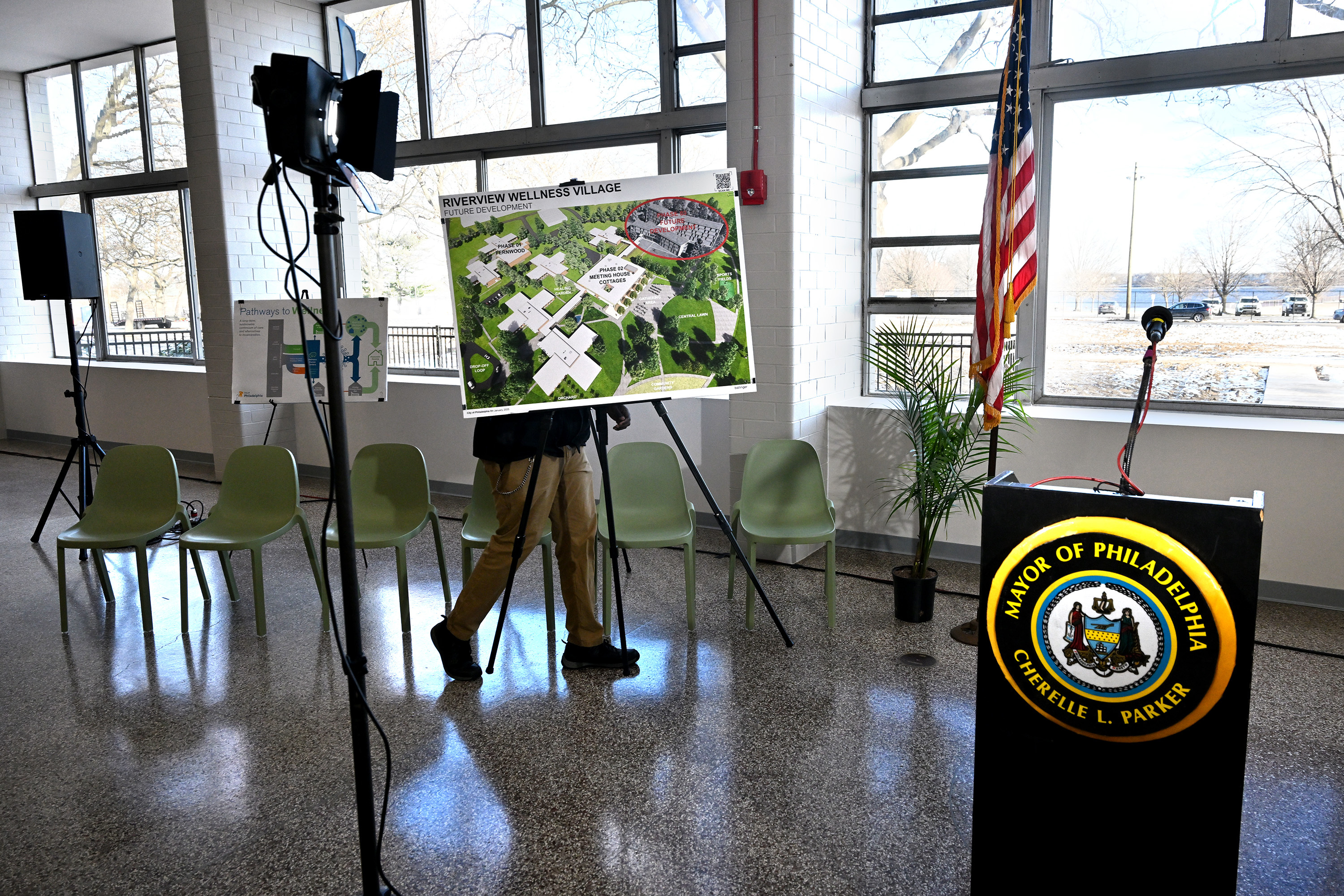
    Isabel McDevitt, executive director of the Office of Community Wellness and Recovery, points to a model with upcoming expansion at Riverview Wellness Village, a city-owned drug recovery home in Northeast Philadelphia on Nov. 25.
    Staffers move photos into place at the Riverview Wellness Village on Jan. 8 before the unveiling of Philadelphia’s new city-operated drug treatment facility.

    Meanwhile, neighbors who live nearby say they have been pleasantly surprised. Pete Smith, a civic leader who sits on a council of community members who meet regularly with Riverview officials, said plainly: “There have been no issues.”

    “If it’s as successful as it looks like it’s going to be,” he said, “this facility could be a model for other cities throughout the country.”

    Smith, like many of his neighbors, wants the city’s project at Riverview to work because he knows the consequences if it doesn’t.

    His son, Francis Smith, died in September due to health complications from long-term drug use. He was 38, and he had three children.

    Getting a spot at Riverview

    The sprawling campus along the Delaware River feels more like a college dormitory setting than a hospital or homeless shelter. Its main building has a dining room, a commercial kitchen, a gym, and meditation rooms. There are green spaces, walking paths, and plans for massive murals on the interior walls.

    Katherine Young, director of Merakey at Riverview Wellness Village, talks with a resident at the city-owned drug recovery home in Northeast Philadelphia on Nov. 25.

    Residents live and spend much of their time in smaller buildings on the campus, where nearly 90% of the 234 licensed beds are occupied. The city plans to add 50 more in January.

    Their stays are funded through a variety of streams. The city allocated $400 million for five years of construction and operations, a portion of which is settlement dollars from lawsuits against pharmaceutical companies that manufactured the painkillers blamed for the opioid crisis.

    (function() {
    var l2 = function() {
    new pym.Parent(‘RIVERVIEW_MAP2.html’,
    ‘https://media.inquirer.com/storage/inquirer/projects/innovation/arcgis_iframe/RIVERVIEW_MAP2.html’);
    };
    if (typeof(pym) === ‘undefined’) {
    var h = document.getElementsByTagName(‘head’)[0],
    s = document.createElement(‘script’);
    s.type = ‘text/javascript’;
    s.src = ‘https://pym.nprapps.org/pym.v1.min.js’;
    s.onload = l2;
    h.appendChild(s);
    } else {
    l2();
    }
    })();

    To get in to Riverview, a person must complete at least 30 days of inpatient treatment at another, more intensive care facility.

    That is no small feat. There are significant barriers to entering and completing inpatient treatment, including what some advocates say is a dearth of options for people with severe health complications. Detoxification is painful, especially for people in withdrawal from the powerful substances in Kensington’s toxic drug supply.

    (function() { var l = function() { new pym.Parent( ‘riverview-flowchart__graphic’, ‘https://media.inquirer.com/storage/inquirer/ai2html/riverview-flowchart/index.html’); }; if(typeof(pym) === ‘undefined’) { var h = document.getElementsByTagName(‘head’)[0], s = document.createElement(‘script’); s.type = ‘text/javascript’; s.src = ‘https://pym.nprapps.org/pym.v1.min.js’; s.onload = l; h.appendChild(s); } else { l(); } })();

    Still, residents at Riverview have come from more than 25 different providers, according to Isabel McDevitt, the city’s executive director of community wellness and recovery. The bulk were treated at the Kirkbride Center in West Philadelphia, the Behavioral Wellness Center at Girard in North Philadelphia, or Eagleville Hospital in Montgomery County.

    They have ranged in age from 28 to 75. And they have complex medical needs: McDevitt said about half of Riverview’s residents have a mental health diagnosis in addition to substance use disorder.

    She said offering treatment for multiple health conditions in one place allows residents to focus less on logistics and more on staying healthy.

    “Many of the folks that are at Riverview have long histories of substance use disorder, long histories of homelessness,” she said. “So it’s really the first time a lot of people can actually breathe.”

    When new residents arrive, they go through an intake process at Riverview that includes acute medical care and an assessment for chronic conditions. Within their first week, every resident receives a total-body physical and a panel of blood work.

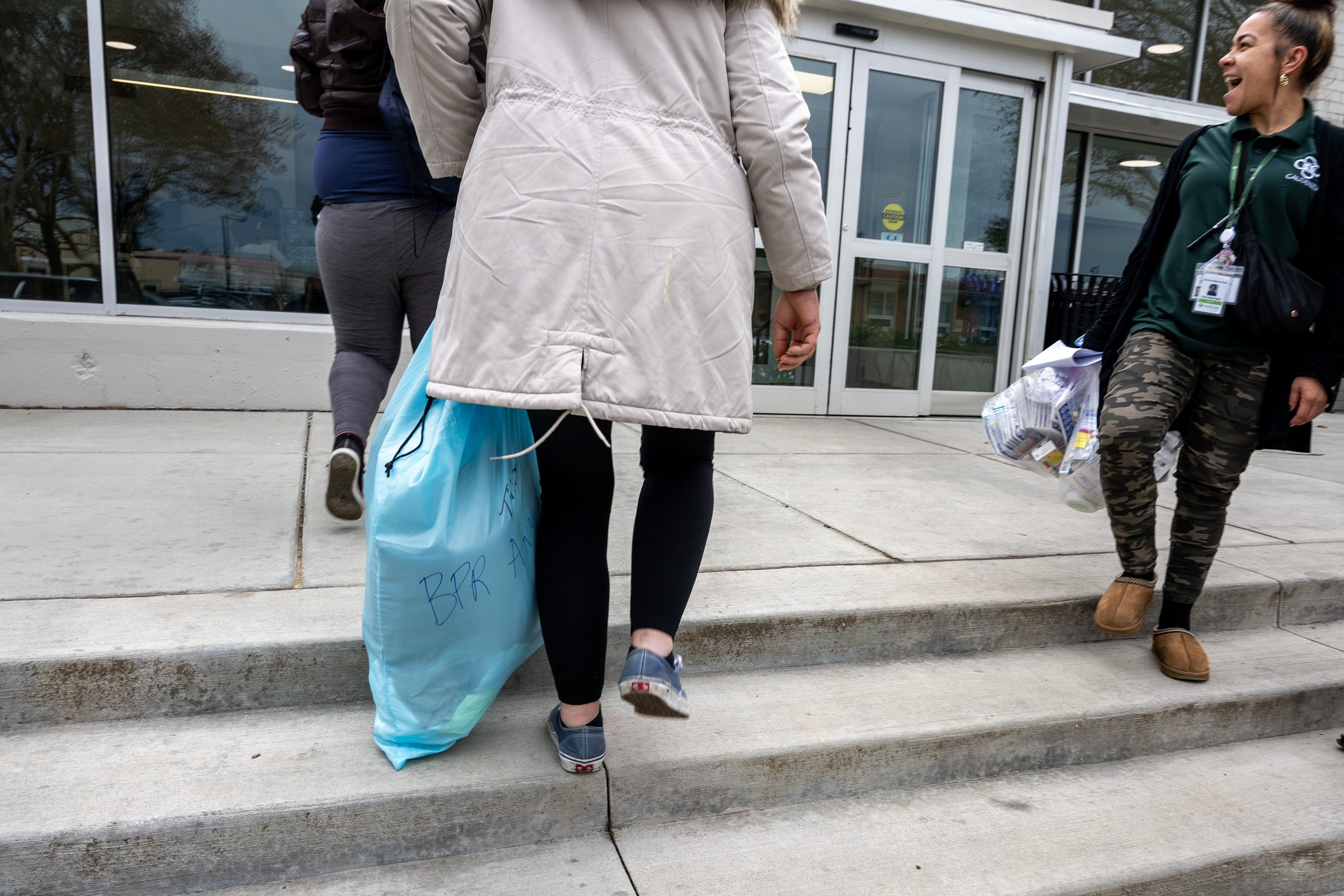
    “They literally arrive with all of their belongings in a plastic bag and their medications and some discharge paperwork,” said Ala Stanford, who leads the Black Doctors Consortium, which provides medical services at Riverview. “We are the ones who greet them and help get them acclimated.”

    Stanford — who this fall announced a run for Congress — said doctors and nurses at Riverview have diagnosed and treated conditions ranging from drug-related wounds to diabetes to pancreatic cancer. And patients with mental health needs are treated by providers from Warren E. Smith Health Centers, a 30-year-old organization based in North Philadelphia.

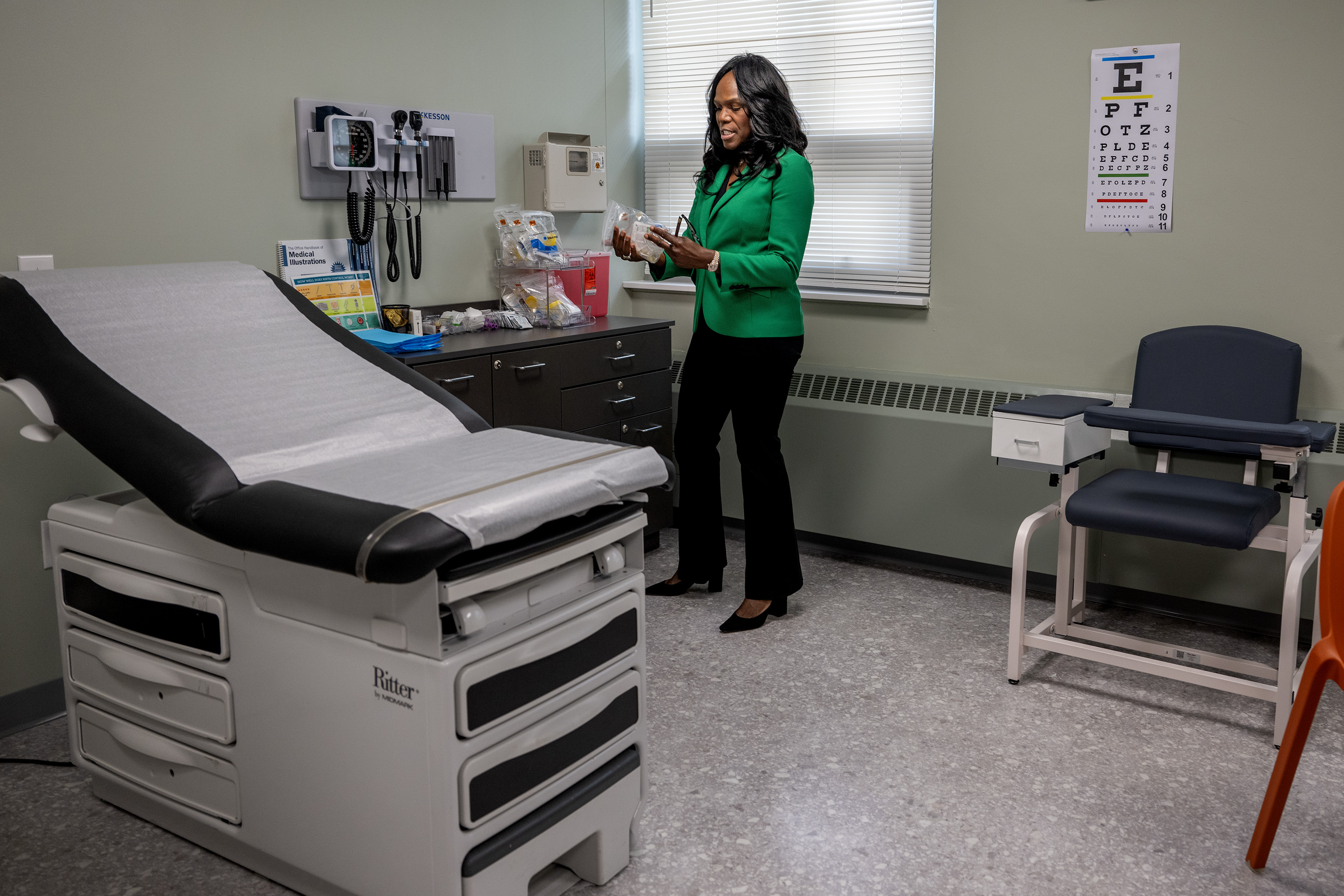
    Physician Ala Stanford in an examination room at the primary medical care center run by her Black Doctors Consortium at Riverview Wellness Village, a city-owned drug recovery home in Northeast Philadelphia, on Nov. 25.
    Francesca Colon (right), a recovery support professional with Gaudenzia, brings people in recovery to the main entrance of the Meetinghouse at Riverview Wellness Village on Nov. 25.

    Residents’ schedules are generally free-flowing and can vary depending on their wants and needs. About 20% have jobs outside the campus. Culinary arts training will be available in the next month or so. And residents can meet with visitors or leave to see family at any time.

    They also spend much of their time in treatment, including individual, family, and group therapy. On a recent day, there were group sessions available on trauma recovery, managing emotions, and “communicating with confidence.”

    Vernon Kostic, a 52-year-old Port Richmond native who said he has previously been homeless, has been in and out of drug treatment facilities for years.

    He said he’s been content as a Riverview resident since July, and called it “one of the smartest things that the city has ever done.”

    “We have the doctor’s office right over here,” he said. “They’ve got counseling right here. Everything we need. It’s like a one-stop recovery place.”

    Resident Vernon Kostic heads to a group meeting at Riverview Wellness Village on Nov. 25.
    The dining room and meeting room in the Meetinghouse at Riverview Wellness Village. At rear left is a brand-new, industrial, restaurant-quality kitchen that was not operational yet on Nov. 25.

    Finding ways to stay at Riverview

    Finding success in recovery is notoriously hard. Studies show that people who stay in structured sober housing for at least six months after completing rehab see better long-term outcomes, and Riverview residents may stay there for up to one year.

    But reaching that mark can take multiple tries, and some may never attain sobriety. McDevitt said that on a monthly basis, about 35 people move into Riverview, and 20 leave.

    Some who move out are reunited with family and want to live at home. Others simply were not ready for recovery, McDevitt said, “and that’s part of working with this population.”

    Fields said a resident who relapses can go back to a more intensive care setting for detoxification or withdrawal management, then return to Riverview at a later time if they are interested.

    “No one is punished for struggling,” he said. “Recovery is a journey. It takes time.”

    Providers are adding new programming they say will help residents extend their stays. Offering medication-assisted treatment is one of the most crucial parts, said Josh Vigderman, the senior executive director of substance use services at Merakey, one of the addiction treatment providers at Riverview.

    Entry to the primary medical care center run by the Black Doctors Consortium at Riverview Wellness Village.
    The main entry Meetinghouse at Riverview Wellness Village.
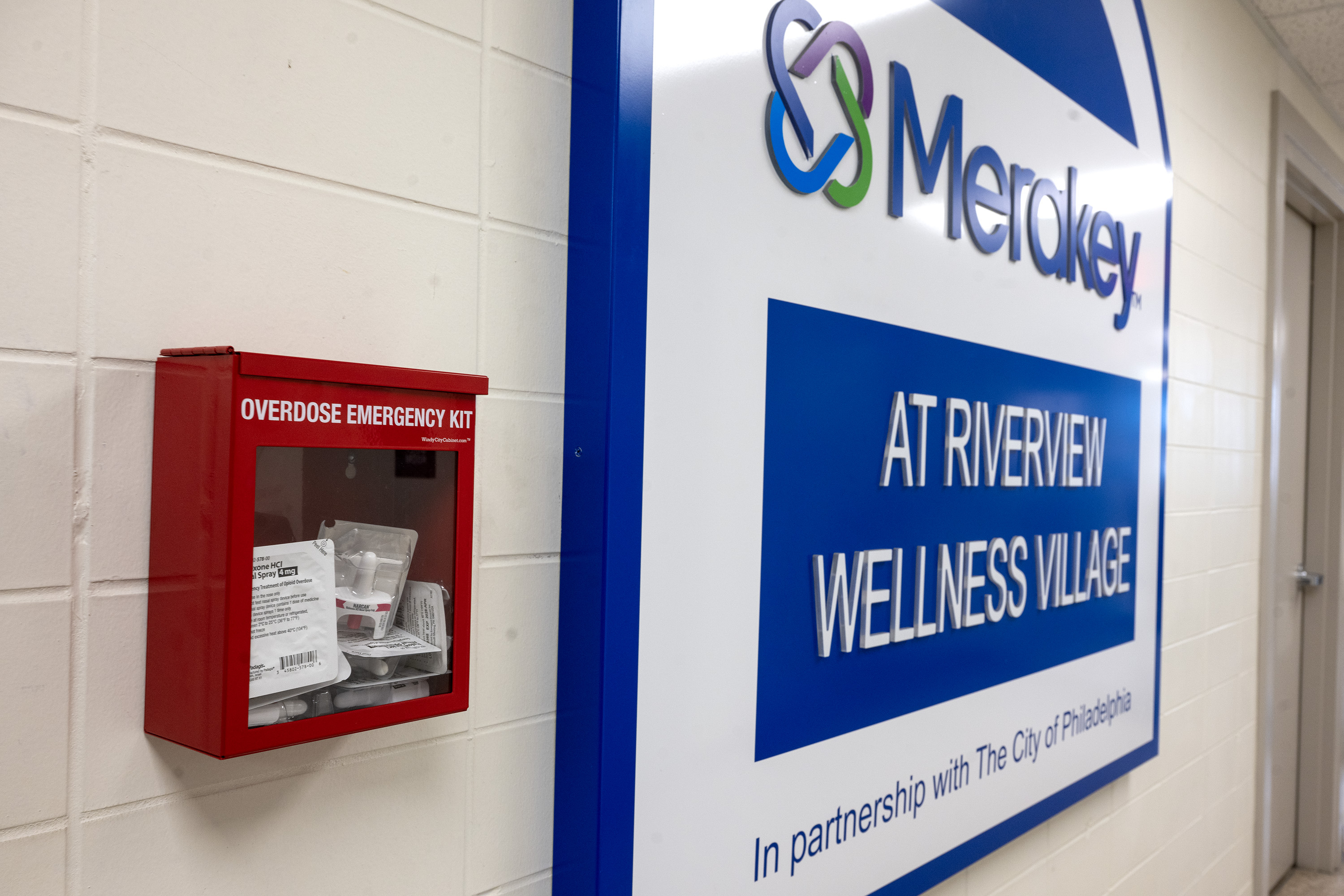
    Naloxone (Narcan) in an “overdose emergency kit” at Riverview Wellness Village.

    In the initial months after Riverview opened its doors, residents had to travel off campus to obtain medication that can prevent relapse, most commonly methadone and buprenorphine, the federally regulated drugs considered among the most effective addiction treatments.

    Typically, patients can receive only one dose of the drug at a time and must be supervised by clinicians to ensure they don’t go into withdrawal.

    Vigderman said staff suspected some residents relapsed after spending hours outside Riverview, at times on public transportation, to get their medication.

    This fall, Merakey — which was already licensed to dispense opioid treatment medications at other locations — began distributing the medications at Riverview, eliminating one potential relapse trigger for residents who no longer had to leave the facility’s grounds every day.

    Interest in the program has been strong, Vigderman said, with nearly 80 residents enrolling in medication-assisted treatment in just a few weeks. Merakey is hiring more staff to handle the demand.

    What’s next at Riverview

    The city is eying a significant physical expansion of the Riverview campus, including a new, $80 million building that could double the number of licensed beds to more than 500. That would mean that about half of the city’s recovery house slots would be located at Riverview.

    Development and construction of the new building, which will also house the medical and clinical facilities, is likely to take several years.

    Parker said the construction is “so important in how we’re going to help families.” She said the process will include “meticulous design and structure.”

    “The people who come for help,” she said, “we want them to know that we value them, that we see them, and that we think enough of them to provide that level of quality of support for them.”

    In the meantime, staff are working to help the center’s current residents — who were among the first cohort to move in — plot their next steps, like employment and housing.

    A rendering of the new, $80 million five-story building to be constructed on the campus of Riverview Wellness Village. It will include residences and medical suites.

    That level of support, Vigderman said, doesn’t happen in many smaller recovery houses.

    “In another place, they might not create an email address or a resumé,” he said. “At Riverview, whether they do it or not is one thing. But hearing about it is a guarantee.”

    Bean is closing in on one year at Riverview. He doesn’t know exactly what’s next, but he does have a job prospect: He’s in the hiring process to work at another recovery house.

    “I’m sure I’ll be able to help some people,” he said. “I hope.”

  • Two Philly police officers aren’t federally liable for chasing after a drug suspect who crashed his car and killed a bystander, appeals court rules

    Two Philly police officers aren’t federally liable for chasing after a drug suspect who crashed his car and killed a bystander, appeals court rules

    Two Philadelphia police officers who drove after a fleeing drug suspect until the man crashed his car and killed a bystander are not liable under federal law for causing the fatal collision because the officers didn’t intend to harm anyone, an appeals court ruled.

    In an opinion issued last week, the three-judge panel from the Third Circuit Court of Appeals said officers Christian Kane and Alexander Hernandez were forced to make a quick decision in 2020 when they sped after a man they’d seen dealing drugs in Kensington.

    The pursuit of the suspect, Tahir Ellison, proceeded at a normal speed for a few blocks, court documents said, but became dangerous after Ellison drove through a red light and down a one-way street.

    The episode ended in tragedy when Ellison ignored another red light and crashed into Virgen Martinez’s car at the intersection of Allegheny and Frankford Avenues, killing Martinez, a 47-year-old mother of four.

    Ellison pleaded guilty in 2023 to charges including third-degree murder and was sentenced to 10 to 20 years in prison, court records show.

    But Martinez’s relatives sued Kane and Hernandez, arguing in part that the decision to speed after Ellison — which violated the police department’s policy to avoid most car chases — also violated Martinez’s 14th Amendment due process rights and made the officers liable for her death. Last year, U.S. Magistrate Judge Scott W. Reid agreed that that question should be put before a jury.

    The officers appealed. And in the opinion issued last week, Circuit Judge Stephanos Bibas wrote that although Hernandez’s death was a tragedy, the officers made a “snap judgment” to pursue Ellison and did not behave egregiously during the portion of the chase in which Ellison began speeding and ignoring traffic signals.

    “We ask not whether in hindsight [the officers] chose rightly, but whether they intended to cause harm,” Bibas wrote.

    Philadelphia police directives generally prohibit car chases, which are often dangerous for both citizens and officers. Exceptions are made only if officers are seeking to capture suspects fleeing violent felonies, or to prevent imminent death or serious injuries.

    An Inquirer investigation published last year found that about half of all reported chases by Philadelphia police were in violation of department polices and that the city had spent about $20 million since 2020 to settle crash- or chase-related lawsuits involving police.

    Earlier this year, the city agreed to pay $2.9 million to settle a lawsuit over a crash in which a man on a dirt bike being pursued by a city police officer struck two bystanders — including a 6-year-old girl — in Upper Darby.

    In that case, however, the officer initiated the chase without witnessing any crime, continued driving after the man for nearly 10 miles, and was later accused by the department of providing false statements to a superior and falsifying official documents.

    Bibas wrote that Kane and Alexander, by contrast, “had a split second” to decide whether to follow Ellison, whom they’d seen dealing drugs from his car. And the dangerous portion of the pursuit spanned about half a mile and 39 seconds before Ellison crashed into Martinez’s vehicle.

    Jim Waldenberger, one of the attorneys who filed suit on behalf of Hernandez’s relatives, said he and his colleagues disagreed with the ruling.

    Before the officers’ pursuit turned dangerous, Waldenberger said, they pursued Ellison at a normal speed with their police lights on for several blocks, meaning their decision to continue the chase when he sped up was not a snap judgment made under unavoidable pressure.

    The department conducted an internal investigation and found that the officers violated departmental policies regarding pursuits, and each spent at least several months on administrative duty, court documents said. The documents did not specify whether either officer faced additional discipline.

    Sgt. Eric Gripp, a police spokesperson, said Monday that Kane is still on the force but that Hernandez left last year. Gripp declined to comment further.

    Waldenberger said he and his colleagues were still weighing whether to appeal the Third Circuit’s ruling on the officers’ liability.

    The lawsuit can proceed on more limited grounds surrounding whether the city sufficiently trains police officers regarding pursuits, and whether Kane, who was driving the police car, violated state negligence laws.

  • All the Golden Globe Awards nominees with ties to the Philly region

    All the Golden Globe Awards nominees with ties to the Philly region

    Pennsylvanians know how to bring home a trophy, from the reigning Super Bowl champions to Philly natives awarded an Oscar.

    The Golden Globe Awards on Monday announced its nominees for the best in television and movies, and with it, another chance for victory for regional productions and local actors.

    The ceremony airs Jan. 11 with awards given in 28 categories.

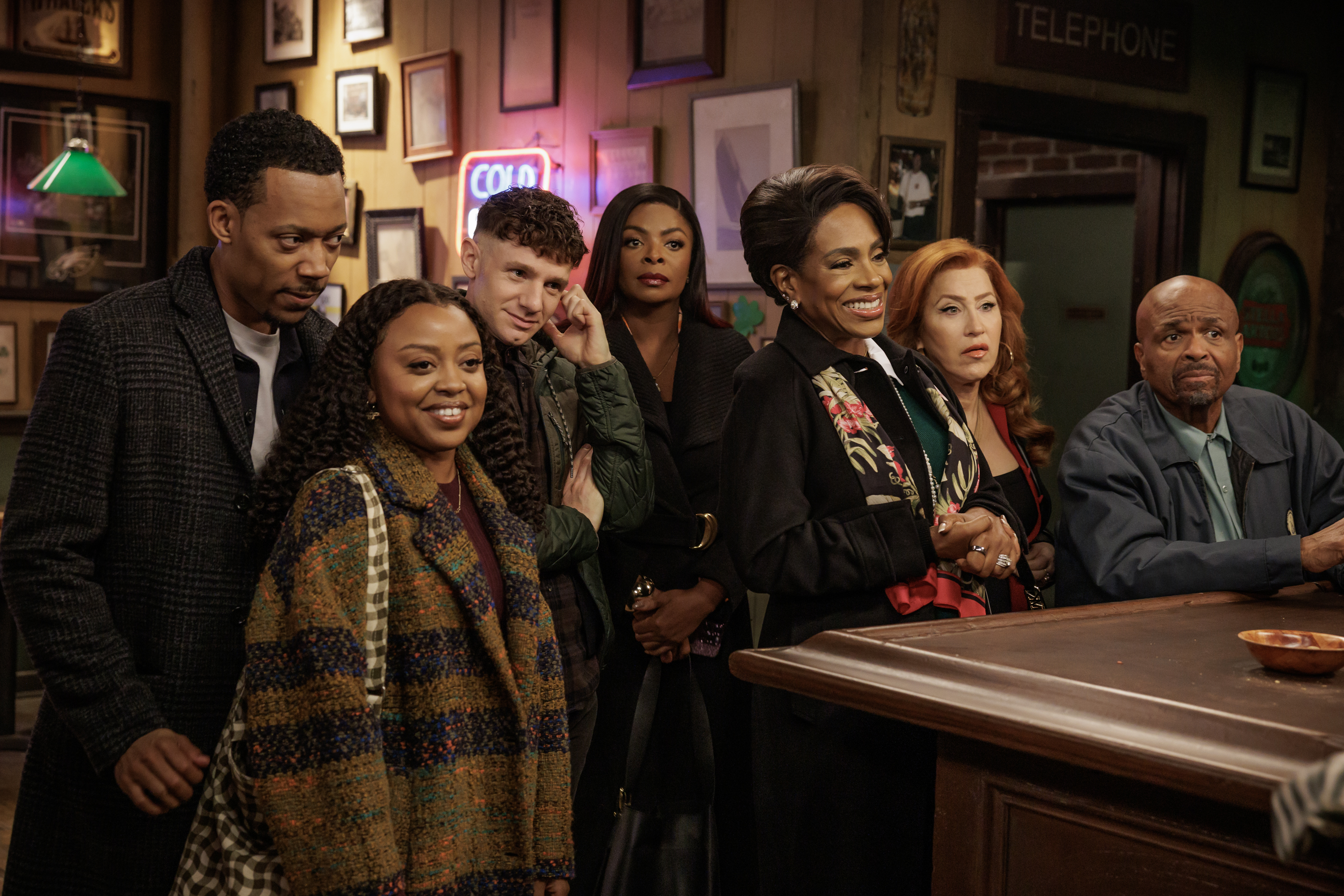
    The Abbott Elementary crew visits the Always Sunny gang at Paddy’s Pub in the “It’s Always Sunny in Philadelphia” and “Abbott Elementary” crossover.

    In its fifth season, Abbott Elementary has already won the hearts of Philadelphians and three Golden Globes. Still, this wholesome band of teachers, starring Philly-native Quinta Brunson, is up again for best musical or comedy television series.

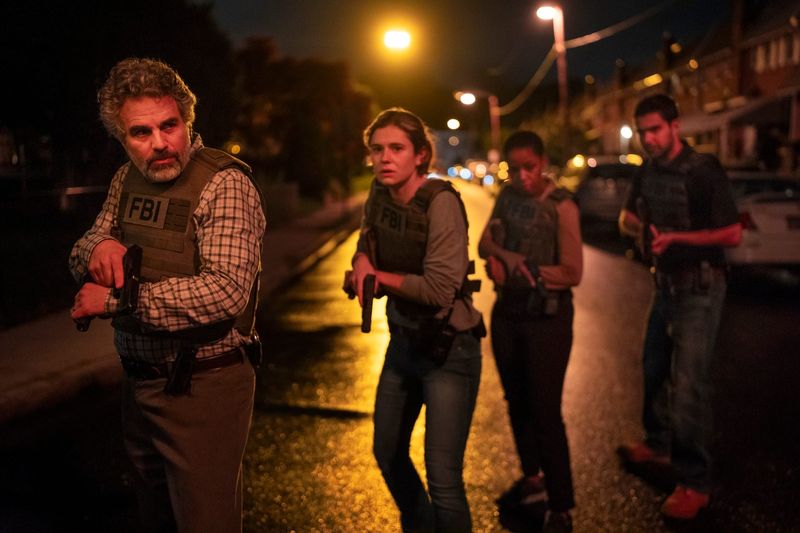
    HBO’s Task and Peacock’s Long Bright River, two crime thrillers set in Philadelphia neighborhoods and suburbs, both have leading actors nominated for Golden Globes this season.

    Mark Ruffalo as Tom, Alison Oliver as Lizzie, Thuso Mbedu as Aleah, and Fabien Frankel as Anthony in “Task.”

    In Task, Mark Ruffalo plays an FBI investigator hunting down thieves targeting drug houses in Delco. While Ruffalo may not know the definition of “jawn” in real life, his portrayal of a tortured former priest turned agent resonated with critics and earned a nomination for best male actor in a dramatic television series. The Inquirer compiled a list of the real-life locations used in the show.

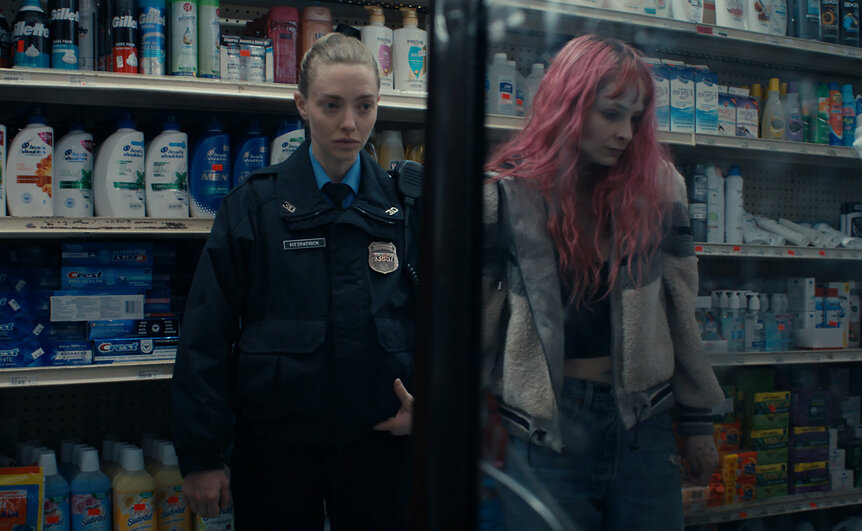
    Amanda Seyfried (left) and Asleigh Cummings in the Kensington-set Peacock series “Long Bright River,” based on the novel of the same name by Temple professor and novelist Liz Moore.

    Liz Moore’s crime novel Long Bright River turned heads when it was released in 2020, detailing the harrowing story of a Kensington police officer, played in the series by Amanda Seyfried, searching for her sister in a cat-and-mouse chase with a killer targeting sex workers. While the television adaptation was filmed in New York City, the bulk of the show takes place in Kensington and other Philadelphia neighborhoods, with Seyfried grabbing a nomination for best female performance in a dramatic limited series.

    Hometown stand-up icon Kevin Hart was back to his roots with a new comedy special, Kevin Hart: Acting My Age, tackling injuries after 40, Chick-fil-A’s spicy chicken sandwich consequences, and slipping in the shower. He earned a nomination for best stand-up comedy performance on television.

    Host Kevin Hart speaks during the BET Awards on Monday, June 9, 2025, at the Peacock Theater in Los Angeles.

    The Golden Globes are introducing a new best podcast category this year, for which Bucks County native Alex Cooper is nominated for her sex-positive show, Call Her Daddy. Alongside celebrity guests like Gwyneth Paltrow, Miley Cyrus, and Kamala Harris, Cooper delves into the taboo of female pleasure and pop culture. She grew the show’s popularity into a $60 million Spotify deal in 2021.

    And through a few degrees of separation, several other nominees can be claimed as Philly-adjacent.

    Hannah Einbinder, whose father is from Doylestown, accepts the award for outstanding supporting actress in a comedy series for “Hacks” during the 77th Primetime Emmy Awards on Sunday, Sept. 14, 2025, at the Peacock Theater in Los Angeles. (AP Photo/Chris Pizzello)

    Take Hacks actress Hannah Einbinder, who shouted “Go Birds!” during her speech after winning an Emmy for best supporting actress in a comedy series, and was filmed by the evening news crying in the streets of Los Angeles after the Eagles’ 2018 Super Bowl win.

    She may not be from Philadelphia (her father, actor Chad Einbinder, is from Doylestown), but she reps the city. HBO’s Hacks, which follows a veteran Las Vegas comic mentoring a young comedy writer, is up for best musical or comedy television series, with Einbinder and costar Jean Smart nominated for best supporting female actor and best actor in a musical or comedy series, respectively.

    And there are some broader Pennsylvania and New Jersey ties among the nominees.

    The breakout medical drama The Pitt, which takes place in the fictional Pittsburgh Trauma Center, depicts a 15-hour shift in an emergency room, split across 15 one-hour episodes. The Pitt’s lead actor, Noah Wyle (known for his role as Dr. John Carter in NBC’s ER), is up against Ruffalo for best male actor in a dramatic television series.

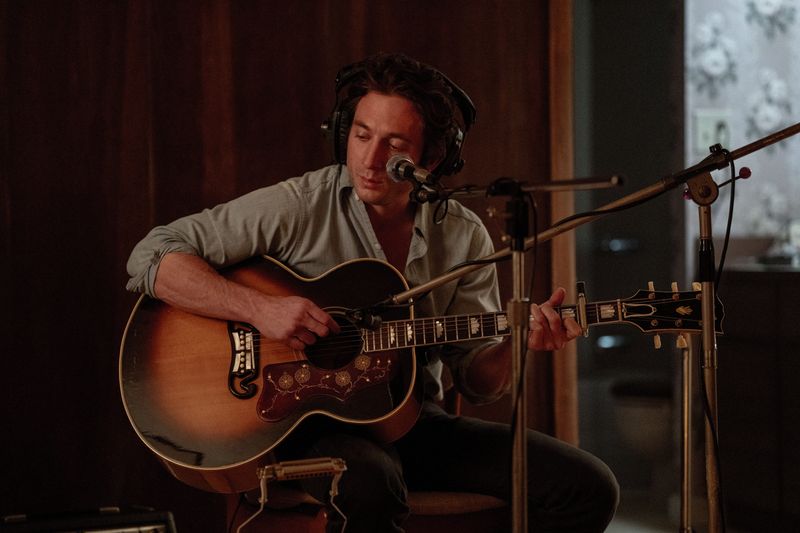
    Jeremy Allen White as Bruce Springsteen.

    Jeremy Allen White stars in the latest Bruce Springsteen biopic, Springsteen: Deliver Me From Nowhere, and is nominated for best actor in a dramatic film. The production was almost entirely filmed around New Jersey — at the request of The Boss — including in Cape May and other parts of South Jersey.

    After a major overhaul of the award show in recent years, including the sunsetting of the Hollywood Foreign Press Association due to ethics and diversity concerns, the new Golden Globe Awards are judged by a panel of 400 journalists from across the world.

    The Golden Globes will be broadcast live on Jan. 11 at 8 p.m. Philadelphia time on CBS and streaming on Paramount+.

  • Where to feast on seven fishes (or seven other things) this holiday season

    Where to feast on seven fishes (or seven other things) this holiday season

    The feast of the seven fishes, or festa dei sette pesci, has its roots in post-World War II immigration to America, when Southern Italians imported the tradition of La Vigilia — a Christmas Eve feast with no meat. La Vigilia, with its traditional consumption of baccalà, spaghetti alle vongole, and vegetables, has adapted to what we know here as an hourslong dinner with seven (more or less) fish dishes, a number that may refer to the seven sacraments.

    But the feast of the seven fishes has undergone another evolution. It is now readily embraced by chefs who specialize in other cuisines, and who sometimes take the emphasis off fish. Like Christmas itself, the feast of the seven fishes has in many cases been shifted away from its religious origins, and they now also frequently occur several days prior to Christmas Eve.

    Reservations have been going quickly for these elaborate holiday meals, and some are already sold out, like the feast at Fiorella (you can add yourself to the waitlist). Here are 12 restaurants in Philly serving special menus, celebrating the feast of seven whatevers (mostly fishes). This list isn’t comprehensive, so if you miss out on one of these reservations, keep your eye out on Philly restaurants’ Instagram pages for other feasting opportunities.

    Bastia

    Chef Tyler Akin will be serving a Sardinian-inflected feast of the seven fishes at Bastia on Dec. 21 and 22 for $125 per person, with an optional $85 beverage pairing. “We are really excited about the dishes, especially the malloreddus with pesto Genovese, swordfish, and gremolata; these are tiny Sardinian gnocchi that is a mainstay of the holidays.” Akin also promises squid ink risotto with blue crab, Calabrian chili butter, and bottarga — a dish “which truly tastes like the sea,” he said — as well as oysters with house sun-dried gooseberry mignonette. Reservations are available on OpenTable.

    1401 E. Susquehanna Ave., 267-651-0269, bastiafishtown.com

    Bistro Romano

    Bistro Romano is offering two seven fishes set menu options: one for people who want all the fish (“seven fishes tasting menu”), and others who may want to partake in the festivities but are fish-averse (“pasta & turf tasting menu”). For those who are all about the fish, the dinner commences with frutti di mare, leads into pastas like lobster ravioli and fettuccine with bay scallops and baby shrimp, crescendoes with swordfish and branzino, and ends on a tiramisu finale. For those who are anti-fish, expect veal, New York strip steak, sausage rigatoni, and bucatini with duck ragu. Both menus are $89 per person and do not include tax or gratuity. They are only offered on Christmas Eve, when Bistro Romano’s a la carte menu is otherwise not available. Reservations are available on OpenTable.

    120 Lombard St., 215-925-8880, bistroromano.com

    Chef Joe Cicala sautés blue crabs as he shows how to make spaghetti alla chitarra with crab at his restaurant, Cicala at the Divine Lorraine, in Philadelphia on Thursday, July 23, 2020.

    Cicala

    This is the first year that Cicala will be serving a seven fishes dinner. “Angela and I believe Christmas Eve is more fun and exciting compared to Christmas Day so we usually close in order to give our staff (and ourselves) the ability to spend it with our families,” said chef Joe Cicala. “However, this year we completely forgot to turn off the reservations and when we went to do so, it turned out that we were almost fully booked. So it looks like we are staying open this year.” Cicala’s entire a la carte menu will be available on Christmas Eve, along with a “menu fisso” of five courses utilizing seven different fish (price TBD). They are still working out the full details, but reservations can be made on Resy.

    699 N. Broad St., 267-886-9334, cicalarestaurant.com

    Heavy Metal Sausage Co. owners Patrick Alfiero (left) and Melissa Pellegrino prepare for the Thursday night trattoria dinner on Thursday, Nov. 17, 2022.

    Heavy Metal Sausage

    South Philly’s Heavy Metal Sausage leans hard into seven fishes, so much so that for years they’ve been hosting feasts of “more than seven fishes.” This year, there are five nights of such extravagant dinners, featuring “more than 12 dishes, more than seven fishes,” from Dec. 18 to 22, with two seatings per night (6 and 8:30 p.m.). A seat at this bonanza goes for $150 per person; gluten and seafood allergies cannot be accommodated, and tickets cannot be refunded or rescheduled. Bookings can be made on Square.

    1527 W. Porter St., no phone, heavymetalsausage.com

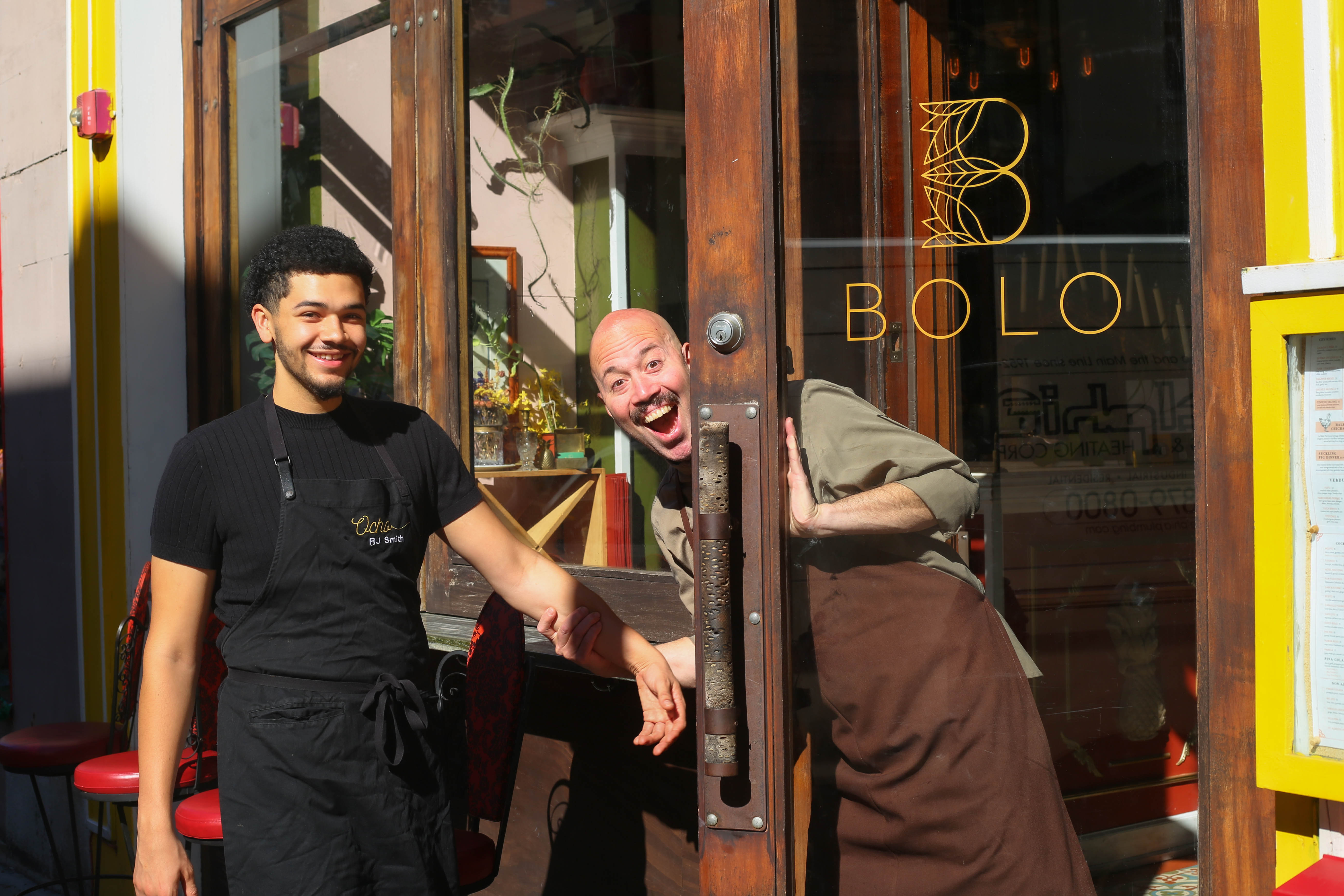
    Yun Fuentes and R.J. Smith team up for a Caribbean approach to the Feast of the Seven Fishes at Bolo.

    Bolo

    This holiday season, Bolo chef Yun Fuentes is welcoming chef R.J. Smith of Ocho Supper Club for a one-night-only Siete Mares, a Caribbean interpretation of the feast of the seven fishes. It will be 7 p.m. on Dec. 16 for $150 per person. Expect hamachi ceviche with scotch bonnet-passion fruit salsa and uni, lobster curry rellenos, red snapper escovitch, and an island-inspired version of surf and turf, or mar y montaña: roasted suckling pig and seafood rice with clams, calamari, and squid ink sofrito. There will also be an Ocho Happy Hour in Bolo’s first-floor rum bar from 4 p.m. to 7 p.m. Reservations can be made on OpenTable.

    2025 Sansom St., 267-639-2741, bolophl.com

    Farina Di Vita

    Queen Village sandwich shop Farina Di Vita is running a seven fishes catering menu until Dec. 21 at 4 p.m. or until they sell out of their fried smelts, jumbo lump crab cakes, mussel gravy, salmon piccata, shrimp cocktail, Thai chili salmon, and calamari salad. Get them all or get them a la carte. Orders must be placed over the phone (ask to speak with Jason).

    250 Catharine St., 267-639-5185, instagram.com/farinadivita

    Vernick Fish

    Vernick Fish will be celebrating the feast of the seven fishes on Dec. 23 and 24 with a five-course, family-style menu for $195 per person. It includes tuna crudo, bay scallop crudo, and the Tuscan flatbread schiacciata, with osetra caviar, to start. Expect octopus skewers, fritto misto, white mussels, squid ink spaghetti, and whole roasted branzino with blue crab. A la carte options will be available at the bar. Reservations can be made on OpenTable.

    1 N. 19th St., 215-419-5055, vernickfish.com

    Tulip Pasta and Wine Bar

    Chef Jason Cichonski’s Tulip Pasta and Wine Bar will be serving their seven fishes dinner on Dec. 22 and 23 for $100 per person with an optional $55 wine pairing. The menu includes tuna carpaccio, mussel toast, prawns, baked clams, crab ravioli, squid ink pasta, black bass, and fried chocolate ravioli with gingerbread ice cream for dessert. Reservations can be made on Resy.

    2302 E. Norris St., 267-773-8189, tulippasta.com

    The “snack” course of Messina Social Club’s Feast of the Seven Fishes tasting menu in 2024.

    Messina Social Club

    Semi-private Messina Social Club, also by Jason Cichonski, with chef Eddie Konrad, is offering a six-course seven fishes tasting menu on Dec. 21, 22, and 23 for $135 per person. “There will be plays on traditional dishes, like last year we did an octopus bolognese and a series of ‘snacks.’ We always do more than seven actual fishes,” said Konrad. For dessert, Konrad has been working on a “terrine-a-misu,” consisting of ladyfingers in an “amaro-based soak that I stack, layer, press, and cut like a cake and serve with a whipped mascarpone.” Reservations can be made on Resy.

    1533 S. 10th St., 267-928-4152, messinasocialclub.com

    Fork

    Fork’s feast of the seven fishes occurs only on Christmas Eve. It’s $125 per person, not inclusive of tax and a 20% service charge. Courses include brandade toast, crispy Prosecco-battered smelts, two handmade pastas, and a choice of a family-style entree for two, like a whole roasted branzino. There will also be additional starter options for $22 each, such as fluke crudo with a brown butter pear vinaigrette and half a dozen oysters on the half shell. Reservations are available on OpenTable.

    306 Market St., 215-625-9425, forkrestaurant.com

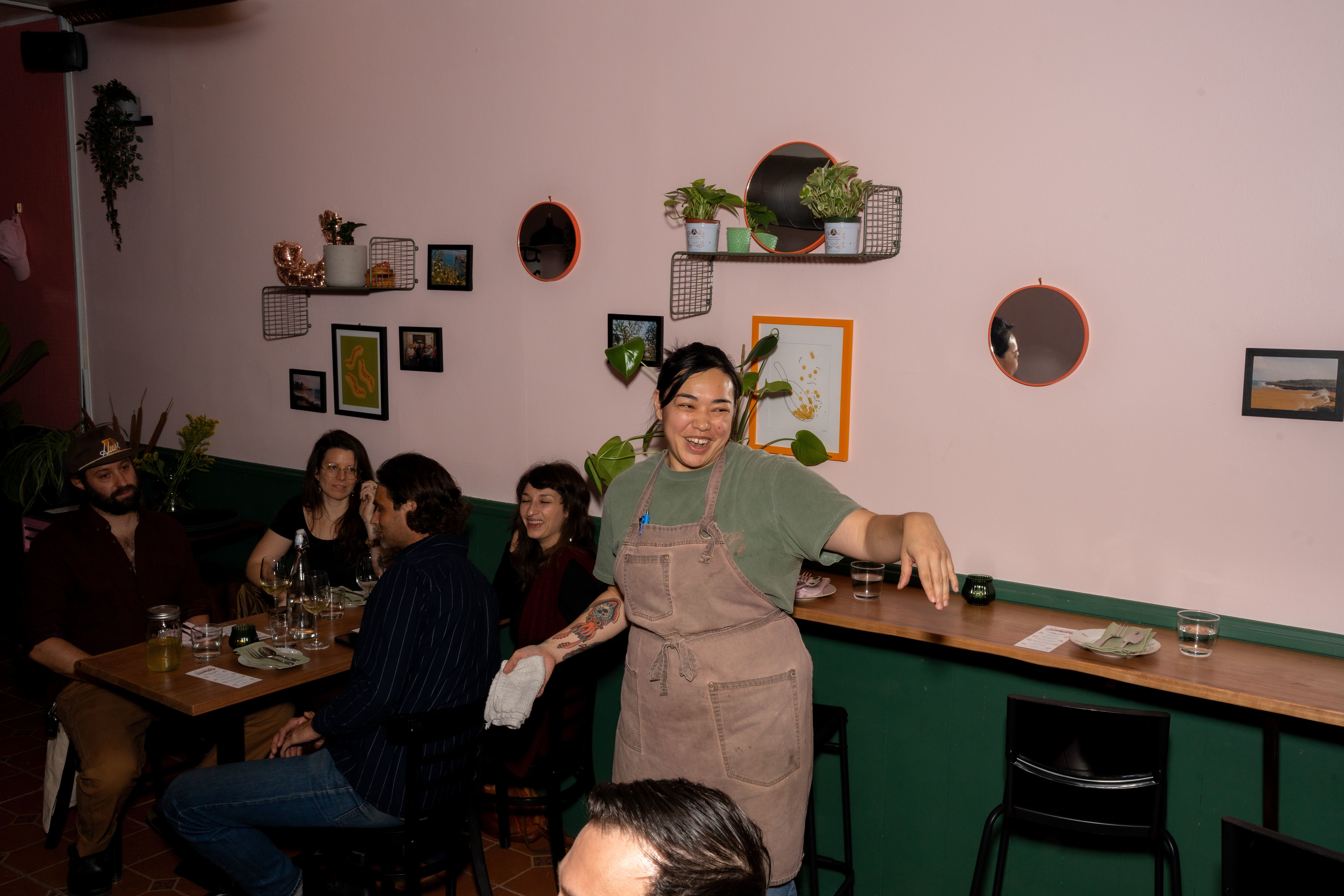
    Liz Grothe speaks to guests at the friends and family opening of Scampi in Queen Village.

    Scampi

    Scampi in Queen Village may be named for one of those potential fishes, but chef Liz Grothe’s signature move at the holidays — this is the third year — is to serve a feast of the seven pastas, featuring lots of fishes. The menu is available on Dec. 23 (Dec. 22’s dinner is sold out), with dinner starting at 6:30 p.m. Reservations must be made via Google form, which cautions, “Do not let the lucky number seven fool you, this is at least a nine-course dinner and it takes about 2.5 hours. This is as ritzy as it gets for us.” It’s $150 per person and BYOB. Menu includes Grothe’s Caesar toast, lorighittas (small Sardinian ring-shaped pastas) with calamari and peas, spaghetti gamberi crudo (raw shrimp), smoked trout culurgiones, clam chowder gnocchi, and tiramisu for dessert.

    617 S. Third St., no phone, scampiphilly.com

    Percy owner Seth Kligerman, Percy chef Jack Smith, and Fishtown Pickle owners Niki Toscani and Mike Sicinski.

    Fishtown Pickle Project x Percy

    Fishtown Pickles will be hosting its feast of the seven pickles for the fifth year on Dec. 16 with two seatings, at 5 p.m. and 7:30 p.m. It will be held at Kensington restaurant Percy, which recently rebranded as a diner, and thus this will be a “Diner Edition” of the celebration. Tickets are $105 per person, with $10 per ticket going to Sharing Excess. The menu is a collaboration between Percy chef Jack Smith and Fishtown Pickle Project co-founder Mike Sicinski. There will be a Hanukkah nod of a deviled egg and latke with smoked fish and pickle slaw, pumpkin soup with winter squash kimchi, corned pork belly with sweet onion pickle glaze, fermented red cabbage kraut and rye bread gremolata, antipasto made with Fishtown Pickle Dip, and a pickle-brined chicken schnitzel. In Percy’s Sound Lounge, there will be a Pickle Sundae Bar with wet walnuts (made with fermented honey), tea-pickled golden raisins, hot fudge, whipped sour cream, and fermented fruit. If the main event sells out, you can still participate in the Pickle Sundae Bar by purchasing tickets on Fishtown Pickle Project’s website.

    Percy Diner and Bar, 1700 N. Front St., 215-975-0020, percyphl.com

  • Three Philly cops who defenders say ‘straight up lied’ cause 134 drug cases to be dismissed, hundreds more expected

    Three Philly cops who defenders say ‘straight up lied’ cause 134 drug cases to be dismissed, hundreds more expected

    More than 130 drug cases were dismissed Friday — and hundreds more are expected to collapse in the coming months — after prosecutors said three Philadelphia narcotics officers repeatedly gave false testimony in court.

    Common Pleas Court Judge Lillian Ransom vacated 134 cases during the first in a series of hearings that could see nearly a thousand criminal prosecutions collapse because the testimony of three officers on the Narcotics Strike Force has been deemed unreliable.

    Philadelphia Police Officers Ricardo Rosa, Eugene Roher, and Jeffrey Holden were found to have repeatedly given false testimony against people suspected of selling drugs after lawyers with the Defender Association of Philadelphia recovered video footage that contradicted their statements, the district attorney’s office said.

    The defenders said the officers regularly watched surveillance cameras to monitor suspects in drug investigations in real time, then didn’t disclose it to prosecutors or defense attorneys in court, officials said. The video footage later showed they also testified to things that never happened or that they could not have seen from where they were positioned, according to court filings.

    Prosecutors later conceded that they could no longer vouch for the officers’ credibility and are expected to dismiss scores of cases built on their testimony.

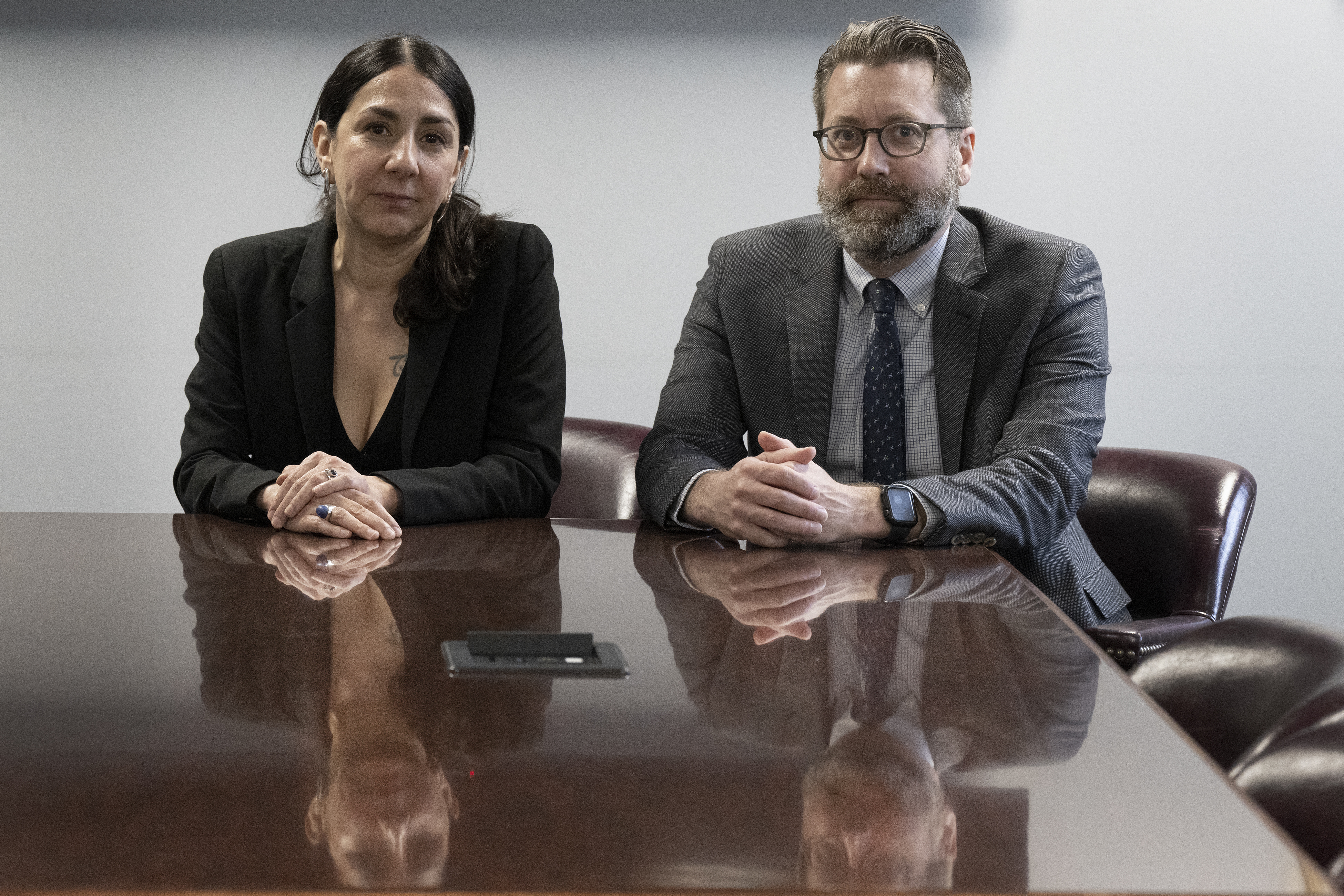
    Michael Mellon and Paula Sen, of the Defender Association, began looking into whether officers on the narcotics squad were lying in court starting in 2019.

    After a review of cases and convictions involving the officers’ testimony, lawyers for the defender association and prosecutors identified more than 900 cases and expect to ask the judge to dismiss them over the next year. It was not immediately clear how many people, if any, served time in jail, or are still in custody, as a result of the prosecutions that are now in question.

    Holden, reached by phone Friday, said he was shocked to learn that his cases and testimony were under scrutiny, and said he had not been told of the move to end the cases at Friday’s hearing. He declined to comment further.

    Rosa and Roher did not immediately respond to requests for comment. The officers remain assigned to their narcotics squads.

    The district attorney’s office said it provided the police department’s internal affairs unit with details of the officers’ false statements in multiple cases last March.

    Police Commissioner Kevin Bethel, in a statement, said the department takes “potential credibility issues with our officers extremely seriously.”

    An internal affairs investigation into the matter was launched last March and remains ongoing, he said.

    The department requested and reviewed cases flagged by prosecutors, he said, but “thus far we have not identified any evidence that would raise concerns of misconduct or criminal behavior on the part of those officers.”

    He added: “We will, as always, take appropriate action if and when evidence supports such action, but we will not preemptively sideline officers absent some verified findings.”

    Bethel said he learned of the plans to dismiss the cases on Thursday, and has asked prosecutors to provide additional information to assist with their review. He also said the police department has been working with the district attorney to develop a clearer protocol on how officers can use surveillance cameras during investigations.

    District Attorney Larry Krasner on Friday declined to say whether his office was investigating the officers’ conduct, but noted that “the statute of limitations for police officers in their capacity is much longer than the statue of limit for other offenses.”

    “I have dealt extensively with Commissioner Bethel. I know he and the mayor are committed to rooting corruption, lying, stealing, and cheating out of the police department,” he said.

    District Attorney Larry Krasner declined to say whether his office was investigating the officers’ conduct as criminal in nature.

    ‘They’re lying’

    Assistant District Attorney David Napiorski, who reviewed the cases for the office, stopped short of accusing the officers of lying, but said “there’s enough of a pattern of inconsistencies across testimony that we can’t rely on them as critical witnesses in court.”

    But Paula Sen and Michael Mellon of the Defenders’ Police Accountability Unit disagreed.

    “It’s a fancy way of saying they’re lying,” said Sen, who has worked with Mellon to uncover the officers’ credibility issues since 2019.

    The unfolding scrutiny is the latest in a series of large-scale conviction reversals in Philadelphia tied to misconduct in the narcotics unit. Over the past three decades, judges have thrown out thousands of drug cases after officers were found to have fabricated evidence, lied on the stand, or stolen money from dealers.

    Bradley Bridge, a longtime public defender, was often the driving force behind those reviews and estimates he’s worked to overturn about 2,500 drug convictions since 1995.

    In 2015, Bridge filed a petition to vacate more than 1,400 drug convictions tied to six ex-narcotics cops after they were charged with robbing and beating drug dealers, then altering police paperwork to cover their tracks. The officers were later acquitted by a jury and got their jobs back through arbitration, but more than 950 cases were thrown out after officials agreed they couldn’t trust their testimony.

    Bridge, who returned from retirement to handle the cases tied to Rosa, Roher, and Holden, said, “Tragically, nothing is unique about this. It’s exactly the same problems that keep arising since 1995, including the lack of supervision and oversight of police officers on the street.”

    A video camera used by Philadelphia police located at Somerset Street in Kensington.

    Sen and Mellon said they first noticed a pattern of false testimony in 2019 after they reviewed surveillance footage that contradicted statements Rosa gave about drug cases. As time passed, they said, they continued to monitor his narcotics squad, and found inconsistencies with Holden and Roher’s testimony, too.

    They said the officers used the city’s surveillance camera systems to monitor suspected drug activity in real time, but didn’t disclose it as part of their investigation — a violation of due process because the evidence wasn’t shared with defense attorneys.

    In court, the officers denied using the cameras, Mellon said, and often said they witnessed hand-to-hand drug transactions that video later showed either never happened or that they could never have seen because the suspect was out of sight.

    “They just straight up lied and invented acts of criminality,” Sen said.

    ‘Who are they gonna believe?’

    In one case, Roher said he was seated in an unmarked police car when he saw Darrin Moss sell drugs to two people near Somerset and Helen Streets in Kensington in April 2022. He said he could see Moss inside the fenced lot retrieve drugs, then hand them to a buyer and accept money in return.

    Prosecutors later said in court filings that video footage captured by a surveillance camera on the end of the block showed that one drug deal never happened, and the other supposed deal was behind a building and would have been impossible to see.

    The charges against Moss were withdrawn.

    When prosecutors learned of the discrepancies, they asked Roher to meet and discuss the case, but he failed to appear in court twice without explanation, they said in a court filing.

    Prosecutors said this became a pattern — once the officers seemed to learn their testimony was under scrutiny, they stopped showing up to court.

    Court filings identify at least nine cases in which the three officers allegedly gave false testimony. Napiorski, of the district attorney’s office, said prosecutors reviewed a few dozen videos from other cases that suggested a systemic pattern of false information in court.

    Sen, of the defenders association, said it was troubling that the officers remained assigned to the narcotics squad and have been able to continue making arrests.

    “How is the public supposed to have trust in a department that continues to employ people who have so clearly proved themselves to be liars, that has resulted in thousands of people being arrested and jailed?” she asked.

    Most of the cases dismissed Friday were drug crimes that led to a sentence of probation, prosecutors said. Seven included a gun charge.

    The drug charge against Ramoye Berry was among them.

    Berry, 29, from North Philadelphia, said that in April 2023, he was standing on the 1300 block of West Boston Street talking to some friends when a group of officers tackled him and accused him of selling drugs.

    When they searched his car, he said, they found a small amount of weed, but he wasn’t selling it. He was charged with possession with intent to sell drugs.

    Berry couldn’t recall which officer testified against him in court, but he said he remembered telling his lawyer that the officer wasn’t telling the truth.

    He said he pleaded guilty to drug possession and accepted a year of probation because he didn’t think he could prove his innocence, and the court dates were challenging to keep up with. It kept him from being able to get a job, he said.

    When he learned on Friday that the officer had a history of giving false information and that his conviction would be vacated, he said he felt vindicated — but frustrated by the time and jobs he lost to the case.

    “This is what I was saying from the beginning,” he said, shaking his head. “But who are they gonna believe? The cops, or me?”

  • A bilingual credit union is opening in Philly, seeking ‘unbanked’ customers to buy homes, build family businesses

    A bilingual credit union is opening in Philly, seeking ‘unbanked’ customers to buy homes, build family businesses

    At a former restaurant in a drive-up shopping strip on the edge of Port Richmond, a bilingual credit union has joined the neighborhood.

    The newest branch of federally-chartered Finanta credit union, which also calls itself Cooperativa Finanta, “is not just a banking place,” says Pedro A. Rivera II, Finanta’s board chair, president of Thaddeus Stevens College of Technology in Lancaster, and a graduate of Kensington High School.

    “We are focused on people that are unbanked: small business owners and workers who go to check-cashing agencies and use money orders and sometimes predatory [high-rate private] lenders,” said Daniel Betancourt, the credit union’s president and CEO.

    Finanta Federal Credit Union offers mortgages, personal and small business loans, Visa debit cards, and interest on deposits. And credit union staff help customers learn to use these products — in English and Spanish.

    Branch manager Iris Santiago signed off on one of its first home mortgages to cleaning-service co-owner Libra Rivera, on Wednesday. The credit union office at 2313 E. Venango St. officially opened Friday but began accepting deposits and booking loans earlier.

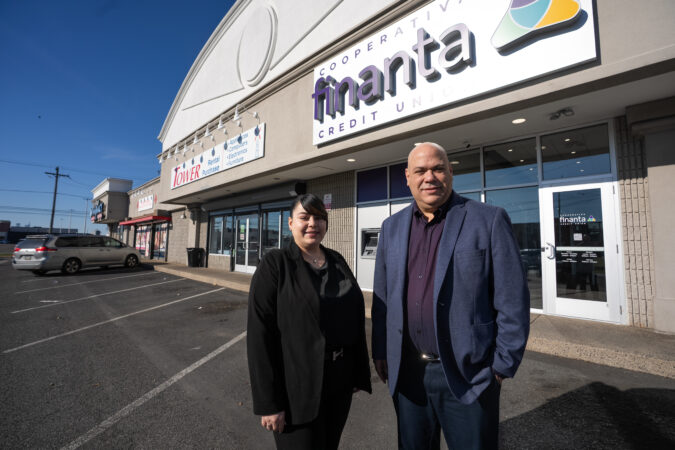
    Iris Santiago, branch manager, and Bart Rivera, assistant branch manager, at Finanta Federal Credit Union, in Philadelphia.

    Rivera said the concept takes him back to his North Philly youth, when he banked both the funds of the Amigos de Roberto Clemente youth track and field association and his newly minted teacher’s pay at the former Borinquen Federal Credit Union at Front and Allegheny, which shut in 2011.

    “It was the size of a rowhouse. You’d go in and connect to the tellers in a space where you could catch up what was going through the community and ask questions about percent yield, about how to leverage dollars in a place that was trusted,” Rivera said.

    He got that same feeling when he visited Finanta’s pilot branch in Lancaster after it opened in 2023. Rivera agreed to serve as Finanta’s chairman and went to work lining up support to speed its growth.

    Now, bolstered by private foundations and a state investment, Finanta is opening what it expects to be its largest branch in Port Richmond, with others to follow in Reading, Northeast Philly, Allentown, and other communities with large English-and-Spanish-speaking populations.

    The Lancaster branch signed up 2,000 members in three years. Betancourt expects as many in Philadelphia by next fall.

    This growth is not yet organic. Mackenzie Scott’s Yield Giving foundation in 2023 pledged $2 million a year for seven years to help finance loans. Santander Bank and M&T Bank each invested $1 million as part of their community-banking mandates.

    State House Appropriations Committee chair Jordan Harris, at the recommendation of state Rep. Jose Giral and state Sen. Tina Tartaglione, all Philadelphia Democrats, granted $4 million to build the Reading and Port Richmond branches.

    The credit union made its first mortgage this summer and offers home loans up to $400,000, enough to purchase homes in many but not all Philadelphia neighborhoods.

    The credit union also has made business loans to local firms like Puerto Rican bakery and restaurant El Coqui in Kensington. El Coqui had previously borrowed from the Finanta loan fund, which Betancourt also leads.

    Founded in 1996, the fund later merged with the larger Community First Fund of Lancaster and now lends in several cities under the Finanta name.

    The fund’s Philadelphia clients include developers such as HACE, projects such as Charles Lomax’s Village Square on Haverford in West Philly, and family-owned stores such as Silvia’s Bakery and Mucho Perú.

    Alicia Placeres, member sales representative, working at Finanta Federal Credit Union.

    A new credit union, open to everyone but anchored in the Latino communities, “is very much needed,” said Pedro Rodriguez, cofounder of Café Don Pedro coffee roasters in Brewerytown.

    He’s worried about loan volume amid the Trump administration’s push to arrest and deport immigrants. “They have people scared of their shadow,” he added.

    Others call the credit union a lifeline for people under pressure.

    “Our immigrants are very brave. A lot of the people who come to us are pursuing mortgages, pursuing small business loans, they say what’s going on is not unusual for them, and they are persisting” in building lives here, said Will Gonzalez, head of Ceiba, a Philadelphia-based economic-development advocacy coalition.

    Gonzalez has noted a drop this year — from almost one a day to less than two a month — in noncitizens filing for the first time to pay their income taxes with help from his agency, but those who have already been assigned IRS numbers have returned to file again even if their own immigration status is unresolved.

    “People are paying taxes because it’s the right thing to do,” Gonzalez added. “And because they want to borrow to put their kids in college and to buy a house. To do that, they know they need to show the lenders they have paid their taxes.” It’s a sign they see their long-term future in Philadelphia.

    He said the former Borinquen credit union was badly needed but was underfunded — “a little tree in a desert.” It operated from 1974 to 2011 until it was taken over by regulators and closed after suffering losses. A manager was sentenced to 7½ years in federal prison for stealing from the institution and members from 2006 to 2009.

    The Finanta credit union board Rivera heads, which oversees Betancourt and his growing staff, includes Mennonite Church USA moderator Elizabeth Soto Albrecht, Amalgamated Bank first vice president and 2016 Democratic National Convention CFO Jason O’Malley, and other professionals based in cities with large bilingual populations.

    For all his experience overseeing institutional budgets, Rivera said he and the other directors have had to learn banking in accordance with National Credit Union Administration guidelines.

    “I take my fiduciary responsibility seriously. We are now facing the regulatory expectations and demands of the banking world,” he said. “We know what is expected of us.”

    Gonzalez said Finanta’s focus on Pennsylvania cities with large and growing Latino populations makes it a natural support network.

    ”They are helping these communities build political and economic power,” he said. “They are in the right place at the right time.”

  • Philly lawmakers approved $800M for Mayor Parker’s housing plan in June. Now they have to redo it. | City Council roundup

    Philly lawmakers approved $800M for Mayor Parker’s housing plan in June. Now they have to redo it. | City Council roundup

    Call it a H.O.M.E. repair.

    City Council President Kenyatta Johnson on Thursday introduced legislation that will amend a bill lawmakers approved in June that authorized the city to take out $800 million in debt to fund Mayor Cherelle L. Parker’s Housing Opportunities Made Easy, or H.O.M.E., initiative.

    It’s the latest development in a saga that has seen several procedural squabbles, the most significant public dustup between Johnson and Parker to date, and a monthslong delay in the administration’s plan to issue city bonds to launch the housing initiative.

    The fix was needed because Council earlier this week amended a separate but related piece of legislation — called the H.O.M.E. budget resolution — that sets the first-year spending levels for the housing programs funded or created by the initiative.

    Council’s changes, which Parker largely opposed, were significant enough that the budget resolution no longer aligns with the bond authorization bill Council approved in June, meaning the administration cannot rely on the original legislation as its legal basis for taking out city debt.

    The new bond bill introduced Thursday reflects Council’s changes, which include increasing the first-year H.O.M.E. budget from $194.6 million to $277.2 million and changing eligibility requirements for some programs to make sure the lowest-income Philadelphia households were prioritized.

    “We want to make sure that this is a H.O.M.E. plan that supports everyone, but obviously members of Council had an issue and concern about making sure those most in need are supported throughout this process,” Johnson said.

    The bill now heads to committee, and Johnson said negotiations could lead to further changes. Next week is Council’s final meeting of the year, and Johnson on Thursday ruled out adding an extra session, meaning the bill likely will not pass until January at the earliest.

    Parker originally had hoped to issue the first of two planned $400 million tranches of H.O.M.E. bonds this fall. She said Tuesday that the legislative delays mean they might not go to market until March or later.

    “Working with Council President Johnson and the Members of City Council, we are laser-focused on building, repairing and restoring 30,000 units of housing and making H.O.M.E. a reality for the people of Philadelphia,” Parker said in a statement Thursday.

    ‘That’s my sister’: Johnson says relationship with Parker still strong

    Parker-Johnson pact intact: The Council president on Thursday downplayed his spat with Parker that saw both issue pointed statements Tuesday night blaming the other for delays in issuing the bonds.

    The exchange was notable because the two city leaders, who meet in person weekly, have forged an unusually close working relationship since both took office in January 2024.

    But Johnson said Thursday their relationship remains the same and has always involved disagreements — just not ones that have spilled out into public view.

    City Council President Kenyatta Johnson and Mayor Cherelle L. Parker have maintained a close working relationship.

    “That’s my sister,” Johnson said. “Most of the time, when we do have disagreements, y’all just don’t see it. We meet every week, so you don’t get a chance to see the back-and-forth. But at the end of the day, the mission is to move the city of Philadelphia forward together.”

    Council makes it harder to open convenience stores and pharmacies in Kensington

    No new nuisances: Members passed legislation Thursday that aims to make it significantly harder for convenience stores and pharmacies to open in Kensington and sections of North Philadelphia.

    The bill, authored by Councilmember Quetcy Lozada, forces any new “sundries, pharmaceuticals, and convenience sales” businesses in her 7th District — which covers much of Kensington and parts of North and Northeast Philadelphia — to get approval from the Philadelphia Zoning Board of Adjustment. That process is notoriously long and can be expensive for applicants.

    Lozada has said that the bill is targeted at corner stores and smoke shops, not chain businesses like CVS and 7-Eleven.

    The legislation is part of the body’s broader war on so-called nuisance businesses, which lawmakers say attract crime and disrupt neighborhoods. And it comes in addition to a controversial 11 p.m. business curfew in Lozada’s district that took effect earlier this year.

    City Councilmember Quetcy Lozada represents Kensington.

    It’s one of several legislative remedies lawmakers have undertaken to curb small businesses like smoke shops and convenience stores that have unregulated slot machine-like “skill games,” sell marijuana-like products, and peddle drug paraphernalia without a license to do so.

    Seriously … no nuisances, please: Lozada was not the only lawmaker taking aim at “nuisance” businesses Thursday, when Council approved two bills by Majority Leader Katherine Gilmore Richardson on the same topic.

    One measure makes it easier for the Philadelphia Department of Licenses and Inspections to issue stop-work and cease-operations orders to businesses violating city regulations. The other is aimed at closing loopholes that “let nuisance business owners avoid enforcement by changing their name or ownership, ensuring those with similar ownership or operations remain accountable for past violations,” Gilmore Richardson’s office said.

    The measures, which were both approved 16-0, were aimed at stopping “the spread of dangerous and destructive businesses and the need for further action to address their impact on our communities,” Gilmore Richardson said.

    “While I am encouraged by the steps we are taking today, I am also working on additional legislation to more aggressively crack down on these businesses and the bad actors behind them,” she said.

    Quote of the week

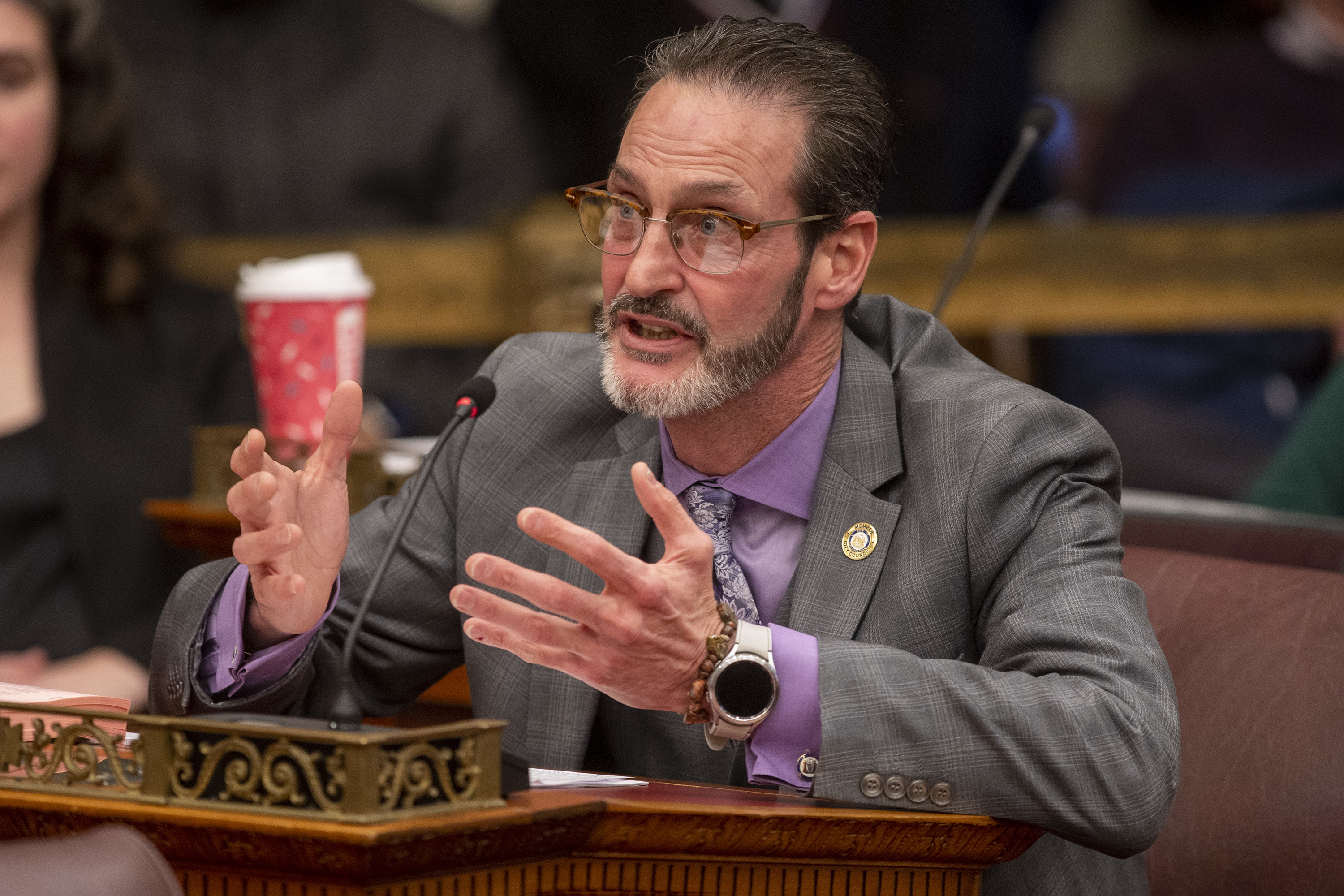
    Councilmember Jim Harrity in December 2023.

    Fond farewell: City Councilmember Jimmy Harrity gave an emotional speech in Council lamenting the loss of his friend Paul Staico, who died suddenly Sunday and was the owner of Big Charlie’s Saloon in South Philadelphia.

    Staico stood by Harrity when the future lawmaker was struggling with addiction, Harrity said.

    “Anybody that knew Paul will tell you he really was that guy, that guy who would give you the shirt off his back,” Harrity said. “He’s the only person I truly knew never lost faith in me, even when I was at my lowest 10 years deep in my addiction.”

    Councilmember Curtis Jones Jr. thanked Harrity, who often gives impassioned speeches, for his heartfelt tribute to Staico.

    “I want to shout out Jimmy Harrity for making crying in Council cool,” Jones said. “Nobody does it better, brother.”

    Staff writer Jake Blumgart contributed to this article.

  • Drugs took both her sons and her leg. Now, Kelly Wyatt is committed to staying sober.

    Drugs took both her sons and her leg. Now, Kelly Wyatt is committed to staying sober.

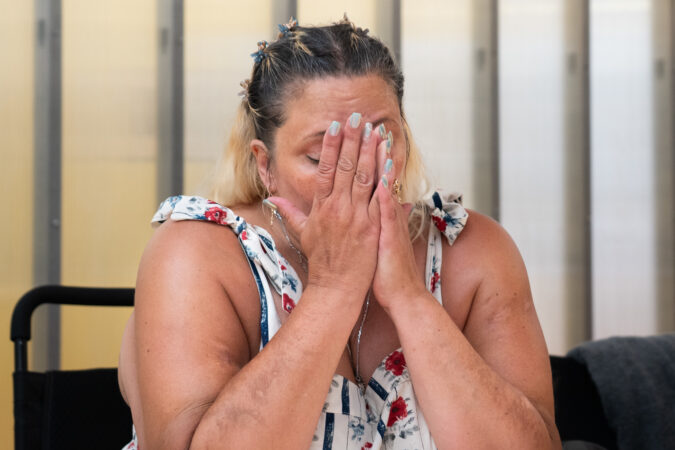
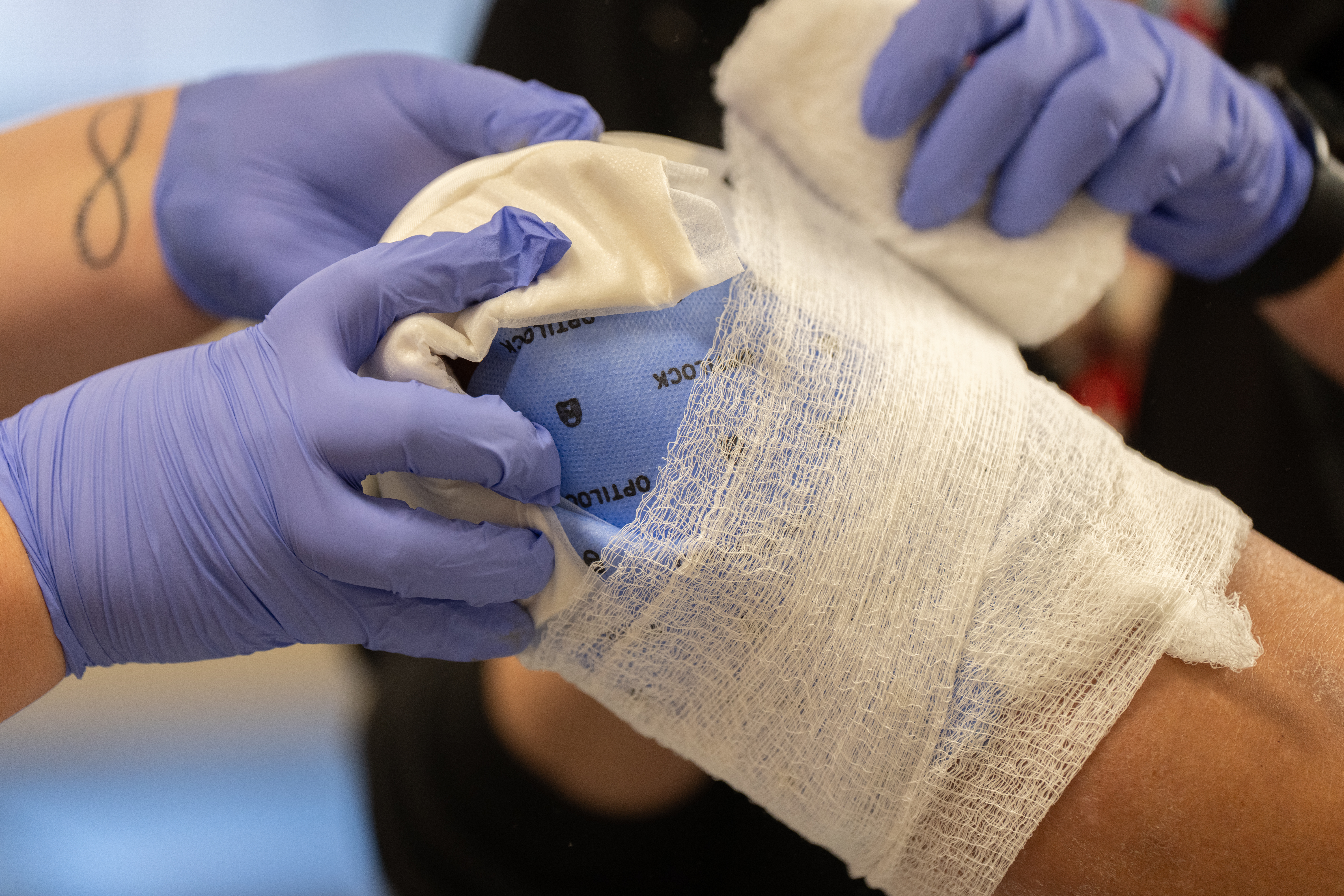
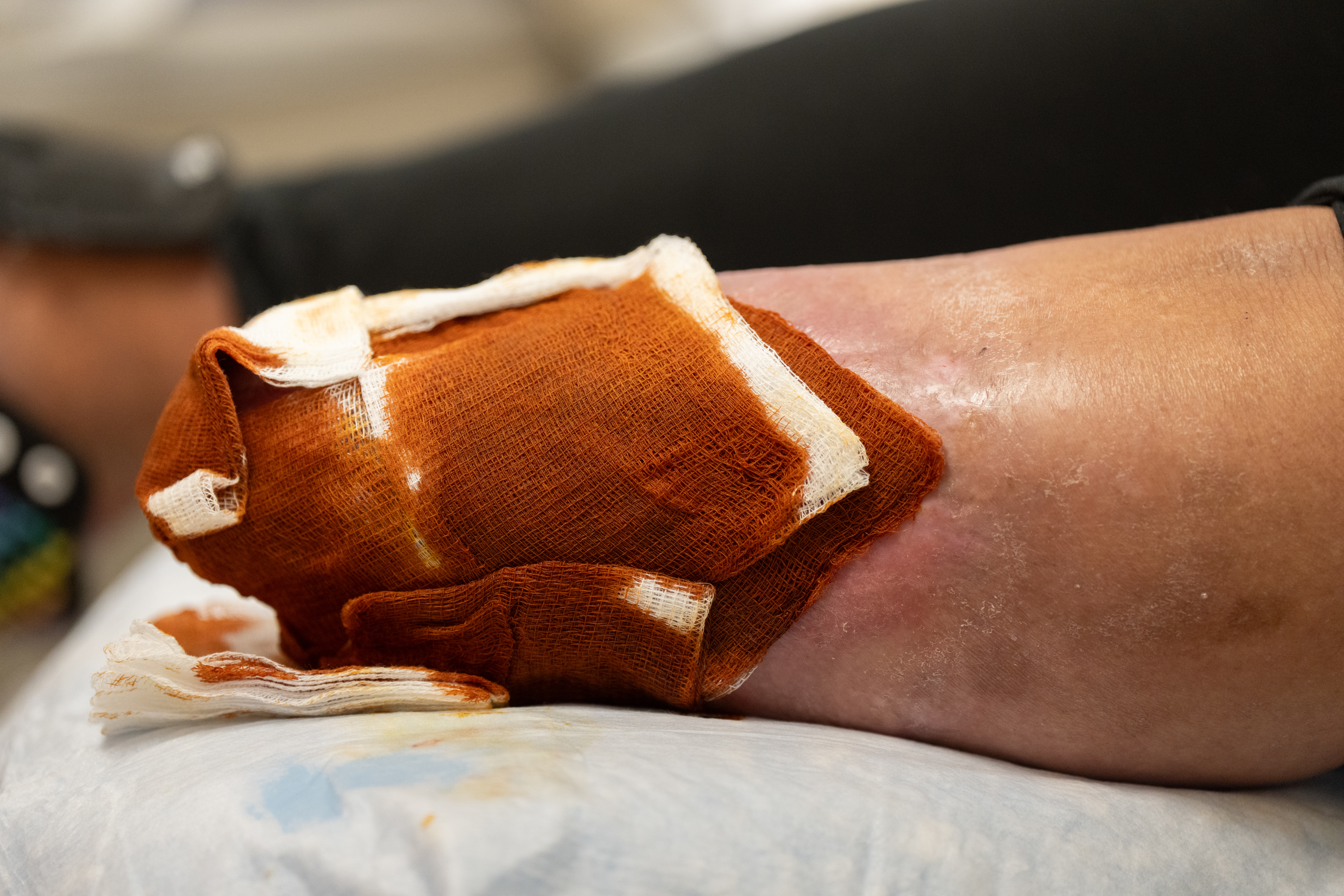
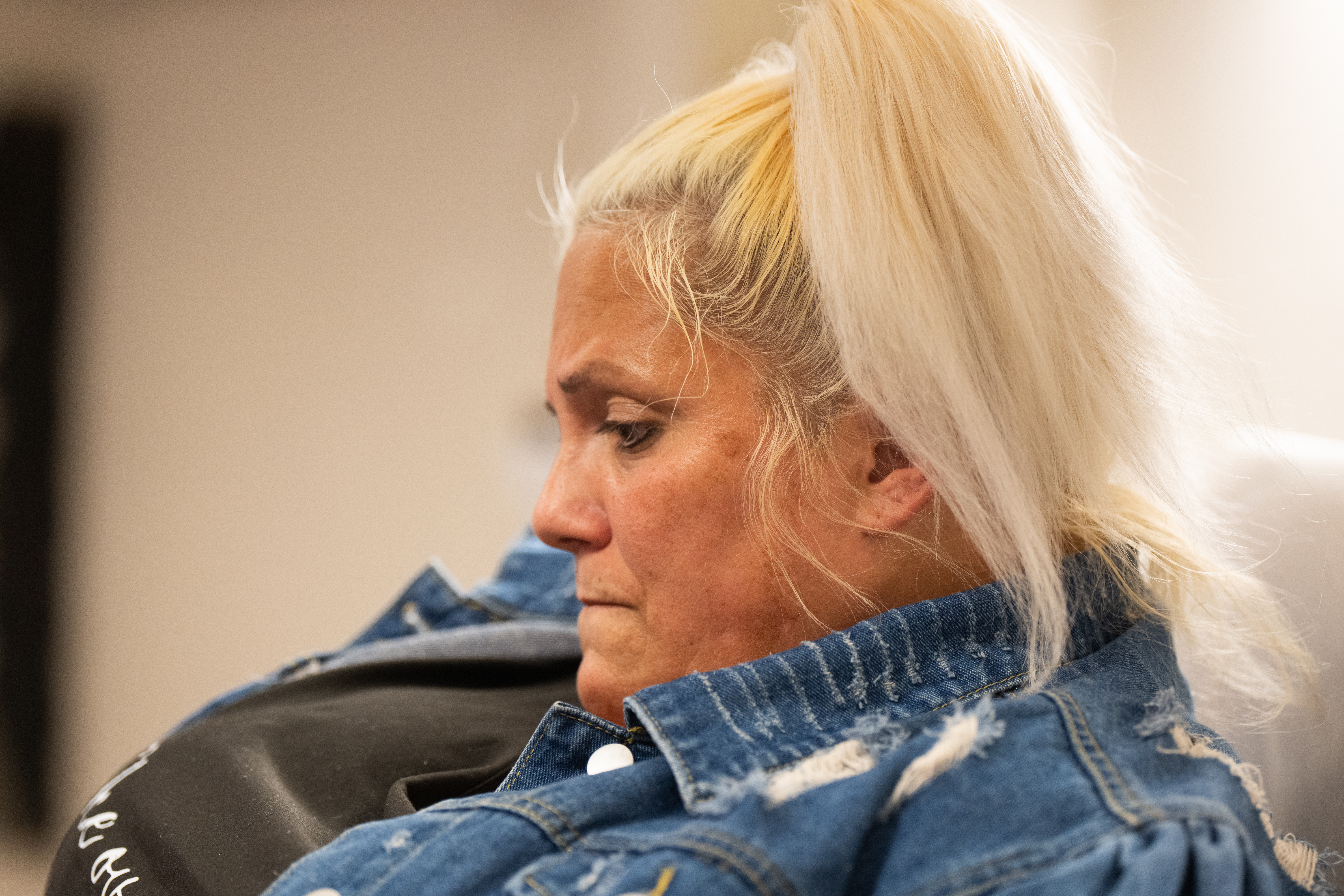
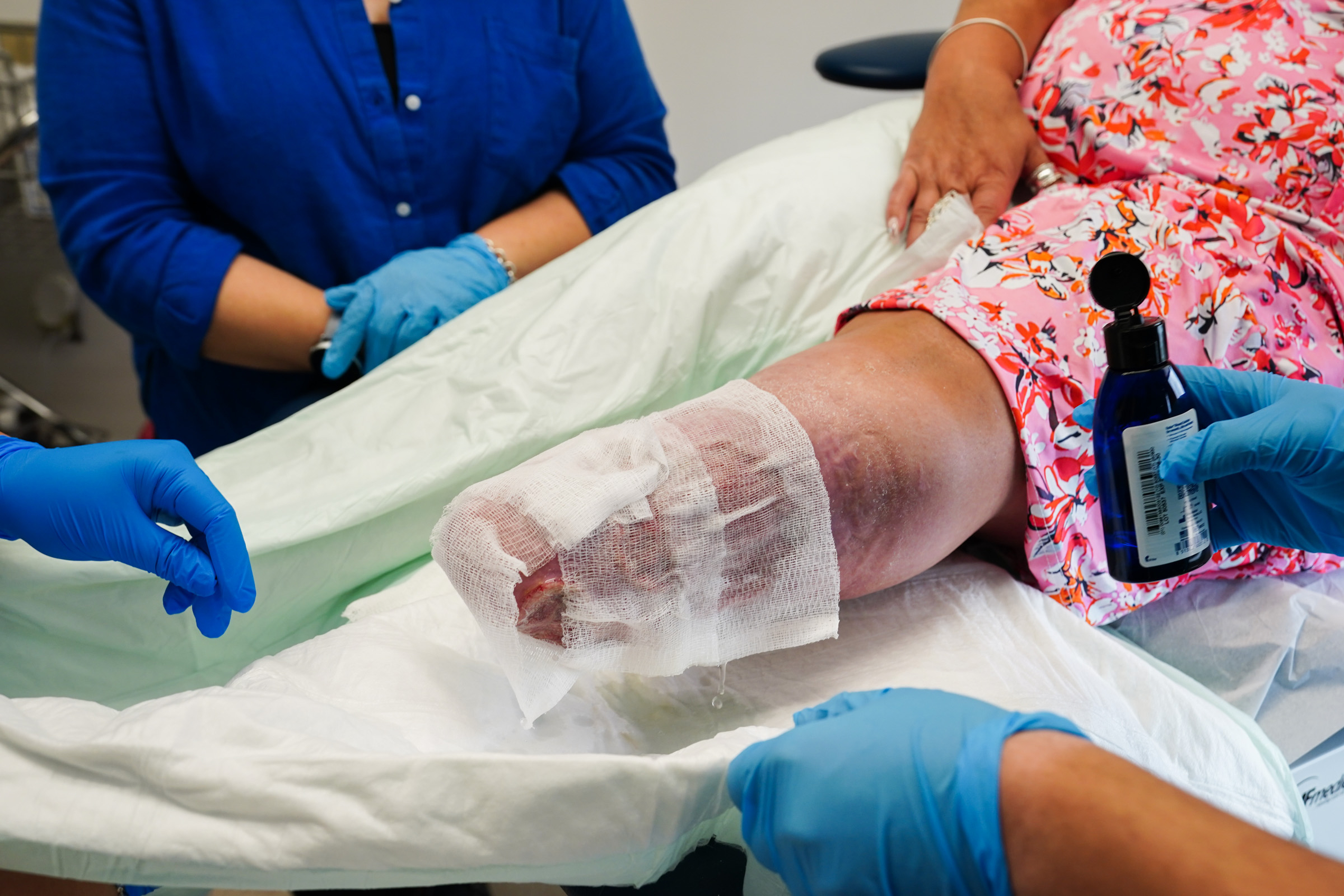
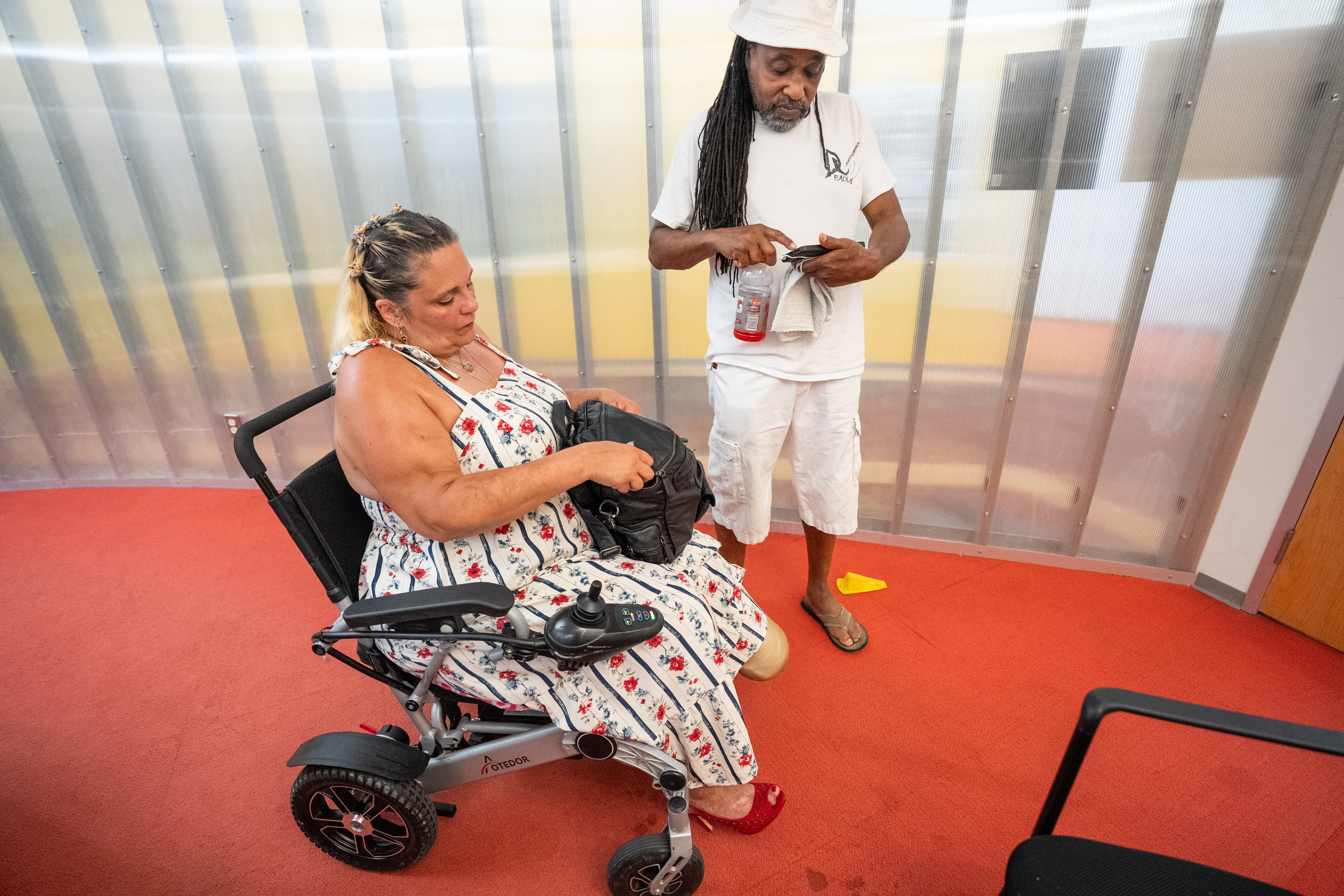
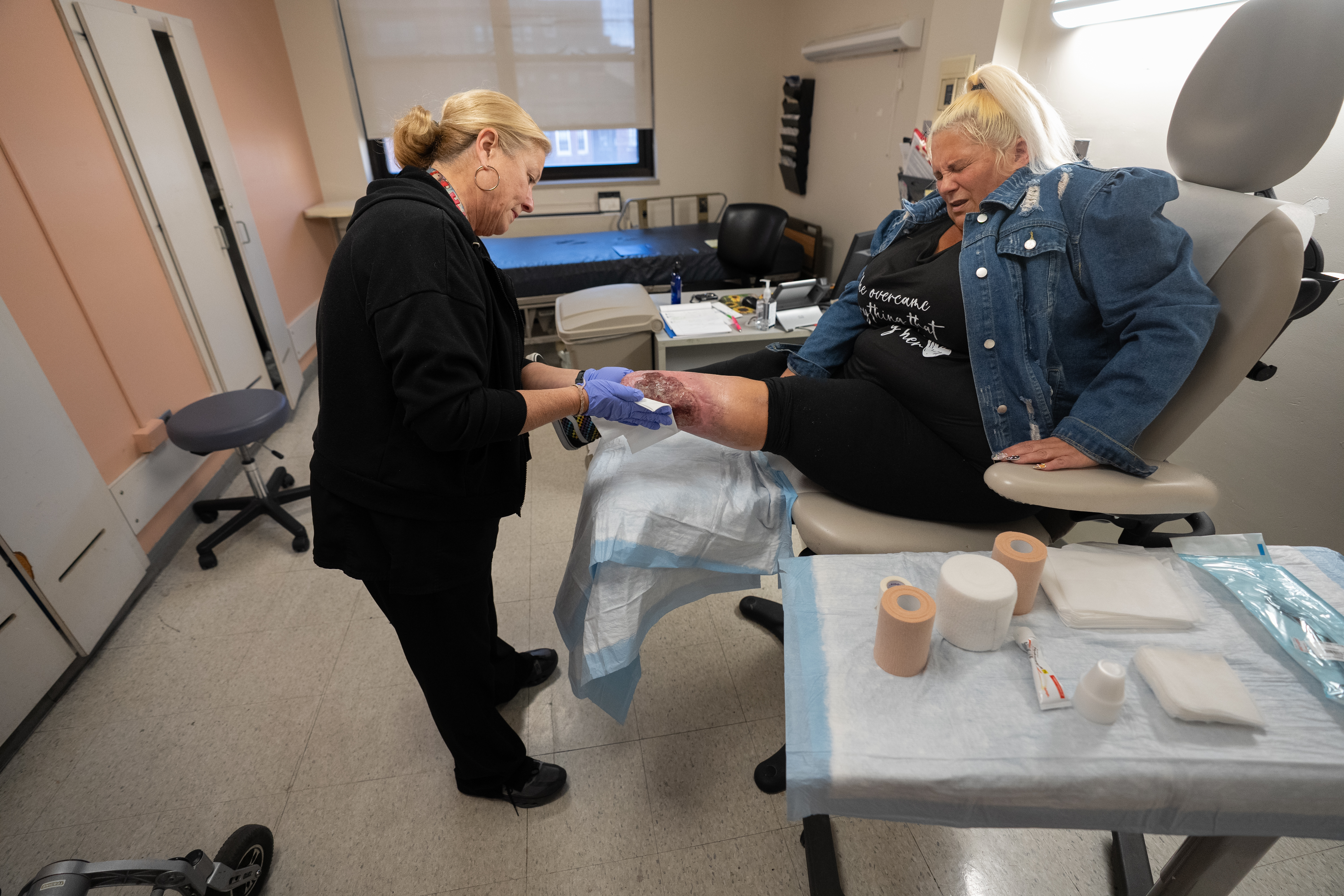
    Kelly Wyatt winced as a nurse unwrapped layers of gauze from her left leg, exposing the massive wound beneath.

    Yellow and red and gray, weeping plasma and agonizingly painful at the slightest touch, it covered almost the entirety of the end of her leg — the site of the amputation she had undergone four years before.

    Emergency room doctors at the time had warned her that if the drugs she was using didn’t kill her, her wounds would.

    Now Wyatt is 14 months into recovery from an addiction to fentanyl, a potent synthetic opioid, and xylazine, an animal tranquilizer never approved for human use. The emergence of xylazine, known as “tranq” on the streets, early in the decade marked the beginning of a dangerous new era for Philadelphians addicted to illicit opioids.

    Tranq users developed skin lesions that became gaping wounds, though exactly how is still unclear. As the medical establishment scrambled to respond, amputations more than doubled among people addicted to opioids between 2019 and 2022.

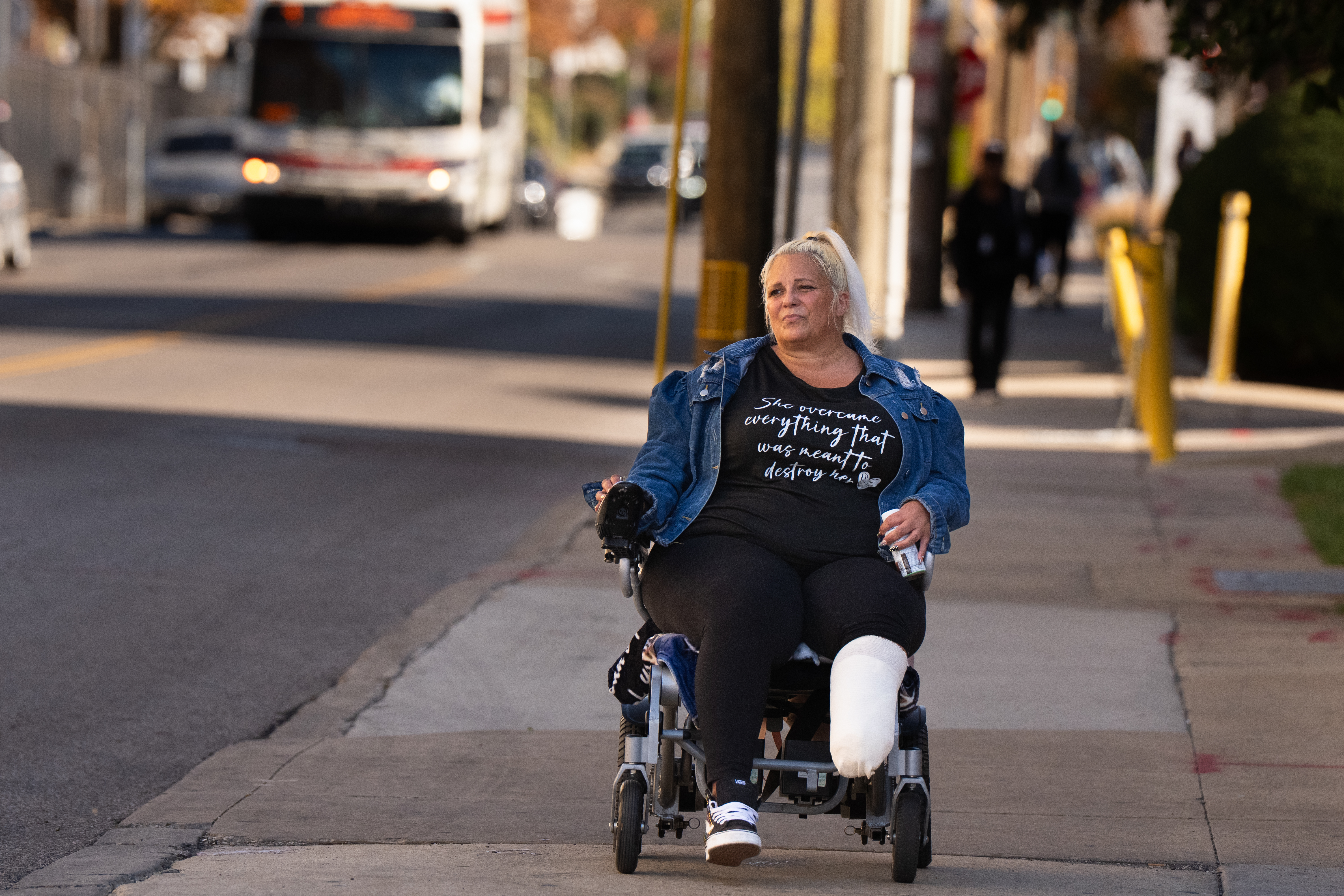
    Wyatt, 52, is among hundreds of Philadelphians facing lifelong medical needs from tranq, as the latest wave of the area’s drug crisis has seen a rapidly evolving succession of veterinary and industrial chemicals compound the dangers of the powerful opioids being sold on the streets.

    Some have become regular patients in burn units and wound care clinics at area hospitals, among the only places capable of treating severe tranq injuries.

    As part of its ongoing coverage of the area’s drug crisis, The Inquirer followed Wyatt for more than a year as she went through early recovery and worked with doctors to heal her wound.

    Kelly Wyatt receives treatment at Jefferson Einstein Philadelphia Hospital’s Center for Wound Healing in Philadelphia in November.

    Wyatt initially shrugged when the small sores had emerged on her legs, only to watch them grow into massive abscesses, resulting in an amputation below her knee. Her ongoing tranq use prevented the wound on her left leg from healing properly. Even after recent months of sobriety and careful treatment, doctors are still warning her that they may have to amputate more of her leg.

    But Wyatt’s tranq wounds go still deeper.

    Over the last several years, both of her sons had spiraled into addiction. By January, both of them were dead.

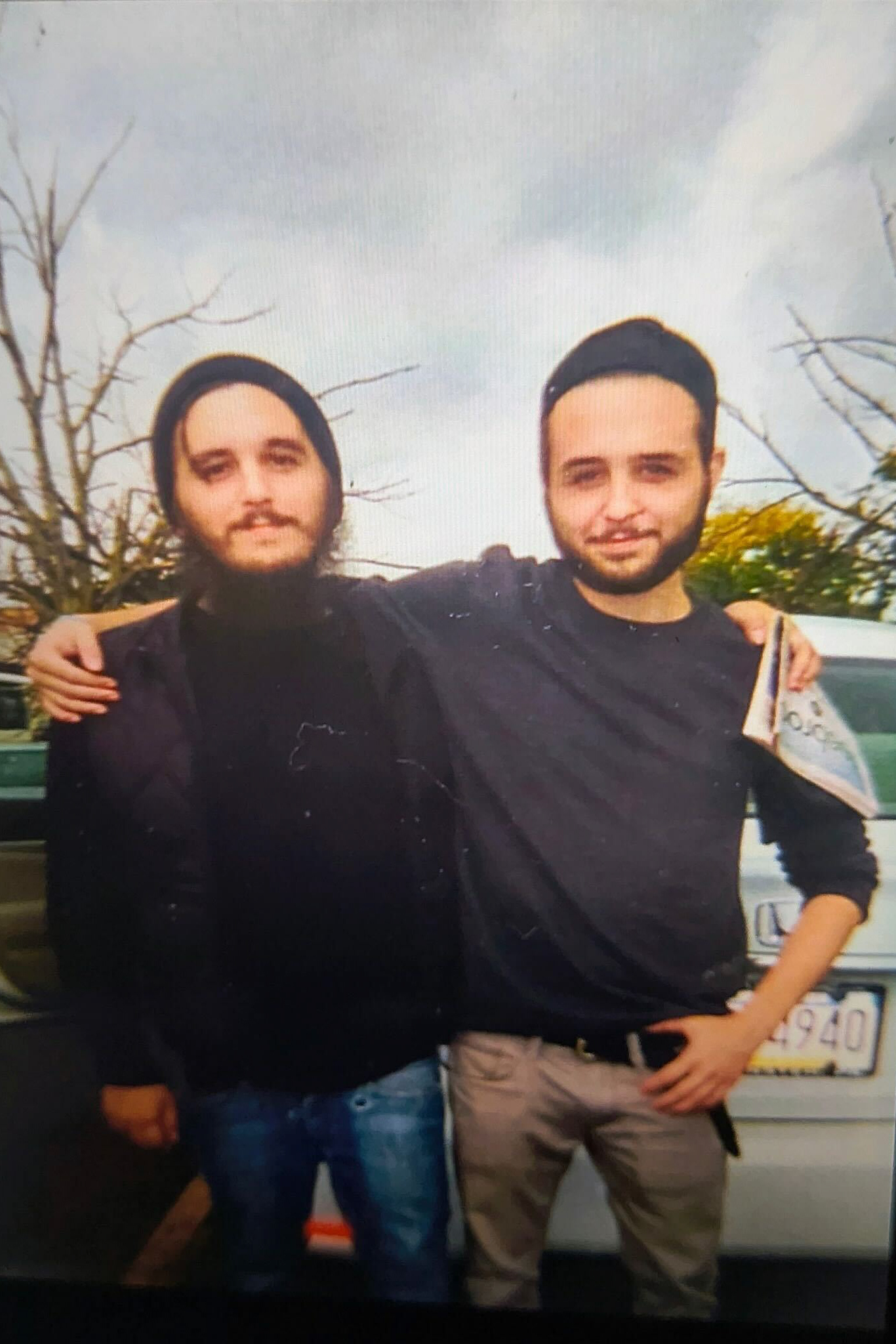
    A family photo of Dakota Wyatt, left, and Tyler, right.

    Spiraling into addiction

    Several members of Wyatt’s family have struggled with addiction.

    Wyatt experimented with drugs as a teenager, but was sober during her kids’ early childhoods. She didn’t drink alcohol, let alone seek out illicit drugs, after giving birth to her eldest son, Dakota, at 18. She raised two sons and a daughter in a neighborhood near Pennypack Park.

    Her days had a familiar rhythm: packing lunches, picking the kids up from school, watching them play together at the local park. In her spare time, she dabbled in mixed-media art, designing the window displays at the downtown restaurant where she worked for years. One Philadelphia Flower Show-themed display had a working waterfall.

    Her youngest, Tyler, was a happy child, grinning wide in every school picture and sharing inside jokes and a love for music with his brother. Dakota, more sensitive, had struggled with anxiety from an early age; Wyatt remembers him asking her at bedtime what the family would do if their house burned down in the night. But he could always make her laugh, and she and the boys would sing along to the same music in the car: ’90s alt-rock, Johnny Cash, the local hip-hop station.

    In 1999, she divorced their father. A few years later, at 28, she took her first Percocet pill, an opioid painkiller approved for medical use that is widely abused as a street drug. She had just started working at a bar, and the long hours were wearing on her.

    With the pills, “I could get more cleaning done, I could push my body more,” she said. “And it snowballed.”

    She was not aware when her sons began using drugs themselves in their teenage years. “I didn’t know for a long, long time,” she said.

    Afterward, Wyatt tried to help them seek treatment, even while her own drug use increased, she said.

    But a series of traumatic life events resulted in all falling deeper into addiction together.

    Wyatt’s ex-husband died following long-standing health issues, including diabetes.

    Then Dakota, who drove a Zamboni at a local ice rink, was injured in an accident at work — losing the tips of his fingers while cleaning the machine. He had been using more opioids to deal with the pain.

    Wyatt began buying drugs with him in Kensington, at the vast open-air drug market that is the epicenter of Philadelphia’s opioid crisis. “It was normalizing — I’m his mom and I’m with him in that crazy environment. I’m sure it made him feel like it was OK. And I regret that,” Wyatt said.

    “I regret a lot of stuff. But that was the beginning.”

    Kelly Wyatt leaves her wound care appointment at Jefferson Einstein Philadelphia Hospital’s Center for Wound Healing in November.

    Tranq warning signs

    It was the mid-2010s, and the drugs on the street were changing. The stronger synthetic opioid fentanyl was just emerging; dealers chanted “fetty-fetty-fetty” on the corners to draw in customers.

    And then Wyatt began hearing talk of “tranq” getting mixed into the drug supply.

    That was around the time that Dakota developed wounds on his arm, open sores that would not close. Wyatt found small wounds on her arms and legs — “like melon-ball scoops.”

    One day, she saw a flier, handed out by health authorities in Kensington, warning that tranq can cause skin lesions.

    “All of a sudden,” she recalled, “things made sense.”

    But her addiction was so severe that she was afraid to stop using the fentanyl-tranq mix now prevalent in the illicit drug market. She fixated on avoiding xylazine’s severe withdrawal symptoms — chills, sweating, anxiety, and agitation — which don’t respond to traditional opioid withdrawal medications. She worried about seeking treatment with no guarantee of relief.

    By the time Wyatt was admitted to a hospital in 2021, she was hallucinating from sepsis, a severe complication from an infection that can lead to organ failure, shock, and death.

    When she woke up eight days later, a doctor told her she was at risk of having one leg amputated, and maybe both. “Please let me keep as much of my leg as possible,” she recalls begging a doctor who wanted to remove her entire leg.

    Kelly Wyatt receives treatment for a serious xylazine wound at the site of her amputation at Jefferson Einstein Philadelphia Hospital’s Center for Wound Healing in November.

    “The doctor thought I should get the whole leg cut off. The other thing I could do was amputate below the knee, and then get tons of operations for the infection,” she said.

    Her oldest son’s tranq wounds had also worsened. Dakota had wounds on his legs and an arm, which was eventually amputated later that year. He also suffered a heart infection linked to his drug use, and needed a valve replacement.

    After a month in the hospital, he came home and continued using drugs.

    He developed new lesions. Maggots ate at his rotting skin. Wyatt cleaned the bugs out of his wounds.

    Wyatt tried bargaining with her son, promising they could get addiction treatment together. She offered to get him enough drugs that he wouldn’t enter withdrawal while waiting for care at the hospital. Sometimes, he managed to stay at the hospital for a few hours, but never longer.

    “He was too embarrassed to go anywhere, he was too afraid to get clean, and he was too afraid to be sick. He told us he would rather die than go through withdrawal again,” she said. “A couple times, he asked me if I wanted to just shoot up and lay down and die with him.”

    “‘I want to live,’” she recalls telling him, “‘and I don’t want to live without you.’”

    Kelly Wyatt waits for treatment for a serious wound on her leg at Jefferson Einstein Philadelphia Hospital’s Center for Wound Healing in November.

    Loss and recovery

    One night in January 2024, Dakota was having trouble breathing and seemed to be hallucinating, speaking nonsense. He asked Wyatt to call an ambulance to the house.

    Dakota died before the family reached the hospital. His cause of death was listed as drug intoxication.

    Wyatt believes ongoing health issues from his wounds hastened his death. Her grief intensified her own drug use, leading to more xylazine wounds. The wound that had opened near her amputation grew worse.

    A month after Dakota’s death, she entered drug treatment. After three months, she relapsed and overdosed on cocaine and fentanyl. Her first thought after waking up was to use again, but instead she chose rehab.

    “I didn’t want to die,” Wyatt said. “I didn’t want to be in pain anymore.”

    She arrived at the Behavioral Wellness Center at Girard in July 2024, hoping to enter outpatient rehab.

    Instead, physicians recommended their inpatient clinic that could also treat her wounds, one of the few such facilities in Philadelphia.

    In August 2024, Kelly Wyatt attended a wound care appointment as part of her inpatient care at Girard Behavioral Health, one of a few addiction rehabs in the city that can treat xylazine wounds.

    Wyatt was living there and undergoing treatment a month later, in August 2024, when she wheeled her motorized wheelchair into a clinic room and took deep breaths as nurses carefully peeled back layers of moisturized gauze on her left leg, cleaning the wound.

    Still in the shaky early months of recovery, and needing to remain in inpatient rehab, she remained worried about Tyler, who was still using drugs.

    “He was the primary caretaker of his brother. They would be in their room, getting high together. And now he’s just in that room by himself, day in and day out,” she said in an interview that summer.

    “I kept saying, ‘I think I should go home to him.’ And everybody kept saying to me, ‘You have to work on yourself first. He’ll be fine,’” she later recalled.

    “And then he wasn’t fine.”

    Kelly Wyatt and her partner Randy Stewart at the headquarters of Resources for Human Development, which runs the skilled nursing and inpatient addiction treatment center where Wyatt sought treatment this winter.

    A mother’s guilt

    Wyatt was still in rehab in January 2025 when her partner, Randy Stewart, called. He hadn’t seen Tyler in hours and thought he might have left the family’s house.

    Wyatt called several hospitals and then asked Randy to check the bathroom in the back of the house.

    He found Tyler on the floor.

    “I just thought, God, please no,” Wyatt said. “Not again. You can’t do this to me again.”

    Tyler’s cause of death was also listed as “drug intoxication.”

    He died at 27, a year and 10 days after his brother.

    Wyatt is still wracked by guilt. Guilt that she used drugs with her sons. That she used drugs at all. That she wasn’t there when either of her boys died. That her daughter, who does not use drugs, stopped speaking to her. Sometimes, she dreams about her children and wakes up screaming.

    As she continues treatment, Wyatt said, she hopes her story will help other families struggling with addiction, especially the realities of tranq use.

    “Sometimes I’m embarrassed to talk about it. But I feel like I have to,” she said. “Because people need to know. If one person sees this and gets some medical care, gets any kind of help, I would be happy.”

    Heidi Hunt, a wound care-certified registered nurse, cleans the wound on Kelly Wyatt’s leg at Jefferson Einstein Philadelphia Hospital’s Center for Wound Healing in November.

    Treating tranq’s wounds

    For Wyatt, maintaining her recovery from addiction and caring for her wounds are full-time occupations that sometimes are in conflict.

    Methadone, the opioid addiction treatment drug that has helped Wyatt curb cravings for more than a year, can be dispensed only at special clinics.

    Wyatt’s clinic journey meant three hours a day on a bus where she couldn’t keep her leg elevated. The wound worsened until she was able to switch to a closer methadone clinic.

    Wyatt relies on Stewart to help her move around her home, where the only bathroom that she can access is the one where Tyler died.

    “Cleaning, taking care of me, changing my wound dressings, talking about my sons — he calms me down. It’s been a lot, and he’s really done a lot,” she said.

    Kelly Wyatt and her partner Randy Stewart in July.

    Once a week, Wyatt travels to Jefferson Einstein Philadelphia Hospital’s Center for Wound Healing for wound care.

    At a recent appointment, nurse practitioner Danielle Curran scraped away infected skin, measured the wounds, cleaned and re-bandaged her lesion.

    In between office visits, nurses also go to her home to clean and re-bandage her wound twice weekly. Several times this year, Wyatt has undergone debridement surgery to remove more damaged skin under anesthesia.

    If the treatments manage to shrink her wound, Curran said, Wyatt could try a skin graft and eventually receive a prosthetic leg that could help her get around more easily.

    Curran has treated about 20 xylazine patients at the clinic over the last few years. About 10, including Wyatt, are still getting regular care. Others have relapsed and returned to the streets. Several have died of overdoses.

    She is relieved that, as Philadelphia’s opioid crisis continues to evolve, tranq is becoming less prevalent. But it has been replaced in street drugs by another animal tranquilizer, medetomidine, which does not appear to cause flesh wounds but, rather, agonizing withdrawal symptoms. Skin lesions among opioid users have decreased in the last year.

    Yet Curran still insists on seeing patients like Wyatt with xylazine wounds weekly, trying to help them through their injuries and hopefully their recovery, too. “I like to be another person holding them accountable, to stay on the path. We try to give them that support.”

    Sometimes, that support means simply reminding Wyatt how far she has come in the four years since the amputation, and now 14 months of sobriety.

    At a recent appointment, after carefully scraping dead skin away from Wyatt’s leg with a small curette, Curran walked through her next steps: A disinfecting gel to keep bacteria out of the wound. A course of antibiotics to avoid infection. Another debridement surgery, in a few weeks.

    “As a rule of thumb,” Curran told a reporter, “it’s very hard to give timelines for wound care, because of all the things that could possibly go wrong. A wound this size, though? It could take years.”

    Wyatt began to cry. “It’s already been four years,” she said.

    Curran turned to her. “You’ve made so much progress,” she said gently. “Give yourself time.”

    Kelly Wyatt enters the wound care clinic at Girard Behavioral Health in August 2024.

    Editor’s note: This story has been updated to clarify the name of the Jefferson Health clinic where Kelly Wyatt received wound care.

  • At Project HOME, providing shelter is just one link in a chain that restores dignity and offers hope | Philly Gives

    At Project HOME, providing shelter is just one link in a chain that restores dignity and offers hope | Philly Gives

    As charming and ebullient as Nephtali Andujar is (lots of hugs, compliments, and gifts of his homemade pottery), the 61-year-old is also pretty blunt about why people should give to Project HOME, one of the city’s largest nonprofit housing agencies.

    Because of Project HOME, said Andujar, who spent years living on the streets, he is no longer desperate — desperate to get money to feed a heroin addiction, desperate to scrape $5 together to pay someone to let him drag a discarded mattress into an abandoned house for a night’s sleep out of the rain.

    “It’s not just giving someone an apartment,” said Andujar, who sheepishly described a past that included stealing cars and selling drugs. “It’s the snowball effect.

    “You are not just helping the homeless,” he said. “You are helping the city. You are helping humanity.”

    In the agency’s name, the letters HOME are capitalized, because each letter stands for part of the multipronged approach that Project HOME takes in addressing homelessness and combating poverty for the 15,000-plus people it serves each year.

    There’s H, for Housing — not only housing in the literal sense, but also in the teams of outreach workers who comb through the city’s neighborhoods looking for people like Andujar. One outreach worker found Andujar in 2021 at a critical moment in his life — clean, just out of the hospital for liver treatment, and back on the streets of Kensington ready to begin anew.

    “We know we have to do the most we can to preserve these resources that we’ve come to rely on,” says Donna Bullock, president and CEO of Project Home.

    For Andujar, it was a race. What would find him first?

    Would it be heroin, as it had so often been in the past? It was tempting. It’s painful being on the street — cold, hungry and dirty, ashamed and alone. “When you do heroin, you don’t feel the cold. It kills the hunger,” he said. “When you use the drugs, you don’t have to suffer for hours. Heroin numbs you.”

    Instead, though, it was the outreach worker — someone who had been through Project HOME’s recovery program — who plucked Andujar off the street in the nick of time and took him to a shelter.

    A year later, that same outreach worker helped Andujar move to his own room at Project HOME’s Hope Haven shelter in North Philadelphia.

    “You get tired of the streets. They were killing me,” Andujar said.

    Next Andujar found Project HOME manager JJ Fox, who helped him get a birth certificate and other documents, and arranged for him to stay. But he needed more than a warm bed.

    The problem with getting straight after a heroin addiction, Andujar explained, is finding a new purpose and direction. For so long, life was focused on a repeat cycle of getting the next fix and then becoming numb to pain while it was working.

    So when he got to Project HOME, he needed a new direction, which is where both the O and E in HOME came in for Andujar.

    “JJ Fox gave me direction,” he said, and so did Project HOME employment specialist Jamie Deni.

    Training certificates cover a wall in Nephtali Andujar’s studio apartment in Project HOME’s Inn of Amazing Mercy in Kensington.

    The “O” in HOME has to do with Opportunities for employment. Certificates cover one wall in Andujar’s studio apartment in Project HOME’s Inn of Amazing Mercy, a 62-unit apartment building and offices in a former nursing school dormitory in Kensington. He can point to his accomplishments in computer skills, barbering, and training as a peer specialist to help others the way the outreach worker helped him.

    But Andujar is not in good health, as vigorous as he appears. His addictions will someday exact their price, even though with cirrhosis of the liver, he is already living years beyond what his doctor predicted.

    Full-time work is not an option. So Andujar is part of the “E,” as in Education. Deni helped him get a grant to take art classes at Community College of Philadelphia. She helped him understand CCP’s education software so he could turn in his homework.

    Project HOME offers classes in graphic design, music production training, ServSafe food handling, forklift and powered industrial trucks certification, and website building, among other courses.

    The M stands for Medical. Project HOME doctors, nurses, and other health practitioners treat 5,000 people a year, both in a fully equipped health center and by sending medical teams into the streets, caring for people, literally, where they live.

    “My dad always told me that you need three things — housing, food, and love. You get all that here,” Andujar said.

    And for him, it goes beyond that. During a stable period in his life, Andujar had a partner and a child. His daughter is now 14 and living with her aunt in New Jersey. Her mother, who was also stable for many years, fell into addiction but is clean now. She is living in another Project HOME apartment.

    Like Andujar, Omayru Villanueva, 49, another resident at the Inn of Amazing Mercy, recalls her first night of homelessness.

    She remembered a cold slushy rain.

    She remembered sweeping every corner of her house, determined to leave it clean, no matter what. Her husband had been convicted and jailed for a federal crime. She couldn’t make the payments on the house, so she sold or stored all of her belongings and prepared to leave.

    On her last morning at home, she and her school-age twin sons walked out the door before the sheriff came. Her older daughter was able to find a place in a shelter. Her second daughter, just under 18, said she was living with a boyfriend, but it turned out that she had been trafficked.

    “There’s a sense of dignity and respect when you have your own place,” says Omayra Villanueva, another resident of the Inn of Amazing Mercy.

    By that evening, Villanueva was desperate. She took her boys to a hospital emergency room. At least they could sit indoors while she figured out something. “I was crying inside.” Finally, she called a friend from church who took her and her sons in.

    From there, they moved from shelter to shelter, and ultimately to a Project HOME apartment with two bedrooms.

    “That night we had a pizza party. We were so happy,” she said. “There’s a sense of dignity and respect when you have your own place. You can take your worries away from having a place to live, and you can focus on other things.”

    She remembered lying in her new bed, “thanking God and rubbing my feet against the mattress.” The next day, she woke up, opened the window, and listened to the birds. Then she asked her sons what they wanted for breakfast. “When you are in a shelter, you eat what they give you.”

    The simple pleasures.

    Three of her four children, scarred from the experience, have also been homeless and living on the street. Her two sons, now 23, are in Project HOME apartments. Both daughters are now fairly well-established.

    Villanueva appreciates the medical help she has been given at Project HOME, particularly for mental illness stemming from the trauma she has experienced with her ex-husband’s arrest and homelessness.

    “Anybody can end up being homeless,” she said. “I wasn’t a drug addict. I wasn’t an alcoholic. It can happen to anybody.”

    She thinks of her daughter, who has a house, a job, and a car. But if something happens to the car, her daughter won’t be able to get to work. She won’t be able to pay her mortgage, and she could wind up homeless. It’s that simple.
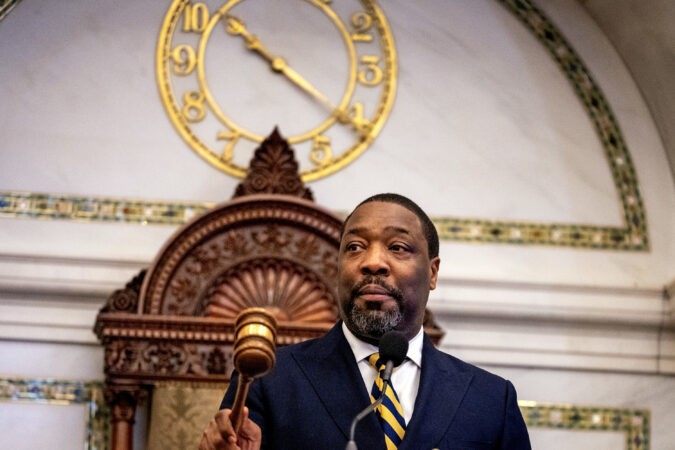
    “It’s important to donate because people can help break the cycle of homelessness,” Villanueva said.

    “It’s about housing and education. It’s about medical help. It’s about employment,” she said. “Project HOME helped me a lot.”

    The truth is that every person in Project HOME has a story. Those stories keep Donna Bullock, president and chief executive, motivated to preserve and protect the agency founded just over 35 years ago by Sister Mary Scullion and Joan Dawson McConnon.

    She worries about how the city will respond to federal executive orders amounting to the criminalization of homelessness. Will there be tightened requirements for agencies that provide shelter?

    Project HOME is reimbursed for some of the medical care it provides, but Bullock worries that new rules involving Medicaid reimbursement will impact the agency’s budget, while cutbacks in services increase demand.

    “It’s terrifying,” she said. “We know we have to do the most we can to preserve these resources that we’ve come to rely on.

    “In this job, I’ve learned to appreciate the humanity of folks — the residents and the stories they tell and the contributions they make to our community.”

    Sometimes, she said, Project HOME residents walking the path of recovery slip and fall away. Sometimes the results are tragic, the losses devastating.

    “We’re experiencing all these moments — communal grief and communal celebrations as well. We talk a lot about how every journey of recovery is unique. Everyone walks their own journey. We can’t do the walk for you, but we can walk with you,” she said.
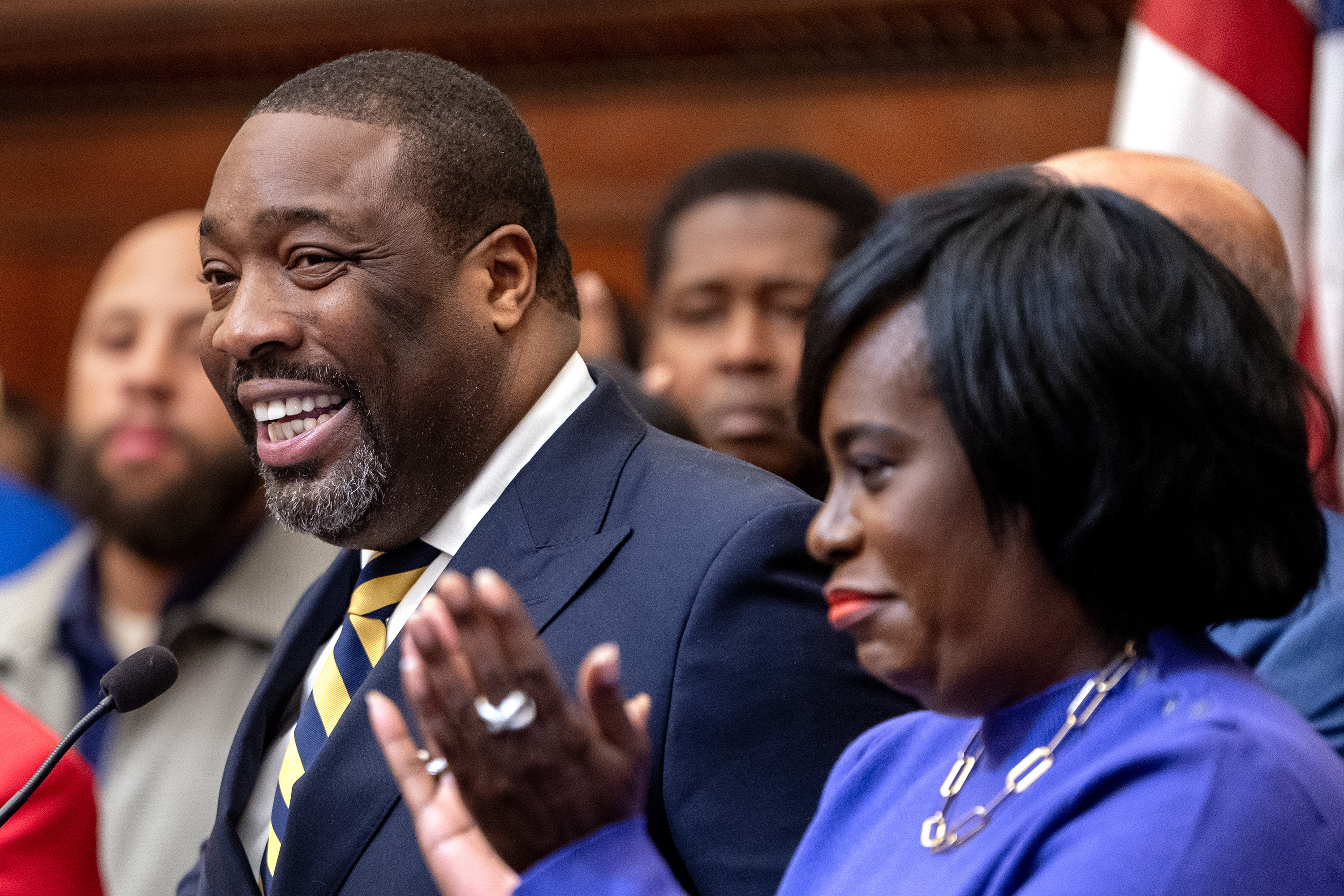
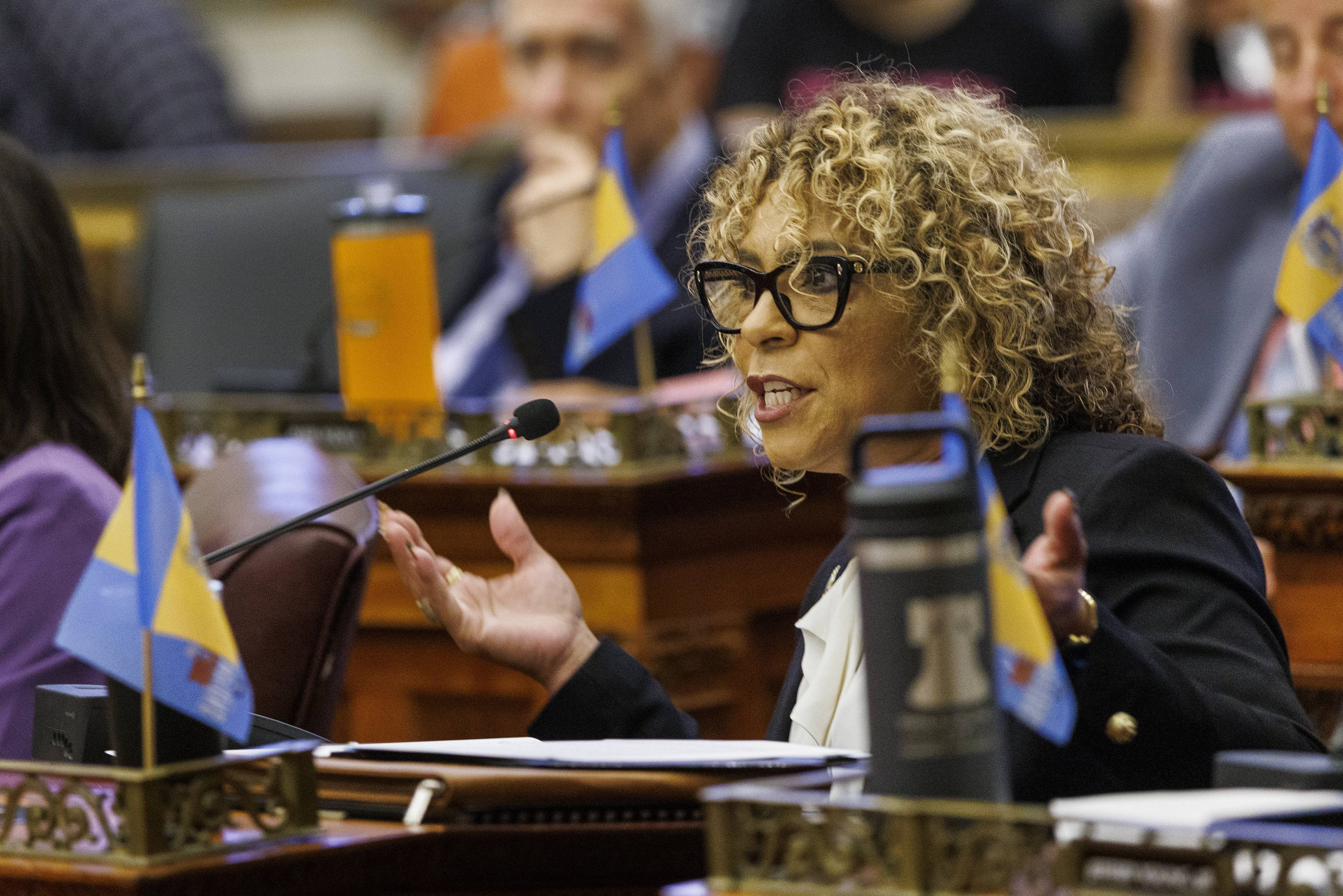
    Bullock invites others to the journey, promising that when people give to Project HOME, they can be assured that their money is carefully managed. “We’re good stewards of the resources entrusted in our care. We know how to leverage the resources given to us.

    “Folks expect a return on their investment, and the return is the difference in individual lives and also building a community,” she said. “Your investment is magnified 10 times over.”

    This article is part of a series about Philly Gives — a community fund to support nonprofits through end-of-year giving. To learn more about Philly Gives, including how to donate, visit phillygives.org.

    For more information about Philly Gives, including how to donate, visit phillygives.org.

    About Project HOME

    Mission: To empower adults, children, and families to break the cycle of homelessness and poverty, to alleviate the underlying causes of poverty, and to enable all of us to attain our fullest potential.

    People served: More than 15,000 annually — with street outreach, housing, opportunities for employment, medical care, and education.

    Annual spend: $49.06 million

    Point of pride: Project HOME, which operates 1,038 housing units, broke ground in October for construction of 45 new apartments; also under construction are 20 respite beds. In the pipeline are an additional 44 apartments. Project HOME also operates the Honickman Learning Center Comcast Technology Labs, Stephen Klein Wellness Center, Helen Brown Community Center, and Hub of Hope.

    You can help: Volunteers tutor students, serve meals, participate in neighborhood cleanups, and organize donation drives at their organizations for household items or other items useful to families or people still experiencing street homelessness.

    Support: phillygives.org

    What your Project HOME donation can do

    Here are some ways that a gift can help the people we serve:

    $25 provides warm clothing and new socks for a visitor at the Hub of Hope.

    $50 supports a behavioral health counseling visit.

    $100 provides a month’s worth of hygiene products and toiletries for a family.

    $250 provides a welcome basket for a new resident complete with sheets, towels, and cooking supplies.

    $500 supports five dental visits at the Stephen Klein Wellness Center.

    $1,000 funds six weeks of summer camp at the Honickman Learning Center Comcast Technology Labs, keeping a child’s mind active during the summer and supporting moms who work.

    $1,500 funds a certification program through the Adult Education and Employment program leading to employment readiness.