Tag: LGBTQ+

  • History and conservation groups are suing the Trump administration over censorship at national parks

    History and conservation groups are suing the Trump administration over censorship at national parks

    A new lawsuit filed by a group of conservation and history organizations is challenging President Donald Trump’s executive order to remove historic information from national parks.

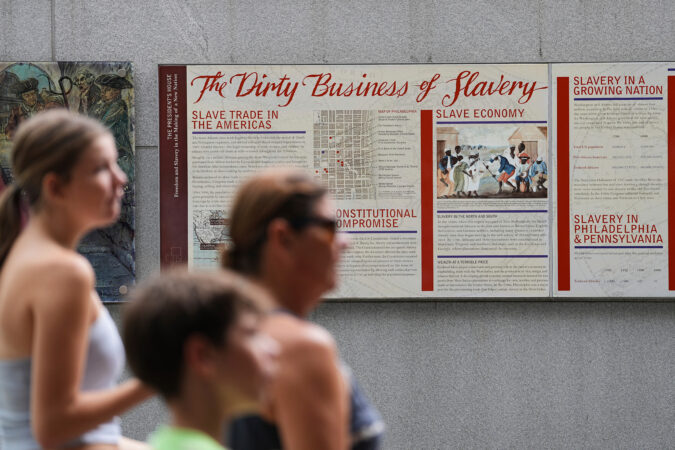
    It comes a day after a federal judge ordered restoration of the slavery exhibits at the President’s House in Philadelphia and marks the latest chapter in a showdown between historical transparency versus censorship.

    On Tuesday, the National Parks Conservation Association filed a lawsuit in Massachusetts federal court against the Department of Interior, challenging Trump’s 2025 executive order that forced national parks to change or strip displays tied to topics ranging from slavery and racism to LGBTQ+ rights and climate change.

    “Plaintiffs are organizations committed to protecting the national parks, preserving history, promoting access to high quality scientific information, and providing high quality interpretive materials — including exhibits, signs, brochures, and other educational materials — that bridge the gap between physical objects and human understanding for park visitors,” the lawsuit says.

    “They and their members — including avid users of national parks and historians whose research is being erased — have been injured by these actions and seek to ensure that the administration does not wash away history and science from what the National Park Service has recognized is ‘America’s largest classroom.’ ”

    The coalition, which includes the American Association for State and Local History, the Association of National Park Rangers, the Coalition to Protect America’s National Parks, the Society for Experiential Graphic Design, and the Union of Concerned Scientists, is asking the court to declare Trump’s executive order unlawful and to order removed materials to be restored.

    “In filing this litigation together, we are taking a stand for the soul of our national parks,” Alan Spears, senior director of cultural resources at the National Parks Conservation Association, said. “Censoring science and erasing America’s history at national parks are direct threats to everything these amazing places, and our country, stand for.”

    In Philadelphia, U.S. District Judge Cynthia M. Rufe issued a ruling Monday requiring the federal government to restore the President’s House site to its original state. The removed exhibits paid tribute to the enslaved people who lived in George Washington’s home during his presidency.

    In her 40-page opinion, Rufe — who is a George W. Bush appointee — does not mince words. She compared the federal government’s argument that it can unilaterally control the exhibits in national parks to the dystopian totalitarian regime in George Orwell’s 1984.

    The plaintiff’s group for the Massachusetts suit is being represented by Democracy Forward, a progressive nonprofit that challenges government actions it views as harmful.

    “You cannot tell the story of America without recognizing both the beauty and the tragedy of our history,” Skye Perryman, Democracy Forward’s president and CEO said in a statement. “The president’s effort to erase history and science in our national parks violates federal law, and is a disgrace that neither honors our country’s legacy nor its future.”

    Beyond Philadelphia, the lawsuit also mentions other examples of Trump’s executive order in action, including the removal of an interactive display mentioning climate change at Fort Sumter in South Carolina, short films on labor history being scrapped at Lowell’s National Historical Park in Massachusetts, and the removal of displays discussing negative impacts tourists, settlers, and cattle ranchers have on the Grand Canyon National Park.

    The lawsuit goes on to point out the irony of Trump’s executive order aiming to avoid “disparaging Americans,” despite the president’s own new signage at the White House, which takes jabs at former President Joe Biden and others along his West Wing “Walk of Fame.”

    The parties are asking a judge to order that national parks must be allowed to present the full historical and scientific picture without censorship and for their court costs to be paid for.

  • CHOP, Nemours targeted by Trump administration over transgender care

    CHOP, Nemours targeted by Trump administration over transgender care

    Escalating President Donald Trump’s fight against transgender rights, a top official at the Department of Health and Human Services on Thursday asked the department’s inspector general to investigate two Philadelphia-area children’s hospitals over their gender-affirming care for transgender children.

    Children’s Hospital of Philadelphia (CHOP) and Nemours Children’s Health in Wilmington are among a dozen hospitals that HHS general counsel Mike Stuart said in posts on X he had referred to the agency’s Office of the Inspector General (OIG) in recent days.

    A CHOP spokesperson declined to comment on Friday, and Nemours did not respond to a request for comment.

    Both hospitals treat children and teens with gender dysphoria — a medical condition in which a person’s body does not match their gender identity. Doctors can prescribe hormone therapy and puberty blockers to treat the condition, although Nemours has already limited its use of these treatments in response to threats from the Trump administration.

    The administration has targeted CHOP and other hospitals that treat transgender youth with subpoenas demanding patients’ medical records, including their dates of birth, Social Security numbers, and addresses, as well as every communication by doctors — emails, voicemails, and encrypted text messages — dating back to January 2020.

    CHOP filed legal action in response, asking a federal judge in Philadelphia to block the parts of the subpoena that sought detailed medical records of patients. In November, the judge ruled in CHOP’s favor.

    The Trump administration appealed the decision Friday. It has argued that it needs the records as part of its investigation into possible healthcare fraud or potential misconduct by the hospitals.

    Stuart said in a Thursday post on X that the administration is investigating hospitals in order to safeguard children from “sex-rejecting procedures,” adding: “There is no greater priority than protecting our children.”

    Corinne Goodwin, executive director of the Eastern Pennsylvania Trans Equity Project, called Stuart’s post part of the Trump administration’s ongoing efforts to intimidate doctors and hospitals that provide gender-affirming care to those under 19.

    “This action by the Department of Health and Human Services is yet another attempt to intimidate healthcare providers and to harm young people who simply want access to proven healthcare that helps them to live happy and productive lives,” said Goodwin, whose nonprofit organization provides services to transgender people in 42 counties, including Montgomery, Bucks, and Delaware.

    In the last year, the president has signed a slew of executive orders aimed at transgender Americans.

    The administration has said it recognizes only two genders, limited research into LGBTQ+ health, and phased out gender-affirming care at the Department of Veterans Affairs.

    Directly targeting children’s hospitals, HHS Secretary Robert F. Kennedy Jr. issued a declaration in December rejecting gender-affirming procedures for minors, including puberty blockers, hormone therapy, and surgeries.

    The American Academy of Pediatrics and other major medical associations, citing research, widely accept such care as safe, effective, and medically necessary for the patients’ mental health.

    HHS’s OIG declined Friday to confirm or deny the existence of an investigation.

    Last month, the U.S. Senate confirmed Thomas “March” Bell to serve as inspector general over HHS. During his confirmation hearing, Bell submitted written testimony saying, “If confirmed as inspector general, I will examine, evaluate, audit, and investigate to support the initiatives of President Trump and Secretary Kennedy.”

    An ongoing legal battle

    CHOP runs one of the nation’s largest clinics providing medical care and mental health support for transgender and nonbinary children and teens and their families. Each year, hundreds of new families seek care at CHOP’s Gender and Sexuality Development Program, created in 2014.

    Nemours’ Gender Wellness Clinic, launched in 2018, provided hormone therapy and puberty blockers, as well as mental health support, to transgender patients in Delaware, and Nemours is the only hospital in the state that provides gender-affirming care for children.

    Starting last July, its clinic began accepting only new patients who need behavioral healthcare. Existing patients receiving hormones or puberty blockers at the clinic were allowed to continue their treatment, the hospital said at the time.

    On Thursday, Stuart wrote on X that CHOP and Nemours “appear to continue to operate outside recognized standards of healthcare and entirely outside @SecKennedy’s declaration that sex-rejecting procedures for children and adolescents are neither safe nor effective.”

    Kennedy’s December declaration says that these procedures “do not meet professionally recognized standards of health care.” Doctors who perform such procedures could be barred from participating in federally funded healthcare programs like Medicaid and Medicare, he said.

    More than a dozen state officials from around the country, including Pennsylvania Gov. Josh Shapiro, filed a lawsuit in late December to block the declaration’s enforcement.

    The lawsuit says that Kennedy has no authority to define “a national standard of care,” and that any substantive changes to Medicare rules are legally required to be subjected to a decision-making process that includes 60 days of public comment.

    Officials at the Centers for Medicaid and Medicare Services have started that process, announcing alongside Kennedy’s declaration that they are proposing a rule that would bar hospitals from Medicaid and Medicare if they offer gender-affirming care to children under 19. They also proposed that Medicaid should not cover gender-affirming care for minors.

    But those rules have not yet been instituted, and the lawsuit alleges that Kennedy’s declaration is skirting the law by immediately imposing restrictions on gender-affirming care in hospitals.

    The Public Interest Law Center, a Philadelphia-based nonprofit that advocates for the civil, social, and economic rights of marginalized communities, is representing five parents of transgender children in legal motions seeking to protect their medical records.

    Mimi McKenzie, PILC’s legal director, said the federal judge in Philadelphia was “very clear and on firm ground” when he ruled in November that the DOJ had no authority to issue the sweeping subpoena and that it violated the privacy rights of children.

    She noted that six other courts around the country have similarly ruled that DOJ “has no right to rifle through children’s medical records.”

    “Gender-affirming care is legal in Pennsylvania and endorsed by every leading medical association,” McKenzie said. “This is just another tactic in their ongoing attack against providers and patients.”

  • Abington Library has offered a safe space for LGBTQ+ kids for years. It’s now the subject of a far-right social media campaign.

    Abington Library has offered a safe space for LGBTQ+ kids for years. It’s now the subject of a far-right social media campaign.

    For more than four years, dozens of LGBTQ+ kids and their families have joined the Abington Township Public Library for Rainbow Connections, a monthly Zoom program, to read children’s books, craft, make new friends, and meet interesting people, such as “Jeopardy!” super champ Amy Schneider.

    But within the past week, the program — the only one of its kind in Montgomery County libraries — has become a target of a right-wing social media campaign that has circulated misinformation and directed threatening language at the program, prompting the library to release a statement Monday setting the record straight, said Library Director Elizabeth Fitzgerald in an interview Tuesday.

    “Rainbow Connections is not a sexual education class. Sexual health, reproduction, puberty, and intimate relationships are not discussed,” the statement said in part.

    Though it’s “not different from any other story time or library program,” Fitzgerald says, Rainbow Connections’ mission is to foster a welcoming and intentional environment for LGBTQ+ kids in grades K-5, including those who may be struggling to make friends at school. Its virtual format has allowed families from around the country to join.

    “Ultimately just a space where the kids could attend a library program and feel safe,” Fitzgerald said.

    Comments attacking the program appeared on the library’s Facebook page early last week. A day later, LibsofTikTok, a controversial far-right social media account founded by Chaya Raichik, as identified by the Washington Post, posted about Rainbow Connections.

    LibsofTikTok, which frequently targets LGBTQ+ people nationwide, spurred misinformed outrage from its millions of followers about the program’s upcoming events.

    The account’s posts have often provoked real-life consequences. In 2024, after posting about the William Way Community Center, an LGBTQ+-focused nonprofit in Philadelphia, Democratic Sen. John Fetterman and former Democratic Sen. Bob Casey signed a letter requesting to withdraw federal funding from a renovation project that would have made the center’s headquarters more accessible and expanded William Way’s programming space.

    “These are difficult times, and I think that the commentary that took off on social media underscores the reason why we need to create spaces where members of the LGBTQ community feel safe,” Fitzgerald said.

    Library staff established the program in November 2021 after a community member reached out and asked if the library would help address a need for a safe space for LGBTQ+ kids.

    According to anonymous comments from families provided by the library to The Inquirer, parents are profoundly grateful for the safe environment that Rainbow Connections has created for their children. Names were withheld by the library to protect families’ safety and privacy.

    “My children live in a two-mom household, so I thought it would be a great program to connect with other kids and possibly see other families that look like ours,” one parent said.

    Another parent said they had “tears in my eyes listening to [the kids] introduce themselves, awed by their bravery and vulnerability.”

    A family who lives in North Carolina said Rainbow Connections helped their child better understand their identity and build community — “Your program brought us light, hope and education when we were feeling isolated, confused and hopeless.”

    The social media ambush against Rainbow Connections comes amid an increasingly hostile environment for the LGBTQ+ community. For instance, President Donald Trump signed an executive order recognizing only two genders, and his administration has proposed a plan to prevent hospitals from offering gender-affirming care to minors.

    In Abington, it’s not the first time that events related to the LGBTQ+ community have been disparaged, said Township Commissioner John Spiegelman, who represents the area where the public library is located. The township’s yearly raising of the Pride flag has provoked a lawsuit against Spiegelman and other members of the board, he said.

    “Is it getting worse here and everywhere? Certainly it is,” Spiegelman said.

    In the aftermath of the social media posts, Fitzgerald said Rainbow Connections will be contacting parents to say the program will continue and that “their safety is ensured.”

    “It is my hope that the children who participate don’t have any idea that this is going on,” Fitzgerald added.

    Since the online backlash, the Montgomery County community has rallied around the library and Rainbow Connections, which has served as a model for other Pennsylvania libraries’ programming for LGBTQ+ youth.

    “More communities should embrace programs like Rainbow Connections,” said Jason Landau Goodman, board chair of the Pennsylvania Youth Congress, an LGBTQ+ advocacy organization, in a statement. “Young students today read books that feature all types of people because diverse stories reflect the real world we live in.”

    “Some students experience bullying or harassment based on who they are — and many still do not get opportunities to see themselves reflected in the stories they learn from,” added Goodman, who is also running for state representative in Montgomery County.

    The Abington Human Relations Commission said in a statement Monday that they stand in “solidarity” with the library and encouraged community members to “seek information directly from reliable sources and to engage in dialogue grounded in respect and understanding.”

    Fitzgerald said that in spite of the derogatory comments snowballing online, the library has been receiving an onslaught of supportive calls and emails.

    “That’s really meant the world to us,” she said. “Just to know that the people who don’t want this program to exist, they’re a vocal, small, nonlocal majority, and that I believe there’s a much larger number of residents who love the library and who care about their neighbors and fellow community members.”

  • Lies feed pervasive attacks on transgender and nonbinary people

    Lies feed pervasive attacks on transgender and nonbinary people

    Roughly two out of every 100 people in the U.S. identify as transgender or nonbinary.

    As 2026 opens, it is a fitting time to consider how disproportionately small that number is when viewed in light of the proliferation of news about anti-transgender talking points and policy initiatives, lethal anti-transgender violence, and recent years’ epidemic of transgender youth suicidality.

    The disinformation campaign launched by prominent Republicans against transgender and nonbinary people has become pervasive in public discourse. By repeatedly casting aspersions upon the tiny fraction of competitive athletes who are transgender, a moral panic about “fair play” and locker rooms has been amplified in the absence of scientific evidence to support the validity of the histrionic claims being made.

    The U.S. Department of Health and Human Services is threatening to shutter hospitals providing medically approved care for transgender youth endorsed by the American Medical Association and the American Academy of Pediatrics. The recently passed House bill criminalizing gender-affirming healthcare for minors is making its way to the Senate for a vote. The Food and Drug Administration is targeting private companies that market body positive products for gender affirming self-presentation with legal threats.

    A protest at an event honoring Florida Gov. Ron DeSantis over his antigay policies. The right has targeted trans people, in particular.

    Meanwhile, the abundance of research demonstrating that transgender people suffer disproportionate violent victimization, homelessness, and suicide has remained largely unaddressed.

    Moderate politicians’ concern with appealing to wider audiences in these divisive times exacts a cost: to trans kids’ health, safety, and dignity in their schools and communities.

    Ambivalent Democrats

    Rather than forging alliances to protect the safety and constitutional rights of transgender citizens, some of the most influential members of the Democratic Party — from Kamala Harris to Pete Buttigieg to Rahm Emanuel to Gavin Newsom — have at least partially capitulated before the political tidal wave of anti-transgender disinformation, complete with all of the red herrings it washes ashore.

    When powerful Dems take the bait, they brand the abandonment of their platform’s core values as political pragmatism. In doing so, they weaken the alliances that could bolster the very ground upon which they wish to reestablish their standing.

    Yet, despite the political caution that fuels the Democratic Party’s lack of moral courage on trans issues, passive complicity in response to the right’s virulent anti-trans rhetoric has actually not proven to be a winning strategy for them — as last November’s election results reillustrated.

    More importantly, by keeping to the intentionally distorted discourse about transgender people — rather than countering sensationalized falsehoods and vitriolic rhetoric with integrity and conviction — politicians end up appealing to and emboldening constituencies who lean into disinformation out of fear. This isn’t only cynical, it’s dangerous. FBI hate crime statistics tell a bleak story of the rise in vigilante violence against transgender Americans, coinciding with a steep rise in political antagonism and targeted scapegoating.

    A recent effort led by U.S. Reps. Sarah McBride (D., Del.), Mark Takano (D., Calif.), and members of the Congressional Equality Caucus calls upon House Speaker Mike Johnson (R., La.) to enforce the rules of decorum in Congress by holding those who defame and denigrate the trans community to account. As of this writing, no response has been issued.

    A path forward

    The only ethical and effective path forward demands that we fundamentally reframe the political conversation about transgender people in factual terms that are grounded in foundational democratic principles, credible science, and a commitment to the protection of civil rights and civil liberties of all Americans.

    There is some hope to be found in the lawsuit filed this week by 19 Democratic states to block the federal government’s efforts to ban gender-affirming care nationally.

    Ideally, we would see more leadership on both sides of the aisle to protect the safety, freedom, and human dignity of all LGBTQ+ people, as demonstrated in the introduction of the bipartisan Global Respect Act by McBride and U.S. Rep. Brian Fitzpatrick (R., Pa.) to protect LGBTQ+ people around the world from identity-based violence, torture, and persecution.

    Regressive political forces have always sought to isolate and villainize minoritized groups, to paint them as threats to the majority by virtue of whatever marks them as somehow “different” from those in power — and therefore less deserving of the same rights and protections.

    Consider that during the civil rights movement in the 1960s, boycotts of segregated lunch counters and department stores were underway in Southern communities when New York U.S. Rep. Adam Clayton Powell famously corrected a reporter who queried if he was advocating for “Negroes” to stay out of segregated national chain stores in solidarity with the boycotts.

    “Oh no, that’s not true,” Powell countered. “I’m advocating that American citizens interested in democracy stay out of chain stores.” With that sentence, he turned the conversation inside out to reveal its core: Civil rights and civil liberties are the central pillars of a democratic society — not exclusive privileges to be hoarded by any one set of citizens so as to dehumanize and disadvantage another.

    A genuine commitment to our democracy demands that we shift our discursive paradigm from one that impugns the existence of transgender people to one that impugns the de jure and de facto denial of transgender people’s humanity, dignity, civil rights, and personal safety.

    It is long past time to reset the terms and reclaim the narrative on the equal protections and constitutional rights of transgender Americans. The political leadership we need in this moment requires the clarity, intentionality, and fortitude to do just that.

    Ashley C. Rondini is an associate professor of sociology at Franklin and Marshall College.

  • CBS Philadelphia anchor Jim Donovan set the Guinness record for largest sock collection

    CBS Philadelphia anchor Jim Donovan set the Guinness record for largest sock collection

    At 9 years old, Jim Donovan would share with his parents his dreams of becoming a journalist. Around that time, he also flicked through the Guinness Book of World Records, thinking it would be cool to set one himself one day.

    Both dreams culminated last month, after Donovan retired from a nearly 40-year broadcast journalism career and set the Guinness World Record for the largest collection of socks.

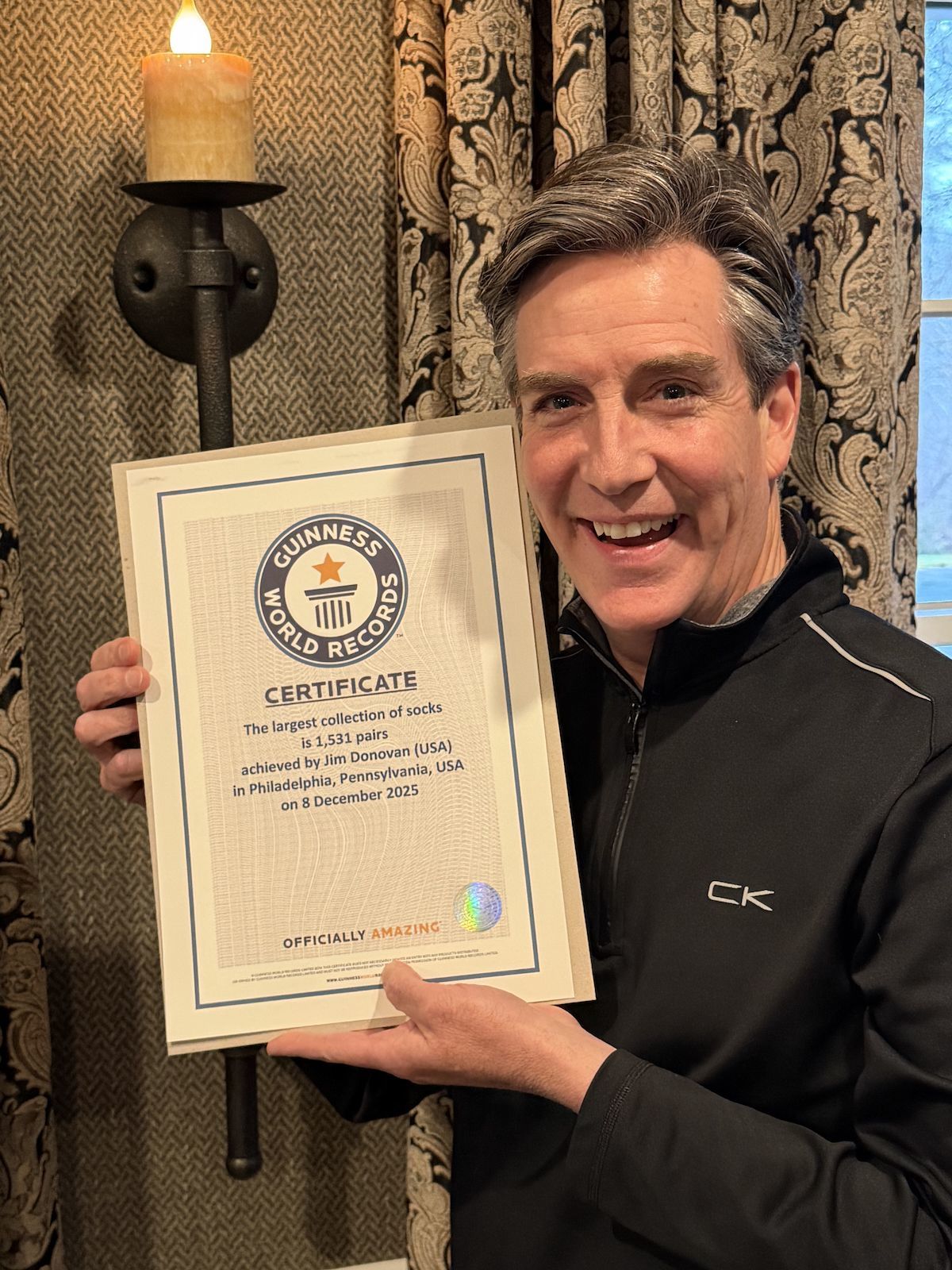
    Guinness World Records verified on Dec. 8 that the 15-time Emmy winner is now the owner of the world’s largest sock collection at 1,531 pairs, many of which have eccentric designs, including Friends and Star Trek-themed socks, and every color of the rainbow. Donovan announced the achievement before his final day on-air at CBS Philadelphia on Dec. 19.

    The previous record holder, Rex J. Pumphrey II, at 1,165 pairs of socks, achieved the feat just a few months before Donovan.

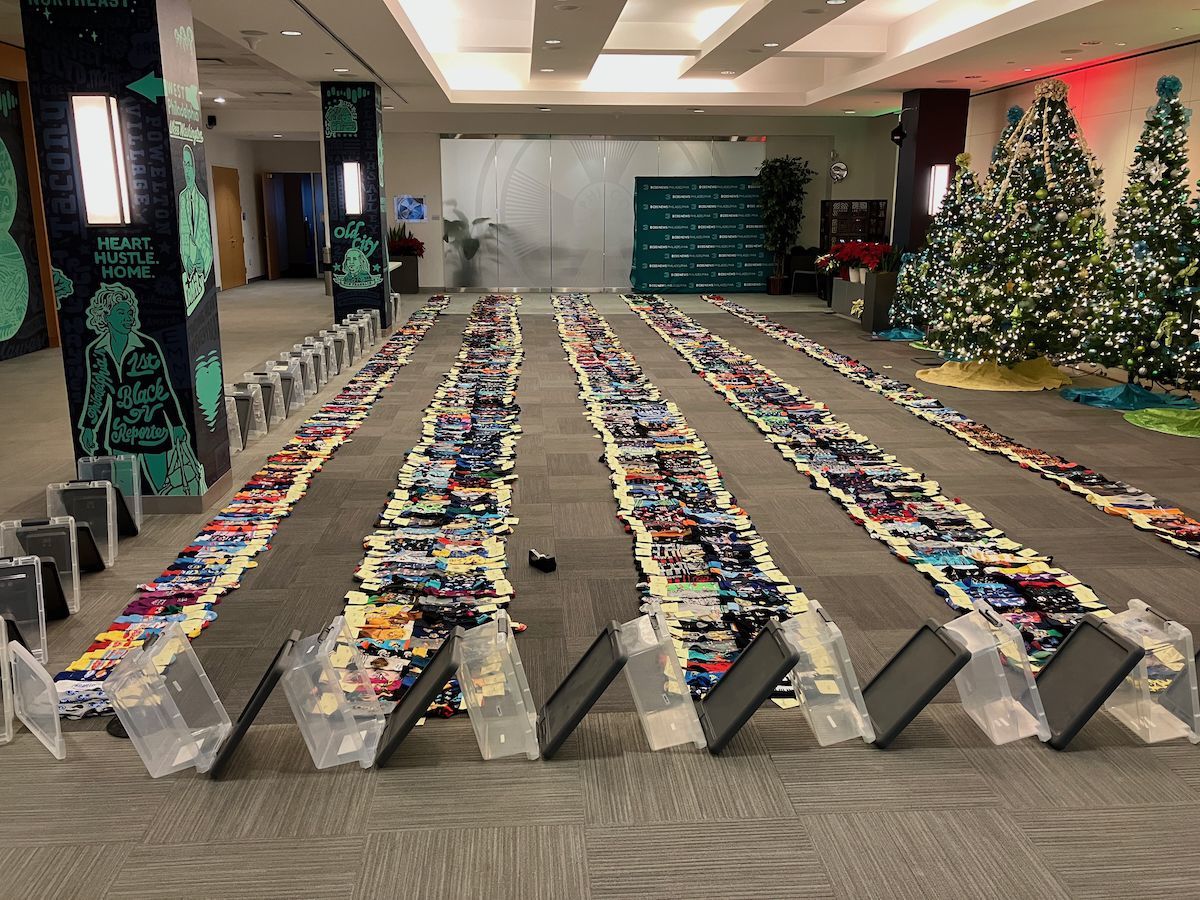
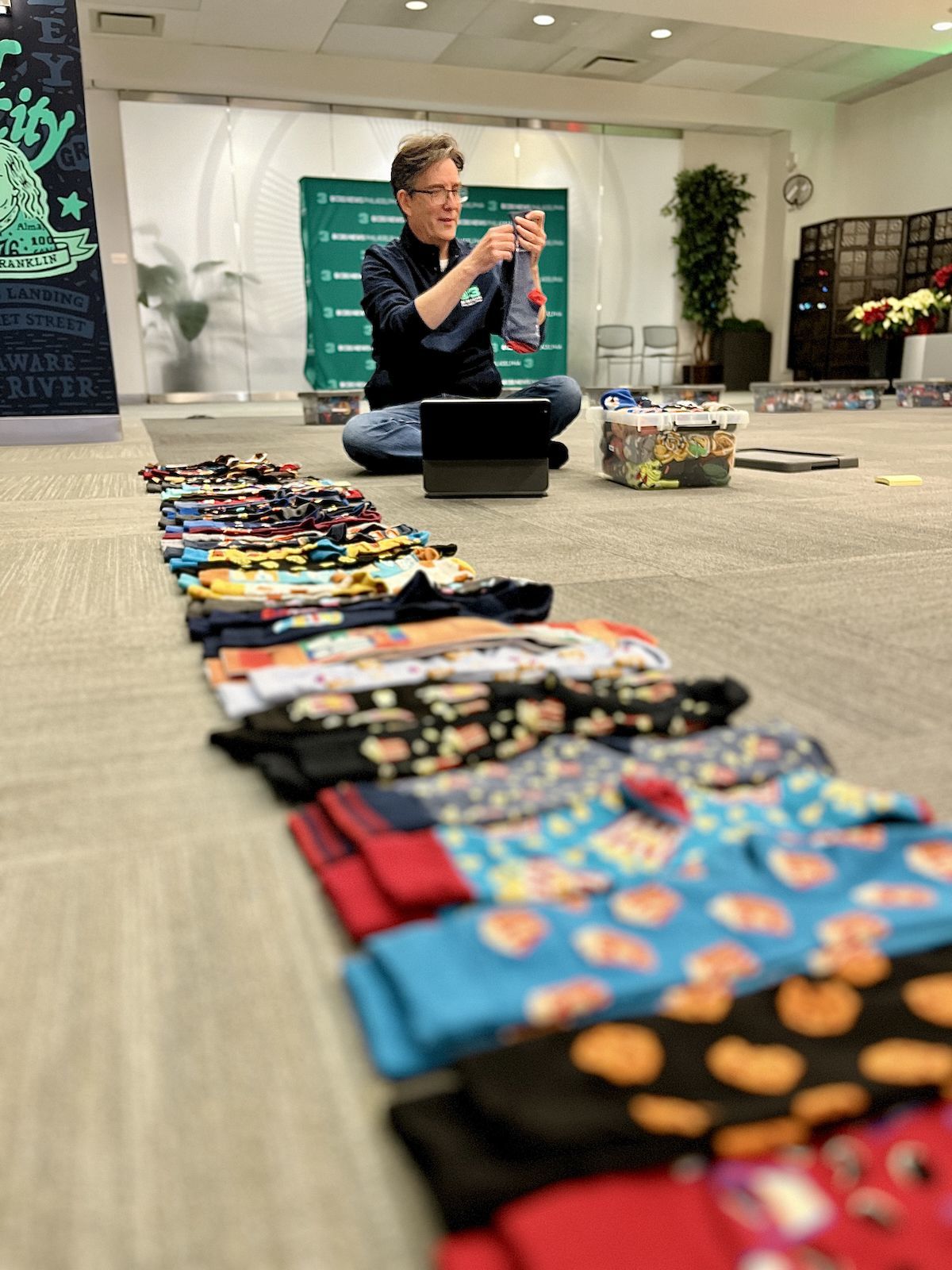
    Jim Donovan’s 1,531 pairs of socks laid out on the floor of CBS Philadelphia studios while Donovan and two independent experts counted each sock on camera to be submitted to the Guinness World Records.

    While Donovan said he’s immensely grateful for a ceremonious end to a long career — a feat he admits can be rare in the world of journalism — preparing his Guinness World Record application was also a difficult project.

    “I’ve done major investigation pieces and consumer stories over four decades of TV, and this was the thing that nearly pushed me over the edge,” he said of the nearly 40 hours of inventory work required to painstakingly document each pair of socks.

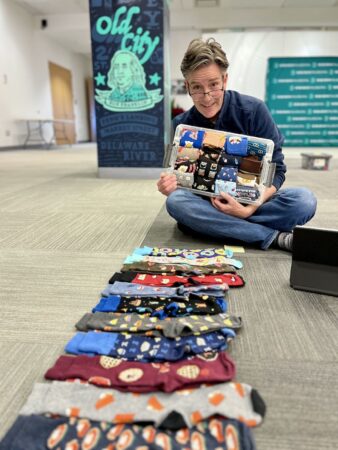
    Jim Donovan takes inventory of the thousands of socks he submitted for a Guinness World Record. After 40 years in broadcast journalism, he will be retiring. But, not before receiving the world record on Dec. 8, 2025.

    Donovan questioned himself at times when the hours of inventory work became overwhelming, but he remembered that this record was, in part, meant to thank his fans for their decades of support.

    Guinness requires applicants to have two independent third-party experts oversee the counting of the world records. Two members of Thomas Jefferson University’s fashion merchandising and management program, Juliana Guglielmi-DeRosa and Jeneene Bailey-Allen, stepped up to facilitate Donovan’s counting. Together, the two experts and Donovan recorded the counting of socks for more than an hour inside CBS Philadelphia studios, without interruptions or editing of the footage, as required by Guinness.

    Digital images of Jim Donovan’s socks that he submitted for a Guinness World Record. He received recognition for his 1,531 pairs of socks on Dec. 8, 2025.

    Donovan would then embed pictures and descriptions of each sock into what became a 262-page spreadsheet so that Guinness inspectors could verify the count at a later date. During the final count, Guglielmi-DeRosa and Bailey-Allen gifted Donovan an additional pair of socks, bringing the unofficial total to 1,532, but there was no way he was going to redo the spreadsheet, Donovan said.

    “I just remember when I was a kid looking in that Guinness World Records book and thinking, ‘Boy, it would be cool to do this.’ And here I am now, 59 years old, and I finally checked off one of those kid bucket list items,” Donovan said.

    Storing thousands of socks is no small feat, either. Folded and stacked inside dozens of bins, with 48 pairs per bin, Donovan has an entire closet dedicated to the socks. Each box contains different categories, from animals to food to holidays, and more.

    Jim Donovan holds his Guinness World Records plaque verifying that he owns the largest sock collection in the world at 1,531 pairs of socks. He received the recognition on Dec. 8, 2025.

    The first openly LGBTQ+ news anchor in Philadelphia, Donovan garnered a loyal fan base with whom he frequently chatted during his daily Facebook livestreams outside of his regular broadcasts. Around eight years ago, fans noticed Donovan’s penchant for socks with bold colors and designs, and started sending the journalist socks to wear on-air.

    During the winter holidays, it was Santa socks; birthdays, it was socks with his face on them; and randomly, folks would get creative, Donovan said, sending him Spock socks (complete with Spock ears), flamingos playing golf, and Superman socks with a cape.

    In his final week on-air at CBS Philadelphia, where he was for 22 years, the station celebrated each day as part of a “Week of Jim.” In retirement, Donovan plans to spend more time with his father, who lives on Staten Island, N.Y., and dive into volunteering and nonprofit work.

    Now he’ll be enjoying retirement as a world-record holder. Donovan said he’s even starting to get messages from other Guinness World Record holders welcoming him to the club.

  • As Russia’s war grinds on, its society is fraying

    As Russia’s war grinds on, its society is fraying

    OLKHOVATKA, Russia — The bus from the front lines ground to a halt outside the roadside kitchen, and the soldiers on board limped out into the winter mud.

    Most were missing feet or a leg.

    A water bottle filled with blood swung precariously from a plastic tube attached to one soldier’s stomach as he was helped toward a bench. Another stared blankly at the bloodied stump where his right hand had once been.

    “I would never have signed a contract if I’d known what it’s like out there. Our television is lying to us,” said Fyodor, a young soldier from Siberia. Like others in this article, he is not being identified by his full name to protect him from repercussions for criticizing the war.

    Fyodor’s lower leg had been blown off by a mine two days previously during an advance on Lyman in Ukraine with what remained of his unit. He said he was one of just 10 people left of the 110-strong unit he joined two years ago.

    He had no regrets over the loss of his leg. “It means that I can finally go home — alive.”

    “We’re fighting for fields that we cannot even take,” interjected a fellow soldier, Kirill, also in his 20s, laughing wryly. “This war will never end. … It feels like it’s only just begun.”

    Scenes like this one remain invisible to most Russians, erased by state propaganda and glossy government projects supporting returning veterans. But inside the country, fatigue and resentment are festering beneath the suppression of dissent.

    There is no outlet for public frustration and no relief from the mounting national exhaustion with a nearly four-year-long war that is corroding the country from within and making society more dysfunctional, broken, and paranoid, according to observers and those interviewed for this article.

    Over the last year, the Russian economy has lurched from spectacular growth to near-stagnation. Russia’s digital repression and isolation are deepening as more apps and platforms are banned. According to Western intelligence, more than a million Russian fighters have been killed or wounded — many in battles for marginal gains. And as Moscow’s search for internal enemies intensifies, its machine of repression is turning on its own children and patriots.

    During Russian President Vladimir Putin’s meeting with his Human Rights Council this month, film director Alexander Sokurov spoke out against censorship, the country’s suffocating foreign agent laws, the rising cost of living, and the lack of opportunities for young people. “If Russia doesn’t change how it works with young people, it faces a dead end,” he said. Putin said he would respond later to his grievances.

    A former senior Kremlin official told the Washington Post that he was “very worried” about the “dark picture inside Russia.”

    “We can’t turn the clock back easily; political will is needed to reverse this, and it simply does not exist,” the former official said, speaking on the condition of anonymity to freely discuss sensitive matters.

    Bearing the brunt

    In Belgorod, a Russian border city that once enjoyed close links to Ukraine’s Kharkiv — just 46 miles to the southwest — the price of this war is particularly tangible.

    Daily drone attacks have long become part of the routine here. Mud-spattered ambulances and camouflaged air-defense units tear through the center of town. The city’s volunteer networks — integral parts of the war effort that have supported the troops with clothing, food, and equipment where the government has failed — continue to work around the clock, with retirees sewing anti-drone netting and 3D-printing plastic bomb casings for drones.

    Despite the suffering and mass destruction taking place just across the border, Belgorod regards itself as the main victim of this war. The city illustrates the widening gap in Russian society between the indifferent, metropolitan majority and the “warring” few.

    On a cold November afternoon, a group of volunteers helping deliver supplies to the army huddled around a table to eat soup. They told the Post that they felt abandoned by Moscow.

    “They have absolutely no idea what is going on here!” exploded Edik, 52. “In Moscow there are parties, people having fun, going on vacations. How is that possible? Here blood is being spilled, and there they’re celebrating. How can they reconcile that?”

    Several volunteers said they had noticed a lull in donations since the start of the year, as many expected the war to end soon. Yevgenia Gribova, 35, who coordinates a center in Belgorod, said the volunteer movement is facing a crisis. In the first year, she said, people were spending the last of their rubles to support the troops, working constantly, without days off or vacation.

    “Now people want to rest. They want to spend money on themselves rather than on materials for the front lines,” she said.

    But while people said they want to see an end to the conflict, some also spoke of their desire to keep fighting and the need to end the war under the “right” conditions.

    “Everyone still wants to take Odesa. It’s a common opinion: People want to go to Odesa on vacation again,” Gribova said. “For us, this is a civil war between Russians and Russians who have forgotten a bit that they are Russians, that’s all.”

    Belgorod and residents of Russia’s regions bordering Ukraine form part of what pro-Kremlin sociologist Valery Fyodorov, the director of VCIOM polling institution, has defined as “warring Russia”: a minority of the country — roughly 20% — consisting of soldiers, their families, patriotic volunteers, and workers in military factories who consider the war vital for Russia’s survival and who are pushing for victory. The rest, he says, are passively loyal, indifferent to the war, opposed to it but taking refuge in their private lives, or living in exile.

    Dmitry, a deputy commander of a grenade-launcher platoon in Russia’s 116th special purpose brigade, said that Russia would fight for a very long time and “with sticks, if necessary.”

    “Everyone wants to go home. Everyone wants all of this to end. But even tired people carry out their tasks,” he said.

    Return of the heroes

    How does a nation sell to its people a war that is destroying the country — and how does it ensure that it continues?

    To keep the war effort rolling and to stave off discontent, the Kremlin has poured money into projects supporting soldiers and veterans, including the nationwide Defender of the Fatherland State Foundation, which was established in 2023 by Putin and is led by his niece, Deputy Defense Minister Anna Tsivaleva.

    For their sacrifice, soldiers are rewarded with financial benefits, social prestige, and significant employment and education opportunities for themselves and their children.

    Denis Poltavsky lost the sight in his right eye after he was swarmed by drones in battle last year. Unwilling to share many details about his time on the front, Poltavsky said he suffered from extreme PTSD, haunted by nightmares and insomnia.

    But without a doubt, he says, his life has materially improved since returning home. “The support is very extensive. The state is doing everything for veterans and soldiers. … They didn’t abandon us. They keep track of you and provide everything.”

    Poltavsky was paid an initial $51,000 for his injury, plus insurance and a military pension. He has access to free transportation, and tickets to museums and theaters. He recently completed Belgorod’s Time of Our Heroes management and leadership training, and hopes to soon receive a grant for his metalworking business.

    Veterans also have access to round-the-clock support from psychologists, doctors, and volunteers; they are given tax breaks and secure employment, even with disabilities. Belgorod’s program is even offering veterans free land on which to build a house.

    Middlebury College professor Will Pyle, who studies Russia’s economy, has found that in some regions a larger share of Russians report being satisfied with their lives than at any time during the decade preceding the February 2022 invasion. The finding is based on analysis of data from the Russian Longitudinal Monitoring Survey, which is maintained by Moscow’s Higher School of Economics.

    According to Pyle’s research, conducted with the Bank of Finland, the increase in reported life satisfaction is especially pronounced in regions whose economies have benefited from wartime and military-adjacent industrial production.

    This mirrors Fyodorov’s research. “The more depressed the region, the more people have noticed their improvement in life,” he said.

    But underneath the lionizing of the soldiers and this temporary uptick in prosperity is the darker impact of returning veterans and the longer-term social consequences of the invasion. Already, horrific crimes including murders and rapes have been committed by returning soldiers, and many of the convicted criminals who signed contracts to win their freedom have returned home to commit more crimes.

    “Every governor in Russia knows that a wave of problems is coming with the soldiers returning home from the front with serious post-traumatic stress disorder,” said a Kremlin insider, speaking on the condition of anonymity because of the sensitivity of the issue. “And they know the responsibility to deal with this will fall to them.”

    The patriots and the teens

    Since the start of the war, Russia has gone after its dissenters, pursuing LGBTQ+ people, artists, and opposition figures, and made criticism of the conflict and the military illegal. But now, some of the state’s most fervent supporters are running into trouble as well.

    The vocal, ultrapatriotic “Z” military bloggers, initially a backbone of support for Putin’s invasion, have gone on to criticize corruption and shortcomings in the army. The most radical of their leaders, such as ultranationalist hawk Igor Strelkov, were initially jailed. But this fall, they saw their ranks swept by an unexpected purge as the whole movement became the focus of repression.

    In September, authorities branded Roman Alyokhin, a prominent blogger with 151,000 subscribers on Telegram, a foreign agent, a label usually reserved for liberal opposition figures. In October, blogger Tatyana Montyan was declared a “terrorist and extremist.” Another, Oksana Kobeleva, was detained by the police. All had publicly criticized senior officials or other propagandists. The Z community has since turned on itself, with bloggers racing to denounce one another.

    “The moment of unity did not last very long, and after almost four years, we are seeing how people begin to oppose each other as well, deciding which of them is more patriotic,” said military blogger Mikhail Zvinchuk, the founder of the Rybar Telegram channel, which has links to the Defense Ministry.

    He added that the movement became corrupt and embezzled funds that were raised to support the troops. “Over the years, there have been a number of crooks who are trying to exploit the war.”

    In Russia’s second city, St. Petersburg, security services have found a different target: teenagers.

    At the Izmailsky courthouse last month, masked police officers escorted two teenage musicians from their hearing to the secret service cars waiting outside. The pair, 18-year-olds Diana Loginova and Alexander Orlov — from the street band Stoptime — had just had their arrest extended for a third time. Orlov, the guitarist, fist-bumped one of his friends as he exited the courthouse. Officially, they stood accused of blocking the entrance to a metro station during an impromptu street concert this autumn, but their true crime was their viral performances of anti-war songs.

    To many, the consequences of Stoptime’s performances were inevitable. But the young musicians’ case sent a chill through this still-liberal Baltic city, where street performances are an integral part of local culture.

    Copycat acts and musicians performing in solidarity with the imprisoned band members in the Urals and other cities in Russia were also arrested and charged as security services moved swiftly to crack down on the slightest flicker of dissent. Now, even singing the wrong kind of music can get you jailed, a development many regard as a return to the days of the Soviet Union.

    The hearing in St. Petersburg was tense, at times Kafkaesque, as the defense lawyer unpacked the details of the performance in question. “There are approximately 47 meters between the entrance to the metro and the spot where they were performing. It is therefore impossible that the people who stood in a circle around Stoptime could have blocked that space,” she said.

    Loginova, known by her stage name, Naoko, spent the last 20 minutes in the courtroom clasping her mother’s hands. “I really hope this is the last time they arrest me,” she whispered. Irina, her mother, smiled and held her daughter close, looking dazed. “Don’t you remember that they said that they would let you go on the first night? It’s now been a month.”

    What made Stoptime’s rebellious music performances so striking was that they came at a time when free, creative spaces and opportunities to escape are fading fast.

    “The very fact that they performed such songs was captivating,” said Ivan, 26, a history teacher, who attended many of their performances. “It was like an echo of normal life in our time. These are songs you want to listen to: They are kind, they’re meaningful, they promote universal human values, they remind that you can overcome things.”

    He said in Russia right now the state is trying to build a strict loyalty based on behaving a certain way “in order to simply exist.” Around him he has watched people accept a situation they were once horrified by and shift into a survival mode.

    On Nov. 23, the Stoptime musicians were secretly and unexpectedly released, and they immediately fled the country. They were spotted in early December in Yerevan, Armenia, performing the same opposition songs that got them arrested.

    Others have not been so lucky.

    Tatiana Balazeikina’s 19-year-old son, Yegor, is three years into his seven-year sentence for terrorism after he attempted to throw a Molotov cocktail at a local military registration office in 2023. Yegor is one of hundreds of teenagers and children arrested for anti-war protests, sabotage, or treason since the war began.

    “Stoptime were singing what so many people already had on the tip of their tongues,” Balazeikina said from her home an hour south of St. Petersburg. “This is dissent. And the only way for this state to remain what it is is to cut off all these signs of dissent right at the root.”

    She believes young people present a special kind of threat to the Kremlin.

    “These young people who essentially have nothing to lose except their freedom are very dangerous,” she said. “And if those young people are not only capable of thinking but can also sing what they think … that’s an even bigger threat.”

  • Marsha Levick, a ‘superhero’ who helped rewrite the country’s juvenile justice system, steps down from Juvenile Law Center

    Marsha Levick, a ‘superhero’ who helped rewrite the country’s juvenile justice system, steps down from Juvenile Law Center

    Marsha Levick took her seat at a conference table at the Juvenile Law Center on a recent Wednesday for what would be one of her last meetings. She walked colleagues through the basic principles of the United Nations Convention on the Rights of the Child, the 1989 treaty that laid out, in clear terms, what the world said it owed young people.

    At the heart of the treaty is a simple idea: A child’s best interests come first — even when that child enters the justice system. It has been ratified by all but one of the U.N.’s member nations: the U.S. And in many of those 196 other countries, Levick said, children younger than 14 cannot be prosecuted at all.

    “Wait,” a staffer interjected. “Kids younger than 14 aren’t in the justice system?”

    “I know,” Levick said. “It’s very different.”

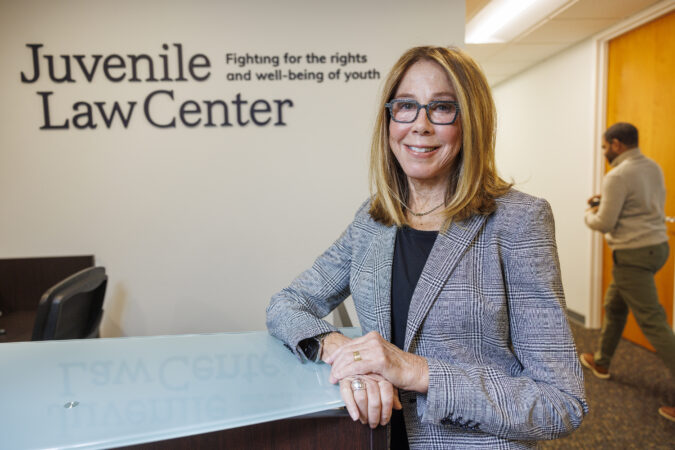
    Marsha Levick, chief legal officer and cofounder of the Juvenile Law Center, speaks with staff on Dec. 17.

    For 50 years, Levick, 74, has been one of the most persistent and influential voices in the American juvenile justice system, a driving force in turning what was once a niche legal specialty into a national civil rights movement. Colleagues credit her with helping to rewrite how courts view children — persuading judges, including those on the U.S. Supreme Court, to treat youth not as miniature adults but as citizens with distinct constitutional protections and needs.

    Levick will step down Wednesday from her position as chief legal officer of the Juvenile Law Center, the Philadelphia-based organization she helped build from a walk-in legal clinic in 1975 into a national leader in children’s rights.

    Her departure coincides with the center’s 50th anniversary. At a celebration gala in May, the nonprofit honored Levick with a leadership award that recognized her body of work.

    Levick’s career ranged from representing individual teenagers to steering landmark litigation that forced states to overhaul abusive practices. She helped lead the Juvenile Law Center’s response to the “kids for cash” scandal in Luzerne County. She coauthored briefs in a series of U.S. Supreme Court victories that throttled the harshest punishments for kids, including life in prison.

    But Levick is also stepping down at what she calls a “dark moment” for civil liberties in America — a time when rights once thought settled are being rolled back.

    Levick was in law school in 1973 when the U.S. Supreme Court handed down Roe v. Wade, the landmark decision that recognized a constitutional right to abortion. In the years that followed, a constellation of rights — from marriage equality to access to contraception — also expanded.

    Roe was overturned, however, in 2022. Since then, other decisions have also chipped away at affirmative action in colleges and LGBTQ+ protections.

    “It’s hard to convey the shock that it imposes,” Levick said in a recent interview. “Now, 50 years later, you’re pushing the rock back up the hill.”

    She made clear she was unsparing with herself, quick to point out what she perceived as shortcomings. “There were high moments for sure,” she said. “But I am not foolishly happy about that. I’m shocked that that’s all we could do. That’s as far as we got.”

    Yet even as fresh battles loom, colleagues say the groundwork Levick has laid will guide the Juvenile Law Center’s mission and the broader fight for children’s rights for years to come.

    Jessica Feierman, the center’s senior managing director, will step into Levick’s role. “It is a huge privilege and also an immense responsibility,” she said. “In this moment of attacks on civil rights and children’s rights, it’s even more vital that we build on the victories of the last 50 years.”

    From Philadelphia to the U.S. Supreme Court

    Raised in Philadelphia’s Fairmount neighborhood, Levick discovered early the charge of using her voice, first as a girl who demanded a recount in an elementary school election and won the presidency, and later as a teenager who inhaled The Feminine Mystique and the feminist writers who followed. She earned an undergraduate degree from the University of Pennsylvania and a law degree from what is now Temple University Beasley School of Law.

    She cofounded the Juvenile Law Center in 1975 with three law school classmates: Bob Schwartz, a classical music aficionado and part-time semi-pro baseball umpire; Phil Margolis, a vegetarian and free spirit; and Judy Chomsky, a mother of two and passionate Vietnam War resister.

    Seven years earlier, the U.S. Supreme Court had ruled that juveniles were entitled to due process. That decision cracked open an untapped field, Levick said, to build with her classmates a new kind of civil rights practice focused on children.

    For the first year, they worked out of the Chestnut Street office of Chomsky’s husband, a cardiologist, carving out space in his waiting room and sidestepping an exam room on the days he saw patients.

    In its earliest years, the center took on individual cases for children. One of Levick’s first clients was in Montgomery County, a teen girl who had participated in a protest at a nuclear plant and who was arrested and charged with trespassing, she said.

    But the center struggled financially. The founding partners laid themselves off at one point, Levick said, so they could keep paying the few employees they had hired: a divorced mother who worked as a receptionist; their first lawyer, Anita DeFrantz, who was an Olympic rower; and a social worker.

    In 1982, Levick quit the center to become the legal director of the national NOW Legal Defense and Education Fund, now Legal Momentum. By the time she left there six years later, she had become its executive director.

    At the NOW Legal Defense and Education Fund, Levick said, she learned how to build national cases — coordinating multistate litigation and filing amicus briefs in federal courts. By the time she returned to the Juvenile Law Center in 1995, after a stint at a small Paoli firm, she had come to believe that individual wins, while necessary, would not be enough to create lasting change.

    The center’s mission became more focused on appellate litigation and national advocacy, setting the stage for children’s rights to reach state supreme courts and, eventually, the U.S. Supreme Court.

    Hundreds of juveniles resentenced, released

    In 2005, in Roper v. Simmons, Levick cowrote in a brief that social science research on youth development should inform constitutional law. Children, she also wrote, have a greater capacity to change.

    “We just pushed ourselves into the center of it,” Levick said. “We were like, ‘We’re here. We’re writing the amicus brief.’”

    The high court overturned decades of precedent when it ruled in Roper that the Eighth Amendment forbids the death penalty for juveniles. Five years later, in Graham v. Florida, it barred life-without-parole sentences for juveniles in non-homicide cases, after reading another brief Levick coauthored.

    In 2012, Levick helped persuade the court to end mandatory life-without-parole sentences for youths convicted of homicide in Miller v. Alabama. And in 2016, she served as cocounsel in Montgomery v. Louisiana, the case that made the Miller decision retroactive across the country.

    Since then, hundreds of juveniles — including nearly 500 in Pennsylvania — have been resentenced or released from prison. One of them: Donnell Drinks, freed in 2018 after 27 years.

    The first time Drinks met Levick, he hugged her. “I couldn’t believe how small she was, because of her presence, her legal prowess, has all been so enormous,” recalled Drinks, who works as a leadership and engagement coordinator at the Campaign for the Fair Sentencing of Youth. Levick is 5-foot-3.

    Those cases brought Levick into courtrooms across the state, often alongside public defenders. One of them, Bradley S. Bridge, a retired Philadelphia public defender who worked with her on dozens of resentencings, called Levick a “zealous advocate” who “always saw the big picture.”

    Her ability, he said, “to think toward the future, I think, was most glorious.”

    Levick agreed that looking ahead had always been part of her work. “We always tried to look around the corner,” she said.

    One of those moments came in 2008, when she and her colleagues began fielding troubling calls from Luzerne County — the first hints of what would become the “kids-for-cash” scandal.

    Seeing more in the ‘kids-for-cash’ scandal

    In 2007, Laurene Transue called the Juvenile Law Center. Her daughter, 14-year-old Hillary Transue, had been ordered to serve three months in a detention facility after she created a Myspace page mocking her school principal, she said at the time.

    “We saw in that one phone call something that was clearly much bigger,” Levick said.

    In fact, it was one of the most egregious judicial corruption cases in modern American history: Two Luzerne County judges had accepted kickbacks in exchange for sentencing thousands of juveniles — many for minor misbehavior — to extended stays in private detention centers.

    “It was kind of like, if I may, what the f— in my mind,” Levick recalled.

    Levick and the center petitioned the Pennsylvania Supreme Court, which ultimately threw out and expunged thousands of adjudications. They later helped families pursue civil damages, with the help of other firms. The judges, Mark Ciavarella and Michael Conahan, were convicted of federal crimes and sentenced to long prison terms; President Joe Biden commuted Conahan’s sentence in 2024.

    Hillary Transue now serves on the Juvenile Law Center’s board.

    Transue told The Inquirer that as a teenager she believed that “highly educated” adults in “positions of authority” were “mean, nasty people who were out to hurt you.” But Levick, she said, “brushed up against my perception of adults” and proved her wrong.

    “I think she’s a goddamn superhero,” Transue said recently.

    Marsha Levick (center) stands with staffers at the Juvenile Law Center earlier this month.

    Among the successes, Levick still sees failures

    Despite the victories, Levick is quick to cite the cases she lost. “I’ve had successes. I’ve also failed many times,” she said.

    She still thinks about clients like Jamie Silvonek, sentenced to 35 years to life in prison after killing her mother, whose early release Levick has fought for but has not yet won, or a recent bid to expand parole access for people convicted as juveniles that fell flat in Florida.

    Those losses have hardened her view of how deeply punishment is embedded in American law. “I feel like punishment is in our bones,” she said. “The way that we think about crime is that it is always followed by punishment.”

    That instinct, she said, has left behind people who could have thrived outside prison — including juvenile lifers who will never be released. One of them is Silvonek, whom Levick described as brilliant and warm. “I want her to be able to share that warmth and joy with her family and with her community, who are all behind her,” Levick said.

    “We lost what they had to give,” she added.

    Levick isn’t done yet

    Levick, who is married with two adult daughters, is not leaving the field. She will become the Phyllis Beck chair at Temple’s Beasley School of Law, a post once held by her cofounder Bob Schwartz, and will teach constitutional law to first-year students.

    She feels newly urgent about the course. “I am outraged at the degree to which the law has been perverted by the current moment, and I think I still can say and do something about that,” she said. “I think that the things that motivate me include outrage.”

    She expects much of the future progress in youth justice to come from state supreme courts rather than the U.S. Supreme Court — a shift she sees as pragmatic, not pessimistic. Washington State Supreme Court Justice Mary Yu, who has heard Levick argue successfully before her, called her a fearless litigator. “She’s an extraordinary appellate lawyer,” Yu, who is also retiring Wednesday, said in an interview. “It’s almost instinctual to her.”

    And even now, Levick said, she has hope.

    “We’re not going to abolish the juvenile justice system in America, but we could transform it radically,” Levick said. “I believe that. But it takes more than just lawyers to care. It takes more than the community to care. It takes people in positions of power to care. And that’s the hard part.”

    Correction: An earlier version of this article misstated the name of a legal advocacy group at which Levick worked. She worked at NOW Legal Defense and Education Fund. The story also misstated the year Laurene Transue called the Juvenile Law Center; she called the law center in 2007.

  • ‘Deadnaming’ Rachel Levine is not a small act. It’s a warning to the medical profession.

    ‘Deadnaming’ Rachel Levine is not a small act. It’s a warning to the medical profession.

    When the U.S. Department of Health and Human Services quietly altered the nameplate on Rachel Levine’s official portrait during the recent government shutdown — replacing her legal first name with the one assigned to her at birth — it might have seemed to some like an insignificant gesture.

    But symbols matter. Names matter. And, as we are constantly reminded by the pioneering example of Levine — the first openly transgender person confirmed for a government role by the U.S. Senate — identity matters.

    And the deliberate act of using a transgender or nonbinary person’s birth name (or a previous name) after they’ve chosen a new one — a demeaning practice known as “deadnaming” — is more than just an insult to one nationally recognized medical leader. It’s a signal about what our health system is becoming.

    It tells every transgender clinician, trainee, staff member, and patient: Your identity is provisional here. Your legitimacy is negotiable. Your name can be taken from you. For a profession that depends on psychological safety, this is no small thing.

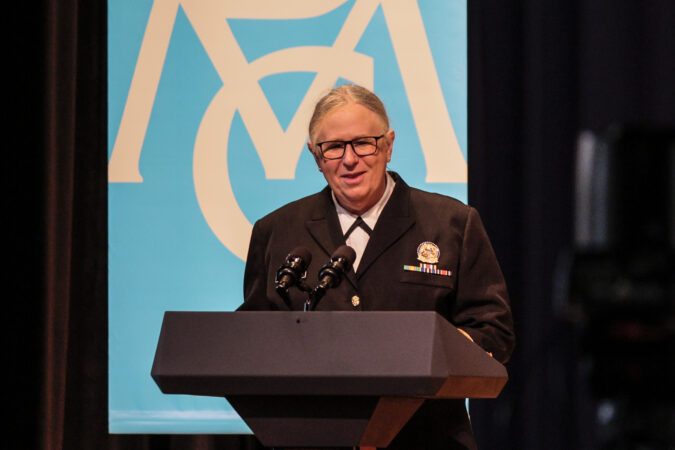
    Imagine training as a transgender medical resident and watching the federal government manipulate the image of one of the country’s most illustrious physicians — someone who helped lead Pennsylvania through the opioid epidemic, someone who oversaw critical COVID-19 responses, and someone so accomplished that they hold the rank of admiral in the U.S. Public Health Service.

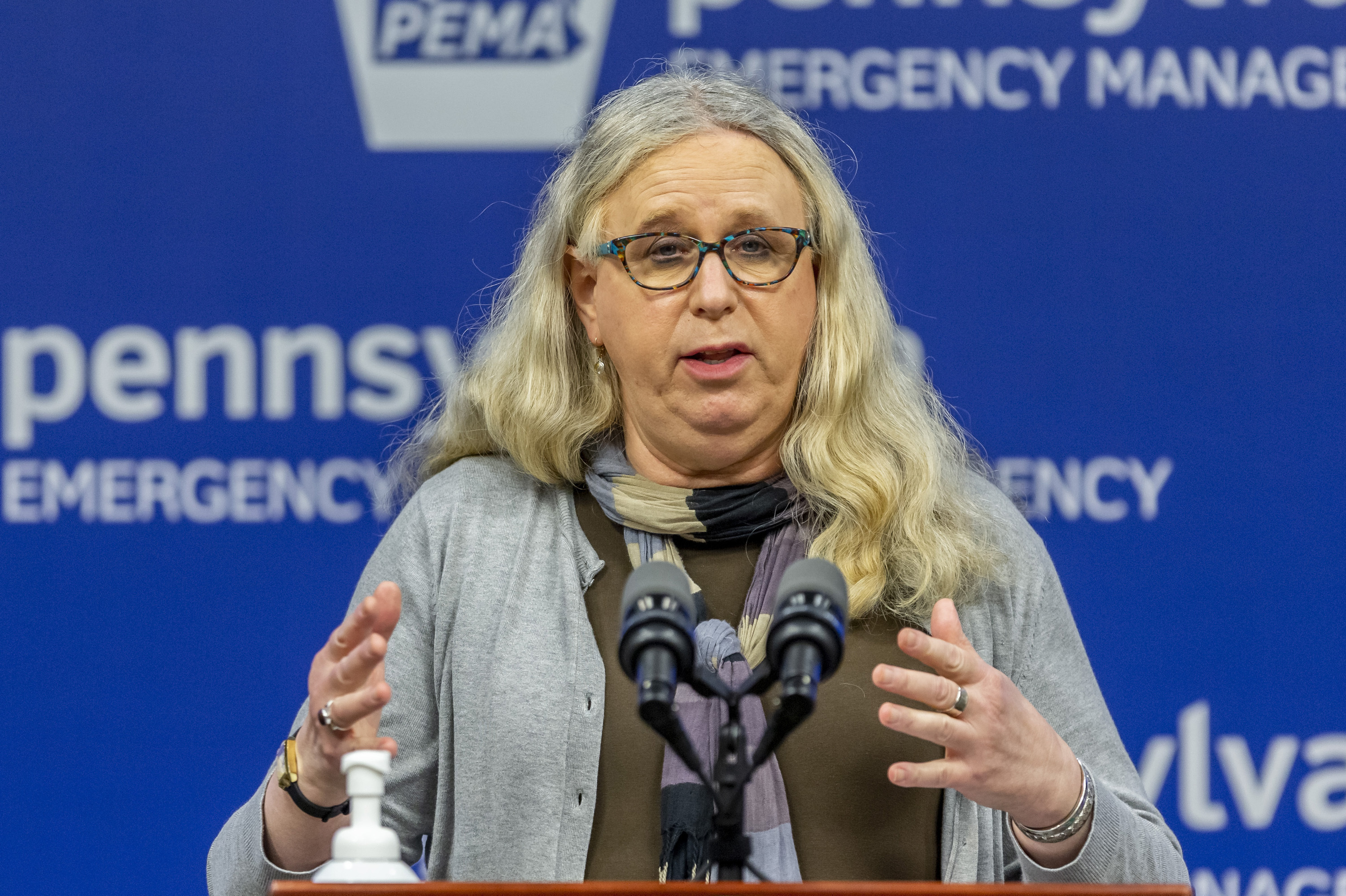
    Then-Pennsylvania Secretary of Health Rachel Levine meets with the media at The Pennsylvania Emergency Management Agency headquarters in Harrisburg in May 2020.

    Imagine treating transgender youth in a climate where federal agencies publicly invalidate the very concept of gender identity.

    Imagine being a transgender patient, already vulnerable, and seeing your government insist that who you are is, at best, a clerical preference and, at worst, a threat to national security.

    We sometimes tell ourselves that culture wars don’t reach the clinic. They do.

    They show up when patients avoid care because they fear being misgendered or judged.

    They show up when medical students stay closeted to avoid being targeted, derailing careers before they begin.

    They show up when clinicians feel pressured to hide their families or their own identities in order to survive training environments already marked by burnout, moral injury, and hierarchy.

    They show up in public health, where trust is essential — whether in vaccines, harm-reduction programs, or pandemic response. When government institutions themselves engage in targeted stigmatization, entire communities disengage.

    And they show up in professional integrity. A health system that claims to uphold evidence yet endorses policies contradicted by every major medical association — including the treatment of gender dysphoria — erodes its credibility. When science is invoked only when politically convenient, clinicians feel the ground shift under their feet.

    Levine showed grace by calling the deadnaming “petty.” In a sense, she’s right: The act is juvenile. But if the rest of us don’t call it out, we risk missing the larger threat.

    Professional erasure begins with symbolic gestures — the removal of names, the reclassification of identities, the retelling of who someone “really” is. History is rife with examples of how stripping titles, credentials, or names precedes efforts to diminish authority and restrict participation.

    A physician’s portrait is not just a piece of decor. It is a public acknowledgment of service, expertise, and contribution. Altering it is an attempt to rewrite not only identity but legacy.

    If medicine is to retain its moral center, clinicians must resist the temptation to disengage. This is not “politics” in the partisan sense. It is professional ethics.

    We can start by naming the harm clearly. Deadnaming is not a clerical correction; it is a form of psychological violence aimed at delegitimizing identity.

    We must also educate our colleagues, many of whom underestimate the downstream effects of identity-based policies on patient trust, engagement, and health outcomes.

    At the same time, we have an obligation to actively support trainees and colleagues — especially those who are transgender or gender-expansive — who may feel newly unsafe or exposed within training environments and workplaces.

    Defending evidence-based care is essential: Transgender medicine is medicine. Period. And we must insist that federal agencies speak truthfully about science.

    A selective invocation of “scientific reality” is not reality at all; it is ideology masquerading as evidence. Medicine is facing a pivotal question: Are we willing to let political ideology dictate whose identities are valid within our clinics, hospitals, and public health institutions?

    Rachel Levine’s portrait matters because deleting her name is an invitation to delete others. It is an attempt to redefine professional legitimacy by biology rather than biography — by chromosomes rather than contributions.

    Yet her life is proof that gender identity neither diminishes competence nor negates service.

    When a government tries to rewrite that narrative, the medical profession must ask itself: If we do not stand up for the integrity of our colleagues, who will stand up for the integrity of our patients?

    Arthur Lazarus is an adjunct professor of psychiatry at the Lewis Katz School of Medicine at Temple University.

  • Rob Reiner’s son Nick charged with 2 counts of murder in killing of his parents

    Rob Reiner’s son Nick charged with 2 counts of murder in killing of his parents

    LOS ANGELES — Rob Reiner’s son Nick Reiner was charged Tuesday with two counts of first-degree murder in the killing of his parents, which stunned their communities in Hollywood and Democratic politics, where both were widely beloved.

    Nick Reiner, 32, is charged with killing Rob Reiner, the 78-year-old actor and director, and his wife, Michele Singer Reiner, District Attorney Nathan Hochman announced at a news conference with Los Angeles Police Chief Jim McDonnell.

    “Their loss is beyond tragic and we will commit ourselves to bringing their murderer to justice,” Hochman said.

    Along with the two counts of first-degree murder, prosecutors added special circumstances of multiple murders and a special allegation that the defendant used a dangerous weapon: a knife. The additions could mean a greater sentence.

    Hochman said his office had not decided whether to seek the death penalty.

    “This case is heartbreaking and deeply personal, not only for the Reiner family and their loved ones but for our entire city,” McDonnell said. “We will continue to support the Reiner family and ensure that every step forward is taken with care, dignity, and resolve.”

    The announcement came two days after the couple were found dead with apparent stab wounds in their home in the upscale Brentwood neighborhood on the west side of Los Angeles. Nick Reiner did not resist when he was arrested hours later in the Exposition Park area near the University of Southern California, about 14 miles from the crime scene, police said.

    Nick Reiner had been expected to make an initial court appearance Tuesday, but his attorney Alan Jackson said he was not brought from the jail to the courthouse for medical reasons and the appearance would not come before Wednesday.

    An email sent to Jackson seeking comment on the charges was not immediately answered. Nick Reiner has not entered a plea.

    Rob Reiner was the Emmy-winning costar of the sitcom All in the Family who went on to direct films including When Harry Met Sally … and The Princess Bride. He was an outspoken liberal activist for decades. Michele Singer Reiner was a photographer, a movie producer, and an advocate for LGBTQ+ rights. They had been married for 36 years.

    Representatives for the Reiner family did not respond to requests for comment. Police have not said anything about a motive for the killings.

    Nick Reiner is being held in jail without bail. He was arrested several hours after his parents were found dead on Sunday, police said.

    Jackson is a high-profile lawyer who represented Harvey Weinstein at his Los Angeles trial and Karen Read at her trial in Massachusetts. He was a central figure in the HBO documentary on the Read case.

    Investigators believe Rob and Michele Singer Reiner died from stab wounds, a law enforcement official told the Associated Press. The official, who was briefed on the investigation, could not publicly discuss the details and spoke on condition of anonymity.

    The killings were especially shocking given the warm comic legacy of the family. Rob Reiner was the son of comedy legend Carl Reiner, who died in 2020 at age 98.

    Kathy Bates, who won an Oscar as the star of Rob Reiner’s 1990 film Misery, was among those paying tribute to the couple.

    “I loved Rob,” Bates said in a statement. “He was brilliant and kind, a man who made films of every genre to challenge himself as an artist. He also fought courageously for his political beliefs. He changed the course of my life. Michele was a gifted photographer.”

    Former President Bill Clinton called the couple “good, generous people who made everyone who knew them better.”

    “Hillary and I are heartbroken by the tragic deaths of our friends Rob and Michele Reiner,” he said in a statement. “They inspired and uplifted millions through their work in film and television.”

    Three months ago, Nick Reiner was photographed with his parents and siblings at the premiere of his father’s film Spinal Tap 2: The End Continues.

    He had spoken publicly of his struggles with addiction, cycling in and out of treatment facilities with bouts of homelessness in between through his teen years. Rob and Nick Reiner explored — and seemed to improve — their relationship through the making of the 2016 film Being Charlie.

    Nick Reiner cowrote and Rob Reiner directed the film about the struggles of an addicted son and a famous father. It was not autobiographical but included several elements of their lives.

    “It forced us to understand ourselves better than we had,” Rob Reiner told the AP in 2016. “I told Nick while we were making it, I said, ‘You know, it doesn’t matter, whatever happens to this thing, we won already.’”

    Rob Reiner was long one of the most prolific directors in Hollywood, and his work included some of the most memorable and endlessly watchable movies of the 1980s and ’90s, including This is Spinal Tap and A Few Good Men.

    He met Michele Singer Reiner on the set of When Harry Met Sally …, and their meeting would inspire the film’s shift to a happy ending, with stars Billy Crystal — one of Reiner’s closest friends for decades — and Meg Ryan ending up together on New Year’s Eve.

    The Reiners were outspoken advocates for liberal causes and major Democratic donors.

    President Donald Trump on Monday blamed Rob Reiner’s outspoken opposition to the president for the actor-director’s killing, delivering the unsubstantiated claim in a social media post that seemed intent on decrying his opponents even in the face of a tragedy.

  • U.S. national park gift shops ordered to purge merchandise promoting DEI

    U.S. national park gift shops ordered to purge merchandise promoting DEI

    The Trump administration is expanding its crackdown on diversity, equity and inclusion by ordering national parks to purge their gift shops of items it deems objectionable.

    The Interior Department said in a memo last month that gift shops, bookstores and concession stands have until Dec. 19 to empty their shelves of retail items that run afoul of President Donald Trump’s agenda.

    The agency said its goal is to create “neutral spaces that serve all visitors.” It’s part of a broader initiative the Trump administration has pursued over the last year to root out policies and programs it says discriminate against people based on race, gender and sexual orientation — an effort that has led some major corporations and prominent universities to roll back diversity programs.

    Conservation groups say the gift shop initiative amounts to censorship and undermines the National Park Service’s educational mission. But conservative think tanks say taxpayer-funded spaces shouldn’t be allowed to advance ideologies they say are divisive.

    Employees of the park service and groups that manage national park gift shops say it’s not clear what items will be banned. They didn’t want to speak on the record for fear of retribution.

    A debate over what’s acceptable for park gift shops

    “Our goal is to keep National Parks focused on their core mission: preserving natural and cultural resources for the benefit of all Americans,” the Interior Department said in a statement. The agency said it wants to ensure parks’ gift shops “do not promote specific viewpoints.”

    Alan Spears, the senior director for cultural resources at the National Parks Conservation Association, said removing history books and other merchandise from gift shops amounts to “silencing science and hiding history,” and does not serve the interests of park visitors.

    Other groups called the review of gift shops a waste of resources at a time of staffing shortages, maintenance backlogs and budget issues.

    Stefan Padfield, a former law professor who now works with a conservative think tank in Washington, said there is no way to defend the government’s promotion of “radical and divisive” ideologies through the sale of books and other items, though he said the challenge for the Trump administration will be in deciding what is acceptable and what isn’t.

    “Now, are there going to be instances of the correction overshooting? Are there going to be difficult line-drawing exercises in gray areas? Absolutely,” said Padfield, the executive director of the Free Enterprise Project at the National Center for Public Policy Research.

    The order is open to interpretation

    All items for sale at parks and online are supposed to be reviewed for neutrality. That includes books, T-shirts, keychains, magnets, patches and even pens.

    But the memo issued by a senior Interior Department official didn’t give any examples of items that could no longer be sold, leaving the order open to interpretation. No training sessions have been offered to park service employees.

    Some parks had already completed their reviews, finding nothing to add to the list.

    On display this week at Independence National Historical Park in Philadelphia were items featuring Frederick Douglass. At the Martin Luther King, Jr. National Historical Park store in Atlanta, there were various books on the Civil Rights Movement and a book for children about important Black women in U.S. history. For sale online was a metal token for the Belmont-Paul Women’s Equality National Monument.

    There already is a thorough process for vendors to get merchandise into national park stores. Items are vetted for their educational value and to ensure they align with the themes of the park or historical site.

    National parks in the spotlight

    The park service in recent weeks faced criticism when it stopped offering free admission to visitors on Martin Luther King Jr. Day and Juneteenth, while extending the benefit to U.S. residents on Flag Day, which also happens to be Trump’s birthday next year.

    Earlier this year, the Interior Department’s ordered parks to flag signs, exhibits and other materials it said disparaged Americans. That order sparked debate about books related to Native American history and a photograph at a Georgia park that showed the scars of a formerly enslaved man.

    In one of his executive orders, Trump said the nation’s history was being unfairly recast through a negative lens. Instead, he wants to focus on the positive aspects of America’s achievements, along with the beauty and grandeur of its landscape.

    Mikah Meyer knows that beauty well after a three-year road trip to visit all 419 national park sites. He said part of the mission of his travels, which he shared on social media and in a documentary, was to illustrate that parks are welcoming to the LGBTQ+ community.

    That message aligns with his business, Outside Safe Space, which at its peak was selling stickers and pins featuring a tree with triangle-shaped, rainbow-colored branches to more than 20 associations that operated multiple park stores. His items started to be pulled from some stores after the executive orders were issued earlier this year.

    “How is banning these items supporting freedom of speech?” Meyer said.