Tag: LGBTQ+

  • Marsha Levick, a ‘superhero’ who helped rewrite the country’s juvenile justice system, steps down from Juvenile Law Center

    Marsha Levick, a ‘superhero’ who helped rewrite the country’s juvenile justice system, steps down from Juvenile Law Center

    Marsha Levick took her seat at a conference table at the Juvenile Law Center on a recent Wednesday for what would be one of her last meetings. She walked colleagues through the basic principles of the United Nations Convention on the Rights of the Child, the 1989 treaty that laid out, in clear terms, what the world said it owed young people.

    At the heart of the treaty is a simple idea: A child’s best interests come first — even when that child enters the justice system. It has been ratified by all but one of the U.N.’s member nations: the U.S. And in many of those 196 other countries, Levick said, children younger than 14 cannot be prosecuted at all.

    “Wait,” a staffer interjected. “Kids younger than 14 aren’t in the justice system?”

    “I know,” Levick said. “It’s very different.”

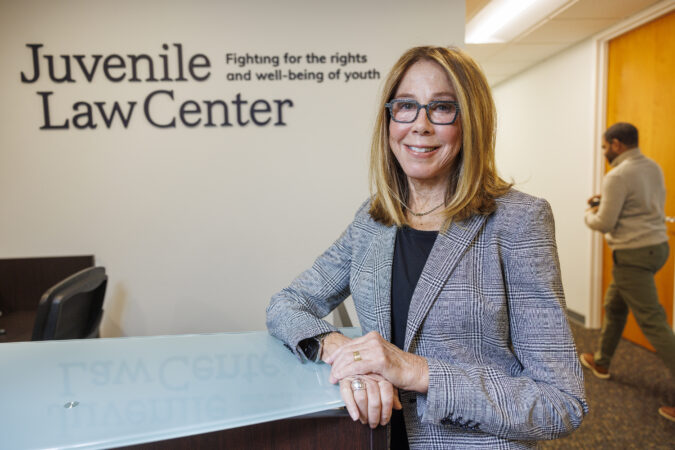
    Marsha Levick, chief legal officer and cofounder of the Juvenile Law Center, speaks with staff on Dec. 17.

    For 50 years, Levick, 74, has been one of the most persistent and influential voices in the American juvenile justice system, a driving force in turning what was once a niche legal specialty into a national civil rights movement. Colleagues credit her with helping to rewrite how courts view children — persuading judges, including those on the U.S. Supreme Court, to treat youth not as miniature adults but as citizens with distinct constitutional protections and needs.

    Levick will step down Wednesday from her position as chief legal officer of the Juvenile Law Center, the Philadelphia-based organization she helped build from a walk-in legal clinic in 1975 into a national leader in children’s rights.

    Her departure coincides with the center’s 50th anniversary. At a celebration gala in May, the nonprofit honored Levick with a leadership award that recognized her body of work.

    Levick’s career ranged from representing individual teenagers to steering landmark litigation that forced states to overhaul abusive practices. She helped lead the Juvenile Law Center’s response to the “kids for cash” scandal in Luzerne County. She coauthored briefs in a series of U.S. Supreme Court victories that throttled the harshest punishments for kids, including life in prison.

    But Levick is also stepping down at what she calls a “dark moment” for civil liberties in America — a time when rights once thought settled are being rolled back.

    Levick was in law school in 1973 when the U.S. Supreme Court handed down Roe v. Wade, the landmark decision that recognized a constitutional right to abortion. In the years that followed, a constellation of rights — from marriage equality to access to contraception — also expanded.

    Roe was overturned, however, in 2022. Since then, other decisions have also chipped away at affirmative action in colleges and LGBTQ+ protections.

    “It’s hard to convey the shock that it imposes,” Levick said in a recent interview. “Now, 50 years later, you’re pushing the rock back up the hill.”

    She made clear she was unsparing with herself, quick to point out what she perceived as shortcomings. “There were high moments for sure,” she said. “But I am not foolishly happy about that. I’m shocked that that’s all we could do. That’s as far as we got.”

    Yet even as fresh battles loom, colleagues say the groundwork Levick has laid will guide the Juvenile Law Center’s mission and the broader fight for children’s rights for years to come.

    Jessica Feierman, the center’s senior managing director, will step into Levick’s role. “It is a huge privilege and also an immense responsibility,” she said. “In this moment of attacks on civil rights and children’s rights, it’s even more vital that we build on the victories of the last 50 years.”

    From Philadelphia to the U.S. Supreme Court

    Raised in Philadelphia’s Fairmount neighborhood, Levick discovered early the charge of using her voice, first as a girl who demanded a recount in an elementary school election and won the presidency, and later as a teenager who inhaled The Feminine Mystique and the feminist writers who followed. She earned an undergraduate degree from the University of Pennsylvania and a law degree from what is now Temple University Beasley School of Law.

    She cofounded the Juvenile Law Center in 1975 with three law school classmates: Bob Schwartz, a classical music aficionado and part-time semi-pro baseball umpire; Phil Margolis, a vegetarian and free spirit; and Judy Chomsky, a mother of two and passionate Vietnam War resister.

    Seven years earlier, the U.S. Supreme Court had ruled that juveniles were entitled to due process. That decision cracked open an untapped field, Levick said, to build with her classmates a new kind of civil rights practice focused on children.

    For the first year, they worked out of the Chestnut Street office of Chomsky’s husband, a cardiologist, carving out space in his waiting room and sidestepping an exam room on the days he saw patients.

    In its earliest years, the center took on individual cases for children. One of Levick’s first clients was in Montgomery County, a teen girl who had participated in a protest at a nuclear plant and who was arrested and charged with trespassing, she said.

    But the center struggled financially. The founding partners laid themselves off at one point, Levick said, so they could keep paying the few employees they had hired: a divorced mother who worked as a receptionist; their first lawyer, Anita DeFrantz, who was an Olympic rower; and a social worker.

    In 1982, Levick quit the center to become the legal director of the national NOW Legal Defense and Education Fund, now Legal Momentum. By the time she left there six years later, she had become its executive director.

    At the NOW Legal Defense and Education Fund, Levick said, she learned how to build national cases — coordinating multistate litigation and filing amicus briefs in federal courts. By the time she returned to the Juvenile Law Center in 1995, after a stint at a small Paoli firm, she had come to believe that individual wins, while necessary, would not be enough to create lasting change.

    The center’s mission became more focused on appellate litigation and national advocacy, setting the stage for children’s rights to reach state supreme courts and, eventually, the U.S. Supreme Court.

    Hundreds of juveniles resentenced, released

    In 2005, in Roper v. Simmons, Levick cowrote in a brief that social science research on youth development should inform constitutional law. Children, she also wrote, have a greater capacity to change.

    “We just pushed ourselves into the center of it,” Levick said. “We were like, ‘We’re here. We’re writing the amicus brief.’”

    The high court overturned decades of precedent when it ruled in Roper that the Eighth Amendment forbids the death penalty for juveniles. Five years later, in Graham v. Florida, it barred life-without-parole sentences for juveniles in non-homicide cases, after reading another brief Levick coauthored.

    In 2012, Levick helped persuade the court to end mandatory life-without-parole sentences for youths convicted of homicide in Miller v. Alabama. And in 2016, she served as cocounsel in Montgomery v. Louisiana, the case that made the Miller decision retroactive across the country.

    Since then, hundreds of juveniles — including nearly 500 in Pennsylvania — have been resentenced or released from prison. One of them: Donnell Drinks, freed in 2018 after 27 years.

    The first time Drinks met Levick, he hugged her. “I couldn’t believe how small she was, because of her presence, her legal prowess, has all been so enormous,” recalled Drinks, who works as a leadership and engagement coordinator at the Campaign for the Fair Sentencing of Youth. Levick is 5-foot-3.

    Those cases brought Levick into courtrooms across the state, often alongside public defenders. One of them, Bradley S. Bridge, a retired Philadelphia public defender who worked with her on dozens of resentencings, called Levick a “zealous advocate” who “always saw the big picture.”

    Her ability, he said, “to think toward the future, I think, was most glorious.”

    Levick agreed that looking ahead had always been part of her work. “We always tried to look around the corner,” she said.

    One of those moments came in 2008, when she and her colleagues began fielding troubling calls from Luzerne County — the first hints of what would become the “kids-for-cash” scandal.

    Seeing more in the ‘kids-for-cash’ scandal

    In 2007, Laurene Transue called the Juvenile Law Center. Her daughter, 14-year-old Hillary Transue, had been ordered to serve three months in a detention facility after she created a Myspace page mocking her school principal, she said at the time.

    “We saw in that one phone call something that was clearly much bigger,” Levick said.

    In fact, it was one of the most egregious judicial corruption cases in modern American history: Two Luzerne County judges had accepted kickbacks in exchange for sentencing thousands of juveniles — many for minor misbehavior — to extended stays in private detention centers.

    “It was kind of like, if I may, what the f— in my mind,” Levick recalled.

    Levick and the center petitioned the Pennsylvania Supreme Court, which ultimately threw out and expunged thousands of adjudications. They later helped families pursue civil damages, with the help of other firms. The judges, Mark Ciavarella and Michael Conahan, were convicted of federal crimes and sentenced to long prison terms; President Joe Biden commuted Conahan’s sentence in 2024.

    Hillary Transue now serves on the Juvenile Law Center’s board.

    Transue told The Inquirer that as a teenager she believed that “highly educated” adults in “positions of authority” were “mean, nasty people who were out to hurt you.” But Levick, she said, “brushed up against my perception of adults” and proved her wrong.

    “I think she’s a goddamn superhero,” Transue said recently.
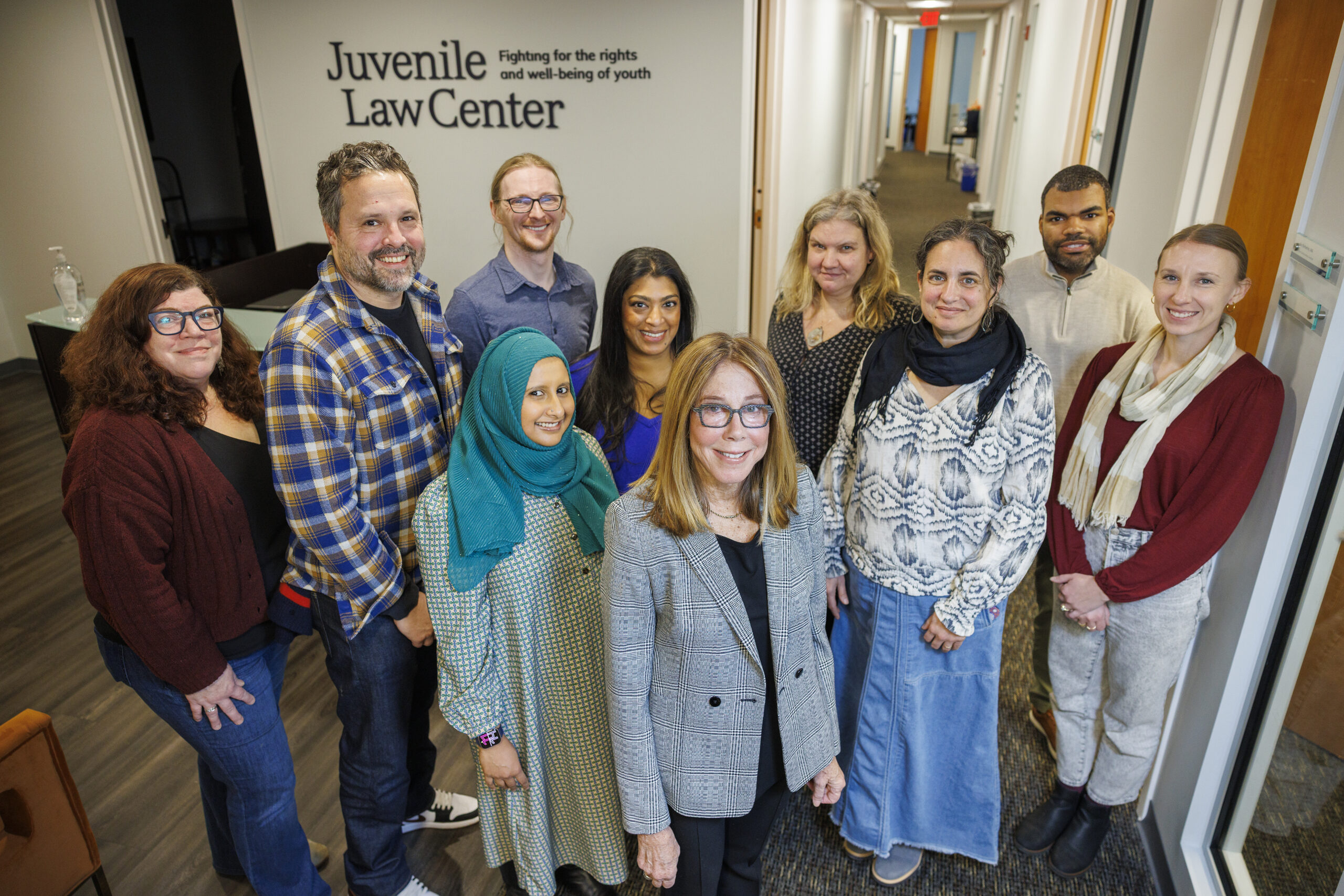
    Marsha Levick (center) stands with staffers at the Juvenile Law Center earlier this month.

    Among the successes, Levick still sees failures

    Despite the victories, Levick is quick to cite the cases she lost. “I’ve had successes. I’ve also failed many times,” she said.

    She still thinks about clients like Jamie Silvonek, sentenced to 35 years to life in prison after killing her mother, whose early release Levick has fought for but has not yet won, or a recent bid to expand parole access for people convicted as juveniles that fell flat in Florida.

    Those losses have hardened her view of how deeply punishment is embedded in American law. “I feel like punishment is in our bones,” she said. “The way that we think about crime is that it is always followed by punishment.”

    That instinct, she said, has left behind people who could have thrived outside prison — including juvenile lifers who will never be released. One of them is Silvonek, whom Levick described as brilliant and warm. “I want her to be able to share that warmth and joy with her family and with her community, who are all behind her,” Levick said.

    “We lost what they had to give,” she added.

    Levick isn’t done yet

    Levick, who is married with two adult daughters, is not leaving the field. She will become the Phyllis Beck chair at Temple’s Beasley School of Law, a post once held by her cofounder Bob Schwartz, and will teach constitutional law to first-year students.

    She feels newly urgent about the course. “I am outraged at the degree to which the law has been perverted by the current moment, and I think I still can say and do something about that,” she said. “I think that the things that motivate me include outrage.”

    She expects much of the future progress in youth justice to come from state supreme courts rather than the U.S. Supreme Court — a shift she sees as pragmatic, not pessimistic. Washington State Supreme Court Justice Mary Yu, who has heard Levick argue successfully before her, called her a fearless litigator. “She’s an extraordinary appellate lawyer,” Yu, who is also retiring Wednesday, said in an interview. “It’s almost instinctual to her.”

    And even now, Levick said, she has hope.

    “We’re not going to abolish the juvenile justice system in America, but we could transform it radically,” Levick said. “I believe that. But it takes more than just lawyers to care. It takes more than the community to care. It takes people in positions of power to care. And that’s the hard part.”

    Correction: An earlier version of this article misstated the name of a legal advocacy group at which Levick worked. She worked at NOW Legal Defense and Education Fund. The story also misstated the year Laurene Transue called the Juvenile Law Center; she called the law center in 2007.
  • ‘Deadnaming’ Rachel Levine is not a small act. It’s a warning to the medical profession.

    ‘Deadnaming’ Rachel Levine is not a small act. It’s a warning to the medical profession.

    When the U.S. Department of Health and Human Services quietly altered the nameplate on Rachel Levine’s official portrait during the recent government shutdown — replacing her legal first name with the one assigned to her at birth — it might have seemed to some like an insignificant gesture.

    But symbols matter. Names matter. And, as we are constantly reminded by the pioneering example of Levine — the first openly transgender person confirmed for a government role by the U.S. Senate — identity matters.

    And the deliberate act of using a transgender or nonbinary person’s birth name (or a previous name) after they’ve chosen a new one — a demeaning practice known as “deadnaming” — is more than just an insult to one nationally recognized medical leader. It’s a signal about what our health system is becoming.

    It tells every transgender clinician, trainee, staff member, and patient: Your identity is provisional here. Your legitimacy is negotiable. Your name can be taken from you. For a profession that depends on psychological safety, this is no small thing.

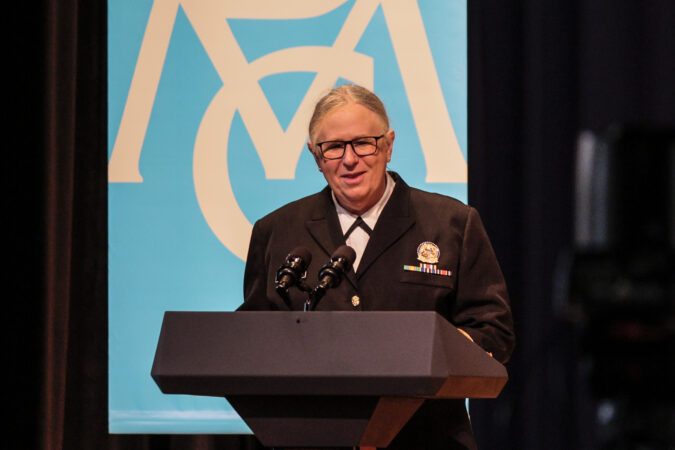
    Imagine training as a transgender medical resident and watching the federal government manipulate the image of one of the country’s most illustrious physicians — someone who helped lead Pennsylvania through the opioid epidemic, someone who oversaw critical COVID-19 responses, and someone so accomplished that they hold the rank of admiral in the U.S. Public Health Service.

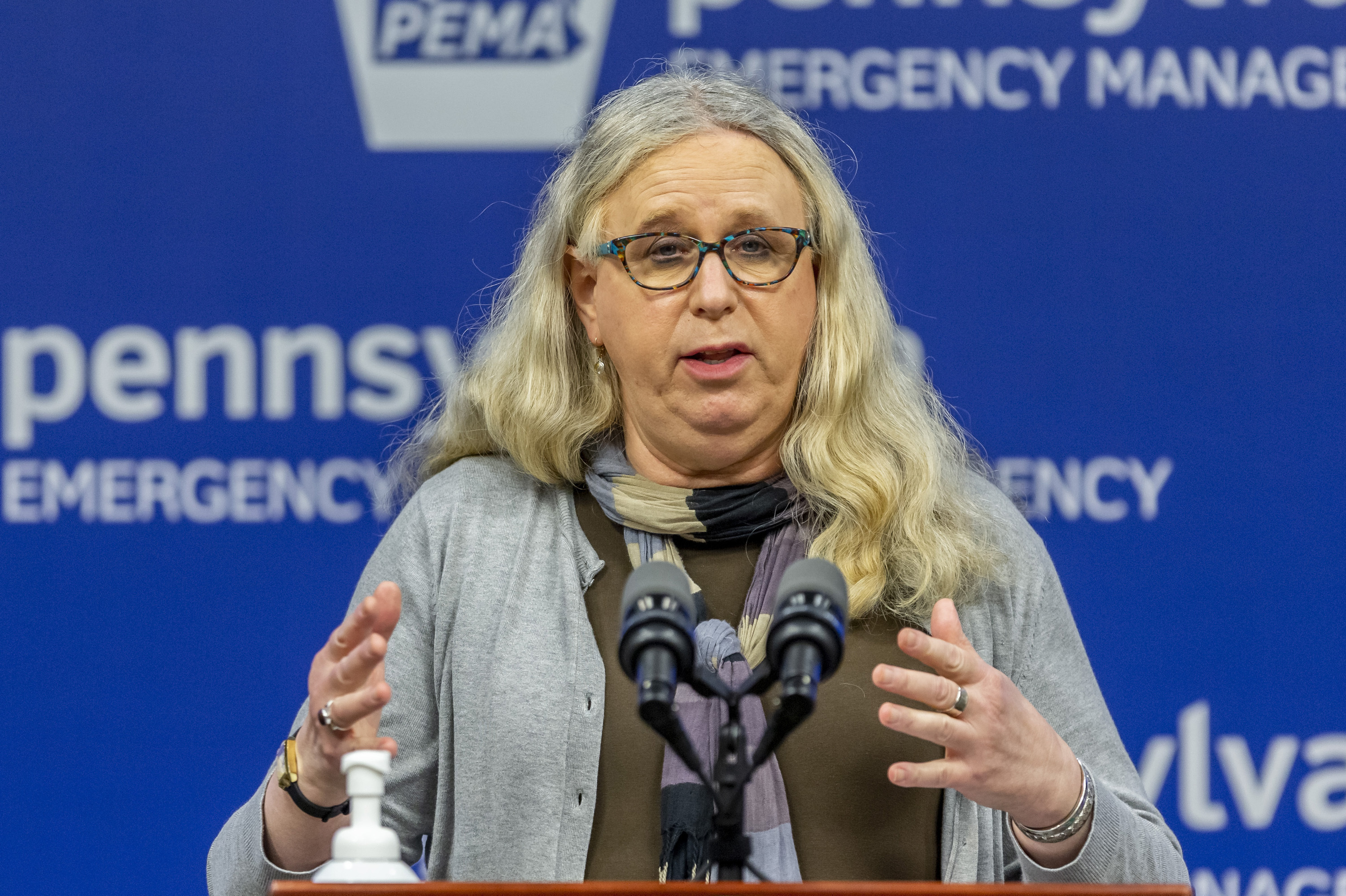
    Then-Pennsylvania Secretary of Health Rachel Levine meets with the media at The Pennsylvania Emergency Management Agency headquarters in Harrisburg in May 2020.

    Imagine treating transgender youth in a climate where federal agencies publicly invalidate the very concept of gender identity.

    Imagine being a transgender patient, already vulnerable, and seeing your government insist that who you are is, at best, a clerical preference and, at worst, a threat to national security.

    We sometimes tell ourselves that culture wars don’t reach the clinic. They do.

    They show up when patients avoid care because they fear being misgendered or judged.

    They show up when medical students stay closeted to avoid being targeted, derailing careers before they begin.

    They show up when clinicians feel pressured to hide their families or their own identities in order to survive training environments already marked by burnout, moral injury, and hierarchy.

    They show up in public health, where trust is essential — whether in vaccines, harm-reduction programs, or pandemic response. When government institutions themselves engage in targeted stigmatization, entire communities disengage.

    And they show up in professional integrity. A health system that claims to uphold evidence yet endorses policies contradicted by every major medical association — including the treatment of gender dysphoria — erodes its credibility. When science is invoked only when politically convenient, clinicians feel the ground shift under their feet.

    Levine showed grace by calling the deadnaming “petty.” In a sense, she’s right: The act is juvenile. But if the rest of us don’t call it out, we risk missing the larger threat.

    Professional erasure begins with symbolic gestures — the removal of names, the reclassification of identities, the retelling of who someone “really” is. History is rife with examples of how stripping titles, credentials, or names precedes efforts to diminish authority and restrict participation.

    A physician’s portrait is not just a piece of decor. It is a public acknowledgment of service, expertise, and contribution. Altering it is an attempt to rewrite not only identity but legacy.

    If medicine is to retain its moral center, clinicians must resist the temptation to disengage. This is not “politics” in the partisan sense. It is professional ethics.

    We can start by naming the harm clearly. Deadnaming is not a clerical correction; it is a form of psychological violence aimed at delegitimizing identity.

    We must also educate our colleagues, many of whom underestimate the downstream effects of identity-based policies on patient trust, engagement, and health outcomes.

    At the same time, we have an obligation to actively support trainees and colleagues — especially those who are transgender or gender-expansive — who may feel newly unsafe or exposed within training environments and workplaces.

    Defending evidence-based care is essential: Transgender medicine is medicine. Period. And we must insist that federal agencies speak truthfully about science.

    A selective invocation of “scientific reality” is not reality at all; it is ideology masquerading as evidence. Medicine is facing a pivotal question: Are we willing to let political ideology dictate whose identities are valid within our clinics, hospitals, and public health institutions?

    Rachel Levine’s portrait matters because deleting her name is an invitation to delete others. It is an attempt to redefine professional legitimacy by biology rather than biography — by chromosomes rather than contributions.

    Yet her life is proof that gender identity neither diminishes competence nor negates service.

    When a government tries to rewrite that narrative, the medical profession must ask itself: If we do not stand up for the integrity of our colleagues, who will stand up for the integrity of our patients?

    Arthur Lazarus is an adjunct professor of psychiatry at the Lewis Katz School of Medicine at Temple University.

  • Rob Reiner’s son Nick charged with 2 counts of murder in killing of his parents

    Rob Reiner’s son Nick charged with 2 counts of murder in killing of his parents

    LOS ANGELES — Rob Reiner’s son Nick Reiner was charged Tuesday with two counts of first-degree murder in the killing of his parents, which stunned their communities in Hollywood and Democratic politics, where both were widely beloved.

    Nick Reiner, 32, is charged with killing Rob Reiner, the 78-year-old actor and director, and his wife, Michele Singer Reiner, District Attorney Nathan Hochman announced at a news conference with Los Angeles Police Chief Jim McDonnell.

    “Their loss is beyond tragic and we will commit ourselves to bringing their murderer to justice,” Hochman said.

    Along with the two counts of first-degree murder, prosecutors added special circumstances of multiple murders and a special allegation that the defendant used a dangerous weapon: a knife. The additions could mean a greater sentence.

    Hochman said his office had not decided whether to seek the death penalty.

    “This case is heartbreaking and deeply personal, not only for the Reiner family and their loved ones but for our entire city,” McDonnell said. “We will continue to support the Reiner family and ensure that every step forward is taken with care, dignity, and resolve.”

    The announcement came two days after the couple were found dead with apparent stab wounds in their home in the upscale Brentwood neighborhood on the west side of Los Angeles. Nick Reiner did not resist when he was arrested hours later in the Exposition Park area near the University of Southern California, about 14 miles from the crime scene, police said.

    Nick Reiner had been expected to make an initial court appearance Tuesday, but his attorney Alan Jackson said he was not brought from the jail to the courthouse for medical reasons and the appearance would not come before Wednesday.

    An email sent to Jackson seeking comment on the charges was not immediately answered. Nick Reiner has not entered a plea.

    Rob Reiner was the Emmy-winning costar of the sitcom All in the Family who went on to direct films including When Harry Met Sally … and The Princess Bride. He was an outspoken liberal activist for decades. Michele Singer Reiner was a photographer, a movie producer, and an advocate for LGBTQ+ rights. They had been married for 36 years.

    Representatives for the Reiner family did not respond to requests for comment. Police have not said anything about a motive for the killings.

    Nick Reiner is being held in jail without bail. He was arrested several hours after his parents were found dead on Sunday, police said.

    Jackson is a high-profile lawyer who represented Harvey Weinstein at his Los Angeles trial and Karen Read at her trial in Massachusetts. He was a central figure in the HBO documentary on the Read case.

    Investigators believe Rob and Michele Singer Reiner died from stab wounds, a law enforcement official told the Associated Press. The official, who was briefed on the investigation, could not publicly discuss the details and spoke on condition of anonymity.

    The killings were especially shocking given the warm comic legacy of the family. Rob Reiner was the son of comedy legend Carl Reiner, who died in 2020 at age 98.

    Kathy Bates, who won an Oscar as the star of Rob Reiner’s 1990 film Misery, was among those paying tribute to the couple.

    “I loved Rob,” Bates said in a statement. “He was brilliant and kind, a man who made films of every genre to challenge himself as an artist. He also fought courageously for his political beliefs. He changed the course of my life. Michele was a gifted photographer.”

    Former President Bill Clinton called the couple “good, generous people who made everyone who knew them better.”

    “Hillary and I are heartbroken by the tragic deaths of our friends Rob and Michele Reiner,” he said in a statement. “They inspired and uplifted millions through their work in film and television.”

    Three months ago, Nick Reiner was photographed with his parents and siblings at the premiere of his father’s film Spinal Tap 2: The End Continues.

    He had spoken publicly of his struggles with addiction, cycling in and out of treatment facilities with bouts of homelessness in between through his teen years. Rob and Nick Reiner explored — and seemed to improve — their relationship through the making of the 2016 film Being Charlie.

    Nick Reiner cowrote and Rob Reiner directed the film about the struggles of an addicted son and a famous father. It was not autobiographical but included several elements of their lives.

    “It forced us to understand ourselves better than we had,” Rob Reiner told the AP in 2016. “I told Nick while we were making it, I said, ‘You know, it doesn’t matter, whatever happens to this thing, we won already.’”

    Rob Reiner was long one of the most prolific directors in Hollywood, and his work included some of the most memorable and endlessly watchable movies of the 1980s and ’90s, including This is Spinal Tap and A Few Good Men.

    He met Michele Singer Reiner on the set of When Harry Met Sally …, and their meeting would inspire the film’s shift to a happy ending, with stars Billy Crystal — one of Reiner’s closest friends for decades — and Meg Ryan ending up together on New Year’s Eve.

    The Reiners were outspoken advocates for liberal causes and major Democratic donors.

    President Donald Trump on Monday blamed Rob Reiner’s outspoken opposition to the president for the actor-director’s killing, delivering the unsubstantiated claim in a social media post that seemed intent on decrying his opponents even in the face of a tragedy.

  • U.S. national park gift shops ordered to purge merchandise promoting DEI

    U.S. national park gift shops ordered to purge merchandise promoting DEI

    The Trump administration is expanding its crackdown on diversity, equity and inclusion by ordering national parks to purge their gift shops of items it deems objectionable.

    The Interior Department said in a memo last month that gift shops, bookstores and concession stands have until Dec. 19 to empty their shelves of retail items that run afoul of President Donald Trump’s agenda.

    The agency said its goal is to create “neutral spaces that serve all visitors.” It’s part of a broader initiative the Trump administration has pursued over the last year to root out policies and programs it says discriminate against people based on race, gender and sexual orientation — an effort that has led some major corporations and prominent universities to roll back diversity programs.

    Conservation groups say the gift shop initiative amounts to censorship and undermines the National Park Service’s educational mission. But conservative think tanks say taxpayer-funded spaces shouldn’t be allowed to advance ideologies they say are divisive.

    Employees of the park service and groups that manage national park gift shops say it’s not clear what items will be banned. They didn’t want to speak on the record for fear of retribution.

    A debate over what’s acceptable for park gift shops

    “Our goal is to keep National Parks focused on their core mission: preserving natural and cultural resources for the benefit of all Americans,” the Interior Department said in a statement. The agency said it wants to ensure parks’ gift shops “do not promote specific viewpoints.”

    Alan Spears, the senior director for cultural resources at the National Parks Conservation Association, said removing history books and other merchandise from gift shops amounts to “silencing science and hiding history,” and does not serve the interests of park visitors.

    Other groups called the review of gift shops a waste of resources at a time of staffing shortages, maintenance backlogs and budget issues.

    Stefan Padfield, a former law professor who now works with a conservative think tank in Washington, said there is no way to defend the government’s promotion of “radical and divisive” ideologies through the sale of books and other items, though he said the challenge for the Trump administration will be in deciding what is acceptable and what isn’t.

    “Now, are there going to be instances of the correction overshooting? Are there going to be difficult line-drawing exercises in gray areas? Absolutely,” said Padfield, the executive director of the Free Enterprise Project at the National Center for Public Policy Research.

    The order is open to interpretation

    All items for sale at parks and online are supposed to be reviewed for neutrality. That includes books, T-shirts, keychains, magnets, patches and even pens.

    But the memo issued by a senior Interior Department official didn’t give any examples of items that could no longer be sold, leaving the order open to interpretation. No training sessions have been offered to park service employees.

    Some parks had already completed their reviews, finding nothing to add to the list.

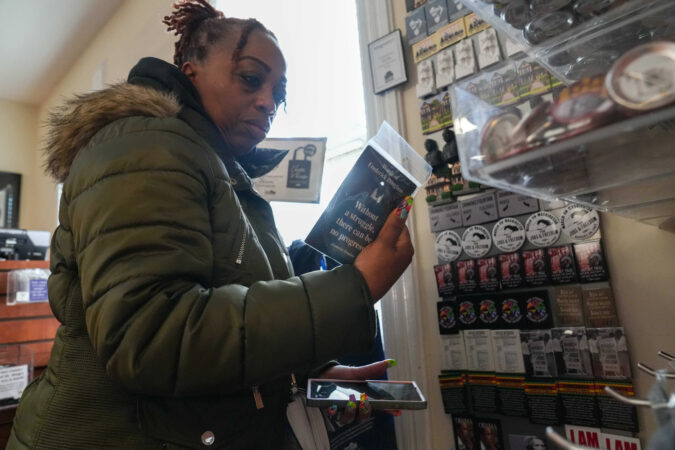
    On display this week at Independence National Historical Park in Philadelphia were items featuring Frederick Douglass. At the Martin Luther King, Jr. National Historical Park store in Atlanta, there were various books on the Civil Rights Movement and a book for children about important Black women in U.S. history. For sale online was a metal token for the Belmont-Paul Women’s Equality National Monument.

    There already is a thorough process for vendors to get merchandise into national park stores. Items are vetted for their educational value and to ensure they align with the themes of the park or historical site.

    National parks in the spotlight

    The park service in recent weeks faced criticism when it stopped offering free admission to visitors on Martin Luther King Jr. Day and Juneteenth, while extending the benefit to U.S. residents on Flag Day, which also happens to be Trump’s birthday next year.

    Earlier this year, the Interior Department’s ordered parks to flag signs, exhibits and other materials it said disparaged Americans. That order sparked debate about books related to Native American history and a photograph at a Georgia park that showed the scars of a formerly enslaved man.

    In one of his executive orders, Trump said the nation’s history was being unfairly recast through a negative lens. Instead, he wants to focus on the positive aspects of America’s achievements, along with the beauty and grandeur of its landscape.

    Mikah Meyer knows that beauty well after a three-year road trip to visit all 419 national park sites. He said part of the mission of his travels, which he shared on social media and in a documentary, was to illustrate that parks are welcoming to the LGBTQ+ community.

    That message aligns with his business, Outside Safe Space, which at its peak was selling stickers and pins featuring a tree with triangle-shaped, rainbow-colored branches to more than 20 associations that operated multiple park stores. His items started to be pulled from some stores after the executive orders were issued earlier this year.

    “How is banning these items supporting freedom of speech?” Meyer said.

  • Sabrina Carpenter slams Trump administration for using her music in ‘disgusting’ ICE video

    Sabrina Carpenter slams Trump administration for using her music in ‘disgusting’ ICE video

    Sabrina Carpenter’s not mincing words when it comes to the Trump administration using one of her songs in a video promoting ICE and the Department of Homeland Security.

    On Tuesday, the pop princess condemned the White House for posting a video featuring ICE arresting protesters and undocumented immigrants to one of her songs. The video, which was published on the White House’s X account one day earlier, was captioned “Have you ever tried this one?“ alongside the hearteye emoji and was paired with Carpenter’s track ”Juno.”

    It’s a nod to a scene in Carpenter’s just-wrapped “Short n’ Sweet” tour, where she would playfully “arrest” someone in the crowd “for being so hot,” giving them a souvenir pair of fuzzy pink cuffs before performing “Juno.”

    Carpenter, a Bucks County native, replied to the post, “this video is evil and disgusting. Do not ever involve me or my music to benefit your inhumane agenda.” Her response has been viewed more than 2 million times.

    It’s the latest in a series of similar incidents, where artists ranging from Beyoncé to the Rolling Stones have objected to the White House using their music in videos promoting the Trump administration’s agenda without their consent.

    Last month, Olivia Rodrigo had a similar exchange in the comments of a White House Instagram video demanding that undocumented immigrants self-deport over the singer’s track “All-American Bitch.” Rodrigo, who is Filipino American, commented at the time, “Don’t ever use my songs to promote your racist, hateful propaganda.”

    The White House also used a song by Carpenter’s friend and musical collaborator, Berks County’s Taylor Swift, last month. Fans of Swift’s called out the use of “The Fate of Ophelia” in a video celebrating President Donald Trump, despite the president’s repeated slights toward the pop star. Swift herself did not comment on the video, but she has previously criticized Trump for posting AI photos of her on his social platforms.

    Carpenter, 26, worked with HeadCount on her “Short n’ Sweet” tour, registering 35,814 voters — more than any other artist the nonpartisan voter registration group worked with in 2024. She’s been vocal about her support for LGBTQ+ rights and has publicly donated to the National Immigration Law Center.

    When Trump won last year, she took a moment during her concert to say “I’m sorry about our country and to the women here, I love you so, so, so much.”

    “Here’s a Short n’ Sweet message for Sabrina Carpenter: We won’t apologize for deporting dangerous criminal illegal murderers, rapists and pedophiles from our country,” White House spokesperson Abigail Jackson told the New York Times. “Anyone who would defend these sick monsters must be stupid, or is it slow?”

  • William Way LGBT Community Center will permanently close its historic Center City building in December. Services will continue elsewhere.

    William Way LGBT Community Center will permanently close its historic Center City building in December. Services will continue elsewhere.

    One of Philadelphia’s oldest hubs for the LGBTQ+ community will shut its doors in less than a month, as the half-century-old organization transforms its programming and moves on from its aging Spruce Street building.

    The William Way LGBT Community Center will permanently close its 1315 Spruce St. headquarters on Dec. 18, the William Way board announced Monday. This will end the tenure of “a vital gathering space for trans and gender-diverse individuals” across the region and beyond, officials said; however, William Way intends to continue its services, research, and archival efforts elsewhere.

    “While the building may be closing, our commitment to the community remains unwavering,” said Laura Ryan, cochair of William Way’s board. “Our board, staff, and community partners are actively finalizing plans that will guide the center’s next chapter, and we look forward to sharing those details as soon as we can.”

    The property was listed for sale earlier this year, but it was not known if there was a new owner at this time, a William Way spokesperson said.

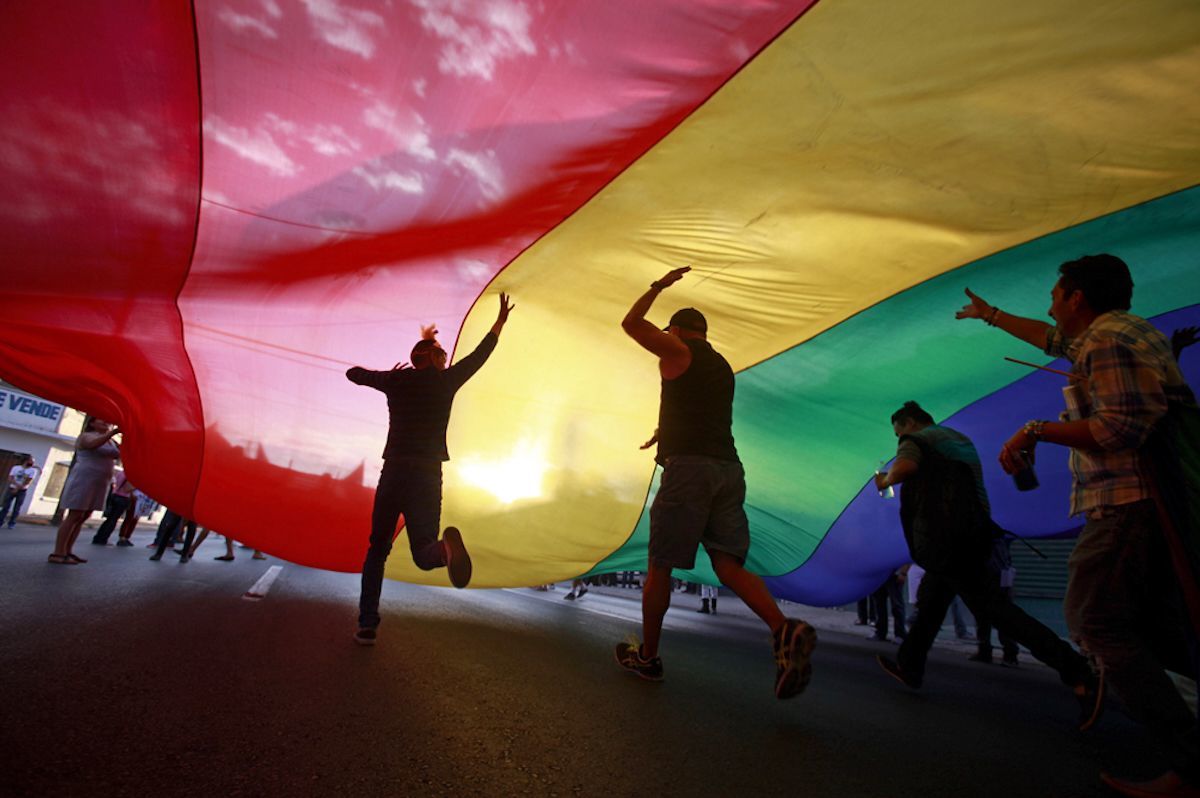
    Attendees of Philadelphia’s Pride celebrations run under a large Pride flag outside of the William Way LGBT Community Center in Philadelphia, Pa. On Dec. 18, 2025, the center will permanently close its Center City building.

    This decision follows years of redevelopment plans and failed fundraising efforts for the 175-year-old building that has served as the LGBTQ+ center’s hub since 1997. The center briefly closed for inspection and emergency repairs last fall, reopening a portion of the building in January 2025.

    As of the board’s recent estimates, and after failing to raise enough capital for repairs, the aging pre-Civil War-era building still needs at least $3.5 million in immediate repairs, the board announced earlier this year.

    “Our community deserves a space that is not only safe and affirming, but fully accessible and equipped to support our future,” William Way’s chief operating officer, Darius McLean, said in June. “The decision to move was not made lightly. It reflects our commitment to delivering programs with dignity and excellence, for today and future generations.”

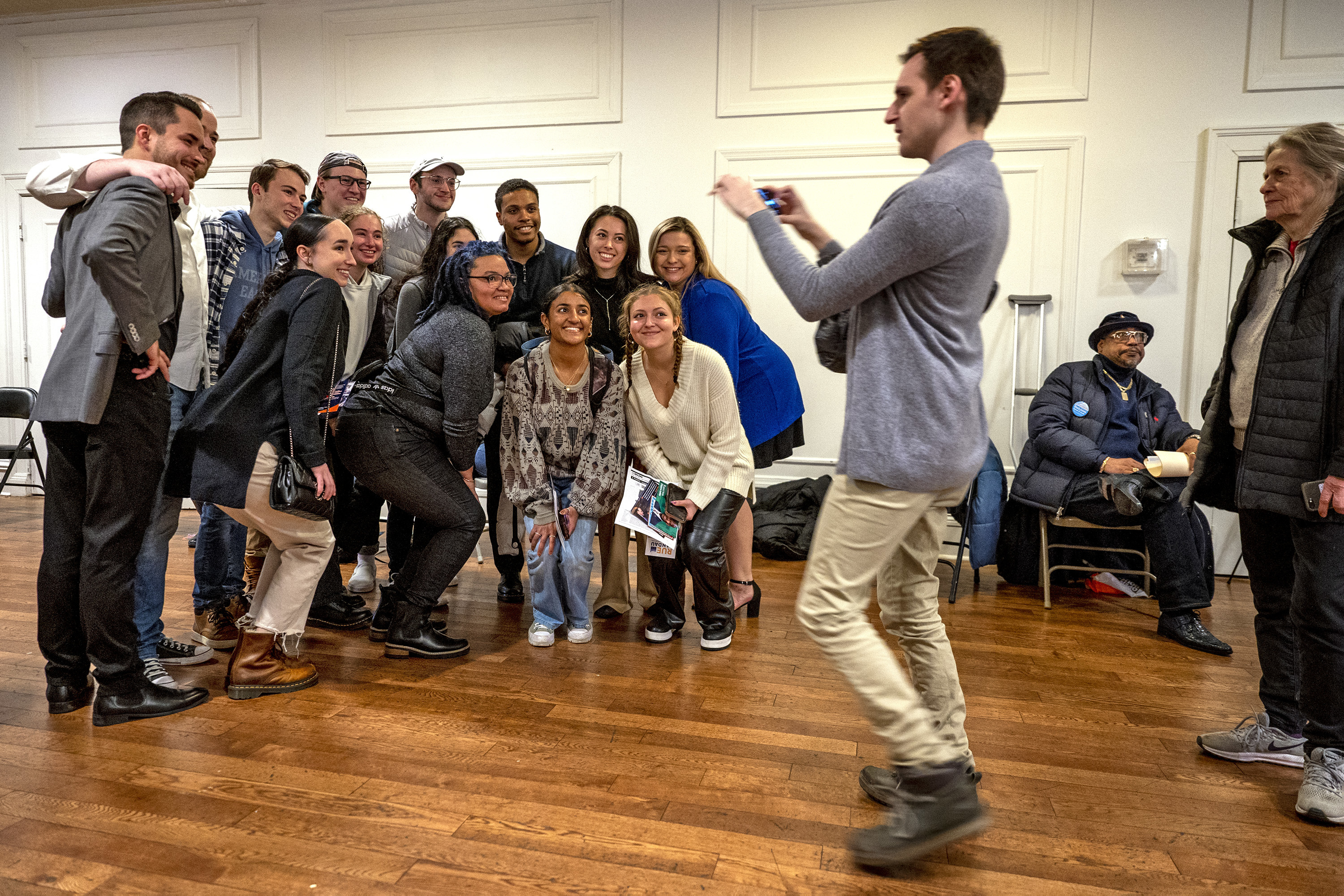
    Jason Landau Goodman, who is not with the group, takes a photo for the Philadelphia Young Democrats, made up of the Penn Dems and Temple College Democrats as they attend a forum for mayoral candidates at the William Way LGBT Community Center Monday night.

    Moving forward, William Way will operate less as a physical center for services than as a foundation spreading these programs across the city. “The heart of William Way has never been its walls. It’s the people, the programs, and the unwavering commitment to creating a space where LGBTQIA+ individuals are seen, valued, and safe,” said board cochair Dave Huting.

    William Way officials confirmed no programs will be discontinued in the transition.

    Some of its most vital programs will be continuing through the nearby Church of St. Luke and the Epiphany at 330 S. 13th St., around the corner from the William Way center. Starting Jan. 5, 2026, all of the center’s empowerment programs, including the elder initiative, peer counseling, and trans programs, will operate out of St. Luke’s.

    The center’s arts programs will live on through programming at partner organizations and other off-site locations through 2026. For instance, in January and February, Arleen Olshan’s Dead Dykes & Some Gay Men exhibition will be on display at the iMPeRFeCT Gallery in Germantown.

    Alexi Chacon, 25, of Los Angeles, then Archives Intern at the William Way LGBT Community Center, poses for a portrait in Philadelphia, Pa., on Tuesday, May 31, 2022.

    The John J. Wilcox Jr. Archives and Library is one of the most important relocation efforts being undertaken, as the center needs to ensure its vast collection of LGBTQ+ history is preserved and ready for its “future home.” Officials for William Way said they have not finalized its new location. Until Dec. 18, the library will remain open for on-site browsing and returns. No materials can be checked out from this point on.

    There will be a few final celebrations to enjoy at the William Way center before its Gayborhood building is closed and transferred to any new buyer. On Thanksgiving Day, from noon to 2 p.m., William Way is hosting a Giving Thanks Dinner and tree-decorating event, featuring an LGBTQ+ sit-down meal and decorating the center’s holiday tree.

    On Dec. 5, from 6 to 9 p.m., the center will host “One Last Dance,” a celebratory evening honoring the many community members, milestones, and memories of the time-honored institution.

    Correction: This article has been updated to note when William Way started using the 1315 Spruce St. building. It was in 1997.

  • Downingtown elects Erica Deuso, Pennsylvania’s first openly transgender mayor

    Downingtown elects Erica Deuso, Pennsylvania’s first openly transgender mayor

    Erica Deuso will be Pennsylvanias first openly transgender mayor. She won Tuesday’s contest to lead Downingtown after a campaign focused on bread-and-butter local issues in the face of attacks to her identity.

    The longtime Democratic advocate who works in management at a pharmaceutical company earned 64% of the vote as of Wednesday morning defeating Republican Rich Bryant who had 35% of the vote to serve as the next mayor of Downingtown, a Chester County borough of roughly 8,000 people.

    “Voters chose hope, decency, and a community where every neighbor matters,” Deuso said in a statement at 1:30 a.m. Wednesday. “I am honored to be elected as Pennsylvania’s first openly transgender mayor. I carry that responsibility with care and with purpose.”

    Deuso joins a small but growing rank of transgender officials in Pennsylvania and nationwide. There are 52 out transgender elected officials across the United States and three in Pennsylvania, all who govern at the local level , according to the Victory Institute, the research arm of the Victory Fund, which supports LGBTQ+ candidates and backed Deuso.

    While her gender identity attracted attention, and online vitriol, Deuso’s campaign didn’t dwell on it. Instead she prioritized public safety, sustainable growth and community in the historic borough now home to Victory Brewing.

    She ran with the support of the borough’s last two mayors, Democrats Phil Dague and County Commissioner Josh Maxwell.

    Bryant, a retired cybersecurity expert, argued he was better experienced for the job, which primarily leads the borough police department. But Bryant faced accusations of bigotry as Deuso posted screenshots online of her opponent making misogynistic and transphobic remarks on X, (Bryant said 90% of the posts were AI-generated, but offered no proof.)

    In a statement, Bryant congratulated Deuso and pledged to continue working to serve the community.

    “To those who voted differently, I respect your decision and share your hope for a stronger, safer, and more united Downingtown. I will continue to serve, to listen, and to advocate for responsible growth, fiscal transparency, and accountable local leadership,” he said.

    This suburban content is produced with support from the Leslie Miller and Richard Worley Foundation and The Lenfest Institute for Journalism. Editorial content is created independently of the project donors. Gifts to support The Inquirer’s high-impact journalism can be made at inquirer.com/donate. A list of Lenfest Institute donors can be found at lenfestinstitute.org/supporters.