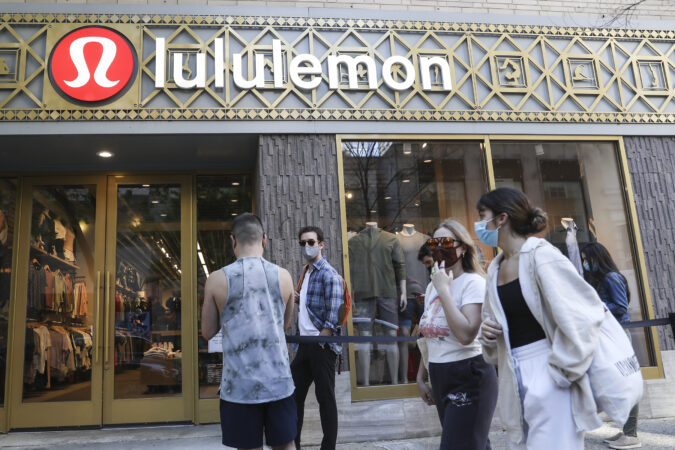
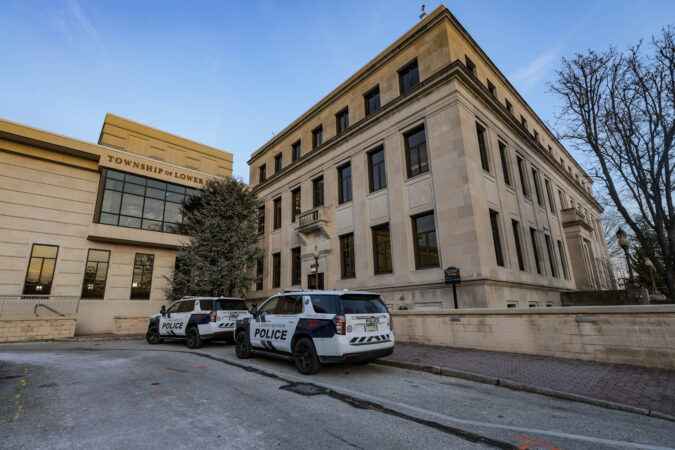
Two burglars broke into Lululemon at Ardmore’s Suburban Square shopping center early Tuesday morning, according to the Lower Merion Police Department.
In surveillance footage shared by 6abc, two masked suspects are seen using a sledgehammer to smash one of the storefront’s glass doors. The mengrabbed an unknown amount of merchandise from the men’s section, including coats, Lower Merion Police Sgt. Ian Thornton said. One man ran out of the store before coming back in to grab more merchandise.
Authorities told reporters the men loaded the merchandise into a U-Haul, which was last seen on Bryn Mawr and Woodbine Avenues.
An investigation is underway.
Lululemon is a high-end athletic-wear retailer with eight stores in the Philadelphia region. The company did not respond to written questions about the Tuesday morning burglary.
Lower Merion Police Superintendent Andy Block told 6abc that Lululemon merchandise is a “highly sought-after item.”
This suburban content is produced with support from the Leslie Miller and Richard Worley Foundation and The Lenfest Institute for Journalism. Editorial content is created independently of the project donors. Gifts to support The Inquirer’s high-impact journalism can be made at inquirer.com/donate. A list of Lenfest Institute donors can be found at lenfestinstitute.org/supporters.
On Creighton Road in Lower Merion, it’s not unusual for residents to buy the house next door.
The owners of the 3.85-acre property at 648 Creighton Rd. did just that when they purchased the home but wanted a pool. They decided to put one on the neighboring property.
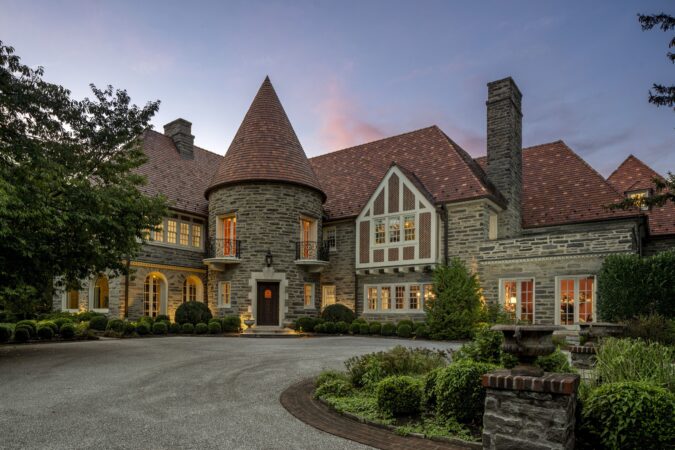
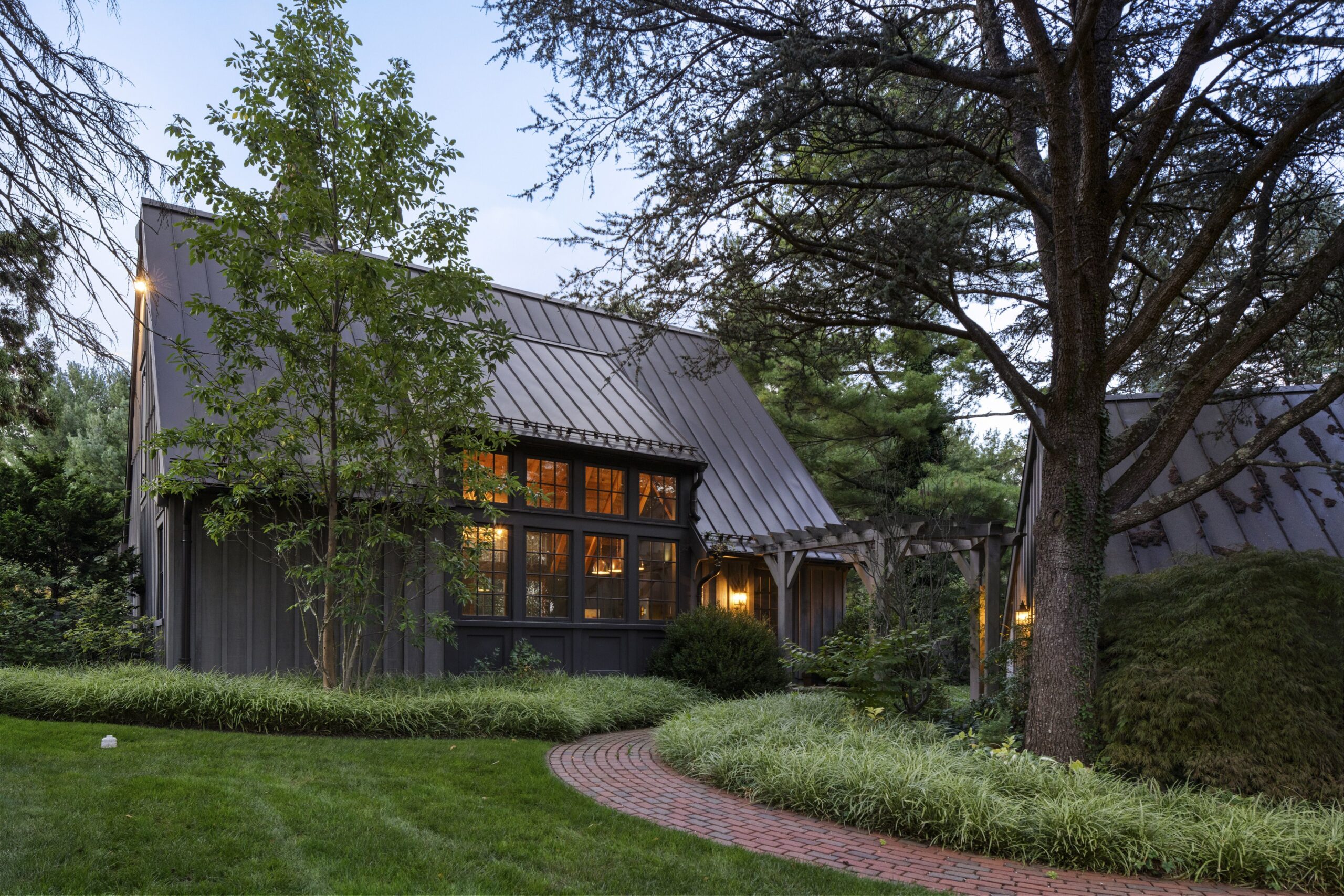
The century-old main house with seven bedrooms, seven full bathrooms, and three half bathrooms is available for $7.9 million. And the one-bedroom, one-bathroom carriage house next door that was rebuilt in 2015 is on the market for $2 million.
Creighton Road “has become the estate street,” said listing agent Lavinia Smerconish with Compass Real Estate.
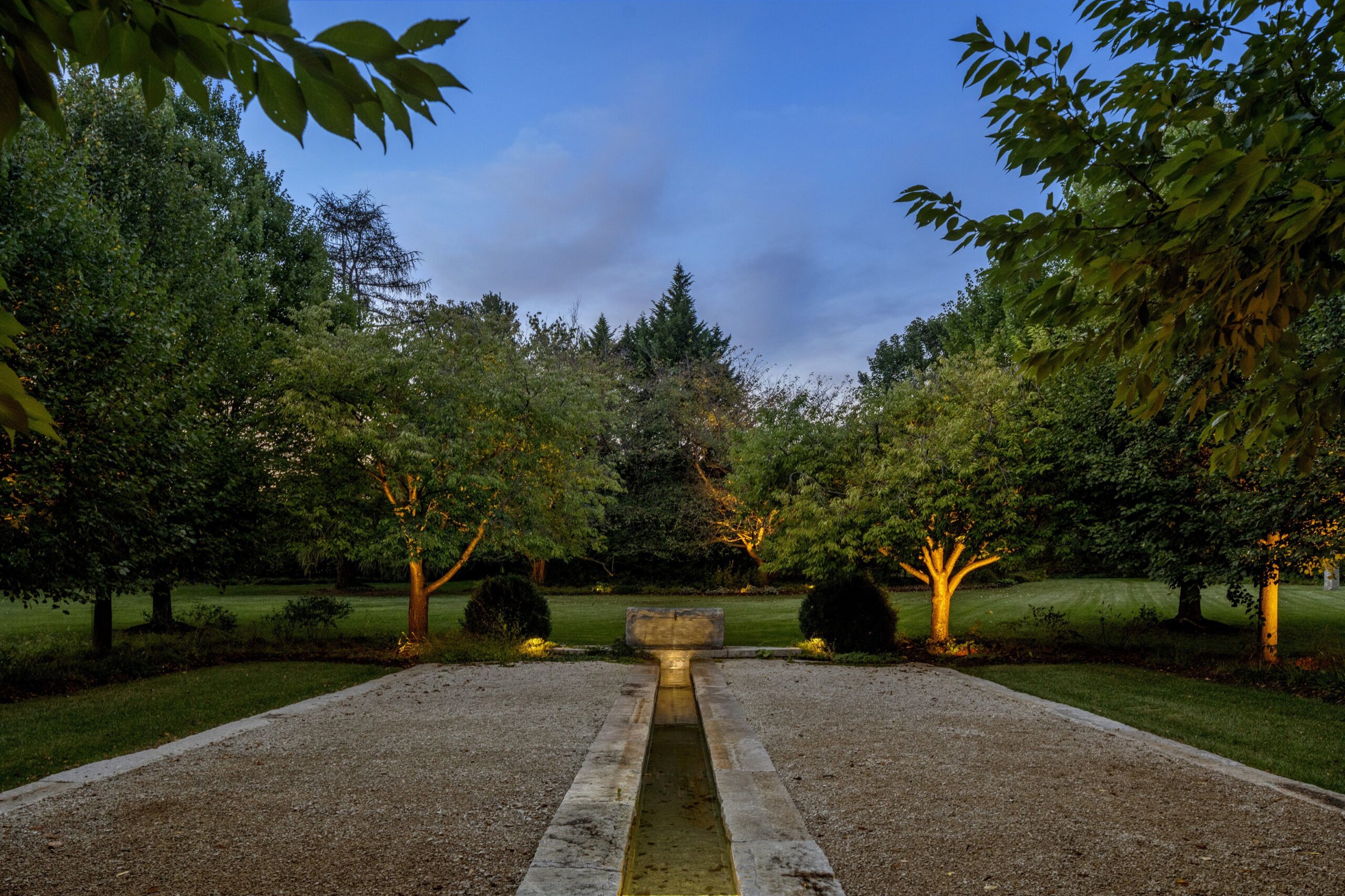
The property is 3.85 acres and includes a sprawling yard.
The owners are open to selling their properties separately, but they won’t sell the carriage house before the main one in case a buyer wants both.
The fieldstone main house is 11,418 square feet. It used to have a series of small rooms for staff and a giant entrance that looked like a banquet hall that no one knew what to do with, Smerconish said. A previous owner reimagined the home with larger rooms, more natural light, and more functional space.
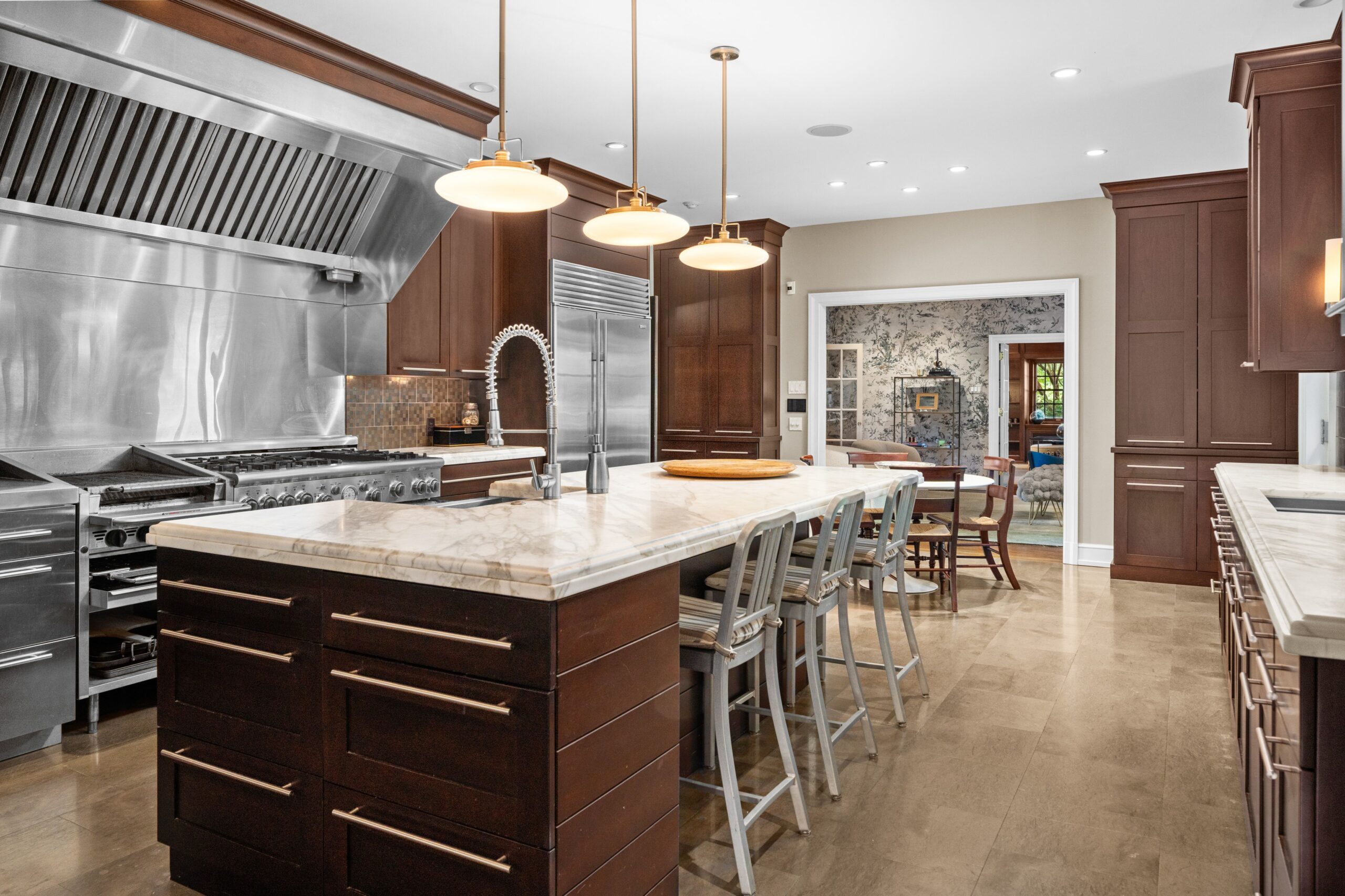
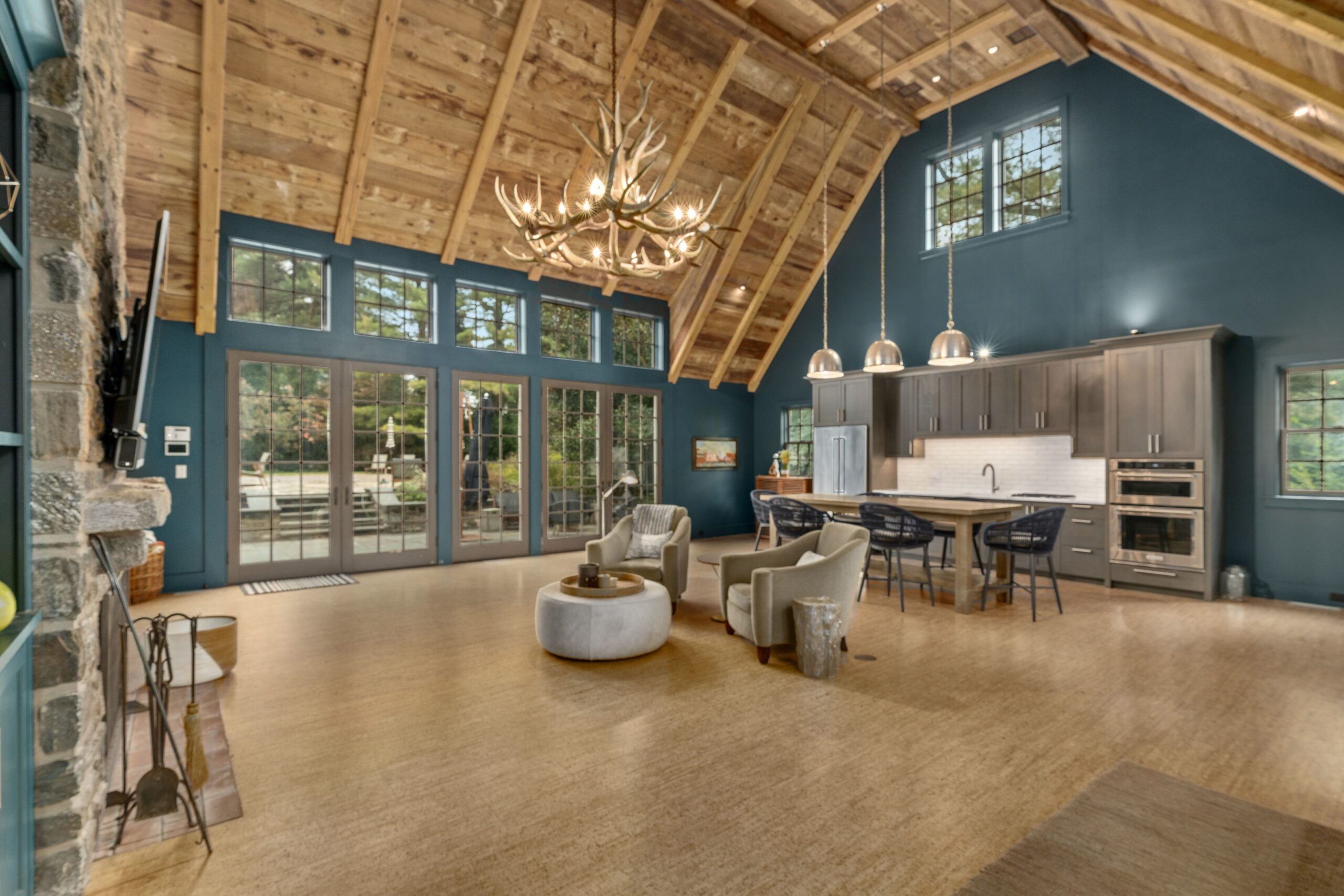
The home has a commercial kitchen with a large island with seating.
The front door opens to an entrance tower with a chandelier and winding staircase. Living and dining rooms branch off from the foyer with the family room straight ahead.
The home has a commercial kitchen with an island with seating. The property includes an exercise room, solarium, four fireplaces, suite above the attached garage for guests or a nanny, sprawling yard lined with trees and hedges, terraces, and detached garage. The sitting room off the primary bedroom could be kept as is or turned into a huge closet, Smerconish said.
The finished basement spans 1,538 square feet and includes a wine cellar.
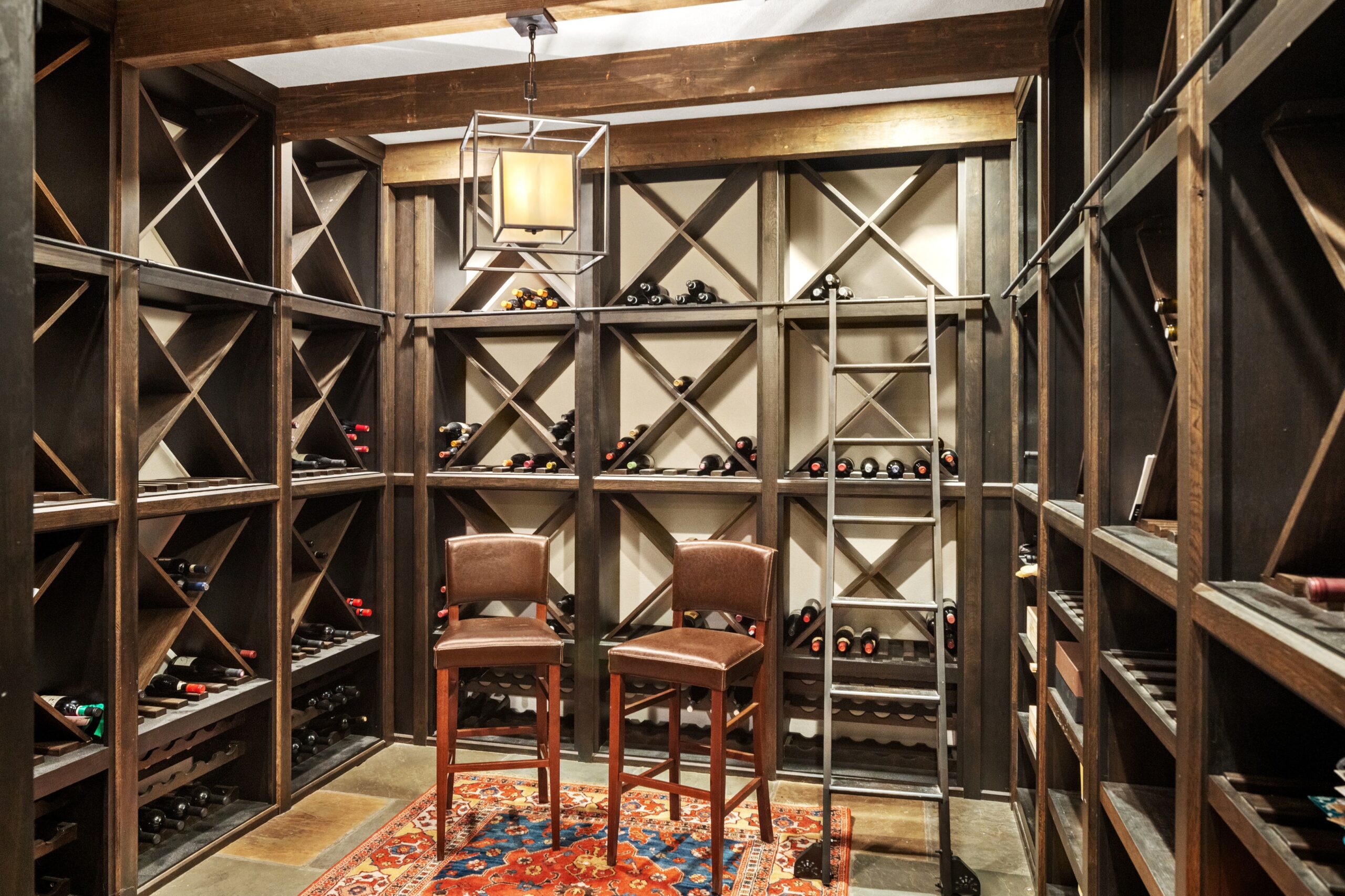
The basement includes a sports bar with TVs, wine cellar for up to 3,000 bottles, movie room, gym, and bathroom.
The property “is both impressive and cozy at the same time,” Smerconish said.
The carriage house on the market for $2 million on Creighton Road in Lower Merion is being sold as a package along with the $7.9 million house next door.
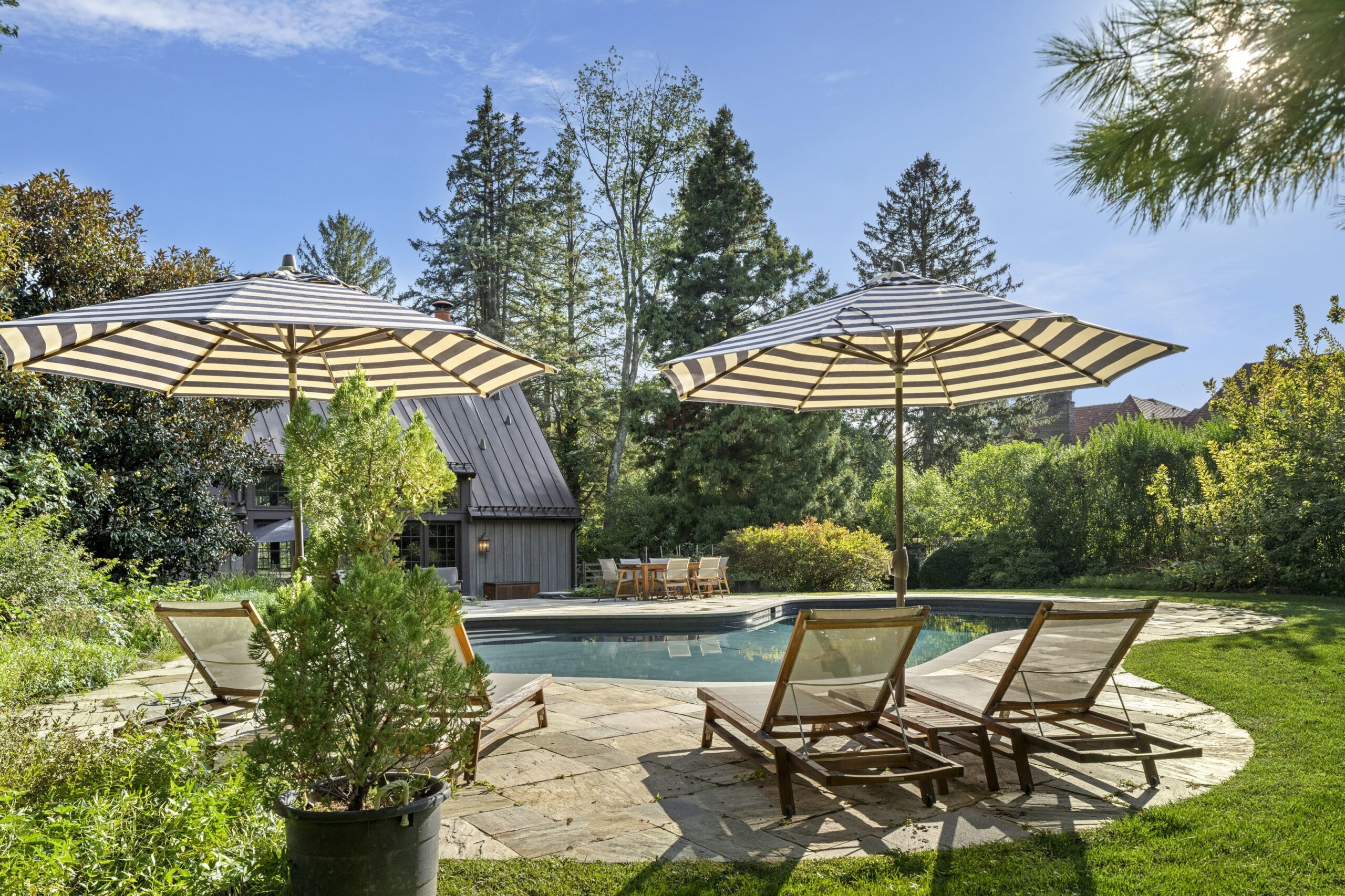
The carriage house next door spans just over 1,000 square feet on an almost one-acre lot. It has a bedroom, bathroom, laundry room, eat-in kitchen, and living room. A flagstone patio leads to the heated saltwater pool.
The properties are walking distance from the Appleford estate, which is an event venue, bird sanctuary, and arboretum with gardens and walking paths. They are minutes from Villanova University and Stoneleigh, a public garden of the nonprofit Natural Lands.
And they’re also minutes from the Schuylkill Expressway and I-476.
The carriage house includes a kitchen, bathroom, and bedroom.
The properties were listed for sale on Dec. 5. Now that the holidays are over, Smerconish said, she will start accepting appointments to tour them. She said photos of the main house especially don’t do it justice.
“You get more with a physical tour and experiencing it,” she said.
Flagstone surrounds the carriage house’s heated saltwater pool.
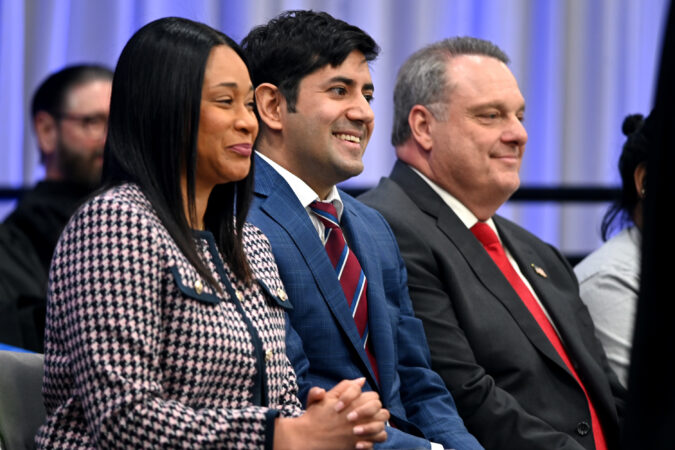
Lower Merion swore in five new commissioners on Monday, kicking off the board’s 126th year of governing the Montgomery County township.
Between rounds of applause and family photos, commissioners outlined the major challenges, and opportunities, the body will face in 2026. Board members highlighted recent accomplishments — creating a process for establishing board priorities, restricting gas-powered leaf blowers and plastic bags, advancing capital projects, hiring a police superintendent, supporting the development of affordable housing, and reversing the post-pandemic decline in police staffing levels.
“We’re solving problems, we’re moving forward, and we’re even having a little fun,” said commissioner V. Scott Zelov, who was sworn in for his sixth term.
Zelov on Monday night became the eighth commissioner in Lower Merion history to serve for at least 20 years, board President Todd Sinai said.
Sinai, who was first elected to the board in 2017, was unanimously reelected board president. Incumbent commissioner Sean Whalen called Sinai a “stalwart leader of this board,” praising Sinai’s leadership througheconomic ups and downs.
Jeremiah Woodring, also an incumbent commissioner, was unanimously elected vice president. Sinai described Woodring as “thoughtful and inquisitive,” “balanced,” and “diplomatic.”
Jana Lunger was sworn in as Lower Merion tax collector.
Here’s a who’s who of the five newly elected Lower Merion commissioners, all of whom replaced outgoing commissioners who chose not to run again in 2025.
Michael Daly, an attorney and the former president of the Gladwyne Civic Association, was sworn in to represent Ward 2, which includes Gladwyne and Penn Valley. Daly has lived in Lower Merion for around 15 years with his wife and three children, all of whom are products of the Lower Merion School District. In his law practice, he focuses on defending class action lawsuits and complex litigation. In a candidate interview earlier this fall, Daly said he’s focused on quality of life issues, including walkability, public parks, and safe streets. He replaced outgoing commissioner Joshua Grimes.
Charles Gregory, a longtime township employee, will represent Ward 4, which encompasses Ardmore and Haverford. Gregory, who was born and raised in Ardmore, worked for Lower Merion Township for 23 years until 2024. He’s the former president of the Lower Merion Workers Association and a Boy Scout troop leader. During a candidate forum, Gregory said he believed he could “make a difference from a blue collar aspect.” Gregory replaced outgoing commissioner Anthony Stevenson.
Christine McGuire is a forensic psychologist and business owner who will serve Rosemont and Villanova in Ward 6. McGuire lived in Gladwyne for nine years before moving to Villanova around three years ago. In a candidate forum, McGuire said she has been active in the Gladwyne Civic Association and in the parent group that studied Lower Merion’s school start time change. As the owner of a psychology practice, she said she understands “what a budget is and that you have to work within the budget and not look at it like a blank check.” She replaced outgoing commissioner Andrew Gavrin.
Craig Timberlake, an Ardmore resident who was instrumental in the 2025 redevelopment at Schauffele Plaza, will represent Ward 8’s South Wynnewood and East Ardmore. Timberlake moved to Ardmore around 15 years ago from Maine. He says he was drawn to Ardmore’s high-quality schools, walkable neighborhoods, and transit options. He believes the township should incentivize “smaller,” “incremental,” and locally funded development and decrease speed limits to protect pedestrians. Timberlake is a project manager at OnCourse, an education technology platform. He replaced Shawn Kraemer, the board’s outgoing vice president.
Shelby Sparrow, the former president of the Penn Wynne Civic Association and a longtime community organizer, will represent Penn Wynne and Wynnewood in Ward 14. Sparrow’s priorities include ensuring the community is engaged in Main Line Health’s redevelopment of the St. Charles Borromeo Seminary property; addressing pedestrian safety; and encouraging sustainability and park stewardship. She was previously the director of development for St. Peter’s Independent School in Center City. She replaced outgoing commissioner Rick Churchill.
Sinai and Zelov, who were reelected in November, were sworn in, and sitting commissioners Woodring, Whalen, Daniel Bernheim, Louis Rossman, Ray Courtney, Maggie Harper Epstein, and Gilda Kramer were welcomed back.
This suburban content is produced with support from the Leslie Miller and Richard Worley Foundation and The Lenfest Institute for Journalism. Editorial content is created independently of the project donors. Gifts to support The Inquirer’s high-impact journalism can be made at inquirer.com/donate. A list of Lenfest Institute donors can be found at lenfestinstitute.org/supporters.
By the end of thisyear, Montgomery County will have three emergency short-term shelters with beds for 190 people in Pottstown, Lansdale, and Norristown.
In late 2024, it had zero full-time shelters, even as homelessness soared to new heightsin the county — Pennsylvania’ssecond wealthiest.
The three-member board of commissioners is currently composed of two Democrats and one Republican, but in the past year they have operated with an unusual degree of cohesion on both the challenge of homelessness and on a county budget that included a small property tax increase.
“We came in with similar goals around addressing the homeless problem throughout the county,” said Tom DiBello, the Republican commissioner. “We all heard it when we were campaigning [in 2023] and when we got elected, we felt that we needed to do something. We can’t continue doing it the way it’s always been done in the past, where people just kept talking about it.”
Although the Montgomery County commissioners have formed a united front on many issues last year, housing policy issues are more likely to divide them in 2026.
But the Democrat commissioners, Neil Makhija and Jamila Winder, have ideas about how to get around those limitations to directly fund more affordable housing and encourage local governments to allow more building.
DiBello is not excited about many of the proposals being considered by the two Democrats. He opposes creating new county-level taxes and says zoning powers should be left to localities.
Still, DiBello has further housing policy goals he would like to pursue — such asdeveloping more affordable homes for senior citizens.
As the county releases its 2026 housing blueprint, expected early this year, the first round of these debates will begin in earnest. This planning document, created by county government staff with commissioner feedback, lays out goals for the county based on a comprehensive housing policy — the first its seen in recent memory, Makhija says.
“It’s going to be the first time that the entire board has had a voice and a view on what our role is to address a crisis in the cost of housing,” said Makhija. “There are things we can do to help people.”
How the shelters got built
Making policy to address homelessness is difficult because many municipalities and community groups fight against having shelters placed in their neighborhoods.
The number of people in Montgomery County experiencing homelessnesshas grown with the cost of housing. In 2024, there were 435 people living without a roof over their heads. In 2025, the number grew to 534.
Meanwhile, Montgomery County’s last full-service homeless shelter closed in 2022.
Opposition to new shelters or affordable housing bloomed in Norristown, where officials said the rowhouse-dominated municipality was already asked to shoulder too many social services, and in Lower Providence where the local government denied a shelter application (the legal fallout is ongoing).
The county commissioners decided to get involved by courting local governments and personally attending zoning hearings about potential placements. DiBello attended meetings in Pottstown, near where he lives. Winder went to hearings in Norristown, including one that stretched past midnight, then stuck around to discuss neighbors’ concerns.
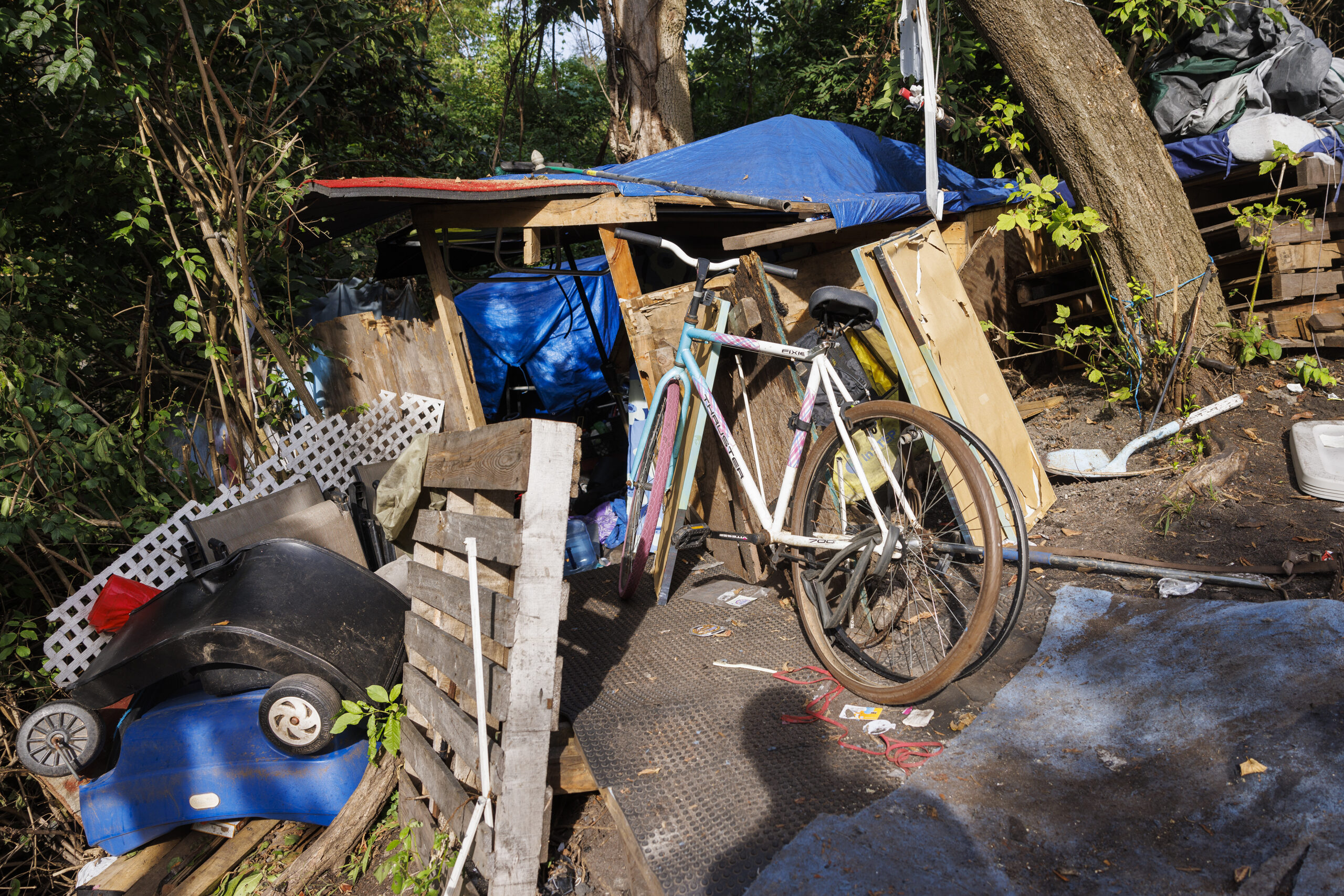
A homeless encampment near the Schuylkill River Trail and Norristown in Montgomery County.
In some parts of the county, efforts to address the issue overcame opposition.
Communities like East Norriton have established more code blue shelters, which only operate during freezing weather, and inwealthy Lower Merion, a new affordable housing complex for seniors and people with disabilities, called Ardmore House II, is under construction.
“It takes political courage in these moments,” Winder said,referring to local officials who have embraced shelters and affordable housing. “Sometimes you have loud voices in the room and just have to say, well, this is the right thing to do.”
The commissioners provided $5.3 million in county funding for the shelters. The county also provided a quarter of Ardmore House II’s $20 million budget. And as federal funding cuts loom under President Donald Trump’s administration, the commissioners have also been engaging with philanthropists and foundations.
Earlier this month, Nand Todi, president of Montgomery County-based Penn Manufacturing Industries, announced a $1 million donation to the Lansdale shelter.
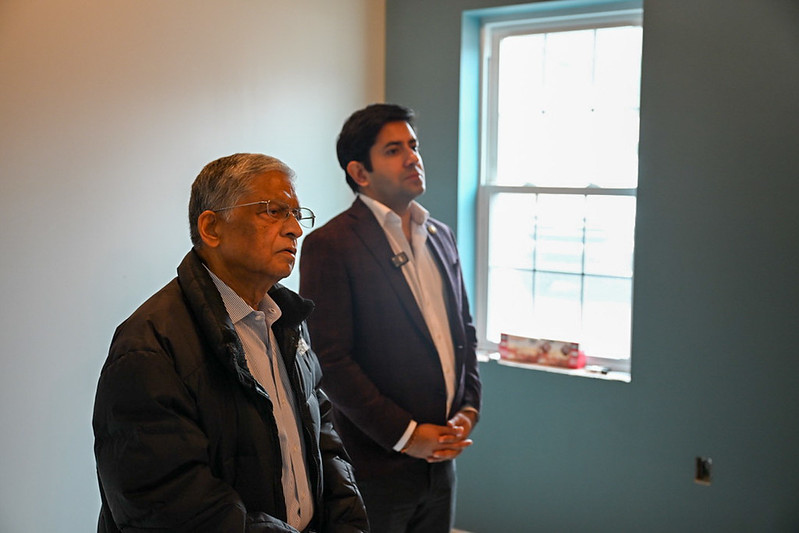
Nand Todi, president of Montgomery County-based Penn Manufacturing Industries, and County Commissioner Neil Makhija at a walk-through of the completed Lansdale shelter.
Winder hopes this example of generosity is just the beginning.
“I come from the private sector, so I believe in public-private partnerships,” said Winder. “We’re home to some of the largest corporations in the southeast area. We know that companies have social responsibility goals. So how do we partner with corporations?”
What can a county government do?
Thisyear, the commissioners want to continue to tackle housing issues.
But county-level politicians do not have large budgets at their command, and unlike their municipal-level counterparts, they do not set zoning policy.
Makhija and Winder wantto push those limits.
For example, the county dispenses infrastructure grants, and Makhija says the rules around that funding could be rewritten to incentivize municipalities to reform their zoning codes, perhaps using model ordinances established by the county.
Such ordinances could, for example, allow more transit-oriented development. Or they could legalize accessory dwelling units — small living spaces such as a garage apartment or in-law suite that can be rented out.
“If you have a grant program and it says these are the requirements, then people are going to prioritize getting those things done,” said Makhija, though, he said, he still has to make the case to his colleagues.
He also noted that county planning staff can help implement new municipality policies.
DiBello is skeptical of the county getting involved in local zoning policy.
“The governing structure in Pennsylvania is that municipalities are autonomous to county and state when it comes to zoning,” said DiBello. “It’s up to the communities.”
The Democrats would also like to find revenue sources to pay for more housing projects without increasing the property tax, which would cut against their goal of affordability.
“There are opportunities for us to advocate to the state legislature, to give counties like ours other means to generate revenue,” said Winder. “It’s not sustainable to continue to burden taxpayers by increasing property taxes, and we can’t fund these programs unless we have the money to do so.”
DiBello is also opposed to creating new taxes (if Harrisburg allows it), and doesn’t want to see more property tax increases either. But he still wants to see proactive housing investments by county government.
These debates will unfold next year as the housing blueprint dominates the commissioners’ agenda.
“We’re the second wealthiest county in Pennsylvania, and people struggling to find housing can be quite invisible in these communities,” said Winder. “We’ve got an embarrassment of riches, but there are people that are struggling and so we’re trying to be on the ground helping to solve these issues.”
It’s the first week in January, which means the gym is packed and the health food section at the grocery store is more picked over than usual, as many of our friends and neighbors vow to start the new year off on a healthier foot.
Around 3 in 10 Americans made New Year’s resolutions in 2024, according to the Pew Research Center. At the top of the resolutions list were aspirations related to diet and exercise, finances, relationships, and hobbies. The percentage of resolution makerswas even higher amongyoung adults (ages 18 to 29), around half of whom committed to dropping, or picking up, a habit when the clock struck Jan. 1.
Here’s how to get started on a New Year’s resolution in Lower Merion. If you haven’t picked a resolution yet, take this as some inspiration to get going.
Try a new workout (for free)
“Exercise more” is often at the top of New Year’s resolution lists. While a walk around the block or a visit to the gym is a reliable way to get back into the swing of things, fitness studios across the Main Line are offering free trials, from Tai Chi to yoga sculpt.
Get your first class free at Pure Barre in Wayne, a workout studio chain that fuses yoga, Pilates, and ballet to strengthen and tone. Try your hand at Tai Chi at the Bryn Mawr Presbyterian Church on Tuesdays at 10:30 a.m. or on Zoom. Your first Tai Chi class is free. BodyX Kitchen & Fitness Studio, a boutique studio in Bryn Mawr with group fitness classes, personal training, and healthy cooking classes, offers a free week of fitness classes to all new participants. If you’re interested in CrossFit, Ardmore’s CrossFit Main Line offers a free trial for new participants. The gym also has locations in Wayne and Plymouth Meeting. And if you want something more personalized, Train and Nourish, a women’s-only personal training studio in Ardmore, offers free consults for new clients.
As John Romani, owner of Sales by Helen, a Philly-based estate sale giant, told The Inquirer early last year, the Main Line abounds with great secondhand shops. Romani recommends Bryn Mawr Hospital Thrift, a top spot for furniture, high-end clothing, art, and collectibles, and Ardmore’s Pennywise Thrift Shop, which has a rotating inventory, low prices, and some luxury brands. Romani also has high praise for thrift stores in Wayne and Berwyn, including the Berwyn Goodwill and Neighborhood League in Wayne.
Romani’s tips? Use your phone to look up items, seek out high quality, and be assertive.
The Main Line Art Center in Haverford offers art classes and workshops for adults. Take tapestry weaving or portrait painting, learn to make jewelry, or try your hand at pottery.
Looking for a book club? Ardmore’s Mavey Books has book clubs for adults and teens. The Lower Merion Library System also hosts book clubs across its locations, including in Ardmore, Belmont Hills, and Penn Wynne. Ludington Library has a book club dedicated specifically to LGBTQ+ stories.
The Lower Merion Library System also hosts board game cafés, family puzzle nights, film discussions, and art events (you can see their full calendar here).
Declutter your house by donating
After all holiday presents are unwrapped and the last Christmas cookies are eaten, it’s customary to look around and think: “How did I accumulate so much stuff?“ If you’re looking to declutter, nonprofits in and around Lower Merion are accepting gently used clothing, furniture, kitchen tools, and other items.
Our Closet In Your Neighborhood (OCIYN), a program of Jewish Family and Children’s Service of Greater Philadelphia, accepts casual clothing and shoes for men, women, and children of all sizes. OCIYN is a free mobile program that provides Philly-area residents with food, clothing, and access to services and benefits. Those looking to donate clothes to OCIYN can contact Skylar Fox, program manager, at 267-273-5537 or sfox@jfcsphilly.org.
Cradles to Crayons is a national nonprofit with a Philadelphia-area presence that provides clothing, shoes, books, school supplies, and hygiene items to kids in need. The nonprofit has a small collection site at Church of the Redeemer in Bryn Mawr and a larger site at the Haverford YMCA. Cradles to Crayons accepts new youth socks and underwear, new arts and school supplies, new hygiene items, unopened diapers, pull-ups, and diaper wipes, and new or gently used clothes and shoes in youth and adult sizes. See the full list of collection sites here and donation guidelines here.
This suburban content is produced with support from the Leslie Miller and Richard Worley Foundation and The Lenfest Institute for Journalism. Editorial content is created independently of the project donors. Gifts to support The Inquirer’s high-impact journalism can be made at inquirer.com/donate. A list of Lenfest Institute donors can be found at lenfestinstitute.org/supporters.
A popular gluten-free bakery is coming to the Main Line.
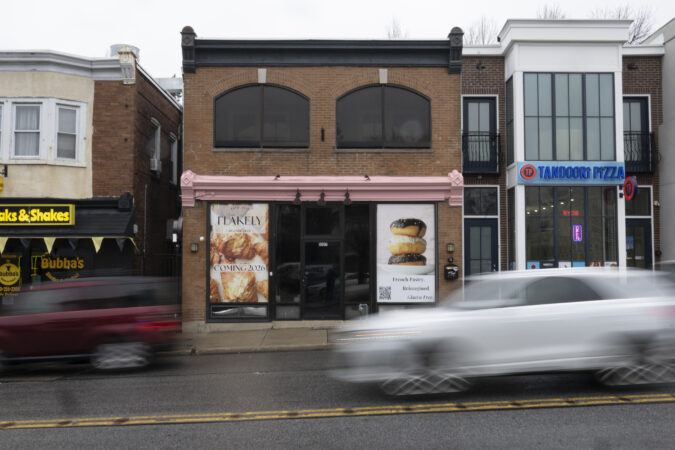
Flakely is moving from behind the bright pink door at 220 Krams Ave. in Manayunk to a Bryn Mawr storefront in early February, said owner Lila Colello. The new takeout-only bakery will replace a hookah lounge at 1007 W. Lancaster Ave.
“We’ve really outgrown our space,” Colello told The Inquirer. Manayunk “wasn’t ever meant to be for retail.”
A trained pastry chef who worked for the Ritz Carlton and Wolfgang Puck Catering, Colello was afraid she’d have to give up the best things in life — bread and her career — when she was diagnosed in 2010 with celiac disease, an inflammatory autoimmune and intestinal disorder triggered by eating gluten.
Instead, Colello spent the next seven years finding ways to get around gluten, a protein found in grains like wheat, rye, and barley (and thus most breads, bagels, and pastries). She perfected kettle-boiled bagels and pastry lamination before starting Flakely in 2017 as a wholesaler.
Colello moved into the commercial kitchen at Krams Avenue in 2021, where customers have spent the last four years picking up buttery chocolate croissants, brown sugar morning buns, and crusty-yet-chewy bagels from a takeout window in an industrial parking lot. Inquirer restaurant critic Craig LaBan has called Colello’s bagels “the best he’s tasted outside of New York,” and in 2024, Flakely was voted one of the best gluten-free bakeries in the United States by USA Today.
Lila Colello, owner and head baker at Flakely, helped patent a way to laminate gluten free dough for croissants.
Flakely’s industrial Manayunk location has required some concessions, Colello said: The majority of their goodies are par-baked and frozen by Colello and three full-time employees for customers to take and bake at home. Otherwise, Colello explained, the lack of steady foot traffic would lead to lots of wasted product.
In Bryn Mawr, Flakely will be a fully functional takeout bakery with a pastry case full of fresh-baked goods, from full-sized baguettes and browned butter chocolate chip cookies to danishes and Colello’s signature sweet-and-savory croissants. A freezer will also include packs of Flakely’s take-and-bake doughs, bagels, and eventually, custom cake orders.
Once she’s settled in, Colello said, she hopes to run gluten-free baking classes and pop-up dinners out of the storefront — offerings (besides the ingredients) that she hopes will differentiate her from other bakeries in the area.
“My vision is for this to be a magical space where people can come in and leave with a fresh croissant, which people can’t really do” when they’re gluten-free, said Colello, who lives in Havertown. “We offer our customers things they miss. That’s kind of our thing.”
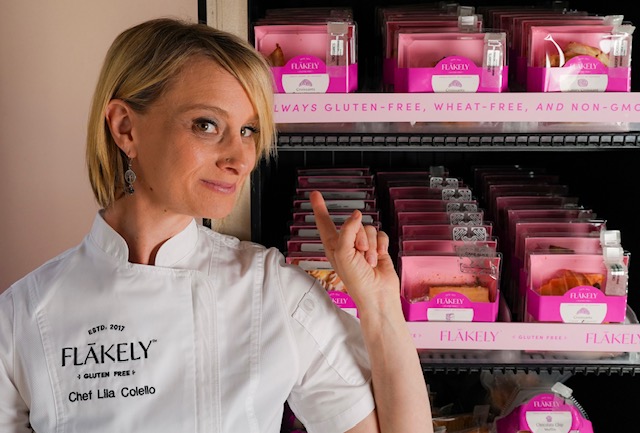
Flakely owner Lila Colello poses in front of one of Flakely’s pink gluten free pastry ATMs, which vend take-and-bake goods at four locations in the Philly area.
What about the pastry ATMs?
The permanent storefront does not mean Flakely’s signature pink pastry ATMs will disappear, said Colello. But they will move.
Colello installed Flakely’s first pastry vending machine inside South Philly’s now-shuttered Salt & Vinegar. With the tap or swipe of a credit card, the smart freezer would open to let customers choose their own take-and-bake pack of croissants, pop-tarts, muffins, or danishes. Using it felt like a sweet glimpse into the future.
Flakely currently operates pastry ATMs inside Collingswood grocer Haddon Culinary, the Weaver’s Way Co-op in Ambler, Ardmore smoke shop Free Will Collective, and Irv’s Ice Cream in South Philly, where enterprising customers top their pastries with scoops fresh out the freezer.
Irv’s ATM will make the move to Reap Wellness in Fishtown on Jan. 5 when the ice cream shop closes for the season, Colello said. And come February, the smoke shop’s ATM will transition to Lucky’s Trading Co., a food hall at 5154 Ridge Ave. in Roxborough. The hope, Colello said, is to space the locations out enough so she’s not competing with herself.
“We’re finally in the middle of where everything is,” Colello said. “And that’s kind of the goal.”
Flakely, 1007 W. Lancaster Ave., Bryn Mawr, 484-450-6576. Hours: 9 a.m. to 4 p.m. Tuesday to Saturday.
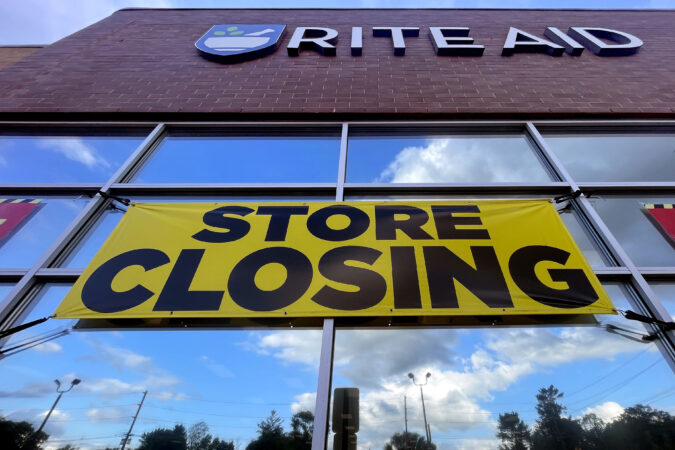
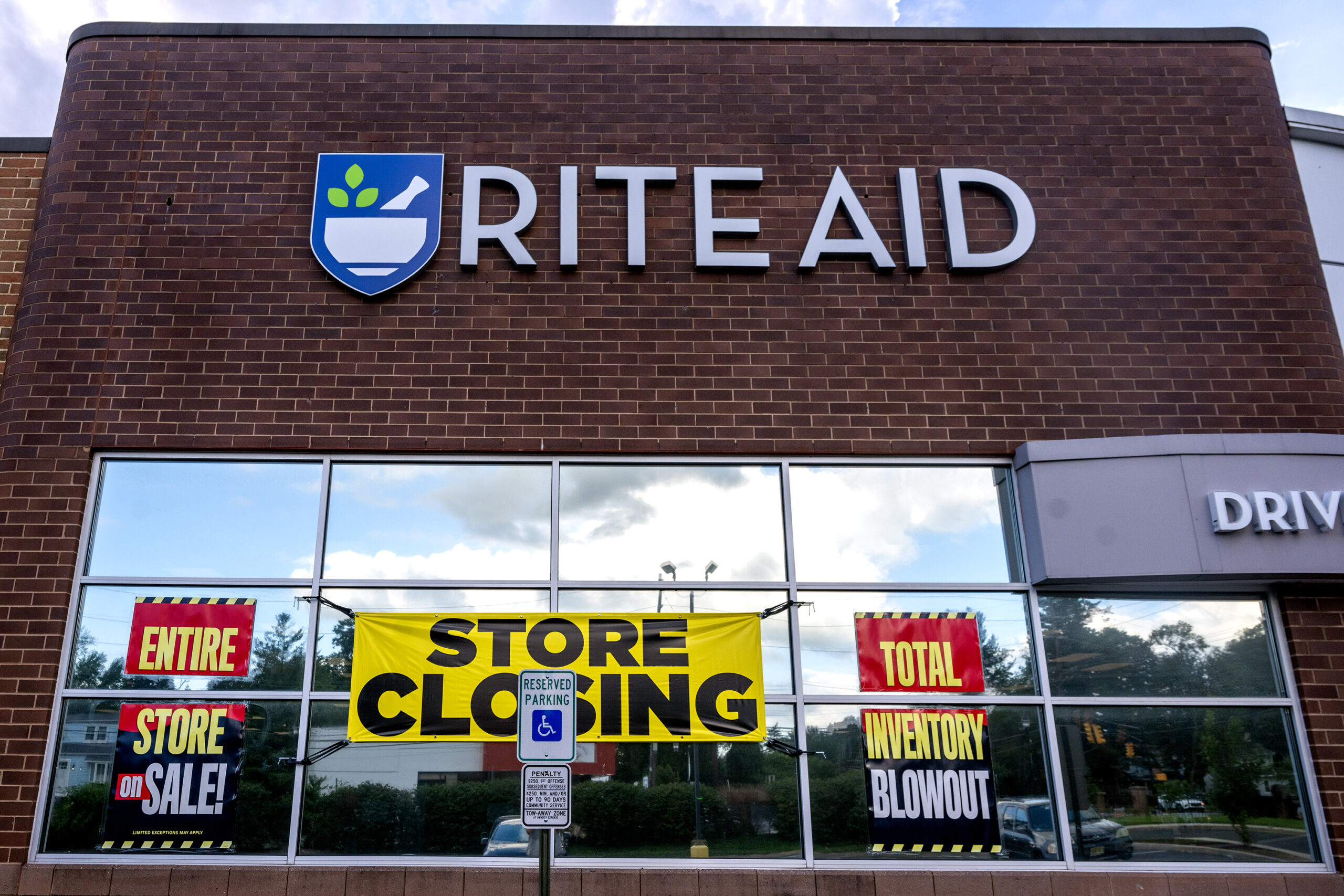
In filing for bankruptcy again, Rite Aid announced that it would be closing or selling all locations. At the time, it had about 1,000 stores nationwide, including about 100 in the Philadelphia region.
The closures further exacerbate pharmacy access issues, especially for lower-income Philadelphians who don’t have cars. People in more isolated rural areas are also impacted: The 46,000 residents of Perry County, west of Harrisburg, lost half their pharmacies when their three Rite Aids closed.
Adieu to Iron Hill Brewery
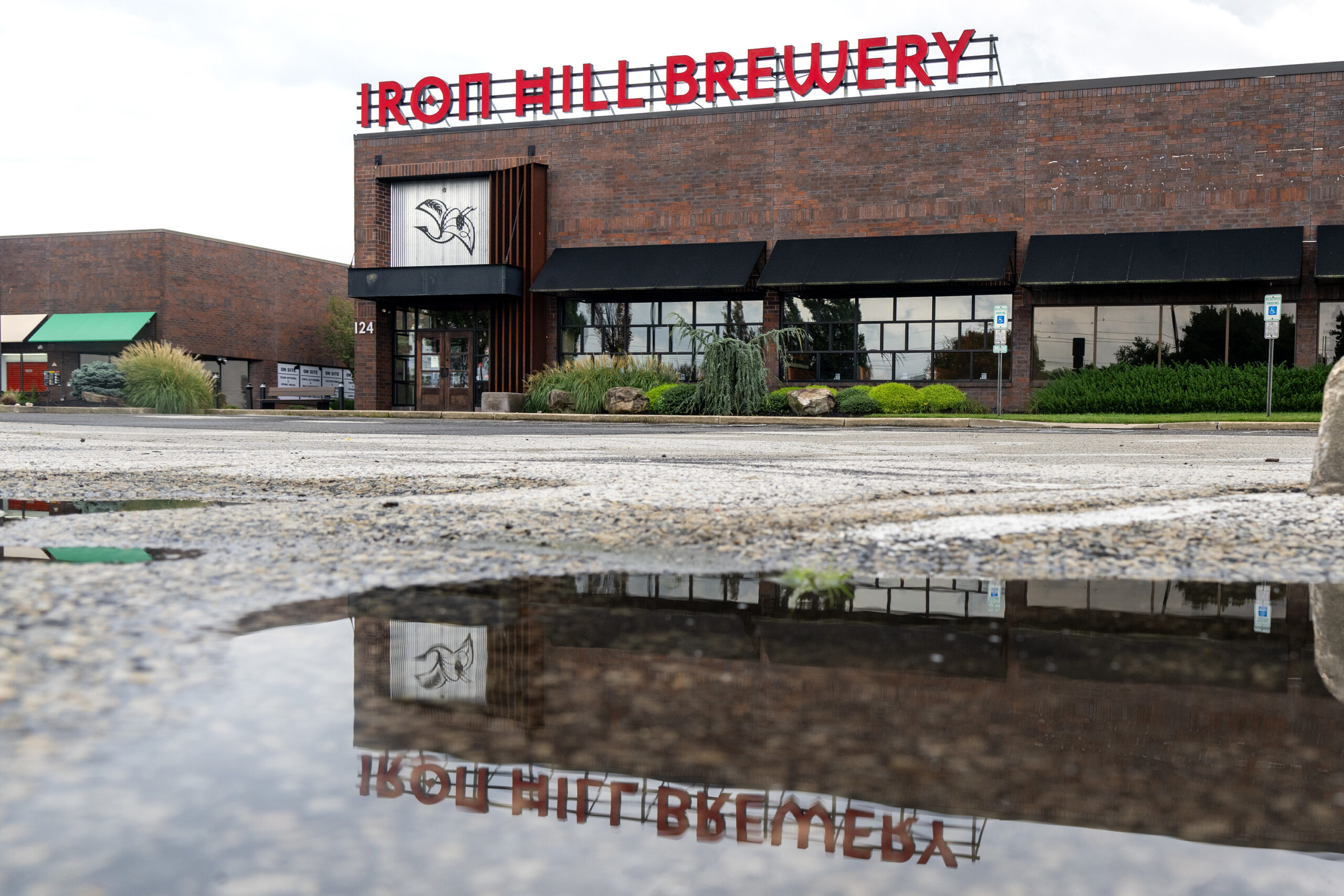
A view from the outside looking in of a shuttered Iron Hill Brewery in West Chester in October.
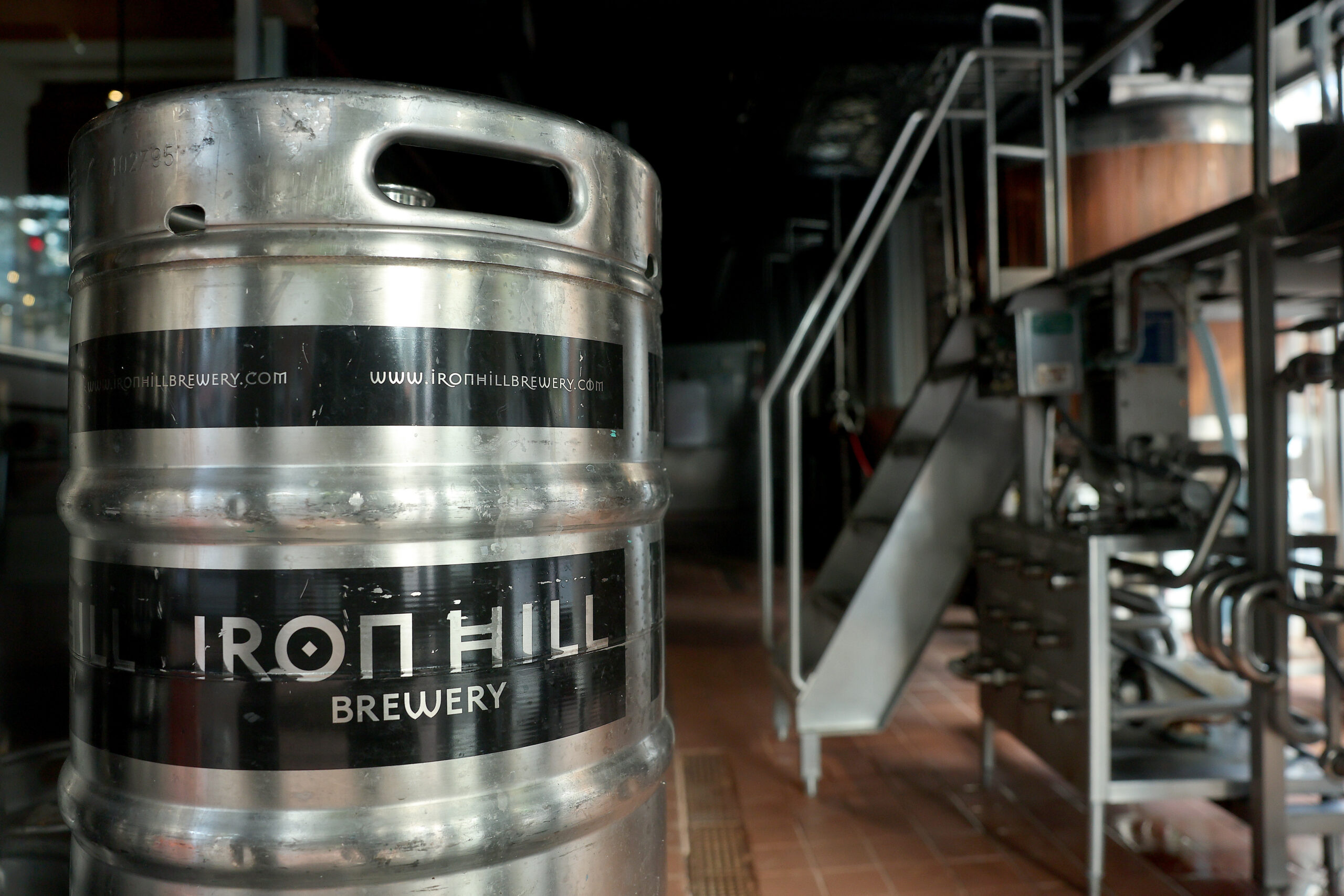
On a Thursday morning in late September, the nearly 30-year-old company, considered by many to be a pioneer of the local craft-brewing scene, announced that its brewpubs had closed their doors for the last time.
The closed Iron Hill Brewery in Maple Shade in September.
Bankruptcy filings shed more light on the Exton-based company’s financial straits: Iron Hill owed more than $20 million to creditors and had about $125,000 in the bank.
In November, a bankruptcy judge approved an offer by Jeff Crivello, the former CEO of Famous Dave’s BBQ, to resurrect 10 Iron Hills, including in Center City and West Chester, pending landlord negotiations. The restaurants could be reopened as Iron Hills or as other brands.
Crivello said he plans to reopen the Rehoboth Beach brewpub — as well as the Iron Hill restaurants in Columbia and Greenville, S.C. — as locations of Virginia-based Three Notch’d Brewing Co.
The fates of the other ex-Iron Hills will be determined in the bankruptcy process. Brewing equipment, furniture, and other items from the closed restaurants were auctioned off earlier this month.
Mainstays say goodbye in the Philly burbs
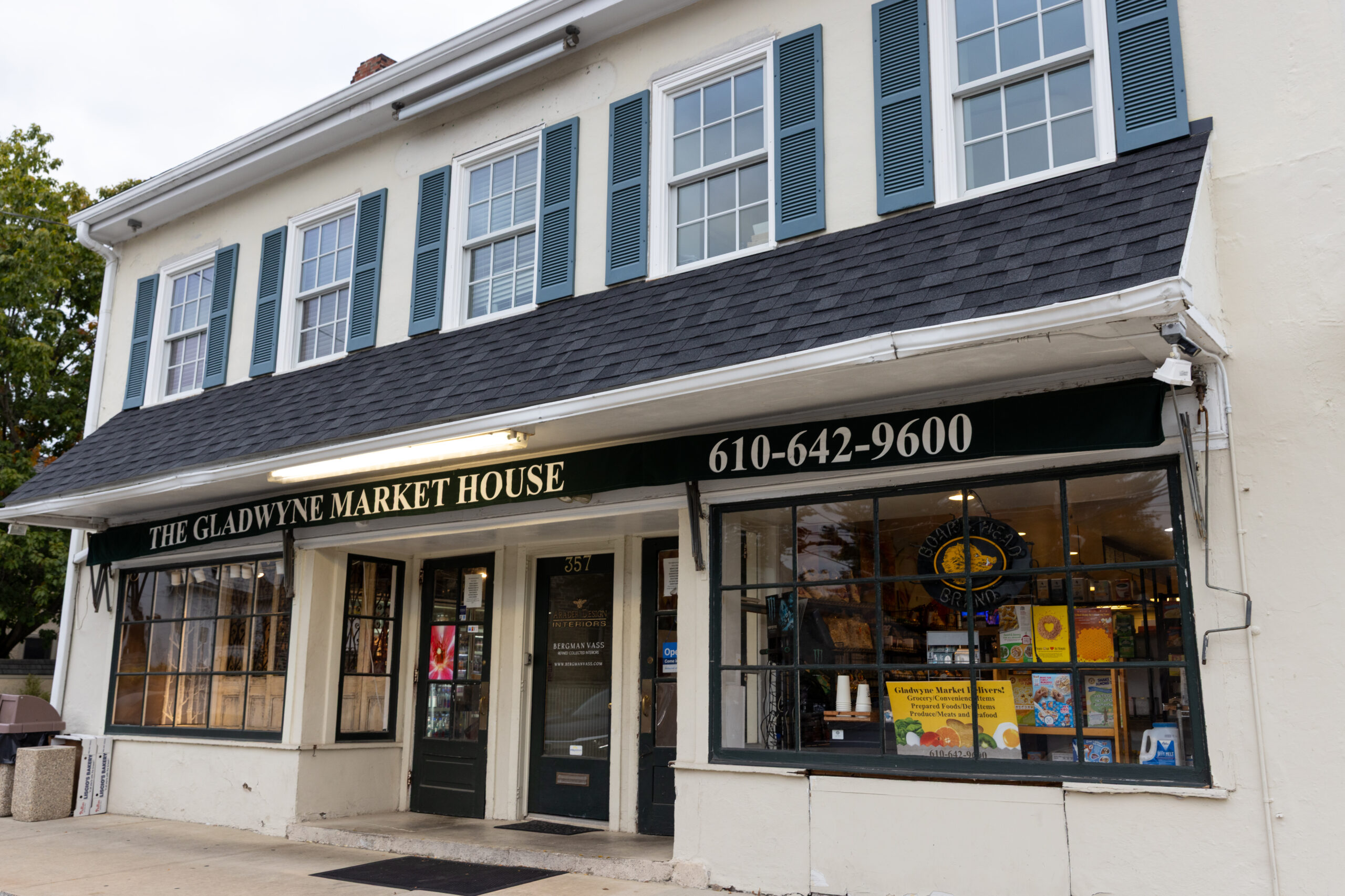
Gladwyne Market as pictured in October.
Local chains weren’t the only business casualties of 2025.
In South Jersey, the Bistro at Cherry Hill, a beloved restaurant that operated in a 1,200-square-foot mall kiosk for 27 years, closed abruptly in July.
At the time, the restaurant’s president, Andy Cosenza, said the closure was due to a communication “breakdown” that had resulted in his voluntary Chapter 11 bankruptcy petition being converted to a Chapter 7, or liquidation, without his knowledge. Since then, however, Cosenza has been indicted on charges of tax fraud. The Bistro has remained closed.
Township commissioners recently passed the 2026 budget, which includes a tax hike. Here’s what you need to know. And with the new year just over a week away, we’ve rounded up nearly a dozen ways to celebrate 2026 in and around town.
This is our final Inquirer Lower Merion newsletter of 2025, but we’ll be back in your inboxes on Jan. 8. Thanks for reading and happy new year!
Lower Merion officials recently approved a tax hike for 2026.
Lower Merion residents can expect to see their property taxes go up in 2026 after the township’s board of commissioners approved an 8% increase in the upcoming budget.
Commissioners said the increase was necessary following 13 years of stagnant tax revenue from 2011 to 2024, when there were no increases. Property taxes went up 6.5% in 2025 and commissioners acknowledged next year’s increase comes with some “sticker shock,” The Inquirer’s Denali Sagner reports.
Still, it’s not as high as an initially proposed 9.5% hike. The township taxes will come on top of a 4% tax increase recently passed by Montgomery County officials.
Ardmore cocktail bar Izzy’s will have a special menu and champagne toast to ring in the new year.
The countdown to 2026 is on and there’s no shortage of ways to celebrate the end of one year and the start of another.
We’ve rounded up 11 celebrations in and around Lower Merion, including noontime events for kids, specialty and buffet dinners, plus concerts for kids and adults.
Trash and recycling dates will have altered schedules due to Christmas and New Year’s Day. See how your household is impacted here. The township also released its 2026 collection schedule, which you can see here.
Narberth passed its 2026 budget last week, which includes a higher earned income tax. The EIT will jump from 0.75% this year to 1% next year and is aimed at improving the borough’s capital fund. The new budget also adjusts solid waste fees so that condos and apartments pay a flat $250 per living unit. Sewer fees are also set to rise from $5.25 to $6 per 1,000 gallons. See the full budget here.
Narberth council has also voted to make permanent the no-parking zone pilot at the intersection of Price and Essex Avenues. Signage is expected to be installed in January and February, with painting set for spring.
Bryn Mawr Hospital is among the quietest hospitals in the region at night, according to newly released federal data. Patients from October 2023 to September 2024 reported Bryn Mawr being “always quiet” overnight 61% of the time, “usually quiet” 29% of the time, and “sometimes or never quiet” 10% of the time. See how Bryn Mawr compares to other regional hospitals.
A Bala Cynwyd dad launched a program in 2024 after seeing demand for Cub Scout activities on non-Sabbath days. Philadelphia Jewish Exponent recently profiled Michael Kopinsky about his inspiration and how the program quickly gained popularity among Orthodox and Sabbath-observant Jewish families.
🏫 Schools Briefing
Winter break is officially here, with students and staff returning Jan. 5. The school district’s offices will be closed Dec. 24-26 and Jan. 1-2 during the break. Lower Merion High School’s pool will be closed those same days, as well as on Dec. 31.
Lower Merion High School skating duo Justin and Suri Lue took home third place in the regional level of the U.S. Figure Skating Championships in Nevada last month, and sixth place nationally in the intermediate division.
Johnny’s Pizza in Bryn Mawr has some of the best takeout pizza in the Philadelphia suburbs, according to The Keystone. The outlet noted that “once you start eating it, it’s going to be hard to stop.”
🎳 Things to Do
🎤 Start Making Sense: Hear the seven-piece Talking Heads tribute band perform. ⏰ Friday, Dec. 26, 8 p.m. 💵 $33.38 📍 Ardmore Music Hall
🐑 Meet the Menagerie: Meet some of Harriton House’s farmstead animals. There will also be hot chocolate and s’mores available for purchase. ⏰ Tuesday, Dec. 30, 11 a.m.-3 p.m. 💵 Free 📍 Harriton House
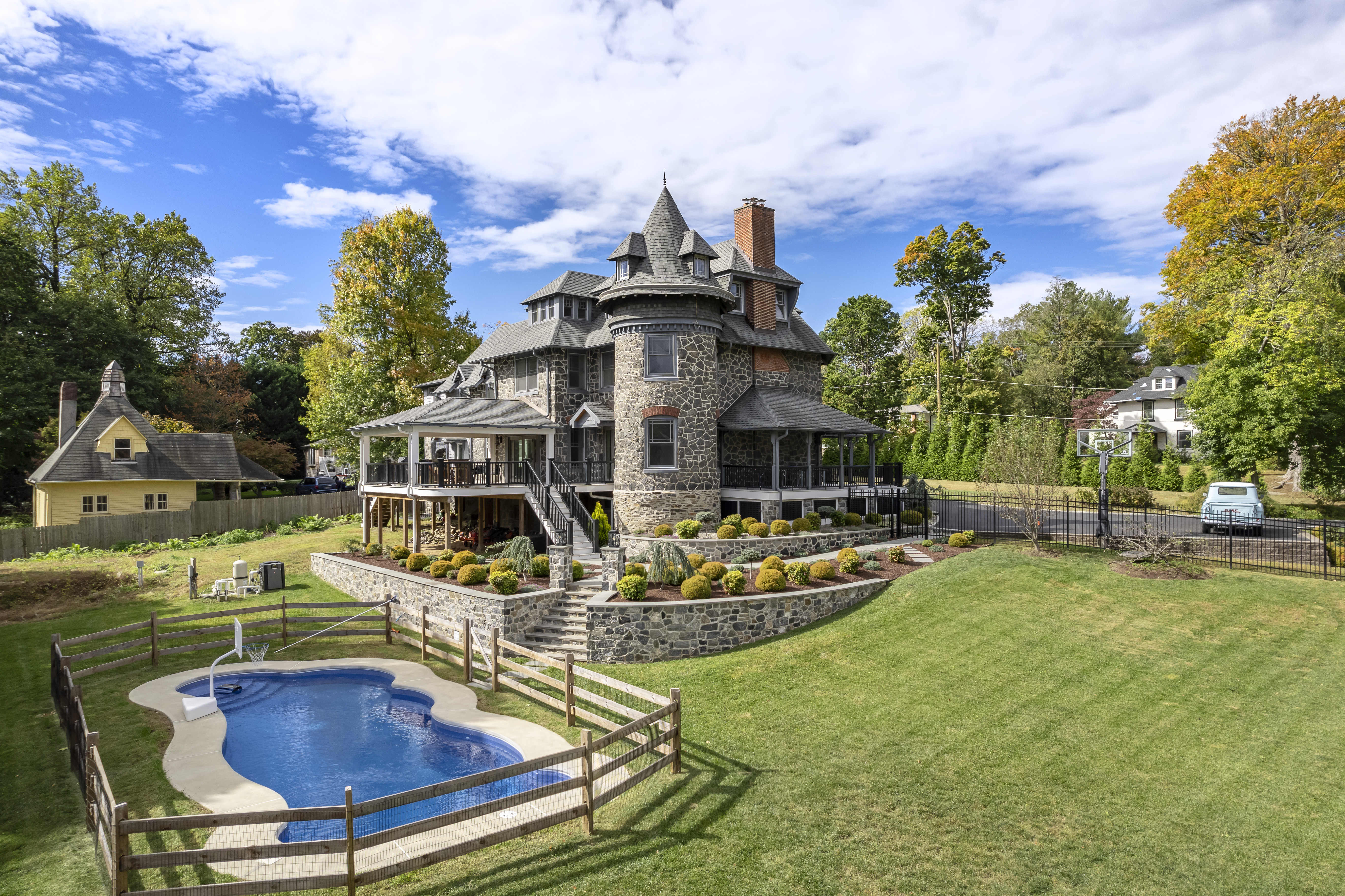
The home spans nearly 6,700 square feet and has a distinctive turret.
This Merion Station property, built in 1888, is reminiscent of a castle. The home has a modern interior while paying homage to its roots by way of exposed stone walls, fireplaces, millwork, and stained glass windows. Some of its features include a curved tower, a formal dining room, and an eat-in kitchen with a large island. It also has seven bedrooms spread across the second and third floors. Outside, there’s an in-ground saltwater pool, a basketball court, multiple covered sitting areas, and a deck with a built-in kitchen.
By submitting your written, visual, and/or audio contributions, you agree to The Inquirer’s Terms of Use, including the grant of rights in Section 10.
This suburban content is produced with support from the Leslie Miller and Richard Worley Foundation and The Lenfest Institute for Journalism. Editorial content is created independently of the project donors. Gifts to support The Inquirer’s high-impact journalism can be made at inquirer.com/donate. A list of Lenfest Institute donors can be found at lenfestinstitute.org/supporters.
The Price Point compares homes listed for similar sale prices across the region to help readers set expectations about house hunting.
Looking for a new home for the new year? You’ve got options if you have the region’s typical homebuying budget.
Across the Philadelphia metropolitan area, homes sold for a median of $390,000 last month, according to the multiple listing service Bright MLS. That typical sale price is up more than 3% from last year.
Here’s what a home shopper could get with a budget like this in three different neighborhoods in the region.
Lower Merion condo in star location
Wolverton & Co., a Montgomery County-based real estate company, sells and manages a lot of condos in the area of West Montgomery Avenue in the Haverford section of Lower Merion Township.
“I call that stretch the golden mile of Haverford as it relates to condominiums,” said Will Wolverton, owner and broker of record at Wolverton & Co. “It’s a very desirable area.”
There are restaurants and national and local stores, including at the nearby Haverford Square and Suburban Square shopping centers. Condo residents can walk to SEPTA’s Haverford station to catch Regional Rail trains. The Merion Cricket Club offers sports facilities and hosts dinners and galas.
One condo currently for sale in the area is a two-bedroom, two-bathroom unit at Haverford Hunt Club, a building with 16 units on four floors. Condos there include both one-bedroom and two-bedroom units.
The building is about 45 years old but has been “thoughtfully updated” in both looks and critical infrastructure, such as the elevator and the roof, Wolverton said.
The condo for sale gets a lot of natural light, he said. And it’s on the top floor, so buyers won’t have upstairs neighbors. It also has a private balcony and a reserved space in the property’s parking lot.
The last several serious buyers have been most interested in the neighborhood, Wolverton said.
“It’s a very good property,” he said, “and a great location.”
This home in the Mayfair neighborhood of Northeast Philadelphia stands out in a few ways, said listing agent Xiao Zhen Zhao, who works throughout this section of the city, as well as Fishtown and Northern Liberties.
The open kitchen is “very unique” for the area and includes bar seating, said Zhao, an agent with Legacy Landmark Realty.
The primary bedroom has a private bathroom, which isn’t common in older homes in Northeast Philadelphia, she said. A lot of houses have only one full bathroom, she said. One of the bathrooms features a skylight and pink tiles on the walls.
And the home is “a bigger twin,” she said. It spans 1,868 square feet.
The home has a backyard and a walk-out finished basement, which has a half bathroom. It also has a garage and driveway.
The twin is in an area of the city where houses are more affordable and parking is easy. It’s within walking distance of schools. It’s minutes from stores and restaurants along Cottman Avenue, and it’s right off Pennypack Park.
Potential buyers have liked the layout of the home and also the look of it, Zhao said.
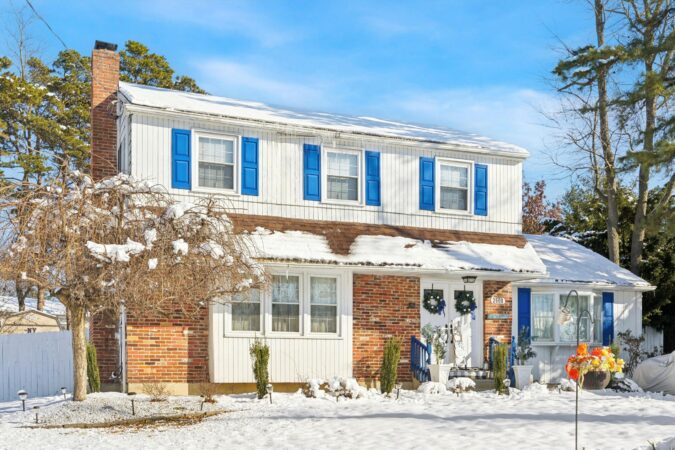
Potential buyers touring this Colonial in Camden County have fallen for its charm, said real estate agent Evangeline Gambardella. “Because it is a very charming space.”
The living room features a brick fireplace and a large window that lets in natural light and frames views of the front yard.
The layout is more open than in a traditional Colonial, especially in this area of Gloucester Township, said Gambardella, a real estate agent with the Mike McCann Team, which is an affiliate of Keller Williams.
The owners have recently updated the property. The home has new landscaping, a roof that is about 4 years old, a new fence, and a new heating, cooling, and ventilation system.
“It presents a really lovely value for its price point,” she said.
The home’s kitchen includes an island with seating. And a door in the formal dining room opens to the deck, which has a retractable awning.
Home shoppers who have visited the property like its spacious backyard and its location. It is minutes from the Gloucester Premium Outlets and the Deptford Mall, has easy access to major highways, and is close to parks and restaurants.
The home’s unfinished basement also is a “huge selling point for a lot of people” who want to decide what to do with the space, Gambardella said.
Lower Merion residents will see an 8% increase on their property tax bill in 2026, a move commissioners say is a necessary remedy to the “mistake” of keeping tax rates stagnant for over a decade.
The township board of commissioners on Dec. 17 approved an 8% property tax increase for next year. The increase will bring the property tax millage rate from 4.462 mills to 4.819 mills. The median single-family homeowner in Lower Merion will pay around $1,386 in real estate taxes, a $103 increase from 2025.
The 8% tax increase approved by commissioners is lower than the 9.5% increase proposed by staff and supported by board President Todd Sinai. The board landed on the 8% hike after a protracted discussion about how much of an increase residents could, and should, shoulder in 2026.
Commissioners acknowledged the “sticker shock” of the tax hike but said years of stagnant tax revenue had put the township in an impossible position. Real estate taxes did not increase for 13 consecutive years in Lower Merion, from 2011 to 2024. The township voted to raise taxes by 6.5% for 2025, the first increase in over a decade.
“Those years of no tax increase have proven to be a mistake, given that each year we were presented with a structural deficit and a looming cliff,” Commissioner Ray Courtney said. “By holding out on increases as long as we did, we have painted ourselves into a corner.”
Under the proposed 9.5% tax hike,Lower Merion projected $83.8 million in general fund expenditures in 2026 against arevenue of $79.3 million. With the 8% tax hike passed by the board, revenue will be lower and the township will have to lean more heavily on its general fund reserves to cover the deficit.
Around half of Lower Merion’s revenue comes from real estate taxes, yet township residents continue to pay taxes calculated on property values established in 1998, the last time Montgomery County conducted a property reassessment.
The decades-old property values have kept tax revenue low, relative to the high market costs of a home in Lower Merion. The median sale price for a home in Lower Merion was $803,500 in 2024, according to data from Montgomery County.
Notably, only 10% of Lower Merion residents’ property taxes goes to the township. Around 12% goes to Montgomery County and 78% goes to the school district.
Montgomery County will be increasing taxes by 4% in 2026.
In a Nov. 7 report addressed to the board of commissioners, Township Manager Ernie McNeely wrote that, while Lower Merion has weathered the post-pandemic economy with relative success, its general fund has run a deficit multiple times since 2020.
McNeely’s report points to three major burdens on Lower Merion’s budget in 2026: healthcare premiums, staffing costs, and the Solid Waste Fund.
The township is expected to see a 20% increase in healthcare premium costs in 2026. McNeely’s report said the increase is due, in part, to the costs associated with nondiabetic weight-loss drugs and other “specialty pharmaceuticals.”
Lower Merion Township’s employment vacancy rate is also expected to fall in 2026. While a lower vacancy rate is good for departments needing to fill positions, each percentage-point improvement in the employment vacancy rate costs the township $520,000. On top of the falling vacancy rate, over 35% of township staff are set to receive a salary boost in 2026.
And the town’s Solid Waste Fund is in dire straits. Even with the 5% solid waste fee rate hike planned for 2026, the fund is set to face a $700,000 deficit. Rising costs for disposal, equipment, and personnel, as well as a declining regional market of mills able to purchase paper recycling material, were identified as the main reasons for cost increases.
The major challenges outlined by McNeely are set to the backdrop of persistent inflation, which is putting cost pressures on local governments.
This suburban content is produced with support from the Leslie Miller and Richard Worley Foundation and The Lenfest Institute for Journalism. Editorial content is created independently of the project donors. Gifts to support The Inquirer’s high-impact journalism can be made at inquirer.com/donate. A list of Lenfest Institute donors can be found at lenfestinstitute.org/supporters.