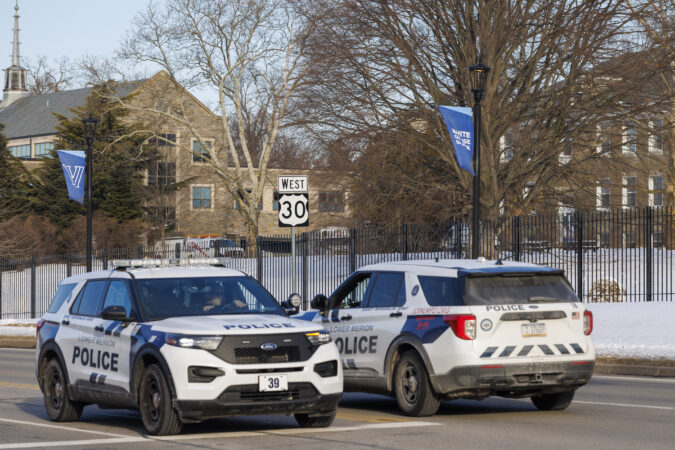
A Norristown police sergeant who struck a naked, unarmed man with his patrol SUV last week has been charged with assault, official oppression, and related crimes, prosecutors said Tuesday.
Sgt. Daniel DeOrzio, 52, used unnecessary force in the Feb. 4 incident, Montgomery County District Attorney Kevin Steele said. He was placed on administrative leave after the encounter.
Prosecutors said officers had been dispatched to the intersection of West Airy and Stanbridge Streets after reports that the naked man was yelling and damaging cars in the intersection. DeOrzio was among several officers who responded and, according to investigators, he positioned his police SUV behind a gray pickup truck blocking the roadway.
After ordering the truck removed, authorities said, DeOrzio accelerated and struck the man, who was standing in the intersection with his hands on his hips.
The impact sent the man airborne before he slammed onto the pavement, prosecutors said. He was taken to Main Line Health Paoli Hospital and released two days later.
Investigators concluded that DeOrzio, the highest-ranking officer at the scene, used unnecessary force and failed to attempt basic de-escalation tactics, including verbal commands, before resorting to violence, the district attorney said.
“This was not a necessary use of deadly force in this response incident,” Steele said in a statement.
The incident drew criticism at a public meeting last week, where Norristown Police Chief Mike Trail fielded questions from residents upset over the officer’s actions. Trail said he would like to form a mental health co-responder program that would pair officers with mental health experts to de-escalate future situations.
“People experiencing mental health behavioral episodes are more likely to … be subject to use of force by responding law enforcement officers because they lack the tools and the sophisticated training necessary to de-escalate,” he said.
DeOrzio turned himself in Tuesday morning and was arraigned. District Judge Cathleen Kelly Rebar set his bail at $100,000. DeOrzio could not be immediately reached for comment.
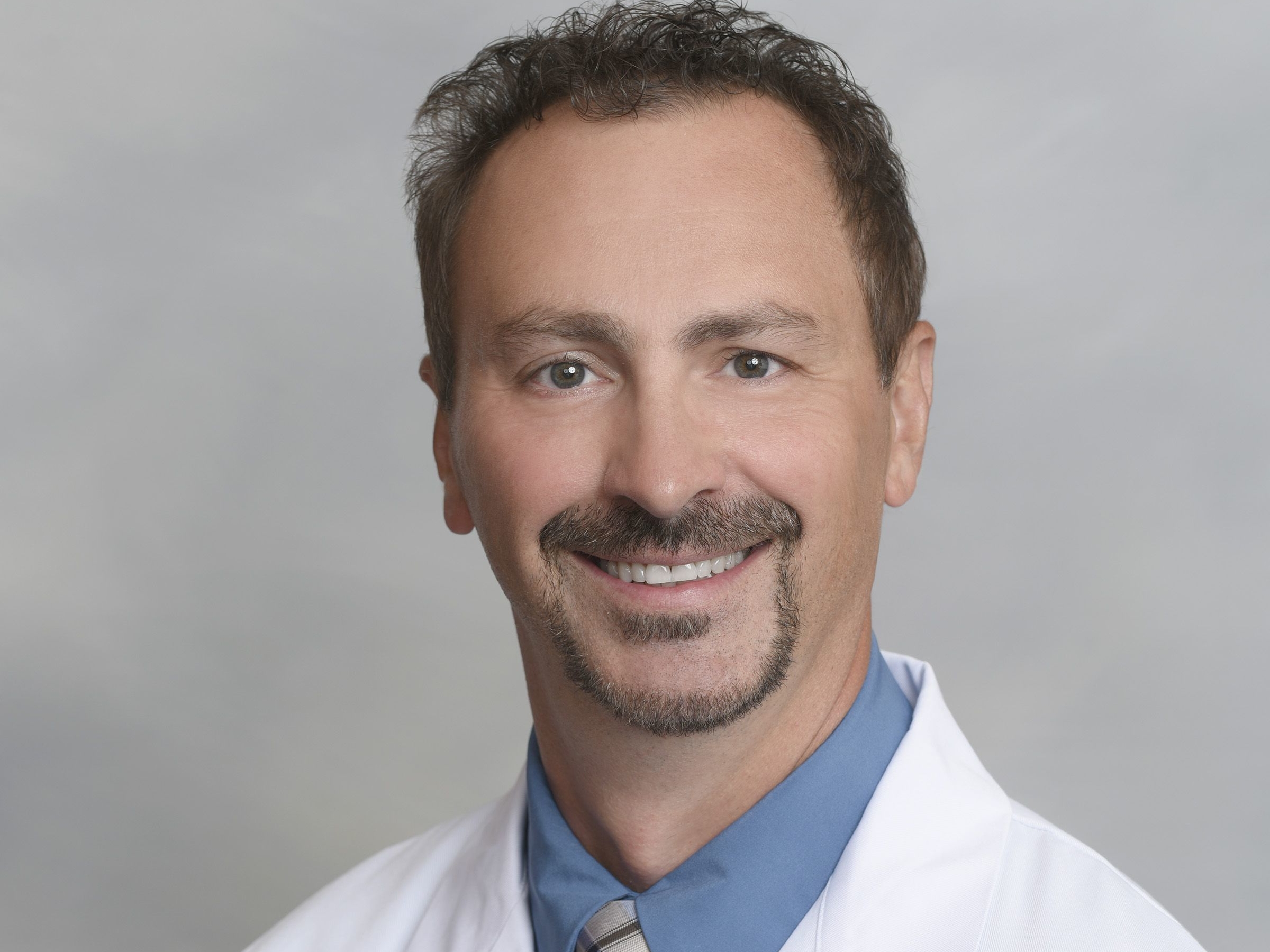
At Roxborough Memorial Hospital in Philadelphia, surgeon Piotr Krecioch has his hands full launching a program offering surgical interventions to treat obesity.
One in three Philadelphians are living with obesity, putting them at higher risk of chronic conditions like diabetes and heart disease, but these days fewer are seeking the bariatric surgical procedures long considered a leading medical treatment for the condition.
“I’m trying to start a bariatric program at probably the worst possible time you can ever imagine because everybody’s losing patients, and I don’t even have a patient to begin with,” Krecioch said.
Tower Health’s Reading Hospital recently closed its bariatric surgery program, and other local health systems have seen declines in weight-loss operations approach 50%.
Independence Blue Cross, the Philadelphia region’s largest insurer, said the number of bariatric surgeries it paid for dropped by half in the five years ended June 30.
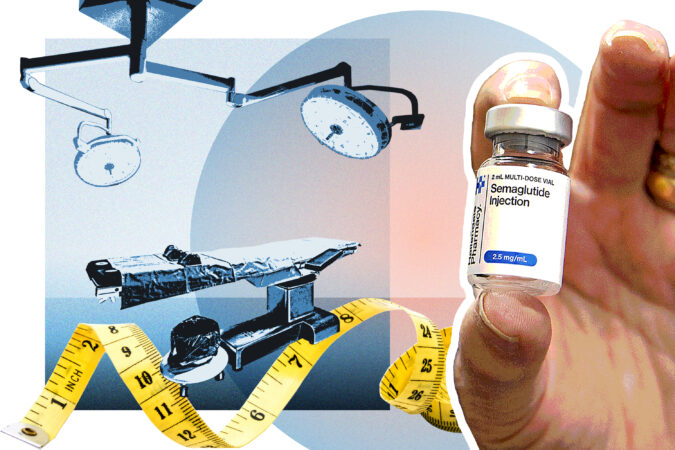
Those shifts in the bariatric surgery landscape have followed the meteoric national rise in the use of GLP-1s and related drugs for weight loss.
So far, the drugs havebenefited patients by allowing them to avoid an invasive surgery.With bariatric surgery, people lose weight because the procedures restrict the amount of food a person can eat. Drugs in a class known asGLP-1s make people feel full longer.
For hospitals, the upheaval in treatment options cuts into a profitable business line and adds to the financial pressure health systems have been experiencing since the pandemic.
Despite the ever-increasing popularity of GLP-1s for weight loss like Novo Nordisk’s Ozempic and Wegovy and Eli Lilly’s Mounjaro and Zepbound, it’s too soon to write off bariatric surgery as an option, some doctors say.
Insurers are imposing limits on coverage because of the long-term cost of the drugs compared to surgery, and doctors are watching for side effects that may emerge as more people take the drugs for longer periods of time.
It’s not the first time a new technology has reduced surgical volumes.
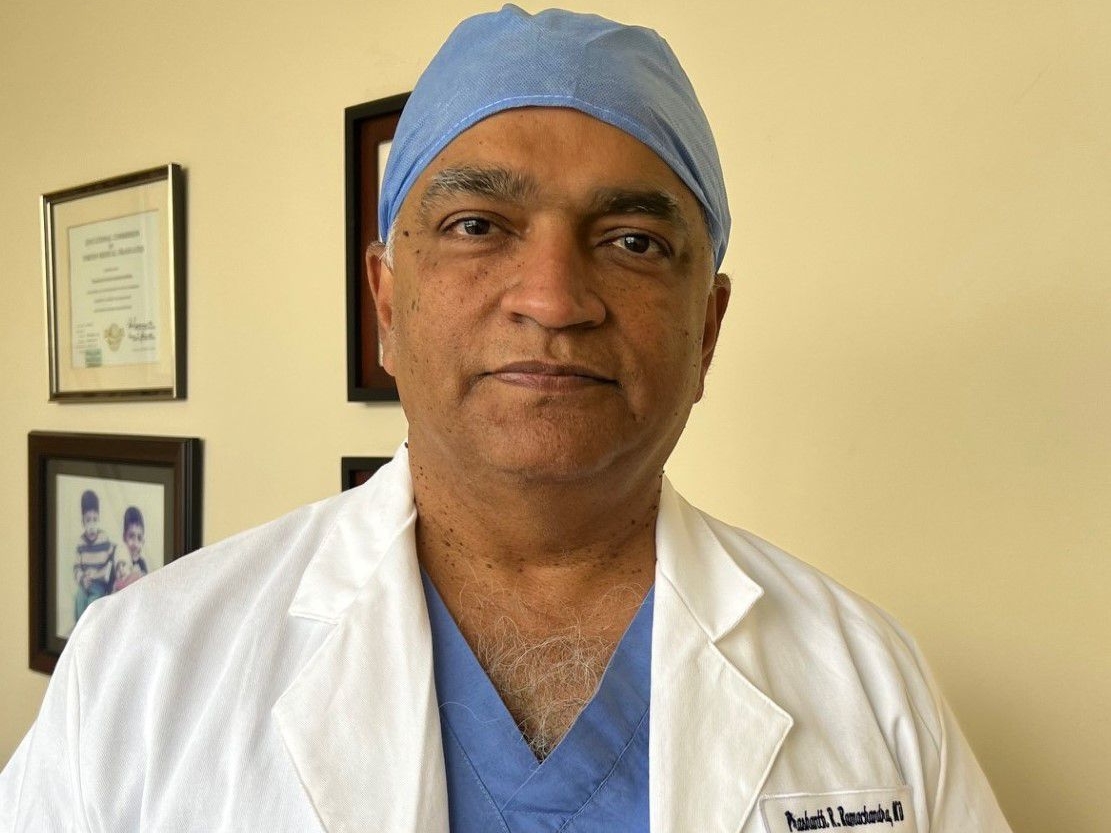
Whenever a less-invasive treatment has come along, “surgical volumes always have taken a beating,” said Prashanth R. Ramachandra, a bariatric and general surgeon at Trinity Health Mid-Atlantic’s Mercy Fitzgerald Hospital. Declines in peptic ulcer and open heart surgeries are past examples of the phenomenon, he said.
Such industrywide moves away from profitable procedures can create financial challenges for individual clinics or independent hospitals, said Daniel Steingart, who leads the nonprofit healthcare practice at Moody’s, a major credit ratings agency.
“But I also see it as an opportunity, because there’s other patients out there, there’s other services that can be provided. This is a matter of the management team being nimble,” he said.
Sharp decline in bariatric surgeries
National data show a 38% decline in bariatric surgeries from the beginning of 2024 through September, according to data firm Strata Decision Technology. Comparable local data were not available.
A substantial portion of the drop is from patients who previously had bariatric surgery but regained weight, physicians say. In the past, they would have had a type of surgery called a revision. Now, those patients are more likely to start taking GLP-1s, local doctors said.
Prashanth R. Ramachandra is a general and bariatric surgeon at Trinity Health Mid-Atlantic’s Mercy Fitzgerald Hospital in Darby.
Only two Philadelphia-area health systems provided details on changes in bariatric surgery volumes in recent years as GLP-1s for weight loss took off.
At the University of Pennsylvania Health System’s three Philadelphia hospitals, the annual number of bariatric surgeries has fallen by more than half, from a peak of 850 three or four years ago to around 400 in the year that ended June 30, said Noel Williams, a physician who leads Penn’s bariatric surgery program.
At Mercy Fitzgerald in Darby, the number fell from an annual peak in the 220-230 range to about 125 last year, Ramachandra said.
The volume at Mercy Fitzgerald was likely buoyed by the closure of the bariatric surgery program at nearby Crozer-Chester Medical Centerin Upland.
Tower did not provide details on the Reading closure, which was part of cutbacks Tower announced in early November. The program closed last month after a 60-day notice tothe state health department.
Main Line Health, which only offers bariatric surgery at Bryn Mawr Hospital, said surgeries have declined, but provided no details.
Virtua Health did not provide comparable data but said that its Virtua Complete Weight Management Program, which opened in spring 2024 to expand into medication treatments, experienced a 35% increase in visits last year.
The number of bariatric procedures is also down at Temple University Health System, but patients with complex conditions and more severe obesity are still coming to Temple for surgery, said David Stein, who is surgeon-in-chief at Temple University Hospital.
To adapt to this rapid change in medicine, Temple is adopting a multidisciplinary approach to the disease, building on what is done in cancer care, Stein said.
Jefferson Health did not respond to requests for information about its bariatric surgery program.
How health systems are responding
While full-scale closures like Reading’s are unusual, cutbacks are occurring broadly.
When the bariatric surgeon at Penn Presbyterian Medical Center retired amid declining numbers of surgeries across the entire system, Penn did not replace him, Williams said.
Penn does the procedures locally at the Hospital of the University of Pennsylvania and at Pennsylvania Hospital.
“If the numbers were to continue the way they are now,” Williams said, “we may want to consolidate into one of our hospitals in the city.”
Outside of Philadelphia, Penn has bariatrics programs at Lancaster General Hospital and Penn Princeton Medical Center.
After Jefferson Health acquired Einstein Healthcare Network in late 2021, it consolidated bariatric procedures at Jefferson Abington Hospital, according an Inquirer analysis of inpatient data through 2024 from the Pennsylvania Health Cost Containment Council.
Jefferson did not respond to a request for information about the changes.
Piotr Krecioch is a bariatric and general surgeon at Roxborough Memorial Hospital in Philadelphia.
Not the end for bariatric surgery
GLP-1s don’t mean the end of bariatric surgery, even though the procedures are not likely to return to previous peaks, physicians said.
Some patients don’t respond to GLP-1s and others can’t tolerate them, which means they remain candidates for surgery, Williams said. Surgery is still recommended forpatients who are considered severely obese,with body-mass indexes over 50,he added.
Outcomes cannot yet be compared over the long-term. Ramachandra and other doctors are keeping their eye on the ratio of fat loss and muscle loss in patients taking GLP-1s compared to those who have bariatric surgery. Losing muscle can lead to falls and fractures.
A study published last month in the Journal of the American Medical Association found that bariatric surgery is associated with a favorable ratio of fat loss.
At Roxborough Memorial Hospital, Krecioch, who also works as a general surgeon, sounds optimisticas he works on his new program.He became a Roxborough employee in April 2024 after eight years at Mercy Fitzgerald, where he worked with Ramachandra.
Krecioch’s strategy for years has been to offer weight management services in addition to surgery. Patients come for a GLP-1, giving him a chance to build a long-term relationship.
“I have a feeling that these people are going to come back to my office,” he said. ”I’m gonna keep seeing them, and that they will actually convert to bariatric surgery at some point.”
Editor’s note: This article has been updated with information from Temple University Health System.
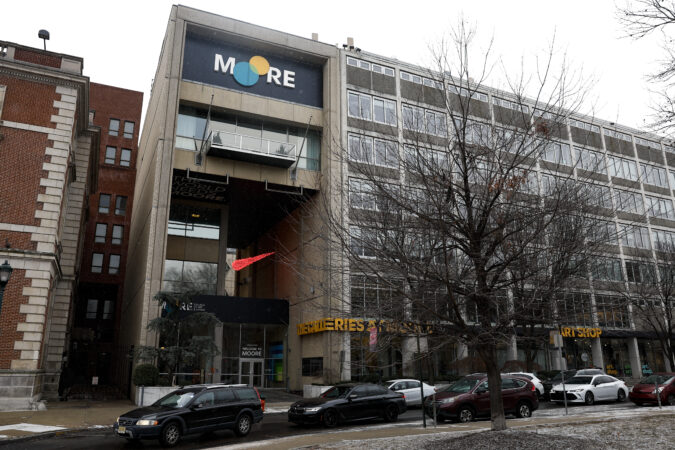
Moore College of Art and Design will consider opening its undergraduate programs to men for the first time in its 177-year history.
The Philadelphia school, which touts its role as “the first and only historically visual arts college for women in the nation,” cited the need to make arts programs more accessible in the region and the expected national decline in the available pool of high school graduates.
The college, which enrolls about 500 students, will study and discuss with its community the prospect of admitting men over the next four months and make a decision by June, the school announced in emails to alumni, faculty, and students Monday. If the school decides to admit all genders, the first class admitted would be for 2027.
“We will explore all of this together in an inclusive way for students, faculty, staff, and alumni,” wrote Moore president Cathy Young and Frances Graham and Art Block, chairs of the school’s board of trustees and board of managers, respectively. “Your voices are essential. No decision has been made at this time. The boards want your feedback.”
Moore College of Art and Design president Cathy Young.
If Moore goes coed, Bryn Mawr College would be the only remaining women’s school in the Philadelphia region. (In Allentown, Cedar Crest College remains primarily a women’s college.)
Several other colleges in the region that were formerly for women have gone coed over the last decades, including Rosemont on Philadelphia’s Main Line in 2008, Immaculata University in Chester County in 2005, and Chestnut Hill College in Philadelphia in 2003.
Nationally, the number of women’s colleges has been declining from a high of over 200 to just 31 as of 2022, according to a 2025 report by the Pew Research Center.
It wouldn’t be the first change in Moore’s admissions policy in recent years.
In 2015, Moore began admitting “all qualified students who live as women and who consistently identify as women at the time of application.”
Then in 2020, Moore also began accepting nonbinary and gender-nonconforming students. Since then, the number of those students has been growing. They made up 6% of the first freshman class under the new policy in 2021. By fall 2022, they accounted for 21%, and by fall 2023, 26%. Last fall, that grew to one-third of the freshman class.
Moore’s graduate programs and most of its continuing education programs already include men.
Moore officials said they are making the decision from a position of financial and academic “strength.” The school has had operating surpluses for the last 24 consecutive years, a school spokesperson said. Many small schools have faced financial strain in recent years, but Moore fared among the top small private colleges in the Philadelphia region for financial health in a 2024 Inquirer review.
Moore’s net tuition climbed from $10.8 million to $12.7 million in fiscal 2024 and to $16.5 million in fiscal 2025, financial records show. The school also saw a big gain in private gifts and grants last year to $2.2 million, up from $885,383 the year before.
This year’s enrollment is the school’s second highest behind fall 2024, when the college accepted 112 students from the University of the Arts, which abruptly closed in June 2024. The school also took 12 students that year from the Delaware College of Art and Design, which closed that year, too.
Moore opened a new residence hall in Rittenhouse Square last fall, which is just a seven-minute walk from campus and will allow the school to guarantee students housing for all four years.
In announcing the possibility of accepting all genders, Moore officials noted UArts’ closure and the end of degree-granting programs at the Pennsylvania Academy of Fine Arts.
“There is a void in Philadelphia’s higher ed creative landscape, and that begs the question: Shouldn’t all creatives, regardless of gender, have access to Moore …” they wrote. “The answer doesn’t have to be “yes,” but it is our responsibility to explore it.”
College surveys of applicants have shown that the school’s status as a women’s college isn’t a big draw. Only 6% cited it as important to their decision out of 885 survey respondents over the last dozen years, the school said. Meanwhile, a quarter said it was one of the important reasons they didn’t choose Moore.
Moore officials also cited the expected drop in the high school graduate population beginning this year because of declining birth rates. A decline of 10% is expected by 2037, they noted.
“There are simply fewer students,” they wrote. “No responsible institution can ignore factors like these. And we won’t.”
They said they will discuss ways “to preserve and activate in new ways” Moore’s history and legacy as part of the exploration.
Between February and April, Moore plans to host about 20 sessions for faculty, staff, and alumni to share their thoughts, as well as providing an opportunity for online comments.
Staff writer Harold Brubaker contributed to this article.
Narberth’s borough council hasvoted unanimously to bar the municipality’s police officers from cooperating with U.S. Immigration and Customs Enforcement under the agency’s 287(g) program.
The resolution approved Thursdaymade clear that “our police department operates to protect our residents and protect the public safety here and does not have a role in immigration enforcement,” said Council President Fred Bush.
ICE’s 287(g) program deputizes local law enforcement officers to carry out immigration actions, including identifying, arresting, and deporting immigrants. ICE has signed around 1,400 such agreements with law enforcement agencies in 40 states, including dozens in Pennsylvania.
In Philadelphia’s collar counties, only the Lansdowne Borough Constable’s Office in Delaware County and the Pennsylvania State Constable Office Honey Brook Precinct 1 in Chester County are 287(g) participants. Bucks County Sheriff Danny Ceisler, a newly elected Democrat, terminated his office’s controversial partnership last month, citing negative impacts on public safety and law enforcement trust.
Neither Lower Merion nor Narberth participates in the program.
Narberth’s resolution establishes that the borough will not enter into any agreement with the federal government, including 287(g), that would commit borough time, funds, efforts, or resources toward ICE noncriminal enforcement activities.
Officials clarified that Narberth’s police department would cooperate with ICE officials if they had a judicial warrant to arrest someone. An internal memo first reported by The Associated Press last month has authorized ICE to forcibly enter people’s homes without a judicial warrant.
Narberth officials acknowledged that the resolution could be seen as “virtue signaling,” given that the borough already does not participate in an ICE partnership. Yet council members said they believe it’s important to publicly signal the municipality’s values regarding immigration enforcement.
The resolution“lets the public clearly know where we stand on the issues, helps reinforce trust, and provides that clarity of what we will do and what we won’t do,” said Dana Edwards, Narberth’s mayor. “From my standpoint, it’s a practical resolution.”
“When our community members trust their law enforcement, they feel comfortable reaching out to them for assistance,” said Councilmember Jean Burock. “We can’t afford to erode that trust.”
Bush cautioned residents against interfering with ICE operations, describing the agency as “poorly trained” and “dangerous,” citing “the actions and the images that came out of Minneapolis” in recent weeks.
Narberth’s resolution came on the heels of a Jan. 30 incident in which two people were taken into custody by ICE during a traffic stop in Penn Wynne.
Following the arrests, Lower Merion affirmed in a public statement that the township does not participate in 287(g) and encouraged residents to call 911 if they observe law enforcement activity with no Lower Merion police officers present.
This suburban content is produced with support from the Leslie Miller and Richard Worley Foundation and The Lenfest Institute for Journalism. Editorial content is created independently of the project donors. Gifts to support The Inquirer’s high-impact journalism can be made at inquirer.com/donate. A list of Lenfest Institute donors can be found at lenfestinstitute.org/supporters.
A freshman football player at Villanova University texted the woman he is accused of raping to apologize for the encounter,according to the affidavit of probable cause for his arrest,offering new details about the incident.
D’Hani Cobbs, 20, was charged with rape, sexual assault, and related crimes after police say he assaulted a woman who also attends the university. He was removed from campus following the Dec. 7 attack, school officials said in a statement. The student newspaper the Villanovan first reported his arrest.
According to the affidavit, Cobbs allegedly assaulted the woman in Good Counsel Hall on the Main Line school’s South Campus.
The early morning attack began after Cobbs and the woman, whom police did not identify, met at an off-campus event and exchanged phone numbers, the document said.
The two later got a ride with others back to South Campus, according to the affidavit. Sometime between 1 and 2 a.m., Cobbs and the woman entered a residence hall room along with another person, whom the filing did not identify. That person left, the document said, leaving the woman alone with Cobbs.
Cobbs asked the woman for a hug, and then he “tried to kiss her, and she said no,” the filing said. Cobbs then “pinned her up against a desk” and began touching her buttocks and genitals and penetrated her with his fingers, the affidavit said. He then grabbed her and lifted her on top of his bed and allegedly raped her, according to the affidavit.
The woman later told police she was screaming and crying during the attack. She said she left the room in tears and asked Cobbs to call a friend to pick her up.
Cobbs later contacted the woman twice, according to the filing.
Around 2 a.m., he texted: “Are [you for real] good tho? That was random [as hell]” and “U were jus fine.”
Just before 5:30 p.m., Cobbs texted: “Yoo Wsp, u ok? My apologies if I made u feel uncomfortable in any way last night I didn’t have any intentions on making u feel uncomfortable. If u want to talk about it over the phone or in person we can just to come to more of a understanding.”
When investigators interviewed Cobbs that week, he did not deny that he had sexual contact with the woman but said it was consensual.
Cobbs’ defense attorney, Thomas G. Masciocchi, did not immediately return a request for comment.
Delaware County District Attorney Tanner Rouse said in a statement Monday that prosecutors had reviewed evidence in the case and swiftly brought charges.
“The message here is as simple as it is clear — when it comes to other people’s bodies, no means no, and stop means stop,” Rouse said. “That’s what we tell our kids and it holds true throughout life, no matter who you are or how talented an athlete you might be.”
As of this week, Cobbs’ player bio page on Villanova’s website is out of service with an error message.
Cobbs’ profile on ESPN is still active, and lists the New Jersey native as a wide receiver. He returned one punt last season, according to the page. A post from the Instagram account for Villanova’s football team announced Cobbs’ signing in 2024.
A Villanova spokesperson said in a statement that in addition to ordering Cobbs to leave campus, the school is “committed to both supporting the victim and fostering a safe environment for all of our students.”
Cobbs was arraigned Friday and was released on unsecured bail, according to court records. He is scheduled to appear in court for a preliminary hearing on Feb. 12 and is ordered not to have contact with the woman.
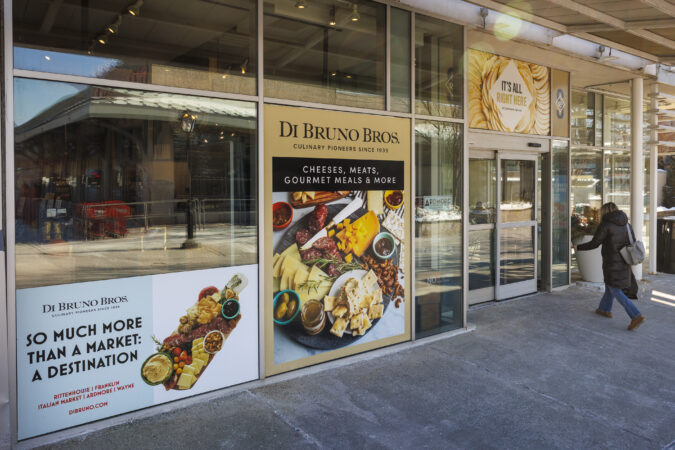
Three of the five Di Bruno Bros. locations will close in the coming weeks, the specialty grocery chain’s owner confirmed to The Inquirer.
Maureen Gillespie, a spokesperson for Wakefern Food Corp., the New Jersey-based supermarket cooperative that acquired the Di Bruno’s brand in 2024, said closing dates were not available.
Employees at the Ardmore Farmer’s Market location, which opened in 2011 at Suburban Square, said they were told that its last day would be Feb. 4. Staff at the locations in Wayne, which opened in 2021 in Strafford Shopping Center, and at the Franklin Residences on Ninth Street in Center City, which opened in 2013, said they were notified Wednesday that those stores would shut down Feb. 11.
Di Bruno’s original location on Ninth Street in South Philadelphia and the two-level store at 18th and Chestnut Streets will remain.
In a statement, Gillespie said the company was “refocusing” Di Bruno’s market strategy on “the heart of the brand”: its Italian Market and Rittenhouse locations and “growing online business.” Concentrating on the two flagship stores and online business will be “a positive reset that allows us to preserve and elevate the in‑store tradition while growing the brand’s reach in meaningful new ways,” Gillespie said.
Jobs will be offered to every retail employee, said a Sandy Brown, executive vice president of Di Bruno’s parent company, Brown’s Super Stores, the regional grocery chain founded by her husband. The news follows this week’s announcement that Amazon Fresh stores would close, putting about 1,000 people out of work at the six Philadelphia-area stores.
The three affected stores share the same core Di Bruno’s DNA: cheese, charcuterie, and specialty groceries. The Ardmore Farmer’s Market location is the most “grab-and-go”: a compact counter where bagels and schmear, coffee, and quick bites sit alongside the cheese-and-cured-meat staples. Wayne is more of a full-on neighborhood market with the familiar cheese and charcuterie counters plus a cafe, Roman-style pizza, and an on-site bar for wines and small plates. The outpost at the Franklin, 834 Chestnut St., is the most Center City-practical and office-friendly. It has a coffee bar, sandwich shop, and petite bottle shop — suitable for lunch runs, last-minute gifts, and commuter provisions.
The five Di Bruno’s stores were acquired in April 2024 by corporate entities controlled by Brown’s Super Stores. Six months later, Wakefern acquired the Di Bruno’s trademark and branded products.
At the time, Wakefern said it expected to grow the Di Bruno brand and take it “to the next level.” In December 2024, Brown’s Super Stores said it planned to open an additional 12 to 15 Di Bruno stores in the coming decade.
Wine and cheese at Di Bruno Bros. in South Philadelphia.
The 2024 acquisition of Di Bruno Bros. turned heads in the grocery world, as the Brown family supermarkets like ShopRite and the Fresh Grocer operate in a considerably different fashion than Di Bruno’s specialty model.
Italian immigrant brothers Danny and Joe Di Bruno opened the first Di Bruno’s store in Philadelphia’s Italian Market in 1939. The grandsons and nephews of the founders took over in 1990 and grew the brand. In 2005, the cousins opened the first store outside South Philadelphia at 18th and Chestnut Streets.
Clarification:A comment from Sandy Brown, executive vice president of Brown’s Super Stores, was added to this article after publication to explain that affected Di Bruno’s employees would be offered other jobs.
On Jan. 8, Andre Golsorkhi, founder and CEO of design firm Haldon House, presented plans for a revitalized town center, complete with historic architecture, green spaces, and businesses that “fit the character” of the area. Golsorkhi told a packed school auditorium that Haldon House plans to bring in boutique shops, open an upscale-yet-approachable restaurant, and create spaces for communal gathering.
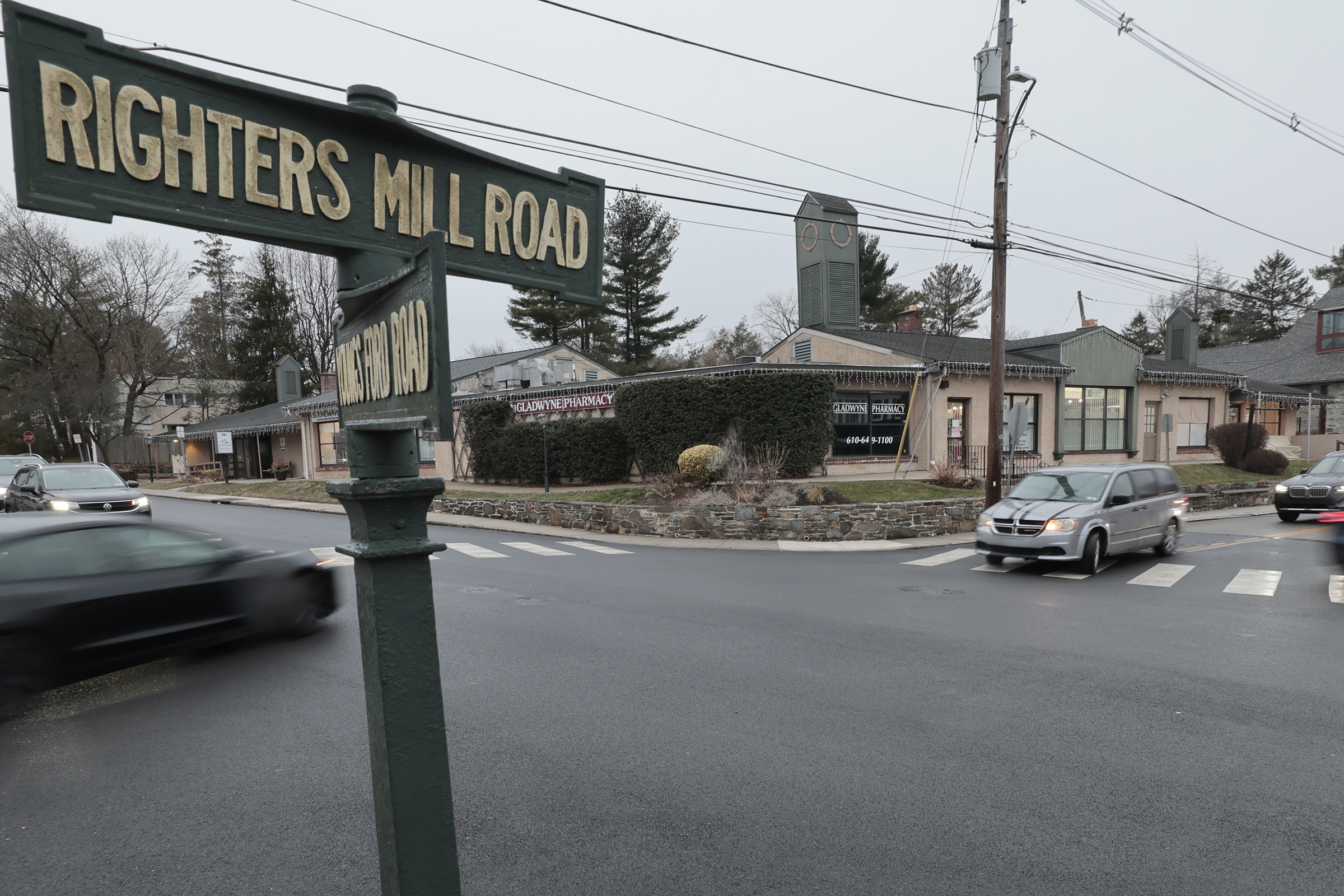
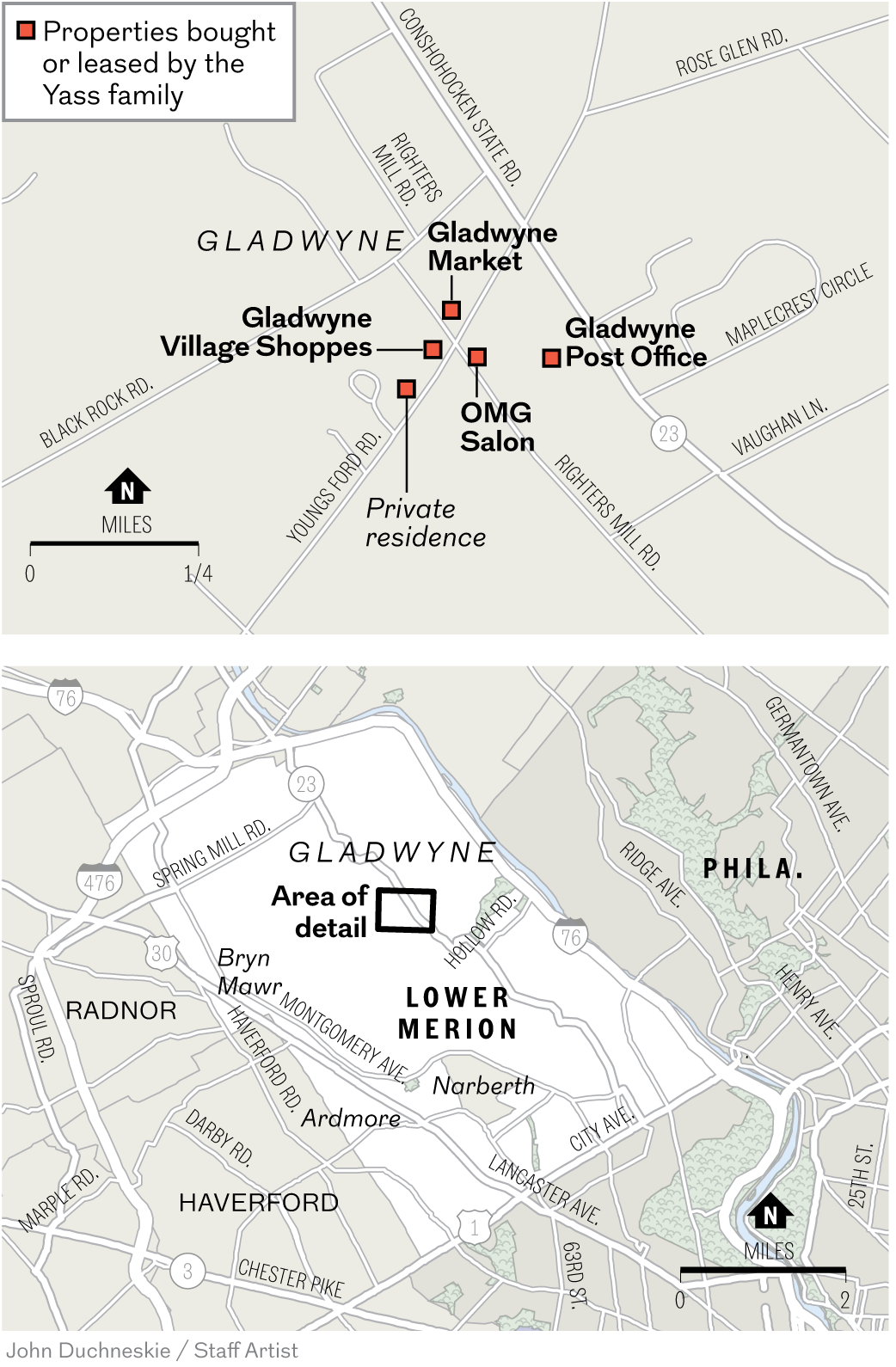
At the meeting, Golsorkhi also revealed that the project was backed by Jeff Yass, Pennsylvania’s richest man, and his wife, Janine. Golsorkhi said the Yasses want to revitalize Gladwyne as part of a local “community impact project.” Haldon House and the Yasses, who live near Gladwyne, have spent over $15 million acquiring multiple properties at the intersection of Youngs Ford and Righters Mill Roads.
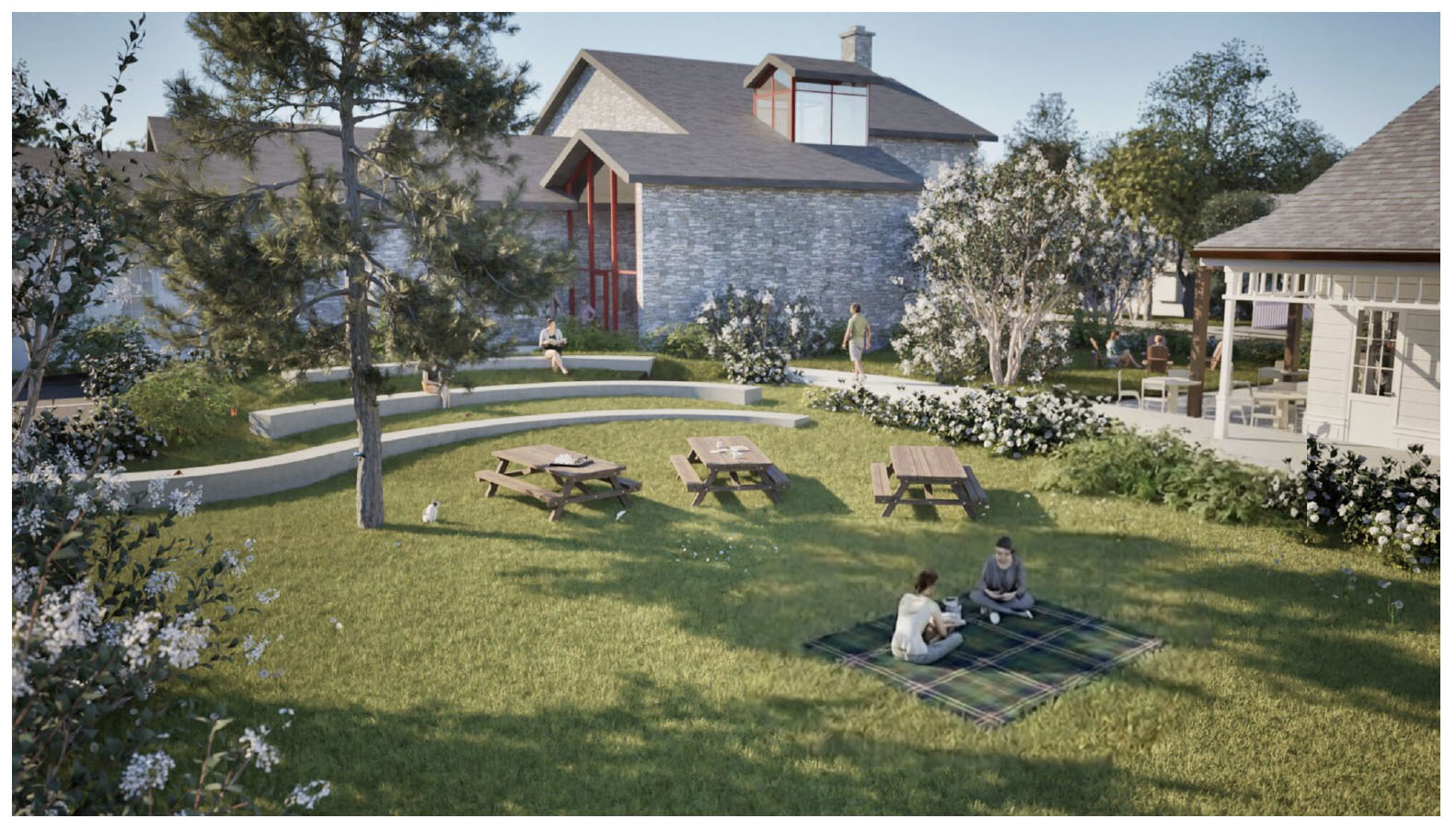
Renderings of a proposed revitalization project in Gladwyne, Pa. Design firm Haldon House is working with billionaire Jeff Yass to redevelop the Main Line village while preserving its historic architecture, developers told Gladwyne residents at a Jan. 8 meeting.
What is, and isn’t, allowable?
For some residents, one question has lingered: Is one family allowed to redevelop an entire village?
A petition calling on Lower Merion Township to hold a public hearing and pass protections preventing private owners from consolidating control of town centers had gathered nearly four dozen signatures as of Friday.
Around 4,100 people live in the 19035 zip code, which encompasses much of Gladwyne, according to data from the 2020 U.S. Census.
“Residents deserve a say before their town is transformed.No one family, no matter how wealthy, should unilaterally control the civic and commercial core of a historic Pennsylvania community,” the petition reads.
Yet much of Haldon House’s plan is allowable under township zoning code, said Chris Leswing, Lower Merion’s director for building and planning.
Plans to refurbish buildings, clean up landscaping, and bring in new businesses are generally permitted by right, meaning the developers will not need approval from the township to move forward. Gladwyne’s downtown is zoned as “neighborhood center,” a zoning designation put on the books in 2023 that allows for small-scale commercial buildings and local retail and services. The zoning code, which is currently in use in Gladwyne and Penn Wynne, ensures commercial buildings can be no taller than two stories.
The developers’ plans to open a new restaurant in the former Gladwyne Market and renovate buildings with a late-1800s aesthetic, including wraparound porches and greenery, are generally within the bounds of what is allowed, once they obtain a building permit.
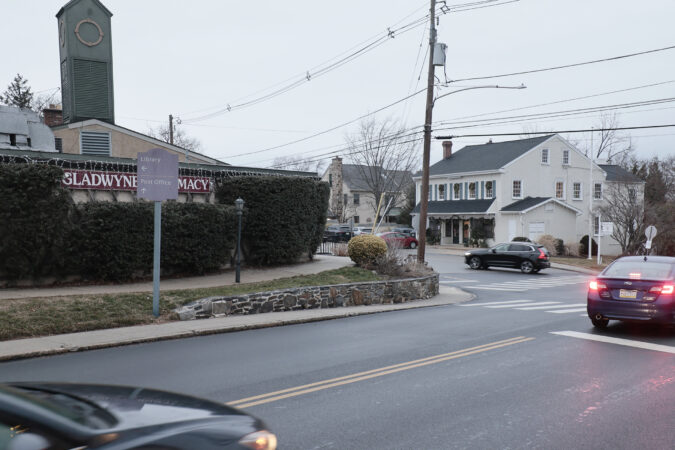
The Village Shoppes, including the Gladwyne Pharmacy, at the intersection of Youngs Ford and Righters Mill Roads in Gladwyne on Friday, Jan. 9, 2026.
More ambitious plans, however, like converting a residential home into a parking lot or burying the power lines that hang over the village, would require extra levels of approval, Leswing said.
The developers hope to convert a residential property on the 900 block of Youngs Ford Road into a parking lot. Lower Merion generally encourages parking lots to be tucked behind buildings and does not allow street-facing parking, a measure designed to avoid a strip mall feel, Leswing said. In order to turn the lot into parking, the developers would need an amendment to the zoning code, which would have to be approved by the board of commissioners.
Various approvals would also be needed to put Gladwyne’s power lines underground, an ambitious goal set by the Haldon House and Yass team.
Leswing clarified that no official plans have been submitted, making it hard to say how long the process will take. It will be a matter of months, at least, before the ball really gets rolling.
Leswing added the developers have been “so good about being locked into the community” and open to constructive feedback.
Golsorkhi said it will be some time before his team can provide a meaningful update on the development, but expressed gratitude to the hundreds of residents who have reached out with questions, support, and concerns.
Map of properties in Gladwyne bought or leased by the Yass family.
From ‘110% in favor’ to ‘a tough pill to swallow’
Fred Abrams, 65, a real estate developer who has lived in Gladwyne for seven years, said he and his wife are “110% in favor” of the redevelopment, calling it an “absolute no-brainer.”
Many Gladwyne residents live in single-family homes that keep them in their own, sometimes isolating, worlds, his wife, Kassie Monaghan Abrams, 57, said.
“Here’s an opportunity for being outside and meeting your neighbors and, to me, getting back to spending time with people,” she said of the proposal to create communal gathering areas.
“I think it’s a very thoughtful, beautiful design,” Monaghan Abrams added.
Some social media commenters called the proposal “charming” and “a fantastic revitalization.”
Others were more skeptical.
Ryan Werner, 40, moved to Gladwyne in 2012 with his wife, who grew up in the town.
“One of the things I’ve kind of fallen in love with about Gladwyne is the sense of community,” said Werner, who has a background in e-commerce sales and is transitioning to work in the mental health space.
“I’m less opposed to just the commercial side of it and more grossed out by the involvement of certain people in it,” Werner said.
Gladwyne is a Democratic-leaning community that voted overwhelmingly for former Vice President Kamala Harris in the 2024 election.
On social media, some griped about the changes.
“The Village will be just like Ardmore and Bryn Mawr. Can’t undo it once they build it,” one commenter wrote in a Gladwyne Facebook group.
Golsorkhi said in an email that the “enthusiasm, excitement and support” from the community have been “overwhelming.”
This suburban content is produced with support from the Leslie Miller and Richard Worley Foundation and The Lenfest Institute for Journalism. Editorial content is created independently of the project donors. Gifts to support The Inquirer’s high-impact journalism can be made at inquirer.com/donate. A list of Lenfest Institute donors can be found at lenfestinstitute.org/supporters.
The possibilities are what make a Gladwyne estate for sale on Country Club Road “a significant property,” said listing agent Lisa Yakulis.
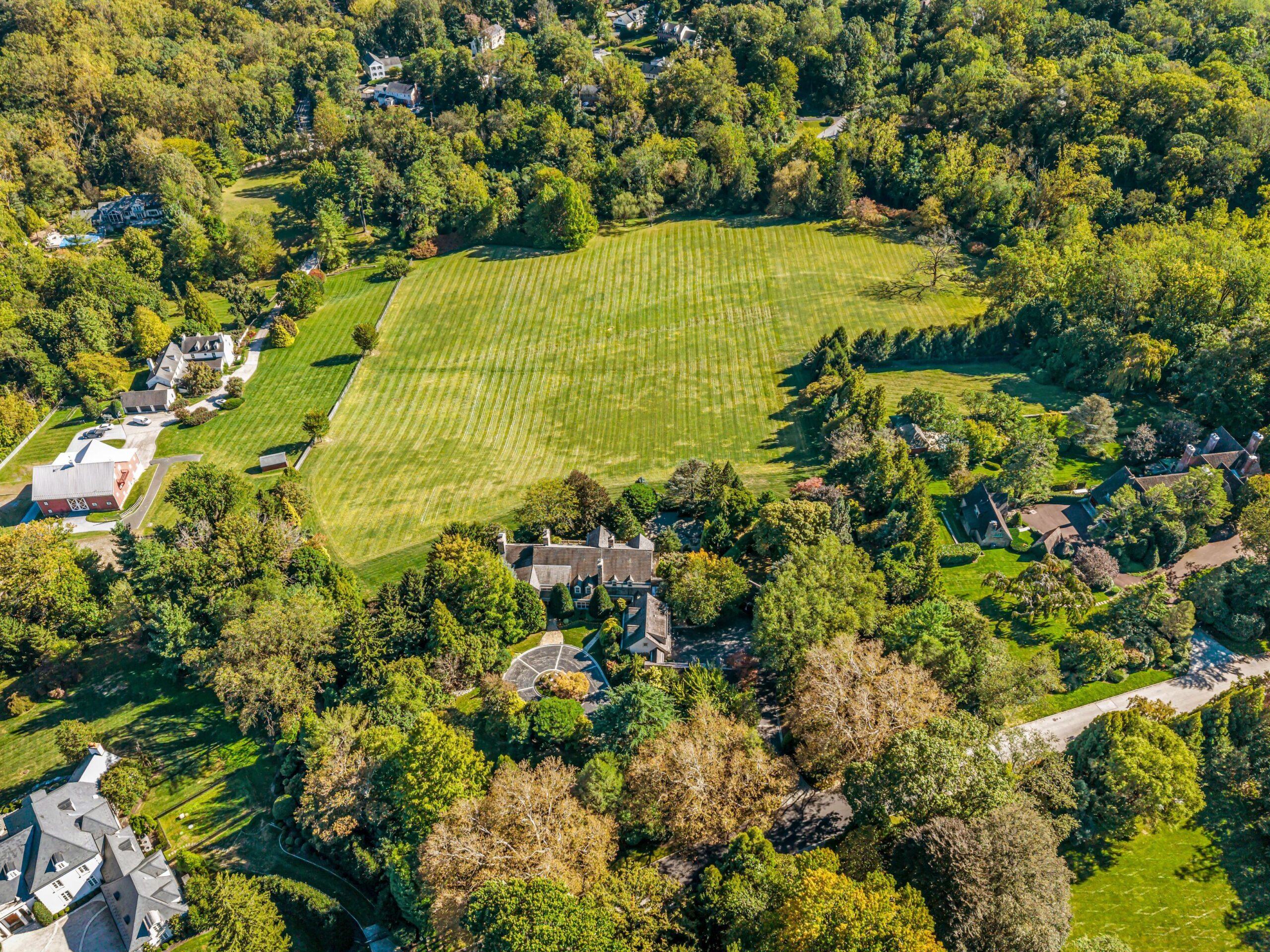
It spans 12.76 “very private” acres, said Yakulis, a broker associate at Kurfiss Sotheby’s International Realty. “It’s hard to find that size of a property in that area.”
The 9,166-square-foot home sits on about four acres. A future owner could subdivide the lower part of the property to create two roughly four-acre lots. An existing easement would provide access to the additional lots.
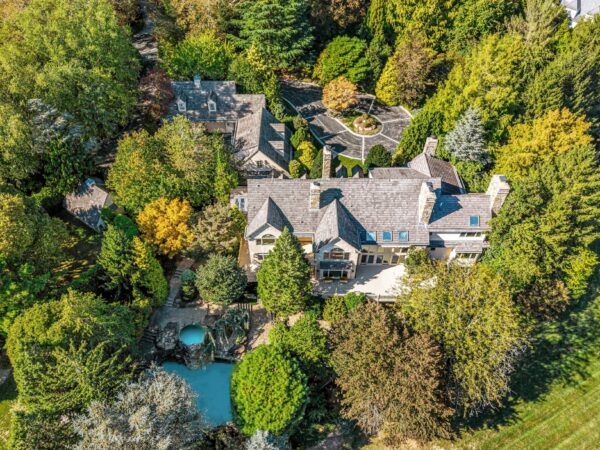
The home for sale on Country Club Road in Gladwyne sits on almost 13 acres, which can be broken into separate lots.
Yakulis said she’s seen that on the Main Line in the years since the pandemic, “desirable building lots with that kind of acreage are, No. 1, very hard to find, and No. 2, there’s a fairly large buyer pool out there that’s looking for land in that location to build exactly what they want to build vs. buying a resale home.”
The home on the property was custom built in 1993, and its floor plan is more open than homes of that time. It was designed to host the owners’ family and friends, which it has done for the last three decades.
The house has six bedrooms, eight full bathrooms, and three half bathrooms. Many large windows provide panoramic views of the property. The home has an elevator, six fireplaces, a library, two laundry rooms, and flexible living spaces.
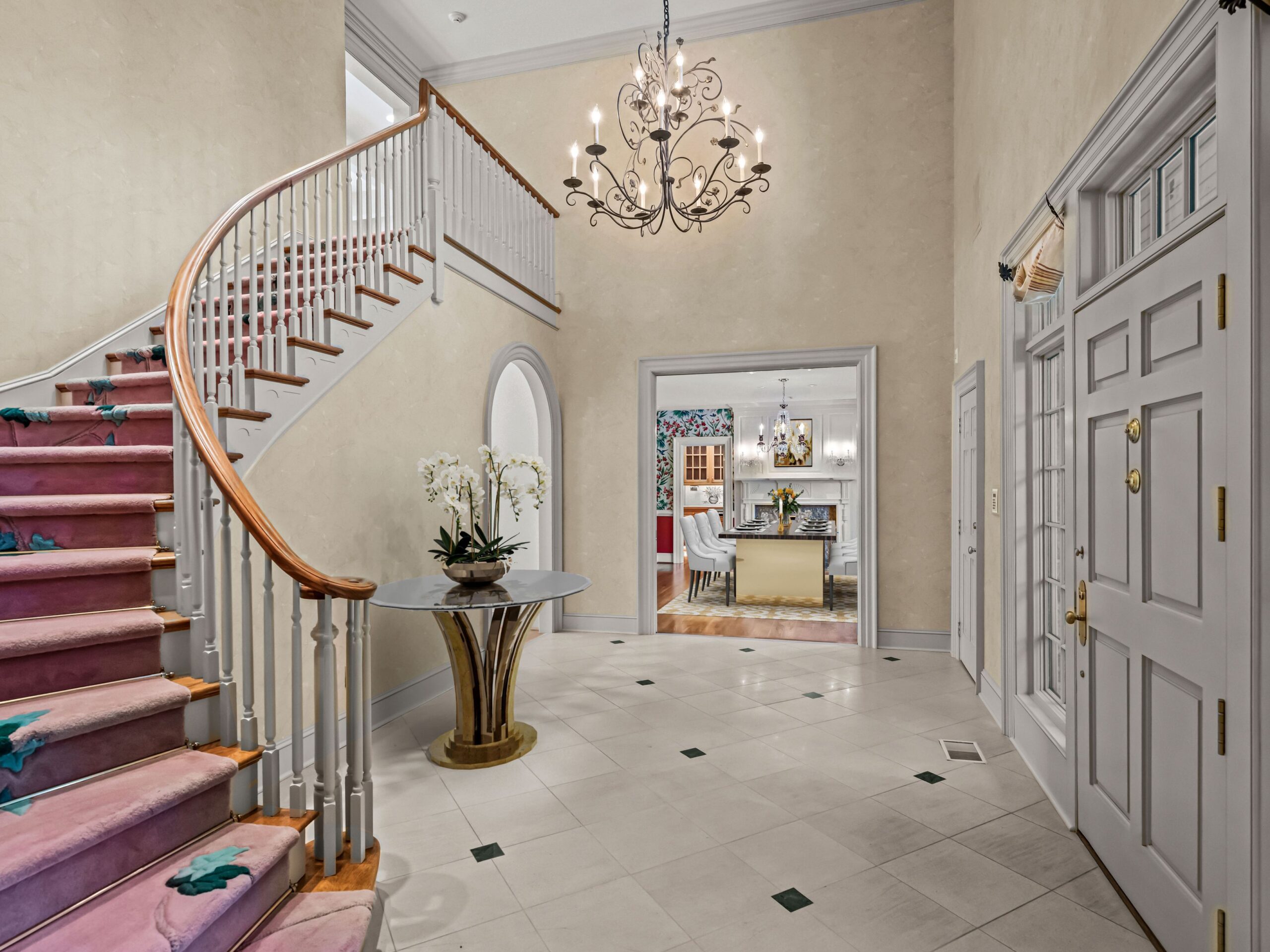
The front door of the home opens to a chandelier and winding staircase.
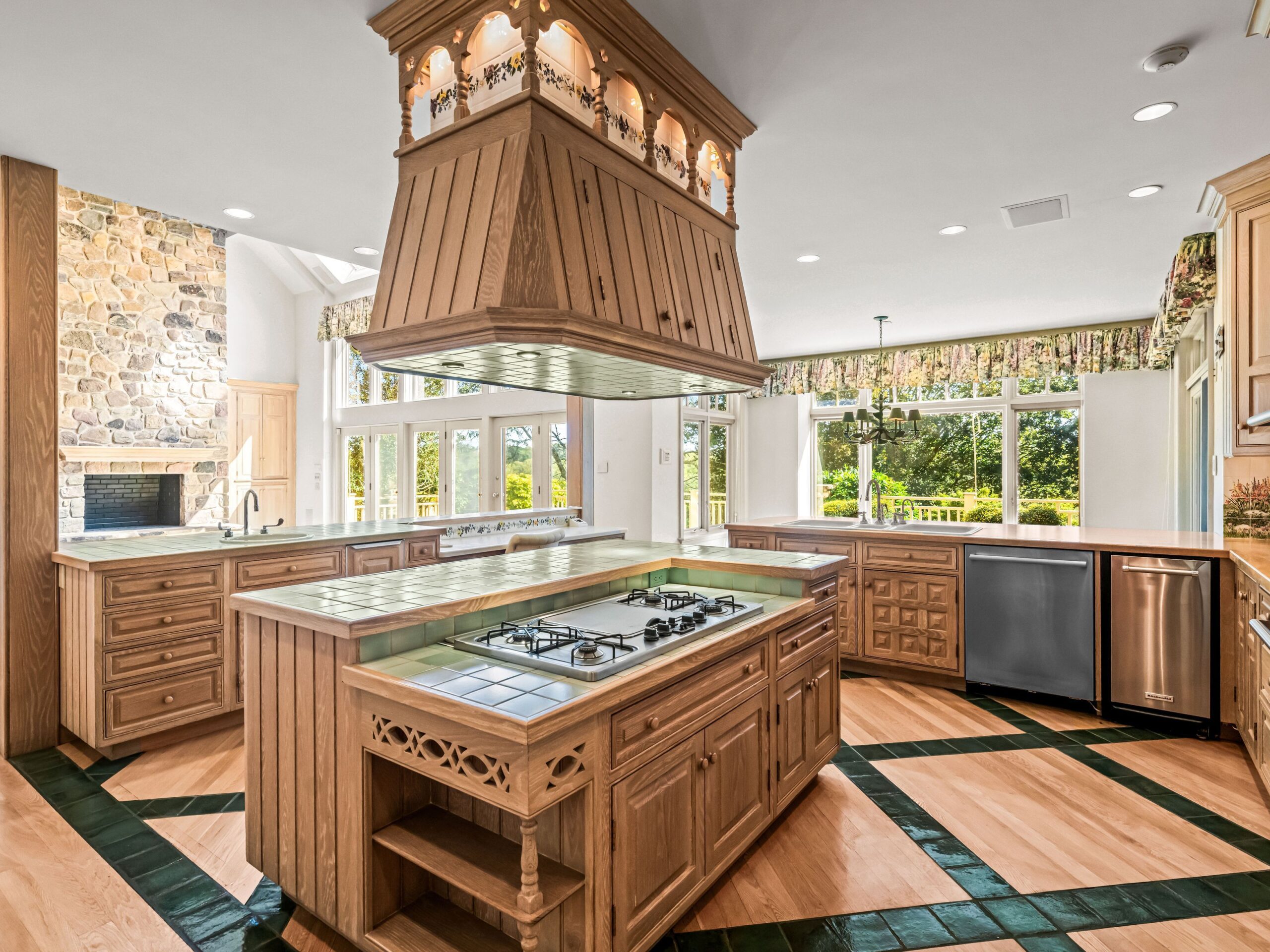
The primary suite has two separate bathrooms and large dressing rooms. The main kitchen includes two ovens, a large island with a stove, bar seating, and a refrigerator that can be concealed behind sliding wooden panels.
The property has a total of three guest suites on the lower level, in a private section of the main level, and above one of two oversized two-car garages.
The home’s lower level includes another large kitchen, a sauna, entertainment space, and a walk-in safe.
The main kitchen includes three sinks, two ovens, and a large island with a stove.
The property features stone terraces, a pool, landscaped grounds, and acres of open land. A cottage-like utility building equipped with a half bathroom is where the owners cleaned their dogs. But it also could be used as a gardening shed or workshop.
Potential buyers who have toured the home said they like the privacy, views, and location. The Main Line property is near preserved open space, the Schuylkill Expressway, and Philadelphia Country Club. Yakulis said the home is on a quiet street with plenty of space between neighbors.
The property has attracted people of various ages, including empty nesters who like the elevator and the guest suites that offer spaces for visiting children and grandchildren.
“I get the comment when people come through that it’s a happy house, and it’s true,” Yakulis said. “You walk in there and the light pours in, and you can just tell that it’s a happy house. It has a good vibe.”
The property was listed for sale in October.
A gate opens to the circular driveway in front of the home.
Boutique gym Club Studio Fitness is expanding to the Philadelphia area with new locations in Cherry Hill and Wynnewood.
Club Studio is set to take over 30,240 square feet at Cherry Hlil’s Ellisburg Shopping Center in the former BuyBuy Baby storefront. The gym is expected to open in spring 2027.
The Cherry Hill gym will be Club Studio’s second New Jersey gym. The California-based chain opened its first Garden State location in Edgewater in May.
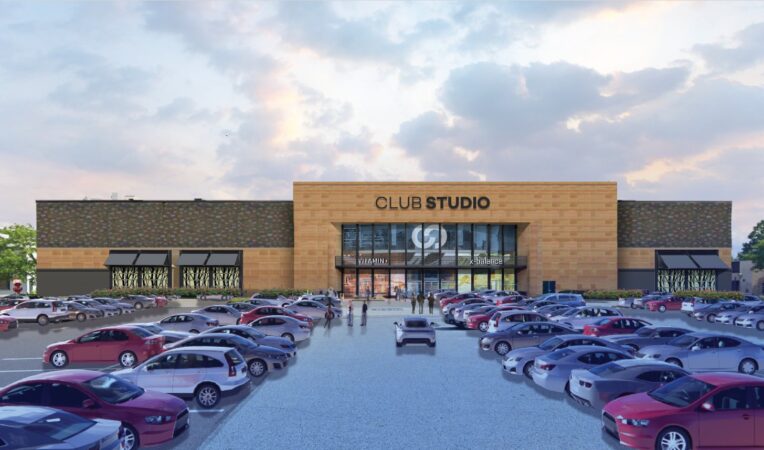
A rendering of the Club Studio Fitness gym slated to open in the Ellisburg Shopping Center in Cherry Hill, N.J., in spring 2027.
The high-end gym chain is also set to open on the Main Line late this year. Club Studio will take over a 50,000-square-foot space in the Wynnewood Shopping Center, a space formerly home to Bed Bath & Beyond. The Wynnewood gym is expected to open toward the end of 2026.
Both shopping centers are owned by Federal Realty Investment Trust, a Maryland-based real estate trust with a large Philadelphia-area footprint.
The addition of Club Studio is “an exciting new chapter for Wynnewood Shopping Center” that continues “the evolution towards more relevant shopping, dining, and now, wellness” experiences, Jeffrey Fischer, Federal Realty’s vice president of leasing, said in a news release.
The Cherry Hill and Wynnewood gyms will have boutique fitness classes; free weights areas; strength and functional training zones; cardio equipment; juice bars; cryotherapy and red-light therapy; and personal stretch stations.
Club Studio is planning to open another Pennsylvania location in Collegeville. The chain has around a dozen locations across the U.S., with a large presence in California, and has around 20 new gyms in the works, according to its website.
This suburban content is produced with support from the Leslie Miller and Richard Worley Foundation and The Lenfest Institute for Journalism. Editorial content is created independently of the project donors. Gifts to support The Inquirer’s high-impact journalism can be made at inquirer.com/donate. A list of Lenfest Institute donors can be found at lenfestinstitute.org/supporters.
With a significant snowfall expected in the Philadelphia region this weekend, doctors are urging people to be cautious when digging out.
About 100 people a year die from heart attacks brought on by shoveling snow. Thousands more wind up in the emergency department with sprains, strains, chest pain, and other heart problems.
Shoveling may not seem like a cardio workout, but it can put as much strain on your heart as a treadmill stress test, according to the American Heart Association. People often mistakenly lift with their arms, which is more taxing on the heart than lifting with their legs. In extreme cold, blood vessels constrict to conserve heat, but that can further elevate blood pressure.
People with a history of heart problems, smoking, or obesity may be especially at risk.
In the Philadelphia area, shovelers are more accustomed to an inch or two of powder or slush. This weekend’s storm, which could bring several times that, will be a bigger and more dangerous challenge, said Jonathan Stallkamp, a senior vice president and chief medical officer for Main Line Health, a nonprofit system with four hospitals in the Philadelphia suburbs.
“All of a sudden your heart goes from beating normally, and now you’re putting in this additional heavy work of shoveling,” said Stallkamp.
Here’s how to shovel safely and make sure the upcoming storm isn’t your downfall.
Ask for help
The best way to prepare for clearing massive amounts of snow is to make sure you’re in good physical shape, said Stallkamp.
Shoveling uses muscles people may not be accustomed to exercising, and puts stress on the heart.
“A lot of our older community members aren’t in as good shape as they think,” Stallkamp said.
He encouraged people to be realistic about their abilities, and ask for help from a younger neighbor or relative, if possible.
Some cardiologists say that anyone over age 45 should use extra caution when shoveling.
Treat it like a sport
Prepare to tackle snow the way an athlete would prepare for a big game: Drink lots of water, avoid caffeine (which can raise blood pressure), and wear the right gear (mittens are generally warmer than gloves). And don’t forget to stretch. Warming up your joints, and muscles in your legs, arms and back will reduce the risk of injury, according to Mayo Clinic.
Lift with your legs
Bending your knees to scoop and lifting with your legs will reduce strain on your back. Lifting with arms and back are more likely to result in a pulled muscle.
Shovel often
Stallkamp recommends getting out early, clearing snow as it falls, rather than waiting for the big event to be over. It’s easier to shovel an inch of snow multiple times than to dig out of a foot of snow. While the forecast for the Philadelphia region is still in flux, some forecasts suggest snow could turn to ice, which adds to the challenge of clearing driveways and sidewalks.
Ice will be easier to clear if it falls on a thin layer of snow, than directly onto pavement, Stallkamp said.
Keep fingers away from snowblowers
This maybe goes without saying, but Stallkamp said he’s seen it enough that he’s sending a clear warning: Do not put your hands inside the opening of a snowblower.
When a stick or chunk of ice gets stuck in a snowblower, people may instinctively reach in to try to dislodge the object.
“But once that jam clears, those blades spin and your fingers go with it,” he said.
Take breaks and warm up
Mayo Clinic experts recommend taking breaks to check in with your body. If you feel out of breath, lightheaded, or just off, go inside to warm up and relax.
With ice in the forecast, Stallkamp recommends taking steps to keep your house warm if your home uses electric heat and you lose power.
Generators can help restore enough electricity to turn the heat on, but they should be kept as far from the house as possible and never used inside. Generators produce large amounts of carbon monoxide that can be deadly, especially in the winter when windows and doors are closed up.
If possible, turn up the heat in advance, so your home stays warm longer if power goes out.