Tag: Main Line

  • Craig Kellem, celebrated talent agent, TV producer, and ‘comedic genius,’ has died at 82

    Craig Kellem, celebrated talent agent, TV producer, and ‘comedic genius,’ has died at 82

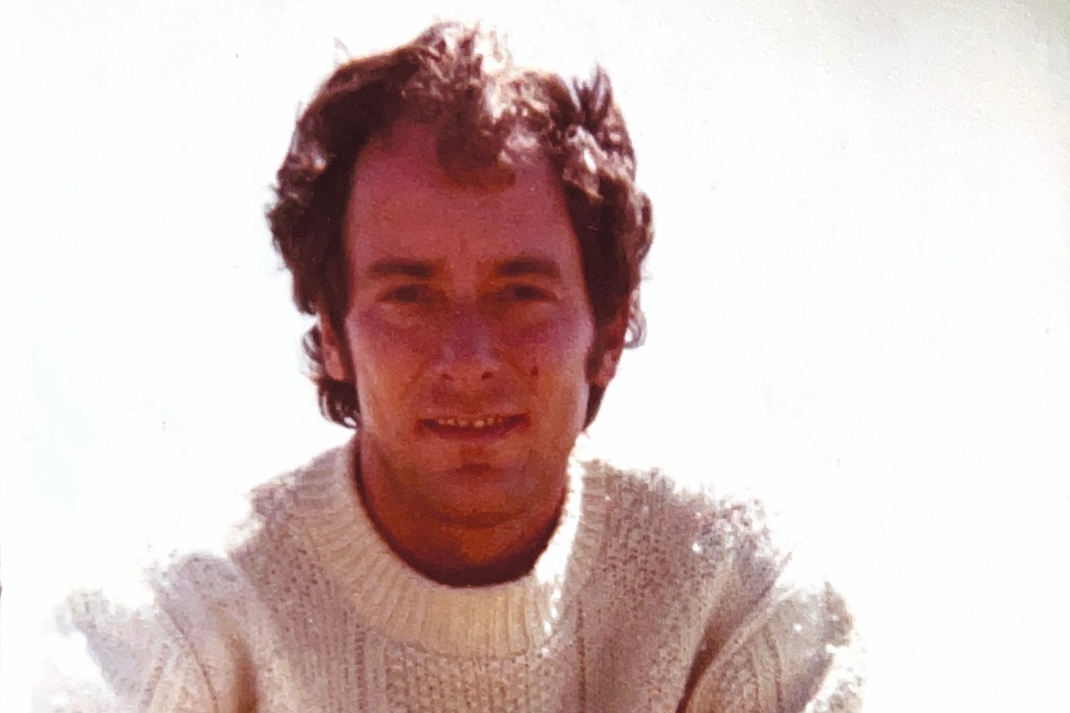
    Craig Kellem, 82, of Philadelphia, former talent agent, celebrated TV producer, show developer, writer, longtime script consultant, author, and “comedic genius,” died Monday, Nov. 24, of complications from dementia at Saunders House assisted living in Wynnewood.

    Born in Philadelphia, Mr. Kellem moved to New York as a teenager and, at 22, burst onto the entertainment scene in 1965 as a talent scout and agent for what was then called Creative Management Associates. He rose to vice president of the company’s TV Department and, over the next 30 years, served as director of development for late night, syndication, and daytime TV at 20th Century Fox Television, vice president of comedy development at Universal Television, and executive vice president of the Arthur Co. at Universal Studios.

    He worked with fellow TV producer Lorne Michaels at Above Average Productions in the 1970s and was a popular associate producer for the first season of Saturday Night Live in 1975 and ’76. He was quoted in several books about that chaotic first season, and his death was noted in the show’s closing credits on Dec. 6.

    At Universal Studios, he created and produced FBI: The Untold Stories in 1991. At Universal Television in the 1980s, he developed nearly a dozen shows that aired, including Charles in Charge and Domestic Life in 1984. In 1980, he developed Roadshow for 20th Century Fox Television.
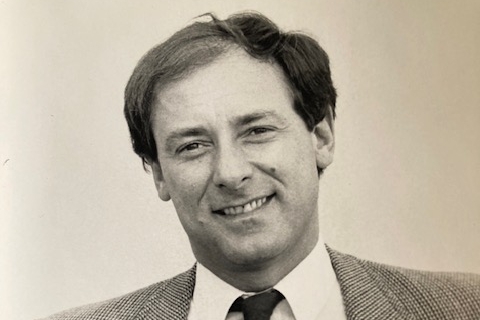
    Mr. Kellem worked for years in New York and Los Angeles.

    “He had a lot of energy and ideas,” said his wife, Vivienne. “He had a creative spirit.”

    His producing, creating, developing, and writing credits on IMDb.com also include The Munsters Today, The New Adam-12, Dragnet, and What a Dummy. He produced TV films and specials, and worked on productions with Eric Idle, Gladys Knight, Sammy Davis Jr., and the Beach Boys.

    In 1998, he and his daughter, Judy Hammett, cofounded Hollywoodscript.com and, until his retirement in 2021, he consulted for writers and edited and critiqued screenplays. In 2018, they coauthored Get It On the Page: Top Script Consultants Show You How.

    “He loved working with writers,” his daughter said. “He was super creative. It was part of his essence.”

    Mr. Kellem enjoyed time with his daughter Joelle (left) and his wife Vivienne.

    As an agent in the 1960s and ’70s, Mr. Kellem represented George Carlin, Lily Tomlin, and other entertainers. His eye for talent, dramatic timing, and sense of humor were legendary.

    “My dad’s humor opened hearts, tore down walls, and allowed people to connect with each other’s humanity, vulnerability, and spirit,” said his daughter Joelle. His daughter Judy said: “He was a comedic genius.”

    His wife said: “He was a fascinating, funny, loving, and sensitive man.”

    Craig Charles Kellem was born Jan. 24, 1943. He grew up with a brother and two sisters in West Mount Airy, played with pals in nearby Carpenter’s Woods, and bought candy in the corner store at Carpenter Lane and Greene Street.

    Mr. Kellem and his son, Sean.

    “Craig was like a father to me,” said his brother, Jim. “He helped guide my children and was always there for the whole family.”

    He graduated from high school in New York and moved up to senior positions at Creative Management Associates after starting in the mailroom. He married in his 20s and had a daughter, Judy.

    After a divorce, he met Vivienne Cohen in London in 1977, and they married in 1980, and had a son, Sean, and a daughter, Joelle. He and his wife lived in California, Washington, New Hampshire, and New Jersey before moving to Fairmount in 2017.

    Mr. Kellem enjoyed movies, walking, and daily workouts at the gym. He volunteered at shelters, helped underserved teens, and routinely carried dog treats in his car in case he encountered a stray in need. “That’s the kind of man Craig was,“ his wife said.

    Mr. Kellem and his daughter Judy operated their own writing consultation business together for years.

    His son, Sean, said: “My dad’s personality was big, and he was deeply compassionate toward other human beings.” His daughter Joelle said: “He was an open, sensitive, warm, and passionate human being who believed deeply in the work of bettering oneself and taking care of others.”

    His daughter Judy said: “They don’t make people like my dad.”

    In addition to his wife, children, and brother, Mr. Kellem is survived by four grandchildren and other relatives. Two sisters died earlier.

    Private services are to be held later.

    Donations in his name may be made to the Alzheimer’s Association, 399 Market St., No. 250, Philadelphia, Pa. 19106; and Main Line Heath HomeCare and Hospice, 240 N. Radnor Chester Rd., Suite 100, Wayne, Pa. 19087.

    Mr. Kellem enjoyed daily workouts at the gym.
  • How quiet is your hospital at night? See how patients rate Philly-area hospitals.

    How quiet is your hospital at night? See how patients rate Philly-area hospitals.

    Once considered the loudest hospital in the Philadelphia area, Riddle Hospital in Media has significantly reduced its nighttime noise levels, newly released federal data shows.

    At the Main Line Health Riddle hospital, only 12% of patients from the most recent survey rated the area around their room at night as “sometimes” or “never” quiet — down from 26% of patients surveyed between July 2022 and June 2023.

    Across the Philadelphia region, 52% of patients said their hospital room was “always” quiet at night. That’s slightly worse than nationally, where patients said hospitals were quiet throughout their stay 57% of the time.

    Virtua Mount Holly Hospital in New Jersey is now rated the loudest by patients.

    Nazareth Hospital in Northeast Philadelphia, owned by Trinity Health, was ranked the second loudest in the region.

    window.addEventListener(“message”,function(a){if(void 0!==a.data[“datawrapper-height”]){var e=document.querySelectorAll(“iframe”);for(var t in a.data[“datawrapper-height”])for(var r,i=0;r=e[i];i++)if(r.contentWindow===a.source){var d=a.data[“datawrapper-height”][t]+”px”;r.style.height=d}}});

    Quieter hospitals have benefits for both patients and staff, helping to lower anxiety levels, improve sleep quality, and ease the flow of communication.

    Riddle Hospital’s improvement follows construction of a new 230,000-square-foot patient pavilion that had temporarily increased noise at its Delaware County campus.

    “With the pavilion’s 2023 completion, as well as the resulting addition of more private rooms, noise is significantly reduced,” spokesperson Larry Hanover said.

    Reducing noise is also priority for Penn Medicine, whose Hospital of the University of Pennsylvania (HUP) was rated the quietest hospital among the 25,000 patients surveyed in the Philly-area.

    Chester County Hospital, also owned by Penn Medicine, was ranked the second quietest.

    The health system has made big investments in recent years to address noise levels at its hospitals, according to the university’s website. The Pavilion, which opened at HUP in Center City in 2021, was designed to reduce noise levels and nightly disruptions by separating nonclinical work from patient care areas.

    Each floor of the $1.6 billion building centers around an “offstage” area for staff to hold conversations and calls away from patient rooms that line the perimeter. The design of the rooms also allows care teams to check vitals and refill medications from the hallway, reducing nighttime disruptions.

    Here’s a look at how patients ranked their Philly-area hospitals on nighttime noise, according to the Centers for Medicare and Medicaid Service’s Hospital Consumer Assessment of Healthcare Providers and Systems data from October 2023 to September 2024.

    window.addEventListener(“message”,function(a){if(void 0!==a.data[“datawrapper-height”]){var e=document.querySelectorAll(“iframe”);for(var t in a.data[“datawrapper-height”])for(var r,i=0;r=e[i];i++)if(r.contentWindow===a.source){var d=a.data[“datawrapper-height”][t]+”px”;r.style.height=d}}});

  • One year of inspections at Riddle Hospital: November 2024 – October 2025

    One year of inspections at Riddle Hospital: November 2024 – October 2025

    Riddle Hospital was cited by the Pennsylvania Department of Health for failing to properly monitor a patient’s vital signs in the emergency department earlier this year.

    The incident was among six times inspectors visited the Media hospital, which is owned by Main Line Health, to investigate potential safety problems.

    Here’s a look at the publicly available details:

    • Jan. 10, 2025: Inspectors came to investigate a complaint but found the hospital was in compliance. Complaint details are not made public when inspectors determine it was unfounded.
    • June 30: Inspectors cited the hospital for failing to properly monitor a patient’s vital signs while waiting for care in the emergency department. Inspectors found that a patient was evaluated in the emergency department as a triage level 3, meaning their vital signs should be checked every four hours. Records show the patient’s vital signs were documented at 12:40 a.m., and not again until almost seven hours later. Administrators reviewed the hospital’s emergency triage policies and retrained staff.
    • Aug. 13: Inspectors came to investigate a complaint but found the hospital was in compliance.
    • Sept. 15: Inspectors came to investigate a complaint but found the hospital was in compliance.
    • Sept. 18: Inspectors visited for a special monitoring survey and found the hospital was in compliance.
    • Sept. 18: Inspectors followed up on the June citation regarding vital sign monitoring and found the hospital was in compliance.
  • In search of a crafty holiday gift? Here’s where to look in Lower Merion.

    In search of a crafty holiday gift? Here’s where to look in Lower Merion.

    The jingle bells are ringing, the Hanukkah party guest list is filling up, and you still don’t have a present for the coolest, artsiest person on your shopping list.

    Looking for a kooky snow globe? Bespoke Eagles memorabilia? An art print unlike any other? Don’t worry! If you’re living on (or traveling to) the Main Line, here’s where you should be shopping for crafty presents.

    Sweet Mabel Gallery

    Narberth’s Sweet Mabel Gallery is an iconic local business, run by husband-and-wife duo David Stehman and Tracy Tumolo. Sweet Mabel got its start in 2005 when Tumolo took over her grandfather’s former barbershop in Narberth. She and Stehman, who were graphic designers, decided to turn the barbershop into a local gallery and store stocked with colorful American and Canadian folk art.

    To celebrate the shop’s 20th anniversary, Sweet Mabel is displaying and selling works from local artists, all under $100. An anniversary ceremony will be held on Dec. 5 from 6-9 p.m. at the storefront on Haverford Avenue. Plus, if you find the perfect gift, Sweet Mabel will wrap it for free.

    Ardmore Holiday Market

    Art Star, a Philadelphia gallery and boutique, is bringing a collection of bespoke craft vendors to Ardmore for two weekends this month. The Ardmore Holiday Market, organized in partnership with the Ardmore Initiative, will take place Dec. 6 and 13 from 11 a.m. to 3 p.m. at Schauffele Plaza.

    Ardmore Holiday Market attendees can look out for Philly-area artists like Lauren Delk Ceramics, Mahika Market, Fwens, and Leann the Illustrator. Peruse the booths, listen to live music, and, if you have time, stop by Suburban Square for a free photo with Santa from 11 a.m. to 2 p.m.

    Past Present Future

    Looking for a funky snow globe? A one-of-a-kind charm necklace? Day of the Dead inspired earrings? Ardmore’s Past Present Future is a portal into the world of eclectic antiques and crafts, from embroidered cat-themed pillows to hand-painted ceramic dishes. Sherry Tillman started Past Present Future in Philadelphia in 1976, drawing on her “long-held ties to the local arts and crafts community” to procure unique goods.

    Past Present Future is open Mondays through Saturdays from 11 a.m. to 6 p.m. and Sundays from noon to 4 p.m. (or later — “If we are still standing, we are still open,” the shop’s Facebook page reads).

    Something Different by Eric

    Eric Wells‘ store, Something Different by Eric, isn’t just a gift shop, it’s a hub for people with disabilities on the Main Line.

    Wells and his mom, Bernadette Wheeler, started the Bryn Mawr store in 2015. The nonprofit shop is staffed entirely by volunteers, including Haverford College students and special education advocates. Wheeler has said Something Different by Eric is part of a larger effort to “educate the community” and help people “see disabled individuals in action.”

    In addition to selling unique housewares, Philly- and Main Line-themed trinkets, sports memorabilia, baby gifts, and greeting cards, Something Different by Eric is stocked with books about mental and physical disabilities.

    The shop is open from noon to 8 p.m. on Fridays and Saturdays and from 1 to 5 p.m. on Sundays.

    This suburban content is produced with support from the Leslie Miller and Richard Worley Foundation and The Lenfest Institute for Journalism. Editorial content is created independently of the project donors. Gifts to support The Inquirer’s high-impact journalism can be made at inquirer.com/donate. A list of Lenfest Institute donors can be found at lenfestinstitute.org/supporters.

  • A Philadelphia jury reached $35 million verdict against Main Line Health and Penn Medicine for cancer misdiagnosis

    A Philadelphia jury reached $35 million verdict against Main Line Health and Penn Medicine for cancer misdiagnosis

    A Philadelphia jury reached $35 million verdict last week against Main Line Health and the University of Pennsylvania Health System for a cancer misdiagnosis that led a then-45-year old Philadelphia resident to undergo a total hysterectomy in 2021.

    Main Line discovered later that the biopsy slides used to make the diagnosis in February 2021 were contaminated. The cancer diagnosis was due an error that involved a second person’s DNA, not that of the plaintiff, Iris Spencer, who did not have cancer.

    Main Line settled with Spencer in 2022 for an undisclosed amount, so it won’t have to pay its share of the verdict.

    The jury found Penn and its physician, Janos Tanyi, a gynecological oncologist, liable for $12.25 million, or 35%, of the total awarded in damages for her unnecessary hysterectomy. The lawsuit said Spencer suffers from “surgically-induced menopause.”

    The lawsuit against Penn and Tanyi said the physician did not do enough to resolve a conflict between biopsy results at Main Line and those at Penn, where Spencer sought a second opinion.

    A Penn biopsy did not find cancer. Other tests were also negative, but Spencer did not know about those results.

    “The verdict affirms the central importance of the patient and the doctor’s obligation to inform the patient of all of the test results, of all of her options, and that she shouldn’t be dismissed because she’s a patient and not a doctor,” Spencer’s lawyer, Glenn A. Ellis, said Monday.

    The $35 million verdict is Philadelphia’s largest this year for medical malpractice, according to data from the Philadelphia Court of Common Pleas.

    Medical malpractice costs have been rising throughout healthcare. A factor in Pennsylvania is a 2023 rule change that allowed more flexibility in where cases can be filed.

    In 2023, a Philadelphia jury issued a state record $183 million verdict against the Hospital of the University of Pennsylvania in a birth injury case.

    A laboratory mistake

    Spencer’s troubles started in February 2021 at Main Line’s Lankenau Medical Center where her biopsy found that she had cancer in the lining of her uterus despite the lack of symptoms.

    For a second opinion, Spencer saw Tanyi at Penn a few days later. A repeat biopsy came back negative, according to Spencer’s complaint that was filed in early 2023. Tanyi also performed other tests, all of which came back negative, but he did not share that information with Spencer, the complaint says.

    After Tanyi performed the complete hysterectomy on March 8, 2021, Penn’s pathology laboratory found no cancer in the tissues that had been removed from Spencer’s body.

    That’s when Spencer, who has since moved to Georgia, went back to Lankenau seeking an explanation. Seven months later, Main Line informed her that she never had cancer.

    Main Line and Spencer subsequently “reached an amicable full and final settlement to resolve and discharge all potential claims for care involving the health system,” Main Line said in a statement. Main Line did not participate in the trial.

    Penn said in a statement: “We are disappointed by the jury’s verdict in this case that was unmoored to the evidence presented at trial on negligence and damages. Our physician reasonably relied on the pathology performed at a hospital outside our system that revealed a very aggressive cancer.”

    Penn said it plans to appeal the verdict, which could increase by more than $2 million if the court approves a motion for delay damages that Ellis filed Saturday.

  • Haverford College president to step down in 2027

    Haverford College president to step down in 2027

    Haverford College president Wendy Raymond announced she will retire in June 2027, and the college plans to launch a search for her replacement early in the new year.

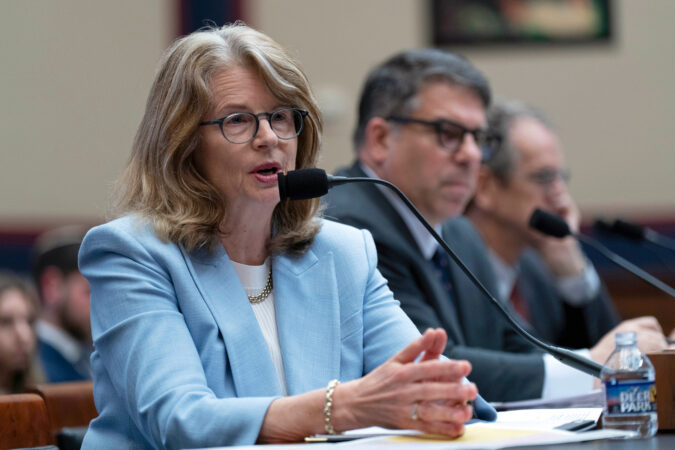
    The announcement comes after a particularly difficult year for the college and Raymond, who faced intense grilling in May by a Republican-led congressional committee probing antisemitism complaints on college campuses. The school also is under investigation by the U.S. Department of Education over its handling of antisemitism complaints.

    “This was not an easy decision, but after more than three decades in higher education, I am ready to step away from academia,” Raymond said in her message to campus.

    Her news comes just two days after she announced John McKnight, the dean of the college, would be leaving in June for a new role at Dartmouth College.

    Raymond said she wanted to give the college’s board of managers time to search for a replacement.

    Raymond, 65, a molecular biologist, became president of the 1,470-student liberal arts college on the Main Line in July 2019. She came to Haverford from Davidson College in North Carolina, where she had been vice president for academic affairs and dean of faculty.

    She has been in the job longer than her three most recent predecessors, Kim Benston, who served four years; Daniel Weiss, who was there two; and Stephen G. Emerson, who had four years.

    In her announcement, she noted accomplishments including the completion of a strategic plan, efforts to advance diversity, equity, and access, the launch of the Institute for Ethical Leadership and Inquiry named for board chair Michael B. Kim, and the new recital hall.

    She also acknowledged challenges, including the pandemic, the strike for racial justice in 2020 in which students refused to attend class and demanded that Haverford do more to support its Black and brown students, and “more recent times of social unrest and public scrutiny.”

    Raymond earlier this year in a message to the campus acknowledged that she “came up short” in dealing with conflict over antisemitism complaints and said both she and Haverford can do better.

    “To Jewish members of our community who felt as if the College was not there for you, I am sorry that my actions and my leadership let you down,” she said in that message.

    Haverford was the only local college earlier this year to receive an F on a report card by the Anti-Defamation League for its response to antisemitism — a rating given to less than 10% of schools nationwide. The ADL’s methodology for categorizing antisemitism has been questioned, and critics have argued that criticism of the state of Israel and its government have been wrongly conflated with antisemitism.

    But the F rating caught the attention of the congressional Committee on Education and Workforce, which called on Raymond and two other college presidents to testify in May. Raymond took the worst of the grilling, largely because she was reluctant to answer questions about discipline for alleged antisemitism, especially in specific cases. Raymond testified that the college does not release data on student suspensions and expulsions.

    In June, the committee demanded answers about faculty and student discipline. And in August, the education department, which has launched a flurry of investigations of colleges regarding antisemitism, said it would probe Haverford.

    The investigation follows “credible reports that Haverford has failed to respond as required by law to multiple incidents of discrimination and harassment against Jewish and Israeli students on its campus,” the department said at the time.

    In her testimony to the congressional committee, Raymond noted the college had made a plethora of changes to address concerns about antisemitism, including changes in the antibias policy and rules around protesting, steps to revise the honor code, and increases in campus safety at events.

    Kim, the board chair, thanked Raymond for her service amid a difficult time in a message to campus Thursday.

    “She has guided the College with great care during periods of both remarkable growth and significant challenge,” he said. “During her tenure, Haverford has welcomed two of its largest incoming classes, increased support for student resources, access, and engagement, and continued to graduate students who use their liberal arts education to effect positive change in the world.”

    Raymond said in her Thursday message that through the challenges, “ … the College has remained strong and resolute in its mission to foster a campus culture of belonging and respect, where academic freedom and freedom of expression remain fundamental to Haverford’s nearly 200 years of academic excellence and open inquiry, and where our values guide us through new territory.”

  • Bryn Mawr birth center Lifecycle Wellness to close in early 2026

    Bryn Mawr birth center Lifecycle Wellness to close in early 2026

    Lifecycle Wellness, a birth center in Bryn Mawr that offered an alternative to hospital delivery for Philadelphia-area parents, is shutting down operations amid growing financial pressure, the nonprofit announced Thursday.

    The nonprofit, which provides “homelike” births for low-risk pregnancies at its birth center and at Bryn Mawr Hospital, will stop delivering babies on Feb. 15. Patients who are due on Feb. 1 or later will need to transition to a different provider.

    In an open letter posted on its website Thursday, Lifecycle leaders said the organization was strained by rising operations and medical malpractice costs that outpaced insurance reimbursement rates — industrywide challenges that have plagued small and large health organizations alike.

    “From the beginning, Lifecycle Wellness has been dedicated to providing evidence-based, family-centered care that empowers clients to make informed choices and experience birth in a supportive, homelike environment,” Jessi Schwarz, executive and clinical director, and Lauren Harrington, board president, wrote. But, they added, “growing challenges have made it increasingly difficult for small, independent, and non-profit maternal health providers to exist.”

    Lifecycle reported a profit of $135,303 last year, down from $221,578 in 2023, according to its most recent tax filings.

    The organization provided prenatal and birthing services to about 600 patients a year, according to its 2024 tax filings. It employed 73 people that year.

    But in their letter announcing the closure, Schwarz and Harrington said that “shifts in public health and rising rates of medical complications have reduced the number of families eligible for this model of care.”

    Medical malpractice strain

    The number of malpractice cases rose in Philadelphia after a 2023 rule change allowed patients to sue outside the county in which they received medical treatment.

    Medical malpractice lawsuits are common in obstetrics, and Philadelphia’s court is known for verdicts with high awards.

    In 2023, a Philadelphia jury awarded a record-setting $180 million to the family of a child who was born with severe brain injuries at the Hospital of the University of Pennsylvania.

    The Birth Center is currently facing seven lawsuits in Philadelphia.

    The industry’s financial headwinds can be harder for independent, specialized healthcare organizations to face.

    Last year, Rothman Orthopaedic Institute ended a decades-long run as the official team physicians for the Philadelphia Eagles, citing the risk of medical malpractice liability. A year earlier, a Philadelphia jury awarded $43.5 million to former Eagles safety Chris Maragos, who sued Rothman over the treatment he received for a career-ending knee injury.

    Birth resources outside Philadelphia

    Lifecycle said it would continue to work with families who are expected to give birth by the end of January.

    The organization will work with families due after Feb. 1 to identify a new provider and transition their care.

    Lifecycle plans to continue offering limited prenatal, postnatal, and gynecological care through the end of March. The organization will also phase out its mental health and lactation services in February and March.

    “Access to respectful, equitable, community-based care is shrinking for many, particularly for marginalized communities who need it most,” Schwarz said in a statement to The Inquirer. “Our situation reflects a broader reality that the health, safety, and well-being of pregnant people and families is not prioritized within our current payment structures.”

    They did not offer specifics about where existing patients may be able to transfer their care.

    Birth centers are designed as alternatives to hospitals, offering a more natural, “homelike” setting. They have limited pain medications, and patients are typically not connected to fetal monitoring devices, allowing them to move more freely.

    This type of care is only an option for low-risk pregnancies, as birth centers are not licensed to perform c-section operations, and will need to transfer patients to a hospital if there is a serious complication during birth.

    “I felt very much in the arms of a beloved community of people who were really on your side,” said Monica Moran, who delivered her children with the support of Lifecycle midwives in 2007 and 2009.

    Moran, who lives in Havertown, has continued to go to Lifecycle for routine gynecological services and isn’t sure where she will go instead.

    She said she worries for families who were counting on Lifecycle’s providers for a nonhospital delivery.

    Nearby hospitals with labor and delivery services include Bryn Mawr Hospital and Lankenau Medical Center, both of which are owned by Main Line Health.

    The system is “well-positioned and prepared to manage increased patient volume while maintaining our high standards of care,” a spokesperson said in a statement.

    It has already seen an influx of patients since Crozer Health closed earlier this year. Crozer delivered 960 babies in 2024, according to health department records.

  • Pa.’s new budget has financial help for Delco’s Riddle and Mercy Fitzgerald Hospitals

    Pa.’s new budget has financial help for Delco’s Riddle and Mercy Fitzgerald Hospitals

    Pennsylvania’s new budget has $5 million in supplemental payments for the two Delaware County Hospitals that have seen significant increases in patient volumes since Crozer-Chester Medical Center and Taylor Hospital closed in the spring.

    Main Line Health’s Riddle Hospital, near Media, is getting $3 million. The amount for Trinity Health Mid-Atlantic’s Mercy Fitzgerald Hospital, in Darby, is $2 million, according to budget documents.

    The $5 million will be doubled by a federal match, said Democratic State Sen. Tim Kearney, who represents part of Delaware County. The $5 million is from a fund used to help hospitals the serve a large number of patients with Medicaid and used to go to Crozer Health, Kearney said Friday.

    Main Line said in a statement Thursday that the money will help it maintain services in the county.

    “Since Crozer’s shutdown in April, Riddle’s Emergency Department has experienced an unprecedented surge — 46% more patients than the same period last year, an increase of nearly 4,000 overall,“ the nonprofit said.

    Main Line, which also owns Lankenau Medical Center, Bryn Mawr Hospital, and Paoli Hospital, said it has seen 55,000 patients from the Crozer market — a 15% increase over the same time period last year. That figure includes 8,000 patients who went to a Main Line facility for the first time, the health system said.

    Trinity Health did not respond to a request for comment.

    Shuttered hospitals in limbo

    While Riddle and Mercy Fitzgerald have scrambled to accommodate patients who used to rely on Crozer Health, efforts are underway to bring healthcare services back to at least Taylor Hospital in Ridley.

    Local investors bought that facility in September for $1 million and are trying to entice one of the region’s nonprofit health systems to bring it back as a hospital.

    A group from New Jersey called Chariot Allaire Partners LLC has agreed to pay $10 million for the former Crozer-Chester Medical Center in Upland but has not disclosed its plans. That facility served as a key safety provider for a low-income area of Delaware County.

    A partnership of Restorative Health Foundation and Syan Investments won an auction for Springfield Hospital for $3 million, but it does not have support from township officials.

    Delaware County legislators also obtained $1 million from the state to buy emergency department equipment if one of the closed hospitals, such as Taylor, reopens, Kearney said.

    Editor’s note: This story has been updated with additional detail on the funding.

    This suburban content is produced with support from the Leslie Miller and Richard Worley Foundation and The Lenfest Institute for Journalism. Editorial content is created independently of the project donors. Gifts to support The Inquirer’s high-impact journalism can be made at inquirer.com/donate. A list of Lenfest Institute donors can be found at lenfestinstitute.org/supporters.

  • Tracking the sharp drop in Philadelphia health systems’ operating margins after COVID-19

    Tracking the sharp drop in Philadelphia health systems’ operating margins after COVID-19

    The worst of the coronavirus pandemic that started nearly six years ago is well in the past, but Philadelphia’s biggest nonprofit health systems are still contending with the financial disruption unleashed by the virus that led to thousands of deaths in the area.

    Operating conditions for hospitals started improving in 2023, but “the slope of the recovery is a bit more shallow than a lot of health systems had planned for,” said Mark Pascaris, a senior director at Fitch Ratings, one of three major credit ratings agencies.

    Patients have returned, but the pandemic led to a resetting of expenses for labor and supplies at a higher level, Pascaris said. “That’s been the challenge over the last two or three or four years now, trying to manage through a very challenging expense situation,” he said.

    To show how the financial landscape has changed, The Inquirer compiled financial data for the region’s six biggest health systems that have fiscal years ending June 30 each year. The analysis compared average operating profits in three years before the pandemic (fiscal years 2017-19) to the results in most recent three years (fiscal years 2023-25).

    All six systems showed a substantial drop in a measure of earnings that excludes certain accounting expenses and interest costs. This slice of financial results is known as earnings before interest, depreciation, and amortization. Abbreviated as EBIDA, it’s a primary indicator watched by influential credit ratings agencies.

    window.addEventListener(“message”,function(a){if(void 0!==a.data[“datawrapper-height”]){var e=document.querySelectorAll(“iframe”);for(var t in a.data[“datawrapper-height”])for(var r,i=0;r=e[i];i++)if(r.contentWindow===a.source){var d=a.data[“datawrapper-height”][t]+”px”;r.style.height=d}}});

    The experience of Children’s Hospital of Philadelphia clearly illustrates what has happened: The organization’s aggregate revenue in the most recent three fiscal years was 58% higher than it was in the three years that ended June 30, 2019, but its EBIDA climbed only by half a percentage point.

    “Hospitals and healthcare systems across the country continue to face significant headwinds, driven by reimbursement challenges, increased supply and labor costs, uncertain governmental pressures, and the continued ripple effect of the pandemic,” CHOP said in a statement.

    Officials at ChristianaCare, Main Line Health, and Temple University Health System echoed CHOP’s remark.

    “Margins were far better prior to the pandemic, largely due to lower supply and labor costs,” Main Line’s chief financial officer Leigh Ehrlich said. “Those costs rose sharply during the pandemic and continue to rise.”

    ChristianaCare’s CFO Rob McMurray noted: Not only have Medicare and Medicaid rates not kept up with inflation, but more people have those government forms of insurance for people 65 and older and for low-income people.

    The nonprofit is expanding from its base in northern Delaware to Southeastern Pennsylvania and is expanding alternative formats, such as hospital-care-at-home and micro hospitals, to reduce costs, McMurray said.

    A significant worry for Temple University Health System is the impact of the 2025 budget reconciliation bill, sometimes called the One Big Beautiful Bill Act. The North Philadelphia nonprofit estimates that Medicaid cuts in that law will cost it $519 million over the next 10 years, said Jerry Oetzel, the system’s CFO.

  • How three Philadelphia-area health systems changed accounting practices and boosted profits

    How three Philadelphia-area health systems changed accounting practices and boosted profits

    Amid persistently higher costs, three Philadelphia-area health systems have cut expenses over the last two years by changing how they account for investments in facilities and equipment. The change significantly boosted operating income in all three cases.

    ChristianaCare and Main Line Health are now spreading the cost of buildings and building improvements over as many as 80 years, they said in their fiscal 2025 audited financial statements. That is double the maximum number of years they previously used to calculate what accountants call depreciation expense. Thomas Jefferson University made a similar change last year.

    All three health systems use PricewaterhouseCoopers LLP as their auditor. The firm, which did not respond to a request for comment, also has Philadelphia health-system clients that have not extended their depreciation schedules.

    The term depreciation expense refers to the way hospitals and other businesses allocate the cost of a building, a piece of equipment such as an MRI machine, or even software to manage patient records across the number of years the asset is likely to be used.

    It’s a noncash expense because the money used to make the purchase is recorded elsewhere in the financial statements. Several financial and accounting experts said the change could be seen as cosmetic.

    “It’s not affecting operations. It’s not increasing their revenues. It’s not decreasing their cash expenditures. It is purely a bookkeeping entry,” said Steven Balsam, a professor of accounting at Temple University’s Fox School of Business.

    Main Line Health

    At Main Line, the extended depreciation schedule reduced the expense by an estimated $37.5 million. That helped the system achieve a small, $4 million operating profit for the first time since fiscal 2021, when federal COVID-19 aid buoyed hospitals.

    Without the depreciation savings, Main Line would have had an operating loss of $33.5 million in the year that ended June 30, compared to a $61 million operating loss in fiscal 2024.

    Asked for comment, Main Line’s chief financial officer Leigh Ehrlich noted that the system’s financial performance had improved, thanks to “increased patient volumes and continued focus on expense management.”

    Excluding noncash depreciation and amortization in each of the last two years, Main Line’s operating income improved to $127.8 million from $96.7 million.

    ChristianaCare

    ChristianaCare reviewed the depreciation schedules of fixed assets “as part of our ongoing commitment to maintain accurate and reliable financial reporting,” the nonprofit’s chief financial officer Rob McMurray said in an email. The result was a $24.4 million reduction in depreciation expense.

    The review also resulted in a $9 million write-off of unspecified assets, which meant that in fiscal 2025 the benefit to operating income was $15 million, McMurray said.

    ChristianaCare’s operating income in the year that ended June 30 was $35.5 million, or $20.5 million without the accounting change. The organization had $126.2 million in operating income in fiscal 2024.

    Thomas Jefferson University

    Last year, Thomas Jefferson University opened its $762 million Honickman Center in Philadelphia. Normally, taking a building like that into service would increase depreciation expense.

    Instead, Jefferson’s depreciation expense fell by $68 million, according to its audited financial statement for the year that ended June 30, 2024. The decline happened after Jefferson opted to spread the cost of all buildings and building improvements over as many as 70 years, according to the depreciation schedule in its financial statement.

    Even with the depreciation change, Jefferson’s operating income in fiscal 2024 was extremely narrow, at $1.34 million on nearly $10 billion in revenue that year.

    The benefit of lower depreciation expense continued in fiscal 2025, as it will in future years for ChristianaCare and Main Line.

    Depreciation expense at other local systems

    Most Philadelphia-area health systems use a schedule for depreciating buildings and building improvements that maxes out at 40 years, an Inquirer review of financial statements found.

    “You’re constantly modernizing your facilities to allow for the delivery of medicine based on current times,” Temple University Health System chief financial officer Jerry Oetzel said in an interview. “Who knows 15 years from now? We don’t have clear insight, but it’s probably going to be more home care.”

    That’s why Temple hasn’t adopted a longer depreciation schedule. “It’s just a savings in operating expenses without the benefit of any cash behind it,” Oetzel said.

    Editor’s note: This article has been updated to remove a reference to American Hospital Association guidelines.