Tag: Main Line

  • Smaller portions, fewer second drinks: How restaurateurs are adapting to changing consumer trends

    Smaller portions, fewer second drinks: How restaurateurs are adapting to changing consumer trends

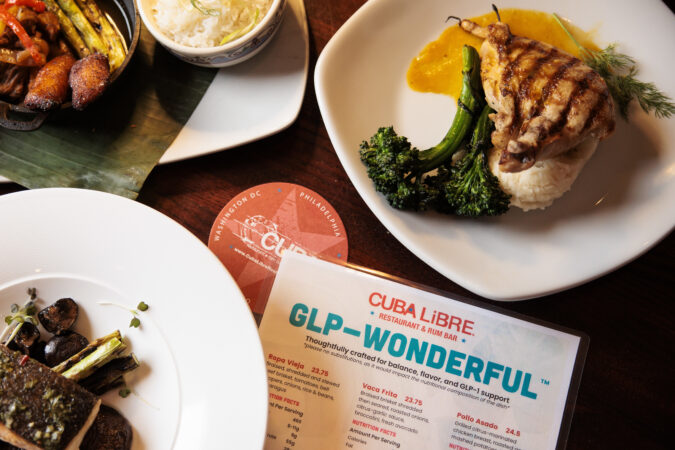
    In October, Cuba Libre became one of the country’s first full-service restaurants to unveil a GLP-1 menu, available at the request of diners on the increasingly popular weight-loss medications.

    Next month, the Old City establishment will also roll out a “lighter portions, lighter prices” section of its regular menu.

    This is all to keep up with the evolving preferences of Philly-area diners, said Barry Gutin, cofounder of Cuba Libre.

    “We said, ‘We should put something on the menu for all sorts of people watching their diet and their money,’” said Gutin, whose staff has noticed GLP-1 users and nonusers alike requesting these options more over the past year. This trend has also been seen at Cuba Libre restaurants in Atlantic City, Washington, and Orlando, as well as at its Paladar Latin Kitchen and Bomba Tacos locations in the Philadelphia suburbs.

    For customers, an added perk is that they pay less for these smaller-portioned menu items, Gutin added. He said diners have become more focused on value amid broader financial uncertainty.

    “The economy dictates that we have a diversity in pricing that meets more people’s needs,” Gutin said. “You think about the way people look at menus online. They’re scanning through prices as well.”
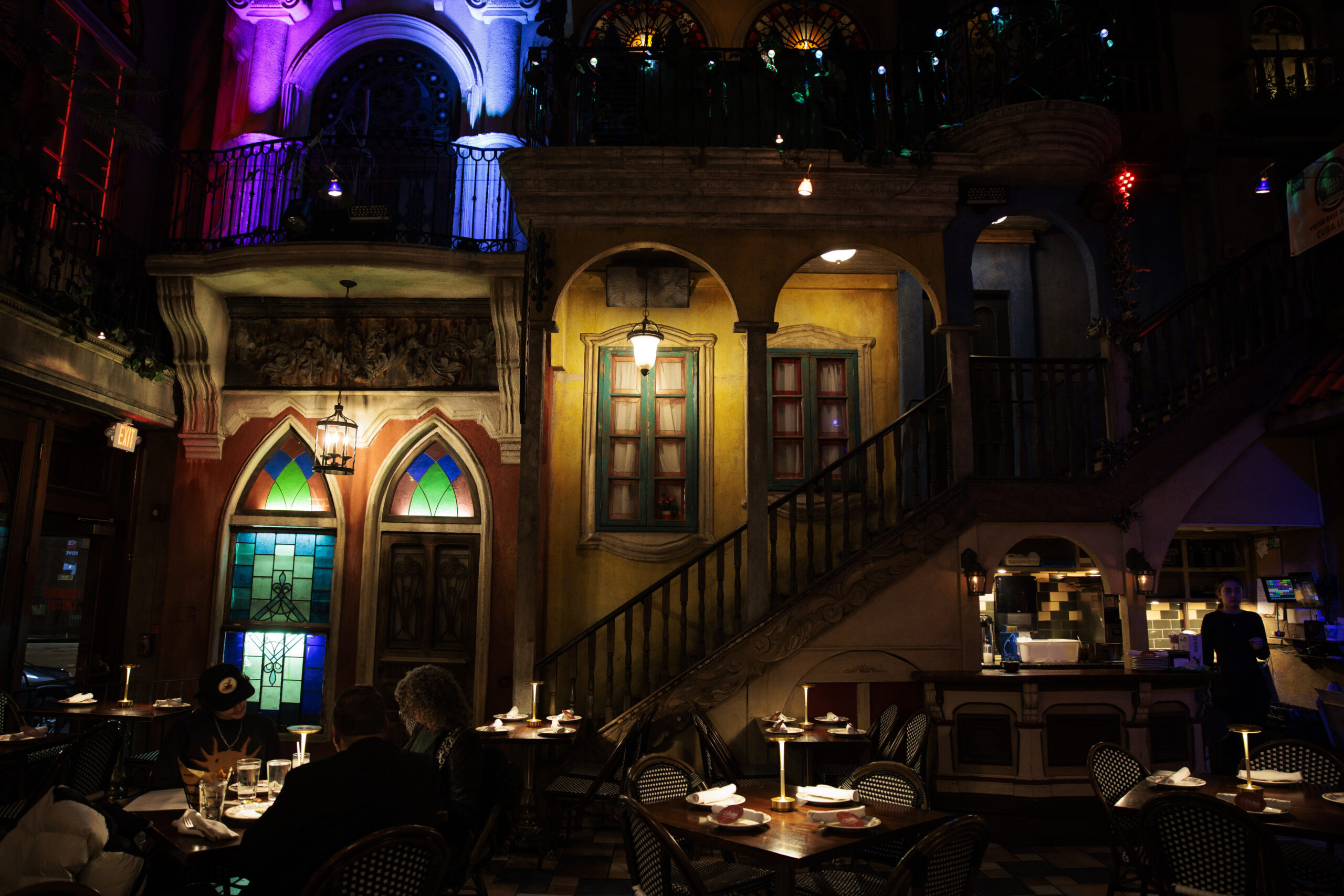
    The dining room at Cuba Libre in Philadelphia. A cofounder says staff has noticed GLP-1 users and nonusers alike requesting smaller-portioned, less expensive options more over the past year.

    In August, more than a third of U.S. diners said they were dining out less frequently than they did a year ago, according to a survey from YouGov. Of the less-frequent diners, 69% said they were eating out less in part because of the perceived cost of restaurant meals, the survey found.

    Lower-income consumers were most likely to have cut back on dining out, according to the survey, while middle- and higher-income folks hadn’t changed their habits substantially.

    This jibes with what executives at the Federal Reserve Bank of Philadelphia are hearing, too.

    “Even individuals with discretionary income to spend are being careful,” Anna Paulson, president of the Federal Reserve Bank of Philadelphia, said Wednesday. “For example, although people are still eating out in Philadelphia, contacts tell us that less expensive options on the menu are becoming more popular.”

    “The only exception to this trend is at more upscale restaurants,” Paulson added. “High-income households, bolstered by a strong stock market, appear to be driving elevated consumption growth.”
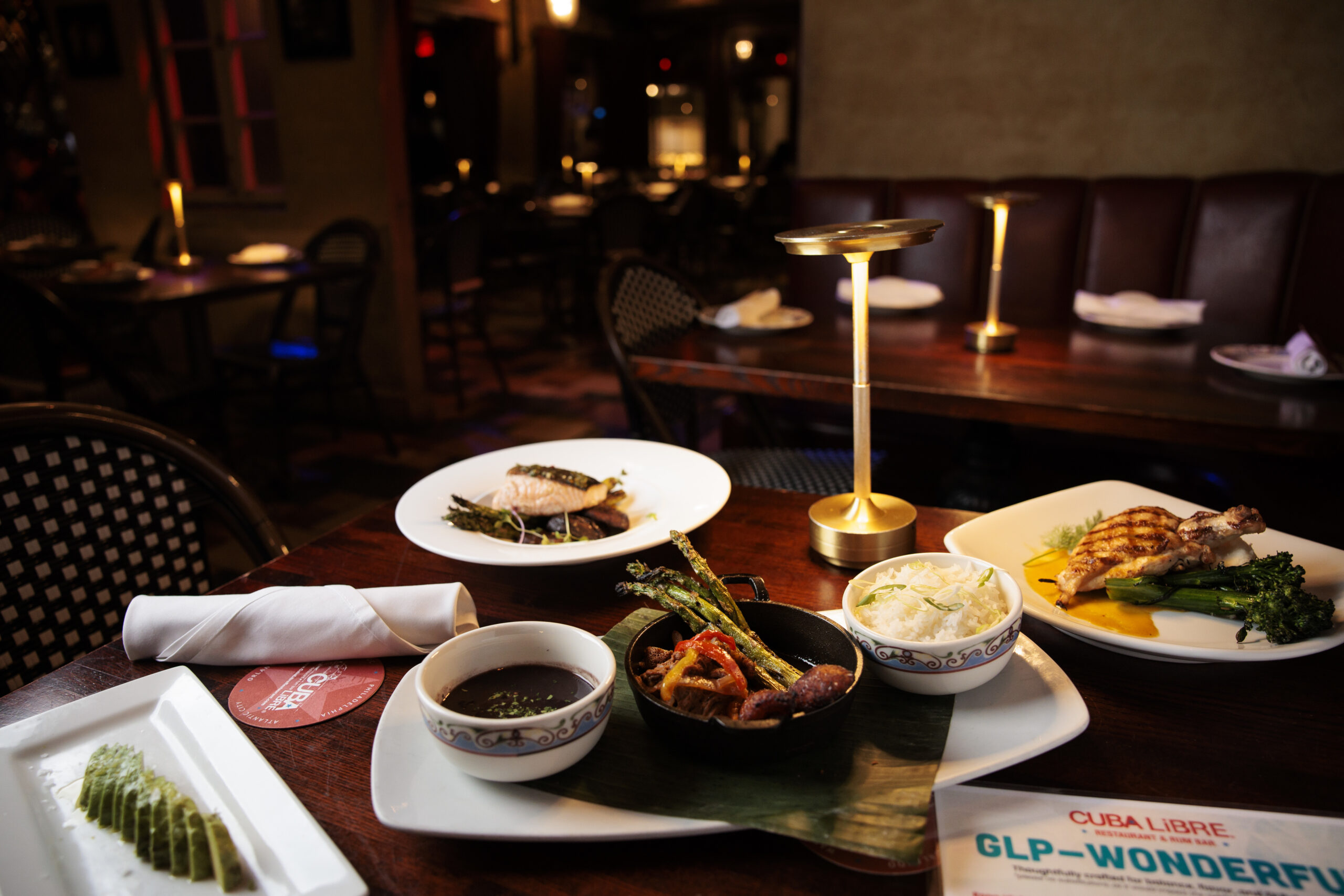
    The Ropa Vieja meal from the GLP-Wonderful menu at Cuba Libre as shown on Jan. 14.

    At the same time, restaurants nationwide are rethinking their menus amid a rise in the use of GLP-1 medications like Ozempic and Wegovy, which suppress appetite. In recent weeks, Olive Garden, Shake Shack, and Chipotle are among chains that have rolled out special menus with higher-protein, smaller-portioned meals. Smoothie King launched a GLP-1 Support Menu in October 2024.

    As of November, about 1 in 8 U.S. adults were taking a GLP-1, according to a survey from the nonprofit Kaiser Family Foundation. GLP-1s can be used for weight loss and to treat chronic conditions such as diabetes.

    At the bar, consumer habits have also changed.

    Alcohol use among adults has plummeted, with just 54% of respondents saying they drink in a July Gallup survey. That’s the lowest percentage in at least 90 years. It likely drops even lower this month as some people abstain from alcohol as part of the Dry January trend.

    Philly-area diners are spending ‘differently’

    All of these trends are on display at Philly-area bars and restaurants. And owners are trying to keep up.

    “We’re definitely at a time of dramatic shift in people’s preferences and tastes,” said Avram Hornik, owner of FCM Hospitality, which runs about a dozen venues in the region. They include Morgan’s Pier, Harper’s Garden, Craft Hall, and Concourse Dance Bar, as well as seasonal cocktail and beer gardens such as the traveling Parks on Tap.

    “I don’t think people are spending less or going out less,” Hornik said, “but I just think they are doing it differently.”

    Customers dine at Liberty Point, one of Avram Hornik’s restaurants, in 2023.

    At Hornik’s restaurants, overall sales have been consistent year over year, he said. Some customers are looking for smaller portions, he said, and late-night business has dropped precipitously. But group dining and special events have made up for losses in other areas, he said.

    When customers decide an outing is worthwhile, Hornik said, they generally aren’t sparing expenses.

    People are “looking for more of an experience when they go out to eat,” Hornik said. “It’s really about value: Am I getting a good value for the money that I’m spending?”

    To retain customers, Hornik said his restaurants are leaning into weekly specials, such as $1 tacos at Rosy’s, and happy-hour deals.

    At Cuba Libre, Gutin said he sees the GLP-1 menu, as well as the forthcoming lighter-portions menu, as a way to make his restaurants as appealing as possible for all diners.

    At each location, only about a dozen people request the GLP-1 menu each week, he said. But if a group is considering dining at Cuba Libre and one person is on a GLP-1, the special menu could make or break their decision. He said it could keep the GLP-1 user from exercising their “veto vote,” sending the entire group to dine elsewhere.

    Dining trends differ by location

    In the Philadelphia suburbs, restaurateurs said dining trends vary depending on location and type of restaurant.
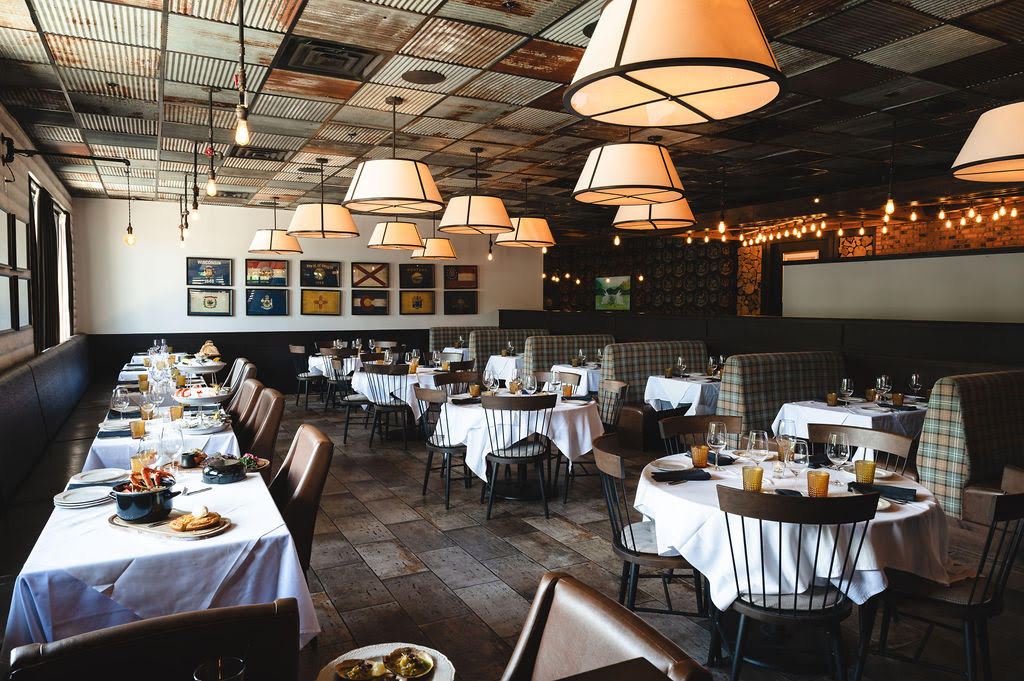
    The dining room at Joey Chops, the Malvern steakhouse that Stove & Co. restaurants co-owner Joe Monnich said has been least impacted financially by changing consumer habits.

    Joe Monnich, co-owner of Stove & Co. restaurant group, said food sales are up at his higher-end restaurants, including Joey Chops steakhouse in Malvern. But farther from the Main Line, in more “blue-collar” Lansdale, he said, Stove & Tap’s business is less steady of late.

    There, “I feel more economic up and downs,” Monnich said. He felt similarly about his Al Pastor restaurant in Havertown, which is now closed after a local buyer came in last month and offered Monnich cash on the spot for the building.

    At his more casual concepts all over the region, people are spending less on average, he said, and about the same at the higher-end spots. Recently, he added, staff have noticed diners being more mindful of how much they’re consuming.

    “People aren’t getting that second drink,” Monnich said. “People aren’t getting dessert. People aren’t getting that appetizer.”

    Changing drinking habits have hurt alcohol sales, too, Monnich said. In recent years, many customers have turned away from local microbrews and gravitated toward canned cocktails and “macro beers” like Michelob Ultra and Miller Lite.

    “Three years ago I barely sold Michelob Ultra and right now it’s one of my top sellers,” Monnich said. As are canned cocktails. “Surfsides are expensive, and I don’t make a lot of money off them.”

    Stove & Co. executives have talked about creating special menus catering to these evolving consumer preferences, Monnich said, but he gets anxious about making portions smaller. So for now, he too is leaning into happy-hour deals and other value-focused items.

    “I try not to be too focused on trends because trends come and go,” Monnich said. “I do see the current trend, these weight-loss drugs, I don’t see that going anywhere … [and] people are going to be drinking less-octane alcohol.”

    Staff writer Ariana Perez-Castells contributed to this article.
  • Fewer Pennsylvania nursing homes closed last year than in 2024

    Six Pennsylvania nursing homes closed last year, down from 10 in 2024, according to data provided to The Inquirer by the Pennsylvania Department of Health.

    None of last year’s closures were in the Philadelphia area. The most recent closure in Southeastern Pennsylvania was at Main Line Health’s Riddle Hospital, which shuttered its very small, 23-bed facility in early 2023. That year, five nursing homes closed statewide.

    window.addEventListener(“message”,function(a){if(void 0!==a.data[“datawrapper-height”]){var e=document.querySelectorAll(“iframe”);for(var t in a.data[“datawrapper-height”])for(var r,i=0;r=e[i];i++)if(r.contentWindow===a.source){var d=a.data[“datawrapper-height”][t]+”px”;r.style.height=d}}});

    But this year is starting with the loss of a Philadelphia facility. Monumental Post-Acute Care at Woodside, formerly called Bala Nursing & Rehabilitation Center, notified state official last month that the 180-bed facility will close next month.

    Officials there could not be reached for comment about why nursing home is closing after 37 years. More than 90% of the facility’s patients had Medicaid insurance for low-income people.

    Monumental is among the larger nursing homes to close recently. About half of the nursing homes that closed during the last three years had 50 or fewer beds. The statewide average is 127 beds.

    Smaller facilities have a harder time covering their costs.

    The county hardest hit by nursing home closures was Allegheny, which is home to Pittsburgh. Four nursing homes closed there. The counties that are home to Scranton and Wilkes-Barre each lost two facilities.

  • Suburban Square now has apartments

    Suburban Square now has apartments

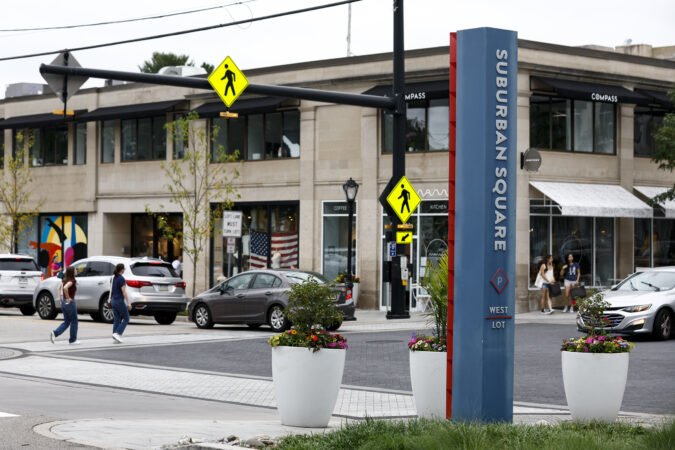
    Apartments have come to Suburban Square.

    This week, owner Kimco Realty and developer Bozzuto Development announced the opening of Coulter Place, the first apartment community in the Ardmore shopping destination.

    The five-story, mixed-use development includes 131 apartments with one to three bedrooms and about 20,000 square feet of ground-floor retail space. Amenities for residents include a fitness center, clubroom, game room, pool, coworking spaces, and pet-care spaces. It has two courtyards and garage parking with electric-vehicle charging stations.

    The promise of apartment residents helped attract new retailers to Suburban Square, including New Balance, Sugared + Bronzed, and the apparel brand Rhone on the ground floor of the apartment building.

    The complex is one of a few projects planned in recent years that have added or will add hundreds of apartments near Lancaster Avenue in Ardmore. One Ardmore, a 110-unit apartment complex, opened in 2019 after a yearslong campaign by residents to stop it. The long-awaited Piazza development is expected to add 270 apartments and almost 30,000 square feet of retail space when it opens in a couple of years.

    This rendering shows the outdoor pool at Coulter Place.

    Conor Flynn, CEO of Kimco Realty, said in a statement that Suburban Square is an “iconic, walkable destination” and that the addition of apartments creates “a more vibrant, connected experience for residents, retailers, and visitors alike.”

    “Coulter Place represents the next chapter in Suburban Square’s evolution and a clear example of how we’re unlocking long-term value through thoughtful mixed-use development,” Flynn said.

    The apartments are across from Trader Joe’s and the Ardmore Farmers Market and within walking distance to the Ardmore station for SEPTA and Amtrak trains.

    Apartments available for lease at Coulter Place range from one-bedroom, one-bathroom units for about $3,030 per month to a three-bedroom, two-bathroom unit for $7,035 per month.

    Philadelphia-based JKRP Architects designed the apartment building.

    Suburban Square was developed in 1928 and now has about 80 shops, restaurants, fitness spaces, and more. Businesses include Apple, SoulCycle, Warby Parker, Van Leeuwen Ice Cream, CAVA, and Di Bruno Bros.

    This rendering shows one of the courtyards for residents of Coulter Place.
  • This retirement-community meal was the best I’ve eaten on the Main Line

    This retirement-community meal was the best I’ve eaten on the Main Line

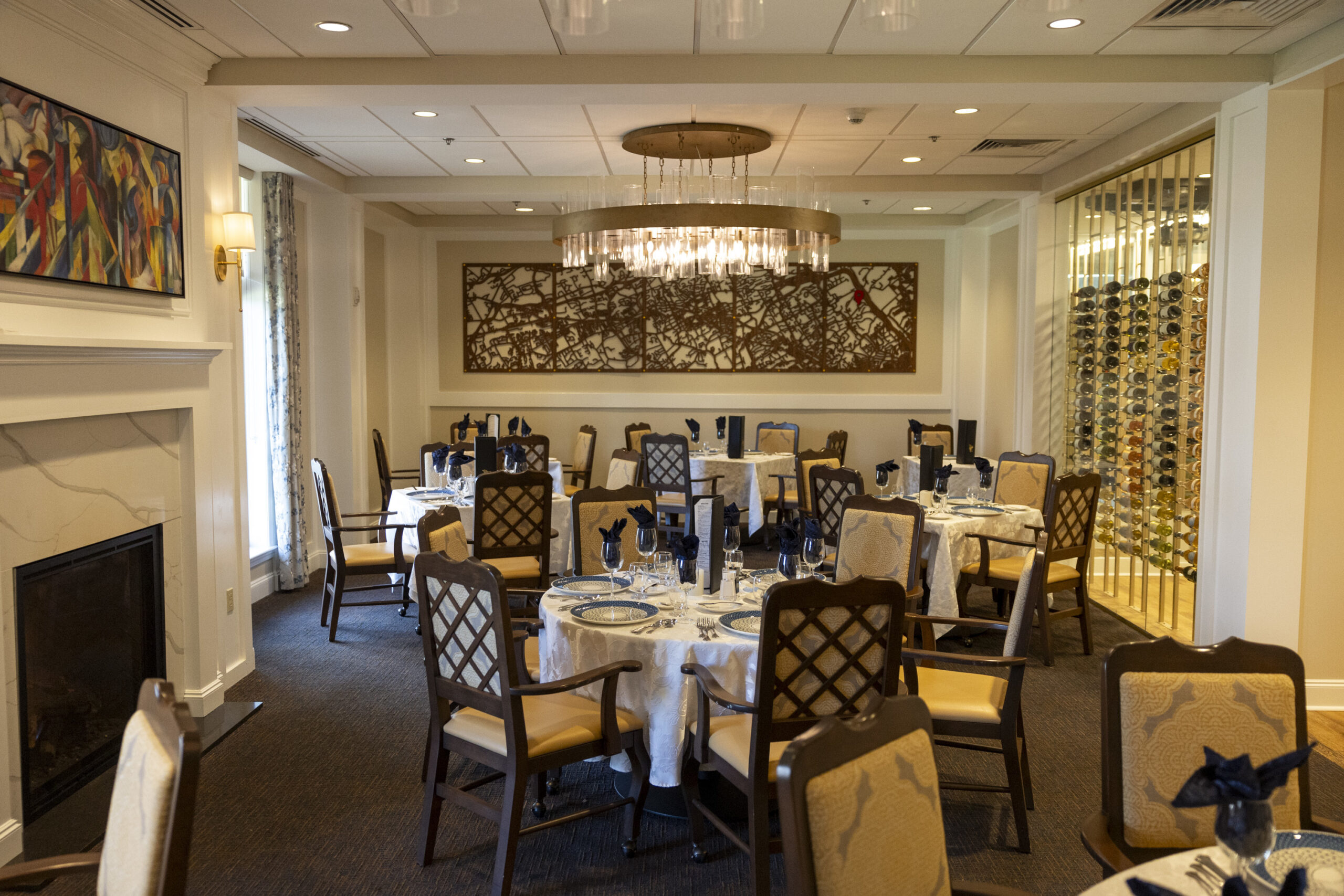
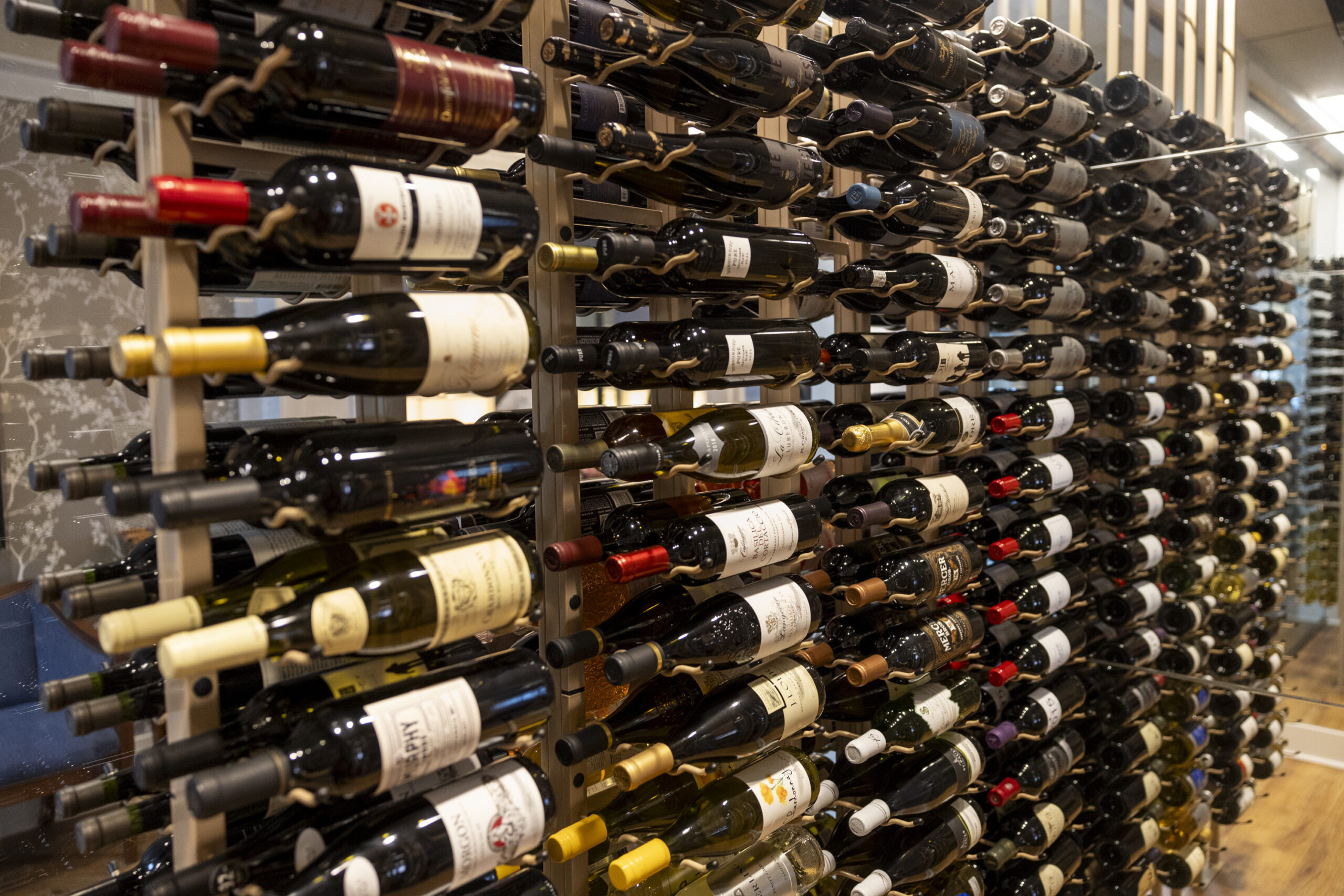
    The intimate dining room is hushed but for the clinking of glasses and silverware clattering on gleaming plates. There are only 32 seats. The polished wooden chairs are plushly upholstered. The paintings and a stylized metalwork map that adorn the room are tasteful. A glass wine room, lit golden from within, casts soft light on the silver damask-swathed tables, as do the Napa winery-esque modern chandeliers.

    This is Carlton Commons, the heart of senior-living, life-planning community Waverly Heights in Gladwyne.

    The mansion in which this dining room is housed was once the elegant Main Line estate of a railway baron. Now, it has the air of a very quiet cruise ship, complete with a dress code: dresses for women, dinner jackets for men.

    Dining room at the Waverly Heights in Gladwyne, Pa., on Tuesday, Dec. 30, 2025.

    This is a restaurant that has a waiting list that’s ostensibly 710 people, about as long as Royal Sushi’s notorious Resy waitlist. But it‘s arguably far more difficult to get into. You need to be 62 years of age to be a resident (who can bring guests of any age), and the cost of admission for a one-bedroom dwelling requires a $336,000 minimum down payment. (Deluxe apartments start at over a million dollars — not a surprise for wealthy Gladwyne.)

    An osso buco collapses into a tangle of tender fibers at the prod of a fork, melting into the slightly tangy goat cheese polenta puddled beneath. Crunchy fried potato slivers add pleasing texture to each bite. A butternut squash risotto is just as satisfying, a master class in texture, with creamy squash trapped in distinct grains of arborio, beset with balsamic-scented curls of slow-cooked sweet onion.

    If I closed my eyes, I could very well think I was dining at Le Virtù.

    Chicken cutlet with rigatoni and vodka sauce at Waverly Heights.

    There’s a perfectly al dente rigatoni alla vodka upon which a crisp chicken cutlet is nestled, then topped with an oozing cloud of burrata. (It’s almost identical to the thoroughly satisfying one I just had at Center City’s Wine Dive.)

    The specialty of the house is a curiously delicious tomato aspic, served with a tiny slice of cucumber and a dollop of Hellman’s mayo. No staff member was able to explain its origins, as it predated all of them. “It was always here,” said Waverly Heights’ white-toqued executive chef Michael F. Tiernan, 47. “And it is a fan favorite.”

    Tomato aspic with mayo and cucumber.

    When Tiernan interviewed for the position in 2017, he was expressly told to not touch the tomato aspic. He could change the shape — the kitchen’s cookie-cutter collection forms it into hearts, circles, and triangles — but he was not permitted to riff on the recipe, which consists of unflavored gelatin, tomato juice, vegetable juice, celery, onion, and olives. “It’s a very traditional, Old World-style recipe,” said CEO Tom Garvin.

    Tiernan has worked at Waverly Heights for eight years, with a cumulative 18 years under his belt cooking at continuing-care facilities. In addition to managing Carlton Commons and changing its menu every three months, he cooks for a packed calendar of special events. On one of my visits, he was preparing for New Year’s Eve with poached lobster and filet mignon for a dinner that would be a prelude to dancing. The only major difference between a New Year’s party at Waverly Heights and a typical one: Their ball drops at 9 p.m. “We celebrate like we’re in Australia,” Garvin quipped.

    Executive Chef Michael Tiernan at Waverly Heights in Gladwyne, Pa.

    I dined at Carlton Commons twice, once as a guest of a friend’s parents who are residents and again after I contacted the life-plan community (the preferred term over retirement community, as I was informed by Garvin), who indulged my request for an interview with no small amount of incredulousness. But I loved my first meal there.

    And I was deeply curious. A bookshelf in the community’s library is stacked with books written by residents, including volumes on psychology, cardiovascular disorders, and politics. Carlton Commons’ regular diners had careers as physicians, ambassadors, and scientists. How does one cook for residents like those of Waverly Heights?

    Well, first, by changing the menu every 90 days, and then by packing it with global influences, frequently rendered into Italian-rooted comfort foods. And hosting lots of themed parties and events.

    Wine cellar displayed near the entrance of the dining room at the Waverly Heights in Gladwyne, Pa., on Tuesday, Dec. 30, 2025.

    The back of house is, by necessity, an institutional operation. Carlton Commons and Waverly Heights’ other dining rooms and cafes are executed in partnership with Unidine, the life-plan community’s version of Aramark, though Carlton Commons’ chef has significant creative control over the menus. The pasta that winds up on my plate tastes far less institutional at many places I’ve eaten, including the 100-layer lasagna at Borromini in Rittenhouse.

    The prices for me, a single guest, are shockingly low. It’s $37.50 plus tax for a full meal, including an appetizer, soup or salad, entree, and dessert. No tipping is permitted. I am unable to pay more than $5.75 for a glass of chardonnay, and a nip of Maker’s Mark costs $4.75. (There’s no sommelier on staff, but there is a wine committee consisting of opinionated residents.)

    My first dinner there had some slight hiccups. One of my dining companions ordered a steak “still pink inside” that arrived well done, but it was swiftly replaced by an appropriately cooked one. Another dining companion was startled to discover that her iced tea was presweetened, which took more than a few minutes to rectify.

    The butternut squash risotto at Waverly Heights in Gladwyne, Pa., on Tuesday, Dec. 30, 2025.

    My edamame dumplings swam in a too heavy-handed pour of bracingly salty soy sauce that would have worked better as a dipping sauce, but the dumplings themselves were delightful crispy golden pockets of gently mashed soybeans. My miso sea bass was pristinely roasted, flaking apart into succulent morsels with a gentle nudge.

    Overall, the food is comforting, gently refined, and on trend in every which way, even to the surprise of Waverly Heights’ staff (down to the baked potatoes, available as a side every night). And the very early reservations — Carlton Commons seats diners between 5:30 and 7:15 p.m., and everyone is asleep by last call — reflect recent data that indicate diners are eating out earlier than ever. And I assure you, many of those residents listen to vinyl records, just like in Philly’s listening bars.

    Dining at Carlton Commons reminded me that sometimes, the best meals aren’t found in the places you’d expect.

  • Riddle EMS rebranded as Main Line Health EMS

    Riddle EMS rebranded as Main Line Health EMS

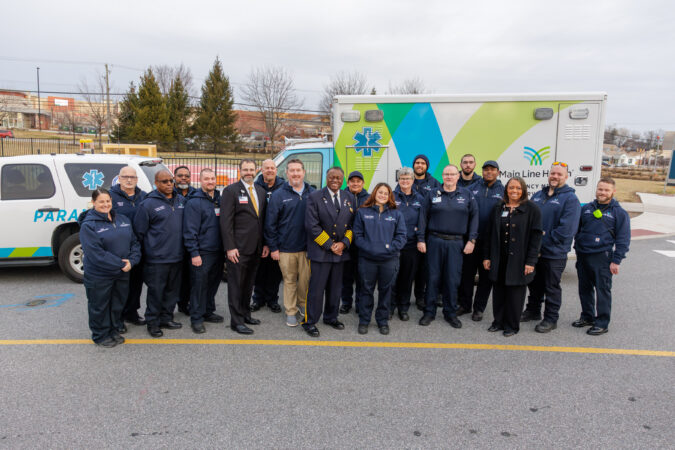
    Main Line Health on Wednesday announced that emergency medical services at Riddle Hospital in Media would be rebranded as Main Line Health EMS.

    The seven-ambulance fleet has been known as Riddle EMS for the past 40 years. It employs 77 paramedics and EMTs and provides emergency response services for Main Line’s four-hospital system.

    In addition to Riddle Hospital, Main Line Health includes Paoli Hospital, Lankenau Medical Center, and Bryn Mawr Hospital.

    The rebranding gives Main Line’s emergency services team a name that matches its system-wide mission, and “strengthens the team’s ability to meet the expanding needs of the community, while preserving the trusted service delivered for decades,” according to a statement from Main Line.

    Main Line’s hospitals, and in particular Riddle, have been strained by the closure of Crozer Health, which operated the largest emergency department and highest level trauma center in Delaware County.

    Riddle and Mercy Fitzgerald Hospital, in Darby, are the next closest hospitals for people who would previously have turned to Crozer for emergency care.

  • Don Was will celebrate Bob Weir and play the Grateful Dead’s ‘Blues for Allah’ with his new band in Ardmore

    Don Was will celebrate Bob Weir and play the Grateful Dead’s ‘Blues for Allah’ with his new band in Ardmore

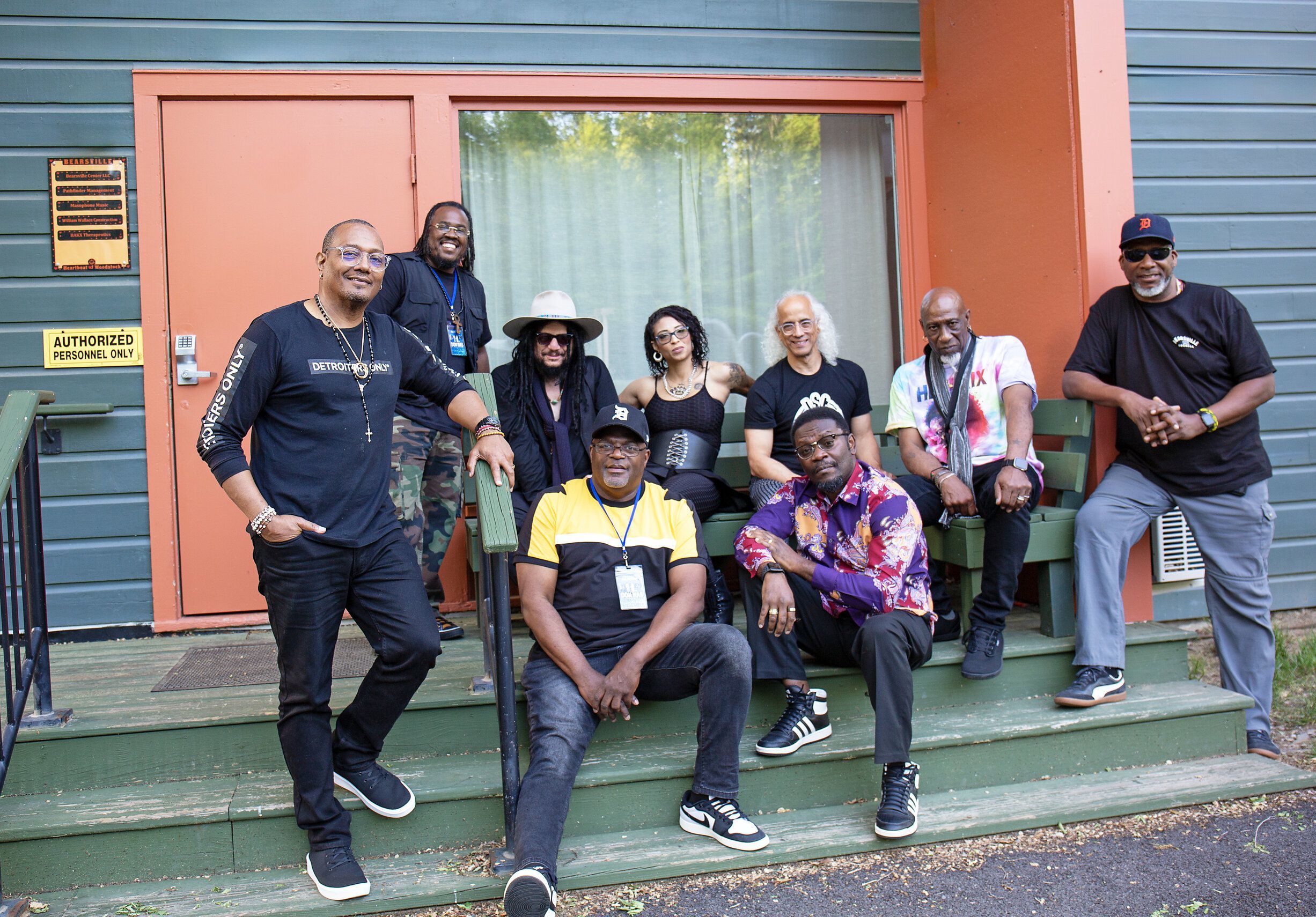
    Don Was’ show with the Pan-Detroit Ensemble at Ardmore Music Hall on Wednesday was always going to be, in part, a tribute to the music of the Grateful Dead.

    Along with digging deep into the rugged, funky sounds of their hometown — as the bassist and Grammy-winning producer and his bandmates do on their new album, Groove in the Face of Adversity — the date will also include a performance of the Dead’s 1975 album, Blues for Allah, in its entirety.

    But now the Dead community is reeling from the loss of Bob Weir, the singer-guitarist who cofounded the Dead in 1965 and became a torch bearer for the band’s music in the decades since Jerry Garcia died in 1995.

    So when Was and his eight-piece band return to the Main Line venue where they played in June at the Music Hall’s annual “Unlimited Devotion” Dead celebration, the show will be an opportunity for Philly Dead fans to mourn Weir, who died Saturday at 78.

    It will also serve as a celebration of the short-shorts-wearing rhythm guitarist and vocalist who sang many of the psychedelic rock band’s most beloved songs, including “Sugar Magnolia,” “Truckin’,” and Blues for Allah’s “The Music Never Stopped.”

    Was is president of the esteemed Blue Note Records jazz label and the former coleader of art-pop band Was (Not Was), best known for the hit “Walk the Dinosaur.” His long list of production credits includes Bonnie Raitt, the Rolling Stones, Willie Nelson, Bob Dylan, and many others.

    He also toured extensively with Weir, playing double bass with Wolf Bros, the band formed in 2018 whose repertoire mixed country and jazz with the Dead’s mystical roots-music blend.

    Don Was (at right) with Bob Weir performing together as Wolf Bros in 2018.

    Weir played Philadelphia stages with the Dead or one of their many offshoots over 70 times — including a record 57 concerts at the Spectrum in South Philly before it closed in 2009. His last Philly show was a Wolf Bros gig at the Met in September 2023.

    Was learned of Weir’s death shortly before going on stage in Ann Arbor, Michigan, on Saturday, and broke the news to a crowd full of Deadheads.

    “I told them the story Bobby told me about the night Jerry died,” Was said, talking on Monday from New York, where he and the stellar Pan-Detroit Ensemble, which includes saxophonist David McMurray and powerhouse vocalist Steffanie Christi’an, were set to play the Blue Note before heading to Philly.

    “Bobby was in New Hampshire with [his side project] Ratdog [in 1995]. He told me, ’You go up there and play, man. The way you deal with grief is you go up there and make some good music for everybody.’

    “So that’s what we’re going to do for Bobby. We’re going to play a soulful show, as soulful as we can. [In Ann Arbor] I hung out with the audience afterwards, and everybody had their story about some encounter with Bob over the last 60 years. It was almost like a wake. It might just be that this tour is about bringing some comfort to people who suffered a loss. Even if you’re just a fan. Bobby is like a family member to people.”

    Was first saw the Dead in Detroit in 1972. “I always dug them,” he says, “and being a jazz head, I understood the method of improvisation. But I never got in a car and followed them around, so I don’t think you could have called me a Deadhead then.”

    You could now, as well as a key player in the enduring band’s long, strange post-Garcia afterlife. In 2015, while producing guitarist John Mayer in Los Angeles, Was introduced Weir and Dead drummer Mickey Hart to Mayer, who was boundlessly enthusiastic about Garcia and the band.

    “John waxed eloquent about his love of the Grateful Dead,” recalls Was, 73. “And those guys were just kind of bowled over by it. … And that turned into Dead & Company.”

    Wolf Bros was inspired by a dream of Weir’s. The singer and guitarist was a frequent collaborator with bassist Rob Wasserman, who had introduced Weir to Was in the 1990s.

    After Wasserman died in 2016, Weir called Was. “He said he had a dream where Wasserman said the reason he had introduced Bobby to me,” said Was, “was so I could take Rob’s place after he was gone. So he asked me if I wanted to start a trio with him and [drummer] Jay Lane. And I said, ‘Yeah, of course.’”

    Playing with Wolf Bros “changed everything for me,” Was says. Weir was “utterly fearless about suspending self-consciousness and playing freely in the moment without regret.”

    “There’s a tremendous allure to those songs, and to play them the way Bobby wanted to, which was with a beginner’s mind every night and just have a completely different adventure with a song every time you play it.”

    Don Was and the Pan Detroit Ensemble play Ardmore Music Hall on Wednesday, performing music from their album “Groove in the Face of Adversity” and also playing the Grateful Dead’s 1975 album “Blues for Allah” in its entirety.

    As head of Blue Note, Was is excited about the young artists on the storied home of Herbie Hancock and Wayne Shorter. He name-checks Joel Ross, Melissa Aldana, Paul Cornish, and Upper Darby native saxophonist Immanuel Wilkins.

    “They all have records coming out this year, and they’re all blowing my mind,” Was said. “People who see Immanuel Wilkins will be talking about seeing him the way they talk about seeing Coltrane. They still be listening 60 or 70 years from now.”

    On Groove in the Face of Adversity, Was and the PDE bring a loose, expansive sensibility to a wide range of material, from Hank Williams’ honky-tonk “I Ain’t Got Nuthin’ But Time“ to Cameo’s 1978 funk workout “Insane.”

    Most powerful is “This Is My Country,” the Curtis Mayfield title track from a 1968 album by the Impressions that stands as a statement of defiant patriotism in the face of oppression. “I realized it’s tragically more relevant now than it was in 1968,” Was said.

    “I feel an urgency” about playing with the PDE, “especially after Saturday night,” Was said. “I feel like I’m just starting to crack the code about playing bass. I want to play while I can” — he laughs — “while my fingers still work.”

    The PDE sound is more muscular and R&B-powered than the acoustic-based style he played with Weir in Wolf Bros. But Was says they’re connected in not-obvious ways.

    “When I first started to play with Bobby, I was haunted by Phil,” he said, speaking of bassist Phil Lesh, who died in 2024. “But I can’t play like Phil. Nobody can play like Phil. It was putting me in stylistic limbo. And then I quickly realized the most Grateful Dead thing you can do with a song is be yourself. Be who you are.

    “So that’s what our band does. We play like us. In the music business, we tend to think of anything that’s different as a marketing problem. But in fact, being different is your superpower. I’ve tried to impart that to artists on Blue Note and people I’ve produced. To be as different as you can be: That’s the only chance you’ve got!”

    Don Was and the Pan-Detroit Ensemble at Ardmore Music Hall, 23 E. Lancaster Ave., Ardmore, at 8 p.m. Wednesday. ardmoremusichall.com.

  • Bart’s Bagels is opening a third location, in Bala Cynwyd

    Bart’s Bagels is opening a third location, in Bala Cynwyd

    Bart’s Bagels is coming to Bala Cynwyd.

    The New York-style bagel shop, which currently has locations in West and South Philadelphia, is bringing its fresh bagels, smoked meats, egg sandwiches, and unique schmears to 273 Montgomery Ave.

    The Main Line outpost is expected to open this summer.

    While the new storefront marks a major expansion for the local bagel shop, it’s also a homecoming for cofounders and brothers Brett and Kyle Frankel, who grew up in Bala Cynwyd.

    “We know the area very, very well,” Brett Frankel said.

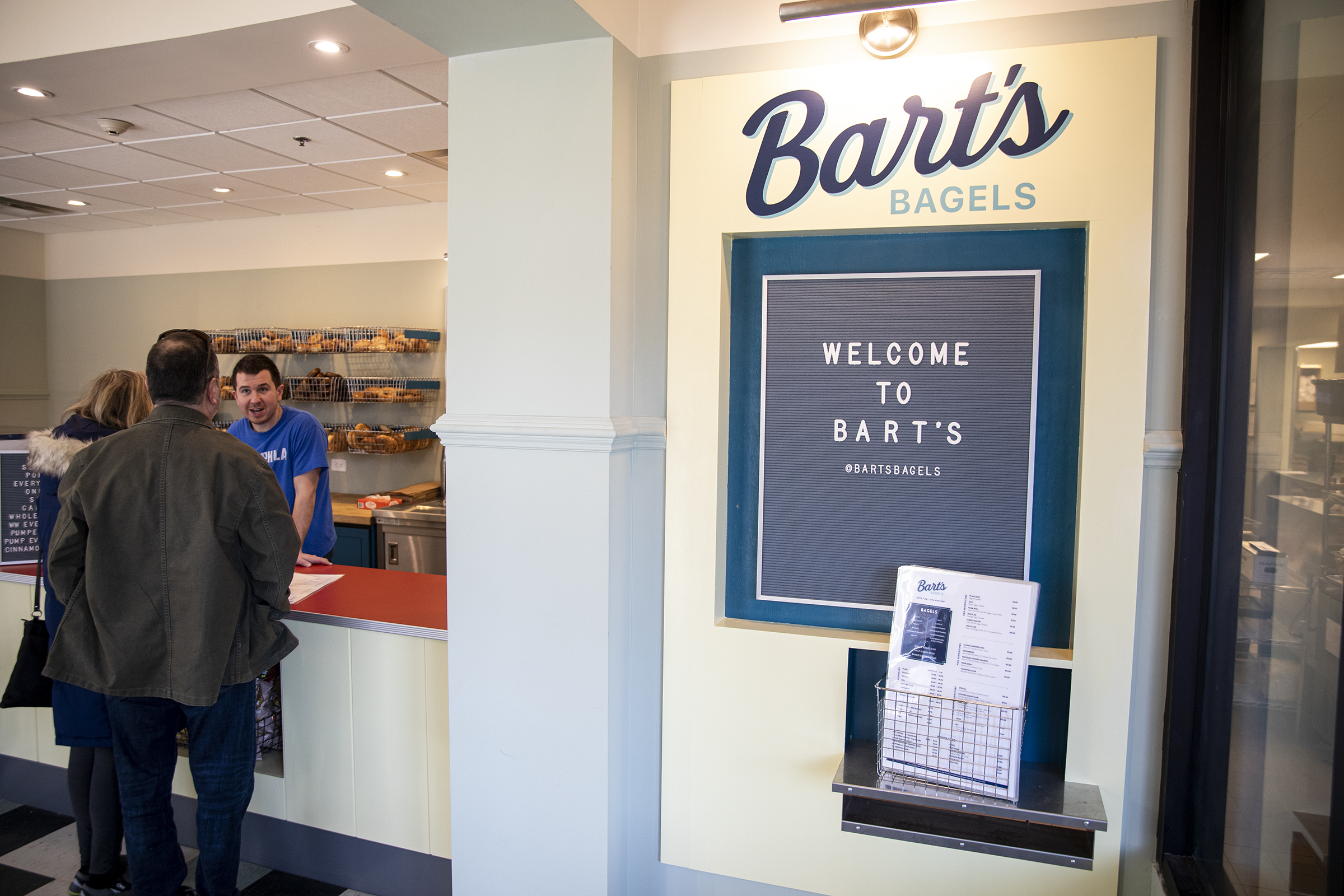
    Brett Frankel, co-owner of Bart’s Bagels, helps customers at Bart’s Bagels on Wednesday, Jan. 22, 2020. Bart’s is expanding to Bala Cynwyd later this year.

    Brett, 34, and Kyle, 41, both Lower Merion High School graduates, grew up a five-minute walk from their newest location. Brett Frankel says he remembers hanging out at the soon-to-be Bart’s Bagels storefront after middle school, back in the days when it was Bravo Pizza.

    Main Line patrons will be able to expect all of the same kettle-boiled bagels and fixins’ that Bart’s is known for, from pumpernickel bagels to pastrami smoked salmon and beet-horseradish cream cheese.

    While Bart’s city-based locations are grab-and-go only, there will be a few seats in the new Bala Cynwyd shop.

    The unique part of Bart’s, Brett Frankel said, is that patrons can see bagels being made in front of them through the open kitchen.

    “You’re kind of immersed in it,” he said.

    The Frankels say their love for good bagels was forged through regular trips to New York’s Upper West Side to eat at the famed Zabar’s and H&H Bagels.

    Looking to get their fix closer to home, Brett Frankel taught himself how to make bagels while working as a business analyst for a software company. He traveled to Denver, New Jersey, and Detroit to learn the ins and outs of the bagel industry.

    Bart’s started as a wholesale operation in late 2019, selling to Di Bruno Bros., Middle Child, Elixr Coffee, White Dog Cafe, and other local restaurants. The Frankels brought chef Ron Silverberg on board, and they opened the first Bart’s in West Philly in January 2020. Their South Philly location opened in July 2024.

    Bart’s is not the only new bagel place coming to Lower Merion this year.

    PopUp Bagels, the viral bagel chain known for its “grip, rip, and dip” model, is opening in Ardmore’s Suburban Square early this year.

    This suburban content is produced with support from the Leslie Miller and Richard Worley Foundation and The Lenfest Institute for Journalism. Editorial content is created independently of the project donors. Gifts to support The Inquirer’s high-impact journalism can be made at inquirer.com/donate. A list of Lenfest Institute donors can be found at lenfestinstitute.org/supporters.

  • These old Exton offices are becoming ‘hotel-apartments’

    These old Exton offices are becoming ‘hotel-apartments’

    While the battle rages over how much redevelopers should cram into the former Exton Mall site, investors on the ridge just to the north have turned one of Great Valley’s vacant office buildings into a suburban rarity: 24 studio and 8 single-bedroom apartments.

    They’re equipped with kitchens, bathrooms, and washer/dryers, and they’re being marketed as monthslong hotel accommodations for consultants and visitors to nearby employers.

    The owners, a group led by Main Line real estate lawyer David McFadden, broker John McGee, and investment partner Chiu Bai, hope the building, which they’re calling the Flats on 100, will be a model for reusing orphan buildings that stud the Great Valley and other suburban office, industry, and retail zones.

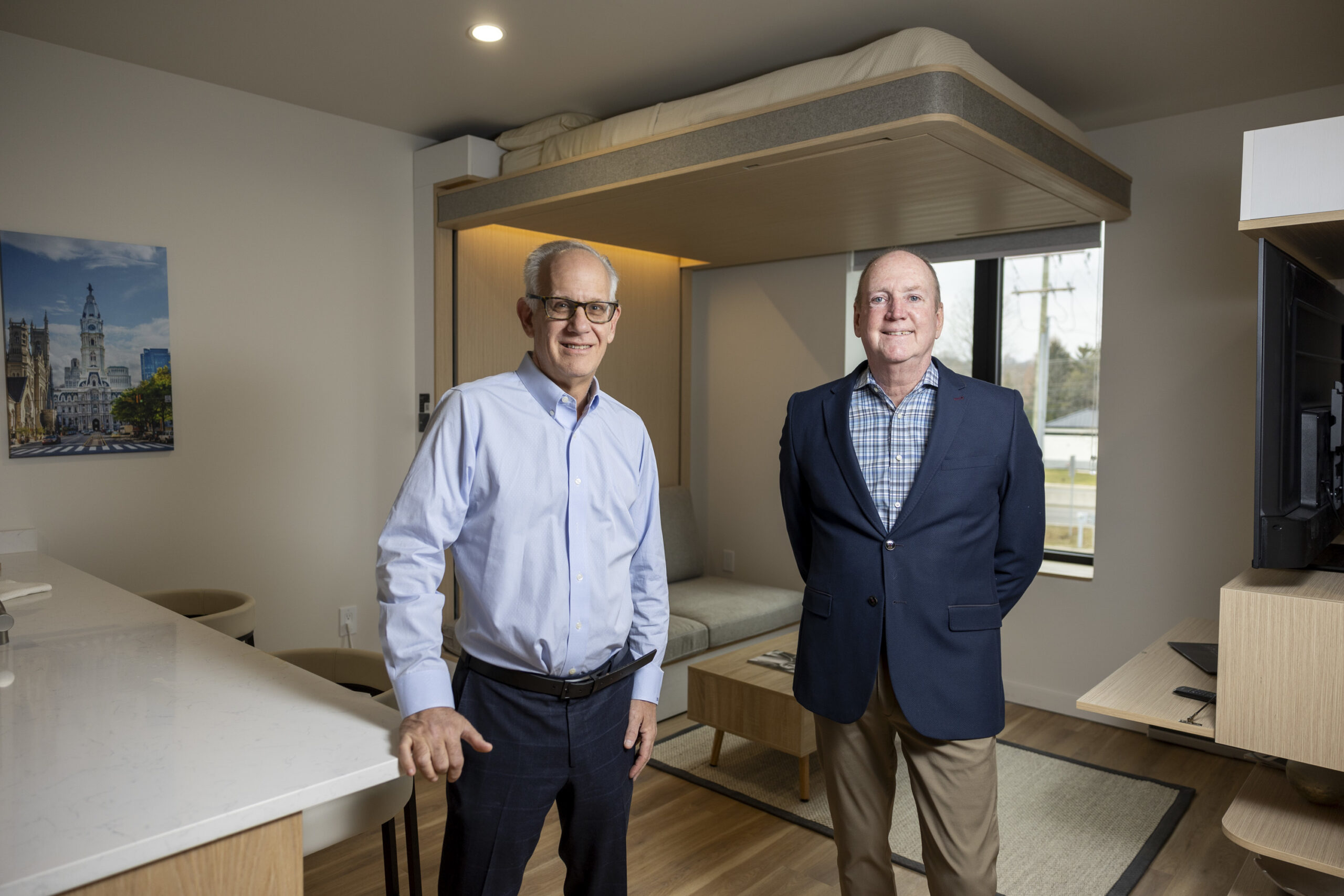
    David McFadden of Chester Springs (left) and John McGee of Wayne are co-partners and owners of the Flats on 100 in Exton.

    The trio picked up the 53-year-old, 30,000-square-foot building and grounds at 319 N. Pottstown Pike (State Route 100) in 2023 for $1.5 million from family-owned Kelsch Disability Services.

    “Fifty bucks a [square] foot” seemed like a bargain, even though the partners didn’t have specific plans for it, McFadden said.

    “Office buildings are being given away these days. What do we do with them when there’s no demand for office space?” he said. “At the right discount, developers can afford to turn them into something sustainable that people want.”

    As offices, the building was broker-rated Class C, the least desirable. The partners paid cash, figuring they could borrow millions for capital improvements if they could show lenders a credible plan to turn it into something more profitable.

    “We got lucky with the zoning,” McFadden said. West Whiteland’s “town center” designation allows a wide range of uses.

    The partners chose what McFadden calls “hotel-apartments.” He compared it to projects built by Level Hotels & Furnished Suites, with locations in Chicago and the West Coast, and by family-owned, locally based Korman Communities’ AVE Living, with its furnished apartments at Philadelphia’s Navy Yard and other local sites.

    McFadden says the model offers “a place that feels like home, with the amenities of larger buildings but a boutique feel.” The units are fully furnished, including appliances, dishes, and linens, as well as cleaning and other services as requested.

    Lender Trupert Ortlieb from TruMark Financial, one of the area credit unions bulking up with business loans, arranged $5.7 million in financing for capital improvements.

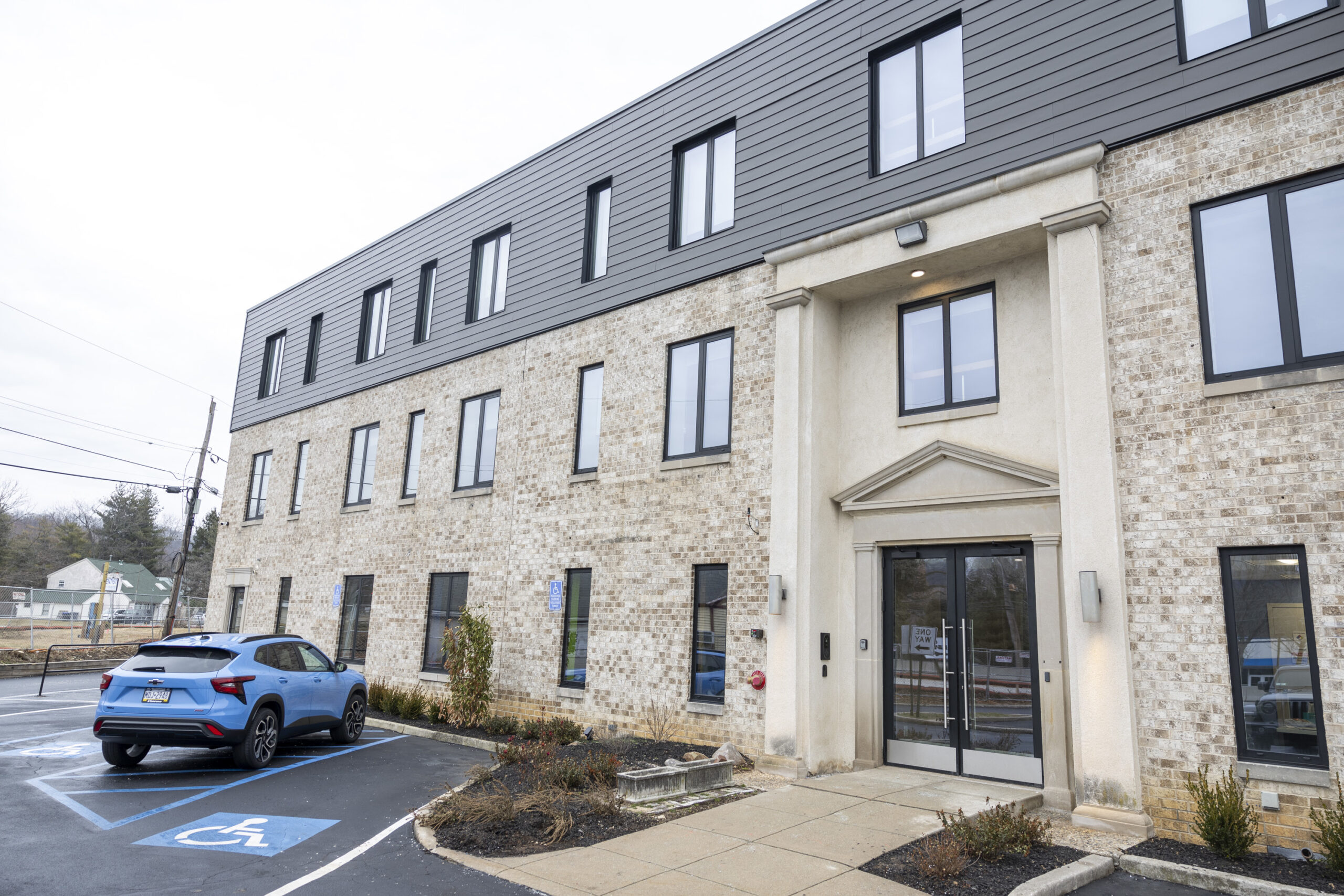
    The outside of the Flats on 100 apartments, a redevelopment of a commercial building.

    Contractors demolished and replaced interior walls; added sprinklers, triple-glazed windows, and insulation; and replaced heating and air-conditioning. The reclad of the interior with aluminum finished like pine was picked up by Chiu in China for $30,000 (half that for the materials, $4,000 for shipping, and $11,000 to cover tariffs).

    Because the project qualifies as a hotel, it could add a liquor license without the higher cost of a tavern license. A first-floor retail space has been leased to a dentist.

    The partners expect interest from nearby employers such as Vanguard Group, QVC, West Pharmaceutical Services, and Accenture.

    The Fairfield shopping center, with a Giant supermarket, fast-casual restaurants, and retail stores, is within walking distance. The Exton SEPTA Regional Rail station is two miles down Pottstown Pike.

    Seeking light in what had been gloomy space, the developers brought in architect Martin Kimmel from Blue Bell. He persuaded them to replace half “gun-slit” windows with 5-foot-wide glass sheets, which turned out to be more work than expected, trimming 12-inch blocks topped by 4-inch bricks.

    Other amenities include a barbecue pit, an outdoor dog walk, a pet-washing room, basement fitness center, conference room, bar, pool table, and walk-on services like massage and physical therapy.

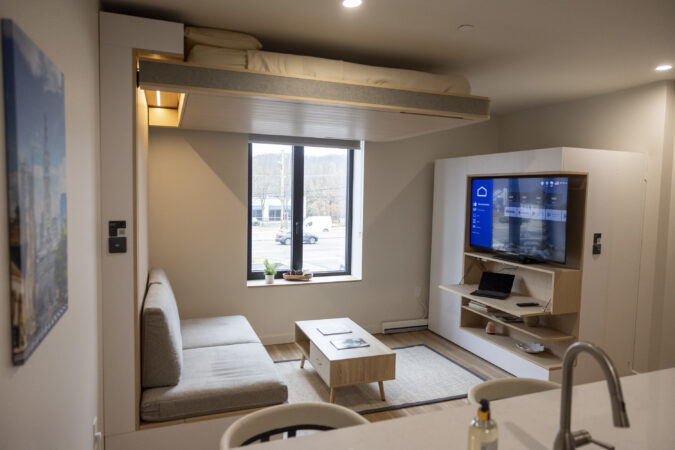
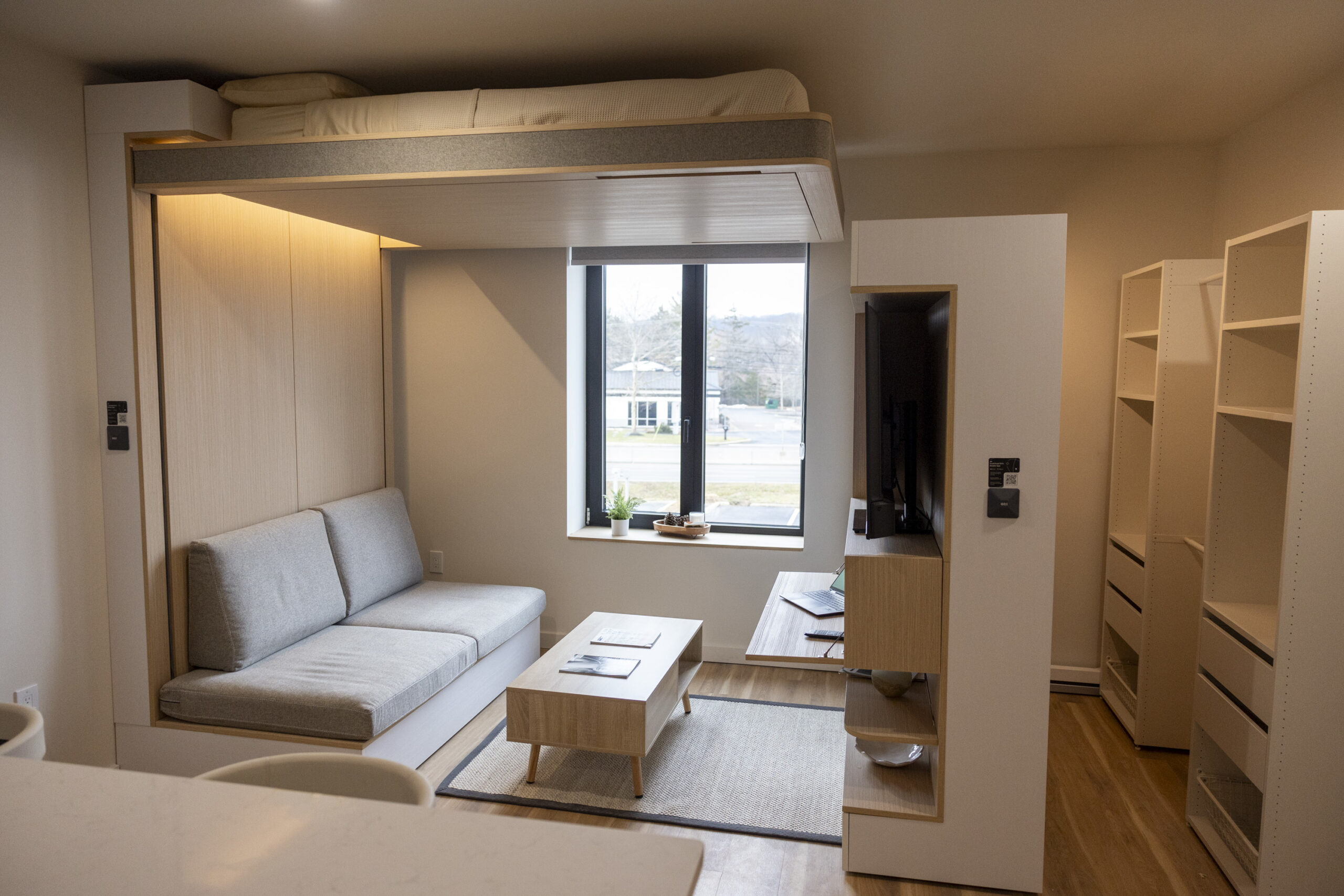
    This space in the studio apartment can be used as a sitting area or a bedroom.
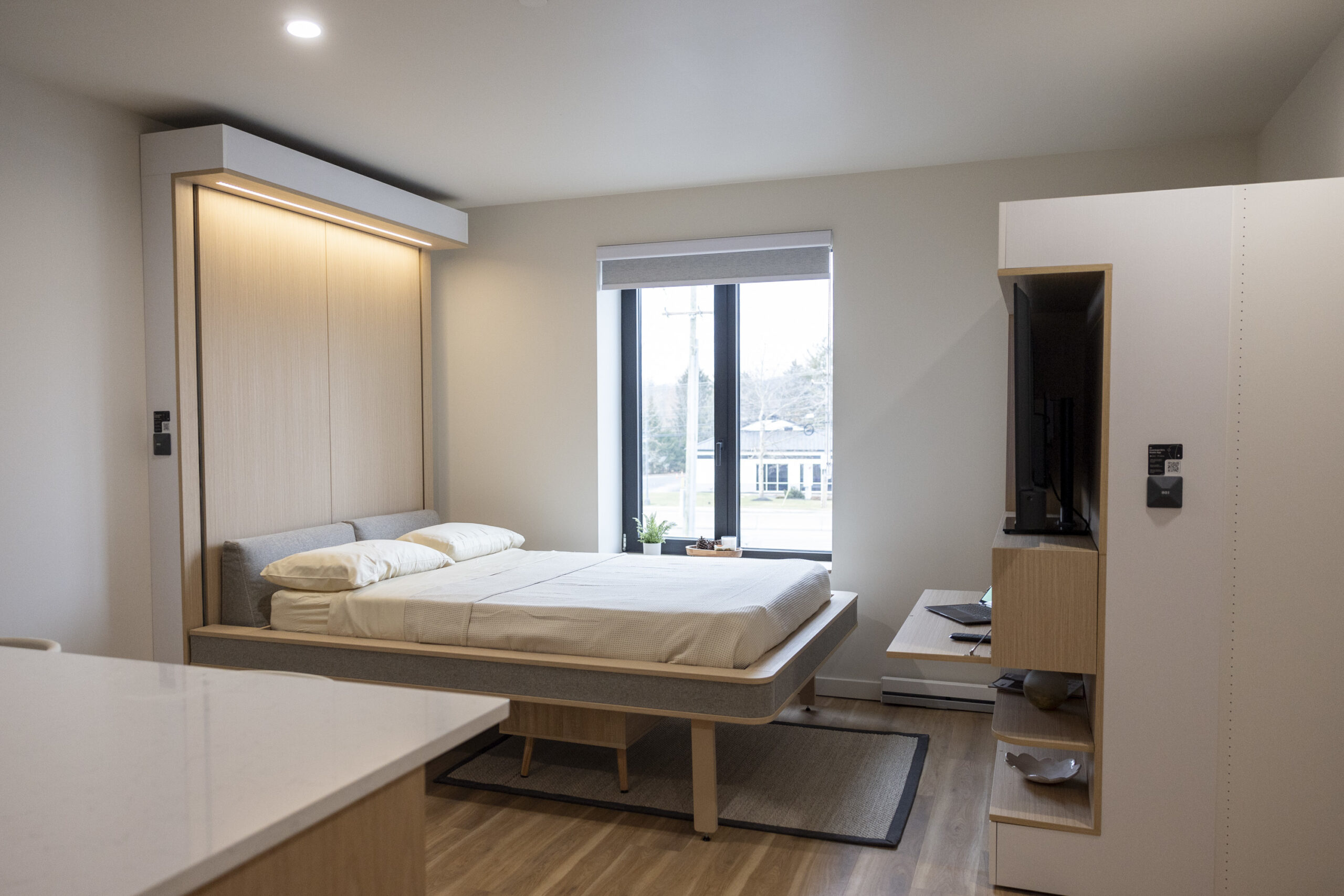
    The Ori bed lowers from the ceiling for sleeping.

    Kimmel and the partners looked at New York apartment plans to see how many one-person units they could fit into the three stories. Beds could be stowed for work-at-home hours, but “we didn’t want those old fold-out Murphy beds,” McFadden said.

    They bought canopy beds from Hasier Larrea’s Ori flexible-furniture-systems firm. The beds lower from the ceiling onto couch bases, plus facing rows of shelves can open as a walk-in closet. The bed controls, like the digital room locks, are remote-accessible and have manual overrides in case of power failure.

    The narrow building admits more light for that suburban feel.

    “Not every office building converts well to apartments,” McGee said. “This was perfect — 65 feet deep, you have a central corridor with apartments. If it were 200 feet deep, you’d have very narrow apartments with one window at the end.”

  • Billionaire Jeff Yass is behind a plan to revitalize downtown Gladwyne

    Billionaire Jeff Yass is behind a plan to revitalize downtown Gladwyne

    Jeff Yass, Pennsylvania’s richest man, is behind a plan to redevelop much of downtown Gladwyne.

    Standing before a packed school auditorium, Andre Golsorkhi, founder and CEO of design firm Haldon House, unveiled the long-awaited redevelopment proposal for Gladwyne’s village center.

    Haldon House is working with Yass and his wife, Janine, on redeveloping a half-dozen properties in Gladwyne with historic architecture, green spaces, and new businesses. Golsorkhi called the proposal a “community impact project” for the Yass family, which has spent over $15 million acquiring the properties.

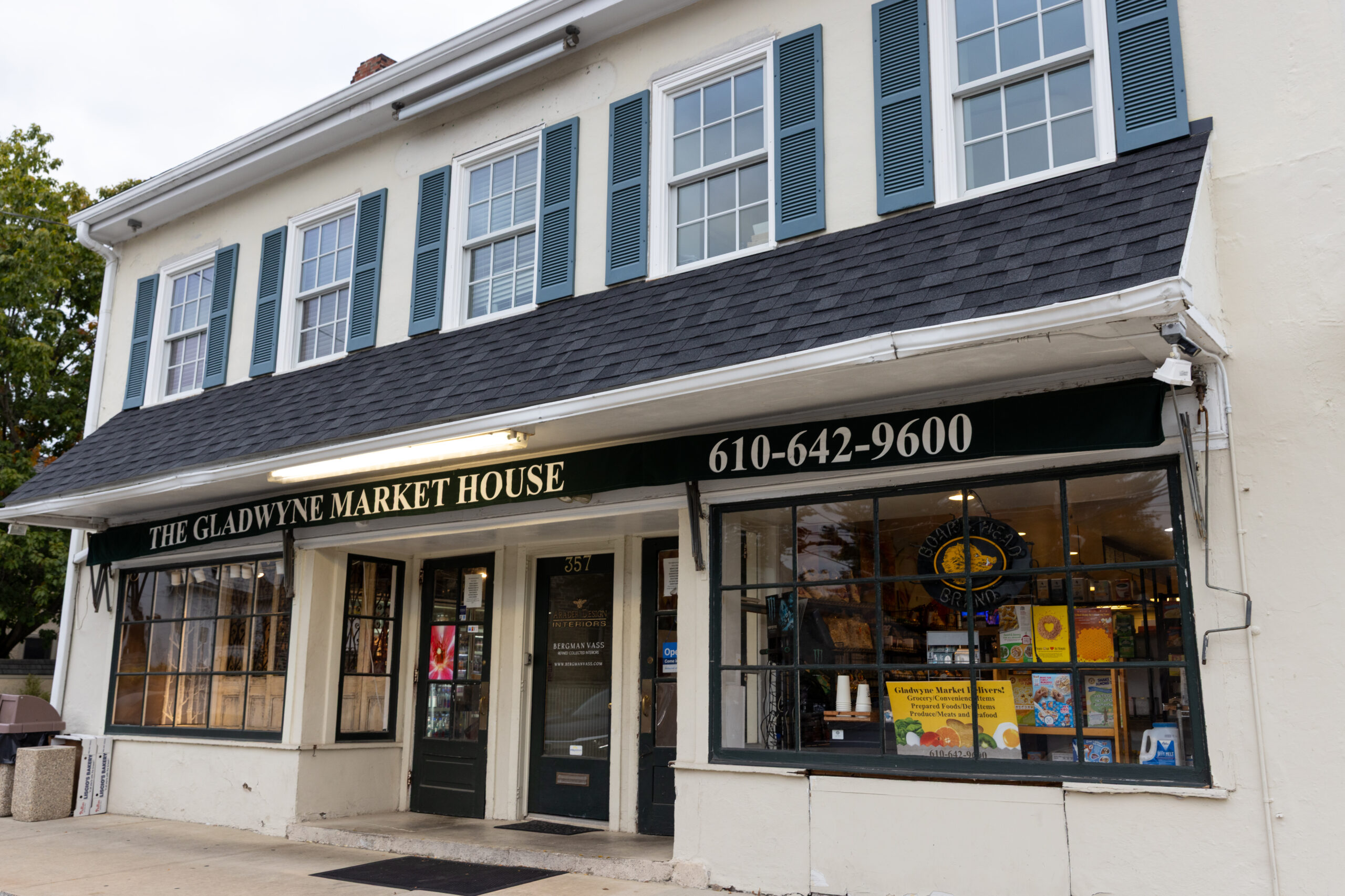
    Gladwyne village has long been home to small businesses, namely OMG Hair Salon, the Gladwyne Pharmacy, the Guard House, and Gladwyne Market. OMG Salon and the Gladwyne Market shuttered last year after the developers acquired their storefronts, sending ripples, and rumors, through the Main Line community. House values for the 4,096-person village are among the highest in the state, with a recent median sales price of $2.3 million, according to Realtor.com data.

    For the first time, Golsorkhi last week brought his development plans and his partnership with the Yass family to the public. He was met with both applause and skepticism from attendees. Some expressed optimism about the proposal, while others questioned why the developers would pour millions into a project with no apparent financial gain.

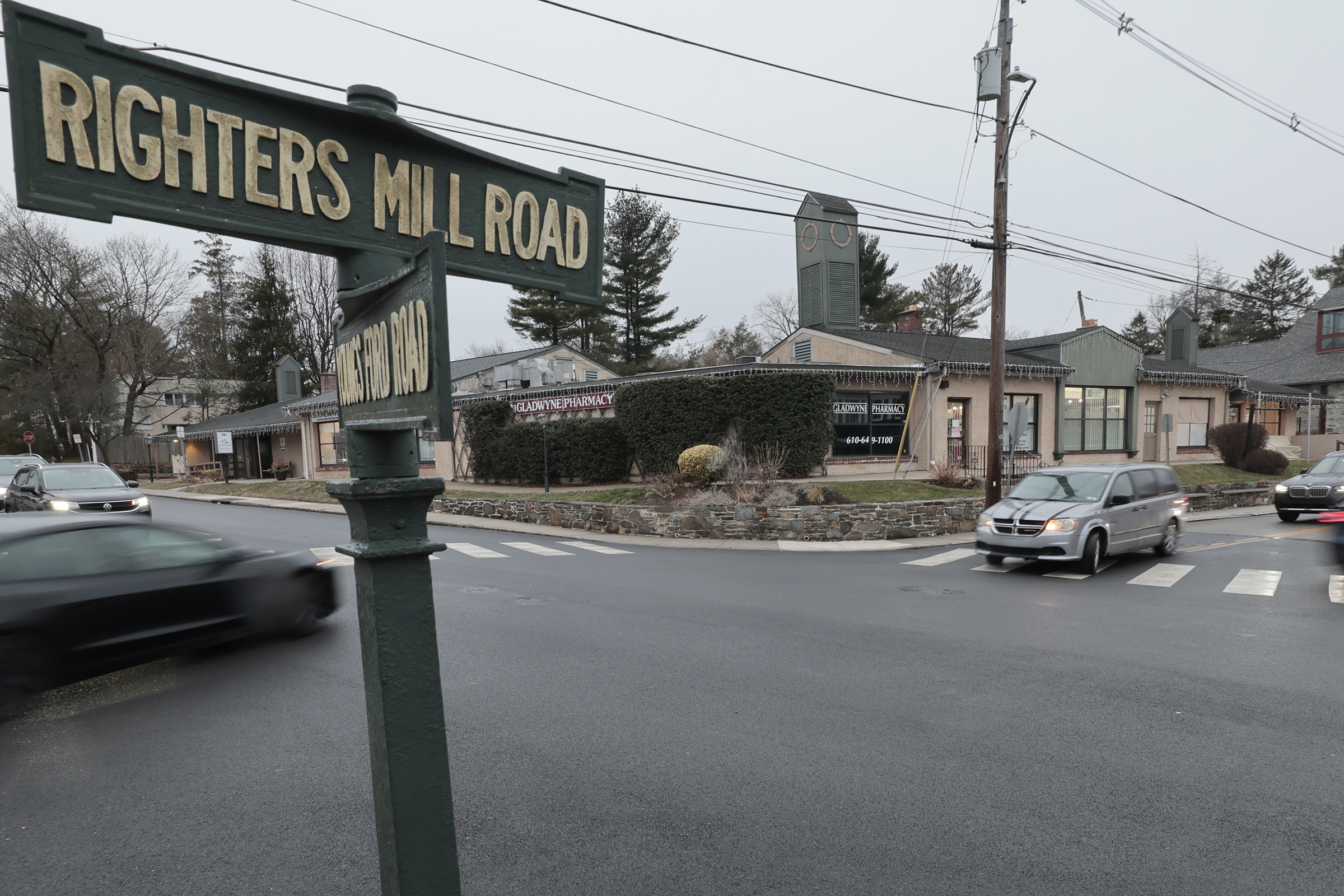
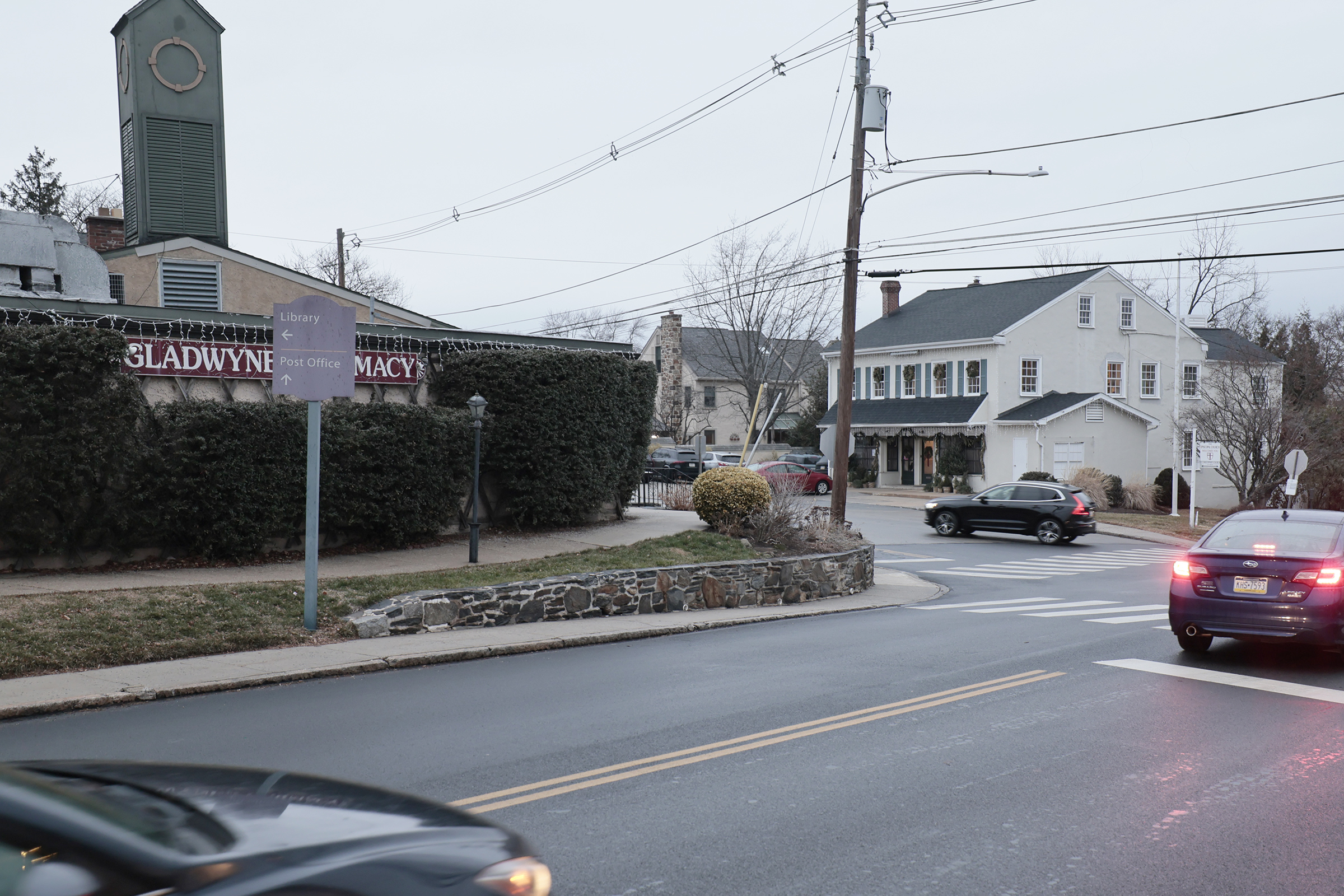
    The Village Shoppes, including the Gladwyne Pharmacy, at the intersection of Youngs Ford and Righters Mill Roads in Gladwyne on Friday, Jan. 9, 2026.

    Gladwyne ‘needs a revitalization’

    Haldon House’s proposal, as outlined by Golsorkhi, involves retaining much of Gladwyne’s historic architecture while bringing in new retailers, opening up green space, and increasing connectivity in the village’s downtown core.

    The developer plans to expand local café Homeroom and keep the Gladwyne Pharmacy while courting new businesses that “fit the character and are contextually relevant to the town.” There are no plans for residential development, national chain stores, or high-rise buildings.

    “This is a place that we grew up, that we love, that we care for tremendously, that has been protected for all the right reasons, but it has also not evolved,” Golsorkhi said. “It needs a revitalization.”

    Golsorkhi and his wife, Autumn Oser, the co-owner of Haldon House, are from the Gladwyne area.

    Yass is a billionaire, conservative megadonor, and founder of the Bala Cynwyd-based Susquehanna International Group. The Yass family has lived in Haverford for more than 40 years.

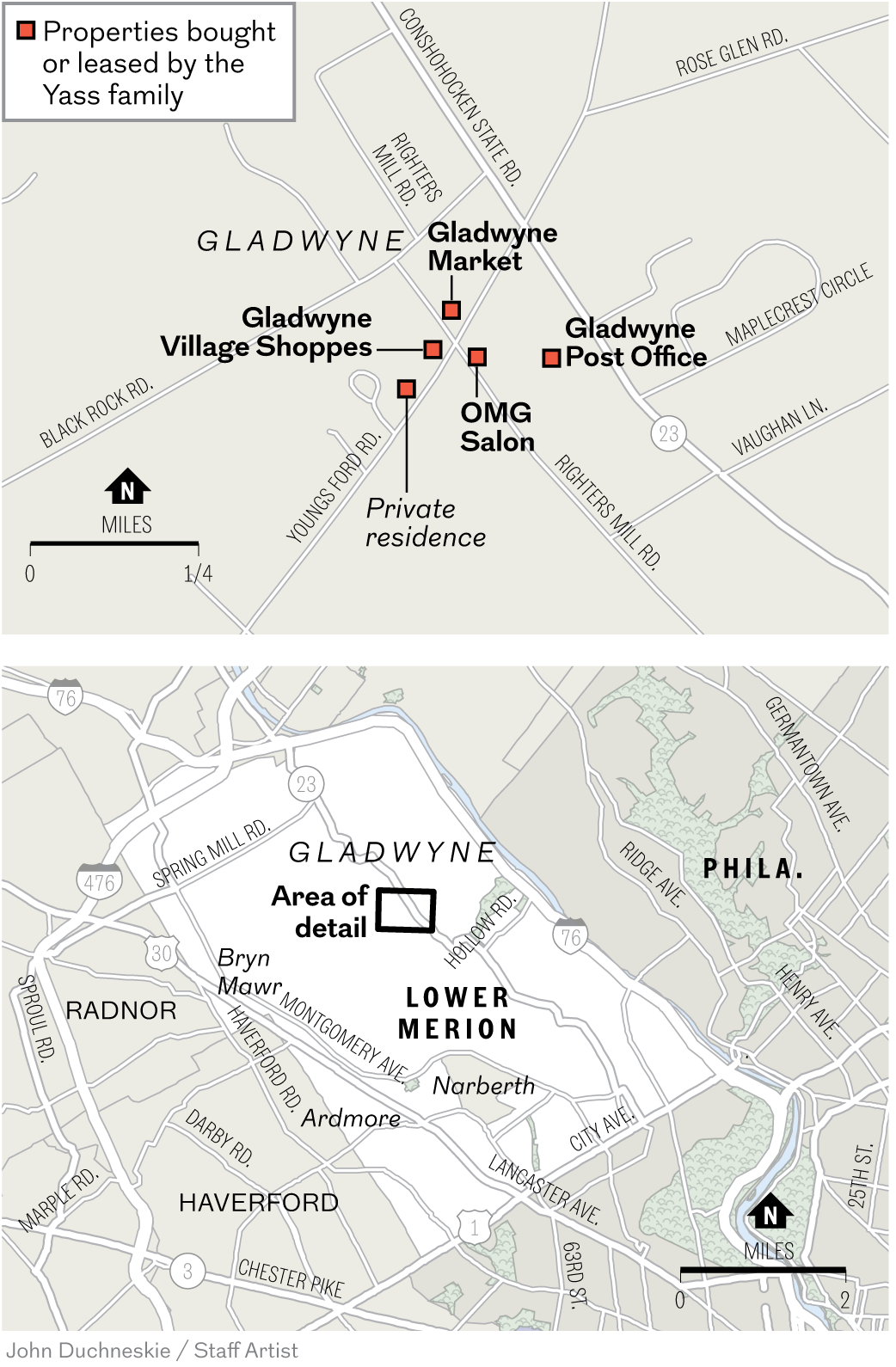
    Properties in Gladwyne acquired by the Yass family as part of their proposed revitalization project.

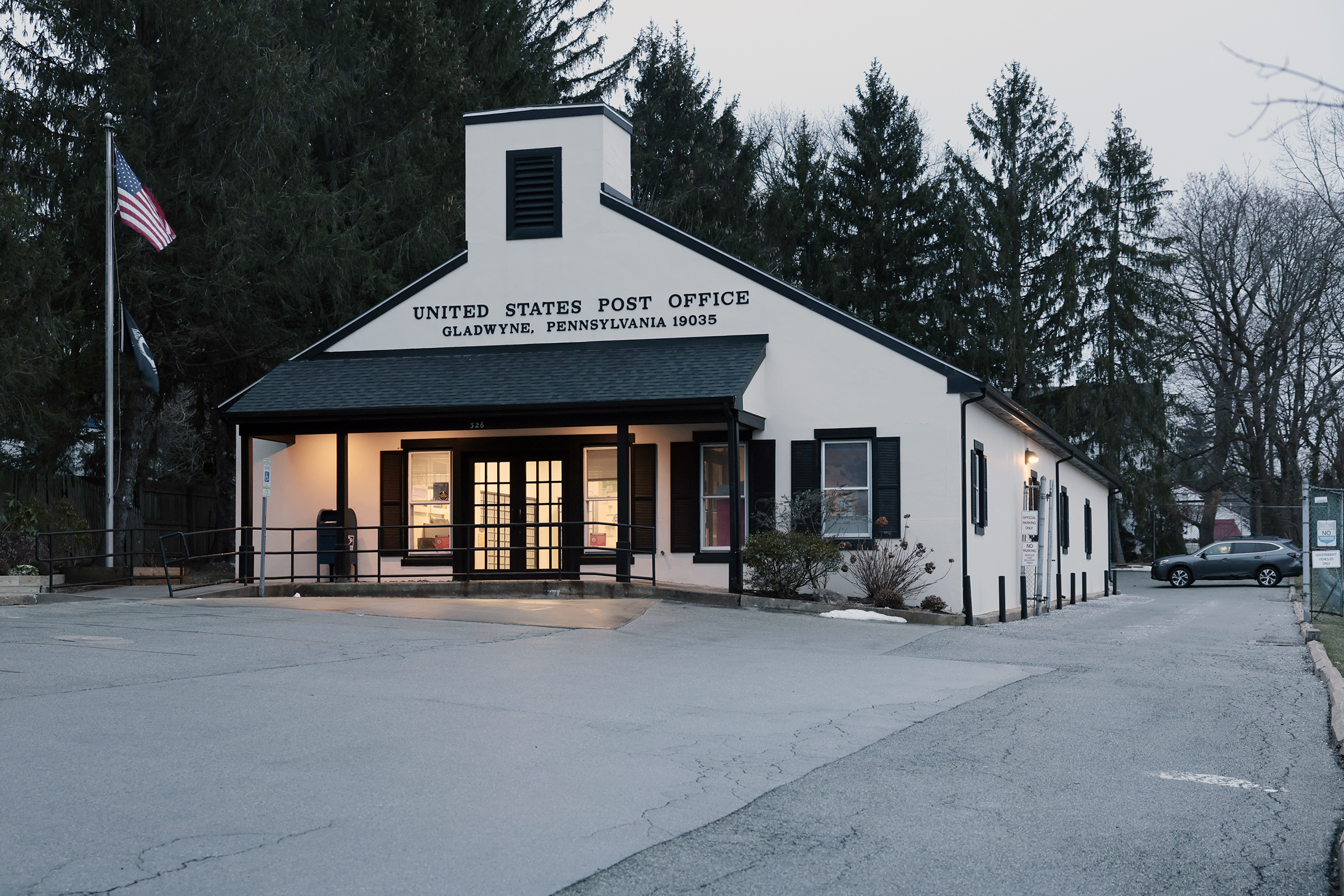
    Haldon House and the Yass family have purchased multiple properties at the intersection of Youngs Ford and Righters Mill Roads, including the former Gladwyne Market building, the Village Shoppes, a residential property on the 900 block of Youngs Ford Road, and the Gladwyne Post Office, according to Golsorkhi. They’ve also leased the former OMG Salon at 351 Righters Mill Rd.

    Citing the rumors that percolated in community after the shuttering of Gladwyne Market, Golsorkhi said there’s been “a lot of justified, warranted concern.”

    Gladwyne Market shuttered in October after its building was purchased by developers Haldon House and the Yass family.

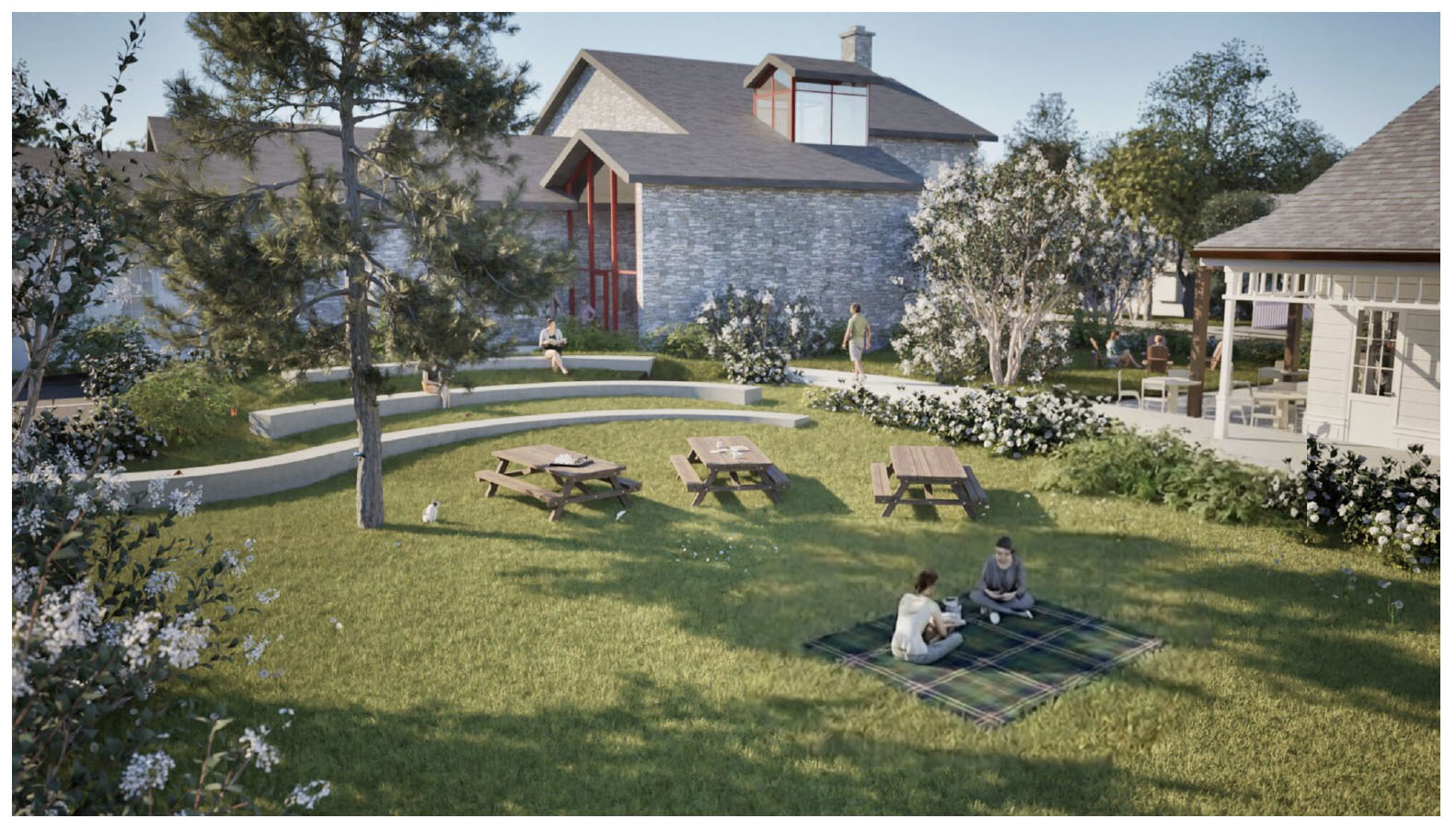
    Renderings of the proposal show the village’s core buildings retaining their late-1800s architecture, with new wraparound porches, ivy-covered stone walls, Adirondack chairs, hydrangeas, and “Gladwyne Square” branded signs.

    Golsorkhi said in an email that the developers were prepared to assume the costs and it was too early to specify how long the project would take.

    In addition to keeping Homeroom and the Gladwyne Pharmacy in place, the developers plan to put a “casual, but elevated and approachable” restaurant in the former Gladwyne Market site. They‘ll recruit independent retailers like bakeries, boutique fitness studios, and ice cream parlors. They also intend to expand the village’s open green space with picnic tables, open lawns, and venues for community events.

    Renderings of a proposed revitalization project in Gladwyne. Design firm Haldon House is working with longtime resident Jeff Yass to redevelop the Main Line village while preserving its historic architecture, developers told residents on Jan. 8.

    Golsorkhi said they would take a “forward and involved approach” with new and existing tenants, from designing storefronts to offering input on products to stock.

    They have worked closely with Gladwyne Pharmacy to help “reimagine” the “design and experience,” with “no expectation of return,” Golsorkhi said, adding that the pharmacy has “built up merchandise and square footage over time that isn’t necessarily best serving the business or the community.”

    “We’re doing that because we believe that the consistent experience and character of Gladwyne is really important,” he said.

    Golsorkhi told attendees at the meeting on Thursday that while they have “no particular intentions” for the recently purchased Gladwyne Post Office, it was “retiring its services” and there was potential to create a new, centralized storefront where residents could access USPS, UPS, and FedEx services.

    Paul Smith, manager of public affairs and communications for the Postal Service in the Philadelphia region, said the Gladwyne post office was not retiring its services. In early 2024, Gladwyne and other local post offices moved their letter carriers to a large delivery center in Wayne, where they pick up mail and distribute it to their routes. Gladwyne’s post office is still used for retail transactions, mailing items, and for P.O. box holders.

    Golsorkhi clarified in an email that he understood the post office’s changes. In case services are further reduced in the future, he said, “we want to be sure we’re ahead of it by considering what shipping hubs and/or shipping services we can bring to the village to ensure continuity of mailing services, while also augmenting USPS with other carriers.”

    The Gladwyne post office at 326 Conshohocken State Road in Gladwyne on Friday, Jan. 9, 2026.

    Excitement for some, skepticism for others

    Haldon House and the Yass family’s recent acquisitions left some business owners feeling slighted.

    OMG Salon owner Maurice Tenenbaum said the building’s owners more than doubled his rent last fall, forcing him to give up the salon space.

    Pete Liccio, owner of the now-closed Gladwyne Market, said in an October interview that he had also felt pushed out.

    At Thursday’s meeting, some residents said Gladwyne was ready for a revitalization, from new restaurants to more pedestrian-friendly infrastructure.

    “What I’m seeing here is a center of gravity and an identity for Gladwyne that’s well-deserved and long been needed,” one attendee said.

    Others expressed concern.

    “I just wonder what the end game is. There’s always a price for this, having someone come in and say, ‘I’m going to make your community really, really cool and don’t worry about the money,’” another Gladwyne resident said during a question-and-answer segment.

    “[This is an] investment and a philanthropic effort …,” Golsorkhi said. “I understand and I recognize that that is a challenging thing to sort of believe.”

    The Village Shoppes, including the Gladwyne Pharmacy (left) and the now shuttered Gladwyne Market (right) at the intersection of Youngs Ford and Righters Mill Roads in Gladwyne on Friday, Jan. 9, 2026.

    This suburban content is produced with support from the Leslie Miller and Richard Worley Foundation and The Lenfest Institute for Journalism. Editorial content is created independently of the project donors. Gifts to support The Inquirer’s high-impact journalism can be made at inquirer.com/donate. A list of Lenfest Institute donors can be found at lenfestinstitute.org/supporters.

  • Health officials urge vaccination as flu cases surge in Pennsylvania

    Health officials urge vaccination as flu cases surge in Pennsylvania

    More Philadelphians are visiting emergency departments with the flu than a year ago, as cases are surging across Pennsylvania.

    Flu cases in late December hit higher counts locally and statewide than at this time last year, according to city and state data. It’s too early to say whether flu has peaked for the season, or whether cases will continue to rise, health officials say.

    window.addEventListener(“message”,function(a){if(void 0!==a.data[“datawrapper-height”]){var e=document.querySelectorAll(“iframe”);for(var t in a.data[“datawrapper-height”])for(var r,i=0;r=e[i];i++)if(r.contentWindow===a.source){var d=a.data[“datawrapper-height”][t]+”px”;r.style.height=d}}});

    Philadelphia-area physicians say they’re dealing with an increased flu caseload, including patients suffering from severe complications.

    COVID-19 and respiratory syncytial virus (RSV) cases are also rising, but flu is the biggest concern right now, said Brett Gilbert, Main Line Health’s infectious disease chief.

    “We’ve been fighting COVID for the last five years, while flu took a back seat,” he said. “But flu is in the driver’s seat this year.”

    One reason for the high number of flu cases this early in the flu season, which runs from winter to early spring and typically peaks in December to February, is a new flu variant that emerged this summer.

    World health experts meet twice a year to determine which flu variants are circulating and recommend seasonal flu shots to target them.

    The variant causing the most cases right now, subclade K, was detected after flu shots for the Northern Hemisphere had already been selected this year, Gilbert said. “There is some degree of vaccine-disease mismatch,” he said.

    window.addEventListener(“message”,function(a){if(void 0!==a.data[“datawrapper-height”]){var e=document.querySelectorAll(“iframe”);for(var t in a.data[“datawrapper-height”])for(var r,i=0;r=e[i];i++)if(r.contentWindow===a.source){var d=a.data[“datawrapper-height”][t]+”px”;r.style.height=d}}});

    But that doesn’t mean that the current flu vaccine is not effective, especially in preventing hospitalizations and deaths.

    “It may not be so great at preventing the illness itself, but [with a vaccine], it may be a mild illness, easily treatable with antivirals or supportive care,” Gilbert said.

    Flu in children

    Just over half of Pennsylvania children were vaccinated for the flu this season, according to federal surveys, slightly up from last year’s rates.

    Childhood flu vaccination rates in Philadelphia were even higher than the statewide rate, with about 56% of children vaccinated this season.

    Some of the most serious cases of flu that pediatrician Daniel Taylor sees are among unvaccinated children.

    At St. Christopher’s Hospital for Children, where Taylor sees patients, the outpatient sick clinic is filled with children with severe cases of flu and RSV.

    Some are suffering from dehydration and require care in the ER at the North Philadelphia hospital.

    Taylor stresses the risk of serious complications from the flu in conversations with parents about vaccination. (Taylor also regularly writes about his experiences as a physician for The Inquirer.)

    The flu can trigger severe health crises that can cause brain damage or temporary paralysis from inflammation of the spinal cord. Taylor has seen two children this flu season with benign acute childhood myositis, a rare complication of an upper respiratory infection that causes swelling and muscle damage in the legs, and in even rarer cases can lead to kidney failure.

    “They’re not able to walk, and in so much pain from the swelling of the legs,” he said.

    Nine children have died nationwide from the flu this season. The season before, flu deaths among children were the highest since 2004, when the Centers for Disease Control and Prevention began tracking them, the American Academy of Pediatrics noted. Among Americans of all ages, the CDC has estimated 5,000 total flu deaths so far this season.

    Taylor said that President Donald Trump’s chaotic upheaval of longstanding vaccine policy — with the CDC changing recommendations around flu vaccines and slashing six vaccines from the routine childhood immunization list — makes it harder for physicians to help patients.

    He said he had recently met with a mother who told him she’d previously vaccinated her children, but now was avoiding vaccines because she was “scared of giving her kid vaccines with everything going on in the government.”

    “They hear something different from the government and the CDC, and they question the relationship” with their doctor, Taylor said.

    He said parents can find trustworthy information about vaccination at websites run by the American Academy of Pediatrics and the Children’s Hospital of Philadelphia.

    ‘It’s never too late to get a flu vaccine’

    Anyone who hasn’t been vaccinated for the flu still has time to get immunized. Flu season runs through May, and cases can occur year-round.

    About 40% of Pennsylvanian adults and about 42% of New Jersey adults have been vaccinated for the flu so far this season, lower than in previous years and slightly below the national rate for the first time.

    About 47% of Philadelphians have been vaccinated so far this season, above the national rate.

    Patients who are feeling sick can get tested for the flu at a hospital or a doctor’s office, and home tests are also available. Antiviral treatments can help ease symptoms. Wearing a mask can also protect others from contracting the flu.

    window.addEventListener(“message”,function(a){if(void 0!==a.data[“datawrapper-height”]){var e=document.querySelectorAll(“iframe”);for(var t in a.data[“datawrapper-height”])for(var r,i=0;r=e[i];i++)if(r.contentWindow===a.source){var d=a.data[“datawrapper-height”][t]+”px”;r.style.height=d}}});

    In Philadelphia, residents can get free flu and COVID vaccines at five health centers, and the health department regularly conducts vaccine outreach in the city, said Gayle Mendoza, a spokesperson for the Philadelphia Department of Public Health.

    “People might say ‘We’re past the holidays, what’s the point in getting vaccinated?’” she said. “Sure, winter break is behind us, but the influenza virus is still forging ahead.”