Tag: Montgomery County

  • The 10 weirdest stories from the Philly area in 2025

    The 10 weirdest stories from the Philly area in 2025

    Way back in 2022, when Philadelphians gathered on an abandoned pier to watch a man eat a rotisserie chicken, folks on social media began to wonder: “Is Philadelphia a real place?”

    This year, that question became a declarative sentence.

    “Philadelphia is not a real place.”

    Sure, that perception has a lot to do with an unbelievable event that actually happened in the suburbs (Delco never fails to carry its weight), but Philly also saw its fair share of the bizarre this year, too.

    As we prepare for what may be one of the most important (and hopefully weirdest!) years in modern Philadelphia history, let’s take some time to look back on the peculiar stories from across the region that punctuated 2025.

    Five uh-oh

    Kevon Darden was sworn in as a part-time police officer for Collingdale Borough on Jan. 12 and hit the ground running, landing his first arrest just four days later.

    The only problem? It was his own.

    Pennsylvania State Police charged Darden with terroristic threats and related offenses for an alleged road rage incident in 2023 in which he’s accused of pointing a gun at a driver on the Blue Route in Ridley Township. At the time of the alleged incident Darden was employed as an officer at Cheyney University.
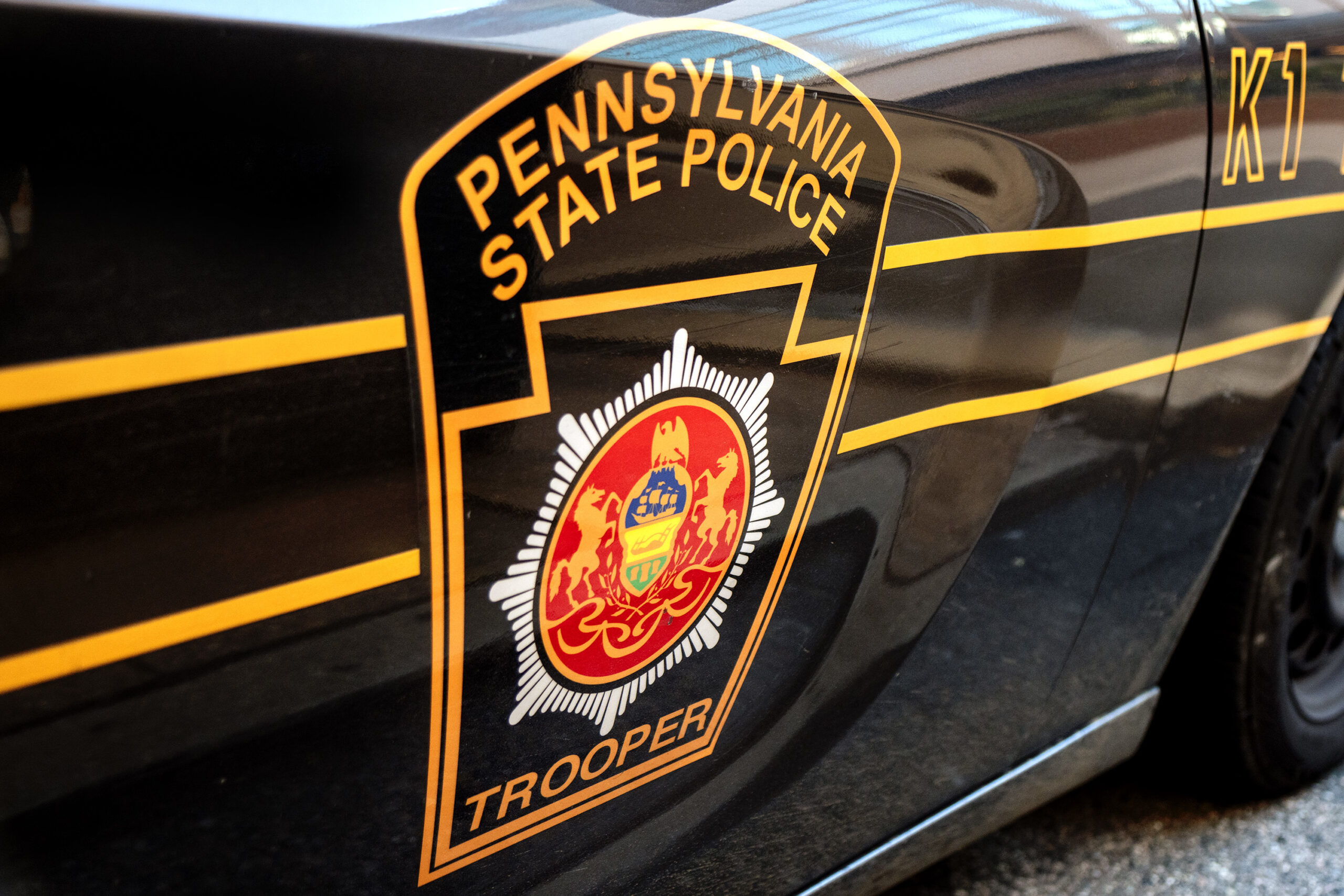
    A Pennsylvania State Police vehicle. The agency provided two clean background checks for a Collingdale police officer this year, only to arrest him four days after he started the job.

    Here’s the thing — it was state police who provided not one but two clean background checks on Darden to Collingdale officials before he was hired. An agency spokesperson told The Inquirer troopers had to wait on forensic evidence tests and approval from the District Attorney’s Office before filing charges.

    Darden subsequently resigned and is scheduled for trial next year in Delaware County Court.

    For the Birds

    The Eagles’ second Super Bowl win provided a wellspring of wacky — and sometimes dicey — moments on and off the field early this year.

    Mayor Cherelle L. Parker started the championship run off strong by going viral for misspelling the most popular chant in the city as “E-L-G-S-E-S” during a news conference. Her mistake made the rounds on late night talk shows and was plastered onto T-shirts, beer coozies, and even a license plate. If you think the National Spelling Bee is brutal, you’ve never met Eagles fans.

    Philadelphia Eagles quarterback Jalen Hurts at the line of scrimmage during the fourth quarter of the NFC divisional playoff at Lincoln Financial Field on Jan. 19. The Philadelphia Eagles defeated the Los Angeles Rams 28 to 22.

    Then there was the snowy NFC divisional playoff game against the Los Angeles Rams at Lincoln Financial Field; continued drama around the Tush Push (which resulted in Dude Wipes becoming an official sponsor of the team); and Cooper DeJean’s pick-six, a gift to himself and us on his 22nd birthday that helped the Birds trounce the Kansas City Chiefs 40-22 in Super Bowl LIX.

    As soon as the Eagles won with Jalen Hurts as MVP, Philadelphians let loose, flooding the streets like a drunken green tsunami. Fans scaled poles and tore them down; danced on bus shelters, medic units, and trash trucks; partied with Big Foot, Ben Franklin, and Philly Elmo; and set a bonfire in the middle of Market Street.
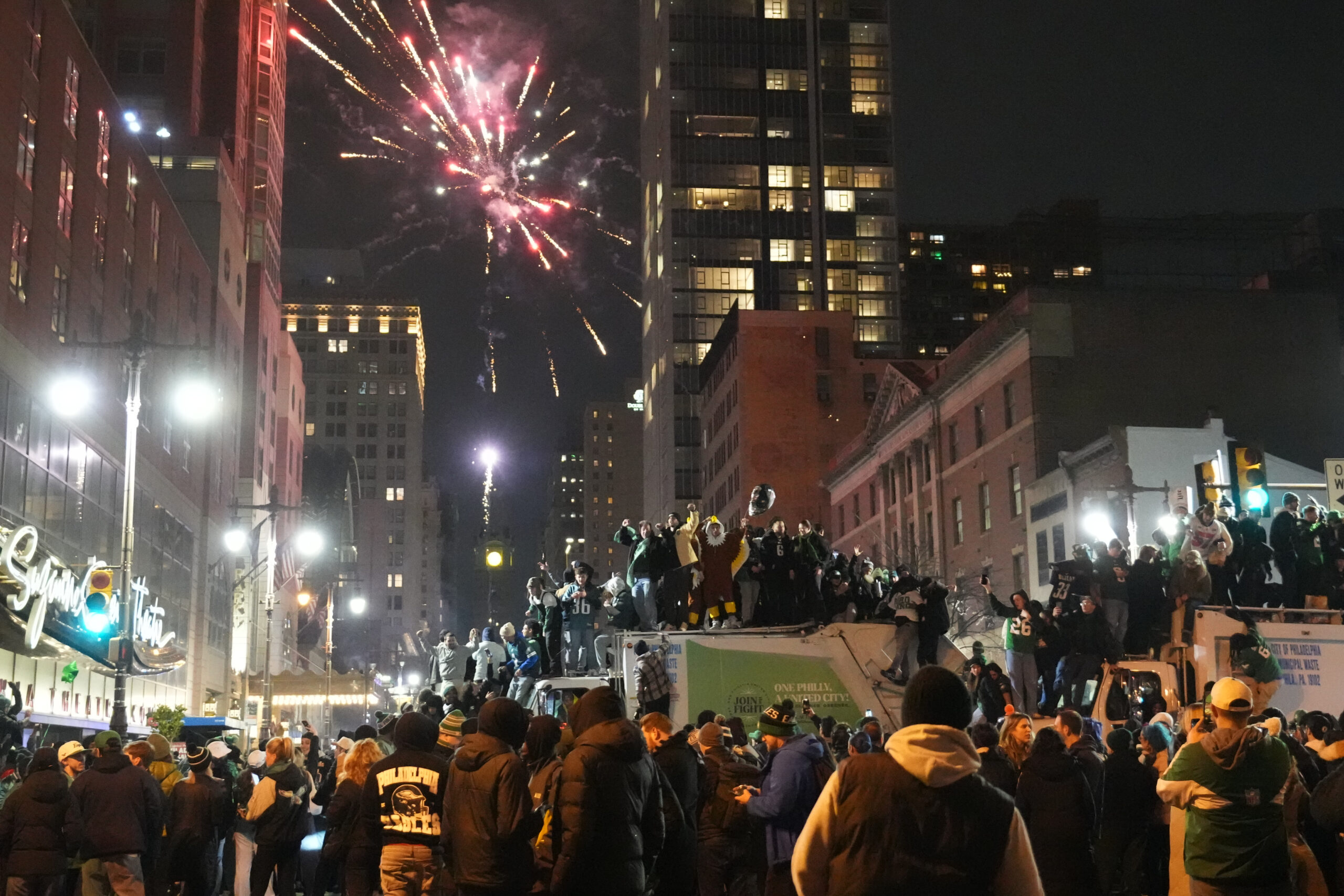
    Eagles fans party on trash trucks in the streets of Center City after the Birds win in Super Bowl LIX against the Chiefs on Feb. 9.

    Finally, there was the parade, a Valentine’s Day love letter to the Eagles from Philadelphia. Among the more memorable moments was when Birds general manager Howie Roseman was hit in the head with a can of beer thrown from the crowd. He took his battle scar in pride, proclaiming from the steps of the Philadelphia Art Museum: “I bleed for this city.”

    As we say around here, love Hurts.

    Throngs of Birds fans lined the Benjamin Franklin Parkway for the Eagles Super Bowl Parade on Feb. 14.

    A $40 million goodbye

    As far as inanimate objects go, few have experienced more drama in recent Philly history than the SS United States, the 73-year-old, 990-foot luxury liner that was docked for nearly three decades on the Delaware River waterfront.

    Supporters spent more than $40 million on rent, insurance, and other measures to keep the ship in Philly with the hopes of returning it to service or at least turning it into a venue. But a rent dispute with the owners of the pier finally led a judge to order the SS United States Conservancy, which owned the vessel, to seek an alternate solution.

    Workers on the Walt Whitman Bridge watch from above as the SS United States is pulled by tug boats on the Delaware River.

    And so in February, with the help of five tugboats, the ship was hauled out of Philly to prepare it to become the world’s largest artificial reef off the coast of Okaloosa County, Fla.

    If the United States has to end somewhere, Florida feels like an apt place.

    The ‘Delco Pooper’

    While the Eagles’ Tush Push was deemed legal by NFL owners this year, a Delaware County motorist found that another kind of tush push most definitely is not after she was arrested for rage pooping on the hood of a car during a roadway dispute in April.

    Captured on video by a teen who witnessed the rear-ending, the incident quickly went viral and put a stain on Delco that won’t be wiped away anytime soon.

    Christina Solometo, who was dubbed the “Delco Pooper” on social media, told Prospect Park Police she got into a dispute with another driver, whom she believed began following her. Solometo claimed when she got out of her car the other driver insulted her and so she decided to dump her frustrations on their hood.
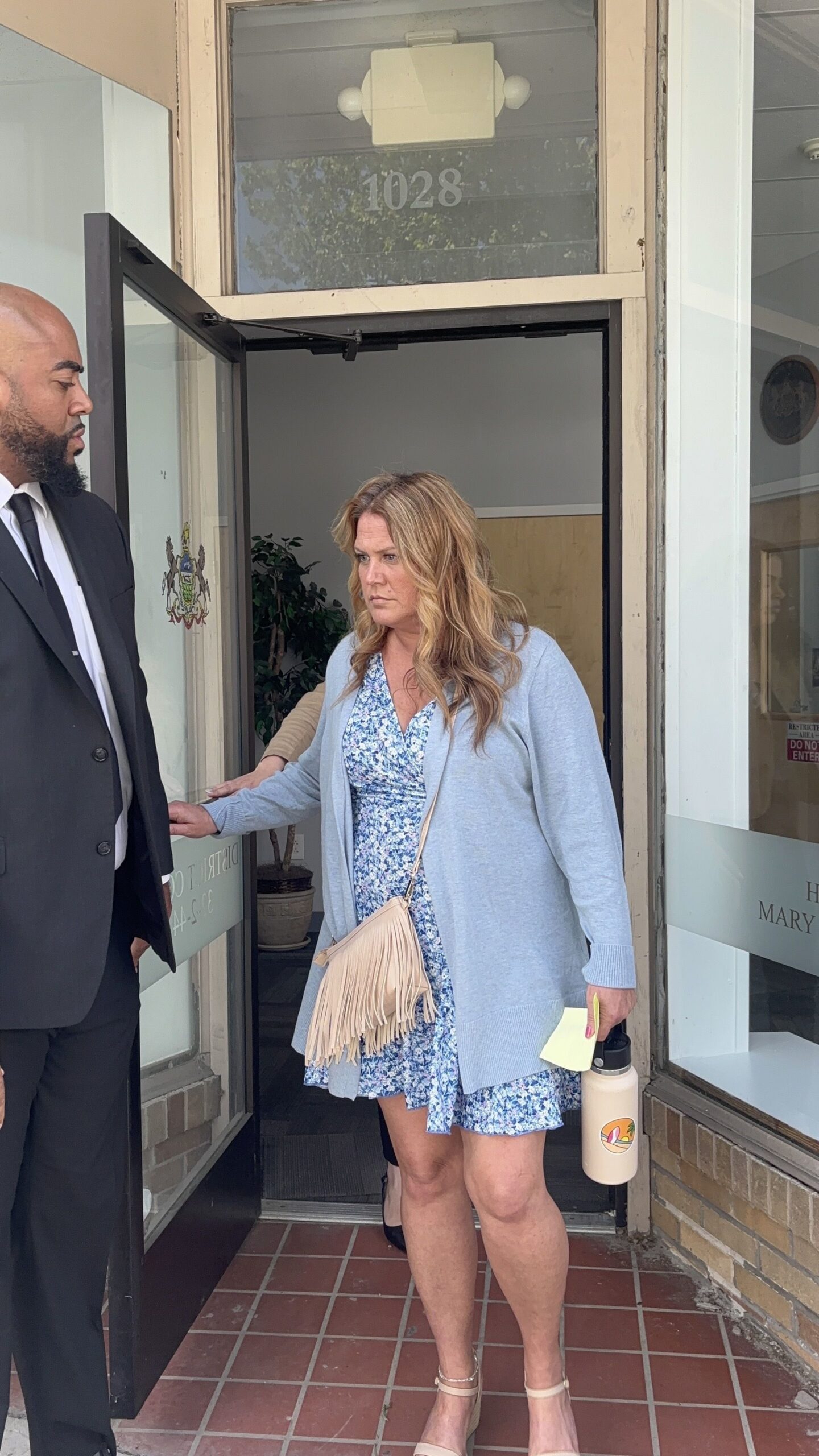
    A private security guard holds the door open for alleged “Delco Pooper” Christina Solometo following her preliminary hearing Monday at Prospect Park District Court.

    “Solometo said, ‘I wanted to punch her in the face, but I pooped on her car instead and went home,’” according to the affidavit.

    I’ve written a lot of stories about Delco in my time, but this may be the most absurd.

    Solometo, 44, of Ridley Park, entered into a rehabilitation program for first-time offenders on Dec. 16.

    Hopefully, she won’t be clogging up the court system anymore.

    The Delco pope

    Delco is large, it contains multitudes, and never was that more clear than when two weeks after the Delco Pooper case broke, a Delco pope was elected.

    OK, so Pope Leo XIV is technically a native of Chicago, but he attended undergrad at Villanova University — which, yes, technically straddles Delco and Montgomery County — but Delco’s had a tough year so I’m gonna give it this one.

    This video screen grab shows Pope Leo XIV wearing a Villanova University hat gifted to him during a meeting with an Italian heritage group.

    Born Robert Prevost, Pope Leo is the first U.S. pope in history and also a citizen of Peru. He earned his bachelor’s degree in mathematics from Villanova in 1977 and an honorary doctor of humanities from the university in 2014.

    The odds that anyone with Delco ties would become pope are astronomical and folks celebrated appropriately by betting on his papacy, boasting about personal connections, and wondering what his Wawa order was.

    Whiskey business

    Center City Sips, the Wednesday Center City happy hour program, long ago earned a reputation as a rite of passage for 20-somethings who are still figuring out how to limit their intake and want to do so in business casual attire.

    Things seemed to calm down after the pandemic, but then Philadelphians took Sips to another level and a whole new place this year — the streets.

    @its.morganalexis #philly #sips ♬ Almost forgot that this was the whole point – Take my Hand Instrumental – AntonioVivald

    Videos showed hundreds of people partying in the streets of Midtown Village on Wednesday nights this summer. Granted, the parties look far more calm than when sports fans take over Philly after a big win, but the nearby bar owners who participate in the Sips program said their places sat empty as people brought their own alcohol to drink.

    Jason Evenchik, who owns Time, Vintage, Garage, and other bars, told The Inquirer that “No one is inside, and it’s mayhem outside.”

    “Instead, he claimed, people are selling alcohol out of their cars and bringing coolers to make their own cocktails. At one point on June 11, Evenchik said, a Tesla blocked a crosswalk while a man made piña coladas with a pair of blenders hooked up to the car,” my colleague Beatrice Forman wrote.

    In no way am I condoning this behavior, but those two sentences above may be my among favorite this year. Who thinks to bring a blender — with a car hookup — to make piña coladas at an unauthorized Center City street party on a Wednesday night?

    Philly.

    Getting trashed

    Philadelphians experienced a major city workers strike this summer when Mayor Cherelle L. Parker and AFSCME District Council 33 couldn’t agree on a new contract for the union’s nearly 9,000 members.
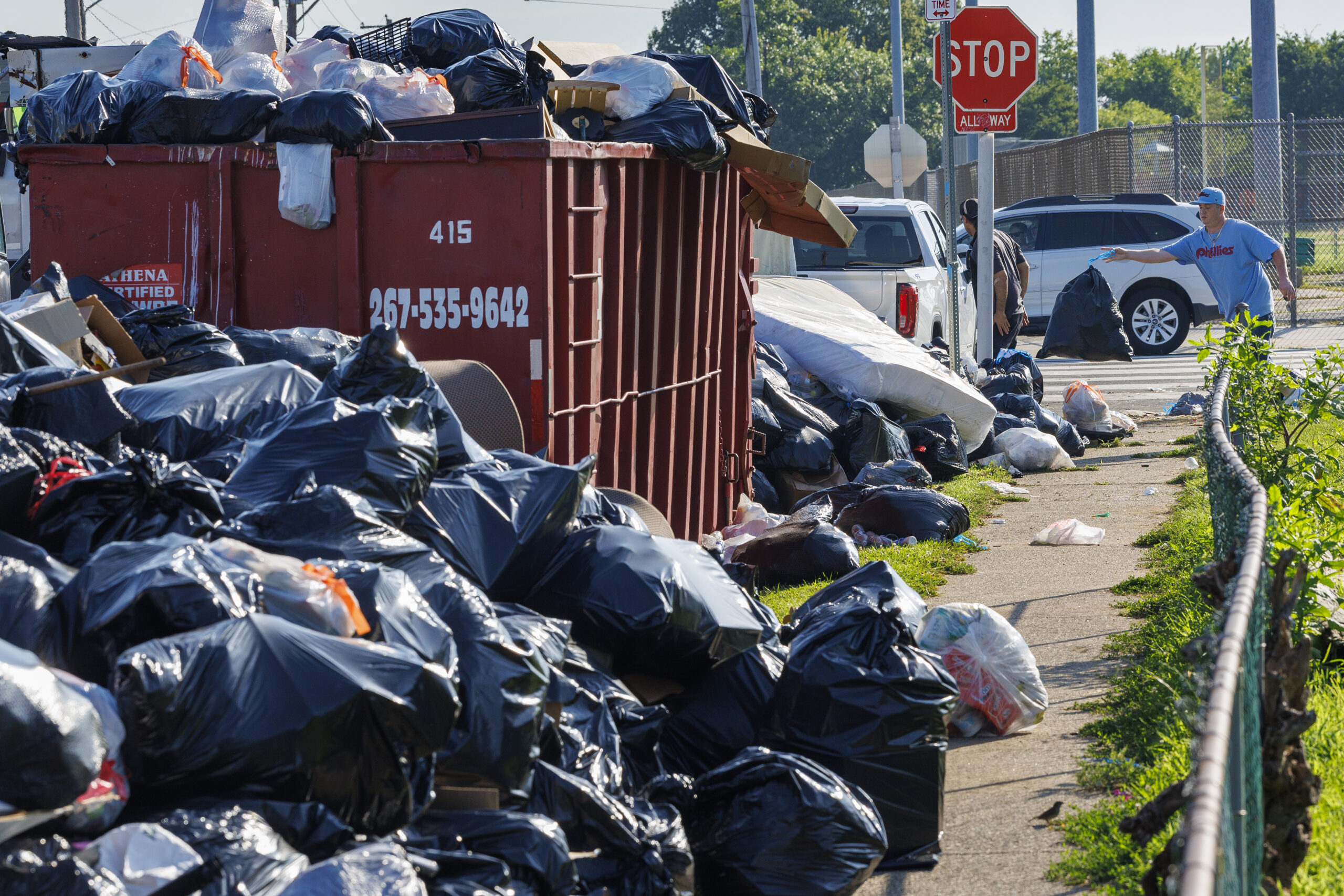
    Residents with trash arrive at garbage dump site at Caldera Road and Red Lion Road in northeast Philadelphia during the AFSCME District Council 33 workers strike in July.

    As a result, things got weird. Dead bodies piled up at the Medical Examiner’s Office; a striking union member was arrested for allegedly slashing the tires of a PGW vehicle; and for eight days in the July heat, garbage heaped up all across Philadelphia. The city set up temporary trash drop-off sites, which often overflowed into what were nicknamed “Parker piles,” but that also set off a firestorm about whether using the sites constituted crossing a picket line.

    Wawa Welcome America July Fourth concert headliners LL Cool J and Jazmine Sullivan even pulled out of the show in support of striking workers, resulting in a fantastic “Labor Loves Cool J” meme.

    This is my favorite strike meme so far

    [image or embed]

    — Stephanie Farr (@farfarraway.bsky.social) July 7, 2025 at 9:40 AM

    It was all like something out of It’s Always Sunny in Philadelphia. In fact, the gang predicted a trash strike in the 2012 episode “The Gang Recycles Their Trash.”

    The real strike lasted eight days before a contract was reached. In true Philly form, AFSCME District Council 33 president Greg Boulware told The Inquirer “nobody’s happy.”
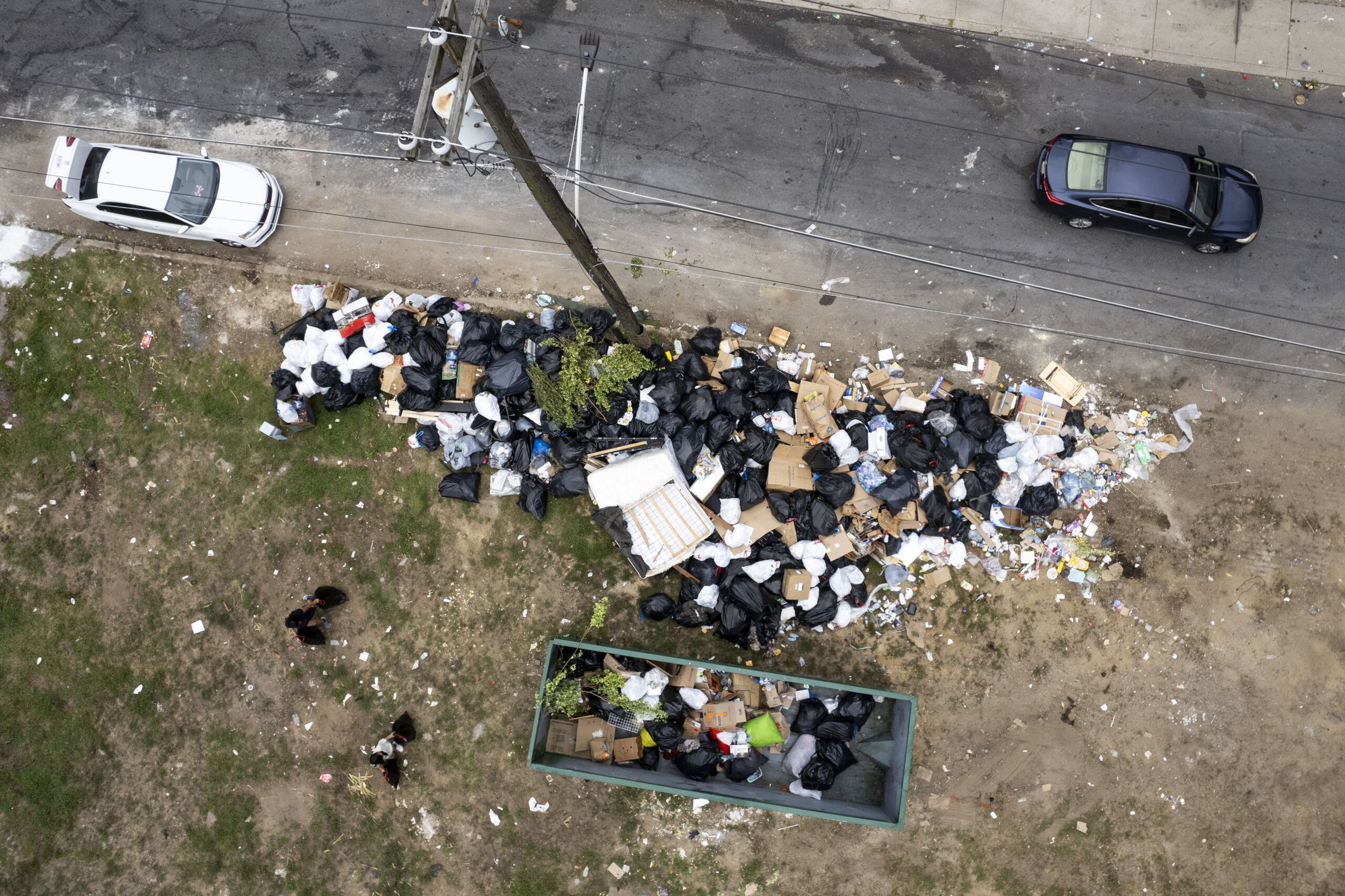
    A large pile of trash collects at a city drop-off site during the AFSCME workers strike this summer.

    97-year-old gives birth to 16 kids

    A local nonagenarian couple became national shellebrities this year for welcoming seven babies in April and nine more in August, proving that age ain’t nothing but a number, as long as you’re a tortoise.

    Western Santa Cruz Galapagos tortoise Mommy, and male Abrazzo, left, are shown on Wednesday, April 23, 2025, at the Philadelphia Zoo in Philadelphia, Pa. The hatchlings’ parents, female Mommy and male Abrazzo, are the Zoo’s two oldest animals, each estimated to be around 100 years old.

    Mommy and Abrazzo, Western Santa Cruz Galapagos tortoises who reside at the Philadelphia Zoo, made history with their two clutches, becoming the first pair of the critically endangered species in the zoo’s 150-year history to hatch eggs and the first to do so in any accredited zoo since 2019.

    Mommy is also the oldest known first-time Galapagos tortoise mom in the world, so it’s safe to say she doesn’t have any time or patience for shenanigans. She’s got 16 heroes in a half shell to raise.

    Western Santa Cruz Galapagos tortoise egg hatchling.

    Phillies Karen

    Taking candy from a baby is one thing — babies don’t need candy anyway — but taking a baseball from a kid at a Phillies game is a deed so foul and off base it’s almost unimaginable.

    And yet, that’s exactly what happened at a Phillies-Marlins game in September, when a home run from Harrison Bader landed in the stands and a dad ran from his seat to grab it and give it to his son. A woman who was sitting near where the ball landed marched over to the dad, berated him, and demanded the ball be given her. Taken aback, the father reached into his son’s baseball glove and turned the ball over.

    The entire scene was caught on camera and the woman, with her Kate Gosselin-esque hairdo, was immediately dubbed “Phillies Karen” by flabbergasted fans.

    While the act technically happened at the Marlins stadium in Miami, Fla., it captured the minds and memes of Philadelphians so much that it deserves inclusion on this list. Phillies Karen has made her way onto T-shirts and coffee mugs, inspired skits at a Savannah Bananas game and the MLB Awards, and she even became a popular Halloween costume.

    To this day, “Phillies Karen” remains unidentified, so it’s a safe bet she lives in Florida, where she’ll have better luck with alligators than with people here.

    Institutional intrigue

    Drama at area institutions this year had Philadelphians sipping tea like we were moms on Christmas morning, and sometimes, left us shaking our fists in the air like we were dads putting up tangled lights.
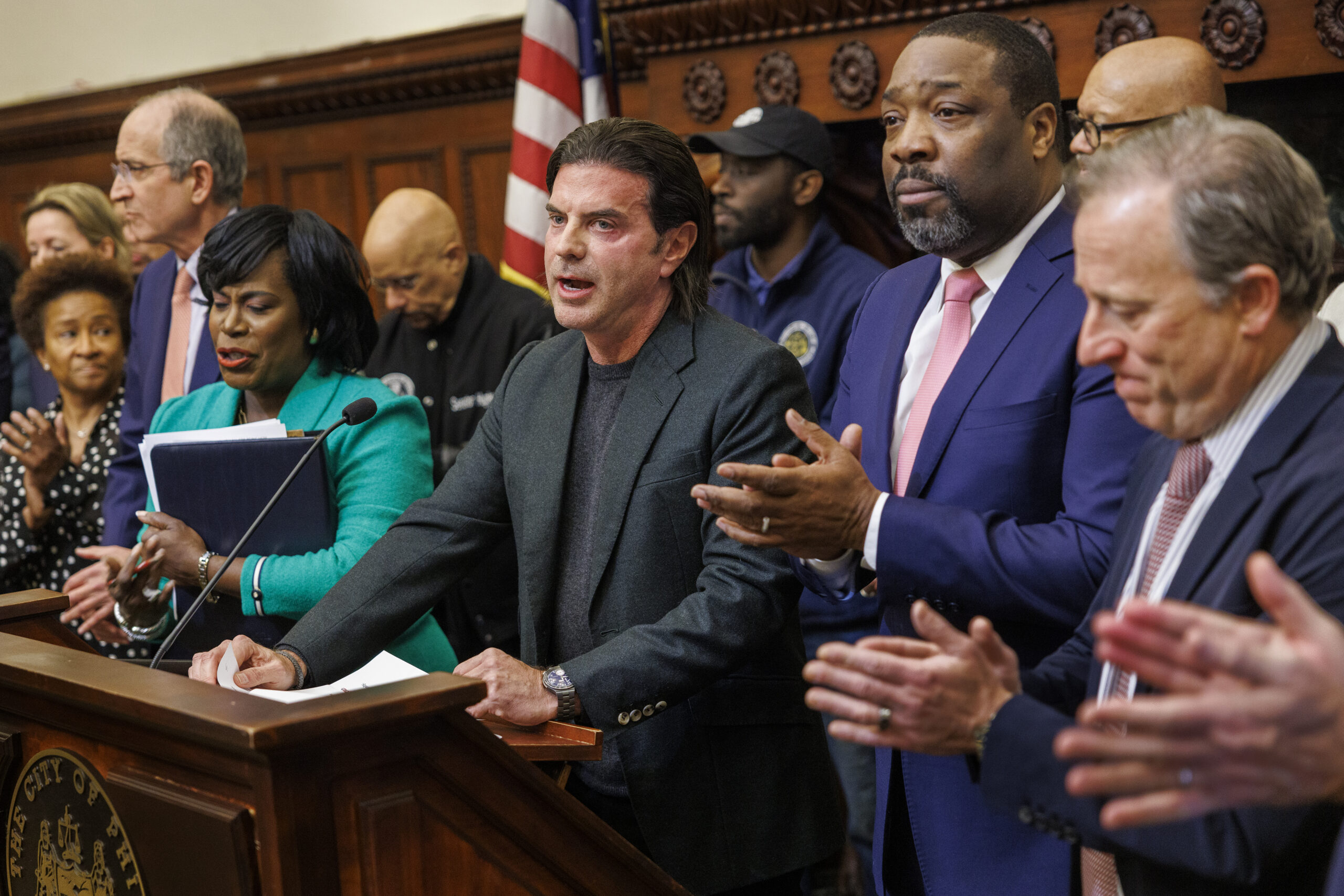
    David Adelman with the Philadelphia 76ers makes a statement at a press conference in the Mayor’s Reception Room in January regarding the Sixers changing directions on the controversial Center City arena. At left is mayor Parker, at right City Council President Kenyatta Johnson and Josh Harris, Sixers owner.

    It started early in January, when the billionaire owners of the Sixers surprised the entire city by announcing the team would stay at the South Philly sports complex instead of building their own arena on Market East. The decision came after two years of seemingly using the city, its politicians, and its people as pawns in their game.
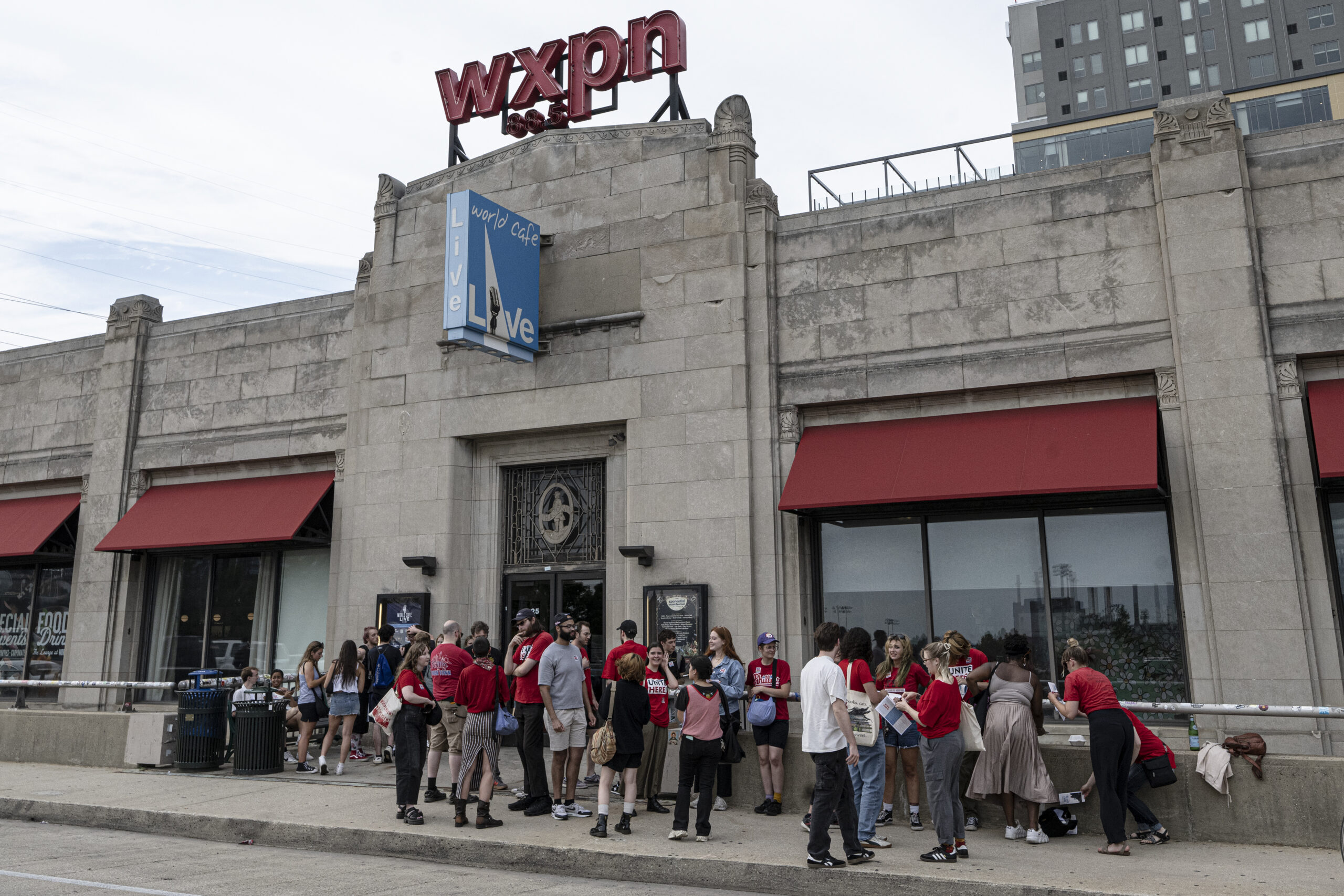
    Workers gathered outside World Cafe Live before a Town Hall meeting with management in July.

    In June, workers staged a walkout at World Cafe Live due to what they claimed was “an unacceptable level of hostility and mismanagement” from its new owners, including its then-CEO, Joseph Callahan. Callahan — who said the owners inherited $6 million in debt and that he wanted to use virtual reality to bolster its revenue — responded by firing some of the workers and threatening legal action. Today, the future of World Cafe Live remains unclear. Callahan stepped down as CEO in September (but remains chairman of the board), the venue’s liquor license expired, and its landlord, the University of Pennsylvania, wants to evict its tenant, with a trial scheduled for January.

    Signage at the east entrance to the Philadelphia Art Museum reflects the rebrand of the institution, which was formerly known as the Philadelphia Museum of Art.

    Finally, late this year at the Philadelphia Art Museum, things got more surreal than a Salvador Dalí painting, starting with an institutional rebrand that surprised some board members, didn’t land well with the public, and resulted in a lot of PhART jokes. In November, museum CEO Sasha Suda was fired following an investigation by an outside law firm that focused, in part, on increases to her salary, a source told The Inquirer. Suda’s lawyer called it a “a sham investigation” and Suda quickly sued her former employer, claiming that “her efforts to modernize the museum clashed with a small, corrupt, and unethical faction of the board intent on preserving the status quo.”

    Nobody knows where all of this will go, but it’s likely to have more drama than a Caravaggio.
  • Property taxes are going up next year | Inquirer Lower Merion

    Property taxes are going up next year | Inquirer Lower Merion

    Hi, Lower Merion! 👋

    Township commissioners recently passed the 2026 budget, which includes a tax hike. Here’s what you need to know. And with the new year just over a week away, we’ve rounded up nearly a dozen ways to celebrate 2026 in and around town.

    This is our final Inquirer Lower Merion newsletter of 2025, but we’ll be back in your inboxes on Jan. 8. Thanks for reading and happy new year!

    If someone forwarded you this email, sign up for free here.

    Lower Merion Township property taxes will jump 8% in 2026

    Lower Merion officials recently approved a tax hike for 2026.

    Lower Merion residents can expect to see their property taxes go up in 2026 after the township’s board of commissioners approved an 8% increase in the upcoming budget.

    Commissioners said the increase was necessary following 13 years of stagnant tax revenue from 2011 to 2024, when there were no increases. Property taxes went up 6.5% in 2025 and commissioners acknowledged next year’s increase comes with some “sticker shock,” The Inquirer’s Denali Sagner reports.

    Still, it’s not as high as an initially proposed 9.5% hike. The township taxes will come on top of a 4% tax increase recently passed by Montgomery County officials.

    Read more about the tax increases here.

    Where to ring in the new year around town

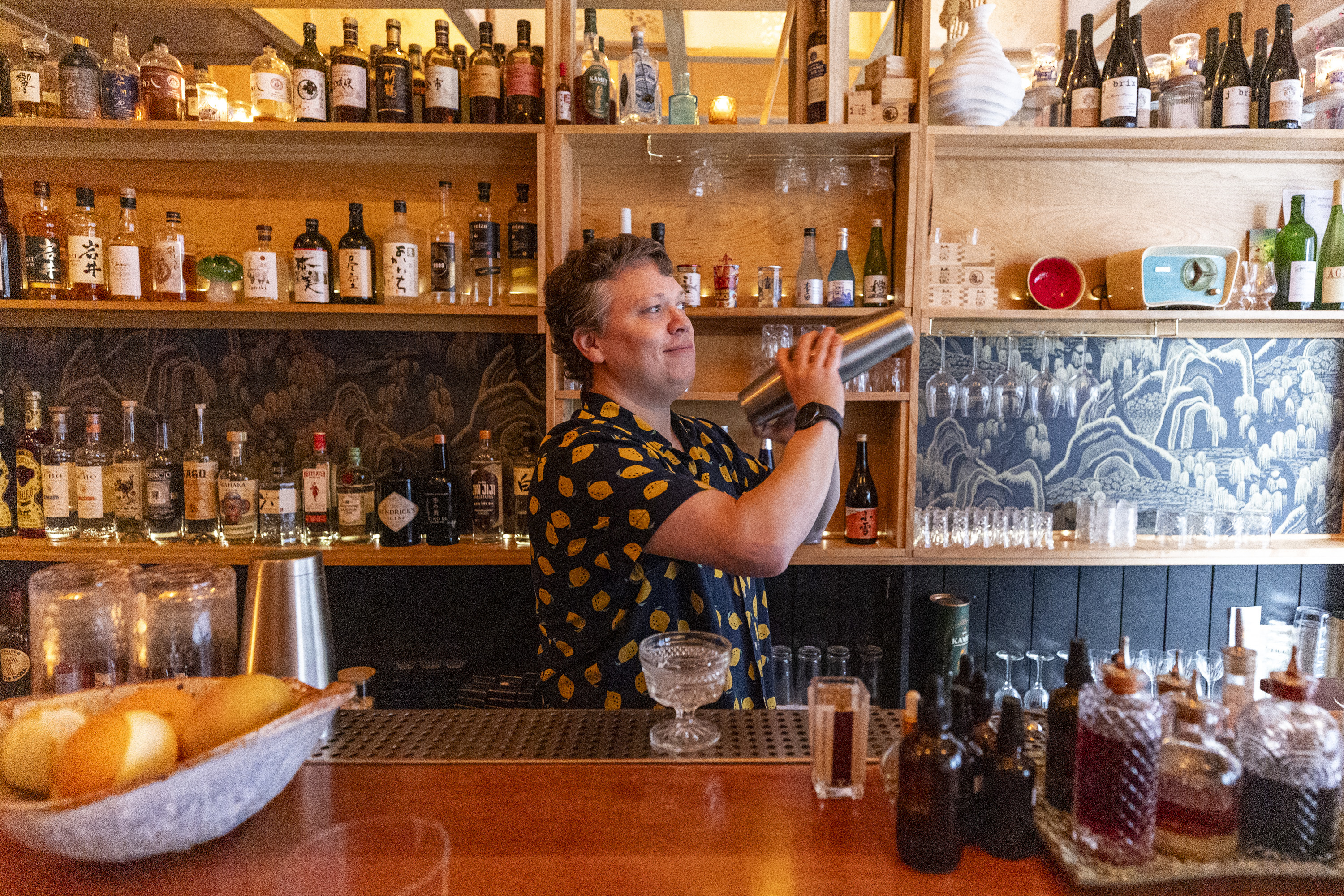
    Ardmore cocktail bar Izzy’s will have a special menu and champagne toast to ring in the new year.

    The countdown to 2026 is on and there’s no shortage of ways to celebrate the end of one year and the start of another.

    We’ve rounded up 11 celebrations in and around Lower Merion, including noontime events for kids, specialty and buffet dinners, plus concerts for kids and adults.

    Check out the events happening here.

    💡 Community News

    • Trash and recycling dates will have altered schedules due to Christmas and New Year’s Day. See how your household is impacted here. The township also released its 2026 collection schedule, which you can see here.
    • Narberth passed its 2026 budget last week, which includes a higher earned income tax. The EIT will jump from 0.75% this year to 1% next year and is aimed at improving the borough’s capital fund. The new budget also adjusts solid waste fees so that condos and apartments pay a flat $250 per living unit. Sewer fees are also set to rise from $5.25 to $6 per 1,000 gallons. See the full budget here.
    • Narberth council has also voted to make permanent the no-parking zone pilot at the intersection of Price and Essex Avenues. Signage is expected to be installed in January and February, with painting set for spring.
    • What does $390,000 get you? In Lower Merion, a budget that size can buy a two-bedroom, two-bathroom unit along Haverford’s “golden mile” of condominiums. See how that compares to neighboring areas, including Northeast Philadelphia and South Jersey.
    • Bryn Mawr Hospital is among the quietest hospitals in the region at night, according to newly released federal data. Patients from October 2023 to September 2024 reported Bryn Mawr being “always quiet” overnight 61% of the time, “usually quiet” 29% of the time, and “sometimes or never quiet” 10% of the time. See how Bryn Mawr compares to other regional hospitals.
    • Speaking of hospitals, Lankenau Medical Center made the Forbes Top Hospitals list for 2026.
    • Woman’s World Magazine recently caught up with Bryn Mawr native Kat Dennings to chat about her newest project, Shifting Gears, as well as her early roles and sitcom success.
    • A Bala Cynwyd dad launched a program in 2024 after seeing demand for Cub Scout activities on non-Sabbath days. Philadelphia Jewish Exponent recently profiled Michael Kopinsky about his inspiration and how the program quickly gained popularity among Orthodox and Sabbath-observant Jewish families.

    🏫 Schools Briefing

    • Winter break is officially here, with students and staff returning Jan. 5. The school district’s offices will be closed Dec. 24-26 and Jan. 1-2 during the break. Lower Merion High School’s pool will be closed those same days, as well as on Dec. 31.
    • Lower Merion High School skating duo Justin and Suri Lue took home third place in the regional level of the U.S. Figure Skating Championships in Nevada last month, and sixth place nationally in the intermediate division.

    🍽️ On our Plate

    🎳 Things to Do

    🎤 Start Making Sense: Hear the seven-piece Talking Heads tribute band perform. ⏰ Friday, Dec. 26, 8 p.m. 💵 $33.38 📍 Ardmore Music Hall

    🐑 Meet the Menagerie: Meet some of Harriton House’s farmstead animals. There will also be hot chocolate and s’mores available for purchase. ⏰ Tuesday, Dec. 30, 11 a.m.-3 p.m. 💵 Free 📍 Harriton House

    🏡 On the Market

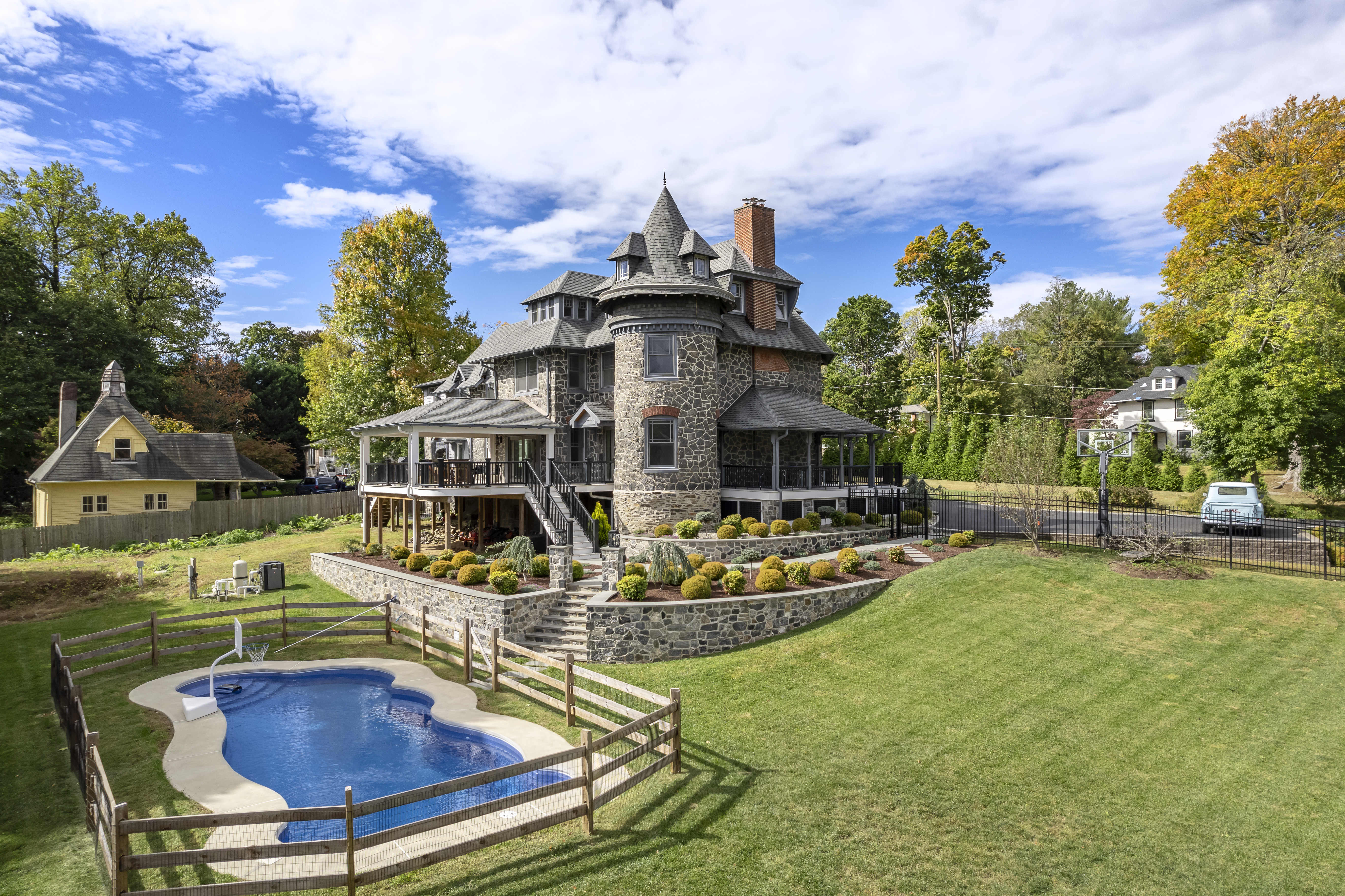
    A castle-like Merion Station home

    The home spans nearly 6,700 square feet and has a distinctive turret.

    This Merion Station property, built in 1888, is reminiscent of a castle. The home has a modern interior while paying homage to its roots by way of exposed stone walls, fireplaces, millwork, and stained glass windows. Some of its features include a curved tower, a formal dining room, and an eat-in kitchen with a large island. It also has seven bedrooms spread across the second and third floors. Outside, there’s an in-ground saltwater pool, a basketball court, multiple covered sitting areas, and a deck with a built-in kitchen.

    See more photos of the home here.

    Price: $2.196M | Size: 6,694 SF | Acreage: 0.92

    🗞️ What other Lower Merion residents are reading this week:

    By submitting your written, visual, and/or audio contributions, you agree to The Inquirer’s Terms of Use, including the grant of rights in Section 10.

    This suburban content is produced with support from the Leslie Miller and Richard Worley Foundation and The Lenfest Institute for Journalism. Editorial content is created independently of the project donors. Gifts to support The Inquirer’s high-impact journalism can be made at inquirer.com/donate. A list of Lenfest Institute donors can be found at lenfestinstitute.org/supporters.

  • See what homebuyers can get for $390,000 in Lower Merion, Northeast Philly, and Camden County | The Price Point

    See what homebuyers can get for $390,000 in Lower Merion, Northeast Philly, and Camden County | The Price Point

    The Price Point compares homes listed for similar sale prices across the region to help readers set expectations about house hunting.

    Looking for a new home for the new year? You’ve got options if you have the region’s typical homebuying budget.

    Across the Philadelphia metropolitan area, homes sold for a median of $390,000 last month, according to the multiple listing service Bright MLS. That typical sale price is up more than 3% from last year.

    Here’s what a home shopper could get with a budget like this in three different neighborhoods in the region.

    Lower Merion condo in star location

    Wolverton & Co., a Montgomery County-based real estate company, sells and manages a lot of condos in the area of West Montgomery Avenue in the Haverford section of Lower Merion Township.

    “I call that stretch the golden mile of Haverford as it relates to condominiums,” said Will Wolverton, owner and broker of record at Wolverton & Co. “It’s a very desirable area.”

    There are restaurants and national and local stores, including at the nearby Haverford Square and Suburban Square shopping centers. Condo residents can walk to SEPTA’s Haverford station to catch Regional Rail trains. The Merion Cricket Club offers sports facilities and hosts dinners and galas.

    One condo currently for sale in the area is a two-bedroom, two-bathroom unit at Haverford Hunt Club, a building with 16 units on four floors. Condos there include both one-bedroom and two-bedroom units.

    The building is about 45 years old but has been “thoughtfully updated” in both looks and critical infrastructure, such as the elevator and the roof, Wolverton said.

    The condo for sale gets a lot of natural light, he said. And it’s on the top floor, so buyers won’t have upstairs neighbors. It also has a private balcony and a reserved space in the property’s parking lot.

    The last several serious buyers have been most interested in the neighborhood, Wolverton said.

    “It’s a very good property,” he said, “and a great location.”

    The condo was listed for sale for $385,000 on Oct. 20.

    An unusual Mayfair twin

    This home in the Mayfair neighborhood of Northeast Philadelphia stands out in a few ways, said listing agent Xiao Zhen Zhao, who works throughout this section of the city, as well as Fishtown and Northern Liberties.

    The open kitchen is “very unique” for the area and includes bar seating, said Zhao, an agent with Legacy Landmark Realty.

    The primary bedroom has a private bathroom, which isn’t common in older homes in Northeast Philadelphia, she said. A lot of houses have only one full bathroom, she said. One of the bathrooms features a skylight and pink tiles on the walls.

    And the home is “a bigger twin,” she said. It spans 1,868 square feet.

    The home has a backyard and a walk-out finished basement, which has a half bathroom. It also has a garage and driveway.

    The twin is in an area of the city where houses are more affordable and parking is easy. It’s within walking distance of schools. It’s minutes from stores and restaurants along Cottman Avenue, and it’s right off Pennypack Park.

    Potential buyers have liked the layout of the home and also the look of it, Zhao said.

    “A lot of people like the brick,” she said.

    The twin was listed for sale for $389,000 on Nov. 21.

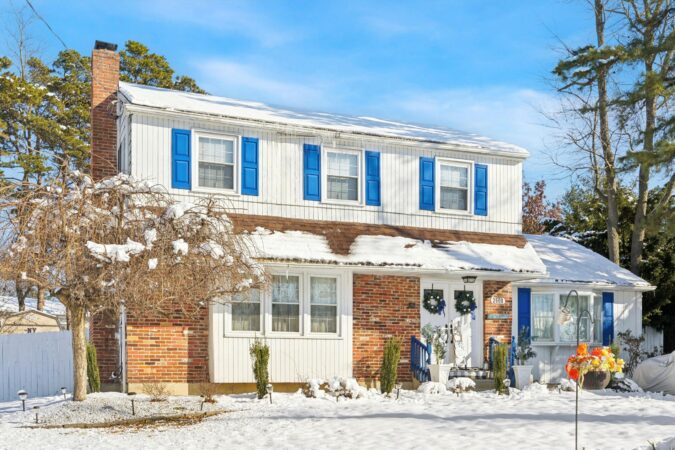
    A Colonial charmer in Gloucester

    Potential buyers touring this Colonial in Camden County have fallen for its charm, said real estate agent Evangeline Gambardella. “Because it is a very charming space.”

    The living room features a brick fireplace and a large window that lets in natural light and frames views of the front yard.

    The layout is more open than in a traditional Colonial, especially in this area of Gloucester Township, said Gambardella, a real estate agent with the Mike McCann Team, which is an affiliate of Keller Williams.

    The owners have recently updated the property. The home has new landscaping, a roof that is about 4 years old, a new fence, and a new heating, cooling, and ventilation system.

    Gambardella said this work makes the property ideal for first-time homebuyers, people who are downsizing, or anyone who doesn’t want to undertake large projects.

    “It presents a really lovely value for its price point,” she said.

    The home’s kitchen includes an island with seating. And a door in the formal dining room opens to the deck, which has a retractable awning.

    Home shoppers who have visited the property like its spacious backyard and its location. It is minutes from the Gloucester Premium Outlets and the Deptford Mall, has easy access to major highways, and is close to parks and restaurants.

    The home’s unfinished basement also is a “huge selling point for a lot of people” who want to decide what to do with the space, Gambardella said.

    The house was listed for sale for $389,000 on Dec. 20.

  • Lower Merion commissioners approve 8% tax hike, citing ‘looming cliff’ after 13 years of no increase

    Lower Merion commissioners approve 8% tax hike, citing ‘looming cliff’ after 13 years of no increase

    Lower Merion residents will see an 8% increase on their property tax bill in 2026, a move commissioners say is a necessary remedy to the “mistake” of keeping tax rates stagnant for over a decade.

    The township board of commissioners on Dec. 17 approved an 8% property tax increase for next year. The increase will bring the property tax millage rate from 4.462 mills to 4.819 mills. The median single-family homeowner in Lower Merion will pay around $1,386 in real estate taxes, a $103 increase from 2025.

    The 8% tax increase approved by commissioners is lower than the 9.5% increase proposed by staff and supported by board President Todd Sinai. The board landed on the 8% hike after a protracted discussion about how much of an increase residents could, and should, shoulder in 2026.

    Commissioners acknowledged the “sticker shock” of the tax hike but said years of stagnant tax revenue had put the township in an impossible position. Real estate taxes did not increase for 13 consecutive years in Lower Merion, from 2011 to 2024. The township voted to raise taxes by 6.5% for 2025, the first increase in over a decade.

    “Those years of no tax increase have proven to be a mistake, given that each year we were presented with a structural deficit and a looming cliff,” Commissioner Ray Courtney said. “By holding out on increases as long as we did, we have painted ourselves into a corner.”

    Under the proposed 9.5% tax hike, Lower Merion projected $83.8 million in general fund expenditures in 2026 against a revenue of $79.3 million. With the 8% tax hike passed by the board, revenue will be lower and the township will have to lean more heavily on its general fund reserves to cover the deficit.

    Around half of Lower Merion’s revenue comes from real estate taxes, yet township residents continue to pay taxes calculated on property values established in 1998, the last time Montgomery County conducted a property reassessment.

    The decades-old property values have kept tax revenue low, relative to the high market costs of a home in Lower Merion. The median sale price for a home in Lower Merion was $803,500 in 2024, according to data from Montgomery County.

    Notably, only 10% of Lower Merion residents’ property taxes goes to the township. Around 12% goes to Montgomery County and 78% goes to the school district.

    Montgomery County will be increasing taxes by 4% in 2026.

    In a Nov. 7 report addressed to the board of commissioners, Township Manager Ernie McNeely wrote that, while Lower Merion has weathered the post-pandemic economy with relative success, its general fund has run a deficit multiple times since 2020.

    McNeely’s report points to three major burdens on Lower Merion’s budget in 2026: healthcare premiums, staffing costs, and the Solid Waste Fund.

    The township is expected to see a 20% increase in healthcare premium costs in 2026. McNeely’s report said the increase is due, in part, to the costs associated with nondiabetic weight-loss drugs and other “specialty pharmaceuticals.”

    Lower Merion Township’s employment vacancy rate is also expected to fall in 2026. While a lower vacancy rate is good for departments needing to fill positions, each percentage-point improvement in the employment vacancy rate costs the township $520,000. On top of the falling vacancy rate, over 35% of township staff are set to receive a salary boost in 2026.

    And the town’s Solid Waste Fund is in dire straits. Even with the 5% solid waste fee rate hike planned for 2026, the fund is set to face a $700,000 deficit. Rising costs for disposal, equipment, and personnel, as well as a declining regional market of mills able to purchase paper recycling material, were identified as the main reasons for cost increases.

    The major challenges outlined by McNeely are set to the backdrop of persistent inflation, which is putting cost pressures on local governments.

    This suburban content is produced with support from the Leslie Miller and Richard Worley Foundation and The Lenfest Institute for Journalism. Editorial content is created independently of the project donors. Gifts to support The Inquirer’s high-impact journalism can be made at inquirer.com/donate. A list of Lenfest Institute donors can be found at lenfestinstitute.org/supporters.

  • Millions of dollars for homeless services in Bucks and Montgomery Counties are at risk under new Trump administration plan

    Millions of dollars for homeless services in Bucks and Montgomery Counties are at risk under new Trump administration plan

    Millions of dollars in federal funding for homeless services are at risk after the Trump administration on Friday moved forward with a plan to cut support for most long-term housing programs that serve people otherwise without stable shelter, according to officials in Bucks and Montgomery Counties.

    The plan, which is still being fought in court after the Department of Housing and Urban Development released an earlier iteration of the policy shift in November, seeks to upend the way communities across the nation, including Philadelphia, treat people experiencing homelessness and would reroute the spending of $3.9 billion in grants for a program called Continuum of Care that localities rely on to fund housing programs.

    The latest development came Friday night, when HUD appeared to respond to a judge’s ruling in the legal battle by issuing a new set of rules to apply for the federal awards. The new HUD document reduced the amount of funding available for permanent housing by two-thirds, a drastic decrease, said Kayleigh Silver, administrator of the Montgomery County Office of Housing and Community Development.

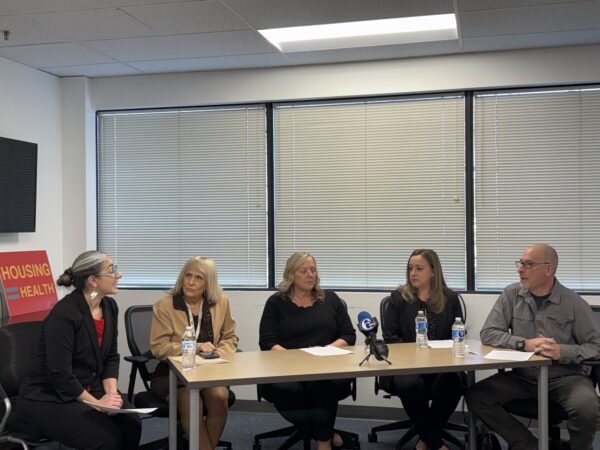
    The new plan “we believe will worsen homelessness and destabilize communities, not improve them,” said Kristyn DiDominick, executive director of the Bucks-Mont Collaborative, at a news conference Monday in Warminster. The nonprofit fosters resource sharing between the two counties.

    Officials said hundreds of people in the counties, including families, veterans, and people with disabilities, could lose access to housing as a result of the funding shift. Nationwide, the HUD plan could displace 170,000 people by cutting two-thirds of the aid designated for permanent housing, advocates say. In Philadelphia, tens of millions of dollars used to fund the city’s 2,330 units of permanent supportive housing are at risk, city officials said in November

    Bucks County Commissioner Diane Ellis-Marseglia, a social worker by trade, said HUD broke its “promise” to continue providing support to programs.

    “If we can’t trust HUD, how are we supposed to get the people we work with to trust us?” said Ellis-Marseglia, a Democrat.

    Secretary of Housing and Urban Development Scott Turner in the Oval Office on May 5.

    The HUD announcement followed two lawsuits, including one from Pennsylvania Gov. Josh Shapiro and 20 other states’ attorneys general and governors, against President Donald Trump’s administration over the cuts included in the November draft of the plan.

    The earlier plan gave HUD the authority to restrict funding for groups that recognize the existence of transgender and nonbinary people, populations that face greater risks for homelessness. County officials are still seeking clarification on whether that provision remains in the new plan.

    HUD temporarily rescinded the controversial plan on Dec. 8, just hours before a hearing on the lawsuits, citing an intent to revise it. On Friday, U.S. District Judge Mary S. McElroy, who presided over the hearing, issued a preliminary injunction blocking HUD’s efforts until a new funding notice is issued. It remained unclear to local advocates and service providers the differences between the new plan posted later that night and the original.

    “HUD will continue working to provide homelessness assistance funding to grantees nationwide. The Department remains committed to program reforms intended to assist our nation’s most vulnerable citizens and will continue to do so in accordance with court orders,” a spokesperson for the department said in a statement to The Inquirer.

    The confusing standoff marks the latest obstacle that nonprofits have had to endure after a lengthy federal government shutdown and Pennsylvania’s state budget impasse, both of which contributed to funding delays and instability.

    It also signifies a turn away from the “Housing First” mindset, which prioritizes giving permanent housing to people who are homeless as a foundation for bettering their quality of life, according to the National Alliance to End Homelessness. In a post on X on Saturday, HUD Secretary Scott Turner called the strategy “failed.”

    Bucks and Montgomery County service providers and advocates at Monday’s news conference handed out literature that said “Chaos isn’t a strategy” and called on Congress to step in, noting that the funding process is months behind.

    The impacts “land on real people,” DiDominick said.

    Housing is also an important resource for survivors of domestic violence, said Stacy Dougherty, executive director of Laurel House, a domestic violence organization in Montgomery County.

    “For victims of domestic violence, access to safe housing can be the difference between staying in an abusive relationship and being able to leave, and sometimes even the difference between life and death,” Dougherty said.

    Erin Lukoss, CEO of the Bucks County Opportunity Council, added that “housing is the foundation,” a backbone for the entire system that tries to address poverty and food insecurity. A lack of clarity on this funding is another stressor for service providers and those who benefit from the resources

    “What makes this moment especially concerning is not just the potential reduction in funding, it’s the instability of the rules themselves,” Lukoss said.

  • Gov. Josh Shapiro schedules a book tour as he stands for reelection, and builds his 2028 profile

    Gov. Josh Shapiro schedules a book tour as he stands for reelection, and builds his 2028 profile

    Days before his memoir is set to hit shelves Pennsylvania Gov. Josh Shapiro will kick off his book tour at Philadelphia’s Parkway Central Library on Jan. 24.

    Shapiro will swing through Philadelphia, New York and Washington, D.C., in the final week of January to promote his book Where We Keep the Light: Stories from a Life of Service, according to events posted online.

    The tour and the book, set for release Jan. 27, will fuel speculation about a potential presidential run in 2028 as Shapiro works to expand his national profile as he also seeks reelection in Pennsylvania next year.

    The forthcoming memoir is expected to detail his life and political career, including the attempted arson attack on the governor’s mansion while he, and his family, slept inside earlier this year on Passover.

    Shapiro, who grew up in Montgomery County and first forged his political brand there, has become a leading figure in the national Democratic Party. The memoir will delve into his vetting to serve as Vice President Kamala Harris’ running mate last year, according to the publicized summary.

    In her own memoir, 107 Days, Harris cited Shapiro’s ambition as a reason she ultimately didn’t ask him to be her vice president and instead opted for Minnesota Gov. Tim Walz. Shapiro remained a regular presence on the campaign trail despite the snub, but Harris’ loss in Pennsylvania has caused much scrutiny of her decision.

    The Pennsylvania governor, Harris wrote, would be unable to “settle for a role as number two” and questioned her about whether he could get Pennsylvanian’s artwork in the vice president’s residence.

    In an interview with the Atlantic, Shapiro called the depiction “complete and utter bulls—.”

    Shapiro also features prominently — and negatively —in Sen. John Fetterman’s memoir.

    The Democratic senator, who has publicly feuded with the governor, described the tension between Pennsylvania’s two top Democrats, which traces back to their time together on the Pennsylvania Board of Pardons when Fetterman was lieutenant governor and Shapiro was state attorney general.

    It’s unclear whether Shapiro will discuss his relationship with Fetterman in the memoir.

    Shapiro’s book tour will kick off at a 3 p.m. event at the Parkway Central Library on Jan. 24. He will also speak at the Kauffman Concert Hall in New York on Jan. 27 and Sixth and I, a historic synagogue and Jewish cultural center in Washington, D.C., on Jan. 29.

  • Bring in the new year with these local hikes, from Marsh Creek to the Pine Barrens

    Bring in the new year with these local hikes, from Marsh Creek to the Pine Barrens

    With First Day hikes surging in popularity, Pennsylvania and New Jersey are rolling out a full slate of outings to welcome 2026 — from daybreak rambles to sunset treks, and nearly every hour in between for those easing into the new year.

    Many of the guided hikes require advance registration and fill quickly.

    The Jan. 1 hikes are offered through the Pennsylvania Department of Conservation and Natural Resources (DCNR) and the New Jersey Department of Environmental Protection (DEP). Some are guided by rangers, others by volunteers.

    For example, you can set out with “Ranger Kim” for a 1.5-mile walk at Marsh Creek State Park in Downingtown, Chester County. Or venture two to three miles through pine barrens at Black Run Preserve in Evesham Township, Burlington County.

    Another option: Join the Friends of Ridley Creek State Park in Media, Delaware County, for a 3.5-mile loop featuring creek views and a stop at historic hilltop Russell Cemetery.

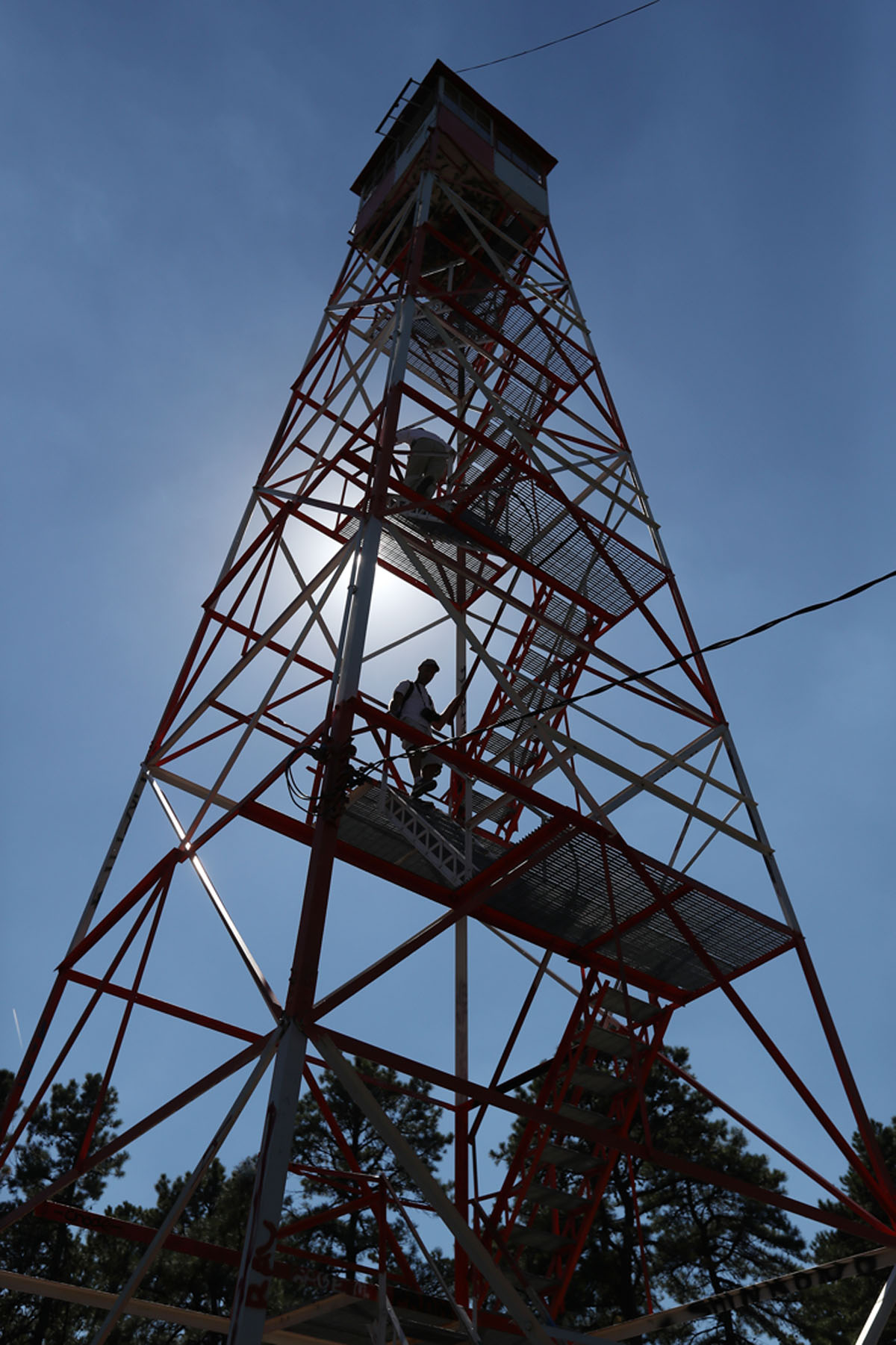
    Or, for a spectacular bird’s-eye view of the Pinelands at daybreak, you can tackle a 2.5-mile round trip, starting at 6 a.m., to Apple Pie Hill in Wharton State Forest, where hikers climb the 79 steps of the fire tower at sunrise. The only drawback: The hike has become so popular that the DEP holds a lottery at 1 p.m. on Dec. 31 to select participants.

    Apple Pie Hill Tower offers a dramatic view of the Pinelands.

    First Day Hikes began in Massachusetts in 1992, and went nationwide in 2012 under an effort by the National Association of State Park Directors.

    Ian Kindle, environmental education regional program coordinator for DCNR’s Bureau of State Parks, said the hikes in Pennsylvania started not long after that. But, he said, they have become increasingly popular since the pandemic, when many people took to the outdoors.

    “I think people have really taken to the idea of making getting outdoors on the first day of the year a tradition.” Kindle said. “I know that some of the first ones I led at Delaware Canal State Park, we could have 100, 150, and upward of 200 people, which is a challenge to lead.”

    Last New Year’s Day, 2,488 people — and 224 dogs — participated in Pennsylvania. They gathered for 74 hikes at 47 state parks and one state forest, accumulating 6,478 miles.

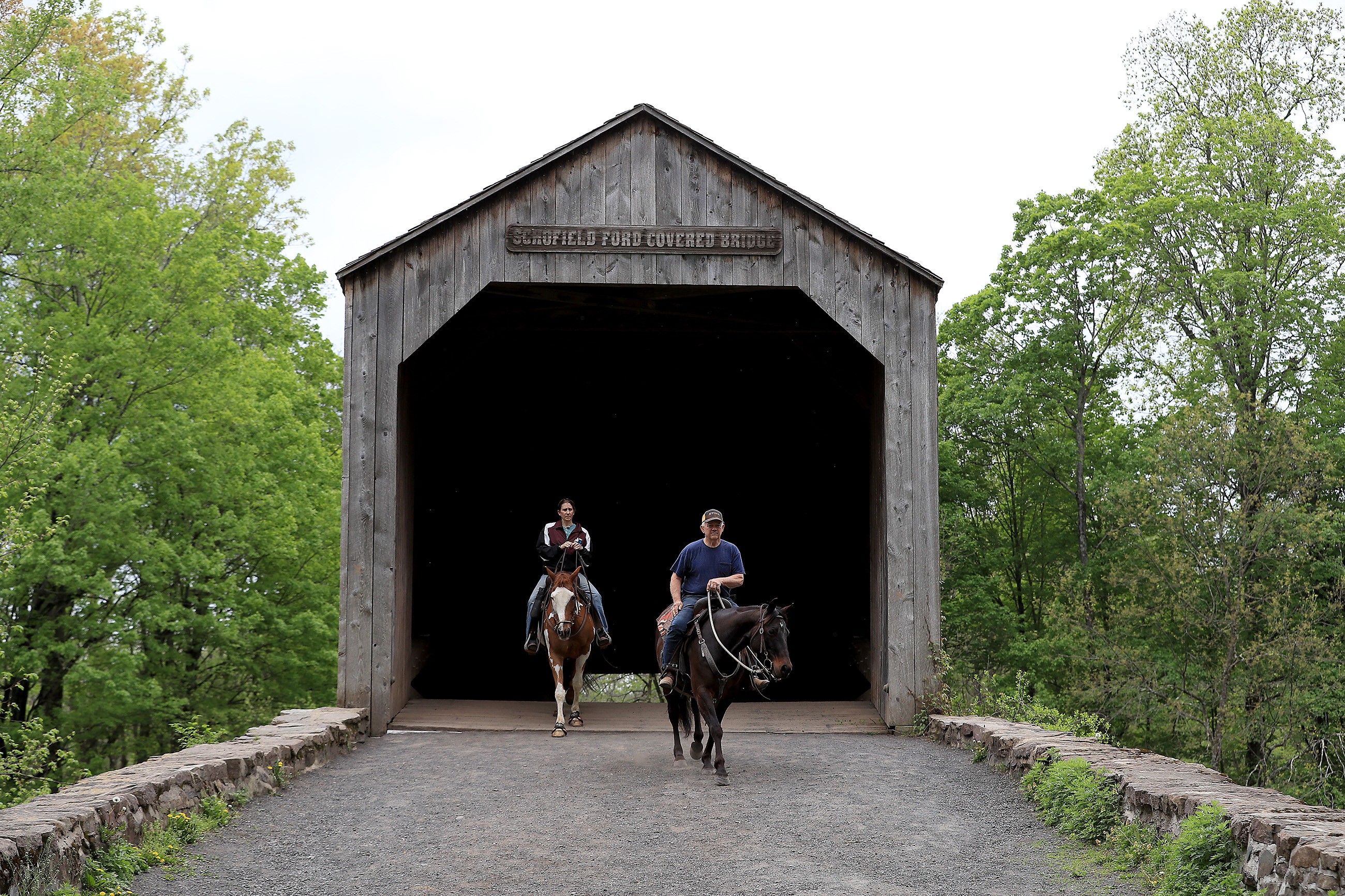
    Cheryl and Gary Moore, of Bucks County, ride their horses over the Schofield Ford covered bridge in Tyler State Park in Newtown, Bucks County in this 2021 file photo.

    The two most attended hikes were at Beltzville State Park in Carbon County in the Poconos (175 people) and Tyler State Park in Bucks County (170 people).

    This year, DCNR has organized 60 free guided hikes in 49 state parks and three forest districts, choosing to make the walks more focused.

    Kindle said an “almost full moon” hike is set for Delaware Canal State Park in Yardley, Bucks County, at 4 p.m. He noted a two-mile hike around Militia Hill at Fort Washington State Park in Montgomery County.

    He said other hikes will take place at White Clay Creek Preserve and French Creek State Park, both in Chester County.

    Here’s a list of all hikes in Eastern Pennsylvania.

    Meanwhile, New Jersey is offering 30 hikes and one lighthouse climb.

    The hikes include: walks at 10 a.m., noon, and 2 p.m. through historic Revolutionary-era Batsto Village in Wharton State Forest; a more rigorous six-mile hike at Brendan T. Byrne State Forest on the Cranberry Trail that includes Pinelands cedar swamps and Pakim Pond; and a two-mile hike at Washington Crossing State Park in Mercer County where you can learn about the famed feat by the Continental Army that routed the Hessians at Trenton.

  • Philadelphia’s Senior Law Center has taken over two of CARIE’s advocacy programs

    Philadelphia’s nonprofit Senior Law Center has taken over two of the programs that the Center for Advocacy for the Rights and Interests of the Elderly (CARIE) operated before it abruptly shut down around Thanksgiving.

    The Senior Law Center said this week in an email to supporters that it will continue CARIE’s work to support elderly crime victims under a two-year contract with the Pennsylvania Commission on Crime and Delinquency.

    That contract is for $462,094 per year and has been reassigned to the Senior Law Center. The Senior Law Center has hired four of the five CARIE employees who were involved in that work. The fifth person had already accepted another job, a Senior Law Center spokesperson said.

    Kathy Cubit, CARIE’s former advocacy director, has moved to the Senior Law Center, where she will continue her work on health equity and long-term care. Cubit chairs a group that monitors Pennsylvania’s implementation and development of Medicaid programs.

    CARIE listed 26 employees on its website the week before it closed. Few details were available on why CARIE closed after nearly 50 years. Much of its work involved long-term care ombudsman services for the elderly in most of Philadelphia and in Montgomery County. It lost both of those contracts.

  • Bucks County will increase property taxes by 8% in 2026 to close deficit

    Bucks County will increase property taxes by 8% in 2026 to close deficit

    Bucks County residents will see an 8% property tax increase next year.

    The Democratic-led Bucks County Board of Commissioners voted 2-1 Wednesday to raise taxes in response to a $16.4 million deficit in the county’s $516 million operating budget.

    County staff had requested a 7.2% tax increase to fill the budget hole, but Democratic Commissioners Bob Harvie and Diane Ellis-Marseglia voted to increase that hike to 8%, citing inflation and uncertainty in state and federal dollars.

    “It’s leaving us with a very, very small surplus in a very uncertain time,” Harvie, a candidate for Congress, said of the original request.

    Republican Commissioner Gene DiGirolamo voted against the tax increase but did not say why.

    The tax boost will translate to an increase of around $72 annually for the owner of a home assessed at the Bucks County average, county officials said.

    The increase will take effect in January.

    It comes as counties across Pennsylvania move toward higher property taxes. Montgomery County is poised to approve a 4% tax increase on Thursday, and Delaware County voted to raise its taxes 19% last week.

    Chester County’s commissioners voted Wednesday to approve a budget without a tax increase. Bucks County was the only one of Philly’s collar counties not to raise property taxes in 2025.

    In this year’s budget, Bucks County committed additional funds to the local community college and library systems, officials said. And, Ellis-Marseglia said, the cost of providing services to county residents had only increased.

    “It’s reasonable to think that it costs more to take care of the people in our nursing home, the people in our jail,” she said.

    As a result, Ellis-Marseglia and Harvie argued for a slightly larger tax increase this year to provide a cushion for the county to lean on.

    “I see things as getting really dark in the future in terms of money,” Ellis-Marseglia said.

  • Why Philadelphia loses promising biotech firms to Boston, San Francisco, and San Diego

    Why Philadelphia loses promising biotech firms to Boston, San Francisco, and San Diego

    Capstan Therapeutics’ sale this year for $2.1 billion, the highest price paid for a private early-stage biotech company since 2022, was a triumph for its founders at the University of Pennsylvania.

    Unfortunately for Philadelphia, the company is based in San Diego. Investors wanted an executive who lives there to be CEO.

    Capstan was a miss for Philadelphia, said Jeffrey Marrazzo, who cofounded a high-profile regional biotech company, Spark Therapeutics, and is now an industry investor and consultant.

    If Philadelphia had a bigger talent pool of biotech CEOs, “it would have and should have been here,” he said.

    The company, which aims to treat autoimmune diseases by reengineering cells inside the body, most likely would have been sold wherever it was based, but keeping it here would have boosted the local biotech ecosystem, experts said.

    The Philadelphia region has lagged behind other biotech centers in landing companies and jobs, but industry experts are working to close the gap and better compete with Boston, the San Francisco Bay Area, and San Diego.

    According to Marrazzo and others, the Philadelphia region’s relatively shallow pool of top biotech management is a key challenge.

    Big investors go to managers who have proven ability to deliver big investment returns, said Fred Vogt, interim CEO of Iovance Biotherapeutics, a California company with a manufacturing facility in the Navy Yard.

    “They want the company to perform. They’ll put it in Antarctica, if that was where the performance would come from,” he said.

    A positive sign for Philadelphia is Eli Lilly & Co.’s recent decision to open an incubator for early-stage biotech companies in Center City.

    The Lilly announcement last month also reflects Philadelphia’s national biotech stature. It’s the fourth U.S. city to get a Lilly Gateway Lab, behind Boston, the San Francisco Bay Area, and San Diego.

    Those places have far outpaced Philadelphia in the creation of biotech research and development jobs, even as the sector’s growth has slowed.

    From 2014 through last year, the Boston area added four biotech research and development jobs for every one job added here, according to an Inquirer analysis of federal employment data.

    window.addEventListener(“message”,function(a){if(void 0!==a.data[“datawrapper-height”]){var e=document.querySelectorAll(“iframe”);for(var t in a.data[“datawrapper-height”])for(var r,i=0;r=e[i];i++)if(r.contentWindow===a.source){var d=a.data[“datawrapper-height”][t]+”px”;r.style.height=d}}});

    Penn’s role in Philadelphia biotech

    Philadelphia’s reputation as an innovation center — boosters like to call the region “Cellicon Valley” — starts with the University of Pennsylvania, which has long been a top recipient of National Institutes of Health grants to advance scientific discovery.

    Penn scientists’ 21st-century accomplishments include key roles in figuring out how to arm immune cells to fight cancer, fixing faulty genes, and modifying mRNA to fight disease.

    Research at Penn has contributed to the creation of 45 FDA-approved treatments since 2013, according to the university.

    “Penn discoveries help spark new biotech companies, but we can’t build the whole ecosystem in this area alone,” said John Swartley, Penn’s chief innovation officer. “Great science is just one ingredient. We also need capital, experienced leadership, real estate and manufacturing infrastructure, and strong city and state support.”

    Penn was one of two Philadelphia institutions receiving more than $100 million in NIH funding in the year that ended Sept. 30. The other was the Children’s Hospital of Philadelphia.

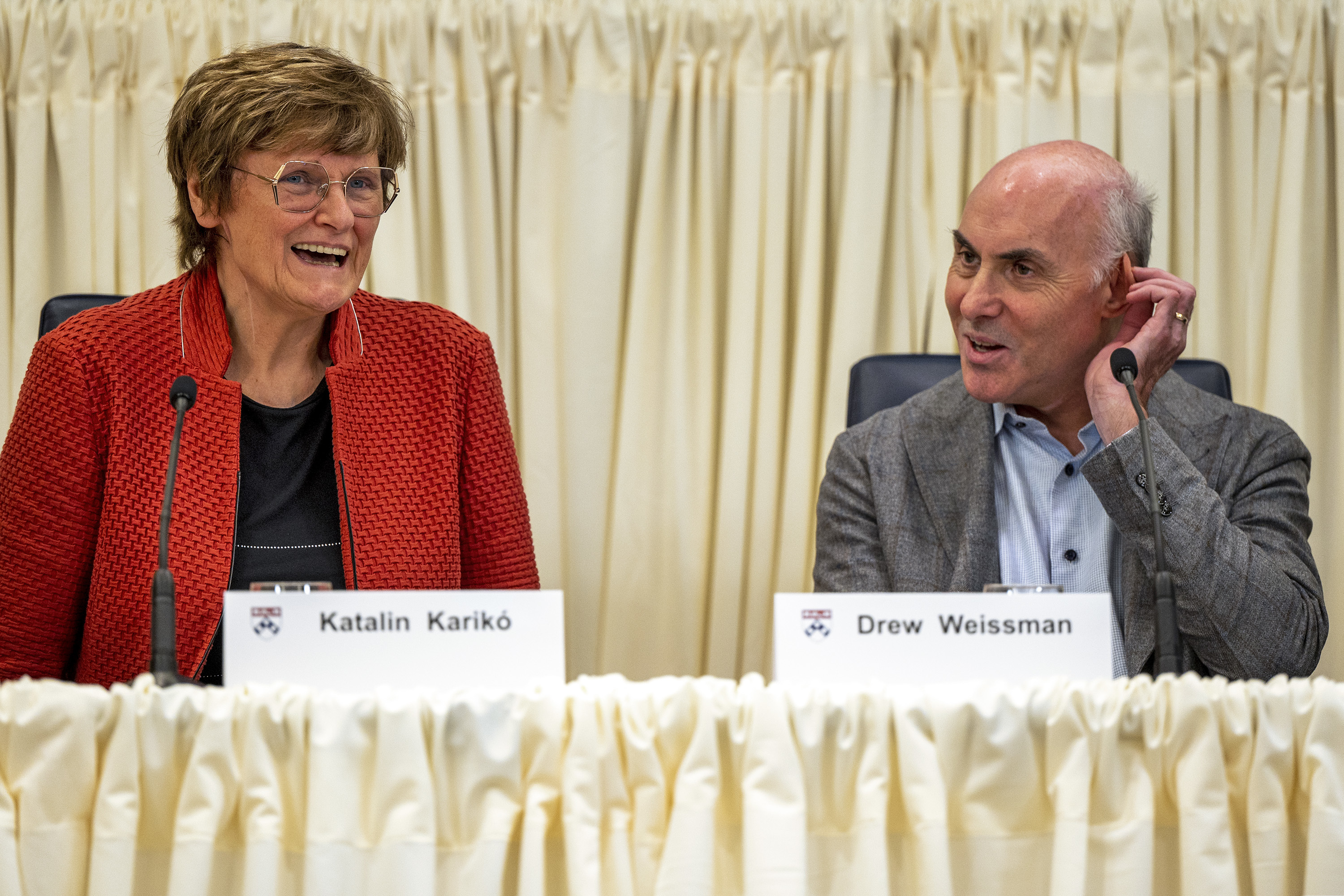
    Katalin Karikó and Drew Weissman spoke at a University of Pennsylvania news conference after they were named winners of a 2023 Nobel Prize in medicine. Their work was instrumental to modifying mRNA for therapeutic uses, such as the rapid development of lifesaving vaccines during the COVID-19 pandemic.

    By contrast, the Boston area was home to 10 institutions with at least $100 million in NIH grants, generating more spinoffs and jobs.

    The Philadelphia region has a healthy number of biotech spinouts, but the biggest markets have more from a larger number of research institutions, said Robert Adelson, founder Osage University Partners, a venture capital firm in Bala Cynwyd.

    That concentration of jobs and companies in the Boston area — where nearly 60,000 people worked in biotech R&D last year — makes it easier to attract people. By comparison, there were 13,800 such jobs in Philadelphia and Montgomery County, home to the bulk of the regional sector.

    If a startup fails, which happens commonly in biotech, “there’ll be another startup or another company for me to go to” in a place like Boston, said Matt Cohen, a managing partner for life science at Osage.

    Another challenge for Philadelphia: It specializes in cell and gene therapy, a relatively small segment of the biotech industry, whose allure to investors has faded in the last few years.

    Such market forces shaped the trajectory of Spark, a 2013 Children’s Hospital of Philadelphia spinout that developed Luxterna, the first FDA-approved gene therapy, used to treat an inherited form of blindness. The promise of Spark’s gene therapy work for a form of hemophilia spurred its 2019 acquisition by Swiss pharmaceutical titan Roche for $4.8 billion.

    This year, Roche laid off more than half the company’s workforce as part of a restructuring and a rethinking of treatments for blood diseases that it had been developing.

    The company still employs about 300 in the city, a spokesperson said, and work continues on its $575 million Gene Therapy Innovation Center at 30th and Chestnut Streets in University City.

    The long arc of biotech

    A handful of companies dominated the early days of U.S. biotech. Boston had Biogen and Genzyme, San Francisco had Genentech, San Diego had Hybritech, and Philadelphia had Centocor. All of them started between 1976 and 1981.

    Centocor started in the University City Science Center because one of its founders, virologist Hilary Koprowski, was the longtime director of the Wistar Institute. Centocor’s first CEO, Hubert Schoemaker, moved here from the Boston area, where he had gotten his doctorate at the Massachusetts Institute of Technology.

    Centocor was one of the nation’s largest biotech companies when Johnson & Johnson bought it for $4.9 billion in 1999. Its portfolio included an anticlotting drug called Reopro and Remicade for Crohn’s disease.

    Another drug still under development at the time of the sale, Stelara, went on to become J&J’s top-selling drug as recently as 2023 with $10.9 billion in revenue. Stelara, approved to treat several autoimmune disorders, remains a testament to Centocor’s legacy.

    Despite its product success, Centocor didn’t have the same flywheel effect of creating new companies and a pipeline of CEOs as peer companies did in regions outside of Philadelphia.

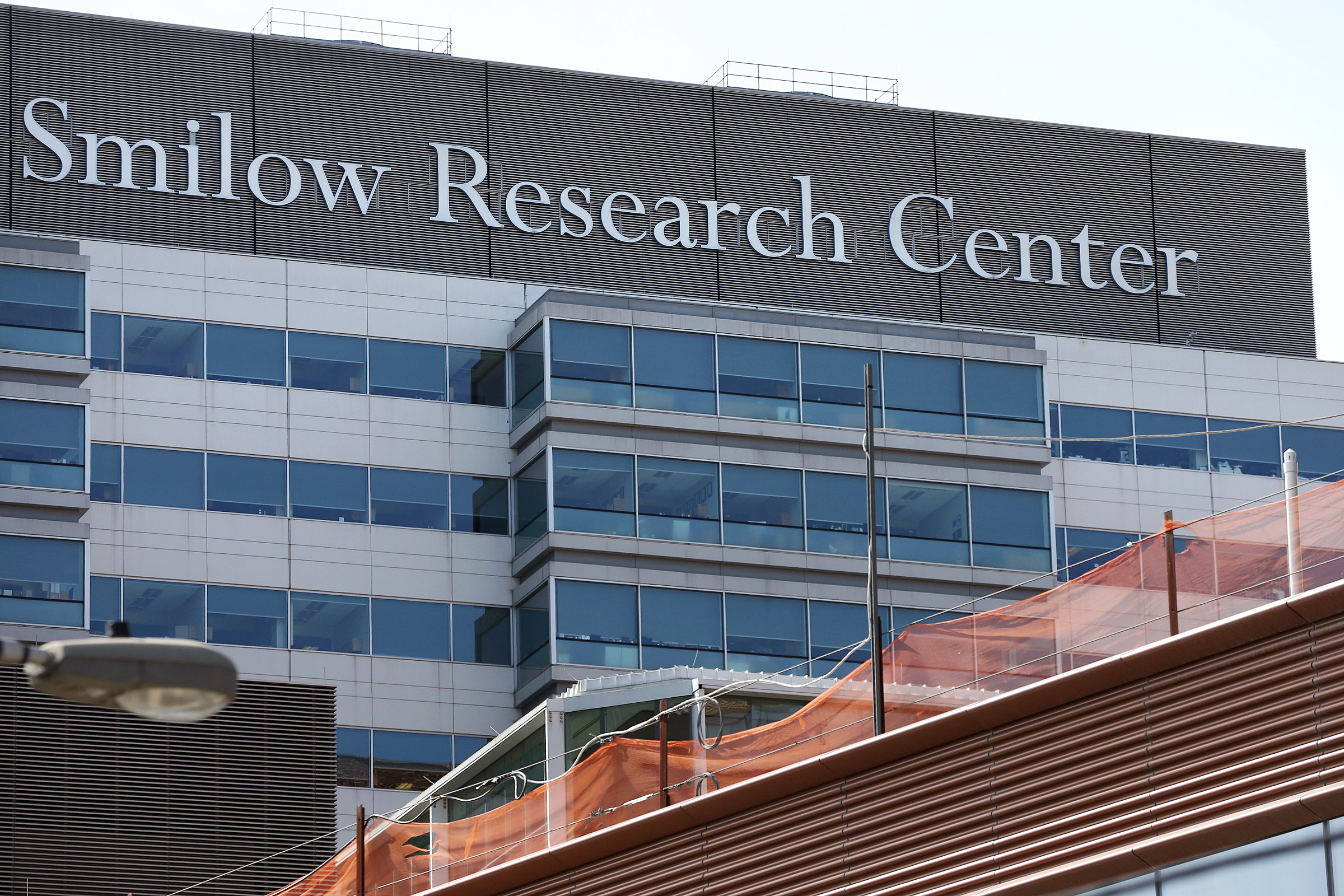
    The University of Pennsylvania’s Smilow Center for Translational Research, shown in 2020, is one of the school’s major laboratory buildings.

    “There are a lot of alums of Centocor that are really impressive, but they seem to have wound up elsewhere,” said Bill Holodnak, CEO and founder of Occam Global, a New York life science executive recruitment firm.

    Among the Centocor executives who left the region was Harvey Berger, Centocor’s head of research and development from 1986 to 1991. He started a new company in Cambridge, Mass.

    At the time, the Philadelphia area didn’t have the infrastructure, range of scientists, or management talent needed for biotech startups, he said.

    Since then, he thinks the regional market has matured.

    “Now, there’s nothing holding the Philadelphia ecosystem back. The universities, obviously Penn, and others have figured this out,” Berger said.

    Conditions have changed

    Penn’s strategy for helping faculty members commercialize their inventions has evolved significantly over the last 15 years.

    It previously licensed the rights to develop its research to companies outside of the area, such as Jim Wilson’s gene therapy discoveries and biochemist Katalin Karikó and immunologist Drew Weissman’s mRNA patents. Now it takes a more active role in creating companies.

    Among Penn’s latest spinouts is Dispatch Bio, which came out of stealth mode earlier this year after raising $216 million from investors led by Chicago-based Arch Venture Partners and San Francisco-based Parker Institute for Cancer Immunotherapy.

    Dispatch, chaired by Marrazzo, is developing a cell therapy approach that uses a virus to attach what it calls a “flare” onto the cells it wants the immune system to attack.

    Marrazzo said in July that he wasn’t going to be involved in Dispatch if it wasn’t based largely in Philadelphia. As of July, 75% of its 60 employees were working in Philadelphia. Still, Dispatch’s CEO is in the San Francisco Bay Area.

    The Philadelphia region is increasingly well-positioned for the current biotech era, said Audrey Greenberg, who played a key role in launching King of Prussia’s Center for Breakthrough Medicines about five years ago. The center is a contract developer and manufacturer for cell and gene therapies.

    “You no longer need to move to Kendall Square to get a company funded,” she said, referring to Cambridge’s biotech epicenter. “You need good data, a credible translational plan, experienced advisers, and access to patient capital, all of which can increasingly be built here.”

    Greenberg now works as a venture partner for the Mayo Clinic, with the goal of commercializing research discoveries within the health system’s network of hospitals in Minnesota, Arizona, and Florida.

    She plans to bring that biotech business to the Philadelphia region.

    “I’m going to be starting my companies all here in Philadelphia, because that’s where I am. And I know everybody here, and everybody I’m going to hire in these startups that are going to be based here,” she said.