Tag: no-latest

  • New cache of Epstein documents yields details on his ties to the rich and powerful

    New cache of Epstein documents yields details on his ties to the rich and powerful

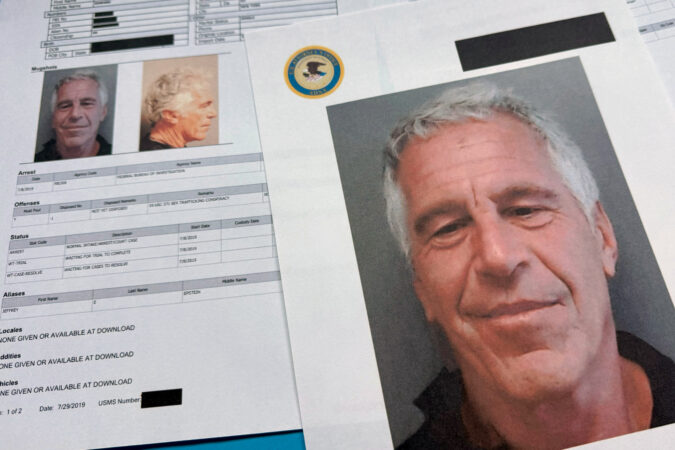
    NEW YORK — Newly disclosed government files on Jeffrey Epstein are offering more details about his interactions with the rich and famous after he served time for sex crimes in Florida, and on how much investigators knew about his abuse of underage girls when they decided not to indict him on federal charges nearly two decades ago.

    The documents released Friday include Epstein’s communications with former White House advisers, an NFL team co-owner, and billionaires including Bill Gates and Elon Musk.

    President Donald Trump’s Department of Justice said it would be releasing more than 3 million pages of documents along with more than 2,000 videos and 180,000 images under a law intended to reveal most of the material it collected during two decades of investigations involving the wealthy financier.

    The files, posted to the department’s website, included documents involving Epstein’s friendship with Britain’s Andrew Mountbatten-Windsor, formerly known as Prince Andrew, and Epstein’s email correspondence with onetime Trump adviser Steve Bannon, New York Giants co-owner Steve Tisch, and other prominent contacts with people in political, business, and philanthropic circles.

    Other documents offered a window into various investigations, including ones that led to sex trafficking charges against Epstein in 2019 and his longtime confidant Ghislaine Maxwell in 2021, and an earlier inquiry that found evidence of Epstein abusing underage girls but never led to federal charges.

    Draft indictment detailed Epstein’s abuse

    The FBI started investigating Epstein in July 2006 and agents expected him to be indicted in May 2007, according to the newly released records. A prosecutor wrote up a proposed indictment after multiple underage girls told police and the FBI that they had been paid to give Epstein sexualized massages.

    The draft indicated prosecutors were preparing to charge not just Epstein but also three people who worked for him as personal assistants.

    According to interview notes released Friday, an employee at Epstein’s Florida estate told the FBI in 2007 that Epstein once had him buy flowers and deliver them to a student at Royal Palm Beach High School to commemorate her performance in a school play.

    The employee, whose name was blacked out, said some of his duties were fanning $100 bills on a table near Epstein’s bed, placing a gun between the mattresses in his bedroom, and cleaning up after Epstein’s frequent massages with young girls, including disposing of used condoms.

    Ultimately, the U.S. attorney in Miami at the time, Alexander Acosta, signed off on a deal that let Epstein avoid federal prosecution. Epstein pleaded guilty instead to a state charge of soliciting prostitution from someone under age 18 and got an 18-month jail sentence. Acosta was Trump’s first labor secretary in his earlier term.

    Epstein offers to set Andrew up on a date

    The records have thousands of references to Trump, including emails in which Epstein and others shared news articles about him, commented on his policies or politics, or gossiped about him and his family.

    Mountbatten-Windsor’s name appears at least several hundred times, including in Epstein’s private emails. In a 2010 exchange, Epstein appeared to try and set him up for a date.

    “I have a friend who I think you might enjoy having dinner with,” Epstein wrote.

    Mountbatten-Windsor replied that he “would be delighted to see her.” The email was signed “A.”

    Epstein, whose emails often contain typographical errors, wrote later in the exchange: “She 26, russian, clevere beautiful, trustworthy and yes she has your email.”

    Concerns over how DOJ handled records

    The Justice Department is facing criticism over how it handled the latest disclosure.

    One group of Epstein accusers said in a statement that the new documents made it too easy to identify those he abused but not those who might have been involved in Epstein’s criminal activity.

    “As survivors, we should never be the ones named, scrutinized, and retraumatized while Epstein’s enablers continue to benefit from secrecy,” it said.

    Meanwhile, Maryland Rep. Jamie Raskin, the top Democrat on the House Judiciary Committee, pressed the department to let lawmakers review unredacted versions of the files as soon as Sunday. He said in a statement that Congress must assess whether the redactions were lawful or improperly shielded people from scrutiny.

    Epstein’s ties to powerful on display

    The released records reinforced that Epstein was, at least before he ran into legal trouble, friendly with Trump and former President Bill Clinton. None of Epstein’s victims who have gone public has accused Trump, a Republican, or Clinton, a Democrat, of wrongdoing. Both men said they had no knowledge Epstein was abusing underage girls.

    Epstein killed himself in a New York jail in August 2019, a month after being indicted.

    In 2021, a federal jury in New York convicted Maxwell, a British socialite, of sex trafficking for helping recruit some of his underage victims. She is serving a 20-year prison sentence.

    U.S. prosecutors never charged anyone else in connection with Epstein’s abuse. One victim, Virginia Roberts Giuffre, sued Mountbatten-Windsor, saying she had sexual encounters with him starting at age 17. The now-former prince denied having sex with Giuffre but settled her lawsuit for an undisclosed sum.

    Giuffre died by suicide last year at age 41.

  • Dear Abby | Husband is aware of wife’s secretive comings and goings

    DEAR ABBY: My wife of seven years secretly visits her ex-husband on multiple occasions. She visits him with and without his spouse present. However, she forbids me from speaking to or visiting any woman from my past unless she is present.

    My wife suffers from major depression. She’s on medication but refuses to see a counselor. Her family has informed me that she was unfaithful to spouses prior to me. I am faithful to her. The person she visits is a friend she has known for years. Should I look the other way, or am I entitled to be upset about the situation?

    — UPSET IN CONNECTICUT

    DEAR UPSET: You are entitled to be upset. The woman to whom you are married appears to live by a double standard. If you want to spend your life under her thumb and looking the other way while she may or may not cheat on you, I can’t stop you. But the person who should be talking to a counselor is not her. She’s living her life exactly the way she wants. The person who should be receiving counseling is you, because if your marriage were a happy one, you wouldn’t have found it necessary to write to me.

    ** ** **

    DEAR ABBY: A friend invited me to his birthday dinner at a popular restaurant. I got him a nice bottle of wine and a small book as a gift. There were 10 people at the table. One person had flown in from Chicago; another from L.A.

    After we’d eaten and were conversing, the birthday boy excused himself. While he was gone, the waiter presented the bill, and it was then made clear that the rest of us were expected to pay for his birthday celebration. Split amongst us, it came to $99 each.

    I put it on my credit card without comment; however, I was taken aback. I would never invite friends and then expect them to pay. I bounced this off a couple of other friends. Both said it was unacceptable behavior. What is your opinion? Am I unaware of this as a social norm?

    — STUNNED IN SAN FRANCISCO

    DEAR STUNNED: If this has become a social norm, I am as unaware as you are. When guests are invited to a celebration, it is the host’s responsibility to treat them UNLESS IT IS UNDERSTOOD WHEN THE INVITATION IS ISSUED THAT EVERYONE WILL BE EXPECTED TO PAY FOR THE MEAL. The next time this person invites you somewhere, make sure to ask whether you will be splitting the bill. That way there will be no surprises.

    ** ** **

    DEAR ABBY: I am one of those unfortunate people who has loud, violent sneezes. When I’m at home, it is no problem, but how do I keep them quiet when I’m out or at work? Stifling them hurts my back and stomach muscles.

    — SNEEZY IN NEW YORK

    DEAR SNEEZY: It may not be healthy to stifle a sneeze. Because you know you are prone to this, keep a handkerchief at the ready, which may muffle some of the sound.

  • Horoscopes: Jan. 31, 2026

    ARIES (March 21-April 19). You’ll make the great discovery that you have — and maybe are — the cure for something that ailed you. And don’t forget that fun, humor and good people are also vital to your continued well-being. Laughter is cardio for your insides.

    TAURUS (April 20-May 20). Assess the financial angle today. A person who is paid for what they do may be no more successful than the one who is not being paid for the same action. Success is measured in many more ways than money can account for.

    GEMINI (May 21-June 21). Desire is illogical. In the clutches of it, judgment flies out the window. Counterintuitively, the best way to sometimes return to reason is to go deeper into the madness of desire until the wanting plays out.

    CANCER (June 22-July 22). You know what matters most, and you spend your best energy there. Maybe you can’t give the time you would like to, but you make up for it with intensity and a life force that moves and affects.

    LEO (July 23-Aug. 22). You will notice the times during the day when you feel most like yourself. These times will stretch out and become more a part of your week because you make efforts to protect and prioritize them.

    VIRGO (Aug. 23-Sept. 22). It’s wise to acknowledge the limits of one’s own knowledge. You avoid the moral or intellectual self-righteousness that might narrow thinking and shut down learning. People who stay curious and open tend to be more constructive than people who are rigidly certain.

    LIBRA (Sept. 23-Oct. 23). Your heart and mind are engines of creation. Anything you commit to now must amplify your creativity. If it doesn’t inspire you, elevate you or help you build your world, it has no place here.

    SCORPIO (Oct. 24-Nov. 21). Choosing feels tricky because your options seem so similar. That is, until you go by feeling because one option feels more exciting to you. Act on these feelings and they’ll guide you well.

    SAGITTARIUS (Nov. 22-Dec. 21). Vague feelings and tensions are worth exploring. Once you name them, they become contained by the word, and you can then hold them, examine from different angles and place them where they are best kept.

    CAPRICORN (Dec. 22-Jan. 19). Let nothing stop you from being hopeful. Imagine the scene where it all comes together and you rise, victorious, enjoying the prize. It’s a fun way to think about the future. Focus on whatever lifts your spirits.

    AQUARIUS (Jan. 20-Feb. 18). Scientific inquiry works for you. You’ll make a prediction and then do an experiment to see what actually occurs. Record it all so you can repeat what works. These experiments will eventually bring you compounding, enduring success.

    PISCES (Feb. 19-March 20). The composer’s secret: the note that is most beautiful beyond compare is silence. You’ll use it well now to create profound emphasis, allow for great understanding and lay a foundation for what you most want to express.

    TODAY’S BIRTHDAY (Jan. 31). Welcome to your Year of the Inspired Upgrade. Your surroundings match who you are becoming. And it’s not just about your material world, but more importantly, the people in it and the stellar relationships you nurture. More highlights: You find the group, circle or community that feels like home from the first conversation. You’ll take pride in hosting or creating, and experience a feeling of safety that supports your boldest ideas. Taurus and Virgo adore you. Your lucky numbers are: 6, 15, 24, 40 and 9.

  • Trump administration approves new arms sales to Israel worth $6.67 billion

    Trump administration approves new arms sales to Israel worth $6.67 billion

    WASHINGTON — The Trump administration has approved a massive new arms sales package to Israel totaling $6.67 billion, including 30 Apache attack helicopters and related equipment and weapons, as well as 3,250 light tactical vehicles.

    The State Department announced the four separate sales to Israel late Friday amid rising tensions in the Middle East over the possibility of U.S. military strikes in Iran.

    The sales also were announced as President Donald Trump pushes ahead with his ceasefire plan for Gaza that is intended to end the Israel-Hamas conflict and reconstruct and redevelop the Palestinian territory after two years of war left it devastated, with tens of thousands dead.

    The Apache helicopters, which will be equipped with rocket launchers and advanced targeting gear, are the biggest part of the total package, coming to $3.8 billion, according to the State Department, which notified Congress of its approval of the sales on Friday.

    The next largest portion is the light tactical vehicles, which will be used to move personnel and logistics “to extend lines of communication” for the Israel Defense Forces and will cost $1.98 billion, it said.

    Israel will spend an additional $740 million on power packs for armored personnel carriers it has had in service since 2008, the department said. The remaining $150 million will be spent on a small but unreported number of light utility helicopters to complement similar equipment it already has, it said.

    In separate but nearly identical statements, the department said none of the new sales would affect the military balance in the region and that all of them would “enhance Israel’s capability to meet current and future threats by improving its ability to defend Israel’s borders, vital infrastructure, and population centers.”

    “The United States is committed to the security of Israel, and it is vital to U.S. national interests to assist Israel to develop and maintain a strong and ready self-defense capability,” the statements said.

  • Tens of thousands face another arctic blast without power as East Coast preps for a new storm

    Tens of thousands face another arctic blast without power as East Coast preps for a new storm

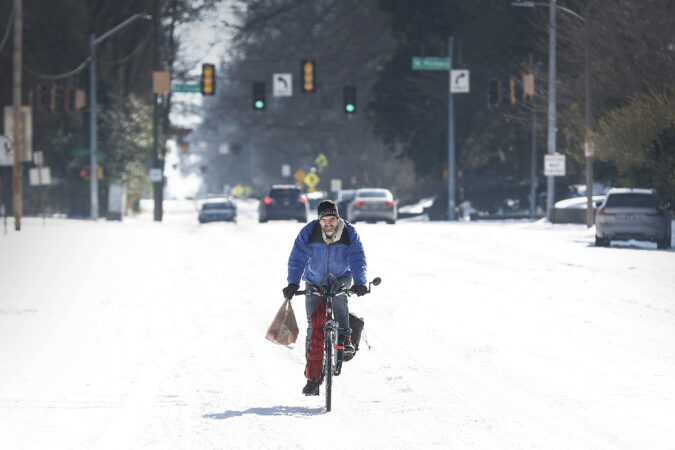
    BELZONI, Miss. — As tens of thousands of people endured nearly a week with no electricity, another storm loomed on the East Coast where residents braced for near-hurricane force winds, heavy snow, and potential flooding.

    More than 230,000 homes and businesses were without electricity Friday, with the vast majority of those outages in Mississippi and Tennessee, according to the outage tracking website poweroutage.us.

    In Mississippi’s Lafayette County, where about 12,000 people were still without electricity midday Friday, emergency management agency spokesperson Beau Moore said he knows not everyone will get power back before the cold hits.

    “It’s a race against time to get it on for those we can get it on for,” Moore said.

    Workers are attacking the project by ground and air. A video on the Tennessee Valley Authority’s Facebook page shows a worker sitting on the skids of a hovering helicopter so they can repair a giant power structure.

    Arctic air moving into the Southeast was expected to cause already frigid temperatures to plummet into the teens on Friday night in cities like Nashville, where many still lacked power nearly a week after a massive storm dumped snow and ice across the eastern U.S., the National Weather Service said.

    Forecasters say the subfreezing weather will persist in the eastern U.S. into February and there’s high chance of heavy snow in the Carolinas, Virginia, and northeast Georgia this weekend, possibly up to a foot in parts of North Carolina. Snow is also possible along the East Coast from Maryland to Maine.

    On Saturday night and early Sunday, forecasters expect wind and snow that could lead to blizzard conditions before the storm starts to move to sea.

    Snow should pile up in the Carolinas

    Several inches of snow, possibly 1 foot in some locations, were forecast statewide, particularly in eastern counties.

    Hundreds of state National Guard soldiers were ready to help. State workers have also been preparing roads.

    In Myrtle Beach, S.C., a town more accustomed to hurricanes, traffic jams and tourists, the National Weather Service predicted 6 inches of snow.

    The city has no snow removal equipment. Mayor Mark Kruea said they will “use what we can find” — maybe a motor grader or bulldozer to scrape streets.

    “With a hurricane you can storm proof many things,” Kruea said Friday. “But at a place like this, there is only a few things you can do to get ready for snow.”

    In North Carolina, several inches of snow, possibly 1 foot in some locations, were forecast statewide, particularly in eastern counties.

    In Wake Forest, N.C., people filled propane tanks Friday at Holding Oil and Gas, where employee Stanley Harris disconnected one tank, set it aside with a clank and then hooked up another.

    In Dare County to the east, home to much of North Carolina’s Outer Banks, longtime resident Bob Woodard said he’s worried about that more unoccupied houses in communities like Rodanthe and Buxton could collapse into the Atlantic Ocean.

    Hypothermia risks grow

    With the wave of dangerous cold heading for the South, experts say the risk of hypothermia heightens for people in parts of Mississippi and Tennessee who are entering their sixth day trapped at home without power in subfreezing temperatures.

    “The body can handle cold temperatures briefly very well, but the prolonged exposure is a problem,” said Hans House, University of Iowa professor of emergency medicine.

    People who are more vulnerable — the elderly, infants and those with underlying health conditions — may have started experiencing hypothermia symptoms within hours of exposure to the frigid temperatures, explained Zheng Ben Ma, medical director of the University of Washington Medical Center’s northwest emergency department. That can include exhaustion, slurred speech, and memory loss.

    “Once you get into days six, seven, upward of 10, then even a healthy, resilient person will be more predisposed to experiencing some of those deleterious effects of the cold temperature,” he said.

    Frostbite is also a concern in southern states, where people might not own clothes for northern winters, said David Nestler, an emergency medicine specialist at the Mayo Clinic in Minnesota.

    Mississippi and Tennessee still seeking full power

    Mississippi officials say it’s the state’s worst winter storm since 1994. About 80 warming centers were opened in one of the nation’s poorest states. National Guard troops were delivering supplies by truck and helicopter.

    Yazoo Valley Electric Power Association workers, some of whom don’t have power at their own homes, are working 16-hour days to restore electricity in Mississippi. Workers cut their way through downed trees to reach some areas for repairs, said Michael Neely, CEO and general manager.

    Worker Ethan Green, 21, said he feels pressure to get the job done quickly. “We can only go so quick,” he said. “In order to do it safely, we have to take our time.”

    In Tennessee, crews were also distributing supplies, said Gov. Bill Lee.

    The governor on Friday also said he has shared “strong concerns” with Nashville Electric Service leadership, saying communication with customers and power restoration efforts must improve.

    Tennesseans “need a clear timeline for power restoration, transparency on the number of linemen deployed, and a better understanding of when work will be completed in their neighborhood,” Lee said.

    Nashville residents’ criticisms have grown louder over their utility’s storm preparations and recovery, as more than 60,000 homes and businesses it serves remained powerless with frigid temperatures expected. Nashville Electric Service has defended its approach, saying it was an unprecedented storm. At the peak, about half of its customers in and near the capital city lost power.

    Nearly 90 people have died in bitter cold from Texas to New Jersey. Roughly half the deaths were reported in Tennessee, Mississippi, and Louisiana. While some deaths have been attributed to hypothermia, others are suspected to be related to carbon monoxide exposure. Officials have not released specific details about how some of the people died.

    The arctic cold was expected to plunge as far south as Florida.

  • Israel reopening Gaza’s border crossing with Egypt on Sunday after long closure

    Israel reopening Gaza’s border crossing with Egypt on Sunday after long closure

    JERUSALEM — Israel said Friday that it will reopen the pedestrian border crossing between the Gaza Strip and Egypt over the weekend, marking an important step forward for U.S. President Donald Trump’s Gaza ceasefire plan.

    COGAT, the Israeli military body in charge of coordinating aid to Gaza, said in a statement that starting on Sunday a “limited movement of people only” would be allowed through the Rafah crossing, Gaza’s main gateway to the outside world.

    The announcement followed statements from Israeli Prime Minister Benjamin Netanyahu and Ali Shaath, newly appointed to head the Palestinian administrative committee governing Gaza’s daily affairs, that it would likely open soon.

    While COGAT said the passage will open in both directions on Sunday, Shaath said the first day will be a trial for operations and that travel both ways will start Monday.

    Israel as of Friday agreed to allow up to 150 people to leave each day — 50 medical patients with two family members, an official familiar with the situation told the Associated Press, speaking on condition of anonymity because they were discussing diplomatic talks. Up to 50 people who fled during the war can return daily, the source said.

    Roughly 20,000 sick and wounded Palestinians need treatment outside Gaza, according to the territory’s health ministry. Gaza’s health system was decimated in the war, rendering advanced surgical procedures out of reach.

    COGAT said both Israel and Egypt will vet individuals for exit and entry through the crossing, which will be supervised by European Union border patrol agents. In addition to screenings at the crossing, Palestinians leaving and returning will be screened by Israel in the adjacent corridor, which remains under Israeli military control.

    The crossing has been under a near complete closure since Israel seized it in May 2024, saying the step was part of a strategy to halt cross-border arms smuggling by Hamas. It was briefly opened for the evacuation of medical patients during a short-lived ceasefire in early 2025.

    Israel had resisted reopening the crossing, but the recovery of the remains of the last hostage in Gaza on Monday cleared the way to move forward. A day later, Netanyahu said the crossing would soon open in a limited and controlled fashion.

    Thousands of Palestinians inside Gaza are trying to leave the war-battered territory, while tens of thousands who fled the territory during the heaviest fighting say they want to return home.

    The reopening is one of the first steps in the second phase of last year’s U.S.-brokered ceasefire agreement, which includes challenging issues ranging from demilitarizing Gaza to putting in place an alternative government to oversee rebuilding the mostly destroyed enclave.

    Netanyahu said this week that Israel’s focus is on disarming Hamas and destroying its remaining tunnels. Without these steps, he said that there would be no reconstruction in Gaza, a stance that could make Israel’s control over Rafah a key point of leverage.

    More deadly strikes in Gaza

    Palestinians in Gaza on Friday mourned friends and relatives who died earlier this week in Israeli strikes, which have slowed but not stopped since the return of the remains of the final hostage held in the territory.

    Three Palestinians were laid to rest in traditional Islamic funeral rites. Men gathered to pay their final respects, carrying the shrouded bodies through the streets before praying over them.

    Israel’s military said four people were killed in airstrikes Friday in central Gaza, saying they were armed and approaching troops near the ceasefire line dividing Israeli-held areas and most of Gaza’s Palestinian population.

    The most recent deaths Friday are on top of the 492 Palestinians killed since the ceasefire began in October, according to the Gaza Health Ministry. The ministry doesn’t distinguish between civilians and combatants in its figures. It maintains detailed casualty records that are seen as generally reliable by U.N. agencies and independent experts.

  • Cubans scramble to survive as U.S. vise on island tightens in push to oust government

    Cubans scramble to survive as U.S. vise on island tightens in push to oust government

    HAVANA — Cubans are hustling to become more self-sufficient as the U.S. government tightens its economic noose over the communist-run island in a move experts say is meant to force a popular uprising and usher in a new government.

    A sharp increase in U.S. sanctions was already suffocating Cubans when critical oil shipments from Venezuela were disrupted after the U.S. attacked the South American country and arrested its leader.

    The long-term repercussions of those halted shipments have yet to hit Cuba, but its people are not waiting.

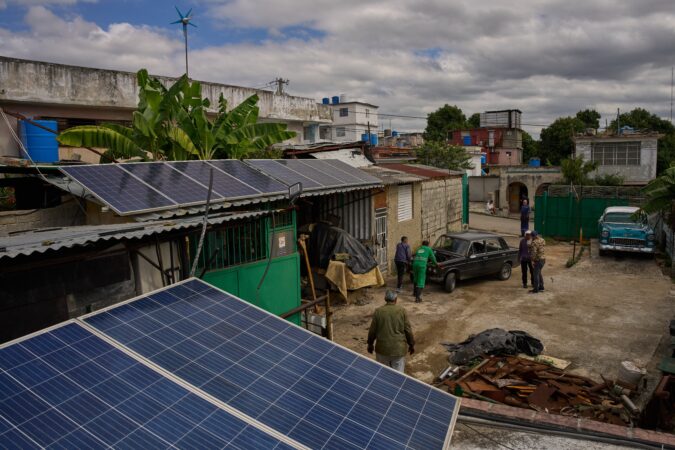
    Some are installing solar panels while others are growing their own crops or returning to a simpler way of life, one that doesn’t rely on technology or petroleum.

    “It’s how you survive,” said Jose Ángel Méndez Faviel. “It’s best to depend on yourself.”

    Méndez recently moved from the center of Havana to a farm in the rural community of Bacuranao because of Cuba’s severe blackouts. At the farm, he can cook with firewood and charcoal, something unthinkable in a darkened city apartment.

    Méndez said he doesn’t know what to make of President Donald Trump’s threats against Cuba, but he’s not taking any chances. He’s stocking up on gasoline, charcoal, and produce, which he began planting three months ago at his farm.

    Méndez also is thinking of buying back his old horse that he sold in favor of motorized equipment to transport vegetables he sells at local markets.

    “You don’t need fuel for a horse,” he said. “We need to go back in time.”

    ‘Very close to failing’

    Before the U.S. attacked Venezuela and disrupted oil shipments to Cuba, the island already was struggling with chronic blackouts, soaring prices, and a lack of basic goods.

    With experts warning of a potentially catastrophic economic crisis, some wonder if Cuba is reaching its breaking point. For Trump, who signed an executive order Thursday that would impose a tariff on any goods from countries that sell or provide oil to Cuba, it’s all but guaranteed.

    “Cuba is really a nation that is very close to failing,” he recently said.

    But Cubans scoff at that assertion, especially those who remember the so-called “Special Period,” when cuts in Soviet aid sparked the 1990s deprivation that eased when Venezuela became an ally under former President Hugo Chávez.

    Yadián Silva, a nurse and driver of a classic car who has seen tourism plummet, said Cubans aren’t dumb.

    “We have problems, and we know we have a lot of problems,” he said. “But when things happen in Cuba, it’s because people truly feel they should happen. Not because someone from the outside says, ‘do this.’”

    On a recent weeknight, tens of thousands of Cubans clutched flaming torches and joined an annual march to remember national hero José Martí. Many of them were university students.

    “We are a dignified people, a people eager to move forward, eager to prosper, who do not believe in threats and are not intimidated by any reprisals from the enemy,” said Sheyla Ibatao Ruíz, a 21-year-old law student. “If we have to take up arms, we will be the first to do so.”

    Before the march began, a presenter addressed the massive audience that included Cuban President Miguel Díaz-Canel.

    “This is not an act of nostalgia, it is a call to action,” said Litza Elena González Desdín, president of the Federation of University Students in a speech that included references to Trump.

    A day later, Christopher Landau, U.S. deputy secretary of state, noted that the U.S. embraces Martí “because he shared that passion that we have for freedom.”

    “We hope that by 2026, Cubans will finally be able to exercise their fundamental freedoms,” Landau said Wednesday in a recording played at a small gathering at the U.S. embassy in Havana. “The communist Castro regime is tottering; it won’t last much longer. After 67 years of a failed revolution that has betrayed the Cuban people, it’s time for the change that the people on the island are yearning for.”

    ‘We’ll ride bicycles’

    Last September, Ángel Eduardo launched a small business to install solar panels. He called it “Con Voltage,” a word with double meaning in Cuba that can refer to doing something well.

    He said he was fed up with studying in the dark and being forced to write in a notebook instead of a computer to obtain his degree as an automation control engineer.

    Eduardo started rigging pieces to light a single bulb for his home and ended up learning how to install solar systems thanks to a combination of a friend, Chat GPT and social media.

    He now has installed dozens of systems across Cuba, averaging one to two installations a day since November on an island where daily demand for electricity on average surpasses 3,000 megawatts when only about half that is available during peak hours.

    Eduardo said he saw a surge in calls from people in Havana seeking solar systems ever since the disruption in oil shipments from Venezuela.

    Growing a business is something that 62-year-old Niuvis Bueno Zavala has been pondering. A retired Russian interpreter for the Cuban government, she now runs a small wooden shack near the sea that sells drinks but not food.

    “I’ve never had it this hard,” she said, adding that she might start selling homemade food. “There’s always a helping hand to assist us. But now those helping hands can’t reach us. We’re blocked from all sides.”

    Many Cubans decry the embargo, including retired pilot Pedro Carbonell.

    The 73-year-old recently waited more than two hours to buy gasoline. He said Cubans have to keep fighting.

    “If we don’t have fuel, then we’ll ride bicycles,” he said, recalling how Cubans walked a lot during the Special Period. “Our wine is bitter. But it’s our wine. Do you understand? And we don’t want anyone from somewhere else coming here and telling us how to drink our wine.”

  • DOJ has opened a federal civil rights probe into the death of Alex Pretti, deputy AG says

    DOJ has opened a federal civil rights probe into the death of Alex Pretti, deputy AG says

    WASHINGTON — The Justice Department has opened a federal civil rights investigation into the shooting of Alex Pretti, the Minneapolis resident killed Saturday by Border Patrol officers, Deputy Attorney General Todd Blanche said Friday.

    “We’re looking at everything that would shed light on what happened that day and in the days and weeks leading up to what happened,” Blanche said during a news conference.

    Blanche did not explain why DOJ decided to open an investigation into Pretti’s killing, but has said a similar probe is not warranted in the Jan. 7 death of Renee Good, who was shot by an Immigration and Customs Enforcement officer in Minneapolis. He said only on Friday that the Civil Rights Division does not investigate every law enforcement shooting and that there have to be circumstances and facts that “warrant an investigation.”

    “President Trump has said repeatedly, ‘Of course, this is something we’re going to investigate,’” Blanche said of the Pretti shooting.

    Steve Schleicher, a Minneapolis-based attorney representing Pretti’s parents, said Friday that “the family’s focus is on a fair and impartial investigation that examines the facts around his murder.”

    FBI to take over federal investigation

    The Department of Homeland Security also said Friday that the FBI will lead the federal probe into Pretti’s death.

    Homeland Security Secretary Kristi Noem first disclosed the shift in which agency was leading the investigation during a Fox News interview Thursday evening. Her department previously said Homeland Security Investigations, a departmental unit, would head the investigation.

    “We will continue to follow the investigation that the FBI is leading and giving them all the information that they need to bring that to conclusion, and make sure that the American people know the truth of the situation and how we can go forward and continue to protect the American people,” Noem said, speaking to Fox host Sean Hannity.

    Homeland Security spokesperson Tricia McLaughlin said Homeland Security Investigations will support the FBI in the investigation. Separately, Customs and Border Protection, which is part of DHS, is doing its own internal investigation into the shooting, during which two officers opened fire on Pretti.

    DHS did not immediately respond to questions about when the change was made or why. The FBI did not immediately respond to a request for comment.

    It was not immediately clear whether the FBI would share information and evidence with Minnesota state investigators, who have thus far been frozen out of the federal investigation.

    In the same interview, Noem appeared to distance herself from statements she made shortly after the shooting, claiming Pretti had brandished a handgun and aggressively approached officers.

    Multiple videos that emerged of the shooting contradicted that claim, showing the intensive care nurse had only his mobile phone in his hand as officers tackled him to the ground, with one removing a handgun from the back of Pretti’s pants as another officer began firing shots into his back.

    Pretti had a state permit to legally carry a concealed firearm. At no point did he appear to reach for it, the videos showed.

    Videos emerge of previous altercation

    The change in agency comes after two other videos emerged of an earlier altercation between Pretti and federal immigration officers 11 days before his death.

    The Jan. 13 videos show Pretti yelling at federal vehicles and at one point appearing to spit before kicking out the taillight of one vehicle. A struggle ensues between Pretti and several officers, during which he is forced to the ground. Pretti’s winter coat comes off, and he either breaks free or the officers let him go and he scurries away.

    When he turns his back to the camera, what appears to be a handgun is visible in his waistband. At no point do the videos show Pretti reaching for the gun, and it is not clear whether federal agents saw it.

    Schleicher, the Pretti family attorney, said Wednesday the earlier altercation in no way justified the shooting more than a week later.

    In a post on his Truth Social platform early Friday morning, President Donald Trump suggested that the videos of the earlier incident undercut the narrative that Pretti was a peaceful protester when he was shot.

    “Agitator and, perhaps, insurrectionist, Alex Pretti’s stock has gone way down with the just released video of him screaming and spitting in the face of a very calm and under control ICE Officer, and then crazily kicking in a new and very expensive government vehicle, so hard and violent, in fact, that the taillight broke off in pieces,” Trump’s post said. “It was quite a display of abuse and anger, for all to see, crazed and out of control. The ICE Officer was calm and cool, not an easy thing to be under those circumstances!”

  • TikTok star Shirley Raines, known for bringing meals and respect to people on Skid Row, dies at 58

    TikTok star Shirley Raines, known for bringing meals and respect to people on Skid Row, dies at 58

    Shirley Raines, a social media creator and nonprofit founder who dedicated her life to caring for people experiencing homelessness, has died, her organization Beauty 2 The Streetz said Wednesday. She was 58.

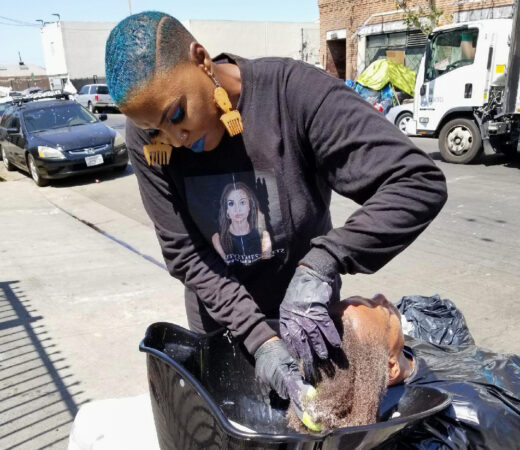
    Ms. Raines was known as “Ms. Shirley,” to her more than 5 million TikTok followers and to the people who regularly lined up for the food, beauty treatments, and hygiene supplies she brought to Los Angeles’ Skid Row and other homeless communities in California and Nevada.

    Ms. Raines’ life made an “immeasurable impact,” Beauty 2 The Streetz wrote on social media.

    “Through her tireless advocacy, deep compassion, and unwavering commitment, she used her powerful media platform to amplify the voices of those in need and to bring dignity, resources, and hope to some of the most underserved populations,” the organization said.

    Ms. Raines’ cause of death was not released, but the organization said it would share additional information when it is available.

    Ms. Raines had six children. One son died as a toddler — an experience that left her a “very broken woman,” Ms. Raines said in 2021 when she was named CNN’s Hero of the Year.

    “It’s important you know that broken people are still very much useful,” she said during the CNN award ceremony.

    That deep grief led her to begin helping homeless people.

    “I would rather have him back than anything in the world, but I am a mother without a son, and there are a lot of people in the street that are without a mother,” she said. “And I feel like it’s a fair exchange — I’m here for them.”

    Ms. Raines began working with homeless communities in 2017. On Monday, Ms. Raines posted a video shot from inside her car as she handed out lunches to a line of people standing outside her passenger window. She greeted her clients with warm enthusiasm and respect, calling them “King,” or “Queen.”

    One man told her he was able to get into an apartment.

    “God is good! Look at you!” Ms. Raines replied, her usual cheerfulness stepping up a notch. In a video posted two weeks earlier, she handed her shoes to a barefoot child who was waiting for a meal, protecting the girl’s feet from the chilly asphalt.

    California’s homelessness crisis is especially visible in downtown Los Angeles, where hundreds of people live in makeshift shanties that line entire blocks in the notorious neighborhood known as Skid Row. Tents regularly pop up on the pavement outside City Hall. Encampments are increasingly found in suburban areas under freeway overpasses. A 2025 survey found that about 72,000 people were homeless on any given night across Los Angeles County.

    Crushow Herring, the art director of the Sidewalk Project, said Ms. Raines was both sentimental and protective of the homeless community. The Sidewalk Project uses art and peer empowerment programs to help people experiencing homelessness in Los Angeles.

    “I’ve been getting calls all morning from people, not just who live in Skid Row but Angelenos who are shocked” by Ms. Raines’ death, Herring said. “To see the work she did, and how people couldn’t wait to see her come out? It was a great mission. What most people need is just feeling dignity about themselves, because if they look better, they feel better.”

    Ms. Raines would often give people on the street a position working with her as she provided haircuts or handed out goods, Herring said.

    “By the time a year or two goes by, they’re part of the organization — they have responsibility, they have something to look forward to,” he said. “She always had people around her that were motivational, and generous and polite to community members.”

    Melissa Acedera, founder of Polo’s Pantry, recalled joining Raines every Saturday to distribute food when Beauty 2 The Streetz was first getting started. Ms. Raines remembered people’s birthdays and took special care to reach out to transgender and queer people who were often on the outskirts of Skid Row, she added.

    “It’s hard not to think of Shirley when I’m there,” Acedera said.

    In 2025, Ms. Raines was named the NAACP Image Award Winner for Outstanding Social Media Personality. Other social media creators lauded her work and shared their own grief online Wednesday.

    “Ms. Shirley was truly the best of us, love incarnate,” wrote Alexis Nikole Nelson, a foraging educator and social media creator known as “blackforager.”

  • 4 Parkinson’s disease symptoms that can show up decades before a diagnosis

    4 Parkinson’s disease symptoms that can show up decades before a diagnosis

    Many people think of a tremor as the quintessential warning sign of Parkinson’s disease. But other symptoms — many of them not involving changes in movement — can appear much earlier than what’s known as a resting tremor.

    In fact, a resting tremor, which is a rhythmic shaking of a body part such as a hand when at rest, isn’t even required for diagnosis. Up to 20% of people with Parkinson’s disease don’t have one.

    “Parkinson’s is what we call a movement disorder because it affects our movement, but there’s a whole side of Parkinson’s that is non-motor,” said Rachel Dolhun, a neurologist and principal medical adviser at the Michael J. Fox Foundation for Parkinson’s Research. “We long thought it was just a movement disease, but now we see that it affects the whole body in different ways.”

    Certain symptoms show up years before motor changes

    Parkinson’s disease is one of the most common neurological disorders in the world, with cases expected to reach 25.2 million by 2050. While inherited genetic mutations are associated with 10 to 15% of cases, the rest have no known cause. Symptoms can be managed with available treatments, but there is no cure — although exercise is thought to reduce the risk of developing the condition. And there are several other things you can do to reduce your risk of Parkinson’s disease, as well.

    To make a Parkinson’s diagnosis, neurologists look for characteristic movement symptoms, including slowness, stiffness, and resting tremor. However, common non-motor symptoms of Parkinson’s, such as constipation and loss of sense of smell, often precede such changes in movement by more than a decade. This early stage of Parkinson’s, known as the prodromal phase, marks the beginning of a gradual onset of disease.

    “It’s a slow disease, and we’re realizing just how slow it can be,” said Ronald Postuma, a professor of neurology and neurosurgery at McGill University in Montreal. “It’s progressing in the brain, year by year, until it crosses a threshold at which doctors can make the diagnosis.”

    Parkinson’s disease damages neurons that produce dopamine, a chemical that transmits signals between cells and plays a crucial role in controlling movement and coordination in the brain. By the time motor symptoms show up, 50 to 70% of these neurons in the substantia nigra, a small but vital structure for voluntary movement located in the brain stem, have already died.

    In the last two decades, researchers have made major advances in understanding markers of prodromal Parkinson’s that they hope could, one day, be used for earlier diagnosis.

    “It’s important to stress that not everyone who has these symptoms goes on to develop Parkinson’s,” Dolhun said. “But we know that in some people, these can be some of the earliest signs.”

    Here are four early symptoms that often appear in people who are later diagnosed with Parkinson’s disease:

    Loss of sense of smell

    The inability to detect odors, known as anosmia, can be a temporary side effect from a cold or sinus infection, or even a more permanent issue after COVID. But more than 90% of people with Parkinson’s disease lose their sense of smell gradually over a long period of time. It can begin years or even decades before motor symptoms.

    “We’ve estimated that the loss of the sense of smell is occurring 20 years before the disease is diagnosed,” Postuma said.

    “We know that people who lose their sense of smell have about a fivefold increased risk of developing Parkinson’s in the future,” he said. “People lose their ability to detect and identify odors, and they are often not very aware because it happens so gradually.”

    Researchers are still trying to understand what causes anosmia in Parkinson’s disease and why it is one of the earliest symptoms. One hypothesis states that the disease could actually begin in the olfactory bulb, the part of the brain that controls sense of smell, where abnormal proteins wreak havoc and damage neurons.

    Adults ages 40 and older in the United States or Canada who have not been diagnosed with Parkinson’s disease can request a free scratch-and-sniff smell test from the Michael J. Fox Foundation for Parkinson’s Research. The test is part of a brain health study that uses loss of sense of smell as a way of identifying people who haven’t yet developed Parkinson’s but might in the future.

    Acting out dreams

    Normally, the body enters a state of almost total paralysis during rapid eye movement (REM) sleep, which is the sleep stage with the most vivid dreams. REM sleep behavior disorder is a chronic condition characterized by a loss of this paralysis that leads people to physically act out their dreams. They will sit up in bed, have one-sided conversations, and even punch or kick their partner.

    Studies have shown that between 50 and 70% of people with REM sleep behavior disorder will develop Parkinson’s disease or a related condition such as Lewy body dementia within an average of five to 10 years. People ages 50 and older with REM sleep behavior disorder have a 130 times greater likelihood of developing Parkinson’s compared with someone without the sleep condition.

    If you think you’re acting out your dreams, talk to your doctor and request a sleep study for confirmation. People who receive a diagnosis can sign up for a registry established by the North American Prodromal Synucleinopathy (NAPS) Consortium, which aims to develop treatments to delay or prevent Parkinson’s and related diseases.

    Constipation

    Constipation is one of the most common gastrointestinal complaints in the United States and usually not serious. However, chronic constipation that persists for several weeks or longer affects two-thirds of all people with Parkinson’s. Parkinson’s can affect the nerves that line the digestive tract, and studies have found clumps of abnormal protein in neurons lining the intestines of people with Parkinson’s.

    A meta-analysis of nine studies found that people with constipation — either assessed by a questionnaire or diagnosed by a healthcare professional — were twice as likely to develop Parkinson’s compared with those without constipation. Another study followed 6,790 men ages 51 to 75 over a 24-year period, and those who had a bowel movement less often than once a day had a greater risk of Parkinson’s.

    “Even people who are constipated in their 20s or 30s seem to have an increased chance of getting Parkinson’s 30, 40 years later,” Postuma said. “So, now we’re starting to wonder: Is the disease affecting the nerves that control the gut, or is being constipated a risk factor for Parkinson’s, as well?”

    Dizziness when standing up

    Postural low blood pressure, known as orthostatic hypotension, is a drop in blood pressure that occurs when a person goes from sitting or lying down to standing. It can lead to dizziness, lightheadedness, and even fainting. Orthostatic hypotension can be triggered by mild dehydration, low blood sugar, or overheating. But chronic, persistent orthostatic hypotension can be more serious.

    “When it’s neurological in origin — in other words, not dehydration, medication, or a heart problem — about half of these patients develop Parkinson’s or a related condition,” Postuma said. “So it’s a very high risk factor. Most people, though, don’t have a neurologic cause.”

    Researchers have identified orthostatic hypotension as a possible feature of prodromal Parkinson’s disease, although the evidence is not as strong as for other markers. For example, one study found that otherwise unexplained orthostatic hypotension was associated with an eventual diagnosis of Parkinson’s or a related condition in 18 of 79 (23%) patients after a 10-year follow-up.

    What prodromal markers mean

    At this point, these prodromal markers aren’t specific enough to definitively signal Parkinson’s on their own, and there’s a good chance they may be because of a different cause or medical condition. But if you have several markers at once or a family history of the disease, you may want to speak to your doctor.

    “If you start to combine some of these symptoms, then it really increases your risk for developing Parkinson’s disease in the future,” said Kelly Mills, director of the Parkinson’s disease and Movement Disorders Center at Johns Hopkins Medicine. “If someone has constipation, loss of smell sensation, and they’re acting out their dreams, you’re adding the risk of those different factors. But don’t necessarily jump to any conclusions without getting an evaluation.”