Tag: no-latest

  • 4 Parkinson’s disease symptoms that can show up decades before a diagnosis

    4 Parkinson’s disease symptoms that can show up decades before a diagnosis

    Many people think of a tremor as the quintessential warning sign of Parkinson’s disease. But other symptoms — many of them not involving changes in movement — can appear much earlier than what’s known as a resting tremor.

    In fact, a resting tremor, which is a rhythmic shaking of a body part such as a hand when at rest, isn’t even required for diagnosis. Up to 20% of people with Parkinson’s disease don’t have one.

    “Parkinson’s is what we call a movement disorder because it affects our movement, but there’s a whole side of Parkinson’s that is non-motor,” said Rachel Dolhun, a neurologist and principal medical adviser at the Michael J. Fox Foundation for Parkinson’s Research. “We long thought it was just a movement disease, but now we see that it affects the whole body in different ways.”

    Certain symptoms show up years before motor changes

    Parkinson’s disease is one of the most common neurological disorders in the world, with cases expected to reach 25.2 million by 2050. While inherited genetic mutations are associated with 10 to 15% of cases, the rest have no known cause. Symptoms can be managed with available treatments, but there is no cure — although exercise is thought to reduce the risk of developing the condition. And there are several other things you can do to reduce your risk of Parkinson’s disease, as well.

    To make a Parkinson’s diagnosis, neurologists look for characteristic movement symptoms, including slowness, stiffness, and resting tremor. However, common non-motor symptoms of Parkinson’s, such as constipation and loss of sense of smell, often precede such changes in movement by more than a decade. This early stage of Parkinson’s, known as the prodromal phase, marks the beginning of a gradual onset of disease.

    “It’s a slow disease, and we’re realizing just how slow it can be,” said Ronald Postuma, a professor of neurology and neurosurgery at McGill University in Montreal. “It’s progressing in the brain, year by year, until it crosses a threshold at which doctors can make the diagnosis.”

    Parkinson’s disease damages neurons that produce dopamine, a chemical that transmits signals between cells and plays a crucial role in controlling movement and coordination in the brain. By the time motor symptoms show up, 50 to 70% of these neurons in the substantia nigra, a small but vital structure for voluntary movement located in the brain stem, have already died.

    In the last two decades, researchers have made major advances in understanding markers of prodromal Parkinson’s that they hope could, one day, be used for earlier diagnosis.

    “It’s important to stress that not everyone who has these symptoms goes on to develop Parkinson’s,” Dolhun said. “But we know that in some people, these can be some of the earliest signs.”

    Here are four early symptoms that often appear in people who are later diagnosed with Parkinson’s disease:

    Loss of sense of smell

    The inability to detect odors, known as anosmia, can be a temporary side effect from a cold or sinus infection, or even a more permanent issue after COVID. But more than 90% of people with Parkinson’s disease lose their sense of smell gradually over a long period of time. It can begin years or even decades before motor symptoms.

    “We’ve estimated that the loss of the sense of smell is occurring 20 years before the disease is diagnosed,” Postuma said.

    “We know that people who lose their sense of smell have about a fivefold increased risk of developing Parkinson’s in the future,” he said. “People lose their ability to detect and identify odors, and they are often not very aware because it happens so gradually.”

    Researchers are still trying to understand what causes anosmia in Parkinson’s disease and why it is one of the earliest symptoms. One hypothesis states that the disease could actually begin in the olfactory bulb, the part of the brain that controls sense of smell, where abnormal proteins wreak havoc and damage neurons.

    Adults ages 40 and older in the United States or Canada who have not been diagnosed with Parkinson’s disease can request a free scratch-and-sniff smell test from the Michael J. Fox Foundation for Parkinson’s Research. The test is part of a brain health study that uses loss of sense of smell as a way of identifying people who haven’t yet developed Parkinson’s but might in the future.

    Acting out dreams

    Normally, the body enters a state of almost total paralysis during rapid eye movement (REM) sleep, which is the sleep stage with the most vivid dreams. REM sleep behavior disorder is a chronic condition characterized by a loss of this paralysis that leads people to physically act out their dreams. They will sit up in bed, have one-sided conversations, and even punch or kick their partner.

    Studies have shown that between 50 and 70% of people with REM sleep behavior disorder will develop Parkinson’s disease or a related condition such as Lewy body dementia within an average of five to 10 years. People ages 50 and older with REM sleep behavior disorder have a 130 times greater likelihood of developing Parkinson’s compared with someone without the sleep condition.

    If you think you’re acting out your dreams, talk to your doctor and request a sleep study for confirmation. People who receive a diagnosis can sign up for a registry established by the North American Prodromal Synucleinopathy (NAPS) Consortium, which aims to develop treatments to delay or prevent Parkinson’s and related diseases.

    Constipation

    Constipation is one of the most common gastrointestinal complaints in the United States and usually not serious. However, chronic constipation that persists for several weeks or longer affects two-thirds of all people with Parkinson’s. Parkinson’s can affect the nerves that line the digestive tract, and studies have found clumps of abnormal protein in neurons lining the intestines of people with Parkinson’s.

    A meta-analysis of nine studies found that people with constipation — either assessed by a questionnaire or diagnosed by a healthcare professional — were twice as likely to develop Parkinson’s compared with those without constipation. Another study followed 6,790 men ages 51 to 75 over a 24-year period, and those who had a bowel movement less often than once a day had a greater risk of Parkinson’s.

    “Even people who are constipated in their 20s or 30s seem to have an increased chance of getting Parkinson’s 30, 40 years later,” Postuma said. “So, now we’re starting to wonder: Is the disease affecting the nerves that control the gut, or is being constipated a risk factor for Parkinson’s, as well?”

    Dizziness when standing up

    Postural low blood pressure, known as orthostatic hypotension, is a drop in blood pressure that occurs when a person goes from sitting or lying down to standing. It can lead to dizziness, lightheadedness, and even fainting. Orthostatic hypotension can be triggered by mild dehydration, low blood sugar, or overheating. But chronic, persistent orthostatic hypotension can be more serious.

    “When it’s neurological in origin — in other words, not dehydration, medication, or a heart problem — about half of these patients develop Parkinson’s or a related condition,” Postuma said. “So it’s a very high risk factor. Most people, though, don’t have a neurologic cause.”

    Researchers have identified orthostatic hypotension as a possible feature of prodromal Parkinson’s disease, although the evidence is not as strong as for other markers. For example, one study found that otherwise unexplained orthostatic hypotension was associated with an eventual diagnosis of Parkinson’s or a related condition in 18 of 79 (23%) patients after a 10-year follow-up.

    What prodromal markers mean

    At this point, these prodromal markers aren’t specific enough to definitively signal Parkinson’s on their own, and there’s a good chance they may be because of a different cause or medical condition. But if you have several markers at once or a family history of the disease, you may want to speak to your doctor.

    “If you start to combine some of these symptoms, then it really increases your risk for developing Parkinson’s disease in the future,” said Kelly Mills, director of the Parkinson’s disease and Movement Disorders Center at Johns Hopkins Medicine. “If someone has constipation, loss of smell sensation, and they’re acting out their dreams, you’re adding the risk of those different factors. But don’t necessarily jump to any conclusions without getting an evaluation.”

  • Shared stories on social media can fight addiction | Expert Opinion

    Shared stories on social media can fight addiction | Expert Opinion

    When you think of tools for studying substance use and addiction, a social media site like Reddit, TikTok, or YouTube probably isn’t the first thing that comes to mind. Yet the stories shared on social media platforms are offering unprecedented insights into the world of substance use.

    In the past, researchers studying peoples’ experiences with addiction relied mostly on clinical observations and self-reported surveys. But only about 5% of people diagnosed with a substance use disorder seek formal treatment. They are only a small sliver of the population who have a substance use disorder — and until recently, there has been no straightforward way to capture the experiences of the other 95%.

    Today, millions of people openly discuss their experiences with drugs online, creating a vast collection of raw narratives about drug use. As a doctoral student in information science with a background in public health, I use this material to better understand how people who use drugs describe their lives and make sense of their experiences, especially when it comes to stigma.

    These online conversations are reshaping how researchers think about substance use, addiction, and recovery. Advances in artificial intelligence are helping make sense of these conversations at a scale that wasn’t possible before.

    The hidden population

    The vast majority of people diagnosed with a substance use disorder address the issue informally — seeking support from their community, friends or family, self-medicating, or doing nothing at all. But some choose to post about their drug use in dedicated online communities, such as group forums, often with a level of candor that would be difficult to capture in clinical interviews.

    Their social media posts offer a window into real-time, unscripted conversations about substance use. For example, Reddit, which is comprised of topical communities called subreddits, contains over 150 interconnected communities dedicated to various aspects of substance use.

    In 2024, my colleagues and I analyzed how participants in drug-related forums on Reddit connect and interact. We found that they focused on the chemistry and pharmacology of substances, support for drug users, recreational experiences such as festivals and book clubs, recovery help, and harm reduction strategies. We then selected a few of the most active communities to develop a system for categorizing different types of personal disclosures by labeling 500 Reddit posts.

    Policymakers and public health experts have expressed concerns that social media encourages risky drug use. Our work did not assess that issue, but it did support the notion that platforms such as Reddit and TikTok often serve as a lifeline for people seeking just-in-time support when they need it most.

    When we used machine learning to analyze an additional 1,000 posts, we found that most users in the forums we focused on were seeking practical safety information. Posters often posed questions such as how much of a substance is safe to take, what interactions to avoid, and how to recognize signs of trouble.

    We observed that these forums function as informal harm reduction spaces. People share not just experiences but warnings, safety protocols, and genuine care for each other’s well-being. When community members are lost to overdose, the responses reveal deep grief and renewed commitments to keeping others safe. This is the everyday reality of how people navigate substance use outside medical settings — with far more nuance and mutual support than critics might expect.

    We also explored TikTok, analyzing more than 350 videos from substance-related communities. Recovery advocacy content was the most common, depicted in 33.9% of the videos we analyzed. Just 6.5% of the videos showed active drug use. As on Reddit, we frequently saw people emphasizing safety and care.

    Why AI is a game changer

    Platforms like Reddit, TikTok, and YouTube host millions of posts, videos, and comments, many filled with slang, sarcasm, regional language, or emotionally charged stories. Analyzing this content manually is time-consuming, inconsistent, and virtually impossible to do at scale.

    That’s where AI comes in. Traditional machine learning approaches often rely on fixed word lists or keyword matching, which can miss important contextual cues. In contrast, newer models — especially large language models like OpenAI’s GPT-5 — are capable of understanding nuance, tone, and even the underlying intent of a message. This makes them especially useful for studying complex issues like drug use or stigma, where people often communicate through implication, coded language, or emotional nuance rather than direct statements.

    These models can identify patterns across thousands of posts and flag emerging trends. For example, researchers used them to detect shifts in how Canadians on X, the social media site formerly called Twitter, discussed cannabis as legalization approached — capturing shifts in public attitudes that traditional surveys might have missed.

    In another study, researchers found that monitoring Reddit discussions can help predict opioid-related overdose rates. Official government data, like that from the Centers for Disease Control and Prevention, typically lags by at least six months. But adding near-real-time Reddit data to forecasting models significantly improved their ability to predict overdose deaths — potentially helping public health officials respond faster to emerging crises.

    The role that stigma plays in substance use disorder is difficult to capture in traditional surveys and interviews.

    Bringing stigma into focus

    One of the most difficult aspects of substance use to study — and to address — is the stigma.

    It’s deeply personal, often invisible, and shaped by a person’s identity, relationships, and environment. Researchers have long recognized that stigma, especially when internalized, can erode self-worth, worsen mental health, and prevent people from seeking help. But it’s notoriously hard to capture using traditional research methods.

    Most clinical studies rely on surveys or interviews conducted at regular intervals. While useful, these snapshots can miss how stigma unfolds in everyday life. Stigma scholars have emphasized that understanding its full impact requires paying attention to how people talk about themselves and their experiences over time.

    On social media platforms, people often discuss stigma organically, in their own words, and in the context of their lived experiences. They might describe being judged by a healthcare provider, express shame about their own substance use, or reflect on how stigma shapes their relationships. Even when posts aren’t directly naming the experience as stigma, they still reveal how stigma is internalized, challenged, or reinforced.

    Using large language models, researchers can begin to track these patterns at scale, identifying linguistic signals like shame, guilt, or expressions of hopelessness. In recent work, my colleagues and I showed that stigma expressed on Reddit aligns closely with long-standing stigma theory — suggesting that what people share on social media reflects recognizable stigma processes, not something fundamentally new or separate from what researchers have long studied.

    That matters because stigma is one of the most significant barriers to treatment for people with substance use disorder. Understanding how people who use drugs talk about stigma, harm, recovery, and survival, in their own words, can complement surveys and clinical studies and help inform better public health responses.

    By taking these everyday expressions seriously, researchers, clinicians, and policymakers can begin to respond to substance use as it is actually lived — messy, evolving, and deeply human.

    Layla Bouzoubaa is a doctoral student in information science at Drexel University.

    Reprinted from The Conversation.

  • TSA’s faster PreCheck lane is expanding to more airports

    TSA’s faster PreCheck lane is expanding to more airports

    A faster way to get through airport security may be coming to an airport near you.

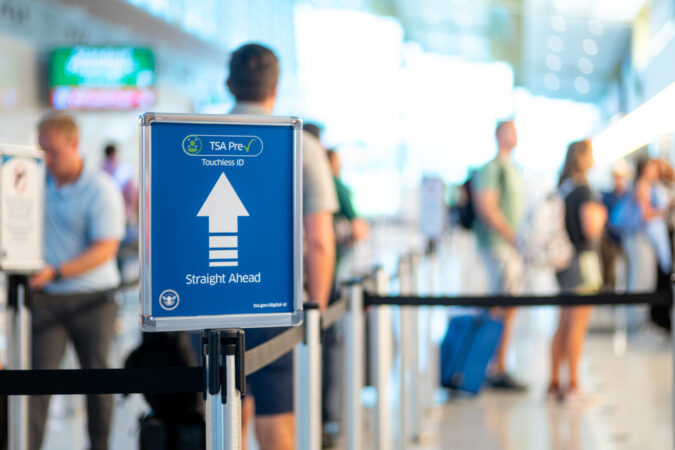
    TSA PreCheck Touchless ID, a new program that uses facial recognition, is expanding to 65 airports this spring. The expansion will prioritize 2026 World Cup host cities, where travel is expected to surge, said Transportation Security Administration spokesperson R. Carter Langston.

    “Passengers seem to absolutely appreciate it — the speed, the efficiency,” Langston said. “All they show is their face, and the officer just waves them right into the checkpoint. No hassling with passports or IDs or phones.”

    TSA launched the first iteration of the program in 2021 in partnership with Delta Air Lines at Hartsfield-Jackson Atlanta International Airport. It’s now available for five airlines across 22 airports.

    Critics worry that the program raises privacy concerns. It is voluntary, and travelers can opt out at any time and use a standard ID verification instead.

    What is PreCheck Touchless ID?

    TSA said in an email that the initiative is a joint effort from U.S. Customs and Border Protection, airports, and airlines that allows travelers “to move through dedicated lanes with ease, enjoying a smoother and more convenient airport experience.”

    The program uses the CBP Traveler Verification Service to create “a secure biometric template of a passenger’s live facial image taken at the checkpoint and matches it against a gallery of templates of pre-staged photos that the passenger previously provided to the government (e.g., U.S. Passport or Visa),” the agency website said.

    Who is eligible for PreCheck Touchless ID?

    To use the program, fliers must be a current TSA PreCheck member with a valid “known traveler number” and an active airline profile (such as being enrolled in a loyalty program). They must also have a valid passport uploaded to their airline profile.

    The airlines currently participating in the program include Alaska, American, Delta, Southwest, and United.

    TSA PreCheck Touchless ID offers current TSA PreCheck members an expedited airport security screening by way of “facial comparison technology.”

    It’s only available at select airports, through participating airlines — which vary. For example, travelers at John F. Kennedy International Airport, but only if they are flying with Alaska, America, or Delta. It is available at George Bush Intercontinental in Houston, but only for passengers flying with American. For a list of availability, visit the TSA website.

    How can travelers opt in?

    To use the program, travelers must first opt in through their airline’s website or app before checking in to their flight.

    The process varies by airline, but you can generally find the prompt under a “travel documents” section (where you add your known traveler number or passport details) of your airline loyalty program app or website.

    American Airlines customers, for example, will find the opt-in choice toward the bottom of the “Information and password” page of their AAdvantage profile, while Alaska Airlines customers should go to their account settings, then click into the “travel documents” section.

    Once travelers have opted in, then checked in for their flight, a TSA PreCheck Touchless ID symbol should then appear on their boarding pass. If the symbol is not on your boarding pass, you won’t be able to use the lane, even if you show an employee that you are enrolled in the program.

    At the airport, travelers should follow signs to a separate TSA PreCheck Touchless ID lane. Instead of handing an ID over to an officer to verify your identity, you’ll instead pause to scan your face, then keep moving.

    Is it really faster?

    It can be, for two reasons.

    First: There is no slowdown to hand over and scan your ID; travelers must only pause during their walk through the line dividers before proceeding to the X-ray machines.

    Second: Because the program is new, requires signing up in advance, and is not available for every airline, it’s getting a fraction of the traffic that regular security, Clear, or PreCheck lanes are.

    We’ve had mixed results. When it works, it’s incredible; you really are through in seconds.

    But we’ve also been delayed when the facial comparison machine was undergoing maintenance and out of use, sending us back into the longer PreCheck lane.

    Which airports offer PreCheck Touchless ID?

    TSA PreCheck Touchless ID is already available at 22 airports (however, participating airlines will vary; check the TSA website for more information):

    • Boston Logan International Airport
    • Charlotte Douglas International Airport
    • Chicago O’Hare International Airport
    • Dallas-Fort Worth International Airport
    • Denver International Airport
    • Detroit Metropolitan Wayne County Airport
    • Dulles International Airport
    • George Bush Intercontinental Airport
    • Harry Reid International Airport in Las Vegas
    • Hartsfield-Jackson Atlanta International Airport
    • John F. Kennedy International Airport
    • LaGuardia Airport
    • Los Angeles International Airport
    • Minneapolis–Saint Paul International Airport
    • Newark Liberty International Airport
    • Palm Beach International Airport
    • Philadelphia International Airport
    • Portland International Airport in Oregon
    • Ronald Reagan Washington National Airport
    • Salt Lake City International Airport
    • San Francisco International Airport
    • Seattle-Tacoma International Airport

    What are the privacy concerns?

    The TSA is using more facial recognition at the airport, including in regular security lanes and CBP checks.

    The CBP says its Enhanced Passenger Processing involves taking a traveler’s photo using “auto capture technology” to simplify the inspection and adjudication process.

    Travelers can also use biometric screenings to speed through Global Entry, using a CBP app.

    TSA says on its website that it may share your information with “CBP, DHS S&T, or others as necessary.” The agency confirmed that includes sharing information about travelers with Immigration and Customs Enforcement to check for deportation orders.

    There has been a bipartisan effort to put more guardrails on its use at airports.

    In 2019, the Department of Homeland Security said that photos of travelers were taken in a data breach, accessed through the network of one of its subcontractors. (TSA says its databases are encrypted).

    A new Senate bill would allow officers to continue scanning travelers’ faces if they opt in; it would ban the technology’s use for anything other than verifying identities. It would also require the agency to immediately delete the scans once the check is complete.

    If you change your mind about TSA PreCheck Touchless ID, you can opt out at any time and ask for standard ID verification instead. You can opt out of any facial recognition at the airport by saying, “I’d prefer a standard ID check.”

    The agency also says it deletes photos and personal data within 24 hours of scheduled flight departures. The TSA website’s FAQ section addresses some privacy concerns and says that all data collected during facial comparison checks is protected.

  • Letters to the Editor | Jan. 30, 2026

    Letters to the Editor | Jan. 30, 2026

    ICE Out

    Mayor Cherelle L. Parker and everyone on City Council must urgently support the “ICE Out” legislative package introduced by Councilmembers Kendra Brooks and Rue Landau, which would restrict local cooperation with federal agents. We’ve all watched the horrific scenes playing out in Minneapolis, and while Mayor Parker has made it clear that she wants to avoid antagonizing the White House, the fact is that laying low has never been the right response to fascism. We know how spectacle-focused Donald Trump is, so with the nation’s 250th anniversary celebrations coming to Philadelphia this year, it’s only a matter of time before the president turns his gaze on our city and tries to make an example of our community. Let’s prepare now to protect our neighbors in whatever ways we can — including by passing the “ICE Out” bills.

    Melina Blees, Philadelphia

    Getting the job done

    The critical role of immigrant workers in healthcare is underscored by your recent article about the death of nurse Muthoni Nduthu, the nurse who perished with two others in an explosion at Silver Lake Nursing Home in Bucks County.

    Ms. Nduthu and her family emigrated from Kenya to Philadelphia two decades ago. Like many immigrants — some, yes, undocumented — she worked long hours and put herself through school to become part of the huge share of foreign-born workers in the healthcare sector — 28% of the overall direct care workforce for long-term care, and 32% of workers in home care settings, according to a 2025 analysis by KFF.

    What would the steadily growing U.S. aging population do without these men and women?

    As a nurse myself, and recently having family members in other rehabilitation centers, I can attest to the important roles of immigrants and people of color in providing care. It is tough work, with a median annual wage of $16,800, according to a brief prepared for the SCAN Foundation. Consequently, there isn’t a clamor for these jobs by native-born Americans.

    The Trump administration’s immigration policies and U.S. Immigration and Customs Enforcement deployments are having a chilling effect on immigrants seeking employment in healthcare — something we absolutely don’t need as our aging population demands more care.

    We need more people committed to helping others like Nduthu. Let’s honor her memory by welcoming newcomers to our country, thoughtfully reforming immigration laws, and realizing that adequate healthcare can’t be achieved without immigrants.

    Pat Ford-Roegner, Glen Mills

    Blaming the victim?

    I’ve been increasingly frustrated with Jonathan Zimmerman’s columns, which strike me as not meeting the moment we live in. His most recent, “On guns, everyone’s a hypocrite,” is a prime example of what I would describe as utopian thinking. I agree that “Guns are a scourge on America.” But I would urge him to consider: What exactly does it accomplish to publicly state that Alex Pretti “carrying a gun certainly made it more likely that he would [die]”? Doing so reinforces the statements of the Trump administration, aiding in providing cover to murderers. Far better to highlight the hypocrisy of the administration abandoning its Second Amendment principles out of convenience. And we need not look far for a counterexample, Renee Good, who was unarmed and yet was still murdered.

    I would love to live in a world in which simply repeating over and over the data and history of the gun debate brought an end to gun violence. But we’ve been doing that for decades now. We don’t live in the same world we did before Donald Trump took office. In my opinion, the moment calls for realpolitik, not idealism. To appropriate the National Rifle Association’s oft-repeated oversimplification: Guns didn’t kill Alex Pretti. ICE agents did.

    Michael Fox, Philadelphia

    . . .

    The both-sides-ing on display in Jonathan Zimmerman’s column, “On guns, everyone’s a hypocrite,” is pathetic and counterproductive.

    Not every issue needs to be seen from both sides. When one “side” shows up to a protest and murders someone with a gun, and the other “side” shows up to a protest and gets murdered while armed.

    Zimmerman is missing the point that the left’s defense of gun ownership is in response to our government lying to us and saying Alex Pretti posed a threat as a retroactive excuse for the actions of their fascist goon squads, while video evidence proved otherwise. Maybe he wants to write an article about gun control, but this framing is completely missing the point; it is victim-blaming garbage.

    Timothy Burgess, Philadelphia

    Somalis targeted

    I was a U.S. Peace Corps volunteer in Somalia and had the opportunity to experience the rich Somali culture. I am appalled and ashamed to have Donald Trump treat the Somali population of the United States with disdain and disrespect.

    Unfortunately, this attitude has spread to U.S. Immigration and Customs Enforcement members in Minnesota. It is reported that ICE is stopping people and asking, “Are you Somali?” as if that were a crime. In that climate, it’s no wonder Somali American U.S. Rep. Ilhan Omar found herself being attacked during a recent town hall she was hosting there.

    Seventy-three percent of Somali immigrants are naturalized citizens. In Minnesota, this figure is even higher, with about 95% of the state’s Somali population holding U.S. citizenship.

    No people deserve to be called “garbage.” I do not believe this reflects the character or convictions of most Americans. Most of us are descended from immigrants.

    Our country is founded on the belief that all people have the right to due process and to be treated with respect.

    We need to depend on our government of laws and judicial review to protect our rights, including those of the Somali Americans among us. Raise your voices in protest. Write the president and your members of Congress. Do something to help keep our democracy alive.

    Lally Turner, Philadelphia

    History, past and present

    George Santayana is quoted as saying, “Those who cannot remember the past are condemned to repeat it.” I think for our times, we need a slight variant of this saying. This seems especially true in light of the Trump administration’s decision to remove the exhibit at the President’s House Site about the nine enslaved people who were held captive by George Washington. Please ask yourself, “Why does this administration not want us to remember them?” I now believe the Santayana saying should read, “Those who seek to erase the past intend to repeat it.”

    Beware, my fellow citizens: If these nine — Austin, Christopher Sheels, Giles, Hercules, Joe Richardson, Moll, Oney Judge, Paris, and Richmond — can be erased, who is next?

    Deborah Zubow, Philadelphia

    Man in the mirror

    I read the recent article about Donald Trump supporters in Northeast Pennsylvania having “voter’s remorse” after casting ballots for Trump. Sorry, boys and girls, you get no sympathy from me. Trump is exactly who he has always been, and your failure to see that in the 2024 election is nothing more than an indictment of you. One woman interviewed made the incredible statement that Trump was “honest.” Give me a break. I have always maintained that Trump himself is only part of the equation, the “frontman,” if you will. The real problem is represented by the people who believe, support, and back him up. They say they don’t particularly like him, but they like his “policies.” What policies might they be? Attempting to steal Greenland? Already having stolen Venezuela’s oil? Insulting allies? Threatening NATO and its members? Attempting to rewrite the parts of our history he doesn’t like? Failing to reduce inflation as he promised? Failing to end the Ukraine war as he promised? Killing American citizens while his ICE squad rounds up immigrants? The list goes on and on.

    I am anything but a liberal, having never voted for a Democrat for any office. I’d go so far as to say I support some of Trump’s policies, but he simply can’t get anything right, let alone keep his mouth shut or control his “Twitter finger.” If Trump doesn’t like it, everyone else be damned. A decent parent wouldn’t accept this kind of behavior from a 6-year-old.

    Enough already. Trump is what he has always been: a pompous, egotistical, selfish, childish buffoon — the same guy voted into office by those people interviewed for your article. If their standards revolve around the likes of Trump, they need to do the country a favor. Stay home in November and then again in 2028. Let the rest of us try to fix the problem you helped to create.

    Peter Moore, Jeffersonville

    Join the conversation: Send letters to letters@inquirer.com. Limit length to 150 words and include home address and day and evening phone number. Letters run in The Inquirer six days a week on the editorial pages and online.

  • Horoscopes: Friday, Jan. 30, 2026

    ARIES (March 21-April 19). You’ve fantasized about your future, and now that wishful thinking is in the realm of possibility. Go forward. The next steps still take a bit of courage, just because they are new. But they aren’t nearly as risky as you once imagined.

    TAURUS (April 20-May 20). A relationship may still be undefined, but there’s freedom in the lack of definition, and furthermore, the ambiguity leaves room for imagination. Consider letting this one define itself.

    GEMINI (May 21-June 21). Don’t assume that people think and behave like you do. Lean into differences. Get curious. You’ll be around people with talents different from yours, but you have to ask to know it’s true, and ask more to find a way to work together.

    CANCER (June 22-July 22). You’ve hung your heart on a distant star, and that’s more than OK because you also have the dedication to do what it takes and the resilience to keep coming back to it in a new way until you’ve figured it out.

    LEO (July 23-Aug. 22). Your eyes are doing a lot of work today, not only taking life in but telegraphing it out, sending signals as they complete your smile or perhaps smile on their own without any help from the rest of you. Your eyes may reveal a little more than intended.

    VIRGO (Aug. 23-Sept. 22). Identity isn’t a single rigid structure; it’s layered. Some layers can shift without the core being disturbed. You can reinvent, make-over or glow-up without erasing your former self. You’ll release a role and still remain fully yourself.

    LIBRA (Sept. 23-Oct. 23). You often seem to know just the thing to say to make someone feel better or act better. Today, you can do the same thing without words. Your silent presence has a vibe, and that tells it all. Some moments just require you to hold the space.

    SCORPIO (Oct. 24-Nov. 21). You’ve learned to keep things interesting for everyone, especially yourself, because bored people tend to misbehave. It’s time to change it up again. One new location will do the trick.

    SAGITTARIUS (Nov. 22-Dec. 21). A group is becoming increasingly important to you. As you participate, you’ll learn more about its members and develop an even deeper connection. Much can be accomplished here.

    CAPRICORN (Dec. 22-Jan. 19). Your life is yours to build, but you are also aware that you’re working inside systems and structures that entrap you. Both things can be true. For now, stick with anything that adds to your fulfillment, and life will get easier.

    AQUARIUS (Jan. 20-Feb. 18). The influences you choose will be people who move in the spirit of positivity. There’s someone you know who seems doubly grateful for half the blessings. Though their accounting is unusual, it’s a beneficial math.

    PISCES (Feb. 19-March 20). Emotional truth and factual truth are different kinds of honesty that don’t always show up together. Someone might express genuine pain even if their interpretation of events isn’t precise. Understanding often requires listening for both kinds of truth.

    TODAY’S BIRTHDAY (Jan. 30). Welcome to your Year of the Living Yes. You do what lights you up. Experiences stack beautifully. You’ll receive invitations to meals, music, travel and conversations that remind you how good life feels when shared. More highlights: A move, renovation or change of scenery lifts and sharpens you. Steady financial growth helps, too. A tender relationship favorably affects your confidence and daily life. Capricorn and Gemini adore you. Your lucky numbers are: 10, 16, 35, 2 and 44.

  • Dear Abby | Relatives enter woman’s life after ignoring her for years

    DEAR ABBY: I am a 38-year-old woman with a 21-year-old daughter, “Penny.” I got pregnant at 16 and was very much alone, with little help from those around me. For a variety of reasons, I decided not to involve the father or his family. They knew I was pregnant but chose to remain uninvolved and haven’t helped in any way. I worked hard to build a life for Penny and myself, and I have remained single all this time. Her father has since passed away, but he had several other children, and his parents still live in our same small town.

    I thought my secret (and right to privacy) had been respected, but I recently found out that someone told Penny about her “other family” several years ago. On my daughter’s 21st birthday, her paternal grandma called her and told her she had a birthday gift for her. This “birthday gift” was a paternity test. Come to find out, Grandma is in poor health, and her other granddaughter was her primary caregiver, but the young woman has now moved across the country. I suspect Grandma wants Penny to assume this role.

    Penny is angry with me for not being honest about her history and angry that her grandmother, who has known about her for many years, is choosing to acknowledge a relationship only now. I am furious that they are putting my daughter in this situation. Am I wrong? How can I smooth this over?

    — SECRET’S OUT IN COLORADO

    DEAR SECRET’S OUT: Apologize to Penny for keeping the information about her father from her. Explain that you did it because the story is ugly and you hoped to spare her the pain you experienced as a teenager. Because you live in a small town, it was unrealistic to think that this kind of secret would not come to light one day. That Penny’s grandmother would introduce herself in this way was selfish and cruel, and I hope your daughter will not allow herself to become ensnared.

    ** ** **

    DEAR ABBY: I am in multiple online groups (such as academia, work, etc.) that insist on using my full first name. They require my full first name for legal reasons and do not offer an area to input the name I actually use. I know many people have far worse problems, but it gets on my nerves that everyone I interact with calls me by a formal name I have never used.

    Even when I sign my emails and texts with the correct name (which is simply cutting six letters off the end of the formal name), people still call me by my whole name. I have tried emailing, “You can just call me XXX,” but it is often ignored. It really gets under my skin.

    Is there a polite way to correct them, or must I try harder not to care? I have considered changing my name legally, but it is far more trouble than it’s worth.

    — MISNOMER IN CALIFORNIA

    DEAR MISNOMER: Because being called by a name you don’t like bothers you to the extent that you would write about it to me, my advice is to stop grinning and bearing it and MAKE the time to have your name legally changed.

  • Trump threatens Canada with 50% tariff on aircraft sold in U.S., expanding trade war

    Trump threatens Canada with 50% tariff on aircraft sold in U.S., expanding trade war

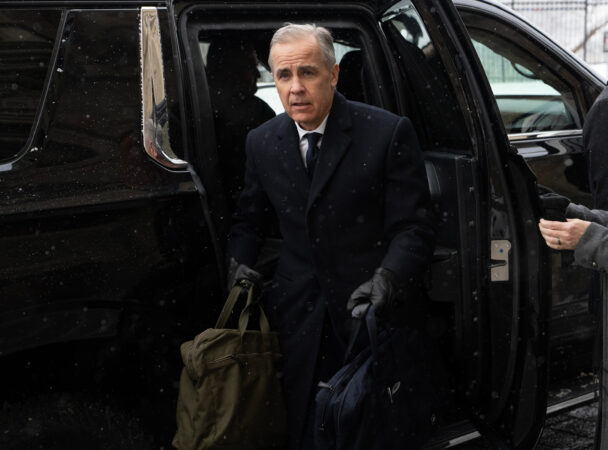
    WASHINGTON — President Donald Trump on Thursday threatened Canada with a 50% tariff on any aircraft sold in the U.S., the latest salvo in his trade war with America’s northern neighbor as his feud with Prime Minister Mark Carney expands.

    Trump’s threat posted on social media came after he threatened over the weekend to impose a 100% tariff on goods imported from Canada if it went forward with a planned trade deal with China. But Trump’s threat did not come with any details about when he would impose the import taxes, as Canada had already struck a deal.

    In Trump’s latest threat, the Republican president said he was retaliating against Canada for refusing to certify jets from Savannah, Ga.-based Gulfstream Aerospace.

    Trump said the U.S., in return, would decertify all Canadian aircraft, including planes from its largest aircraft maker, Bombardier. “If, for any reason, this situation is not immediately corrected, I am going to charge Canada a 50% Tariff on any and all Aircraft sold into the United States of America,” Trump said in his post.

    Spokespeople for Bombardier and Canada’s transport minister didn’t immediately respond to messages seeking comment Thursday evening.

    The U.S. Commerce Department previously put duties on a Bombardier commercial passenger jet in 2017 during the first Trump administration, charging that the Canadian company is selling the planes in America below cost. The U.S. said then that the Montreal-based Bombardier used unfair government subsidies to sell jets at artificially low prices.

    The U.S. International Trade Commission in Washington later ruled that Bombardier did not injure U.S. industry.

    Bombardier has since concentrated on the business and private jet market in recent years. If Trump cuts off the U.S. market it would be a major blow to the Quebec company.

    Treasury Secretary Scott Bessent warned Carney on Wednesday that his recent public comments against U.S. trade policy could backfire going into the formal review of the U.S.-Mexico-Canada Agreement, the trade deal that protects Canada from the heaviest impacts of Trump’s tariffs.

    Carney rejected Bessent’s contention that he had aggressively walked back his comments at the World Economic Forum during a phone call with Trump on Monday.

    Carney said he told Trump that he meant what he said in his speech at Davos, and told him Canada plans to diversify away from the United States with a dozen new trade deals.

    In Davos at the World Economic Forum last week, Carney condemned economic coercion by great powers on smaller countries without mentioning Trump’s name. The prime minister received widespread praise and attention for his remarks, upstaging Trump at the gathering.

  • Venezuelan lawmakers vote to ease state grip on oil, abandoning self-proclaimed socialist tenet

    Venezuelan lawmakers vote to ease state grip on oil, abandoning self-proclaimed socialist tenet

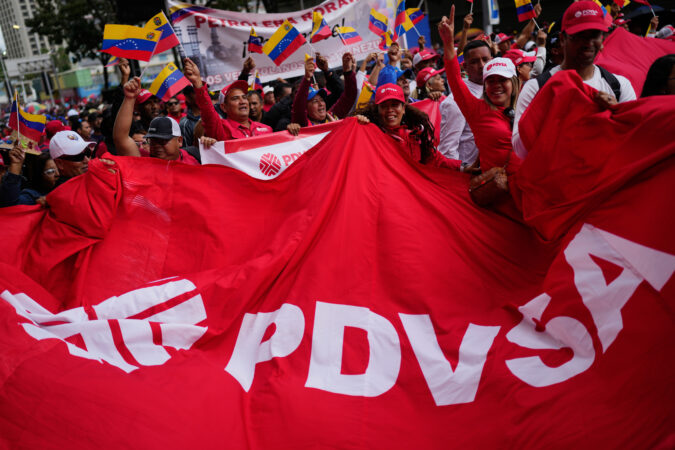
    CARACAS, Venezuela — Venezuela’s acting President Delcy Rodríguez on Thursday signed a law that will open the nation’s oil sector to privatization, reversing a tenet of the self-proclaimed socialist movement that has ruled the country for more than two decades.

    Lawmakers in the country’s National Assembly approved the overhaul of the energy industry law earlier in the day, less than a month after the brazen seizure of then-President Nicolás Maduro in a U.S. military attack in Venezuela’s capital.

    As the bill was being passed, the U.S. Treasury Department officially began to ease sanctions on Venezuelan oil that once crippled the industry, and expanded the ability of U.S. energy companies to operate in the South American nation, the first step in plans outlined by Secretary of State Marco Rubio the day before. The license authorization by the Treasury Department strictly prohibits entities from China, Russia, Iran, North Korea, or Cuba from the transactions.

    The moves by both governments on Thursday are paving the way for yet another radical geopolitical and economic shift in Venezuela.

    “We’re talking about the future. We are talking about the country that we are going to give to our children,” Rodríguez said.

    Rodríguez proposed the changes in the days after President Donald Trump said his administration would take control of Venezuela’s oil exports and revitalize the ailing industry by luring foreign investment.

    Private companies to control oil production

    The legislation promises to give private companies control over the production and sale of oil and allow for independent arbitration of disputes.

    Rodríguez’s government expects the changes to serve as assurances for major U.S. oil companies that have so far hesitated about returning to the volatile country. Some of those companies lost investments when the ruling party enacted the existing law two decades ago to favor Venezuela’s state-run oil company, Petróleos de Venezuela SA, or PDVSA.

    The revised law would modify extraction taxes, setting a royalty cap rate of 30% and allowing the executive branch to set percentages for every project based on capital investment needs, competitiveness and other factors.

    It also removes the mandate for disputes to be settled only in Venezuelan courts, which are controlled by the ruling party. Foreign investors have long viewed the involvement of independent courts as crucial to guard against future expropriation.

    Will change Venezuela’s economy

    Ruling-party lawmaker Orlando Camacho, head of the assembly’s oil committee, said the reform “will change the country’s economy.”

    Meanwhile, opposition lawmaker Antonio Ecarri urged the assembly to add transparency and accountability provisions to the law, including the creation of a website to make funding and other information public. He noted that the current lack of oversight has led to systemic corruption and argued that these provisions can also be considered judicial guarantees.

    Those guarantees are among the key changes foreign investors are looking for as they weigh entering the Venezuelan market.

    “Let the light shine on in the oil industry,” Ecarri said.

    Some oil workers support overhaul

    Oil workers dressed in red jumpsuits and hard hats celebrated the bill’s approval, waving a Venezuelan flag inside the legislative palace and then joining lawmakers in a demonstration with ruling-party supporters.

    The law was last altered two decades ago as Maduro’s mentor and predecessor, the late Hugo Chávez, made heavy state control over the oil industry a pillar of his socialist-inspired revolution.

    In the early years of his tenure, a massive windfall in petrodollars thanks to record-high global oil prices turned PDVSA into the main source of government revenue and the backbone of Venezuela’s economy.

    Chávez’s 2006 changes to the hydrocarbons law required PDVSA to be the principal stakeholder in all major oil projects.

    In tearing up the contracts that foreign companies signed in the 1990s, Chávez nationalized huge assets belonging to American and other Western firms that refused to comply, including ExxonMobil and ConocoPhillips. They are still waiting to receive billions of dollars in arbitration awards.

    From those heady days of lavish state spending, PDVSA’s fortunes turned — along with the country’s — as oil prices dropped and government mismanagement eroded profits and hurt production, first under Chávez, then Maduro.

    The nation home to the world’s biggest proven crude reserves underwent a dire economic crisis that drove over 7 million Venezuelans to flee since 2014. Sanctions imposed by successive U.S. administrations further crippled the oil industry.

  • Man who rammed a car into NYC Jewish site had recently connected with Chabad community, police say

    Man who rammed a car into NYC Jewish site had recently connected with Chabad community, police say

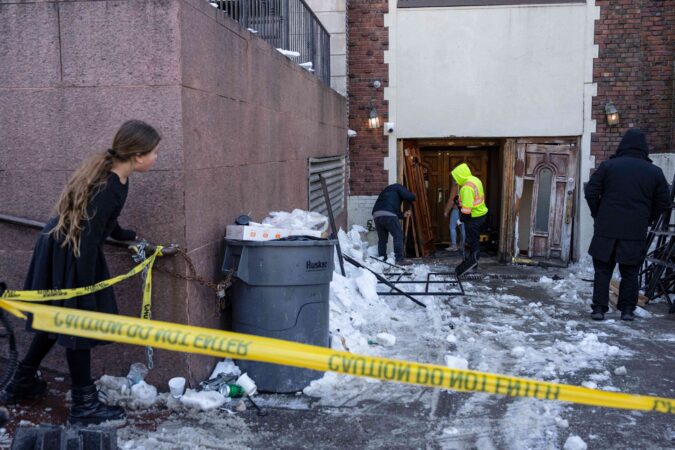
    NEW YORK — A man who drove his car into the Chabad Lubavitch world headquarters in New York City had recently been trying to connect with the Hasidic Jewish community and was recorded on video enthusiastically dancing with congregants during a recent visit to the site, police said.

    Investigators were still trying to piece together what prompted the man, Dan Sohail, 36, to ram his car repeatedly into a set of doors at the revered Hasidic Jewish center in Brooklyn on Wednesday night, but police charged him Thursday with attempted assault as a hate crime, based on the fact that the building was a Jewish institution.

    “Earlier this month, Sohail attended a social gathering at this very same location,” New York Police Department Chief of Detectives Joseph Kenny said at a news conference, noting there was video circulating online of that gathering.

    The video appears to show Sohail dancing with Orthodox men inside the headquarters.

    “We believe that he was in Brooklyn last night to continue this attempt to connect with the Lubavitch Jewish community,” Kenny said.

    Sohail told police that he lost control of his car because he was wearing “clunky boots,” Kenny said, though Kenny added that Sohail had removed several blockades and cleared snow away from a sidewalk before driving into the building.

    The complex at 770 Eastern Parkway includes a synagogue and offices, and was packed with worshippers at the time, but no one was injured. Some of the building’s doors were damaged. No weapons were discovered in Sohail’s car.

    Sohail’s father told the New York Daily News Thursday that his son had been considering converting to Judaism and that he had struggled with “mental problems.” The Forward, a media outlet centered on Jewish issues, interviewed a rabbi in New Jersey who said Sohail attended a Purim service at Chabad last year and visited two other times, looking for spiritual guidance.

    “I was able to talk to him for a few minutes and see that he’s not exactly stable,” Rabbi Levi Azimov told the Forward. Another rabbi at a Jewish school in Carteret, N.J., where Sohail lived, told the Forward he had dropped by for afternoon prayers on Tuesday but began yelling about feeling let down by Chabad after the service.

    The crash occurred on the 75th anniversary of Rabbi Menachem Mendel Schneerson becoming the leader of the Lubavitch movement and prompted immediate concern in the city. Mayor Zohran Mamdani and the city’s police commissioner, Jessica Tisch, rushed to the scene to brief the media, with officials announcing increased security around houses of worship across the city.

    “This is deeply alarming, especially given the deep meaning and the history of the institution to so many in New York and around the world,” Mamdani said. “And on today of all days.”

    The Chabad Lubavitch headquarters and synagogue in Brooklyn draws thousands of visitors each year. There is a near constant police presence around the complex.

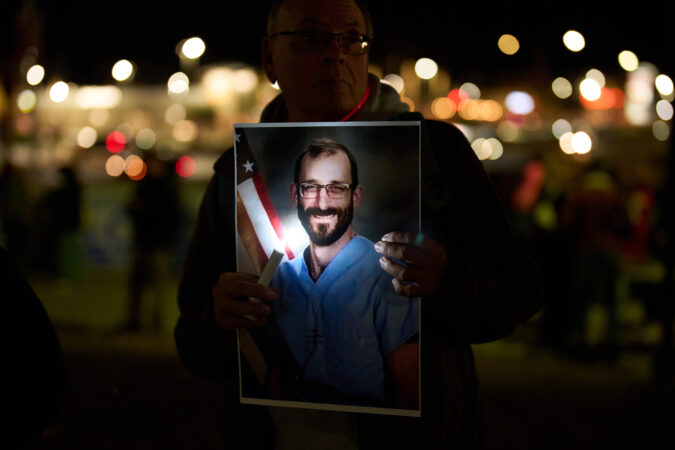
  • Handling of Pretti probe prompts prosecutors to consider resignations

    Handling of Pretti probe prompts prosecutors to consider resignations

    Federal prosecutors in Minneapolis have told U.S. Attorney Daniel Rosen, the Trump administration appointee leading the office, that they feel deeply frustrated by the Justice Department’s response to the shootings of Renée Good and Alex Pretti by immigration officers and suggested that they could resign en masse, leaving the office unable to handle its current caseload, according to two officials familiar with the office.

    At least one prosecutor in the office’s criminal division has resigned since a meeting this week with Rosen at which the prosecutors aired their concerns, according to the people, who spoke on the condition of anonymity to discuss a personnel matter that has not been made public.

    The threat of further resignations is the latest sign of how the federal judicial system in Minnesota has begun to crack under the strain imposed by the administration’s immigration enforcement surge in the state. On Wednesday, the chief federal district judge in the state wrote that Immigration and Customs Enforcement officials had violated 96 court orders since launching the crackdown in Minnesota, dubbed Operation Metro Surge.

    “ICE has likely violated more court orders in January 2026 than some federal agencies have violated in their entire existence,” Chief U.S. District Judge Patrick Schiltz wrote.

    When asked for comment about the Minnesota prosecutors, a Justice Department spokesperson responded with Attorney General Pam Bondi’s February 2025 “zealous advocacy” memo that said attorneys would face discipline or termination if they are not “vigorously defending presidential policies.”

    The U.S. attorney’s office in Minnesota has been in turmoil since the administration sidelined the office in the investigations around the shootings of Good and Pretti, who were shot two and a half weeks apart during confrontations with immigration officers in Minneapolis.

    At least a half-dozen prosecutors in the office — including the second-in-command — resigned earlier this month after top Justice Department officials told prosecutors not to investigate the shooting of Good but instead try to build a case against her partner.

    In the aftermath of those resignations, the Justice Department sent prosecutors from other Midwestern states to help deal with the swelling caseload in Minnesota. The severe staffing shortage in the office is expected to worsen in the coming weeks as more prosecutors from the office’s criminal and civil divisions resign.

    The Minnesota U.S. attorney’s office is down to about half of its full staffing level of approximately 70 lawyers. At least some of the resignations occurred in the final months of the Biden administration before President Donald Trump took office.

    When Pretti was shot by immigration officials on Jan. 24, Trump administration officials said the Department of Homeland Security would be leading the probe, prompting confusion and frustration among Minneapolis prosecutors who felt they should be involved.

    The shootings of Good and Pretti were captured on cellphone cameras and have prompted outrage from Democrats and Republicans over Trump’s immigration crackdown.

    Typically, a federal investigation into an officer-involved shooting would involve FBI agents and criminal and civil rights prosecutors. Any federal use-of-force investigation into an officer’s conduct is considered a civil rights investigation because the provision under which officers can be charged is a civil rights statute that covers deprivation of a person’s rights “under color of law.”

    The Washington Post reported that the FBI briefly opened a civil rights investigation into the Good shooting before changing course.

    Law enforcement officers are rarely charged for using lethal force, in part because the law provides significant leeway for officers to decide when use of force is needed. Law enforcement experts said that an accurate conclusion can only be reached, however, if officials examine all relevant state and federal laws and their application to the facts in the case.

    The immigration crackdown has strained U.S. attorney’s offices across the country. On the criminal side, prosecutors are handling a surge in cases involving allegations of residents impeding immigration officers. And on the civil side, attorneys are being inundated with an influx of petitions from immigrants contesting their detainments.

    The Justice Department is also facing staffing shortages at its Washington headquarters and in U.S. attorney’s offices across the country. In 2024, roughly 10,000 attorneys worked across the Justice Department and its components, including the FBI. In 2025, Justice Connection, an advocacy group that has been tracking departures, estimates that at least 5,500 people — not all of them attorneys — had quit the department, been fired or taken a buyout offered by the Trump administration.

    The department has struggled to find qualified candidates to fill these vacancies.