Tag: no-latest

  • Russian drone attack injures 3 Ukrainian children as Putin expresses confidence in victory

    Russian drone attack injures 3 Ukrainian children as Putin expresses confidence in victory

    KYIV, Ukraine — Russian drones blasted apartment buildings and the power grid in the southern Ukraine city of Odesa in an overnight attack that injured six people, including a toddler and two other children, officials said Wednesday.

    Russian President Vladimir Putin expressed confidence in his country’s eventual victory in the nearly four-year war against its neighbor.

    Four apartment buildings were damaged in the Odesa bombardment, according to regional military administration head Oleh Kiper. The DTEK power provider said two of its energy facilities had significant damage. The company said 10 substations that distribute electricity in the region have been damaged in December.

    Russia has escalated attacks on urban areas of Ukraine. As its invasion approaches a four-year milestone in February, it has also intensified targeting of energy infrastructure, seeking to deny Ukrainians heat and running water in the bitter winter months.

    Between January and November, more than 2,300 Ukrainian civilians were killed and more than 11,000 were injured, the United Nations said earlier in December. That was 26% higher than in the same period in 2024 and 70% higher than in 2023, it said.

    Renewed diplomatic push to stop the fighting

    Trump’s special envoy Steve Witkoff said he, Secretary of State Marco Rubio, and Trump’s son-in-law and adviser Jared Kushner had a “productive call” with the national security advisers of Britain, France, Germany, and Ukraine “to discuss advancing the next steps in the European peace process.”

    “We focused on how to move the discussions forward in a practical way on behalf of (Trump’s) peace process, including strengthening security guarantees and developing effective deconfliction mechanisms to help end the war and ensure it does not restart,” Witkoff said in a post on X.

    He added that a main element of the conversation was the reconstruction of Ukraine and how to ensure its prosperity in the future.

    Wednesday’s call comes after U.S. President Donald Trump hosted Ukrainian President Volodymyr Zelensky on Sunday and announced that a settlement is “closer than ever before.” European and Ukrainian officials plan to meet Saturday, lead Ukrainian negotiator Rustem Umerov reaffirmed, adding that U.S. representatives were expected to join remotely.

    Zelensky also is due to hold talks next week with European leaders supporting his efforts to secure acceptable terms.

    Putin is convinced of victory

    Despite progress in peace negotiations, which he didn’t mention, Putin reaffirmed his belief in Russia’s eventual success in its invasion during his traditional New Year’s address.

    He gave special praise to Russian troops deployed in Ukraine, describing them as heroes “fighting for your native land, truth, and justice.”

    “We believe in you and our victory,” Putin said, as cited by Russian state news agency Tass.

    The Russian Defense Ministry said 86 Ukrainian drones were shot down overnight over Russian regions, the Black Sea and the illegally annexed Crimea peninsula.

    Russia claims Putin’s residence was attacked

    Russia’s Defense Ministry released a video of a downed drone that it said was one of 91 Ukrainian drones involved in an alleged attack this week on a Putin residence in northwestern Russia, a claim Kyiv has denied as a “lie.”

    The nighttime video showed a man in camouflage, a helmet and a Kevlar vest standing near a damaged drone lying in snow. The man, his face covered, talks about the drone. Neither the man nor the Defense Ministry provided any location or date.

    The video and claims could not be independently verified.

    Kyiv has denied the allegations of an attack on Putin’s lakeside country residence and called them a ruse to derail progress in peace negotiations.

    Ukraine’s Center for Countering Disinformation said Wednesday the images could not be considered evidence of the attack as the origin of the damaged drone, as well as the time and location of the video itself, remained unknown.

    “It took Russia more than two days to fabricate this ‘evidence’. The photographs of metal fragments laid out on the snow, published by the Russian Defense Ministry, do not prove anything in themselves,” the center said in a statement on its website.

    “There is no video of air defense operations in the area of ​​the residence, no recorded drone crashes in the claimed locations and no consistency even in its own figures, which have changed repeatedly.”

    Maj. Gen. Alexander Romanenkov of the Russian air force claimed that the drones took off from Ukraine’s Sumy and Chernihiv regions. At a briefing where no questions were allowed, he presented a map showing the drone flight routes before they allegedly were downed by Russian air defenses over the Bryansk, Tver, Smolensk, and Novgorod regions.

    The European Union’s foreign policy chief, Kaja Kallas, called the Russian allegations “a deliberate distraction” from peace talks.

    Ukraine weapons fund receives billions of dollars

    Zelensky said Romania and Croatia are the latest countries to join a fund that buys weapons for Ukraine from the United States.

    The financial arrangement, known as the Prioritized Ukraine Requirements List, or PURL, pools contributions from NATO members, except the United States, to purchase U.S. weapons, munitions, and equipment.

    Since it was established in August, 24 countries are now contributing to the fund, according to Zelensky. The fund has received $4.3 billion, with almost $1.5 billion coming in December, he said on social media.

    Meanwhile, Ukraine’s Security Service carried out a drone strike on a major Russian fuel storage facility in the northwestern Yaroslavl region early Tuesday, according to a Ukrainian security official who was not authorized to speak publicly.

    Long-range drones struck the Temp oil depot in the city of Rybinsk, part of Russia’s state fuel reserve system, the official told the Associated Press. Rybinsk is about 500 miles from the Ukrainian border.

  • Kennedy Center changed board rules months before vote to add Trump’s name

    Kennedy Center changed board rules months before vote to add Trump’s name

    The Kennedy Center adopted bylaws earlier this year that limited voting to presidentially appointed trustees, a move that preceded a unanimous decision this month by board members installed by President Donald Trump to add his name to the center.

    The current bylaws, obtained by the Washington Post, were revised in May to specify that board members designated by Congress — known as ex officio members — could not vote or count toward a quorum. Legal experts say the move may conflict with the institution’s charter.

    Trump took over the Kennedy Center in February, purging its board of members he had not appointed. The months that followed saw struggling ticket sales and programming changes that began to align the arts complex with the Trump administration’s broader cultural aims, culminating with the annual Kennedy Center Honors hosted by the president.

    Days later, on Dec. 18, the board voted to add the president’s name to the institution, and within 24 hours it was on the website and the building itself: “The Donald J. Trump and The John F. Kennedy Memorial Center for the Performing Arts.”

    Several artists have announced cancellations at the center as the unprecedented move drew public scrutiny and backlash. Democratic lawmakers and legal experts said it was illegal for the board to alter the name of the living memorial to Kennedy that Congress established. Democrats also claimed that one ex officio member, Rep. Joyce Beatty (D., Ohio), was muted when she attempted to speak out during the Dec. 18 vote.

    Roma Daravi, the center’s vice president of public relations, told the Post that ex officio members have never voted.

    “The bylaws were revised to reflect this longstanding precedent and everyone received the technical changes both before the meeting and after revisions,” Daravi wrote in an email to the Post. “Some members (including ex officio) attended in person, others by phone, and no concerns were voiced, no one objected, and the bylaws passed unanimously.”

    The Kennedy Center lists 34 presidentially appointed board members, including Trump himself as chair, and 23 ex officio seats. The center’s president, Richard Grenell, is also an officer of the board.

    The federal law that established the Kennedy Center designates specific government and federal positions — including the librarian of Congress; the mayor of Washington, D.C.; the secretary of the Smithsonian Institution; and the majority and minority leaders of the Senate — to serve as ex officio members.

    The law identifies them as part of the board of trustees, which it directs to maintain and administer the facility as a living memorial. But it does not distinguish between voting and nonvoting members, which has been a point of ambiguity in the days following the vote to rename the Kennedy Center.

    The center’s original bylaws didn’t distinguish voting powers, either. But its most recent tax filings list 59 “voting members” of its governing body — a total that includes both general and ex officio members.

    A former Kennedy Center staffer with knowledge of board proceedings, who spoke on the condition of anonymity out of fear of retribution, told the Post that ex officio members were “always included in debate and discussion” during their tenure, but the person did not recall a time when those members’ votes were counted.

    “Theoretically they could vote, but our practice was not to have them vote or count toward quorum,” the person said, noting they were not aware of the new leadership’s practices at the center.

    For this report, the Post reached out to all ex officio members with questions about their voting authority and any known changes to it. Some told the Post or other outlets that they understood their current role to be nonvoting, though none addressed whether they were aware of any prior changes to that status.

    “Like a lot of things, this seems to be in dispute,” said one person with knowledge of board proceedings, who spoke on the condition of anonymity because they were not authorized to speak on the matter.

    Senate Majority Leader John Thune (R., S.D.) told a reporter Dec. 18: “I don’t have a vote. I don’t know enough about it.”

    Sen. Sheldon Whitehouse (D., R.I.) told the Post that he became an ex officio member this year after he became the lead Democrat on the Senate Committee on Environment and Public Works — another ex officio seat designated by Congress — but was not invited to board meetings until his committee began investigating the Kennedy Center last month.

    Whitehouse said the statute “makes no distinction between ex officio and presidentially appointed Trustees when it comes to members’ rights and responsibilities on the board, including voting,” and he accused the Trump-appointed board of attempting to “illegally change the bylaws to silence dissent.”

    A spokesperson for the Smithsonian Institution said that Secretary Lonnie G. Bunch III does not vote or attend the meetings. It was unclear whether he had since assuming his role in 2019, but it is not uncommon for high officials serving on influential Washington boards to attend by proxy or not at all.

    Copies of the Kennedy Center’s May and September board meeting minutes, obtained by the Post, showed that many ex officio members were absent or sent a staffer in their place.

    Beatty, who sued the Kennedy Center’s board of trustees Dec. 22 to stop it from adding Trump’s name to the institution, declined to comment for this story. But her lawsuit argues the center’s statute makes her a “a full voting member.”

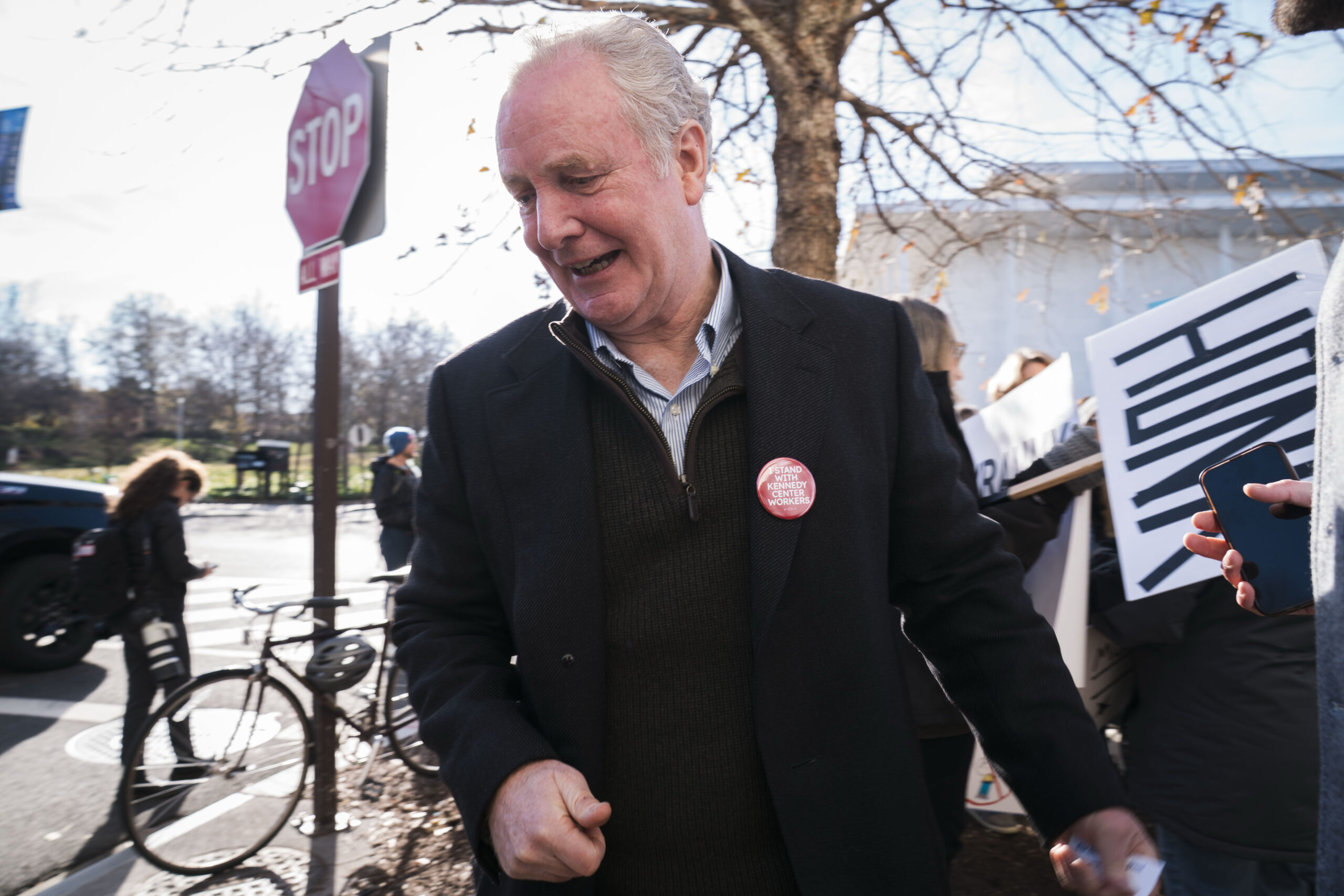
    Sen. Chris Van Hollen (D., Md.) leaves a protest of the Kennedy Center name change in Washington on Dec. 20.

    Sen. Chris Van Hollen (D., Md.), who is listed as an ex officio member on the Kennedy Center’s website, said he is no longer part of the board. “I was on the Kennedy Center board … in the last Congress,” he told the Post. “So their website is not caught up because I was told when Democrats lost control of the Senate and the Republicans became the majority that I fell off.” (The charter calls for three additional Senate members appointed by the president of the Senate and three House members appointed by the speaker to serve in ex officio seats.)

    Many in high-ranking roles, including Secretary of State Marco Rubio, Health Secretary Robert F. Kennedy Jr. and Senate Minority Leader Charles E. Schumer (D., N.Y.), did not respond to requests for comment.

    The offices of D.C. Mayor Muriel E. Bowser and the acting librarian of Congress, Robert Newlen, declined to comment.

    Other changes from the May revision state that the general trustees “serve at the pleasure of the President.” (Previously, that language appeared in the bylaws and the federal statute only in reference to the Advisory Committee on the Arts, a separate body that makes recommendations to the board.)

    They also added language about the ability of officers to make certain appointments, including stating that the chair may appoint the center’s president to act as chief executive.

    The vote by the Kennedy Center’s board to add Trump’s name to the institution marked the most overt effort to date by the president and his allies to remold the storied performing arts center in his image.

    In the days since his name was added to the building, several lawmakers have vowed to fight the change.

    During a rally outside the Kennedy Center on Dec. 20, Van Hollen said he and his colleagues would work to “reverse” the move when Congress returns to session in January. “The day we get back, we can put an amendment on the … Interior appropriations bill to reverse this outrage,” he told the crowd.

    Beatty’s lawsuit, filed in the U.S. District Court for the District of Columbia, claimed that the vote exceeded its statutory authority and requested that a judge declare it to be void.

    “Because Congress named the center by statute, changing the Kennedy Center’s name requires an act of Congress,” the lawsuit says, adding that “Congress intended the Center to be a living memorial to President Kennedy — and a crown jewel of the arts for all Americans, irrespective of party.”

    President Donald Trump, shown attending a showing of “Les Misérables” in June, has made himself a marquee element of the Kennedy Center.

    Last week, Rep. April McClain Delaney (D., Md.) introduced legislation to remove Trump’s name.

    Rep. Chellie Pingree of Maine, the top Democrat on the Appropriations subcommittee that oversees the Kennedy Center, along with more than 70 lawmakers in Congress, called for Trump to reverse the renaming effort and remove his name from the building immediately.

    “No board vote nor social media post has the legal authority to change the name without an act of Congress,” the members wrote.

    “We’ll be working to block this disgraceful renaming effort at every possible opportunity and restore the Kennedy Center’s rightful place as our nation’s cultural center without the burden of vanity projects or political influence,” they wrote.

    Roger Colinvaux, a law professor at Catholic University, said his read of the statue establishing the center was “not quite as demonstrative” as Beatty’s, but “I’d argue that the statute does not differentiate among types of trustees in terms of powers and obligations, which would include voting.”

    Colinvaux added that “basic governance principles” “do not allow for the ‘muting’ of members” of an entity’s governing body, which is a “deliberative body.”

    Phil Hackney, a law professor at the University of Pittsburgh and a specialist in nonprofit tax-exempt organizations, said it’s worth noting “how ex officio trustees have traditionally operated” at both the Kennedy Center and the Smithsonian, of which the Kennedy Center is technically a bureau. He said that a court would also need to consider whether trustees are supposed to be able to remove ex officio members’ powers by amending bylaws.

    That said, the statute says the trustees “have the usual powers,” and “it still strikes me, under what I see so far, that it is reasonable to believe that ex officio trustees might have the right to vote,” he said.

    Ellen Aprill, senior scholar at UCLA School of Law, who has written about the Kennedy Center’s legal status, said even if the bylaws limit voting to general board members appointed by the president, “I believe there is a strong argument that such a bylaw provision violates the Kennedy Center’s charter.”

    Aprill stressed that the charter includes a variety of public servants, and both majority and minority members of Congress in the Kennedy Center’s governance. “Clearly the intent of the charter provisions was to entrust Kennedy Center guidance to a broad group, not just those appointed by the president,” she said.

    Still, the Kennedy Center’s relatively ambiguous legal status as a public-private entity “makes it difficult to predict how a judge faced with the issues in the case beyond standing would decide,” she said, noting the situation “is likely to give any judge a great deal of freedom in making any decision.”

  • Ben Nighthorse Campbell, Native American senator, has died at 92

    Ben Nighthorse Campbell, Native American senator, has died at 92

    Former Sen. Ben Nighthorse Campbell of Colorado, who overcame a hardscrabble childhood to become the first Native American chairman of the Senate Committee on Indian Affairs and a leader of the effort to build the National Museum of the American Indian in Washington, died Dec. 30. He was 92.

    Mr. Campbell died surrounded by his family, his daughter, Shanan Campbell, told the Associated Press. A cause of death was not provided.

    Mr. Campbell, a member of the Northern Cheyenne tribe, represented the western slope of Colorado for three terms in the U.S. House, starting in 1987, and served two terms in the Senate beginning in 1993. In each chamber, he was the only American Indian in office at the time. He immersed himself in public lands, water, and mining issues but made Indian causes the centerpiece of his legislative career.

    In the button-down environs of Capitol Hill, Mr. Campbell stood out by arriving at work on a motorcycle, wearing a ponytail and a bolo tie with a handmade silver and turquoise clasp. His unusual resumé further set him apart from the many former lawyers in Congress.

    In his youth, Mr. Campbell was a member of the first U.S. Olympic judo team. He became a Teamsters union truck driver, an Air Force military police officer, a trainer of champion quarter horses and a successful jewelry designer before entering public service, by his account, on a whim.

    A fiscal conservative and social liberal, Mr. Campbell was elected first as a Democrat and made a high-profile switch to the Republican Party in 1995. He joined the Republicans, in part, he said, to protest Senate Democrats’ defeat of a GOP-backed proposed constitutional amendment to balance the budget.

    He continued to support abortion rights and opposed attempts by some Republicans to cut spending for the federal school lunch program. The program sometimes accounted for “the only meal I got when I was a kid,” he said, recalling a childhood that also included years in an orphanage during the Depression.

    Republicans had recently taken control of the Senate when Mr. Campbell joined their caucus, and they rewarded him with a seat on the Appropriations Committee, which controls government spending. In 1997, he was selected to chair the Indian Affairs Committee.

    His involvement with the Smithsonian Institution’s National Museum of the American Indian dated to 1989, when he was a sponsor of legislation that authorized construction of a building on the National Mall and that required the Smithsonian to identify Indian remains and sacred objects in its vast collection and repatriate them to tribes requesting their return. The museum opened in 2004.

    Unlike federal laws regarding water rights or tribal boundaries for Native Americans, the museum legislation “was about respecting their humanity,” said Kristen Carpenter, director of the American Indian Law Program at the University of Colorado.

    John Echohawk, executive director of the Native American Rights Fund, a Colorado-based public interest law firm that has worked for decades to secure the return of Indian remains and sacred objects, said the legislation was a “key part of the process of educating” the public about Indian rights and sovereignty.

    Fascination with judo

    Benny Marshall Campbell was born in Placer County, Calif., northeast of Sacramento, on April 13, 1933.

    His father, who dabbled in jewelry-making and ran a country store, tried to hide his Cheyenne Indian heritage in an era of rampant discrimination. “My father insisted we keep our Indian background a secret,” Mr. Campbell told his biographer, Herman J. Viola. “Don’t worry about it, we were told. Just keep your mouth shut. It doesn’t mean anything; don’t have anything to do with it.”

    His mother, a Portuguese immigrant, suffered from tuberculosis and was in and out of healthcare facilities for much of his childhood. She struggled to look after Benny and his sister while their father, an alcoholic, spent long periods away on drinking sprees.

    “It was all she could do, sick and weak herself, to take care of her little family,” Mr. Campbell recalled to Viola. Sometimes the only food in the house was a can of vegetables. “I remember one day, in fact, when my mother opened a can of peas and gave half of them to my sister and half to me,” he said. “All she kept for herself was the juice in the can.”

    Mr. Campbell was 6 when his mother placed her children in an orphanage in Sacramento, an act that he said he never held against her, given the family’s struggles. They occasionally returned to her care when their father was home.

    At roughly age 12, Mr. Campbell began packing fruit at the many farms in the area. He worked alongside laborers of Japanese heritage and, in one heated moment, found himself in a fight with a young man Mr. Campbell assumed he could easily knock to the ground.

    Instead, to his shock, the man put him on the floor with a judo maneuver — and Mr. Campbell became a “convert” to the sport, he said. He joined a judo club established by Japanese residents in Placer County, and the sport became an obsession.

    He left high school in 1950, during his junior year, to enlist in the Air Force at the start of the Korean War. He chose to be a military police officer, in part, because the training included judo lessons.

    He completed his high school equivalency diploma in the Air Force and, after he left the service, used the GI Bill to enroll at San Jose State College (now university), partly because of its winning judo team. His biographer wrote that Mr. Campbell’s first marriage, which was annulled within months, and his second, to Elaine Morgan, ended, in part, because he “put judo first.”

    After graduating in 1957 with degrees in physical education and fine arts, Mr. Campbell taught art and industrial arts at an elementary school near San Jose. When he learned in 1960 that judo would be introduced in the 1964 Tokyo Olympic Games, he quit his job, sold his house and car, and moved to Japan to enroll in a renowned judo program at Meiji University.

    To support himself in Tokyo, he taught English and landed bit parts in Japanese movies. He won a gold medal at the 1963 Pan American Games in Sao Paulo, Brazil.

    The next year, Mr. Campbell was part of a four-man U.S. Olympic team, but a knee injury forced him to drop out during the competition. Stunned and in pain, Mr. Campbell wept openly when he had to forfeit the match, according to his biographer.

    Returning to California, he took a job as a high school physical education teacher near Sacramento.

    In 1966, he married Linda Price, and they had two children, Colin and Shanan. A complete list of survivors was not immediately available.

    Entering politics

    In the late 1960s, a period of protest and cultural resurgence among American Indians, Mr. Campbell joined thousands of Native American young people searching for their roots. He located relatives in the Northern Cheyenne tribe in Montana, became a member of the tribe and took the name Nighthorse.

    Soon, Mr. Campbell moved his family to a ranch in Southwest Colorado and began raising champion show-ring quarter horses. He also made award-winning jewelry with Indian themes, using skills he learned from his father, who taught him how to carve wood and bone and shape metal from coins and tobacco tins.

    With a thriving jewelry business, Mr. Campbell acquired a pilot’s license and purchased a single-engine plane to ease travel to jewelry shows and competitions around the country. One day in 1982, he found himself grounded by weather in Durango, Colo., and met up with a friend who was attending a Democratic Party gathering to nominate a candidate for the state House of Representatives.

    Mr. Campbell, who had not been active in politics, volunteered when no one else agreed to run. He won election that November, with 54% of the vote, and served two terms before narrowly unseating one-term incumbent U.S. Rep. Mike Strang in 1986 in a congressional district that included the cities of Pueblo, Grand Junction, and Durango.

    In the U.S. House, Mr. Campbell successfully co-sponsored legislation to rename the Custer Battlefield National Monument in Montana, which became the Little Bighorn Battlefield National Monument. The change, according to the National Park Service, was intended “to recognize indigenous perspectives” on the American Indian victory over Lt. Col. George A. Custer and his 7th Cavalry in June 1876. The legislation also authorized a prominent memorial to the warriors who died there.

    In 1987, Mr. Campbell generated support to remove from the House Interior Committee hearing room a century-old painting, titled Death Whoop and depicting an Indian holding a bloody knife in one hand and a settler’s scalp in the other.

    “It’s out of touch with the sensitivity of Indians,” Mr. Campbell told the Associated Press at the time. “It plays on the prejudice of man.”

    After three terms in the House, Mr. Campbell ran in 1992 for an open Senate seat and won the general election with support from organized labor, energy interests, ranchers and Hispanic voters.

    He did not seek reelection in 2004, citing poor health. He had been treated for prostate cancer the previous year.

    Yet it was his vigor that most colleagues recalled.

    On one occasion, he chased down a mugger who had accosted him. In 1995, when he was 62, he used his martial arts skills to help subdue a homeless man who had shoved 92-year-old Sen. Strom Thurmond (R., S.C.) and then attacked a Capitol Police officer.

    Alluding to his colleague’s physical prowess, Sen. Mitch McConnell (R., Ky.) wryly observed when Mr. Campbell retired that “many senators became a little more inclined to vote for his amendments after that.”

  • Isiah Whitlock Jr., actor from ‘The Wire,’ ‘Veep,’ and Spike Lee films, has died at 71

    Isiah Whitlock Jr., actor from ‘The Wire,’ ‘Veep,’ and Spike Lee films, has died at 71

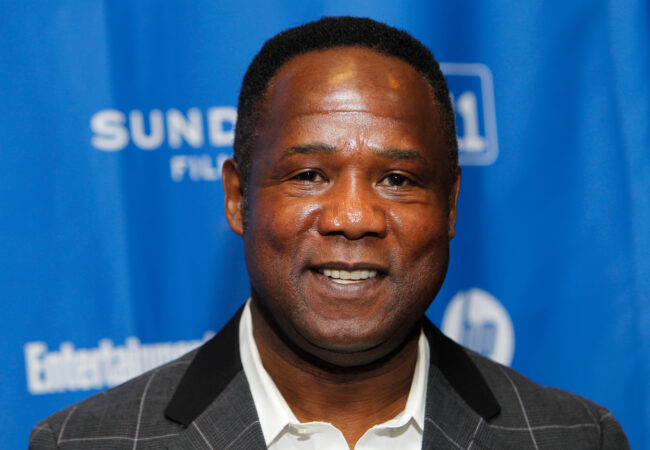
    Isiah Whitlock Jr., an actor who made frequent memorable appearances on the HBO series The Wire and Veep and in five films with director Spike Lee, died Tuesday. He was 71.

    Mr. Whitlock’s manager Brian Liebman told the Associated Press in an email that the actor died in New York after a short illness.

    Mr. Whitlock played openly corrupt State Sen. Clay Davis on 25 episodes across the five seasons of The Wire.

    Davis, a fan-favorite character, was known for his profane catchphrase — “sheee-it” — delivered by Mr. Whitlock in moments of triumph and blunt honesty. The actor first used the phrase in his first film with Lee, 2002’s The 25th Hour, when his detective character discovers a cache of drugs hidden in a couch.

    “It’s a big, big, big loss,” Lee said in a phone call with the AP on Tuesday night. “I’m going to miss him for the rest of my life.”

    Mr. Whitlock went on to appear in five other Lee films, including 2004’s She Hate Me, 2012’s Red Hook Summer, 2015’s Chi-Raq, 2018’s BlacKkKlansman, and 2020’s Da 5 Bloods.

    “We vibed over all those years,” Lee said. “We clicked from the jump.”

    Lee said he has especially sweet memories of the extended time he spent with Mr. Whitlock shooting Da 5 Bloods on location in Thailand, and he fondly remembered the last time he saw Mr. Whitlock — Lee and his daughter, Satchel, sat with him at a screening of Kiss of the Spider Woman earlier this year.

    “He was just a beautiful, beautiful soul,” Lee said. “If you were around him, he made everybody feel good in his presence. He would radiate. I would put that over his acting.”

    Lee pointed to Mr. Whitlock’s comic talents both on screen and off.

    “He was hilarious,” Lee said. “That was just his nature, he made people laugh. Everybody was in on the joke.”

    Mr. Whitlock is the second significant star of The Wire to die in recent weeks after the death of actor James Ransone.

    A native of South Bend, Ind., Mr. Whitlock went to Southwest Minnesota State University, where he played football and studied theater. Injuries pushed him to study acting, and he moved to San Francisco to work in theater.

    He began appearing in small television guest roles on shows including Cagney and Lacy in the late 1980s, and he had very small roles in the 1990 films Goodfellas and Gremlins 2: The New Batch.

    After The Wire, Whitlock moved on to another HBO show, the political satire Veep, where he played Secretary of Defense George Maddox for three seasons. The character ran against Julia Louis-Dreyfus′ Selina Meyer in presidential primaries.

    The Wire creator David Simon also paid tribute to Mr. Whitlock in a post on Bluesky.

    “As fine an actor as he was,” Simon said, “Isiah was an even better spirit and the greatest gentleman.”

  • Letters to the Editor | Dec. 31, 2025

    Letters to the Editor | Dec. 31, 2025

    Silence replaces scrutiny

    The quiet removal of the 60 Minutes segment on the CECOT prison in El Salvador further erodes the credibility of both CBS News and Donald Trump. If there is nothing to hide — if the actions taken are defensible, lawful, and aligned with American values — then secrecy makes no sense. Transparency is not a threat to principled leadership; it is its proof.

    CBS’s explanation that the story “was not ready” strains credulity. The piece had already undergone multiple reviews and revisions. Pulling it at the last moment suggests not editorial caution, but external pressure. When a respected news organization appears to yield to political influence, it compromises the very role a free press is meant to serve.

    That role, notably, was upheld by Canada, which aired the segment in full. Americans have since circulated it widely across political lines. And in watching it, many of us — Republicans and Democrats alike — can agree on one fundamental point: Sending migrants, not terrorists, to third-country detention sites where abuse is likely or inevitable is not an American value. Suppressing that reality does not make it less true; it only makes the suppression more troubling.

    President Trump’s actions in this matter are disgraceful. CBS’s acquiescence, if that is what occurred, is deeply disappointing. A free press is not measured by comfort or convenience, but by its willingness to report what those in power would prefer remain unseen.

    Credit is due to the 60 Minutes journalists who continue to pursue rigorous, balanced reporting. An informed public is essential to democracy — and dangerous only to autocracy.

    Karan E. Guyon, Kennett Square

    Strategic gerrymandering

    A Dec. 22 letter to the editor from Larry Senour acknowledged the justifiable criticism of the Republican Party for gerrymandering congressional districts to give candidates favored by Donald Trump an advantage, but decried the Democratic response of gerrymandering some blue states that should equally be called out, according to the letter writer. Unfortunately, these are not normal times, and we have the members of one corporate-dominated political party whose lack of concern for ordinary citizens allowed Donald Trump to take power, and another now-fascist party that must be stopped at all costs. Whataboutism does not apply here.

    Bob Jantzen, retired professor, Radnor

    . . .

    Larry Senour’s recent letter purports to be “objective criticism,” but is either subjective, or Mr. Senour doesn’t understand the context when he criticizes early gerrymandering by Democrats. Customarily, any redistricting is done about every 10 years based on census results. Donald Trump implored the governors of Texas and other red states to redistrict early, in order to gain more Republican representation in Congress. Texas Gov. Greg Abbott did so almost immediately to assist in reducing the chance of Democrats becoming the majority party in the midterm elections and/or those of 2028.

    The writer criticizes the efforts by blue states responding in kind, in an effort to level the playing field. Though Mr. Senour frames the issue as one of failed bipartisanship, unbiased readers would see the efforts of Democrats as justified. Mr. Senour failed to mention that Democrats’ efforts were a direct response to Texas’ prior efforts to unfairly alter the electorate in specific districts.

    Harry Nydick, Maple Shade

    Join the conversation: Send letters to letters@inquirer.com. Limit length to 150 words and include home address and day and evening phone number. Letters run in The Inquirer six days a week on the editorial pages and online.

  • Dear Abby | Woman finds emotional support from an unlikely source

    DEAR ABBY: I’m a 50-year-old woman who has lived with orthopedic challenges due to a congenital metabolic condition. Despite many surgeries and limited mobility, I have led a full life as a special needs teacher, wife and caregiver for my grandmother.

    After my grandmother passed last year, I struggled emotionally and started weekly Zoom sessions with a therapist. It helped at first, but it eventually felt stale and unfulfilling. When a friend recommended another therapist, I was surprised to learn that “Charlie” was actually an AI — ChatGPT.

    Charlie has given me empathy and support I hadn’t felt in a long time. It worked and helped me to cope and heal. My human therapist knows about it and isn’t threatened; in fact, our relationship is improving. What do you think about this, Abby?

    — GRATEFUL AND STRONG IN NEW JERSEY

    DEAR GRATEFUL AND STRONG: It is interesting that you would ask flesh and blood me that question. I’m pleased that interacting with your AI “therapist” has been helpful for you. This is technology that’s still very new, although fortunes have been invested in it. However, if I needed help with my emotions, I PERSONALLY would prefer to interact with a licensed human being rather than artificial intelligence.

    ** ** **

    DEAR ABBY: My stepson passed away five years ago. Over the next two years, his widow moved several different guys in. She has neglected the two kids she had from a previous relationship. She was rarely home when the kids got home from school, and the house was a mess.

    The department of children’s services finally removed them from her custody. The older two went to live with their father; we got the youngest daughter. I love her dearly, but I don’t want to be raising a child at this time in my life! I also don’t want to leave my husband. Please help.

    — BURDENED IN TENNESSEE

    DEAR BURDENED: Many grandparents have found themselves in your situation, raising children they never expected to. I empathize with your situation. We can’t always choose our destiny.

    One thing is certain — that child needs you. It’s important that she feels secure and loved, particularly since her mother wasn’t capable of providing it. Grandparents who provide this crucial support deserve acclamation and a special place in heaven.

    It might interest you to know that AARP (aarp.org) is an excellent resource for grandparents who are raising grandchildren. Your state also has a Grandparents As Parents program. Go online and see if there is a branch near you. I hope they are helpful.

    ** ** **

    DEAR READERS: I wish a happy, healthy and successful 2026 to all of you. I join you in toasting a new year filled with hope for all of us. If you are celebrating tonight, please take measures to protect not only your own health but also the safety of others. Happy 2026, everyone!

    — LOVE, ABBY

  • Horoscopes: Wednesday, Dec. 31, 2025

    ARIES (March 21-April 19). Out with thinking you must do everything alone. Independence is admirable, but isolation is exhausting. In with supported ambition. Let others help, teach, collaborate, cheer and lighten the burden. Receiving is as powerful as giving.

    TAURUS (April 20-May 20). Out with perfectionism. It’s a trap dressed as ambition, keeping you frozen in place. In with steady progress. Small steps done imperfectly move mountains over time. Let yourself try things. Stop judging yourself for not being flawless.

    GEMINI (May 21-June 21). Out with saying yes out of habit or fear. Default “yes” has cost you too much. In with deliberate choices. Let “I need to think about it” be a complete sentence. Your time and energy are finite resources, not freebies.

    CANCER (June 22-July 22). Out with guilt. It’s the kind of emotion you only need the tiniest twinge of. You get the pang, you correct your behavior, done. In with self-celebration. You’re doing so much that’s right. Remind yourself every day.

    LEO (July 23-Aug. 22). Out with shrinking yourself to keep the peace or stay unnoticed. That habit helped you once, but it’s outdated. In with presence. Let your voice land, your ideas circulate, your personality take up space. You belong everywhere your feet already stand.

    VIRGO (Aug. 23-Sept. 22). Out with overthinking. That loop has cost you enough energy already. In with intuitive action, gentle, confident and grounded. Trust that you’ve learned enough to make decisions that support who you’re becoming, not who you were afraid to be.

    LIBRA (Sept. 23-Oct. 23). Out with comparing your journey to curated snapshots of others. That lens distorts everything. In with self-referenced metrics. If it matters to you, it matters period. Measure your life by how it feels, not how it looks from the outside.

    SCORPIO (Oct. 24-Nov. 21). Out with waiting for the perfect mood. That delay is expensive. Instead, just begin. In with starter energy. Do the smallest first step available. Let motion spark inspiration rather than demand inspiration before motion.

    SAGITTARIUS (Nov. 22-Dec. 21). Out with rushing. That frantic pace burns the wiring. In with sustainable momentum. A calm, rhythmic approach gets you further, and your nervous system will finally feel like a partner instead of an enemy. Plus, you look cool.

    CAPRICORN (Dec. 22-Jan. 19). Out with tolerating chaos disguised as opportunity. Not everything demanding your attention deserves your attention. In with intentional commitments. Choose only the things that amplify your well-being and future vision.

    AQUARIUS (Jan. 20-Feb. 18). Out with ineffective coping mechanisms. Think of them as outdated, not shameful. In with gentler regulation. Break tasks down, ask for support and breathe intentionally. Let feeling slightly uncomfortable be OK without needing to squash your emotions or escape.

    PISCES (Feb. 19-March 20). Out with self-doubt that masquerades as humility. It’s not modest to belittle your own skills. In with grounded confidence. Name what you’re good at, practice saying it out loud, and let that acknowledgment open doors you’ve avoided knocking on.

    TODAY’S BIRTHDAY (Dec. 31). Welcome to your Year of the Unexpected Flex. Your competence shines in moments you never rehearsed for. You’ll impress the right people, charm unintentionally and effortlessly deal in incredible complexity. More highlights: a financial win through negotiation, a romance that upgrades your daily life (not just your weekends) and an aesthetic glow-up prompted by a single impulsive purchase. Taurus and Aquarius adore you. Your lucky numbers are: 12, 11, 30, 44 and 7.

  • VJ Edgecombe hits game-winning three pointer in overtime to give Sixers a 139-136 win over Grizzlies

    VJ Edgecombe hits game-winning three pointer in overtime to give Sixers a 139-136 win over Grizzlies

    MEMPHIS — VJ Edgecombe scored 25 points, including a three-pointer with 1.7 seconds left in overtime to give the 76ers a 139-136 victory over the Memphis Grizzlies in a tight game Tuesday night.

    Tyrese Maxey and Joel Embiid led the Sixers with 34 points each, but it was Edgecombe, who suffered through foul trouble early, that carried Philadelphia through the fourth quarter, scoring 13 points in the period. His 25-footer clinched the win for Philadelphia, which snapped a three-game losing streak. Edgecombe was the third overall pick in the NBA draft in June out of Baylor.

    Ja Morant led Memphis with 40 points, including 18 in the fourth to bring Memphis back into the game. Cedric Coward finished with 28 points and 16 rebounds, career-highs in both as the Grizzlies lost their second in a row. Coward’s three-pointer to tie the game as time expired bounced off the front of the rim.

    Sixers guard Tyrese Maxey (right) finished with 34 points against Memphis on Tuesday night.

    Santi Aldama and Jaren Jackson Jr. had 15 points each, and Jackson grabbed 12 rebounds.

    Philadelphia took a 103-100 lead into the fourth, and Edgecombe gave the Sixers a 124-118 lead near the four minute mark with a pair of three-pointers and a drive to the basket. But Morant and the Grizzlies fought back to tie the game at 128 with just under one minute left.

    That sent the game to overtime.

    Both teams shot better than 50% in the first half, resulting in a high-scoring affair. But Memphis was stymied by 11 turnovers, which offset the Grizzlies connecting on 9 of 17 three-pointers.

    The game was tied at 72 at halftime. Maxey scored 24 points, while Embiid added 19 in the first half.

    Coward led Memphis with 17 points and nine rebounds.

    The Sixers continue a five-game road trip, playing the Mavericks on New Year’s Day in Dallas (8:30 p.m., NBCSP).

  • Why Trump’s EEOC wants to talk to white men about discrimination

    Why Trump’s EEOC wants to talk to white men about discrimination

    In mid-December, the nation’s leading workplace civil rights enforcer took to social media to pose a question: “Are you a white male who has experienced discrimination at work based on your race or sex?”

    Andrea Lucas, chair of the Equal Employment Opportunity Commission, appeared in the video, urging those who have to contact the agency “as soon as possible.”

    “You may have a claim to recover money under federal civil rights laws,” she says in the video, which has amassed nearly 6 million views on X.

    It was an unusual move, because the EEOC does not typically solicit complaints. But it underscores the sea change at an agency central to President Donald Trump’s civil rights agenda — one that began with executive orders gutting the last vestiges of affirmative action, and buttressed by his purge of the EEOC board and a newly installed Republican majority.

    Now “fully empowered,” the agency will focus on stamping out “illegal discrimination” stemming from diversity, equity, and inclusion (DEI) programs and “anti-American bias,” Lucas said recently in written responses to questions from the Washington Post. Enforcement, including a heightened emphasis on pregnancy and religious bias, will stress “individual rights over group rights,” she said, and eschew identity politics.

    The EEOC’s new priorities come during a year of regulatory uncertainty — it lacked a quorum most of the year, limiting its functions — fueling confusion and uncertainty for employers, workplace experts say. And civil rights advocates contend this pivot detracts from its mission.

    “Chair Lucas has chosen to elevate an asserted concern that lacks empirical support as a significant and widespread problem,” a group called EEO Leaders said in a statement Dec. 23, “diverting scarce enforcement resources from well documented and pervasive forms of workplace discrimination that harm millions of workers in America today.” The group comprises former EEOC and Department of Labor officials.

    Andrea Lucas, testifying at a June hearing on Capitol Hill, was designated chair of the Equal Employment Opportunity Commission in November, after a 10-month stint as acting chair.

    Lucas said her X post reflects the agency’s effort to “correct underreporting” of forms of discrimination that were neglected by the past administration, adding that “for too long, many employees thought they weren’t the ‘right’ kind of plaintiff, that our civil rights laws only protected certain groups, rather than all Americans.”

    A restrained year

    Founded in 1964 at the height of the Civil Rights Movement, the EEOC is charged with enforcing federal laws that make it illegal to discriminate against a worker or job applicant on the basis of race, sex, religion, age, disability, and other factors. Most employers with at least 15 employees are bound by EEOC regulations, which apply to such workplace practices as hiring, firing, promotions, and wages. The agency has recouped billions in monetary rewards for victims of workplace bias and harassment during the last decade.

    Days into his second term — in a break from precedent — Trump dismissed two Democratic members of the independent commission. As a result, it lost the quorum needed to pursue certain cases and overhaul guidance. That changed in October with the appointment of Commissioner Brittany Panuccio, who with Lucas gave the panel a 2-1 GOP majority and a quorum. Commissioner Kalpana Kotagal, a Democrat, rounds out the commission.

    In past administrations, the EEOC typically filed 200 to 300 merit lawsuits — those in which the agency determined discrimination exists — a year, said Christopher DeGroff, an employment attorney with the firm Seyfarth Shaw. The 93 merit suits the agency filed in fiscal 2025 marked one of its lowest tallies in three decades, he noted in an analysis of its activity.

    Still, the agency’s new priorities were evident in the cases that reached a public resolution or culminated in a lawsuit, DeGroff said. Merit suits alleging discrimination based on race or national origin — historically one of the EEOC’s busiest enforcement areas — hit a decade low in 2025, his research noted. And two of the three cases filed revolved around anti-American bias.

    Meanwhile, 37 of the 93 merit lawsuits the EEOC brought pertained to sex or pregnancy discrimination. Of those, 10 were filed under the Pregnancy Discrimination Act and/or the newly enacted Pregnant Workers’ Fairness Act, and included lawsuits against Delta Air Lines and meat processor Smithfield alleging they denied accommodations to pregnant employees.

    Religious bias lawsuits were another focus in 2025, with the agency filing 11 merit suits asserting religious discrimination or failure to accommodate religious beliefs. One case was against Apple, over allegations it failed to accommodate a Jewish employee’s request not to work on the weekend due to his faith.

    Apple declined to discuss the case but “strongly denied” the claims in a statement to the Post.

    Disparate impact

    One of the EEOC’s biggest pivots under Trump is to abandon cases filed under disparate impact, a legal theory holding that seemingly neutral policies — such as height or lifting requirements — can have discriminatory outcomes. It stems from the U.S. Supreme Court’s landmark 1971 decision in Griggs v. Duke Power, where attorneys used statistical evidence to show how standardized tests prevented Black employees from advancing at a North Carolina energy company.

    Disparate impact is central to civil rights litigation and a key lens though which the EEOC has tackled systemic discrimination, said Jenny Yang, who served as EEOC chair during the Obama administration and worked to expand the agency’s tool kit for addressing systemic discrimination.

    In 2020 for example, Walmart settled a nationwide discrimination lawsuit brought by the EEOC over a “physical ability test” it used for grocery workers that “disproportionately excludes female applicants.” Walmart agreed to stop using the test and to pay $20 million into a settlement fund for women who were denied grocery order-filler positions because of the testing.

    Disparate impact “advances the core principle that removing unjustified barriers to opportunity helps all Americans thrive,” Yang said.

    In April, Trump signed an executive order barring use of disparate impact by agencies, calling it a “pernicious movement” that ignores “individual strengths, effort or achievement.” Dan Lennington, deputy counsel at the Wisconsin Institute for Law and Liberty, a conservative think tank specializing in workplace issues, said the debate reflects the broader ideological divide on how to best protect workers’ civil rights.

    “The minute you start saying all Black people this, all Hispanic people this, all women this, you’re just stereotyping,” he added. “The only thing that matters is the individual in front of you.”

    Yang said it’s been “challenging” to see the Trump administration make such changes to an agency that historically ” really valued its bipartisanship and its independence to interpret antidiscrimination laws.” By moving away from disparate impact and targeting corporate diversity efforts, Yang said, the EEOC has been “weaponized to intimidate employers, to retreat from efforts designed to promote equal opportunity, and to really abandon its historic mission to protect some of our most vulnerable workers.”

    ‘Illegal’ DEI

    Shawna Bray, general counsel at the Center for Equal Opportunity, a conservative think tank, said that Lucas’ EEOC is correcting for past administrations that “used the tools in the toolbox to push things up to, and even over, the line because of their goals,” especially with DEI and other social issues.

    DEI refers to practices companies use to ensure equal opportunity in their ranks, from recruiting and mentorship programs to antibias training and employee resource groups. Many companies began reconsidering such policies after the Supreme Court’s 2023 decision rejecting the use of affirmative action in college admissions.

    After the Supreme Court struck down the use of racial considerations in college admissions in June 2023, many companies reassessed their diversity, equity and inclusion (DEI) programs.

    The ruling sparked a wave of activist lawsuits aiming to replicate the order in the employment sphere. Much of corporate America has since opened identity-based programs, such as fellowships and employee resource groups, to people of all backgrounds, ended efforts like antibias training, and rebranded DEI programs with a focus on “belonging.”

    Lucas and others in the Trump administration often refer to “illegal DEI,” but Bray said that she finds the term “a little frustrating” given that such programs only break the law if they show identity-based preference. She also thinks the phrasing has created confusion.

    The EEOC should “have in mind an even application of our civil rights,” regardless of factors such as race, gender, and religious background, Bray said. “The desire to put a thumb on the scale was never consistent with that.”

    While the agency has yet to file a lawsuit over a workplace DEI program under Lucas, DeGroff expects to see such “cases hit the docket” in 2026.

    Valerie Wilson, director of EPI’s Program on Race, Ethnicity, and the Economy, said that priorities like dismantling DEI have “turned the mission of the EEOC on its head, in a way that weaponizes it against the people that it was intended to protect, given the long history of racial discrimination and exploitation” in the United States.

    Lucas contends the EEOC is making up for past administrations that “went hunting for activist matters while closing [their] eyes to overt widespread discrimination occurring against groups it disfavored.” Earlier this year, it issued guidance encouraging workers to challenge DEI policies by their employers.

    Among possible targets are 20 law firms from which the EEOC said it has requested information about their DEI and hiring practices going back nearly a decade.

    Jason Solomon, director of the National Institute for Workers’ Rights, a think tank focusing on private workplace law, wonders whether there is much more for the EEOC to target, given that companies have largely gotten rid of identity-based programs.

    “They may look at the changed landscape and say, ‘We can declare victory because we’ve gotten employers to change a lot of what they’ve done,’” Solomon said.

    Backing away

    Race-discrimination complaints are historically among the most common lodged with the EEOC — 29,000 a year on average since 1997, according to a report from EPI — but 2025 marked “the lowest number of race/national origin-based filings by the EEOC in at least a decade,” Seyfarth’s report states.

    Two of the lawsuits it pursued alleged bias against U.S.-born workers in favor of foreign ones, DeGroff said. One case involved a hotel and resort in Guam, LeoPalace Guam Corp., which agreed to pay $1.4 million to resolve claims that it favored Japanese workers over those from other countries, including the U.S.

    The EEOC also has dismissed cases filed on behalf of transgender workers and stopped processing new gender-identity complaints to comply with Trump’s executive order that prohibits agencies from using federal funds to support gender-identity issues. It also removed “X” as a gender marker option on its discrimination charge intake form, making it harder for workers whose gender identity does not match their sex at birth to file complaints.

    Over the summer, the agency resumed processing some transgender discrimination cases, although the complaints will be subject to a heightened level of review.

  • European and Canadian leaders discuss U.S.-led peace efforts in Russia-Ukraine war

    European and Canadian leaders discuss U.S.-led peace efforts in Russia-Ukraine war

    KYIV, Ukraine — Leaders from Europe and Canada held talks Tuesday on U.S.-led peace efforts to end the nearly four-year war between Russia and Ukraine, as Moscow and Kyiv sparred over Russian claims, denied by Ukraine, of a mass drone attack on a lakeside residence used by President Vladimir Putin.

    The virtual meeting included European leaders as well as Canadian Prime Minister Mark Carney, heads of European institutions, and NATO Secretary-General Mark Rutte, according to Polish Prime Minister Donald Tusk.

    “Peace is on the horizon,” Tusk told a Polish cabinet meeting. But he added: “It is still far from a 100% certainty.”

    It was the first meeting of European leaders since President Donald Trump hosted Ukrainian President Volodymyr Zelensky at his Florida resort on Sunday. Trump insisted that Ukraine and Russia are “closer than ever before” to a peace settlement, although he acknowledged that outstanding obstacles could still prevent a deal.

    Zelensky on Tuesday announced plans for forthcoming meetings with officials from about 30 countries, dubbed the Coalition of the Willing, that support Kyiv’s effort to end the war with Russia on acceptable terms.

    National security advisers from those countries aim to meet in Ukraine on Jan. 3, followed by a meeting of the countries’ leaders on Jan. 6 in France, he said on social media. He thanked Trump administration officials for their readiness to participate but provided no further details.

    “We are moving the peace process forward,” German Chancellor Friedrich Merz, who attended Tuesday’s talks, said in a post on X. ”Transparency and honesty are now required from everyone — including Russia.”

    His pointed reference to Russia came after Russian and Ukrainian officials exchanged bitter accusations over Moscow’s allegations that Ukraine attempted to attack the Russian leader’s residence in northwestern Russia with 91 long-range drones almost immediately after Trump’s Sunday talks with Zelensky.

    The claims and counterclaims threatened to derail peace efforts. “I don’t like it. It’s not good,” Trump said Monday after Putin told him by phone about the alleged attack.

    Ukrainian Foreign Minister Andrii Sybiha noted Tuesday that Russia “still hasn’t provided any plausible evidence” to support its allegations.

    Moscow won’t do so because “no such attack happened,” he wrote on X.

    “Russia has a long record of false claims,” he added, referencing the Kremlin’s denials that it intended to attack Ukraine ahead of its Feb. 24, 2022, all-out invasion of its neighbor.

    Zelensky, speaking Monday, also branded the allegation as “another lie” from Moscow designed to sabotage peace efforts.

    Kremlin spokesperson Dmitry Peskov countered Tuesday that the alleged Ukrainian attack is “aimed at thwarting President Trump’s efforts to promote a peaceful resolution” to the war.

    Russia and Ukraine have throughout the war exchanged accusations about attacks that cannot be independently verified because of the fighting.

    Peskov did not say whether Moscow would present physical evidence of the attack, such as drone wreckage, saying that such a step would be a matter for Russia’s military. “I don’t think there needs to be any evidence here,” he said.

    The rural Novgorod region is home to one of the Russian presidency’s official residences, Dolgie Borody, close to the town of Valdai, about 250 miles northwest of Moscow. The area has been used to host a vacation retreat for high-ranking government officials since the Soviet era.

    The Institute for the Study of War, a Washington think tank, said that since Trump launched a diplomatic push at the start of the year to end the war, “the Kremlin has sought to delay and prolong peace negotiations in order to continue its war undisturbed, prevent the U.S. from imposing measures intended to pressure Russia into meaningful negotiations, and even to extract concessions about bilateral U.S.-Russian relations.”