Tag: no-latest

  • Families of 2 men killed in boat strike sue Trump administration over attack they call ‘unlawful’

    Families of 2 men killed in boat strike sue Trump administration over attack they call ‘unlawful’

    WASHINGTON — Families of two Trinidadian nationals killed in a Trump administration boat strike last October sued the federal government on Tuesday, calling the attack a war crime and part of an “unprecedented and manifestly unlawful U.S. military campaign.”

    The lawsuit is thought to be the first wrongful death case arising from the three dozen strikes that the administration has launched since September on boats in the Caribbean Sea and eastern Pacific Ocean. The complaint will test the legal justification of the Trump administration attacks; government officials have defended them as necessary to stem the flow of drugs into the United States, but many legal experts say they amount to a brazen violation of the laws of armed conflict.

    The complaint echoes many of the frequently articulated concerns about the boat strikes, noting for instance that they have been carried out without congressional authorization and at a time when there is no military conflict between the United States and drug cartels that under the laws of war could justify the lethal attacks.

    “These premeditated and intentional killings lack any plausible legal justification. Thus, they were simply murders, ordered by individuals at the highest levels of government and obeyed by military officers in the chain of command,” the lawsuit says.

    White House Deputy Press Secretary Anna Kelly said in a statement that the Oct. 14 strike “was conducted against designated narcoterrorists bringing deadly poison to our shores.”

    “President Trump used his lawful authority to take decisive action against the scourge of illicit narcotics that has resulted in the needless deaths of innocent Americans,” Kelly stated.

    The lawsuit was filed by the mother of Chad Joseph and the sister of Rishi Samaroo, two Trinidadian nationals who were among six people killed in the Oct. 14 missile strike on a boat traveling from Venezuela to Trinidad. The men were not members of any drug cartel, the lawsuit says, but had instead been fishing in the waters off the Venezuelan coast and were returning to their homes in Trinidad and Tobago.

    The two had caught a ride home to Las Cuervas, a fishing community where they were from, on a small boat targeted in a strike announced on Truth Social by President Donald Trump. All six people aboard the boat were killed.

    “These killings were wrongful because they took place outside of armed conflict and in circumstances in which Mr. Joseph and Mr. Samaroo were not engaged in activities that presented a concrete, specific, and imminent threat of death or serious physical injury, and where there were means other than lethal force that could have reasonably been employed to neutralize any such threat,” the lawsuit says.

    The lawsuit is the first to challenge the legality of the boat strikes in court, according to Jen Nessel, a spokesperson for the Center for Constitutional Rights, which filed the lawsuit in federal court in Massachusetts on behalf of the families, along with the ACLU and others.

    Nessel said in an email that the center also has a Freedom of Information Act lawsuit seeking the release of the legal justification for the strikes.

    Jeffrey Stein, an American Civil Liberties Union attorney, told reporters over Zoom that the lawsuit seeks compensatory and punitive damages that can be determined after a trial.

    “We don’t think that it’s something that we could put a precise dollar amount on,” Stein said. “But we’re seeking damages that can go some way toward bringing justice for these really heinous abuses of power.”

    The lawsuit also aims to prevent more boat strikes, Stein said, with the hope that a U.S. court rejects the Trump administration’s “frankly absurd claims about its authority to engage in these illegal strikes.”

    The lawsuit was filed in federal court in Massachusetts. It cites the Death on the High Seas Act, which the lawyers say permits wrongful death cases in situations like this, as well as the Alien Tort Statute, which permits foreign nationals to sue in federal court for alleged human rights violations.

    The death toll from the boat strikes is now up to at least 126 people, with the inclusion of those presumed dead after being lost at sea, the U.S. military confirmed Monday. The figure includes 116 people who were killed immediately in at least 36 attacks carried out since early September, with 10 others believed dead because searchers did not locate them following a strike.
  • Man wounded after exchanging gunfire with Border Patrol agents near US-Mexico border

    Man wounded after exchanging gunfire with Border Patrol agents near US-Mexico border

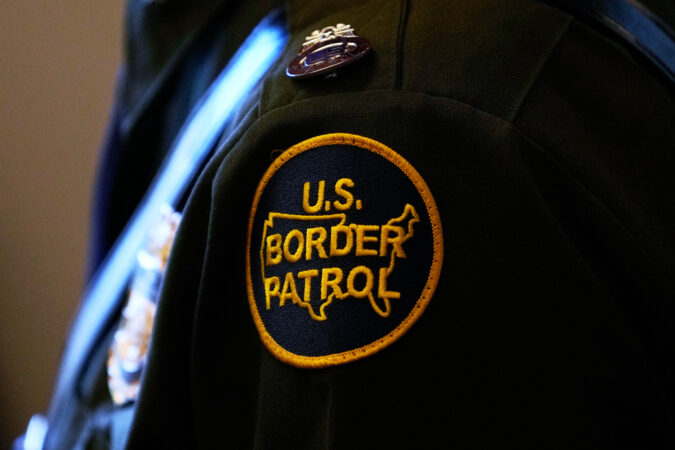
    ARIVACA, Ariz. — A man who authorities say was involved in a smuggling operation was shot Tuesday in an exchange of gunfire with the U.S. Border Patrol and after firing at a federal helicopter near the U.S.-Mexico border, authorities said.

    Federal agents were attempting to apprehend the 34-year-old Arizona man near Arivaca, Ariz., when he shot at a Border Patrol helicopter and at agents, the FBI said. Agents returned fire, striking the man and wounding him, the FBI said.

    The man was transported to a hospital and was recovering from surgery Tuesday evening, authorities said.

    The Pima County Sheriff’s Department said the FBI asked it to lead a use-of-force investigation of the Border Patrol. It noted that such investigations are standard when a federal agency is involved in a shooting in the county.

    FBI special agent Heith Janke said suspect Patrick Gary Schlegel has a criminal history that includes a 2025 warrant for escape stemming from a smuggling conviction.

    Hagle was in federal custody and is expected to be charged with a criminal complaint, Janke said.

    Arivaca is a community about 10 miles from the border. The area is a common path for drug smugglers and migrants who illegally cross the border, so agents regularly patrol there.

    The Santa Rita Fire District said it responded to the shooting and the person who was wounded was in custody.

    “Patient care was transferred to a local medical helicopter for rapid transport to a regional trauma center,” the fire district said.

    One level-one trauma center hospital in Tucson declined to release information, and the AP was waiting on a response from another.

    The shooting comes in a month that has seen three shootings — two fatal — by immigration officers involved in the massive Department of Homeland Security enforcement operation in Minnesota.

    While there were numerous videos of those shootings taken by residents monitoring the enforcement operations in the Minneapolis area, the latest shooting in Arizona happened in a community of about 500 people apparently without any bystander video of the incident.

    The sheriff department said its involvement in the investigation was the result of “long standing relationships” built over time in the border area to promote transparency.

    Sheriff Chris Nanos, a Democrat, has previously said his agency will not enforce federal immigration law amid President Donald Trump’s crackdown and that he will use his limited resources to focus on local crime and other public safety issues.

    U.S. Customs and Border Protection did not immediately respond to emails and telephone calls seeking more information.

    Border Patrol agents fired weapons in eight incidents during the 12-month period through September 2025, 14 times during the year before that and 13 times the year before that.

  • Texas sues Delaware nurse practitioner accused of mailing abortion pills

    Texas sues Delaware nurse practitioner accused of mailing abortion pills

    Texas’s attorney general sued an out-of-state nurse practitioner Monday for allegedly mailing abortion pills to women in Texas, where the drugs are illegal — the latest in a string of similar lawsuits by conservative officials seeking to limit access to the pills.

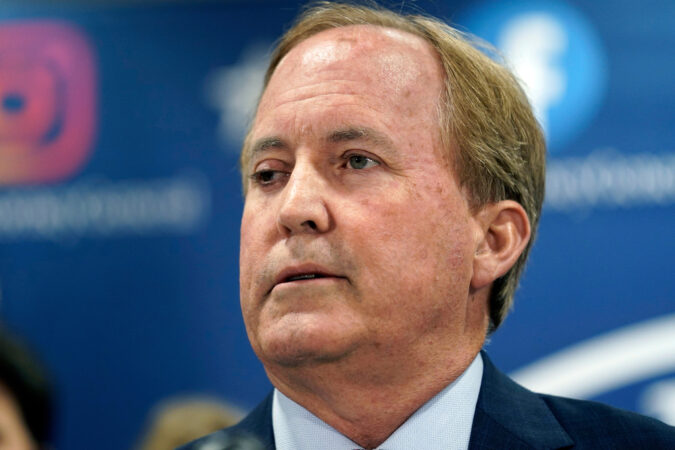
    Attorney General Ken Paxton (R) filed a lawsuit against Debra Lynch, who runs Her Safe Harbor, a Delaware-based service that remotely prescribes and mails abortion pills to women across the country. Paxton’s court filing suggests that he learned about Lynch’s operations from news interviews she’d done over the last year, including with the Austin American-Statesman and the New York Times.

    In those interviews, Lynch “boasted” about mailing abortion drugs to Texas, the court filing says.

    “The day of reckoning for this radical out-of-state abortion drug trafficker is here,” Paxton said in a statement Tuesday. “No one, regardless of where they live, will be freely allowed to aid in the murder of unborn children in Texas.”

    Lynch and Her Safe Harbor did not immediately respond to requests for comment Tuesday afternoon.

    She and her group join a growing list of out-of-state abortion providers and groups that Texas has sought to punish. All so far have worked out of states with “shield laws” enacted after the Supreme Court threw out the constitutional right to an abortion, to protect abortion providers from out-of-state prosecution.

    That legal strategy has come under fire from officials in states with abortion bans, with Texas leading the way. Paxton, his allies at the Texas Capitol, and antiabortion advocates and attorneys have for months worked to thwart access to the abortion pills that are still flowing into their state.

    Last year, Paxton sued a doctor in New York for sending abortion pills to Texas. This year, he sent cease-and-desist letters to a California doctor, along with Her Safe Harbor — Lynch’s group, which prescribes and mails pills — and another organization that provides information on where to access pills. Louisiana has indicted the same New York and California doctors, also accusing them of illegally sending mailing abortion pills.

    New York and California have declined to cooperate with the actions by the red states.

    When she spoke with the American-Statesman and the Times this year, Lynch let reporters and photographers shadow her work, allowing them to chronicle her process of taking patient phone calls and packaging the pills alongside her husband.

    Across the country, there are eight states that explicitly protect abortion providers that mail pills to patients in states with abortion bans, but that group does not include Delaware, where Her Safe Harbor began providing services in June 2024. Delaware is one of more than a dozen states that offer varying levels of protection for telehealth providers of abortion and gender transition care.

    The New York Times reported in June that Lynch had decided to move to one of the eight states with the strongest shield laws. It is not clear whether she did so.

  • Trump administration uses ICE to pressure blue states

    Trump administration uses ICE to pressure blue states

    For months, President Donald Trump’s administration has been trying to force Minnesota’s Democratic leaders to turn over detailed information about the state’s voters, including driver’s license numbers and partial Social Security numbers.

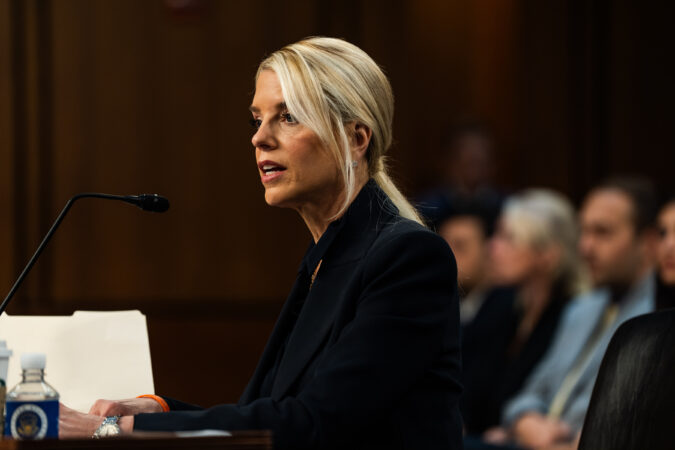
    State officials have said no. Now, Attorney General Pam Bondi is repeating those demands in a letter that also references the federal government’s aggressive deployment of immigration agents to the streets of Minneapolis.

    Her letter, dated Saturday, presses the state on sharing the voter information, turning over public assistance data and assisting the federal government with immigration enforcement. It was sent the same day border agents fatally shot Alex Pretti, an intensive care nurse, in Minneapolis.

    Bondi’s approach has led Democrats in Minnesota and other states to accuse the administration of blackmailing and bullying them into ceding more power to the administration. It comes as she tries to extract similar data from dozens of other states.

    “The states have power,” Minnesota Attorney General Keith Ellison (D) said. “And Trump is saying, ‘No you don’t, not while I’m president. We’ll run you over. We’ll kill your people. We’ll shoot pepper balls at you. We’ll invade your city. We’ll terrorize everyone. We’ll kill citizens.’”

    The Department of Homeland Security launched Operation Metro Surge last month and has sent thousands of agents to Minnesota since then. Pretti’s death came 2½ weeks after another agent killed Renée Good in her vehicle. Both victims were 37.

    The federal government has sweeping authority to enforce immigration laws, as a federal judge made clear Monday as she repeatedly expressed skepticism in response to Minnesota’s arguments in a lawsuit seeking to halt the surge of immigration agents to the state. The administration has far less power when it comes to elections because the Constitution gives states the primary responsibility for voting policies.

    Bondi’s letter to Minnesota Gov. Tim Walz (D) appeared to try to leverage immigration enforcement to get the state’s voter list. Minnesota officials rejected the demand and said Bondi was trying to force them to give up sensitive voter data that the Justice Department is not entitled to have.

    “This was never about immigration,” Ellison said. “It was never about fraud. It’s about coercion and bullying.”

    The Justice Department recently launched an investigation into whether Walz and others were impeding immigration enforcement. Trump on Monday struck a new tone, writing on social media that he had talked to Walz and believed they were “on a similar wavelength.” He said he expected them to talk again soon.

    But in court, the two sides clashed at a hearing over the surge of Immigration and Customs Enforcement agents. U.S. District Judge Katherine Menendez asked a Justice Department attorney whether Bondi with her letter to Walz was trying to “achieve a goal through force, which it can’t achieve through the courts.” Justice Department attorney Brantley Mayers waved off the possibility the enforcement activities were linked to what Bondi sought in her letter.

    “I have all of these quotes in the record,” Menendez said. “You’re telling me that I’m reading them wrong?”

    Throughout the hearing, the judge expressed skepticism that she has the power to curtail the administration’s immigration enforcement and said she would rule soon.

    In a statement, White House spokesperson Abigail Jackson said Trump “wants to work with local leaders to remove the worst of the worst from American streets.” The Justice Department declined to comment on the record.

    Georgetown University law professor Stephen I. Vladeck said Minnesota officials, in their lawsuit trying to stop the federal immigration surge, were testing a legal theory about the limits of the federal government’s power that is “designed for novel times.”

    “Our existing legal doctrines were not designed for rampant lawlessness on the part of the executive,” he said.

    Ahead of the hearing, Maine Gov. Janet Mills (D) said she was watching the case closely, particularly now that immigration agents have flooded into her state. Mills, a former state attorney general, said Republicans were acting hypocritically, given the party’s historical support of states’ rights, which are granted in the 10th Amendment of the Constitution.

    “Republicans have always loved the 10th Amendment,” she said. “Suddenly, they’re against it.”

    Kansas Attorney General Kris Kobach (R) said he has a “long-standing pro-states’ rights, pro-10th Amendment point of view.” But the federal government has clear authority over immigration, he said.

    He said Bondi was making a “policy recommendation” to Minnesota when she urged the state to change how it cooperates with immigration authorities. He said he didn’t think she was linking the request to the surge of agents in the state.

    “She’s not threatening to do something,” he said. “I don’t think it’s coercive.”

    The federal government has a right to data on public assistance programs because it funds them, he argued. The request for the voter rolls may be “tangential” to what is happening in Minnesota, Kobach said, but he believes the federal government has a right to that data, which he supports using in an effort to find illegal voters.

    The dispute over the connection between voter rolls and immigration enforcement has played out over social media in recent days. Rep. Ilhan Omar (D., Minn.) said online that Bondi’s letter showed the surge of immigration agents “was always about rigging elections.”

    Vice President JD Vance responded to her on Monday by stating that Democrats are effectively saying, “We really want illegal aliens to vote in elections and will riot to ensure that it is so.”

    Democratic-led states have brought dozens of lawsuits against the Trump administration over the past year. California Attorney General Rob Bonta (D) said litigation has been an essential check on a federal government intent on pushing the limits of its power.

    “The check of the Congress is completely absent,” he said. “A Republican-led Congress is completely supine, ready to jump when asked to jump by the Trump administration, and they ask how high it is.”

    The Justice Department’s demand for Minnesota’s voter rolls comes after the agency spent months suing states to get personal information on voters, including their dates of birth, driver’s license numbers and partial Social Security numbers.

    In all, the Justice Department has sued two dozen states for their voter lists, but judges have not ruled in most of the cases. A federal judge this month threw out the lawsuit against California, saying the Justice Department is not entitled to the information. That case could sway how other courts look at the issue.

    Justice Department officials have said they want the lists so they can check whether states are properly maintaining them. It has been sharing data it has received from some states with the Department of Homeland Security, which oversees immigration enforcement.

    Under the Constitution, states, rather than the federal government, are responsible for running elections. Congress has not given the administration the authority to “centralize the private information of all Americans within the Executive Branch,” U.S. District Judge David O. Carter for the Central District of California wrote in his recent decision rejecting the Justice Department’s attempts to get that state’s voter rolls.

    Allowing the Justice Department to get the list “would inevitably lead to decreasing voter turnout as voters fear that their information is being used for some inappropriate or unlawful purpose,” the judge wrote.

    Minnesota Secretary of State Steve Simon (D), who oversees the state’s voter rolls, rejected Bondi’s latest demand and noted that most states have taken a similar stance.

    “This isn’t a defiant Minnesota on its own,” he said. “A large majority of states that have been asked for this information have said no on a similar basis to ours.”

    Maine Secretary of State Shenna Bellows (D) has fought the Justice Department’s demand for the voter list in her state.

    “I think what Bondi’s letter makes clear is that ICE invading Minnesota and Maine was never about immigration, but rather about inflicting violence and creating chaos to try to control our states and our elections,” she said.

    If the administration gathers state voter rolls, it can use them to challenge the ability of people to vote, said Uzoma Nkwonta, an attorney who represents Democratic voters who have intervened in the litigation over voter lists.

    “This is how you steal elections,” he said. “This is the path — taking these lists and then submitting them either to prevent people from voting or after the fact in order to reject the results of an election.”

  • Federal Reserve cuts rates again, signals one more cut amid uncertain outlook

    Federal Reserve cuts rates again, signals one more cut amid uncertain outlook

    The Federal Reserve cut interest rates by a quarter of a percentage point on Wednesday for the third time this year, seeking to shore up a softening labor market even as inflation builds and leaving the prospect of more cuts next year unclear.

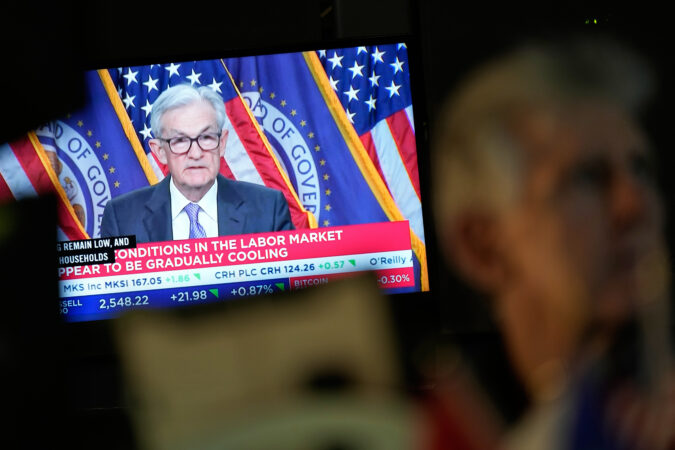
    “It’s a labor market that seems to have significant downside risks,” Fed Chair Jerome Powell said at a news conference following the meeting.

    Although Fed officials tentatively penciled in at least one more rate cut before the end of next year, estimates about where the economy is heading varied significantly and Powell suggested the central bank might wait before returning to any additional cuts.

    “We are well positioned to wait and see how the economy evolves from here,” he said.

    Wednesday’s widely expected move lowers the Fed’s benchmark rate to a range of 3.5 to 3.75 percent, the lowest level in about three years. But officials remain sharply divided over how to respond to an economy sending mixed signals: Inflation remains above the Fed’s target, which would typically argue for holding rates steady, while slower hiring and a modest uptick in unemployment suggest a case for easing.

    Investors cheered the news, with major financial indexes ending the day higher on Wednesday afternoon.

    Nine Federal Reserve officials backed Wednesday’s cut while three dissented. Two officials — Chicago Fed President Austan Goolsbee and Kansas City Fed President Jeffrey Schmid — favored no rate reduction, while Fed governor Stephen Miran preferred a larger, half-point cut. It was the most dissent since September 2019.

    In another sign of division among top Fed officials, the latest economic projections also released on Wednesday showed seven officials penciled in no additional cuts next year, while 12 favored at least one or more.

    Fed policies influence what households and businesses pay for mortgages, credit cards and other loans, and investors are watching closely for guidance on the central bank’s next steps.

    The Fed’s job is to keep prices stable and to maximize employment, but it is split on how to navigate what some describe as a light version of stagflation — elevated inflation alongside a labor market that is slowing but far from collapsing. Those divides were exposed at the Fed’s last gathering in October, where officials expressed “strongly differing views about what policy decision would most likely be appropriate,” according to the meeting minutes.

    Further complicating the decision, the Fed received far less official data about the health of the economy, because of the government shutdown that delayed or canceled the release of reports on the jobs market and consumer prices. Some Fed officials, relying on alternative data or surveys of the business community, argued that progress on inflation had stalled and warned that cuts risked undermining hard-won gains. Others countered that rising unemployment and weakening consumer demand suggested a need for action.

    Powell defended cutting rates now rather than waiting for the Fed’s next meeting in late January, when officials will finally have a better sense of the status of economy thanks to a trove of upcoming official reports. Wednesday’s call reflected mounting evidence of a cooling job market, he noted, saying that after readjustments and revisions, job growth may have been slightly negative since spring.

    “I think you can say that the labor market has continued to cool gradually, maybe just a touch more gradually than we thought,” Powell said.

    With unemployment rising to 4.4 percent in September, the Fed no longer characterized that rate as “low,” in a statement announcing the rate cut.

    Former Philadelphia Fed president Patrick Harker said this week that Wednesday’s move is shaping up to be a “hawkish cut” — a rate reduction paired with a signal that policymakers may soon pause further easing. Harker said the Fed’s internal divergence reflects an unusual degree of economic “fog,” with inflation not worsening as much as feared, unemployment claims relatively stable, and labor-market signals increasingly difficult to interpret. He noted that monthly job gains below 100,000 would normally be a red flag, but demographic trends and uncertain immigration patterns complicate the baseline.

    Those disagreements are unfolding amid unprecedented political pressure from President Donald Trump, who has repeatedly criticized the Fed for not moving quickly enough to lower rates and has threatened to fire Powell. Trump renewed those attacks ahead of this week’s meeting, telling Politico that support for aggressive rate cuts is a litmus test for whoever he taps to succeed Powell, whose term as chair expires in May. The president plans to nominate a successor early next year, though he has already signaled he knows who he is likely to pick.

    Former Pennsylvania Sen. Pat Toomey, who was top Republican on the Senate Banking Committee, said he is perplexed by Trump’s push for cuts, because inflation remains above target and the broader economy continues to expand. The data shows cooling — not collapsing — labor conditions, which wouldn’t normally justify an urgent push for easing rates, Toomey said.

    Toomey warned that the president is taking a much bigger political gamble than he appears to realize. If inflation were to spike again, he said, Trump would “completely own” the fallout after pressuring the Fed when “there’s no obvious need to ease.” That makes the campaign for faster rate cuts “surprising,” Toomey said.

    Although Powell secured enough board support to approve Wednesday’s cut, future easing would depend on keeping that alliance.

    The split appears to pit a “hawkish” coalition of regional Fed presidents focused on preventing inflation from resurging against a group of governors in Washington who see the greater risk in a softening economy. Officials such as Cleveland Fed President Beth Hammack, who said she would have preferred not to cut rates in October, have argued that inflation remains stubbornly above the bank’s 2 percent target and warned that reducing rates too soon could keep prices rising.

    Meanwhile, other officials continue to emphasize that a cooling labor market and softening consumer demand call for cuts, to ensure the economy does not slip further.

  • TikTok settles as social media giants face landmark trial over youth addiction claims

    TikTok settles as social media giants face landmark trial over youth addiction claims

    LOS ANGELES — TikTok agreed to settle a landmark social media addiction lawsuit just before the trial kicked off, the plaintiff’s attorneys confirmed.

    The social video platform was one of three companies — along with Meta’s Instagram and Google’s YouTube — facing claims that their platforms deliberately addict and harm children. A fourth company named in the lawsuit, Snapchat parent company Snap Inc., settled the case last week for an undisclosed sum.

    Details of the settlement with TikTok were not disclosed, and the company did not immediately respond to a request for comment.

    At the core of the case is a 19-year-old identified only by the initials “KGM,” whose case could determine how thousands of other, similar lawsuits against social media companies will play out. She and two other plaintiffs have been selected for bellwether trials — essentially test cases for both sides to see how their arguments play out before a jury and what damages, if any, may be awarded, said Clay Calvert, a nonresident senior fellow of technology policy studies at the American Enterprise Institute.

    A lawyer for the plaintiff said in a statement Tuesday that TikTok remains a defendant in the other personal injury cases, and that the trial will proceed as scheduled against Meta and YouTube.

    Jury selection starts this week in the Los Angeles County Superior Court. It’s the first time the companies will argue their case before a jury, and the outcome could have profound effects on their businesses and how they will handle children using their platforms. The selection process is expected to take at least a few days, with 75 potential jurors questioned each day through at least Thursday. A fourth company named in the lawsuit, Snapchat parent company Snap Inc., settled the case last week for an undisclosed sum.

    KGM claims that her use of social media from an early age addicted her to the technology and exacerbated depression and suicidal thoughts. Importantly, the lawsuit claims that this was done through deliberate design choices made by companies that sought to make their platforms more addictive to children to boost profits. This argument, if successful, could sidestep the companies’ First Amendment shield and Section 230, which protects tech companies from liability for material posted on their platforms.

    “Borrowing heavily from the behavioral and neurobiological techniques used by slot machines and exploited by the cigarette industry, Defendants deliberately embedded in their products an array of design features aimed at maximizing youth engagement to drive advertising revenue,” the lawsuit says.

    Executives, including Meta CEO Mark Zuckerberg, are expected to testify at the trial, which will last six to eight weeks. Experts have drawn similarities to the Big Tobacco trials that led to a 1998 settlement requiring cigarette companies to pay billions in healthcare costs and restrict marketing targeting minors.

    “Plaintiffs are not merely the collateral damage of Defendants’ products,” the lawsuit says. “They are the direct victims of the intentional product design choices made by each Defendant. They are the intended targets of the harmful features that pushed them into self-destructive feedback loops.”

    The tech companies dispute the claims that their products deliberately harm children, citing a bevy of safeguards they have added over the years and arguing that they are not liable for content posted on their sites by third parties.

    “Recently, a number of lawsuits have attempted to place the blame for teen mental health struggles squarely on social media companies,” Meta said in a recent blog post. “But this oversimplifies a serious issue. Clinicians and researchers find that mental health is a deeply complex and multifaceted issue, and trends regarding teens’ well-being aren’t clear-cut or universal. Narrowing the challenges faced by teens to a single factor ignores the scientific research and the many stressors impacting young people today, like academic pressure, school safety, socio-economic challenges, and substance abuse.”

    A Meta spokesperson said in a statement Monday the company strongly disagrees with the allegations outlined in the lawsuit and that it’s “confident the evidence will show our longstanding commitment to supporting young people.”

    José Castañeda, a Google Spokesperson, said Monday that the allegations against YouTube are “simply not true.” In a statement, he said “Providing young people with a safer, healthier experience has always been core to our work.”

    TikTok did not immediately respond to a request for comment Monday.

    The case will be the first in a slew of cases beginning this year that seek to hold social media companies responsible for harming children’s mental well-being. A federal bellwether trial beginning in June in Oakland, Calif., will be the first to represent school districts that have sued social media platforms over harms to children.

    In addition, more than 40 state attorneys general have filed lawsuits against Meta, claiming it is harming young people and contributing to the youth mental health crisis by deliberately designing features on Instagram and Facebook that addict children to its platforms. The majority of cases filed their lawsuits in federal court, but some sued in their respective states.

    TikTok also faces similar lawsuits in more than a dozen states.

  • US sending ICE unit to Winter Olympics for security, prompting concern and confusion in Italy

    US sending ICE unit to Winter Olympics for security, prompting concern and confusion in Italy

    MILAN — News that a unit of U.S. Immigration and Customs Enforcement would be present during the upcoming Winter Games has set off concern and confusion in Italy, where people have expressed outrage at the inclusion of an agency that has dominated headlines for leading the Trump administration’s immigration crackdown.

    Homeland Security Investigations, a unit within ICE that focuses on cross-border crimes, frequently sends its officers to overseas events like the Olympics to assist with security. HSI officers are separate from the ICE arm at the forefront of the immigration crackdown known as Enforcement and Removal Operations, and there was no indication ERO officers were being sent to Italy.

    That distinction, however, wasn’t immediately clear to local media on Tuesday morning.

    Italy reacts to U.S. security deployment

    The reaction among some in Italy reflects not only a worsening perception abroad of the administration’s tactics on immigration but also underscores a broader rift between the U.S. under President Donald Trump and its international allies.

    Vague reports that ICE would be deployed in some capacity surfaced over the weekend, resulting in a series of online petitions gathering support of people opposed to the presence of ICE at the Games. They followed a RAI news report that aired Sunday showing an Italian news crew being threatened in Minneapolis by ICE agents. Trump’s immigration crackdown has in recent weeks intensified in Minneapolis, leading to the fatal shootings of two U.S. citizens at the hands of federal immigration officers.

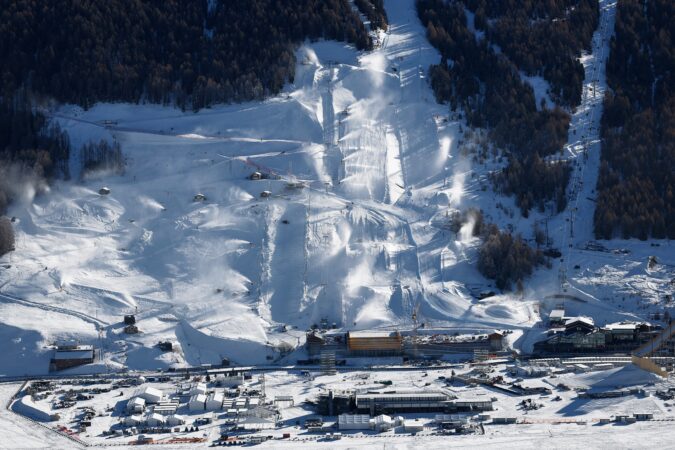
    Milan Mayor Giuseppe Sala said that ICE would not be welcome in his city, which is hosting the Feb. 6 opening ceremony to be attended by U.S. Vice President JD Vance, as well as most ice sports.

    “This is a militia that kills, a militia that enters into the homes of people, signing their own permission slips. It is clear they are not welcome in Milan, without a doubt,” Sala told RTL Radio 102.

    ICE units breakdown

    Immigration and Customs Enforcement is broken into various arms. Enforcement and Removal Operations is the part of the agency that is tasked with monitoring, arresting, and removing foreigners who no longer have the right to be in the U.S. They’re the officers most directly tasked with carrying out Trump’s mass deportation agenda.

    Another arm of ICE is Homeland Security Investigations. Agents from HSI conduct investigations into anything that has a cross-border nexus from human smuggling to fentanyl trafficking to smuggling of cultural artifacts. Agents from HSI are stationed in embassies around the world to facilitate their investigations and build relations with local law enforcement in those countries.

    The ICE agents deployed to Italy for the Games will have a different role from the one seen in immigration crackdowns in the U.S., officials have stressed.

    “Obviously, ICE does not conduct immigration enforcement operations in foreign countries,″ the Department of Homeland Security said in a statement Tuesday.

    “At the Olympics, ICE’s Homeland Security Investigations is supporting the U.S. Department of State’s Diplomatic Security Service and host nation to vet and mitigate risks from transnational criminal organizations. All security operations remain under Italian authority.”

    A U.S official speaking on condition of anonymity to discuss security measures said the general public likely wouldn’t even see or be aware of the HSI agents on the ground during the Olympics. The official said HSI agents would be working behind the scenes, mainly in offices or the U.S. consulate in Milan, as they have done during previous international events.

    For years HSI distanced itself from anything having to do with deportations or immigration enforcement. At one point they got new branding and email addresses to set themselves apart because agents working in parts of the country with strong political opposition to immigration enforcement wouldn’t get their emails answered because they had an ICE.gov address.

    Under the Trump administration, however, HSI agents have been working closer with ICE’s other arm — the deportation officers — to focus more on immigration issues. They’ve been going out on operations with deportation officers and focusing more on immigration fraud cases.

    Reaction underscores fraught ties

    The International Olympic Committee said in a statement that security “is the responsibility of the authorities of the host country, who work closely with the participating delegations.”

    The reaction in Italy highlights increasingly fraught relations between Trump and the U.S.’ traditional allies in Europe, which have been tested during the president’s second term over his threats to take over Greenland.

    Foreign Minister Antonio Tajani told reporters Tuesday that the ICE agents deployed for the Games will not be “those with machine guns and faces covered. They will be functionaries who belong to the anti-terrorism department.″

    Interior Minister Matteo Piantedosi met in his office with U.S. Ambassador Tilman Fertitta in the late morning for a conversation that was described as cordial. The Interior Minister is Italy’s top law enforcement officials, charged with security for the Games, which is coordinated with regional prefects.

    Asked about the potential deployment over the weekend, he gave a diplomatic shrug: “I don’t see what the problem would be,″ the news agency ANSA quoted him as saying.

    Cortina Mayor Gianluca Lorenzi told the Associated Press that the municipal administrations defers to the prefecture and Italian law enforcement on matters of delegation security — which he assumes are in line with Italian guidelines.

    ———

    Barry reported from Milan. Associated Press writers Rebecca Santana and Matthew Lee contributed from Washington and Graham Dunbar from Crans-Montana, Switzerland.

  • World pauses to commemorate International Holocaust Remembrance Day

    World pauses to commemorate International Holocaust Remembrance Day

    WARSAW, Poland — Holocaust survivors, politicians, and regular people commemorated International Holocaust Remembrance Day on Tuesday, gathering at somber events across Europe and beyond to reflect on Nazi Germany’s killing of millions of people.

    International Holocaust Remembrance Day is observed across each year on Jan. 27, the anniversary of the liberation of Auschwitz-Birkenau, the most notorious of the Nazi German death camps. The U.N. General Assembly adopted a resolution in 2005 establishing the day as an annual commemoration.

    “The attempt, carried out by Nazi Germany, to erase the Jews from the face of Europe encapsulates, in an emblematic way, all the evil that human beings are capable of committing when they allow themselves to be infected — out of superficiality, indifference, cowardice, or self-interest — by the virus of hatred, racism, and oppression,” Italian President Sergio Mattarella said in a gathering with survivors in Rome.

    At Auschwitz, located in an area of southern Poland which was under German occupation during World War II, Polish President Karol Nawrocki joined survivors for a remembrance ceremony that ended with Jewish and Christian clergy reciting prayers.

    Bernard Offen, a 96-year-old survivor told participants that in today’s world he sees “signs I know too well.”

    “I see hatred resurgent. I see violence beginning to be justified once again,” Offen said. “I see people who believe their anger is more valuable than another human life. I say this because I am an old man who has seen where indifference leads to. And I say this because I believe that — I truly believe — that we can choose differently.”

    Nazi German forces killed some 1.1 million people at Auschwitz, most of them Jews, but also Poles, Roma, and others. The camp was liberated by the Soviet army on Jan. 27, 1945. In all, 6 million Jews were killed in the Holocaust — in ghettos, concentration camps, and shot at close range in the fields and forests of Eastern Europe.

    In the heart of Berlin, candles burned at the Memorial to the Murdered Jews of Europe, a field of 2,700 gray concrete slabs which honors the 6 million victims and stands as a powerful symbol of Germany’s remorse.

    Other countries are still struggling to come to terms with the complicity of their ancestors. Mattarella condemned the complicity of ordinary Italians in the fascist-era racial laws, which persecuted Italy’s Jewish community, and deportation of its Jews.

    As in recent years, Russia representatives were not invited to the observances at Auschwitz due to the country’s invasion of Ukraine.

    ‘Become my witness’

    Pavel Jelinek, a 90-year-old survivor from the city of Liberec — a Czech city with a prewar Jewish population of 1,350 — told those gathered in the upper house of the Czech Parliament that he was now the last living of the 37 Jews who returned to the city after the war.

    There are an estimated 196,600 Jewish Holocaust survivors still alive globally, down from 220,000 a year ago, according to the New York-based Conference on Jewish Material Claims Against Germany. Their median age is 87, and nearly all — some 97% — are “child survivors” who were born 1928 and later, the group said.

    Though the world’s community of survivors is shrinking, some are still telling their stories for the first time after all these years.

    In Britain, King Charles and Queen Camilla held a reception for survivors. A Holocaust survivor also addressed the British Cabinet in what Prime Minister Keir Starmer described as a first. Government members wiped away tears as 95-year-old Mala Tribich described how Germany’s invasion of Poland in 1939 destroyed her childhood.

    She recalled being forced into hard labor at the age of 12 as the first Nazi ghetto was established in her hometown of Piotrkow Trybunalski, and spoke of the hunger, disease and suffering there. The Nazis killed her mother, father, and sister. She was sent to Ravensbrück and then to Bergen-Belsen, where she was liberated by the British Army in April 1945.

    She urged the Cabinet members to fight antisemitism — and to remember.

    “Soon, there will be no eyewitnesses left,” she told them. “That is why I ask you today not just to listen, but to become my witness.”

    ‘Unity that saves lives is needed’

    Many leaders also reflected on the upheaval in today’s world.

    Kaja Kallas, the European Union’s foreign policy chief, warned about rising antisemitism and new threats. She noted that AI-generated content is now being used “to blur the line between fact and fiction, distort historical truth, and undermine our collective memory.”

    Ukraine’s President Volodymyr Zelensky, whose country has been under attack from Russia for four years, said that just as the world united to defeat the Nazis in 1945, it “must act the same way now.”

    “Whenever hatred and war threaten nations, unity that saves lives is needed,” Zelensky said.

  • Philip Glass pulls world premiere from Kennedy Center

    Philip Glass pulls world premiere from Kennedy Center

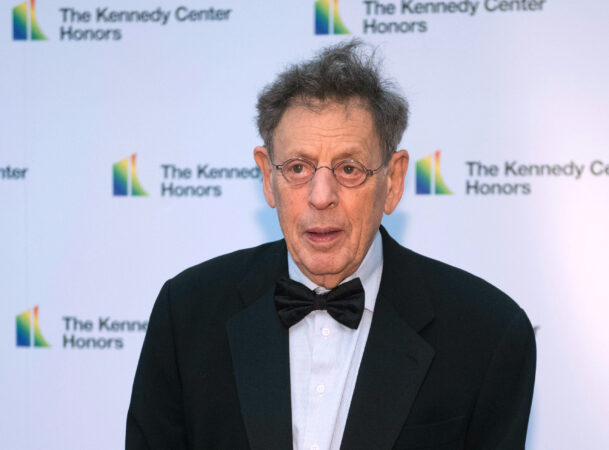
    Composer Philip Glass has joined the list of artists, musicians and performers pulling back from previously scheduled engagements at the Kennedy Center, withdrawing his anticipated Symphony No. 15: Lincoln from the National Symphony Orchestra, which was to perform the world premiere this coming June.

    “After thoughtful consideration, I have decided to withdraw my Symphony No. 15 Lincoln from the John F. Kennedy Center for the Performing Arts,” Glass wrote in a statement provided to the Washington Post. “Symphony No. 15 is a portrait of Abraham Lincoln, and the values of the Kennedy Center today are in direct conflict with the message of the Symphony. Therefore, I feel an obligation to withdraw this Symphony premiere from the Kennedy Center under its current leadership.”

    Glass, who will turn 89 at the end of this month, is a celebrated and influential American composer, who was awarded the Kennedy Center Honors in 2018. Though often credited as a pioneer of 20th-century minimalism, Glass’s music ranges from intimate piano études and chamber works to sprawling symphonies and ambitious, experimental operas such as Einstein on the Beach, Satyagraha and Akhnaten, about historical figures.

    Symphony No. 15: Lincoln was co-commissioned by the Kennedy Center and the NSO, and has already been subject to several delays: It was originally scheduled to premiere in March 2022 and was later postponed to October 2022. This season, the piece was restored to the NSO’s calendar as a centerpiece of the Kennedy Center’s ongoing “250 Years of Us” programming.

    Its withdrawal comes amid a wave of cancellations by artists and performers, prompted by the addition of President Donald Trump’s name to the center (as well as to the building’s facade), or attributed to scheduling conflicts or financial strains. It also lands against a backdrop of reputational crisis at the center, a stretch of politically charged changes (like Trump himself hosting the Kennedy Center Honors) that has been met with a sharp decline in ticket sales and an apparent audience boycott over the politicization of the nonpartisan venue.

    Glass’s letter arrives 188 years to the day after Abraham Lincoln delivered his 1838 Lyceum Address, from which Glass adapts two movements of the symphony’s libretto — along with Lincoln’s Autobiographical Sketch of 1859, his Farewell Address of 1861 and assorted other writings and correspondence. (Baritone Zachary James was slated to sing the premiere performance in June, on a program led by conductor Karen Kamensek.)

    “I think there is no American subject matter more interesting than Abraham Lincoln,” Glass told me in 2022 about the Symphony No. 15, then still in progress. “I read him almost like I would a writer, not a politician or someone in government. There’s a beautiful music to his writing.”

    The withdrawal mars a long history between Glass and the center. And while it’s highly unusual for a composer to withdraw a work from a commissioning body as an act of protest, the composer’s work has responded to contemporary politics in the past.

    In 2015, Washington National Opera, which this month parted ways with the Kennedy Center, gave the world premiere of an expanded version of Glass’s opera Appomattox, which draws a musical through line from the Civil War to the civil rights movement through the voices of Lincoln, the Rev. Martin Luther King Jr., Lyndon B. Johnson and others.

    Glass and playwright Christopher Hampton revised the opera (which premiered in 2007) in response to a 2013 decision by the Supreme Court that invalidated key elements of the Voting Rights Act of 1965.

    “It’s almost like a photojournalist approach to opera,” Glass told The Post at the time, “where the material is changing while you’re writing it.”

  • More history exhibits pulled from national parks, including Grand Canyon

    More history exhibits pulled from national parks, including Grand Canyon

    Trump officials have ordered national parks to remove dozens of signs and displays related to climate change, environmental protection, and settlers’ mistreatment of Native Americans in a renewed push to implement President Donald Trump’s executive order on “restoring truth and sanity to American history.”

    Park staff have interpreted Trump’s directive — which seeks to scrub federal institutions of what it calls “partisan ideology” and remove any content deemed to “disparage Americans past or living” — to include any references to historic racism and sexism, as well as climate change and LGBTQ+ rights. Last week, that included the removal of an exhibit at the President’s House in Philadelphia that focused on George Washington’s ownership of enslaved people.

    A visitor on Thursday looks at the site where explanatory panels from an exhibit on slavery were removed from the President’s House in Philadelphia.

    In a new wave of orders this month, Trump officials instructed staff to remove or edit signs and other informational materials in at least 17 additional parks in Arizona, Texas, Colorado, Utah, Montana, and Wyoming, according to documents reviewed by the Washington Post. The documents also listed some removals ordered in August and September.

    The Interior Department said in a statement it was implementing Trump’s executive order.

    “All federal agencies are to review interpretive materials to ensure accuracy, honesty, and alignment with shared national values,” the statement said. “Following completion of the required review, the National Park Service is now taking appropriate action in accordance with the Order.”

    Among the national parks targeted in the new removal orders are some of the country’s most iconic: Grand Canyon, Glacier, Big Bend, and Zion.

    The removal orders include descriptions of how climate change is driving the disappearance of the glaciers at Glacier National Park and a wayside display at the Grand Canyon referring to the forced removal of Native Americans.

    The administration’s broad attempt to suppress true stories “should offend every American,” said Kristen Brengel, senior vice president of government affairs for the National Parks Conservation Association.

    Brengel emphasized that Park Service staffers are acting on administration orders. “Everyone understands this history,” she said. “It’s not debatable, but they’re being forced to select stories because they think the administration will threaten their jobs if they don’t.”

    Here are details on some of the changes being ordered at national parks.

    Grand Canyon National Park

    Staff at a Grand Canyon visitor center in Arizona removed part of an exhibit after flagging potentially problematic passages to the national park system’s leadership in D.C., according to documentation reviewed by the Post.

    The passages included text stating that settlers “exploited land for mining and grazing” and that federal officials “pushed tribes off their land” to establish the park.

    The park also removed references to cattle ranchers “carelessly overgrazing” the land, tourists “foolishly” leaving trash in the park and entrepreneurs who “profited excessively” from tourism.

    Trump officials have yet to take action on several other items, including a video about Native American history.

    Park staff suggested fixes that would remove a reference to a federal policy that prevented Native Americans from using body and face paint, as well as references to their ancestors’ “misery, suffering,” and “loss.”

    Roadside displays on climate change, pollution and mining were also flagged for possible removal.

    Glacier National Park

    In response to frequent inquiries from visitors about the potential disappearance of the famous glaciers at Montana’s Glacier National Park, staff created signs and other resources to answer those questions, said Jeff Mow, who retired as superintendent of the park in 2022.

    The administration flagged one brochure for removal or changes that shows images of glaciers retreating and explains that human-caused climate change is a factor in their likely future disappearance. A video that refers to the disappearance of the glaciers was also ordered removed or changed.

    Also flagged was a sign at the park’s gift shop that says: “Climate Change Affects National Parks and the Treasures They Protect.”

    “We’re whitewashing or we’re taking out all those sort of not-so-nice stories that have occurred in our nation’s history,” Mow said.

    Another informational display to be removed or changed describes the park’s issues with air pollution. The administration paused air-quality monitoring at national parks last year.

    Other signs talk about the increasing fire risk at the park, as well as a nearby dam that “flooded two lakes within the park.”

    “As the nation’s storyteller of natural and cultural history, the National Park Service takes great pride” in telling these stories, Mow said. “This process of being edited — it’s like taking a torpedo in the bow.

    Big Bend National Park

    The signs slated for removal at Big Bend National Park along the Texas-Mexico border do not reference the topics, such as climate or Native American history, that have typically attracted the attention of Trump officials.

    Instead, of the nearly 20 signs flagged for not conforming with the new policy, many deal with geology, prehistoric history, fossils and other seemingly uncontroversial scientific or historical topics. The removal orders do not spell out what’s wrong with the signs.

    Some of the displays are in Spanish and English, while others talk about cooperating with Mexico on modern preservation efforts.

    Big Bend’s submission for the administration’s review says, “These wayside exhibits describe natural features, but emphasize ‘matters unrelated to the beauty, abundance, or grandeur of said natural feature.’” Although it flagged the materials for review, the park said it did “not advocate changing these wayside exhibits.”

    Even so, Trump officials decided the displays did not conform with administration policy and ordered them changed or removed.

    “This is not something that the National Park Service should be blamed for,” said Bob Krumenaker, superintendent of Big Bend until 2023. “They are being told they have to do these things. And my hope is they’re saving these exhibits for when things change so they can put them back up.

    Other parks

    The administration also targeted less famous parks. One sign slated for removal at Bent’s Old Fort National Historic Site in Colorado described key figures in the site’s history and included references to the forced removal of a Native tribe, a family’s slave ownership and another historic figure who had a miscarriage.

    At Hubbell Trading Post National Historic Site in Arizona, a panel on Ganado Mucho, a Navajo leader known for settling disputes with ranchers, is also listed for changes or removal.

    The documentation reviewed by the Post also included new details on removals and changes that were ordered last year.

    At Arizona’s Organ Pipe Cactus National Monument, descriptions of destructive grazing practices and the accelerating rate of warming since 1850, as well as a booklet that talks about endangered turtles and Sonoran pronghorn, were ordered changed or removed.

    Grand Teton National Park in Wyoming was ordered to remove or change a panel about Gustavus Cheyney Doane that said he participated in the U.S. Army massacre of Piegan Blackfeet Native Americans, including women, children and the elderly.

    At Little Bighorn Battlefield National Monument in Montana, exhibit text that described the United States being “hungry for gold and land” and breaking promises to Native Americans was ordered changed or removed.

    Another text describing how U.S.-run boarding schools for Indigenous children “violently erased cultural identities and language” was also deemed not to comply with Trump’s policy.

    Brengel of the National Parks Conservation Association said the Trump administration’s efforts to sanitize American history runs counter to the mission of the park system.

    “We are capable of hearing about our tragedies and our victories, and this systematic erasure should concern everyone in our country,” she said.