Tag: no-latest

  • Minneapolis shooting scrambles Second Amendment politics for Trump

    Minneapolis shooting scrambles Second Amendment politics for Trump

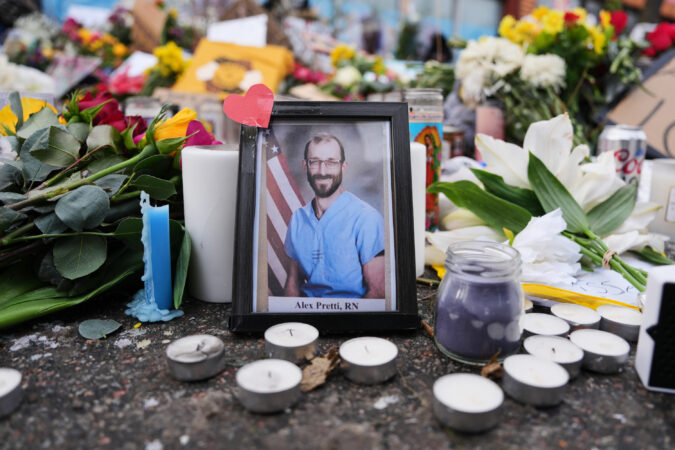
    Prominent Republicans and gun rights advocates helped elicit a White House turnabout this week after bristling over the administration’s characterization of Alex Pretti, the second person killed this month by a federal officer in Minneapolis, as responsible for his own death because he lawfully possessed a weapon.

    The death produced no clear shifts in U.S. gun politics or policies, even as President Donald Trump shuffles the lieutenants in charge of his militarized immigration crackdown. But important voices in Trump’s coalition have called for a thorough investigation of Pretti’s death while also criticizing inconsistencies in some Republicans’ Second Amendment stances.

    If the dynamic persists, it could give Republicans problems as Trump heads into a midterm election year with voters already growing skeptical of his overall immigration approach. The concern is acute enough that Trump’s top spokeswoman sought Monday to reassert his brand as a staunch gun rights supporter.

    “The president supports the Second Amendment rights of law-abiding American citizens, absolutely,” White House press secretary Karoline Leavitt told reporters.

    Leavitt qualified that “when you are bearing arms and confronted by law enforcement, you are raising … the risk of force being used against you.”

    Videos contradict early statements from administration

    That still marked a retreat from the administration’s previous messages about the shooting of Pretti. It came the same day the president dispatched border czar Tom Homan to Minnesota, seemingly elevating him over Homeland Security Secretary Kristi Noem and Border Patrol chief Greg Bovino, who had been in charge in Minneapolis.

    Within hours of Pretti’s death on Saturday, Bovino suggested Pretti “wanted to … massacre law enforcement,” and Noem said Pretti was “brandishing” a weapon and acted “violently” toward officers.

    “I don’t know of any peaceful protester that shows up with a gun and ammunition rather than a sign,” Noem said.

    White House deputy chief of staff Stephen Miller, an architect of Trump’s mass deportation effort, went further on X, declaring Pretti “an assassin.”

    Bystander videos contradicted each claim, instead showing Pretti holding a cellphone and helping a woman who had been pepper sprayed by a federal officer. Within seconds, Pretti was sprayed, too, and taken to the ground by multiple officers. No video disclosed thus far has shown him unholstering his concealed weapon -– which he had a Minnesota permit to carry. It appeared that one officer took Pretti’s gun and walked away with it just before shots began.

    As multiple videos went viral online and on television, Vice President JD Vance reposted Miller’s assessment, while Trump shared an alleged photo of “the gunman’s gun, loaded (with two additional full magazines!).”

    On Tuesday, Trump was asked if he agreed with Miller’s comment describing Pretti as an “assassin” and answered “no.” But he added that protesters “can’t have guns” and said he wants the death investigated.

    “You can’t walk in with guns, you just can’t,” Trump told reporters on the White House lawn before departing for a trip to Iowa.

    Swift reactions from gun rights advocates

    The National Rifle Association, which has backed Trump three times, released a statement that began by casting blame on Minnesota Democrats it accused of stoking protests. But the group lashed out after a federal prosecutor in California said on X that, “If you approach law enforcement with a gun, there is a high likelihood they will be legally justified in shooting you.”

    That analysis, the NRA said, is “dangerous and wrong.”

    FBI Director Kash Patel magnified the blowback Sunday on Fox News’ “Sunday Morning Futures With Maria Bartiromo.” No one, Patel said, can “bring a firearm, loaded, with multiple magazines to any sort of protest that you want. It’s that simple.”

    Erich Pratt, vice president of Gun Owners of America, was incredulous.

    “I have attended protest rallies while armed, and no one got injured,” he said on CNN.

    Conservative officials around the country made the same connection between the First and Second amendments.

    “Showing up at a protest is very American. Showing up with a weapon is very American,” state Rep. Jeremy Faison, who leads the GOP caucus in Tennessee, said on X.

    Trump’s first-term vice president, Mike Pence, called for “full and transparent investigation of this officer involved shooting.”

    A different response from the past

    Liberals, conservatives and nonpartisan experts noted how the administration’s response differed from past conservative positions involving protests and weapons.

    Multiple Trump supporters were found to have weapons during the Jan. 6, 2021, attack on the U.S. Capitol. Trump issued blanket pardons to all of them.

    Republicans were critical in 2020 when Mark and Patricia McCloskey had to pay fines after pointing guns at protesters who marched through their St. Louis neighborhood after the police killing of George Floyd in Minneapolis. And then there’s Kyle Rittenhouse, a counter-protester acquitted after fatally shooting two men and injuring another in Kenosha, Wisconsin, during the post-Floyd protests.

    “You remember Kyle Rittenhouse and how he was made a hero on the right,” Trey Gowdy, a Republican former congressman and attorney for Trump during one of his first-term impeachments. “Alex Pretti’s firearm was being lawfully carried. … He never brandished it.”

    Adam Winkler, a UCLA law professor who has studied the history of the gun debate, said the fallout “shows how tribal we’ve become.” Republicans spent years talking about the Second Amendment as a means to fight government tyranny, he said.

    “The moment someone who’s thought to be from the left, they abandon that principled stance,” Winkler said.

    Meanwhile, Democrats who have criticized open and concealed carry laws for years, Winkler added, are not amplifying that position after Pretti’s death.

    Uncertain effects in an election year

    The blowback against the administration from core Trump supporters comes as Republicans are trying to protect their threadbare majority in the U.S. House and face several competitive Senate races.

    Perhaps reflecting the stakes, GOP staff and campaign aides were reticent Monday to talk about the issue at all.

    The House Republican campaign chairman, Rep. Richard Hudson of North Carolina, is sponsoring the GOP’s most significant gun legislation of this congressional term, a proposal to make state concealed-carry permits reciprocal across all states.

    The bill cleared the House Judiciary Committee last fall. Asked Monday whether Pretti’s death and the Minneapolis protests might affect debate, an aide to Speaker Mike Johnson did not offer any update on the bill’s prospects.

    Gun rights advocates have notched many legislative victories in Republican-controlled statehouses in recent decades, from rolling back gun-free zones around schools and churches to expanding gun possession rights in schools, on university campuses and in other public spaces.

    William Sack, legal director of the Second Amendment Foundation, said he was surprised and disappointed by the administration’s initial statements following the Pretti shooting. Trump’s vacillating, he said, is “very likely to cost them dearly with the core of a constituency they count on.”


  • Trump’s use of AI images pushes new boundaries, further eroding public trust, experts say

    Trump’s use of AI images pushes new boundaries, further eroding public trust, experts say

    LOS ANGELES — The Trump administration has not shied away from sharing AI-generated imagery online, embracing cartoonlike visuals and memes and promoting them on official White House channels.

    But an edited — and realistic — image of civil rights attorney Nekima Levy Armstrong in tears after being arrested is raising new alarms about how the administration is blurring the lines between what is real and what is fake.

    Homeland Security Secretary Kristi Noem’s account posted the original image from Levy Armstrong’s arrest before the official White House account posted an altered image that showed her crying. The doctored picture is part of a deluge of AI-edited imagery that has been shared across the political spectrum since the fatal shootings of Renee Good and Alex Pretti by U.S. Border Patrol officers in Minneapolis

    However, the White House’s use of artificial intelligence has troubled misinformation experts who fear the spreading of AI-generated or edited images erodes public perception of the truth and sows distrust.

    In response to criticism of the edited image of Levy Armstrong, White House officials doubled down on the post, with deputy communications director Kaelan Dorr writing on X that the “memes will continue.” White House Deputy Press Secretary Abigail Jackson also shared a post mocking the criticism.

    David Rand, a professor of information science at Cornell University, says calling the altered image a meme “certainly seems like an attempt to cast it as a joke or humorous post, like their prior cartoons. This presumably aims to shield them from criticism for posting manipulated media.” He said the purpose of sharing the altered arrest image seems “much more ambiguous” than the cartoonish images the administration has shared in the past.

    Memes have always carried layered messages that are funny or informative to people who understand them, but indecipherable to outsiders. AI-enhanced or edited imagery is just the latest tool the White House uses to engage the segment of Trump’s base that spends a lot of time online, said Zach Henry, a Republican communications consultant who founded Total Virality, an influencer marketing firm.

    “People who are terminally online will see it and instantly recognize it as a meme,” he said. “Your grandparents may see it and not understand the meme, but because it looks real, it leads them to ask their kids or grandkids about it.”

    All the better if it prompts a fierce reaction, which helps it go viral, said Henry, who generally praised the work of the White House’s social media team.

    The creation and dissemination of altered images, especially when they are shared by credible sources, “crystallizes an idea of what’s happening, instead of showing what is actually happening,” said Michael A. Spikes, a professor at Northwestern University and news media literacy researcher.

    “The government should be a place where you can trust the information, where you can say it’s accurate, because they have a responsibility to do so,” he said. ”By sharing this kind of content, and creating this kind of content … it is eroding the trust — even though I’m always kind of skeptical of the term trust — but the trust we should have in our federal government to give us accurate, verified information. It’s a real loss, and it really worries me a lot.”

    Spikes said he already sees the “institutional crises” around distrust in news organizations and higher education, and feels this behavior from official channels inflames those issues.

    Ramesh Srinivasan, a professor at UCLA and the host of the Utopias podcast, said many people are now questioning where they can turn to for “trustable information.” “AI systems are only going to exacerbate, amplify and accelerate these problems of an absence of trust, an absence of even understanding what might be considered reality or truth or evidence,” he said.

    Srinivasan said he feels the White House and other officials sharing AI-generated content not only invites everyday people to continue to post similar content but also grants permission to others who are in positions of credibility and power, like policymakers, to share unlabeled synthetic content. He added that given that social media platforms tend to “algorithmically privilege” extreme and conspiratorial content — which AI generation tools can create with ease — “we’ve got a big, big set of challenges on our hands.”

    An influx of AI-generated videos related to Immigration and Customs Enforcement action, protests and interactions with citizens has already been proliferating on social media. After Renee Good was shot by an ICE officer while she was in her car, several AI-generated videos began circulating of women driving away from ICE officers who told them to stop. There are also many fabricated videos circulating of immigration raids and of people confronting ICE officers, often yelling at them or throwing food in their faces.

    Jeremy Carrasco, a content creator who specializes in media literacy and debunking viral AI videos, said the bulk of these videos are likely coming from accounts that are “engagement farming,” or looking to capitalize on clicks by generating content with popular keywords and search terms like ICE. But he also said the videos are getting views from people who oppose ICE and DHS and could be watching them as “fan fiction,” or engaging in “wishful thinking,” hoping that they’re seeing real pushback against the organizations and their officers.

    Still, Carrasco also believes that most viewers can’t tell if what they’re watching is fake, and questions whether they would know “what’s real or not when it actually matters, like when the stakes are a lot higher.”

    Even when there are blatant signs of AI generation, like street signs with gibberish on them or other obvious errors, only in the “best-case scenario” would a viewer be savvy enough or be paying enough attention to register the use of AI.

    This issue is, of course, not limited to news surrounding immigration enforcement and protests. Fabricated and misrepresented images following the capture of deposed Venezuelan leader Nicolás Maduro exploded online earlier this month. Experts, including Carrasco, think the spread of AI-generated political content will only become more commonplace.

    Carrasco believes that the widespread implementation of a watermarking system that embeds information about the origin of a piece of media into its metadata layer could be a step toward a solution. The Coalition for Content Provenance and Authenticity has developed such a system, but Carrasco doesn’t think that will become extensively adopted for at least another year.

    “It’s going to be an issue forever now,” he said. I don’t think people understand how bad this is.”

  • Activists say Iran’s crackdown has killed at least 6,159 people

    Activists say Iran’s crackdown has killed at least 6,159 people

    DUBAI, United Arab Emirates — Iran’s bloody crackdown on nationwide protests has killed at least 6,159 people while many others still are feared dead, activists said Tuesday, as a U.S. aircraft carrier group arrived in the Middle East to lead any American military response to the crisis. Iran’s currency, the rial, meanwhile fell to a record low of 1.5 million to $1.

    The arrival of the USS Abraham Lincoln aircraft carrier and guided missile destroyers accompanying it provide the U.S. the ability to strike Iran, particularly as Gulf Arab states have signaled they want to stay out of any attack despite hosting American military personnel.

    Two Iranian-backed militias in the Mideast have signaled their willingness to launch new attacks, likely trying to back Iran after U.S. President Donald Trump threatened military action over the killing of peaceful protesters or Tehran launching mass executions in the wake of the demonstrations.

    Iran has repeatedly threatened to drag the entire Mideast into a war, though its air defenses and military are still reeling after the June war launched by Israel against the country. But the pressure on its economy may spark new unrest as everyday goods slowly go out of reach of its people — particularly if Trump chooses to attack.

    Ambrey, a private security firm, issued a notice Tuesday saying it assessed that the U.S. “has positioned sufficient military capability to conduct kinetic operations against Iran while maintaining the ability to defend itself and regional allies from reciprocal action.”

    “Supporting or avenging Iranian protesters in punitive strikes is assessed as insufficient justification for sustained military conflict,” Ambrey wrote. “However, alternative objectives, such as the degradation of Iranian military capabilities, may increase the likelihood of limited U.S. intervention.”

    Activists offer new death toll

    Tuesday’s new figures came from the U.S.-based Human Rights Activists News Agency, which has been accurate in multiple rounds of unrest in Iran. The group verifies each death with a network of activists on the ground in Iran.

    It said the 6,159 dead included at least 5,804 protesters, 214 government-affiliated forces, 92 children and 49 civilians who weren’t demonstrating. The crackdown has seen over 41,800 arrests, it added.

    The Associated Press has been unable to independently assess the death toll given authorities cutting off the internet and disrupting calls into the Islamic Republic.

    Iran’s government has put the death toll at a far lower 3,117, saying 2,427 were civilians and security forces, and labeled the rest “terrorists.” In the past, Iran’s theocracy has undercounted or not reported fatalities from unrest.

    That death toll exceeds that of any other round of protest or unrest there in decades, and recalls the chaos surrounding Iran’s 1979 Islamic Revolution.

    The protests in Iran began on Dec. 28, sparked by the fall of the Iranian currency, the rial, and quickly spread across the country. They were met by a violent crackdown by Iran’s theocracy, the scale of which is only starting to become clear as the country has faced more than two weeks of internet blackout — the most comprehensive in its history.

    Iran’s U.N. ambassador told a U.N. Security Council meeting late Monday that Trump’s repeated threats to use military force against the country “are neither ambiguous nor misinterpreted.” Amir Saeid Iravani also repeated allegations that the U.S. leader incited violence by “armed terrorist groups” supported by the United States and Israel, but gave no evidence to support his claims.

    Iranian state media has tried to accuse forces abroad for the protests as the theocracy remains broadly unable to address the country’s ailing economy, which is still squeezed by international sanctions, particularly over its nuclear program.

    On Tuesday, exchange shops offered the record-low rial-to-dollar rate in Tehran. Traders declined to speak publicly on the matter, with several responding angrily to the situation.

    Already, Iran has vastly limited its subsidized currency rates to cut down on corruption. It also has offered the equivalent of $7 a month to most people in the country to cover rising costs. However, Iran’s people have seen the rial fall from a rate of 32,000 to $1 just a decade ago — which has devoured the value of their savings.

    Some Iranian-backed militias suggest willingness to fight

    Iran projected its power across the Mideast through the “Axis of Resistance,” a network of proxy militant groups in Gaza, Lebanon, Yemen, Syria and Iraq, and other places. It was also seen as a defensive buffer, intended to keep conflict away from Iranian borders. But it has collapsed after Israel targeted Hamas, Hezbollah in Lebanon and others during the Gaza war. Meanwhile, rebels in 2024 overthrew Syria’s Bashar Assad after a yearslong, bloody war in which Iran backed his rule.

    Yemen’s Houthi rebels, backed by Iran, have repeatedly warned they could resume fire if needed on shipping in the Red Sea, releasing old footage of a previous attack Monday. Ahmad “Abu Hussein” al-Hamidawi, the leader of Iraq’s Kataib Hezbollah militia, warned “the enemies that the war on the (Islamic) Republic will not be a picnic; rather, you will taste the bitterest forms of death, and nothing will remain of you in our region.”

    The Lebanese militant group Hezbollah, one of Iran’s staunchest allies, refused to say how it planned to react in the case of a possible attack.

    “During the past two months, several parties have asked me a clear and frank question: If Israel and America go to war against Iran, will Hezbollah intervene or not?” Hezbollah leader Sheikh Naim Kassem said in a video address.

    He said the group is preparing for “possible aggression and is determined to defend” against it. But as to how it would act, he said, “these details will be determined by the battle and we will determine them according to the interests that are present.”

  • Trump administration’s immigration crackdown contributed to a drop in the U.S. growth rate last year

    Trump administration’s immigration crackdown contributed to a drop in the U.S. growth rate last year

    ORLANDO, Fla. — President Donald Trump’s crackdown on immigration contributed to a year-to-year drop in the nation’s growth rate as the U.S. population reached nearly 342 million people in 2025, according to population estimates released Tuesday by the U.S. Census Bureau.

    The 0.5% growth rate for 2025 was a sharp drop from 2024’s almost 1% growth rate, which was the highest in two decades and was fueled by immigration. The 2024 estimates put the U.S. population at 340 million people.

    Immigration increased by almost 1.3 million people last year, compared with 2024’s increase of almost 2.8 million people. If trends continue, the annual gain from immigrants by mid-2026 will drop to only 321,000 people, according to the Census Bureau, whose estimates do not distinguish between legal and illegal immigration.

    In the past 125 years, the lowest growth rate was in 2021, during the height of the coronavirus pandemic, when the U.S. population grew by just 0.16%, or 522,000 people and immigration increased by just 376,000 people because of travel restrictions into the U.S. Before that, the lowest growth rate was just under 0.5% in 1919 at the height of the Spanish flu.

    Births outnumbered deaths last year by 519,000 people. While higher than the pandemic-era low at the beginning of the decade, the natural increase was dramatically smaller than in the 2000s, when it ranged between 1.6 million and 1.9 million people.

    Lower immigration stunts growth in many states

    The immigration drop dented growth in several states that traditionally have been immigrant magnets.

    California had a net population loss of 9,500 people in 2025, a stark change from the previous year, when it gained 232,000 residents, even though roughly the same number of Californians already living in the state moved out in both years. The difference was immigration since the number of net immigrants who moved into the state dropped from 361,000 people in 2024 to 109,000 in 2025.

    Florida had year-to-year drops in both immigrants and people moving in from other states. The Sunshine State, which has become more expensive in recent years from surging property values and higher home insurance costs, had only 22,000 domestic migrants in 2025, compared with 64,000 people in 2024, and the net number of immigrants dropped from more than 411,000 people to 178,000 people.

    New York added only 1,008 people in 2025, mostly because the state’s net migration from immigrants dropped from 207,000 people to 95,600 people.

    South Carolina, Idaho, and North Carolina had the highest year-over-year growth rates, ranging from 1.3% to 1.5%. Texas, Florida, and North Carolina added the most people in pure numbers. California, Hawaii, New Mexico, Vermont, and West Virginia had population declines.

    The South, which has been the powerhouse of growth in the 2020s, continued to add more people than any other region, but the numbers dropped from 1.7 million people in 2024 to 1.1 million in 2025.

    “Many of these states are going to show even smaller growth when we get to next year,” Brookings demographer William Frey said Tuesday.

    The effects of Trump’s immigration crackdown

    Tuesday’s data release comes as researchers have been trying to determine the effects of the second Trump administration’s immigration crackdown after the Republican president returned to the White House in January 2025. Trump made a surge of migrants at the southern border a central issue in his winning 2024 presidential campaign.

    The numbers made public Tuesday reflect change from July 2024 to July 2025, covering the end of President Joe Biden’s Democratic administration and the first half of Trump’s first year back in office.

    The figures capture a period that reflects the beginning of enforcement surges in Los Angeles and Portland, Ore., but do not capture the impact on immigration after the Trump administration’s crackdowns began in Chicago; New Orleans; Memphis, Tennessee; and Minneapolis, Minn..

    The 2025 numbers were a jarring divergence from 2024, when net international migration accounted for 84% of the nation’s 3.3 million-person increase from the year before. The jump in immigration two years ago was partly because of a new method of counting that added people who were admitted for humanitarian reasons.

    “They do reflect recent trends we have seen in out-migration, where the numbers of people coming in is down and the numbers going out is up,” Eric Jensen, a senior research scientist at the Census Bureau, said last week.

    How the population estimates are calculated

    Unlike the once-a-decade census, which determines how many congressional seats and Electoral College votes each state gets, as well as the distribution of $2.8 trillion in annual government funding, the population estimates are calculated from government records and internal Census Bureau data.

    The release of the 2025 population estimates was delayed by the federal government shutdown last fall and comes at a challenging time for the Census Bureau and other U.S. statistical agencies. The bureau, which is the largest statistical agency in the U.S., lost about 15% of its workforce last year due to buyouts and layoffs that were part of cost-cutting efforts by the White House and its Department of Government Efficiency.

    Other recent actions by the Trump administration, such as the firing of Erika McEntarfer as Bureau of Labor Statistics commissioner, have raised concerns about political meddling at U.S. statistical agencies. But Frey said the bureau’s staffers appear to have been “doing this work as usual without interference.”

    “So I have no reason to doubt the numbers that come out,” Frey said.

  • ‘One Battle After Another’ leads the pack in nominations for U.K.’s BAFTA film awards

    ‘One Battle After Another’ leads the pack in nominations for U.K.’s BAFTA film awards

    LONDON — Paul Thomas Anderson’s politically charged action thriller “One Battle After Another” leads the race for the British Academy Film Awards, securing 14 nominations Tuesday including acting nods for five of its cast.

    Ryan Coogler’s blues-steeped vampire epic “Sinners” is close behind with 13 nominations for Britain’s equivalent of the Oscars, while Chloé Zhao’s Shakespearean family tragedy “Hamnet” and Josh Safdie’s ping-pong odyssey “Marty Supreme” have 11 apiece.

    Guillermo del Toro’s reimagining of “Frankenstein” and Norwegian family drama ”Sentimental Value” each got eight nominations, rounding out a six-pack of leading contenders for both the British and Hollywood Academy Awards.

    The best film nominees are “One Battle After Another,” “Hamnet,” “Marty Supreme,” “Sinners” and “Sentimental Value.”

    BAFTA Chief Executive Jane Millichip said the nominations recognized “films like ‘One Battle After Another,’ ‘Sinners,’ tackling really big societal issues — the moral ambiguity of activism, Black identity,” alongside films exploring “the most intimate side of family relationships.”

    “They’re all doing it in quite different ways: Strong flavors, really bold storytelling,” she said.

    Best leading actor contenders are Robert Aramayo for playing a man with Tourette’s syndrome in biographical drama “I Swear,” Timothée Chalamet for “Marty Supreme,” Leonardo DiCaprio for “One Battle After Another,” Ethan Hawke for Broadway biopic “Blue Moon,” Michael B. Jordan for “Sinners” and Jesse Plemons for “Bugonia.”

    The leading actress category includes awards-season favorite Jessie Buckley for her performance as Agnes Hathaway, wife of William Shakespeare, in “Hamnet.” She’s up against Rose Byrne for “If I Had Legs I’d Kick You,” Kate Hudson for “Song Sung Blue,” Chase Infiniti for “One Battle After Another,” Renate Reinsve for “Sentimental Value” and Emma Stone for dystopian tragicomedy “Bugonia.”

    “One Battle” actors Teyana Taylor, Benicio del Toro and Sean Penn are all nominated for supporting performances.

    The Associated Press was recognized in the best documentary category with a nomination for Mstyslav Chernov’s harrowing Ukraine war portrait “2000 Meters to Andriivka,” co-produced by the AP and PBS Frontline.

    The winners will be announced at a Feb. 22 ceremony in London hosted by actor Alan Cumming. The U.K. prizes — officially called the EE BAFTA Film Awards — often provide clues about who will triumph at Hollywood’s Academy Awards, held this year on March 15.

    This year, unusually, Oscar nominations were announced first, with “Sinners” securing a record 16 nominations, followed by 13 for “One Battle After Another.”

    The British academy has recognized several performers overlooked by the Oscars, including supporting actor nominees Paul Mescal for “Hamnet” and Odessa A’zion for “Marty Supreme.”

    The BAFTAs also have a distinctly British accent, with a separate category of best British film. Its 10 nominees include “The Ballad of Wallis Island,” “Pillion,” “I Swear” and “Bridget Jones: Mad About the Boy.”

    Most BAFTA winners are chosen by 8,500 members of the U.K. academy of industry professionals, with one – the Rising Star Award – selected by public vote from a shortlist of nominees. This year’s rising star contenders are Infiniti, Aramayo, “Sinners” star Miles Caton and British actors Archie Madekwe and Posy Sterling.

    Like other major movie awards, Britain’s film academy has introduced changes in recent years to increase diversity. In 2020, no women were nominated as best director for the seventh year running, and all 20 nominees in the lead and supporting performer categories were white. The voting process was changed to add a longlist round before the final nominees are selected.

    Zhao is the only female nominee in the best director category, alongside Anderson, Safdie, Cooger, Yorgos Lanthimos for “Bugonia” and Joachim Trier for “Sentimental Value.” Across all categories including documentaries and shorts, 25% of the directing nominees are women.

  • Judge orders ICE chief to appear in court to explain why detainees have been denied due process

    Judge orders ICE chief to appear in court to explain why detainees have been denied due process

    MINNEAPOLIS, Minn. — Federal immigration authorities have released an Ecuadorian man whose detention led the chief federal judge in Minnesota to order the head of Immigration and Customs Enforcement to appear in his courtroom, the man’s attorney said Tuesday.

    Attorney Graham Ojala-Barbour said the man, who is identified in court documents as “Juan T.R.,” was released in Texas. The lawyer said in an email to The Associated Press that he was notified in an email from the U.S. attorneys office in Minneapolis shortly after 1 p.m. CT that his client had been freed.

    In an order dated Monday, Chief Judge Patrick J. Schiltz expressed frustration with the Trump administration’s handling of Juan’s and other immigration cases. He took the extraordinary step of ordering Todd Lyons, the acting director of ICE, to personally appear in his courtroom Friday.

    Schiltz had said in his order that he would cancel Lyons’ appearance if the man was released from custody.

    “This Court has been extremely patient with respondents, even though respondents decided to send thousands of agents to Minnesota to detain aliens without making any provision for dealing with the hundreds of habeas petitions and other lawsuits that were sure to result,” he wrote.

    The order comes a day after President Donald Trump ordered border czar Tom Homan to take over his administration’s immigration crackdown in Minnesota following the second death this month of a person at the hands of an immigration law enforcement officer.

    Trump said in an interview broadcast Tuesday that he had “great calls” with Minnesota Gov. Tim Walz and Minneapolis Mayor Jacob Frey on Monday, mirroring comments he made immediately after the calls.

    As he left the White House, the president was asked whether Alex Pretti’s killing by a Border Patrol officer Saturday was justified. He responded by saying that a “big investigation” was underway. In the hours after Pretti’s death, some administration officials sought to blame the shooting on the 37-year-old intensive care nurse.

    The seemingly softer tone emerged as immigration agents were still active across the Twin Cities region, and it was unclear if officials had changed tactics following the shift by the White House.

    Walz’s office said Tuesday that the Democratic governor met with Homan and called for impartial investigations into the shootings involving federal officers. They agreed on the need to continue to talk, according to the governor.

    Frey and Minneapolis Police Chief Brian O’Hara said they also met with Homan and had a “productive conversation.” The mayor added that city leaders would stay in discussion with the border czar.

    The White House had tried to blame Democratic leaders for the protests of immigration raids. But after the killing of Pretti on Saturday and videos suggesting he was not an active threat, the administration tapped Homan to take charge of the Minnesota operation from Border Patrol commander Gregory Bovino.

    The streets appeared largely quiet in many south Minneapolis neighborhoods where unmarked convoys of immigration agents have been sighted regularly in recent weeks, including the neighborhoods where the two deaths occurred. But Associated Press staff saw carloads of agents in northeast Minneapolis, as well as the northern suburb of Little Canada.

    Schiltz’s order also follows a federal court hearing Monday on a request by the state and the mayors of Minneapolis and St. Paul for a judge to halt the immigration enforcement surge. The judge in that case said she would prioritize the ruling but did not give a timeline for a decision.

    Schiltz wrote that he recognizes ordering the head of a federal agency to appear personally is extraordinary. “But the extent of ICE’s violation of court orders is likewise extraordinary, and lesser measures have been tried and failed,” he said.

    “Respondents have continually assured the Court that they recognize their obligation to comply with Court orders, and that they have taken steps to ensure that those orders will be honored going forward,” he wrote. “Unfortunately, though, the violations continue.”

    The Associated Press left messages Tuesday with ICE and a DHS spokesperson seeking a response.

  • A new Pa. law aimed at keeping unregulated vapes out of the hands of kids may not actually work

    A new Pa. law aimed at keeping unregulated vapes out of the hands of kids may not actually work

    Spotlight PA is an independent, nonpartisan, and nonprofit newsroom producing investigative and public-service journalism that holds power to account and drives positive change in Pennsylvania. Sign up for our free newsletters.

    HARRISBURG — A new Pennsylvania law aimed at removing unregulated vapes from the market and protecting kids may not be very effective due to loopholes, insufficient funding for enforcement, and limited public health backing.

    The statute is the commonwealth’s first major effort to tackle vaping. By this spring, manufacturers will need to have registered with the Pennsylvania Office of Attorney General and self-certified that they have been authorized by the FDA or have applied for authorization.

    Act 57, which mirrors proposals passed in at least 11 other states, passed the General Assembly with broad bipartisan support and the backing of a powerful coalition of interests, including law enforcement, convenience store chains, and the state’s medical society.

    “We can’t stop the youth from smoking,” State Rep. Jeanne McNeill (D., Lehigh), who sponsored the underlying bill, told Spotlight PA. “But at least if they’re going to do it … the ones they are smoking are safer for them.”

    But because registry laws designed to restrict these products are so new, their impact on fighting youth access to vapes is still unclear, public health experts told Spotlight PA.

    “To be honest, I’m still trying to grasp why [registry laws] became popular,” Jeffrey Drope, a research professor at Johns Hopkins Bloomberg School of Public Health, told Spotlight PA.

    He and other researchers say banning all flavored products would be more effective, although other researchers disagree due to data that suggest such policies may harm adults trying to stop smoking cigarettes.

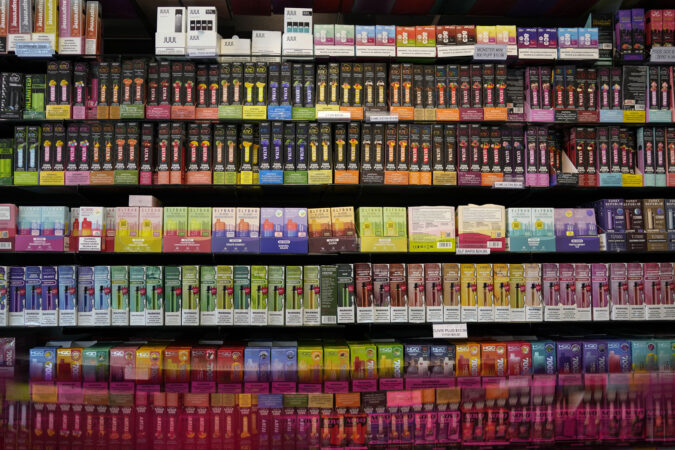
    In particular, supporters of the law hope to target Chinese-made disposable vapes, which often deliver fanciful flavors and sometimes even include video games. Studies have also found these vapes can contain high levels of heavy metals.

    Rates have gone up and down, but as of 2023, one in four Pennsylvania high school seniors said they had tried vaping at least once, according to a state survey. (Just over one in 10 in the same year said they had tried cigarettes, a 60% decrease from 2017.)

    The law may face legal challenges from the vaping industry, Tony Abboud, executive director of the Vapor Technology Association, a trade group, told Spotlight PA.

    He argued the law won’t stop the flow of vapes into Pennsylvania, and will instead shutter businesses and push consumers into an unregulated, untaxed black market.

    “Nobody believes that the demand for vapes that are on the market now will go down,” Abboud said. “They will look for, and find, the products that they like, they’ve used, that they know that work for them.”

    Potential registry issues

    The law directs the state attorney general’s office to maintain a registry of manufacturers who can sell electronic cigarettes that contain nicotine. Products that have been authorized by the FDA are allowed to register. That encompasses just 39 e-cigarettes from a handful of brands, including those owned by big tobacco companies. They are largely refillable vapes, rather than single-use, and the list excludes all flavored products beyond menthol.

    But the law includes an additional provision for products that are under review by the FDA or have received a denial that’s pending due to a court or FDA order.

    There’s a “significant backlog” of applications, exacerbated by the firings by the Trump administration of the people who review them, the Examination reported last year. And because of that pileup, “tens of thousands of products can still qualify for most registries,” according to the Public Health Law Center.

    “I can tell you that many … applications were really inadequate, and I don’t think that those types of products should be treated equally for purposes of these registry laws,” Mitch Zeller, a former chief federal tobacco regulator who retired in 2022, told Spotlight PA.

    To get on the registry, manufacturers have to certify they are eligible under the law’s provisions. Exactly what that form will look like, and how it will be reviewed for accuracy, is unclear — the attorney general’s office declined to comment on the law’s implementation.

    Attorney general spokesperson Brett Hambright said the office was “evaluating various enforcement options, but wouldn’t want to venture into disclosing techniques.”

    If a vape is not registered, retailers and distributors are barred from buying or selling it. Enforcement against those companies will begin in October. Retailers who violate the law could be punished by fines of up to $1,500 per day per vape.

    According to the attorney general’s office, implementing the legislation will have an initial one-time cost of $98,280, with annual ongoing personnel and operating costs equaling approximately $1.3 million.

    “The Office of Attorney General staff will establish and maintain the vaping directory and provide targeted enforcement based on documentation and intelligence regarding noncompliant actors,” a state House analysis of the bill says.

    The law, Hambright added in an email, ensures “only regulated products are on the market, keeping them out of the hands of children, and not marketed towards children.”

    The office’s projected costs are far less than those of other states with robust tobacco enforcement spending. Neighboring New York allocates approximately $40 million for tobacco enforcement each year. Pennsylvania’s most recent budget allocated $1.7 million.

    “If the state is not prepared to put the time, the money, and the effort behind enforcement,” Zeller said, “I don’t know how effective the law can be.”

    The need for resources is part of why some anti-smoking advocates opposed the proposal as passed. According to the Pennsylvania Alliance for Tobacco Control, funding for a registry could be “better used to support evidence-based prevention and cessation programs.”

    “Instead of investing in a system that simply monitors the problem, we need bold, enforceable action that prevents it entirely,” the group argued. That includes a flavor ban as well as efforts to ban sales near schools, they added.

    Public health questions

    Smoking tobacco is among the leading causes of preventable death in the United States. That hasn’t stopped people from doing it, however.

    Tobacco is a $70 billion-plus industry in the U.S., with millions of users in Pennsylvania. The state’s farmers also produce millions of pounds of tobacco every year.

    Vape technology, meanwhile, became popular in the 2010s as a way to let people consume nicotine, the addictive chemical in tobacco, without smoking cigarettes.

    But what vaping means for public health is still unclear and subject to ongoing research, Jungmi Jun, an associate professor who studies tobacco control campaigns at the University of South Carolina, said in an email.

    “The scientific consensus is fairly clear that combustible cigarettes pose substantially greater health risks than e-cigarettes, primarily due to combustion-related toxins. However, that does not mean e-cigarettes and other vape products are harmless, particularly for youth and non-smokers,” Jun said. “Much depends on who is using these products, how they are regulated, and how they are marketed and communicated to the public.”

    The law, Drope of Johns Hopkins said, amounts to an attempt at controlling the vape supply chain, which he argued “is a worthwhile effort, because you want to know what’s on your marketplace.”

    But Drope argued that the state would be more effective at preventing people under 21 from vaping if the legislature also hiked taxes on tobacco products and banned flavored products, which often mimic popular desserts and other sweets, and frequently get marketed to teens.

    In a statement, Lynn Silver, program director of the Prevention Policy Group of the Public Health Institute, agreed with Drope that a flavor ban should have been higher on the legislature’s to-do list.

    “Bans on flavored vapes should be comprehensive and span all nicotine products, cannabis where legal, and hemp, all of which are hooking kids across the nation,” she said. “Pennsylvania’s new bill falls short on protecting our youth.”

    For her part, McNeill has offered a flavor ban before. But the proposal never left committee.

    “I hit a wall with that. I was basically told, ‘It’s never going to be run, it’s never going to be passed,’” McNeill said of her earlier efforts. She did not clarify who told her the proposal would never pass. It would likely have faced industrywide opposition — both traditional, combustible tobacco firms and vape firms sell flavored tobacco products.

    EXCLUSIVE INSIGHTS … If you liked this reporting from Stephen Caruso, subscribe to Access Harrisburg, a premium newsletter with his unique insider view on how state government works.

  • Letters to the Editor | Jan. 27, 2026

    Letters to the Editor | Jan. 27, 2026

    The death of Alex Pretti

    The killing of Alex Jeffrey Pretti should alarm every American, regardless of political affiliation.

    Pretti was a 37-year-old intensive care nurse, a U.S. citizen, a homeowner, and a lawful gun owner with a legal carry permit. He was present at a protest, recording federal agents, an act that is legal under the Constitution. Video evidence and eyewitness statements indicate he was not holding, let alone firing, a weapon, was not charging officers, and was not posing an imminent threat at the moment deadly force was used.

    Yet, almost immediately, official statements sought to portray him as a violent aggressor, despite visible contradictions between those claims and the footage that has circulated publicly. This rush to shape the narrative before a transparent investigation has taken place is deeply troubling.

    The issue here is not whether law enforcement ever faces danger. Sometimes they do. The issue is whether the government is allowed to kill a citizen and then tell the public to ignore what it can plainly see. When lethal force is used, especially against an American citizen, the burden of proof must be exceptionally high, and accountability must be real, not performative.

    If recording federal agents, standing nearby, or legally possessing a firearm can result in death without clear evidence of an imminent threat, then the rights Americans are told they possess exist only at the discretion of those with weapons and authority. That should concern all of us.

    Pretti deserved due process. His family deserves the truth. And the public deserves a full, independent investigation before any conclusions are drawn. Silence, spin, and reflexive defense of power are the erosion of justice.

    Gil Marder, Philadelphia

    . . .

    It is with deepest respect and gratitude that I wish to thank the people of Minnesota, who are protecting our Constitution and helping to rescue and save people who are being treated as though this is not a democracy.

    The death of Alex Pretti at the hands of a federal agent underscores the very real risks that they are taking.

    It is heartening to see and hear that there are brave patriots in Minnesota who are protesting the horrendous behavior of U.S. Immigration and Customs Enforcement toward people whose civil rights are being violated. I am speaking about dragging children and adults from their homes, churches, schools, and cars for no legal grounds.

    These patriots give me the courage to act as bravely as they do when confronted with these terrible situations. They give me the courage to stand up and defend our democracy — and to confront those who want to tear us down.

    People ask, “Why protest elsewhere?” The answer is because if they come for us there, they will invade us anywhere.

    Eileen Borenstein, Bucks County

    Join the conversation: Send letters to letters@inquirer.com. Limit length to 150 words and include home address and day and evening phone number. Letters run in The Inquirer six days a week on the editorial pages and online.

  • Horoscopes: Tuesday, Jan. 27, 2026

    ARIES (March 21-April 19). You’re not trying to make a memory, but you’ll make one anyway. In fact, you can assume others will remember today for years to come. So, what experience would you like to create? You’ll steer it well.

    TAURUS (April 20-May 20). The “curiosity gap” describes when someone sees enough to know there’s more, and their attention and motivation increase. Cliffhangers, teasers, unfinished stories and gradual self-disclosure all work on this principle, and you will, too, as you let conversations slowly unfold.

    GEMINI (May 21-June 21). Unruly emotions bubble to the surface. Instead of trying to squash them down, find a way to express them, whether with games, exercise or art. When you get it out, someone will meet you with insight you couldn’t get on your own.

    CANCER (June 22-July 22). Motivation is like skin care — a ritual that needs daily repetition. How can you keep yourself motivated? Add a muse, a deadline, a pep talk, a reward system — anything to keep it compelling to return to and easy to repeat.

    LEO (July 23-Aug. 22). When you want something so much, you’re always going for it, even without realizing it. Things come together in an exciting way now, the result of moves you’ve been making toward your goal over the course of many months.

    VIRGO (Aug. 23-Sept. 22). Sticking with only the people you know is boring for everyone. You keep the social swirl lively by extending invitations widely, including new energy and creating an atmosphere of openness and kindness.

    LIBRA (Sept. 23-Oct. 23). Keep marching forward. Don’t inch, don’t tiptoe, don’t run. March. The steady, measured, determined gait will not only get you there, it will make it easy for others to follow. People rarely march alone. You will be joined.

    SCORPIO (Oct. 24-Nov. 21). You’re on a roll. Stay focused on what’s going great in your life and the great happenings will just keep coming. This momentum will continue to build until it’s interrupted. The trick is to guard against interruption.

    SAGITTARIUS (Nov. 22-Dec. 21). It feels like you’re either using every moment or the moments are using you. Whichever way it goes, the result is the same; life is action-packed. You’ll have tangible products to show for your effort.

    CAPRICORN (Dec. 22-Jan. 19). Your belief in fundamental human equality and strong aversion to arrogance will come into play. Humility is strength, not weakness. The low stance is the high road. Once again, being grounded will lead to a better outcome than dominance or superiority.

    AQUARIUS (Jan. 20-Feb. 18). Improvements happen all around you, which is no coincidence, since you’re the one improving things. You feel most like yourself when helping solve a problem. And when there’s no problem? That’s when you take what’s fine and make it sublime.

    PISCES (Feb. 19-March 20). You are skilled at the art of making people look good, introducing them in a flattering way and saying the things that make people feel seen and respected. You’ll use this talent well today.

    TODAY’S BIRTHDAY (Jan. 27). It’s your Year of the Bon Vivant, and you’ll revel in good living. Your wit, style, stories and way of seeing the world put you on the best lists. Invites and opportunities abound. You’ll hit an effortless run of good luck. More highlights: Family bonds heal, strengthen and extend to new people. Professional life fits better, and new habits enhance your health. Sagittarius and Scorpio adore you. Your lucky numbers are: 6, 20, 14, 37 and 28.

  • Dear Abby | Partner paying more to support man’s grandsons

    DEAR ABBY: I have been in a relationship for seven years. My significant other, “Gabe,” and I bought a home together. We are also raising three of his grandsons. I pay half of the mortgage, utilities, food, maintenance and personal necessities. We both pay for our own insurance, car loans and gas.

    Abby, there are four of them and one of me. This means utilities and food are used more by them than by me. I’m always after the boys to turn off the lights when not in use and to shut the doors after entering and leaving the house. We live in Arizona, so you can imagine electric bills during the summer, especially in a very large home.

    Because Gabe earns more money than I do, I have tried talking to him about the cost. I feel he should pay a higher percentage. Each time, I give him the monthly amount that I spent. He then goes through it with a fine-tooth comb and pays only what he thinks he should pay for. We argue about it every single month. It’s driving me nuts, and the upfront costs are breaking me. Please advise.

    — PAYING MORE THAN ENOUGH

    DEAR PAYING: That Gabe earns more than you do should have been taken into consideration at the time you began living with him and his grandsons. Financial counseling might help you to determine what such an adjustment would mean in terms of dollars. The National Foundation for Credit Counseling is a reliable resource. Because these monthly financial disagreements could erode your relationship, please consider couples counseling in order to work out a plan that is fair for all parties concerned.

    ** ** **

    DEAR ABBY: I’m having problems dealing with the death of my fiancé, who died by suicide 10 months ago. I blame myself partly for his death. While I realize I didn’t buy the medicine that killed him, I did move out of the house we shared because of his attitude toward me.

    I can’t seem to come to terms with his death. I feel responsible because I left the home we shared. I am seeing a counselor, but I’m not making the progress I was wishing I could. Do you have any advice for me and others who’ve gone or are going through this?

    — SPIRALING IN FLORIDA

    DEAR SPIRALING: Please accept my sympathy for the loss of your fiancé. When someone dies by suicide, survivors are often shocked and traumatized. You didn’t mention if your fiancé suffered from depression, job loss, a physical ailment or some other condition that may have caused him to act out. If he was abusive to you, you did the RIGHT thing by moving out. This is nothing to feel guilty for.

    I’m glad you are receiving counseling. Many survivors have been helped by talking things through with a licensed psychotherapist. The American Foundation for Suicide Prevention, established in 1987, lists worldwide suicide bereavement support groups as a public service to loss survivors. It can be accessed at afsp.org. Please don’t wait to reach out.