Tag: no-latest

  • European Union opens investigation into Musk’s AI chatbot Grok over sexual deepfakes

    European Union opens investigation into Musk’s AI chatbot Grok over sexual deepfakes

    LONDON — The European Union opened a formal investigation into Elon Musk’s social media platform X on Monday after his artificial intelligence chatbot Grok spewed nonconsensual sexualized deepfake images on the platform.

    European regulators also widened a separate, ongoing investigation into X’s recommendation systems after the platform said it would switch to Grok’s AI system to choose which posts users see.

    The scrutiny from Brussels comes after Grok sparked a global backlash by allowing users through its AI image generation and editing capabilities to undress people, putting females in transparent bikinis or revealing clothing. Researchers said some images appeared to include children. Some governments banned the service or issued warnings.

    The 27-nation EU’s executive said it was looking into whether X has done enough as required by the bloc’s digital regulations to contain the risks of spreading illegal content such as “manipulated sexually explicit images.”

    That includes content that “may amount to child sexual abuse material,” the European Commission said. These risks have now “materialized,” the commission said, exposing the bloc’s citizens to “serious harm.”

    Regulators will examine whether Grok is living up to its obligations under the Digital Services Act, the bloc’s wide-ranging rule book for keeping internet users safe from harmful content and products.

    In response to a request for comment, an X spokesperson directed the Associated Press to an earlier statement that the company remains “committed to making X a safe platform for everyone” and that it has “zero tolerance” for child sexual exploitation, nonconsensual nudity, and unwanted sexual content.

    The X statement from Jan. 14 also said it would stop allowing users to depict people in “bikinis, underwear or other revealing attire,” but only in places where it has been deemed illegal.

    “Non-consensual sexual deepfakes of women and children are a violent, unacceptable form of degradation,” Henna Virkkunen, an executive vice president at the commission, said in a statement.

    “With this investigation, we will determine whether X has met its legal obligations under the DSA, or whether it treated rights of European citizens — including those of women and children — as collateral damage of its service,” said Virkkunen, who oversees tech sovereignty, security, and democracy.

    Musk’s artificial intelligence company xAI launched Grok’s image tool last summer. But the problem began snowballing only late last month when Grok seemingly granted a large number of user requests to modify images posted by others. The problem was amplified both because Musk pitches his chatbot as an edgier alternative with fewer safeguards than rivals, and because Grok’s responses on X are publicly visible, and can therefore be easily spread.

    The EU investigation covers only Grok’s service on X, and not Grok’s website and standalone app. That’s because the DSA applies only to the biggest online platforms.

    There’s no deadline for the bloc to resolve the case, which could end in either X pledging to change its behavior or a hefty fine.

    In December Brussels issued X with a 120-million euro (then-$140 million) fine as part of the earlier ongoing DSA investigation, for shortcomings including blue checkmarks that broke the rules on “deceptive design practices” that risked exposing users to scams and manipulation.

    The bloc has also been scrutinizing X over allegations that Grok generated antisemitic material and has asked the site for more information.

    Malaysia and Indonesia blocked access to Grok earlier this month in response to the controversy, becoming the first countries to do so.

    On Friday, Malaysian authorities said they lifted the temporary restriction after the company implemented additional security and preventive measures, without giving further details. Malaysian regulators said they met last week with X’s representatives and would continue to monitor the situation.

  • Federal Aviation Administration says 6 killed in jet crash in snow in Bangor, Maine

    Federal Aviation Administration says 6 killed in jet crash in snow in Bangor, Maine

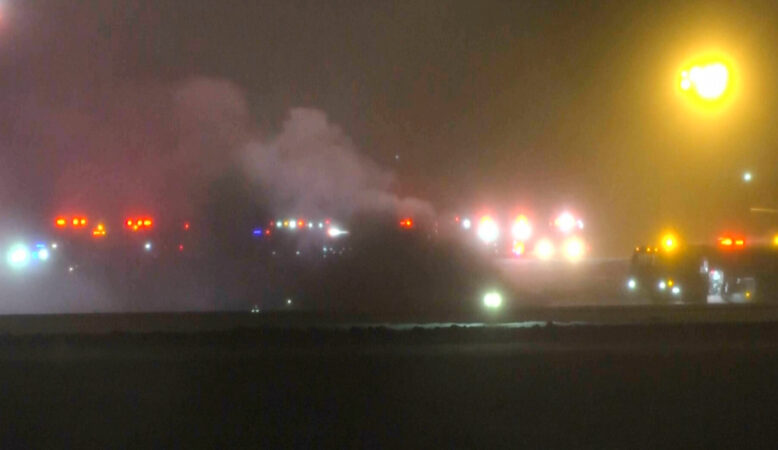
    PORTLAND, Maine — Six people died when a business jet crashed during takeoff as a snowstorm moved in and visibility diminished in Maine Sunday night.

    The Bombardier Challenger 600 flipped over and burned on takeoff at Bangor International Airport around 7:45 p.m. Sunday night as the nation’s massive winter storm was beginning to reach the area.

    An audio recording of air traffic controllers posted by www.LiveATC.net includes someone saying “Aircraft upside down. We have a passenger aircraft upside down,” about 45 seconds after a plane was cleared for takeoff. First responders arrived less than a minute later, airport director Jose Saavedra said.

    Experts say the weather and questions about whether ice accumulating on the wings kept the plane from getting airborne — as has happened at least twice before on that plane model — will likely be an initial focus by the National Transportation Safety Board. However, the agency will consider all possible factors.

    “You can count on the fact that NTSB is going to look very closely at this,” said John Cox, who is CEO of Safety Operating Systems.

    The airport said Monday afternoon that there were six people aboard, according to the flight manifest, and all of them died. Earlier in the day, the Federal Aviation Administration said seven people died and one member of the crew survived, but a spokesperson said those numbers were preliminary and subject to change. The airport said no one was taken to a hospital.

    Snowfall was heavy elsewhere at the time of the crash, but accumulation had just started in Bangor. Other planes had been taking off safely. But about half an hour before the crash, the pilot of a Florida-bound Allegiant plane radioed the tower to abort his takeoff.

    “One, our deice fluid has failed and two, I don’t think the visibility is good enough for us to go, so we’re going to have to taxi back to the gate here,” the Allegiant pilot radioed. The controller responded by saying he was just getting ready to warn the pilot that visibility had dropped to about three-quarters of a mile.

    At about the same time, the pilot of the Bombardier had taxied over to the deicing pad and was radioing in a request to get his plane’s wings and tail treated, according to audio posted by www.LiveATC.net. The plane remained at the deicing pad for about 20 minutes before taxiing to the runway.

    The Bombardier Challenger 600 model “has a history of problems with icing on takeoff” that caused previous deadly crashes in Birmingham, England; and Montrose, Colo., more than 20 years ago, aviation safety consultant Jeff Guzzetti said. Even a little bit of ice on the wings can cause serious problems, so careful inspections and de-icing are a crucial step before takeoff, the former federal crash investigator said. And there is a time limit on how long de-icing remains effective. It could last only about 20 minutes.

    The identities of those onboard won’t be released publicly until they can be confirmed, officials said.

    The jet was registered to a corporation that shares the same address in Houston as the personal injury law firm Arnold and Itkin Trial Lawyers, and one of the law firm’s founding partners is listed as the registered agent for the company that owns the plane.

    The international airport in Bangor, about 200 miles north of Boston, is one of the closest in the U.S. to Europe and is often used to refuel private jets flying overseas. The Bombardier was headed for France when it crashed.

    The airport shut down after the crash and will remain closed at least until Wednesday so the FAA and National Transportation Safety Board investigators can examine and remove the wreckage.

    A preliminary report outlining the facts of the crash should be released in about a month, but the final version likely won’t be published for more than a year.

  • Israel says the remains of the final hostage in Gaza have been recovered, a key step for the ceasefire’s next phase

    Israel says the remains of the final hostage in Gaza have been recovered, a key step for the ceasefire’s next phase

    JERUSALEM — The remains of the final hostage in Gaza have been recovered, Israel’s military said Monday, clearing the way for the next phase of the ceasefire that paused the Israel-Hamas war.

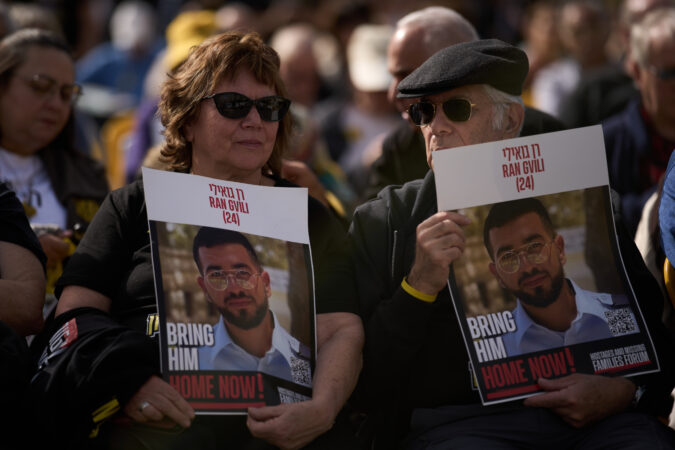
    The announcement that the remains of Ran Gvili had been found and identified came a day after Israel’s government said the military was conducting a “large-scale operation” in a cemetery in northern Gaza to locate them.

    Prime Minister Benjamin Netanyahu called it “an incredible achievement” for Israel and its soldiers, telling Israeli media that “I promised we would bring everyone home and we have brought everyone home.” He said Gvili, who was killed during the Hamas-led attack on Oct. 7, 2023, that sparked the war, was among the first to be taken into Gaza.

    The return of all remaining hostages, living or dead, has been a key part of the Gaza ceasefire’s first phase, and Gvili’s family had urged Israel’s government not to enter the second phase until his remains were recovered and returned.

    Palestinian children receive donated food at a community kitchen in Nuseirat, in central Gaza Strip, on Saturday, Jan. 24.

    Netanyahu’s office said Sunday that Israel would open the Rafah crossing between Gaza and Egypt, which Palestinians see as their lifeline to the world, once the search for Gvili was finished. It has been largely shut since May 2024, except for a small period in early 2025.

    Israel and Hamas had been under pressure from ceasefire mediators including Washington to move into the second phase of the U.S.-brokered truce, which took effect on Oct. 10.

    Israel had repeatedly accused Hamas of dragging its feet in the recovery of the final hostage. Hamas said it had provided all the information it had about Gvili’s remains, and accused Israel of obstructing efforts to search for them in areas of Gaza under Israeli military control.

    Israel’s military had said the large-scale operation to locate Gvili’s remains was “in the area of the Yellow Line” that divides the territory.

    The Oct. 7, 2023 attack killed about 1,200 people and saw 251 taken hostage. Gvili, a 24-year-old police officer known affectionately as “Rani,” was killed while fighting Hamas militants.

    Palestinians receive donated food at a community kitchen in Nuseirat, in central Gaza Strip, on Saturday, Jan. 24.

    Before Gvili’s remains were recovered, 20 living hostages and the remains of 27 others had been returned to Israel since the ceasefire, most recently in early December. Israel in exchange has released the bodies of hundreds Palestinians to Gaza.

    The next phase of the 20-point ceasefire plan has called for creating an international stabilization force, forming a technocratic Palestinian government and disarming Hamas.

    Palestinians killed in Gaza

    Israeli forces on Monday fatally shot a man in Gaza City’s Tuffah neighborhood, according to Shifa Hospital, which received the body. The man was close to an area where the military has launched the search operation for Gvili, the hospital said.

    Another man was killed in the eastern side of Bureij refugee camp in central Gaza, according to Al-Aqsa Martyrs hospital, which received his body. The circumstances of his death were not immediately clear.

    More than 480 Palestinians were killed by Israeli fire since Oct. 10, according to Gaza’s Health Ministry. The ministry, which is part of the Hamas-led government, maintains detailed casualty records that are seen as generally reliable by U.N. agencies and independent experts.

    Israel’s top court considers petition to open Gaza for international journalists

    The Foreign Press Association on Monday asked Israel’s Supreme Court to allow journalists to enter Gaza freely and independently.

    The FPA, which represents dozens of global news organizations, has been fighting for more than two years for independent media access to Gaza. Israel has barred reporters from entering Gaza independently since the Oct. 7, 2023, attacks by Hamas, which triggered the war, saying entry could put both journalists and soldiers at risk.

    The army has offered journalists brief, occasional visits under strict military supervision.

    FPA lawyers told the three judge panel that the restrictions are not justified and that with aid workers moving in and out of Gaza, journalists should be allowed in as well. They also said the tightly controlled embeds with the military are no substitute for independent access. The judges are expected to rule in the coming days.

  • Trump softens tone as some federal agents expected to leave Minneapolis

    Trump softens tone as some federal agents expected to leave Minneapolis

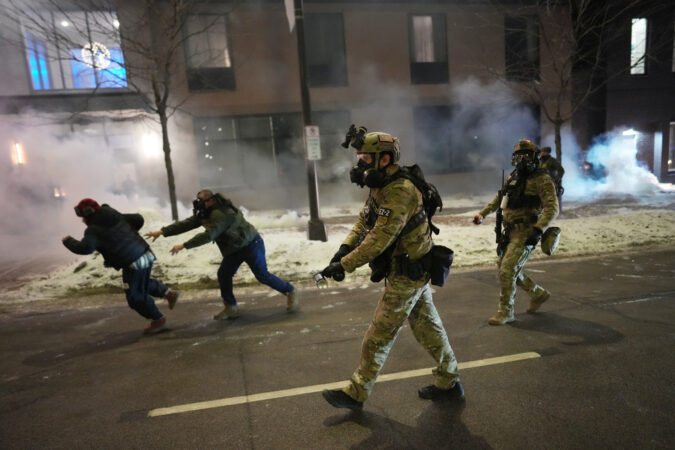
    MINNEAPOLIS — President Donald Trump softened his tone Monday on the immigration crackdown in Minnesota, touting productive conversations with the governor and Minneapolis mayor as he sent the border czar to take charge of much of the enforcement effort. Some federal agents were expected to leave as soon as today.

    Minneapolis Mayor Jacob Frey said he spoke by phone with Trump, who praised the discussion and declared that “lots of progress is being made.” Frey said he asked Trump in a phone call to end the immigration enforcement surge and that Trump agreed the present situation cannot continue.

    The mayor said some agents would soon leave and that he would keep pushing for others involved in Operation Metro Surge to go.

    Among those who are expected to depart was senior Border Patrol commander Greg Bovino, a person familiar with the matter told the Associated Press. The person was not authorized to publicly discuss details of the operation and spoke to AP on condition of anonymity.

    Bovino has been at the center of the administration’s aggressive enforcement surge in cities nationwide. His departure marks a significant public shift in federal law enforcement posture amid mounting outrage over the fatal shooting of 37-year-old ICU nurse Alex Pretti by Border Patrol agents.

    Bovino’s leadership of highly visible federal crackdowns, including operations that sparked mass demonstrations in Los Angeles, Chicago, Charlotte, and Minneapolis, has drawn fierce criticism from local officials, civil rights advocates, and congressional Democrats.

    Criticism has increased around Bovino in the last few days after his public defense of the Pretti shooting and disputed claims about the confrontation that led to his death.

    The border czar, Tom Homan, will take charge of Immigration and Customs Enforcement operations in Minnesota.

    Judge hears arguments on crackdown

    A federal judge heard arguments Monday over Minnesota’s challenge to the Trump administration’s immigration enforcement crackdown, posing skeptical questions to both sides about the effort that has led to two fatal shootings by federal officers.

    U.S. District Judge Katherine Menendez is considering whether to grant requests by the state and the cities of Minneapolis and St. Paul to temporarily halt the immigration operation. She said the case was a priority, though she issued no immediate ruling.

    Menendez questioned the government’s motivation behind the crackdown and expressed skepticism about a letter recently sent by Attorney General Pam Bondi to Minnesota Gov. Tim Walz. The letter asked the state to give the federal government access to voter rolls, to turn over state Medicaid and food assistance records, and to repeal sanctuary policies.

    “I mean, is there no limit to what the executive can do under the guise of enforcing immigration law?” Menendez asked. She noted that the federal requests are the subject of litigation.

    Lawyers for the state and the Twin Cities argued that the situation on the street is so dire as to require the court to halt the federal government’s enforcement actions.

    “If this is not stopped right here, right now, I don’t think anybody who is seriously looking at this problem can have much faith in how our republic is going to go in the future,” Minnesota Assistant Attorney General Brian Carter said.

    Brantley Mayers, counsel to the Justice Department’s assistant attorney general, said the government’s goal is to enforce federal law. Mayers said one lawful action should not be used to discredit another lawful action.

    “I don’t see how the fact that we’re also doing additional things that we are allowed to do, that the Constitution has vested us with doing, would in any way negate another piece of the same operation, the same surge,” Mayers said.

    Menendez questioned where the line was between violating the Constitution and the executive’s power to enforce the law. She also asked whether she was being asked to decide between state and federal policies.

    “That begins to feel very much like I am deciding which policy approach is best,” she said.

    At one point, while discussing the prospect of federal officers entering residences without a warrant, the judge expressed reluctance to decide issues not yet raised in a lawsuit before her.

    “I can’t be the global keeper of all things here. Like, presumably that will be litigated,” she said to the state’s attorney.

    The state of Minnesota and the cities sued the Department of Homeland Security earlier this month, five days after Renee Good was shot by an Immigration and Customs officer. The shooting of Alex Pretti by a Border Patrol officer on Saturday added urgency to the case.

    Border czar to Minnesota

    In other developments, Trump said he had a “very good” call with Gov. Tim Walz about the latest shooting and that they are now on a “similar wavelength.” It was an abrupt shift from Trump, who frequently derides Walz for his actions on immigration issues in Minnesota.

    Trump also said he would send border czar Tom Homan to Minnesota. The president’s statement comes after Homeland Security Secretary Kristi Noem and Bovino, who has become the public face of the crackdown, answered questions at news conferences over the weekend about Pretti’s shooting. Trump posted on social media that Homan will report directly to him.

    Since the original court filing, the state and cities have substantially added to their request in an effort to restore the conditions that existed before the administration launched Operation Metro Surge on Dec. 1.

    The lawsuit asks the judge to order a reduction in the number of federal law enforcement officers and agents in Minnesota back to the level before the surge and to limit the scope of the enforcement operation.

    Justice Department attorneys have called the lawsuit “legally frivolous” and said Minnesota “wants a veto over federal law enforcement.” They asked the judge to reject the request or to at least stay her order pending an anticipated appeal.

    Democratic Minnesota Attorney General Keith Ellison said Sunday that the lawsuit is needed because of “the unprecedented nature of this surge. It is a novel abuse of the Constitution that we’re looking at right now. No one can remember a time when we’ve seen something like this.”

    During a briefing on Monday, White House press secretary Karoline Leavitt said that a trio of “active investigations” and internal probes of the shooting were underway by federal agencies.

    Leavitt said that the Department of Homeland Security and the FBI were investigating the shooting and that U.S. Customs and Border Protection was “conducting their own internal review.”

    Leavitt said at the briefing that she has not heard Trump commit to release body camera footage from federal immigration officers involved in the shooting and killing of Alex Pretti.

    Leavitt later said that the administration is talking with members of Congress about requirements to have federal immigration officers wear body cameras.

    Leavitt said the shooting and killing of Pretti by a federal immigration officer “occurred as a result of a deliberate and hostile resistance by Democrat leaders in Minnesota.”

    Walz, Minneapolis Mayor Jacob Frey, and other elected Democrats “were spreading lies about federal law enforcement officers,” Leavitt said at the White House briefing.

    Other state implications

    The case has implications for other states that have been or could become targets of ramped-up federal immigration enforcement operations. Attorneys general from 19 states plus the District of Columbia, led by California, filed a friend-of-the-court brief supporting Minnesota.

    “If left unchecked, the federal government will no doubt be emboldened to continue its unlawful conduct in Minnesota and to repeat it elsewhere,” the attorneys general wrote.

    Menendez ruled in a separate case on Jan. 16 that federal officers in Minnesota cannot detain or tear gas peaceful protesters who are not obstructing authorities, including people who follow and observe agents.

    An appeals court temporarily suspended that ruling three days before Saturday’s shooting. But the plaintiffs in that case, represented by the American Civil Liberties Union of Minnesota, asked the appeals court late Saturday for an emergency order lifting the stay in light of Pretti’s killing.

    The Justice Department argued in a reply filed Sunday that the stay should remain in place, calling the injunction unworkable and overly broad.

    In yet another case, a different federal judge, Eric Tostrud, issued an order late Saturday blocking the Trump administration from “destroying or altering evidence” related to Saturday’s shooting. Ellison and Hennepin County Attorney Mary Moriarty asked for the order to try to preserve evidence collected by federal officials that state authorities have not yet been able to inspect.

    A hearing in that case was scheduled for Monday afternoon in federal court in St. Paul.

    “The fact that anyone would ever think that an agent of the federal government might even think about doing such a thing was completely unforeseeable only a few weeks ago,” Ellison told reporters. “But now, this is what we have to do.”

  • Stranded by winter weather? Here’s what airlines owe you.

    Stranded by winter weather? Here’s what airlines owe you.

    Winter weather can upend even the best-laid travel plans, but one less thing to worry about is losing money if your flight is canceled: U.S. airlines are required to provide refunds.

    A monster storm started to wreak havoc across parts of the country over the weekend, with 12,200 weekend flights and counting canceled. Forecasters warned that catastrophic damage, especially in areas pounded by ice, could rival that of a hurricane.

    Here’s a guide for winter travelers as flight disruptions pile up:

    Keep an eye on weather forecasts

    When airlines expect bad weather to create problems for flights, they often give travelers a chance to postpone their trips by a few days without having to pay a fee. Search online for your airline’s name and “travel alerts” or similar phrases to look for possible rescheduling offers.

    American Airlines, for example, said it is waiving change fees for passengers impacted by the storm and adding extra flights around the country in an effort to help passengers reach their destination after the storm passes.

    Check before going to the airport

    Use the airline’s app to make sure your flight is still on before heading to the airport.

    Cancellations can happen hours — or even days — before departure time. Consider American and Delta Air Lines: By midday Saturday, each carrier had canceled more than 1,000 of its scheduled Sunday flights, according to flight tracking site FlightAware.

    Oklahoma’s largest airport suspended all flights Saturday, while Dallas–Fort Worth International Airport, a major hub, saw more than 700 departing flights canceled and nearly as many arriving flights called off. Flight disruptions also were stacking up at airports in Chicago; Atlanta; Nashville; and Charlotte, N.C.

    Disruptions continued to intensify on Sunday.

    My flight was canceled, now what?

    If you’re already at the airport, get in line to speak to a customer service representative. If you’re still at home or at your hotel, call or go online to connect to your airline’s reservations staff. Either way, it helps to also research alternate flights while you wait to talk to an agent.

    Most airlines will rebook you on a later flight for no additional charge, but it depends on the availability of open seats.

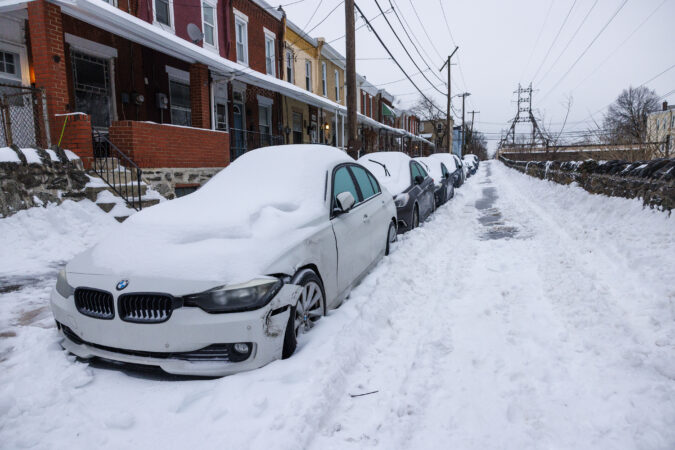
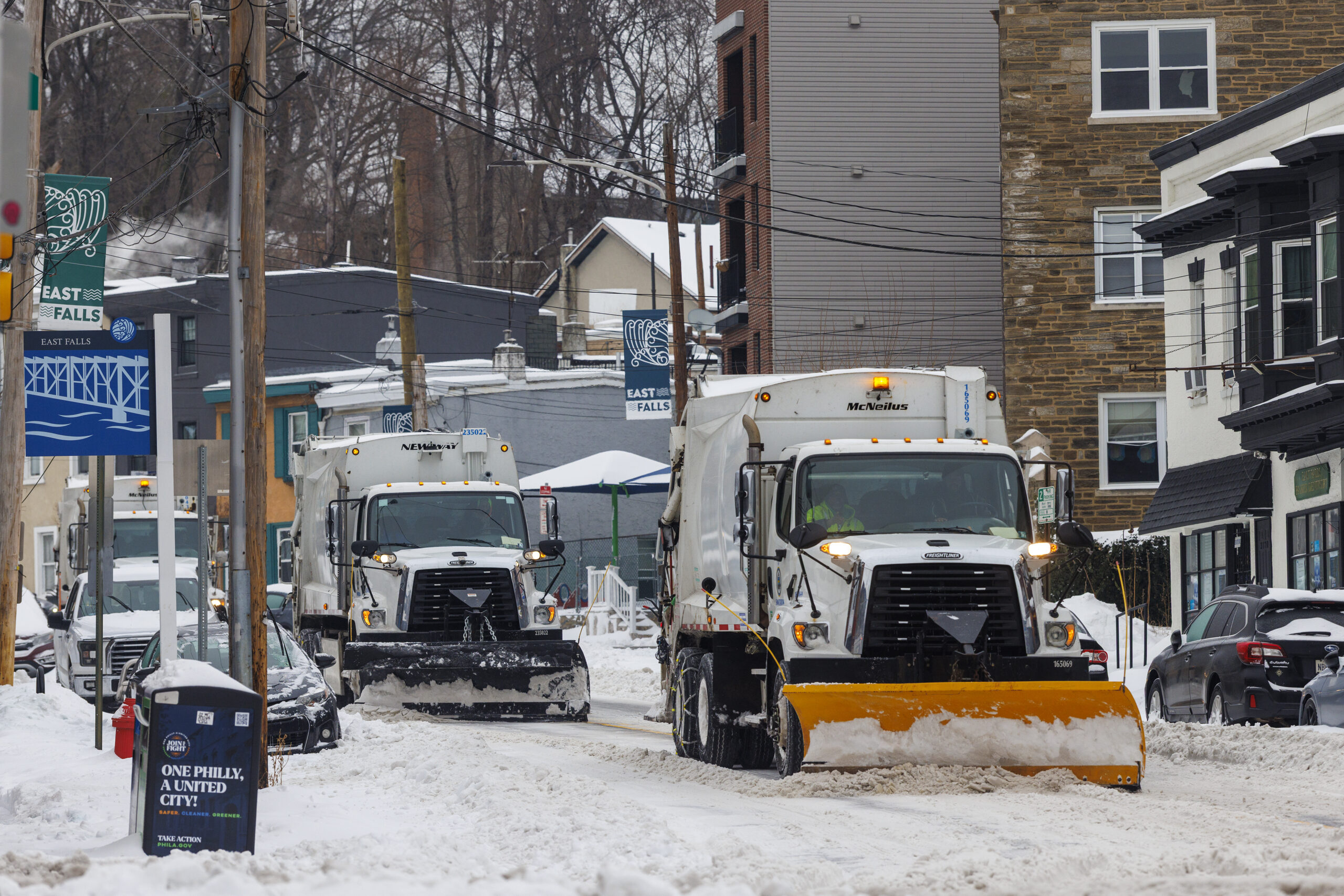
    Snow is plowed in the East Falls section of Philadelphia on Monday.

    Can I get booked on another airline?

    You can, but airlines aren’t required to put you on another carrier’s flight. Some airlines, including most of the biggest carriers, say they can put you on a partner airline, but even then it can be a hit or miss.

    Am I owed a refund?

    If your flight was canceled and you no longer want to take the trip, or you’ve found another way to get to your destination, the airline is legally required to refund your money — even if you bought a non-refundable ticket. It doesn’t matter why the flight was canceled.

    The airline might offer you a travel credit, but you are entitled to a full refund. You are also entitled to a refund of any bag fees, seat upgrades or other extras that you didn’t get to use.

    When will I get my refund?

    If you paid with a credit card, a refund is due within seven business days after you decline an offer from the airline for another flight or a voucher, and within 20 calendar days if you paid for the ticket with a check or cash, according to the U.S. Department of Transportation.

    What else will my airline cover?

    U.S. airlines aren’t required by the Transportation Department to compensate passengers for meals or lodging when an airline cancels or significantly delays a flight during an “uncontrollable” event like bad weather.

    Each airline, however, does have its own policies for assisting passengers who are stranded by a so-called “controllable” flight cancellation or long delay. These include disruptions caused by maintenance issues, crew shortages, or computer outages that halt operations. The Transportation Department can hold airlines accountable for these commitments and maintains a website that lets travelers see what each airline promises if a major disruption is their fault.

    Other tips

    If the weather forecast is troubling, Kyle Potter, executive editor of Thrifty Traveler, suggests looking into booking a backup flight. Some airlines stand out as potential backups, Potter says, because they let customers get a full refund as long as they cancel within 24 hours of booking.

    The customer service phone lines will be slammed if flight cancellations and delays start stacking up during a bad storm. If you’re traveling with someone who has a higher frequent-flyer status, call the airline using their priority number. Another trick: Look up the airline’s international support number. Those agents can often rebook you just the same.

  • Letters to the Editor | Jan. 26, 2026

    Letters to the Editor | Jan. 26, 2026

    Our history removed

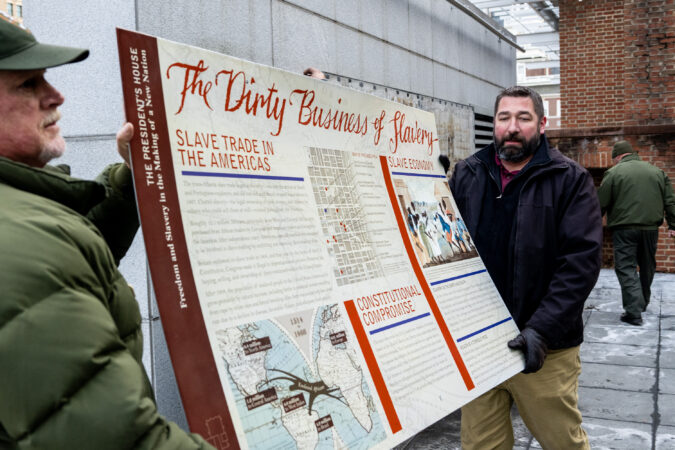
    The dirty business of censorship snuck its way into Philadelphia Thursday afternoon and removed panels from the President’s House memorial to the nine people enslaved by George Washington on Independence Mall.

    Ripped from the walls was our history, our freedom of expression, and the respect and dignity for all human beings.

    Peter Tobia, Philadelphia

    The writer formerly worked as a visual journalist at The Inquirer.

    . . .

    What? No one protested and said they wouldn’t take down the slavery exhibit at the President’s House here in Philly? No one protested that taking down the pictures of enslaved people was destroying our country’s history, whitewashing a people’s history?

    What kind of country rewrites history? Certainly not a democratic country. Little did I know that years ago, when I read Cry, the Beloved Country, I would now be crying for our own country.

    And what would have happened if everyone refused to take down the exhibit? Of course, they knew they would lose their jobs. But beyond that, it would have made news, and I believe a lot of us Americans, particularly here in Philly, would have joined in their courageous protest.

    After desecrating our history, how can we feel good about Philadelphia’s historical significance as the Semiquincentennial City in 2026?

    Ettie Davis, Philadelphia

    Cruel tradition

    Bucks County is home to a cruel practice that most Pennsylvanians believe belongs in the past: live pigeon shoots. At the Philadelphia Gun Club in Bensalem, birds are released and shot at close range. It is reported that the club holds about a dozen shoots per year. While the vast majority of states have outlawed this cruelty, political maneuvering has allowed it to continue in Pennsylvania.

    House Bill 1097, sponsored by State Rep. Perry Warren, aims to finally close this shameful chapter by banning live pigeon shoots statewide. The passage of this legislation is an urgent imperative. The movement to ban live pigeon shoots has a long history and is supported by a broad coalition of veterinarians, hunters, and concerned citizens. Yet, HB 1097 has languished for more than 30 years in the General Assembly.

    Please contact your state representative and senator and demand they take immediate action by stating support for HB 1097. In November, every state representative and many state senators are up for reelection. To find your local lawmakers, visit: www.palegis.us/find-my-legislator.

    Victor M. Verbeke, Pennsylvania Voters for Animals, Harleysville

    A firmer foundation

    Today, our Constitution, like the chassis of a very old car, is breaking down. Perhaps it’s time to trade it in. Our current Constitution, drafted in Philadelphia in 1787, certainly lasted longer than our first constitution, the Articles of Confederation — a document that was drafted in Philadelphia in 1777. Our founders were not hesitant to toss a constitution that was not working for a new and improved model. What better place than Philadelphia, and what better time than now to begin an inclusive conversation about a new foundation for our federal government? We deserve a government that is less chaotic and more respectful of the common citizen.

    Hank Bienkowski, Boothwyn

    Join the conversation: Send letters to letters@inquirer.com. Limit length to 150 words and include home address and day and evening phone number. Letters run in The Inquirer six days a week on the editorial pages and online.

  • Dear Abby | Best friend refuses to end abusive relationship

    DEAR ABBY: My best friend, “Brooke,” started dating a man, “Angus,” last year. From the start, he made a poor impression. He met Brooke while he was dating another woman but didn’t tell Brooke about her. Brooke continued hanging out with him only after he broke up with his girlfriend.

    The past few months have been nothing short of awful. I see Brooke weekly for coffee, and all she does is tell me how mean Angus is to her and her family. He calls her names, emotionally manipulates her, tells her what she can and cannot wear and looks through every inch of her phone.

    Her family loathes him. Her dad told me he never wants to see him again. They are constantly urging Brooke to end the relationship. None of her friends likes him, and she doesn’t seem to either, but will not, for whatever reason, break up with him.

    Last week, they decided to get a puppy together. It’s getting exhausting for all parties, including Brooke. What should I do? Should I just leave it alone and let her figure it out and be there when it ends?

    — WISE FRIEND IN NEBRASKA

    DEAR WISE FRIEND: You are a supportive friend, but you cannot live Brooke’s life for her. Buying a puppy with someone who is abusive does not bode well for her or for the animal, which may become the focus of the abuser’s anger if he feels he cannot control Brooke. Because she won’t listen to family or friends, Brooke IS going to have to figure things out for herself. Save your advice for people who will listen.

    ** ** **

    DEAR ABBY: My longtime friend has distanced herself over the last two years. Unless I call her or invite her to join us at our vacation home, I hear nothing from her, and we are never invited to visit them. We grew up together, were in each other’s weddings, raised our children together and went on many fun trips over the years.

    When our husbands were hunting together a few weeks ago, her husband told mine that it would be better if we didn’t mention our grandchildren to them. All of their children have been married and divorced and have no plans to have children. I know she always wanted to be a grandmother, and I am sorry that didn’t happen. Sometimes my grandchildren call while our friends are visiting, and, of course, we have lots of pictures of them around, but we don’t talk about them all the time.

    I don’t know how to handle this. I’m hurt that she would cut me off after all these years just because I have grandchildren.

    — GAG ORDER IN GEORGIA

    DEAR GAG ORDER: She is not cutting you off because you have grandchildren; she is LIMITING HER TIME WITH YOU because she doesn’t, and the phone calls and pictures are depressing for her. A way to handle this would be to see her away from your home so she isn’t constantly reminded.

  • Sam Darnold and Seahawks advance to Super Bowl with thrilling 31-27 win over Rams in NFC title game

    Sam Darnold and Seahawks advance to Super Bowl with thrilling 31-27 win over Rams in NFC title game

    SEATTLE — Sam Darnold threw for three touchdowns, the Seahawks’ “Dark Side” defense came up with a critical fourth-down stop, and Seattle advanced to the Super Bowl, beating the Los Angeles Rams 31-27 in an electrifying NFC championship game on Sunday.

    Led by second-year coach Mike Macdonald and Darnold — an eight-year veteran playing for his fifth team — the Seahawks (16-3) reached the fourth Super Bowl in franchise history and first in 11 years. Seattle lost that most recent appearance to New England, its opponent in two weeks at Levi’s Stadium in Santa Clara, California.

    With Los Angeles (14-6) facing fourth-and-4 at the Seattle 6, coach Sean McVay elected to go for it and Matthew Stafford’s pass was broken up in the end zone by Devon Witherspoon. The Rams didn’t get the ball back until there were 25 seconds left, and Puka Nacua was tackled inbounds near midfield on the final play.

    Stafford threw for 374 yards and three touchdowns, but the Rams were undone by critical errors, including a muffed punt by Xavier Smith in the third quarter. On the next play, Darnold connected with Jake Bobo for a 17-yard touchdown.

    Darnold, who flopped in his playoff debut last season with the Minnesota Vikings, played through an oblique injury and completed 25 of 36 passes for 346 yards with no turnovers. Jaxon Smith-Njigba had 153 yards receiving and a touchdown on 10 catches.

  • Trump says it’s ‘too late’ to stop White House ballroom construction

    Trump says it’s ‘too late’ to stop White House ballroom construction

    President Donald Trump on Sunday insisted his proposed ballroom is a done deal — even as Justice Department lawyers in court present the plans as flexible and subject to federal reviews.

    In a lengthy post to his Truth Social platform, Trump said the project could not realistically be reversed because key materials have been lined up, writing that “there is no practical or reasonable way to go back” and declaring: “IT IS TOO LATE!”

    The president’s comments contrast with his administration’s position in federal court, where three days earlier Justice Department lawyers told a judge that the ballroom plans can be modified and that the White House intends to wait for two federal advisory panels to review the project before beginning aboveground construction in April. U.S. District Judge Richard Leon, an appointee of President George W. Bush, said he intends to rule in the coming weeks on whether the project may advance.

    The White House did not immediately respond to questions about how Trump’s post about the ballroom aligned with his administration’s legal argument. Trump and his deputies have said that the ballroom project is personally important to him, and the president wrote Sunday that it is a national security matter.

    “Stoppage of construction, at this late date, when so much has already been ordered and done, would be devastating to the White House, our Country, and all concerned,” Trump wrote in a late-morning note that published as much of the United States was under a weather alert connected to a significant winter storm. He also listed materials that he said had either been ordered or were “ready” to be obtained: “All of the Structural Steel, Windows, Doors, A.C./Heating Equipment, Marble, Stone, Precast Concrete, Bulletproof Windows and Glass, Anti-Drone Roofing, and much more.”

    The roughly 450-word statement came in between two posts that referenced Minnesota, the site a day earlier of another fatal shooting connected to immigration enforcement that roiled domestic politics and raised the possibility of a government shutdown. Democrats pledged to block a funding package that must be approved by Friday to keep much of the government open, saying that they could not support continued funding for federal immigration enforcement without operational changes.

    Trump in October rapidly demolished the White House’s East Wing annex to make way for his planned ballroom addition, prompting criticism from Democrats, watchdogs, and some conservatives who said the administration should have sought public comment before making such significant changes to a building long described as the “People’s House.” The White House has begun construction on the underground elements of the project, deploying workers, construction machinery, and a tower crane, with administration officials saying the work is necessary to protect the president.

    The National Trust for Historic Preservation, a nonprofit group charged by Congress with helping to preserve historic buildings, sued the Trump administration in December, saying it failed to undergo legally required reviews or receive congressional authorization for the project. The group has asked Leon to pause construction until those reviews take place, arguing that every additional day of work locks the project into place.

    “We are fully committed to upholding the interests of the American public and advocating for compliance with all legally required review and approval processes — and an opportunity for the American people to weigh in on a project that impacts one of the most historically significant buildings in our country,” the National Trust said in a statement Sunday following Trump’s post, which also took aim at the group.

    The Justice Department has argued that Trump has significant authority to make changes to White House grounds. The department also submitted testimony from an engineer working on the ballroom project who said the planned building can still accommodate significant design changes. The National Trust has submitted testimony from architect William Bates, former president of the American Institute of Architects, who said in a sworn statement that a building’s subterranean infrastructure essentially predetermines critical aspects of what can be built aboveground.

    “Altering these conditions after the fact would require major demolition and redesign,” Bates wrote last month.

    Leon, who is hearing the case at the U.S. District Court in Washington, D.C., on Thursday, appeared skeptical of the administration’s arguments and pressed the Justice Department to explain how Trump had the legal right to fund the project using hundreds of millions of dollars in private donations. Publicly identified donors, such as Amazon, Google, and Lockheed Martin, collectively have billions of dollars in contracts before the administration. (Amazon founder Jeff Bezos owns the Washington Post.)

    The two federal panels set to review the ballroom project — the Commission of Fine Arts and the National Capital Planning Commission — are now led by Trump appointees after the president removed members named during the Biden administration. White House officials have said they hope to win approval from the panels by March, and the panels’ leaders have signaled support for ballroom construction.

    “I know the President wants to get on with this, and we need to let him do his job,” Rodney Mims Cook Jr., the chairperson of the Commission of Fine Arts, said at a hearing last week.

  • DOJ, FBI take back seat in Minnesota shooting, state vows investigation

    DOJ, FBI take back seat in Minnesota shooting, state vows investigation

    In the 24 hours after an immigration officer fatally shot a protester in Minneapolis, the federal agencies that would typically be involved in investigating an officer-involved shooting have been on the sidelines.

    Federal law enforcement leaders in Minnesota haven’t made public statements or appearances. FBI agents and prosecutors in the state are confused about what — if anything — their involvement will be in the investigation, according to multiple people familiar with the U.S. attorney’s office in Minnesota, who spoke on the condition of anonymity due to fear of retaliation.

    In the apparent absence so far of the Justice Department, Minnesota authorities have vowed to pursue an investigation under state laws into the shooting of Alex Pretti, a 37-year-old ICU nurse. That has set up a potential legal clash between state and federal authorities. Already, the state has sued the federal government, successfully asking a judge over the weekend to ensure that federal law enforcement officials do not destroy evidence.

    The Justice Department’s apparent back seat in the investigation contrasts with how the agency has frequently handled similar fatal officer-involved shootings. Typically, federal investigators would take the lead, deploying FBI agents and Civil Rights Division prosecutors — the department’s experts in investigating use-of-force cases.

    That typical federal deployment of resources has not occurred in this case, according to two people familiar with the matter, who spoke on the condition of anonymity to discuss internal decisions that have not been made public.

    “This is extremely out of the norm,” said Bryna Godar, staff attorney for the State Democracy Research Initiative at the University of Wisconsin Law School, who has studied use-of-force investigations. “Typically, whether or not a shooting is ultimately found to be justified, these types of shootings are taken very seriously.”

    Rather than the Justice Department, the Department of Homeland Security, of which the Border Patrol is a part, has taken the lead in the investigation, with the FBI assisting, according to a law enforcement official familiar with the matter.

    That internal probe is at least in part examining whether Border Patrol agents adhered to protocol when Pretti was shot. Homeland Security doesn’t have independent authority to prosecute crimes, but if its examination finds evidence of criminal wrongdoing, DHS officials could refer the investigation to the Justice Department, the law enforcement official said.

    That typical federal deployment of resources has not occurred after the most recent shooting, according to two people familiar with the matter, who spoke on the condition of anonymity to discuss internal decisions that have not been made public.

    Justice Department officials have said in recent weeks that they only investigate police officers under the civil rights laws involving excessive force if they believe such a probe is warranted. The recent shootings by immigration officers do not necessitate federal criminal investigations, they have said.

    Legal experts, however, have noted that while the threshold to charge a police officer is high, the only way to determine if a prosecution is warranted is for the Justice Department and FBI to conduct thorough investigations.

    FBI Director Kash Patel, in an interview with Fox News’ Sunday Morning Futures, said he trusted Homeland Security Secretary Kristi L. Noem and her agency to “do the right thing.”

    “I don’t want to comment on their ongoing investigation,” he said.

    In the shooting on Saturday, federal agents wrestled Pretti to the ground and secured a handgun he was carrying moments before Pretti was shot multiple times, according to a Washington Post analysis of videos that captured the incident from several angles.

    It is not clear from the video whether all the agents realized Pretti had been disarmed. Local officials have said Pretti had a permit to carry the weapon, and Minnesota law allows the open carrying of firearms.

    On the day after the shooting, Justice Department officials sought to shift blame for it onto state and local authorities, who they assert have egged on protesters, and deferred the responsibility to investigate to other agencies.

    Deputy Attorney General Todd Blanche appeared on Meet the Press Sunday and said the problem was that local police officers were not assisting federal law enforcement in the state.

    “I’m very confused why the conversation is about what you’re talking about instead of focusing on what really matters, which is why in one city, in one place we have these problems,” Blanche told NBC’s Meet the Press, suggesting that Minnesota officials had contributed to the tensions that provoked Pretti’s shooting.

    The immigration crackdown in the Minneapolis-St. Paul region began in early January, despite protests from state officials. The deployment of thousands of federal and immigration agents to the Twin Cities has transformed the region into a center of resistance to the administration’s deportation policies.

    Those protests mounted after Jan. 7, when an Immigration Customs and Enforcement officer shot Renée Good while she was in her car. Good and her partner, who was outside the car at the time of the shooting, had been protesting the immigration crackdown.

    The FBI briefly opened a civil rights investigation into the shooting of Good, but closed it and instead focused on investigating Good’s partner and protesters, the Washington Post reported last week. The handling of that investigation prompted about a half-dozen experienced federal prosecutors to leave the U.S. attorney’s office in Minnesota, leaving the office severely understaffed. The FBI agent who initially opened the investigation resigned, according to two people familiar with the matter, who spoke on the condition of anonymity to discuss personnel matter.

    In the days since, the department has focused its resources on investigating state and local leaders, challenging what Attorney General Pam Bondi has described as “unprecedented judicial activism” in court, and arresting demonstrators, including protesters who interrupted a Jan. 18 church service in St. Paul.

    State and local officials have vowed to conduct their own investigation of both the Good and Pretti shootings, but said they’ve been stymied by federal agents denying them access to the scenes.

    Late Saturday evening, a U.S. district judge, acting on a request from the Hennepin County Attorney’s Office, barred the Department of Homeland Security, the Justice Department, or the FBI from “destroying or altering evidence” related to the shooting.

    Drew Evans, superintendent of the Minnesota Bureau of Criminal Apprehension, said his agency took the unusual step Saturday of obtaining a search warrant from a state court to access the shooting scene after initial efforts to respond were rebuffed. Federal agents ignored the warrant and continued to deny access to state investigators, he said.

    “In my 20-plus years at the BCA, prior to 2026, I had never encountered a situation in which federal authorities blocked BCA access to an incident where there is concurrent federal and state jurisdiction,” he wrote in a declaration filed with the court Saturday night. Hennepin County Attorney Mary Moriarty took to social media urging anyone to submit footage they’d filmed at the scene.

    Hurdles for possible prosecution

    If state authorities determine the shooting was unlawful, they could seek to prosecute agents involved. But any attempt to do so would face stiff legal hurdles.

    Any agent charged with state crimes would probably seek to move the case to federal court and claim federal immunity from prosecution.

    Officers are shielded from prosecution for many actions taken in the line of duty. Federal officers facing state prosecution can claim immunity based on the constitutional doctrine of federal supremacy. Those protections only apply, however, if a judge deems the agents’ actions to have been authorized by federal law and “necessary and proper” in fulfilling their federal duties.

    Local authorities do sometimes move ahead with cases against federal agents, including a recent instance in Virginia that underscores the extent to which such attempts can get bogged down in litigation spanning years.

    In 2020, after the Justice Department declined to file charges, state authorities in Virginia secured involuntary manslaughter indictments against two U.S. Park Police officers who fatally shot an unarmed motorist in Fairfax County in 2017.

    The case was tied up in litigation over the immunity question for years, and the charges at one point were dismissed by a federal judge. Local authorities were pursuing an appeal of that decision in 2021 when Republican Jason Miyares was elected attorney general. Miyares abandoned the effort in 2022.