Tag: no-latest

  • Trump-backed candidate Nasry Asfura declared winner of Honduras’ presidential vote

    Trump-backed candidate Nasry Asfura declared winner of Honduras’ presidential vote

    TEGUCIGALPA, Honduras — Trump-backed candidate Nasry Asfura won Honduras’ presidential election, the country’s electoral authorities said Wednesday afternoon, ending a weeks-long count that has whittled away at the credibility of the Central American nation’s fragile electoral system.

    The election continued Latin America’s swing to the right, coming just a week after Chile chose the far-right politician José Antonio Kast as its next president.

    Asfura, of the conservative National Party received 40.27% of the vote in the Nov. 30, edging out four-time candidate Salvador Nasralla of the conservative Liberal Party, who finished with 39.39% of the vote.

    Asfura, the former mayor of Honduras’ capital Tegucigalpa, won in his second bid for the presidency, after he and Nasralla were neck-and-neck during a weeks-long vote count that fueled international concern.

    On Tuesday night a number of electoral officials and candidates were already fighting and contesting the results of the election. Meanwhile, followers in Asfura’s campaign headquarters erupted into cheers.

    “Honduras: I am prepared to govern,” wrote Asfura in a post on X shortly after the results were released. “I will not let you down.”

    The results were a rebuke of the current leftist leader, and her governing democratic socialist Liberty and Re-foundation Party, known as LIBRE, whose candidate finished in a distant third place with 19.19% of the vote.

    Asfura ran as a pragmatic politician, pointing to his popular infrastructure projects in the capital. Trump endorsed the 67-year-old conservative just days before the vote, saying he was the only Honduran candidate the U.S. administration would work with.

    Nasralla has maintained that the election was fraudulent and called for a recount of all the votes just hours before the official results were announced.

    On Tuesday night, he addressed Trump in a post on X, writing: “Mr. President, your endorsed candidate in Honduras is complicit in silencing the votes of our citizens. If he is truly worthy of your backing, if his hands are clean, if he has nothing to fear, then why doesn’t he allow for every vote to be counted?”

    He and others opponents of Asfura have maintained that Trump’s last-minute endorsement was an act of electoral interference that ultimately swung the results of the vote.

    The unexpectedly tumultuous election was also marred by a sluggish vote count, which fueled even more accusations.

    The Central American nation was stuck in limbo for more than three weeks as vote counting by electoral authorities lagged, and at one point was paralyzed after a special count of final vote tallies was called, fueling warnings by international leaders.

    Ahead of the announcement, Organization of American States Secretary General Albert Rambin on Monday made an “urgent call” to Honduran authorities to wrap up a special count of the final votes before a deadline of Dec. 30. The Trump administration warned that any attempts to obstruct or delay the electoral count would be met with “consequences.”

    For the incumbent, progressive President Xiomara Castro, the election marked a political reckoning. She was elected in 2021 on a promise to reduce violence and root out corruption.

    She was among a group of progressive leaders in Latin American who were elected on a hopeful message of change in around five years ago but are now being cast out after failing to deliver on their vision. Castro said last week that she would accept the results of the elections even after she claimed that Trump’s actions in the election amounted to an “electoral coup.”

    But Eric Olson, an independent international observer during the Honduran election with the Seattle International Foundation, and other observers said that the rejection of Castro and her party was so definitive that they had little room to contest the results.

    “Very few people, even within LIBRE, believe they won the election. What they will say is there’s been fraud, that there has been intervention by Donald Trump, that we we should tear up the elections and vote again,” Olson said. “But they’re not saying ‘we won the elections.’ It’s pretty clear they did not.”
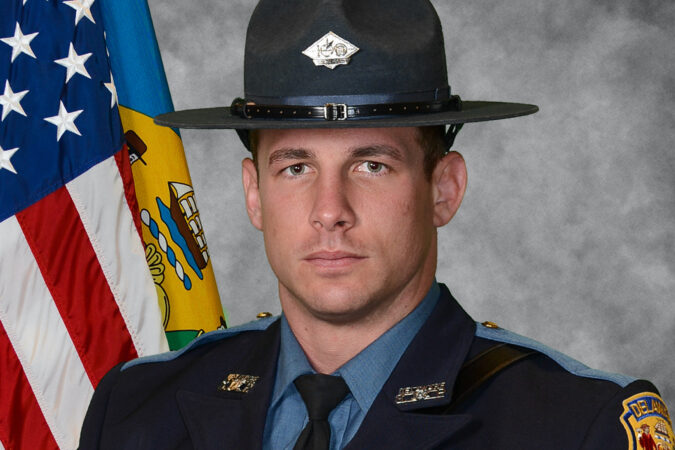

  • Delaware trooper killed at DMV in ‘act of pure evil’ is remembered as dependable, devoted to family

    Delaware trooper killed at DMV in ‘act of pure evil’ is remembered as dependable, devoted to family

    A Delaware state trooper who was shot to death at a DMV office was described Wednesday as dependable and professional on the job and steady and kind at home.

    Cpl. Matthew “Ty” Snook, 34, of Hockessin, was working an overtime assignment at a Delaware Division of Motor Vehicles office near Wilmington on Tuesday when he was shot by a 44-year-old gunman, state police said. Authorities said Snook pushed a nearby employee to safety before he was shot again. He died later at a hospital, as did the gunman, who was shot by another officer.

    Cpl. Matthew “Ty” Snook, 34, of Hockessin, is survived by his wife and their 1-year-old daughter.

    Snook, who is survived by his wife and their 1-year-old daughter, was a Delaware native. He graduated from the University of Maryland, where he was a member of the wrestling team, and had been a trooper for 10 years.

    “He was known as a dependable, professional, and committed trooper,” state police said in a news release that also described him as a trusted partner and beloved community member and extended condolences to Snook’s family.

    “We are forever grateful to them for sharing ‘Ty’ with us and for the sacrifices they made in support of his service to the citizens of Delaware,” the agency said.

    An official fund established to support the family describes the officer as a “loving husband, a devoted father, and a deeply cherished friend.”

    “Those who knew him remember his steady presence, his kindness, and his unwavering commitment to the people he loved,” the fundraiser’s organizer wrote. “Family meant everything to Ty, and he worked every day to provide, protect, and be present for those closest to him.”

    Authorities have not yet publicly identified the gunman or disclosed a possible motive for the shooting.

    “What happened today was an act of pure evil, and if not for the heroism of several troopers and other officers, the consequences could have been so much worse,” Delaware Gov. Matt Meyer said at a news conference.

    The state DMV closed its offices statewide, with all but the site of the shooting scheduled to reopen Monday.

  • Judge blocks Trump effort to strip security clearance from attorney who represented whistleblowers

    Judge blocks Trump effort to strip security clearance from attorney who represented whistleblowers

    WASHINGTON — A federal judge has blocked the Trump administration from enforcing a March presidential memorandum to revoke the security clearance of prominent Washington attorney Mark Zaid, ruling that the order — which also targeted 14 other individuals — could not be applied to him.

    The decision marked the administration’s second legal setback on Tuesday, after the Supreme Court declined to allow Trump to deploy National Guard troops in the Chicago area, capping a first year in office in which President Donald Trump’s efforts to impose a sweeping agenda and pursue retribution against political adversaries have been repeatedly slowed by the courts.

    U.S. District Judge Amir Ali in Washington granted Zaid’s request for a preliminary injunction, after he sued the Trump administration in May over the revocation of his security clearance. Zaid’s request called it an act of “improper political retribution” that jeopardized his ability to continue representing clients in sensitive national security cases.

    The March presidential memorandum singled out Zaid and 14 other individuals who the White House asserted were unsuitable to retain their clearances because it was “no longer in the national interest.” The list included targets of Trump’s fury from both the political and legal spheres, including former Deputy Attorney General Lisa Monaco, New York Attorney General Letitia James, former President Joe Biden, and members of his family.

    The action was part of a much broader retribution campaign that Trump has waged since returning to the White House, including directing specific Justice Department investigations against perceived adversaries and issuing sweeping executive orders targeting law firms over legal work he does not like.

    In August, the Trump administration said it was revoking the security clearances of 37 current and former national security officials. Ordering the revocation of clearances has been a favored retributive tactic that Trump has wielded — or at least tried to — against high-profile political figures, lawyers and intelligence officials in his second term.

    Zaid said in his lawsuit that he has represented clients across the political spectrum over nearly 35 years, including government officials, law enforcement and military officials and whistleblowers. In 2019, he represented an intelligence community whistleblower whose account of a conversation between Trump and Ukrainian President Volodymyr Zelensky helped set the stage for the first of two impeachment cases against Trump in his first term.

    “This court joins the several others in this district that have enjoined the government from using the summary revocation of security clearances to penalize lawyers for representing people adverse to it,” Ali wrote in his order.

    Ali emphasized that his order does not prevent the government from revoking or suspending Zaid’s clearance for reasons independent of the presidential memorandum and through normal agency processes. The preliminary injunction does not go into effect until January 13.

    Zaid said in a statement, “This is not just a victory for me, it’s an indictment of the Trump administration’s attempts to intimidate and silence the legal community, especially lawyers who represent people who dare to question or hold this government accountable.”

  • Pentagon says China’s nuclear warhead growth slows, commits to stabilizing tensions

    Pentagon says China’s nuclear warhead growth slows, commits to stabilizing tensions

    The Pentagon assesses that China’s production of nuclear warheads has slowed after a rapid buildup since 2020, with fewer new weapons added to its arsenal. But China’s program continues to expand, focusing on lower-yield nuclear weapons and early counterstrike capabilities, and remains on track to field 1,000 warheads by the end of the decade.

    The China Military Power Report — an annual unclassified Pentagon assessment of Beijing’s capabilities delivered to Congress — departs from the language of recent editions that emphasized the looming challenge of China’s military buildup, instead highlighting President Donald Trump’s efforts to stabilize ties with the world’s fastest-growing military power.

    Beijing’s total nuclear warhead arsenal likely remained in the low 600s, the report says, similar to last year’s figures, “reflecting a slower rate of production” — down from the estimated 100 additional warheads a year since 2020. The report notes that the People’s Liberation Army is, however, continuing “its massive nuclear expansion,” and showing “no appetite” for arms control discussions.

    The report strikes an overall more conciliatory tone on Beijing’s military ambitions. Where last year’s assessment described Beijing as the “pacing challenge” for the U.S. military — a term also used during Trump’s first administration, this year’s report describes China’s rapidly expanding military as a “logical” result of the country growing more wealthy and powerful.

    “President Trump seeks a stable peace, fair trade, and respectful relations with China, and the Department of War will ensure that he is able to achieve these objectives,” it reads.

    Despite the shift in tone, the report lays out mounting challenges posed by Beijing’s ambitions to assert control over Taiwan and expand a conventional missile force that is increasingly approaching U.S. capabilities.

    Analysts say it highlights the challenges facing the Trump administration in balancing efforts to prioritize U.S. interests in trade while projecting military dominance in the Indo-Pacific.

    “There’s an inherent contradiction running through the report: It lays bare the scale of China’s military expansion and Taiwan ambitions while simultaneously suggesting the relationship is stabilizing. Those two stories can’t be reconciled — no matter how hard the administration tries to preserve the trade truce,” said Craig Singleton, senior China fellow at the Foundation for Defense of Democracies think tank.

    The annual military assessment comes as Trump prepares to travel to Beijing next year, following a trade détente reached with Chinese leader Xi Jinping in South Korea that eased tensions over Trump’s aggressive tariff program and Beijing’s weaponization of its rare-earth monopoly.

    The report comes as the White House is signaling different priorities on China. The recently released National Security Strategy — a document outlining the administration’s defense priorities — frames China’s challenge more in economic terms while shifting the U.S. focus to threats in the Western Hemisphere.

    Even as tensions have eased since the South Korea meeting, national security frictions continue to flare up between the two countries. On Monday, Beijing reacted angrily to the U.S. seizure of a Venezuelan oil tanker en route to China amid escalating tensions between Washington and Caracas. Chinese officials also strongly condemned the approval of a record $11 billion U.S. weapons package for Taiwan last week.

    The Pentagon report notes that Beijing is ramping up efforts to “coerce” Taiwan to unify with China through a campaign of military patrols — including a twofold increase in incursions into Taiwan’s air defense identification zone between 2023 and 2025 — and using increasingly aggressive political rhetoric as part of a campaign to undermine the island’s independent rule.

    China’s embassy in Washington, D.C., did not immediately respond to a request for comment.

    Despite producing fewer nuclear warheads, China’s broader nuclear program has expanded in other ways, including the development of more versatile low-yield weapons and upgrades to its counterstrike systems, the report notes. China has likely loaded more than 100 intercontinental ballistic missiles into desert silos, advancing capabilities for long-range strikes closer to U.S. territories.

    At over 600 nuclear warheads, China’s arsenal remains far smaller than U.S. stockpile of around 3,700, but the report says upgrades in China’s program likely have enhanced its ability to rapidly retaliate. “This reliance on the strategic level of deterrence — likely nuclear weapons, but also cyber and space capabilities — indicates the growing confidence and comfort the PLA has with conventional escalation,” it said.

    The significance of China’s expanding arsenal has been thrown into sharper relief amid rising global tensions over nuclear weapons. Russia has stepped up nuclear intimidation since its invasion of Ukraine, while Trump has ordered the United States to resume nuclear testing “immediately,” accusing Moscow and Beijing of skirting a three-decade moratorium.

    Analysts said a slowdown in the production of nuclear weapons could also point to changes in China’s threat perception. “Beijing may currently perceive a reduced existential threat from the United States and, accordingly, less urgency to pursue nuclear expansion at maximum speed than during the peak of U.S.-China hostility around 2021,” said Tong Zhao, a nuclear specialist and senior fellow at the Carnegie Endowment for International Peace.

    He added that China’s 2023 overhaul of the PLA Rocket Force following a corruption scandal could mean the country is working to “prioritize internal reform and more sustainable, effective long-term growth.”

    Elsewhere, the Pentagon report notes China’s advance of military programs in artificial intelligence, biotechnology, quantum technology, and advanced semiconductors — partly through acquisitions of U.S. technology. While restrictions on high-end processors have constrained China’s AI industry, illicit smuggling networks have likely allowed companies such as Deepseek and Huawei to obtain U.S. semiconductors for projects with potential military significance.

    The Trump administration has sought to balance U.S. security and trade with Beijing — maintaining restrictions on some high-end chips while, earlier this month, lifting controls to allow approved customers in China access to advanced Nvidia H200 semiconductors.

    “The Pentagon is warning that China already treats advanced accelerators as a strategic asset — using intermediaries and shell networks to evade controls — so the White House’s desire to reopen the export spigot is strategically backward,” Singleton said. “It turns an enforcement problem into a policy choice that strengthens exactly the capability the report flags as a growing threat.”

  • Gaza’s Christians, battered by war, celebrate Christmas for first time in 3 years

    Gaza’s Christians, battered by war, celebrate Christmas for first time in 3 years

    BEIRUT — For the first time in three years, the Gaza Strip’s tiny Christian community is celebrating Christmas without the immediate threat of war.

    A ceasefire has brought the enclave a measure of calm, and over the past few weeks, Christians there have embraced the holiday spirit, lighting up trees and passing out sweets.

    On Sunday, the Latin patriarch of Jerusalem, Cardinal Pierbattista Pizzaballa, led a Christmas Eve Mass at Holy Family Church in Gaza City, where he baptized the newest member of the community, a baby named Marco Nader Habshi.

    Cardinal Pierbattista Pizzaballa (second from left), the Latin patriarch of Jerusalem, leads a Mass ahead of Christmas celebrations at Holy Family Catholic Church in Gaza City on Sunday.

    “It will not be full of joy, but it is an attempt to renew life,” Elias al-Jilda, 59, a prominent member of Gaza’s Orthodox population, said of this season’s holiday celebration. He said he remembers the days when Christmas in Gaza meant citywide festivities, with Muslims and Christians coming together. “It was a special occasion,” he added, “an opportunity for us to breathe.”

    But while the holidays have long brought a sense of relief, the Christian community in Gaza — one of the world’s oldest — was already in decline. Now, with the devastating conflict between Hamas and Israel, the population has further diminished, and church leaders warn that postwar deprivation could push more people to leave.

    Like most Palestinians in Gaza, Christians’ “houses were destroyed, their businesses were destroyed, their living conditions are difficult,” said Archbishop Atallah Hanna, head of the Sebastia diocese of the Greek Orthodox Church in Jerusalem.

    According to Hanna and Jilda, who serves on the council of the Arab Orthodox Church in Gaza, the territory’s total Christian population has fallen from about 1,000 members before the war to almost half of that today. It’s a drop that reflects, in part, a long-term trend of Christian emigration from the Palestinian territories — only in Gaza, the number of Christians is so small that any loss feels like a substantial blow.

    At the same time, Israel’s military actions in Gaza have accelerated Christian flight from the enclave. Residents began leaving at a steady clip, either with help from family members abroad or in medical evacuations. Jilda described the departures as “an attempt to survive,” while those who stayed in Gaza “survived by what can only be described as a miracle,” he said.

    At least 44 Palestinian Christians have been killed in the conflict, according to a committee overseen by the Palestinian government. Some were killed in Israeli sniper or artillery attacks that hit Gazan churches, the committee said, while others died of illness, injury, or malnutrition because of a lack of food or medical care.

    According to the Gaza Health Ministry, more than 70,000 Palestinians have been killed in Israel’s military campaign, which began after the Hamas-led attacks on Israeli communities on Oct. 7, 2023. The ministry does not distinguish between civilians and combatants but says a majority of the dead are women and children. Around 1,200 people were killed in the Hamas assault, and some 250 others were taken into Gaza as hostages.

    Nearly all of Gaza’s 2.1 million residents have been displaced, the United Nations says, and wide swaths of the enclave, including houses, farmland, and infrastructure, are destroyed.

    The fighting forced Gaza’s Christians — the majority of whom are Greek Orthodox or Catholic — to take refuge in its two main churches. Most sheltered in Holy Family Church in the Rimal neighborhood of Gaza City. The church, which is Catholic, has much more space for accommodating the displaced. Others huddled about 1.5 miles away in the Greek Orthodox Church of St. Porphyrius, established in the year 425.

    “There is an assumption that Gaza has no Christian population, or no Christian history,” said Yousef AlKhouri, a Gaza native and dean at Bethlehem Bible College in the West Bank. “And that’s not true.”

    He said that Gaza, despite its size, has produced many Christian theologians, politicians and scholars over the years. Jesus, Mary and Joseph are also believed to have passed through the territory on their way to Egypt, AlKhouri said — a story that, according to him, gave Holy Family Church its name.

    For Jilda and his family, Holy Family Church served as a sanctuary after their home in Gaza City’s Tel al-Hawa neighborhood was destroyed one month into the war. After the ceasefire began, they moved into a rental home in the city but are still trying to furnish it.

    Today, most of the region’s Palestinian Christians are still sheltering at the churches, as reconstruction has yet to begin and a rainy winter season has inundated the tents in which displaced residents live.

    Like Jilda, AlKhouri, who grew up in Gaza in the 1990s, said he remembers a time when Christian life there was not just about survival. “The celebrations of Christian and Muslim festivals were shared,” he said, adding that there was always a sense of solidarity among “Palestinian Christians and Muslims in Gaza: going to school together, playing together, going to the YMCA.”

    But over time, as the peace process with Israel collapsed and hopes for a Palestinian state dimmed, the conflict began tearing at the community. In Gaza, Hamas and its secular rival, Fatah, fought a brief but bloody civil war that saw the Islamists take control. Since then, Christmas celebrations have been largely private and subdued.

    Still, as Pizzaballa held a high-profile Mass this week, he urged Christians in Gaza to hold on.

    “We are called not only to survive, but to rebuild life. We must bring the spirit of Christmas — the spirit of light, tenderness and love. It may seem impossible,” he said, “but after two years of terrible war, we are still here.”

  • Zelensky open to withdrawing troops in new peace draft, awaits Russian reply

    Zelensky open to withdrawing troops in new peace draft, awaits Russian reply

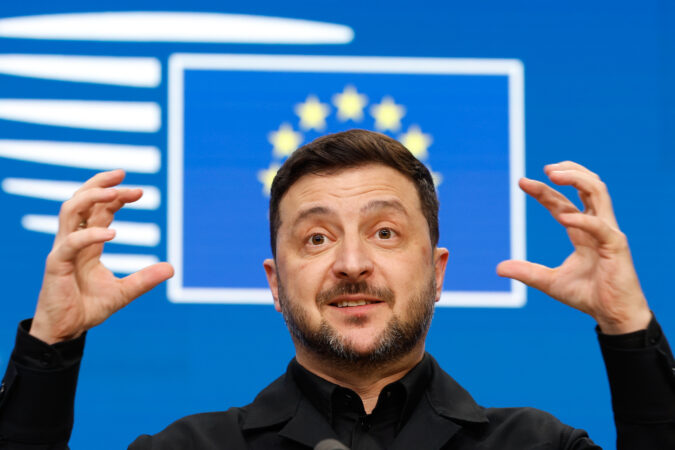
    KYIV, Ukraine — Ukrainian President Volodymyr Zelensky presented journalists a new version of a peace plan Wednesday that suggests he is open to withdrawing troops from eastern Ukraine to create a demilitarized zone if Russia agrees to do the same as part of a settlement to end the war.

    The suggestions marks Zelensky’s first inch toward any sort of compromise on the issue of territory in the eastern Donbas region, which Russia has demanded full control of despite failing to take several major cities militarily. The issue of territory remains one of the most contentious in discussions, with Ukraine arguing that giving up its land will only embolden Russia to attack again.

    The 20-point draft Zelensky publicized Wednesday is far from final and has not been agreed to by Russia, which will probably oppose several major points, including the demand for both sides to withdraw their forces from Ukraine’s east.

    The document is the latest iteration of a proposal to end the war after weeks of difficult negotiations following a U.S. threat last month to cut off all support for Ukraine unless the country signed on to a 28-point version that made major concessions to Russia.

    That warning triggered a diplomatic frenzy, including many meetings between a Ukrainian delegation and President Donald Trump’s negotiators, including special envoy Steve Witkoff and the president’s son-in-law Jared Kushner.

    The latest plan makes clear that Ukraine continues to oppose the idea that it would be forced to withdraw its troops from its east but would consider doing so if Russia did the same. The goal would be to create a free economic zone that is not controlled by either military, Zelensky said.

    Any such agreement, however, would require a national referendum, which would be difficult to organize without a ceasefire in place. It would also require Russia agreeing to this and other points in the document, which remains unlikely.

    The establishment of a free economic zone would require significant work to determine who would control the territory, including potentially foreign peacekeepers. Russia has previously opposed the idea that foreign troops be stationed in Ukraine and the two sides will likely find it difficult to agree which countries would contribute troops to such a mission.

    Such an arrangement was suggested by the United States, which has repeatedly raised various suggestions that would prioritize business after the war. Zelensky previously said that if Ukrainian forces were to withdraw from any territory, it would only be logical for Russian forces to withdraw the same amount. He had also cast skepticism on how to secure such a zone, citing potential vulnerabilities to Russian infiltration.

    Russia has previously stated that even if it did withdraw its military from some regions, it would expect to still control the area with police and national guard units.

    Zelensky also said Wednesday that the current draft includes a peacetime Ukrainian military of 800,000 troops. The initial version would have limited the size to 600,000. Ukraine has repeatedly stated that its best security guarantee is its own armed forces.

    The draft also includes references to security guarantees that would amount to similar protections as NATO’s Article 5, which sees an attack on one member as an attack on all. An earlier draft of the plan had barred Ukraine from becoming part of NATO, which was deemed unacceptable to Ukrainians, who have put joining the alliance into their constitution.

    Zelensky has emphasized in recent remarks that no one can view Ukraine as an obstacle to the peace process, but any plan cannot condemn future generations of Ukrainians to war with Russia.

    Kremlin spokesman Dmitry Peskov did not respond to specific points in the plan Wednesday but told journalists that Russia’s main demands “are well known to our colleagues in the U.S.”

    Russia intends “to formulate our further position and continue our contacts in the very near future through the existing channels that are currently working.”

    Russia has shown little sign it is interested in finding a real settlement to the war. Ukraine had requested a Christmas truce, which Russia declined. Russia has continued to aggressively bomb Ukraine in recent days, targeting the energy grid and triggering more widespread blackouts across the country. Russia’s early-morning attack on Tuesday killed three people, including a 4-year-old child.

    Warnings continue that more bombardment is likely as the energy system is under greater stress responding to the subzero temperatures taking hold across Ukraine.

    On Wednesday, meanwhile, a police car exploded in Moscow, killing two police officers in the same spot where a general was killed by a car bomb two days earlier. Ukraine did not claim responsibility for the attacks but Russia has suggested Kyiv could be behind the operations.

    The Russian Investigative Committee said in a statement that two traffic police officers saw a suspicious individual near a police car. As they approached to detain him, an explosive device detonated.

    Two prominent Russian military bloggers pointed fingers at Ukrainian and European special services, blaming them for the attack and attempting to destabilize Russia from within.

    “I believe that the Ukrainian (British, and U.S.) intelligence services are trying to open a second (subversive) front inside Russia,” state media military correspondent Alexander Sladkov wrote on his Telegram blog.

    Sladkov also questions whether the CCTV surveillance system bolstered in Moscow in recent years would help identify those responsible for the attack, and noted that if the investigation results are not released this week, it will be a “demonstration of weakness.”

    Another war reporter, Alexander Kots, wrote that the explosion “clearly bears the mocking signature” of special services from Ukraine and Britain.

    “This is a typical British anti-crisis: sow panic among the population, destabilize it from within, create a sense of insecurity, undermine the authority of the authorities and the security services, provoke public discontent with the special military operation, and provoke rallies calling for its swift end,” Kots wrote.

  • ICE documents reveal plan to hold 80,000 immigrants in warehouses

    ICE documents reveal plan to hold 80,000 immigrants in warehouses

    The Trump administration is seeking contractors to help it overhaul the United States’ immigrant detention system in a plan that includes renovating industrial warehouses to hold more than 80,000 immigrant detainees at a time, according to a draft solicitation reviewed by the Washington Post.

    Rather than shuttling detainees around the country to wherever detention space is available, as happens now, U.S. Immigration and Customs Enforcement aims to speed up deportations by establishing a deliberate feeder system, the document says. Newly arrested detainees would be booked into processing sites for a few weeks before being funneled into one of seven large-scale warehouses holding 5,000 to 10,000 people each, where they would be staged for deportation.

    The large warehouses would be located close to major logistics hubs in Virginia, Texas, Louisiana, Arizona, Georgia, and Missouri. Sixteen smaller warehouses would hold up to 1,500 people each.

    The draft solicitation is not final and is subject to changes. ICE plans to share it with private detention companies this week to gauge interest and refine the plan, according to an internal email reviewed by the Post. A formal request for bids could follow soon after that.

    Tricia McLaughlin, a spokeswoman for the Department of Homeland Security, said she “cannot confirm” the Post’s reporting and declined to answer questions about the warehouse plan.

    NBC and Bloomberg News previously reported on ICE’s internal discussions about using warehouses as detention centers. The full scope of the project, the locations of the facilities, and other details contained in the solicitation have not been previously disclosed or reported.

    The warehouse plan would be the next step in President Donald Trump’s campaign to detain and deport millions of immigrants, which began with a scramble to expand the nation’s immigrant detention system, the largest in the world. Armed with $45 billion Congress set aside for locking up immigrants, his administration this year revived dormant prisons, repurposed sections of military bases and partnered with Republican governors to build immigrant tent encampments in remote regions.

    The administration has deported more than 579,000 people this year, border czar Tom Homan said earlier this month on the social media platform X.

    The new facilities will “maximize efficiency, minimize costs, shorten processing times, limit lengths of stay, accelerate the removal process and promote the safety, dignity and respect for all in ICE custody,” the solicitation said.

    “We need to get better at treating this like a business,” ICE acting director Todd M. Lyons said at a border security conference in April, according to the Arizona Mirror. The administration’s goal, he said, was to deport immigrants as efficiently as Amazon moves packages: “Like Prime, but with human beings.”

    Commercial real estate experts say concentrating detainees in warehouses would create its own logistical problems. Such structures are designed for storage and shipping, not human habitation. They tend to be poorly ventilated and lack precise temperature controls — and, because they are typically located far from residential areas, they may not have access to the plumbing and sanitation systems needed to support thousands of full-time residents.

    “It’s dehumanizing,” said Tania Wolf, an advocate with the National Immigration Project who is based in New Orleans — about one hour south from the site of a planned warehouse in Hammond, La. “You’re treating people, for lack of a better term, like cattle.”

    ICE plans to heavily modify the structures to include intake areas, housing units with showers and restrooms, a kitchen, dining areas, a medical unit, indoor and outdoor recreation areas, a law library, and administrative offices, according to the solicitation. Some of the facilities will include special housing designed for families in custody.

    The majority of the planned warehouses are in towns, counties, and states led by Republicans supportive of Trump’s immigration policies. Two of the largest warehouses are planned for towns with Democrat-led local governments: Stafford, Va., and Kansas City, Mo.

    If the government leased a warehouse in Stafford, it would need to comply with the city’s zoning laws and building codes, said Pamela Yeung, one of seven supervisors on Stafford’s Democrat-led board.

    “Immigration policy is federal, but its impacts are local,” Yeung said in an emailed statement. “Any facility of this scale would affect infrastructure, public safety, and social services.”

    ICE held more than 68,000 people at the beginning of this month, agency data shows, the highest number on record. Nearly half, or 48 percent of these people, have no criminal convictions or pending criminal charges, ICE data shows.

    Some administration officials have complained about the complexity of the current detention system. A 2015 government watchdog report found that deportation flights often leave the country with empty seats because of the logistical difficulty of bringing enough people eligible for deportation to an airplane at the same time.

    The government already awarded one $30 million contract for help with “due diligence services and concept design” for the new facilities, procurement records show. That award fueled a public backlash among members of the Prairie Band Potawatomi Nation, a Kansas tribe that said a business connected to the tribe had acted against their wishes in pursuing the contract.

    Tribal chairman Joseph “Zeke” Rupnick said in a Dec. 17 video that the tribe has exited the contract and plans “to ensure that our nation’s economic interests do not come into conflict with our values in the future.”

    The business that won the award, KPB Services LLC, could not be reached at phone numbers listed online for the company.

    The biggest newly proposed warehouse would hold up to 10,000 detainees in Stafford, an industrial area 40 miles south of Washington. A facility with capacity for up to 9,500 people is planned for Hutchins, near Dallas; and another with space for 9,000 in Hammond, east of Baton Rouge. Currently, ICE’s biggest facility is a makeshift tent encampment built this summer at the Fort Bliss U.S. Army base in Texas. It now holds around 3,000 people but was expected to have a capacity of 5,000 by year’s end.

    The warehouse solicitation document names nine active detention centers as part of the project’s final phase, suggesting that at least those facilities would continue to be used. The plan does not mention whether other existing facilities would be phased out.

    It does not give a timeline for beginning work on the project but says the facilities must begin accepting detainees 30 to 60 calendar days after the start of construction.

    Staffing facilities of this size is likely to be a challenge, said Jason Houser, a former ICE chief of staff under President Joe Biden. Prospective workers will need medical or other specialized training and will have to pass federal security clearances, he said.

    This problem is already bearing out in other new facilities. In September, the government’s own inspectors found that the Fort Bliss site employed less than two-thirds of the security personnel it had agreed to in its contract.

    “We can always find more warehouses,” Houser said. The ability to operate the facilities safely, he said, is “always limited by staffing.”

  • I’m a doctor. Here are 11 foods I recommend to fight inflammation.

    I’m a doctor. Here are 11 foods I recommend to fight inflammation.

    Q: Are anti-inflammatory diets backed by science? Can some foods really cause inflammation in my body?

    A: When my patients ask me about anti-inflammatory diets, they’re usually expecting me to talk about turmeric or the latest viral green drink. Lists of “toxic” foods are popular on social media — followed by advice to start the day with things like celery juice to help you “detox.” And while I’d love to say that a cup of blueberries a day will “turn off” inflammation, that’s not what the evidence shows.

    When researchers follow people for years or run clinical trials, it’s a dietary pattern that matters — not whether you drank ginger tea each day.

    The anti-inflammatory diet that multiple studies have shown works best is actually quite simple: vegetables, legumes, whole grains, olive oil, nuts, and fish. In one Spanish clinical trial, people were asked to eat more of these foods — and less processed meat and ultra-processed foods — and then watched as their inflammatory markers improved and their risk of heart attack and stroke fell.

    It’s essentially the Mediterranean diet. And — just to be clear — the Mediterranean diet is just a name. Its principles can be applied to many cuisines, from Mexican and Indian to Greek and Italian.

    While there’s no single magic solution, I’m going to share with you the foods scientists have linked to lower inflammatory markers in the blood. Think of these foods as a backbone to building a healthier habit.

    Anti-inflammatory foods

    These foods are rich in anti-inflammatory compounds, such as vitamins, beta-carotene, polyphenols, omega-3 fatty acids, and, of course, fiber. Aim to incorporate a variety of them into your routine most days of the week. When you’re planning a meal, think about emphasizing lots of plants, color and healthy fats.

    • Whole grains, such as whole wheat, oats or brown rice
    • Legumes, such as lentils, black beans and tofu
    • Probiotic foods, such as Greek yogurt or kefir
    • Green leafy vegetables, such as spinach or kale
    • Green or black tea, or coffee
    • Dark yellow vegetables, such as sweet potatoes, carrots or pumpkin
    • Spices, such as turmeric, ginger and garlic
    • Flavonoid-rich fruits, such as berries and citrus
    • Nuts and seeds, such as walnuts, almonds and chia seeds
    • Extra-virgin olive oil as your main cooking oil
    • Fatty fish, such as salmon or mackerel

    Pro-inflammatory foods

    These are the foods to treat more as occasional guests. In studies, they’ve been linked to cancer, heart disease, and the metabolic syndrome. That doesn’t mean you have to ban them outright. I encourage patients to think about how often these foods show up on their plates and whether there’s room to start making small swaps so they aren’t the main sources of your nutrients.

    • Ultra-processed foods, such as chips, packaged crackers, many frozen meals, and instant foods
    • Refined carbohydrates, such as white bread, sugary breakfast cereals or pastries
    • Red and processed meats, such as bacon, sausage, hot dogs, and deli meats
    • Sugar-sweetened beverages, such as sodas, sweet tea, and energy drinks
    • Fried foods and those high in trans fats and saturated fats, such as those found in many fast-foods and baked goods

    How foods can trigger inflammation in your body

    The idea that food can trigger inflammation in our bodies is backed by a growing body of science. Researchers can measure inflammation using blood tests for markers such as C-reactive protein or interleukin 6. Certain foods trigger bursts of sugar and triglycerides in the bloodstream, and the body responds by generating inflammation. When we eat those foods frequently, that inflammation can persist in our bodies at a low level.

    This can have far-reaching impact: In 2018, one team found that people who ate more foods associated with these inflammatory blood markers were more likely to develop unique colon cancers containing a particular bacteria, Fusobacterium nucleatum. The findings suggested that inflammation from the food we eat alters the gut microbiome and can contribute to how certain cancers develop.

    • An inflammatory diet has also been linked to:
    • A higher risk of obstructive sleep apnea
    • Developing gout, a type of inflammatory arthritis
    • Having a stroke or heart attack
    • More depressive symptoms and use of antidepressants
    • Dementia of all causes, including Alzheimer’s

    What I want my patients to know

    Think about what you’re going to add instead of subtract. Pick one of your go-to dinners: Can you add one extra serving of vegetables? How about a serving of fruit at lunchtime? Frozen veggies and canned beans are great add-ins that don’t break the bank. You can still enjoy foods you love while supporting an overall healthy pattern of eating — and you don’t need to chase every new anti-inflammatory tonic the internet throws at you.

    Trisha Pasricha is an assistant professor of medicine at Harvard Medical School and author of the forthcoming book “You’ve Been Pooping All Wrong.”

  • Letters to the Editor | Dec. 24, 2025

    Letters to the Editor | Dec. 24, 2025

    Police corruption

    In your recent editorial, “Will the Philadelphia Police Department ever be free of scandal?” you provided a valuable albeit disheartening summary of the examples of police misconduct and corruption that surfaced in 2025. These recent events are part of “a systemic problem that has undermined the department for decades” and underscored the need for independent accountability. Our organization, the Citizens Police Oversight Commission (CPOC), has not conducted any police investigations because the police employment contract remains an obstacle to our efforts. Despite our public advocacy before City Council, broad support from lawmakers, community partners, and the public, and our groundbreaking testimony at the interest arbitration hearing, CPOC’s demand to carry out our public mandate was denied.

    Each day, when Philadelphians call us to report misconduct — as they do in increasing numbers every year — they expect us to investigate their complaints. They are let down when we have to tell them we can’t.

    Until we can perform the independent investigations Philadelphians voted for in 2020, the systemic misconduct of a small number of police officers will continue to plague the department and detract from the good work of many other officers. A fair and effective system of accountability is vital to any agency.

    We will continue to work — including performing real-time audits of the department’s internal investigations of police misconduct and exposing the problems with arbitration you mentioned in the editorial. We will work to reduce and address misconduct in the months and years to come, so that community trust can be built, wrongful convictions will be a thing of the past, and taxpayers will not pay such a high price for a failed system.

    Tonya McClary, Citizens Police Oversight Commission, Philadelphia

    . . .

    Who are the arbitrators who continue to let corrupt cops keep their jobs? And who is going to organize an effort to get them to change? It sounds counterintuitive, but shouldn’t the police union want to get rid of the rotten apples who make taxpayers question the integrity of police officers in general?

    Debbie Weiner, Quakertown

    . . .

    Your recent editorial about police misconduct raised several questions: Are members of the Citizens Police Oversight Commission being paid? If so, where does the money come from? How often do they meet? Why, in three years, has there not been one investigation? Why is the committee still in existence? Doesn’t anyone oversee them?

    By the way, I am definitely pro-police, my husband having served on the job for 38 years.

    And I have one more question: When will there be an investigation into the sheriff’s office? From the articles I’ve seen over the years, it appears that a serious look at what’s happening there is certainly needed.

    Florence Newman, Philadelphia

    . . .

    Your editorial questioned whether the Philadelphia Police Department will ever be free of scandal. The answer is no — at least for the foreseeable future. The underlying causes started well before the current commissioner. Issues with arbitration have been long-standing, and the city never seems to confront them during contract negotiations.

    The biggest issue, as the article pointed out, is recruitment. Lowering standards and the de-emphasis on education have hurt the department immeasurably. Many recruits have high school degrees, but can’t really read, write, or comprehend at a high school level. Understanding the laws of arrest, search and seizure, and the department’s voluminous directives is lost on many of them.

    The promotion system — which used to be completely anonymous (you were identified only by a number) — has become politicized, resulting in less competent supervisors managing less competent cops. The mayor needs to put together a task force to propose a new way forward — something far cheaper than budgeting tens of millions of dollars on legal settlements for misconduct, which will inevitably be needed each year.

    Charles Brennan, retired deputy commissioner, Philadelphia Police Department

    Rewriting history

    I am thankful my family and I were able to visit most of the museums that make up the Smithsonian Institution before the Trump administration began its content review.

    Once again, this administration is threatening to withhold funding unless the Smithsonian bows to the pressure to submit documentation so that this administration can purge “improper ideology” from the museum system. Donald Trump’s Executive Order 14253, titled “Restoring Truth and Sanity to American History,” is an attempt to rewrite what history can be shared with the public. It is a disgraceful attempt to remove and rewrite history in exhibits that target works and content mentioning slavery, race, transgender identity, and immigration. So instead of this nation learning from our errors of the past, we just rewrite history and never acknowledge these actions? How is this “restoring truth”?

    The Smithsonian Institution has served our country as an independent and nonpartisan institution for nearly 180 years. It needs to stay that way. Call your members of Congress to object to this administration’s attempts to rewrite history by bullying the Smithsonian Institution and other museums and historical exhibitions, including the President’s House Site on Independence Mall, which attempts to share nonpartisan, historically accurate information.

    This administration is now increasing its threats and pressure on institutions as the nation’s 250th anniversary celebration approaches. Use your voice before it is too late, and this administration purges what it — and only it — decides is “woke” ideology.

    An easy way to contact your senators and representatives is to use the 5Calls app, which is free, provides quick access, information on topics, and even scripts for your calls.

    Every voice counts. Please help block this administration’s efforts to rewrite our history.

    Judy Endicott, Fort Washington

    Insult to JFK’s memory

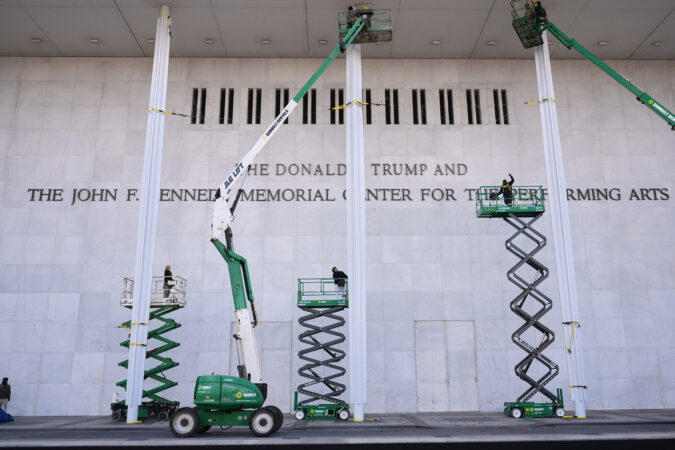
    Adding Donald Trump’s name to the Kennedy Center is an insult to John F. Kennedy, who, like our current president, came from a prominent family but instead devoted his life to serving others, not himself. During World War II, when Kennedy was disqualified from the Army due to his back problems, he enlisted in the Naval Reserves by downplaying those problems. He asked to be sent into active combat zones, subsequently becoming a decorated war hero. Always forward-thinking, Kennedy supported civil rights as president and paved the way for the U.S. to be the first to land men on the moon. Kennedy sought every opportunity to serve the American people. Trump, on the other hand, evaded military service, believing it beneath him. He is a backward-thinking man, rejecting science and concentrating on reversing scientific, economic, and social progress. Trump has exploited his position to enrich himself and his family by many millions, ignoring all laws and norms meant to prevent that. The Kennedy Center was built to honor one man, and Trump’s name does not belong on it.

    Jean A. Kozel, West Norriton

    Disbarred attorney

    I found it a bit ironic — and more than a little depressing — to learn that while our justice system is regularly being made a mockery of by baseless indictments filed by White House lawyers, the federal courts locally have disbarred an attorney who sought to overturn a death sentence.

    Mike Carroll, Philadelphia

    Join the conversation: Send letters to letters@inquirer.com. Limit length to 150 words and include home address and day and evening phone number. Letters run in The Inquirer six days a week on the editorial pages and online.

  • Dear Abby | Dinner unexpectedly comes with a show

    DEAR ABBY: I’m an active senior man. To keep my beard looking attractive, a hairstylist trims it every two weeks. I’ve had the same stylist for three years, and we have become good friends, to the point that she has invited me to her home for an evening meal with her family. I have been there several times, but on the last occasion, she did something odd and, I believe, disrespectful.

    She is a very attractive 50-year-old lady. Arriving at her home, I was left in the company of her parents while she and her son (and perhaps her husband) prepared the food. When it was finished, she brought me my plate, then served her parents. What shocked me was that she was dressed in what she called a swimsuit. To me, it was the barest thong and bra I had ever seen and two inches from being naked. Earlier that day, when she was trimming my beard, she wore sweatpants and a sweatshirt.

    Her excuse for the “swimsuit” was that there was something wrong with a spot on her hip that required a patch, and she couldn’t wear clothing over it because it would put too much pressure on the afflicted spot. (I don’t buy it.) I felt that, if nothing else, she could have at least put on one of her husband’s shirts. I felt embarrassed and insulted. Although I said nothing, I decided never to go to her home again. Should I tell her why if she asks?

    — LOOKING GOOD IN COLORADO

    DEAR LOOKING GOOD: Your “barber(ella)” wasn’t entertaining you alone. Her parents, son and (possibly) her husband were also there. She obviously felt comfortable enough around you that she wore something she usually wears in that environment and had no idea you would react the way you have. From now on, politely refuse her dinner invitations. If she asks why, I don’t think it would be rude to level with her that you felt embarrassed she wasn’t more covered up. It’s the truth.

    ** ** **

    DEAR ABBY: My wife’s family is rather enmeshed. They have never really accepted me and are rude and unkind toward me. Recently, her father’s attitude has shifted from rude to downright hostile. He has tried to physically assault me. (I didn’t fight back.)

    They watch our kids three days a week. I appreciate it and try hard to be a respectful and good person, but I am not sure what to do. My wife is unable or unwilling to take a strong stance against her father’s behavior. Any advice?

    — PUNISHED IN PENNSYLVANIA

    DEAR PUNISHED: There is something wrong with your father-in-law. The next time he lays a hand on you, call the police and have him arrested, as you would ANY OTHER aggressor. As to your “enmeshed” wife, some joint sessions with a marriage counselor might help her to reorganize her priorities. However, if she can’t manage that, you may need to decide if you want to remain married to her or climb out of that snake pit.