Tag: no-latest

  • Trump approves deployment of 350 National Guard members to New Orleans

    Trump approves deployment of 350 National Guard members to New Orleans

    The Trump administration is deploying 350 National Guard troops to New Orleans ahead of the New Year, launching another federal deployment in the city at the same time that an immigration crackdown led by Border Patrol is underway.

    Pentagon spokesman Sean Parnell said Tuesday that Guard members, as they have in other deployments in large cities, will be tasked with supporting federal law enforcement partners, including the Department of Justice and the Department of Homeland Security. Parnell added that the National Guard troops will be deployed through February.

    Louisiana Gov. Jeff Landry, a Republican, praised President Donald Trump and Defense Secretary Pete Hegseth for coordinating the deployment and predicted the Guard’s presence would have a positive impact.

    “It’s going to help us further crack down on the violence here in the city of New Orleans and elsewhere around Louisiana,” Landry said in an appearance on the Fox News’ The Will Cain Show. “And so a big shoutout to both of them.”

    Critics have argued a National Guard deployment is unwarranted and could cause fear in the community, and they point out that New Orleans has actually seen a decrease in violent crime rates.

    The deployment of the National Guard to the Democrat-led city comes as Border Patrol agents have been carrying out an immigration crackdown since the beginning of the month. According to the Department of Homeland Security, agents have arrested several hundred people during the first couple weeks of what is expected to be a months-long operation that has a goal of 5,000 arrests.

    Back in September, Landry asked Trump to send a 1,000 federally funded troops to Louisiana cities, citing concerns about crime. Landry has praised Trump for sending troops to other cities, including Washington and Memphis, Tenn.

    The president has also taken a shine to Landry. Trump on Sunday announced he was appointing the governor to serve as his special envoy to Greenland, the strategic, vast, semi-autonomous territory of Denmark that Trump has said the U.S. needs to take over.

    New Orleans has been on pace for much of the year to have its lowest number of murders in decades, according to preliminary data from the city’s police department. There have been 97 homicides in 2025 as of Nov. 1, including 14 revelers who were killed on New Year’s Day during a truck attack on Bourbon Street.

    A U.S. Army veteran driving a pickup truck that bore the flag of the Islamic State group wrought carnage on New Orleans’ raucous New Year’s celebration as he steered around a police blockade and slammed into revelers before being shot dead by police.

    There were 124 homicides last year and 193 in 2023, according to city figures. Armed robberies, aggravated assaults, carjackings, shootings, and property crimes have also trended downward.

    New Orleans is no stranger to having National Guard members in the city. In January, 100 Guard members were sent to the city to help with security measures following the New Year’s Day truck attack. Guard members were also present for major events in the city this year, including the Super Bowl and Mardi Gras.

  • Venezuela seeks to criminalize oil tanker seizures as Trump puts pressure on Maduro

    Venezuela seeks to criminalize oil tanker seizures as Trump puts pressure on Maduro

    CARACAS, Venezuela — Venezuela’s National Assembly on Tuesday approved a measure that criminalizes a broad range of activities that can hinder navigation and commerce in the South American country, such as the seizure of oil tankers.

    The bill — introduced, debated, and approved within two days — follows this month’s seizures by U.S. forces of two tankers carrying Venezuelan oil in international waters. The seizures are the latest strategy in U.S. President Donald Trump’s four-month pressure campaign on Venezuela’s leader Nicolás Maduro.

    The tankers are part of what the Trump administration has said is a fleet Venezuela uses to evade U.S. economic sanctions.

    The unicameral assembly, which is controlled by Venezuela’s ruling party, did not publish drafts on Tuesday nor the final version of the measure. But as read on the floor, the bill calls for fines and prison sentences of up to 20 years for anyone who promotes, requests, supports, finances, or participates in “acts of piracy, blockades, or other international illegal acts” against commercial entities operating with the South American country.

    Venezuela’s political opposition, including Nobel Peace laureate María Corina Machado, has expressed support for Trump’s Venezuela policy, including the seizure of tankers.

    The bill, which now awaits Maduro’s signature, also instructs the executive branch to come up with “incentives and mechanisms for economic, commercial, and other protections” for national or foreign entities doing business with Venezuela in the event of piracy activities, a maritime blockade or other unlawful acts.

    The U.S. Coast Guard on Saturday seized a Panama-flagged vessel called Centuries that officials said was part of the fleet moving sanctioned cargo. With assistance from the U.S. Navy, it seized a rogue tanker called Skipper on Dec. 10. That ship was registered in Panama.

    Trump, after that first seizure, said the U.S. would carry out a “blockade” of Venezuela. He has repeatedly said that Maduro’s days in power are numbered.

    “If he wants to do something, if he plays tough, it’ll be the last time he’ll ever be able to play tough,” Trump said of Maduro Monday as he took a break from his Florida vacation to announce plans for the Navy to build a new, large warship.

  • Oklahoma college instructor is fired after giving failing grade to a Bible-based essay on gender

    Oklahoma college instructor is fired after giving failing grade to a Bible-based essay on gender

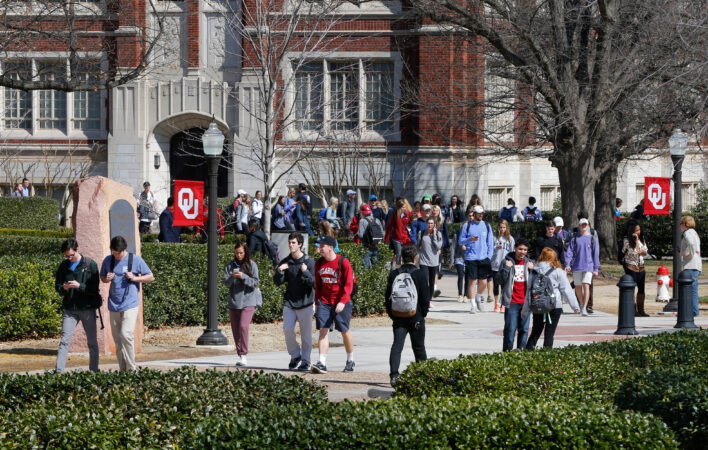
    The University of Oklahoma has fired an instructor who was accused by a student of religious discrimination over a failing grade on a psychology paper in which she cited the Bible and argued that promoting a “belief in multiple genders” was “demonic.”

    The university said in a statement posted Monday on X that its investigation found the graduate teaching assistant had been “arbitrary” in giving 20-year-old junior Samantha Fulnecky zero points on the assignment. The university declined to comment beyond its statement, which said the instructor had been removed from teaching.

    Through her attorney, the instructor, Mel Curth, denied Tuesday that she had “engaged in any arbitrary behavior regarding the student’s work.” The attorney, Brittany Stewart, said in a statement emailed to The Associated Press that Curth is “considering all of her legal remedies.”

    Conservative groups, commentators, and others quickly made Fulnecky’s failing grade an online cause, highlighting her argument that she’d been punished for expressing conservative Christian views. Her case became a flashpoint in the ongoing debate over academic freedom on college campuses as President Donald Trump pushes to end diversity, equity, and inclusion initiatives, and restrict how campuses discuss race, gender, and sexuality.

    Fulnecky appealed her grade on the assignment, which was worth 3% of the final grade in the class, and the university said the assignment would not count. It also placed Curth on leave, and Oklahoma’s conservative Republican governor, Kevin Stitt, declared the situation “deeply concerning.”

    “The University of Oklahoma believes strongly in both its faculty’s rights to teach with academic freedom and integrity and its students’ right to receive an education that is free from a lecturer’s impermissible evaluative standards,” the university’s statement said. “We are committed to teaching students how to think, not what to think.”

    A law approved this year by Oklahoma’s Republican-dominated Legislature and signed by Stitt prohibits state universities from using public funds to finance DEI programs or positions or mandating DEI training. However, the law says it does not apply to scholarly research or “the academic freedom of any individual faculty member.”

    Home telephone listings for Fulnecky in the Springfield, Mo., area had been disconnected, and her mother — an attorney, podcaster, and radio host — did not immediately respond Tuesday to a Facebook message seeking comment about the university’s action.

    Fulnecky’s failing grade came in an assignment for a psychology class on lifespan development. Curth directed students to write a 650-word response to an academic study that examined whether conformity with gender norms was associated with popularity or bullying among middle school students.

    Fulnecky wrote that she was frustrated by the premise of the assignment because she does not believe that there are more than two genders based on her understanding of the Bible, according to a copy of her essay provided to The Oklahoman.

    “Society pushing the lie that there are multiple genders and everyone should be whatever they want to be is demonic and severely harms American youth,” she wrote, adding that it would lead society “farther from God’s original plan for humans.”

    In feedback obtained by the newspaper, Curth said the paper did “not answer the questions for the assignment,” contradicted itself, relied on “personal ideology” over evidence and “is at times offensive.”

    “Please note that I am not deducting points because you have certain beliefs,” Curth wrote.

  • Supreme Court keeps Trump’s National Guard deployment blocked in the Chicago area, for now

    Supreme Court keeps Trump’s National Guard deployment blocked in the Chicago area, for now

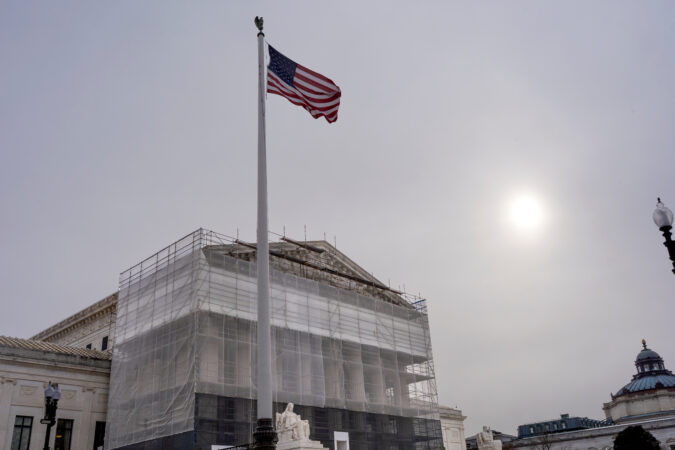
    WASHINGTON — The Supreme Court on Tuesday refused to allow the Trump administration to deploy National Guard troops in the Chicago area to support its immigration crackdown.

    The justices declined the Republican administration’s emergency request to overturn a ruling by U.S. District Judge April Perry that had blocked the deployment of troops. An appeals court also had refused to step in. The Supreme Court took more than two months to act.

    Three justices, Samuel Alito, Clarence Thomas and Neil Gorsuch, publicly dissented.

    The high court order is not a final ruling but it could affect other lawsuits challenging President Donald Trump’s attempts to deploy the military in other Democratic-led cities.

    The outcome is a rare Supreme Court setback for Trump, who had won repeated victories in emergency appeals since he took office again in January. The conservative-dominated court has allowed Trump to ban transgender people from the military, claw back billions of dollars of congressionally approved federal spending, move aggressively against immigrants and fire the Senate-confirmed leaders of independent federal agencies.

    The administration had initially sought the order to allow the deployment of troops from Illinois and Texas, but the Texas contingent of about 200 National Guard troops was later sent home from Chicago.

    The Trump administration has argued that the troops are needed “to protect federal personnel and property from violent resistance against the enforcement of federal immigration laws.”

    But Perry wrote that she found no substantial evidence that a “danger of rebellion” is brewing in Illinois and no reason to believe the protests there had gotten in the way of Trump’s immigration crackdown.

    Perry had initially blocked the deployment for two weeks. But in October, she extended the order indefinitely while the Supreme Court reviewed the case.

    The U.S. Immigration and Customs Enforcement facility in the west Chicago suburb of Broadview has been the site of tense protests, where federal agents have previously used tear gas and other chemical agents on protesters and journalists.

    Last week, authorities arrested 21 protesters and said four officers were injured outside the Broadview facility. Local authorities made the arrests.

    The Illinois case is just one of several legal battles over National Guard deployments.

    District of Columbia Attorney General Brian Schwalb is suing to halt the deployments of more than 2,000 guardsmen in the nation’s capital. Forty-five states have entered filings in federal court in that case, with 23 supporting the administration’s actions and 22 supporting the attorney general’s lawsuit.

    More than 2,200 troops from several Republican-led states remain in Washington, although the crime emergency Trump declared in August ended a month later.

    A federal judge in Oregon has permanently blocked the deployment of National Guard troops there, and all 200 troops from California were being sent home from Oregon, an official said.

    A state court in Tennessee ruled in favor of Democratic officials who sued to stop the ongoing Guard deployment in Memphis, which Trump has called a replica of his crackdown on Washington, D.C.

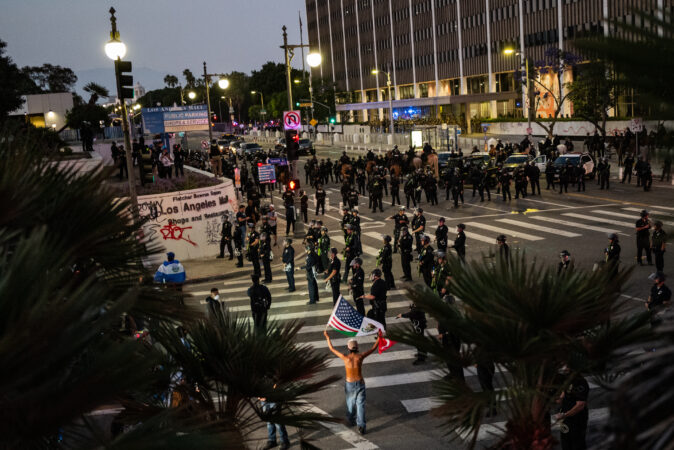
    In California, a judge in September said deployment in the Los Angeles area was illegal. By that point, just 300 of the thousands of troops sent there remained, and the judge did not order them to leave.

    The Trump administration has appealed the California and Oregon rulings to the 9th U.S. Circuit Court of Appeals.

  • Mexican Navy medical flight lost communication for several minutes before Texas crash

    Mexican Navy medical flight lost communication for several minutes before Texas crash

    Air traffic controllers lost communication for about 10 minutes with a small Mexican Navy plane carrying a young medical patient and seven others before it crashed off the Texas coast, killing at least five people, Mexico’s president said Tuesday.

    Authorities initially believed the plane had landed safely at its destination in Galveston, near Houston, before learning it had gone down Monday afternoon, Mexican President Claudia Sheinbaum said. A search-and-rescue operation in waters near Galveston pulled two survivors from the plane’s wreckage, while one remained missing, Mexico’s Navy said.

    U.S. authorities are investigating the cause, but the National Transportation Safety Board said Tuesday that it could take a week or more to recover the aircraft,

    Four Mexican Navy officers and four civilians, including a child, were aboard the plane, according to the country’s military. Two of the passengers were affiliated with a nonprofit that helps transport Mexican children with severe burns to a hospital in Galveston.

    “My condolences to the families of the sailors who unfortunately died in this accident and to the people who were traveling on board,” Sheinbaum said in her morning press briefing, without elaborating on a possible cause. “What happened is very tragic.”

    U.S. Coast Guard Petty Officer Luke Baker said at least five aboard had died but did not identify which passengers.

    The twin turboprop Beech King Air 350i crashed Monday afternoon in a bay near the base of the causeway connecting Galveston Island to the mainland. Emergency responders rushed to the scene near the popular beach destination about 50 miles southeast of Houston.

    Sky Decker, a professional yacht captain who lives about a mile from the crash site, said he jumped in his boat to see if he could help. He picked up two police officers who guided him through thick fog to a nearly submerged plane. Decker jumped into the water and found a badly injured woman trapped beneath chairs and other debris.

    “I couldn’t believe. She had maybe 3 inches of air gap to breathe in,” he said. ”And there was jet fuel in there mixed with the water, fumes real bad. She was really fighting for her life.”

    He said he also pulled out a man seated in front of her who had already died. Both were wearing civilian clothes.

    It’s not immediately clear if weather was a factor. The area was experiencing foggy conditions over the past few days, according to Cameron Batiste, a National Weather Service meteorologist. He said that at about 2:30 p.m. Monday a fog came in that had about a half-mile visibility.

    Teams from the Federal Aviation Administration and National Transportation Safety Board were at the crash site Monday, the Texas Department of Public Safety said. An NTSB spokesperson said in an email that investigators will gather flight track data, recordings of any air traffic control communications and review maintenance records and weather forecasts, with a preliminary report expected within 30 days.

    Mexico’s Navy said the plane was helping with a medical mission in coordination with the Michou and Mau Foundation. In a social media post, the foundation offered condolences to the families and said it shared their grief “with respect and compassion.”

    The charity was founded after a mother died trying to save her kids from a fire. One child succumbed to his injuries because he didn’t receive highly specialized medical care, while another survived after receiving treatment at Shriners Children’s Texas in Galveston. Over 23 years, the foundation has helped transfer more than 2,000 patients to that hospital and other medical facilities with burn expertise, according to the charity’s website.

    The charity’s director didn’t immediately respond to an email from The Associated Press seeking comment.

    Shriners Children’s Texas said in a statement that it learned of the crash with “profound sadness” but wasn’t able to provide any information about the child’s condition because the child hadn’t yet been admitted.

    This latest crash comes amid a year of intense scrutiny on aviation safety after a string of high-profile crashes and the flight disruptions during the government shutdown driven by the shortage of air traffic controllers.

    The January mid-air collision between an Army helicopter and an airliner near Washington D.C. was followed by the crash of a medical transport plane in Philadelphia. This fall’s fiery UPS plane crash only added to the concerns. Still, the total number of crashes in 2025 was actually down a bit from last year and experts say flying remains safe overall.

  • Federal judge says Trump administration must restore disaster money to Democratic states

    Federal judge says Trump administration must restore disaster money to Democratic states

    PROVIDENCE, R.I. — A federal judge has blocked the Trump administration’s attempt to reallocate federal Homeland Security funding away from states that refuse to cooperate with certain federal immigration enforcement.

    U.S. District Judge Mary McElroy’s ruling on Monday solidified a win for the coalition of 12 attorneys general that sued the administration earlier this year after being alerted that their states would receive drastically reduced federal grants due to their “sanctuary” jurisdictions.

    In total, the U.S. Department of Homeland Security and the Federal Emergency Management Agency reduced more than $233 million from Connecticut, Delaware, the District of Columbia, Massachusetts, Minnesota, New York, Rhode Island, Vermont, and Washington. The money is part of a $1 billion program where allocations are supposed to be based on assessed risks, with states then largely passing most of the money on to police and fire departments.

    The cuts were unveiled shortly after a separate federal judge in a different legal challenge ruled it was unconstitutional for the federal government to require states to cooperate on immigration enforcement actions to get FEMA disaster funding.

    In her 48-page ruling, McElroy found that the federal government was weighing states’ police on federal immigration enforcement on whether to reduce federal funding for the Homeland Security Grant Program and others.

    “What else could defendants’ decisions to cut funding to specific counterterrorism programming by conspicuous round numbered amounts — including by slashing off the millions-place digits of awarded sums — be if not arbitrary and capricious? Neither a law degree nor a degree in mathematics is required to deduce that no plausible, rational formula could produce this result,” McElroy wrote.

    The Trump-appointed judge then ordered the Department of Homeland Security to restore the previously announced funding allocations to the plaintiff states.

    “Defendants’ wanton abuse of their role in federal grant administration is particularly troublesome given the fact that they have been entrusted with a most solemn duty: safeguarding our nation and its citizens,” McElroy wrote. ”While the intricacies of administrative law and the terms and conditions on federal grants may seem abstract to some, the funding at issue here supports vital counterterrorism and law enforcement programs.”

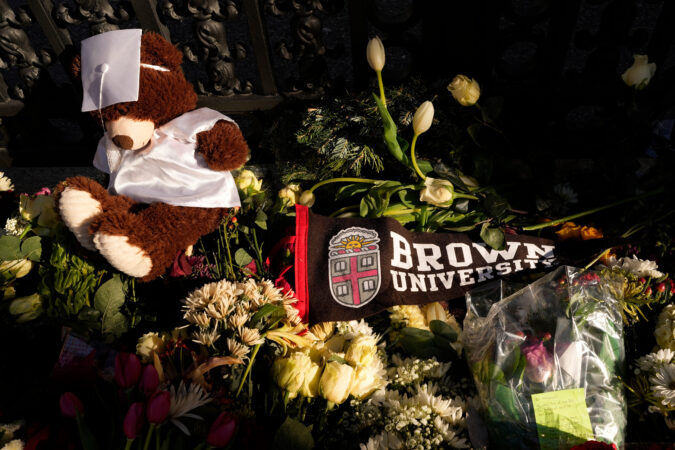
    McElroy notably cited the recent Brown University attack, where a gunman killed two students and injured nine others, as an event where the $1 billion federal program would be vital in responding to such a tragedy.

    “To hold hostage funding for programs like these based solely on what appear to be defendants’ political whims is unconscionable and, at least here, unlawful,” the Rhode Island-based judge wrote in her ruling, issued little more than a week after the Brown shooting.

    Emails seeking comment were sent to the DHS and FEMA.

    “This victory ensures that the Trump Administration cannot punish states that refuse to help carry out its cruel immigration agenda, particularly by denying them lifesaving funding that helps prepare for and respond to disasters and emergencies,” said Massachusetts Attorney General Andrea Joy Campbell in a statement.

  • ‘It’s a war’: Inside ICE’s media machine

    ‘It’s a war’: Inside ICE’s media machine

    For the Immigration and Customs Enforcement public affairs team, the nighttime operation across metro Houston in October was a gold mine.

    An ICE video producer shadowed agents as they pulled over and handcuffed more than 120 suspected undocumented immigrants, then sent the footage to a private team chat room.

    — — —

    ICE official 1, Oct. 29, 2:10 p.m.: Arrests are wonderful!

    ICE video producer 1, Oct. 29, 2:13 p.m.: Great shooting!

    — — —

    Across thousands of internal ICE messages reviewed by the Washington Post, this kind of celebration has become commonplace. The messages show how the team has worked closely with the White House, which has urged them to produce videos for social media of immigrant arrests and confrontations to portray its push for mass deportation as critical to protecting the American way of life.

    Before officials could post the Houston video, they had to figure out how to frame it. Officials did not know if all the arrestees had criminal records, they wrote in the chats, undermining a slogan the team had worked to promote on social media: that ICE targeted the “Worst of the Worst.”

    — — —

    ICE video producer 2, Oct. 29, 2:36 p.m.: We made several dozen arrests today very quickly. Not sure if these all had criminal histories beyond being in the U.S. illegally.

    — — —

    After some discussion, the team decided on a compromise.

    — — —

    ICE official 2, Oct. 29, 6:30 p.m.: I’d like to try to put this out without focusing on the aliens or their crimes, but to demonstrate that we’re out working hard.

    — — —

    Instead of arguing they’d snared hardened criminals, officials wrote a caption saying the arrests showed the dangers of “illegal aliens … behind the wheel.”

    Then, to maximize the video’s chances of going viral, they needed a soundtrack.

    — — —

    ICE video producer 1, Oct. 30, 1:13 p.m.: think country songs … this is Houston after all.

    Emily Covington, ICE assistant director for public affairs, Oct. 30, 1:39 p.m.: I feel like we need something a little more hard-core

    — — —

    They settled on a rap song by Nbhd Nick, which his label would later tell the Post was used without permission, that starts, “Oh, you thought this was a game, huh?”

    The video was posted to ICE’s social media channels, where it has been viewed more than 1 million times in total.

    For years, this ICE team had run like a routine government communications shop, dispensing public service announcements and news releases few Americans would see. But during President Donald Trump’s second term, ICE’s public affairs arm has rapidly transformed into an influencer-style media machine, churning out flashy videos of tactical operations and immigration raids.

    The internal communications reviewed by the Post show how the ICE team has coordinated with the White House, working to satisfy Trump aides’ demands to “flood the airwaves,” as one official urged in the messages, with brash content showing immigrants being chased, grabbed and detained.

    They also show federal officials mocking immigrants in crass terms and discussing video edits that might help legitimize the administration’s aggressive stance. The team also knowingly used copyright-protected music without permission from the rights holders, among other techniques designed to boost their online attention.

    Six current or former officials at the Department of Homeland Security, which runs ICE, told the Post that the video effort had broken from the more careful and methodical work of past administrations. They spoke on the condition of anonymity out of fear of retaliation.

    The Post reviewed chats and other materials provided by people familiar with internal discussions. They did so on the condition of anonymity due to the sensitive nature of the disclosures.

    David Lapan, the first DHS press secretary during Trump’s first term and a longtime critic who has argued the second Trump administration politicized the agency, said the current strategy is unrecognizable compared to the more “professional and buttoned-up” operations under past presidents that worked to describe law enforcement activities clinically and apolitically, for fear of inflaming anger against agents in the field.

    “We were supposed to present the facts, not hype things up. But this veers into propaganda, into creating fear,” said Lapan, a retired Marine Corps colonel. “We didn’t have this meme-ification of various serious operations, these things that are life or death. … It’s not a joking matter. But that’s the way they’re treating it now.”

    White House spokeswoman Abigail Jackson said, “President Trump and his entire team are working at breakneck speed to keep our promises, deport criminal illegal aliens, and get information out to the public — that’s a good thing and the American people deserve no less.”

    DHS spokeswoman Tricia McLaughlin said the White House had given the communications wings of DHS and ICE “autonomy to create content that is effectively reaching the American public.” The social media posts that used copyrighted material without permission had been preapproved by administration lawyers, she said.

    DHS public affairs officials, she added, were proud to break with the strategies of past administrations because their work has proved more successful at getting people’s attention.

    “They were irrelevant,” she said, “and we’ve made it matter.”

    ‘Feed the beast’

    Launched after the Sept. 11 attacks, ICE and DHS had always functioned as traditional law enforcement agencies focused on public safety and with minimal tools for self-promotion.

    Their public affairs divisions employed small teams of video producers, mostly for unexceptional tasks: facilitating TV interviews, running the cameras at workforce retirement ceremonies, recording safety commercials for the Super Bowl. Some producers traveled to make videos when DHS agents took down sex abusers or crime rings. Video producers would film targeted operations, a current DHS official said, but immigration enforcement was only a fraction of the workload.

    After the start of Trump’s second term, however, ICE’s ranks swelled as federal agents were diverted to immigration enforcement and the One Big Beautiful Bill tripled the agency’s annual budget to deliver on the White House’s promises to secure the southern border and speed up deportations. ICE’s average arrest count jumped from around 300 a day last year to more than 800 a day since Trump took office, according to a Post analysis of ICE data released by the Deportation Data Project at the University of California at Berkeley.

    DHS’s media operation was no exception. Public affairs teams were injected with a new crew of political appointees who had orders from the White House to treat immigration as their top priority and produce dramatized visuals of ICE operations and arrests to command user attention, the current and former officials told the Post. The video teams’ workload exploded, and immigration became the only topic anyone could pursue, according to interviews.

    “We’re not doing child pornography cases. We’re not doing human trafficking cases,” one current DHS official told the Post. “Everything is immigration.”

    ICE’s public affairs team included several dozen public affairs officers, producers, and strategists, scattered between its Washington headquarters and local field offices across the country, current DHS officials said. Members of ICE’s visual communications team, embedded in the public affairs division and known as “viscom,” began recording in the field more frequently, accompanying officers on raids and removal operations, shooting video day and night, interviews and chats showed. Any video producer who witnessed a particularly cinematic scene was expected to alert their supervisors, so the agency and the White House could promote it on their social media channels. Employees on ICE’s “digital engagement” team then raced to edit and post the footage on social media in hopes of securing a viral win.

    Emily Covington, ICE’s assistant director for public affairs, frequently requested “good arrest videos” and asked the team to devote its energy to capturing “high profile arrests,” the internal messages show. Laszlo Baksay, a deputy assistant director, asked the public affairs team in the chat to flag stories where “aliens with criminal history are being employed,” to counter media reports that the agency was grabbing “ordinary aliens just trying to earn a living.”

    Covington and Baksay declined to comment further on the chat messages.

    The team began working like a professional influencer operation, creating a “social media check list” of caught-on-camera arrests, sharing metrics with senior officials, using paid social media tracking tools and cataloguing all of their Facebook, Instagram, LinkedIn, Threads, and X posts, ranked by impressions and engagement rate.

    Covington pushed the team in internal chats in late May to be more “proactive” in pushing out videos.

    — — —

    Emily Covington, ICE assistant director for public affairs, May 21, 7:52 p.m.: What PR tactics can we deploy that we don’t typically? Should we feed info to an influencer? … Using judgment to ID something likely to go viral or bubble up and gain attention. Right now we are learning from the media, let’s feed the beast first with the good work ICE is doing each and every day.

    — — —

    A week after Covington’s message, in late May, the team got its first viral video. The clip showed ICE agents leaping out of an SUV and confronting men on the curb of a home improvement store in Baltimore. The men were shoved face down onto the street and handcuffed while an agent said, “Calle la boca” — in Spanish, “shut your mouth.” In an X post, ICE called the video “action-packed.”

    — — —

    ICE official 3, May 28, 11:57 a.m.: 2.1M views and nearly 7,000 shares in 13 hours! Awesome work!

    — — —

    But the real celebration came shortly after, when the White House reposted the video on its Instagram and X accounts, labeling it an “EPIC Takedown.”

    — — —

    ICE official 4, May 28, 3:22 p.m.: White House just ran with it!

    — — —

    The post, from one of the team’s political appointees, led to a burst of hearts and shock-face emojis.

    As the media operation ramped up, DHS posted several videos containing clear errors around their operations, using misleading footage that showed scenes recorded thousands of miles away from where the video described, the Post has previously reported.

    Other edits were aimed at presenting events in ways that supported the administration’s narratives. In May, Covington asked, at the White House’s request, whether a video of a deportation flight from Texas could be re-edited so that the clips “don’t feature tons of females?” An ICE official responded that a video producer would “re-edit the b-roll to exclude the females,” the chats show.

    Officials worked to find ways to describe many of the people arrested as the “Worst of the Worst,” a slogan DHS and ICE began using in January to argue that their agents hunted only the most dangerous criminals. When one official asked in the chat what producers should say in their videos when arrestees had no criminal history, another responded that they should work to find something else “newsworthy” to highlight, like an “egregious immigration history.”

    Public affairs officers were told to rewrite their news releases and online posts with stronger, more aggressive language if they wanted the agency’s main communications channels to promote them, one said in an interview. “If the truth of the operation does not match the narrative of the ‘worst of the worst,’ it’s going to be killed,” the official said.

    The team gave right-wing media figures premium access to immigration operations and received favorable coverage. In June, about three months before he was killed, right-wing influencer Charlie Kirk posted what he said was “exclusive footage” of ICE officials arresting a “thug.” Covington highlighted the moment in the team’s chat, thanking one official “for getting great footage on today’s arrest.”

    Right-wing influencers with large followings, including “Dr. Phil” McGraw and Libs of TikTok’s Chaya Raichik, were regularly invited to ride along with law enforcement agents and interview senior officials, according to the Post’s review of their coverage. The pro-Trump influencer Benny Johnson donned a Border Patrol tactical vest to watch a raid at a Walmart in the Chicago area alongside Homeland Security Secretary Kristi L. Noem. His X clip celebrating the “amazing” operation’s “wild scenes” has been viewed 1.6 million times.

    A Libs of TikTok representative declined to comment on the relationship. Representatives for Turning Point USA, the organization founded by Kirk, and Johnson did not respond to requests for comment. A representative of McGraw said he had been invited by White House border czar Tom Homan to document ICE enforcement in Chicago and Los Angeles earlier this year.

    In pursuit of more viral video, DHS brought in new public affairs staff members with atypical backgrounds and authorized them to “go out and capture content,” as a chat message said. A MAGA women’s lifestyle influencer, an L.A.-based wedding videographer and a Canadian-born actor who played a “mountain man” in a cable-TV show joined the team.

    DHS encouraged the hires to become intimately involved with agency affairs, the chats and interviews showed. In June, when ICE agents were raiding farms in rural Missouri, the former actor noted it would be a prime chance to make a video. “Would be great to get something like that on film,” he wrote in the chats, suggesting a tagline: “We are everywhere, we will find you.”

    Later, when ICE officials complained about negative media coverage, he worked to bolster their spirits.

    — — —

    ICE official 4, June 20, 12:18 p.m.: The good news is half the country is seeing it, and equally as frustrated. those in the “middle” are who we will continue to slowly reach … It’s a war!

    ‘Flooding the airwaves’

    By June, the public affairs team had for weeks been showing signs of overwork, with some employees consistently working overtime to help satisfy the White House’s constant demands for more content, the chat messages showed.

    The team had discussed bringing on contract videographers to help address outstanding tasks — like a new request to shadow every operation of ICE’s Special Response Team, the elite SWAT-like unit that handles its most dangerous arrests.

    — — —

    Emily Covington, ICE assistant director for public affairs, May, 9 10:42 a.m.: All- as expected, I am getting pressure now about our video capabilities. I need ALL video our PAOs and videographers have captured this week ASAP in one link. This should be the only priority for right now.

    — — —

    But when protests over mass deportation swept L.A. and Trump ordered the deployment of the National Guard in June, the White House ramped up the pressure yet again. Top officials wanted ICE’s public affairs unit to produce more visuals, messages from June 10 show.

    — — —

    ICE official 5, June 10, 12:33 p.m.: We need all hands on deck to start “flooding the airwaves” per White house direction on ALL ICE arrests nationwide today. The request is to flood social and traditional media with imagery of ICE arrests.

    Laszlo Baksay, ICE deputy assistant director, June 10, 12:41 p.m.: How many socials do we have in the que that we paused from the last 2 days?

    ICE official 6, June 10, 12:42 p.m.: “TONS” He said there’s stuff loaded and ready to go

    Laszlo Baksay, ICE deputy assistant director, June 10, 12:42 p.m.: do we have enough to post every 30 mins? Until midnight?

    — — —

    The National Guard deployment presented a challenge for a unit trained to cover preplanned and targeted operations: a vast, citywide video shoot where clashes with protesters could flare up at any time.

    In the chats, the team strategized how to stretch out its content.

    — — —

    ICE official 5, June 10, 12:45 p.m.: My thought would be for locals to post and the HQ can re-tweet, unless there is something really juicy that would get more push coming from HQ.

    Laszlo Baksay, ICE deputy assistant director, June 10, 12:50 p.m.: fire away!

    — — —

    Around 1 p.m., Covington, the ICE public affairs assistant director, instructed her team to highlight arrests in Los Angeles at the White House’s request.

    — — —

    Emily Covington, ICE assistant director for public affairs, June 10, 1:18 p.m.: On White House Call — we need to be highlighting worst of worst LA arrests across relevant accounts/channels. I will be getting a LOT of content from all federal partners today. All flowing through me now.

    — — —

    ICE began to post a flurry of tweets on X in quick succession — almost every half hour. They included visuals of recent immigration raids and mug shots of people the agency said were undocumented immigrants with a criminal history.

    ICE tweeted 38 times over 11 hours. Earlier in the day, the account had posted only three times.

    Officials also floated more ideas to maximize coverage, including pulling in military videographers, known as “combat cameras,” to offer “direct support of designated hotspots.” One official warned the idea came with too many risks, in part because they had been trained for battle, not protests. “It’s different than war photography in a few distinct ways,” the official said.

    The White House directive around the L.A. protests forced the agency to play more of an “attack-dog” role online to keep up with the administration’s demands, one former worker on the DHS media team told the Post.

    “That was the turning point to get even more aggressive with their messaging, and to paint pictures of these places as war-torn,” he said. “There was a much more blustery edge, and a need to put stuff out as quickly as you can. You’re steamrolling everything.”

    The White House has benefited from this symbiotic relationship: The most-watched video on its TikTok account, with more than 45 million views, included DHS operational footage, a photo of a crying arrestee and the caption, “Ahhh that deportation feeling …” (It has since been removed, but the White House declined to say why.)

    In the weeks after the June 10 directive, many National Guard troops left L.A., but the ICE public affairs team kept working at a rapid pace, the chats showed. As plainclothes ICE agents began ramping up arrests of immigrants at courthouses, an ICE official urged the team to “flood all your local social with the imagery from the arrests!”

    The pace became so demanding that one official complained of overwork.

    — — —

    ICE official 7, June 20, 11:53 a.m.: DHS knows we have very little staff right? I know it has been discussed but there has been no change to our staffing and they keep wanting more and more.

    — — —

    When video producers weren’t available, public affairs officers were sent into the field to record ICE activities on their phones — a footage “force multiplier,” one DHS official said in an interview. Officers were traveling more to fill the White House’s almost insatiable demand for visuals, another official said.

    The push, however, left some of the officials fearful for their safety in the field. In July, DHS said, an ICE public affairs specialist was sent to the emergency room with a bloodied hand after being hit by a thrown rock outside a California marijuana farm.

    During an all-team meeting attended by public affairs officers, an official said he had been sent in a T-shirt to scenes where agents were wearing body armor, an ICE official recalled. (An ICE spokesman said the agency now ensures that public affairs officials have protective equipment, including body armor and first aid kits.)

    Still, public affairs officials have participated in the immigration operations. In September, Covington said in an internal chat message that she had been on a ride-along with federal agents when an immigrant from Venezuela was apprehended. “Target was a runner — I spotted him and we made the arrest,” she wrote.

    She uploaded photos of the man in handcuffs and asked in the chat whether he had been a known gang member, saying he “had some interesting tats.” An ICE legal associate told her their files showed no evidence of gang membership. Some of her colleagues congratulated her nonetheless. “Go [Public Affairs Office] Go!” one replied.

    The White House’s frenzy for more content, and DHS officials’ scramble to produce, led the team to push the boundaries in ways that disturbed some of its employees.

    ICE’s X account posted a video of a bound protester in Portland, Ore., being wheeled into custody face down on a flatbed cart, with the background lyrics, “they see me rollin’.” DHS’s account posted a clip of Illinois protesters and said, “Get a job you imbecilic morons.” It also shared a Halloween-styled montage of arrestees’ mug shots and warned there would be “no sanctuary for creatures & criminals of the night.”

    “They just went nuts,” a recently departed DHS producer told the Post. “It was no limit. … It was like if someone from Reddit took over.”

    Some prosecutors in U.S. attorneys’ offices complained to public affairs officials that the brash social media posts could jeopardize their cases by raising questions about bias or tainting the jury pool, one official said. (McLaughlin, the DHS spokeswoman, said she’d not heard this and said that if officials are so concerned about it, they should convey it to her, not journalists.)

    But that style of crass humor was also common in the ICE team’s internal chats. Four days after Trump’s inauguration, an official shared a meme that read like a warning to migrants inside the country: “Hide Yo Wife. Hide Yo Kids.” Another official poked fun at a migrant’s mug shot, labeling him an “MS13 heart throb” in reference to the gang.

    In June, after Los Angeles Dodgers officials said they had blocked ICE agents from accessing their parking lots, one ICE official made a joke about the team’s Japanese superstar pitcher, who has played for American teams since 2018.

    — — —

    ICE official 8, June 20, 11:41 a.m.: Can we double check Shohei Ohtani’s immigration paperwork???

    — — —

    McLaughlin said that every organization has “conversations that you don’t think are going to get out to the public” but that she is not “going to lose sleep over” anything in the messages.

    ICE’s shifting attitude toward public messaging was especially noticeable in its use of music without the artists’ or labels’ permission, current and former DHS officials said, which past administrations had been far more cautious about. Some officials said in the chat that they were indifferent to the potential perils. When one employee raised concerns about copyright violations, another wrote back, dismissing them.

    At least five DHS and ICE videos have been taken down from X in recent months following complaints from representatives of the comedian Theo Von, the band MGMT, and rappers Jay-Z, Joey Valence, and Chamillionaire. Other companies and creators have complained that their intellectual property was used without permission, including the Pokémon Co., whose cartoon style was mimicked for a DHS video captioned “Gotta Catch ‘Em All.”

    Trump administration officials have defended the intensity of their media operation to reporters by saying it’s what Americans want: visual proof that Trump is fulfilling his promise to deport millions of immigrants nationwide.

    But ICE’s social media onslaught appears to have done little to change Americans’ attitudes en masse. The share of Americans saying immigration is a good thing for the country leaped to 79% in July, a record high, a Gallup poll found in July. About 62% of Americans said they disliked how Trump was handling the issue.

    Despite this, the media operations at DHS show no signs of slowing down. Inside the ICE team, the chats showed, many were proud of their work — and committed for the long haul.

    In August, after an ICE official shared census numbers showing the country’s immigrant population had dropped by 2 million, an ICE legal associate responded simply: “Only 40 million to go.”

  • A look at aging baby boomers in the United States

    A look at aging baby boomers in the United States

    The oldest baby boomers — once the vanguard of an American youth that revolutionized U.S. culture and politics — turn 80 in 2026.

    The generation that twirled the first plastic hula hoops and dressed up the first Barbie dolls, embraced the TV age, blissed out at Woodstock and protested and fought in the Vietnam War — the cohort that didn’t trust anyone over age 30 — now is contributing to the overall aging of America.

    Boomers becoming octogenarians in 2026 include actor Henry Winkler and baseball Hall of Famer Reggie Jackson, singers Cher and Dolly Parton and presidents Donald Trump, George W. Bush, and Bill Clinton.

    The aging and shrinking youth of America

    America’s population swelled with around 76 million births from 1946 to 1964, a spike magnified by couples reuniting after World War Two and enjoying postwar prosperity.

    Boomers were better educated and richer than previous generations, and they helped grow a consumer-driven economy. In their youth, they pushed for social change through the Civil Rights Movement, the women’s rights movement and efforts to end the Vietnam War.

    “We had rock ‘n’ roll. We were the first generation to get out and demonstrate in the streets. We were the first generation, that was, you know, a socially conscious generation,” said Diane West, a metro Atlanta resident who turns 80 in January. “Our parents played by the rules. We didn’t necessarily play by the rules, and there were lots of us.”

    As they got older they became known as the “me” generation, a pejorative term coined by writer Tom Wolfe to reflect what some regarded as their self-absorption and consumerism.

    “The thing about baby boomers is they’ve always had a spotlight on them, no matter what age they were,” Brookings demographer William Frey said. “They were a big generation, but they also did important things.”

    By the end of this decade, all baby boomers will be 65 and older, and the number of people 80 and over will double in 20 years, Frey said.

    The share of senior citizens in the U.S. population is projected to grow from 18.7% in 2025 to nearly 23% by 2050, while children under 18 decline from almost 21% to a projected 18.4%.

    Without any immigration, the U.S. population will start shrinking in five years. That’s when deaths will surpass births, according to projections from the Congressional Budget Office, which were revised in September to account for the Trump administration’s immigration crackdown. Population growth comes from immigration as well as births outpacing deaths.

    The aging of America is being compounded by longer lives due to better healthcare and lower birth rates.

    The projected average U.S. life expectancy at birth rises from 78.9 years in 2025 to 82.2 years in 2055, according to the CBO. And since the Great Recession in 2008, when the fertility rate was 2.08, around the 2.1 rate needed for children to numerically replace their parents, it has been on a steady decline, hitting 1.6 in 2025.

    Younger generations miss boomer milestones

    Women are having fewer children because they are better educated, they’re delaying marriage to focus on careers and they’re having their first child at a later age. Unaffordable housing, poor access to childcare and the growing expenses of child-rearing also add up to fewer kids.

    University of New Hampshire senior demographer Kenneth Johnson estimates that the result has been 11.8 million fewer births, compared to what might have been had the fertility rate stayed at Great Recession levels.

    “I was young when I had kids. I mean that’s what we did — we got out of college, we got married and we had babies,” said West, who has two daughters, a stepdaughter and six grandchildren. “My kids got married in their 30s, so it’s very different.”

    A recent Census Bureau study showed that 21st century young adults in the U.S. haven’t been adulting like baby boomers did. In 1975, almost half of 25-to-34-year-olds had moved out of their parents’ home, landed jobs, gotten married and had kids. By the early 2020s, less than a quarter of U.S. adults had hit these milestones.

    West, whose 21-year-old grandson lives with her, understands why: They lack the prospects her generation enjoyed. Her grandson, Paul Quirk, said it comes down to financial instability.

    “They were able to buy a lot of things, a lot cheaper,” Quirk said.

    All of her grandchildren are frustrated by the economy, West added.

    “You have to get three roommates in order to afford a place,” she said. ”When we got out of college, we had a job waiting for us. And now, people who have master’s degrees are going to work fast food while they look for a real job.”

    Implications for the economy

    The aging of America could constrain economic growth. With fewer workers paying taxes, Social Security and Medicare will be under more pressure. About 34 seniors have been supported by every 100 workers in 2025, but that ratio grows to 50 seniors per 100 working-age people in about 30 years, according to estimates released last year by the White House.

    When West launched her career in employee benefits and retirement planning in 1973, each 100 workers supported 20 or fewer retirees, by some calculations.

    Vice President JD Vance and Tesla CEO Elon Musk are among those pushing for an increase in fertility. Vance has suggested giving parents more voting power, according to their numbers of children, or following the example of Hungary’s Viktor Orban in giving low-interest loans to married parents and tax exemptions to women who have four children or more.

    Frey said programs that incentivize fertility among U.S. women hardly ever work, so funding should support pre-kindergarten and paid family leave.

    “I think the best you can do for people who do want to have kids is to make it easier and less expensive to have them and raise them,” he said. “Those things may not bring up the fertility rate as much as people would like, but at least the kids who are being born will have a better chance of succeeding.”

  • Lawmaker sues to stop Trump from adding name to Kennedy Center

    Lawmaker sues to stop Trump from adding name to Kennedy Center

    A Democratic congresswoman sued the Kennedy Center’s board of trustees Monday to stop it from adding the president’s name to the institution, arguing that only Congress has the power to do so.

    In a lawsuit filed in the U.S. District Court for the District of Columbia, Rep. Joyce Beatty (D., Ohio) claimed that a vote by the center’s board last week to rename the institution the Trump Kennedy Center exceeded its statutory authority and requested that a judge declare it to be void.

    “Because Congress named the center by statute, changing the Kennedy Center’s name requires an act of Congress,” the lawsuit says.

    The Kennedy Center did not immediately respond to a request for comment sent early Tuesday morning.

    Thursday’s vote by the Kennedy Center’s board to add Trump’s name to the institution — which has sparked concern among legal experts — marked the most overt effort to date by the president and his allies to remold the storied institution in his image. In February, Trump purged members of the board not appointed by him, installed loyalists and became its new chair. Earlier this month, he even hosted its annual honors event. Ticket sales have plummeted since Trump took over, a Washington Post analysis found.

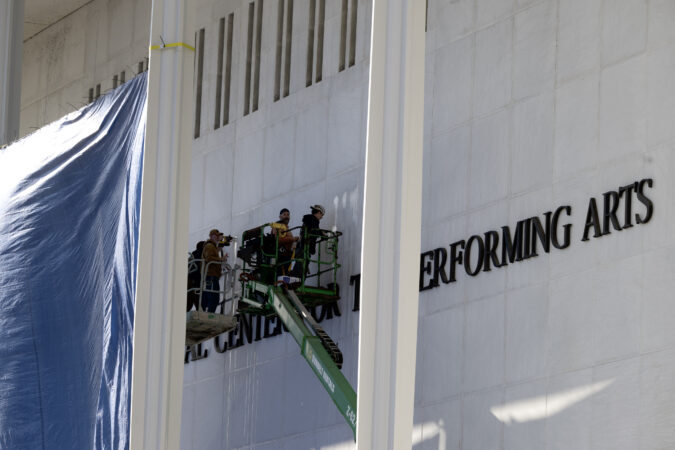
    The lawsuit, which was filed by Democracy Defenders Action and the Washington Litigation Group on behalf of Beatty, requested that a judge order all physical and digital branding changes to be reversed. Trump’s name was added to the exterior of the building Friday, the day after the board’s vote.

    Beatty, who is an ex officio member of the center’s board, said in the suit that she had attended the board meeting virtually and had been unmuted previously, but that when she identified herself and raised concerns about the renaming, she was muted and received a written message that “she would not be unmuted, and therefore she could not participate in the meeting.”

    In 1964, the year after Kennedy was assassinated, Congress passed a statute designating the capital’s National Cultural Center as “the sole national monument to his memory within the city of Washington and its environs” and naming it the John F. Kennedy Center for the Performing Arts.

    In a series of posts on X, the center’s president, Richard Grenell, defended the name change as a reflection of its role as a “bipartisan space.” On Friday, he claimed the memorial to Kennedy was not impacted by the board’s action and “therefore the Board is allowed to change the name.”

    In an email to the Washington Post last week, Roger Colinvaux, a law professor at Catholic University, said the law clearly states that the building’s name is the John F. Kennedy Center for the Performing Arts. “Under the statute, the board that voted to change the name not only does not have the authority, but that each member by so voting violated their duty,” he said.

    On Tuesday, the center’s website prominently referred to itself as the “Trump Kennedy Center,” but in other sections it continued to use the name “the Kennedy Center.”

    Members of the Kennedy family reacted with dismay to last week’s vote. “Some things leave you speechless,” said Maria Shriver, a niece of Kennedy, on X. “It can no sooner be renamed than can someone rename the Lincoln Memorial,” said Joe Kennedy, the former Democratic congressman from Massachusetts whose great-uncle the building was named for.

  • New Epstein files shed more light on his ties to Prince Andrew

    New Epstein files shed more light on his ties to Prince Andrew

    LONDON — The latest batch of Jeffrey Epstein files have cast renewed scrutiny on the links between Andrew Mountbatten-Windsor and Epstein — a relationship that has already sent the former prince into what is widely seen as royal exile.

    Among the newly released material is an email sent from “A” who writes that he is at the royal residence of Balmoral in Scotland, and asking Epstein associate Ghislaine Maxwell whether she had found him some “new inappropriate friends.”

    The documents also include emails and court filings of U.S. authorities seeking to interview the former prince in connection with two separate criminal investigations: one relating to Epstein and another involving Peter Nygard, the Canadian fashion tycoon accused of sexually assaulting multiple women and girls.

    Andrew has repeatedly denied all wrongdoing. The former prince’s office did not respond to a request for comment Tuesday.

    In a 22-page formal request dated April 3, 2020, from the Justice Department, federal prosecutors in New York and the FBI asked U.K. authorities to assist in arranging a voluntary interview with Andrew. U.S. authorities requested that if Andrew declined, that U.K. officials then “conduct a compelled interview of the witness under oath.”

    The request states that investigators wanted to question Andrew over allegations involving Nygard, including claims of an “an international sex trafficking ring victimizing adult women and minor girls” at the Canadian’s estate in the Bahamas, known as “Nygard Cay.”

    According to the document, “the investigation has revealed that, on at least one occasion, Prince Andrew traveled to Nygard Cay in the Bahamas, a location where Nygard is believed to have trafficked minor and adult female victims.”

    U.S. authorities said they wanted to question Andrew about his visits there, as well as any information he might have about Nygard and related individuals. They also said they wanted to ask Andrew whether he “observed any females who appeared to be, or stated that they were, under the age of 18 years old, and the names of any of those females.”

    The document stressed that Andrew was not a target of the investigations and that U.S. authorities had not gathered evidence that he had committed any crime under U.S. law. Nygard was convicted of sexual assault by a Canadian jury in 2023.

    U.S. authorities also sought to question Andrew in connection with the Epstein investigation. The request states that “documentary evidence uncovered during the course of this investigation has revealed information suggesting that Prince Andrew had knowledge that Maxwell recruited females to engage in sex acts with Epstein and other men.”

    It further states that there is “evidence that Prince Andrew engaged in sexual conduct involving one of Epstein’s victims,” while again noting that he was not a target and that investigation had not concluded he had committed a crime under U.S. law.

    While it has been previously reported before that U.S. authorities wanted to interview Andrew, the newly released document makes clear that investigators wanted to question him about two then ongoing criminal investigations and detailed the specific areas they wanted to explore. He was never questioned by U.S. authorities.

    The files also include material from a Florida court case brought under the Crime Victims’ Rights Act. In that case, a woman identified as “Jane Doe #3” — widely understood to be Virginia Giuffre — alleged that she was trafficked as a teenager by Epstein and forced to have sex with Andrew on three occasions: in London, New York, and on Epstein’s private island in the U.S. Virgin Islands. Andrew settled a civil case with Giuffre without an admission of liability in 2022.

    The files also include email exchanges from early 2020 between U.S. prosecutors and Andrew’s lawyer, documenting weeks of back-and-forth over a proposed interview with Andrew. Andrew’s team repeatedly said he wanted to cooperate but never committed to a conversation between prosecutors and their client.

    Shortly after a 2019 interview with BBC’s Newsnight that was widely seen as disastrous for the prince at the time, Andrew said in a news release that he was “willing to help any appropriate law enforcement agency with their investigations, if required.”

    At the end of January 2020 — and after a month of back-and-forth emails between lawyers — Geoffrey Berman, then U.S. attorney for Southern District of New York, made a public statement saying that Andrew had provided “zero cooperation.” His lawyers disputed that characterization.

    The files include emails from Maxwell to someone who signed off as “A” and from an address that used the alias “The Invisible Man.”

    In an August 2001 message, “A” wrote: “I am up here at Balmoral Summer Camp for the Royal Family,” referring to a royal residence of then-Queen Elizabeth II.

    He added: “How’s LA? Have you found me some new inappropriate friends? Let me know when you are coming over as I am free from 25th August until 2nd Sept and want to go somewhere hot and sunny with some fun people before having to put my nose firmly to the grindstone for the Fall.”

    Maxwell replied that she had found only “appropriate friends,” prompting A to respond “Distraught!” The email went on to describe how the writer had just lost his valet. “He had been with me since I was 2. I am a little off balance.”

    The writer also noted that he had left the “RN” — Andrew had left the Royal Navy earlier in the year. “My whole life is in turmoil as I have no one to look after me,” the writer said.

    The controversy surrounding Andrew’s links to Epstein eventually led his brother King Charles III to strip him of his prince title and required him to vacate the Royal Lodge.