Tag: no-latest

  • Trump’s ICE force is sweeping America. Billions in his tax and spending cuts bill are paying for it

    Trump’s ICE force is sweeping America. Billions in his tax and spending cuts bill are paying for it

    WASHINGTON — A ballooning Immigration and Customs Enforcement budget. Hiring bonuses of $50,000. Swelling ranks of ICE officers, to 22,000, in an expanding national force bigger than most police departments in America.

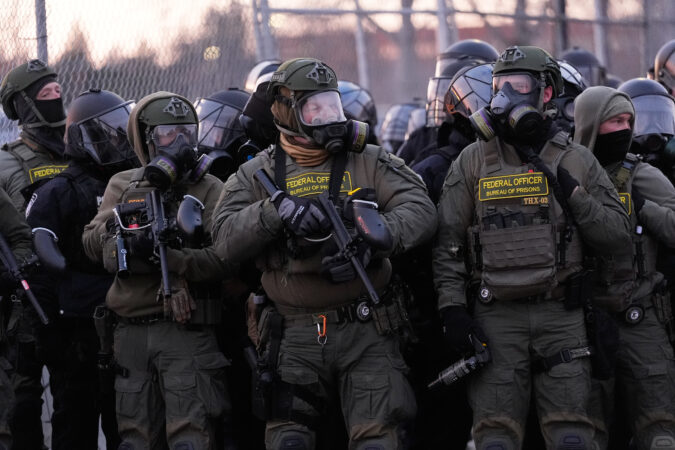
    President Donald Trump promised the largest mass deportation operation in U.S. history, but achieving his goal wouldn’t have been possible without funding from the big tax and spending cuts bill passed by Republicans in Congress, and it’s fueling unprecedented immigration enforcement actions in cities like Minneapolis and beyond.

    The GOP’s big bill is “supercharging ICE,” one budget expert said, in ways that Americans may not fully realize — and that have only just begun.

    “I just don’t think people have a sense of the scale,” said Bobby Kogan, senior director of federal budget policy at the Center for American Progress and a former adviser to the Biden administration’s Office of Management and Budget.

    “We’re looking at ICE in a way we’ve never seen before,” he said.

    Trump’s big bill creates massive law enforcement force

    As the Republican president marks the first year of his second term, the immigration enforcement and removal operation that has been a cornerstone of his domestic and foreign policy agenda is rapidly transforming into something else — a national law enforcement presence with billions upon billions of dollars in new spending from U.S. taxpayers.

    The shooting death of Renee Good in Minneapolis showed the alarming reach of the new federalized force, sparking unrelenting protests against the military-styled officers seen going door to door to find and detain immigrants. Amid the outpouring of opposition, Trump revived threats to invoke the Insurrection Act to quell the demonstrations and the U.S. Army has 1,500 soldiers ready to deploy.

    But Trump’s own public approval rating on immigration, one of his signature issues, has slipped since he took office, according to an AP-NORC poll.

    “Public sentiment is everything,” said Rep. Nydia M. Velázquez (D., N.Y.) at a news conference at the Capitol with lawmakers supporting legislation to impeach Homeland Security Secretary Kristi Noem.

    Americans, she said, are upset at what they are seeing. “They didn’t sign on for this,” she said.

    Border crossings down, but Americans confront new ICE enforcements

    To be sure, illegal crossings into the U.S. at the Mexico border have fallen to historic lows under Trump, a remarkable shift from just a few years ago when President Joe Biden’s Democratic administration allowed millions of people to temporarily enter the U.S. as they adjudicated their claims to stay.

    Yet as enforcement moves away from the border, the newly hired army of immigration officers swarming city streets with aggressive tactics — in Los Angeles, Chicago, and elsewhere — is something not normally seen in the U.S.

    Armed and masked law enforcement officers are being witnessed smashing car windows, yanking people from vehicles and chasing and wrestling others to the ground and hauling them away — images playing out in endless loops on TVs and other screens.

    And it’s not just ICE. A long list of supporting agencies, including federal, state, and local police and sheriff’s offices, are entering into contract partnerships with Homeland Security to conduct immigration enforcement operations in communities around the nation.

    House Speaker Mike Johnson (R., La.) has warned Democrats that this is “no time to be playing games” by stirring up the opposition to immigration enforcement officers in Minneapolis and other places.

    “They need to get out of the way and allow federal law enforcement to do its duty,” Johnson said at the Capitol.

    Noem has said the immigration enforcement officers are acting lawfully. The department insists it’s targeting criminals in the actions, what officials call the worst of the worst immigrants.

    However, reports show that noncriminals and U.S. citizens are also being forcibly detained by immigration officers. The Supreme Court last year lifted a ban on using race alone in the immigration stops.

    Trump last month called Somali immigrants “garbage,” comments that echoed his past objections to immigrants from certain countries.

    The Trump administration has set a goal of 100,000 detentions a day, about three times what’s typical, with 1 million deportations a year.

    Money from the big bill flows with few restraints

    With Republican control of Congress, the impeachment of Noem or any other Trump official is not a viable political option for Democrats, who would not appear to have the vote tally even among their own ranks.

    In fact, even if Congress wanted to curtail Trump’s immigration operations — by threatening to shut down the government, for example — it would be difficult to stop the spend.

    What Trump called the “big, beautiful bill” is essentially on autopilot through 2029, the year he’s scheduled to finish his term and leave office.

    The legislation essentially doubled annual Homeland Security funding, adding $170 billion to be used over four years. Of that, ICE, which typically receives about $10 billion a year, was provided $30 billion for operations and $45 billion for detention facilities.

    “The first thing that comes to mind is spending on this level is typically done on the military,” said Kathleen Bush-Joseph, a policy analyst at the Migration Policy Institute. “Trump is militarizing immigration enforcement.”

    Ahead, Congress will consider a routine annual funding package for Homeland Security unveiled Tuesday, or risk a partial shutdown Jan. 30. A growing group of Democratic senators and the Congressional Progressive Caucus have had enough. They say they won’t support additional funds without significant changes.

    Lawmakers are considering various restrictions on ICE operations, including limiting arrests around hospitals, courthouses, churches and other sensitive locations and ensuring that officers display proper identification and refrain from wearing face masks.

    “I think ICE needs to be totally torn down,” said Sen. Ruben Gallego (D., Ariz.) on CNN over the weekend.

    “People want immigration enforcement that goes after criminals,” he said. And not what he called this “goon squad.”

    Big spending underway, but Trump falls short of goals

    Meanwhile, Homeland Security has begun tapping the new money at its disposal. The department informed Congress it has obligated roughly $58 billion — most of that, some $37 billion, for border wall construction, according to a person familiar with the private assessment but unauthorized to discuss it.

    The Department of Homeland Security said its massive recruitment campaign blew past its 10,000-person target to bring in 12,000 new hires, more than doubling the force to 22,000 officers, in a matter of months.

    “The good news is that thanks to the Big Beautiful Bill that President Trump signed, we have an additional 12,000 ICE officers and agents on the ground across the country,” Assistant Secretary Tricia McLaughlin said in a December statement.

    The department also announced it had arrested and deported about 600,000 people. It also said 1.9 million other people had “voluntarily self-deported” since January 2025, when Trump took office.

  • ‘Morally acceptable’ for U.S. troops to disobey orders, archbishop says

    ‘Morally acceptable’ for U.S. troops to disobey orders, archbishop says

    As the Trump administration intervenes in Venezuela, readies troops for a possible deployment to Minnesota, and threatens to seize Greenland, the Catholic archbishop for the U.S. armed forces said it “would be morally acceptable” for troops to disobey what violated their conscience.

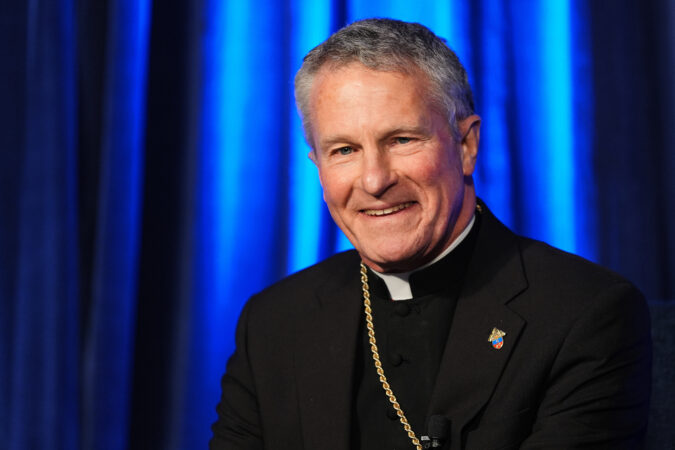
    Archbishop Timothy P. Broglio is one of a chorus of Catholic leaders questioning the administration’s use of force. His comments also underscored the mounting concern being voiced by the first American pontiff, Pope Leo XIV, as well as his top cardinals in the United States, over the Trump administration’s foreign policy.

    “Greenland is a territory of Denmark,” Broglio told the BBC Sunday. “It does not seem really reasonable that the United States would attack and occupy a friendly nation.”

    Asked whether he was “worried” about the military personnel in his pastoral care, Broglio replied: “I am obviously worried because they could be put in a situation where they’re being ordered to do something which is morally questionable.”

    “It would be very difficult for a soldier or a Marine or a sailor to by himself disobey an order,” he said. “But strictly speaking, he or she would be, within the realm of their own conscience, it would be morally acceptable to disobey that order, but that’s perhaps putting that individual in an untenable situation — and that’s my concern.”

    As head of the D.C.-based Archdiocese for the Military Services USA, Broglio oversees the chaplains who serve Catholics and others at U.S. military bases, Veterans Affairs healthcare facilities and diplomatic missions worldwide.

    A former president of the U.S. Conference of Catholic Bishops, the Ohio native is seen as a church conservative. As the Obama administration was ending Don’t Ask, Don’t Tell, he spoke against allowing LGBT troops to serve openly. When the Trump administration disqualified transgender people from serving in the military, he said “sexual orientation and gender identity issues” reflected an “incorrect societal attitude.”

    He has also criticized military strikes on boats the administration says are smuggling drugs. U.S. forces have killed at least 115 people in more than 30 such strikes in international waters in the Caribbean and the Pacific since September.

    “In the fight against drugs, the end never justifies the means,” he said in a statement last month. “No one can ever be ordered to commit an immoral act, and even those suspected of committing a crime are entitled to due process under the law.”

    He issued the statement after the Washington Post reported that commanders in the first known boat strike saw survivors and ordered a second barrage to kill them. He did not refer to the incident, but appeared to allude to it.

    “As the moral principle forbidding the intentional killing of noncombatants is inviolable,” he said, “it would be an illegal and immoral order to kill deliberately survivors on a vessel who pose no immediate lethal threat to our armed forces.”

    Trump is set to arrive Wednesday in Davos, Switzerland, for the World Economic Forum, at which European leaders plan to discuss his demand to seize and annex Greenland — a demand that has transformed the annual gathering of the world’s political and financial elite into an emergency diplomatic summit.

    Members of the military take an oath to the Constitution, not to the president. They swear an oath of enlistment to “support and defend the Constitution of the United States against all enemies” and “obey the orders of the President of the United States and the orders of the officers appointed over me,” according to the Uniform Code of Military Justice. They have an obligation not to follow “manifestly unlawful orders,” but such situations are rare and legally fraught, The Washington Post reported. Military personnel can be court-martialed for failing to obey lawful orders.

    The Pentagon in November announced an investigation into Sen. Mark Kelly (D., Ariz.), a prominent Trump critic and combat veteran, after he spoke in a video with five other Democrats reminding U.S. service members of their duty under military law to disobey illegal orders. The message move criticized by Trump at the time as “SEDITIOUS BEHAVIOR,” and the other lawmakers said this month they were now under investigation by his administration for the video.

    Kelly filed a lawsuit earlier this month seeking to reverse Defense Secretary Pete Hegseth’s letter of censure and effort to potentially demote him in rank.

    Broglio’s comments echoed concerns made in a joint statement Monday by the three highest-ranking U.S. Catholic archbishops, who warned that a resurgence in the use or threat of military force, including by the United States in Venezuela and Greenland, had thrown “the moral foundation for America’s actions in the world” into question.

    “The events in Venezuela, Ukraine and Greenland have raised basic questions about the use of military force and the meaning of peace,” wrote Cardinals Blase Cupich of Chicago, Robert McElroy of D.C., and Joseph Tobin of Newark.

    In the days after the U.S. operation in Venezuela to capture Nicolás Maduro, and after Trump said he was now “in charge” of that nation, the pope insisted on respect for Venezuela’s sovereignty.

    In a Jan. 9 meeting with diplomats in Vatican City, Leo decried a new era in which multilateralism is being replaced by “a zeal for war” and “peace is sought through weapons as a condition for asserting one’s own dominion.” He did not name the United States.

    Broglio, in his comment on the U.S. boat strikes, invoked just war theory. In Catholic teaching, the “defensive use of military force” against an aggressor may be legitimate as a final resort under strict criteria.

    According to the Catechism of the Catholic Church, the damage inflicted by the aggressor must be “lasting, grave and certain”; all other means of stopping it “must have been shown to be impractical or ineffective”; there must be “serious prospects of success”; and the action “must not produce evils and disorders graver than the evil to be eliminated.”

  • Syrian military, Kurdish-led forces announce new truce after guards leave camp housing IS families

    Syrian military, Kurdish-led forces announce new truce after guards leave camp housing IS families

    RAQQA, Syria — Guards from the Kurdish-led Syrian Democratic Forces abandoned a camp Tuesday in northeast Syria housing thousands of people linked to the Islamic State group, and the Syrian military said that allowed detainees to escape.

    Hours later, the Syrian government and the SDF announced a new four-day truce after a previous ceasefire broke down. The two sides have been clashing for two weeks, amid a breakdown in negotiations over a deal to merge their forces together.

    The al-Hol camp houses mainly women and children who are relatives of IS members. Thousands of accused IS militants are separately housed in prisons in northeast Syria.

    Syria’s interior ministry accused the SDF of allowing the release of “a number of detainees from the ISIS militant [group] along with their families.” The AP could not independently confirm if detainees had escaped from the camps or how many.

    The SDF subsequently confirmed that its guards had withdrawn from the camp, but did not say whether any detainees escaped. The group blamed “international indifference toward the issue of the [IS] terrorist organization and the failure of the international community to assume its responsibilities in addressing this serious matter.”

    It said its forces had redeployed in other areas “that are facing increasing risks and threats” from government forces.

    An official with the U.S. military’s Central Command who spoke on condition of anonymity because they were not authorized to speak publicly said, “We are aware of the reports and are closely monitoring the situation.”

    The SDF and the government also traded blame over the escape Monday of IS members from a prison in the northeastern town of Shaddadeh.

    The Syrian defense ministry in a statement said it is prepared to take over al-Hol camp and the prisons and accused the SDF of using them as “bargaining chips.”

    Al-Hol holds tens of thousands of detainees

    At its peak in 2019, some 73,000 people were living at al-Hol camp. Since then the number has declined with some countries repatriating their citizens.

    Sheikhmous Ahmad, a Kurdish official overseeing camps for displaced in northeastern Syria, told the Associated Press that the al-Hol’s current population is about 24,000, about 14,500 of whom are Syrians and nearly 3,000 Iraqis.

    He added that about 6,500 from other nationalities are held in a highly secured section of the camp, many of whom are die-hard IS supporters who came from around the world to join the extremist group.

    Government and SDF trade blame over prison break

    Earlier Tuesday, Syria’s interior ministry said that 120 IS members had escaped Monday from the prison in Shaddadeh, amid clashes between government forces and the SDF. Security forces recaptured 81 of them, the statement said.

    Also Tuesday, the SDF accused “Damascus-affiliated factions” of cutting off water supplies to the al-Aqtan prison near the city of Raqqa, which it called a “blatant violation of humanitarian standards.”

    The SDF, the main U.S.-backed force that fought IS in Syria, controls more than a dozen prisons in the northeast where some 9,000 IS members have been held for years without trial.

    IS was defeated in Iraq in 2017 and in Syria two years later, but the group’s sleeper cells still carry out deadly attacks in both countries.

    Under a deal announced Sunday, government forces were to take over control of the prisons from the SDF, but the transfer did not go smoothly.

    New ceasefire deal announced

    The Syrian military announced Tuesday evening a new four-day ceasefire. The SDF confirmed the deal and said “it will not initiate any military action unless our forces are subjected to attacks.”

    Elham Ahmad, a senior official with the Kurdish-led local administration in northeast Syria, told journalists Tuesday that an earlier ceasefire had fallen apart after SDF leader Mazloum Abdi requested a five-day grace period to implement the conditions and Syrian Interim President Ahmad al-Sharaa refused.

    She blamed the government for violating the agreement but called for a return to dialogue.

    In response to a journalist’s question regarding whether the SDF had requested help from Israel — which previously intervened in clashes between government forces and groups from the Druze religious minority last year — Ahmad said “certain figures” from Israel had communicated with the SDF. She added that the SDF is ready to accept support from any source available.

    A statement from al-Sharaa’s office said that government forces will not enter Kurdish-majority areas until plans are agreed upon for their “peaceful integration” and that Kurdish villages will be patrolled by “local security forces drawn from the residents of the area.”

    It said Abdi will put forward nominees from the SDF for the posts of deputy defense minister, governor of al-Hassakeh province, representatives in the parliament, and for other positions in Syrian state institutions.

    SDF officials have expressed disappointment that the U.S. did not intervene on their behalf. The group was long the main U.S. partner in Syria in the fight against IS, but that has changed as the Trump administration has developed closer ties with al-Sharaa’s government.

    U.S. envoy to Syria Tom Barrack in a statement Tuesday urged the SDF to move forward with integration into the new Syrian government and army and appeared to warn the Kurdish-led force that no help would be coming from Washington if it continued fighting.

    He said SDF’s role as the primary anti-IS force “has largely expired, as Damascus is now both willing and positioned to take over security responsibilities” and that “recent developments show the U.S. actively facilitating this transition, rather than prolonging a separate SDF role.”

    Since toppling Bashar Assad in December 2024, Syria’s new leaders have struggled to assert full authority over the war-torn country. An agreement was reached in March that would merge the SDF with Damascus, but it didn’t gain traction.

    Earlier this month, clashes broke out in the city of Aleppo, followed by the government offensive that seized control of Deir el-Zour and Raqqa provinces, critical areas under the SDF that include oil and gas fields, river dams along the Euphrates and border crossings.

    Al-Sharaa postponed a planned trip to Germany Tuesday amid the ongoing tensions.

  • Researchers find Antarctic penguin breeding is heating up sooner, and that’s a problem

    Researchers find Antarctic penguin breeding is heating up sooner, and that’s a problem

    WASHINGTON — Warming temperatures are forcing Antarctic penguins to breed earlier and that’s a big problem for two of the cute tuxedoed species that face extinction by the end of the century, a study said.

    With temperatures in the breeding ground increasing 5.4 degrees Fahrenheit (3 degrees Celsius) from 2012 to 2022, three different penguin species are beginning their reproductive process about two weeks earlier than the decade before, according to a study in Tuesday’s Journal of Animal Ecology. And that sets up potential food problems for young chicks.

    “Penguins are changing the time at which they’re breeding at a record speed, faster than any other vertebrate,” said lead author Ignacio Juarez Martinez, a biologist at Oxford University in the United Kingdom. “And this is important because the time at which you breed needs to coincide with the time with most resources in the environment and this is mostly food for your chicks so they have enough to grow.’’

    For some perspective, scientists have studied changes in the life cycle of great tits, a European bird. They found a similar two-week change, but that took 75 years as opposed to just 10 years for these three penguin species, said study co-author Fiona Suttle, another Oxford biologist.

    Researchers used remote control cameras to photograph penguins breeding in dozens of colonies from 2011 to 2021. They say it was the fastest shift in timing of life cycles for any backboned animals that they have seen. The three species are all brush-tailed, so named because their tails drag on the ice: the cartoon-eye Adelie, the black-striped chinstrap and the fast-swimming gentoo.

    Warming creates penguin winners, losers

    Suttle said climate change is creating winners and losers among these three penguin species and it happens at a time in the penguin life cycle where food and the competition for it are critical in survival.

    The Adelie and chinstrap penguins are specialists, eating mainly krill. The gentoo have a more varied diet. They used to breed at different times, so there were no overlaps and no competition. But the gentoos’ breeding has moved earlier faster than the other two species and now there’s overlap. That’s a problem because gentoos, which don’t migrate as far as the other two species, are more aggressive in finding food and establishing nesting areas, Martinez and Suttle said.

    Suttle said she has gone back in October and November to the same colony areas where she used to see Adelies in previous years only to find their nests replaced by gentoos. And the data backs up the changes her eyes saw, she said.

    “Chinstraps are declining globally,” Martinez said. “Models show that they might get extinct before the end of the century at this rate. Adelies are doing very poorly in the Antarctic Peninsula and it’s very likely that they go extinct from the Antarctic Peninsula before the end of the century.”

    Early bird dining causes problems

    Martinez theorized that the warming western Antarctic — the second-fasting heating place on Earth behind only the Arctic North Atlantic — means less sea ice. Less sea ice means more spores coming out earlier in the Antarctic spring and then “you have this incredible bloom of phytoplankton,” which is the basis of the food chain that eventually leads to penguins, he said. And it’s happening earlier each year.

    Not only do the chinstraps and Adelies have more competition for food from gentoos because of the warming and changes in plankton and krill, but the changes have brought more commercial fishing that comes earlier and that further shortens the supply for the penguins, Suttle said.

    This shift in breeding timing “is an interesting signal of change and now it’s important to continuing observing these penguin populations to see if these changes have negative impacts on their populations,” said Michelle LaRue, a professor of Antarctic marine science at the University of Canterbury in New Zealand. She was not part of the Oxford study.

    People’s penguin love helps science

    With millions of photos — taken every hour by 77 cameras for 10 years — scientists enlisted everyday people to help tag breeding activity using the Penguin Watch website.

    “We’ve had over 9 million of our images annotated via Penguin Watch,” Suttle said. “A lot of that does come down to the fact that people just love penguins so much. They’re very cute. They’re on all the Christmas cards. People say, ‘Oh, they look like little waiters in tuxedos.’”

    “The Adelies, I think their personality goes along with it as well,” Suttle said, saying there’s “perhaps a kind of cheekiness about them — and this very cartoonlike eye that does look like it’s just been drawn on.”

  • Russia batters Ukraine’s power grid again as officials seek momentum in U.S.-led peace talks

    Russia batters Ukraine’s power grid again as officials seek momentum in U.S.-led peace talks

    KYIV, Ukraine — Russia bombarded Ukraine with more than 300 drones and ballistic and cruise missiles in its latest nighttime attack on the Ukrainian power grid, President Volodymyr Zelensky said Tuesday, as Moscow gives no public sign that it’s willing to end the invasion of its neighbor anytime soon.

    The attack knocked out heating to more than 5,600 apartment buildings in the capital, Kyiv Mayor Vitali Klitschko said. Nearly 80% of the affected buildings had recently had their heating supply restored after a major Russian barrage on Jan. 9 that plunged thousands of people into a dayslong blackout, he said.

    Ukraine is enduring one of its coldest winters for years, with temperatures in Kyiv falling to minus 4 Fahrenheit. At the same time, Russia has escalated its aerial attacks on the electricity supply, aiming to deny Ukrainians heat and running water and wear down their resistance almost four years after Moscow launched its full-scale invasion on Feb. 24, 2022.

    Meanwhile, Ukrainian officials are trying to keep up the momentum of U.S.-led peace talks. A Ukrainian negotiating team arrived in the United States on Saturday. Their main task was to convey how the relentless Russian strikes are undermining diplomacy, according to Zelensky.

    The Ukrainian leader said last week that the delegation would also try to finalize with U.S. officials documents for a proposed peace settlement that relate to postwar security guarantees and economic recovery. If American officials approve the proposals, the U.S. and Ukraine could sign the documents at the World Economic Forum in Davos, Switzerland, this week, he said.

    Kremlin spokesman Dmitry Peskov said Tuesday that presidential envoy Kirill Dmitriev plans to meet with some American representatives at Davos.

    He refused to name the officials Dmitriev would meet with, but media reports said they would include U.S. envoy Steve Witkoff and U.S. President Donald Trump’s son-in-law, Jared Kushner.

    Attacks described as ‘cruel’

    Ukrainian Foreign Minister Andrii Sybiha said his country needs urgent assistance and additional sanctions on Russia to make Moscow change course.

    Russian President Vladimir Putin’s “barbaric strike this morning is a wake-up call to world leaders gathering in Davos,” Sybiha said on X.

    U.N. Human Rights Chief Volker Türk said that he was outraged by the repeated large-scale attacks on Ukraine’s energy infrastructure, which especially affect children, older people, and those with disabilities.

    The strikes “can only be described as cruel,” he said in Geneva. “They must stop. Targeting civilians and civilian infrastructure is a clear breach of the rules of warfare.”

    Several electrical substations providing power vital for nuclear safety in Ukraine were affected, said Rafael Mariano Grossi, director-general of the International Atomic Energy Agency.

    Air defense systems are expensive

    Ukraine’s air force command said that 27 missiles and 315 drones were shot down or jammed, while five missiles and 24 drones hit 11 locations.

    The Russian Defense Ministry claimed that its forces targeted Ukrainian military and industrial installations as well as energy and transport infrastructure used by the Ukrainian armed forces.

    The constant attacks have stretched Ukraine’s air defenses and, according to Zelensky, some systems recently ran out of ammunition before a new shipment arrived.

    The fight is also expensive: the air defense ammunition that Ukraine used against the Russian missiles overnight cost about 80 million euros ($93 million), Zelensky said.

    Ukrainian air defenses are adopting a new approach, with the appointment of a new deputy air force commander, Pavlo Yelizarov, according to Zelensky.

    “This system will be transformed,” he said late Monday, without providing details.

    Ukraine relies on sophisticated air defense systems produced by Western countries, especially the U.S., to thwart Russia’s missile and drone attacks.

  • Justice Department weighs rollback of gun regulations

    Justice Department weighs rollback of gun regulations

    The Justice Department is considering loosening a slate of gun regulations as it seeks to bolster support from ardent Second Amendment advocates, according to three people familiar with the changes who spoke on the condition of anonymity to discuss plans that have not been made public.

    Some of the changes are expected to ease restrictions on the private sale of guns and loosen regulations on shipping firearms.

    Other changes to Bureau of Alcohol, Tobacco, Firearms and Explosives regulations under consideration would change the types of firearms that can be imported and make licensing fees refundable. Officials are also expected to change the form required to purchase guns to have applicants list their biological sex at birth. The current form asks applicants to list their sex.

    Federal officials had considered announcing the changes to coincide with the National Shooting Sports Foundation gun trade show in Las Vegas, which began on Tuesday. Deputy Attorney General Todd Blanche is scheduled to speak at the annual show. The NSSF SHOT Show is one of the nation’s largest firearm trade shows, and Justice Department officials in both Democratic and Republican administrations have regularly attended it.

    But officials are still finalizing their new regulations and the timing of the announcement, the people familiar with the matter said.

    The back-and-forth over the rollout of the new gun rules highlights the Justice Department’s challenges as it seeks to placate a part of the president’s base that believes the administration has not been aggressive enough in easing firearm restrictions — while also preserving the law enforcement capabilities of ATF, which some gun rights advocates have sought to abolish.

    The Trump administration has installed prominent gun rights advocates in senior political positions, and the president has allied himself with conservative advocacy groups, such as Gun Owners of America. The administration has pushed to slash about 5,000 law enforcement officers from ATF, cutting the number of inspectors who ensure gun sellers are in compliance with federal laws.

    But some gun rights advocates have publicly expressed disappointment with Attorney General Pam Bondi, who as attorney general of Florida supported gun restrictions after the 2018 school shooting in Parkland.

    Bondi and the Trump administration have faced criticism for not going as far as some lawmakers and gun rights advocates have demanded.

    “The Biden Administration waged war against the Second Amendment, but that era has come to an end under Attorney General Bondi, who has led the Justice Department’s effort to protect the Second Amendment through litigation, civil rights enforcement, regulatory reform, and by ending abusive enforcement practices,” a Justice Department spokesperson said in a statement.

    “Whenever law-abiding gun owners’ constitutional rights are violated, the Trump Administration will fight back in defense of freedom and the Constitution.”

    Because ATF crafts regulations based on its interpretation of laws passed by Congress, Justice Department officials are allowed to amend its rules, though any changes risk legal challenges. ATF is part of the Justice Department, responsible for regulating the sales and licensing of firearms and working with local law enforcement to solve gun crimes. Federal and local law enforcement officials tout ATF’s gun tracing capabilities with helping to combat violent crime.

    In the first months of the Trump administration, the Justice Department proposed merging the Drug Enforcement Administration with ATF — a move that ATF’s backers feared would leave the agency powerless. Opponents of ATF, meanwhile, feared that the merger would give the agency too much power. The merger plans have not come to fruition and, instead, the Trump administration in November quietly nominated a respected ATF veteran to lead the agency.

    The nominee, Robert Cekada, is scheduled to have his hearing next month, and administration officials are worried about how the announcement of the new regulations could boost or hurt his nomination chances, according to one person familiar with the nomination process. Announcing the loosening of regulations ahead of his nomination hearing could risk the support of moderate Republicans, said the people, who spoke on the condition of anonymity to discuss personnel issues.

    Winning confirmation to serve as ATF director is notoriously difficult. Only two people have won Senate approval as director since the position began requiring Senate confirmation in 2006. During his first term, President Donald Trump had to pull a nominee, Chuck Canterbury, the former head of the national Fraternal Order of Police, because some conservative Republicans thought he would restrict gun rights.

    Trump had originally tapped FBI Director Kash Patel to simultaneously serve as ATF director. The Washington Post reported at the time that Patel never showed up to ATF headquarters and had scarce interaction with staff. The administration replaced Patel in early April with Army Secretary Dan Driscoll, who holds the two roles simultaneously. Cekada has been running the day-to-day operations of ATF since the ousting of the second-in-command at ATF in April.

    The nomination of Cekada was considered a win for Bondi, who had wanted a law enforcement veteran leading the agency. Some Second Amendment groups had pushed for an advocate at the head of the organization.

    Bondi pushed out ATF’s longtime general counsel and replaced her with a political appointee, Robert Leider — a former law professor who believes in a strict interpretation of the Second Amendment and has publicly written about how ATF too heavily regulates firearms.

    The Post reported this past summer that the U.S. DOGE Service sent staff to ATF with the goal of revising or eliminating at least 47 rules and gun restrictions — an apparent reference to Trump’s status as the 47th president — by July 4, according to multiple people with knowledge of the efforts. Those plan hit roadblocks, in part, because the political appointees failed to realize how complicated and legally cumbersome it is to amend regulations, according to one person familiar with the process.

    In addition to the regulatory changes, Leider and his team have been working to shrink the legally mandated 4473 Form that most buyers are required to fill out when purchasing a firearm, making it quicker to read and fill out the paperwork required to purchase and sell firearms.

    In December, Assistant Attorney General Harmeet K. Dhillon, who heads the Civil Rights Division, announced creation of a new Second Amendment group within her division focused on expanding gun rights. In its first days, the newly created group filed a lawsuit challenging an assault weapon ban in D.C.

    It’s unclear how much support Dhillon’s new group has received. Top Justice Department officials have not fully backed it, in part because Congress needs to approve the creation of a new section within the Civil Rights Division, according to people familiar with the group.

    Dhillon so far has not hired many attorneys with legal expertise in the Second Amendment to work in the group, the people said. Instead, she has used existing attorneys within the Civil Rights Department to staff some of the group’s projects.

    Top Democratic lawmakers on the Senate Judiciary Committee have questioned the creation and legality of Dhillon’s group.

    “Since President Trump took office, you have decimated the Division’s nonpartisan workforce and changed the Division’s enforcement priorities to serve the President’s agenda in lieu of our federal civil rights laws,” Sens. Peter Welch (D., Vt.) and Dick Durbin (D., Ill.) wrote in a letter to Dhillon this month. “The creation of the Second Amendment Section is another example of this profound retreat from the core mission of the Civil Rights Division.”

    Last week, the Justice Department’s Office of Legal Counsel issued an opinion saying that a federal ban on mailing firearms through Postal Service is unconstitutional. An OLC opinion is not binding, but it provides legal guidance across the federal government on how federal prosecutors view laws and signals the Justice Department’s future stances in court.

  • Dear Abby | Daughter concerned about parents’ heavy screen time

    DEAR ABBY: My young daughter and I had the pleasure of spending three months with my parents while my husband was deployed. We had a lovely visit, but over the course of our stay, I noticed my parents were spending more time on their phones than previously. Both are retired and in their mid-60s.

    I’m glad they are keeping up with technology, but I’m also concerned that their phone use may have a negative impact on their social health, behavioral health and mental acuity as they age. Growing up, we never had the TV or computers in our main living space, and screen time was limited. We ate dinner together every night, and socialization and conversation was an expectation.

    During my stay, my parents brought their phones to the dinner table and grabbed them midmeal to answer messages or search things on the internet. Throughout the days, I’d look up from what I was doing and see them glued to their screens. This new behavior is so different from the way they raised me. How can I speak to them about my concerns and encourage them to consider decreasing their phone usage?

    — NOTICED THE CHANGE IN WASHINGTON

    DEAR NOTICED: Yes, many things have changed since the time when you were raised. But if you think the day has arrived for you to parent your parents, forget about it. It not only won’t work, but it could also cause resentment because they are adults and not impressionable teenagers being educated about social interaction.

    ** ** **

    DEAR ABBY: My college roommate and I became close friends. I always thought he was a little bit arrogant. When I caught him getting upset that a girl liked me and not him, I realized he has always been about comparing and competing.

    At age 30, after we ended up working for the same company, we had a falling-out. I’m sure he has his complaints about me, but I am no longer interested in being his friend. We’re 36 now and still involved in our fantasy football league, so we see each other from time to time. We’re generally civil to each other, especially for the sake of the league.

    Well, he now wants to rekindle the friendship and keeps asking me to hang out. I’ve made excuses so far, and I wish he would take a hint, but I’m afraid I’m going to have to eventually tell him (again) that I’m not interested in hanging out. I don’t want to hurt his feelings any more than I have to. Please help.

    — NOT FEELING IT IN KANSAS

    DEAR NOT FEELING IT: You are not obligated to have anything more to do with this person than you wish. If the only time the two of you interact is during the fantasy football season, he shouldn’t be too hard to avoid. When he asks to hang out, continue doing what you have been, which is to say you are busy. Eventually, he may take the hint.

  • Horoscopes: Tuesday, Jan. 20, 2026

    ARIES (March 21-April 19). You’ve been a bit detached, which has served you well. Think of it as protection. But today, nothing feels stormy or overwhelming. The emotional climate is gentle enough to set your defenses down and experience things more directly.

    TAURUS (April 20-May 20). The majority won’t get it, and that’s actually a good thing. Relish your moment. Originality makes the world go round. Better to be truly seen as yourself by one person than to blend into the background.

    GEMINI (May 21-June 21). Your high standards aren’t just about turning in good work or making lifestyle choices. You extend your expectations to matters of character and attitude. You seek the company of those who are considerate, fair and compassionate, like you.

    CANCER (June 22-July 22). Even though you know intellectually that feelings are neutral — not wrong, not right, just information — you still judge yourself for having certain emotions. Instead of analyzing your process, just give yourself credit for having one.

    LEO (July 23-Aug. 22). The one you care for could get attention from different directions, but there is no care quite like yours, and this will become increasingly obvious. Let it be a source of pride to you. You will keep the relationship in balance by never forgetting the value of your love.

    VIRGO (Aug. 23-Sept. 22). Achievements will magically spill over from one domain to another because the way progress is made stays consistent. Skills grow through sequencing, patience and repetition. Break it into manageable pieces and build them one at a time.

    LIBRA (Sept. 23-Oct. 23). Scorekeeping turns giving and receiving into an accounting job instead of a spiritual or pleasurable gesture. Share without worrying about who gave what. The real benefit happens inside your heart as you give.

    SCORPIO (Oct. 24-Nov. 21). You’ll gather insight and construct a few stronger boundaries, not to keep people or experiences out of your life but to protect yourself from their effects the way a wetsuit allows the diver to explore depths.

    SAGITTARIUS (Nov. 22-Dec. 21). You are loyal to the ones who are loyal to you. You are also loyal to the ones who are (SET ITAL)not(END ITAL) loyal to you. Because to you, loyalty is a value, and the rules do not change when circumstances do.

    CAPRICORN (Dec. 22-Jan. 19). It’s hard enough to resist the influence you can feel. But what about the influence that is so much a part of the culture, you don’t even notice it? Awareness keeps you in charge. Ask, “What am I missing?”

    AQUARIUS (Jan. 20-Feb. 18). People react well when they understand the full scope of the situation. Many just don’t have the experience to know the layers and depths in play. This is why it’s important to have the right mentor. Such a person is coming into your life.

    PISCES (Feb. 19-March 20). We change. We are changed by one another. To interact with someone is to change them, and to change yourself. Today, you make extra efforts to be sure people are lighter, brighter and better for knowing you.

    TODAY’S BIRTHDAY (Jan. 20). Life buzzes with fresh experiences in this Year of Firsts — some are on your list, and many drop out of the blue to delight you beyond anything you could have planned. Close relationships are your treasure. More highlights: You’ll break ground and pour the foundation for a project you’ll keep building on for years. You’ll be proud of how you earn money, and you’ll have adventures in foreign territory. Leo and Taurus adore you. Your lucky numbers are: 3, 10, 31, 8 and 21.

  • She helped him flee a rally, then learned he was a right-wing provocateur

    She helped him flee a rally, then learned he was a right-wing provocateur

    Daye Gottsche let the stranger into the car without knowing he was a right-wing provocateur who had been leading a march to support President Donald Trump’s immigration crackdown.

    She didn’t realize that the demonstrators she saw on her drive had gathered at Minneapolis City Hall on Saturday to counterprotest — and were chasing him away, throwing punches at him. Gottsche did not recognize that this man was Jake Lang, who had been accused of beating police officers with a baseball bat during the Jan. 6, 2021, attack on the U.S. Capitol and was jailed for four years before Trump pardoned him.

    She saw only a man in need of rescue.

    “Please help me,” Lang said, standing outside her friend’s car door, Gottsche told the Washington Post. “They hurt me bad.”

    Gottsche saw a cut on his lip and scrapes on his face. From the driver’s side, her friend unlocked the doors. Lang jumped in the back seat.

    As they waited for the stoplight to turn green, protesters swarmed them, shouting “That’s him!” according to video of the incident and interviews with Gottsche and Lang. People pried open the doors and kicked Lang. Some hit the car itself. Finally, Lang, Gottsche, and her friend sped away.

    Within minutes, footage of the moment surfaced online. It fueled speculation about how Lang had escaped the reach of counterprotesters and who had helped him pull it off. The reality was simpler — and in some ways, more complicated — than what most guessed.

    Inside the car was Gottsche, a 22-year-old transgender woman and singer-songwriter who said the choice to help Lang felt easy. She thought he might have been hurt by ICE officers, carrying with him the same fear that she and her neighbors have felt for weeks.

    But minutes before Lang was begging for help outside the car, he had been blasting “Ice Ice Baby” to support federal immigration agents and yelling about how immigrants were “replacing” white Americans. After facing attacks from the crowd, he was seen bleeding from the back of his head.

    Gottsche said if she had to relive the encounter, she would make the same decision to help Lang.

    “I don’t necessarily know if he deserved our kindness, but I would not change anything that happened,” she said.

    Afraid for her own safety, Gottsche had sat out the anti-ICE protests roiling Minneapolis. But, she said, she opposes the presence of the thousands of federal officers who have spent their days stopping people to ask for paperwork, pepper-spraying protesters and door-knocking in search of undocumented immigrants. Now, Gottsche sees her decision to rescue Lang as a sort of ironic intervention.

    “I feel like it was meant to happen, because who knows — had we not stopped, he might have died,” she said. “He was really hurt, and I would hate to have something like that on my conscience.”

    To Lang, receiving help from people who disagreed with him presented “a powerful kind of imagery,” a reminder of a higher power at play. He said he wanted to believe that had they known his beliefs, they still would have helped — but he doubts it, given public social media posts he saw from Gottsche afterward. He referenced one video in which she said, “We’re letting the wolves have you next time.”

    “That’s very sad and disappointing,” he told the Post. “And I pray God checks their heart on that.”

    Asked about the video, Gottsche said she had made it just minutes after Lang left the car and before she had even begun to process what had transpired. She said she may have taken her remarks too far.

    But, Gottsche said, she wondered whether, if the roles had been reversed, Lang would have helped her. In the 48 hours since the interaction, Gottsche said she and her friend have been the target of derogatory, threatening messages and posts with false information from right-wing social media accounts.

    Since an ICE officer shot and killed 37-year-old Renée Good on Jan. 7, protests have spilled into the streets of Minneapolis daily. In a different world, Gottsche might have joined them.

    After a police officer murdered George Floyd in 2020, Gottsche, then a high school student, joined thousands in Minnesota to protest police brutality. Gottsche, who is half Black, marched with a sign reading, “Stop killing us.”

    But she doesn’t feel safe anymore, she said. She had seen videos of the shooting of Good, a white woman who had been in her car, blocks away from home. She had watched Vice President JD Vance say the ICE officer who killed Good had “absolute immunity.”

    “I felt like that was my warning to just not” protest, Gottsche said. “That’s not normal.”

    So she chose to keep her support of the Minneapolis demonstrations subtle. She honked when driving by protesters. Then she went about her day.

    On Saturday, Gottsche and her friend decided to grab drinks. The bar they wanted to try was blocks away from Minneapolis’ city hall and federal courthouse, where Lang planned to hold an anti-immigration protest. He had been preparing to protest for months as part of a series of anti-Muslim rallies he has held across America. He said his desire to demonstrate in Minneapolis only grew after he heard Trump blame Somali immigrants for a yearslong welfare fraud probe in the state and saw that residents there were clashing with ICE officers.

    As he was chased by the crowd of counterprotesters Saturday, Lang ran into a hotel and left through a side door. He said he took off the military-style vest he had been wearing with patches reading “Infidel” and “47,” a reference to Trump.

    Then Lang approached the red sedan where Gottsche and her friend, Aleigha, were sitting at a traffic light. Gottsche said that she rolled down her window as she saw Lang running toward them, and that he asked for help. She and her friend looked at each other, trying to figure out whether to let him inside the car.

    Suddenly, the car was surrounded. From the passenger’s side, with the window still down, Gottsche panicked, trying to explain to the people outside that she did not know the man and was just trying to help.

    “Drive!” Lang shouted, according to video and an interview with him. “Drive! Drive!”

    Soon after, they tore away from the crowd.

    Gottsche turned to face Lang and asked him what had happened. It was then that she realized “that we had someone that’s not on our side in our car.” Lang said he recognized that Gottsche was trans and her friend was also a woman of color, and he thought to himself that “they probably are not sympathetic to my stance as a pro-ICE supporter.”

    Lang thanked Gottsche and her friend but did not directly answer their questions about what had led him to their car, Gottsche said. He identified himself only as “Jake” and as a Christian who loves God. He offered to pay for the damage to the car and shared a phone number, Gottsche said. She texted the number and confirmed that the message had gone through.

    The ride was short. They reached the bar, and Lang got out of the car.

    Gottsche still didn’t know who exactly he was.

    Then friends and social media followers who had started to see videos of Lang’s escape sent her messages: Did she know she had just saved an anti-immigrant influencer? They sent videos of the rally he had just held and links to his social media pages, where he had repeatedly made incendiary posts about immigrants and Muslims. Some people seeing the photos and videos of the moment assumed Gottsche was a fan of Lang.

    She took to TikTok to clarify how she had ended up in the now-viral exchange. In one video, she lip-synced to “No Good Deed” from Wicked, with the caption: “When you try to help an injured man in the street but it turns out he was Jake Lang.”

    In the hours that followed, Gottsche still felt it was a “right place, right time” moment — a twist of fate that landed two people otherwise unlikely to talk to one another in the same car. She told Lang in a text message that she hopes the interaction sparks a reconsideration of his stances.

    “I also wanna add while i do not whatsoever support you or ur ideals, im happy to see that you are gonna be okay, and i hope this has some sort of impact on you,” Gottsche wrote to the number Lang had shared with her.

    “Because the fear and urgency you felt trying to escape that crowd is what people here feel everyday. America was never ours to begin with, so how does it make sense that we cant share, especially with people seeking safety and shelter?”

    By Monday afternoon, a reply had not come.

  • New protest art on National Mall takes aim at Trump and Epstein files

    New protest art on National Mall takes aim at Trump and Epstein files

    A massive replica of a birthday note and crude drawing signed with the typed name “Donald J. Trump” and a “Donald” signature that was part of a 2003 book of birthday wishes for the deceased convicted sex offender Jeffrey Epstein was placed on the National Mall early Monday morning, the latest installation of artwork critical of the president by a group that identifies itself as “The Secret Handshake.”

    The group, whose members are anonymous, has previously placed installations at the same location, including a statue of Trump and Epstein holding hands and skipping, a mock tribute to Trump from the world’s authoritarian leaders, and a replica of the desk of former House Speaker Nancy Pelosi (D., Calif.) with a pile of fake excrement on it that ridiculed the Jan. 6, 2021, rioters who sought to overturn the 2020 election.

    The new installation, located on the Mall on Third Street NW between Jefferson and Madison drives, stands 10 feet high by 12 feet wide. A National Park Service permit will allow the work to remain at that location through Friday.

    Trump has denied writing the note and has told reporters that the signature is not his. The White House did not immediately respond to a request for comment on the new installation.

    In front of the replica card is a stack of marble blocks made to resemble a filing cabinet, with each drawer labeled “The Files” and overflowing with hundreds of strips of paper. Atop the files is a box of Sharpies and an invitation for visitors to sign the card with a message to the administration. It notes, “Please refrain from any promotional, violent or hateful speech or it will be removed.”

    The towering placard replicates the message found in a “birthday book” given to Epstein for his 50th birthday by friends and acquaintances. It was one of a tranche of documents released in September by the House Oversight Committee that it had received from Epstein’s estate.

    The sketch is of a woman’s nude form and includes a dialogue between “Donald” and Epstein, ending with a handwritten signature and the typed words “Donald J. Trump” above it.

    The exchange between “Donald” and “Jeffrey” appears inside the contours of a woman’s body. “We have certain things in common, Jeffrey,” “Donald” says. “Enigmas never age, have you noticed that?”

    “Happy birthday — and may every day be another wonderful secret,” “Donald” ends the note.

    Last year, Trump sued the Wall Street Journal and others at the news organization, alleging defamation after the newspaper published its story revealing the letter. The case is pending in federal court in Miami.

    On its permit application, the artists wrote that the purpose of the work was “to use creative and artistic free speech about one of the most relevant political issues of this moment, and to highlight the conversation about President Donald Trump’s friendship and relationship with Jeffrey Epstein using his own reported language and correspondence. As well, to highlight the heavily redacted files that have been released and those that haven’t.”

    The Mall was quiet Monday morning as the nation took a day off to honor Martin Luther King Jr. By midmorning, there were just a few messages written on the giant card, all with negative sentiments toward the president.

    “Looking forward to your jail sentence, DJT!”

    “The people will rise. We already are.”

    D.C. resident Susan Fritz, 61, stopped to take a look during her morning run. “What I really like about it is that they didn’t have to make anything up. They just had to blow it up and put it out here.”

    But she was pretty sure the installation’s message would not be received well by the administration.

    “I’ll be surprised if it stays up,” she said.

    “I think everyone should see it,” said Anders Williams, 45, who stopped in front of card on his way to the Air and Space Museum with his wife and young child. “It shows that someone lived in a very different world from the rest of us at some point. It’s just weird.”

    Ying Yong, 33, also from the District, said he spotted the card from a distance and came over to check it out.

    “It’s great, it’s hilarious,” he said. “Nothing more to be said.”

    A woman bundled up against the morning cold said she was a federal worker and declined to provide her name. But she wanted to comment on the new installation, so she picked up a Sharpie and approached the card.

    On it she quoted King. “Darkness cannot drive out darkness, only light can do that.”