Tag: no-latest

  • Death toll in Spanish train collision rises to 40 as authorities fear more bodies could be found

    Death toll in Spanish train collision rises to 40 as authorities fear more bodies could be found

    ADAMUZ, Spain — Regional Spanish officials said Monday that at least 40 people are confirmed dead in a high-speed rail collision the previous night in the country’s south when the tail end of a train jumped the track, causing another train speeding past in the opposite direction to derail.

    Juanma Moreno, the president of Andalusia, the southern Spanish region where the accident happened, confirmed the new death toll in an afternoon press conference. Efforts to recover the bodies from the two wrecked train cars continued, he added.

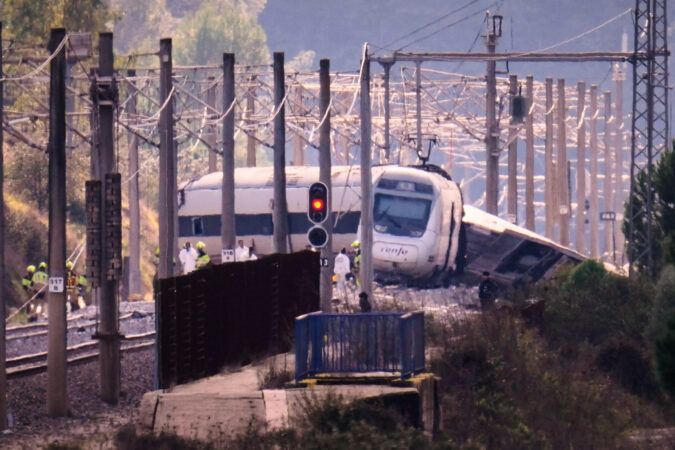
    The impact tossed the second train’s lead carriages off the track, sending them plummeting down a 4-meter (13-foot) slope. Some bodies were found hundreds of meters (feet) from the crash site, Moreno said earlier in the day, describing the wreckage as a “mass of twisted metal” with bodies likely still to be found inside.

    Authorities are also focusing on attending hundreds of distraught family members and have asked for them to provide DNA samples to help identify victims.

    The crash took place Sunday at 7:45 p.m. when the tail end of a train carrying 289 passengers on the route from Malaga to the capital, Madrid, went off the rails. It slammed into an incoming train traveling from Madrid to Huelva, another southern Spanish city, according to rail operator Adif.

    The head of the second train, which was carrying nearly 200 passengers, took the brunt of the impact, Spanish Transport Minister Óscar Puente said. That collision knocked its first two carriages off the track. Puente said that it appeared the largest number of the deaths occurred in those carriages.

    Authorities said all the survivors had been rescued in the early morning.

    Three days of mourning for a nation in shock

    The accident shook a nation which leads Europe in high-speed train mileage and takes pride in a network that is considered at the cutting edge of rail transport.

    Spanish Prime Minister Pedro Sánchez declared three days of national mourning for the victims of the crash.

    “Today is a day of pain for all of Spain,” Sánchez said on a visit to Adamuz, a village near the accident site, where many locals helped emergency services handle the influx of distraught and hurt passengers overnight.

    Twisted metal after a violent impact

    Moreno, the regional leader, said Monday morning that emergency services were still searching for bodies.

    “Here at ground zero, when you look at this mass of twisted iron, you see the violence of the impact,” Moreno said. “The impact was so incredibly violent that we have found bodies hundreds of meters away.”

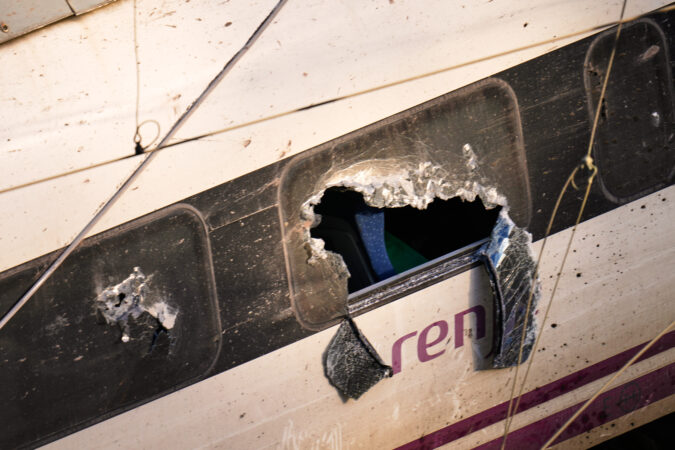
    Video released by the Civil Guard showed the worst-hit carriages shredded open, train seats cast on the gravel packing under the tracks. One carriage lay on its side, bent around a large concrete pillar, with debris scattered around the area.

    Passengers reported climbing out of smashed windows, with some using emergency hammers to break the glass.

    Andalusia’s regional emergency services said 41 people remained hospitalized, 12 of whom were in intensive care units. Another 81 passengers were discharged by late Monday afternoon, authorities said.

    Train services Monday between Madrid and cities in Andalusia were canceled, causing large disruptions. Spanish airline Iberia added flights to Seville and another two to Malaga to help stranded travelers. Some bus companies also reinforced their services in the south.

    Officials call accident ‘strange’

    Transport Minister Puente early Monday said the cause of the crash was unknown.

    He called it “a truly strange” incident because it happened on a flat stretch of track that had been renovated in May. He also said the train that jumped the track was less than 4 years old. That train belonged to the Italian-owned company Iryo, while the second train was part of Spain’s public train company, Renfe.

    According to Puente, the back part of the first train derailed and crashed into the head of the other train. An investigation into the cause could take a month, he said.

    The Spanish Union of Railway Drivers told The Associated Press that in August, it sent a letter asking Spain’s national railway operator to investigate flaws on train lines across the country and to reduce speeds at certain points until the tracks were fully repaired. Those recommendations were made for high-speed train lines, including the one where Sunday’s accident took place, the union said.

    Álvaro Fernández, the president of Renfe, told Spanish public radio RNE that both trains were well under the speed limit of 250 kph (155 mph); one was going 205 kph (127 mph), the other 210 kph (130 mph). He also said that “human error could be ruled out.”

    The incident “must be related to the moving equipment of Iryo or the infrastructure,” he said.

    Iryo issued a statement on Monday saying that its train was manufactured in 2022 and passed its latest safety check on Jan. 15.

    Identifying the victims

    The Civil Guard opened an office in Cordoba, the nearest city to the crash, as well as Madrid, Malaga, Huelva and Seville for family members of the missing to seek help and leave DNA samples.

    “There were moments when we had to remove the dead to get to the living,” Francisco Carmona, firefighter chief of Cordoba, told Onda Cero radio.

    A sports center in Adamuz, a town in the province of Cordoba, about 370 kilometers (about 230 miles) south of Madrid, was turned into a makeshift hospital. The Spanish Red Cross set up a help center offering assistance to emergency services and people seeking information.

    “The scene was horrific. It was terrible,” Adamuz Mayor Rafael Moreno told AP and other reporters. “People asking and begging for help. Those leaving the wreckage. Images that will always stay in my mind.”

    One passenger had been treated in a local hospital along with her sister before she returned to Adamuz with hopes of finding her lost dog. She was limping and had a small bandage on her cheek, as seen by an AP reporter.

    First deadly accident for Spain’s high-speed trains

    Spain has spent decades investing heavily in high-speed trains and currently has the largest rail network in Europe for trains moving over 250 kph (155 mph), with more than 3,900 kilometers (2,400 miles) of track, according to the International Union of Railways.

    The network is a popular, competitively priced and safe mode of transport. Renfe said more than 25 million passengers took one of its high-speed trains in 2024.

    Iryo became the first private competitor in high-speed to Renfe in Spain in 2022.

    Sunday’s accident was the first with deaths on a high-speed train since Spain’s high-speed rail network opened its first line in 1992.

    Spain’s worst train accident this century occurred in 2013, when 80 people died after a train derailed in the country’s northwest. An investigation concluded the train was traveling 179 kph (111 mph) on a stretch with an 80 kph (50 mph) speed limit when it left the tracks. That stretch of track was not high speed.

  • Death toll in Spanish train collision rises to 40 as authorities fear more bodies could be found

    Death toll in Spanish train collision rises to 40 as authorities fear more bodies could be found

    ADAMUZ, Spain — Regional Spanish officials said Monday that at least 40 people are confirmed dead in a high-speed rail collision the previous night in the country’s south when the tail end of a train jumped the track, causing another train speeding past in the opposite direction to derail.

    Juanma Moreno, the president of Andalusia, the southern Spanish region where the accident happened, confirmed the new death toll in an afternoon news conference. Efforts to recover the bodies from the two wrecked train cars continued, he added.

    The impact tossed the second train’s lead carriages off the track, sending them plummeting down a 13-foot slope. Some bodies were found hundreds of feet from the crash site, Moreno said earlier in the day, describing the wreckage as a “mass of twisted metal” with bodies likely still to be found inside.

    Authorities are also focusing on attending hundreds of distraught family members and have asked for them to provide DNA samples to help identify victims.

    The crash took place Sunday at 7:45 p.m. when the tail end of a train carrying 289 passengers on the route from Malaga to the capital, Madrid, went off the rails. It slammed into an incoming train traveling from Madrid to Huelva, another southern Spanish city, according to rail operator Adif.

    The head of the second train, which was carrying nearly 200 passengers, took the brunt of the impact, Spanish Transport Minister Óscar Puente said. That collision knocked its first two carriages off the track. Puente said that it appeared the largest number of the deaths occurred in those carriages.

    Authorities said all the survivors had been rescued in the early morning.

    Three days of mourning for a nation in shock

    The accident shook a nation which leads Europe in high-speed train mileage and takes pride in a network that is considered at the cutting edge of rail transport.

    Spanish Prime Minister Pedro Sánchez declared three days of national mourning for the victims of the crash.

    “Today is a day of pain for all of Spain,” Sánchez said on a visit to Adamuz, a village near the accident site, where many locals helped emergency services handle the influx of distraught and hurt passengers overnight.

    Twisted metal after a violent impact

    Moreno, the regional leader, said Monday morning that emergency services were still searching for bodies.

    “Here at ground zero, when you look at this mass of twisted iron, you see the violence of the impact,” Moreno said. “The impact was so incredibly violent that we have found bodies hundreds of meters away.”

    Video released by the Civil Guard showed the worst-hit carriages shredded open, train seats cast on the gravel packing under the tracks. One carriage lay on its side, bent around a large concrete pillar, with debris scattered around the area.

    Passengers reported climbing out of smashed windows, with some using emergency hammers to break the glass.

    Andalusia’s regional emergency services said 41 people remained hospitalized, 12 of whom were in intensive care units. Another 81 passengers were discharged by late Monday afternoon, authorities said.

    Train services Monday between Madrid and cities in Andalusia were canceled, causing large disruptions. Spanish airline Iberia added flights to Seville and another two to Malaga to help stranded travelers. Some bus companies also reinforced their services in the south.

    Officials call accident ‘strange’

    Transport Minister Puente early Monday said the cause of the crash was unknown.

    He called it “a truly strange” incident because it happened on a flat stretch of track that had been renovated in May. He also said the train that jumped the track was less than 4 years old. That train belonged to the Italian-owned company Iryo, while the second train was part of Spain’s public train company, Renfe.

    According to Puente, the back part of the first train derailed and crashed into the head of the other train. An investigation into the cause could take a month, he said.

    The Spanish Union of Railway Drivers told the Associated Press that in August, it sent a letter asking Spain’s national railway operator to investigate flaws on train lines across the country and to reduce speeds at certain points until the tracks were fully repaired. Those recommendations were made for high-speed train lines, including the one where Sunday’s accident took place, the union said.

    Álvaro Fernández, the president of Renfe, told Spanish public radio RNE that both trains were well under the speed limit of 155 mph; one was going 127 mph, the other 130 mph. He also said that “human error could be ruled out.”

    The incident “must be related to the moving equipment of Iryo or the infrastructure,” he said.

    Iryo issued a statement on Monday saying that its train was manufactured in 2022 and passed its latest safety check on Jan. 15.

    Identifying the victims

    The Civil Guard opened an office in Cordoba, the nearest city to the crash, as well as offices in Madrid, Malaga, Huelva, and Seville for family members of the missing to seek help and leave DNA samples.

    “There were moments when we had to remove the dead to get to the living,” Francisco Carmona, firefighter chief of Cordoba, told Onda Cero radio.

    A sports center in Adamuz, a town in the province of Cordoba, about 230 miles south of Madrid, was turned into a makeshift hospital. The Spanish Red Cross set up a help center offering assistance to emergency services and people seeking information.

    “The scene was horrific. It was terrible,” Adamuz Mayor Rafael Moreno told AP and other reporters. “People asking and begging for help. Those leaving the wreckage. Images that will always stay in my mind.”

    One passenger had been treated in a local hospital along with her sister before she returned to Adamuz with hopes of finding her lost dog. She was limping and had a small bandage on her cheek, as seen by an AP reporter.

    First deadly accident for Spain’s high-speed trains

    Spain has spent decades investing heavily in high-speed trains and currently has the largest rail network in Europe for trains moving over 155 mph, with more than 2,400 miles of track, according to the International Union of Railways.

    The network is a popular, competitively priced and safe mode of transport. Renfe said more than 25 million passengers took one of its high-speed trains in 2024.

    Iryo became the first private competitor in high-speed to Renfe in Spain in 2022.

    Sunday’s accident was the first with deaths on a high-speed train since Spain’s high-speed rail network opened its first line in 1992.

    Spain’s worst train accident this century occurred in 2013, when 80 people died after a train derailed in the country’s northwest. An investigation concluded the train was traveling 111 mph on a stretch with a 50 mph speed limit when it left the tracks. That stretch of track was not high speed.
  • As Trump goes to Davos, the world faces a ‘new reality’

    As Trump goes to Davos, the world faces a ‘new reality’

    DAVOS, Switzerland — In some ways, the scene in this picturesque Swiss resort town in late January is as ever. The tall evergreen forest below the Jakobshorn peak is crowned with fresh snow. The small airfield up in the mountains is packed with private jets. Phalanxes of black vans and SUVs crawl through icy streets. Beyond an elaborate security cordon, pavilions representing many of the world’s most influential tech companies, industries, and sovereign wealth funds populate storefronts, awaiting the foot traffic of the global elite who descend on this corner of the Alps every year.

    Behind it all, though, there’s a profound shift. President Donald Trump is leading one of the largest U.S. delegations ever to attend the World Economic Forum’s annual meeting, where he is set to deliver an address Wednesday, at a moment when his administration seems in open conflict with the paradigms that have long defined (and have come to be caricatured by) these conclaves in Davos. His trade wars on U.S. allies and adversaries alike are unraveling webs of globalization championed here for decades. And his constant use of coercion in his foreign policy cuts against Davos’ ethos of comity and cooperation.

    Trump’s speech will come days after he began threatening to impose fresh tariffs on European partners for their unwillingness to oblige his assertions that the United States must annex Greenland. He lashed out in anger at Danish and broader European obstruction over the weekend, guaranteeing that the Arctic territory would dominate conversation in Davos.

    “We stand ready to engage in a dialogue based on the principles of sovereignty and territorial integrity,” read a joint statement from European countries facing U.S. tariffs over Greenland. “Tariff threats undermine transatlantic relations and risk a dangerous downward spiral.”

    Trump’s extraordinary capture earlier this month of Venezuelan President Nicolás Maduro seemed to set new precedents, underscoring the White House’s view that the Western Hemisphere ought to be a U.S. sphere of influence. A slew of prominent foreign policy thinkers see Trump ushering in a global order where “might makes right.”

    “Gunboat diplomacy is back with a vengeance,” Comfort Ero, head of the International Crisis Group, a think tank, recently said. “What do you do when international law becomes international niceties?”

    The response from Davos seems more cautious and calibrated than it might have been in the past. For more than a decade, the organizers of the World Economic Forum have warned about disruptions to the international order — of fractures, crises and dysfunction that can only be solved with collective global effort. This year’s vaguer and more humble theme — “a spirit of dialogue” — may have been chosen in anticipation of the Trump-shaped wrecking ball swinging toward the forum.

    “There’s a robust consensus that the world economy is entering some kind of new reality,” Mirek Dusek, a WEF managing director responsible for the annual event’s programming and business, told me. “Our role is really to be helpful as an organization, and in this moment bring protagonists together.”

    At least to that end, Davos can deliver. The forum’s organizers are touting record participation, with some 65 heads of state or government in attendance, alongside dozens more finance and foreign ministers, as well as close to 2,000 prominent CEOs and business leaders. They convene at a time, as the international advocacy group Oxfam notes in its latest report, when billionaire wealth grew by some $2.5 trillion over the past year — a figure greater than the total wealth possessed by the bottom half of humanity (more than 4 billion people).

    With Trump’s shadow over Davos, there’ll be little consensus over tackling inequality or perhaps any other shared global challenges. The WEF’s annual Global Risks report, which surveys more than 1,000 geopolitical and economic experts from around the world, pointed to “geoeconomic confrontation” as the prime source of short-term concern. The WEF’s latest iteration of the Global Cooperation Barometer, an index using dozens of metrics to chart how the world is getting along, declared that “multilateralism is indeed waning.”

    That zeitgeist is being driven, in part, by Trump’s political project. “Trump’s central strategic insight has always been that America is better prepared than any other country to thrive in a cutthroat arena,” wrote Hal Brands, a senior fellow at the American Enterprise Institute, a conservative Washington think tank. “If Washington no longer wishes to sustain the liberal order, or just can’t afford to uphold it against growing challenges, perhaps it makes sense to seize the largest share of the loot.”

    But the conveners in Davos don’t want pessimism to prevail. “Cooperation is like water, if it sees it’s being blocked it finds a way,” Borge Brende, a former Norwegian politician and WEF president and CEO, said during a briefing call with journalists earlier this month.

    The world isn’t standing pat in the face of Trumpist disruption. Clear signals were sent in recent days by Canadian Prime Minister Mark Carney, who acknowledged the shifting “new world order” on a trip to China where his government reset a long-troubled relationship while touting a “new strategic partnership.” Ottawa’s overtures would not have happened without a year of hostility from Washington, including Trump’s statements urging Canada to become the 51st U.S. state.

    “The global trading system is undergoing a fundamental change,” reducing “the effectiveness of multilateral institutions on which trading partners such as Canada and China have greatly relied,” Carney told reporters in Beijing, gesturing to the deterioration of the rules-based order and the weakening of international institutions. “This is happening fast. It’s large. It’s a rupture.”

    Separately, after a quarter-century of negotiations, four South American countries sealed a free-trade agreement with the European Union. “This is the power of partnership and openness. This is the power of friendship and understanding between peoples and regions across oceans,” European Commission President Ursula von der Leyen said alongside Brazilian President Luiz Inácio Lula da Silva in Rio de Janeiro on Friday. “And this is how we create real prosperity — prosperity that is shared. Because, we agree, that international trade is not a zero-sum game.”

    The new alignments that are emerging place Trump’s America in a conspicuous light. “The United States will remain the most economically and militarily powerful country in the world for several more years,” wrote international relations theorist Amitav Acharya, in an essay for Foreign Policy. “But it will be absent from, if not actively hostile toward, the existing international order.”

    Acharya labeled this “unique configuration” shaped by U.S. antagonism as “the world minus one.”

  • Trump ties Greenland takeover bid to Nobel Prize in text to Norway leader

    Trump ties Greenland takeover bid to Nobel Prize in text to Norway leader

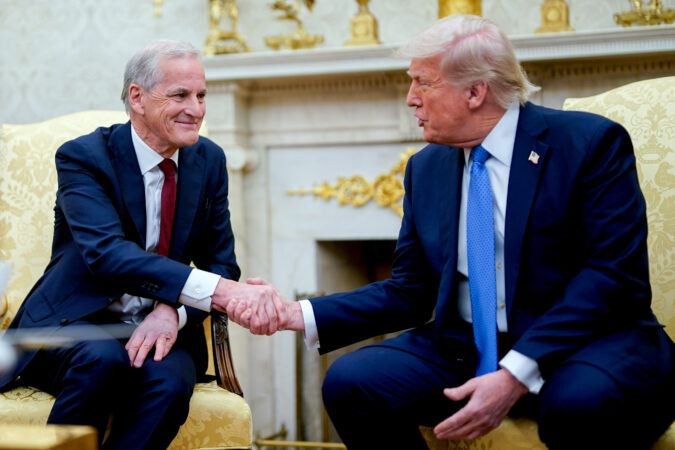
    BRUSSELS — In a message to Norway’s prime minister, President Donald Trump linked his insistence on taking over Greenland to his grievance over not receiving the Nobel Peace Prize — adding a new twist to Trump’s stoking of a trade war that is shaking the trans-Atlantic alliance.

    In the weekend text to Norwegian Prime Minister Jonas Gahr Store, Trump wrote that he no longer needed to “think purely of Peace” after he didn’t win the peace prize last year — an award that the president has openly coveted and that is bestowed by the Nobel Committee in Norway.

    Trump then questioned the “ownership” of Greenland by Denmark, a NATO ally, and repeated his ambition for the U.S. to take “complete and total control” of the autonomous Danish territory.

    The White House confirmed the authenticity of the message, with White House deputy press secretary Anna Kelly saying that Trump “is confident Greenlanders would be better served if protected by the United States from modern threats in the Arctic region.”

    Store confirmed Trump’s leaked message in a statement Monday. He said Trump was responding to a text that Store had sent on behalf of Norway and Finland, conveying opposition to U.S. tariffs against European nations rejecting the takeover of Greenland. “We pointed to the need to de-escalate and proposed a telephone conversation,” Store said.

    The attempt to defuse tensions seems not to have worked. Trump’s reply came shortly after.

    “Considering your Country decided not to give me the Nobel Peace Prize for having stopped 8 Wars PLUS, I no longer feel an obligation to think purely of Peace, although it will always be predominant, but can now think about what is good and proper for the United States of America,” Trump wrote in the text, which was first reported by PBS.

    Store said he made his support for Greenland and Denmark clear, and that he has repeatedly explained to Trump that it is up to the Nobel Committee, not the Norwegian government, to award the annual peace prize.

    On Monday, Treasury Secretary Scott Bessent sought to reframe the narrative. “It’s a complete canard to think President Trump’s action on Greenland is due to” not receiving the Nobel Prize, he told reporters on the sidelines of the World Economic Forum annual meeting in Davos, Switzerland.

    European retaliation, he added, would be “very unwise.”

    Trump’s bid to buy or seize Greenland — effectively a demand to grab a NATO ally’s territory against its will — and to unleash a trade war with European leaders who disapprove, has sparked the greatest trans-Atlantic crisis in generations.

    U.K. Prime Minister Keir Starmer said Monday that it would be “completely wrong” for Trump to slap tariffs on European nations in his push for Greenland — even as Starmer sought to preserve the relationship with the United States which is vital to European security.

    The British leader’s comments added to mounting European pushback. French President Emmanuel Macron has likened Trump’s declaration to a form of “intimidation,” and Swedish Prime Minister Ulf Kristersson described it as blackmail. Even Italian Prime Minister Giorgia Meloni, a Trump ally, called it a “mistake.”

    In remarks to reporters on Monday, Starmer denounced economic coercion against allies as the wrong approach to resolving disagreements. He described tariffs as harmful to British workers and businesses. “A trade war over Greenland is no one’s interest,” Starmer said, calling for discussions between Greenland, Europe, and the United States.

    Still, he declined to say whether he would support calls within the European Union, of which the U.K. is no longer a member, for retaliation against Washington.

    Trump has said controlling Greenland is necessary for national security reasons — a point disputed by allies and some members of Congress who rebutted the president’s claim that the Arctic territory faces imminent security risks from Russia and China. Trump’s unwillingness, so far, to back down risks driving a deeper wedge in the Western alliance or, some fear, causing an irreparable break.

    After months of trying to keep Trump onside, European policymakers are weighing options to retaliate. The continent’s top leaders still stress they would much rather avoid an escalation, but Trump’s threats are fueling a growing chorus of calls from lawmakers and politicians for European leaders to stand up for the continent and fire back.

    “Appeasement has failed,” wrote Javi López, a lawmaker from Spain and vice president of the European Parliament. “Europe can only protect its sovereignty (from Ukraine to Greenland) by reducing dependencies, strengthening its deterrence, and using without limits its most powerful tool: access to the world’s largest single market.”

    If diplomatic efforts fail, the E.U.’s arsenal of trade tools includes imposing tariffs on a list of more than $100 billion worth of American goods, which EU officials prepared last year but suspended to sign a trade deal with Trump.

    Another option would be triggering an instrument often dubbed the bloc’s trade “bazooka,” which would allow for targeting American services in Europe — a major profit center for U.S. tech giants.

    European Union leaders have warned that Russia stands to benefit from the rift at NATO. On Monday, the Kremlin spokesperson, Dmitry Peskov, appeared to stir the pot by telling reporters that by taking action on Greenland, Trump stood to make history one way or another.

    Peskov said there was “a lot of disturbing information” recently and that he would not comment about “our plans regarding Denmark and Greenland.”

    Aside from “whether this is good or bad, whether it complies with international law or not,” he added, “there are international experts who believe that by resolving the issue of Greenland’s accession, Trump will go down in history, not only in U.S. history, but also in world history. It is difficult to disagree with these experts.”

    Russia, preoccupied with its war in Ukraine, has largely stood by while Trump ordered military strikes on Venezuela and seized Moscow’s longtime ally President Nicolás Maduro. That has left Russian President Vladimir Putin’s credibility on the world stage diminished as Trump flexes his muscles among friends and foes alike.

    Ambassadors of the E.U.’s 27 nations debated the possibility of retaliation against Washington during a closed-door meeting in Brussels on Sunday, although there was a broad preference to try to de-escalate — as they have done after Trump’s previous rounds of tariffs.

    European leaders are headed to the World Economic Forum in Davos this week, hoping that face-to-face meetings with Trump will talk him down from the intensifying confrontation. The president has declared the new tariffs on eight countries would start Feb. 1 unless they acquiesce to his plan to acquire Greenland.

    Those European nations — Britain, Denmark, France, Finland, Germany, the Netherlands, Norway, and Sweden — recently sent troops to Greenland in small numbers for joint exercises with the Danish military. European leaders cast the deployment as a sign of NATO’s commitment to protecting the Arctic in response to Trump’s warnings that Arctic security was at risk.

    Because the EU operates as a single trading bloc, the imposition of tariffs on some of its 27 nations could affect all of them, European officials said.

    Leaders of Denmark and Greenland have said repeatedly that they welcome deeper U.S. economic and security involvement, but that the vast island territory — which Trump covets for its strategic Arctic location and natural resources — is not for sale.

    “Blackmail between friends is obviously unacceptable,” French Finance Minister Roland Lescure said in Berlin on Monday. If the U.S. tariff threats come to fruition, Lescure added, “we Europeans must remain united and coordinated in our response and, above all, be prepared to make full use of the European Union’s instruments.”

    France has pushed for Europe to take a harder line against Trump, while many of its EU neighbors preferred restraint. On Monday, however, German Finance Minister Lars Klingbeil echoed the sentiment, saying the EU should consider using the “toolbox for responding to economic blackmail.”

  • Valentino Garavani, an Italian fashion designer known for his signature shade of red, has died at 93

    Valentino Garavani, an Italian fashion designer known for his signature shade of red, has died at 93

    ROME — Valentino Garavani, the jet-set Italian designer whose high-glamour gowns — often in his trademark shade of “Valentino red” — were fashion show staples for nearly half a century, has died at home in Rome, his foundation announced Monday. He was 93.

    “Valentino Garavani was not only a constant guide and inspiration for all of us, but a true source of light, creativity and vision,″ the foundation said in a statement posted on social media.

    His body will repose at the foundation’s headquarters in Rome on Wednesday and Thursday. The funeral will be held Friday at the Basilica Santa Maria degli Angeli e dei Martiri in Rome’s Piazza della Repubblica.

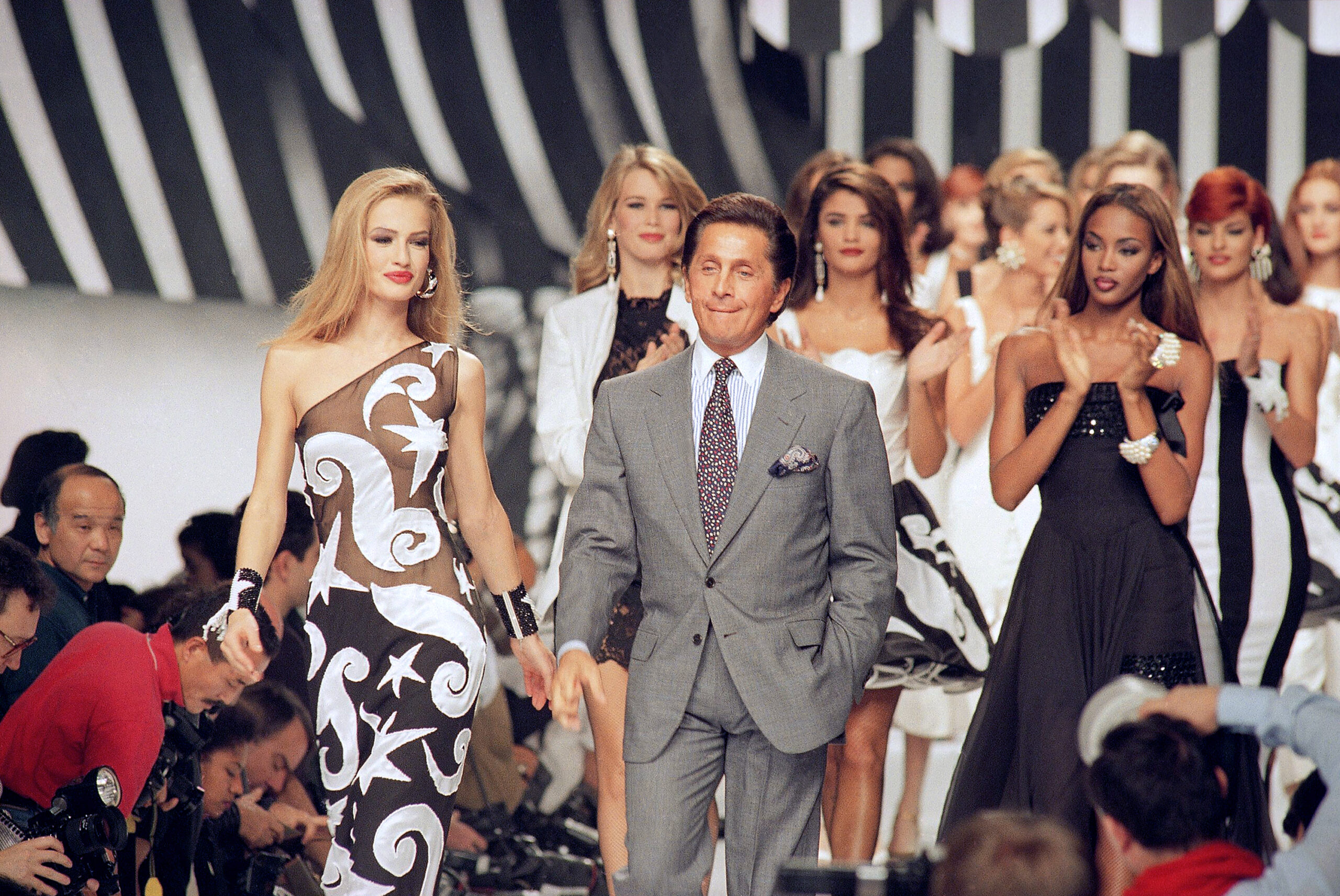
    Italian fashion designer Valentino Garavani walks the catwalk with his models after a fashion show on October 20, 1991 in Paris, France.

    Universally known by his first name, Valentino was adored by generations of royals, first ladies and movie stars, from Jackie Kennedy Onassis to Julia Roberts and Queen Rania of Jordan, who swore the designer always made them look and feel their best.

    “I know what women want,” he once remarked. “They want to be beautiful.”

    Never one for edginess or statement dressing, Valentino made precious few fashion faux-pas throughout his nearly half-century-long career, which stretched from his early days in Rome in the 1960s through to his retirement in 2008.

    His fail-safe designs made Valentino the king of the red carpet, the go-to man for A-listers’ awards ceremony needs. His sumptuous gowns have graced countless Academy Awards, notably in 2001, when Roberts wore a vintage black and white column to accept her best actress statue. Cate Blanchett also wore Valentino — a one-shouldered number in butter-yellow silk — when she won the Oscar for best supporting actress in 2004.

    Valentino was also behind the long-sleeved lace dress Jacqueline Kennedy wore for her wedding to Greek shipping magnate Aristotle Onassis in 1968. Kennedy and Valentino were close friends for decades, and for a spell the one-time U.S. first lady wore almost exclusively Valentino.

    He was also close to Diana, Princess of Wales, who often donned his sumptuous gowns.

    Models flank Italian fashion designer Valentino Garavani in Rome, Italy, at the end of the fashion show for his spring-summer collection on Jan. 20, 1971.

    Beyond his signature orange-tinged shade of red, other Valentino trademarks included bows, ruffles, lace and embroidery; in short, feminine, flirty embellishments that added to the dresses’ beauty and hence to that of the wearers.

    Perpetually tanned and always impeccably dressed, Valentino shared the lifestyle of his jet-set patrons. In addition to his 152-foot (46-meter) yacht and an art collection including works by Picasso and Miro, the couturier owned a 17th-century chateau near Paris with a garden said to boast more than a million roses.

    Valentino and his longtime partner Giancarlo Giammetti flitted among their homes — which also included places in New York, London, Rome, Capri and Gstaad, Switzerland — traveling with their pack of pugs. The pair regularly received A-list friends and patrons, including Madonna and Gwyneth Paltrow.

    “When I see somebody and unfortunately she’s relaxed and running around in jogging trousers and without any makeup … I feel very sorry,” the designer told RTL television in a 2007 interview. “For me, woman is like a beautiful, beautiful flower bouquet. She has always to be sensational, always to please, always to be perfect, always to please the husband, the lover, everybody. Because we are born to show ourselves always at our best.”

    Valentino was born into a well-off family in the northern Italian town of Voghera on May 11, 1932. He said it was his childhood love of cinema that set him down the fashion path.

    “I was crazy for silver screen, I was crazy for beauty, to see all those movie stars being sensation, well dressed, being always perfect,” he explained in the 2007 television interview.

    After studying fashion in Milan and Paris, he spent much of the 1950s working for established Paris-based designer Jean Desses and later Guy Laroche before striking out on his own. He founded the house of Valentino on Rome’s Via Condotti in 1959.

    From the beginning, Giammetti was by his side, handling the business aspect while Valentino used his natural charm to build a client base among the world’s rich and fabulous.

    After some early financial setbacks — Valentino’s tastes were always lavish, and the company spent with abandon — the brand took off.

    Early fans included Italian screen sirens Gina Lollobrigida and Sophia Loren, as well as Hollywood stars Elizabeth Taylor and Audrey Hepburn. Legendary American Vogue editor-in-chief Diana Vreeland also took the young designer under her wing.

    Over the years, Valentino’s empire expanded as the designer added ready-to-wear, menswear and accessories lines to his stable. Valentino and Giammetti sold the label to an Italian holding company for an estimated $300 million in 1998. Valentino would remain in a design role for another decade.

    In 2007, the couturier feted his 45th anniversary in fashion with a 3-day-long blowout in Rome, capped with a grand ball in the Villa Borghese gallery.

    Valentino retired in 2008 and was briefly replaced by fellow Italian Alessandra Facchinetti, who had stepped into Tom Ford’s shoes at Gucci before being sacked after two seasons.

    Facchinetti’s tenure at Valentino proved equally short. As early as her first show for the label, rumors swirled that she was already on her way out, and just about one year after she was hired, Facchinetti was indeed replaced by two longtime accessories designers at the brand, Maria Grazia Chiuri and Pier Paolo Piccioli.

    Chiuri left to helm Dior in 2016, and Piccioli continued to lead the house through a golden period that drew on the launch of the Rockstud pump with Chiuri and his own signature color, a shade of fuchsia called Pink PP. He left the house in 2024, later joining Balenciaga, and has been replaced by Alessandro Michele, who revived Gucci’s stars with romantic, genderless styles.

    Valentino is owned by Qatar’s Mayhoola, which controls a 70% stake, and the French luxury conglomerate Kering, which owns 30% with an option to take full control in 2028 or 2029. Richard Bellini was named CEO last September.

    Valentino has been the subject of several retrospectives, including one at the Musee des Arts Decoratifs, which is housed in a wing of Paris’ Louvre Museum. He was also the subject of a hit 2008 documentary, “Valentino: The Last Emperor,” that chronicled the end of his career in fashion.

    In 2011, Valentino and Giammetti launched what they called a “virtual museum,” a free desktop application that allows viewers to feast their eyes on about 300 of the designer’s iconic pieces.

  • Eagles need more than a new coordinator to revamp their offense

    Eagles need more than a new coordinator to revamp their offense

    The long arc of history is a lot shorter in the modern NFL. Howie Roseman offered a nod to it last week. The tone of his voice was quite grave.

    “There’s natural transition in what we do,” the Eagles’ general manager said. “I’m not making an excuse or anything, but there’s a national transition in that in terms of what you’re paying your guys, which side of the ball you’re paying guys who are coming up.”

    Look back at the historically great teams and you will see a familiar pattern.

    The early-’90s Cowboys won three Super Bowls in four years and have not been back to a conference championship since.

    The turn-of-the-century Rams went to two Super Bowls in three years and then had one winning season in the next 15.

    The Patriots won three Super Bowls in four years in the early 2000s and then did not win another over the next decade. Then they won three in five years.

    And let’s not forget about the Andy Reid Era Eagles: four straight conference championship appearances with one Super Bowl Bowl appearance followed by one conference championship appearance in the next eight seasons.

    More often than not, you look back and realize that the best version of a team was the one that took everybody by surprise. The Chiefs’ two biggest point differentials in the Andy Reid Era came in Patrick Mahomes’ first two seasons as a starter. The Packers outscored opponents by a combined 452 points in Aaron Rodgers’ first four seasons as a starter and then outscored them by 428 in his next eight.

    Tackle Lane Johnson broke down this season and the Eagles offense suffered.

    The phenomenon extends beyond the NFL. You don’t need to look far. The Phillies in 2008 and 2022. The Sixers in 2018-19. The Flyers in 1996-97 and 2009-10.

    By the time you realize the good times are here again, they are already ending.

    You might reject that thought as depressing, even nihilistic. But it is the reality of the Eagles’ situation. Their regression on the offensive side of the football was more due to the natural order of things than it was to the unique and aggressive incompetence of the head coach and his handpicked play-caller. They were a team with disproportionate reliance on the overwhelming talent of its offensive line. That talent advantage wasn’t as great this season.

    Mekhi Becton left for more money. Lane Johnson missed the end of the season. Landon Dickerson and Cam Jurgens weren’t as healthy as last season. Even if the line was 85% of what it was, that would still jibe with the Eagles overall being 85% of what they were, especially if it was compounded by A.J. Brown and Saquon Barkley not being as uniquely dominant as they were last season.

    Attrition is a natural part of the NFL, both at the individual level and the roster level. Those two things go hand-in-hand, obviously. One can argue that the job of a head coach and play-caller is to adapt to the realities on the ground. That’s more than fair. It is also a difficult thing to do midseason. The Eagles are right to be doing it now in their search for a play-caller to replace Kevin Patullo. But nobody should be surprised if they fail to find one.

    Over the next few weeks, we’ll learn a lot about the rest of the NFL’s diagnosis of the Eagles. Former Dolphins head coach Mike McDaniel is a unique enough genius to be interviewing teams rather than teams interviewing him. A recent report said that he would rather accept a great offensive coordinator position than another head coaching job doomed to fail. A year ago, you would have counted the Eagles as such a job. Maybe they still are. But are they really a better job than the Lions?

    McDaniel reportedly has spoken with Detroit, which previously made Ben Johnson a star. Jahmyr Gibbs is a running back with the same skill set that McDaniel had in Miami with De’Von Achane. Amon-Ra St. Brown, Jameson Williams and Sam LaPorta can make their case over Brown, DeVonta Smith, and whoever plays tight end for the Eagles next season. The Lions’ offensive line has consistently ranked near the top of the league, albeit behind the Eagles.

    Eagles running back Saquon Barkley had a subpar season.

    Brian Daboll and Zac Robinson are two other recognizable free agents. At the same time, the Chargers and Ravens are two other recognizable jobs. The Eagles aren’t just looking for the right guy … the right guy is looking for the right team.

    All of that is to say that the real challenge of this Eagles offseason is figuring out the talent situation. Roseman has done a marvelous job of it on the defensive side of the ball, reinventing that unit in barely two offseasons. This season, the Eagles had seven players from their last three draft classes log at least 700 defensive snaps. No other team had more than five.

    Building the offensive line is always the Eagles’ top priority. But they could sure use some reinforcements at the skill positions. Another wide receiver, a tight end, a change-of-pace running back with pass-catching skills, all would have helped immensely this season. That’s true even before we start to contemplate whether to trade Brown.

    “I think we’ve drafted 15 guys since Nick [Sirianni] has been here in the first and second day, and 14 of them have been long-term starters. We’ve got to keep hitting like that. I know that’s hard, but we’ve got to keep doing it,” Roseman said. “That means we have to have a good process. We’ve got to understand the people that we’re bringing into the building. We’ve got to understand the roles and the vision that we have for them when they’re playing. If we do that, good things will happen. We’ll be able to keep the players that we need to keep under long-term contracts and have an influx of young players that are really good that can play at a high level.”

    It’s no coincidence that the NFL’s championship windows are the same as the four-to-five-year windows of rookie contracts. The Eagles have already begun to extend theirs with their draft success on defense. It’s still the place where they are most likely to fix the offense.

  • Letters to the Editor | Jan. 19, 2026

    Letters to the Editor | Jan. 19, 2026

    Blowing smoke

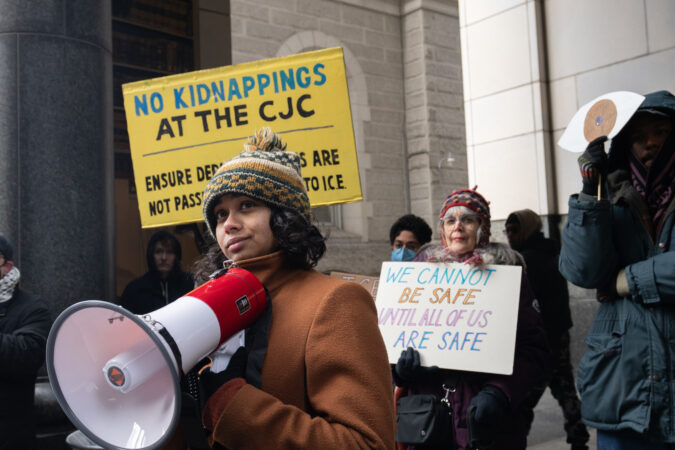
    U.S. Immigration and Customs Enforcement operations in and around our courthouse and city are a blatant abuse of power that undermines due process, destroys community trust, endangers public safety, and is morally abhorrent. If justice matters in Philadelphia, the courthouse must remain a sanctuary from civil immigration enforcement and not a place of fear and intimidation. Sheriff Rochelle Bilal has promised to protect Philadelphians from ICE’s tactics, yet her office claims it lacks the authority to shield people from civil immigration arrests at, or just outside, the courthouse. As the official responsible for courthouse security, the sheriff has both the tools and the obligation to make sure everyone can access justice without fear.

    ICE agents have exploited restricted entrances and carried out violent arrests right outside the courthouse doors. There are also reports of deputies sharing information about courtroom locations with ICE. These actions deter people from exercising their rights and erode trust in the courts. If deputies would intervene during an assault just outside, they must show the same commitment to protecting folks from ICE kidnappings. ICE has no legitimate place in our courts or anywhere in Philadelphia. We must ensure the courthouse remains a true place of justice, dignity, and safety for all, and we must all do what we can to protect our neighbors from this vicious ICE campaign.

    Carrie Rathmann, Philadelphia

    Shiny new thing

    The Inquirer’s Kristen A. Graham reports that Superintendent Tony B. Watlington Sr. has announced the (eventual) opening of two new schools in North Philadelphia based on Geoffrey Canada’s Harlem Children’s Zone. This announcement comes as Watlington plans to tell the public which district schools are about to be closed. Huge contradiction here with the impending school closures the public does not want, and a surprise declaration of two new schools to open. The part I find most offensive is Watlington saying: “We’re going to make sure the school is staffed with the very best, most effective principals … We’re going to ensure that these schools are staffed with the very best, most effective teachers.”

    Is he really saying current teachers, staff, and principals are not the best? What would happen if they had the resources to support their students as promised with the two new schools? Mayor Cherelle L. Parker promised year-round schools (as these new ones will be). I must ask: Why hasn’t she created them in already existing schools? Where is the funding coming from, and how long will it last? Who was included in creating this proposal for the new schools? Neither Parker nor Watlington is known for being transparent or engaging in genuine community involvement.

    Karel Kilimnik, Philadelphia

    Imperial march

    Donald Trump has been described as a narcissist, a racist, a despot, a bully, a convicted felon, a demagogue, an oligarch, an intimidator, and a liar. A new term has been added to the list: imperialist. What is the difference between Vladimir Putin’s invasion of Ukraine and Trump’s threat to invade Greenland? Trump can no longer broker a peace between Russia and the United States. He has lost all credibility. With his actions in Venezuela and threats against Colombia, Cuba, Iran, and especially Greenland, is his plan to destroy NATO and allow Putin to try to dominate Europe? Is he giving Xi Jinping the green light to invade Taiwan? Does Trump envision himself as the supreme ruler of the Western Hemisphere? These questions will have their answers in a short period of time. It took his administration one year to get to this point. What will the next three years bring?

    Richard Zanoni, Edgewater Park

    Masks off

    An American citizen named Renee Nicole Good was shot dead in Minneapolis in what Robert Reich called a “cold-blooded murder.” Her killing was carried out by masked men from a paramilitary organization that is running amok in the streets of America. The last paramilitary organization that ran amok in the United States under the protection of those in power was the Klan. The parallels are unmistakable. Both wear masks, or in the case of the Klan, a robe and hood. They kill innocent people because they are the “enemy within.”

    U.S. Immigration and Customs Enforcement is an official government organization, while the Klan operated with local and state governments’ blessing. Their violence is fueled by the unaccountability enabled by hiding their faces and the governmental protection racket that covers up their crimes. In the case of ICE, that racket is run by Donald Trump and Kristi Noem. Our nation brought the Klan under control. The first step in controlling ICE is to remove the masks by outlawing them. You can’t hold people accountable unless you know who they are. California passed a no-mask law for law enforcement officers. Pennsylvania must be next.

    Gary Goldman, Newtown

    Iranian strategy

    The recent CBS Evening News interview between anchor Tony Dokoupil and President Donald Trump, conducted on a noisy Ford factory floor, raised more questions than answers about the administration’s approach to Iran. When the president warned he was prepared to take “strong action” if Iran executes protesters, the exchange felt strained and unclear, with Dokoupil struggling to maintain control of the conversation. Although I now live in Florida, my expectations for CBS were shaped decades ago in Philadelphia, where I attended Father Judge and grew up watching the network with my family.

    During the Vietnam War, Walter Cronkite delivered the news with a steadiness and credibility that helped the country navigate one of its most divisive eras. When he ended each broadcast with “That’s the way it is,” we believed him. Today, many viewers watch CBS with a degree of cynicism, and the tone of this interview did little to restore confidence. Communities far from Washington feel the stakes. A TV report here warned that even a single miscalculation between the U.S. and Iran could trigger a wider conflict. A miscalculation is not a strategy. It is a small misunderstanding or hasty reaction that spirals into something no one intended. That’s the way it is.

    Tom Feaster, Tampa, Fla.

    Leaders, not rulers

    Donald Trump is the president and leader of the United States. He was not chosen to be the ruler or dictator of our country. A leader guides his followers on a path that is best for the group. Does anyone think bombing suspected drug boats and killing suspected drug runners, hijacking Venezuelan oil and taking over the country, trying to annex Greenland against the wishes of its people, killing American citizens during immigration raids, and gutting the Affordable Care Act is the right path for America? Many of these actions resemble those taken by Adolf Hitler, Josip Broz Tito, Josef Stalin, and other dictators. Do we want a leader like them?

    Can we stand by while being led by the likes of Pam Bondi, Kristi Noem, Pete Hegseth, and Robert F. Kennedy Jr. — all underqualified when compared with previous department heads? It’s time to practice the old axiom, “Lead effectively or step aside and let someone else lead.” But who are the followers who have the integrity and intestinal fortitude to speak up? It’s certainly not Republican legislators, who whisper only mild dissent, then cower to scrutiny for fear of losing their jobs. Some Democrats speak up, but their voice is not strong enough. We, the average American citizen, must speak up and be heard. A loud and determined voice must reach our leaders and say, “No! Enough! We will not follow you down this path.”

    Jim McGogney, Marlton

    Join the conversation: Send letters to letters@inquirer.com. Limit length to 150 words and include home address and day and evening phone number. Letters run in The Inquirer six days a week on the editorial pages and online.

  • Horoscopes: Monday, Jan. 26, 2026

    ARIES (March 21-April 19). Reinvention is available, and you’re willing to let go of the familiar. Even though certain beliefs about who you are feel safe — because they’re known — you’re brave enough to take a risk and let them go. You’re more than your role — more than your story.

    TAURUS (April 20-May 20). Your efforts to listen better give you a competitive edge. Most people don’t value the skill enough to be excellent at it. It takes a calm and open mind to settle into what’s being expressed. People notice and respect your talent.

    GEMINI (May 21-June 21). Finishing what you start is a declaration of your strength. Every completed project, big or small, builds momentum. Your credibility is increasing, and so is your confidence as you honor the commitments that honor you.

    CANCER (June 22-July 22). If you don’t know quite what you want, at least you know what you don’t want, which is the best place to start. All that you don’t want is negative space, and you’re the sculptor freeing the figure from everything that is not the figure.

    LEO (July 23-Aug. 22). What appears to be an ordinary encounter has more levels. Others are unstressed because they are naive to the stakes. You’re well aware. Because of your sensitivity, interactions require more of you, but they give you more, too.

    VIRGO (Aug. 23-Sept. 22). You will live as the philosopher Friedrich Nietzsche did, by the concept of amor fati, “a love of one’s fate.” Whatever destiny hands over, you’ll polish it until it gleams. You’ll be trusted with treasures of finance and heart.

    LIBRA (Sept. 23-Oct. 23). Any clothing can be attractive on a confident person. However, it’s difficult to feel confident if you don’t like what you’re wearing. Address issues of style. It’s a power move.

    SCORPIO (Oct. 24-Nov. 21). You see your loved ones clearly, including their flaws and past mistakes, and you stay loyal. Loyalty shows up as discretion (not broadcasting their failures) and as a conscious choice to emphasize their strengths when you stand by them.

    SAGITTARIUS (Nov. 22-Dec. 21). No one knows what they are doing today. It’s unclear where we’re headed. There’s a general sense of being uninformed; it’s the same for everyone. Dive in and do what you can with what you know, and you’ll soon know more.

    CAPRICORN (Dec. 22-Jan. 19). It’s easy to want something just because everyone seems to. But those wants, even when fulfilled, are somehow unfulfilling. That’s why you seek deeper knowledge. Ask your true wants to speak a little louder to you.

    AQUARIUS (Jan. 20-Feb. 18). A good lawyer does not present all the information he has about his client during the opening statement. And nor do you need to tell your whole story immediately. You already have the attention, so you can be deliberate with your pacing.

    PISCES (Feb. 19-March 20). A lot of simple improvements don’t happen because no one thinks to make them happen. But you’re always looking around for opportunities to help. You’ll see what needs fixing and move things in a better, brighter direction.

    TODAY’S BIRTHDAY (Jan. 26). Welcome to your Year of the Bold Declaration in which you simply say how it’s going to be and watch the world move to make it so. You’ve put the work in, been generous, taken the time to learn excellence, and now you ask the world to do its part. More highlights: exciting sites, tickets and venues, holding hands in solidarity and romance, and physical feats of health and vitality. Sagittarius and Virgo adore you. Your lucky numbers are: 19, 29, 42, 6 and 4.

  • Horoscopes: Monday, Jan. 19, 2026

    ARIES (March 21-April 19). There’s a problem to toy with — not a problem that’s urgent and needs solving, but one you can figure out in joy and playfulness. A relaxed state will do much of the work for you. So many solutions will come to you.

    TAURUS (April 20-May 20). You don’t romanticize less-than-ideal circumstances, nor do you let them define you. These conditions add dimension to your work, your purpose and your life. You’ll use all that happens like the artist you are.

    GEMINI (May 21-June 21). It’s a day to revisit the rituals that connect you to your values and remind you of who you are and where you come from. That might sound serious and effort-intensive, but it plays out simply: “I do this because it feels good, familiar or fun to me, and here’s why …”

    CANCER (June 22-July 22). You recognize quality quickly. You can point to the best things — the meat of an idea, the cute part of a story, the best characteristics of a person. Today, your instinct to find the best part saves time and elevates outcomes.

    LEO (July 23-Aug. 22). Your confidence isn’t about what you have. It’s about knowing you can make something of whatever comes. You trust in your powers of adaptation, which seem to braid together your creativity, resilience and emotional intelligence to orient you toward possibility.

    VIRGO (Aug. 23-Sept. 22). The sky is only blue a fraction of the time. Many carrots are not orange. Many radishes are not red. Not all blue whales are blue. Life comes to you vividly today because you have the open mind to see beyond color and into the possibility.

    LIBRA (Sept. 23-Oct. 23). You’re learning for the joy of it. The fact you stumble upon today becomes a bridge to something larger. Curiosity compounds. It’s all casual today, but just wait and see how quickly it grows into an immersive interest.

    SCORPIO (Oct. 24-Nov. 21). You embody a cheerful cleverness, like you just cracked a code, and you’ll apply some of this to your relationship with money. Today, you’re centered on value rather than price. Spending becomes intentional. What you choose supports your priorities.

    SAGITTARIUS (Nov. 22-Dec. 21). You’re in the mood to zoom out and ask a bigger and brighter question. Possibility feels generous today, not abstract. An invitation, an idea or a change of scenery remind you how many choices you really have, and that freedom fuels your optimism.

    CAPRICORN (Dec. 22-Jan. 19). Steady effort pays off in a satisfying way. You see how far you’ve come because something that once felt heavy now feels manageable. Your competence makes everything easier, and that ease frees you to think creatively about what comes next.

    AQUARIUS (Jan. 20-Feb. 18). You notice where you don’t quite fit, and instead of adjusting yourself, you adjust the situation. Innovation can happen through small tweaks and original angles — you prove that today. What seems unconventional at first proves effective and very much your style.

    PISCES (Feb. 19-March 20). A pause will be necessary to get perspective. If it feels luxurious, let it be. If it’s merely practical, that’s good, too. Just don’t let it feel indulgent because this is necessary. Moments of stillness sharpen judgment and soften interactions. You return refreshed and clear.

    TODAY’S BIRTHDAY (Jan. 19). This is your Year of Strategic Magic. You’ll wield charm. Your charisma will get you into rooms where decisions are made and you’ll be an important part of the verdict. Confidence radiates from the calm way you take on challenges. More highlights: Relationships deepen. Your political and emotional savvy grows. You’ll achieve academic or financial success. Pisces and Virgo adore you. Your lucky numbers are: 2, 14, 30, 1 and 37.

  • Dear Abby | Daughter is failing to be a good mother

    DEAR ABBY: I have three daughters with children of their own. Every year, we have a family vacation. My daughter “Monica’s” children, ages 8 and 9, whom I love and see regularly, behave badly. They cuss, yell at adults and show no respect whatsoever.

    We have brought this to Monica’s attention multiple times. She always reacts like we are wrong and says, “I’m not going to beat my kids.” At no time did we imply she should “beat” her kids, just give them a time-out or a scolding. If any of us tell them “Stop, please don’t do that,” they act like victims. It’s so bad that one of my other daughters told us as we were planning a vacation that she will not be going because of Monica’s kids’ behavior.

    Monica accuses us of not liking her kids and being mean. She goes to the school to argue with teachers and the principal if her kids tell her they didn’t get their way. I don’t know what her issue is. Her reasons sound like she is mentally ill. Anything you can recommend?

    — NOT ENABLING IN NEVADA

    DEAR NOT ENABLING: Monica is a terrible parent. A responsible mother would see that her children learn appropriate behavior before they get into serious trouble. Because you cannot help your daughter to see reality, I recommend you stop inviting Monica and her children on these vacations. Their behavior is unacceptable, and their cousins should not be further influenced by their bad example.

    ** ** **

    DEAR ABBY: I am a 70-year-old male caring for my 71-year-old wife. She has had health issues for more than 10 years. I own my own business and am the only employee, although my wife does help me with a portion of the business. Dealing with all her health issues, trying to run a business, trying to survive financially and navigating the world today is difficult.

    I am seeking resources or a support group in my area that works with people who care for their family members. We have been to counseling, which helped, but did not help me with all that I feel and have to do. I don’t think my wife could navigate this world on her own. Can you point me in the right direction?

    — RESPONSIBLE IN TEXAS

    DEAR RESPONSIBLE: You are carrying a heavy load. An organization called The Caregiver Action Network (formerly the National Family Caregivers Association) may be what you are seeking. Established in 1992, it works to improve the quality of life for tens of millions of family caregivers, providing education, peer support and resources to family caregivers across the country free of charge. For more information, go to caregiveraction.org or call 855-277-3640.

    ** ** **

    DEAR READERS: Today, we remember the birthday of Rev. Martin Luther King Jr. who in 1968 was martyred in the cause of civil rights. During a time of insanity, his was a voice of reason when he eloquently preached, “Love is the only force capable of transforming an enemy into a friend.”