Tag: no-latest

  • Why Bernice King sees MLK Day as a ‘saving grace’ in today’s political climate

    Why Bernice King sees MLK Day as a ‘saving grace’ in today’s political climate

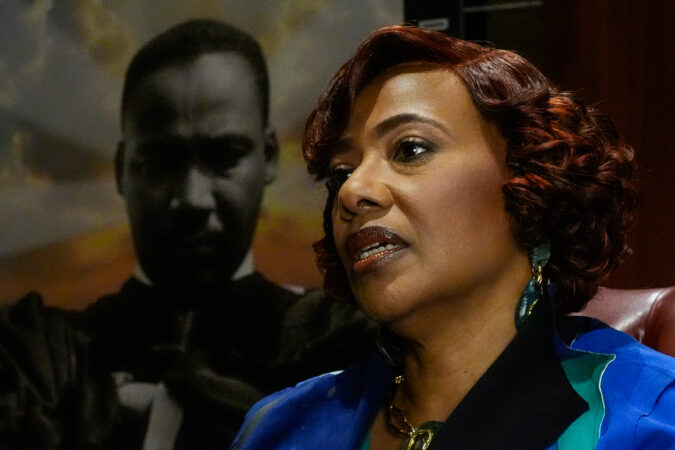
    ATLANTA — Against a backdrop of political division and upheaval, the Rev. Martin Luther King Jr.’s daughter said the holiday honoring her father’s legacy comes as “somewhat of a saving grace” this year.

    “I say that because it inserts a sense of sanity and morality into our very troubling climate right now,” the Rev. Bernice King said in an interview with the Associated Press. “With everything going on, the one thing that I think Dr. King reminds people of is hope and the ability to challenge injustice and inhumanity.”

    The holiday comes as President Donald Trump is about to mark the first anniversary of his second term in office on Tuesday. The “three evils” — poverty, racism, and militarism — that the civil rights leader identified in a 1967 speech as threats to a democratic society “are very present and manifesting through a lot of what’s happening” under Trump’s leadership, Bernice King said.

    King, CEO of the King Center in Atlanta, cited efforts to roll back diversity, equity, and inclusion initiatives; directives to scrub key parts of history from government websites and remove “improper ideology” from Smithsonian museums; and immigration enforcement operations in multiple cities that have turned violent and resulted in the separation of families.

    “Everything President Trump does is in the best interest of the American people,” White House spokesperson Davis Ingle said in an email. “That includes rolling back harmful DEI agendas, deporting dangerous criminal illegal aliens from American communities, or ensuring we are being honest about our country’s great history.”

    Maya Wiley, president and CEO of the Leadership Conference on Civil and Human Rights, one of the nation’s oldest and largest civil rights coalitions, said King’s words “ring more true today.”

    “We’re at a period in our history where we literally have a regime actively working to erase the Civil Rights movement,” she said. “This has been an administration dismantling intentionally and with ideological fervor every advancement we have made since the Civil War.”

    Wiley also recalled that King warned that “the prospect of war abroad was undermining to the beloved community globally and it was taking away from the ability for us to take care of all our people.” Trump’s administration has engaged in military strikes on alleged drug-smuggling boats and captured Venezuela’s president in a surprise raid earlier this month.

    Bernice King said she’s not sure what her father would make of the United States today, nearly six decades after his assassination.

    “He’s not here. It’s a different world,” she said. “But what I can say is his teachings transcend time and he taught us, I think, the way to address injustice through his nonviolent philosophy and methodology.”

    Nonviolence should be embraced not just by those who are protesting and fighting against what they believe are injustices, but should also be adopted by immigration agents and other law enforcement officers, she said. To that end, she added, the King Center previously developed a curriculum that it now plans to redevelop to help officers see that they can carry out their duties while also respecting people’s humanity.

    Even amid the “troubling climate” in the country right now, Bernice King said there is no question that “we have made so much progress as a nation.” The civil rights movement that her parents helped lead brought more people into mainstream politics who have sensitivity and compassion, she said. Despite efforts to scrap DEI initiatives and the deportation of people from around the world, “the inevitability is we’re so far into our diversity you can’t put that back in a box,” she said.

    To honor her father’s legacy this year, she urged people to look inward.

    “I think we spend a lot of time looking at everybody else and what everybody else is not doing or doing, and we’re looking out the window at all the problems of the world and talking about how bad they are and we don’t spend a lot of time on ourselves personally,” she said.

    King endorsed participation in service projects to observe the holiday because they foster connection, sensitize people to the struggles of others, and help us to understand each other better. But she said people should also look at what they can do in the year to come to further her father’s teachings.

    “I think we have the opportunity to use this as a measuring point from year to year in terms of what we’re doing to move our society in a more just, humane, equitable, and peaceful way,” she said.

  • Thousands of fans celebrate life of Grateful Dead guitarist Bob Weir in San Francisco

    Thousands of fans celebrate life of Grateful Dead guitarist Bob Weir in San Francisco

    SAN FRANCISCO — Thousands of people gathered Saturday at San Francisco’s Civic Center to celebrate the life of Bob Weir, the legendary guitarist and founding member of the Grateful Dead who died last week at age 78.

    Musicians Joan Baez and John Mayer spoke on a makeshift stage in front of the Bill Graham Civic Auditorium after four Buddhist monks opened the event with a prayer in Tibetan. Fans carried long-stemmed red roses, placing some at an altar filled with photos and candles. They wrote notes on colored paper, professing their love and thanking him for the journey.

    Several asked him to say hello to fellow singer and guitarist Jerry Garcia and bass guitarist Phil Lesh, also founding members who preceded him in death. Garcia died in 1995; Lesh died in 2024.

    “I’m here to celebrate Bob Weir,” said Ruthie Garcia, who is no relation to Jerry, a fan since 1989. “Celebrating him and helping him go home.”

    Saturday’s celebration brought plenty of fans with long dreadlocks and wearing tie-dye clothing, some using walkers. But there were also young couples, men in their 20s, and a father who brought his 6-year-old son in order to pass on to the next generation a love of live music and the tight-knit Deadhead community.

    The Bay Area native joined the Grateful Dead — originally the Warlocks — in 1965 in San Francisco at just 17 years old. He wrote or co-wrote and sang lead vocals on Dead classics including “Sugar Magnolia,” “One More Saturday Night,” and “Mexicali Blues.” He was generally considered less shaggy looking than the other band members, although he adopted a long beard like Garcia’s later in life.

    The Dead played music that pulled in blues, jazz, country, folk, and psychedelia in long improvisational jams. Their concerts attracted avid Deadheads who followed them on tours. The band played on decades after Garcia’s death, morphing into Dead & Company with John Mayer.

    Darla Sagos, who caught an early flight out of Seattle Saturday morning to make the public mourning, said she suspected something was up when there were no new gigs announced after Dead & Company played three nights in San Francisco last summer. It was unusual, as Weir’s calendar often showed where he would be playing next.

    “We were hoping that everything was OK and that we were going to get more music from him,” she said. “But we will continue the music, with all of us and everyone that’s going to be playing it.”

    Sagos and her husband, Adam Sagos, have a 1-year-old grandson who will grow up knowing the music.

    A statement on Weir’s Instagram account announced his passing Jan. 10. It said he beat cancer, but he succumbed to underlying lung issues. He is survived by his wife and two daughters, who were at Saturday’s event.

    His death was sudden and unexpected, said daughter Monet Weir, but he had always wished for the music and the legacy of the Dead to outlast him.

    American music, he believed, could unite, she said.

    “The show must go on,” Monet Weir said.

  • White House told CBS to run Trump interview unedited or get sued

    White House told CBS to run Trump interview unedited or get sued

    White House press secretary Karoline Leavitt told CBS News to air an interview with President Donald Trump in full or face a lawsuit, according to an audio recording of the exchange reviewed by the Washington Post.

    “He said, make sure you guys don’t cut the tape. Make sure the interview is out in full,” Leavitt told new CBS Evening News anchor Tony Dokoupil, relaying a message from the president ahead of the interview last week. “He said, if it’s not out in full, we’ll sue your ass off.”

    Dokoupil responded with levity: “He always says that!”

    The New York Times first reported on the exchange. The White House did not immediately respond to requests for comment.

    “The moment we booked this interview we made the independent decision to air it unedited and in its entirety,” a CBS spokesperson wrote in a statement.

    Before winning reelection in 2024, Trump sued CBS News for its editing of a 60 Minutes interview with Kamala Harris, then the vice president and Trump’s rival in the election. Trump’s lawsuit said the edited version was intended to “confuse, deceive, and mislead the public” and deliver the Nov. 5 election to Harris. CBS maintained that Harris’ answer was edited for time considerations only, a long-standing practice in television, just as space considerations come into play for other media outlets. In July, CBS settled the lawsuit out of court for $16 million.

    Later in the summer, CBS News’ parent company, Paramount, was purchased by Skydance, whose CEO, David Ellison, is the son of billionaire Trump ally and Oracle co-founder Larry Ellison. In October, the Paramount Skydance chief executive arranged the joint company’s purchase of the conservative opinion website the Free Press, run by former New York Times columnist Bari Weiss, and installed Weiss as editor in chief of CBS News, reporting directly to him.

    Weiss’s early tenure has been marked by layoffs and consternation among staffers about their new leader’s direction, story ideas, and deference to the government. In December, Weiss faced staff blowback at 60 Minutes for shelving a segment on the El Salvador prison CECOT because the production team was unable to secure an on-camera interview with an administration official.

    Dokoupil, who became the anchor of CBS’s storied evening news program earlier this month, has made a point of taking a different tack on the air, saying “People do not trust us like they used to.”

    Trump has expressed criticism of CBS News since it came under the new owners and Weiss’ editorship began. “THEY ARE NO BETTER THAN THE OLD OWNERSHIP, who just paid me millions of Dollars for FAKE REPORTING about your favorite President, ME!” Trump wrote on Truth Social in December. “Since they bought it, 60 Minutes has actually gotten WORSE!”

  • Republicans, Democrats try to contain Trump’s Greenland aggression

    Republicans, Democrats try to contain Trump’s Greenland aggression

    WASHINGTON — Republican lawmakers are scrambling to contain President Donald Trump’s threats of taking possession of Greenland, with some showing the most strident opposition to almost anything the Trump administration has done since taking office.

    They gave floor speeches on the importance of NATO last week. They introduced bills meant to prevent the U.S. from attacking Denmark. And several traveled to Copenhagen to meet with Danish counterparts.

    But it’s not clear that will be enough, as the president continues to insist that he will take control of the Arctic island. It’s raised fears of an end to NATO — a decades-old alliance that has been a pillar of American strength in Europe and around the globe — and raised questions on Capitol Hill and around the world about what Trump’s aggressive, go-it-alone foreign policy will mean for world order.

    “When the most powerful military nation on earth threatens your territory through its president over and over and over again, you start to take it seriously,” Sen. Chris Coons told the Associated Press.

    The Delaware Democrat organized the bipartisan trip to Denmark to “bring the temperature down a bit,” he said, as well as further talks about mutual military agreements in the Arctic. Republican Sens. Thom Tillis of North Carolina and Lisa Murkowski of Alaska accompanied a handful of Democrats on the trip. Also, Republican lawmakers joined in meetings in Washington last week with the Danish foreign minister and his Greenlandic counterpart where they discussed security agreements.

    Yet it’s clear Trump has other ideas. He said Saturday he will charge a 10% import tax starting in February on goods from eight European nations because of their opposition to his Greenland plans.

    Trump said on social media that because of modern weapons systems “the need to ACQUIRE is especially important.”

    The pushback to Trump’s Greenland plans

    Key Republicans have made clear they think that forcefully taking Greenland is out of the question. But so far, they’ve avoided directly rebuking Trump for his talk of possessing the island.

    Tillis on social media called Trump’s tariff plans “bad for America, bad for American businesses, and bad for America’s allies.”

    Senate Majority Leader John Thune (R., S.D.) told reporters Thursday, “There’s certainly not an appetite here for some of the options that have been talked about or considered.”

    In a floor speech, Thune’s predecessor as Republican leader, Sen. Mitch McConnell (R., Ky.), warned that an attempt to seize Greenland would “shatter the trust of allies” and tarnish Trump’s legacy with a disastrous foreign policy decision.

    Republican and Democratic lawmakers alike see an obvious path to bolstering American interests in Greenland while keeping the relationship with NATO ally Denmark intact.

    In a meeting with lawmakers Thursday, Danish Foreign Minister Lars Løkke Rasmussen and his Greenlandic counterpart Vivian Motzfeldt discussed how the countries could work together to develop critical mineral industries and military cooperation, Coons said. The diplomats also told the senators there is no evidence of Chinese or Russian activity in Greenland.

    Trump has made the argument that the U.S. should take Greenland before China or Russia do, prompting worry across Europe. Troops from several nations have been sent to Greenland in support of Denmark.

    Murkowski said on social media that “our NATO allies are being forced to divert attention and resources to Greenland, a dynamic that plays directly into Putin’s hands by threatening the stability of the strongest coalition of democracies the world has ever seen.”

    What can Congress do?

    Lawmakers are looking at a few options for taking a military attack on Greenland off the table. Still, the Trump administration has shown little if any willingness to get congressional approval before taking military action.

    Lawmakers, including Republicans like Murkowski, are pushing legislation that would prohibit Department of Defense funds from being used to attack or occupy territory that belongs to other NATO members without their consent.

    The Alaska senator also suggested Congress could act to nullify Trump’s tariffs. Murkowski and several other Republicans have already helped pass resolutions last year meant to undo tariffs around the globe, but those pieces of legislation did not gain traction in the House. They would have also required Trump’s signature or support from two-thirds of both chambers to override his veto.

    Democrats have also found some traction with war powers resolutions meant to force the president to get congressional approval before engaging in hostilities. Republicans last week narrowly defeated one such resolution that would prohibit Trump from attacking Venezuela again, and Democrats think there could potentially be more Republicans who would support one applying to Greenland.

    “What I’ve noticed is these war powers resolutions, they do put some pressure on Republicans,” said Sen. Tim Kaine, a Virginia Democrat who has forced votes on several similar resolutions. He said the tactic has also compelled the Trump administration to provide lawmakers with briefings and commitments to get congressional approval before deploying troops.

    Still, while dismissing the Venezuela war powers resolution on Wednesday, Republican leaders made the argument that the legislation should be ruled out of order because the Trump administration has said there are currently no U.S. troops on the ground in Venezuela.

    That argument may set a precedent for future war powers resolutions, giving Republicans a way to avoid voting against Trump’s wishes.

    “If you don’t have boots on the ground, it’s a moot point,” said Sen. Mike Rounds, a South Dakota Republican, about war powers resolutions in general. He also argued that the prospect of taking Greenland over the objections of Denmark is nothing “more than a hypothetical.”

    Other Republicans have expressed support for Trump’s insistence that the U.S. possess Greenland, though they have downplayed the idea that the U.S. would take it by force.

    That’s left the strongest objections on the Republican side of the aisle coming from a handful of lawmakers who are leaving Congress next year.

    Rep. Don Bacon, a Nebraska Republican, told the Omaha World Herald that an invasion of Greenland would lead to Trump’s impeachment — something he would “lean” towards supporting.

    Tillis, another retiring Republican, has directed his criticism at Trump advisers like White House deputy chief of staff Stephen Miller.

    “The fact that a small handful of ‘advisers’ are actively pushing for coercive action to seize territory of an ally is beyond stupid,” he said.

  • Melting ice may raise Greenland’s value. Trump’s fight may be just the start.

    Melting ice may raise Greenland’s value. Trump’s fight may be just the start.

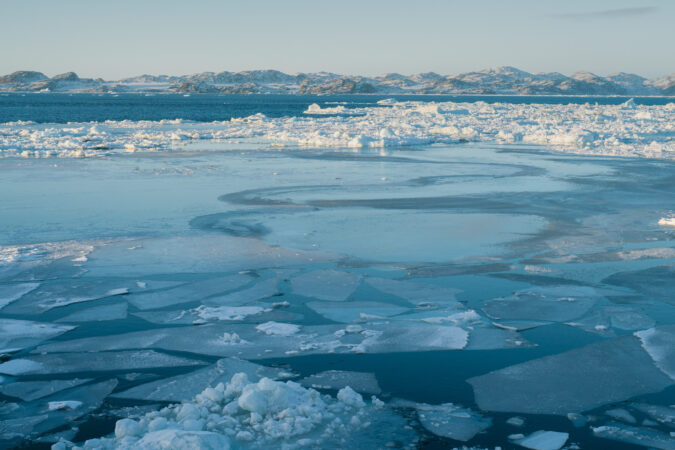
    The Arctic is warming around four times faster than the rest of the globe, exposing natural resources, opening up potential shipping routes and prompting an increase in activity among military powers. The changing landscape has created a region ripe for opportunity — and potential conflict — factors that may play a role in President Donald Trump’s sudden quest to obtain Greenland.

    Though he has called climate change a “hoax,” part of the value Trump has described in the Danish autonomous territory’s location is a result of the environmental shifts.

    “It’s partly the melting of sea ice making it more attractive for the economic development that he’d pursue in Greenland,” said Sherri Goodman, a distinguished fellow at the Atlantic Council and the former deputy undersecretary of defense for environmental security.

    Trump has said he wants the territory because of its strategic location and untapped natural resources, including diamonds, lithium, and copper.

    The president announced tariffs Saturday on countries that have sent troops to Greenland in recent days. Talks this week between the foreign ministers of Greenland and Denmark and U.S. officials ended in “fundamental disagreement,” according to Denmark’s top diplomat, Lars Lokke Rasmussen.

    The prospect of the United States using military force against the NATO ally, as Trump has floated, could end the decades-old defense pact. His bid for the territory is one of the most concrete examples of how climate change is influencing geopolitics. As the northernmost parts of our planet continue to warm, the effects could change the ways the international community operates.

    “The freeing of the Arctic from sea ice, at least seasonally, will create an entirely new theater for economic and security competition,” said Joseph Majkut, the director of the Energy Security and Climate Change Program at the Center for Strategic and International Studies. “And while we’ve known that is going to be the case for some time, it seems we’re at an inflection point.”

    Arctic sea ice typically peaks in March, as ice forms and spreads through the depth of winter, before beginning to melt to its lowest extent, usually in September. Over approximately the past five decades, changes in Arctic ice cover have revealed pathways for shipping and commerce, as parts of the region stay ice-free for longer. There’s the northern sea route along Russia’s coast, and the northwest passage along northern Canada. Analysts note icebreakers, or vessels with the capability to chomp through thinning ice, have begun passing through a “central route,” over the top of the Arctic.

    In October, a Chinese container ship used the northern sea route to shave about 20 days off its typical journey through the Suez Canal to Europe.

    If the region becomes ice-free in future summers, it could reshape global trade. That reality is mere decades away, though exact predictions depend on whom you ask and how quickly the planet warms.

    A 2021 study in Nature modeled future open-water periods based on different warming thresholds. It found that if the planet warms 2 degrees Celsius (3.6 degrees Fahrenheit) above the 1850-1900 average, that period lengthens by 63 days, while if the planet warms 3.5 degrees (6.3 degrees Fahrenheit) above the average, nearly the entire Arctic would have at least three months of open water each year.

    But it’s hard to predict the exact timeline of the rate of melting, and either way, continued escalations or jockeying won’t really depend on the pace of warming, Majkut said.

    They also may be underestimating the hazards of a melting Arctic, scientists warn. Regardless of when an ice-free summer comes, it will remain an extreme environment.

    “It’s going to be a long time before we’re arguing over beachfront property or protecting people from crocodiles up there,” Majkut said.

    Without sea ice, communities could lose crucial protection, said Zack Labe, a climate scientist who studies regional climate risks.

    “Typically, the ice would act as a buffer for high wind and waves,” he said, especially in the fall when the region experiences typhoons in the Pacific that bring huge swells. That ice protects people against erosion and flooding.

    The melting Arctic could produce unpredictable ocean conditions, like changes in the wind and the waves. And if there is an emergency, there are few accessible ports.

    “It could become more hazardous for ships to go into these areas rather than less,” said Labe.

    While Trump is pursuing Greenland, he hasn’t publicly acknowledged climate change’s role in what he perceives to be its value. A staunch climate change denier, the president has moved to cut funding to many climate initiatives including Arctic research.

    But to some, that could be bad geopolitical strategy.

    “Climate change is a significant national security risk,” said Goodman. “The openings of sea lanes, the changing ice conditions, are contributing to the intense geopolitical situations we’re experiencing.”

  • Pentagon readies 1,500 soldiers to possibly deploy to Minnesota, officials say

    Pentagon readies 1,500 soldiers to possibly deploy to Minnesota, officials say

    The Pentagon has ordered about 1,500 active-duty soldiers to prepare for a possible deployment to Minnesota, defense officials told the Washington Post late Saturday, after President Donald Trump threatened to invoke the Insurrection Act in response to unrest there.

    The soldiers are assigned to two infantry battalions with the Army’s 11th Airborne Division, which is based in Alaska and specializes in cold-weather operations.

    The Army placed the units on prepare-to-deploy orders in case violence in Minnesota escalates, officials said, characterizing the move as “prudent planning.” It is not clear whether any of them will be sent to the state, the officials said, speaking like some others on the condition of anonymity to discuss sensitive military planning.

    The White House said in a statement that it’s typical for the Pentagon “to be prepared for any decision the President may or may not make.” Sean Parnell, a spokesperson for Defense Secretary Pete Hegseth, said in a statement Sunday that the Pentagon is “always prepared to execute the orders of the Commander-in-Chief if called upon.” Two officials said that the orders are unrelated to Trump’s recent rhetoric about the United States needing to take control of Greenland.

    The development was reported earlier by ABC News.

    Minneapolis Mayor Jacob Frey on Sunday called the federal government’s surge of immigration enforcement officials, and the possible deployment of active-duty soldiers, an attempt to “bait” protesters in the city.

    “We’re not going to give them an excuse to do the thing that clearly they’re trying to set up to do right now, which is these 1,500 troops,” Frey told CNN. “I never thought in a million years that we would be invaded by our own federal government.”

    The Insurrection Act, a federal law dating to 1807, permits the president to take control of a state’s National Guard forces or deploy active-duty troops domestically in response to a “rebellion.” Invoking the act would be an extraordinary move and mark the first time a commander in chief has done so since President George H.W. Bush called on the military during the Los Angeles riots of 1992 that killed dozens of people and caused widespread destruction.

    Typically, invoking the Insurrection Act is considered a last resort, when law enforcement personnel are unable to keep the peace during times of civil unrest.

    Trump threatened Thursday to invoke the law, saying on social media that unless officials in Minnesota could stop protesters from “attacking” agents with Immigration and Customs Enforcement, he would “institute the INSURRECTION ACT” and “quickly put an end to the travesty that is taking place in that once great State.”

    On Friday, Trump seemed to cool his rhetoric, saying there wasn’t a reason to invoke the law “right now.” He added, “If I needed it, I’d use it.”

    The Trump administration has turned up the pressure on Gov. Tim Walz and other Democratic leaders in Minnesota, with the Justice Department launching an investigation into whether Walz and Frey have impeded immigration enforcement. Walz, Frey, and other Democrats have said the move is an act of authoritarianism intended to silence critics of the administration’s actions.

    On Sunday, Frey said his office had not yet received a subpoena in the investigation, calling the probe “deeply concerning.”

    “This whole investigation would ultimately be the product of one of the most basic, foundational responsibilities that I have as mayor, which is to speak on behalf of my constituents,” he told ABC News.

    Walz and Frey have pleaded for protesters to remain peaceful. On Saturday, Walz also mobilized the Minnesota National Guard to support local authorities, but he has not deployed those troops.

    Minnesota has been a preoccupation of the Trump administration since at least December, when the Department of Homeland Security launched Operation Metro Surge, a multiweek immigration crackdown that has led to the arrest of hundreds of people and has been marked by clashes between federal agents and protesters.

    ICE agents have shot two people there this month, killing Renée Good, an American citizen, and wounding a Venezuelan migrant, Julio Cesar Sosa-Celis, after they attempted to detain him.

    Minnesota officials have sued the Trump administration over the operation, alleging the surge in law enforcement there is a politically motivated violation of the Constitution. Minnesota Attorney General Keith Ellison (D) said he is seeking a restraining order and called the operation a “federal invasion.”

    Other domestic military deployments ordered by Trump have been legally contested, with mixed results. In the most significant of those actions, Trump seized control of the California National Guard in June over the objections of Gov. Gavin Newsom, a Democratic political rival. About 4,000 Guard members were deployed to Los Angeles along with a battalion of about 700 active-duty infantry Marines after protests against ICE turned violent in a few instances.

    In December, Trump said he would end his efforts to keep National Guard troops deployed in Los Angeles, Chicago, and Portland, Ore., following a 6-3 ruling by the Supreme Court that found the administration failed to identify a legal way in which the military could “execute the laws in Illinois.” At issue in those jurisdictions was whether the deployments violated the Posse Comitatus Act, a federal law that prohibits U.S. troops from carrying out civilian law enforcement actions.

    Trump also has deployed more than 2,600 members of the National Guard to D.C., and administration officials recently extended that mission through the end of 2026. While that deployment remains legally contested, the president has more authority to deploy National Guard members there because it is a federal jurisdiction.

  • Europe warns of ‘dangerous downward spiral’ after Trump threatens tariffs over Greenland

    Europe warns of ‘dangerous downward spiral’ after Trump threatens tariffs over Greenland

    BERLIN — The eight European countries targeted by U.S. President Donald Trump for a 10% tariff for opposing American control of Greenland blasted the move Sunday, warning that his threats “undermine trans-Atlantic relations and risk a dangerous downward spiral.”

    The joint statement by some of America’s closest allies signaled a possible turning point in the recent tensions over sovereignty and security nearly 24 hours after Trump’s threat.

    It was also the most forceful rebuke of Trump from the European allies since he returned to the White House almost a year ago. In recent months, Europeans have mostly opted for diplomacy and flattery around him, even when seeking an end to the war in Ukraine. Sunday’s statement, as well as some European countries sending troops to Greenland for a Danish military training exercise, appeared to be a step away from that strategy.

    The unusually strong joint statement from Denmark, Norway, Sweden, France, Germany, the United Kingdom, the Netherlands, and Finland said troops sent to Greenland for operation Arctic Endurance pose “no threat to anyone.”

    Standing in solidarity with Denmark, Greenland

    Trump’s Saturday announcement sets up a potentially dangerous test of U.S. partnerships in Europe. He appeared to indicate that he was using the tariffs as leverage to force talks over the status of Greenland, a semiautonomous territory of NATO ally Denmark that he regards as critical to U.S. national security.

    “We stand in full solidarity with the Kingdom of Denmark and the people of Greenland,” the group said. “Building on the process begun last week, we stand ready to engage in a dialogue based on the principles of sovereignty and territorial integrity that we stand firmly behind. Tariff threats undermine trans-Atlantic relations and risk a dangerous downward spiral.”

    There are immediate questions about how the White House could try to implement the tariffs because the European Union is a single economic zone in terms of trading. It was unclear, too, how Trump could act under U.S. law, though he could cite emergency economic powers that are currently subject to a U.S. Supreme Court challenge.

    EU foreign policy chief Kaja Kallas said China and Russia will benefit from divisions between the U.S. and Europe. She added in a post on social media: “If Greenland’s security is at risk, we can address this inside NATO. Tariffs risk making Europe and the United States poorer and undermine our shared prosperity.”

    Europe has been trying to keep Trump on its side to ensure U.S. support for Ukraine, including Washington sharing intelligence with Kyiv and its involvement in security guarantees if a peace agreement is reached with Russia.

    Rasmus Søndergaard, a senior researcher at the Danish Institute for International Studies, called Trump’s announcement “unprecedented” because tariff threats normally stem from trade disagreements, not territorial disputes between allies.

    “That’s of course why we’re seeing the response from European countries saying ’enough is enough,’” he told the Associated Press. “I think there’s in part probably a strategic calculation, of course, from the governments in these countries that if you give in to Trump on this, what will be the next thing? And at some point you have to sort of push back.”

    Søndergaard also said Trump leveled the playing field for Europe with the tariff threat. Europeans cannot compete militarily, but the EU can wield an economic weapon through reciprocal tariffs.

    “The EU has the ability to really strike back with force if they want to, and it will hurt European economies,” he said. “It will hurt American economies. The challenge for Trump is he has midterms coming up and it’s not going to help him if the U.S. goes into more of an economic recession or more of an economic turmoil than is already the case.”

    Meanwhile, NATO Secretary General Mark Rutte wrote on social media Sunday that he’d spoken with Trump. Rutte has been criticized in recent days for largely sidestepping questions about Trump and Greenland and any NATO tensions over the island.

    “We will continue working on this, and I look forward to seeing him in Davos later this week,” Rutte said.

    Trump’s move was also panned domestically.

    U.S. Sen. Mark Kelly, a former U.S. Navy pilot and Arizona Democrat, said Trump’s threatened tariffs on U.S. allies would make Americans “pay more to try to get territory we don’t need.”

    “Troops from European countries are arriving in Greenland to defend the territory from us. Let that sink in,” Kelly wrote on social media. “The damage this President is doing to our reputation and our relationships is growing, making us less safe. If something doesn’t change we will be on our own with adversaries and enemies in every direction.”

    Former U.S. Vice President Mike Pence said he supports the United States ultimately owning Greenland, but not how Trump is trying to accomplish it.

    He said he had concerns whether Trump had the constitutional authority to impose unilateral tariffs on NATO allies, as well as about a threat of a military invasion. Trump’s current position threatens “to fracture that strong relationship, not just with Denmark, but with all of our NATO allies,” Pence said on CNN’s State of the Union.

    Populist allies of Trump criticize tariff threat

    Six of the countries targeted are part of the 27-member EU, which operates as a single economic zone in terms of trading. It was not immediately clear if Trump’s tariffs would impact the entire bloc. EU envoys scheduled emergency talks Sunday evening to determine a potential response.

    The tariff announcement also drew blowback from Trump’s populist allies in Europe.

    Italy’s right-wing premier, Giorgia Meloni, considered one of Trump’s closest allies on the continent, said she had spoken to him about the tariffs, which she described as “a mistake.”

    The deployment to Greenland of small numbers of troops by some European countries was misunderstood by Washington, Meloni said, adding it was not a move against the U.S. but aimed to provide security against “other actors” that she didn’t identify.

    Jordan Bardella, president of Marine Le Pen’s far-right National Rally party in France and a European Parliament lawmaker, posted that the EU should suspend last year’s tariff deal with the U.S., describing Trump’s threats as “commercial blackmail.”

    Trump also achieved the rare feat of uniting Britain’s main political parties — including the hard-right Reform UK party — all of whom criticized the tariff threat.

    “We don’t always agree with the U.S. government and in this case we certainly don’t. These tariffs will hurt us,” said Reform UK leader Nigel Farage, a longtime champion and ally of Trump. His social media post stopped short of criticizing Trump’s designs on Greenland.

    U.K. Prime Minister Keir Starmer, who leads the center-left Labour Party, said the tariffs announcement was “completely wrong” and his government would “be pursuing this directly with the U.S. administration.”

  • Letters to the Editor | Jan. 18, 2026

    Letters to the Editor | Jan. 18, 2026

    Domestic terror

    I rarely agree with Donald Trump, but he’s correct about one thing: There is domestic terrorism in America. The perpetrators have been spotted in major cities across the country. They are brazen in their assaults on citizens, wear masks to conceal their identity, drive unmarked vehicles, and rarely identify themselves. They kidnap and hold victims without due process. They carry long guns and many other weapons to cause panic and fear in our communities. We must insist that our elected government officials band together to eliminate this threat. We demand that all U.S. Immigration and Customs Enforcement agents be detained and disarmed, and that ICE be abolished to ensure our safety and protect our rights.

    Barry Adams, Malvern

    Enough is enough

    After almost a year of outrages, large and small, Donald Trump now has blood on his hands. While we seem to be almost immune to caring about the 100 or so casualties of Trump’s bizarre bombing of alleged drug boats, plus another 100 killed in the kidnapping attack on Venezuela, there is now the death of an American citizen in Minneapolis at the hands of U.S. Immigration and Customs Enforcement agents.

    Despite Homeland Security Secretary Kristi Noem’s attempt to spin the horror, it is apparent that this is the tragedy we all feared when we first saw masked thugs, alleging to be law enforcement, cloaked in black and unidentified on the streets of American cities. There was unintended meaning in the fact that The Inquirer’s front-page story happened to jump to Page 6 exactly between Noem calling it “an act of domestic terrorism” and saying the victim was the terrorist. For once, she seemed to be telling the truth: that ICE is a domestic, government terrorist organization. While Trump’s sycophants help him turn our world upside down, Americans need to find ways to stand up and defend ourselves and each other. It is time to bring our feckless leaders to justice before they destroy any more of our lives, our fortunes, and our sacred honor.

    Joe Jones, Mount Holly

    Double standard

    Just to be clear, Vice President JD Vance said about the U.S. Immigration and Customs Enforcement agent who shot the woman in Minnesota: “This is a guy who’s actually done a very, very important job for the United States of America … he’s been assaulted. He’s been attacked. He’s been injured because of it.” Really? Let’s remind the VP that those exact sentiments apply to all police present at the Jan. 6, 2021, insurrection, when armed Donald Trump supporters attacked the U.S. Capitol. What’s changed?

    Dennis Fisher, Media

    Moral restraint

    During a lengthy interview in the Oval Office, our authoritarian president declared that no law, domestic or international, can limit his use of the power he believes American voters bestowed upon him. What can stop him? “My own morality. My own mind. It’s the only thing that can stop me,” he said. No need here to make the case that Donald Trump, who by all rights should be sitting in a federal penitentiary right now, has any morality.

    Those statements, combined with his lawless actions, should at long last be the breaking point, the point of no return, for House and Senate Republicans. As unpalatable as is the thought that his snarky prevaricating vice president will be elevated to chief executive, Congress must now impeach and convict the greatest villain to ever sit in this nation’s highest seat of power. That may require Pennsylvania’s Republican senator to, for the first time, stop blindly toeing the line for Trump and his divisive and often absurd policies.

    David Kahn, Boca Raton, Fla.

    Join the conversation: Send letters to letters@inquirer.com. Limit length to 150 words and include home address and day and evening phone number. Letters run in The Inquirer six days a week on the editorial pages and online.

  • Horoscopes: Sunday, Jan. 18, 2026

    ARIES (March 21-April 19). With automatic bill payment and thermostats, “set it and forget it” is the aim. But in relationships, the only way to make them work is to show up ready and willing to hold the whole glorious mess.

    TAURUS (April 20-May 20). Here comes the call to action. It’s also normal to look around to see if anyone else will step up so you don’t have to. But this one is for you, and the moment you act, courage kicks in.

    GEMINI (May 21-June 21). Those who have resisted temptation know how hard that can be. What’s easier is using your feet to get somewhere temptations do not exist. Easiest of all? Finding something you like much better.

    CANCER (June 22-July 22). You’re aiming to be fair and balanced. It’s not about splitting things evenly; it’s about choosing what actually restores harmony. Small adjustments like changing a word, choosing to pause or reframing how you think about a problem can change your entire vibe.

    LEO (July 23-Aug. 22). A stone thrown into the choppy water can’t make a ripple. When there’s chaos, you handle it like a pro. But when there’s not, you can apply your talent where it will make an impact.

    VIRGO (Aug. 23-Sept. 22). Charm is the result of countless small decisions about what to say, what to hold back and how to show up. But you’ve already learned, refined and practiced for years. Now all you have to do is trust yourself.

    LIBRA (Sept. 23-Oct. 23). Plans unravel. It’s almost funny. You could look for causes, but you’re inclined to shrug, laugh and then find meaning that works for your new plan — to move forward anyway. Experience shapes you in mighty fine ways.

    SCORPIO (Oct. 24-Nov. 21). Adjust the schedule, try a different route or make a new order of operations. You need a friendlier rhythm, and changing one thing will get you there. It doesn’t even have to be a big change. Small adjustments will strongly influence the outcome.

    SAGITTARIUS (Nov. 22-Dec. 21). A conversation can bring someone more into your life or keep them at a distance, connect the dots or mystify, open a heart or close it. Listen with curiosity. An ordinary exchange will be extremely memorable and useful if you come at it with an attitude of incorporation.

    CAPRICORN (Dec. 22-Jan. 19). Your taste is refined by the choices you’ve made in the past. Some of them were regrettable in an aesthetic sense, but there’s no big harm in it, just a little embarrassment at best. It feels better to make a choice that works with your surroundings, and you’ll get it right today.

    AQUARIUS (Jan. 20-Feb. 18). There’s pleasure in tending today. A drawer, a list, a plant or a single paragraph improves because you handled it. It’s amazing how a simple act of care restores not only the subject but your own mind to a sense of clarity and ease.

    PISCES (Feb. 19-March 20). You’ll notice something appealing in another person’s life. Let that awareness clarify what truly fits you. Comparison doesn’t have to leave anyone feeling less-than. It can be inspiration. It can be saying, “Wow, this is also possible for me.” Let it send you in a new direction.

    TODAY’S BIRTHDAY (Jan. 18). This is your Year of Well-Timed Courage, when you act at precisely the right moment. You don’t rush. You don’t stall. You move when you feel it, and your feelings steer you well. Each brave step feels proportionate and pays off in trust, opportunity or relief. More highlights: A family situation resolves in the sweetest way. Travel is blessed with synchronicities. You’ll give and accept financial grace. Cancer and Libra adore you. Your lucky numbers are: 3, 12, 4, 29 and 6.

  • Dear Abby | Neatnik’s patience in cluttered home nears its end

    DEAR ABBY: I am neat and organized, but my wife is the opposite. She’s messy and disorganized. I knew it before we married, but we made a handshake deal that she’d make an effort to pick up after herself once we moved in together. Unfortunately, it hasn’t happened.

    Every time she comes home, whatever she’s carrying gets dropped on the nearest flat surface — keys, bags, mail, you name it. She piles things up instead of putting them away and it feels like there’s clutter everywhere I look. Our bed is often piled with clothes and other items stacked almost two feet high.

    I find myself constantly picking up after her, which is exhausting and makes me feel like I’m the only one taking care of our house. Her lack of effort is driving me crazy and causing me significant stress. I’ve tried talking calmly to her, setting boundaries for clutter-free areas, even threatening divorce out of sheer frustration. Nothing seems to work. I don’t know what else to do.

    I love my wife and don’t want our marriage to fall apart over this, but the constant mess is taking a toll on my mental health and our relationship. How can I approach this in a way that fosters understanding and cooperation? I want us to find a solution that works for both of us without making her feel criticized or attacked.

    — MESSED UP

    DEAR MESSED UP: Several thoughts come to mind. You, a man who is “super neat,” knew your wife was messy but married her anyway. Short of divorcing her, would it be possible for you to designate certain areas of your home that you agree will remain clutter-free? If that isn’t possible, could you do what some other couples have done, which is live apart? Marriage mediation might help your wife understand the message you have been trying (and failing) to deliver. It’s worth a try, but lifelong habits are very hard to break.

    ** ** **

    DEAR ABBY: Our 24-year-old daughter is getting married in 10 months. My wife is invited to the wedding, but I am not, and I am furious. The groom’s family is paying for the trip, but they say I am not invited “for financial reasons.”

    I don’t have a great relationship with my daughter. But that isn’t the point. I told my wife that if the roles were reversed and she was excluded, I would not go. This may be a deal-breaker for me. It’s apparent that our marriage doesn’t mean as much to my wife as it does to me. What are your thoughts?

    — ELIMINATED IN TEXAS

    DEAR ELIMINATED: What I think is it’s terrible for your daughter to put her mother on the spot this way. By doing so she is putting a strain on your marriage. You and your wife need to ask your doctor for a referral to a licensed marriage and family therapist so you can hash this out before further damage is done to your relationship. Do I think your wife should forgo the wedding? What I think doesn’t matter as much as what she does.