Tag: no-latest

  • Letters to the Editor | Nov. 27, 2025

    Letters to the Editor | Nov. 27, 2025

    What’s in your wallet?

    Are you experiencing the Donald Trump/JD Vance boom? Vance recently said, “It’s gonna take a little bit of time for every American to feel that economic boom which we really do believe is coming.” How long does “every American” need to wait? Do you know who doesn’t have to wait? Do you know who is feeling a boom you or I will never see? The Trump family.

    Since Trump has taken office, the family has made over a billion dollars. No waiting there. No deciding how they are going to pay bills. But the everyday American — who can’t afford rent, groceries, or healthcare — needs to wait.

    How many vacations have you taken since this regime took office? Vance has taken how many? Last I saw was eight. That’s almost one a month. He’s not waiting for a boom. Does this administration even know what affordability means?

    Trump and Vance imposed tariffs — “the most beautiful word” — that raised prices on everyday goods and services. Now they are retracting them to make life “affordable” again. That’s the only boom you and I will see. And they will expect you to be humble and ever grateful for their willingness to put out the very fire they started.

    This is your economy. This is your mess. This administration is so out of touch with the everyday Americans they swore to serve. They ran on making life affordable, and the only ones who seem to be able to afford basic life needs are they and their oligarch cronies.

    Ellen McGuigan, Clarks Summit

    . . .

    In 1992, James Carville coined the phrase, “It’s the economy, stupid.” It’s still a priority today, but Donald Trump’s solutions to the pesky economic challenges are little more than trumped-up pigs in a poke to sell us a bill of goods. Can’t buy a first home? How about a 50-year mortgage? Lower monthly payments, but pay no attention to the fact that banks will likely charge higher interest, the total cost will increase 86%, and the first 10 years of payments cover interest and no equity. Need affordable healthcare? The Affordable Care Act is now offering catastrophic coverage (plans once limited to people under 30). Lower monthly payments (sound familiar?) but with a whopping $10,000 deductible. It’s gonna cost ya! Chris Bond, a spokesperson for AHIP, an insurance lobbying firm, cautions that “catastrophic plans … are not a replacement for affordable comprehensive coverage.” And let’s not even get started on Robert F. Kennedy Jr.’s “miasma theory,” his blast us back into the past approach to medicine that Amesh Adalja, of the Johns Hopkins Center for Health Security, said is “all just obfuscation to support his idea that vaccines are not valuable.” Pigs in a poke. A bill of goods. Don’t do us any favors. And the final insult? JD Vance, sensing Trump’s lame-duck status, is suddenly in the picture, all unctuous empathy, addressing our concerns about the high cost of living, assuring us, “We hear you,” and we just need to “have a little patience.” Yeah, right. They might hear us, but they are not listening. It’s still the economy, but it’s their lame brain “solutions” that are the epitome of stupid.

    Deborah DiMicco, Newtown

    Loss of HUD funding

    The announcement that the U.S. Department of Housing and Urban Development will no longer fund permanent supportive housing is a disaster for homeless service providers like the Bethesda Project, Project HOME, and the women and men who live in HUD-supported rooms or apartments. The Bethesda Project operates 150 units of permanent, supportive housing for formerly homeless men and women. Most, if not all, of those units are supported by HUD subsidies that make up the difference between one-third of a resident’s income and the market rate for a permanent room or apartment. Absent the HUD subsidy, most residents cannot pay the market rate. Those residents will likely end up back on the streets of Philadelphia. This Trump administration policy is misguided, counterproductive, and stupid.

    Angelo Sgro, Philadelphia

    Restore viable vacancies

    In another world, the demolition of the former Admiral Court apartment building at 237 S. 48th St. would never have happened. A sturdy four-story apartment building with 46 units, in a city that is in need of affordable housing, should have been a prime target for rehabilitation and reuse. Instead, the building is lost. Even after a devastating fire that investigators are treating as arson, there was still enough of the structure left that this building could have been saved. Now, the neighborhood will get an empty lot to look at, despite pleas from neighbors and from a member of City Council to see this building put back into service.

    The current owners of Admiral Court also control 4710 Locust St., which is listed as having 56 apartments and has been vacant for many years. Hopefully, the city can intervene before another arson fire destroys this building, as well.

    Katherine Dowdell, Philadelphia

    No promises

    New York City Mayor-elect Zohran Mamdani met with President Donald Trump. I hope no one thinks Trump promised Mamdani anything. President Trump talked only in generalities.

    President Trump said he agrees that it would be great if Mamdani could make NYC more safe. He said it would be great if Mamdani could make things more affordable, and great if he could help the housing shortage. That means ab-so-lute-ly nothing. Trump just wished him well. President Trump did not promise to do or finance anything specific to help, for sure. Mayor-elect Mamdani’s methods may be way, way different from President Trump’s methods to help anything, and we will all wait with bated breath to see what the future brings.

    Also, Mamdani is not a dictator. He can only pass laws with the majority agreement of himself and of 51 city council members from the five boroughs. That has never even been mentioned. How will the 51 members vote?

    All President Trump really did was to say hello and good luck.

    David F. Lipton, Toms River

    Join the conversation: Send letters to letters@inquirer.com. Limit length to 150 words and include home address and day and evening phone number. Letters run in The Inquirer six days a week on the editorial pages and online.

  • Dear Abby | Husband invites son to be third wheel on couple’s trip

    DEAR ABBY: My husband and I married 20 years ago. We have a blended family of eight kids, but it’s just us now. Our kids are scattered across the country. Over all these 20 years, we have never taken a vacation just for us. We have always visited family.

    Now, after scrimping, saving and planning, our dream trip is finally happening. We are visiting Disneyland! Problem is, our youngest just relocated to L.A. I bought tickets, scheduled tours and reserved meals for just the two of us. But my husband has included our son in everything now — all park visits, dinners, etc. Don’t get me wrong — I love my kids, but this was supposed to be “our” time.

    I agreed to one dinner with our son, but other than that, we are on our own. My husband wants to include him in everything because he lives close by. Now my husband says he doesn’t want to go at all. He insists that our son partake in everything we do, but I want this trip to be about us. We deserve this! How do I convince him that we need this trip?

    — DISAPPOINTED IN OHIO

    DEAR DISAPPOINTED: You shouldn’t have to convince your husband to follow through on your dream vacation. He should have consulted you before inviting your son and telling him he will be included in everything. You wrote that you scrimped and saved for years to afford this vacation. How does he intend to pay for all those extra expenses for a third person? If your husband doesn’t want an experience “just for the two of you,” allow me to suggest it may be time to schedule something just for yourself. You have earned it.

    ** ** **

    DEAR ABBY: I was engaged to my husband for three years before we got married. A little more than a year ago, he was told that he had two years to live. Six months later, we celebrated our 25th wedding anniversary, and 10 days after that, he passed away.

    I have met a man who is two years younger than I am who makes me laugh again. I feel like a schoolgirl when I’m around him. He wants to be a roommate, live with me and sleep upstairs. I sleep downstairs, but I don’t know if I should let him or not. Advice?

    — FEELING A BIT SCARED IN INDIANA

    DEAR FEELING: Would this man be paying you rent and buying food, or would you be picking up the tab? If all he wants is to be your platonic roommate, but you are physically attracted to him, I recommend against proceeding with the arrangement. You would find it increasingly painful and frustrating, and when you finally had had enough pain and frustration, you might have to hire an attorney to help you get him out. What seems attractive now could be a huge pain in the posterior, and I guarantee it wouldn’t leave you laughing. Keep things as they are until the relationship becomes more defined.

  • Horoscopes: Thursday, Nov. 27, 2025

    ARIES (March 21-April 19). Thankfully, you have a spirit that begins things. You take the first step when others hesitate, light the torch, and run ahead. You remind everyone that momentum itself is a blessing — energy that turns desire into something real and alive.

    TAURUS (April 20-May 20). Thankfully, you know your own appetites, as this allows you to nourish, comfort and soothe yourself. Giving yourself what you need most is a noble act because when you’re as strong as you can be, the people around you benefit, too.

    GEMINI (May 21-June 21). Thankfully, you stay curious. Every question you ask and every story you share creates connection. Your way with words and wonder keeps the world interesting, reminding everyone that gratitude begins with paying attention to what’s worth talking about.

    CANCER (June 22-July 22). Thankfully, you care so deeply. You sense when someone needs comfort, and you offer it without being asked. Your nurturing energy wraps the world in safety, teaching that gratitude isn’t always spoken; sometimes it’s simply felt through kindness.

    LEO (July 23-Aug. 22). Thankfully, you have an instinct for entertaining yourself, as this leads to being the bright spark in everyone’s days, including your own. You see what is unusual, funny or worthy of your playful attention and you point it out.

    VIRGO (Aug. 23-Sept. 22). Thankfully, you notice details that others miss. You bring grace to systems, order to chaos and meaning to small things. Gratitude flows through every improvement you make, proving that love often hides in practical acts of service.

    LIBRA (Sept. 23-Oct. 23). Thankfully, you bring harmony wherever you go. Your natural sense of fairness and style elevate the tone of every room. Gratitude is your social art; you balance others with kindness and show that peace is something we create together.

    SCORPIO (Oct. 24-Nov. 21). Thankfully, you feel deeply and aren’t afraid of transformation. You know that love, loss and renewal are parts of the same sacred cycle. Gratitude, to you, is found in truth — even when it’s shadowy, it still packs a powerful connection.

    SAGITTARIUS (Nov. 22-Dec. 21). Thankfully, you’re guided by wonder. You roam wide, in body or in mind, believing life is worth exploring. Your gratitude is expansive, turning experience into wisdom and reminding others that freedom itself is a reason to give thanks.

    CAPRICORN (Dec. 22-Jan. 19). Thankfully, you endure. Your discipline and faith in effort build lasting things like work, trust and legacy. Gratitude shows up for you in steady progress and in the quiet pride of seeing what happens when you don’t give up.

    AQUARIUS (Jan. 20-Feb. 18). Thankfully, you think differently. Your original mind and humanitarian heart bring fresh air to stale rooms. You’re grateful not just for belonging but for the freedom to be yourself and for the chance to make the world kinder.

    PISCES (Feb. 19-March 20). Thankfully, you empathize, which brings together people and groups. This is what is essential; shared emotion is the glue that sustains relationships, without which nothing is possible for a human. This is what makes a difference in the world.

    TODAY’S BIRTHDAY (Nov. 27). Welcome to your Year of Sacred Momentum. You’ll sense divine timing in motion — one green light after another. What felt stalled will glide and then accelerate, earning money on the way. It comes with a profound sense of contribution to the greater good. More highlights: Partnerships feel destined, good fortune through intuition, and a steady rise in prosperity, health and inner peace. Libra and Cancer adore you. Your lucky numbers are: 5, 39, 2, 15 and 19.

  • Hong Kong building blaze kills at least 36 people, hundreds missing

    Hong Kong building blaze kills at least 36 people, hundreds missing

    HONG KONG – At least 36 people were killed and 279 were missing on Wednesday after Hong Kong’s deadliest fire in three decades ripped through high-rise residential towers sheathed in flammable bamboo scaffolding, authorities said.

    More than 10 hours after the fire started in the northern Tai Po district, flames and thick smoke still engulfed the 32-story towers as rescue workers swarmed the site and shocked inhabitants watched nearby.

    The cause of the blaze was not immediately known, but it was fanned by green construction mesh and bamboo scaffolding which the government began phasing out in March for safety reasons.

    Firefighters work to extinguish a blaze that broke out at Wang Fuk Court in Hong Kong on Wednesday.

    Working through the night, firefighters were struggling to reach upper floors of the Wang Fuk Court housing complex, which has 2,000 apartments in eight blocks, due to the intense heat.

    One 71-year-old resident surnamed Wong broke down in tears, saying his wife was trapped inside.

    A firefighter was among the 36 killed, and 29 people were in hospital, Hong Kong leader John Lee told reporters. Some 900 people were in eight shelters.

    “The priority is to extinguish the fire and rescue the residents who are trapped. The second is to support the injured. The third is to support and recover. Then, we’ll launch a thorough investigation,” Lee told reporters. Harry Cheung, 66, who has lived at Block Two in one of the complexes for more than 40 years, said he heard a loud noise about 2:45 p.m. (6:45 GMT) and saw fire erupt in a nearby block.

    “I immediately went back to pack up my things,” he said.

    “I don’t even know how I feel right now. I’m just thinking about where I’m going to sleep tonight because I probably won’t be able to go back home.”

    A firefighter was among those killed, the director of Fire Services said.

    China’s XI urges ‘all-out’ effort against fire

    Frames of scaffolding were seen tumbling to the ground as firefighters battled the blaze, while scores of fire engines and ambulances lined the road below the development.

    From the mainland, China’s President Xi Jinping urged an “all-out effort” to extinguish the fire and to minimize casualties and losses, China’s state broadcaster CCTV said.

    Hong Kong’s sky-high property prices have long been a trigger for social discontent in the city and the fire tragedy could stoke resentment towards authorities ahead of a city-wide legislative election in early December.

    The cause of the blaze was not immediately known, but it was fanned by green construction mesh and bamboo scaffolding which the government began phasing out in March for safety reasons.

    Hong Kong’s Transport Department said that due to the fire, an entire section of the Tai Po road, one of Hong Kong’s two main highways, had been closed and buses were being diverted.

    At least six schools will be closed on Thursday due to the fire and traffic congestion, the city’s Education Bureau said.

    It was Hong Kong’s worst fire since 41 people died in a commercial building in the heart of Kowloon in November 1996.

    That fire was later found to be caused by welding during internal renovations.

    A public inquiry yielded sweeping updates to building standards and fire safety regulations in the city’s high-rise offices, shops and homes.

    Dozens of shocked residents and onlookers in Hong Kong watched from nearby walkways as smoke funneled up from the complex.

    Bamboo scaffolding being phased out

    Hong Kong is one of the last places in the world where bamboo is still widely used for scaffolding in construction.

    The government moved to start phasing that out in March, citing safety. It announced that 50% of public construction works would be required to use metal frames instead.

    Wang Fuk Court is one of many high-rise housing complexes in Hong Kong, one of the most densely populated areas in the world. Tai Po, located near the border with mainland China, is an established suburban district with some 300,000 residents.

    Occupied since 1983, the complex is under the government’s subsidized home ownership scheme, according to property agency websites. According to online posts, it has been undergoing renovations for a year at a cost of HK$330 million ($42.43 million), with each unit paying between HK$160,000 and HK$180,000.

    Owning a home is a distant dream for many in Hong Kong, one of the world’s most expensive housing markets and where residential rents are hovering around record highs.

    ($1 = 7.7779 Hong Kong dollars)

  • Trump wants a bigger White House ballroom. His architect disagrees.

    Trump wants a bigger White House ballroom. His architect disagrees.

    President Donald Trump has argued with the architect he handpicked to design a White House ballroom over the size of the project, reflecting a conflict between architectural norms and Trump’s grandiose aesthetic, according to four people who spoke on the condition of anonymity to describe internal conversations.

    Trump’s desire to go big with the project has put him at odds with architect James McCrery II, the people said, who has counseled restraint over concerns the planned 90,000-square-foot addition could dwarf the 55,000-square-foot mansion in violation of a general architectural rule: don’t build an addition that overshadows the main building.

    A White House official acknowledged the two have disagreed but would not say why or elaborate on the tensions, characterizing Trump and McCrery’s conversations about the ballroom as “constructive dialogue.”

    “As with any building, there is a conversation between the principal and the architect,” said the official, who spoke on the condition of anonymity to discuss private conversations. “All parties are excited to execute on the president’s vision on what will be the greatest addition to the White House since the Oval Office.”

    McCrery declined an interview request through a representative who declined to answer questions about the architect’s interactions with Trump in recent weeks.

    Trump’s intense focus on the project and insistence on realizing his vision over the objections of his own hire, historic preservationists and others concerned by a lack of public input in the project reflect his singular belief in himself as a tastemaker and obsessive attention to details. In the first 10 months of his second term, Trump has waged a campaign to remake the White House in his gilded aesthetic and done so unilaterally – using a who’s-going-to-stop-me ethos he honed for decades as a developer.

    Multiple administration officials have acknowledged that Trump has at times veered into micromanagement of the ballroom project, holding frequent meetings about its design and materials. A model of the ballroom has also become a regular fixture in the Oval Office.

    The renovation represents one of the largest changes to the White House in its 233-year history, and has yet to undergo any formal public review. The administration has not publicly provided key details about the building, such as its planned height. The 90,000-square-foot structure also is expected to host a suite of offices previously located in the East Wing. The White House has also declined to specify its plans for an emergency bunker that was located below the East Wing, citing matters of national security.

    On recent weekdays, a bustling project site that is almost entirely fenced off from public view contained dozens of workers and materials ready to be installed, including reinforced concrete pipes and an array of cranes, drills, pile drivers and other heavy machinery, photos obtained by The Washington Post show.

    Plans for the addition as of Tuesday had not been submitted to the National Capital Planning Commission, a 12-member board charged by Congress with overseeing federal construction projects and now led by Trump allies. A preliminary agenda for the commission’s next meeting, scheduled for Dec. 4, does not include the ballroom project under projects expected to be covered at the meeting or reviewed by the body in the next six months. White House officials say that the administration still plans to submit its ballroom plans to the commission at “the appropriate time.”

    The administration’s rapid demolition of the East Wing annex and solicitations from companies and individuals to fund the new construction have caused controversy over the project, which Trump believes the White House needs to host special events. Democrats, historical preservation groups and some architects have criticized the project’s pace, secrecy and shifting specifications. The White House initially said this summer that the ballroom would cost $200 million and fit 650 people, while Trump in recent weeks asserted that it could cost $300 million or more and would fit about 1,000 people.

    McCrery has kept his criticism out of the public eye, quietly working to deliver as Trump demanded rushed revisions to his plans, according to two of the people with knowledge of the conversations. The president – a longtime real estate executive who prides himself on his expertise – has repeatedly drilled into the details of the project in their Oval Office meetings, the people said.

    McCrery has wanted to remain with the project, worried that another architect would design an inferior building, according to a person with knowledge of his thinking.

    McCrery, a classical architect and the founder and principal of McCrery Architects, had designed works like the U.S. Supreme Court bookstore and the pedestal for President Ronald Reagan’s statue in the U.S. Capitol. The ballroom was the largest-ever project for his firm, which has specialized in designing churches, libraries and homes.

    Trump hired McCrery for the project on July 13. Eighteen days later, the White House announced the ballroom project, with officials promising to start construction within two months and finish before the end of Trump’s second term.

    Trump also appointed McCrery in 2019 to serve a four-year term on the U.S. Commission of Fine Arts, which provides advice to the president, Congress and local government officials on design matters related to construction projects in the capital region.

    Democrats have pressed the White House and its donors for more details on the planned construction and what was promised to financial contributors. The ballroom is being funded by wealthy individuals and large companies that have contracts with the federal government, including Amazon, Lockheed Martin and Palantir Technologies. (Amazon founder Jeff Bezos owns The Post.)

    Several donors have cast the decision in statements as an investment in the future of a building that belongs to the American people, pushing back on the suggestion that their largesse sought to curry favor with Trump.

    A donor list released by the White House of 37 businesses and individuals who underwrote the ballroom is not comprehensive, administration officials acknowledged, leaving open the possibility that millions of dollars have been funneled toward the president’s pet project with no oversight.

    “Billionaires and giant corporations with business in front of this administration are lining up to dump millions into Trump’s new ballroom – and Trump is showing them where to sign on the dotted line,” Sen. Elizabeth Warren (D-Massachusetts) said in a statement last week. Warren and her colleagues also introduced legislation that would impose restrictions on White House construction and require more transparency from donors.

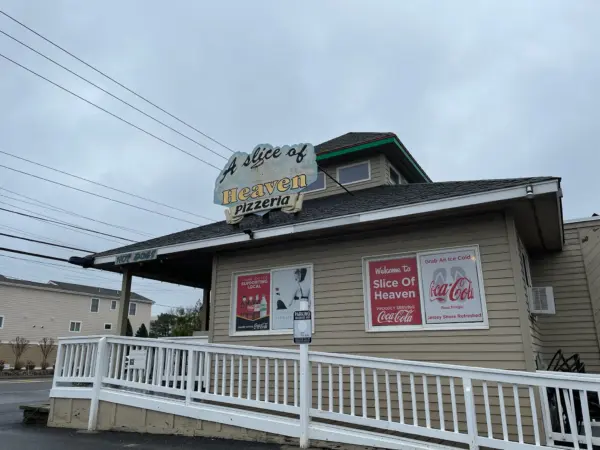
  • After 30 years, this Long Beach Island pizzeria needs a new home

    After 30 years, this Long Beach Island pizzeria needs a new home

    In the early ’90s, Colleen Mazzella walked into a newly opened pizzeria and met the man who would become not only her boss, but her husband.

    She was visiting a friend who had been hired at Italian Affair in Stafford, and owner Dominick Mazzella, then a recent Staten Island transplant, offered her a job, too.

    They soon became a couple, and a year later, in May 1995, opened A Slice of Heaven across from Fantasty Island Amusement Park on Long Beach Island. The building at 7th Street and Bay Avenue in Beach Haven had housed a car wash, candy store and photo shop through the years, and when the two met with owner Peter Buterick, “he said ‘I’m going to take a chance on you. I’ve got a good feeling about this,’” Mazzella said.

    They made a name for themslves, thanks to a menu of dishes like stuffed cheesesteak pizza, scratch-made meatballs and cheesesteaks.

    Thirty years later, the building is full of memories that became precious to Mazzella after Dominick died just days before his 50th birthday in 2024. She recalls the Stanley Cup being brought to the restaurant (“My husband was a gigantic hockey fan,” she said), staying open to serve pizza until 4 a.m. and borrowing ingredients from other restaurant owners to get through busy days.

    Dominick Mazzella is pictured behind the counter of A Slice of Heaven, the Long Beach Island pizzeria he opened with his wife, Colleen, in 1995.

    She remembers when a family who lost their father stopped in for his favorite pizza before spreading his ashes on the beach, rebuilding after Superstorm Sandy sent four feet of water into the dining room and making pizza by flashlight during a power outage.

    The restaurant is also where Dominick taught his son to make pizza, a legacy the 18-year-old — also named Dominick — has dreamed of continuing.

    But it will have to happen somewhere else, as A Slice of Heaven closed earlier this month. The Mazzellas leased their restaurant space and the building has been sold.

    “The plan was to take this place over,” Mazzella said of her and her husband’s plans for their son, a third-generation pizza maker whose grandfather emigrated from Naples, Italy, and owned restaurants in New York before opening the Stafford pizzeria with Dom.

    A Slice of Heaven’s last day in business was Nov. 17, and Mazzella must vacate the building by the end of the month. She has been searching for a new location since learning of the impending sale several years ago, and while she wants to keep the restaurant on Long Beach Island, rentals that will work for her business are hard to come by, she said.

    “My intention is to be on the island,” said Mazzella, who grew up in Brant Beach and now lives in Cedar Run on the mainland. “I love the people here. I grew up here. I love everything about it.”

    “It’s just a fact of finding a place to land,” she said. “It’s been tough. I just have to keep believing that the places that I found that didn’t work out didn’t work out for a reason, and that it’s because we’re waiting for the right place.”

    “We’ll find something,” she said. “I gotta believe that.”

    Since announcing the closing date in early November, Mazzella has seen an outpouring of support online and in person, with customers sharing memories and well wishes.

    One spoke of how the elder Dominick fulfilled her request to spell “It’s a boy!” in pepperoni on a pizza for her gender reveal. Another customer wrote of how the restaurant’s delivery driver checked on her elderly father when she couldn’t reach him. Dozens more said A Slice of Heaven’s pizza is part of their vacation tradition.

    For Mazzella, it is stories like these that make giving up not an option.

    “Absolutely not,” she said. “We’re not done.”

  • Trump wins dismissal of Georgia 2020 election interference case

    Trump wins dismissal of Georgia 2020 election interference case

    WASHINGTON – A prosecutor on Wednesday dropped all criminal charges in Georgia against U.S. President Donald Trump for interference in the 2020 presidential election, ending a high-profile racketeering case that once seemed like a significant threat to the Republican.

    The decision by Peter Skandalakis, a state official who recently took over the prosecution, was a stinging defeat for Fulton County District Attorney Fani Willis, who brought the case in 2023 but then lost control of it amid ethics complaints by defense lawyers.

    It was one of four criminal prosecutions that Trump faced in the years since losing his 2020 presidential re-election bid to Democrat Joe Biden. Only one of them — a New York case over a hush-money payment to a porn star during his 2016 campaign — went to trial. Trump was found guilty in that case but has asked for it to be thrown out.

    The dismissal highlighted how Trump’s return to the White House this year, a political comeback unparalleled in U.S. history, dismantled a thicket of legal cases that once seemed set to define his post-presidency era.

    Trump’s political career had appeared to be over after his false claims of election fraud led a mob of supporters to storm the U.S. Capitol on Jan. 6, 2021, in a failed bid to overturn his 2020 defeat.

    Skandalakis said in a court filing that “there is no realistic prospect that a sitting President will be compelled to appear in Georgia to stand trial,” so it would be “futile and unproductive” to push forward with the case.

    Skandalakis said his decision, which was approved by a judge on Wednesday morning, “is not guided by a desire to advance an agenda but is based on my beliefs and understanding of the law.”

    Steve Sadow, a lawyer for Trump, praised the dismissal, saying the case should have never been brought.

    Willis had brought the case against Trump and 18 co-defendants, charging a sweeping criminal conspiracy to overturn Georgia’s 2020 election results after a recording surfaced in the media of Trump asking Georgia’s top electoral official to “find” him enough votes to win the state.

    The co-defendants included former Trump lawyers Rudy Giuliani and John Eastman, who like Trump pleaded not guilty.

    An appeals court removed Willis, an elected Democrat in Atlanta, from the case last year. The court said she had created an “appearance of impropriety” by having a romantic relationship with the special prosecutor she had hired to lead the case.

    Skandalakis heads the Prosecuting Attorneys’ Council of Georgia, a government agency that supports the state’s local prosecutors. Earlier this month, he appointed himself to lead the case, saying he had been unable to find another prosecutor willing to take it over.

    Anthony Michael Kreis, a Georgia State University law professor, said Skandalakis’s decision to drop the charges was not surprising. The agency he oversees does not have the resources to prosecute such a complex case with several co-defendants, Kreis said.

  • Meet Project HOME’s New President and CEO

    Meet Project HOME’s New President and CEO

    The former state representative, lawyer, and longtime community advocate Donna Bullock is now leading one of Philadelphia’s most respected nonprofit organizations, Project HOME. Named its president and CEO in July 2024, Bullock brings lived experience and a deep sense of justice to the organization’s mission of eradicating homelessness. The child of a single mother, she grew up relying on the network of local church soup kitchens in New Brunswick, N.J. “But my mom and grandmother taught me something powerful there, not just how to receive help, but how to give back,” she said. “I may have gone there for a meal, but I also had to wash dishes, help a senior. That sense of community responsibility has always stayed with me.”

    Founded in 1989, Project HOME has built more than 1,000 units of supportive housing, manages more than $150 million in net assets, and has become a national model for holistic solutions to homelessness. In this conversation, Bullock reflects on the legacy she has inherited, the systems she hopes to shift, and the very personal stories that shape her leadership.

    Project HOME was founded in 1989. How is the landscape different than it was 36 years ago? What does the cause of ending homelessness look like now?

    We remain true to the founding vision of our co-founders [Sister Mary Scullion and Joan Dawson McConnon]: none of us are home until all of us are home. When we look at that statement, it’s really this commitment that we have to our fellow human beings, to see them as our brothers, and sisters, and neighbors, and fellow Philadelphians. Our work doesn’t end until we can really say that everybody is home and that we all have a role in the work it takes to solve homelessness.

    That also remains true: we still believe we can solve homelessness. We can do that. It will require everyone to play their part.

    The founders of Project HOME and the folks doing this work 20, 30, 40 years ago really believed we could achieve functional zero homelessness in Philadelphia. They were on track to doing that. But what they could not expect was a pandemic. They could not expect the opioid crisis. And they could not expect the scale of the affordable housing crisis. These three national, if not global, issues have deeply impacted housing and homelessness here and across the country.

    In the 1990s, Project HOME fought a four-year legal battle that culminated in a landmark Fair Housing victory, securing the right to build supportive housing at 1515 Fairmount. Over the years, the organization has also built a holistic model of care. How will the organization’s legacy continue under your leadership?

    Sister Mary and Joan, our founders, built this amazing organization with a deep understanding: to address homelessness at its roots, we have to address housing, employment opportunities, medical care, and education. We will continue that. We will continue to build supportive housing, provide services, and support individuals on their journeys, through recovery and into stability.

    We’ve also always remained on the front lines. We’ve always been an advocate, and we’ll continue to be one. I believe the skillset I bring as a legislator and as a lawyer, with experience in both city council and Harrisburg, will only amplify and support the legacy I’ve inherited. That means being a voice for those in our care, those at the core of our mission, especially now as we navigate policies from the federal government, HUD, and the Department of Health, that will impact the people we serve on a very personal level.


    You were raised by a single mom. You’ve experienced some of the very issues you’re now helping others navigate. How did your upbringing shape your worldview?

    Those lived experiences absolutely shaped my sense of justice and community obligation.

    My family relied on resources like the local soup kitchen in New Brunswick. I watched that soup kitchen evolve too. It was once just different churches offering meals on different days. But in the ’80s, around the same time Project HOME was founded, they came together, formed a nonprofit, created a central location, coordinated the schedule, and started offering meals seven days a week. That showed me the power of nonprofits when they work together in the best interests of the people they serve.

    And that’s what I want to carry forward. No matter where we go next, we keep the people we serve at the center of our decisions.

    You studied criminal justice at Rutgers and earned your law degree at Temple. You could have taken different paths. Why law?

    Honestly, I was a very naive young person who wanted to change the world. I thought, law school is how I’ll do that.

    And I did well: I got good grades in tax law, property law. But I took a class called “Law and Community,” and one of my classmates worked at Project HOME. We talked about their work in the 19121 ZIP code. I was planning to move into that same community.

    When I graduated, I asked myself, “How am I going to change the world with corporate law?” That’s when I found my niche supporting nonprofits and small businesses as a legal services attorney. I helped make sure they stayed compliant and stable, because they were providing critical resources to the community. It was a way for me to give back what I always believed didn’t belong to me: my law degree belonged to the community.

    That work exposed me to leaders like [Philadelphia city] council president [Darrell] Clarke and others, and it led me into public service. Eventually I was working with organizations like Project HOME from the outside. Now I get to work with them, and lead them, from the inside.

    In a past interview you said you “took the leap” in 2015, and ran for political office, eventually winning a special election to represent Pennsylvania’s 195th district in the state House of Representatives. What compelled you to leap?

    I’ve always answered the call to service. Did I plan to run for office? No.

    But a few people came to me and said: “You should consider this. You’re the right fit.” I gave it a lot of thought. I had been hosting a women of color leadership breakfast at my house every year, encouraging other women to run. When this opportunity came up, many of them looked at me and said, “Donna… it’s your turn.”

    What is it like to run for and hold office?

    It’s a vulnerable position to be in. But because I was led by service, it didn’t feel like I was putting myself in the spotlight. It was a shift, of course — personally for family, and professionally for my career — because it wasn’t the direction I was going. But it was an amazing detour. I was able to bring in my skillset as a lawyer and as an advocate into this legislative space, see the issues that I was passionate about on a statewide level, and advocate for those issues with folks who weren’t as aligned. Being on that stage in Harrisburg really helps you to become a stronger advocate for issues that are really important for you. You have to work a little harder to see where other folks are coming from and try to reframe those same issues so you can get buy-in.

    Yes, it becomes about consensus building.

    Yes. I spent time across the state meeting folks in their district. “What does this legislation look like in your district? Well, now I understand why you don’t support it. Let me show you what it looks like in my district, and maybe we can find a way to get to the middle.” That coalition building is so important, and I think has helped already in the work that I’m doing here at Project HOME.

    You’ve said, “There are many challenges, but you don’t overcome them. You accept them, embrace them, and use them to effectuate change.” That’s a powerful reframing. What’s a moment in your career where that philosophy took hold?

    There was a moment in Harrisburg when there had been a series of shootings in my district. Young people had lost their lives to gun violence. I stood on the House floor and talked about it, not just as a legislator, but as a mother of two Black boys in North Philadelphia.

    I talked about what it meant to walk my children past blocks with candles and teddy bears. I didn’t want to just argue the policy; I wanted them to understand the experience. My colleagues had met my boys. I wanted them to understand that these weren’t abstract lives; these were our kids. While it didn’t move the legislation, it did bring more people to the table to say, “I need to understand this.” There were a couple of colleagues who met with me separately. With one in particular, we started having regular coffee meetings to talk about the differences in our districts and in the things that our constituents wanted.

    And that’s the power of storytelling. Whether it’s on the House floor of the state capitol, through the media, social media, in a small group, or just a conversation that one of our residents may have with somebody else, storytelling can really move people. It can move legislation, policy, and resources.


    PHILLY QUICK ROUND

    Favorite Philly food indulgence: It’s got to be water ice, right? My favorite water ice is the neighborhood spot called King’s in Strawberry Mansion.

    Favorite Philly small business: Everybody needs a spa day. My favorite is a Black woman-owned spa in Brewerytown called Remedy Spa & Wellness. I’ve been going to [owner Cari Young’s] spa for years. Back when I was a state representative, she would host Black women’s business roundtables there. Even when I didn’t have a spa appointment, she would let me just sit in the space. Even her lobby had that sense of relaxation, Zen, and getaway, and I always appreciated that.

    Sports teams you love or root for: I’m at Project HOME, so it’s got to be the Phillies. [The Phillies are a Project HOME partner.]

    Greatest Philadelphian of all time: Marian Anderson. Just for what she stood for at the time. Standing firm in her art form, but also in advocacy and what she meant to the community, and her grace and beauty in doing it.

    What do you wish people knew about the folks who call Philly home? We got grit. But we are also just a loving group of folks. Everybody’s welcome. What I love about Philly is once you become family, they just welcome you with open arms. We may be a little aggressive with the love. But it’s love.

  • Christmas tree retailers find lots to like at a Pennsylvania wholesale auction

    Christmas tree retailers find lots to like at a Pennsylvania wholesale auction

    MIFFLINBURG, Pa. — Christmas went on the auction block last week in Pennsylvania farm country, and there was no shortage of bidders.

    About 50,000 Christmas trees and enough wreaths, crafts, and other seasonal items to fill an airplane hangar were bought and sold by lots and on consignment at the annual two-day event put on at Buffalo Valley Produce Auction in Mifflinburg.

    Buyers from across the Northeast and Mid-Atlantic were there to supply garden stores, corner lots, and other retail outlets for the coming rush of customers eager to bring home a tree — most commonly a Fraser fir — or to deck the halls with miles of greenery.

    Bundled-up buyers were out in chilly temperatures to hear auctioneers hawk boxes of ornaments, bunches of winterberry, cotton branches, icicle lights, grave blankets, red bows, and tree stands. It was nearly everything you would need for Christmas except the food and the presents.

    A worker transports holiday decorations at Buffalo Valley Produce Auction in Mifflinburg, Pa.

    Americans’ Christmas tree buying habits have been evolving for many years. These days homes are less likely than in years past to have a tree at all, and those that do have trees are more likely to opt for an artificial tree over the natural type, said Marsha Gray with the Howell, Michigan-based Real Christmas Tree Board, a national trade group of Christmas tree farmers.

    Cory Stephens was back for a second year at the auction after his customers raved about the holiday decor he purchased there last year for A.A. Co. Farm, Lawn & Garden, his store a three-hour drive away in Pasadena, Md. He spent nearly $5,000.

    “It’s incredible, it’s changed our whole world,” Stephens said. “If you know what you’re looking for, it’s very hard to beat the quality.”

    Ryan Marshall spent about $8,000 on various decorations for resale at Ward’s Berry Farm in Sharon, Mass. Among his purchases were three skids of wreaths at $29 per wreath — and he expected to double his money.

    “The quality’s good, and it’s a place that you can pick it out yourself,” he said.

    Gray said her group’s research shows the main reason people pick a real tree over an artificial tree “is the scent. They want the fresh scent of a real Christmas tree in their home.” Having children in the house also tends to correlate with picking a farm-grown tree, she said.

    An August survey by the Real Christmas Tree Board found that 84% of growers did not expect wholesale prices to increase this season.

    Buffalo Valley auction manager Neil Courtney said farm-grown tree prices seem to have stabilized, and he sees hope that the trend toward artificial trees can be reversed.

    “Long story short — we’ll be back on top of the game shortly,” Courtney said. “The live tree puts the real Christmas in your house.”

    A survey by a trade group, the National Christmas Tree Association, found that more than 21 million farm-grown Christmas trees were sold in 2023, with median price of $75. About a quarter of them were purchased at a “choose-and-cut” farm, one in five from a chain store, and most of the rest from nurseries, retail lots, nonprofit sales, and online.

  • Letters to the Editor | Nov. 26, 2025

    Letters to the Editor | Nov. 26, 2025

    Stand with our ally

    Why is Donald Trump deserting Ukraine? Ukraine has demonstrated superior battlefield and technical skills over Russia and taken back territory that Russia has captured. Ukraine has suffered severe losses fighting for its sovereignty. International experts believe Ukraine could defeat Russia. Why aren’t we giving help to our ally? We’ve given and taken it away twice. Trump and Vladimir Putin now suggest a plan giving Russia a major gift. Russia started this war and should never be rewarded. The plan sounds like a big win for Russia and a loss for the U.S., Ukraine, and NATO. Trump continues to show admiration for Putin, who has humiliated him more than once. Trump flattered Putin in Alaska. It didn’t work. Do we really want to give Russia control over major territory in Ukraine, relief on sanctions, and limitations on NATO countries? Russia has been trying to damage NATO countries’ airports. We should never reward Russia when we’ve seen these actions. Allies in Europe don’t favor the referenced plan, nor should the U.S.

    Robert Turnbull, Media

    . . .

    Ukrainian President Volodymyr Zelensky must not agree to the Trump administration’s Russia-friendly proposal to end hostilities between the two neighboring countries. The American people support Ukraine’s fight, but their president never has. He’s a grudge holder who likely blames Zelensky (for his refusal to investigate the Bidens) for his first impeachment. Trump wants Ukraine to capitulate in order to boost his campaign for a Nobel Peace Prize. Trump is for Trump and no one else. Vladimir Putin manipulates Trump, who has done nothing to earn Zelensky’s confidence and trust. Trump’s demand that Ukraine accept terms that are favorable only to Russia is a knife in the hearts of all peace-loving and battle-weary Ukrainians. Zelensky repeatedly held out his hand (both hands to be accurate) to Trump, requesting “U.S. support” in the form of aid and defensive military weaponry. Each ask resulted in no aid. Nada, from the onetime swaggering candidate who even before the inauguration told voters he would end hostilities in short order if elected. Volodymyr, don’t lose Ukrainian dignity. Trump is not your friend.

    David Kahn, Boca Raton, Fla.

    Unfair

    On Nov. 13, Sen. John Fetterman was hospitalized following a minor cardiac event. How nice for him to be able to draw on government-subsidized health coverage to access the care he needs. What a shame he couldn’t be bothered to fight to protect access to affordable healthcare for his constituents.

    When I received a breast cancer diagnosis a few days shy of my 34th birthday, it was my Affordable Care Act plan that ensured I could get the treatment I needed without decimating my financial reserves. Now, thanks to Fetterman’s spinelessness, what cancer treatment couldn’t wipe out, a 75% increase in insurance premiums just might. How many Pennsylvanians are going to find themselves in a comparable position? Trapped between healthcare they can’t afford to go without and coverage they can no longer afford to pay.

    Katherine Roberts, Philadelphia

    Join the conversation: Send letters to letters@inquirer.com. Limit length to 150 words and include home address and day and evening phone number. Letters run in The Inquirer six days a week on the editorial pages and online.