Tag: no-latest

  • The stocks to watch when the Supreme Court rules on Trump’s tariffs

    An upcoming U.S. Supreme Court ruling on the legality of the sweeping tariffs that President Donald Trump rolled out in April — briefly sending markets worldwide into a tailspin — could be the next test for stocks that have been flying high.

    The S&P 500 Index has since rallied 39% from the lows hit that month. It closed at a record high Thursday, in part because tariffs have settled lower than Trump’s highest threats, while support has come from an artificial-intelligence investment boom and a U.S. economy that has kept expanding fast enough to throw off record corporate profits.

    If the nation’s top court says Trump exceeded his authority with the blanket tariffs on countries around the globe, there will still be significant uncertainty. The White House could use other laws to reimpose some new levies, for example. Bond traders could push up yields over worries about the deficit, and that concern could spread into the equity market.

    A ruling this year is increasingly unlikely. The court held its last scheduled public session of the year on Wednesday and isn’t scheduled to sit again until Jan. 9. The court’s standard practice is to issue decisions in argued cases from the bench, generally a day or more after making a public announcement that opinions are likely.

    But when a decision does come, market participants say the initial reaction, at least, would likely be positive for stocks should the court strike down the tariffs. A ruling upholding the tariffs would likely have the opposite effect.

    There are a few reasons why. Striking down the tariffs would eliminate a tax that many businesses haven’t completely passed along to customers, resulting in a drag on the bottom line. Refunds on what they’ve already paid could provide a windfall. And consumer spending may get a boost, too, given that Democrats in Congress estimate tariffs have cost the average American family some $1,200 over the past 10 months.

    Overall, a ruling against the tariffs would boost the earnings of companies in the S&P 500 Index, before interest and taxes, by 2.4% in 2026 compared to current-year levels, Wells Fargo & Co. chief equity strategist Ohsung Kwon estimated in October.

    “That’s good for the market generally, because they look at tariffs as a tax,” said James St. Aubin, chief investment officer at Ocean Park Asset Management. “This will be a catalyst for a little bit of a rally.”

    Some companies, and their stocks, stand to benefit more than others. The tariffs have been particularly painful for those that are heavily dependent on imported goods, such as apparel companies and toymakers. Financial firms, for their part, stand to benefit from a more confident or flush consumer.

    “On the flip side,” said Haris Khurshid, chief investment officer at Karobaar Capital, “materials, commodities, and domestic producers that benefited from protectionism might lag a bit.”

    Here’s a look at some of the sectors and companies with the most at stake when the decision does come.

    Consumer

    Clothing and toy companies — both heavily dependent on imports from China and other Asian countries targeted with some of the highest tariffs — are seen as clear winners, according to Bloomberg Intelligence. Nike Inc. and Mattel Inc. are potential standouts.

    Others include Deckers Outdoor Corp., Under Armour Inc., Crocs Inc., and American Eagle Outfitters Inc., all of which have struggled with tariff-related uncertainty. Home furnishing stocks have been volatile too, including Wayfair Inc., Williams-Sonoma Inc., and RH.

    Texas Capital’s Eric Wold singled out some potential winners among the leisure-related companies he follows: boat-maker Brunswick Corp., toymaker Funko Inc., and Topgolf Callaway Brands Corp.

    Industrials

    Industrial manufacturing giants Caterpillar Inc. and Deere & Co. are among the firms set to benefit the most from tariff refunds, according to Wells Fargo’s Kwon. Stanley Black & Decker Inc., Fortive Corp., and Lennox International Inc. also make the list.

    Shares of automakers General Motors Co. and Ford Motor Co. advanced during the Supreme Court hearing last month, when the justices’ skepticism about the administration’s arguments increased market speculation that the tariffs would be struck down. While the case doesn’t affect the industry-specific tariff on automakers, they stand to gain from a stronger consumer.

    Investment firm Hedgeye also sees positive implications for transport stocks, expecting a boost if the tariffs are struck down and importers move to snap up inventory before any new ones are imposed. That could benefit United Parcel Service Inc., FedEx Corp., and trucking companies.

    Financials

    Major banks such as JPMorgan Chase & Co. and Goldman Sachs Group Inc. faced volatility earlier this year, alongside private equity giants like Blackstone Inc., amid concerns that Trump’s trade war will slow economic activity. Financial-technology companies such as Affirm Holdings Inc. and Block Inc. are prone to big swings, as are stocks linked to cryptocurrencies.

    Lower tariffs may ease pressure on U.S. consumers and support the broader economy. If inflation expectations move lower, it’ll also support the case for more rate cuts by the Federal Reserve, Clear Street analyst Owen Lau said.

    Lower interest rates encourage “loan growth, refinancing, stronger equities markets, and even higher consumer spending,” Lau said, “which will fundamentally benefit financial stocks in general.”

  • Letters to the Editor | Dec. 15, 2025

    Letters to the Editor | Dec. 15, 2025

    The Gaza ceasefire

    Thank you for publishing Rabbi Linda Holtzman’s op-ed about why a ceasefire in Gaza isn’t enough, we must also stop arming Israel.

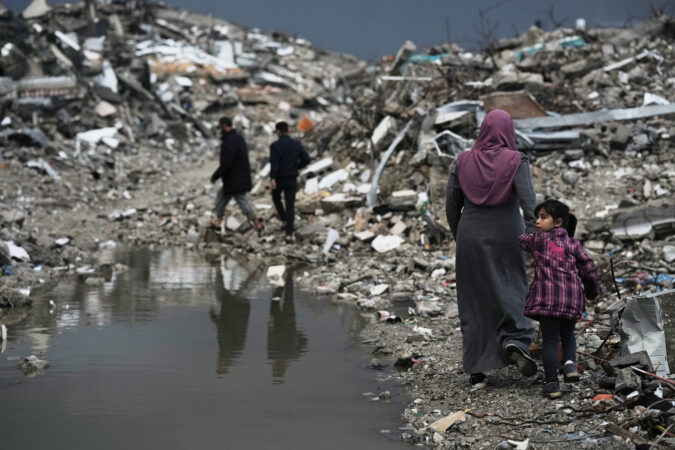
    Today, we got news of the first Gazan child — in this case, a baby — dying of hypothermia. She froze to death because there is no adequate shelter in Gaza, it’s winter, and it’s freezing at night. With its relentless bombing, shelling, and deliberate destruction of housing, hospitals, universities, and schools in Gaza, Israel reduced 90% of Gaza’s homes to rubble.

    The ceasefire agreement required Israel to send in desperately needed humanitarian aid to Gaza, 600 trucks a day of tents, tarps, bedding, blankets, food, infant formula, and potable water, medicines, and medical supplies. Israel has at most sent in 100 trucks a day. The tents Gazans have been living in for months are torn apart by winter storms; they need new tents, tarps, and blankets to keep them as warm as possible.

    Israeli troops occupy most of Gaza and have killed unarmed civilians, including children who are searching for wood to burn or looking for the remnants of their homes in the increasingly occupied eastern part of Gaza. Israeli army Chief Eyal Zamir said a few days ago that the “Yellow Line” in Gaza, which demarcates Gazan land occupied by Israel, is Israel’s new border, meaning Israel will almost certainly never give back the portion of Gaza it’s supposed to be only temporarily occupying.

    There is no ceasefire, no food or shelter or medicines for the Gazans. Given that Donald Trump gave birth to this “ceasefire” and so-called peace plan, he needs to hold Israel accountable. Palestinian children are just as precious and deserving of life as Israeli children.

    Genie Silver, Wynnewood

    It is both astonishing and appalling that Rabbi Linda Holtzman fails to grasp the irony — and hypocrisy — of her invoking the holiday of Hanukkah to support her efforts to block certain defense aid to Israel. The Maccabees, the heroes of the Hanukkah story, not only successfully revolted against the oppressive Syrian Greek empire, but they zealously fought against the assimilation of the Jews of that time. And where did these historic events in the second century BCE take place? In the land of Israel!

    As an anti-Zionist, Holtzman does not believe the Jews have a right to live in a Jewish state in the land of Israel. Despite the attempts of so many of Holtzman’s allies to distort what Zionism is (with many even despicably comparing Zionists to Nazis), the definition of Zionism is actually quite simple: it is the movement for self-determination of the Jewish people in its ancestral homeland. And an overwhelming percentage of Jews identify as Zionists.

    On several occasions, Holtzman describes Israel’s response to the horrific slaughter of Oct. 7, 2023, as genocide, as if that’s a given. Never does she even mention Hamas, a terrorist organization which perpetrated brutal killings, burning of babies, and rapes and sexual mutilations (and glorified it all). No, Rabbi Holtzman, fighting back against an organization whose entire cynical strategy is based on hiding behind Gazan civilians in order to generate more casualties is not genocide. It’s a war against a truly genocidal enemy, a war that the Maccabees would have supported and led.

    Richard Lowe, Oreland

    Join the conversation: Send letters to letters@inquirer.com. Limit length to 150 words and include home address and day and evening phone number. Letters run in The Inquirer six days a week on the editorial pages and online.

  • Horoscopes: Monday, Dec. 15, 2025

    ARIES (March 21-April 19). Some questions are like Pandora’s box: Once opened, they release more truth and feeling than you expected. Ask only if you’re ready for the shift that follows. Choose your moment carefully. Nothing released from the box ever returns to it.

    TAURUS (April 20-May 20). Things calm down today, and you’ll get down to business. But remember, fulfillment doesn’t come from merely checking boxes. Your worth isn’t measured by output. What matters isn’t how much you do but how much you love.

    GEMINI (May 21-June 21). What seems like a very small distraction simply takes up too much of your time. You’ll be much more productive when it’s out of the picture. You may finally be in a place where it’s worth it to make the change.

    CANCER (June 22-July 22). Your feelings surge today. There’s a lot of energy running through you, but you can handle this charge. You can use your emotions instead of letting them use you. You’ll organize, compartmentalize and act on that which serves you.

    LEO (July 23-Aug. 22). While many of your relationships bring sweetness to life, some bring a good amount of stress. You still believe that in time you will be grateful for these relationships, and eventually, you’ll understand their purpose in your life.

    VIRGO (Aug. 23-Sept. 22). Remember when you predicted the future accidentally, without even trying to make a psychic statement? You’ll do it again today. Write down your thoughts because you’ll later enjoy today’s uncanny accuracy.

    LIBRA (Sept. 23-Oct. 23). You have flexibility in some areas of life. You can rearrange habits, preferences, timing, environment, workflow, attitude, priorities. Then there are those that are the immovable fixtures. Don’t see them as blocks but as architecture you can design around.

    SCORPIO (Oct. 24-Nov. 21). Everyone learns the rules of life from parents, teachers and leaders, but your inner guidance has always been the stronger force. Today it matters because something you feel is right for you isn’t reflected in the world around you, so you’ll trust yourself instead.

    SAGITTARIUS (Nov. 22-Dec. 21). You don’t have to prove yourself to anyone, not even you, but you challenge yourself anyway because you want to see how far you can take this beautiful life. Keep the heart. Angels are around you, cheering you on.

    CAPRICORN (Dec. 22-Jan. 19). The theme today swirls around issues of character. Of course, there’s a difference between having character and being a character. Somehow, you’ll do both. You find the funny angle in your circumstances and approach with integrity.

    AQUARIUS (Jan. 20-Feb. 18). There’s no substitute for meeting in person. As inconvenient as it may seem, it will be better for building bonds, understanding dynamics and knowing the right thing to do next for the project at hand.

    PISCES (Feb. 19-March 20). Big dreams lead to extraordinary outcomes. They are not always the outcomes that existed in the dream, but they are extraordinary because you dared to dream at all. So keep stretching your imagination around the grand scale.

    TODAY’S BIRTHDAY (Dec. 15). Welcome to your Year of the Golden Thread, which brings shimmering connections between seemingly unrelated parts of your life — the hobby that becomes a side hustle, the friend of a friend who changes everything, the random skill that pays off. Your timing is uncanny. More highlights: VIP access to something you’ve dreamed about, a luxury home upgrade and friendships that deepen into chosen family. Cancer and Capricorn adore you. Your lucky numbers are: 8, 4, 5, 31 and 47.

  • Dear Abby | Man’s holiday party could end up being a lonely event

    DEAR ABBY: We have a mutual friend who’s very dear to us. He’s a kind-hearted and generous disabled vet who’s too proud to ask for help. Unfortunately, due to his ill health and physical limitations, his home is unkempt. He lives among piles of dusty trash, empty cartons, unfinished projects, dirty clothes and even animal messes. It smells very unpleasant, especially in the heat.

    The last time I visited, I sat down in what I thought was a “safe” clear spot and came away smelling of cat urine. Despite our repeated offers, he declines our help to clean up. Unfortunately, it’s so bad that people no longer want to visit his home.

    He recently volunteered to host a traditional holiday gathering for our group of friends, but if he does, I’m afraid no one will show. (I’m hesitant to eat anything prepared there anyway, and so are others.) We’ve discussed moving the event, but we’re afraid it would hurt his feelings, since he really enjoys hosting. Plus, what would we say?

    Renting a small hall was our first thought, but he’s insistent and excited for the company. Your advice on how to approach this delicate situation would be appreciated.

    — IN A TOUGH SPOT IN MICHIGAN

    DEAR TOUGH SPOT: Your friend appears to be a hoarder. He may enjoy hosting and want company, but it isn’t going to happen if people are afraid to go to his home and consume anything because of the filth and the odor. The person closest to him has to explain to him that although you all love him, his party would be better attended if the celebration was held off-site. He needs to understand why others are staying away, and he may need physical and psychological help to improve his situation.

    ** ** **

    DEAR ABBY: I’m a young gay man with a problem. I met a cute guy, “Mark,” with a sweet personality, and the sex has been awesome. We spent two consecutive nights together in a hotel, but two days later he went to church, and he’s now convinced that being gay is wrong. Mark still rubs my foot with his under the table while we eat and kisses me on the lips. He tells me he loves me very much, but now I’m getting mixed signals. At night on our dating app, Mark sends nudes of himself, even though he says gay sex is wrong. What should I do?

    — MIXED SIGNALS IN GEORGIA

    DEAR MIXED SIGNALS: Mark is conflicted about being gay because the church he attends made him feel guilty about it. Talk with him and suggest that you feel he could benefit from counseling to help him become more comfortable about who he is. There are three LGBTQ community centers located in Atlanta. If Mark is unwilling, please understand it could be a long journey for him toward self-acceptance. If you are not prepared to wait, you should move on.

  • JetBlue flight near Venezuela avoids ‘midair collision’ with U.S. Air Force tanker

    JetBlue flight near Venezuela avoids ‘midair collision’ with U.S. Air Force tanker

    WASHINGTON — A JetBlue flight from the small Caribbean nation of Curaçao halted its ascent to avoid colliding with a U.S. Air Force refueling tanker on Friday, and the pilot blamed the military plane for crossing his path.

    “We almost had a midair collision up here,” the JetBlue pilot said, according to a recording of his conversation with air traffic control. “They passed directly in our flight path. … They don’t have their transponder turned on, it’s outrageous.”

    The incident involved JetBlue Flight 1112 from Curaçao, which is just off the coast of Venezuela, en route to New York City’s JFK airport. It comes as the U.S. military has stepped up its drug interdiction activities in the Caribbean and is also seeking to increase pressure on Venezuela’s government.

    “We just had traffic pass directly in front of us within 5 miles of us — maybe 2 or 3 miles — but it was an air-to air-refueler from the United States Air Force and he was at our altitude,” the pilot said. “We had to stop our climb.” The pilot said the Air Force plane then headed into Venezuelan air space.

    Derek Dombrowski, a spokesperson for JetBlue, said Sunday: “We have reported this incident to federal authorities and will participate in any investigation.” He added, “Our crewmembers are trained on proper procedures for various flight situations, and we appreciate our crew for promptly reporting this situation to our leadership team.”

    The Pentagon referred the Associated Press to the Air Force for comment. The Air Force didn’t immediately respond to a request for comment.

    The Federal Aviation Administration last month issued a warning to U.S. aircraft urging them to “exercise caution” when in Venezuelan airspace, “due to the worsening security situation and heightened military activity in or around Venezuela.”

    According to the air traffic recording, the controller responded to the pilot, “It has been outrageous with the unidentified aircraft within our air.”

  • Rod Paige, 92, nation’s first Black  secretary of education

    Rod Paige, 92, nation’s first Black secretary of education

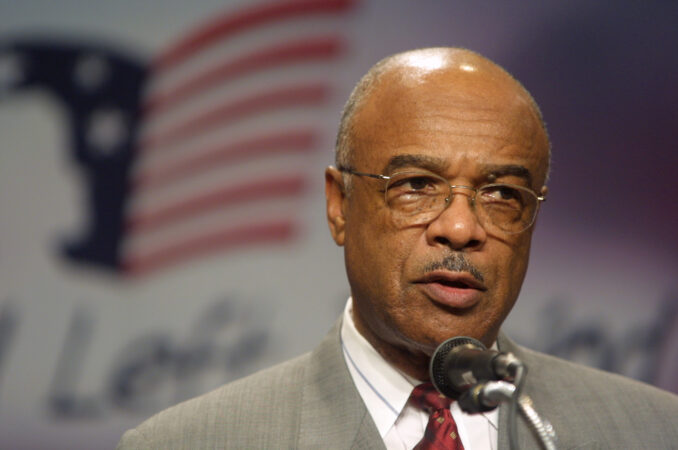
    Rod Paige, an educator, coach, and administrator who rolled out the nation’s landmark No Child Left Behind law as the first African American to serve as U.S. education secretary, died Tuesday.

    Former President George W. Bush, who tapped Mr. Paige for the nation’s top federal education post, announced the death in a statement but did not provide further details. Mr. Paige was 92.

    Under Mr. Paige’s leadership, the Department of Education implemented No Child Left Behind policy that in 2002 became Bush’s signature education law and was modeled on Mr. Paige’s previous work as a schools superintendent in Houston. The law established universal testing standards and sanctioned schools that failed to meet certain benchmarks.

    “Rod was a leader and a friend,” Bush said in his statement. “Unsatisfied with the status quo, he challenged what we called ‘the soft bigotry of low expectations.’ Rod worked hard to make sure that where a child was born didn’t determine whether they could succeed in school and beyond.”

    Roderick R. Paige was born to two teachers in the small Mississippi town of Monticello, which had roughly 1,400 inhabitants. The oldest of five siblings, Mr. Paige served a two-year stint the U.S. Navy before becoming a football coach at the high school and then junior college levels. Within years, Mr. Paige rose to head coach of Jackson State University, his alma mater and a historically Black college in the Mississippi capital city.

    There, his team became the first — with a 1967 football game — to integrate Mississippi Veterans Memorial Stadium, once an all-white venue.

    After moving to Houston in the mid-1970s to become head coach of Texas Southern University, Mr. Paige pivoted from the playing field to the classroom and education — first as a teacher, and then as administrator and eventually the dean of its college of education from 1984 to 1994.

    Amid growing public recognition of his pursuit of educational excellence, Mr. Paige rose to become superintendent of the Houston Independent School District, then one of the largest school districts in the country.

    He quickly drew the attention of Texas’ most powerful politicians for his sweeping educational reforms in the diverse city. Most notably, he moved to implement stricter metrics for student outcomes, something that became a central point for Bush’s 2000s bid for president. Bush — who later would dub himself the “Education President” — frequently praised Mr. Paige on the campaign trail for the Houston reforms he called the “Texas Miracle.”

    And once Bush won election, he tapped Mr. Paige to be the nation’s top education official.

    As education secretary from 2001 to 2005, Mr. Paige emphasized his belief that high expectations were essential for childhood development.

    “The easiest thing to do is assign them a nice little menial task and pat them on the head,” he told the Washington Post at the time. “And that is precisely what we don’t need. We need to assign high expectations to those people, too. In fact, that may be our greatest gift: expecting them to achieve, and then supporting them in their efforts to achieve.”

    While some educators applauded the law for standardizing expectations regardless of student race or income, others complained for years about what they consider a maze of redundant and unnecessary tests and too much “teaching to the test” by educators.

    In 2015, House and Senate lawmakers agreed to pull back many provisions from “No Child Left Behind,” shrinking the Education Department’s role in setting testing standards and preventing the federal agency from sanctioning schools that fail to improve. That year, then-President Barack Obama signed the sweeping education law overhaul, ushering in a new approach to accountability, teacher evaluations, and the way the most poorly performing schools are pushed to improve.

    After serving as education secretary, Mr. Paige returned to Jackson State University a half century after he was a student there, serving as the interim president in 2016 at the age of 83.

    Into his 90s, Mr. Paige still publicly expressed deep concern, and optimism, about the future of U.S. education. In an opinion piece appearing in the Houston Chronicle in 2024, Paige lifted up the city that helped propel him to national prominence, urging readers to “look to Houston not just for inspiration, but for hard-won lessons about what works, what doesn’t and what it takes to shake up a stagnant system.”

  • Chile holds an election that could deliver its most right-wing president since dictatorship

    Chile holds an election that could deliver its most right-wing president since dictatorship

    SANTIAGO, Chile — Ultra-conservative José Antonio Kast secured a thumping victory in Chile’s presidential runoff election Sunday, defeating the candidate of the leftist governing coalition and setting the stage for the country’s most right-wing government in 35 years of democracy.

    With over 95% of the vote counted, Kast won more than 58% of the votes as Chilean voters overwhelmingly embraced his pledge to crack down on increased crime, deport hundreds of thousands of immigrants without legal status, and revive the sluggish economy of one of Latin America’s most stable and prosperous nations.

    His challenger, communist candidate Jeannette Jara who served as leftist President Gabriel Boric’s popular labor minister, had just over 41% support.

    “Democracy spoke loud and clear,” Jara wrote on social media, saying that she called Kast to concede defeat and congratulate him on his successful campaign.

    Kast’s supporters erupted into cheers in the street, shouting his name and honking car horns.

    His campaign spokesperson, Arturo Squella, declared victory from the party headquarters in Chile’s capital of Santiago.

    “We are very proud of the work we’ve done,” he told reporters. “We feel very responsible for this tremendous challenge of taking charge of the crises that Chile is going through.”

    Kast’s election represents the latest in a string of votes that have turfed out incumbent governments across Latin America, vaulting mainly right-wing leaders to power from Argentina to Bolivia.

    On the surface, the two candidates in this tense presidential runoff could not have been more different, fundamentally disagreeing on weighty matters of the economy, social issues, and the very purpose of government.

    A lifelong member of Chile’s Communist Party who pioneered significant social welfare measures in Boric’s government and hails from a working-class family that protested against the 1973-1990 military dictatorship, Jara was a dramatic foil to her rival.

    Kast, in contrast, is a devout Catholic and father of nine whose German-born father was a registered member of Adolf Hitler’s Nazi party and whose brother served in the dictatorship. He had previously struggled to win over moderate voters in two failed presidential bids.

    His moral conservatism, including fierce opposition to same-sex marriage and abortion without exception, had been rejected by many in the increasingly socially liberal country. The admiration he has expressed for the bloody military dictatorship of Gen. Augusto Pinochet also sparked widespread condemnation in his campaign against President Boric four years ago.

    But in the past few years, fears about uncontrolled migration and organized crime have roiled the country. Enthusiasm for a hardline approach to crime spread, dominating the election and boosting Kast’s law-and-order platform.

    It remains uncertain whether Kast, an admirer of U.S. President Donald Trump, can implement his more grandiose promises.

    That includes slashing $6 billion in public spending over just 18 months without eliminating social benefits, deporting over 300,000 immigrants in Chile who don’t have legal status, and expanding the powers of the army to fight organized crime in a country still haunted by Gen. Augusto Pinochet’s military dictatorship from 1973 to 1990.

    For one, Kast’s far-right Republican Party lacks a majority in Congress, meaning that he’ll need to negotiate with moderate right-wing forces that could bristle at those proposals. Political compromises could temper Kast’s radicalism, but also jeopardize his position with voters who expect him to deliver quickly on his law-and-order promises.

    At each rally, Kast had taken to ticking off the number of days remaining until Chile’s March 11 presidential inauguration, warning immigrants without papers that they should get out before they “have to leave with just the clothes on their backs.”

    Jorge Rubio, 63, a Chilean banker in Santiago, said he and like-minded Chileans are “also counting down the days,” adding, “That’s why we’re voting for Kast.”

    Boric’s left-wing government was under fire

    As the pandemic shuttered borders, transnational criminal organizations like Venezuela’s Tren de Aragua took over migrant smuggling networks to gain a foothold in Chile, long considered among Latin America’s safest countries. Homicides hit a record high in 2022, the first year of President Gabriel Boric’s tenure.

    Boric’s approval rating plunged from 50% to 30% within just months of him taking office, and never fully recovered.

    Kast insisted that Boric’s government was too soft on immigration, which the far-right politician argues is the main cause of crime. The data does not necessarily support his narrative. But relentless tabloid and television coverage does, Chileans say.

    “Unlike this government, Kast understands that migration means insecurity,” said Manuel Troncoso, 54, after voting at a high school down the street from President Boric’s home. “You see in the news how the people committing the worst crimes come from other countries.”

    Others say that while Boric failed to fulfill his flagship promise to transform Chile’s market-led economy, the firebrand former student protest leader elected in 2021 succeed in refocusing his agenda to address the country’s security crisis. He sent the military to reinforce Chile’s northern border, stiffened penalties for organized crime, and created the first public security ministry.

    “I actually thought this government would be worse. I have to admit it has improved security,” said Mariano Jara, 55, emerging from a polling station.

    He said he voted for Kast because “there’s always more that can be done. There’s room to get tougher.”

    Chile’s homicide rate has actually fallen in the last two years, and is now on par with the rate in the United States. But that hasn’t changed citizens’ widespread feeling of insecurity.

    According to a recent Gallup survey, just 39% of people feel safe walking alone at night. That’s about the same as in Ecuador, which is now in the midst of a violent, drug-driven crime wave.

    Crime and migration overshadow concerns

    As Boric’s former minister of labor, Jara became popular as the architect of the administration’s most important welfare measures.

    As she voted in her family’s working-class neighborhood of Conchali, supporters shouted out her accomplishments, including shortening the workweek to 40 hours, increasing the minimum wage, and overhauling the pension system. “Forty hours!” they chanted.

    But those accomplishments didn’t win Jara new supporters. Many centrists were put off by her lifelong membership in Chile’s Communist Party.

    To woo security-minded voters, Jara vowed to reinforce borders, register undocumented migrants, and tackle money laundering.

    “To me, she represents continuity, and Kast represents Trump,” said María Rojo, 71, waving at Jara as she drove off from the polling station. “Of course, that’s why I support her. I know others feel the opposite.”

    Kast’s supporters now include many Chileans who previously spurned him over deeply conservative values. They say they’re willing to trade abstract human rights concerns for increased safety on the streets.

    “It’s not very nice to hear that he’s going to separate immigrant children from their parents, it’s sad,” said Natacha Feliz, a 27-year-old immigrant from the Dominican Republic, referring to a recent interview in which Kast warned that immigrant parents without legal status who didn’t self-deport would be obliged to hand their kids over to the state.

    “But this is happening everywhere, not just in Chile,” she said. “Let’s just hope that our security situation improves.”

  • Hamas confirms the death of a top commander in Gaza after Israeli strike

    Hamas confirms the death of a top commander in Gaza after Israeli strike

    JERUSALEM — Hamas on Sunday confirmed the death of a top commander in Gaza, a day after Israel said it had killed Raed Saad in a strike outside Gaza City.

    The Hamas statement described Saad as the commander of its military manufacturing unit. Israel had described him as an architect of the Oct. 7, 2023, attack that sparked the war in Gaza, and asserted that he had been “engaged in rebuilding the terrorist organization” in a violation of the ceasefire that took effect two months ago.

    Israel said it killed Saad after an explosive device detonated and wounded two soldiers in the territory’s south.

    Hamas also said it had named a new commander but did not give details, adding that it had the right to “respond to the occupation’s aggression.”

    The strike on Saturday west of Gaza City killed four people, according to an Associated Press journalist who saw their bodies arrive at Shifa Hospital. Another three were wounded, according to Al-Awda hospital. Hamas in its initial statement described the vehicle struck as a civilian one.

    Israel and Hamas have repeatedly accused each other of truce violations.

    Israeli airstrikes and shootings in Gaza have killed at least 391 Palestinians since the ceasefire took hold, according to Palestinian health officials.

    Israel has said recent strikes are in retaliation for militant attacks against its soldiers, and that troops have fired on Palestinians who approached the Yellow Line between the Israeli-controlled majority of Gaza and the rest of the territory.

    On Sunday, Israel’s military said it had killed a “terrorist” who crossed the line and approached troops in northern Gaza.

    Israel has demanded that Palestinian militants return the remains of the final hostage, Ran Gvili, from Gaza and called it a condition of moving to the second and more complicated phase of the ceasefire. That lays out a vision for ending Hamas’ rule and seeing the rebuilding of a demilitarized Gaza under international supervision.

    The initial Hamas-led 2023 attack on southern Israel killed around 1,200 people and took 251 hostages. Almost all hostages or their remains have been returned in ceasefires or other deals.

    Israel’s two-year campaign in Gaza has killed more than 70,660 Palestinians, roughly half of them women and children, according to the territory’s Health Ministry, which does not distinguish between militants and civilians in its count. The ministry, which operates under the Hamas-run government, is staffed by medical professionals and maintains detailed records viewed as generally reliable by the international community.

  • Father and son accused in attack that killed at least 15 people at  Hanukkah celebration on Sydney’s Bondi Beach

    Father and son accused in attack that killed at least 15 people at Hanukkah celebration on Sydney’s Bondi Beach

    SYDNEY — Two gunmen opened fire during a Hanukkah celebration on Sydney’s Bondi beach, killing 15 people, including a child, officials said Monday, in what Prime Minister Anthony Albanese called an act of antisemitic terrorism that struck at the heart of the nation. The shooters were father and son, authorities said.

    The massacre at one of Australia’s most popular beaches followed a wave of antisemitic attacks that have roiled the country over the past year, although the authorities didn’t suggest those and the shooting Sunday were connected. It was the deadliest shooting in almost three decades in a country with strict gun control laws.

    One gunman, a 50-year-old man, was fatally shot by police. The other shooter, his 24-year-old son, was wounded and was being treated at a hospital, said Mal Lanyon, New South Wales police commissioner.

    Police said one gunman was known to security services, but Lanyon said authorities had no indication of a planned attack.

    Those killed were aged between 10 and 87 years old, New South Wales Premier Chris Minns told reporters. At least 42 others were being treated at hospitals on Monday morning, several of them in a critical condition.

    “What we saw yesterday was an act of pure evil, an act of antisemitism, an act of terrorism on our shores in an iconic Australian location, Bondi Beach, that is associated with joy, associated with families gathering, associated with celebrations,” Australian Prime Minister Anthony Albanese said Monday.

    “It is forever tarnished by what has occurred.”

    Shooting targeted a Jewish celebration

    “This attack was designed to target Sydney’s Jewish community,” New South Wales Premier Chris Minns said.

    The violence erupted at the end of a summer day when thousands had flocked to Bondi Beach, including hundreds gathered for the Chanukah by the Sea event celebrating the start of the eight-day Hanukkah festival.

    Chabad, an Orthodox Jewish movement that runs outreach around the world and sponsors public events during major Jewish holidays, identified one of the dead as Rabbi Eli Schlanger, assistant rabbi at Chabad of Bondi and an organizer of the event.

    Israel’s Foreign Ministry confirmed the death of an Israeli citizen, but gave no further details.

    Police said emergency services were called to Campbell Parade in Bondi about 6:45 p.m. responding to reports of shots being fired. Video filmed by onlookers showed people in bathing suits running from the water as shots rang out. Separate footage showed two men in black shirts firing with long guns from a footbridge leading to the beach, as sirens wailed and people cried out in the background.

    One dramatic clip broadcast on Australian television showed a man appearing to tackle and disarm one of the gunmen, before pointing the man’s weapon at him, then setting the gun on the ground.

    Minns called the man, named by relatives to Australian media as fruit shop owner Ahmed al Ahmed, a “genuine hero.”

    Witnesses fled and hid as shots rang out

    Arsen Ostrovsky, a lawyer attending the Hanukkah ceremony with his wife and daughters, was grazed in the head by a bullet. Ostrovsky said he moved from Israel to Australia two weeks ago to work for a Jewish advocacy group.

    “What I saw today was pure evil, just an absolute bloodbath. Bodies strewn everywhere,” he told the Associated Press in an email from the hospital. “It was like reliving Oct. 7 all over.”

    “I never thought would be possible here in Australia.”

    Lachlan Moran, 32, from Melbourne, told the AP he was waiting for his family when he heard shots. He dropped the beer he was carrying and ran.

    “I sprinted as quickly as I could,” Moran said. He said he heard shooting off and on for about five minutes. “Everyone just dropped all their possessions and everything and were running and people were crying and it was just horrible.”

    Australian leader expresses shock and grief

    Albanese told reporters in the capital, Canberra, that he was “devastated” by the massacre.

    “This is a targeted attack on Jewish Australians on the first day of Hanukkah, which should be a day of joy, a celebration of faith. An act of evil, antisemitism, terrorism that has struck the heart of our nation,” Albanese said.

    He vowed the violence would be met with “a moment of national unity where Australians across the board will embrace their fellow Australians of Jewish faith.”

    King Charles III said he and Queen Camilla were “appalled and saddened by the most dreadful antisemitic terrorist attack.” United Nations Secretary-General António Guterres said on X he was horrified, and his “heart is with the Jewish community worldwide.”

    U.S. Secretary of State Marco Rubio said in a post on X: “The United States strongly condemns the terrorist attack in Australia targeting a Jewish celebration. Antisemitism has no place in this world.”

    Police in cities around the world, including London, said they would step up security at Jewish sites.

    Antisemitic attacks have roiled Australia

    Australia, a country of 28 million people, is home to about 117,000 Jews, according to official figures. Antisemitic incidents, including assaults, vandalism, threats, and intimidation, surged more than threefold in the country during the year after Hamas attacked Israel on Oct. 7, 2023, and Israel launched a war on Hamas in Gaza in response, the government’s Special Envoy to Combat Antisemitism Jillian Segal reported in July.

    Last year, the country was rocked by antisemitic attacks in Sydney and Melbourne. Synagogues and cars were torched, businesses and homes graffitied, and Jews attacked in those cities, where 85% of the nation’s Jewish population lives.

    Albanese in August blamed Iran for two of the attacks and cut diplomatic ties to Tehran.

    Pastor Matt Graham was conducting a service at Bondi Anglican Church when panicked people began entering for shelter. He said antisemitism has been brewing in Sydney’s eastern suburbs, including Bondi, where the Jewish community is centered.

    “I’m surrounded by antisemitic graffiti constantly. I think for our community in the east (of Sydney), and as a Christian, I just want to declare I stand with the people of Israel,” Graham told the Australian Broadcasting Corp.

    Israel urged Australia’s government to address crimes targeting Jews. Prime Minister Benjamin Netanyahu said he warned Australia’s leaders months ago about the dangers of failing to take action against antisemitism. He claimed Australia’s decision — in line with scores of other countries — to recognize a Palestinian state “pours fuel on the antisemitic fire.”

    “Your government did nothing to stop the spread of antisemitism in Australia … and the result is the horrific attacks on Jews we saw today,” Netanyahu said.

    His office on Monday released safety recommendations for Israelis traveling abroad. It recommends they avoid large gatherings that don’t have security, especially events at synagogues and Hanukkah gatherings. It also calls for heightened awareness at Jewish and Israeli sites.

    Shooting deaths in Australia are rare

    Mass shootings in Australia are extremely rare. A 1996 massacre in the Tasmanian town of Port Arthur, where a lone gunman killed 35 people, prompted the government to drastically tighten gun laws, making it much more difficult to acquire firearms.

    Significant mass shootings this century included two murder-suicides with death tolls of five people in 2014 and seven in 2018, in which gunmen killed their own families and themselves.

    In 2022, six people were killed in a shootout between police and Christian extremists at a rural property in Queensland state.

  • As gerrymandering battles sweep country, supporters say partisan dominance is ‘fair’

    As gerrymandering battles sweep country, supporters say partisan dominance is ‘fair’

    When Indiana adopted new U.S. House districts four years ago, Republican legislative leaders lauded them as “fair maps” that reflected the state’s communities.

    But when Gov. Mike Braun recently tried to redraw the lines to help Republicans gain more power, he implored lawmakers to “vote for fair maps.”

    What changed? The definition of “fair.”

    As states undertake mid-decade redistricting instigated by President Donald Trump, Republicans and Democrats are using a tit-for-tat definition of fairness to justify districts that split communities in an attempt to send politically lopsided delegations to Congress. It is fair, they argue, because other states have done the same. And it is necessary, they claim, to maintain a partisan balance in the House of Representatives that resembles the national political divide.

    This new vision for drawing congressional maps is creating a winner-take-all scenario that treats the House, traditionally a more diverse patchwork of politicians, like the Senate, where members reflect a state’s majority party. The result could be reduced power for minority communities, less attention to certain issues, and fewer distinct voices heard in Washington.

    Republican Sen. Rand Paul of Kentucky fears that unconstrained gerrymandering would put the United States on a perilous path, if Democrats in states such as Texas and Republicans in states like California feel shut out of electoral politics. “I think that it’s going to lead to more civil tension and possibly more violence in our country,” he said Sunday on NBC’s Meet the Press.

    Although Indiana state senators rejected a new map backed by Trump and Braun that could have helped Republicans win all nine of the state’s congressional seats, districts have already been redrawn in Texas, California, Missouri, North Carolina, and Ohio. Other states could consider changes before the 2026 midterms that will determine control of Congress.

    “It’s a fundamental undermining of a key democratic condition,” said Wayne Fields, a retired English professor from Washington University in St. Louis who is an expert on political rhetoric.

    “The House is supposed to represent the people,” Fields added. “We gain an awful lot by having particular parts of the population heard.”

    Redistricting is diluting community representation

    Under the Constitution, the Senate has two members from each state. The House has 435 seats divided among states based on population, with each state guaranteed at least one representative. In the current Congress, California has the most at 52, followed by Texas with 38.

    Because senators are elected statewide, they are almost always political pairs of one party or another. Pennsylvania and Wisconsin are the only states now with both a Democrat and a Republican in the Senate. Maine and Vermont each have one independent and one senator affiliated with a political party.

    By contrast, most states elect a mixture of Democrats and Republicans to the House. That is because House districts, with an average of 761,000 residents, based on the 2020 census, are more likely to reflect the varying partisan preferences of urban or rural voters, as well as different racial, ethnic, and economic groups.

    This year’s redistricting is diminishing those locally unique districts.

    In California, voters in several rural counties that backed Trump were separated from similar rural areas and attached to a reshaped congressional district containing liberal coastal communities. In Missouri, Democratic-leaning voters in Kansas City were split from one main congressional district into three, with each revised district stretching deep into rural Republican areas.

    Some residents complained their voices are getting drowned out. But Govs. Gavin Newsom (D., Calif.) and Mike Kehoe (R., Mo.) defended the gerrymandering as a means of countering other states and amplifying the voices of those aligned with the state’s majority.

    All is “fair” in redistricting

    Indiana’s delegation in the U.S. House consists of seven Republicans and two Democrats — one representing Indianapolis and the other a suburban Chicago district in the state’s northwestern corner.

    Dueling definitions of fairness were on display at the Indiana Capitol as lawmakers considered a Trump-backed redistricting plan that would have split Indianapolis among four Republican-leaning districts and merged the Chicago suburbs with rural Republican areas. Opponents walked the halls in protest, carrying signs such as “I stand for fair maps!”

    Ethan Hatcher, a talk radio host who said he votes for Republicans and Libertarians, denounced the redistricting plan as “a blatant power grab” that “compromises the principles of our Founding Fathers” by fracturing Democratic strongholds to dilute the voices of urban voters.

    “It’s a calculated assault on fair representation,” Hatcher told a state Senate committee.

    But others asserted it would be fair for Indiana Republicans to hold all of those House seats, because Trump won the “solidly Republican state” by nearly three-fifths of the vote.

    “Our current 7-2 congressional delegation doesn’t fully capture that strength,” resident Tracy Kissel said at a committee hearing. “We can create fairer, more competitive districts that align with how Hoosiers vote.”

    When senators defeated a map designed to deliver a 9-0 congressional delegation for Republicans, Braun bemoaned that they had missed an “opportunity to protect Hoosiers with fair maps.”

    Disrupting an equilibrium

    By some national measurements, the U.S. House already is politically fair. The 220-215 majority that Republicans won over Democrats in the 2024 elections almost perfectly aligns with the share of the vote the two parties received in districts across the country, according to an Associated Press analysis.

    But that overall balance belies an imbalance that exists in many states. Even before this year’s redistricting, the number of states with congressional districts tilted toward one party or another was higher than at any point in at least a decade, the AP analysis found.

    The partisan divisions have contributed to a “cutthroat political environment” that “drives the parties to extreme measures,” said Kent Syler, a political-science professor at Middle Tennessee State University. He noted that Republicans hold 88% of congressional seats in Tennessee, and Democrats have an equivalent in Maryland.

    “Fairer redistricting would give people more of a feeling that they have a voice,” Syler said.

    Rebekah Caruthers, who leads the Fair Elections Center, a nonprofit voting rights group, said there should be compact districts that allow communities of interest to elect the representatives of their choice, regardless of how that affects the national political balance. Gerrymandering districts to be dominated by a single party results in “an unfair disenfranchisement” of some voters, she said.

    “Ultimately, this isn’t going to be good for democracy,” Caruthers said. ”We need some type of détente.”