Tag: no-latest

  • Egypt reveals restored colossal statues of pharaoh in Luxor

    Egypt reveals restored colossal statues of pharaoh in Luxor

    LUXOR, Egypt — Egypt on Sunday revealed the revamp of two colossal statues of a prominent pharaoh in the southern city of Luxor, the latest in the government’s archaeological events that aim at drawing more tourists to the country.

    The giant alabaster statues, known as the Colossi of Memnon, were reassembled in a renovation project that lasted about two decades. They represent Amenhotep III, who ruled ancient Egypt about 3,400 years ago.

    “Today we are celebrating, actually, the finishing and the erecting of these two colossal statues,” Mohamed Ismail, secretary-general of the Supreme Council of Antiquities, told the Associated Press ahead of the ceremony.

    Attempts to revive a prestigious temple

    Ismail said the colossi are of great significance to Luxor, a city known for its ancient temples and other antiquities. They’re also an attempt to “revive how this funerary temple of king Amenhotep III looked like a long time ago,” Ismail said.

    Amenhotep III, one of the most prominent pharaohs, ruled during the 500 years of the New Kingdom, which was the most prosperous time for ancient Egypt. The pharaoh, whose mummy is showcased at a Cairo museum, ruled between 1390–1353 BC, a peaceful period known for its prosperity and great construction, including his mortuary temple, where the Colossi of Memnon are located, and another temple, Soleb, in Nubia.

    The colossi were toppled by a strong earthquake in about 1200 BC that also destroyed Amenhotep III’s funerary temple, said Mohamed Ismail, secretary-general of the Supreme Council of Antiquities.

    They were fragmented and partly quarried away, with their pedestals dispersed. Some of their blocks were reused in the Karnak temple, but archaeologists brought them back to rebuild the colossi, according to the Antiquities Ministry.

    In the late 1990s, an Egyptian German mission, chaired by German Egyptologist Hourig Sourouzian, began working in the temple area, including the assembly and renovation of the colossi.

    “This project has in mind … to save the last remains of a once-prestigious temple,” she said.

    A pharaoh facing the rising sun

    The statues show Amenhotep III seated with hands resting on his thighs, with their faces looking eastward toward the Nile and the rising sun. They wear the nemes headdress surmounted by double crowns and the pleated royal kilt, which symbolizes the pharaoh’s divine rule.

    Two other small statues on the pharaoh’s feet depict his wife, Tiye.

    The colossi — 48 feet and 45 feet respectively — preside over the entrance of the king’s temple on the western bank of the Nile. The 86-acre complex is believed to be the largest and richest temple in Egypt and is usually compared to the temple of Karnak, also in Luxor.

    The colossi were hewn in Egyptian alabaster from the quarries of Hatnub, in Middle Egypt. They were fixed on large pedestals with inscriptions showing the name of the temple, as well as the quarry.

    Unlike other monumental sculptures of ancient Egypt, the colossi were partly compiled with pieces sculpted separately, which were fixed into each statue’s main monolithic alabaster core, the ministry said.

    Eye on tourism

    Sunday’s unveiling in Luxor came just six weeks after the inauguration of the long-delayed Grand Egyptian Museum, the centerpiece of the government’s bid to boost the country’s tourism industry and bring cash into the troubled economy. The mega project is located near the famed Giza Pyramids and the Sphinx.

    The tourism sector, which depends heavily on Egypt’s rich pharaonic artifacts, has suffered during years of political turmoil and violence following the 2011 uprising. In recent years, the sector has started to recover after the coronavirus pandemic and amid Russia’s war on Ukraine — both countries are major sources of tourists visiting Egypt.

    “This site is going to be a point of interest for years to come,” said Tourism and Antiquities Minister Sherif Fathy, who attended the unveiling ceremony. “There are always new things happening in Luxor.”

    A record number of about 15.7 million tourists visited Egypt in 2024, contributing about 8% of the country’s GDP, according to official figures.

    Fathy, the minister,has said about 18 million tourists are expected to visit the country this year, with authorities hoping for 30 million visitors annually by 2032.

  • Police have person of interest in custody over Brown University shooting that killed 2, wounded 9

    Police have person of interest in custody over Brown University shooting that killed 2, wounded 9

    PROVIDENCE, R.I. — A person of interest was in custody Sunday after a shooting during final exams at Brown University that killed two students and wounded nine others, though key questions remained unanswered more than 24 hours after the attack.

    The attack Saturday afternoon set off hours of chaos across the Ivy League campus and surrounding Providence neighborhoods as hundreds of officers searched for the shooter and urged students and staff to shelter in place. The lockdown, which stretched into the night, was lifted early Sunday, but authorities had not yet released information about a potential motive.

    The person of interest is a 24-year-old man from Wisconsin, according to two people familiar with the matter. The people were not authorized to publicly discuss details of the investigation and spoke to the Associated Press on condition of anonymity.

    Col. Oscar Perez, the Providence police chief, said Sunday afternoon that no one has been charged yet. Perez, who also said no one else was being sought, declined to say whether the detained person had any connection to Brown.

    The person was taken into custody at a Hampton Inn hotel in Coventry, R.I., about 20 miles from Providence, where police officers and FBI agents remained Sunday, blocking off a hallway with crime scene tape as they searched the area.

    The shooting occurred during one of the busiest moments of the academic calendar, as final exams were underway. Brown canceled all remaining classes, exams, papers, and projects for the semester and told students they were free to leave campus, underscoring the scale of the disruption and the gravity of the attack.

    College President Christina Paxson teared up while describing her conversations with students both on campus and in the hospital.

    “They are amazing and they’re supporting each other,” she said at an afternoon news conference. “There’s just a lot of gratitude.”

    The gunman opened fire inside a classroom in the engineering building, firing more than 40 rounds from a 9 mm handgun, a law enforcement official told the Associated Press. Two handguns were recovered when the person of interest was taken into custody and authorities also found two loaded 30-round magazines, the official said. The official was not authorized to discuss the investigation publicly and spoke to AP on the condition of anonymity.

    One student of the nine wounded students had been released from the hospital, said Paxson. Seven others were in critical but stable condition, and one was in critical condition.

    Some businesses remain closed in shocked city

    Providence leaders said residents would notice a heavier police presence, and many area businesses announced Sunday that they would remain closed. A scheduled 5K run was postponed until next weekend.

    Mayor Brett Smiley invited residents to gather Sunday evening in a city park where an event had been scheduled to light a Christmas tree and Hanukkah menorah.

    “For those who know at least a bit of the Hanukkah story, it is quite clear that if we can come together as a community to shine a little bit of light tonight, there’s nothing better that we can be doing,” he told reporters.

    Smiley said he visited some of the wounded students and was inspired by their courage, hope, and gratitude. One told him that active shooting drills done in high school proved helpful.

    “The resilience that these survivors showed and shared with me, is frankly pretty overwhelming,” he said. “We’re all saddened, scared, tired, but what they’ve been through is something different entirely.”

    Exams were underway during shooting

    Investigators were not immediately sure how the shooter got inside the first-floor classroom at the Barus & Holley building, a seven-story complex that houses the School of Engineering and physics department. The building includes more than 100 laboratories and dozens of classrooms and offices, according to the university’s website.

    Engineering design exams were underway. Outer doors of the building were unlocked but rooms being used for final exams required badge access, Smiley said.

    Emma Ferraro, a chemical engineering student, was in the lobby working on a final project when she heard loud pops coming from the east side. Once she realized they were gunshots, she darted for the door and ran to a nearby building where she waited for hours.

    Surveillance video released by police showed a suspect, dressed in black, walking from the scene.

    Former “Survivor” contestant just left the building

    Eva Erickson, a doctoral candidate who was the runner-up earlier this year on the CBS reality competition show Survivor, said she left her lab in the engineering building 15 minutes before shots rang out.

    The engineering and thermal science student shared candid moments on Survivor as the show’s first openly autistic contestant. She was locked down in the campus gym following the shooting and shared on social media that the only other member of her lab who was present was safely evacuated.

    Brown senior biochemistry student Alex Bruce was working on a final research project in his dorm across the street from the building when he heard sirens outside.

    “I’m just in here shaking,” he said, watching through the window as armed officers surrounded his dorm.

    Students hid under desks

    Students in a nearby lab turned off the lights and hid under desks after receiving an alert, said Chiangheng Chien, a doctoral student in engineering who was about a block from where the shooting occurred.

    Mari Camara, 20, a junior from New York City, was coming out of the library and rushed inside a taqueria to seek shelter. She spent more than three hours there, texting friends while police searched the campus.

    “Everyone is the same as me, shocked and terrified that something like this happened,” she said.

    Brown, the seventh-oldest higher education institution in the U.S., is one of the nation’s most prestigious colleges, with roughly 7,300 undergraduates and more than 3,000 graduate students.

    Crystal McCollaum, of Chicopee, Mass., was staying at the hotel where the person of interest was taken into custody. She was with her daughter to attend a cheerleading competition in Providence, but after hearing about the shooting, she thought they would be safer staying outside the city.

    “It was just weird and scary,” she said.

  • Letters to the Editor | Dec. 14, 2025

    Letters to the Editor | Dec. 14, 2025

    Divisive language

    Mayor Cherelle L. Parker spent last weekend arguing that amendments to her H.O.M.E. initiative are “trying to pit the ‘have-nots’ against those who have just a little bit.” But what is divisive about making sure those who are the least well off are prioritized? According to the National Low-Income Housing Coalition and National Alliance to End Homelessness, extremely low-income households (households making 30% of the region’s annual median income or less) are facing the brunt of the housing crisis. City Council’s amendments propose reallocating 90% of the funding for certain programs to residents making 60% of the annual median income or less, as opposed to going to residents who make up to 100% of the annual median income. So her argument that this is a “subtraction” carries no weight. What is being subtracted? Moreover, if she really wanted to address the housing crisis, why would she not allocate assistance to those who, according to experts, need it the most? The amendments simply call for a reallocation of funds to those who need it the most. Nothing about that should be divisive; it is simply good policy, but Mayor Parker’s language about it certainly is. Mayor Parker is dividing Philadelphians, not progressives in City Council.

    Jeff Wasch, Philadelphia

    $100K visas

    There’s no question that many American-born medical professionals would rather work in urban areas where they and their families can enjoy the amenities that large cities offer and their children can choose from a wide range of schools to attend. For years, foreign-born medical professionals have been filling positions in undesirable locales across rural America. President Donald Trump just levied a $100,000 H-1B visa application fee on foreign-born medical professionals, among others. If Nephrology Associates of the Carolinas closes because it cannot hire enough doctors, its dialysis patients will need to travel one hour each way to Charlotte, N.C., three times a week. I wonder if these dialysis patients in a city where residents overwhelmingly voted for President Trump now regret their 2024 vote.

    Paul L. Newman, Merion Station

    Balance of powers

    According to analysts, the oral arguments heard recently by the U.S. Supreme Court in Trump v. Slaughter give clear indication that the majority intends to gut/overturn the governing precedent (the Humphrey’s Executor v. United States decision) that restrains executive authority over independent agency heads. This will solidify the “unitary executive.” The reins will be removed, and Donald Trump will consider there to be no remaining limits. He will remove any Fed governor, Securities and Exchange Commission commissioner, or, for that matter, even common civil servants as he sees fit, without repercussions. Historians should note Dec. 8, 2025, as the date that marks the end of our system of government as we have till this point understood it. Justice Samuel Alito acknowledged as much in a sarcastically phrased question. The salient question for America’s future is whether his sarcasm was because he does not believe there will be harm, even given the breadth of this decision, or was the sarcasm because he simply doesn’t care? Political ideology currently seems to trump considerations of justice or tradition. The court clearly seemed to indicate it is going to eliminate the balance of powers insofar as it restrains the executive. I suppose it is somewhat understandable that the Founding Fathers did not explicitly spell everything out in detail. There seemed to be some presumption that honor and gentlemanly decorum would prevent outcomes such as we see today. And as quaint and naive as that may have been even then, how could the intervening generations have been so naive as not to have foreseen this downside potential, and responded appropriately with more explicit legislative restrictions? Even in my lifetime, since Kent State, Richard Nixon, and Iran-Contra, how could we have continued forward with such naivete, having never explicitly delineated the constitutional limits of executive power? How could we have been so stupid?

    W.B. Yeats certainly saw this coming: “Things fall apart; the centre cannot hold … The best lack all conviction, while the worst are full of passionate intensity.”

    Michael Cahill, Phoenixville

    Grand old flag

    So the city’s Department of Public Property “aims to replace each flag twice a year,” and “shift crews perform a weekly check”? I must be driving the wrong Parkway. The flags I’m seeing look like they were the originals hung during the Bicentennial in 1976. Some look like they fail to reflect decades-old regime changes. The folks at public property need to check their maps, adjust their GPS systems, and reverse their binoculars. Some of the Parkway flags are looking mighty sad.

    Mike Egan, Plymouth Meeting

    Join the conversation: Send letters to letters@inquirer.com. Limit length to 150 words and include home address and day and evening phone number. Letters run in The Inquirer six days a week on the editorial pages and online.

  • Horoscopes: Sunday, Dec. 14, 2025

    ARIES (March 21-April 19). It’s fine to daydream, but it’s even better when the dream has feet. There’s one little step you can take today to start bringing the vision to reality. Just do that, and you’ll be on your way.

    TAURUS (April 20-May 20). Some mistakes happen because you’re pushing into new territory, and that’s a good thing! Don’t waste time regretting what you can learn from. Pay attention, adjust and you’ll get better fast. An earth sign (Taurus, Virgo, Capricorn) wants to mentor you.

    GEMINI (May 21-June 21). You’re coming to the final moments of a project or phase, and it’s something worth savoring. Don’t rush the ending; let it unfold in its own sweetness. Sometimes the last page holds the best line.

    CANCER (June 22-July 22). You may find yourself wishing you were like the main character in an adventure drama, organizing your life around a quest. While such a thing seems impractical, isn’t there some version of the quest that would be the right fit for your life?

    LEO (July 23-Aug. 22). You can connect with your inner world anywhere, but the right setting makes it easier. A beautiful space is calling to you today, possibly a park, a cozy corner or a room that feels sacred. Reflection inspires a shift in you.

    VIRGO (Aug. 23-Sept. 22). Not only have you survived enormously stressful circumstances, but sometimes you’ve chosen them on purpose. It was out of duty, or to answer a calling — but now it’s because the hard things have taught you that you can do anything.

    LIBRA (Sept. 23-Oct. 23). You’ll grow faster because you’ve stopped worrying what will happen if you make a mistake. To wobble, fumble and fall is all just part of learning. Every misstep is data. Every slip hones your skill. Every recovery proves your resilience.

    SCORPIO (Oct. 24-Nov. 21). Like browsing Zillow for fun, window shopping or hanging out with someone attractive without trying to make it something, you will let yourself want things without forcing yourself to act — pleasure without the pressure.

    SAGITTARIUS (Nov. 22-Dec. 21). Your body may register fear with a quick pulse and electric flutter. But your spirit knows better. It recognizes the moment as destiny, not danger. This is the courage that rises as you step into something thrilling and meant for you.

    CAPRICORN (Dec. 22-Jan. 19). You can’t control how others react to you, but at least you care enough to try to create an enjoyable, interesting experience for them. Many don’t think past their own wants, so any selfless effort at all lends you an advantage.

    AQUARIUS (Jan. 20-Feb. 18). The obstacle isn’t always a big, scary force pushing against you. More often, it’s something gentle and enjoyable that quietly steals your focus. Pay attention to the things that feel good now but keep you from what you really want.

    PISCES (Feb. 19-March 20). Yes, you’ve been hurt. But you keep the love flowing anyway. You love openly, bravely, sometimes recklessly. Why? Because you know love is worth the risk. Something magical and meaningful will happen to prove you right.

    TODAY’S BIRTHDAY (Dec. 14). Welcome to your Year of Delicious Momentum on key projects. Some of your moves are intuitive, others strategic, and all brilliant. Your bank account reflects the follow-through on intention. More highlights: You’ll find yourself saying yes to invitations that once intimidated you, and each one opens another door. A spontaneous trip becomes legendary. Romance makes you laugh at your own skepticism. Sagittarius and Gemini adore you. Your lucky numbers are: 4, 17, 29, 33 and 42.

  • Dear Abby | Effort to be a good grandpa doesn’t go as planned

    DEAR ABBY: Ten years ago, I connected with “Christi,” a daughter I fathered with a woman I was in a relationship with for a short time decades ago. We split before Christi was born. My ex-girlfriend didn’t tell me about her until after she was born. By that time, she was married to a man Christi knew as her dad. However, she no longer acknowledges him as her father.

    Christi and I developed our relationship, and it would be impossible for me to love her more than I do. When I retired five years ago, she asked me to move closer to her and my 11-year-old granddaughter. She said she would appreciate help with things like driving her to school and activities. Since relocating, though, I have been given very little access to either of them. Christi’s family has poisoned my granddaughter against me. Whenever I see them, it’s always in a group of 10 or more, so we haven’t developed any of the closeness I was hoping for.

    This situation is making me miserable to the point of affecting my mental health. I get the feeling that if I address this with Christi, I’ll be cast out of her life completely. I don’t think I could handle that. Must I accept the limited role I have been given in their lives or risk our relationship by telling her how I feel?

    — LET DOWN IN FLORIDA

    DEAR LET DOWN: The time has come to revisit those conversations you had with Christi in which she asked you to move closer. Tell her you agreed because you thought it would be an opportunity to spend time with her and get to know your granddaughter. However, the result has been that you feel more like a free chauffeur service than a grandparent. Ask why this has happened.

    If the situation is fixable, talk with a licensed psychotherapist about how to accomplish it. However, if there are no changes, return to the community from which you came before you suffer further emotional damage.

    ** ** **

    DEAR ABBY: Where and how do you draw the line between being kind and being a people pleaser? Furthermore, how do you know when you’re doing something that you don’t particularly want to do, but don’t mind doing, either out of kindness or an inability to say no?

    Sometimes, I regret committing to something only when I’m actually in the middle of it or just beforehand. Other times, I realize I’ve taken on too many responsibilities, which makes me feel frustrated and stressed, even though I still enjoy being helpful whenever possible. How do I recognize and avoid these unpleasant feelings and experiences?

    — CARRYING THE WEIGHT

    DEAR CARRYING: You are a good person. Now start being as nice to yourself as you try to be to others. Because keeping the promises you make to these people is causing you to feel stressed or resentful, you must find the courage to say no. Start practicing now, before the milk of human kindness begins to curdle in your breast.

    ** ** **

    TO MY READERS: The eight days of the Jewish holiday of Hanukkah begin at sundown. Happy Hanukkah, everyone, and a joyous Festival of Lights to all of us.

    — LOVE, ABBY

  • Mayor says at least 2 dead in shooting at Brown University in Rhode Island

    Mayor says at least 2 dead in shooting at Brown University in Rhode Island

    PROVIDENCE, R.I. — A shooter dressed in black killed at least two people and wounded eight others at Brown University on Saturday during final exams on the Ivy League campus, authorities said, as police searched for the suspect.

    Officers were hunting through campus buildings and sifting through trash cans more than three hours after the shooting erupted.

    The suspect was a male in dark clothing who was last seen leaving the building where the shootings occurred, said Timothy O’Hara, deputy chief of police.

    Mayor Brett Smiley said a shelter-in-place order was in effect for the area and encouraged people living near the campus to stay inside and not to return home until it is lifted.

    “We have all available resources” to find the suspect, Smiley said.

    The eight wounded people were in critical but stable condition, the mayor said. He declined to say whether the victims were students.

    University officials initially told students and staff that a suspect was in custody, before later saying that was not the case and that police were still searching for a suspect or suspects, according to alerts issued through Brown’s emergency notification system.

    The mayor said a person preliminarily thought to be involved was detained but was later determined to have no involvement.

    “We’re still getting information about what’s going on, but we’re just telling people to lock their doors and to stay vigilant,” said Providence Councilmember John Goncalves, whose ward includes the Brown campus. “As a Brown alum, someone who loves the Brown community and represents this area, I’m heartbroken. My heart goes out to all the family members and the folks who’ve been impacted.”

    The shooting occurred near the Barus & Holley building, a seven-story complex that houses the university’s School of Engineering and physics department. According to the university’s website, the building includes more than 100 laboratories and dozens of classrooms and offices.

    Engineering design exams were underway in the building when the shooting occurred.

    Brown senior biochemistry student Alex Bruce was working on a final research project in his dorm directly across the street from the building when he heard sirens outside and received a text about an active shooter shortly after 4 p.m.

    “I’m just in here shaking,” he said, watching through the window as a half-dozen armed officers in tactical gear surrounded his dorm. He said he feared for a friend who he thought was inside the engineering building at the time.

    Students in a nearby lab hid under desks and turned off the lights after receiving an alert about the shooting, said Chiangheng Chien, a doctoral student in engineering who was about a block away from the scene.

    Students were urged to shelter in place as police responded to the scene, and people were told to avoid the area. A police officer warned media to take cover in vehicles because the area was still an active scene.

    President Donald Trump told reporters that he had been briefed on the shooting and “all we can do right now is pray for the victims.”

    “It’s a shame,” he said in brief remarks at the White House.

    Officials cautioned that information remained preliminary as investigators worked to determine what had occurred.

    Police were actively investigating and still gathering information from the scene, said Kristy DosReis, the chief public information officer for the city of Providence. The FBI said it was assisting in the response.

    Brown is a private institution with roughly 7,300 undergraduate students and more than 3,000 graduate students.

  • Some Native Americans draw shocked response over contract to design immigration detention centers

    Some Native Americans draw shocked response over contract to design immigration detention centers

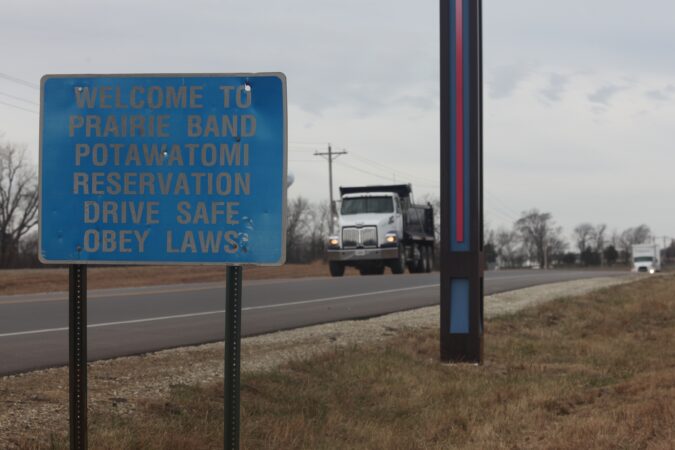
    MAYETTA, Kan. — The Prairie Band Potawatomi Nation, whose ancestors were uprooted by the U.S. from the Great Lakes region in the 1830s, are facing outrage from fellow Native Americans over plans to profit from another forced removal: President Donald Trump’s mass deportation campaign.

    A newly established tribal business entity quietly signed a nearly $30 million federal contract in October to come up with an early design for immigrant detention centers across the U.S. Amid the backlash, the tribe says it’s trying to get out of it.

    Tribal leaders and the U.S. Department of Homeland Security haven’t responded to detailed questions about why the firm was selected for such a big contract without having to compete for the work as federal contracting normally requires. A former naval officer — who markets himself as the “go-to” adviser for tribes and affiliated companies seeking to land federal contracts — established the affiliate, KPB Services LLC, in April.

    The criticism has been so intense that the 4,500-member tribe said it fired the economic development leaders who brokered the deal.

    “We are known across the nation now as traitors and treasonous to another race of people,” said Ray Rice, a 74-year-old who said he and other tribal members were blindsided. “We are brown and they’re brown.”

    ICE deals with tribes generate scrutiny

    Tribal Chairperson Joseph “Zeke” Rupnick promised “full transparency” about what he described as an “evolving situation.” In a video message to tribal members Friday, he said the tribe is talking with legal counsel about ways to end the contract.

    He alluded to the time when federal agents forcibly removed hundreds of Prairie Band Potawatomi families from their homes and ultimately corralled them on a reservation just north of Topeka.

    “We know our Indian reservations were the government’s first attempts at detention centers,” Rupnick said in the video message. “We were placed here because we were prisoners of war. So we must ask ourselves why we would ever participate in something that mirrors the harm and the trauma once done to our people.”

    The U.S. Supreme Court cleared the way in September for federal agents to conduct sweeping immigration raids and use apparent ethnicity as a relevant factor for a stop. With some Native Americans being swept up and detained in recent raids, U.S. Immigration and Customs Enforcement’s overtures to tribes and even longstanding deals are generating extra scrutiny.

    An LLC owned by the Poarch Band of Creek Indians in Alabama also has a multimillion-dollar contract with ICE to provide financial and administrative services. Meanwhile, some shareholders of an Alaska Native corporation say their values don’t align with the corporation’s federal contracting division, Akima, to provide security at several ICE detention facilities.

    “I’m shocked that there is any tribal nation that’s willing to assist the U.S. government in that,” said Brittany McKane, a 29-year-old Muscogee Nation citizen who attends the tribe’s college in Oklahoma.

    Some tribal nations have advised their citizens to carry tribal IDs.

    Last month, actor Elaine Miles (Northern Exposure) said she was stopped by ICE agents who alleged her ID from the Confederated Tribes of the Umatilla Indian Reservation in Oregon was fake.

    Economic pressure increases as federal funding decreases

    The economic arms of tribes, which can be run by non-Natives, are under increasing pressure to generate revenue because of decreased federal funding, high inflation, and competition from online gambling, said Gabe Galanda, an Indigenous rights attorney based in Seattle.

    But the economic opportunities presented to tribes don’t always align with their values, said Galanda, a member of the Round Valley Indian Tribes in northern California.

    The Prairie Band Potawatomi has a range of businesses that provide healthcare management staffing, general contracting, and even interior design.

    The tribal offshoot hired by ICE — KPB Services LLC — was established in Holton, Kan., and is not listed on the tribe’s website. It previously qualified along with dozens of other companies to provide logistical support to the U.S. Navy although, to date, it hasn’t performed any work for the federal government.

    The ICE contract initially was awarded in October for $19 million for unspecified “due diligence and concept designs” for processing centers and detention centers throughout the U.S., according to a one-sentence description of the work on the federal government’s real time contracting database. It was modified a month later to increase the payout ceiling to $29.9 million. Sole-source contracts above $30 million require additional justification under federal contracting rules.

    The contract raises a number of questions and seems to go against the Trump administration’s stated goal of cleaning up waste, fraud, and abuse, said attorney Joshua Schnell, who specializes in federal contracting law.

    “The public’s trust in the federal procurement system depends on transparency and competition,” said Schnell. “Although there is a role within this system for multimillion dollar sole-source contracts, these contracts are an exception to statutory competition requirements, and taxpayers are entitled to know how the government is spending their money.”

    Backlash swift as news about ICE contract spread

    It’s unclear what the Tribal Council knew about the contract. A spokesperson for the Tribal Council did not respond to repeated requests from the AP for details, including who was terminated.

    What is known is that KPB was registered by Ernest C. Woodward Jr., a retired U.S. naval officer with degrees in engineering and business who is a member of the Miami Tribe of Oklahoma, according to a website for his one-time consulting firm, Burton Woodward Partners LLC.

    The website described Woodward as a serial entrepreneur and tribal adviser on mergers and acquisitions, accessing capital, and landing federal contracts. The consulting firm was registered to an office park in Sarasota, Fla., in 2017 but was delisted two years later after it failed to file an annual report.

    The Prairie Band Potawatomi Nation in a 2017 news release said Woodward’s firm advised it on its acquisition of another government contractor, Mill Creek LLC, which specializes in outfitting federal buildings and the military with office furniture and medical equipment.

    Woodward also is listed as the chief operating officer of the Florida branch of Prairie Band Construction Inc., which was registered in September.

    Attempts to locate Woodward were unsuccessful. The phone number listed on Burton Woodward Partners was disconnected, and he did not respond to an email sent to another consulting firm he’s affiliated with, Virginia-based Chinkapin Partners LLC.

    Carole Cadue-Blackwood, who has Prairie Band Potawatomi ancestry and is an enrolled member of the Kickapoo Tribe in Kansas, hopes the contract dies. She has been part of the fight against an ICE detention center opening in Leavenworth, Kan., and works for a social service agency for Native Americans.

    “I’m in just utter disbelief that this has happened,” she said.

  • National Guardsman shot in D.C. making ‘extraordinary progress,’ doctor says

    National Guardsman shot in D.C. making ‘extraordinary progress,’ doctor says

    The National Guard member who was ambushed while patrolling near the White House on Thanksgiving eve is now breathing on his own and can stand with assistance, his neurosurgeon said Friday.

    Staff Sgt. Andrew Wolfe, 24, was hospitalized Nov. 26 after a gunman opened fire on him and his colleague, Spc. Sarah Beckstrom, 20, who died of her injuries the following day. The attack left Wolfe with a “critical” gunshot wound to his head, and he was airlifted to MedStar Washington Hospital Center, Jeffrey Mai said in a statement.

    Mai credited quick-acting first responders and the actions of trauma and neurosurgery teams for saving Wolfe’s life by controlling the serviceman’s bleeding and pressure on his brain. Mai called Wolfe’s recent recovery developments “important milestones that reflect his strength and determination.”

    “Staff Sgt. Wolfe has made extraordinary progress,” the doctor said. “Based on these improvements, he is now ready to transition from acute care to inpatient rehabilitation as the next step in his recovery journey.”

    Wolfe’s family, including his father, Jason, and mother, Melody, have chosen not to disclose the location of his rehabilitation, Mai added.

    Wolfe, who joined the West Virginia National Guard in 2019, and Beckstrom were among more than 2,000 Guard members deployed to D.C. after President Donald Trump’s announcement of a “crime emergency” in the city in August. Following the attack, Trump ordered an additional 500 troops to the District.

    The suspect in the attack, Rahmanullah Lakanwal, an Afghan national who served in the CIA’s “Zero Units” that seized or killed suspected terrorists, has been charged with first-degree murder.

    Prosecutors have not given a motive for the shooting. Charging documents say Lakanwal, who settled in Washington state after the 2021 U.S. withdrawal from Afghanistan, drove across the country to carry out the attack and allegedly shouted “Allahu akbar!” as he shot Beckstrom and Wolfe in their heads with a .357-caliber revolver outside the Farragut West Metro station. The phrase is Arabic for “God is great.” A Washington Post investigation found that Lakanwal slipped deeper into isolation as he struggled to adapt with his wife and five children in the United States.

    Lakanwal, who was also shot during the attack, pleaded not guilty through an attorney at the hearing Dec. 2. He spoke through an interpreter to give brief responses and appeared remotely by video from a hospital bed.

    There had been earlier signs that Wolfe’s recovery was trending positively. On Dec. 5, West Virginia Gov. Patrick Morrisey (R) shared publicly that Wolfe’s “parents report that his head wound is slowly healing and that he’s beginning to ‘look more like himself.’”

    Jordan Butler, a local pastor and friend of the Wolfe family, coled a vigil last week at the high school Wolfe attended in Inwood, a tight-knit West Virginia community where vigil attendees prayed and lit candles for Wolfe.

    “It’s amazing watching what’s happening,” Butler told the Post on Wednesday. “It’s almost miraculous.”

    On Friday, Wolfe’s parents said in a statement released by MedStar that they hope their son will be able to return to work in the West Virginia National Guard “and his new mission of being a light into this world.”

    “Please continue to lift Andy up in prayer as he begins a long and tough rehabilitation,” Jason and Melody Wolfe said. “We know he will continue to improve at a rapid pace.”

  • Fighting rages on Thai-Cambodian border despite Trump’s ceasefire claim

    Fighting rages on Thai-Cambodian border despite Trump’s ceasefire claim

    SURIN, Thailand — Fighting raged Saturday morning along the border of Thailand and Cambodia, even after U.S. President Donald Trump, acting as a mediator, declared that he had won agreement from both countries for a new ceasefire.

    Thai officials said they did not agree to a ceasefire. Cambodia has not commented directly on Trump’s claim, but its defense ministry said Thai jets carried out airstrikes Saturday morning.

    Thai Foreign Minister Sihasak Phuangketkeow said Saturday that some of Trump’s remarks didn’t “reflect an accurate understanding of the situation.”

    He said Trump’s characterization of a land mine explosion that wounded Thai soldiers as a “roadside accident” was inaccurate, and did not reflect Thailand’s position that it was a deliberate act of aggression.

    Sihasak said that Trump’s willingness to credit what may be “information from sources that deliberately distorted the facts” instead of believing Thailand hurt the feelings of the Thai people “because we consider ourselves — we are proud, in fact — to be the oldest treaty ally of the United States in the region.”

    The latest large-scale fighting was set off by a skirmish on Dec. 7 that wounded two Thai soldiers and derailed a ceasefire promoted by Trump that ended five days of earlier combat in July over longstanding territorial disputes.

    The July ceasefire was brokered by Malaysia and pushed through by pressure from Trump, who threatened to withhold trade privileges unless Thailand and Cambodia agreed. It was formalized in more detail in October at a regional meeting in Malaysia that Trump attended.

    Number of displaced tops half a million

    More than two dozen people on both sides of the border have officially been reported killed in this past week’s fighting, while more than half a million have been displaced.

    The Thai military acknowledged 15 of its troops died during the fighting and estimated earlier this week that there have been 165 fatalities among Cambodian soldiers. Cambodia has not announced military casualties, but has said at least 11 civilians have been killed and more than six dozen wounded.

    Trump, after speaking to Thai Prime Minister Anutin Charnvirakul and Cambodian Prime Minister Hun Manet, announced on Friday an agreement to restart the ceasefire.

    “They have agreed to CEASE all shooting effective this evening, and go back to the original Peace Accord made with me, and them, with the help of the Great Prime Minister of Malaysia, Anwar Ibrahim,” Trump wrote in his Truth Social post.

    Trump’s claim came after midnight in Bangkok. Thai Prime Minister Anutin had, after his call with Trump, said he had explained Thailand’s reasons for fighting and said peace would depend on Cambodia ceasing its attacks first.

    The Thai foreign ministry later explicitly disputed Trump’s claim that a ceasefire had been reached. Anutin’s busy day on Friday included dissolving Parliament, so new elections could be held early next year.

    Cambodian Prime Minister Hun Manet, in comments posted early Saturday morning, also made no mention of a ceasefire.

    Leaders held Friday night phone talks with Trump

    Hun Manet said he held phone conversations on Friday night with Trump, and a night earlier with Malaysia’s Anwar, and thanked both “for their continuous efforts to achieve a long-lasting peace between Cambodia and Thailand.”

    “Cambodia is ready to cooperate in any way that is needed,” Hun Manet wrote.

    Anwar later posted on social media that he was urging the two sides to implement a ceasefire on Saturday night. Cambodia’s prime minister, also posting online, endorsed the initiative, which included having Malaysia and the United States help monitor it. However, Thai Prime Minister Anutin denied that his country was even in negotiations over the proposal.

    Thailand has been carrying out airstrikes on what it says are strictly military targets, while Cambodia has been firing thousands of medium-range BM-21 rockets that have caused havoc but relatively few casualties.

    BM-21 rocket launchers can fire up to 40 rockets at a time with a range of 19-25 miles. These rockets cannot be precisely targeted and have landed largely in areas from where most people have already been evacuated.

    However, the Thai army announced Saturday that BM-21 rockets had hit a civilian area in Sisaket province, seriously injuring two civilians who had heard warning sirens and had been running toward a bunker for safety.

    Thailand’s navy was also reported by both sides’ militaries to have joined the fighting on Saturday morning, with a warship in the Gulf of Thailand shelling Cambodia’s southwestern province of Koh Kong. Each side said the other opened fire first.

  • Speaker Johnson unveils healthcare plan as divided Republicans scramble for alternative

    Speaker Johnson unveils healthcare plan as divided Republicans scramble for alternative

    WASHINGTON — The Senate failed to get anywhere on the healthcare issue this week. Now it’s the House’s turn to show what it can do.

    Speaker Mike Johnson unveiled a Republican alternative late Friday, a last-minute sprint as his party refuses to extend the enhanced tax subsidies for those who buy policies through the Affordable Care Act, also called Obamacare, which are expiring at the end of the year. Those subsidies help lower the cost of coverage.

    Johnson (R., La.) huddled behind closed doors in the morning — as he did days earlier this week — working to assemble the package for consideration as the House focuses the final days of its 2025 work on healthcare.

    “House Republicans are tackling the real drivers of health care costs to provide affordable care,” Johnson said in a statement announcing the package. He said it would be voted on next week.

    Later Friday, though, House Democratic Leader Hakeem Jeffries said: “House Republicans have introduced toxic legislation that is completely unserious, hurts hardworking America taxpayers, and is not designed to secure bipartisan support. If the bill reaches the House floor, I will strongly oppose it.”

    Time is running out for Congress to act. Democrats engineered the longest federal government shutdown ever this fall in a failed effort to force Republicans to the negotiating table on healthcare. But after promising votes, the Senate failed this week to advance both a Republican healthcare plan and the Democratic-offered bill to extend the tax credits for three years.

    Now, with just days to go, Congress is about to wrap up its work with no consensus solution in sight.

    What Republicans are proposing

    The House Republicans offered a 100-plus-page package that focuses on long-sought GOP proposals to enhance access to employer-sponsored health insurance plans and clamp down on so-called pharmacy benefit managers.

    Republicans propose expanding access to what’s referred to as association health plans, which would allow more small businesses and self-employed individuals to band together and purchase health coverage.

    Proponents say such plans increase the leverage businesses have to negotiate a lower rate. But critics say the plans provide skimpier coverage than what is required under the Affordable Care Act.

    The Republicans’ proposal would also require more data from pharmacy benefit managers, or PBMs, as a way to help control drug costs. Critics say PBMs have padded their bottom line and made it more difficult for independent pharmacists to survive.

    Additionally, the GOP plan includes mention of cost-sharing reductions for some lower-income people who rely on Obamacare, but those would not take effect until January 2027.

    The emerging package from the House Republicans does not include an extension of an enhanced tax credit for millions of Americans who get insurance coverage through the Affordable Care Act. Put in place during the COVID-19 crisis, that enhanced subsidy expires Dec. 31, leaving most families in the program facing more than double their current out-of-pocket premiums, and in some cases, much more.

    What Trump wants

    President Donald Trump has said he believes Republicans are going to figure out a better plan than Obamacare — something he has promised for years — but offered few details beyond his idea for providing Americans with stipends to help buy insurance.

    “I want to see the billions of dollars go to people, not to the insurance companies,” Trump said late Friday during an event at the White House. “And I want to see the people go out and buy themselves great healthcare.”

    The president did not comment directly on the House’s new plan. He has repeatedly touted his idea of sending money directly to Americans to help offset the costs of healthcare policies, rather than extending the tax credits for those buying policies through Obamacare. It’s unclear how much money Trump envisions. The Senate GOP proposal that failed to advance would have provided payments to new health savings accounts of $1,000 a year for adult enrollees, or $1,500 for those ages 50 to 64.

    It appeared there were no such health savings accounts in the new House GOP plan.

    Political pressure is building for many

    Going Johnson’s route has left vulnerable House Republicans representing key battleground districts in a tough spot.

    Frustrated with the delays, a group of more centrist GOP lawmakers is aligning with Democrats to push their own proposals for continuing the tax credits, for now, so that Americans don’t face rising healthcare costs.

    They are pursuing several paths for passing a temporary ACA subsidy extension, co-sponsoring a handful of bills. They are also signing on to so-called discharge petitions that could force a floor vote if a majority of the House signs on.

    Such petitions are designed to get around the majority’s control and are rarely successful, but this year has proven to be an exception. Lawmakers, for example, were able to use a discharge petition to force a vote on the release of the Jeffrey Epstein files held by the Department of Justice.

    One petition, filed by Rep. Brian Fitzpatrick (R., Pa.), had signatures from 12 Republicans and 12 Democrats as of Friday afternoon. It would force a vote on a bill that includes a two-year subsidy extension and contains provisions designed to combat fraud in the ACA marketplace. There are also restrictions for PBMs, among other things.

    Another petition from Rep. Josh Gottheimer (D., N.J.) has 39 signatures and is broadly bipartisan. It’s a simpler proposal that would force a vote on a one-year ACA enhanced subsidy extension and would include new income caps limiting who qualifies for the enhanced credit.

    Both discharge petitions have enough Republicans’ support that they would likely succeed if Jeffries encouraged his caucus to jump on board. So far, he’s not tipping his hand.

    “We’re actively reviewing those two discharge petitions and we’ll have more to say about it early next week,” Jeffries said.

    Meanwhile, Jeffries is pushing Democrats’ own discharge petition, which has 214 signatures and would provide for a clean three-year subsidy extension. No Republicans have signed on to that one.

    And as Republicans made clear in the Senate this week, a three-year extension without changes to the program has no chance of passing their chamber.