Tag: no-latest

  • All truckers and bus drivers will be required to take commercial driver’s license tests in English

    All truckers and bus drivers will be required to take commercial driver’s license tests in English

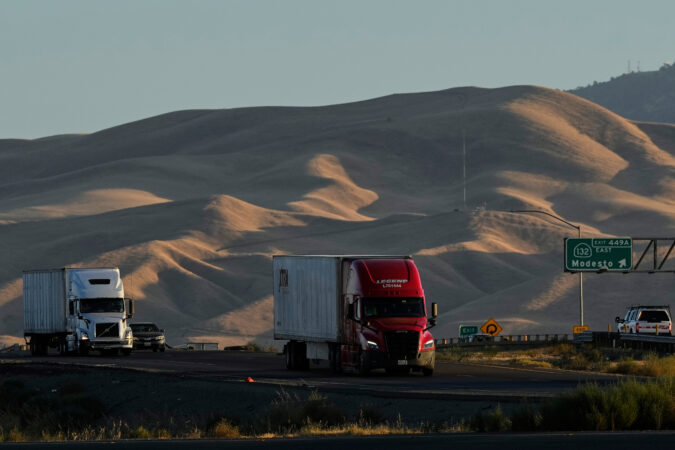
    All truckers and bus drivers will have to take their commercial driver’s license tests in English as the Trump administration expands its aggressive campaign to improve safety in the industry and get unqualified drivers off the road.

    Transportation Secretary Sean Duffy announced the latest effort Friday to ensure that drivers meet the federal requirements to understand English well enough to read road signs and communicate with law enforcement officers. Florida already started administering its tests in English.

    Currently, many states allow drivers to take their license tests in other languages even though they are required to demonstrate English proficiency. California offered tests in 20 other languages. Duffy said that a number of states have hired other companies to administer commercial driver’s licenses tests, and those companies aren’t enforcing the standards that drivers are supposed to meet to demonstrate their driving and English skills.

    These latest enforcement efforts come just days after the Transportation Department said 557 driving schools should close because they failed to meet basic safety standards. The department has been aggressively going after states that handed out commercial driver’s licenses to immigrants who shouldn’t have qualified for them ever since a fatal crash in August.

    A truck driver who Duffy says wasn’t authorized to be in the U.S. made an illegal U-turn and caused a crash in Florida that killed three people. Other fatal crashes since then, including one in Indiana that killed four members of an Amish community earlier this month, have only heightened concerns.

    Duffy says truckers should be well qualified

    States are expected to ensure drivers can speak English before giving them a commercial license, and then law enforcement is supposed to check driver’s language skills during any traffic stops or inspections. Drivers who can’t communicate effectively are supposed to be pulled off the road. A recent federal effort involving 8,215 inspections led to nearly 500 drivers being disqualified because of their English skills. California initially resisted enforcing the English rules, but the state recently pulled more than 600 drivers off the highways.

    Duffy said every American wants drivers who get behind the wheel of a big rig to be well-qualified to handle those vehicles. But he said that for too long the problems in the trucking industry were “allowed to rot and no one’s paying attention to it for decades.”

    “Once you start to pay attention, you see that all these bad things have been happening. And the consequence of that is that Americans get hurt,” Duffy said. “When we get on the road, we should expect that we should be safe. And that those who drive those 80,000-pound big rigs, that they are well-trained, they’re well-qualified, and they’re going to be safe.”

    More efforts to crack down on fraudulent companies

    The campaign will also now expand to prevent fraudulent trucking companies from getting into the business while continuing to go after questionable schools and ensure states are complying with all the regulations for handing out commercial licenses.

    Duffy said that the registration system and requirements for trucking companies will be strengthened while Federal Motor Carrier Safety Administration inspectors conduct more spot checks of trucks and commercial driver’s license schools.

    Officials are also trying to make sure that the electronic logging devices drivers use are accurate, and that states are following all the regulations to ensure drivers are qualified to get commercial licenses.

    ‘Chameleon carriers’ avoid enforcement

    Currently, companies only have to pay $300 and show proof of insurance to get registered to operate, and then they might not be audited until a year or more later. And even then the audits might be done virtually, which makes it less likely to identify fraudulent companies.

    That has made it easy for fraudulent companies that are known in the industry as “chameleon carriers” to register multiple times under different names and then simply switch names and registration numbers to avoid any consequences after crashes or other violations.

    Dan Horvath, who is the chief operating officer for the American Trucking Associations trade group, said this longstanding problem has made it far too easy for companies that have been ordered to shut down to just change their name and registration number and keep operating the same way.

    “What we think at ATA has happened over the years is that we have a lack of true enforcement and intervention with motor carriers that are in operation,” Horvath said. Only a small fraction of trucking companies ever undergo a full compliance review with an in-person inspection, he said.

    Past enforcement efforts

    After that Indiana crash, the Federal Motor Carrier Safety Administration knocked the company that employed the driver out of service and pulled the DOT numbers assigned to two other companies that were linked to AJ Partners. Tutash Express and Sam Express in the Chicago area were also disqualified, and the Aydana driving school that the trucker involved in the crash attended lost its certification.

    Immigration authorities arrested that driver because they said the 30-year-old from Kyrgyzstan entered the country illegally. Authorities say he pulled out and tried to go around a truck that had slowed in front of him, and his truck slammed into an oncoming van.

    In December, the Federal Motor Carrier Safety Administration took action to decertify up to 7,500 of the 16,000 schools nationwide, but that included many defunct operations.

    Duffy said the companies involved in that Indiana crash were all registered at the same apartment. In other cases, there might be hundreds of these chameleon companies registered at a single address.
  • Which Trump tariffs did the Supreme Court strike down? Here’s what to know

    Which Trump tariffs did the Supreme Court strike down? Here’s what to know

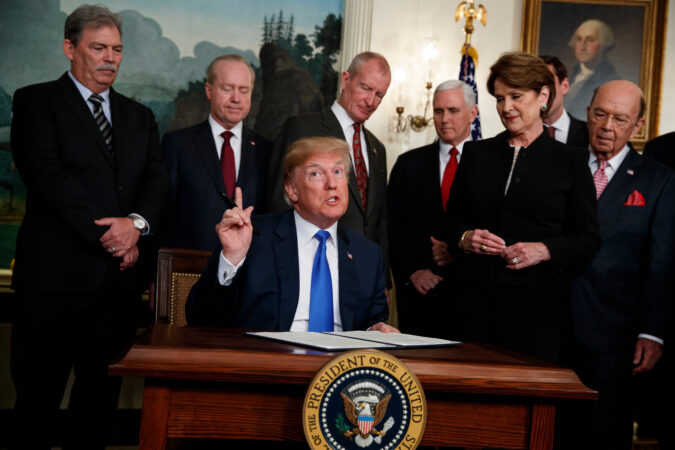
    NEW YORK — The nation’s highest court struck down some of President Donald Trump’s most sweeping tariffs on Friday, in a 6-3 decision that he overstepped his authority when using an emergency powers law to justify new taxes on goods from nearly every country in the world.

    Trump has launched a barrage of new tariffs over the last year. Despite Friday’s ruling, many sectoral levies remain in place — and the president has already said that he’ll turn to other options for more import taxes, including plans to impose a new 10% tariff globally. But the Supreme Court decision upends a core set of tariffs that Trump rolled out using the 1977 International Emergency Economic Powers Act, or IEEPA.

    IEEPA authorizes the president to broadly regulate commerce after declaring a national emergency. Over the years, presidents have turned to this law dozens of times, often to place sanctions on other countries. But Trump was the first to use it to implement tariffs.

    Here’s a look at the now-overturned tariffs Trump imposed using IEEPA — and other levies that still stand today.

    ‘Liberation Day’ tariffs

    Trump used IEEPA to slap import taxes on nearly every country in the world last spring. On April 2, which Trump called Liberation Day, he imposed “reciprocal” tariffs of up to 50% on goods from dozens of countries — and a baseline 10% tariff on just about everyone else.

    The 10% tax kicked in early April. But the bulk of Liberation Day’s higher levies got delayed by several months, and many rates were revised over time (in some cases after new “framework” agreements). Most went into effect Aug. 7.

    The national emergency underlying these tariffs, Trump argued at the time, was the long-running gap between what the U.S. sells and what it buys from the rest of the world. Still, goods from countries with which the U.S. runs a trade surplus also faced taxes.

    Major trading partners impacted by Liberation Day tariffs include South Korea, Japan and the European Union — which combined export a range of products to the U.S., like electronics, cars, and car parts and pharmaceuticals. Following trade talks, Trump’s rates on most goods stood at 15% for the EU, Japan and South Korea ahead of Friday. But just last month, Trump threatened to hike levies on certain South Korean products to 25% — and countries worldwide still face sector-specific, non-IEEPA tariffs.

    ‘Trafficking tariffs’ on Canada, China and Mexico

    At the start of his second term, Trump used IEEPA to impose new tariffs on America’s three biggest trading partners: Mexico, Canada, and China.

    To justify these tariffs, Trump declared a national emergency ostensibly over undocumented immigration and the trafficking of drugs like fentanyl and the chemicals made to use it. The levies were first announced at the start of February 2025, but went into effect over time — and were at times delayed, reduced or heightened through further retaliation.

    Ahead of Friday’s decision, “trafficking tariffs” on Canadian and Mexican imports were 35% and 25%, respectively, for goods that don’t comply with the 2020 United States-Mexico-Canada Agreement. China, meanwhile, faced a 10% fentanyl-related tariff. That’s down from 20% imposed by Trump earlier last year. Chinese goods also once saw sky-high levies after Liberation Day, but rates had since come down during trade talks.

    Top U.S. imports from China include mobile phones and other electronics, as well as clothing, toys and household appliances. Meanwhile, Canada and Mexico are both major sources of cars and auto parts. Canada is also the U.S.’s largest supplier of crude oil. And Mexico is a key exporter of fresh produce, beverages and more.

    Tariffs on Brazil over Bolsonaro trial

    Trump also used IEEPA to slap steep import taxes on Brazilian imports over the summer, citing the country’s policies and criminal prosecution of former President Jair Bolsonaro.

    Brazil already faced Trump’s 10% baseline Liberation Day rate. The Bolsonaro-related duties added another 40%, bringing total levies to 50% on many products ahead of Friday.

    The U.S. has actually run a consistent trade surplus with Brazil over the years. But top exports from the country include manufactured products, crude oil and agricultural products like soybeans and sugar.

    Tariffs on India linked to Russian oil

    India has faced additional IEEPA tariffs, too. After Liberation Day, Trump slapped a 25% levy on Indian imports — and later added another 25% for the country’s purchases of Russian oil, while also citing the emergency powers law, bringing the total to 50%.

    But earlier this month, the U.S. and India reached a trade framework deal. Trump said Prime Minister Narendra Modi agreed to stop buying Russian oil, and that he planned to lower U.S. tariffs on its ally to 18%. Meanwhile, India said it would “eliminate or reduce tariffs” on all U.S. industrial goods and a range of agricultural products.

    India’s top exports to the U.S. include pharmaceuticals, precious stones, clothing and textiles.

    What are other non-IEEPA tariffs that countries still face today?

    Despite the Supreme Court knocking down sweeping import taxes Trump imposed with IEEPA, most countries still face steep tariffs from the U.S. on specific sectors.

    Citing national security threats, Trump has used another law — Section 232 of the 1962 Trade Expansion Act — to slap levies on steel, aluminum, cars, copper, and lumber worldwide. He began to roll out even more Section 232 tariffs in September, on kitchen cabinets, bathroom vanities and upholstered furniture.

    Amid pressure to lower rising prices, Trump has rolled back some of his tariffs recently. Beyond trade frameworks, that’s included adding exemptions to specific levies and scrapping import taxes for goods like coffee, tropical fruit and beef.

    Still, Trump has threatened more sectoral levies are on the way. And following Friday’s decision, he said that he would sign an executive order to enact a 10% global tariff — using another federal law, known as Section 122. Those tariffs would be limited to just 150 days, unless they are extended legislatively.

  • Trump warns he’s considering limited strikes as Iranian diplomat says proposed deal is imminent

    Trump warns he’s considering limited strikes as Iranian diplomat says proposed deal is imminent

    WASHINGTON — President Donald Trump warned on Friday that limited strikes against Iran are possible even as the country’s top diplomat said Tehran expects to have a proposed deal ready in the next few days following nuclear talks with the United States.

    In response to a reporter’s question on whether the U.S. could take limited military action as the countries negotiate, Trump said, “I guess I can say I am considering that.” A few hours later, he told reporters that Iran “better negotiate a fair deal.”

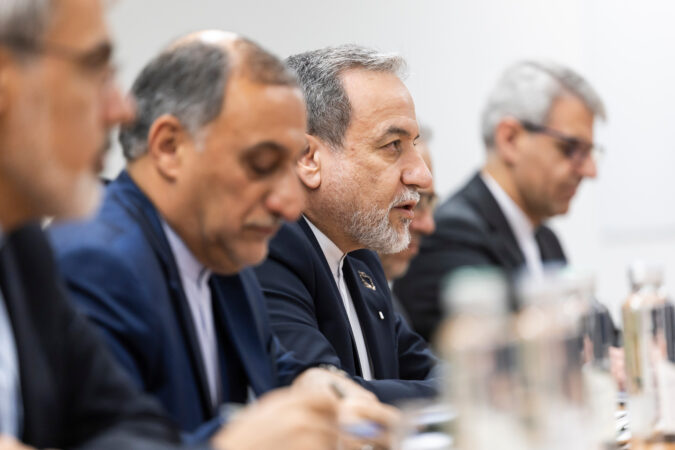
    Earlier Friday, Iranian Foreign Minister Abbas Araghchi said in a TV interview that his country was planning to finalize a draft deal in “the next two to three days” to send to Washington.

    “I don’t think it takes long, perhaps, in a matter of a week or so, we can start real, serious negotiations on the text and come to a conclusion,” Araghchi said on MS NOW’s “Morning Joe” show.

    The tensions between the longtime adversaries have ramped up as the Trump administration pushes for concessions from Iran and has built up the largest U.S. military presence in the Middle East in decades, with more warships and aircraft on the way.

    On Friday, the USS Gerald R. Ford carrier strike group passed through the Strait of Gibraltar and entered the Mediterranean Sea after being sent by Trump from the Caribbean, according to images of the ship by maritime photographers posted to social media.

    Both Iran and the U.S. have signaled that they are prepared for war if talks on Tehran’s nuclear program fizzle out. “We are prepared for diplomacy, and we are prepared for negotiation as much as we are prepared for war,” Araghchi said Friday.

    Ali Vaez, an Iran expert at the International Crisis Group, said Iran “would treat any kinetic action as an existential threat.”

    Vaez said he doesn’t think Iran’s leaders are bluffing when they say they would retaliate, while they likely believe they could maintain their hold on power despite any U.S. airstrikes.

    What Iran and the U.S. are negotiating

    Trump said a day earlier that he believes 10 to 15 days is “enough time” for Iran to reach a deal following recent rounds of indirect negotiations, including this week in Geneva, that made little visible progress. But the talks have been deadlocked for years after Trump’s decision in 2018 to unilaterally withdraw the U.S. from Iran’s 2015 nuclear deal with world powers. Since then, Iran has refused to discuss wider U.S. and Israeli demands that it scale back its missile program and sever ties to armed groups.

    Araghchi also said Friday that his American counterparts have not asked for zero enrichment of uranium as part of the latest round of talks, which is not what U.S. officials have said publicly.

    “What we are now talking about is how to make sure that Iran’s nuclear program, including enrichment, is peaceful and will remain peaceful forever,” he said.

    He added that in return, Iran will implement some confidence-building measures in exchange for relief on economic sanctions.

    In response to Araghchi’s claim, a White House official said Trump has been clear that Iran cannot have nuclear weapons or the capacity to build them and that it cannot enrich uranium. The official wasn’t authorized to comment publicly and spoke on condition of anonymity.

    Tehran has long insisted that any negotiations should only focus on its nuclear program and that it hasn’t been enriching uranium since U.S. and Israeli strikes last June on Iranian nuclear sites. Trump said at the time that the strikes had “obliterated” Iran’s nuclear sites, but the exact damage is unknown as Tehran has barred international inspectors.

    Although Iran insists its nuclear program is peaceful, the U.S. and others suspect it is aimed at eventually developing weapons.

    What Congress has to say

    Trump’s comments have faced pushback from some lawmakers who say the president should get Congress’ approval before any strike.

    Democratic Sen. Tim Kaine of Virginia said Friday that he has filed a war powers resolution that would require that step. Though it has no chance of becoming law — in part because Trump himself would have to sign it — some bipartisan consensus has arisen recently among senators who forced votes on previous resolutions on military action in Venezuela.

    None of those resolutions passed, but they were successful in showing how lawmakers are troubled by some of Trump’s aggressive foreign policy maneuvers.

    “If some of my colleagues support war, then they should have the guts to vote for the war, and to be held accountable by their constituents, rather than hiding under their desks,” Kaine said in a statement.

  • NASA targets March for first moon mission by Artemis astronauts after fueling test success

    NASA targets March for first moon mission by Artemis astronauts after fueling test success

    CAPE CANAVERAL, Fla. — NASA aims to send astronauts to the moon in March after acing the latest rocket fueling test.

    Officials announced the decision Friday, two weeks ahead of the first targeted launch opportunity on March 6.

    “This is really getting real, and it’s time to get serious and start getting excited,” said Lori Glaze, NASA’s exploration systems development chief.

    Administrator Jared Isaacman noted that launch teams made “major progress” between the first countdown rehearsal, which was disrupted by hydrogen leaks earlier this month, and the second test, which was completed with exceptionally low seepage Thursday night.

    The test was “a big step toward America’s return to the lunar environment,” Isaacman said on the social media platform X. Astronauts last ventured to the moon more than half a century ago.

    While more work remains at the pad, officials expressed confidence in being ready to launch four astronauts on the Artemis II lunar fly-around as soon as March 6 from Florida’s Kennedy Space Center. To keep their options open, the three Americans and one Canadian prepared to go into the mandatory two-week health quarantine Friday night in Houston.

    The space agency has only five days in March to launch the crew aboard the Space Launch System rocket, before standing down until the end of April. February’s opportunities evaporated after dangerous amounts of liquid hydrogen leaked during the first fueling demonstration.

    Technicians replaced two seals, leading to Thursday’s successful rerun. The countdown clocks went all the way down to the desired 29-second mark.

    The removed Teflon seals had some light scratches but nothing else noticeable that could have caused such heavy leakage, officials said.

    A bit of moisture also was found in the area that could have contributed to the problem. The fixes worked, with barely any leakage detected, said launch director Charlie Blackwell-Thompson.

    Commander Reid Wiseman and two of his crew monitored Thursday’s operation alongside launch controllers. The astronauts will be the first to fly to the moon since Apollo 17 closed out NASA’s first chapter in moon exploration in 1972.

    Still ahead is the flight readiness review, scheduled for late next week. If that goes well, the astronauts will fly back to Kennedy around the beginning of March for a real countdown.

    “Every night I look up at the moon and I see it and I get real excited because I can really feel she’s calling us, and we’re ready,” Glaze said.

    The nearly 10-day mission is considered a test flight with astronauts soaring atop the 322-foot SLS rocket for the first time. The only other SLS flight, in 2022, had no one on board.

    The next mission in the series, Artemis III, will attempt to land a pair of astronauts near the moon’s south pole in a few years.

    Given all the details still to be worked out for that mission — including whether Elon Musk’s SpaceX or Jeff Bezos’ Blue Origin will provide the lunar lander — Glaze said it will be months, perhaps even a year, before NASA selects that first moon-landing crew.

  • Trump banner on Justice Dept. building draws authoritarian comparisons

    Trump banner on Justice Dept. building draws authoritarian comparisons

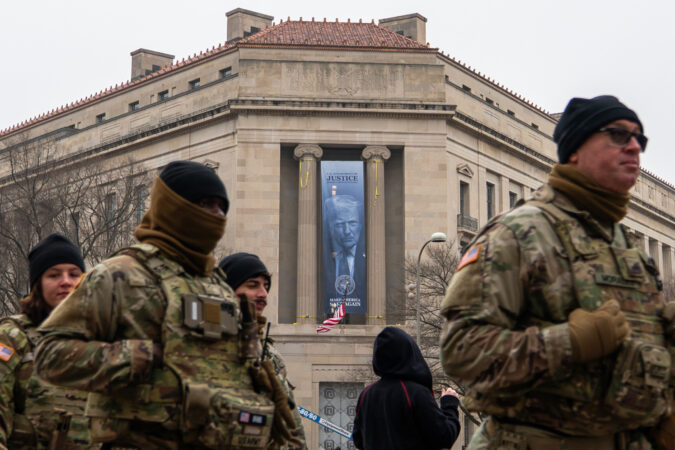
    A new banner hanging along the facade of the Justice Department’s headquarters in Washington is sparking criticism from Democrats and a former FBI director, who suggest that it exemplifies President Donald Trump’s encroachment on the agency, which has long prided itself on being independent from the White House.

    The tall banner displays a portrait of Trump, cast in a dark blue hue, staring down at tourists, commuters and cars along Washington’s bustling Pennsylvania Avenue. “MAKE AMERICA SAFE AGAIN,” reads the banner, which is emblazoned with the Justice Department’s seal.

    A Justice Department spokesperson said the banner was hung in commemoration of the United States’ Semiquincentennial, writing in a statement: “We are proud at this Department of Justice to celebrate 250 years of our great country and our historic work to make America safe again at President Trump’s direction.”

    Similar banners have appeared recently on other government buildings in Washington. But Democrats said that the decision to install one at the Justice Department symbolizes the influence Trump has wielded over the agency during his second term and that the display is comparable to the imagery deployed by authoritarian regimes.

    “The irony of a twice-impeached, convicted felon putting his own picture on the wall of the Department of Justice,” Sen. Ben Ray Luján of New Mexico wrote on X. “President Trump is weaponizing the DOJ as his own personal law firm.”

    Rep. Mike Quigley of Illinois shared an image of the banner online and wrote: “POTUS is putting his face on the Justice Department. … This is not the work of an independent and impartial justice system.”

    “Ok Kim Jong Un,” Rep. Jim McGovern of Massachusetts wrote.

    A pair of similar banners hung at the U.S. Department of Agriculture showed Trump and Abraham Lincoln’s portraits emblazoned with the phrase: “Growing America Since 1862.” (A government purchase order for the pair of banners at USDA showed they cost $16,400.) And banners hung on the Labor Department’s building featured portraits of Trump and Theodore Roosevelt that read, “American workers first.”

    The addition to the Justice Department building follows a pattern of norm-breaking efforts that critics say amount to Trump using the agency as a personal cudgel against his political enemies.

    In a speech delivered inside the building last year, Trump declared himself the nation’s “chief law enforcement officer.” Attorney General Pam Bondi rarely misses an opportunity to praise the president and credit him with the department’s success, including at a contentious congressional oversight hearing last week in which she repeatedly described him “the greatest president in American history.”

    To Trump’s critics, the banner is also striking given his status as a felon. He was found guilty in 2024 in a New York state case on 34 counts of falsifying business records to conceal a hush money payment to an adult-film actress.

    Less than two years ago, Justice Department prosecutors had been pursuing two federal cases against him led by former special counsel Jack Smith. One focused on efforts to overturn the 2020 election, while the other related to Trump’s handling of classified documents.

    Trump is continuing to appeal his state court conviction in New York. A Georgia criminal case against Trump related to efforts to change the 2020 election result was dismissed last year.

    The two federal cases were also dismissed. One ended because of issues with Smith’s appointment. The other Smith withdrew after Trump’s 2024 election victory, in line with long-standing Justice Department policies preventing prosecution of a sitting president.

    Trump and his Justice Department appointees have contended that the prosecutions arose out of a Biden-era weaponization of the justice system to punish political foes.

    Since his return to the White House, Trump has ordered several prosecutions of political rivals on social media. Federal prosecutors brought charges against former FBI Director James B. Comey and New York Attorney General Letitia James last year — both of whom Trump had demanded Bondi move swiftly to prosecute. Those cases were later thrown out over issues with the appointment of the U.S. attorney selected to oversee them.

    Comey, in a social media post Thursday, called the installation of the banner outside the Justice Department headquarters “sickening.”

    “But they forgot to cover the inscription on the Pennsylvania Avenue side: ‘WHERE LAW ENDS TYRANNY BEGINS,’” he wrote.

    The banner is hardly the first time the Trump administration has been accused of adopting aesthetics and deploying imagery typically associated with imperialism or authoritarianism since his return to office last year.

    The administration, for example, roiled the art world when the Department of Homeland Security used images of Americana paintings to bolster support for Trump’s large-scale deportation campaign.

    There was also a massive military parade in Washington last year, which ran against an American tradition of avoiding public displays of martial strength more common in authoritarian regimes. The president is also planning a giant triumphal arch across from the Lincoln Memorial, which could dwarf the size of that and other monuments.

  • Police search Andrew Mountbatten-Windsor’s former home a day after his arrest

    Police search Andrew Mountbatten-Windsor’s former home a day after his arrest

    LONDON — Police searched the former home of Andrew Mountbatten-Windsor again on Friday, a day after he was arrested and held in custody for nearly 11 hours on suspicion of misconduct in having shared confidential trade information with the late convicted sex offender Jeffrey Epstein.

    In another blow for the former Prince Andrew, the British government is considering formally removing him from the line of succession to the crown. Despite losing his status as prince and facing a police investigation, Andrew remains eighth in line to the throne. That can only be changed with new legislation.

    When the king stripped his brother of his titles in the fall, the government said passing a new law would not be a good use of Parliament’s time.

    But that view has changed and the government is now considering legislation once the police investigation is finished. James Murray, the government’s chief secretary to the treasury, said “the government is considering any further steps that might be required, and we’re not ruling anything out.”

    The last time a royal was removed from the line of succession was after the abdication of King Edward VIII in 1936, when the law was changed to strike him and any descendants from the list.

    Removing Andrew would also require agreement from more than a dozen other countries, including Jamaica, Canada, and Australia, that have the British monarch as head of state.

    Following one of the most tumultuous days in the modern history of Britain’s royal family, the former prince was back at his new residence on the Sandringham estate, King Charles III‘s private retreat, around 115 miles northeast of London.

    Police have concluded their search there, but are still searching Royal Lodge, his 30-room former home in the parkland near Windsor Castle, just west of the capital, where the king’s younger brother had lived for decades until his eviction earlier this month. Unmarked vans, believed to be police vehicles, have been entering the grounds Friday morning.

    The search is expected to continue for several days.

    Mountbatten-Windsor, who was pictured slouched in the back of his chauffeur-driven car following his release Thursday evening from a police station near Sandringham, remains under investigation, which means he has neither been charged nor exonerated by Thames Valley Police, the force responsible for areas west of London.

    Arrest was years in the making

    His arrest follows years of allegations over his links with Epstein, who died by suicide in a New York jail in 2019.

    The accusation at the heart of his arrest is that Mountbatten-Windsor — who was known as Prince Andrew until October when his brother stripped him of his titles and honors and banished him from Royal Lodge — shared confidential trade information with the disgraced financier when he was a trade envoy for the U.K.

    Emails released last month by the U.S. Department of Justice appeared to show Mountbatten-Windsor sharing reports of official visits to Hong Kong, Vietnam, and Singapore, and sending Epstein a confidential brief on investment opportunities in Afghanistan.

    Thames Valley Police has previously said it was also reviewing allegations that a woman was trafficked to the U.K. by Epstein to have a sexual encounter with Andrew. Thursday’s arrest had nothing to do with that.

    Other police forces are also conducting their own investigations into Epstein’s links to the U.K., including the assessment of flight logs at airports, large and small. They are coordinating their work within a national group.

    On Friday, London’s Metropolitan Police said it was assessing, with the help of U.S. counterparts, whether the capital’s airports, which include Heathrow, “may have been used to facilitate human trafficking and sexual exploitation.”

    It also said that it’s asking past and present officers who protected Mountbatten-Windsor to “consider carefully” whether they saw or heard anything that may be relevant to the investigations.

    As of now, it said no new criminal allegations have been made regarding sexual offenses within its jurisdiction.

    Mountbatten-Windsor has consistently denied any wrongdoing in his association with Epstein but has not commented on the most recent allegations that have emerged with the release of the so-called Epstein files.

    Arrest was sudden, investigation will take time

    Police swept into the grounds of Mountbatten-Windsor’s home to arrest him at 8 a.m. Thursday — his 66th birthday — before taking him to Aylsham police station for questioning.

    It’s not known what he told them. He may have said nothing, or “no comment,” as is his right.

    Experts said that misconduct in a public office is notoriously difficult to prove.

    “Firstly, it must be determined if Andrew Mountbatten-Windsor was in a role within government that constitutes the title of public officer,” said Sean Caulfield, a criminal defense lawyer at Hodge Jones & Allen. “There is no standard definition to clearly draw on.”

    The Crown Prosecution Service will ultimately make a decision about charging Mountbatten-Windsor.

    Andrew Gilmore, a partner at Grosvenor Law, said that prosecutors will apply the two-stage test known as the “Code for Crown Prosecutors.”

    “That test is to determine whether there is a more realistic prospect of a conviction than not based on the evidence and whether the matter is in the public interest,” he said. “If these two tests are met, then the matter will be charged and proceed to court.”

    Arrest is not just unusual, it’s historic

    Mountbatten-Windsor was the first royal since King Charles I nearly four centuries ago to be placed under arrest. That turned into a seismic moment in British history, leading Charles’ beheading and the temporary abolition of the monarchy.

    Mountbatten-Windsor’s arrest is arguably one of the gravest crises for the House of Windsor since its establishment more than 100 years ago. Arguably, only the abdication of King Edward VIII in 1936, and the death of Diana, Princess of Wales, in 1997, have been as grave for the institution of the British monarchy in modern times.

    In a statement Thursday, the king said the “law must take its course,’’ but that as ”this process continues, it would not be right for me to comment further on this matter.’’

    The allegations are not related to Epstein’s sex trafficking

    The allegations being investigated Thursday are separate from those made by Virginia Giuffre, who claimed she was trafficked to Britain to have sex with the prince in 2001, when she was just 17. Giuffre died by suicide last year.

    Still, Giuffre’s sister-in-law Amanda Roberts said that she was overjoyed when she got a phone call at 3 a.m. telling her the news of the arrest. But those feelings of elation were quickly complicated by the realization that she couldn’t share the feelings of “vindication” with Giuffre.

    “We can’t tell her how much we love her, and that everything that she was doing is not in vain,” Roberts added tearfully.

  • What the Supreme Court throwing out Trump’s tariffs means for you

    What the Supreme Court throwing out Trump’s tariffs means for you

    The Supreme Court ruled Friday that most of President Donald Trump’s widespread tariffs put in place last year are invalid — but that doesn’t mean shoppers will suddenly see prices drop.

    The high court ruled that Trump overstepped his authority by relying on a decades-old emergency law to impose tariffs on goods from nearly every country.

    Now, the fate of the tariffs is uncertain. Trump indicated at a news conference Friday that he would not back off from his prominent economic policy and would impose tariffs using other laws.

    Here’s what the ruling means for American consumers and what happens next.

    Does this mean all tariffs are off?

    No. The Supreme Court’s ruling applies to the tariffs Trump imposed under the International Emergency Economic Powers Act (IEEPA). That includes the country-specific tariffs such as a 15% levy on goods from European Union countries or a 20% tariff on imports from Vietnam.

    That includes most of the tariffs Trump put into place last year, but not all of them. Sector-specific tariffs, such as duties on steel, aluminum, and autos will remain in place.

    What does this mean for prices?

    Tariffs contributed to rising prices throughout the past year, though not as significantly as some analysts had initially feared. Still, the Yale Budget Lab estimates that the average household would lose about $1,800 because of the cost of tariffs in the short term.

    Federal Reserve Chair Jerome H. Powell said in December that tariff price increases caused much of the overshoot in inflation, which has remained stubbornly higher than the Fed’s target rate of 2%.

    But even with IEEPA tariffs gone, consumers are unlikely to see much immediate relief in their shopping bills.

    “Generally, prices don’t go down once they’ve gone up,” said Joe Feldman, senior managing director and retail analyst at Telsey Advisory Group. “We might see a little bit of relief.”

    Companies may be wary to reduce prices when so much uncertainty remains about the future of tariffs.

    For months last year, many companies stocked up on imports in anticipation of tariffs. That gave them a cushion before they had to raise prices to make up for the increased cost of goods. That advance inventory started running out for many late last year, but it’s possible that throwing out the IEEPA tariffs will prevent future price increases that would have otherwise taken place.

    Will I get any rebates?

    Probably not. For the most part, tariffs are paid by importing companies during a Customs and Border Protection process. Individual consumers eventually see some of those fees in the form of cost increases but do not pay tariffs directly.

    It’s unlikely that individual businesses will refund customers for price increases.

    Trump said several times last year that he planned to use the tariff revenue, which was about $200 billion as of mid-December, to give stimulus checks to Americans. But there are many challenges inherent in that plan, including that tariff funds go to the Treasury and must be allocated by Congress before they are used.

    Will businesses get refunds from tariff payments?

    Maybe. There’s already a process in place for importers to adjust and dispute the duties they’ve paid at the border, and it’s possible that companies will use that system to appeal the fees they’ve paid over the past several months.

    But the government has yet to say if or how refunds would work or how long they might take to reach companies. The Supreme Court did not address what to do about refunds.

    At a news conference shortly after the decision was announced, Trump criticized the Supreme Court for not addressing the refund issue.

    “I guess it has to get litigated for the next two years,” he said.

    Businesses are preparing for a potential refund process, and some had already started petitioning CBP for refunds even before the court ruled, in the hopes of getting put in the front of the line.

    Costco, one of the nation’s largest retailers, sued customs officials in late November, saying separate legal action was needed to guarantee its refund rights.

    What does this mean for the future of tariffs?

    Trump is unlikely to simply dismiss the idea of tariffs because of the legal setback. Members of the Trump administration have already discussed other avenues to impose levies. After the Supreme Court oral arguments, Trump told reporters his team would “develop a ‘game two’ plan.”

    There are more traditional — albeit slower — ways to put tariffs in place, such as the sector-specific tariffs on steel, aluminum, and copper. Those are generally proceeded by a government investigation and are more specific than the countrywide tariffs Trump imposed last year.

    Trump said Friday after the decision that the government would use a separate law, Section 122, to implement a 10% global tariff. That law allows tariffs to be imposed for 150 days.

    He also said he would impose “several” new tariffs under Section 301, which applies to unfair trade practices.

    One way Trump might proceed would be to use a different law to temporarily put in place tariffs of up to 15% for about five months, said Patrick Childress, an international trade attorney at Holland & Knight in D.C. and a former assistant general counsel at the Office of the U.S. Trade Representative. During that time, the Trump administration could conduct investigations using a separate law to potentially put in place country-specific tariffs.

    “This is the path I think the administration is most likely to take because it gives them speed. They have flexibility to raise tariffs up or down, and they result in country-specific tariffs much like the IEEPA tariffs,” Childress said.

    If that’s how the White House ultimately tackles tariffs, it could mean that not much changes at all for consumers.

  • Barcelona’s Sagrada Familia reaches its maximum height after more than a century

    Barcelona’s Sagrada Familia reaches its maximum height after more than a century

    BARCELONA, Spain — Barcelona’s towering Sagrada Familia basilica reached its maximum height on Friday, though the magnum opus of Catalan architect Antoni Gaudí remains years away from completion.

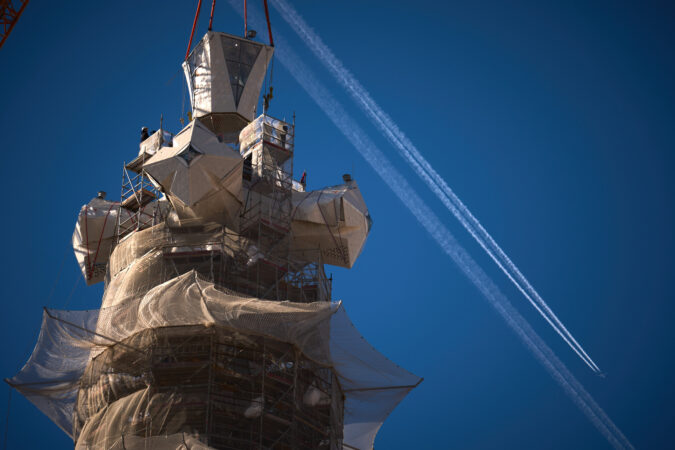
    A crane placed the upper arm of a cross atop the Tower of Jesus Christ, the church’s soaring central piece, which now stands 566 feet above the city.

    With Friday’s addition, the Sagrada Familia inched closer to being done. The unfinished monument became the world’s tallest church last year after another part of its central tower was lifted into place.

    The first stone of the Sagrada Familia was placed in 1882, but Gaudí never expected it to be completed in his lifetime. Only one of its multiple towers was finished when he died at the age of 73 in 1926, after being hit by a tram.

    In recent decades, work has sped up as the basilica became a major international tourist attraction, with people enthralled by Gaudí’s radical aesthetic that combines Catholic symbolism and organic forms.

    Inside, the Tower of Jesus Christ is still being worked on. Those who wish to actually see the cross will have to wait until the tower’s inauguration this summer, when the scaffolding surrounding it will be removed, according to the church.

    Topping the central tower, which soars above the transept, has been a priority ahead of celebrations this June that will mark the centenary of Gaudí’s death.

    As Gaudí had planned, the cross has four arms so its shape can be recognized from any direction, said Sagrada Familia’s rector, the Rev. Josep Turull. If Barcelona’s city government will allow it, the original plan also includes a light beam shining from each of the cross’ arms, symbolizing the church’s role as a spiritual lighthouse, he added.

    Millions of tourists visit the Sagrada Familia every year, and entrance fees largely fund the ongoing construction.

    This year, the Sagrada Familia will hold several events to celebrate the Catalan Modernist’s legacy, which includes other stunning buildings in Barcelona and elsewhere in Spain.

    The Sagrada Familia became the world’s tallest church last October, when it rose above the spire of Germany’s Ulmer Münster, a Gothic Lutheran church built over more than 500 years, starting in 1377. That church tops out at 530 feet.

    At Sagrada Familia, a prayer verse is included at the base of the cross installed Friday afternoon, said church rector Turull.

    It reads: “You alone are the Holy One, you alone are the Lord, you alone are the Most High.”

  • U.S. amasses biggest force since 2003 as Trump pushes Iran on deal

    U.S. amasses biggest force since 2003 as Trump pushes Iran on deal

    The U.S. military is stationing a vast array of forces in the Middle East, including two aircraft carriers, fighter jets and refueling tankers, with President Donald Trump saying that Iran had 10 to 15 days at most to strike a deal over its nuclear program.

    “We’re either going to get a deal, or it’s going to be unfortunate for them,” Trump told reporters Thursday aboard Air Force One. On a deadline, Trump said he thought 10 to 15 days was “pretty much” the “maximum” he would allow for negotiations to continue.

    “I would think that would be enough time,” he said.

    The deployment is unlike anything the U.S. has done since 2003, when it amassed forces before the invasion of Iraq. It dwarfs the military buildup that Trump ordered off the coast of Venezuela in the weeks before he ousted President Nicolas Maduro.

    While the U.S. isn’t likely to deploy ground troops, the buildup suggests Trump is giving himself discretion to launch a sustained campaign lasting many days, in cooperation with Israel. While discussions have focused on a sustained campaign far more sweeping than the overnight strikes the U.S. launched against Iran’s nuclear program last June, the president is also weighing a limited early strike designed to drive Tehran to the negotiating table, the Wall Street Journal reported Thursday.

    “Maybe we’re going to make a deal,” Trump said in a speech on Thursday morning. “You’re going to be finding out over the next probably 10 days.”

    Heightened geopolitical worries over U.S.-Iran tensions sent stocks lower and extended a surge in oil, with Brent crude, the global benchmark, rising above $71 a barrel on Thursday.

    The open question is whether Iran can possibly satisfy Trump’s demands and whether, by positioning so much military hardware to the region, Trump may feel compelled to use it rather than backing down.

    Tracking site FlightRadar24’s data shows a surge of flight activity by U.S. military transport, aerial tankers, surveillance aircraft and drones to bases in Qatar, Jordan, Crete and Spain.

    The aircraft, whose transponders make them visible over land to the tracking site, include KC-46 and KC-135 air-to-air refuelers and C-130J cargo planes used to move troops and heavy equipment.

    It also includes E-3 Sentry jets equipped with airborne warning and control system radar, which provide “all-altitude and all-weather surveillance” of potential battle zones, as well as RQ-4 Global Hawk surveillance drones.

    The weapons at Trump’s disposal are formidable. The USS Abraham Lincoln aircraft carrier is accompanied by three Arleigh Burke-class guided-missile destroyers, which can carry Tomahawk missiles. The carrier’s air wing includes F-35C fighter jets.

    The USS Gerald R. Ford, the most expensive U.S. warship ever built, at $13 billion, is accompanied by guided missile destroyers, and its associated air wing includes F/A-18E and F/A-18F Super Hornets, E-2D airborne early warning aircraft, as well as MH-60S and MH-60R Seahawk helicopters and C-2A Greyhounds.

    The two carriers provide “more options, and would enable us to conduct operations on a more sustained basis – if it comes to that,” said Michael Eisenstadt, director of military studies for the Washington Institute for Near East Policy. He said the buildup “signals to the Iranians the need to be more flexible in negotiations.”

    Trump met with his son-in-law, Jared Kushner, and special envoy, Steve Witkoff, on Wednesday for an update on the negotiations with Iran. Officials met in the Situation Room on Wednesday to discuss possible action and were told to expect that all U.S. military forces deployed to the region would be in place by mid-March, according to a U.S. official.

    A major strike against Iran – where leaders are anxious about regime stability following widespread unrest – risks entangling the U.S. in its third war of choice in the Middle East since 1991, against a more formidable adversary than the U.S. has faced in decades.

    Trump’s use of the military in his second term has been characterized by short and successful engagements with minimal harm to American troops, including the bombing of Iranian nuclear targets in June, attacking alleged drug-trafficking boats and the raid that extracted Maduro in early January.

    But if fresh strikes on Iran prompt a wider conflagration, the president could face considerable public pressure. Trump spoke against U.S. engagement in foreign wars on the campaign trail, but has gone on to bomb Iran, Tehran-backed Houthi militants in Yemen and militants in Syria.

    “With Iran’s air defenses largely neutralized by previous U.S. and Israeli strikes, the U.S. strike fighters would operate largely with impunity over Iranian airspace,” said Bryan Clark, a defense analyst for the Hudson Institute and a former Navy strategy officer. “There is always the risk of downed pilots, but I think the bigger risk is to ships. The same cruise and ballistic missiles the Iranians gave to the Houthis could be turned against U.S. ships in the Persian Gulf, Arabian Sea and Red Sea.”

    Thousands of U.S. servicemembers in the region are also within range of Iranian ballistic missiles, and regime officials have vowed to respond with full force to a U.S. strike.

    Beyond attacks on U.S. military assets, Iran could try to close the Strait of Hormuz, the narrow waterway between Oman and Iran traversed by 25% of maritime oil traffic.

    The U.S. strikes in June 2025 focused on three sites associated with Iran’s nuclear program, but a more ambitious effort to topple the regime in Tehran could involve attacks on sites associated with the Islamic Revolutionary Guard Corps and potentially senior leadership including Supreme Leader Ayatollah Ali Khamenei.

    But Iran might be able to withstand such decapitation attempts.

    “Israel already killed the top leaders of the IRGC in its opening strikes in the June war and Iran was able to reconstitute and respond within 24 hours,” said Jamal Abdi, president of the U.S.-based National Iranian American Council. “They’ve now planned for these possibilities in future wars and so now may be even more resilient if senior leaders are killed.”

    White House press secretary Karoline Leavitt said Wednesday that Iran was expected to offer a response to the negotiations within “the next couple of weeks,” but did not preclude the possibility of military action before that. “The president will continue to watch how this plays out,” she said.

  • Jefferson Health and the Eagles Deepen a Commitment to Better Health

    Jefferson Health and the Eagles Deepen a Commitment to Better Health

    When two of Philadelphia’s most trusted institutions come together, the impact can extend far beyond the field and well outside hospital walls. This February, Jefferson Health and the Philadelphia Eagles announced a landmark new chapter in their long-standing partnership. The team’s training facility will be renamed the Jefferson Health Training Complex, anchoring a collaboration focused on community health, education, and long-term well-being across the region. For both organizations, the name represents a shared statement of purpose.

    “Our mission is rooted in our core values: to put people first, pursue excellence, and do what’s right,” Joseph G. Cacchione, MD, the CEO of Jefferson, said. “By aligning with an organization that shares our commitment to excellence, teamwork, and community impact, we’re creating new opportunities to elevate health education, expand prevention efforts, and inspire people across the region to engage with their own well-being. This partnership amplifies our ability to meet people where they are, while staying grounded in the values that define Jefferson as a not-for-profit anchor institution.”

    The renaming of the Eagles training facility is only one recent example of Jefferson’s ongoing commitment to the Philly community. Over the years, the health system has advanced health education and workforce development initiatives designed to expand access to care beyond traditional clinical settings.

    In 2023, for instance, Jefferson launched its Community Health Worker Academy, a 13-month training and workforce development program that prepares new patient care professionals to support individuals and families within their own communities. Jefferson has also partnered with local venues, including faith-based organizations, to provide health services and outreach in places where people already gather, helping to reduce barriers to preventive care. To underscore this commitment, Jefferson Health recently announced a new collaboration with the Hatfield Ice Center in Colmar, Pa., where it has provided health screenings and wellness programming. The iconic rink will now be known as Jefferson Health Arenas at Hatfield Ice.

    In 2025, Jefferson partnered with Enon Tabernacle Baptist Church for a Black Maternal Health Community Baby Shower. The event offered health screenings, diabetes education, maternity care support, childbirth education, and more.

    Recently, the system also partnered with the Cherry Hill, N.J., mayor’s office on its “Healthier Together” wellness campaign, a community‑focused effort aimed at improving health through education, screenings, and active living. In 2026, Jefferson hosted the “Champion Your Health” event at Jefferson Cherry Hill Hospital, created in collaboration with Mayor David Fleisher. The event offered engaging, family‑friendly demonstrations such as CPR practice, fitness sessions, and healthy cooking, all designed to empower residents with practical tools for better living.

    As part of the “Healthier Together” partnership, Jefferson Health also plays a central role in supporting the mayor’s monthly Wellness Walks, a community tradition that encourages people of all ages to stay active. Jefferson clinicians contribute to the campaign by providing blood pressure and glucose screenings, as well as by leading educational sessions on mental wellness, resilience, and setting healthy intentions.

    Overall, the “Healthier Together” initiative reflects a shared commitment to giving New Jersey residents accessible, preventive health resources. By combining education, movement, and nutrition guidance, the partnership seeks to strengthen community well‑being and promote a balanced, active lifestyle.


    A Cornerstone Investment in Community Health

    The Jefferson Health Training Complex will serve as the physical and symbolic cornerstone of its Eagles partnership, a home for elite athletic performance. The naming reinforces Jefferson’s role as a regional and national leader of health, education, workforce development, and research — the $17 billion enterprise includes more than 30 hospitals and 700 care sites across Pennsylvania and New Jersey, a health plan, and a leading academic institution that employs more than 65,000 people.

    For the Eagles, the partnership reflects a decades-long commitment to using the sport of football as a force for good, a value long championed by the organization’s ownership. Its impact is ensured by Jefferson’s broad reach and the institutions’ shared connection to the same communities. Jefferson has been one of the Eagles longest-running relationships. Over the years, that partnership has fueled many community initiatives, which have supported breast cancer, autism research, and other causes.

    Reaching Communities Where They Are

    Jefferson’s community health efforts currently span the full range of programs for the public, including healthy food access, workforce development, and mobile cancer screenings. Other initiatives like JeffCARES empower members of the Jefferson community to take action to address critical social needs, foster engagement, and make a meaningful impact in our diverse neighborhoods and communities through partnerships with local non-profits.

    “We’ve seen extraordinary results from programs like our Community Health Worker Academy, a program that creates pathways into health care careers and measurably improves patient outcomes,” Cacchione said.

    In October 2025, JeffCARES partnered with the Malcolm Jenkins Foundation to organize Get Ready Fest in Philadelphia. The community event provided 800 families with groceries, health screenings, and employment resources.

    The Community Health Worker Academy, which recently became the first in the United States to earn CHW accreditation from the Utilization Review Accreditation Committee (URAC), trains trusted local residents to serve as health advocates in their own neighborhoods, helping to bridge the gap between communities and access to care. “Our partnership with the Eagles strengthens those efforts,” Cacchione said.

    What distinguishes the expansion of this partnership between Jefferson and the Eagles is this explicit focus on providing care to their communities outside of traditional health settings. Instead, the partners are offering educational resources and more at gathering places like Eagles games.

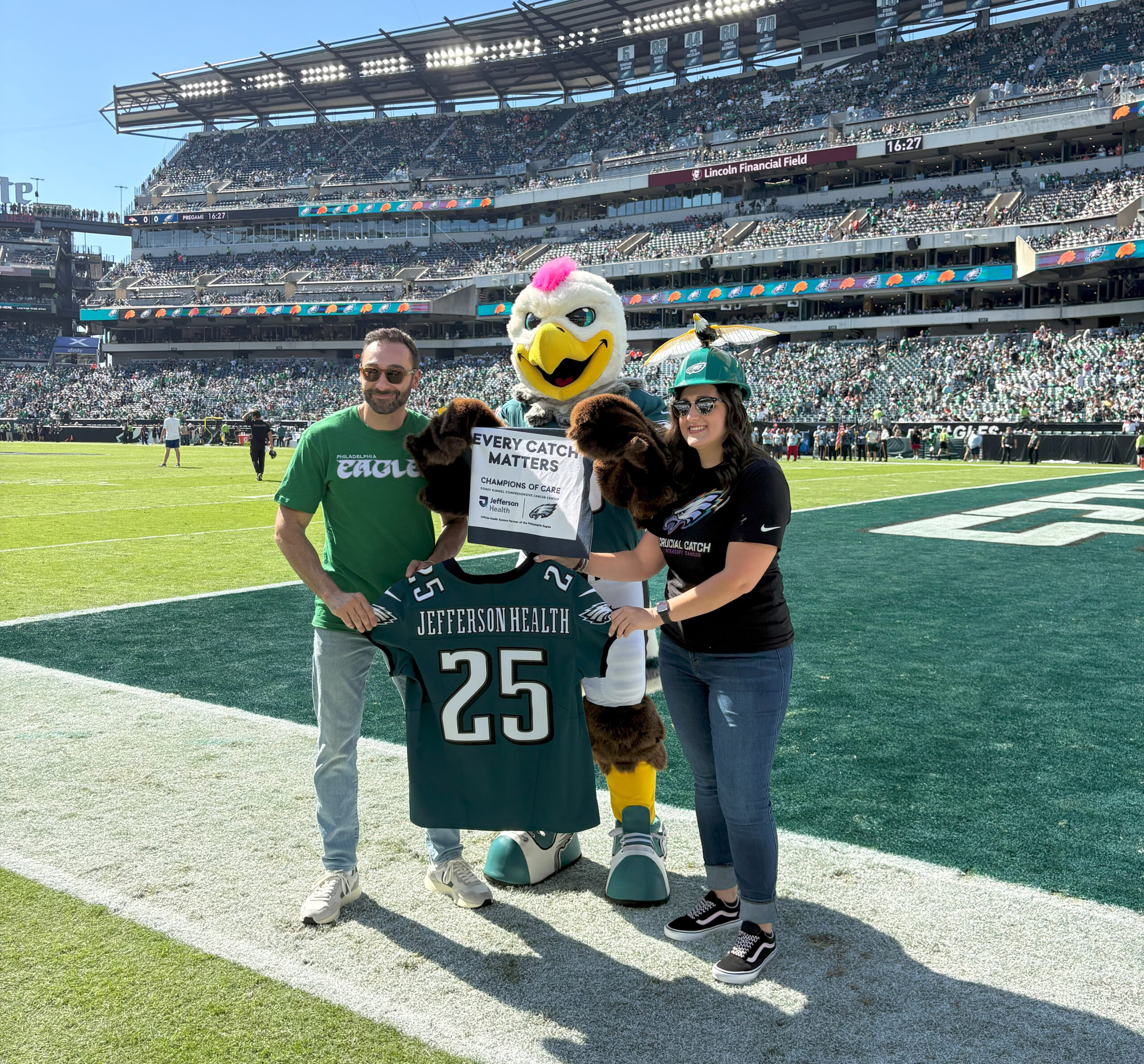
    Through programs like Crucial Catch, the NFL and the American Cancer Society’s campaign to fight cancer through early detection, the partnership has provided health care workers at the stadium and recognized cancer survivors during halftime events. Jefferson’s mobile cancer screening vans have also appeared at games, offering screening education and information, proving their slogan: “Driven to Improve Lives.”

    “The credibility and visibility the Eagles bring helps us reach individuals who may be hesitant to engage with traditional health care settings,” Nick Ragone, the Jefferson executive vice president and chief marketing officer, said. “When the Eagles encourage fans to prioritize their health, it opens doors we couldn’t open alone.”

    “That’s exactly the kind of partnership we want to build on,” Cacchione said. “Meeting people where they are, using trusted voices to break down barriers, and ultimately saving lives through early detection and prevention.”

    A Legacy of Philanthropy and Purpose

    The partnership also aligns naturally with the Eagles’ long track record of philanthropy. After purchasing the team in 1994, Jeffrey Lurie and his family built robust community impact platforms, including the Eagles Youth Partnership, the Eagles Eye Mobile, and the Go Green initiative, one of the first comprehensive sustainability efforts in professional sports.

    The Eagles’ commitment to health-related causes is most visible in the Eagles Autism Foundation, launched by Lurie in 2017 and inspired by his younger brother, who was diagnosed with the condition as a child. The foundation has raised more than $40 million to support autism research and services, directing funds to institutions like Jefferson.

    Baligh Yehia, president of Jefferson Health, and Danielle Klingerman, an oncology nurse at Jefferson Einstein Montgomery, celebrate the NFL’s Crucial Catch initiative and honor cancer survivors during an on-field ceremony at a 2025 Eagles game.

    “As the team’s Official Health System Partner, Jefferson Health will collaborate with us on year-round community initiatives, focusing on health education and screenings, preventive care awareness, and engagement programs aligned with many of the team’s key priorities, such as the Eagles Autism Foundation and the annual ‛Crucial Catch: Intercept Cancer’ game,” Don Smolenski, the president of the Eagles, said. “Jefferson is an ideal partner because they share our core belief that a sports organization is a force for good far beyond the playing field,” he said.

    “The long-standing partnership between the Eagles and Jefferson Health has been built on a shared commitment to the region we serve,” Smolenski said. “This [new] multi-year extension marks a defining moment in our partnership, one that will now call the Jefferson Health Training Complex home to the Philadelphia Eagles.”

    Building Healthier Futures Together

    In 2024, Jefferson invested $1.8 billion in community benefits, in addition to providing 10 million patient visits, while expanding programs that address social determinants of health. “By working with the Eagles, we’re able to take those initiatives out into the community with even greater visibility and reach,” Cacchione said. “It strengthens our ability to improve long-term health outcomes and ensure every community has access to the resources they need to thrive.”

    “I hope it sends the message that health is something to be proactive about, not something to wait on,” Cacchione said. “Whether you’re a young athlete, a parent, or simply a fan, taking care of your health today builds a stronger future. This partnership is a reminder that prevention matters, that early action saves lives, and that Jefferson and the Eagles are united in supporting the well-being of every person in our region.”